18 Cool Room Decor To Inspire Your Next Home Refresh
Cool room decor is not about chasing every trend at once. The best refreshes feel selective, tactile, and easy to live with: one stronger chair, better lighting, larger art, a cleaner layout, and a few materials that catch the eye. Think of this list as a designer-minded edit for rooms that already function but need more presence. Each idea is practical enough to try in a weekend, yet polished enough to make the space feel considered for years.
Choose One Sculptural Chair
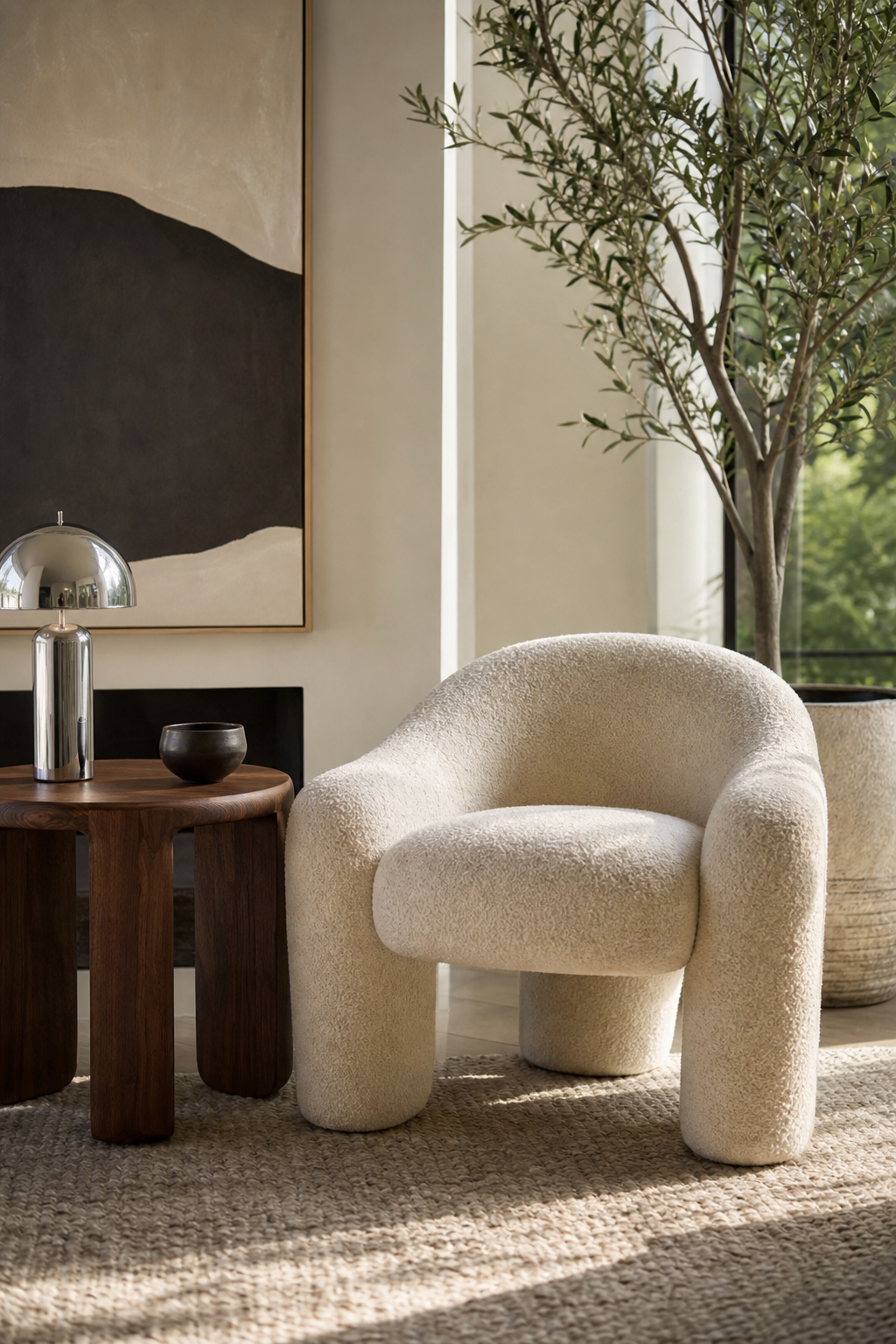
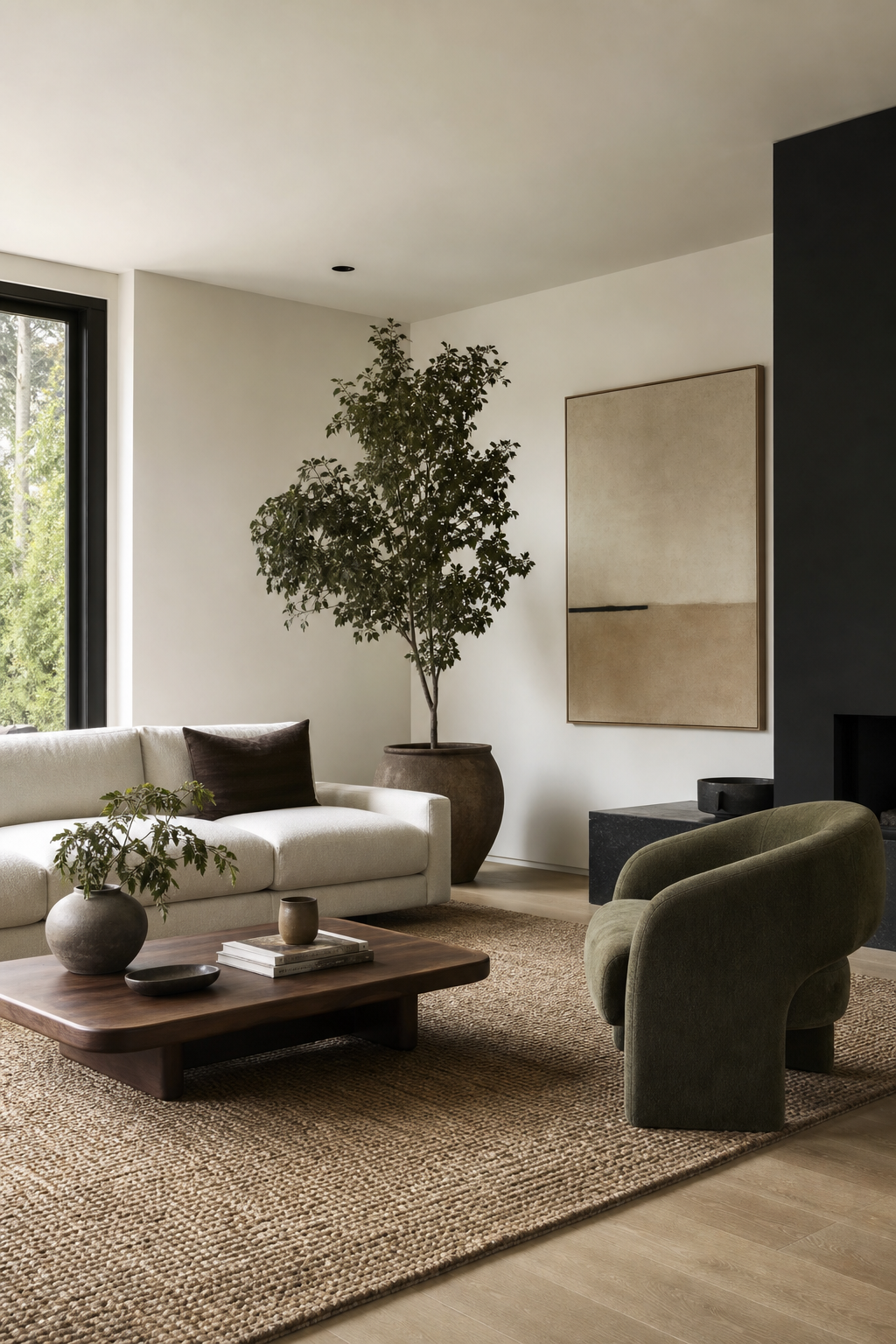
A cool room rarely needs a full furniture overhaul. Often, one sculptural chair is enough to shift the entire mood. Look for a shape with presence: a curved back, chunky legs, soft boucle, ribbed velvet, or a low lounge profile that feels collected rather than showroom-perfect. Place it where it can be seen from the doorway, then give it breathing room instead of crowding it with extra tables and baskets. The chair should feel useful, not staged, so add a small side table and a lamp if the corner supports reading. Keep surrounding pieces quieter: a simple sofa, clean-lined rug, and restrained wall art let the silhouette do the work. This approach makes the room feel designed without making it feel overdecorated.
Scale Up the Artwork
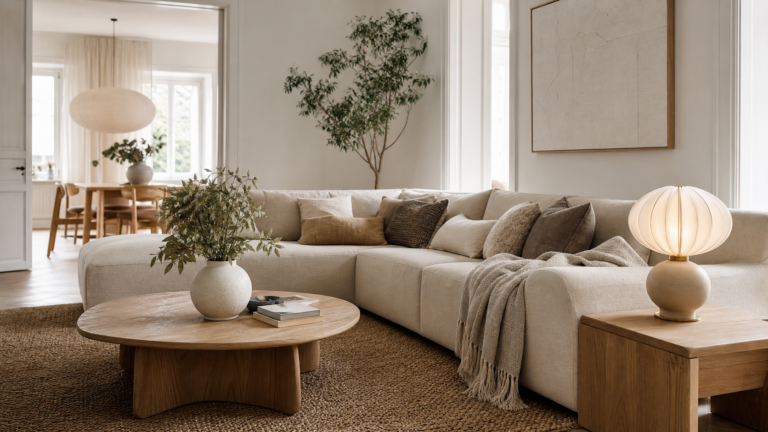
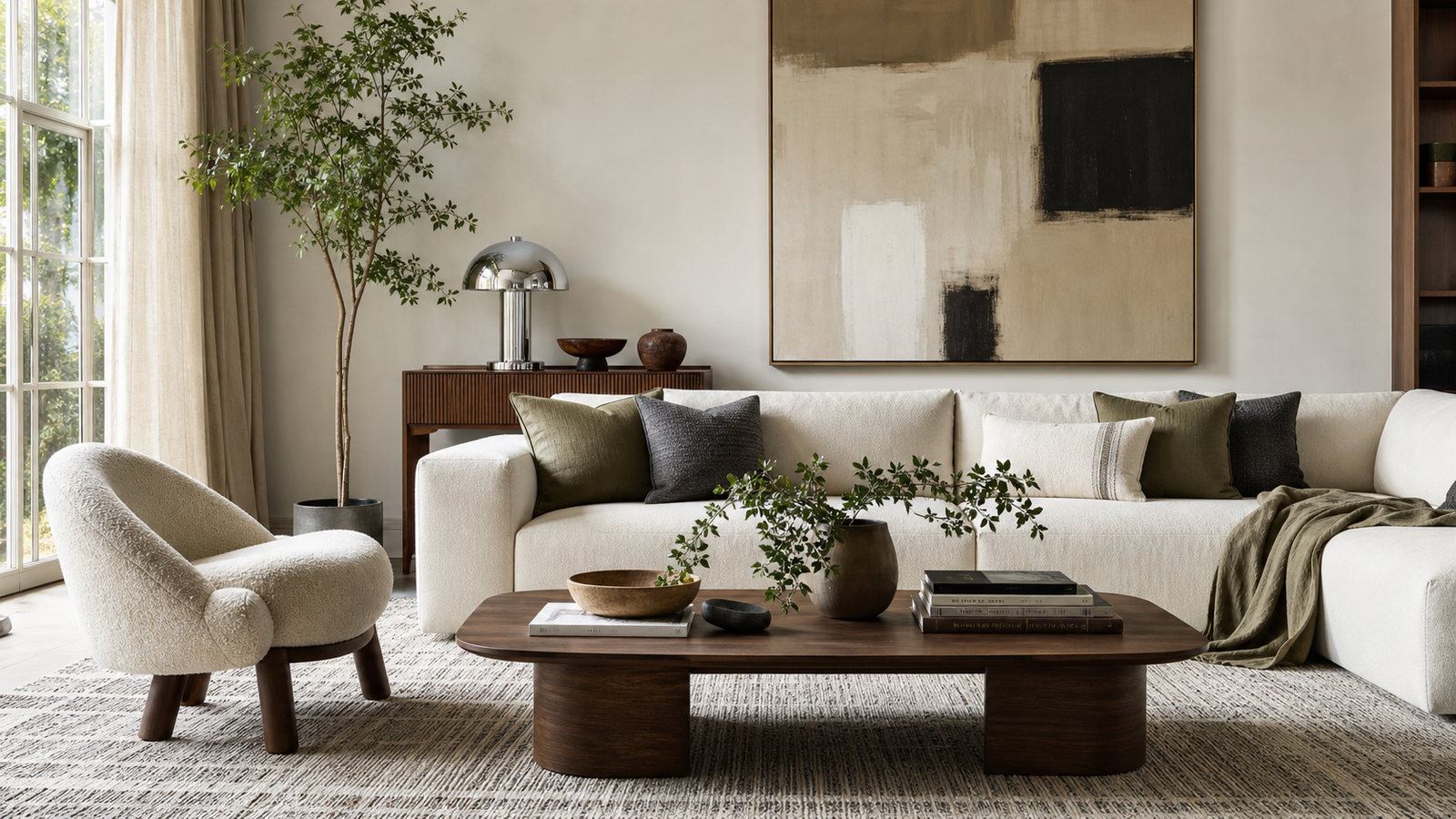
Small wall art can make a refreshed room feel hesitant, especially above a sofa or console. For a cooler, more editorial look, choose one oversized piece and let it command the wall. Abstract work is especially flexible because it adds atmosphere without locking the room into a theme. Pull one or two colors from the art into pillows, ceramics, or a throw, but avoid matching everything too closely. The goal is a room that feels connected, not coordinated by formula. Hang the piece low enough to relate to the furniture beneath it, with the bottom edge roughly eight to ten inches above a sofa back. If the frame is slim and simple, the scale feels confident instead of heavy, and the entire room gains instant polish.
Add a Chrome Lamp for Shine
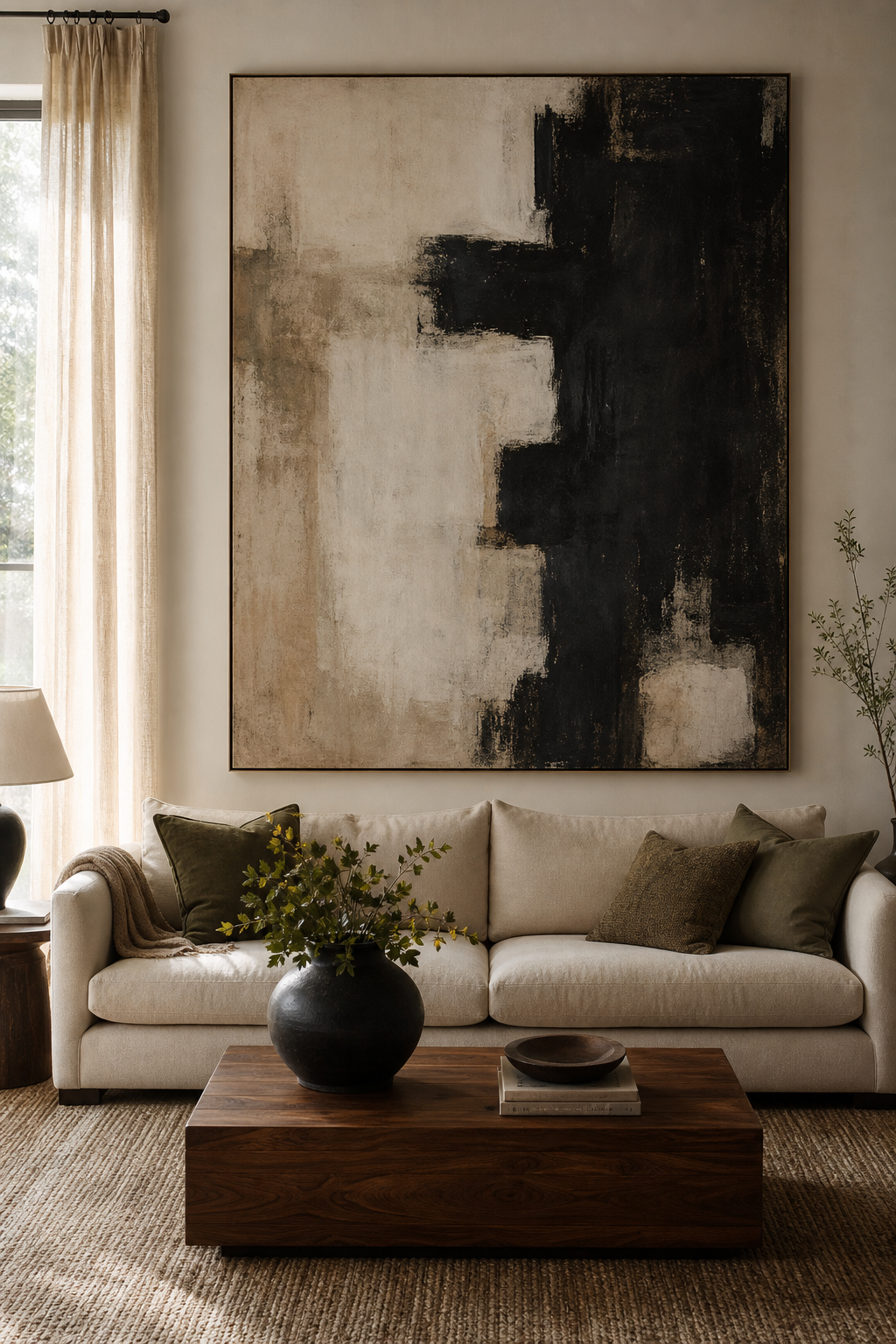
Chrome is one of the fastest ways to make familiar decor feel current again. Use it in a controlled dose, such as a mushroom lamp, arched floor lamp, or polished table lamp on a sideboard. The reflective finish works best when it contrasts with warmer materials: walnut, linen, wool, stone, and aged ceramics. That tension keeps the room from feeling flat. Place the chrome near natural light or a soft evening bulb so it catches highlights without becoming harsh. If your palette is mostly beige or cream, chrome prevents the space from drifting too sweet. If your room already has black accents, chrome adds a lighter, more playful counterpoint. One excellent lamp can feel more luxurious than several small metallic accessories scattered around.
Anchor the Room With a Graphic Rug
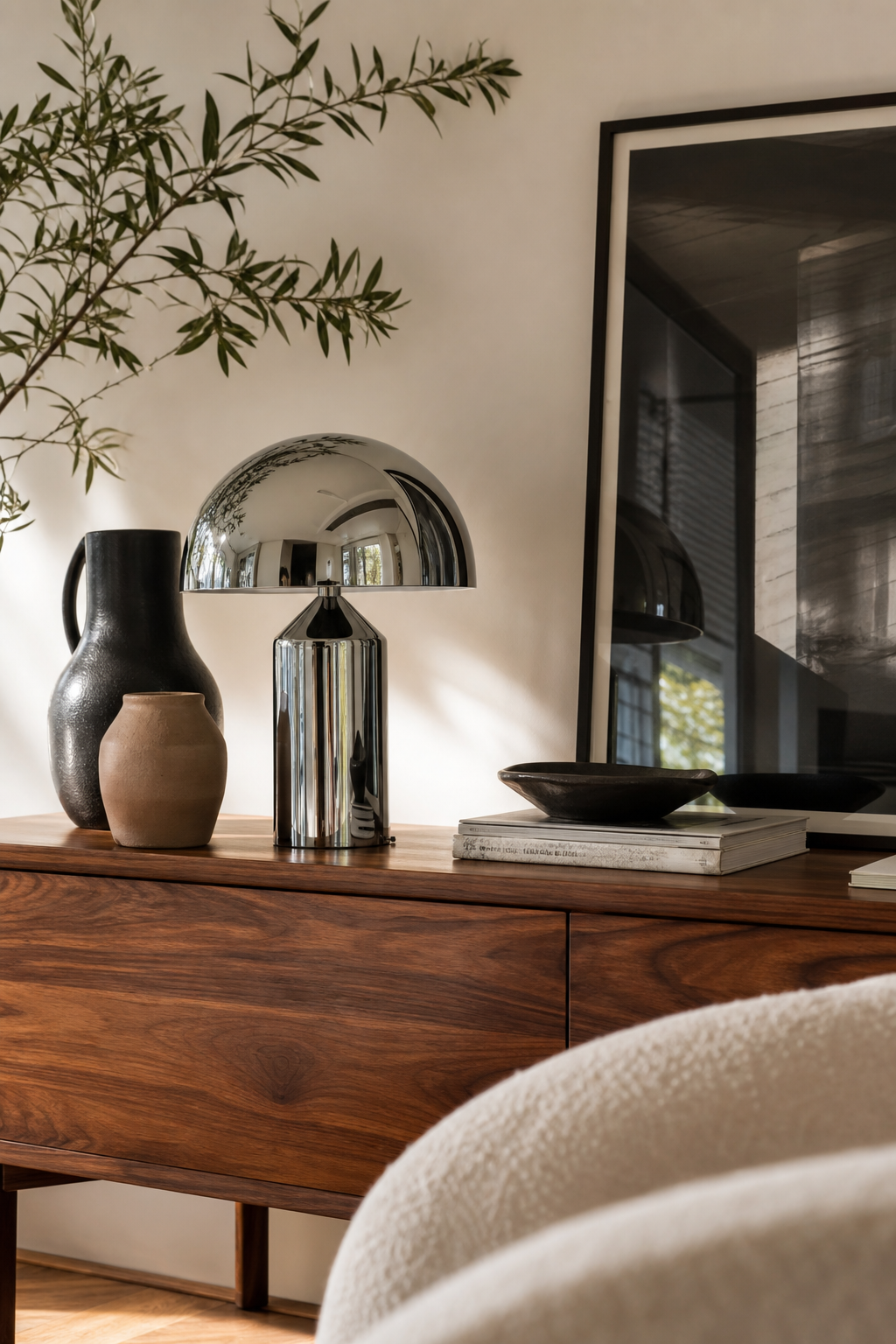
A graphic rug gives a cool room structure, especially when the furniture is simple. Stripes, checks, broken grids, or abstract linework can all work, but the palette should stay grounded so the room remains livable. Try charcoal on ivory, olive on oatmeal, or clay against warm beige. Size matters more than pattern: the front legs of the sofa and chairs should sit on the rug so the seating area feels anchored. If the rug is too small, even beautiful furniture can look disconnected. Balance a bold floor with calmer upholstery and fewer accessories on the coffee table. The best graphic rug adds energy underfoot while still letting the eye rest. It should feel like architecture for the room, not just decoration.
Style Floating Shelves With Restraint
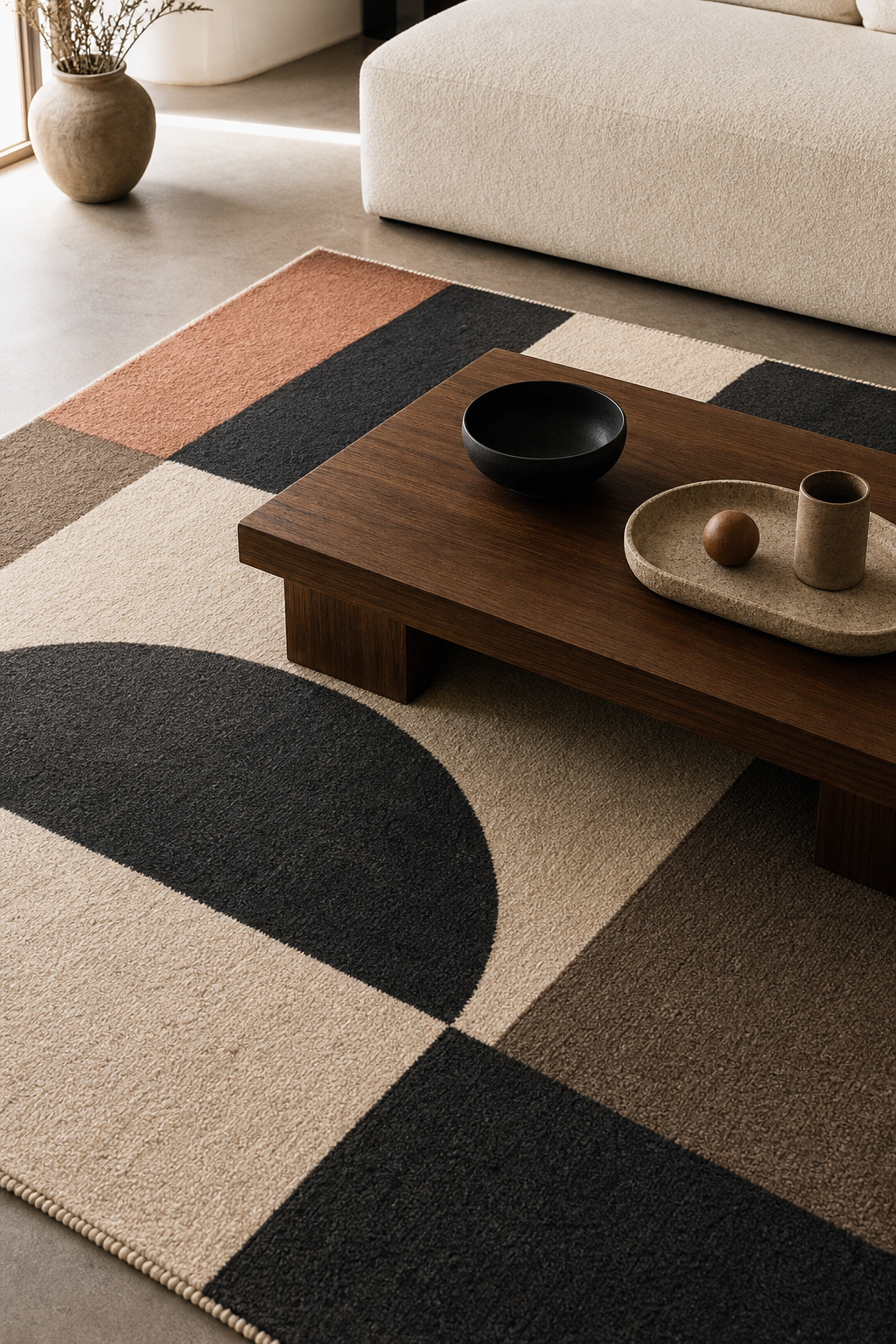
Floating shelves can look cool or chaotic depending on how tightly they are edited. Start with fewer objects than you think you need: a ceramic vase, two stacked books, a small framed piece, a stone bowl, and one trailing or upright plant. Vary height and texture, but leave visible space between groupings so the shelves feel intentional. Avoid lining pieces up like retail display. Instead, create small compositions that relate to one another through color or material. Walnut shelves feel warm and architectural against pale walls, while black shelves create a sharper gallery mood. The key is restraint. When every object has room around it, ordinary pieces look more expensive, and the wall becomes part of the room instead of storage disguised as style.
Use Olive Green as a Cool Neutral
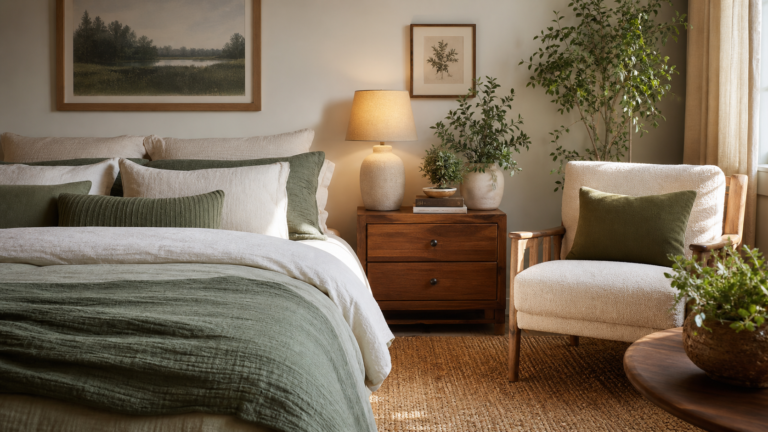
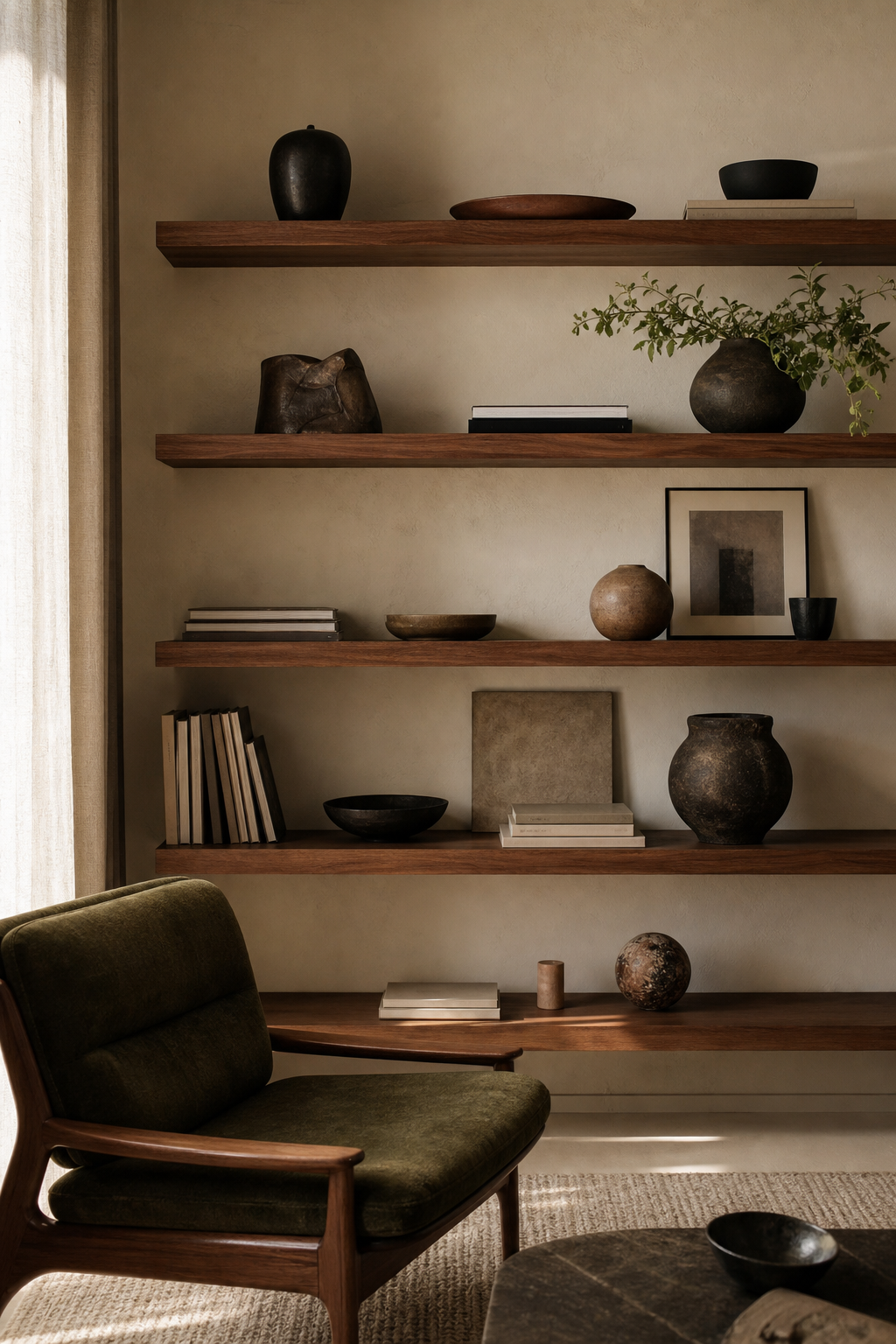
Olive green behaves like a neutral when it is used with discipline. It brings depth to cream, walnut, stone, and black without shouting for attention. Start with pillows, a throw, or one accent chair before committing to paint or upholstery. The shade should feel muted, with a little gray or brown in it, rather than bright garden green. Olive is especially useful in rooms that need warmth but already have enough beige. Pair it with crisp black metal, natural linen, and a touch of chrome for contrast. Repeating olive two or three times across the room creates rhythm, but stop before it becomes a theme. Used this way, olive makes a room feel cool, calm, and grown up.
Reflect Light With an Arched Mirror
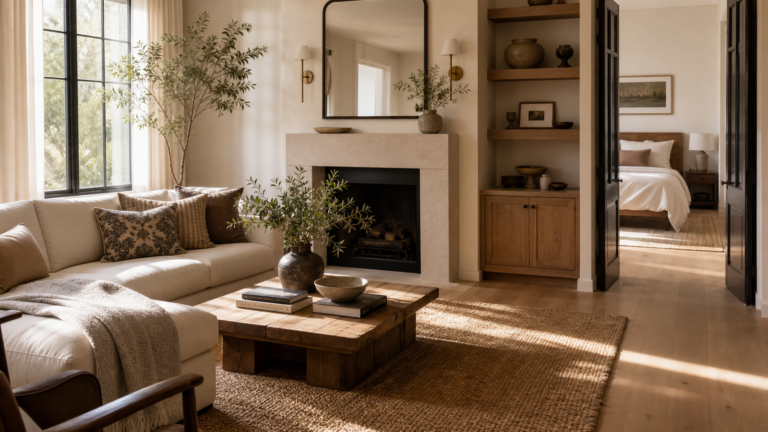
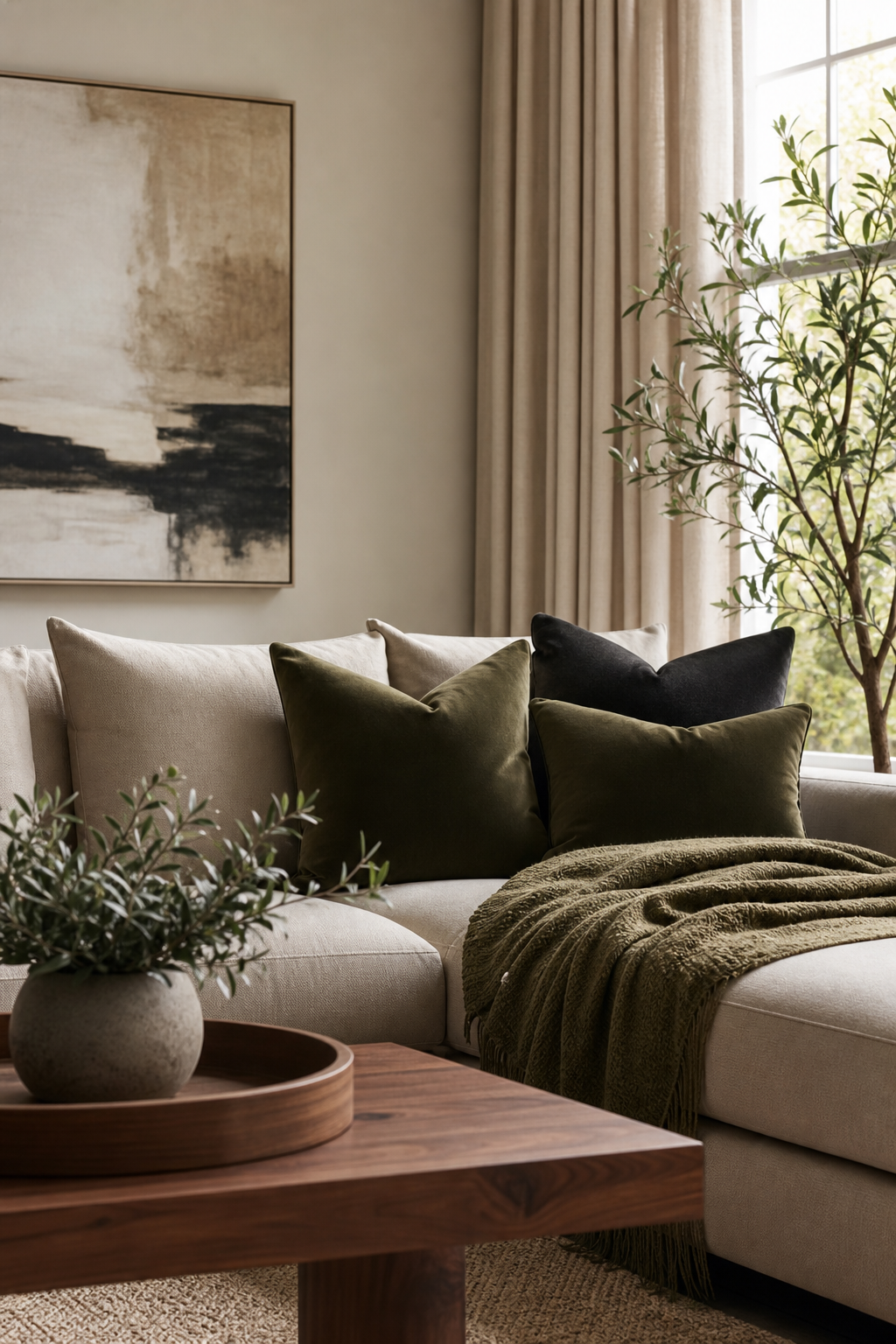
An arched mirror adds softness without feeling fussy. It is especially effective in apartments, narrow living rooms, or bedrooms that need more light and visual height. Choose a frame that matches the mood of the room: thin black for a crisp modern look, warm wood for a softer organic feel, or aged brass if the space can handle a little glamour. Leaning a tall mirror can look relaxed, but make sure it is secured properly. Position it to reflect a window, plant, artwork, or lamp rather than clutter. That choice matters. A mirror doubles whatever it sees, so give it a view worth repeating. The arch shape brings quiet movement to a room full of straight lines and rectangular furniture.
Bring in a Statement Floor Lamp
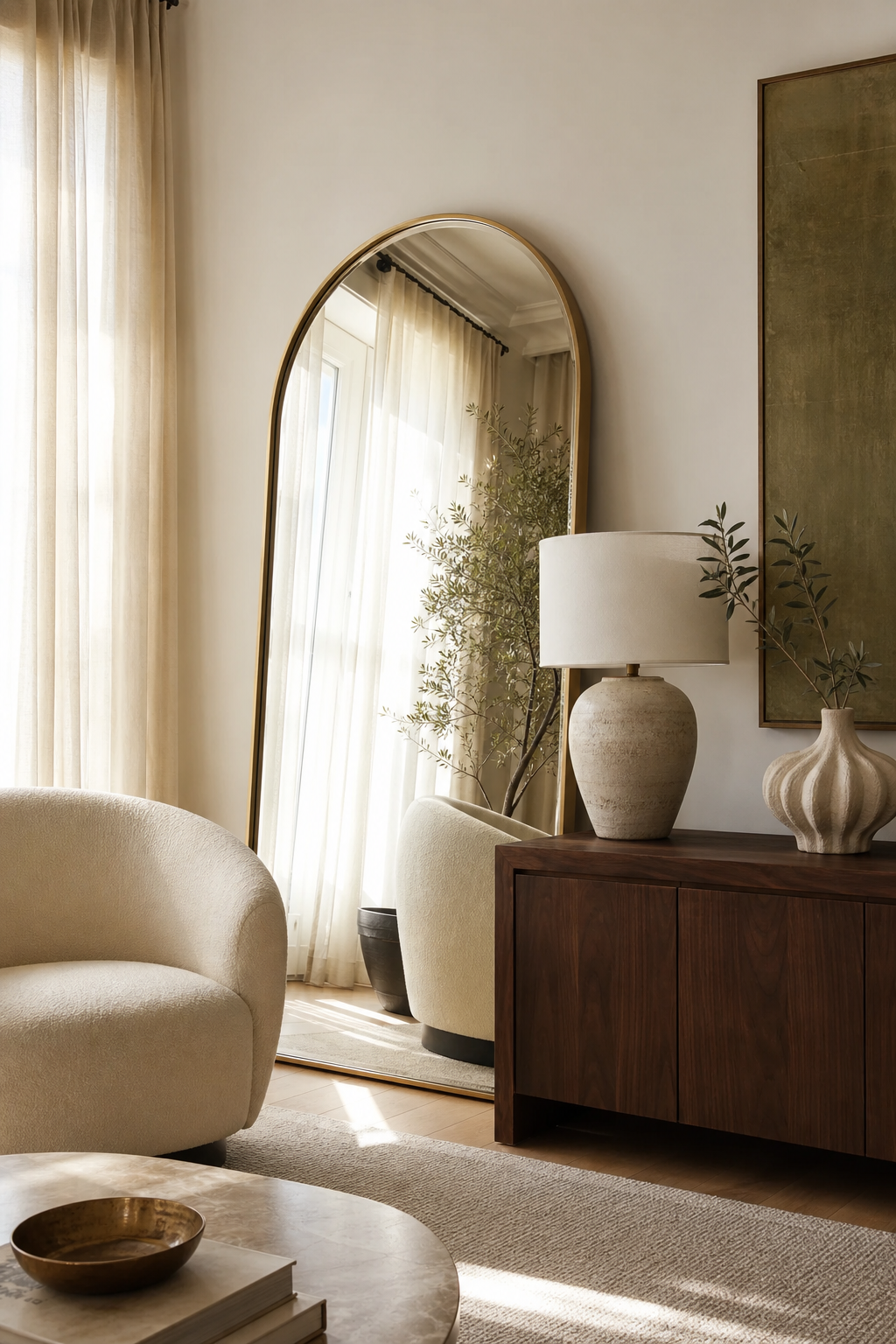
A statement floor lamp can change the room after dark, which is when many decor plans fall apart. Look for a lamp with a sculptural base, oversized shade, arched arm, or unexpected material. It should solve a lighting problem while adding shape to an empty corner. Place it beside a sofa, chair, or reading nook so it feels purposeful. Warm bulbs are essential; cool white light can make even beautiful furniture look unfinished. If the room has mostly low pieces, a tall lamp adds vertical balance. If the furniture is boxy, a curved lamp introduces movement. Think of it as both lighting and furniture. A good floor lamp gives the room a composed evening atmosphere without relying on ceiling lights.
Add a Marble Side Table
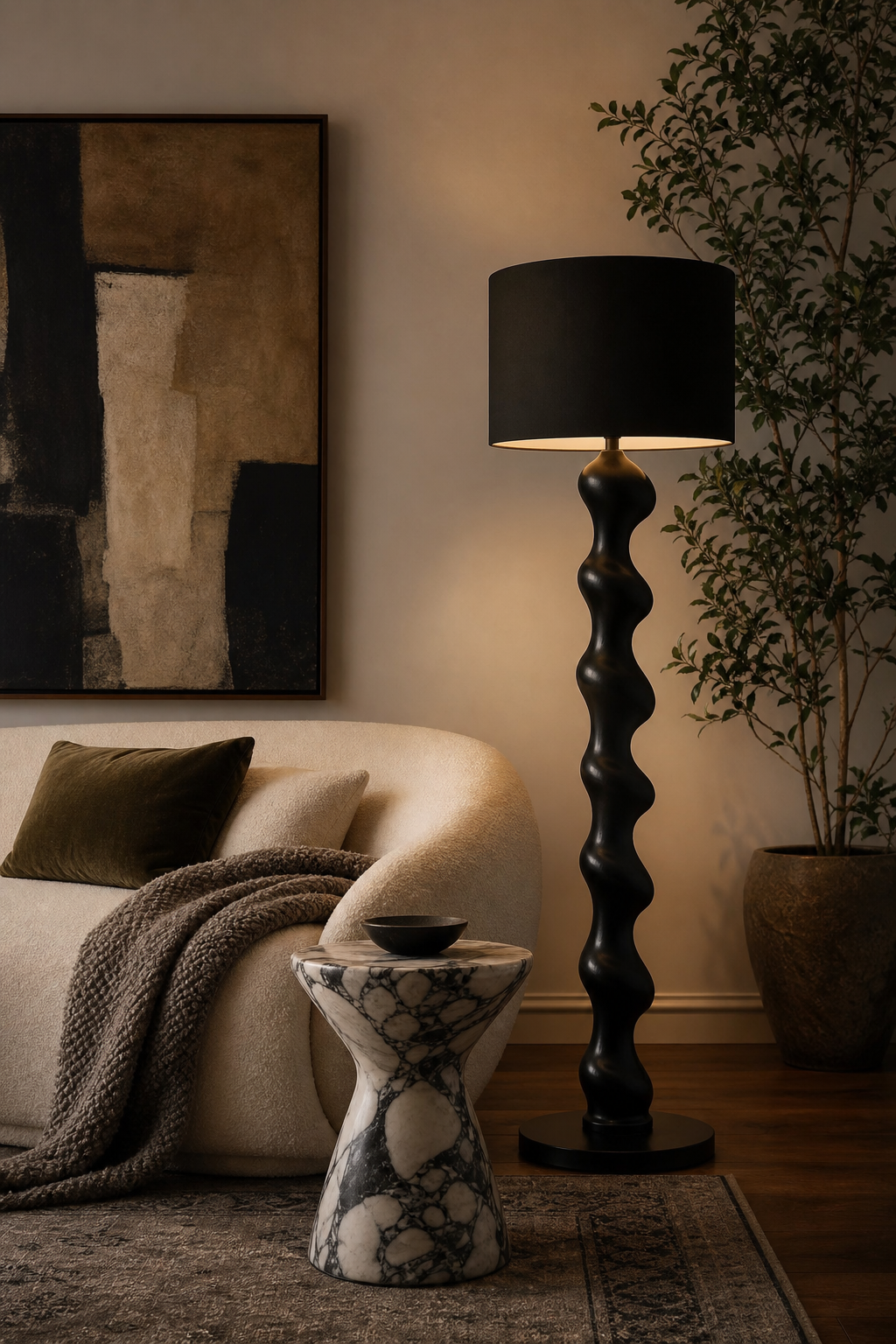
A marble side table gives a room a small dose of luxury without requiring a major commitment. The trick is choosing a simple shape so the veining remains the feature. A round pedestal, block cube, or slim drink table can sit beside a lounge chair, sofa arm, or bathtub-adjacent bedroom corner. Let the stone contrast with softer textures: boucle, linen, wool, or velvet. If the room already has a lot of pattern, choose a quieter marble. If the room is very minimal, a dramatic veined stone can become the accent. Keep the styling spare with a small lamp, candle, or single ceramic cup. Marble looks best when it has room to feel substantial and calm.
Install Slim Wall Sconces
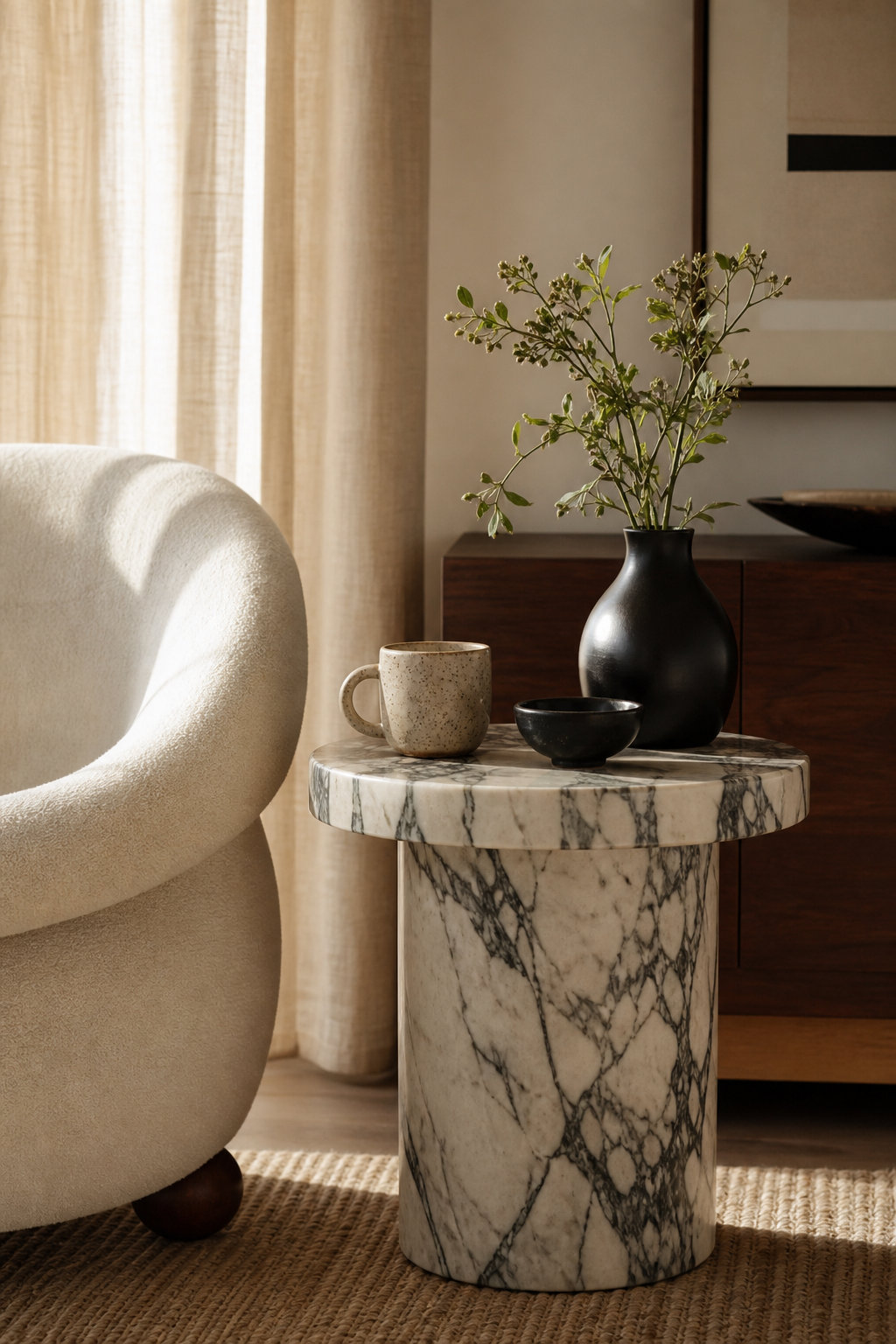
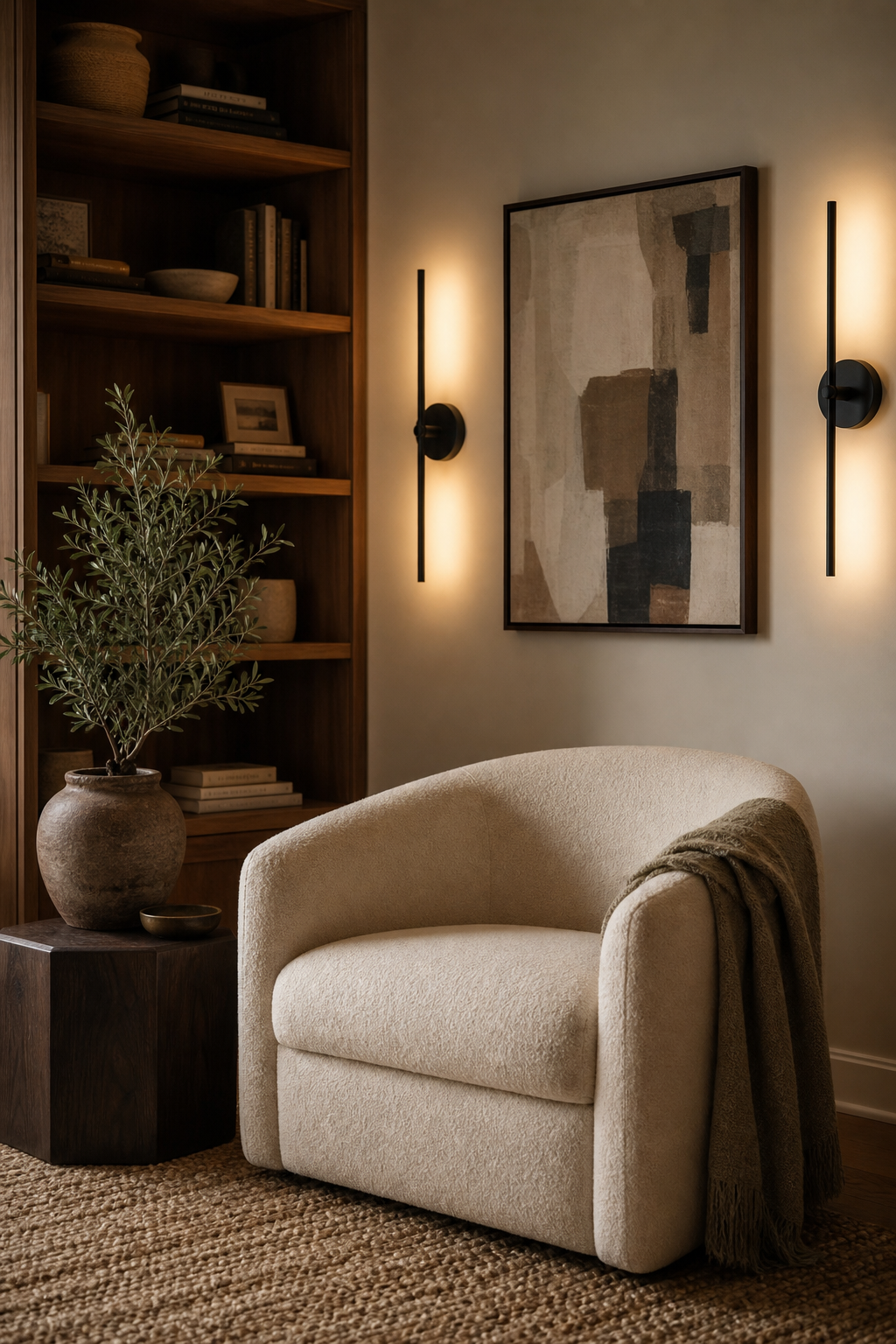
Slim wall sconces make a room feel tailored because they free surfaces from extra lamps and add light exactly where it is needed. They work beside a bed, above a console, flanking a fireplace, or on either side of art. Choose a finish that relates to your hardware or furniture legs, but do not worry about perfect matching. Black sconces feel graphic, brass feels warm, and chrome feels crisp. Scale is important: the fixture should be visible but not bulky. If hardwiring is not realistic, many plug-in sconces now look polished when the cord is managed neatly. Use warm dimmable bulbs so the room can move from task lighting to atmosphere. This small upgrade often makes the whole wall feel custom.
Group Sculptural Ceramics
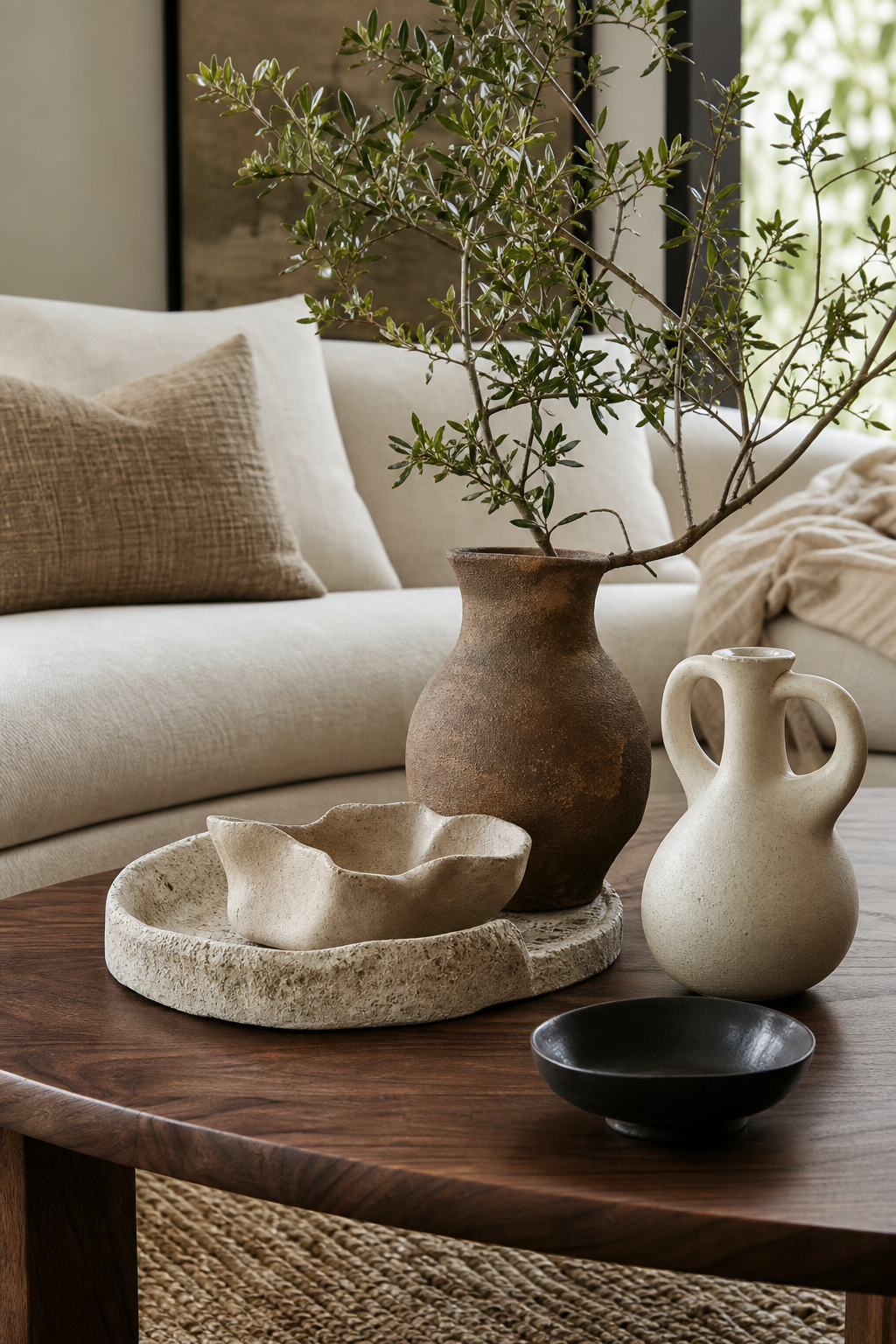
Ceramics bring handmade texture to cool room decor, but they need thoughtful grouping. Instead of scattering small vases around the room, gather three pieces with different heights, shapes, and finishes. A matte clay vessel, a glossy black bowl, and a pale stoneware vase can create a beautiful tension on a coffee table or console. Keep the colors close enough to feel related, then let the silhouettes provide interest. Empty vessels are often stronger than overfilled ones, especially in a modern room. If you add stems, choose one branch or a loose arrangement rather than a dense bouquet. This approach gives surfaces depth without visual noise. The room feels collected, tactile, and quietly expensive.
Use a Black Accent Shelf
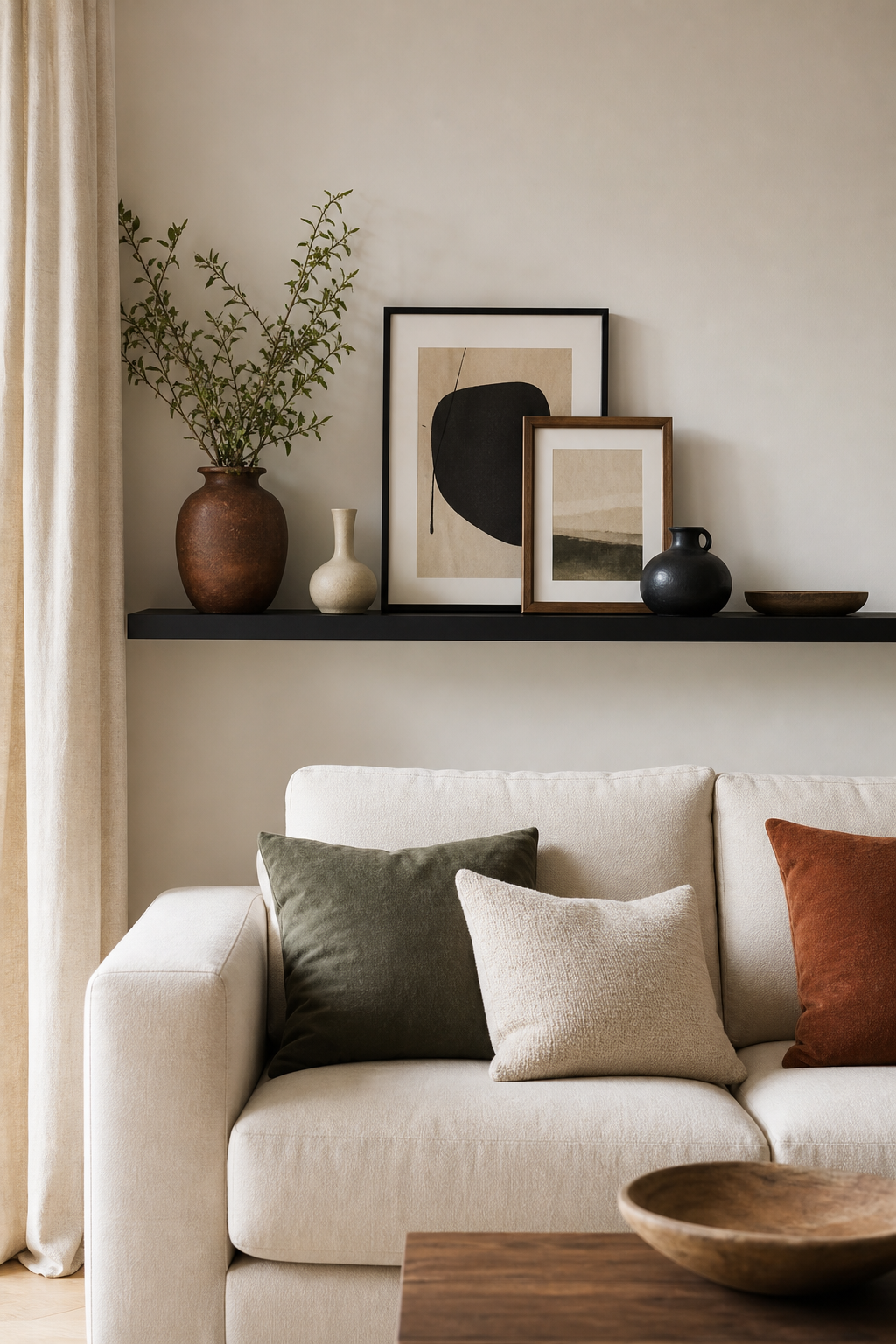
A black accent shelf gives pale rooms a clear edge. It works especially well when the room has cream upholstery, natural wood, or soft textiles that need definition. Mount a single black shelf above a console, desk, or reading chair, then style it with restraint. Choose objects that can stand up to the contrast: a stone vessel, framed art, a small lamp, or one trailing plant. The black line becomes architectural, almost like punctuation on the wall. Repeat black once or twice elsewhere through a lamp base, picture frame, or curtain rod so the shelf feels connected. Avoid overloading it. The power of a black shelf is its clean silhouette, not the number of things it can hold.
Mix Glass and Chrome Carefully
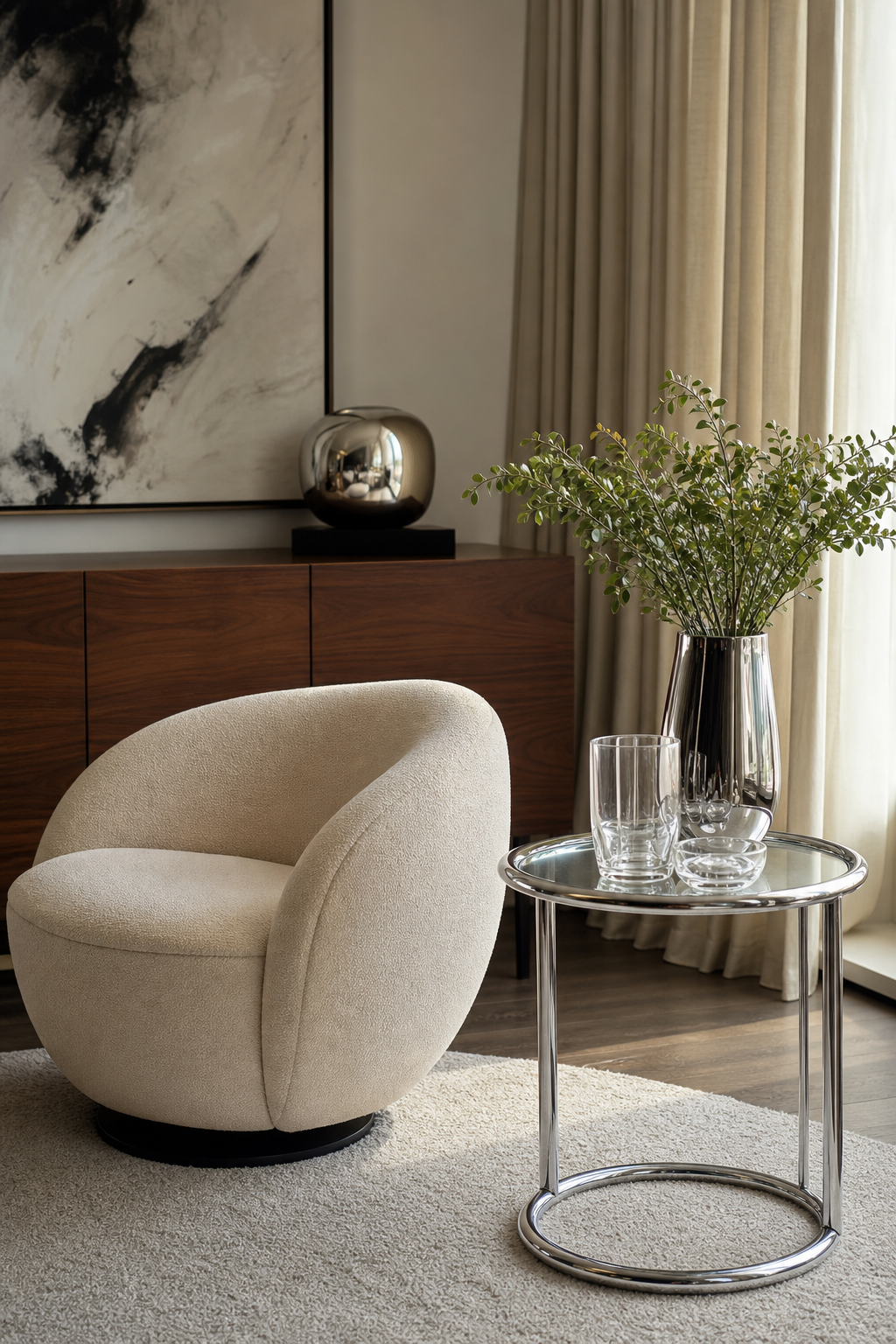
Glass and chrome can make a room feel fresh, but too much of either can tip cold. Use them as accents against warmer foundations. A glass vase on a walnut table, chrome legs on a side chair, or a polished tray on a linen ottoman can be enough. The reflective pieces should catch light and create contrast, not dominate the room. Pair them with matte surfaces so the shine feels intentional: plaster walls, wool rugs, ceramic bowls, leather, or raw wood. Clear glass is especially useful in small rooms because it adds function without visual weight. Keep shapes simple and let the reflections do the work. When balanced well, glass and chrome give the space a crisp, metropolitan finish.
Try One Playful Pattern
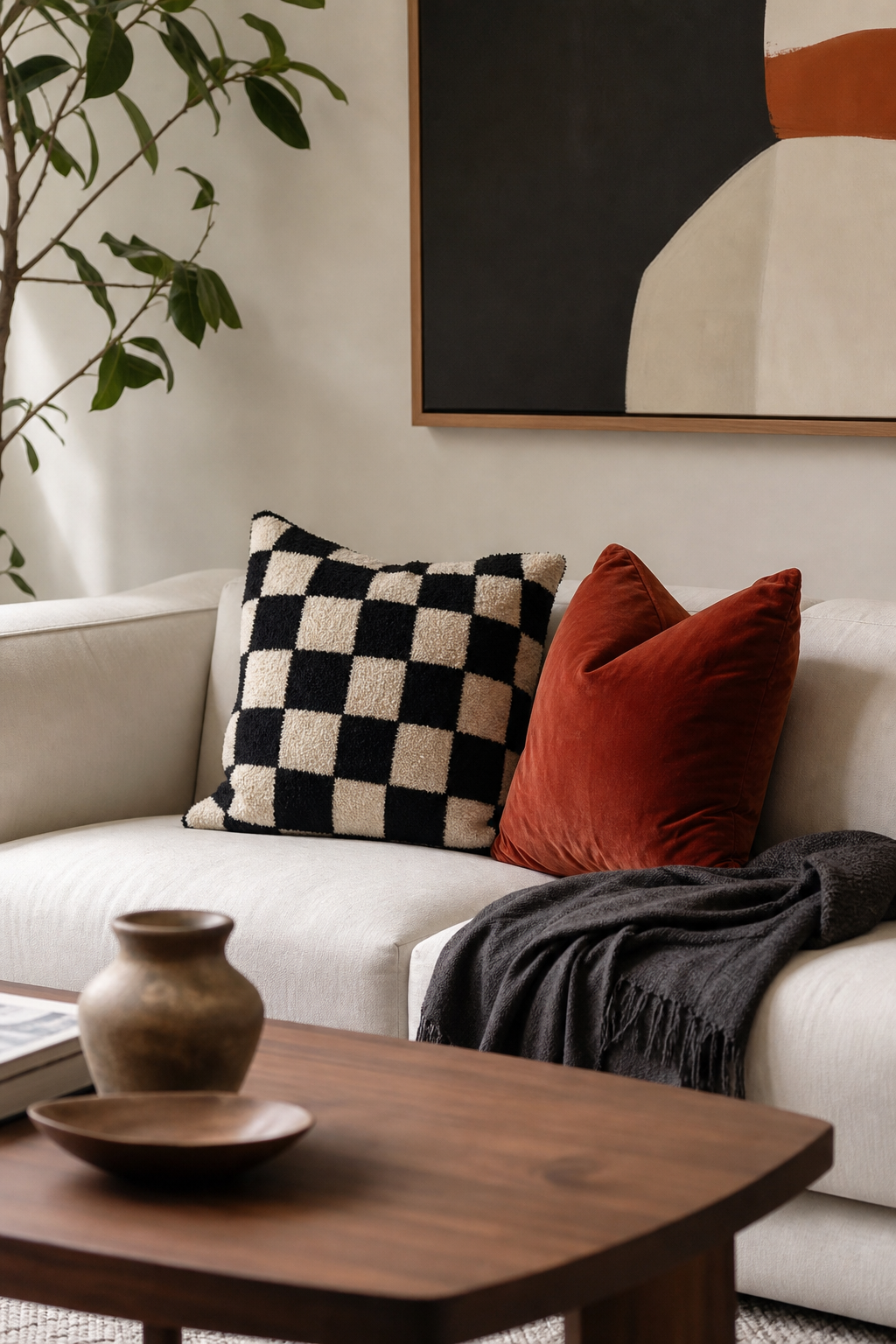
A cool room can still have a sense of humor. The secret is limiting playful pattern to one confident moment. Try a checkerboard pillow, striped ottoman, wavy lampshade, or patterned throw in colors that already belong to the room. This keeps the idea lively without making the design feel juvenile. Place the pattern where it can be changed easily if your taste shifts. A pillow is safer than a full sofa, and a small ottoman is easier than wallpaper. Surround the pattern with quieter solids so it reads as a deliberate accent. The result is a room that feels personal and current, with just enough visual spark to avoid becoming too polished or predictable.
Let One Oversized Plant Lead
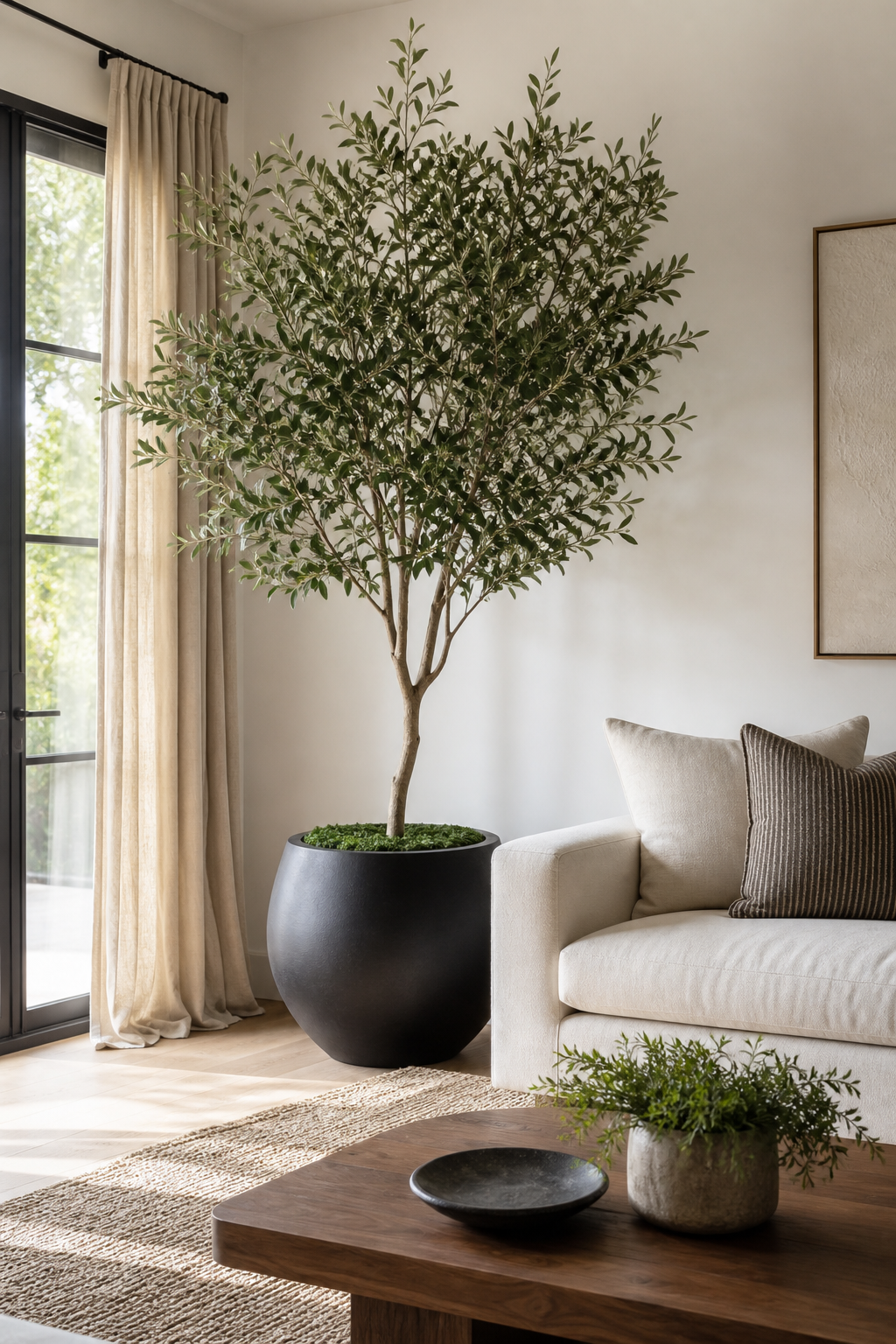
Plants can refresh a room instantly, but one oversized specimen often looks more sophisticated than many small pots. A tall olive tree, ficus, rubber plant, or sculptural palm brings height, movement, and natural color. Choose a planter with real presence: aged clay, matte black, stone, or warm ceramic. The plant should occupy a corner, flank a window, or soften a hard architectural edge. Give it enough empty wall around it so the silhouette can be appreciated. If you still want smaller plants, keep them secondary and grouped thoughtfully. The large plant becomes almost like living sculpture, making the room feel calmer and more layered without adding another pattern, color, or piece of furniture.
Upgrade the Window Hardware
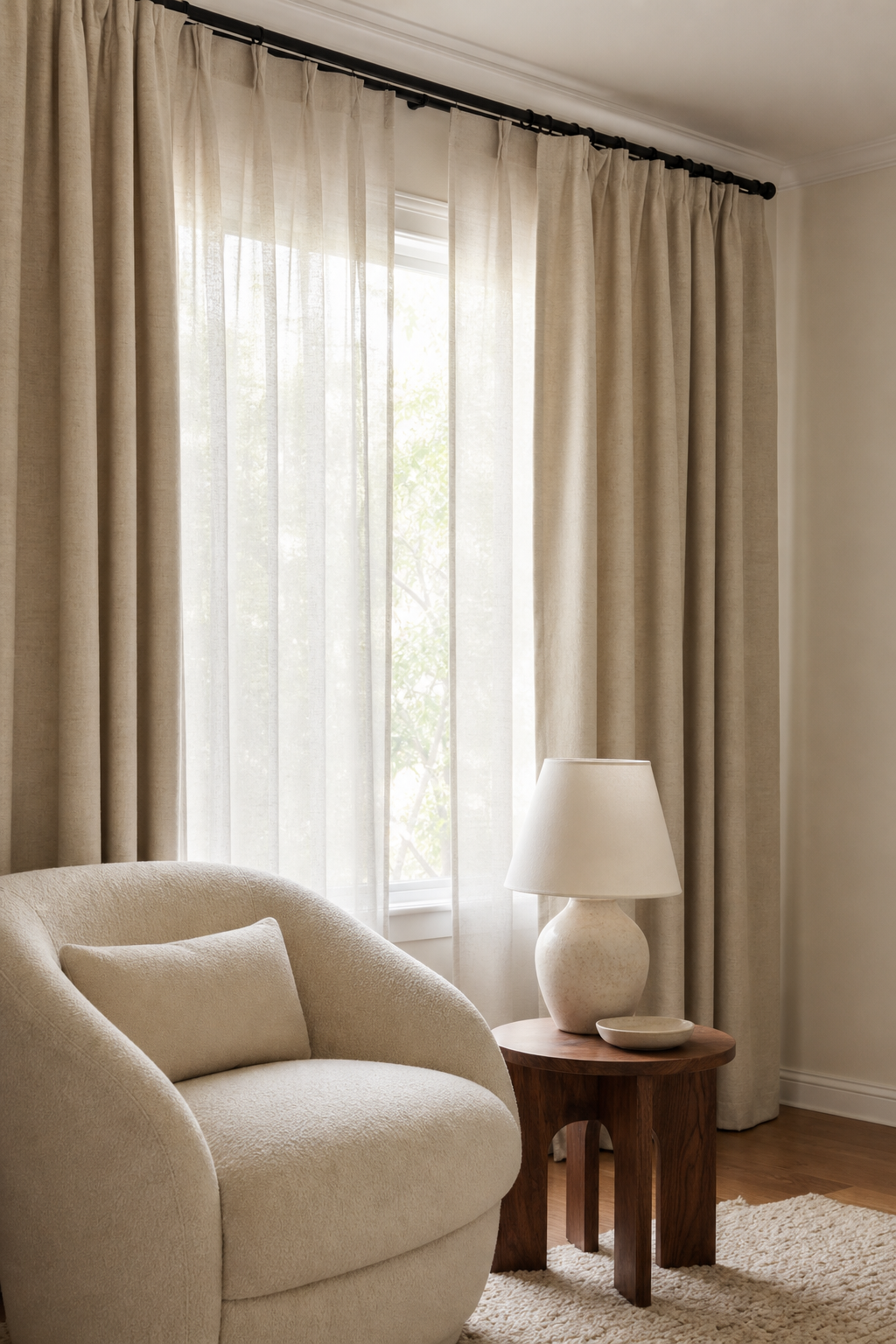
Window hardware is easy to ignore, yet it changes how finished a room feels. Thin black or aged brass rods can make simple linen curtains look custom, especially when mounted high and wide. Let the panels skim the floor rather than stopping awkwardly at the sill. Choose fabric with movement, not stiffness; linen, cotton-linen blends, or soft wool sheers bring a relaxed luxury. If privacy is important, layer sheers with heavier panels in the same color family. The hardware should relate to nearby accents, such as sconces, mirror frames, or furniture legs. This upgrade quietly improves proportion, light control, and texture. It is not loud decor, but it gives the room that polished, considered finish people notice.
Create a Record Console Moment
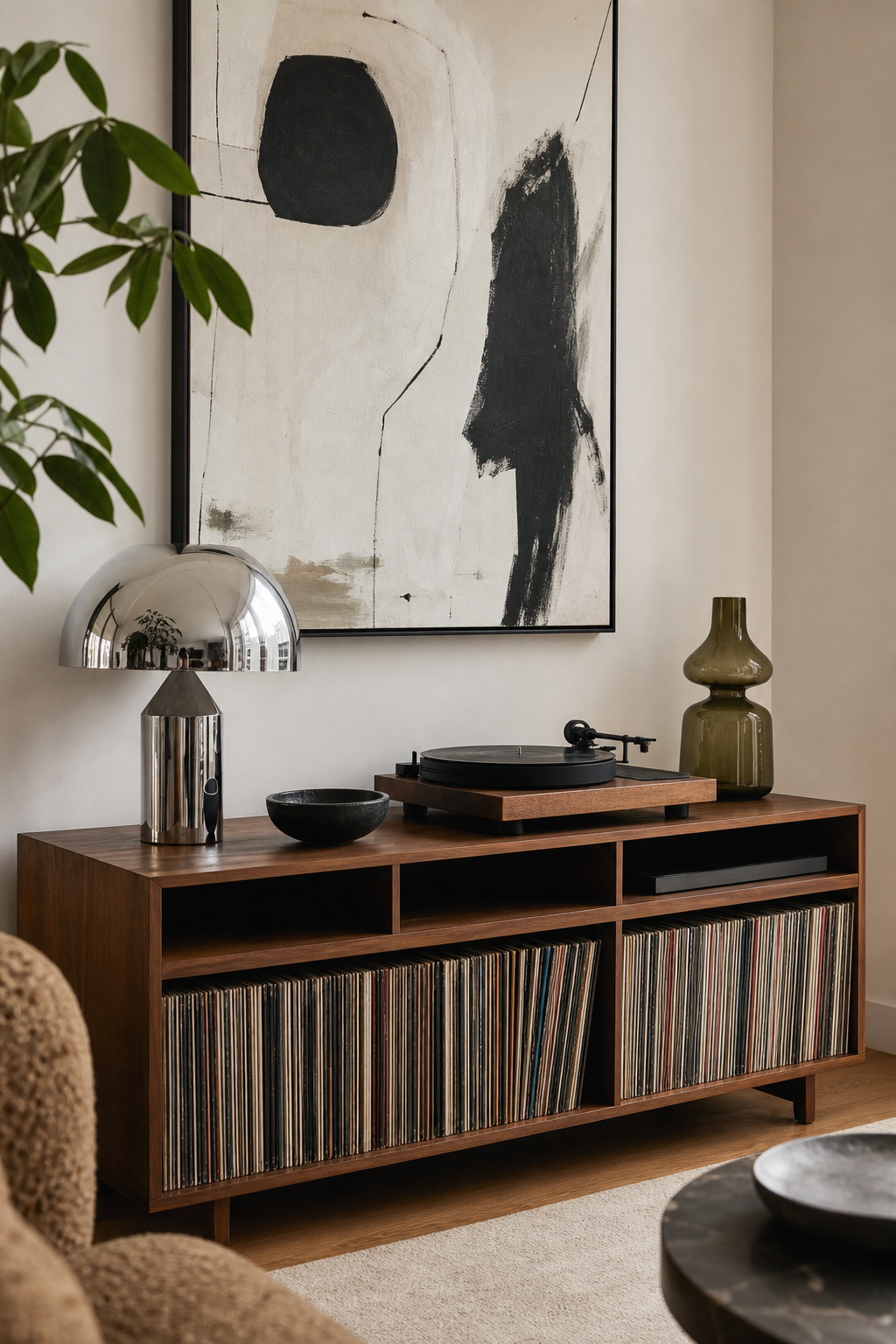
A record console gives a room personality without needing to become a theme. Use a low wood cabinet or vintage-inspired media unit, then style it like a quiet listening corner. Keep album covers turned away or abstracted if you want a cleaner look, and let the materials carry the mood: walnut, black metal, woven speakers, warm lamp light, and a piece of art above. Add a chair nearby if space allows, but avoid crowding the console with too many objects. A turntable, small stack of records, ceramic bowl, and lamp are enough. This kind of vignette makes the room feel lived in and specific, which is often what separates cool decor from purely pretty decor.
Edit the Layout for Negative Space
The final refresh is editing. Cool room decor depends as much on what you remove as what you add. Step back and look for blocked pathways, crowded side tables, too many small objects, or furniture pushed into every corner. Negative space lets special pieces feel important: the sculptural chair, the art, the plant, the rug. Pull seating into a conversational arrangement, leave clear walking room, and simplify surfaces until each one has a purpose. This does not mean the room should feel empty. It means every element should have enough room to breathe. When the layout is edited well, even familiar furniture looks more intentional, and the entire space feels calmer, cleaner, and more expensive.
A successful room refresh usually comes from sharper choices, not more things. Choose the pieces that add shape, light, texture, and contrast, then leave enough space for them to matter. With a few cool room decor updates, your home can feel fresher, more personal, and more luxurious without losing its comfort.