22 Wall Hanging Ideas To Give Blank Walls More Personality
Blank walls can make a beautiful room feel unfinished, but the right wall hanging gives the space shape, texture, and a stronger point of view. The best ideas are not only decorative. They balance scale, echo the room’s materials, and create a visual pause above sofas, beds, consoles, benches, or dining furniture. From woven textiles and sculptural baskets to mirrors, shelves, plates, and architectural salvage, these wall hanging ideas help a room feel collected without becoming crowded.
Oversized Woven Textile
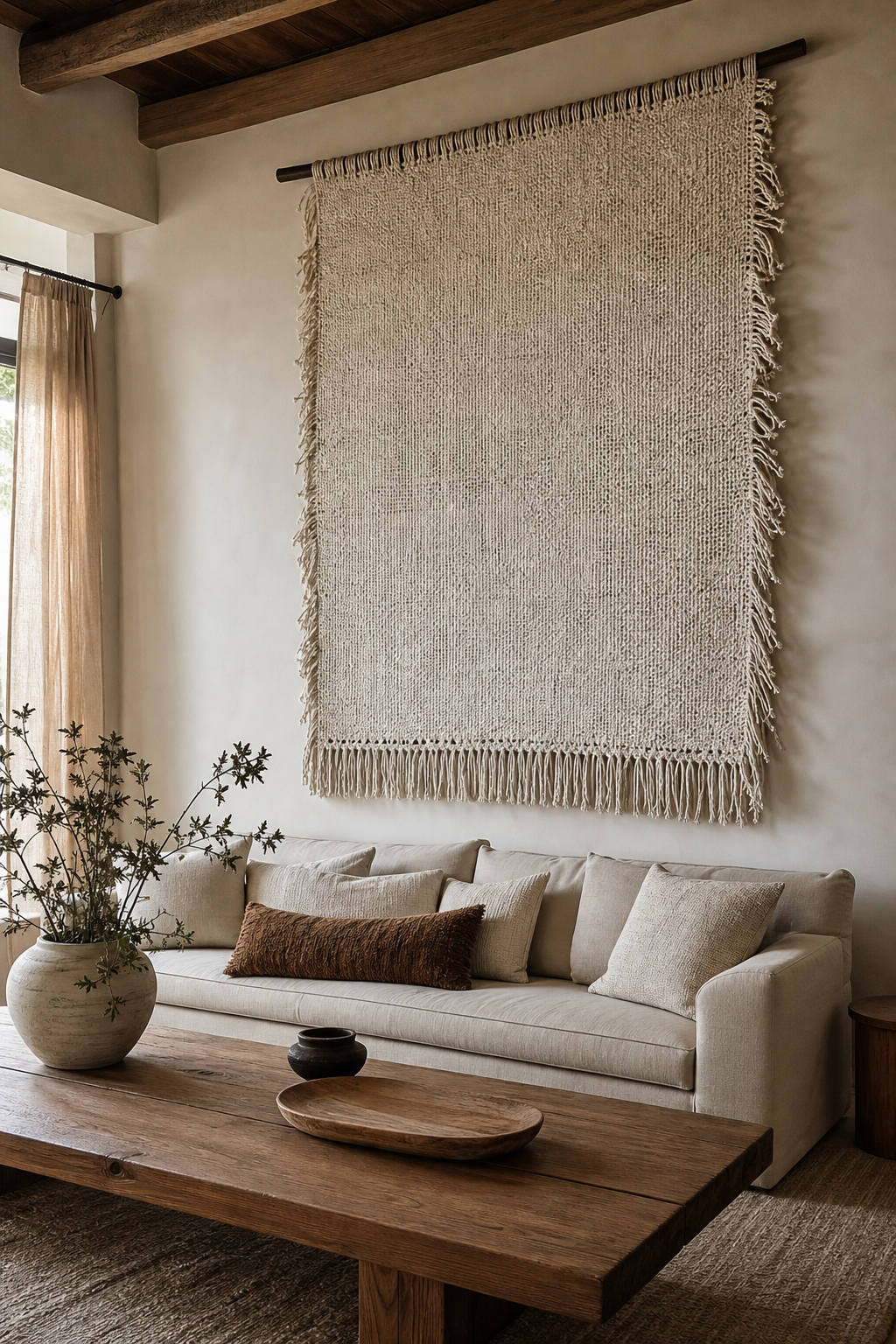
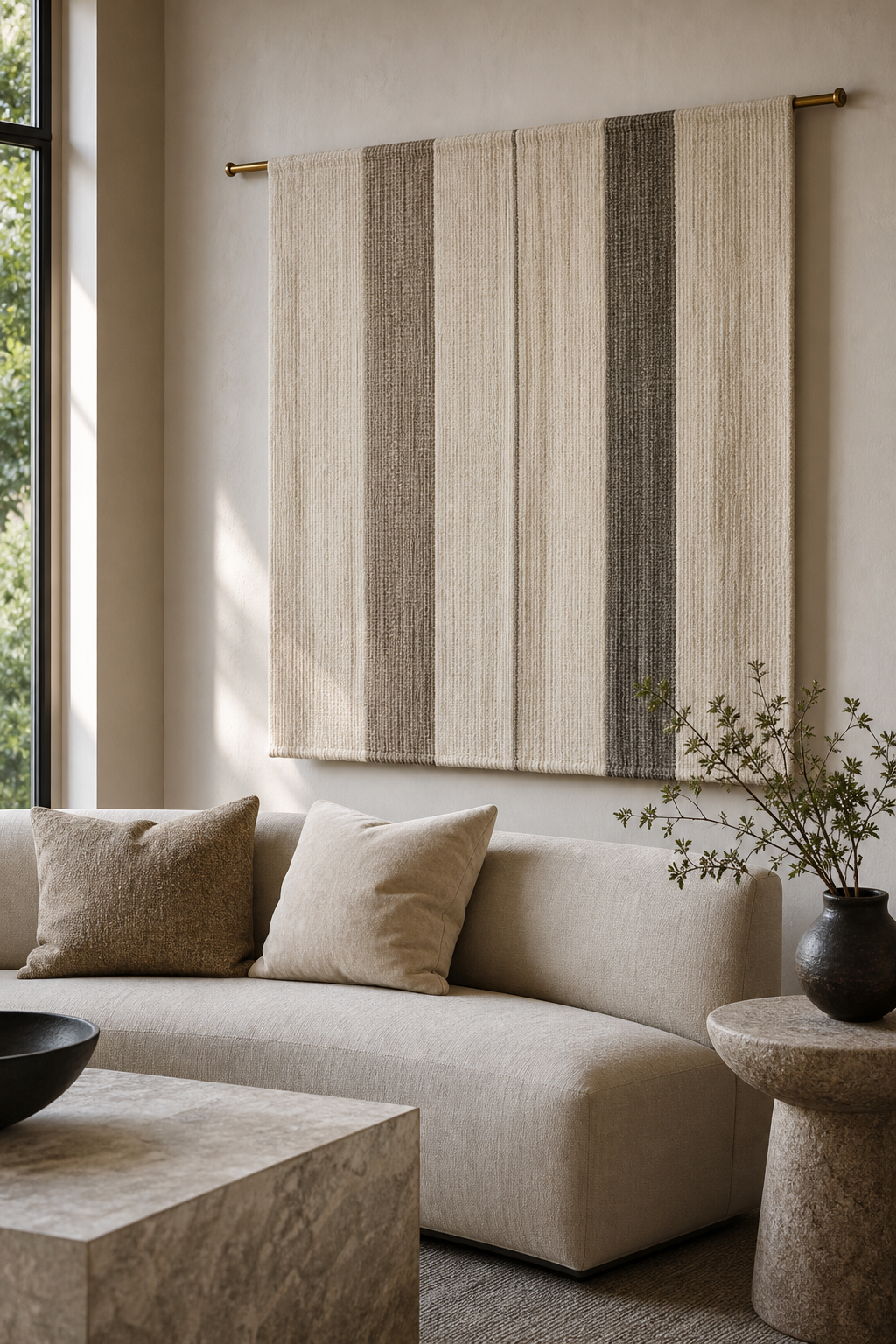
An oversized woven textile is one of the easiest ways to soften a blank wall, especially in a living room or bedroom with hard edges. Choose a piece with visible handwork, fringe, or subtle raised pattern so the wall gains depth without needing loud color. A neutral wool, cotton, or linen hanging works beautifully above a sofa, where it can replace framed art and add acoustic softness. Keep the surrounding furniture clean and grounded with a low wood table, a textured rug, and a few ceramic accents. The result feels warm, relaxed, and intentional instead of flat. A nearby lamp or branch arrangement can echo the vertical movement and make the textile feel connected to the rest of the room.
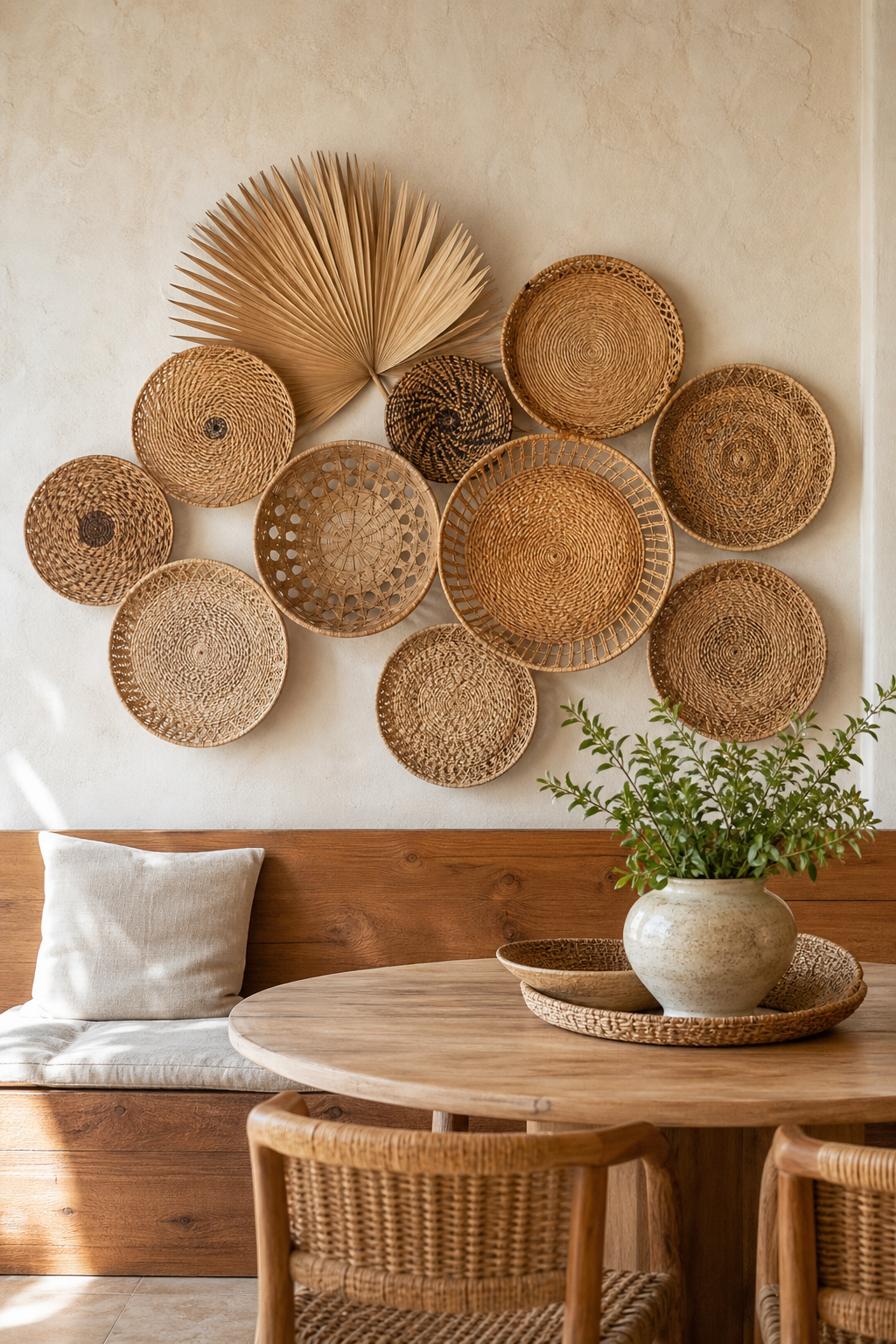
Sculptural Basket Wall
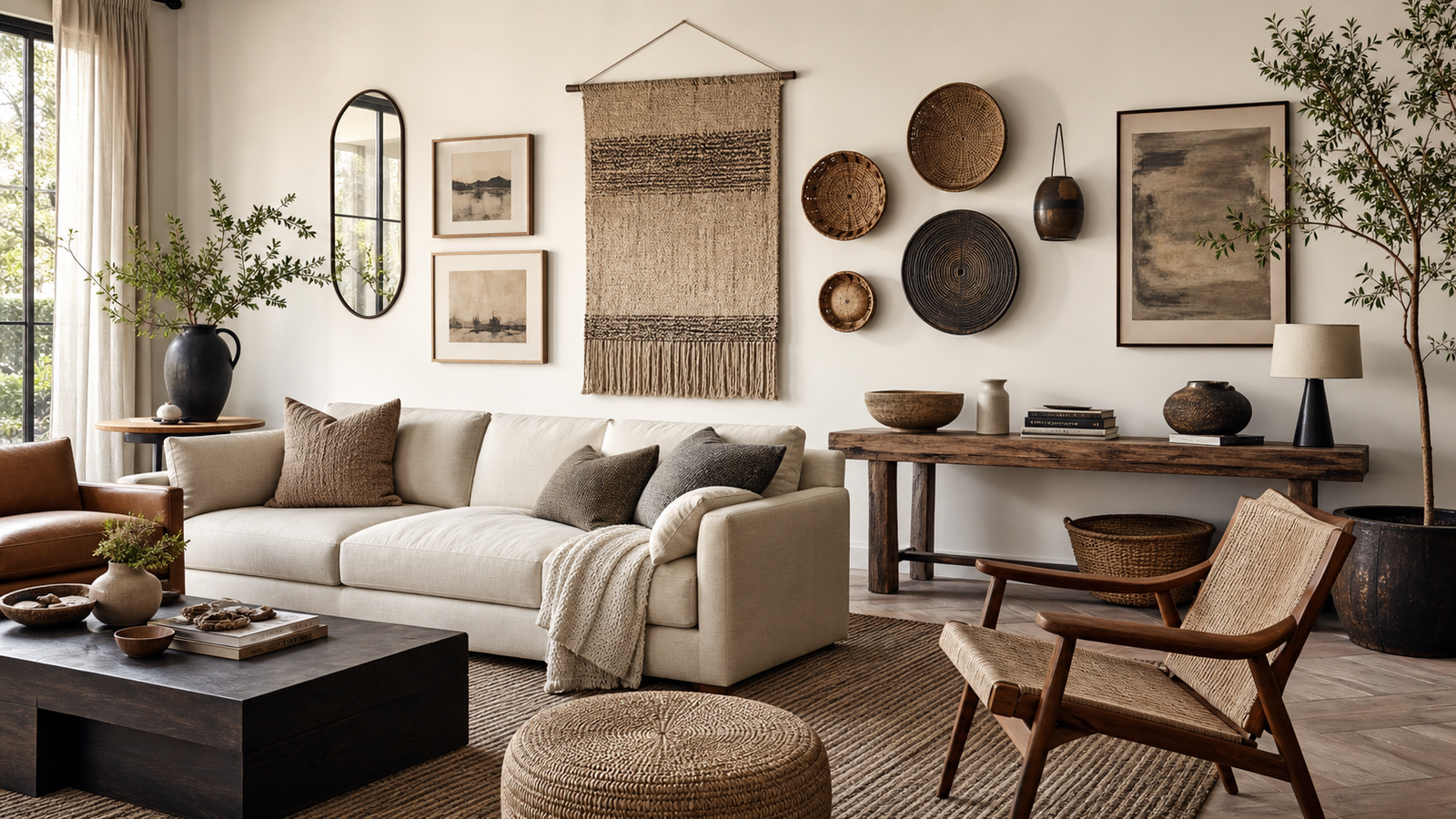
A basket wall brings movement, texture, and a handmade mood to a space that needs personality. Instead of lining baskets in a perfect grid, vary the diameters and let the arrangement drift slightly wider than the furniture below it. Natural fibers such as seagrass, rattan, raffia, and palm leaf create tonal variation, while one or two darker pieces add contrast. This idea works especially well in dining rooms, breakfast nooks, and entryways because the baskets feel welcoming but not fragile. Leave breathing room between each piece so the display looks curated rather than packed. For extra polish, repeat one basket tone in the seat cushion, wood finish, or tabletop accessory below the arrangement.
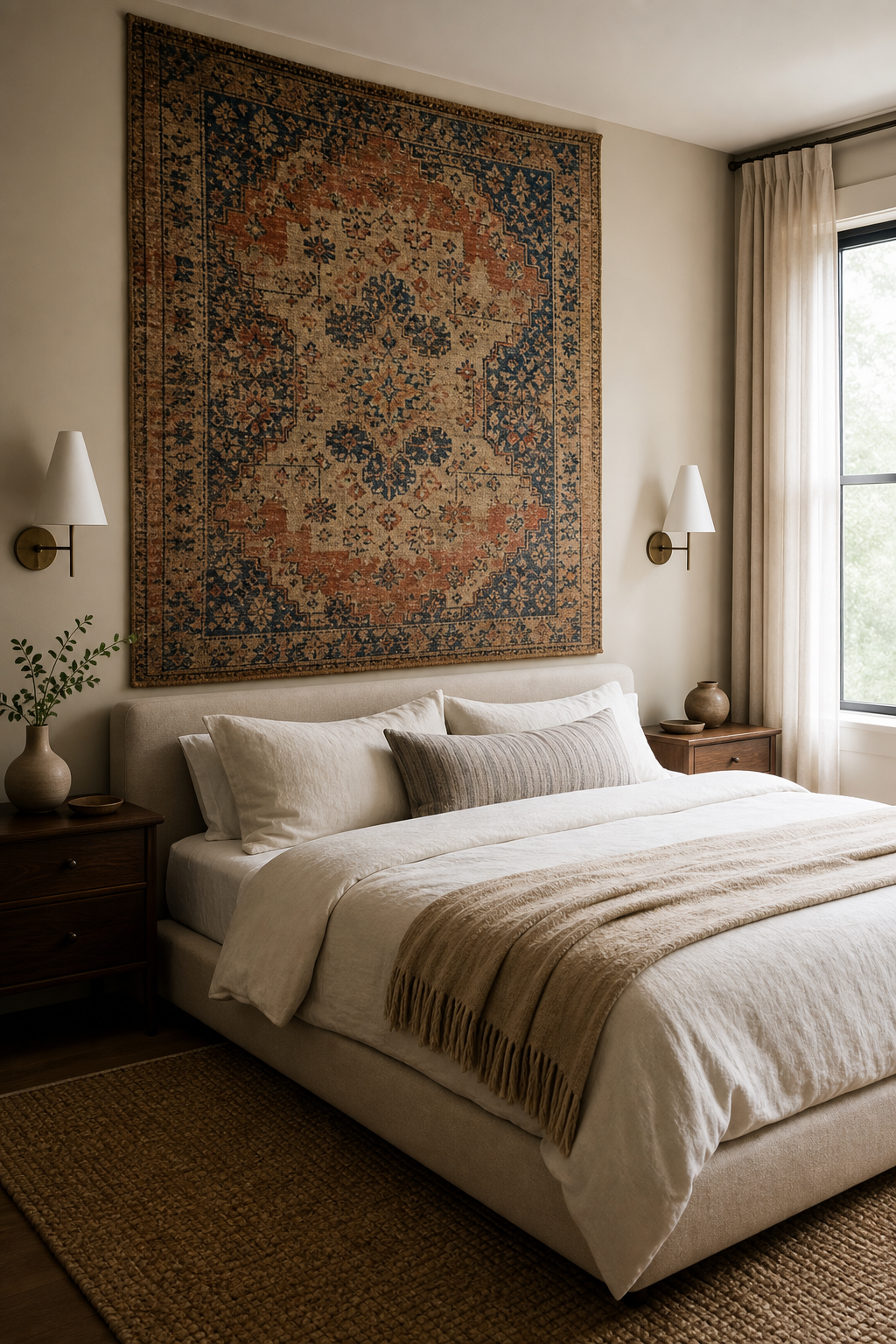
Vintage Rug as Wall Art
A vintage rug can become dramatic wall art when the pattern is too beautiful to stay underfoot. Look for a flatweave, kilim, or faded Persian-style piece with enough structure to hang smoothly. Over a bed or console, the textile adds color, history, and a layered feeling that framed prints sometimes cannot match. The key is support: mount it with a hidden rod or proper textile hanger so the top line stays straight. Pair the rug with simpler bedding or upholstery, then repeat one of its quieter colors elsewhere in the room for a finished designer effect. A slim picture light or nearby sconce can highlight the weave and make the piece feel gallery-worthy at night.
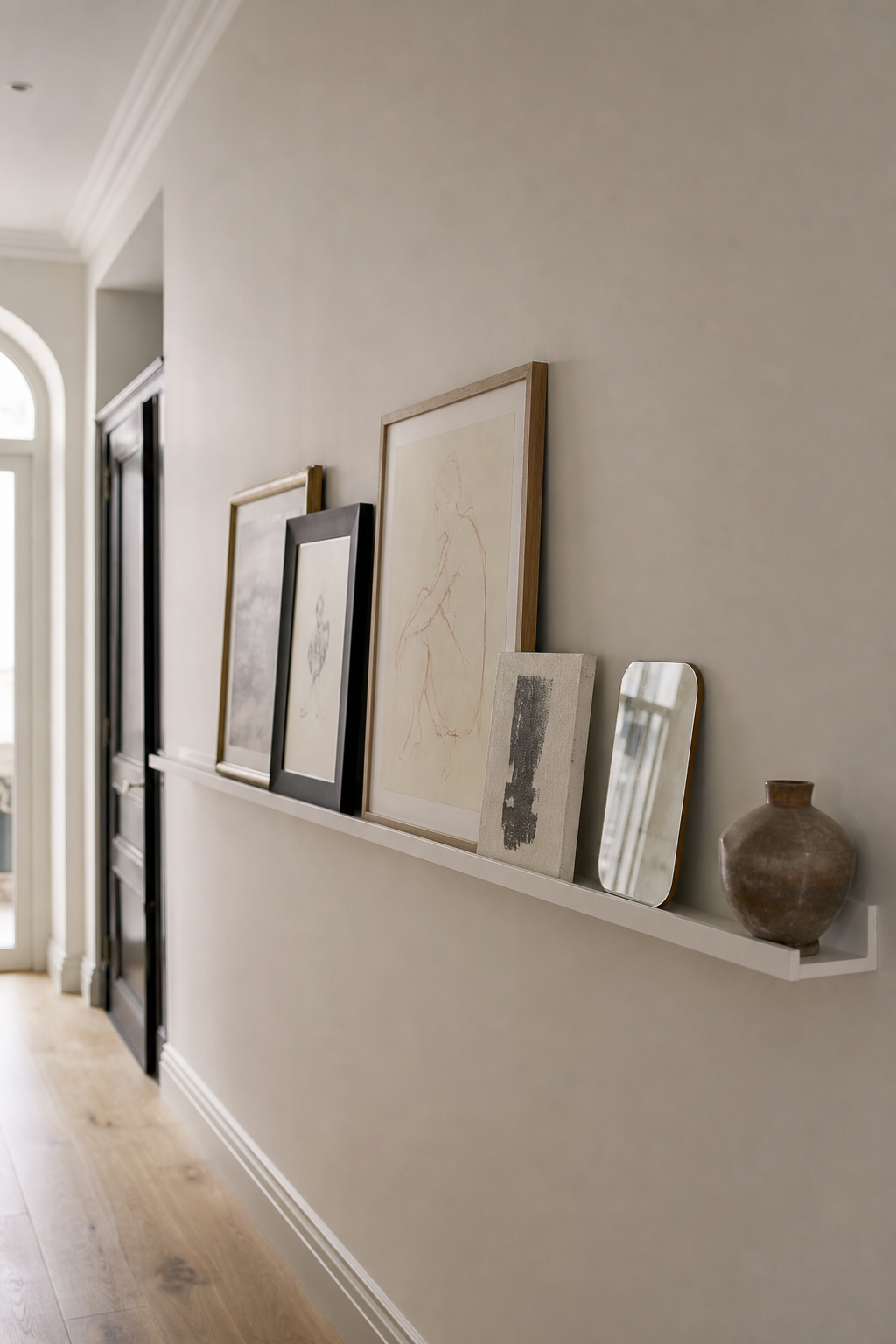
Slim Picture Ledge
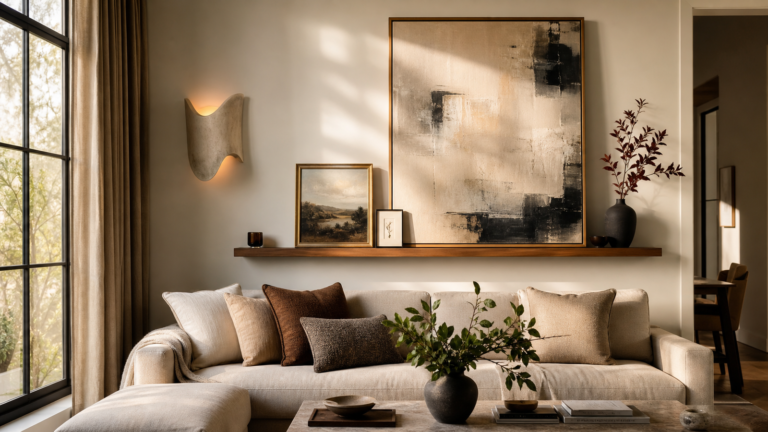
A slim picture ledge gives a blank wall flexibility because art, small objects, and frames can shift with the season. Install one long ledge above a sofa or several shorter ledges in a hallway, then layer pieces of different heights so the display has rhythm. Mix framed sketches, small canvases, a leaning mirror, and one tactile object such as a small vessel or carved wood piece. Keep the ledge shallow and the color close to the wall or nearby trim for a built-in look. It is ideal for renters because fewer holes can still create a collected wall. Change only one or two pieces at a time so the wall keeps its relaxed, layered identity.
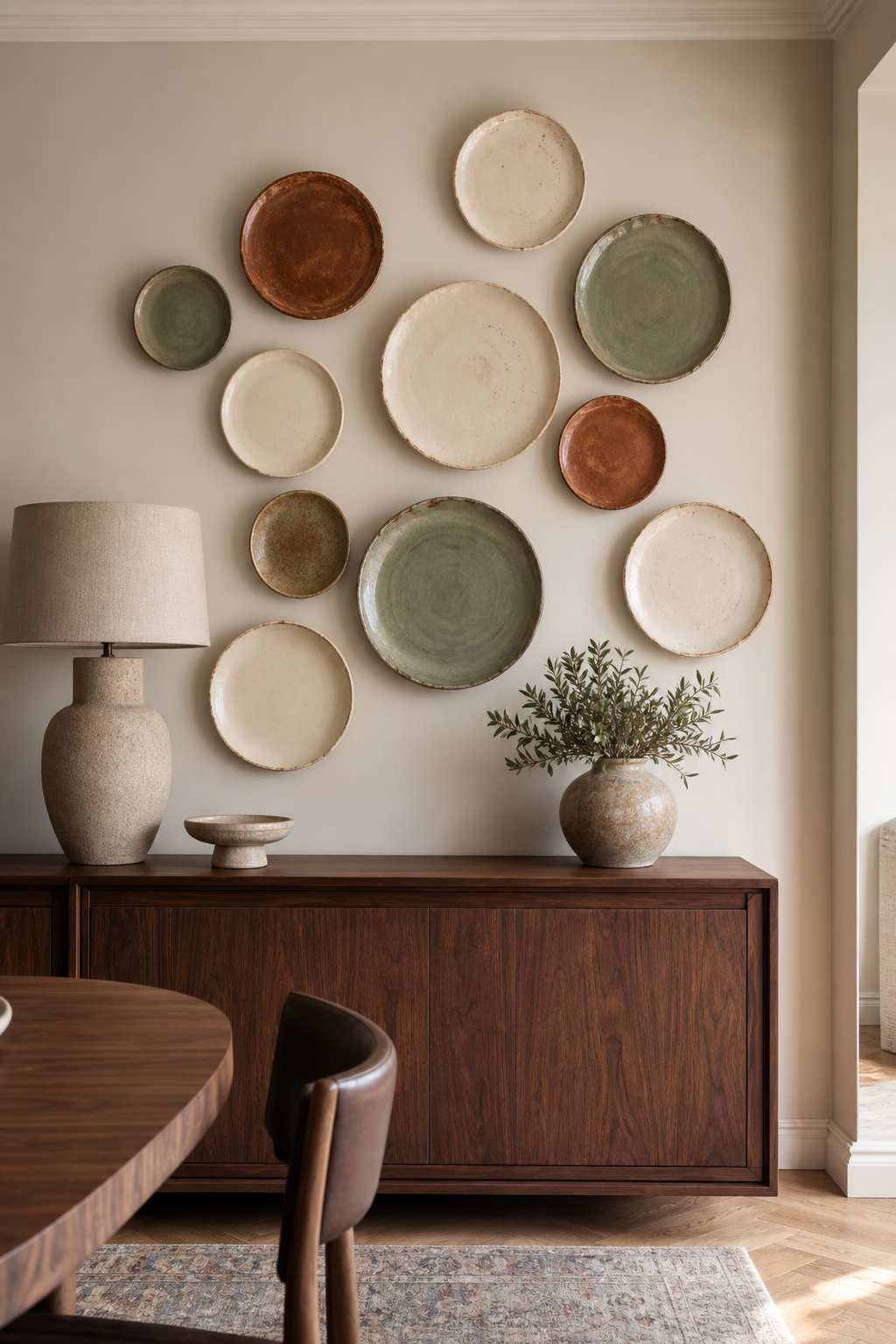
Ceramic Wall Plates
Ceramic plates can feel fresh when they are treated as sculptural objects rather than formal collections. Choose plates with matte glazes, irregular rims, hand-painted borders, or simple tonal patterns. A small group above a console or sideboard can add charm to a dining room, while a larger installation can brighten a kitchen wall. Vary the sizes, but keep the palette controlled so the arrangement feels sophisticated. The best displays include a little negative space between pieces, allowing each plate’s shape and shadow to show. Use proper plate hangers so the final effect looks secure and polished. A nearby bowl, vase, or lamp in a related glaze helps the wall connect naturally to the room below.
Macrame With Clean Lines
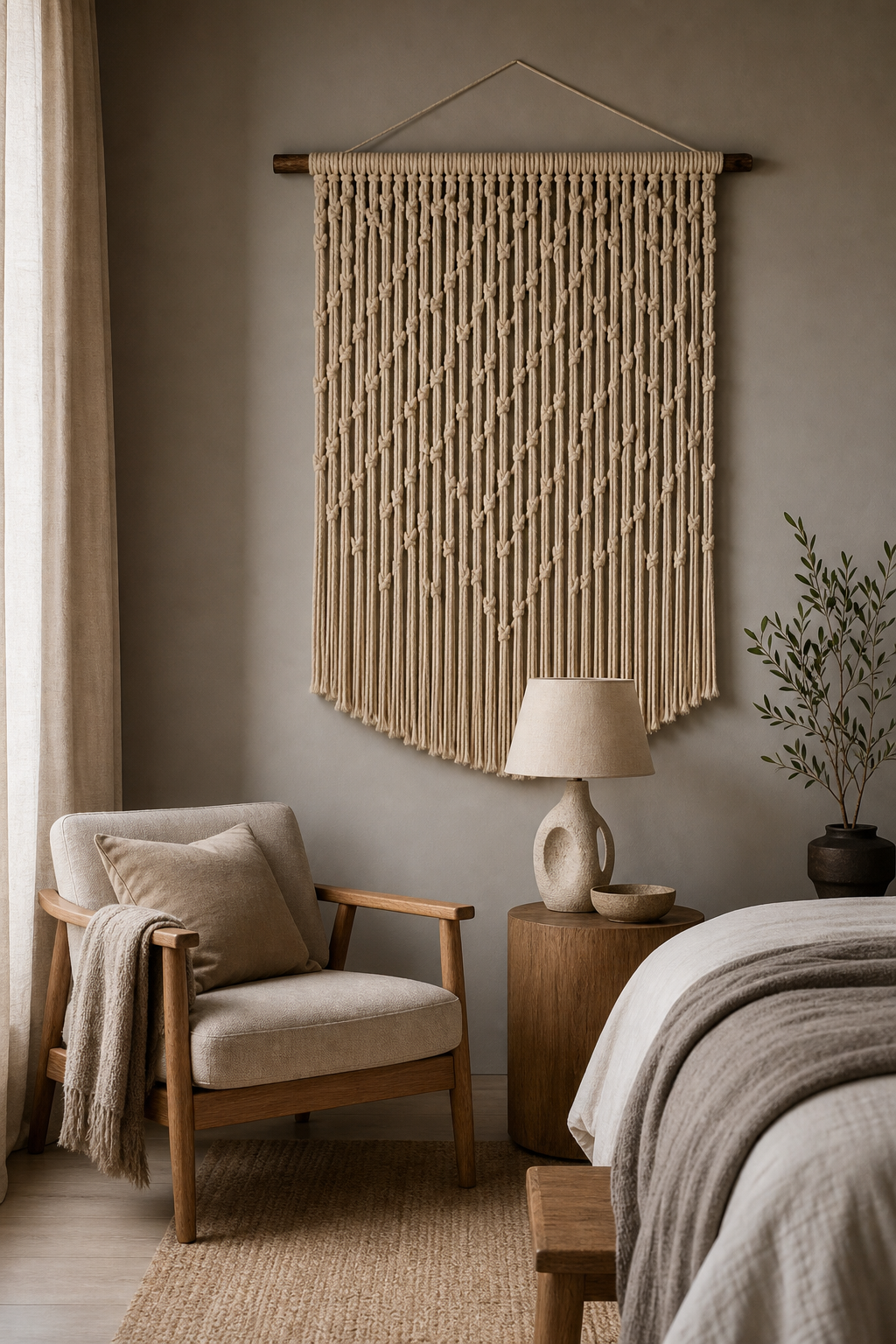
Macrame works best in a modern home when the knots are graphic, restrained, and scaled generously. Instead of a small busy piece, choose a larger hanging with simple vertical lines, soft fringe, and a natural cotton tone. This gives the wall texture without making the room feel overly bohemian. It is especially effective in bedrooms, reading corners, and nurseries where softness matters. Hang it with the top rod slightly wider than the furniture below, then balance the handcrafted texture with crisp bedding, a sculptural lamp, or tailored upholstery. The contrast keeps the look grown-up and edited. Keep the mounting hardware simple so the knots and fringe remain the main visual feature.
Large Round Mirror
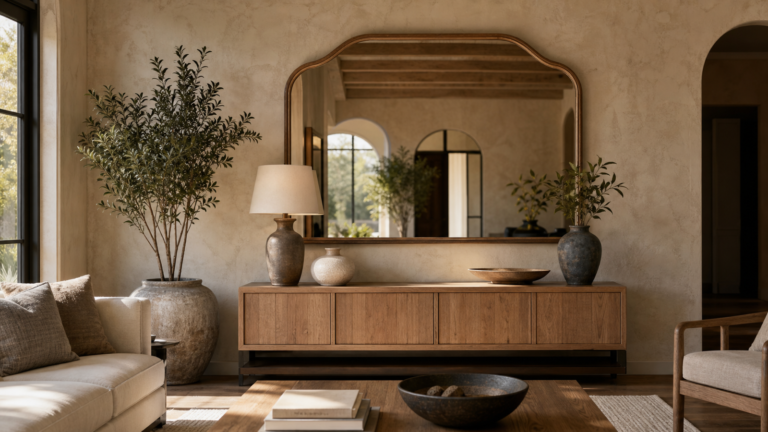
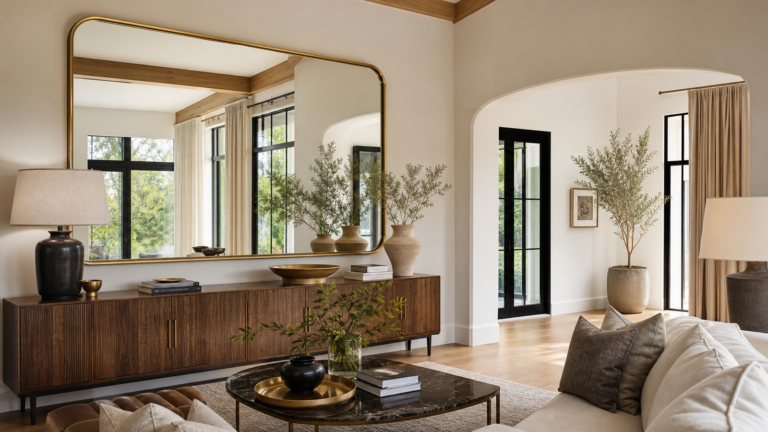
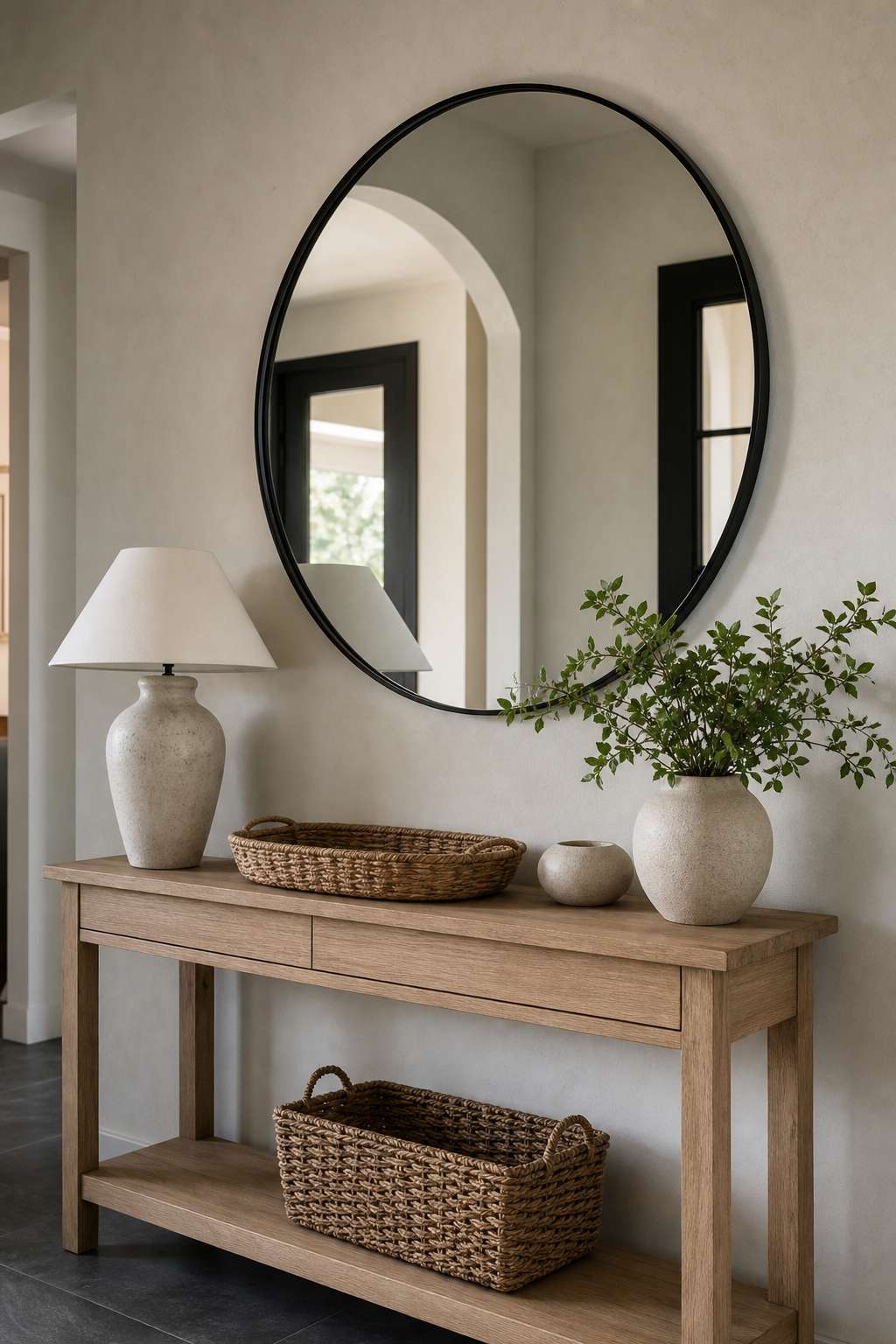
A large round mirror is a practical wall hanging that also softens square architecture. It works above a console, fireplace, dresser, or narrow entry table because the circular shape breaks up straight furniture lines. Choose a frame material that belongs to the room, such as black metal for contrast, oak for warmth, brass for polish, or plaster for a quiet tonal look. Hang it low enough to relate to the furniture below, not floating near the ceiling. The mirror will bounce light into the room, double the sense of depth, and make even a small wall feel considered. A small tray, lamp, or vessel below it can help create a balanced vignette instead of a bare reflection.
Framed Textile Panel
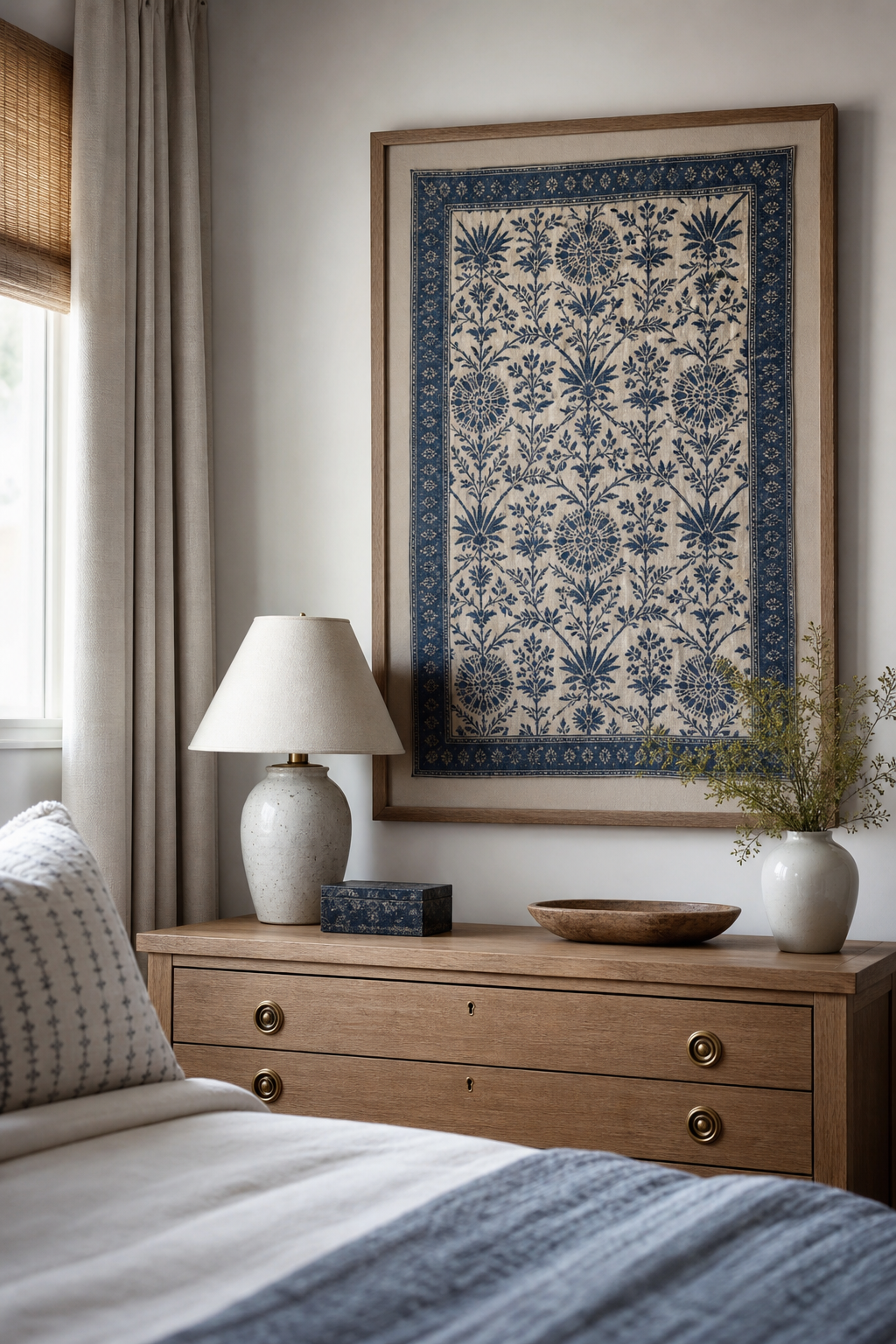
Framing a textile panel creates a refined wall hanging with the softness of fabric and the structure of art. A block-printed remnant, embroidered cloth, antique scarf, or handwoven panel can become the room’s most personal piece. Use a simple frame and generous matting or float the fabric so its edges remain visible. This idea works beautifully in guest bedrooms, powder rooms, and hallways because it gives small walls detail without demanding a large collection. Choose colors already present in the room, then let the texture do most of the work. It feels collected, quiet, and custom. This is also a smart way to preserve a meaningful fabric while giving it daily presence.
Minimal Wood Peg Rail
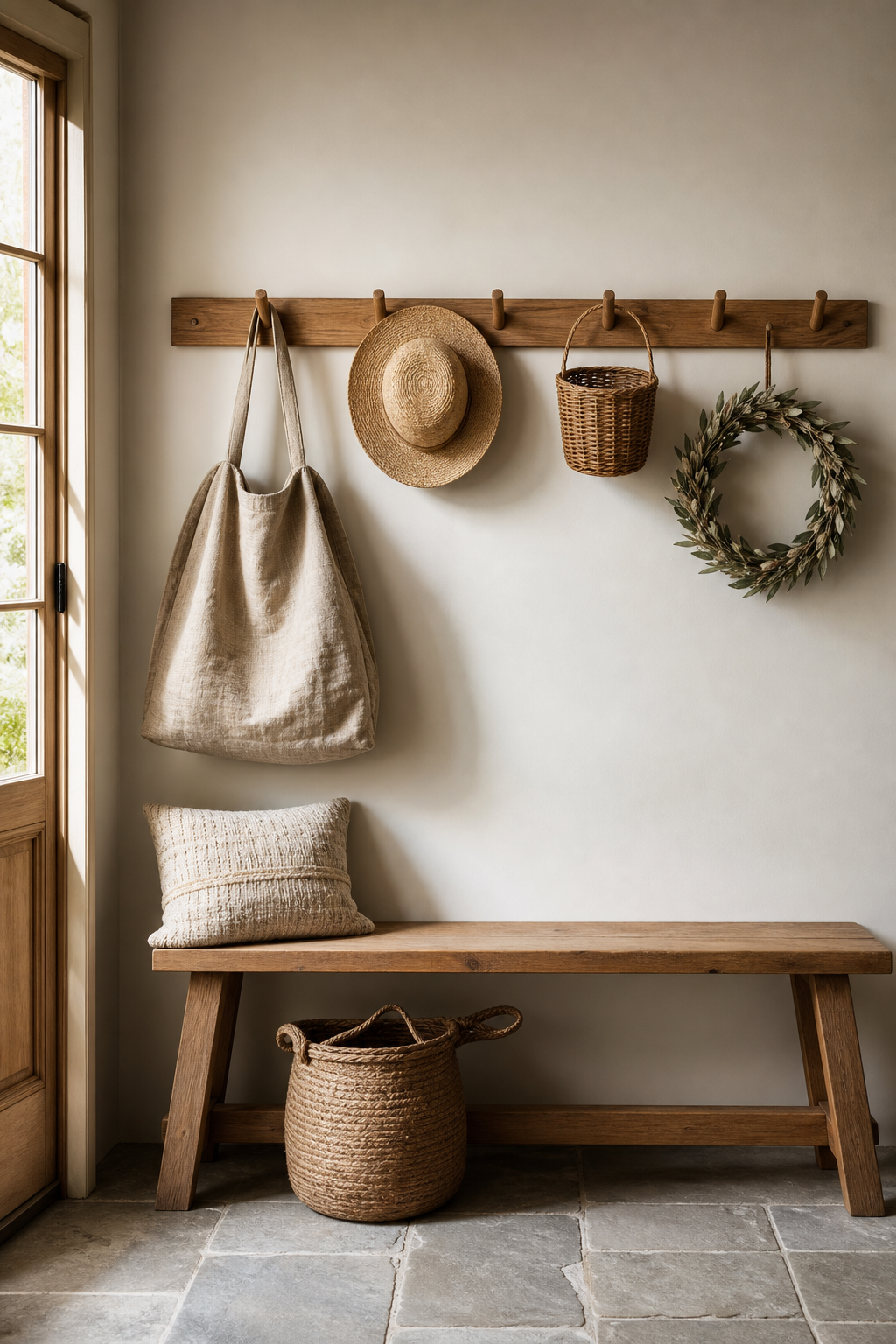
A wood peg rail turns a blank wall into a useful display without making it feel busy. In an entryway, mudroom, kitchen, or bedroom, it can hold hats, market bags, linen aprons, small baskets, or a favorite wreath. The trick is restraint: leave a few pegs empty so the rail reads as design, not overflow storage. Oak, maple, or walnut pegs add natural warmth and can echo furniture legs or flooring. Mount the rail at a comfortable height and keep the items tonal. The wall gains function, texture, and a casual rhythm that still feels tidy. A small bench, stool, or tray below the rail gives dropped items a natural landing place.
Metal Wall Sculpture
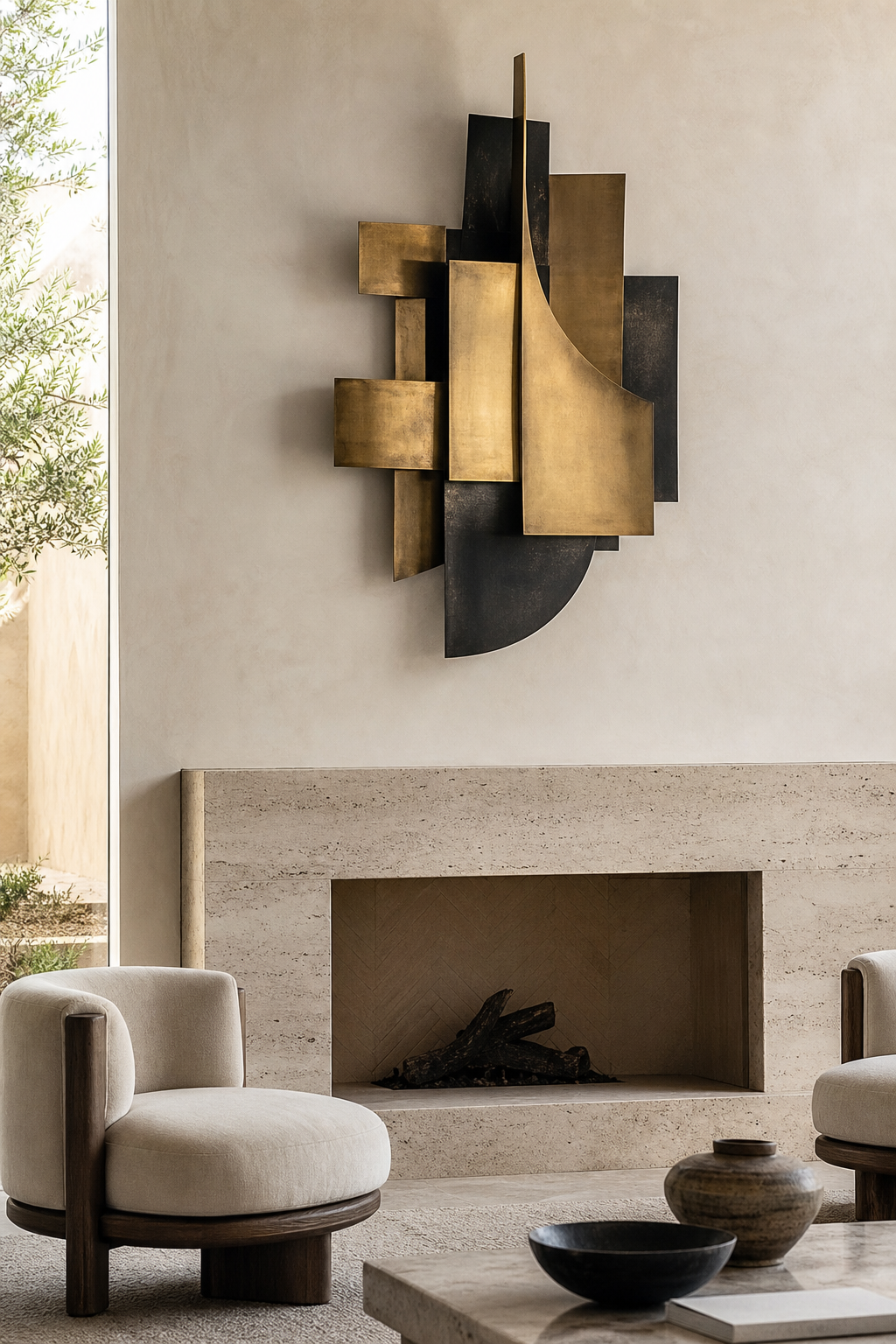
A metal wall sculpture gives a room dimension without relying on color or pattern. Look for thin rods, hammered discs, layered brass shapes, or blackened steel forms that cast soft shadows as light changes throughout the day. This kind of wall hanging is strong above a fireplace, console, or dining banquette because it adds a gallery-like note while staying clean. Keep the furniture below simple so the sculpture can breathe. Warm metals suit neutral rooms, while black metal sharpens pale walls. Either way, the wall feels more architectural and less like an empty surface waiting for art. Aim a lamp nearby if you want the shadows to become part of the evening atmosphere.
Botanical Pressings
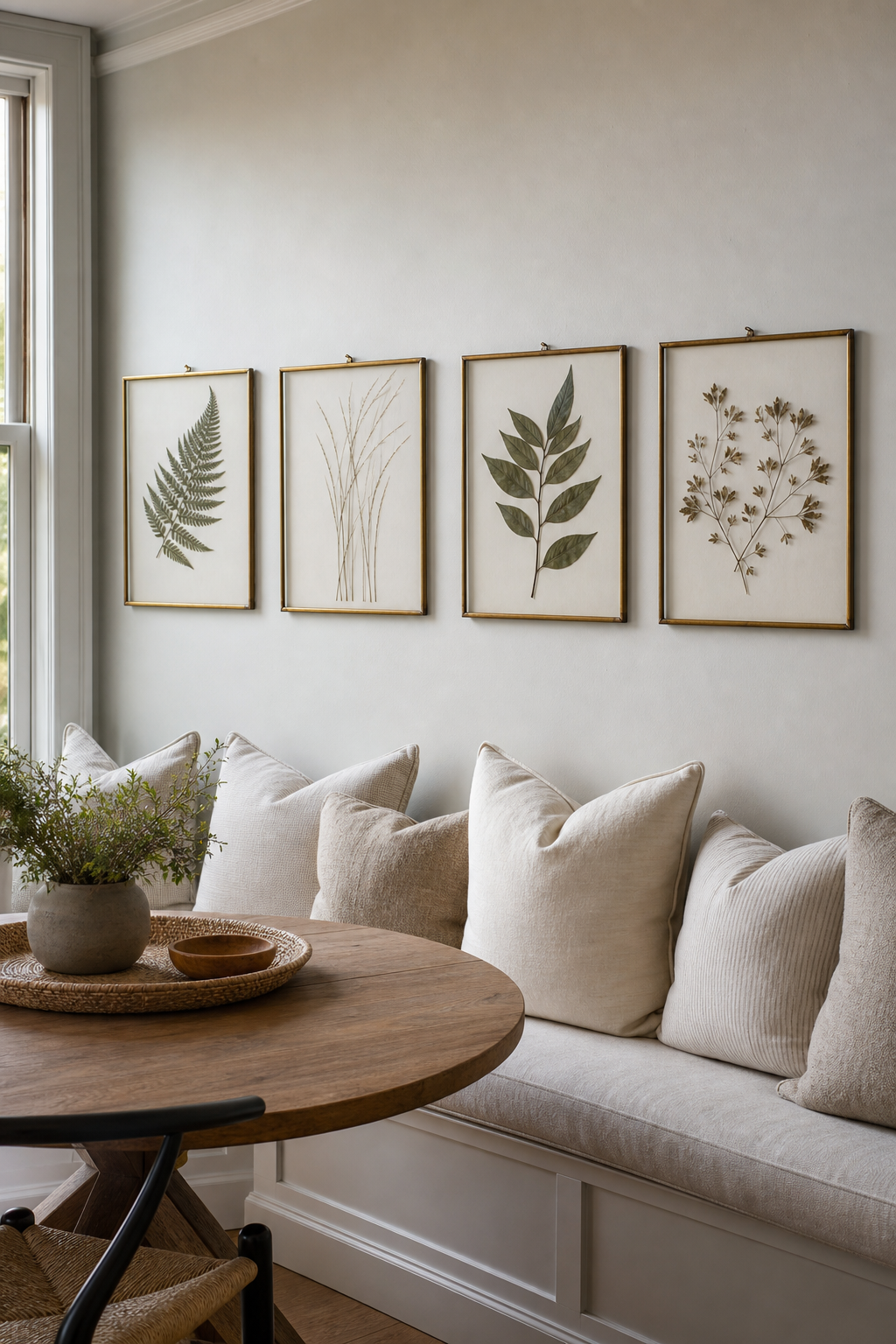
Pressed botanicals bring a delicate, natural quality to a blank wall, especially when displayed with enough scale. Rather than scattering many tiny frames, choose a neat series of larger frames with pale mats and simple wood or brass edges. Ferns, grasses, leaves, and wildflower stems look timeless in bedrooms, breakfast areas, and garden rooms. The repetition creates calm, while the organic shapes keep the wall from feeling stiff. Hang the frames in a clean row or grid, then pair them with linen, rattan, or aged wood. It is a quiet way to add pattern without visual noise. The frames can also bridge indoor plants and wood furniture, making the whole corner feel more connected.
Layered Gallery Wall
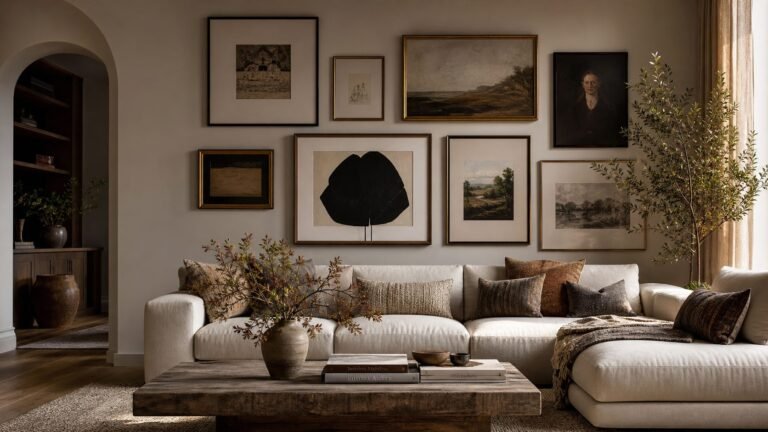
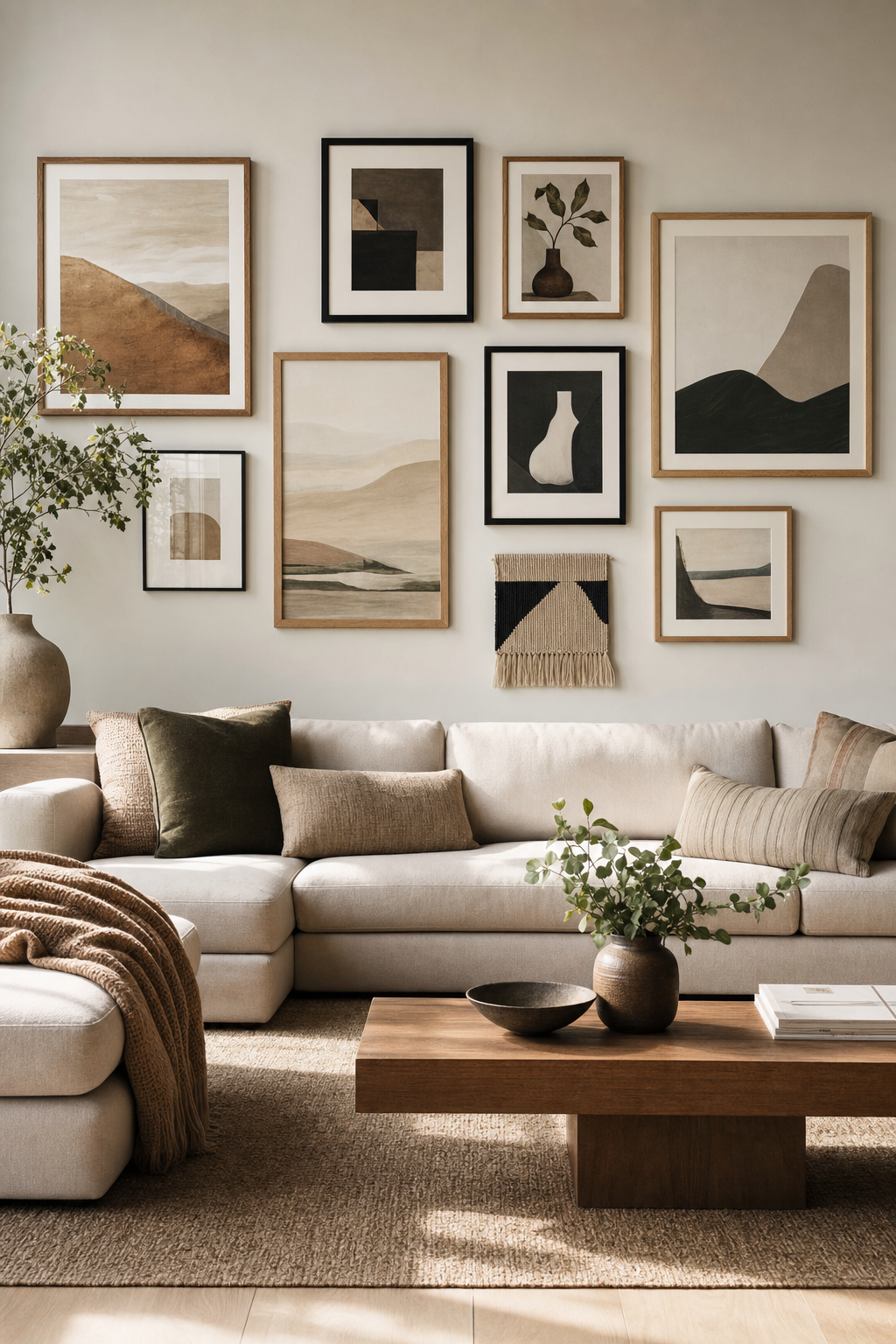
A layered gallery wall is a classic solution for a long blank wall, but it looks best when the mix feels intentional. Start with one larger anchor piece, then add smaller frames in varied sizes around it. Combine photography, sketches, abstract paintings, and one textured element such as a small textile or carved plaque. Keep the frames related through finish, thickness, or color so the wall does not become chaotic. Lay the arrangement on the floor first, leaving consistent gaps. Above a sofa or staircase, this approach tells a richer story than one lonely print ever could. Repeat a few mat colors or frame finishes so the collection feels evolved rather than random.
Carved Wood Panel
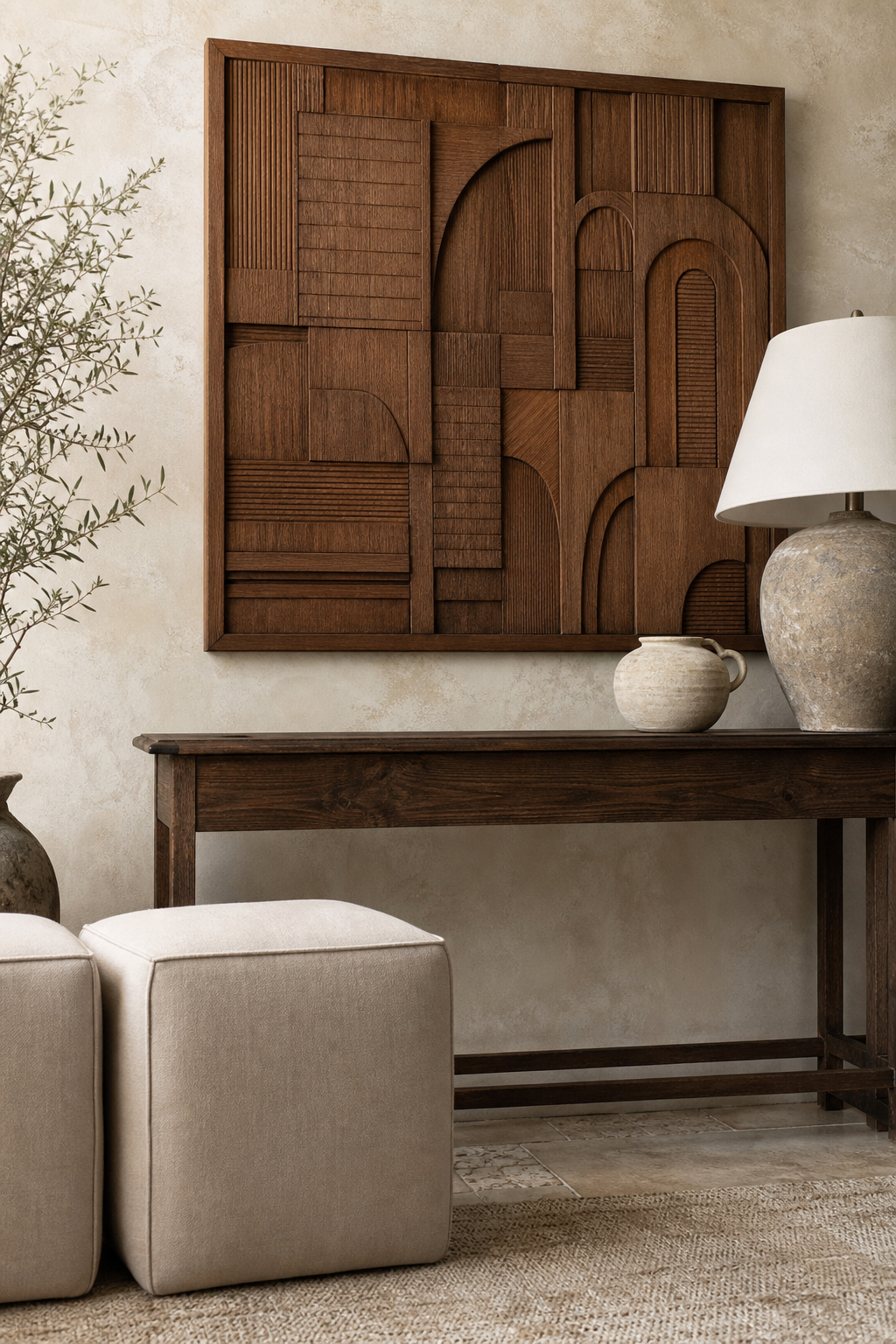
A carved wood panel adds craftsmanship and shadow to a plain wall, making it especially useful in rooms with simple color palettes. Look for panels with geometric, floral, or architectural relief rather than overly ornate carving. A single large panel can sit above a console, while two matching panels can flank a bed or fireplace. The natural grain brings warmth, and the carved surface changes throughout the day as light moves across it. Pair it with linen upholstery, stone accessories, and quiet ceramics so the wood remains the focal point. It feels grounded, global, and substantial. Its depth is especially effective on pale walls, where every groove creates a subtle line of shadow.
Fabric Canopy Behind the Bed
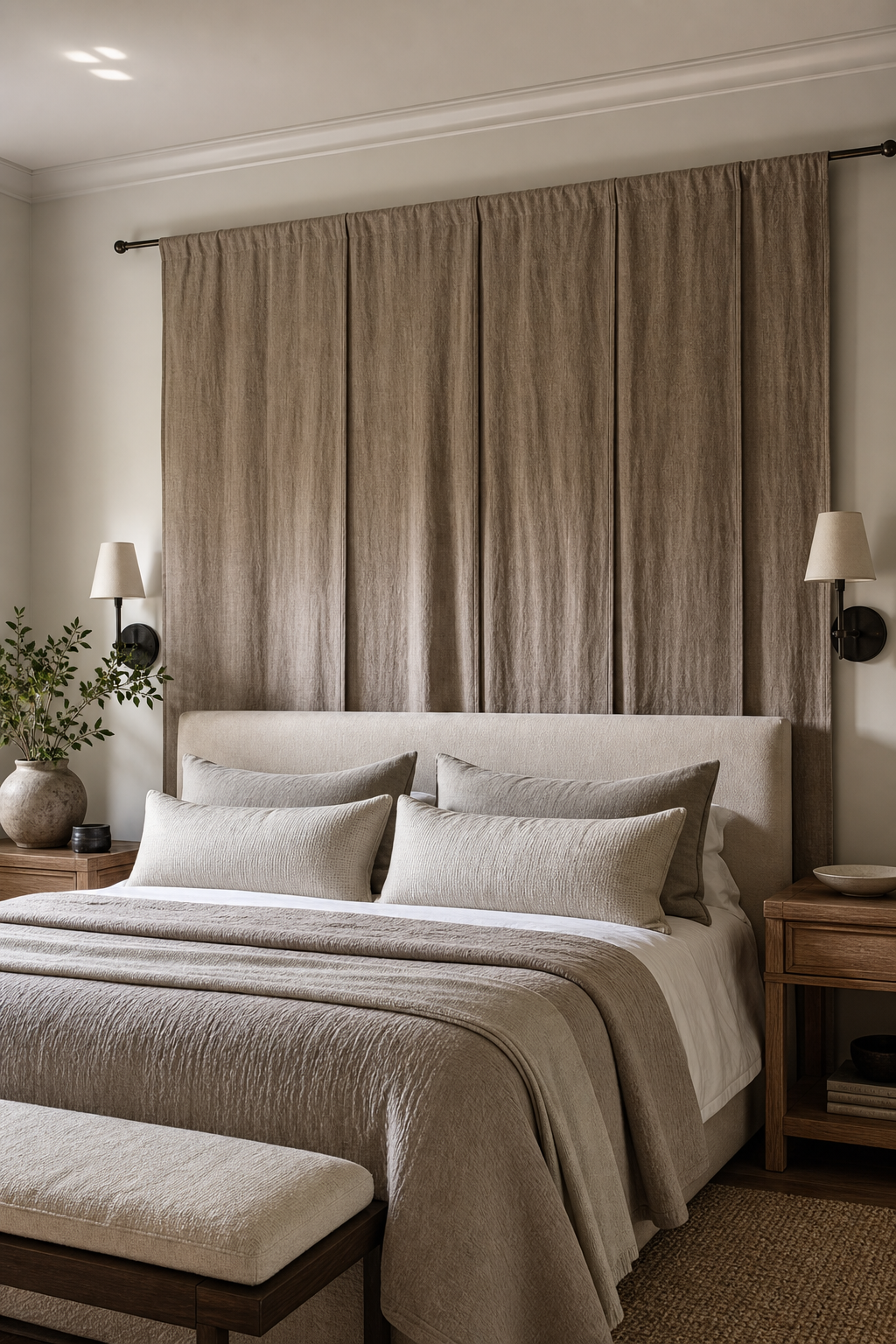
A fabric canopy behind the bed creates a wall hanging effect that feels soft, romantic, and architectural. Instead of a full canopy frame, mount a length of linen, cotton velvet, or lightweight wool from a discreet rod above the headboard. Let the fabric fall in clean panels so it frames the bed and gives the wall height. This works especially well when the bedroom lacks trim or a strong headboard. Choose a fabric color that sits one shade deeper than the wall for a tonal look. The result is cozy and tailored, with hotel-suite presence. A matching bed skirt or throw can repeat the fabric tone without making the room feel overly coordinated.
Hanging Planter Rail
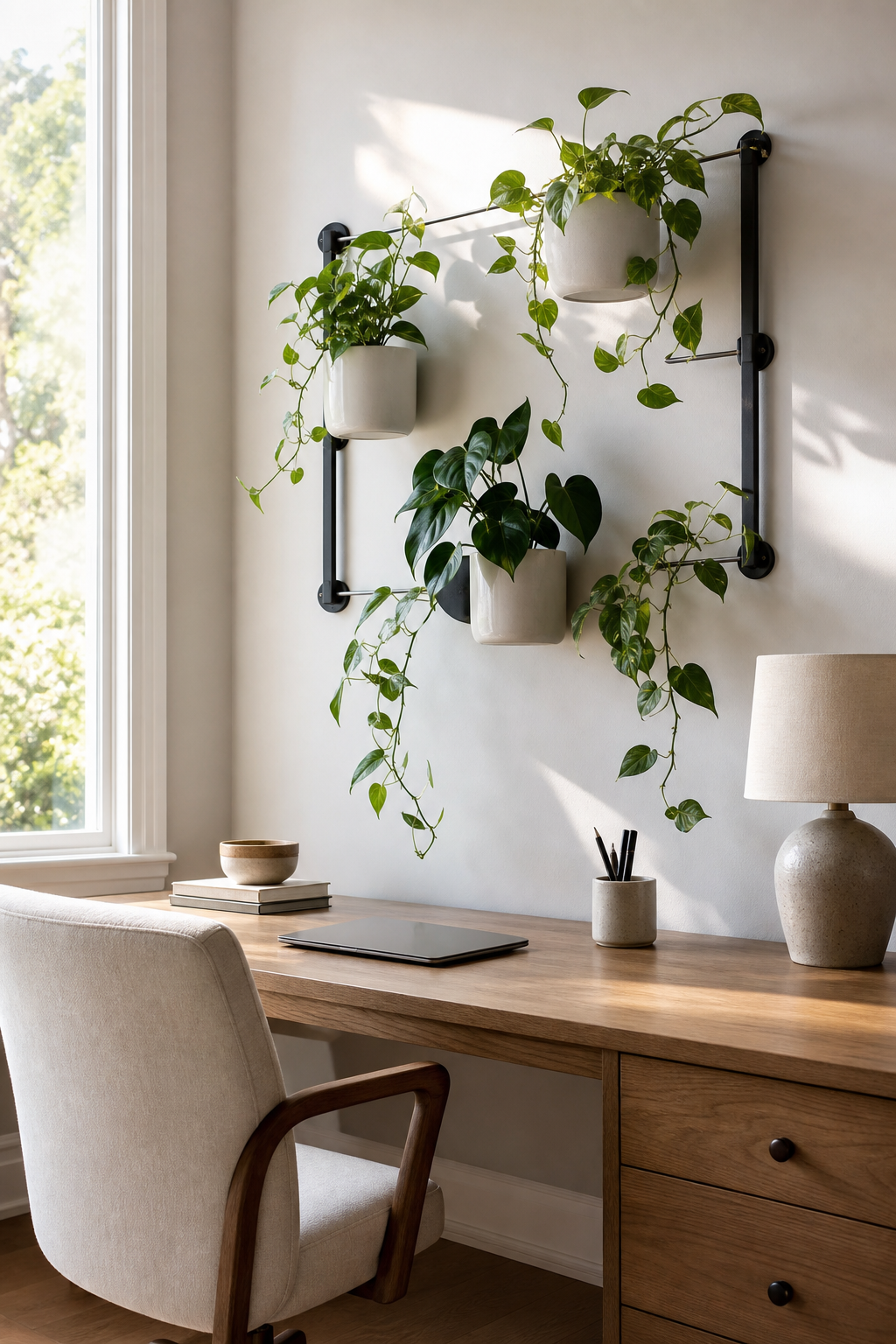
A hanging planter rail turns a blank wall into a living feature without needing a full vertical garden. Install a slim metal or wood rail, then suspend a few ceramic planters at staggered heights. Trailing pothos, philodendron, hoya, or herbs soften the wall and bring movement to a kitchen, sunroom, or bright office. Keep the planters consistent so the greenery is the star. This idea works best near natural light and away from heavy foot traffic. The wall gains freshness, shadow, and a relaxed indoor-outdoor feeling while still looking controlled and easy to maintain. A waterproof tray or nearby watering can keeps the practical side as considered as the display.
Architectural Salvage Piece
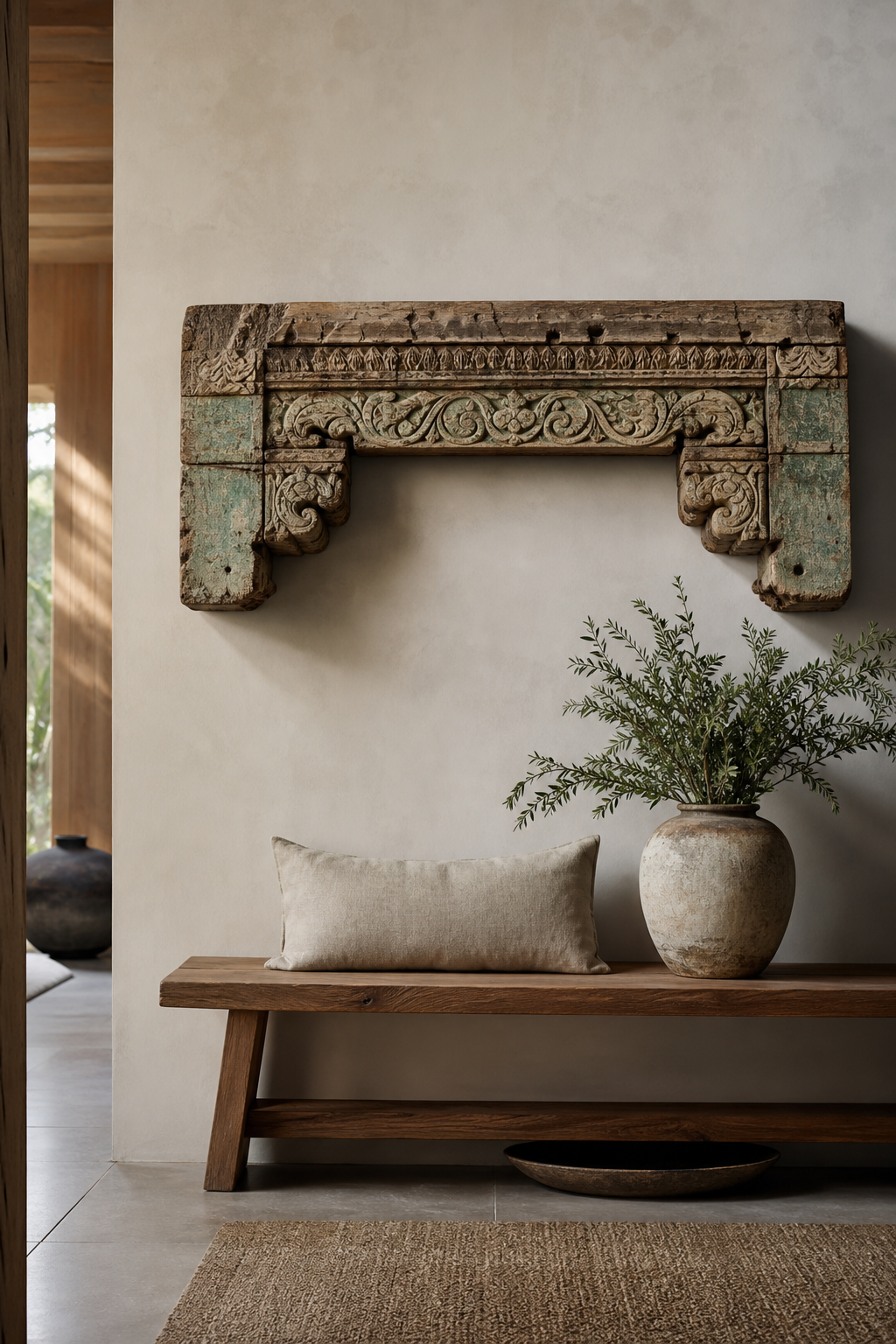
An architectural salvage piece gives a blank wall instant character because it carries age, shape, and a sense of history. A carved fragment, old shutter, decorative grille, corbel, or antique panel can become a sculptural wall hanging above a console or bench. The secret is contrast: place the weathered piece against a clean wall and surround it with simple modern furniture. This keeps the display from feeling like a theme. Let chips, patina, and uneven edges show, but avoid pieces that look unstable. One beautiful salvage find can make a new room feel layered and lived in. A single modern lamp nearby can make the aged surface feel deliberately contrasted, not forgotten.
Quilted Wall Hanging
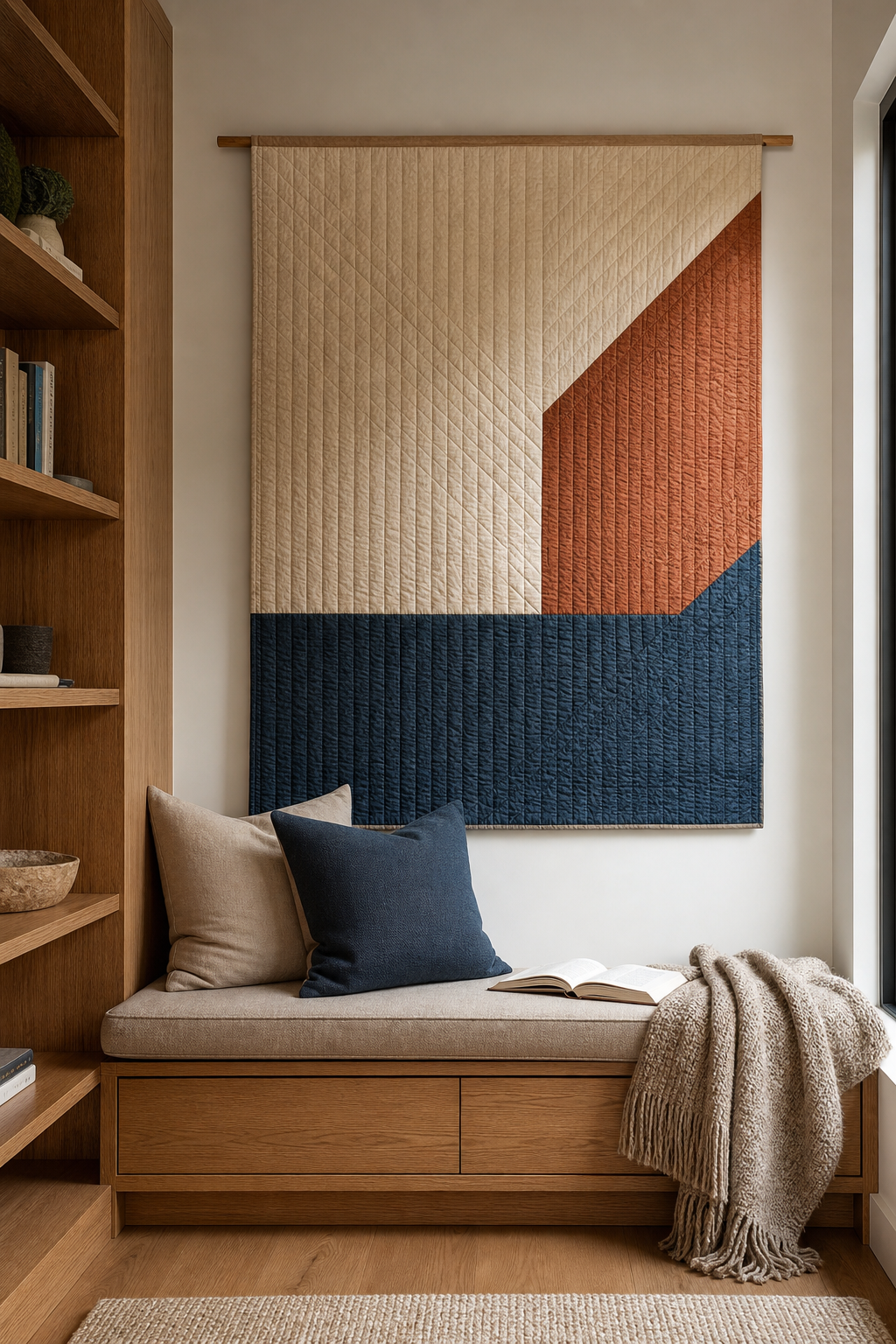
A quilted wall hanging adds softness, geometry, and a handmade layer without feeling overly casual. Modern quilts with large blocks, tonal stitching, or restrained color palettes are especially easy to integrate into contemporary rooms. Hang one above a bed, nursery dresser, reading bench, or family room sofa to introduce pattern and comfort. The quilt should be large enough to feel intentional, not like a leftover blanket pinned to the wall. Use a proper sleeve or rod so the textile hangs flat. Pair it with solid fabrics nearby and repeat one accent color in pillows or art. If the room feels plain, this is a gentle way to introduce color without committing to wallpaper.
Floating Wall Vases
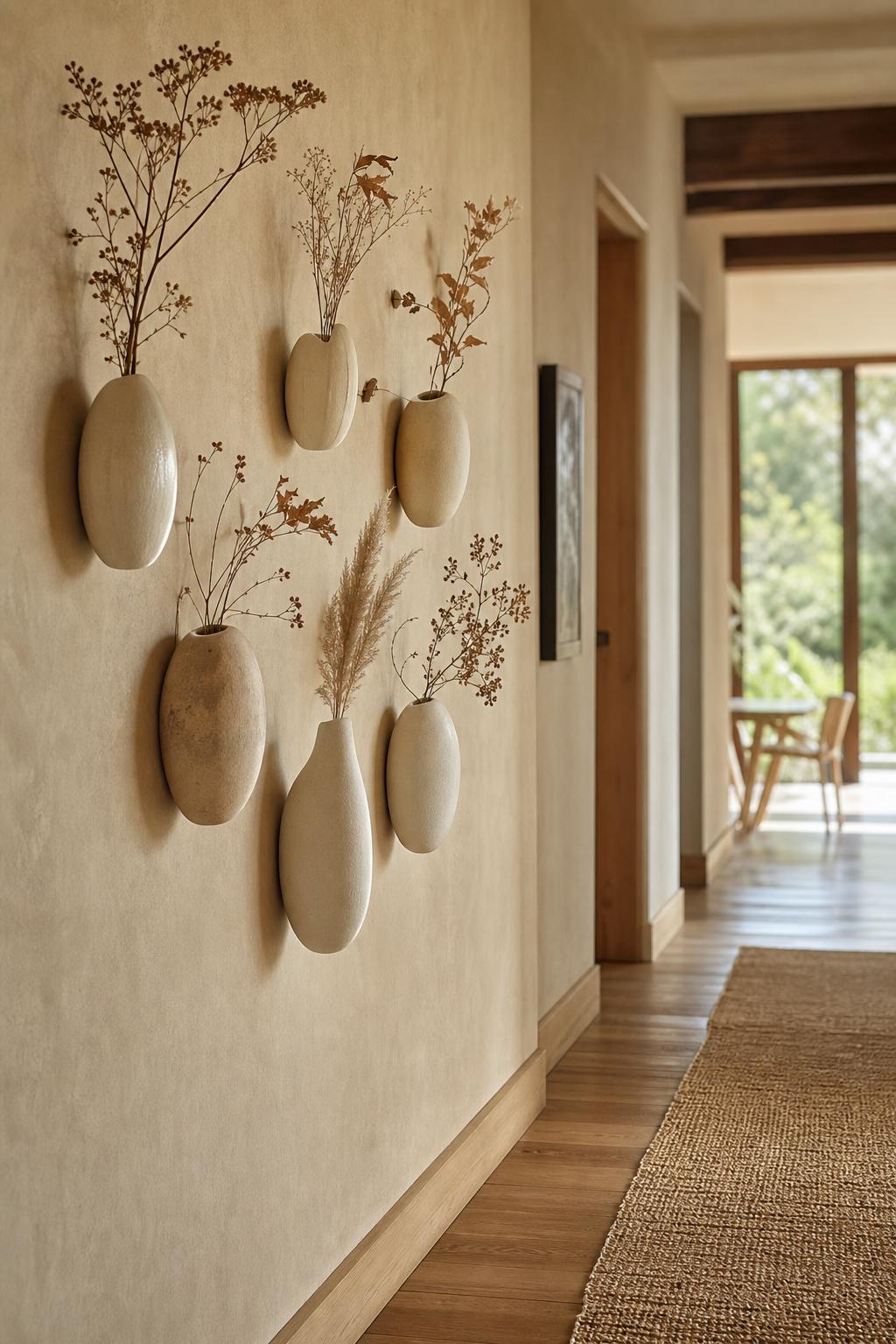
Floating wall vases give a blank wall a sculptural floral moment without taking up floor or table space. Choose ceramic, glass, or metal vessels with clean brackets, then fill them with dried grasses, branches, or a few seasonal stems. A pair can flank a mirror, while a cluster can dress a narrow hallway or powder room wall. Keep the flowers loose and textural rather than overly arranged. This idea works beautifully in small spaces because it adds height, shadow, and organic shape. Use lightweight stems and secure hardware so the display feels elegant, not precarious. They are also useful where a console would be too deep but the wall still needs texture.
Minimal Tapestry Rod
A minimal tapestry rod is a clean way to hang fabric art while making the hardware part of the design. Choose a slim brass, black, or wood rod that extends slightly beyond the textile on both sides. The visible line gives the wall hanging structure and makes even a simple fabric panel feel finished. This approach suits modern living rooms, bedrooms, and hallways where framed art may feel too expected. Keep the textile itself simple, perhaps a tonal stripe, block print, or subtle landscape-inspired weave. The combination of straight hardware and soft fabric creates calm tension. The extra rod length gives the fabric visual importance and keeps the installation from looking temporary.
Mirror and Sconce Pairing
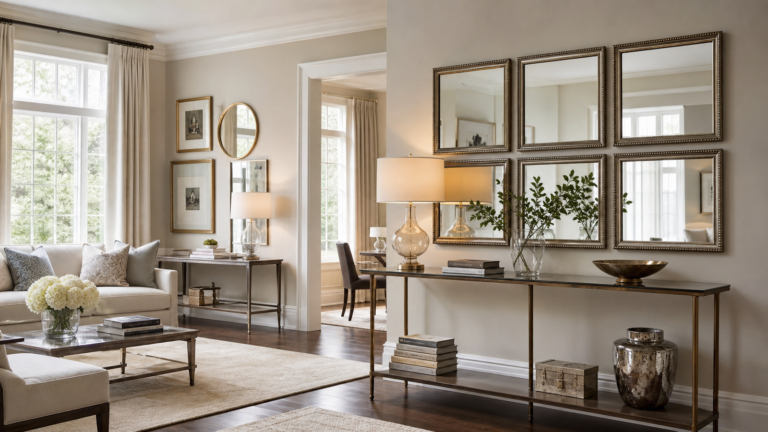
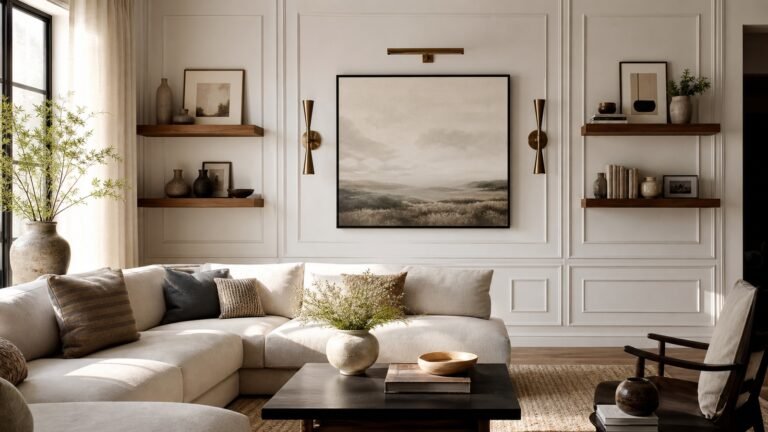
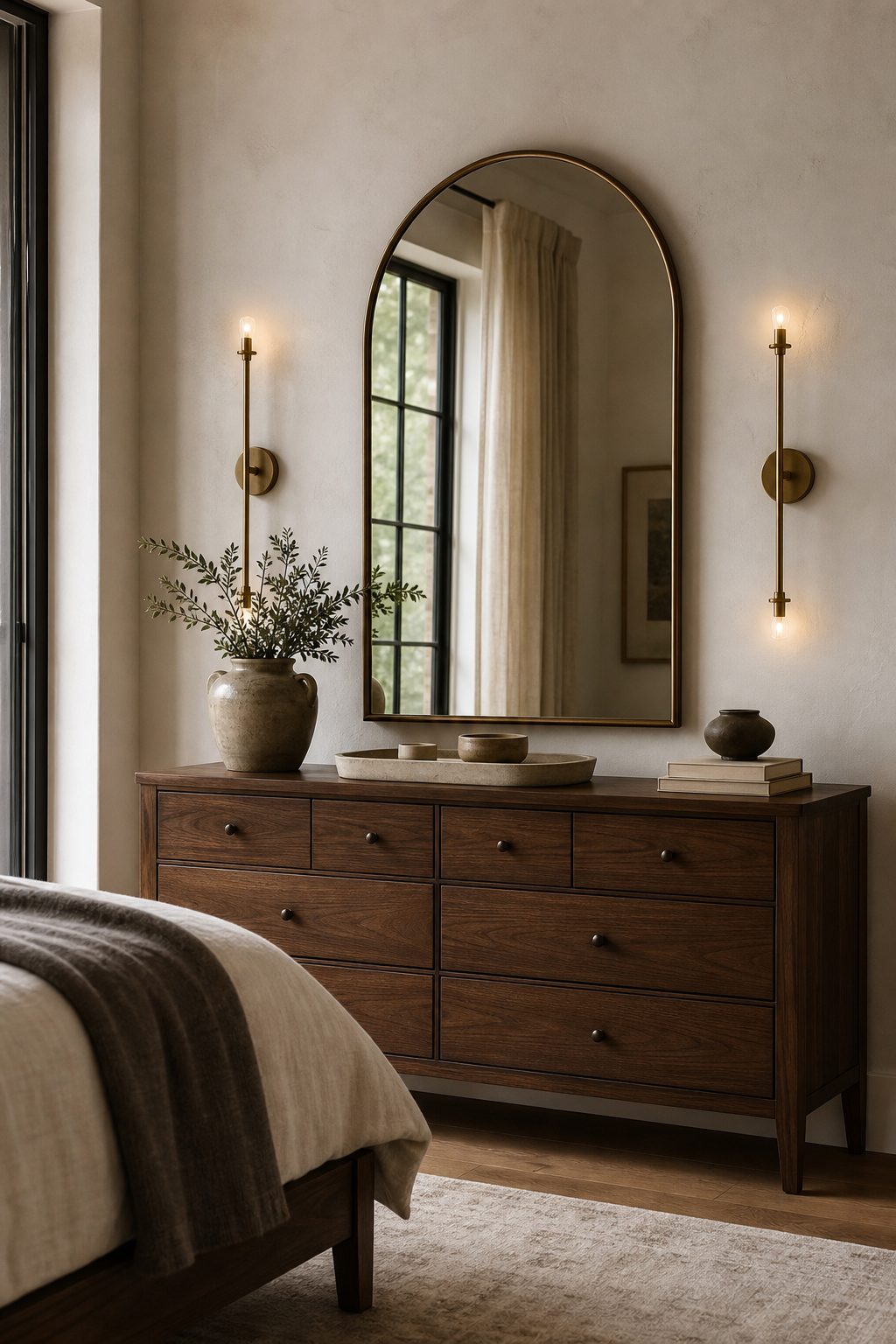
A mirror paired with sconces can make a blank wall feel designed even when the arrangement is simple. Use a rectangular or arched mirror as the center, then flank it with slim plug-in or hardwired sconces. The lights create symmetry, add evening glow, and make the wall more functional near an entry, bar cabinet, bedroom dresser, or dining room console. Keep the sconces proportional to the mirror so they do not overpower it. A shared finish, such as aged brass or matte black, ties everything together. This wall hanging idea feels polished because it blends decoration with atmosphere. Add a narrow console or dresser below so the composition has a clear base.
Seasonal Wreath
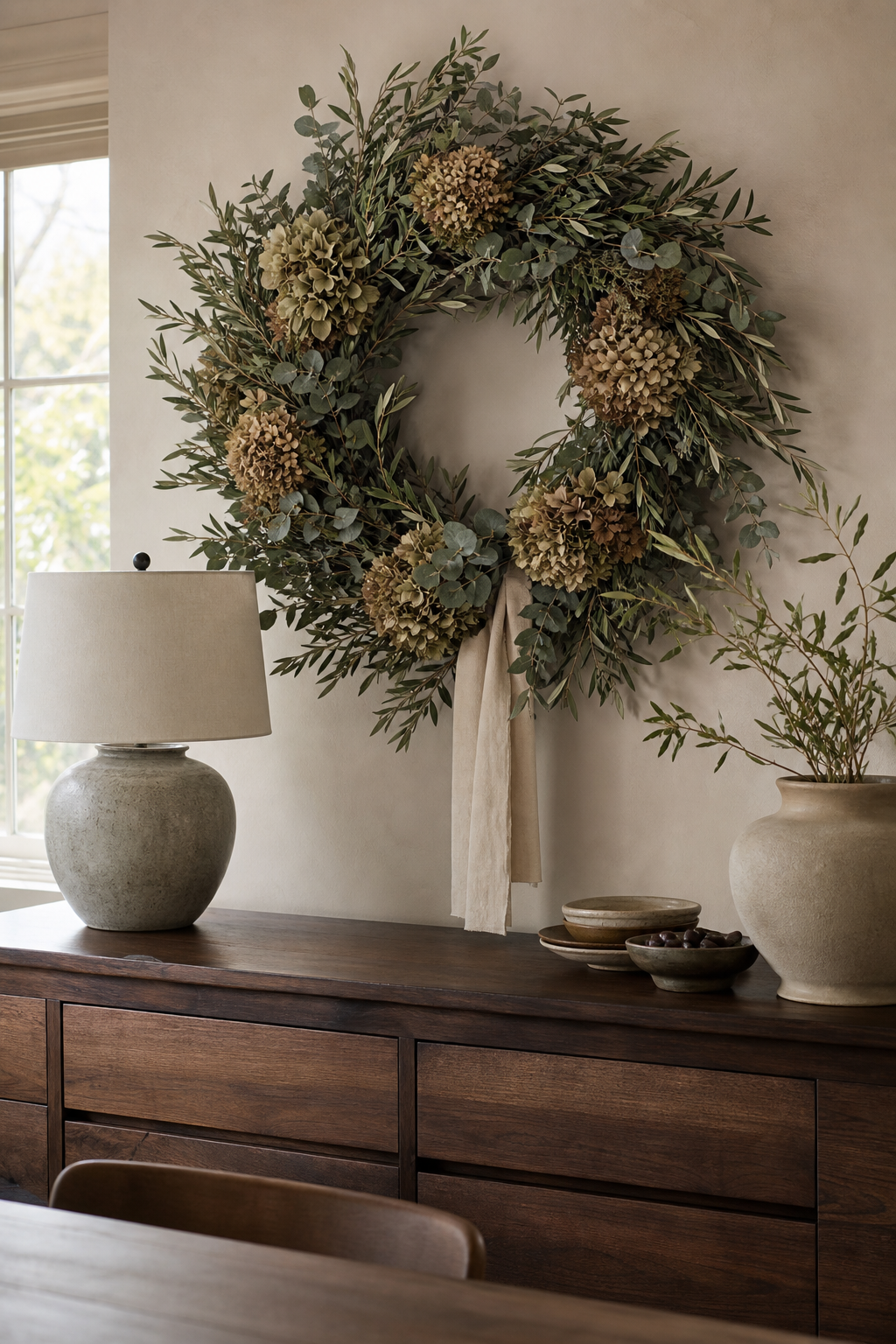
A seasonal wreath is not only for a front door. Indoors, it can bring texture and subtle color to a wall above a mantel, console, range hood, or bed. Choose natural materials that suit the season, such as olive branches, eucalyptus, dried hydrangeas, wheat, bay leaves, or winter greenery. Avoid overly bright ribbons if the room is quiet; a simple linen tie or invisible hook keeps the look elevated. Scale matters, so choose a wreath that fills the wall without crowding the furniture below. It is an easy way to refresh a room without changing permanent decor. Store a few simple options so the wall can change mood while the furniture stays the same.
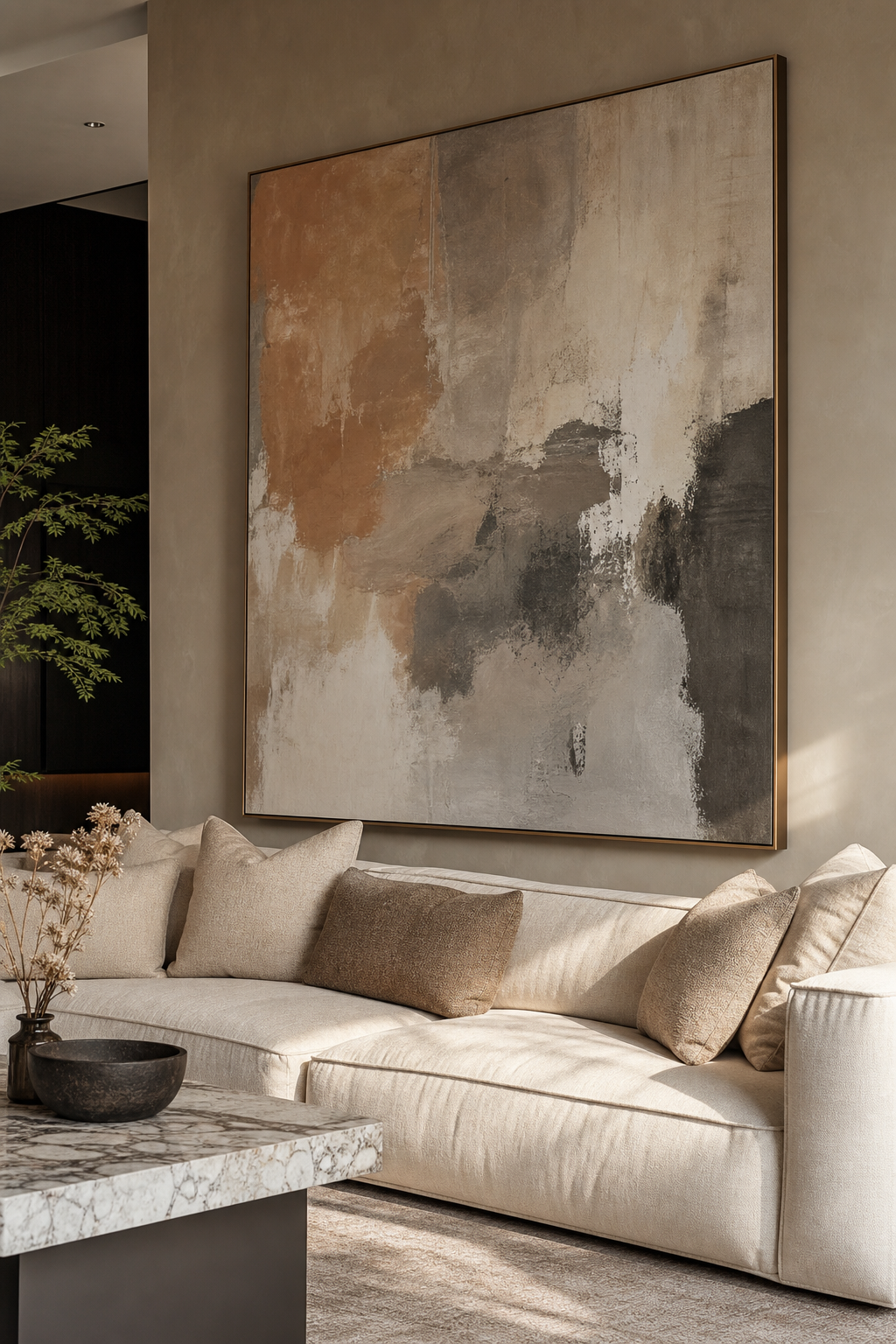
Oversized Abstract Canvas
An oversized abstract canvas is the cleanest answer when a wall needs one confident gesture. Choose a piece large enough to cover two-thirds of the furniture below it, then keep the palette connected to the room. Soft washes, subtle texture, or broad brushwork can add movement without overwhelming the space. This idea works above sofas, beds, and dining benches because it gives the wall an instant focal point. If the room already has many materials, select a quieter painting with generous negative space. The goal is not to match everything, but to give the wall scale and intention. Let the art sit at eye level so it feels connected to the seating area rather than hovering above it.
The most successful wall hanging ideas do more than fill empty space. They repeat materials already in the room, create a clear relationship with the furniture below, and add the kind of texture or scale the wall is missing. Whether you choose a woven textile, mirror, carved panel, gallery wall, or seasonal wreath, start with proportion first. Once the size feels right, the wall can carry personality while the whole room still feels calm, edited, and beautifully lived in.