24 Closet Ideas For A Neat Stylish Home
A beautiful closet is more than a place to hide what you own. At its best, it is a composed little room that makes getting dressed feel calm, efficient, and indulgent. The most successful designs balance structure with atmosphere: precise hanging zones, tactile finishes, flattering light, and a few quietly decorative details that make the space feel considered rather than merely full. Whether you have a compact reach-in, a generous walk-in, or an awkward spare corner, these closet ideas show how storage can become part of the home’s design language.
1. Build A Boutique-Style Walk-In Closet
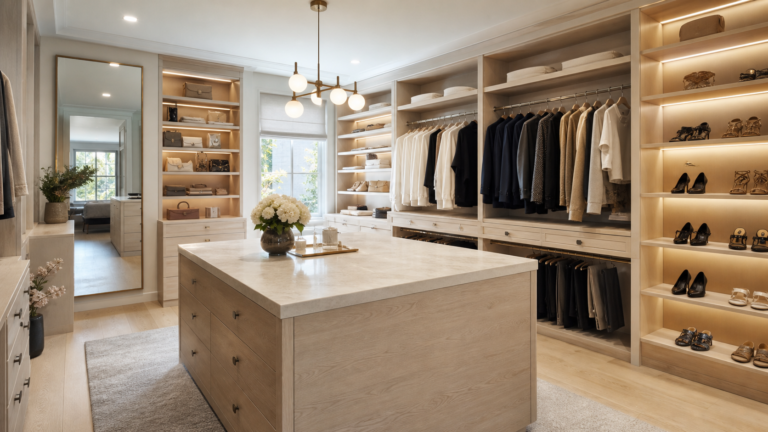
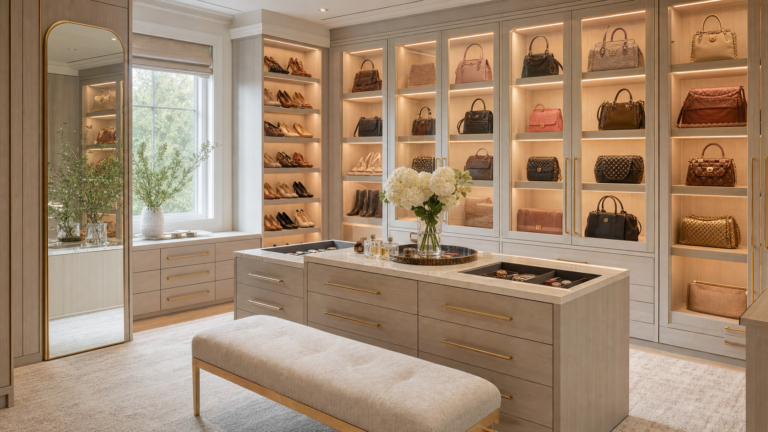
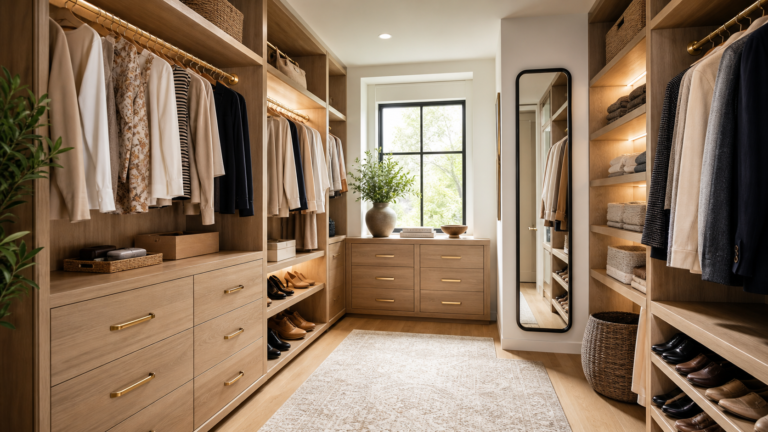
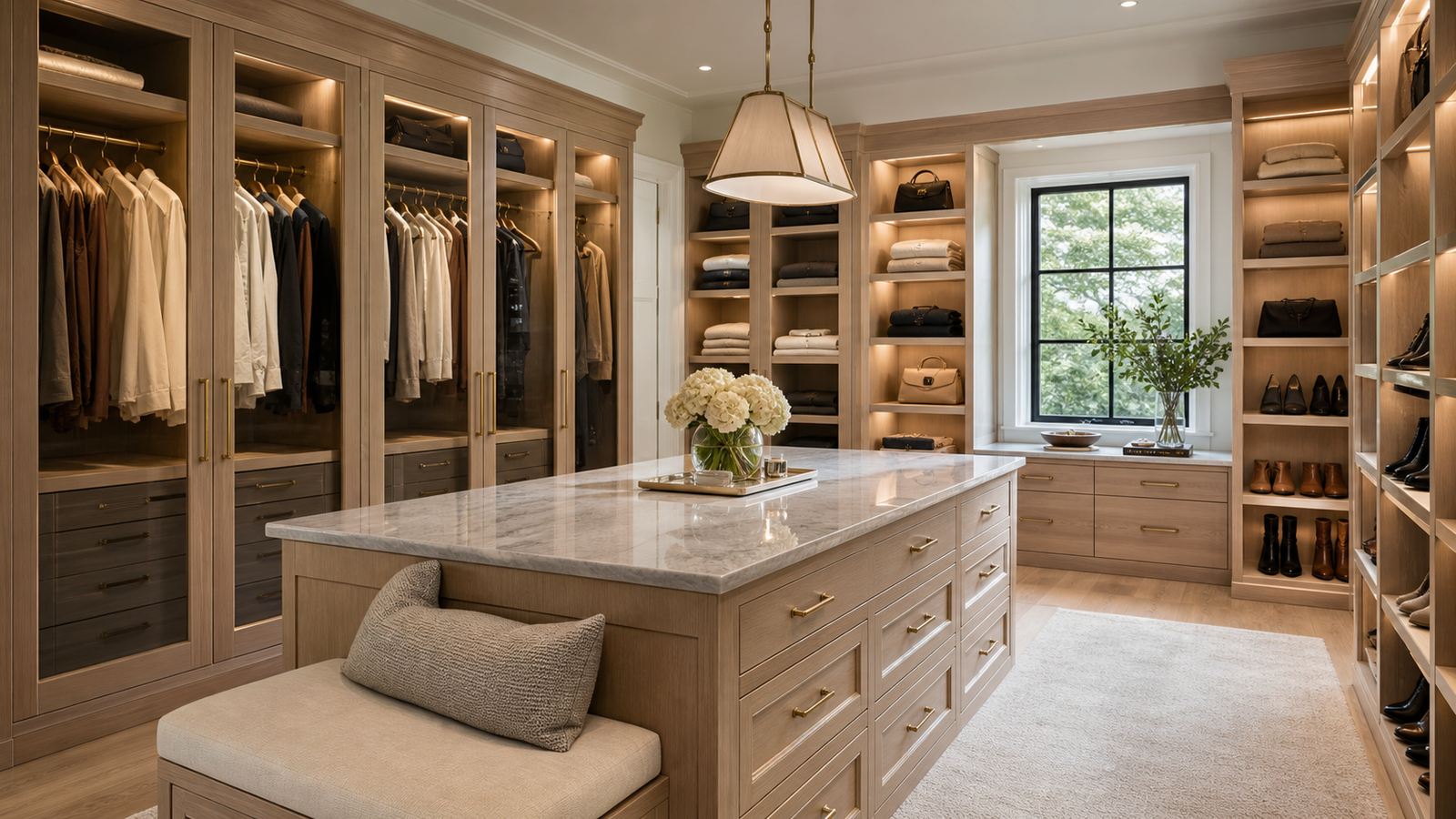
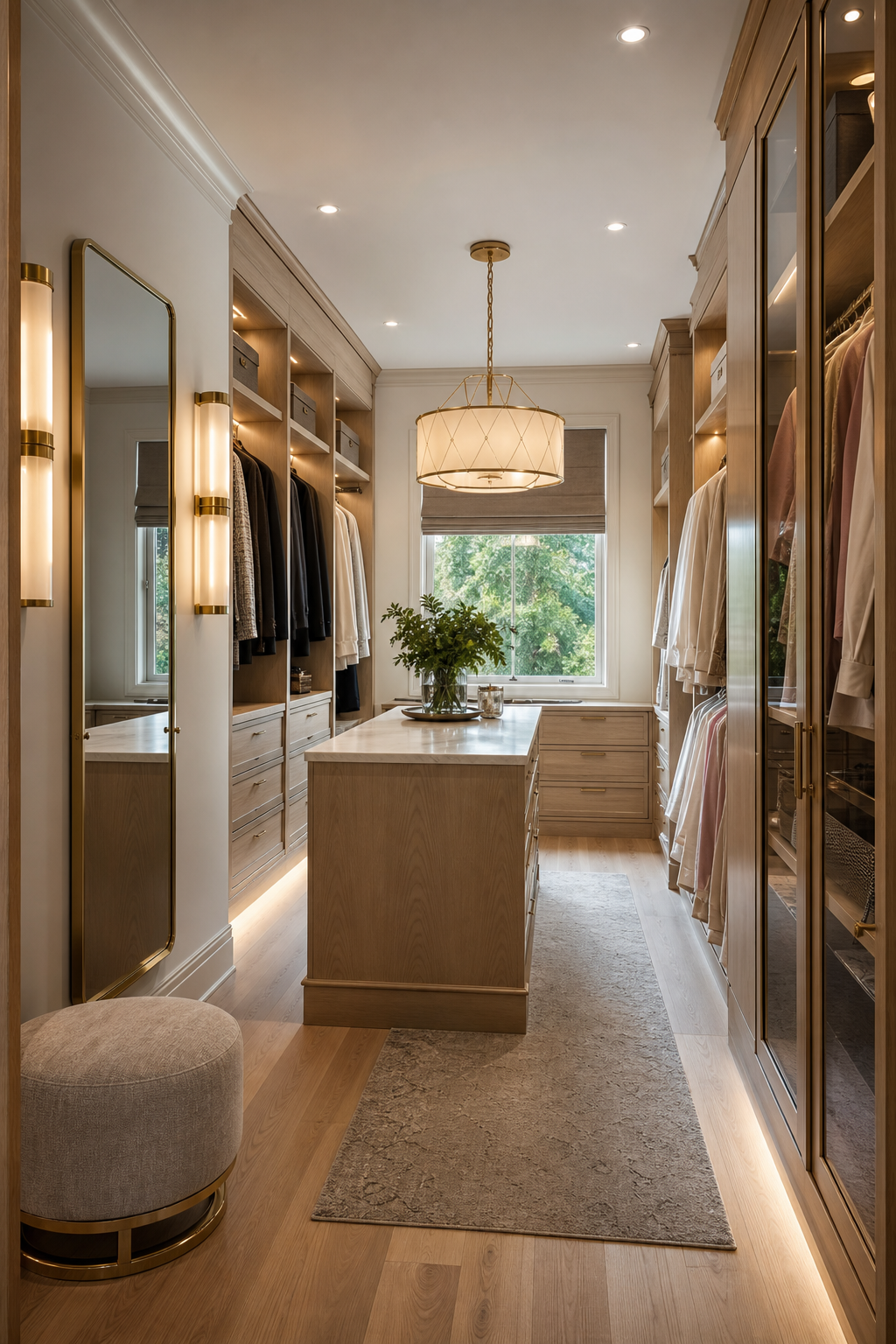
A boutique-style walk-in closet works best when it feels edited, not overfilled. Begin with full-height cabinetry in a warm wood such as white oak or walnut, then combine closed doors with open display sections for shoes, bags, and folded cashmere. A central island with shallow drawers keeps jewelry, belts, sunglasses, and watches visible without cluttering the perimeter. Use a honed stone top, antiqued brass pulls, and a low upholstered bench to give the room the polish of a private dressing salon. Lighting matters as much as storage: install recessed ceiling lights for general brightness, LED strips inside shelves, and a soft pendant above the island for mood. Keep the palette restrained with ivory, taupe, camel, and dark bronze so the clothing provides gentle variation. The result is practical, elegant, and deeply satisfying to use each morning.
2. Add Glass-Front Wardrobe Doors
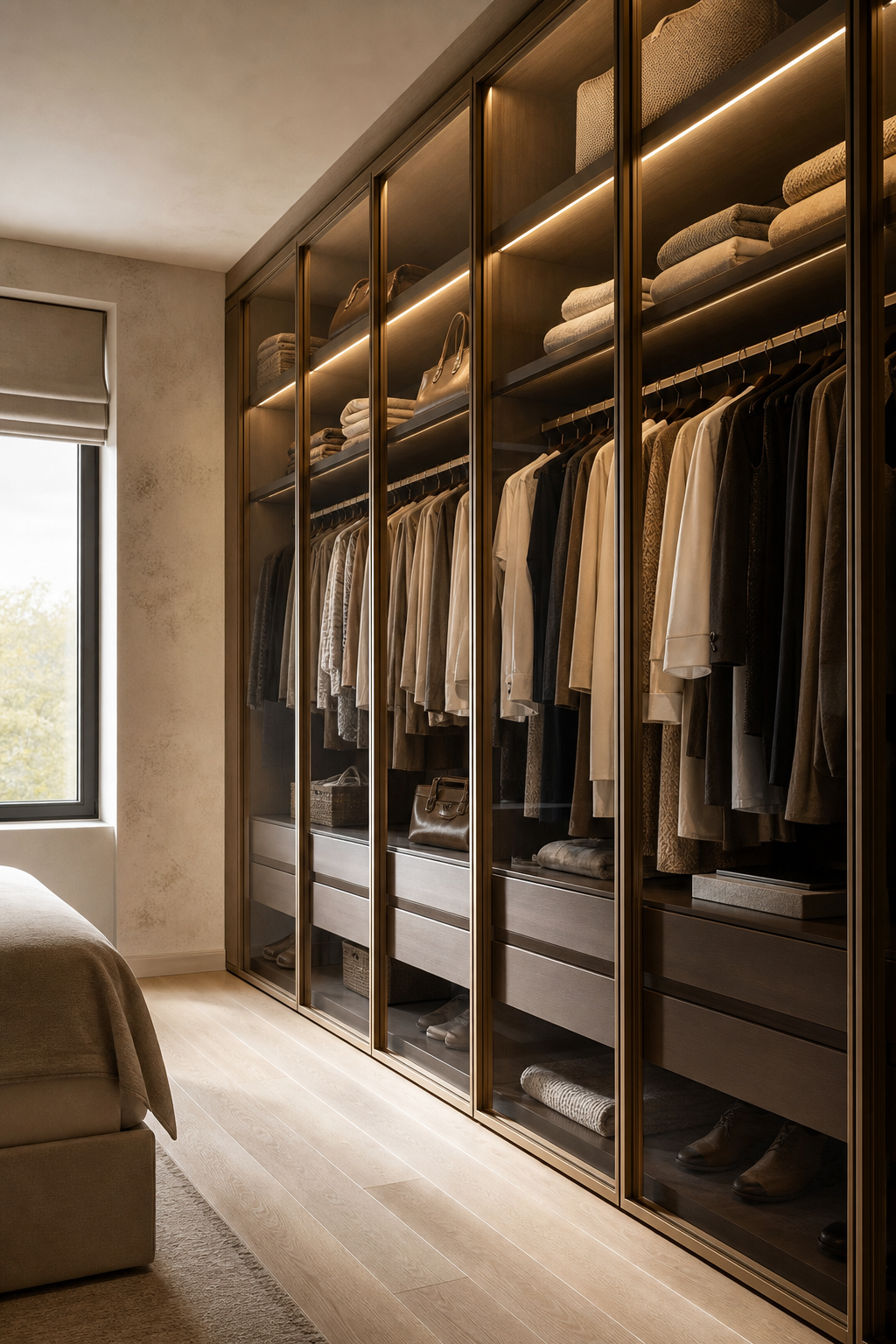
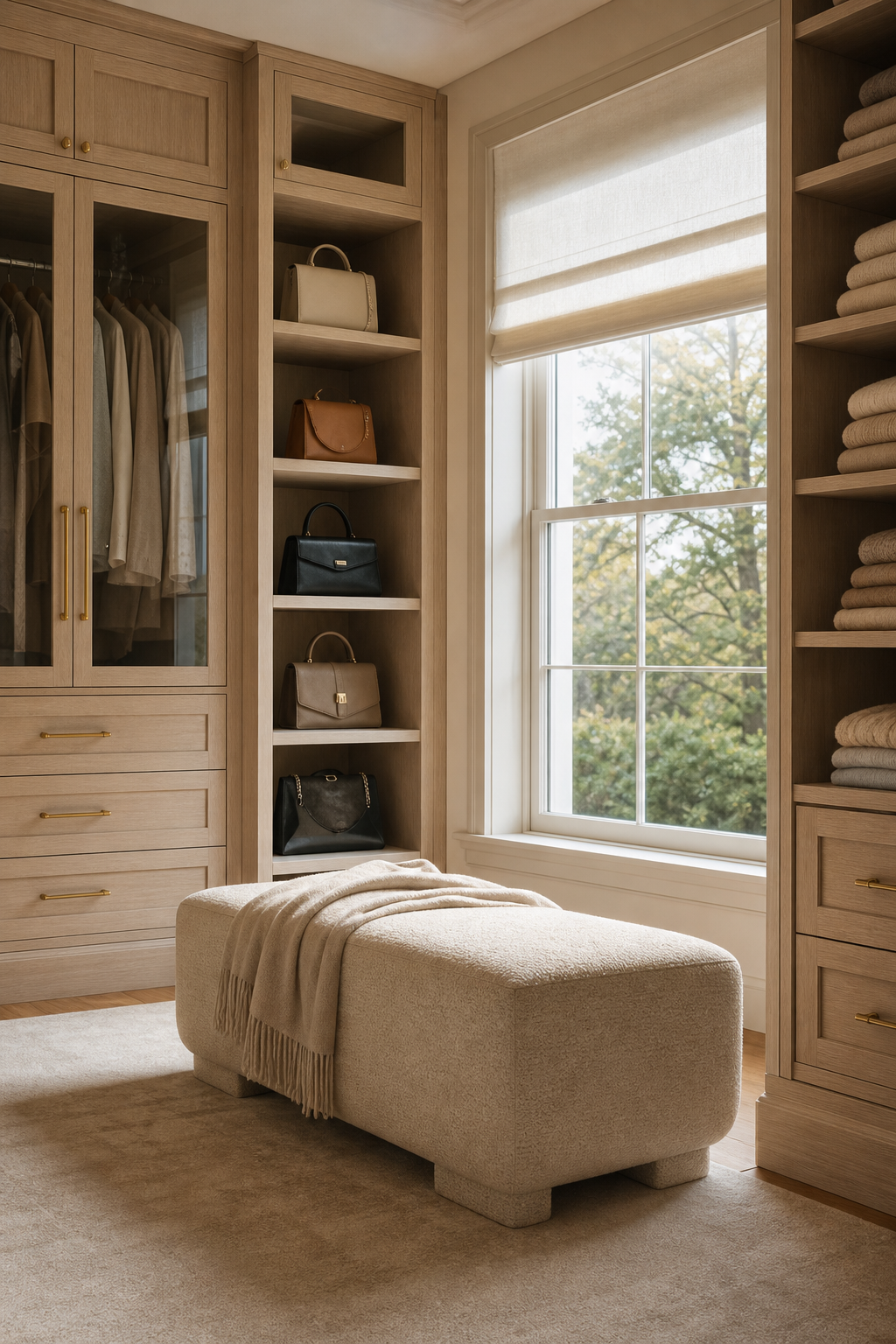
Glass-front wardrobe doors create the refined effect of a dressing room while still protecting clothing from dust. Choose fluted, reeded, or lightly smoked glass if you prefer a softer view of the contents; clear glass works beautifully when every rail and shelf is carefully curated. Slim metal frames in bronze, blackened steel, or brushed brass lend architectural definition, especially in a bedroom with simple plaster walls or pale timber floors. Inside the wardrobe, keep hangers consistent and organize garments by tone so the display feels intentional rather than busy. Integrated lighting behind the glass adds evening drama and makes the closet easier to navigate. This idea is particularly useful in narrow rooms because reflective glass helps bounce light around the space. It gives everyday storage a sophisticated showroom quality without sacrificing function.
3. Use A Closet Island For Hidden Storage
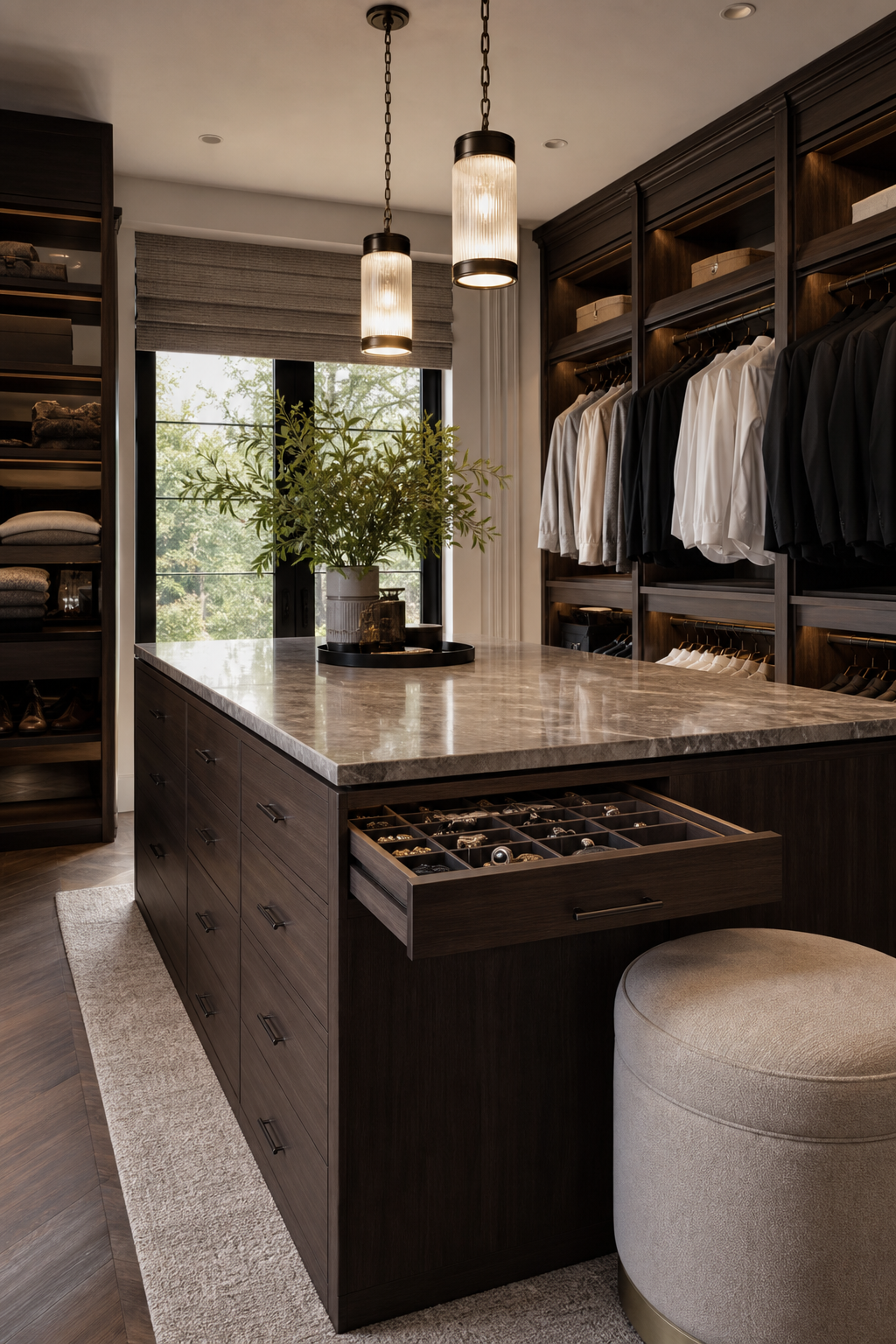
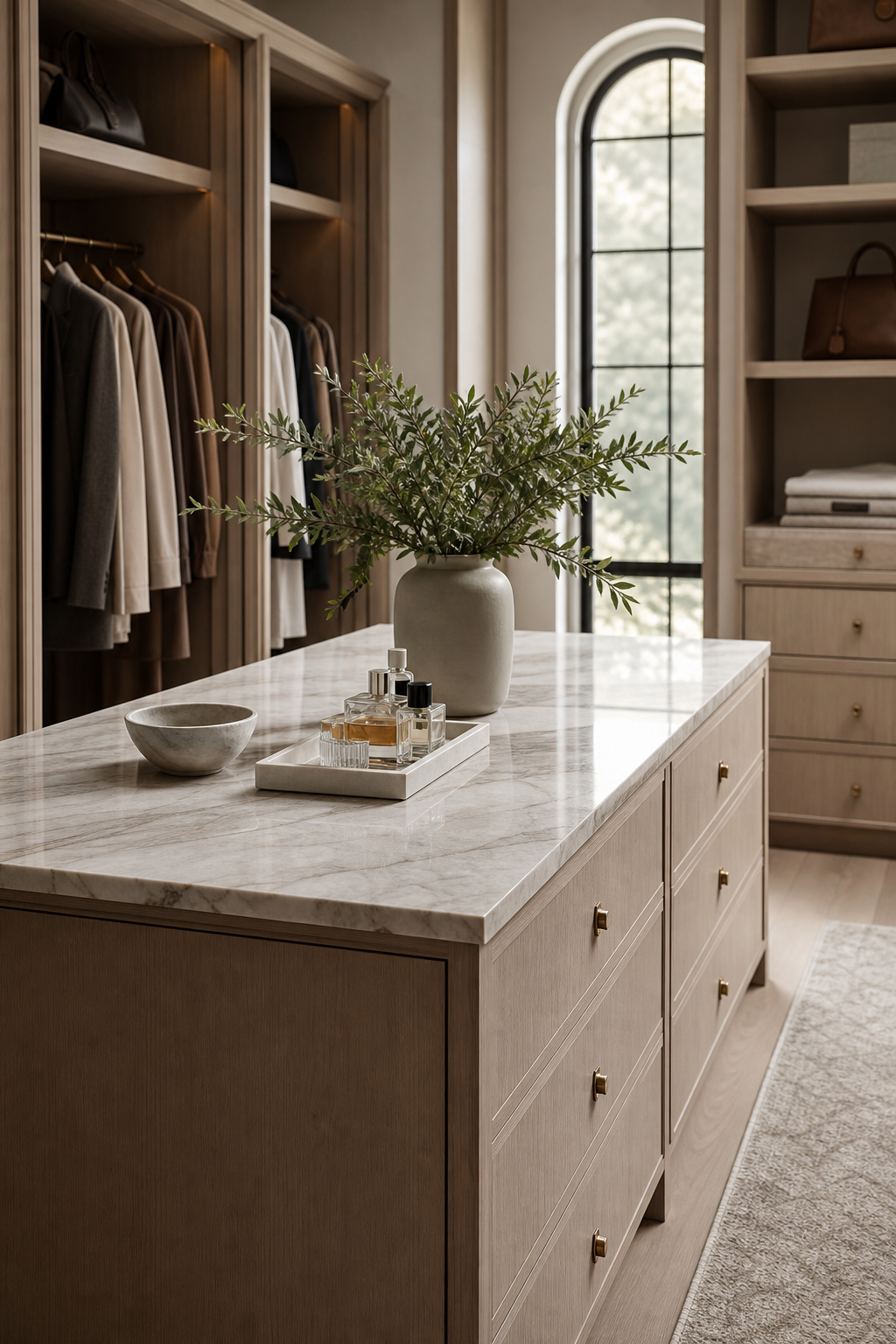
A closet island gives a walk-in wardrobe the rhythm and usefulness of a well-planned kitchen. It provides a surface for laying out outfits, packing for travel, or folding delicate pieces, while the drawers below can be tailored to small accessories. Consider velvet-lined compartments for jewelry, divided trays for belts, and shallow drawers for silk scarves or evening bags. The island should leave comfortable circulation on all sides, so scale it carefully rather than forcing in an oversized block. For a luxury finish, pair stained oak or lacquered cabinetry with a stone top in marble, quartzite, or limestone. A pair of small table lamps or a sculptural pendant above the island brings warmth to a space that can otherwise feel purely functional. Keep the top nearly clear, perhaps with a tray, a ceramic bowl, and fresh greenery.
4. Create A Calm Reach-In Closet With Built-Ins
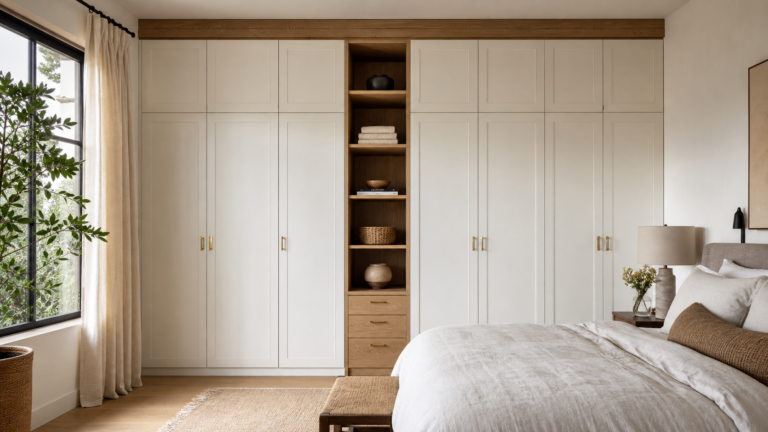
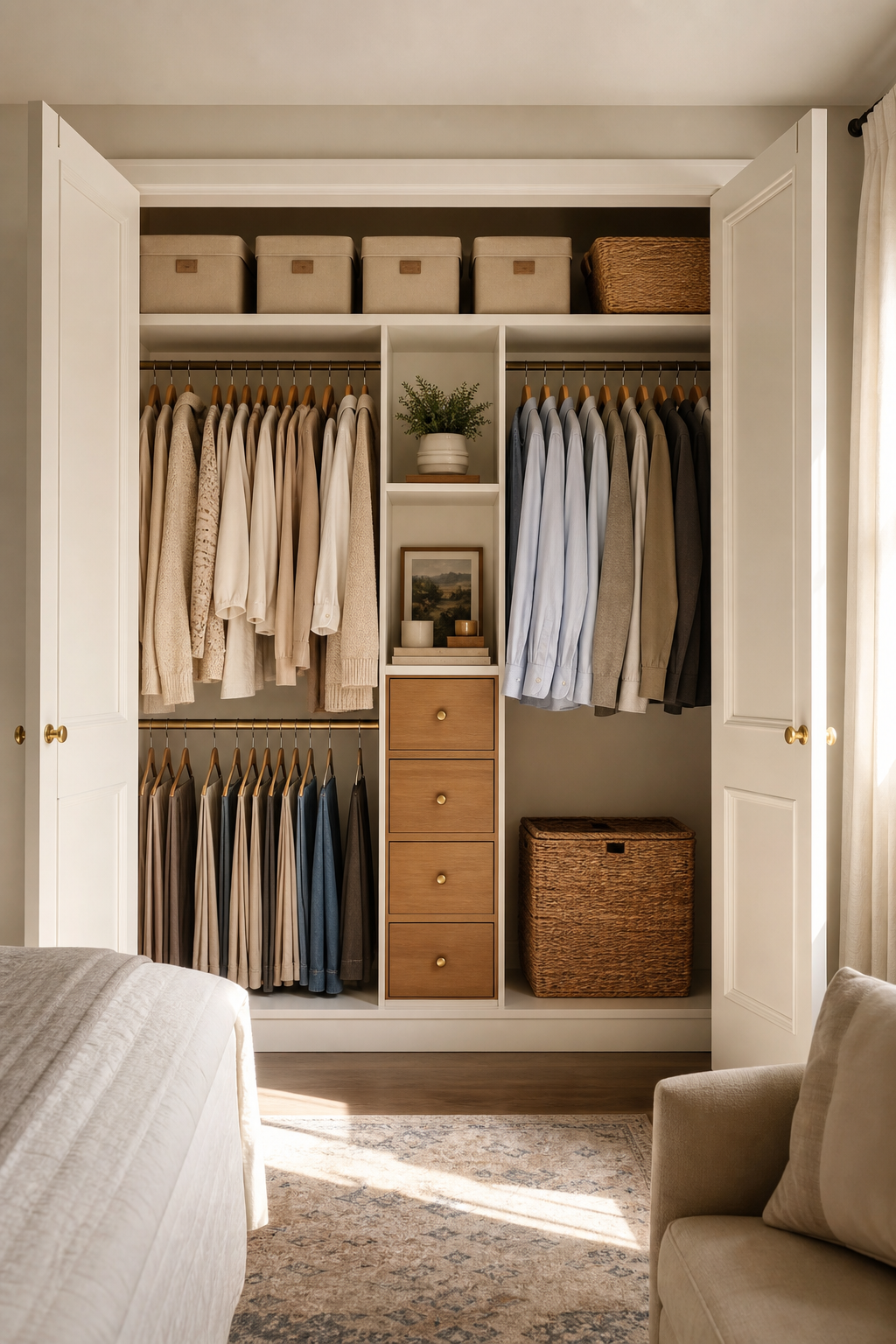
A reach-in closet can feel just as polished as a walk-in when it is fitted with proper built-ins. Replace a single hanging rod with a measured composition of double hanging rails, drawers, adjustable shelves, and a higher shelf for seasonal storage. Painted cabinetry in warm white, mushroom, or pale gray makes the interior feel bright and intentional, especially when paired with natural wood drawer fronts or brass knobs. If the closet sits inside a bedroom, use doors that complement the room architecture: paneled doors for traditional spaces, flat slab doors for modern ones, or fabric-inset panels for a softer look. Inside, matching hangers and labeled boxes create order without visual fuss. Add a small motion-sensor light so the closet feels finished every time it opens. The goal is not more storage at any cost, but better storage exactly where it is needed.
5. Install Floor-To-Ceiling Shoe Shelving
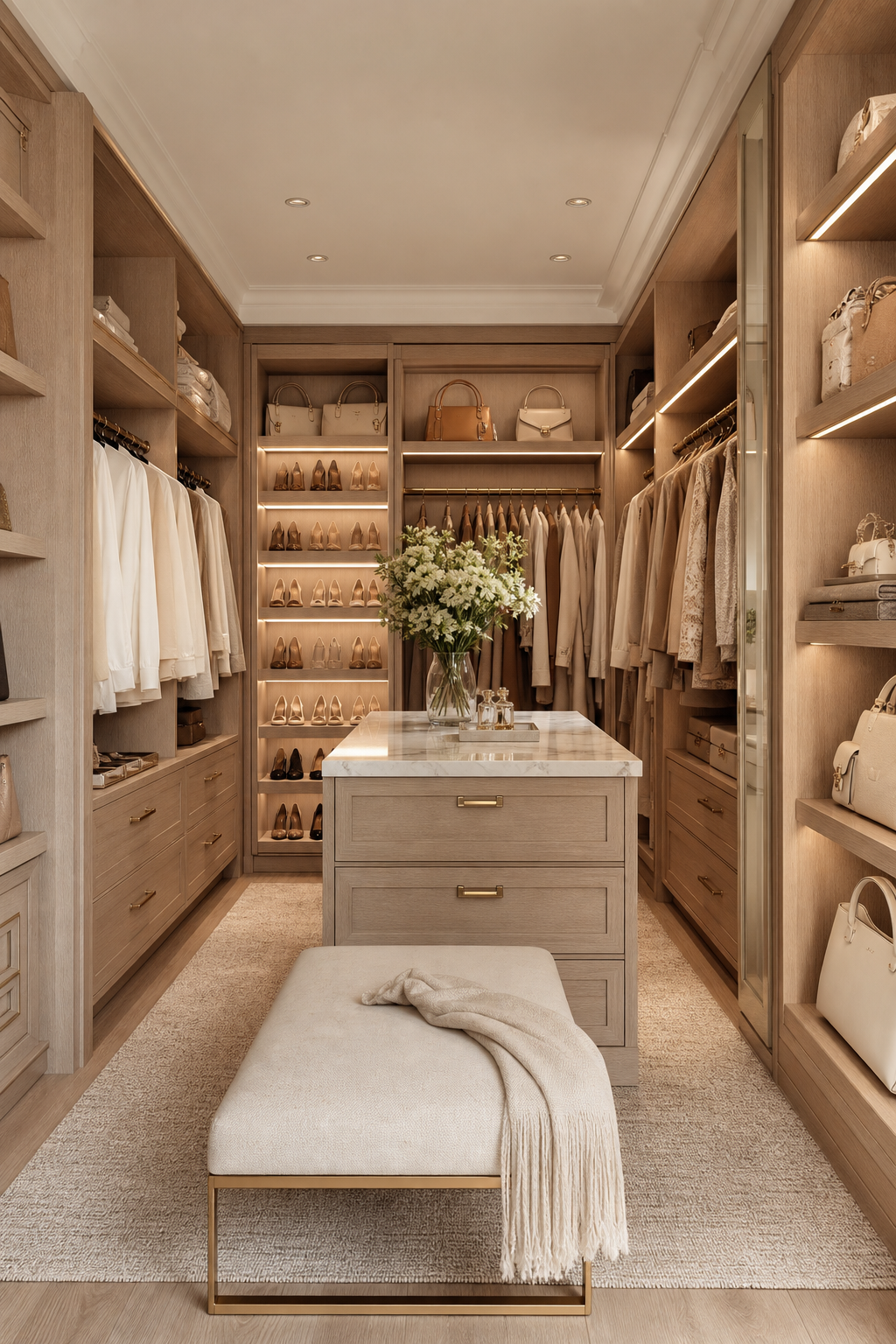
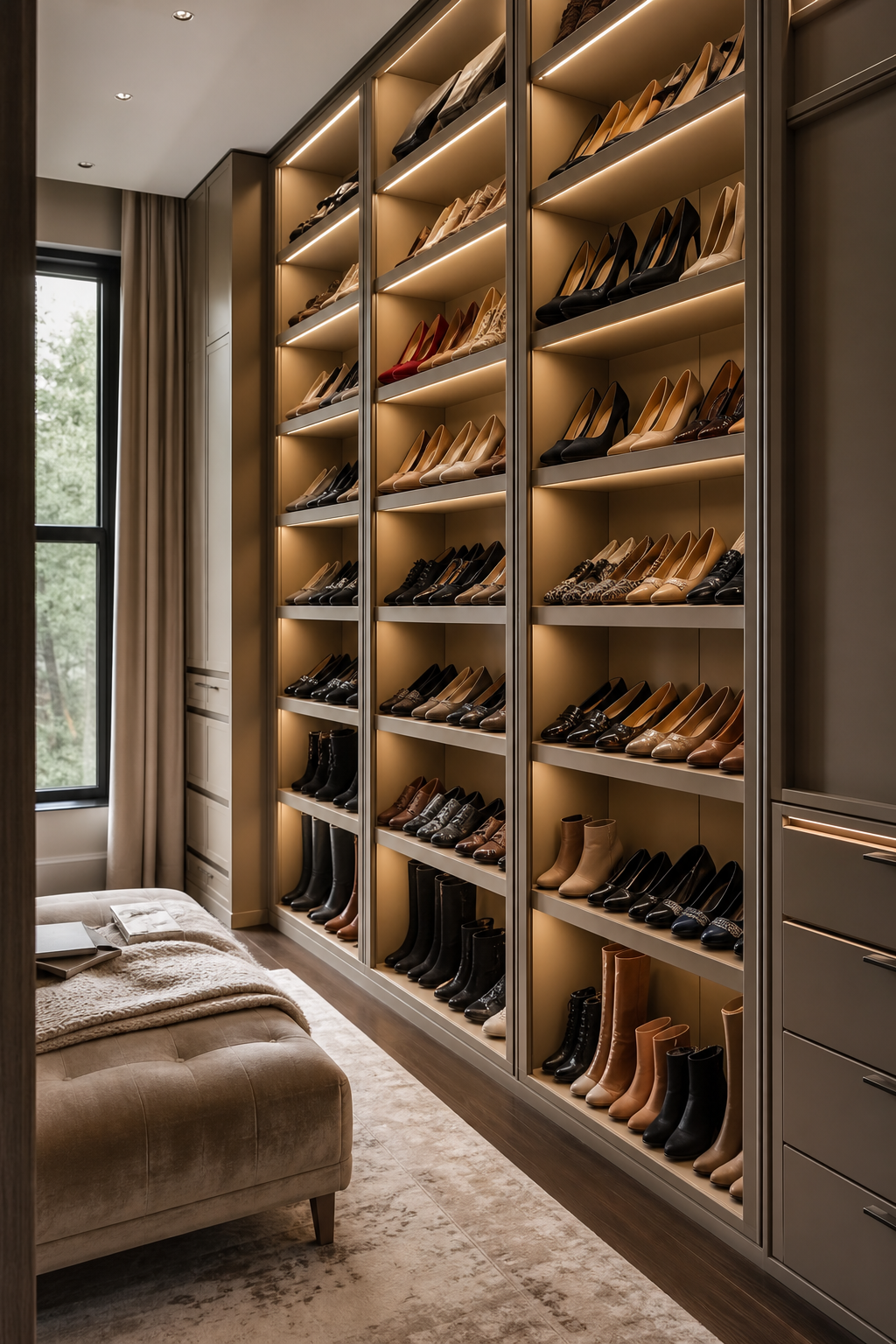
Floor-to-ceiling shoe shelving turns a common storage problem into a handsome architectural feature. The key is proportion: shallow shelves prevent wasted depth, while adjustable spacing allows for flats, loafers, boots, and heels. A vertical wall of shoes looks most elegant when the surrounding cabinetry is simple and the shelves are lit with discreet LED strips. Use wood, painted lacquer, or linen-wrapped panels behind the shelves to create a tailored backdrop. If the shoe collection is colorful, keep the closet finishes quiet; if the shoes are mostly neutral, a darker stain or charcoal interior can add depth. Include a low pullout shelf or bench nearby so putting shoes on is comfortable. This arrangement works especially well along one side of a narrow walk-in, where it keeps footwear visible and frees drawers for smaller accessories.
6. Add A Dressing Bench For Comfort
A dressing bench instantly makes a closet feel more gracious. It provides a place to fasten shoes, set down a handbag, or pause while choosing between outfits. In a larger walk-in, position the bench at the center or beneath a window; in a smaller closet, tuck a narrow version against a wall or at the end of a run of wardrobes. Upholstery brings softness to hard cabinetry, so consider bouclé, mohair, linen velvet, or a performance woven fabric in a refined neutral. The legs can echo the closet hardware, with aged brass, black metal, or stained wood creating continuity. Keep the silhouette clean and low so it does not interrupt sightlines. A bench also invites better habits: instead of clothes landing on the floor, the space has a temporary perch that still looks intentional between uses.
7. Mix Open And Closed Storage
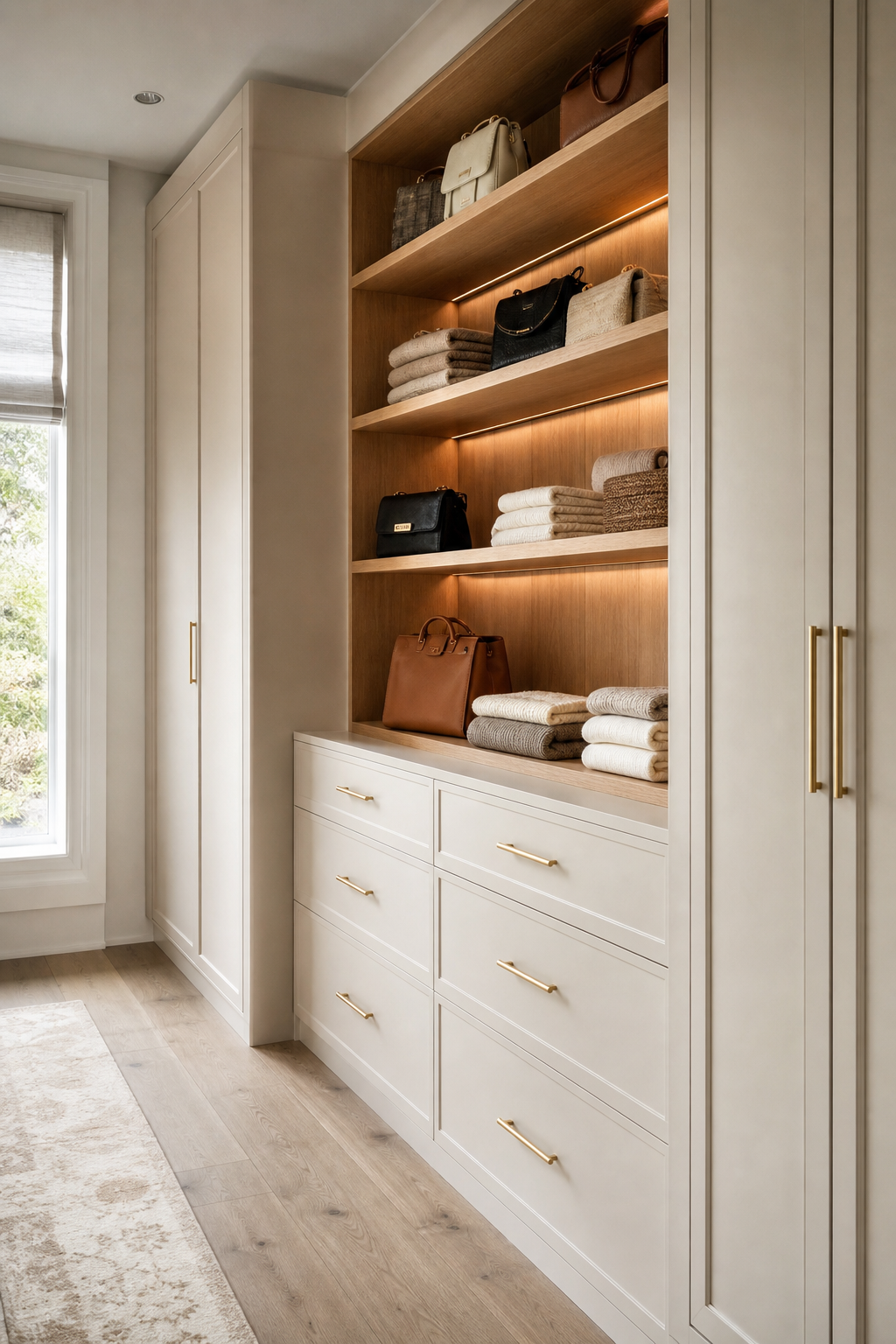
The most livable closets rarely rely on one storage style. Open shelves make beautiful items easy to see, while closed drawers and doors hide the visual noise of everyday basics. Use open areas for handbags, shoes, folded knits, and display-worthy boxes; reserve closed storage for workout clothes, undergarments, seasonal pieces, and anything that tends to look untidy. This balance keeps the closet useful without making it feel like a showroom that demands constant perfection. For a layered look, choose one primary cabinet finish and add contrast through drawer fronts, door panels, or hardware. A run of solid doors below open shelves can visually ground the design, while glass doors above can lighten the upper portion. The arrangement should match your routines: frequently worn pieces at eye level, occasional items higher up, and delicate accessories protected in drawers.
8. Use Warm Wood For A Tailored Feel
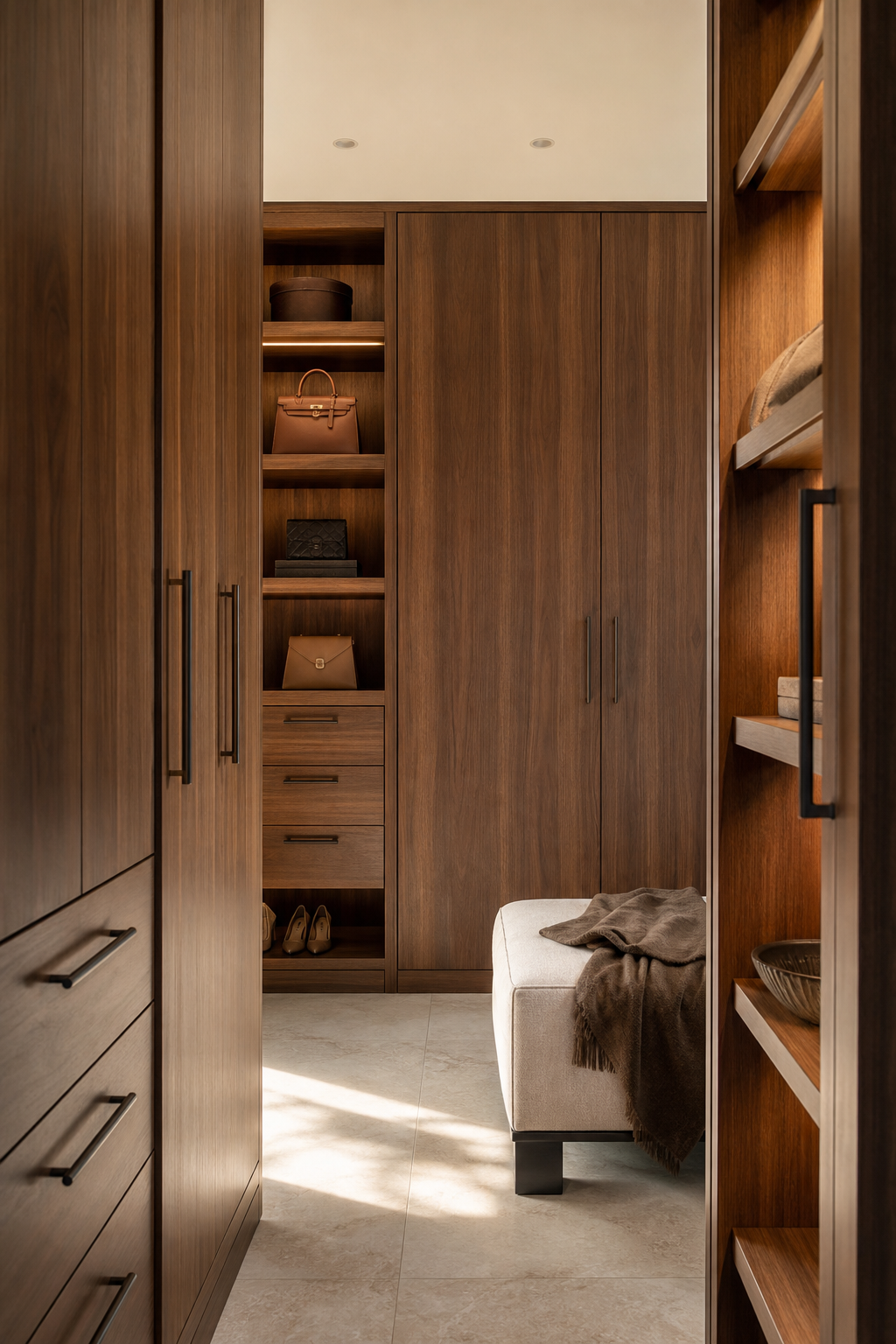
Warm wood brings depth and quiet richness to closet design, especially when the rest of the home leans pale or minimal. White oak feels light and Scandinavian, walnut reads more tailored and dramatic, and rift-cut veneers create a crisp linear effect that suits contemporary interiors. To keep wood cabinetry from feeling heavy, balance it with pale stone, linen upholstery, clear glass, or light flooring. Vertical grain on doors can elongate the room, while open cubbies in the same finish give shoes and accessories a custom display. Hardware should be deliberate: slim bronze pulls for warmth, blackened metal for definition, or integrated finger pulls for a seamless look. Add soft lighting to reveal the grain and prevent dark corners. A wood closet is particularly effective when it feels connected to nearby bedroom furniture, creating a continuous suite rather than a separate storage zone.
9. Choose A Soft Monochrome Palette
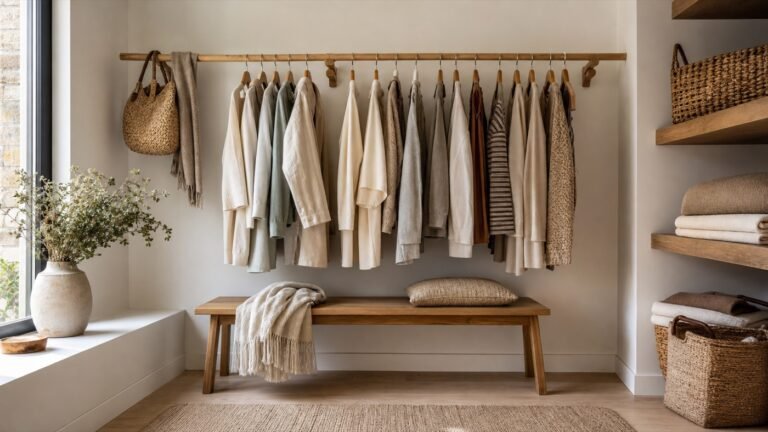
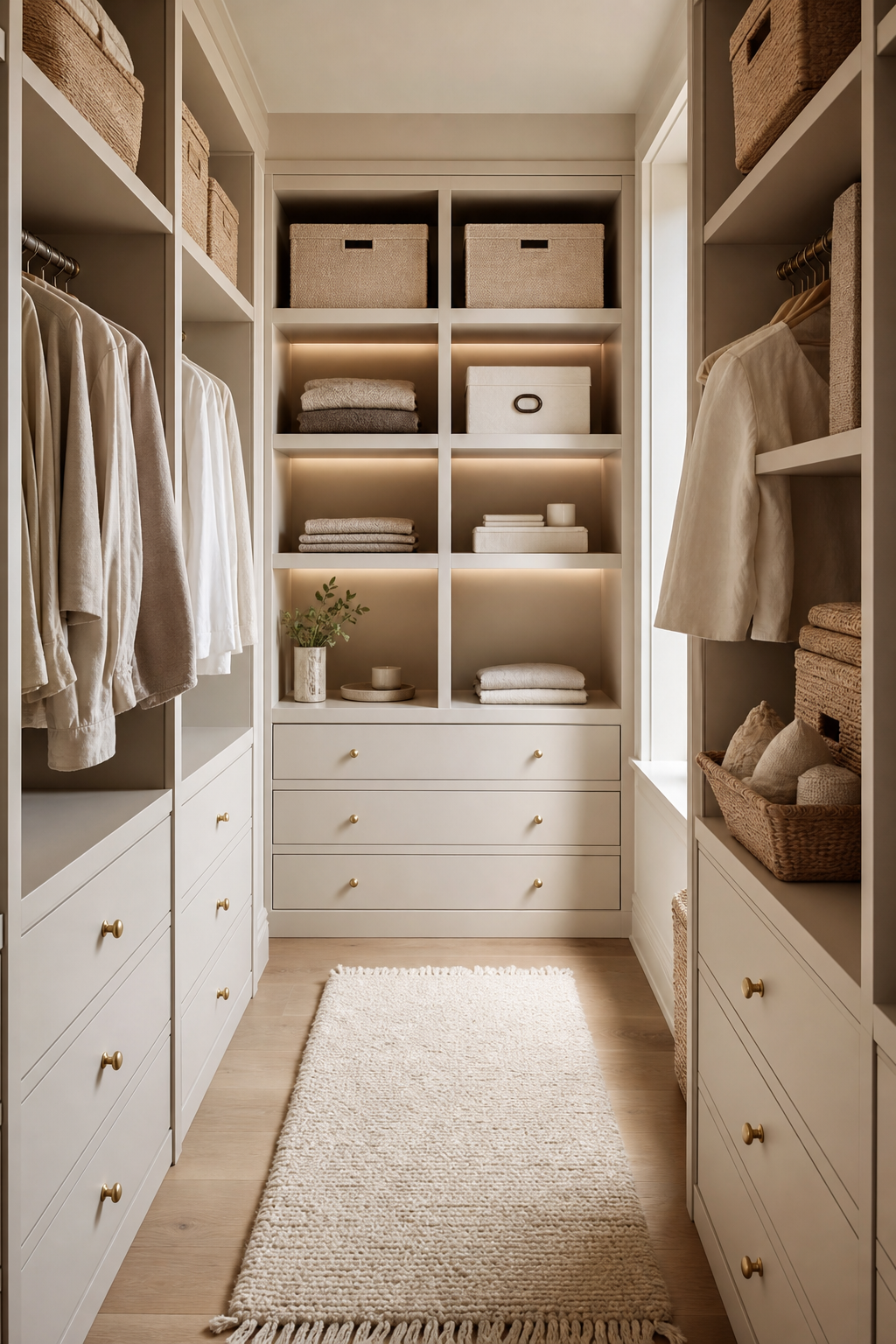
A soft monochrome palette gives a closet an immediate sense of calm. Instead of bright white, try layered shades of ivory, oatmeal, stone, greige, and pale taupe. These tones flatter clothing, soften shadows, and make even a compact closet feel more expansive. The trick is to vary texture so the room does not fall flat: matte painted cabinetry, woven baskets, linen drawer liners, brushed metal hardware, and a wool or silk-blend runner underfoot. If the closet has doors, paint them the same tone as the surrounding wall for a built-in effect. Inside, use consistent hangers and fabric boxes in related shades. A monochrome closet benefits from warm lighting, particularly LEDs around 2700K to 3000K, which keeps neutrals from looking cold. The final impression is serene, refined, and easy to maintain because everything visually belongs together.
10. Add A Mirror Wall To Expand The Space
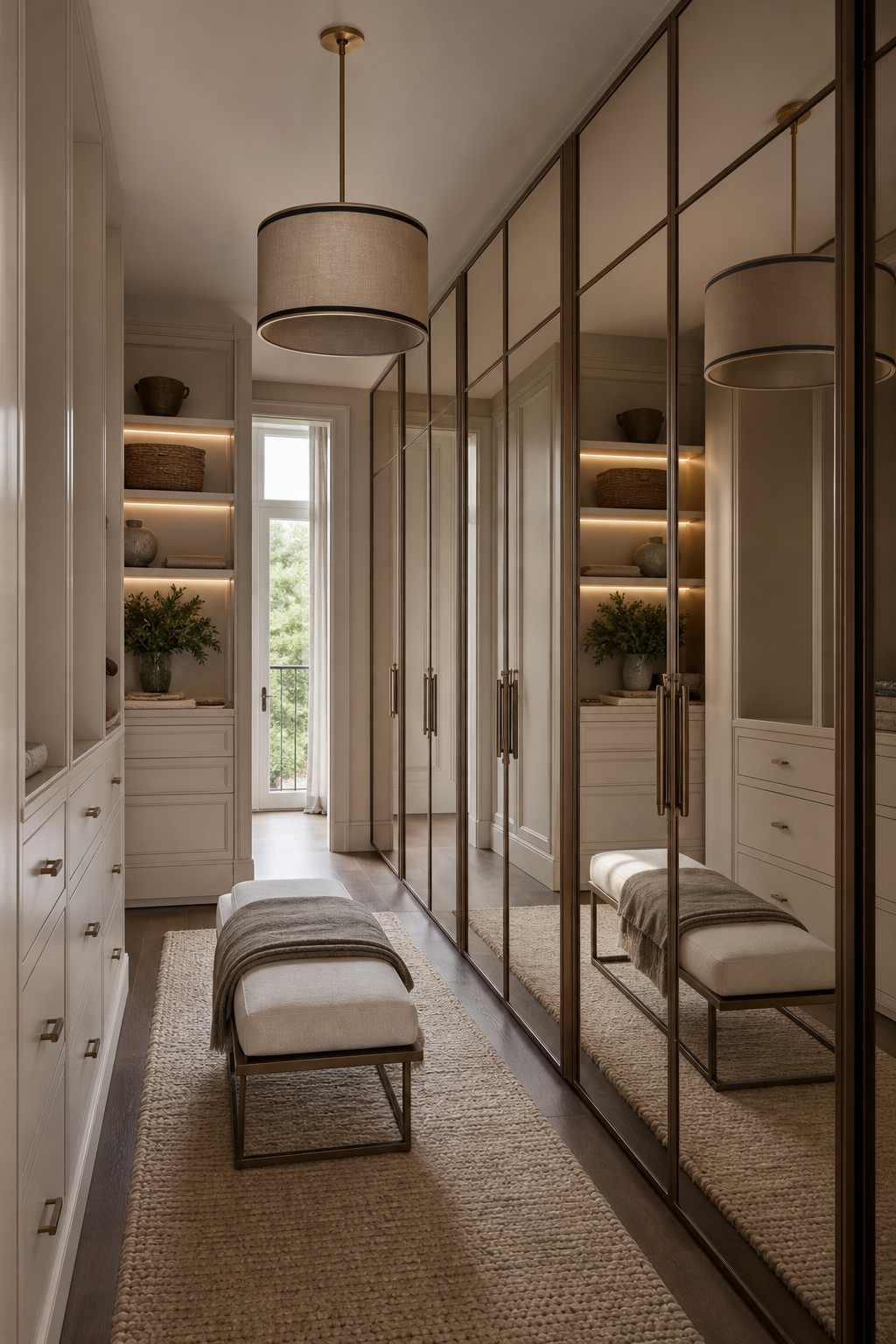
A mirror wall can transform a narrow closet by multiplying light and giving the room a more generous feel. Use full-height mirrors on wardrobe doors, at the end of a galley layout, or behind a dressing bench where they can serve a practical purpose. For a softer, more architectural look, consider antiqued mirror, bronze-tinted glass, or panels divided by slim metal muntins. Placement matters: mirrors should reflect ordered shelving, a window, or a beautiful pendant rather than a cluttered corner. Pair mirrored surfaces with matte cabinetry so the room does not feel too glossy. A runner underfoot, textured baskets, and upholstered seating will balance the reflective finish. In bedrooms where there is no room for a freestanding dressing mirror, mirrored closet doors provide the same function while keeping the floor plan clean and efficient.
11. Layer Lighting Like A Dressing Room
Closet lighting should be flattering, functional, and layered. Start with even overhead illumination so every shelf and rail is visible, then add integrated LED strips inside cabinetry to remove shadows. A decorative pendant, sconce, or pair of small lamps can make the space feel like a room rather than a storage corridor. Pay close attention to color temperature; warm white light is gentler on skin and fabric, while overly cool light can make neutrals look harsh. If there is a mirror, place lighting where it illuminates the face evenly instead of casting shadows from above. Motion sensors are useful for cabinet interiors, but a dimmer is valuable for the main fixture. This layered approach makes morning routines more efficient and gives the closet a refined evening glow, especially when glass doors or open shelving are part of the design.
12. Use Drawers For Small Accessories
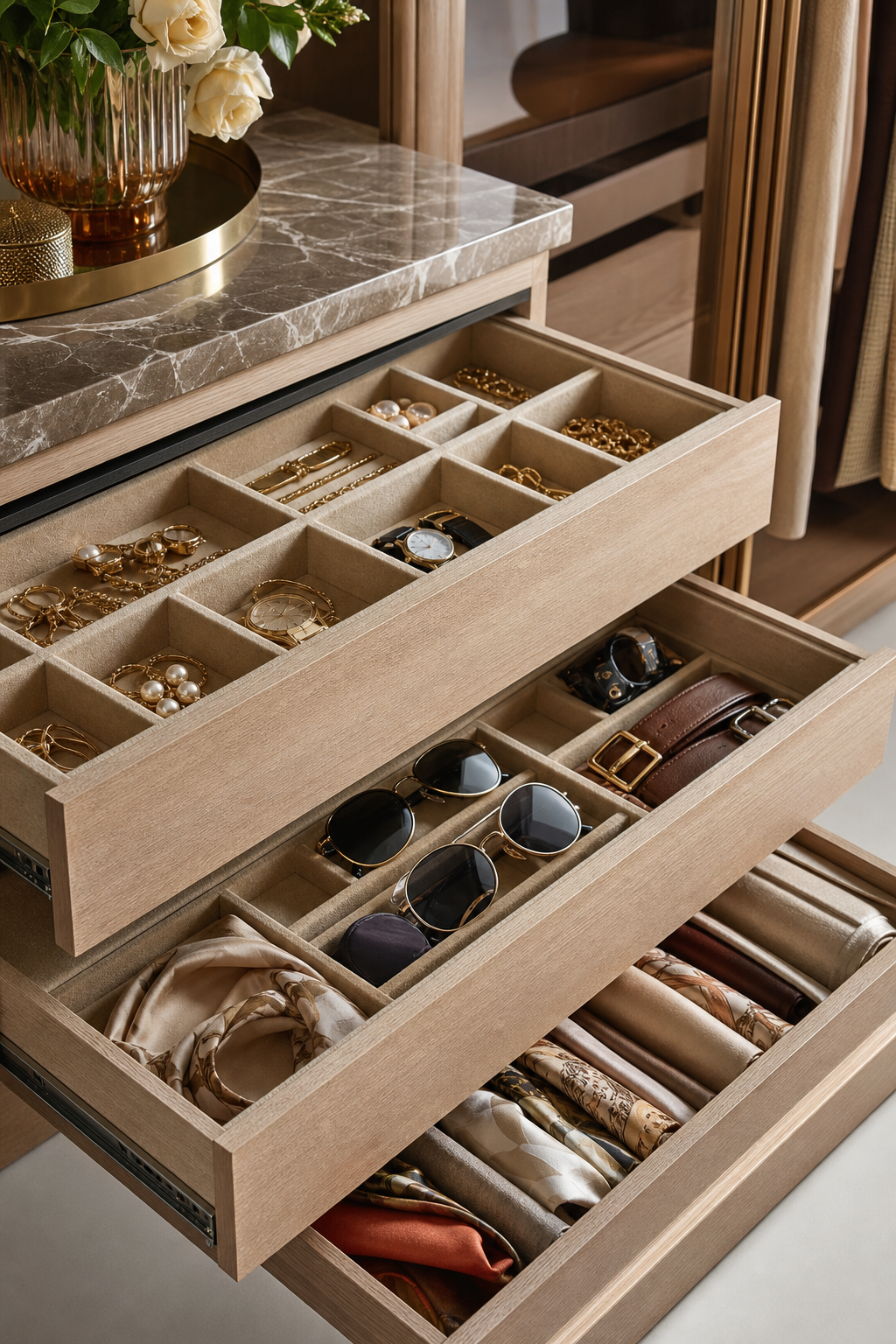
Small accessories are often what make a closet feel messy, so drawers deserve as much attention as hanging space. Shallow drawers with custom inserts can hold jewelry, watches, sunglasses, cufflinks, hair accessories, and belts in a way that keeps every piece visible. Line them in suede, velvet, or linen to protect delicate finishes and add a tactile sense of luxury. Clear-lidded compartments are useful for items you want to see at a glance, while divided wood trays suit a more tailored look. Place accessory drawers close to a mirror or dressing surface so the final styling step feels natural. A drawer stack at waist height is especially practical because it prevents rummaging. Even in a small closet, one well-planned accessory drawer can replace several loose boxes and make the entire space feel more composed.
13. Create A Linen Closet That Feels Hotel-Level
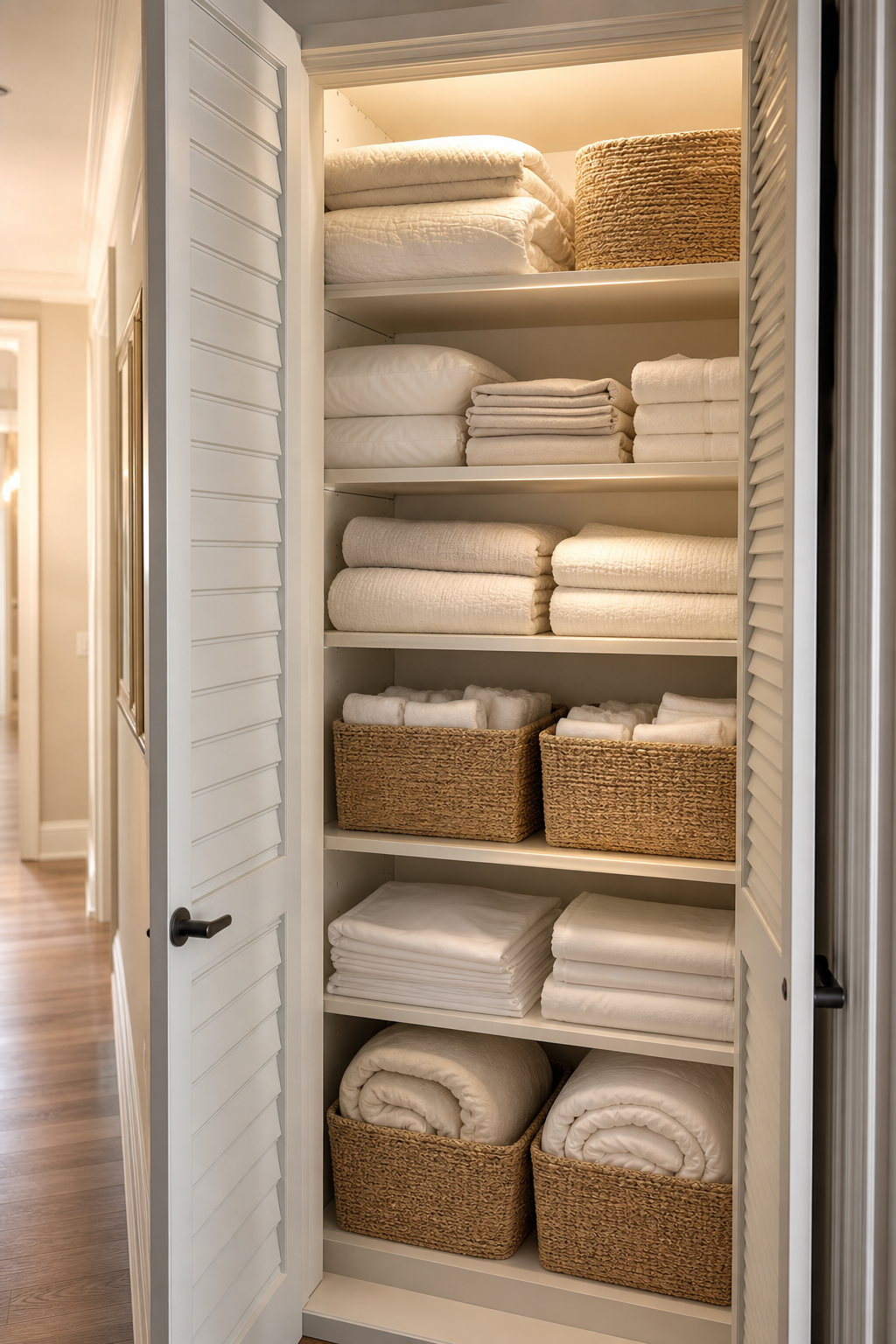
A linen closet can be deeply elegant when it is treated with the same care as a wardrobe. Use adjustable shelves for folded sheets, towels, blankets, and table linens, then divide categories with low baskets or shelf labels tucked discreetly on the edge. Keep the most frequently used items between shoulder and knee height, with guest linens and seasonal bedding higher up. Matching folded stacks create the calm, hotel-level effect, especially in a palette of white, ivory, soft gray, and natural flax. Cedar blocks, lavender sachets, or a small ceramic dish for fragrance can add a subtle sensory detail without overpowering the textiles. If the closet has doors, consider caned, louvered, or fabric-inset panels for ventilation and texture. Good lighting is essential here, since linen closets are often tucked into hallways where natural light is limited.
14. Turn A Hall Closet Into A Polished Utility Zone
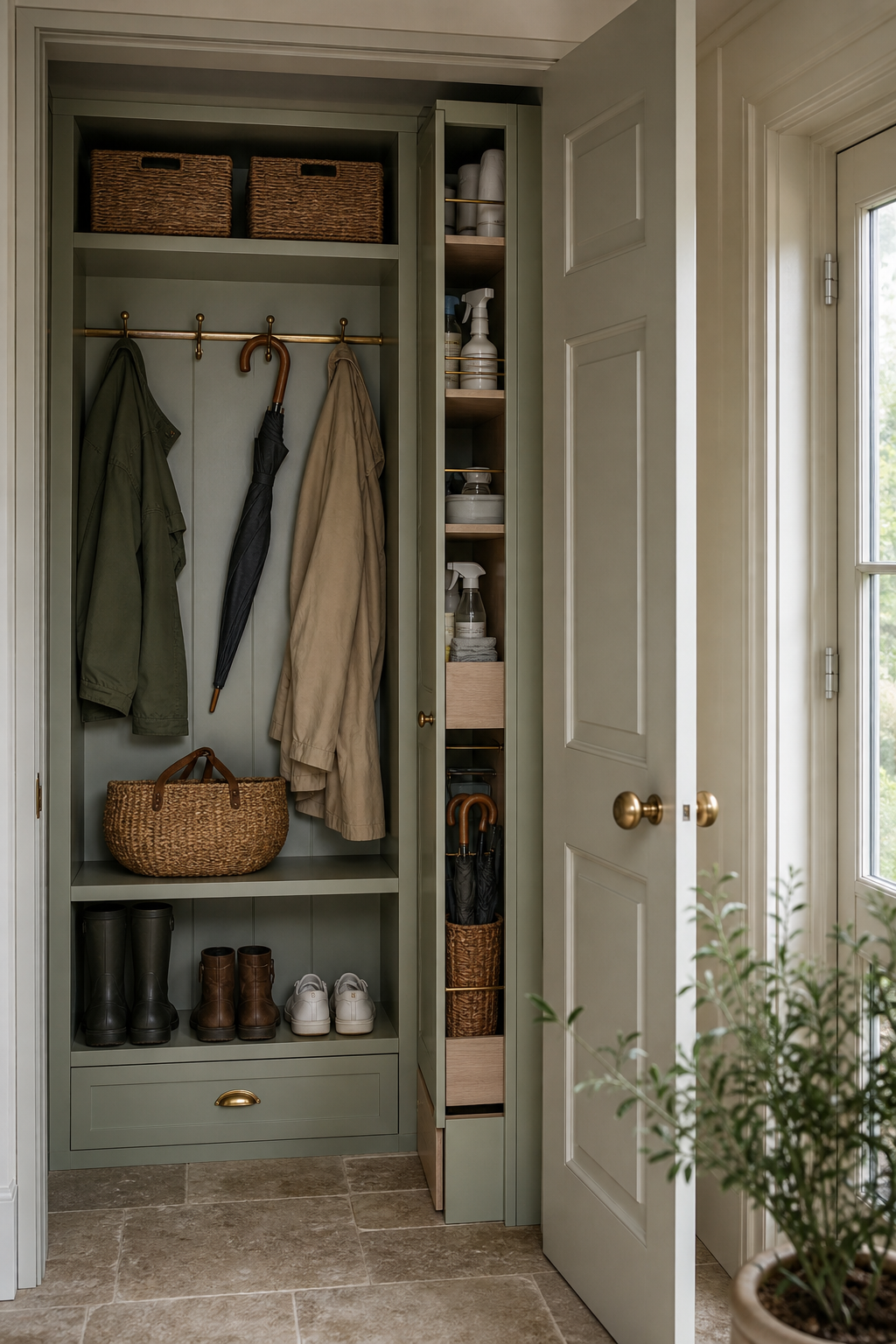
A hall closet can do more than hold coats. With careful planning, it can become a polished utility zone for outerwear, cleaning supplies, bags, umbrellas, and household essentials. Divide the interior vertically: one side for hanging coats and jackets, the other for shelves, hooks, and narrow pullouts. Use washable painted cabinetry, durable woven baskets, and a wipeable floor surface such as stone, porcelain, or sealed wood. A row of hooks at a lower height is useful for everyday totes or children’s jackets, while upper shelves can hold labeled bins for seasonal accessories. If the door opens into an entryway, make the interior attractive enough to be seen: a muted color, brass hook rail, and a small rechargeable light can make the closet feel intentional. This is luxury expressed through order, durability, and ease.
15. Add Wallpaper Inside The Closet
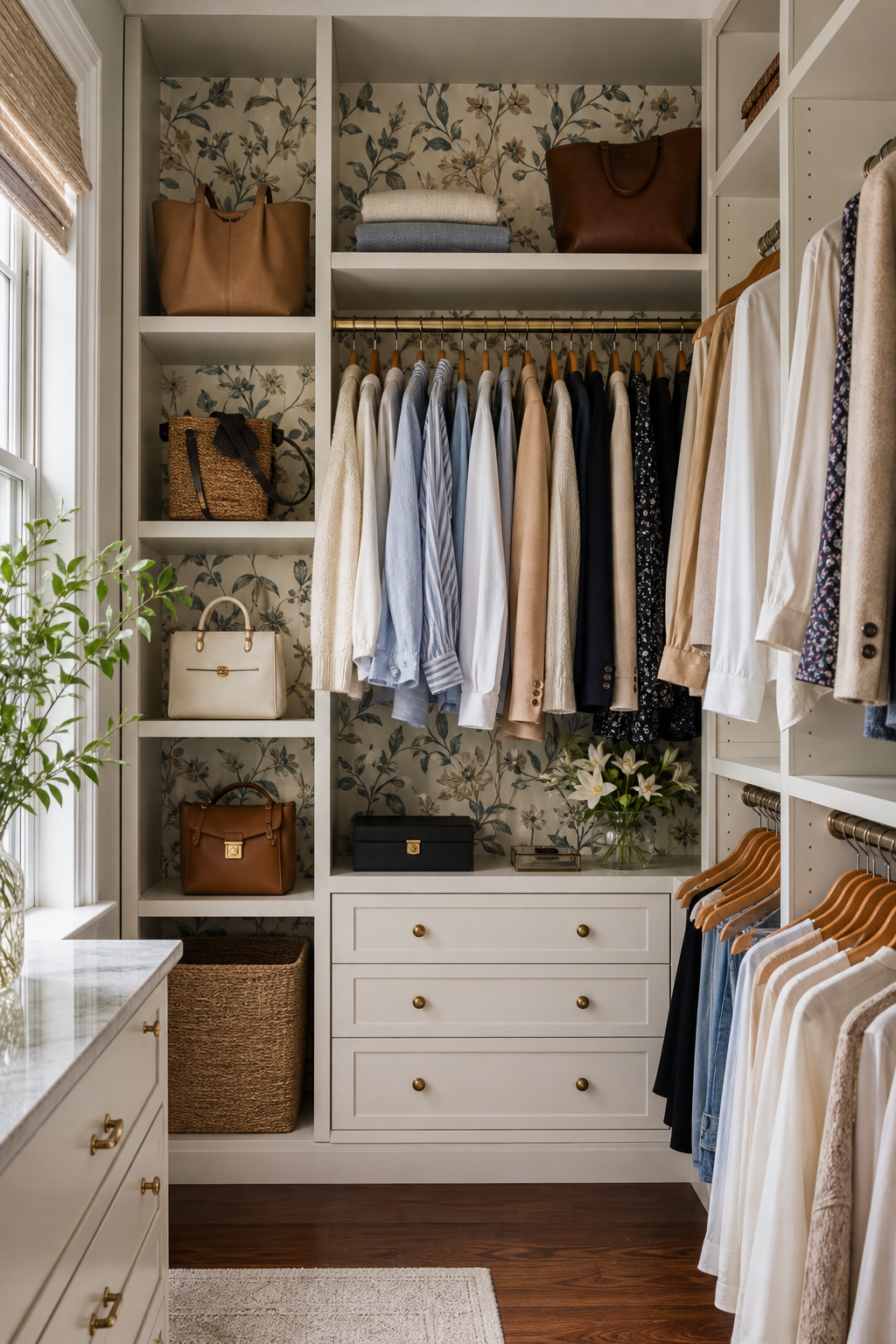
Wallpaper inside a closet is a small gesture with a memorable effect. It works especially well in reach-in closets, linen cupboards, children’s wardrobes, and dressing rooms where the pattern appears as a pleasant surprise when the doors open. Choose a design that supports the surrounding room rather than competing with it: grasscloth for texture, a delicate botanical for softness, or a subtle geometric for structure. In luxury closets, wallpaper can line the back of open shelves or sit above painted drawers, adding depth behind handbags, shoes, or folded pieces. Keep the cabinetry and hardware quiet if the pattern is expressive. For durability, use a high-quality paper or vinyl-backed wallcovering in areas likely to be touched. Paired with warm lighting, wallpaper gives storage personality without requiring a large decorative commitment elsewhere in the room.
16. Use Sliding Doors For Tight Spaces
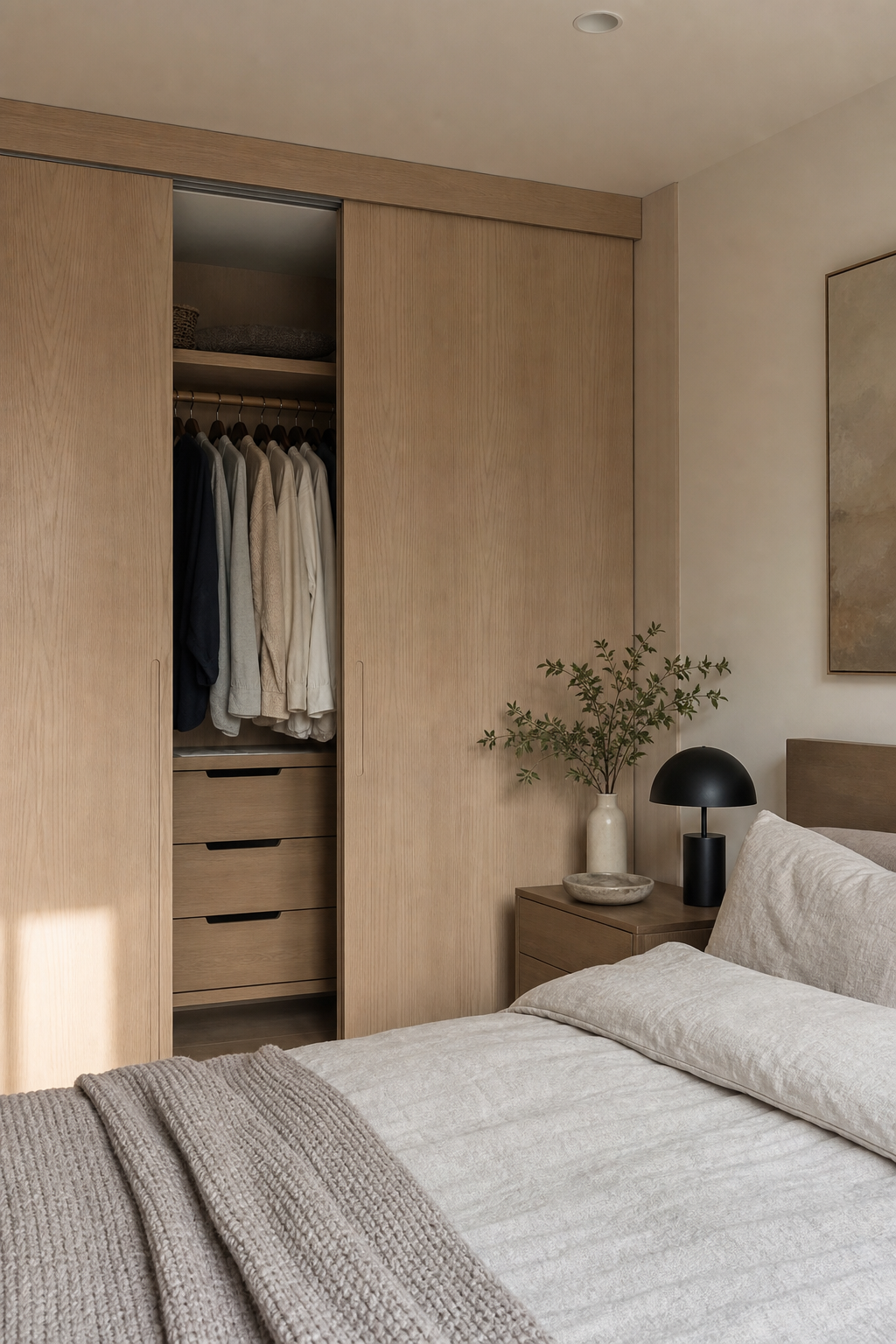
Sliding doors are ideal where hinged closet doors would interrupt furniture placement or circulation. They can be simple and architectural, especially when finished in painted wood, rift oak, mirrored glass, or fluted panels. In a compact bedroom, sliding doors allow a nightstand, dresser, or chair to sit closer to the closet without blocking access. For a more elevated look, use floor-to-ceiling panels with concealed tracks and minimal hardware. If the room is traditional, paneled sliding doors can still feel appropriate; in contemporary spaces, slab doors with vertical grain are crisp and understated. Inside the closet, consider pullout rails and drawers that come forward easily, since sliding doors expose only one section at a time. The best versions feel intentional, not like a compromise, and they keep the room visually calm while protecting valuable storage.
17. Design A Mudroom Closet With Closed Doors
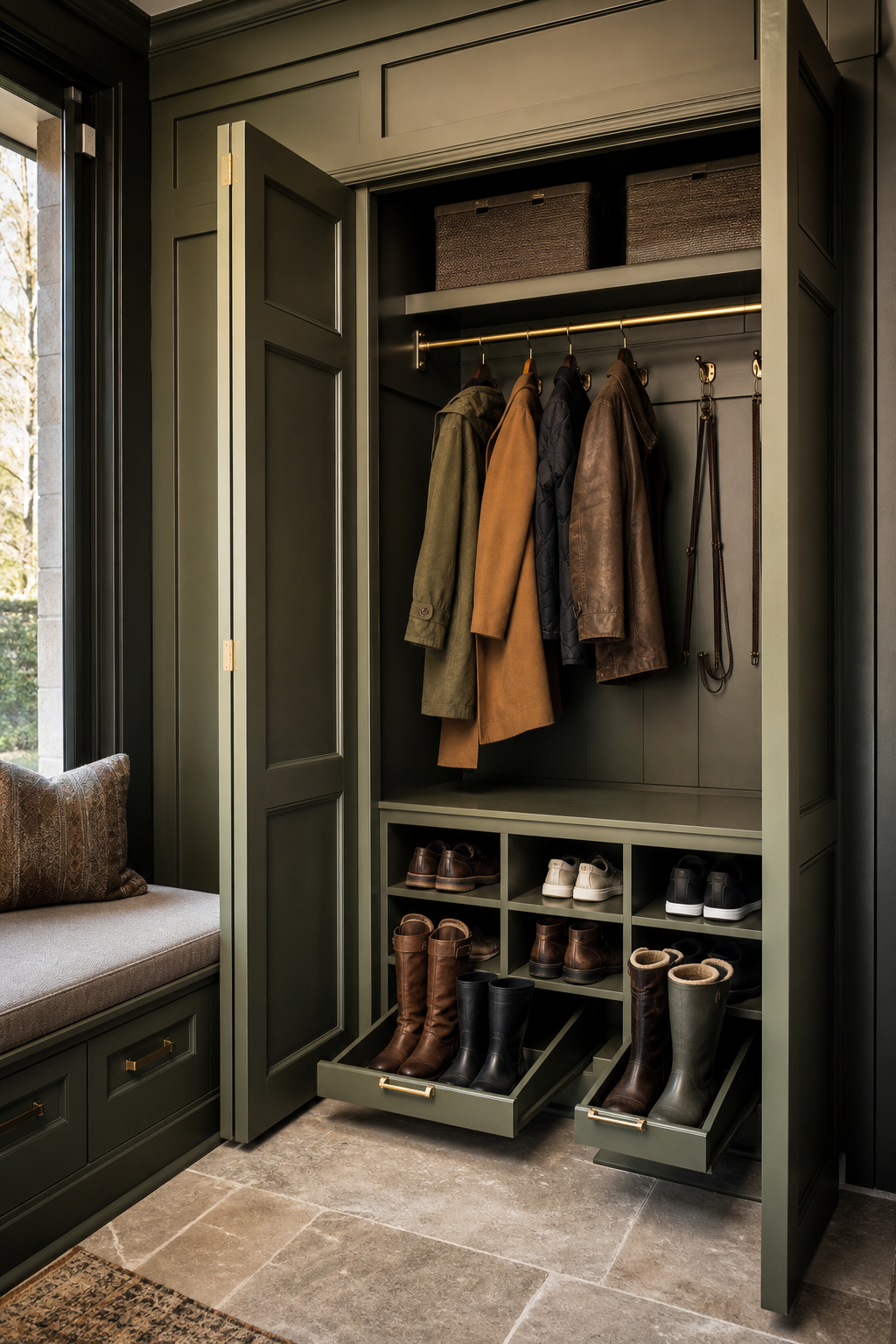
A mudroom closet with closed doors keeps daily life from spilling visually into the entry. Behind the doors, combine hanging space for coats, cubbies for shoes, hooks for bags, and pullout trays for wet boots. Durable finishes are essential: painted wood, sealed oak, stone flooring, and washable wall panels will handle moisture and frequent use. Ventilated doors, cane inserts, or small grilles help air circulate while maintaining a polished exterior. Choose hardware that can withstand constant handling, such as solid brass or matte black metal. Inside, darker colors can be practical and handsome, hiding scuffs better than bright white. A bench nearby, either built in or freestanding, makes the system easier to use. When the doors close, the mudroom reads as clean millwork rather than a collection of jackets and backpacks.
18. Add Pullout Trays For Shoes And Sweaters
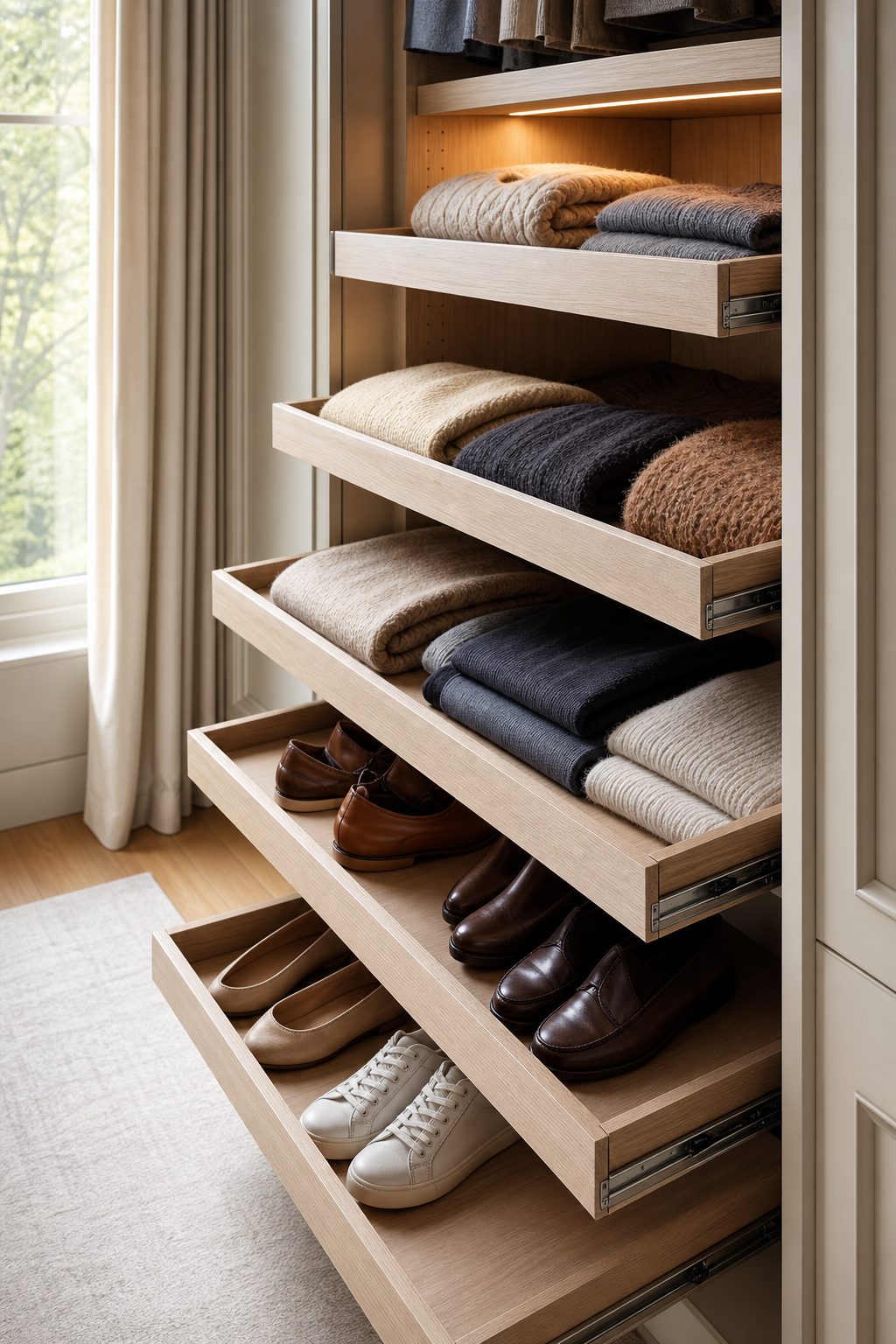
Pullout trays make deep closet storage far easier to use. Instead of stacking sweaters or shoes in a dark recess, trays glide forward so every item is visible and reachable. They are particularly valuable beneath hanging rails, inside wardrobe towers, or in closets with limited aisle space. Use wood trays with low lips for folded knits, felt-lined trays for delicate garments, and ventilated versions for shoes. The hardware should feel substantial, with smooth full-extension runners that do not wobble under weight. A pullout tray can also serve as a temporary surface while packing or planning an outfit. To keep the look refined, match tray fronts to the surrounding cabinetry and add discreet pulls. This detail may seem small, but it changes how the closet functions every day, reducing piles and making good organization easier to maintain.
19. Frame A Vanity Nook Within The Closet
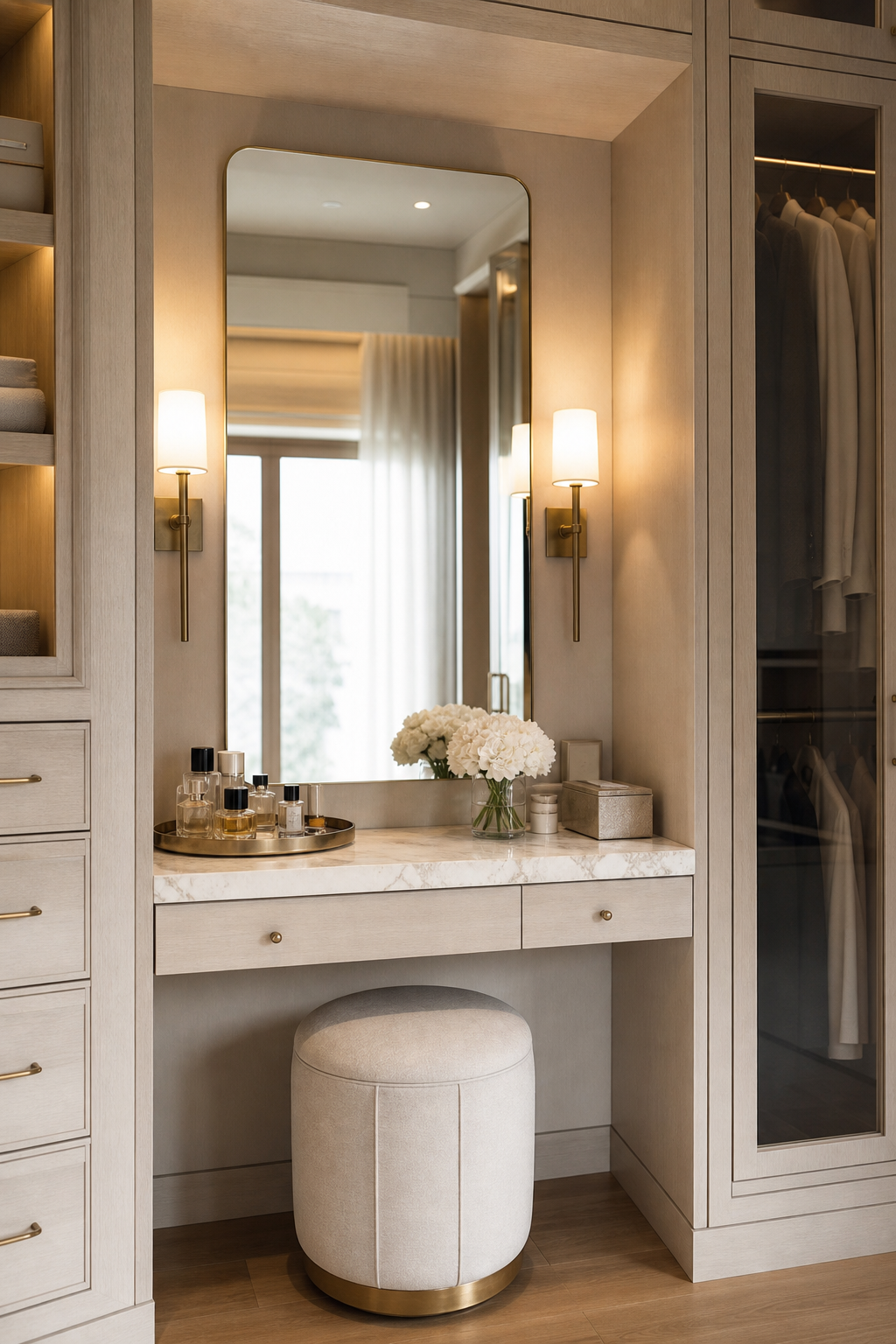
A vanity nook turns a closet into a complete dressing space. It does not need to be large; a shallow desk surface, a comfortable stool, a good mirror, and dedicated lighting can be enough. Build the nook into a run of wardrobes so it feels integrated, with drawers for cosmetics, brushes, fragrance, and hair tools. Stone, lacquer, or stained wood works well for the surface, while a fabric stool introduces softness. Lighting should be placed at face level if possible, using sconces or vertical strips beside the mirror rather than relying only on overhead light. Keep electrical outlets hidden but accessible for styling tools. A vanity nook is most elegant when the countertop is lightly styled: a tray, a small vase, and a few beautiful bottles. It makes the closet feel personal, practical, and quietly indulgent.
20. Use Baskets To Soften Open Shelving
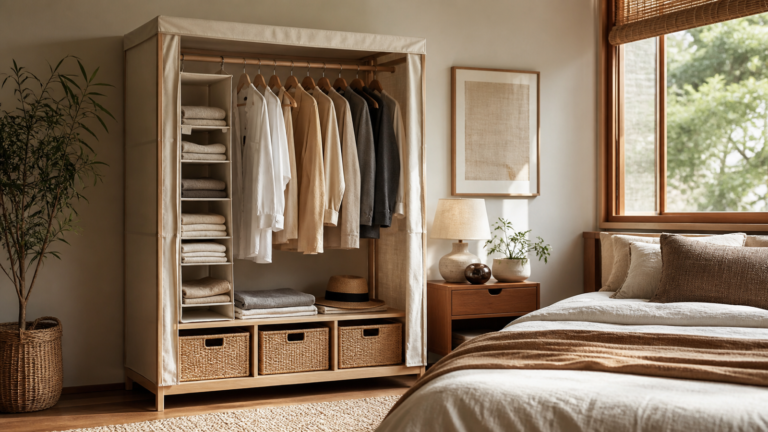
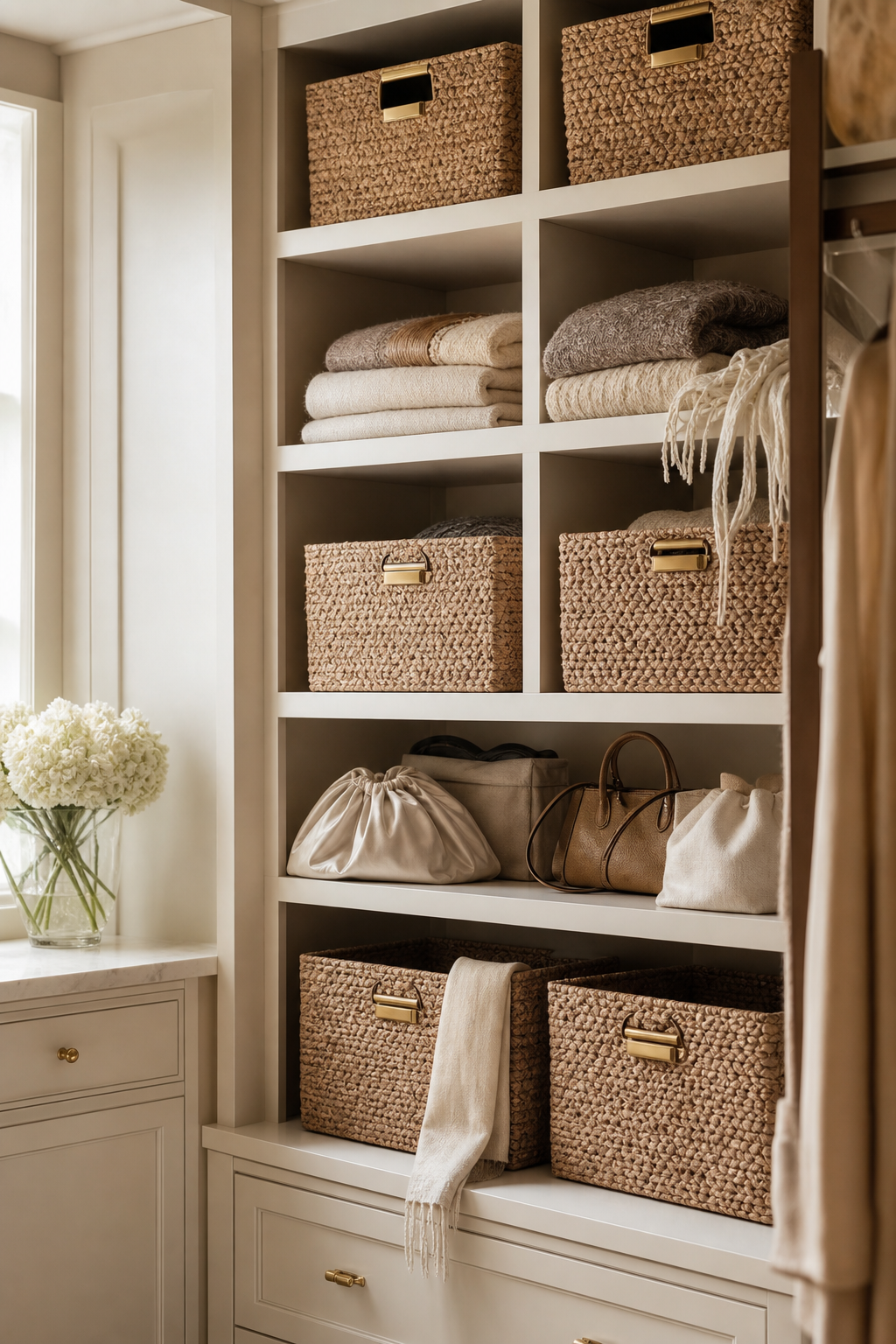
Baskets bring warmth and texture to closet shelving while hiding items that do not display beautifully. They are especially useful for scarves, beachwear, off-season knits, handbags in dust bags, and spare linens. Choose woven materials that suit the room: seagrass for a relaxed coastal note, rattan for warmth, water hyacinth for organic texture, or fabric bins for a softer tailored look. Keep shapes consistent so the shelves read as designed rather than improvised. In a luxury closet, baskets look best when paired with built-in shelves and enough breathing room around each piece. Avoid overfilling them; a basket that bulges will undo the calm effect. Small leather pulls or brass label holders can add refinement without clutter. This is a practical way to make open storage feel finished, tactile, and less visually demanding.
21. Plan A Closet Around Long And Short Hanging
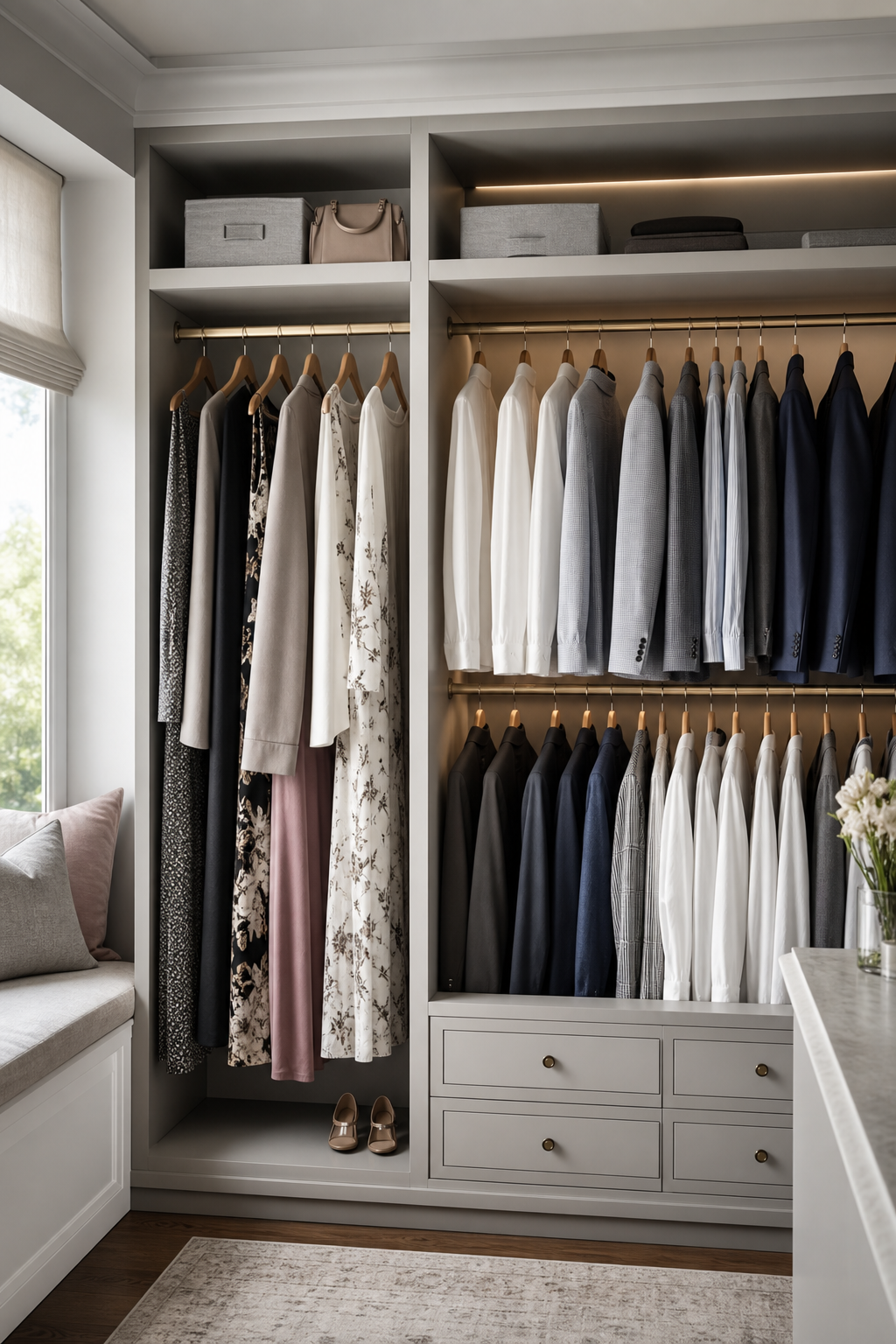
A well-planned closet respects the difference between long and short hanging. Dresses, coats, robes, and trousers need uninterrupted vertical space, while shirts, jackets, skirts, and folded-over pants can use double-height rails. Begin by measuring what you own, then assign space accordingly instead of relying on a generic layout. Long hanging often works best at one end of the closet, with double rails along the main run and drawers beneath shorter items. Leave a little extra clearance below hems so garments do not wrinkle against shelves or shoes. Matching hangers keep the rails visually calm and prevent uneven spacing. If the closet is shared, divide zones by person or category to avoid constant rearranging. This practical structure creates a neater appearance and protects clothing, which is ultimately the quiet luxury of a truly useful closet.
22. Add A Library Ladder For Tall Storage
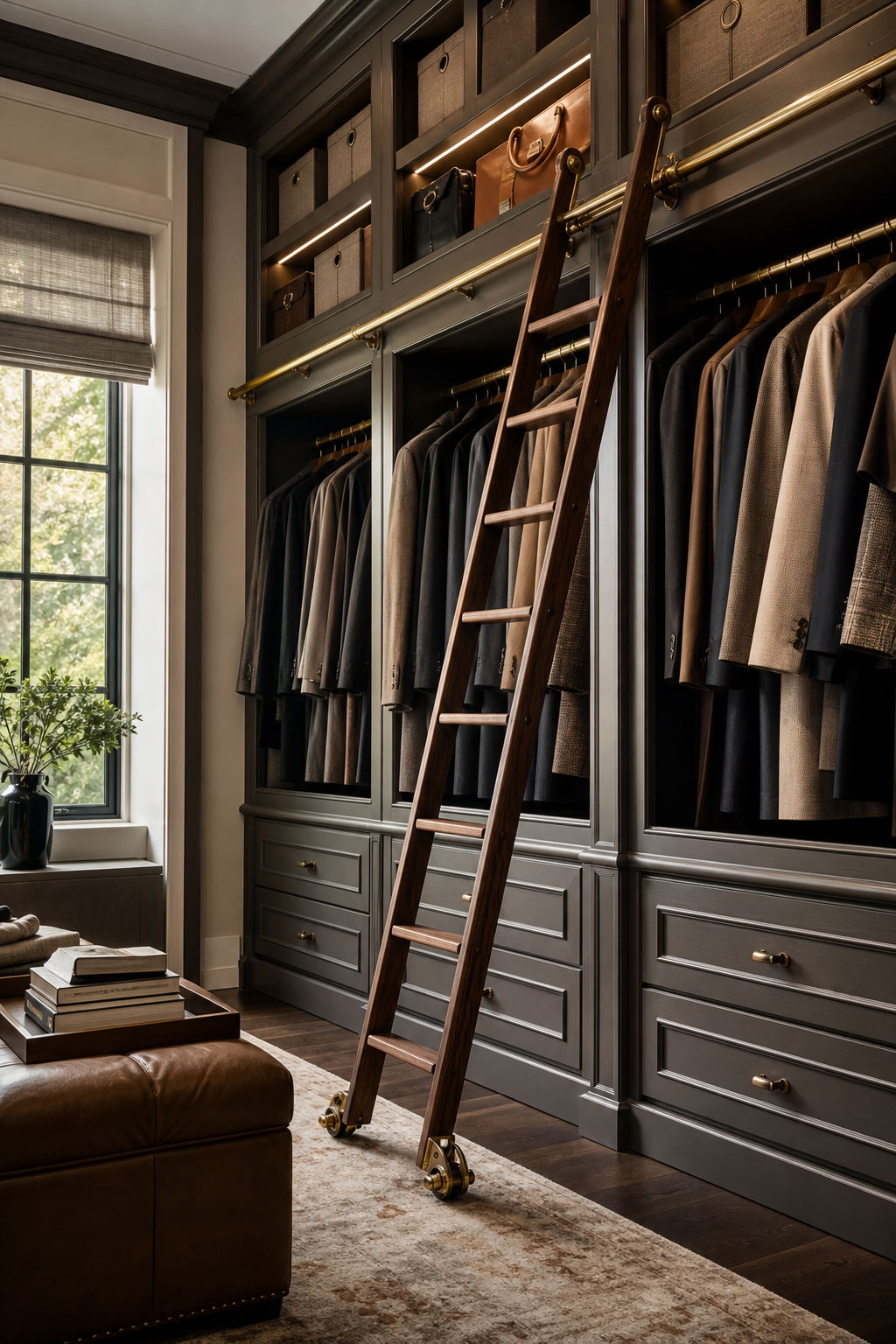
When closet cabinetry reaches the ceiling, a library ladder turns high storage into a beautiful feature instead of an inconvenience. It is ideal for seasonal bags, luggage, archival boxes, or occasionwear stored above everyday reach. Choose a ladder rail that matches the hardware, such as brass, bronze, or blackened steel, and pair it with a wood ladder that complements the cabinetry. The upper shelves should be organized in attractive boxes or fabric-covered bins because they sit within sight. A ladder works especially well in dressing rooms with high ceilings, where it emphasizes vertical architecture and gives the closet a gracious, old-world practicality. Make sure there is enough floor clearance for the ladder to move safely along the rail. Used sparingly, this detail feels tailored, functional, and distinctly luxurious.
23. Turn Closet Doors Into A Design Feature
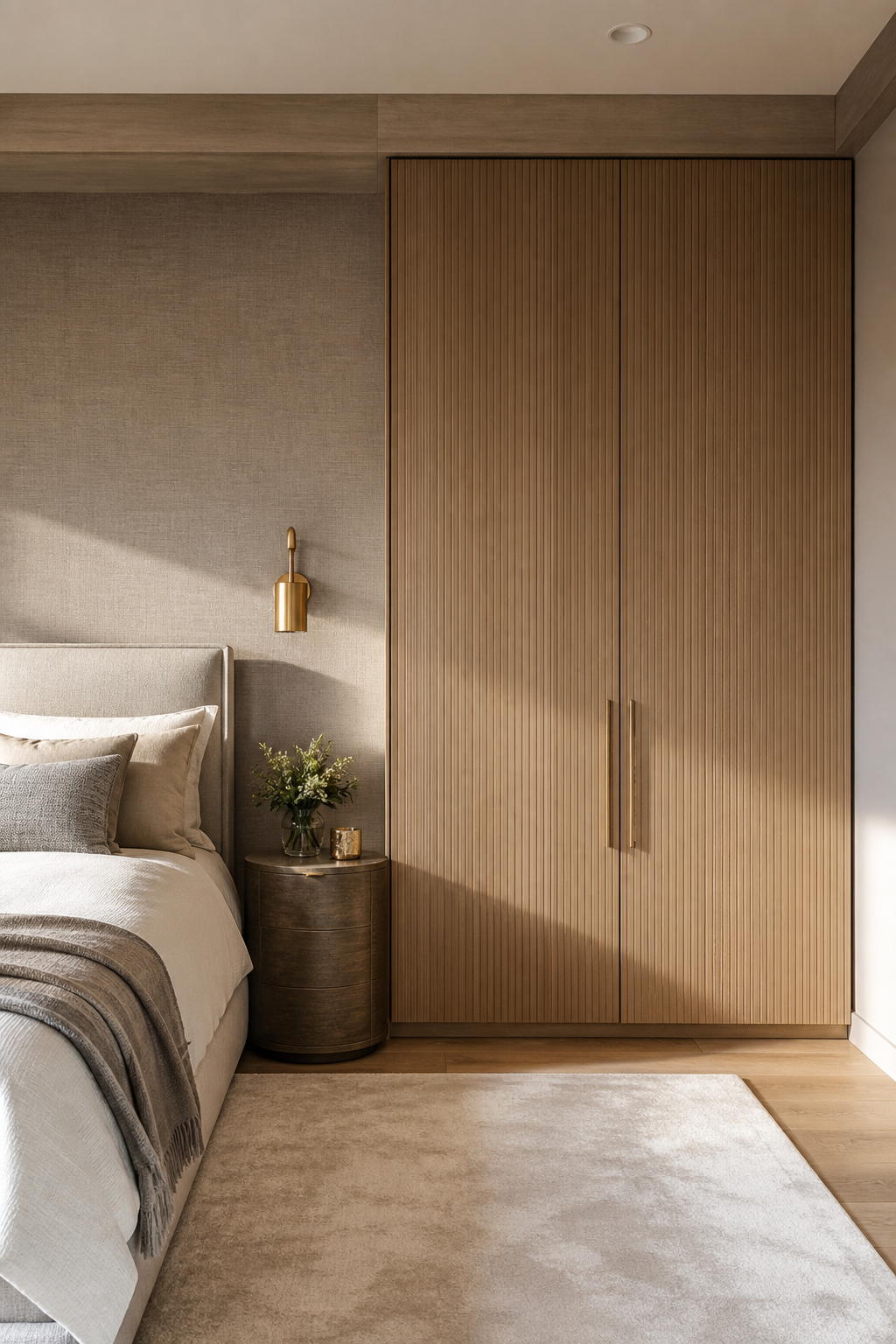
Closet doors occupy a large visual surface, so treating them as a design feature can elevate the entire room. Paneled doors bring classic structure, fluted wood adds rhythm, mirrored panels expand light, and fabric or cane inserts introduce texture. In a bedroom, closet doors should relate to the bed, flooring, and trim rather than feel like an afterthought. Paint them the same color as the walls for quiet integration, or choose a richer finish when the architecture can support a statement. Hardware is equally important: oversized knobs, slim pulls, or concealed finger grooves can change the mood dramatically. If the closet interior is simple, beautiful doors provide the luxury moment on the outside. This idea is especially useful when a full custom closet is not possible, because the visible face of storage still feels considered and refined.
24. Style The Closet With Restraint
The final layer of a stylish closet is restraint. A few thoughtful details can make the space feel complete, but too much decoration will compete with the clothing and accessories. Consider a small tray for fragrance, a ceramic bowl for cufflinks, a linen pinboard for inspiration, or a single vase on the island. A runner can soften the floor and improve acoustics, while a framed photograph or quiet artwork adds personality if wall space allows. Keep surfaces mostly clear so the closet remains easy to use. Color coordination helps, but avoid making the space so precious that daily life feels unwelcome. Luxury closets work because they support routine beautifully: the lighting flatters, the storage makes sense, the materials feel good to touch, and every visible object has earned its place.
A neat closet is not created by storage alone; it comes from choosing the right layout, materials, light, and rhythm for the way a home is lived in. From glass-front wardrobes to linen closets and mudroom storage, the most elegant ideas make order feel natural rather than forced. With thoughtful cabinetry, beautiful textures, and a restrained approach to styling, even the most practical closet can become one of the home’s most quietly luxurious spaces.