19 Wall Closet Ideas For A Neat Stylish Home
A wall closet can do much more than hide clothes. When the doors, trim, lighting, shelves, and nearby furniture are planned together, it becomes a clean architectural feature that makes the whole room feel calmer. These wall closet ideas focus on storage that looks intentional, works for daily routines, and still feels polished enough for a stylish bedroom, hallway, or dressing area.
Build A Wall Of Flush Wardrobe Doors
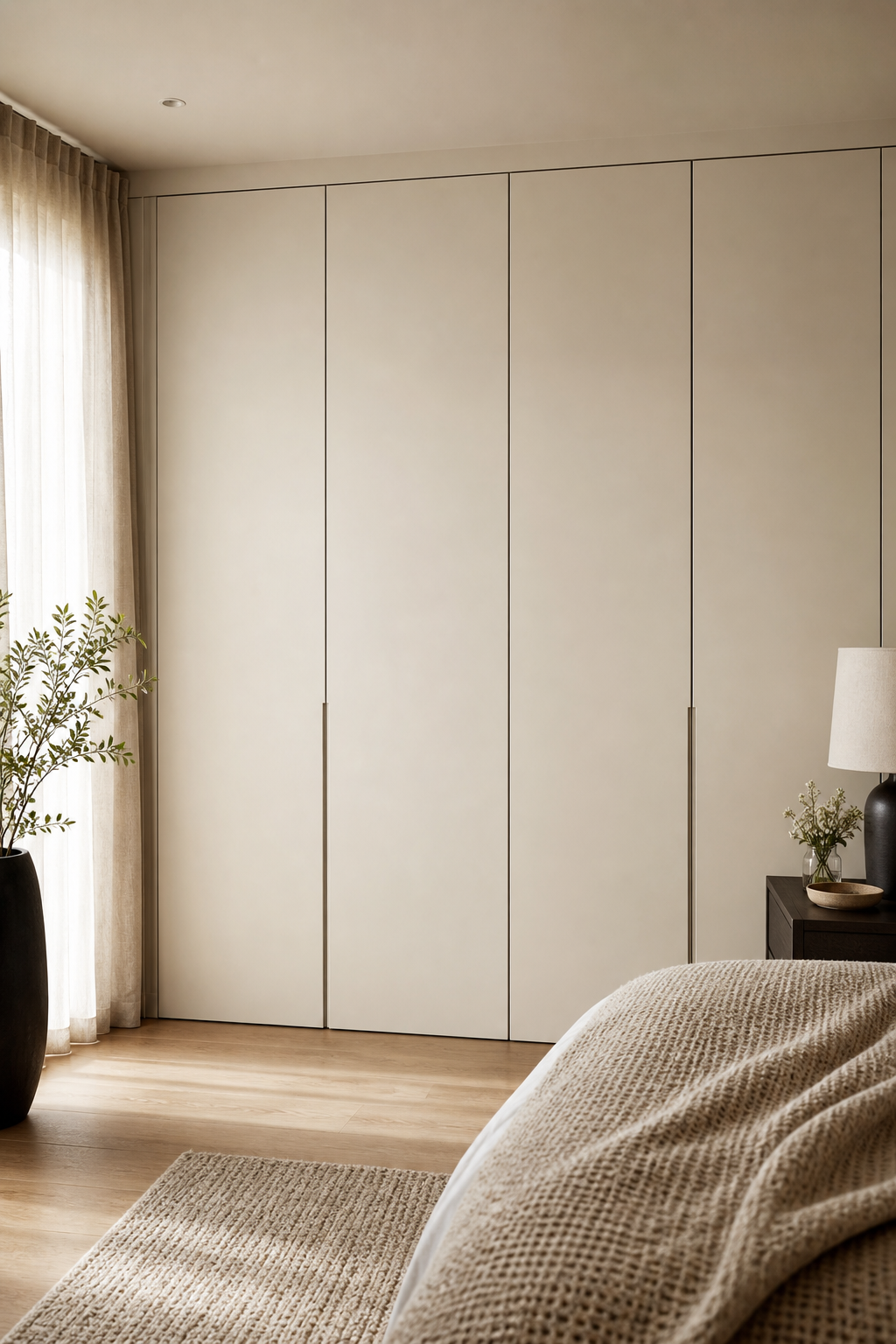
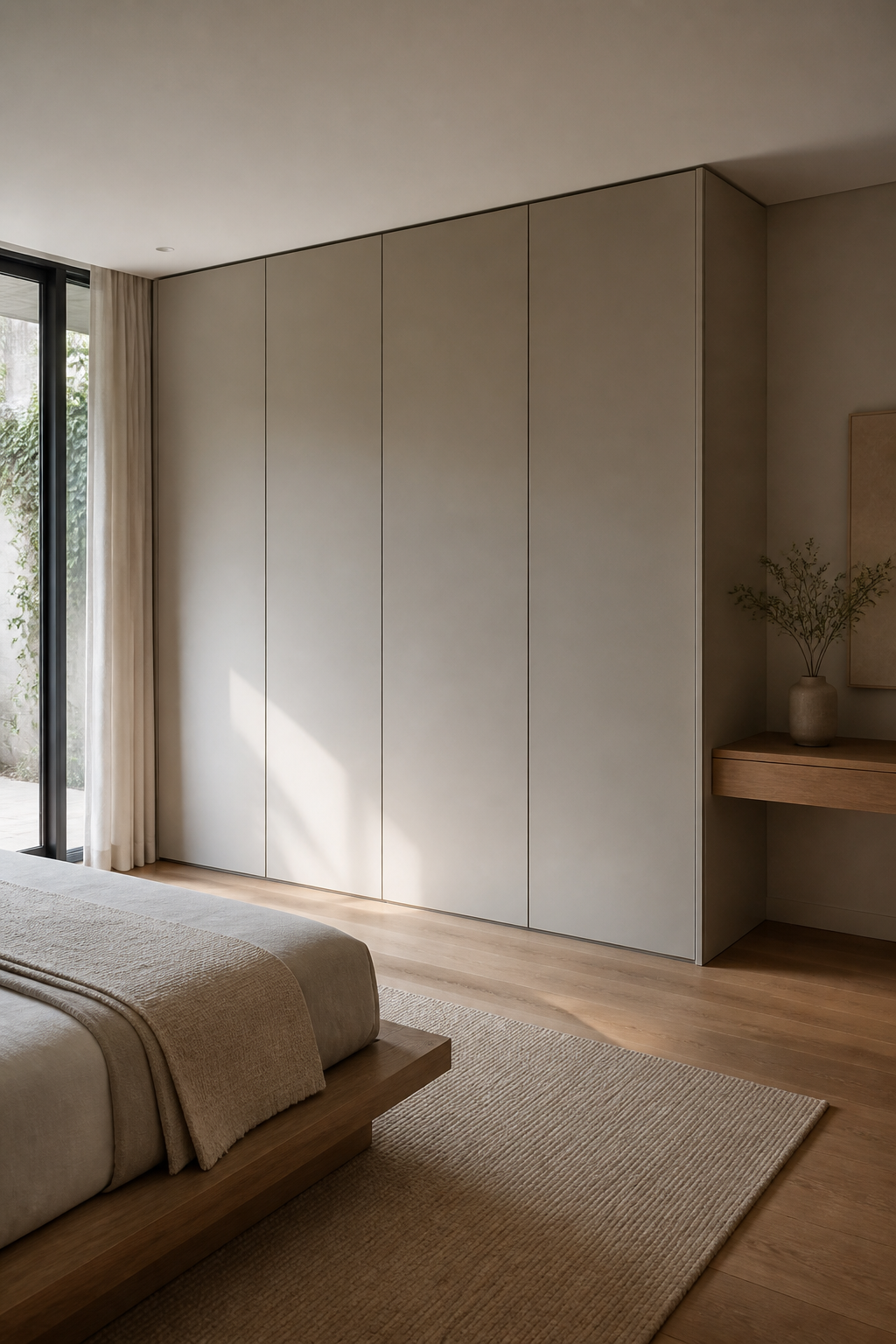
Use full-height flush doors when you want storage to disappear into the room. The clean face makes a small bedroom feel calmer because the eye reads one broad plane instead of several separate pieces. Choose slab fronts, narrow shadow gaps, and quiet hardware such as recessed pulls or touch latches. Inside, divide the closet into short hanging, long hanging, drawers, and open shelves so the simple exterior still works hard. A matte finish is especially forgiving, while a soft white, greige, or pale oak tone keeps the wall bright. Add warm LED strips inside the cabinet so evening outfit choices feel easy, polished, and practical.
Frame The Closet With Built-In Trim
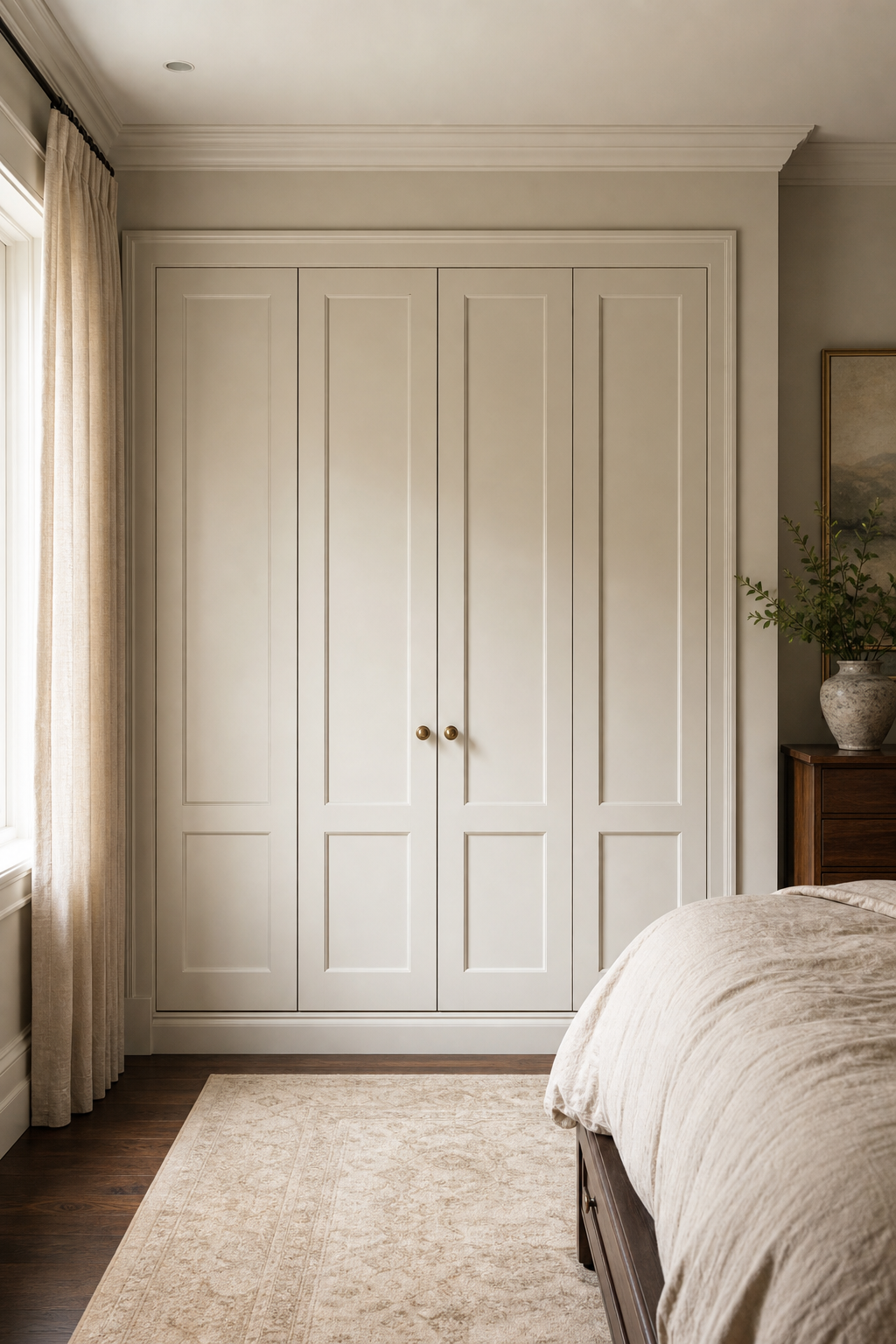
Molding can make a wall closet feel architectural instead of added later. Run trim around the doors, align the baseboards, and add a shallow crown or header so the wardrobe looks like part of the room. This approach works beautifully in older homes where plain closet doors can feel too flat. Keep the door panels simple and let the trim create the detail. Brass knobs, painted wood, and a tailored bench nearby give the whole wall a finished look. If the room is compact, paint the trim and doors the same color as the walls, which keeps the storage substantial without making it visually heavy.
Use Mirrored Doors To Brighten The Room
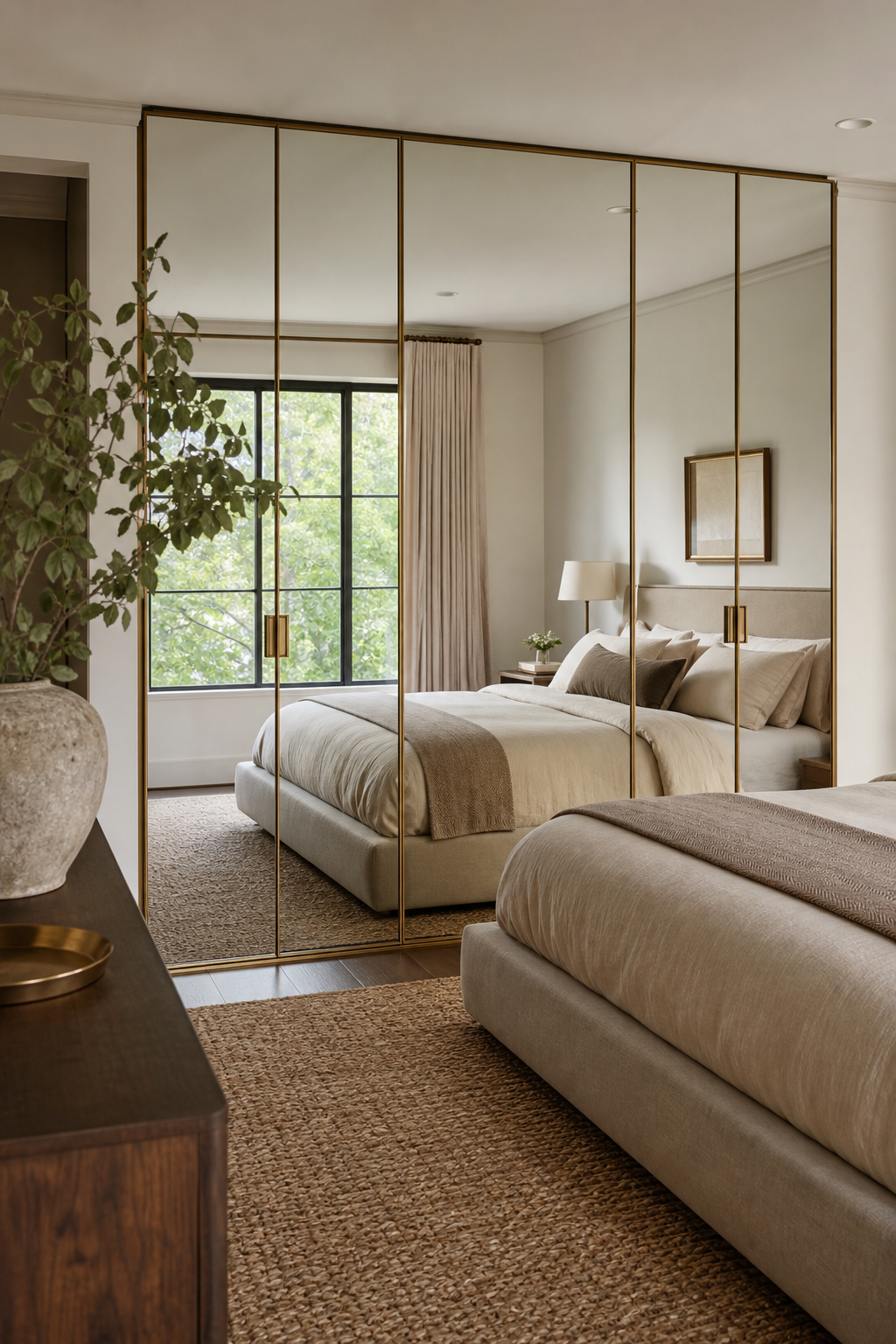
Mirrored closet doors are useful when a bedroom needs both storage and more light. A full-height mirror reflects the window, visually doubles the floor area, and gives you a practical dressing surface without adding another piece of furniture. To keep the look current, choose slim frames, beveled edges, or divided panels rather than heavy sliding mirror slabs. The reflection will show the rest of the room, so keep the opposite wall calm with good bedding, art, and lighting. Mirrored doors also pair well with darker paint because they prevent the closet wall from feeling closed in, shadowed, or visually cramped.
Create A Painted Closet Accent Wall
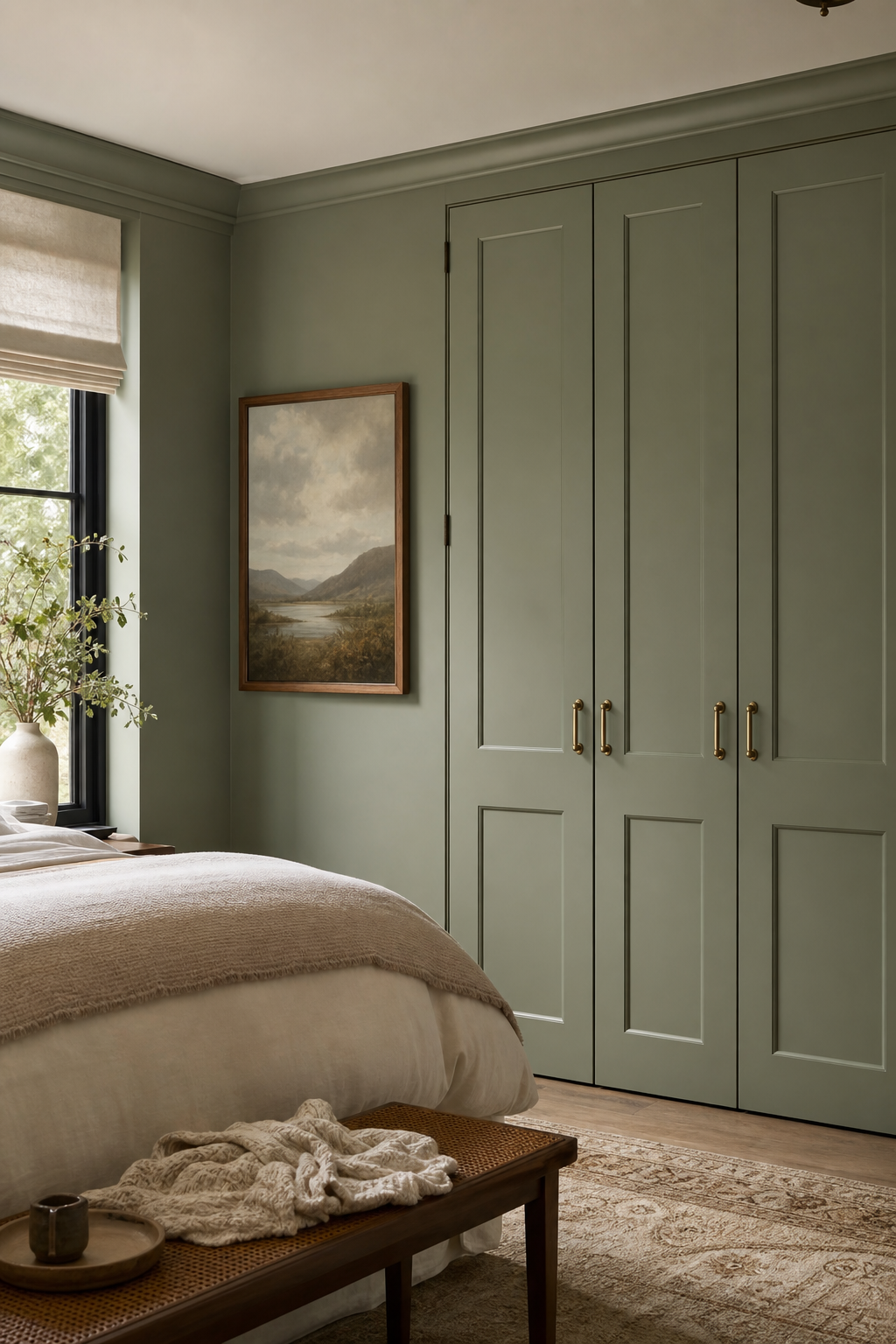
Painting the closet wall can turn everyday storage into a design feature. A muted sage, mushroom, inky blue, or soft clay shade gives the doors presence while still feeling livable. Use the same color on the trim, doors, and any surrounding drywall for a built-in effect. Hardware matters here because it becomes jewelry against the paint; aged brass, blackened bronze, or simple nickel pulls all work depending on the room. Balance the color with natural bedding, wood nightstands, and woven textures so the closet feels integrated. This is an easy way to add depth without wallpapering an entire bedroom.
Add Reeded Glass For A Boutique Feel
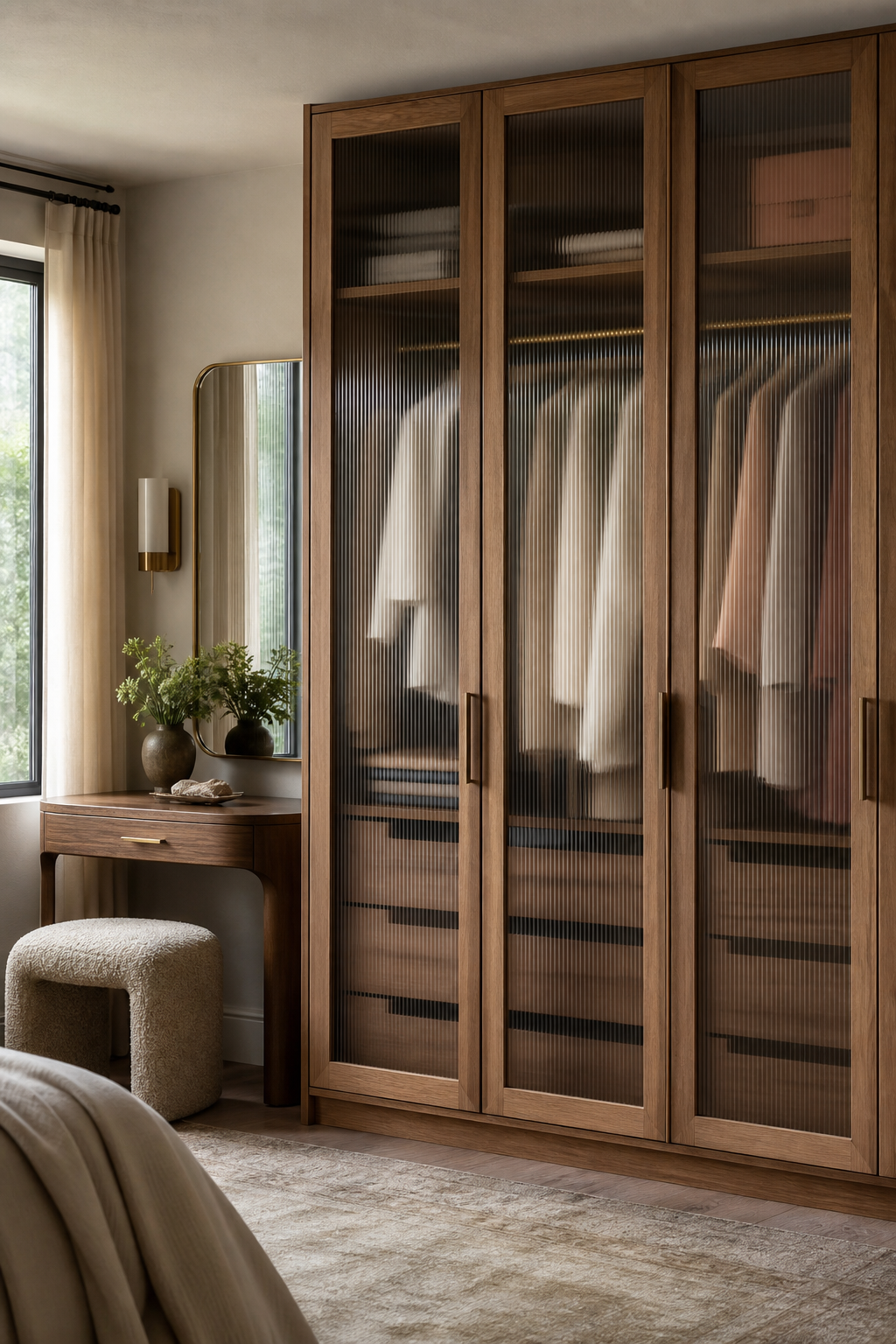
Reeded glass gives a wall closet the feel of a boutique dressing room while still hiding visual clutter. The texture blurs folded clothing and hanging pieces, so the storage looks light instead of exposed. Use it on the upper doors, as full-height inserts, or only in the center panels if you want a more traditional look. Warm oak or walnut frames soften the glass, while slim metal frames feel crisp and modern. Interior lighting is important because it makes the ribbed surface glow gently at night. Keep the closet contents organized by color or category so any visible shapes still feel intentional.
Install Sliding Doors In A Narrow Room
Sliding doors are ideal when there is not enough clearance for hinged closet fronts. They keep the walkway open and make a wall of storage possible in a narrow bedroom, hallway, or guest room. Choose a smooth track system, substantial panels, and a finish that matches the room rather than a flimsy utility door. Pale oak, painted shaker panels, or simple linen-textured fronts can all look elevated. Because only part of the closet opens at once, plan the interior in zones so frequently used clothing sits behind the easiest panel. Add quiet-close hardware to make the setup feel more custom and durable.
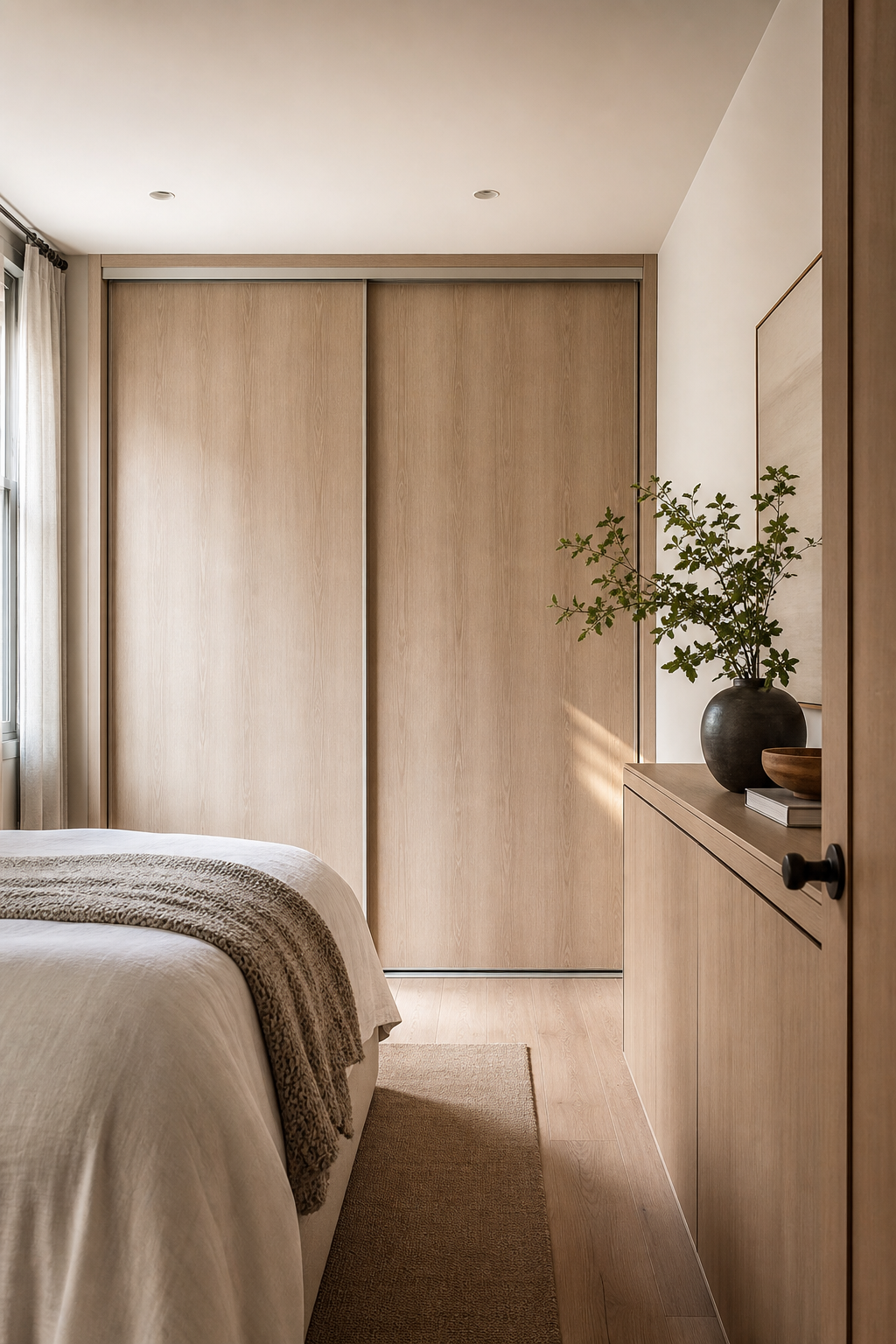
Mix Open Shelves With Closed Storage
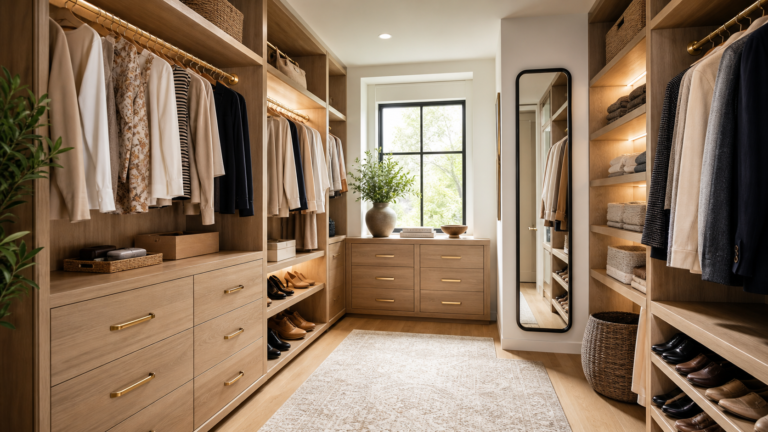
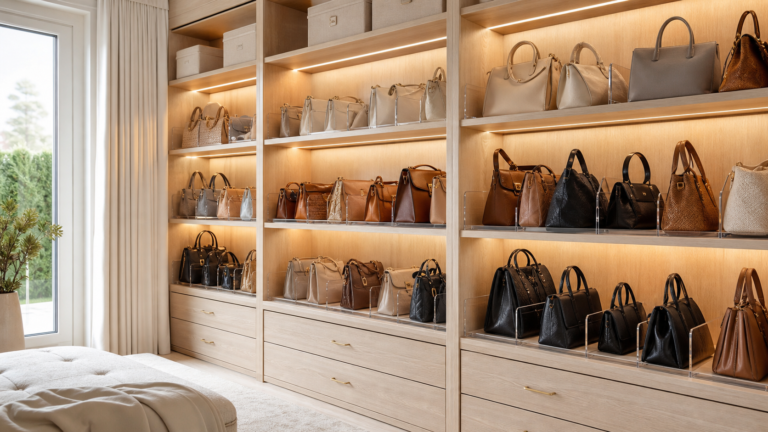
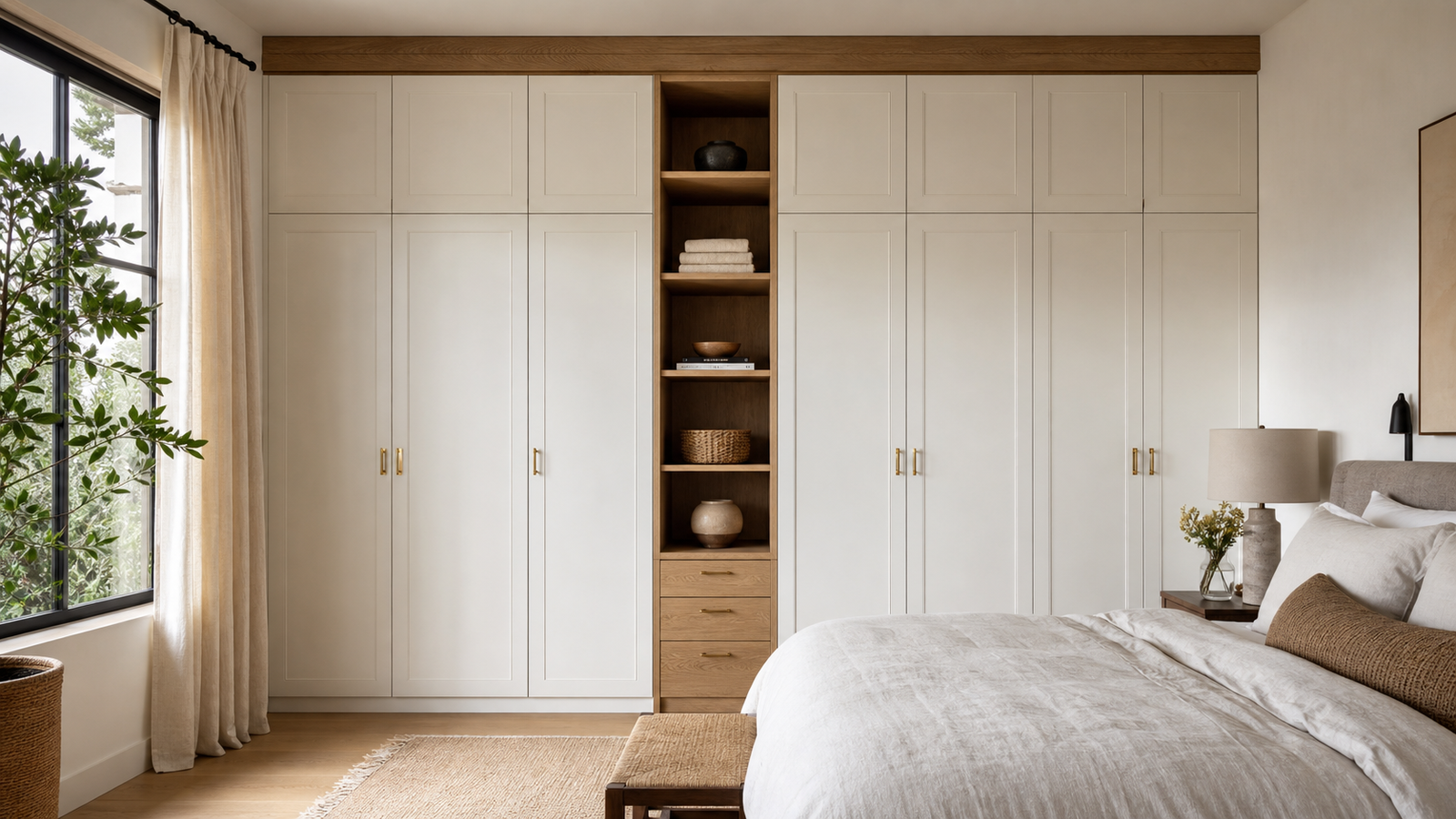
A mix of open and closed storage keeps a wall closet from looking too flat. Use doors for everyday clothing and open shelves for the pieces that are pretty enough to show, such as handbags, folded knits, boxes, or a ceramic bowl for accessories. The key is restraint. Leave breathing room on each shelf and repeat materials so the open area feels styled instead of crowded. Oak shelves, painted cabinets, and woven bins create a warm balance. This layout works especially well around a central dresser niche, where the open shelves can frame a mirror, lamp, or small piece of art.
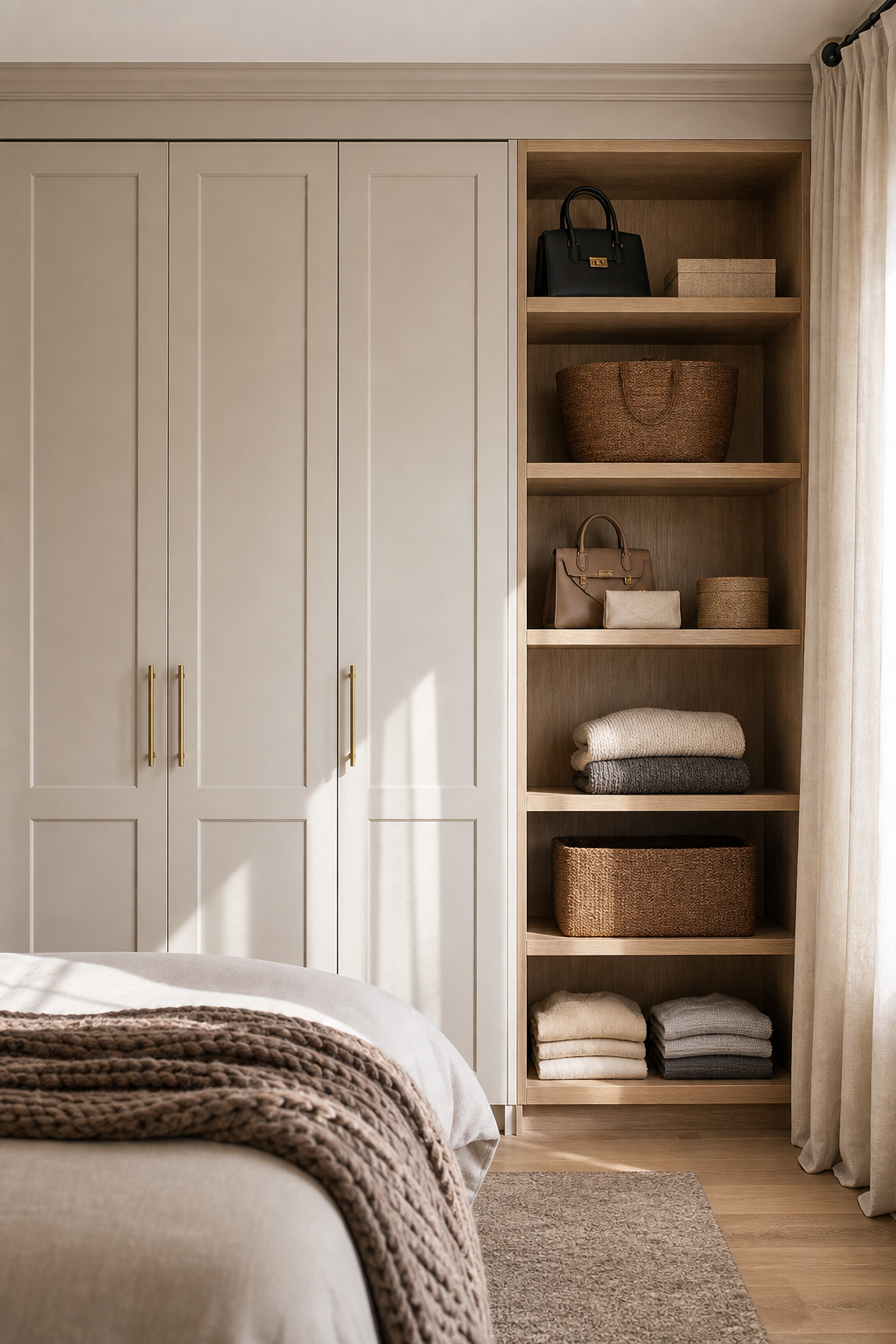
Include A Dresser Niche In The Closet Wall
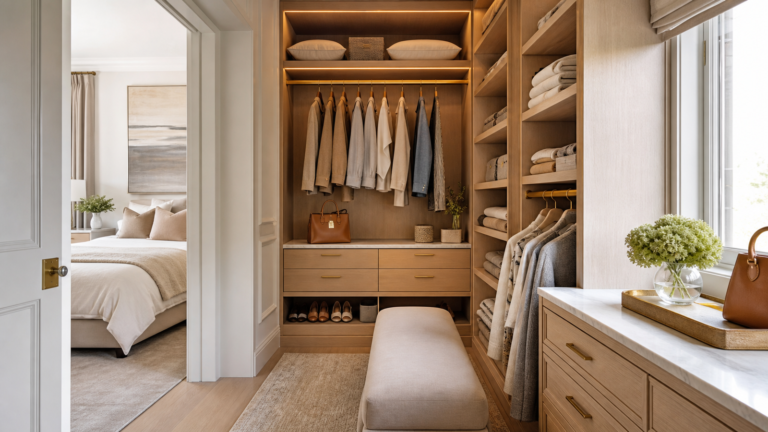
A recessed dresser niche makes a wall closet more useful and much more custom. Place drawer storage in the center, flank it with hanging wardrobes, and finish the niche with a stone or wood top. The surface becomes a place for perfume, jewelry trays, flowers, or a small lamp, while the drawers hold folded basics. Add a mirror and sconces above the dresser to create a compact dressing station. This arrangement is especially smart in bedrooms without space for a separate chest. Keep the niche slightly shallower or darker than the surrounding doors so it reads as an intentional focal point.
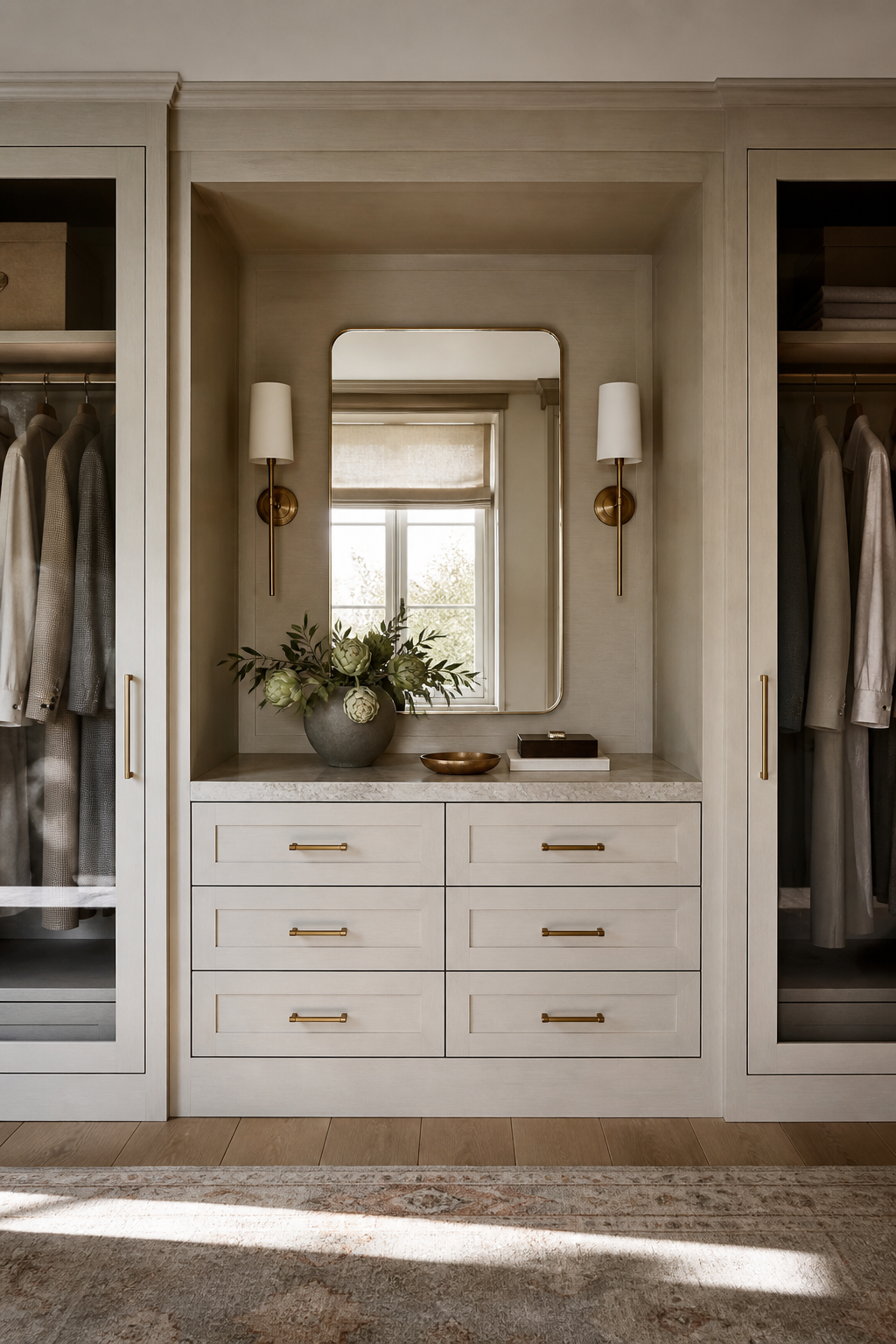
Try Cane Or Woven Door Panels
Cane or woven panels bring texture to a wall closet without adding busy pattern. The natural surface warms up painted rooms, coastal bedrooms, and relaxed modern spaces. Use cane inside a wood frame for a handmade look, or choose woven inserts on only the upper panels if you want something more subtle. Because the material can show shadows behind it, line the interior neatly or use it on doors that hide shelves rather than colorful hanging clothes. Pair the texture with linen bedding, a jute rug, and ceramic lighting. The result feels airy, practical, and softer than a solid wall of cabinetry.
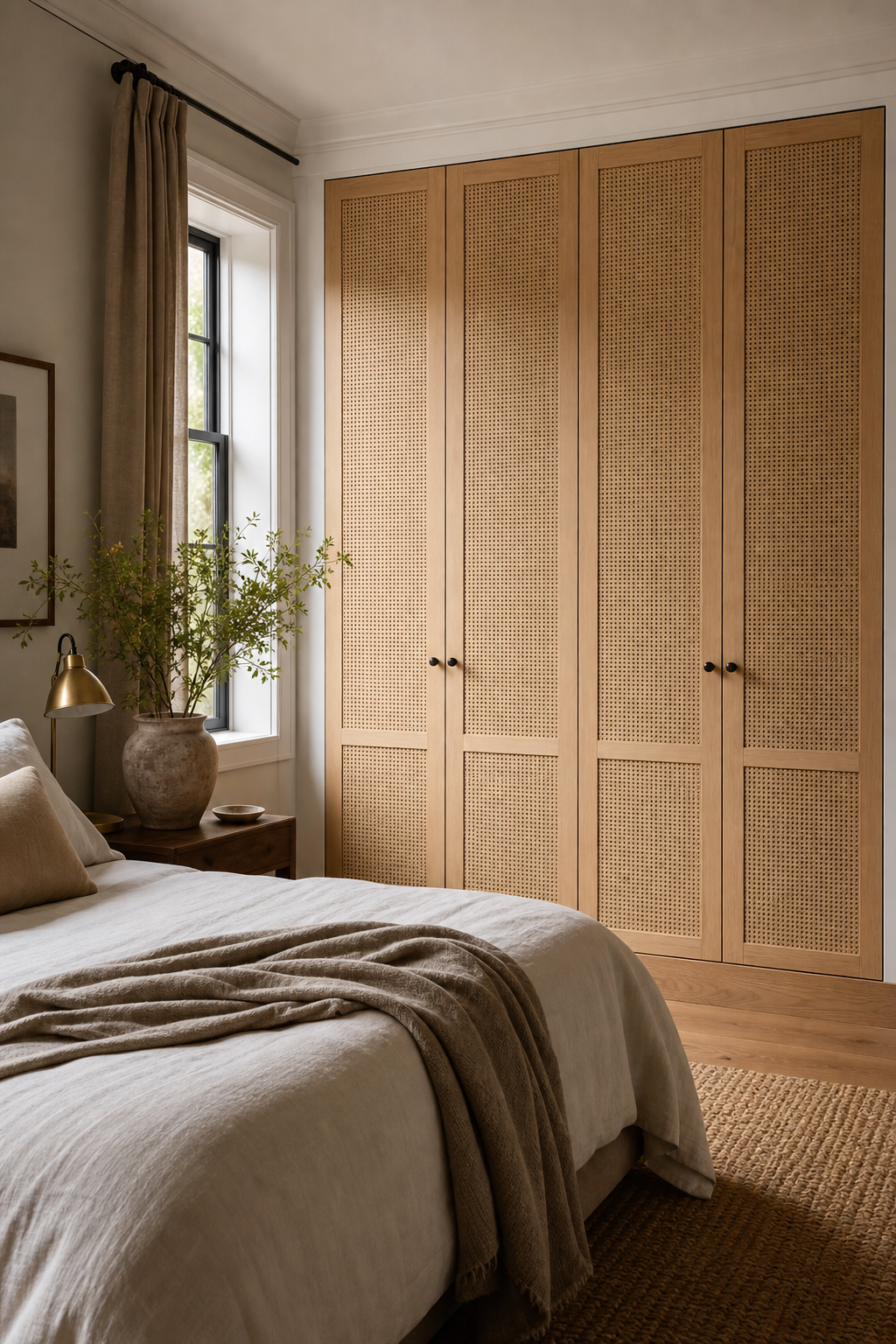
Make Space For Shoes Along The Bottom
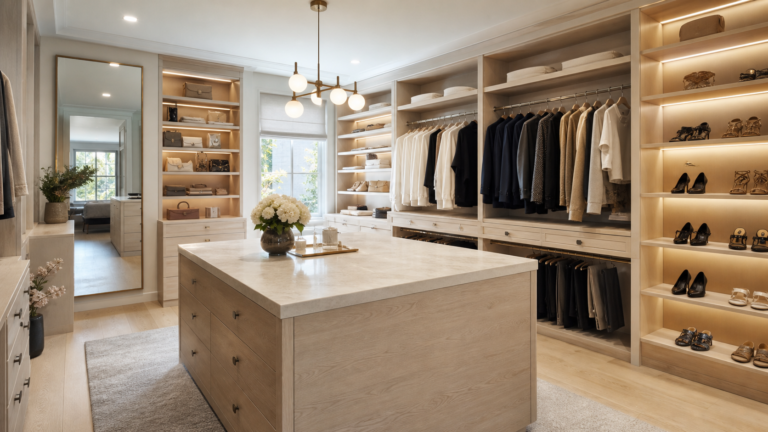
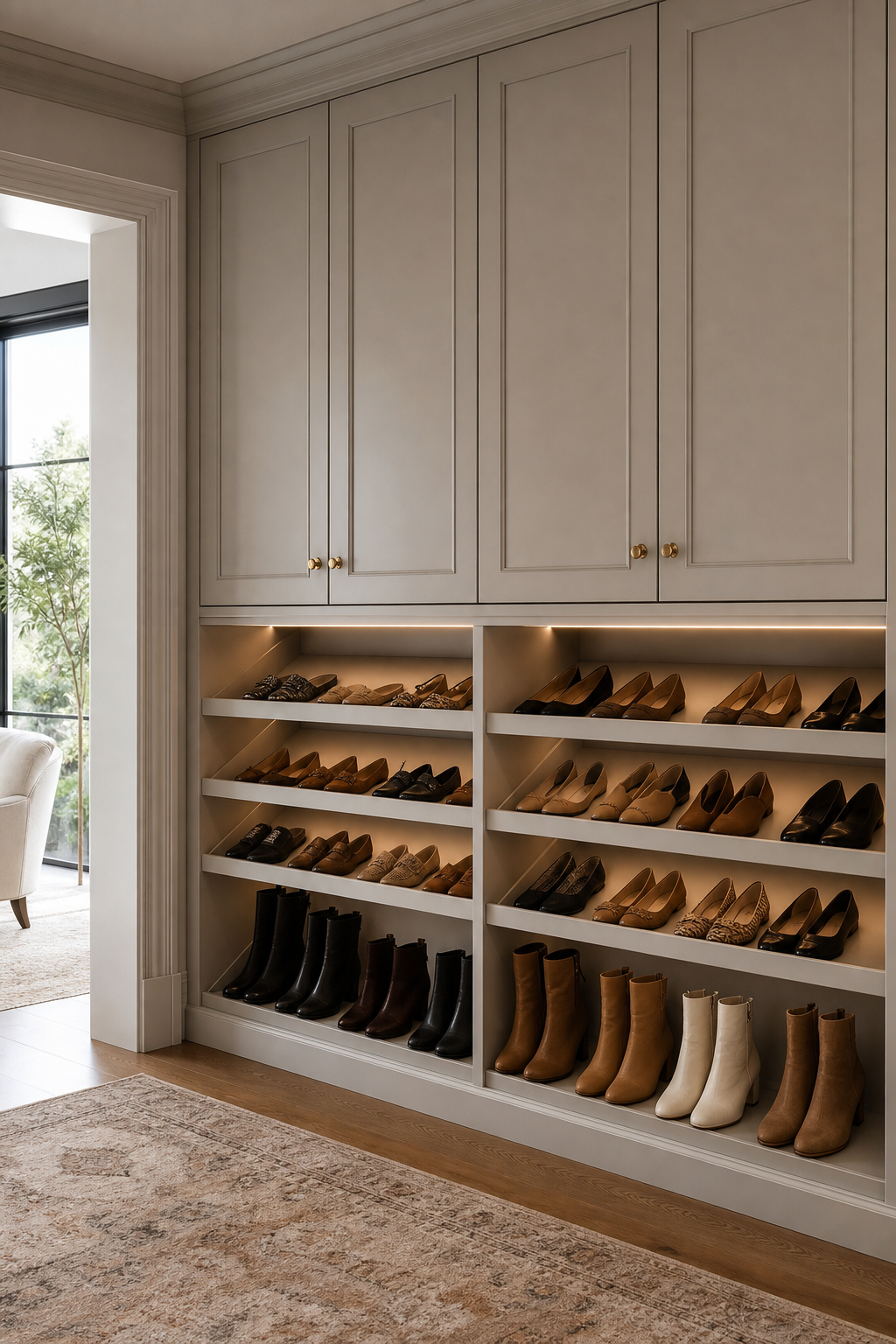
Dedicated shoe storage keeps the closet wall neat because footwear does not spill into the room. Use lower shelves, angled racks, or pull-out trays beneath hanging space, depending on the depth available. Boots need taller cubbies, while flats and sandals can sit in slimmer rows. If the closet doors are closed, the interior can be highly practical; if any area is open, keep the shoe display edited and evenly spaced. A washable mat or darker shelf surface helps with daily use. Add low LED lighting so the bottom section does not become a shadowy catchall or an awkward place for clutter.
Use Tall Doors To Emphasize Ceiling Height
Tall closet doors make the ceiling feel higher and give the storage wall a refined scale. Instead of stopping at a standard header, carry the fronts close to the crown or ceiling and divide them with long vertical panels. This creates a graceful rhythm, especially in rooms with modest square footage. Use the upper area for seasonal items, luggage, or bedding that does not need daily access. A library ladder is rarely necessary; a simple step stool stored nearby is enough. Keep hardware elongated or minimal so the height remains the main feature. The whole room will feel more tailored and less chopped up.
Add Interior Lighting Behind Every Door
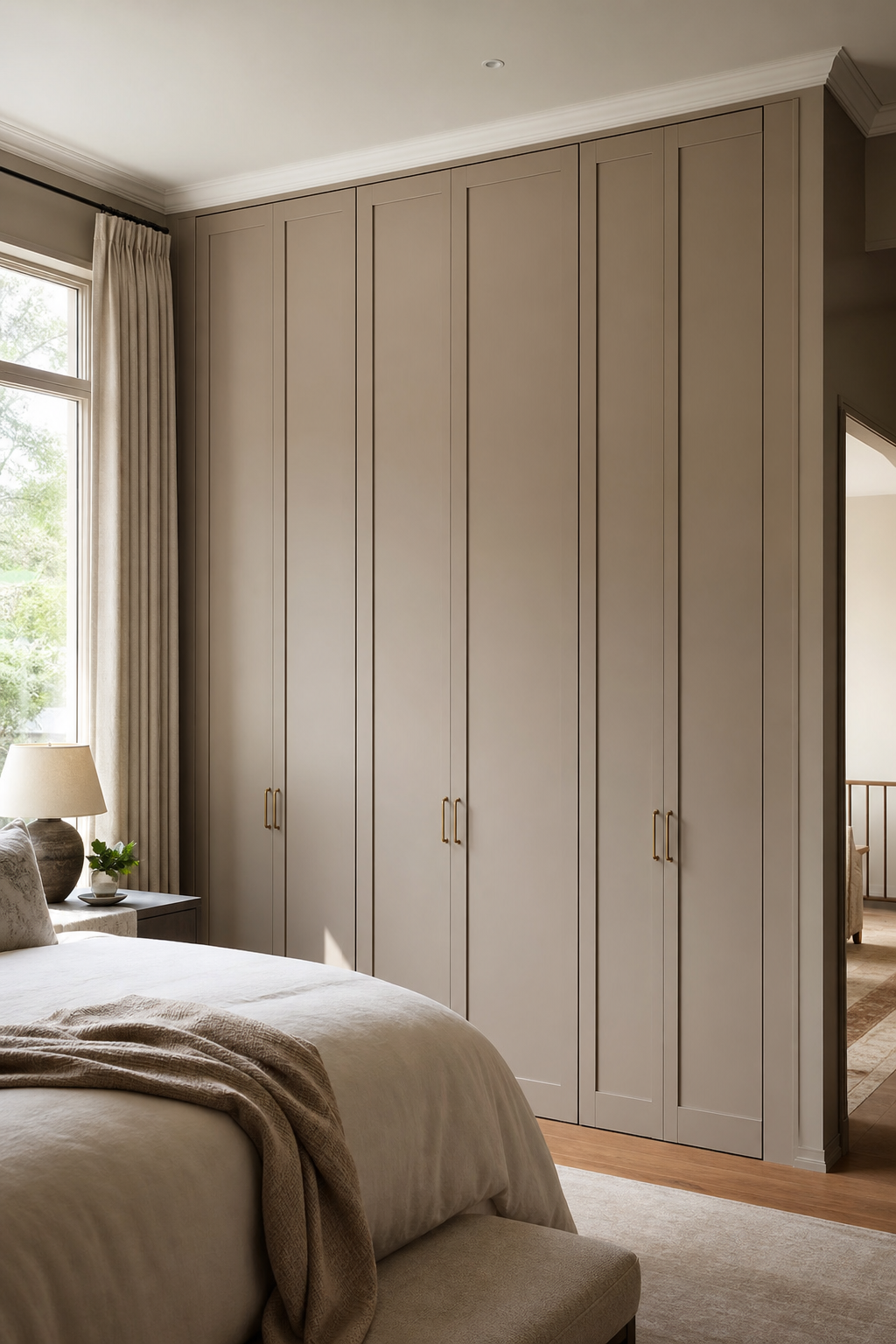
Interior lighting changes how a wall closet functions. LED strips along the side panels or under shelves make colors easier to read and prevent deep cabinets from becoming dark pockets. Choose warm, diffused light rather than harsh blue light, and connect it to door sensors if possible. The glow also makes an ordinary wardrobe feel more luxurious when the doors are open. Lighting is especially helpful for black clothing, shoe shelves, and accessory drawers. Keep wires hidden in channels and use consistent color temperature with the bedroom lamps. Good light makes organization easier to maintain because every shelf is visible.
Hide A Laundry Hamper In The Wall
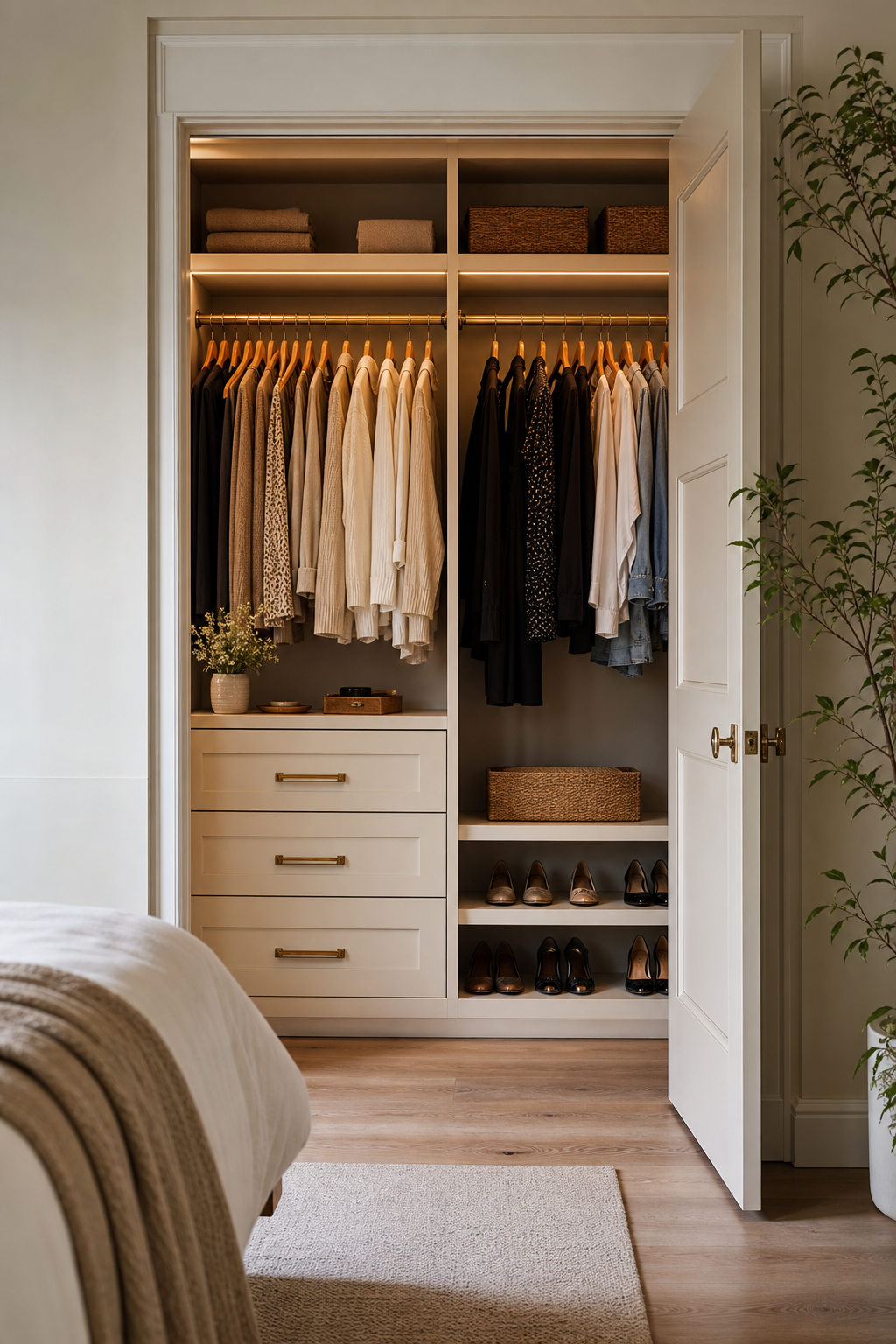
A hidden hamper is a small detail that makes a closet wall work harder. Build a pull-out bin or tilt-front compartment into the lower section so laundry has a proper destination. This keeps clothing off chairs, benches, and the floor, which immediately makes the bedroom feel calmer. Use a washable liner, ventilation holes, and a smooth drawer mechanism so the hamper is easy to empty. Place it near everyday hanging clothes rather than behind rarely opened doors. If two people share the room, consider divided bags for lights and darks. The exterior can match the wardrobe fronts, so the practical function stays invisible.
Choose Handle-Free Doors For A Minimal Look
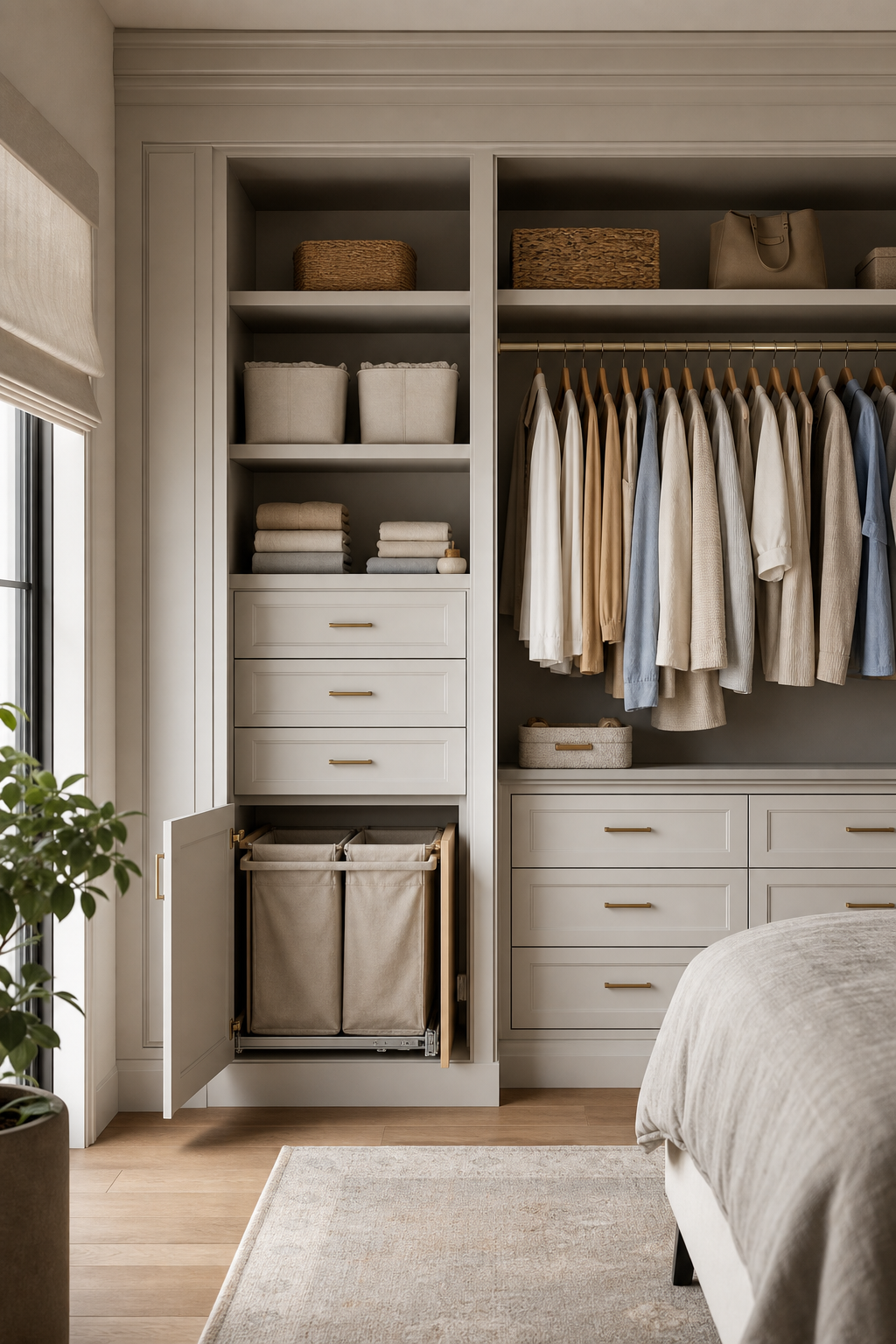
Handle-free doors create the cleanest version of a wall closet. Push latches, recessed channels, or integrated edge pulls keep the surface uninterrupted, which is useful in minimalist bedrooms and small rooms that need visual quiet. The details must be precise because there is no decorative hardware to distract from uneven gaps. Choose durable matte fronts that resist fingerprints, and keep the interior highly organized so the sleek exterior is matched by practical function. A handle-free closet looks best with layered natural materials nearby, such as oak floors, wool rugs, linen bedding, or plaster walls, so the room does not feel sterile.
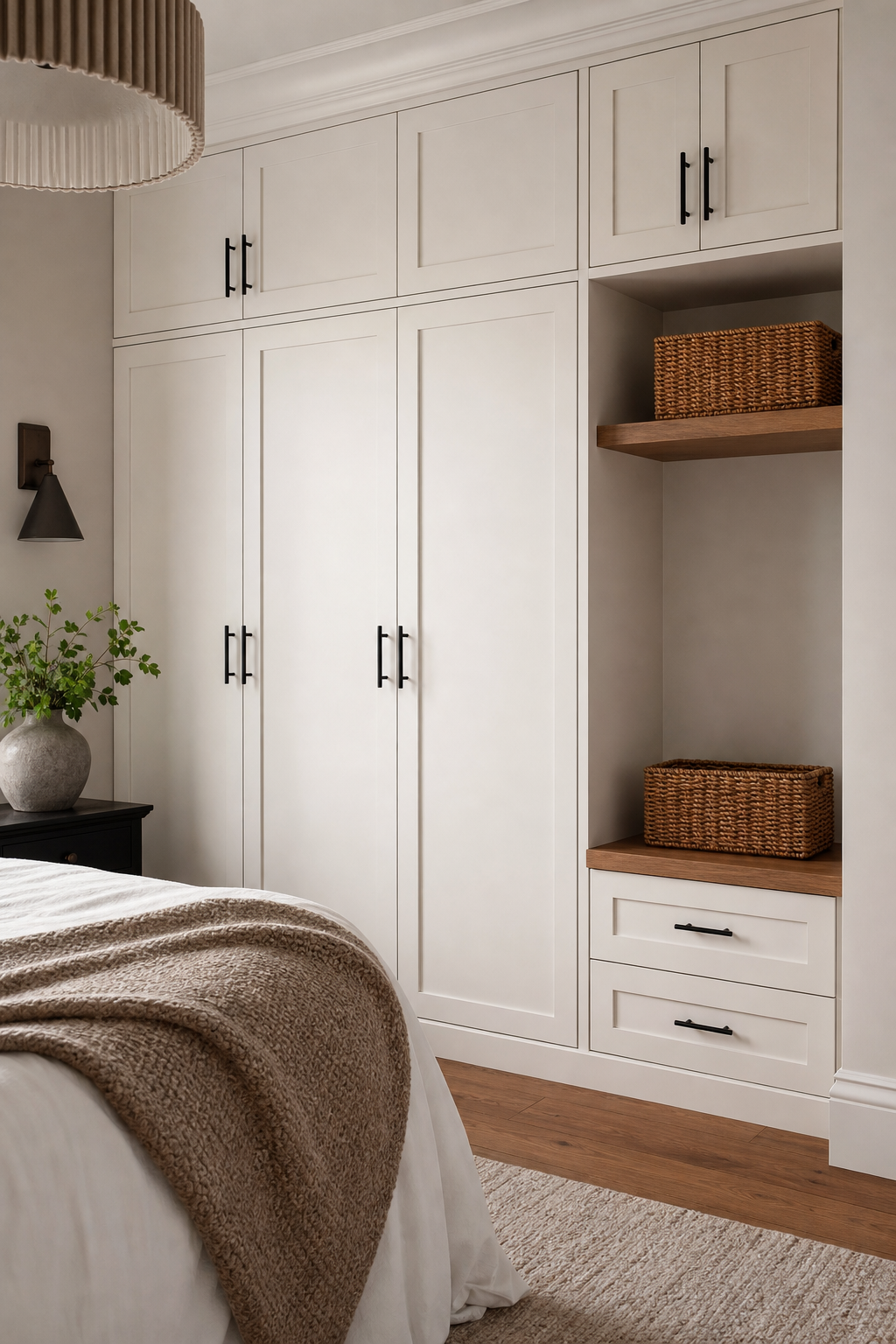
Use Black Hardware For Crisp Contrast
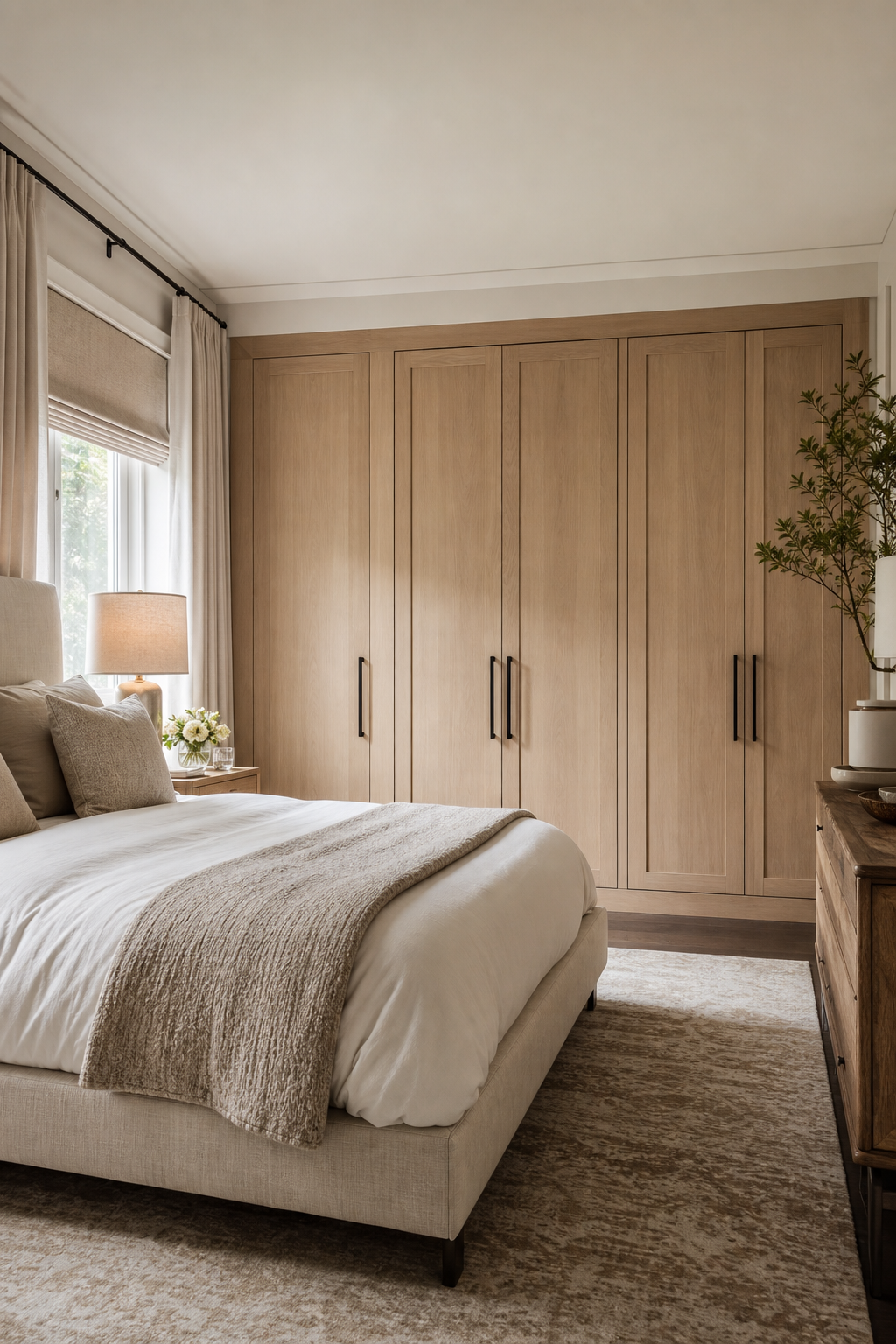
Black hardware can sharpen a simple wall closet and tie it to other accents in the room. On white, cream, or pale wood doors, slim black pulls create definition without overwhelming the storage wall. Repeat the finish on a curtain rod, picture frame, sconce, or bench legs so the contrast feels deliberate. This idea works with shaker doors, flat fronts, or even louvered panels. Keep the shapes simple; oversized handles can make the closet feel busy. The black details are especially useful in rooms with warm neutrals because they add structure and prevent the palette from becoming too soft or visually flat.
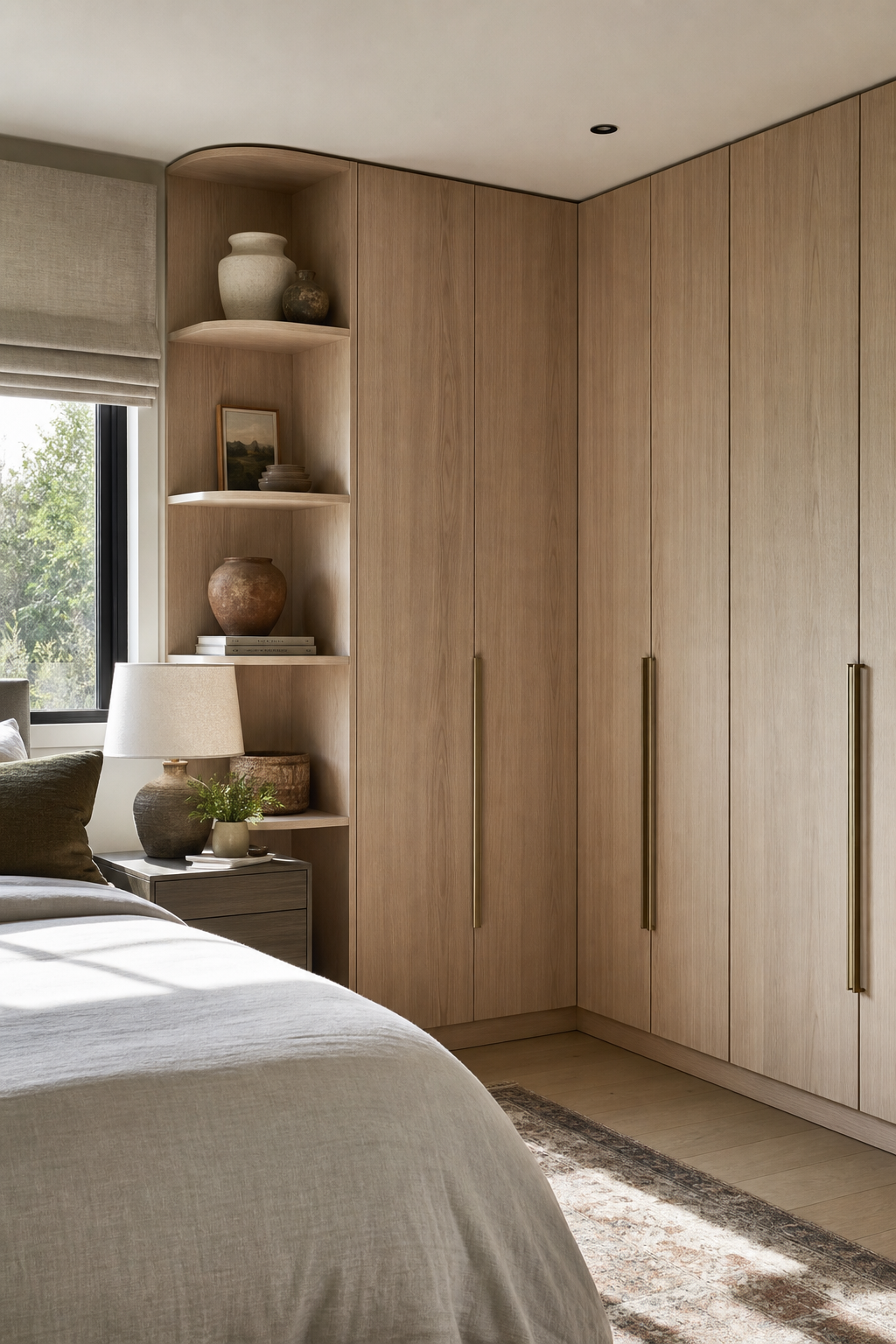
Wrap A Corner With Continuous Closet Storage
If one straight wall is not enough, wrap the closet around a corner for a built-in dressing zone. The corner can hold shelves, a hanging section, or a narrow cabinet for accessories, while the longer walls manage everyday clothes. To avoid a bulky look, keep the door style consistent and use lighter finishes on the largest surfaces. Open corner shelves can soften the turn and give you a place for baskets, bags, or folded sweaters. Plan clearances carefully so doors and drawers do not collide. A continuous closet wall is especially useful in rooms without a separate walk-in closet.
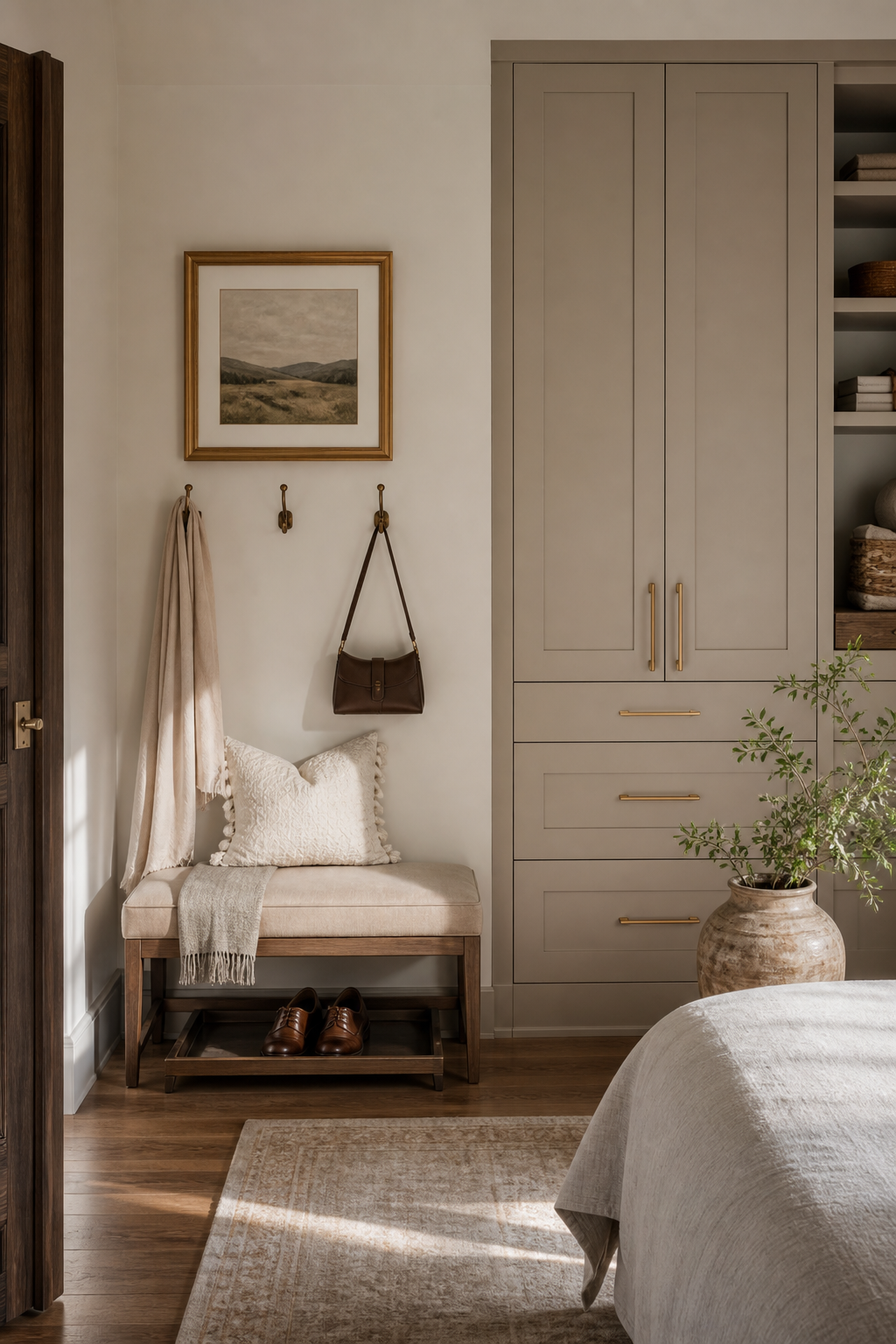
Add A Bench Beside The Closet Wall
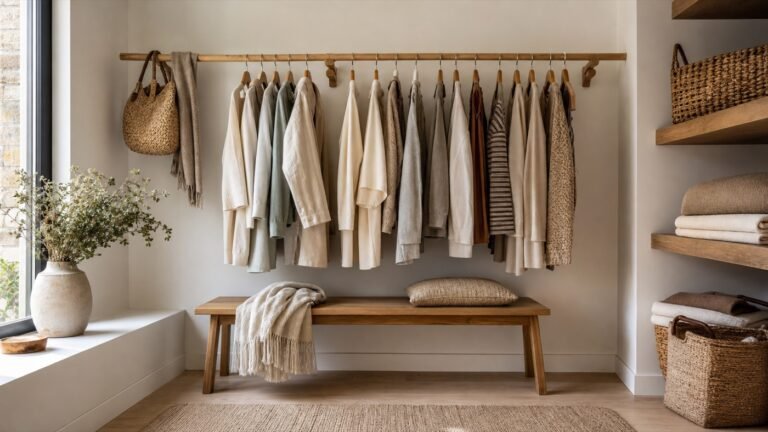
A bench beside the closet wall makes getting dressed easier and gives the storage area a finished edge. Choose a slim upholstered bench, a wood stool, or a built-in seat if the wall has an empty return. It becomes a place to put on shoes, lay out tomorrow’s outfit, or set a handbag while organizing. Keep the bench proportional so it does not block door swings or drawer access. Add hooks above it for a robe, hat, or favorite tote, but avoid overloading the wall. A small rug underfoot and nearby lamp can make the closet zone feel like part of the bedroom design.
Coordinate Closet Doors With The Bed Wall
A wall closet looks more intentional when it connects to the rest of the bedroom. Repeat a wood tone from the nightstands, echo the bed upholstery with a soft painted color, or match the closet hardware to the lamps. These links keep a large storage wall from feeling separate. If the bed is dramatic, make the closet quieter; if the bed wall is simple, the closet can carry more detail. Consider sightlines from the doorway because the closet may be one of the first surfaces you see. Coordinated finishes make the whole room feel designed, even when the layout is compact.
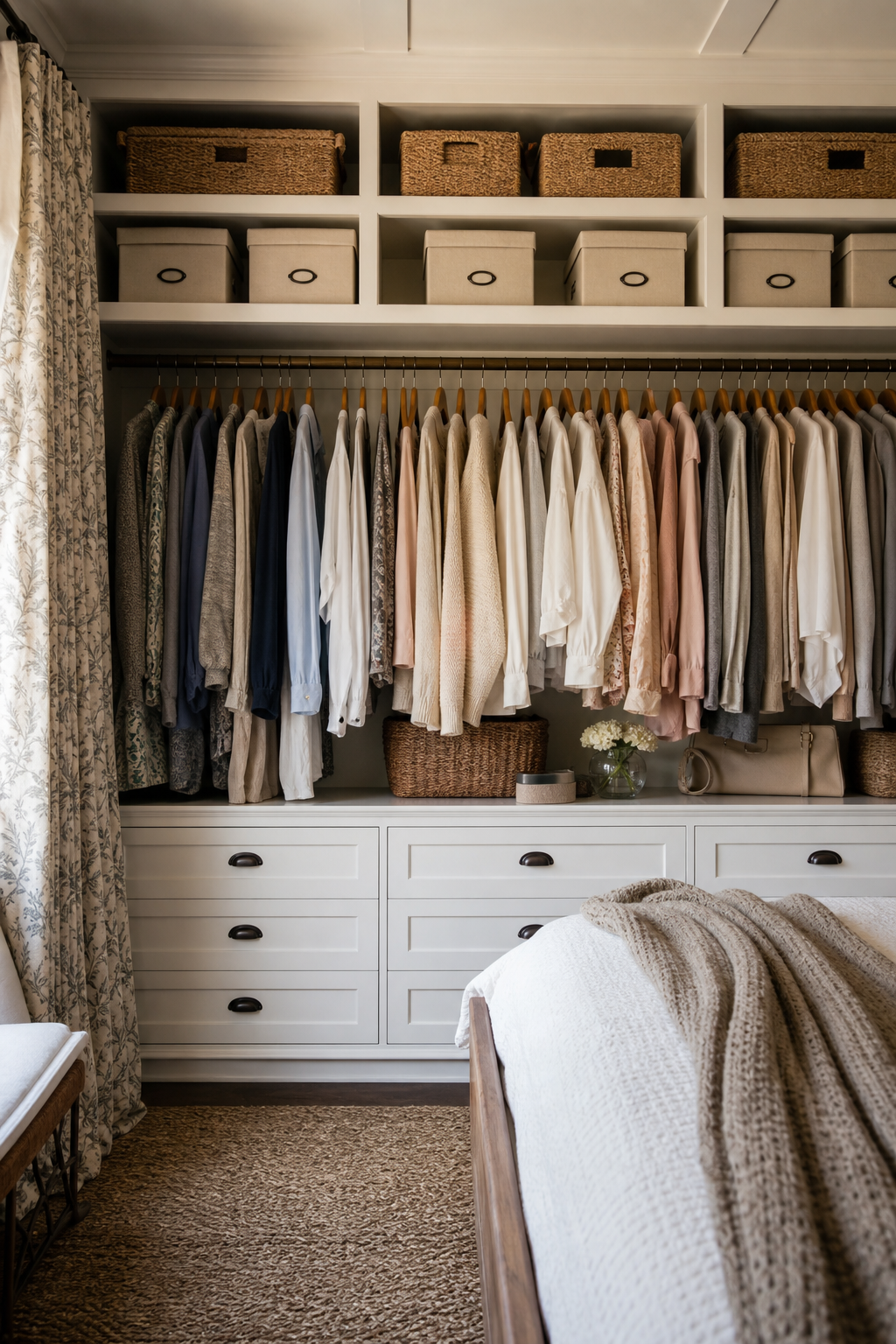
Finish The Top With Baskets Or Display Boxes
If the closet wall includes open cubbies near the ceiling, treat them as visible design space. Matching baskets, fabric boxes, or lidded bins can hold seasonal accessories while keeping the top line tidy. Avoid a random mix of luggage, shopping bags, and overflow clothing, because high shelves are very noticeable from across the room. Choose containers that repeat the room palette and leave small gaps so the arrangement feels breathable. Labels can be placed discreetly on the back or inside edge. This finishing layer is practical, but it also gives the closet wall a styled, orderly look from floor to ceiling.
The best wall closet ideas balance quiet storage with a few thoughtful design details. Start with the door style and interior zones, then add lighting, hardware, mirrors, or open shelves where they will improve daily use. With consistent finishes and edited styling, even a basic closet wall can become one of the neatest and most attractive parts of the home.