20 Coat And Shoe Storage Ideas For A Neat Stylish Home
Coat and shoe storage has to work harder than almost any other part of the home. It catches muddy boots, school bags, umbrellas, jackets, keys, and the everyday shoes everyone reaches for first. When there is no clear system, the entry can look messy within minutes. The best storage ideas combine easy access with enough hidden space to keep the first view of the home calm. Built-ins, benches, slim cabinets, peg rails, baskets, and hall trees can all help depending on the size of the entry. These ideas focus on practical layouts that still feel stylish, warm, and intentional.
Build A Mudroom Wall With Closed Cabinets
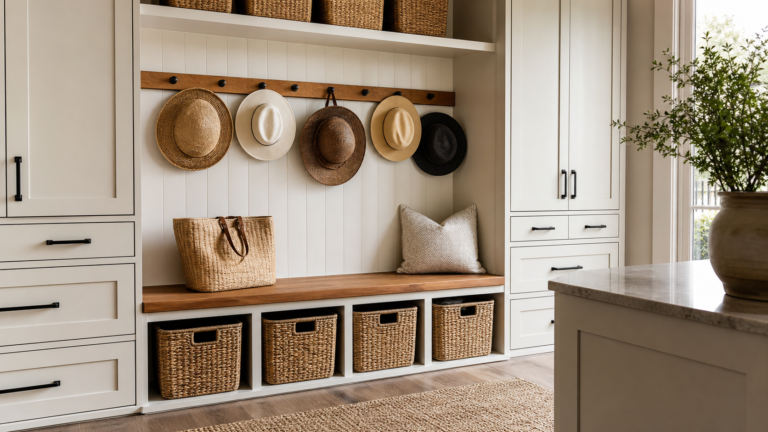
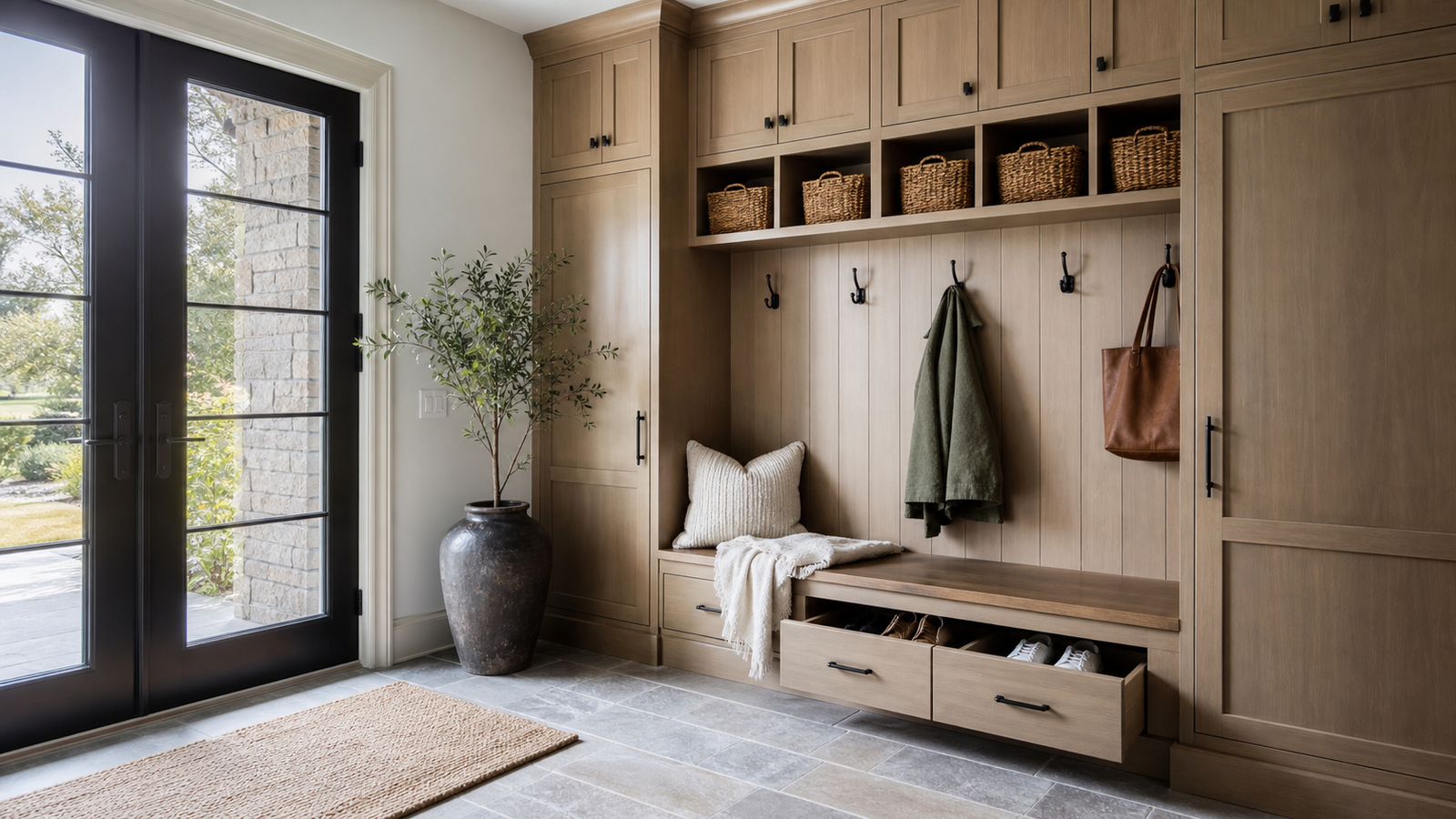
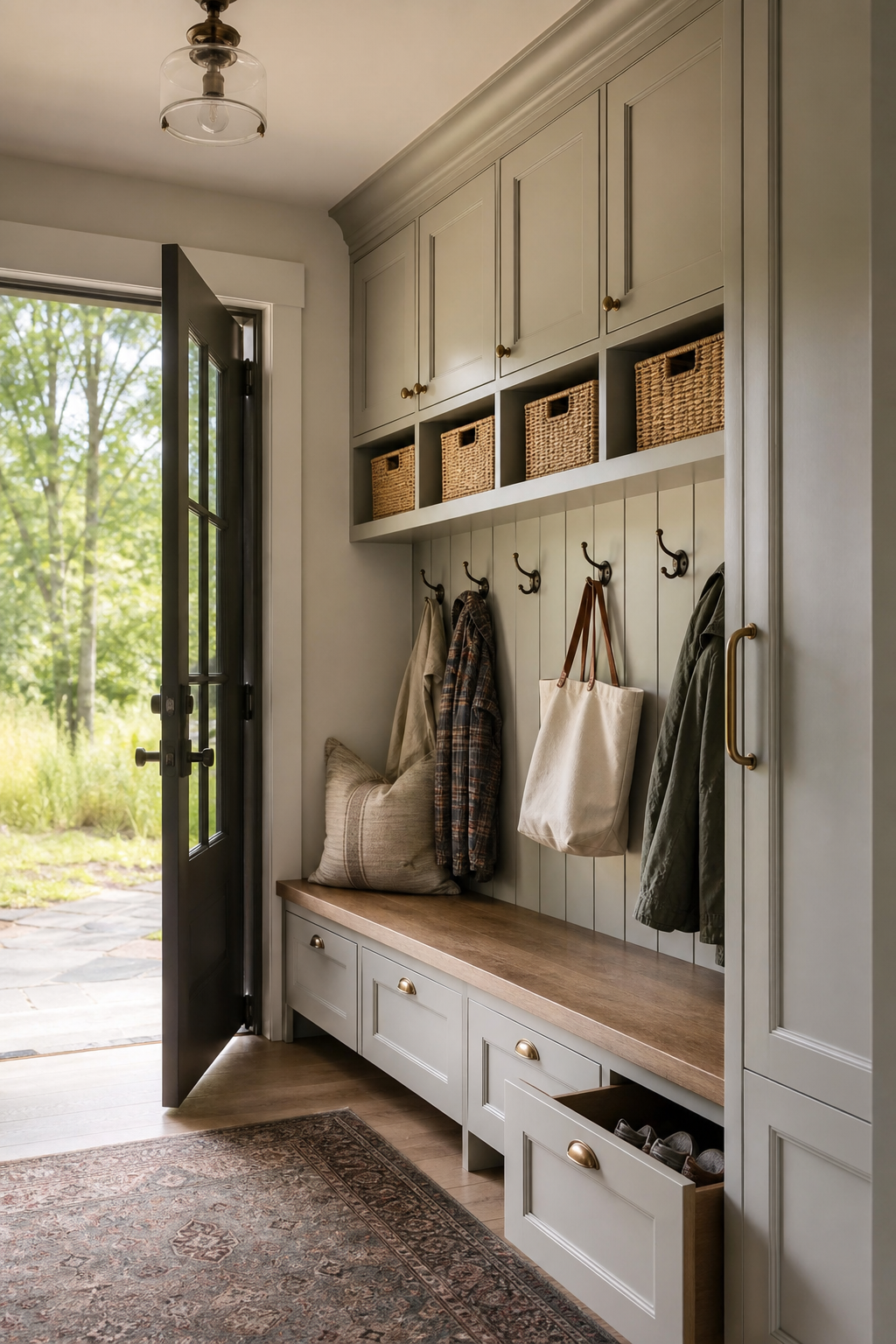
Closed cabinets give coat and shoe storage a polished look because the busiest items can disappear behind simple doors. Use tall sections for coats, lower drawers for shoes, and a bench in the middle for sitting while you get ready. Oak, painted wood, or warm white cabinetry can all work as long as the hardware is restrained. Add a few open hooks for the pieces used every day, then keep overflow behind doors. This balance matters because entry areas collect bags, scarves, umbrellas, and muddy shoes quickly. A built-in wall turns that daily mess into a system that looks intentional and easy to maintain.
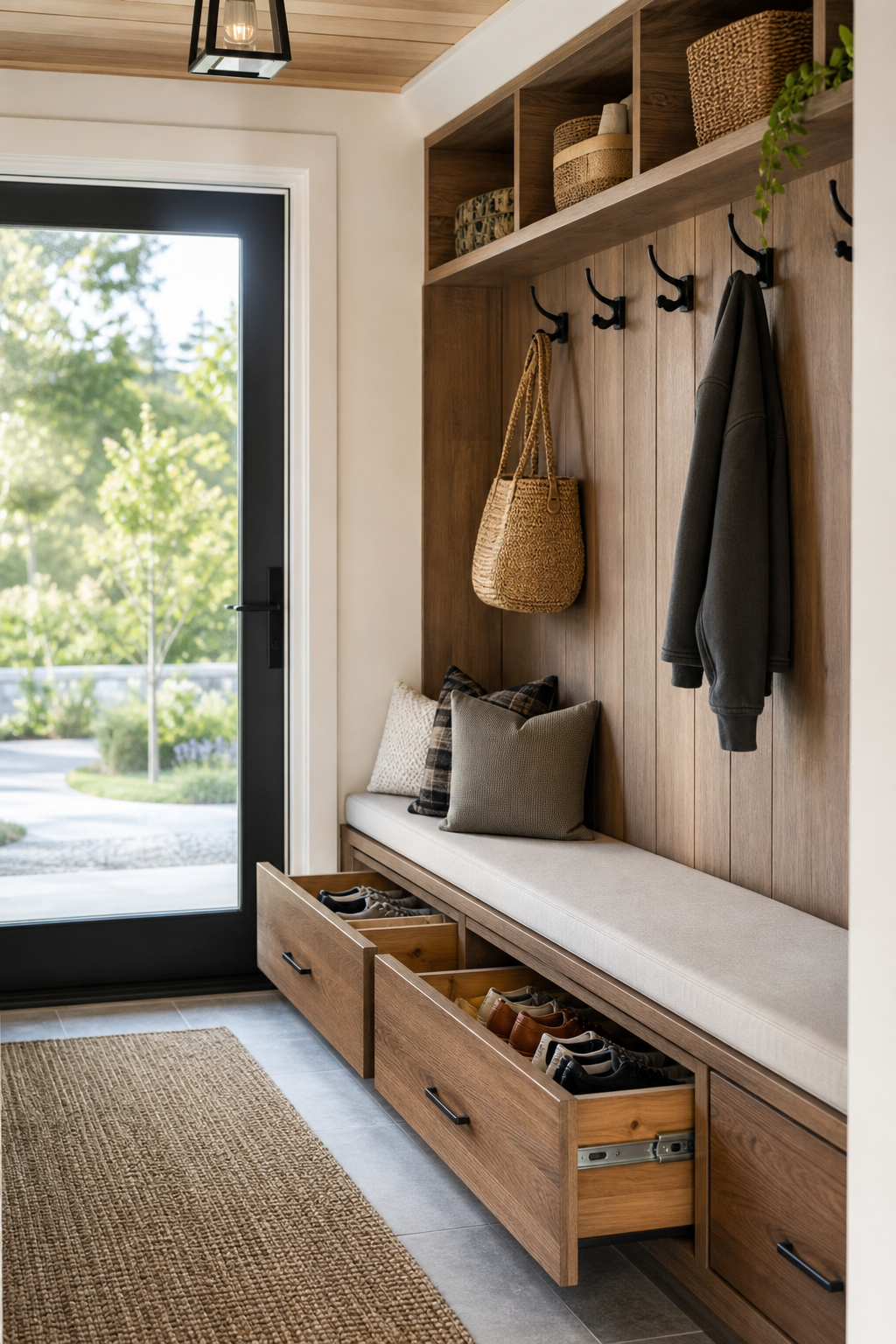
Use A Bench With Deep Shoe Drawers
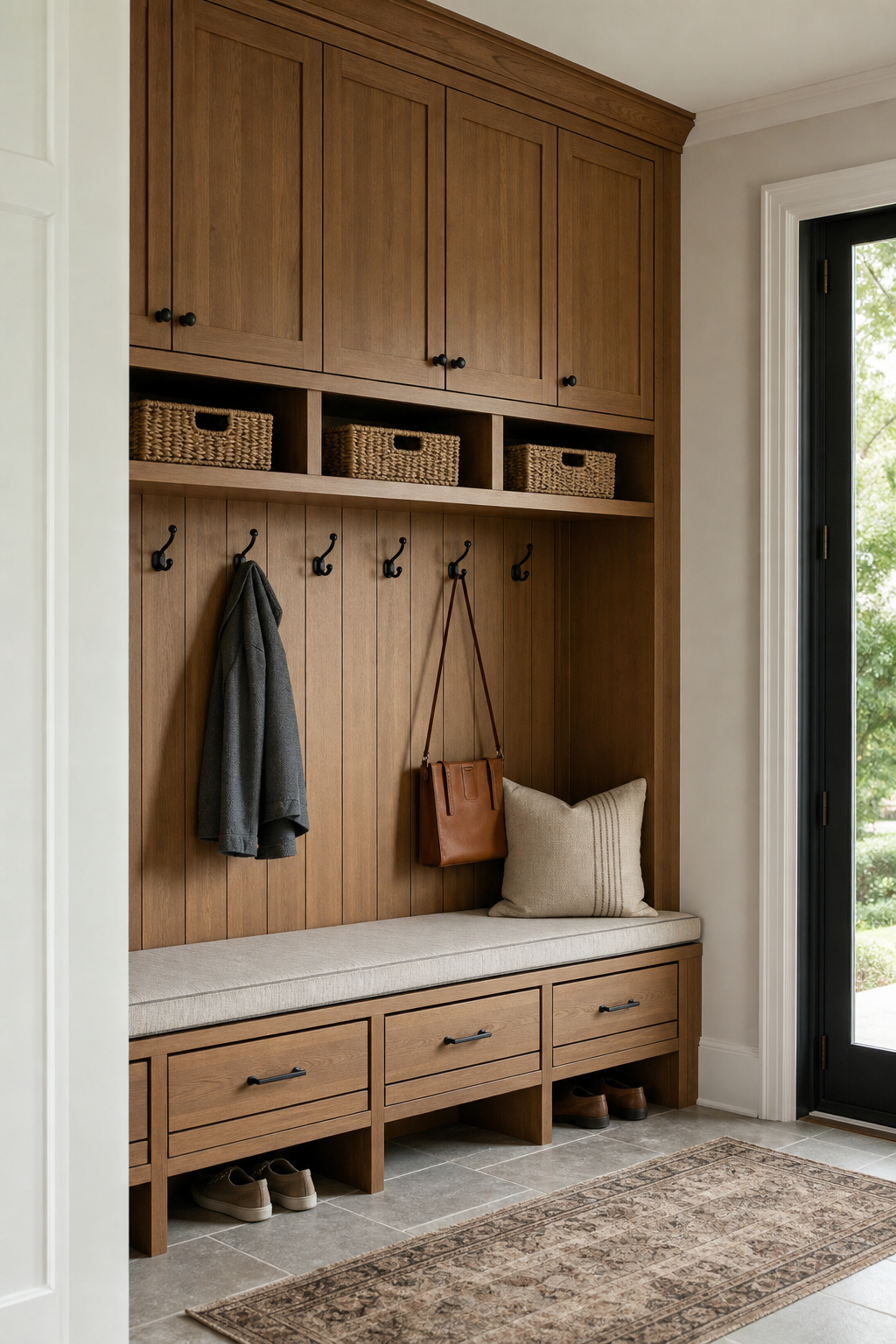
A bench with deep drawers solves two problems at once: it gives you a place to sit and a place to hide shoes. Drawers are often easier than open shelves because they keep pairs contained and reduce visual clutter. Choose full-extension hardware if possible so shoes at the back are still easy to reach. A cushion makes the bench feel more welcoming, while hooks or a peg rail above can handle coats and bags. This setup works in a mudroom, apartment entry, garage hallway, or bedroom corridor. Keep the materials durable, because the bench will be used constantly, not just admired.
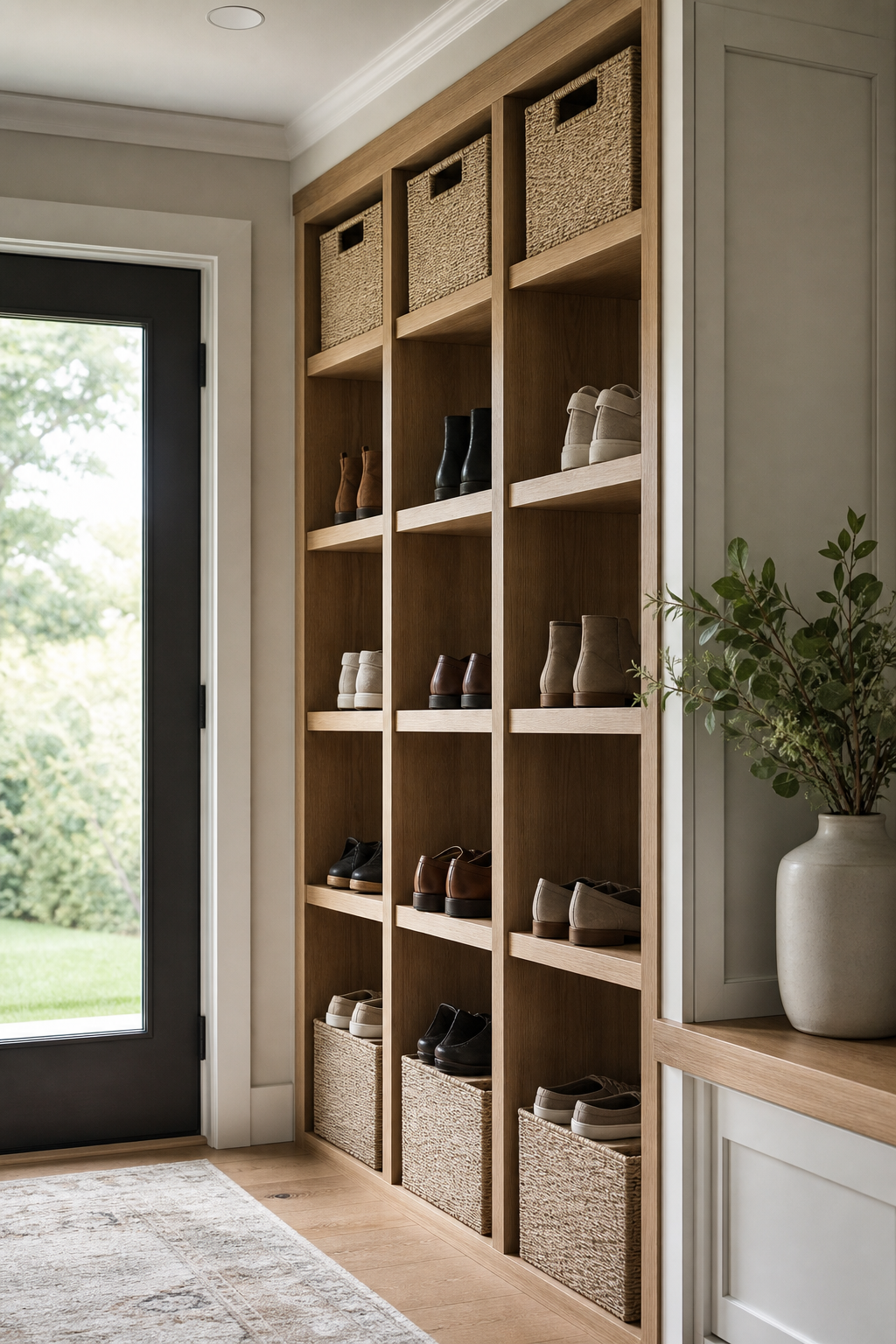
Add Vertical Cubbies For Everyday Shoes
Vertical cubbies make everyday shoes easy to see without letting them spread across the floor. Use one cubby per pair or per person, depending on how much space you have. Taller openings work well for boots, while narrower ones can handle sneakers, sandals, and flats. To keep the look stylish, repeat the same wood tone, basket style, or trim detail across the whole unit. Avoid overfilling every opening; a little breathing room makes open storage feel designed rather than chaotic. This is a strong option for busy households because everyone can return shoes to a clear place in seconds. It also makes quick cleanups much easier before guests arrive.
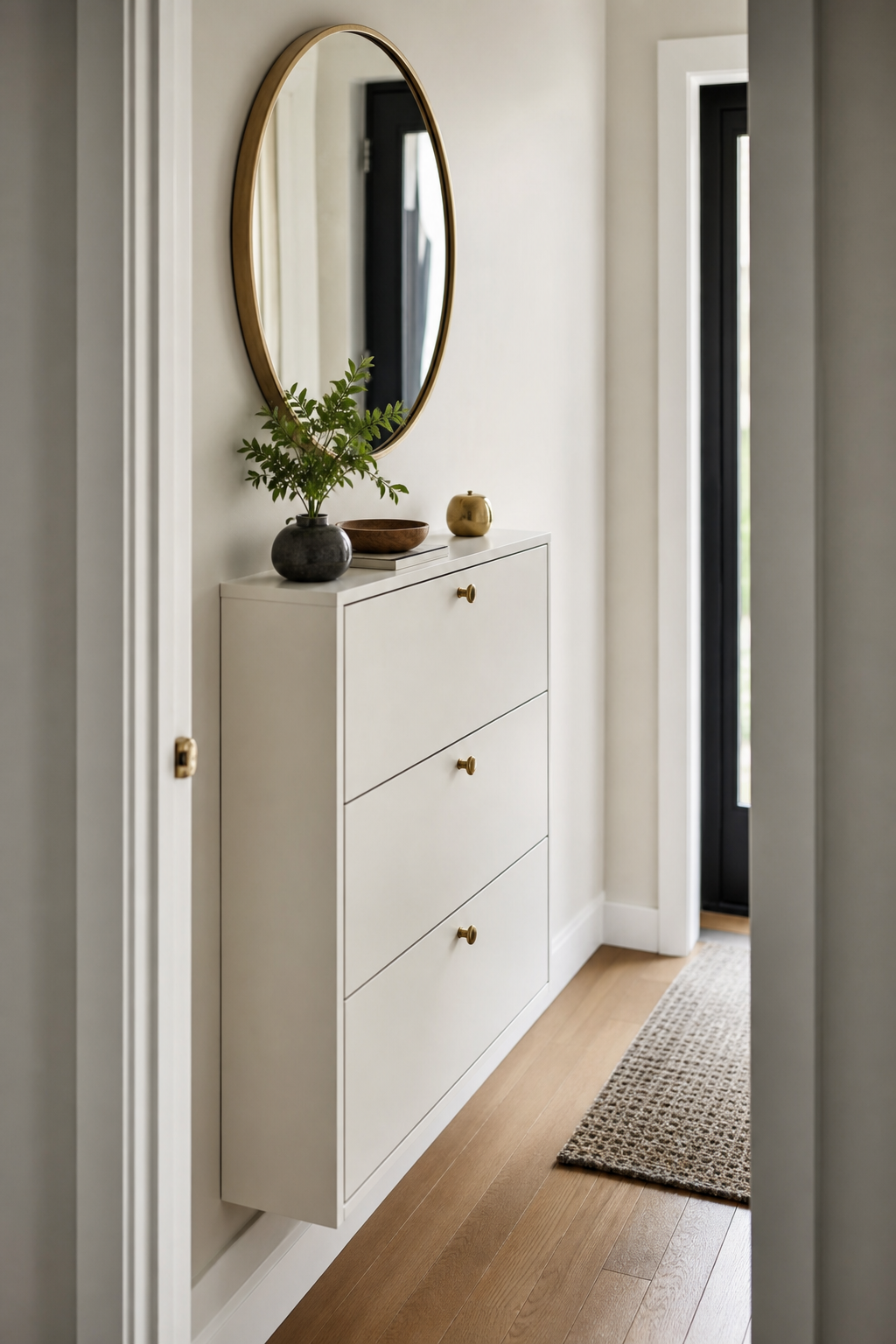
Choose A Slim Hallway Shoe Cabinet
A slim shoe cabinet is ideal when the entry is narrow and every inch matters. Tilt-out compartments or shallow shelves hold several pairs without projecting far into the walkway. Choose a cabinet that matches the wall color for a quiet look, or pick warm wood if the hallway needs texture. The top can hold a tray, lamp, or small bowl for keys, while a mirror above makes the area feel more complete. This solution is especially useful for apartments and townhouses where there is no true mudroom. It keeps shoes close to the door without making the first view of the home feel messy.
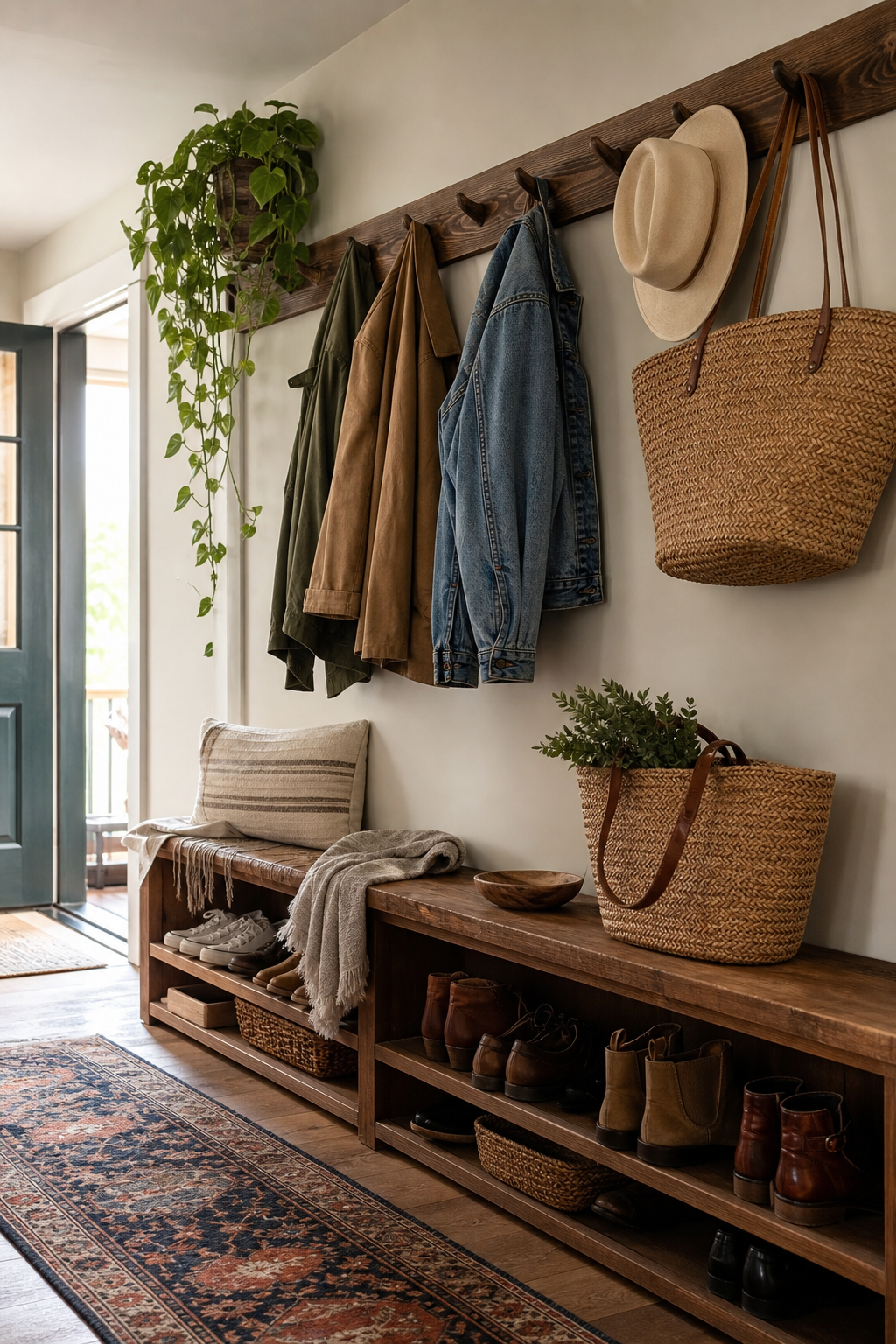
Install Peg Rails For Flexible Coats
Peg rails are simple, flexible, and surprisingly elegant when they are installed with care. A long wooden rail can hold coats, hats, bags, dog leashes, and market totes without needing bulky furniture. Place a shoe shelf, bench, or baskets below so the wall handles both coats and footwear. The key is spacing the pegs generously enough that items do not become one dense clump. Paint the rail to match the wall for a quiet look, or use natural wood for warmth. Peg rails are especially good in casual homes because they adapt easily as the season and routines change. The casual rhythm feels welcoming rather than overly formal.
Hide Boots In A Ventilated Locker
Boots need storage that can handle height, moisture, and dirt. A ventilated locker or cabinet with louvered fronts keeps them out of sight while allowing air to move. Add a removable tray at the bottom so mud, salt, or rainwater can be cleaned without damaging the cabinet. Hooks above the boot zone can hold coats that belong to the same outdoor routine. This idea is practical for rainy climates, garden entries, and homes with pets. To keep it stylish, use a consistent finish and simple hardware. The storage should feel like part of the room, not like utility equipment added later.
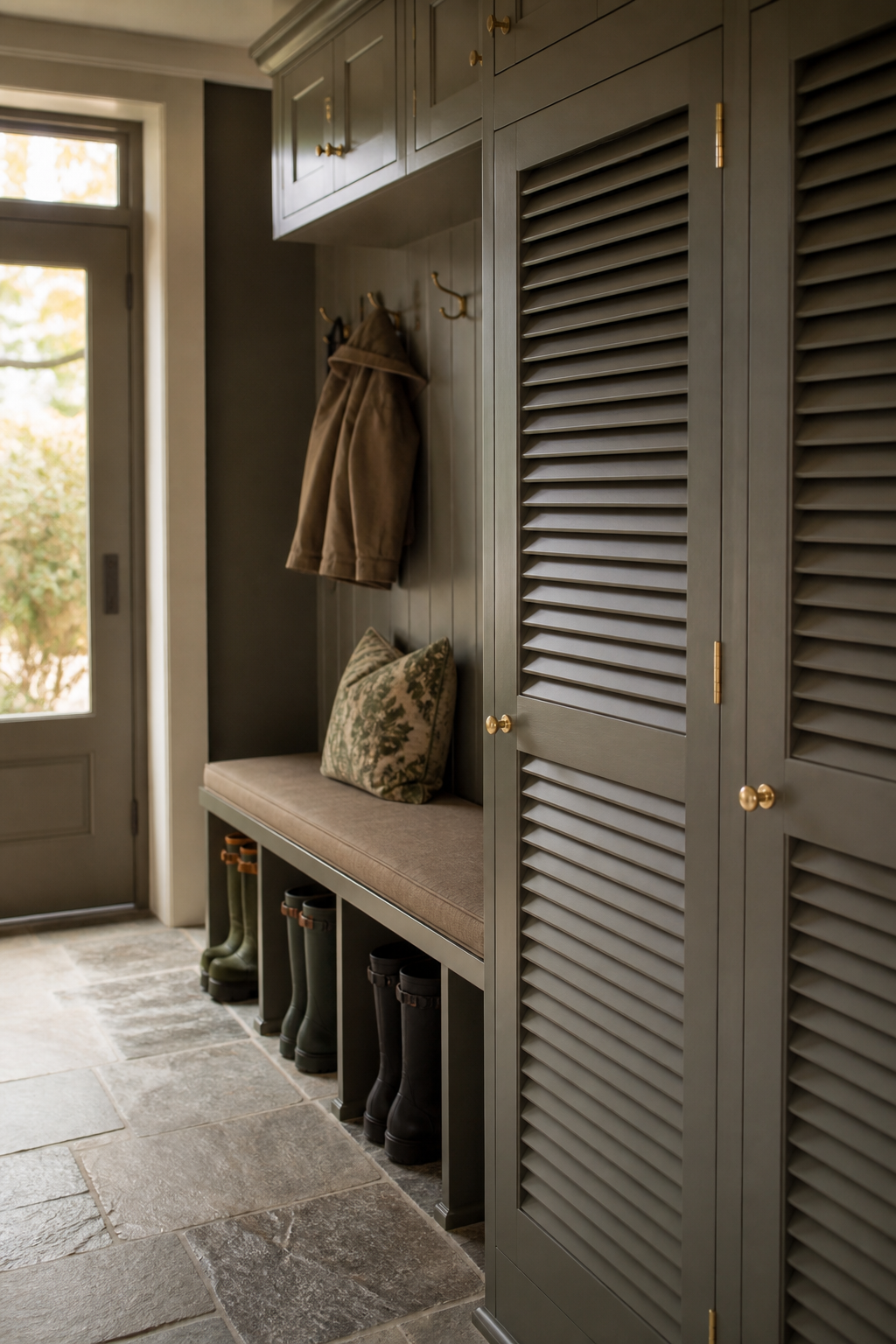
Create A Family Drop Zone
A family drop zone works best when every person has a dedicated landing spot. Use hooks for coats and backpacks, baskets for small accessories, and lower shelves or cubbies for shoes. Labels can help in real life, but the design should still look orderly without relying on visual clutter. A durable floor, washable cushion, and easy-clean paint will make the area more forgiving. The goal is not perfection; it is reducing the pileup that happens when everyone comes home at once. Keep the system simple enough that children and guests can understand it immediately. The best storage is obvious to use.
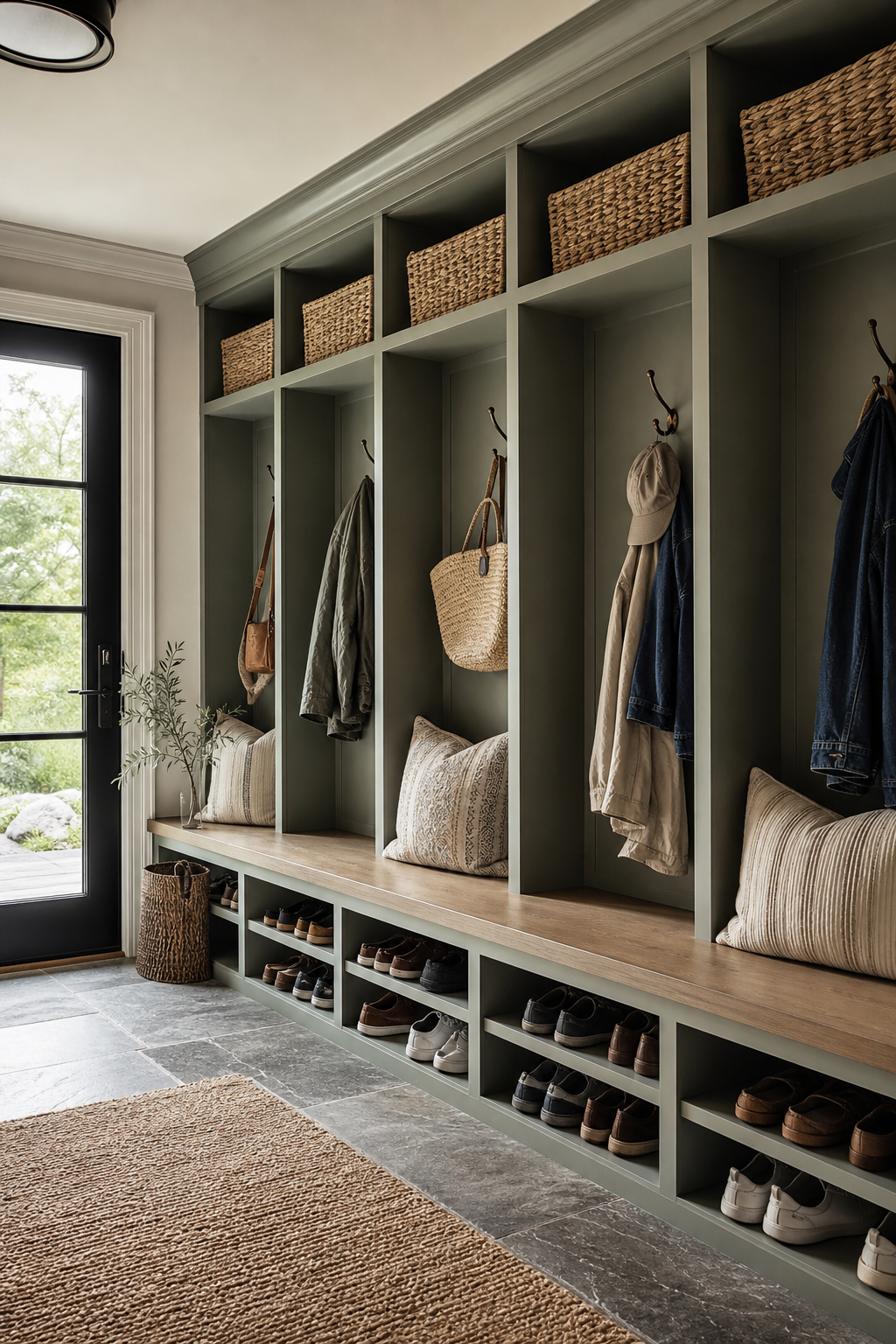
Use Woven Baskets Under A Console
Woven baskets are an easy way to add shoe storage to an entry that already has a console table. Slide two or three sturdy baskets underneath and assign each one a purpose, such as daily shoes, slippers, or seasonal accessories. The texture warms up plain walls and hides mismatched footwear better than open piles. Choose baskets with straight sides so they use the space efficiently. A mirror, lamp, or tray on top of the console makes the whole arrangement feel decorated, not improvised. This is a renter-friendly idea because it adds function without built-ins, drilling, or a major furniture commitment.
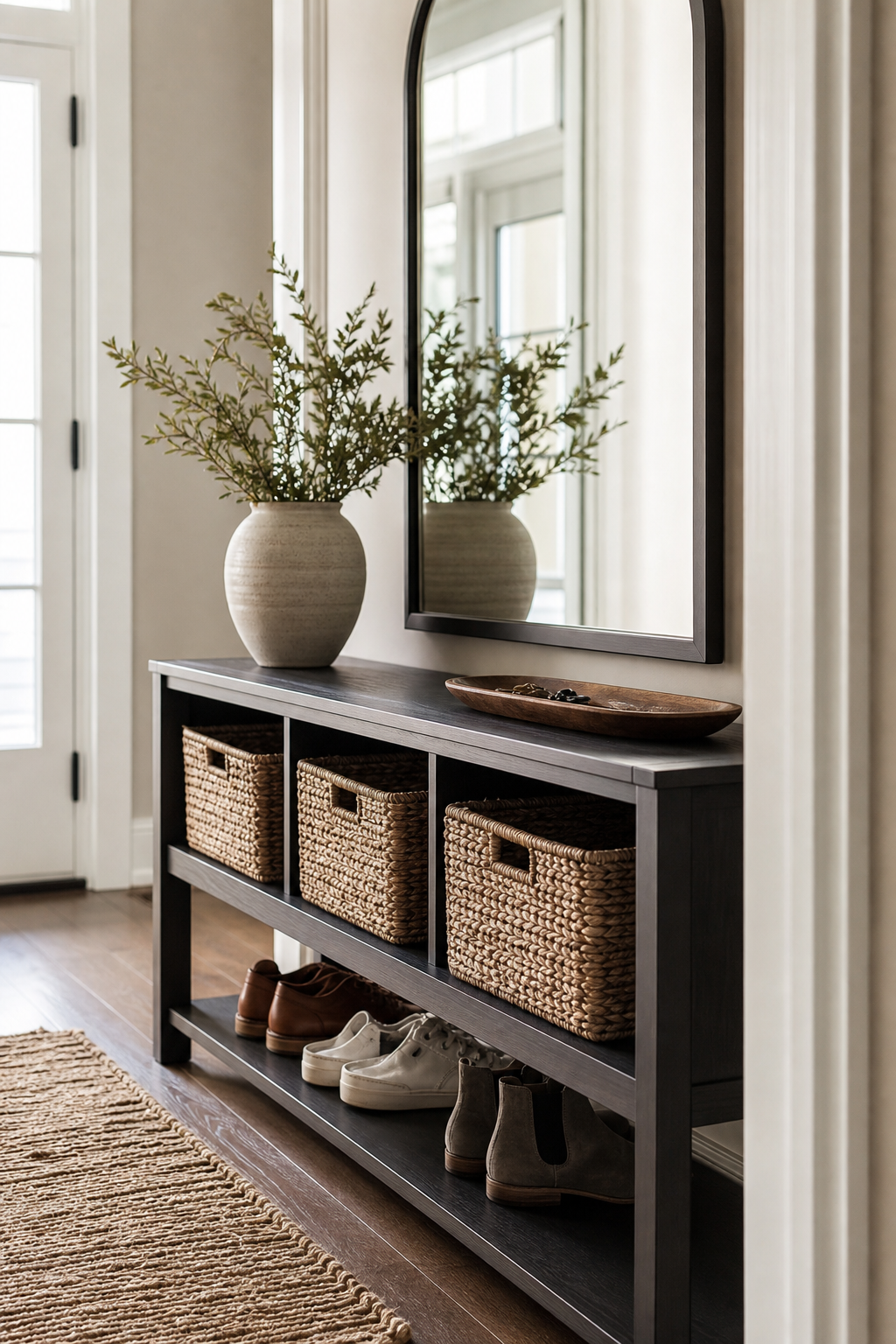
Add A Tall Coat Wardrobe
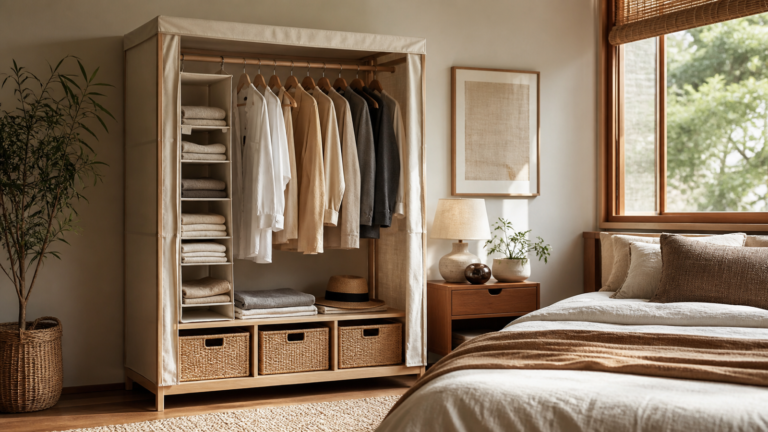
A tall wardrobe can act like an instant entry closet where the architecture does not provide one. Look for enough hanging height for coats, shelves for shoes, and perhaps a drawer for gloves or umbrellas. Closed doors keep the entry visually calm, which is useful when coats are colorful or bulky. If the wardrobe feels heavy, choose a finish close to the wall color or lift it on slim legs. Inside, add matching hangers, boot trays, and baskets so the storage works as beautifully as it looks. A wardrobe is also easy to relocate later, making it more flexible than a built-in mudroom.
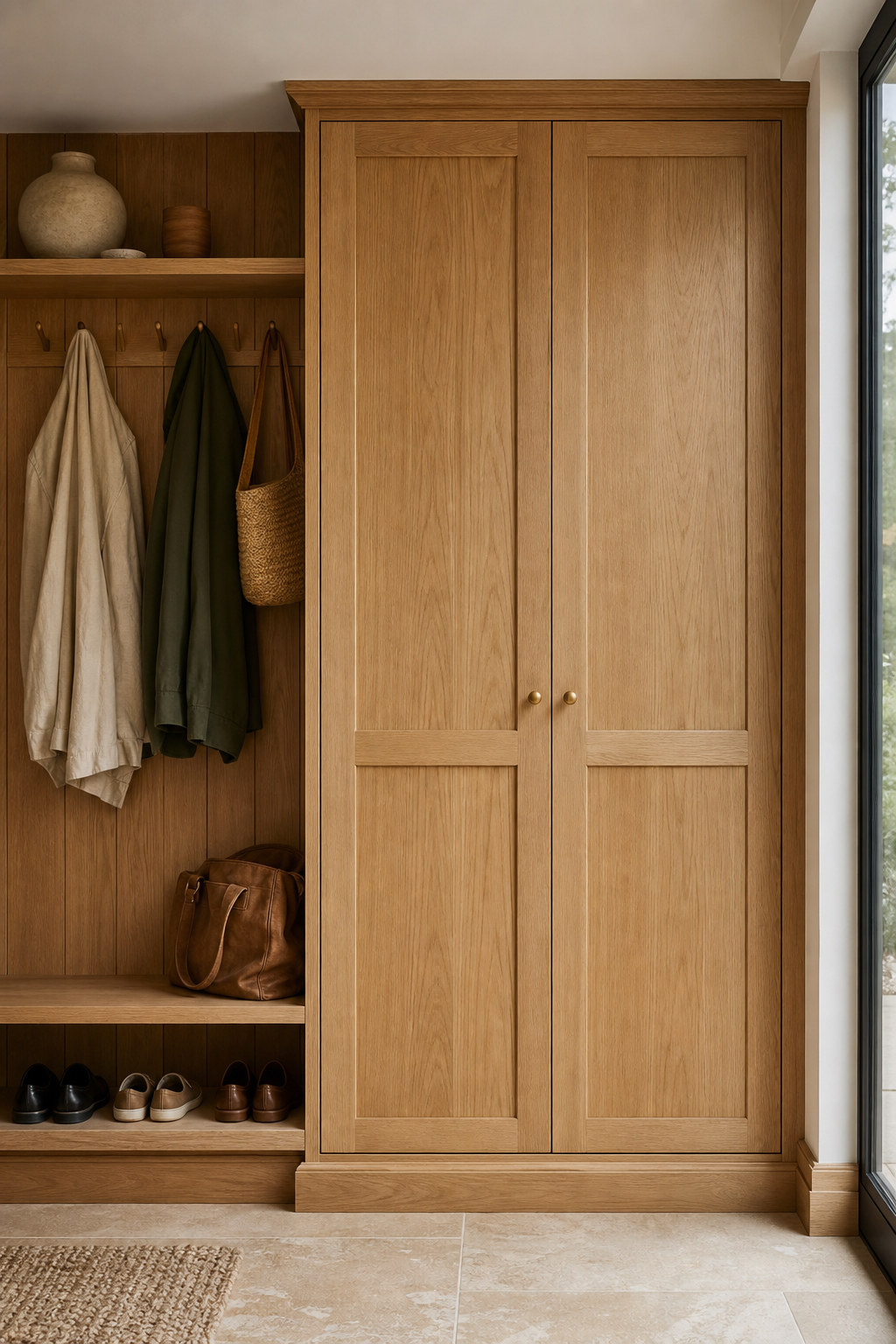
Try A Corner Coat And Shoe Nook
Corners often become wasted space, but they can handle compact coat and shoe storage with the right layout. Install hooks on one wall, a narrow bench across the other, and corner shelves or baskets below for shoes. Keep the bench shallow enough that the walkway remains comfortable. A small sconce, mirror, or artwork can make the nook feel intentional instead of leftover. This approach works well in apartments, back entries, and bedrooms where a full mudroom wall is not possible. The trick is editing the storage to daily essentials so the corner stays useful without becoming crowded. Good lighting helps the small zone feel purposeful and finished.
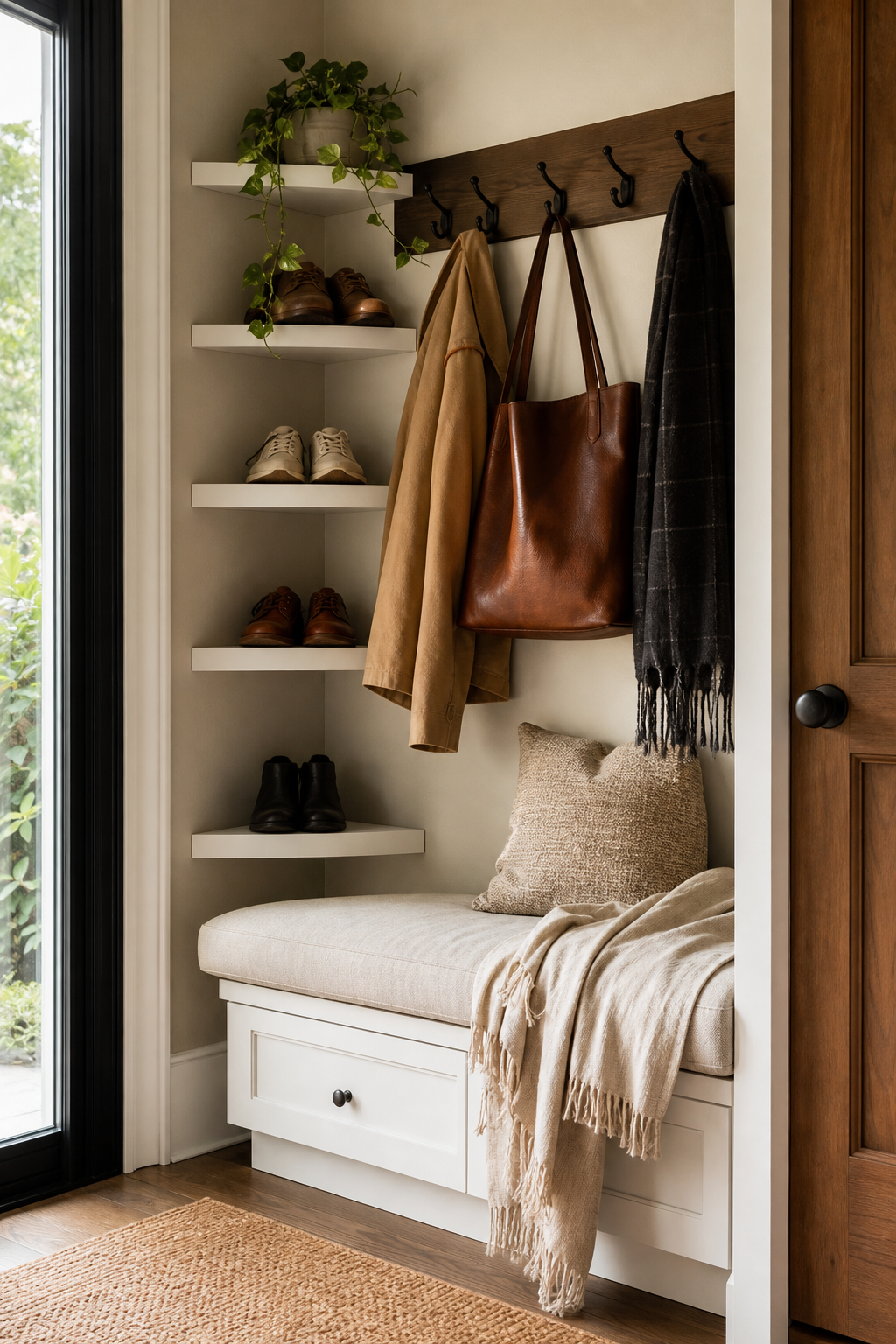
Use Clear Floor Space With Floating Storage
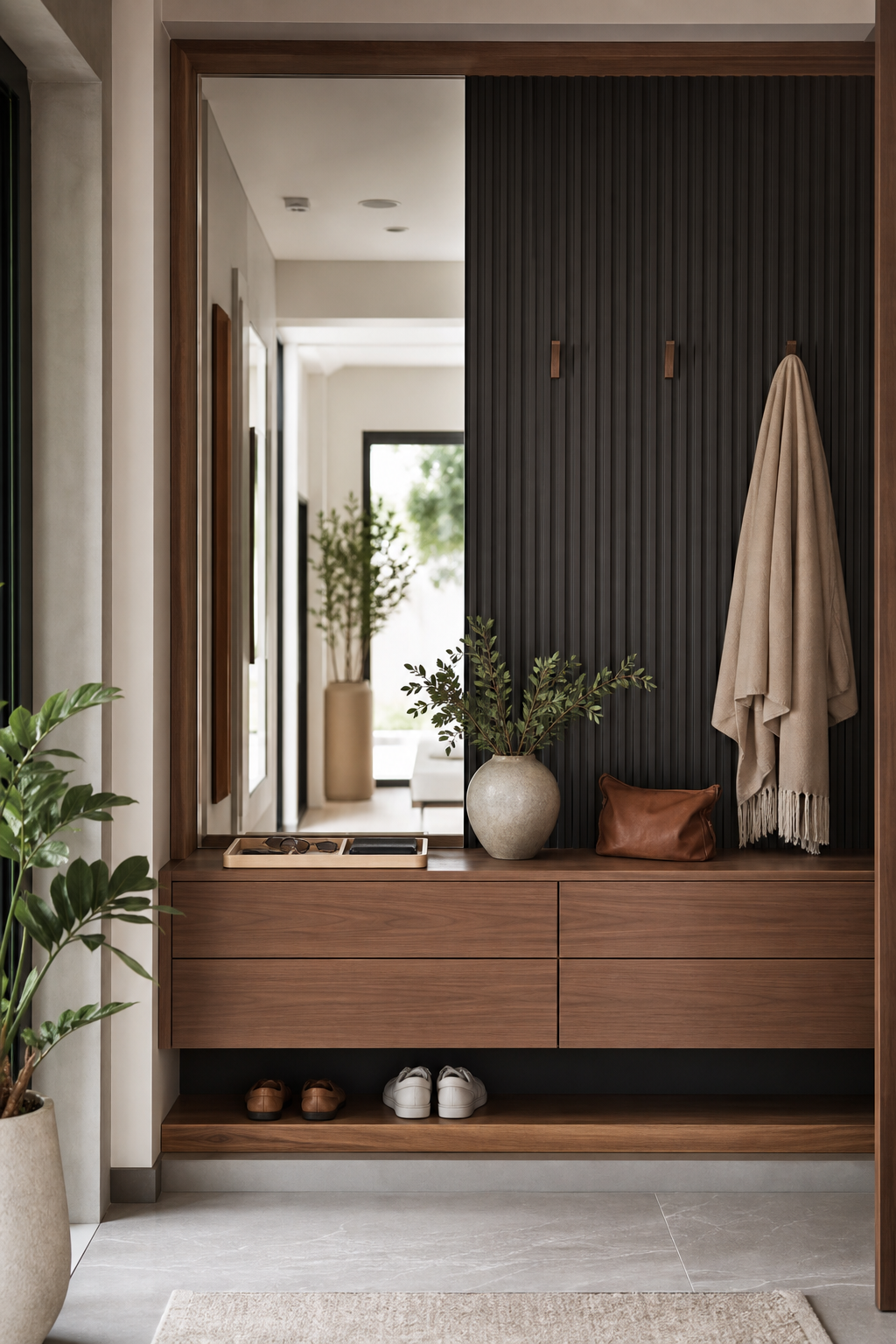
Floating storage keeps an entry light because the floor remains visible and easy to clean. Mount a slim bench, shelf, or shoe cabinet to the wall, then add hooks above for coats and bags. Shoes can tuck below the bench while the open floor line makes a small area feel bigger. This is a smart approach for modern homes where bulky furniture would interrupt the hallway. Use strong wall anchors and choose materials that can handle real weight. A floating setup also makes sweeping or mopping easier, which matters in spaces that collect dirt from outside. The result is neat, airy, and practical.
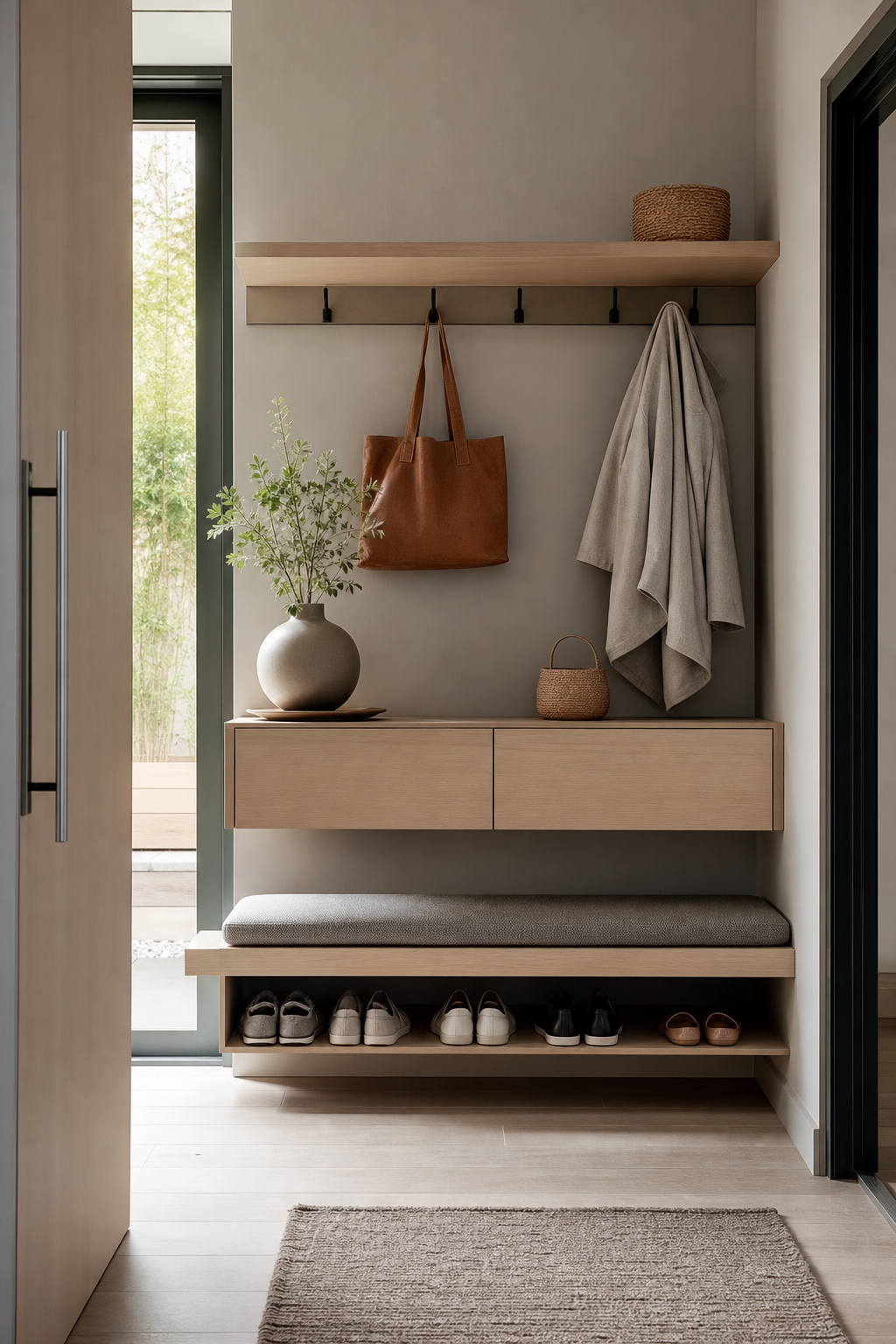
Make A Shoe Wall Look Like Millwork
A shoe wall can look refined when it is designed like custom millwork. Use repeated openings, consistent trim, and closed lower drawers so the storage feels architectural. Open shelves are helpful for attractive shoes or daily pairs, while closed sections hide the rest. Paint the unit the same color as the wall for a built-in look, or use wood to add warmth. Add a bench or narrow ledge if there is room. This idea is best for households with many pairs because it turns a practical need into a feature. The more organized the proportions are, the less the shoes dominate the entry.
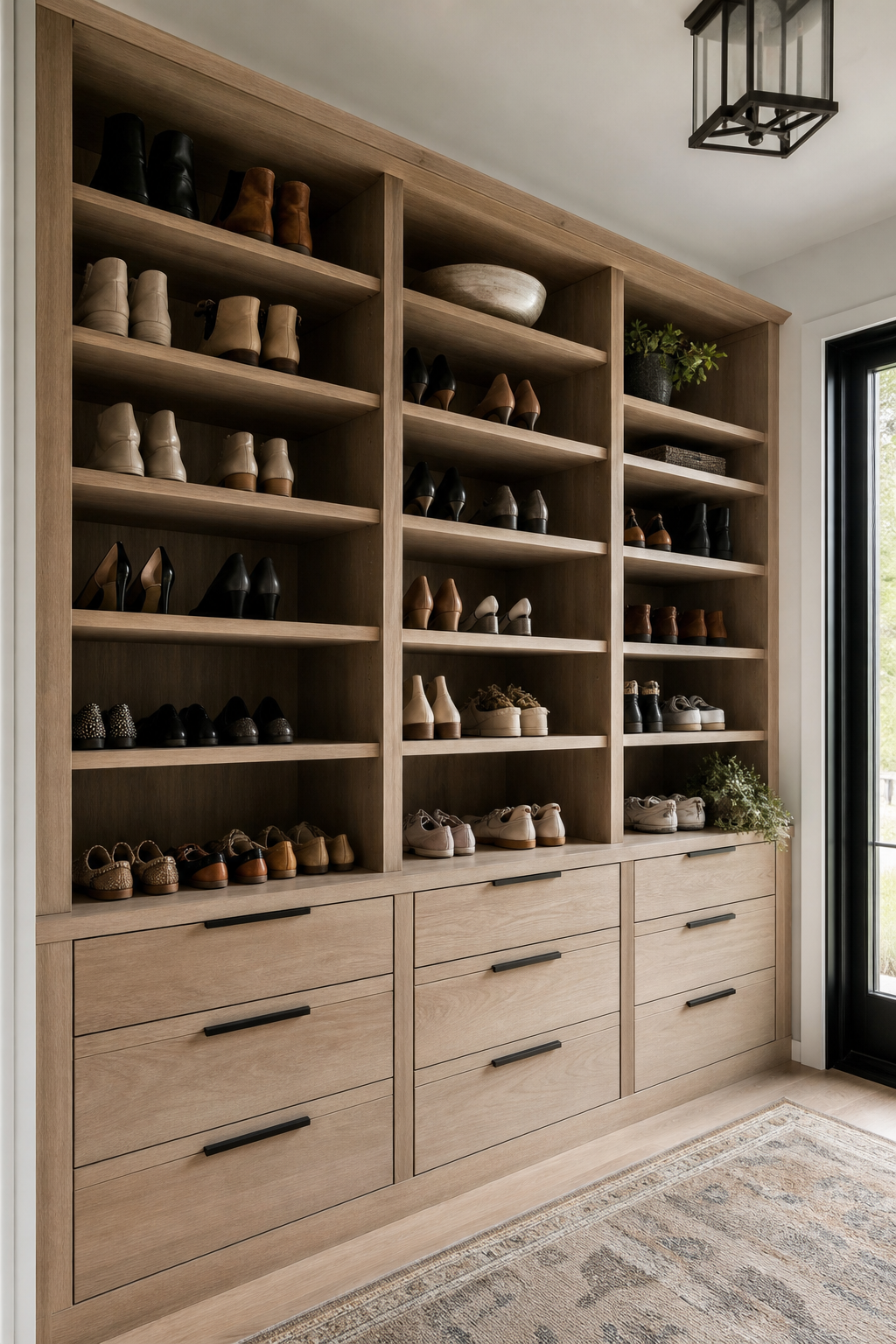
Add A Drip Tray For Wet Shoes
A drip tray is a small detail that makes coat and shoe storage work better in real life. Place it under a bench, inside a cabinet, or near the door for wet boots and muddy sneakers. Choose metal, rubber, stone, or a washable tray that looks intentional with the rest of the entry. Adding a layer of smooth pebbles can help soles dry, but keep the tray easy to clean. This prevents water from spreading across wood floors or rugs. Pair the tray with hooks for raincoats and a basket for umbrellas so bad-weather gear has one clear zone. It is a small safeguard that protects the larger design investment.
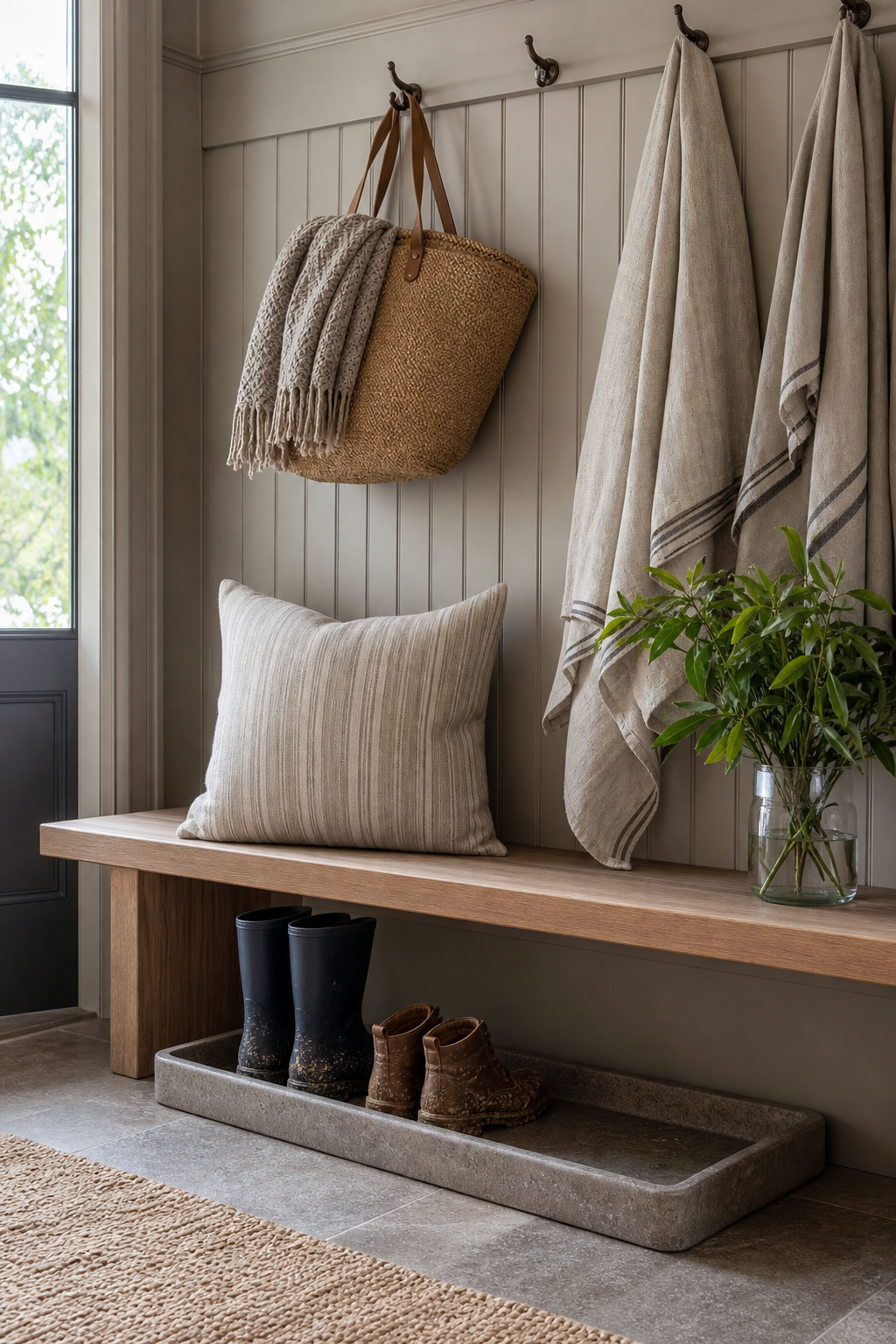
Combine Open Hooks With Closed Shoe Storage
Open hooks make coats easy to grab, while closed shoe storage keeps the lower half of the entry calm. This combination is one of the most practical because it supports quick routines without exposing every pair of shoes. Use a cabinet, drawers, or a lift-top bench below the hooks. A cushion or wood top can turn the storage into a seat, which makes putting on shoes easier. Keep the hook row tidy by limiting it to current-season coats and bags. The closed storage can hold the extras. This creates an entry that feels welcoming at first glance and still works hard every day.
Use A Vintage Dresser For Hidden Shoes
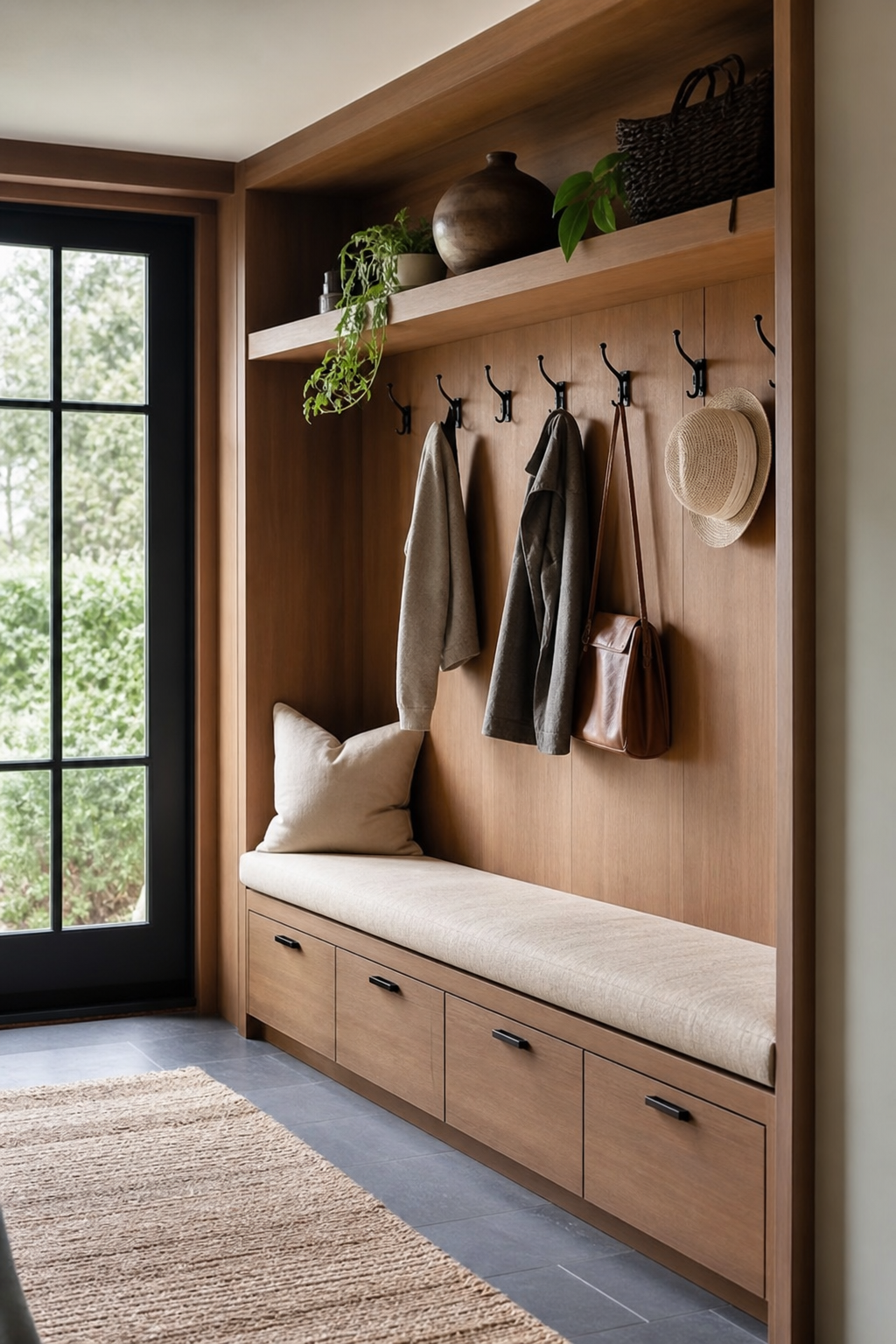
A vintage dresser can become charming hidden shoe storage when the drawers are deep enough. It brings character to an entry and avoids the built-in look if you prefer a collected home. Use drawer organizers or shallow bins inside so pairs do not tumble together. The top can hold a lamp, tray, mirror, or vase, making the storage feel like furniture rather than a utility piece. This works best for lighter shoes, scarves, gloves, and small accessories. If the dresser is near the door, protect the top with a tray for keys and damp items. The result feels personal and practical.
Create A Kids Height Hook Row
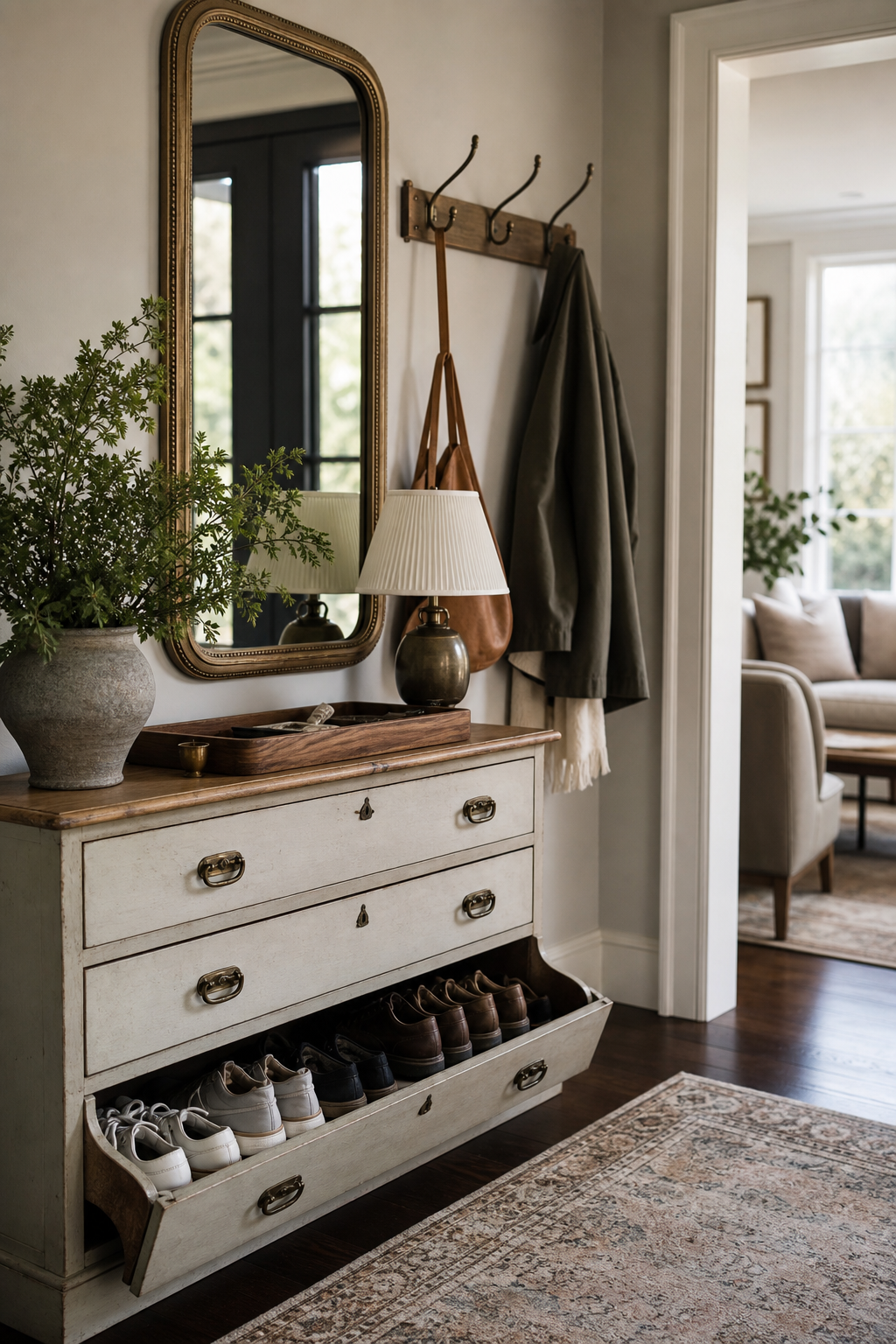
A lower hook row helps children manage their own coats, bags, and shoes. Place sturdy hooks within reach and pair them with low cubbies, baskets, or shelves for footwear. The design can still look polished if the materials match the rest of the mudroom. Use washable paint, durable flooring, and rounded bench corners if the area gets heavy use. Giving kids a clear place for their things reduces piles on the floor and teaches the routine without constant reminders. Keep the system simple: hook, shoe spot, basket. When storage is scaled correctly, the whole entry works better for the household.
Choose A Freestanding Hall Tree
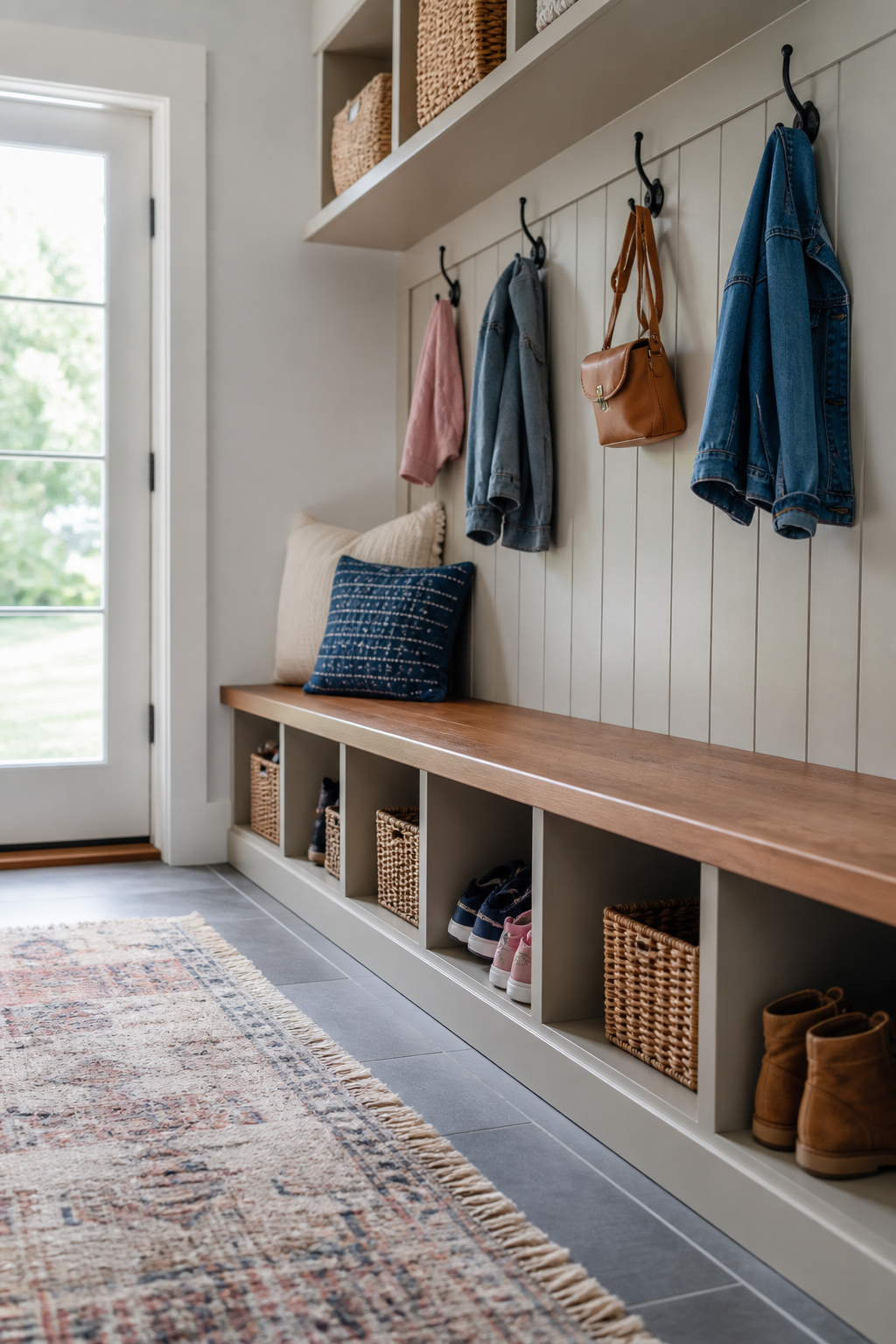
A freestanding hall tree is a useful option when you need coat and shoe storage without building anything permanent. Look for a sturdy piece with hooks, a bench, and at least one lower shelf. Black metal and wood can feel modern, while painted wood looks softer and more traditional. The hall tree should be wide enough to be useful but not so bulky that it blocks the door swing. Add a basket or tray below for smaller shoes and umbrellas. This piece is especially helpful for rentals, temporary homes, and entries that may change over time. It gives structure immediately.
Add Overhead Cabinets For Seasonal Gear
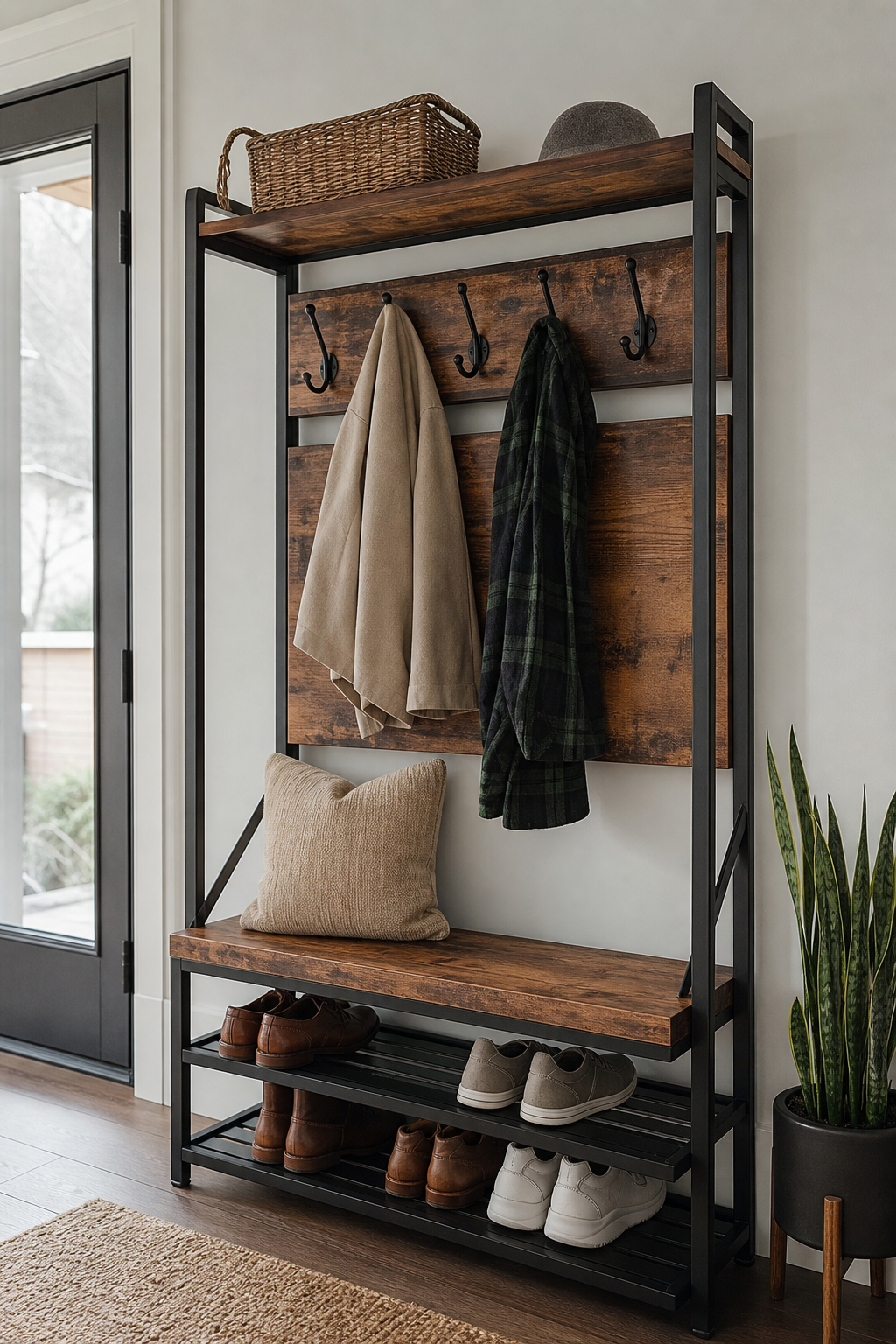
Overhead cabinets make use of the space above hooks and benches, which is often wasted. Store seasonal shoes, extra bags, hats, or outdoor accessories up high while keeping daily pieces within reach below. Closed upper doors keep the entry looking neat even when the contents are irregular. Use a bench, hooks, and shoe drawers underneath to complete the system. This idea is especially effective in mudrooms with high ceilings or garage entries where storage demand is heavy. Keep a step stool nearby if needed. By moving occasional items upward, the lower storage can stay focused on everyday routines. The entry feels calmer when rarely used pieces are not competing for daily space.
Use Matching Hangers And Baskets
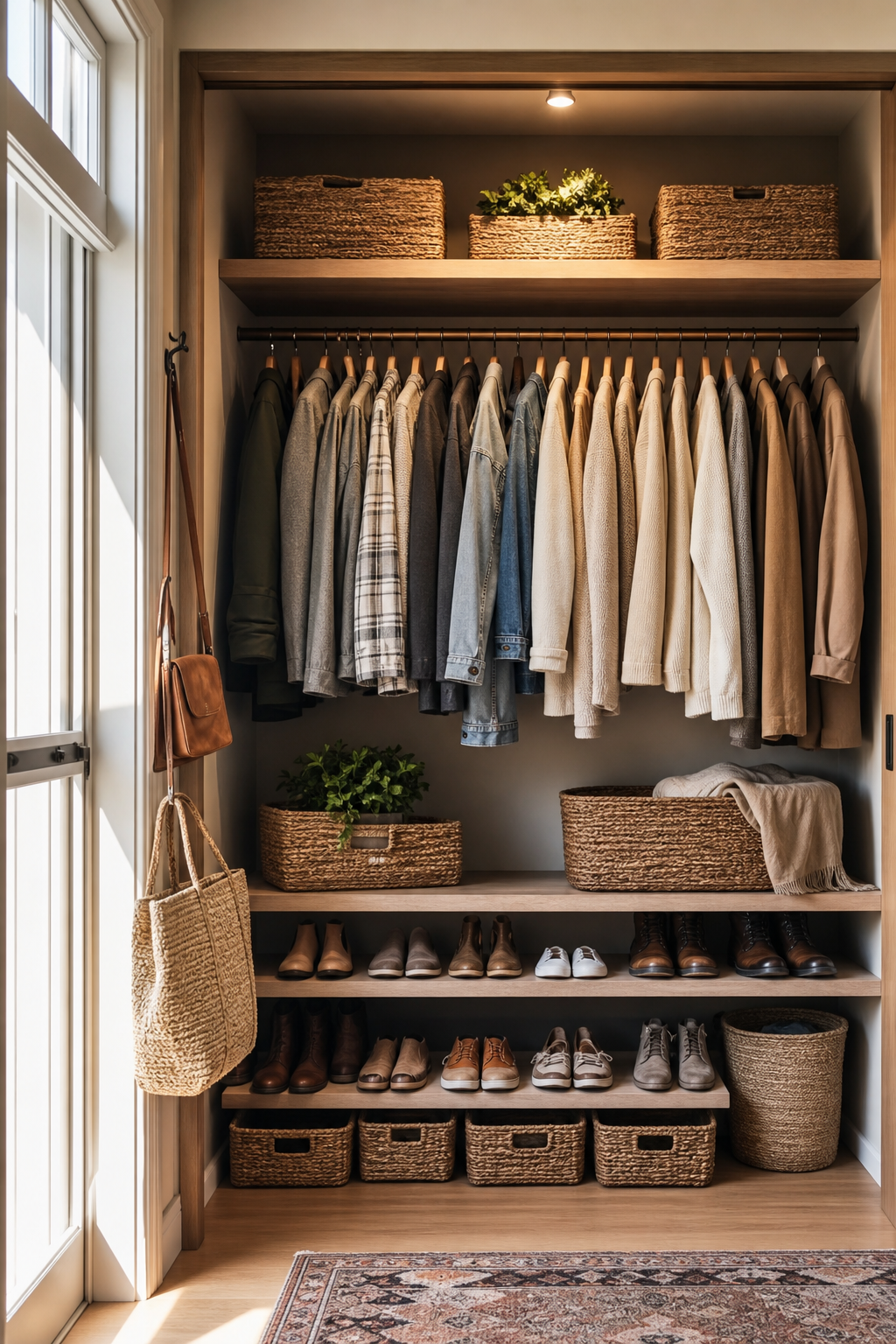
Matching hangers and baskets can make even a basic entry closet feel designed. Replace a mix of plastic hangers with wood, black, or slim velvet versions, then group shoes on simple racks or shelves below. Baskets can hold gloves, hats, dog gear, or reusable bags while keeping small items from spreading. Add a light if the closet is dark, because visibility is part of organization. This is a low-renovation upgrade with a big visual payoff. The storage does not need to be expensive; it just needs repetition. Consistent materials make practical pieces look calmer and easier to maintain. The closet feels calmer the moment the door opens.
Finish With A Catchall Tray And Mirror
A catchall tray and mirror finish coat and shoe storage by giving the entry a final layer of order. The tray collects keys, sunglasses, and small items that otherwise land on the nearest surface. A mirror makes the area useful for last checks before leaving and reflects light into narrow halls. Pair these details with a shoe cabinet, hooks, or bench so the decorative layer supports the storage instead of replacing it. Add one plant or lamp if space allows, but keep the surface edited. The entry should make leaving easier and coming home feel calmer, not create another spot to tidy.
A neat entry is less about having a large mudroom and more about giving every repeated item a clear place to land. Coats need hooks or hanging space, shoes need shelves or drawers, and small accessories need baskets or trays. Choose the ideas that match your real routines first, then refine the finishes so the storage feels connected to the rest of the home. Closed cabinets create calm, open hooks add speed, and benches make the area easier to use. With the right mix, coat and shoe storage can become one of the most functional and polished parts of the house.