18 Hat Storage Ideas For A Neat Stylish Home
Hat storage works best when it protects shape, keeps daily pieces visible, and still looks calm from the rest of the room. The right solution depends on the hats you own: structured brims need shelves, pegs, or boxes, while caps and soft styles can live in drawers, baskets, or divided cubbies. These ideas balance display and hidden organization so a closet, mudroom, bedroom, or entry can feel neater without losing personality.
Use A Dedicated Hat Wall
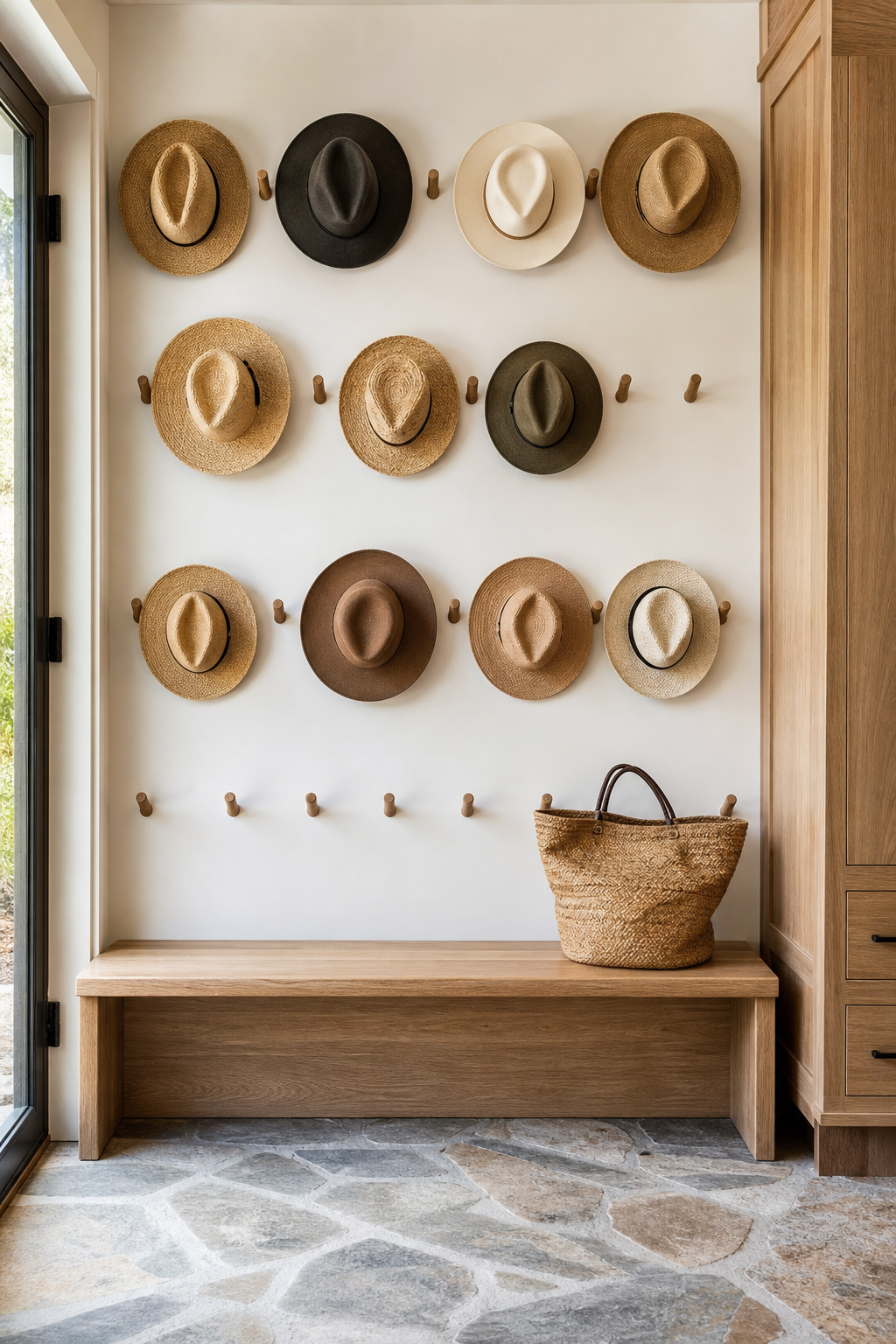
A dedicated hat wall turns storage into a clean focal point, especially when the hats have similar tones or natural textures. Use sturdy pegs with enough depth to hold each crown without crushing the brim, then stagger the placement so wide hats do not overlap. This idea works beautifully in an entry, bedroom corner, or closet passage where a shallow solution matters more than closed cabinetry. Keep the wall finish simple, such as warm white plaster or painted paneling, so the shapes of the hats provide the movement. Add a narrow bench or basket below for scarves and gloves, but resist filling every inch. The negative space is what makes the display feel designed instead of crowded.
Add Upper Shelf Hat Boxes
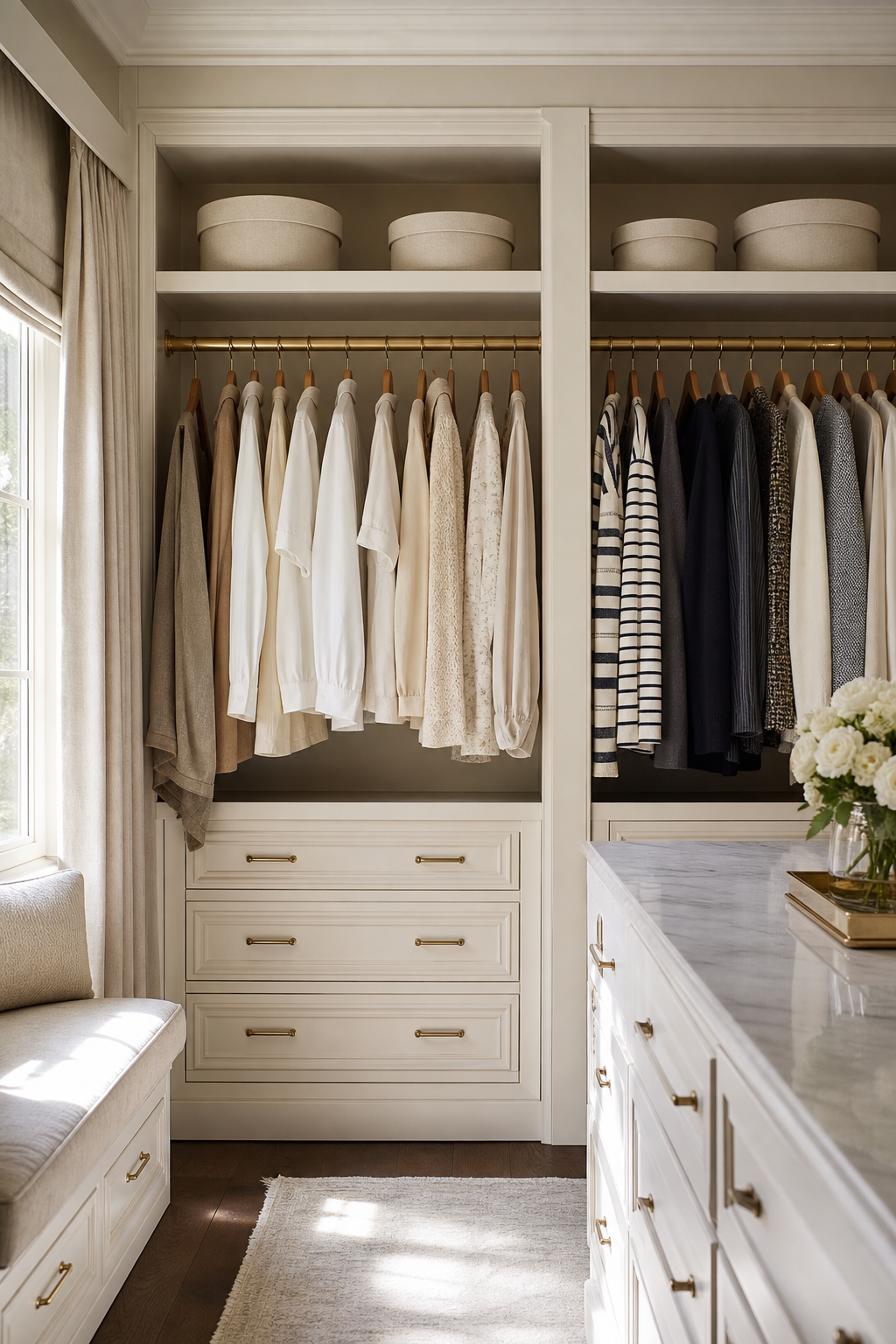
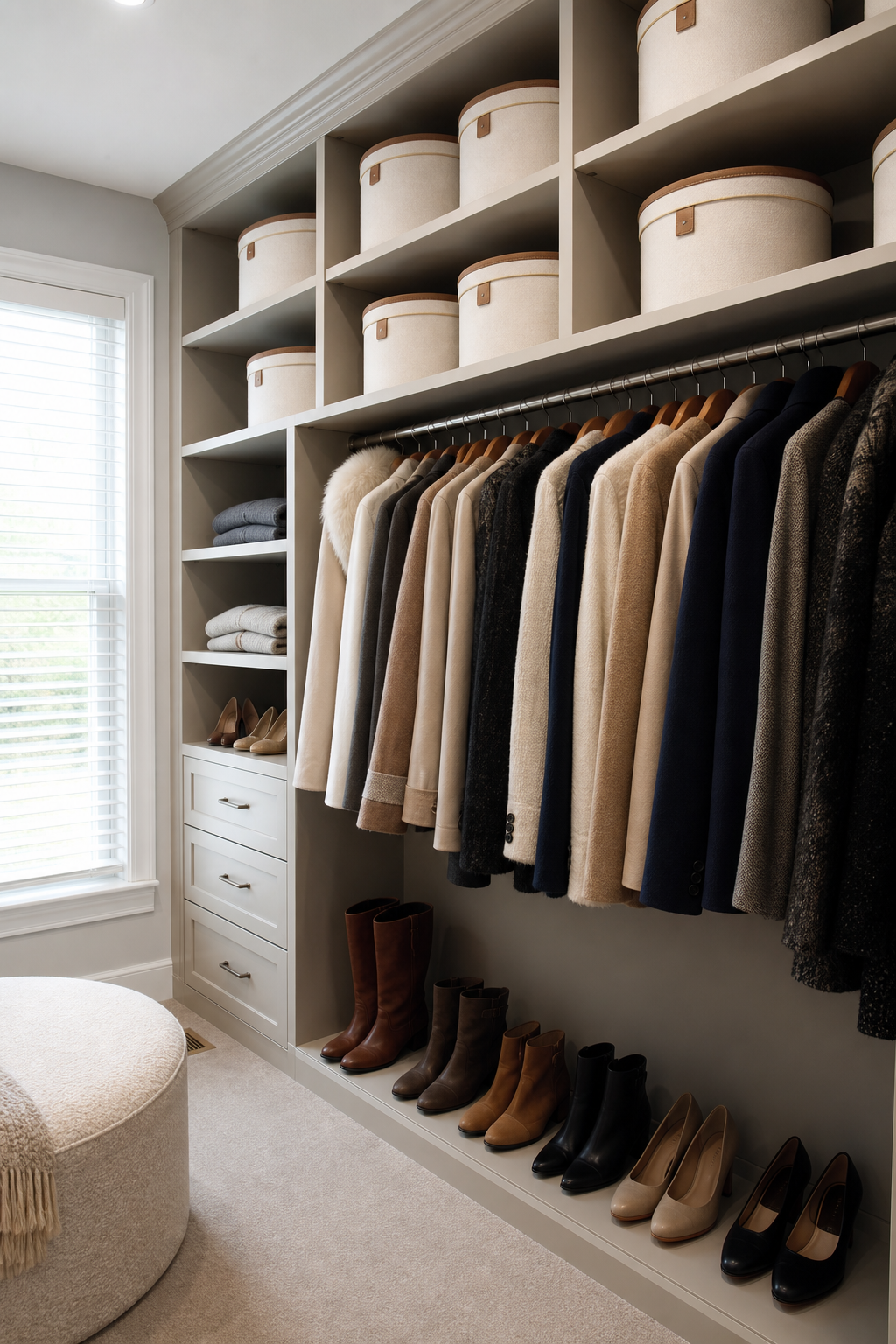
Upper shelf hat boxes are ideal for special occasion pieces, seasonal hats, and anything that needs dust protection. Choose boxes in one finish, then vary only the size so the storage looks calm from below. Round boxes protect brimmed hats best, while square boxes can work for soft caps or folded winter accessories. Keep the most-used pieces at shoulder height and reserve the top shelf for items you reach for less often. If you need labels, use discreet tags on the side facing inward rather than bold printed fronts. The effect is polished and practical: the closet gains vertical order, hats keep their shape, and the open hanging below can stay visually light.
Try Open Cubbies For Everyday Hats
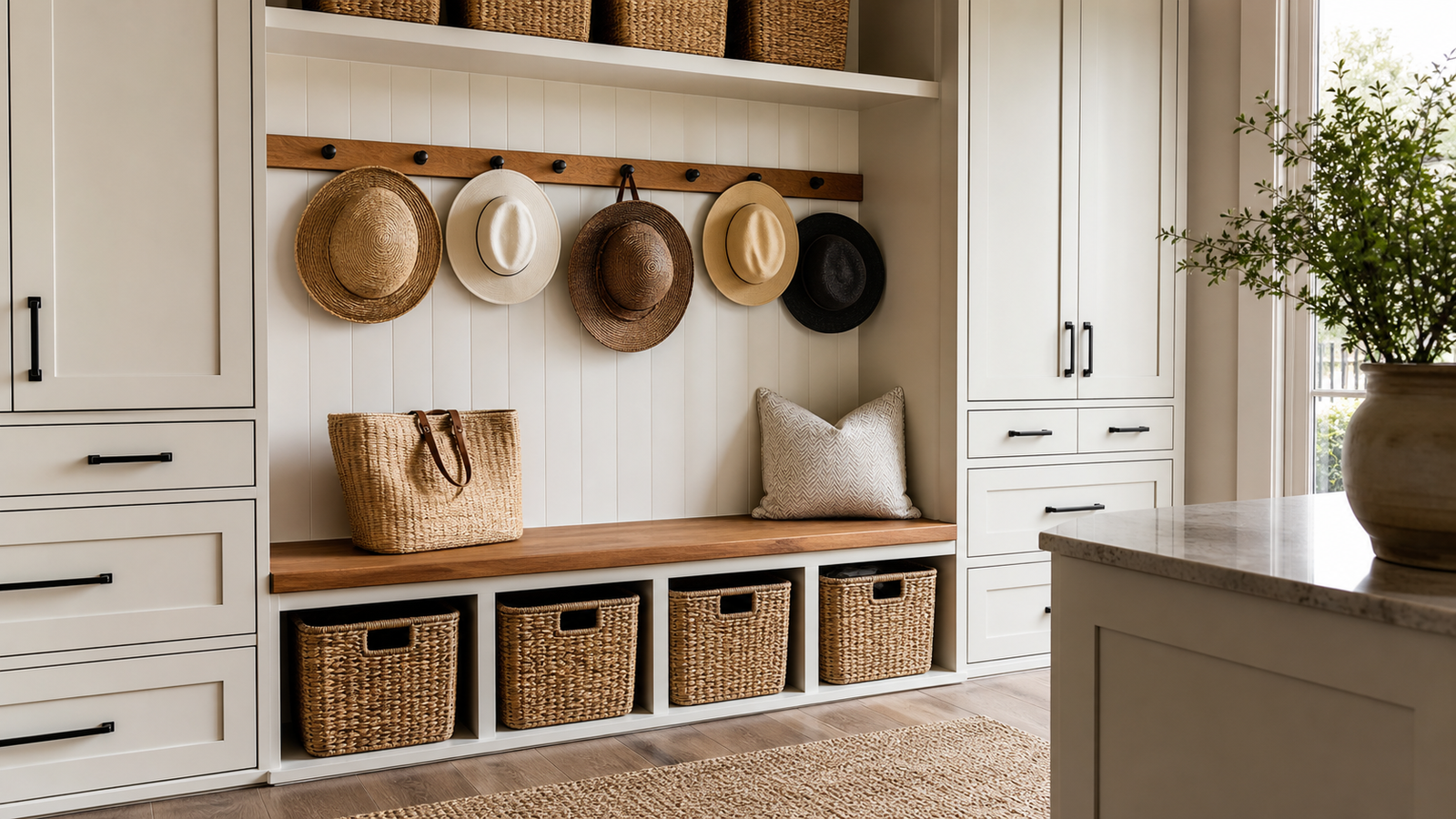
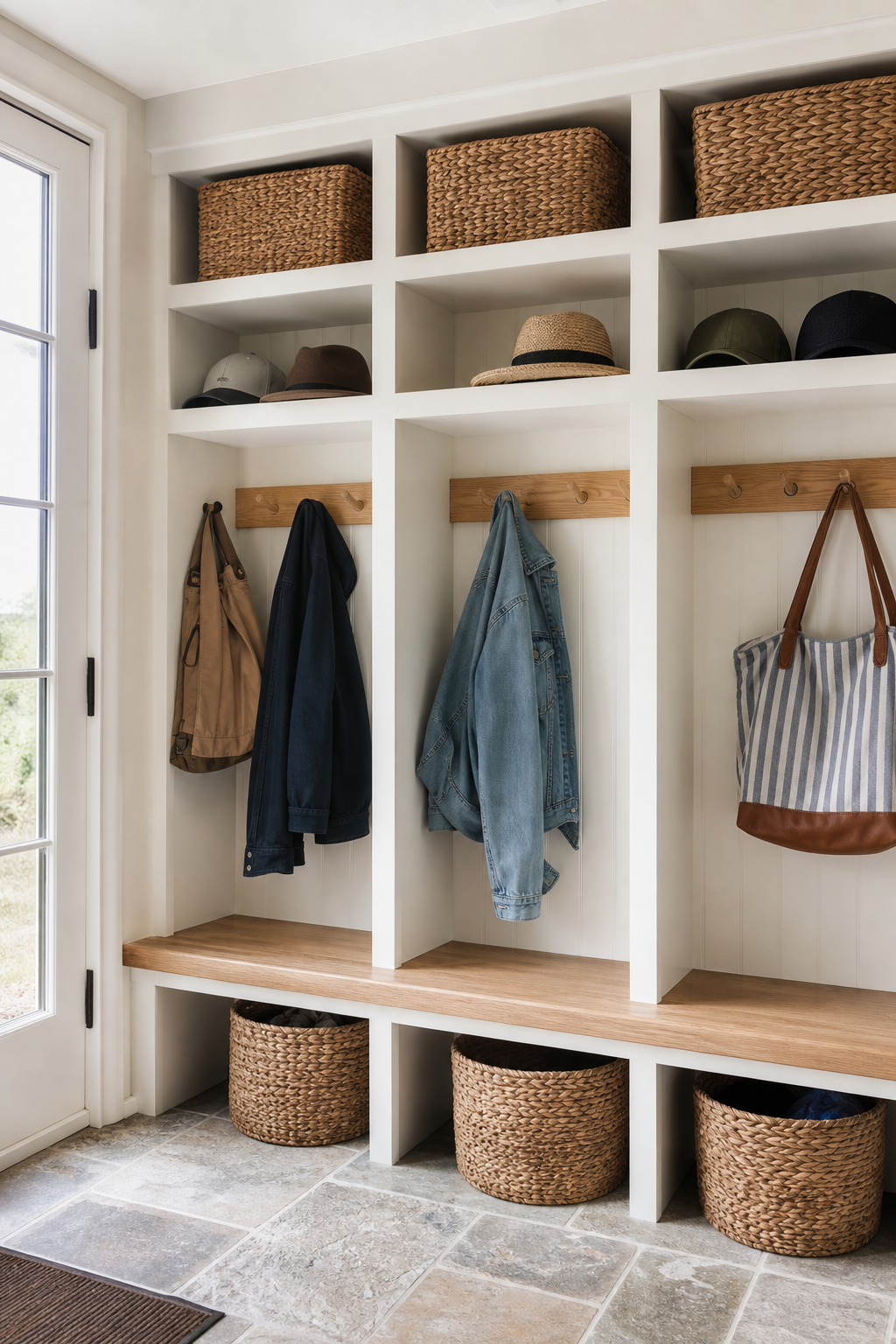
Open cubbies make sense for hats that move in and out of rotation every week. They are easier to maintain than stacked piles because each compartment sets a natural limit for how much you can keep. Use wider cubbies for structured straw or felt hats and narrower ones for caps, beanies, or rolled scarves. A mudroom, hall closet, or casual dressing area is the best place for this approach because visibility is part of the function. To keep the look elevated, repeat the same wood tone, add woven baskets only where clutter needs hiding, and leave a few cubbies partially empty. That small bit of space helps the storage feel breathable rather than purely utilitarian.
Install A Slim Peg Rail
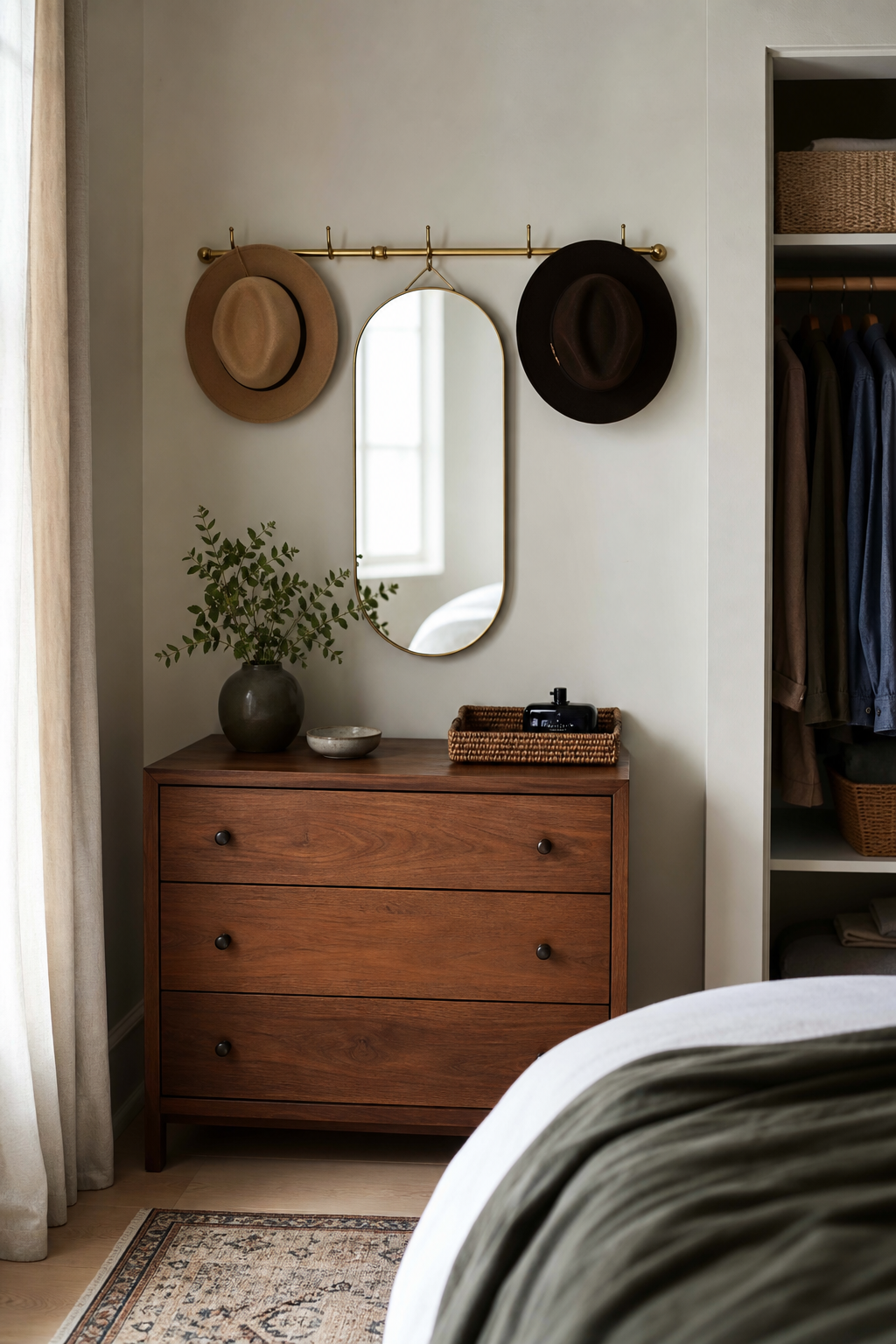
A slim peg rail is one of the most flexible hat storage ideas because it works on narrow walls, behind doors, and inside closet returns. Choose pegs with rounded ends so they support hats gently, and install the rail high enough that brims clear nearby furniture. The simplest version is a painted rail that disappears into the wall; a warmer option uses oak or walnut to add texture. Limit the rail to everyday hats, bags, or a light jacket so it does not become a catchall. When styled with a mirror, small dresser, or woven hamper nearby, the rail feels like part of a considered dressing routine rather than a temporary storage fix.
Use Clear Display Shelves
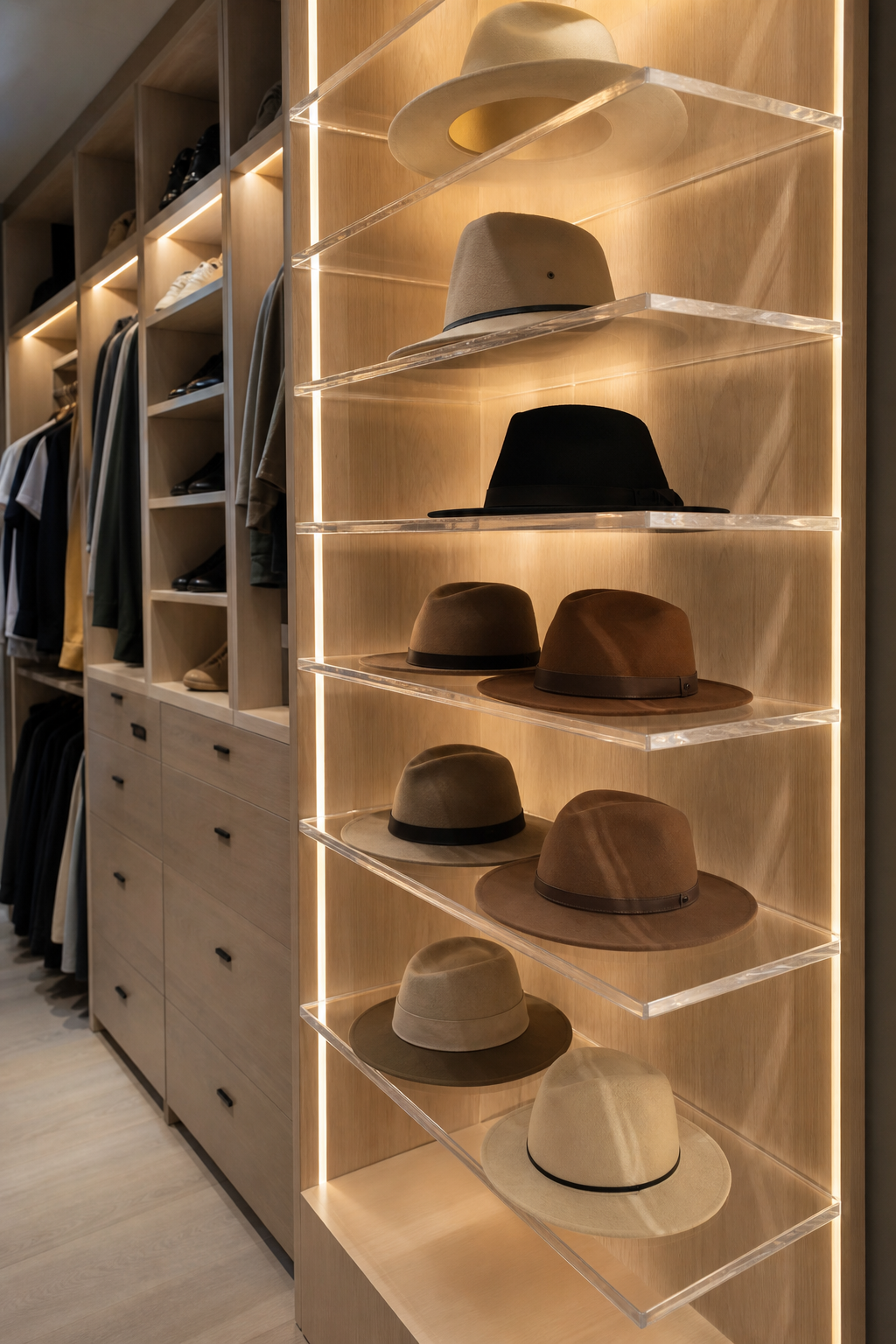
Clear display shelves are useful when you want hats visible but do not want the shelving itself to dominate the closet. Acrylic ledges, glass shelves, or slim transparent dividers let the shapes and colors of the hats stand out. This works especially well for structured pieces because each hat can sit flat with support under the brim. Add warm LED lighting if the closet is deep, but keep the bulbs hidden so the display feels soft rather than retail-bright. The key is spacing: give favorite pieces room on both sides and group similar materials together. With pale wood, neat hanging, and quiet hardware, clear shelves can make hat storage feel refined and collectible.
Store Caps In Drawer Dividers
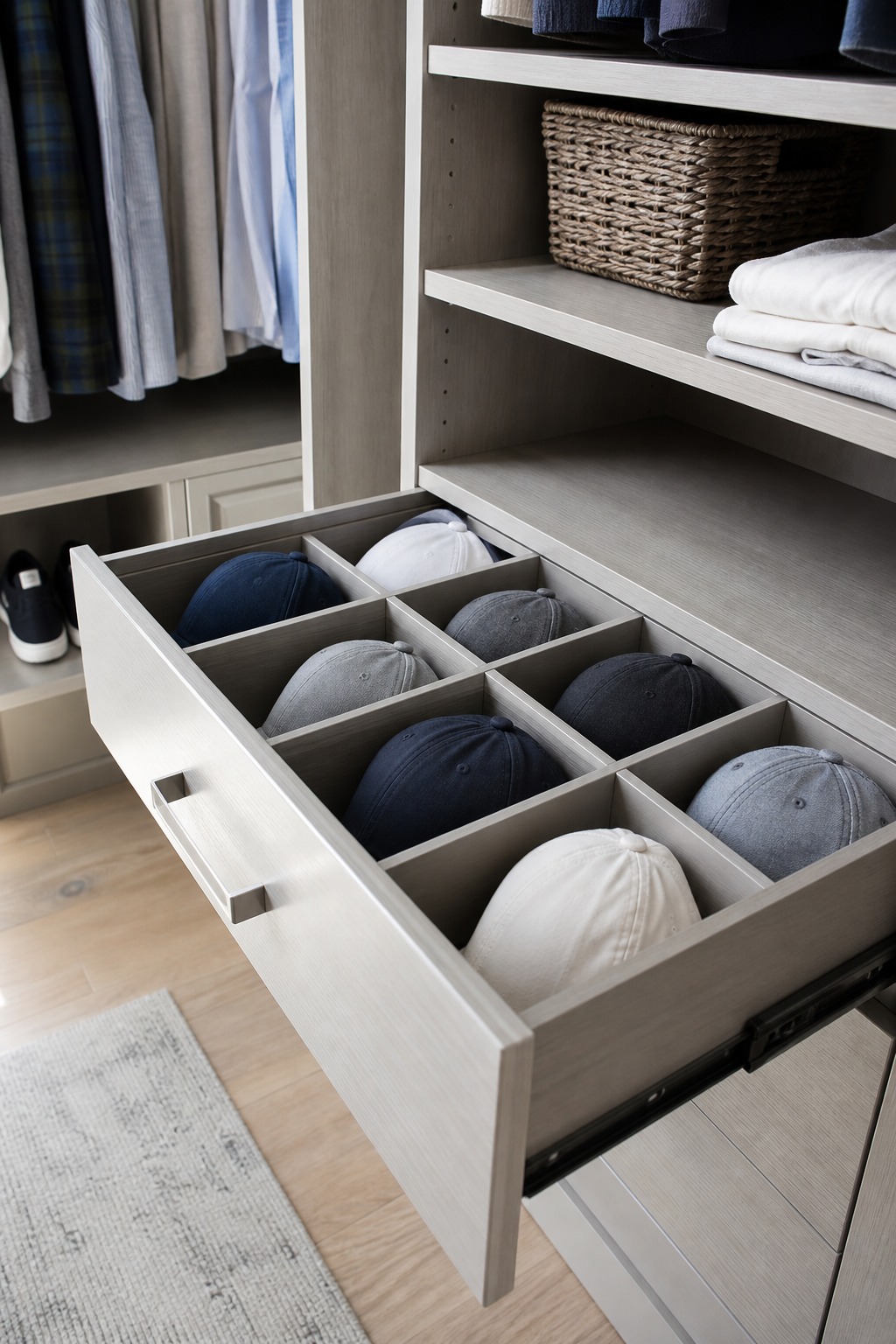
Caps often look messy on open shelves, so drawer dividers are a smart way to keep them accessible without visual noise. Use shallow compartments that let each cap sit upright or slightly nested, and avoid overfilling the row so the fronts are easy to see. This approach works best in a closet island, dresser, or built-in drawer stack near everyday clothes. Soft fabric dividers protect the shape better than hard plastic, while wood dividers feel more custom. Keep sports caps, travel caps, and casual weekend styles separated if you own many. The drawer can close on the clutter, but the inside still feels intentional every time you open it.
Make A Boutique Hat Nook
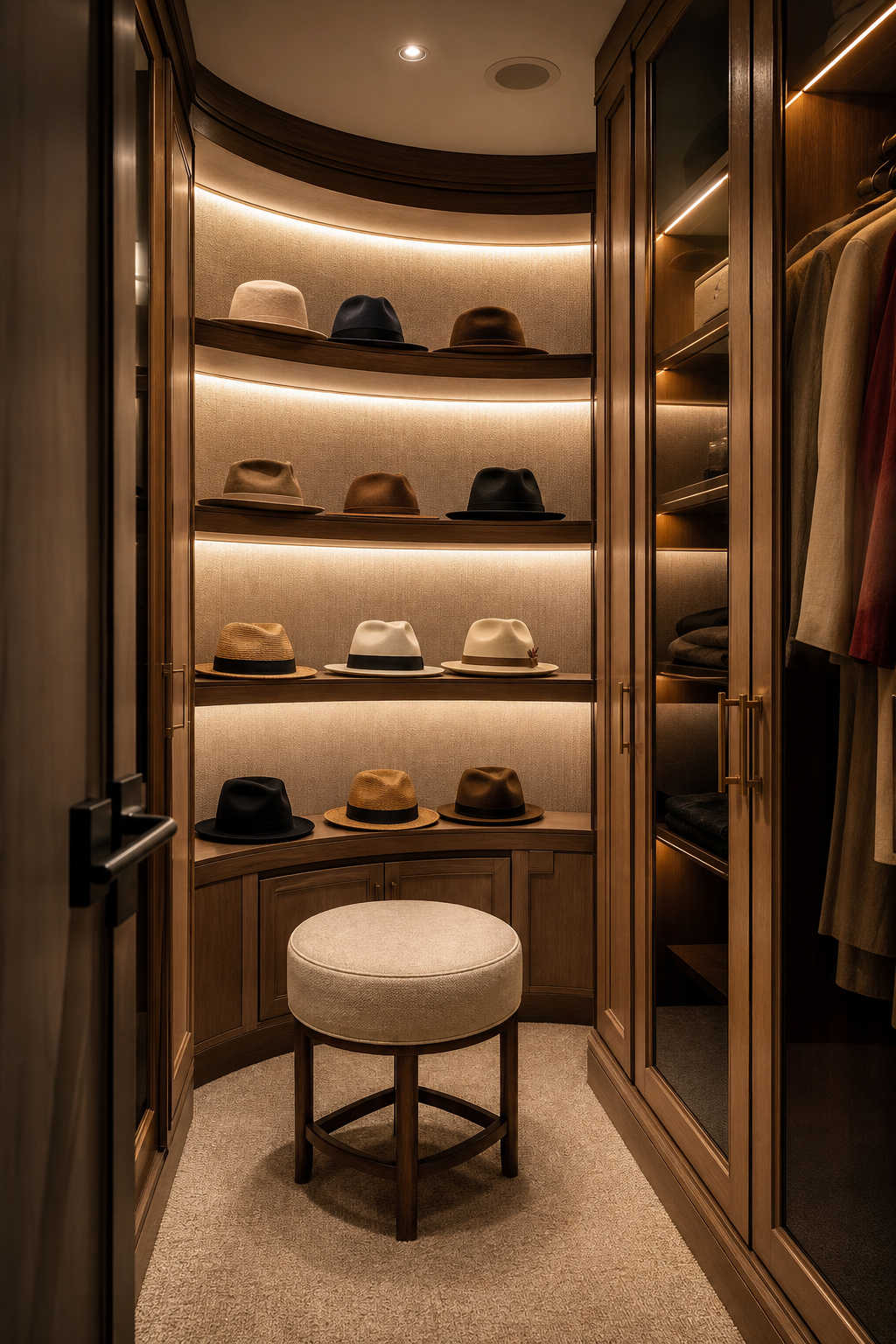
A boutique hat nook gives a small closet or dressing corner a sense of occasion. Start with one vertical bay, curved shelf, or arched niche, then light it softly so the hats read as part of the room’s styling. This idea works best when the selection is edited: a few wide-brim hats, one or two darker felt pieces, and perhaps a small stool below. Use suede, linen, oak, or painted millwork to keep the mood warm and tactile. Avoid crowding the shelves with unrelated accessories; the point is to make the hats easy to admire and easy to choose. Even a compact nook can feel luxurious when the scale and lighting are right.
Add Baskets For Soft Hats
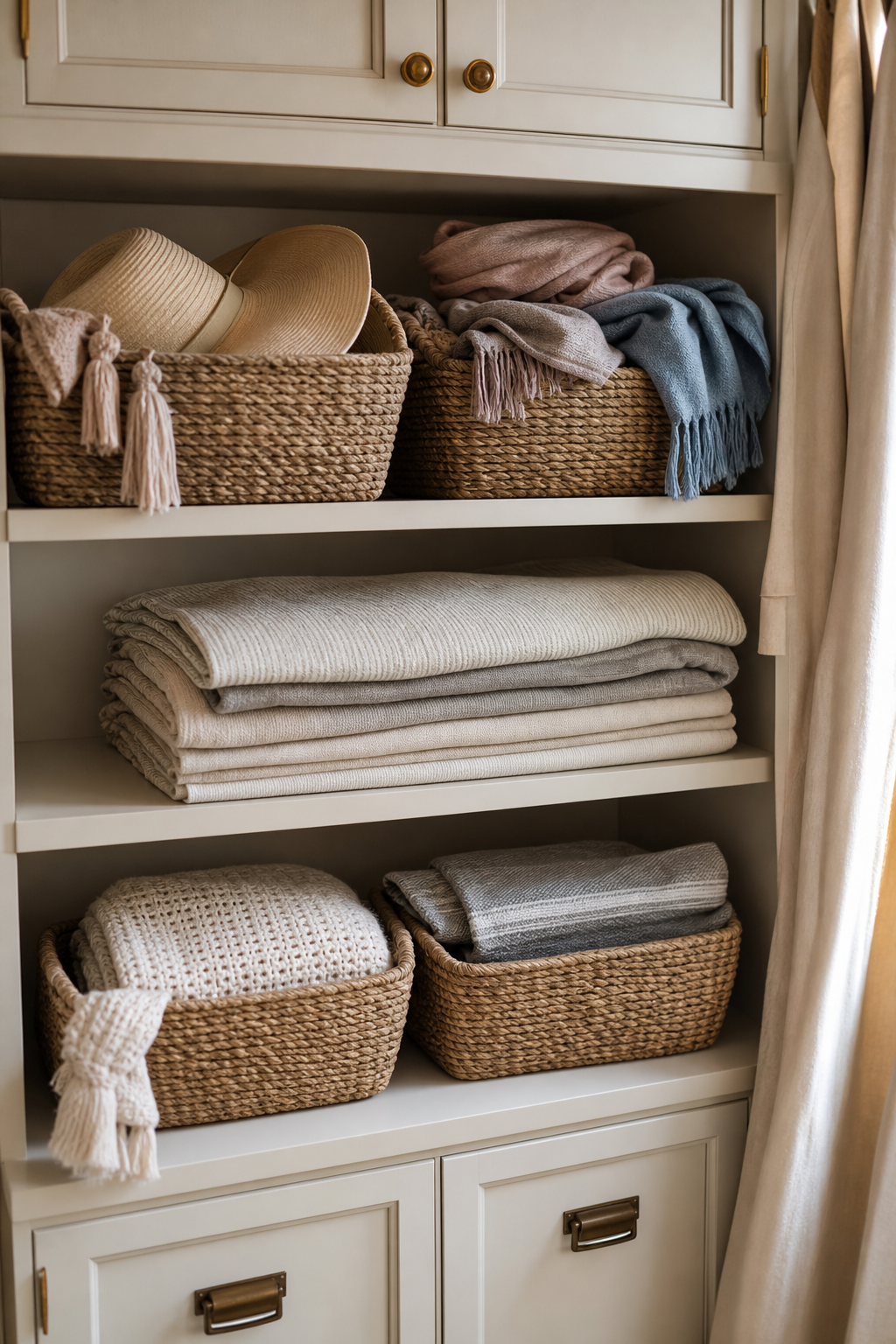
Baskets are best for soft hats that do not need rigid support, such as beanies, packable sun hats, bucket hats, and casual caps. Use one basket per category so you can grab what you need without digging through a mixed pile. Lidded baskets make sense on open bedroom shelves, while open baskets are better in mudrooms or closets where speed matters. Choose woven textures that relate to the rest of the room, such as seagrass near linen curtains or rattan beside pale oak cabinetry. The goal is to hide casual clutter without losing track of the contents. A basket system feels especially polished when the surrounding shelves are mostly closed, folded, or neatly spaced.
Use Door-Mounted Hat Storage
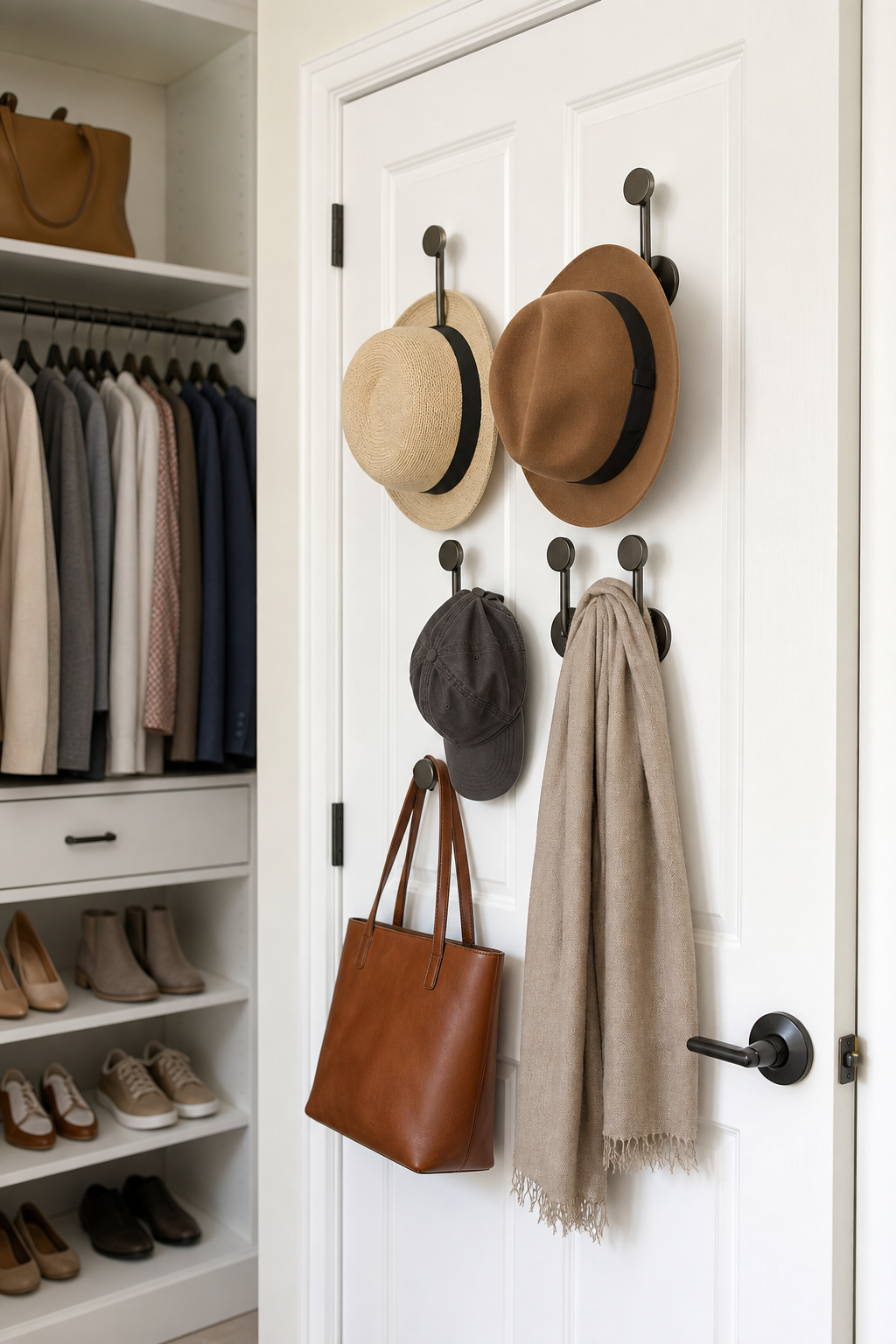
Door-mounted storage is valuable when the closet is short on wall space, but it needs a restrained layout to look good. Use slim hooks, shallow rails, or a custom panel that keeps hats close to the door rather than swinging loosely. Place lighter hats higher and heavier pieces lower so the door remains balanced. This idea is strongest on the inside of a closet door, where the display is easy to access but hidden when the room is tidy. Match the hook finish to nearby hardware for a built-in look. Leave clearance for shelves, hanging rods, and door stops before installing anything, because smooth movement matters as much as storage capacity.
Create A Mudroom Drop Zone
A mudroom drop zone keeps everyday hats from drifting onto counters, chairs, and stair rails. Combine hooks for brimmed hats, cubbies for caps, and baskets for gloves or scarves so every accessory has a predictable landing place. A bench below makes the area more useful, especially near a back door or garage entry. Durable finishes are important here: painted wood, stone tile, washable runners, and woven bins will handle daily use better than delicate materials. Keep the palette coordinated with the rest of the home so the practical zone still feels styled. When the storage is easy to reach and simple to reset, the whole entry stays calmer.
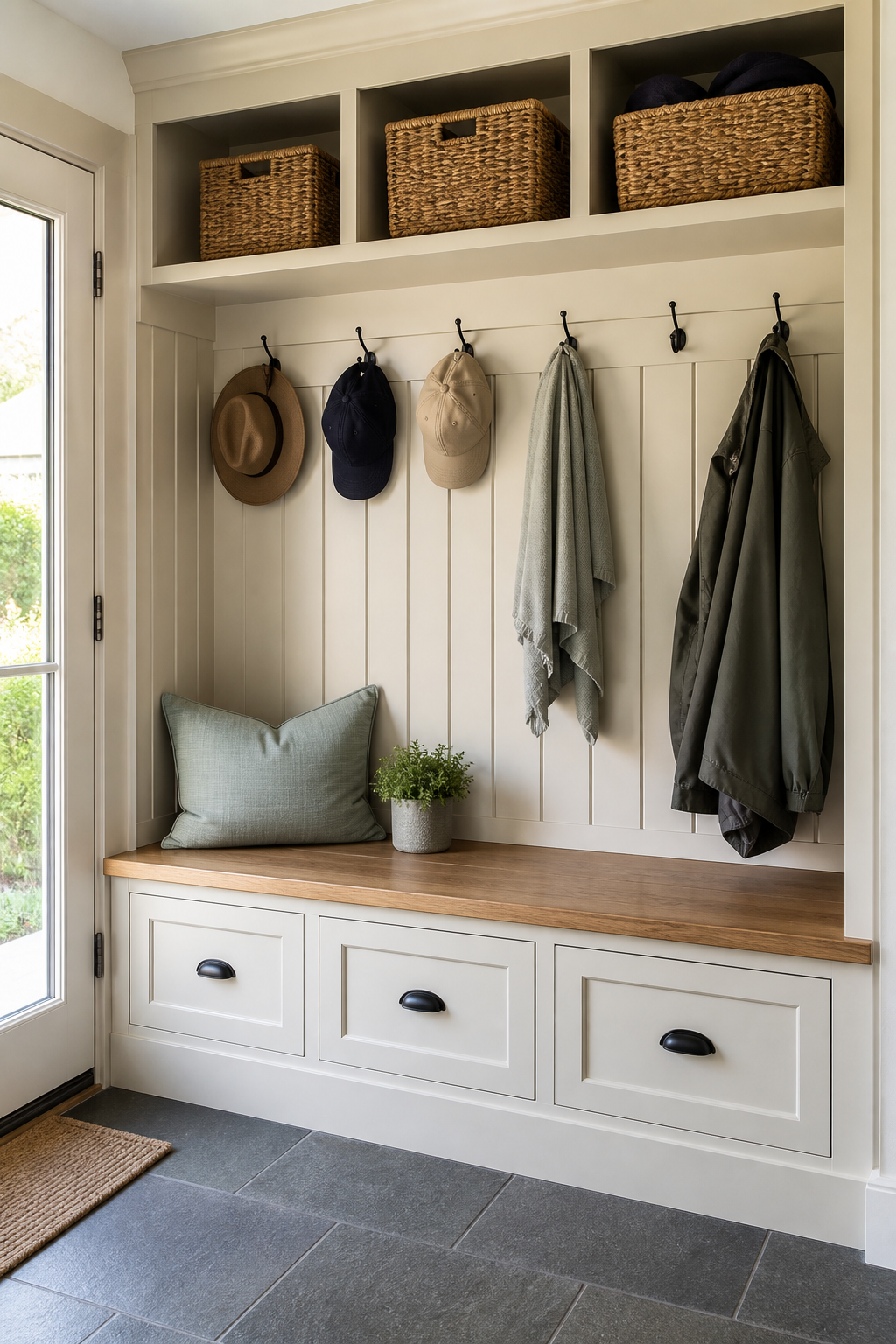
Display Statement Hats Above A Bench
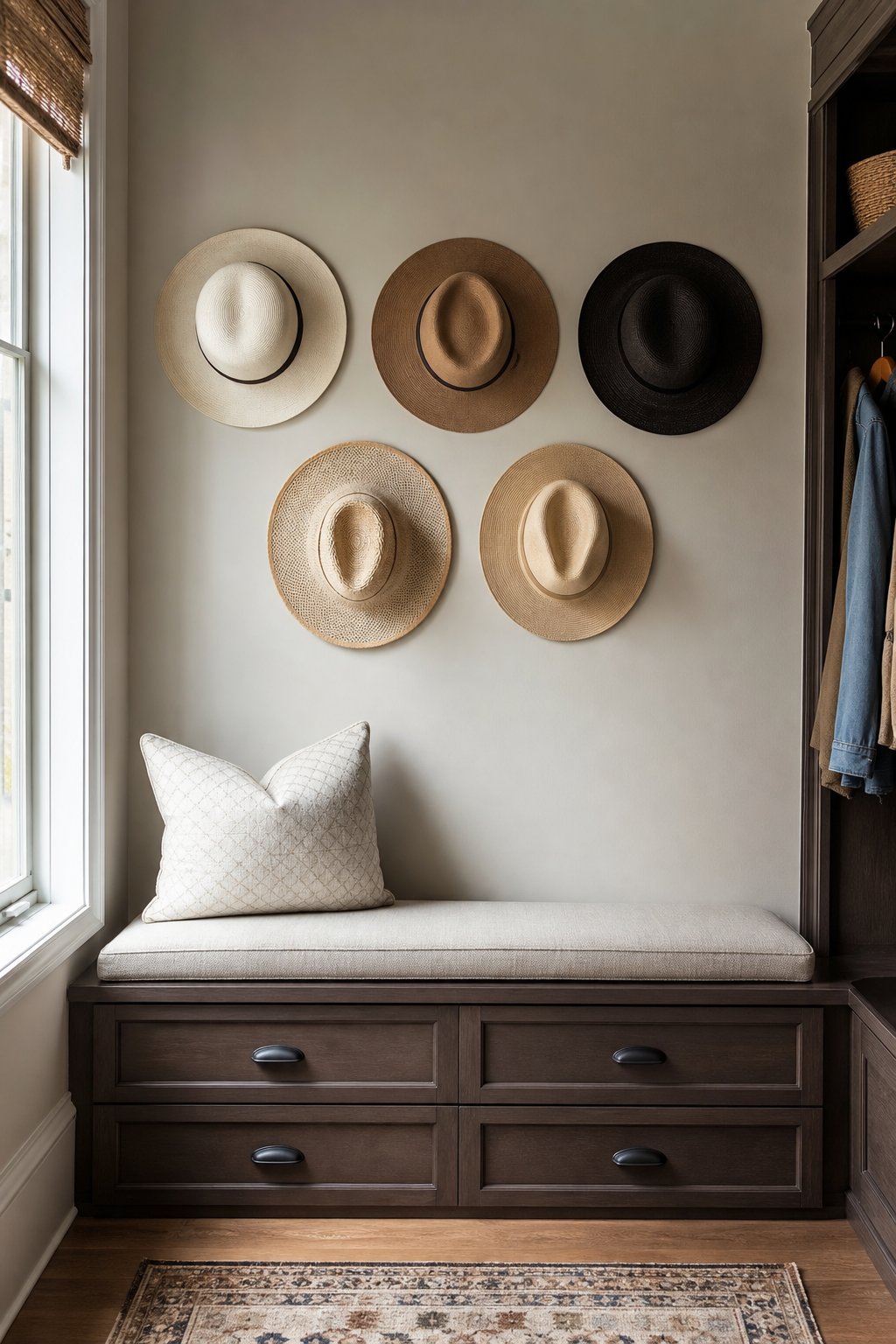
Statement hats deserve space, and the wall above a bench is often the perfect place to give them it. Use two or three rows of pegs, but keep the arrangement balanced with the bench width so it feels anchored. This works well in a closet, bedroom, entry, or hallway where the bench already creates a natural pause. Choose hats with sculptural brims, rich felt, woven straw, or interesting bands, then let them act like soft wall decor. Drawers or baskets under the bench can hold less decorative pieces. The result is functional storage with a finished-room feeling, especially when the bench cushion and nearby rug echo the hats’ textures.
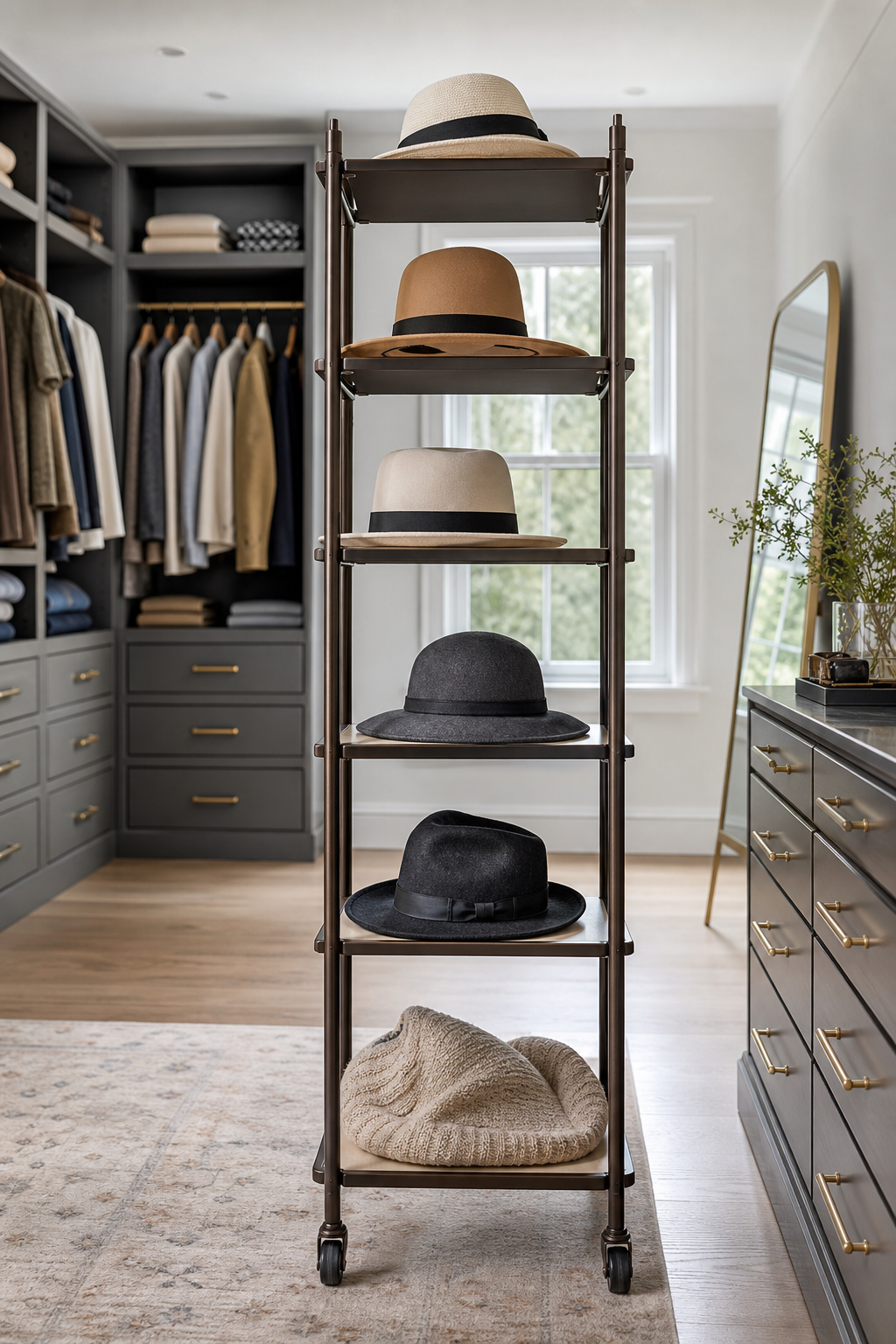
Use A Rolling Rack For Seasonal Hats
A rolling rack can handle seasonal hats when built-ins are full or when a dressing room needs flexible storage. Look for a slim rack with a lower shelf, side hooks, or a top ledge so hats are not simply piled on the hanging rod. Summer straw hats, winter felt hats, and travel caps can rotate forward as the weather changes. Keep the rack curated and color-grouped, because anything mobile tends to look temporary if it is overloaded. Place it near a wardrobe wall or mirror so it feels connected to the dressing area. The advantage is adaptability: you can rework the system without committing to new cabinetry.
Stack Structured Hats Carefully
Stacking structured hats can work, but only when the shapes are compatible and the stack stays short. Use hat forms, tissue, or a slightly smaller crown below to prevent pressure marks. Wide brims need the most care, so give them a flat shelf and avoid placing heavy pieces on top. This idea is useful for closets where display space is limited but open shelving is available. Group by material and color so the stack looks intentional, not forgotten. A shelf with warm wood, soft lighting, and a little empty space around the pile can make even practical stacking feel polished. Check the lower hats occasionally so long-term storage does not distort them.

Add A Hat Shelf Over Hanging Rods
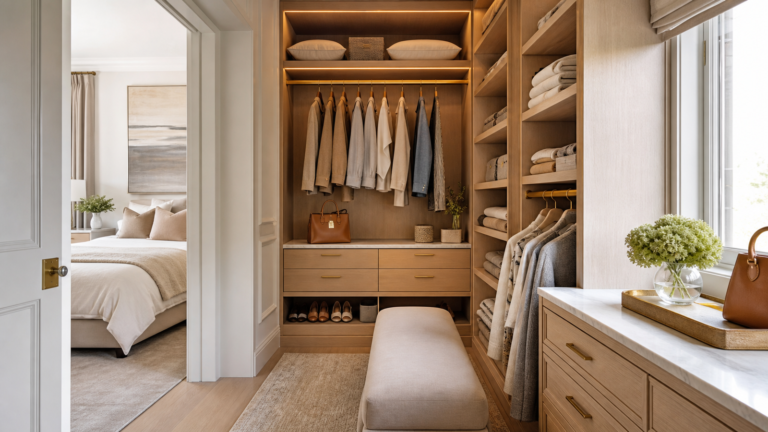
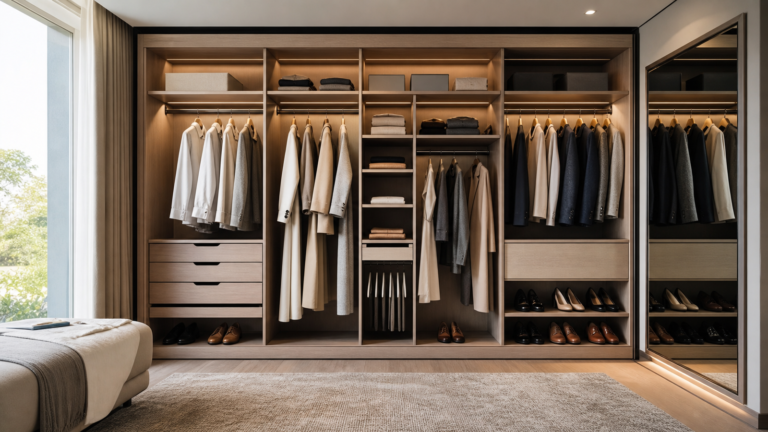
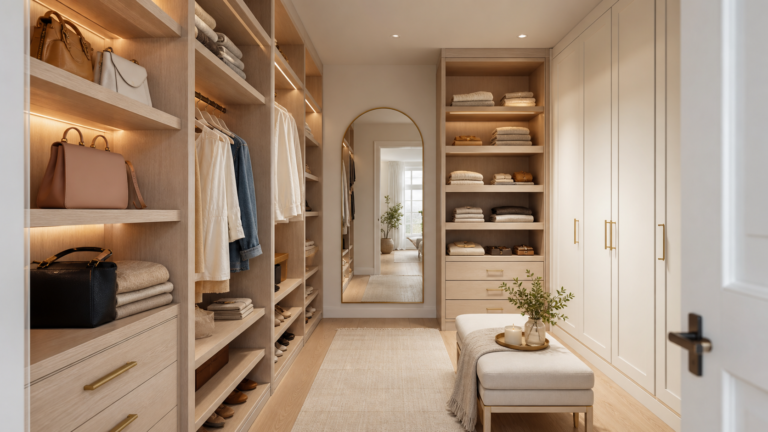
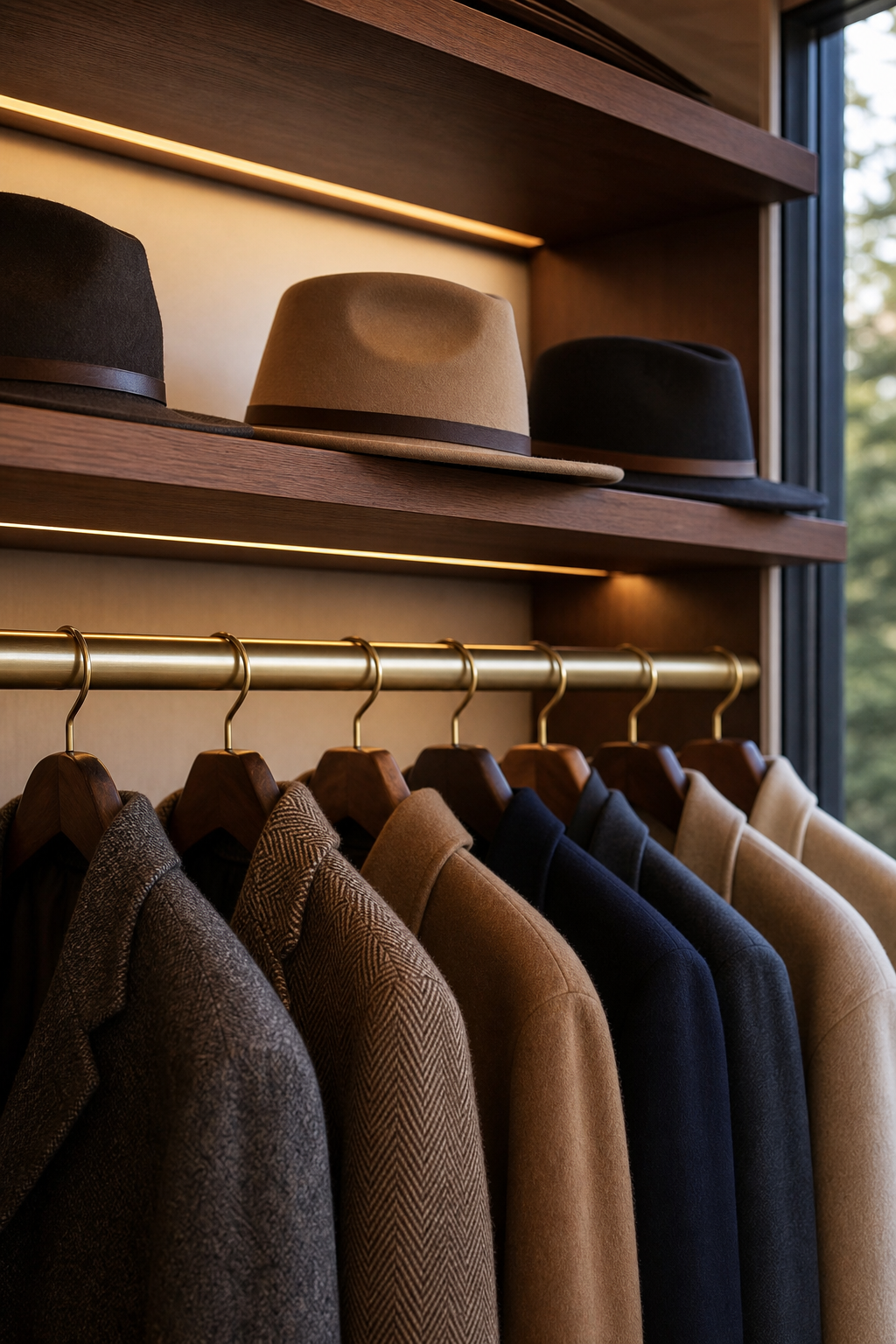
A hat shelf over hanging rods uses space that often goes under-planned. It works best when the shelf is deep enough for brims, lit from below, and not so high that hats are difficult to return. Keep coats, dresses, or shirts below in a coordinated color range so the shelf does not compete with a busy hanging section. This is a good place for structured everyday hats that you want visible but not displayed on the wall. Add dividers if the shelf is long, because they keep each hat from sliding into the next. The system feels custom when the shelf thickness, rod finish, and cabinet color are repeated throughout the closet.
Use Matching Boxes For Dust Protection
Matching boxes protect hats from dust while giving high shelves a calm, architectural rhythm. They are especially useful for formal pieces, sentimental hats, or off-season styles that should not sit exposed for months. Choose breathable materials when possible, and place tissue inside the crown to help each hat keep its form. Matching does not have to mean plain; textured linen, matte paper, or woven boxes can all look refined if the color is consistent. Store the heaviest boxes lower and the least-used pieces higher. This approach is less about display and more about preservation, but it still improves the room because the closed storage reads as tidy and deliberate.
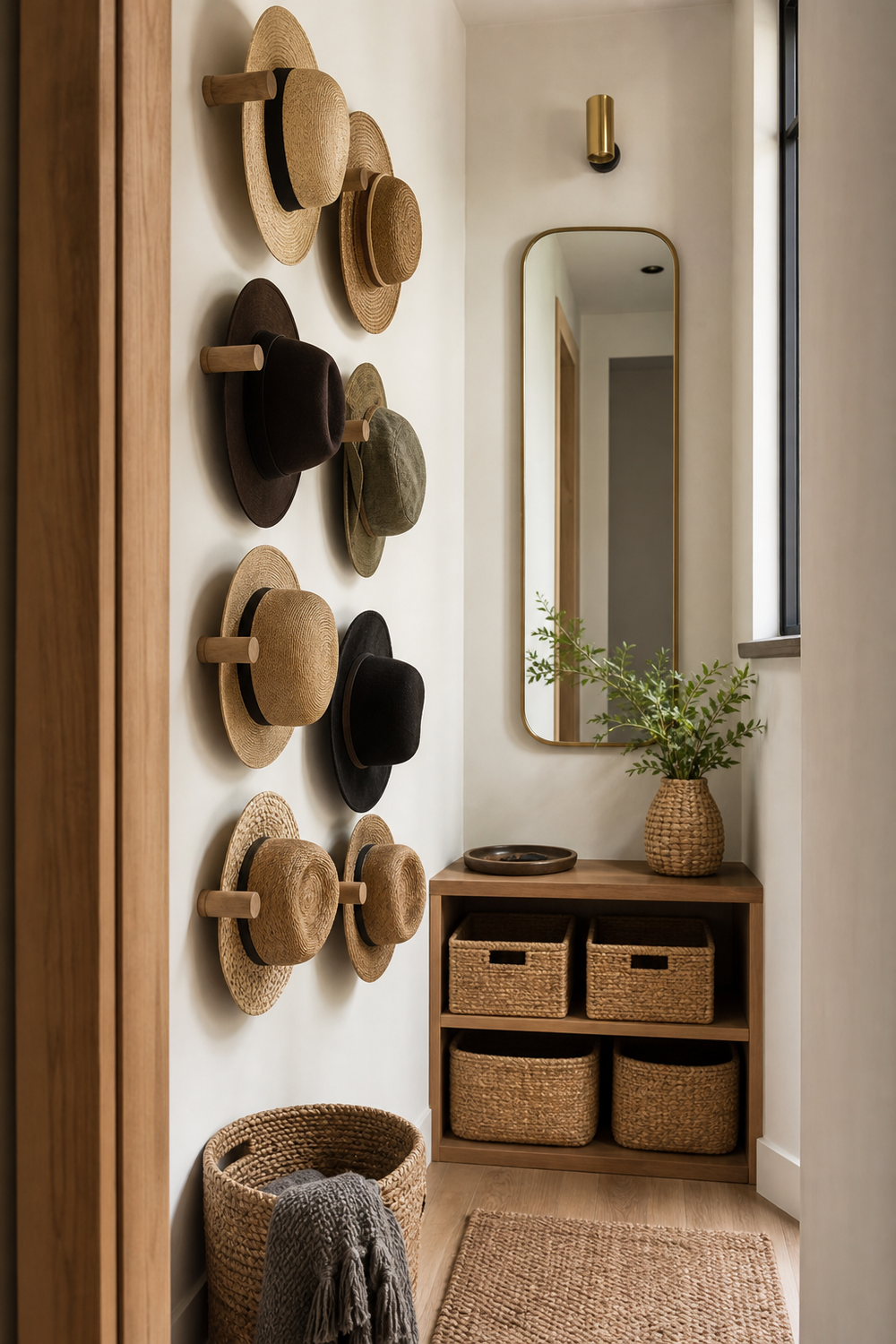
Turn A Narrow Wall Into Storage
A narrow wall can become useful hat storage without taking floor space from the room. Install vertical pegs, shallow hooks, or a thin rail in a single organized column, then keep nearby furniture minimal so the wall does not feel squeezed. This is a strong solution beside a closet door, in a short hallway, or next to a dressing mirror. Use the most attractive hats here, because the storage will be visible from the room. A small basket below can catch soft accessories, while a mirror or sconce gives the vignette purpose. The best version feels slim, intentional, and easy to reset after a busy morning.
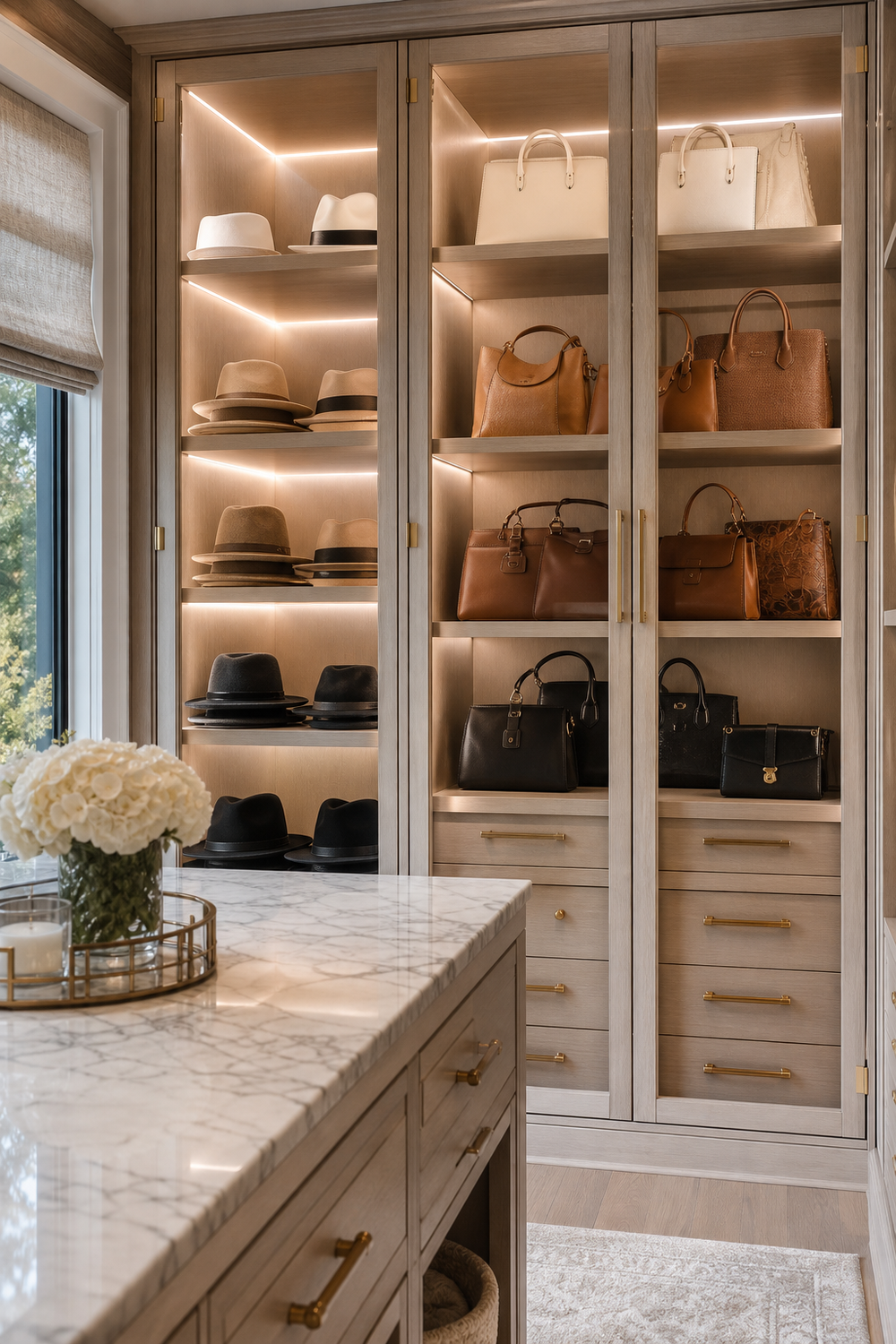
Pair Hats With Handbag Storage
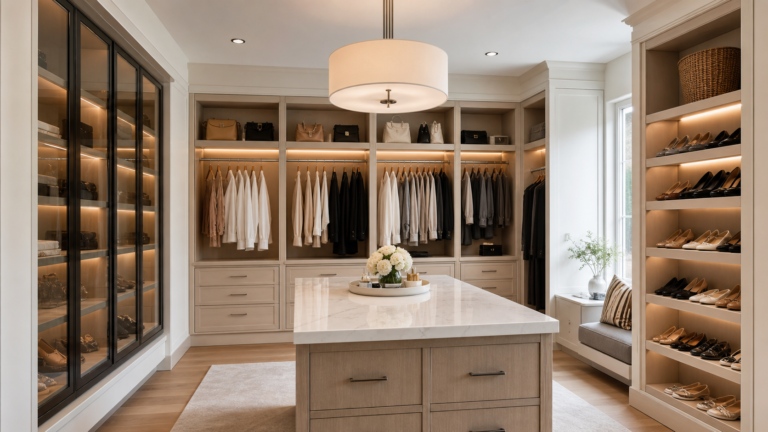
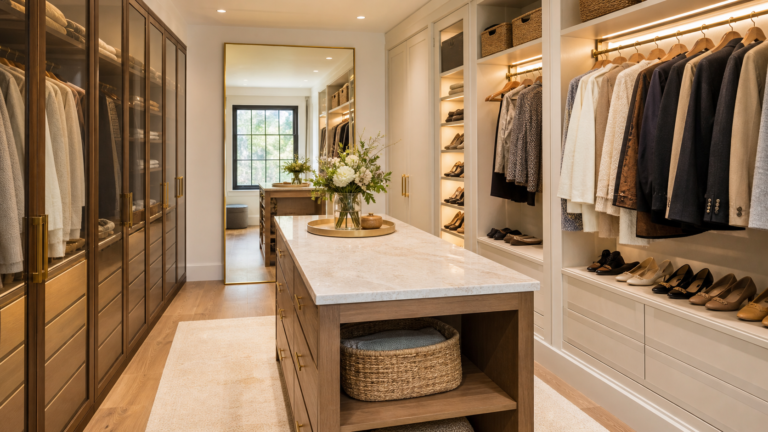
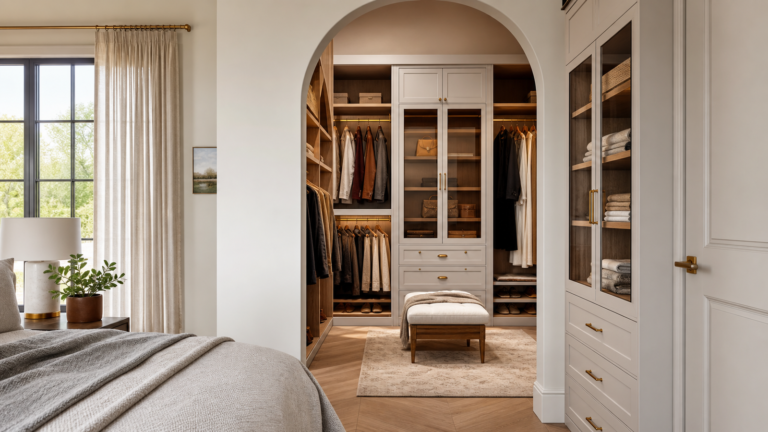
Pairing hats with handbag storage creates a more complete accessory zone. Hats need open space and gentle support, while bags need height, structure, and sometimes dust protection, so plan each shelf around the item rather than forcing everything into identical cubbies. Put hats on wider shelves or pegs and handbags in upright bays where the handles are not crushed. Glass doors, warm lighting, and repeated leather or brass details can make the combination feel boutique-inspired. Keep daily pieces at eye level and occasional pieces above or behind doors. When grouped by tone, the hats and bags become part of the closet’s design language instead of separate clutter categories.
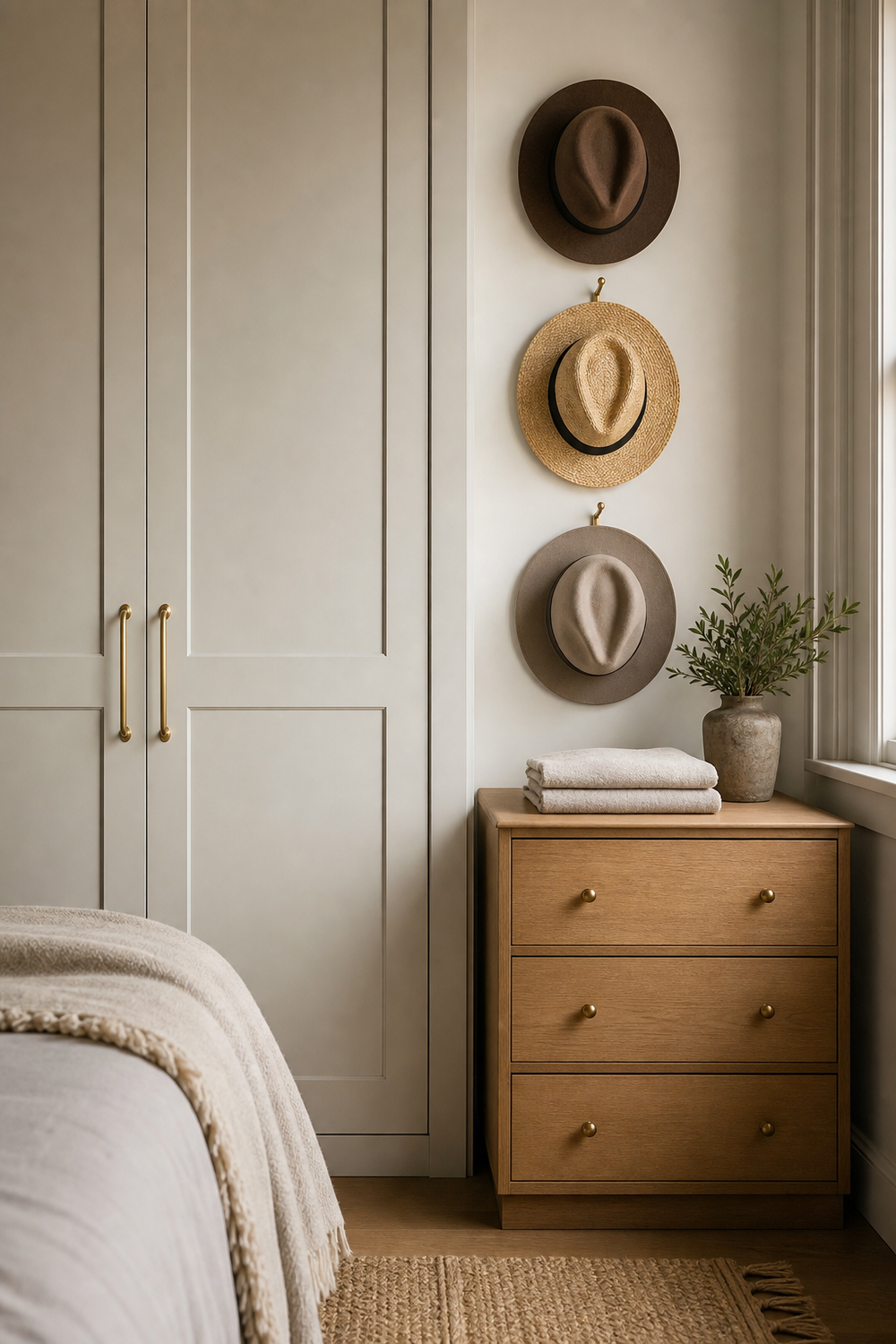
Keep A Few Favorites On Display
Keeping a few favorite hats on display is often better than trying to show the entire collection. Choose the pieces with the best shapes, textures, or colors, then store the rest in boxes, drawers, or baskets nearby. Three to five hats are usually enough to create a designed moment without overwhelming a bedroom or closet wall. This idea works especially well beside closed wardrobe doors because the contrast between hidden storage and visible favorites feels balanced. Use simple hooks, consistent spacing, and a quiet backdrop so each hat reads clearly. The display can change with the season, giving the room a fresh detail without buying new decor.
Good hat storage is a mix of preservation, access, and restraint. Give structured hats room to breathe, hide casual pieces where they are easy to reset, and repeat finishes so the system feels built into the home. With the right spacing and materials, hats become a polished detail instead of a daily storage problem.