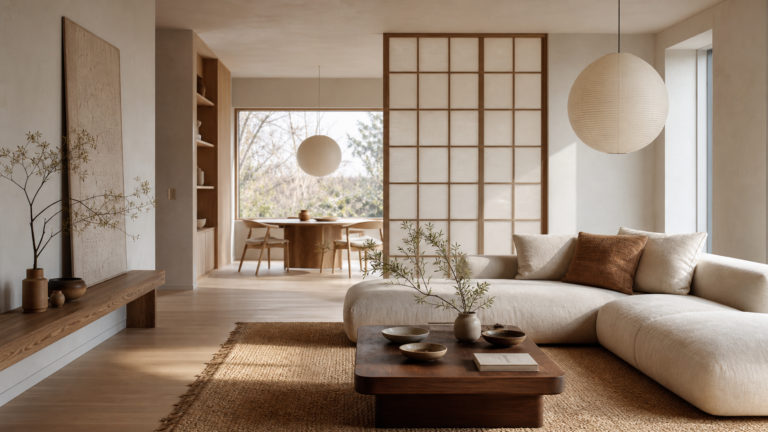
16 Home Reading Corner Ideas To Inspire Your Next Home Refresh
A home reading corner is one of the simplest ways to make an unused spot feel personal, useful, and calm. It does not require a library or a large room. A supportive chair, warm lamp, small table, soft textile, and a place for books can turn a bedroom corner, living room edge, landing, or window nook into a retreat. The best reading corner ideas balance comfort with restraint so the space feels inviting instead of cluttered. Use these ideas to refresh a forgotten corner and make daily reading feel easier to enjoy.
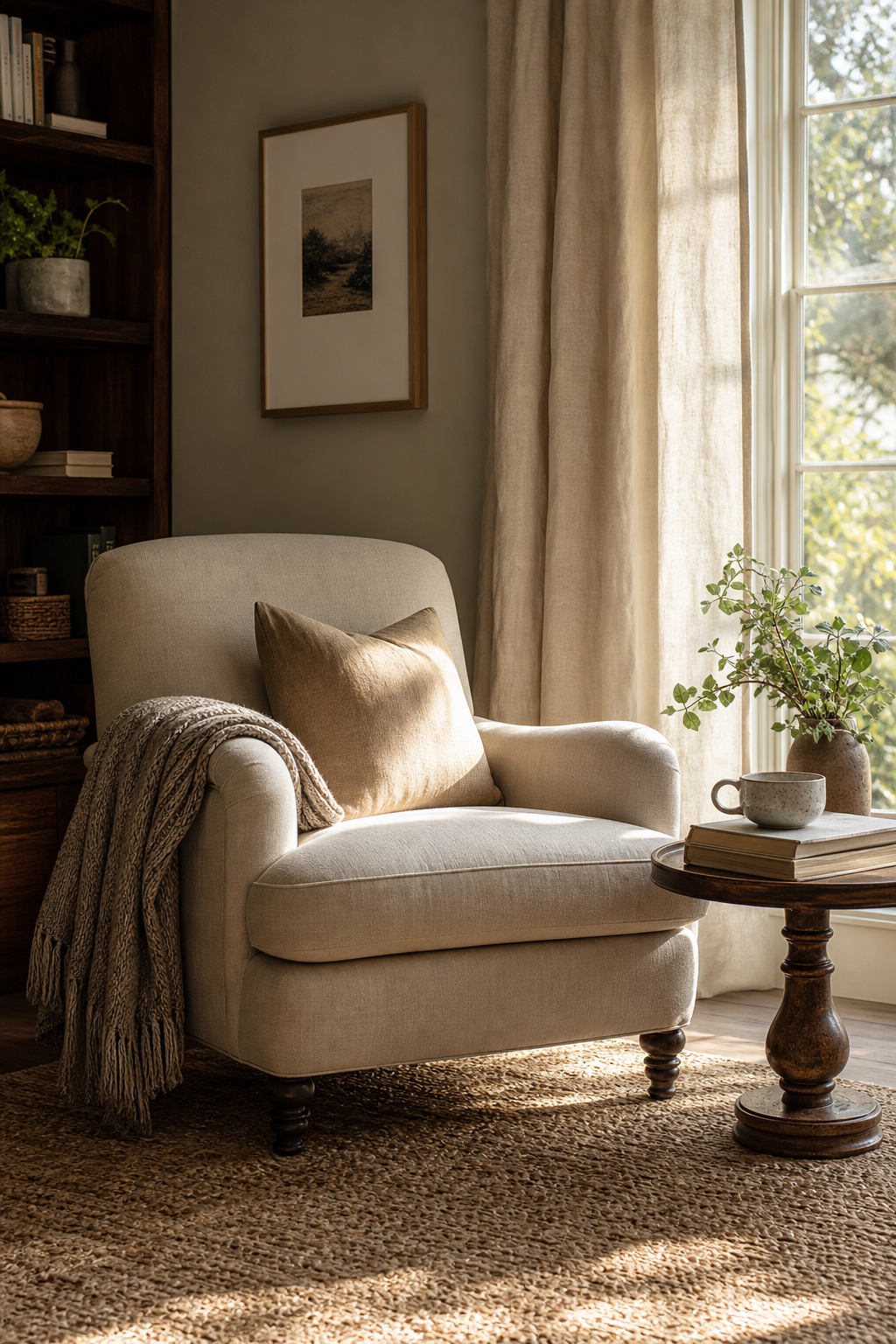
Place A Chair Near Natural Light
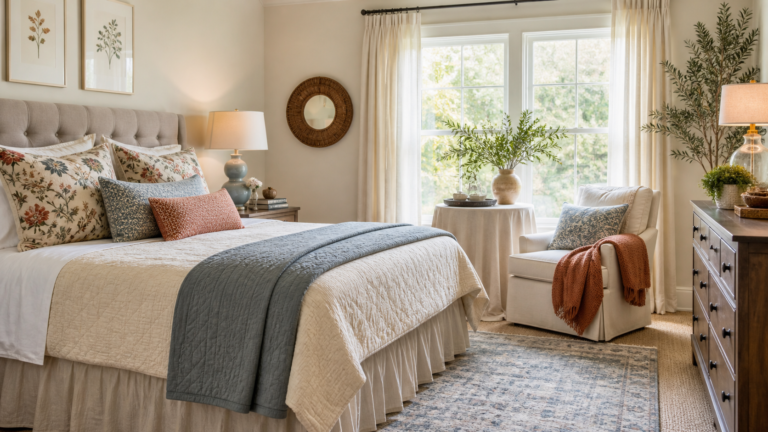
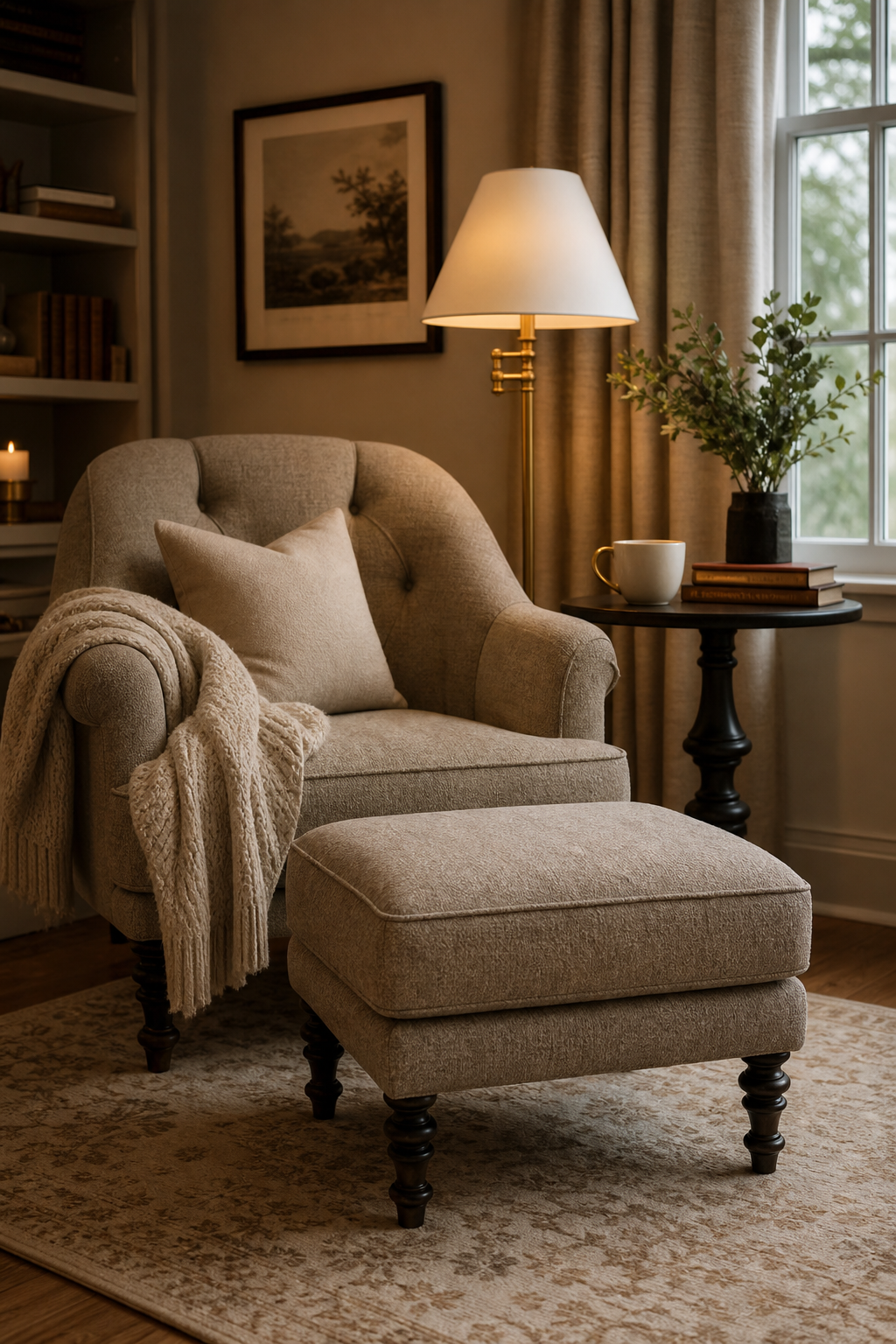
A reading corner starts with light. Place a comfortable chair near a window so the space feels inviting during the day, then add a lamp for evening use. The chair does not need to be large, but it should support the body well enough for long chapters. Keep the surrounding palette calm and let the window view, curtain texture, or nearby plant soften the arrangement. A small table for tea or glasses makes the corner feel complete. Good placement turns an unused edge of a room into a daily retreat.
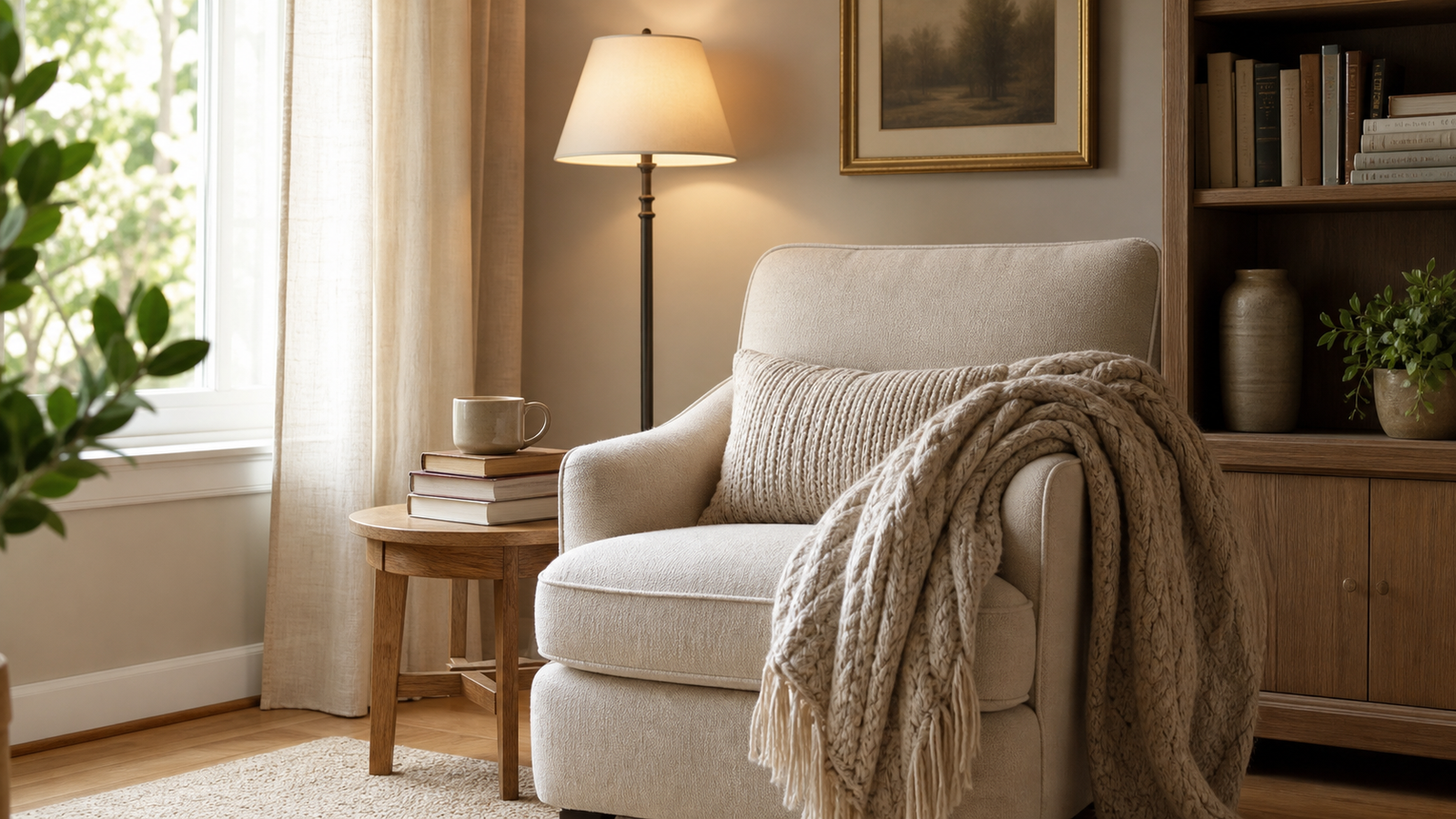
Use A Floor Lamp With A Warm Shade
A floor lamp gives a reading corner purpose after sunset. Choose a warm shade that diffuses light without glare, and position it so the bulb sits slightly behind or beside the shoulder. Brass, black metal, wood, or plaster bases can all work if they relate to the room. Dimmers are useful because the corner may shift from task lighting to soft background glow. A good lamp makes the area feel designed rather than improvised. It also gives the corner atmosphere, which is what makes someone want to stay.
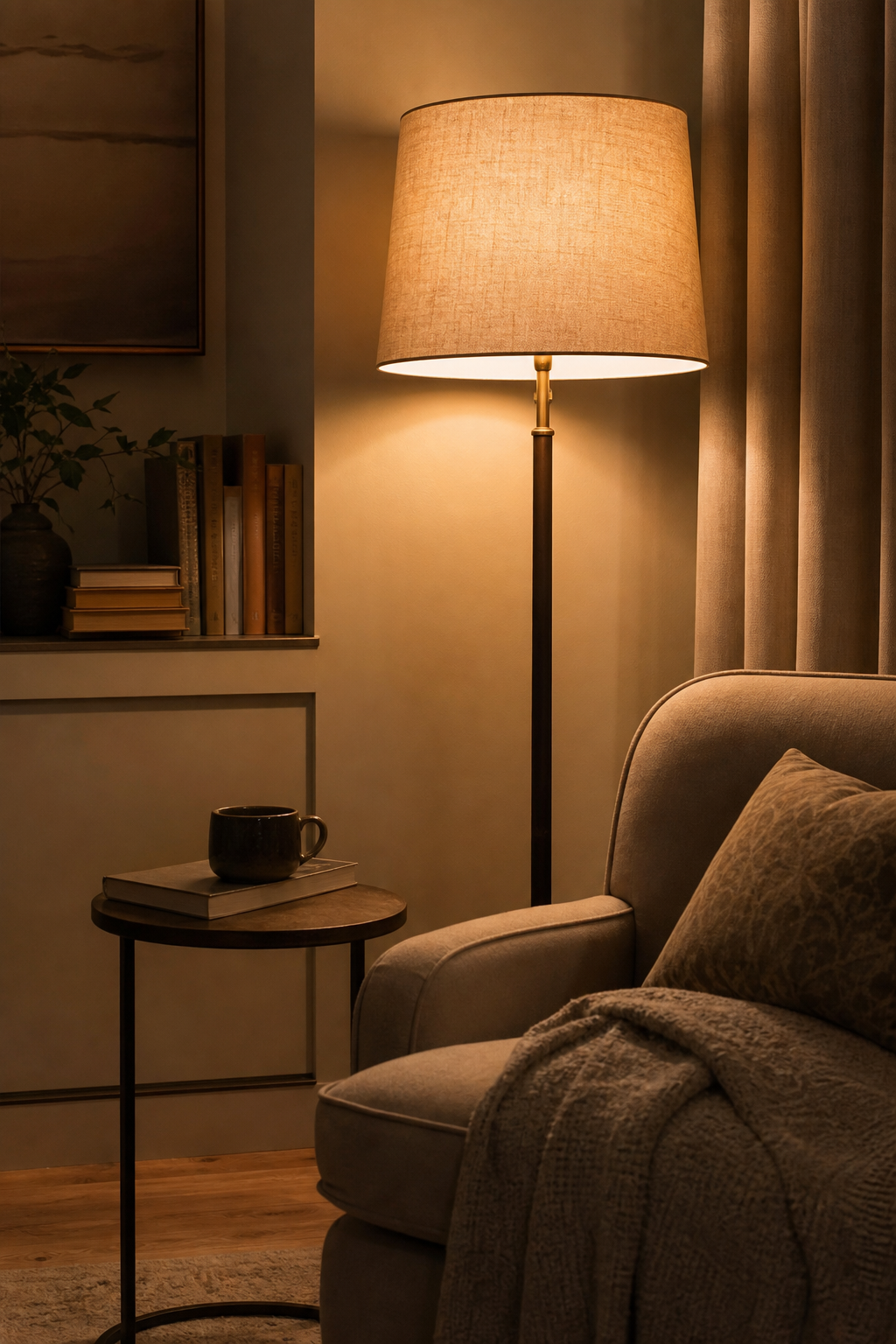
Add A Tiny Side Table
A tiny side table is the detail that makes a reading corner practical. It gives a place for a book stack, mug, candle, reading glasses, or phone without crowding the chair. Choose a pedestal, C-table, stool, drum table, or small wood block depending on the available space. The table should be close enough to reach comfortably and stable enough for daily use. Style it lightly so the surface remains useful. This is one of the easiest ways to turn a pretty chair into a real reading destination.
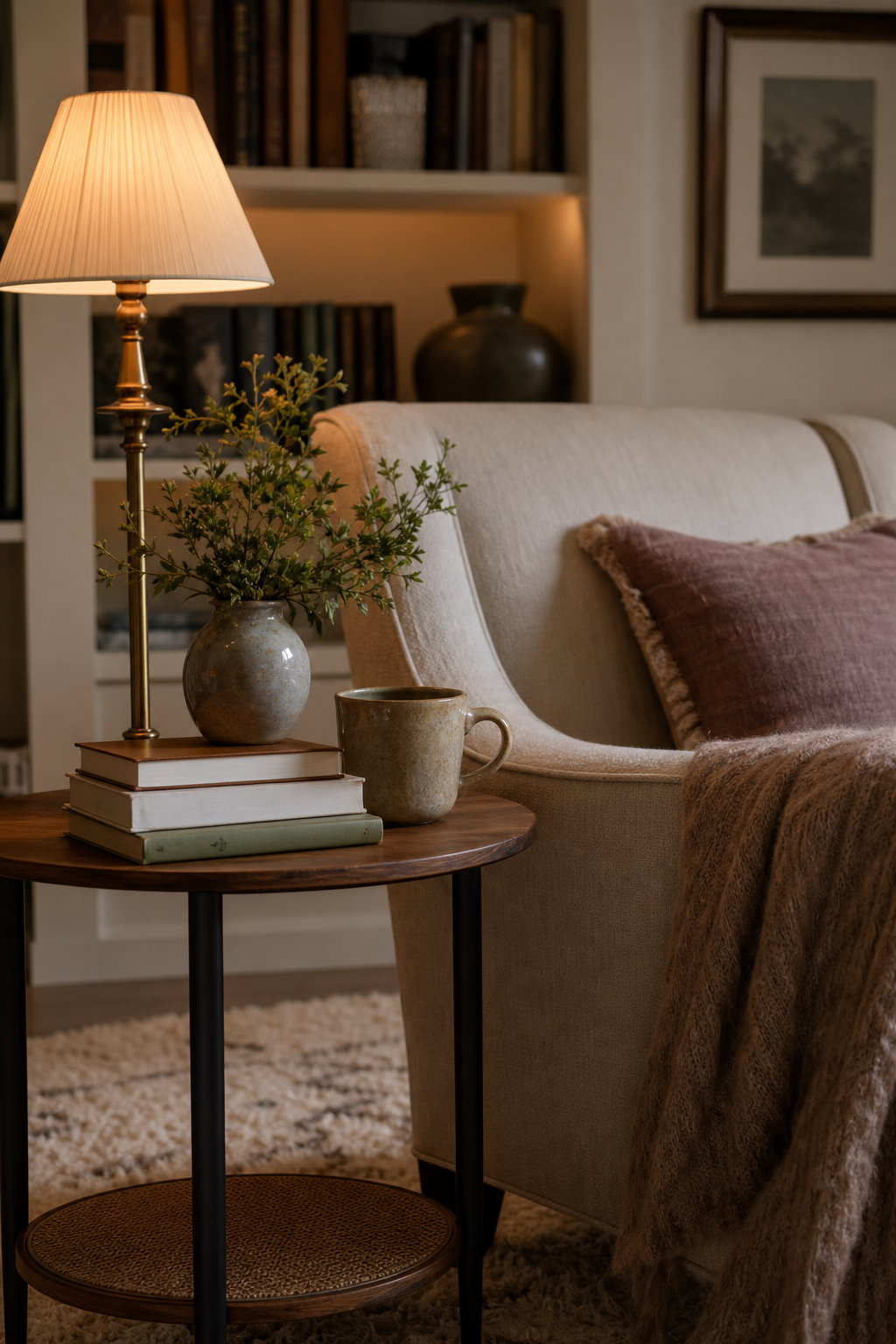
Anchor The Corner With A Small Rug
A small rug can visually claim a reading corner, especially in a bedroom, living room, landing, or open-plan space. Choose wool, jute, cotton, or a vintage-style rug that is large enough for the chair and table to sit partly on it. The rug adds softness underfoot and helps the corner feel separate from the rest of the room. Pattern can work if the colors stay connected to nearby textiles. This layer makes the corner feel intentional, not like furniture was pushed into an empty spot.
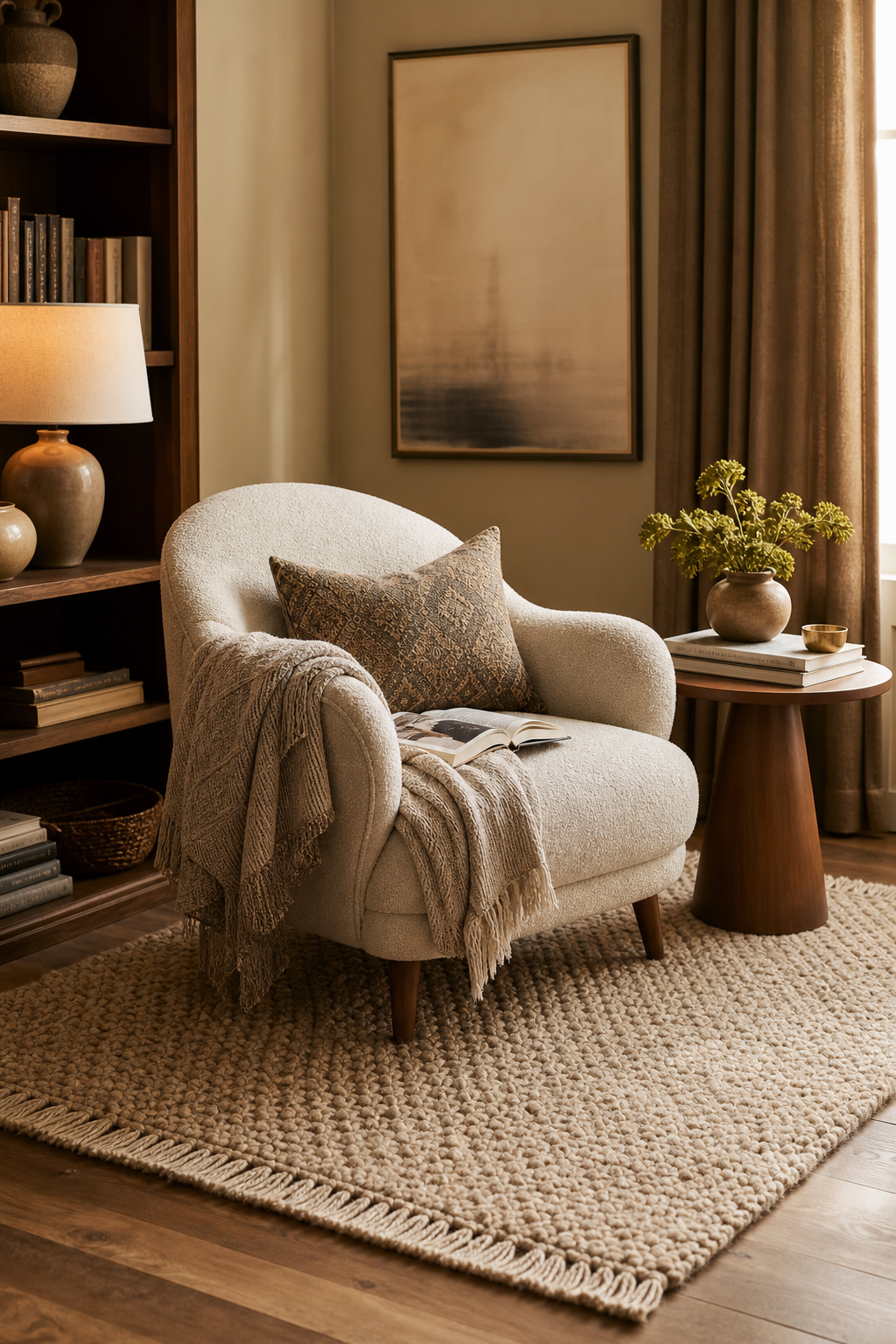
Layer A Throw For Texture
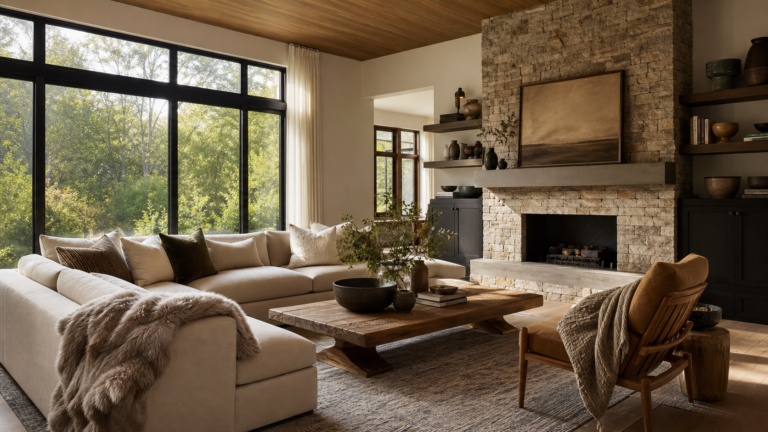
A throw makes a reading corner look welcoming and function better on chilly mornings or evenings. Choose wool, alpaca, cotton, boucle, or a soft knit in a color that supports the room. Fold it over the chair arm or drape it casually across the back without making the area look messy. Texture matters more than bold color here. A good throw breaks up upholstery, invites touch, and gives the corner a relaxed feel. It is a small investment that changes the mood immediately.
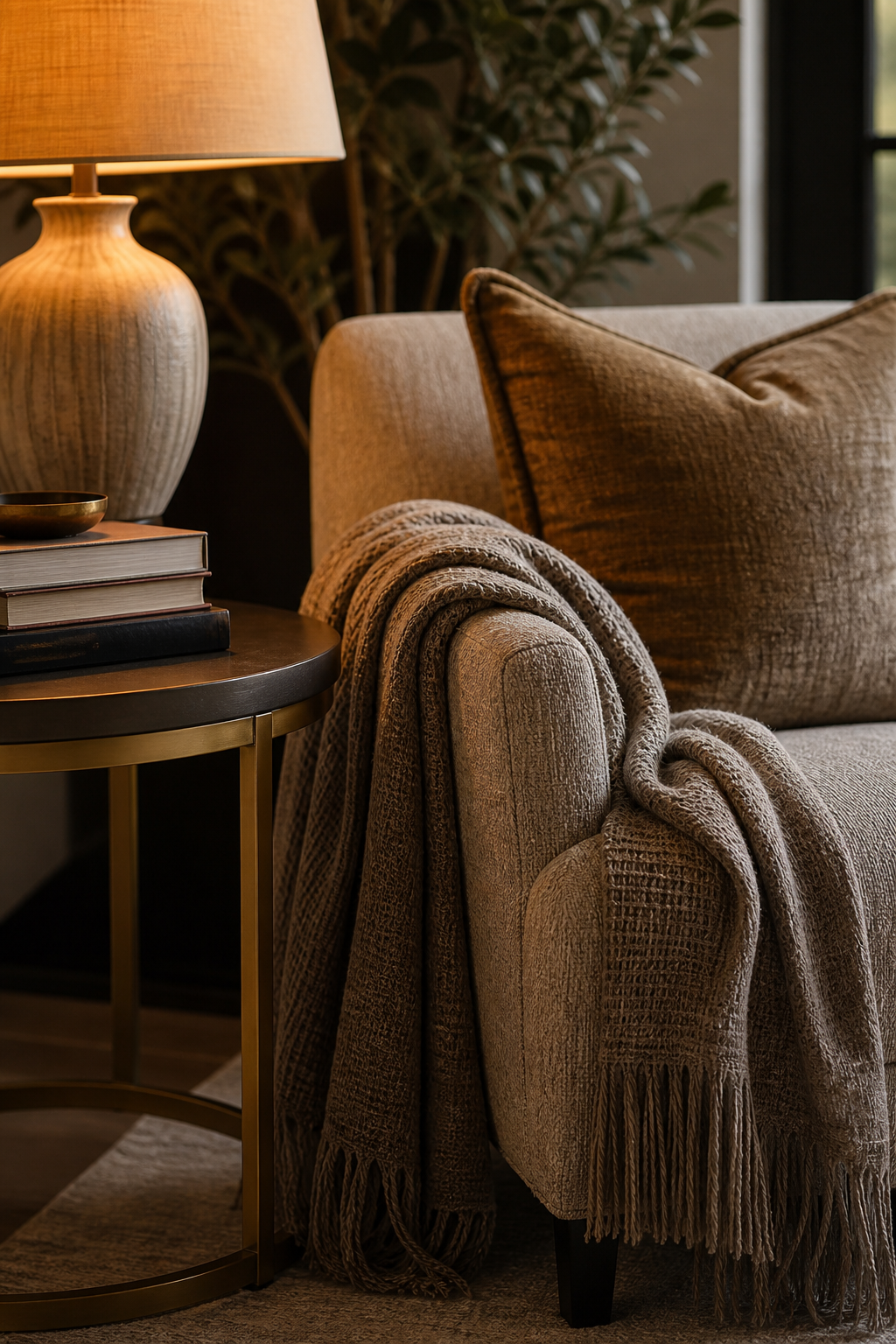
Add Wall Shelves For Favorite Books
Wall shelves keep favorite books within reach and give the corner a built-in feeling. Use slim floating shelves, a narrow book ledge, or a small vertical shelf tower if floor space is tight. Mix books with a ceramic vessel, framed art, or one small plant, but do not overcrowd the shelves. The goal is charm and convenience, not storage overload. Shelves are especially useful in apartments and bedrooms because they use vertical space. When books are visible but edited, the corner feels personal and calm.
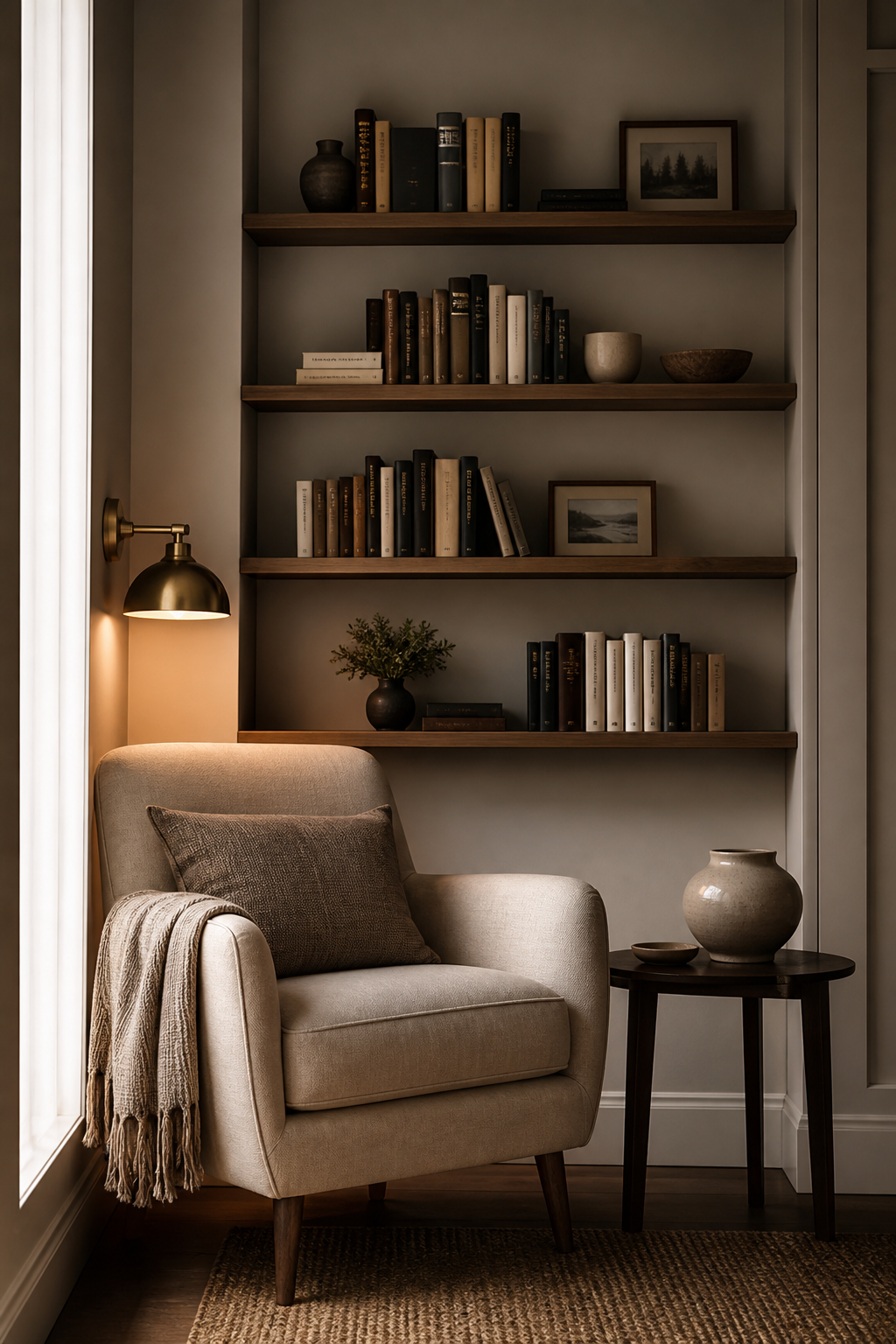
Try A Window Seat Nook
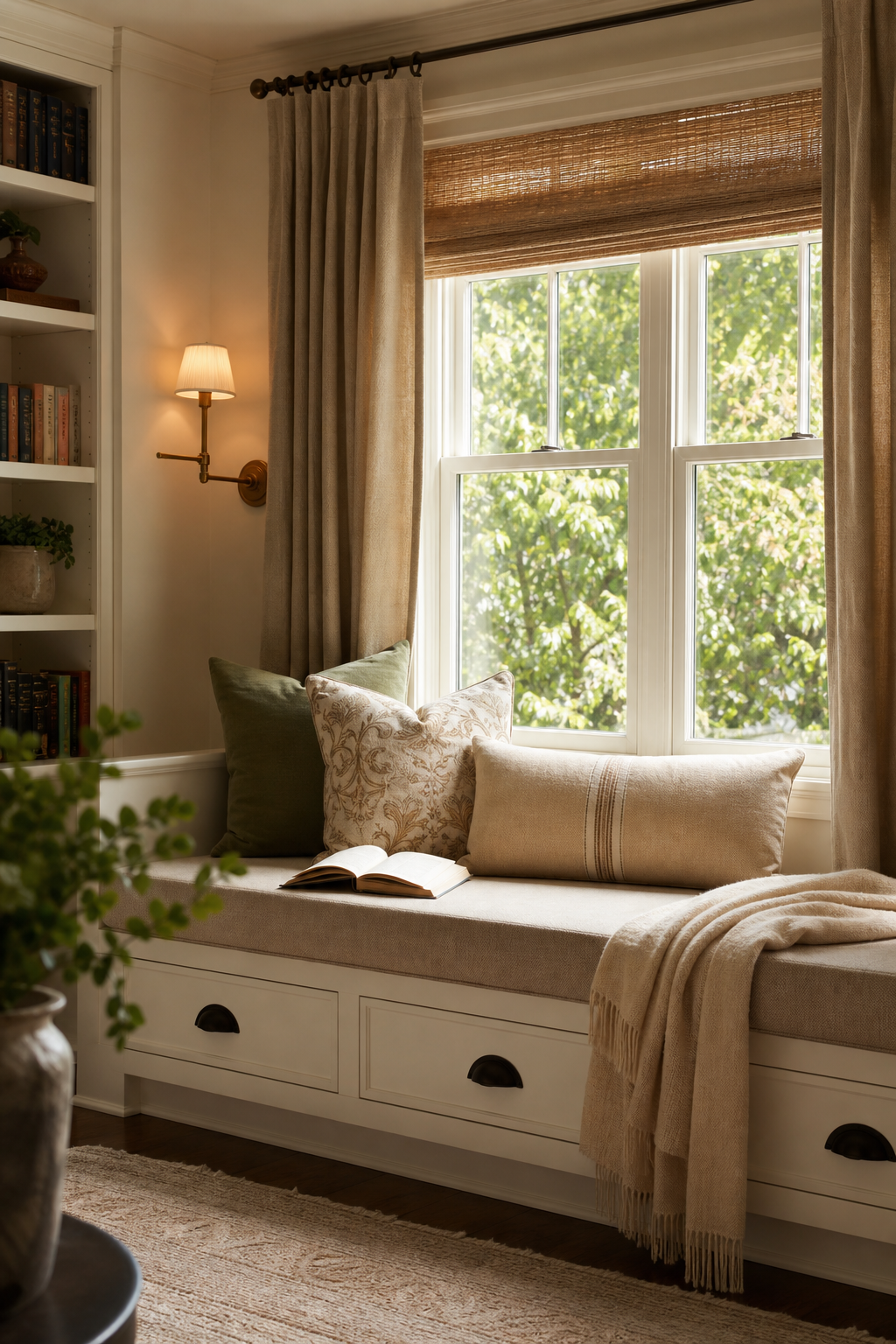
A window seat can become the most loved reading corner in the house when it has comfort and storage. Add a tailored cushion, a few pillows, and a sconce or nearby lamp for cloudy days. Drawers or baskets beneath the seat can hold blankets and extra books. Keep fabrics durable if the nook gets daily use. The window creates a natural focal point, while the built-in shape makes the corner feel architectural. Even a modest bay window can feel like a retreat with the right cushion depth and soft textiles.
Use Curtains To Soften The Corner
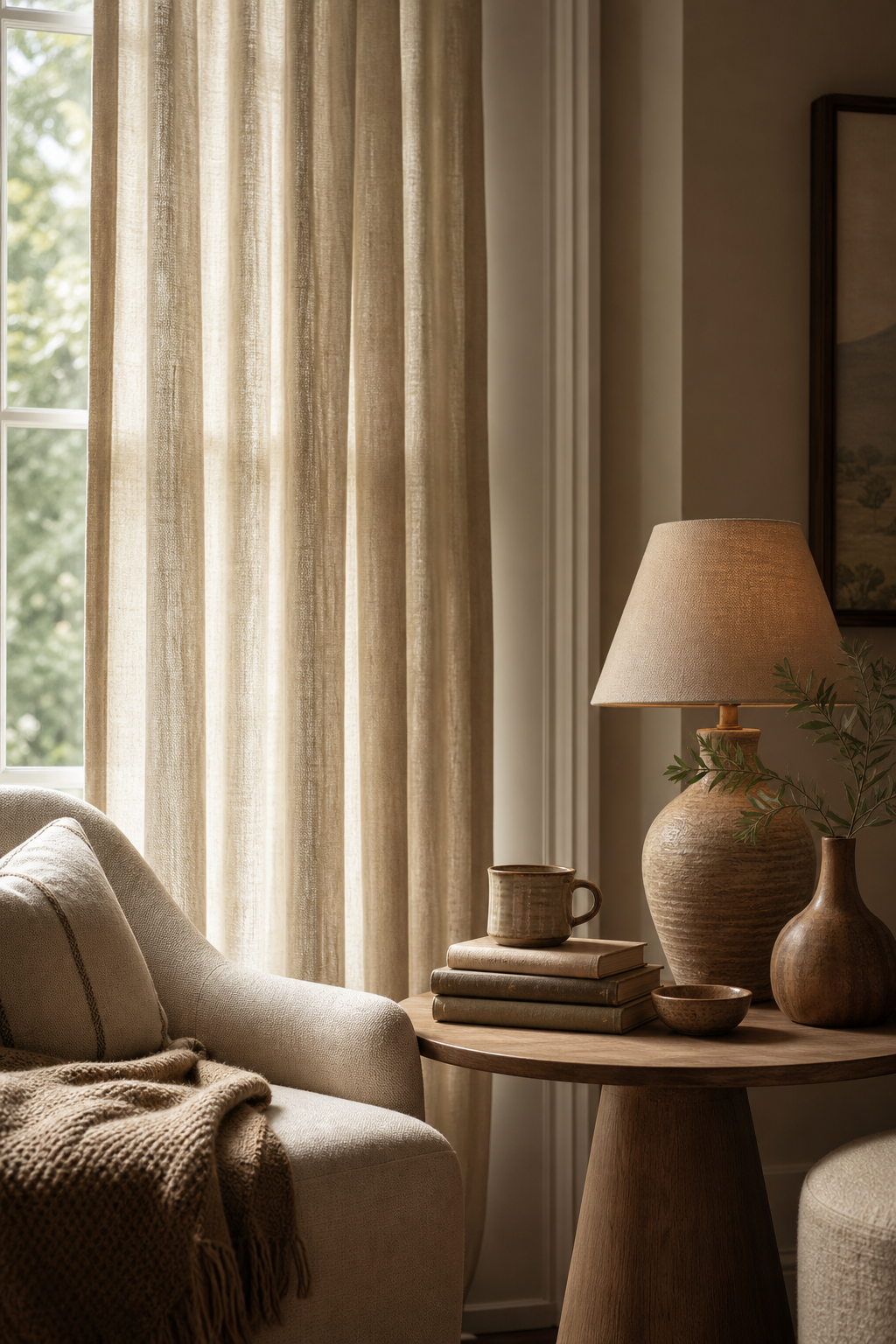
Curtains can make a reading corner feel more intimate, even when the furniture is simple. Linen, cotton, or a subtle woven fabric filters daylight and softens hard walls. Hang panels high and wide so they frame the window and add height. If privacy matters, layer sheers with a heavier panel or shade. The fabric should move with the room rather than dominate it. Curtains also improve acoustics, making the corner feel quieter. This is especially helpful in rooms with wood floors, plaster walls, or a lot of glass.
Choose An Upholstered Chair With Support
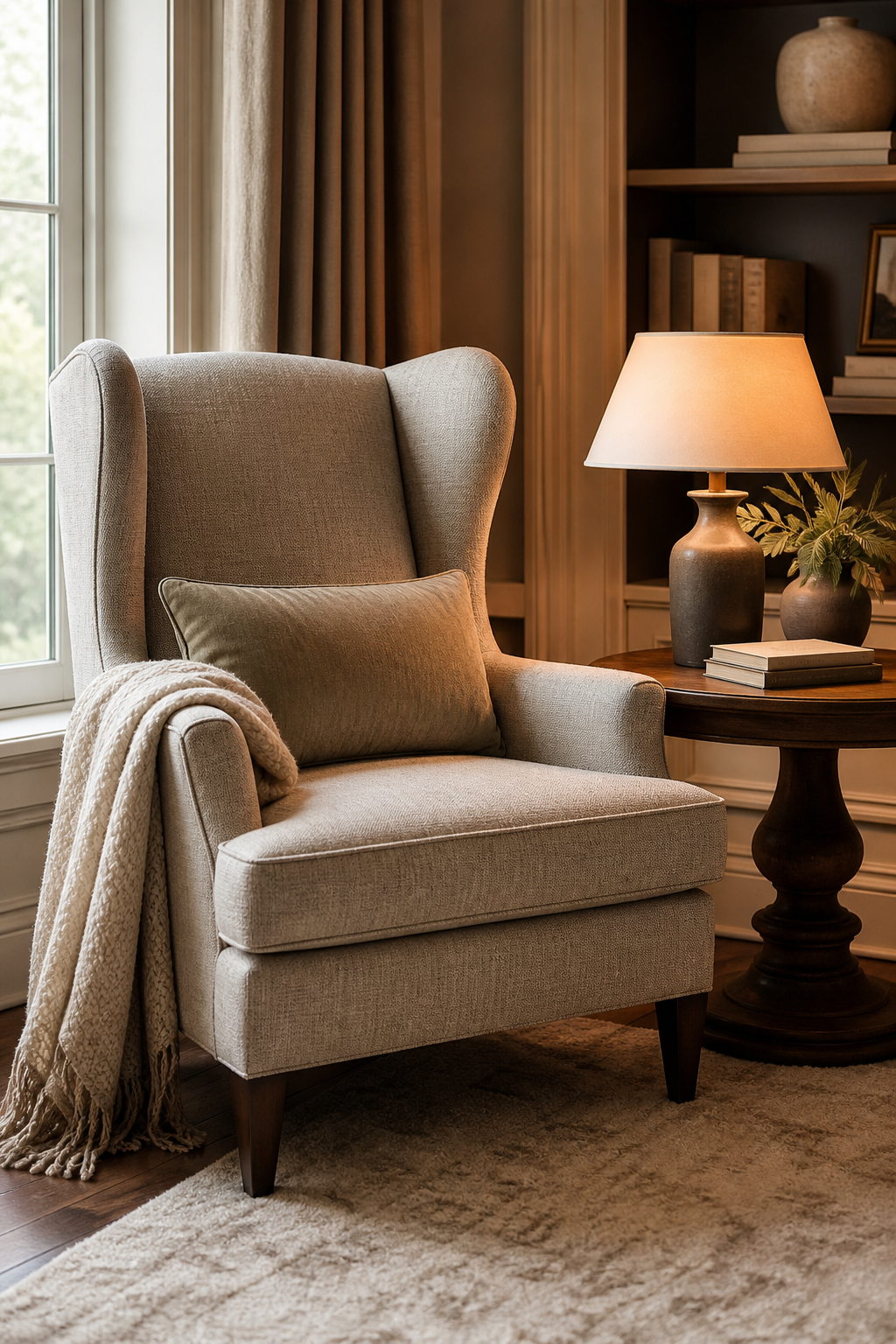
The best reading chair combines comfort with a shape that suits the room. Look for supportive arms, a generous seat, and upholstery that feels good against the skin. A wingback feels classic and cocooning, while a rounded lounge chair feels modern and soft. If the chair is deep, add a lumbar pillow so posture stays comfortable. Avoid choosing only for looks; a reading corner should work for actual reading. When the chair is supportive, the rest of the styling can stay simple and the corner will still feel luxurious.
Add A Footstool Or Ottoman
A footstool changes how long someone wants to sit in a reading corner. It can be a matching ottoman, woven pouf, leather stool, or small upholstered cube. Choose a size that supports the legs without blocking traffic. If storage is needed, a lidded ottoman can hide blankets or magazines. The piece also adds another texture, which makes the corner feel layered. Pair it with a small rug and warm lamp for a more complete composition. Comfort is the whole point, and a footstool makes that comfort visible.
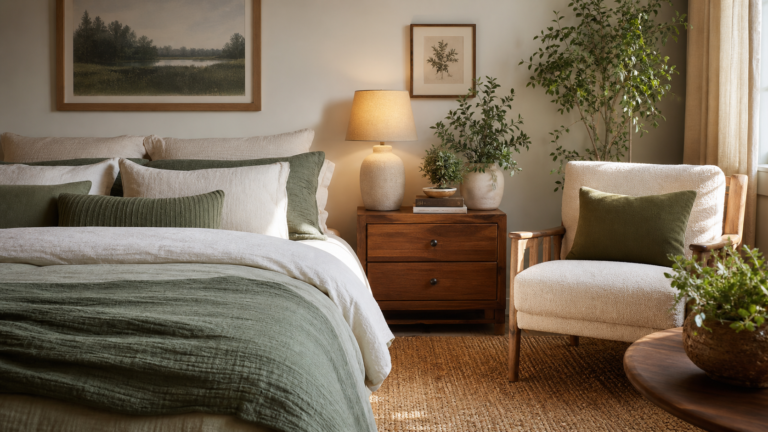
Create A Corner In The Bedroom
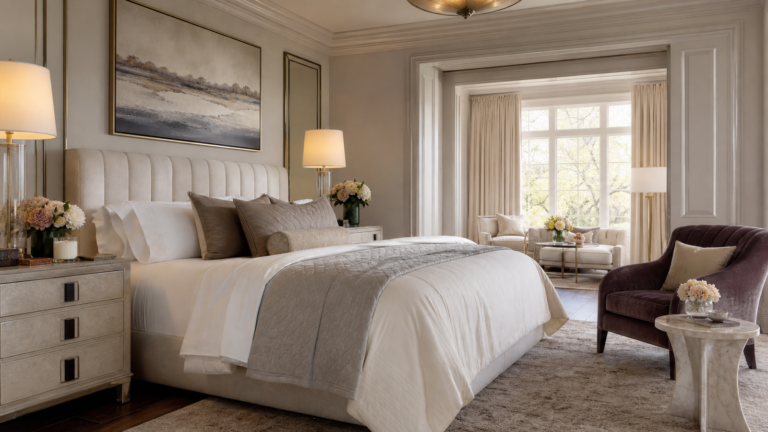
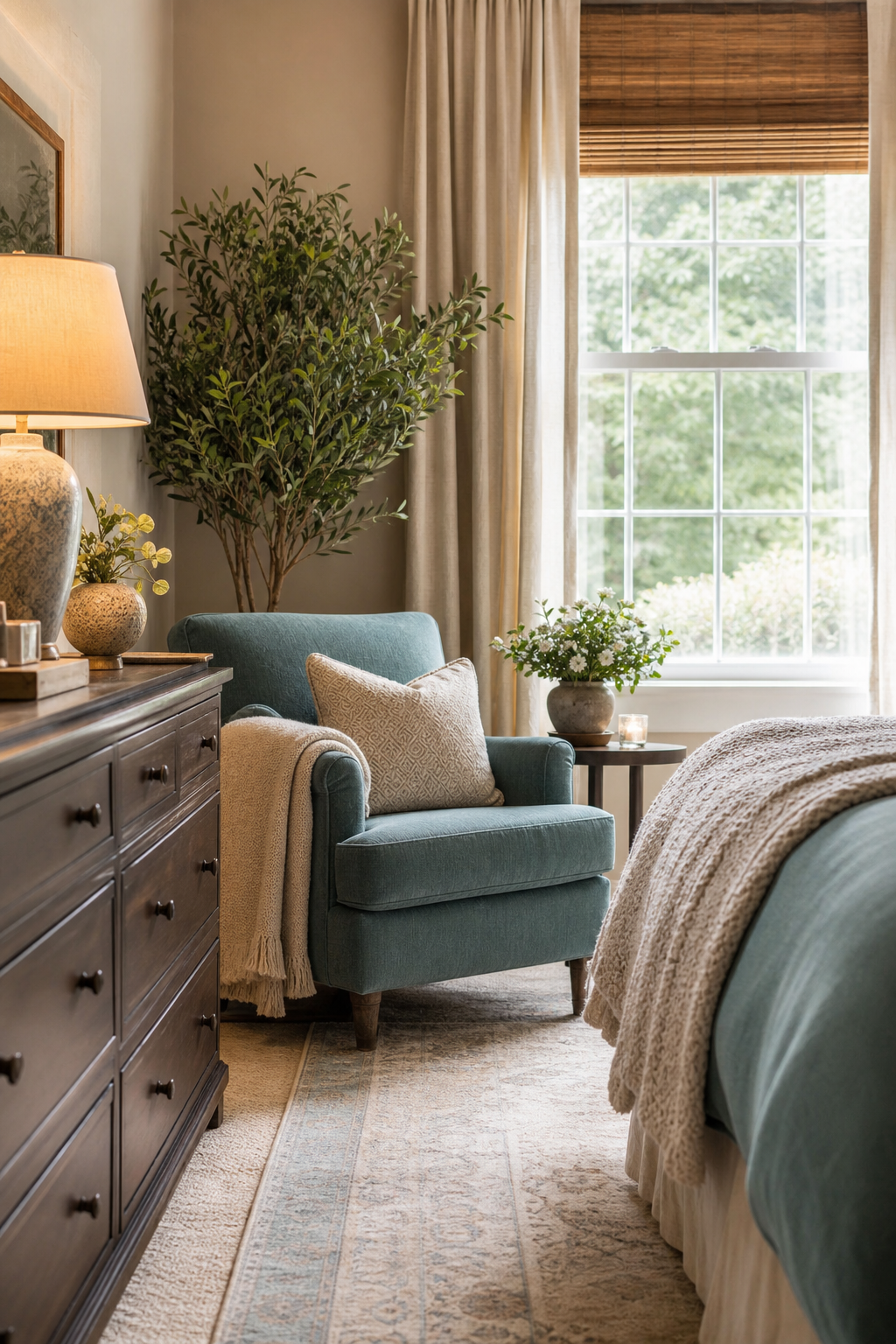
A bedroom reading corner can make the room feel more like a suite. Use an unused corner near a window, beside a dresser, or at the foot of the bed. Keep the palette connected to the bedding so the chair does not look random. A small table and lamp are enough if space is limited. Add one soft pillow or throw for comfort. This idea works well because bedrooms already invite quiet routines. A dedicated seat also keeps reading from always happening in bed, which can make the room feel more versatile.
Use A Book Cart In Small Spaces
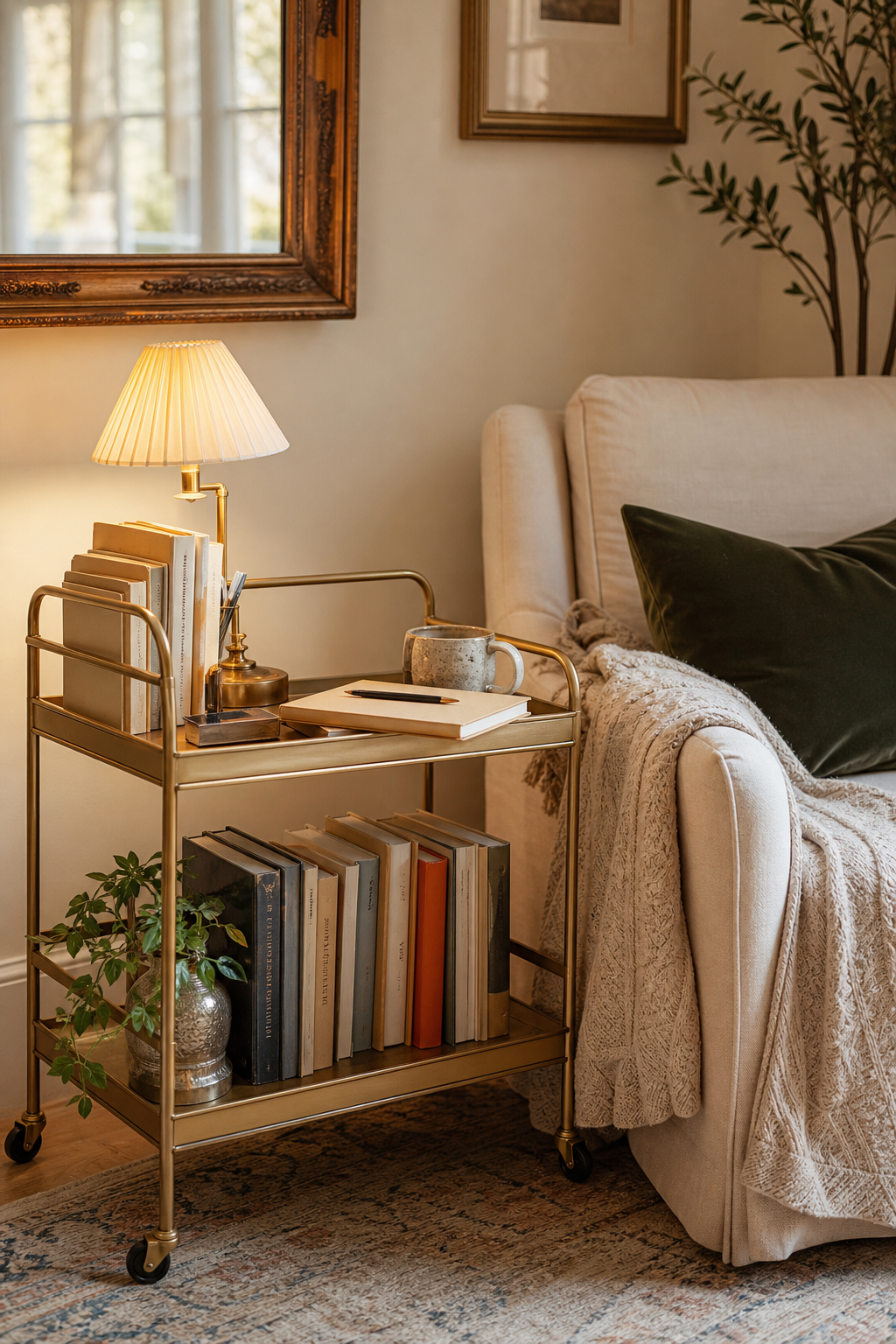
A book cart is a flexible solution for small homes or renters. It holds current reads, magazines, notebooks, and a small lamp if there is an outlet nearby. Choose a cart in wood, black metal, or a quiet color that fits the room. Style the top shelf neatly and keep the lower shelves practical. The best part is mobility: the reading corner can shift from living room to bedroom without a permanent installation. This idea brings function without requiring built-ins, which makes it useful for apartments and temporary layouts.
Style The Corner With Art
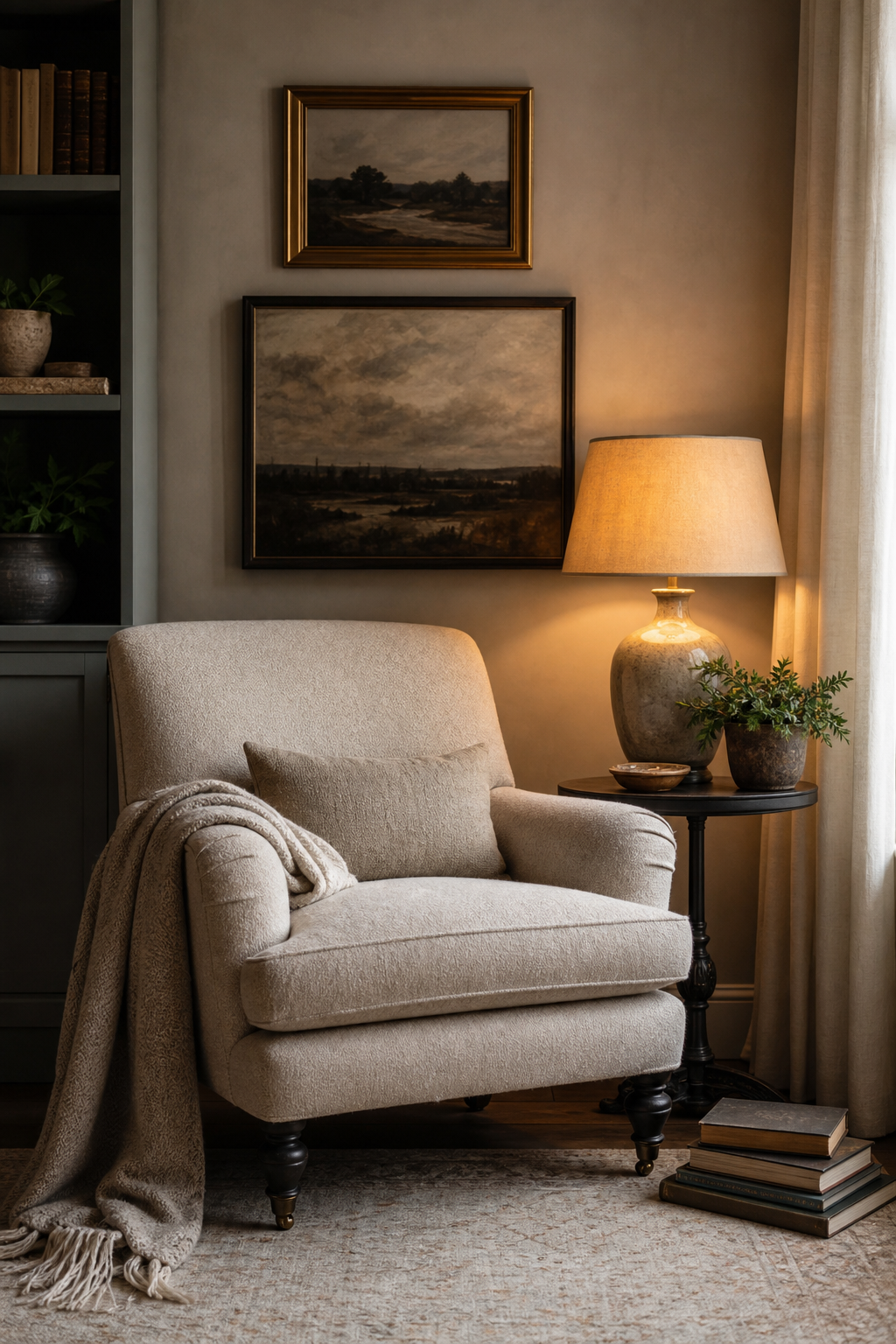
Art gives a reading corner mood and makes it feel finished. A small landscape, abstract print, botanical study, or black-and-white photograph can create a quiet focal point above the chair or shelves. Choose frames that relate to the lamp or furniture, such as oak, black, or brass. Hang the art at seated eye level rather than too high. One thoughtful piece is often better than a busy gallery. The art should make the corner feel personal and restful, not distract from the simple pleasure of reading.
Add Greenery For Life
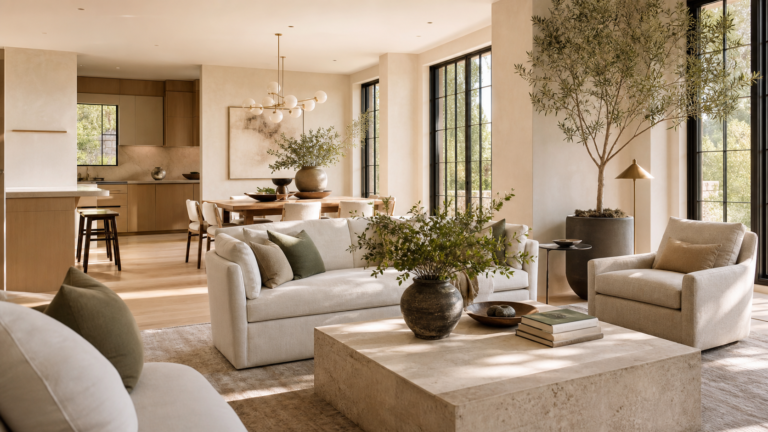
Greenery softens a reading corner and brings a sense of freshness. Use one plant with sculptural shape, such as an olive tree, rubber plant, fern, or a vase of branches. Place it near natural light and choose a planter that suits the room: ceramic, terracotta, woven, or stone. Avoid crowding the chair with too many pots. One strong plant is enough to make the corner feel alive. Greenery also helps bridge the chair, table, and window so the arrangement feels like a composed vignette.
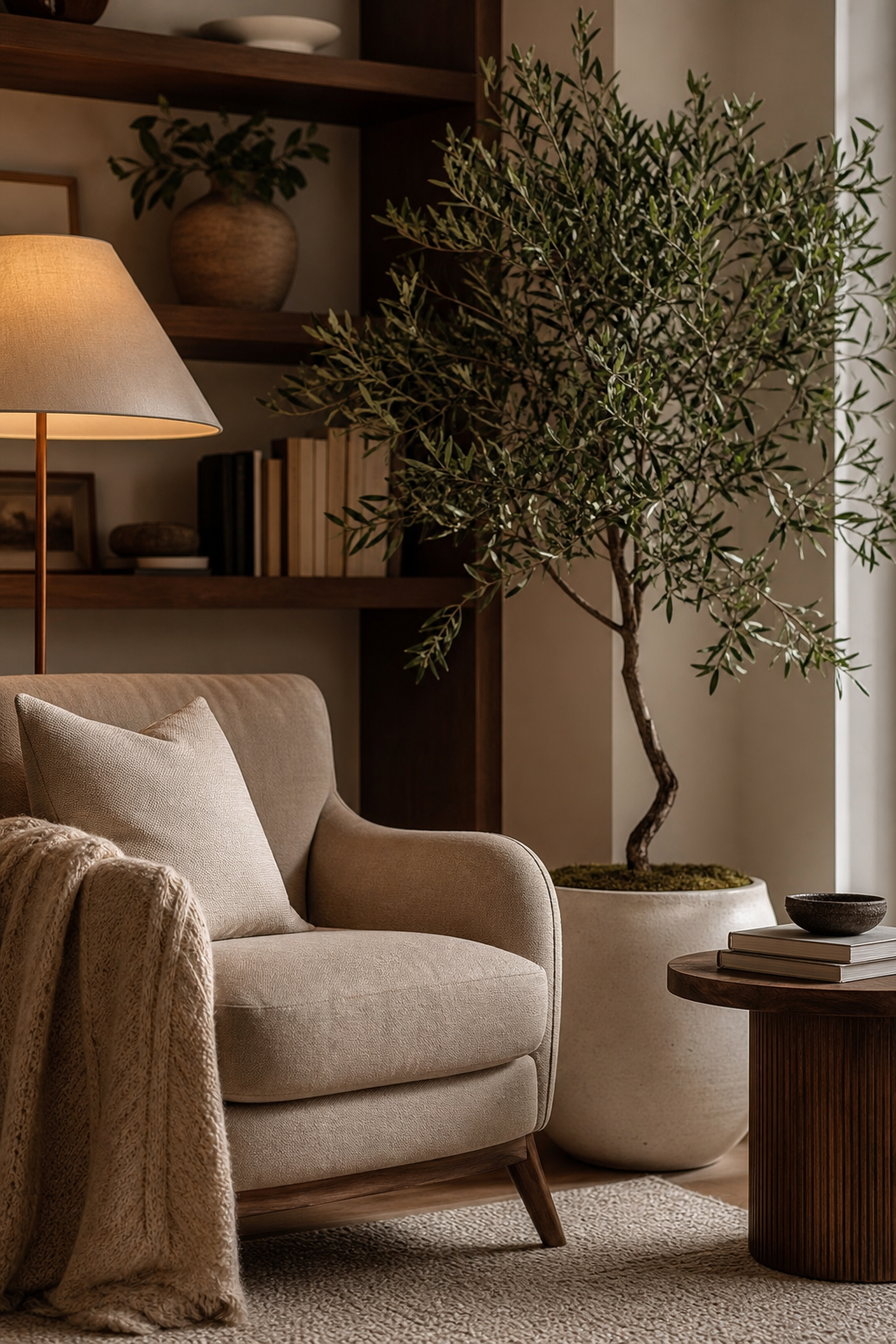
Keep A Basket Of Blankets Nearby
A basket of blankets makes a reading corner feel ready for use while adding texture. Choose a woven basket that fits beside the chair or under a table, then fill it with one or two folded throws. Keep the colors limited so the basket does not look messy. This simple storage solution is practical for family rooms, bedrooms, and drafty window nooks. It also creates a visual cue: this is a place to slow down. The best reading corners make comfort easy to reach.
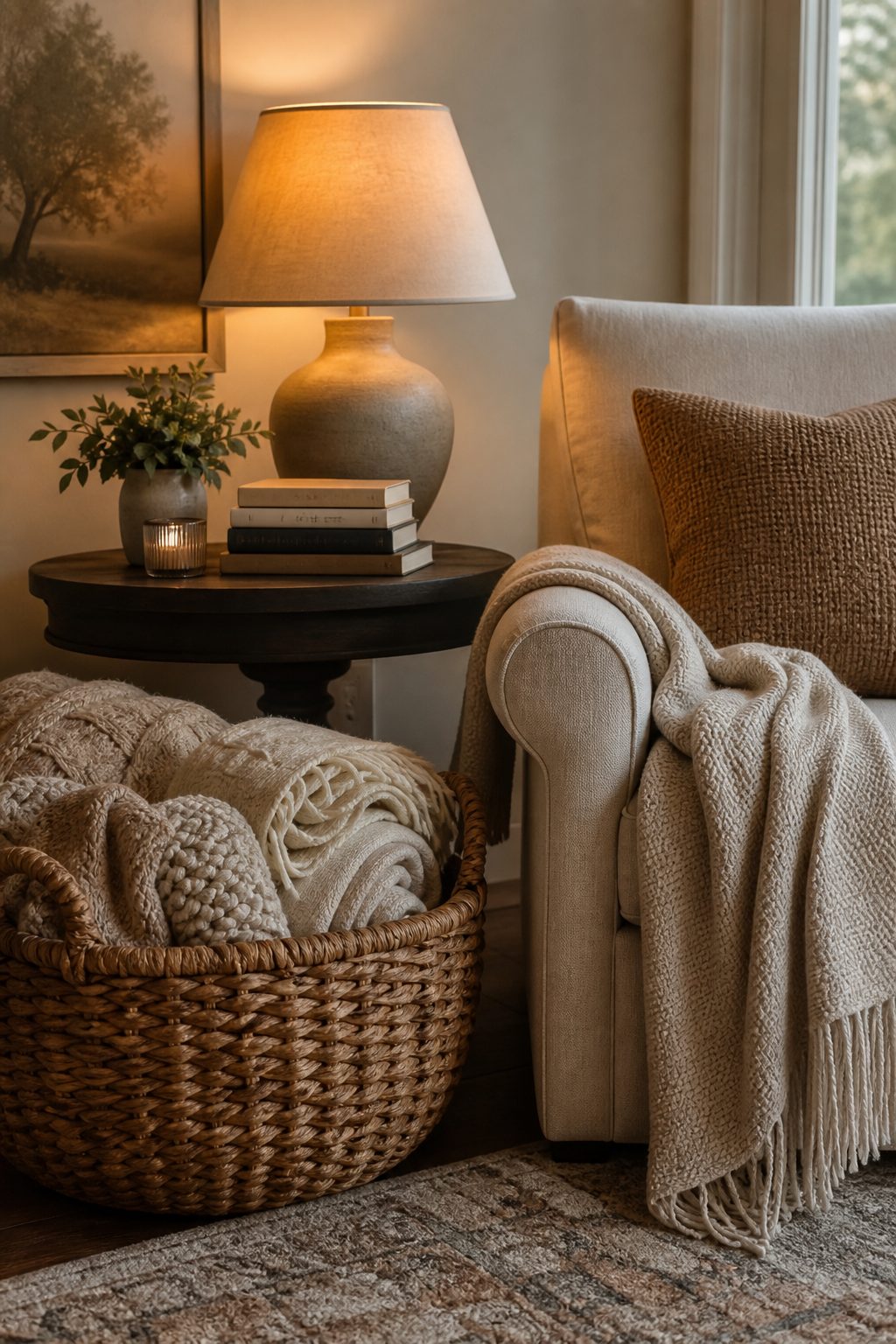
Finish With A Calm Color Palette
A calm palette helps a reading corner feel restorative. Soft white, oatmeal, taupe, sage, charcoal, clay, and warm wood all work well because they support focus without feeling bland. Choose one dominant neutral, one texture-rich material, and one quiet accent. Repeat colors from the surrounding room so the corner feels integrated. If the chair is patterned, keep the rug and pillows simpler. If the room is very plain, add interest through weave and grain. A restrained palette lets the corner feel peaceful and polished.
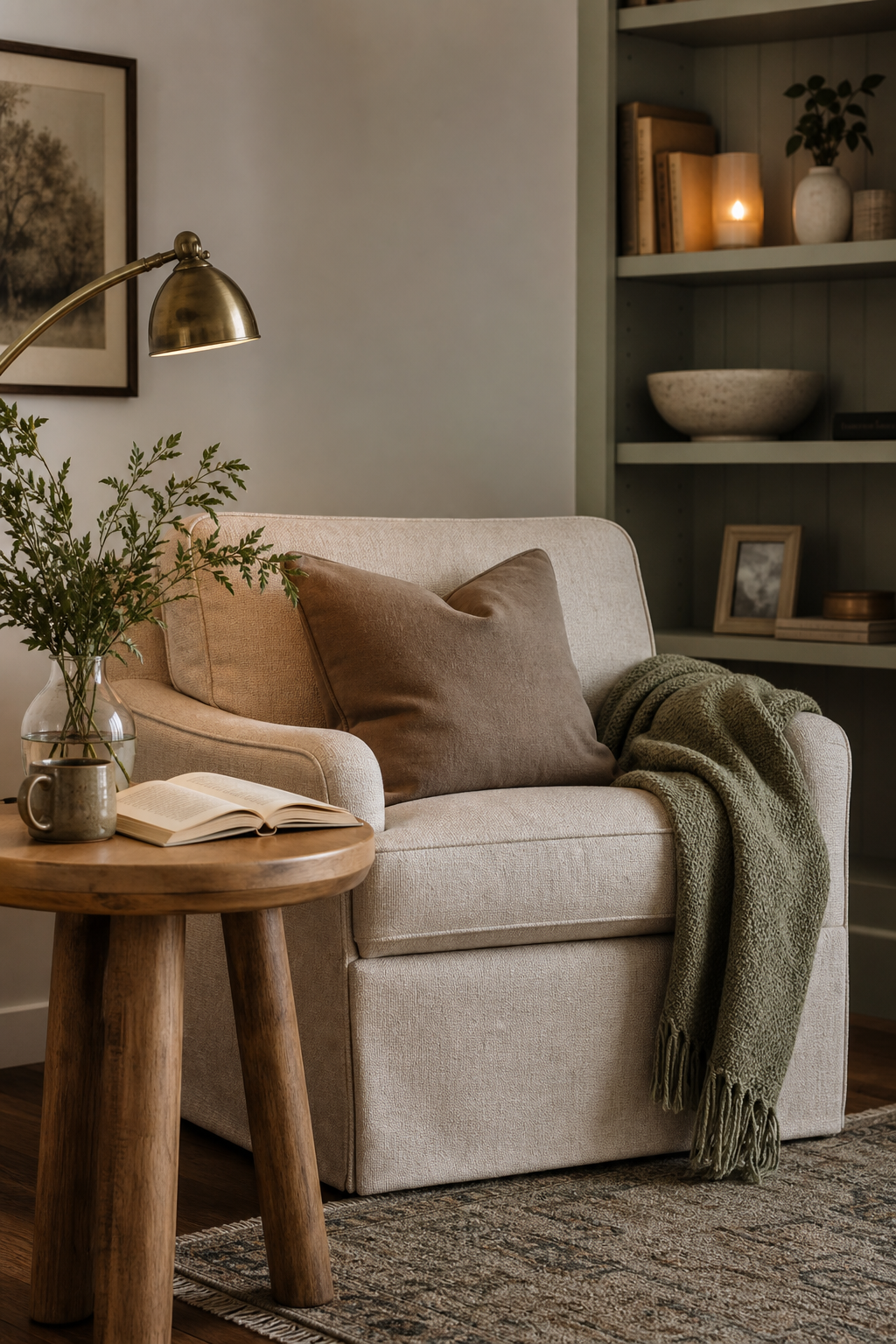
A successful reading corner feels intentional because it supports a real habit. Start with the chair and lighting, then add only the pieces that make reading easier: a table, shelf, rug, throw, plant, or basket. Keep the colors calm and the styling edited so the corner remains restful. Whether the space is a sunny window seat or a small bedroom chair, the goal is the same: a comfortable place to pause, settle in, and enjoy the room in a slower way.