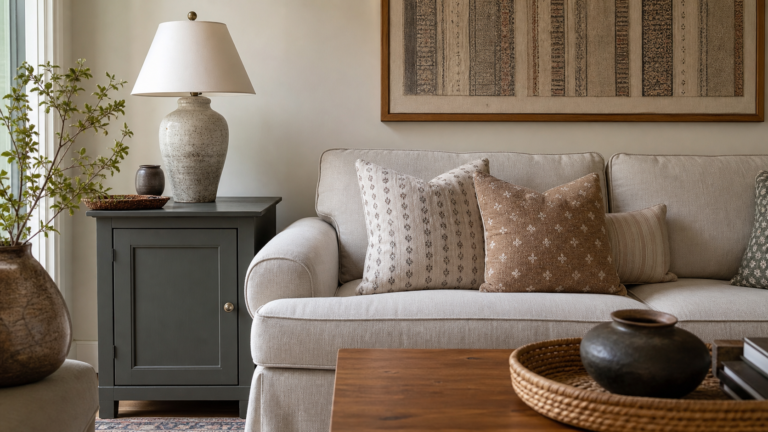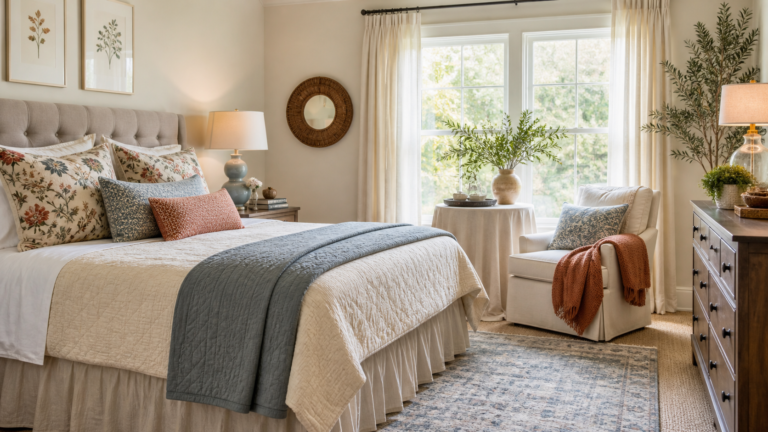
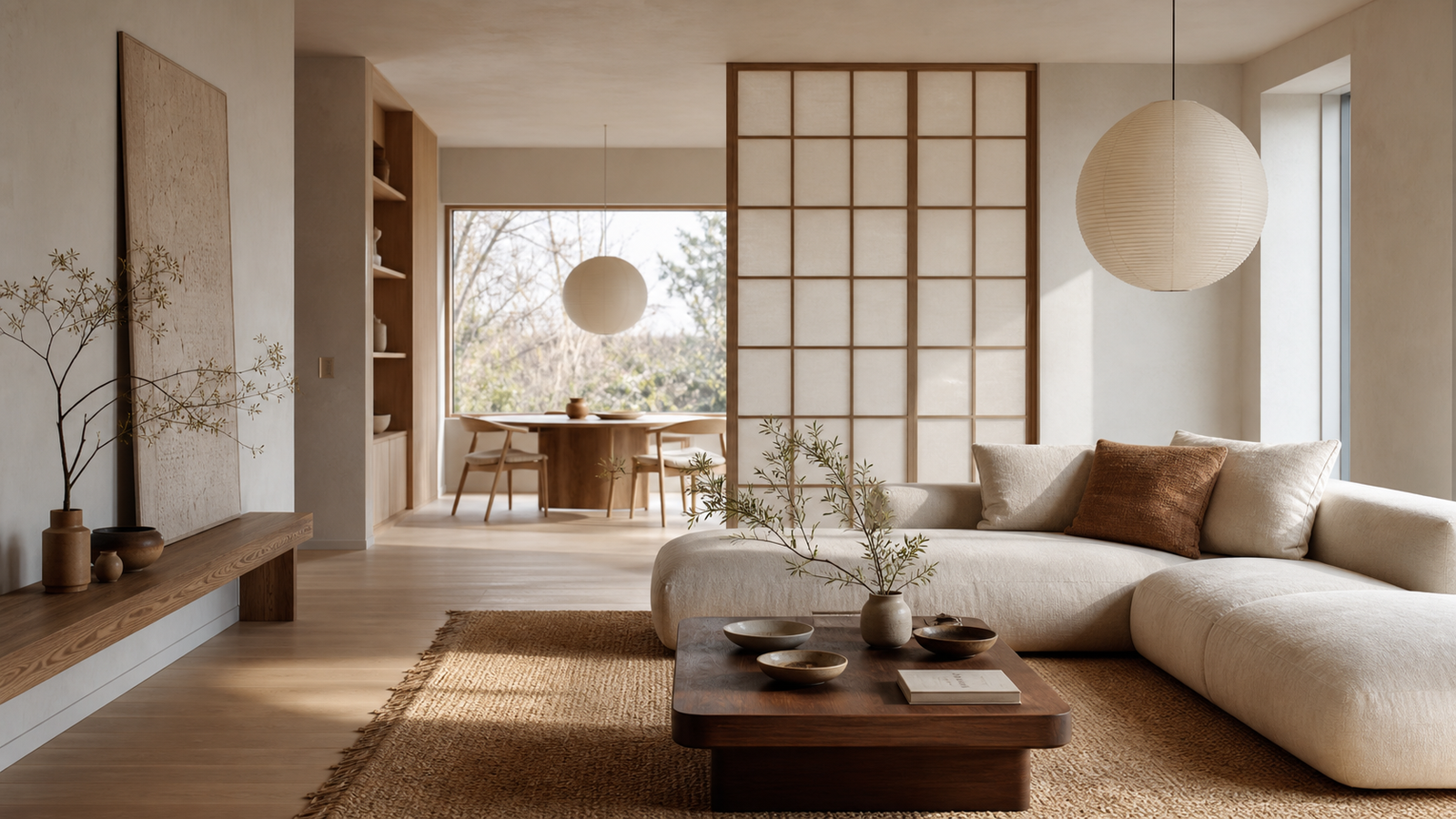
19 Japandi Scandinavian Interior Ideas To Inspire Your Next Home Refresh
Japandi Scandinavian interiors bring together the warmth of Nordic design and the restraint of Japanese-inspired living. The look is minimal, but it should never feel cold. Its strength comes from natural materials, low silhouettes, quiet storage, tactile textiles, and a palette that lets light and texture do most of the work. These ideas show how to refresh a home with calm rooms that feel edited, useful, and deeply comfortable.
1. Start With Warm White Walls
Warm white walls give Japandi Scandinavian interiors a quiet foundation without turning the room stark. Choose a chalky white, soft plaster, or very pale greige that looks gentle in daylight and calm under evening lamps. This backdrop lets wood grain, woven fibers, ceramics, and black accents feel intentional rather than busy. Keep trim close to the wall color so the architecture reads as one smooth plane. If the room feels too plain, add interest through limewash texture or a subtle clay finish rather than a strong color. The result is clean, restful, and flexible enough for seasonal styling.
2. Choose Low, Simple Furniture
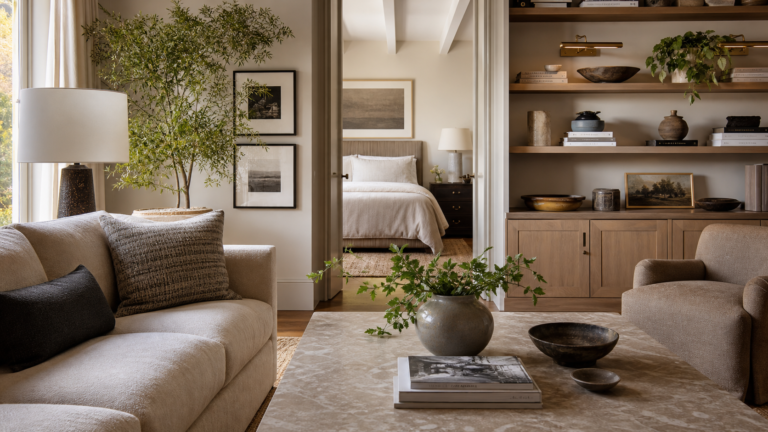
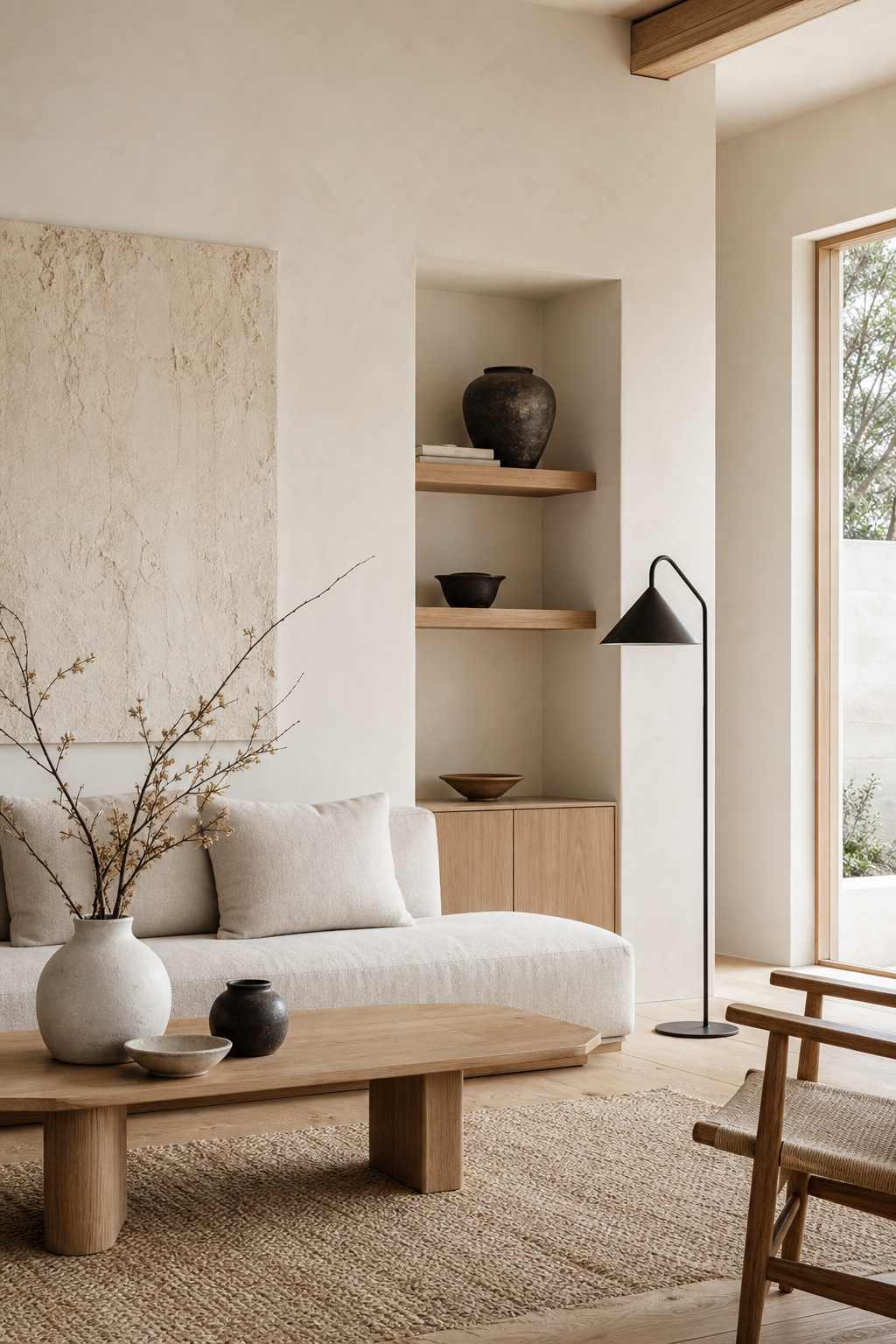
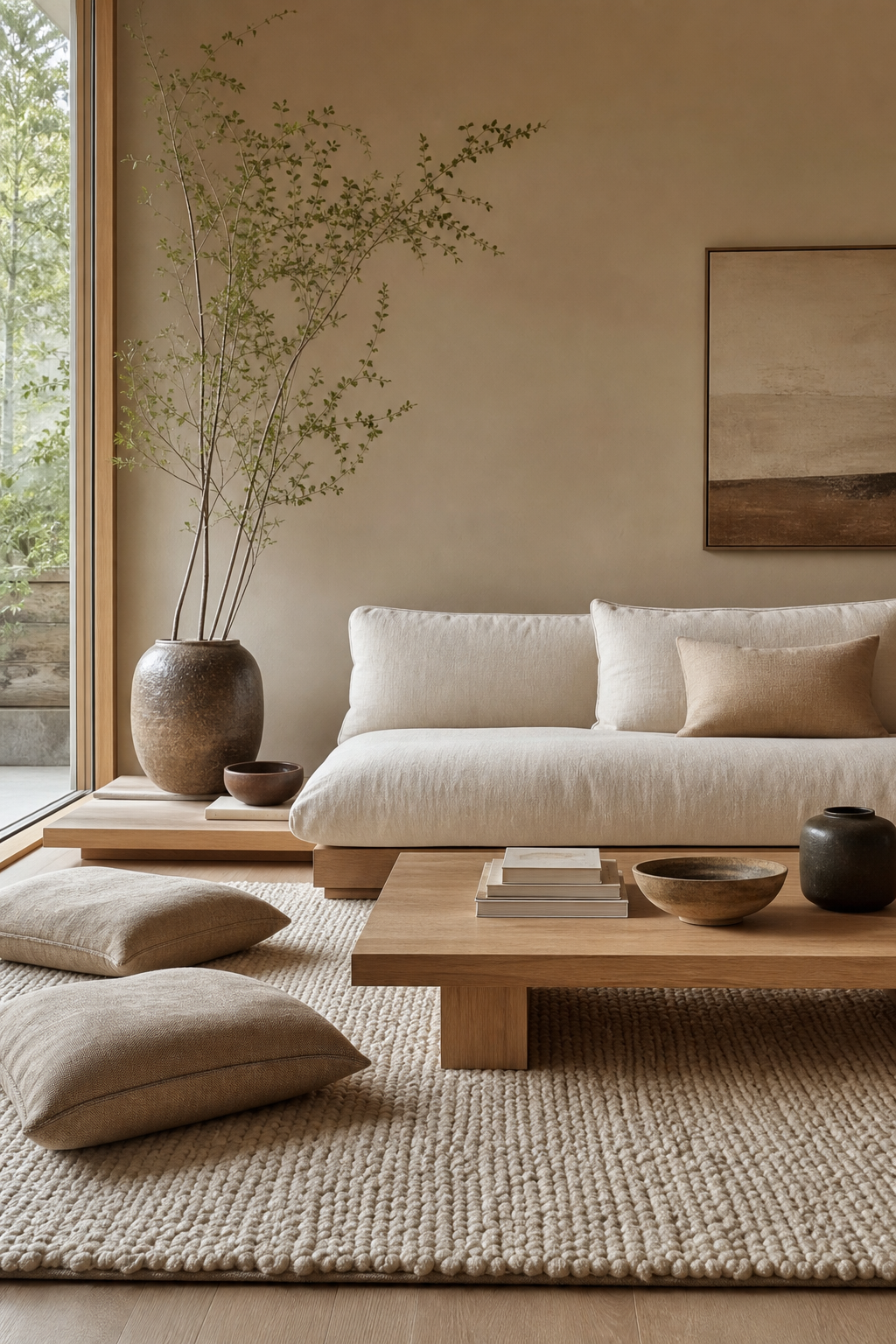
Low furniture is central to the relaxed elegance of Japandi design. A grounded sofa, platform bed, or simple oak bench makes a room feel wider, calmer, and more connected to the floor. Look for clean silhouettes with softened edges rather than sharp, overly minimal pieces. The furniture should feel substantial but not heavy, with enough negative space around each item for the eye to rest. Pair a low sofa with a thick wool rug and a simple wood coffee table, or use a platform bed with linen bedding and quiet bedside stools. This scale creates comfort without visual clutter.
3. Layer Pale Oak And Walnut
Japandi rooms feel richer when wood tones are layered thoughtfully. Pale oak brings Scandinavian brightness, while walnut or smoked oak adds Japanese-inspired depth. Use one tone as the main finish and the other as an accent so the room does not look mismatched. A pale oak floor can support a darker walnut cabinet, or a light dining table can sit beside blackened wood chairs. Keep the undertones warm and natural, avoiding glossy orange stains. Let the grain show through matte finishes. This mix gives the space quiet contrast, making neutral upholstery and simple walls feel more designed.
4. Use Linen For Softness
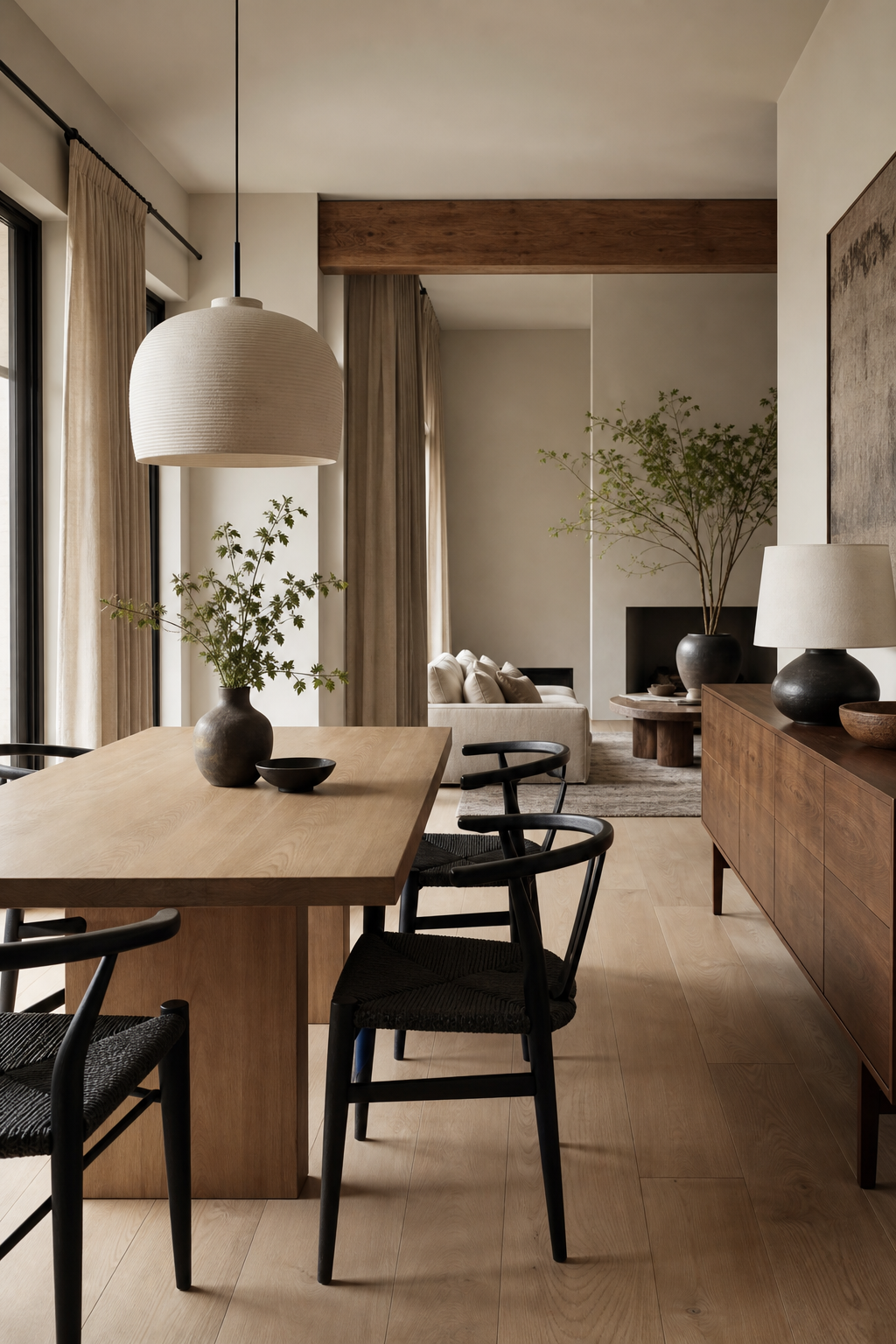
Linen keeps Japandi Scandinavian interiors from feeling too rigid. Use it for curtains, sofa upholstery, bedding, tablecloths, and oversized cushions. The slight slub and relaxed drape bring movement to rooms built from simple lines. Choose flax, oat, ivory, stone, or muted taupe rather than bright white if you want a softer effect. Linen curtains should hang generously from ceiling height and kiss the floor, while bedding can be loosely layered instead of tightly styled. The beauty is in ease. Linen catches daylight beautifully and makes restrained rooms feel tactile, lived-in, and quietly luxurious.
5. Add Black Accents Sparingly
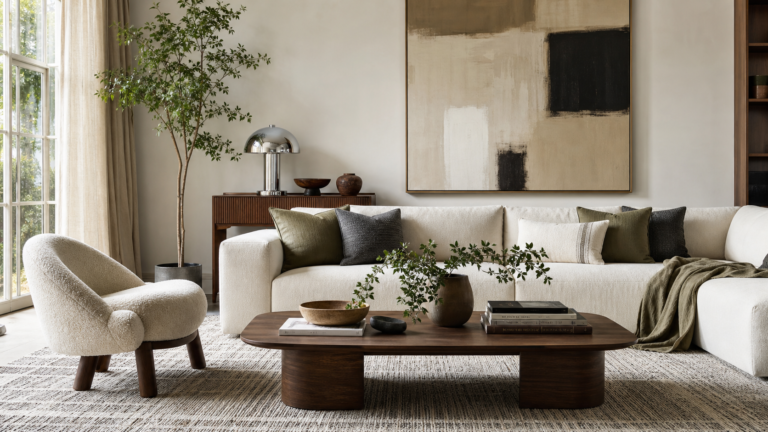
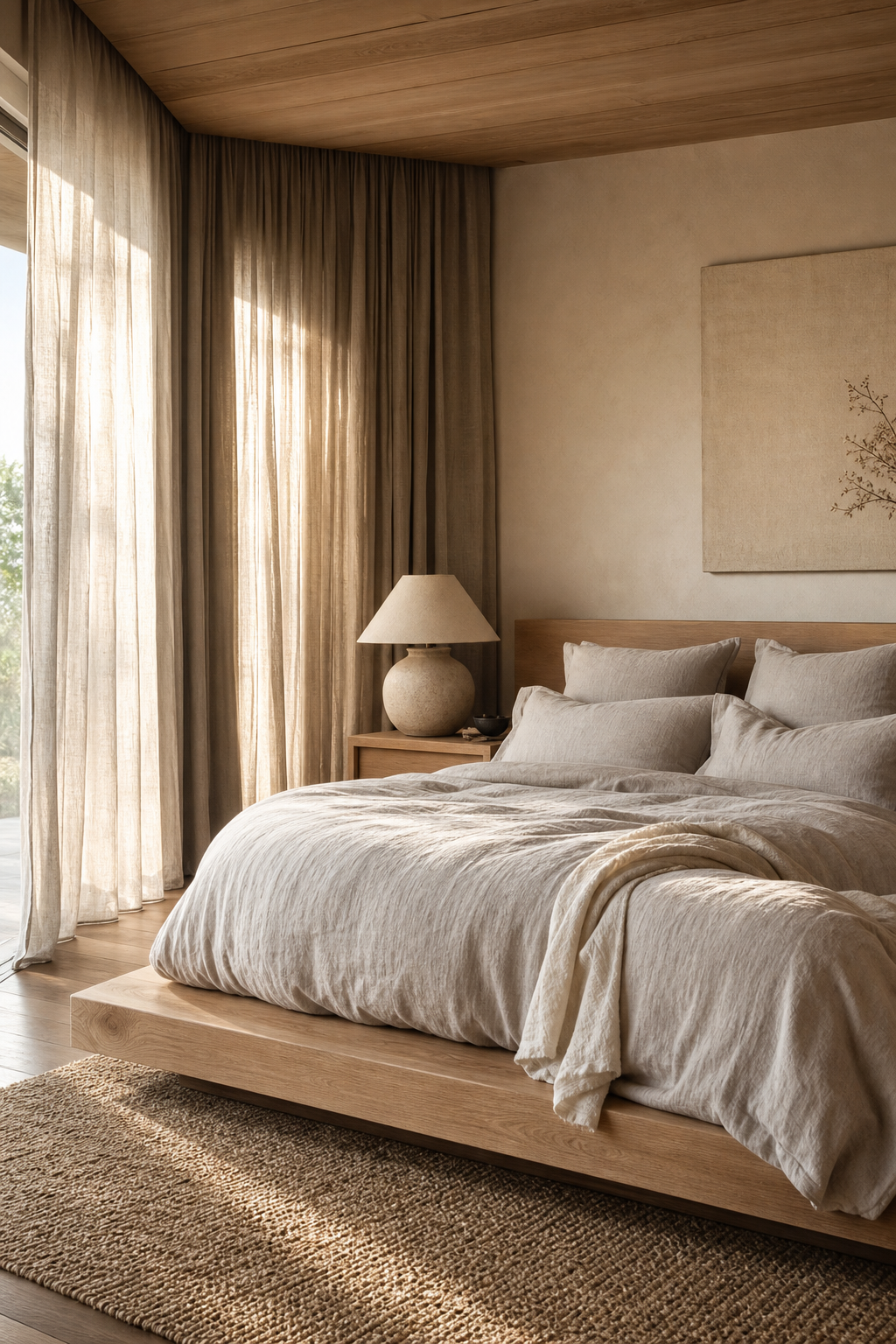
Black details give Japandi rooms definition, but they work best in small, precise doses. A slim metal floor lamp, black ceramic bowl, dark picture frame, or ebonized chair can sharpen a soft neutral palette without overpowering it. Avoid scattering black everywhere. Instead, repeat it two or three times at different heights so the contrast feels deliberate. Matte finishes are usually more elegant than glossy ones, especially beside pale wood and linen. Black accents also help modernize woven and rustic materials. When used with restraint, they create a calm graphic rhythm that makes the entire room feel composed.
6. Keep Storage Quiet And Closed
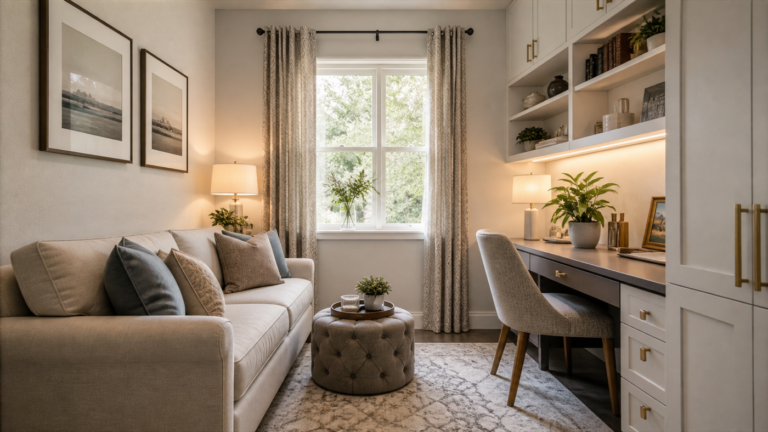
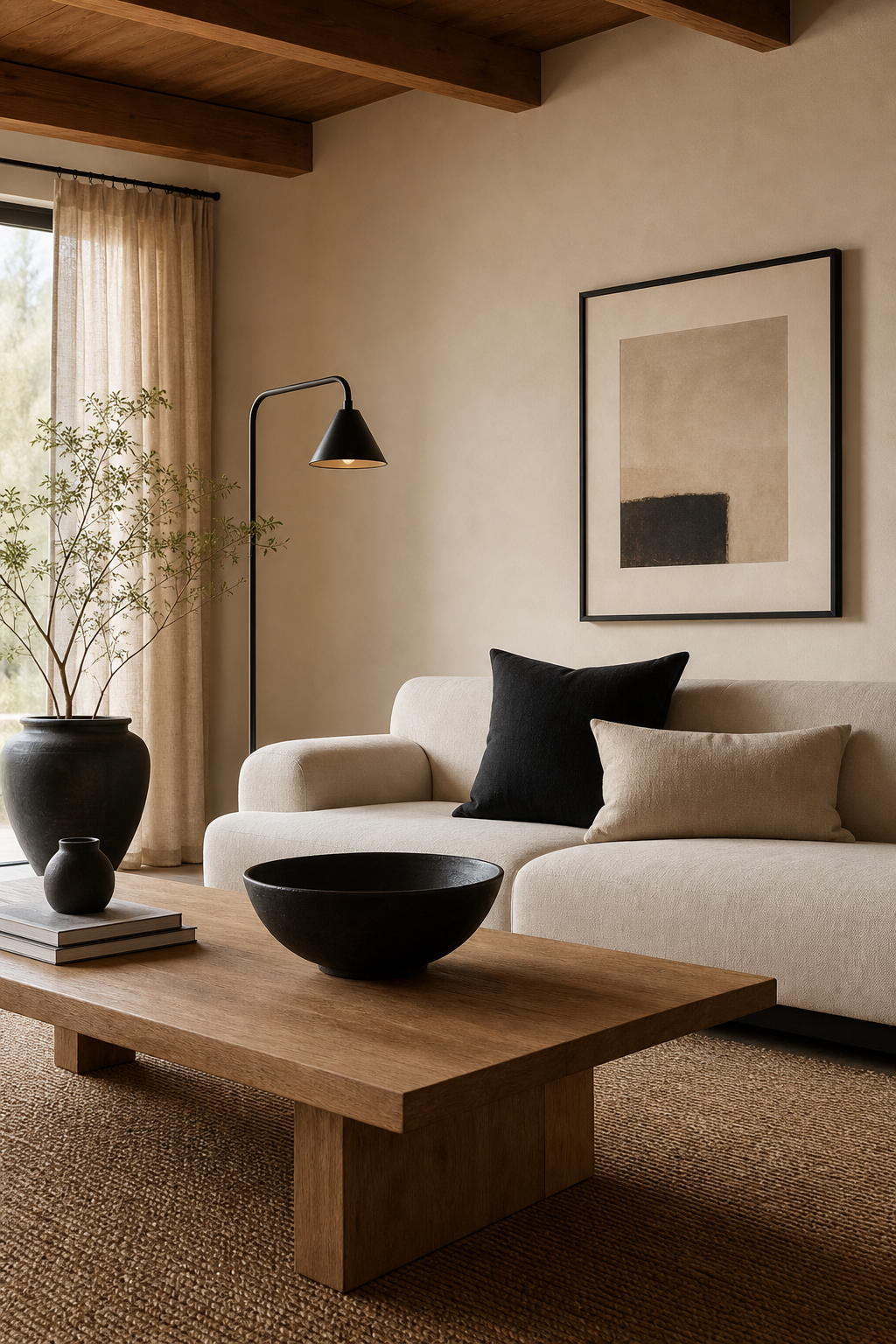
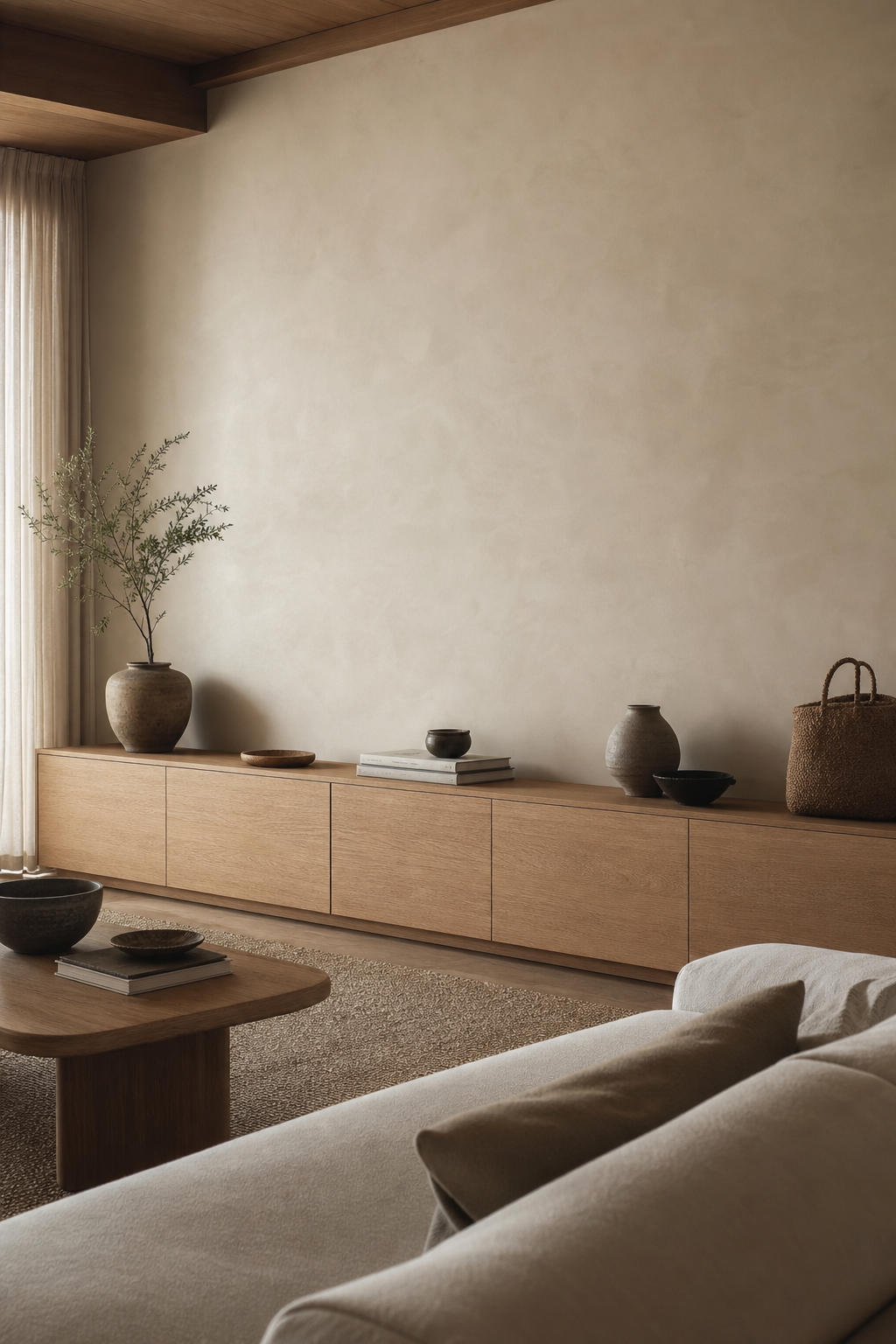
Japandi style depends on calm surfaces, so storage should work hard in the background. Choose closed cabinets, low sideboards, built-in closets, or woven lidded baskets for daily clutter. Open shelves can still be beautiful, but they should hold only edited ceramics, books, or objects with real presence. Push-latch doors, simple pulls, and flat fronts keep storage architectural rather than decorative. In living rooms, a long wood media cabinet can hide electronics and games. In bedrooms, built-in wardrobes painted to match the wall feel almost invisible. Quiet storage makes the few visible objects feel more meaningful.
7. Style With Handmade Ceramics
Handmade ceramics suit Japandi interiors because they bring imperfection, texture, and human warmth. Choose vessels with irregular glazes, softly rounded bowls, matte stoneware lamps, or a single sculptural vase on a low table. The goal is not to fill every surface, but to let each object have space around it. Earth tones, chalk white, iron black, smoke gray, and clay all work beautifully with linen and wood. Group ceramics in odd numbers when styling shelves, but vary height and shape. These pieces make a minimalist room feel collected, grounded, and personal without relying on busy decoration.
8. Bring In Woven Texture
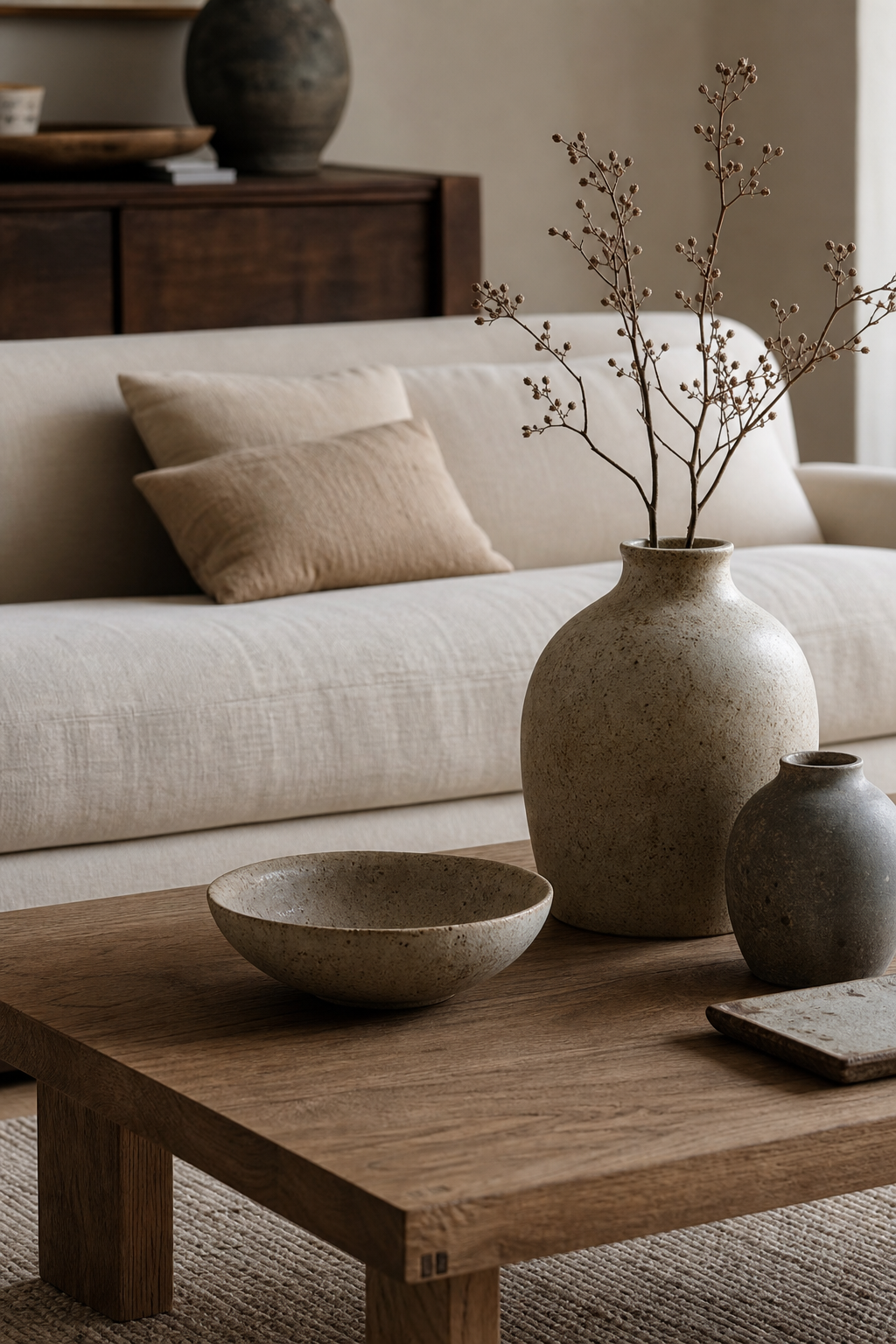
Woven texture is one of the easiest ways to warm up a Japandi Scandinavian room. Use jute, seagrass, cane, rush, rattan, paper cord, or handwoven wool in controlled layers. A woven bench, paper-cord chair, natural rug, or cane cabinet door adds depth while keeping the palette calm. Balance rustic texture with clean architecture so the room feels refined rather than beachy. If a space already has many woven pieces, keep the rest of the styling smooth and simple. The contrast between woven fibers, matte plaster, and pale wood gives Japandi rooms their relaxed, tactile character.
9. Choose One Sculptural Light
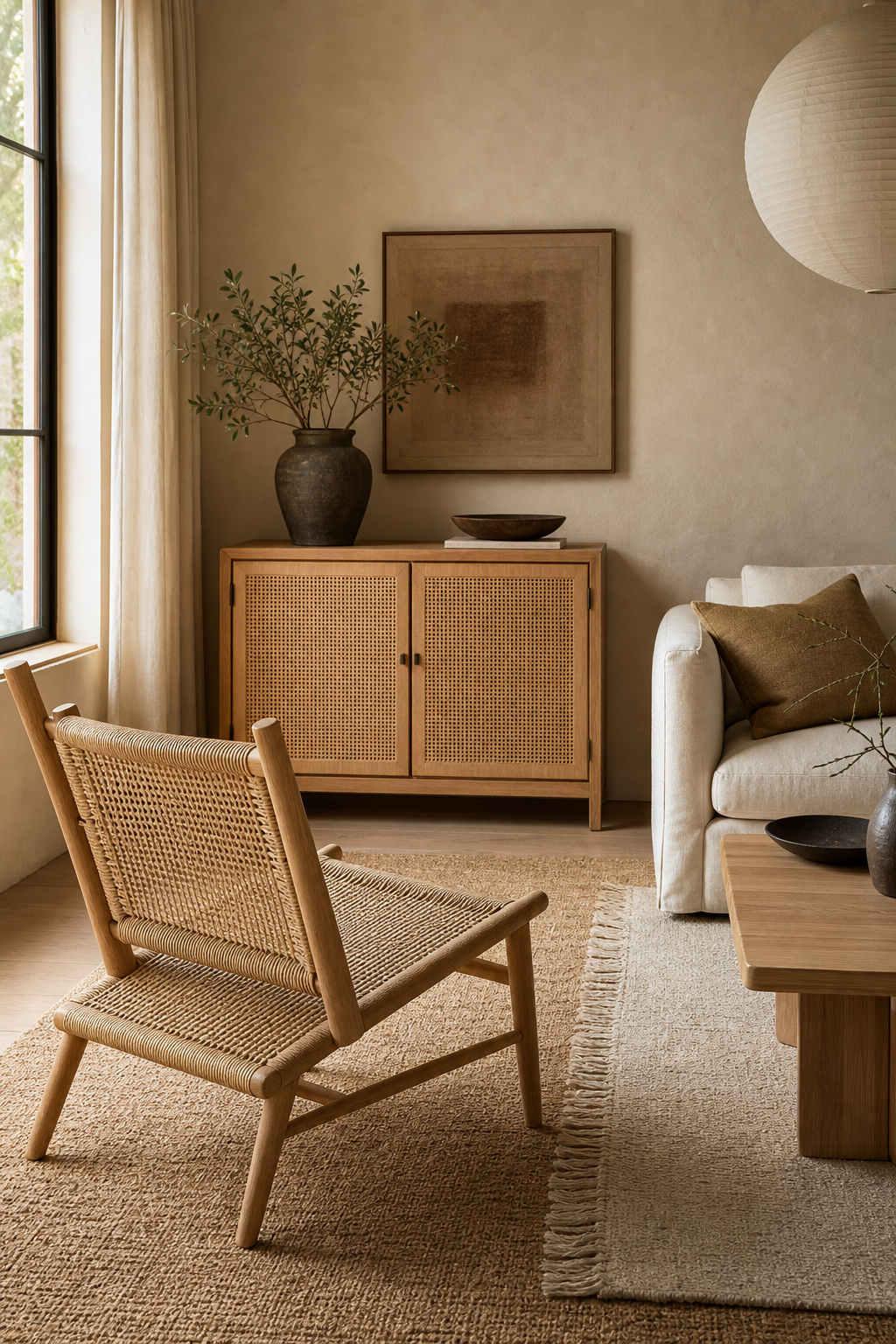
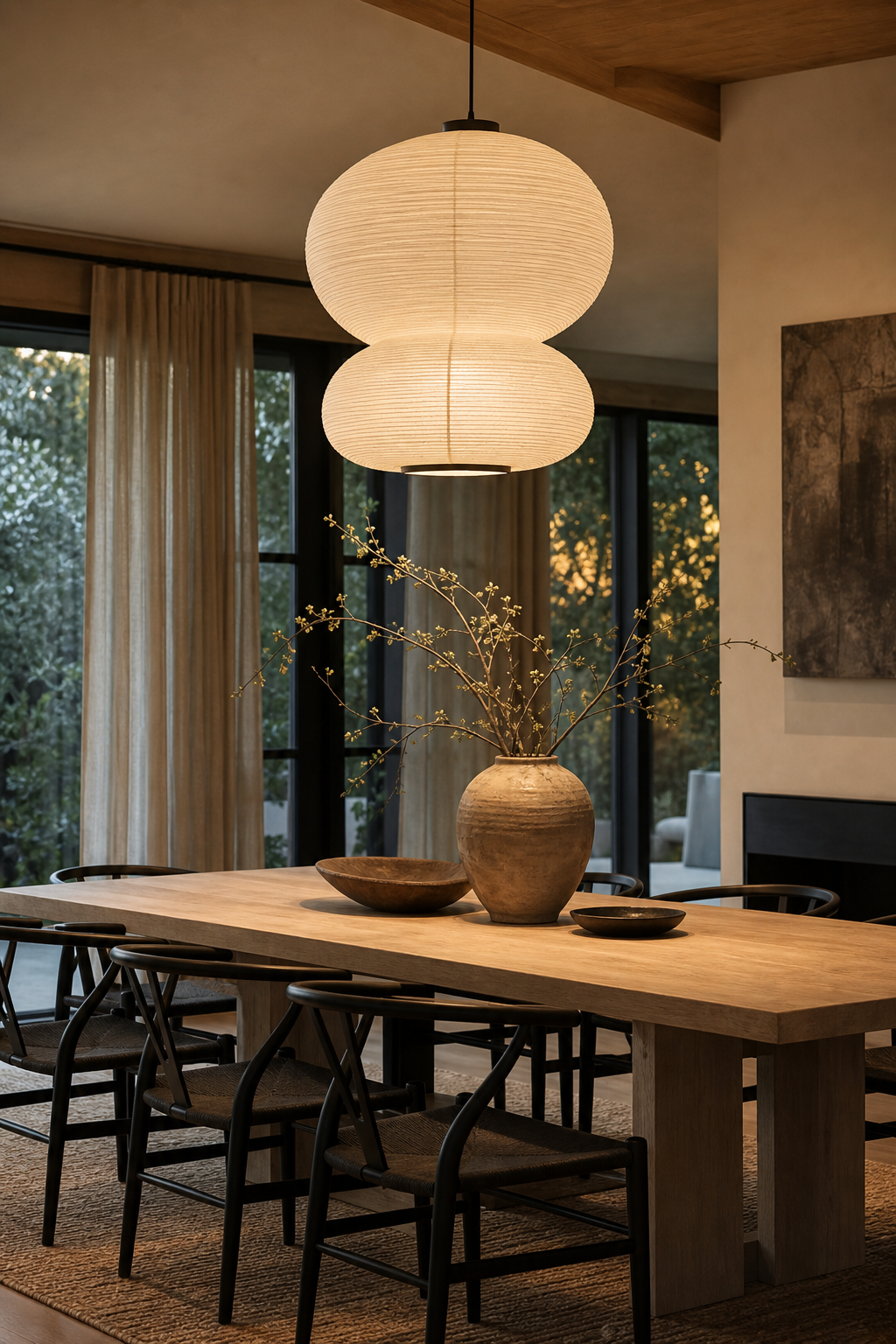
Lighting in Japandi interiors should feel calm but never boring. One sculptural fixture can become the room’s quiet focal point: a rice paper pendant, a ceramic table lamp, a black metal floor lamp, or a wood-and-paper lantern. Keep the shape simple and the glow warm. A large paper pendant over a dining table softens the whole room, while a ceramic lamp beside a sofa makes the space feel intimate at night. Avoid overly shiny finishes or complicated silhouettes. The best fixture looks almost handmade and gives the room atmosphere even when everything else is restrained.
10. Use Natural Stone In Small Moments
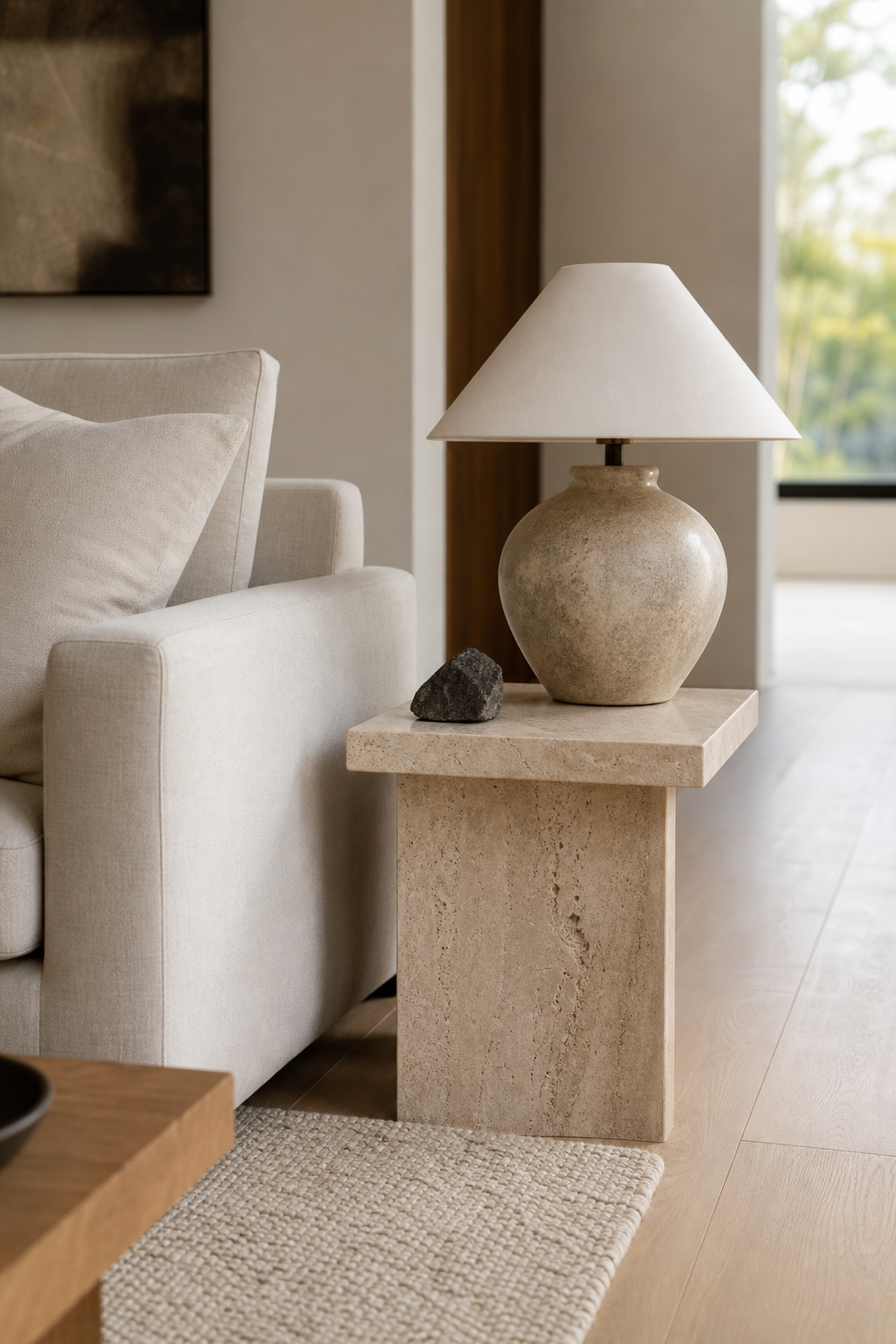
Natural stone adds permanence to a Japandi Scandinavian refresh, especially when it appears in small, grounded moments. A travertine side table, honed limestone hearth, marble tray, or stone basin brings weight to light wood and soft textiles. Choose honed or textured finishes rather than high polish so the stone feels quiet. Cream, sand, taupe, gray, and charcoal tones work best. Let the veining or surface variation be the detail. A single stone piece can make a neutral room feel more expensive without disrupting its simplicity. Pair it with linen, wood, and ceramics for a balanced material story.
11. Create A Calm Entryway
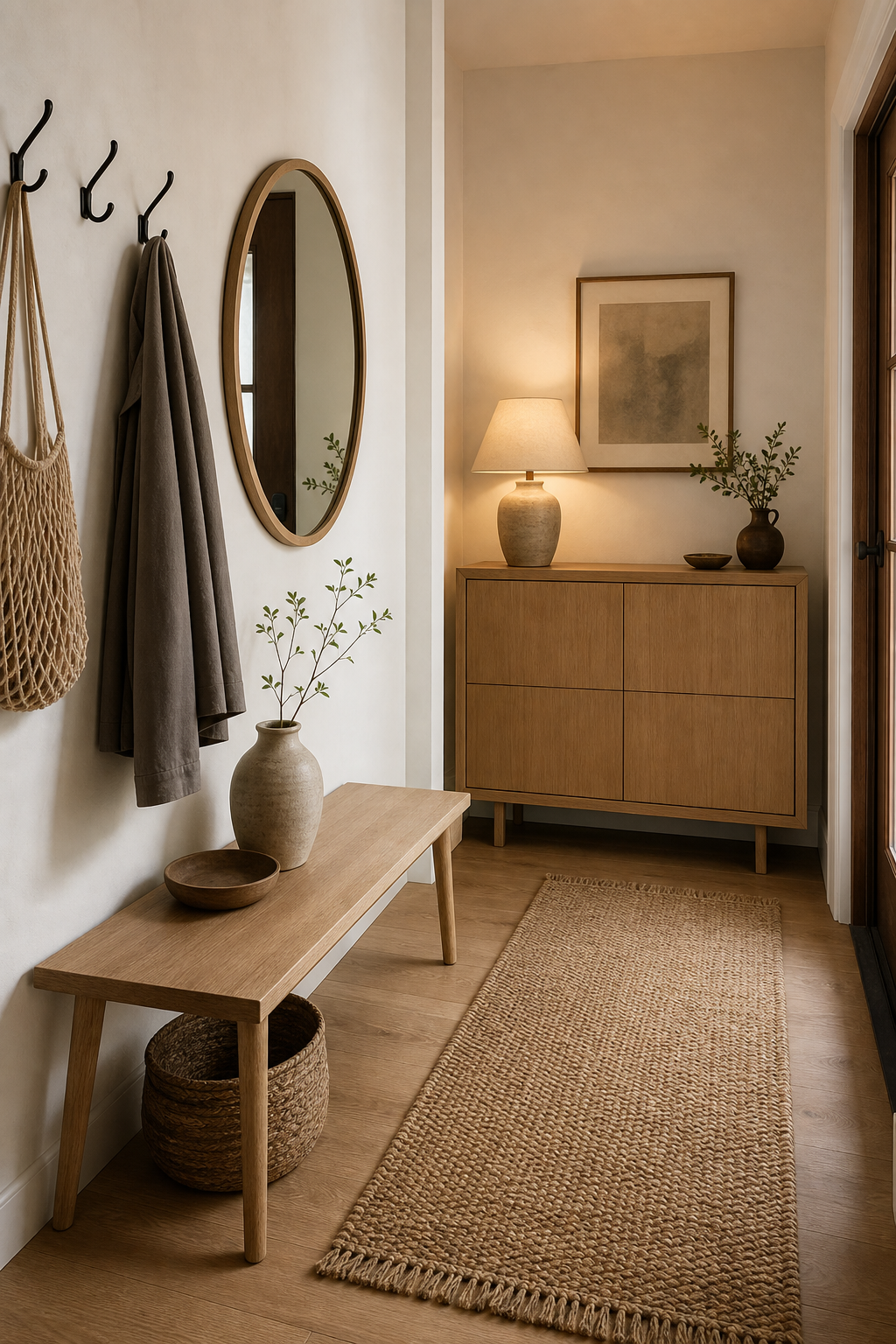
A Japandi entryway should feel useful, edited, and welcoming. Start with a slim wood bench, closed shoe storage, a simple mirror, and one basket or tray for daily essentials. Keep the wall color warm and quiet so coats, bags, and shoes do not make the area feel chaotic. A woven runner softens the floor, while a ceramic lamp or wall sconce adds evening warmth. If space is tight, use wall hooks in black or aged brass and a floating shelf instead of a console. The goal is a gentle landing zone that supports real routines without looking cluttered.
12. Make The Bedroom Feel Grounded
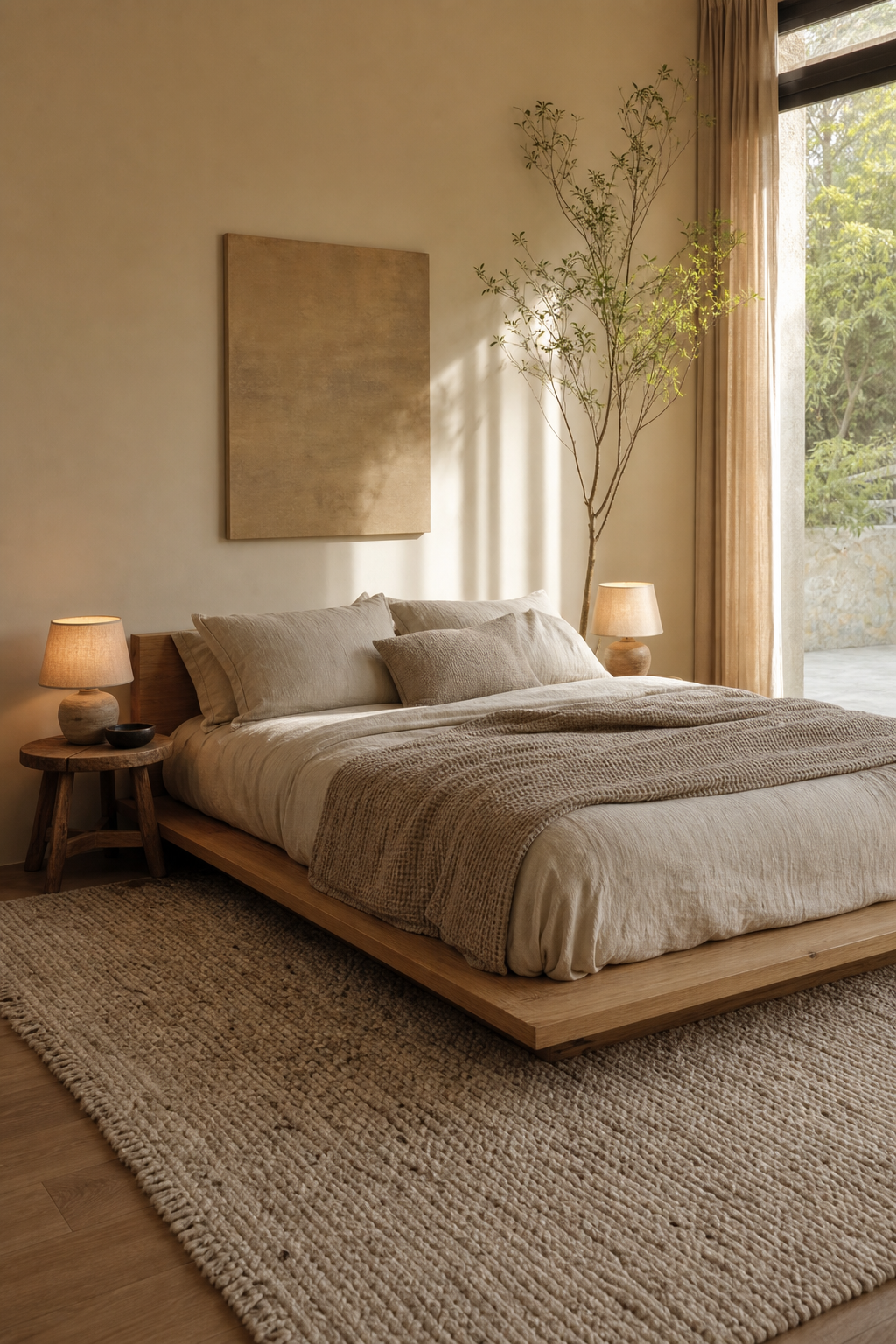
A Japandi bedroom works best when the bed feels low, soft, and grounded. Choose a platform frame in oak or walnut, then layer linen sheets, a textured coverlet, and two or three quiet pillows. Skip excess cushions and busy patterns. Bedside tables can be simple stools, floating shelves, or compact wood drawers. Add warm lamps and a rug that extends generously beyond the bed so the floor feels soft in the morning. The palette should support rest: warm white, stone, taupe, smoke, flax, and muted brown. Every choice should make sleep feel easier.
13. Add A Shoji-Inspired Screen
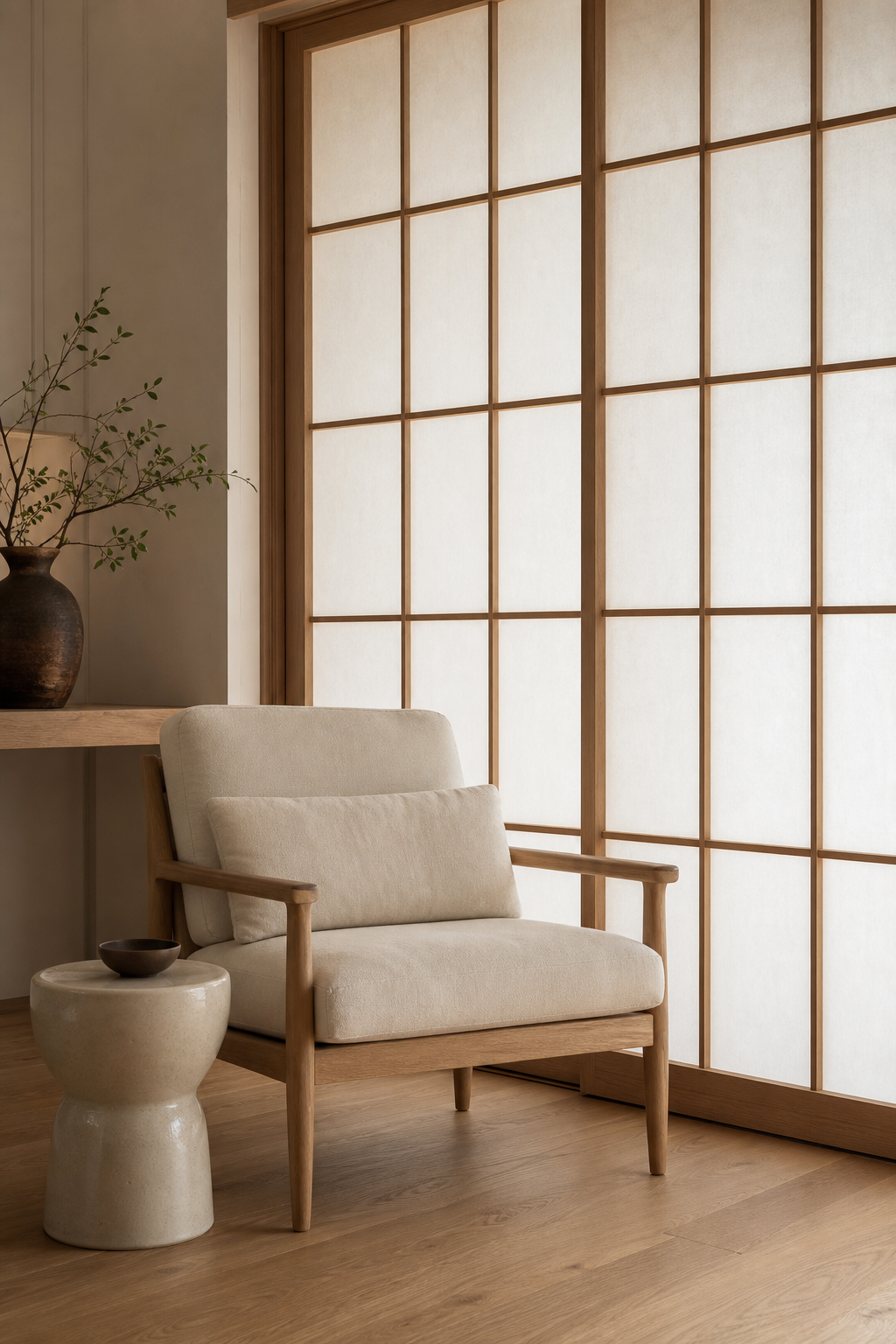
Shoji-inspired details can bring softness, privacy, and architectural rhythm to a Japandi room. You do not need a traditional screen to get the effect. Try ribbed glass doors, wood slat partitions, translucent window panels, or a freestanding screen with pale wood framing. These elements divide space while allowing light to pass through, which is useful in open layouts and bedrooms. Keep the lines slim and the finish natural. A screen behind a reading chair, beside a bed, or between living and dining zones adds depth without adding clutter. It feels graceful, functional, and quietly sculptural.
14. Decorate With Branches Instead Of Bouquets
Branches often suit Japandi Scandinavian interiors better than lush bouquets because they add height, line, and seasonal character without visual noise. Place olive branches, bare winter stems, maple branches, or simple greenery in a heavy ceramic vessel. Let the shape be imperfect and airy. This kind of arrangement works on dining tables, entry consoles, shelves, and bedside cabinets. Keep the vessel substantial so the display feels intentional rather than temporary. Branches also connect the room to nature, which is essential to both Japanese and Scandinavian design traditions. They refresh a space without making it feel overly decorated.
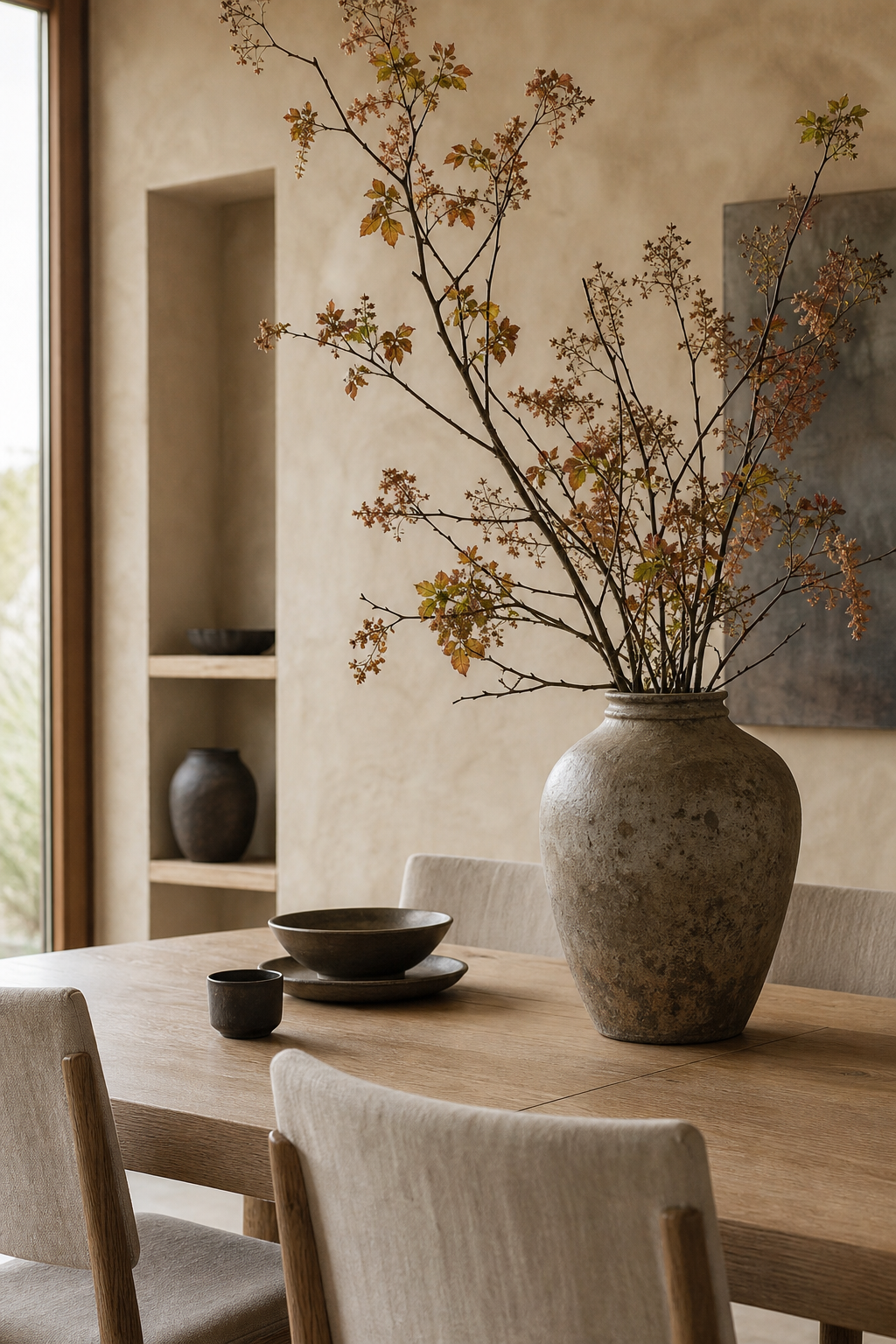
15. Use Muted Earth Colors
Japandi color does not have to mean only beige. Muted earth tones can add depth while preserving calm. Try olive, clay, tobacco, mushroom, charcoal, warm gray, or soft umber in small areas: cushions, artwork, ceramics, rugs, or one painted cabinet. Keep saturation low so the colors feel natural rather than decorative. A clay pillow on a cream sofa, an olive throw on a bed, or a charcoal vase on a pale shelf may be enough. These quiet colors make the space feel layered and seasonal while still maintaining the discipline of a restrained palette.
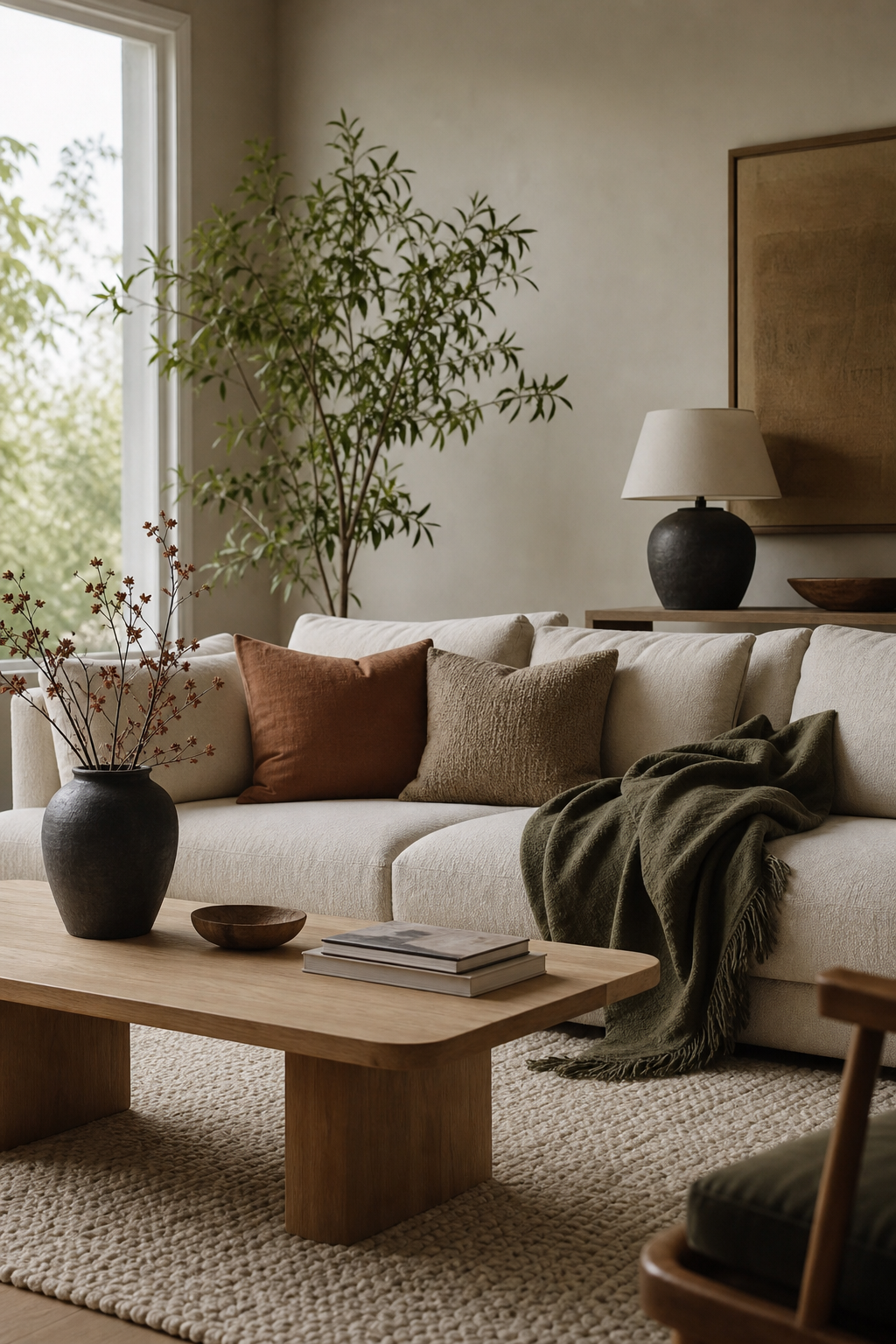
16. Keep The Dining Room Uncluttered
A Japandi dining room should make meals feel calm and intentional. Choose a simple wood table, comfortable chairs, one pendant light, and a single centerpiece. Avoid crowding the room with extra cabinets unless storage is genuinely needed. A bench can keep one side lighter, while paper-cord or black wood chairs add texture. Leave plenty of space around the table so the room feels easy to move through. Table styling should be minimal: linen napkins, ceramic bowls, and perhaps one branch arrangement. The restraint makes everyday meals feel more considered and gives the materials room to breathe.
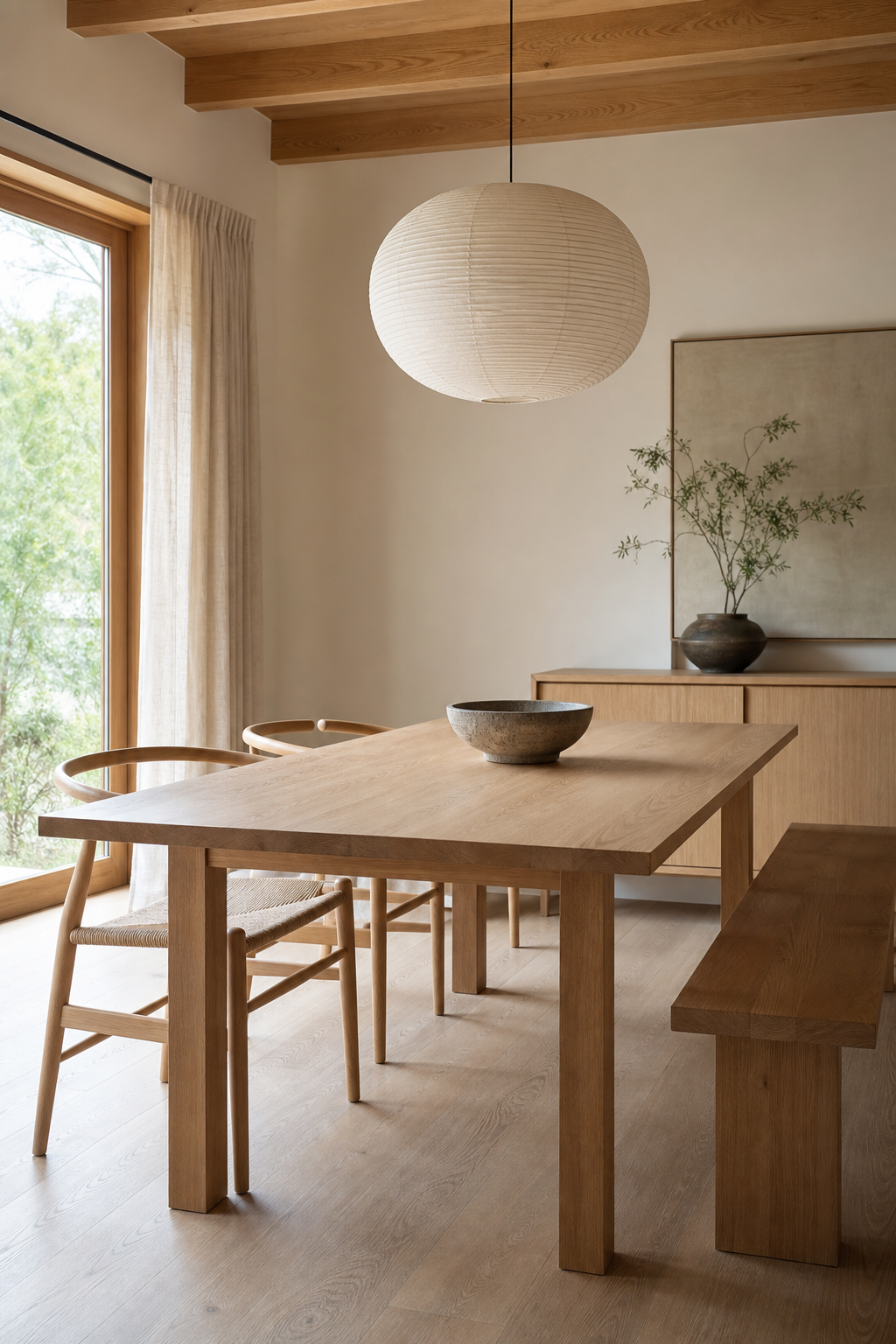
17. Balance Smooth And Rough Surfaces
The most beautiful Japandi rooms balance smooth surfaces with rougher, tactile ones. Pair a smooth plaster wall with a nubby wool rug, a sleek oak cabinet with a hand-thrown vase, or crisp linen bedding with a raw-edge wood bench. This contrast keeps the room from feeling flat while still staying minimal. Avoid adding texture randomly. Each surface should support the overall mood of calm, usefulness, and natural beauty. If a room feels too polished, add woven fiber or matte ceramic. If it feels too rustic, introduce a smoother table, cleaner lamp, or more tailored upholstery.
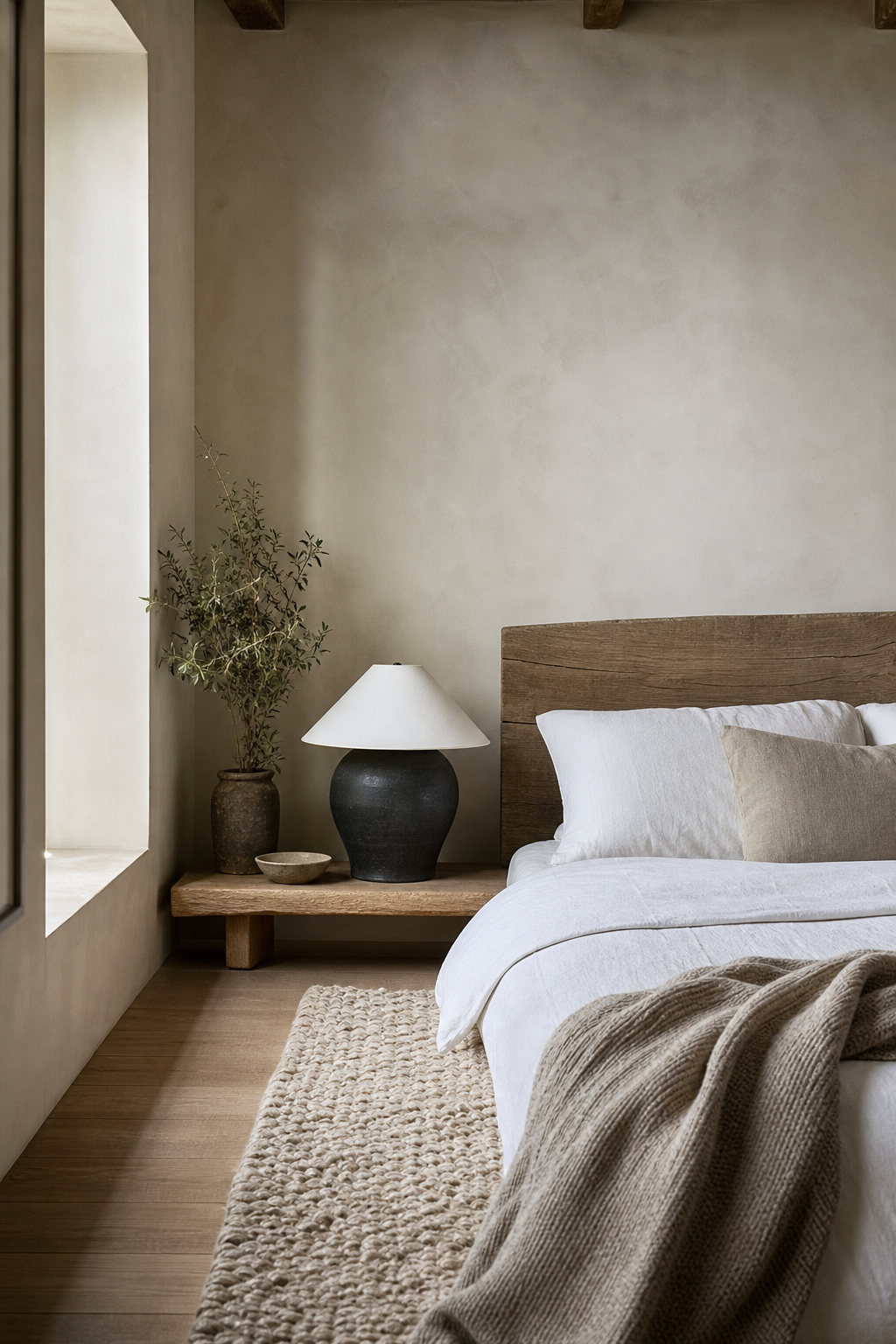
18. Edit Shelves To A Few Meaningful Pieces
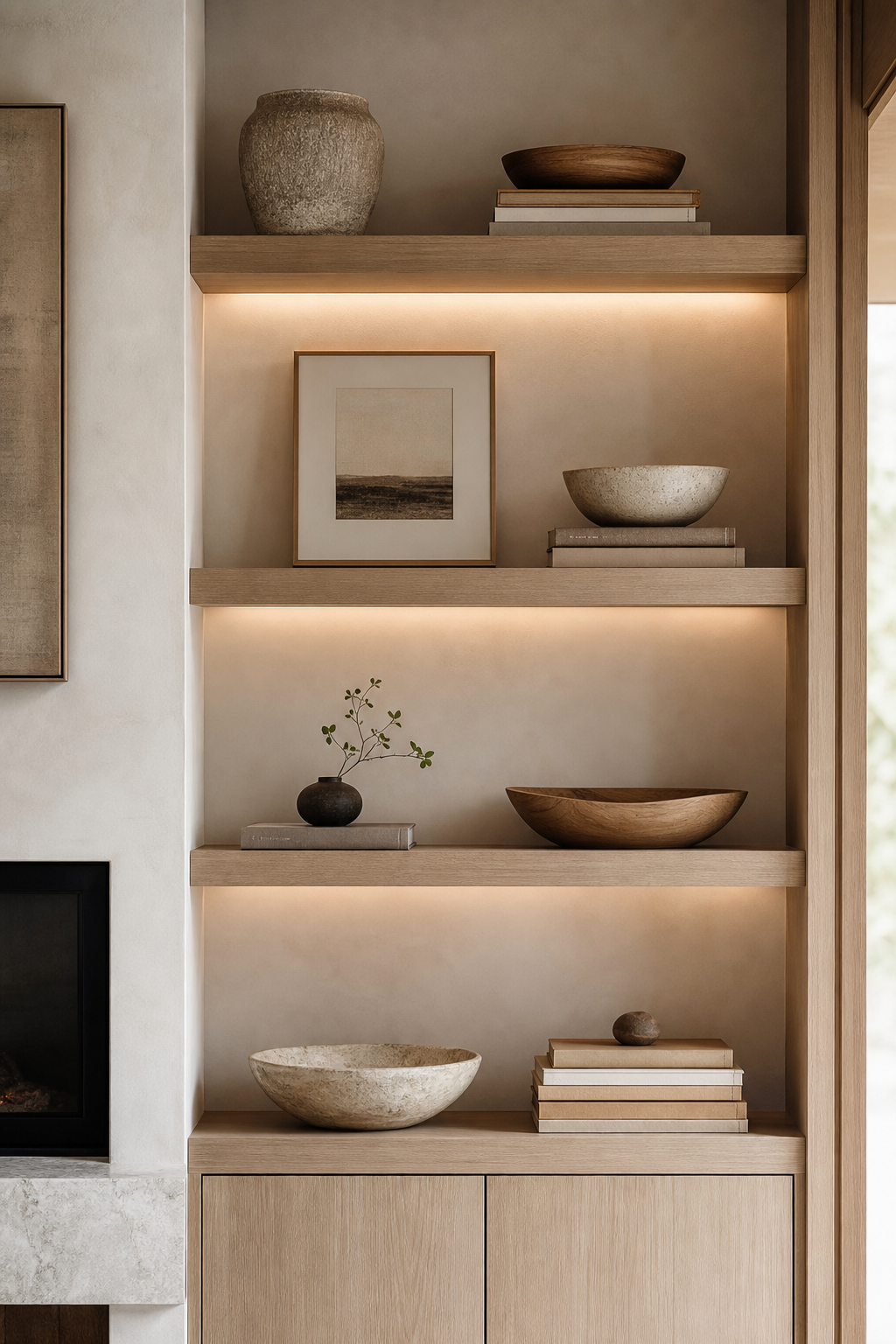
Shelves in a Japandi interior should feel composed, not filled. Remove small decorative items that do not contribute shape, texture, or meaning. Then style a few larger pieces: stacked books, handmade bowls, a framed artwork, a stone vessel, or one sculptural object. Leave open space between them so the shelf itself remains part of the composition. Use a limited color story of wood, cream, black, clay, and stone. Shelf lighting can add warmth, but keep it subtle. Edited shelves make a room feel mature, calm, and lived-in without looking staged.
19. Finish With Negative Space
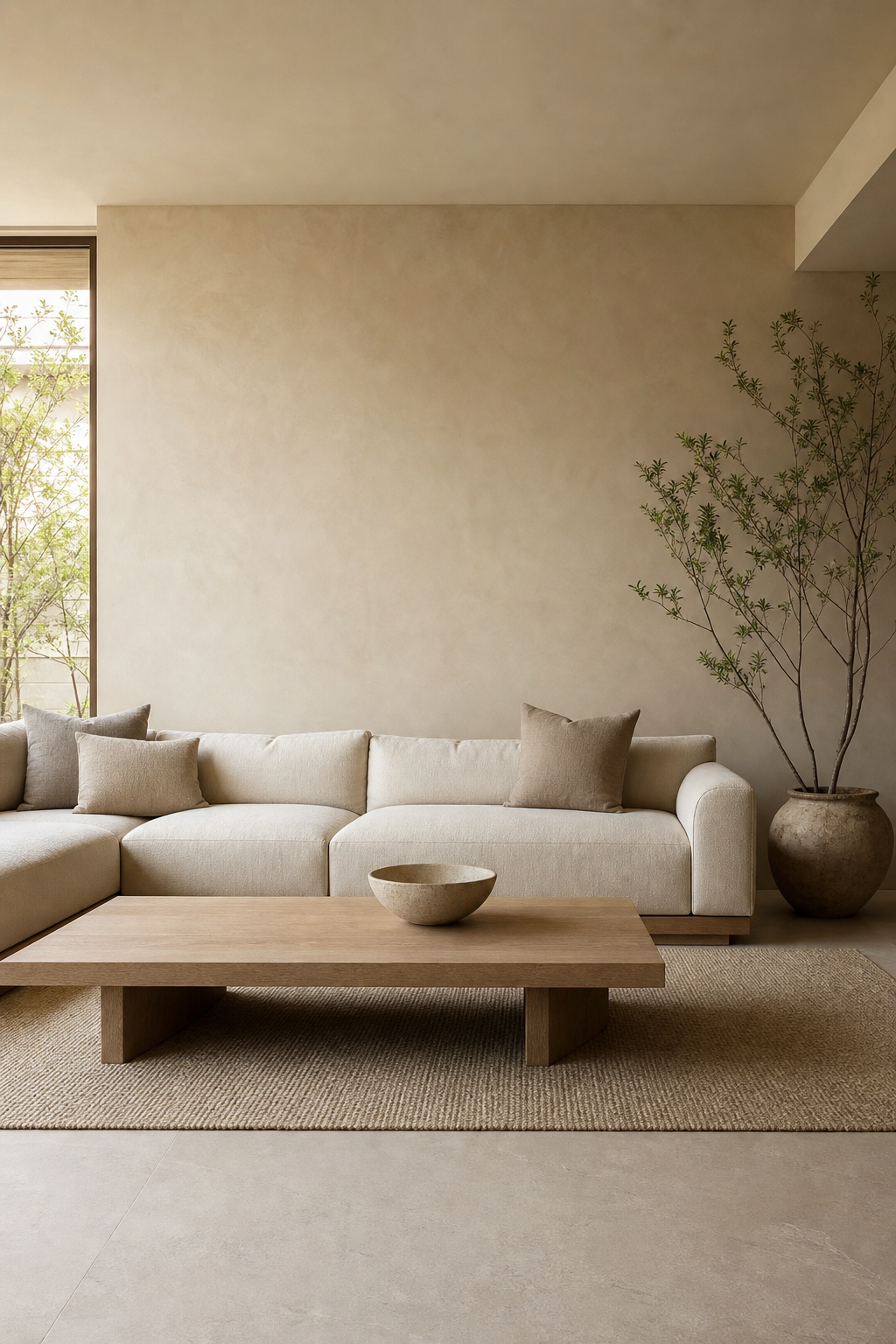
Negative space is the detail that makes Japandi Scandinavian interiors feel peaceful. Resist the urge to fill every corner, wall, and tabletop. A blank section of plaster wall, an open area around a chair, or an uncluttered coffee table can make the room feel more luxurious than another accessory would. This does not mean the home should feel empty. It means each object has enough room to be noticed and used. Before finishing a refresh, remove one or two items from every surface and step back. The quiet space left behind often becomes the most elegant part of the room.
A Japandi Scandinavian refresh works best when every choice supports calm function. Start with one room, edit what feels visually loud, then rebuild with warm whites, honest wood, linen, ceramics, and enough negative space for the design to breathe. The finished home should feel simple, but also personal, tactile, and easy to live in every day.