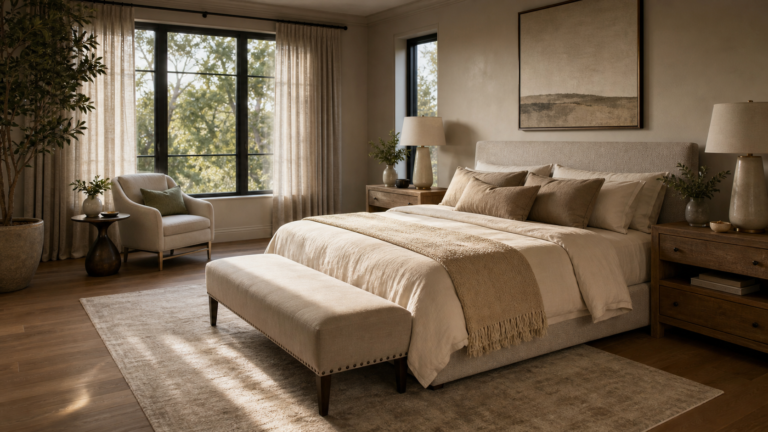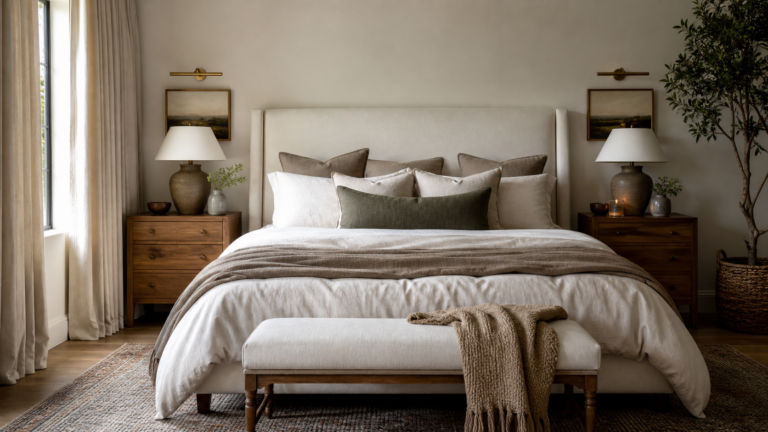
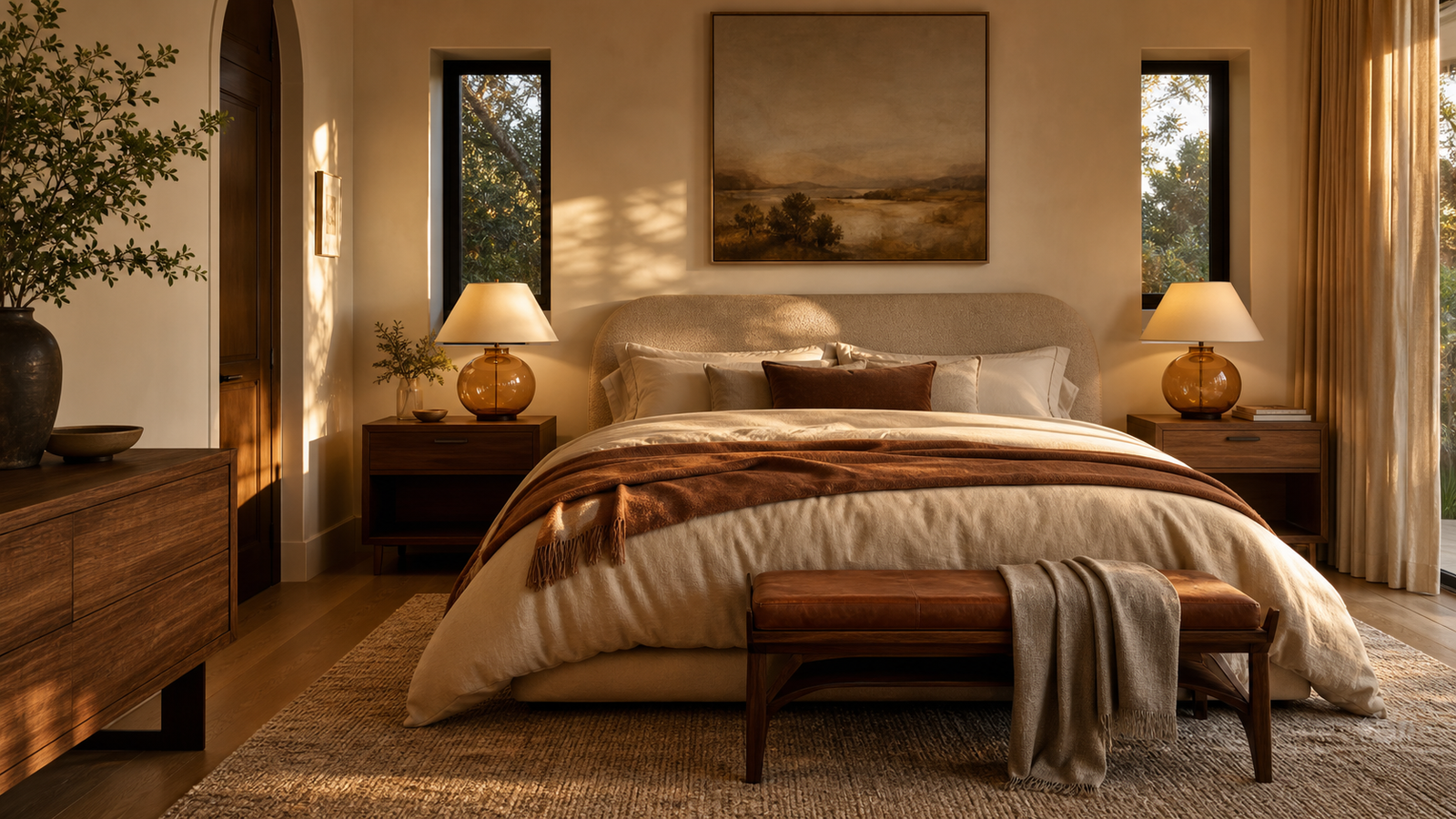
17 Warm Bedroom Aesthetic For A Cozy Stylish Retreat
A warm bedroom aesthetic is not only about choosing beige walls or adding a throw blanket. The best rooms feel warm because color, texture, light, and scale all support the same mood. Wood has depth, lamps glow instead of glare, bedding looks layered but not messy, and every surface has enough breathing room to feel intentional. These ideas translate warmth into practical design choices, from honeyed palettes to tactile rugs and cocooning drapery.
1. Honey Oak Calm
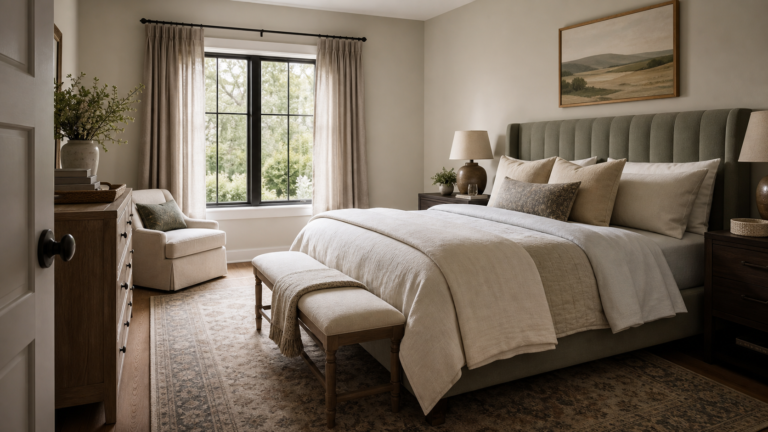
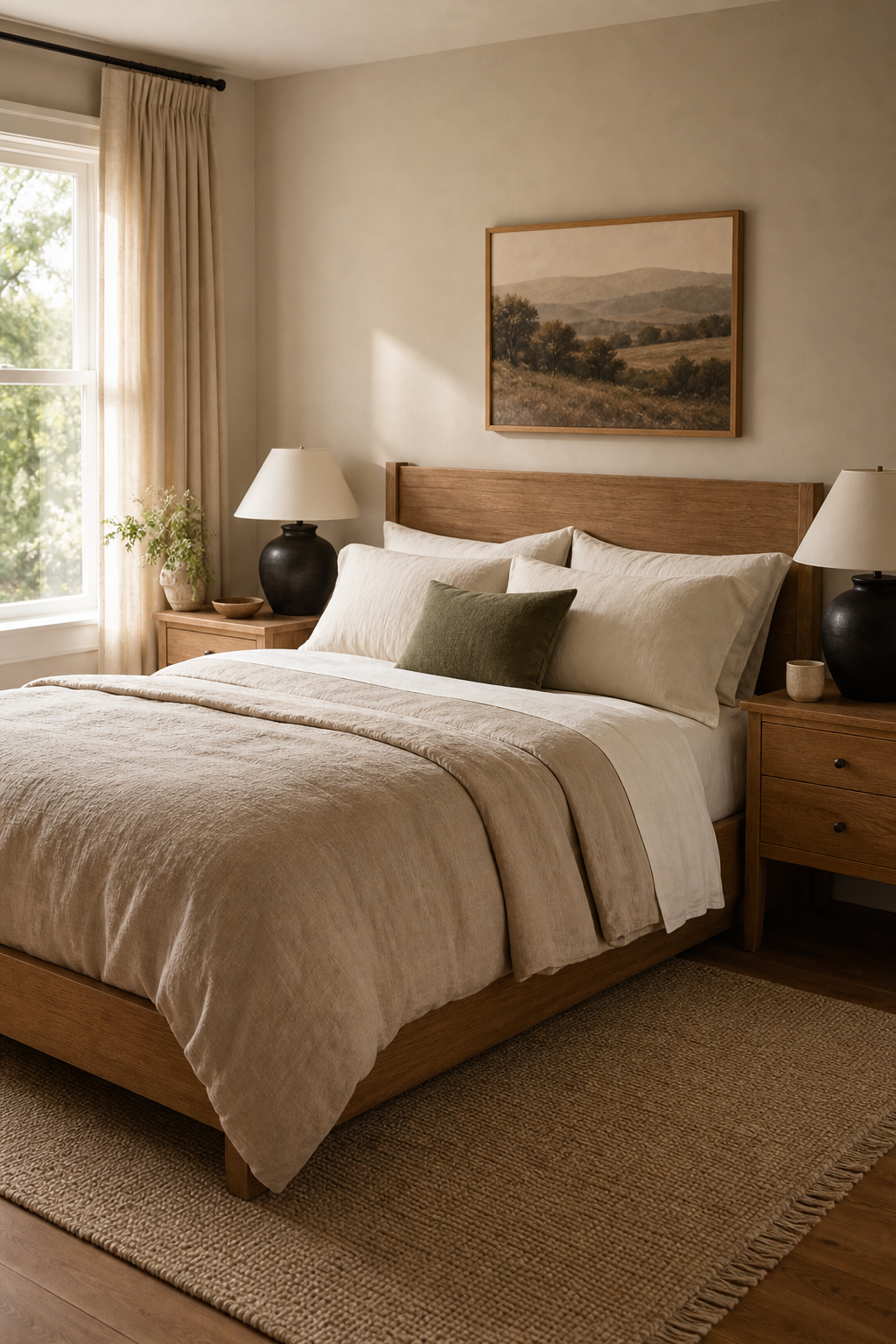
Honey oak brings immediate warmth without making a bedroom feel dark. Use it for nightstands, a dresser, a simple bed frame, or even ceiling beams if the room has architectural character. The trick is to pair the wood with quiet materials so its grain remains the star. Cream cotton sheets, a flax linen duvet, and a low-pile wool rug keep the palette soft. Add one grounding note, such as a black ceramic lamp or bronze curtain rod, to stop the room from becoming too pale. Honey oak also works beautifully with misty blue, sage, mushroom, and clay. Keep the styling relaxed: a ceramic bowl, a stack of books, and one framed landscape are enough. The finished room feels sunny, natural, and easy to wake up in.
2. Caramel Linen Layers
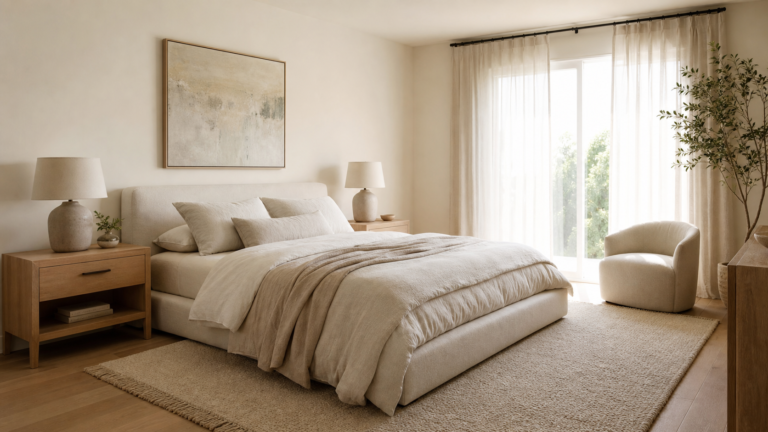
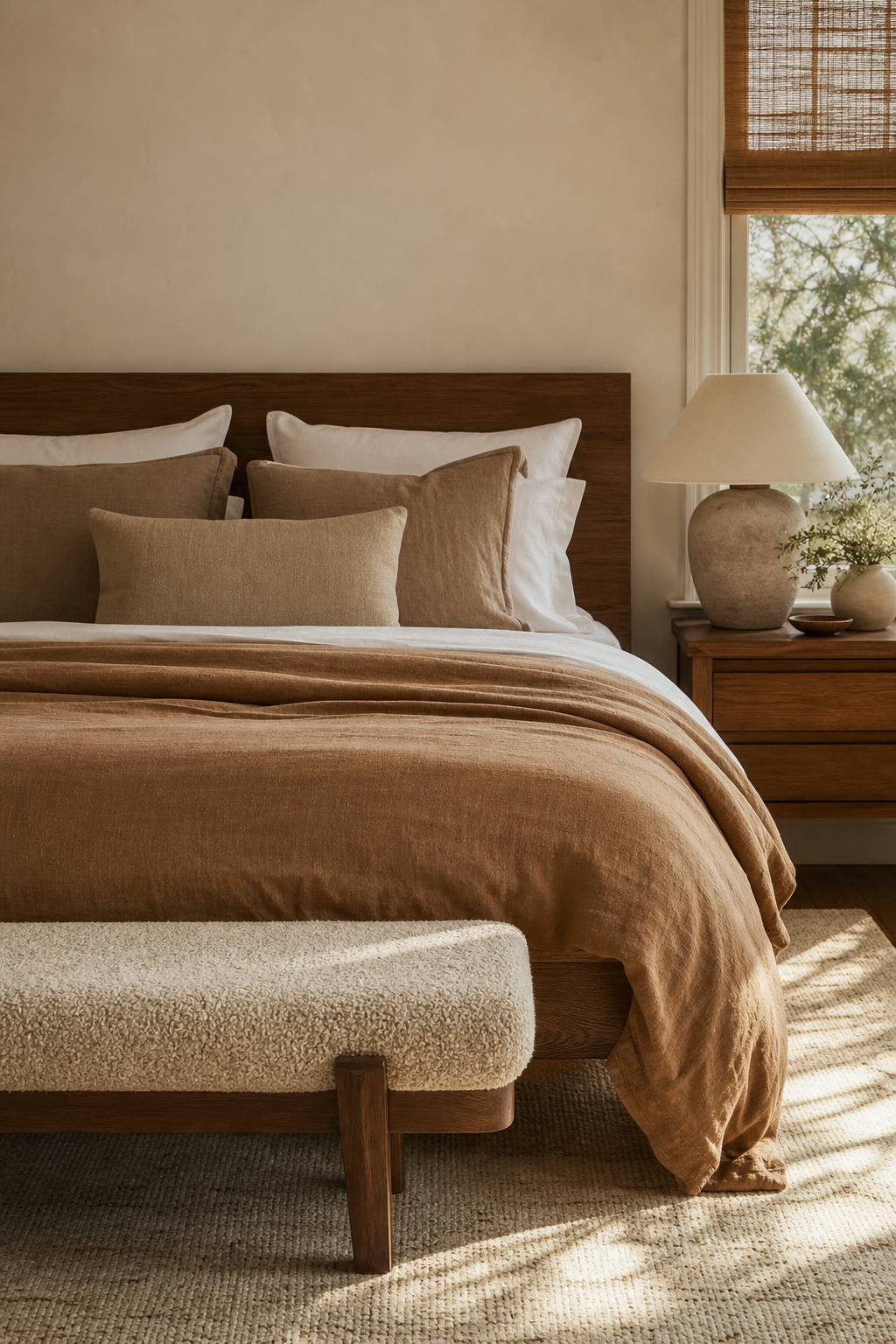
Caramel linen is an elegant way to warm up a neutral bedroom because it adds color and texture at once. Use it as a duvet cover, oversized throw, or pair of large pillows against white sheets. The shade is rich enough to feel cozy but still sophisticated beside ivory, taupe, tobacco, and walnut. To keep the look elevated, choose bedding with a naturally rumpled drape rather than heavy shine. A boucle bench, plaster lamp, or woven shade will reinforce the softness. This palette benefits from generous contrast, so add a pale rug under the bed and crisp white pillowcases near the face. The room should feel like late afternoon light: warm, relaxed, and flattering, with every layer inviting touch rather than demanding attention.
3. Soft Amber Lighting
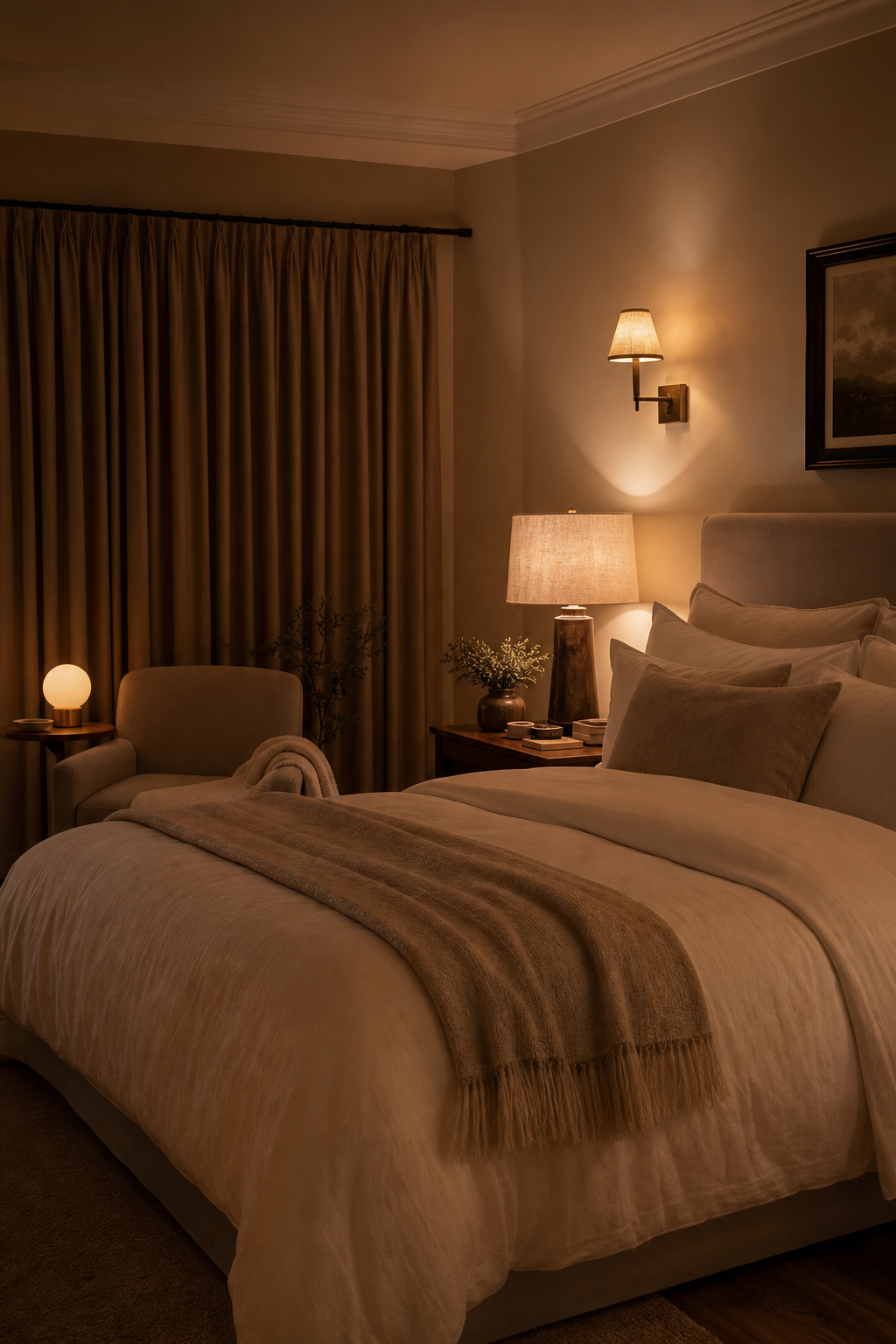
Lighting is often the difference between a bedroom that looks decorated and one that feels deeply comfortable. For a warm aesthetic, avoid relying on a single overhead fixture. Use shaded table lamps, wall sconces, and perhaps a small floor lamp near a reading chair. Bulbs should cast a warm tone, while shades in linen, parchment, or opal glass diffuse the light gently. Place lamps low enough that they flatter the bedding and create pools of glow on wood and fabric. Dimmer switches are worth adding if possible. The decor can stay simple because the light does so much emotional work. A warm bedroom with amber lamps, closed curtains, and layered bedding feels instantly more private, even when the furniture itself is quiet and minimal.
4. Cocoa And Cream Palette
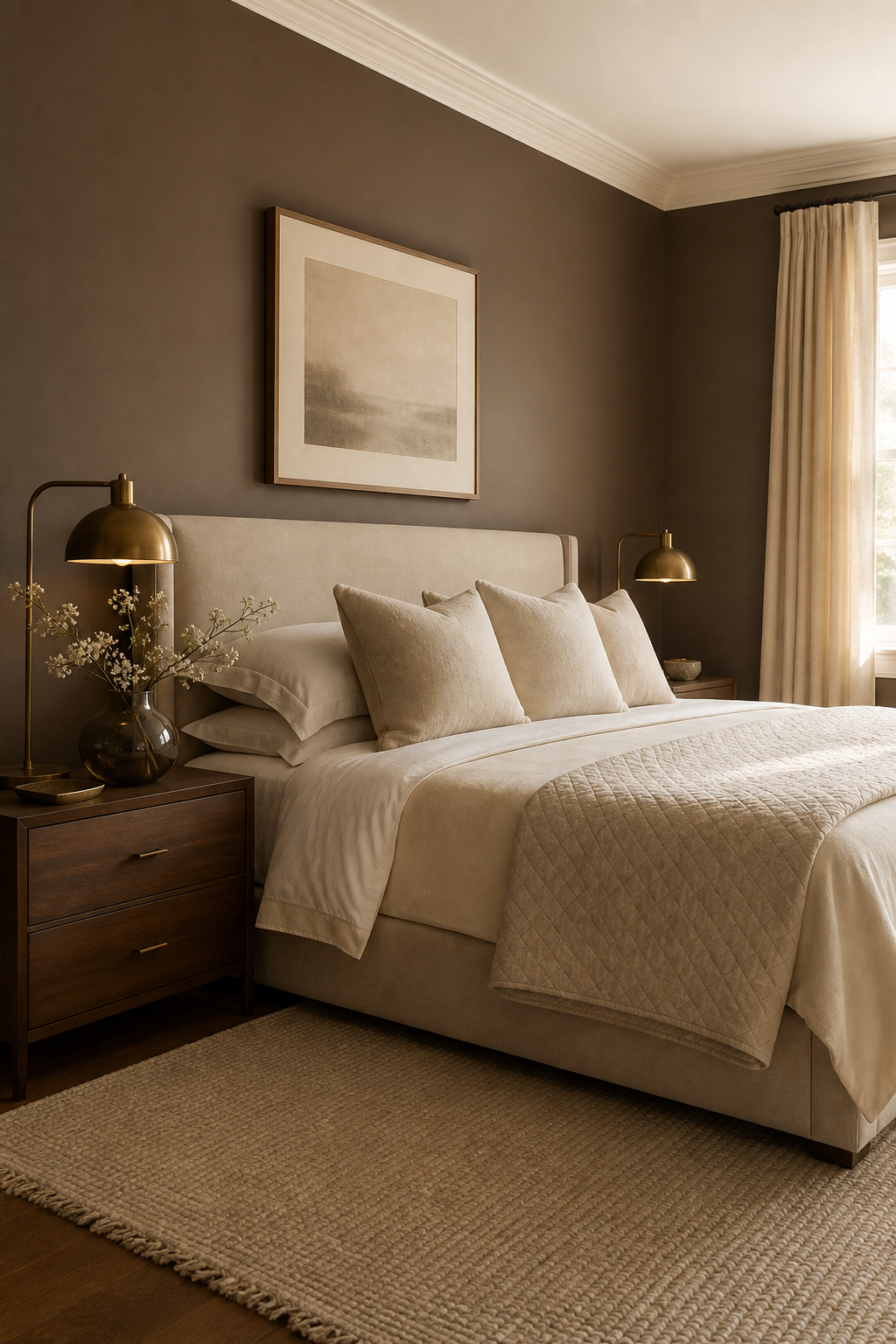
Cocoa and cream is a richer alternative to all-white bedding. Paint the walls a soft cocoa, mushroom brown, or warm taupe, then layer the bed with cream sheets and a lighter quilt. This contrast gives the room depth while keeping it restful. Walnut, bronze, aged brass, and smoked glass all suit the palette, especially in lamps and hardware. If the room is small, keep the ceiling and trim lighter to prevent the color from closing in too much. A textured rug in oatmeal or ivory will brighten the floor and make the bed feel grounded. This aesthetic works especially well with tailored furniture because the colors already provide softness. The final effect is polished, enveloping, and calm enough for everyday sleep.
5. Woven Texture Retreat
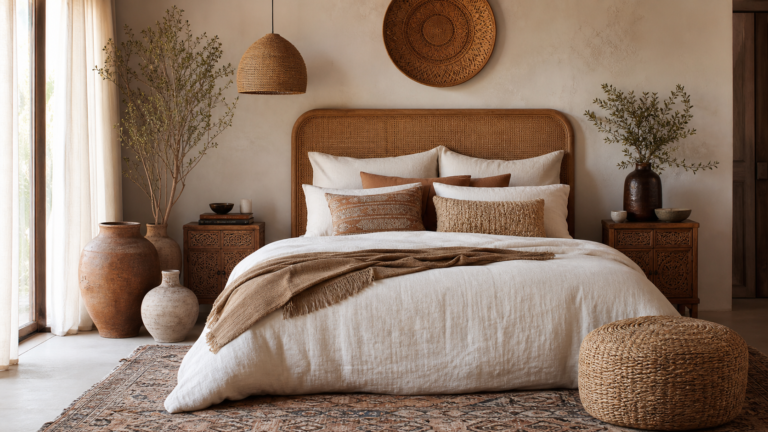
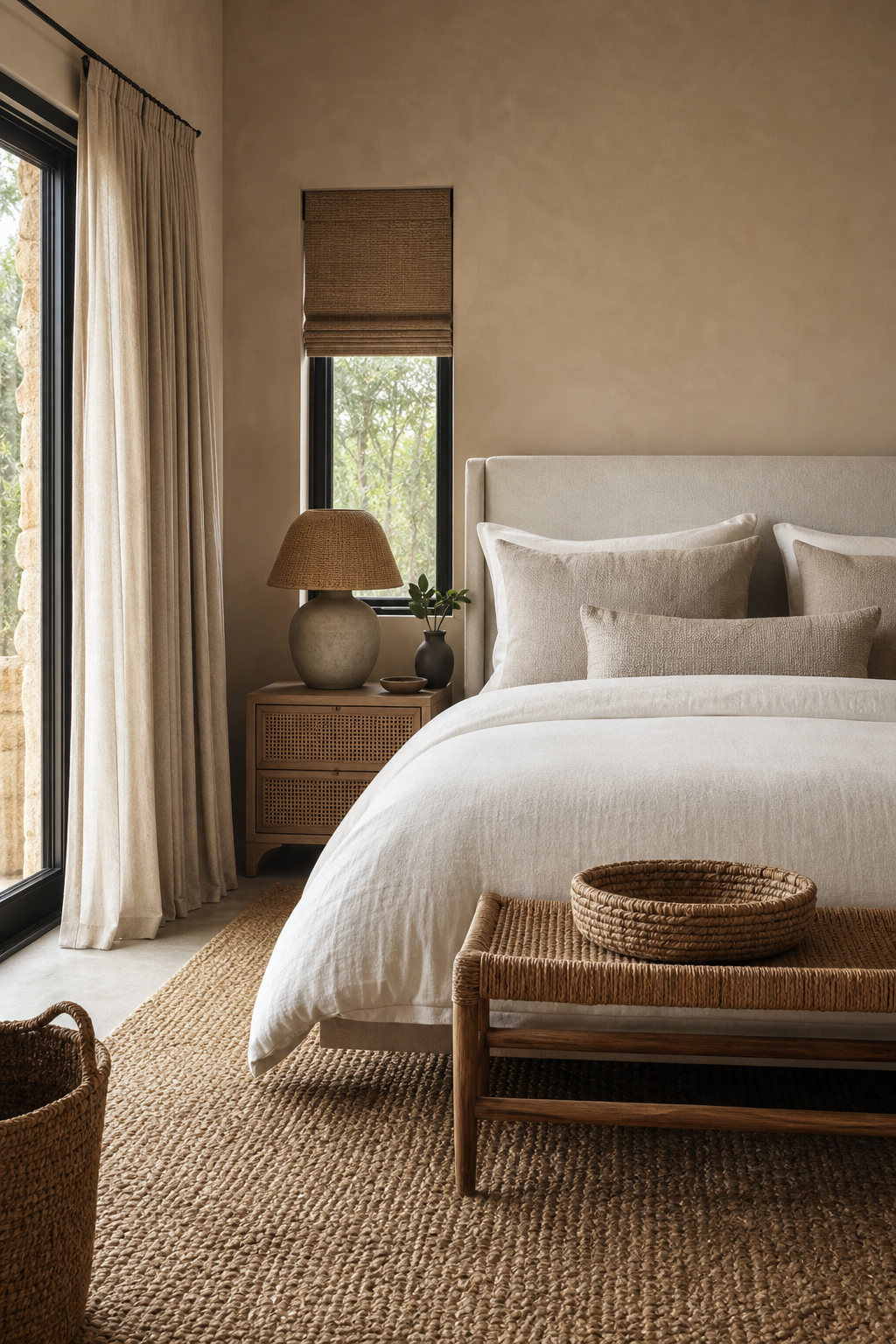
Woven texture creates warmth without needing strong color. Start with a jute, sisal, or wool-blend rug large enough to extend beyond both sides of the bed. Add rattan, cane, seagrass, or rush details through a bench, lampshade, basket, or cabinet door. These materials are casual, so balance them with refined bedding and a well-proportioned headboard. A palette of warm white, sand, almond, and soft brown keeps the room cohesive. Avoid too many small woven accessories; two or three strong pieces look more expensive. The best woven bedrooms feel airy rather than rustic, especially when paired with linen curtains and natural daylight. This approach is perfect when you want a room that feels relaxed, tactile, and quietly luxurious without becoming visually heavy.
6. Terracotta Accent Warmth
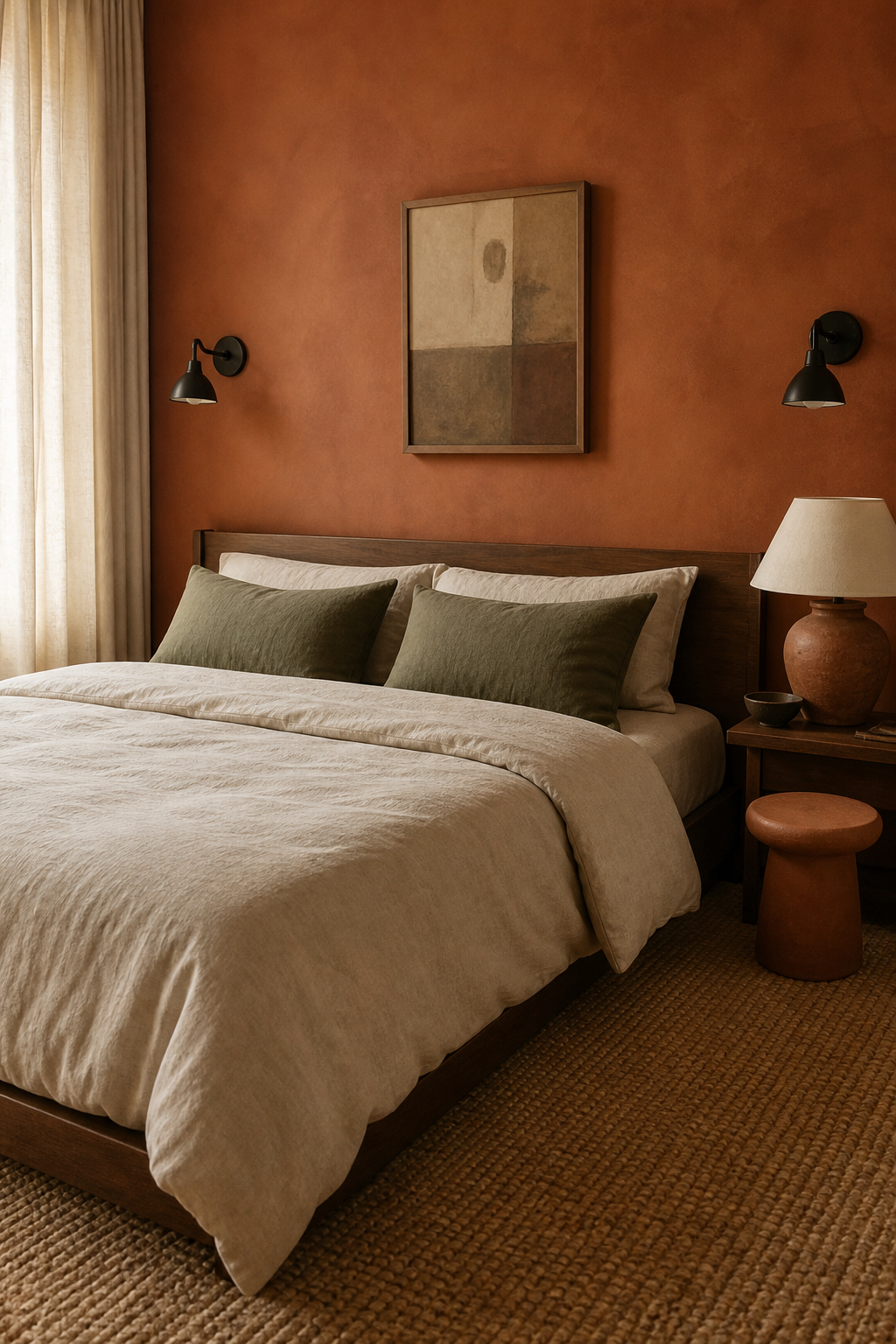
Terracotta brings an earthy warmth that feels more distinctive than ordinary beige. Use it in limited but confident doses: pillows, a throw, a ceramic lamp, or a small upholstered stool. The color pairs beautifully with cream, olive, dark wood, plaster, and blackened metal. If you want more impact, choose a terracotta limewash wall behind the bed, but keep the bedding pale so the room still feels restful. Terracotta should look sun-warmed rather than bright orange, so choose muted clay tones with depth. Natural materials help the shade settle into the room: linen, leather, wool, and stone. A terracotta accent bedroom feels grounded and mature when the color is repeated three times around the room, each time in a different texture.
7. Fireplace Bedroom Glow
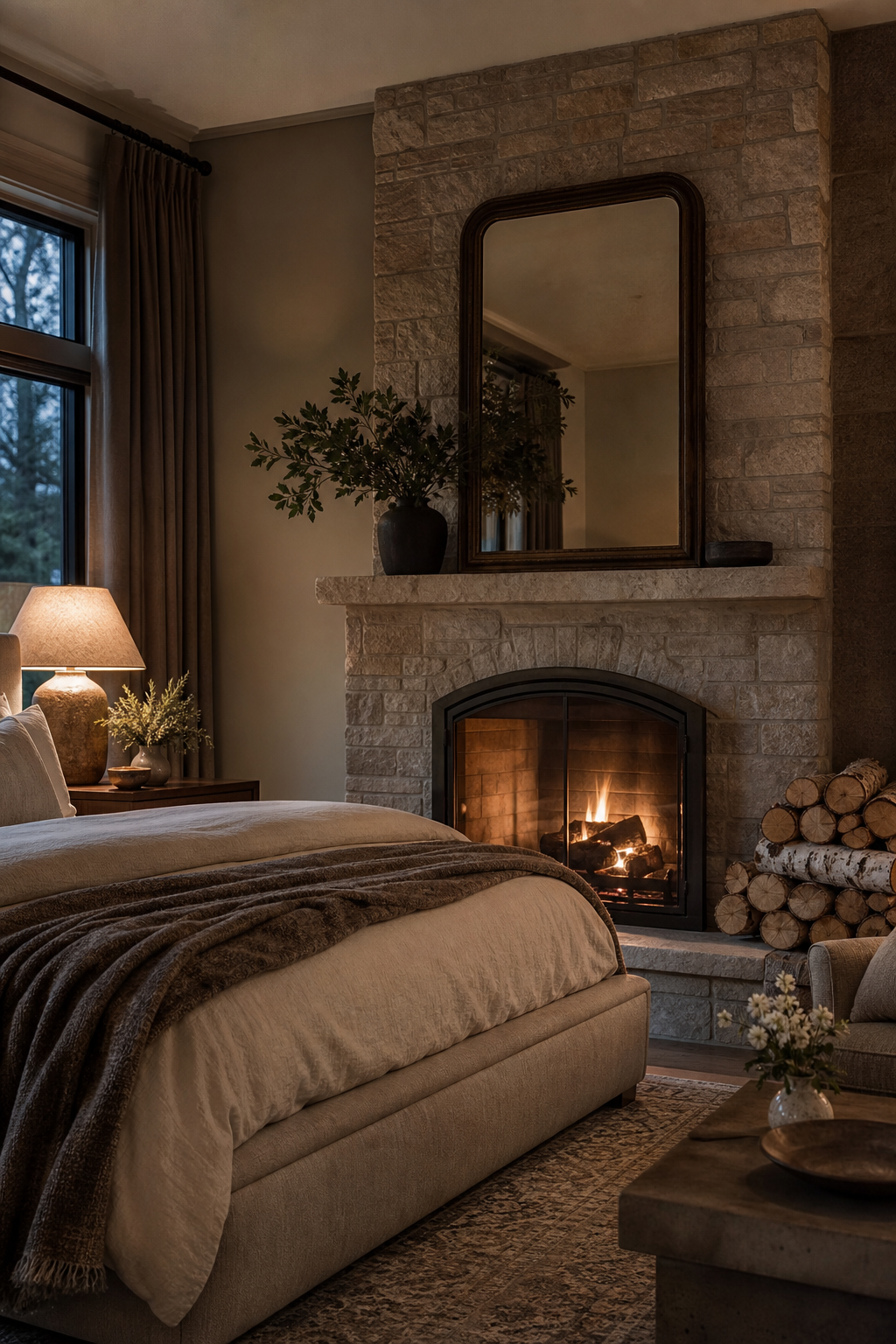
A bedroom fireplace, whether working or decorative, can become the emotional center of the room. Treat it as architecture rather than an accessory. Arrange the bed so the fireplace is visible if the layout allows, then keep surrounding furniture low and calm. Stone, plaster, brick, or carved wood mantels all create warmth, especially when paired with layered rugs and linen bedding. If the fireplace is decorative, fill it with stacked birch logs, a large vessel, or pillar candles used safely. Avoid crowding the mantel with small objects. One mirror or artwork above it is usually enough. The warmth should feel architectural and atmospheric. With soft lamps, heavy curtains, and a wool throw, the room becomes a retreat made for slow evenings.
8. Deep Olive Cocoon
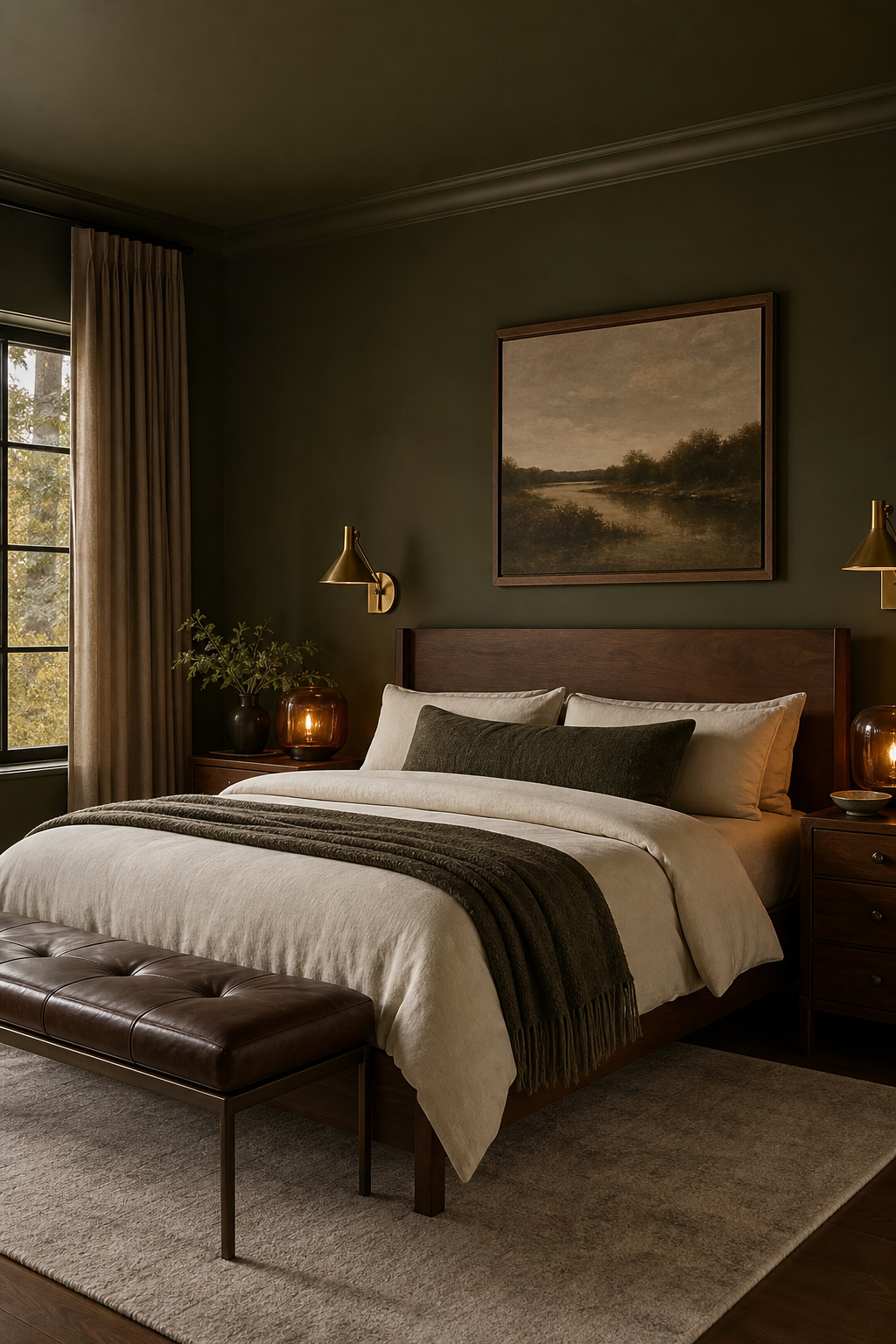
Deep olive is a beautiful warm bedroom color because it has depth without the severity of black or charcoal. Use it on walls, built-ins, or drapery, then balance it with cream bedding and warm wood. Brass, leather, and amber glass look especially good against olive because they pick up its golden undertone. This palette suits bedrooms that receive evening light, where the color becomes rich and cocooning. To prevent heaviness, choose a pale rug and keep the bedding visually soft. Artwork with muted landscape tones can connect the room to nature without adding clutter. Deep olive works best when the finish is matte, not glossy. The result is cozy and sophisticated, with a quiet enveloping quality that still feels fresh.
9. Toasted Neutral Bedding
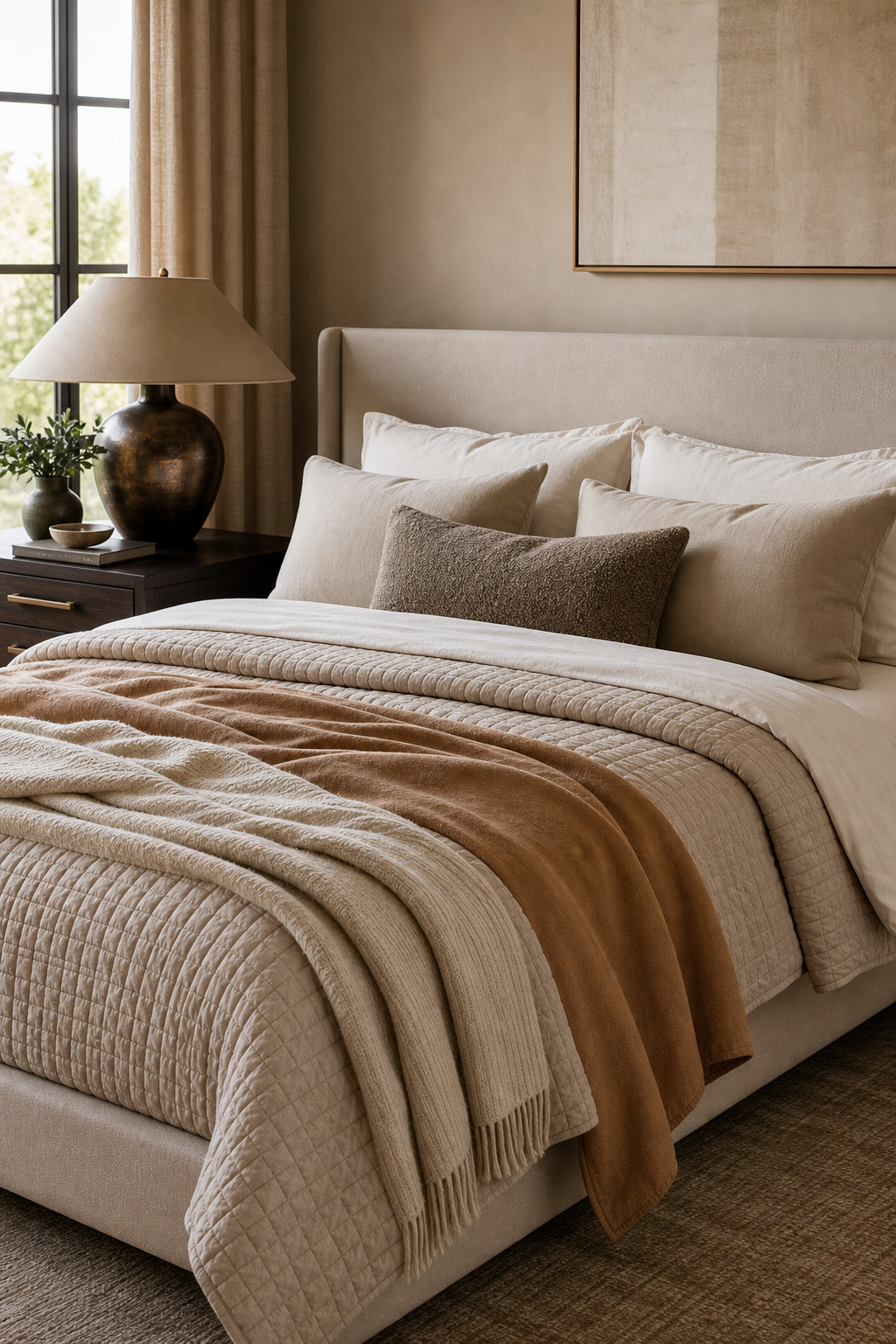
Toasted neutrals make a bed look inviting without relying on bold pattern. Layer ivory sheets with oat, camel, almond, and taupe blankets, then vary the textures so the colors do not blur together. A quilted coverlet, brushed cotton duvet, boucle pillow, and ribbed wool throw can all sit in the same palette while feeling distinct. Keep the furniture clean and substantial; too many dainty pieces can make a neutral room feel thin. Add contrast with a dark wood nightstand or aged bronze lamp. This aesthetic is easy to refresh because the warmth comes from layering, not permanent finishes. It also photographs beautifully, which makes it a favorite for bedrooms that need to feel soft, polished, and quietly expensive.
10. Walnut Hotel Comfort
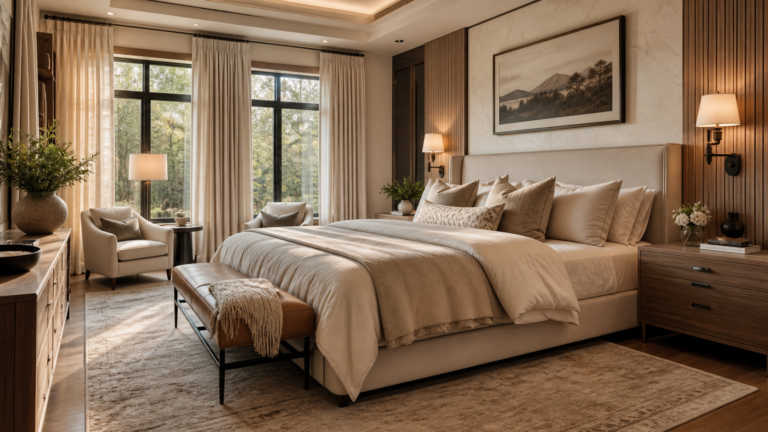
Walnut gives hotel-inspired bedrooms a residential warmth that glossy finishes often miss. Use it for nightstands, wall panels, a bench frame, or a built-in headboard wall. Then contrast the wood with white bedding, tailored pillows, and a plush rug. The room should feel ordered, so keep symmetry around the bed and choose lighting that can be reached easily from both sides. Warm metal accents, such as bronze or antique brass, make the walnut glow. Add one personal texture, perhaps a cashmere throw or woven tray, so the room does not feel anonymous. This aesthetic suits anyone who likes the calm of a suite but wants more soul. It feels crisp, practical, and indulgent at the same time.
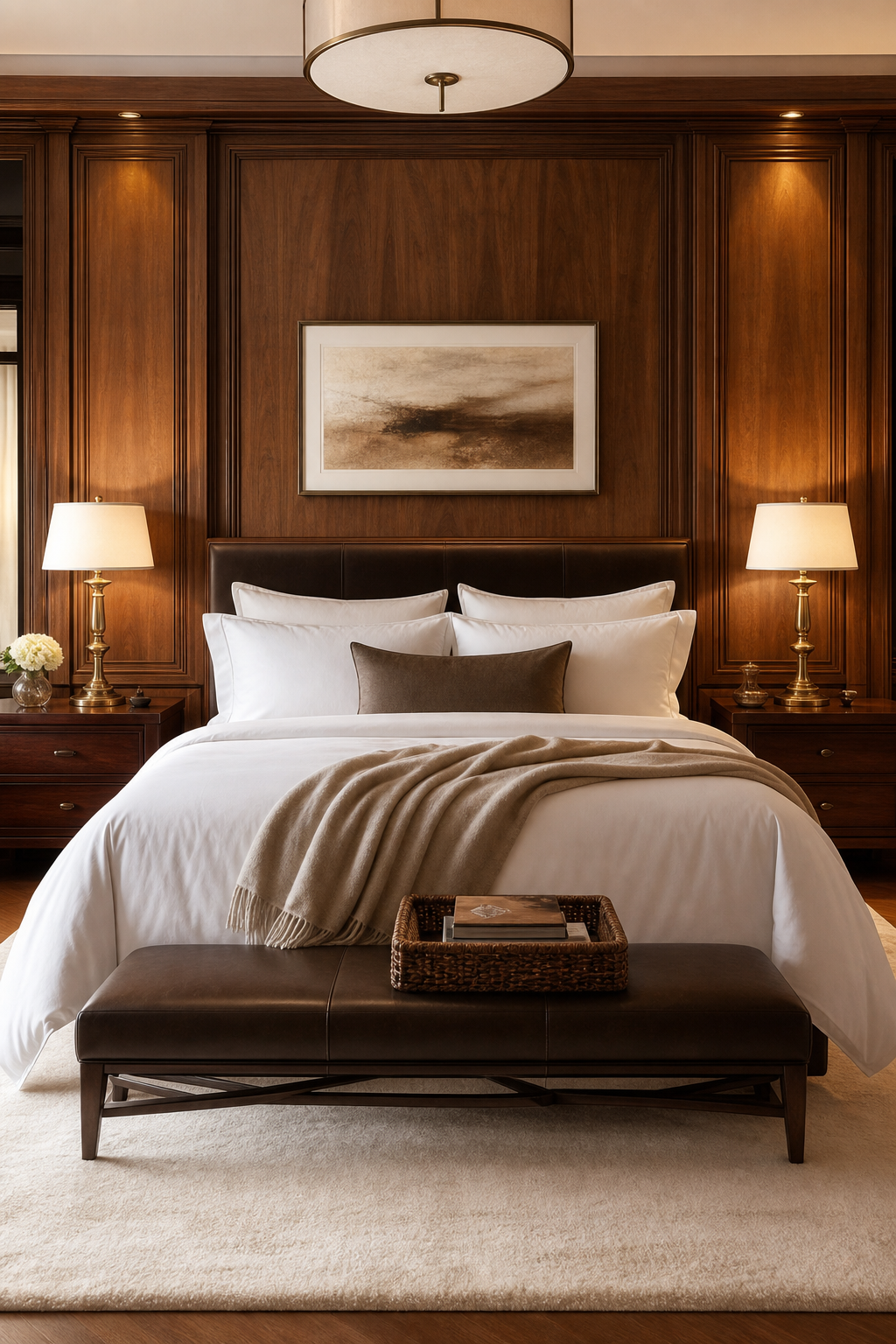
11. Blush Beige Serenity
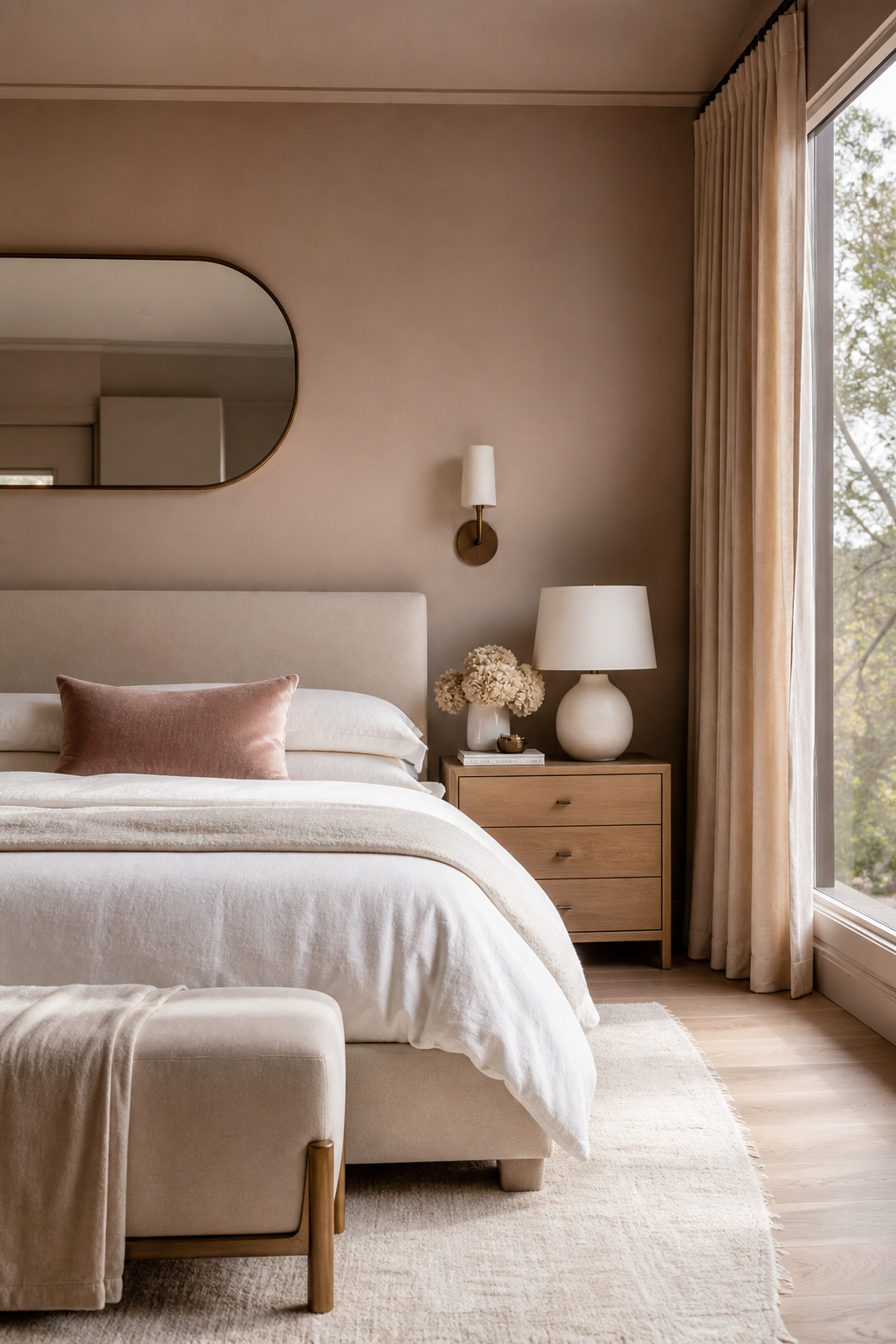
Blush beige is warm, flattering, and more nuanced than standard cream. It works beautifully on walls, bedding, or drapery, especially when paired with natural oak and soft white. The key is choosing a muted blush with brown or beige undertones rather than a sugary pink. Add texture through linen, velvet, wool, and matte ceramic so the palette feels grown-up. A blush beige bedroom can lean romantic, but it does not need ruffles to feel soft. Try a simple upholstered bed, a curved mirror, and lamps with linen shades. To ground the sweetness, add one darker accent such as walnut, aged bronze, or charcoal artwork. The result is gentle, luminous, and calm enough for a primary bedroom.
12. Layered Rug Softness
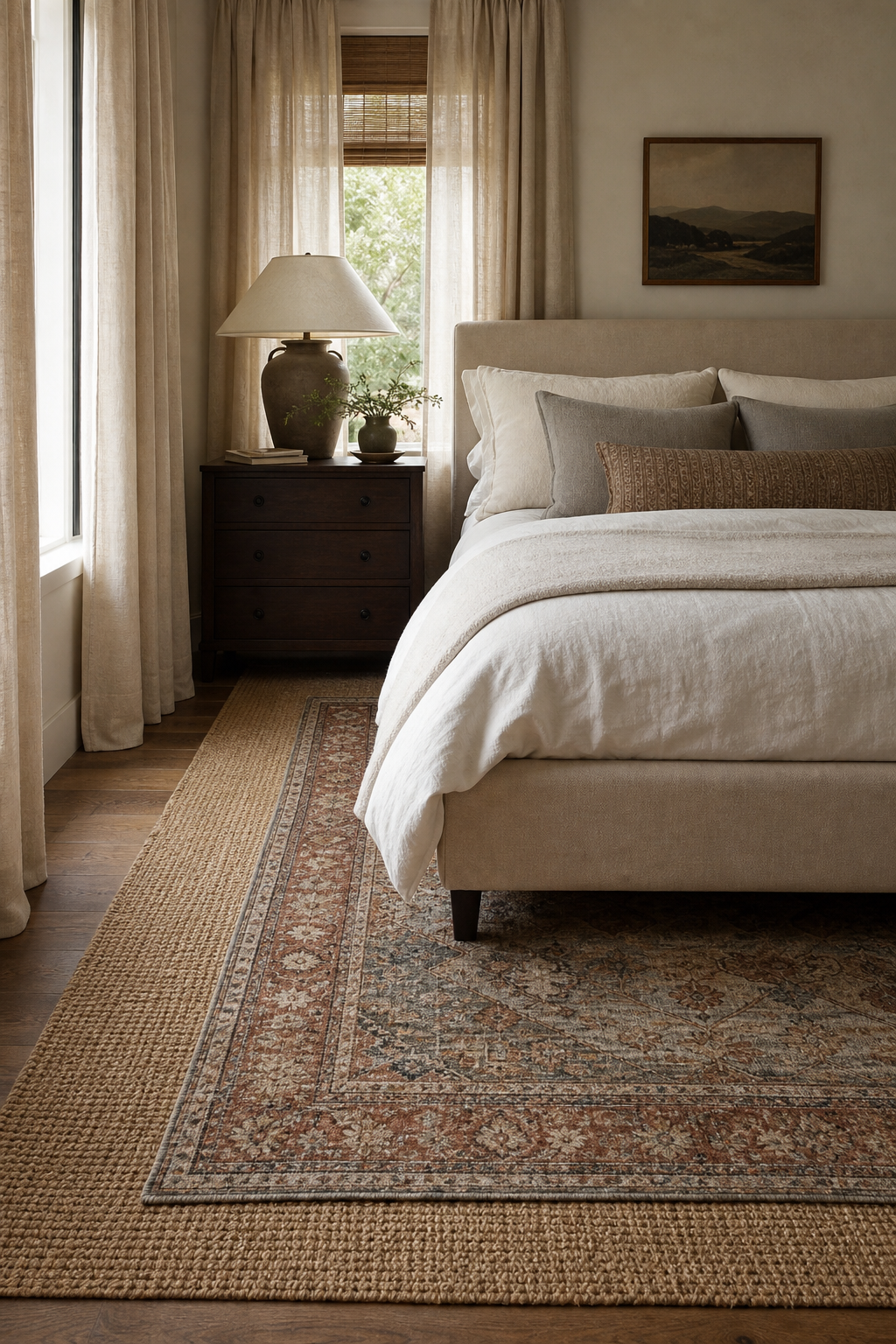
A generous rug changes the entire temperature of a bedroom. For a warm aesthetic, choose a wool, vintage-style, or thick woven rug that extends at least two feet beyond the sides of the bed. In larger rooms, layering a smaller patterned rug over a plain natural base adds depth and makes the bed zone feel intentional. The rug should relate to the bedding without matching it exactly. Rust, taupe, faded blue, cream, and brown are easy to live with. Keep the pile practical enough for doors and cleaning, but soft enough for bare feet. A bedroom with the right rug feels finished even before accessories are added. It quiets the room, softens acoustics, and makes the bed feel anchored.
13. Candlelit Reading Corner
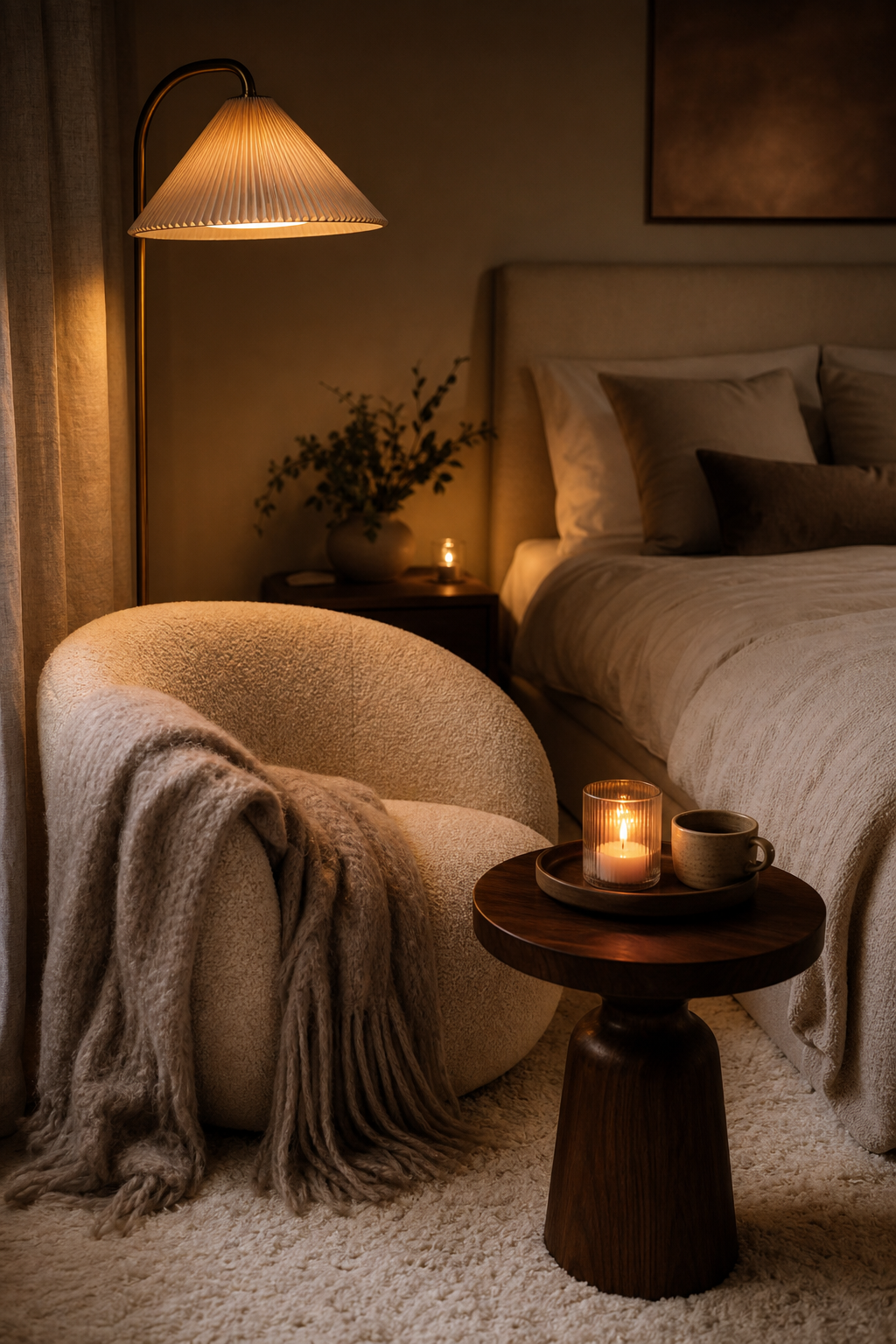
A bedroom feels more retreat-like when it includes one quiet place that is not the bed. A reading corner can be small: an upholstered chair, a floor lamp, a side table, and a soft throw are enough. Place it near a window if possible, but make sure the evening lighting is just as pleasant. Warm woods, boucle, velvet, or leather make the corner feel deliberate. Add a ceramic cup, a shallow tray, or a candle on the table, keeping safety and scale in mind. The chair should relate to the bed through color or fabric, but it does not need to match. This small zone makes the bedroom feel layered and personal, giving the room a ritual beyond sleep.
14. Vintage Wood Charm
Vintage wood furniture instantly warms a bedroom because it carries patina and irregularity. A chest used as a nightstand, an old dresser, or a carved bench can add more character than a full matching set. To keep the look stylish, pair vintage wood with fresh bedding and simple walls. The contrast makes the older piece feel intentional rather than inherited by accident. Choose one or two vintage elements, then let modern lamps, clean curtains, and a crisp rug balance them. Warm bedroom aesthetics often succeed through this mix: something smooth, something aged, something soft. If the wood tones differ, repeat each tone at least once in the room through frames, chair legs, or a tray so the arrangement feels collected.
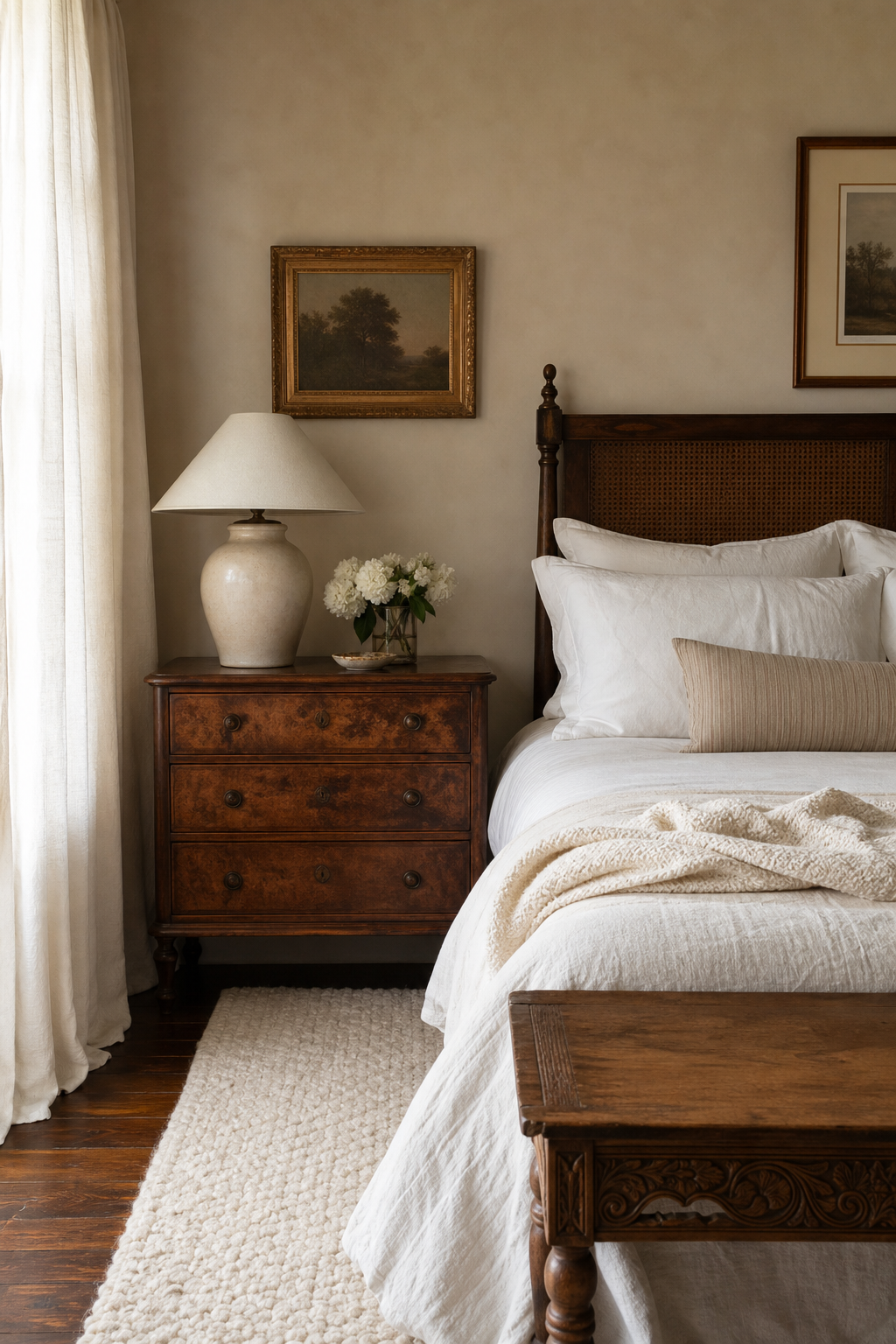
15. Cocooning Drapery
Drapery can make a bedroom feel warmer even when the walls are plain. Hang curtains high and wide so the fabric frames the windows generously, then choose linen, wool-blend, or velvet depending on the level of softness you want. Warm taupe, oatmeal, clay, and mushroom are versatile choices that filter daylight beautifully. For a more luxurious retreat, use blackout lining behind a relaxed face fabric. The room will sleep better and look more finished. Let the curtains touch or slightly break at the floor for a tailored but soft effect. Match the curtain rod to other hardware, such as lamp bases or drawer pulls, to create quiet cohesion. Cocooning drapery gives a bedroom privacy, height, and a graceful sense of enclosure.
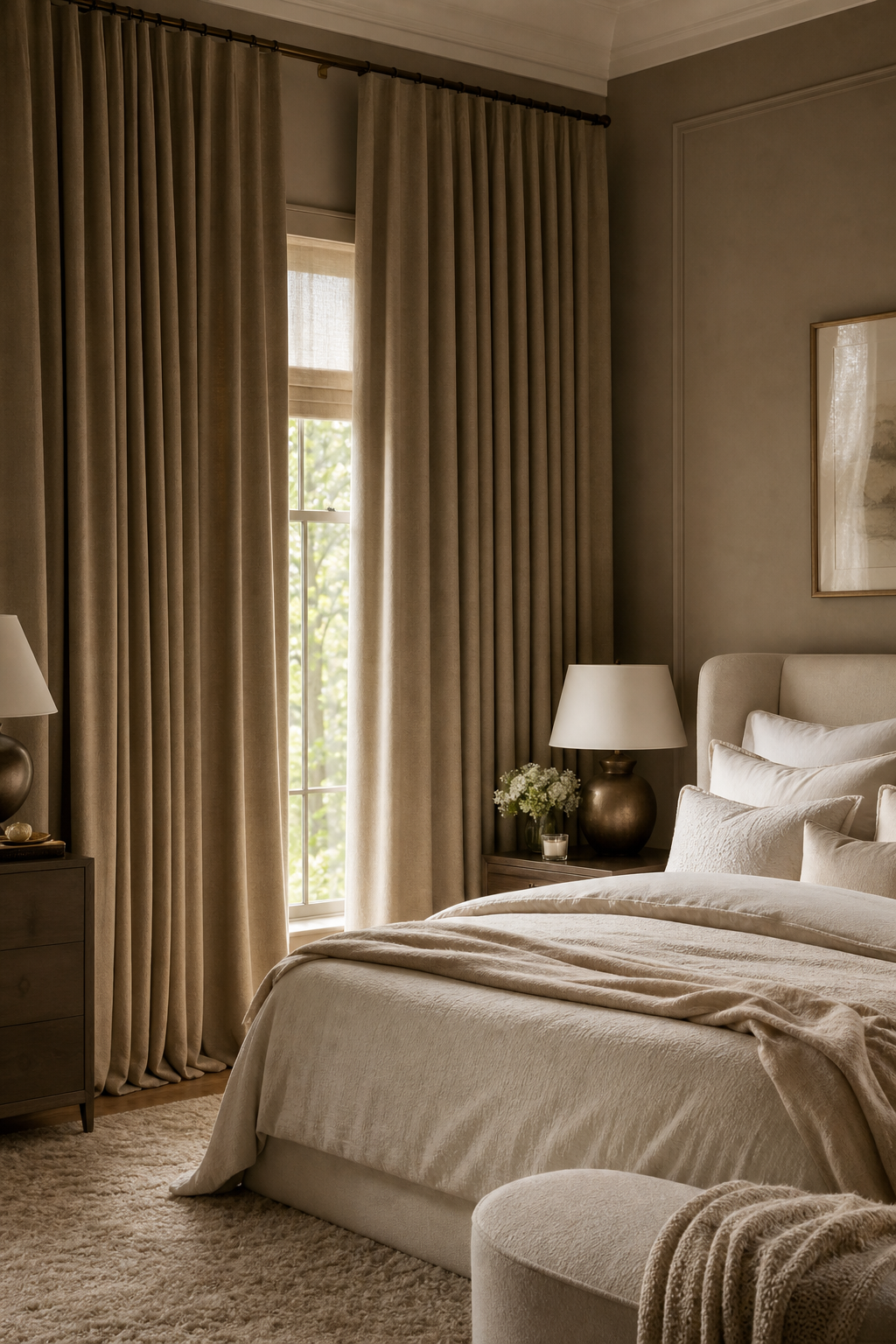
16. Plaster Wall Warmth
Plaster and limewash finishes add warmth because they catch light in a subtle, imperfect way. Even a simple bedroom can feel layered when the walls have movement. Choose warm white, greige, clay, or soft putty, then keep the furniture simple enough that the surface remains visible. This aesthetic works especially well with linen bedding, stone lamps, wood nightstands, and quiet art. Avoid glossy accessories that fight the matte softness. If a full plaster finish is not possible, a well-chosen limewash-style paint can still give depth. The room should feel handmade, not decorative. With natural light across the wall and a few tactile materials around the bed, plaster warmth creates a calm retreat that feels architectural and intimate.
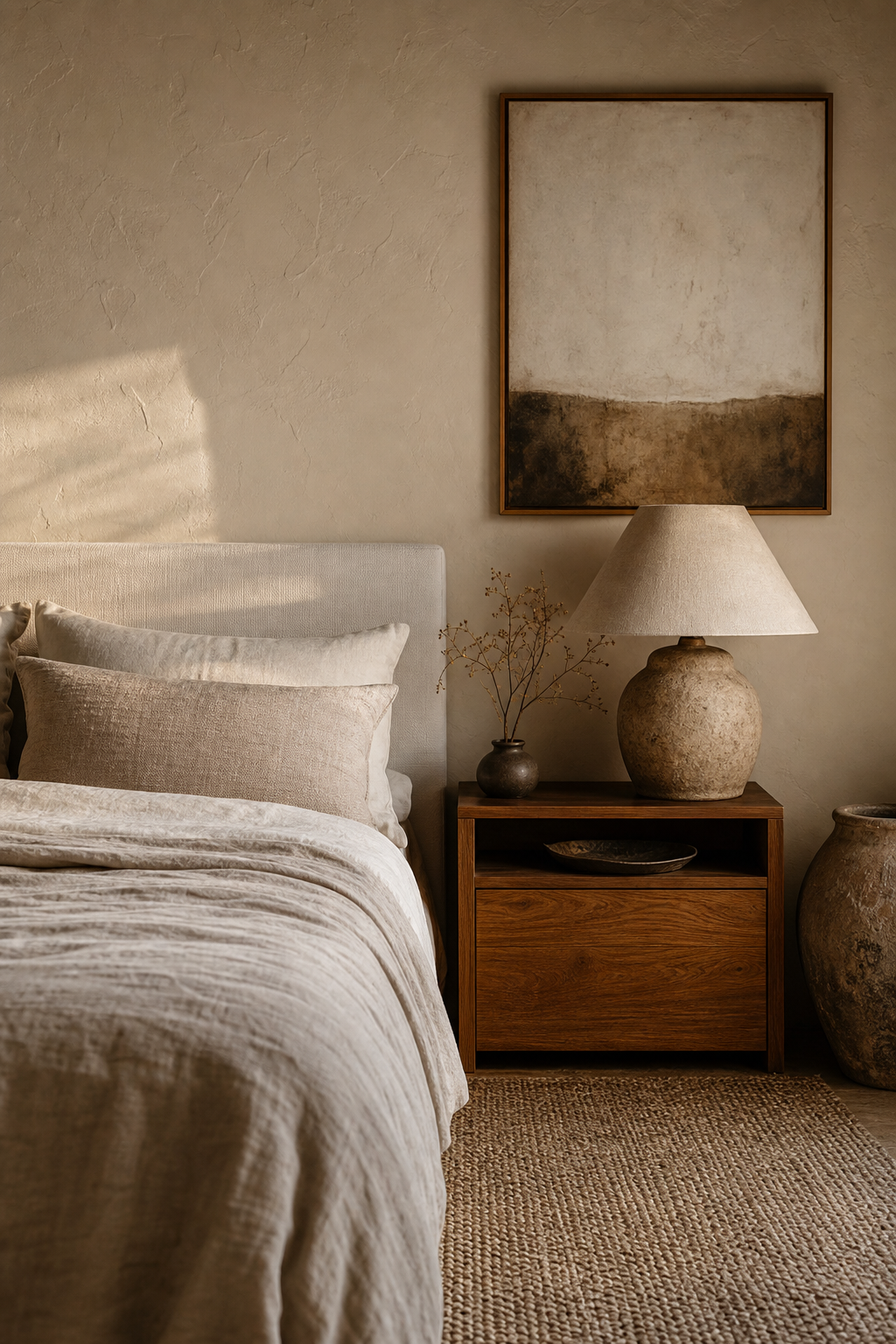
17. Earthy Spa Bedroom
An earthy spa bedroom feels warm because it is edited, tactile, and sensory. Use a palette of warm white, stone, sand, eucalyptus, and pale wood. Keep surfaces uncluttered, but choose materials that feel good: washed linen, cotton towels, wool rugs, smooth ceramics, and a wood bench. Lighting should be gentle and layered, with no harsh ceiling glare. Add greenery sparingly, such as olive branches or eucalyptus in a heavy vase, and consider a small tray for bedtime essentials. The bed should look soft rather than formal, with pillows arranged for comfort first. This aesthetic is ideal for anyone who wants a retreat that feels clean but not cold. It turns warmth into a quiet daily ritual.
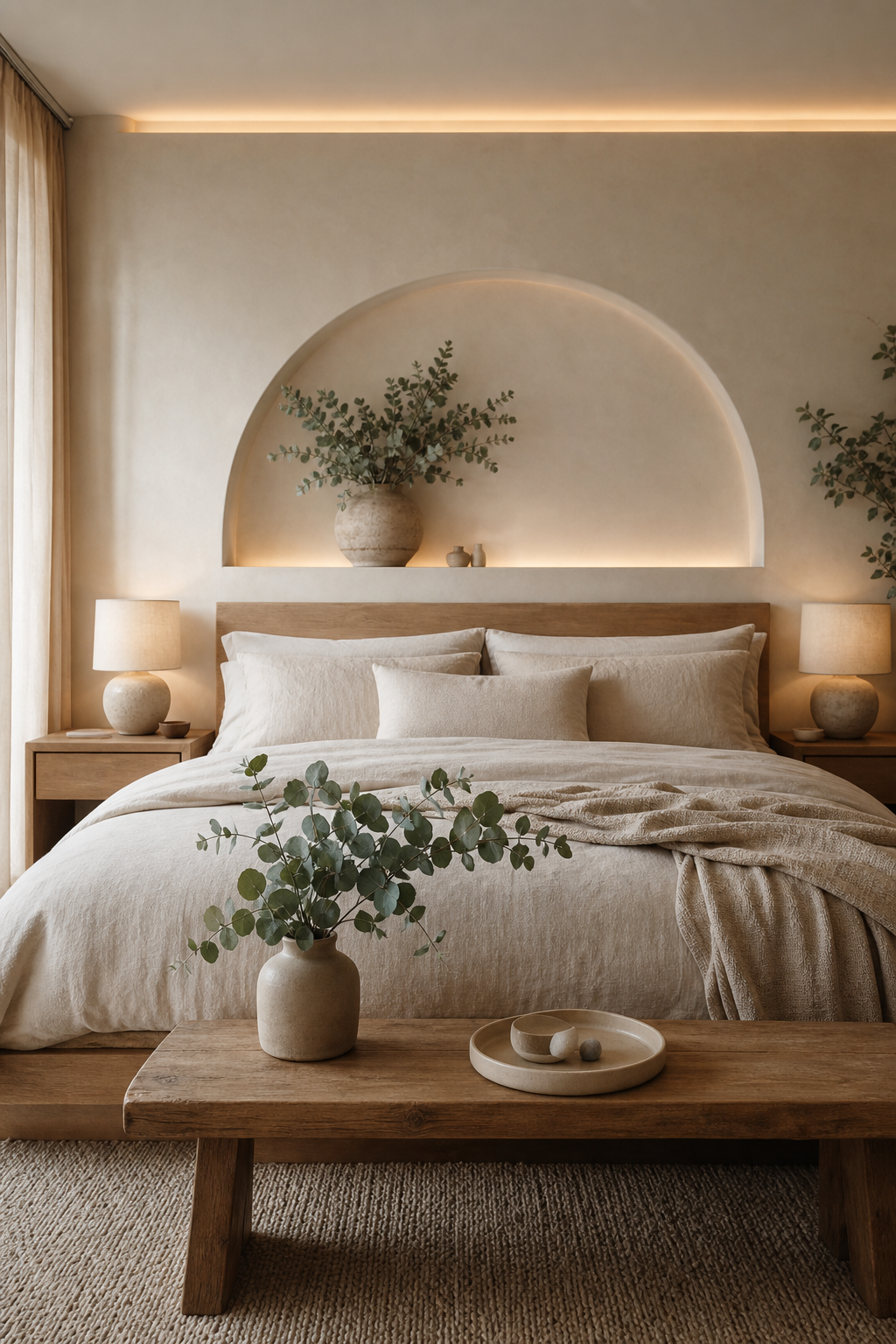
A warm bedroom aesthetic is built through small decisions that add up: generous rugs, softened light, wood with depth, bedding that invites touch, and colors that flatter the room at every hour. Choose the version that suits your home, then repeat its warmth through two or three materials instead of filling the space with objects. The most stylish retreat is often the one that feels simplest to return to.