15 Bedroom Layout Ideas For A Cozy Stylish Retreat
A beautiful bedroom layout is never only about where the bed goes. It is about how the room receives light, how you move through it at night, where fabric softens the architecture, and how each piece supports rest without feeling overdesigned. The most inviting bedrooms combine proportion, comfort, and a clear point of view: a well-scaled bed, generous texture, thoughtful lighting, and enough negative space for the room to breathe. These bedroom layout ideas approach the space like a private retreat, balancing luxury finishes with everyday function so the room feels polished, warm, and deeply livable.
1. Center The Bed On The Strongest Wall
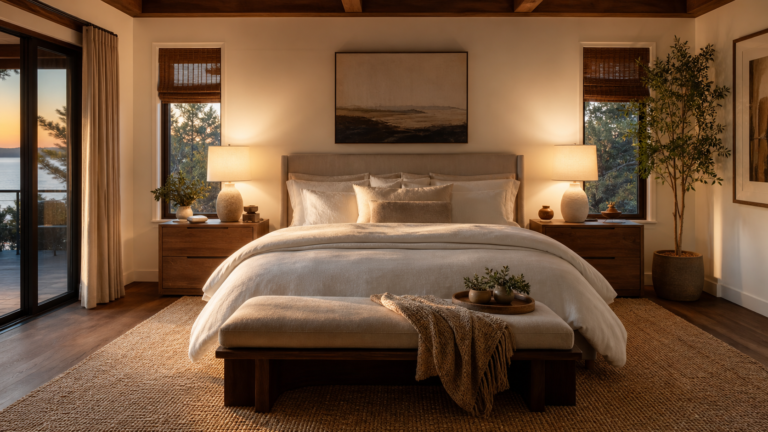
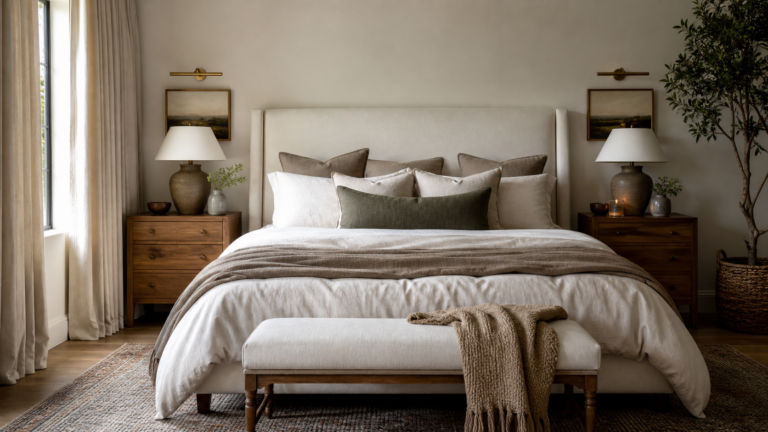
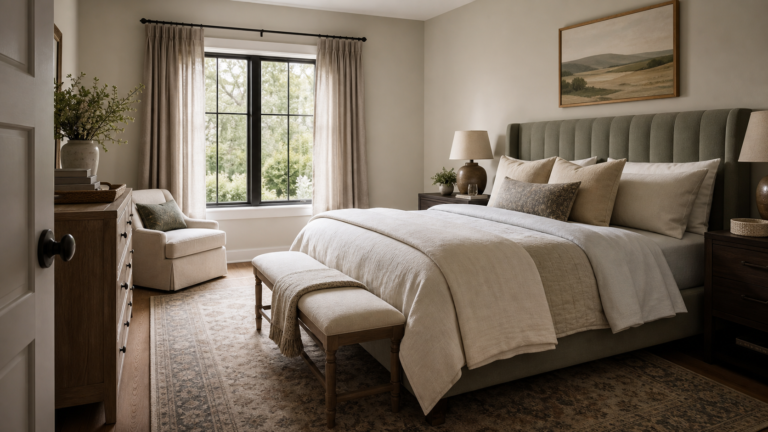
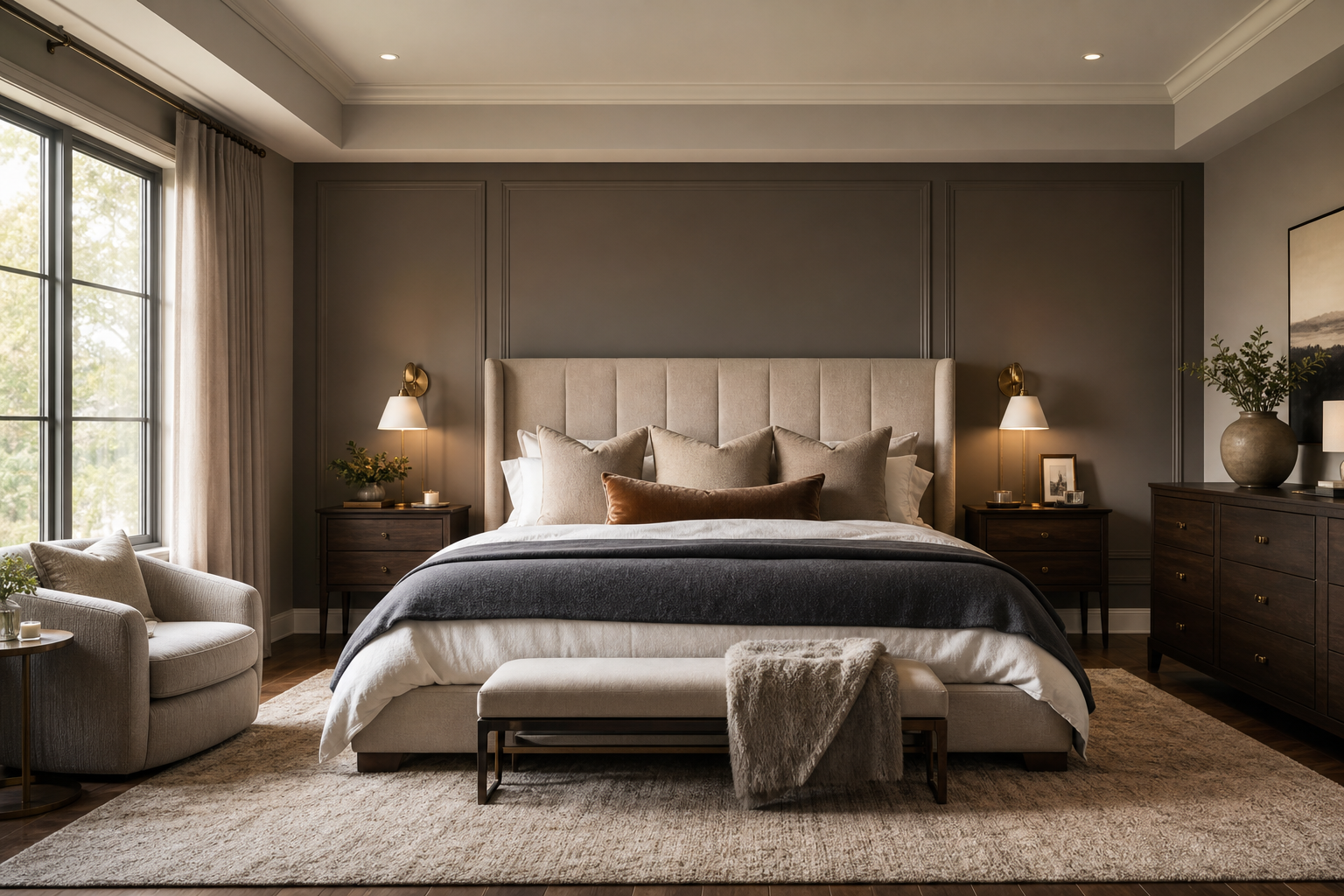
The most classic bedroom layout begins with one decisive move: centering the bed on the room’s strongest wall. This creates instant order and gives the eye a natural focal point as soon as you enter. Choose the longest uninterrupted wall when possible, then frame the bed with matching nightstands, sculptural lamps, and a headboard substantial enough to anchor the composition. In a cozy retreat, symmetry should feel soft rather than rigid, so layer relaxed linen bedding, a cashmere throw, and plump pillows in tonal shades of ivory, mushroom, and warm gray. A large wool rug beneath the bed adds quiet luxury and absorbs sound, while wall sconces free the nightstands from clutter. Keep circulation generous on both sides, even in smaller rooms, so the layout feels intentional rather than squeezed.
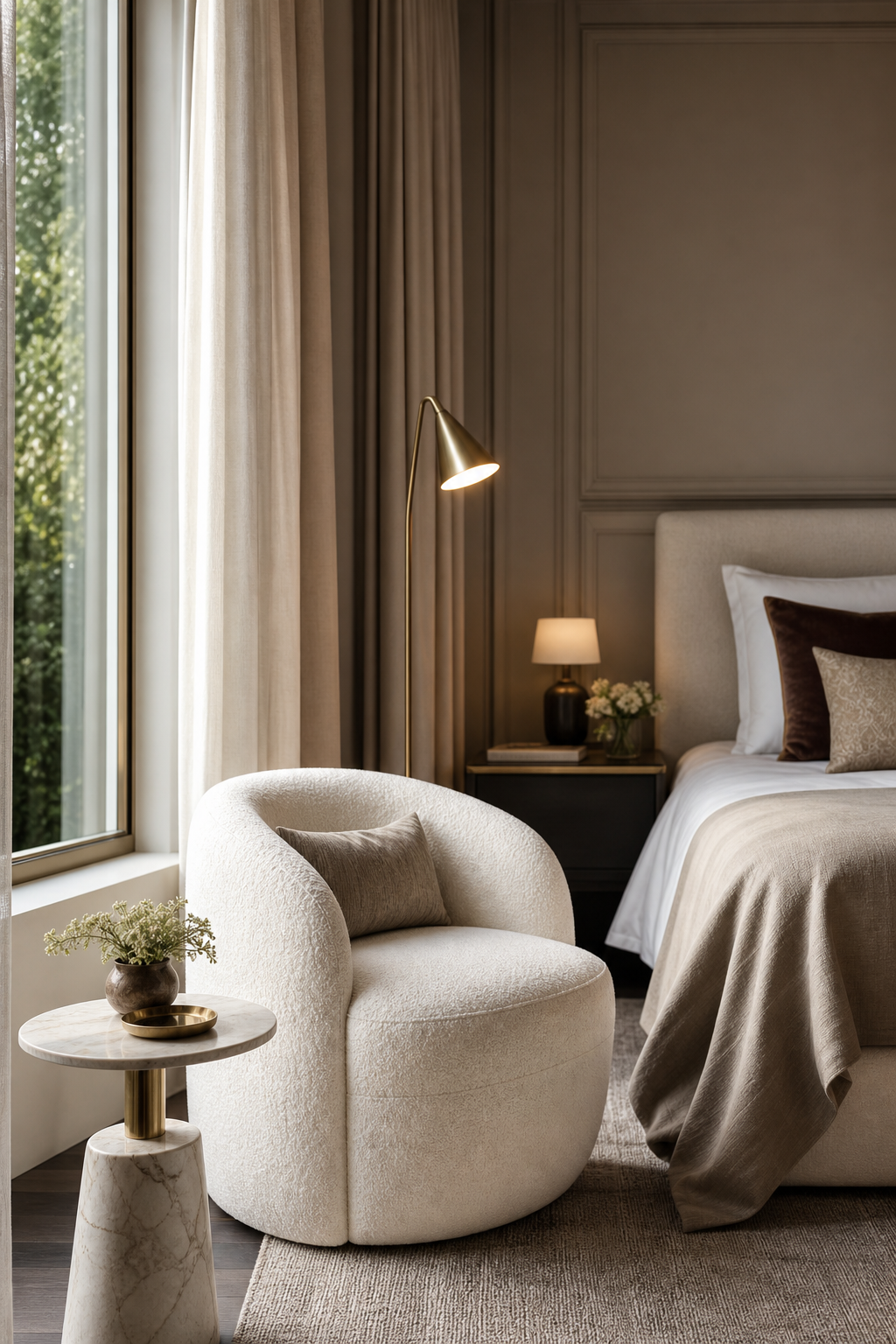
2. Float A Reading Chair By The Window
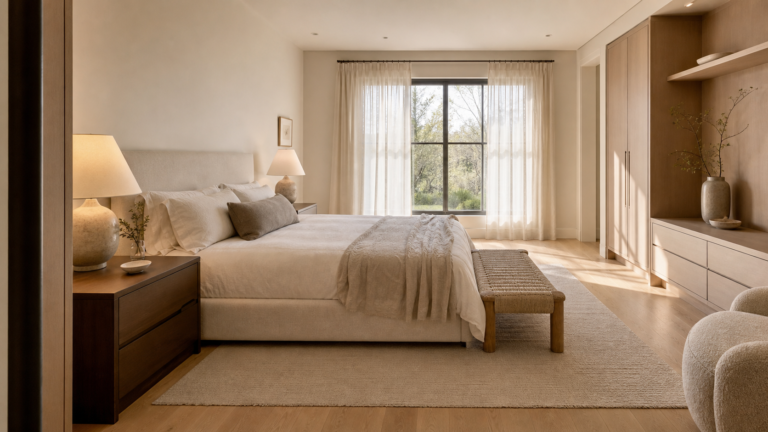
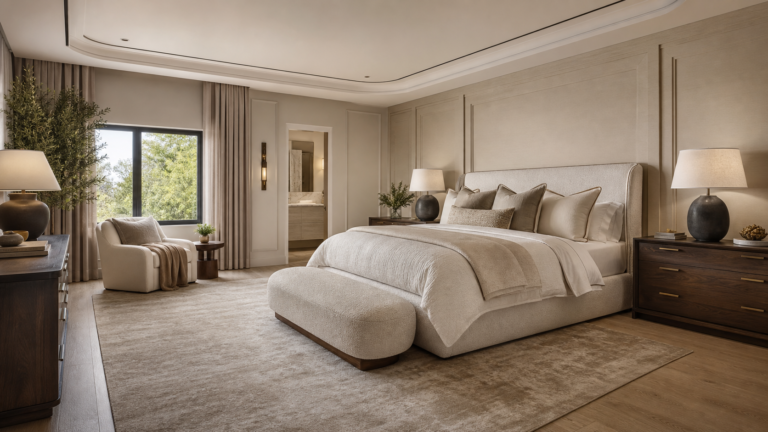
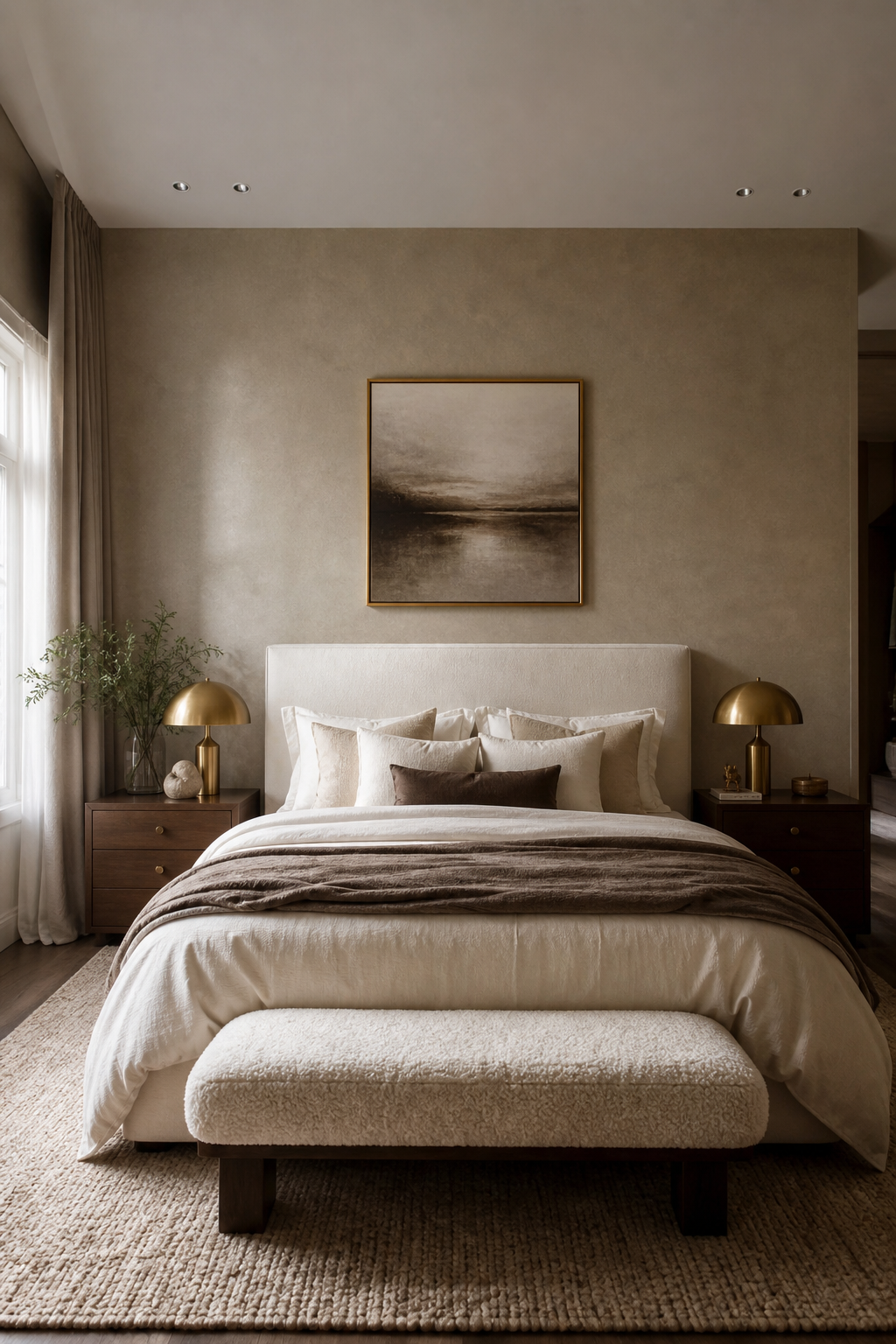
A bedroom becomes more retreat-like when it offers a second purpose beyond sleep. If there is a window with good natural light, float a comfortable reading chair nearby instead of pushing every piece against the walls. A curved bouclé chair, small marble-topped table, and slim floor lamp can transform an unused corner into a graceful pause point. Angle the chair slightly toward the bed or view so the arrangement feels conversational, not forgotten. This layout works especially well in rooms with a long rectangular footprint because it balances the visual weight of the bed. Add a soft sheepskin, textured cushion, or mohair throw to deepen the sense of comfort. The key is restraint: one beautifully scaled chair is more luxurious than a crowded seating area that interrupts movement.
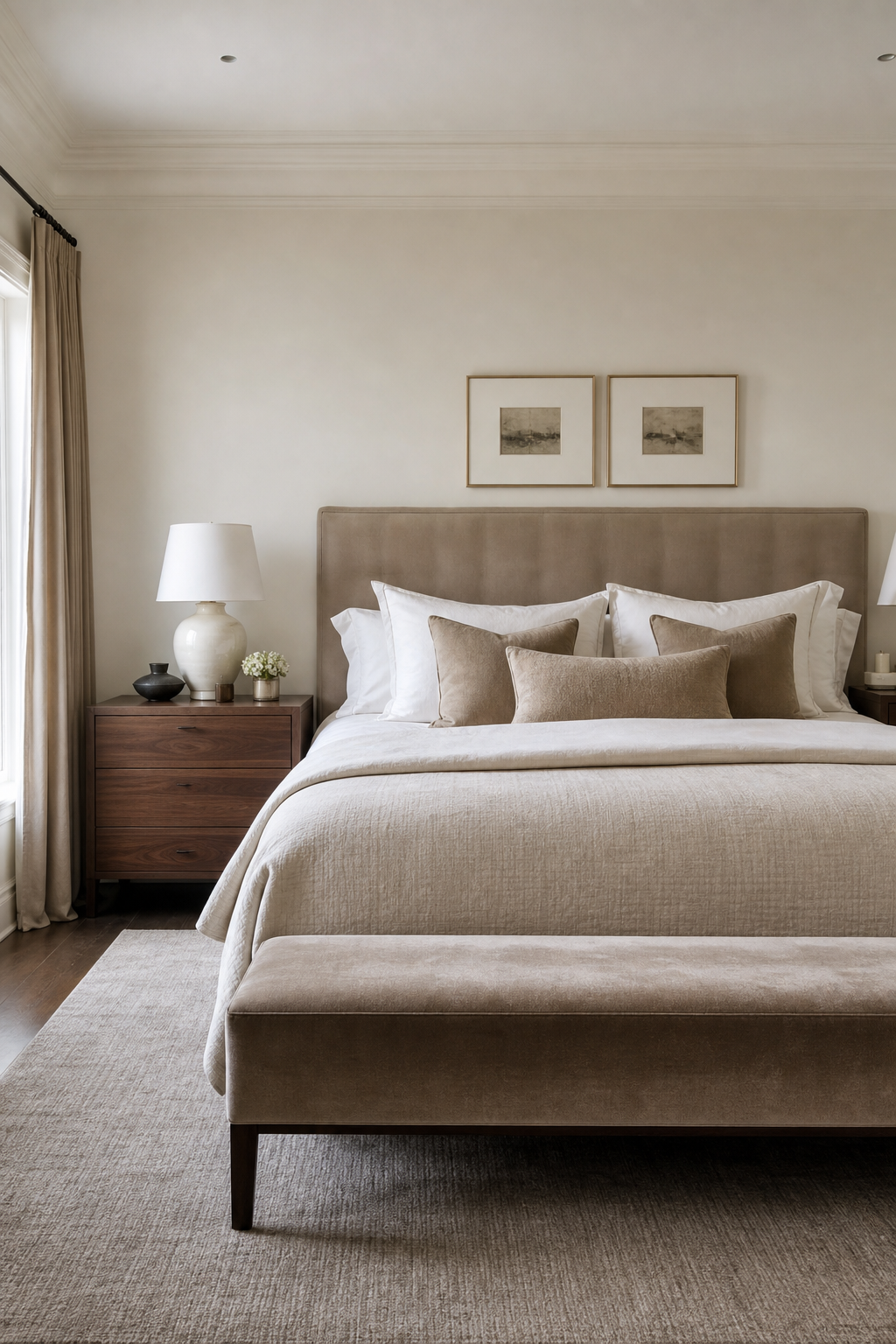
3. Use A Bench To Finish The Foot Of The Bed
A bench at the foot of the bed gives a bedroom a tailored, hotel-suite quality while adding practical function. It provides a place to sit, set down a robe, or arrange folded throws without disturbing the bedding. For a cozy stylish retreat, choose a bench that is slightly narrower than the mattress and low enough to keep the bed as the hero. Upholstered designs in velvet, linen, or nubby wool soften the room, while a wood or leather frame adds structure. This layout is especially effective when the bed faces a fireplace, dresser, or view, because the bench creates a graceful transition between zones. Keep the surrounding floor clear and use a rug large enough to extend beyond the bench, so the entire bed area feels grounded and complete.
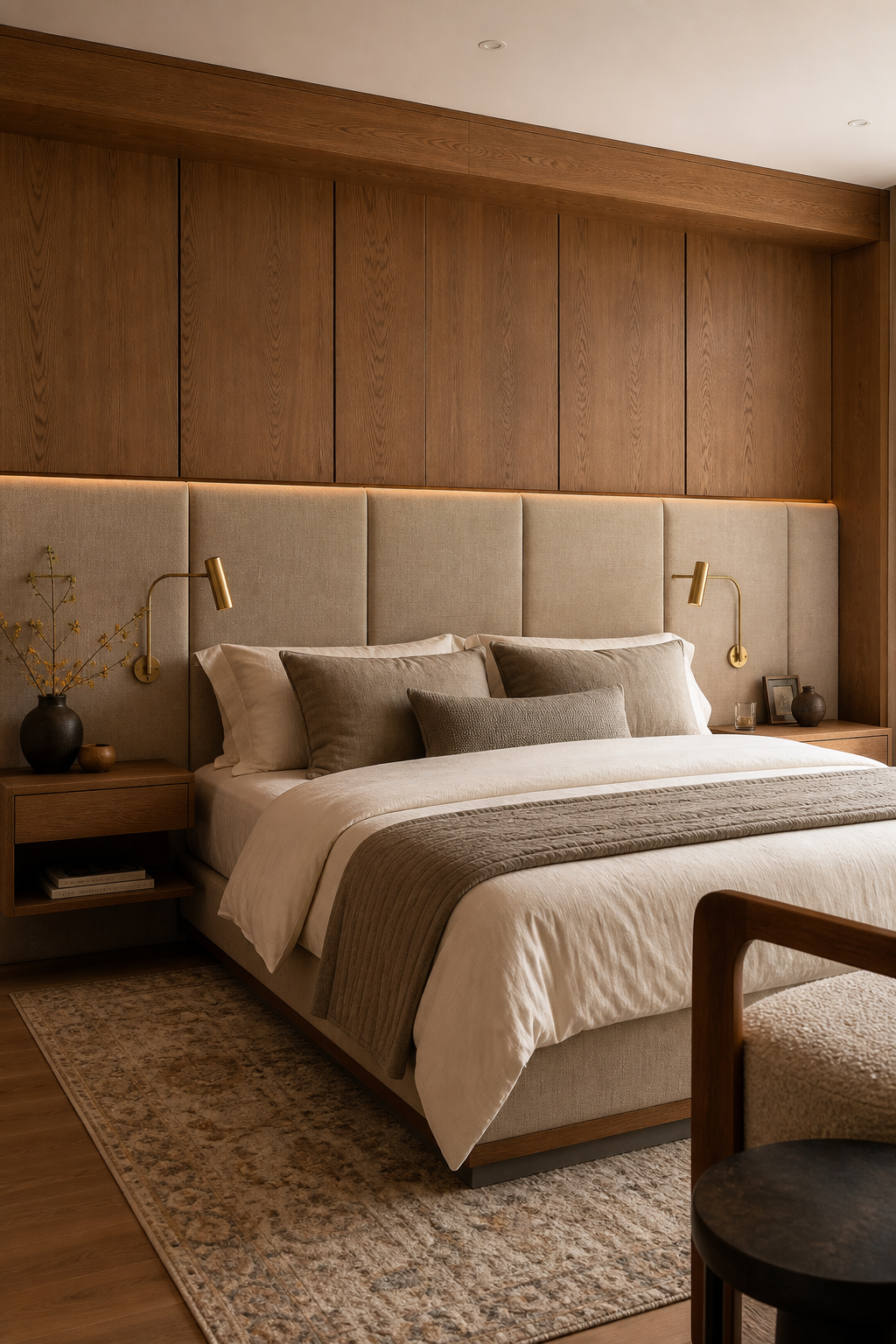
4. Create A Wrapped Headboard Wall
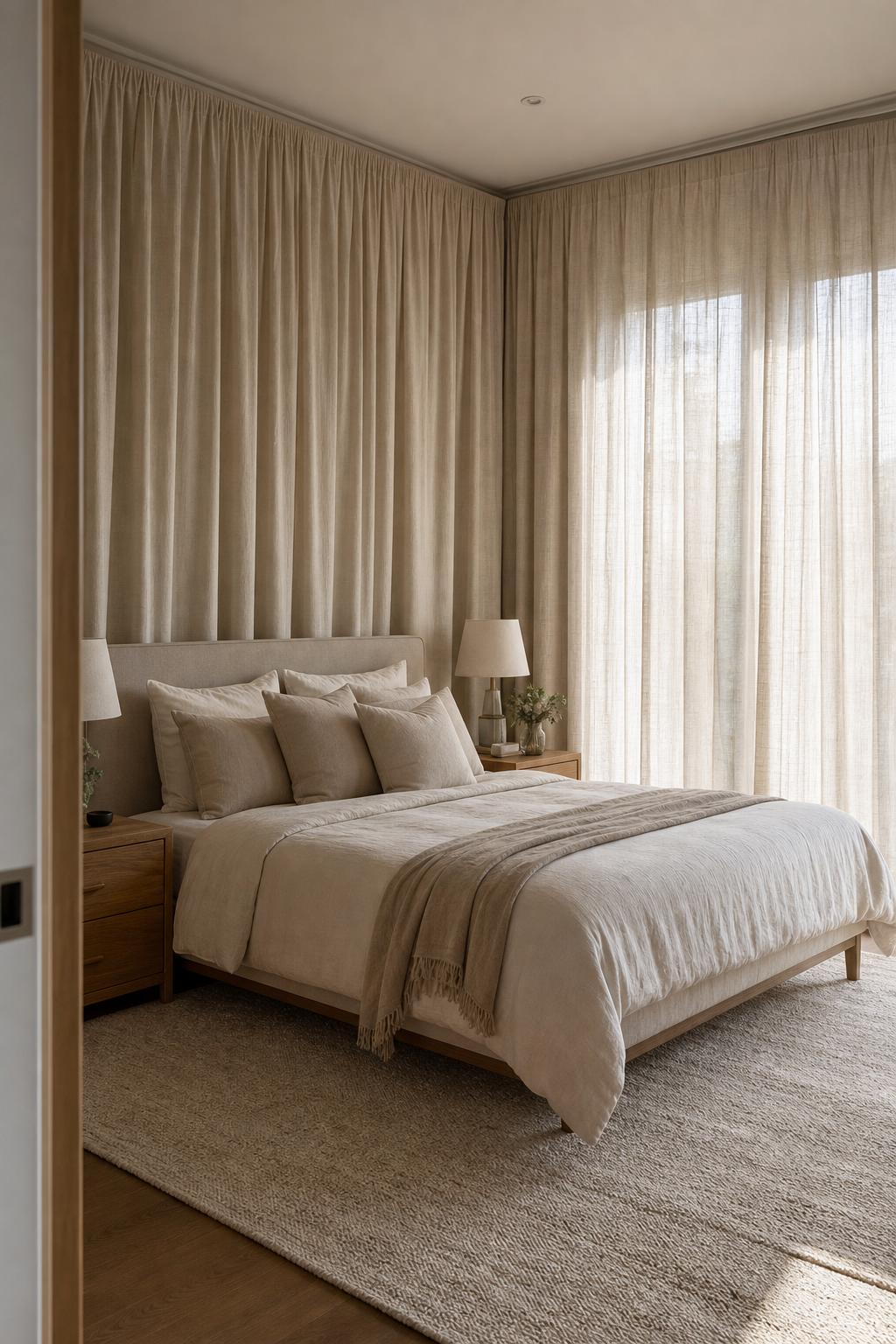
For a cocooning layout, treat the wall behind the bed as a full design feature rather than a single piece of furniture. A wrapped headboard wall, whether upholstered in linen panels, clad in oak, or framed with grasscloth, visually embraces the bed and makes the entire room feel more intimate. Extend the material beyond the mattress width and integrate sconces or pendant lights to reduce visual clutter. This approach is particularly useful in larger bedrooms that need warmth, because the wall treatment lowers the perceived scale of the room. Pair it with understated nightstands, low bedding, and layered textures so the architecture does the work. Soft colors such as oatmeal, clay, greige, and warm white keep the effect calm, while ribbed wood or channel-tufting introduces quiet depth.
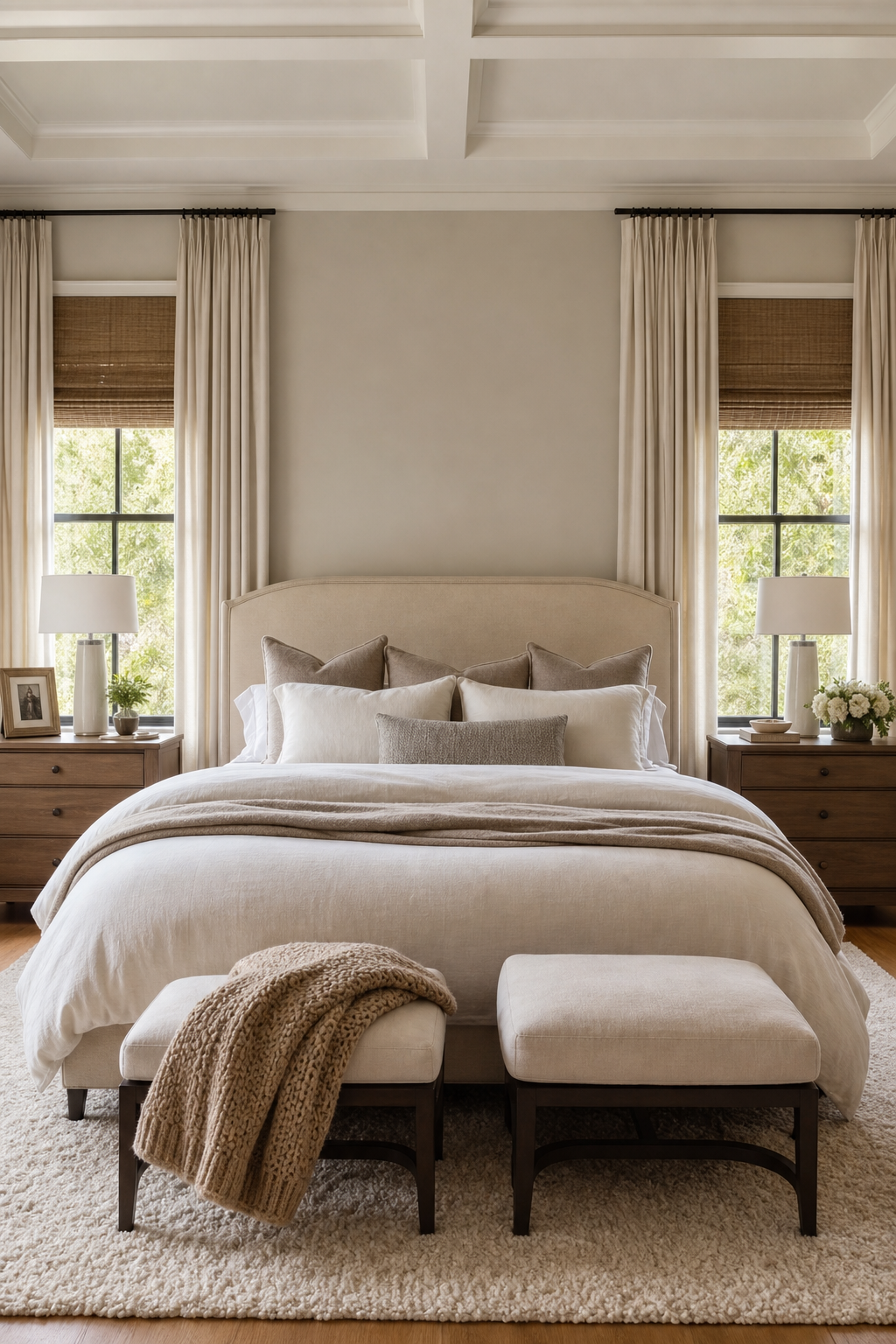
5. Place The Bed Between Two Windows
When a bedroom has two windows on the same wall, placing the bed between them can create a beautifully balanced layout. The windows act like architectural bookends, giving the bed a framed and intentional presence. Use tailored drapery hung high and wide to soften the wall while preserving as much light as possible. A substantial headboard works well here, especially in a textured fabric that contrasts gently with painted trim or plaster walls. Keep nightstands narrow if the windows sit close to the bed, and consider swing-arm sconces to avoid bulky lamps. This arrangement feels especially cozy in traditional and transitional rooms because it combines symmetry with natural light. Finish with layered bedding, woven shades, and a rug that extends generously on all three exposed sides of the bed.
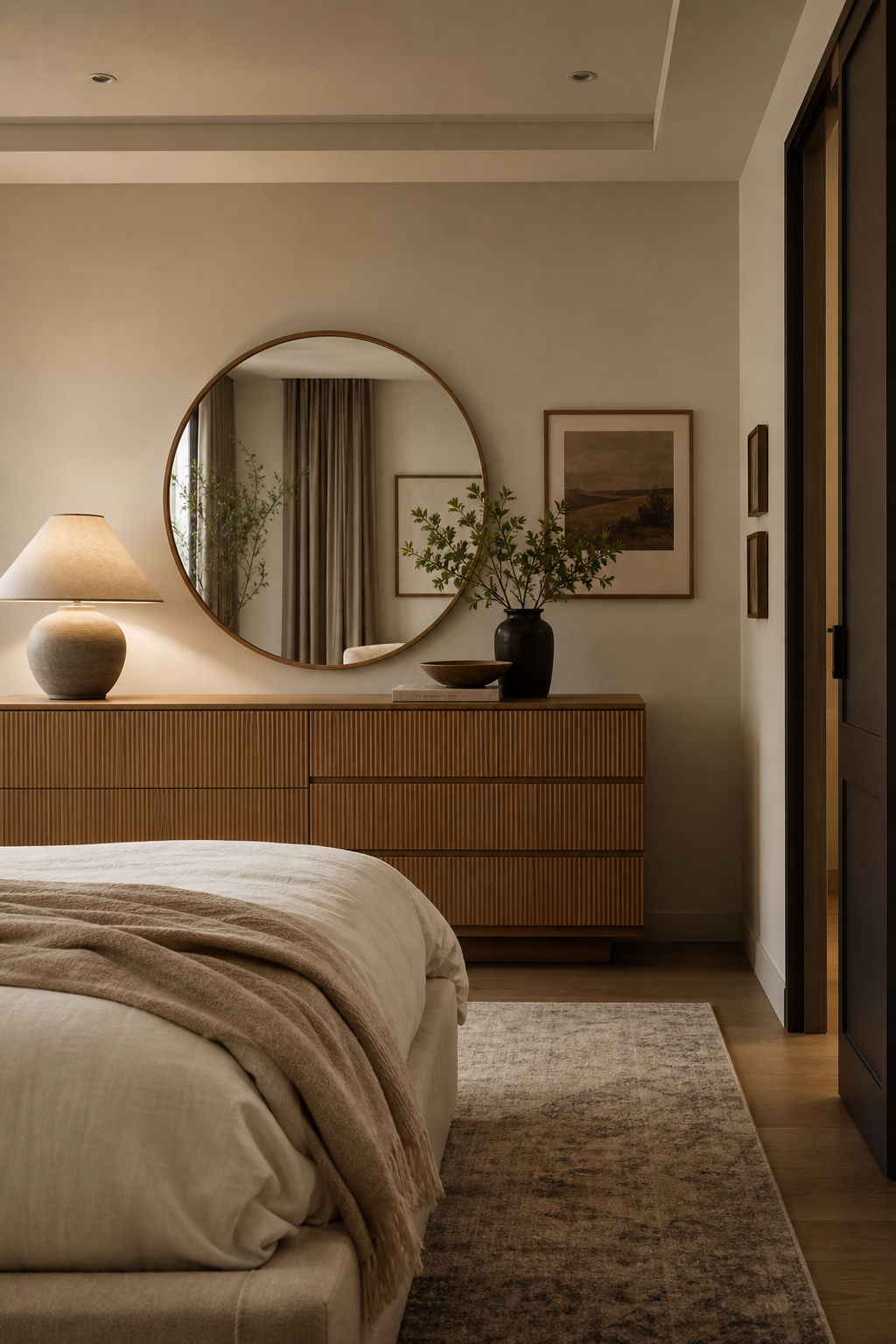
6. Add A Low Dresser Opposite The Bed
A low dresser opposite the bed creates a calm visual horizon and offers storage without making the room feel heavy. This layout is ideal when the opposite wall is broad but not deep enough for a seating area. Choose a dresser with refined proportions, such as fluted oak, lacquered wood, or parchment-front drawers, and keep the styling edited: a ceramic lamp, a shallow tray, a sculptural vase, and perhaps one framed artwork leaning casually above. If a television is necessary, mount it cleanly and choose a dresser long enough to visually ground it. The low profile keeps sight lines open and makes the bed area feel more expansive. Use warm lamp light in the evening to soften the functional nature of storage and preserve the bedroom’s retreat-like mood.
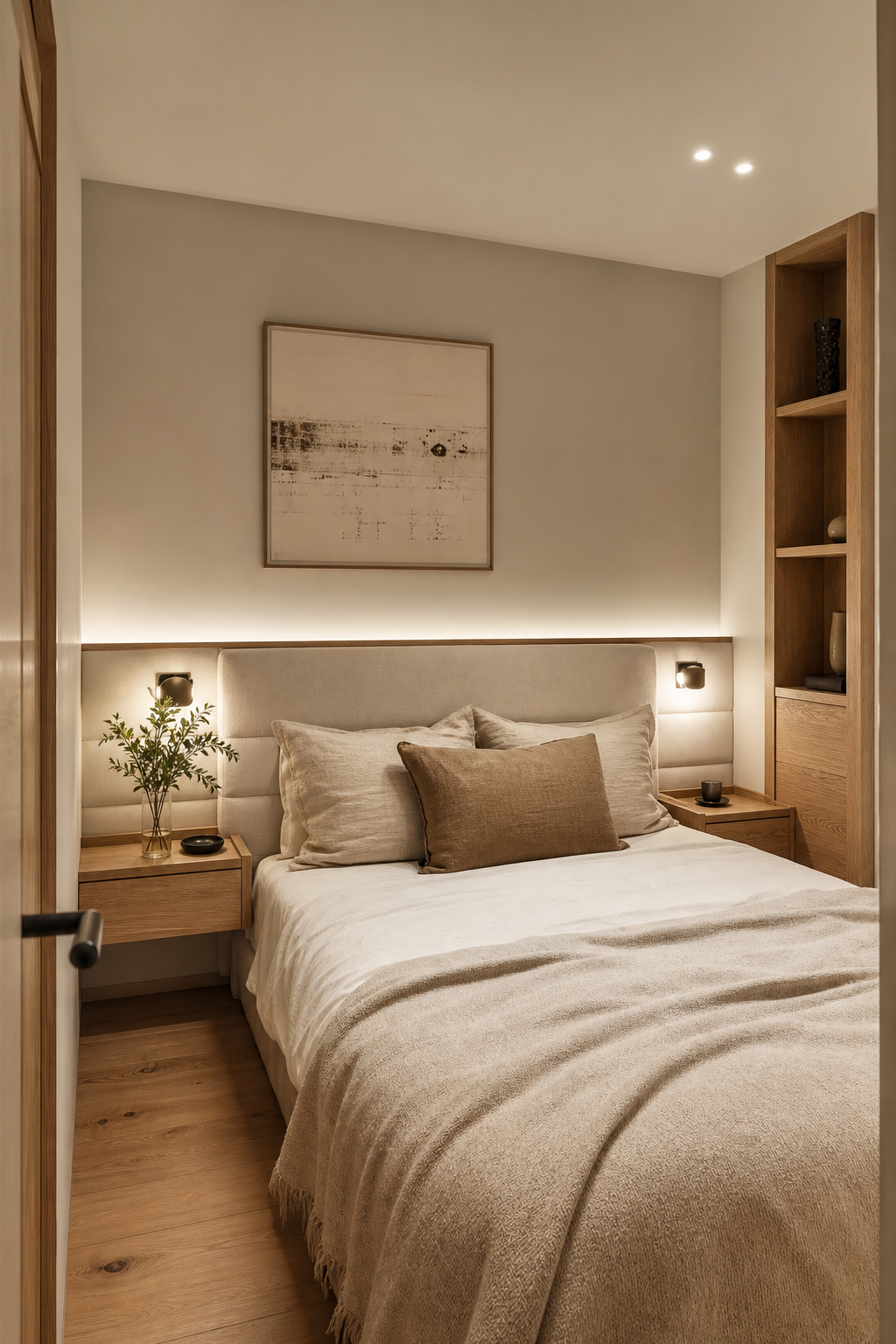
7. Make A Small Bedroom Feel Built-In
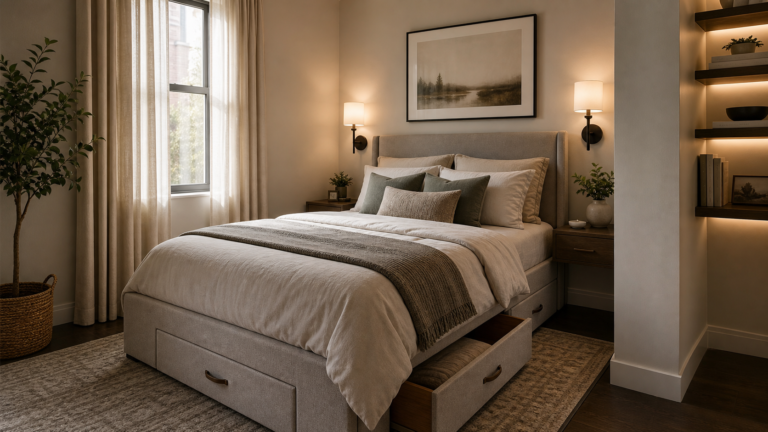
In a compact bedroom, the smartest layout often borrows from boutique hotel design. Instead of filling the room with separate pieces, create a built-in effect around the bed. Wall-mounted nightstands, slim sconces, and a continuous headboard panel can make the space feel custom and serene. Use storage under the bed or a tailored bed base with drawers to reduce the need for bulky furniture. A pale palette of chalk white, warm beige, and light oak keeps the room bright, while one richer texture, such as olive velvet or charcoal wool, adds depth. Keep the floor plan simple and preserve clear walking paths on both sides if possible. The result is intimate rather than cramped, with every surface earning its place through comfort, proportion, and usefulness.
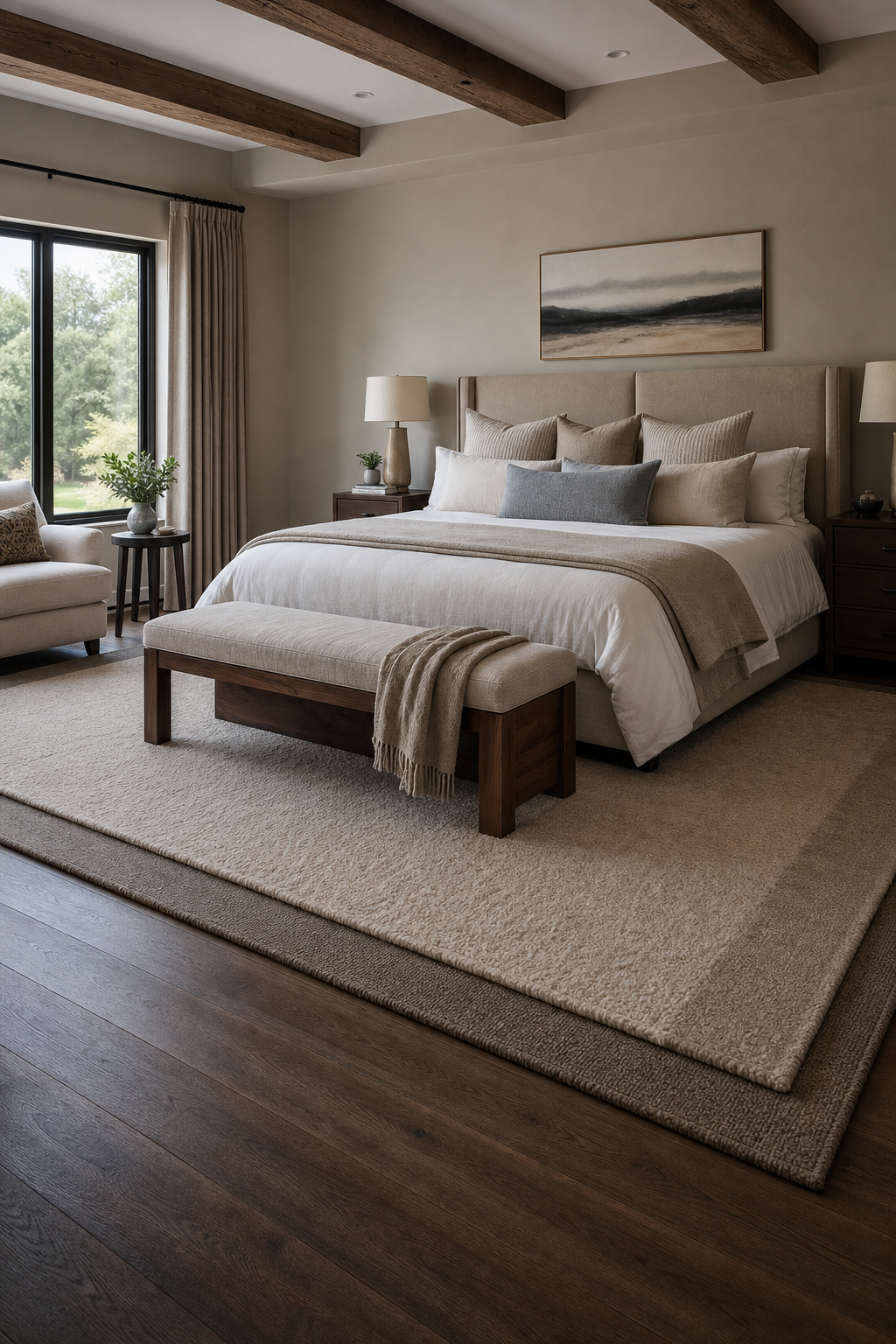
8. Layer A Rug To Define The Sleep Zone
A rug is one of the most important layout tools in a bedroom because it defines the sleep zone and adds comfort underfoot. In a larger room, choose a rug generous enough to sit beneath the bed, nightstands, and bench, leaving a soft border visible around the entire arrangement. In a smaller room, place a large rug two-thirds under the bed so the landing area remains plush. Natural wool, silk blends, and flatweave designs bring different moods: wool feels cozy and quiet, silk catches the light, and a vintage-style pattern adds softness to modern furniture. Let the rug introduce subtle color, such as faded terracotta, indigo, or sage, without overwhelming the palette. This grounding layer makes furniture feel related instead of scattered.
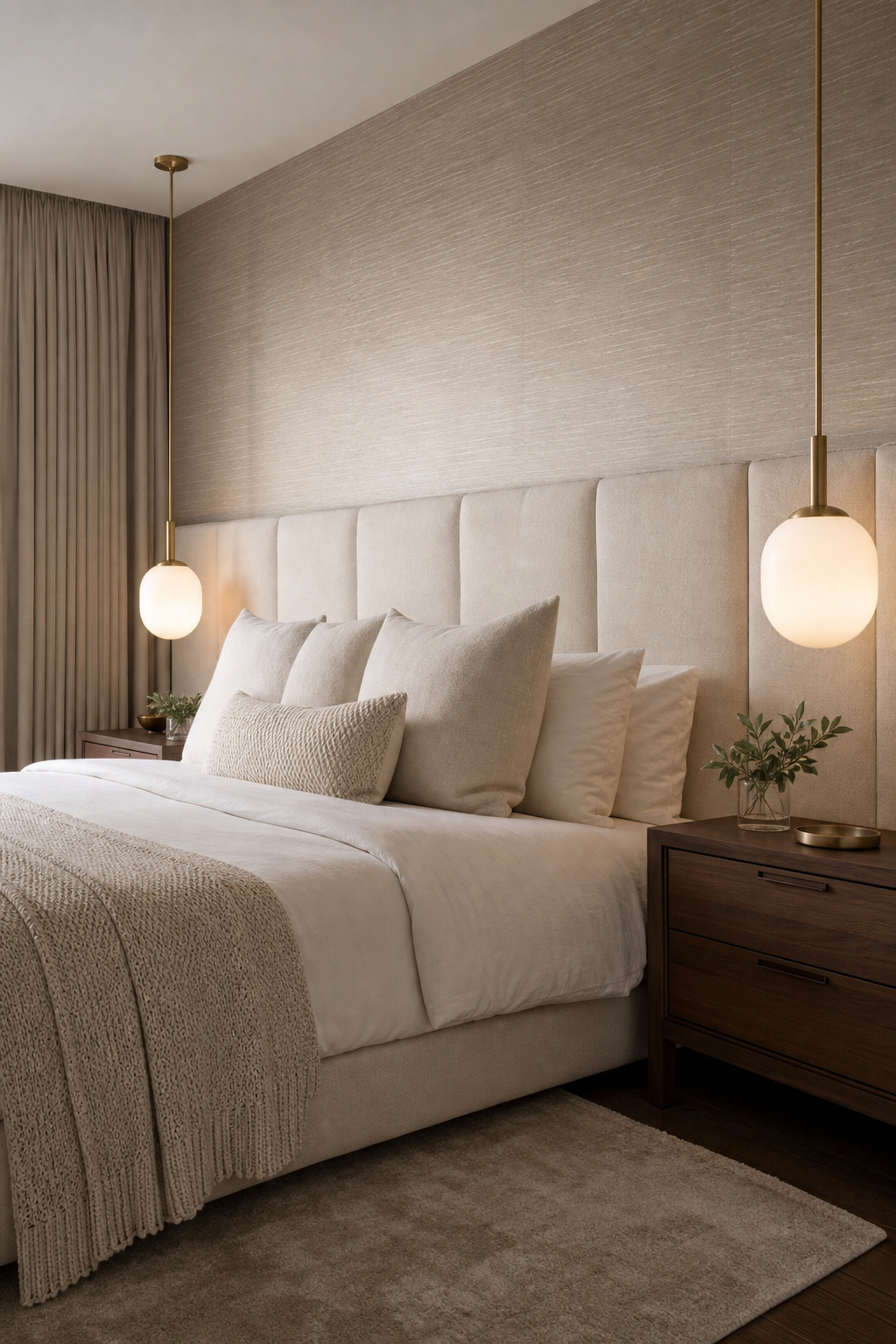
9. Use Pendant Lights Instead Of Table Lamps
Hanging pendants beside the bed frees up nightstand space and gives the room a more considered architectural rhythm. This layout works beautifully when the bed wall can support symmetry, especially with a tall upholstered headboard or paneled backdrop. Choose pendants with warm materials, such as opaline glass, alabaster, linen shades, or aged brass, and hang them low enough for reading without blocking the view across the room. Smaller nightstands can then hold only the essentials: a book, water carafe, small dish, and fresh greenery. Pendant lighting also draws the eye upward, which helps compact rooms feel taller. Use dimmers so the mood can shift from practical to atmospheric, and coordinate the metal finish with door hardware or curtain rods for a quiet sense of continuity.
10. Divide A Large Bedroom Into Calm Zones
A spacious bedroom feels most luxurious when it is organized into distinct but connected zones. Let the bed occupy the primary wall, then create a secondary area for reading, dressing, or morning coffee. A pair of lounge chairs near a fireplace, a writing desk by the window, or a vanity along a side wall can make the room feel complete without crowding it. Use rugs, lighting, and furniture orientation to define each zone rather than physical dividers. Keep the palette consistent across the room, repeating wood tones, metal finishes, and soft textiles so the layout feels harmonious. Large bedrooms can become cold if the furniture hugs the perimeter, so pull pieces inward and create intimate relationships between them. The goal is gracious comfort, not empty floor space.
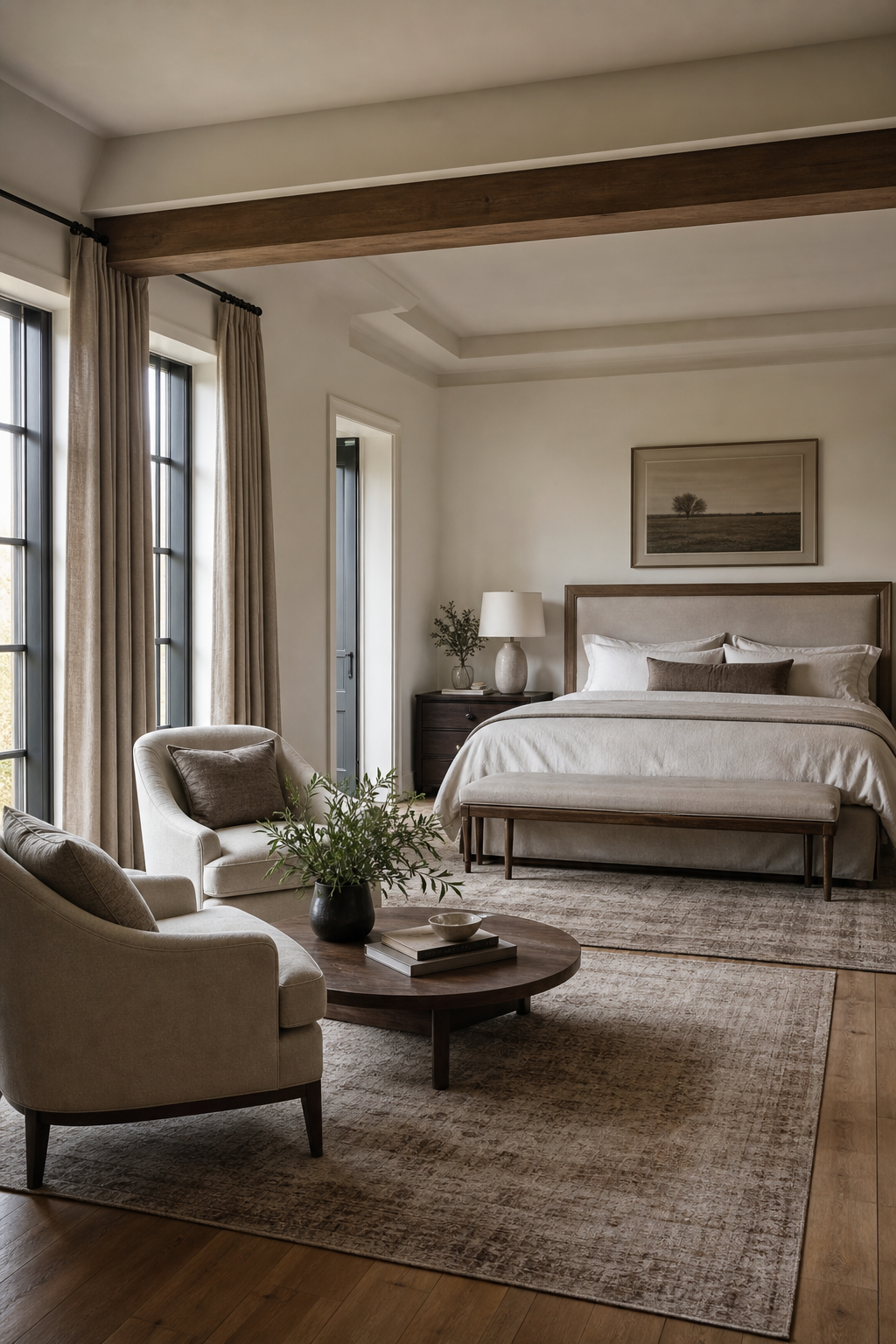
11. Angle Furniture In An Awkward Corner
Not every bedroom is a perfect rectangle, and awkward corners can become assets with the right layout. Instead of forcing furniture flat against angled walls, acknowledge the architecture by placing a chair, floor lamp, or small writing table at a gentle angle. This softens the geometry and turns an irregular corner into a styled moment. For attic bedrooms, dormers, or rooms with sloped ceilings, keep the bed on the wall with the most comfortable head height and use lower pieces where the ceiling drops. Texture is especially important in these spaces; woven shades, plaster walls, vintage rugs, and tactile bedding create warmth around unusual lines. Avoid overfilling the corner. One purposeful arrangement with breathing room will look far more refined than several pieces trying to disguise the architecture.
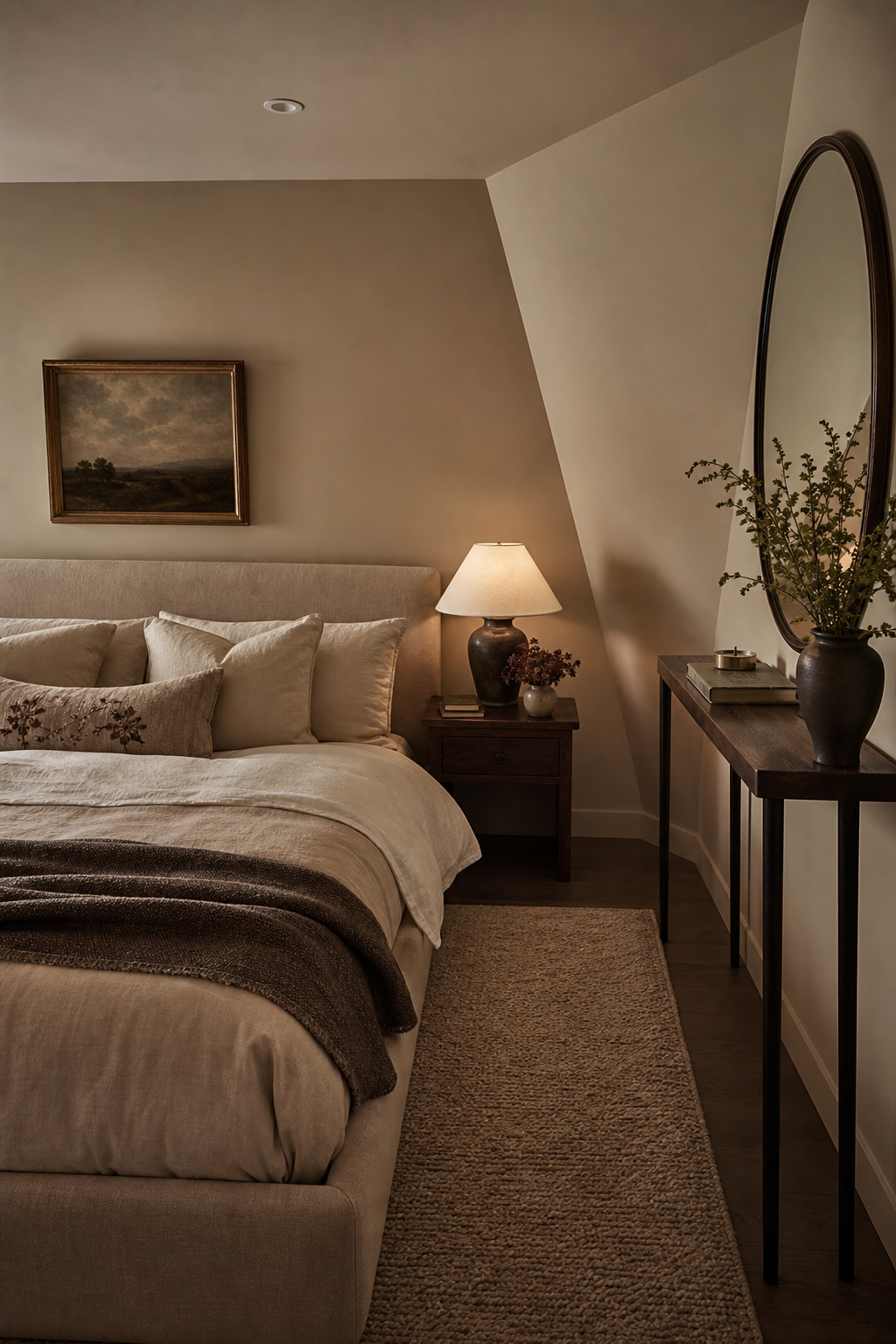
12. Frame The Bed With Wardrobes
Built-in wardrobes around a bed can make storage feel elegant rather than utilitarian, especially in rooms without a separate closet. The most successful version keeps the bed niche generous, with wardrobes stopping short of feeling boxed in. Use warm wood, painted cabinetry, or fabric-front doors to bring softness, and integrate discreet lighting inside open shelves or above the headboard. This layout works beautifully when the bed wall has no windows, because it turns a plain surface into a highly functional focal point. Keep hardware refined and minimal, then add tactile layers through bedding, a ribbed rug, and upholstered pillows. The bed should still feel inviting, so avoid overly dark cabinetry unless the room has abundant natural light. Balance storage with softness at every level.
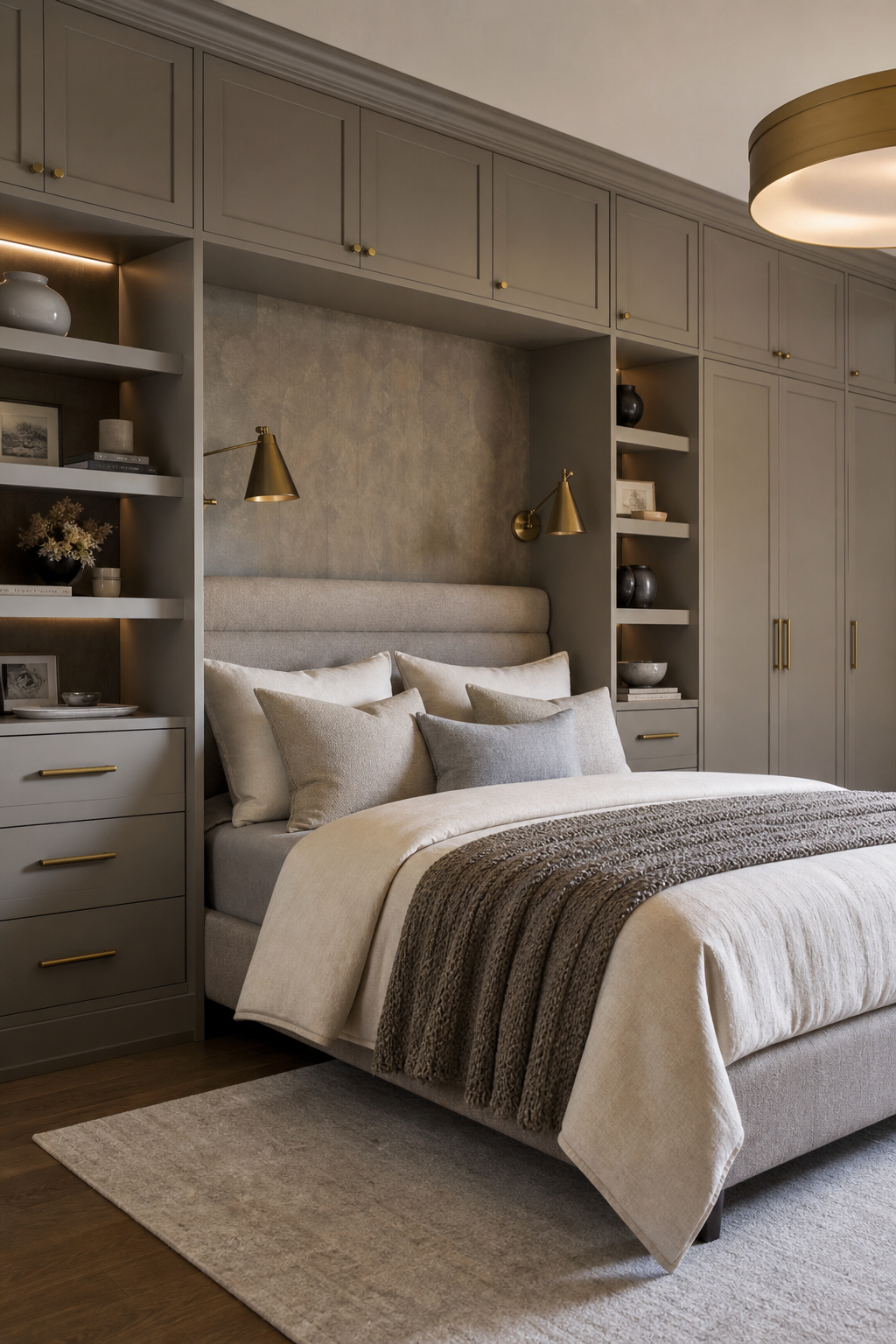
13. Place A Desk Where It Feels Deliberate
A bedroom desk can be elegant when it is treated as part of the design rather than an afterthought. Place it near a window for natural light, along a side wall to preserve the sleep zone, or opposite the bed if the room has enough depth. Choose a refined writing table instead of a bulky office desk, then pair it with an upholstered chair that feels residential. Materials matter: walnut, leather, cane, marble, or lacquered wood will look more at home than standard task furniture. Keep cords hidden and lighting sculptural, such as a petite ceramic lamp or adjustable brass sconce. This layout is best when the desk can close visually at the end of the day, with a tray, lidded box, and beautiful storage keeping work from overtaking the retreat.
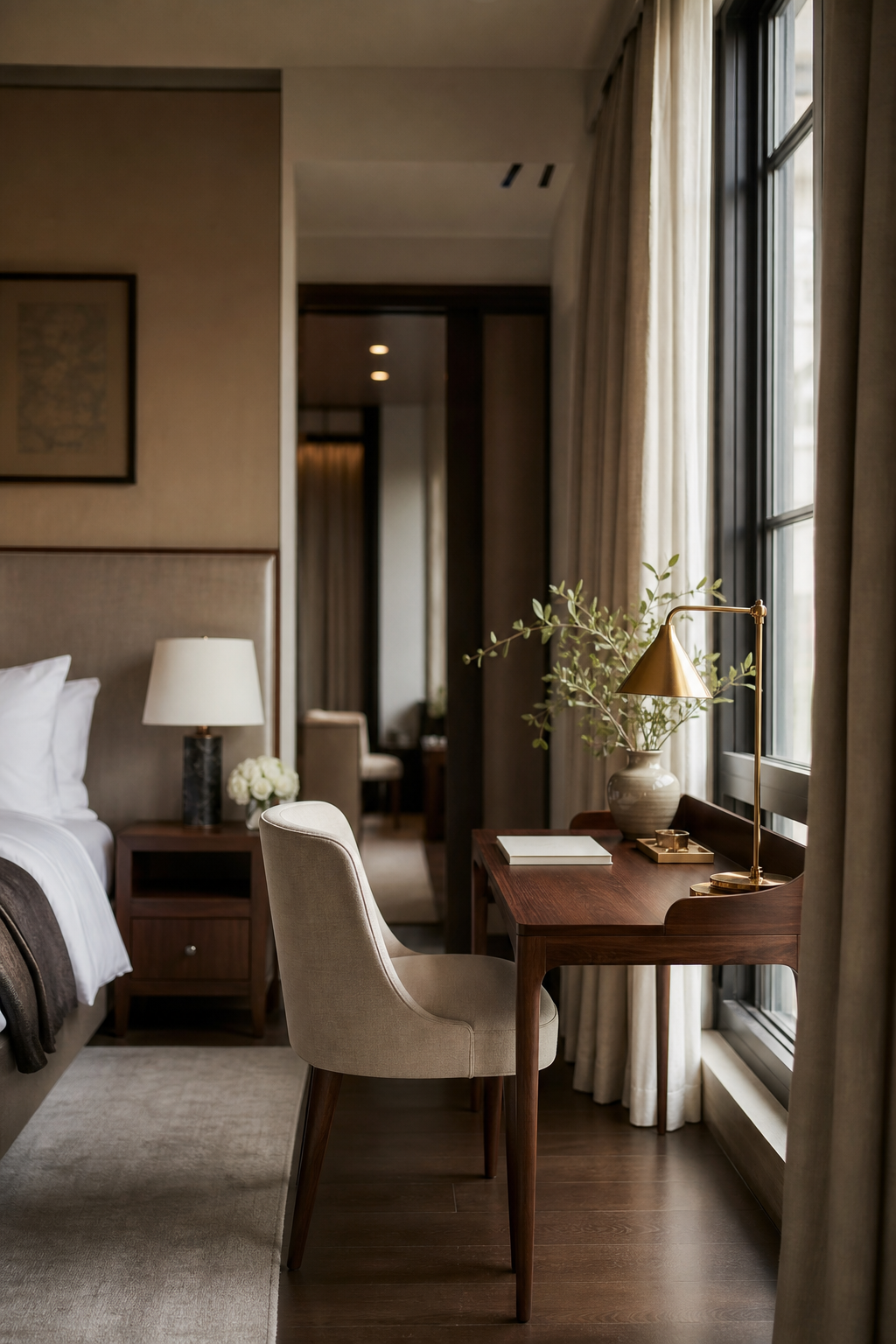
14. Use Curtains To Soften The Whole Room
Curtains can change the feeling of a bedroom layout even when the furniture stays simple. Hang them close to the ceiling and let the panels fall to the floor, widening the rods beyond the window trim to make the architecture feel more generous. In a cozy retreat, fabric should do more than block light; it should soften sound, filter daylight, and add vertical movement. Linen, wool sateen, or lightly textured cotton works beautifully, especially when lined for privacy and structure. If the bed sits near a window, drapery can visually frame the sleeping area and make the room feel layered rather than bare. Choose a tone close to the wall color for quiet elegance, or a slightly deeper shade for warmth. The result is subtle, but deeply transformative.
15. Build The Layout Around Evening Light
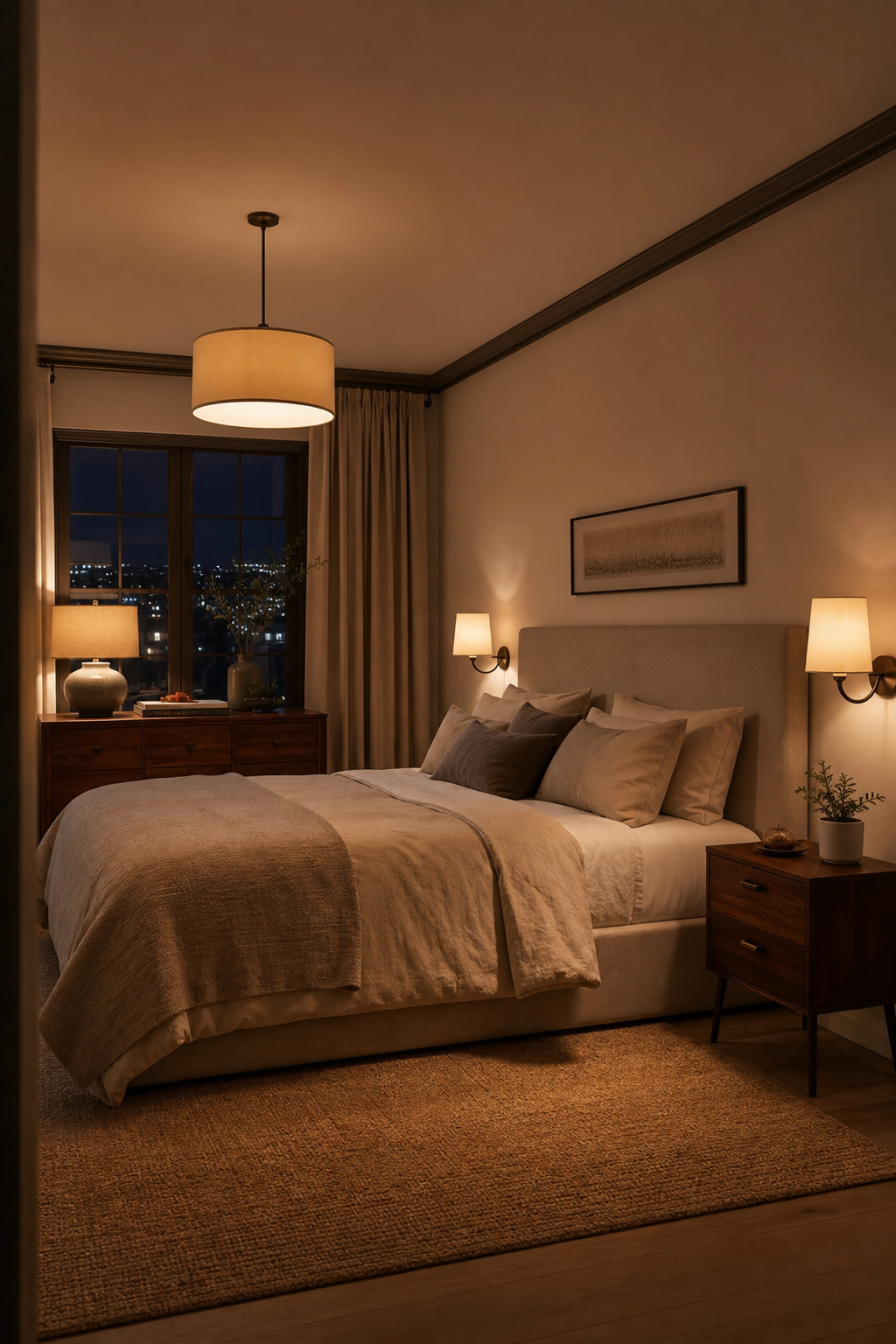
The coziest bedrooms are designed for evening as much as morning. Build the layout around layered lighting: bedside lamps or sconces for reading, a soft overhead fixture for ambient glow, and a floor or dresser lamp to balance darker corners. Place switches where they support real routines, especially near the bed and entry. Warm bulbs, shaded fixtures, and dimmers are essential because they flatter materials like linen, velvet, wood, and plaster. Avoid relying on one bright ceiling light, which flattens the room and makes even beautiful furniture feel harsh. Instead, let light create small pools around the bed, chair, dresser, and artwork. When the layout is planned this way, the room naturally shifts from functional during the day to intimate and restorative at night.
A well-planned bedroom layout should feel effortless, but never accidental. Whether the room is compact, spacious, traditional, or quietly modern, the strongest designs begin with proportion and end with atmosphere. Center the bed with confidence, create softness through textiles, let lighting shape the mood, and give every secondary piece a reason to belong. When furniture placement, materials, color, and function work together, the bedroom becomes more than a place to sleep; it becomes a private retreat with comfort, polish, and lasting style.