22 Luxury Bedroom Master Design For A Polished Retreat
A luxury master bedroom should feel composed the moment you enter, but it also has to support the quiet rituals of real life: sleeping well, dressing easily, reading, resting, and beginning the day without visual noise. The most polished rooms are not built from one expensive purchase. They come from proportion, material contrast, lighting, storage, and the discipline to let a few beautiful details breathe. These ideas focus on practical design moves that make a bedroom feel tailored, restful, and deeply personal.
Start With a Tailored Upholstered Headboard
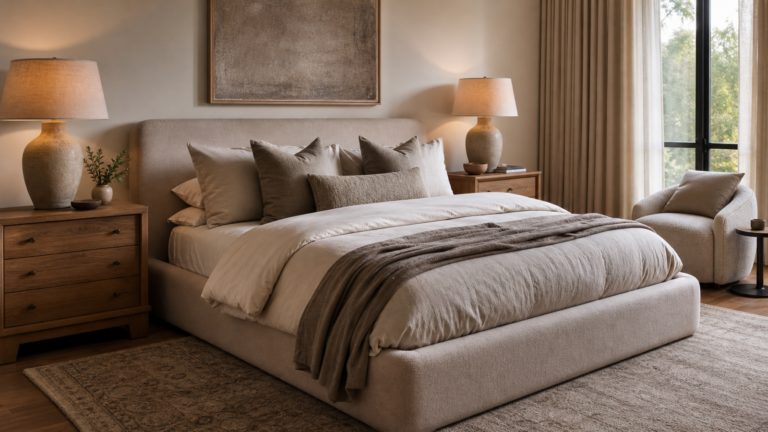
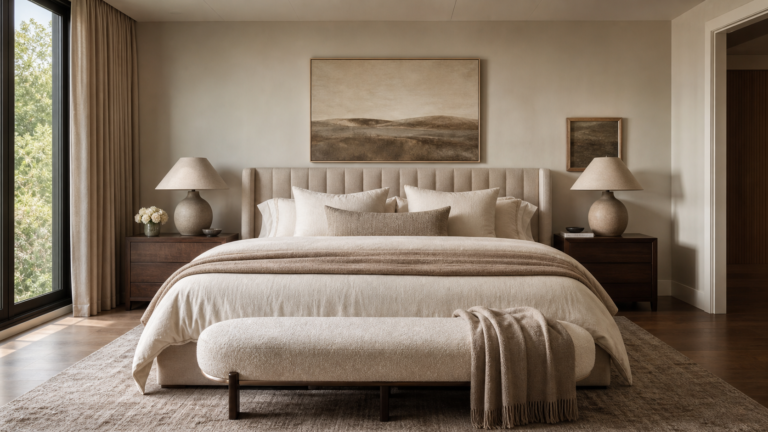
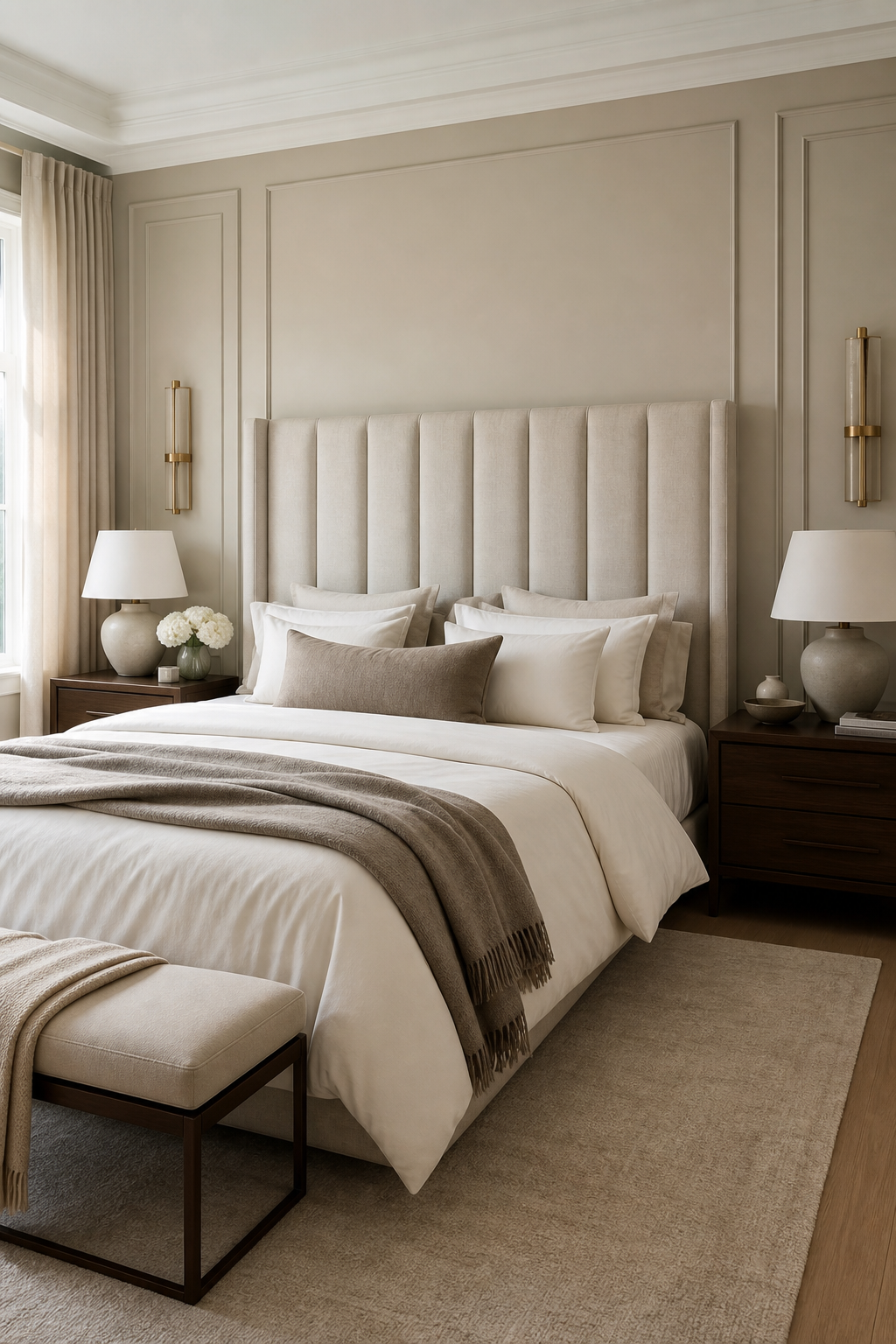
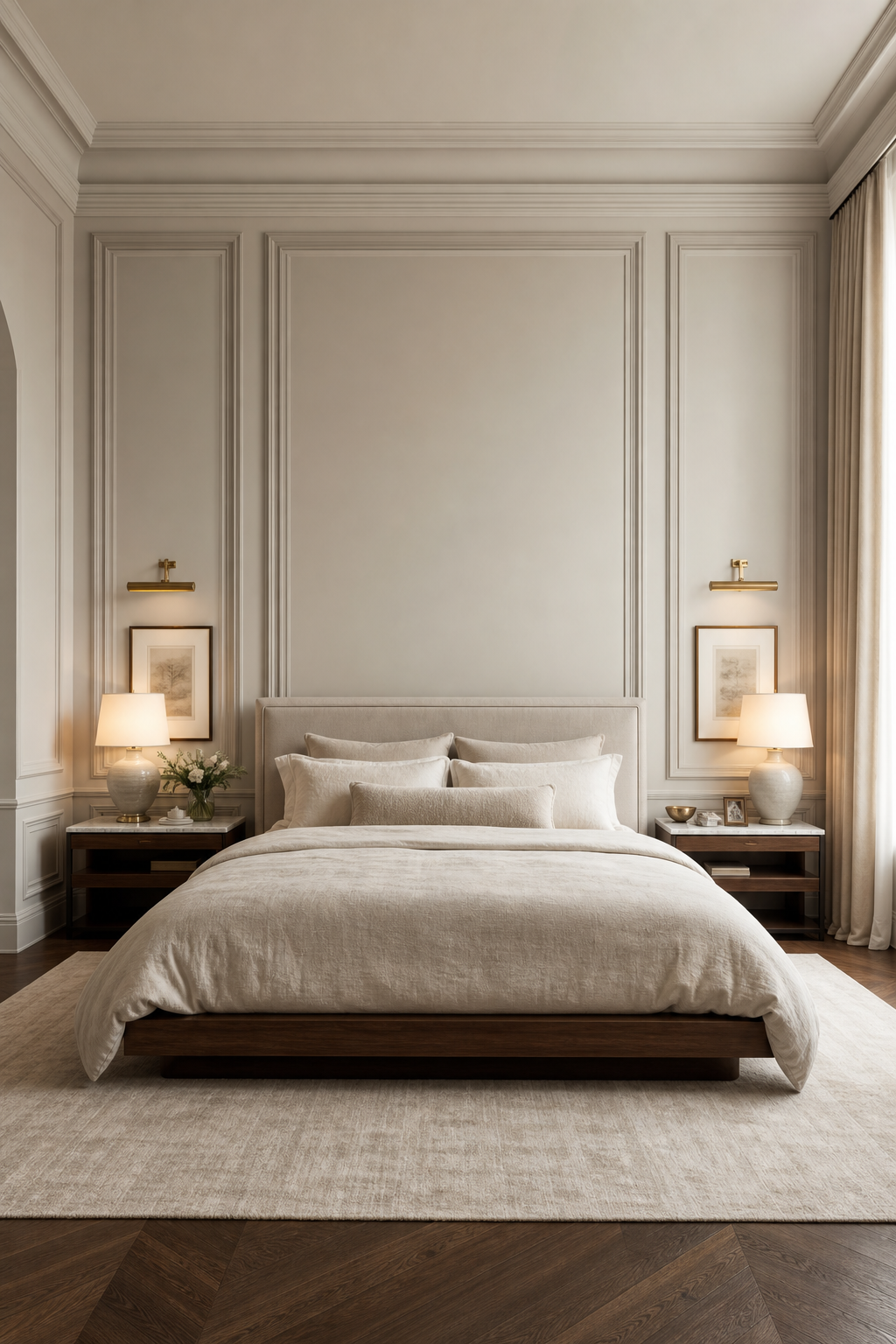
A tall upholstered headboard gives a master bedroom instant composure because it anchors the bed without demanding loud color or heavy pattern. Choose linen, wool, velvet, or boucle with enough padding to feel comfortable for reading, then keep the silhouette clean so the room still feels restful. Vertical channeling elongates the wall, while a simple framed headboard looks more architectural and timeless. Pair it with crisp white sheets, a warmer duvet, and one long lumbar pillow to avoid a crowded pillow arrangement. The most polished rooms also consider height: a headboard that rises above the nightstand lamps feels intentional, especially when it sits against subtle wall molding or plaster. Finish the scene with walnut or oak bedside tables so the softness of the upholstery has a grounded counterpoint.
Add Architectural Wall Paneling
Wall paneling is one of the quietest ways to make a bedroom feel custom. Instead of relying on busy wallpaper, use picture molding, slim battens, or broad painted panels to give the bed wall proportion and shadow. The color does not have to be dramatic; greige, mushroom, warm white, and stone all look expensive when the trim is well scaled. Let the paneling frame the bed, sconces, and art so each piece appears placed rather than added later. In a luxury master bedroom, this detail works best when it continues the language of the architecture: align vertical breaks with nightstands, door frames, or the bed width. Keep bedding simpler when the wall already has dimension, then layer texture through linen, wool, and a softly patterned rug.
Bring In Stone Beside the Bed
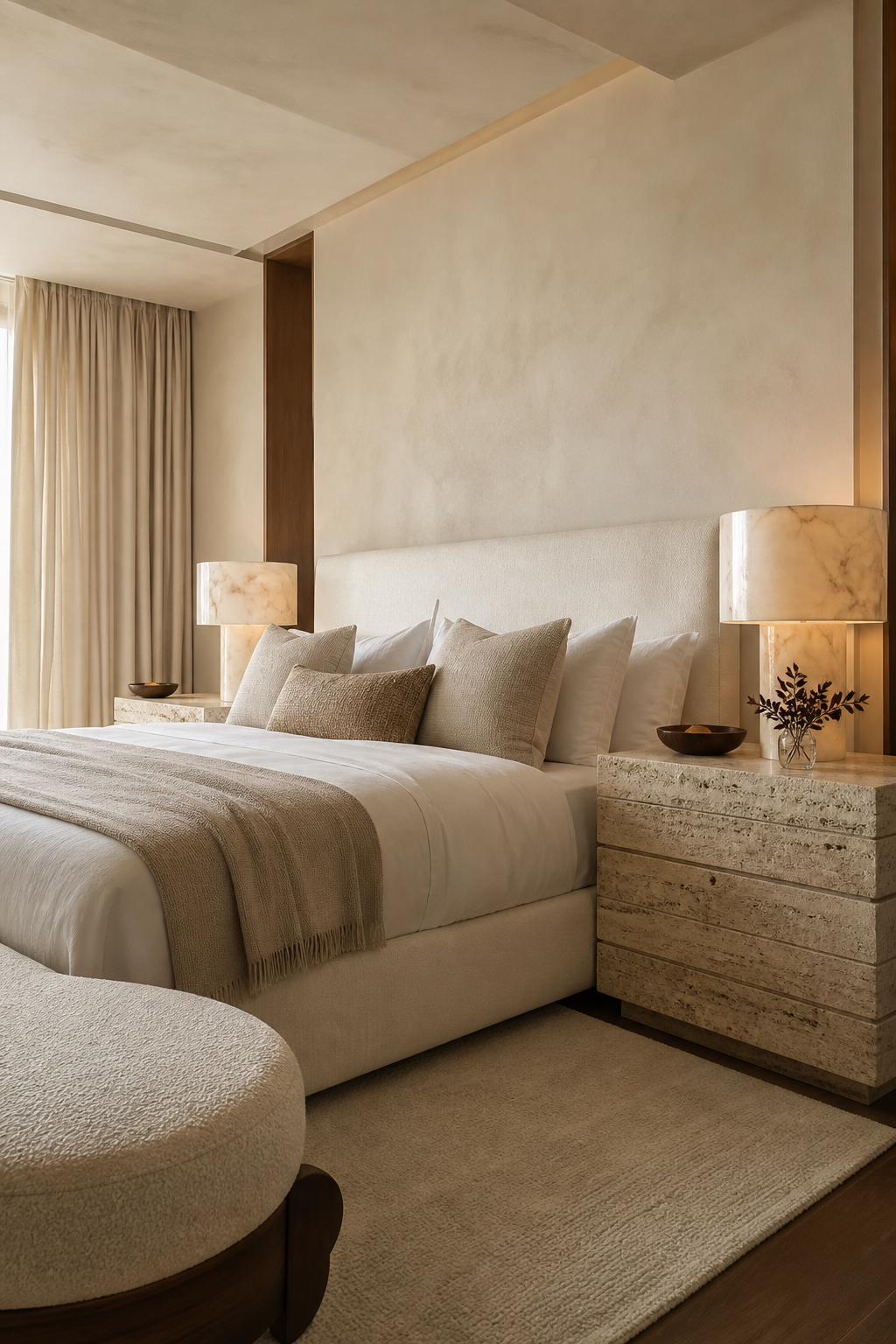
Stone immediately gives a master bedroom a collected, permanent feeling, but it should be used with restraint. A travertine nightstand, honed marble tray, alabaster lamp, or limestone plinth introduces natural veining without turning the room into a showroom. The secret is contrast: place cool stone beside soft bedding, nubby throws, and warm wood so the material feels sensual rather than cold. For a polished retreat, avoid highly glossy finishes and choose honed, leathered, or softly tumbled surfaces that photograph beautifully in natural light. Stone also helps balance large upholstered pieces because its weight visually grounds the bedside area. Keep accessories minimal: a small bowl, one vase of branches, and a stack of books are enough to let the material carry the moment.
Replace Basic Lamps With Statement Lighting
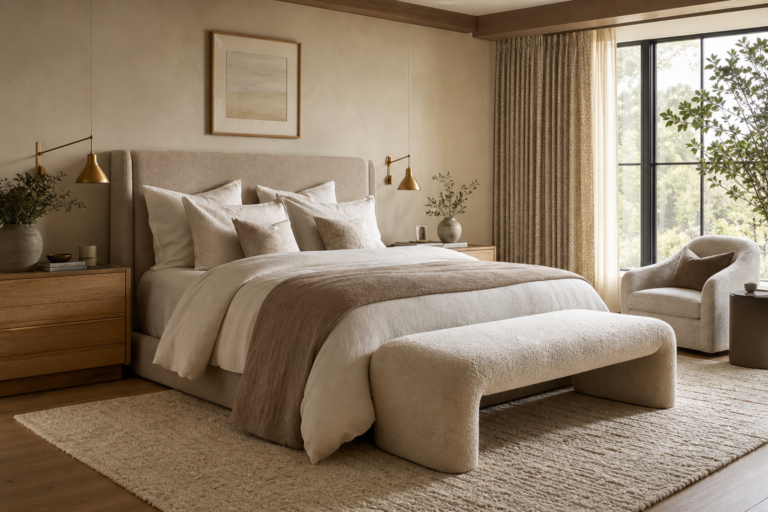
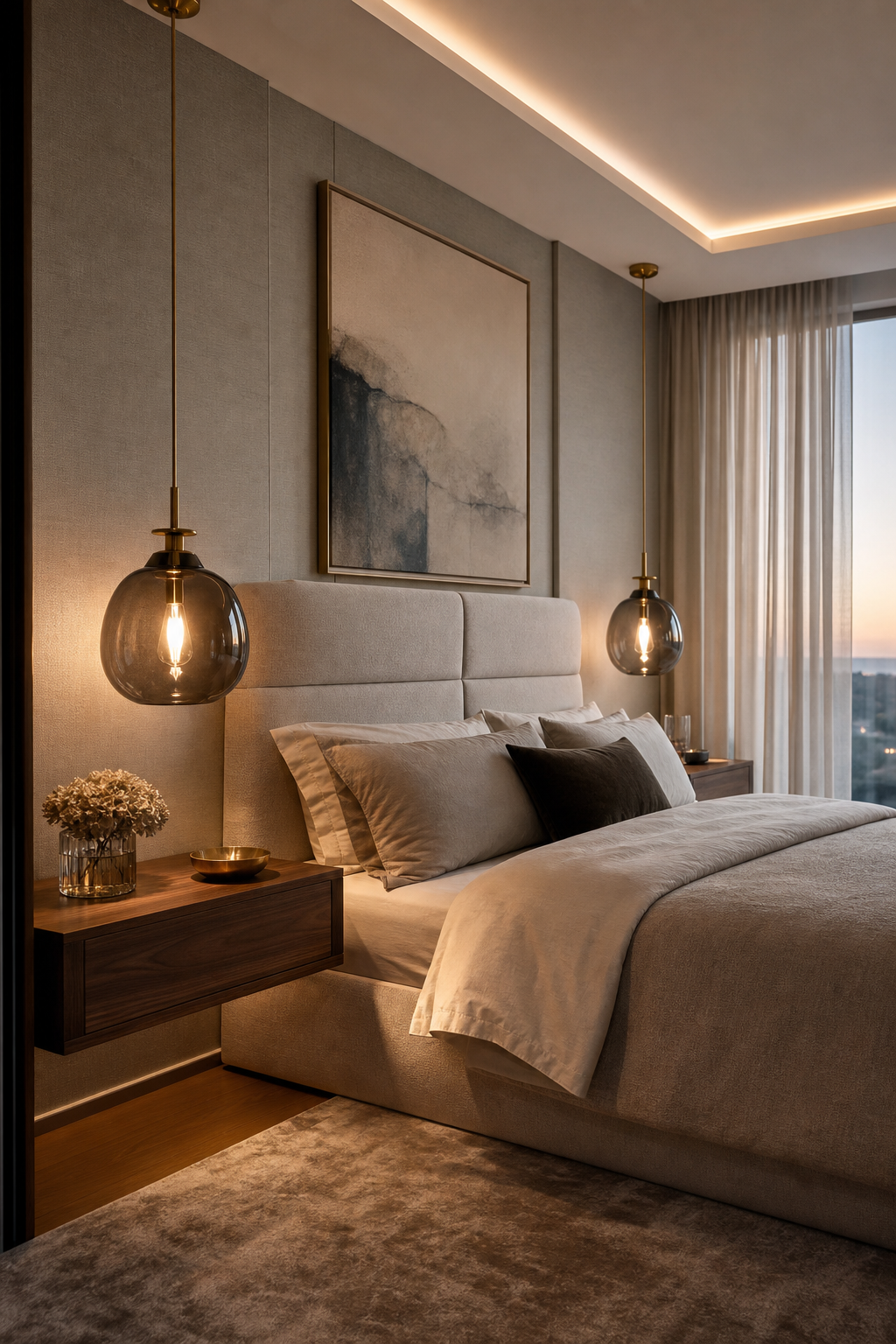
Lighting changes the entire emotional temperature of a bedroom. Instead of default table lamps, consider pendant lights, slim wall sconces, alabaster lamps, or picture lights that free up nightstand space and add a custom designer note. The goal is not brightness alone; it is layers. Use warm bulbs, dimmers, and shaded fixtures so the room can shift from morning routine to evening retreat. Pendants look especially polished when they hang low enough to feel connected to the bed but high enough to avoid visual clutter. If your palette is neutral, lighting is a smart place for brass, bronze, smoked glass, or ceramic texture. Keep both sides balanced, though not necessarily identical, and make sure switches are reachable from bed for real comfort.
Ground the Room With a Proper Bench and Rug
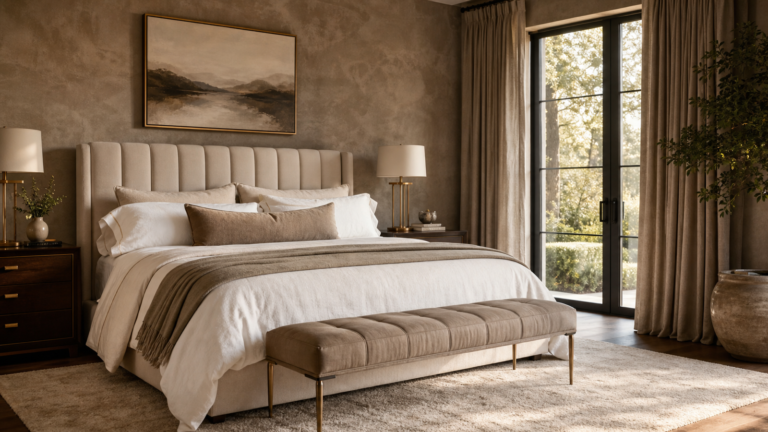
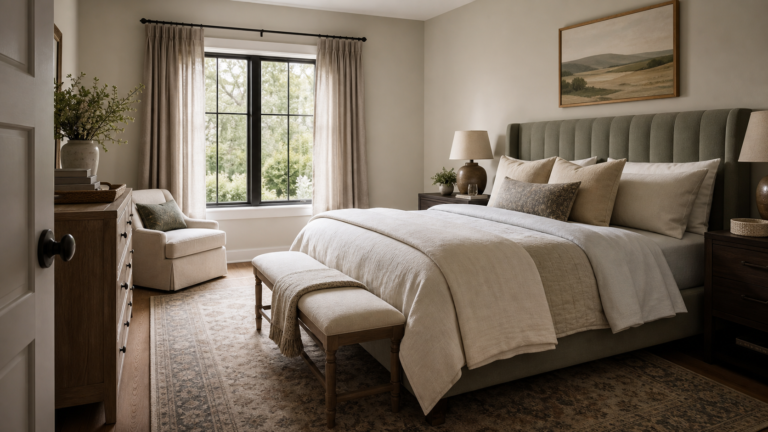
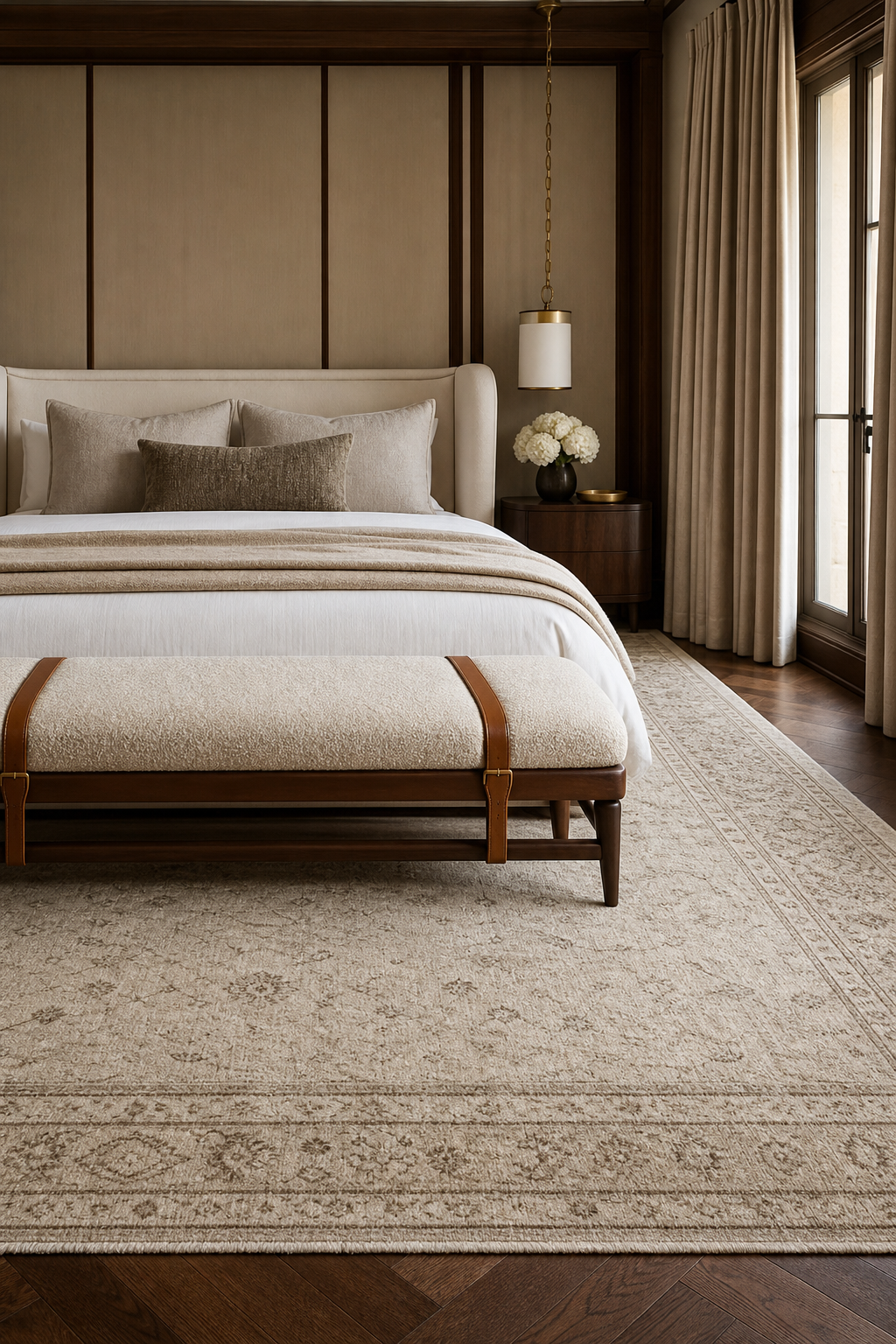
A bench at the foot of the bed makes a master bedroom feel finished, but scale matters. Choose a piece that is slightly narrower than the mattress, with enough depth to be useful for dressing or setting down a throw. Boucle, leather, velvet, and upholstered wood frames all work well in a luxury bedroom because they add texture at a lower visual height. Underneath, the rug should be generous enough to extend beyond the bed and bench so the whole sleeping zone feels connected. A small rug floating at the foot usually looks accidental. For a polished retreat, let the bench repeat one material already in the room, such as walnut legs or brass details, while the rug softens acoustics and gives bare feet a quieter landing.
Create a Fireplace Lounge Moment
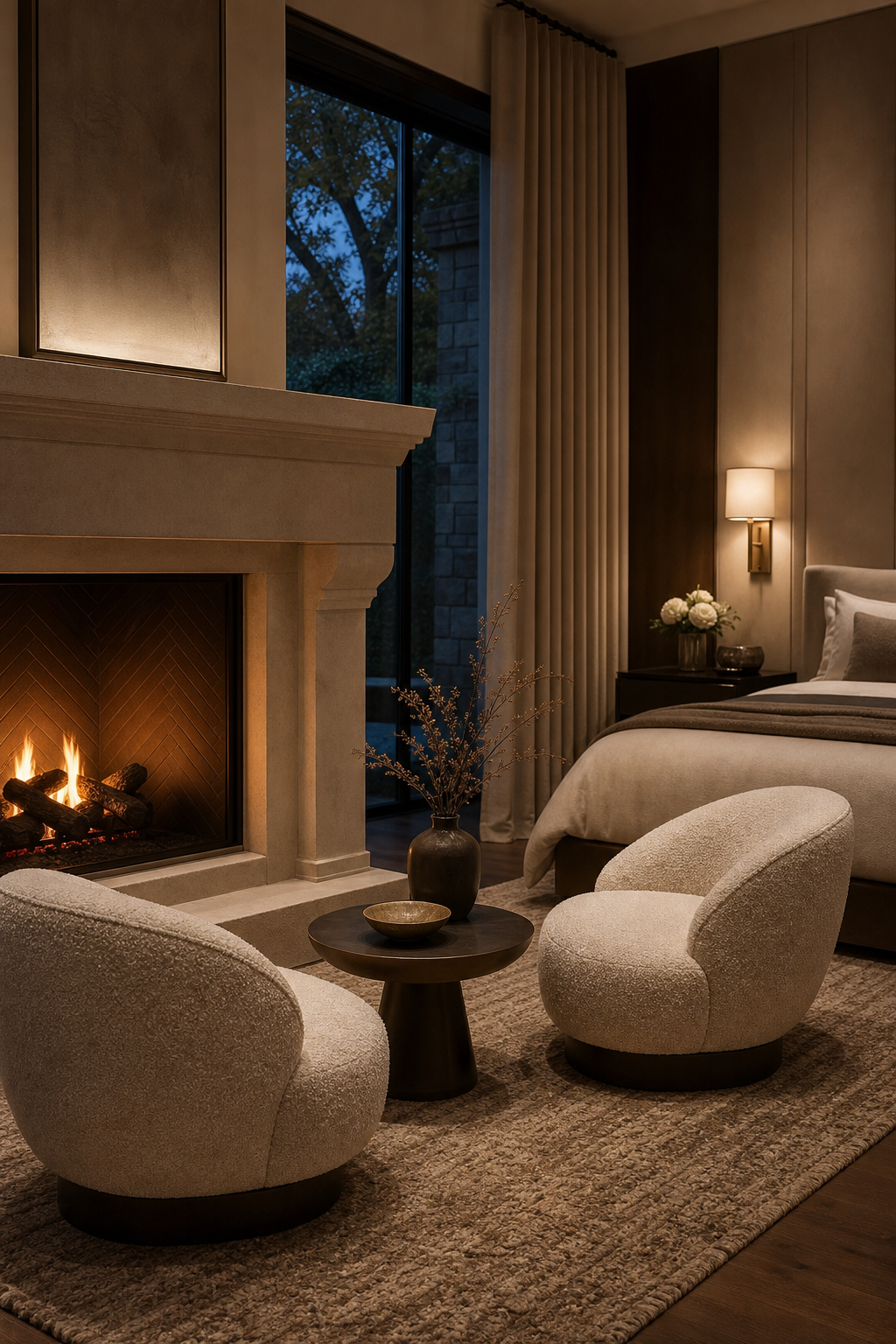
If the room has the space, a small seating area can turn the master bedroom into a true retreat rather than simply a place to sleep. A pair of low lounge chairs, a compact drink table, and a soft rug are enough to create a private place for coffee, reading, or winding down. A fireplace makes this moment even richer, but the idea still works with a beautiful window, a piece of art, or a plastered feature wall. Keep the chairs lower than the bed height so the room does not feel crowded. Boucle, linen, or soft leather upholstery will feel inviting without becoming casual. The best luxury bedrooms use this zone sparingly, with one vessel of branches, one tray, and warm lighting instead of heavy decoration.
Hide Storage Behind Built-In Wardrobes
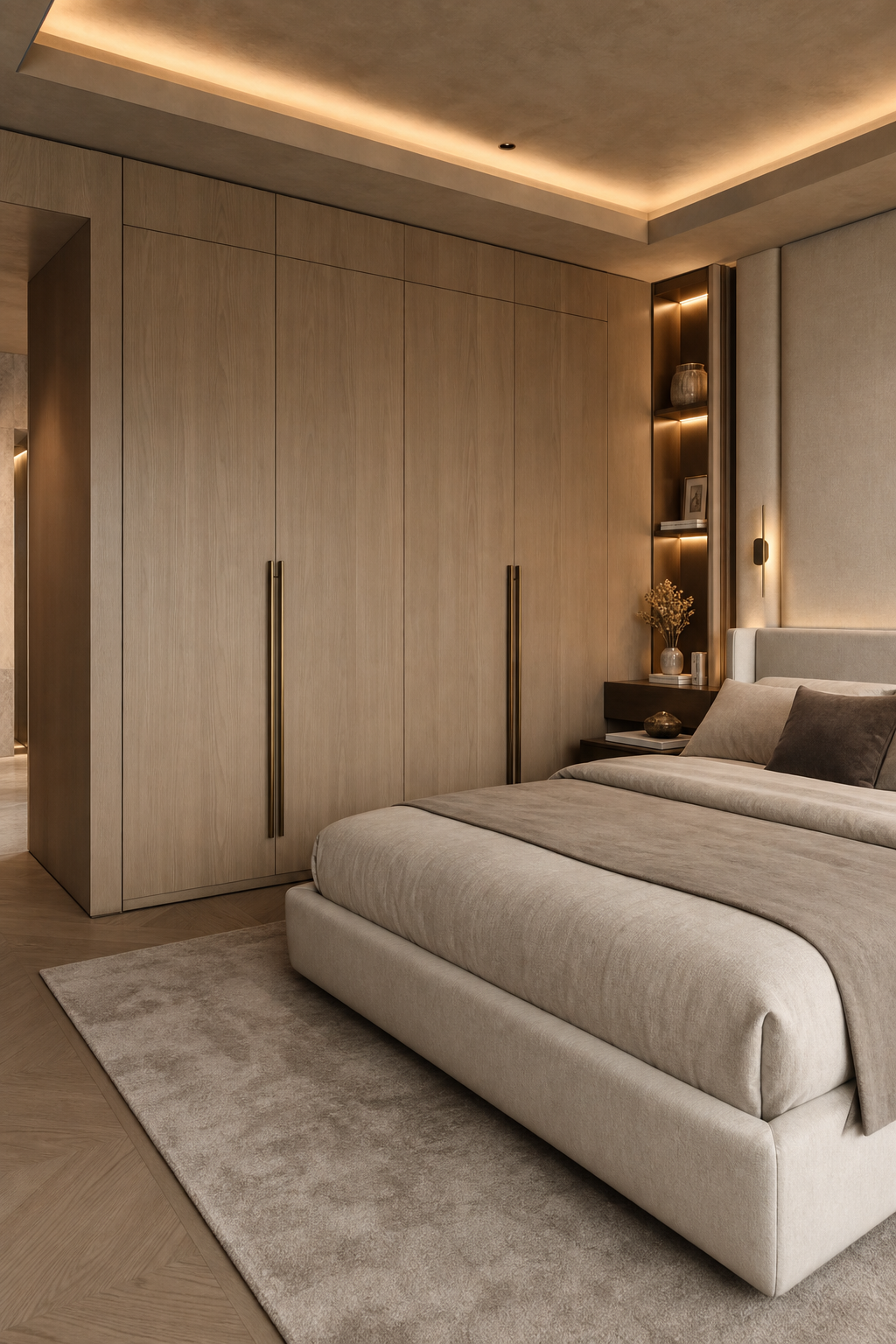
Luxury bedrooms rarely look luxurious when storage is visible everywhere. Built-in wardrobes, paneled closet walls, and integrated bedside niches create the calm surface area that makes a room feel edited. If custom millwork is possible, run wardrobes to the ceiling and keep the door rhythm simple. Long vertical pulls in bronze or blackened metal add a refined line without fuss. In smaller rooms, even a single wall of well-fitted storage can replace mismatched dressers and make the bed area breathe. Match the wood tone to the floor or choose a painted finish close to the wall color for a softer effect. Add concealed lighting in one open shelf or niche so the storage feels intentional, not purely practical.
Use One Moody Wall With Restraint
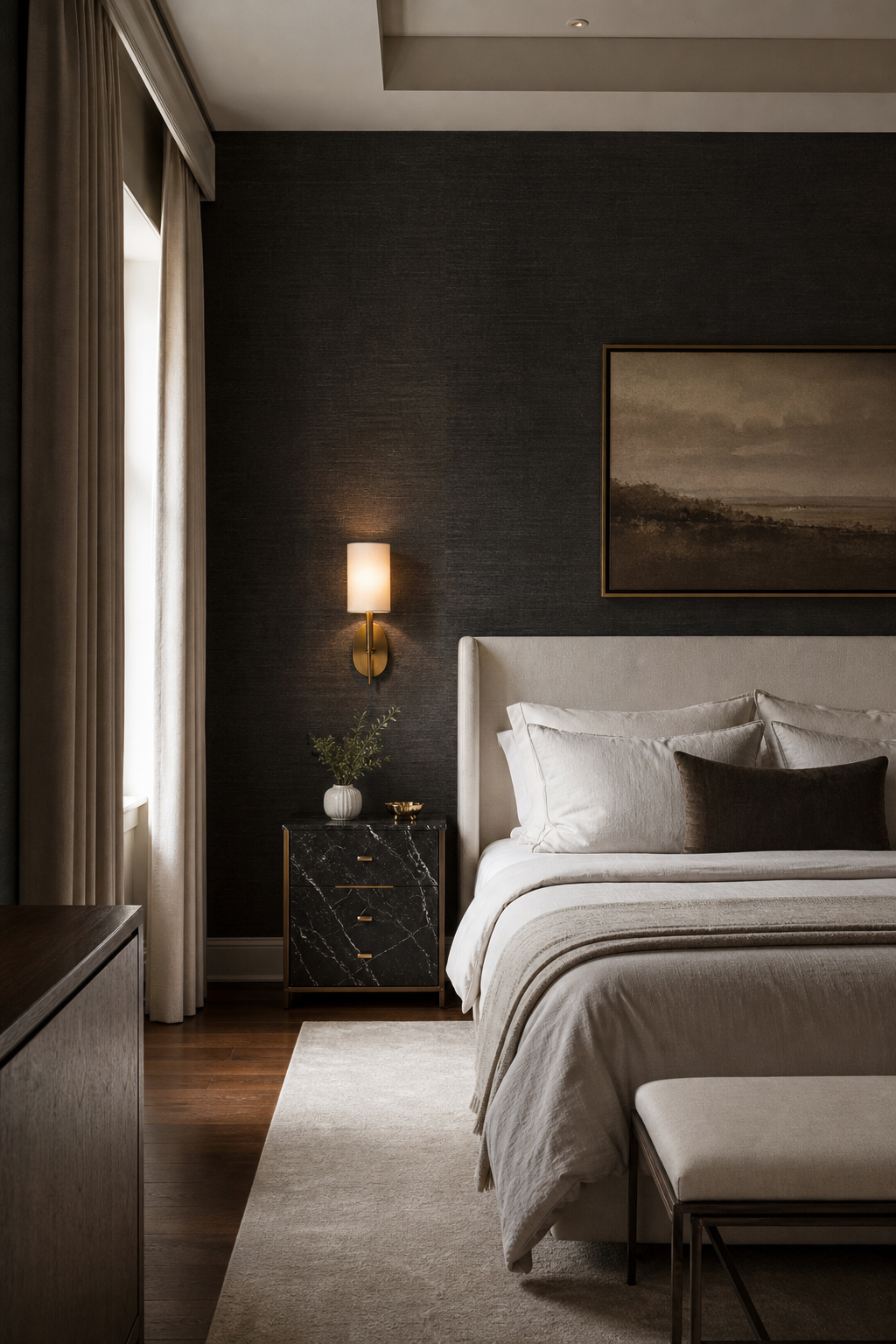
A dark wall can be elegant in a master bedroom when the rest of the room stays quiet. Charcoal grasscloth, deep olive plaster, espresso wood, or smoky taupe paint creates depth behind an ivory bed and makes brass lighting glow. The key is restraint: one strong wall is usually enough, especially when the room is intended to feel restful. Bring the dark tone back in smaller accents, such as a pillow, lamp base, frame, or nightstand, so it does not feel isolated. Texture matters more than flat color here; grasscloth and limewash catch light beautifully and keep the wall from feeling heavy. Balance the mood with pale bedding, a cream rug, and enough window softness to maintain a retreat-like atmosphere.
Consider a Refined Canopy Bed
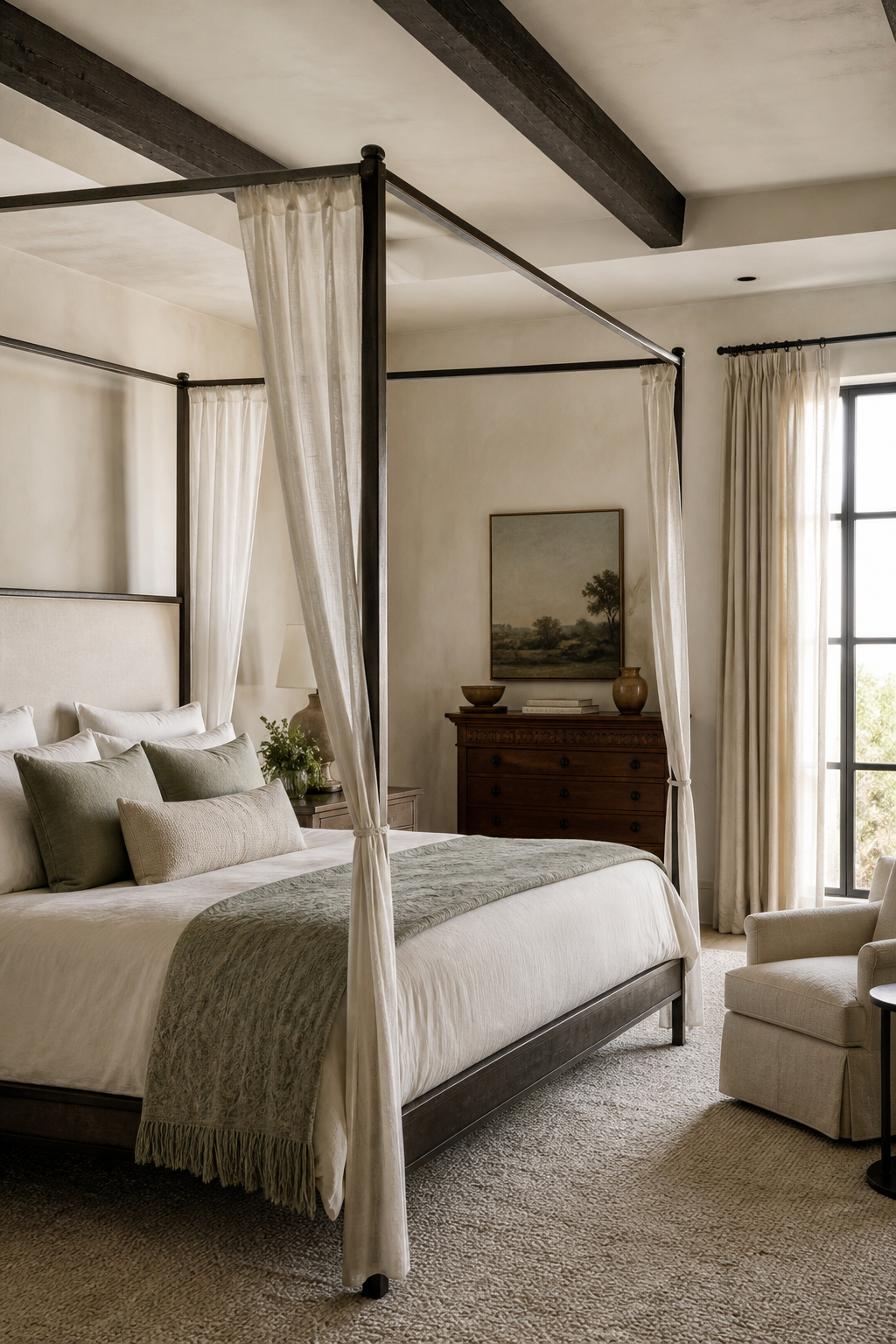
A canopy bed can feel incredibly luxurious when the frame is slim and the styling is disciplined. Choose dark bronze, blackened steel, or warm wood rather than ornate shapes, then soften the structure with linen panels or simple drapery only if the room has enough height. The canopy gives the bed architectural presence, so avoid overloading it with heavy bedding or too many pillows. It works especially well in rooms with high ceilings, exposed beams, or large windows because it brings human scale back to the space. Keep nearby furniture quieter and lower so the bed remains the focal point. A muted throw, antique dresser, or small landscape artwork can add soul without making the room feel theatrical.
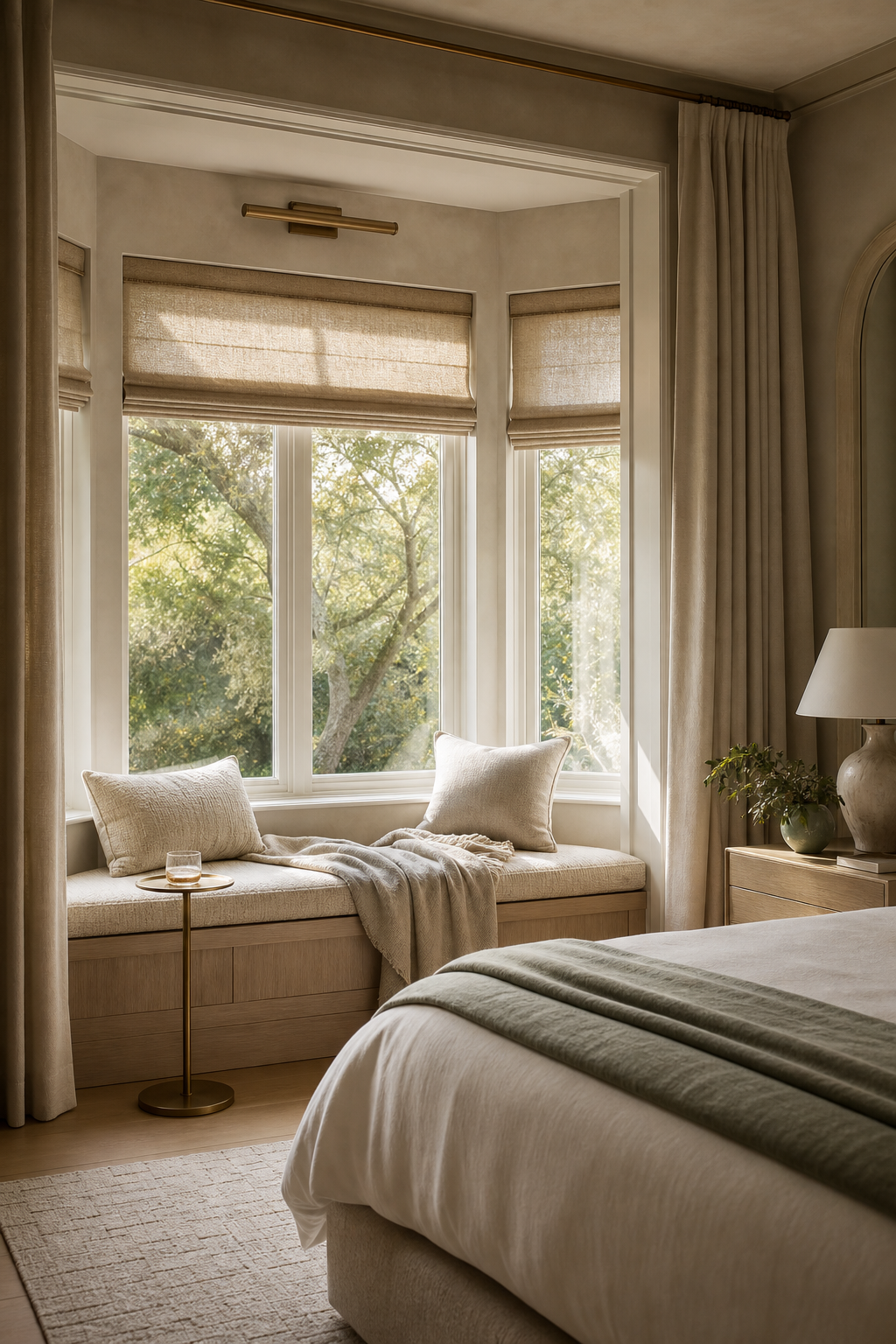
Build a Window Reading Nook
A window nook gives the master bedroom a daily ritual, which is what separates a beautiful room from one that actually feels restorative. A built-in bench with drawers below can add storage, while a loose cushion and two pillows keep it comfortable. Linen roman shades are useful because they filter light without hiding the architecture of the window. Add a small table for tea or a book, but keep the footprint light so the nook does not block circulation. If the bed sits nearby, repeat one fabric or color from the bedding to tie the areas together. This kind of corner is especially valuable in a large bedroom because it creates intimacy inside a spacious layout.
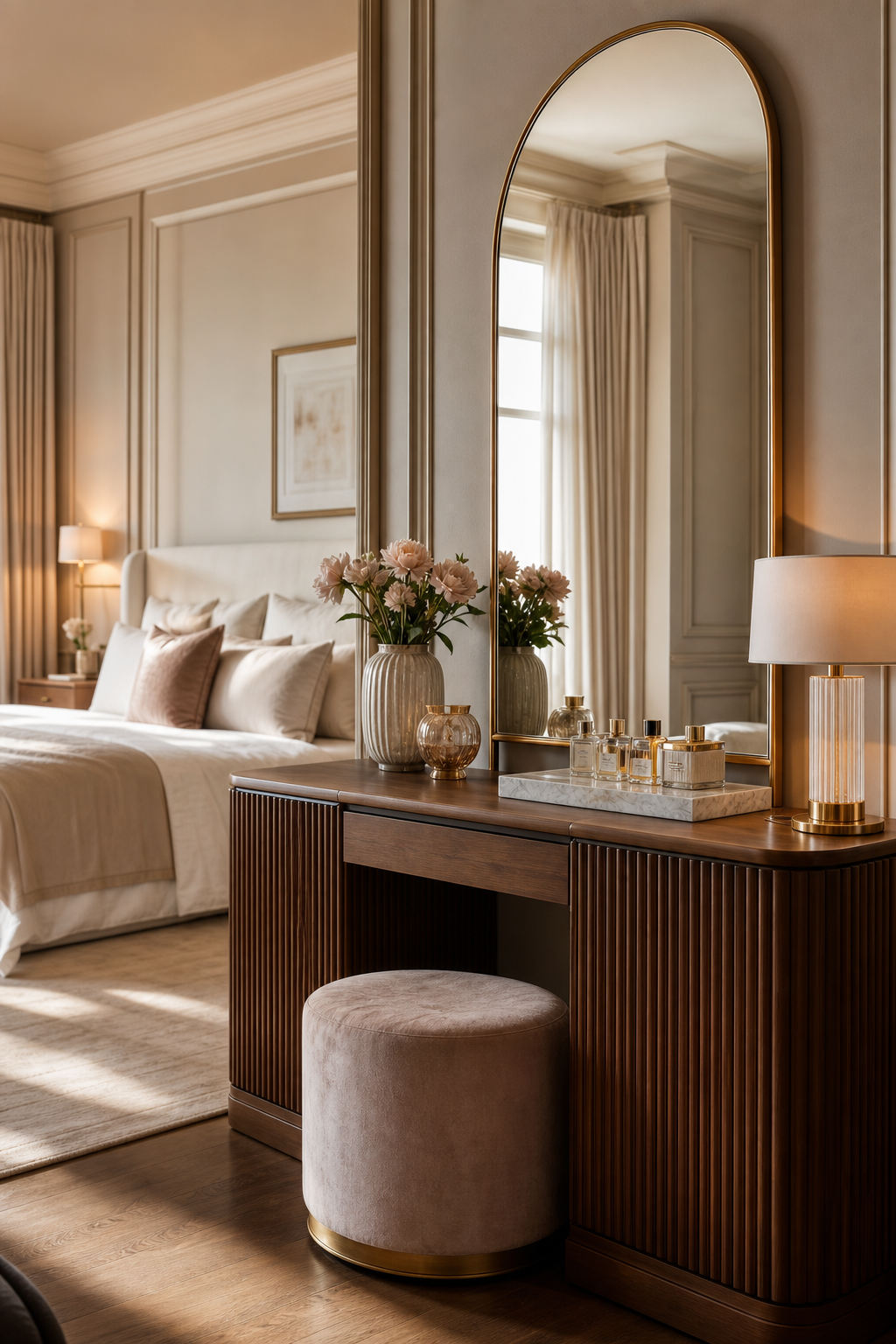
Add a Dressing Vanity That Feels Integrated
A vanity can be practical and elegant if it feels connected to the bedroom rather than squeezed in as an afterthought. Look for a slim desk, fluted wood console, or built-in surface with a mirror that reflects light without facing the bed too directly. An upholstered stool can tuck underneath and keep the floor clear. Use a marble tray for daily objects, a warm lamp for evening light, and one small vase to soften the surface. The finish should relate to the nightstands or dresser so the room reads as a suite. Avoid cluttered perfume displays or harsh task lighting; a luxury vanity should feel calm, flattering, and easy to maintain every morning.
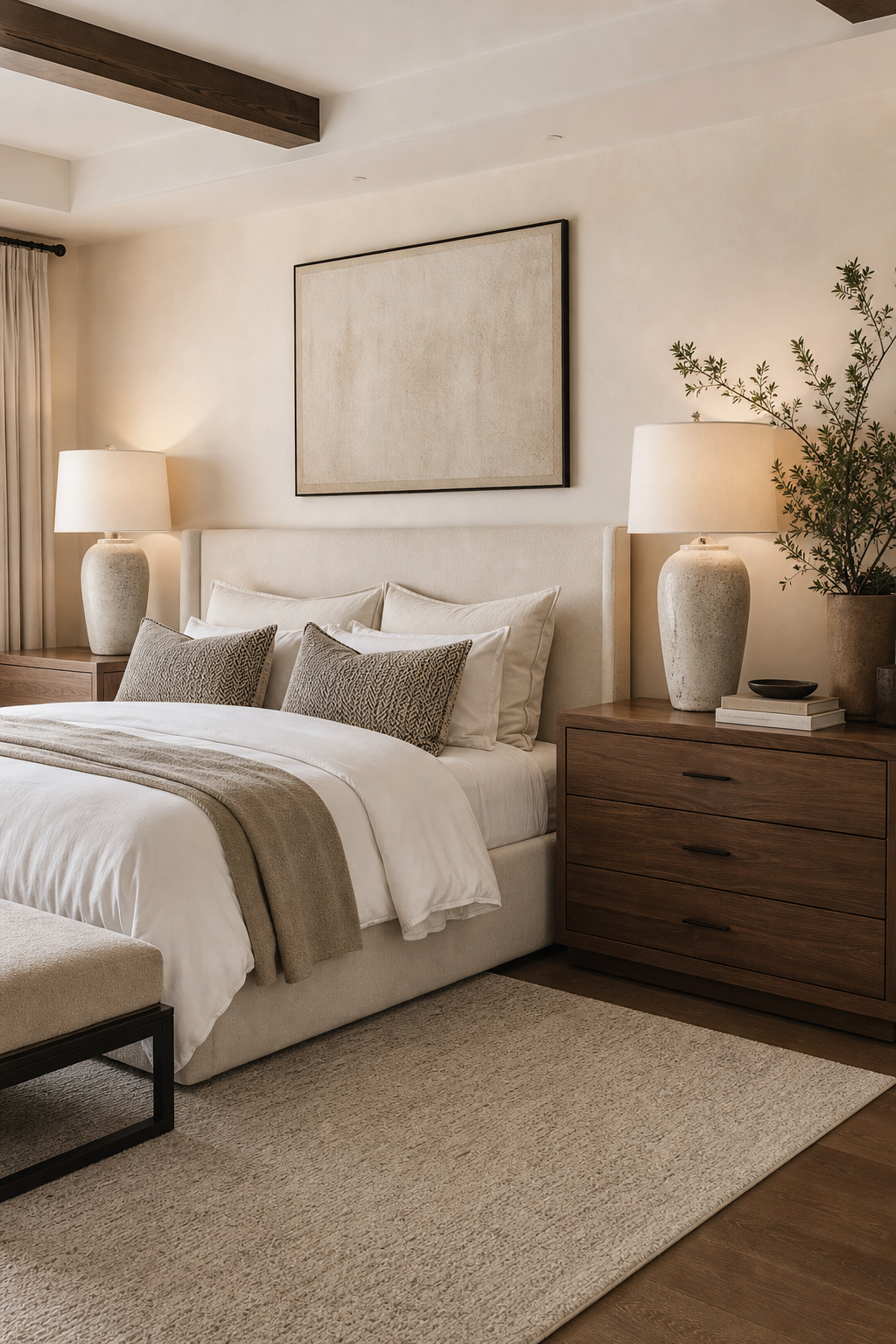
Choose Oversized Nightstands When Space Allows
Generous nightstands make a master bedroom feel balanced, especially beside a king bed. Small tables can look nervous and leave no room for the objects people actually use at night. A wide three-drawer chest, floating cabinet, or marble-topped table gives storage, surface area, and visual weight. The height should sit close to the top of the mattress, while the width should feel proportional to the headboard. Large lamps are often more flattering than tiny ones because they bring shade, scale, and a hotel-suite rhythm. Keep the top edited: lamp, small bowl, book stack, and something organic. When storage is handled at the bedside, the rest of the room can stay cleaner and more serene.
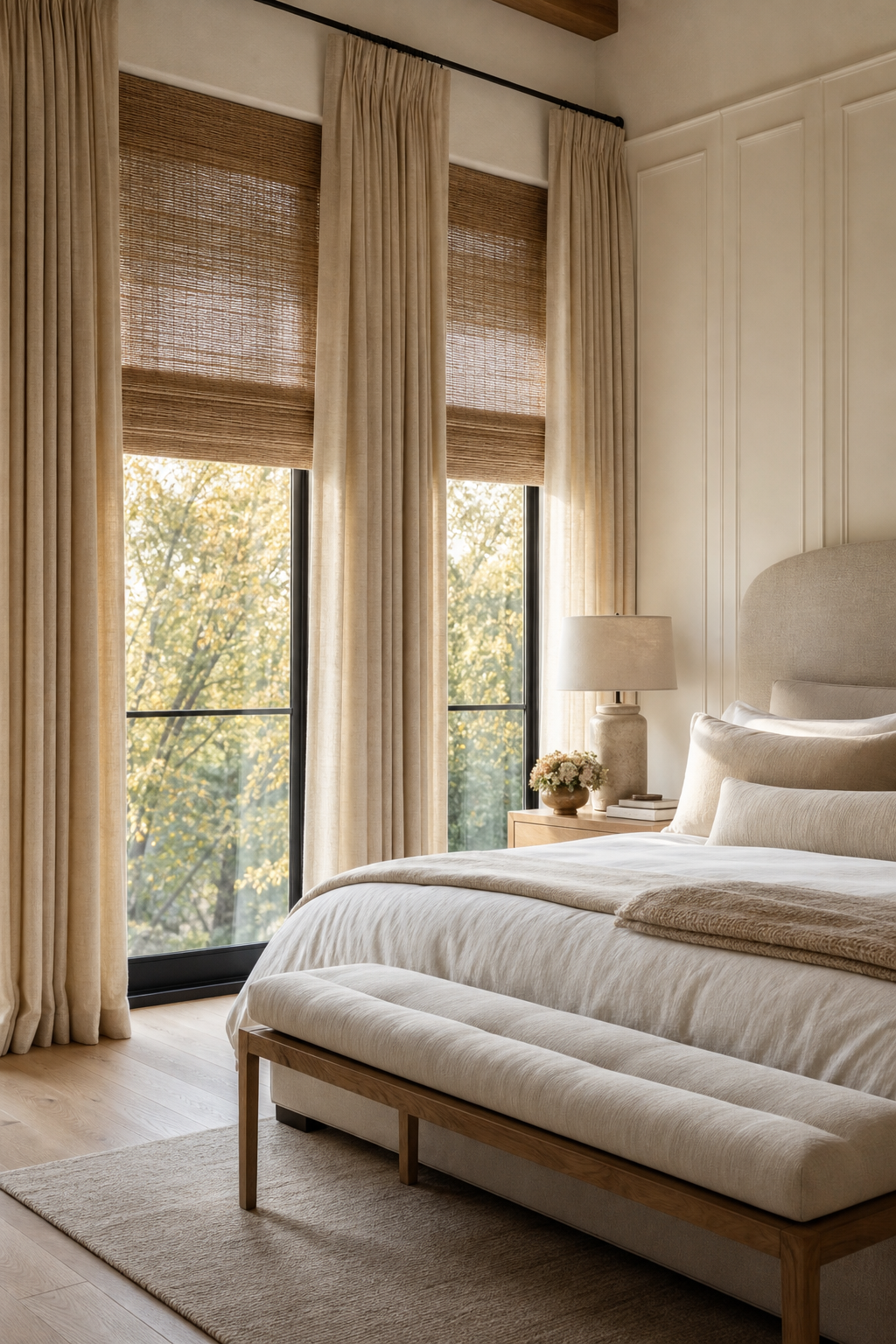
Layer Window Treatments for Softness and Control
Window treatments are one of the most overlooked luxury details in a bedroom. A woven shade or roman shade provides privacy and texture, while full-height drapery adds softness, height, and acoustic comfort. Hang the drapery as high as possible and let it return close to the wall so the window feels larger. Linen, wool blends, or lined cottons fall better than thin panels and help the room feel tailored. If the bedroom faces bright morning light, blackout lining can be hidden behind a more beautiful face fabric. Choose hardware in bronze, brass, or black that relates to the lighting. This layered approach makes the room practical for sleep while still looking soft in daylight.
Scale Artwork Like a Designer
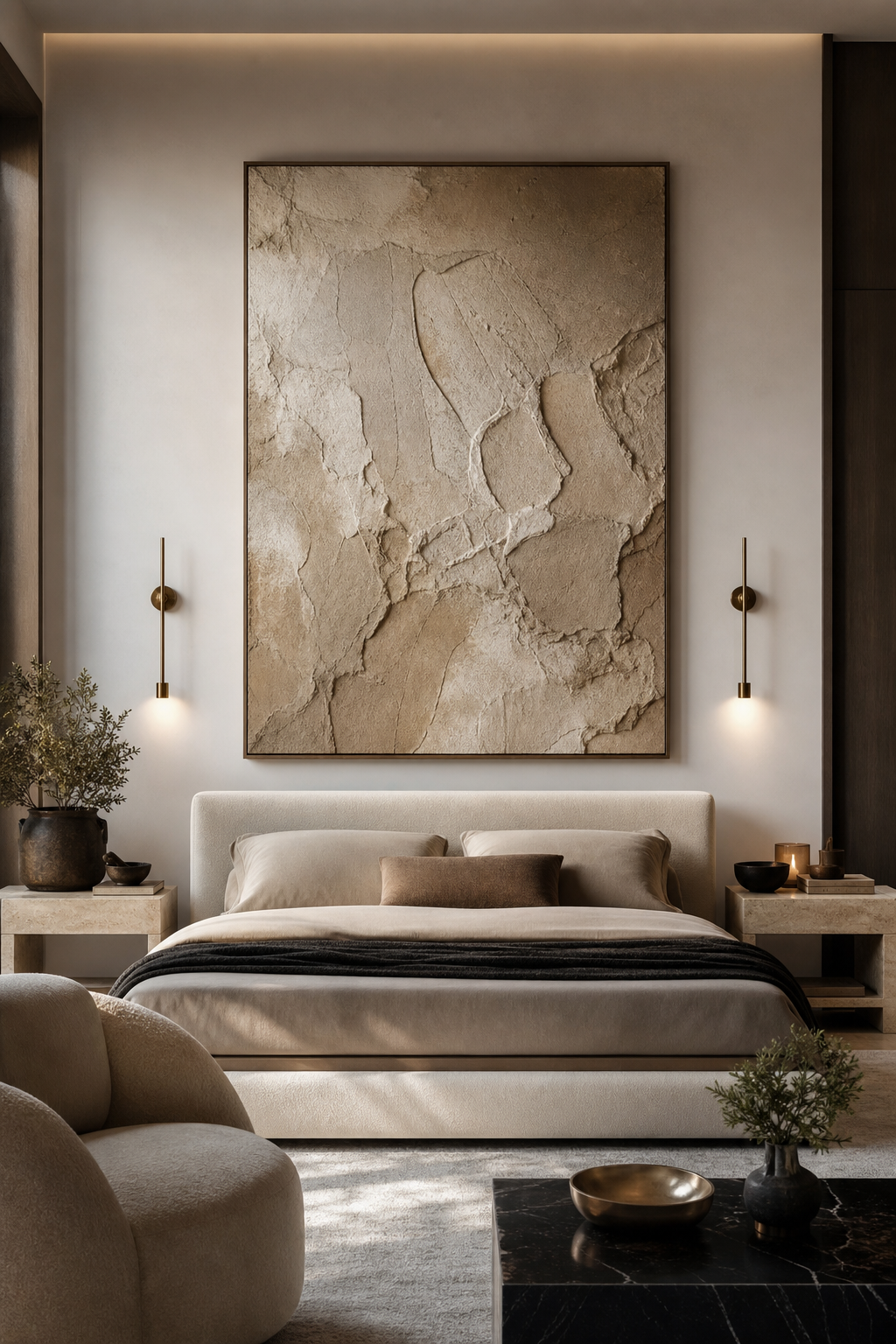
Artwork above the bed should have enough presence to hold the wall. A small frame floating in the middle of a large headboard wall often looks unfinished, while one oversized canvas or a balanced pair of pieces can make the room feel designed. Textured abstracts, quiet landscapes, and tonal works are especially successful in bedrooms because they add interest without visual noise. Leave breathing room between the headboard and frame, and align the art with the bed rather than the entire wall if the layout is asymmetrical. In a luxury master bedroom, the frame matters too: thin bronze, black, oak, or linen-wrapped edges can subtly repeat other materials in the room. Let the art set the mood, not shout over it.
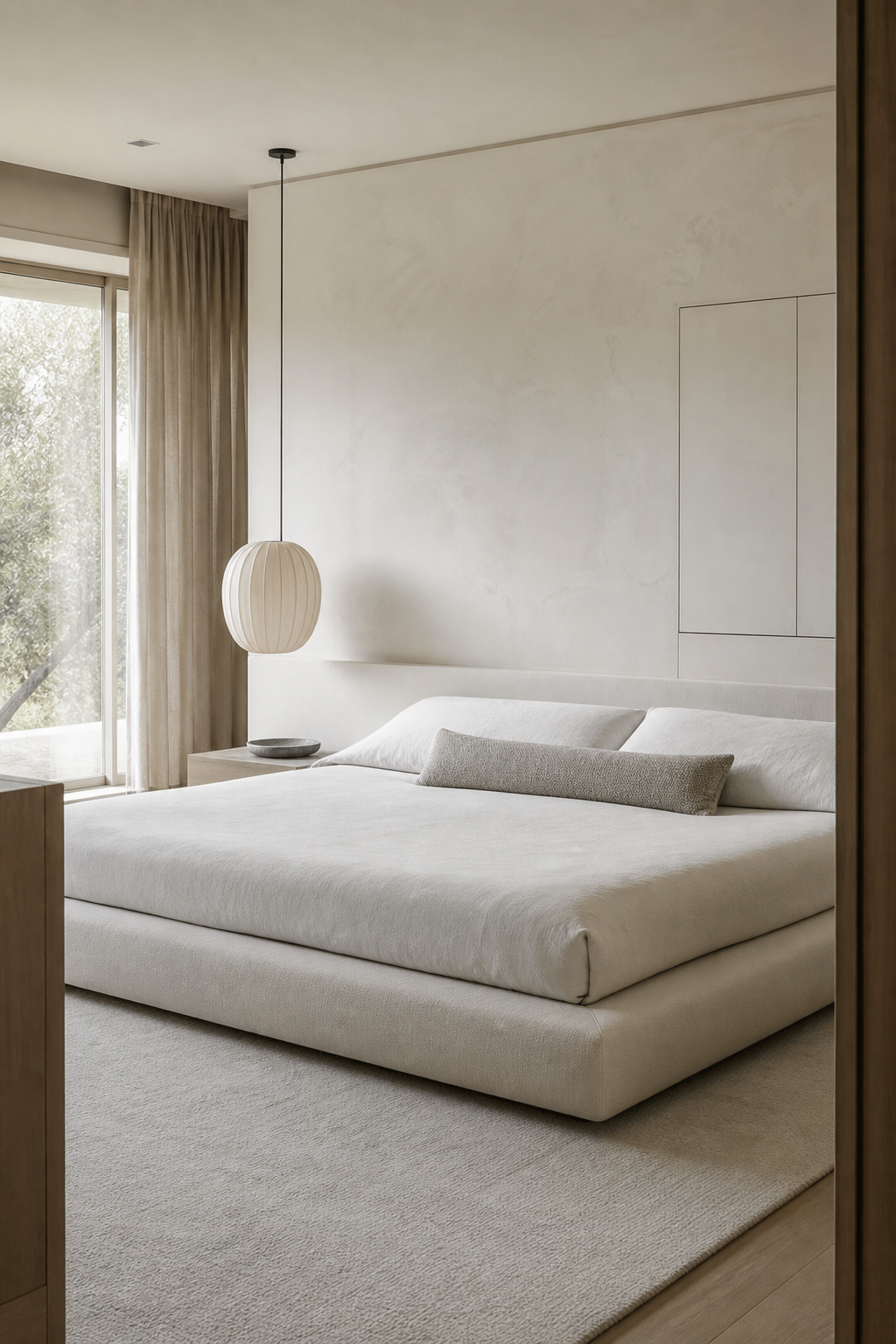
Practice Soft Minimalism
A polished bedroom does not need to be full. Soft minimalism works by choosing fewer pieces, then making every surface, texture, and proportion feel considered. A low upholstered bed, plaster walls, concealed storage, and one sculptural lamp can be more luxurious than a room packed with furniture. The palette should stay warm rather than stark: chalk, oat, ivory, pale ash, and soft gray are easier to live with than pure white. Texture is essential, so bring in linen bedding, a wool rug, a ceramic bowl, or a woven shade. Edit the nightstands daily and leave some negative space on the walls. The result feels calm, expensive, and deeply restful because the eye has room to settle.
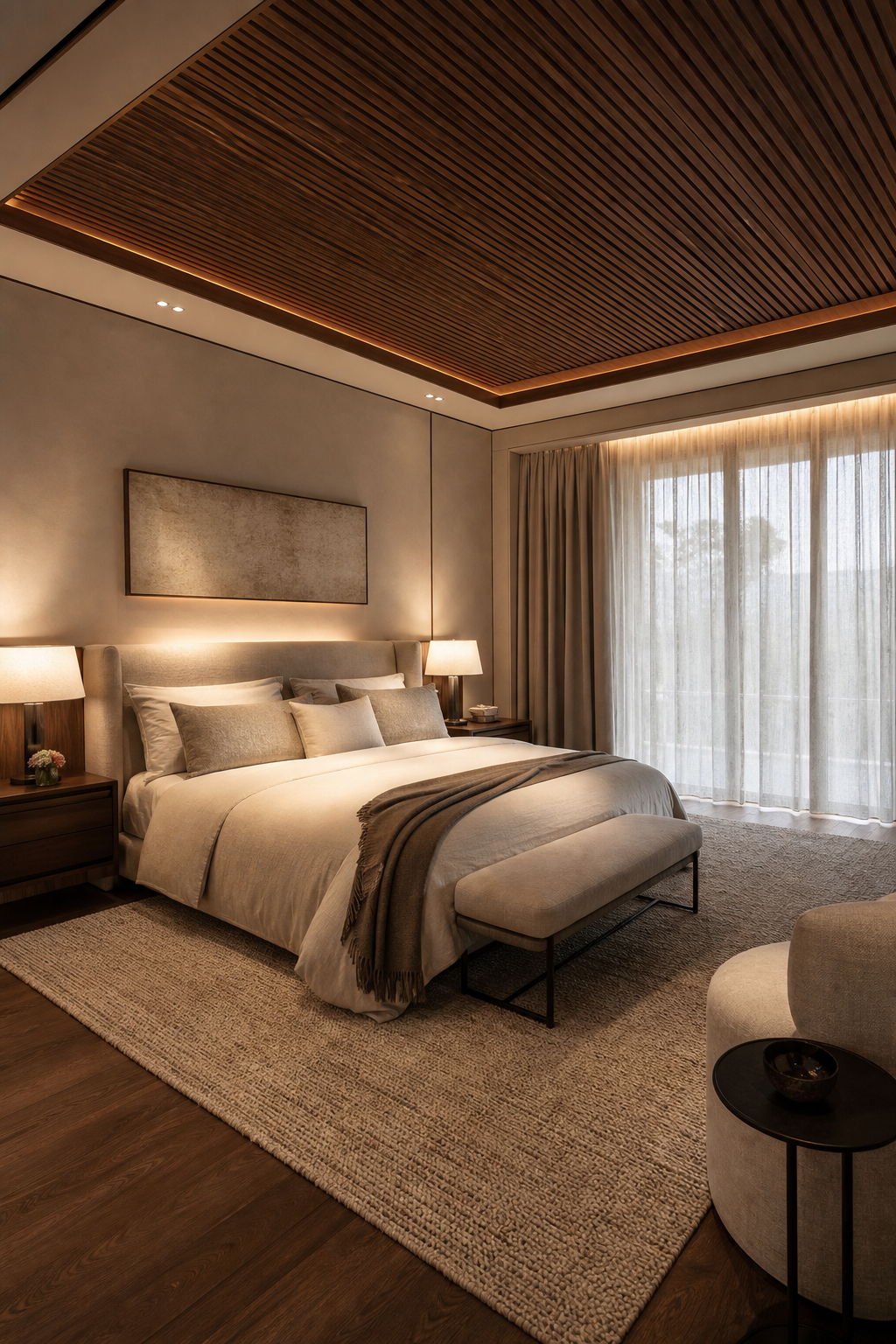
Warm the Room With a Wood Ceiling Detail
A wood ceiling detail can make a large master bedroom feel cocooned without darkening the walls. Slatted walnut, pale oak beams, or a framed ceiling inset adds warmth overhead and draws attention to the architecture. This works particularly well when paired with indirect lighting, because the glow washes across the wood grain and softens the room at night. Keep the bed wall simpler if the ceiling is the feature, and repeat the wood tone in nightstands or a bench so the idea feels connected. In lower rooms, use a lighter wood and a cleaner profile to avoid heaviness. The point is to add enclosure and craft, not to make the ceiling compete with every other element.
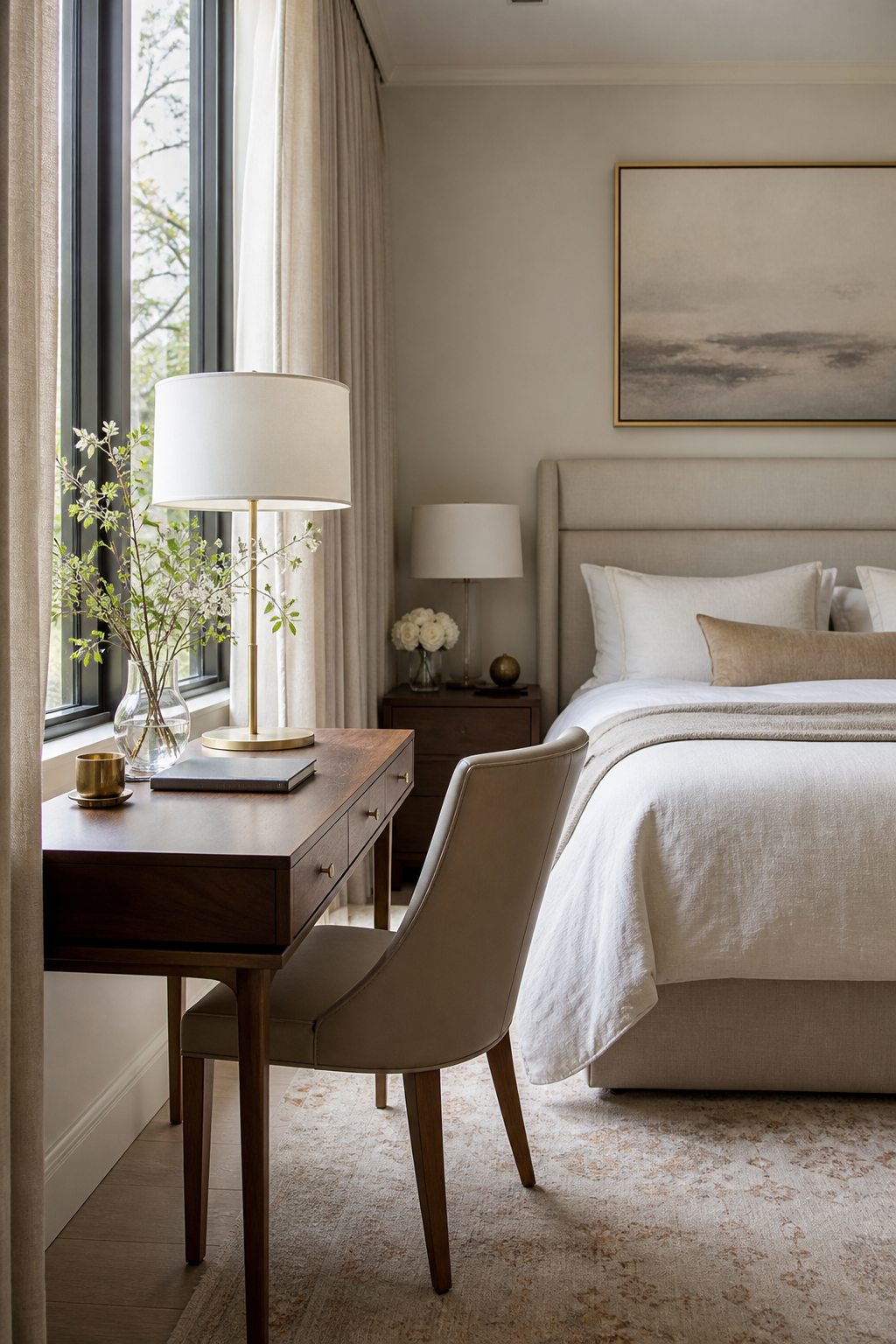
Include a Discreet Writing Desk
A small writing desk can be useful in a master bedroom when it is treated like furniture, not an office station. Place it near a window or along a quiet wall, then choose a slim profile that does not interrupt the sleeping zone. A leather or upholstered chair feels more residential than a task chair, and a table lamp is softer than overhead lighting. Keep cords hidden and avoid visible tech if the room is meant to feel restorative. The desk can double as a place for journaling, correspondence, or morning planning, but it should never dominate the suite. Match its wood tone to the nightstands or dresser so it reads as part of the room rather than a work corner.
Use Texture Instead of Busy Pattern
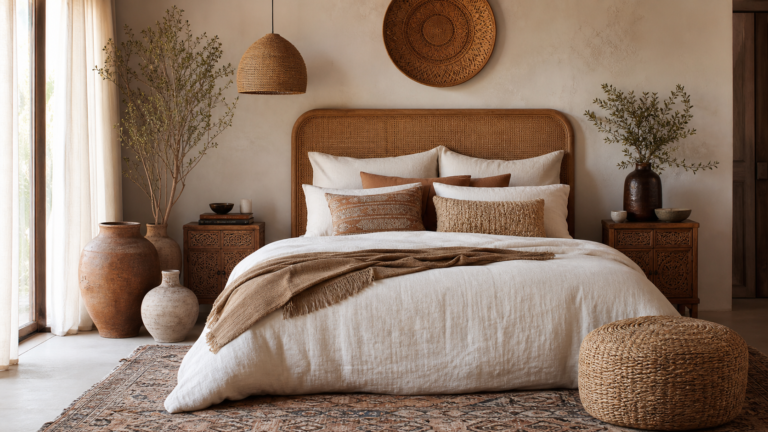
Texture is the safest way to make a neutral bedroom feel luxurious. Ribbed plaster, boucle upholstery, linen sheets, nubby wool rugs, ceramic vessels, and woven shades all add depth without disrupting the calm. This is especially helpful when the palette stays close, such as cream, taupe, ivory, and warm gray. The eye notices the difference between matte plaster and soft fabric even when the colors are similar. Use pattern sparingly, perhaps in one small pillow or a faded rug, then let tactile materials do most of the work. A room designed this way photographs beautifully because light creates shadow across every surface. It also ages well, since texture is less trend-dependent than bold prints.
Make the Bed Like a Five-Star Suite
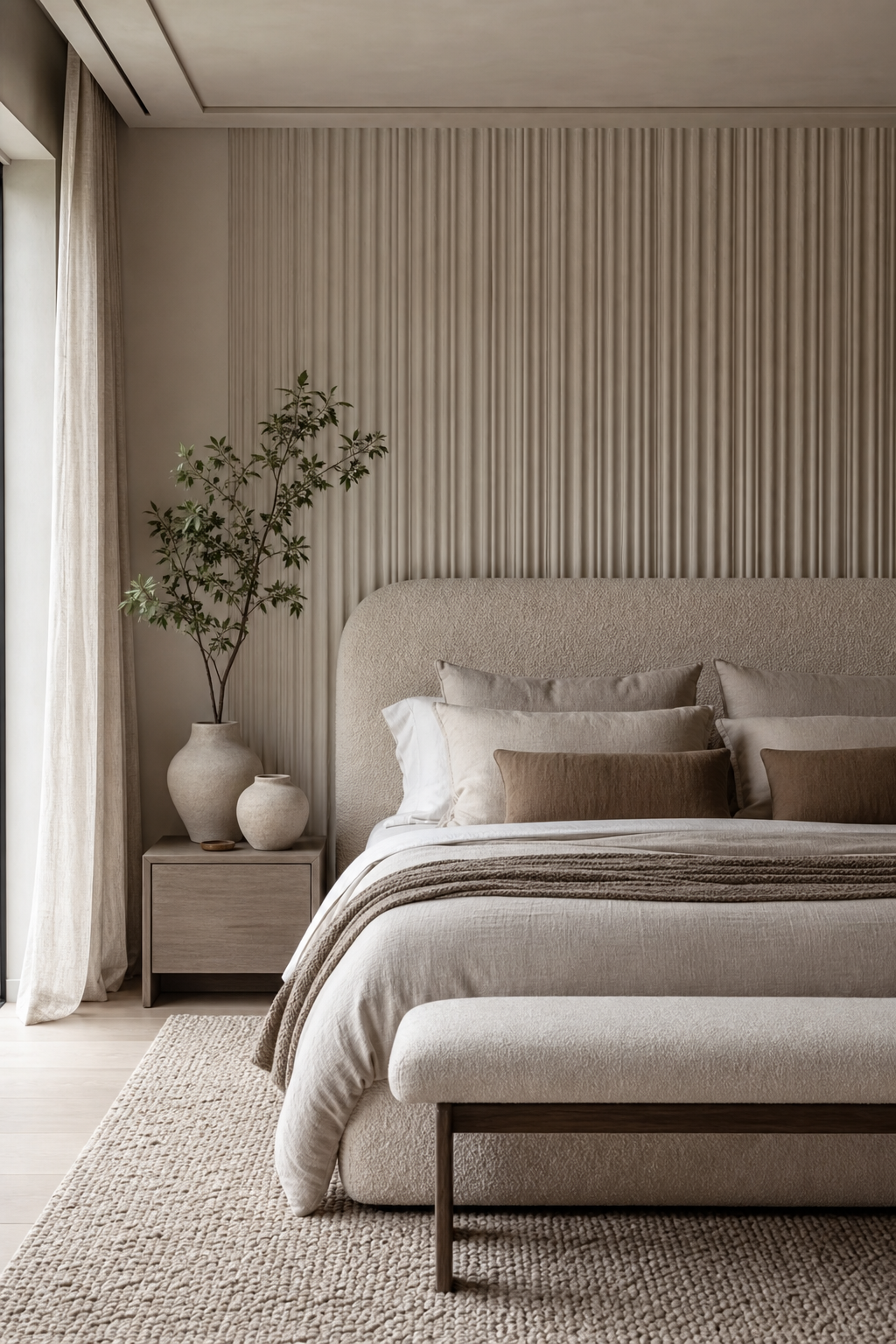
Hotel-style bedding looks polished because it is layered with discipline. Start with crisp sheets, add a lightweight coverlet or blanket, fold the duvet back generously, and finish with sleeping pillows plus one or two decorative layers. The bed should look inviting, not overstuffed. White sheets are classic because they brighten the room and allow throws, shams, and pillows to change seasonally. For a master bedroom, choose fewer pieces in better fabrics: cotton percale, linen, velvet, cashmere, or a quilted coverlet. Keep the fold lines clean and let the duvet drape naturally. A long lumbar pillow often looks more current than a row of small cushions, and it makes daily styling easier.
Bring In Natural Greenery
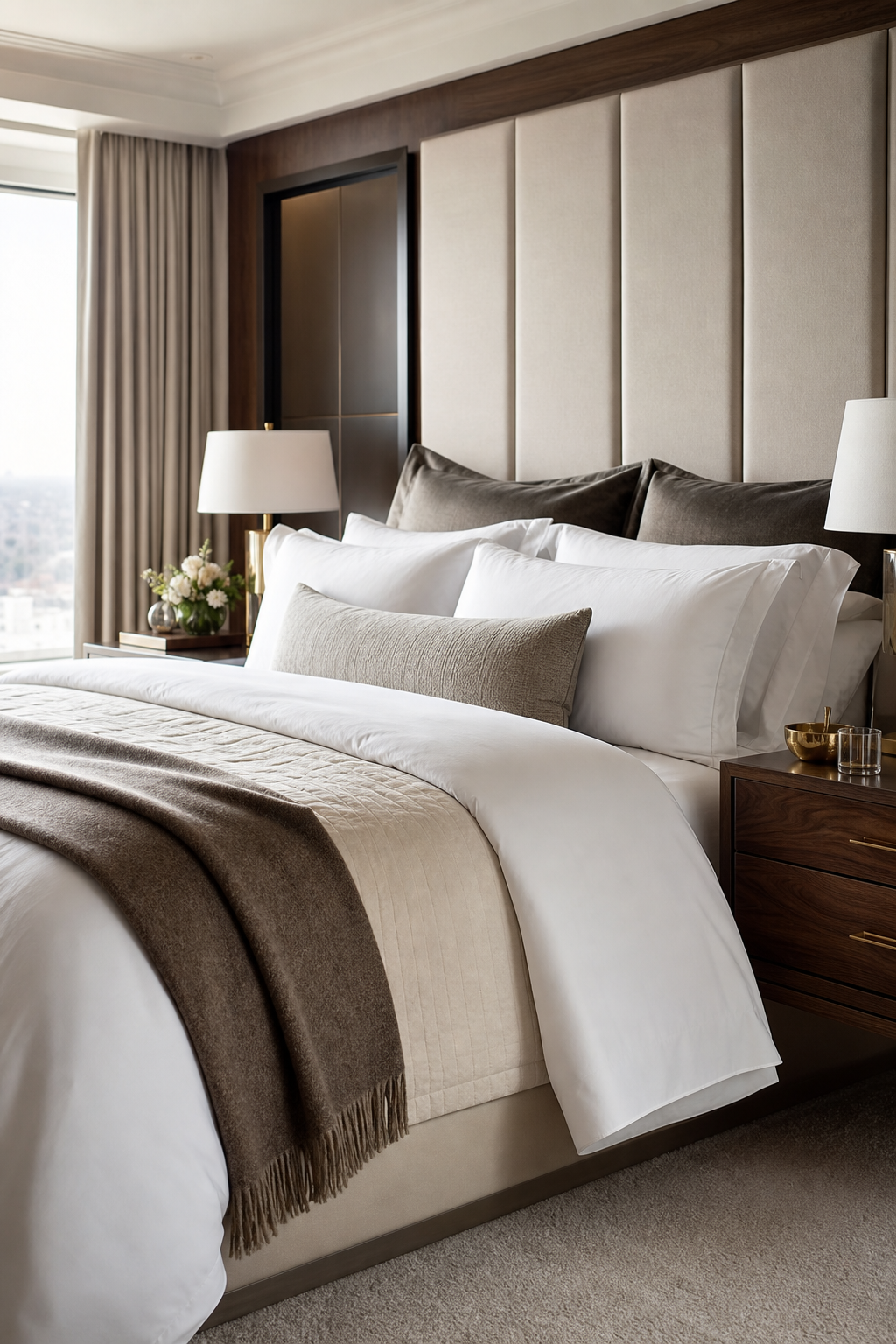
Greenery gives a luxury bedroom life, but it should be chosen with the same restraint as furniture. An olive tree, ficus, large branch arrangement, or sculptural stems in a ceramic vessel can soften all the upholstery and straight architectural lines. Avoid tiny plants scattered across every surface; one meaningful organic gesture is more elegant. The planter matters, too. Clay, stone, aged ceramic, or woven baskets feel more refined than shiny plastic. Place greenery where it benefits from light and where its silhouette balances the room, such as beside a window, near a bench, or against a quiet wall. In neutral bedrooms, the muted green also adds color without disturbing the restful palette.
Balance Dark Wood With Cream Upholstery
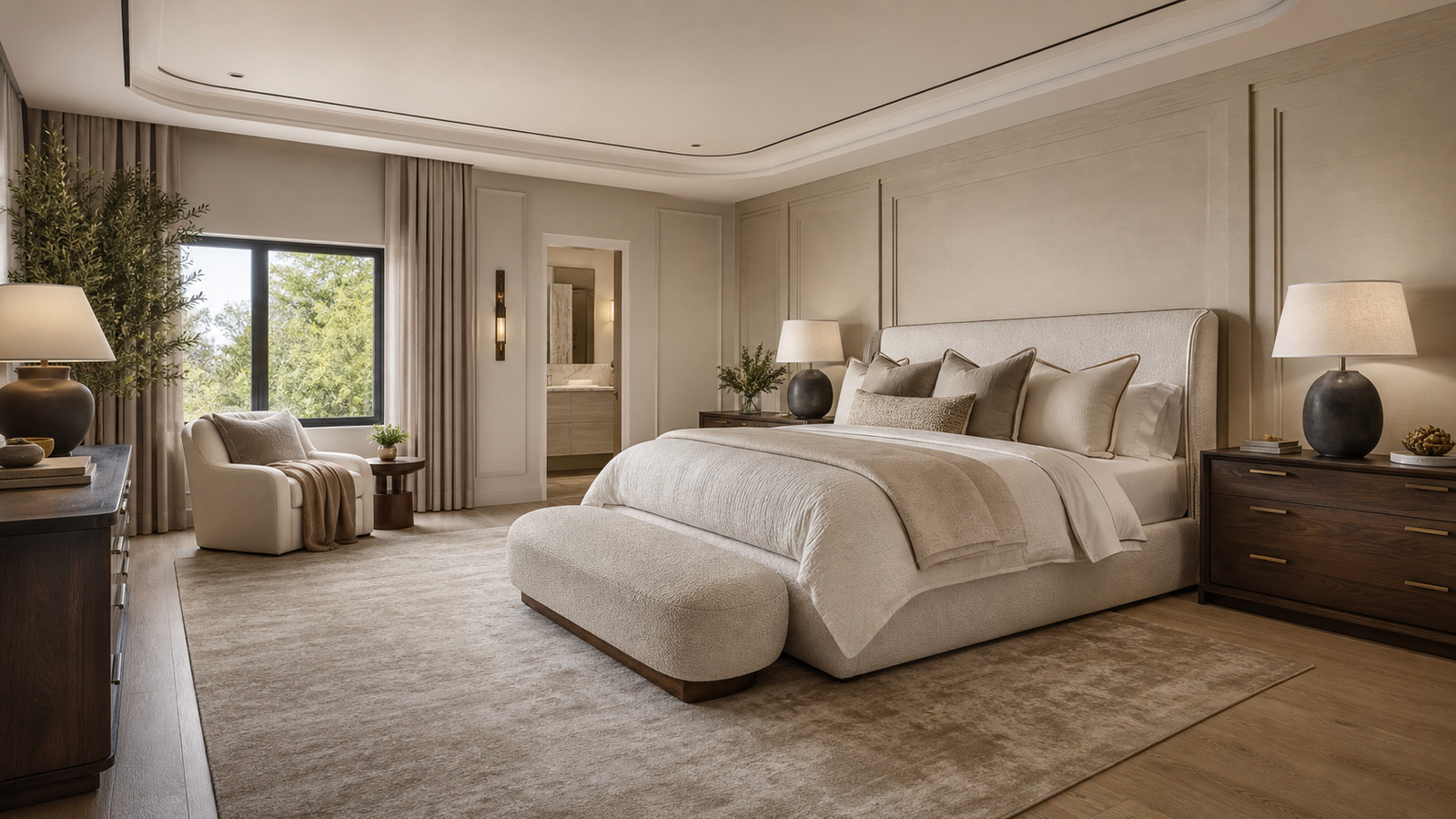
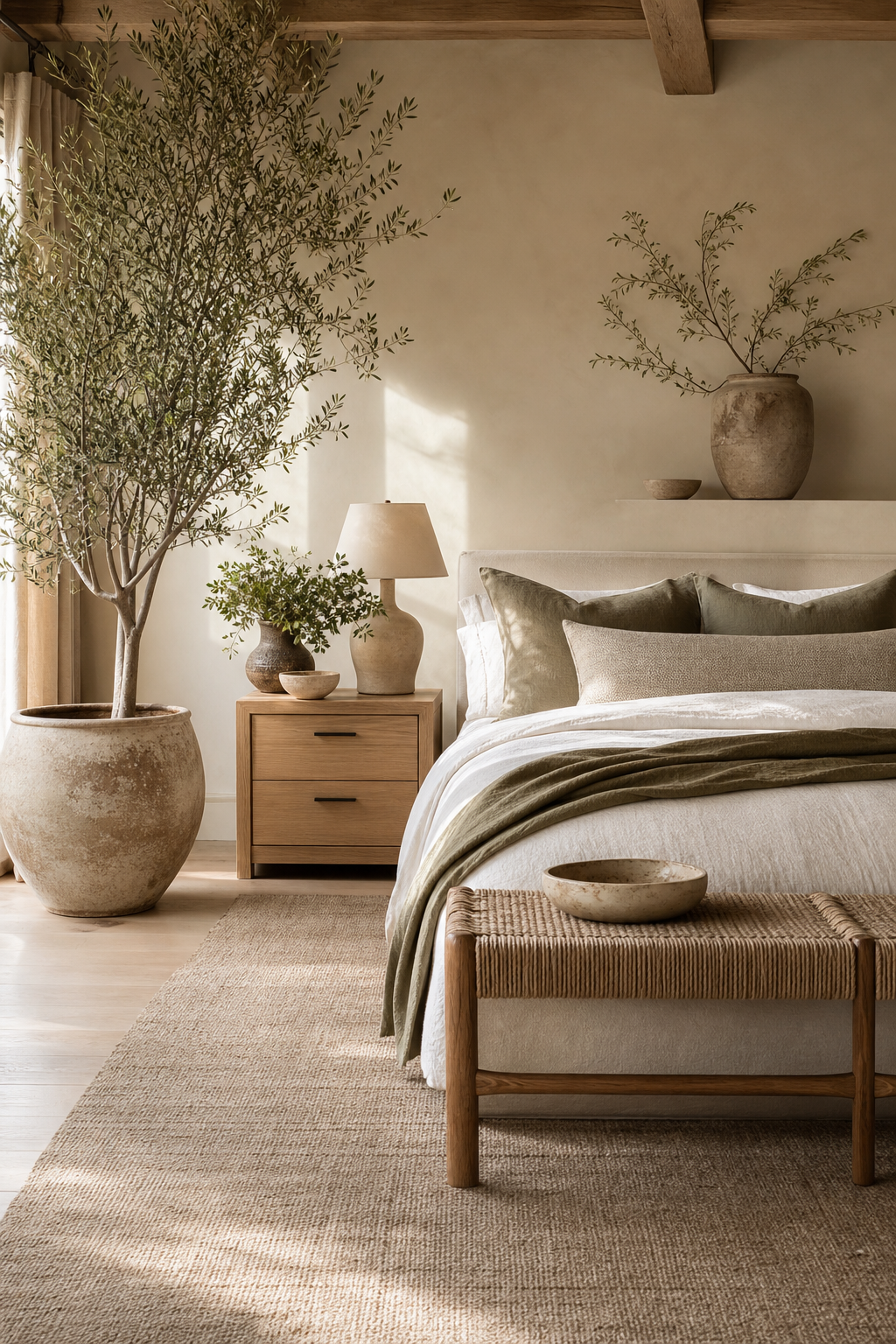
Dark wood can make a bedroom feel deeply polished, but it needs softness around it. Espresso walnut paneling, a dark dresser, or moody millwork looks best beside cream upholstery, white bedding, and a pale rug. This contrast keeps the room from feeling flat while still remaining restful. Use warm metal finishes, such as brass or bronze, to bridge the dark and light elements. If the wall is paneled, keep the headboard simple and let the wood grain provide movement. A few black accents can sharpen the room, but avoid making every piece dark. The goal is tailored richness: enough depth to feel sophisticated, enough softness to still feel like a retreat.
Connect the Bedroom to a Spa-Like Ensuite
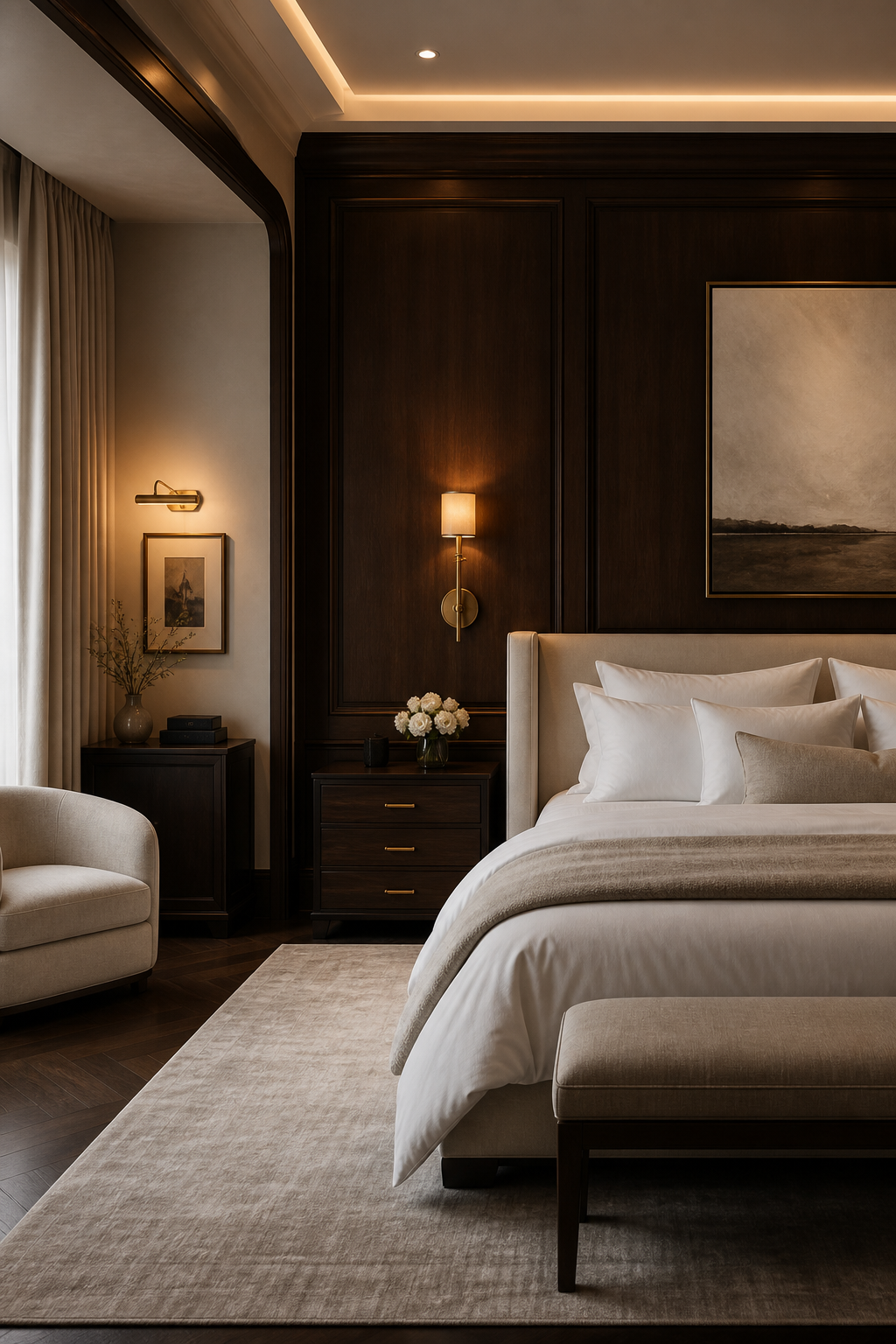
A master bedroom feels most luxurious when it relates gracefully to the ensuite bath. If the rooms are visible to each other, repeat materials in subtle ways: marble tones, pale oak, linen, brushed metal, or warm plaster. The transition should feel calm, not abrupt. A soft rug at the bedroom side, a stone threshold, and consistent lighting temperature can make the suite feel intentional. Keep bathroom sightlines tidy by framing the view toward a tub, vanity, or beautiful stone wall rather than storage. Even without a full renovation, matching towels, bath mats, and bedroom textiles creates continuity. This final layer makes the room feel like a private spa retreat rather than two separate spaces.
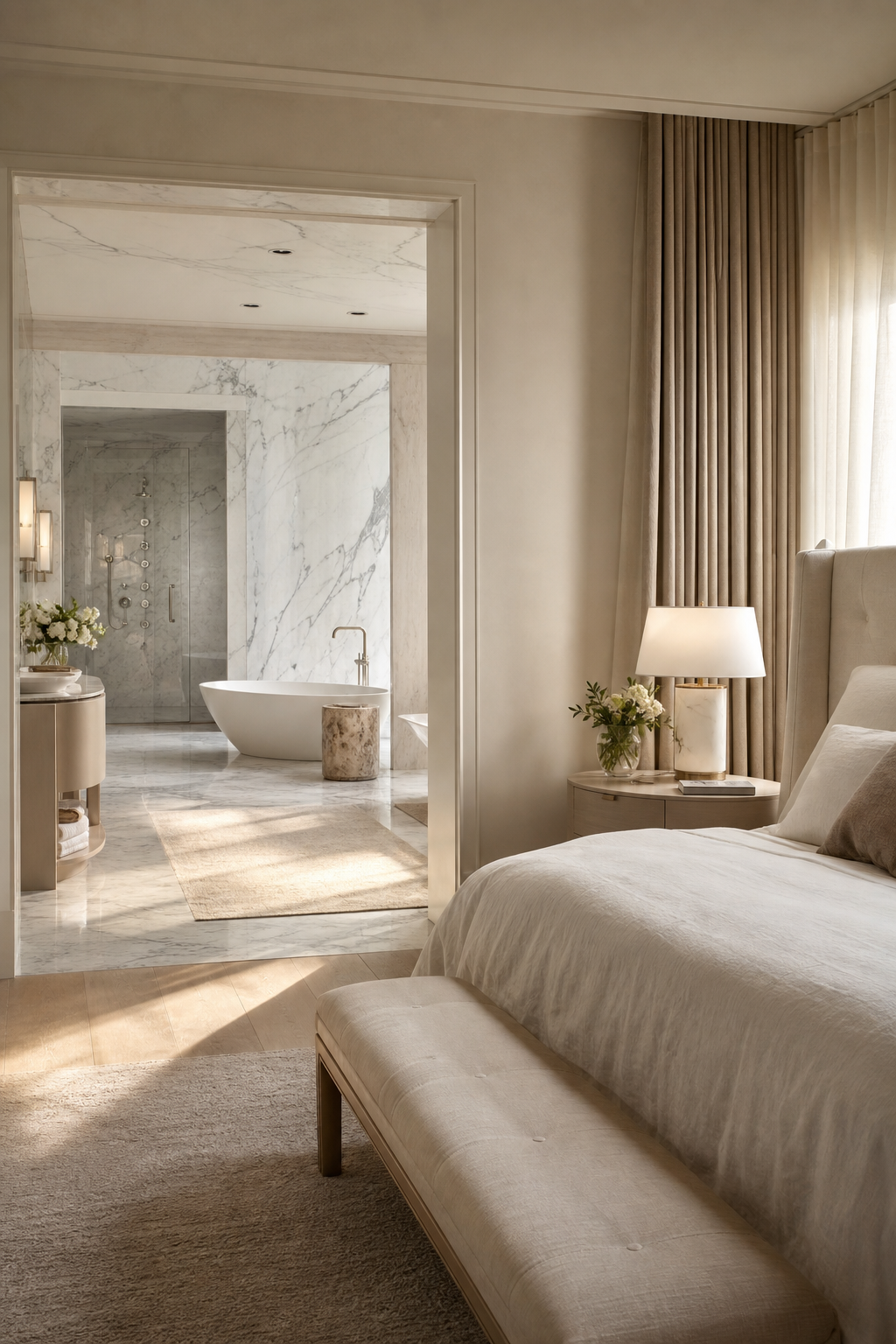
The best luxury bedroom master design is less about excess and more about control. When the bed is beautifully scaled, the lighting is layered, the storage is calm, and every texture has a reason to be there, the room begins to feel like a private retreat. Start with the idea that would improve your daily routine most, then build slowly with materials and details that make the space quieter, warmer, and more polished over time.