16 Minimalist Bedroom Ideas For A Cozy Stylish Retreat
A minimalist bedroom works best when it feels edited, not empty. The goal is a room that lets the eye rest while still offering softness, warmth, and the small practical comforts that make bedtime feel indulgent. Instead of filling every surface, focus on beautiful materials, quiet storage, flattering light, and a few well-chosen pieces with excellent proportions. These ideas show how to make a bedroom feel serene and stylish without slipping into a cold gallery mood.
Layer Warm Neutrals Instead Of Using Plain White
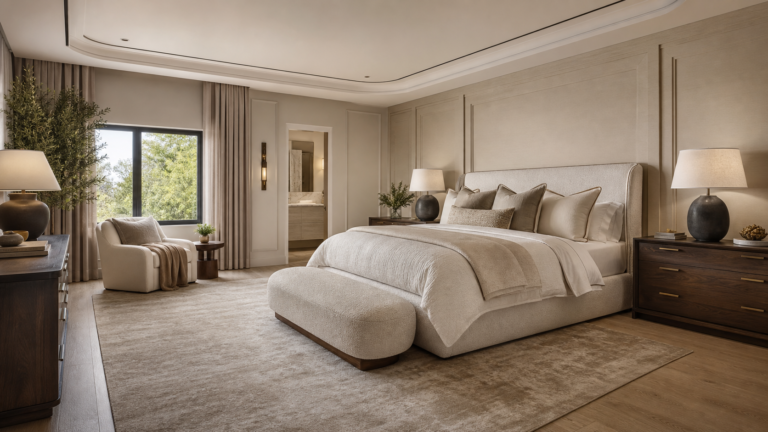
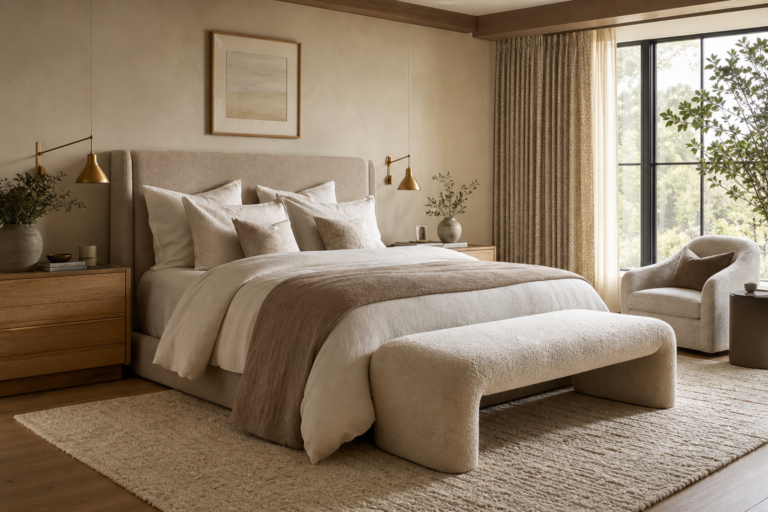
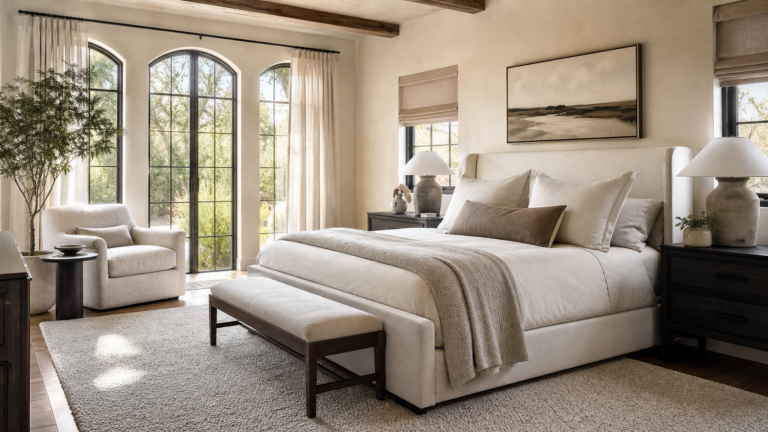
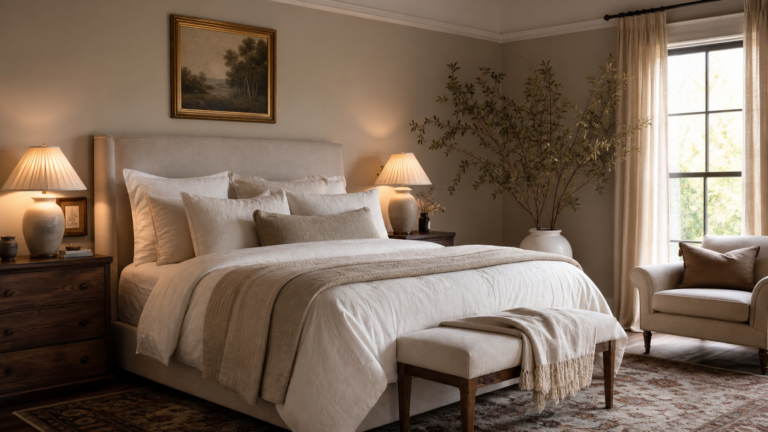
White walls can be beautiful, but a cozy minimalist bedroom needs more than one flat shade. Build the palette with warm chalk, oatmeal, mushroom, flax, and soft greige so the room feels calm without becoming sterile. Keep larger pieces simple: a clean-lined bed, plain curtains, and unadorned nightstands. Then let subtle tonal shifts do the work through linen sheets, a boucle bench, a wool rug, or a ceramic lamp with a matte glaze. The effect is quiet but not blank. In evening light, warm neutrals soften shadows and make the bed feel more inviting. This approach also makes seasonal styling easier because almost any natural wood, stone, or woven accent can blend in without disrupting the restful mood.
Choose A Low Platform Bed With Soft Edges
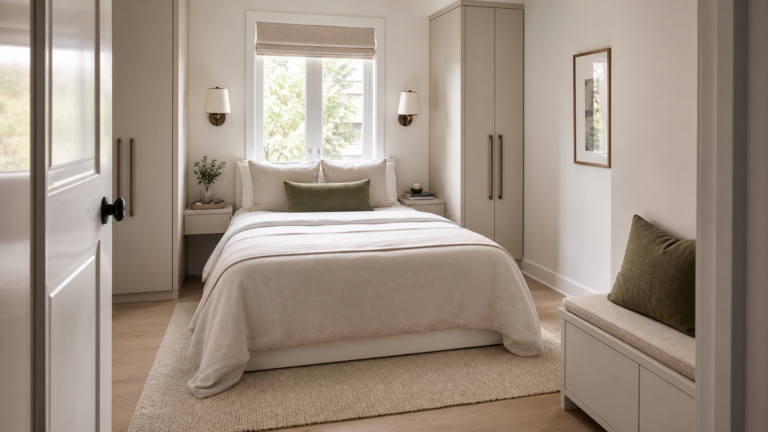
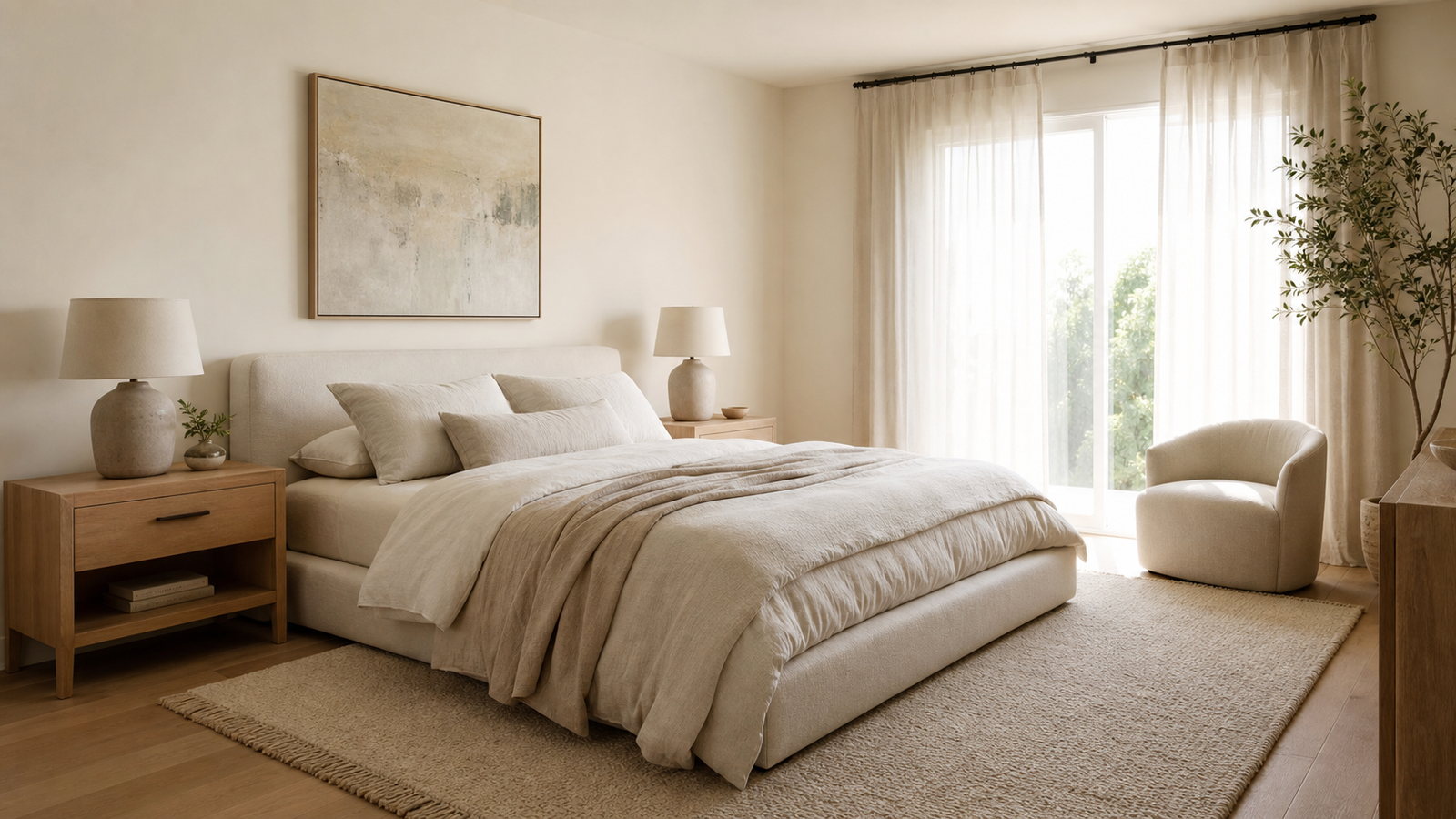
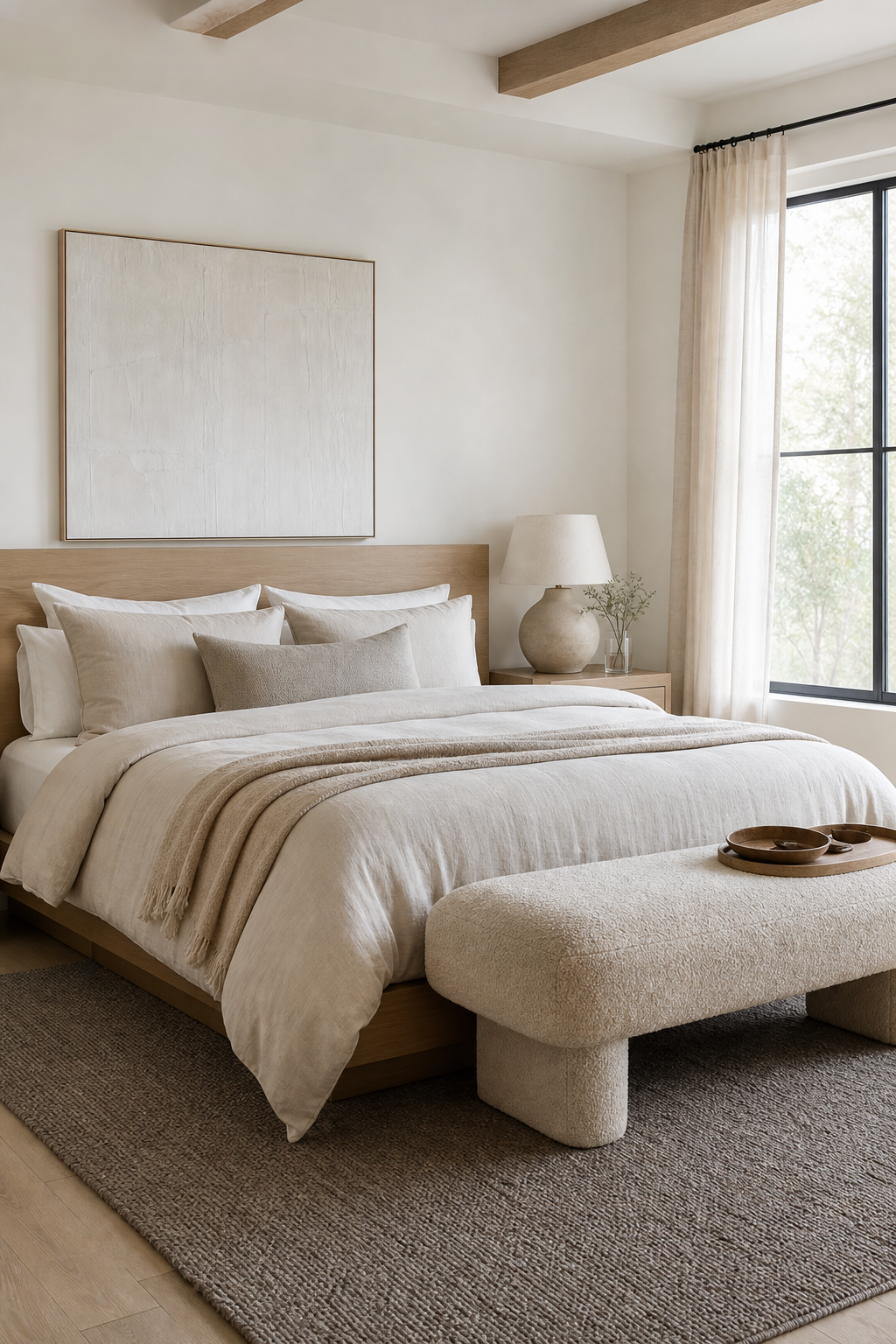
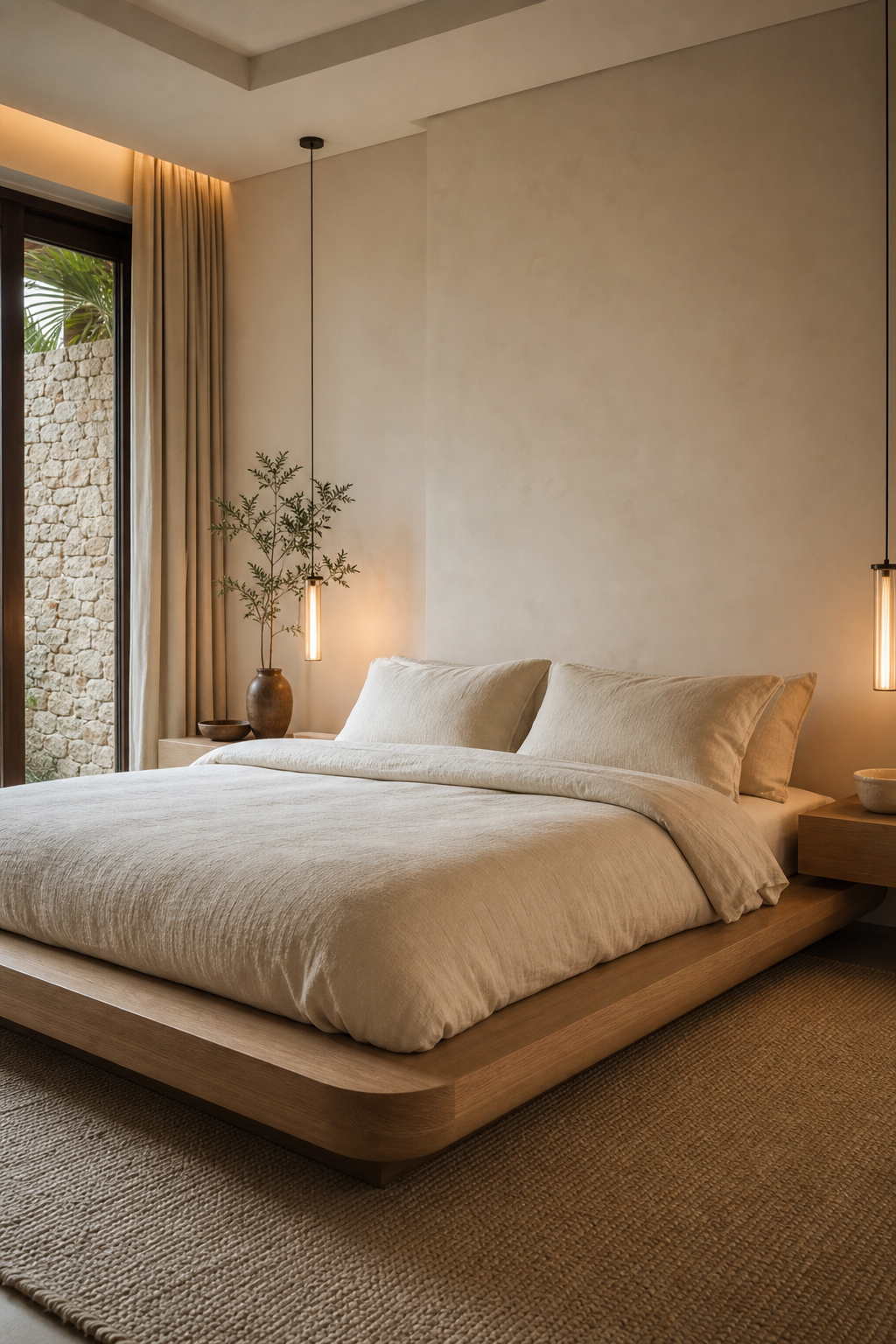
A low platform bed gives a minimalist bedroom an instant sense of calm because it lowers the visual weight of the room. For a cozy retreat, avoid hard, razor-thin frames and choose a design with softened corners, an upholstered base, or rounded timber edges. The bed can still feel streamlined, but it should look comfortable from the doorway. Pair it with relaxed bedding that falls naturally rather than a stiff hotel tuck. A low bed also leaves more wall visible above the headboard, which makes the room feel taller and more breathable. Keep the floor area clear around it so the silhouette remains intentional. A single wool rug beneath the bed will ground the look and add warmth underfoot.
Use One Oversized Rug To Anchor The Room
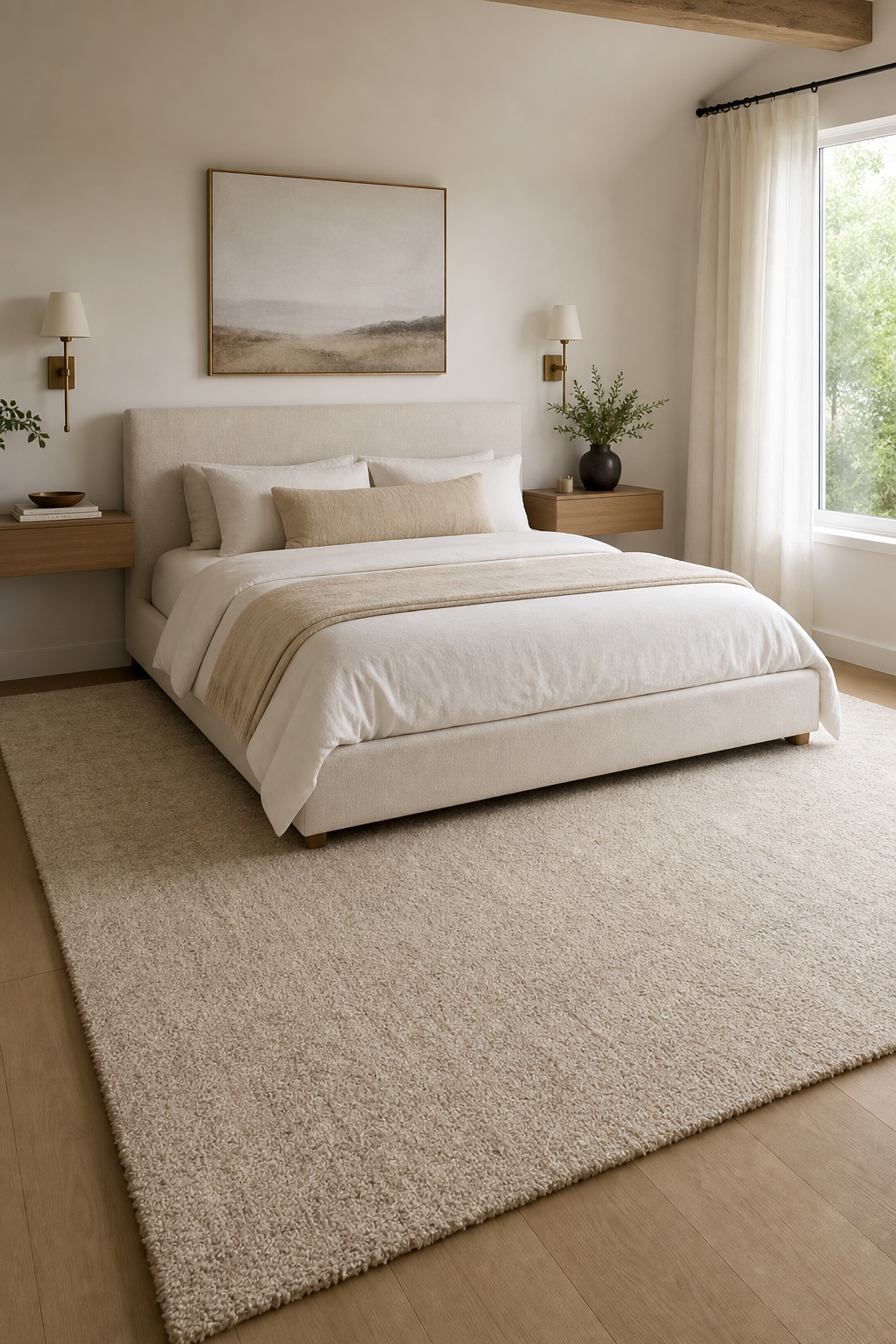
Minimal rooms can feel unfinished when every object appears to float separately. One oversized rug solves that by giving the bed, bench, and nightstands a shared foundation. Choose wool, jute-wool, or a very low-pile textured weave rather than a busy pattern. The rug should extend generously beyond the sides and foot of the bed so the first step in the morning feels soft. In a neutral scheme, texture matters more than contrast; a heathered cream or warm gray rug adds depth without demanding attention. This single large element can make the bedroom feel calmer than several small mats. It also improves acoustics, especially in rooms with wood floors, plaster walls, or minimal window treatments.
Install Floating Nightstands For A Lighter Look
Floating nightstands keep the bedside area open and visually light, which is especially useful in a small minimalist bedroom. Choose a drawer or shallow shelf that can hide cables, lip balm, and reading glasses instead of displaying every necessity. Warm oak, walnut, or lacquered off-white works well because the piece feels architectural rather than decorative. Mount it at a comfortable height in relation to the mattress, leaving enough space below for the wall and floor to breathe. The cleaner the nightstand, the more important the details become: a beveled edge, recessed pull, or softly rounded corner can make it feel custom. Finish with one lamp or sconce and one personal object, keeping the surface genuinely usable.
Add Wall Sconces To Free The Bedside Surface
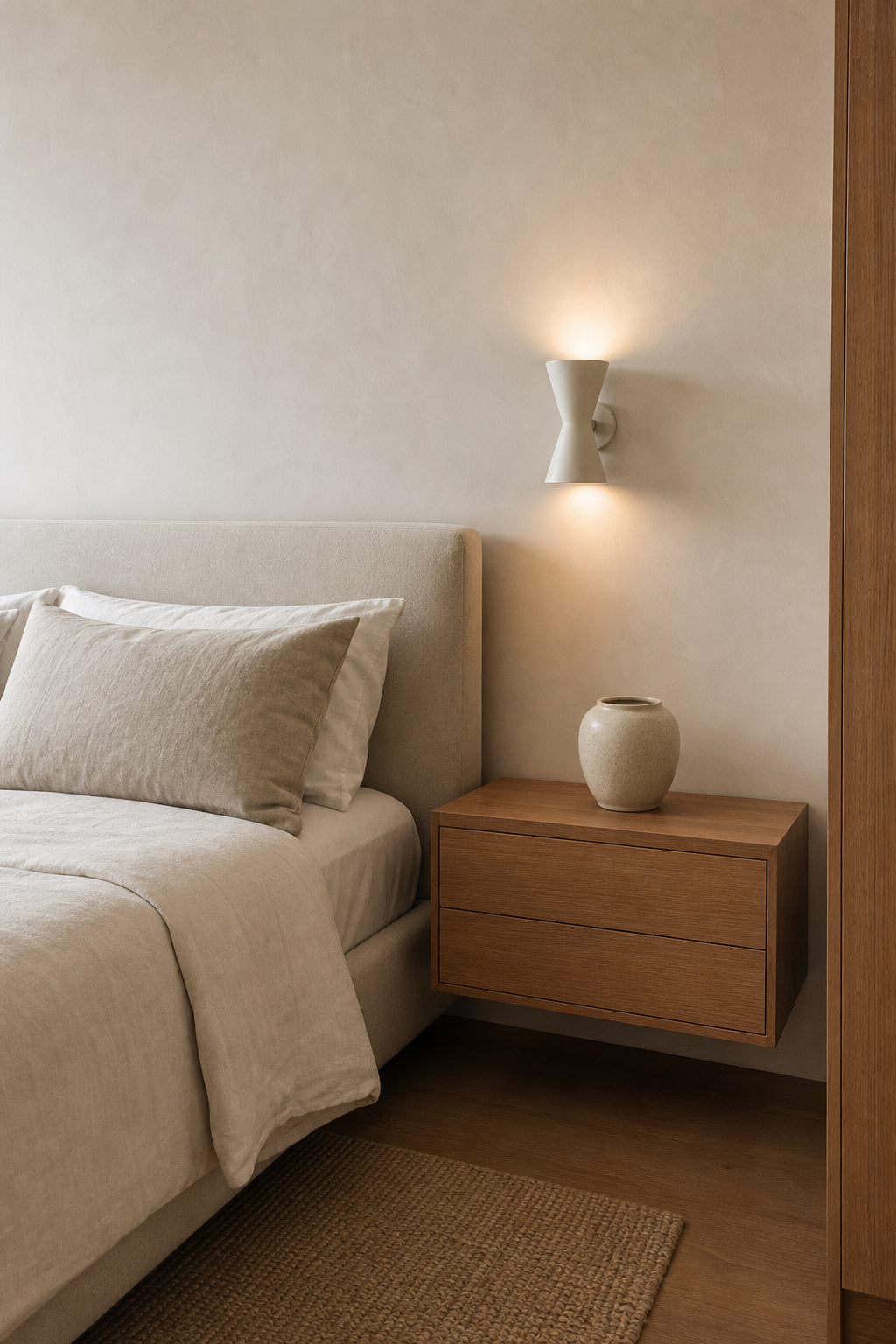
Wall sconces make a minimalist bedroom feel polished because they remove lamp bases from the nightstand and create a more tailored rhythm around the bed. Look for warm, dimmable light with a shade or diffuser that flatters the room at night. A slim brass arm, blackened bronze cylinder, or plaster half-dome can add quiet character without clutter. Place the sconce so it supports real reading, not just symmetry; the light should land near shoulder height when you are sitting up. If hardwiring is not possible, a well-designed plug-in sconce with a fabric cord can still look intentional. The key is restraint: two beautiful fixtures often do more for the room than a collection of small decorative accessories.
Keep Bedding Relaxed But Precisely Edited
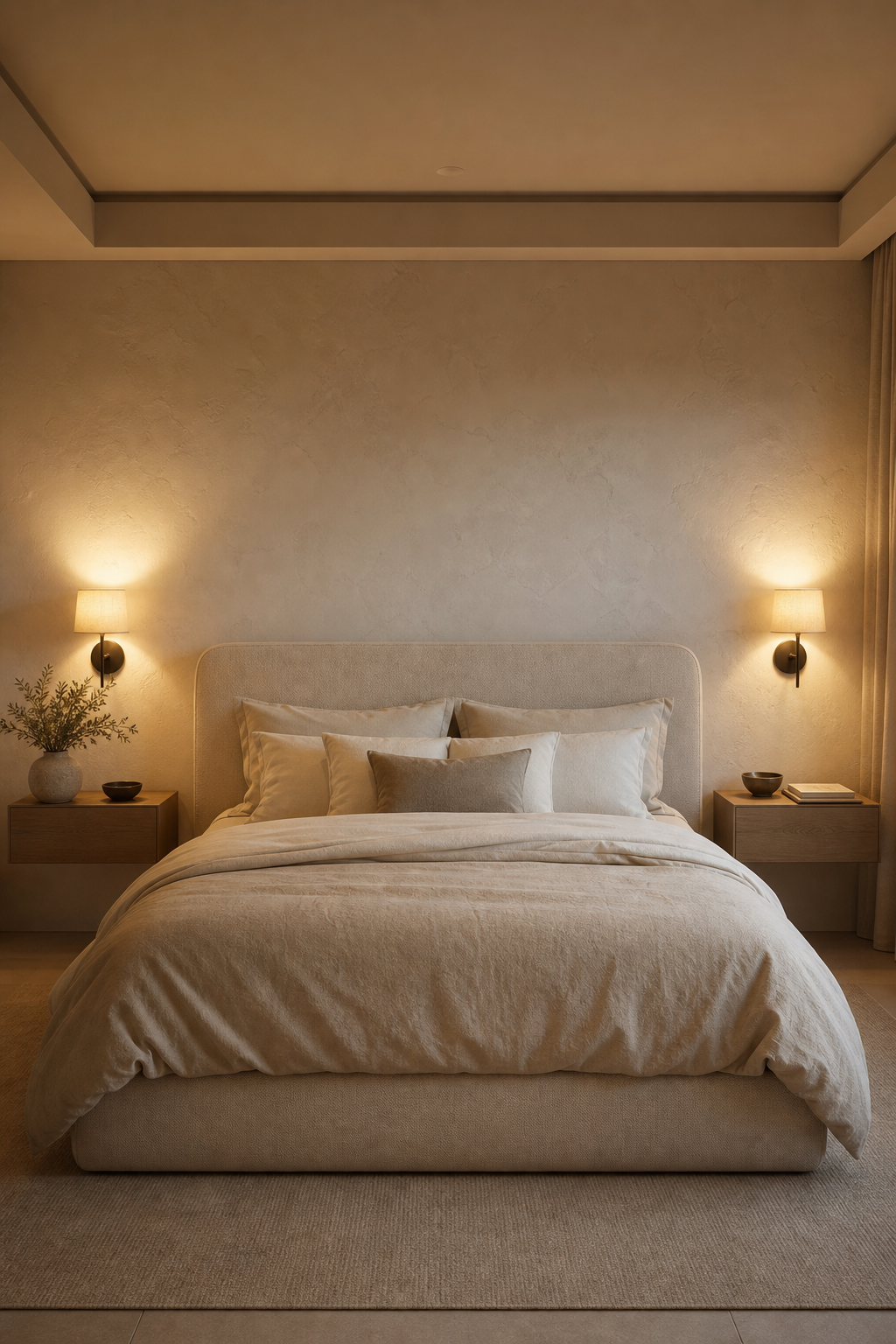
Minimalist bedding should not look starched into perfection. A cozy retreat benefits from natural creases, breathable fabric, and a slightly undone softness. Start with good sheets, a duvet in linen or cotton percale, and two to four pillows depending on bed size. Then edit ruthlessly. One long lumbar pillow or a pair of square cushions is usually enough. Choose texture instead of pattern: slub linen, washed cotton, brushed wool, or a fine matelasse coverlet. Let the palette stay close so the bed feels layered without becoming busy. This is where minimalist design becomes tactile rather than severe. The bed remains simple, but it invites use, which is the difference between a styled room and a bedroom that actually restores you.
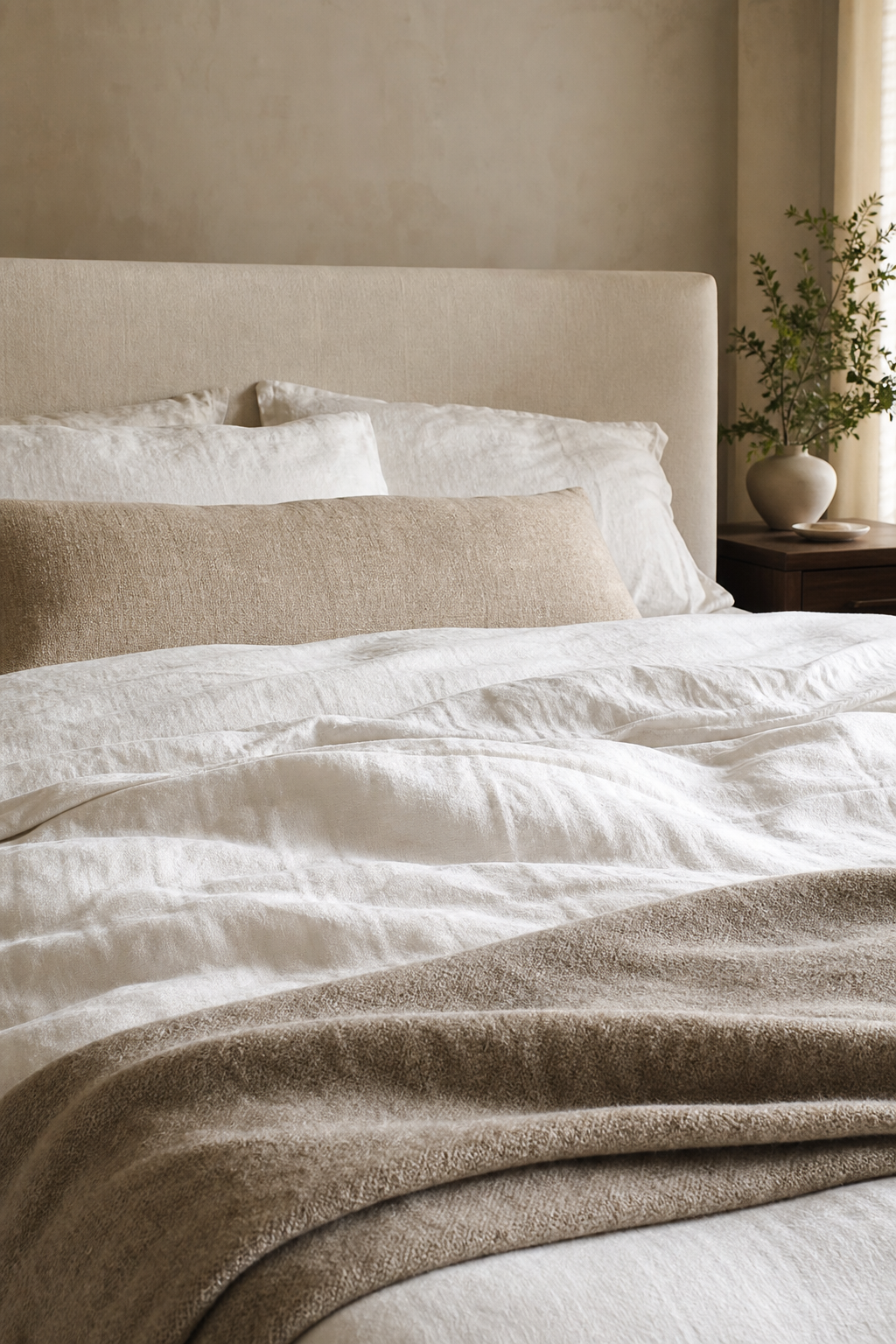
Bring In Wood Grain For Natural Warmth
Wood grain is one of the easiest ways to keep minimalism from feeling cold. Pale oak, ash, elm, and lightly oiled walnut introduce movement and warmth while still reading as refined. Use wood where touch matters: the bed frame, nightstands, wardrobe doors, window bench, or a simple tray. Avoid mixing too many stains in one small room. Two wood tones can work if one is clearly dominant and the other is used sparingly. A minimalist bedroom looks most expensive when the grain is allowed to be the detail, so skip heavy carving and ornate profiles. Pair wood with matte walls, linen, wool, and stone for a grounded palette that feels organic, practical, and quietly luxurious.
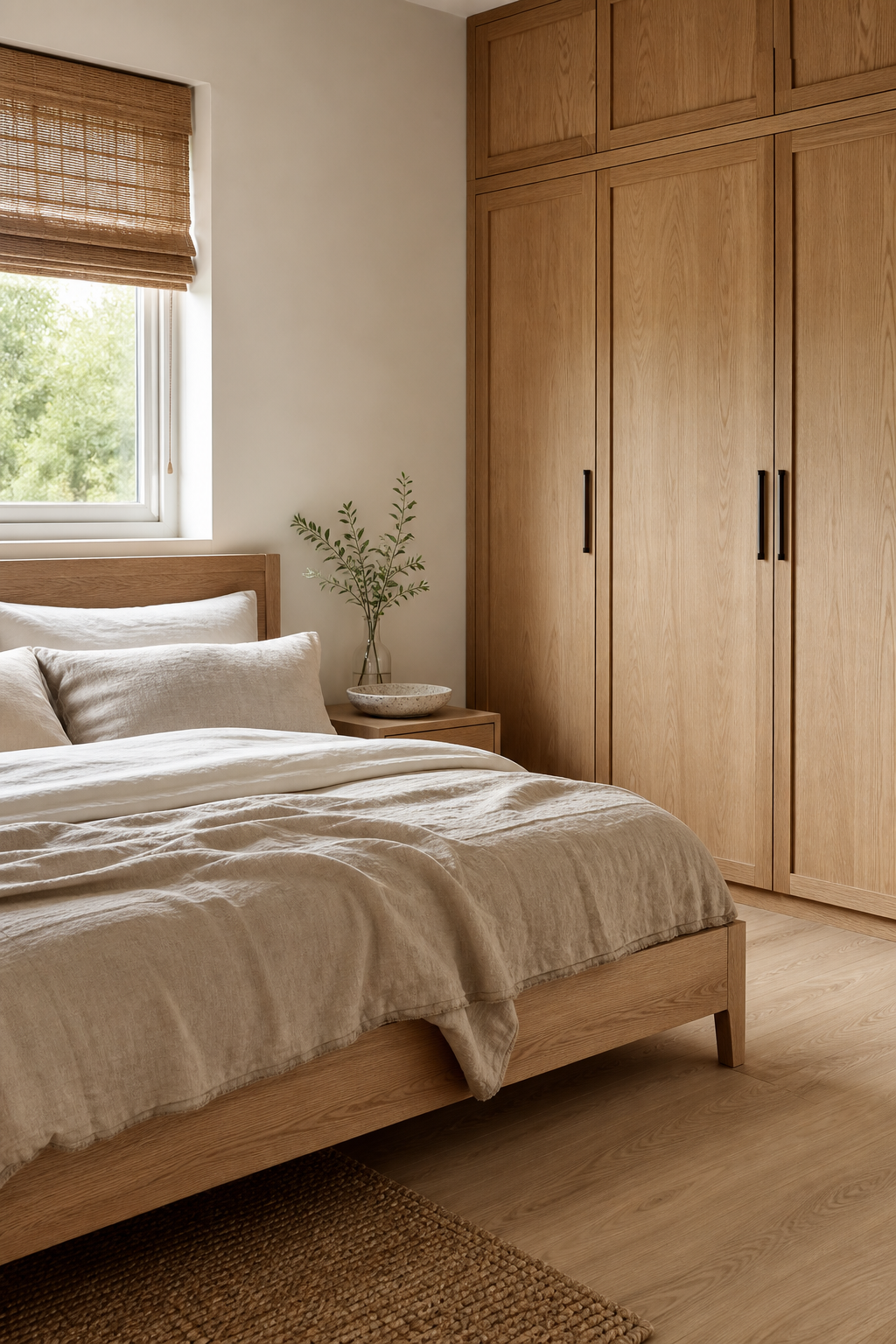
Use Hidden Storage To Protect The Calm
A minimalist bedroom only stays serene when everyday belongings have a quiet place to go. Built-in wardrobes, under-bed drawers, storage benches, and nightstands with closed fronts are more useful than open shelving. The goal is not to own nothing; it is to avoid making every object part of the visual composition. Choose flat cabinet fronts, discreet pulls, and finishes that blend with the wall or nearby woodwork. Inside, use drawer dividers, boxes, and charging stations so the hidden spaces do not become chaotic. This kind of storage protects the mood of the room because the surfaces can remain simple without sacrificing function. It also makes cleaning easier, which keeps the bedroom feeling fresh and restful over time.
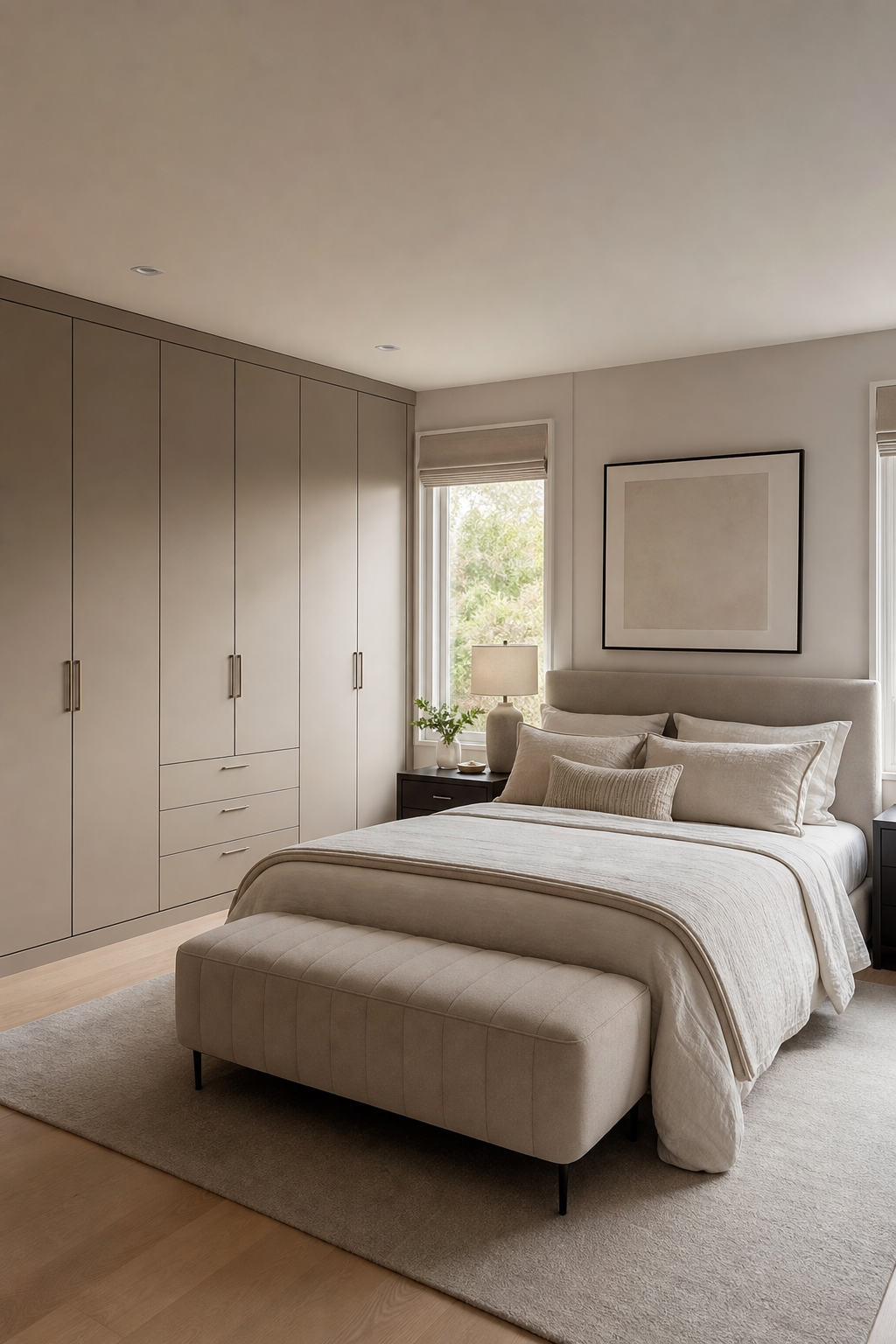
Let Curtains Fall From Ceiling To Floor
Full-height curtains make a minimalist bedroom feel softer and more finished without adding clutter. Mount the track or rod close to the ceiling and let the fabric touch the floor with a clean break. Sheer linen, wool voile, or a lined cotton blend can diffuse light beautifully while improving privacy. In a cozy bedroom, the curtain color should relate to the wall rather than sharply contrast with it. This creates a quiet vertical plane that makes the room feel taller. If blackout is needed, layer a concealed blackout shade behind the curtain or use lined drapery with an elegant hand. The fabric movement brings ease to a room of straight furniture lines, which is why curtains often make minimalism feel livable.
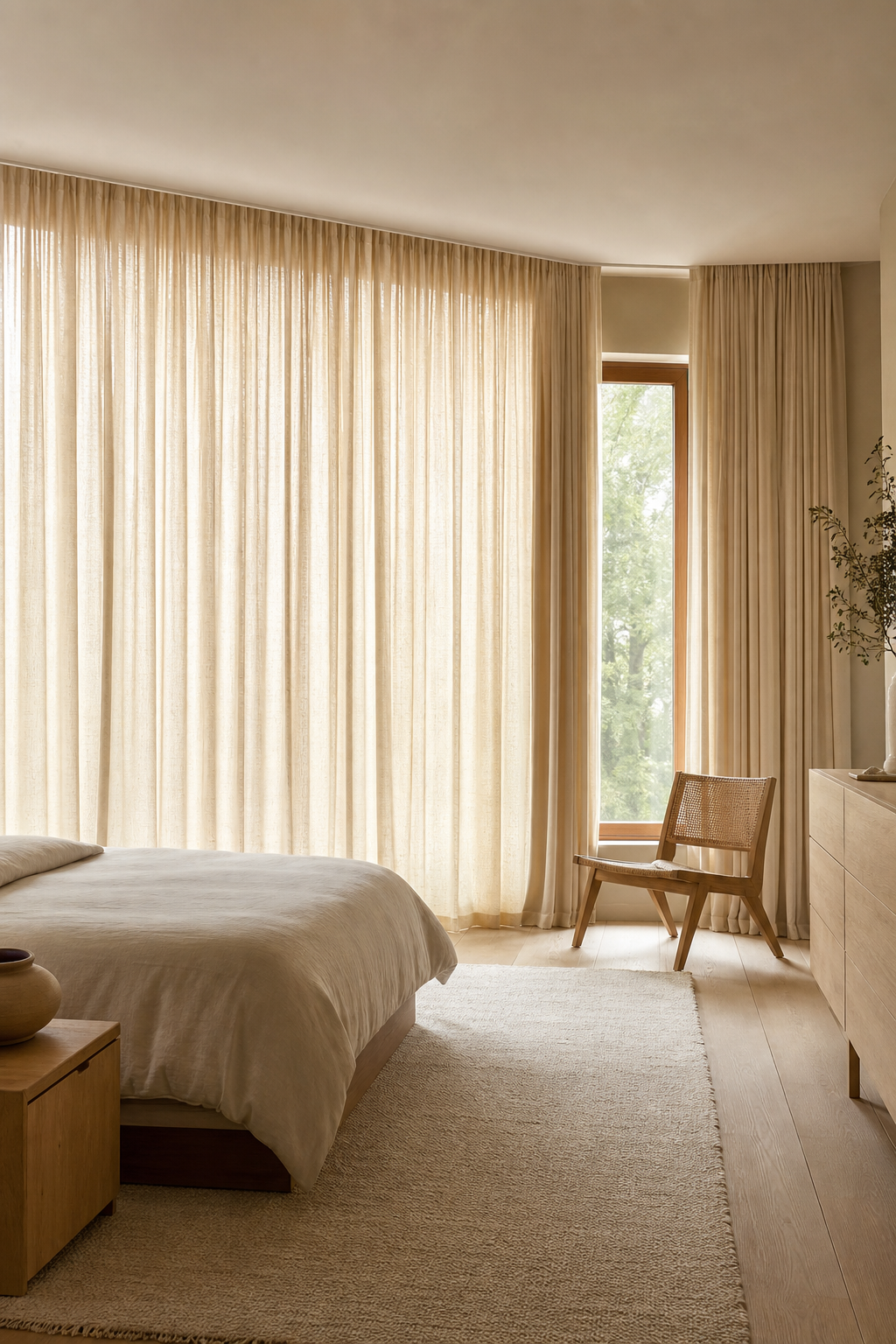
Choose One Quiet Artwork Above The Bed
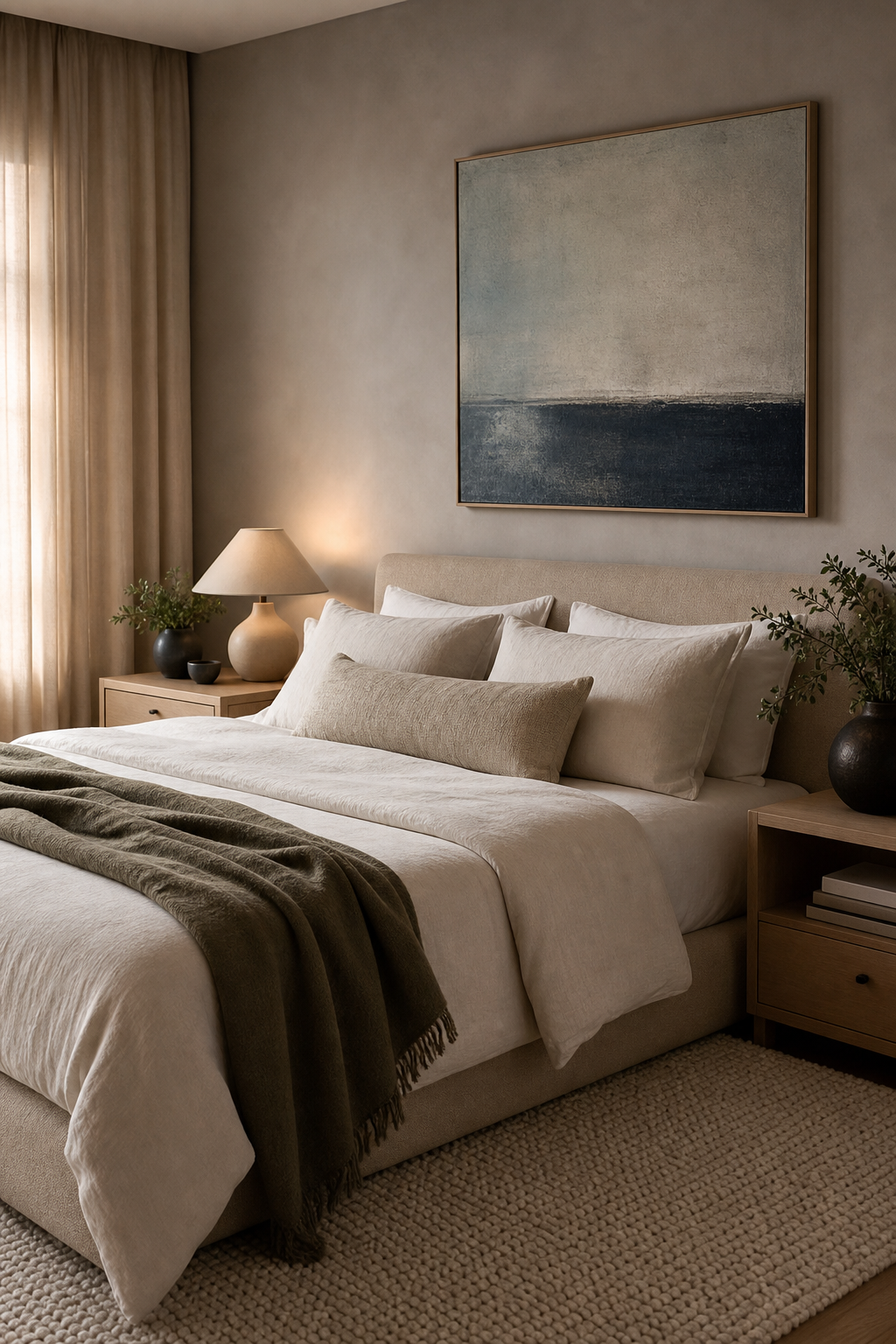
Minimalist bedrooms do not need gallery walls to feel personal. One generous artwork above the bed can provide focus while preserving the room’s stillness. Look for an abstract piece with soft movement, a muted landscape, or a textile work with visible weave. The size should relate to the bed width so it feels deliberate rather than timid; too small an artwork can look like an afterthought. Keep the frame simple in pale wood, blackened metal, or no frame at all. The art should echo the room’s palette but introduce a slightly deeper note, such as charcoal, clay, olive, or mineral blue. This gives the bedroom a point of view without turning the wall into visual noise.
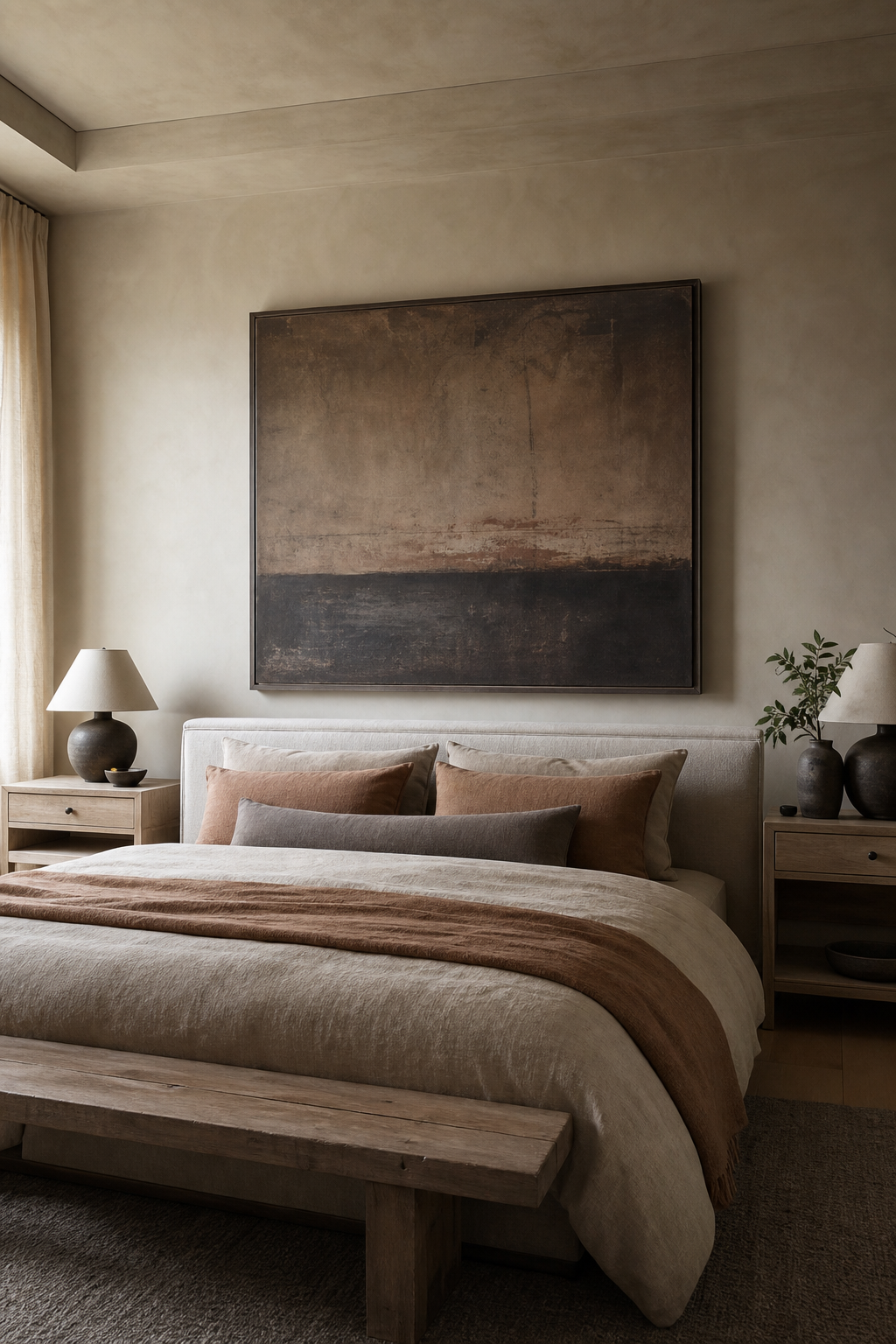
Style A Bench At The Foot Of The Bed
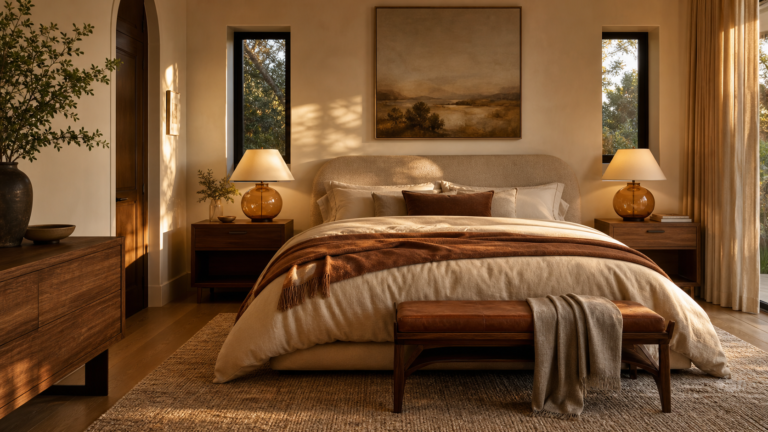
A bench at the foot of the bed can make a minimalist bedroom feel more complete while adding genuine function. It gives you a place to sit, set folded throws, or lay out tomorrow’s clothes without using the floor. For a cozy stylish retreat, choose a bench with texture: boucle, leather, woven rush, or softly upholstered linen. Keep the silhouette simple and low so it does not compete with the bed. The bench should be narrower than the mattress or visually lighter than the frame. If storage is needed, select a design with a concealed lift top rather than baskets on display. Styled well, this one piece brings hospitality and polish to the room without adding unnecessary decoration.
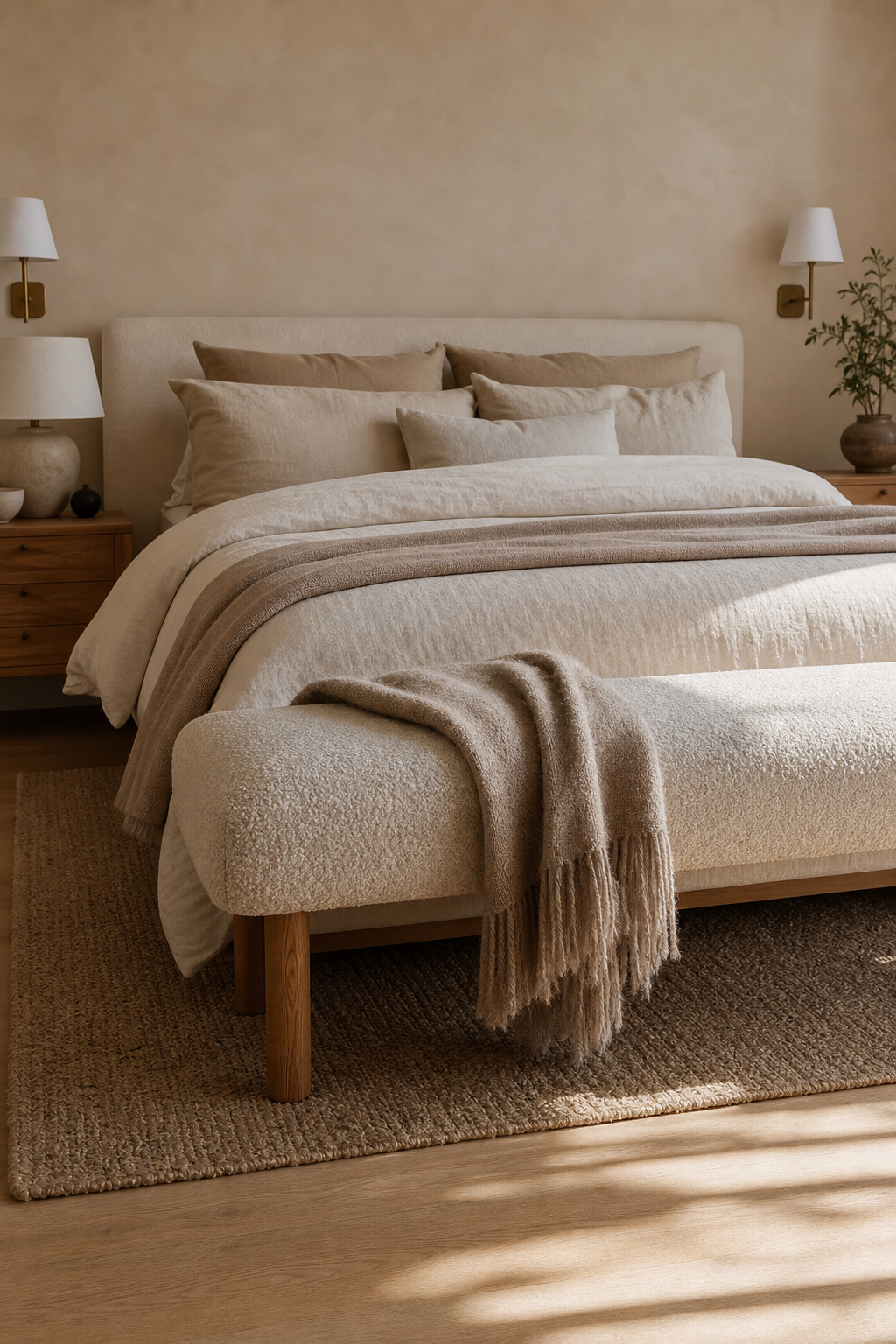
Use Sculptural Lighting As Functional Decor
In a room with fewer accessories, lighting has to carry more design weight. A sculptural pendant, ceramic table lamp, or arched floor lamp can act as functional decor while keeping the bedroom uncluttered. Choose one statement rather than several competing pieces. The shape might be a paper lantern, fluted plaster shade, opal glass globe, or hand-thrown ceramic base. What matters is the glow: warm, layered, and never harsh. Add dimmers wherever possible so the room can shift from practical morning brightness to a softer evening mood. Sculptural lighting also photographs beautifully because it creates shape and shadow. It gives a minimalist bedroom personality through form, not excess, which is the most elegant way to decorate a pared-back space.
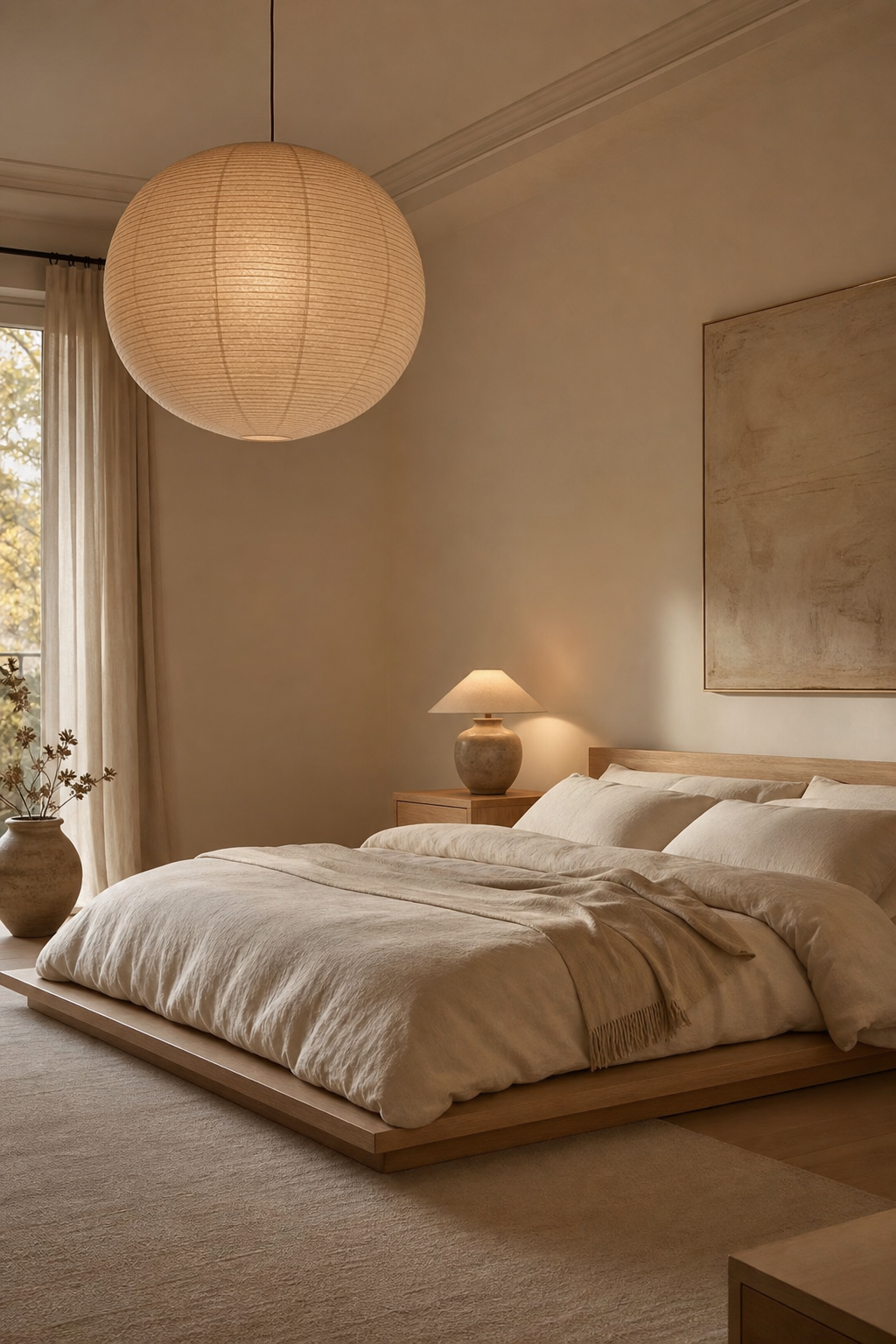
Create A Small Reading Corner With Restraint
A reading corner can make a minimalist bedroom feel like a retreat, but it needs restraint to avoid becoming a second living room. Choose one comfortable chair with a beautiful profile, a small side table, and a focused floor lamp. That is usually enough. Place the corner near a window if possible, using the view and daylight as part of the design. Upholstery in wool, linen, or soft leather will feel richer than a decorative print. Keep the table clear except for the current book or a small ceramic cup. The corner should look useful, not staged. By giving quiet activities a dedicated place, the bedroom becomes more than a sleep zone while still preserving its uncluttered calm.
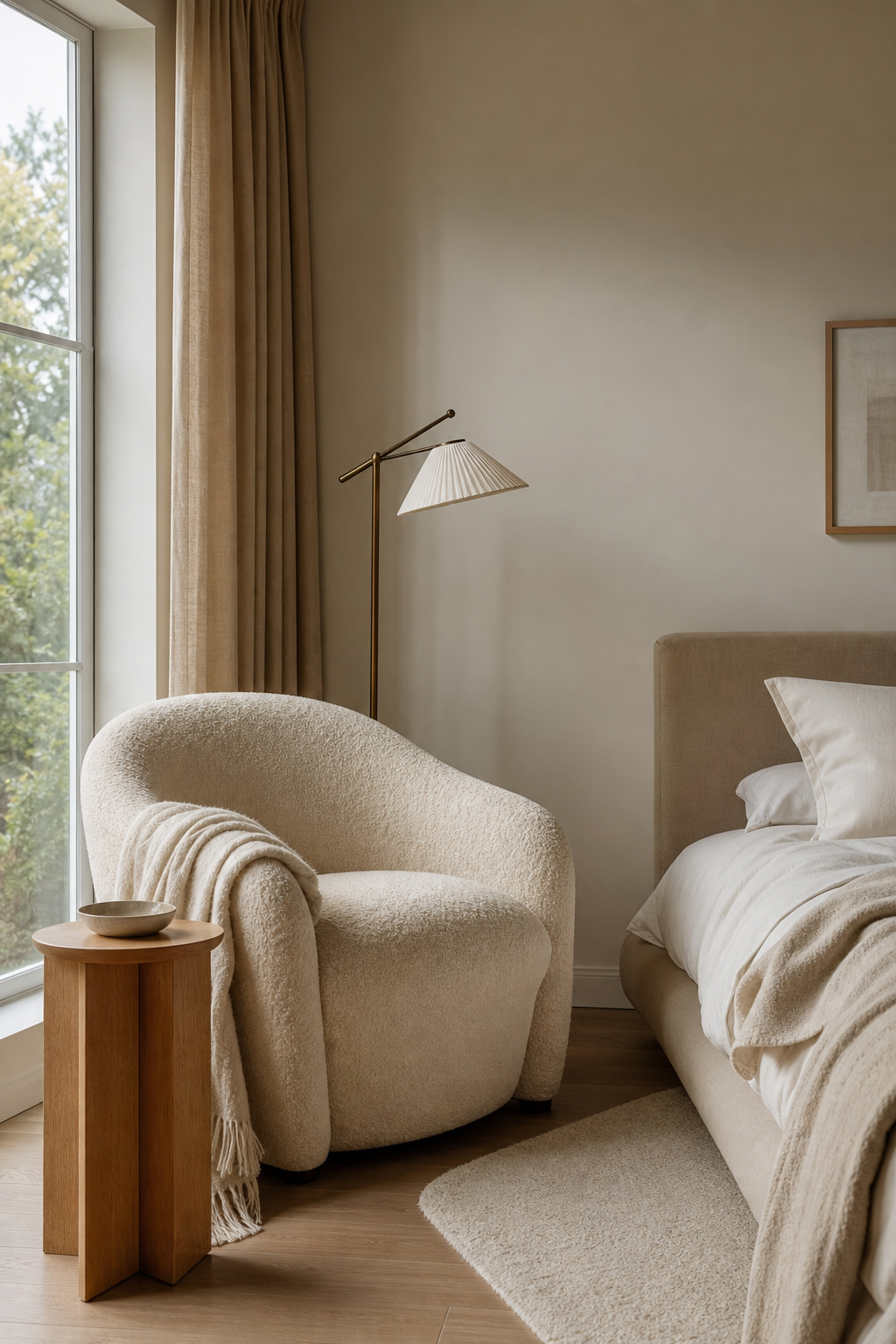
Introduce Stone Or Ceramic For Subtle Luxury
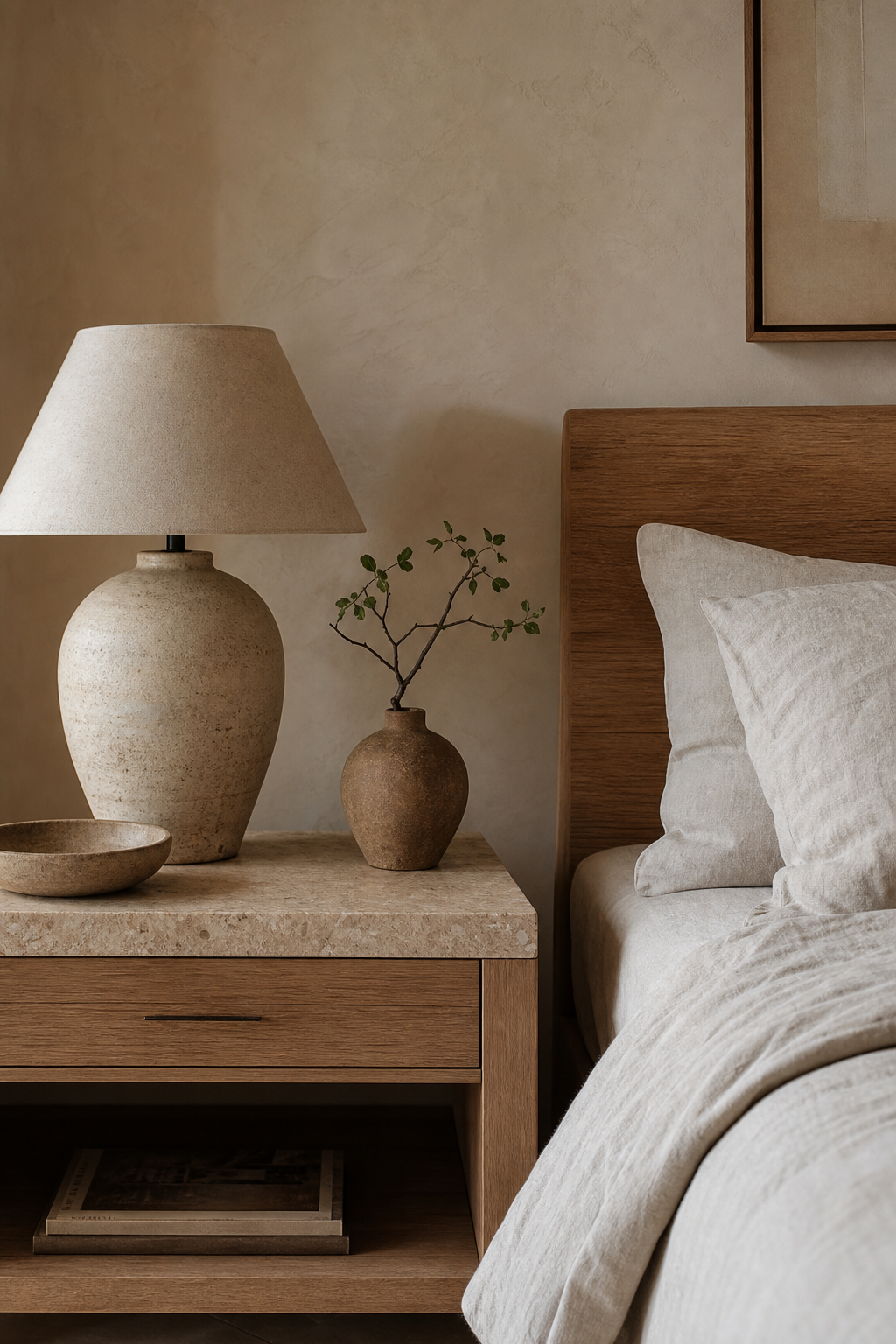
Stone and ceramic add quiet luxury because they bring weight, texture, and hand-finished character to a minimal bedroom. Use them in small but deliberate ways: a travertine-topped nightstand, marble tray, ceramic lamp, stone bowl, or clay vase with a single branch. These materials catch light differently from fabric and wood, which gives the room depth without relying on color or pattern. Keep the forms simple and the quantity limited. One stone surface can feel elegant; five can feel heavy. Matte or honed finishes usually suit a cozy bedroom better than highly polished shine. When paired with linen bedding and warm wood, stone and ceramic make the space feel collected, tactile, and grown-up while staying beautifully calm.
Keep Color Muted But Not Absent
A cozy minimalist bedroom can include color as long as it feels muted and intentional. Think dusty olive, faded terracotta, mineral blue, soft tobacco, or warm charcoal rather than saturated accent shades. Use color in one or two places: a throw, artwork, upholstered chair, or bedside ceramic. The rest of the room can remain quiet, allowing the color to feel like a thoughtful note instead of a theme. Muted color is especially effective in north-facing bedrooms, where pure whites may look chilly. It brings life to the palette while protecting the restful mood. The best test is whether the color still feels calm at night under warm light. If it does, it belongs.
Edit Every Surface Before Calling The Room Finished
The final step in a minimalist bedroom is editing, not shopping. Stand in the doorway and notice where the eye catches. If every surface has an object, remove a few. If the bed has too many pillows, simplify. If the nightstand looks pretty but cannot hold a glass of water, it is not finished. A cozy stylish retreat needs breathing room as much as beauty. Keep daily essentials hidden or contained, then allow one or two meaningful pieces to remain visible. The most luxurious minimalist bedrooms feel cared for because nothing looks accidental. This editing habit also makes the room easier to reset each morning. The result is a space that feels calm on ordinary days, not only when freshly styled.
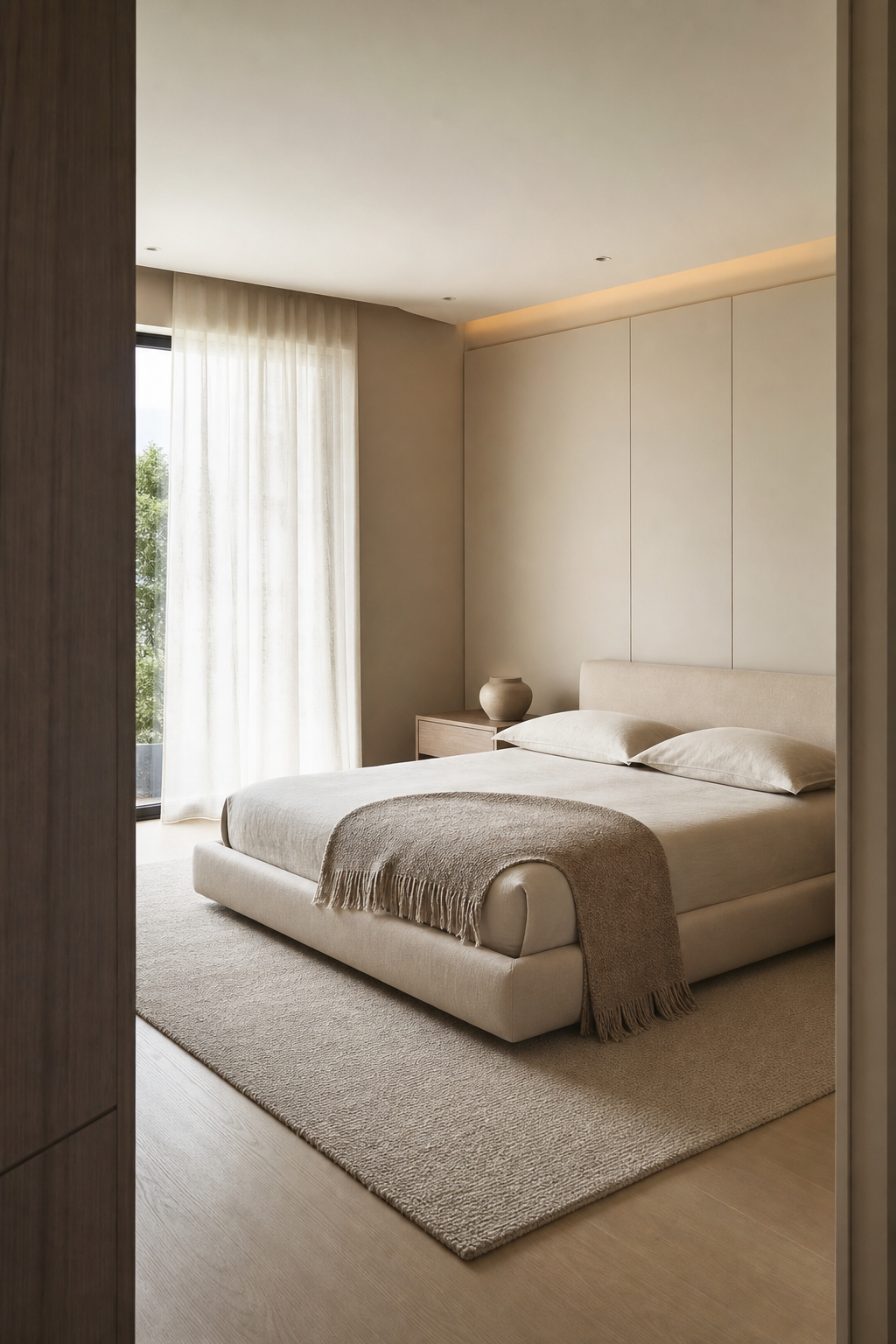
A cozy minimalist bedroom is not defined by how little it contains, but by how carefully each choice supports rest. Warm neutrals, natural textures, thoughtful storage, and flattering light can make a pared-back room feel deeply personal. Start with the pieces that affect daily comfort, then edit the styling until the space feels calm from the doorway and practical up close.