16 Minimal Bedroom Ideas For A Cozy Stylish Retreat
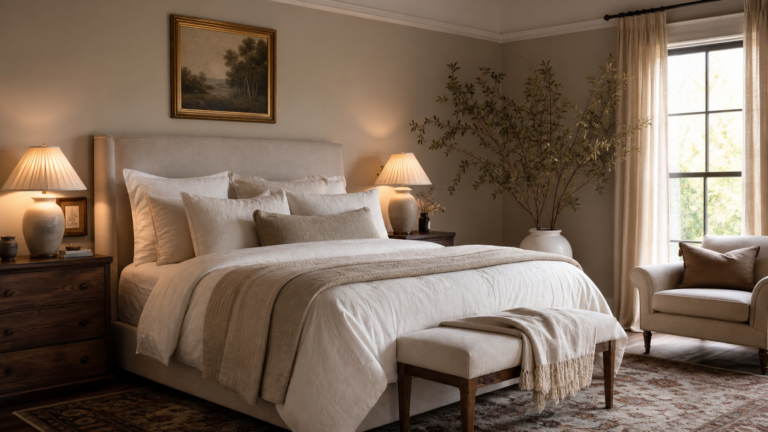
A minimal bedroom works best when it feels edited, not empty. The goal is a retreat where every surface, fabric, and shadow has a purpose: calm the eye, support rest, and make daily routines easier. These ideas lean into quiet luxury through warm neutrals, tactile layers, clever storage, and furniture with clean proportions. Use them as a menu rather than a checklist, choosing the details that suit your room, light, and habits.
Start With A Warm Neutral Foundation
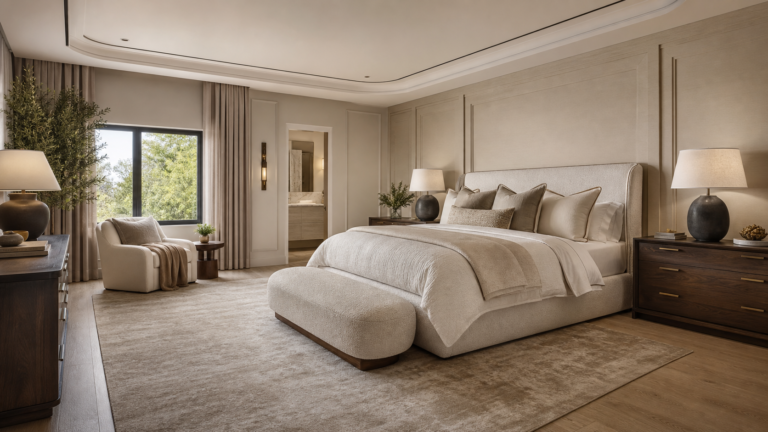
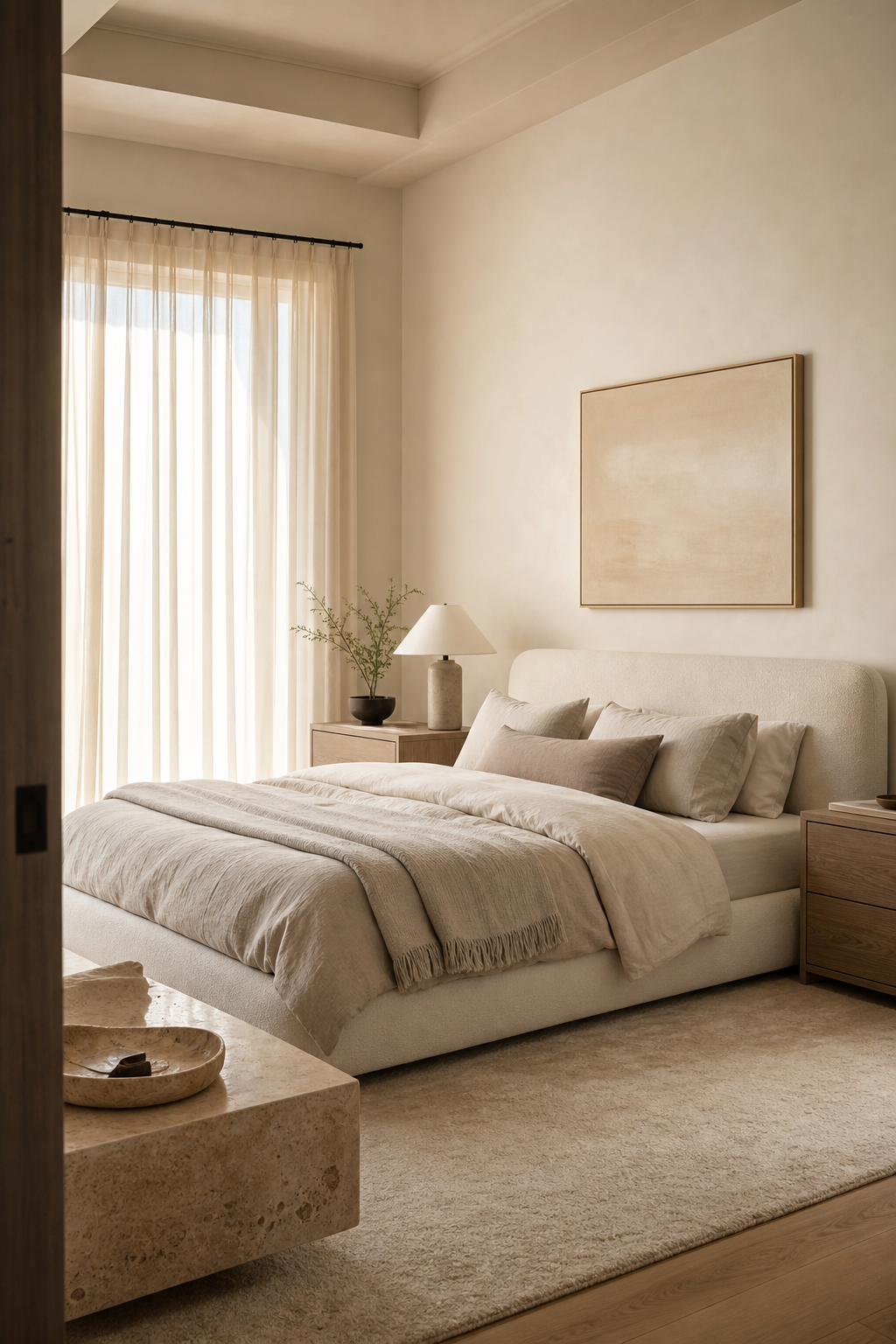
Minimal bedrooms can feel cold when the palette stops at stark white. A warmer foundation is more forgiving and far more restful. Choose wall colors with a soft undertone, such as ivory, chalk, mushroom, greige, or pale taupe, then repeat those shades through bedding and window treatments. The room will still read clean, but the slight tonal shift gives it depth. Keep the largest pieces quiet: a simple upholstered bed, plain drapery panels, and a low rug without a busy pattern. Then let one or two natural materials, such as pale oak, travertine, rattan, or washed linen, bring gentle contrast. This approach creates a minimal bedroom that feels curated and cozy instead of bare.
Choose A Low Bed With Clean Lines
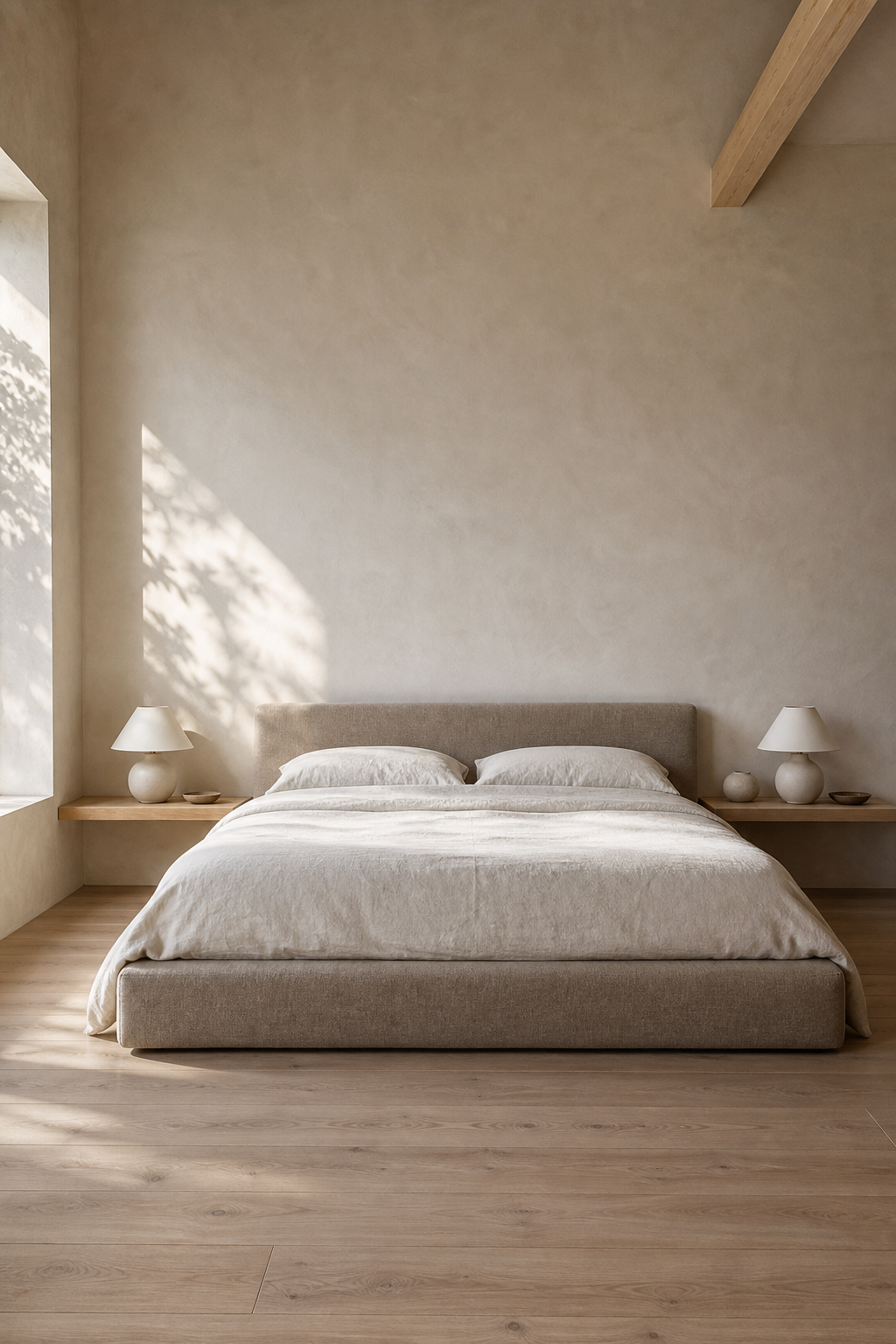
A low bed instantly gives a bedroom a calmer, more horizontal feeling. Look for a platform frame, a gently padded base, or a headboard with simple rectangular lines rather than ornate curves. The lower profile creates more visual breathing room above the bed, which is especially useful in compact rooms or bedrooms with standard ceiling heights. To keep it luxurious, pay attention to fabric and proportion. Boucle, linen, wool, or a softly textured performance weave can add quiet richness without visual noise. Pair the frame with bedding that drapes naturally rather than stiffly. When the silhouette is restrained and the materials are tactile, the bed becomes a restful anchor without dominating the room.
Layer Bedding In Similar Tones
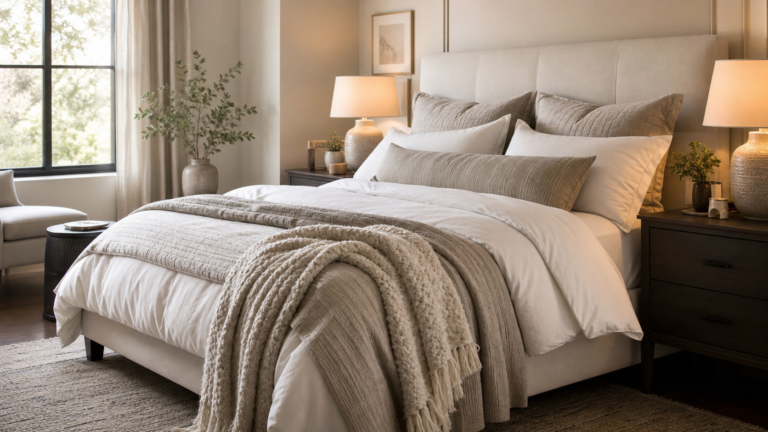
Minimal bedding should look relaxed but intentional. Instead of mixing strong patterns, build interest through closely related tones and textures. A crisp percale sheet, a washed linen duvet, a quilted coverlet, and a cashmere or cotton throw can all sit in the same family of white, stone, oatmeal, or soft gray. The variation comes from weave, weight, and finish. Fold the duvet loosely, expose a slim band of sheet, and keep pillows limited to the ones you actually use plus one or two decorative cushions. This keeps the bed inviting without turning it into a display. The result feels quietly layered, easy to maintain, and deeply comfortable at the end of the day.

Use Hidden Storage To Protect The Calm
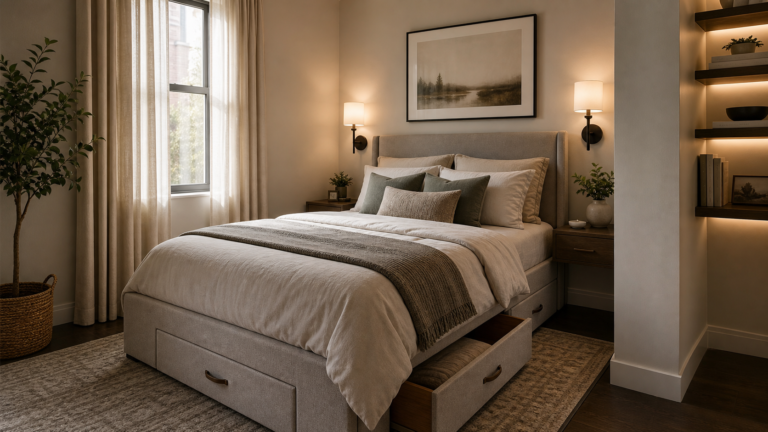
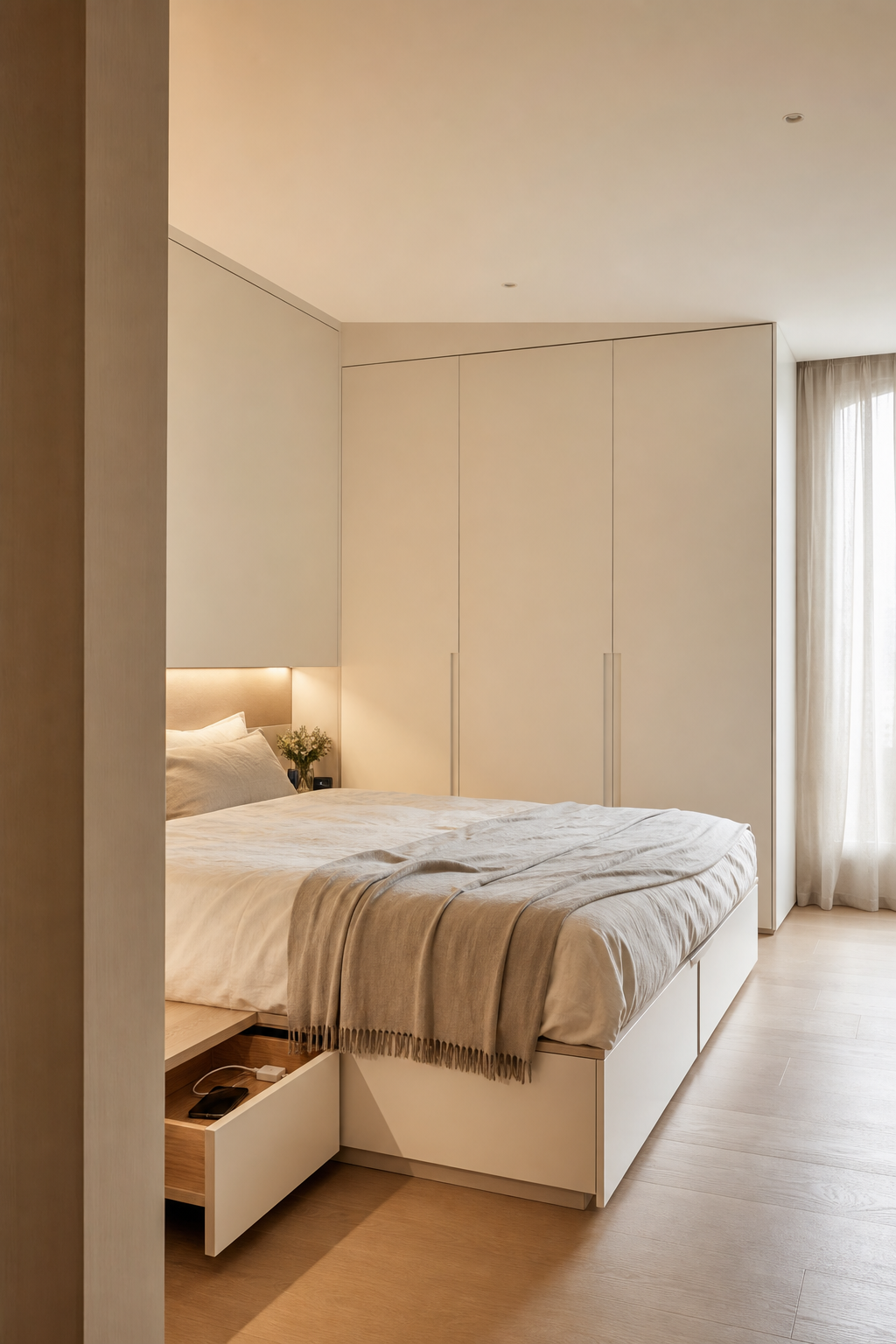
The most beautiful minimal bedroom usually has excellent storage behind the scenes. Closed wardrobes, under-bed drawers, wall-mounted cabinets, and simple nightstands with drawers keep visual clutter from collecting on every surface. If built-ins are possible, choose flat-front doors that match the wall color or a pale wood finish that feels architectural. In a rental or smaller room, use a storage bed, fabric boxes under a platform frame, or a narrow dresser with push-latch fronts. The key is assigning a home to everyday items before styling the room. Chargers, books, sleep masks, folded throws, and extra pillowcases should disappear easily. When storage is quiet and convenient, the minimal look can survive real life.
Let One Statement Light Do The Work
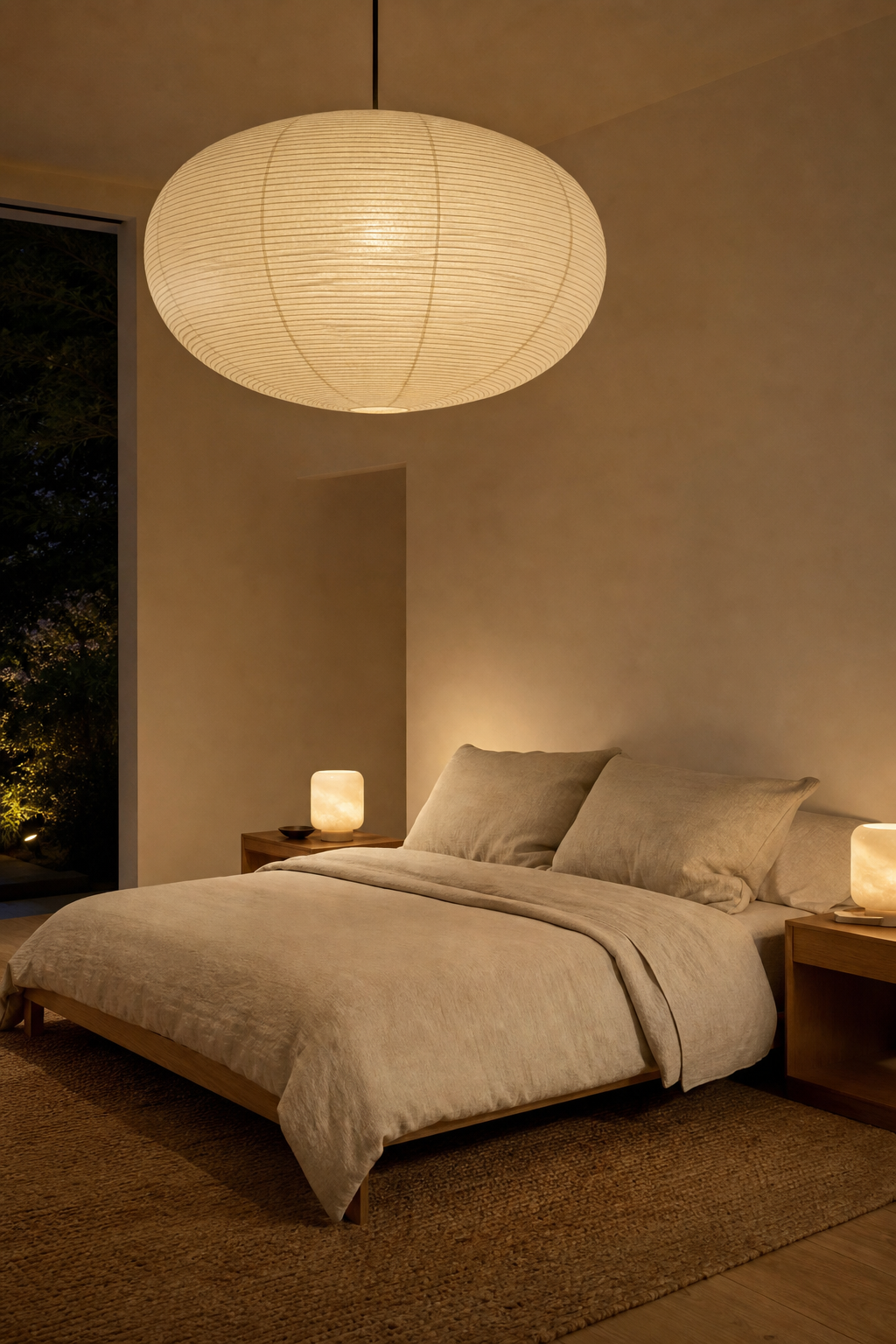
Minimal design does not mean every fixture has to disappear. One statement light can give the room personality while the rest of the space stays quiet. Consider a sculptural paper lantern, a linen pendant, a plaster sconce, or a pair of slim alabaster bedside lamps. The shape should be simple, but the material can be special. A large pendant over the center of the room creates softness without taking up bedside space, while wall sconces free the nightstand for only a book and a small tray. Keep bulbs warm and diffused, ideally on dimmers. Good lighting makes minimal bedrooms feel layered after sunset, not flat or clinical.
Add Texture Through Natural Materials
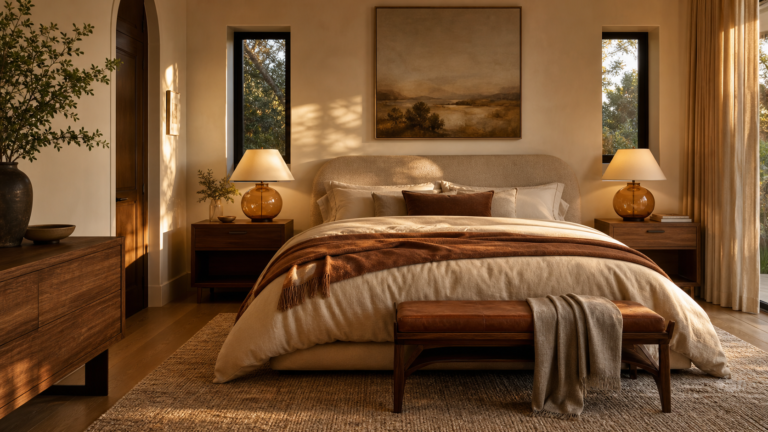
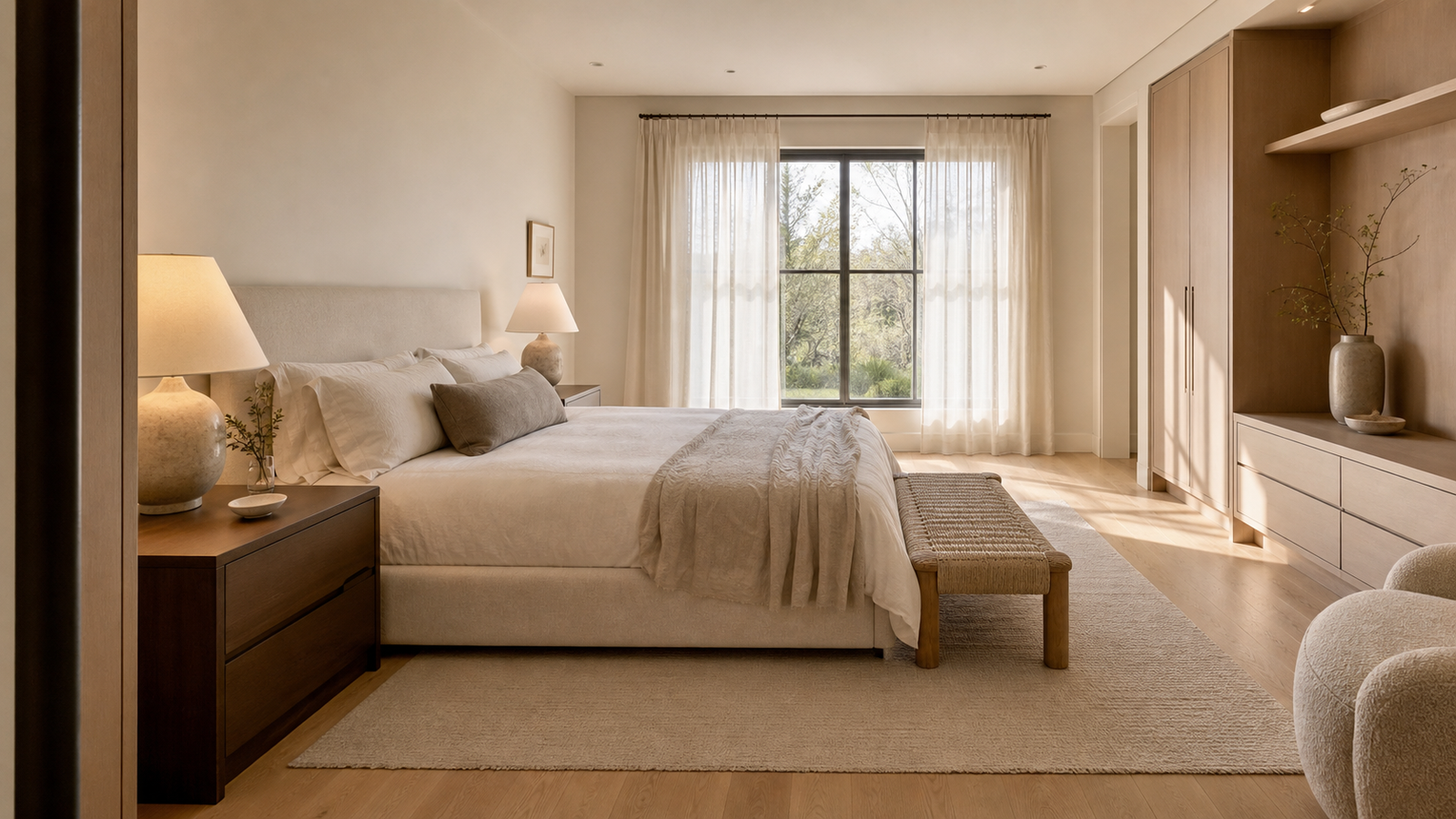
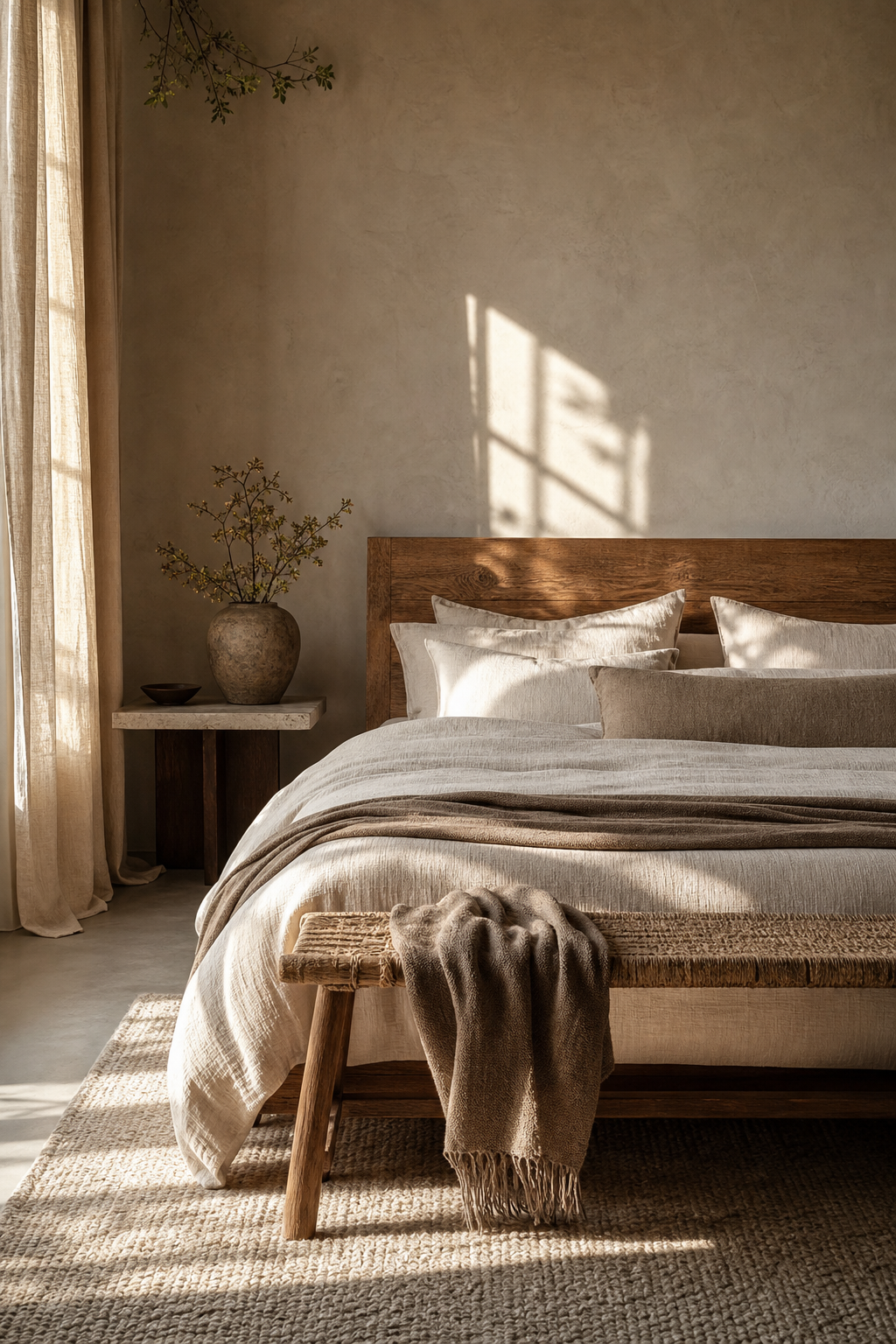
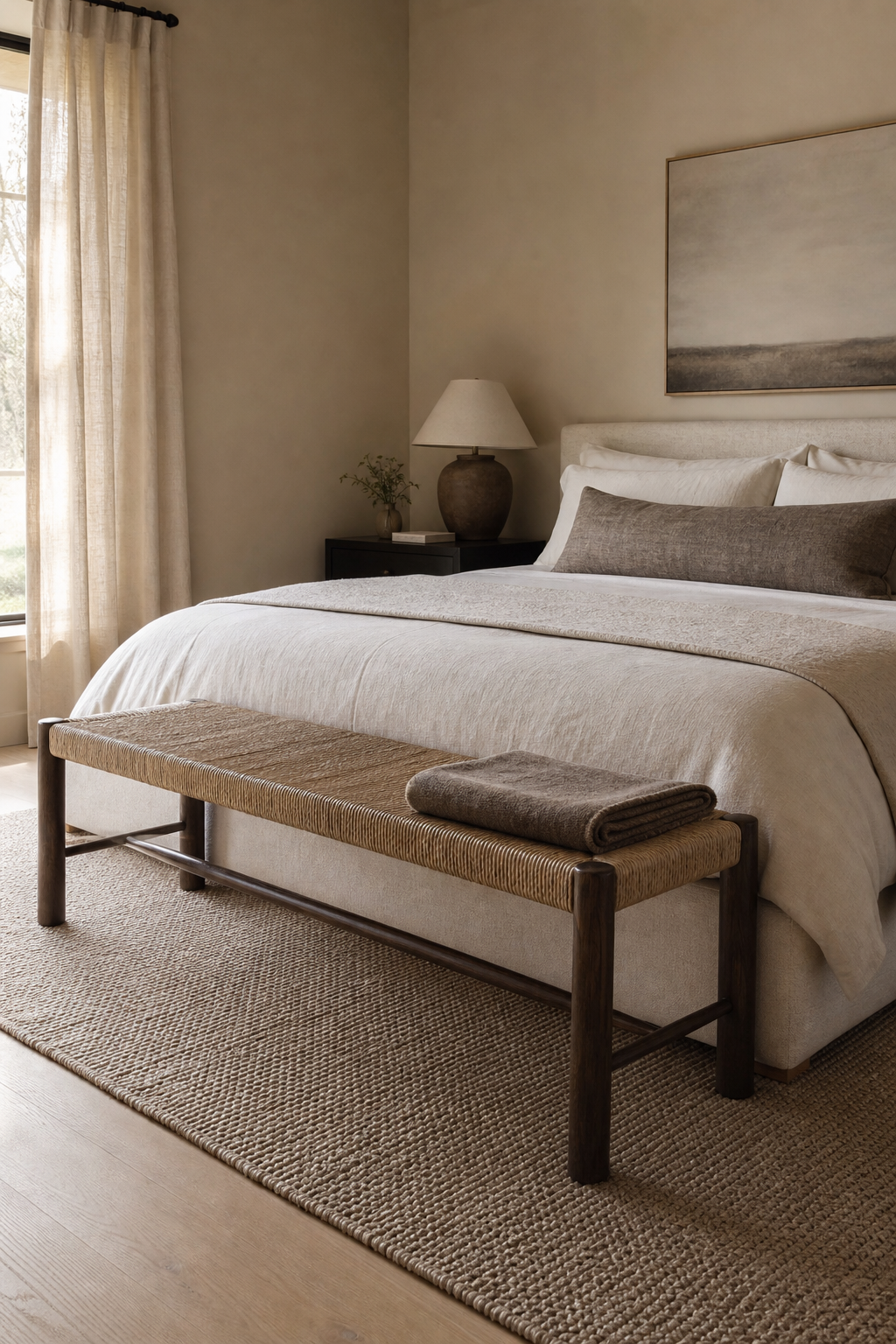
Texture is what keeps a minimal bedroom from feeling unfinished. Choose a few natural materials and let them repeat gently across the room. Oak, ash, linen, wool, cane, jute, stone, clay, and plaster all bring depth without demanding attention. A woven bench at the foot of the bed, a wool rug underfoot, a ceramic lamp, and linen curtains can be enough. Avoid adding too many different finishes, which can make a simple room feel busy. Instead, keep the material story tight and tactile. The best minimal rooms invite touch: matte wood, slubby fabric, soft pile, cool stone, and a little hand-formed imperfection on a vase or tray.
Keep Nightstands Slim And Useful
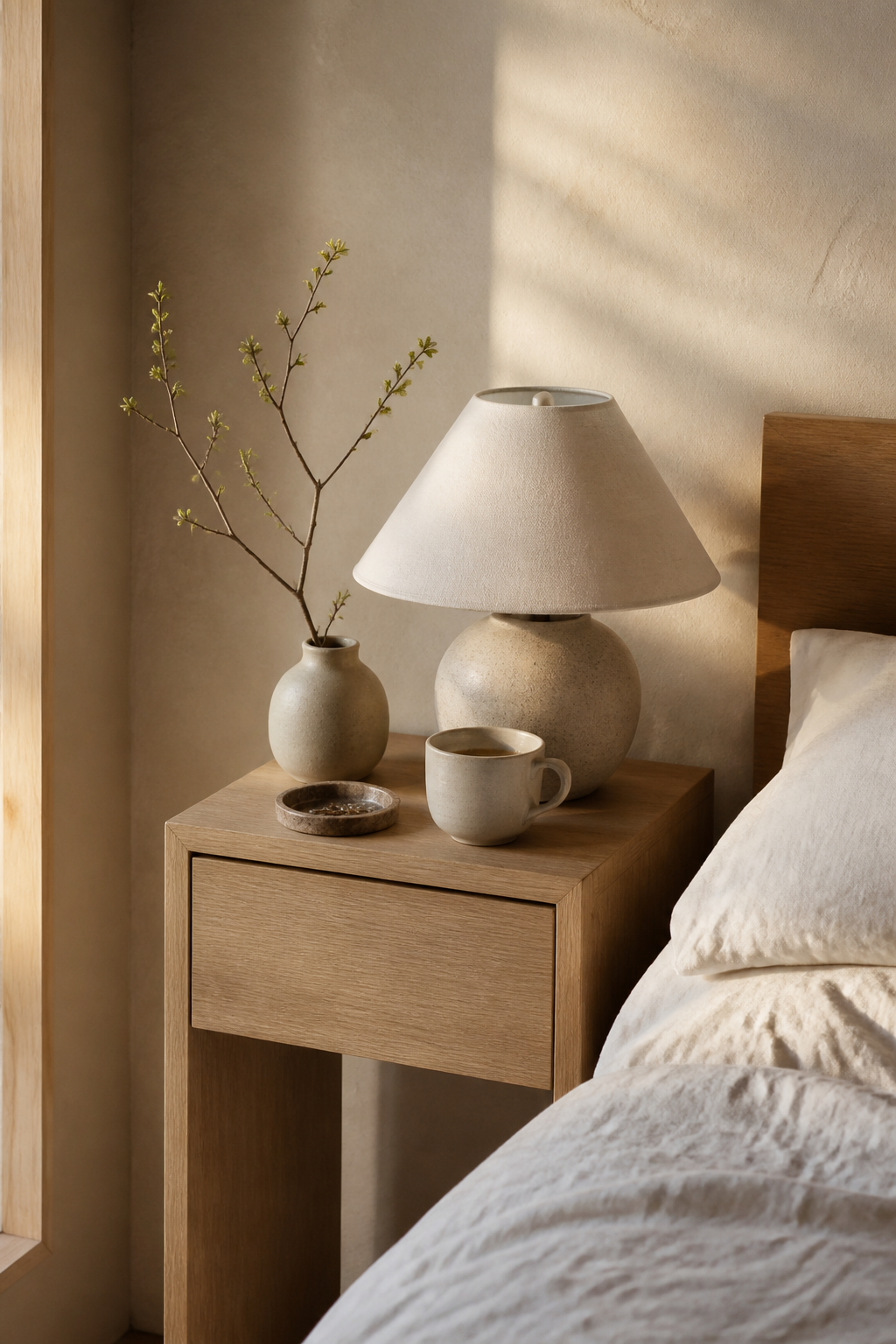
Nightstands are small, but they often decide whether a bedroom feels peaceful or messy. Choose slim pieces with enough storage for the essentials you use every night: a book, hand cream, glasses, a charger, and perhaps a sleep spray. A drawer is usually better than an open shelf if you want the room to stay minimal. On top, keep the styling disciplined. A lamp or sconce, a small tray, and one organic object such as a ceramic cup or bud vase are plenty. Match the nightstands for symmetry, or use different pieces in the same material family for a softer look. Function should be invisible, but close at hand.
Soften The Floor With A Quiet Rug
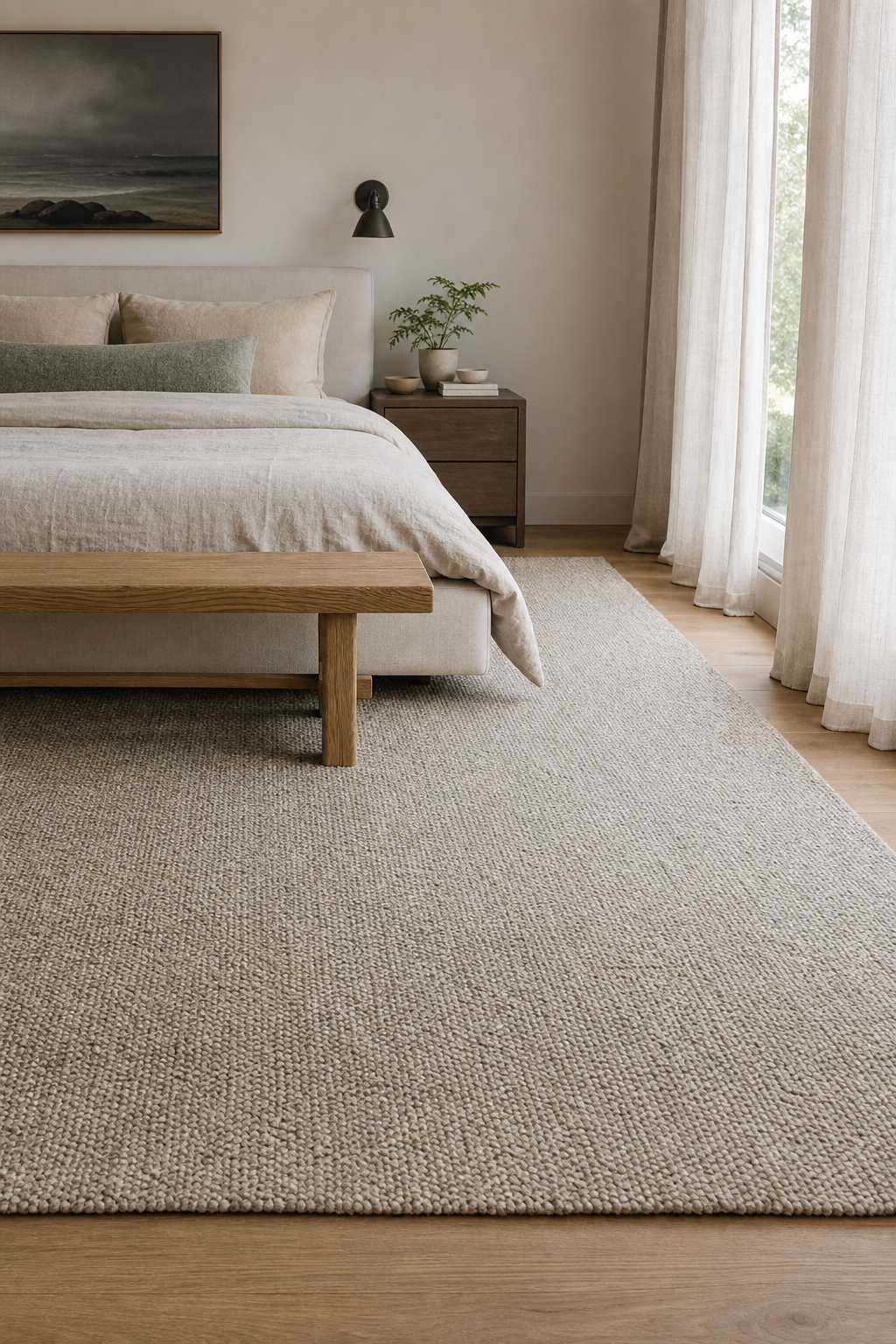
A bedroom rug should make the first step out of bed feel generous. In a minimal room, choose a quiet rug with subtle texture instead of a loud pattern. Wool, jute-wool blends, flatweave cotton, or a low-pile neutral rug can ground the bed while keeping the palette calm. Size matters more than decoration. Ideally, the rug extends beyond both sides of the bed and at least a little past the foot, so the furniture feels connected rather than floating. If a large rug is not practical, place runners on each side. Stick with natural tones and avoid high contrast borders. The rug should support the room, not become the main event.
Use Curtains To Blur Hard Edges
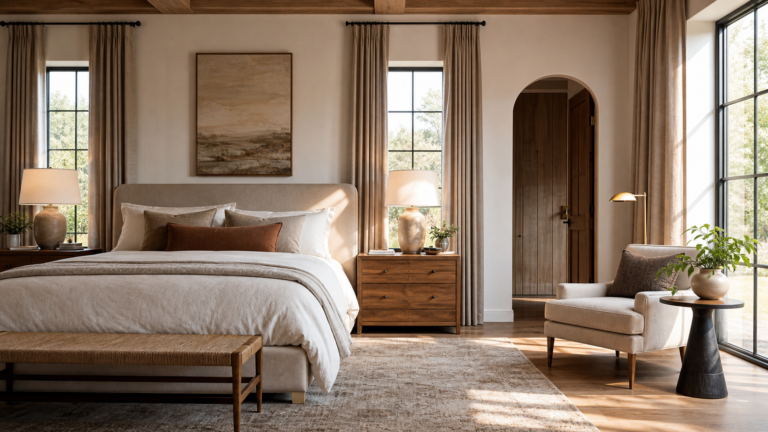
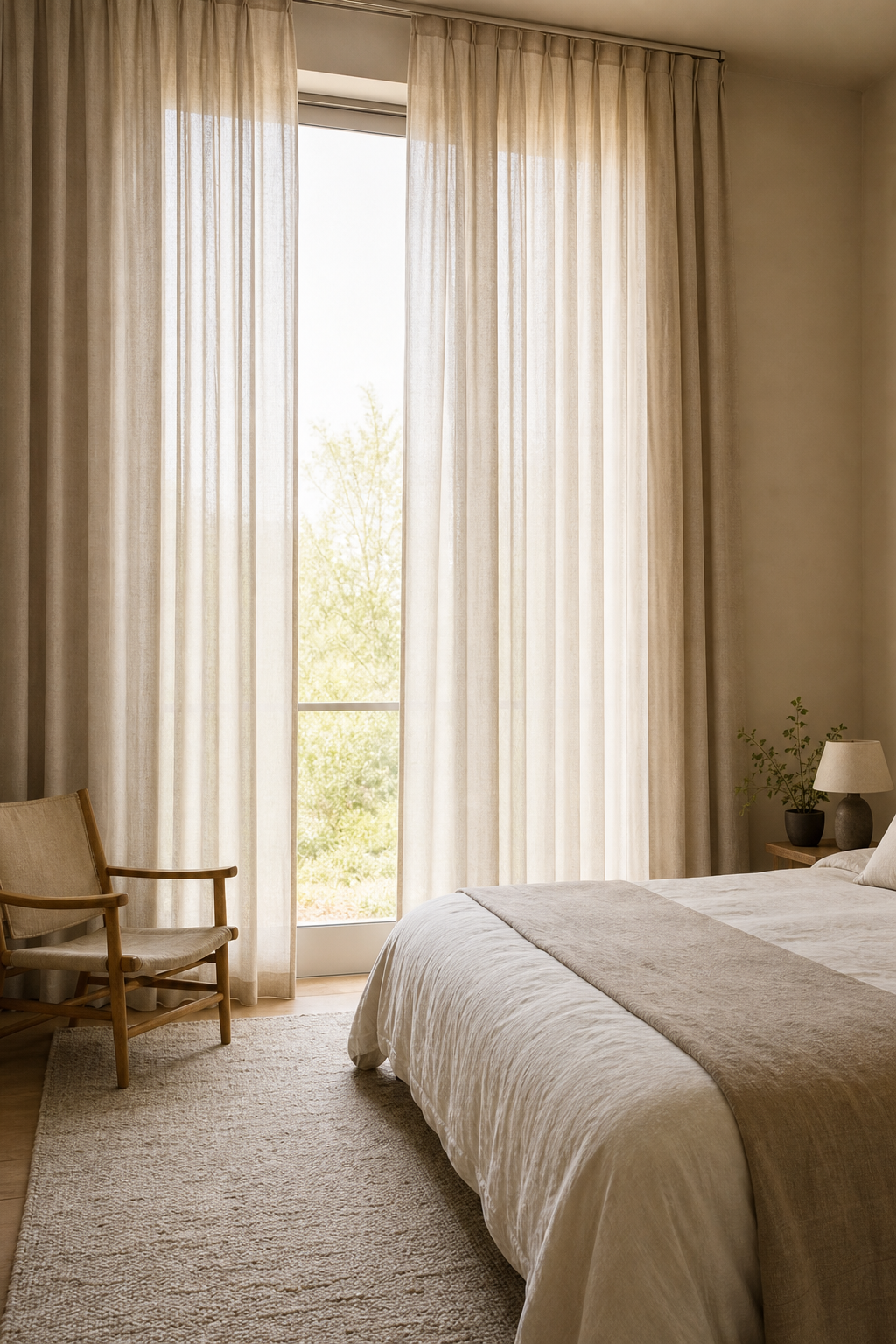
Curtains can make a minimal bedroom feel softer without adding clutter. Hang them high and wide so the window appears larger and the wall feels more architectural. Sheer linen, cotton voile, or a light wool blend filters daylight beautifully, especially in rooms with pale walls and simple furniture. For better sleep, layer sheers with blackout panels in the same color family or hide a blackout shade behind the fabric. Avoid fussy tiebacks, heavy swags, or strong patterns. Let the fabric fall in long, clean folds that just kiss the floor. The movement and softness of curtains balance straight furniture lines and make the room feel private, quiet, and complete.
Edit Wall Art To One Calm Focal Point
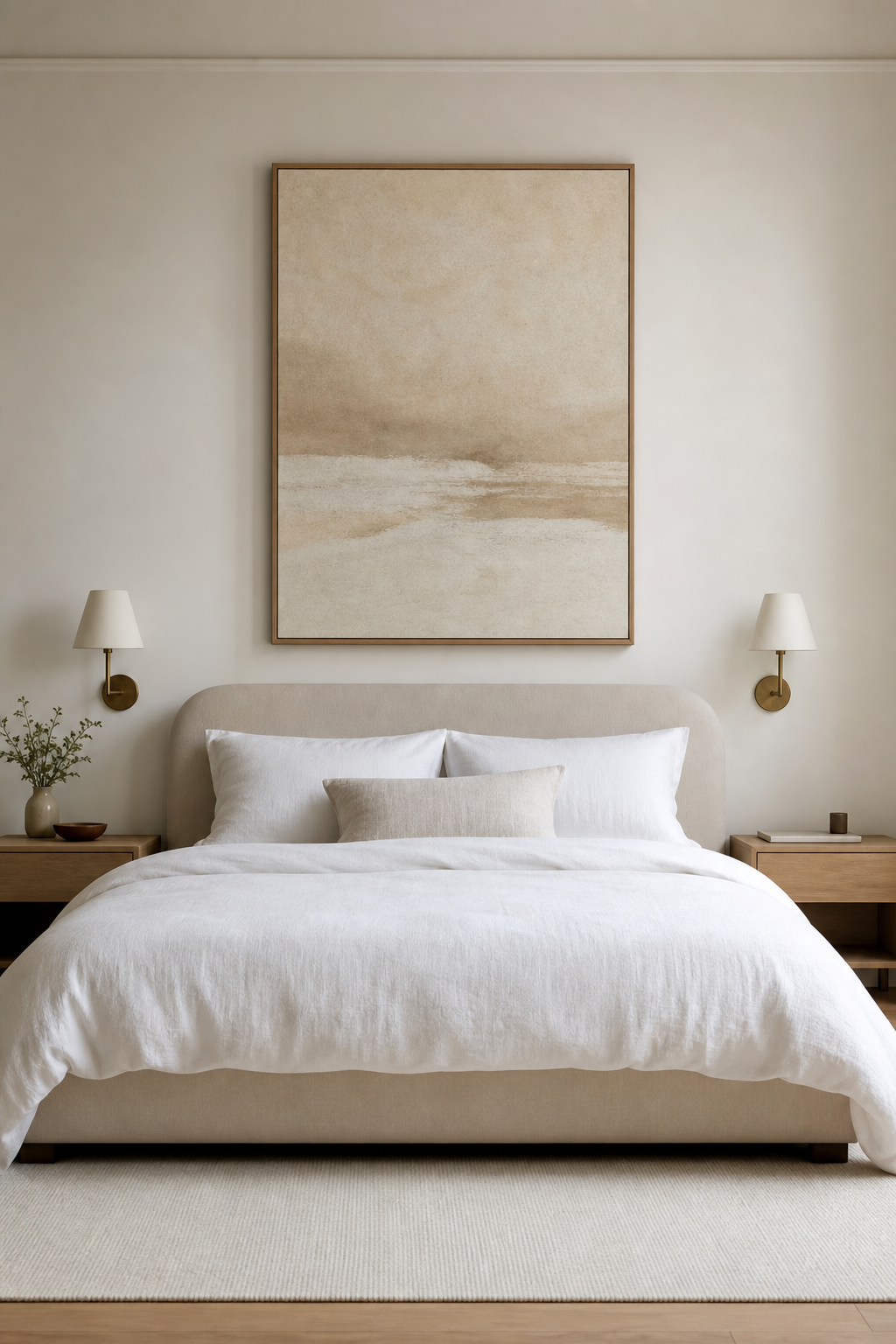
Wall art in a minimal bedroom should feel deliberate. Rather than filling every blank space, choose one calm focal point above the bed, beside a reading chair, or opposite the doorway. Large-scale art often works better than several small pieces because it creates impact without clutter. Look for soft abstracts, tonal photography, textile art, or a framed work on paper with generous matting. Keep the frame simple in oak, blackened metal, or natural maple. If the room already has a strong architectural feature, skip art entirely and let the wall texture or headboard carry the composition. The restraint makes the chosen piece feel more meaningful.
Create A Tiny Reading Corner
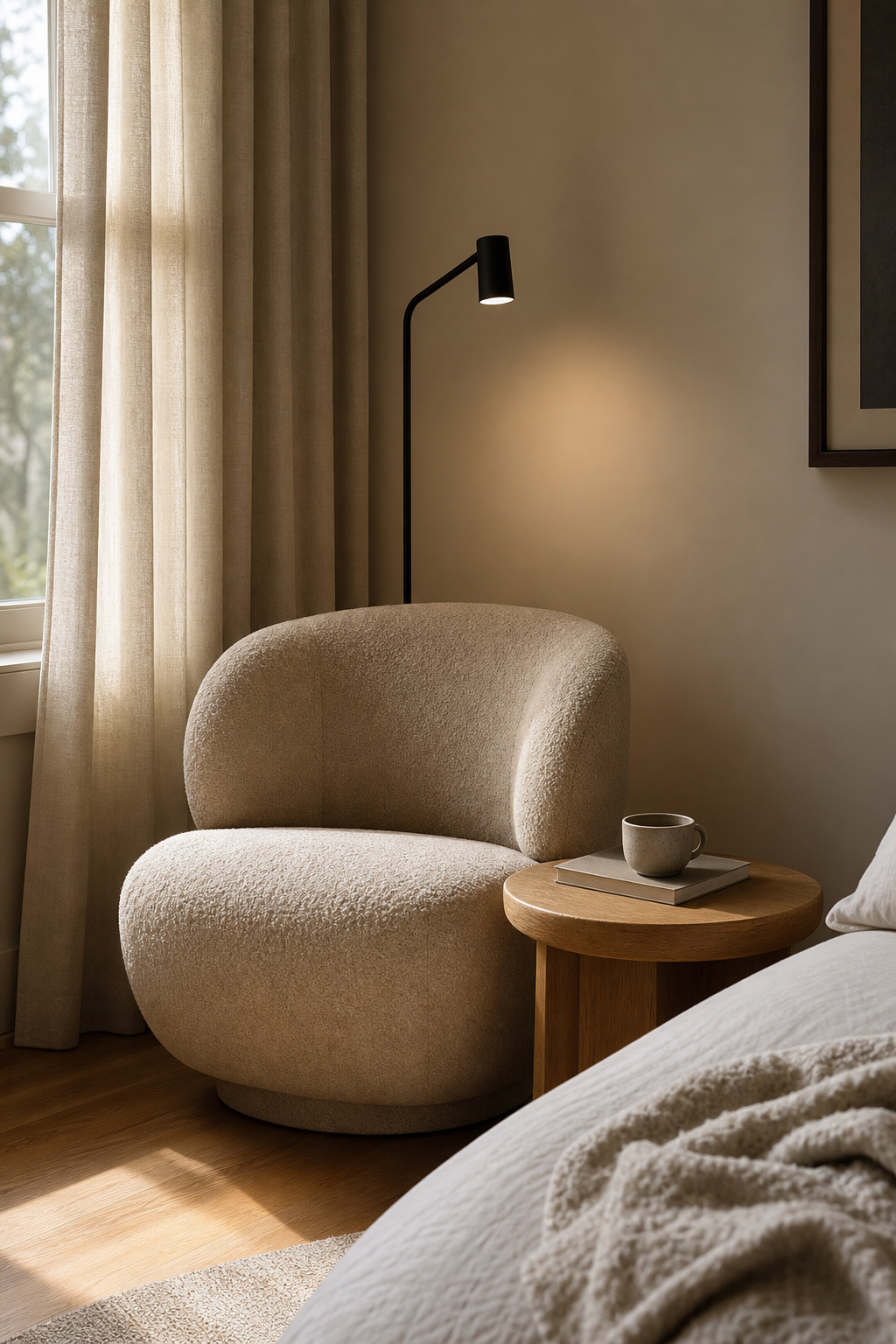
If your bedroom has an unused corner, turn it into a small retreat rather than adding another storage piece. A compact lounge chair, a slim floor lamp, and a tiny side table can make the room feel more personal while staying minimal. Choose a chair with a clean silhouette and inviting fabric, such as oatmeal boucle, tobacco leather, or soft gray wool. Keep the table small enough for a cup and one book. A wall-mounted shelf can work if floor space is tight. This corner should not compete with the bed; it should extend the feeling of rest. It becomes a place to decompress without bringing work or screens into the room.
Bring In Greenery With Restraint
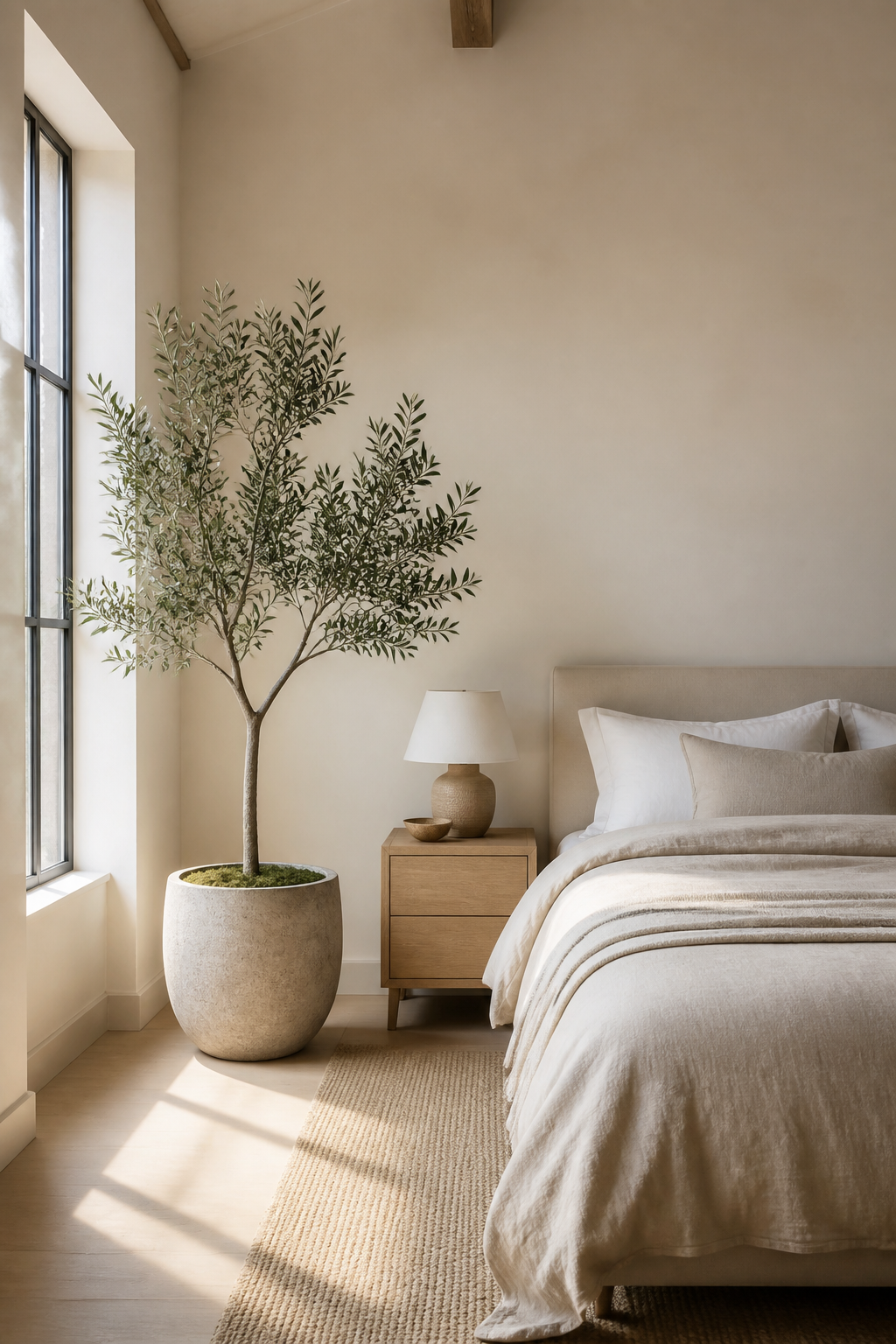
A little greenery can make a minimal bedroom feel alive, but restraint is important. Choose one architectural plant, a single branch arrangement, or a small vase of seasonal stems instead of scattering plants across every surface. Olive branches, eucalyptus, a sculptural ficus, or a simple potted snake plant work well because their forms are strong and their colors are subdued. Use a plain ceramic, stone, or woven planter that fits the room rather than a decorative pot that demands attention. Place greenery where it can catch natural light without blocking circulation. The goal is freshness and height, not a jungle effect. One healthy, well-placed plant often does more than five small ones.
Make Symmetry Feel Soft, Not Stiff
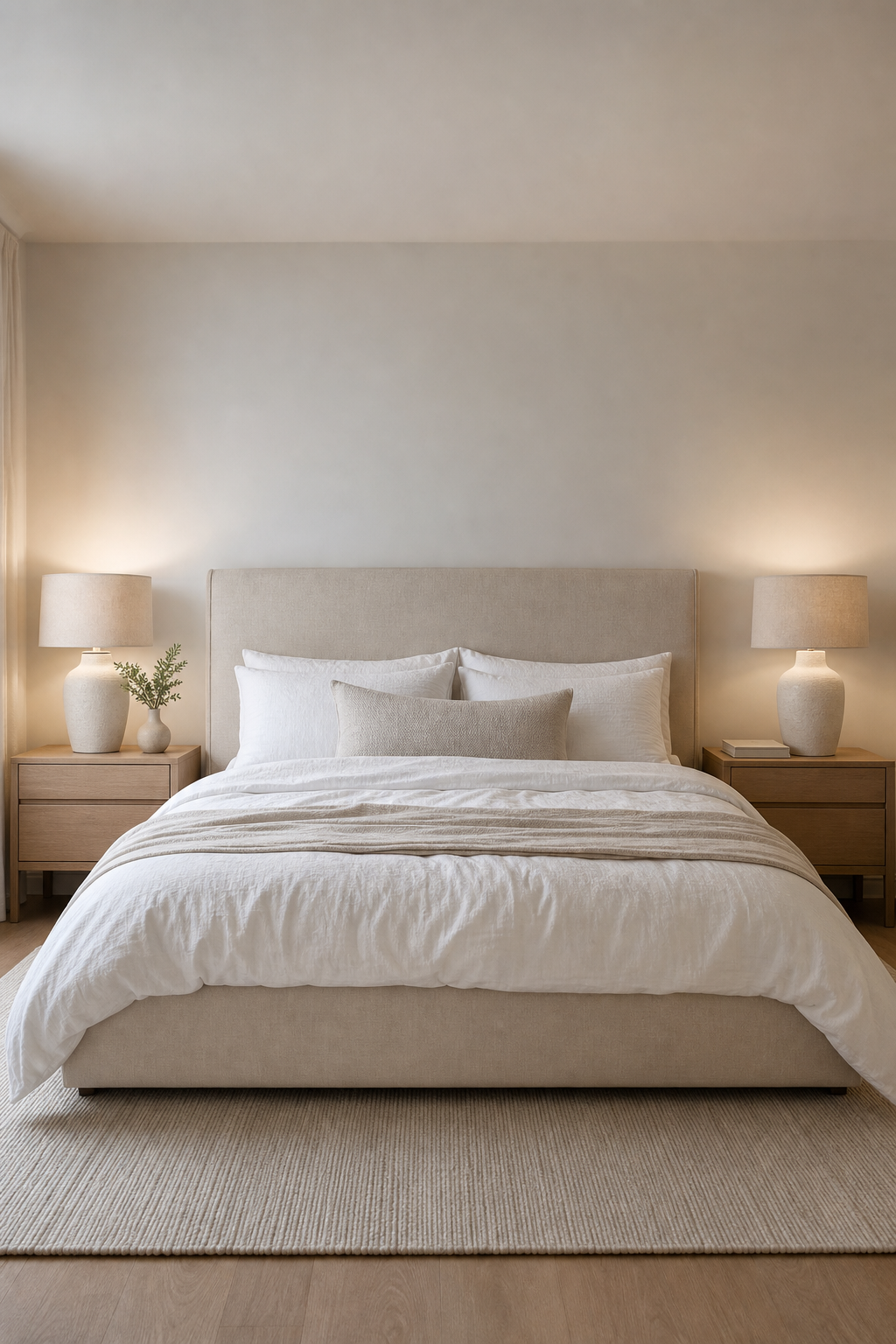
Symmetry is useful in a bedroom because it settles the eye, especially around the bed. Matching lamps, balanced pillows, and aligned nightstands create a sense of order that supports the minimal mood. The trick is keeping symmetry from feeling too formal. Use matching shapes but slightly relaxed materials: linen lampshades, handmade ceramic bases, soft bedding, and a natural rug. Let one side hold a book while the other has a small vase, or choose two nightstands in the same finish with slightly different objects on top. This gives the room rhythm without rigidity. Soft symmetry is polished enough for a luxury bedroom, yet comfortable enough for everyday living.
Keep The Dresser Surface Almost Bare
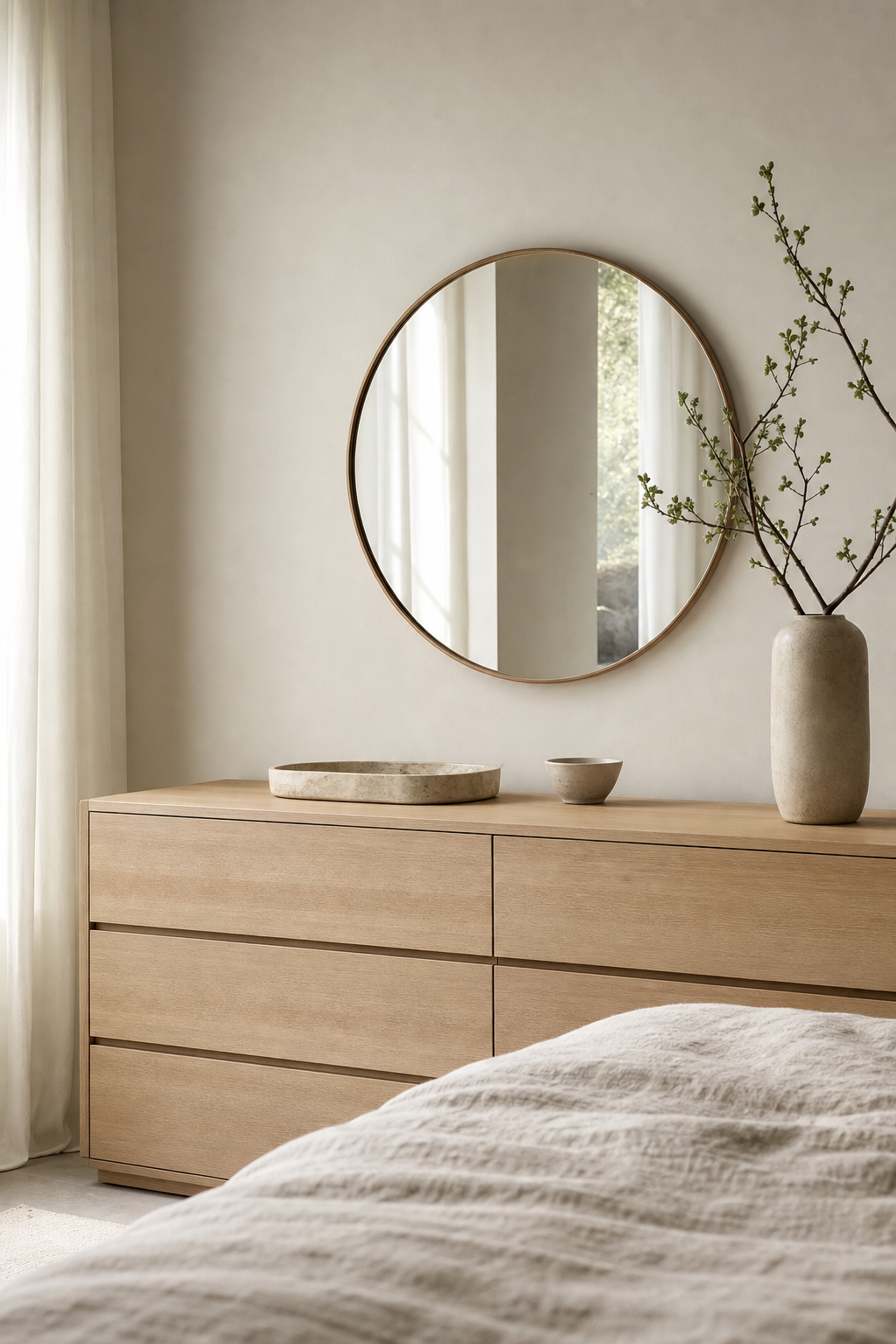
A dresser can either support a minimal bedroom or quietly undo it. Keep the surface almost bare by choosing a few objects that help the room function or add sculptural calm. A shallow tray for jewelry, a low ceramic bowl, one framed piece, or a single branch arrangement is enough. If you use the dresser for getting ready, store products in the top drawer rather than leaving bottles out. A mirror above the dresser can reflect light and make the room feel larger, but choose a simple shape and avoid ornate frames. Leave visible space around every object. That empty space is not wasted; it is what makes the styling feel intentional.
Choose A Bench That Earns Its Place
A bench at the foot of the bed should be more than decoration. In a minimal bedroom, it needs a clear role: holding a folded throw, offering a place to sit while dressing, or adding one tactile material to the room. Choose a bench that is slightly narrower than the bed so the proportions feel tidy. Upholstered linen, woven rush, pale oak, or a simple leather sling can all work depending on the mood. Avoid storage benches with heavy details unless you genuinely need the capacity. Style it lightly with one folded blanket or leave it bare. The bench should make the room more useful while keeping the bed wall calm.
Finish With One Personal Detail
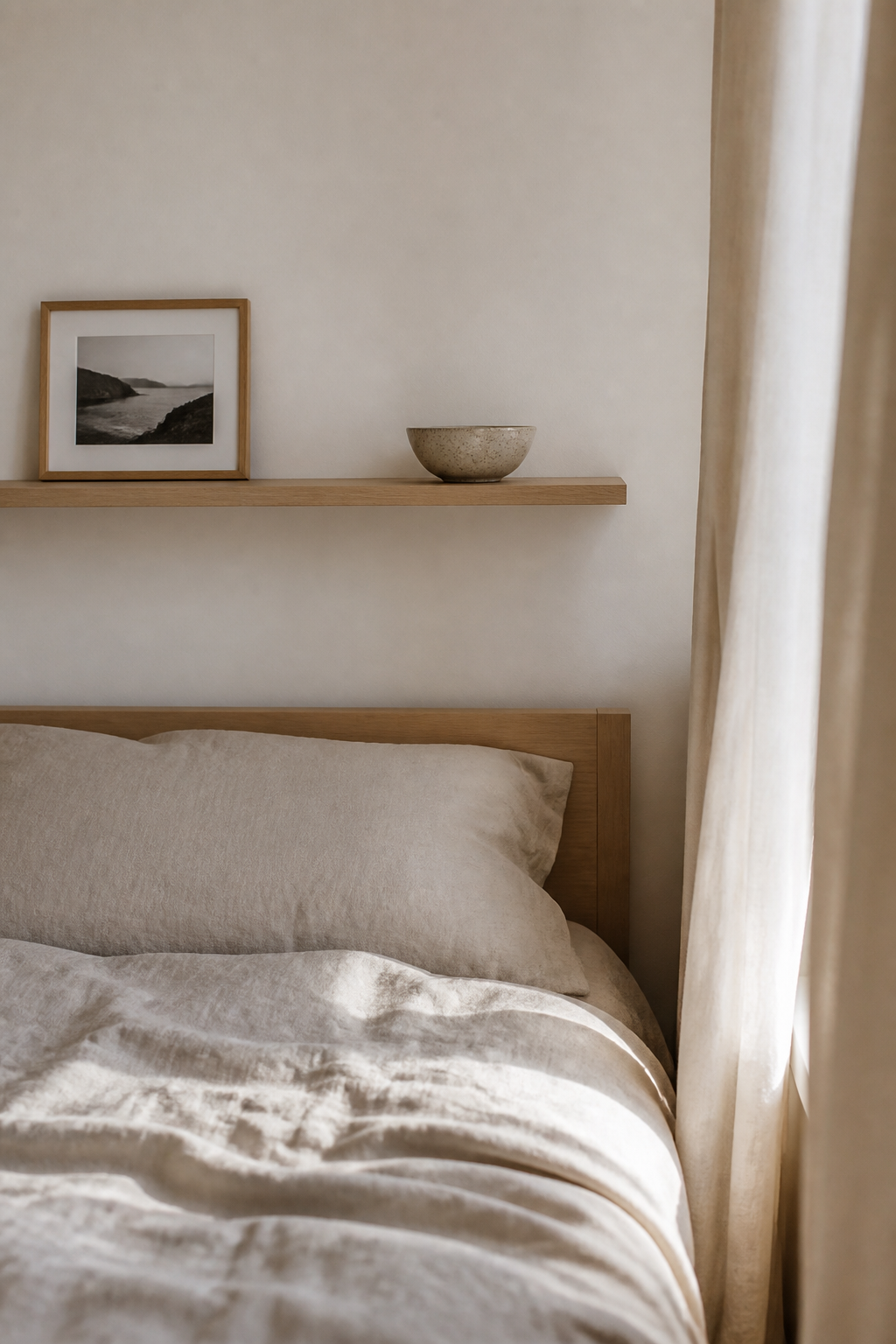
The final layer of a minimal bedroom should feel personal, not overstyled. Choose one detail that connects the room to your life: a framed travel photograph, a handmade bowl, a favorite book, a small inherited object, or a vase from a local ceramicist. Give it breathing room so it reads as meaningful rather than random. Personal objects are especially powerful in minimal spaces because there are fewer things competing for attention. The room still needs to function, but it should not feel like a showroom. One quiet detail can soften perfect lines, add memory, and make the retreat feel genuinely yours.
A cozy minimal bedroom is built through restraint, but it should never feel stripped of comfort. Start with a warm foundation, choose furniture that earns its place, hide the everyday clutter, and let texture carry the decoration. When lighting, storage, bedding, and personal details work together, the room becomes quietly luxurious and genuinely restful.