19 Kitchen Ideas For A Warm Functional Home
A warm functional kitchen should make cooking easier while still feeling like the heart of the home. The best designs balance durable materials, smart storage, flattering light, and a few tactile details that invite people to gather. Warmth does not have to mean clutter, and function does not have to feel clinical. These kitchen ideas focus on choices that improve daily routines while giving the room a polished, welcoming atmosphere.
Start With A Warm Wood Anchor
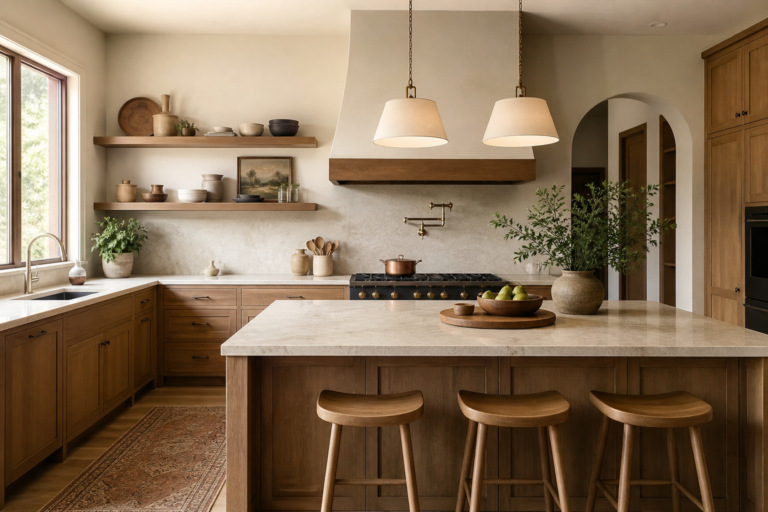
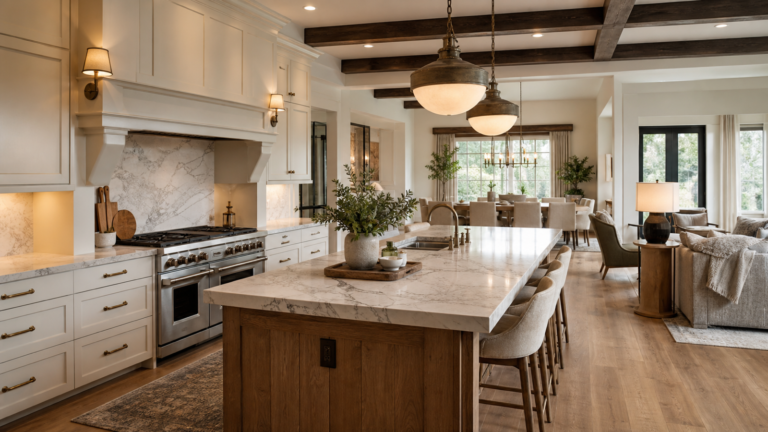
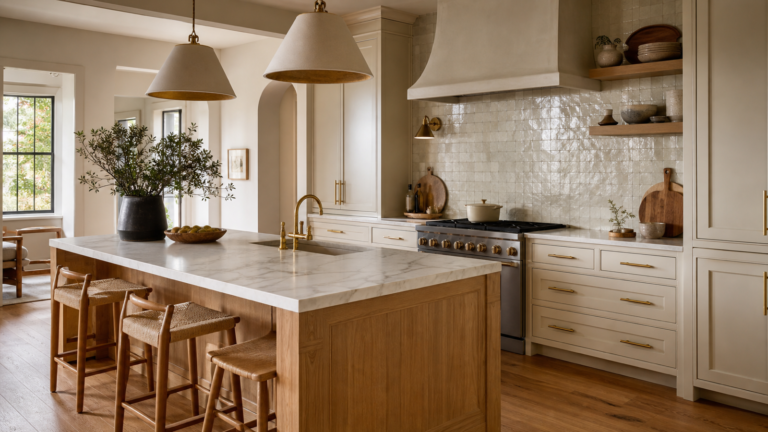
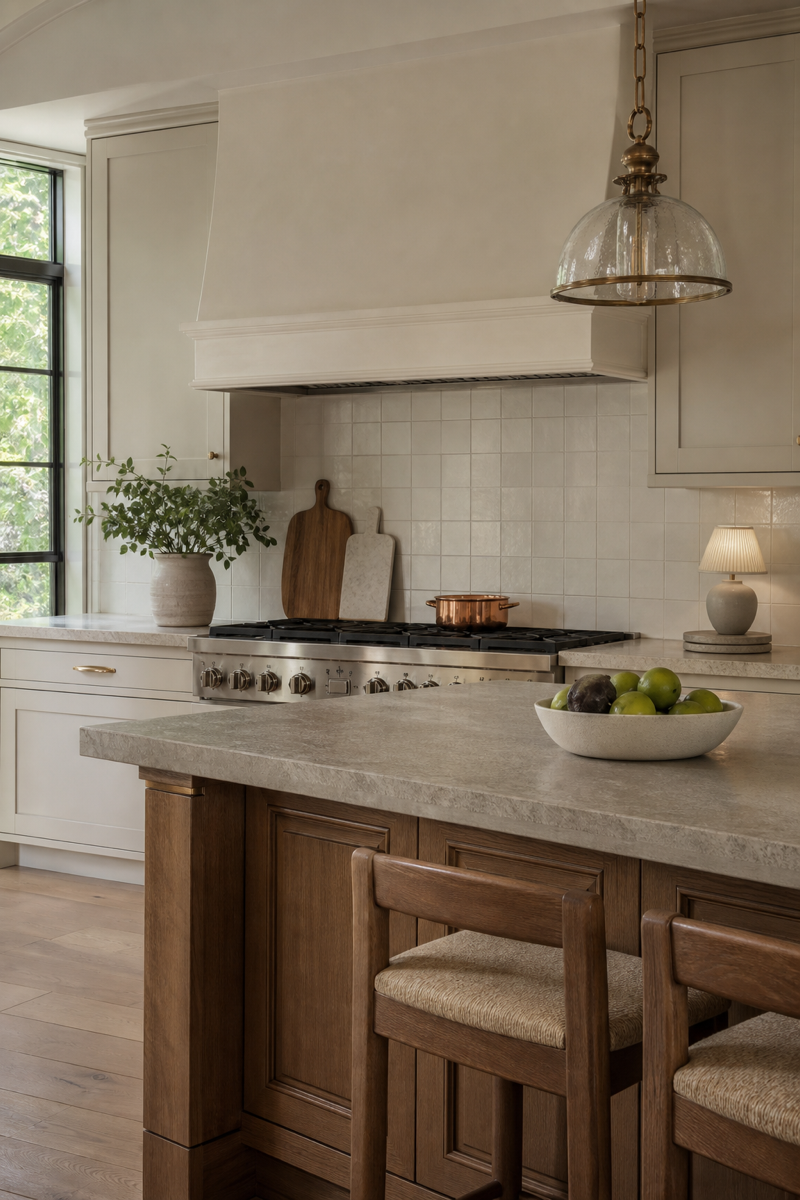
A warm functional kitchen needs one element that gives the room visual weight. In many homes, that anchor is wood: an oak island, walnut shelves, ash stools, or a run of softly grained cabinet fronts. Keep the profile clean so the wood feels refined rather than rustic. A single wood tone used with discipline can make white stone, plaster walls, and metal hardware feel softer. It also helps the kitchen connect to nearby living spaces, which matters in open plans. If a full cabinet change is not realistic, add warmth through a butcher-block prep area, a tall pantry door, or a pair of substantial counter stools. The room will feel more grounded immediately.
Mix Closed Storage With Open Display
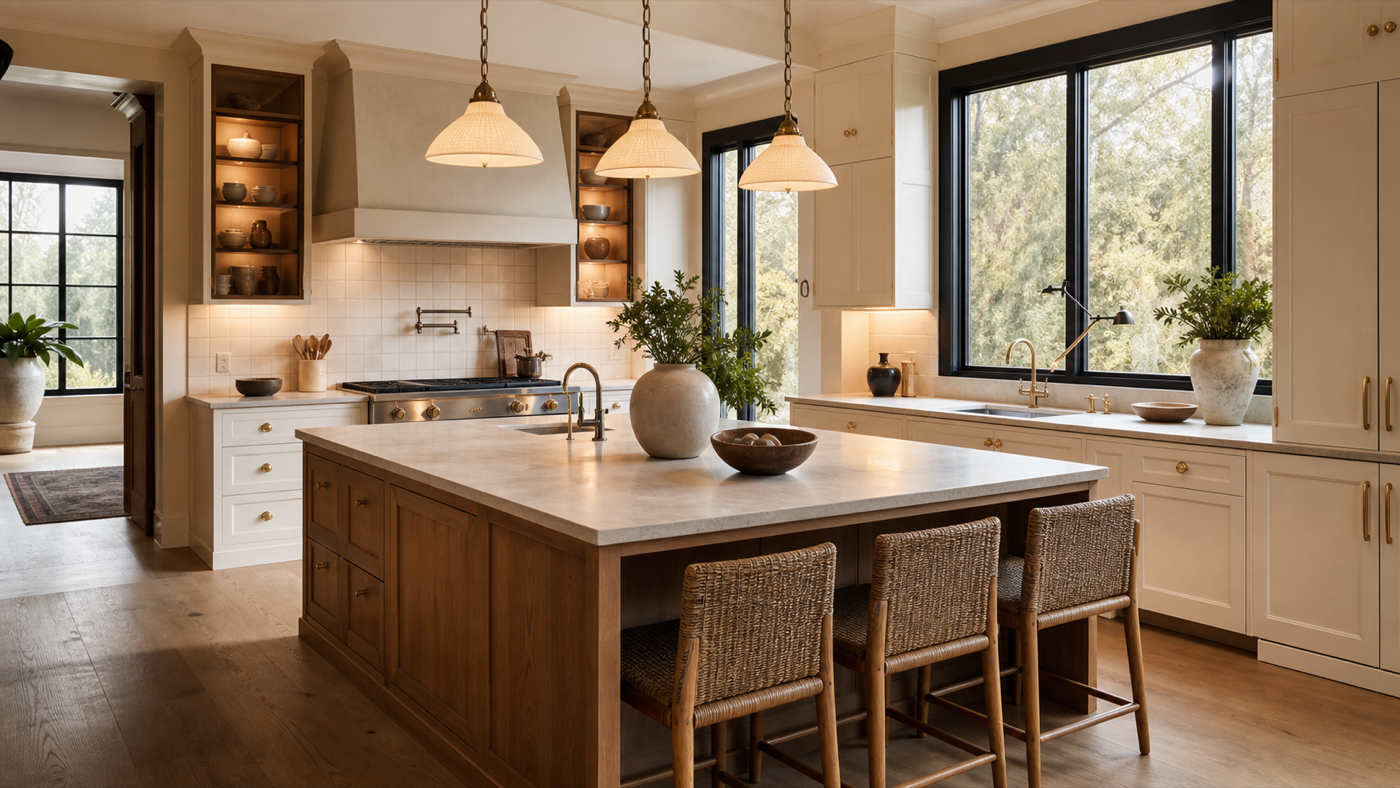
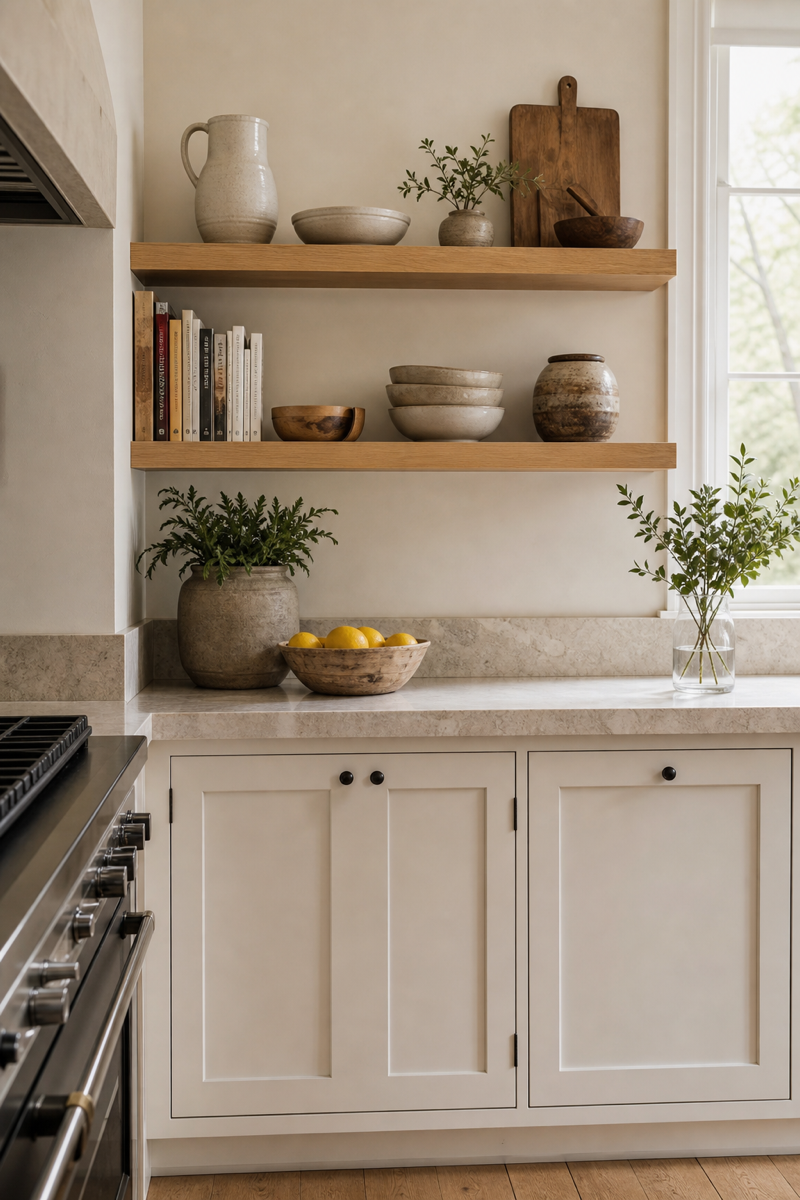
The most livable kitchens balance hidden storage with a little open display. Closed cabinets should handle the practical volume: cookware, pantry items, small appliances, and mismatched containers. Then reserve a short run of open shelving or a glass cabinet for the pieces that add warmth, such as bowls, ceramics, cookbooks, or wooden boards. This prevents the kitchen from feeling like a showroom while still protecting it from visual clutter. Keep the open area edited and repeat materials already used in the room. If the shelves are oak, echo the island or stools. If the cabinets are painted, let the displayed objects bring texture. The result feels personal, functional, and easy to maintain.
Choose Counter Stools With Texture
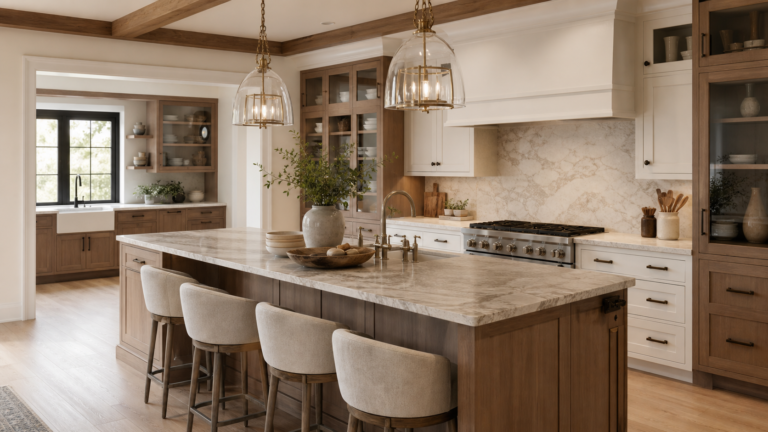
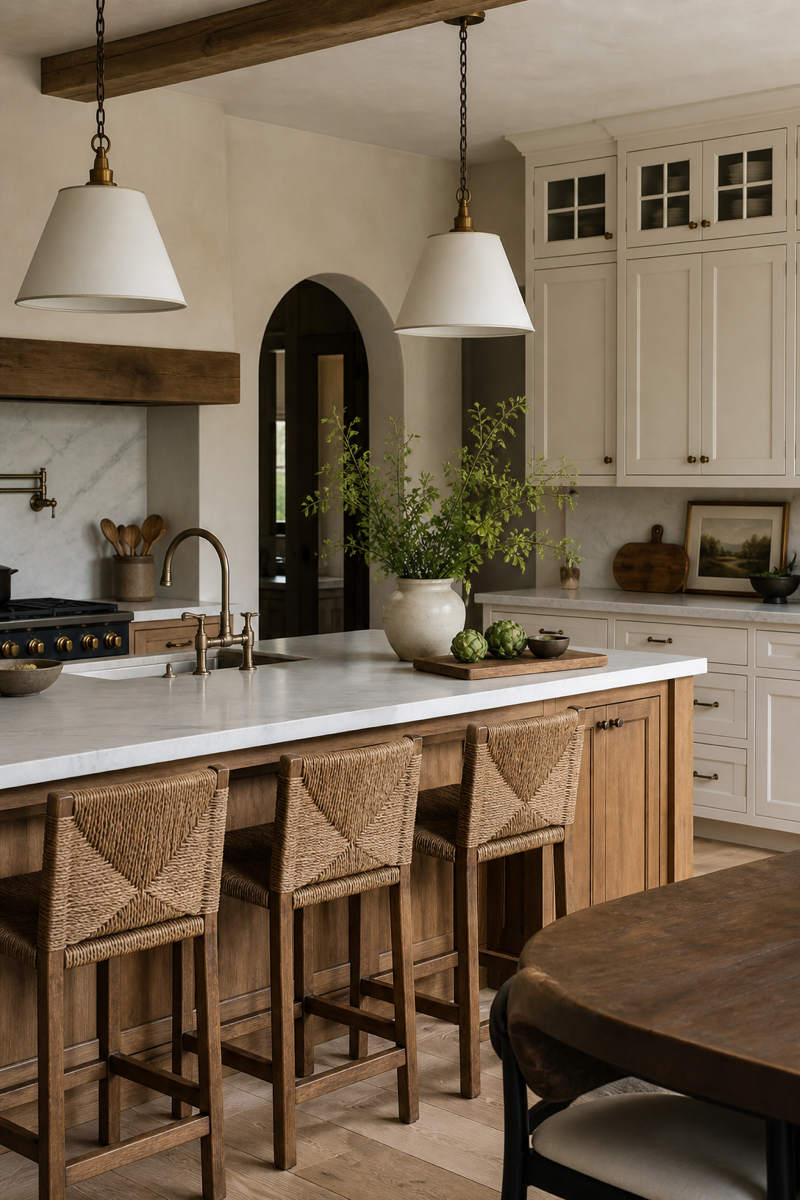
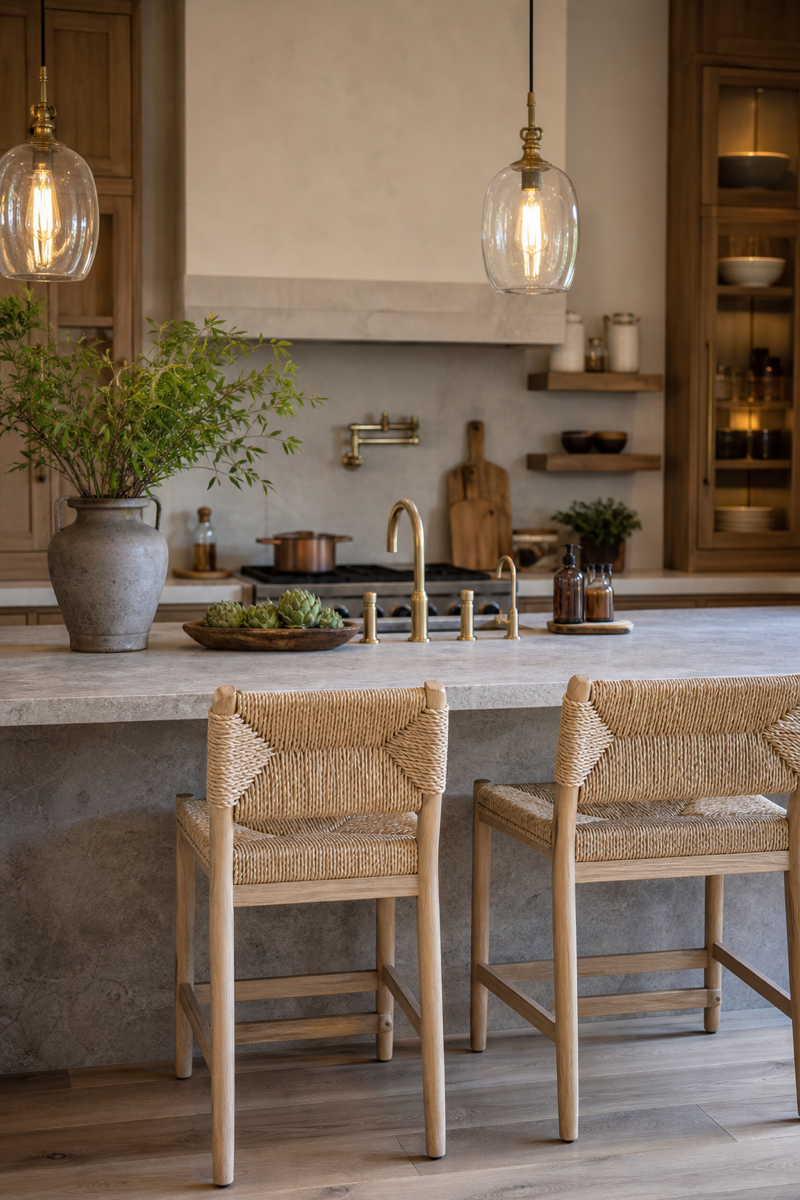
Counter stools work hard in a warm functional kitchen because they are visible from almost every angle. Choose stools with texture, such as woven seats, leather, boucle, or softly grained wood, rather than plain metal frames that can feel cold. The shape should tuck comfortably under the counter without blocking circulation. Backless stools are useful in narrow spaces, while low-back stools offer better comfort for long breakfasts or homework sessions. Pay attention to foot rails and seat height; beautiful stools that are awkward to use will quickly become frustrating. A set of well-scaled stools can make an island feel like a gathering place instead of only a prep surface.
Layer Pendant And Task Lighting
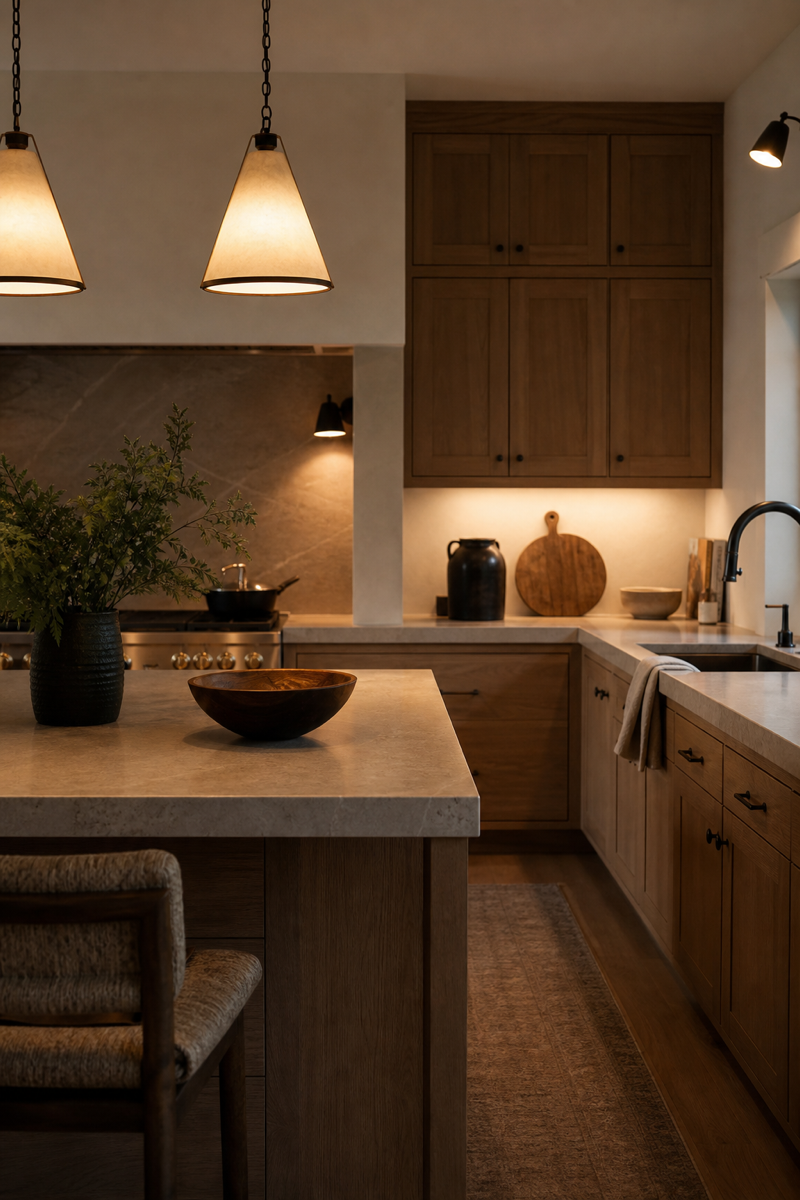
A functional kitchen needs more than one bright ceiling fixture. Layer pendants over the island, under-cabinet lights for prep work, and softer lamps or sconces where the kitchen meets dining or living space. Warm color temperature is essential; overly cool light makes even beautiful materials feel harsh. Pendants should be scaled to the island and hung low enough to create atmosphere without blocking sightlines. Task lighting should land where knives, cutting boards, and cookware are used most often. When the lighting is layered, the kitchen can shift from efficient morning prep to relaxed evening gathering. This is one of the most powerful ways to make function feel luxurious.
Use A Stone Backsplash For Easy Polish
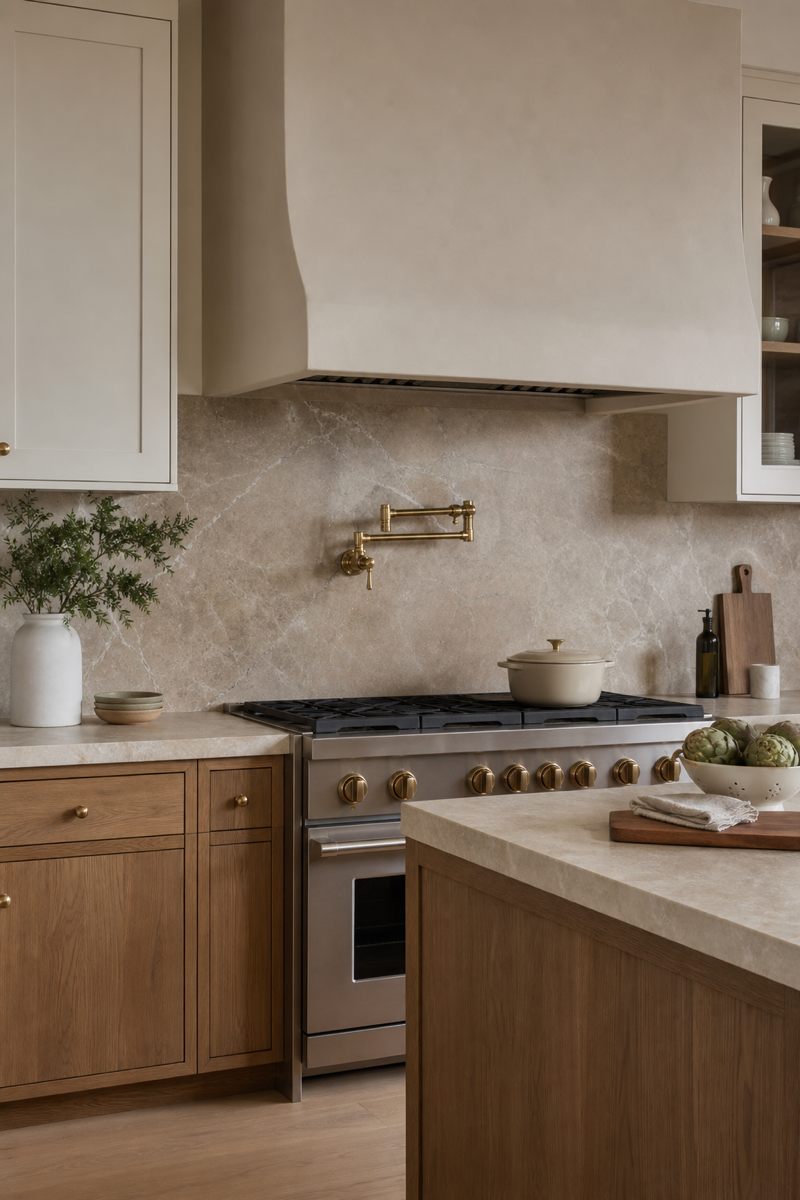
A stone backsplash can make a kitchen feel polished while keeping cleanup simple. Slab marble, quartzite, limestone-look porcelain, or a quiet engineered stone will give the wall behind the range or sink a continuous surface without grout lines. For a warm look, choose veining or undertones that relate to the cabinets and flooring instead of stark contrast. A honed or leathered finish often feels softer than high gloss. If a full slab is outside the budget, use stone behind the range and simpler tile elsewhere. The point is to create a durable focal plane that feels calm and practical. Good kitchens look beautiful, but they also wipe down easily after real cooking.
Add A Narrow Prep Zone Beside The Range
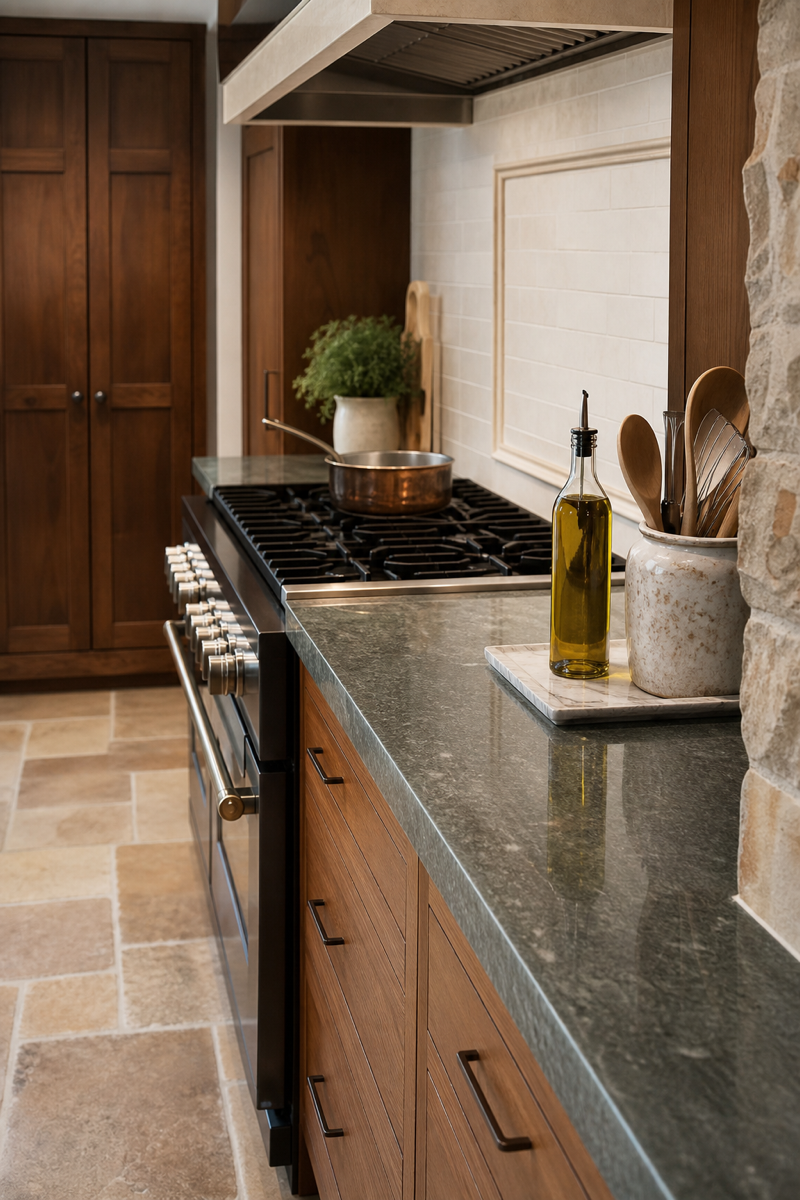
Small details around the range can change how a kitchen works every day. A narrow prep zone beside the cooktop gives you a landing spot for olive oil, spoons, chopped ingredients, or a hot pan. It does not need to be large, but it should be clear. Avoid filling this area with decorative objects that interrupt cooking. A stone crock, small tray, or wall rail can organize essentials without crowding the counter. If the range is boxed in by walls or tall cabinets, consider whether a nearby pull-out or slim counter can create the missing landing space. Warm functional kitchens succeed because practical gestures are designed beautifully, not added as afterthoughts.
Hide Small Appliances Behind Doors
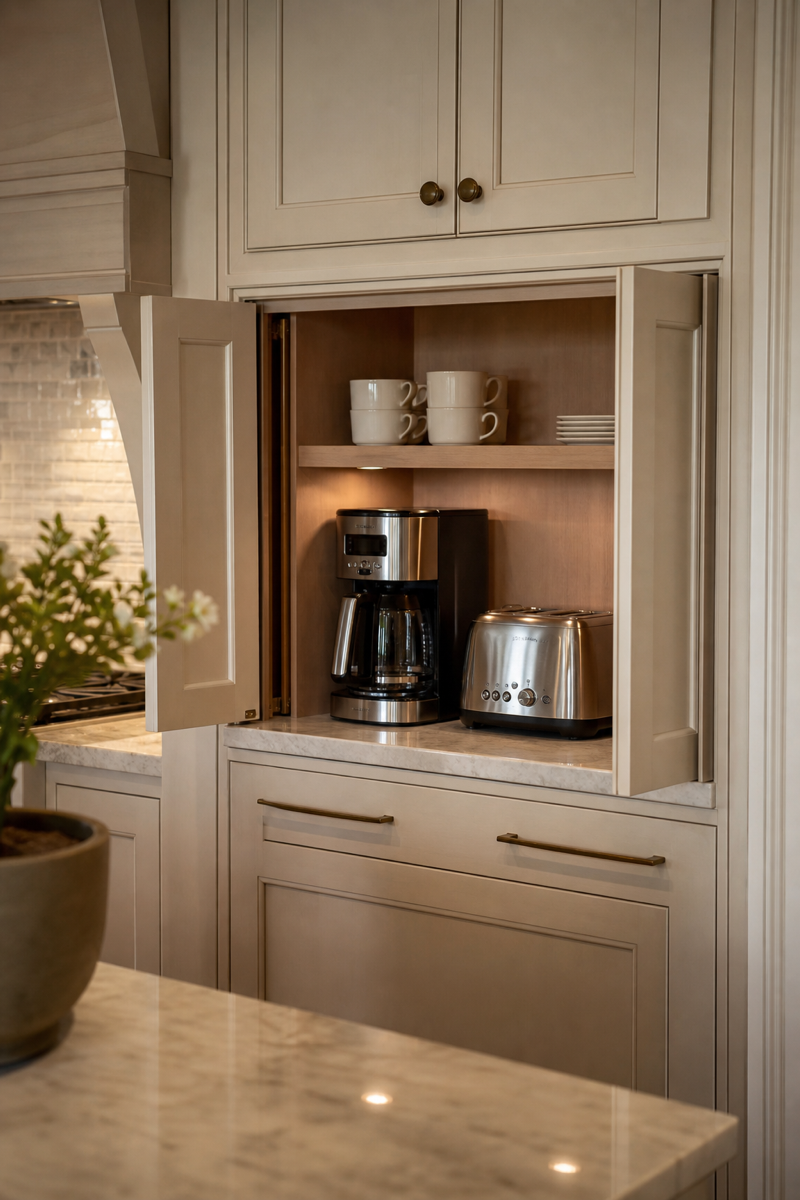
Small appliances are useful, but they can quickly make counters feel chaotic. An appliance garage, tall pantry cabinet, or deep drawer can hide the toaster, blender, coffee grinder, and mixer while keeping them easy to reach. The best storage is close to where the appliance is used, with outlets inside if local code and installation allow. Use lift-up, pocket, or tambour doors depending on the cabinet style. This approach keeps the kitchen calm without pretending that daily routines do not exist. When the doors are closed, the room feels warm and composed. When opened, everything needed for breakfast or baking is ready to work. That balance is the heart of functional design.
Bring In A Practical Runner
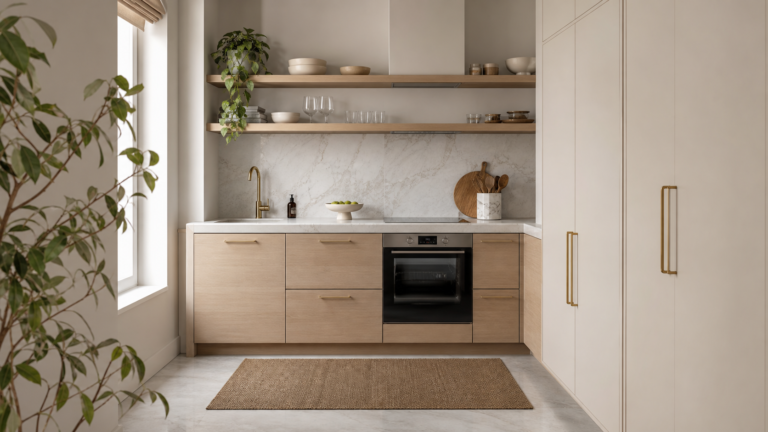
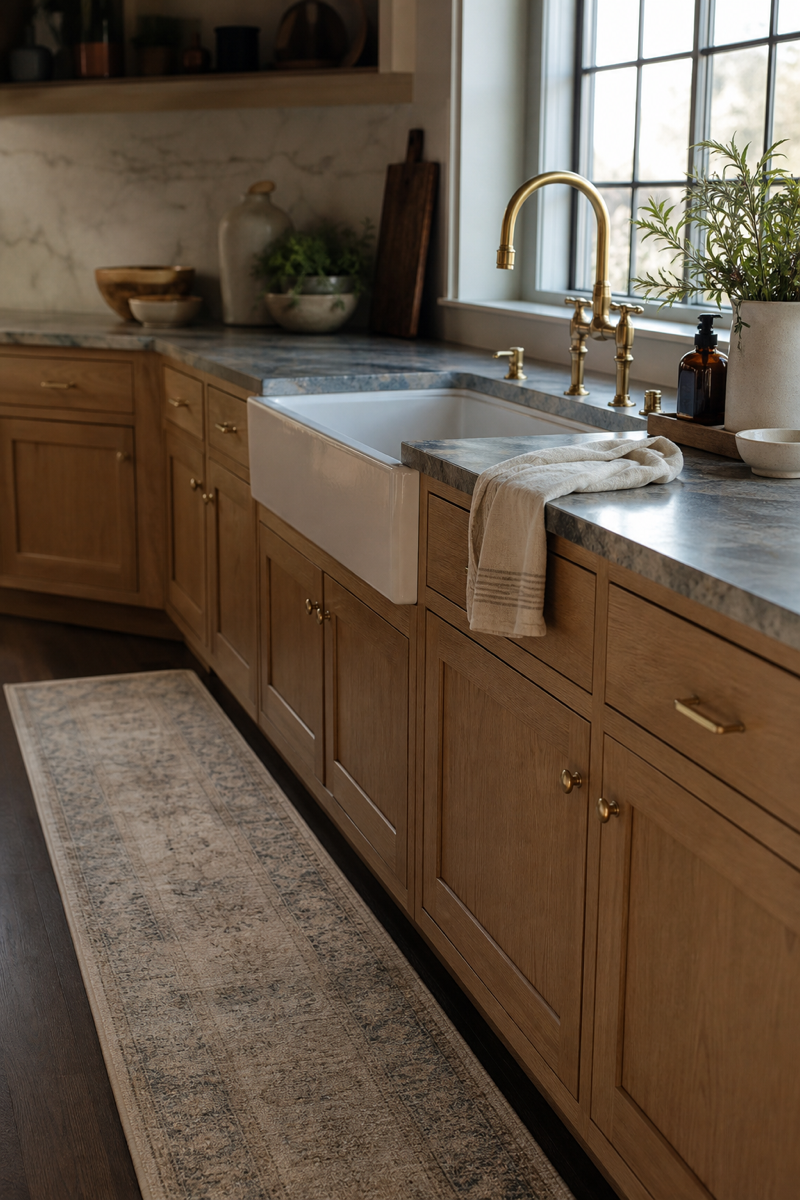
A runner can add warmth underfoot and soften a kitchen filled with stone, tile, and cabinetry. Choose a low-profile wool, flatweave, or washable performance runner that will not catch under doors or become a tripping hazard. In a galley kitchen, it can visually lengthen the space. In front of the sink, it makes daily work more comfortable. Keep the pattern subtle enough to handle crumbs and foot traffic without becoming the loudest element in the room. Warm neutrals, faded olive, rust, or charcoal can work beautifully with wood and stone. The runner should feel useful, not precious, so the kitchen remains a place for cooking rather than careful tiptoeing.
Use Deep Drawers For Everyday Cookware
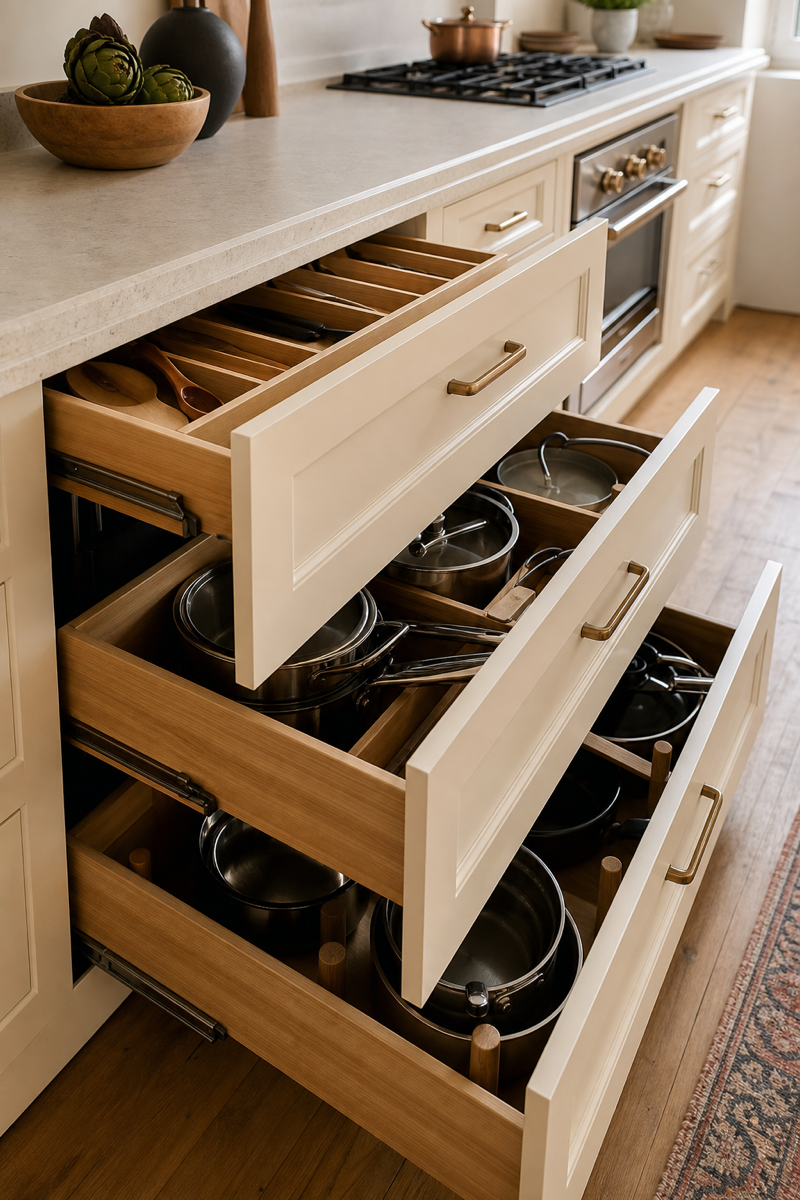
Deep drawers often work better than lower cabinets because they let you see and reach what you own. Use them for pots, pans, mixing bowls, food containers, and everyday dishes. Add dividers or peg systems so stacks stay orderly. The fronts can remain clean and elegant while the interiors do real organizational work. In a warm kitchen, drawer hardware is also a design opportunity: aged brass, bronze, blackened metal, or simple wood pulls can add character. Plan drawers near the dishwasher, range, and prep zone to reduce extra steps. A beautiful kitchen becomes truly functional when the storage supports movement. Deep drawers are quiet workhorses that make cooking feel smoother every day.
Create A Coffee Or Tea Station
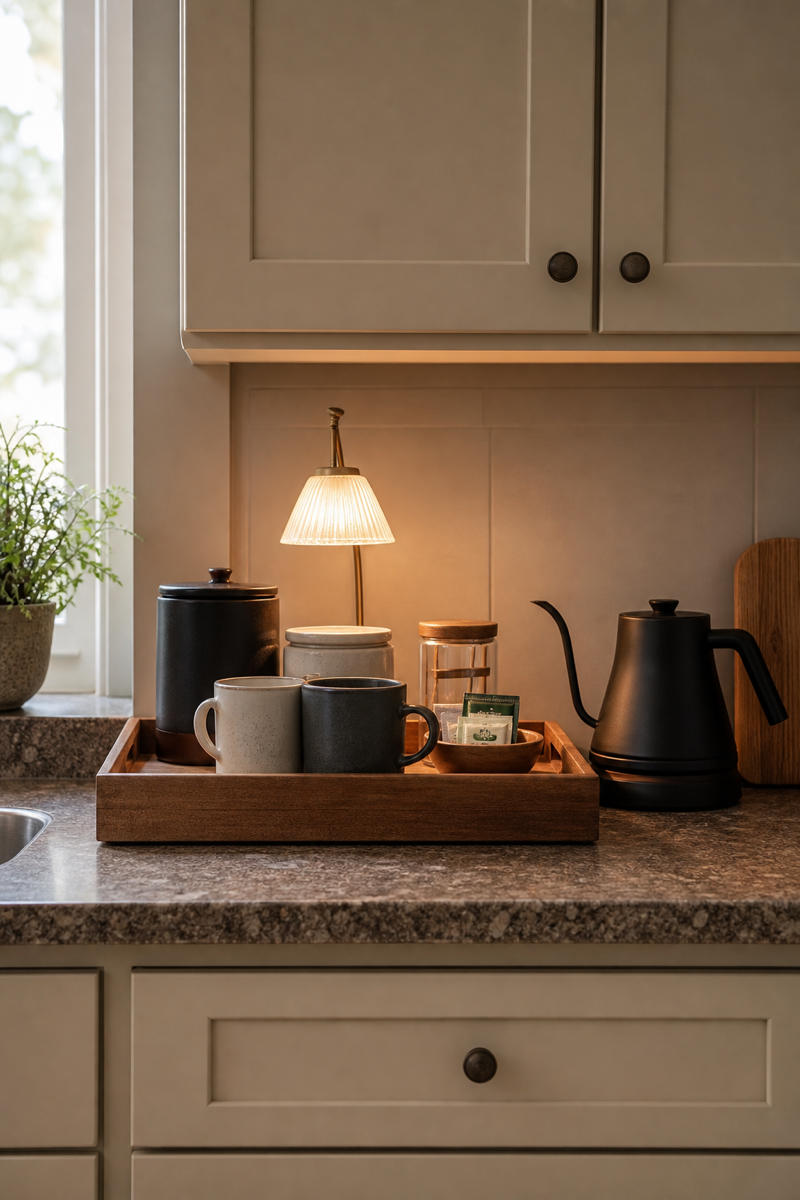
A dedicated coffee or tea station can make mornings feel calmer and keep supplies from spreading across the kitchen. It might be a small counter section, a cabinet niche, or a tray near the kettle. Store mugs, filters, tea tins, spoons, and sweeteners together so the routine is contained. Warmth comes from the details: a wood tray, ceramic canister, small lamp, or textured cabinet interior. Keep the station close to water if possible, but do not sacrifice the main prep zone. The point is to honor a daily ritual without cluttering the whole room. A compact, well-organized station can make even a modest kitchen feel more thoughtful and hospitable.
Choose Warm Metals Instead Of Shiny Chrome
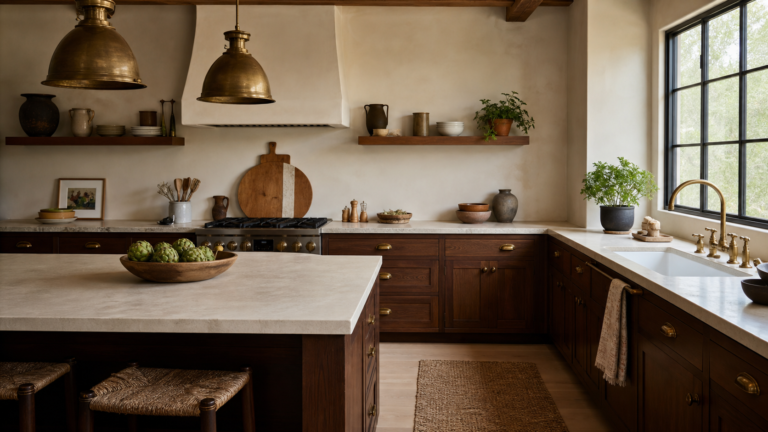
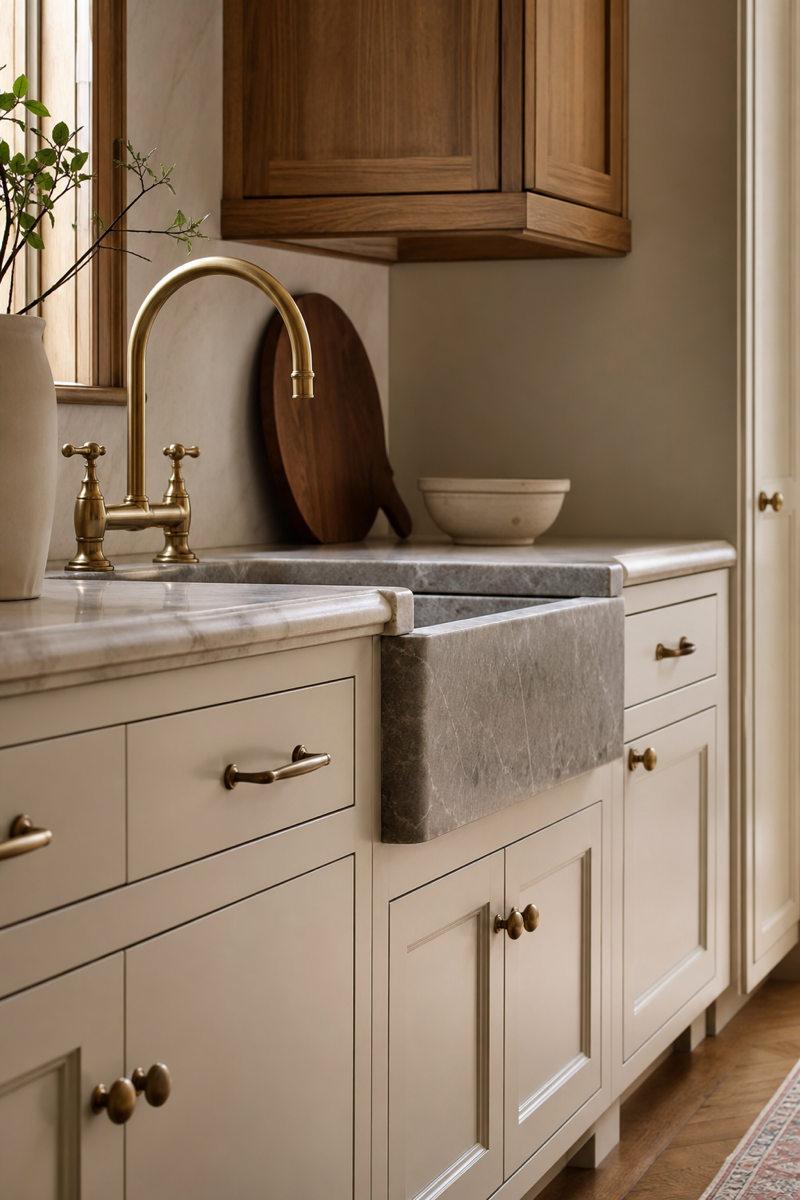
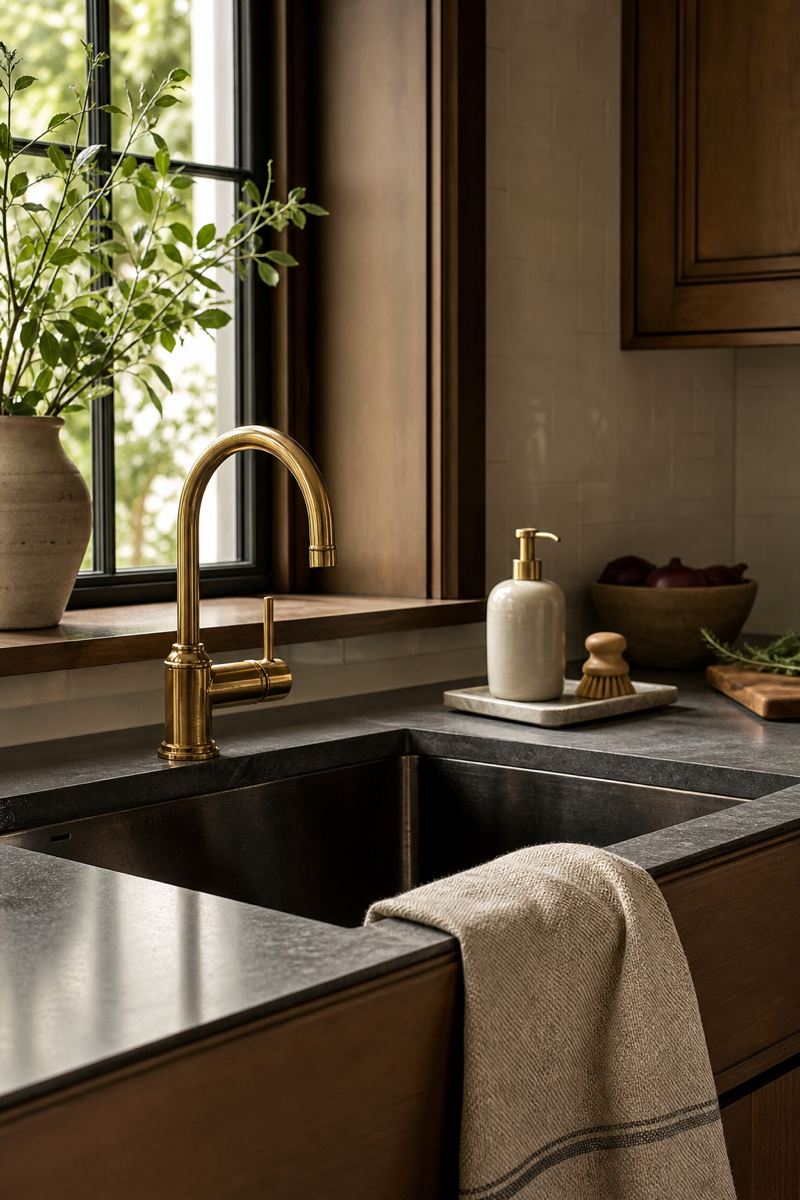
Hardware and fixtures can change the mood of a kitchen without a full remodel. Warm metals such as aged brass, unlacquered brass, champagne bronze, and soft nickel add depth to cabinets and stone. They do not need to match perfectly, but they should feel related. For example, brass knobs can work with a bronze pendant if both have a muted finish. Avoid overly shiny metals if the goal is warmth; bright chrome can look crisp but sometimes feels cold against pale cabinetry. Use metal where hands naturally go: pulls, faucets, shelf brackets, and light fixtures. These small touchpoints are noticed daily, and they bring quiet luxury to practical routines.
Add A Freestanding Pantry Cabinet
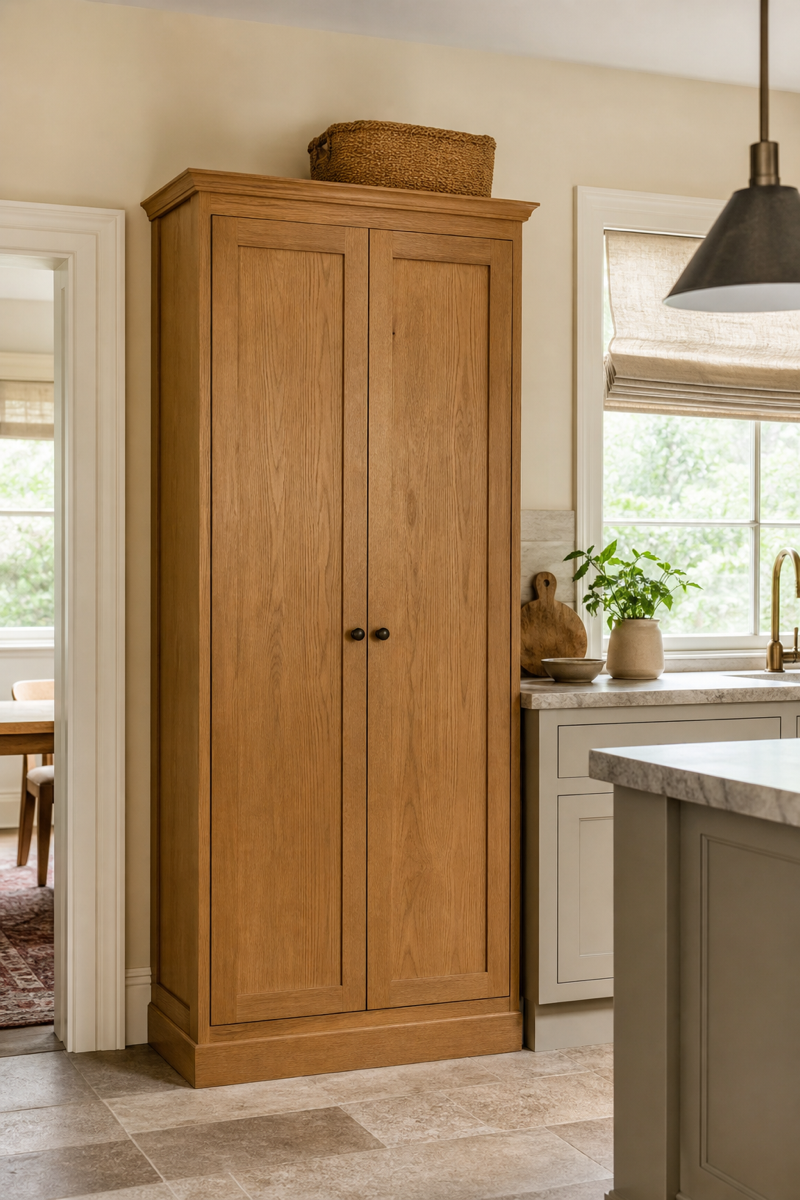
A freestanding pantry cabinet can make a kitchen feel warmer and more furnished, especially when built-ins are limited. Choose a tall cabinet in painted wood, oak, or walnut with doors that hide pantry staples. It can stand at the end of a cabinet run, beside a breakfast table, or in a nearby nook. The key is proportion: it should look intentional, not like a storage piece borrowed from another room. Add baskets, labeled bins, and shelf risers inside so the function is as strong as the look. A freestanding pantry is especially useful in older homes where cabinet space is modest. It brings storage, character, and a softer furniture-like quality.
Keep The Island Surface Mostly Clear
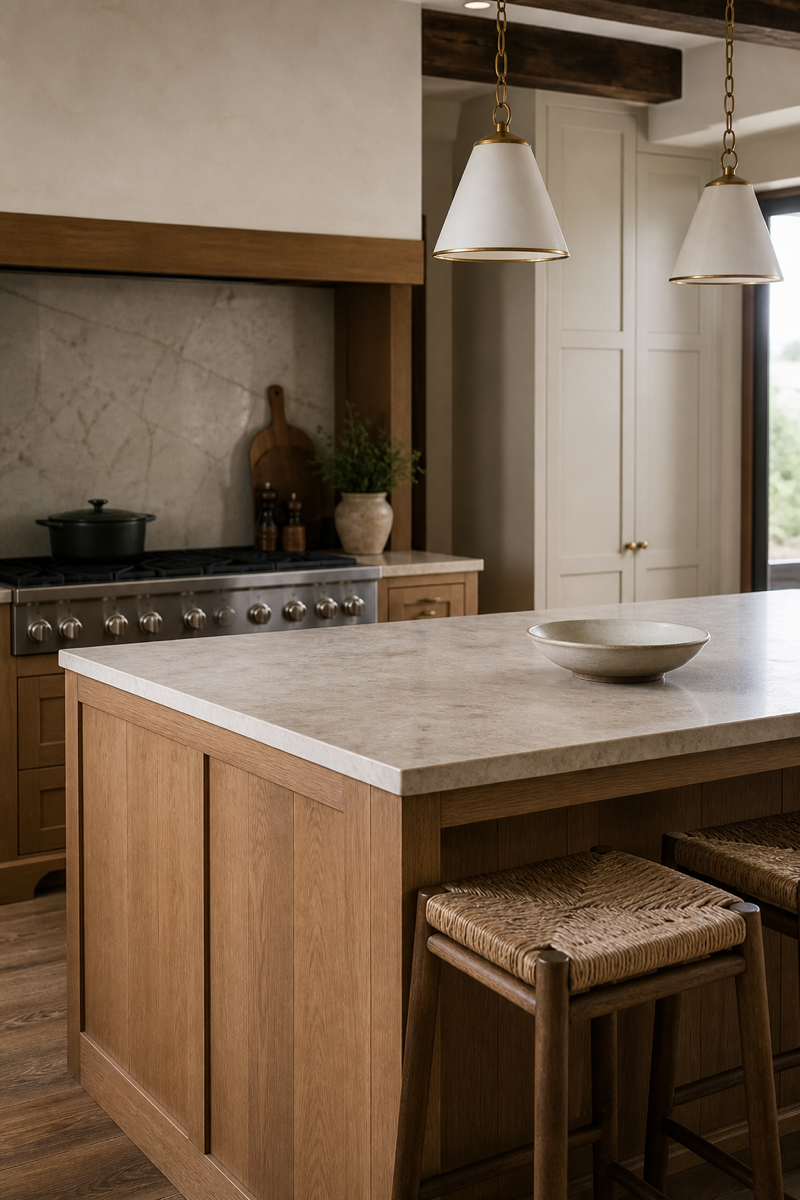
An island becomes more useful when most of its surface stays available. Instead of filling it with decor, keep one low bowl, a small vase, or a tray that can move easily when cooking begins. This makes the island ready for prep, serving, homework, or conversation. If the room needs warmth, add it through stools, pendant lights, wood, and the island finish rather than clutter on top. A clear island also photographs beautifully because the stone or wood surface can be appreciated. In real life, it reduces the feeling of constantly needing to clean before using the kitchen. Functional luxury often looks like restraint, especially in the hardest-working part of the room.
Use A Soft Paint Color On Cabinets
Cabinet color can warm a kitchen without making it dark. Soft mushroom, muted sage, putty, warm cream, smoky blue, or pale clay can feel more layered than pure white while still staying timeless. Test samples in morning and evening light because undertones shift dramatically in kitchens. Pair painted cabinets with natural wood, stone, and warm metals so the room feels collected. If painting every cabinet feels too bold, use color on the island or lower cabinets and keep uppers lighter. A soft cabinet color can also disguise daily wear better than stark finishes. It gives the kitchen personality while preserving the calm, functional base needed for long-term use.
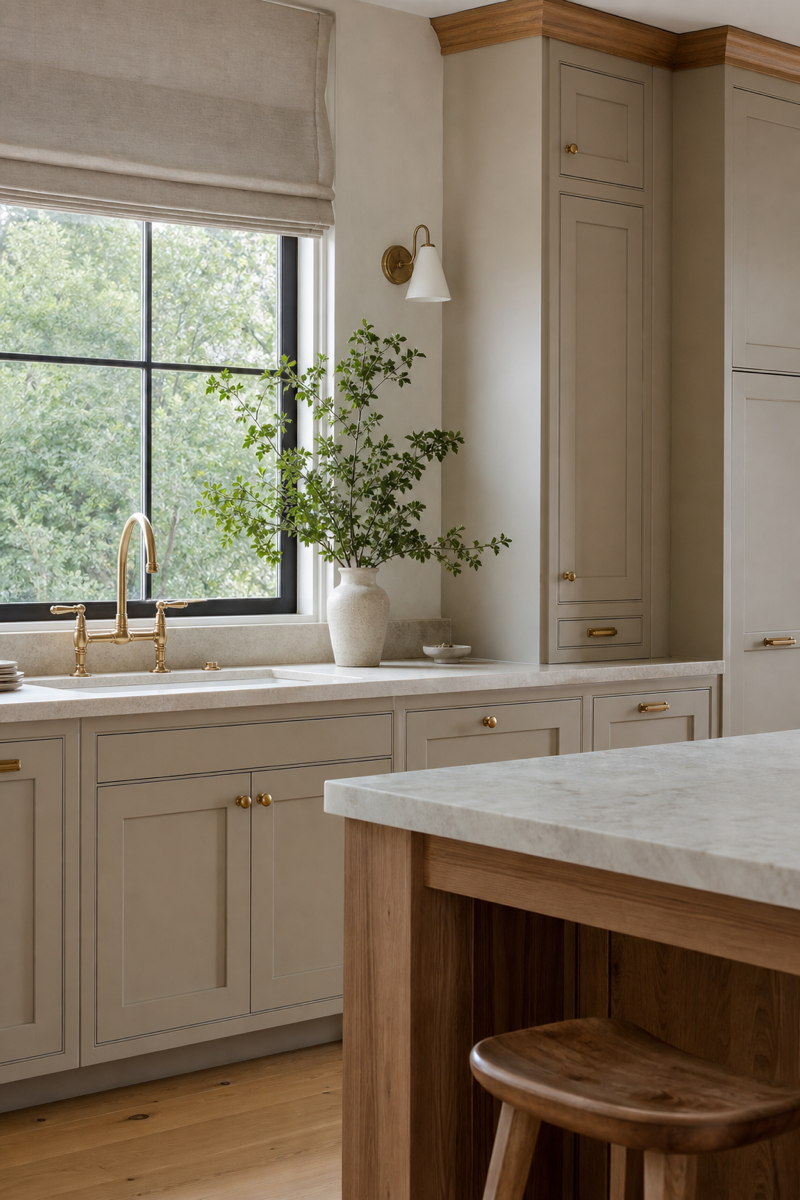
Include A Small Landing Spot Near The Door
If the kitchen connects to an entry or garage, a small landing spot can prevent clutter from taking over the counters. A narrow shelf, drawer, wall hook rail, or built-in cubby can hold keys, mail, bags, and reusable totes. Keep it close to the door but visually aligned with the kitchen finishes. Closed storage is best for papers, while hooks and trays handle items used every day. This idea is not glamorous, but it changes how the room functions. When arrivals have a designated place, the island and counters can remain available for cooking. A warm kitchen feels welcoming partly because it absorbs real life without letting it spill everywhere.
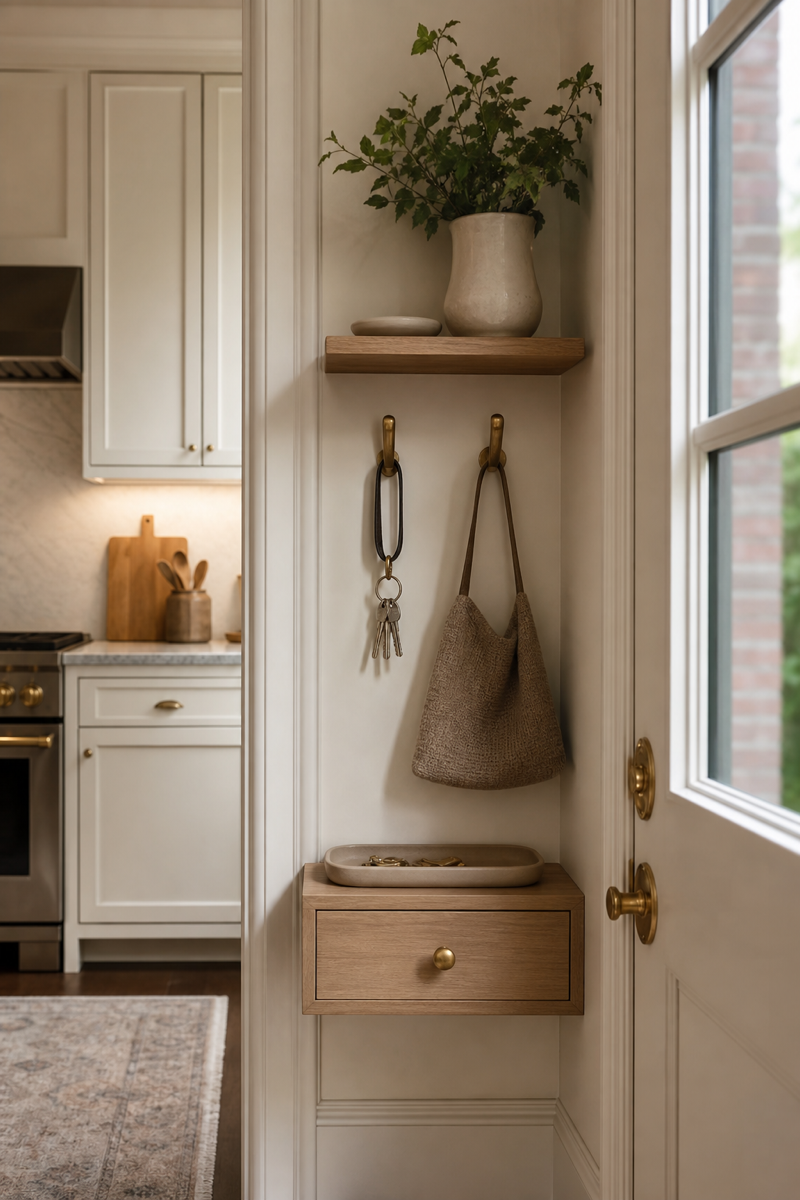
Display Cutting Boards With Restraint
Wood cutting boards bring instant warmth, but too many can make the counter feel staged and crowded. Choose two or three boards with different heights and lean them near the range or prep area. The boards should be useful, not purely decorative. Mix one everyday board with one larger serving board or bread board. Their grain will soften stone, tile, and painted cabinets while keeping the kitchen connected to cooking. Avoid blocking outlets, switches, or counter space needed for prep. This is a small styling move, but it works because it supports function. Warm kitchens often rely on ordinary tools made beautiful through good material and careful placement.
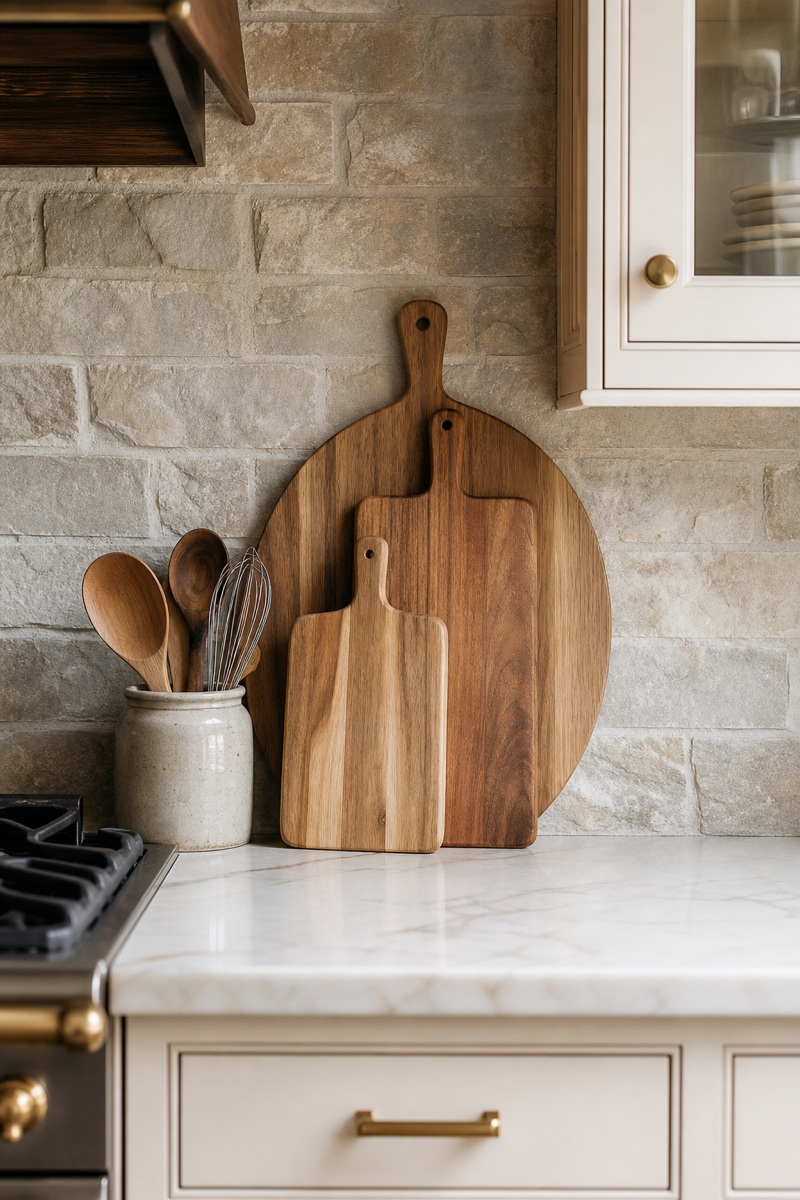
Add Seating Near A Window
If the kitchen has a window, a small seating moment can make the room feel more generous. A built-in bench, tiny cafe table, or pair of slim chairs can turn unused wall space into a breakfast corner. Keep the furniture scaled to the room so it does not block cabinet doors or traffic. Soft cushions, a washable fabric, and a small pendant or sconce will make the area feel intentional. This idea works especially well in kitchens that are efficient but slightly hard-edged. Seating adds hospitality and gives someone a place to linger while cooking happens. The kitchen becomes not just a work zone, but a warm room within the home.
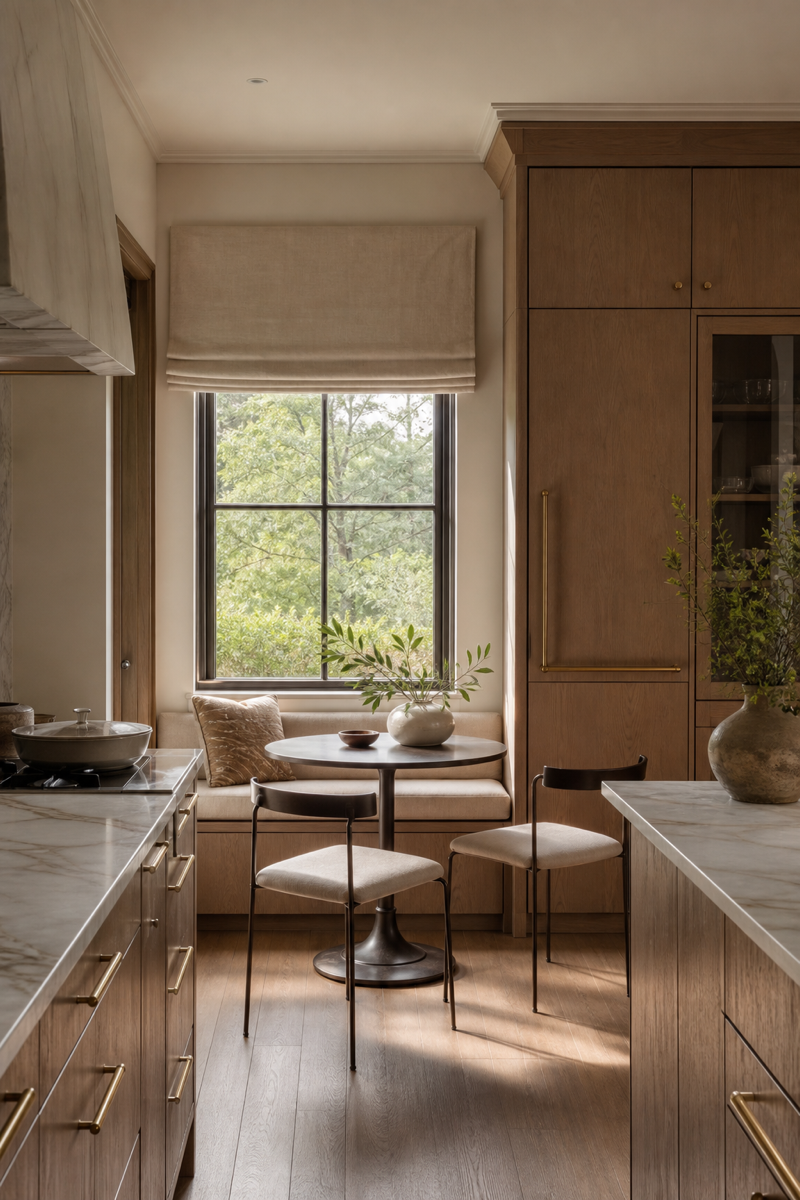
Keep The Sink Zone Beautiful And Useful
The sink zone is one of the busiest places in the kitchen, so it deserves careful design. Choose a faucet that feels good to use, a sink large enough for real dishes, and a counter setup that keeps soap, brushes, and towels contained. A small tray, ceramic soap dispenser, linen towel, and hidden sponge holder can make the area look calm without slowing cleanup. If there is a window, keep the sill edited with one plant or nothing at all. Task lighting matters here, especially at night. A warm functional kitchen does not hide the fact that work happens; it makes the work feel smoother and more pleasant.
Finish With A Practical Styling Edit
The final step is a practical edit of every surface. Remove objects that only imitate warmth and keep the pieces that support cooking, serving, or daily comfort. A bowl of fruit, useful boards, a small lamp, a vase of branches, or a ceramic crock can stay if they earn their space. Appliances, mail, extra containers, and duplicate decor should move behind doors. Step back and look for the strongest materials: wood grain, stone, metal, fabric, and light. Let those do most of the decorating. The kitchen will feel more spacious, easier to clean, and more inviting. A warm functional home is built through restraint as much as abundance.
A kitchen becomes both warm and functional when every beautiful choice also supports daily use. Focus on durable surfaces, well-placed storage, layered lighting, and tactile materials that make the room feel comfortable. With a thoughtful edit, the kitchen can stay practical for real cooking while still feeling refined enough for the rest of the home.