
20 Cozy Bedroom Ideas For A Cozy Stylish Retreat
A cozy bedroom does not have to mean heavy fabrics, cluttered surfaces, or a room that only works in winter. The most inviting retreats usually come from balance: soft places to land, enough contrast to feel designed, lighting that flatters the evening, and materials that make the room feel personal. These ideas focus on comfort with polish, so the bedroom still feels calm, edited, and easy to live in every day.
Layer Linen Bedding With A Tailored Finish
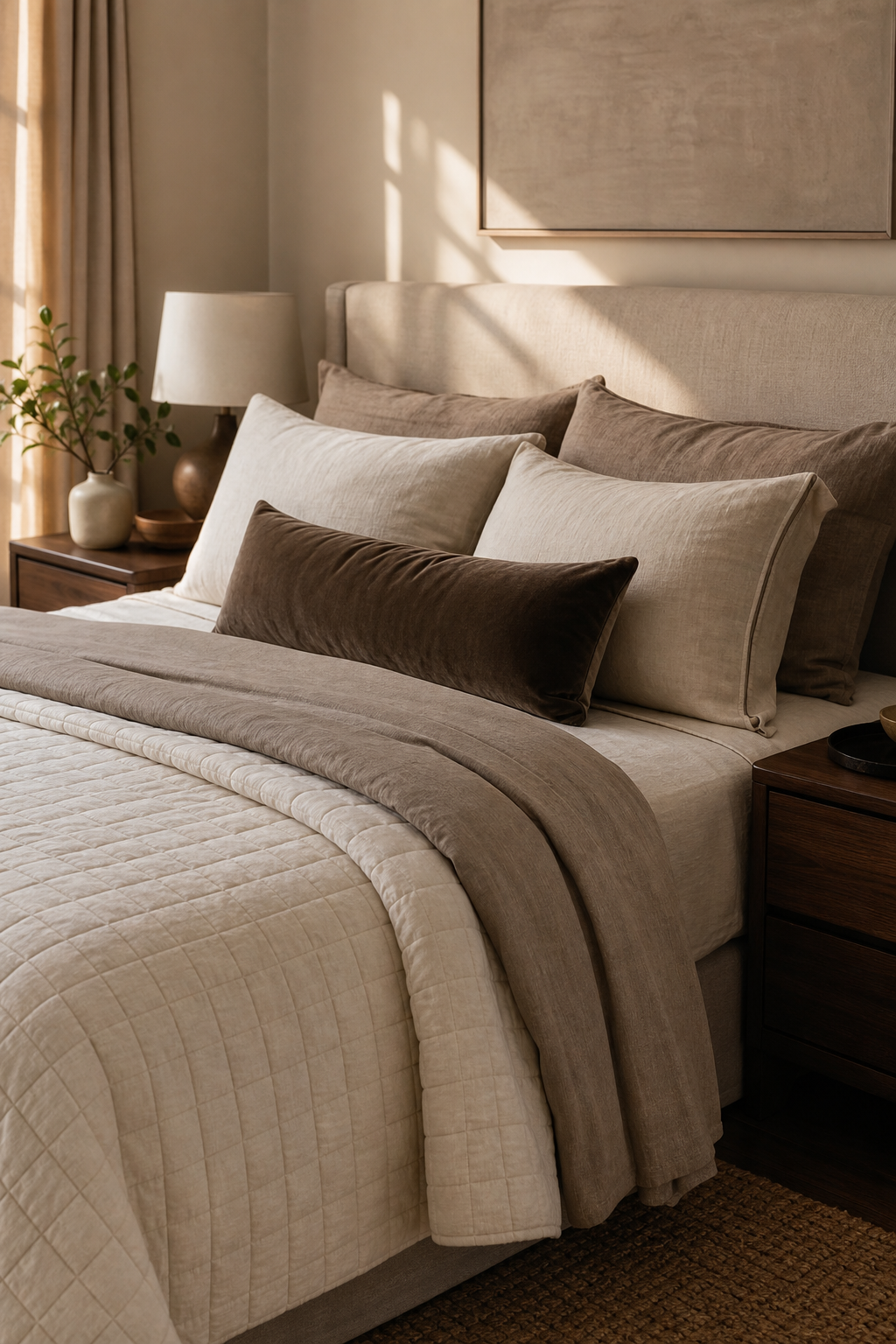
Start with breathable linen sheets, then build the bed with a light quilt, a folded duvet, and two or three structured pillows rather than a mountain of cushions. The linen brings softness and movement, while a tailored coverlet keeps the room from feeling rumpled. Choose warm white, oatmeal, mushroom, or pale clay for a cozy base that still looks fresh in daylight. A slim velvet or wool lumbar pillow can add one refined note without overcrowding the bed. The trick is to let the layers look touchable but intentional, with visible folds, crisp edges at the foot, and enough negative space for the headboard to breathe.
Use Warm Wood To Ground The Room
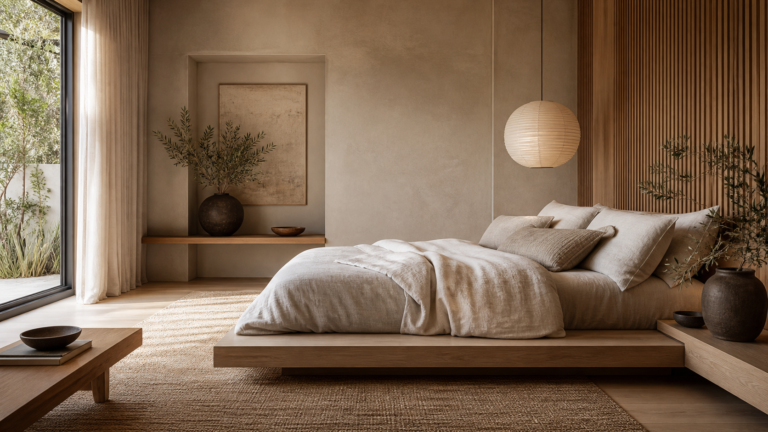
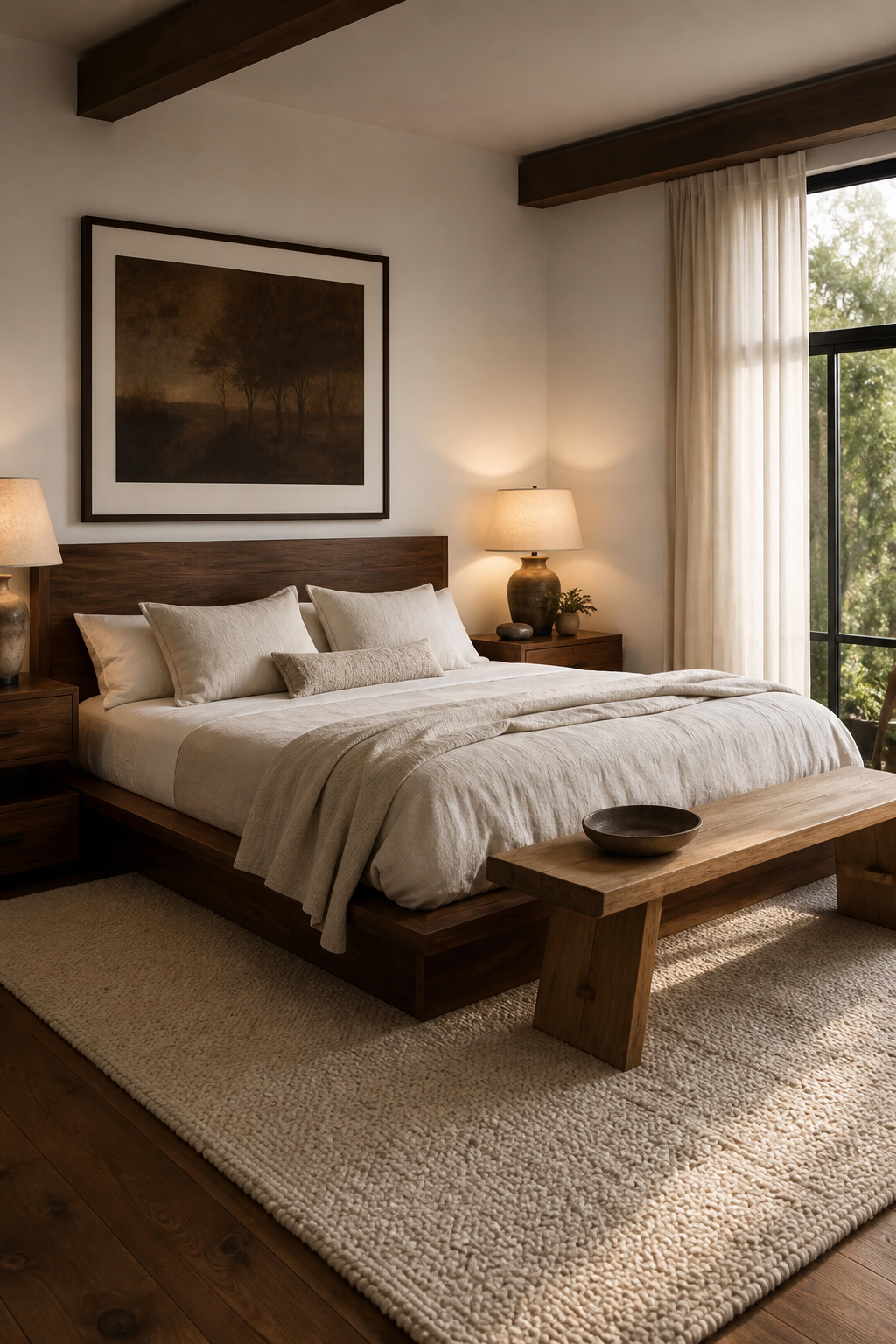
Wood instantly makes a bedroom feel warmer, especially when the rest of the palette is pale or minimal. Instead of matching every piece, mix related tones: a walnut bed frame, oak bench, and darker picture frame can sit beautifully together when the undertones are warm. Wood also gives visual weight to soft textiles, keeping the room from feeling like a cloud with no structure. If a full bed frame is too much, bring in a substantial nightstand, a vintage chest, or a slatted wall detail behind the bed. Keep the finish satin or matte so the texture feels rich rather than glossy.
Create A Soft Glow With Three Light Sources
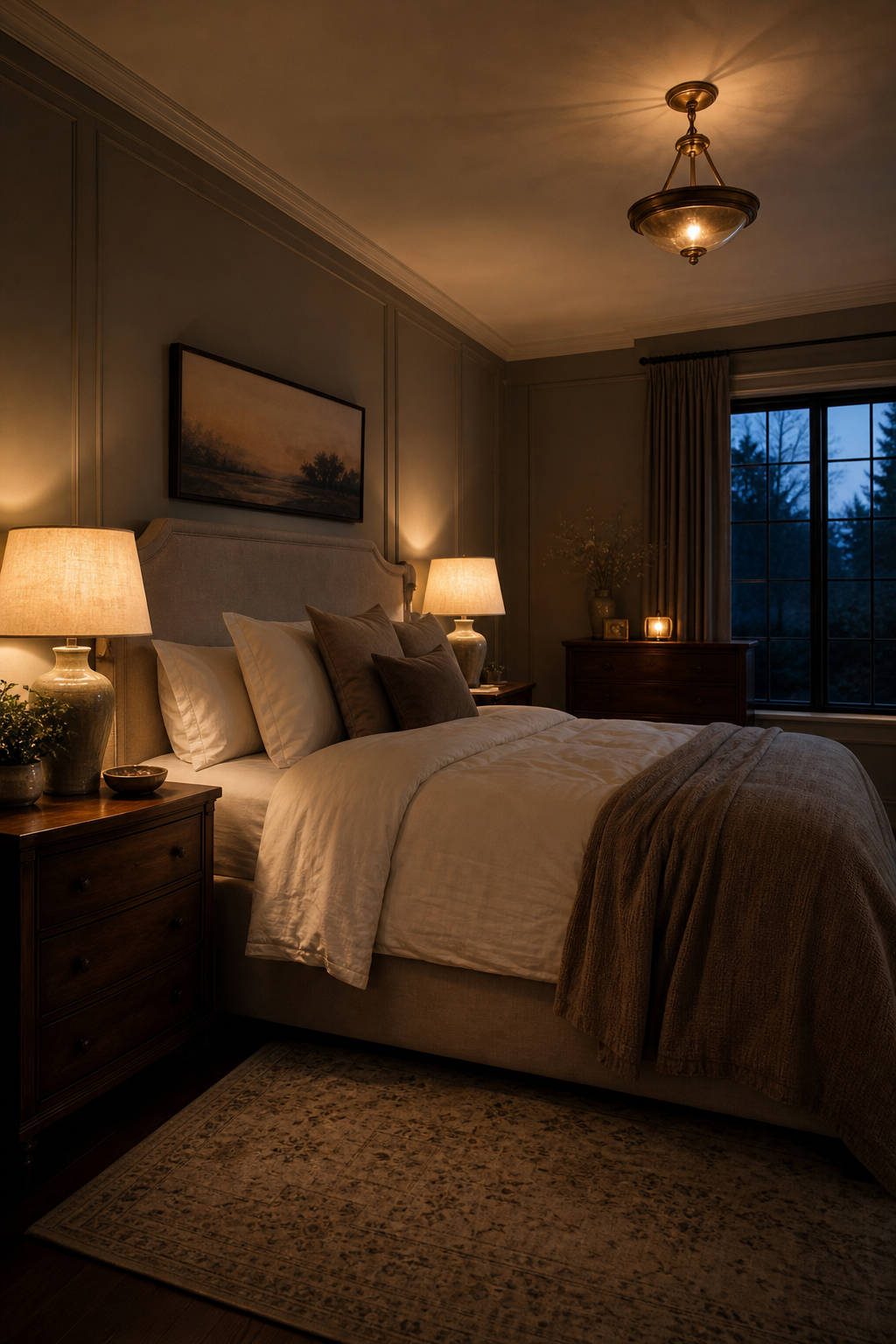
A cozy bedroom needs more than one overhead fixture. Aim for three gentle light sources: bedside lamps for reading, a low accent lamp on a dresser, and a dimmable ceiling or wall fixture for ambient glow. This layered approach lets the room shift from functional to restful without harsh shadows. Fabric shades, opal glass, aged brass, and warm bulbs all help the light feel flattering. Place lamps at different heights so the room has depth, not just two bright spots beside the pillows. In the evening, those quiet pools of light make even simple bedding and plain walls feel considered.
Add A Plush Rug Underfoot
A rug changes how a bedroom feels the moment you step into it. Choose a size large enough to extend beyond both sides of the bed, so your feet land on softness rather than cold flooring. Wool, viscose blends, and dense low-pile rugs feel luxurious while remaining practical under furniture. Pattern can be subtle: a faded stripe, tonal medallion, or heathered weave gives the floor movement without making the room busy. If the bedroom is small, let the rug sit almost wall to wall for a calm, enveloping effect. It visually gathers the bed, nightstands, and bench into one cozy composition.
Choose A Cocooning Headboard
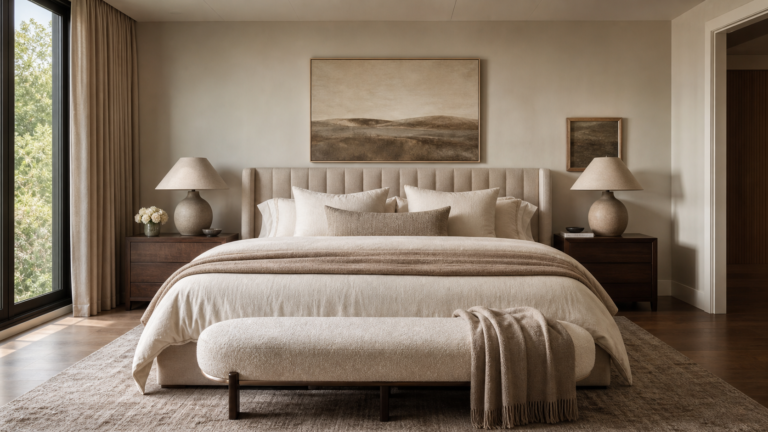
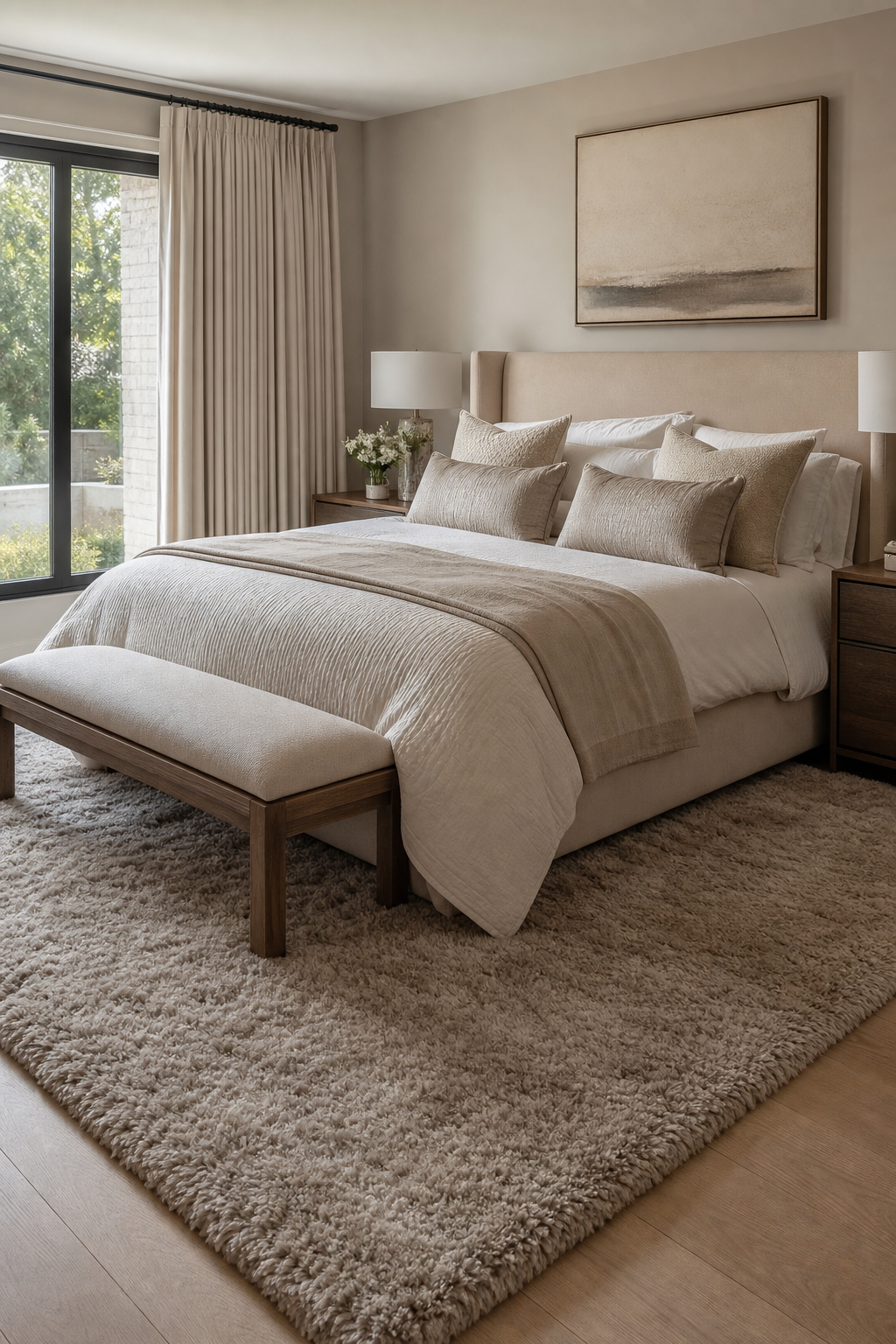
An upholstered headboard gives the bed a sheltered, finished feeling, especially when it is tall enough to frame the pillows. Boucle, linen, suede, or channel-tufted velvet can all work, depending on how formal you want the room to feel. For maximum coziness, consider a wraparound or winged silhouette that subtly encloses the sleeping area. Keep the color close to the wall or bedding if you want serenity, or use a deeper shade such as olive, cocoa, or charcoal for a more enveloping retreat. Add slim bedside lighting so the headboard reads as an intentional focal point. The headboard becomes both a comfort feature and an architectural anchor.

Paint The Walls In A Quiet Warm Neutral
Wall color has a huge effect on comfort. Stark white can feel crisp, but a warm neutral makes the same room feel softer and more restful. Look for shades with a hint of cream, stone, taupe, plaster, or muted beige rather than anything yellow or flat gray. These colors flatter wood, brass, linen, and natural fiber rugs, giving the room a collected mood. Paint the trim in the same color but a different sheen for a seamless, cocoon-like envelope. Test swatches at night as well as morning before committing. The result is still light and elegant, yet noticeably calmer than a high-contrast white box.
Style A Bedside Table With Restraint
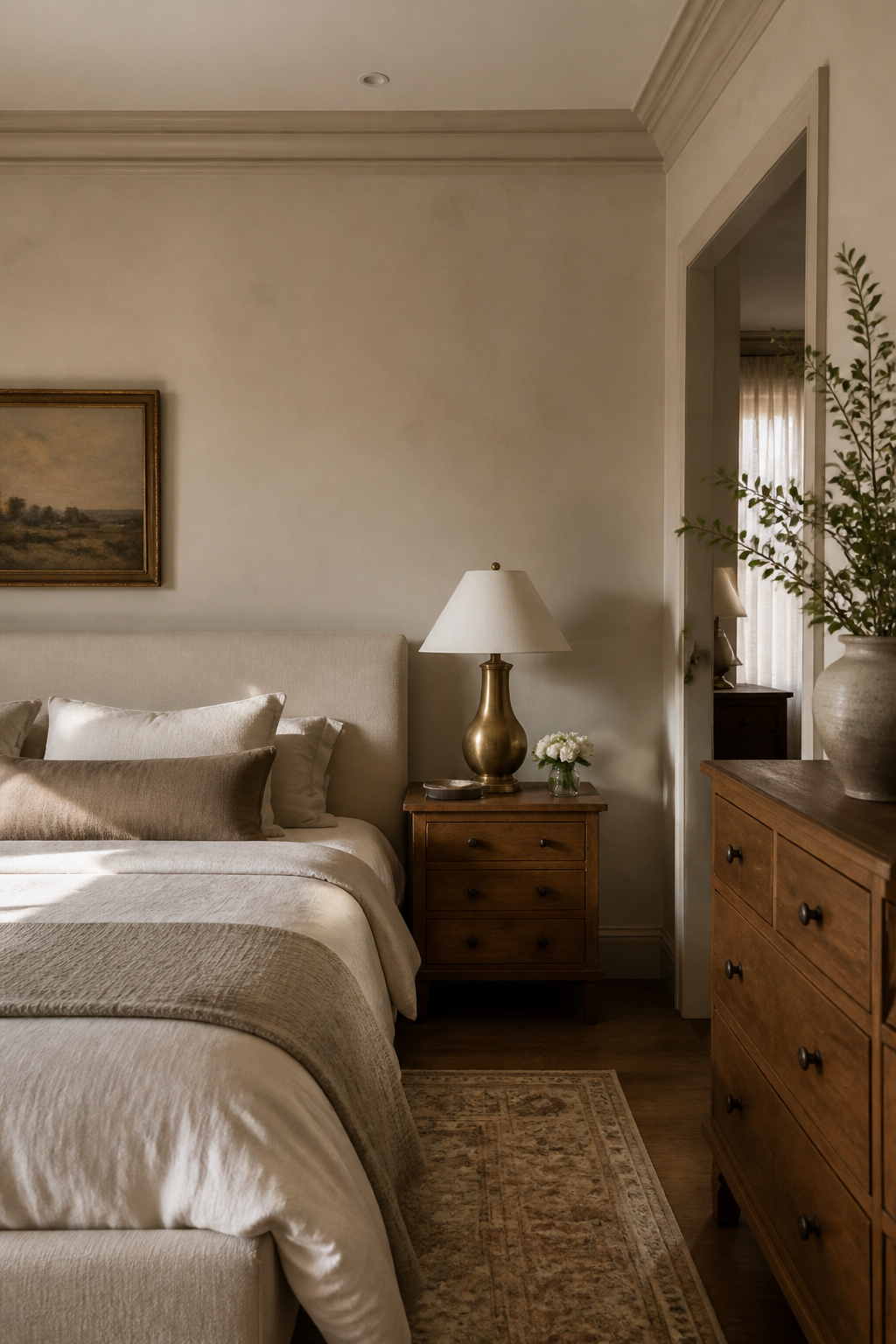
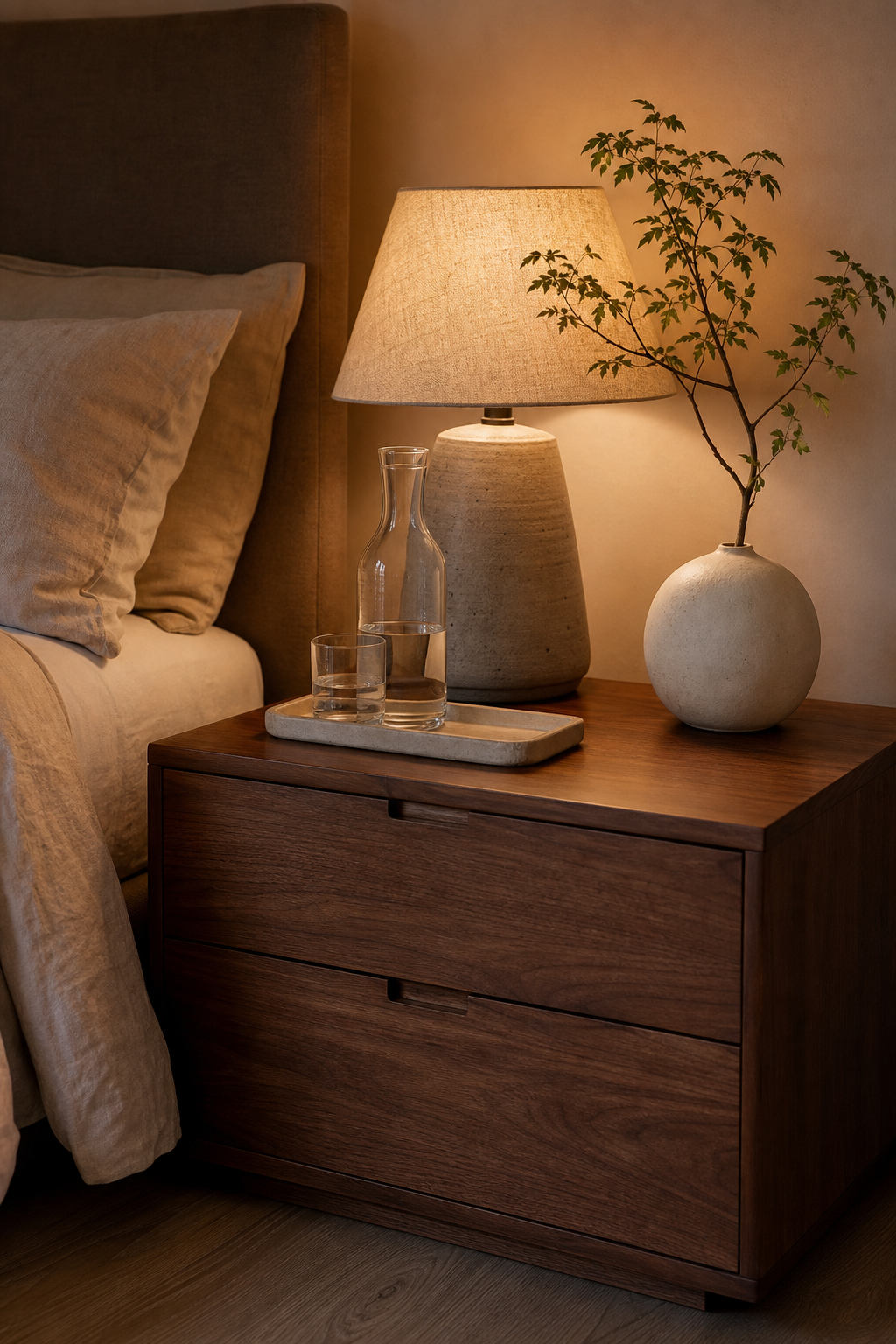
A cozy bedside table should feel useful, not staged to the point of inconvenience. Keep the essentials beautiful: a lamp with a warm shade, a small tray for jewelry, a ceramic water carafe, and one low floral stem or sculptural object. Leave enough open surface for a book or phone. Drawers are ideal because they hide chargers, sleep masks, and hand cream while keeping the visible layer calm. If the table is open, use a woven box or leather catchall on the lower shelf. Match the scale of the lamp to the headboard height. This small edited zone makes the entire bedroom feel more peaceful.
Hang Drapery From Ceiling To Floor
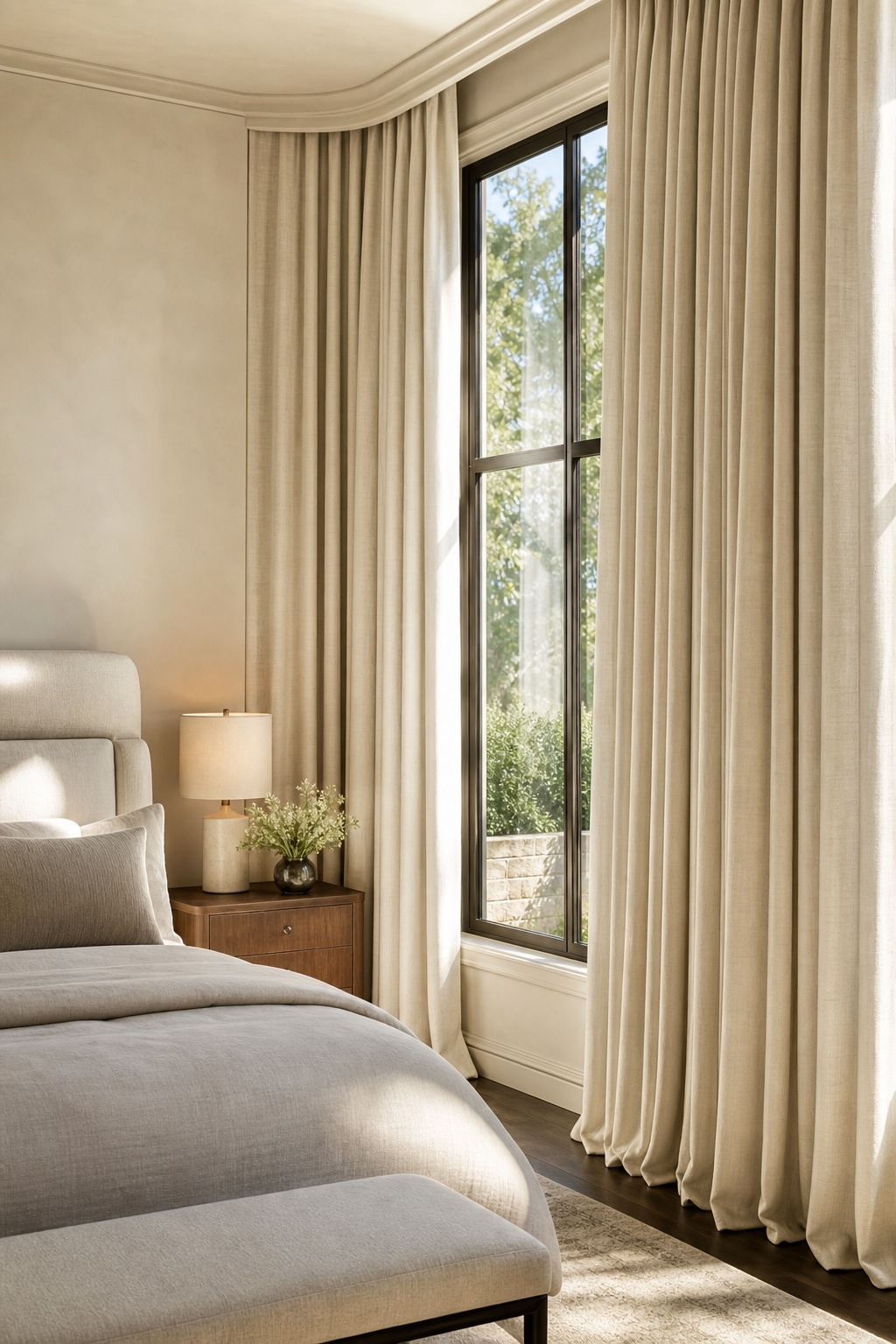
Full-height drapery makes a bedroom feel softer, taller, and more finished. Mount the rod close to the ceiling and extend it beyond the window frame so the fabric can stack without blocking natural light. Linen, wool sateen, or lined cotton panels create a gentle frame around the view, while blackout lining adds real function for sleep. Choose a color that sits close to the wall for a serene look, or go one shade deeper for subtle depth. Let the panels kiss the floor for polish without messy pooling. The vertical folds add rhythm and texture, which is especially helpful in rooms with simple furniture and plain walls.
Bring In A Reading Chair
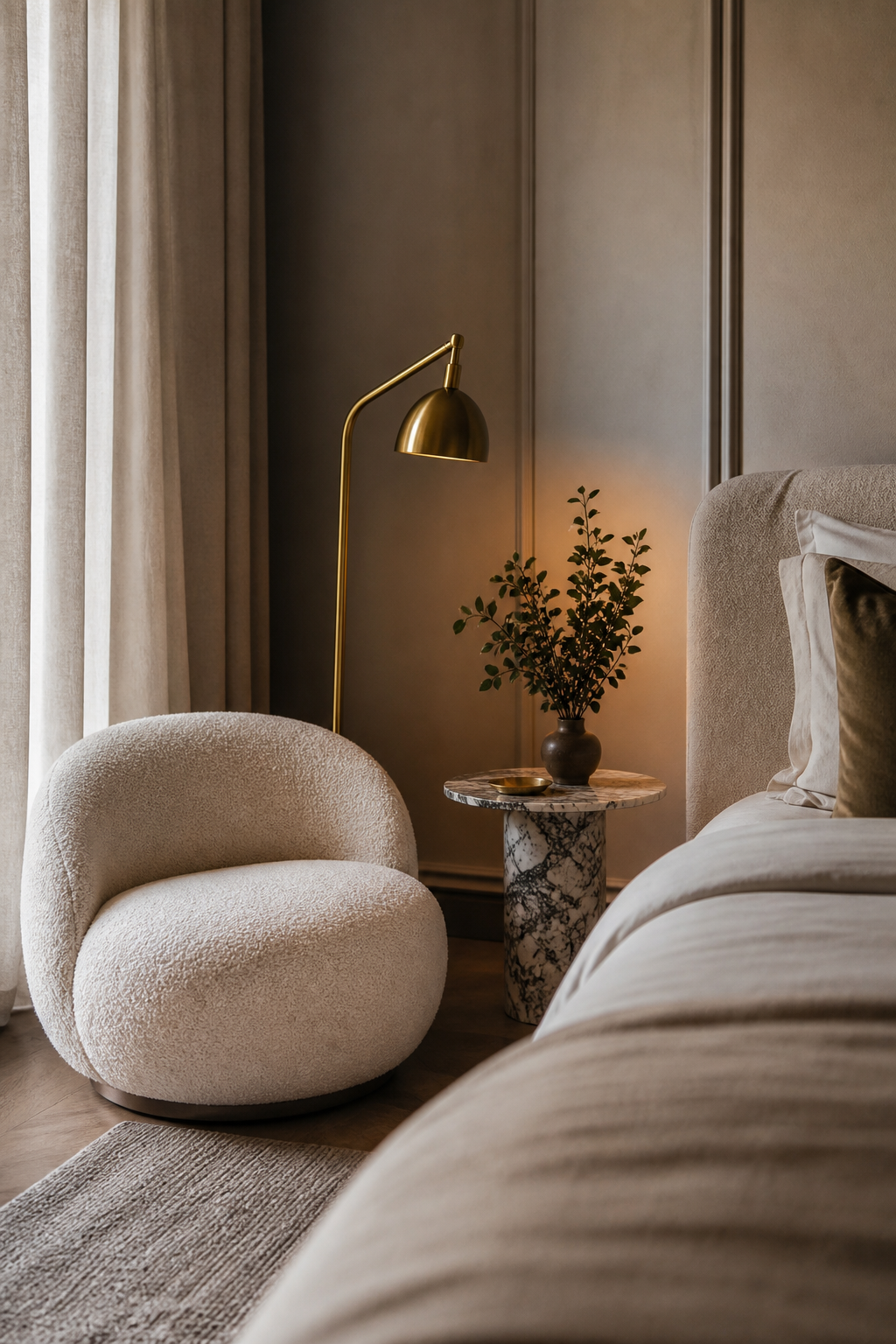
A bedroom feels more like a retreat when it has one place to sit that is not the bed. A compact reading chair, slipper chair, or rounded lounge chair can turn an unused corner into a quiet pause point. Add a small side table and a focused floor lamp so the corner has purpose. Upholstery matters here: boucle, brushed cotton, mohair, or soft leather brings texture and invites use. Keep the chair scale appropriate, with enough breathing room around it to avoid crowding. Angle it toward the window or bed to make the layout feel conversational. Even in a modest bedroom, this little destination makes the room feel layered and personal.
Use Texture Instead Of Busy Pattern
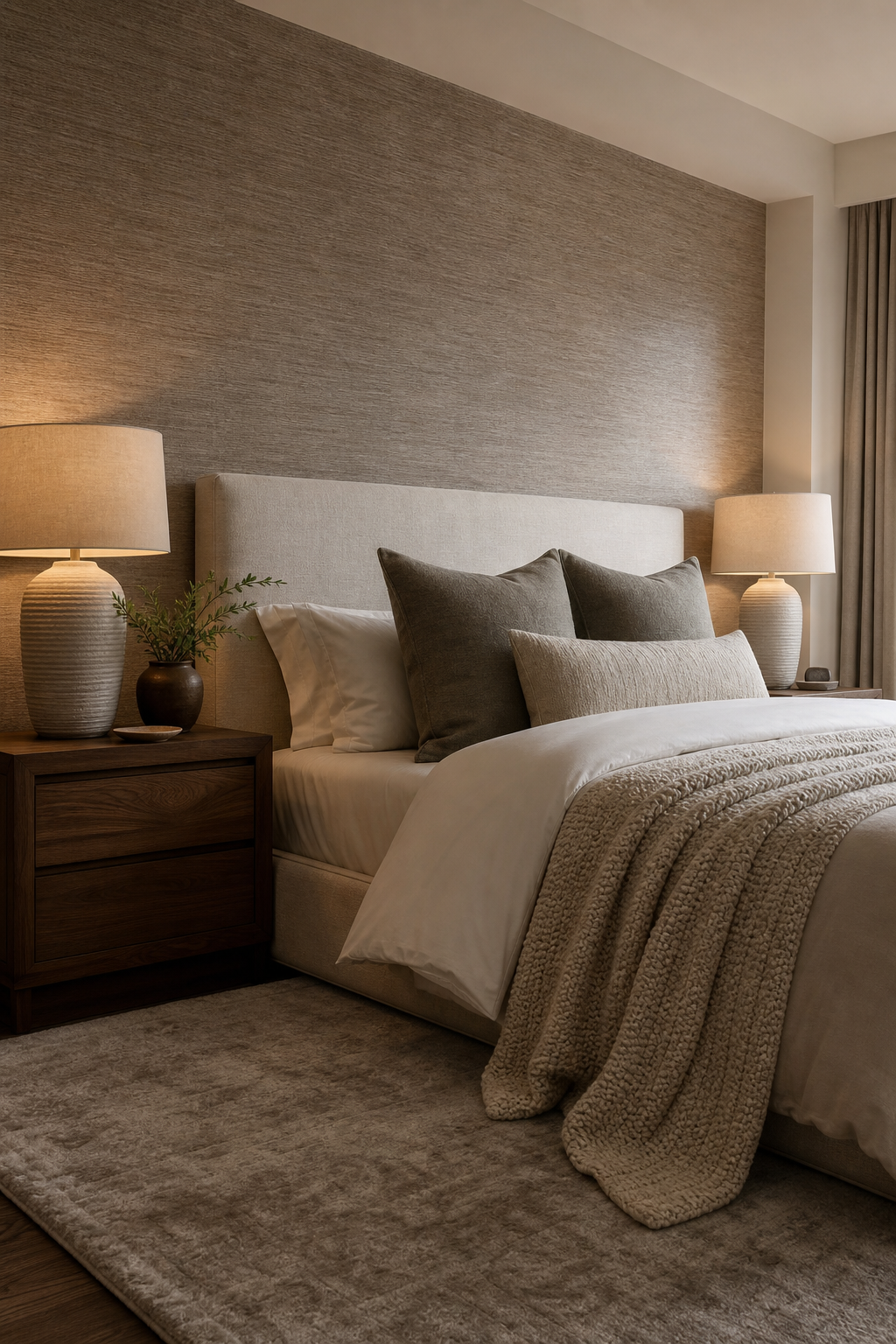
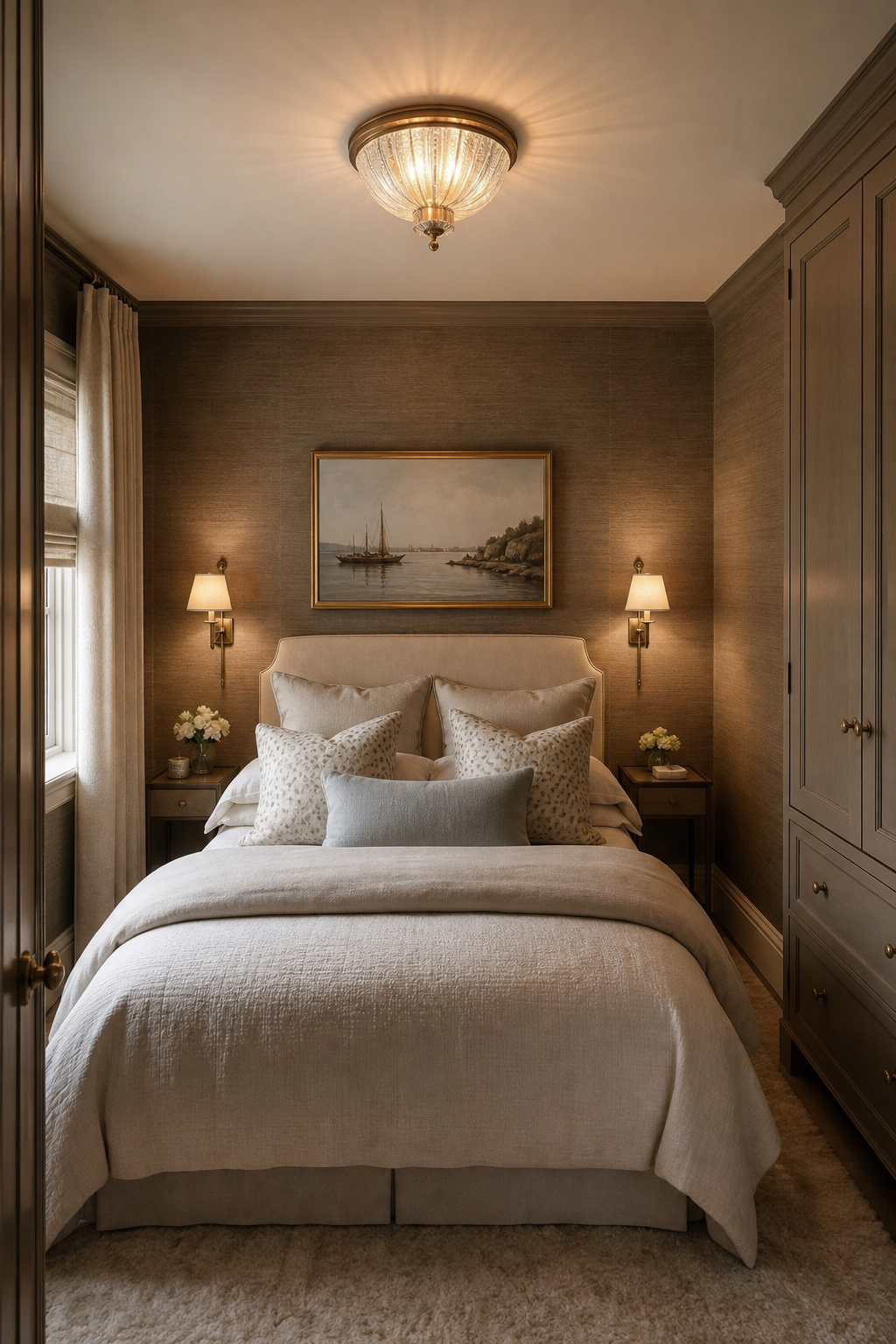
Texture gives a cozy bedroom depth without visual noise. Pair smooth cotton sheets with a nubby wool throw, a woven grasscloth wallcovering, ribbed ceramic lamps, and a soft rug underfoot. Because the colors can stay quiet, the room feels restful while still offering plenty to notice up close. This is especially useful in smaller bedrooms, where bold pattern may quickly dominate. Keep textures varied in scale: one fine weave, one chunky knit, one matte wood grain, and one polished accent such as brass or stone. Repeat each material family once so the mix feels deliberate. The contrast feels luxurious because it is subtle.
Add A Bench At The Foot Of The Bed
A bench gives the bed a finished, hotel-like presence while adding useful function. It creates a spot for putting on shoes, placing a robe, or setting folded bedding at night. For cozy style, choose upholstery, leather, woven rush, or warm wood rather than a cold metal frame. The bench should be slightly narrower than the bed and low enough not to interrupt the view across the room. If storage is needed, a lidded bench can hide extra blankets without adding another cabinet. Add a folded throw only when it will not compete with the bedding. This single piece often makes the bedroom feel more intentionally furnished.
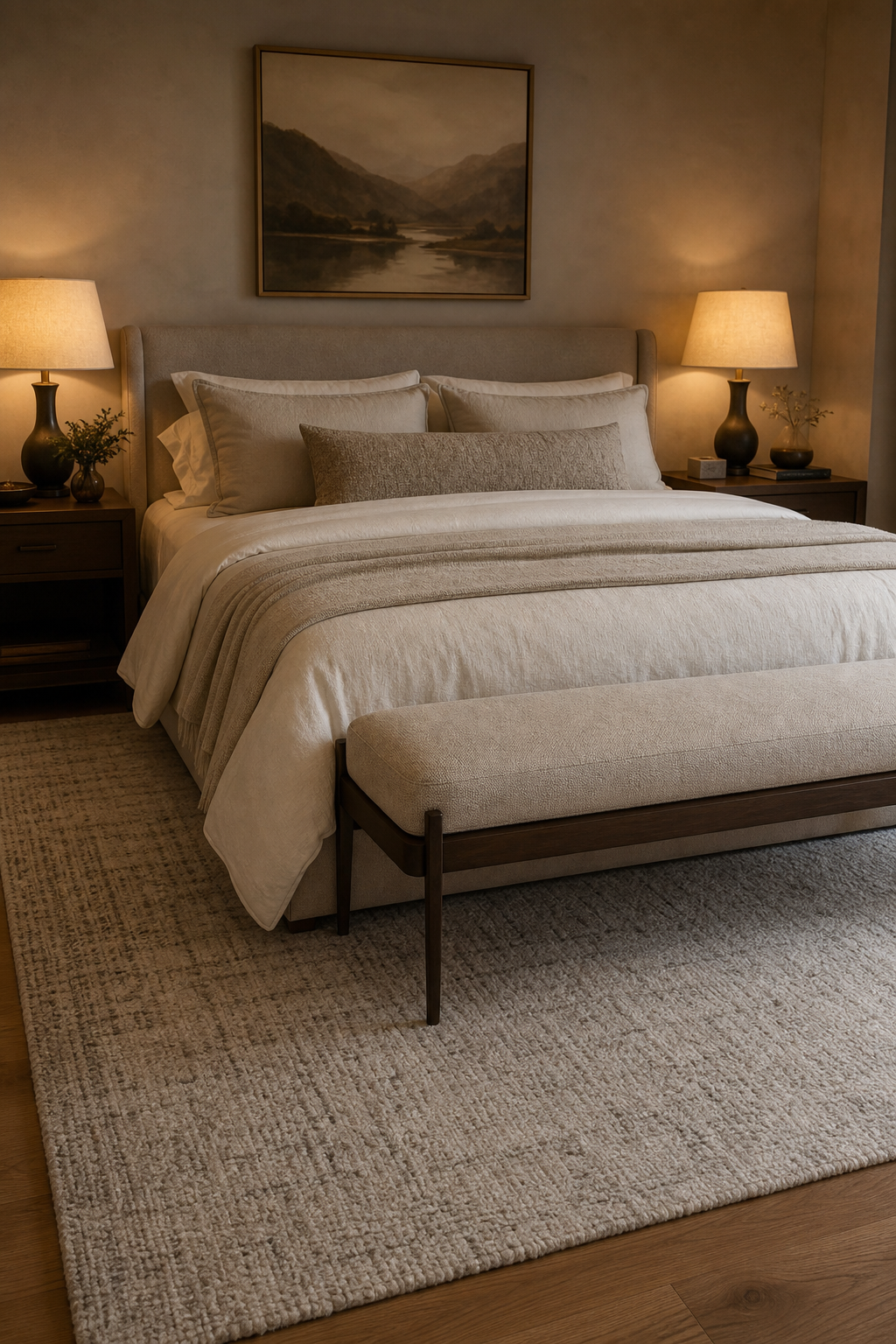
Create A Calm Art Moment
Artwork in a cozy bedroom should support the mood rather than compete with it. One large piece over the bed, a pair of quiet landscapes, or a small grouping above a dresser can bring personality without clutter. Look for soft abstracts, charcoal drawings, vintage textiles, or muted photography in frames with some depth. Scale is important: art that is too small can make the wall feel unfinished, while a generously sized piece adds confidence. Keep the palette connected to the bedding, rug, or wood tones. Hang it low enough to relate to the furniture below. The goal is not a gallery wall, but a calm visual pause.
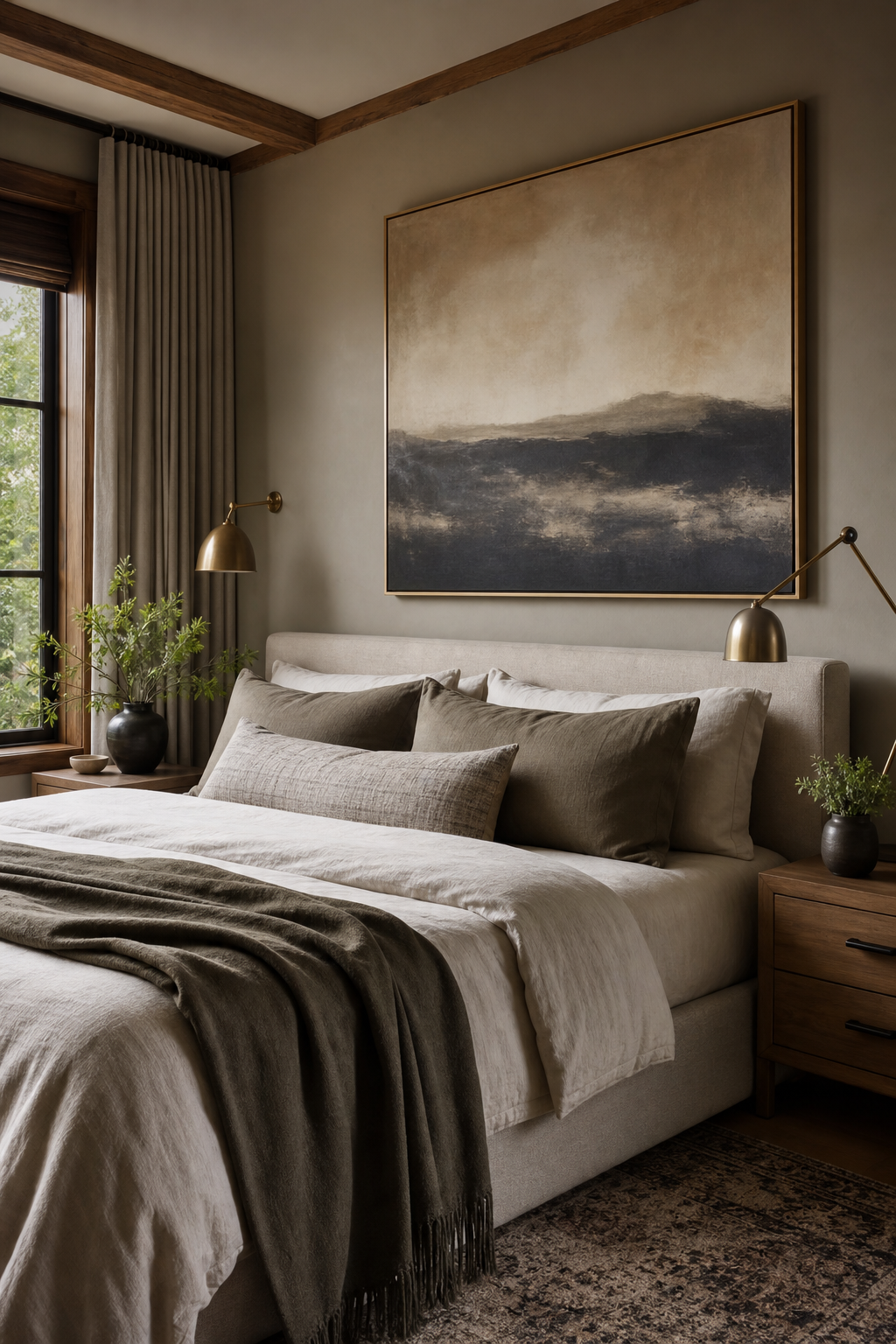
Use Sconces To Free The Nightstands
Wall sconces make a bedroom feel more custom and give your nightstands breathing room. Choose adjustable arms if you read in bed, or simple shaded sconces for a softer hotel mood. Hardwired fixtures look seamless, but plug-in versions can still feel elevated when the cord is managed neatly. Mount them high enough to clear pillows and wide enough to frame the headboard. With lamps off the tabletop, there is space for a book, a tray, and a glass of water. Put each sconce on a separate switch if the room is shared. The room instantly feels cleaner, calmer, and more deliberately designed.
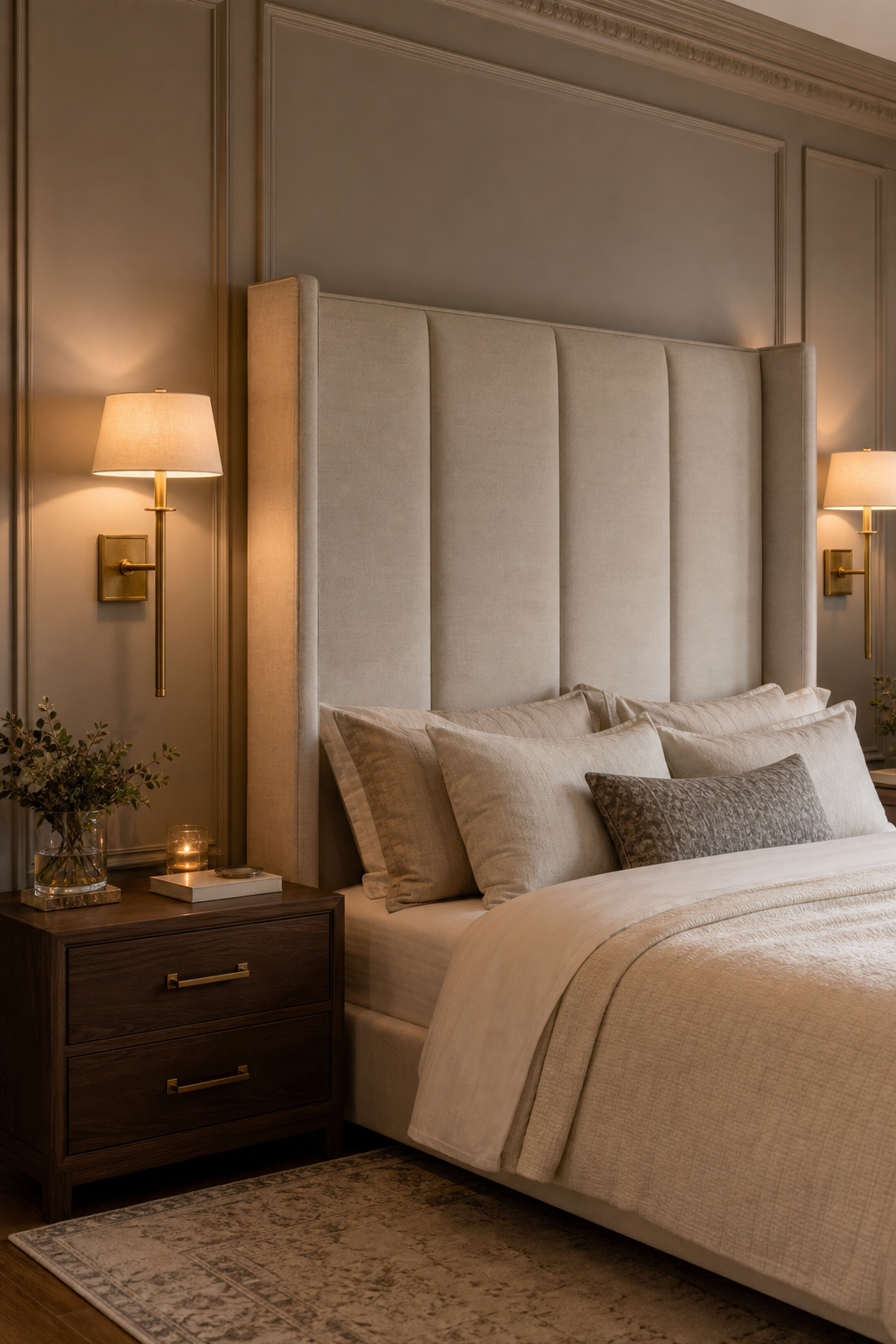
Mix Vintage Pieces With Modern Lines
A cozy bedroom becomes more interesting when not everything is new. Try pairing a clean upholstered bed with a vintage wood dresser, antique mirror, or aged ceramic lamp. The older piece brings patina and a sense of history, while the modern lines keep the room from feeling overly nostalgic. Limit the mix to one or two special items so the bedroom remains calm. Look for details such as turned legs, old brass pulls, worn stone, or imperfect glaze. Balance the patina with crisp bedding so the room still feels fresh. These marks of age make the retreat feel collected, human, and quietly luxurious.
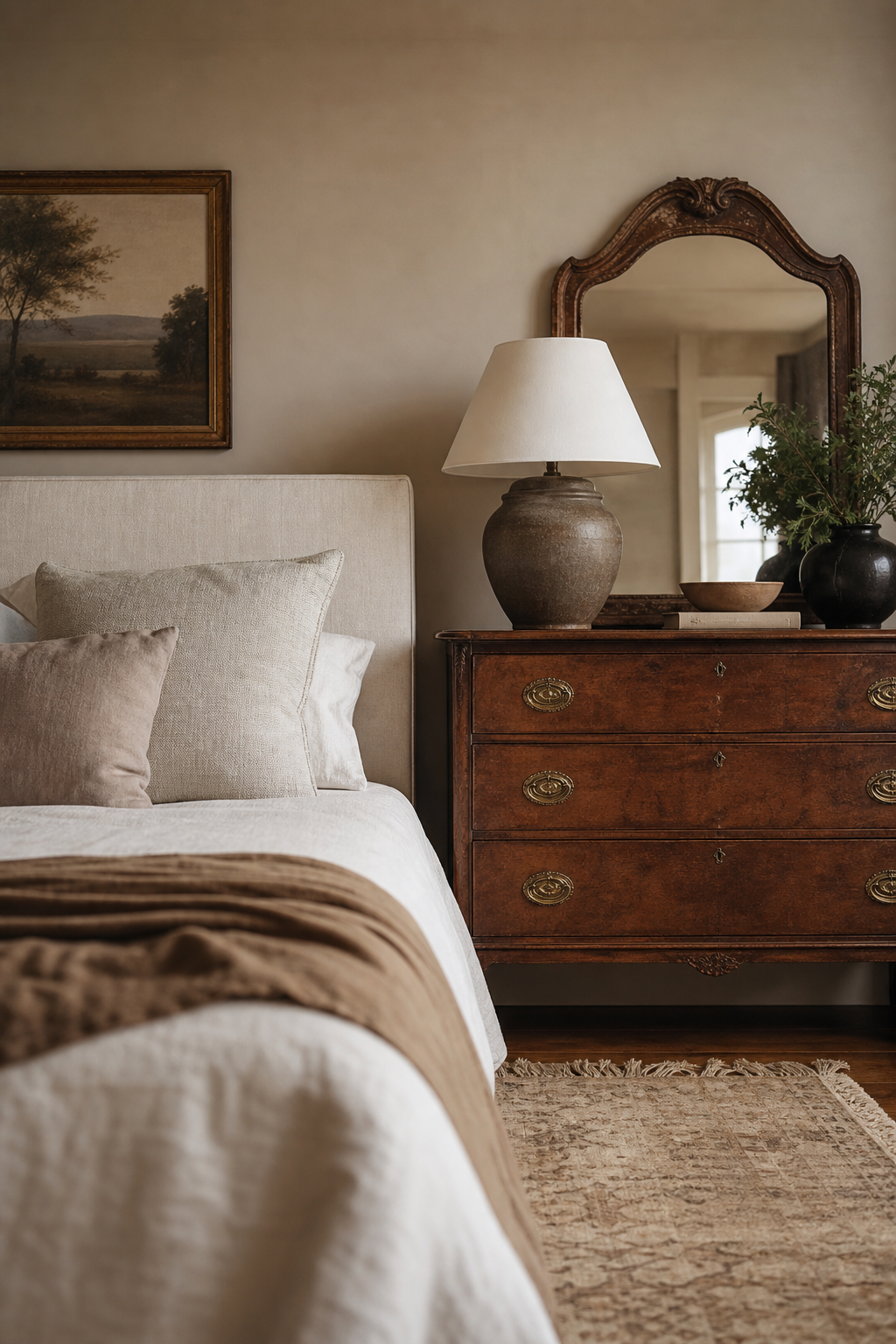
Make Storage Feel Built In
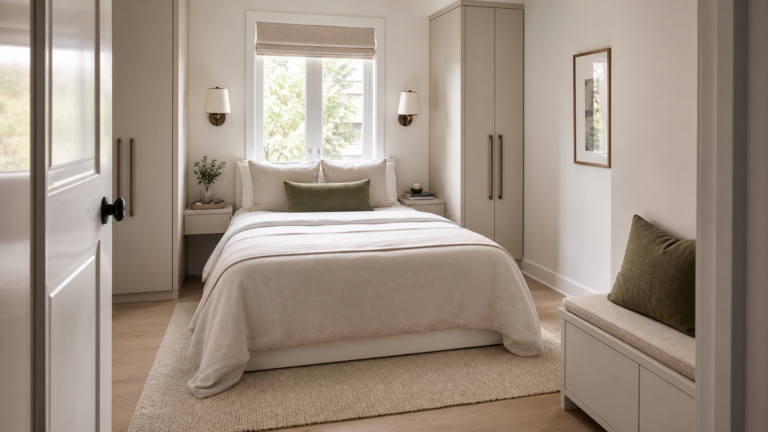
Clutter is the fastest way to break the retreat feeling, so storage should look calm and intentional. If custom cabinetry is not possible, use tall wardrobes, matching dressers, or floating shelves painted to blend with the walls. Closed storage is best for daily items, while open shelves should hold only a few beautiful things: stacked books, a ceramic vessel, a lidded box, and perhaps one framed piece. Built-in looking storage lets the architecture feel continuous and keeps the bedroom visually quiet. Use matching hardware or simple pulls to unify separate pieces. When everything has a place, the cozy layers can shine without mess.
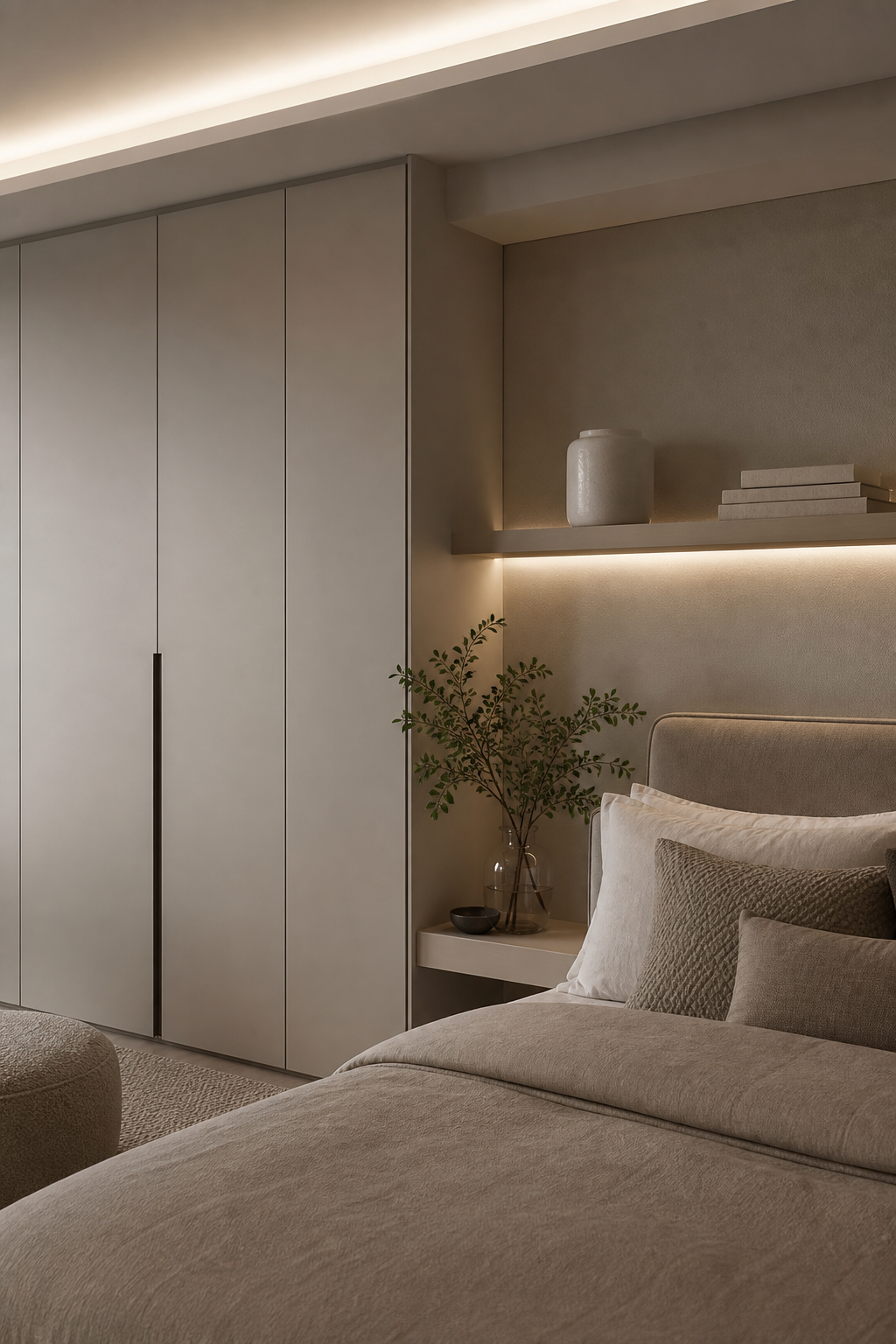
Try A Moody Accent Color
A cozy bedroom can still have drama. Use a moody accent color in a controlled way: olive velvet pillows, a deep plum throw, inky blue lamps, or a cocoa-toned headboard. The key is to anchor the deeper shade with warm neutrals so the room feels enveloping rather than dark. Repeat the accent once or twice in small doses, perhaps in artwork or a bedside book, for cohesion. This approach is ideal if you want the bedroom to feel sophisticated at night but not heavy during the day. Keep surrounding whites warm so the contrast feels gentle. The deeper note gives the softness a more grown-up edge.
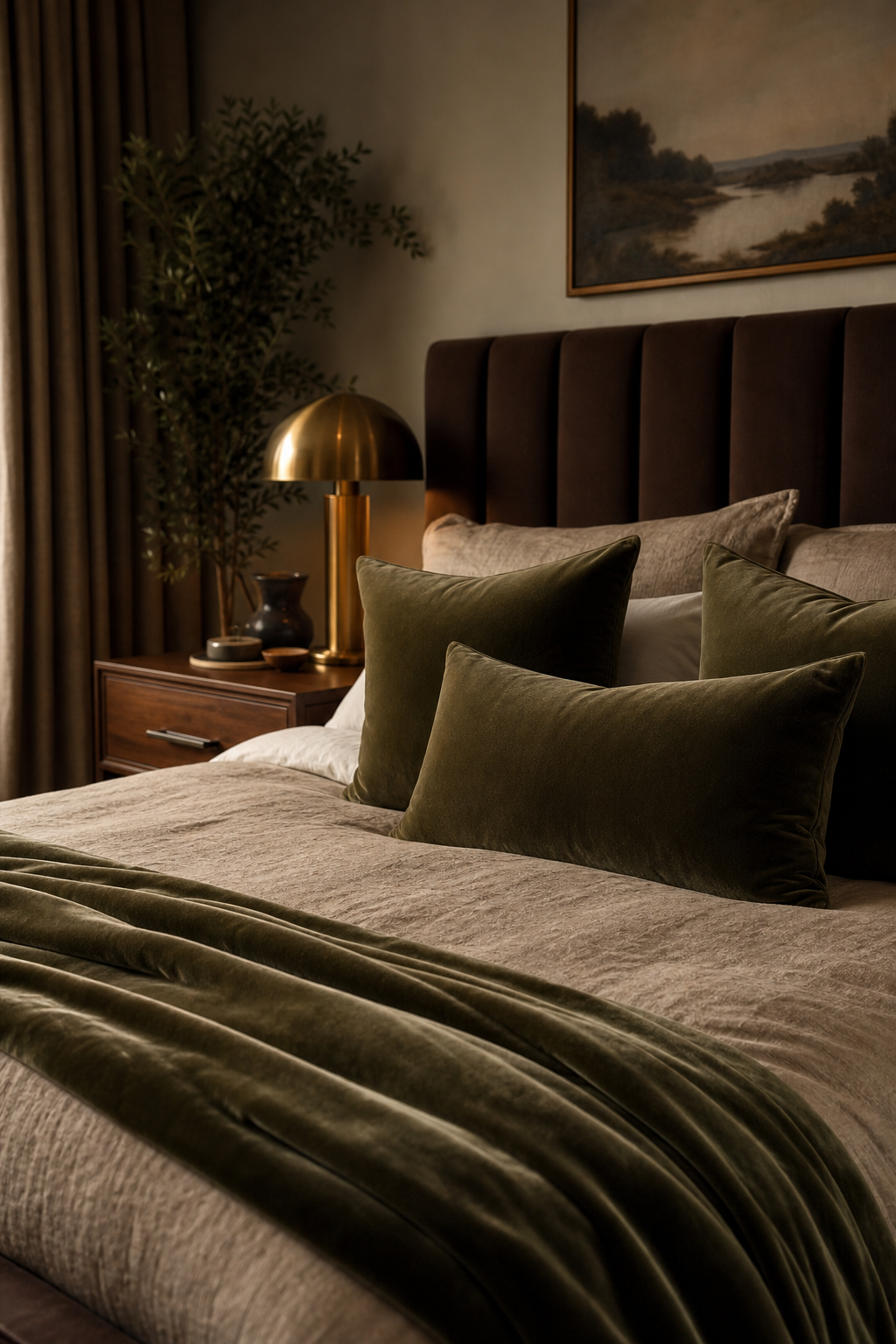
Layer Scents And Natural Materials
Cozy design is not only visual. Natural materials and subtle scent make the bedroom feel cared for before you even get into bed. A cedar tray, beeswax candle, lavender sachet, linen spray, or eucalyptus stem can add atmosphere without overwhelming the room. Keep fragrance soft and clean, especially near sleep. Pair those details with breathable fabrics, real wood, ceramic, stone, and wool so the space feels grounded. Avoid too many synthetic shiny finishes, which can make even a beautiful room feel less restful. Store scented pieces away from delicate textiles to prevent staining. Small sensory choices help the bedroom feel like a ritual, not just a decorated space.
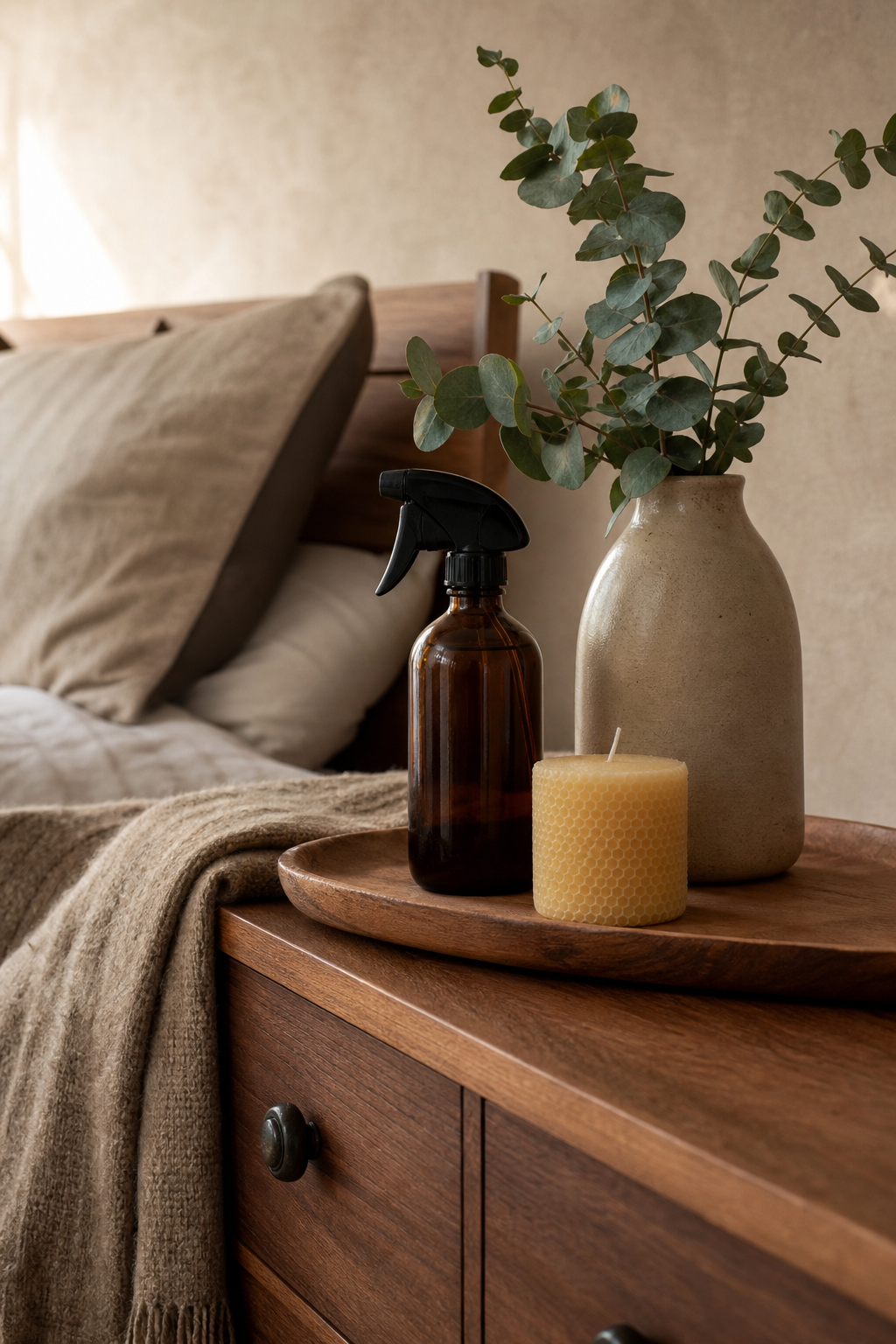
Keep Technology Visually Quiet
A stylish retreat works better when technology recedes. Hide charging cables inside a drawer, choose a small speaker that blends with the palette, and avoid placing a television as the room’s visual center if possible. If a screen is necessary, mount it cleanly or conceal it in cabinetry so the bed wall remains the main focus. Use an analog alarm clock or a simple dock to keep the bedside table serene. The goal is not to remove every convenience, but to make the room feel restful first. A covered cable channel can make existing furniture look more custom. When devices are quiet, the textures, light, and proportions become more noticeable.
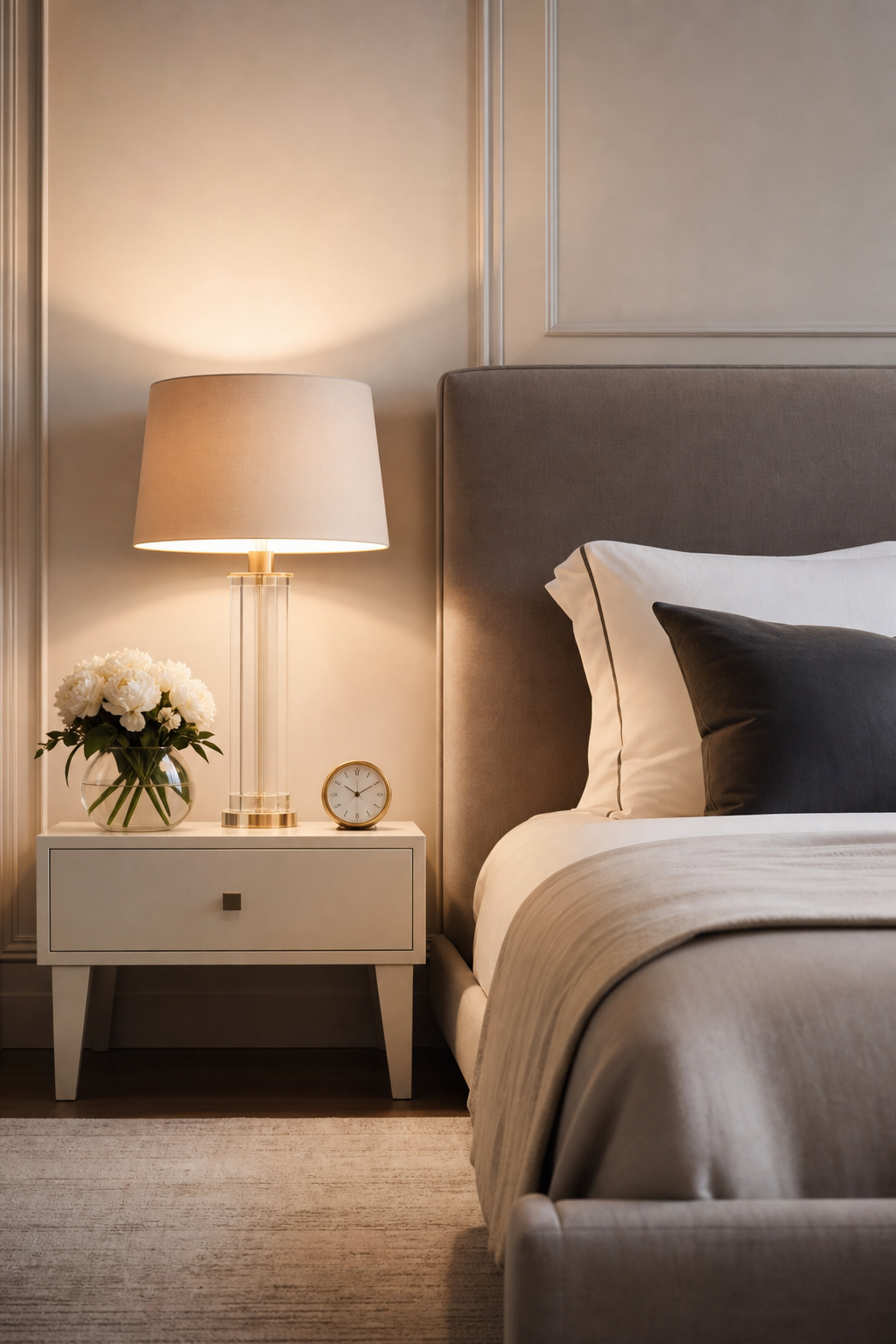
Design A Small Bedroom Like A Jewel Box
Small bedrooms can feel incredibly cozy when treated with confidence. Instead of tiny furniture everywhere, choose a properly scaled bed, narrow nightstands, wall lights, and one rich material moment such as grasscloth, velvet, or lacquered wood. Use storage under the bed or in a tall wardrobe to keep surfaces clear. A slightly darker wall color can make the room feel intimate, especially with warm lighting and pale bedding for contrast. Keep the palette tight, but vary texture so the space does not flatten. The result is compact, polished, and more memorable than a room trying to look larger at all costs.
Finish With A Nightly Reset Tray
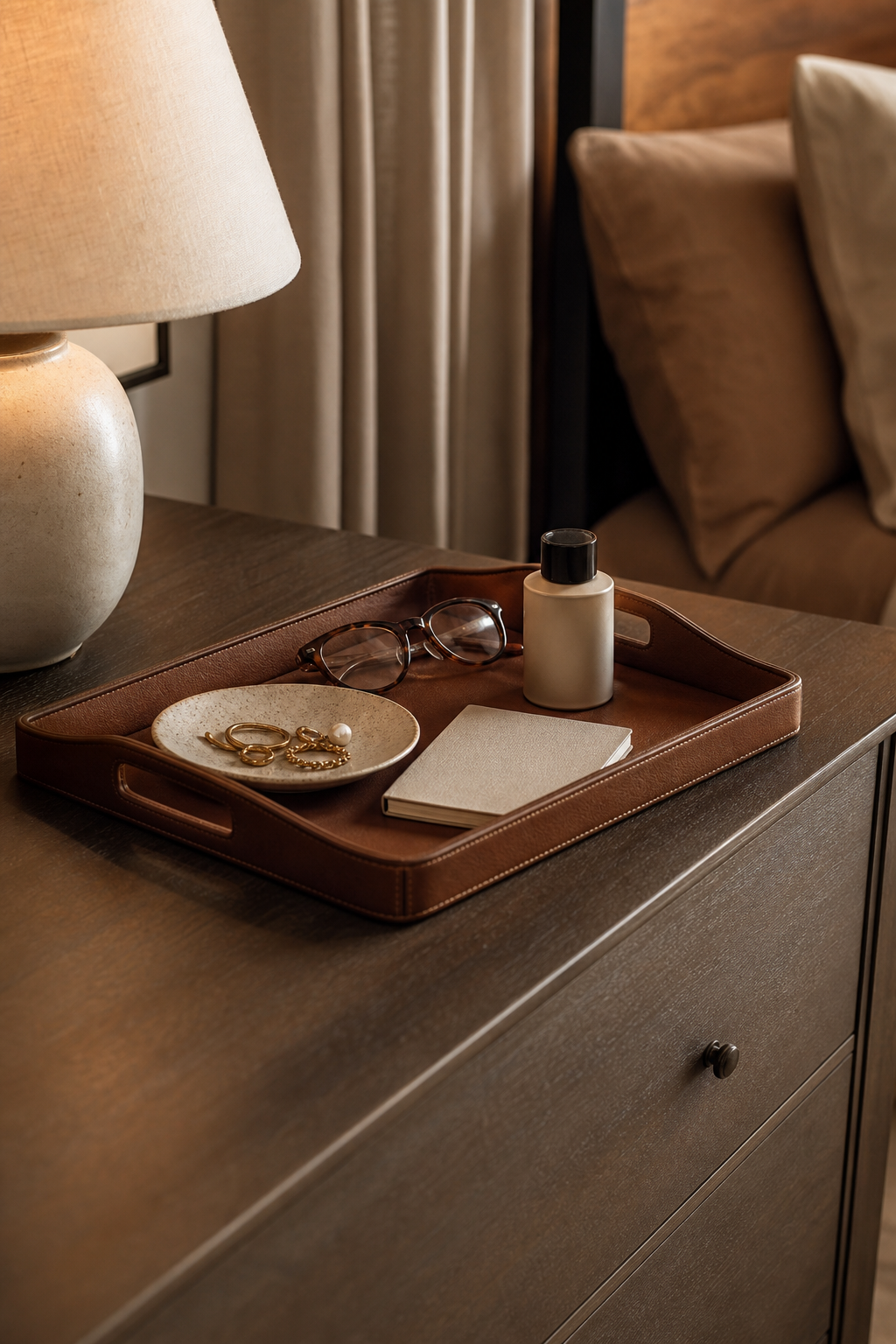
A nightly reset tray is a small habit disguised as decor. Place a beautiful tray on the dresser, bench, or nightstand for the things that usually scatter: jewelry, reading glasses, lip balm, hand cream, and a small notebook. Choose stone, lacquer, leather, or woven rattan depending on the room’s mood. Because the tray creates a boundary, everyday items look intentional rather than messy. It also makes the bedroom easier to reset in the morning. Keep the tray shallow so it remains a landing place, not hidden storage. This final layer is practical, but it reinforces the larger idea of a retreat: everything simple, comfortable, and ready for rest.
The best cozy bedroom ideas work because they make the room easier to inhabit, not just prettier to photograph. Choose materials that feel good to touch, lighting that softens the evening, storage that keeps the mood calm, and a few personal details with genuine texture. With those pieces in place, the bedroom becomes a stylish retreat that supports real rest.