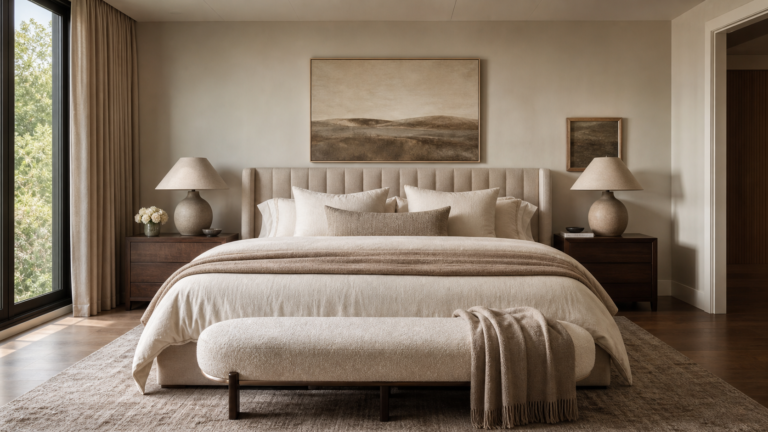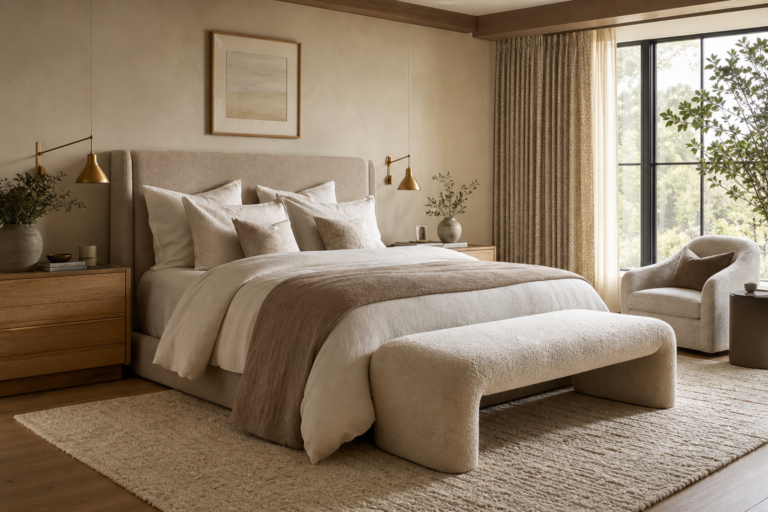
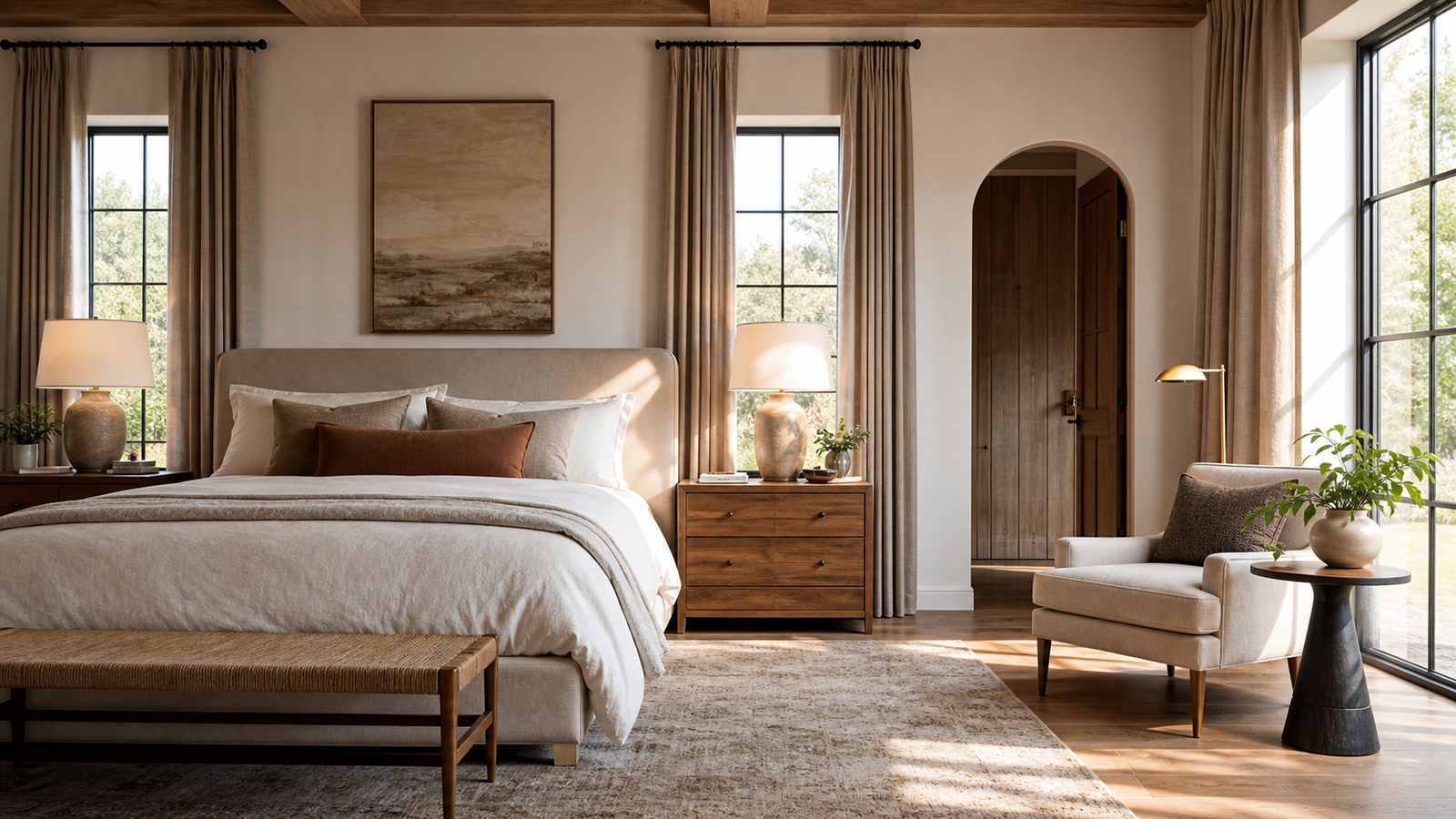
18 Bedroom Design Styles For A Cozy Stylish Retreat
A cozy bedroom does not need to be casual, and a stylish one does not need to feel untouchable. The strongest retreats usually sit somewhere between comfort and polish: a well-scaled bed, lighting that flatters the evening, storage that keeps the room composed, and materials that invite you to slow down. These bedroom design styles offer different routes to that balance, from crisp modern classic tailoring to earthy organic textures, quiet coastal restraint, and richer boutique hotel drama. Use them as complete style directions or borrow one detail at a time, such as a fabric palette, bedside arrangement, wall finish, or rug choice that makes the room feel more considered.
Modern Classic With Soft Tailoring
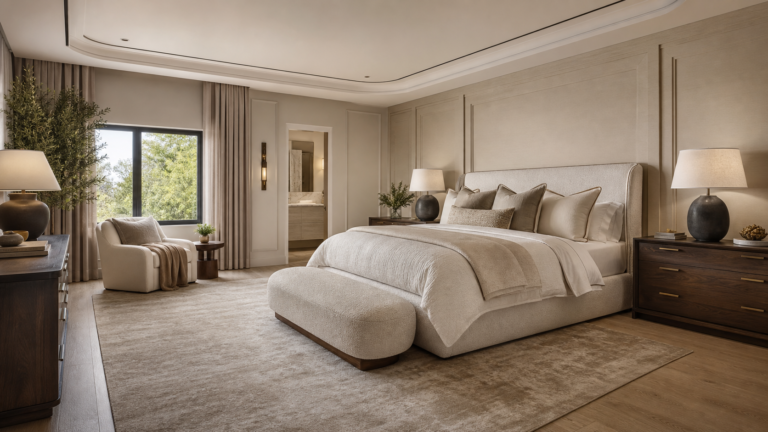
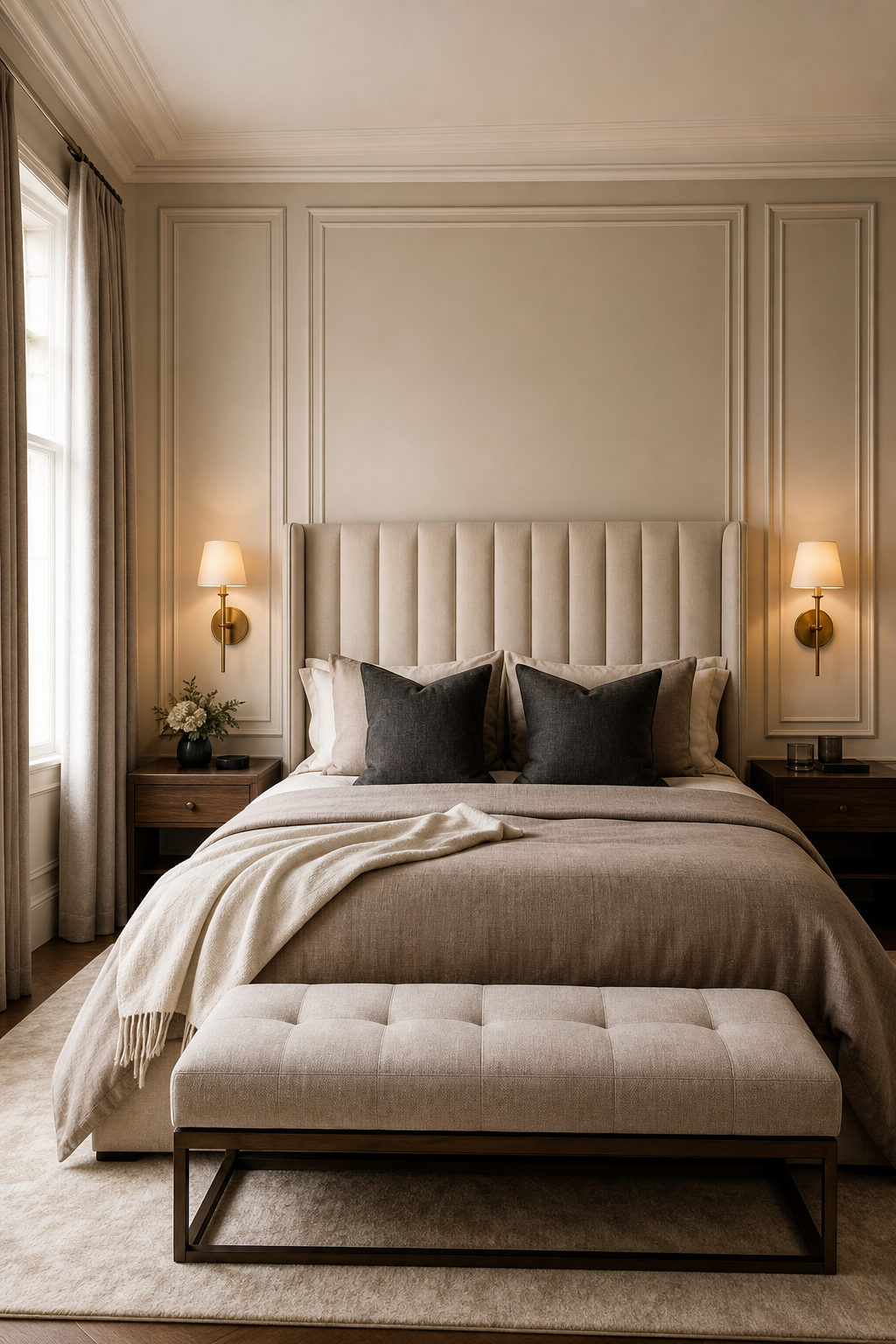
Modern classic bedrooms work beautifully when the architecture feels crisp but the textiles do the comforting. Start with a tall upholstered headboard, simple wall molding, and nightstands with clean lines rather than heavy ornament. The palette can stay quiet: warm white, mushroom, taupe, charcoal, and brushed brass for a little glow. To keep the room from feeling formal, layer a quilted coverlet under a relaxed duvet and add two or three pillows in linen, velvet, or bouclé. Lighting matters here. Choose shaded sconces or table lamps that soften the wall and make the bed feel framed. A low bench, tailored curtains, and a wool rug finish the retreat with just enough structure.
Organic Modern In Earthy Neutrals
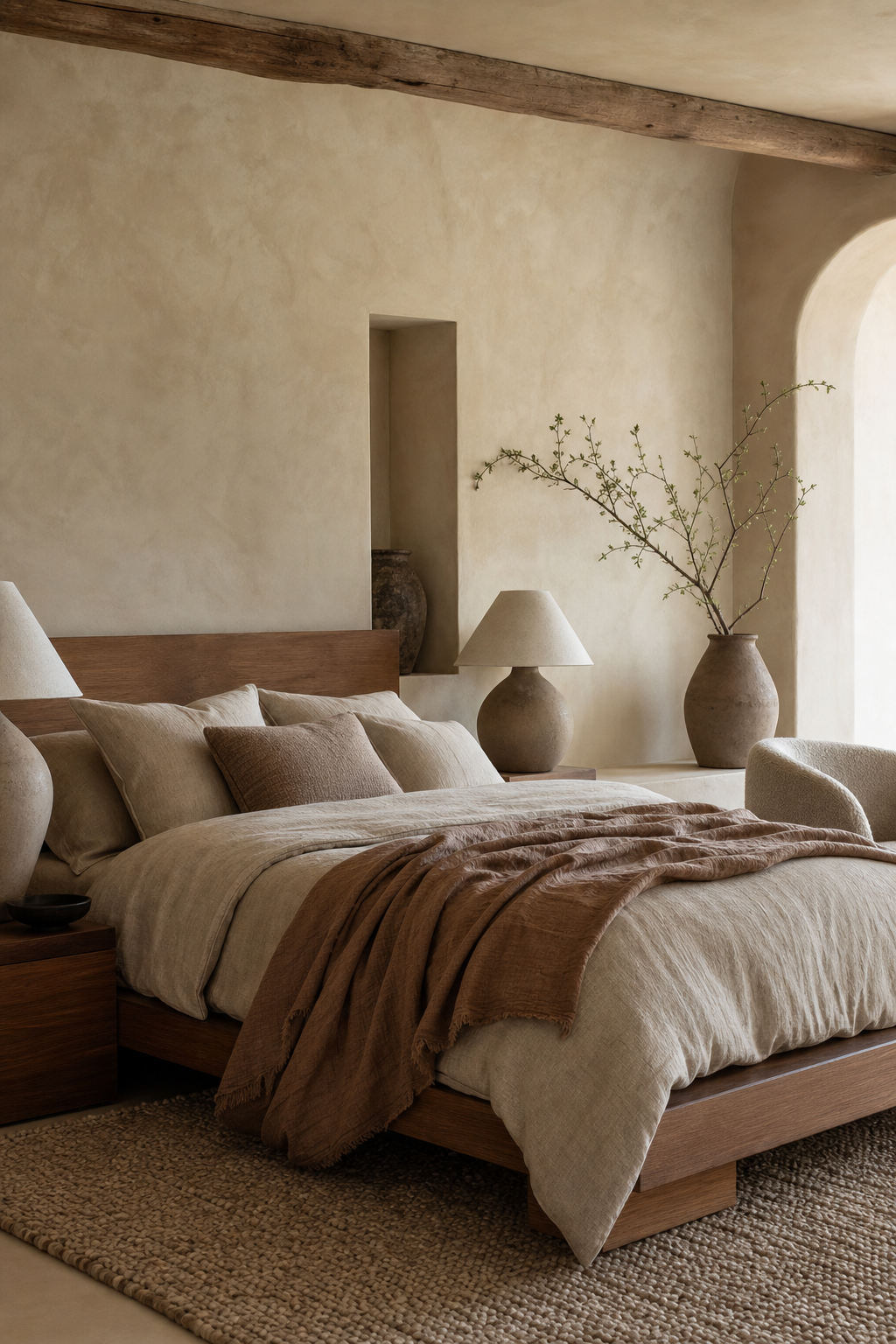
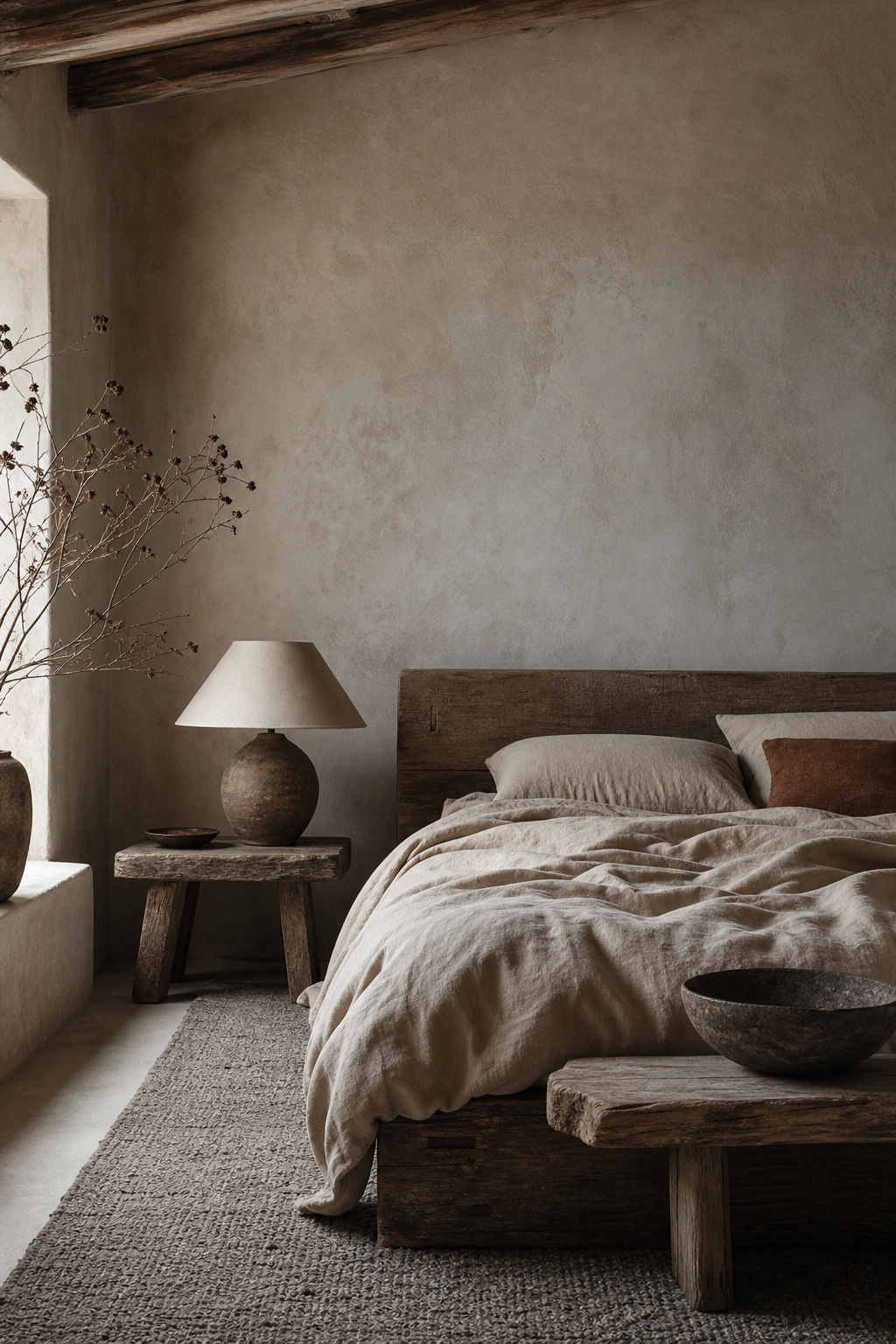
Organic modern style is ideal for a bedroom because it makes restraint feel warm. Instead of relying on decoration, let texture carry the space: limewashed walls, a chunky wool rug, oak or walnut furniture, nubby linen bedding, and ceramic lamps with imperfect shapes. Keep the silhouettes simple and low, then add one sculptural piece, such as a curved lounge chair or carved wood bench, to prevent the room from becoming plain. The best color range is grounded but gentle, with oatmeal, clay, stone, tobacco, and soft black used sparingly. Add greenery only if it suits the light; a single branch in a handmade vase is often more luxurious than a crowded plant corner.
Boutique Hotel With Layered Lighting
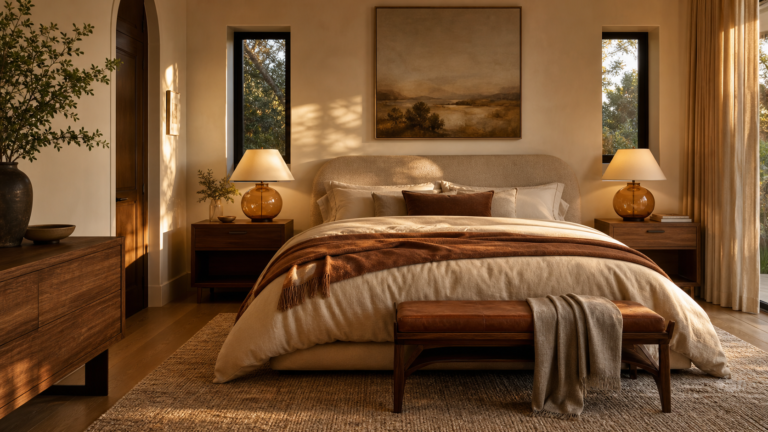
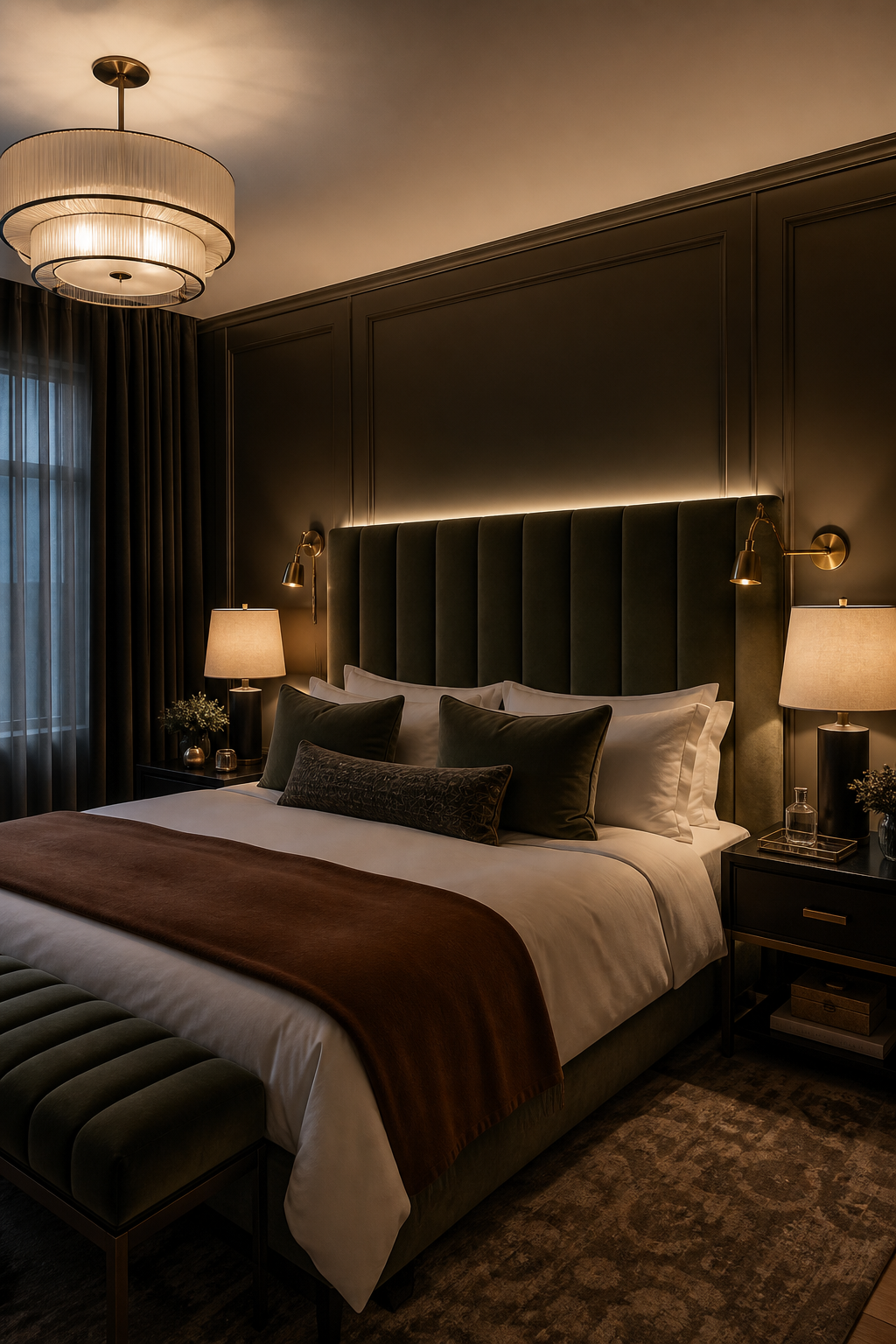
A boutique hotel bedroom feels indulgent because every light source has a purpose. Build the room around a dramatic headboard wall, then layer bedside lamps, reading sconces, a dimmable ceiling fixture, and perhaps a discreet picture light over art. The bed should feel generous, with crisp sheets, a substantial duvet, a folded throw, and pillows that look plush without becoming fussy. Darker colors can work well in this style, especially olive, ink, tobacco, espresso, or deep greige, as long as the lighting is warm. Add a luggage-style bench, blackout curtains, and a small tray on the nightstand to bring that polished, hosted feeling home.
Quiet Coastal Without The Cliches
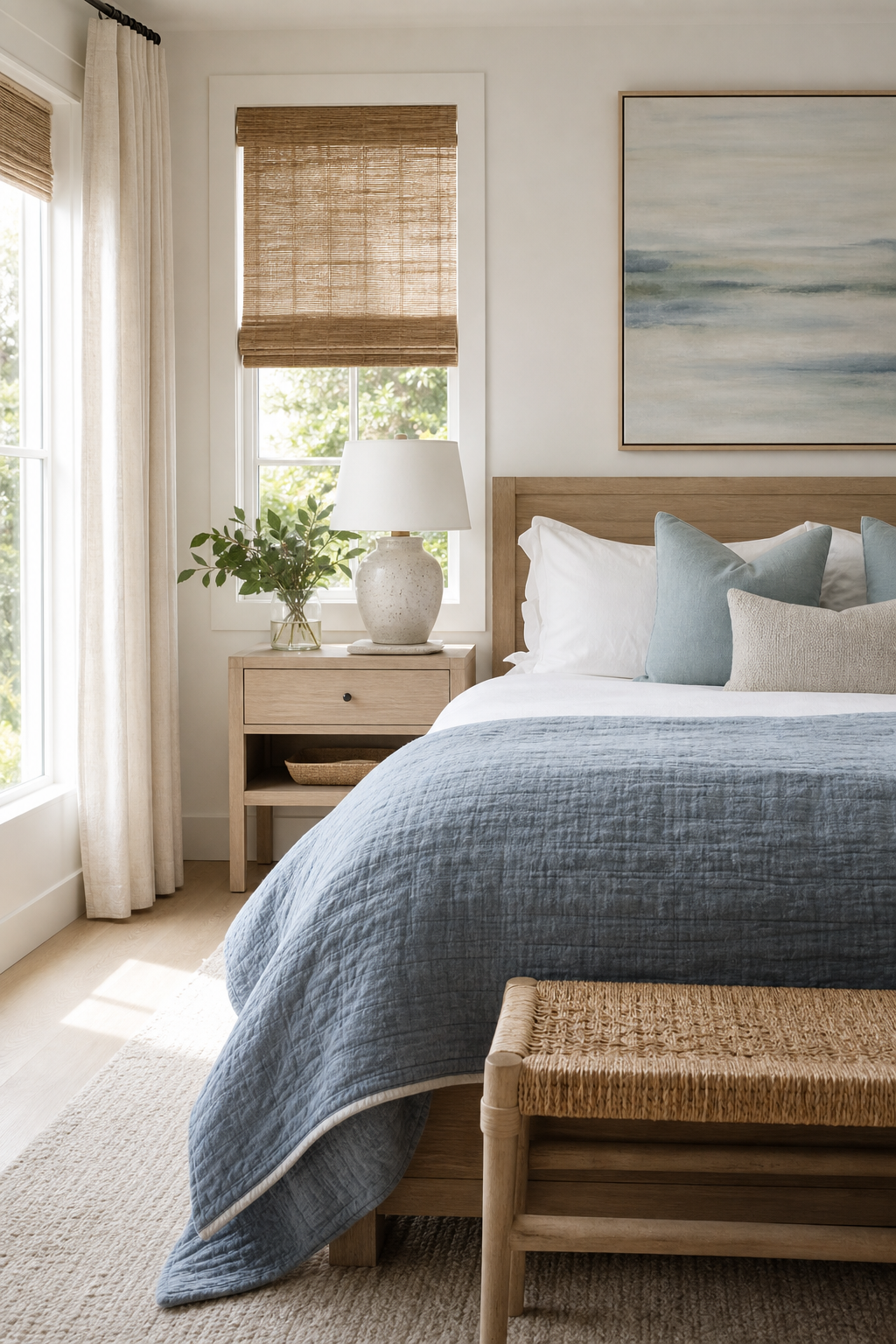
Quiet coastal bedrooms are most successful when they suggest the shoreline through light, texture, and air rather than obvious motifs. Skip anchors, shells, and bright nautical stripes. Instead, use bleached oak, whitewashed walls, woven shades, linen curtains, and bedding in soft white, mist, driftwood, and muted blue-gray. A slipcovered chair or rattan bench adds ease, while a tailored bed skirt or clean platform keeps the room from looking too casual. Keep surfaces edited: a ceramic lamp, a small stack of books, and one piece of art with watery movement are enough. The result is breezy, refined, and restful even far from the coast.
Parisian Apartment Romance
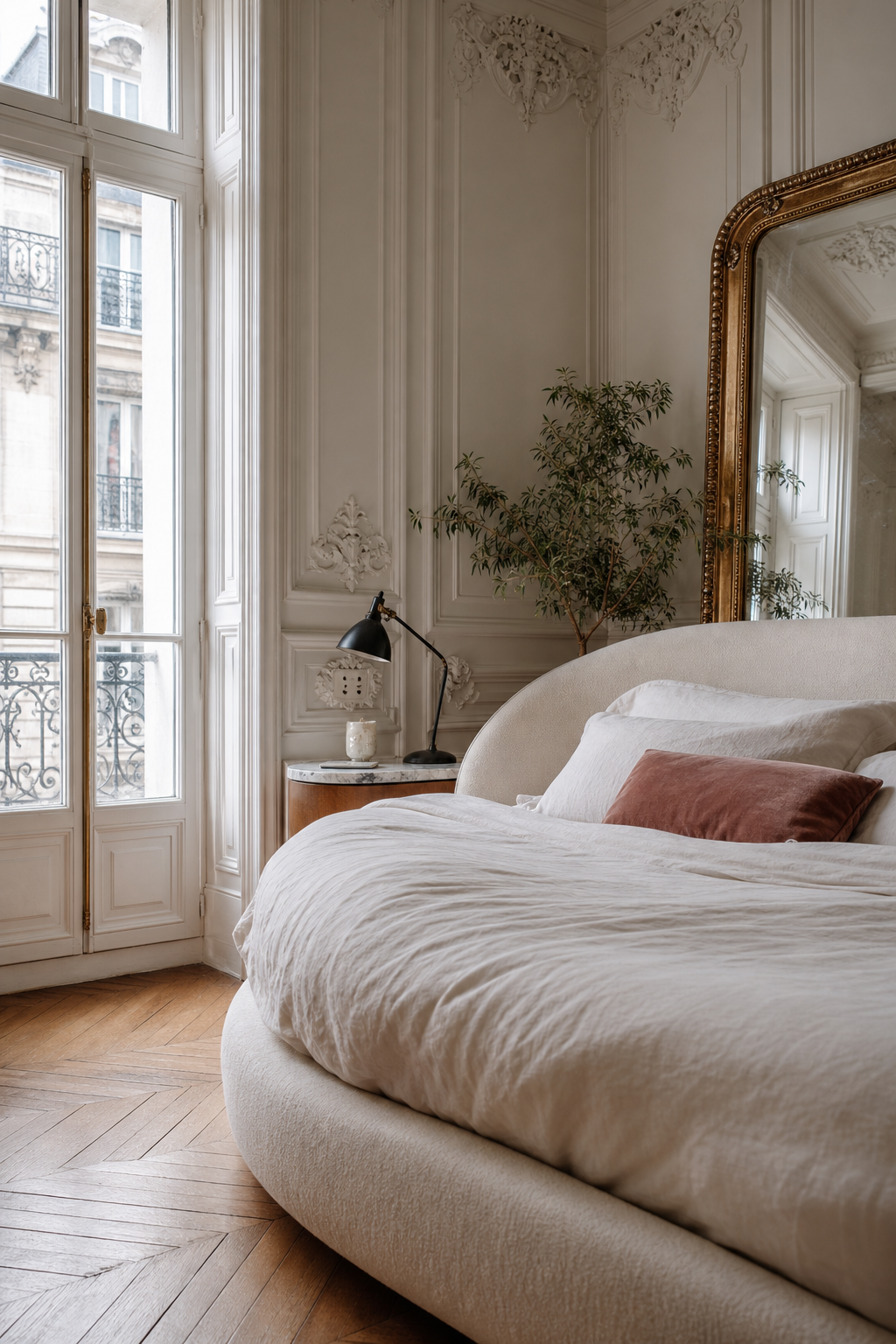
Parisian bedroom style depends on contrast: ornate bones with unfussy living. If the room has molding, a fireplace, or tall windows, keep those details visible and let the furniture breathe. A curved upholstered bed, antique mirror, marble-topped nightstand, and linen bedding can feel romantic without becoming precious. Mix one vintage piece with modern lighting so the space does not read like a set. The palette should feel softly aged, using chalk white, warm gray, dusty rose, muted gold, and black accents. Hang curtains high, allow them to pool slightly if practical, and choose art that feels collected rather than perfectly matched.
Japandi Calm With Practical Warmth
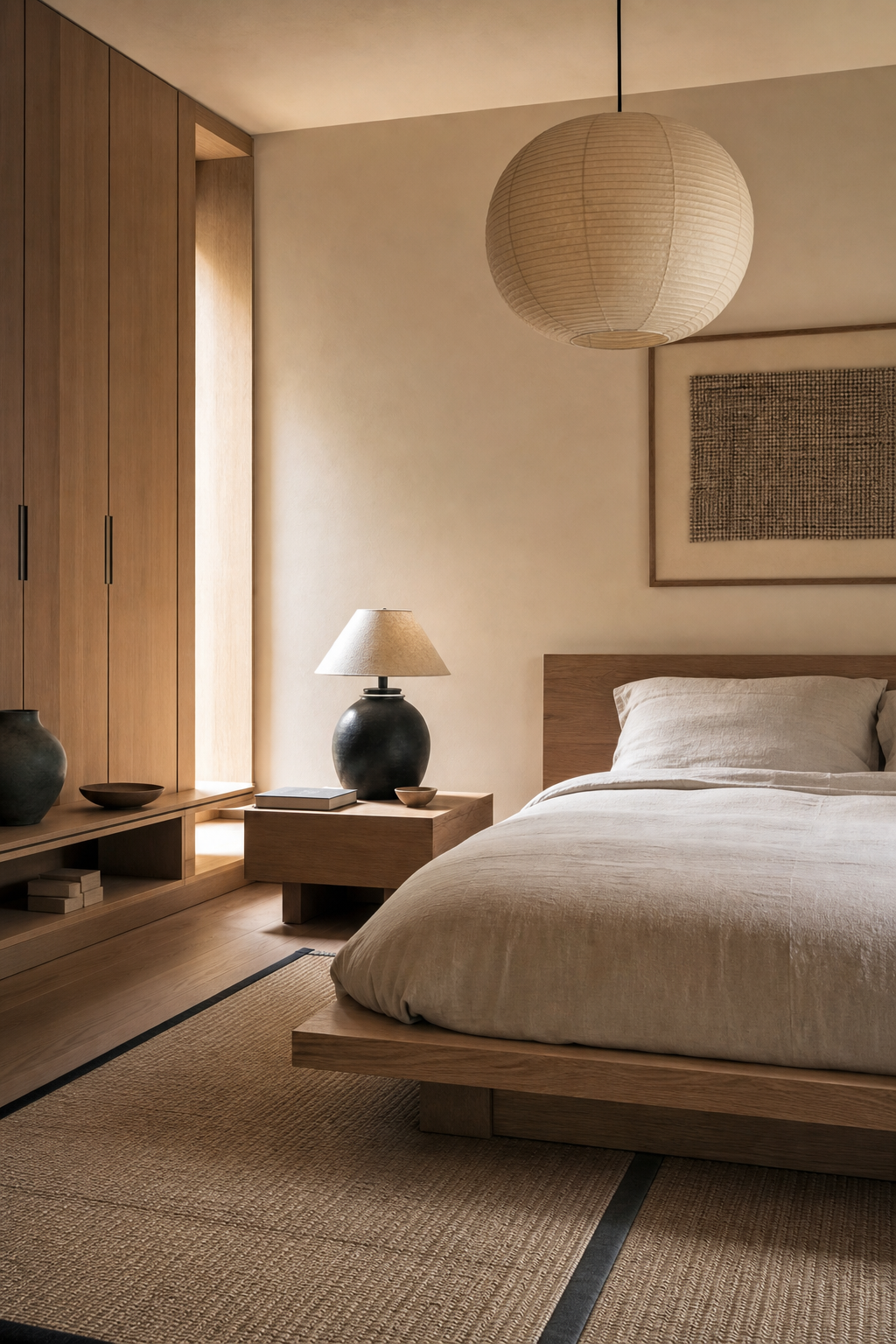
Japandi bedrooms bring together Japanese restraint and Scandinavian comfort, which makes them especially useful for small or busy rooms. Choose a low bed, pale wood, concealed storage, and bedding that looks relaxed but not rumpled. The palette works best when it is warm and quiet: rice paper, sand, ash, oat, and a few charcoal lines for definition. Avoid overcrowding the walls. One textured panel, a paper lantern, or a simple framed textile can create atmosphere without noise. Practicality is part of the beauty, so make sure the bedside surface has room for a lamp, water glass, and book. Everything should earn its place.
Moody Luxe In Jewel Tones
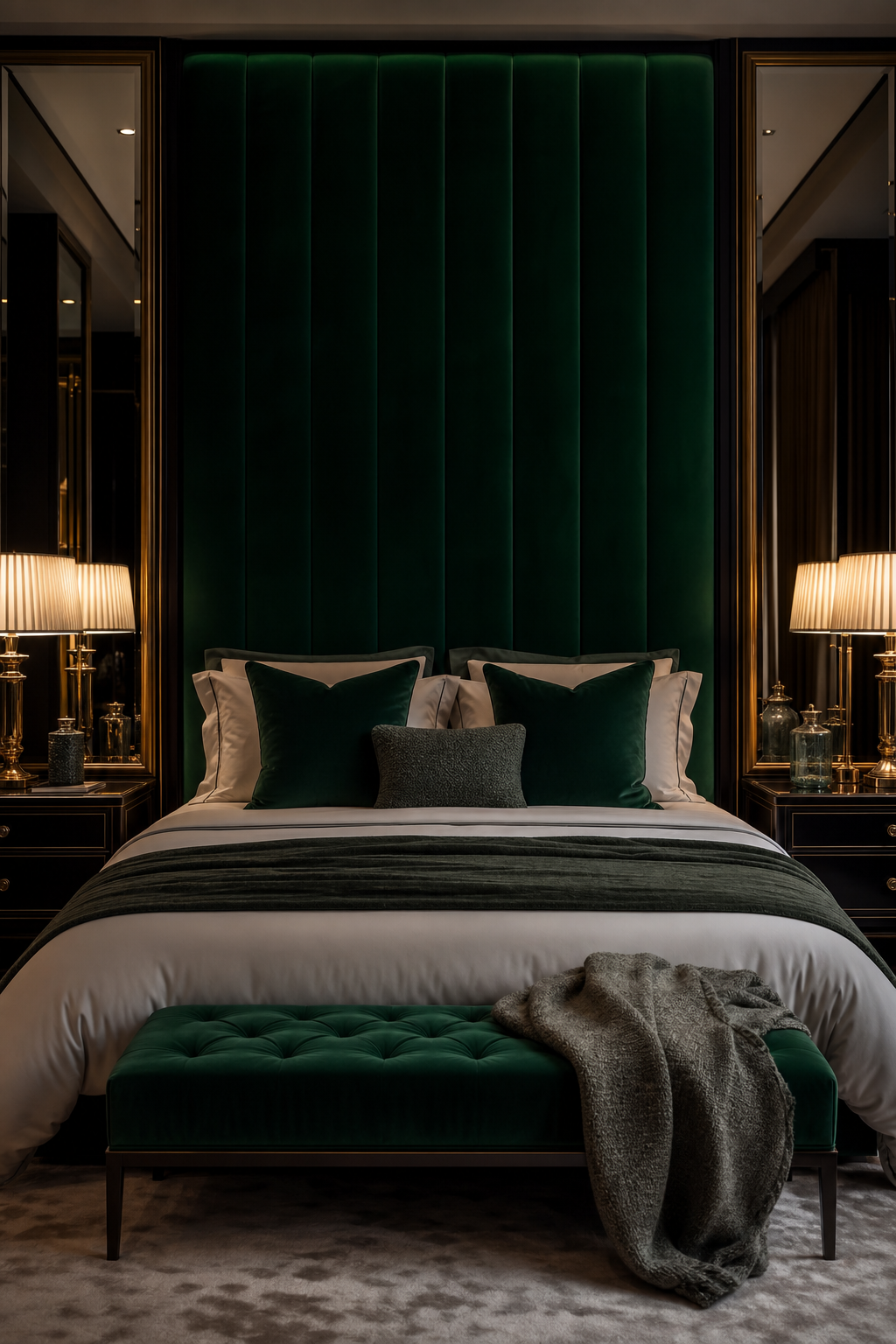
Moody luxe bedrooms are about depth, not darkness for its own sake. Begin with one enveloping color, such as emerald, aubergine, peacock blue, or garnet, then balance it with touchable fabrics and reflective accents. Velvet pillows, a wool throw, lacquered nightstands, smoked glass, and antique brass can all work, but edit carefully so the room remains restful. The bed should be the anchor, ideally against a saturated wall or upholstered panel. Use warm bulbs and dimmers to avoid a flat cave-like effect. A pale sheet, light rug, or marble lamp can provide relief while keeping the drama intact and the room visually breathable.
Scandinavian Soft Minimalism
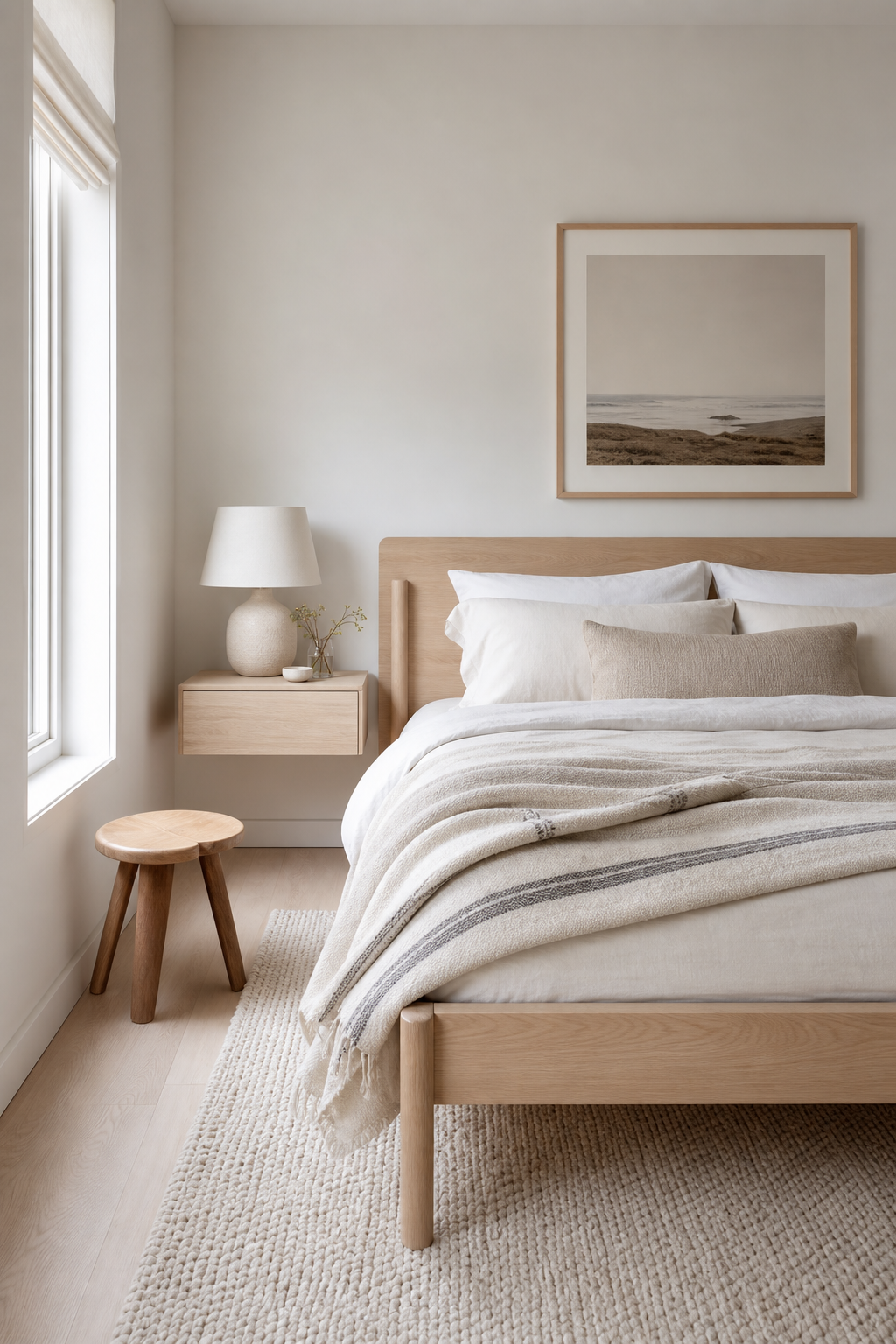
Scandinavian soft minimalism is a good choice when you want a bedroom to feel clean but never cold. White walls are fine, but they need warmth from pale wood, wool, linen, and a few rounded forms. Choose a bed frame with simple legs, relaxed bedding, and nightstands that feel light rather than bulky. Keep pattern subtle: a fine stripe, small check, or tonal woven blanket is enough. Good storage is essential because this style depends on visual calm. Add a shaded lamp, a small stool, and one quiet artwork. The room should look easy to live in, not staged for perfection.
Traditional Layered And Collected
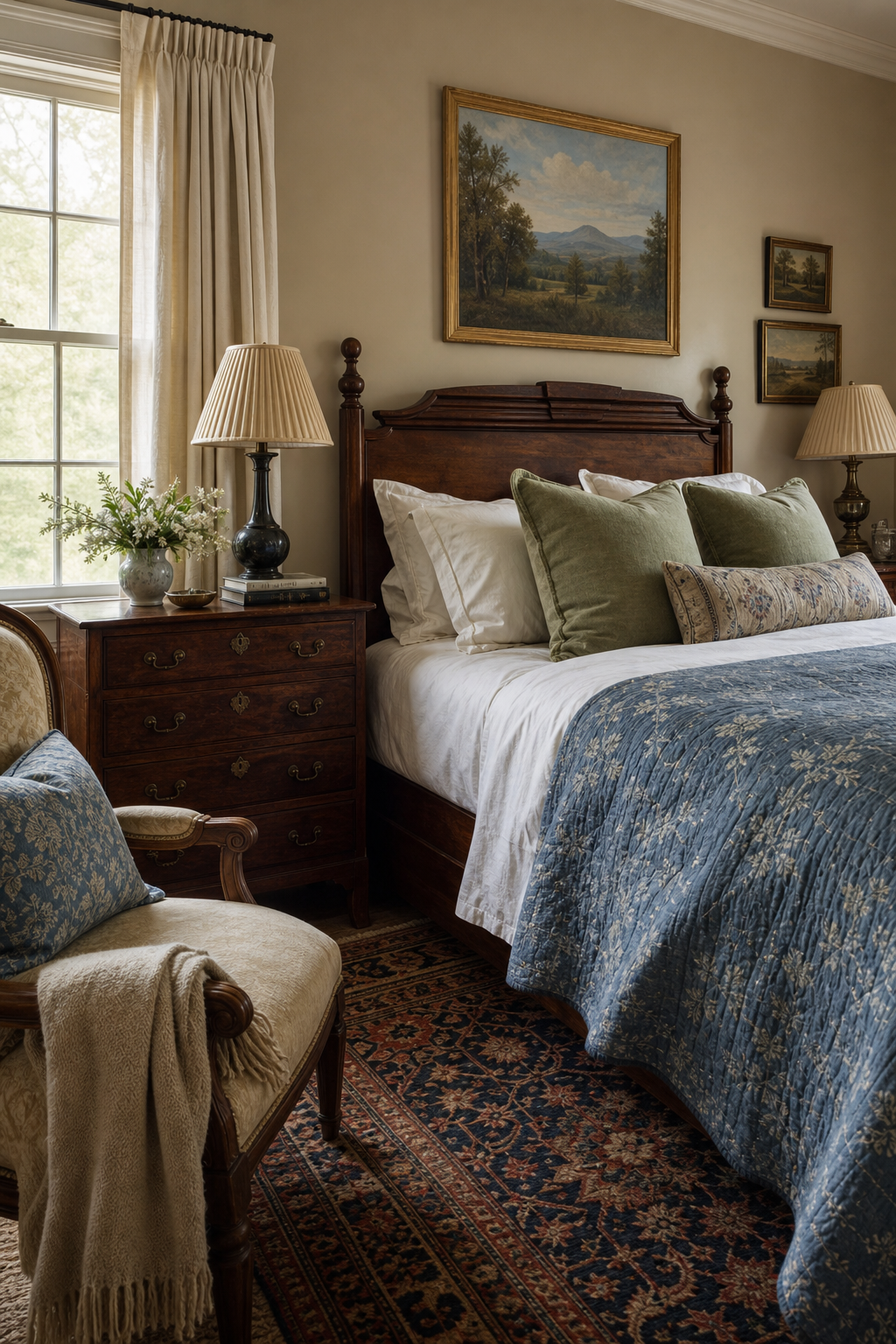
A traditional bedroom becomes cozy when it feels collected over time instead of purchased all at once. Combine a wood or upholstered bed with an antique chest, patterned rug, pleated lampshades, framed art, and bedding that includes both crisp cotton and softer quilts. Florals, checks, and small-scale prints can live together if the palette is disciplined. Try warm cream, faded blue, oxblood, sage, and walnut rather than high-contrast colors. Symmetry helps the room feel composed, but it does not need to be rigid. A vintage chair, a skirted table, or a stack of well-loved books can loosen the edges beautifully.
Minimalist Hotel Suite
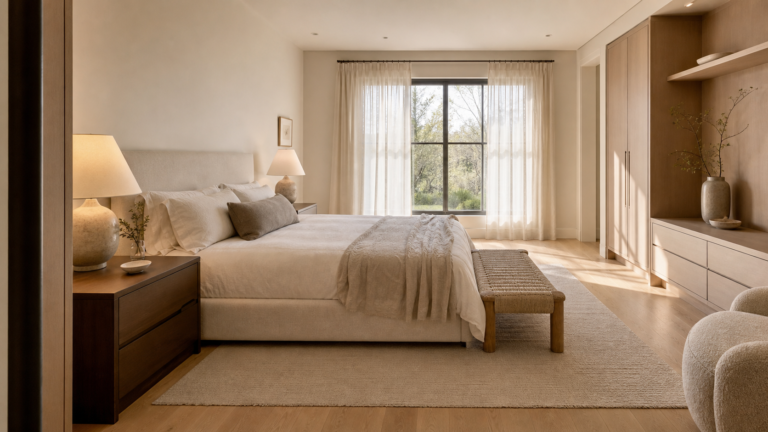
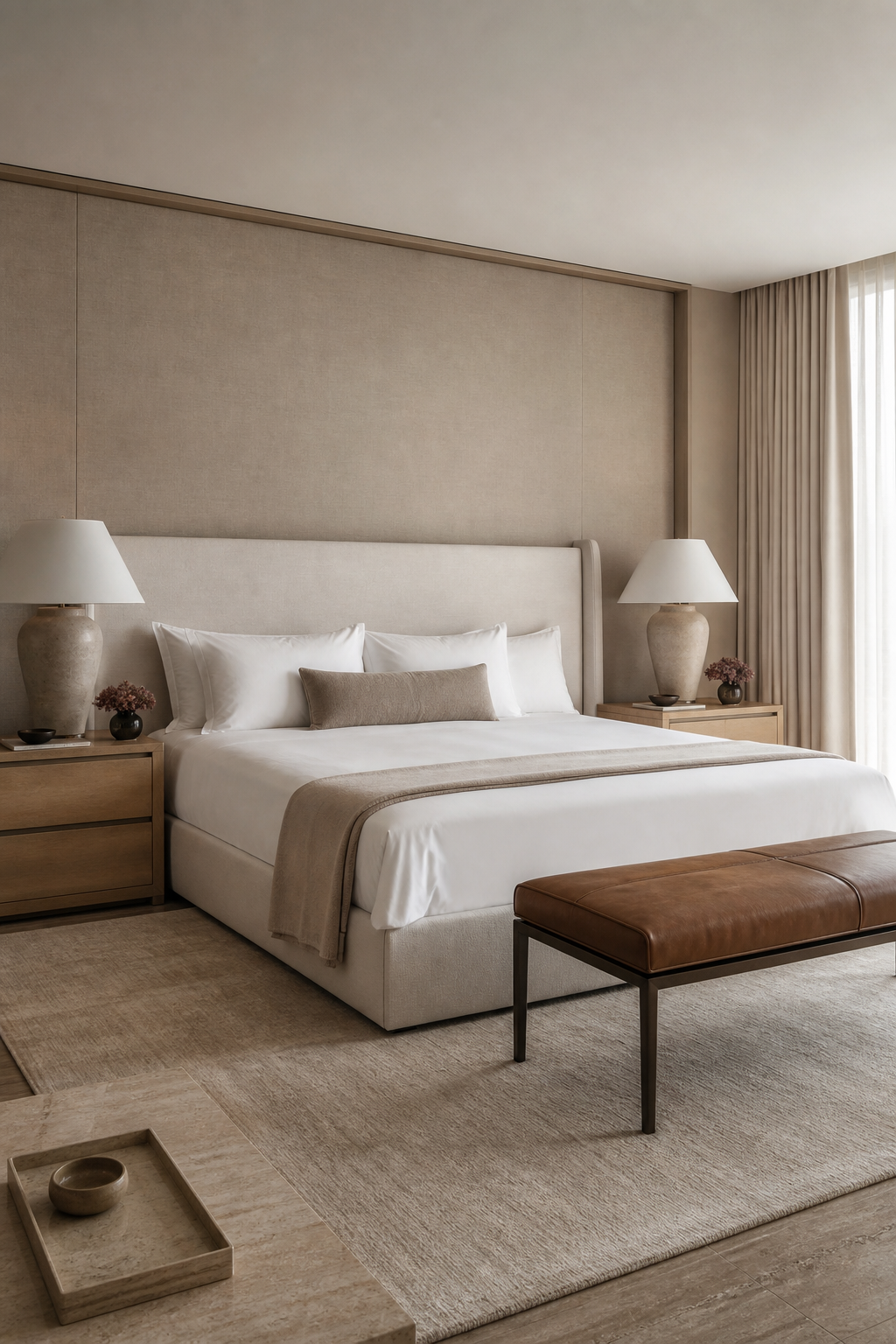
A minimalist hotel-suite bedroom should feel calm, precise, and generous. Keep the palette narrow, but let scale create luxury: an oversized headboard, wide nightstands, large lamps, substantial curtains, and a rug big enough to extend well beyond the bed. Avoid tiny accessories, which can make minimal rooms look unfinished. Instead, use fewer pieces with strong proportions and excellent materials, such as oak veneer, travertine, wool, leather, and crisp percale. Built-in wardrobes or a flush dresser help preserve the calm. The secret is tactile comfort; a minimalist room still needs soft bedding, controlled lighting, and a place to sit while dressing.
Rustic Refined With Natural Materials
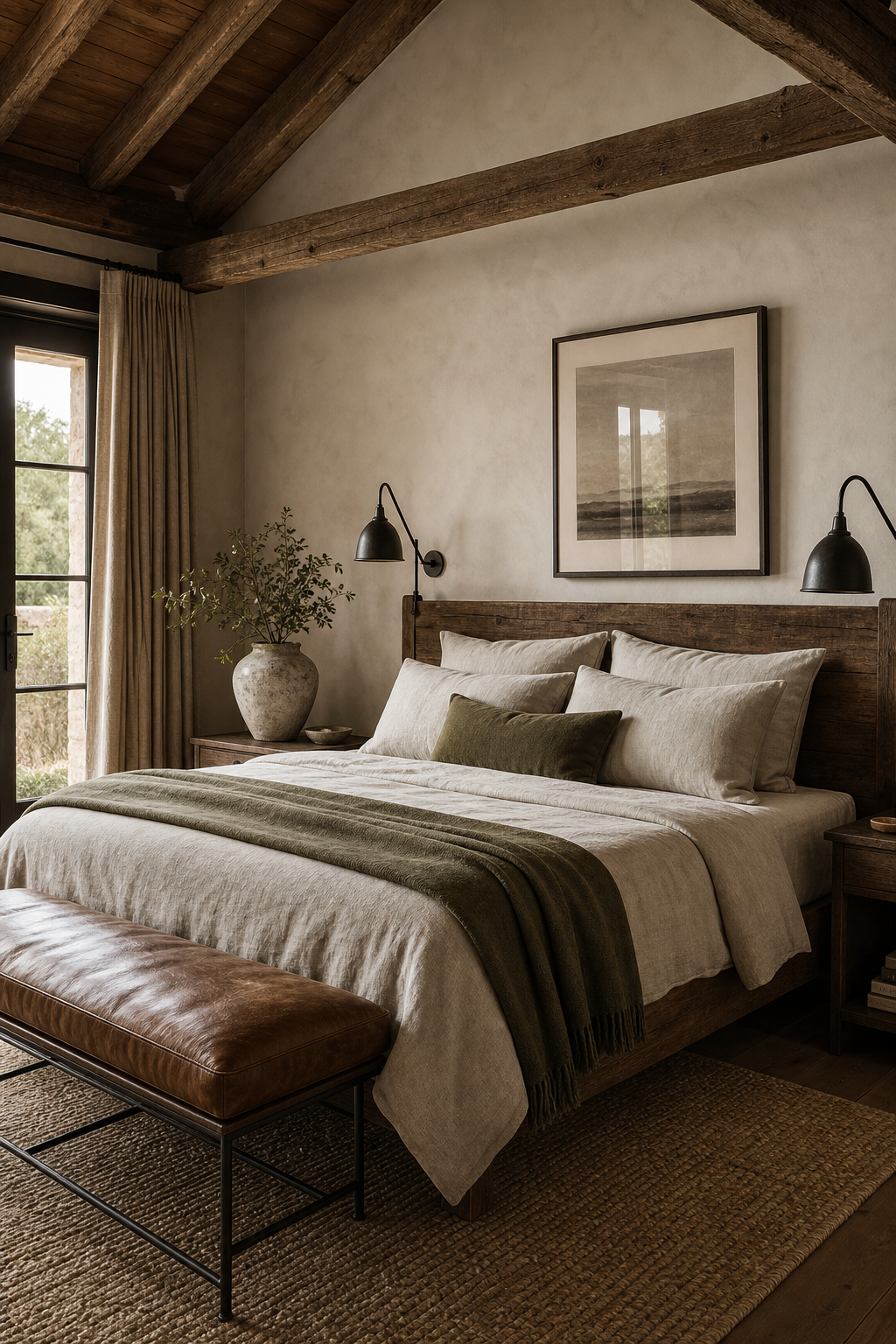
Rustic refined style brings character into the bedroom without sacrificing polish. Think exposed beams, plaster walls, aged wood, linen, leather, iron, and stone, but keep the shapes edited and the finishes balanced. A reclaimed wood bed can look sophisticated when paired with tailored bedding and simple lamps. If the room already has heavy timber or stone, use lighter fabrics to soften it. If the architecture is plain, introduce rustic texture through a bench, nightstand, or woven rug rather than forcing a full cabin theme. Warm whites, flax, chestnut, slate, and muted olive create a grounded palette that feels restful year-round.
Art Deco Glamour Made Restful
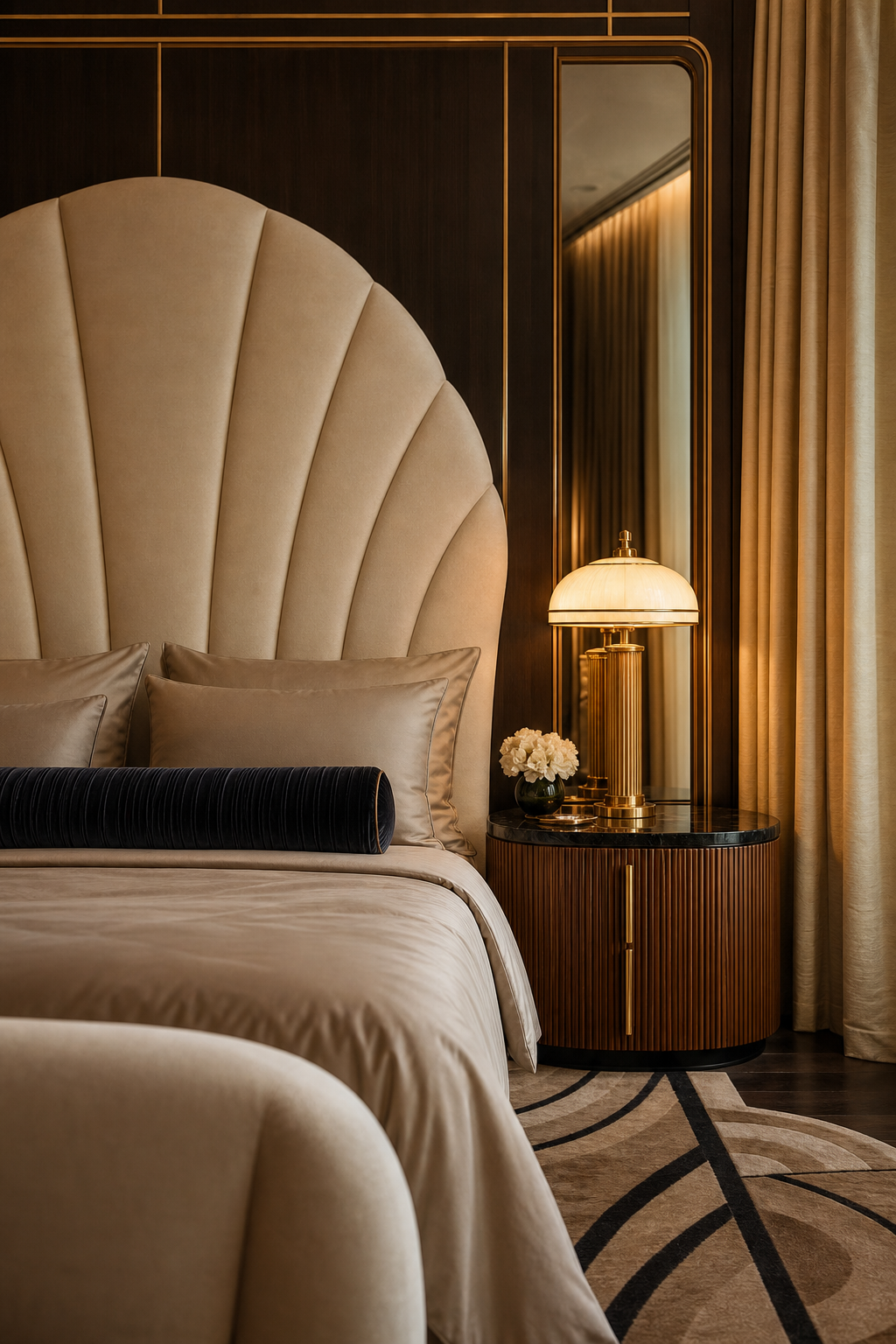
Art Deco bedrooms can be glamorous without overwhelming the senses if you focus on rhythm and finish. Use curved shapes, channel tufting, fluted wood, lacquer, brass, and a touch of mirror, then calm the palette with cream, black, champagne, and one jewel tone. A fan-shaped headboard or ribbed nightstands can carry the style more elegantly than a room full of metallic accents. Bedding should remain inviting: smooth sheets, a velvet bolster, and a folded coverlet. Choose lighting with frosted glass so the glow feels diffused. The final room should have evening sparkle, but it still needs to feel like a place to sleep.
Mediterranean Warmth And Plaster Texture
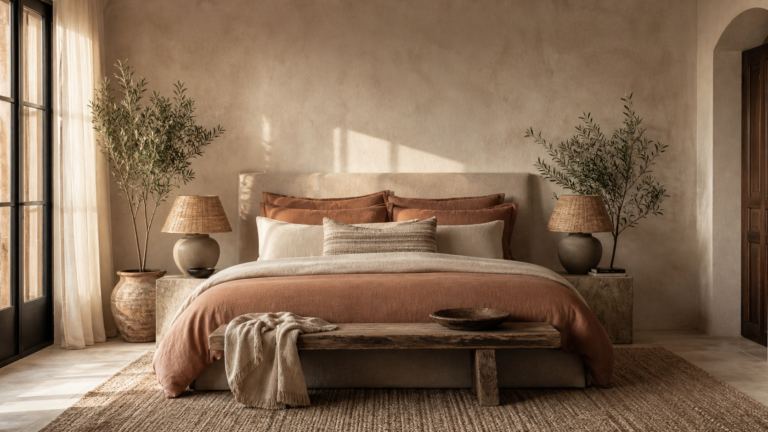
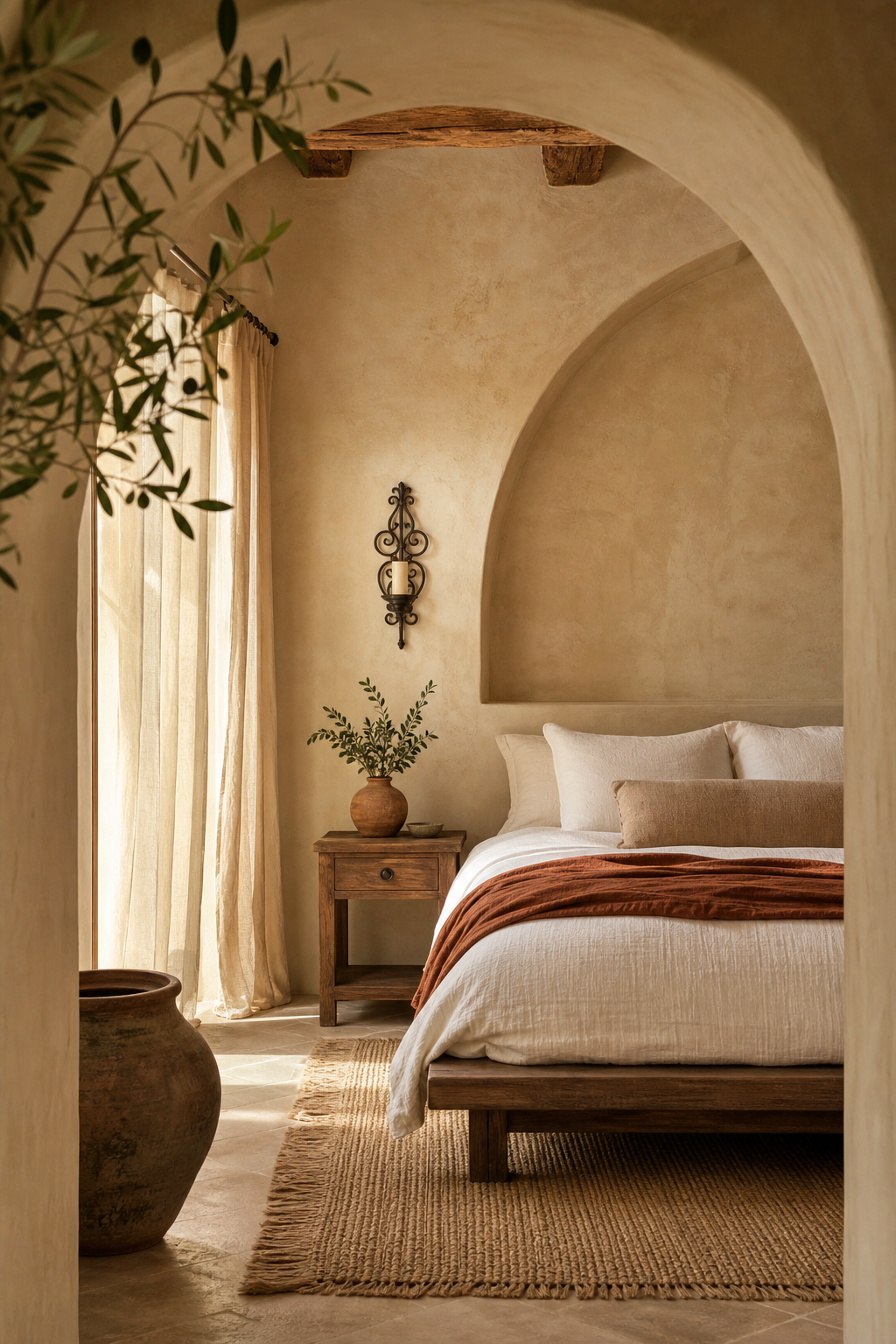
Mediterranean bedrooms feel cozy because the surfaces already have soul. Lime plaster, terracotta, aged wood, wrought iron, linen, and handwoven textiles create warmth without much decoration. Keep the bed simple and substantial, then bring in arched forms through a niche, mirror, or headboard shape. The palette can move from chalk white and sand to clay, olive, ochre, and weathered brown. Avoid making the room too themed; one vintage vessel or hand-painted tile detail is often enough. Use breezy curtains, a textured rug, and low evening lamps to create the sense of a retreat that stays cool by day and glowing at night.
Contemporary Gallery Calm
Contemporary gallery bedrooms use negative space intentionally, which makes the pieces you choose more important. Start with a strong bed shape, a large-scale artwork, and nightstands that feel architectural. The palette can be neutral or high contrast, but the finishes should be excellent: smooth plaster, dark stained wood, stone, brushed metal, and crisp textiles. Keep accessories low and sculptural rather than decorative. A single ceramic bowl, oversized lamp, or textured throw can be enough. This style benefits from hidden storage, clean window treatments, and a rug with quiet presence. The result feels cultured and calm, especially when the art sets the emotional tone.
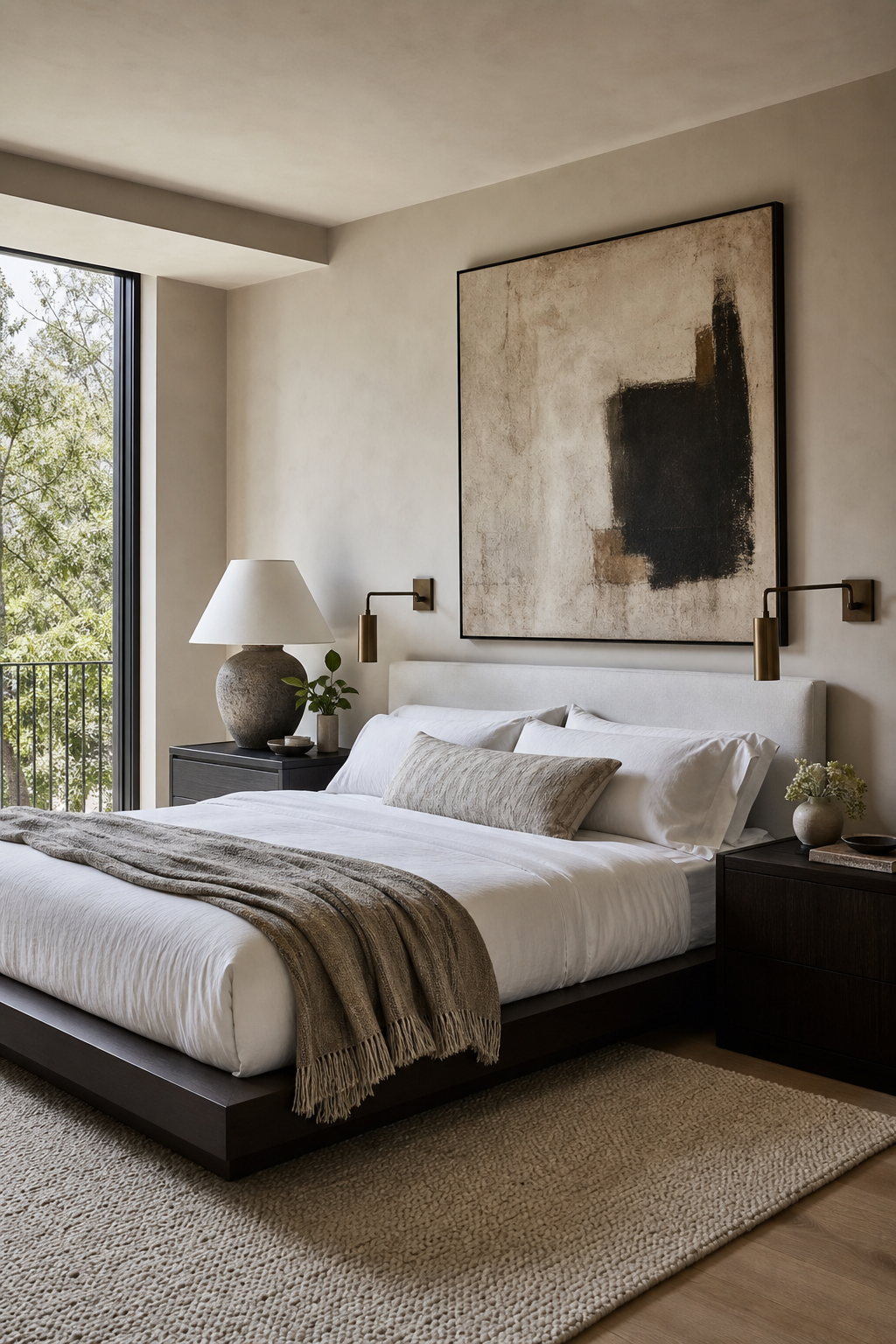
Cottage Luxury With Grown-Up Charm
Cottage style becomes grown-up when the sweetness is balanced by quality materials and good editing. Use painted wood, a soft upholstered or spindle bed, gathered curtains, a small floral or check, and furniture with a hand-me-down spirit. Then add polish through tailored lampshades, a beautiful rug, crisp sheets, and hardware in aged brass or nickel. The palette should feel garden-inspired but not sugary: cream, moss, faded rose, chambray, and natural wood. Built-in shelves or a painted dresser can provide practical storage. Keep the bed deeply layered, but avoid too many tiny pillows. Comfort should be obvious; clutter should not linger.
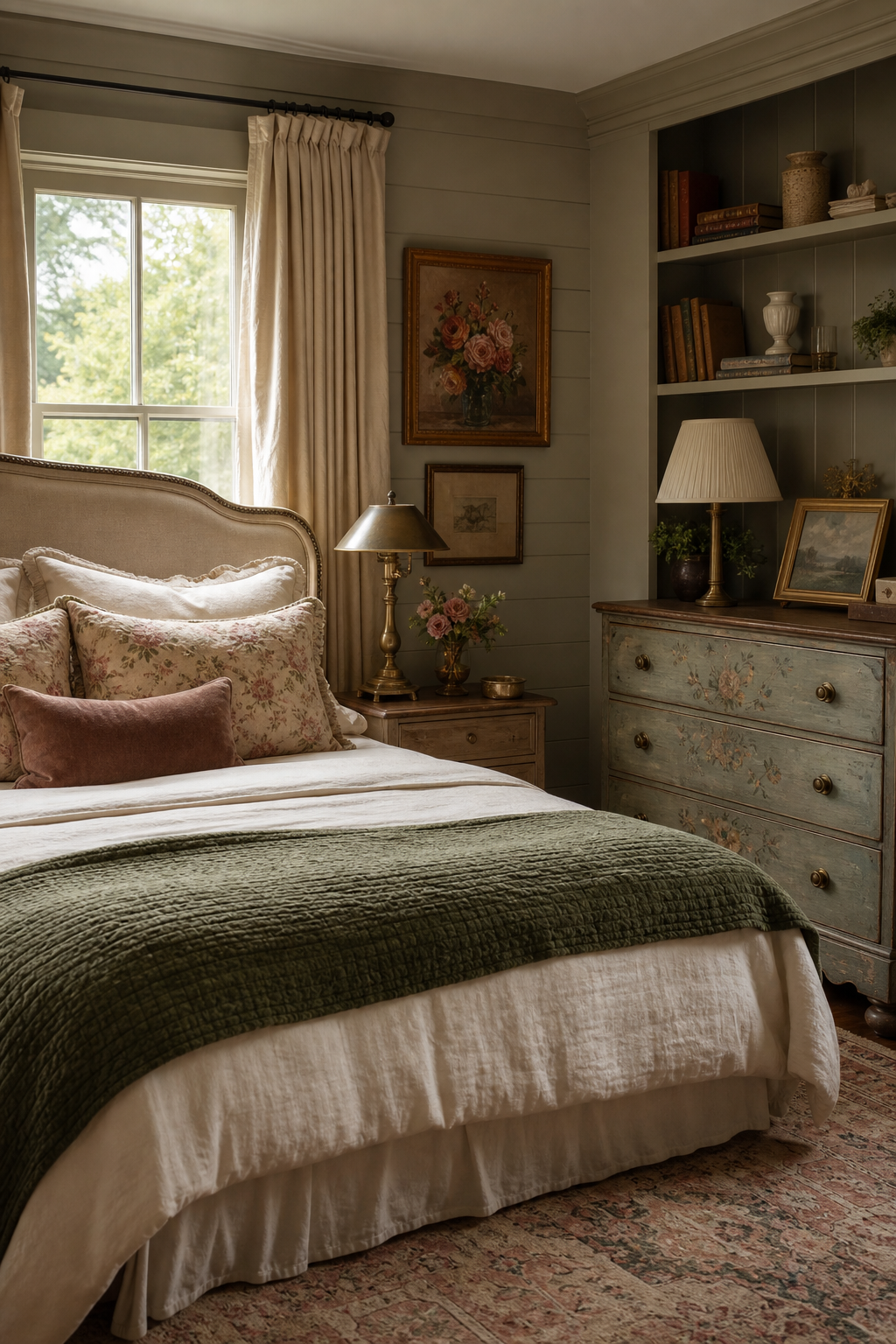
Urban Loft With Soft Edges
An urban loft bedroom needs softness to balance hard architecture. If you have brick, concrete, steel windows, or high ceilings, pair them with a generous rug, upholstered bed, full curtains, and bedding with visible texture. Keep the furniture unfussy and slightly substantial so it does not disappear against the scale of the room. Black, cognac, gray, ivory, and warm wood make a reliable palette, but add one fabric with softness, such as mohair, boucle, or washed linen. Good bedside lighting is essential because loft spaces can feel cavernous at night. A large plant, oversized art, or leather bench can help bridge the room’s proportions with confidence.
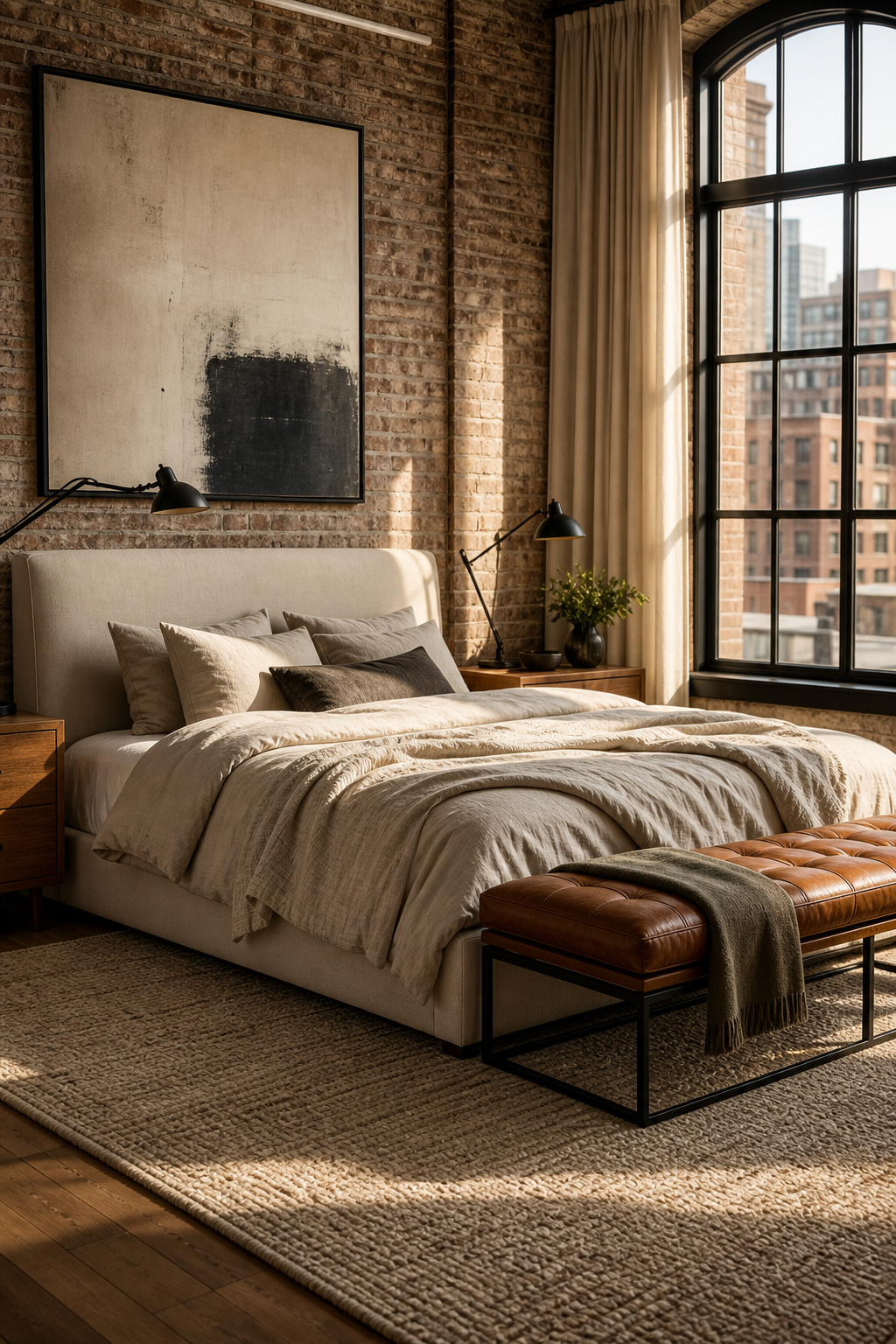
Transitional Neutral With Texture
Transitional neutral bedrooms are popular because they are flexible, but they need texture to avoid becoming bland. Blend traditional comfort with cleaner contemporary lines: an upholstered bed, simple nightstands, a classic rug, modern lamps, and curtains that frame the window neatly. The palette can stay neutral if the undertones are varied. Mix warm white, greige, oatmeal, mushroom, weathered oak, and a touch of soft black. Use contrast through materials rather than busy pattern: linen against velvet, ribbed ceramic beside smooth wood, woven shades behind tailored drapery. This style is especially practical for shared bedrooms because it feels calm, adaptable, and quietly refined.
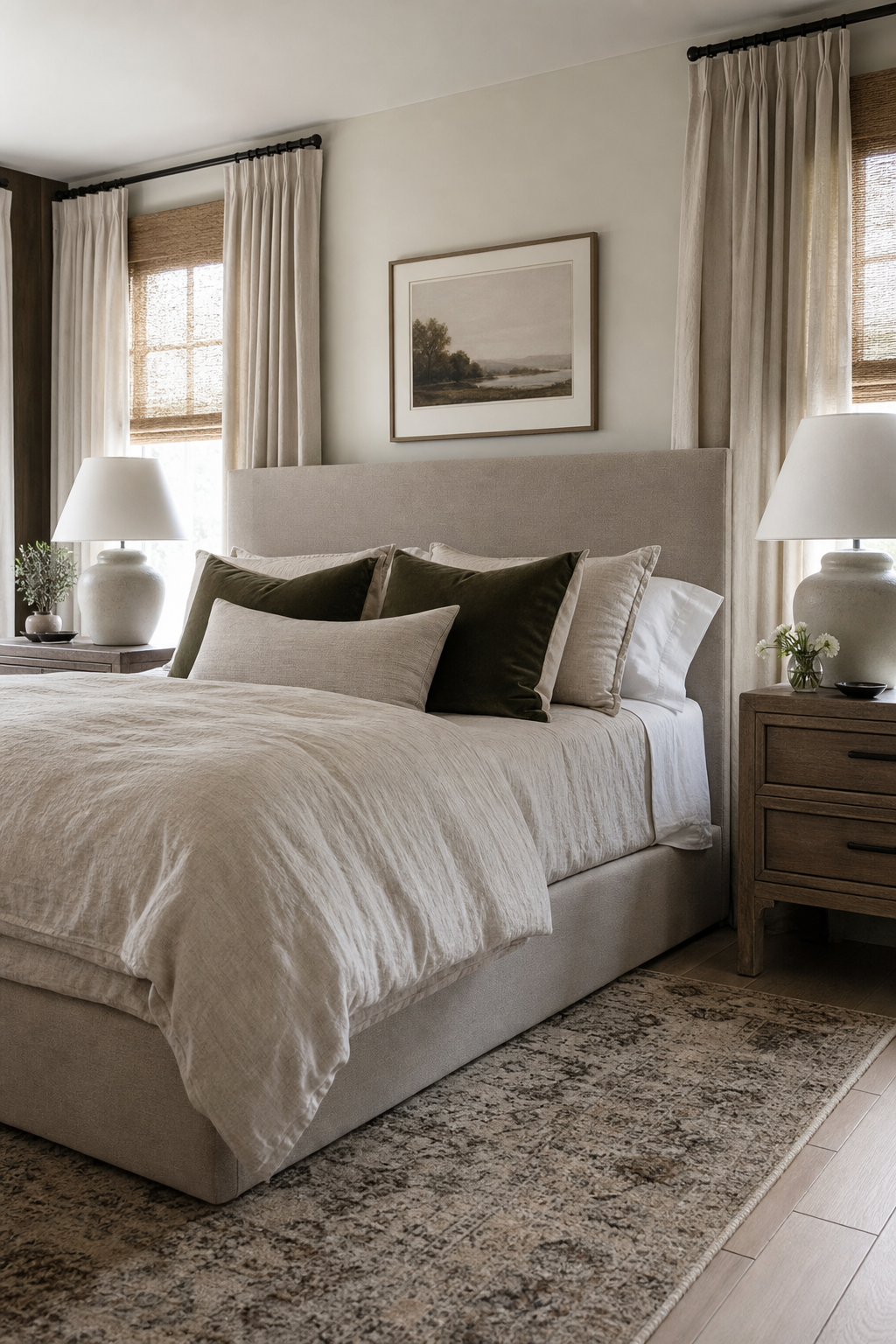
Wabi-Sabi Serenity
Wabi-sabi bedrooms celebrate imperfection, but the room still needs discipline. Choose humble materials with visible texture: plaster, linen, weathered wood, handmade ceramics, and stone. Let the palette feel sun-faded rather than decorated, with chalk, ash, sand, smoke, and clay. Furniture should be low, simple, and slightly irregular, never glossy or overly matched. Leave breathing room around each piece so the negative space becomes part of the design. A rumpled linen duvet, rough-edged bench, and ceramic lamp can feel luxurious because they invite touch. Keep technology hidden and surfaces spare. The mood should be quiet, earthy, and deeply restorative after a long day.
The best bedroom style is the one that supports the way you want to rest. Some rooms need the discipline of Japandi or minimal hotel-suite design; others come alive with traditional layers, cottage charm, or jewel-toned drama. Before buying anything major, decide what the room should feel like at night, what storage problems must disappear, and which textures you want closest to you. Then repeat your chosen materials with intention: one wood tone, two or three fabrics, flattering lighting, and a rug that makes the bed feel anchored. That restraint is what turns a decorated bedroom into a true retreat.