23 Simple Bedroom Design For A Cozy Stylish Retreat
A beautiful bedroom rarely needs more things. It needs better rhythm: a bed that feels generous, lighting that softens the evening, storage that disappears, and materials that make the room feel cared for. Simple bedroom design is not plain or unfinished. At its best, it edits the space until every piece earns its place and the whole room feels restful the moment you enter. These ideas focus on approachable changes with a polished, designer sensibility, from layered bedding and wall color to nightstand styling, seating, texture, and layout.
Start With A Calm Upholstered Bed
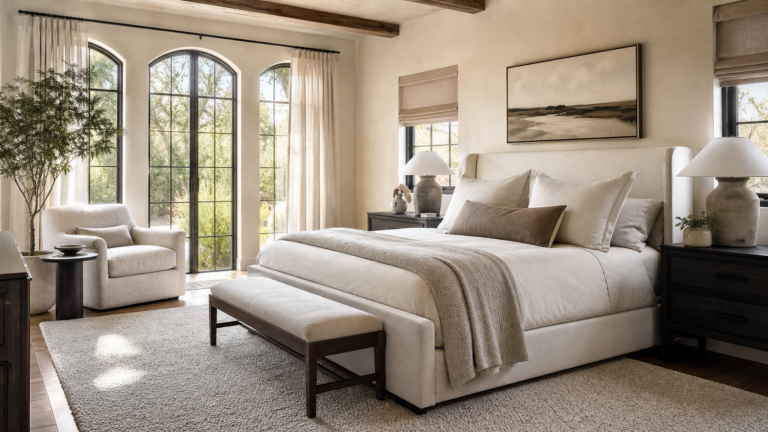
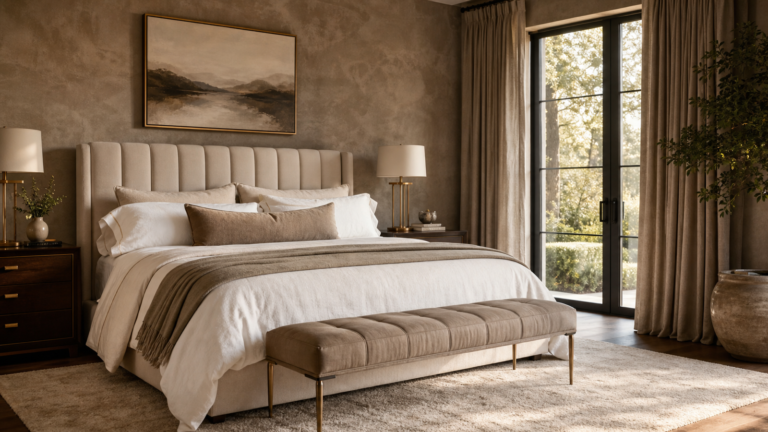
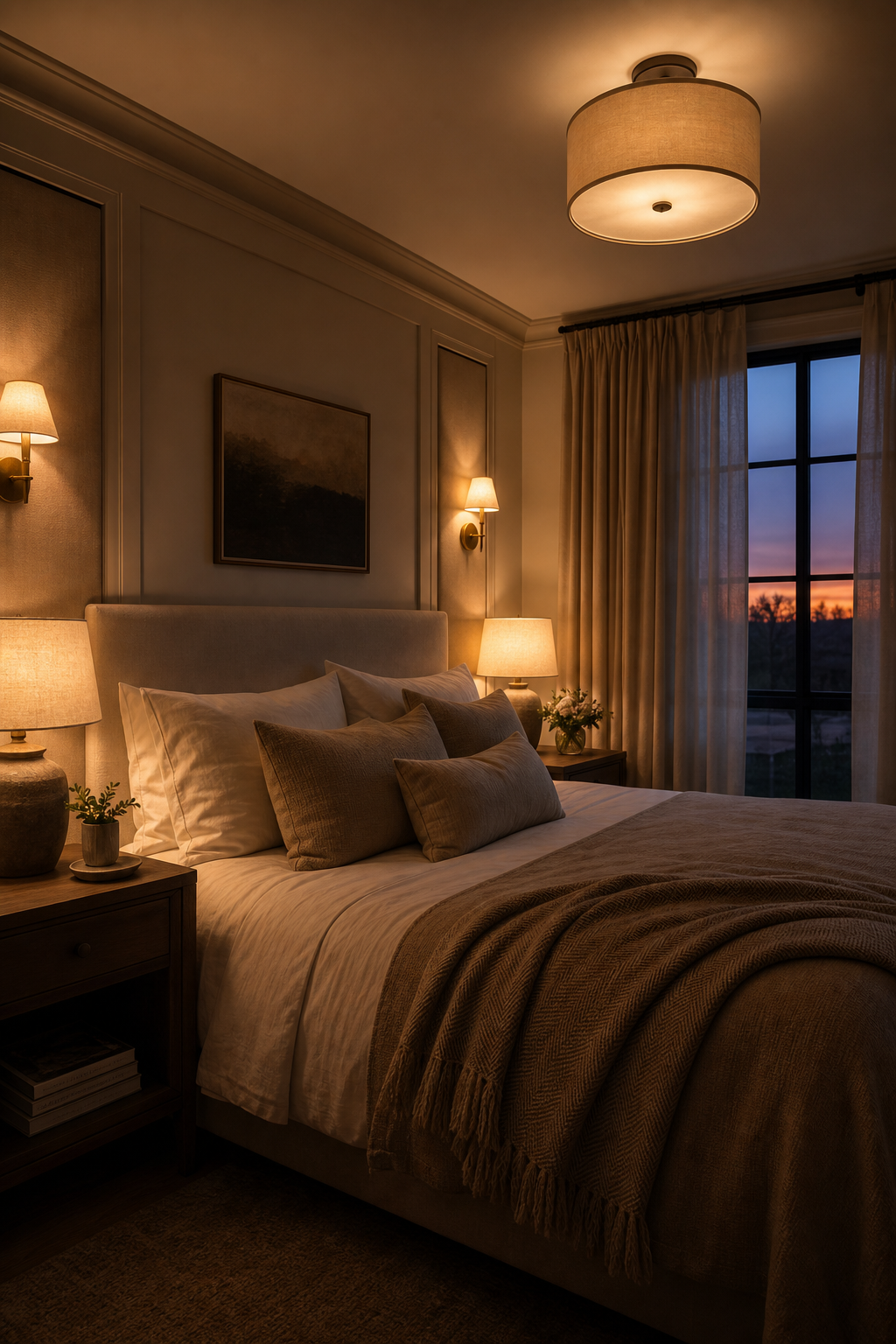
An upholstered bed instantly softens a bedroom, especially when the silhouette is simple and the fabric has a quiet texture. Choose a low or gently winged headboard in linen, boucle, or a tight woven performance fabric rather than anything overly tufted or ornate. The goal is comfort with restraint. Pair it with crisp white sheets, a warm neutral duvet, and two or three layered pillows so the bed feels inviting without becoming fussy. Keep the frame close to the wall and allow generous breathing room on each side if possible. A tailored bed skirt or clean platform base can hide storage while maintaining the calm line of the room.
Layer Bedding In Tonal Neutrals
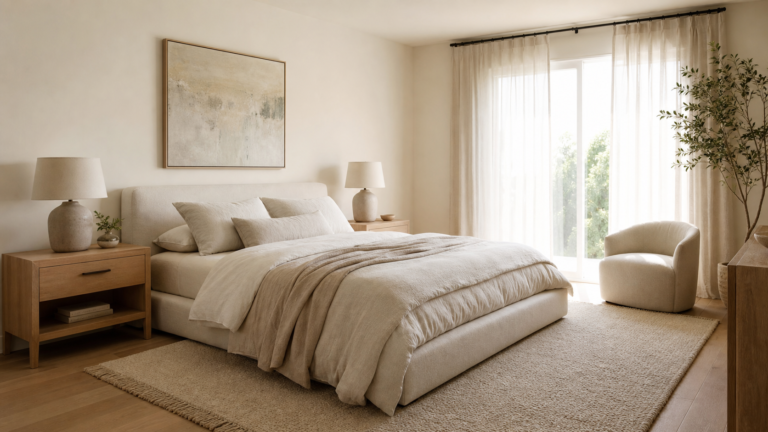
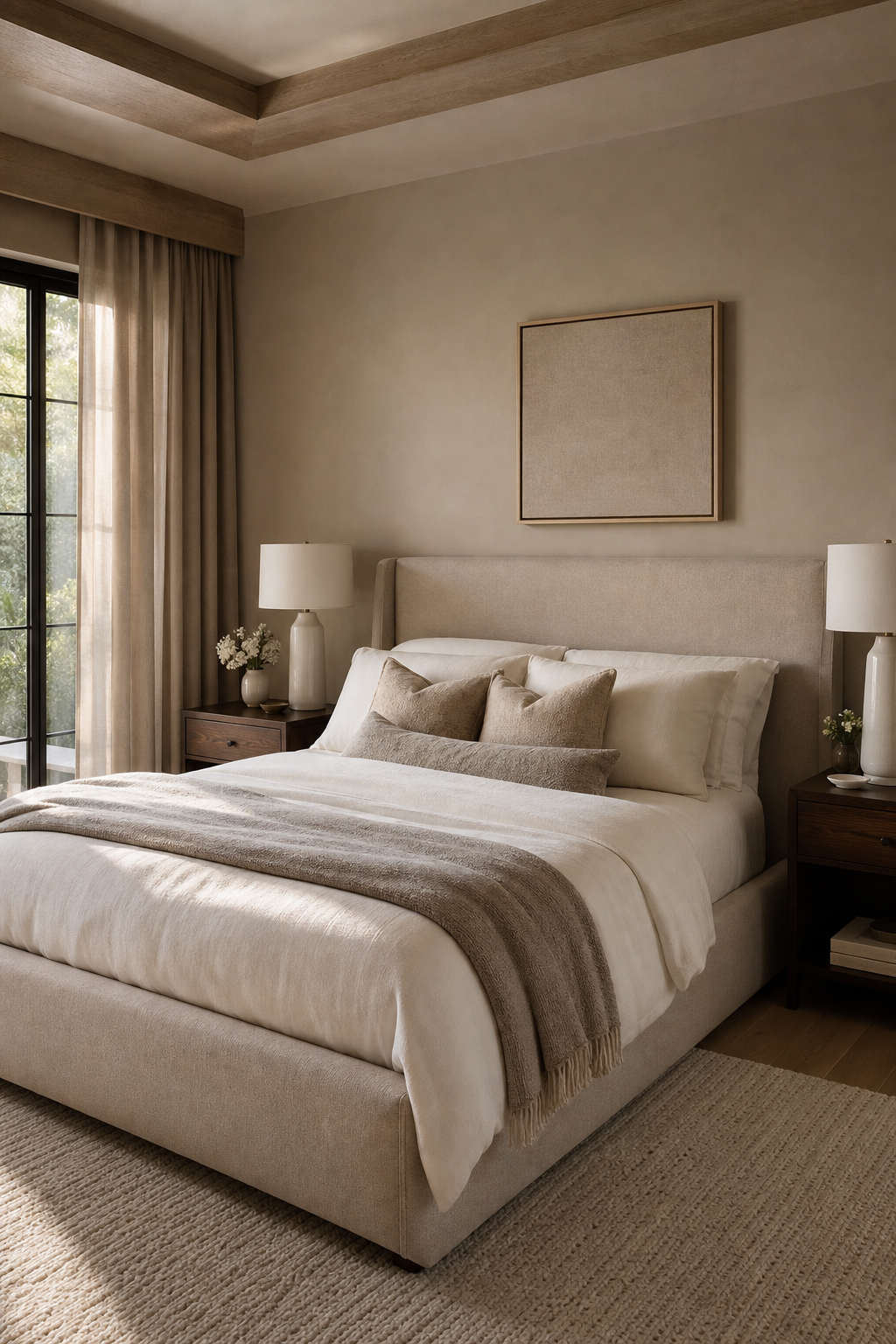
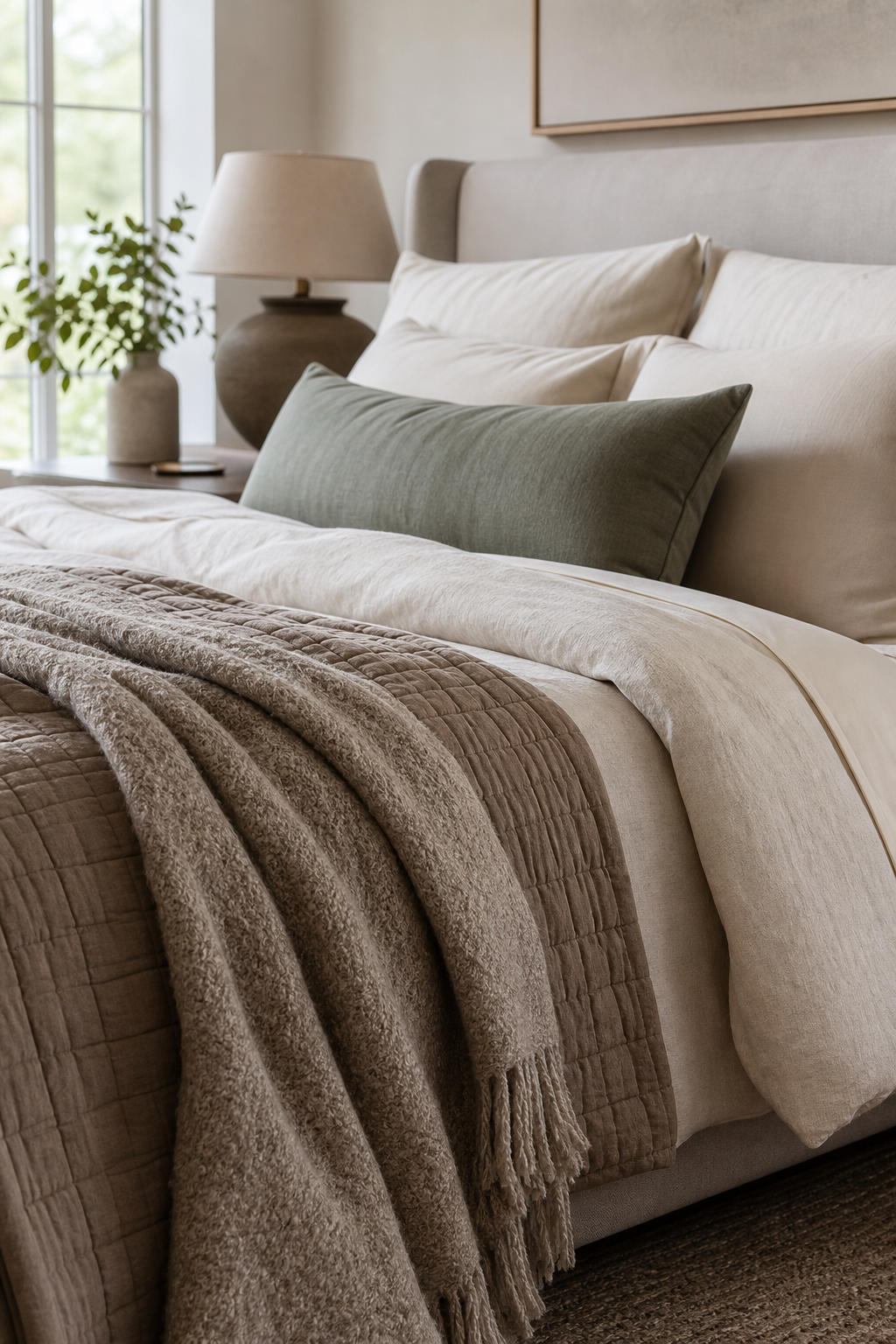
Tonal bedding gives a bedroom depth without visual clutter. Instead of matching every piece, work within a narrow family of ivory, oat, mushroom, flax, and warm gray. Use smooth cotton sheets as the clean base, then add a linen duvet, a quilt folded at the foot, and a soft throw with a visible weave. The layers should look useful, not staged. If the room feels too beige, introduce one muted accent through a lumbar pillow, such as sage, clay, or slate blue. This approach makes the bed feel luxurious while preserving the easy, restful mood that simple bedroom design depends on.
Use Matching Nightstands For Quiet Symmetry
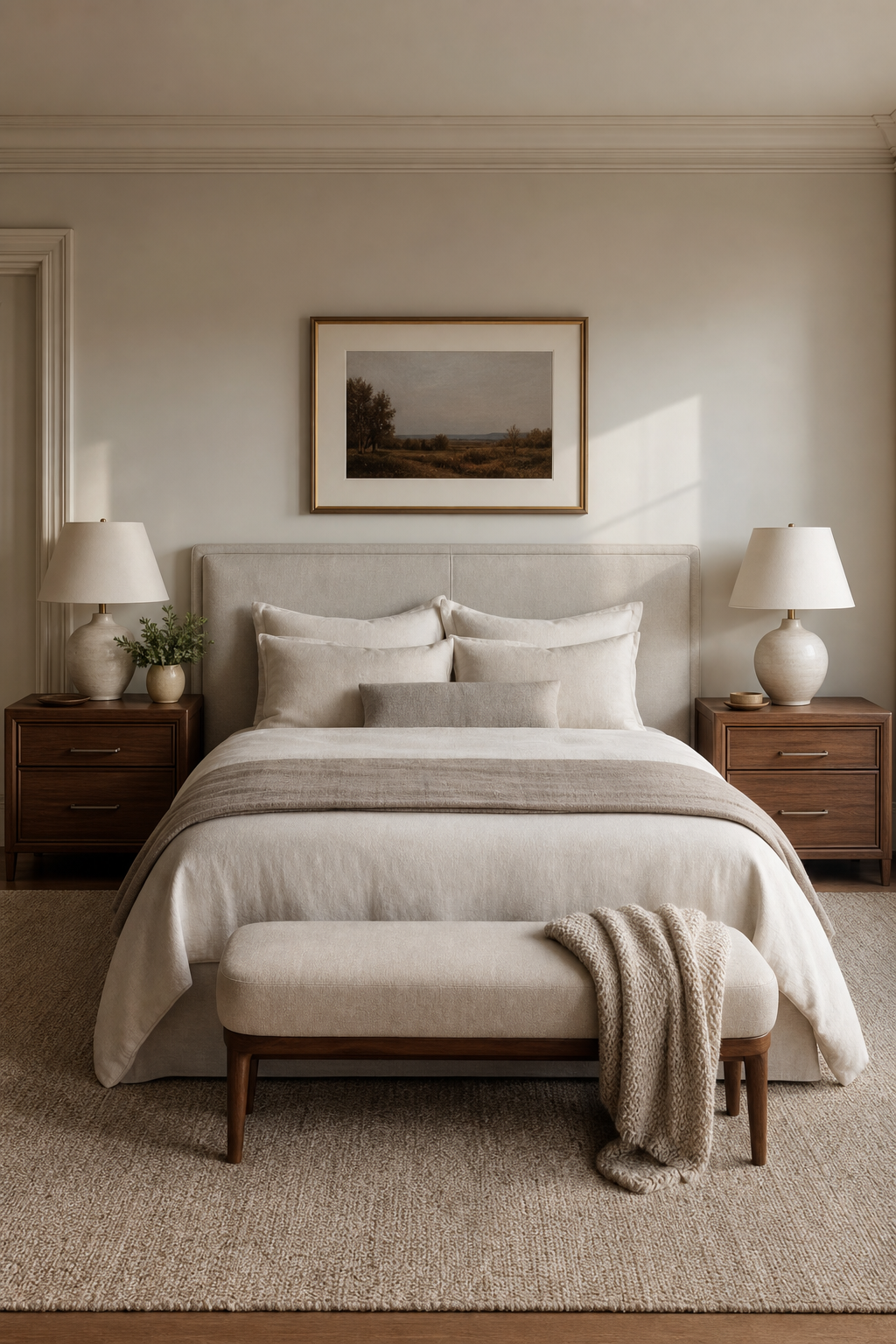
Matching nightstands can make even a modest bedroom feel considered. They create a stable visual frame around the bed and keep the room from looking pieced together. Choose drawers if you need to hide chargers, books, and glasses; choose open shelves only if you are disciplined about styling. The finish should relate to something else in the room, such as the floor, curtain rod, picture frame, or bench legs. Keep the tops simple: a lamp, a small tray, and one organic detail like a branch or ceramic bowl. Symmetry does not have to feel formal when the materials are warm and the styling is relaxed.
Choose Wall Color With Warmth
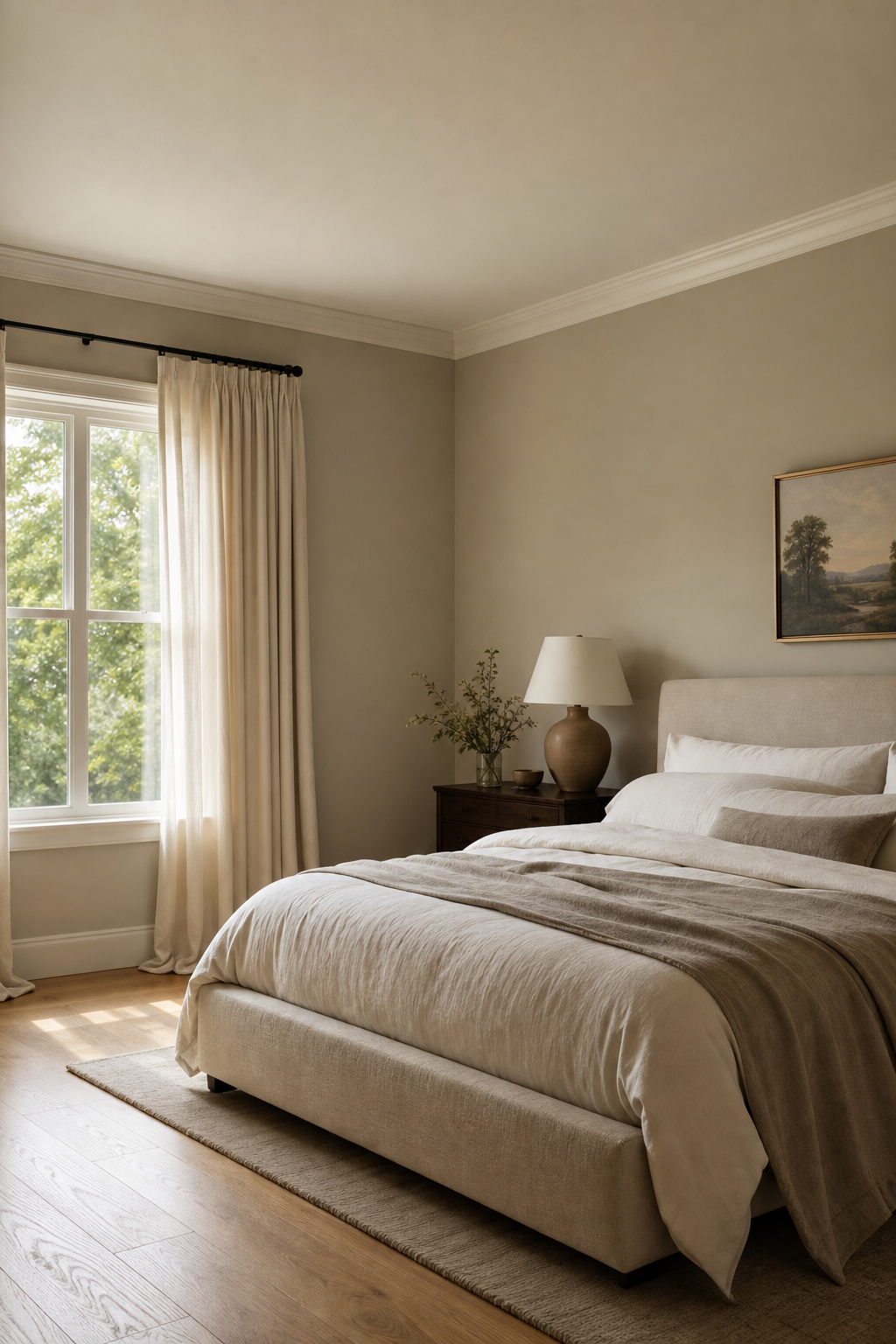
Bedroom walls often look best when the color has a little warmth and softness. Stark white can feel fresh in bright coastal rooms, but many bedrooms become cozier with chalky ivory, greige, mushroom, clay, or a pale olive gray. Test paint on several walls and watch it in morning and evening light before committing. A simple color can still feel luxurious if the finish is smooth and the trim is crisp. For extra depth, paint the ceiling a softened version of the wall color. It creates an enveloping effect without adding pattern, furniture, or decorative noise, and it flatters wood, linen, and brass beautifully.
Frame Windows With Full Linen Curtains
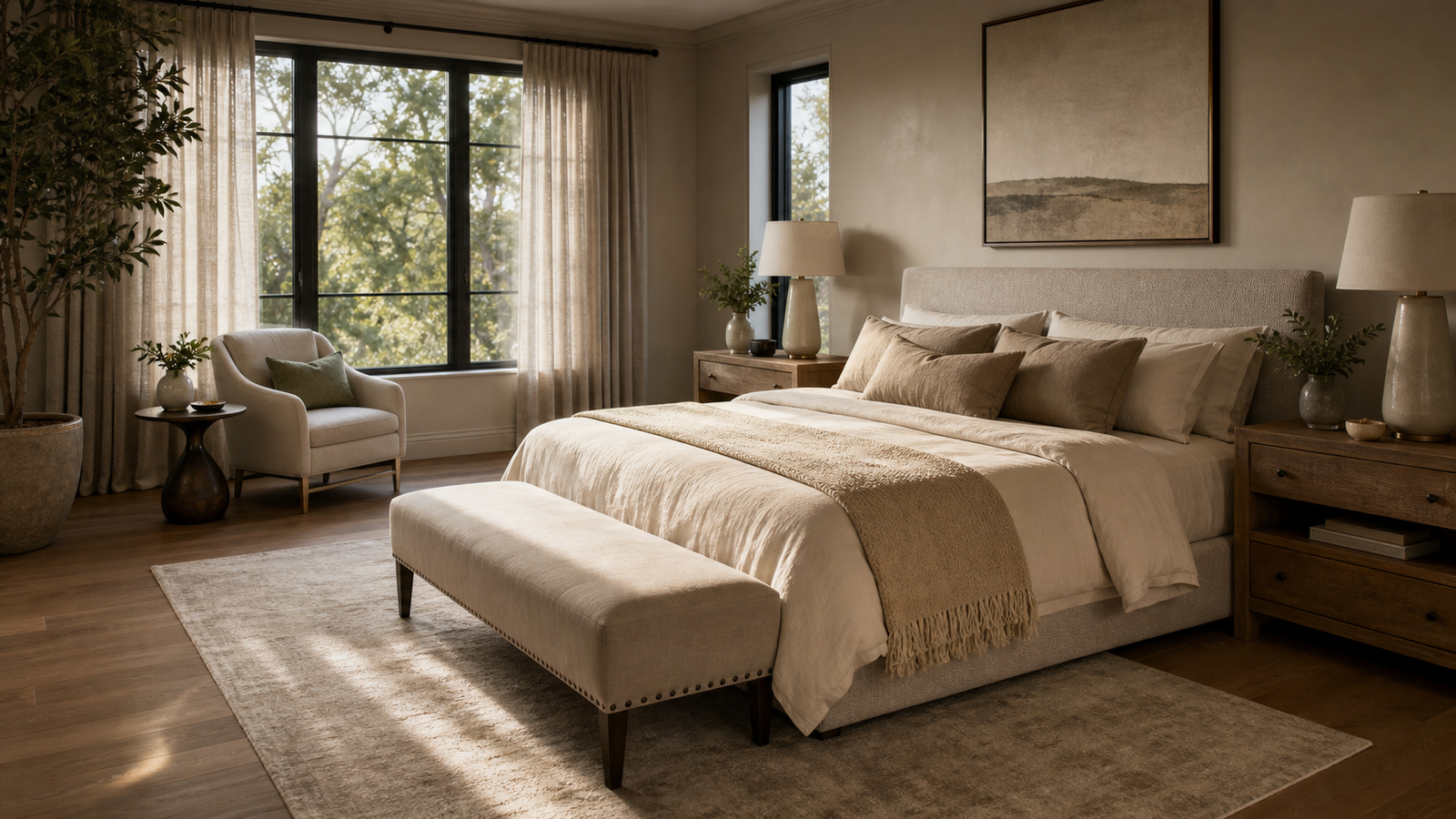
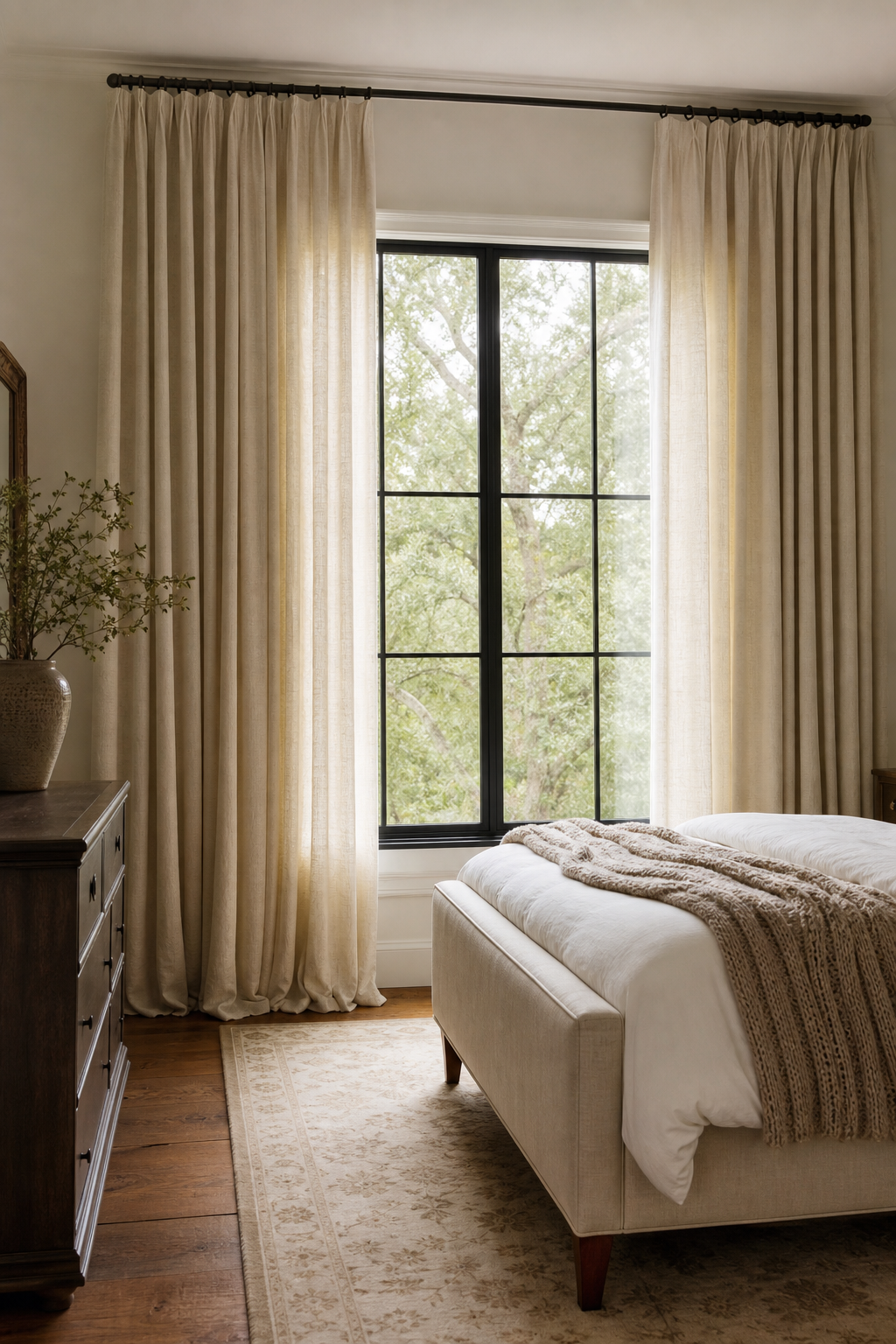
Curtains change the architecture of a bedroom more than almost any small upgrade. Hang the rod high and wide so the fabric clears the glass when open and the window feels larger. Linen or linen-blend panels add movement, texture, and softness while still looking effortless. For bedrooms, consider a lined panel or a hidden shade behind the curtain if you need light control. Let the fabric just kiss the floor or break slightly for a more relaxed look. Avoid short panels, shiny grommets, and thin fabrics that collapse. Full curtains make the entire room feel finished, even when the furniture is minimal.
Add A Bench At The Foot Of The Bed
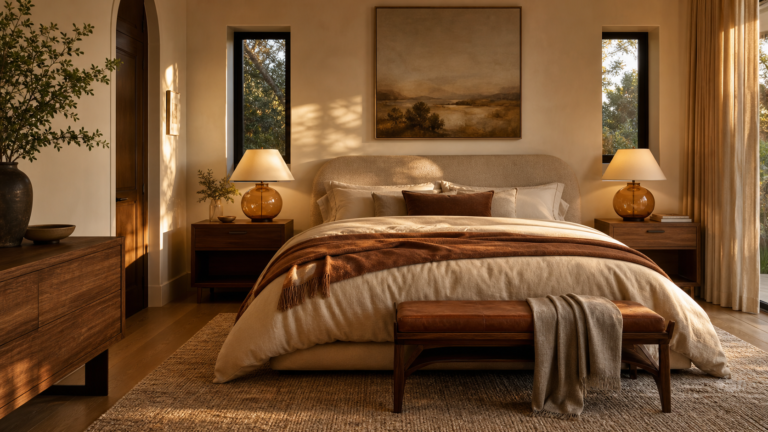
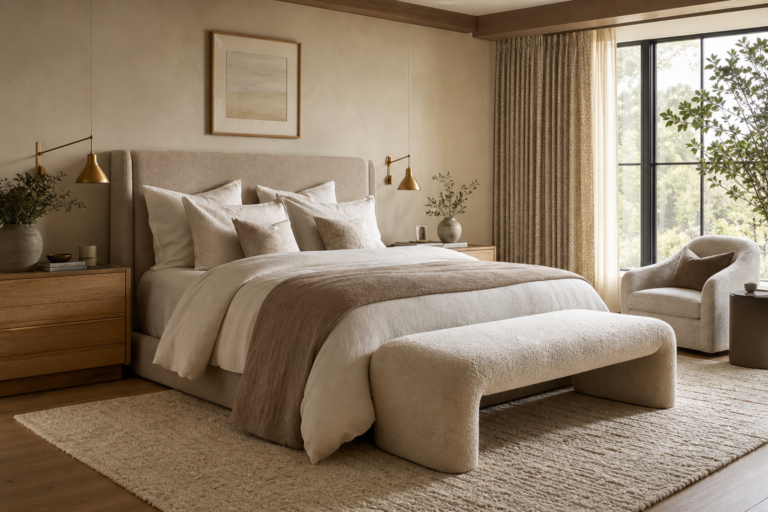
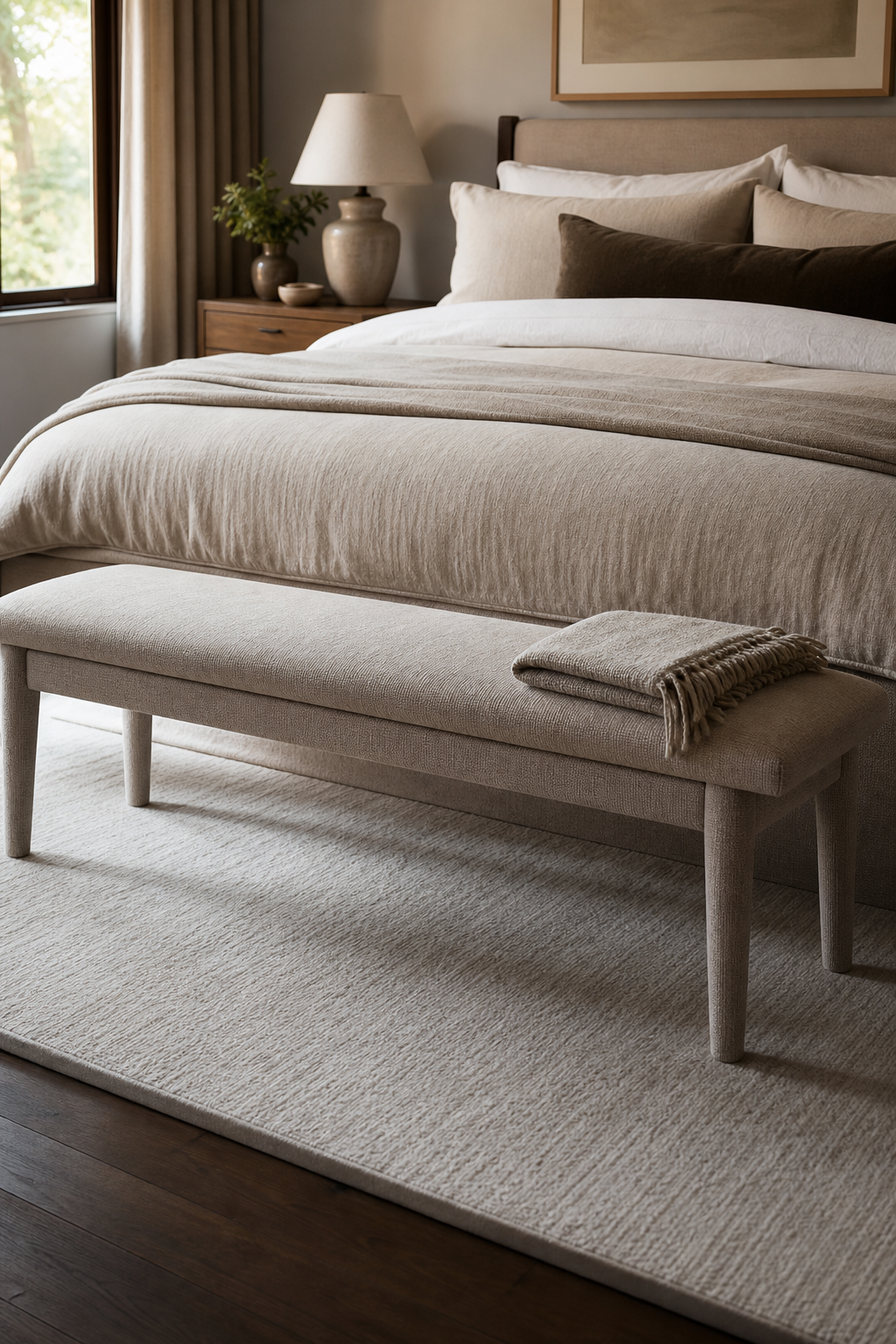
A bench gives the bed a graceful finish and adds daily function without demanding much space. It is useful for shoes, folded throws, or a tray of coffee on slow mornings. Choose a bench that is slightly narrower than the bed so it looks intentional rather than bulky. Upholstered versions feel soft and hotel-like, while wood or woven benches add texture and a more relaxed mood. If the room is small, choose a slim profile with open legs to keep the floor visible. The bench should echo the room’s materials, not compete with the headboard or rug, and leave enough space to walk comfortably.
Ground The Room With A Generous Rug
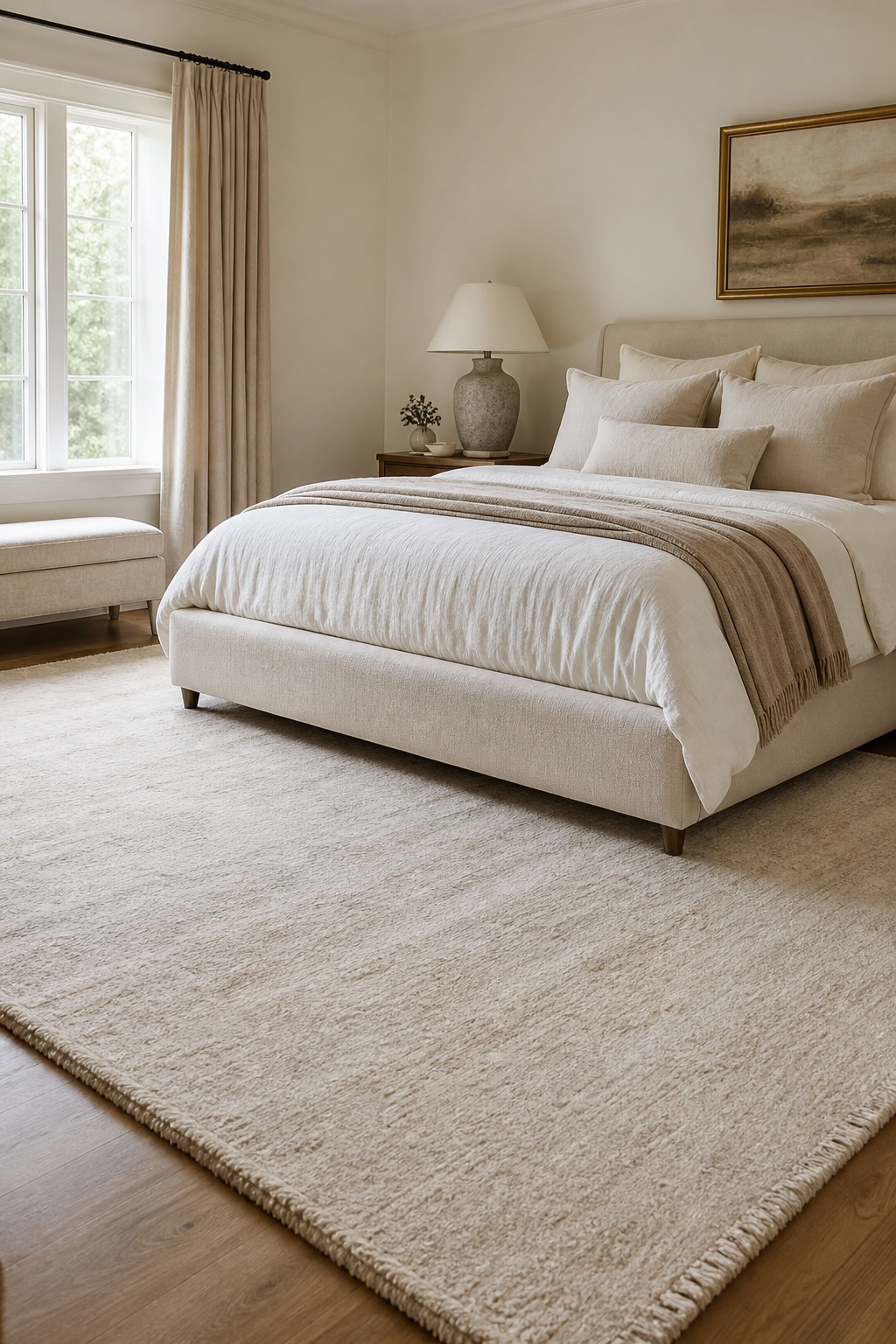
A too-small rug can make a bedroom feel unsettled, while a generous rug pulls the whole layout together. Ideally, the rug should extend well beyond both sides of the bed so your feet land on something soft in the morning. In a simple bedroom, texture matters more than pattern. Look for wool, jute-wool blends, low pile vintage-inspired designs, or subtle tone-on-tone motifs. Keep the rug color close to the bedding or wall color if you want calm, or slightly darker if the room needs grounding. A proper rug also absorbs sound, which makes the retreat feel quieter and more intimate.
Install Sconces To Free The Nightstand
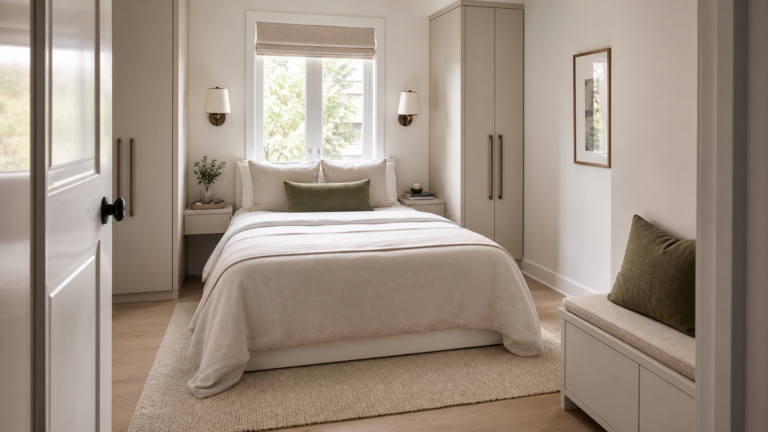
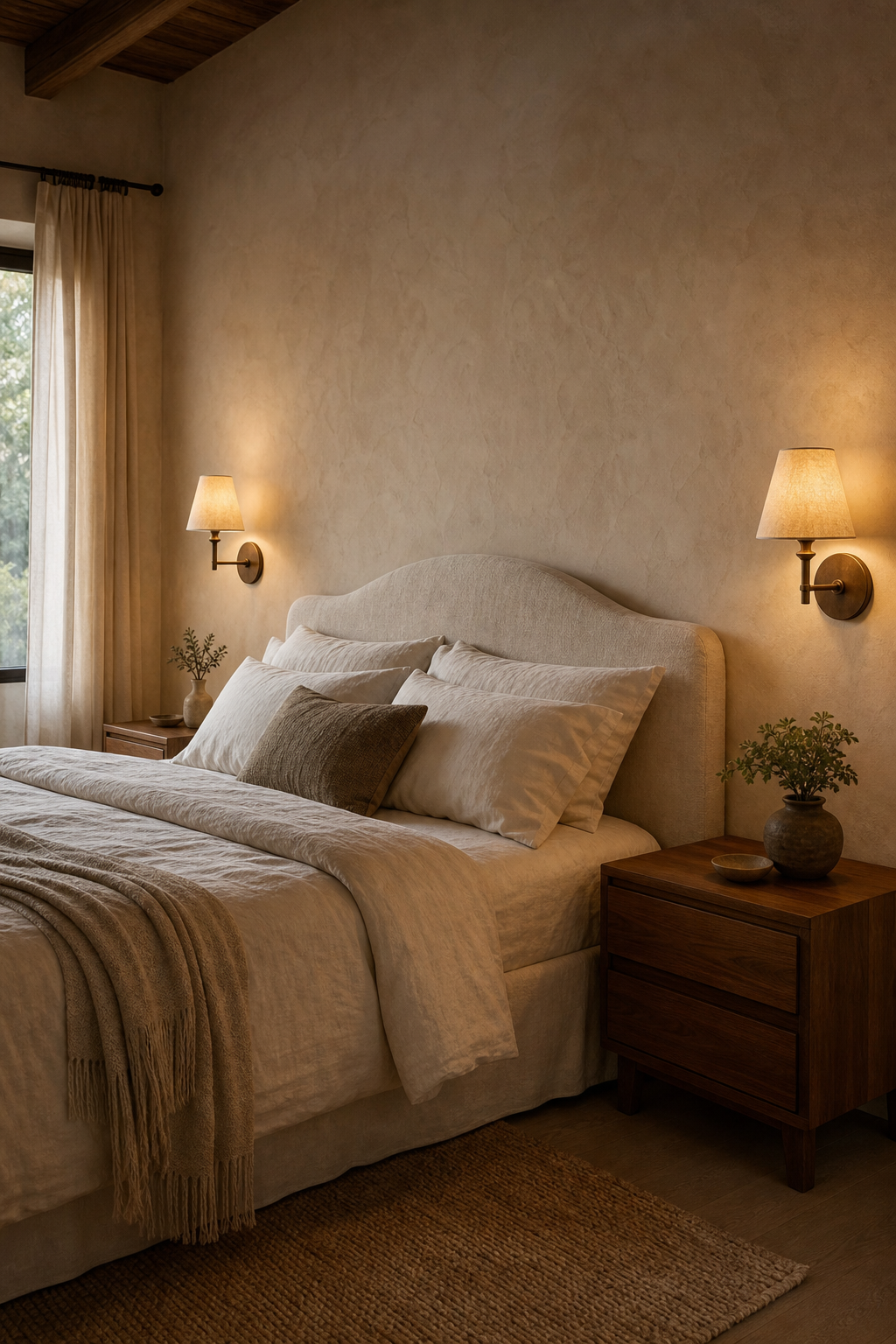
Wall sconces are a practical luxury in a bedroom because they free the nightstand and improve reading light. They also make the bed wall feel designed without needing large artwork or busy decor. Choose adjustable arms if you read often, or shaded sconces if you prefer soft ambient light. The finish should connect to other metal details in the room, such as curtain rods, picture frames, or drawer pulls. Mount them high enough to clear pillows and low enough to feel intimate from bed. If hardwiring is not possible, well-designed plug-in sconces can still look polished when the cords are managed neatly.
Create A Small Reading Corner
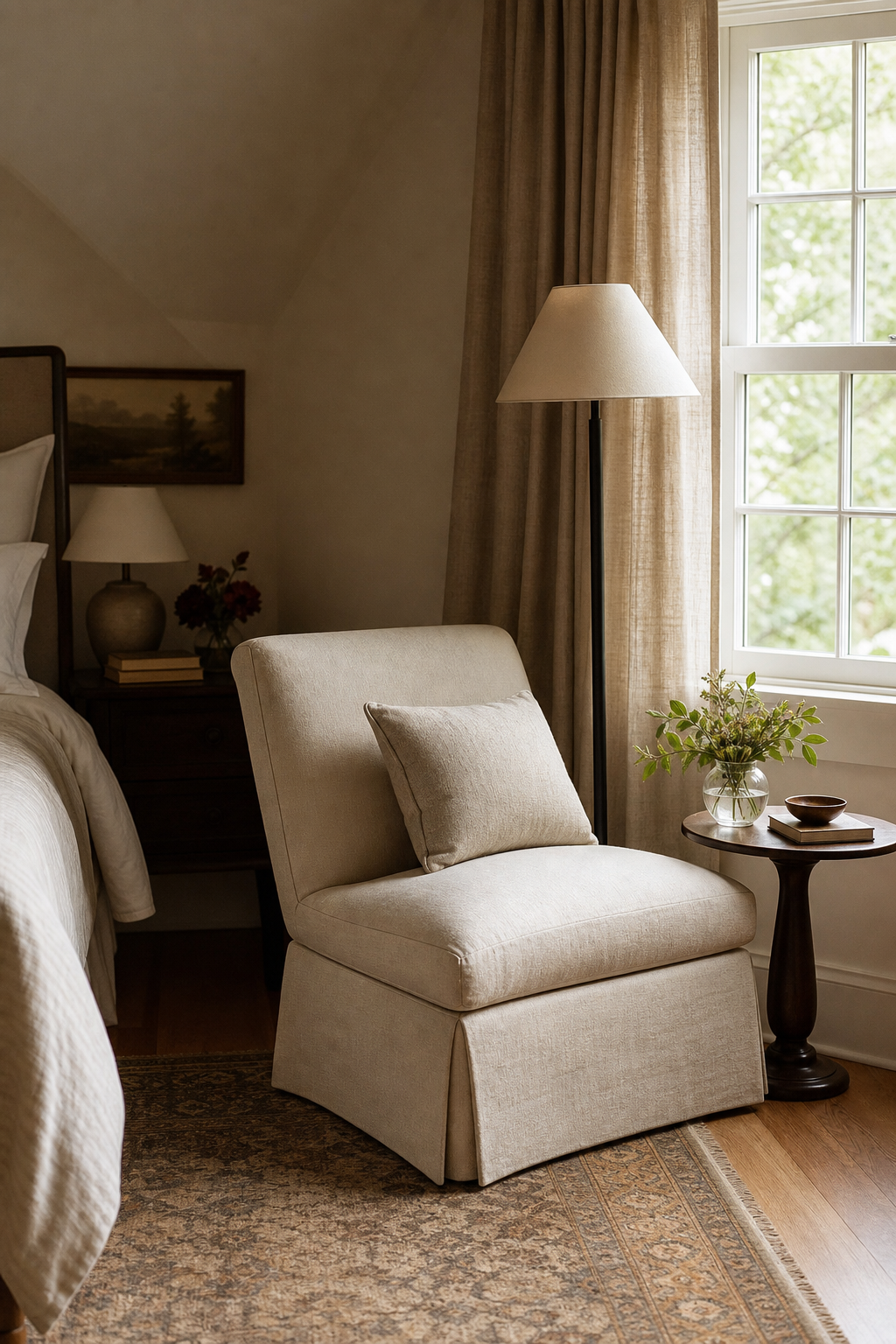
A bedroom retreat feels more complete when it offers a place to sit that is not the bed. A small reading corner can be as simple as an upholstered slipper chair, a petite side table, and a floor lamp near the window. Choose a chair with a comfortable seat depth and a fabric that relates to the bedding or curtains. Add one pillow or a folded throw, but keep the corner open enough to use daily. This little zone gives the room a slower rhythm and makes it feel like a private suite rather than just a sleeping area, especially on quiet mornings.
Keep Art Large And Uncluttered
Simple bedroom design benefits from fewer, larger pieces of art. A single oversized landscape, textile piece, or quiet abstract can calm the wall above the bed or dresser better than a crowded gallery arrangement. Look for colors already present in the room so the art feels integrated rather than imported. Frames should be thin and intentional, with wood, black, brass, or white depending on the palette. If the headboard is tall, hang art on an adjacent wall instead of squeezing it above the bed. The best bedroom art sets a mood, adds scale, and lets the room breathe without demanding attention.
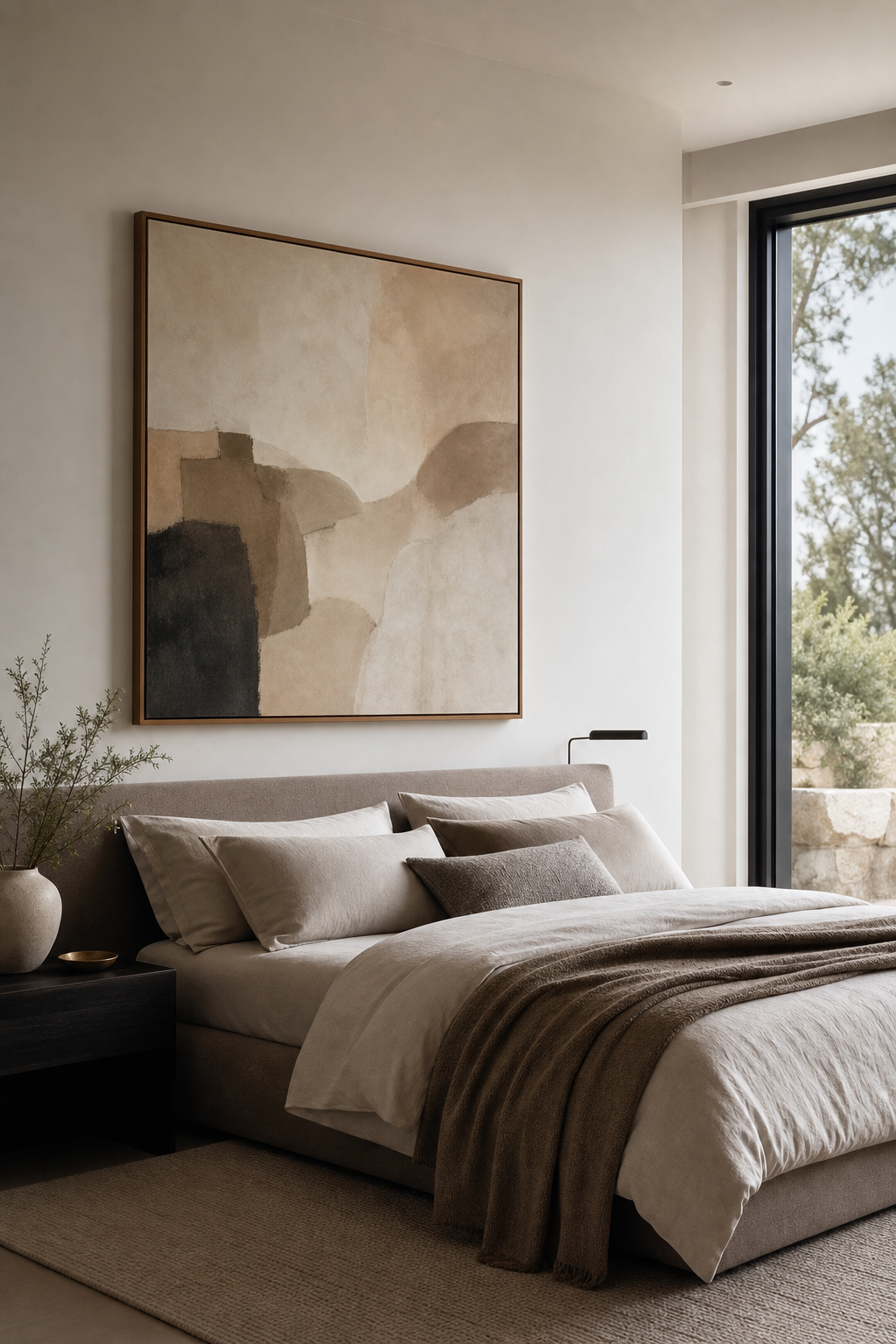
Style The Dresser Like A Console
A dresser can look heavy if it is treated only as storage. Style the top like a refined console so it contributes to the room. Start with a mirror or artwork for height, then add a table lamp, a shallow tray, and one sculptural object or vase. Leave some negative space so the surface still feels calm. If the dresser is dark wood, balance it with a pale lamp shade or ceramic vessel. If it is painted or light oak, add contrast through a dark tray or framed piece. The arrangement should be useful, not precious, with everyday items contained rather than scattered.
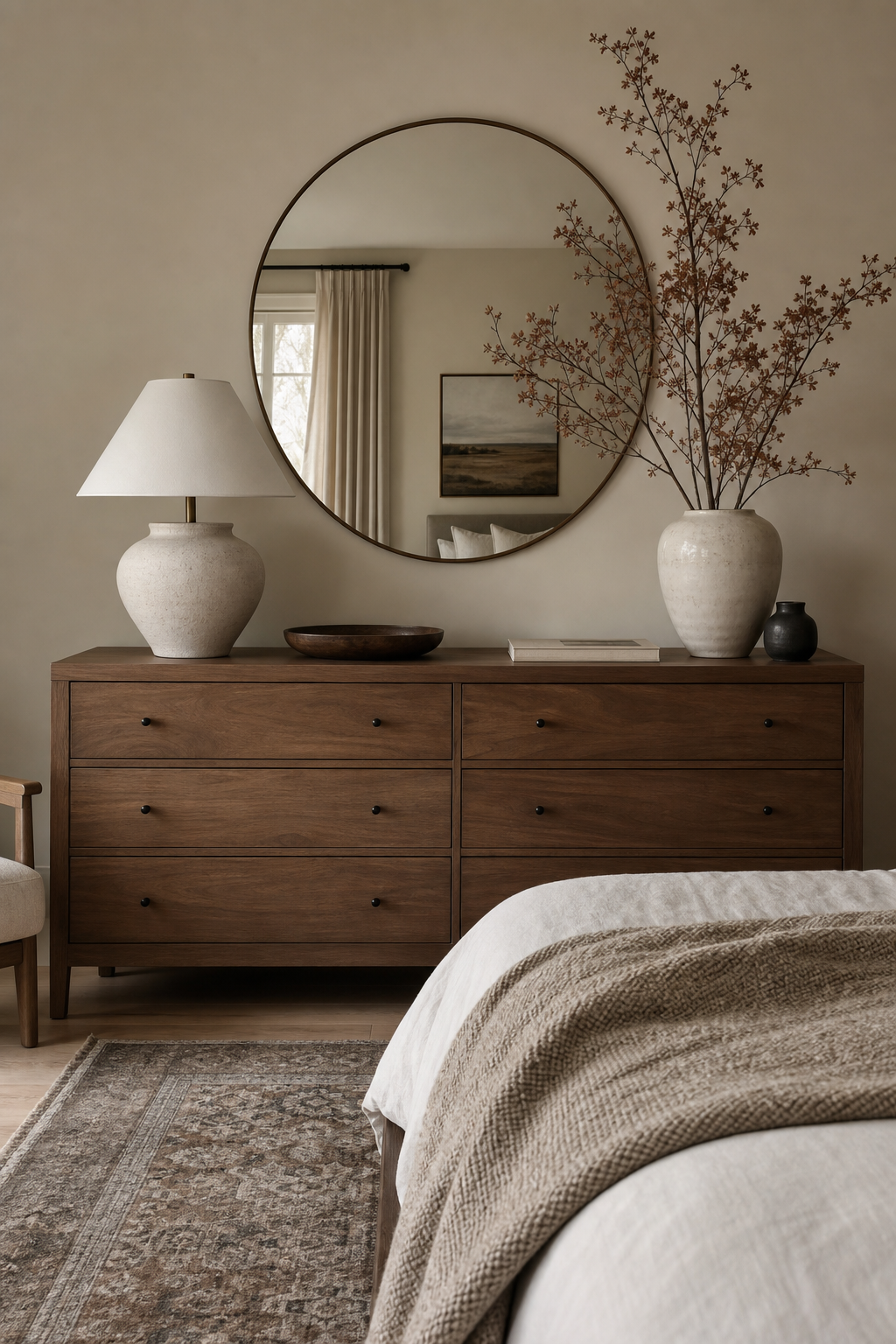
Use Closed Storage To Preserve Calm
Visual quiet is one of the quickest ways to make a bedroom feel more expensive. Closed storage helps by hiding the small objects that interrupt rest: chargers, extra skincare, books, socks, and folded linens. Choose nightstands with drawers, a dresser with smooth fronts, underbed boxes with fabric covers, or a wardrobe that reaches close to the ceiling. The key is making storage easy enough to use every day. Avoid open baskets for anything messy or multicolored unless they sit inside a closet. When belongings have a place, the simple design choices can actually be seen and enjoyed every evening at home.
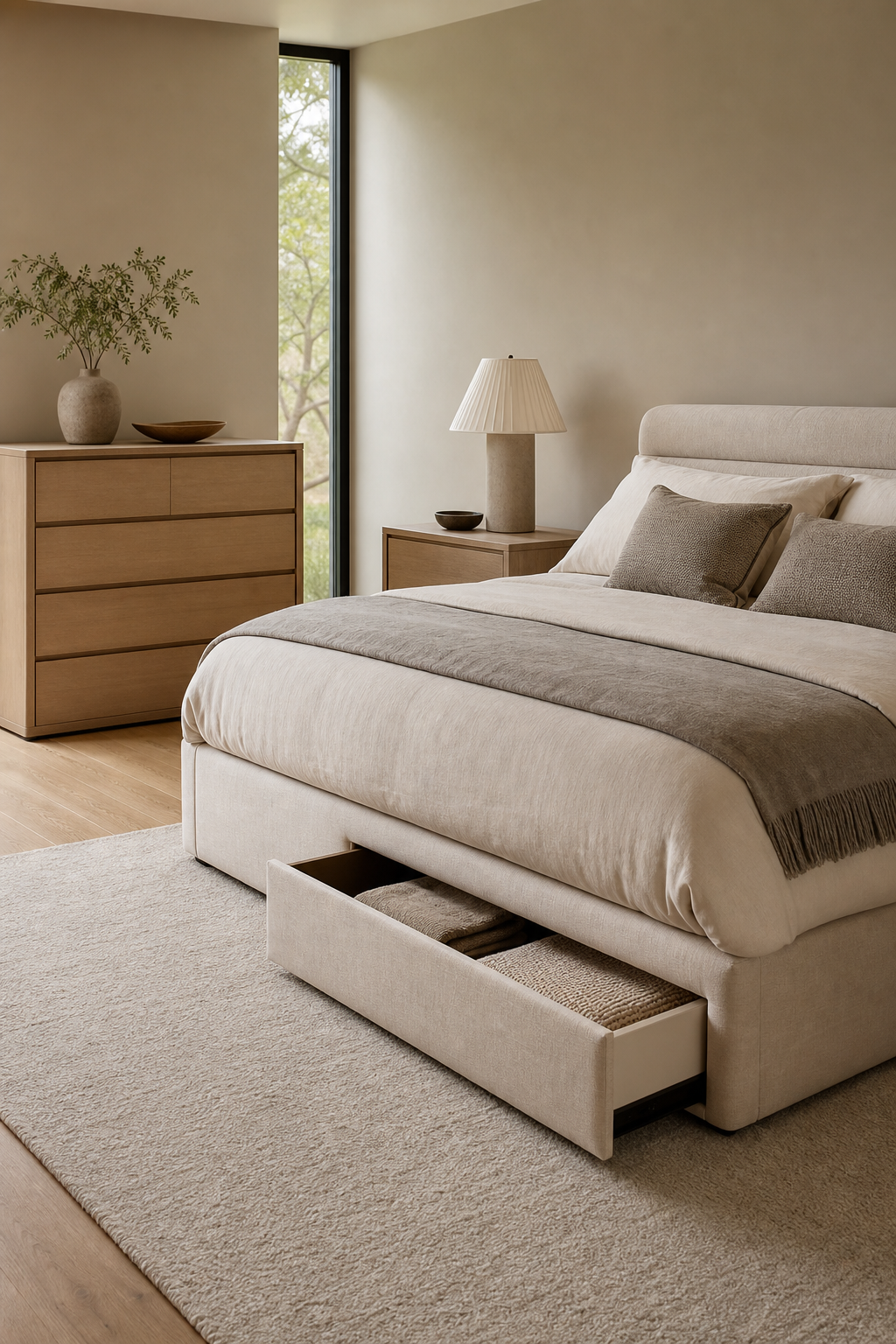
Bring Texture Through Natural Materials
When a bedroom uses a restrained palette, texture keeps it from feeling flat. Mix materials that invite touch: linen bedding, a wool rug, rattan or cane accents, smooth ceramic lamps, aged wood, woven shades, and a boucle chair. Keep the palette controlled so the textures remain sophisticated rather than busy. One or two rustic elements can warm up clean furniture, but too many rough finishes may make the room feel casual. Balance nubby textiles with crisp sheets, matte ceramics with polished metal, and woven pieces with tailored upholstery. This layered material mix is what makes a simple bedroom feel designed.
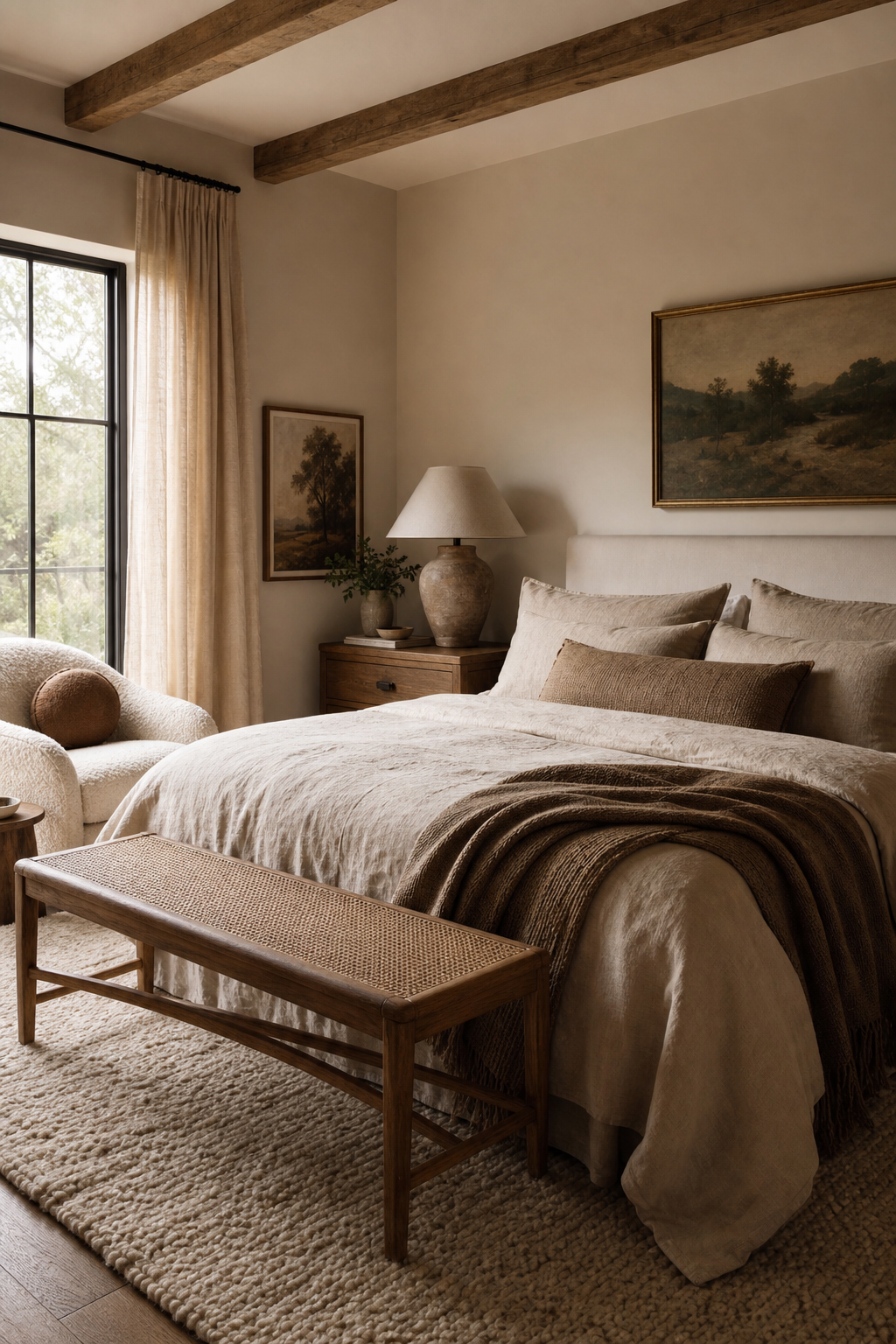
Add One Dark Accent For Definition
Soft bedrooms still need definition. One dark accent can sharpen the room without disturbing the calm. Try a black metal curtain rod, a charcoal lamp base, a dark wood nightstand, a bronze picture frame, or a deep olive pillow. The accent should appear intentional and preferably repeat once in a smaller way across the room. This prevents the palette from becoming washed out, especially in spaces with pale walls and light bedding. Keep the dark notes slim rather than blocky. A little contrast gives the eye somewhere to rest and makes the lighter textures look more luminous in daylight too.
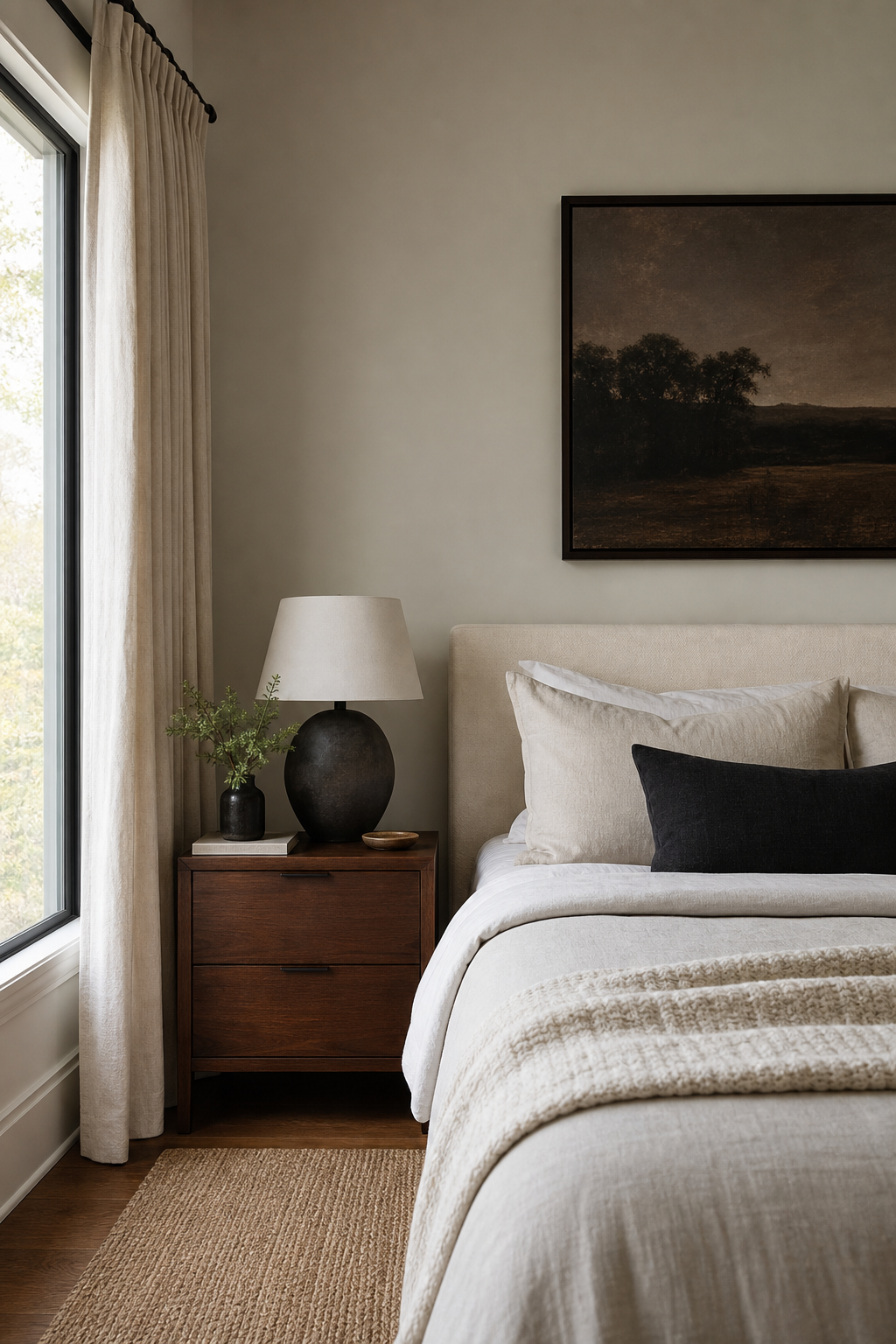
Make The Ceiling Feel Intentional
The ceiling is easy to ignore, but it strongly affects how finished a bedroom feels. A simple flush mount, paper lantern, plaster pendant, or fabric shade can bring softness overhead without crowding the room. If the ceiling is high, a pendant adds intimacy. If it is low, choose a refined flush mount with warm diffusion. Painting the ceiling a gentle tint can also make the space feel wrapped and restful. Avoid overly bright bulbs and exposed glare. Bedroom ceiling lighting should support the atmosphere rather than dominate it, especially when bedside lamps and sconces already create the evening mood softly.
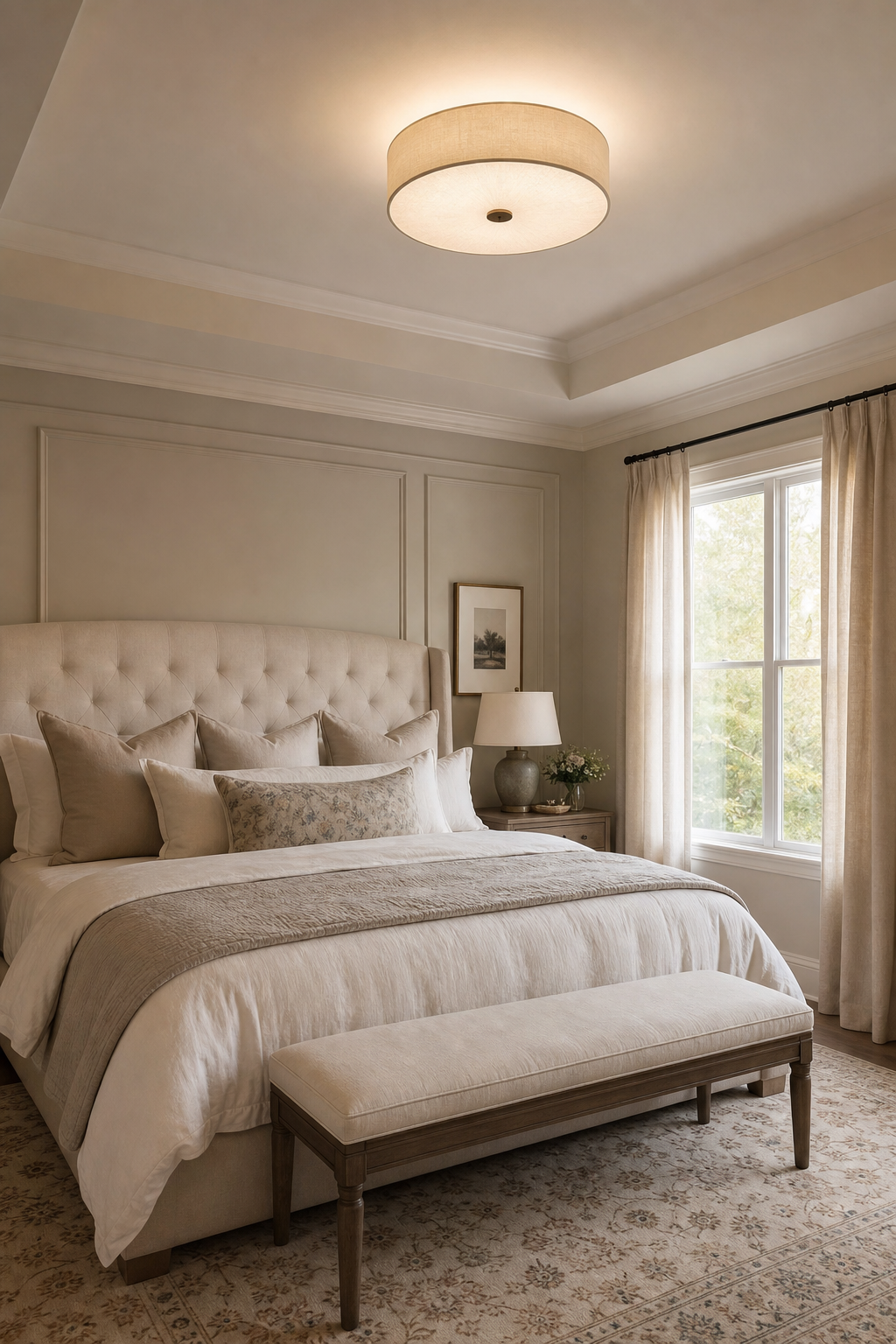
Float Furniture When Space Allows
Not every bedroom layout needs furniture pressed tightly to the walls. If the room is large enough, floating a chair, bench, or small writing desk can make the space feel more gracious. Keep circulation clear around the bed first, then use a rug to anchor the secondary piece. A floated desk near a window can become a beautiful morning workspace, while a chair angled toward the bed can soften an empty corner. The trick is scale. Choose pieces with open legs and enough negative space around them so the layout feels airy, not crowded, and easy to cross daily with ease.
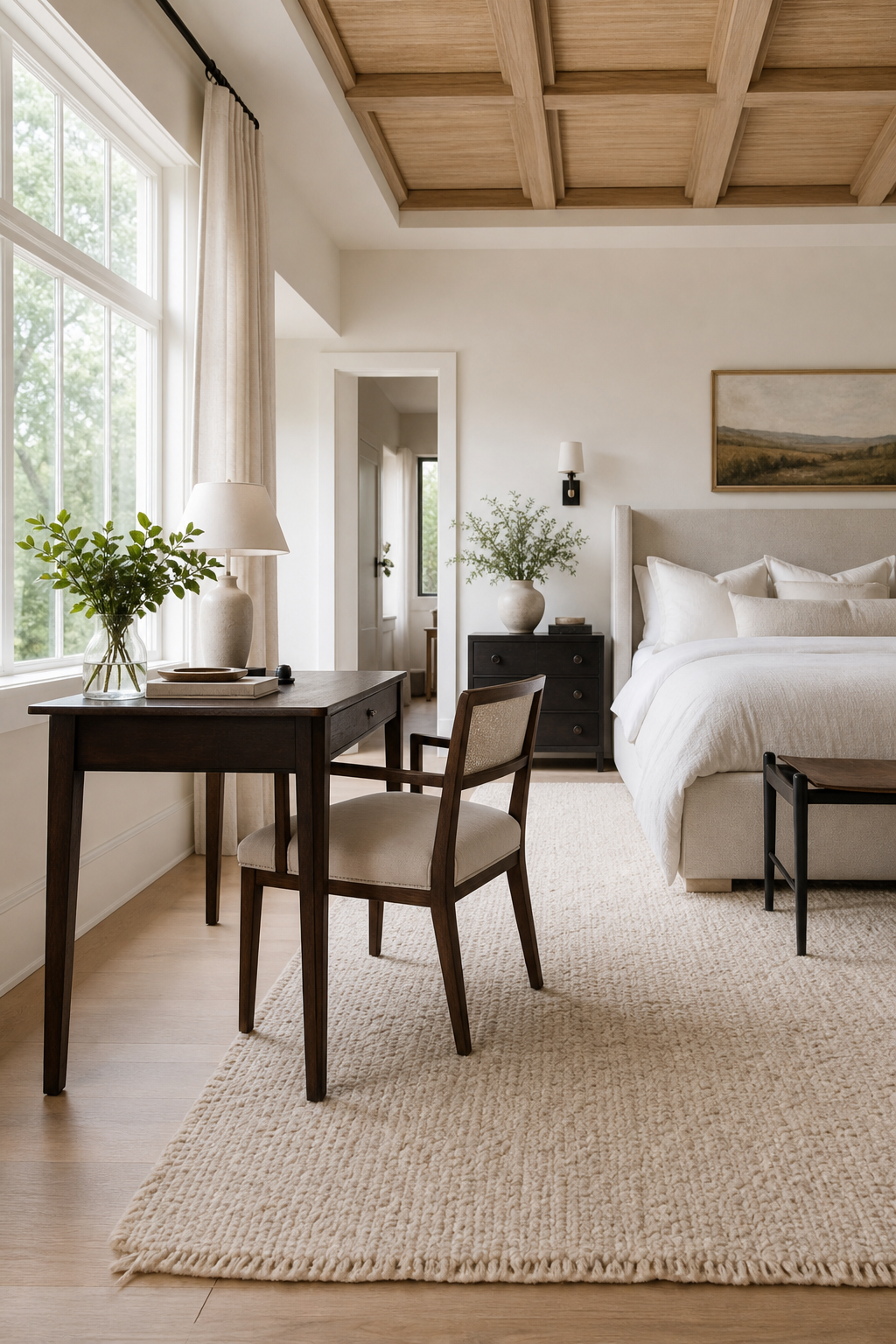
Use Mirrors To Reflect Light, Not Clutter
A mirror can brighten a bedroom beautifully when it reflects a window, curtain, artwork, or clean architectural line. It is less successful when it doubles the view of laundry, open shelving, or a busy doorway. Before hanging one, stand where you will see it most often and check the reflection. A full-length mirror leaning near a wardrobe can be both practical and elegant, while a rounded mirror above a dresser softens straight furniture lines. Choose a frame that feels connected to the room’s metal or wood tones. Used carefully, mirrors add light and scale without adding more objects to clean.
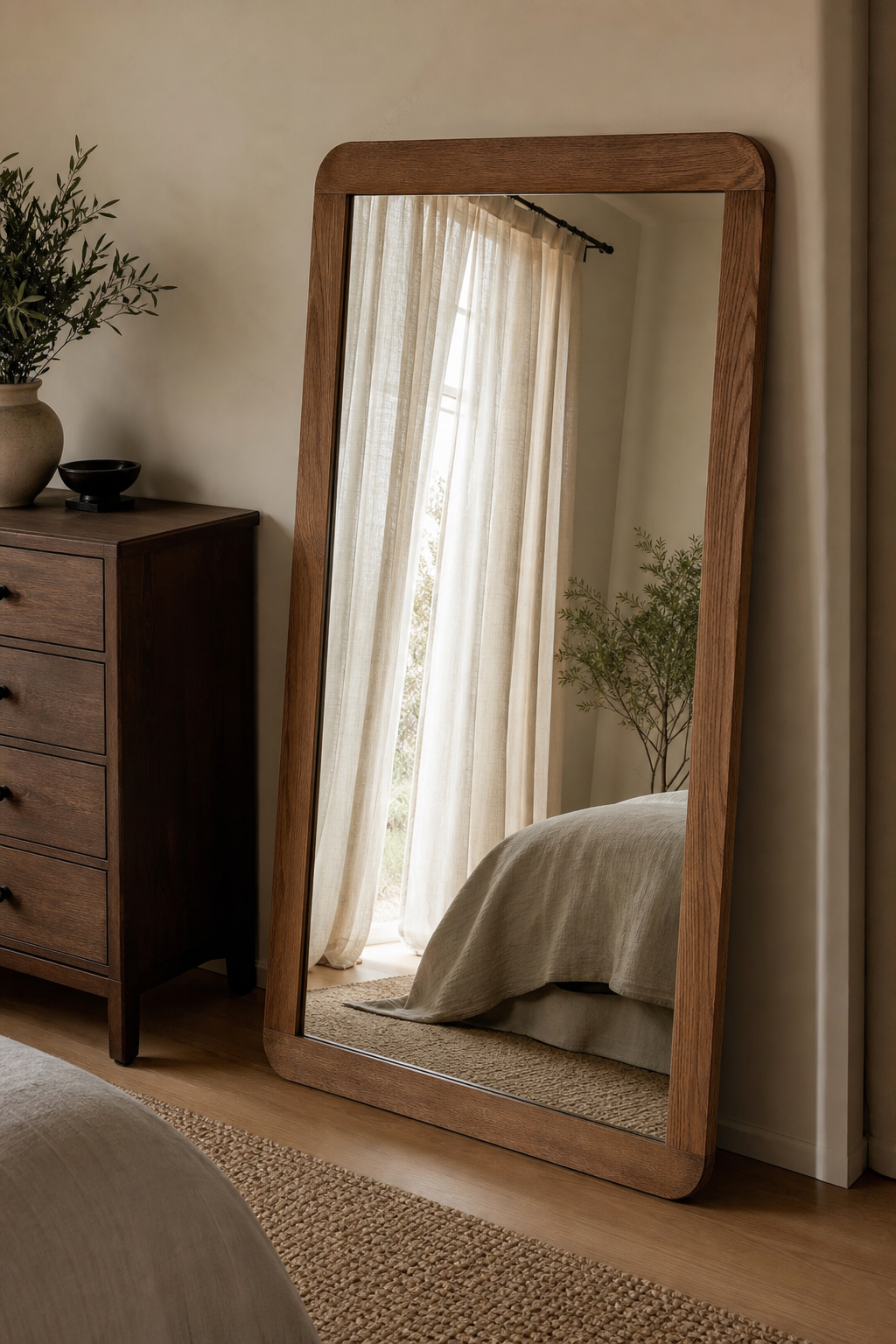
Let Plants Stay Sculptural And Simple
Greenery can make a bedroom feel alive, but it works best when the choice is sculptural and contained. Instead of many small pots, try one tall olive tree, rubber plant, ficus, or a simple branch arrangement in a ceramic vessel. Place it where it can receive proper light and where the planter adds texture to an empty corner. Keep the pot neutral and substantial so it feels like part of the furniture plan. If real plants are difficult in your room, a vase of seasonal branches can provide the same organic line with less maintenance. The effect should be fresh, not cluttered.
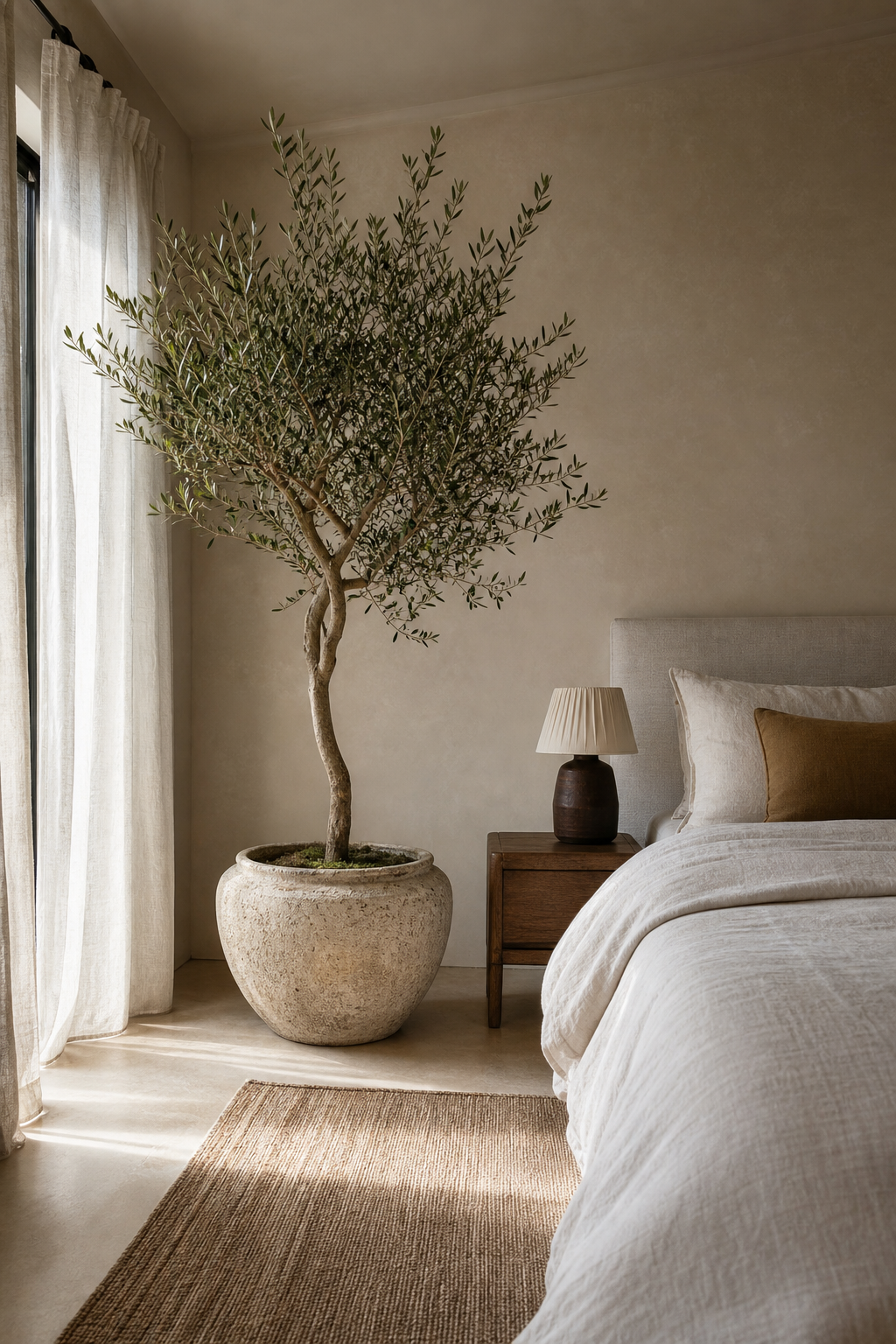
Choose A Headboard Wall Feature Carefully
A bedroom feature wall should feel architectural, not loud. Instead of a busy wallpaper or high-contrast paint color, consider vertical wood slats, limewash, picture molding, grasscloth, or a soft tonal panel behind the bed. The feature should support the headboard rather than fight it. Keep bedding and art simpler if the wall already has texture. In smaller rooms, a subtle treatment across the entire wall usually feels calmer than a narrow accent strip. When done with restraint, the headboard wall gives the room a custom look while keeping the overall design simple and restful over time too, without visual noise.
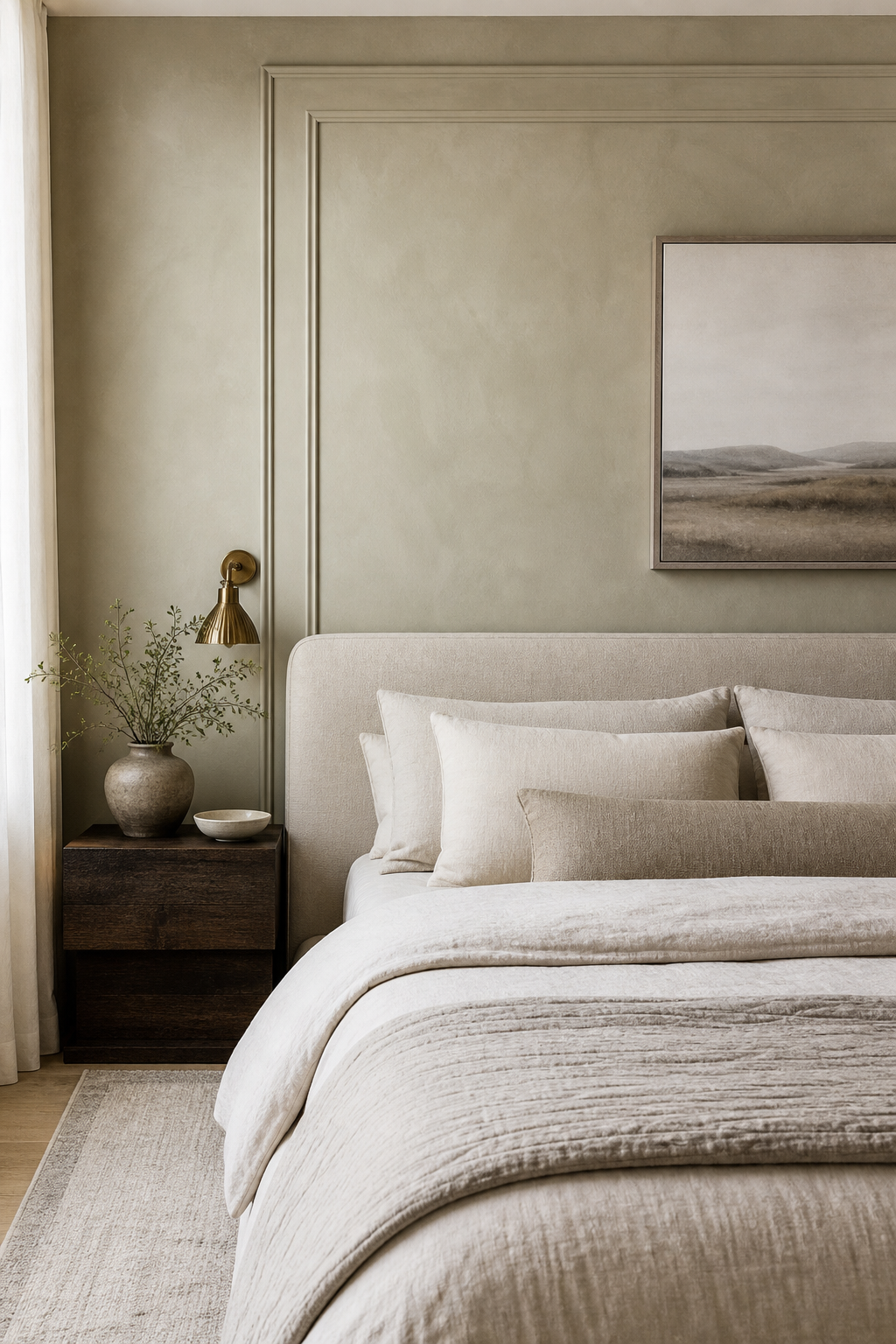
Edit The Color Palette To Three Notes
A simple palette becomes easier to manage when you think in three notes: a base, a warmth, and an accent. The base might be ivory walls and bedding. The warmth might come from walnut, oak, brass, or camel textiles. The accent might be sage, dusty blue, clay, or charcoal. Repeating those notes across the room creates cohesion without requiring everything to match. If a new item does not belong to one of the three notes, it needs a strong reason to stay. This small editing rule is especially useful when updating a bedroom gradually over time and shopping slowly with intention.
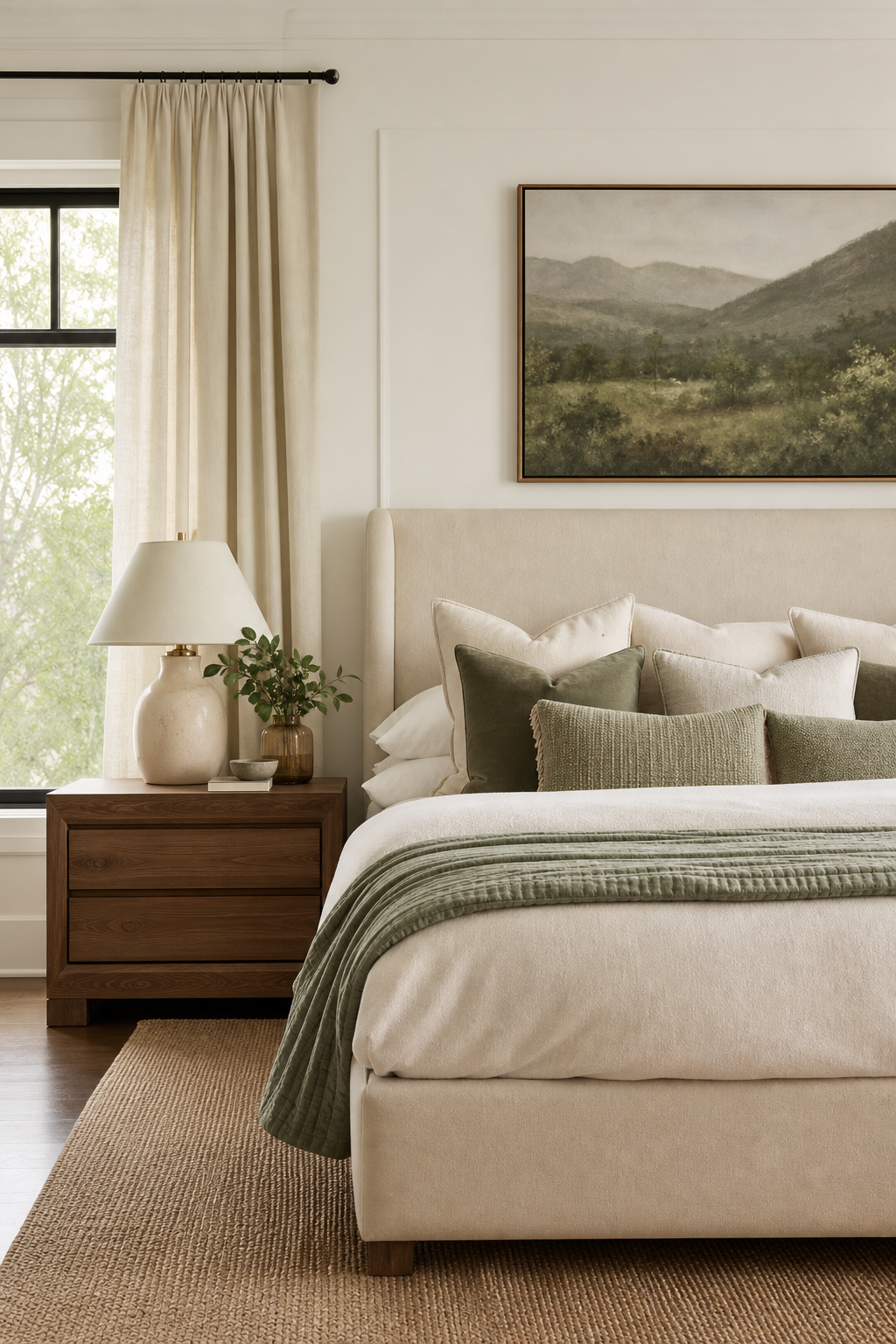
Make Small Rooms Feel Tailored
Small bedrooms look best when every measurement is deliberate. Use a bed size that allows real circulation, then choose narrow nightstands, wall lights, and a rug scaled to the actual floor area. Built-in or wall-mounted storage can replace extra furniture. Keep the bedding generous but not oversized, since heavy puddling fabric can swallow a compact room. A single large artwork or mirror often works better than several small pieces. Paint, curtains, and bedding in related tones can blur hard edges and make the space feel calmer. Tailored does not mean sparse; it means nothing is fighting the room.
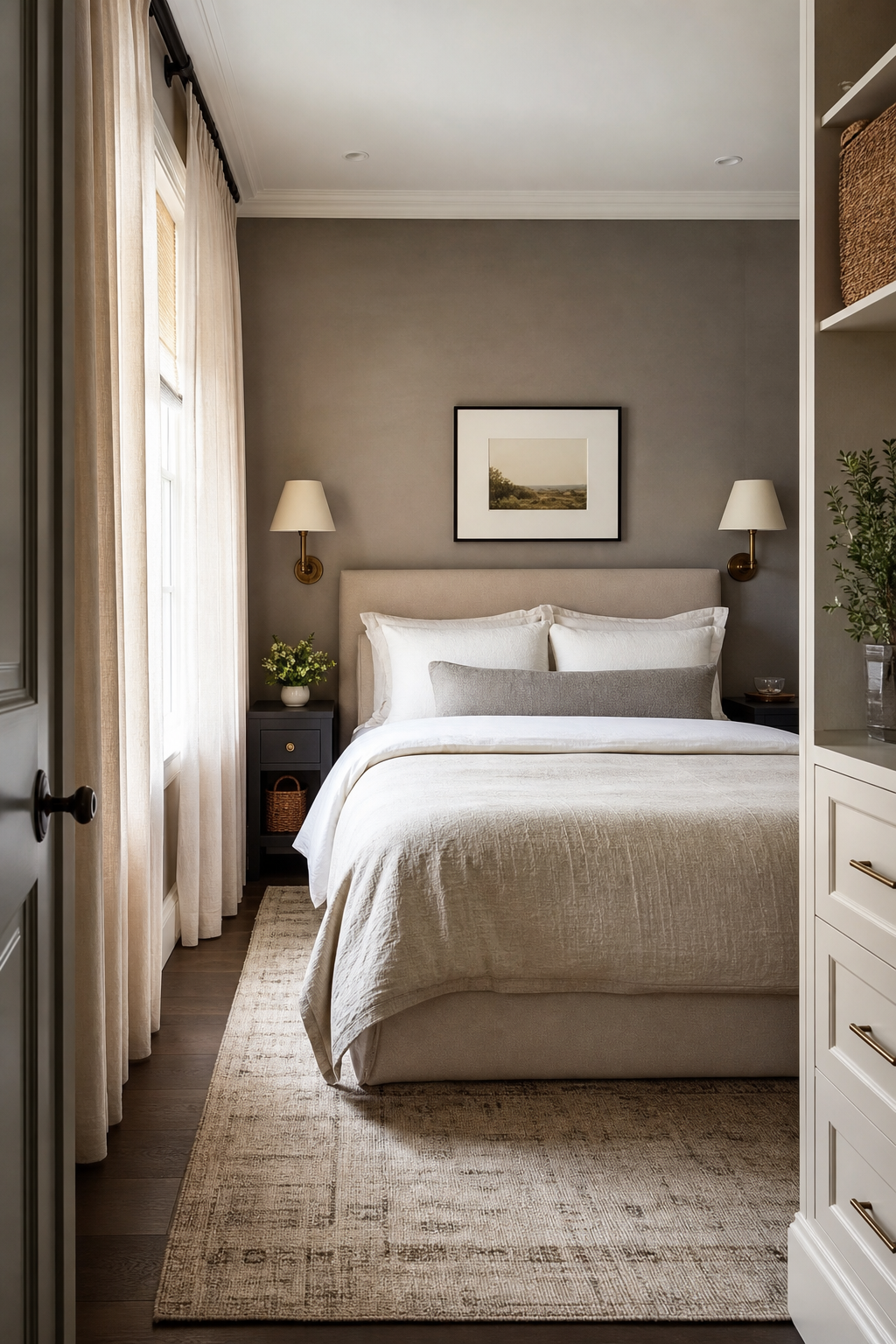
Use Warm Bulbs Everywhere
Lighting temperature can make or break a cozy bedroom. Use warm bulbs across bedside lamps, sconces, ceiling fixtures, and floor lamps so the room feels consistent at night. Look for dimmable options and avoid cool blue-white bulbs, which can make even beautiful materials feel harsh. Lampshades matter too: fabric, paper, or frosted glass diffuses light more gently than exposed bulbs. If possible, place lighting at several heights, with a ceiling fixture for general light, bedside sources for reading, and a low lamp for atmosphere. A simple room feels much more luxurious when the evening light is layered and flattering.
Finish With A Thoughtful Tray
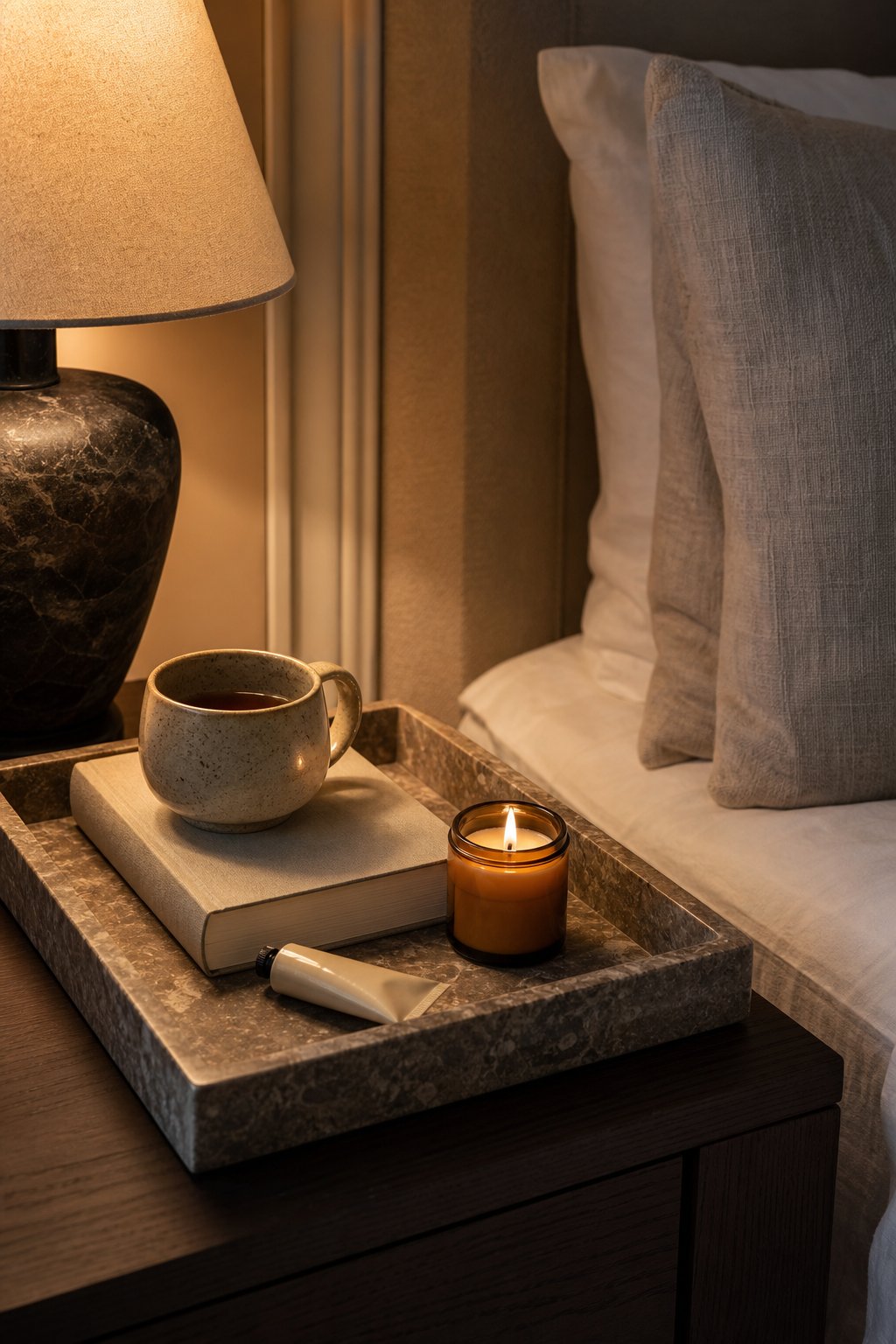
A small tray is one of the simplest ways to make everyday objects look intentional. Use one on a nightstand or dresser to contain jewelry, a candle, hand cream, a book, or a water carafe. Choose stone, wood, lacquer, or woven material depending on the room’s texture. The tray should be large enough to be useful but not so large that it becomes another surface to clutter. This final layer is less about decoration and more about order. When the small things are gathered, the bedroom feels calmer, cleaner, and more like a private retreat at the end of the day.
A cozy, stylish bedroom is built through restraint, not emptiness. Start with the pieces that shape daily comfort, such as the bed, lighting, rug, storage, and curtains, then layer texture and warmth with care. When the palette is edited, the surfaces are calm, and the materials feel good to touch, even simple choices begin to look elevated. The result is a bedroom that works hard in quiet ways: easier to keep tidy, softer at night, brighter in the morning, and more restorative every day.