18 Small Room Makeover To Inspire Your Next Home Refresh
A small room makeover is less about squeezing in more and more about choosing what earns its place. Compact rooms can become bedrooms, offices, reading spaces, guest rooms, or calm sitting areas when the layout is precise and the finishes feel considered. The most successful refreshes improve storage, light, traffic flow, and comfort at the same time. These ideas focus on changes that make a small room feel polished, functional, and genuinely livable without relying on clutter or oversized decoration.
Start With One Clear Purpose
Before buying anything, decide what the small room needs to do most often. A compact space becomes stressful when it is asked to be a gym, guest room, office, and storage closet at once. Choose one primary purpose, then allow one secondary function only if it can be handled neatly. For example, a reading room can include a discreet sleeper chair, or a home office can include closed cabinets for craft supplies. This decision makes every later choice easier because furniture, lighting, and storage can be judged against a real use. The room will feel calmer immediately when the layout supports a clear daily rhythm instead of a list of unresolved possibilities.
Float The Main Piece Away From The Wall
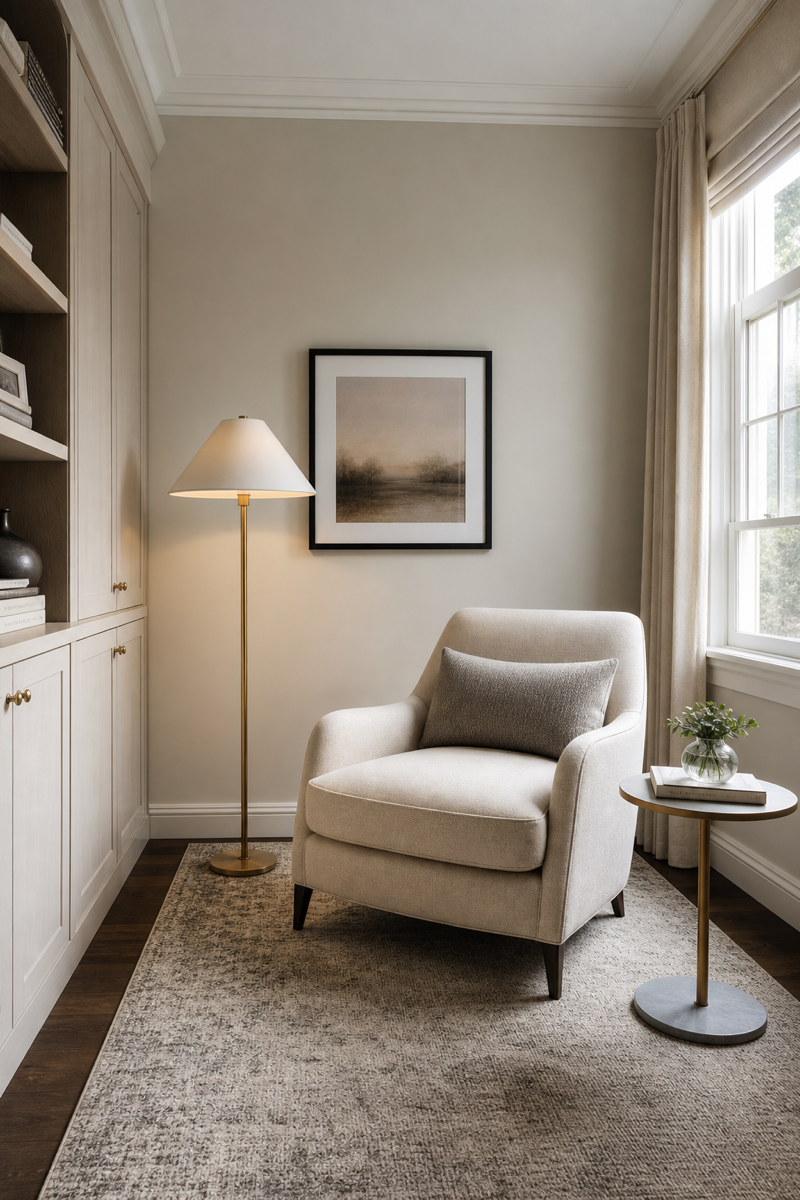
Small rooms often look cramped because every piece is pushed hard against the perimeter. Try floating the main chair, small sofa, desk, or bed a few inches from the wall so the room feels intentionally arranged. Even a narrow shadow line behind furniture can create depth. If the room allows, angle a chair toward the window or place a slim console behind a loveseat. The goal is not to waste space; it is to avoid the flat, boxed-in feeling that makes compact rooms seem smaller. Keep pathways generous and use a rug to connect the floating piece to the rest of the room. This simple layout shift can make the makeover feel designed rather than improvised.
Choose Furniture With Visible Legs
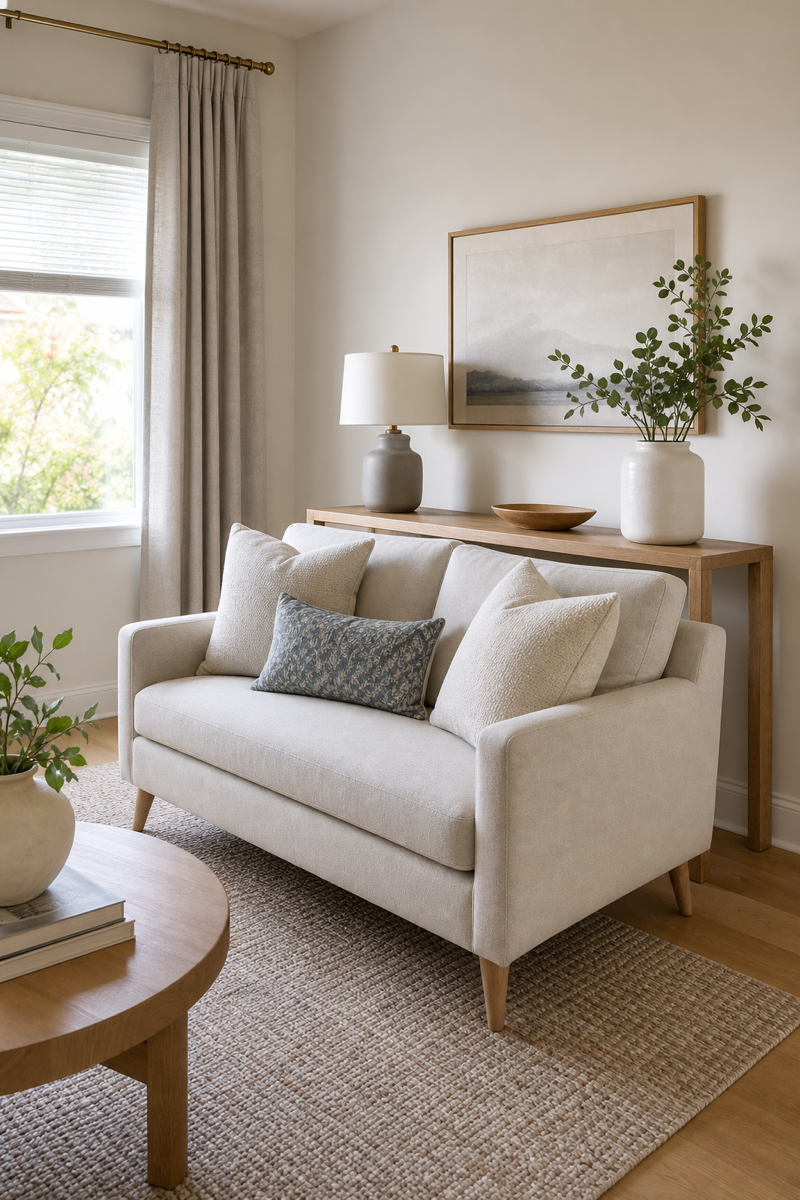
Furniture with visible legs helps a small room feel lighter because more floor remains visible. A raised cabinet, slim-legged desk, open-base nightstand, or sofa on neat tapered legs can give the eye room to travel. This is especially useful when the floor is beautiful or the rug has a quiet texture worth showing. Avoid pieces that are too spindly, though; compact rooms still need furniture that feels stable and comfortable. Look for refined proportions, not miniature versions of larger pieces. A small loveseat with a tight back and lifted base often works better than a bulky chair-and-a-half. When the furniture breathes at the floor, the entire room feels less heavy.
Build Storage Up The Wall
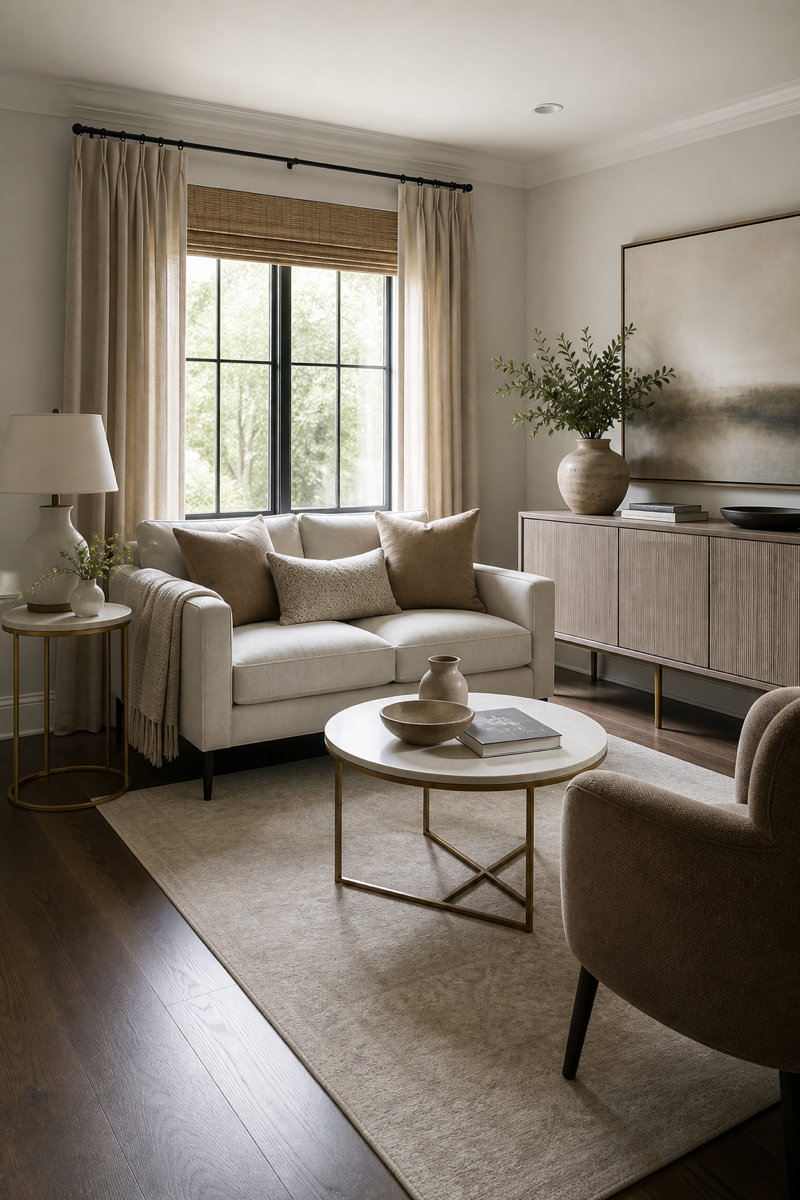
When floor area is limited, vertical storage can change the room completely. Tall built-ins, wall-mounted shelves with closed lower cabinets, or a narrow wardrobe can use height without crowding the walkway. Keep the lower portion closed so practical items disappear, then reserve a few open shelves for books, ceramics, or baskets with breathing room. Paint the storage the same color as the wall if you want it to recede, or choose pale oak for warmth. The important detail is scale: take the storage close to the ceiling rather than stopping awkwardly halfway up. That vertical line makes the room feel taller and turns storage into architecture instead of scattered furniture.
Use A Larger Rug Than You Think
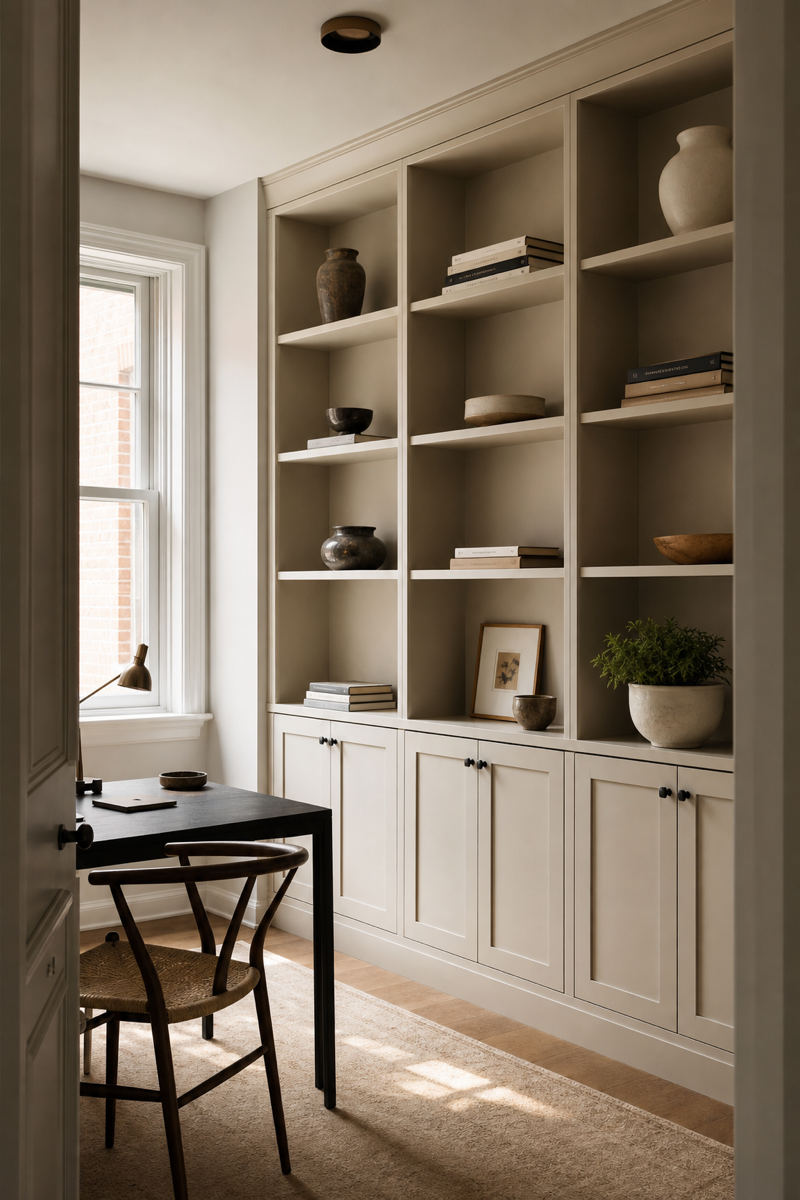
A tiny rug can make a compact room feel even more fragmented. A larger rug, chosen in a quiet texture or low-contrast pattern, visually gathers the furniture and makes the room feel settled. In a small bedroom, let the rug extend beyond the bed enough for both feet to land softly. In a sitting room, place at least the front legs of the seating on the rug. Avoid strong borders that emphasize the room’s limits. A heathered wool, flatweave, or subtle jute blend usually feels more expensive than a busy motif. The rug should create one calm field, not another small rectangle competing for attention. This is one of the fastest ways to make a refresh feel complete.
Install Wall-Mounted Lighting
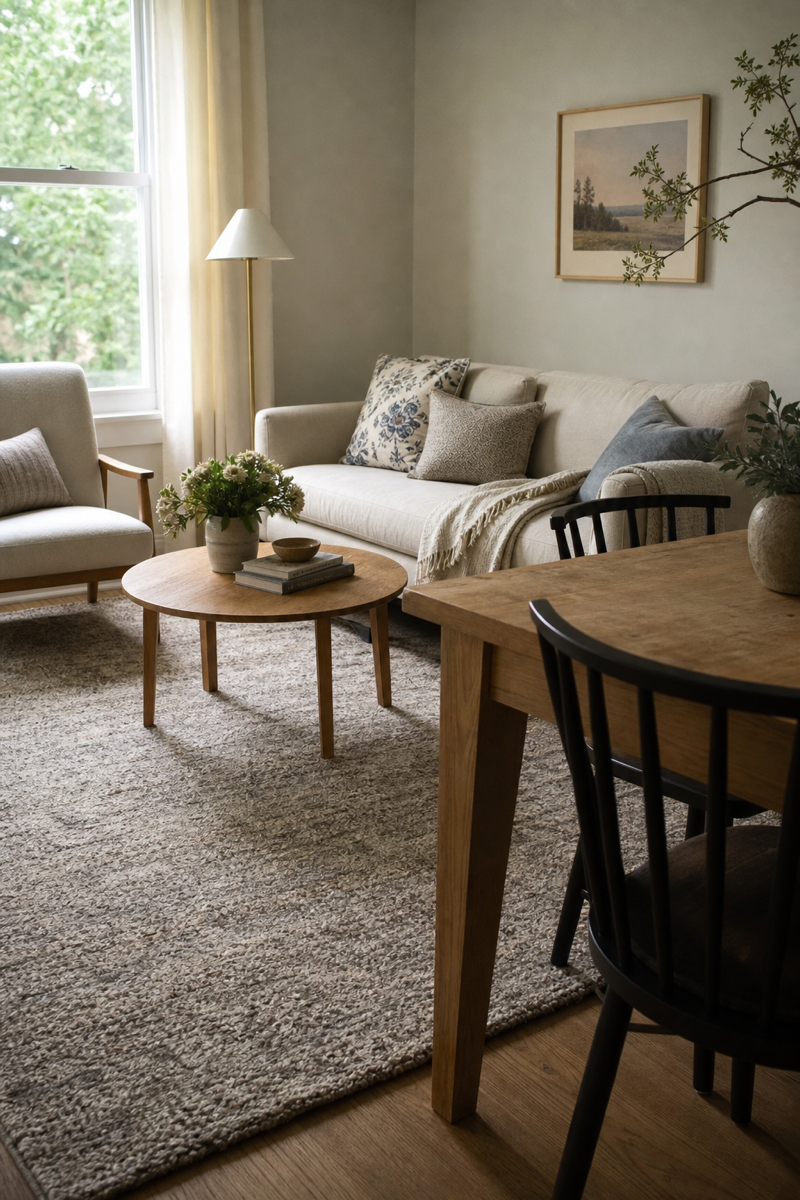
Wall-mounted lighting frees tabletops, nightstands, and desks from lamp bases, which is valuable in a small room. A plug-in or hardwired sconce can provide reading light, task light, or a soft evening glow without occupying precious surface area. Choose a fixture with a warm shade, adjustable arm, or compact profile, depending on the room’s purpose. Place it where it supports a real activity, not just where it looks symmetrical. In a tiny guest room, sconces can replace bedside lamps entirely. In an office, one wall light can make a small desk feel tailored. This upgrade also adds polish because lighting becomes part of the architecture rather than another object to manage.
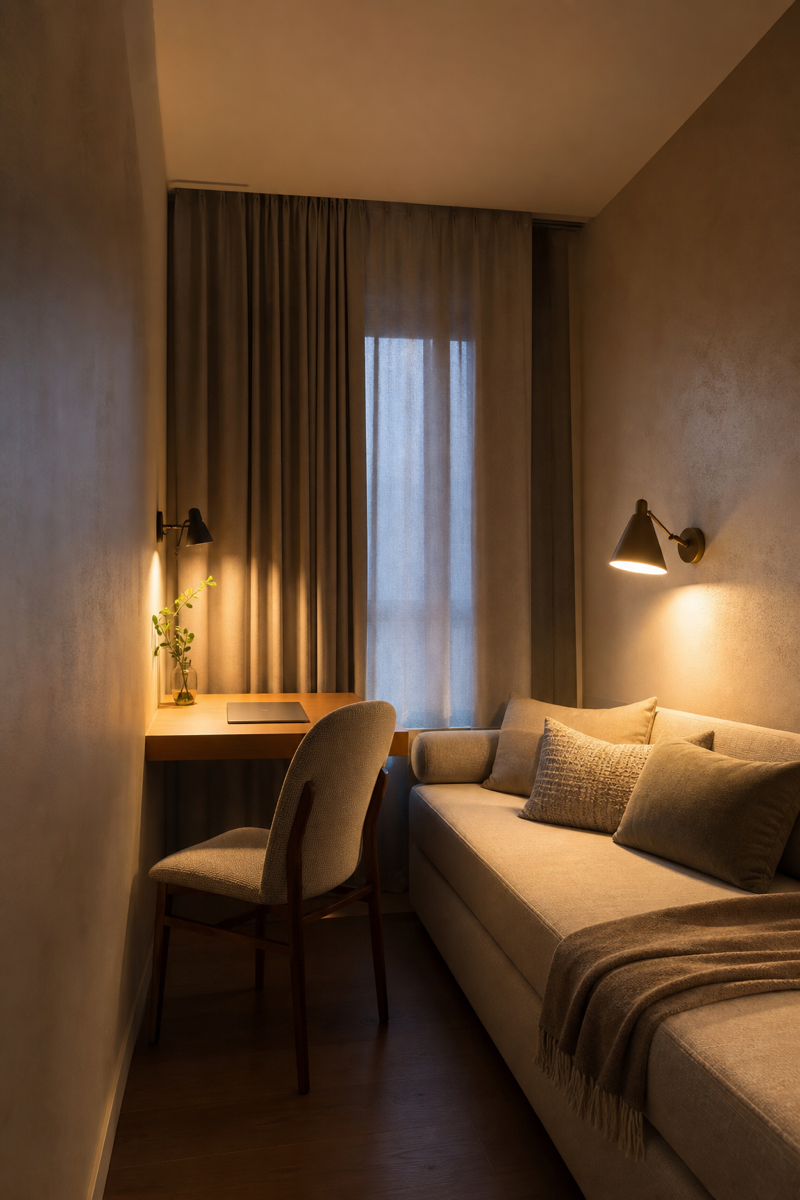
Use Mirrors To Borrow Light, Not Fill Walls
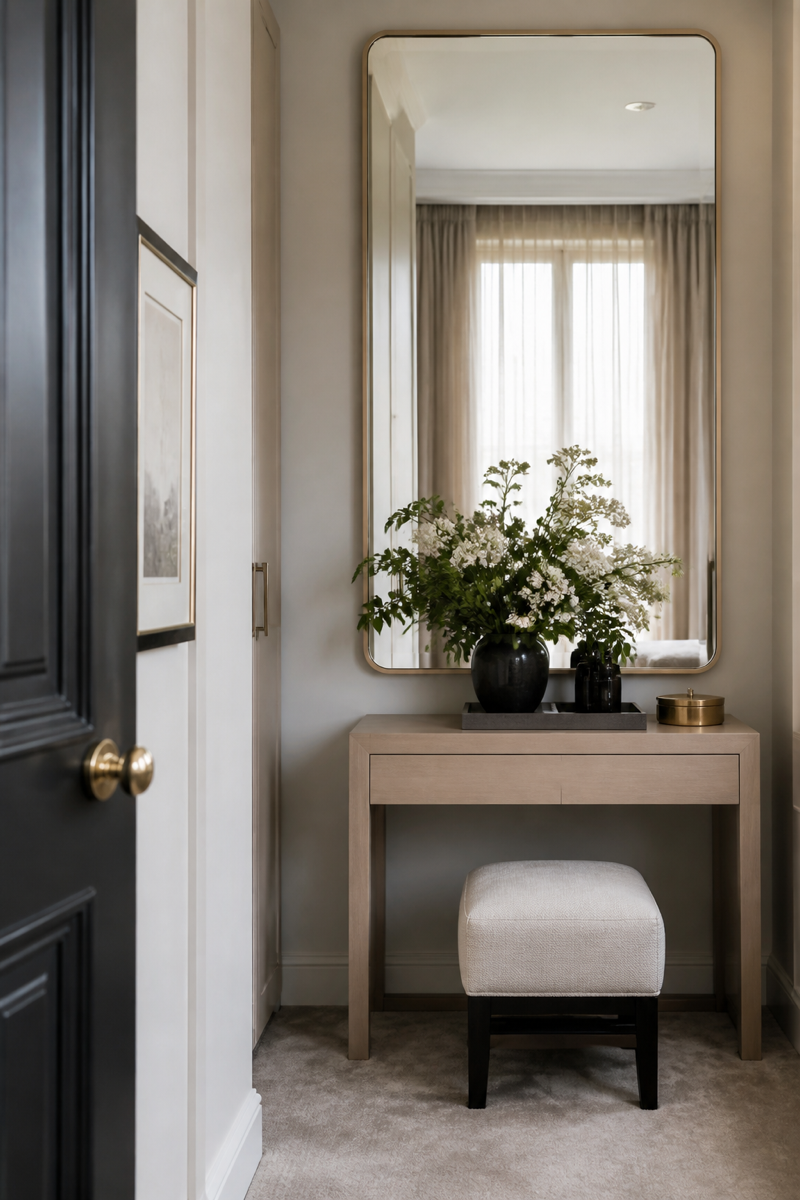
A mirror can help a small room, but it should be placed with intention. Instead of hanging mirrors everywhere, position one generous mirror where it reflects daylight, a beautiful lamp, or a calm view into the room. Avoid reflecting clutter, open closet doors, or a busy hallway. A slim floor mirror can work in a bedroom if it does not block traffic, while a round wall mirror can soften a small office or entry room. The frame should relate to other finishes: pale wood, aged brass, blackened metal, or frameless glass. Used well, a mirror expands the mood of the room. Used carelessly, it simply doubles the visual noise.
Replace Bulky Curtains With Tailored Panels
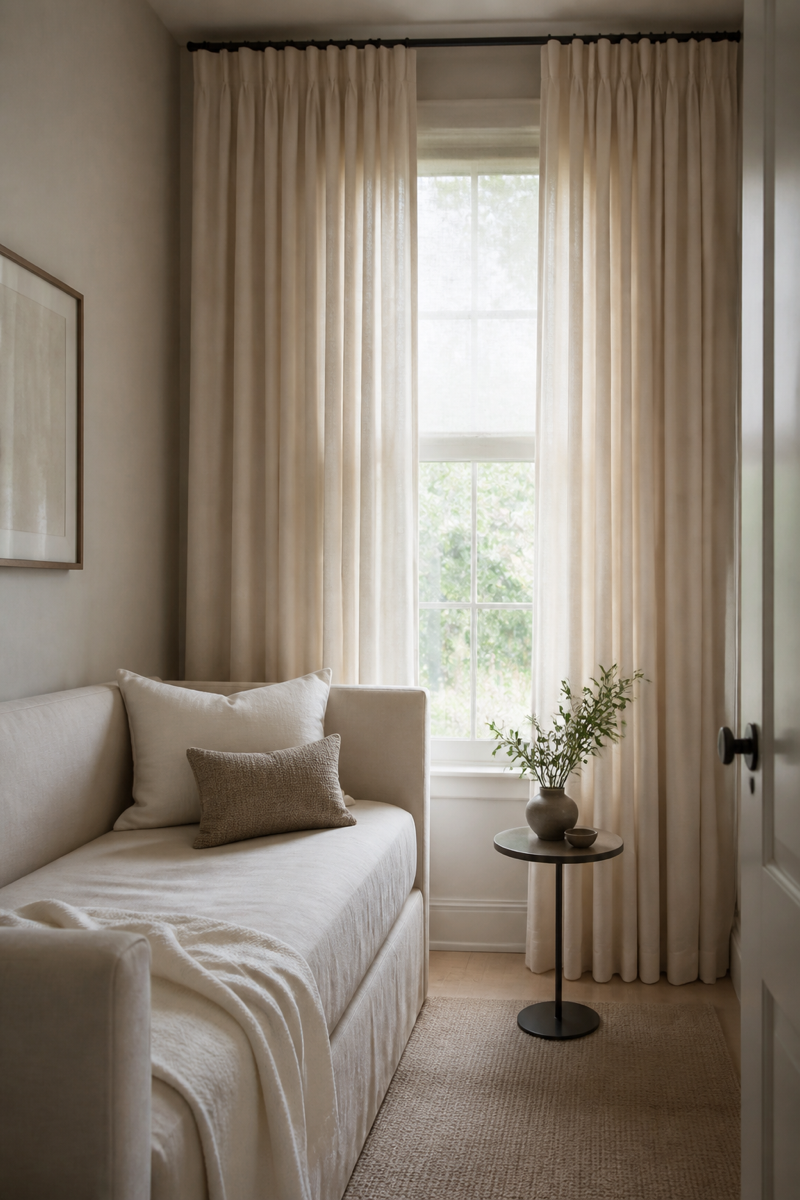
Window treatments can make or break a compact room because they occupy valuable visual space. Replace heavy, puddled, or overly patterned curtains with tailored panels that hang close to the ceiling and fall cleanly to the floor. Linen, cotton, or wool-blend fabric in a tone near the wall color will soften the room without chopping it up. If privacy is important, add a simple shade inside the window frame and keep the outer panels decorative. The vertical lines will make the room feel taller, while the soft fabric will keep it from feeling bare. This is an especially useful makeover move in rentals because it changes the atmosphere without altering the architecture permanently.
Select A Daybed For Flexible Guest Space
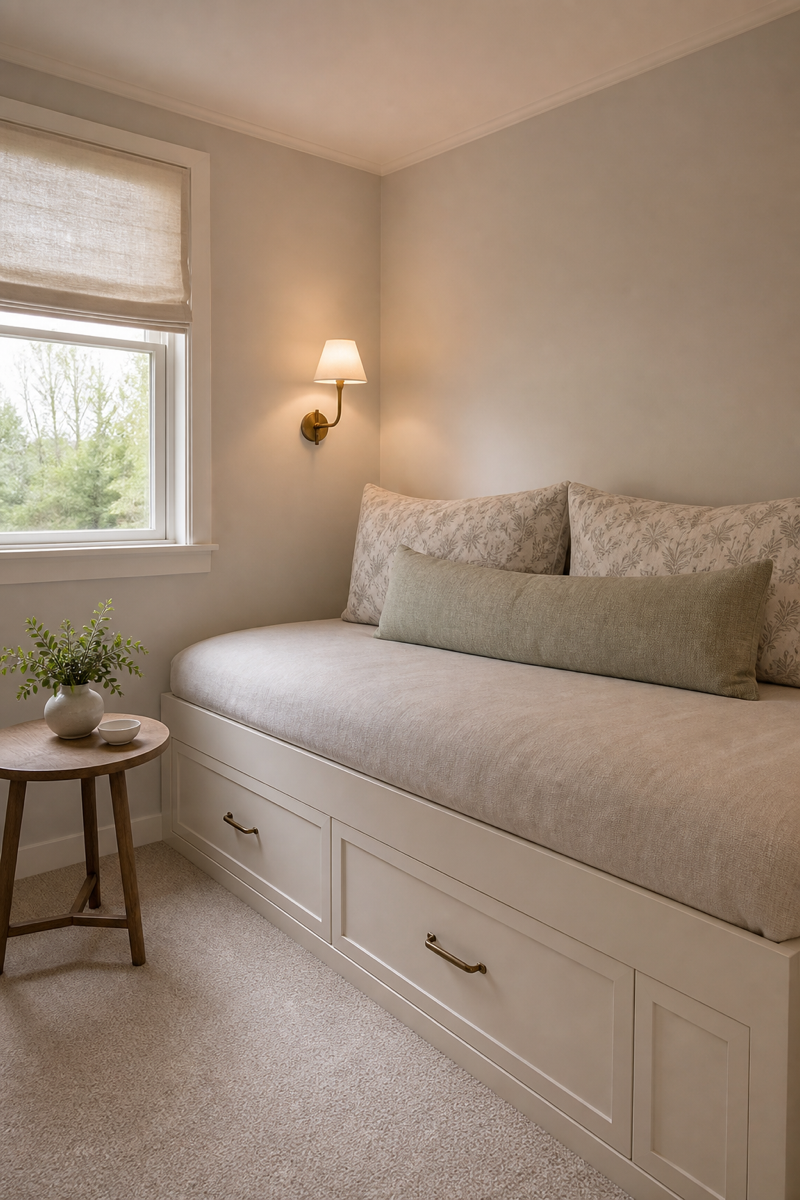
A daybed can turn a small room into a guest space without making it feel like a bedroom all day. Choose a design with a tailored back, slim arms, or drawers below if storage is needed. Style it like a refined lounge piece with a fitted cover, two back pillows, and one long cushion rather than a mountain of throw pillows. Place a small table and wall light nearby so the room works for reading or work between visits. The best daybeds look intentional from every angle, especially if the room is visible from a hallway. This single furniture swap can give a compact room a practical second life while still feeling elegant and relaxed.
Create A Desk Nook Instead Of A Full Office
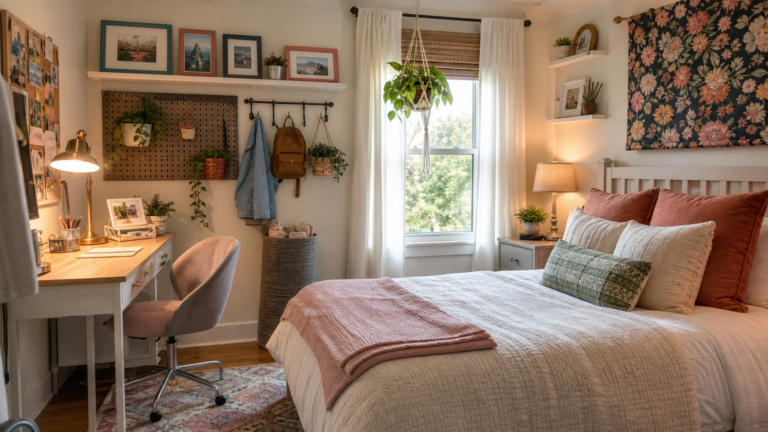
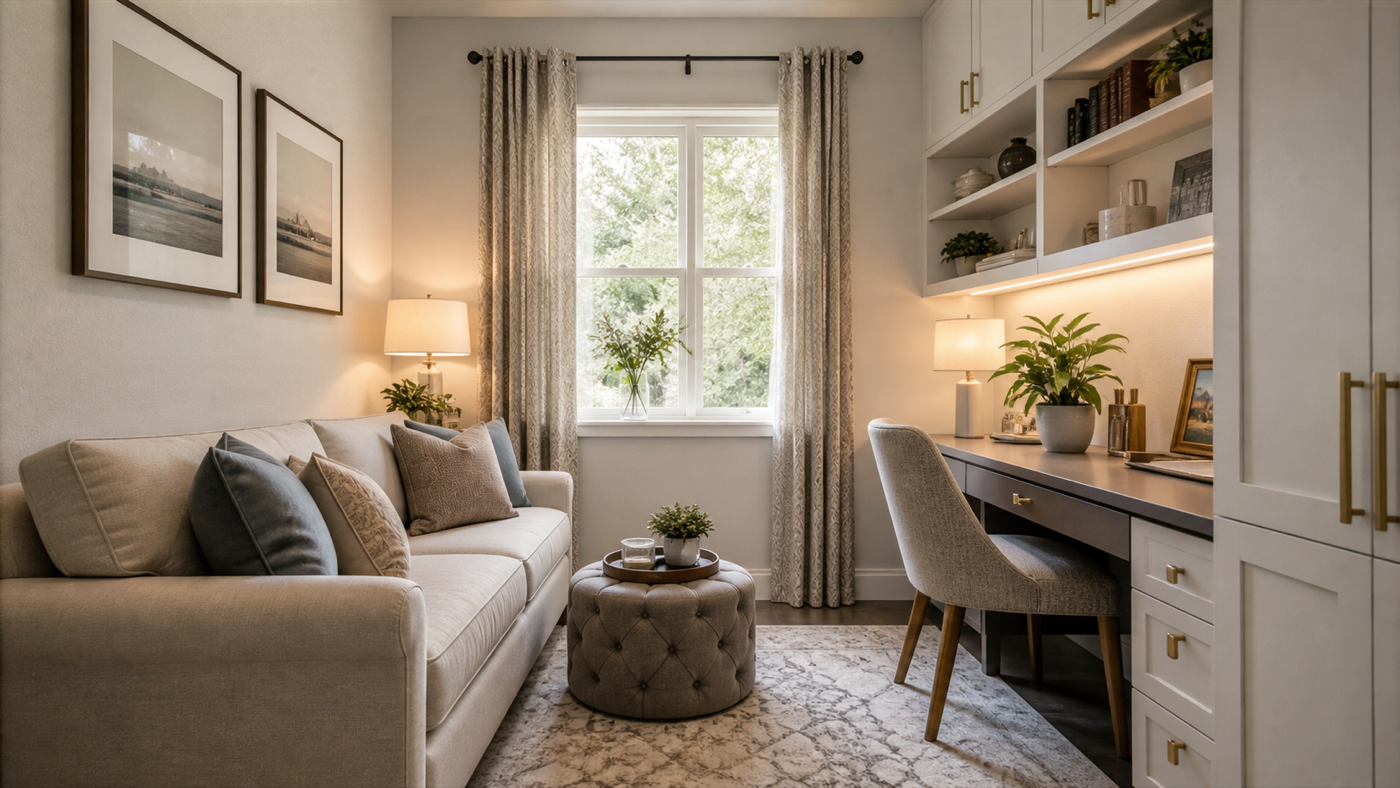
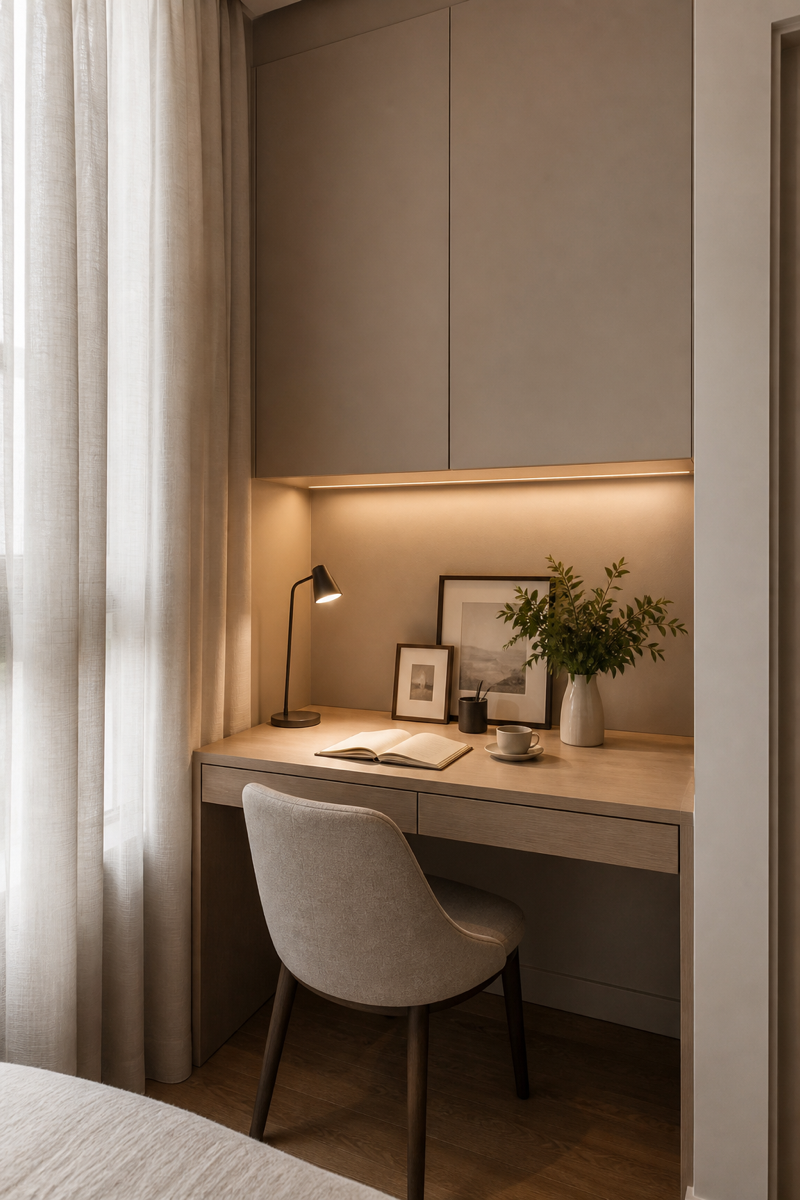
A small room does not need a large desk to become useful. A narrow writing table, wall-mounted desk, or built-in shelf can create a work nook that supports emails, planning, and laptop time without dominating the entire space. Keep the chair comfortable but visually light, and add closed storage nearby for papers and chargers. Good task lighting is essential because a cramped, dim desk will never feel inviting. If the desk sits in a guest room, choose finishes that relate to the bed or daybed so the room feels unified. This approach respects the room’s size while giving it a clear function. It is a refresh that improves daily life, not just the photographs.
Paint Trim And Walls The Same Color
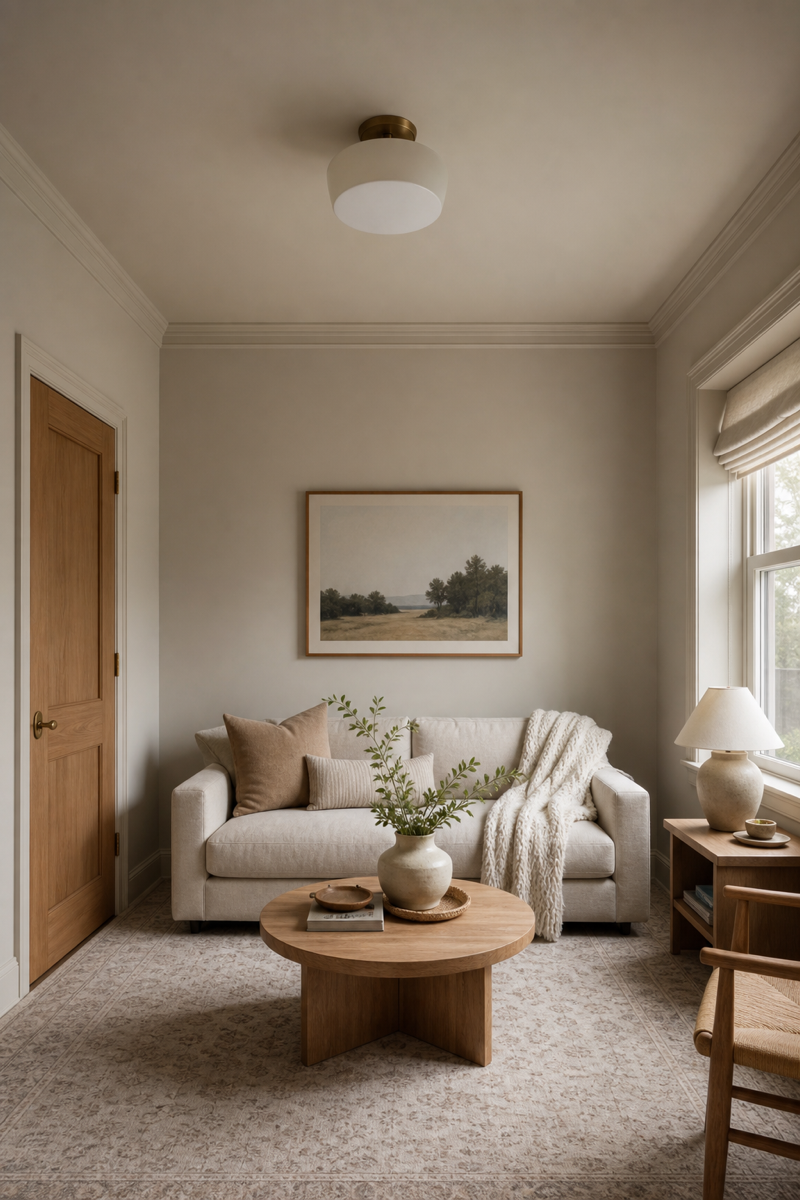
High contrast trim can outline the limits of a small room, especially when the ceiling is low or the doors are close together. Painting the walls, trim, and sometimes the ceiling in one soft color can make the architecture feel smoother and more spacious. Warm white, pale mushroom, misty gray, muted sage, or a gentle clay tone can all work depending on the light. Use different sheens for durability if needed: matte on walls, satin on trim. This does not erase character; it quiets the visual interruptions. The result feels calm, considered, and often more expensive. It also makes mismatched doors, awkward corners, and small window frames less distracting after the makeover.
Add One Built-In-Looking Piece
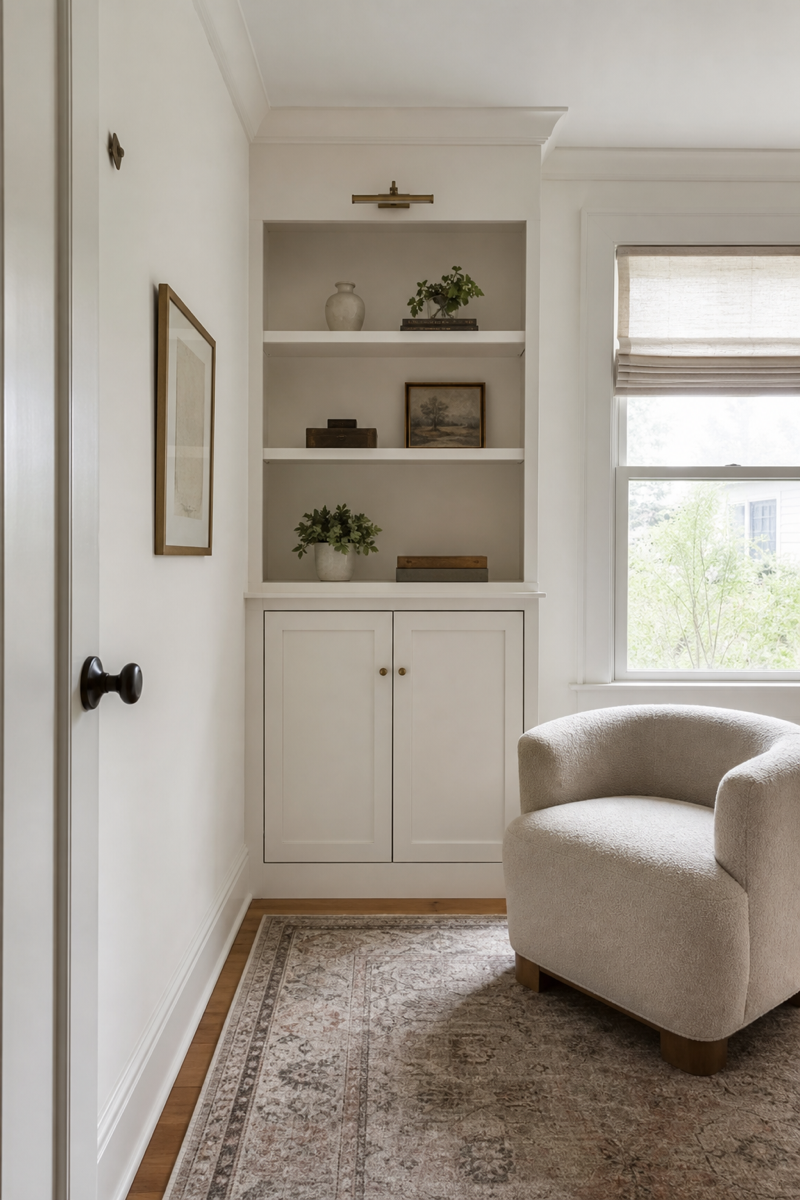
You do not always need custom millwork to get a built-in effect. One freestanding cabinet, bookcase, or wardrobe can look integrated if it fits the wall properly and relates to the room’s color palette. Choose a piece that nearly fills a niche, aligns with nearby trim, or can be topped with a simple ledge. Paint it to match the wall, or select a quiet wood finish that feels architectural. The goal is to reduce the sense of separate furniture pieces floating around the room. A built-in-looking cabinet can hold office supplies, linens, games, or guest essentials while making the room feel more finished. This is a strong makeover move when budget or rental rules limit construction.
Choose Rounded Shapes To Soften Tight Corners
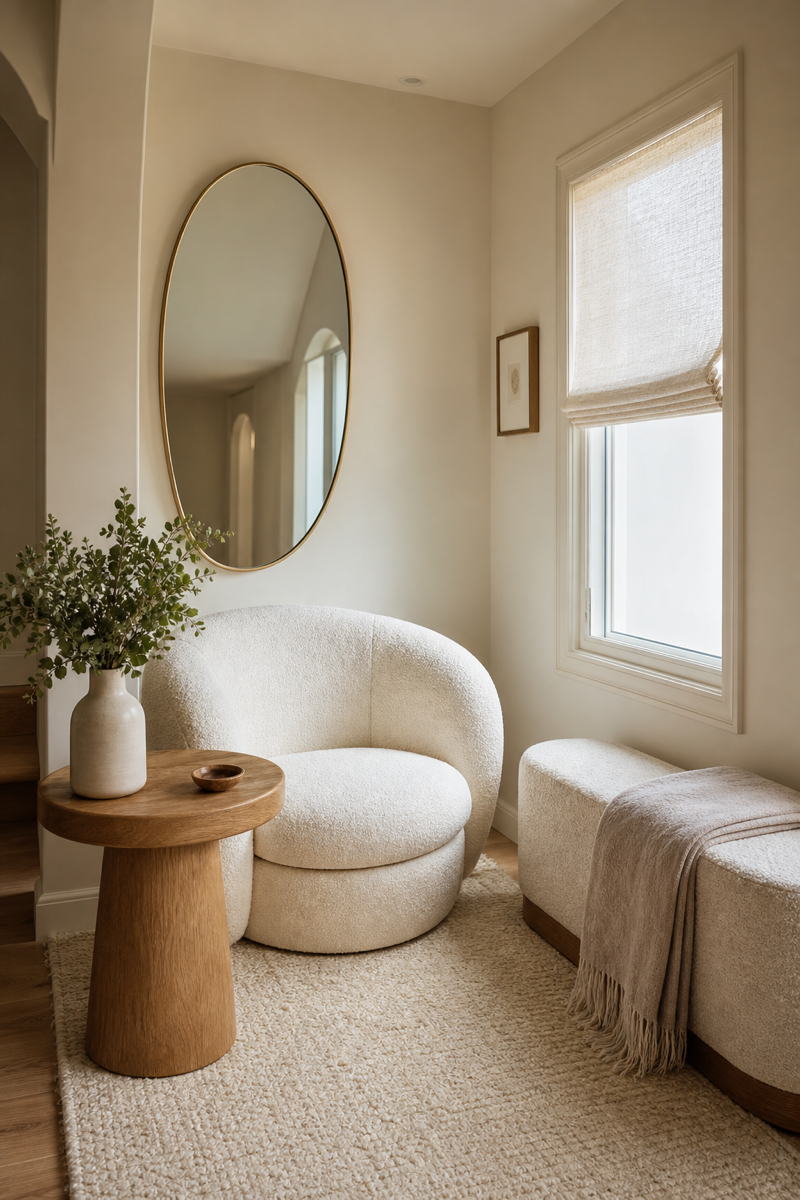
Small rooms often have tight turns around beds, desks, and chairs. Rounded shapes make those transitions feel easier and more comfortable. Consider a round side table, curved chair back, oval mirror, arched lamp, or storage bench with softened corners. These pieces reduce the visual sharpness that can make a compact room feel crowded. Rounded furniture is not only about style; it also helps with movement in narrow pathways. Balance curves with a few straight architectural lines so the room still feels crisp. A rounded table beside a tailored daybed or a curved chair under a rectangular artwork can be enough. The makeover will feel gentler, more welcoming, and less like every inch is being negotiated.
Limit The Palette To Three Main Notes
A compact room can handle color, but too many competing notes quickly make it feel busy. Choose three main tones and repeat them with discipline. For example, warm white, pale oak, and olive can feel calm and natural. Mushroom, ivory, and blackened bronze can feel tailored. Clay, cream, and walnut can feel cozy. The palette should appear in furniture, textiles, storage, and lighting rather than only in decorative accents. This repetition makes the room feel larger because the eye is not constantly stopping at new contrasts. If you want variety, add it through texture: linen, wool, ceramic, woven shades, and honed stone. A restrained palette is often what makes a small makeover feel luxurious.
Use Closed Baskets And Boxes Sparingly
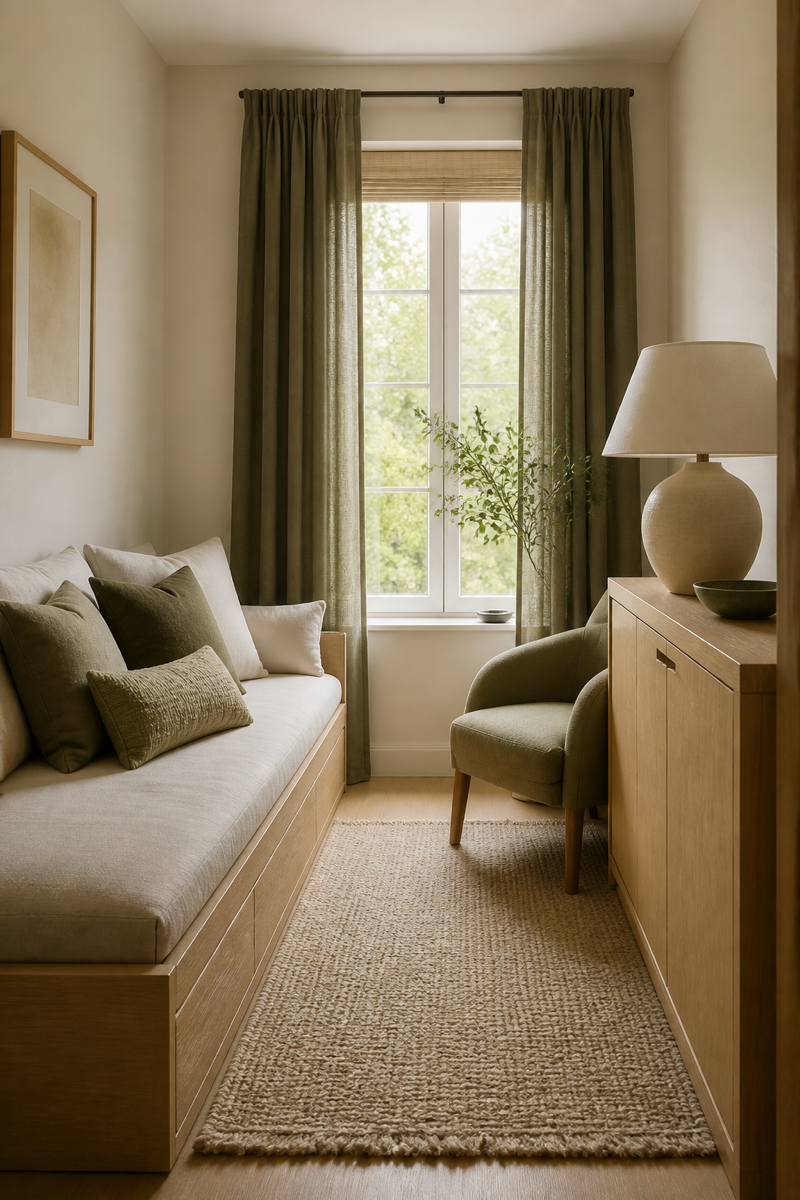
Baskets can help a small room, but too many make it look like storage is overflowing. Use them sparingly and choose structured shapes with lids or clean woven sides. A single lidded basket under a console, two fabric boxes on a shelf, or one handsome storage bin for blankets is enough. Avoid filling every open cubby with mismatched containers. The best storage accessories disappear into the design while making daily cleanup faster. Materials matter here: seagrass, canvas, leather handles, or soft felt can look elevated when the color palette is restrained. Think of baskets and boxes as supporting actors, not the makeover itself. They should protect the calm, not announce the problem.
Style Shelves With Breathing Room
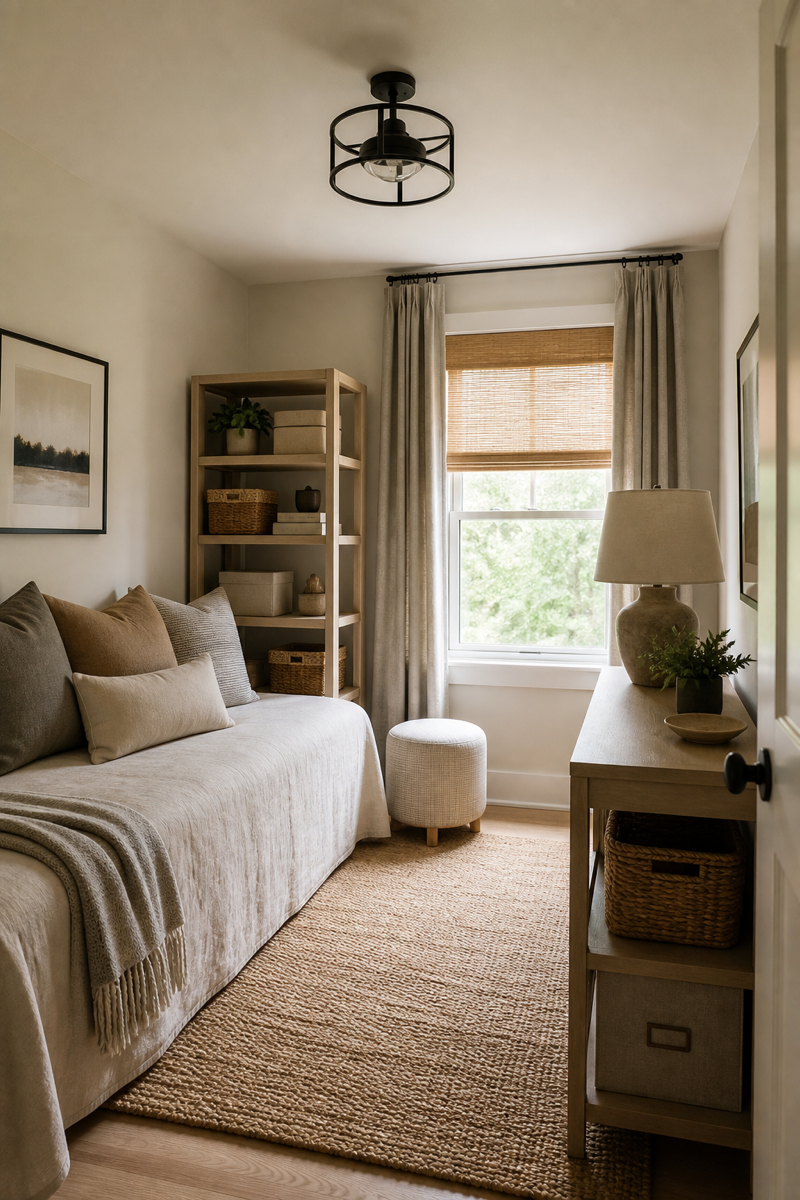
Open shelves in a small room need more restraint than shelves in a large living area. Leave visible space between objects so the wall still feels calm. Mix a few books with ceramics, framed art, a small lamp, or one natural element, but avoid lining every shelf from edge to edge. Keep heavier pieces low and lighter objects higher. If the shelves hold practical items, use closed boxes for the less attractive pieces and reserve display space for what genuinely adds beauty. This editing makes the room feel more expensive because each object looks chosen. Shelves should give the makeover character, not become a catalog of everything that had nowhere else to go.
Layer Ambient, Task, And Accent Light
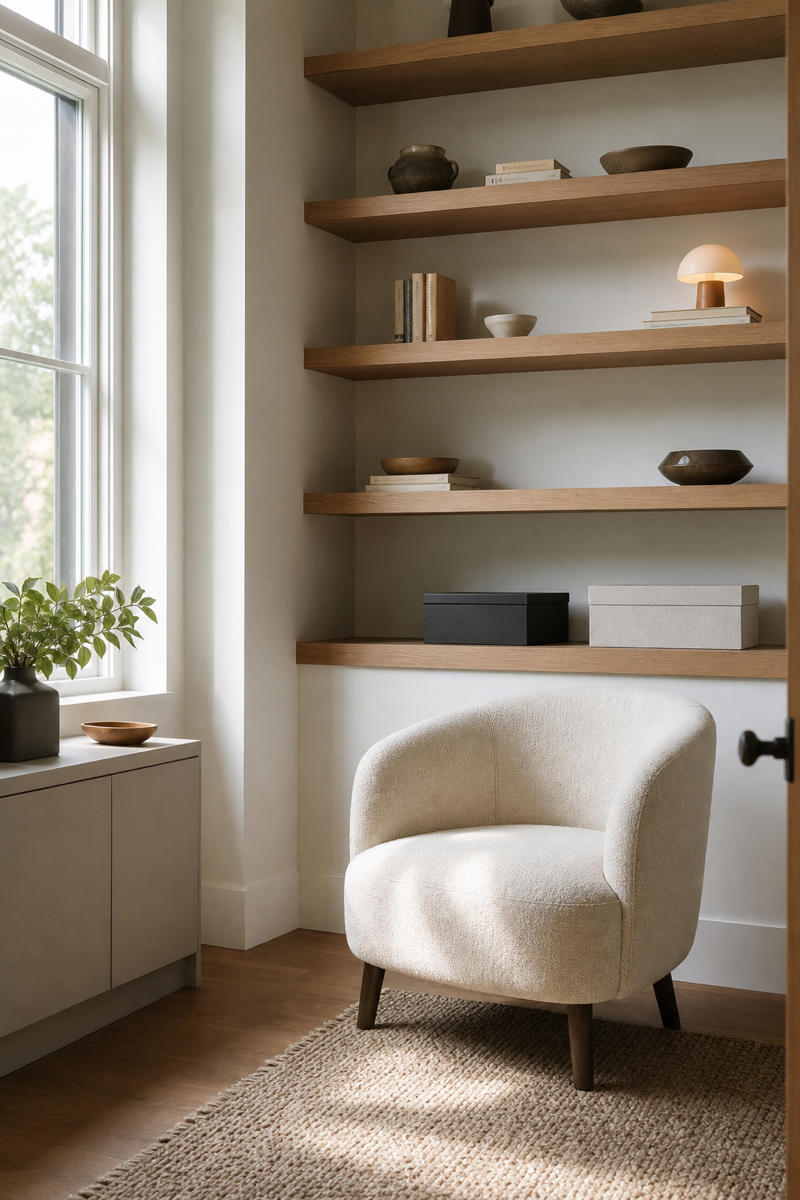
One overhead fixture rarely flatters a small room. A better makeover uses three layers: ambient light for general brightness, task light for reading or work, and accent light for evening atmosphere. This might mean a ceiling fixture, one wall sconce, and a small lamp on a shelf. In a compact bedroom, it could be a flush mount, bedside sconces, and a low lamp on a dresser. Keep the color temperature warm and use dimmers where possible. Layered light makes corners feel intentional instead of forgotten, and it gives the room flexibility throughout the day. It also helps textures such as linen, wool, wood, and plaster look richer after dark.
Finish With A Ruthless Surface Edit
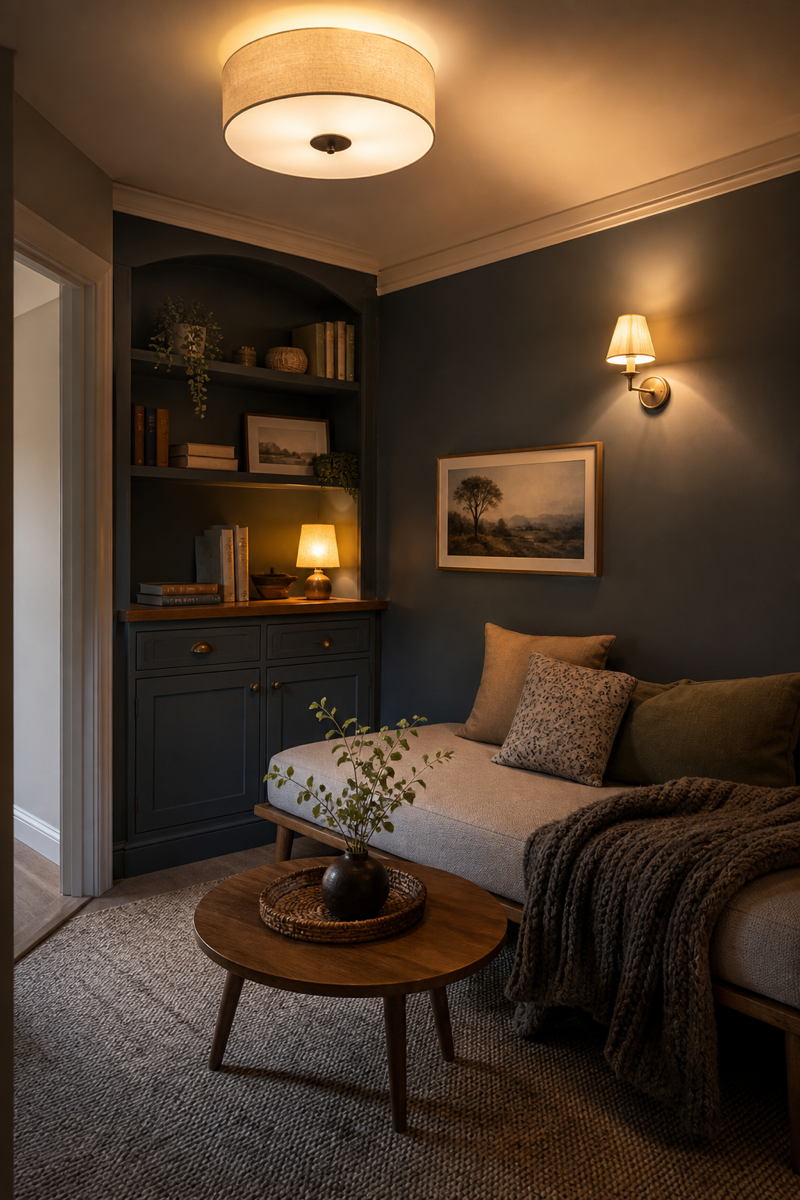
The last step of a small room makeover is removing what weakens the room. Clear every surface, then return only the items that are useful, beautiful, or personal enough to earn visibility. A small table may need just a lamp and coaster. A desk may need only a tray, notebook, and task light. A shelf may look better with three objects than twelve. This edit is not about making the room impersonal; it is about letting the strongest choices breathe. Compact rooms show clutter quickly, so the final pass matters as much as the first layout decision. When the surfaces are calm, the whole room feels larger, cleaner, and more refreshed.
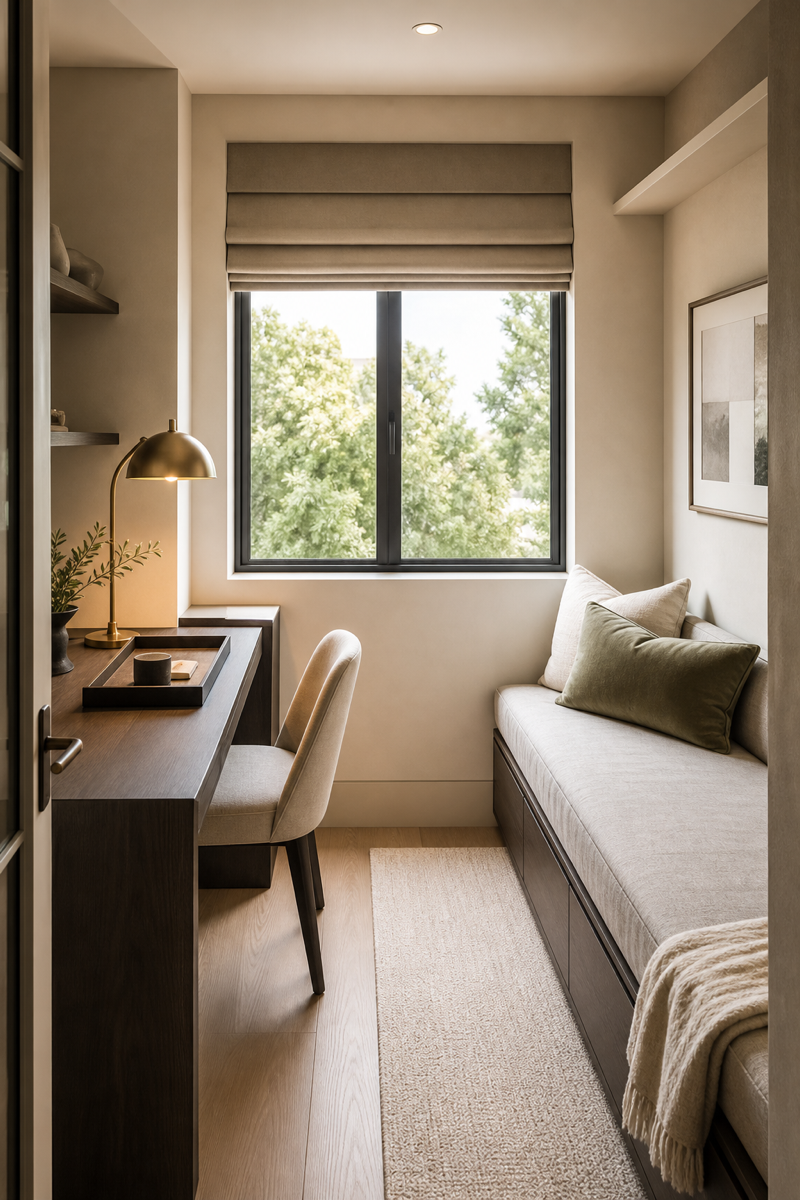
A small room refresh works best when every decision improves both beauty and function. Start with the room’s purpose, choose furniture with careful scale, build in storage where possible, and use lighting to make the space feel layered rather than cramped. With a restrained palette and a final edit, even the smallest room can feel polished, useful, and quietly luxurious.