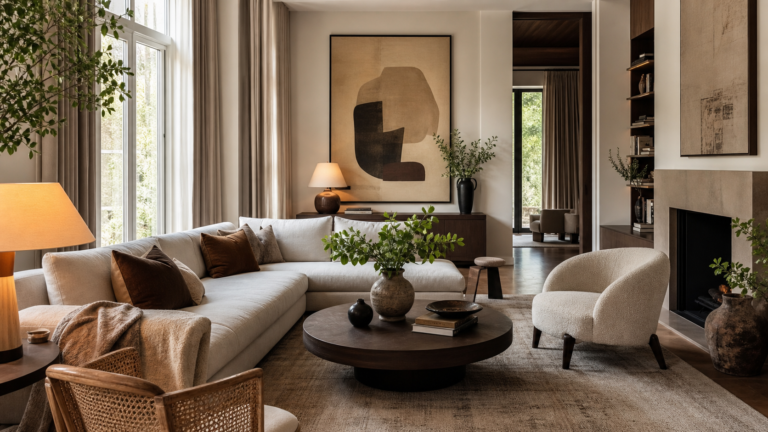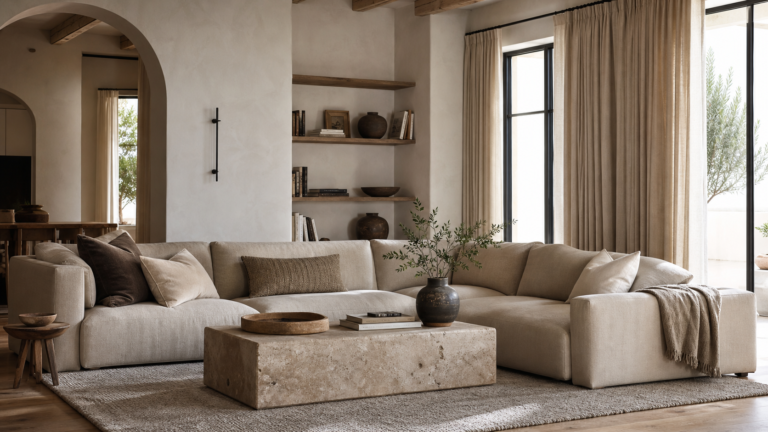
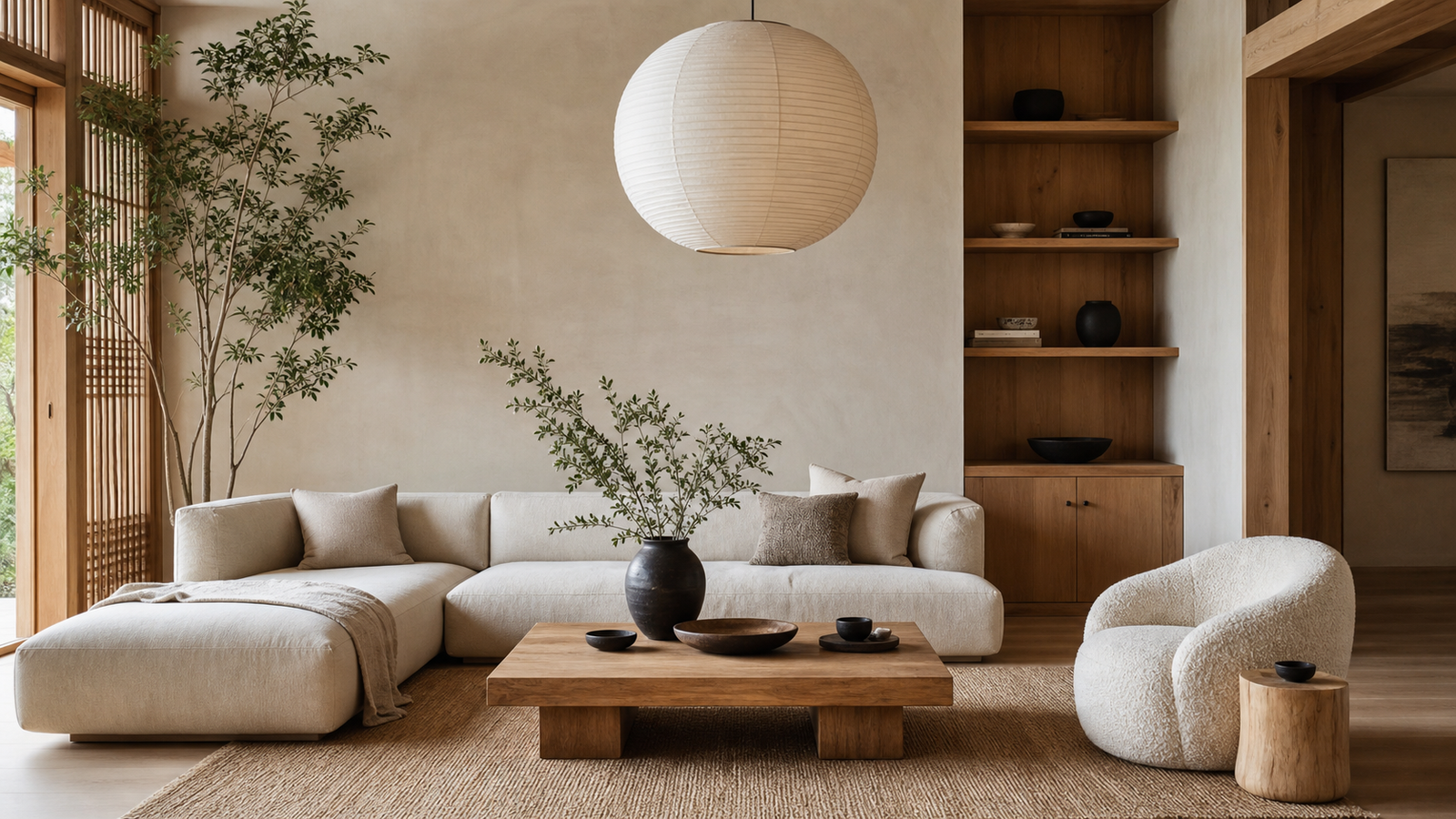
18 Japandi Living Room Ideas For A Cozy Designer Look
A Japandi living room feels cozy because it is edited, tactile, and deeply intentional. The style blends Japanese restraint with Scandinavian warmth, so the room should never feel empty or overly decorated. Low furniture, warm wood, linen, wool, paper, stone, and handmade ceramics all help create a space that feels grounded and livable. The designer look comes from proportion and quiet detail: a sofa with the right depth, a rug that softens the floor, lighting that glows, and storage that keeps visual noise away. These ideas will help you build a calm living room that still feels inviting.
Start With A Low Linen Sofa
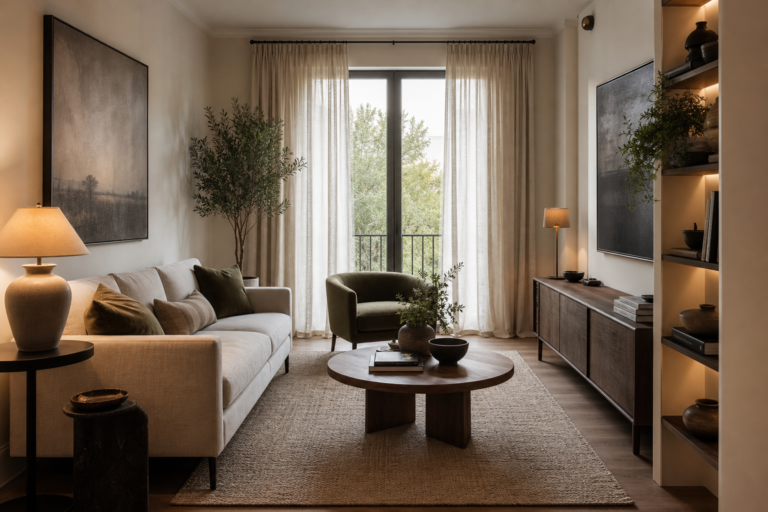
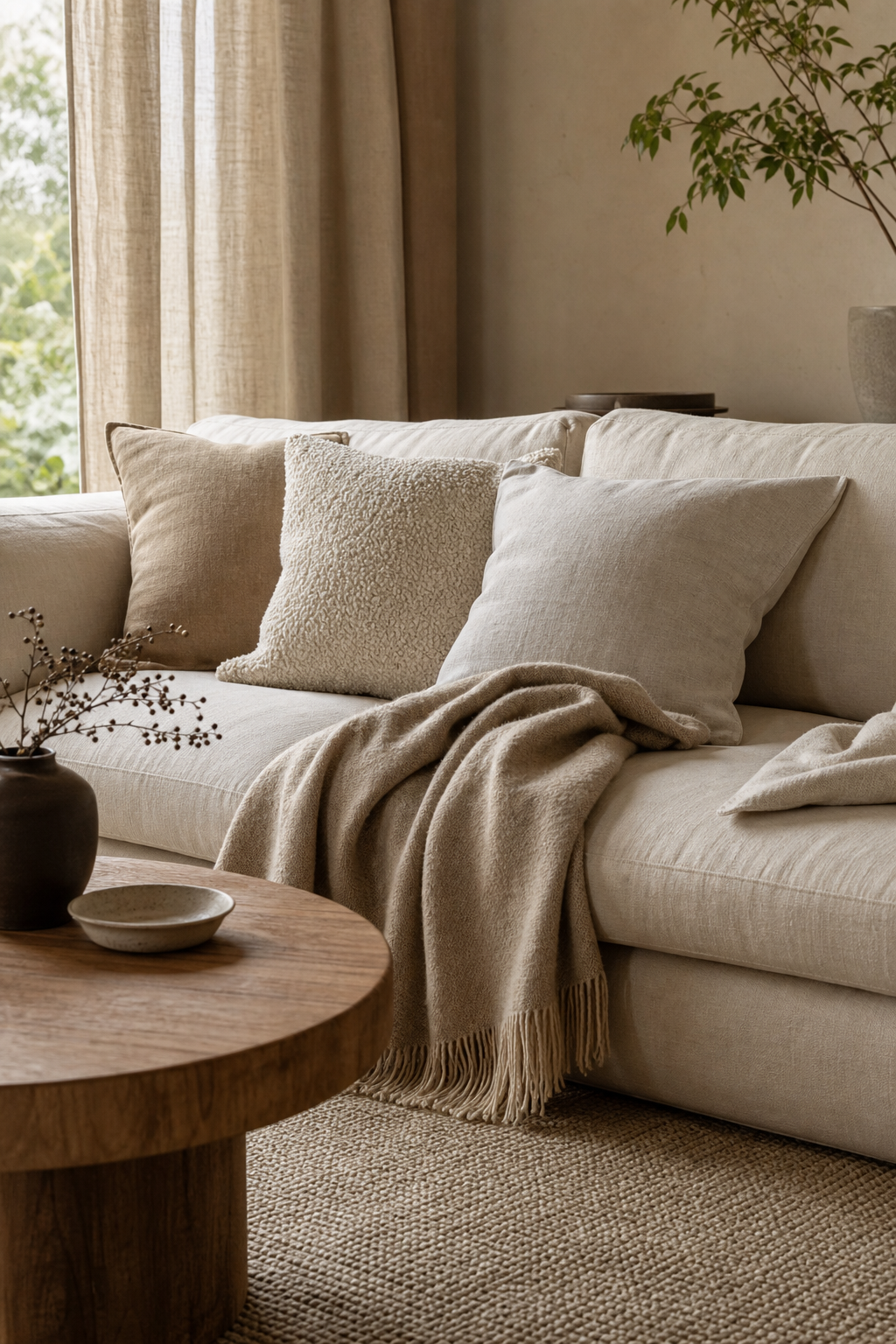
A low linen sofa sets the tone for a Japandi living room because it feels relaxed without looking messy. Choose a simple silhouette with deep cushions, low arms, and a neutral fabric such as oat, warm white, stone, or soft gray. The sofa should sit close to the floor, but not so low that it becomes uncomfortable. Avoid fussy tufting, shiny legs, or overstuffed shapes. Add only a few pillows in linen, wool, or boucle so the seating stays calm. When the largest piece is quiet and grounded, the whole room feels more spacious and deliberate.
Use Warm Wood Generously
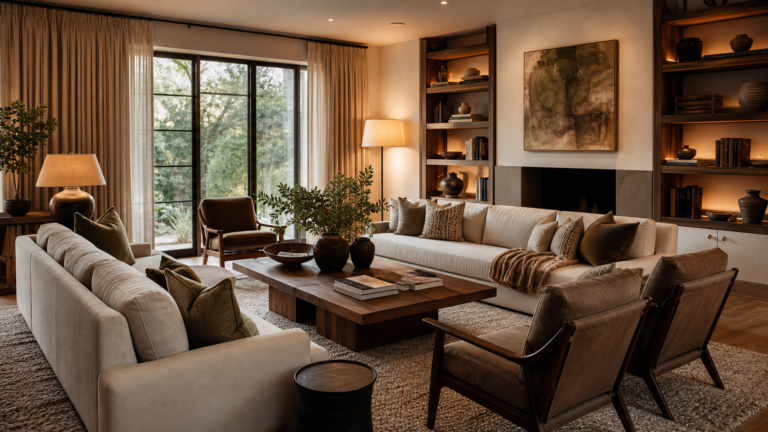
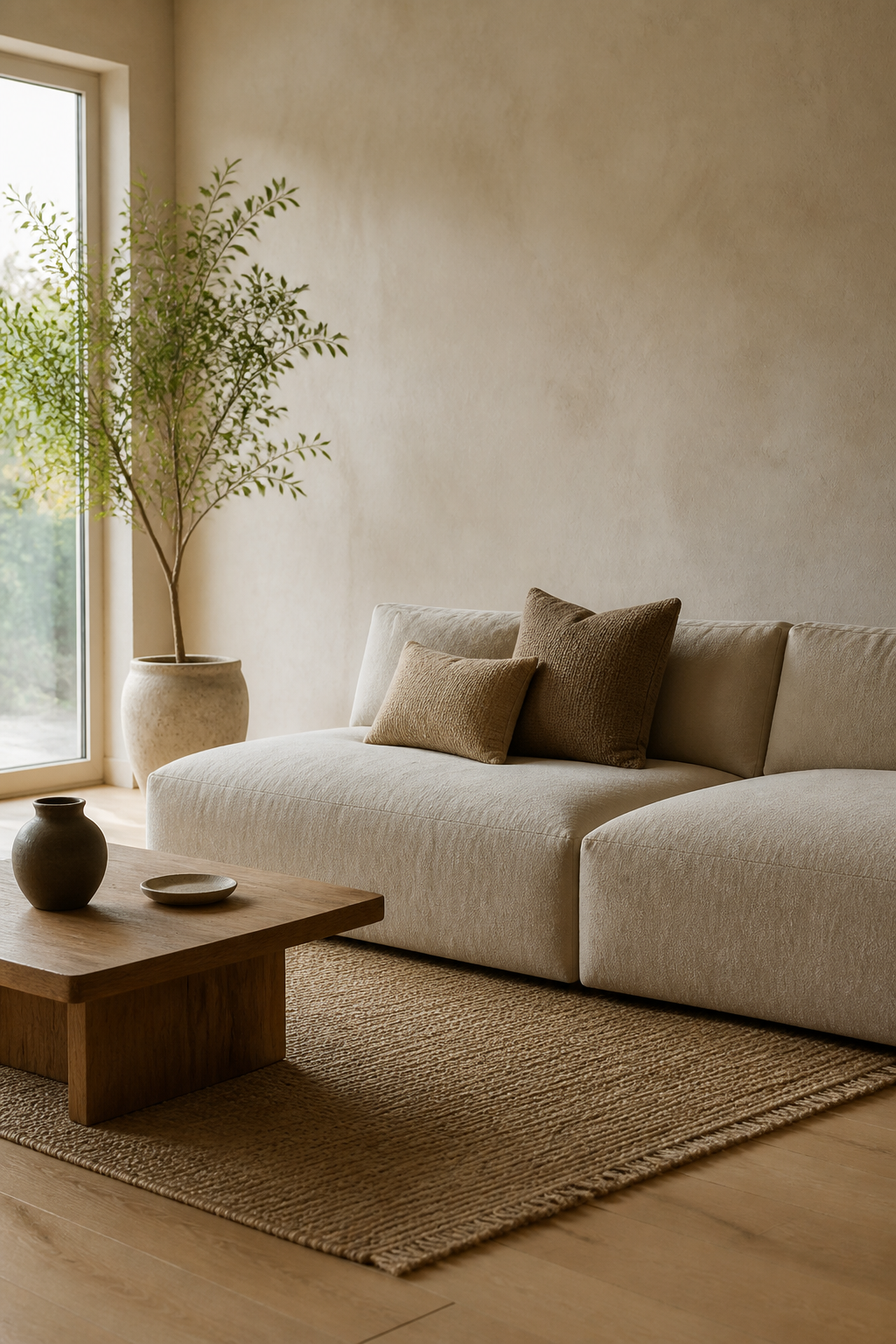
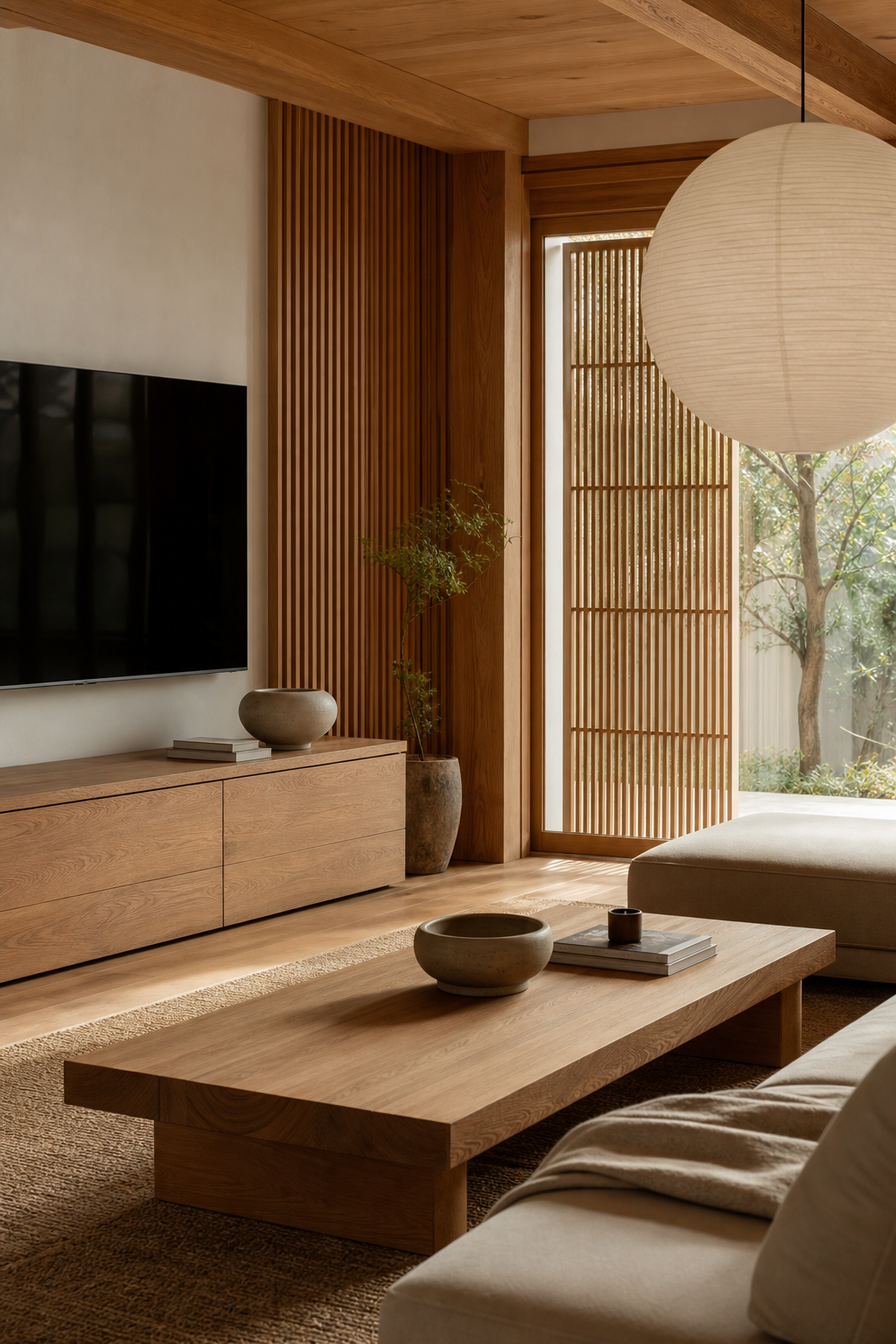
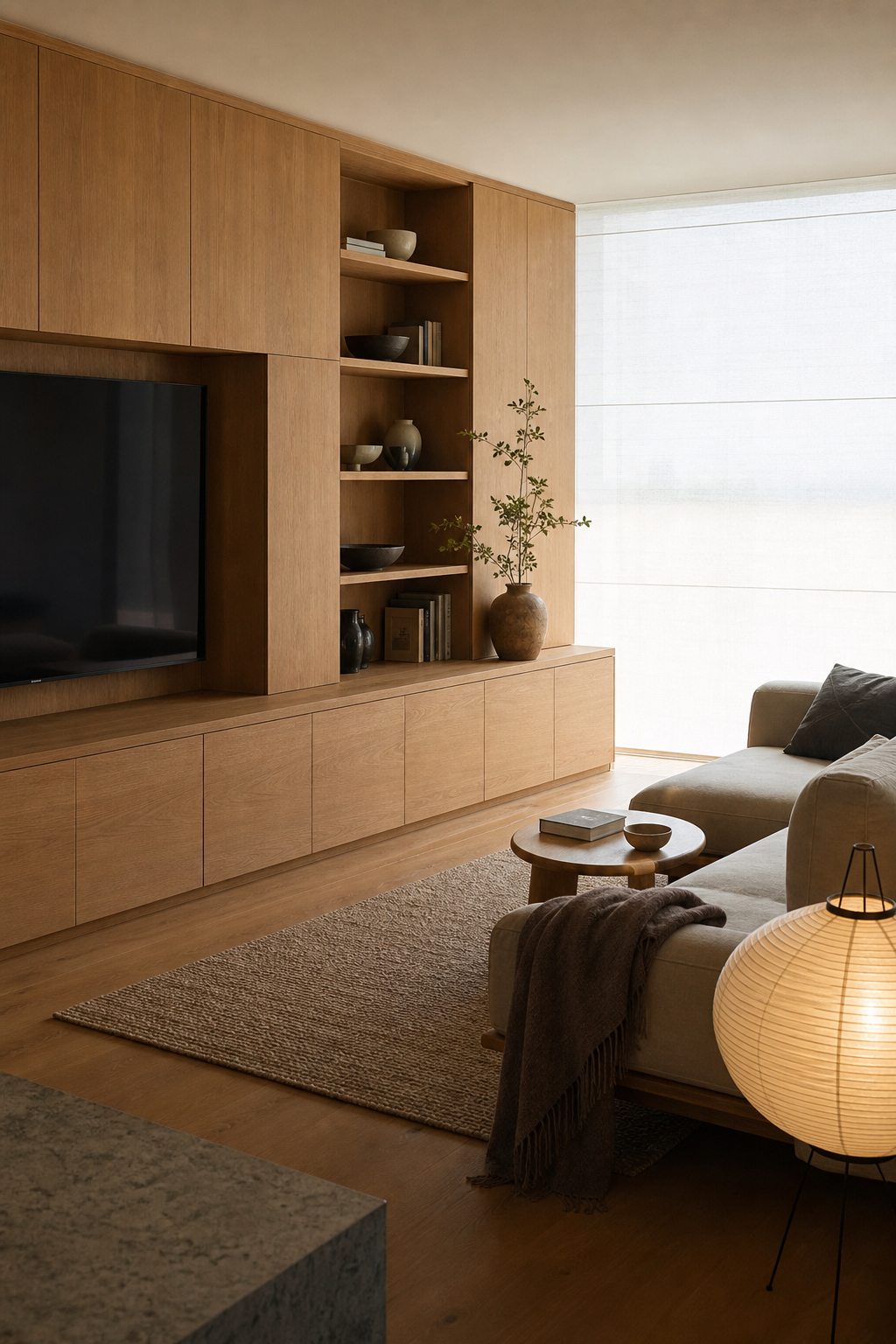
Wood is what keeps Japandi minimalism from feeling cold. Use oak, ash, walnut, pine, or teak in pieces with visible grain and simple construction. A wood coffee table, media cabinet, shelving, or ceiling beam can bring warmth without adding clutter. Keep the finish matte or lightly oiled rather than glossy. Mixing two wood tones is fine if they share a natural, muted quality. The goal is not a perfectly matched showroom, but a calm relationship between materials. Warm wood gives the room texture, age, and a soft organic rhythm.
Choose A Woven Neutral Rug
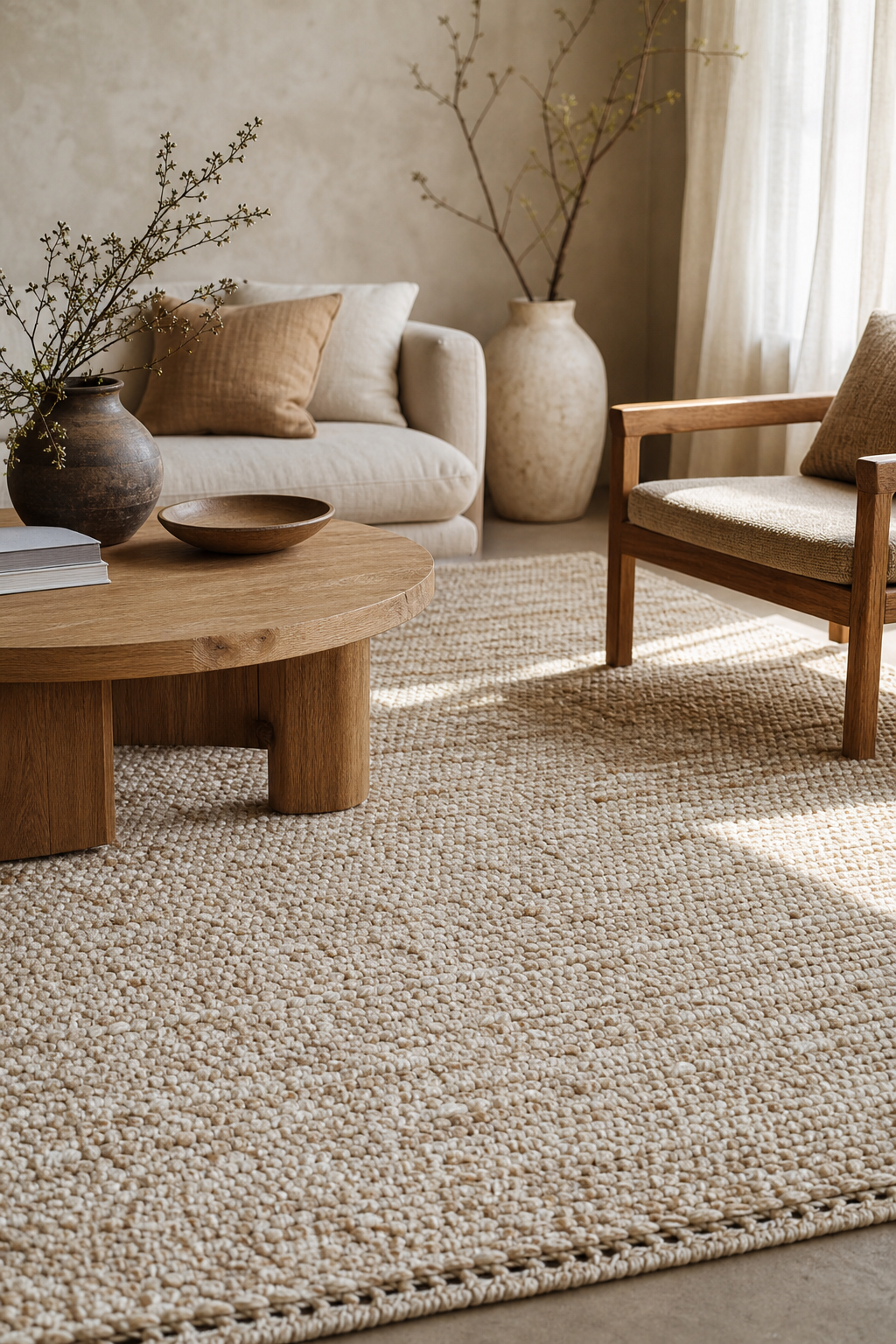
A woven rug softens the room and adds the tactile layer that Japandi spaces need. Look for wool, jute, flatweave, or a low-pile handwoven texture in cream, taupe, greige, or warm gray. The rug should be large enough for the front legs of the seating to rest on it, which makes the arrangement feel connected. Avoid high-contrast patterns unless they are very restrained. Subtle ribbing, grid texture, or natural variation is usually enough. A quiet rug gives the living room comfort while preserving the clean, grounded feeling of the style.
Add A Paper Lantern Glow
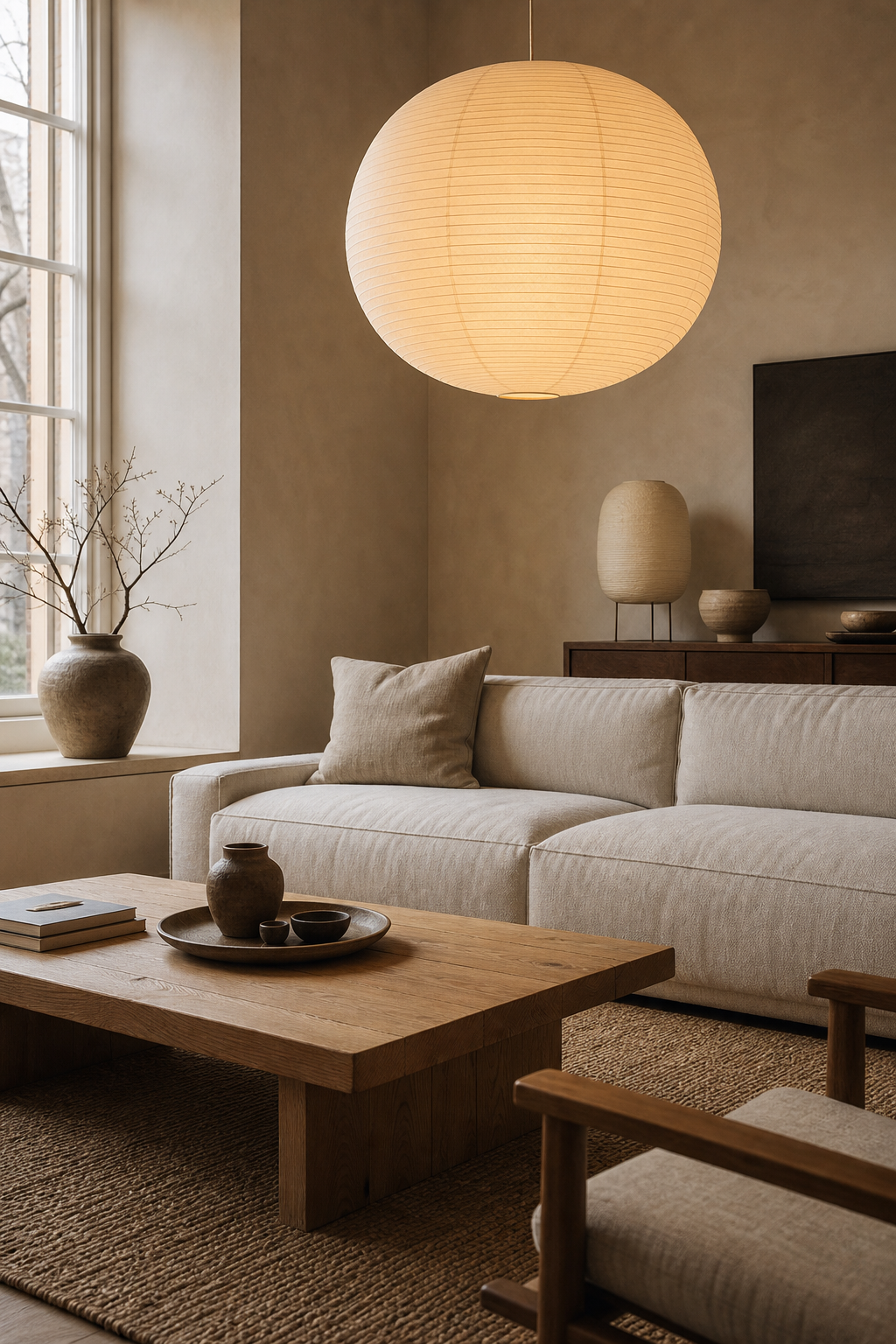
Paper lighting is a natural fit for Japandi rooms because it feels sculptural and gentle at the same time. A round paper pendant, floor lantern, or table lamp can soften the architecture and create an evening glow. Keep the scale generous, but the shape simple. The shade should look handmade rather than slick, with warm white light inside. Place it where it adds atmosphere without blocking movement. Paper lighting brings a Japanese-inspired softness to the room and makes neutral walls feel warm instead of blank.
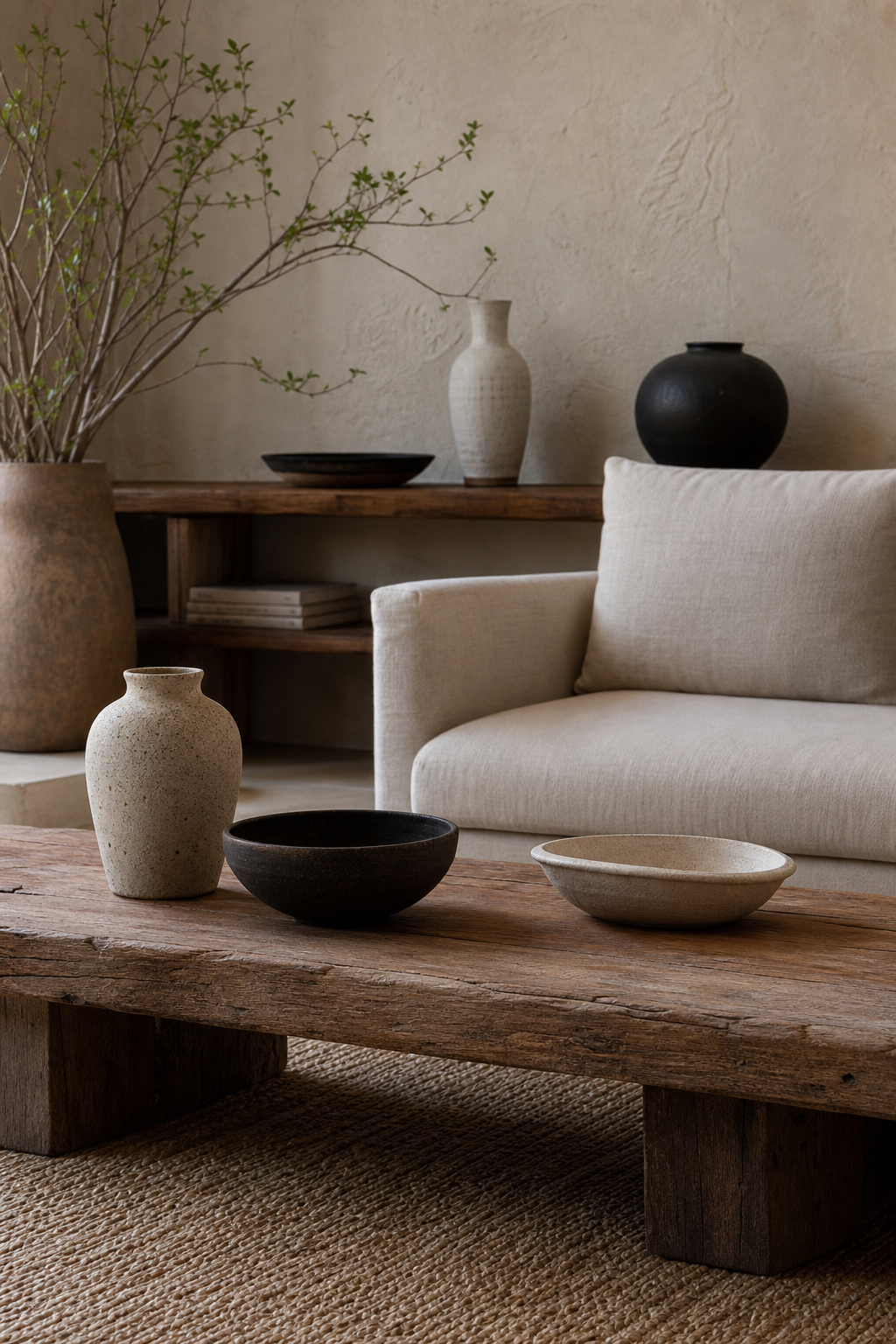
Keep The Coffee Table Low And Solid
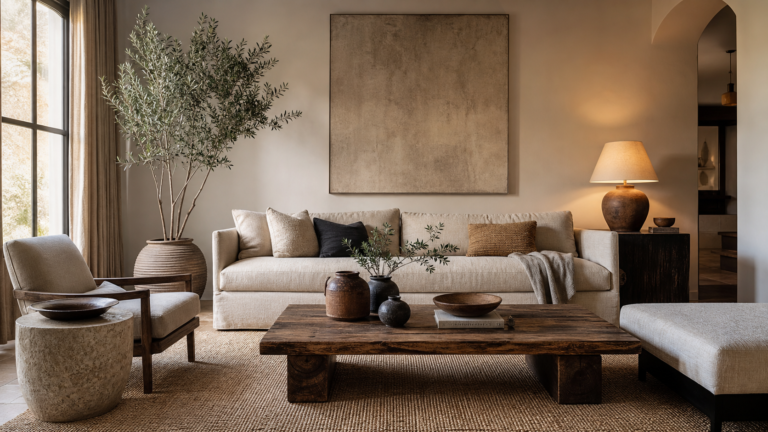
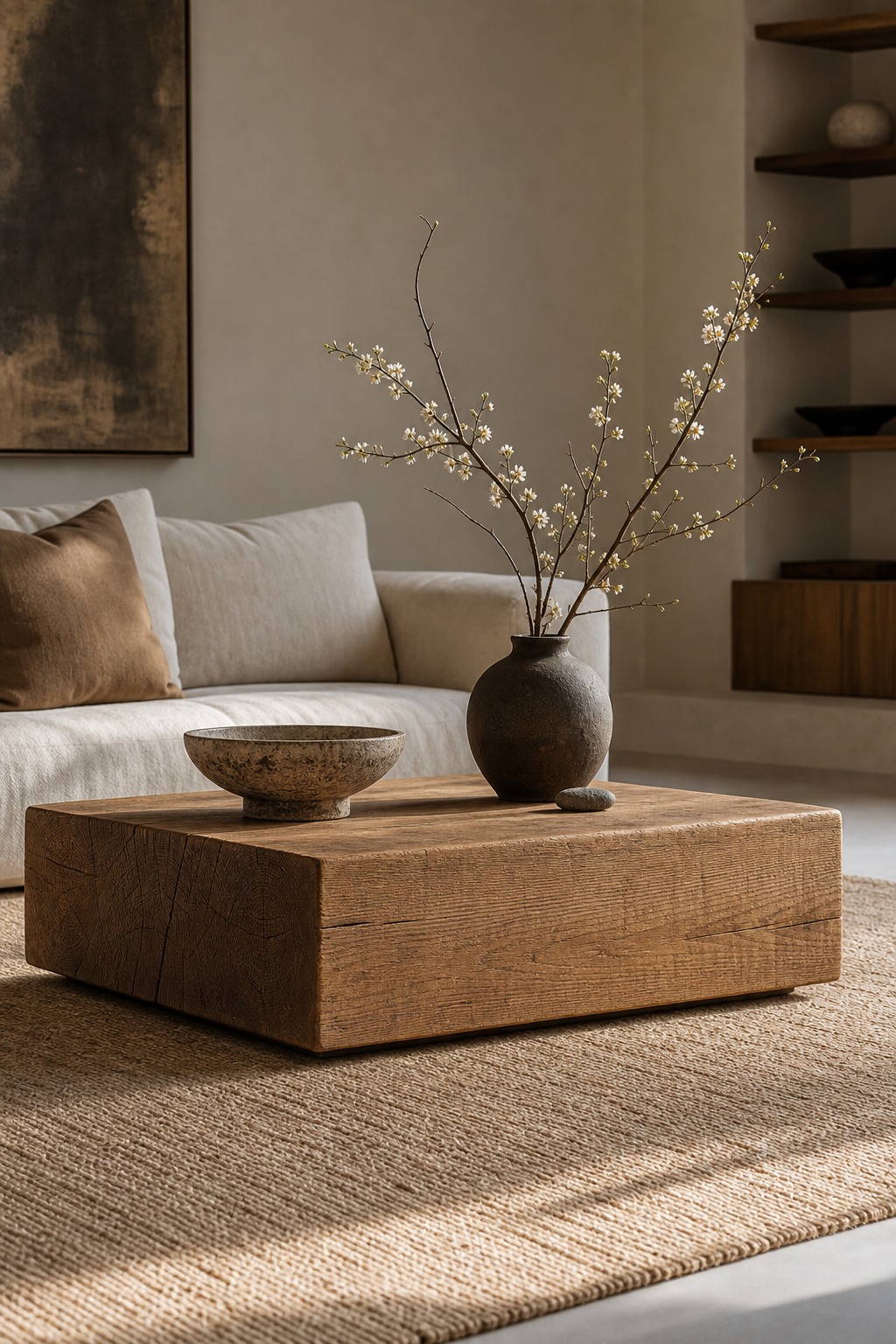
A low, solid coffee table reinforces the grounded feeling of a Japandi living room. Choose a chunky wood table, stone slab, simple black-stained piece, or rounded organic shape. It should feel sturdy and calm rather than delicate. Leave room around it for easy movement, and avoid filling the surface with too many accessories. A tray, one ceramic bowl, and a small branch arrangement may be enough. The table becomes the quiet center of the room, connecting the seating while giving the space a designer-level sense of proportion.
Use Built-In Storage To Hide Clutter
Japandi rooms depend on visible calm, so storage matters as much as furniture. Built-in cabinets, a long media console, or closed shelving can hide cords, games, blankets, and everyday objects. Choose flat fronts, wood grain, push latches, or small black pulls so the storage reads as architecture. Leave a few open areas for books, pottery, or a lamp, but keep most things behind doors. This balance makes the room livable without losing its quiet mood. Good storage lets the materials and shapes become the focus.
Layer Linen And Wool Textiles
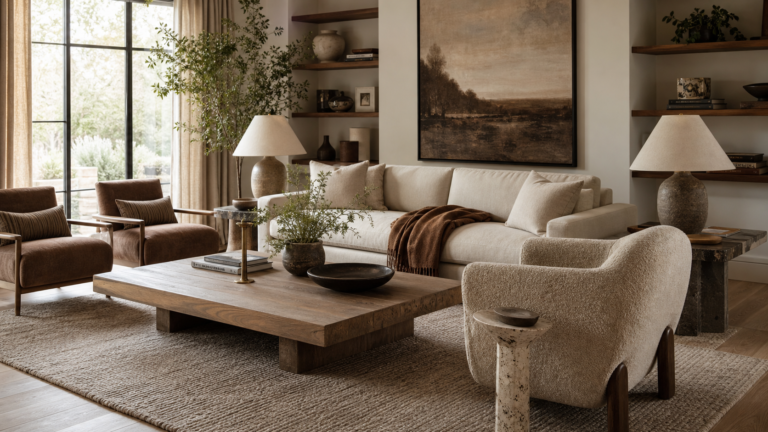
Textiles make a Japandi room feel lived in rather than staged. Layer linen curtains, wool throws, boucle pillows, and a soft rug in related neutral tones. Keep the color range tight, but vary the texture so the room has depth. A nubby pillow beside a smooth linen cushion, or a ribbed throw over a simple sofa, can be enough. Avoid too many patterns or bright accent colors. The warmth should come from touch, not visual noise. These layers help the room feel cozy while preserving its minimal structure.
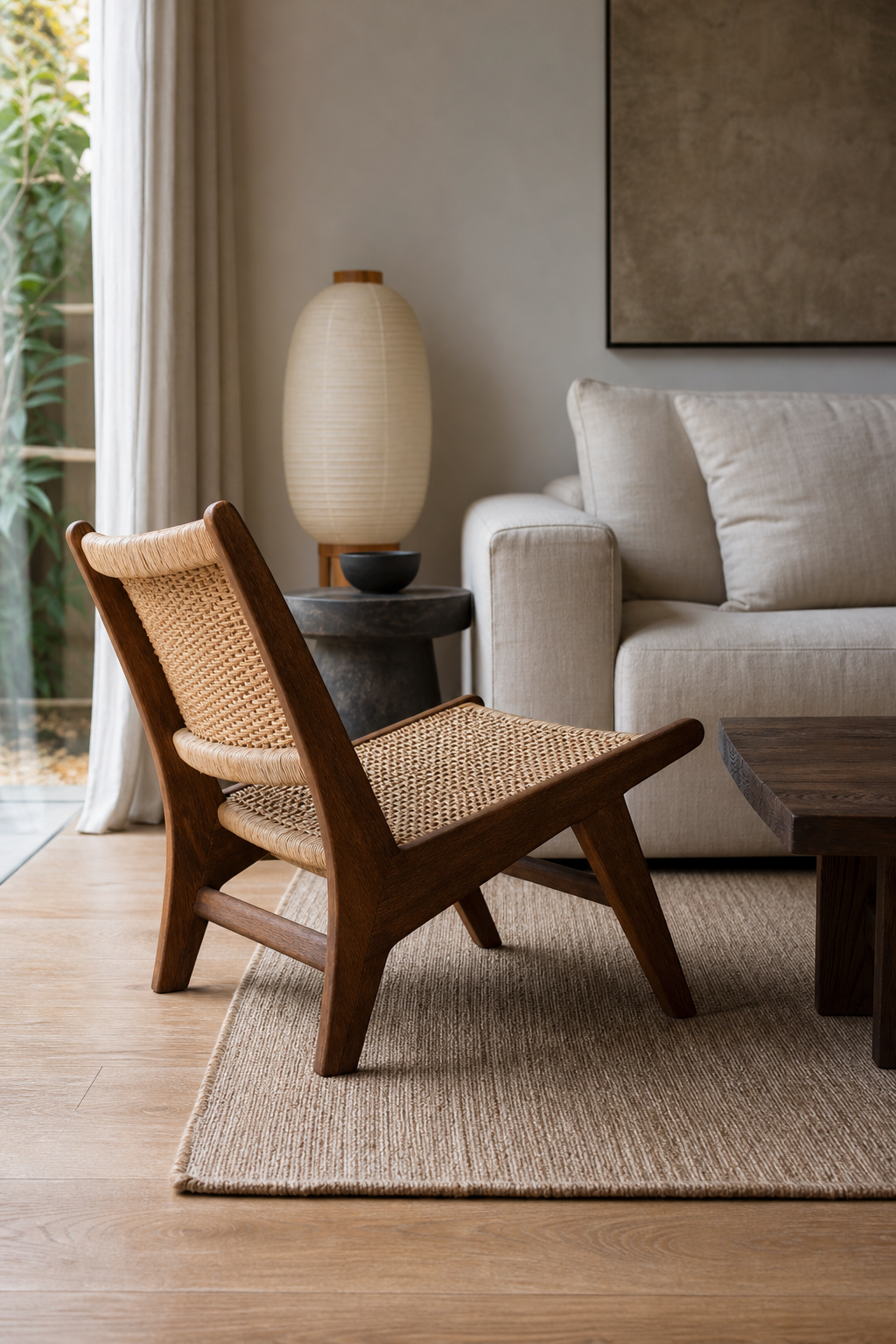
Bring In A Sculptural Lounge Chair
One sculptural lounge chair can give a Japandi living room a designer focal point without making the room feel decorated. Look for a low wood frame, woven seat, boucle upholstery, or a softly rounded shape. The chair should have room to breathe, ideally angled toward the sofa rather than pushed flat against a wall. Keep the silhouette strong and the materials natural. A single statement chair works better than several competing accent pieces. It adds function, shape, and personality while staying within the calm language of the room.
Style With Handmade Ceramics
Handmade ceramics add quiet irregularity, which is important in a room with simple forms. Choose matte vases, bowls, tea cups, or sculptural vessels in clay, black, ivory, or stone colors. Use fewer pieces and give each one space. A single vase on the coffee table, a bowl on the console, and one vessel on a shelf can be enough. Slight asymmetry makes the styling feel human and relaxed. Ceramics bring the wabi-sabi side of Japandi into the living room without adding clutter or glossy decoration.
Use Black Accents Sparingly
A few black accents can sharpen a soft Japandi palette and keep the room from feeling washed out. Use black in a lamp base, slim window frame, ceramic bowl, fireplace surround, or chair detail. Keep the finish matte or softly textured rather than glossy. The black should act like punctuation, not a dominant color story. Pair it with warm wood, cream textiles, and pale walls so the contrast feels balanced. Used sparingly, black gives the living room definition and a more tailored designer edge.
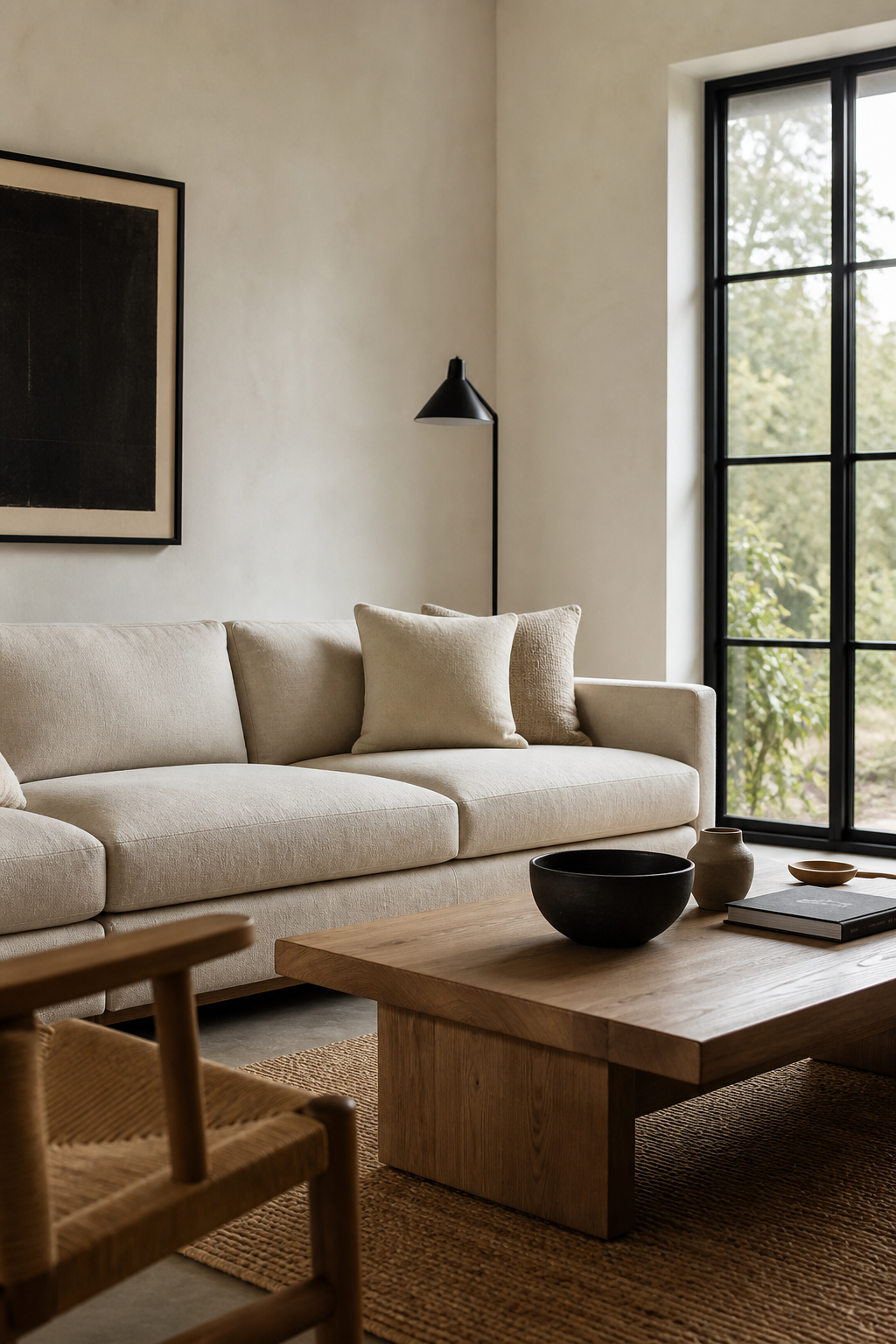
Add An Indoor Tree
An indoor tree adds life and height to a Japandi living room without needing a busy collection of accessories. Olive, ficus, maple, or a sculptural branch arrangement can work depending on the light. Place it in a simple clay, stone, or woven planter and let it stand with space around it. The greenery should feel architectural rather than lush and crowded. One well-chosen tree softens clean lines, connects the room to nature, and brings movement to a neutral palette. It is a strong choice for an empty corner.
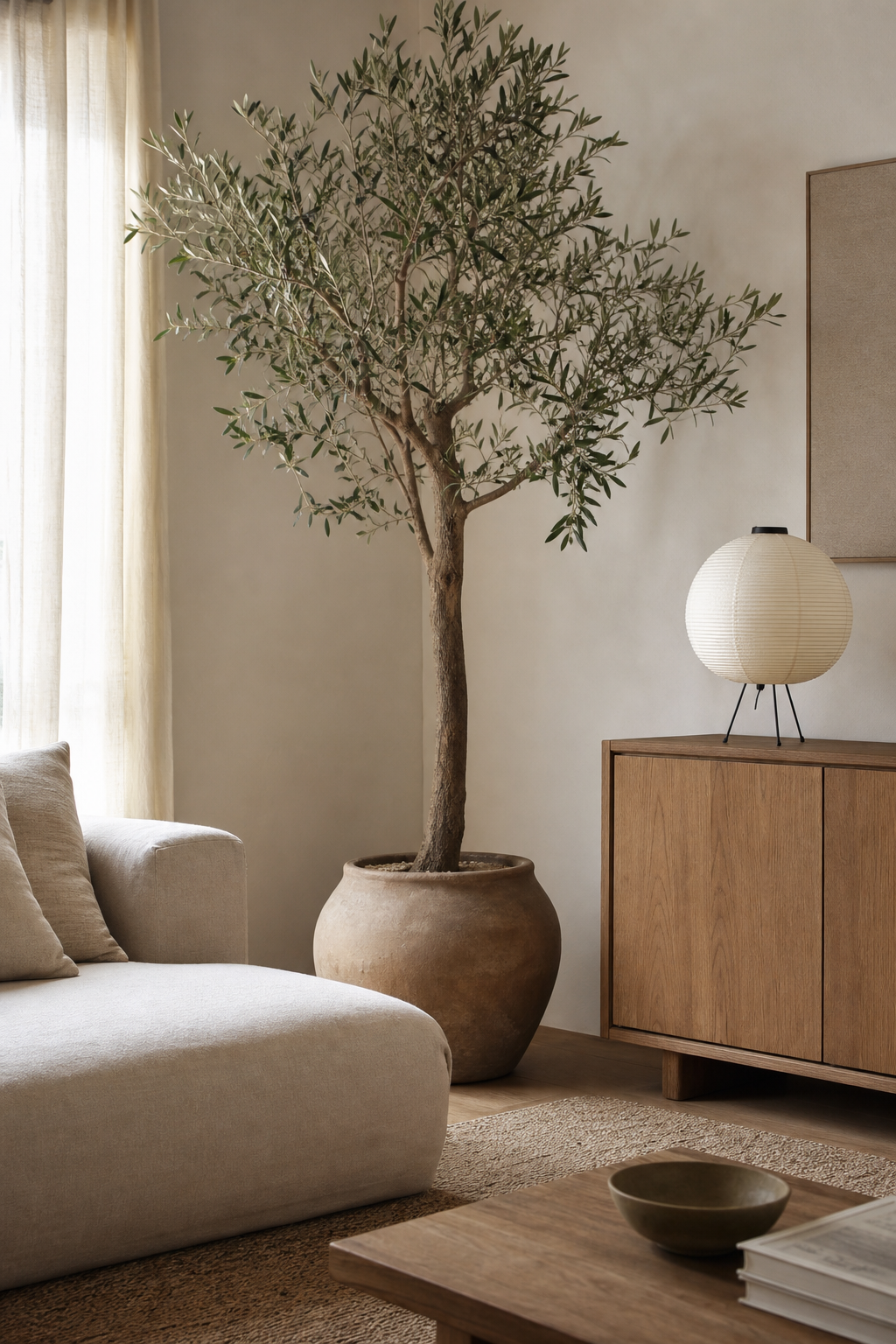
Hang Linen Curtains High
Linen curtains soften the hard edges of a living room and make the space feel more restful. Hang them high and wide so the window looks larger and the fabric falls cleanly. Choose warm white, oatmeal, flax, or pale gray linen with a relaxed but not sloppy drape. Avoid heavy patterned curtains or shiny hardware. The fabric should filter light during the day and add privacy at night. In a Japandi room, curtains are not just decoration; they are part of the calm atmosphere and a key source of softness.
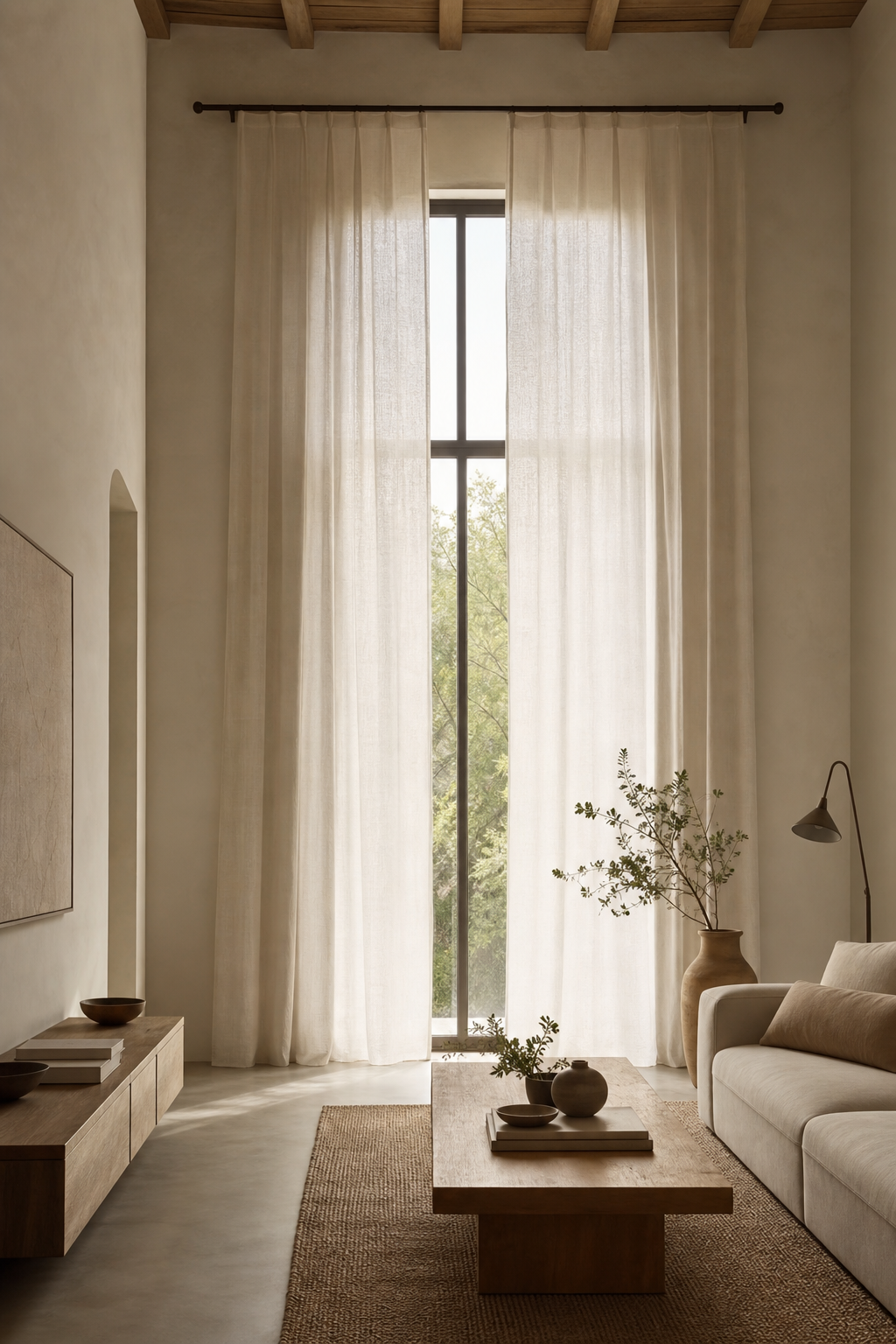
Create A Quiet Reading Corner
A reading corner adds function and intimacy to an open living room. Use a low lounge chair, small wood side table, soft lamp, and a basket for a throw. Keep the corner simple and connected to the main palette. A paper floor lamp or ceramic table lamp will give the space a warm evening glow. Place one piece of art or a branch arrangement nearby if the wall feels bare. This small zone makes the living room feel more layered and personal without adding clutter or changing the overall calm.
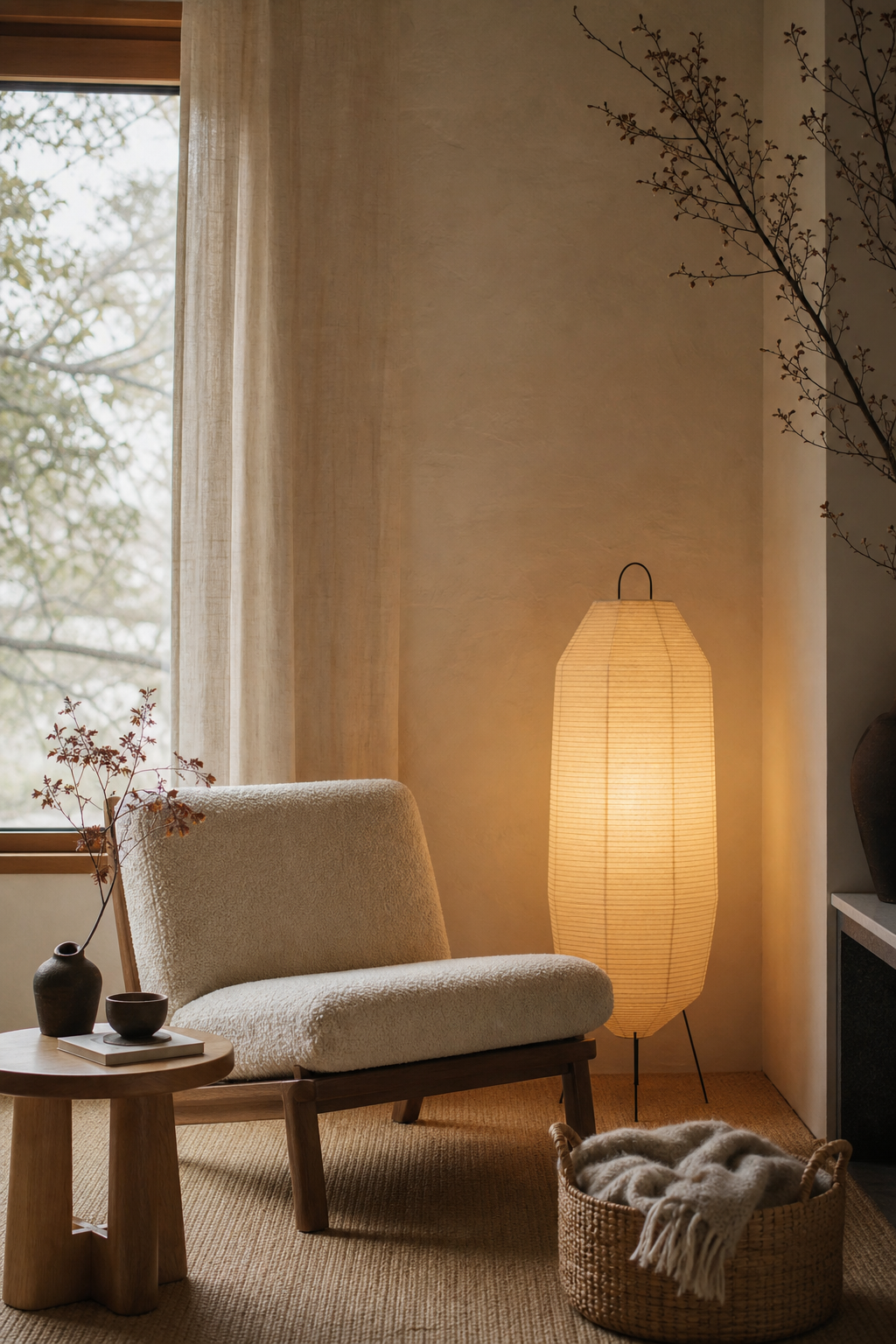
Choose Art With Breathing Room
Japandi art should support the room’s stillness. Choose one large abstract, ink drawing, textile piece, or quiet landscape rather than a busy gallery wall. Leave generous space around the frame so the wall still feels calm. Natural wood, black, or thin metal frames work well. The colors should echo the room: charcoal, cream, clay, taupe, or muted green. Art with breathing room gives the living room a focal point while preserving negative space. It feels curated rather than filled, which is the difference between minimal and unfinished.
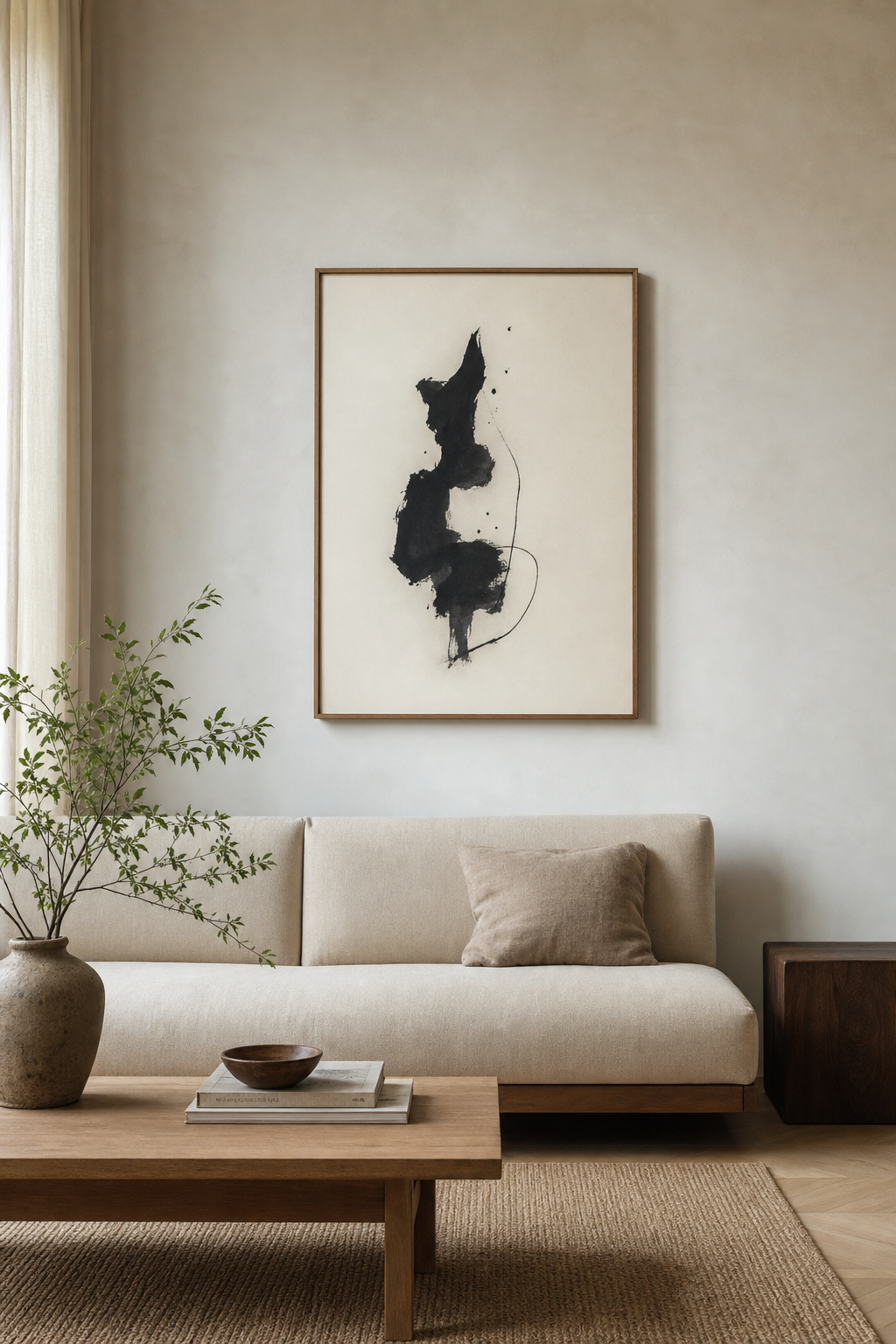
Use Rounded Organic Shapes
Rounded forms keep a minimal living room from feeling rigid. A curved chair, oval coffee table, round ceramic lamp, or softly shaped vase can balance straight walls and storage. Use these shapes selectively so they feel intentional. Too many curves can make the room lose its quiet discipline, while one or two organic pieces add ease. Rounded edges are especially useful in small living rooms because they improve flow around furniture. In Japandi design, the best curves feel natural, calm, and connected to the materials around them.
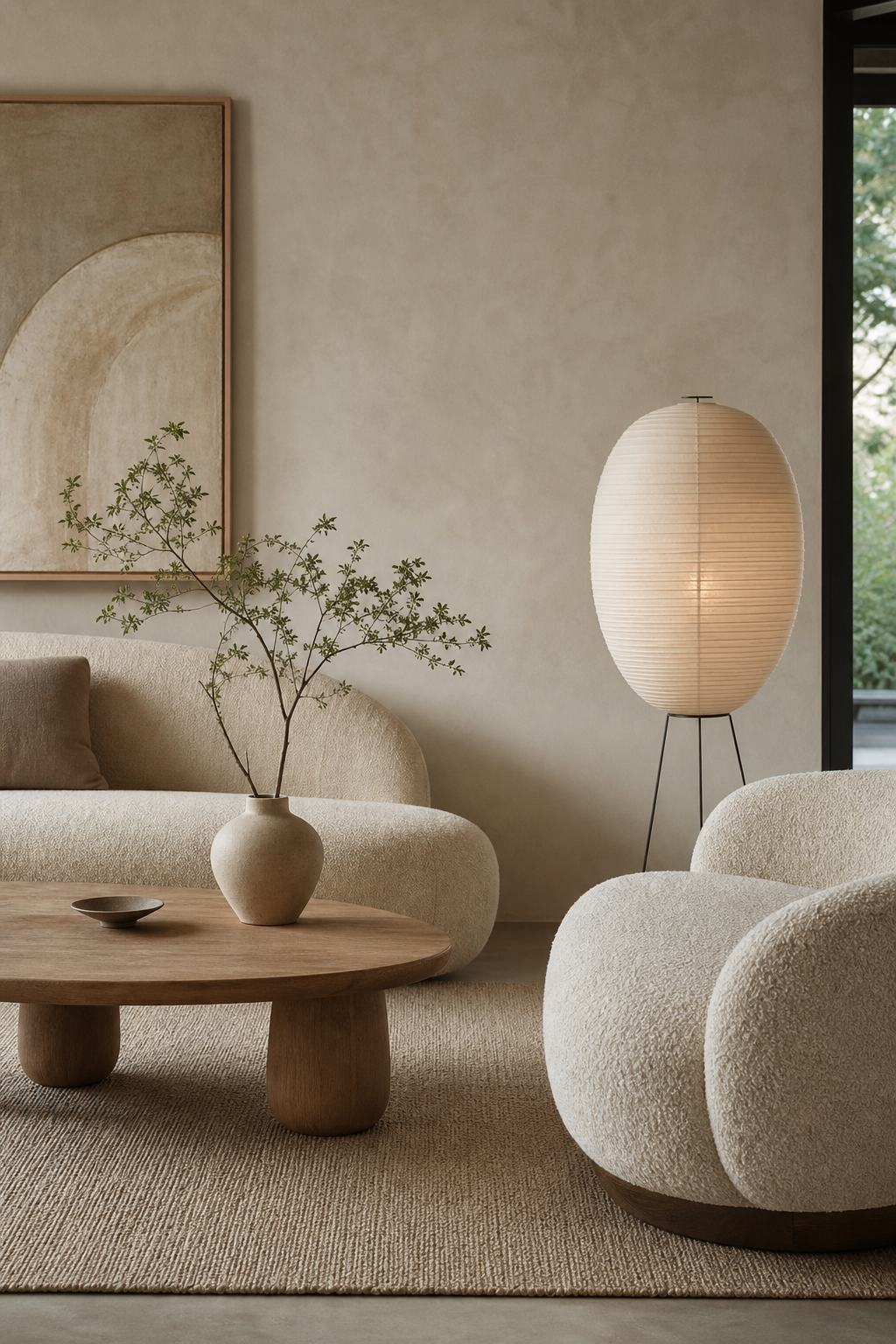
Add A Low Bench Or Floor Cushion
A low bench or floor cushion brings the seating closer to the ground, which suits the Japandi mood. Use a simple wood bench near the window, a linen floor cushion beside the coffee table, or a woven pouf that can move around the room. Keep the piece structured, not floppy, so it feels designed rather than temporary. This extra seat can hold a tray, book, or folded throw when not in use. It adds flexibility while reinforcing the calm horizontal lines that make the living room feel grounded and intimate.
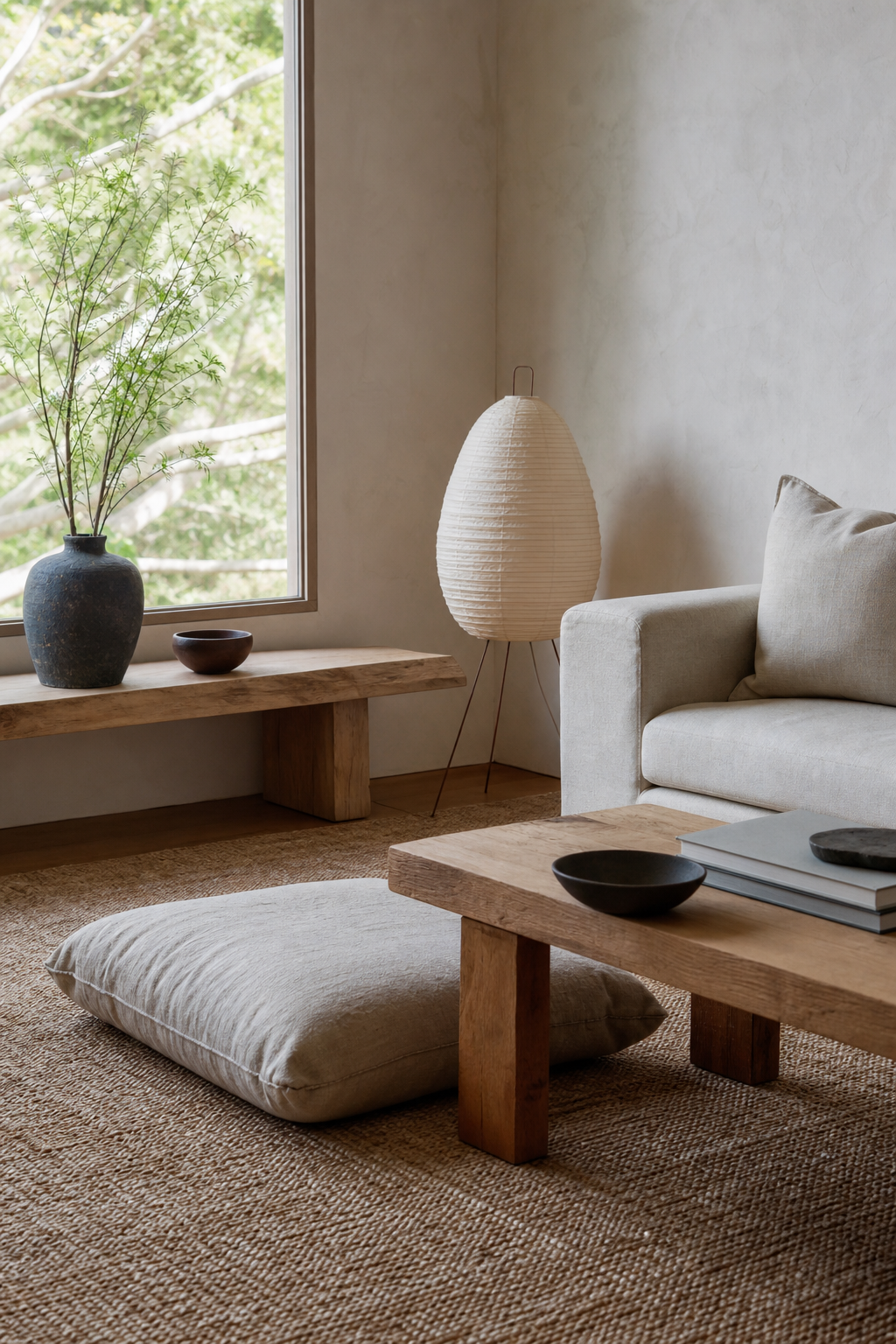
Leave Negative Space
Negative space is not empty space; it is what lets the room breathe. In a Japandi living room, avoid filling every corner, shelf, and surface. Let the wall around art remain visible, keep the coffee table edited, and give furniture enough distance to show its shape. This restraint makes each material feel more important. It also makes daily maintenance easier because there is less to move, dust, and reset. A cozy designer room needs softness and warmth, but it also needs enough quiet space for the eye to rest.
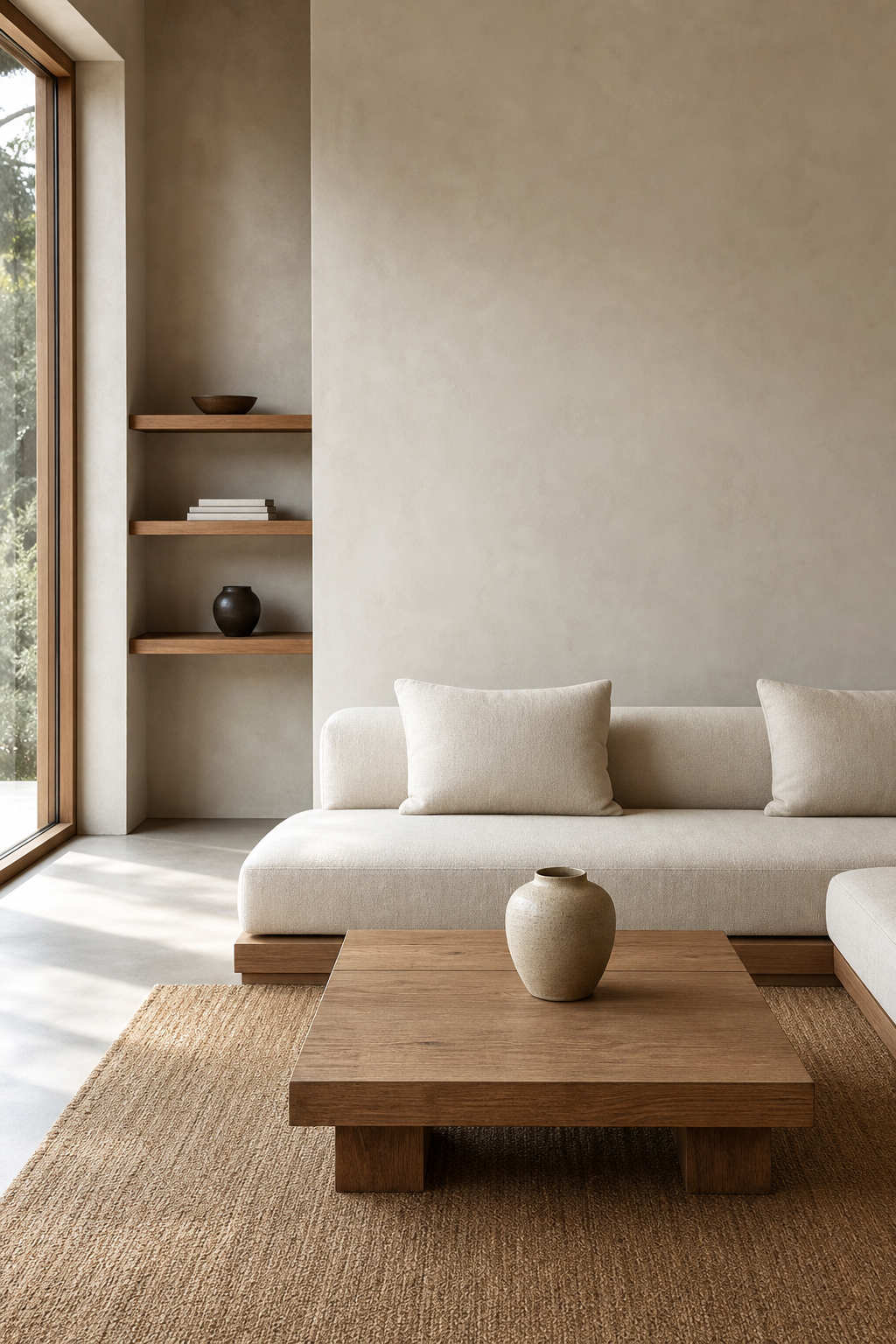
Finish With A Warm Evening Layer
The room should feel as good at night as it does in daylight. Add a warm evening layer with a floor lamp, table lamp, dimmable pendant, or wall light. Keep bulbs warm and diffuse the light through paper, linen, ceramic, or opal glass. Avoid relying only on overhead lighting, which can flatten the textures that make Japandi rooms cozy. At night, the wood should glow, the textiles should feel soft, and the room should invite slow use. This final layer turns a clean living room into a true retreat.
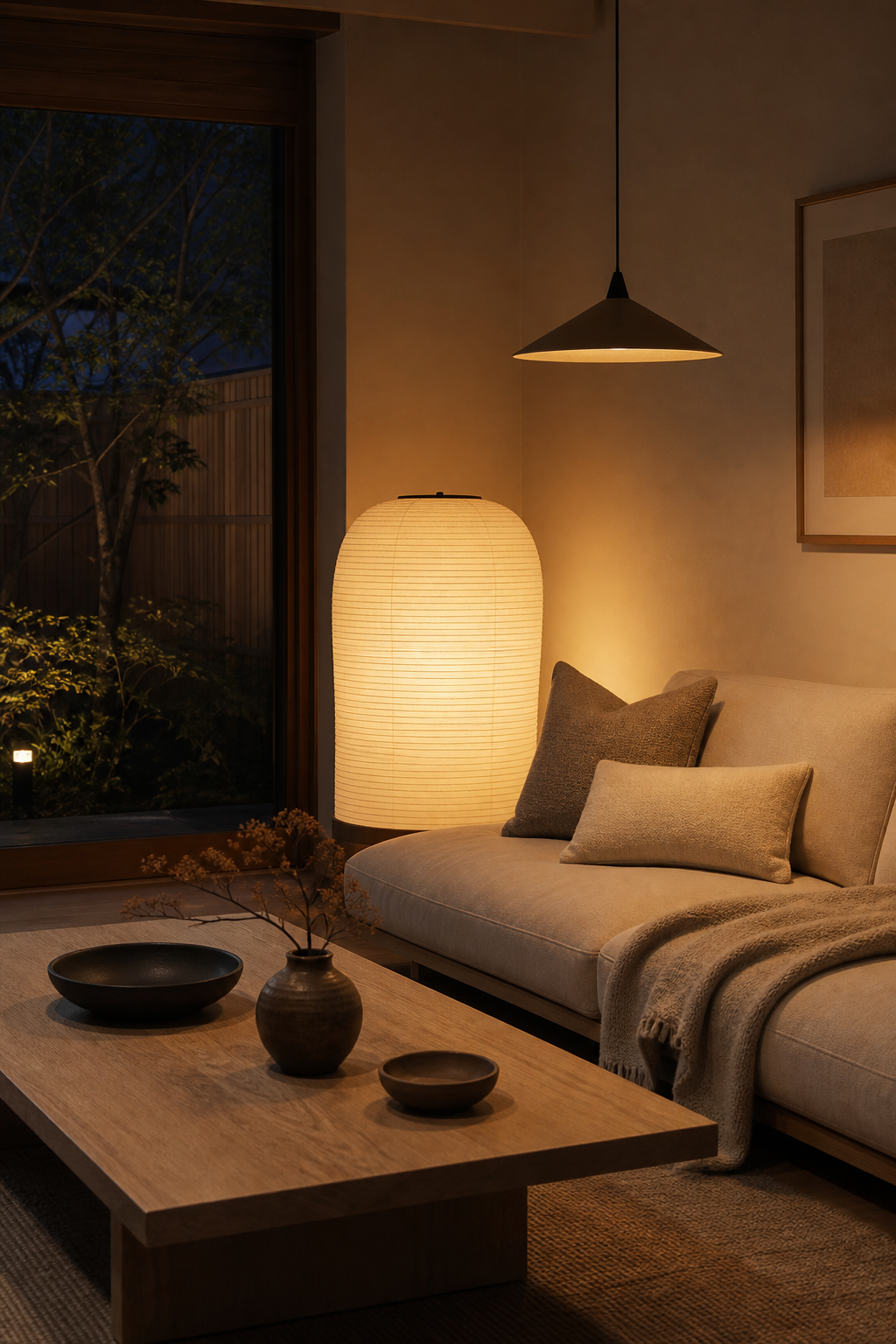
A cozy Japandi living room depends on restraint, but it should never feel bare. Let low furniture, warm wood, soft textiles, paper lighting, handmade ceramics, and hidden storage do most of the work. When every piece has space around it and a reason to be there, the room feels calm, personal, and quietly luxurious.