25 Earthy Living Room Ideas For A Cozy Designer Look
An earthy living room feels grounded because every material has warmth, texture, or natural variation. Instead of relying on a single beige palette, the best rooms mix linen, wood, stone, clay, leather, wool, woven fibers, plants, and soft black accents so the space feels layered rather than flat. The goal is cozy designer comfort: seating that invites real lounging, lighting that glows in the evening, and objects that look collected instead of staged. These earthy living room ideas can guide a full refresh or a few focused upgrades. Start with the material, color, or layout change that will make the room feel calmer and more connected.
Start With A Sofa That Looks Generous
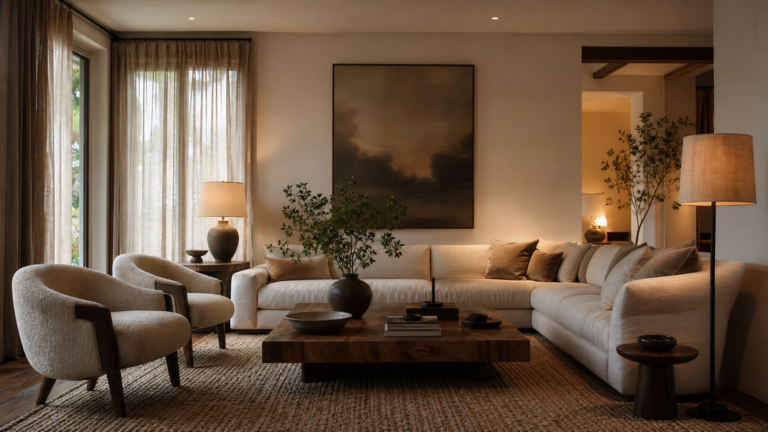
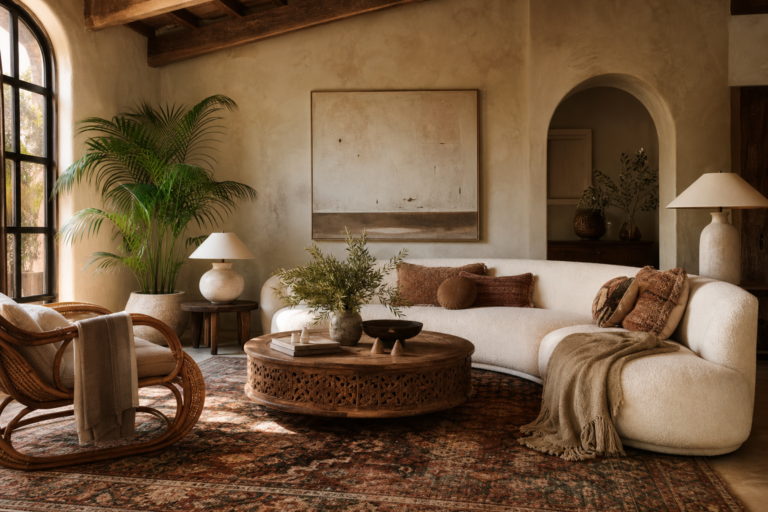
A living room feels instantly more designer when the sofa has generous proportions and excellent fabric. It does not need to be oversized, but it should look comfortable from across the room: deep seat, soft arms, and cushions that hold their shape. Choose performance linen, textured cotton, velvet, or boucle depending on the mood. A pale sofa can still be practical if the fabric is durable, while a darker sofa brings depth to sunny rooms. Style it with fewer pillows than you think, using varied texture instead of too many patterns. The sofa should make the room feel settled, not crowded, and invite real lounging.
Anchor The Seating With A Large Rug
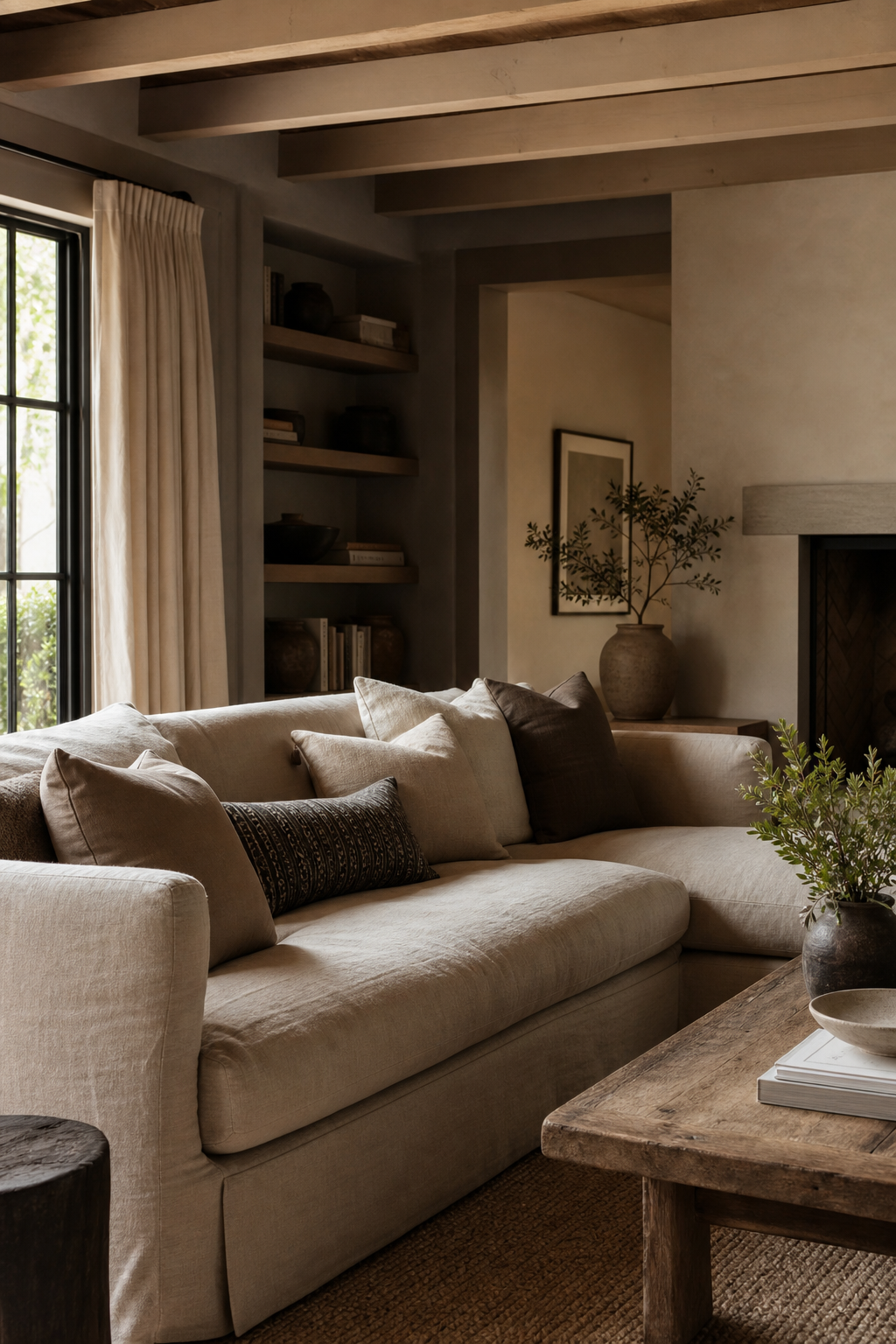
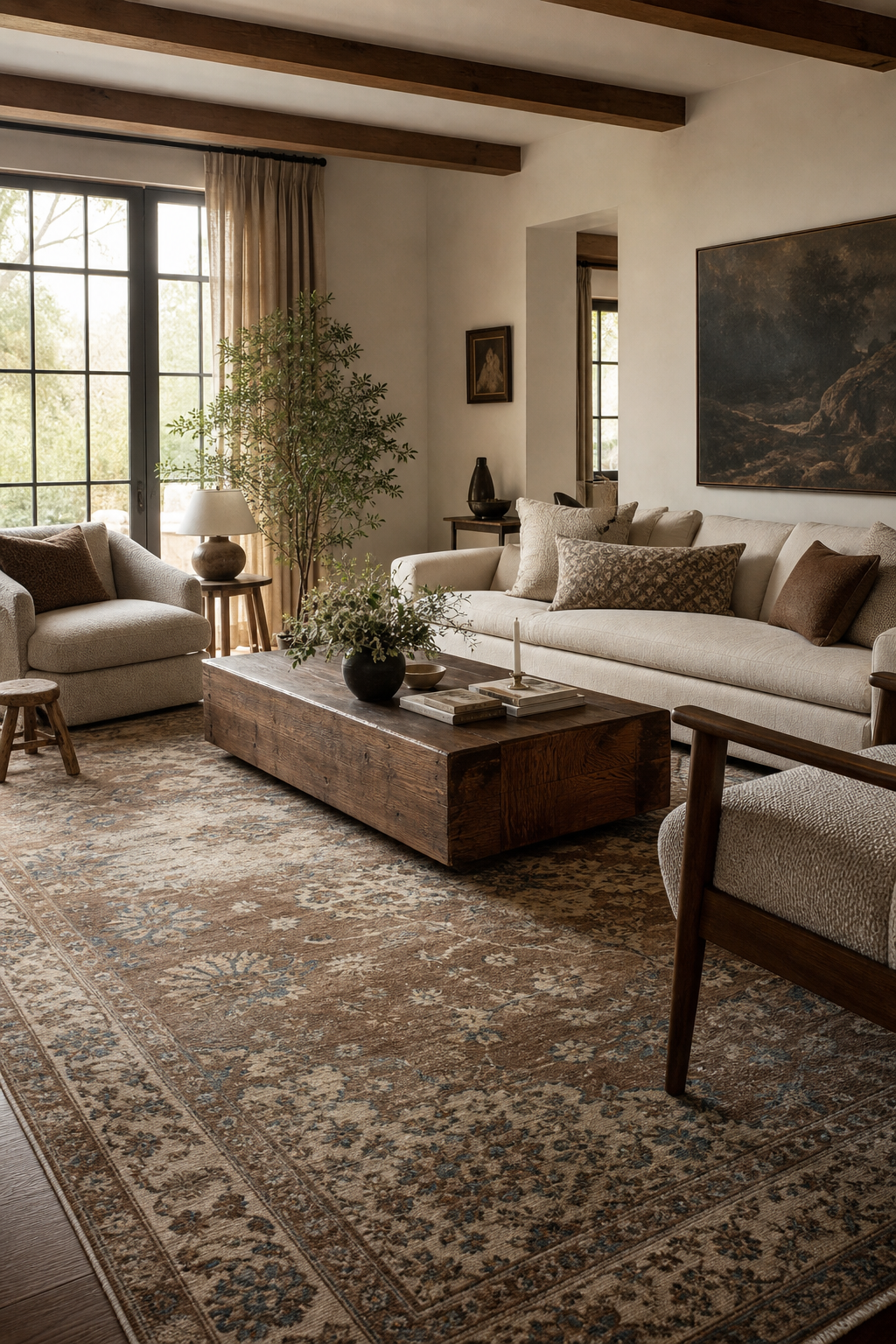
A rug that is too small can make even beautiful furniture feel disconnected. For a designer look, choose a rug large enough for at least the front legs of the sofa and chairs to sit on it. This creates a visual island and makes the seating group feel intentional. Vintage-inspired wool, tonal pattern, jute layered with wool, or a subtle hand-knotted design all work well. The rug should relate to the sofa but not match it exactly. If the room is neutral, let the rug add quiet movement. If the furniture is colorful, use the rug to calm everything down. Scale is the luxury detail here.
Mix Round And Rectangular Shapes
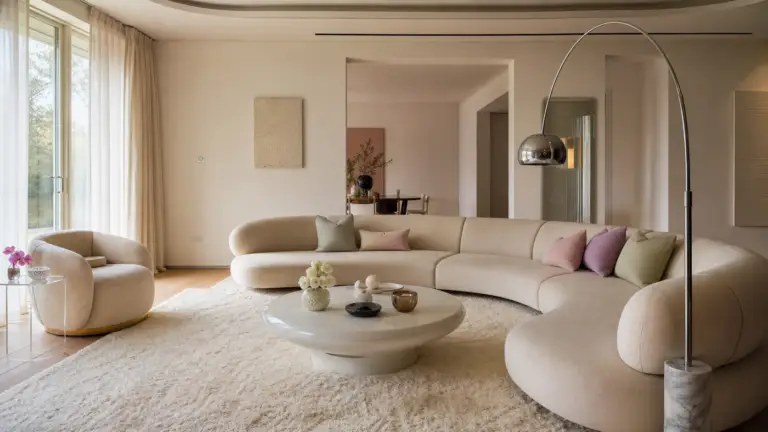
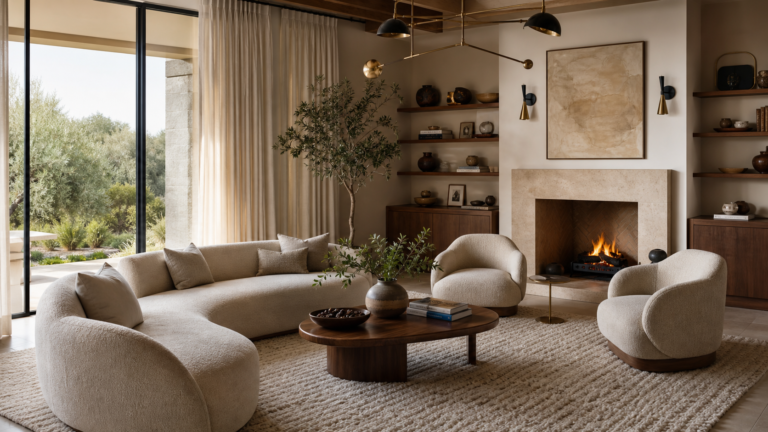
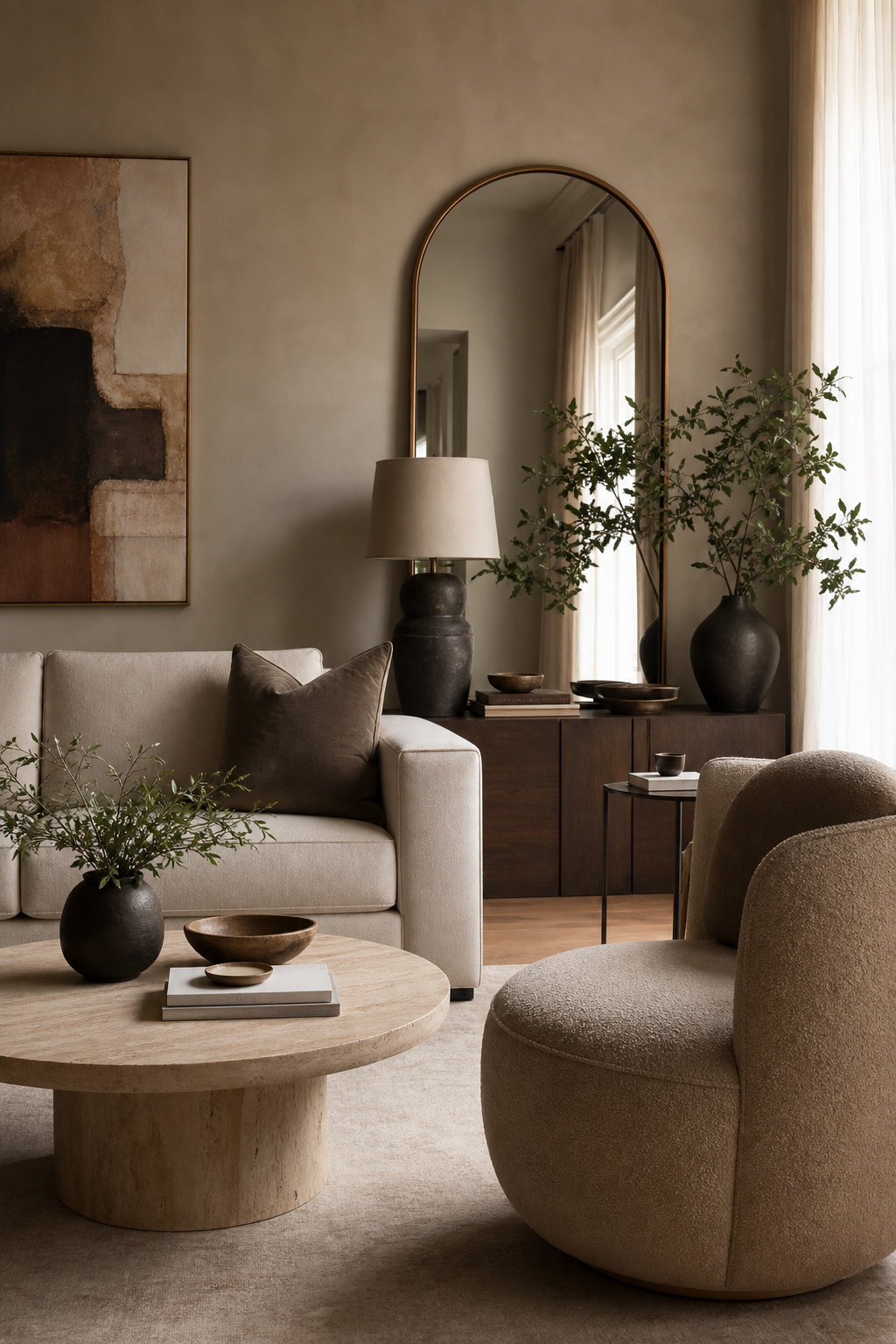
Rooms feel more natural when the shapes are varied. If the sofa and rug are rectangular, bring in a round coffee table, curved chair, drum stool, or arched mirror. If the room already has many soft curves, a square table or angular console can sharpen it. This mix keeps the eye moving and prevents a living room from feeling like a showroom set. Curved forms are especially useful in cozy rooms because they soften traffic flow and make conversation areas feel more welcoming. Repeat each shape at least once, even subtly, so the design feels deliberate rather than accidental. The contrast makes the composition feel relaxed and alive.
Layer Lighting At Three Heights
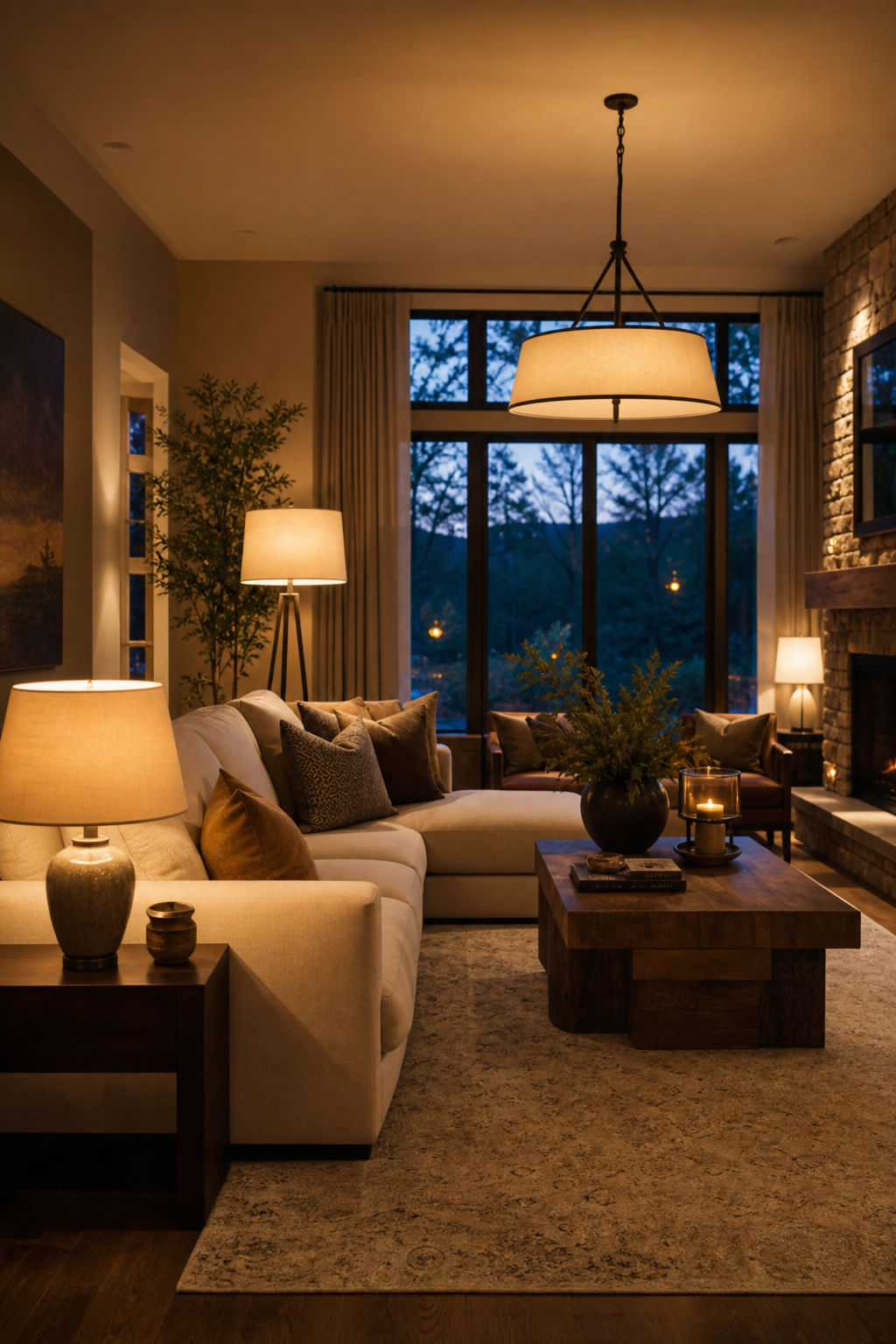
A living room should never depend on one overhead light. Use lighting at three heights: a ceiling fixture or pendant, a floor lamp, and at least one table lamp or sconce. This creates depth in the evening and makes fabrics, art, and wood tones look richer. Choose warm bulbs and dimmers whenever possible. A shaded lamp beside the sofa is more flattering than a bare bulb, while a picture light can make art feel important. Place light where life happens: reading corners, side tables, consoles, and dark corners. Good lighting is one of the fastest ways to make a cozy room look expensive.
Use Art As The Emotional Center
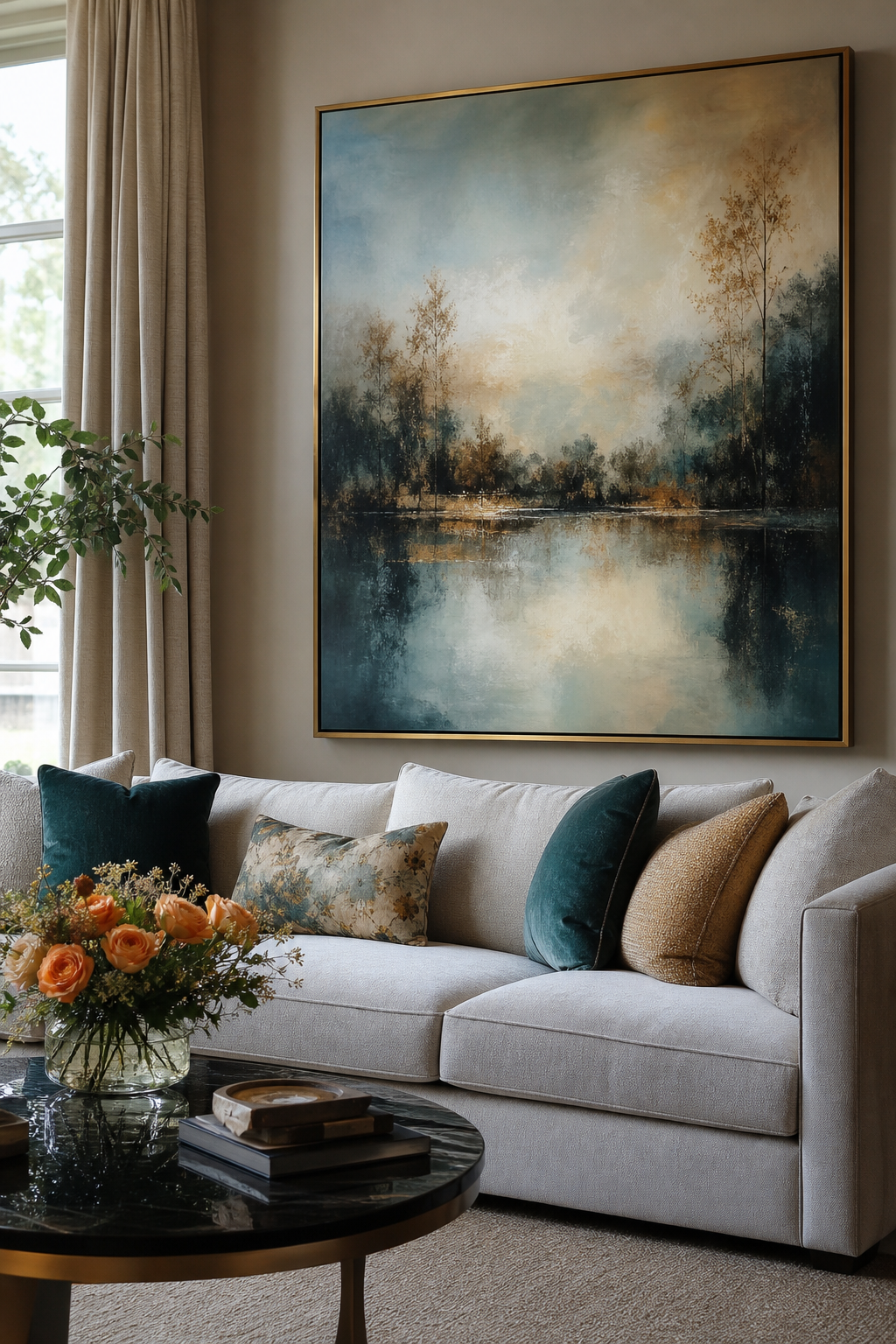
Earthy living rooms need more than pretty objects; they need a mood. Large art can provide that center. Choose a landscape for calm, an abstract piece for modern energy, or a tonal botanical for softness. The artwork should be scaled to the wall and furniture below it. A small piece floating above a large sofa rarely feels intentional, so go bigger or create a tight gallery grouping. Pull one or two colors from the art into pillows, flowers, or a throw. This makes the room feel connected without matching. When the art has presence, the rest of the decor can stay quieter and more sophisticated.
Choose A Coffee Table With Weight
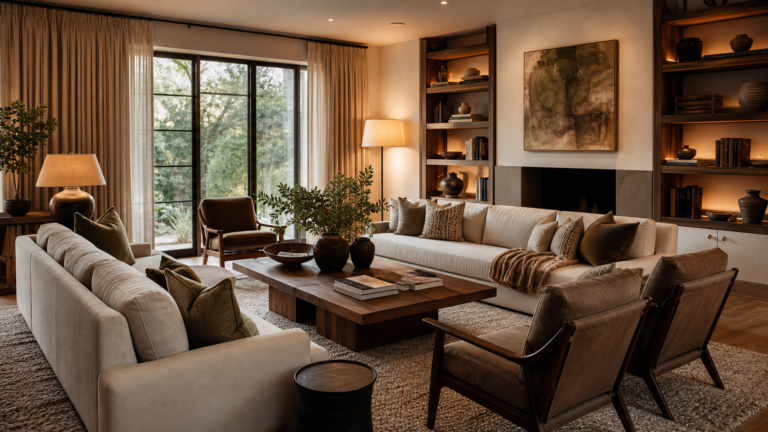
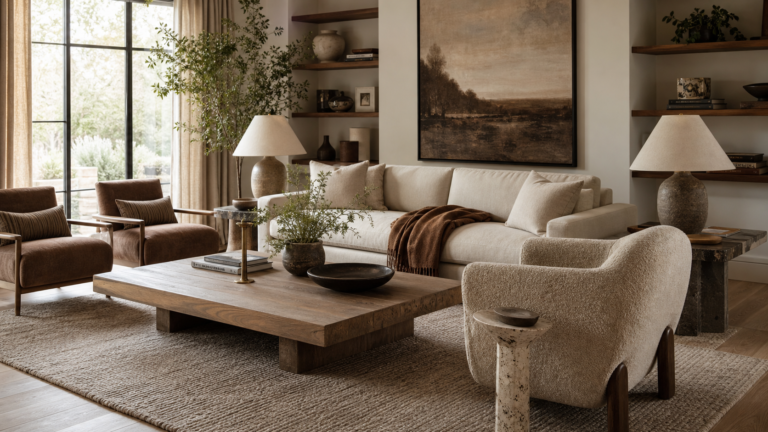
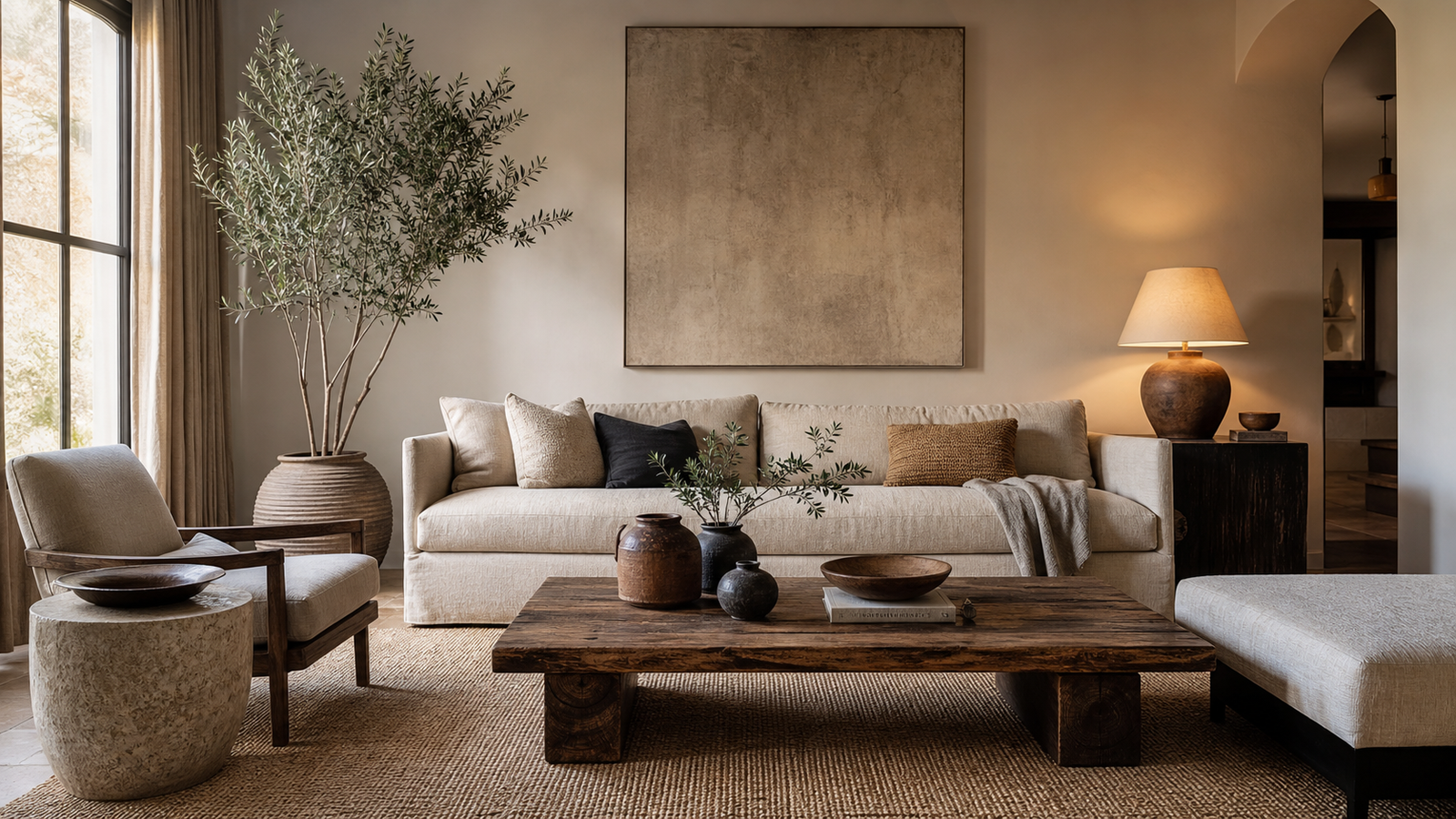
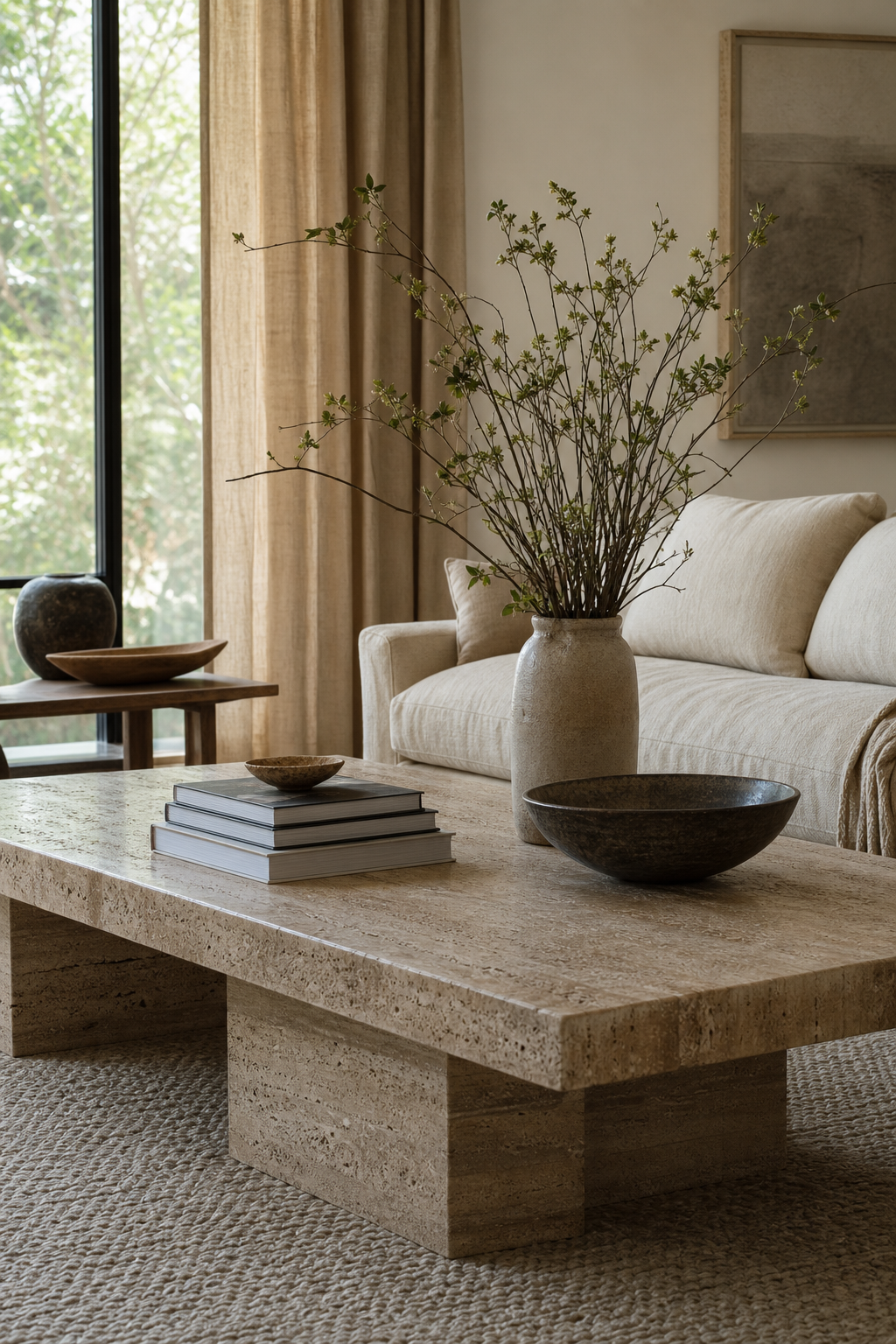
A coffee table should have enough visual weight to hold the seating area together. In a earthy cozy designer living room, stone, dark wood, travertine, oak, or plaster can bring that grounded feeling. The table does not need to be bulky, but it should not disappear. Leave enough walking space around it, then style it with a low bowl, books, and one organic element. If the sofa is long, consider a larger rectangle or two smaller tables. If the seating is compact, a round table can improve movement. The coffee table is both functional and sculptural, so its material matters. It gives the room a memorable center of gravity.
Add One Vintage Or Antique Piece
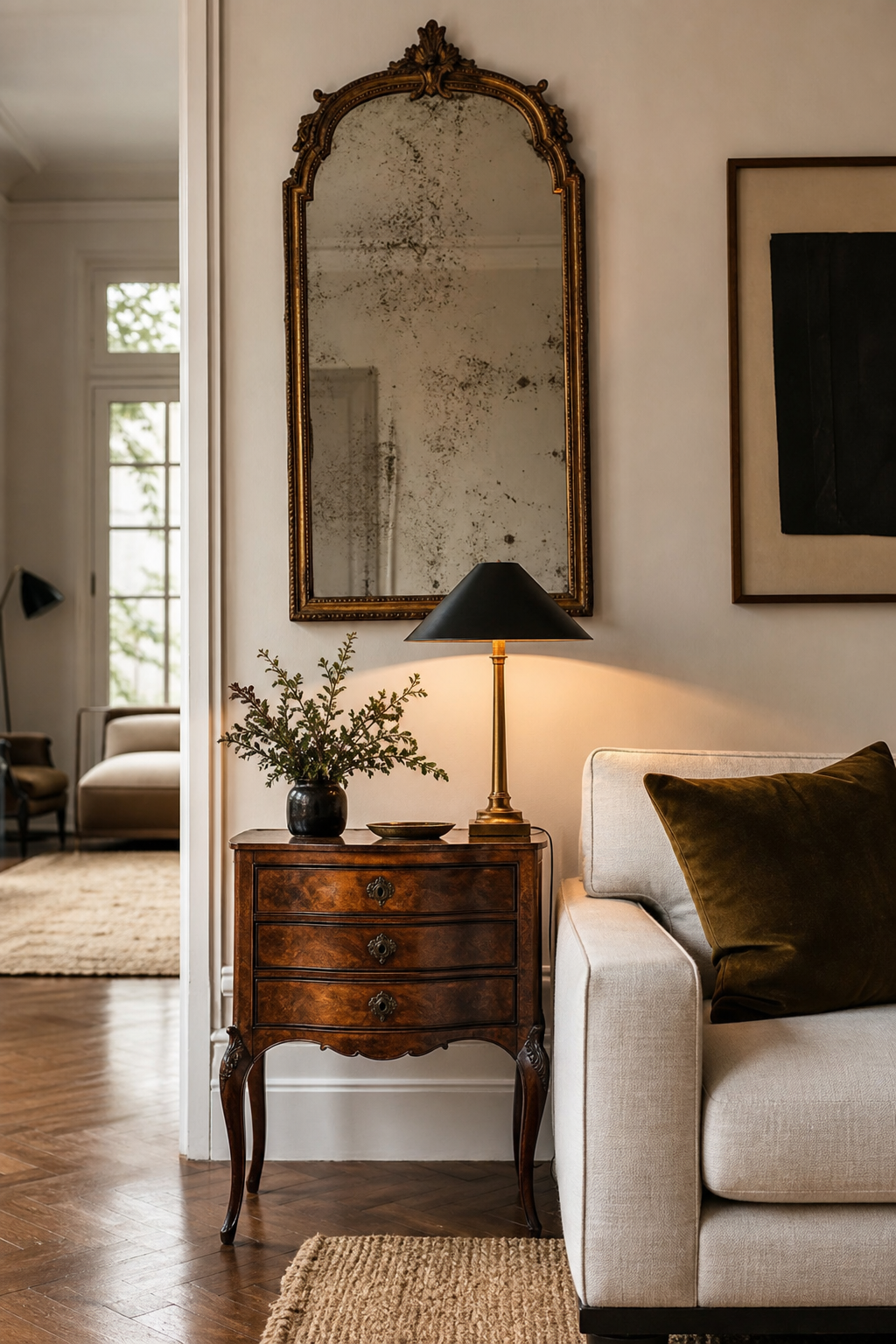
A room can look flat when every piece is new. Add one vintage or antique element to bring age and soul: a side table, rug, mirror, stool, cabinet, or framed artwork. The piece does not need to dominate the room. In fact, one well-chosen object often feels more sophisticated than a heavily themed vintage space. Pair old wood with clean upholstery, or an antique mirror with modern lamps. This contrast makes the room feel collected over time. Look for patina, not damage, and choose something that still serves a purpose. Aesthetic rooms are prettiest when they feel personal, not freshly unpacked.
Keep The Palette Warm But Not Flat
Warm neutrals are popular for cozy living rooms, but they need variation to avoid looking bland. Mix ivory, oat, mushroom, camel, walnut, stone, and soft black. Add one muted accent such as olive, rust, dusty blue, or oxblood. The secret is undertone control: avoid combining too many yellows, grays, and pinks without a plan. Use wood, metal, and textiles to create depth. A warm palette feels designer when contrast is subtle but present. Try pale walls, a medium sofa, dark table legs, and a richer throw. The room stays restful while still having enough structure for the eye. Small differences are what keep neutrals feeling layered.
Let Curtains Add Soft Architecture
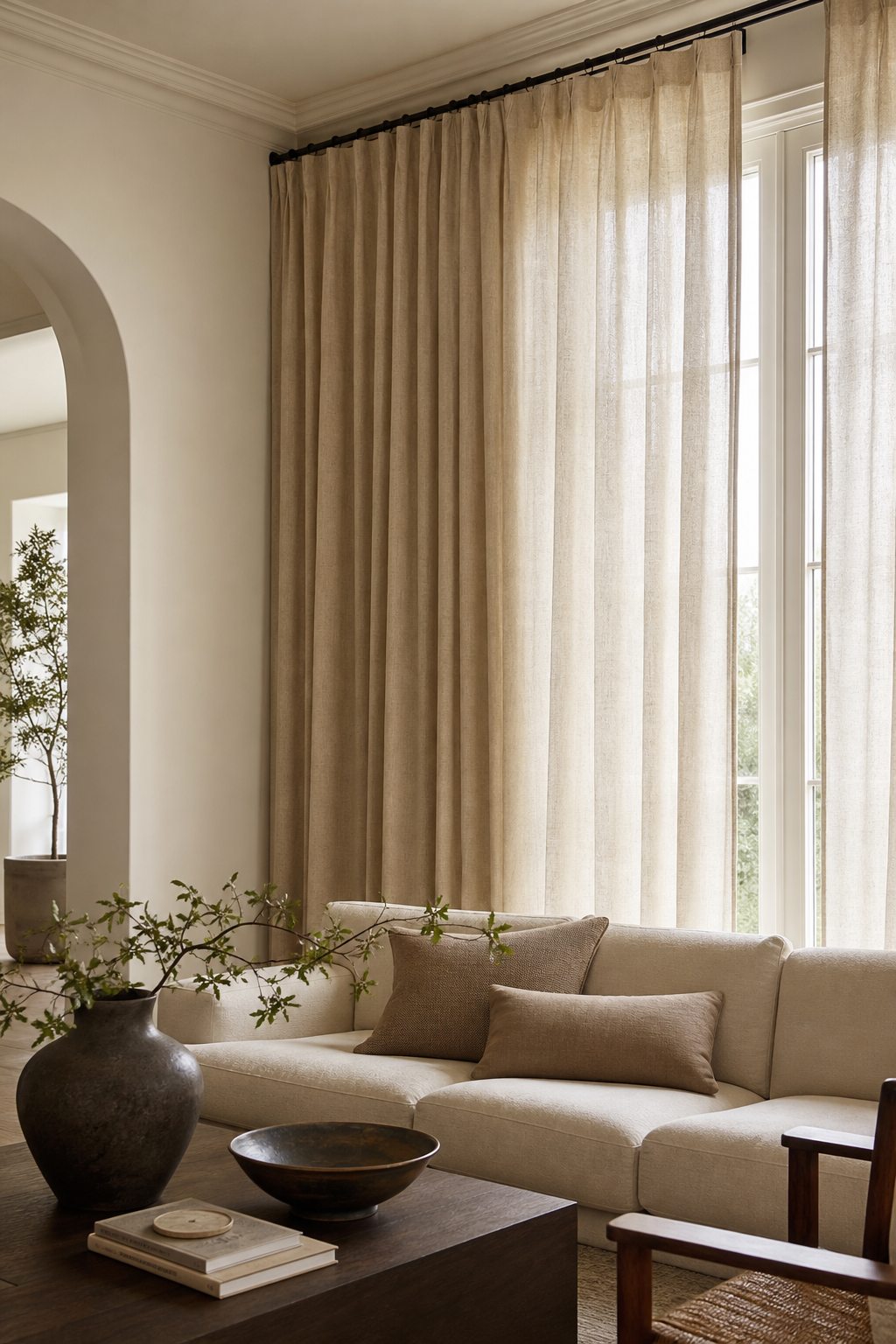
Curtains are not just window coverings; they create soft architecture. Hang them high and wide, and choose enough fabric to look full when closed. Linen gives ease, velvet adds richness, and wool blends feel tailored. In a designer living room, curtains should relate to the wall color without vanishing completely. A shade darker or lighter often works beautifully. If privacy is needed, layer sheers behind heavier panels. The vertical lines make the ceiling feel taller, while the fabric softens sound and edges. Even a simple room feels more finished once the windows are dressed properly. The fabric also makes the room sound softer.
Style The Sofa With Edited Pillows
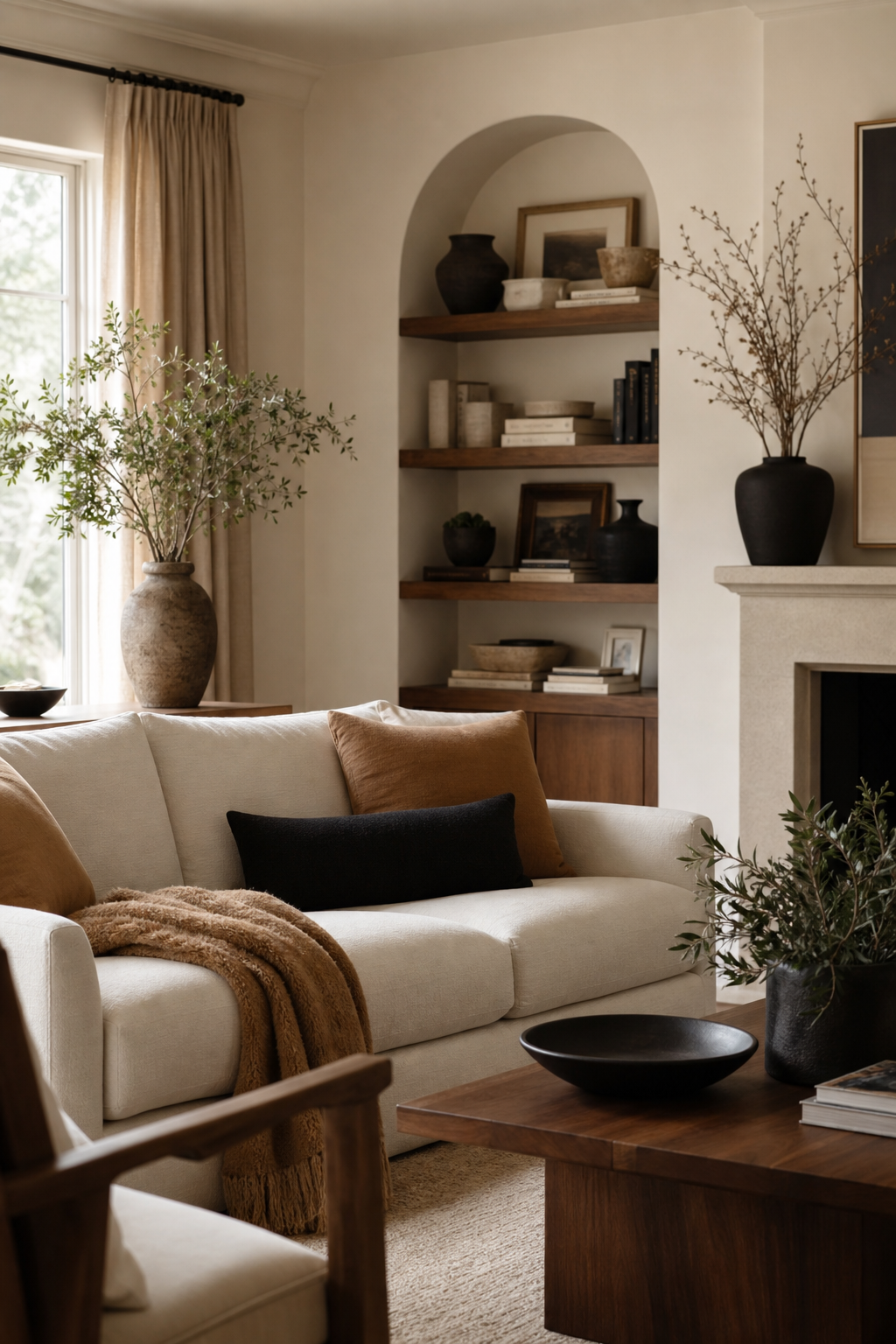
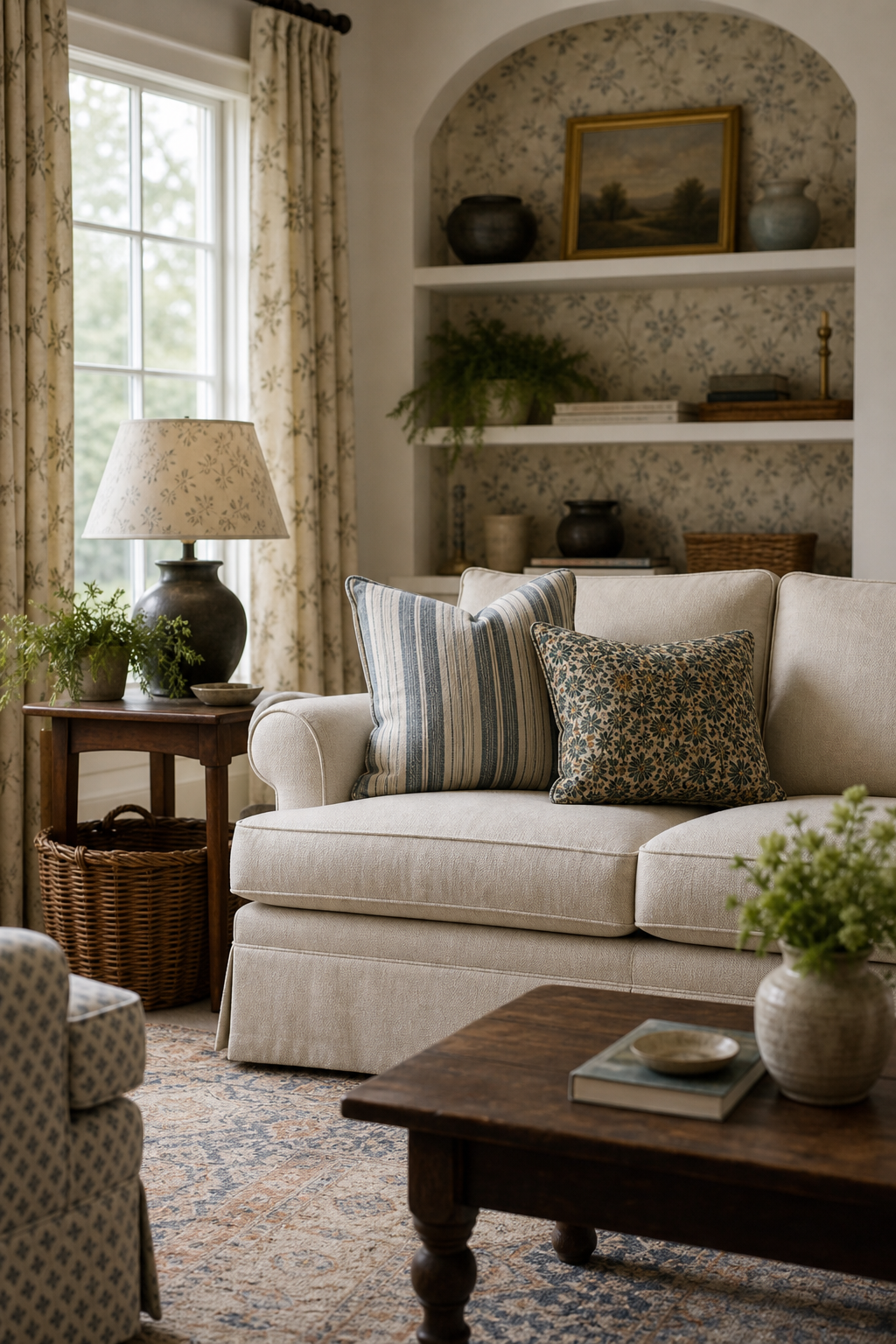
Pillows can make a sofa look cozy, but too many can make it look fussy. Use an edited mix: two larger pillows, one smaller pattern, and perhaps a lumbar. Vary texture more than color. Linen, velvet, boucle, wool, and washed cotton can create depth without visual clutter. Keep the palette connected to the rug, art, or curtains. If the sofa is plain, one patterned pillow can add character; if the sofa is already textured, use solids with beautiful seams or trims. Pillows should invite sitting, not require clearing space before anyone can relax. That balance is what gives a room its designer ease.
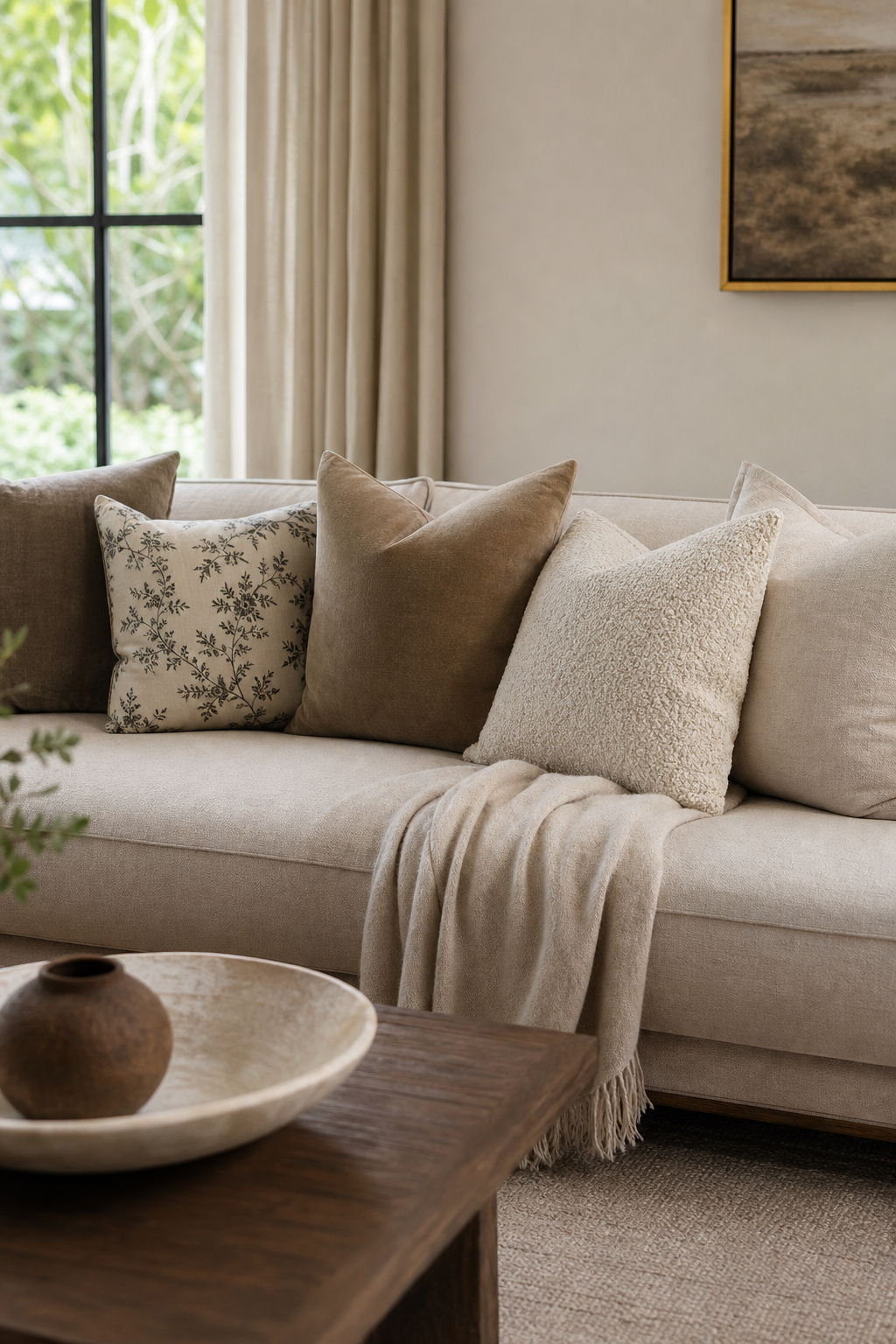
Create A Conversation-Friendly Layout
A cozy living room needs furniture that supports conversation. Avoid pushing every piece against the wall if the room allows another option. Pull chairs closer to the sofa, place a table within reach of each seat, and leave clear paths around the group. The best layouts feel intimate without blocking movement. A pair of chairs across from a sofa is classic, while one lounge chair angled toward the coffee table can work in smaller rooms. Use the rug to define the area. When people can sit down naturally and talk without shouting across open space, the room feels warmer immediately.
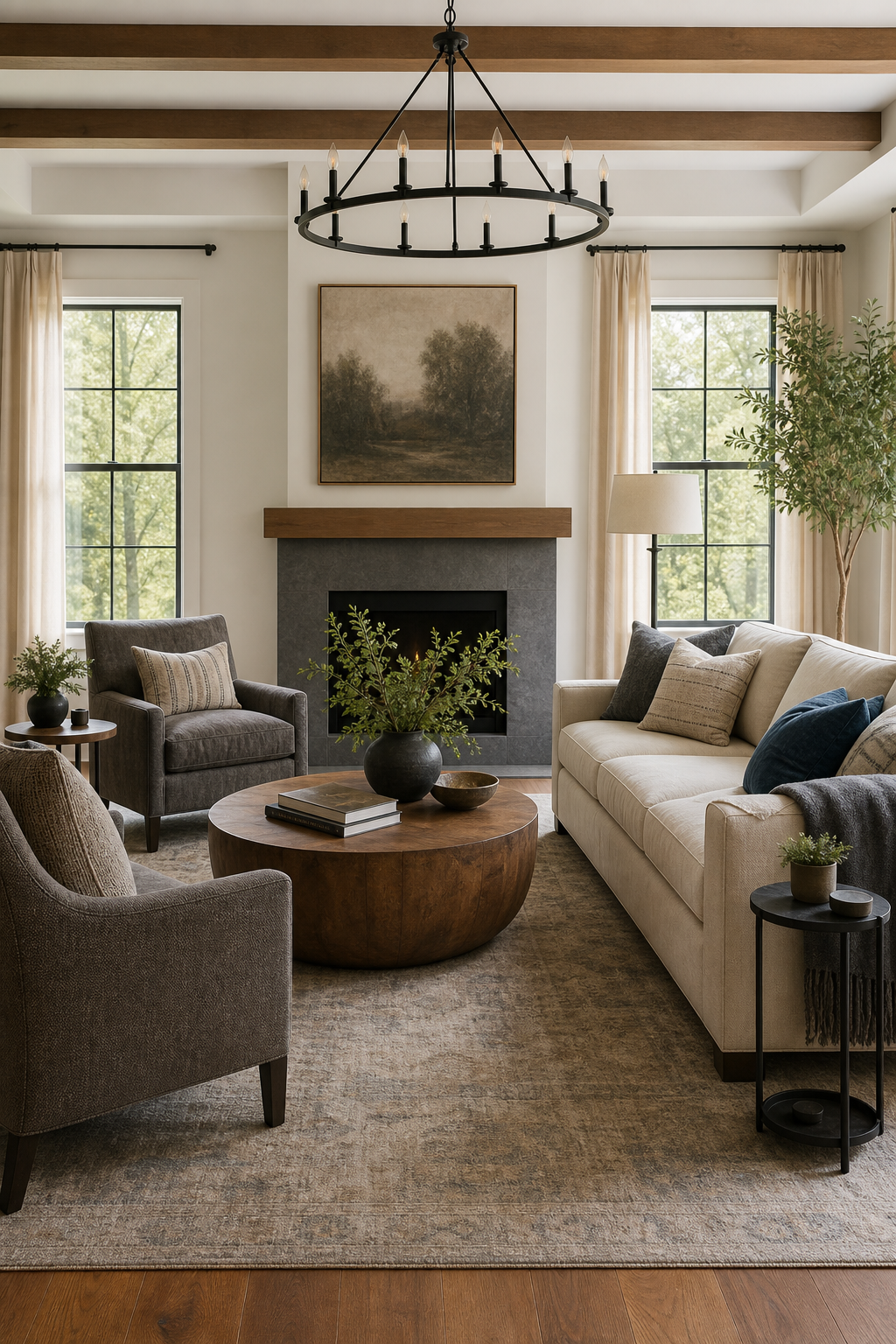
Bring In Texture Through Natural Materials
Natural materials make earthy living rooms feel warm rather than staged. Use wood, stone, linen, wool, rattan, leather, clay, and aged metal in measured layers. A wood coffee table, stone lamp, wool rug, and linen sofa can create a rich foundation without loud color. The materials should feel tactile and honest, with visible grain, weave, or hand-shaped surfaces. Avoid making every finish rustic; balance rough texture with smoother elements. This contrast is what keeps the room elevated. Natural materials also age gracefully, which helps the space feel comfortable, lived-in, and quietly luxurious over time. The result feels grounded, comfortable, and naturally refined.
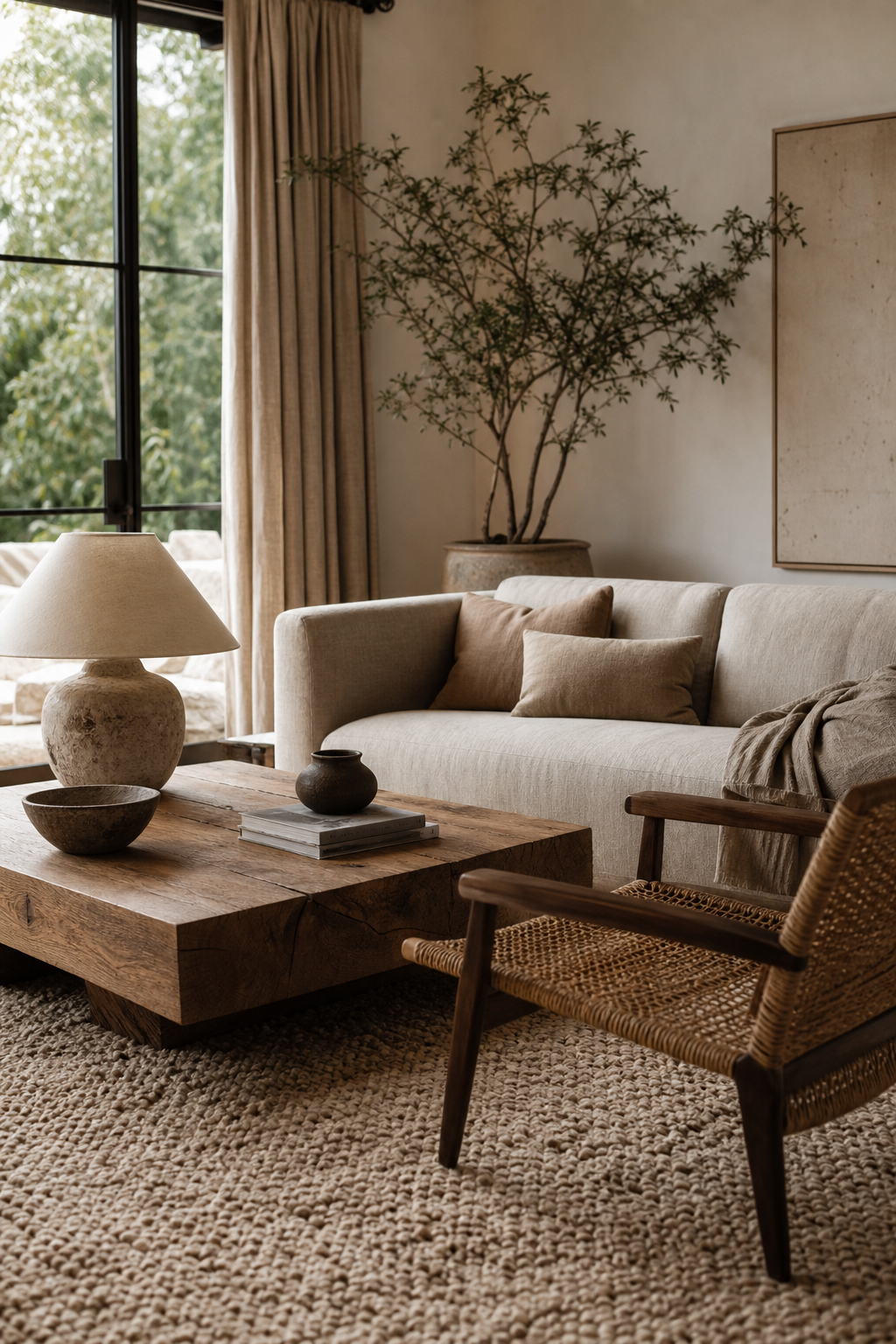
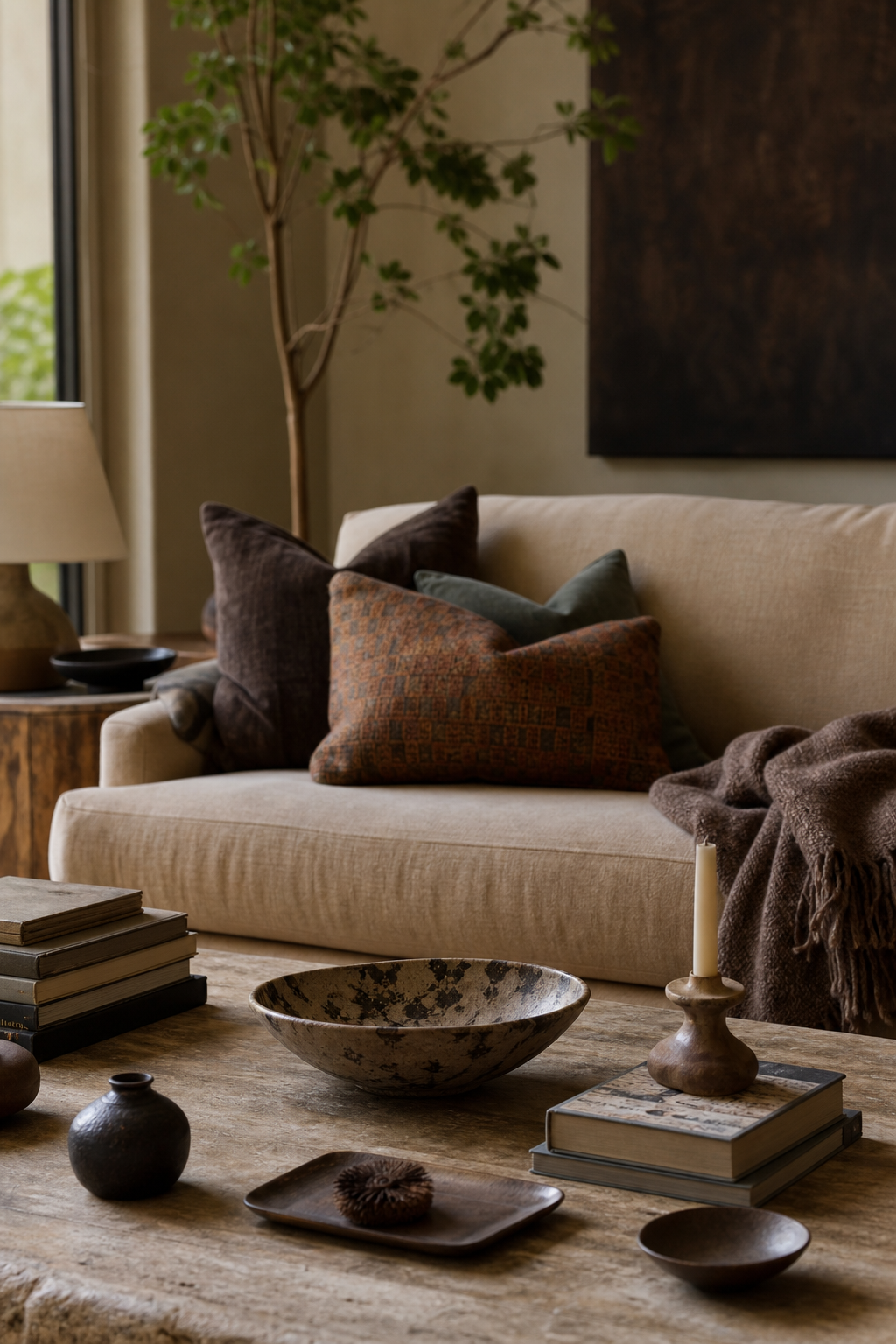
Use Books As Decor With Substance
Books bring color, scale, and personality to a living room. Stack them on a coffee table, line them on built-ins, or place a few under a ceramic bowl or lamp. Choose books you would actually enjoy opening, not just covers that match the palette. For a designer look, vary stack heights and mix vertical rows with horizontal piles. Keep some breathing room on shelves so the books do not feel like storage overflow. Coffee table books are especially useful because they create platforms for smaller objects. A room with books feels lived in, curious, and more layered than one decorated only with accessories.
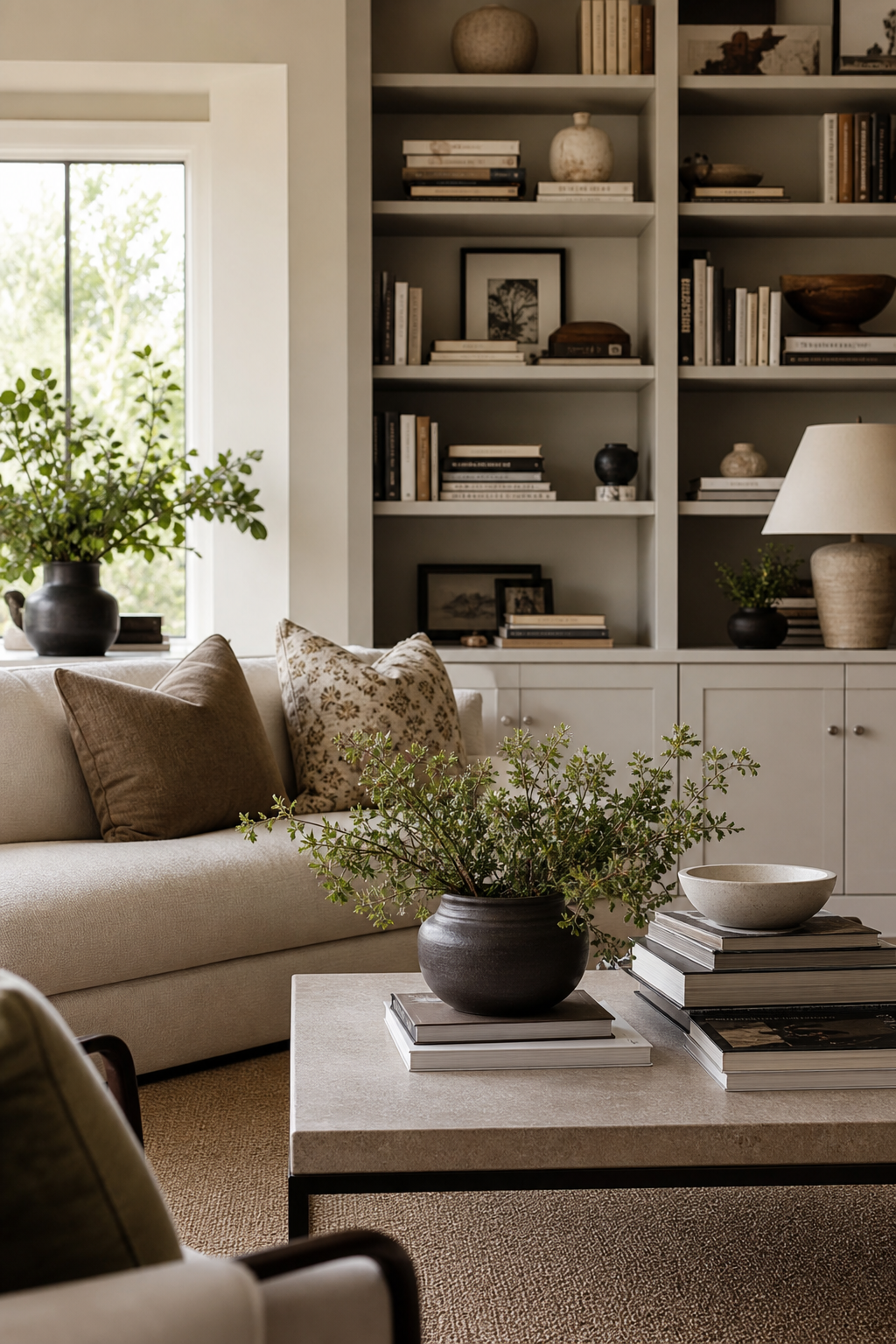
Add A Low Ottoman For Comfort
A low ottoman can make a living room feel relaxed and luxurious at the same time. Use it in front of a sofa, beside a chair, or as a softer alternative to a coffee table in family rooms. Upholstered linen feels tailored, leather brings warmth, and patterned fabric can add charm. If the ottoman will hold drinks, place a sturdy tray on top. The height should allow feet to rest comfortably without overpowering the seating. A skirted ottoman adds softness, while exposed legs feel lighter. This piece is practical, but it also signals that the room is meant for comfort.
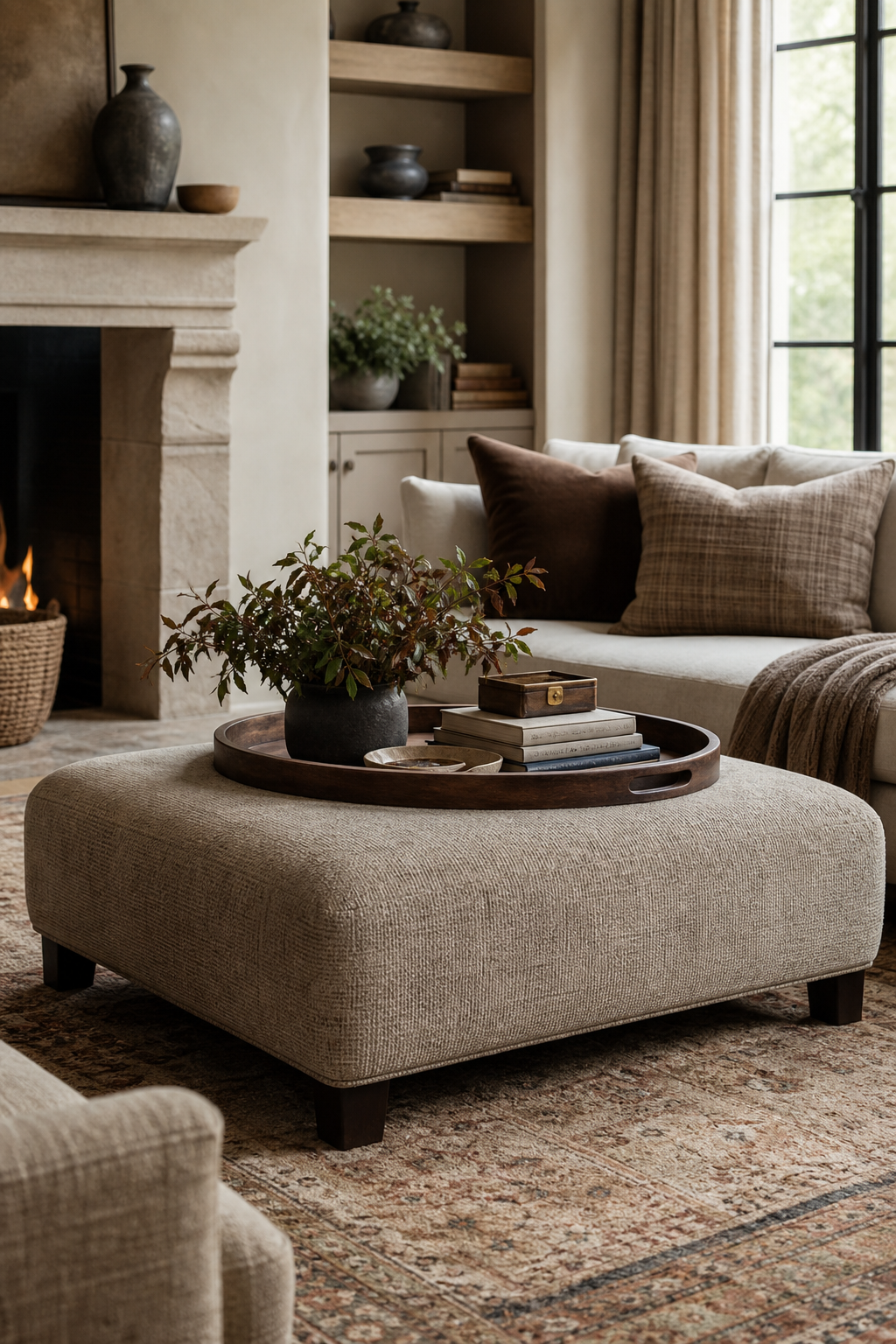
Make One Corner Feel Intentional
Corners are often where living rooms lose polish. Instead of leaving one bare, give it a purpose. Add a floor lamp and chair for reading, a tall plant for shape, a pedestal with sculpture, or a small cabinet with art above it. The scale should match the corner; tiny objects will look lost. Good corner styling makes the whole room feel considered because every sightline has a destination. Keep it simple and avoid stuffing the corner with leftover items. One beautiful lamp, one plant, or one chair can be enough. Intentional emptiness is better than accidental clutter. It gives the corner purpose without adding clutter.
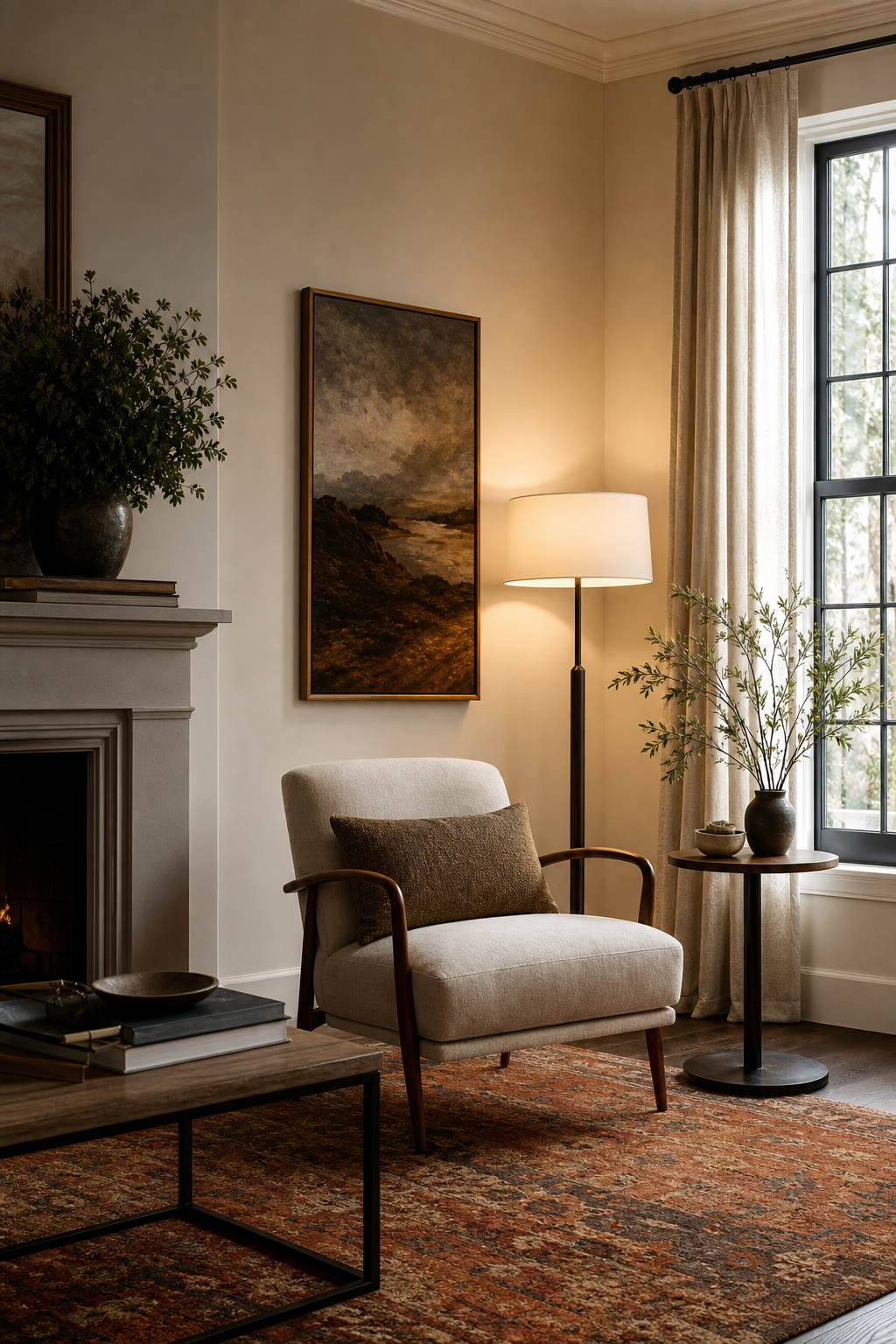
Balance Open Space And Decor
A designer living room needs breathing room. Every table does not need an object, every wall does not need art, and every chair does not need a pillow. Open space lets the better pieces register. After styling a room, remove one or two accessories and see if the space feels calmer. This is especially important in cozy rooms, where texture and warmth can easily turn into visual noise. Keep the useful surfaces useful. Let the rug pattern, curtain folds, sofa fabric, and wood grain do some of the decorative work. The room will feel more expensive when the eye can rest.
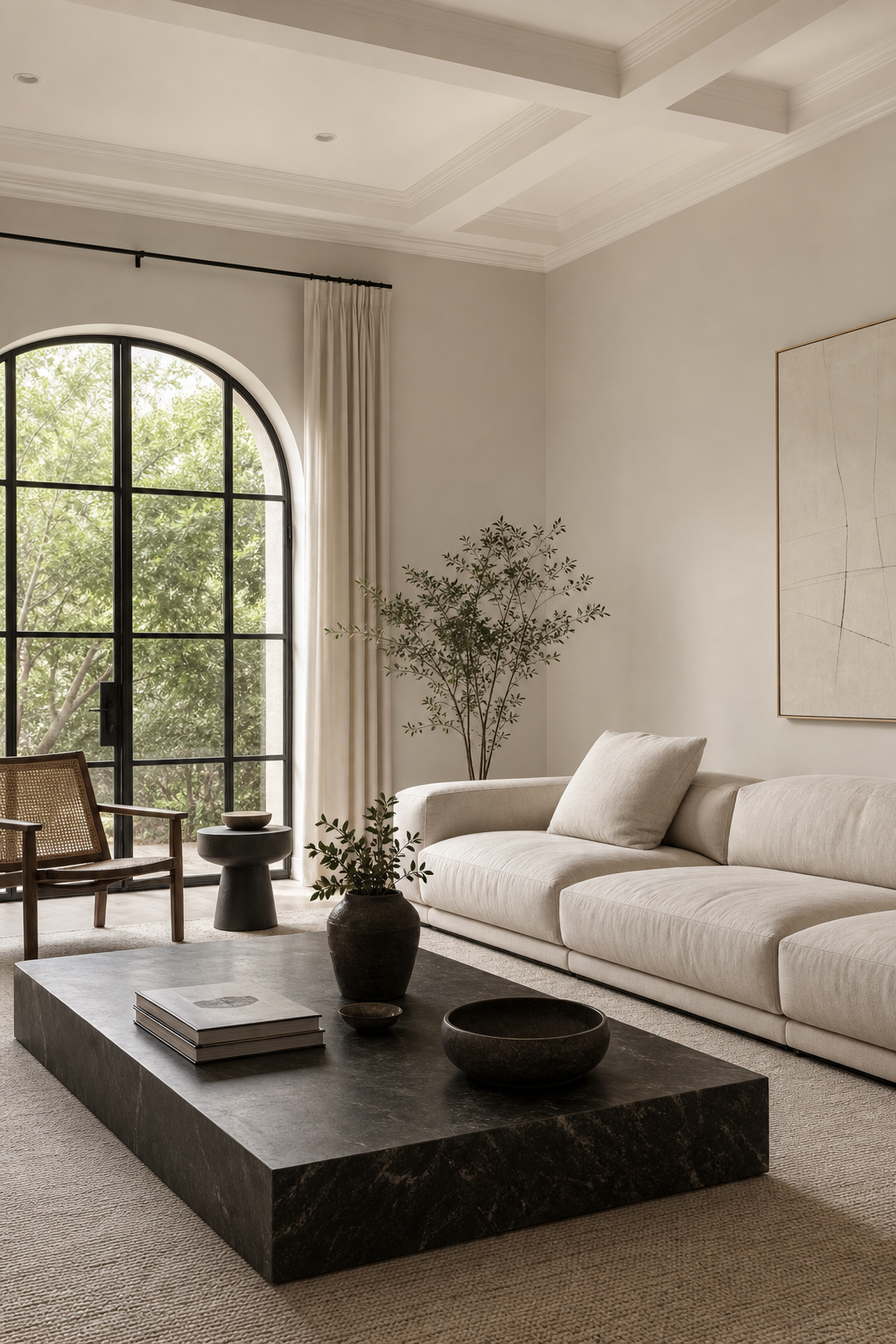
Use A Console Behind The Sofa
A console behind the sofa can solve several design problems at once. It helps float a sofa in an open room, gives lamps a place to sit, and creates a finished view from behind. Choose a console that is slightly lower than the sofa back and narrow enough for circulation. Style it with a pair of lamps, a bowl, books, or branches, but keep the arrangement practical. In open-plan spaces, this trick separates the living area from dining or kitchen zones without building a wall. It also adds a layer of depth, which makes the room feel more designed from every angle.
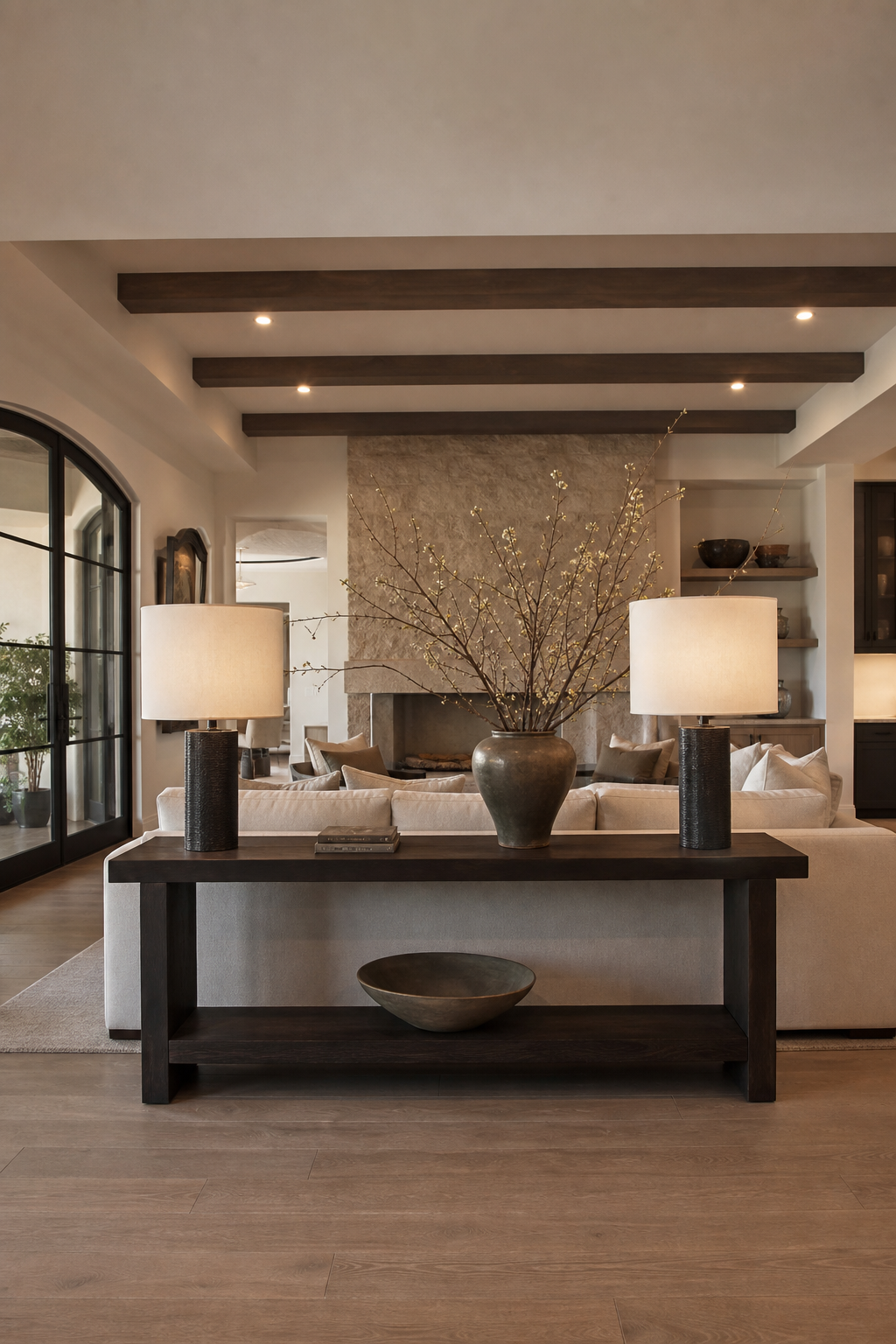
Layer Pattern Quietly
Pattern makes a living room feel personal, but it does not need to be loud. Start with one subtle pattern in the rug or curtains, then add a smaller pattern on pillows or upholstery. Keep the colors related so the mix feels calm. Stripes, small florals, checks, and faded geometrics can live together when their scale differs. If the room already has a bold art piece, keep patterns quieter. Aesthetic rooms often succeed because pattern is felt as texture before it is noticed as decoration. This kind of layering gives the space charm without overwhelming the cozy mood. Keep the mix soft enough for everyday living.
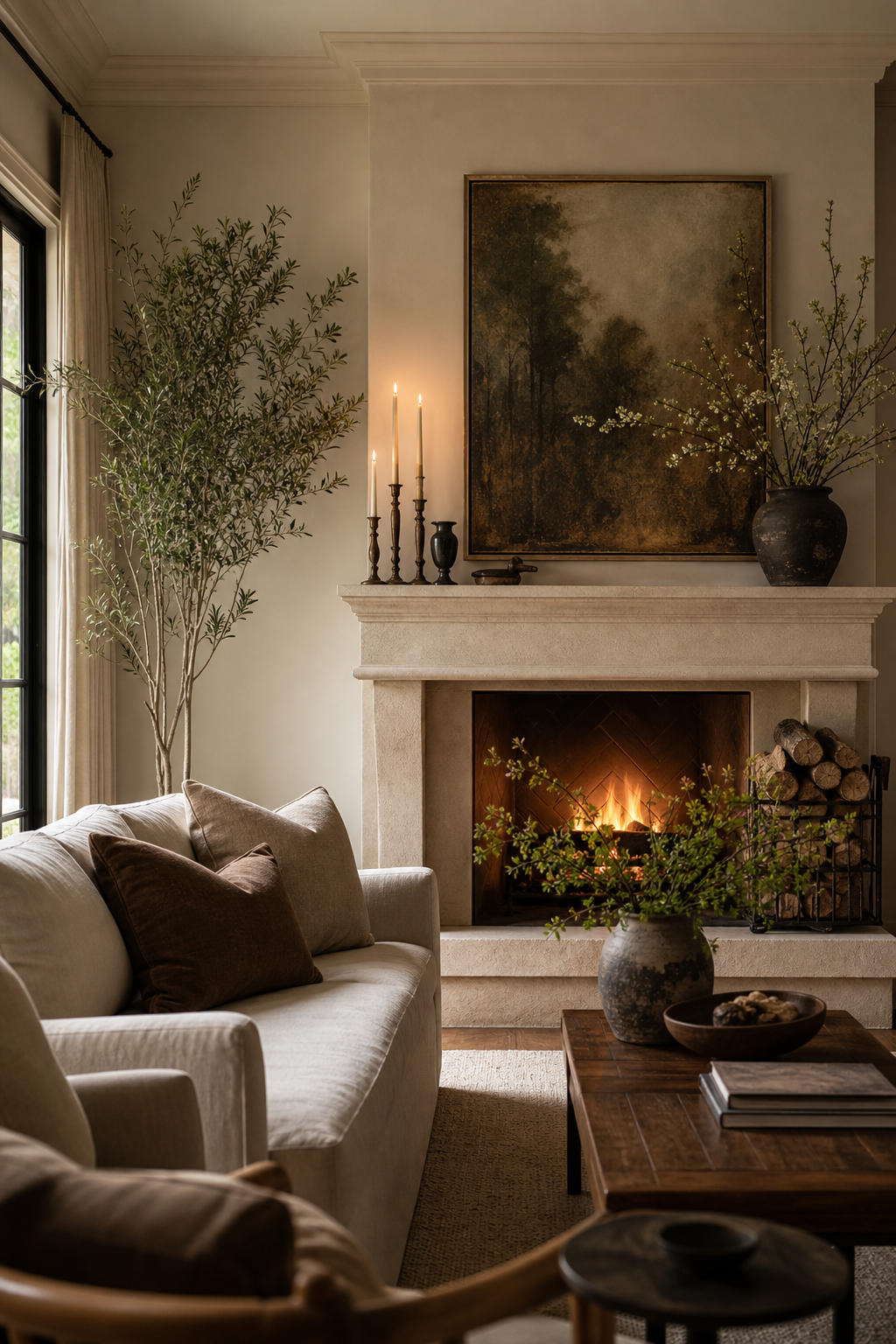
Let The Fireplace Become A Styled Focal Point
If the living room has a fireplace, treat it as a natural focal point. Keep the mantel edited with art, a mirror, candlesticks, branches, or one sculptural object. Avoid lining up too many tiny pieces. The hearth can hold a woven basket, firewood, or a low vessel if it looks intentional. Arrange seating so the fireplace participates in conversation rather than sitting ignored at the edge. Even a nonworking fireplace can add atmosphere when styled well. The goal is to make the room feel gathered around warmth, which is exactly what a earthy cozy designer living room should do. The focal point should feel warm, edited, and useful.
Finish With Something Personal
The most earthy living rooms still need something personal. A handmade bowl, inherited chair, travel photograph, favorite book, or vase from a local maker can keep the room from looking like a catalog. The piece should be displayed with care, not lost among clutter. Place it where it can be noticed: on a side table, shelf, mantel, or coffee table. Designer rooms often feel luxurious because they are edited, but the memorable ones also reveal a life. Personal details create that emotional layer. They make the living room feel finished in a way that perfect styling alone never can. That is where style begins to feel human.
Bring In Raw Wood Texture
Raw or lightly finished wood gives an earthy living room immediate warmth. Use it through a coffee table, side table, stool, console, picture frame, or exposed shelving. The surface should show grain, knots, or a hand-worked quality rather than looking overly polished. Pair rustic wood with clean upholstery so the room feels refined, not cabin-themed. A single substantial wood piece can ground pale walls and soft textiles beautifully. If the room already has wood floors, choose a slightly different tone so the layers feel collected. This kind of texture makes a living room feel slower, warmer, and more connected to natural materials.
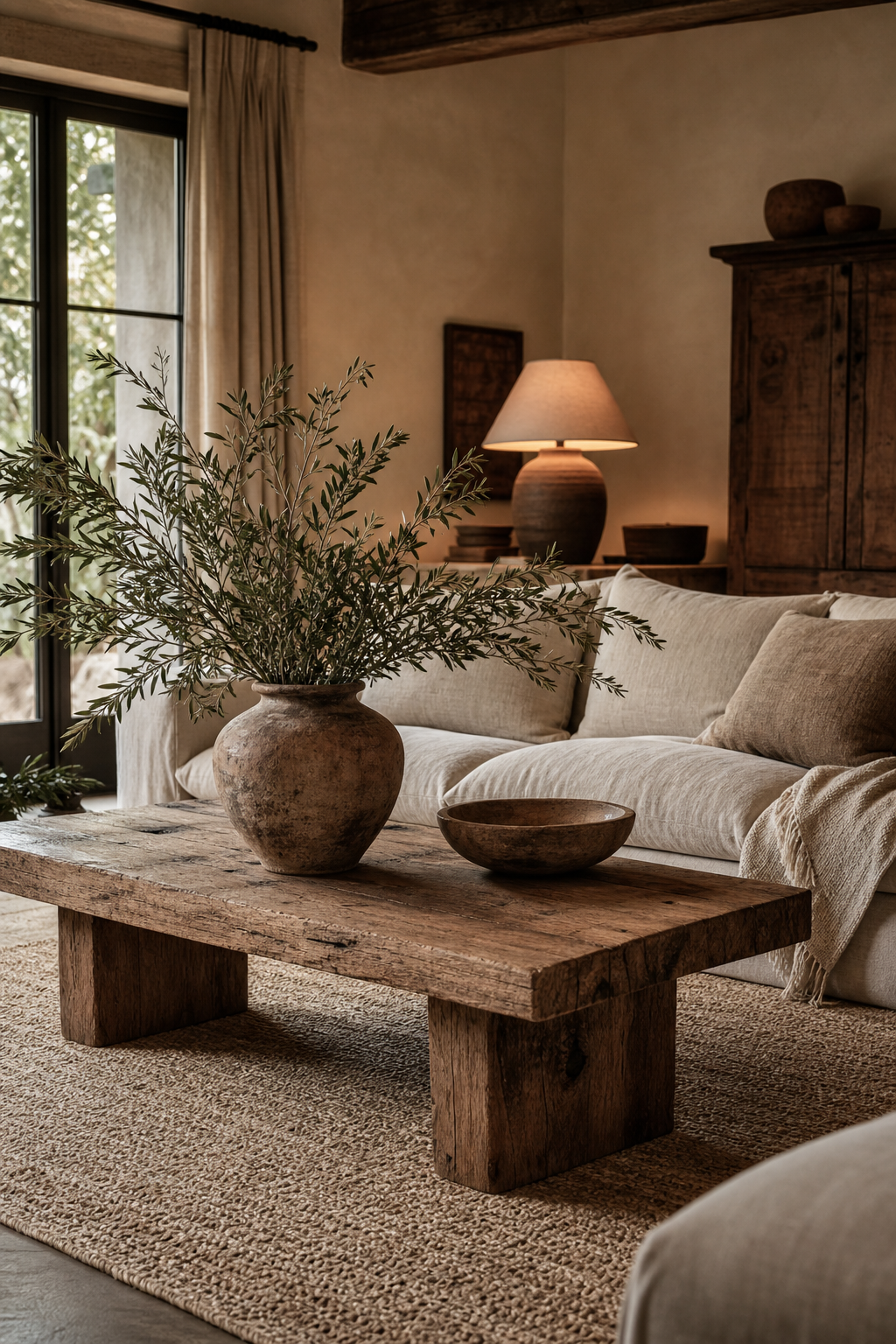
Decorate With Clay And Ceramic Vessels
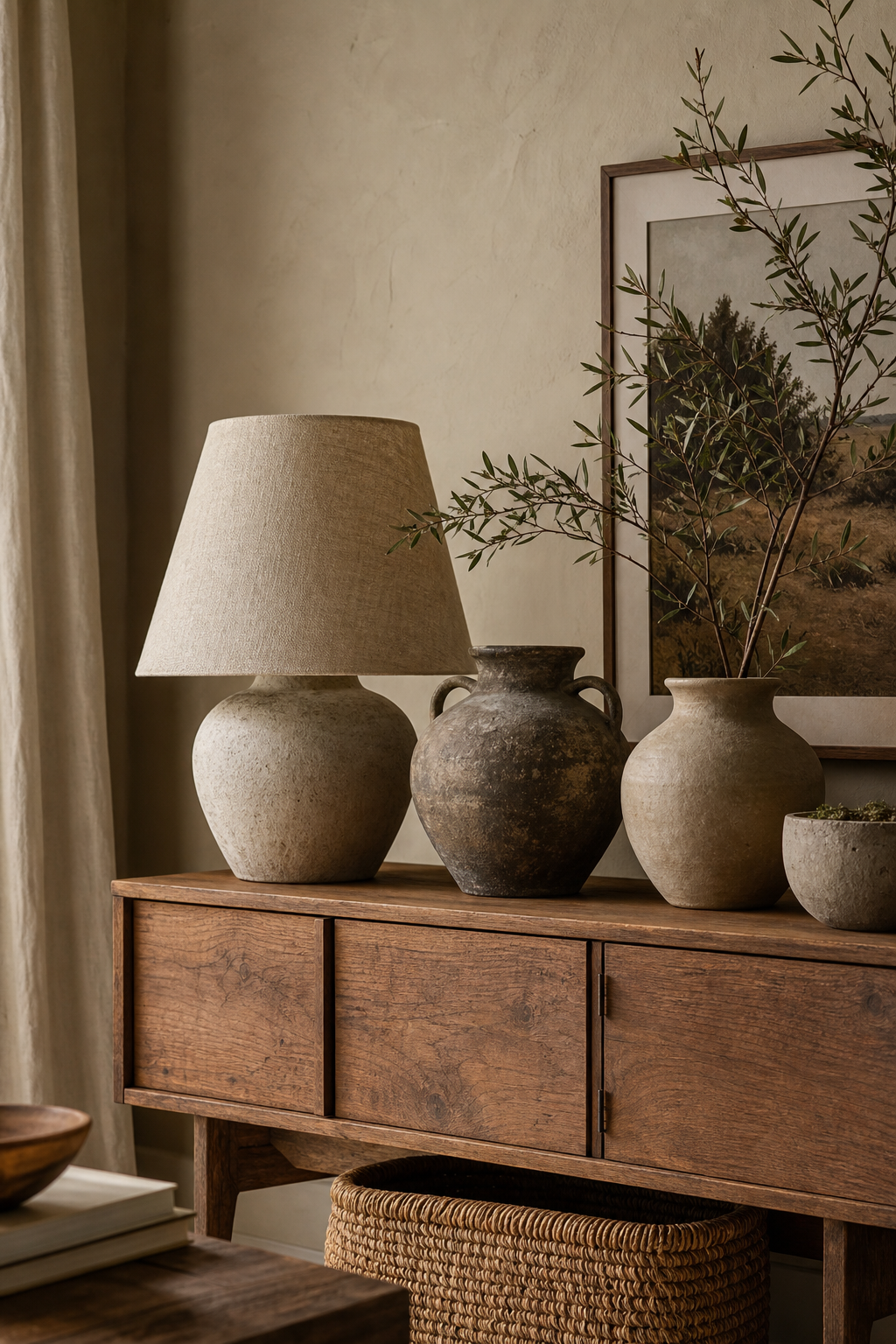
Clay and ceramic vessels add shape, texture, and handmade warmth without making the room feel cluttered. Choose one large vessel for branches, a low bowl for a coffee table, or a pair of smaller pieces on a shelf. Matte finishes, irregular glaze, terracotta, smoke, cream, and warm gray all work well in an earthy palette. Keep the arrangement edited so each piece has space around it. These objects are especially useful when the furniture is simple because they bring curve and depth. A ceramic piece can echo stone, plaster, or woven texture elsewhere in the room, making the whole space feel more intentional.
Layer Woven Shades With Curtains
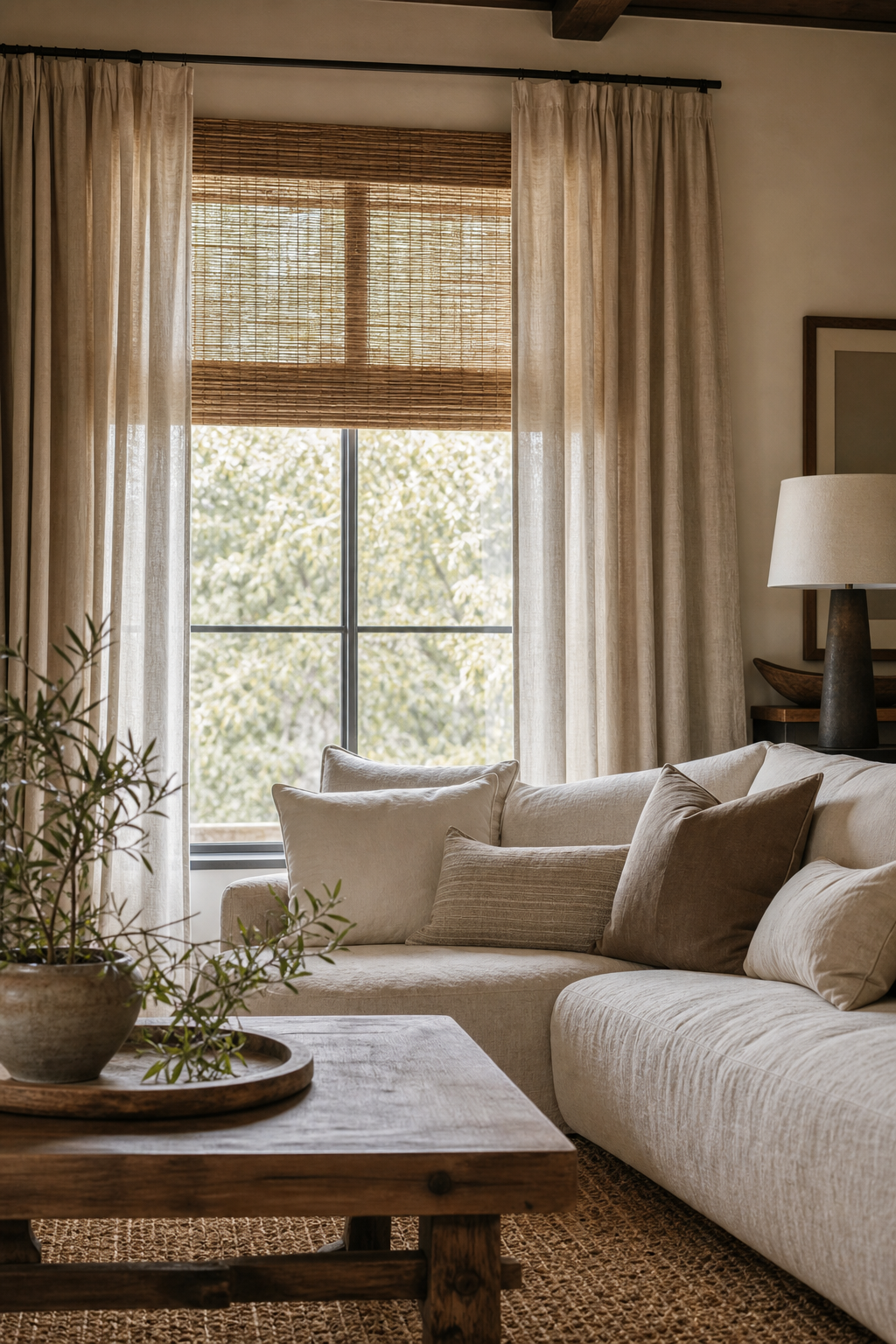
Woven shades bring an earthy texture to windows while curtains add softness and height. Together, they make a living room feel finished and comfortable. Use bamboo, grasscloth, rattan, or a natural fiber shade under linen or cotton panels. The shade filters daylight beautifully, while the curtains soften the architecture and improve the evening mood. Keep the curtain color close to the wall or sofa if you want the look to stay calm. This combination is especially effective in rooms with plain white walls because it adds pattern through texture rather than color. The windows become warmer without feeling heavy.
Add Olive Green Or Moss Accents
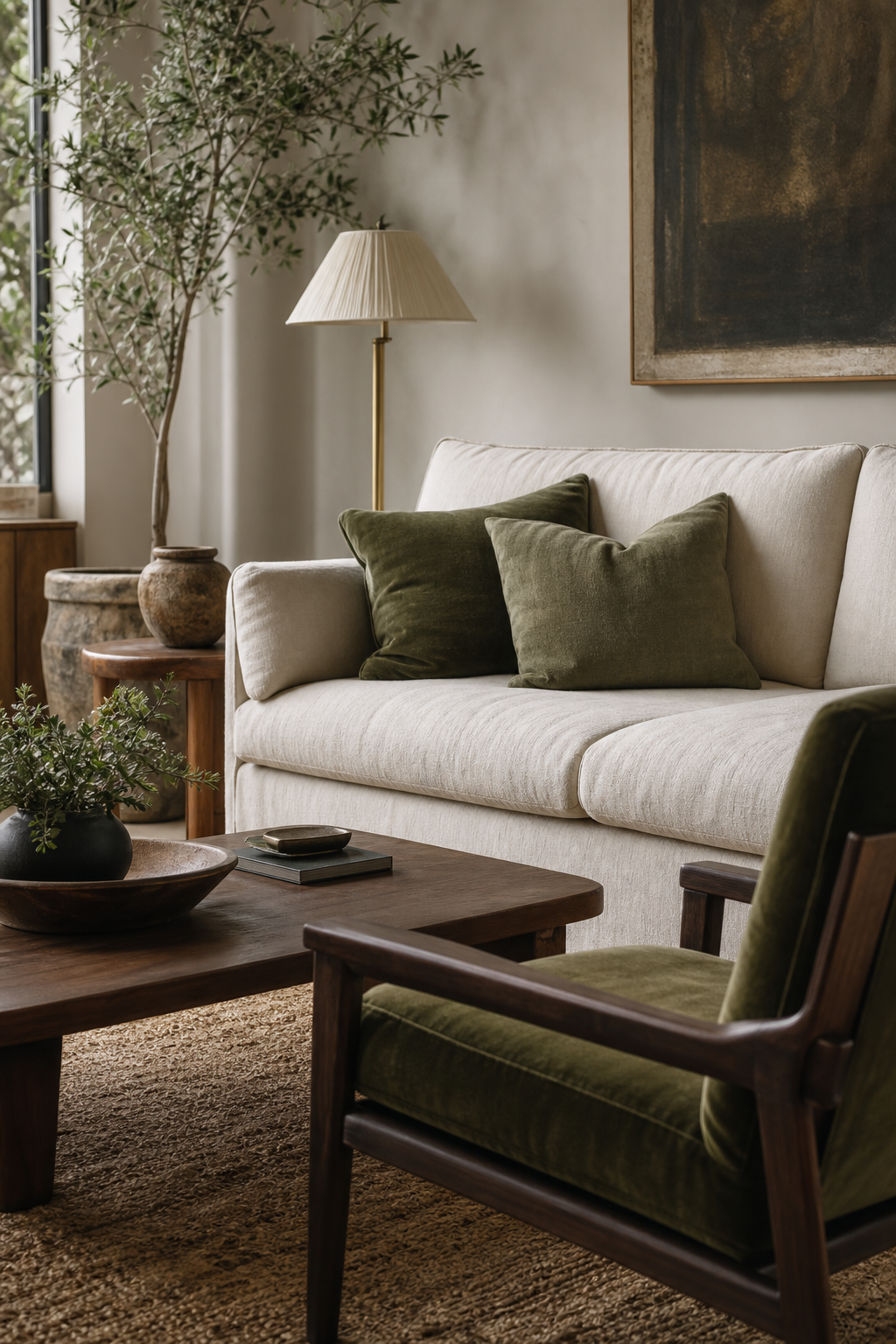
Earthy rooms often need a quiet color note so the neutrals do not become flat. Olive, moss, sage, and eucalyptus green all work because they feel connected to plants and landscape. Use the color in a pillow, throw, artwork, lamp shade, or accent chair rather than spreading it everywhere. Repeat it once across the room so it feels deliberate. Green pairs beautifully with oak, walnut, blackened metal, cream linen, and aged brass. It can also make brown and beige tones feel fresher. The result is a living room that still feels grounded, but with a little life and depth.
Ground The Room With Stone
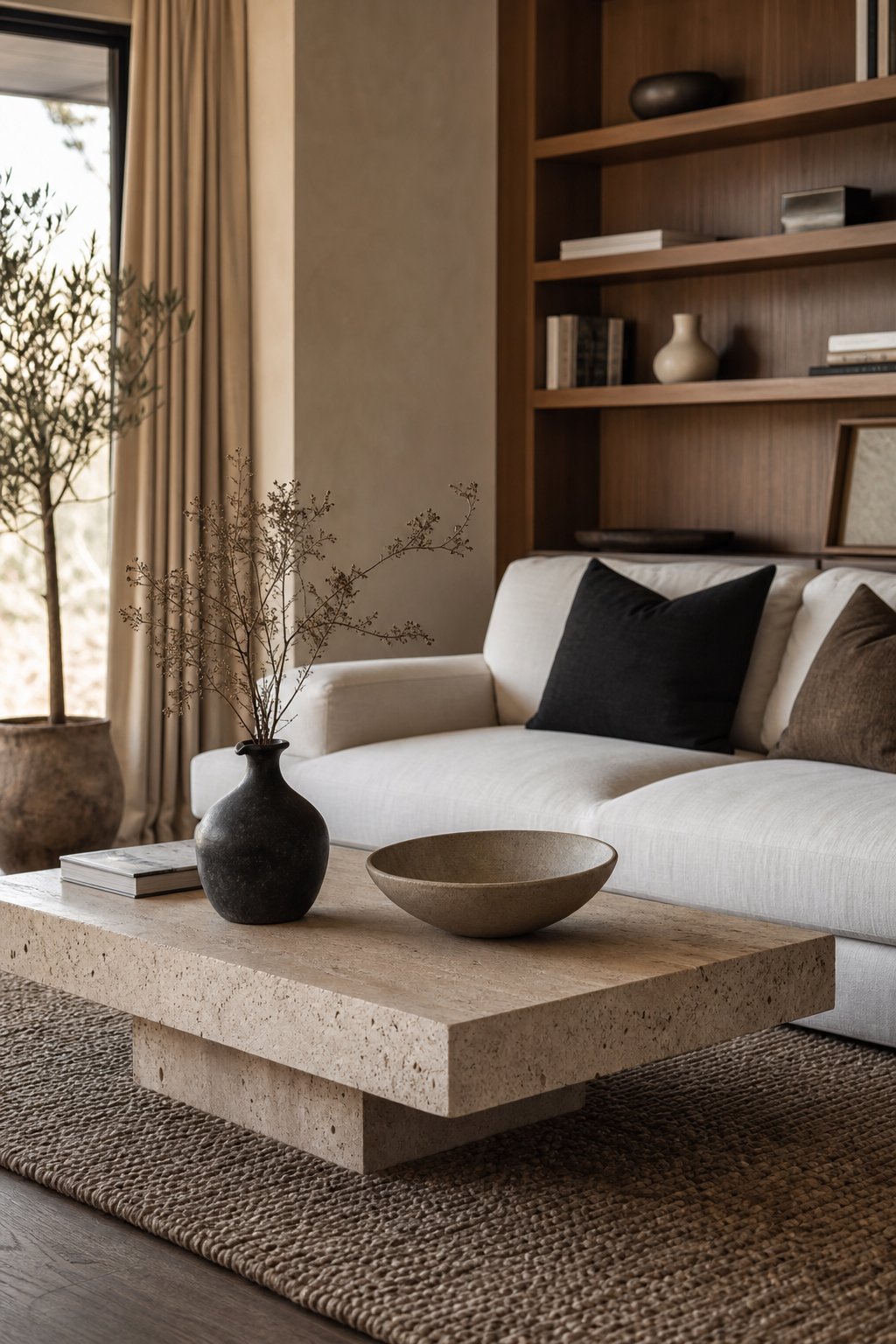
Stone gives an earthy living room a sense of permanence. It can appear as a coffee table, fireplace surround, side table, lamp base, tray, or sculptural object. Travertine, limestone, marble, soapstone, and slate each bring a different mood, from soft and warm to dark and dramatic. Use stone where it can be touched and noticed, then balance it with upholstery, wool, or woven texture so the room does not feel cold. A stone piece is especially helpful when the space has many soft fabrics and needs structure. It adds quiet weight, natural variation, and a designer-level focal point.
An earthy living room works when the natural details feel connected instead of random. Repeat materials in small ways, balance rough texture with soft fabric, and keep the palette warm enough to feel welcoming. Whether you begin with a wool rug, a wood table, woven shades, stone, or one deeper green accent, the strongest rooms are edited but tactile. Let each piece add comfort, usefulness, or atmosphere, and the living room will feel cozy, grounded, and quietly designed.