19 Entryway Ideas To Make A Beautiful First Impression
An entryway has a lot to do in a small amount of space. It needs to welcome guests, organize daily life, and set the tone for the rest of the home. The best entryways are not just decorative; they give keys, shoes, bags, mail, coats, and flowers a clear place to land. A beautiful first impression comes from proportion, lighting, storage, and a few well-edited details. Whether you have a grand foyer, narrow hall, apartment doorway, or small mudroom corner, these ideas will help the space feel polished, warm, and easy to use.
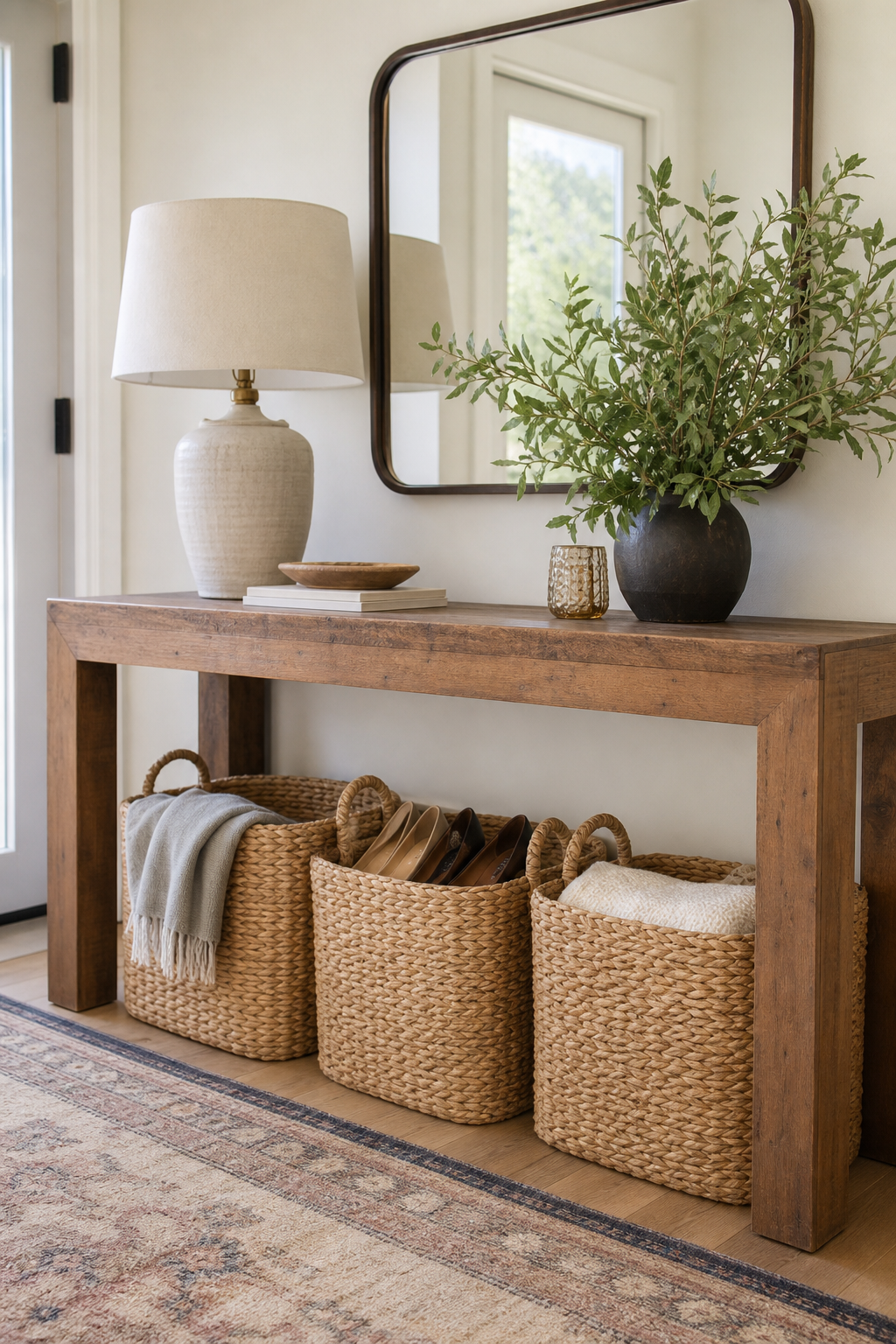
Anchor The Wall With A Console Table
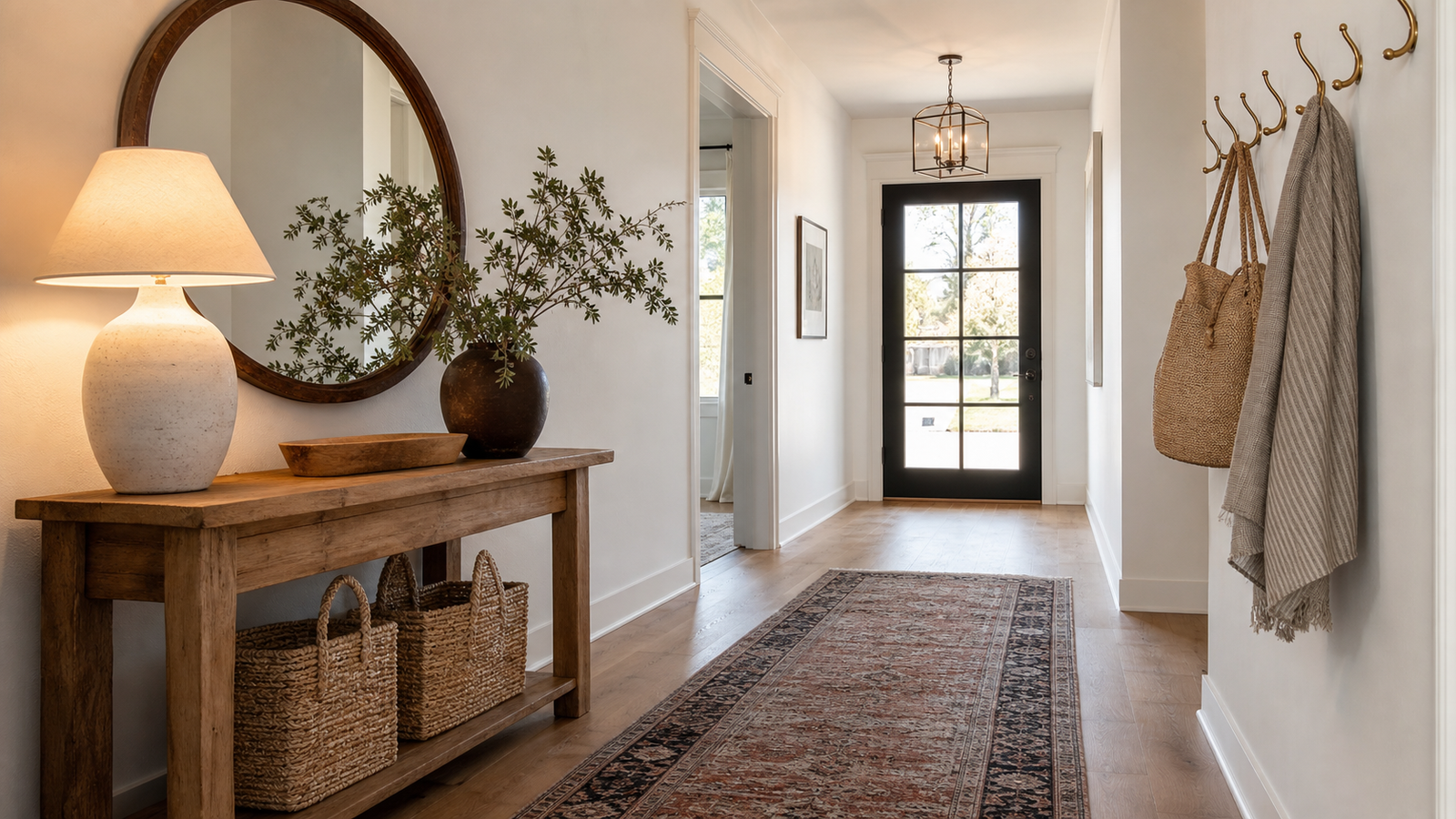
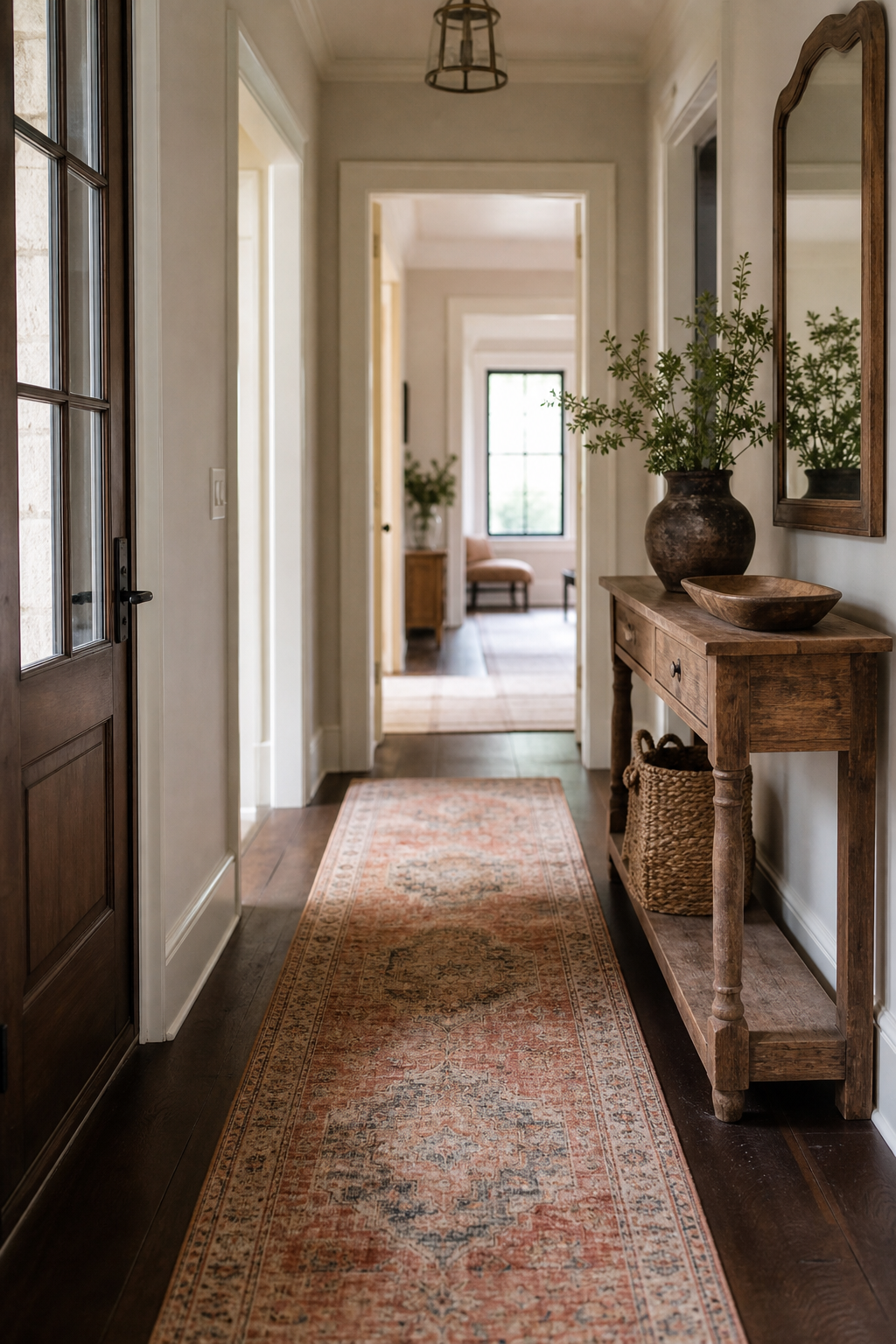
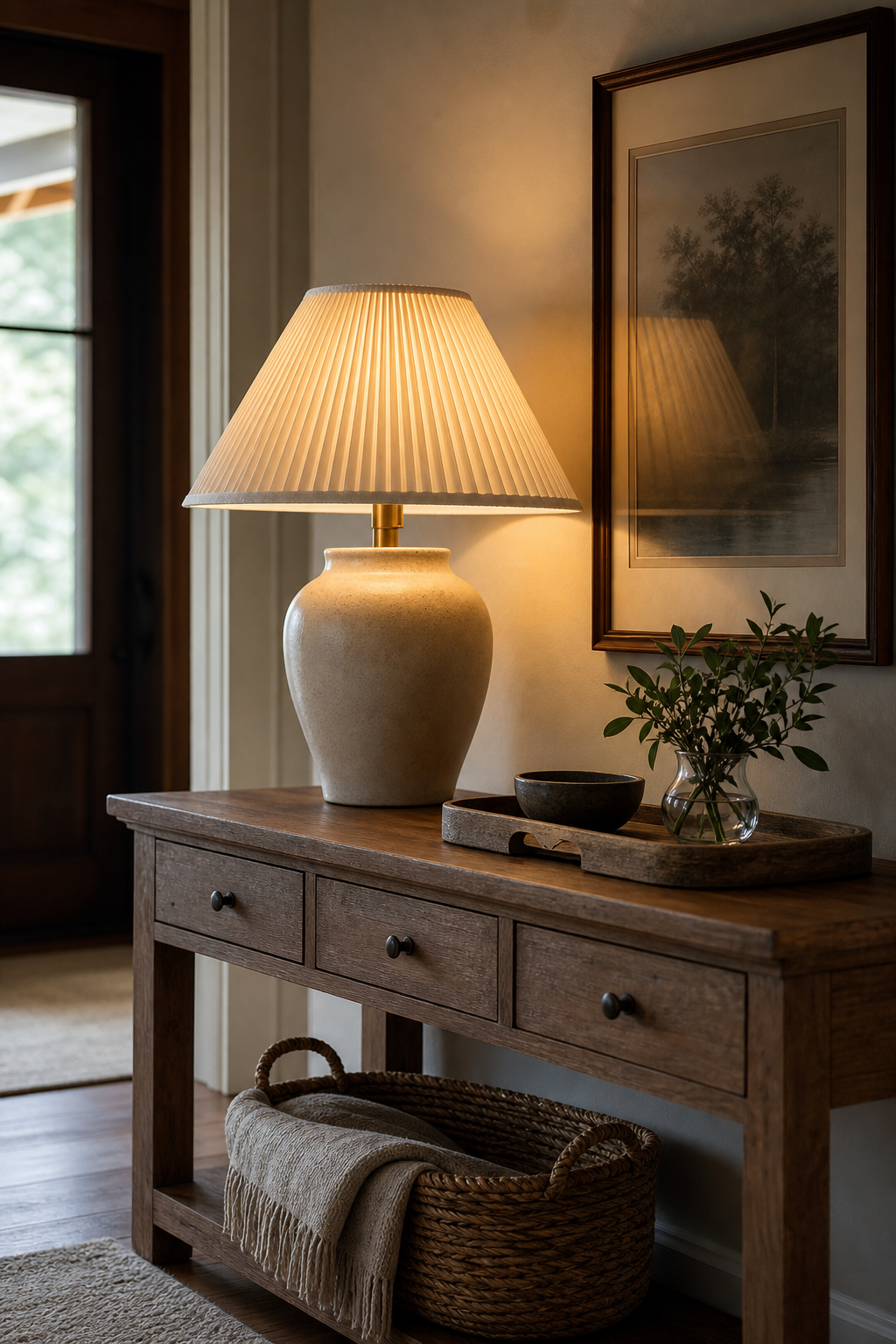
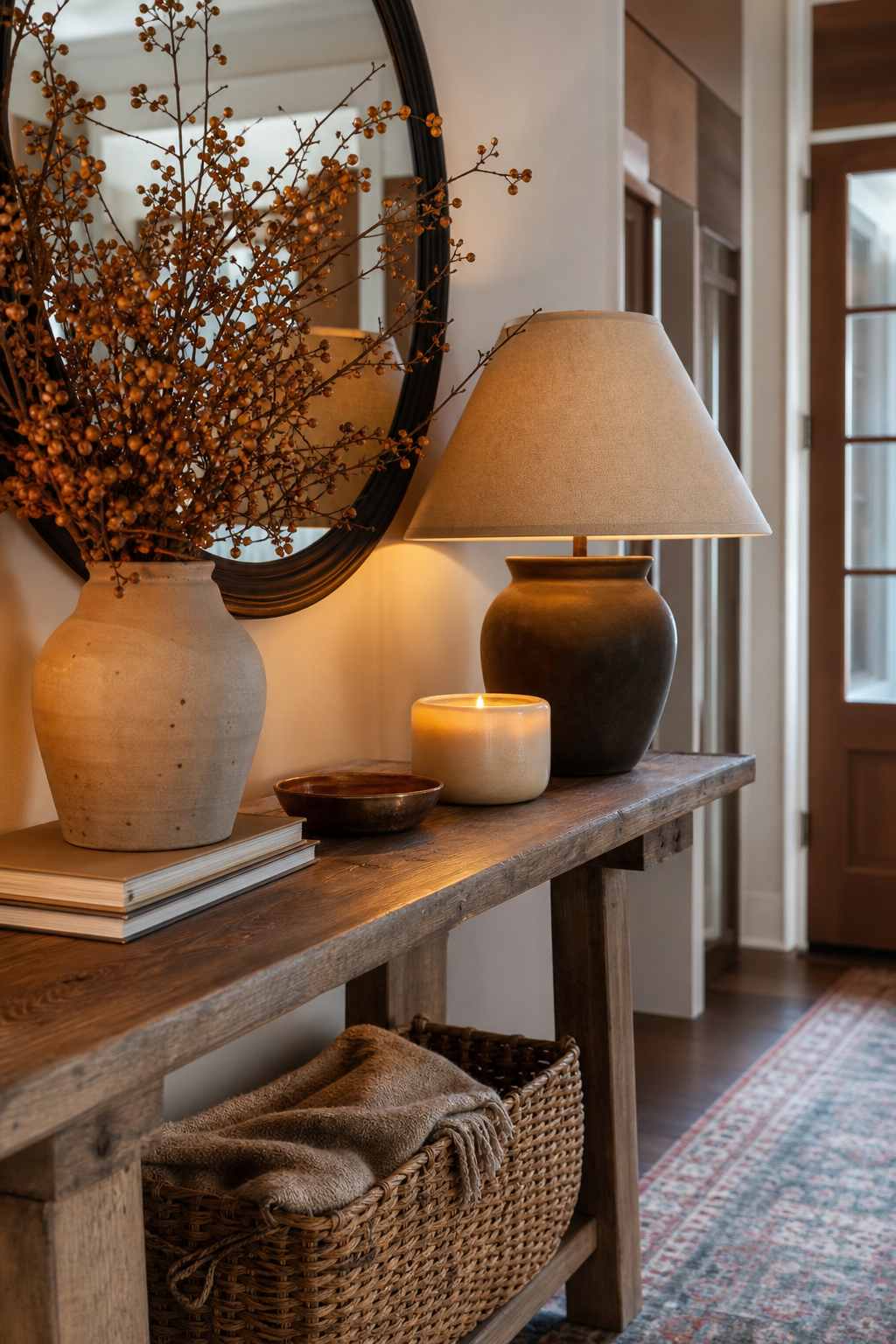
A console table gives the entryway structure and a useful landing surface. Choose a piece that is narrow enough for the walkway but substantial enough to feel intentional. Wood adds warmth, painted finishes can brighten a tight hall, and stone tops feel especially polished. Style the surface with a lamp, tray, vase, and one low object, leaving space for keys or mail. If storage is limited, use baskets beneath the console for shoes, scarves, or seasonal items.
Hang One Generous Mirror
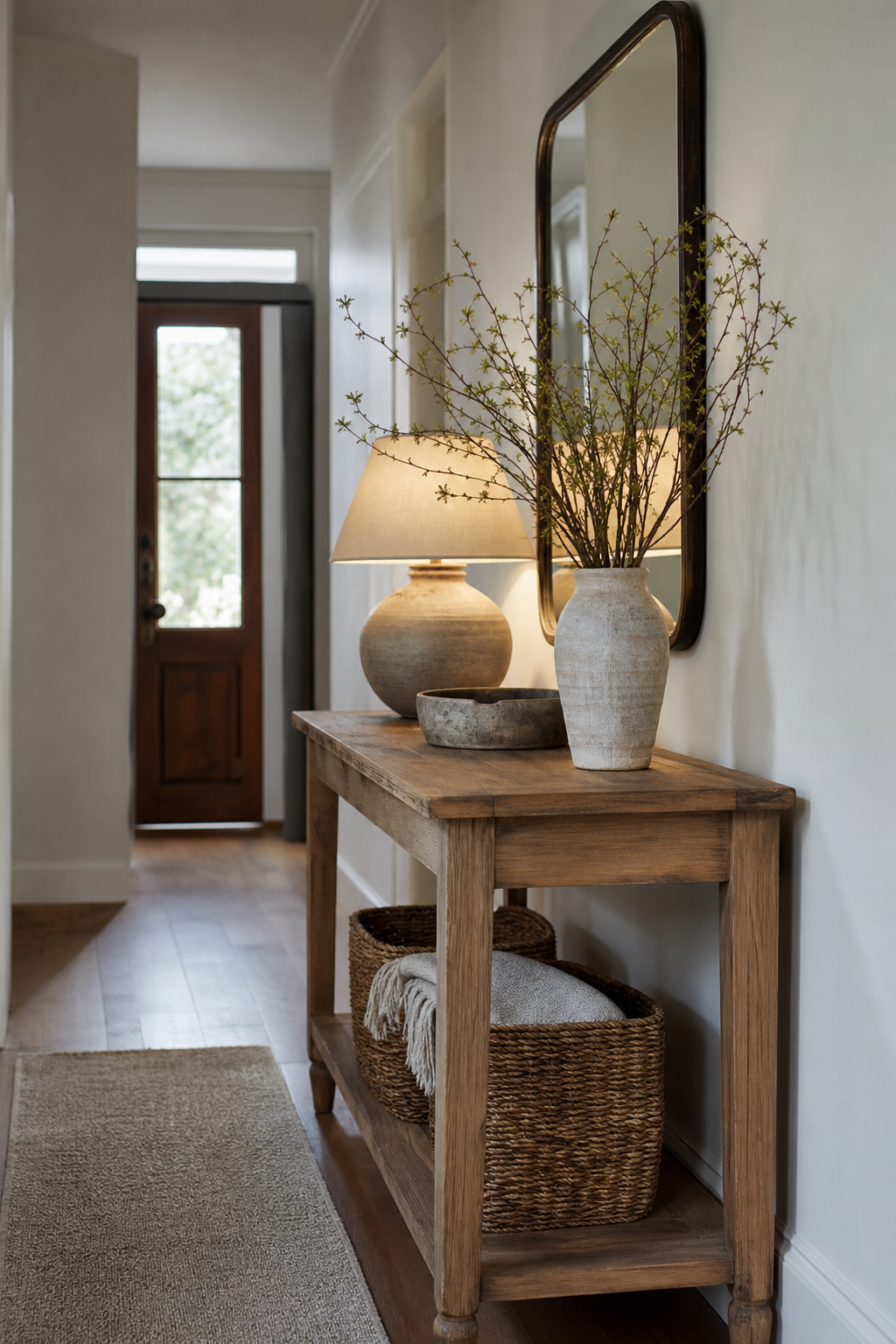
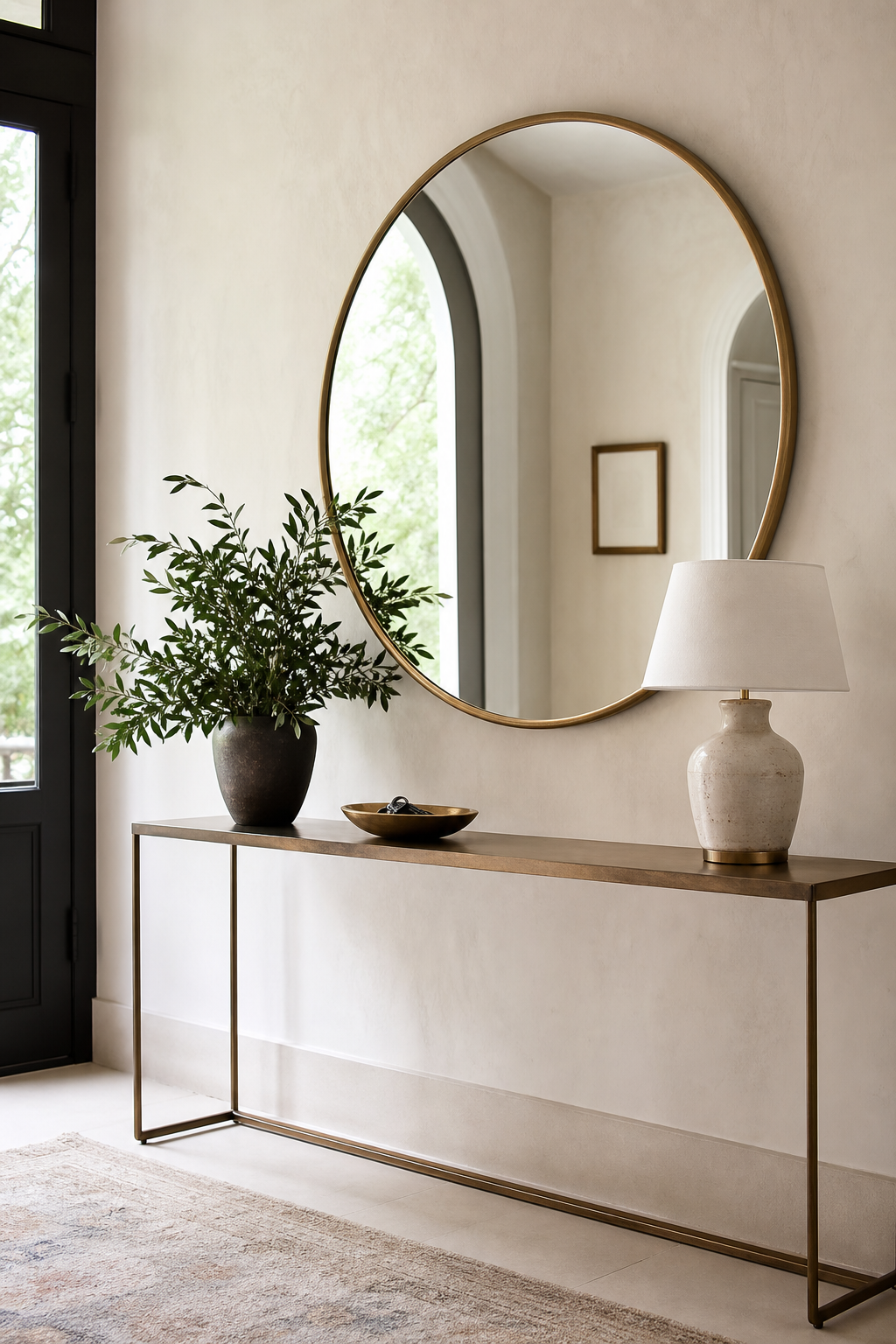
A mirror brightens an entryway and gives everyone a final check before leaving. Choose one generous mirror rather than several small pieces so the wall feels calm and confident. Round mirrors soften narrow halls, while tall rectangles add height. The frame should relate to your hardware, lighting, or furniture. Hang it low enough to connect to the console or bench beneath it. A good mirror makes a small entry feel larger and gives the space an instant sense of polish.
Use A Runner Rug For Warmth
A runner rug turns a pass-through entry into a real room. Choose a low-pile wool, vintage-style, jute, or performance rug that can handle traffic. Pattern is useful here because it hides dirt and gives the hallway character. Make sure the rug is long enough to guide the eye inward and narrow enough that doors clear it easily. A secure rug pad matters. The right runner softens hard floors, adds color, and makes the first few steps inside feel welcoming.
Add A Bench For Shoes
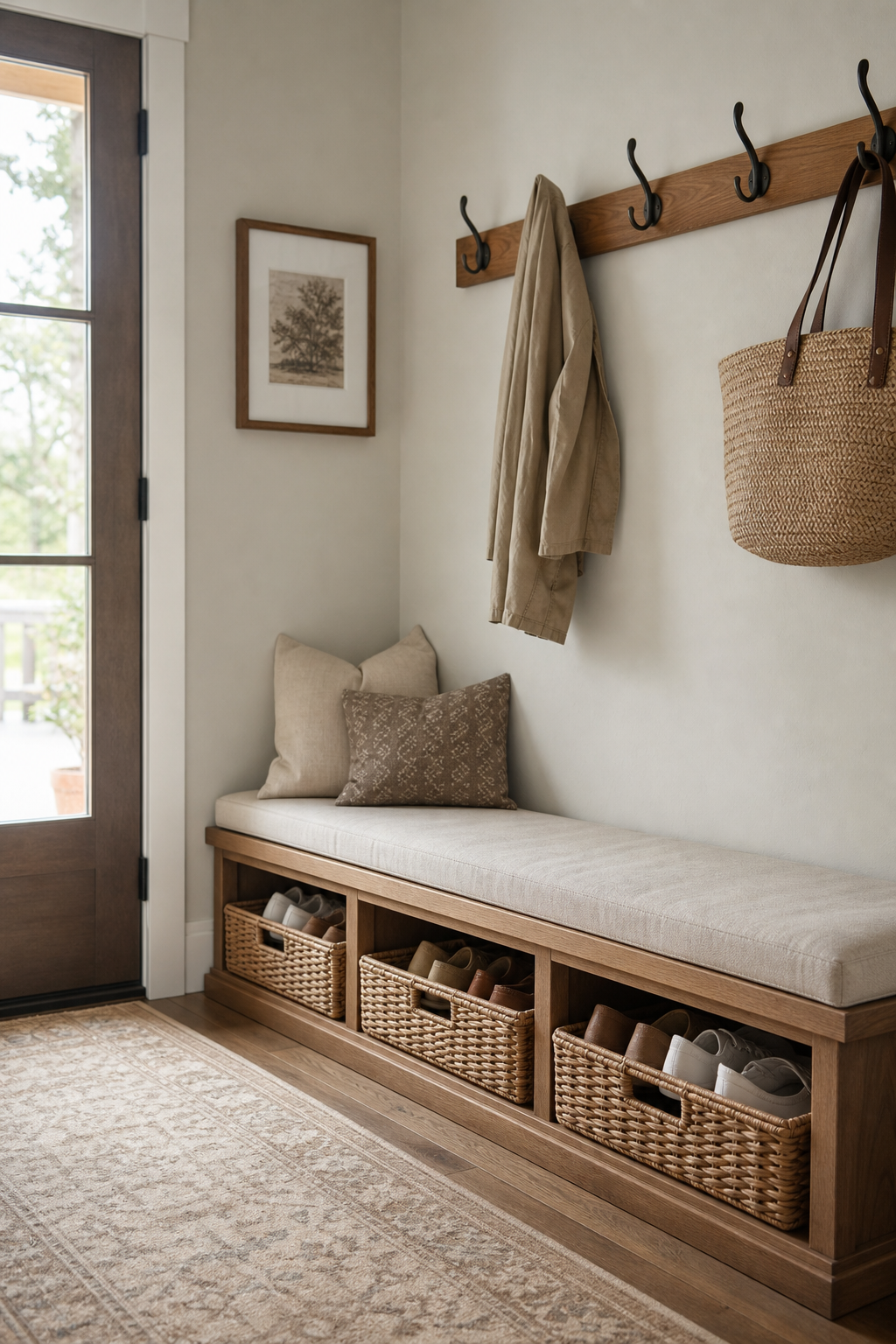
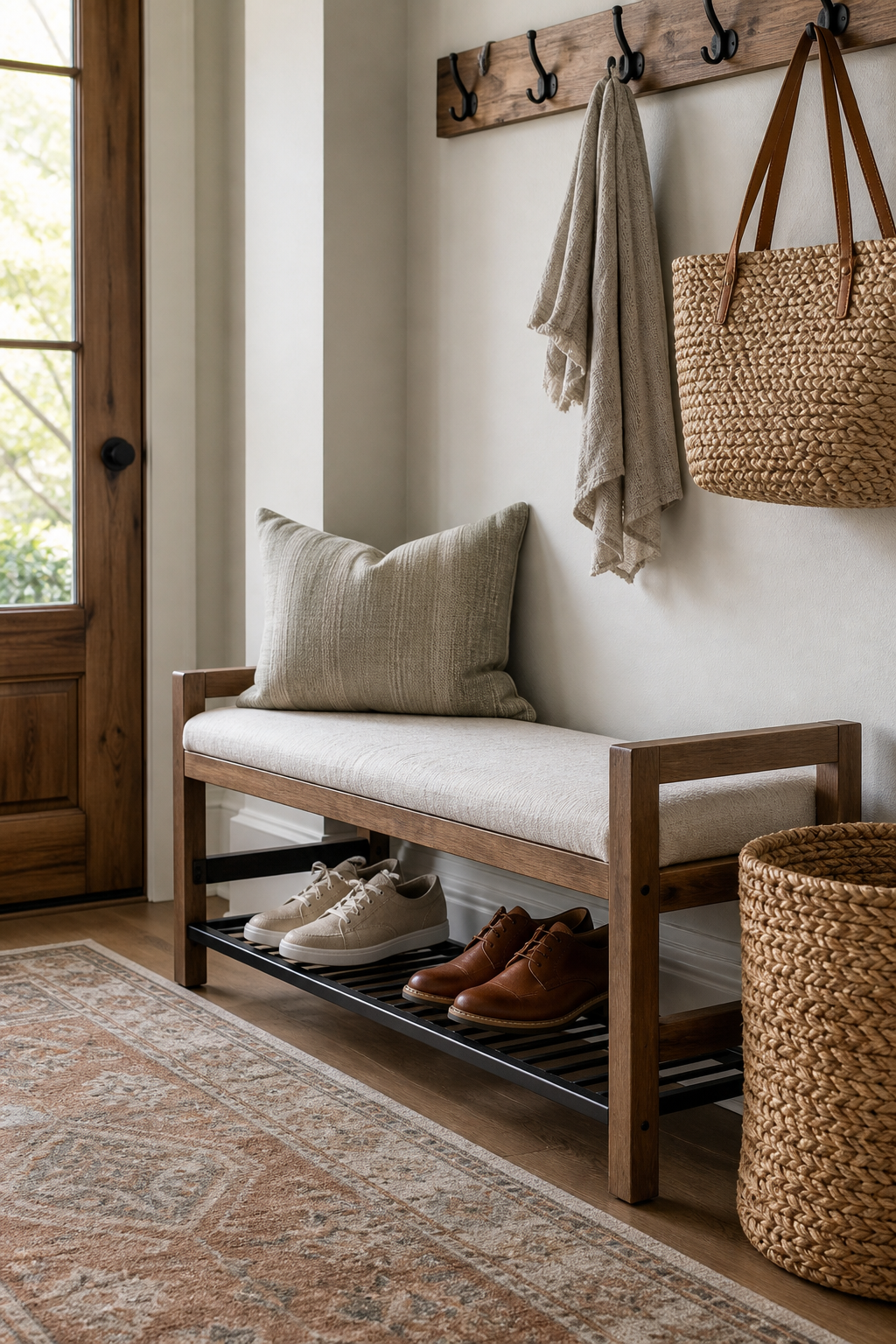
A bench makes the entryway more useful and more inviting. It gives guests a place to sit, helps with shoes, and visually grounds the wall. A wood bench feels casual, an upholstered bench feels soft, and a woven bench brings texture. Keep the size proportional so it does not block the door swing or walkway. Add a small pillow or folded throw only if it will not become clutter. Beneath the bench, baskets or a shoe tray can keep everyday pairs contained.
Use Wall Hooks Beautifully
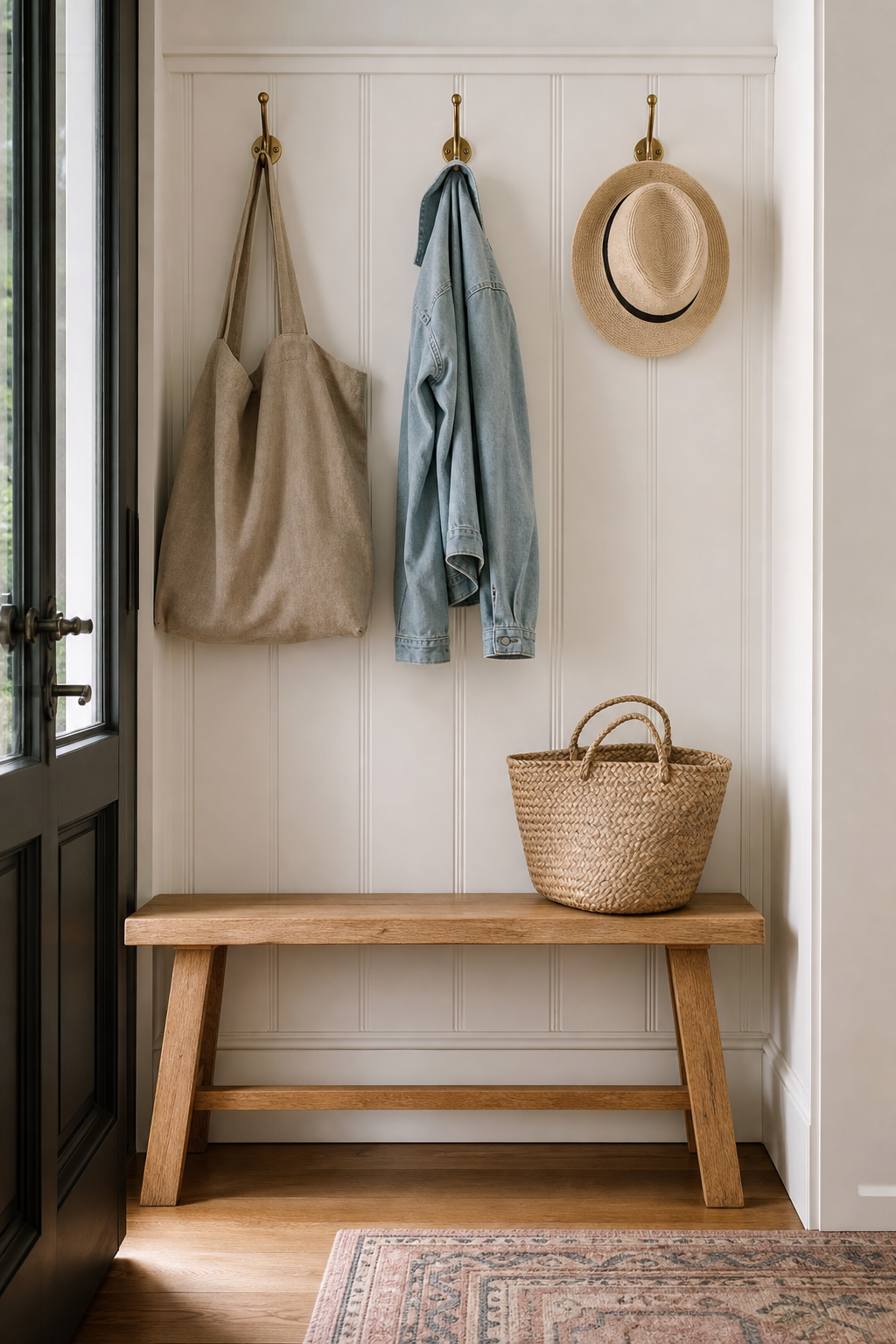
Hooks are often more useful than a closet in a busy entryway. Choose sturdy hooks in brass, black, wood, or polished nickel, and install them with enough spacing for coats and bags to hang neatly. A row of hooks can look tailored when aligned above a bench or rail. Keep only daily items visible, then rotate seasonal pieces elsewhere. Hooks become part of the design when the finish, placement, and surrounding wall treatment are intentional rather than improvised.
Choose A Statement Light
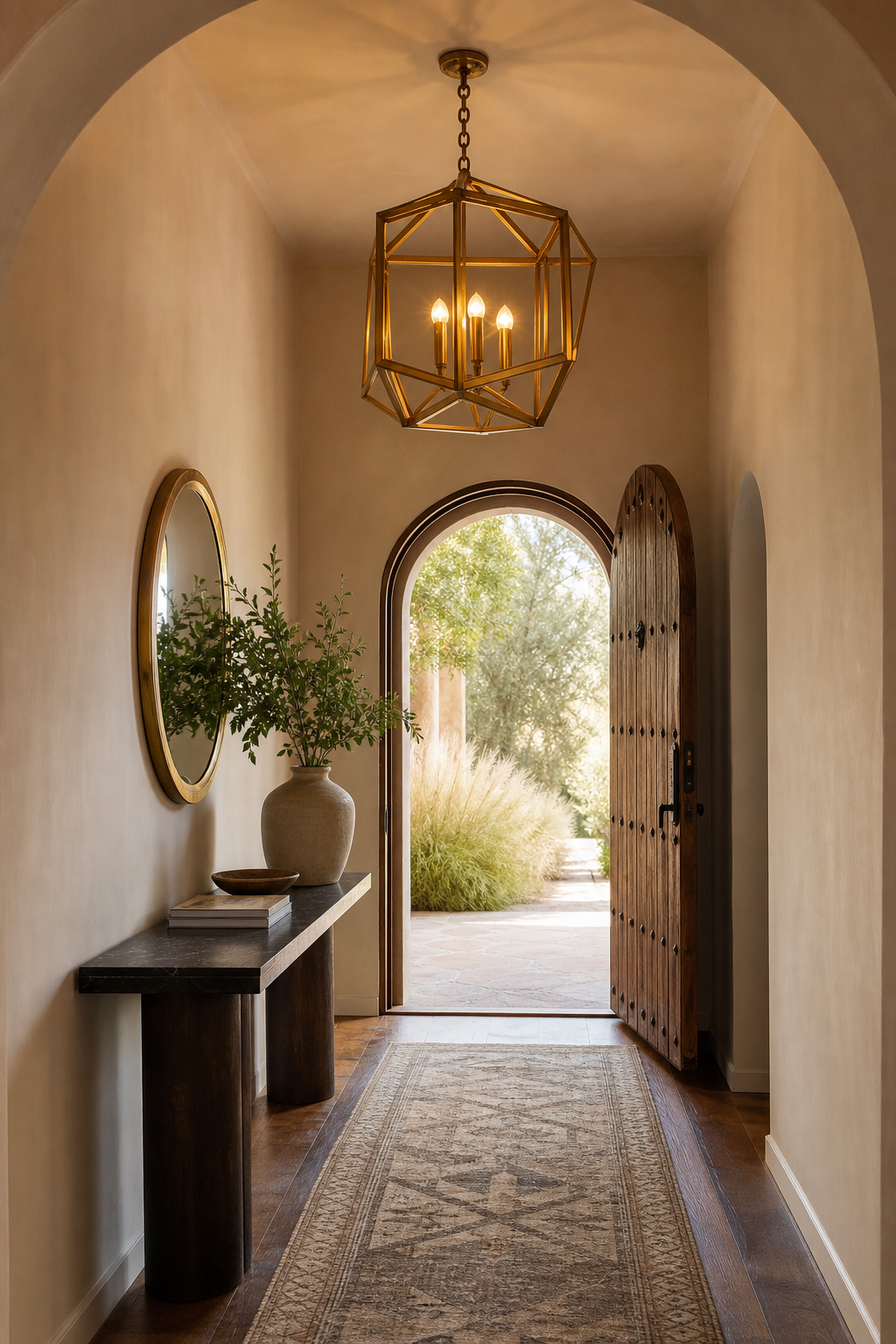
Lighting sets the tone before anyone reaches the living room. A small chandelier, lantern, flush mount, pendant, or sculptural sconce can make even a compact entry feel considered. Choose a fixture that suits the ceiling height and does not crowd the door. Warm bulbs are essential because entryways often lack natural light. If the ceiling fixture is simple, add a table lamp on the console. Layered light makes the space feel safe, flattering, and welcoming at night.
Add A Table Lamp
A table lamp makes an entryway feel less like a corridor and more like a room. Place one on a console, chest, or small cabinet where it can cast a warm pool of light. Ceramic, stone, wood, or aged metal bases all work well. Choose a fabric or pleated shade for softness. This is especially helpful for evenings, when overhead lighting can feel harsh. A lamp also gives the entryway a welcoming glow from outside the front door.
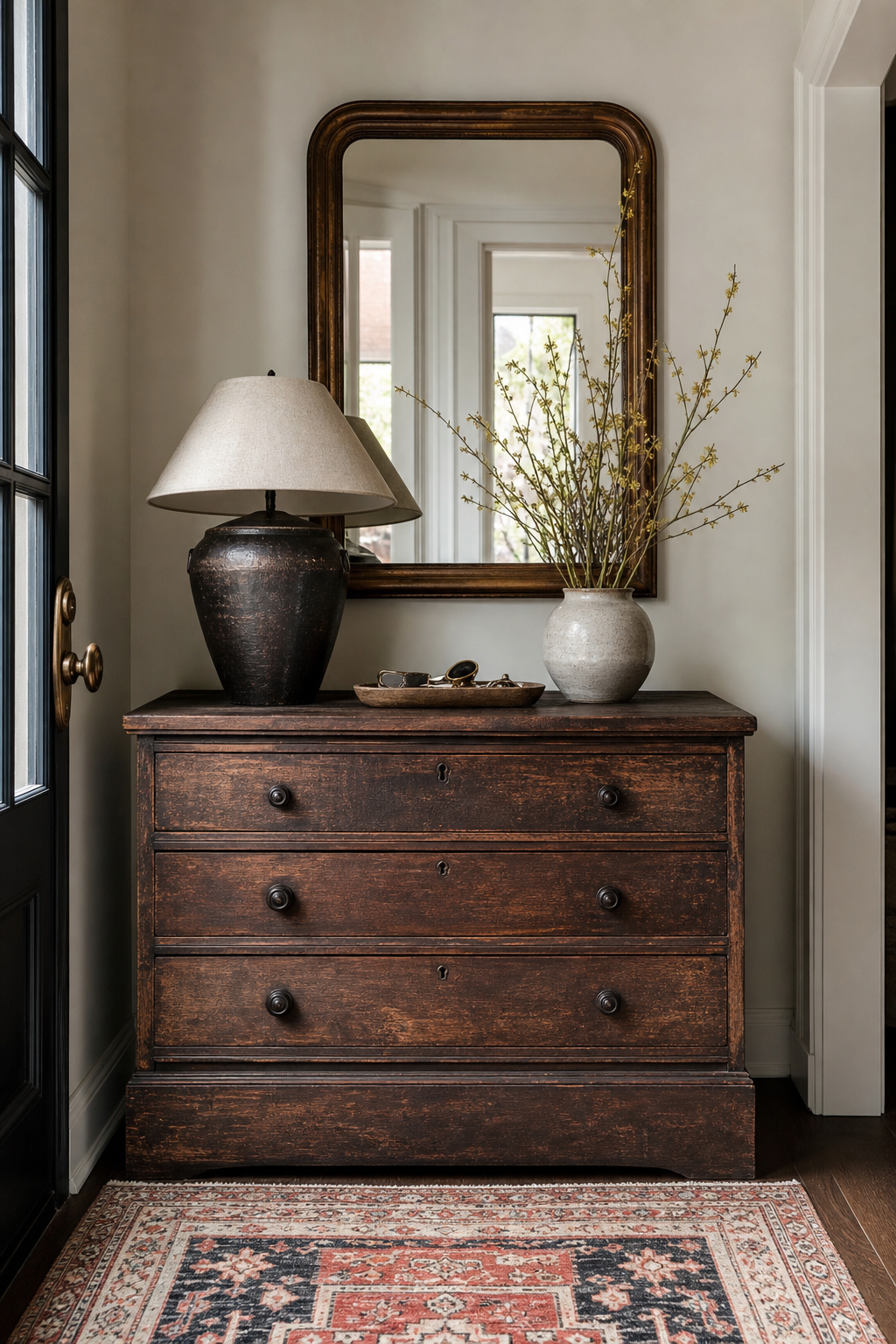
Use A Chest For Hidden Storage
If your entryway collects clutter, choose a chest instead of an open console. Drawers can hide dog leashes, gloves, keys, chargers, sunglasses, and mail. A vintage chest adds character, while a clean modern cabinet keeps the look quiet. Style the top like a console but keep the storage working hard below. This is a smart choice in apartments or homes without a coat closet. Hidden storage lets the entryway look calm even when daily life is busy.
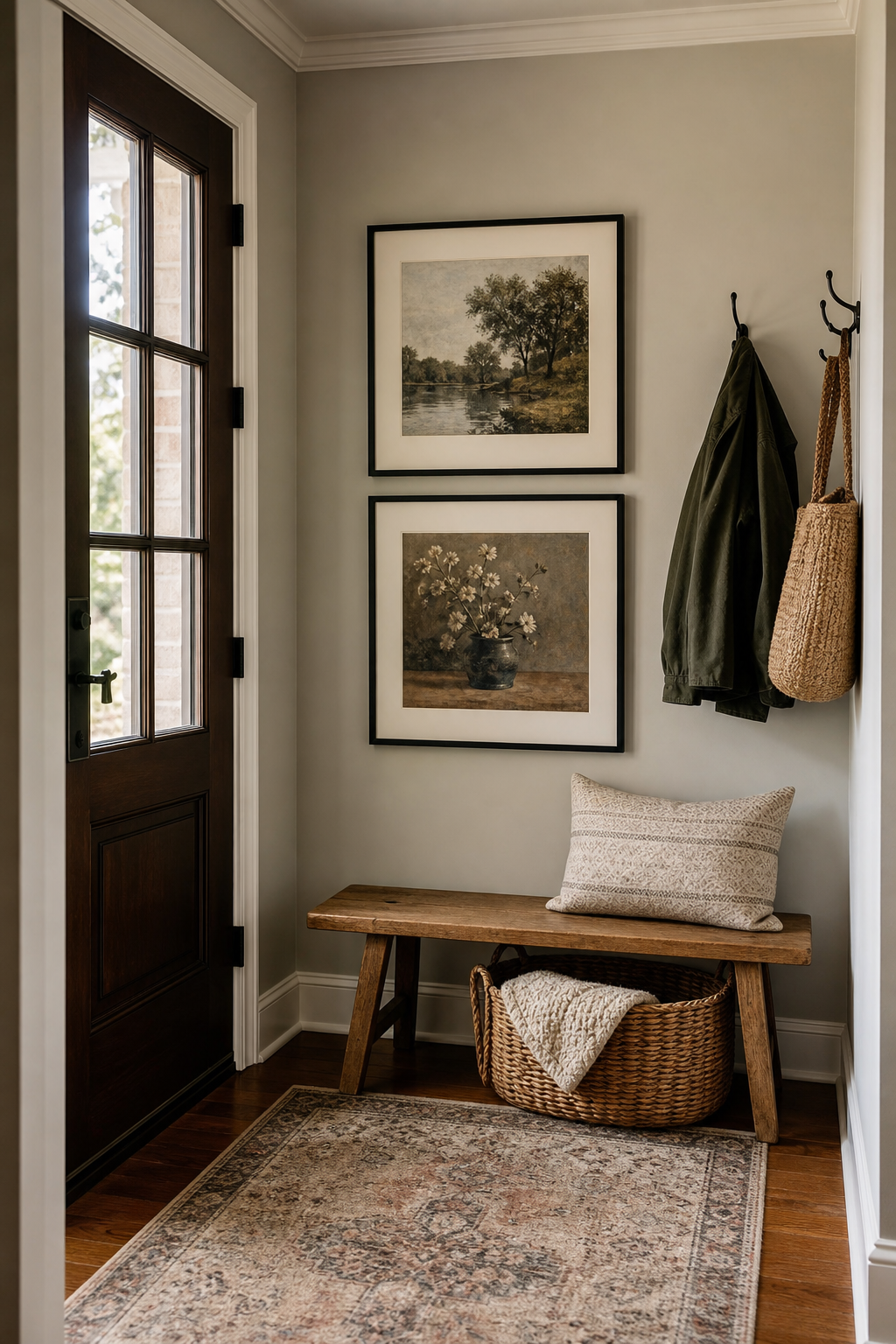
Layer Art Beside The Door
Art makes an entryway feel personal immediately. Hang one larger piece above a bench or create a small pair near the door. Landscapes, abstracts, botanicals, and black-and-white sketches all work if the colors connect to the rest of the home. Avoid crowding the wall with too many small frames, especially in a narrow hall. Art should give the space personality while still leaving room for coats, mirrors, and storage. It is often the detail that makes the entry feel designed.
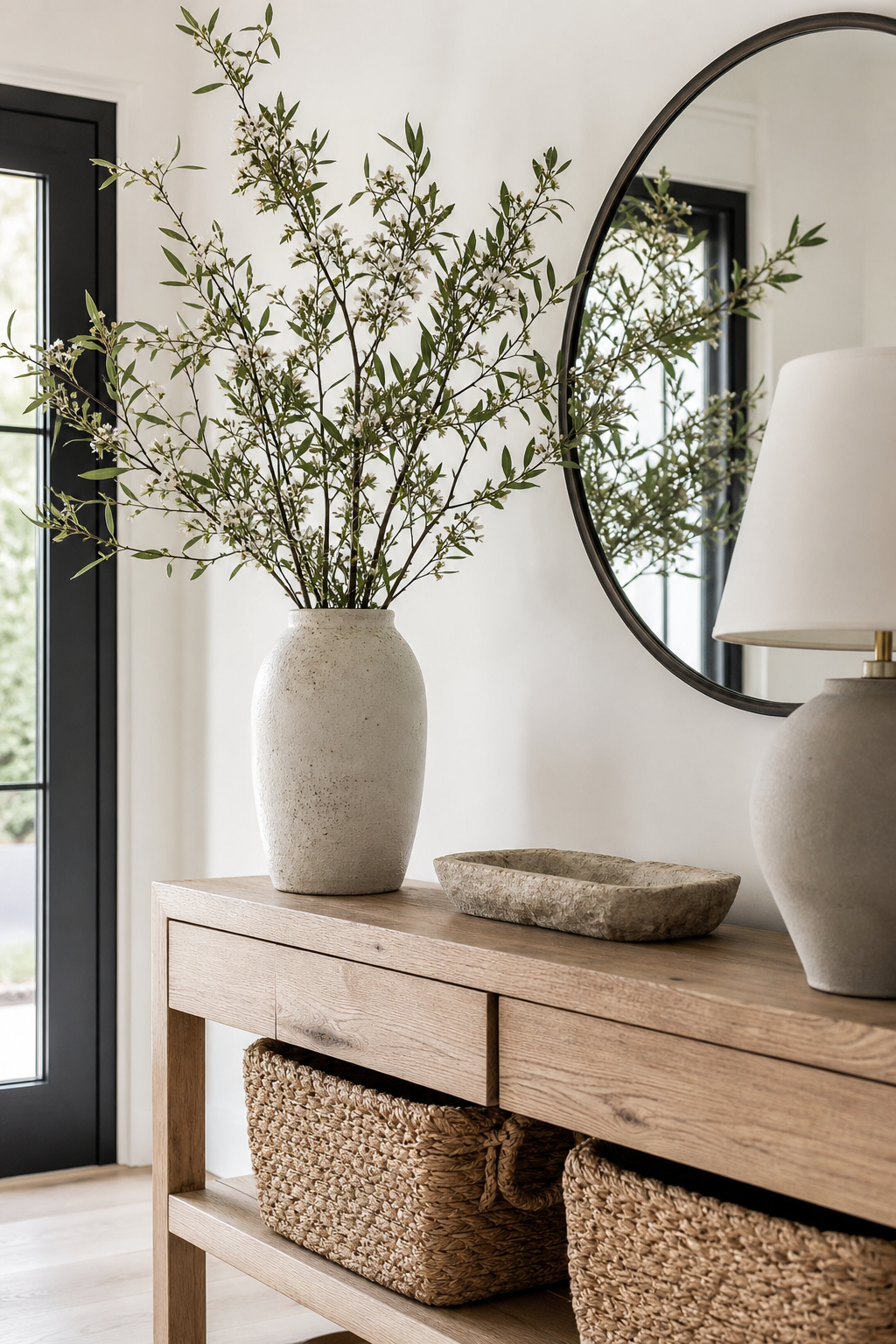
Bring In Fresh Branches
Fresh branches or flowers make an entryway feel alive. A tall vase on a console can add height, movement, and a seasonal note without requiring much surface styling. Olive branches, eucalyptus, cherry blossom, magnolia, or simple greenery all work depending on the mood. Keep the vessel heavy enough that it will not tip near the doorway. This one organic detail softens mirrors, furniture, and hard floors while giving guests a beautiful first impression.
Paint The Door A Soft Color
The inside of the front door is an underrated design surface. A soft color can make the entry feel charming before you add any furniture. Try sage, slate blue, mushroom, warm charcoal, or muted clay, depending on the home. Repeat the color in art, a rug, or a small accessory so it feels connected. Use a durable finish that can handle fingerprints. A painted door gives the entryway personality and helps define the threshold between outside and home.
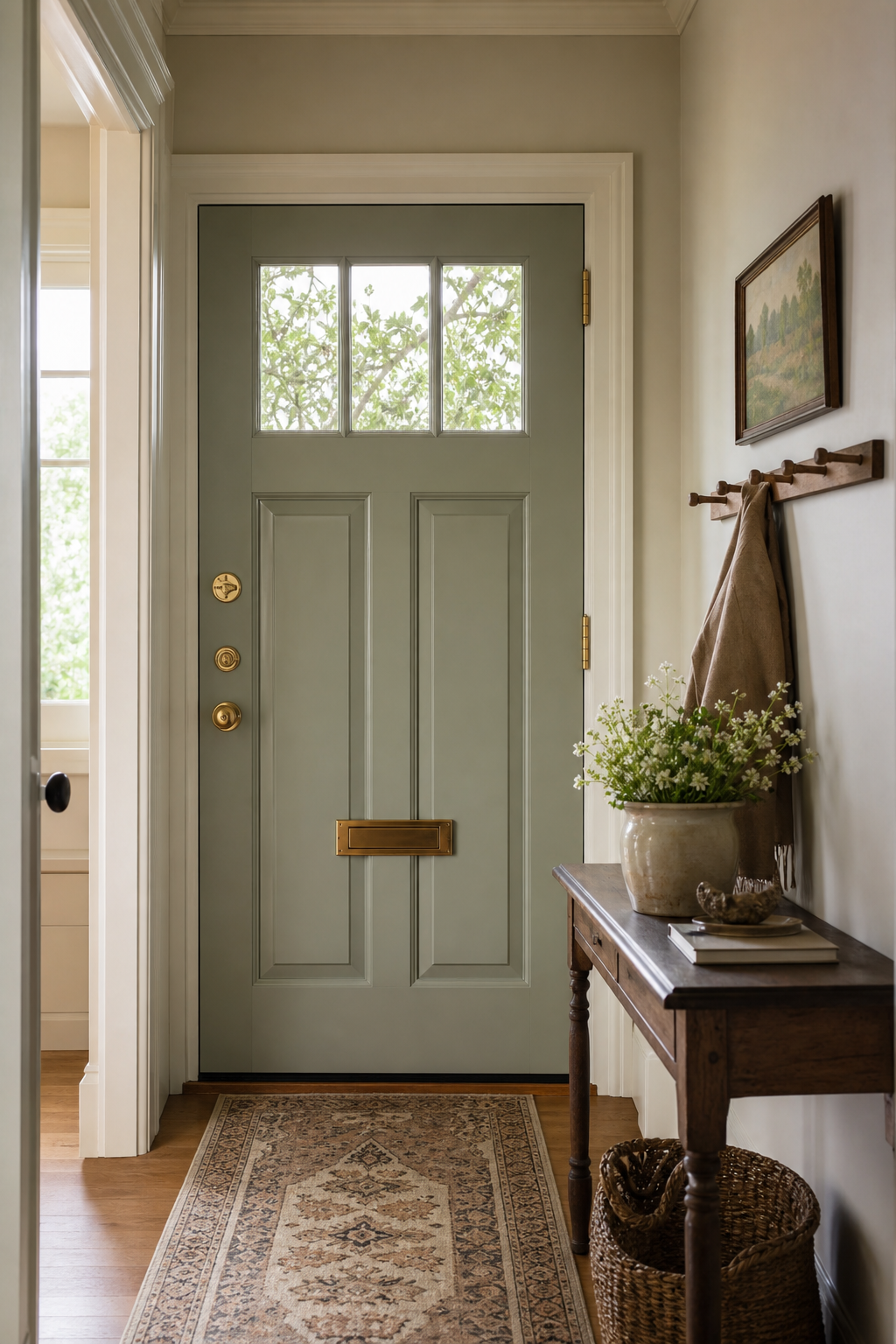
Use Baskets Under Furniture
Baskets are perfect for entryways because they hide the small things that make the space feel messy. Place them under a console, bench, or open cabinet for shoes, umbrellas, dog items, scarves, or reusable bags. Choose a matching set if you want calm order, or mix similar natural fibers for a collected look. Keep labels off the front unless needed. The texture warms up tile, wood, and painted walls while keeping daily clutter easy to grab and easy to put away.
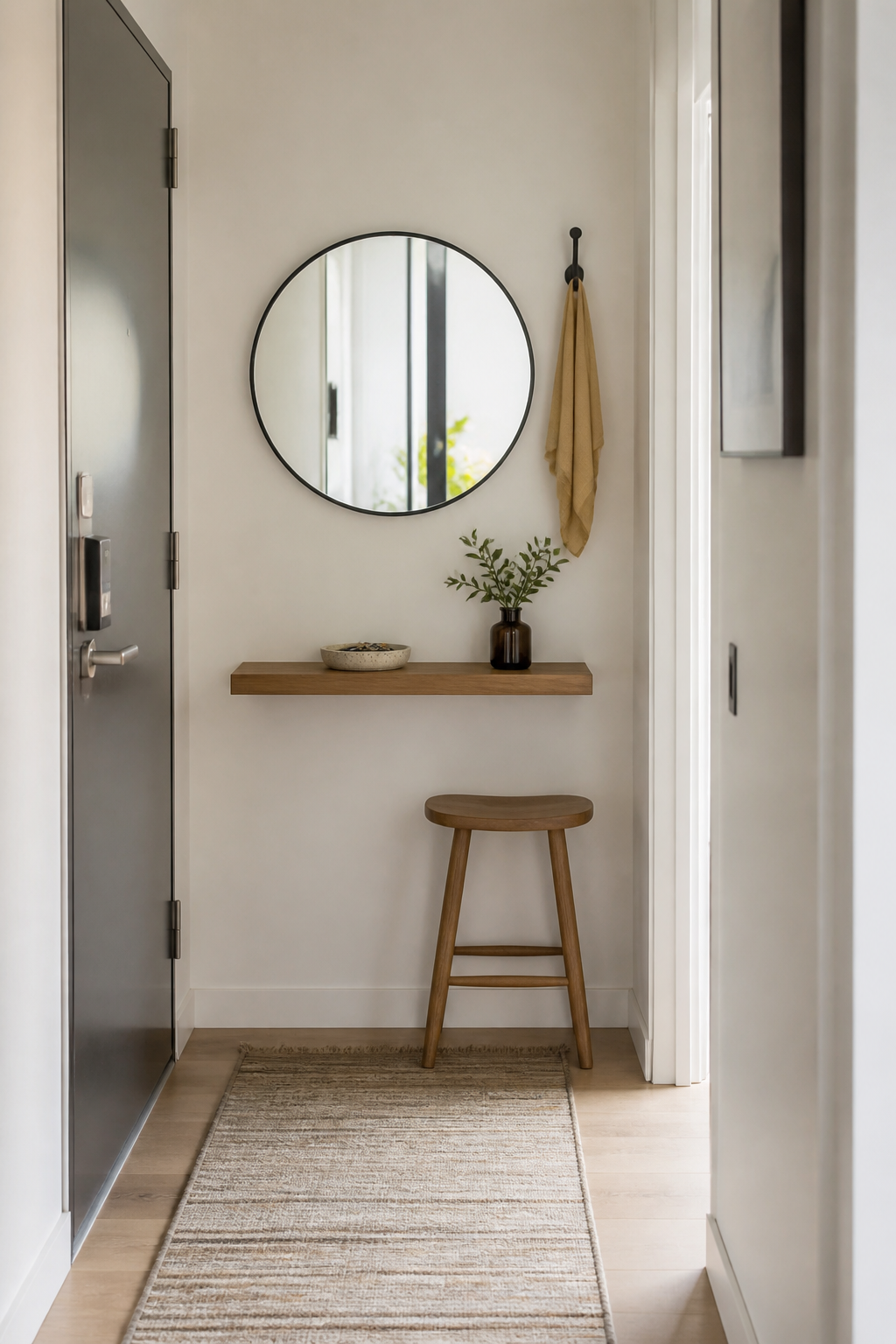
Make A Tiny Landing Strip
Even the smallest entry needs a landing strip for keys, wallet, sunglasses, and mail. Use a wall shelf, narrow console, floating drawer, or small stool with a tray. Keep it close enough to the door that daily habits are easy. Add a mirror or hook above if there is room. This idea is especially useful in apartments where the door opens directly into the living space. A tiny landing strip prevents clutter from traveling through the house.
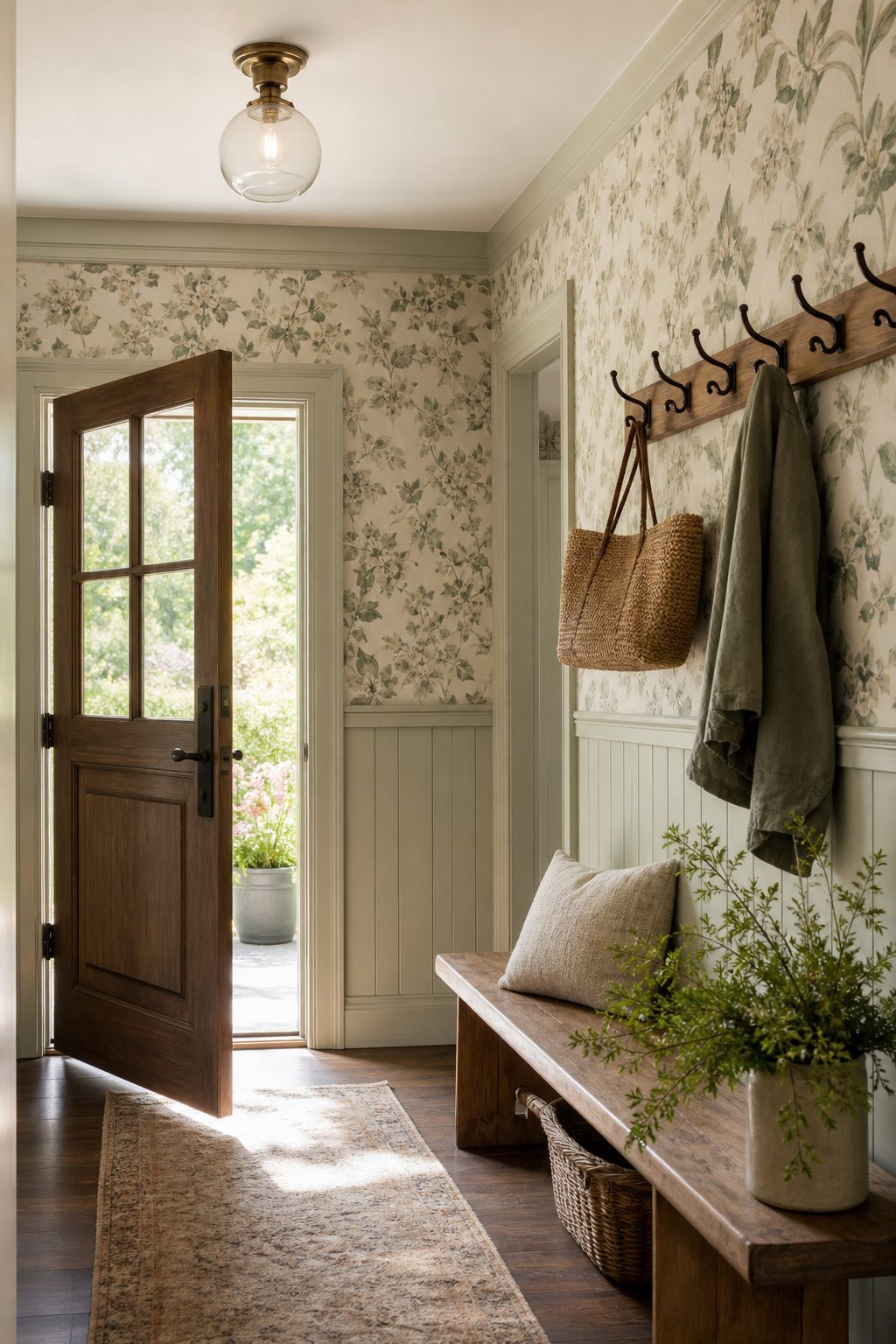
Add Wallpaper Or Paneling
An entryway can handle more personality than a large room because you pass through it quickly. Wallpaper, beadboard, picture molding, or vertical paneling can make the space feel architectural. Choose a small-scale pattern for a narrow hall or a soft texture if you want subtle depth. Paneling is also practical because it protects walls from bags and coats. Keep furniture simple if the wall treatment is detailed. This layer gives the entry a memorable first impression without needing many accessories.
Use An Umbrella Stand
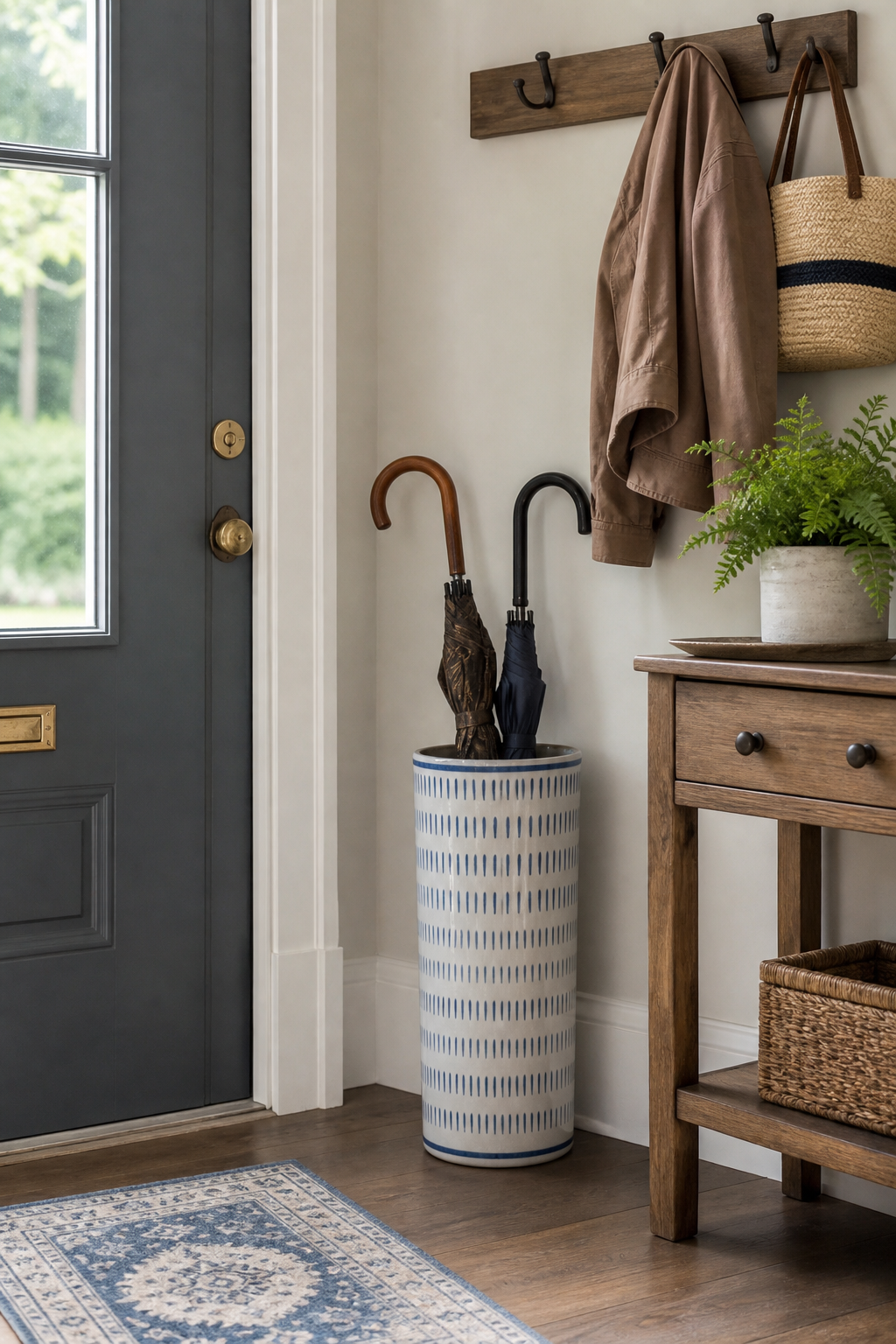
An umbrella stand is practical, but it can also be beautiful. Choose ceramic, brass, woven, black metal, or stoneware depending on the entry style. Place it near the door but not where it blocks the swing path. It can hold umbrellas, walking sticks, or even tall branches when not in use. This small detail makes rainy days easier and adds a traditional, finished note to the entry. The best version looks intentional rather than purely utilitarian.
Add A Shoe Tray
A shoe tray keeps wet or muddy shoes from spreading mess across the entry. Choose a metal, wood, rubber, or stone tray that suits the room instead of a flimsy plastic one. Place it under a bench or beside the door where shoes naturally land. A tray works best when it holds only the daily pairs, not every shoe in the house. This small practical piece helps the entryway stay beautiful because it gives real-life clutter a defined boundary.
Layer A Durable Door Mat
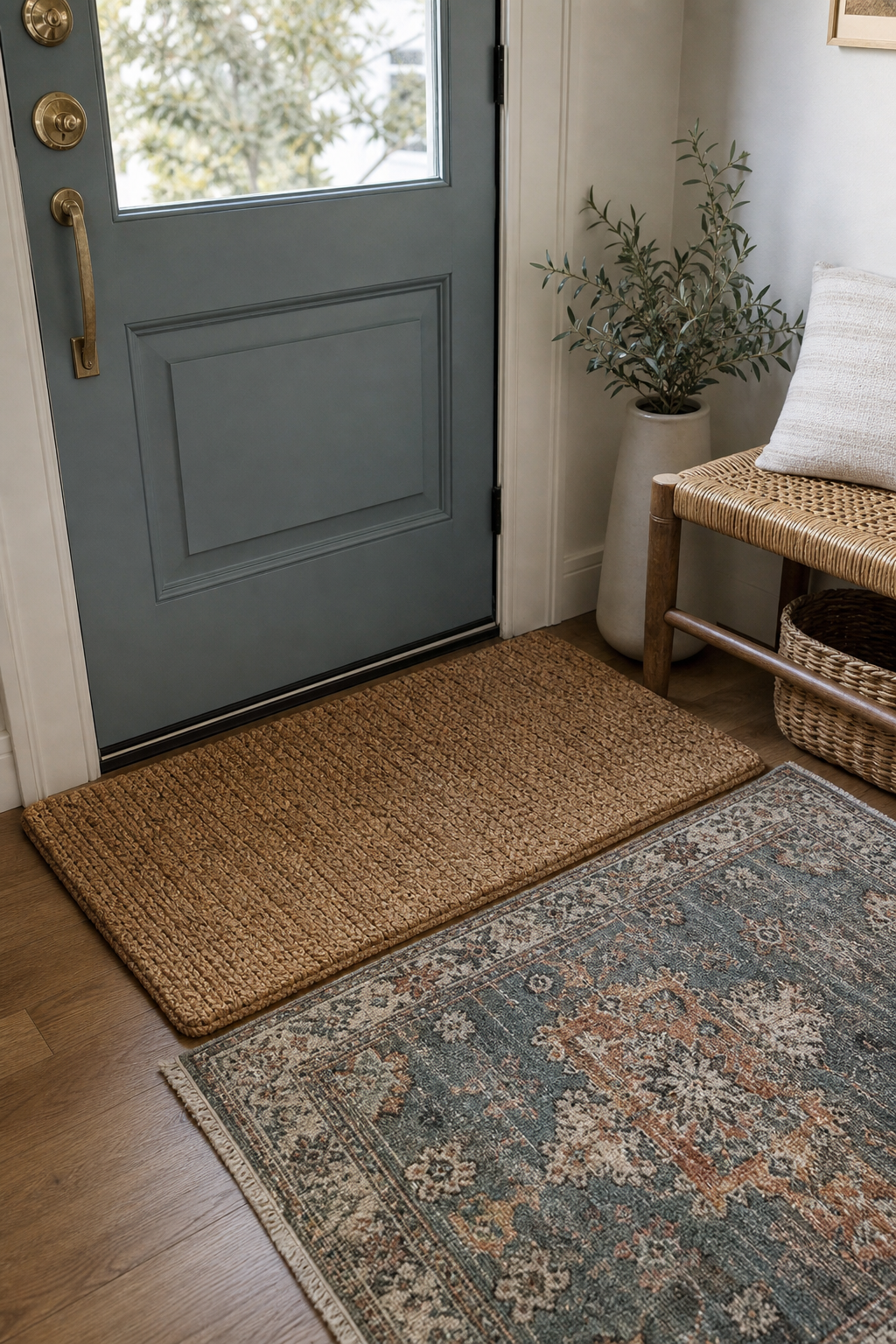
A durable door mat is the first layer of entryway function. Choose coir, woven jute, indoor-outdoor fiber, or a low-profile patterned mat that can handle daily dirt. It should fit the width of the door and sit flat enough that it does not catch. If the entry opens into a hall, pair the mat with a runner so the transition feels intentional. A good mat protects floors, welcomes guests, and keeps the more decorative rug from doing all the hard work.
Create A Mudroom Wall
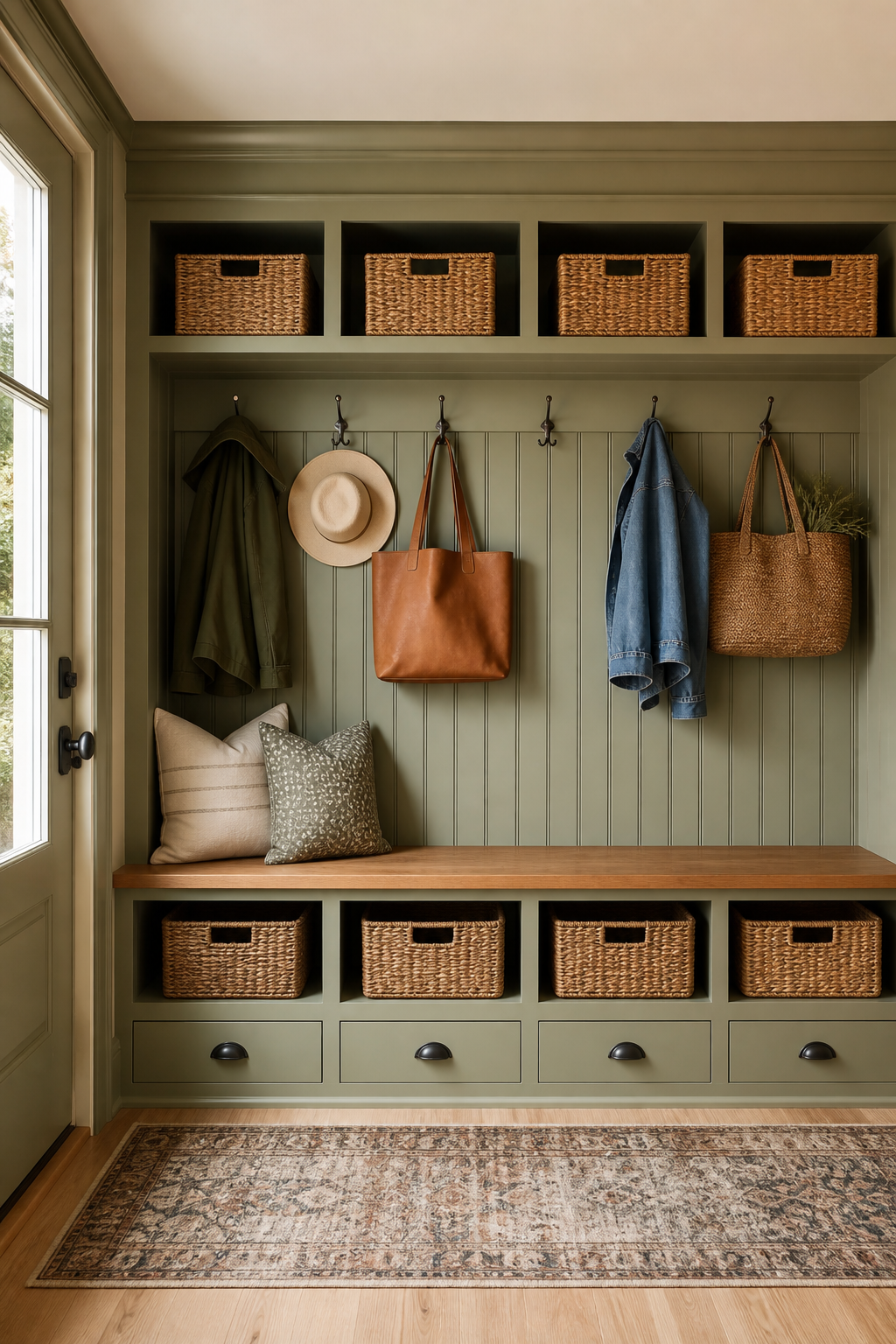
If the entryway handles coats, bags, and shoes every day, a mudroom wall can make life easier. Combine hooks, a bench, cubbies, drawers, and baskets in one organized zone. Paint or build it in a finish that relates to the home so it feels integrated rather than purely functional. Closed storage is helpful for visual calm, while open hooks keep daily items accessible. Even a small wall can work hard when every inch has a job and the materials look intentional.
Finish With Scent And Seasonal Detail
The final layer is subtle: a beautiful candle, small dish of matches, seasonal branch, bowl of pinecones, or vase of flowers. Keep scent gentle and natural so it does not overwhelm guests at the door. One seasonal detail is enough to make the entry feel cared for. Rotate it through the year: blossom branches in spring, greenery in winter, dried grasses in fall. These small changes keep the first impression fresh without requiring a full redesign.
A beautiful entryway is a balance of welcome and order. Start with the pieces that solve daily friction, then layer in light, mirrors, rugs, art, and seasonal details that make the space feel personal. When the entry has a place for everything and still offers a warm visual moment, it sets the tone for the entire home.