21 Cozy Home Office Ideas For A Productive Beautiful Workspace
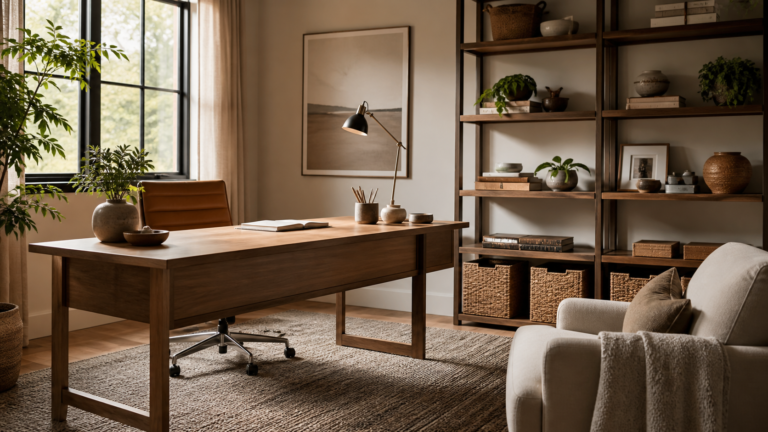
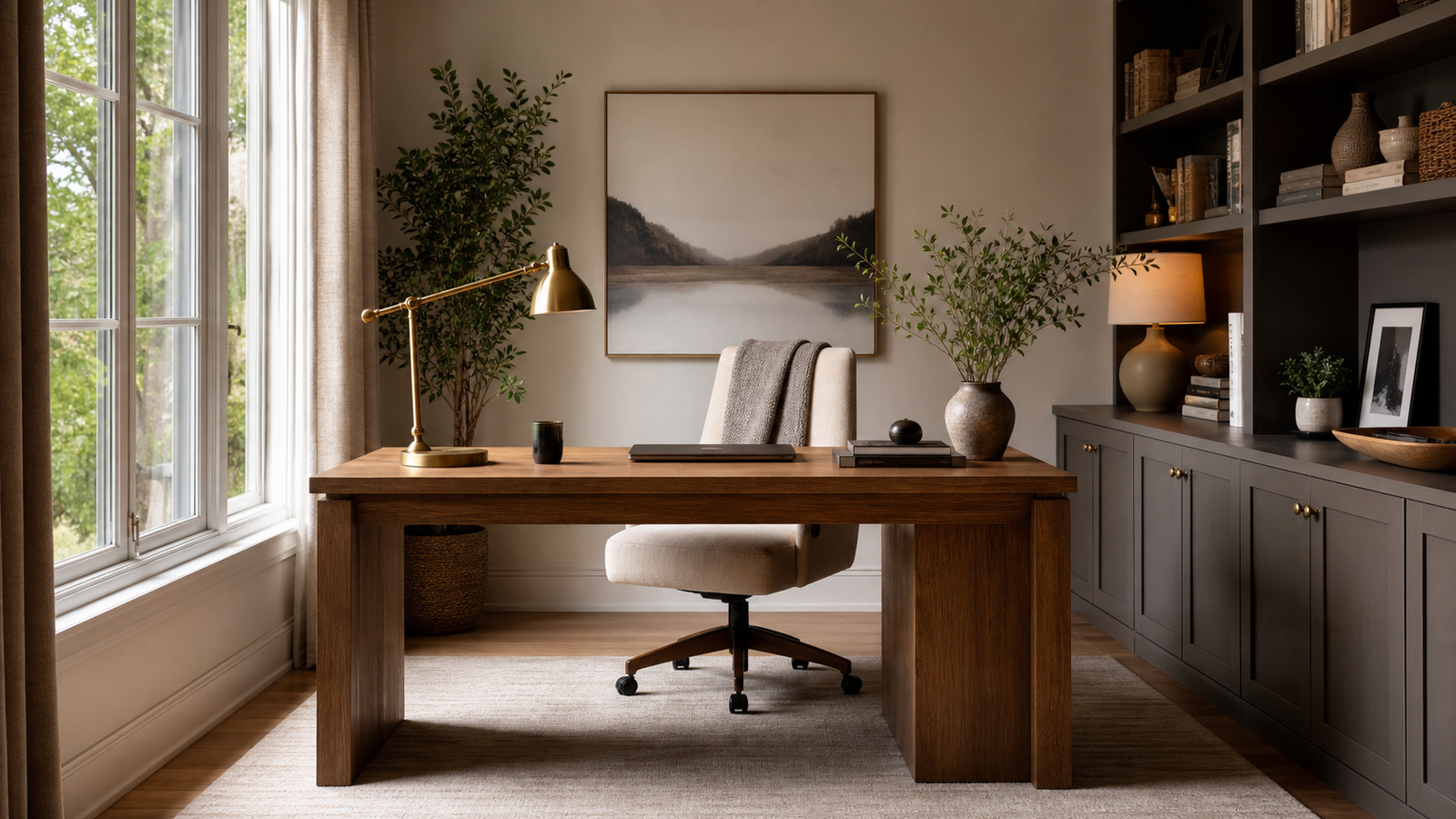
A cozy home office should make focus feel easier, not heavier. The best workspaces combine comfort, storage, good lighting, and materials that feel connected to the rest of the home. Whether you have a dedicated room or a compact desk nook, small design choices can make the space more productive and more beautiful. These ideas are built around real workdays: clear surfaces, supportive seating, soft light, and enough warmth to make the office a place you actually want to use.
Place The Desk Near Natural Light
A home office feels better when daylight is part of the workday. Position the desk near a window when possible, but avoid direct glare on the screen. Side light is usually the most comfortable because it brightens the room without washing out the monitor. Add a soft shade or linen curtain if the sun is strong. Natural light also makes materials look warmer, which helps a workspace feel less corporate and more connected to the rest of the home. Keep the view pleasant but not distracting, and use the window wall as a visual reset between focused tasks.
Choose A Desk That Fits The Room
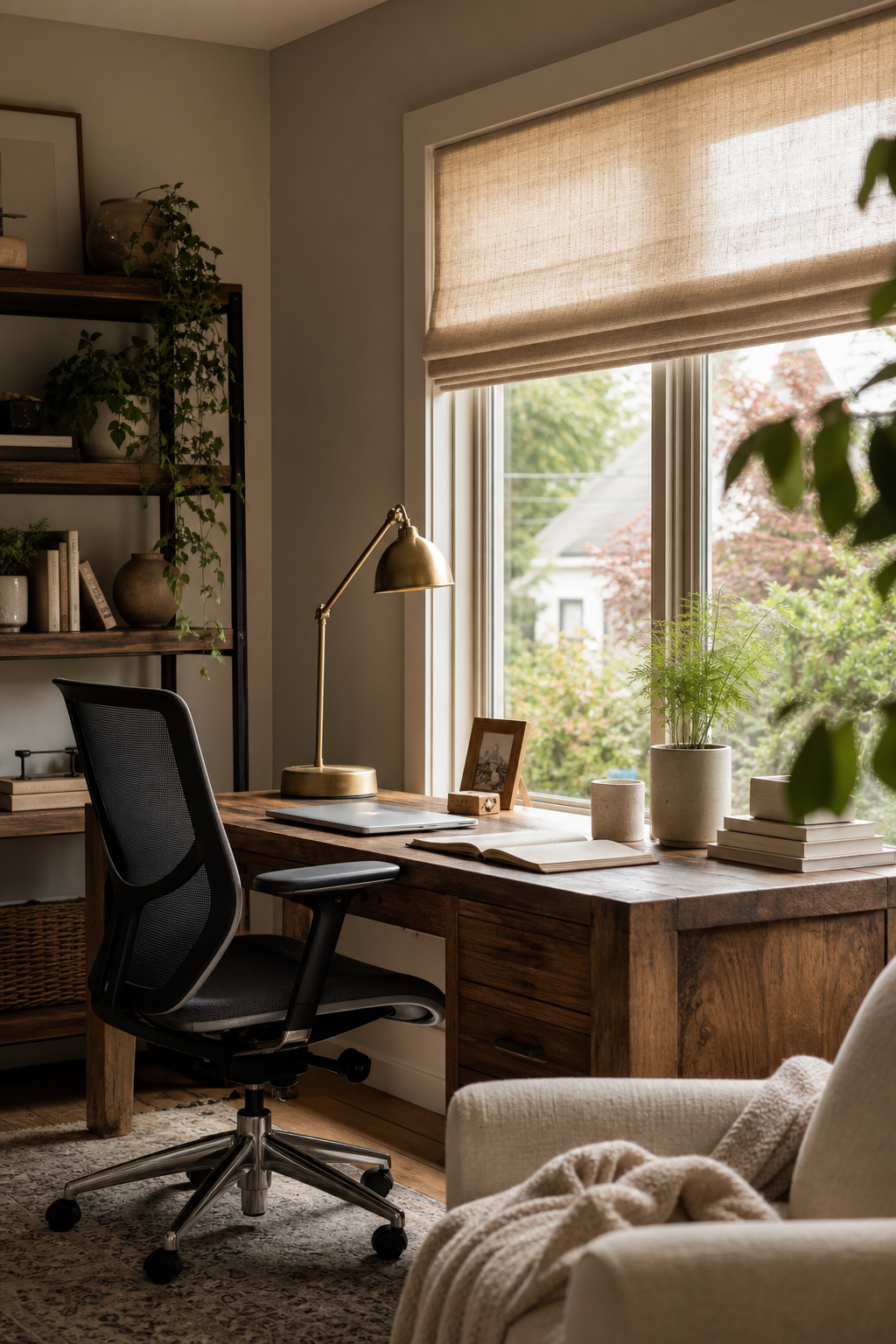
The best desk is not always the largest one. A productive home office needs enough surface for daily work, but it should not crowd the room or block movement. In a small bedroom or living room corner, a writing desk with drawers may be better than a deep executive desk. In a dedicated office, a larger wood desk can become the anchor. Pay attention to proportion, storage, and cable access. A beautiful desk that fits the architecture will make the office feel intentional instead of temporary, which matters when the workspace is visible from another room.
Use A Comfortable Chair That Still Looks Good
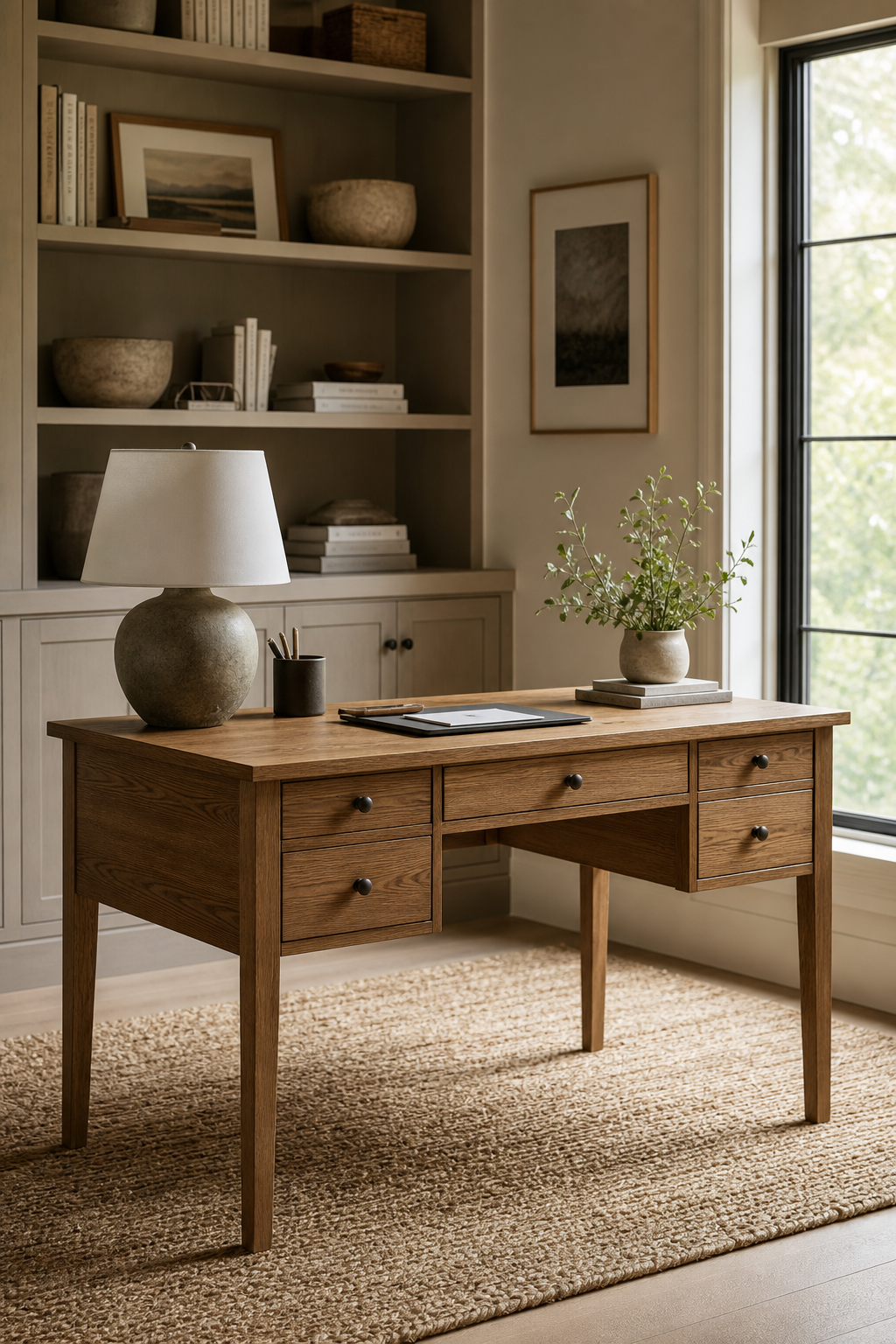
A cozy office can be beautiful, but the chair still has to support real work. Look for adjustable height, supportive cushioning, and a seat that suits the hours you spend there. If a fully ergonomic chair feels too technical for the room, choose one with cleaner lines, textured upholstery, or a warm leather finish. Add a small lumbar pillow only if it improves comfort without looking fussy. The chair should tuck under the desk properly and move easily. A productive office is not only styled for photos; it should help your body settle into focused work.
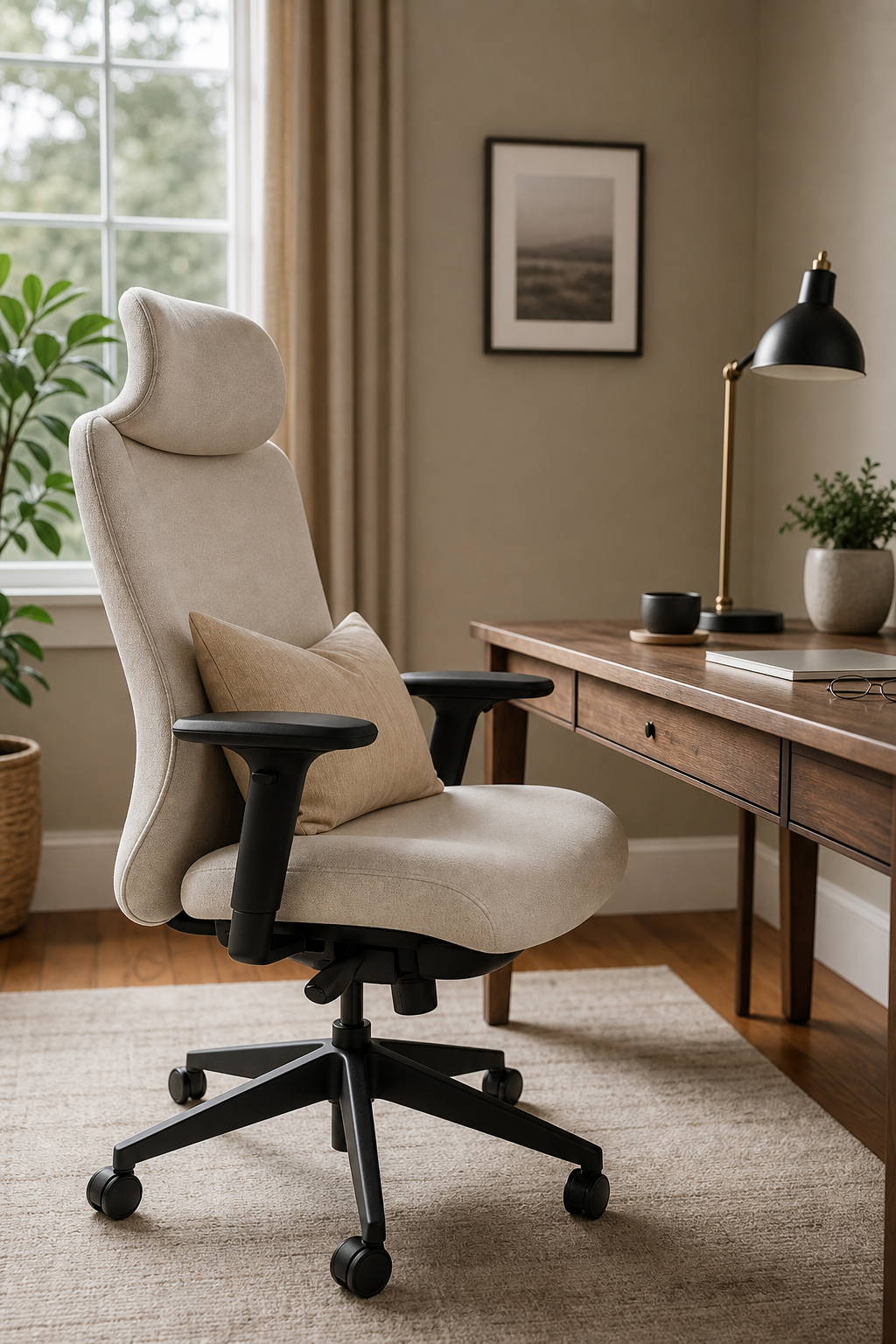
Add Closed Storage For Visual Calm
Paper, tech accessories, and office supplies can quickly make a workspace feel restless. Closed storage keeps the room calm and makes it easier to reset at the end of the day. Use drawers, a credenza, cabinets, or boxes with lids so necessary items have a home. Open shelves can still be styled with books and a few decorative objects, but the daily clutter should disappear behind doors. This is especially important when the office is part of a bedroom, hallway, or living room. A tidy visual field makes it easier to concentrate because the room is not constantly asking for attention.
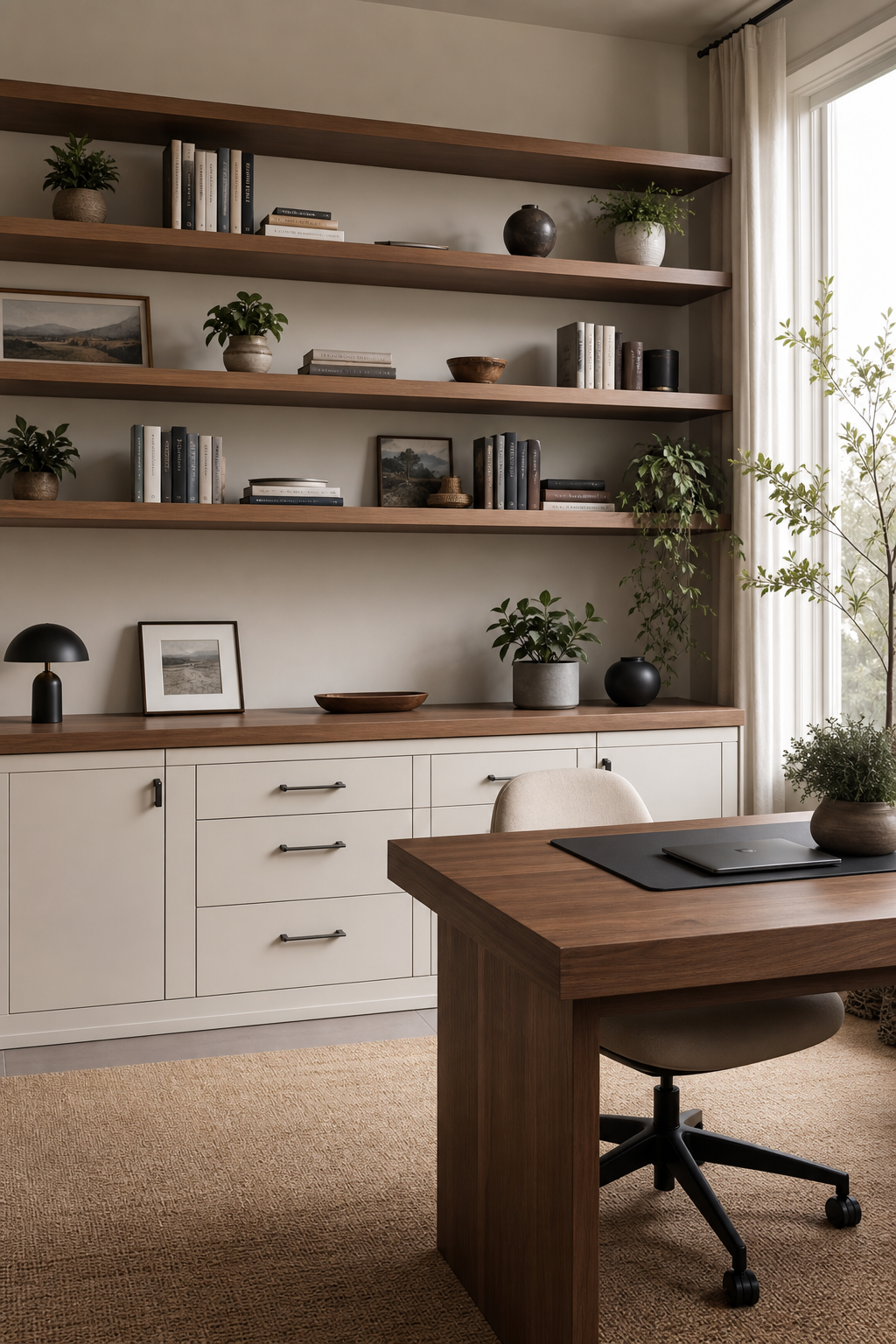
Layer Task And Ambient Lighting
Good office lighting needs more than one desk lamp. Use a task lamp for focused work, ambient light for the whole room, and a softer accent light for late afternoons or video calls. A shaded table lamp, wall sconce, or floor lamp can make the office feel warm after the sun goes down. Choose bulbs that are warm but clear, not cold blue. Dimmers are useful because the room may shift from spreadsheet work to reading to planning. Layered lighting makes the workspace more flexible and keeps it from feeling harsh or flat during long work sessions.
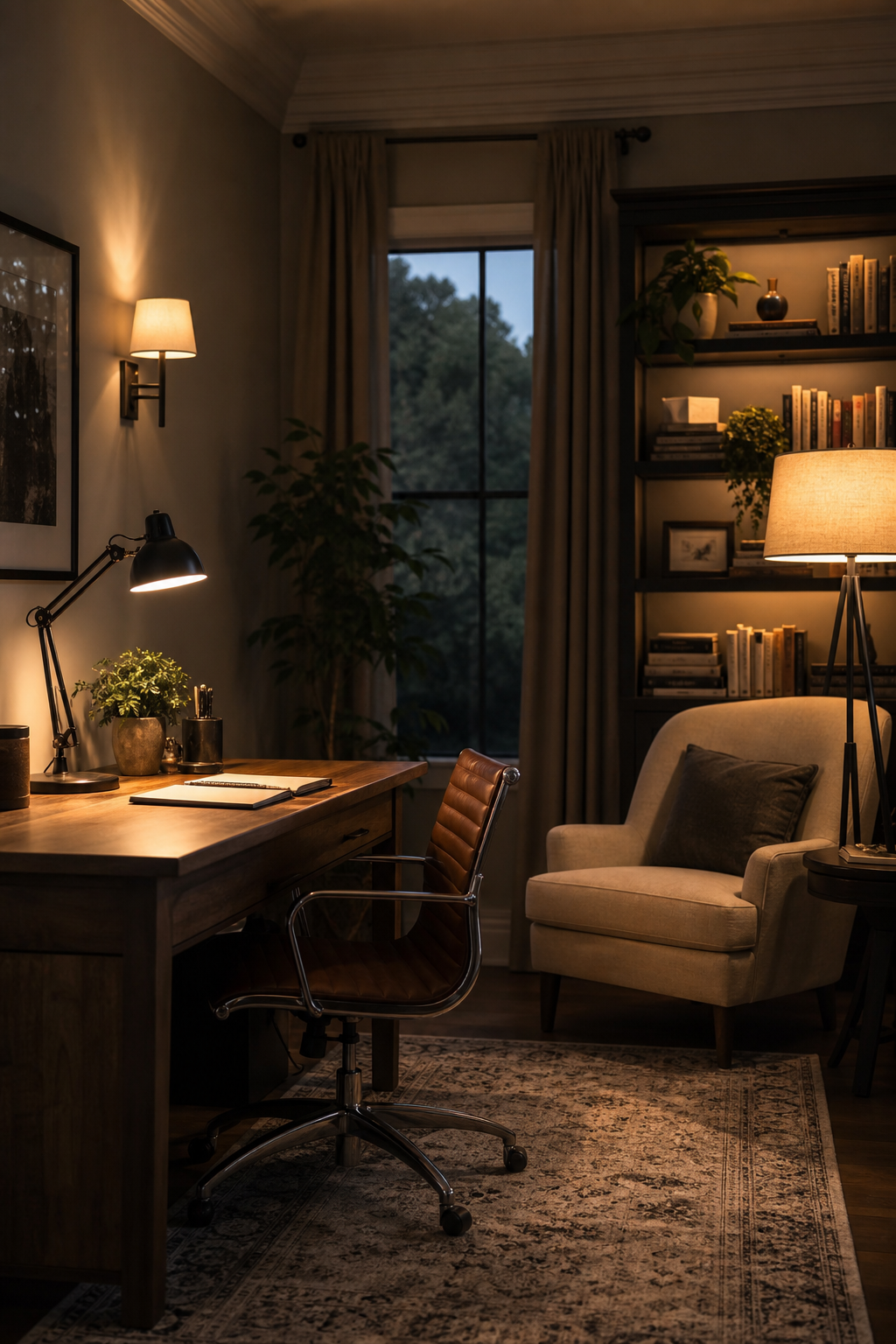
Use A Rug To Define The Work Zone
A rug can make a home office feel like a real room rather than a desk dropped into a corner. Choose a low-pile wool or flatweave rug if the chair needs to roll. In a dedicated office, the rug should be large enough to hold the desk and chair comfortably. In a small nook, it can define the work area visually. Pattern helps hide wear, while texture softens sound. Avoid very thick pile under a rolling chair because it becomes frustrating quickly. The right rug adds warmth and makes the office feel more finished without sacrificing practicality.
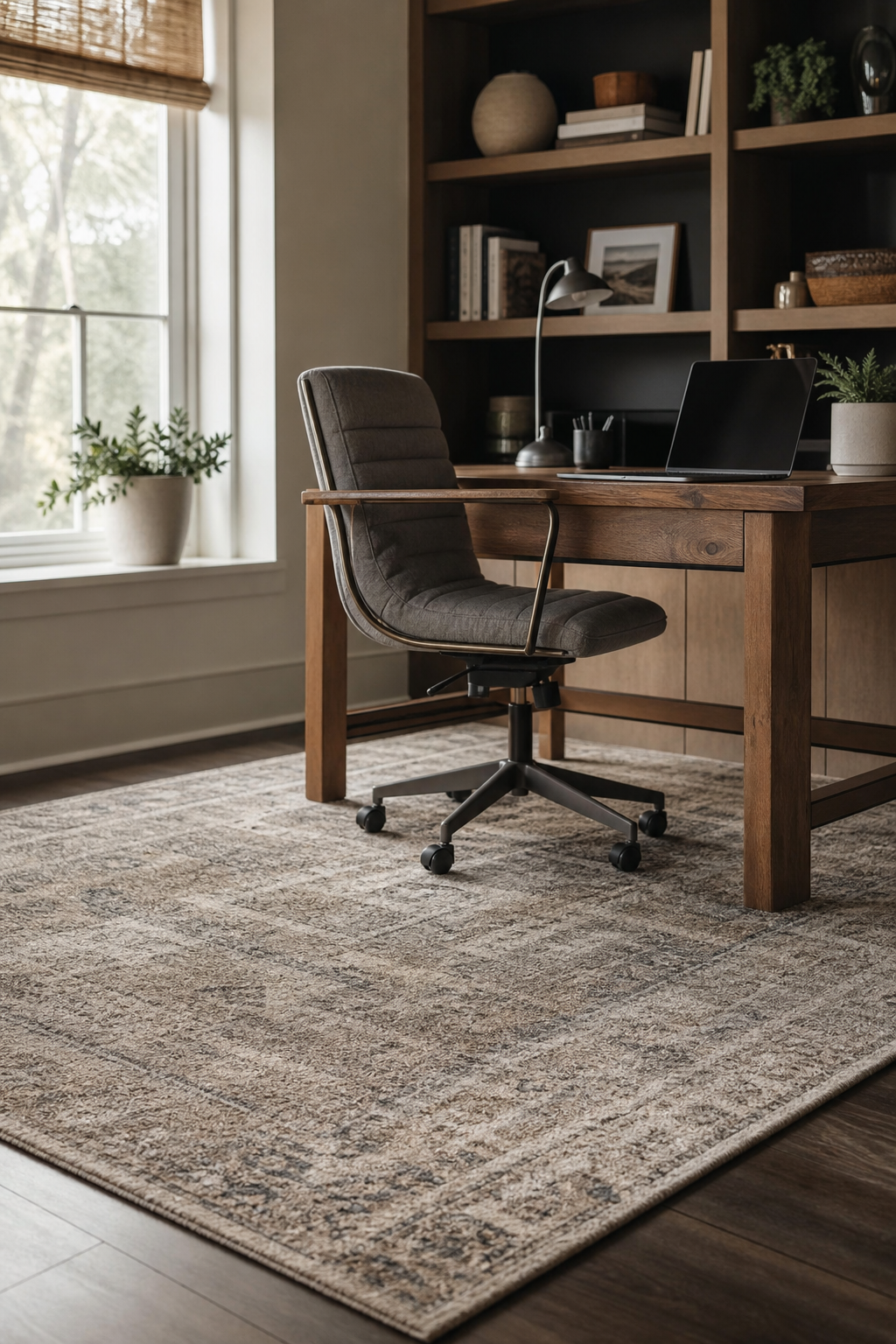
Create A Zoom-Friendly Background
Video calls are part of many home offices now, so the view behind the desk deserves attention. A bookcase, art wall, simple cabinet, or softly lit corner can create a polished background without feeling staged. Keep the composition calm and avoid clutter at head height. If the background is plain, add a plant, lamp, or framed piece to give it depth. Lighting matters too; face a window or use a soft lamp so your face is not in shadow. A considered background makes the workspace feel more professional while still looking like part of a warm home.
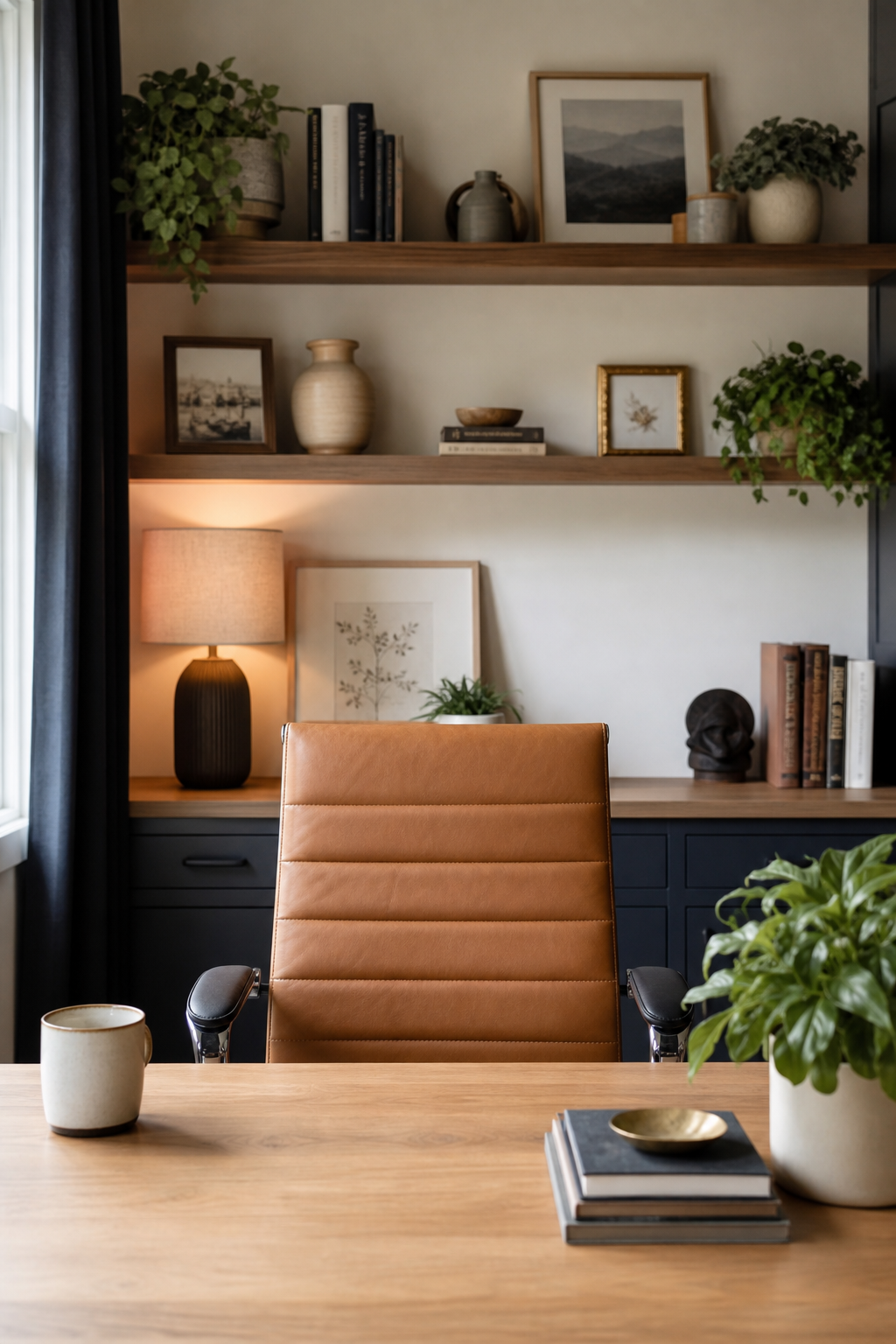
Bring In Warm Wood Tones
Wood is one of the easiest ways to make a home office feel cozy. Oak, walnut, ash, or reclaimed wood can soften computers, monitors, and office equipment. Use wood on the desk, shelves, picture frames, or a storage cabinet. If the room already has wood floors, repeat a related tone in one piece of furniture so the design feels connected. Keep finishes matte or satin rather than glossy. Wood brings visual warmth and helps the office feel less like a workstation and more like a room where focus, reading, and creative thinking can happen comfortably.
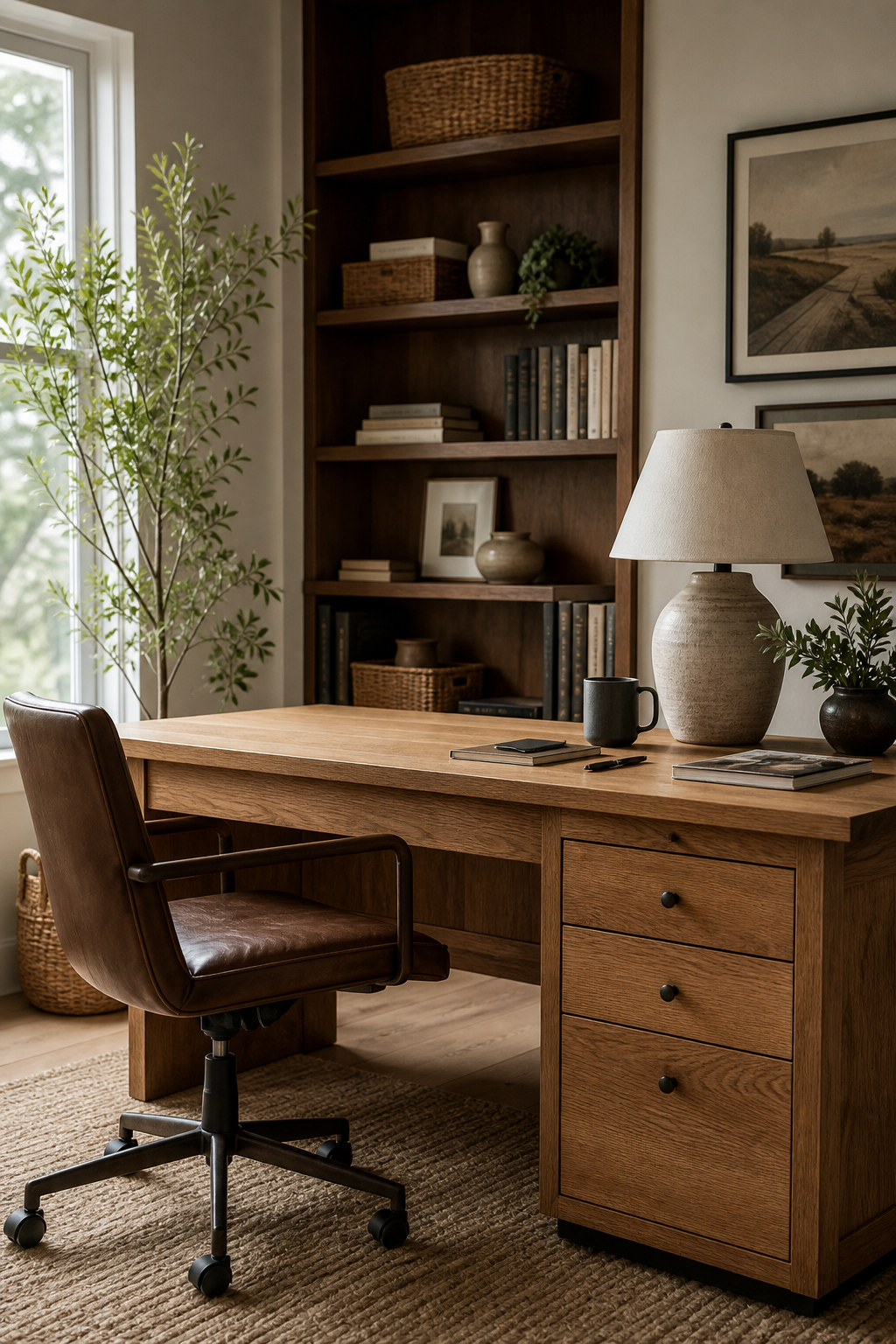
Add A Pinboard Or Linen Memo Wall
A pinboard can be practical and beautiful when it is treated like part of the design. Cover cork in linen, use a framed bulletin board, or create a small memo wall above the desk. Pin only current notes, fabric swatches, sketches, calendars, or inspiration that actually supports your work. Too many papers can become visual noise. A pinboard keeps important ideas visible without scattering them across the desk. It also adds softness and texture to the wall, which is useful in small offices where art and function need to share space gracefully.
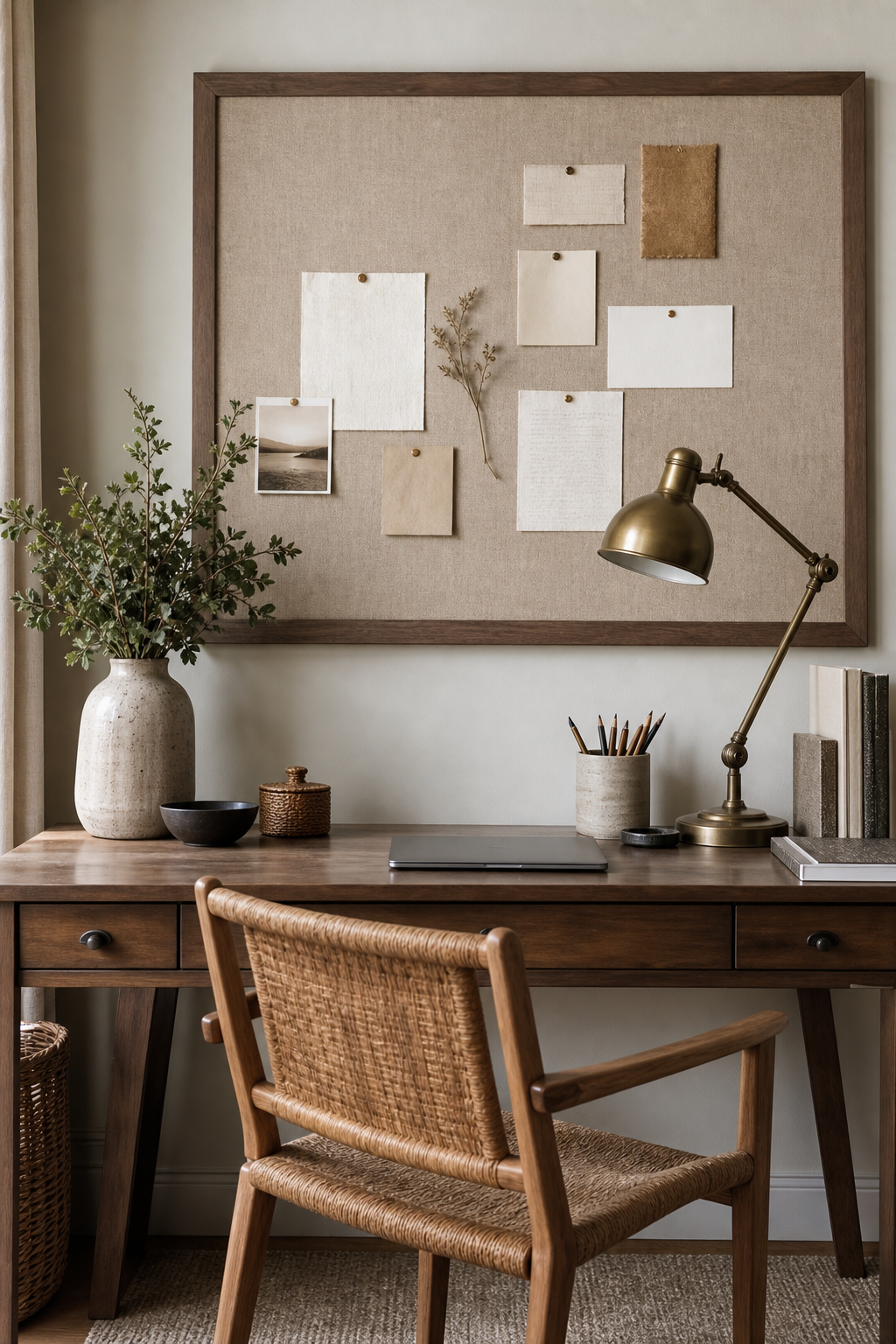
Use Shelving For Books And Breathing Room
Office shelves should support both storage and atmosphere. Mix books with baskets, boxes, ceramics, and a few framed pieces, leaving open space so the shelves do not feel packed. Group books by tone or size if the room needs calm. Use closed boxes for cords, chargers, and supplies that do not need to be seen. Shelving works best when it reflects the kind of work you do while still giving the eye places to rest. A balanced shelf wall can make the office feel intelligent, warm, and organized without becoming a display of everything you own.
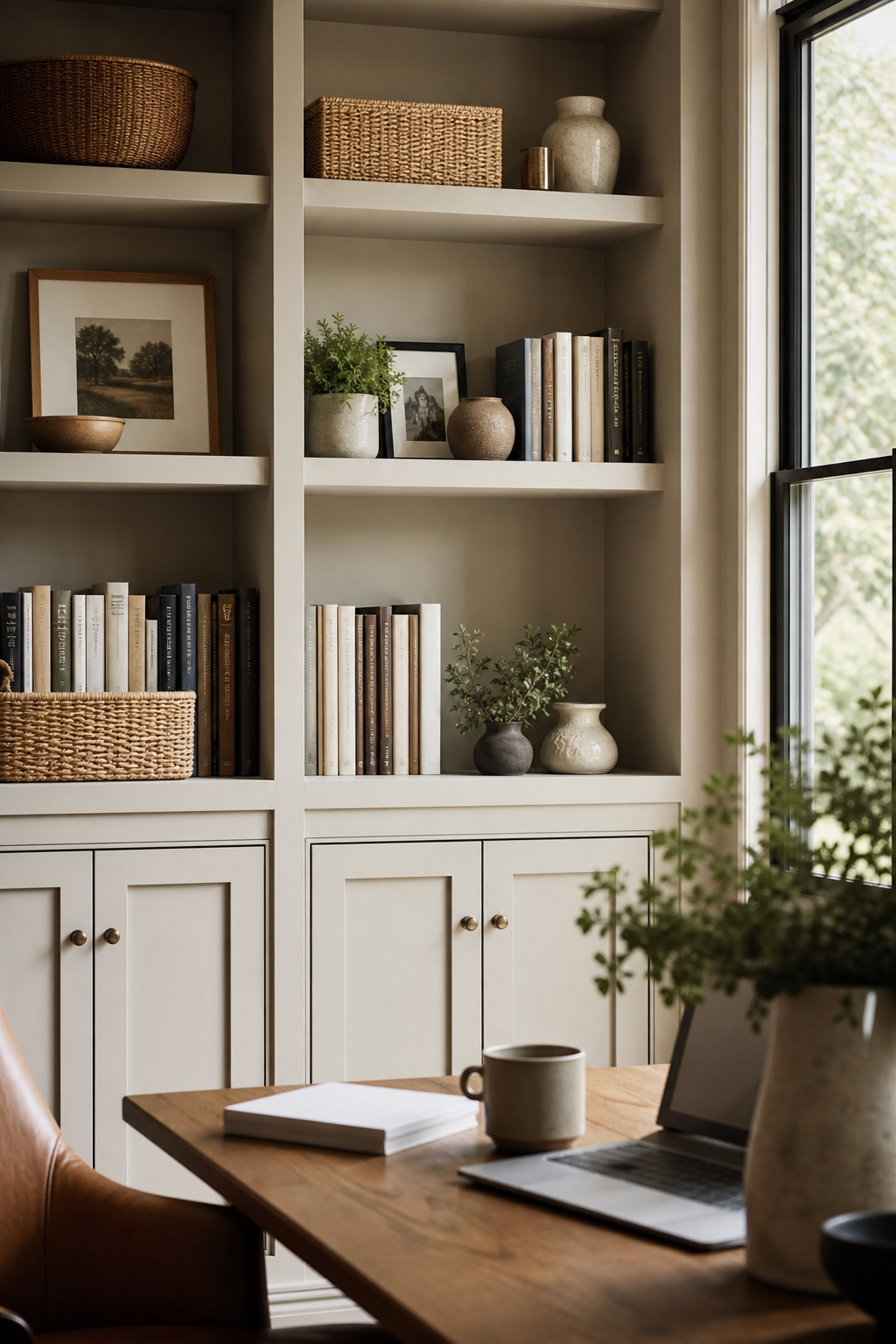
Paint The Walls A Focused Color
Color can change the energy of a home office. Warm white feels clean and bright, mushroom or taupe feels calm, olive creates focus, and deep blue or charcoal can make a small office feel cocooned. The best color depends on the light and the work you do. If you need energy, stay lighter. If you need quiet concentration, try a muted mid-tone. Paint trim and shelves the same color for a more built-in look. A focused wall color helps the workspace feel separate from the rest of the home without relying on clutter or decoration.
Keep Cables Out Of Sight
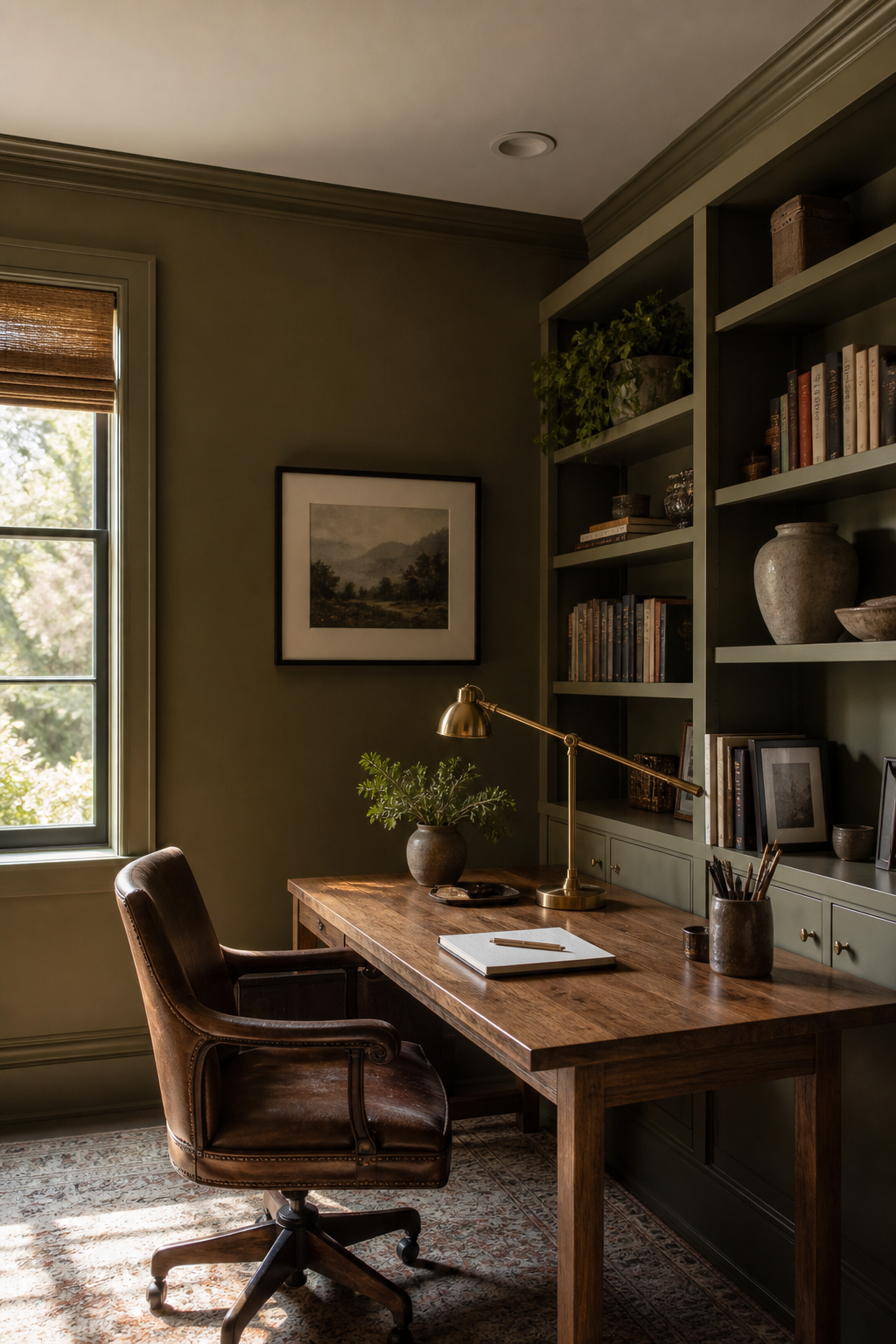
Nothing breaks the calm of a beautiful office faster than tangled cords. Plan cable management before styling the desk. Use a cord channel, desktop grommet, cable box, or clips underneath the desk to guide everything neatly. Place printers, routers, and chargers inside cabinets when possible, with ventilation where needed. A power strip mounted under the desk keeps plugs off the floor. The goal is not perfection; it is making daily work easier and the room less visually frantic. When cables disappear, the materials and layout of the office can actually shine.
Add A Reading Chair If Space Allows
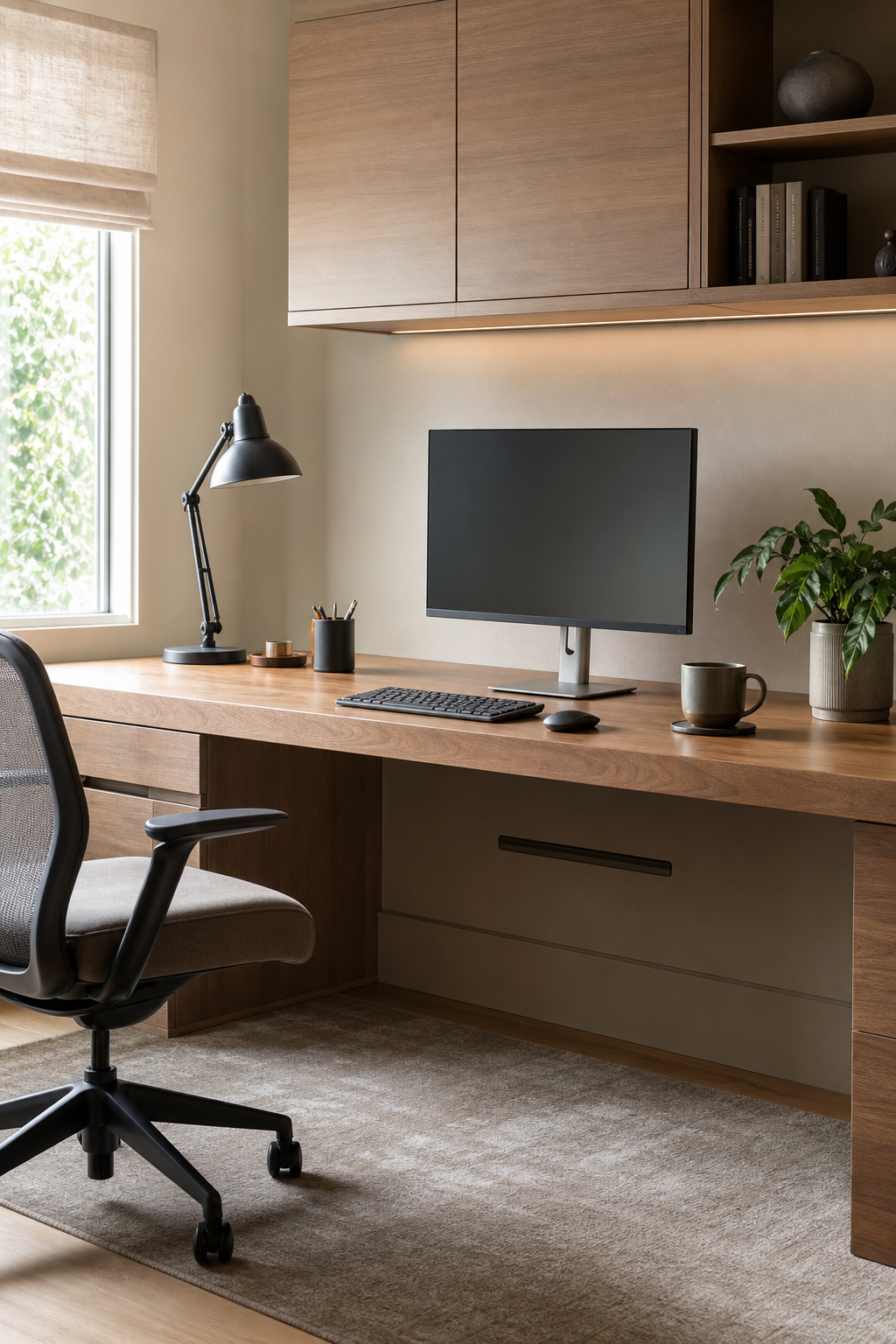
A reading chair gives a home office a second mode. It becomes a place to review documents, take a phone call, read, or step away from the screen without leaving the room. Choose a comfortable chair with a small side table and lamp nearby. In a compact office, even a slim upholstered chair or stool can make the space feel more layered. The chair should not become a dumping zone for papers, so keep a basket or tray nearby for overflow. A secondary seat makes the office feel like a thoughtful workspace rather than a single-purpose desk station.
Use Plants For Softness And Freshness
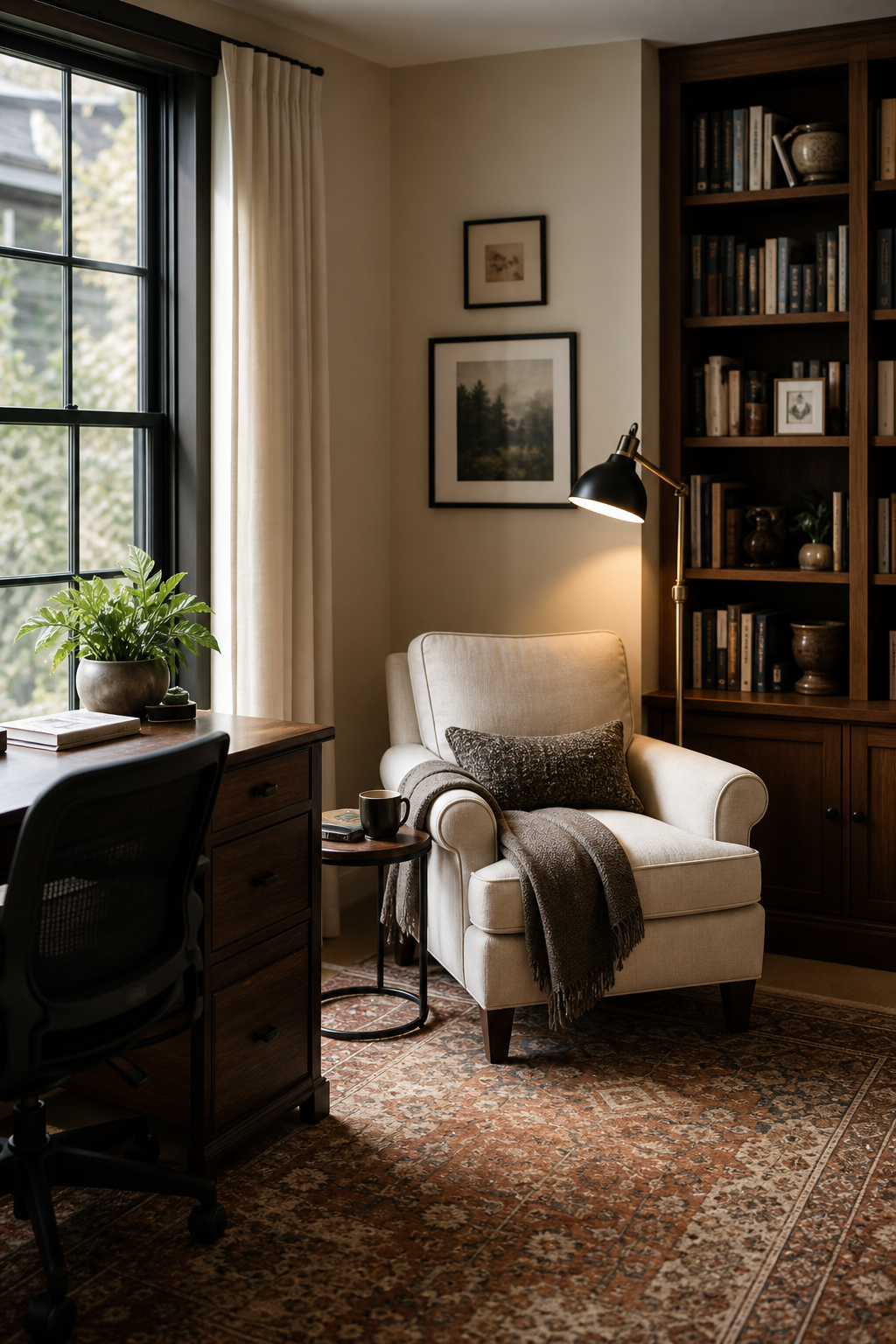
Plants bring life to a home office, especially when the room has screens and straight lines. Choose one larger plant near the window, a small plant on a shelf, or a vase of branches on the desk. Match the plant choice to the available light so it stays healthy. Planters matter too; ceramic, terracotta, woven, or matte metal containers can reinforce the room’s palette. Keep plants out of the main work surface if they crowd your laptop or papers. A little greenery softens the workspace and gives your eyes a natural place to rest during the day.
Make A Small Nook Feel Intentional
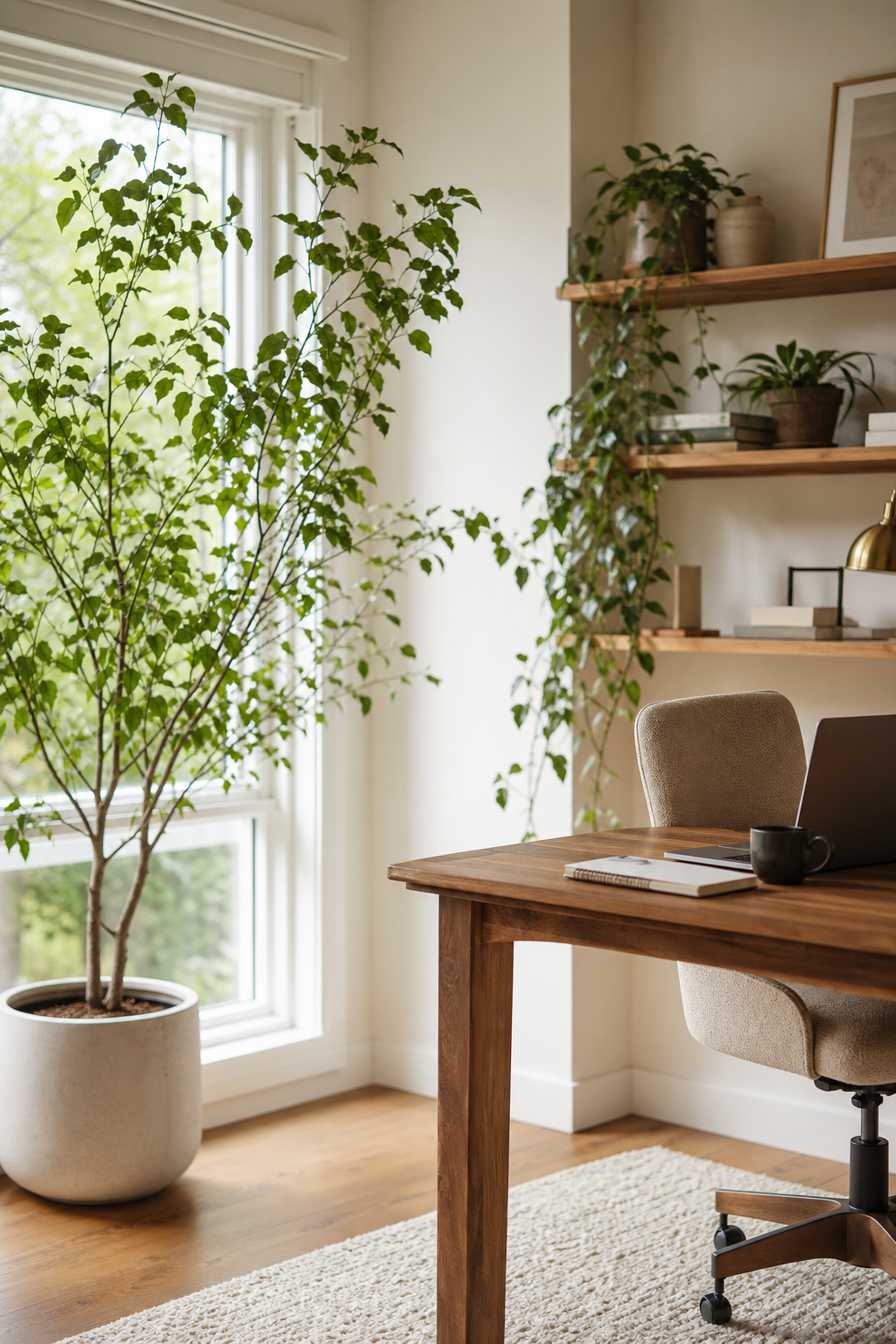
A home office does not need a dedicated room to feel beautiful. A hallway niche, bedroom corner, landing, or living room alcove can work when the design is deliberate. Use a desk that fits the width, add a wall shelf or sconce, and define the zone with art or paint. Keep storage close so the surface can stay clear. A small nook benefits from restraint because every object is visible. When the scale is right and the materials connect to the surrounding room, even a compact workspace can feel polished, cozy, and completely purposeful.
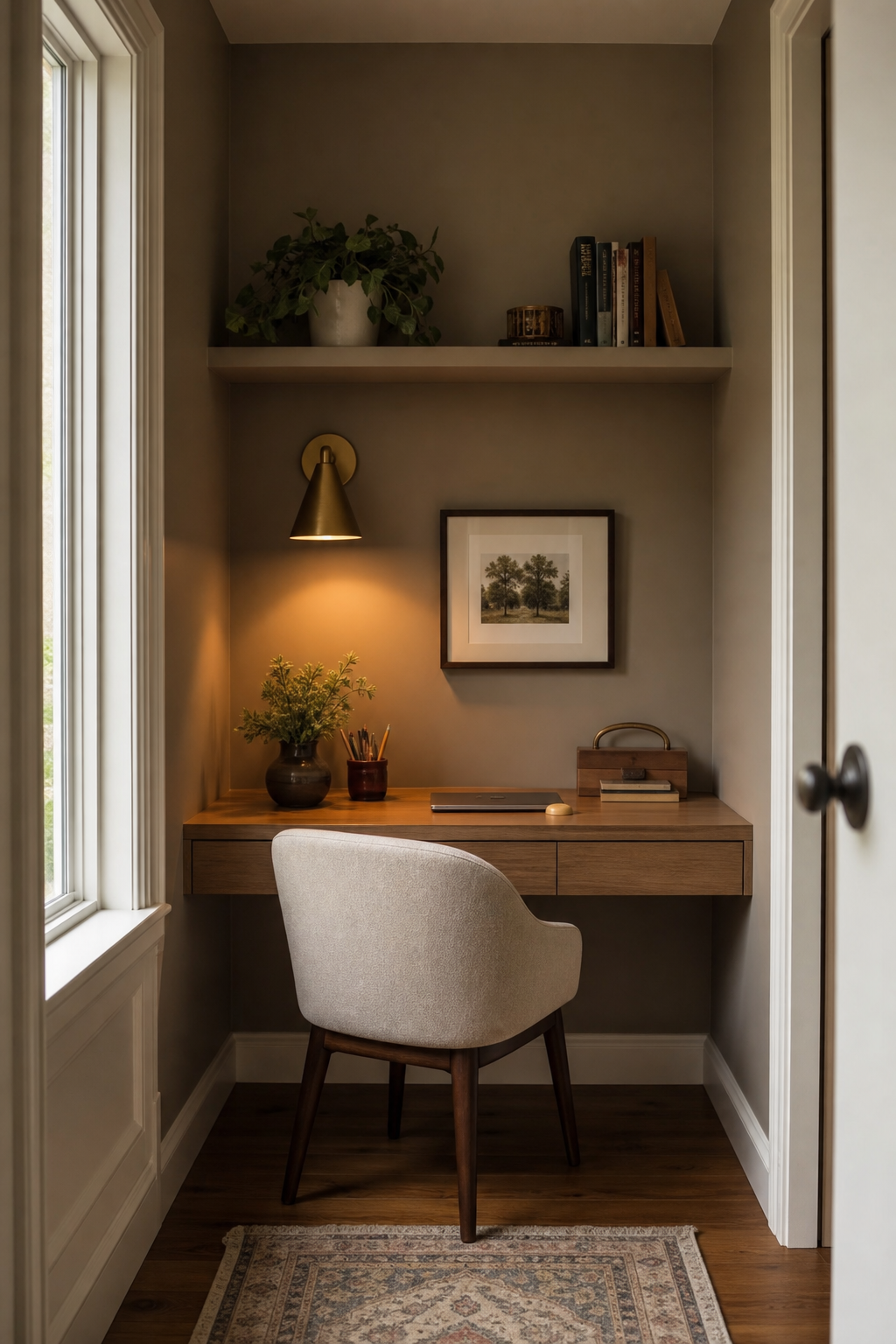
Choose Desk Accessories That Match
Desk accessories are small, but they influence whether the office feels calm or chaotic. Choose a tray, pencil cup, file holder, and notebook in related materials such as leather, wood, linen, brass, or matte ceramic. Avoid a jumble of random colors if the room is meant to feel focused. Keep only daily tools on the desk and store the rest in a drawer. Matching does not have to mean identical; it means the pieces share a palette and level of quality. Thoughtful accessories make ordinary work feel a little more composed.
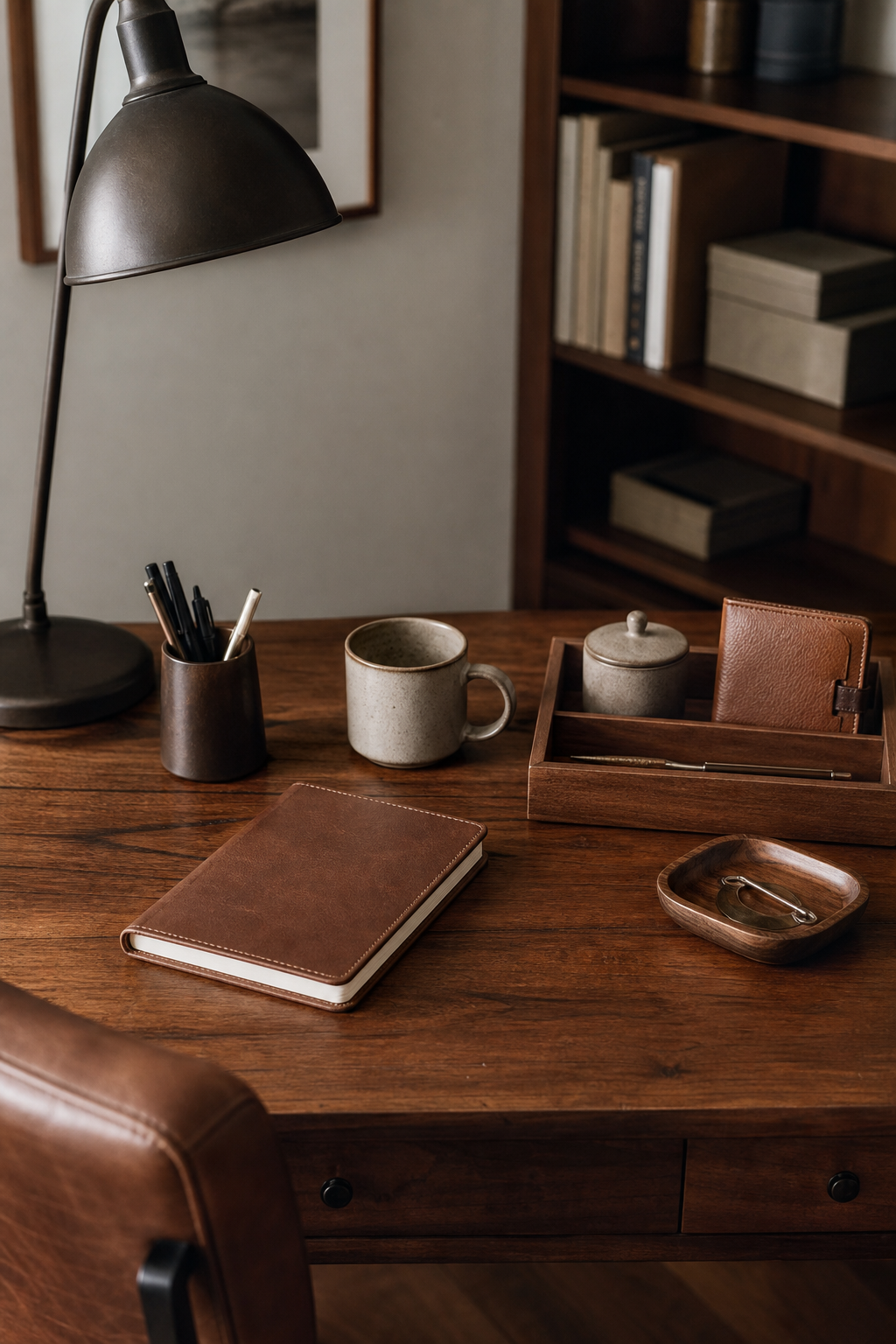
Add Art That Sets The Mood
Art can make a home office feel personal without cluttering the work surface. Choose pieces that support the mood you want: quiet landscapes for calm, abstract work for creative energy, or architectural prints for structure. Hang art at eye level when seated, especially near the desk or reading chair. If the office is small, one larger piece may feel cleaner than several small frames. Art also makes a video-call background feel more considered. The right piece gives the workspace emotional tone, reminding you that productivity and beauty do not have to live separately.
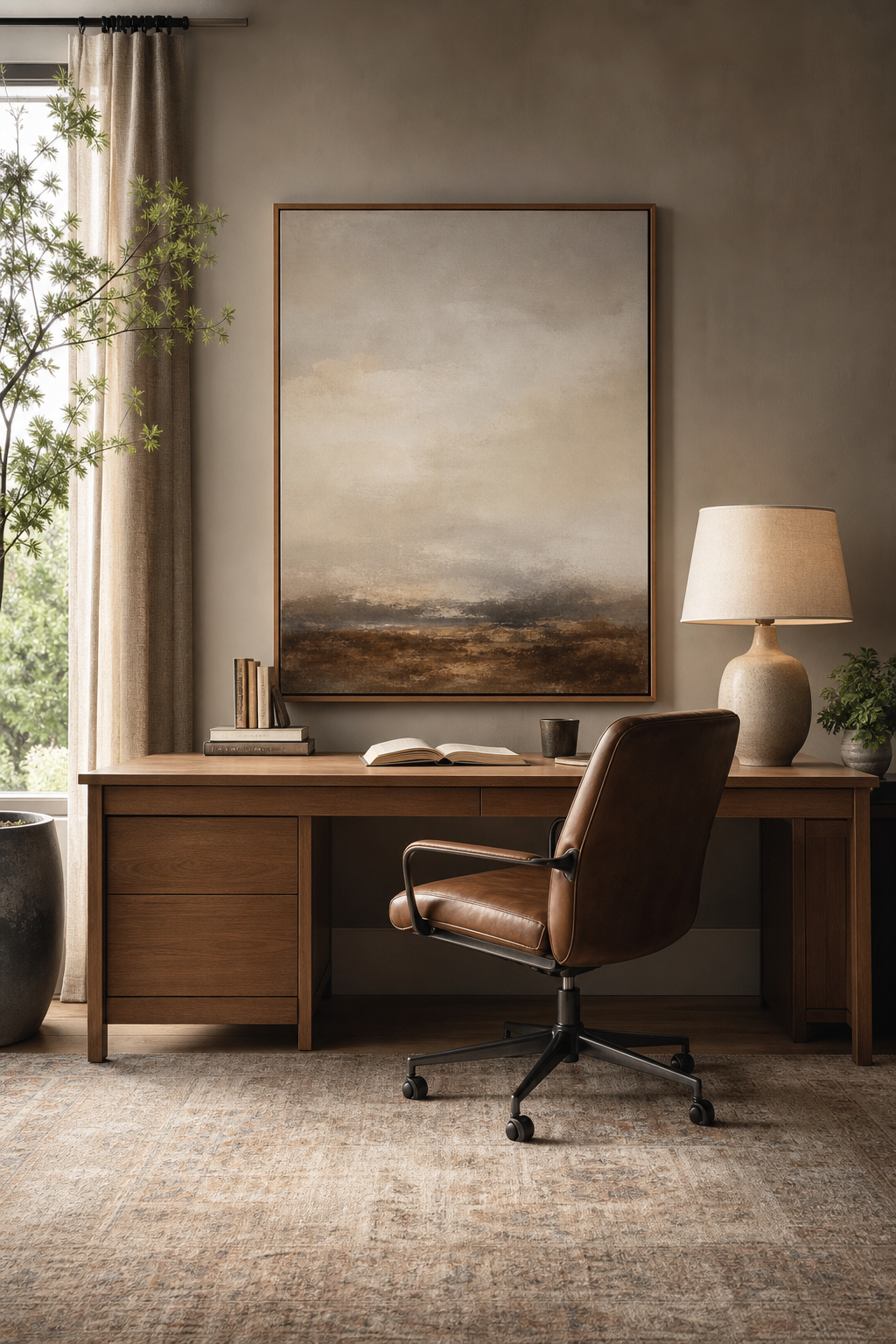
Use Curtains To Soften The Workday
Curtains can make an office feel less hard and more residential. They filter light, reduce echo, and help the room feel finished. Linen panels, relaxed roman shades, or woven shades are especially good for cozy offices because they bring texture without distraction. Mount panels high to make the room feel taller, and choose a tone that connects to the wall color or rug. If privacy or glare is an issue, layer sheers with a lined shade. Soft window treatments make long hours feel gentler and help the office blend naturally with the rest of the home.
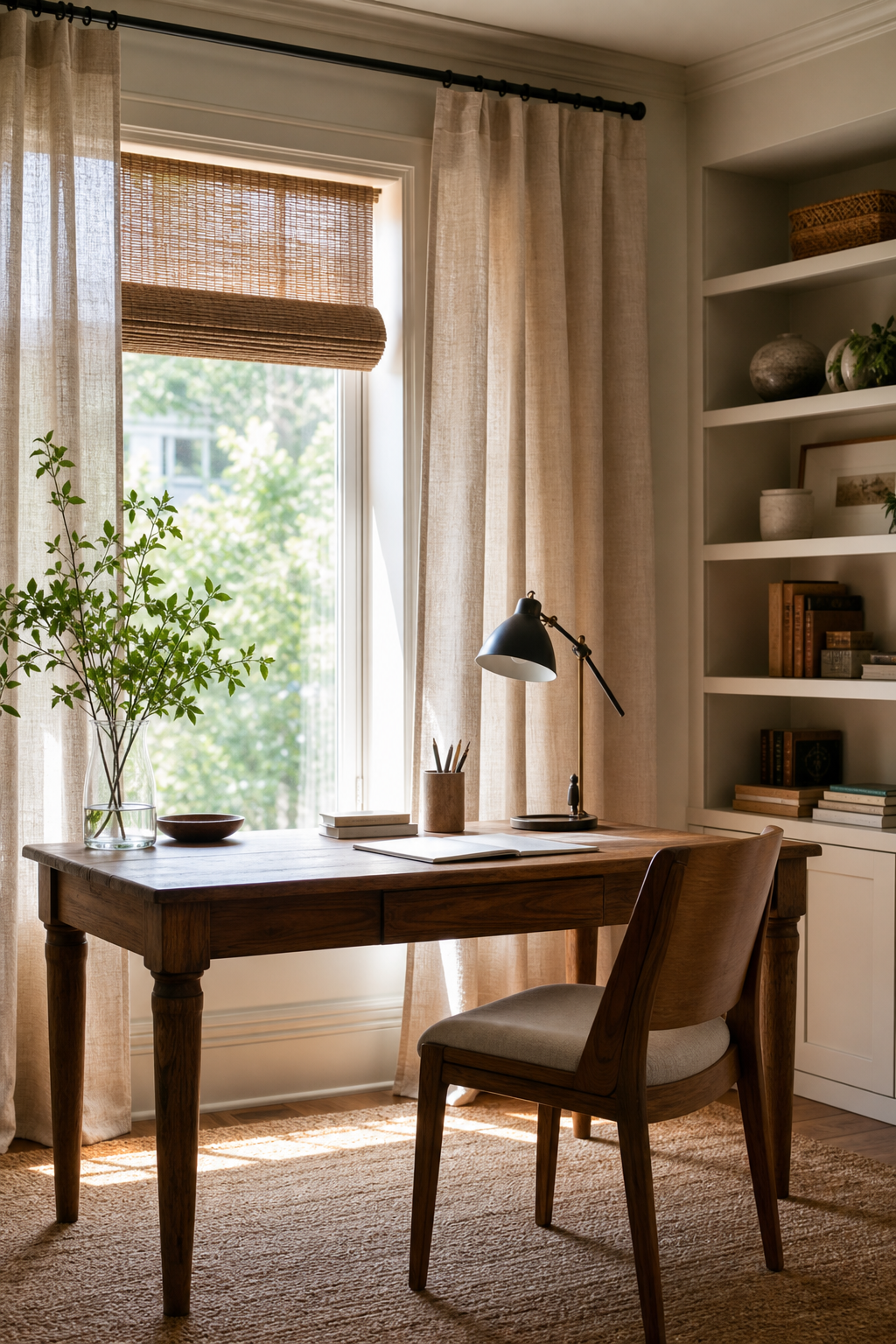
Create A Clear End-Of-Day Reset
A productive home office needs a way to close down. Add a shallow tray for active papers, a drawer for daily tools, and a basket or cabinet for anything that needs to leave the desk. At the end of the day, clear the surface except for the lamp, computer, and one small styling piece. This habit is easier when the room is designed for it. The reset keeps work from bleeding into the evening, especially if the office is visible from a living space. A beautiful workspace should support focus and help you let go of focus too.
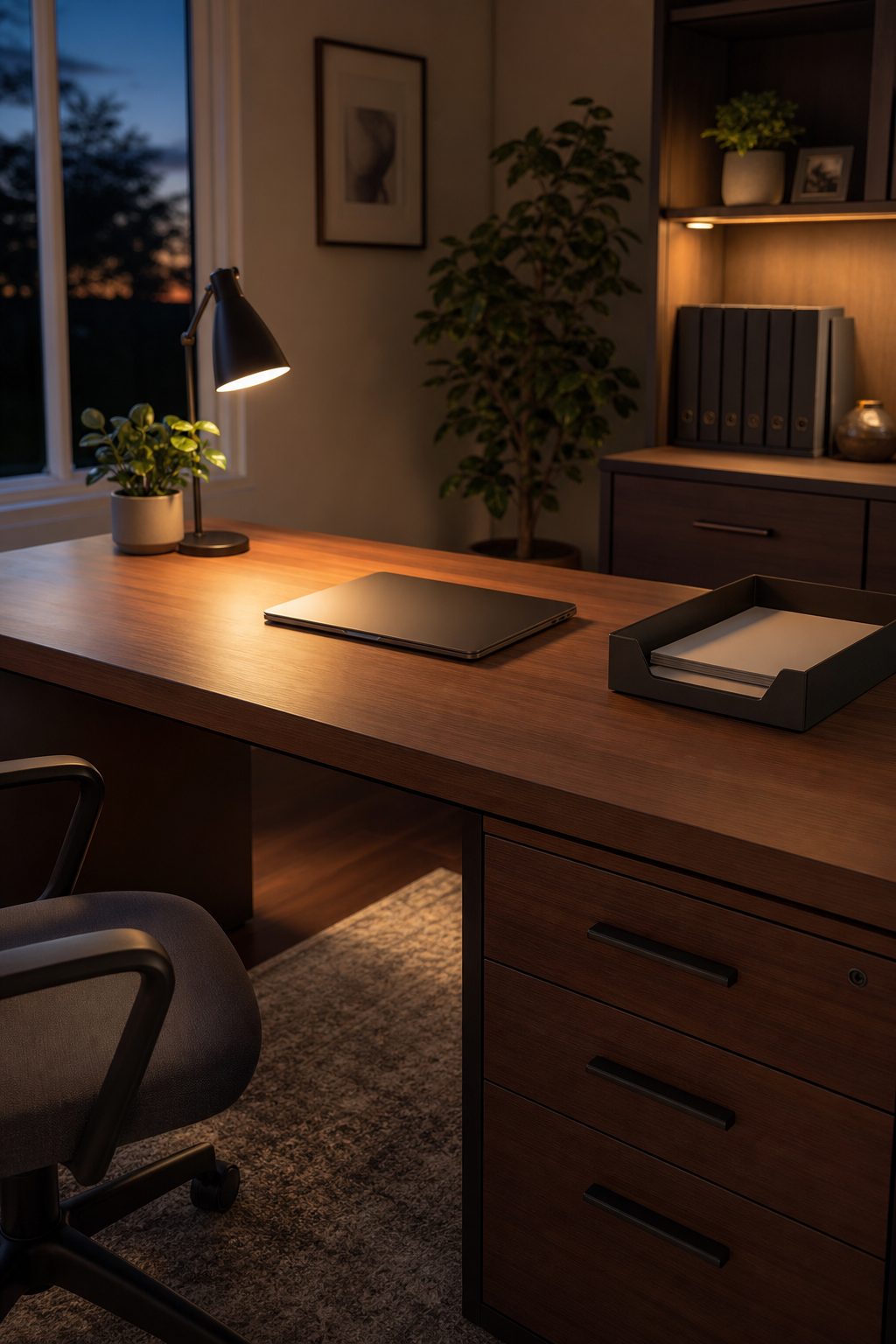
Mix Practical Storage With Decor
The most useful home offices do not separate function and beauty. Storage boxes can be linen-covered, file drawers can be built into a handsome credenza, and shelves can hold both reference books and ceramics. Think about what you reach for daily, weekly, and rarely, then store each category accordingly. Daily items belong close to the desk, while bulk supplies can move to closed cabinets. Decor should not block access to tools you actually use. When storage is practical and attractive, the office stays easier to maintain and looks calm even during busy weeks.
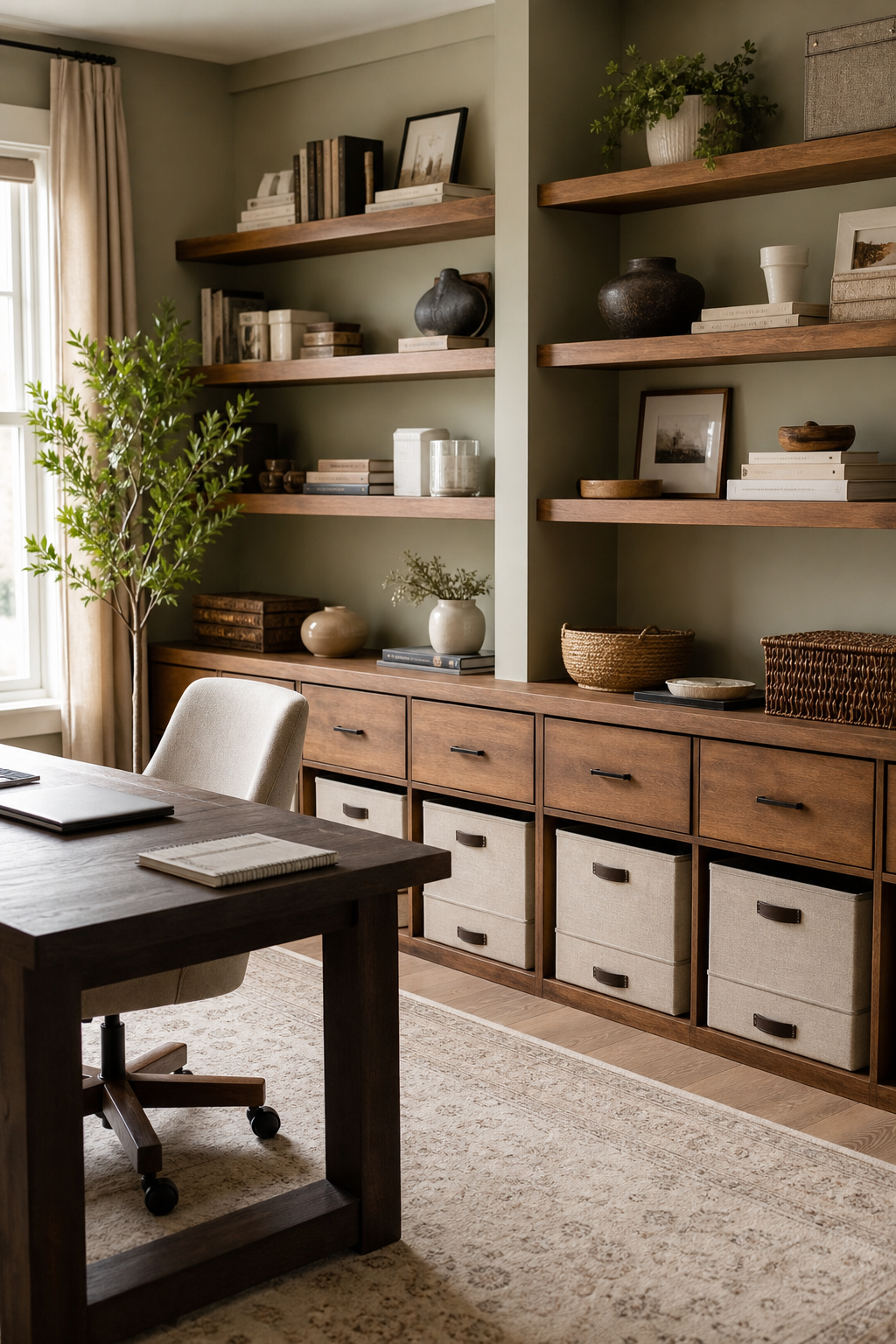
Finish With A Personal But Edited Detail
A cozy workspace should still feel like yours. Add one or two personal details: a framed photo, a handmade object, a favorite ceramic cup, a small collection, or a meaningful piece of art. Keep the detail edited so it adds warmth without distracting from the work. Personal objects are most effective when they have breathing room around them and connect to the room’s materials. The office should not feel anonymous, but it also should not become visually crowded. A few thoughtful details make the space easier to return to every morning.
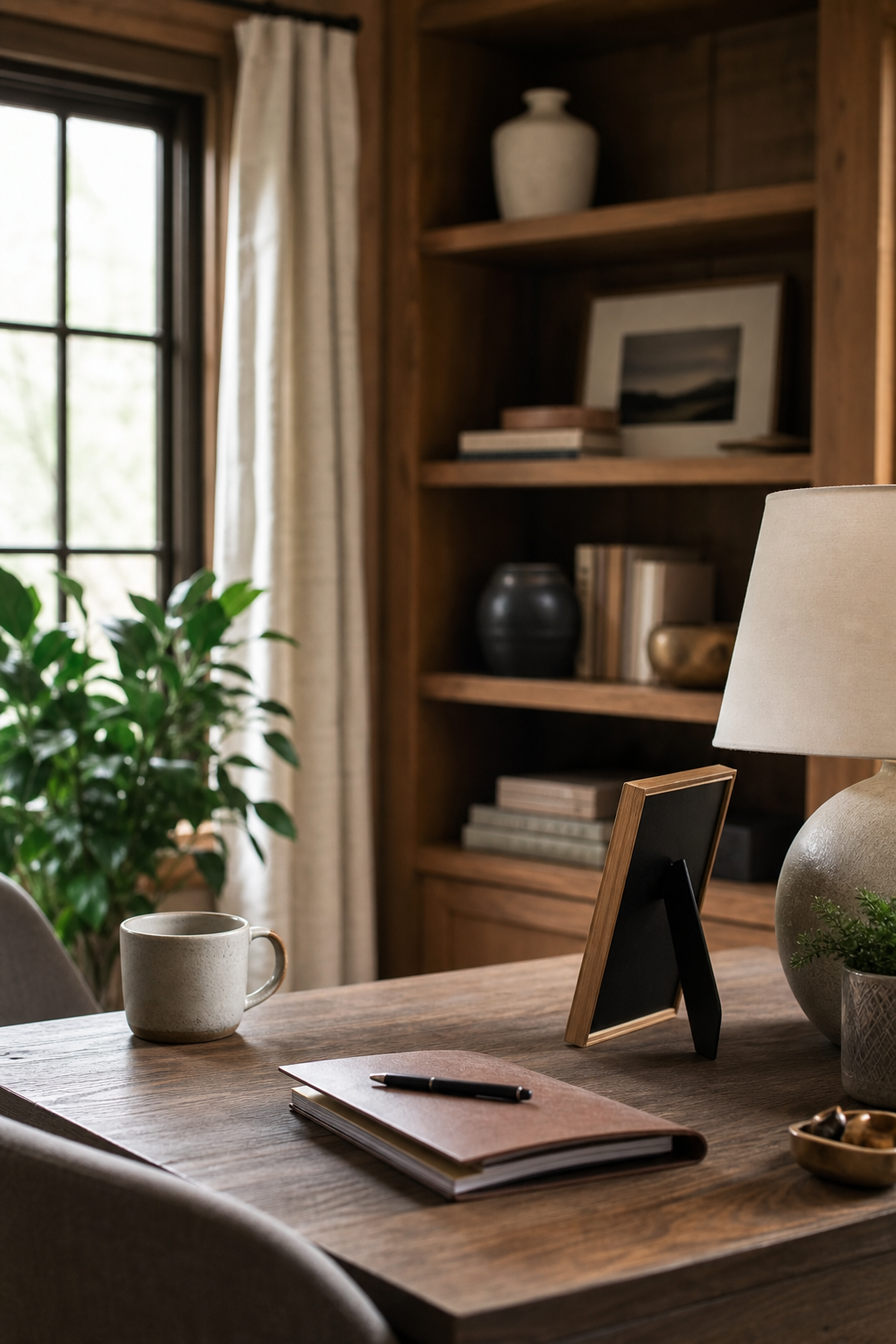
A productive home office is not just about efficiency. It is about creating a room that supports attention, comfort, and a clean reset at the end of the day. Start with the practical layers first, then add warmth through wood, textiles, art, plants, and lighting. When everything has a place and the atmosphere feels good, the workspace can carry you through focused work without feeling cold or temporary.