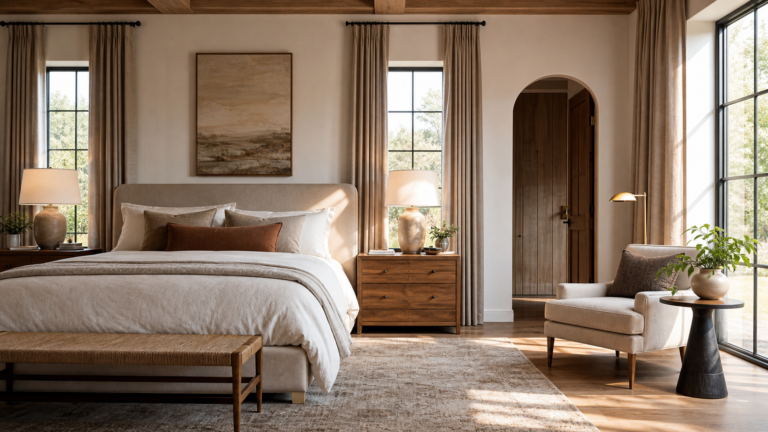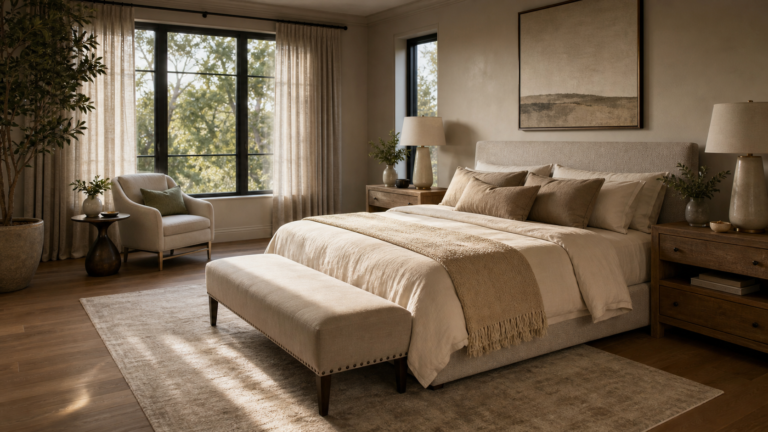
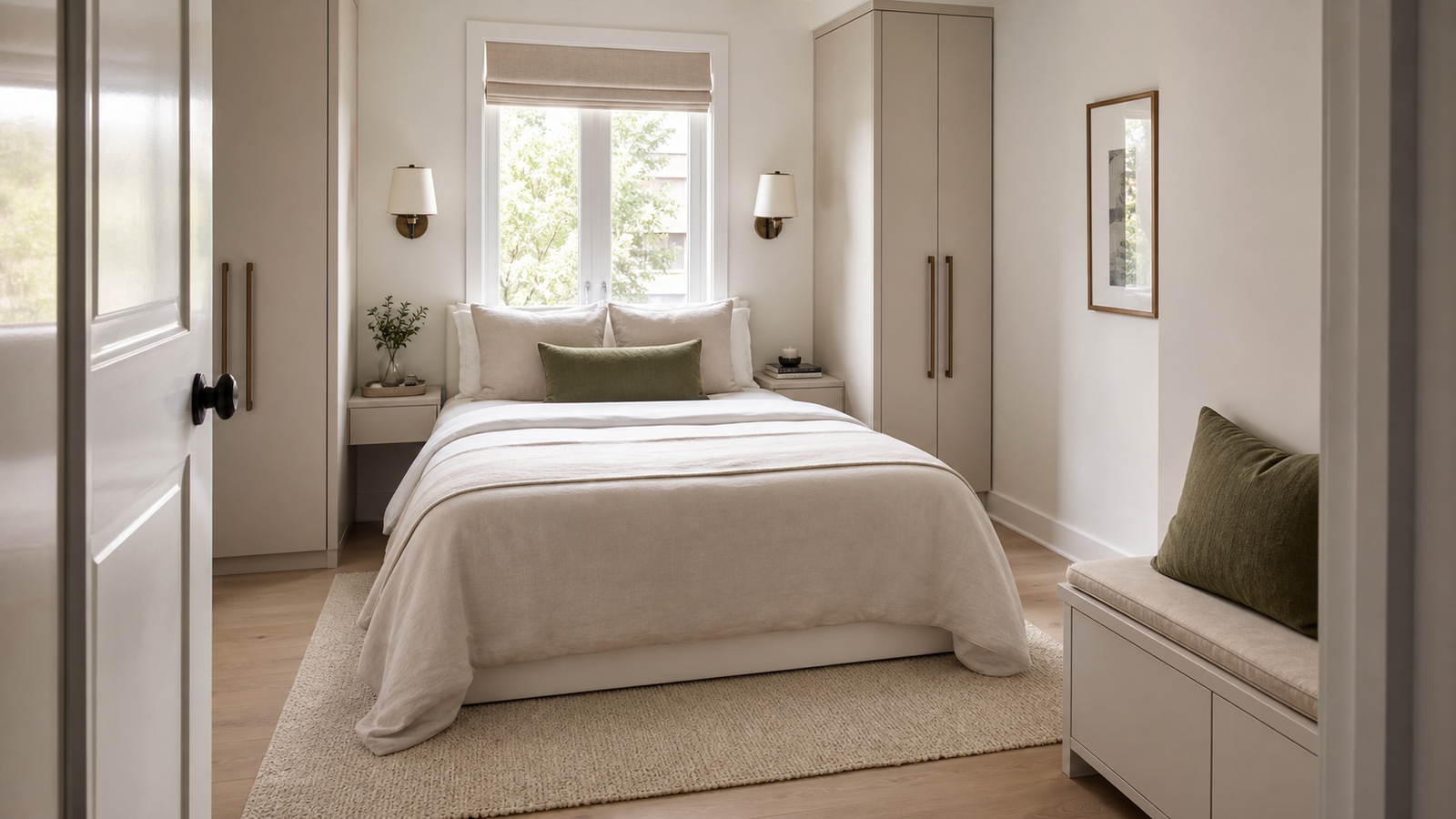
21 Small Bedroom Layout Ideas That Make Every Inch Feel Stylish
A small bedroom becomes stylish when the layout does more than fit the furniture. It needs clear circulation, useful storage, calm sightlines, and lighting that does not steal surface space. The strongest compact rooms are not packed with tricks; they are edited with precision. These ideas focus on bed placement, built-ins, nightstand alternatives, storage zones, and visual balance, so every inch feels intentional rather than compromised.
Center The Bed And Keep Both Sides Usable
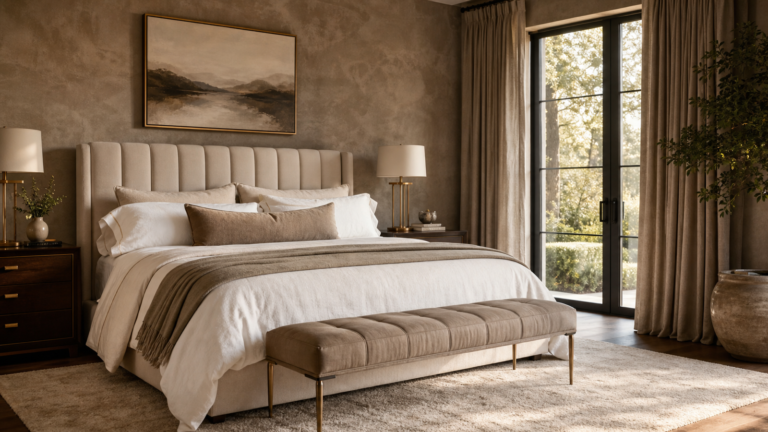
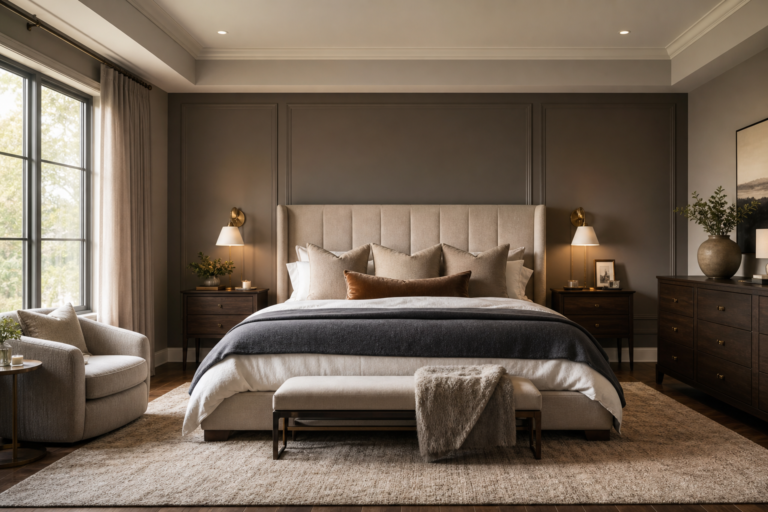
When possible, center the bed on the main wall and leave a narrow but usable path on both sides. Even 20 to 24 inches can make the room feel more adult than pushing the bed into a corner. Choose slim nightstands, wall sconces, and a low-profile headboard so the arrangement feels balanced without wasting space. This layout works especially well for couples because no one has to climb over the other. If the wall is short, use one wider nightstand and one tiny ledge, but keep the bed visually centered. Symmetry makes a compact room feel calmer and more deliberately designed.
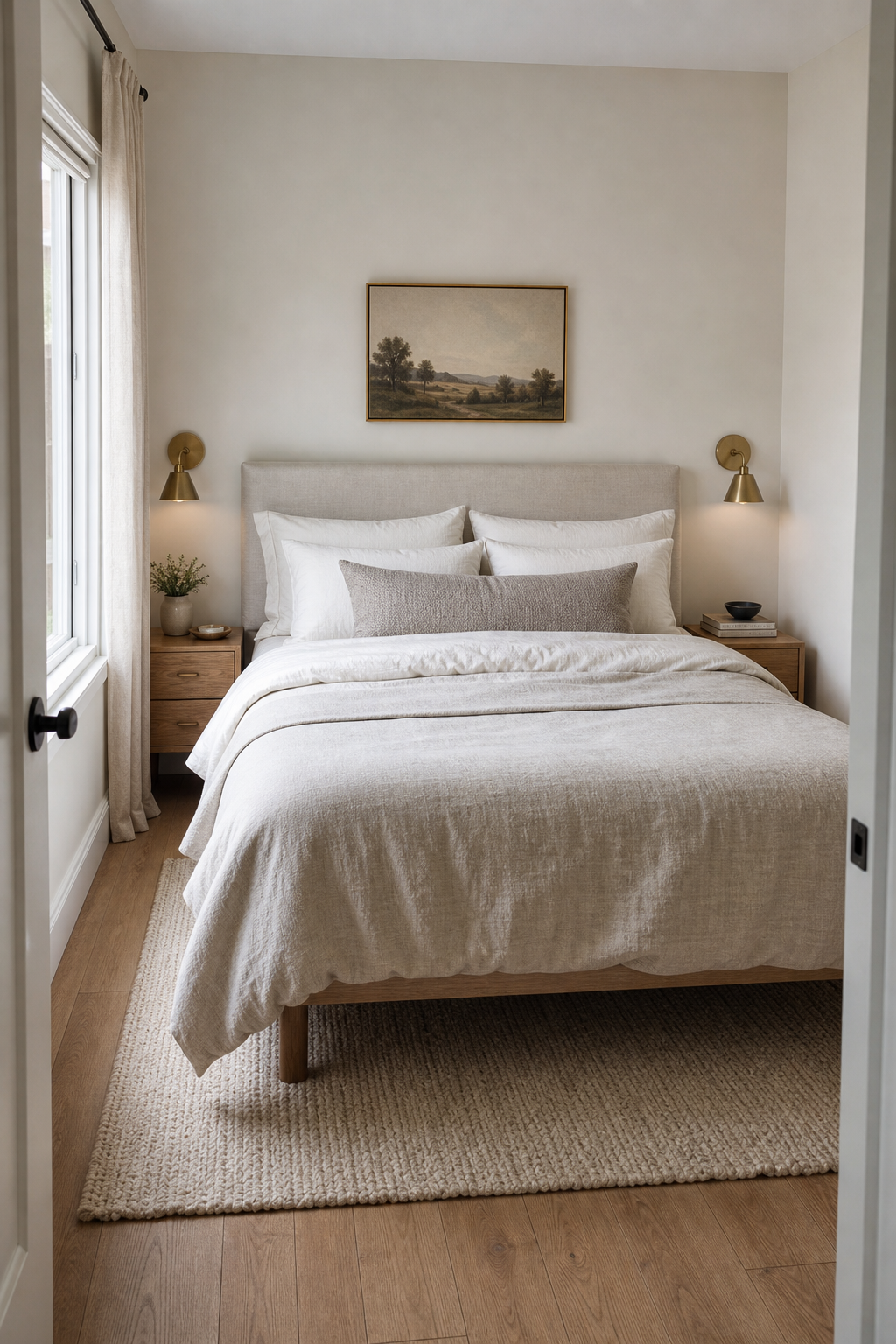
Place The Bed Under A Window With Purpose
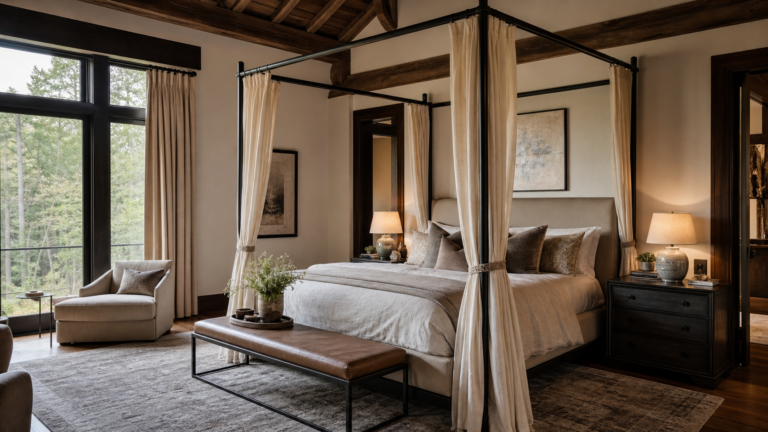
A bed under a window can look intentional if the window is framed properly. Use a low headboard or no headboard, then add tailored curtains or roman shades so the window reads as part of the composition. Wall-mounted sconces keep the nightstands clear, while a bench or low trunk at the foot of the bed adds storage without blocking the light. Avoid tall lamps that compete with the window frame. This layout is useful when the other walls are broken by doors or closets. The trick is to make the window feel like an architectural backdrop rather than an awkward leftover.
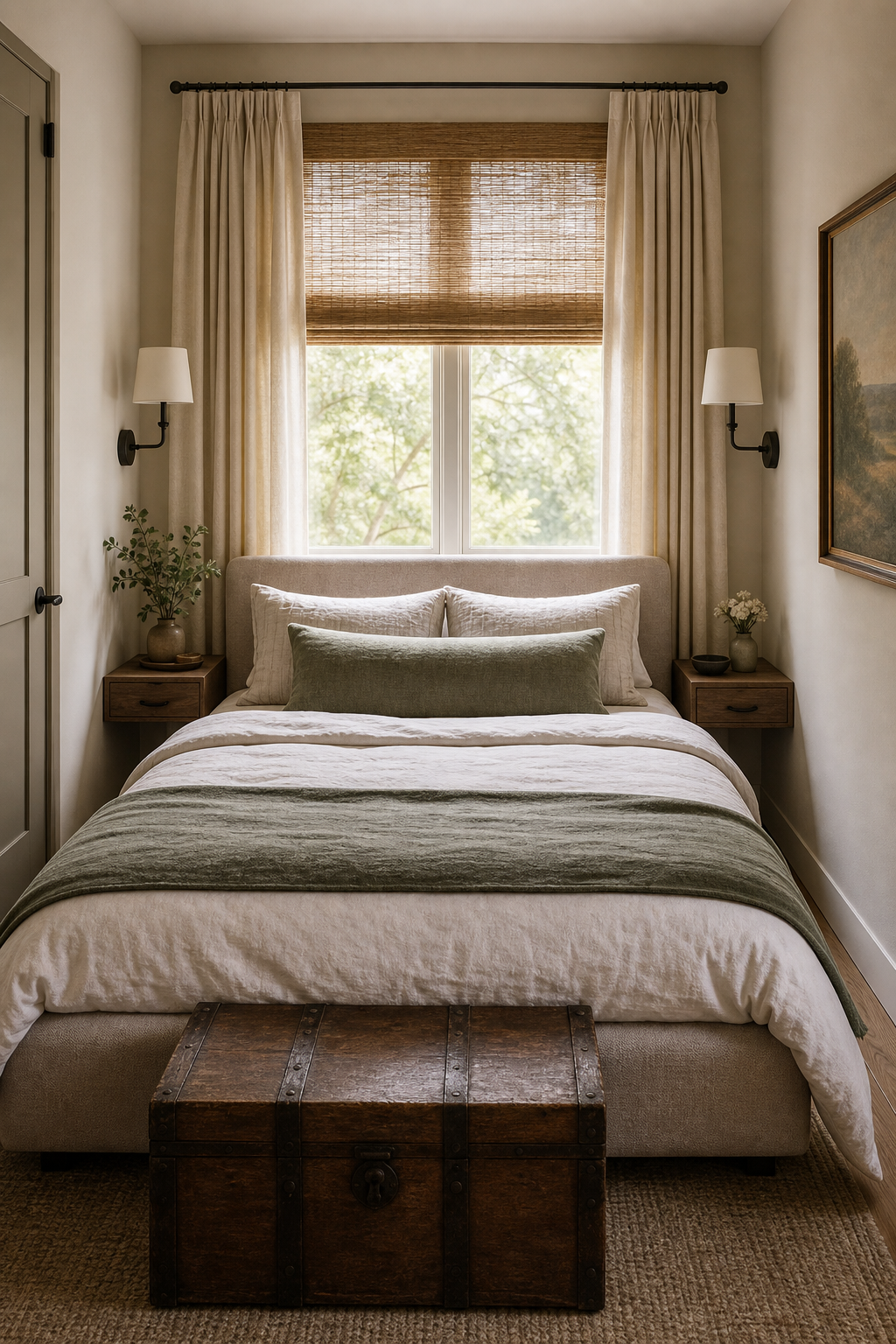
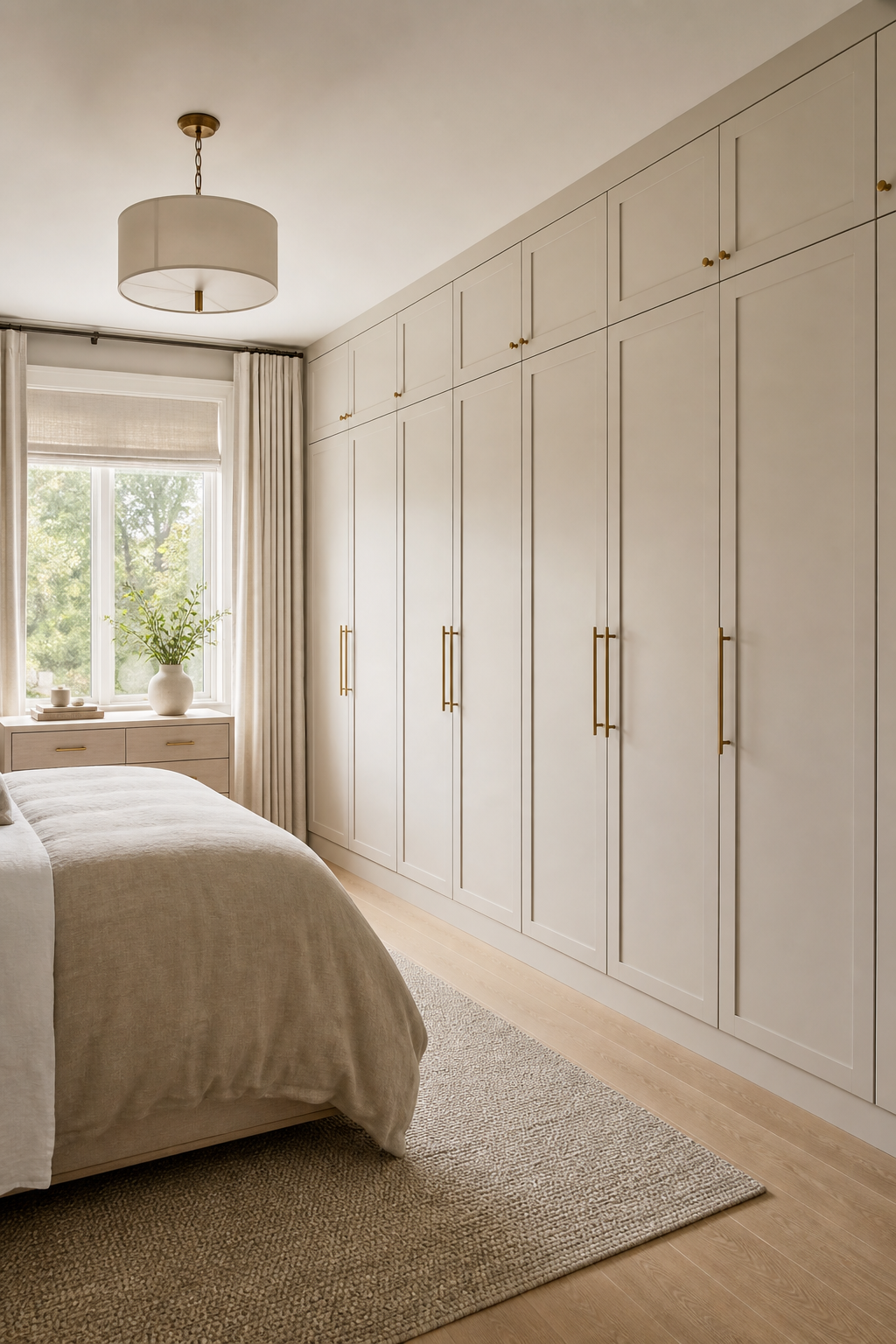
Use One Wall For Continuous Storage
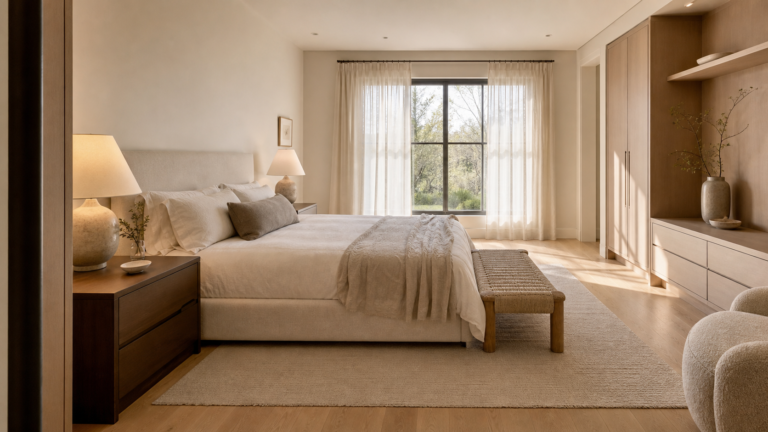
Instead of scattering storage around the room, dedicate one wall to a continuous wardrobe or cabinet run. This keeps the rest of the bedroom visually quiet and gives clothing, linens, and seasonal items a proper home. Shallow wardrobes can still be useful if they are planned with drawers, hanging rails, and upper shelves. Paint the storage the same color as the walls so it feels built in, then use refined hardware for a small note of luxury. Leave enough clearance for doors or choose sliding fronts where swing space is tight. A single organized storage wall often makes the room feel larger because clutter has nowhere to drift.
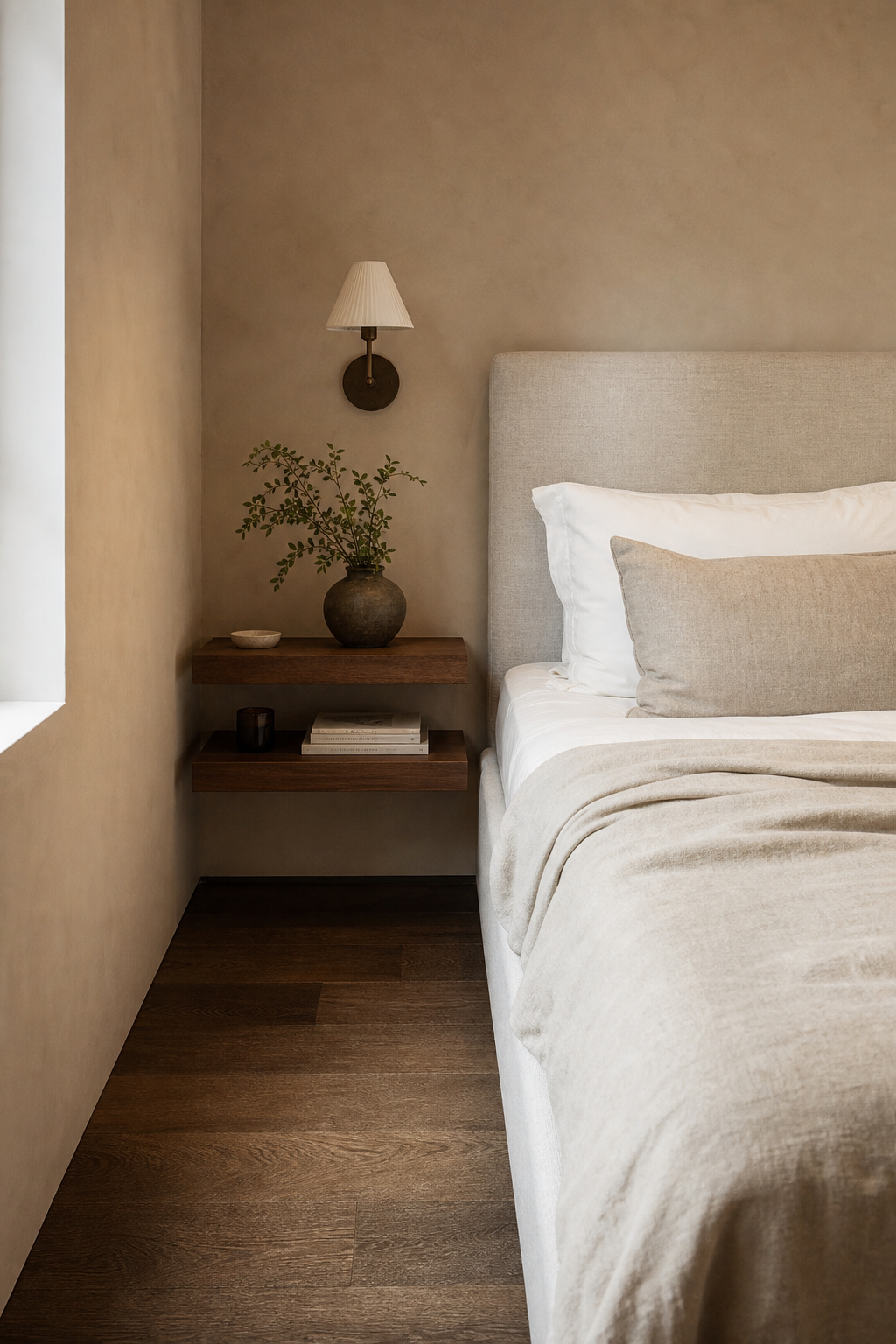
Swap Nightstands For Floating Ledges
Floating ledges are ideal when a standard nightstand would block circulation. Choose a ledge deep enough for a phone, book, and glass of water, then mount a sconce above it to avoid lamp clutter. A small drawer is helpful if you want to hide lip balm, chargers, or reading glasses. Keep the ledge aligned with the mattress height so it feels integrated, not improvised. This solution works beautifully beside a bed in a narrow room because the floor remains visible underneath. That open floor line makes the layout feel lighter and gives the eye more breathing room instantly, too, visually.
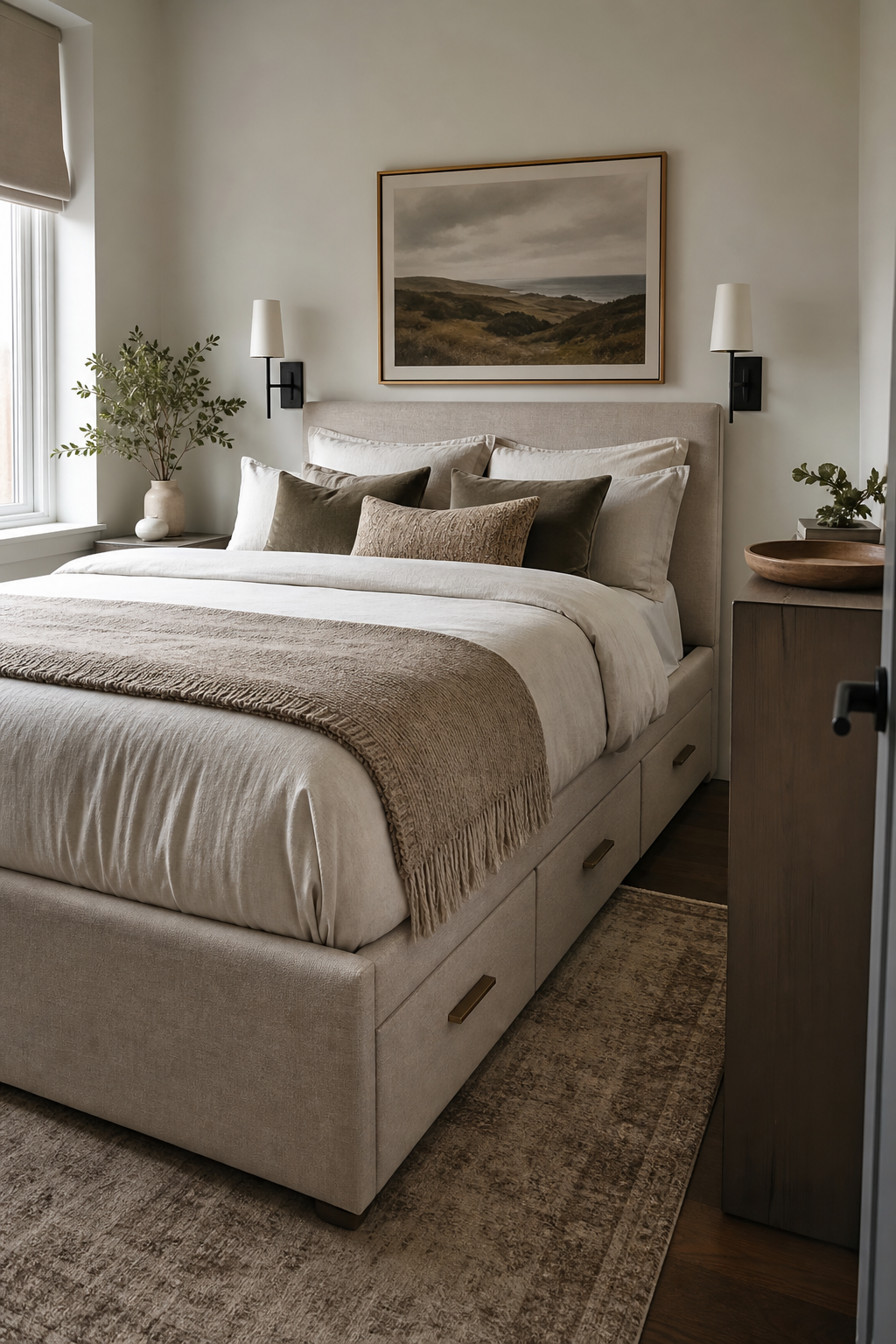
Choose A Storage Bed With A Tailored Base
A storage bed can be elegant if the base is tailored and easy to access. Drawers are best when there is enough side clearance; lift-up platforms work better in very tight rooms. Keep the upholstery simple, with linen, performance fabric, or a clean wood frame, so the bed does not feel bulky. Store bulky items such as extra bedding, off-season clothing, or luggage inside, then keep the visible room lightly furnished. A storage bed is not an excuse to overfill the bedroom; it is a way to remove the need for another dresser. The layout improves because the largest piece of furniture starts doing double duty.
Run A Narrow Desk Beside The Bed
If the bedroom must include a workspace, let a narrow desk replace one nightstand. Choose a writing table with drawers or a wall-mounted desk that can hold a laptop without overwhelming the room. Add a proper task lamp or sconce, a compact chair, and one closed box for supplies. The desk should match the height and tone of the other bedside piece so the layout still feels balanced. Keep the chair tucked in when not in use, and avoid office-style storage that makes the bedroom feel busy. This arrangement is strongest when the desk is beautiful enough to read as furniture, not equipment.
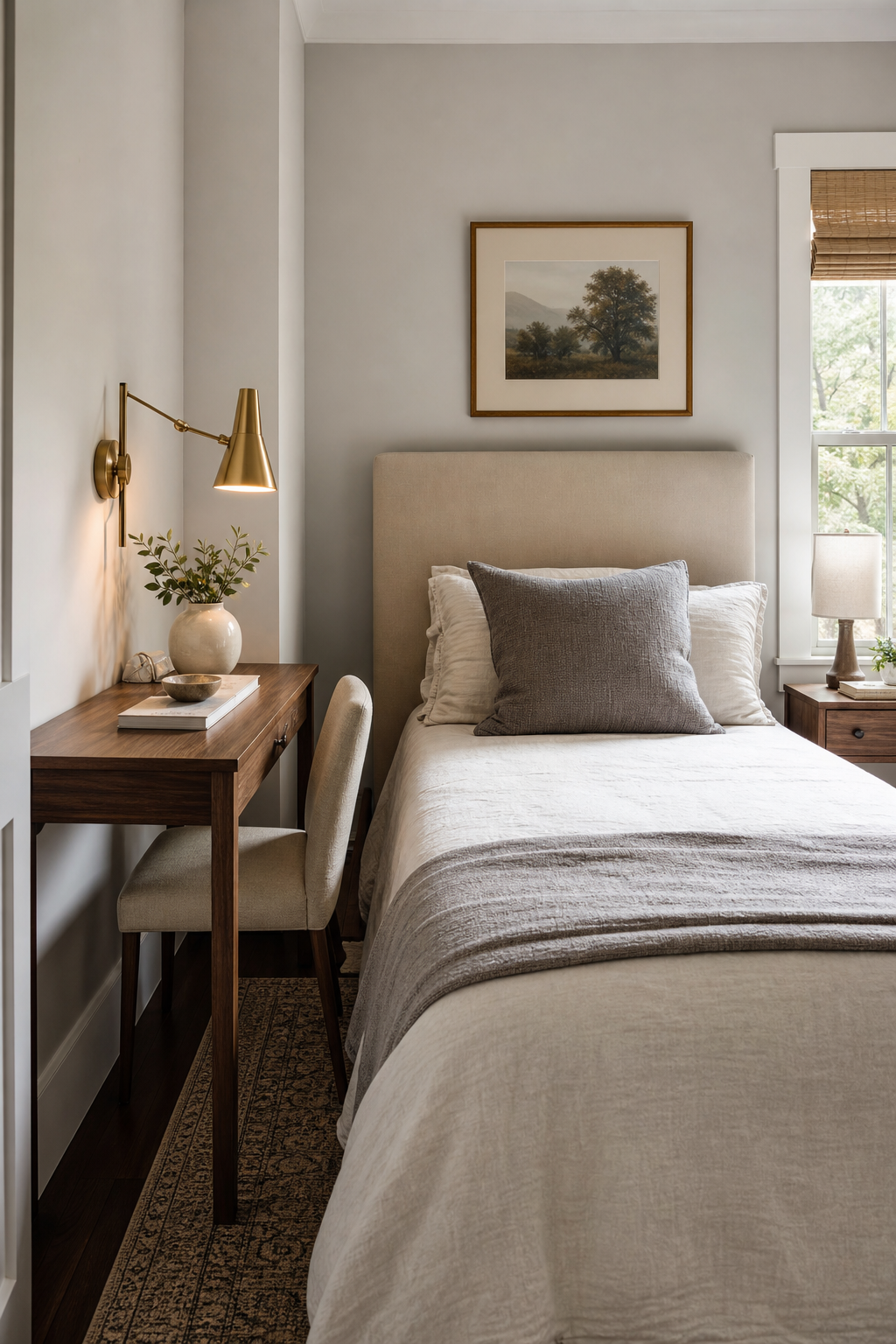
Use Sconces To Free The Bedside Surface
Wall sconces are one of the most effective layout upgrades for a small bedroom. They free the nightstand surface, reduce cord clutter, and add height to the room. Swing-arm sconces are practical for reading, while shaded fixed sconces create a softer hotel feeling. Place them high enough to clear pillows but low enough that the light reaches the page. If hardwiring is not possible, choose plug-in styles and run the cord neatly behind the bed or along trim. Once lamps are off the nightstands, those surfaces can stay smaller, which improves circulation and makes the room feel less crowded overall.
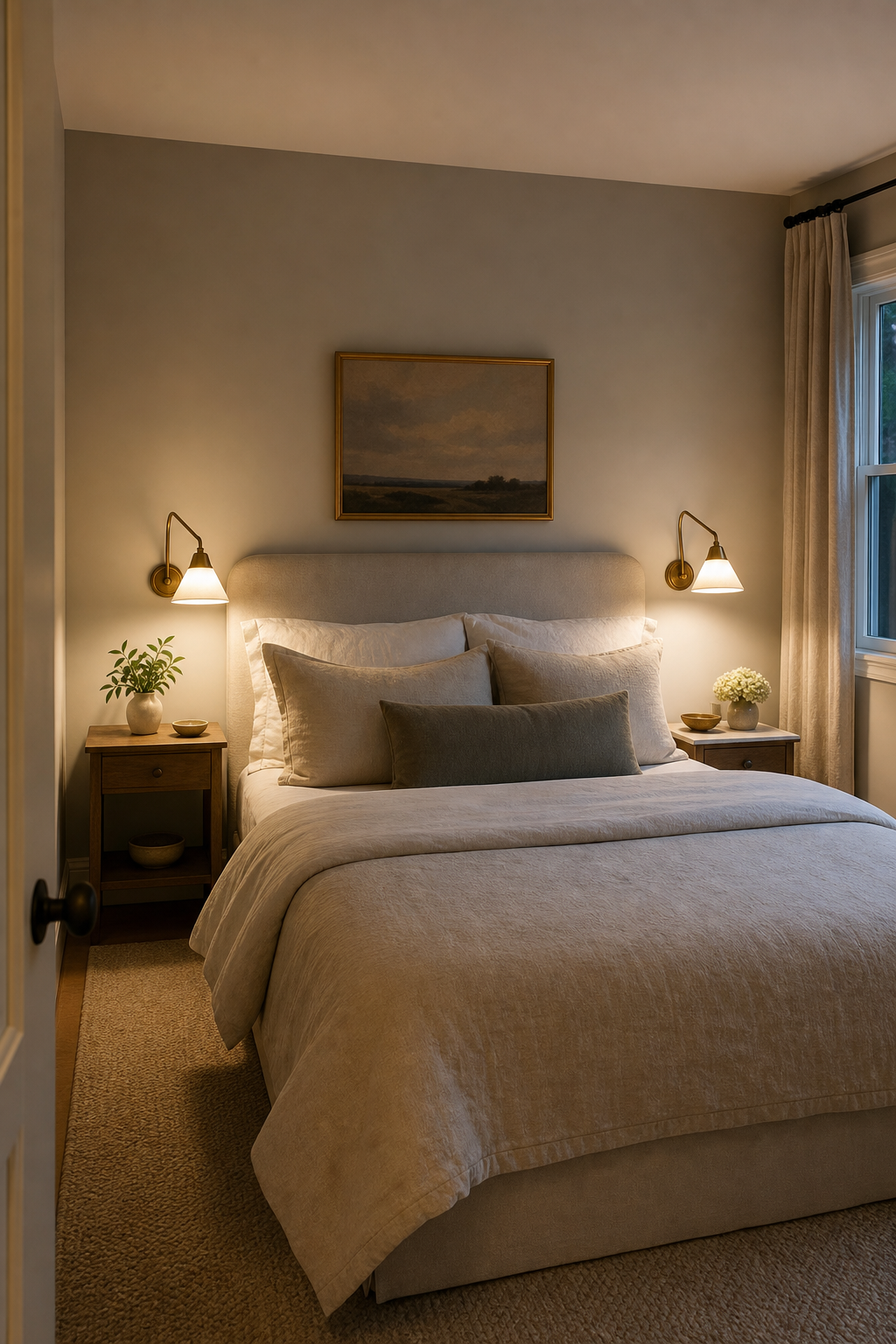
Place A Dresser Inside The Closet Wall
A dresser does not always need to stand alone in the room. If you have a closet wall, consider integrating drawers into that storage zone so the main floor area stays open. This can be done with custom built-ins, a closet system, or a low dresser tucked neatly between wardrobe sections. Use the top as a landing surface for jewelry, folded knits, or a tray, but keep it edited. By consolidating storage, the bed wall can remain softer and more restful. This layout is especially useful in rooms where a freestanding dresser would block a door swing or narrow the path around the bed.
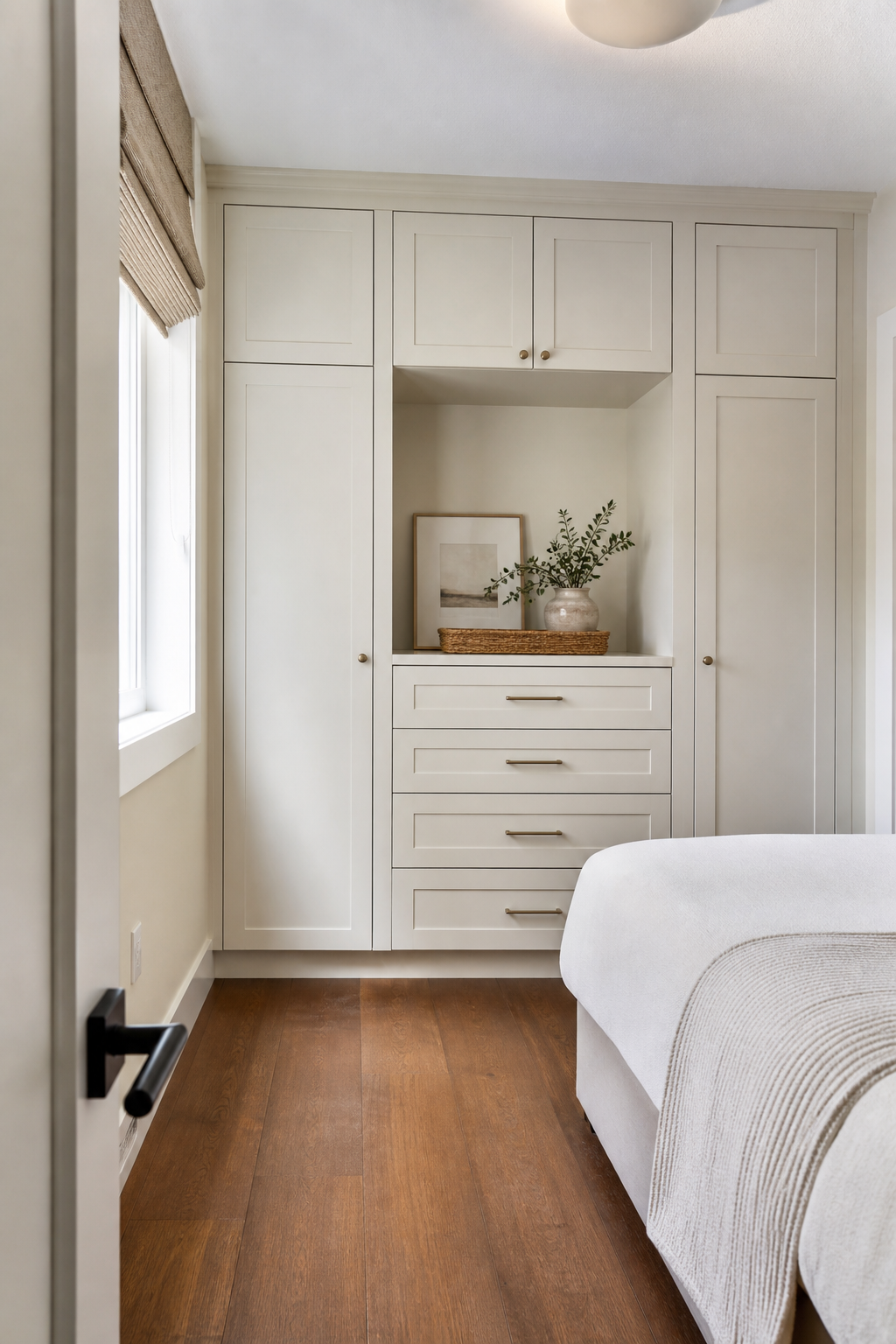
Float A Bench Instead Of Adding A Chair
A chair can overwhelm a small bedroom if it does not have enough space around it. A narrow bench at the foot of the bed often gives more function with less visual bulk. Use it for shoes, folded throws, bags, or a breakfast tray, but choose one that leaves a clear walking path. Upholstered benches feel soft, while wood or woven versions add texture. The bench should be slightly narrower than the bed and light enough to move when needed. This layout creates a useful dressing zone without introducing another tall back, which helps the room stay open visually, too.
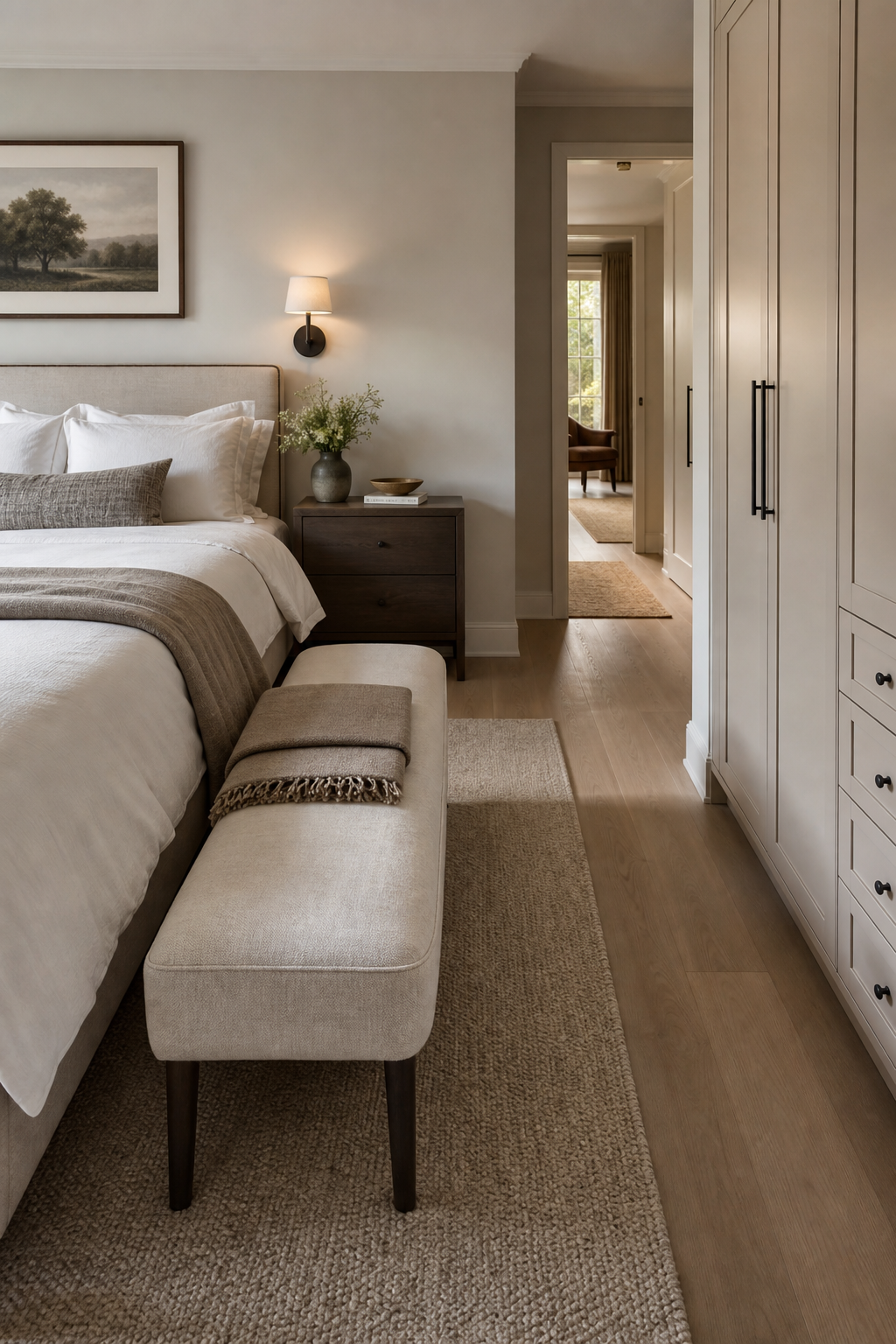
Use The Door Wall For Shallow Shelving
The wall near the door is often ignored because it feels awkward, but shallow shelving can turn it into useful storage. Keep the depth modest so the doorway still feels comfortable, and use shelves for books, baskets, framed art, or folded accessories. Closed lower cabinets are helpful if you need to hide daily clutter. Paint the shelving to match the wall for a built-in effect. This layout works best when the shelves do not compete with the bed wall; they should support the room rather than become a busy display. In a small bedroom, even six inches of depth can be meaningful when planned carefully.
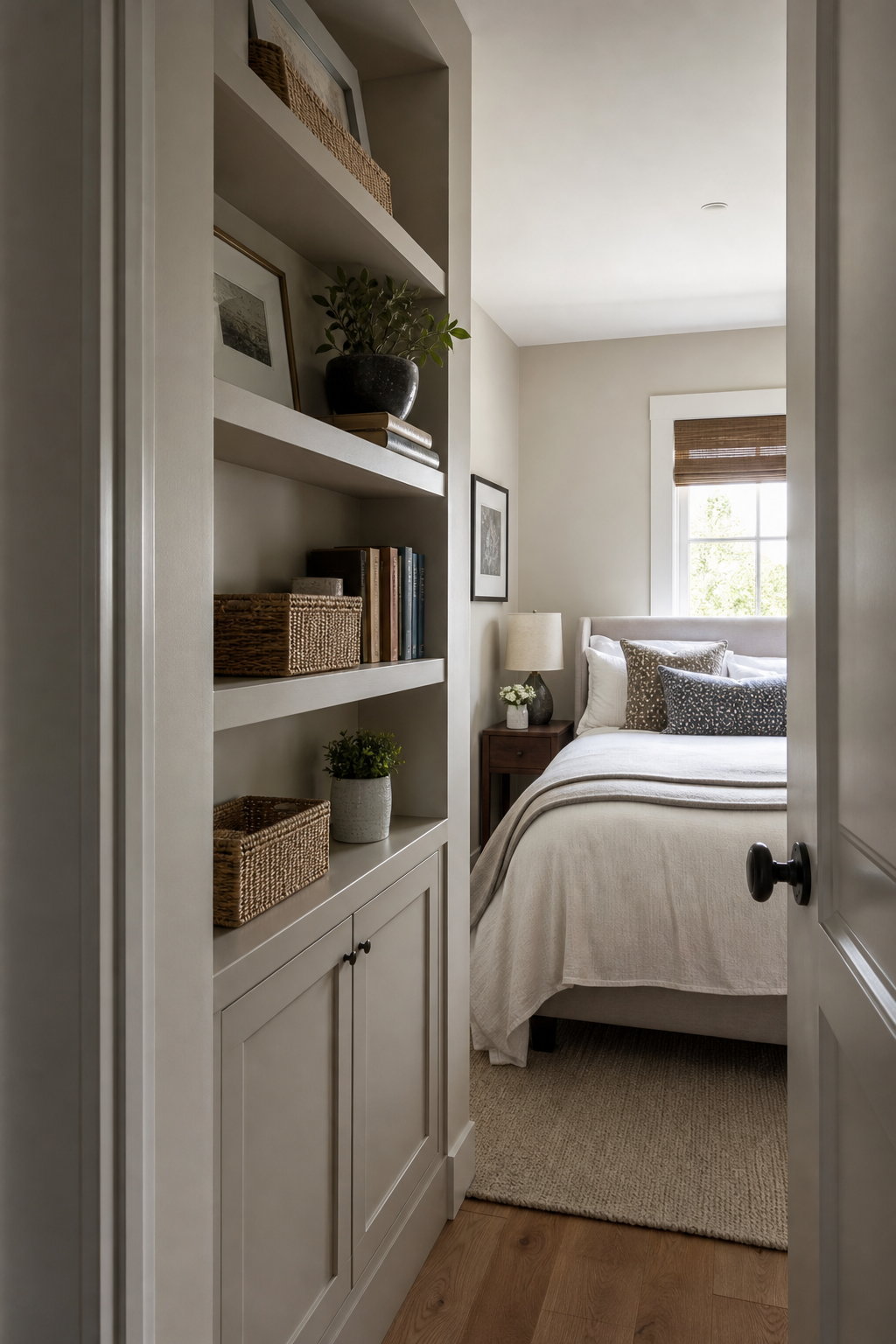
Create A Corner Bed Layout For One
For a solo bedroom, guest room, or child’s room, a corner bed layout can be extremely efficient. Push the long side against the wall, then treat the bed like a tailored daybed with bolsters, a wall-mounted reading light, and artwork above. This opens floor space for a desk, dresser, or play area. The key is to make the corner placement feel deliberate rather than temporary. Use a fitted coverlet, layered pillows, and a rug that extends into the room. A small wall ledge can replace the nightstand. This layout is practical, cozy, and especially useful in rooms with only one clear furniture wall.
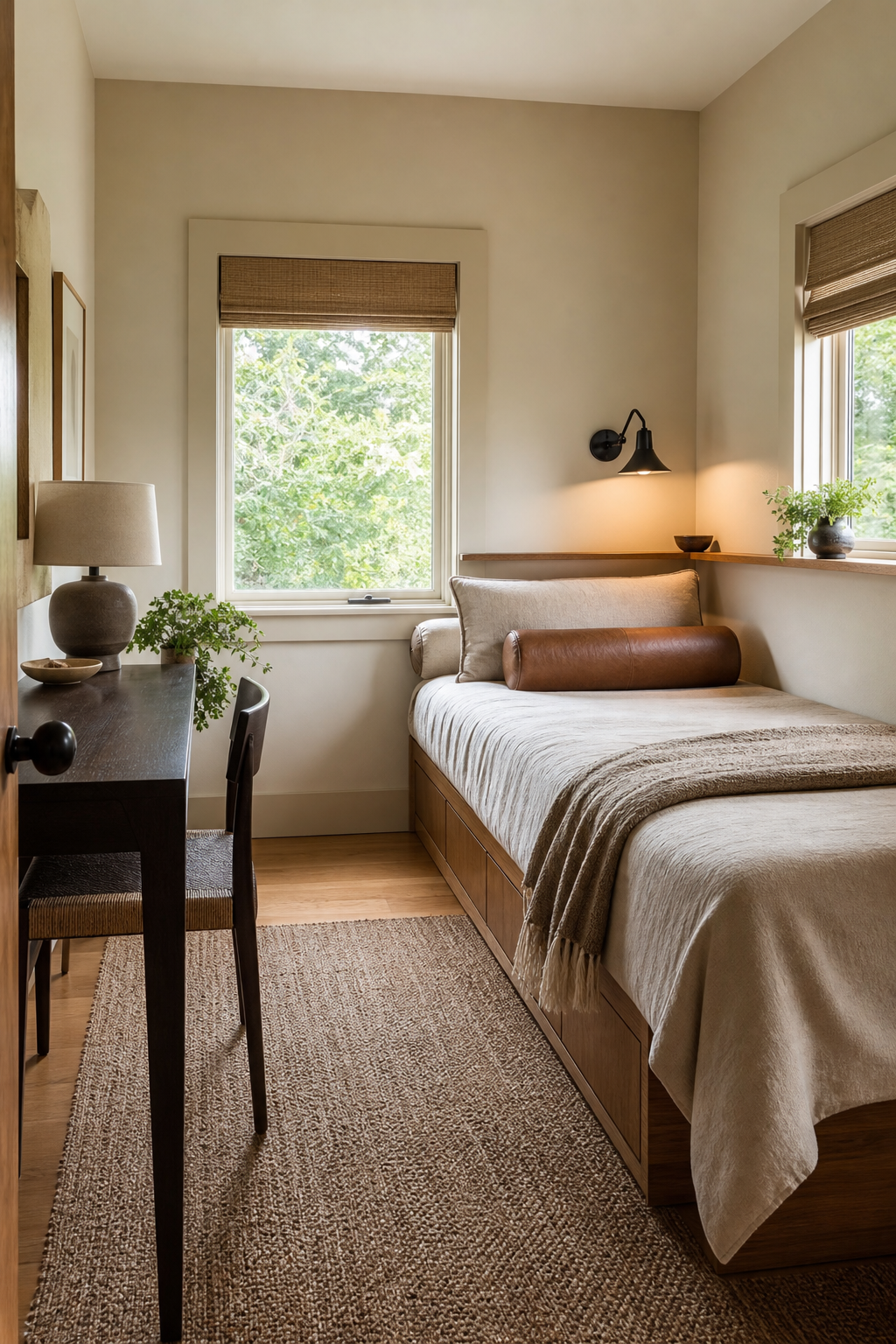
Hang Curtains High To Stretch The Room
Curtains can correct the proportions of a small bedroom when they are hung high and wide. Mount the rod close to the ceiling and extend it beyond the window frame so the fabric stacks on the wall instead of covering glass. This makes the window look larger and brings the eye upward. Choose linen or a soft performance fabric that falls cleanly without adding bulk. If blackout is needed, use lined panels or pair curtains with a shade. The layout benefit is subtle but powerful: more visible window, taller-looking walls, and a softer perimeter around the bed every day, too.
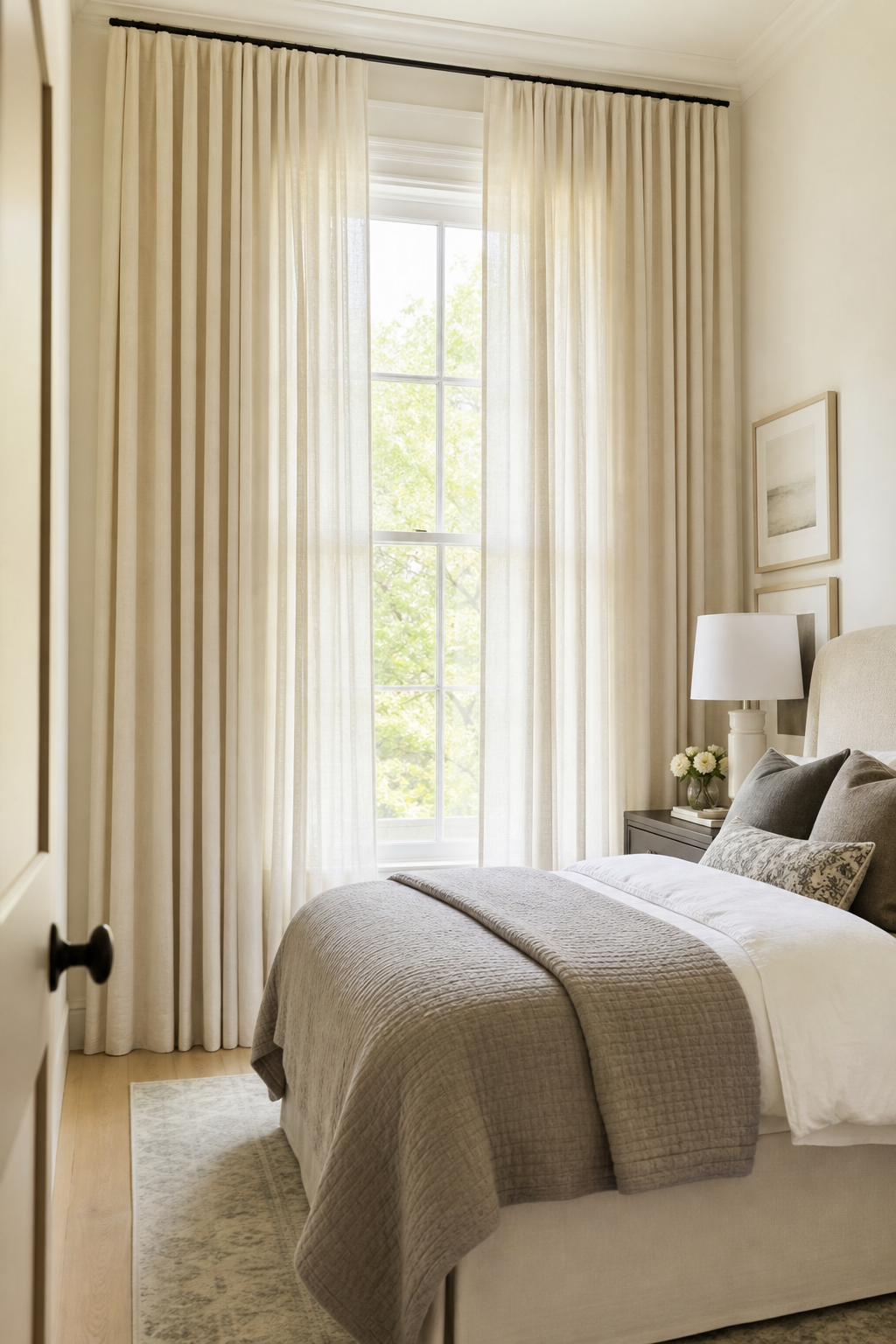
Choose A Round Table Where Corners Crowd
In a tight bedroom, sharp furniture corners can make circulation feel worse than it is. A small round table beside the bed softens the path and gives the room a more relaxed flow. Look for a pedestal base, drum shape, or small tripod table with enough surface for essentials. Pair it with a wall sconce if the tabletop is tiny. Round pieces are especially useful next to beds placed near doors, closets, or angled walls. They also add contrast in rooms full of rectangular storage. The layout feels easier because your body can move around the furniture without constantly negotiating corners.
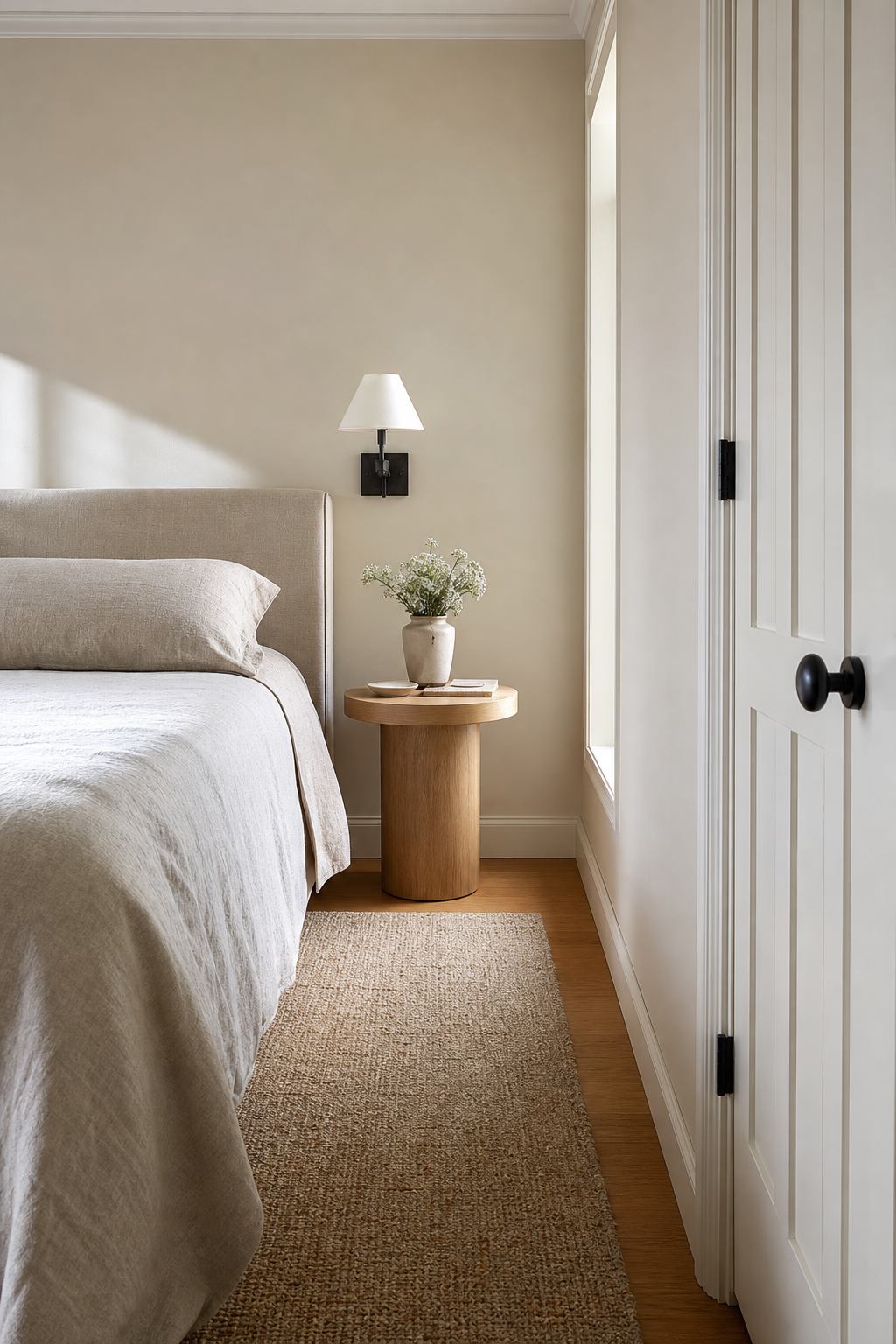
Use Mirrors To Reflect Light, Not Clutter
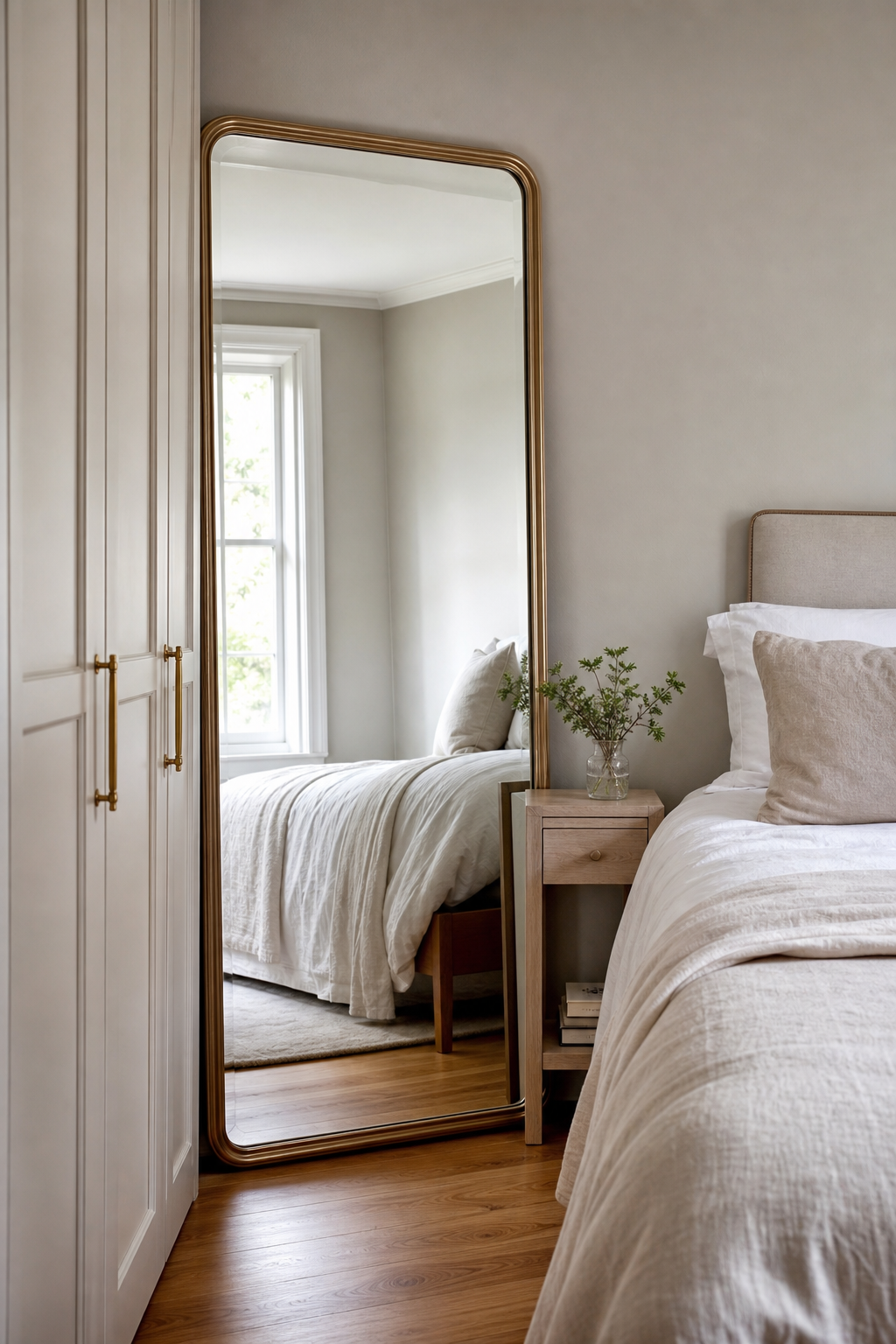
A mirror can make a small bedroom feel larger, but placement matters. Position it to reflect a window, artwork, or a calm wall rather than an open closet or crowded surface. A tall mirror beside a wardrobe can support dressing without requiring another furniture piece. A mirrored closet door works when the rest of the room is restrained. Avoid placing mirrors where they create visual noise from bed linens or storage bins. The goal is not simply more reflection; it is better reflection. When a mirror doubles the natural light and repeats the quietest part of the room, the layout feels more spacious.
Let A Headboard Include Storage
A storage headboard can solve several small-bedroom problems at once. Look for a design with shallow shelves, hidden side cubbies, or a ledge wide enough for books and a glass of water. This can replace nightstands entirely in narrow rooms. Keep the headboard simple and integrated so it does not feel like a bulky wall unit. Warm wood, painted millwork, or upholstered panels with a ledge can all work depending on the room’s style. Add sconces above or within the headboard to complete the zone. The bed becomes a compact command center while the floor stays open below it visually.
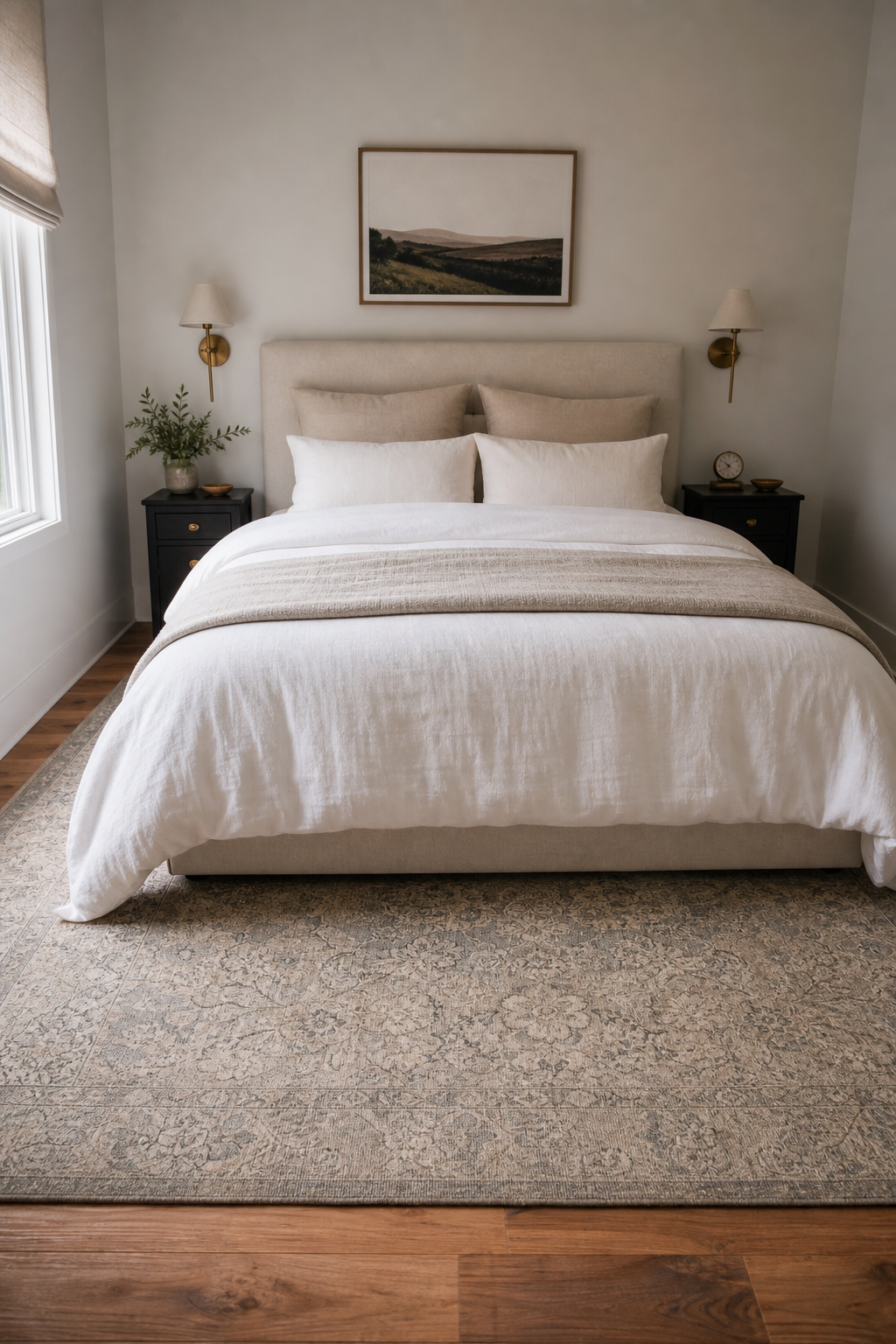
Place The Rug To Define The Bed Zone
A rug can make a small bedroom feel planned instead of cramped. Place it under the lower two-thirds of the bed so it extends beyond the sides and foot, creating a soft landing without disappearing beneath the headboard. If the room is too narrow for a large rug, use runners on each side instead. Choose a low-pile wool or flatweave so doors and drawers open easily. Pattern can be helpful because it visually gathers the furniture into one zone. The right rug placement makes the bed feel anchored, protects the floor, and adds comfort where the room needs it most.
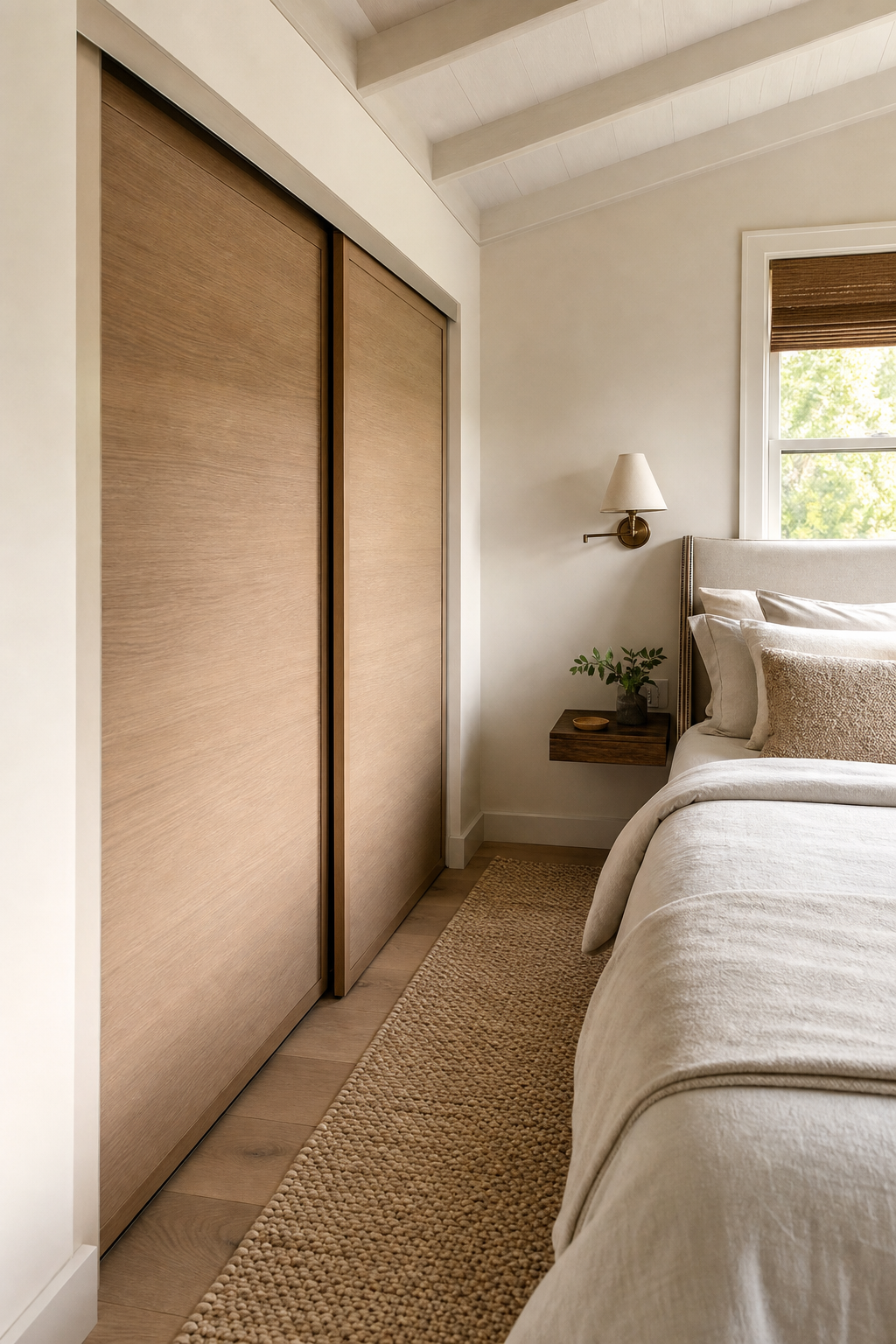
Use Sliding Or Pocket Doors Where Possible
Door swings quietly steal a surprising amount of bedroom space. If you are renovating, pocket doors or sliding closet doors can make the layout easier immediately. When construction is not possible, use curtains for a closet, remove a closet door in a guest room, or choose furniture that respects the door arc. The space saved can allow a wider nightstand, a better dresser position, or a clearer path around the bed. Door solutions should feel intentional, so use quality hardware and fabric if anything is visible. A small bedroom often improves dramatically when the layout is no longer designed around swinging panels.
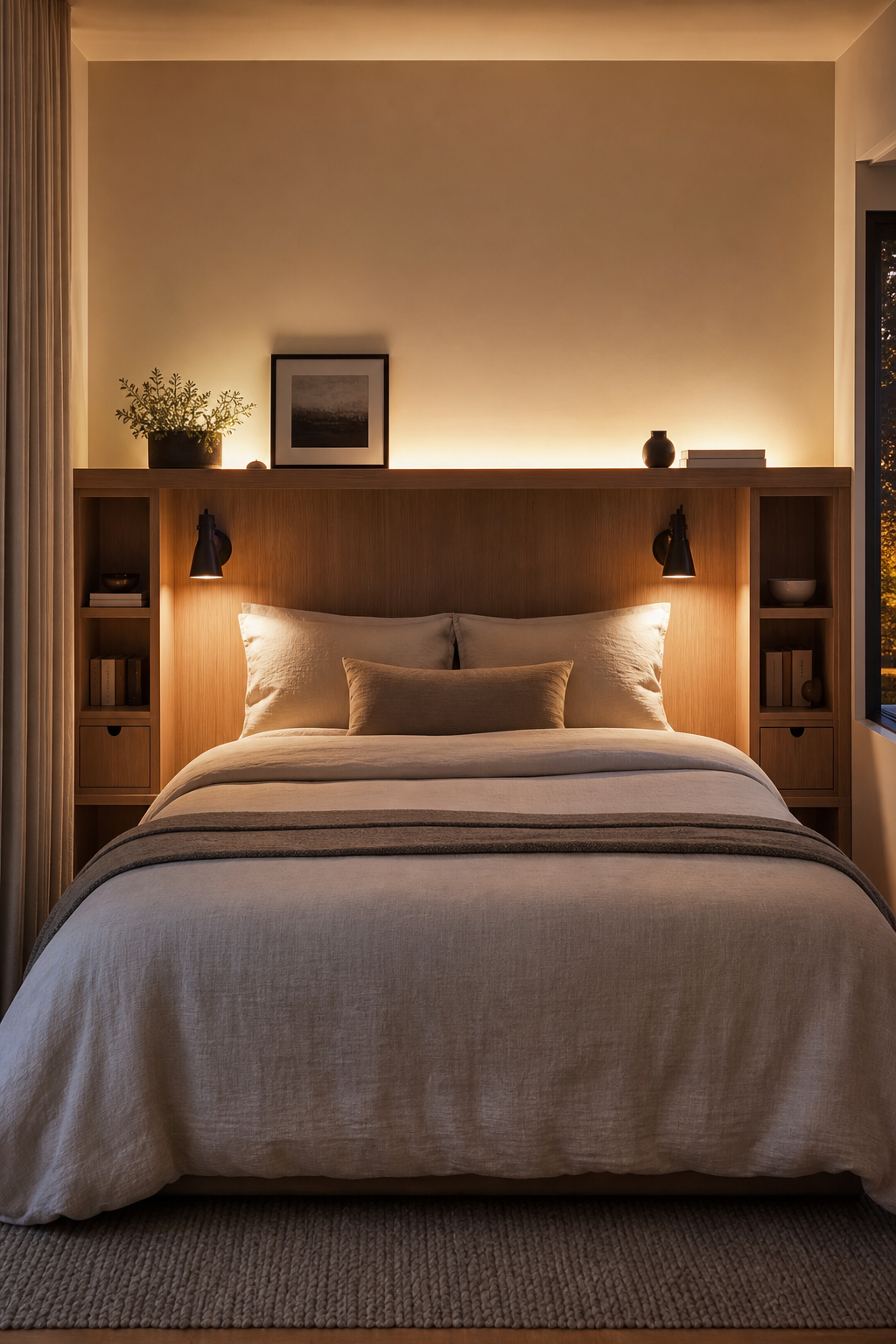
Build A Bed Niche With Shallow Millwork
A bed niche can make a small bedroom feel custom even when the room is plain. Use shallow millwork around the head of the bed, with narrow side shelves, upper cabinets, or a framed recess for the headboard. Keep the depth modest so the bed does not project too far into the room. Painted cabinetry that matches the walls will feel lighter than contrasting units. Add integrated sconces and a ledge for essentials. This layout is best when you need storage but still want a serene bed wall. The niche gives the bed architectural importance while keeping small items contained.
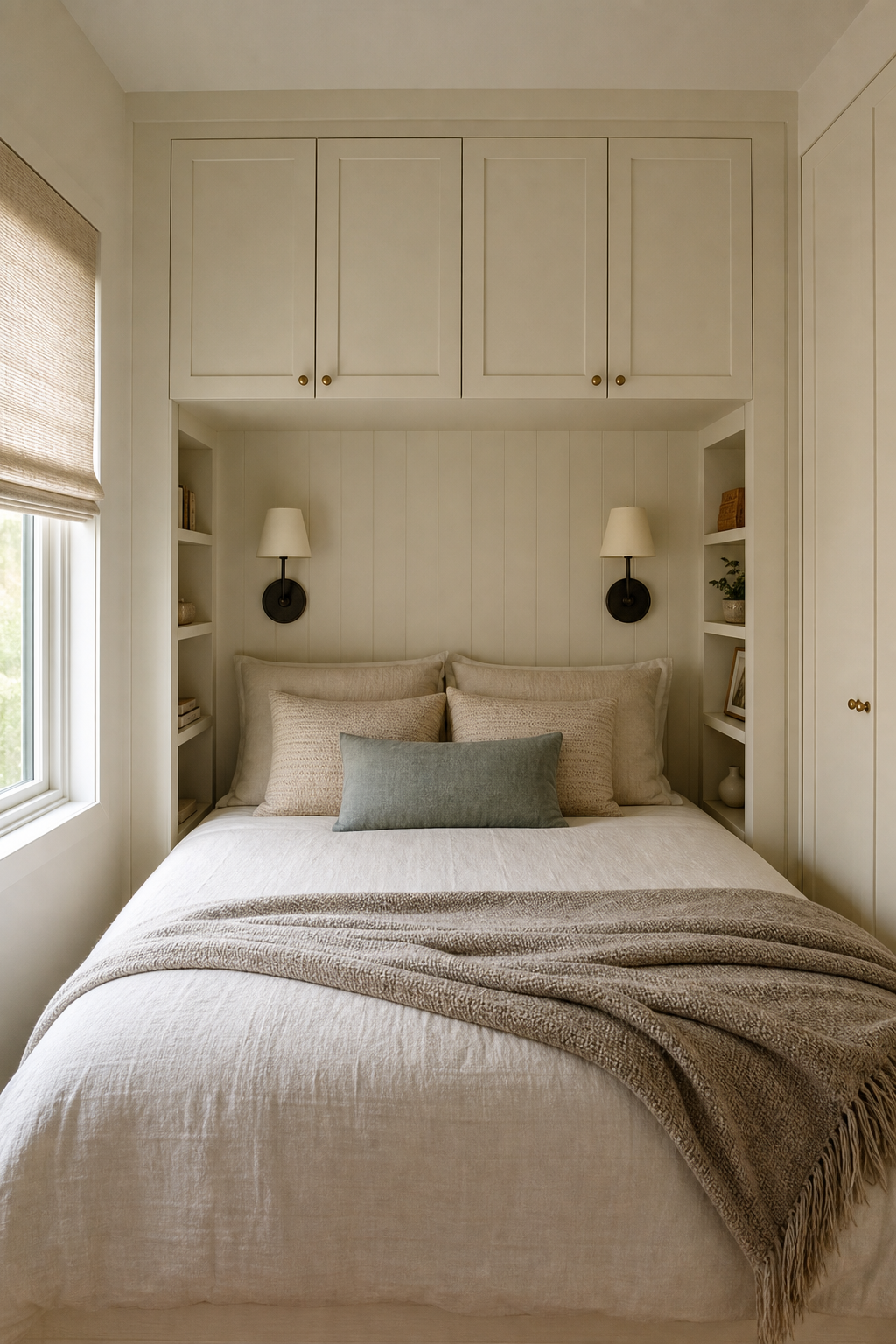
Keep The Sightline From The Door Calm
The first view into a small bedroom determines whether it feels peaceful or crowded. Try to keep the doorway sightline focused on the bed, a window, or a clean wall rather than laundry, open shelving, or a cluttered dresser. If storage must sit near the entry, use closed fronts and quiet colors. Place the most attractive textile or artwork where it can be seen immediately. This does not require a perfect room; it requires a calm first impression. When the view from the door is composed, the whole layout feels more generous, because the eye meets order before it notices the limited square footage.
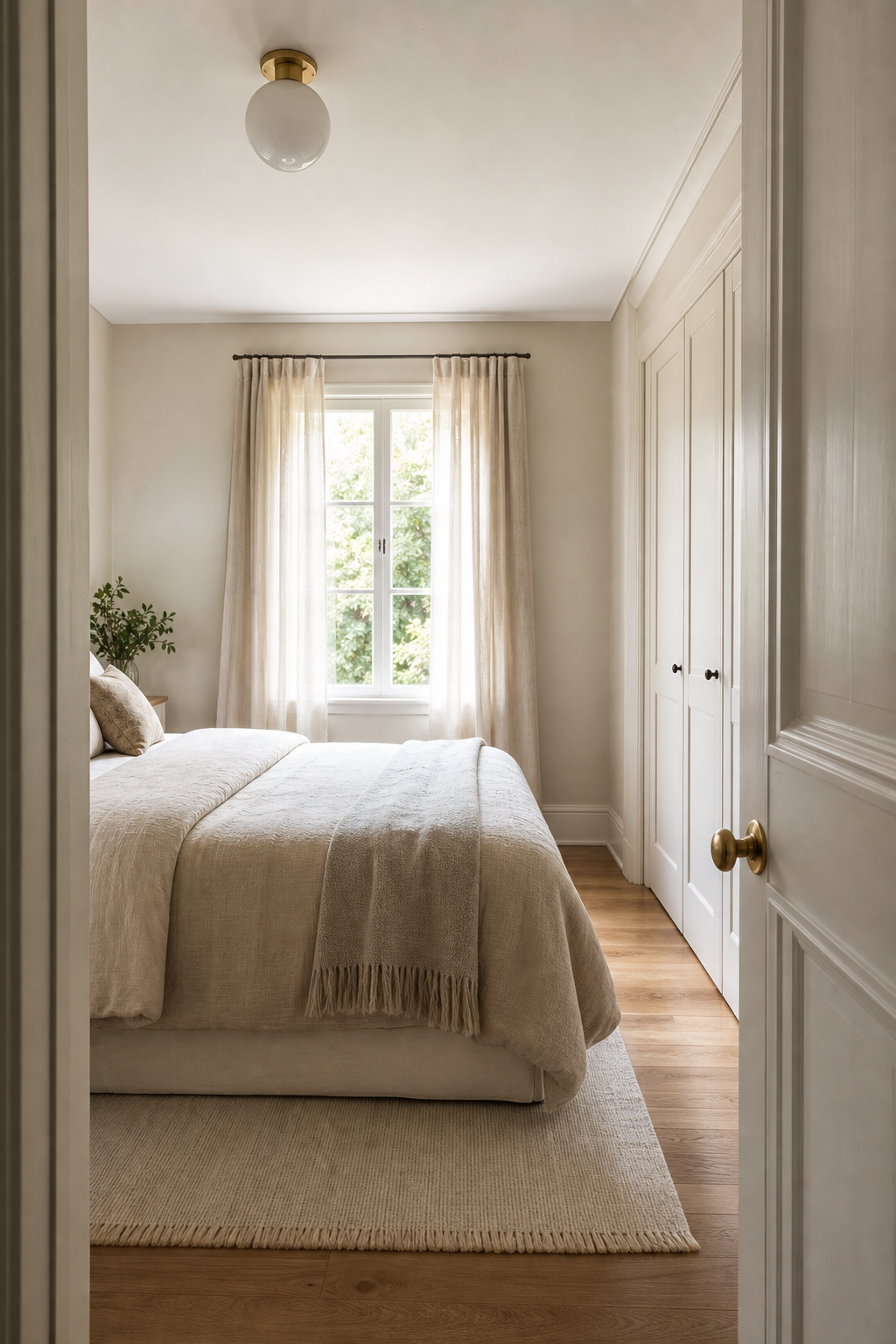
Use Vertical Space Above Low Furniture
Small bedrooms often have unused wall space above dressers, benches, or low radiators. Treat that vertical area as part of the layout instead of leaving it blank. A shallow shelf, tall mirror, picture ledge, or pair of wall hooks can add function without taking floor space. Keep the depth modest so the room does not feel crowded at shoulder height. This is a good place for a jewelry tray, framed art, folded blankets, or a small reading basket. The key is to keep the lower furniture simple and let the wall above do one clear job. Vertical planning helps the room feel finished while preserving movement.
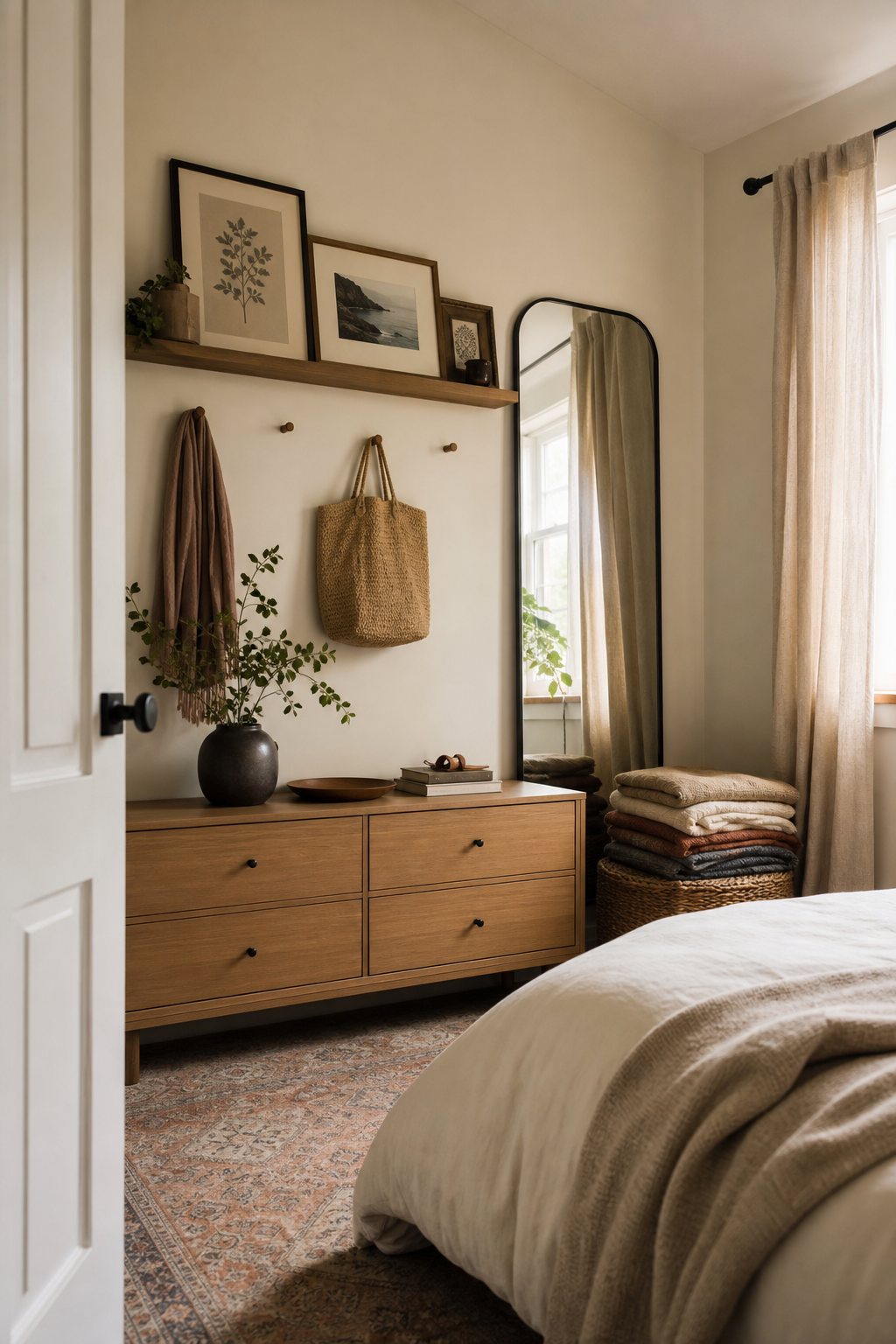
Edit The Layout Around Daily Habits
The best small bedroom layout is the one that supports your actual routine. If you read at night, prioritize sconces and a reachable ledge. If you get dressed in the room, protect drawer clearance and mirror placement. If you work there, give the desk a real chair and a place to hide supplies. Remove furniture that exists only because bedrooms are expected to have it. A compact room cannot afford decorative obligations. Walk through your morning and evening habits, then arrange the furniture around those movements. Style comes easier when the room works, because every piece has earned its space.
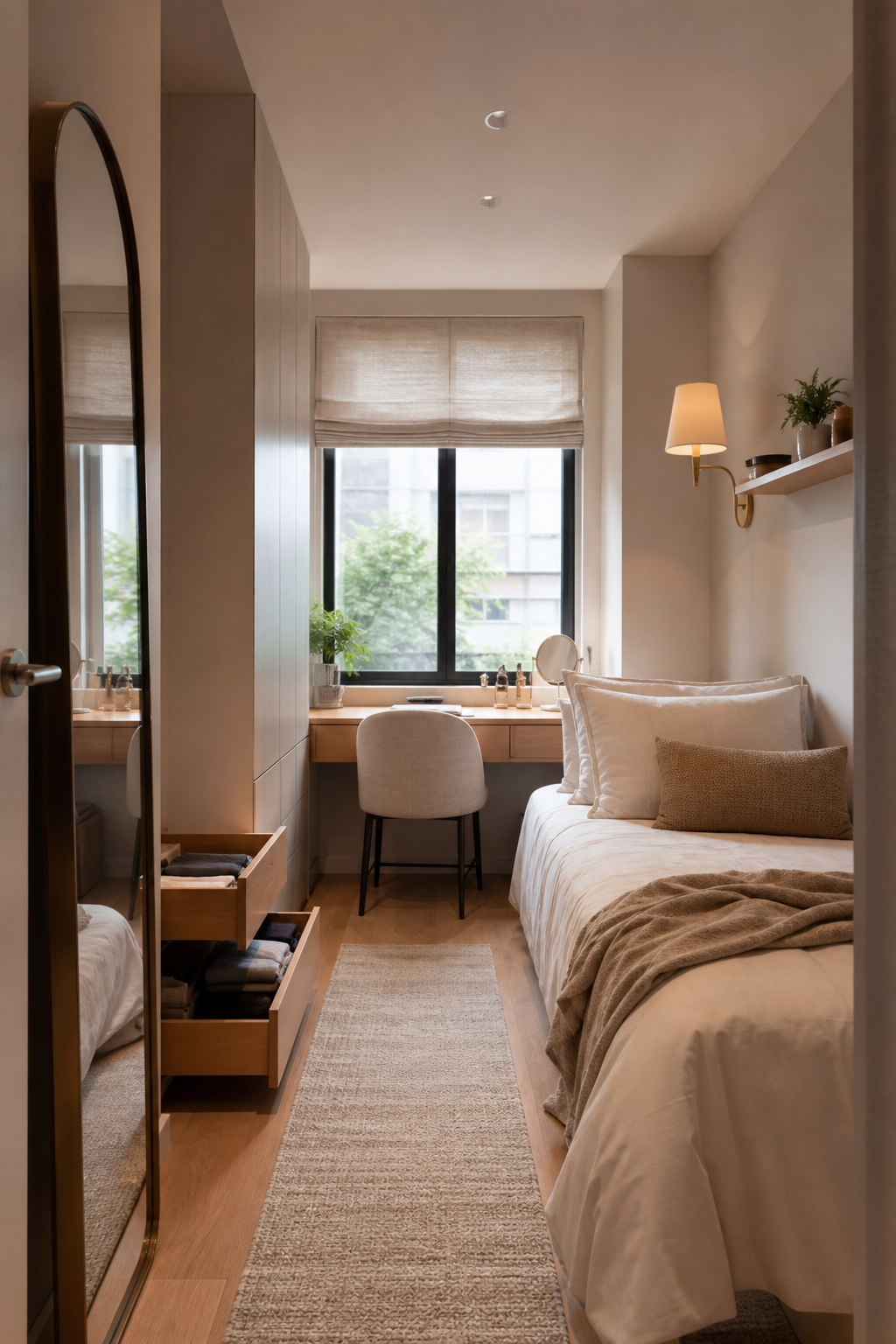
A small bedroom does not need more furniture to feel complete. It needs a layout that respects movement, storage, light, and the first view into the room. Start with the bed wall, then solve the surfaces and storage around it with the lightest possible touch. When the plan is clear, even a compact bedroom can feel polished, generous, and deeply comfortable.