24 Small Bathroom Interior Ideas That Feel Fresh And Space-Smart
A small bathroom interior feels fresh when the layout, storage, light, and finishes all work together. The smartest rooms do not rely on one trick. They combine clear sightlines, compact fixtures, useful storage, and calm materials so daily routines feel easier. Whether the bathroom is a powder-sized full bath, a guest bath, or a narrow apartment bathroom, these ideas focus on choices that save space visually and practically while still giving the room a polished DecorSea look.
Frame a Wet-Room Shower With One Glass Panel
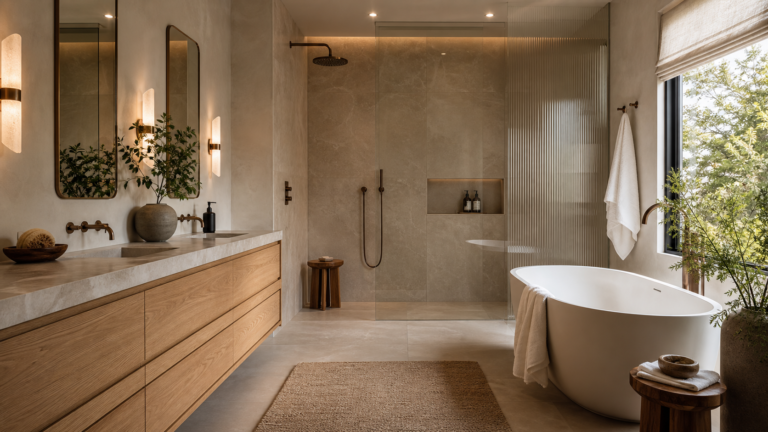
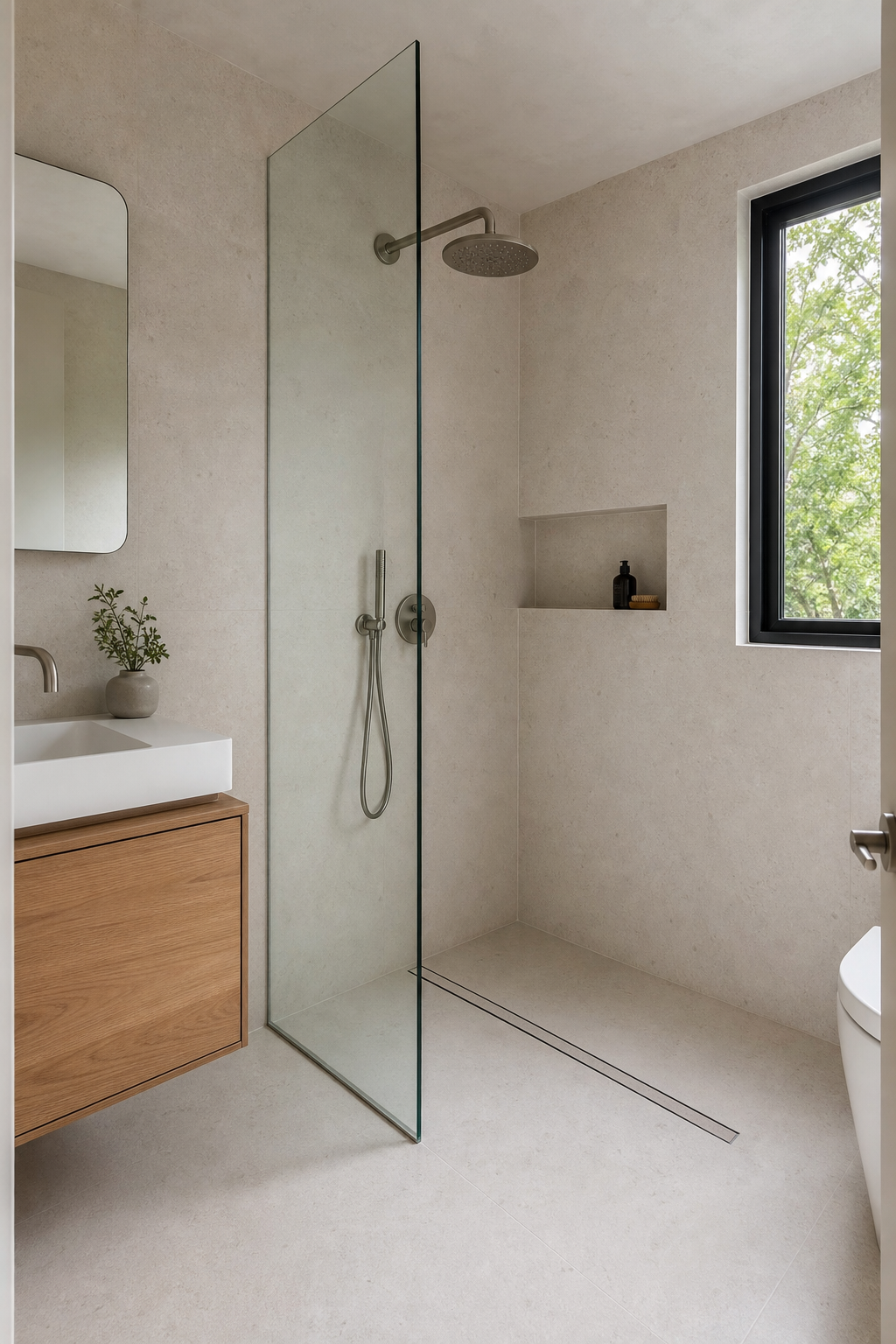
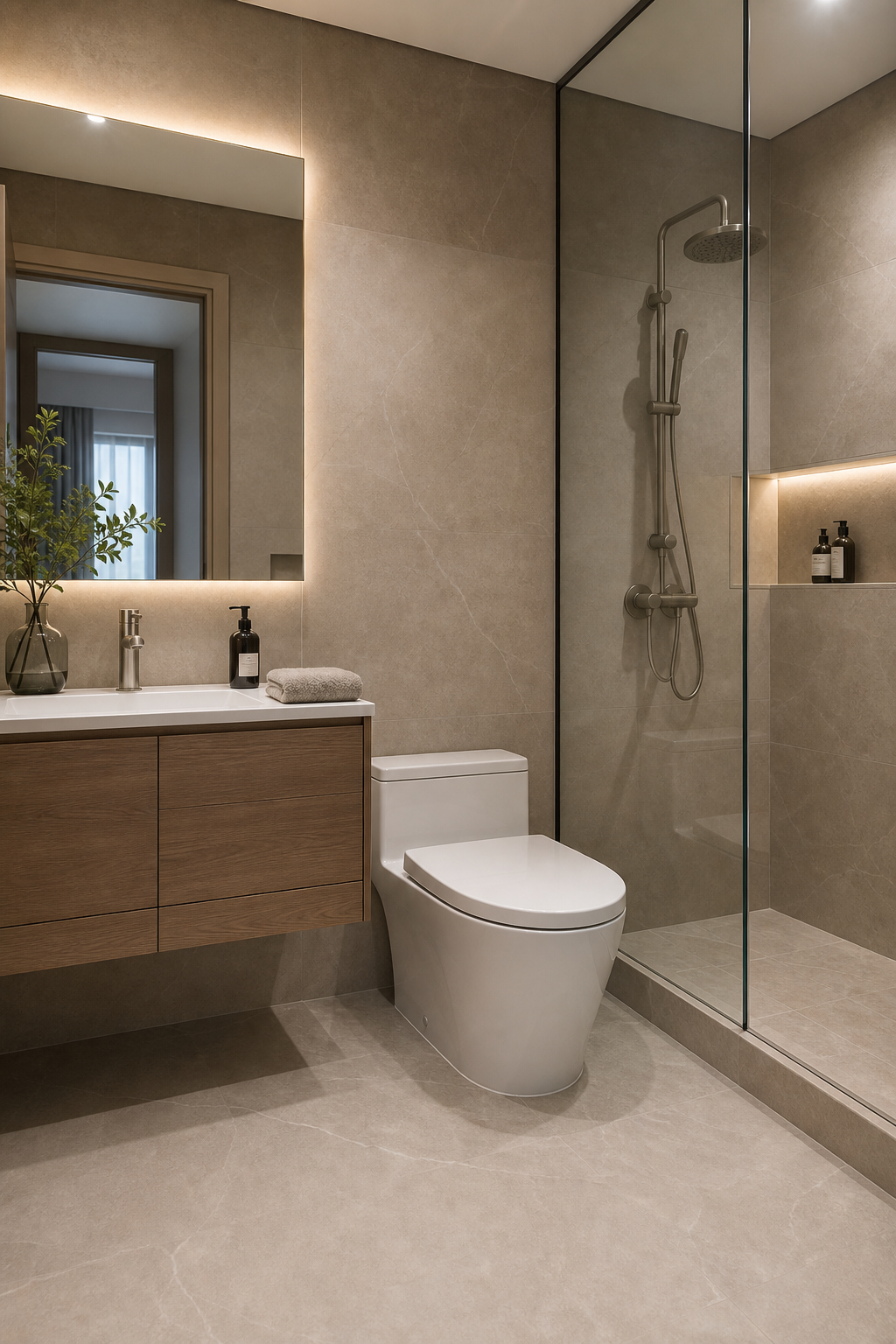
A partial glass panel gives a small bathroom the open feeling of a wet room without exposing every surface to spray. Keep the shower floor and main bathroom floor visually connected, then use a discreet linear drain and a slightly sloped shower zone for function. The panel should feel architectural rather than decorative: minimal hardware, clean edges, and enough width to protect the vanity or toilet. This approach is especially useful when the room is narrow because the eye can travel to the back wall. Add a niche, a handheld shower, and a textured bath mat outside the wet zone so the room feels polished but still easy to live with.
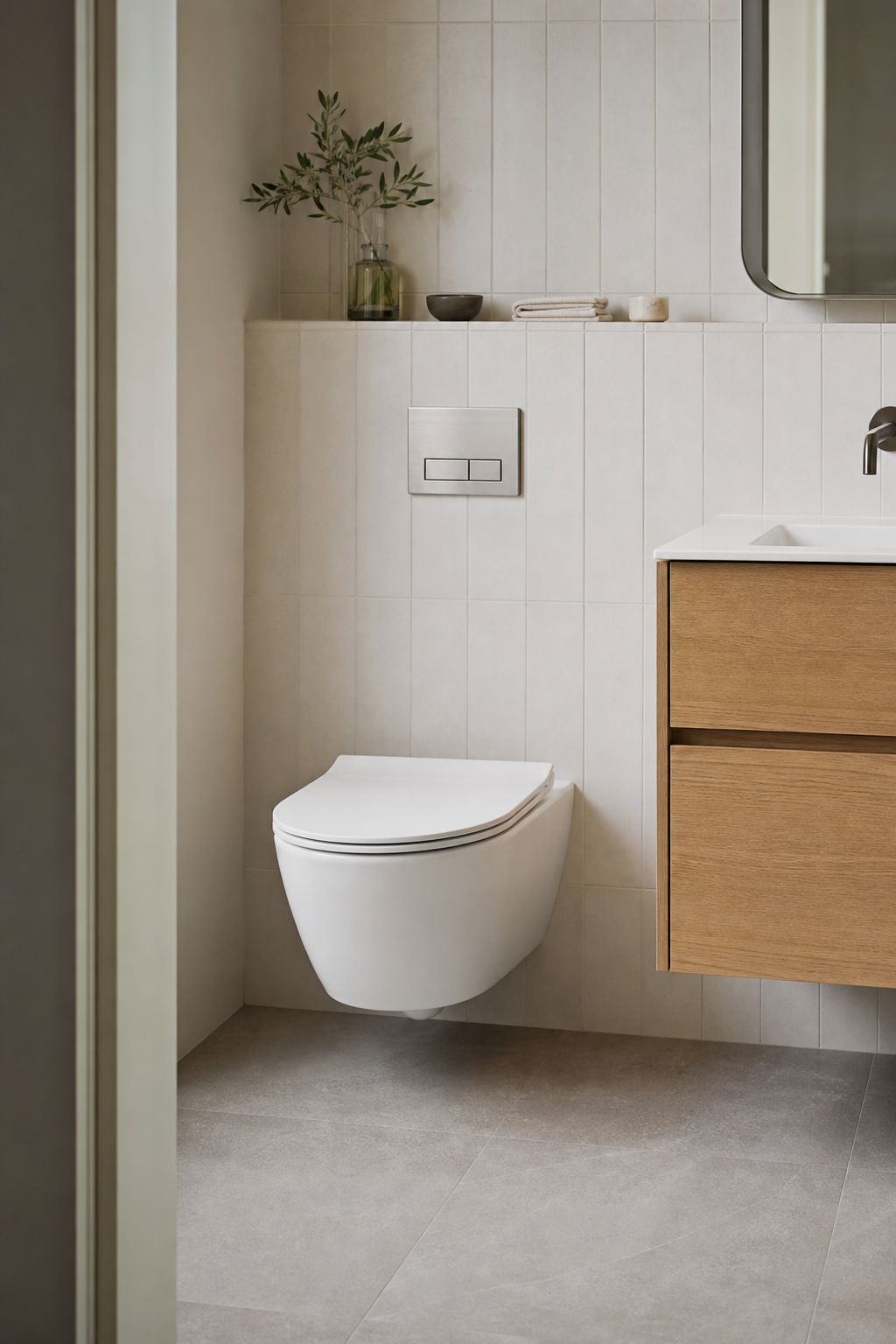
Use a Wall-Hung Toilet to Reveal More Floor
A wall-hung toilet can make a compact bathroom feel lighter because the floor continues underneath it. The concealed tank creates a cleaner wall plane and often leaves a useful ledge above for a candle, small plant, or folded washcloths. Choose this upgrade when renovating deeply enough to open the wall, and pair it with tile that runs neatly behind the fixture. The visual benefit is subtle but powerful: fewer bulky shapes sit on the floor, so the room feels easier to clean and less crowded. Keep the flush plate simple and aligned with other metal finishes for a calm, integrated look.
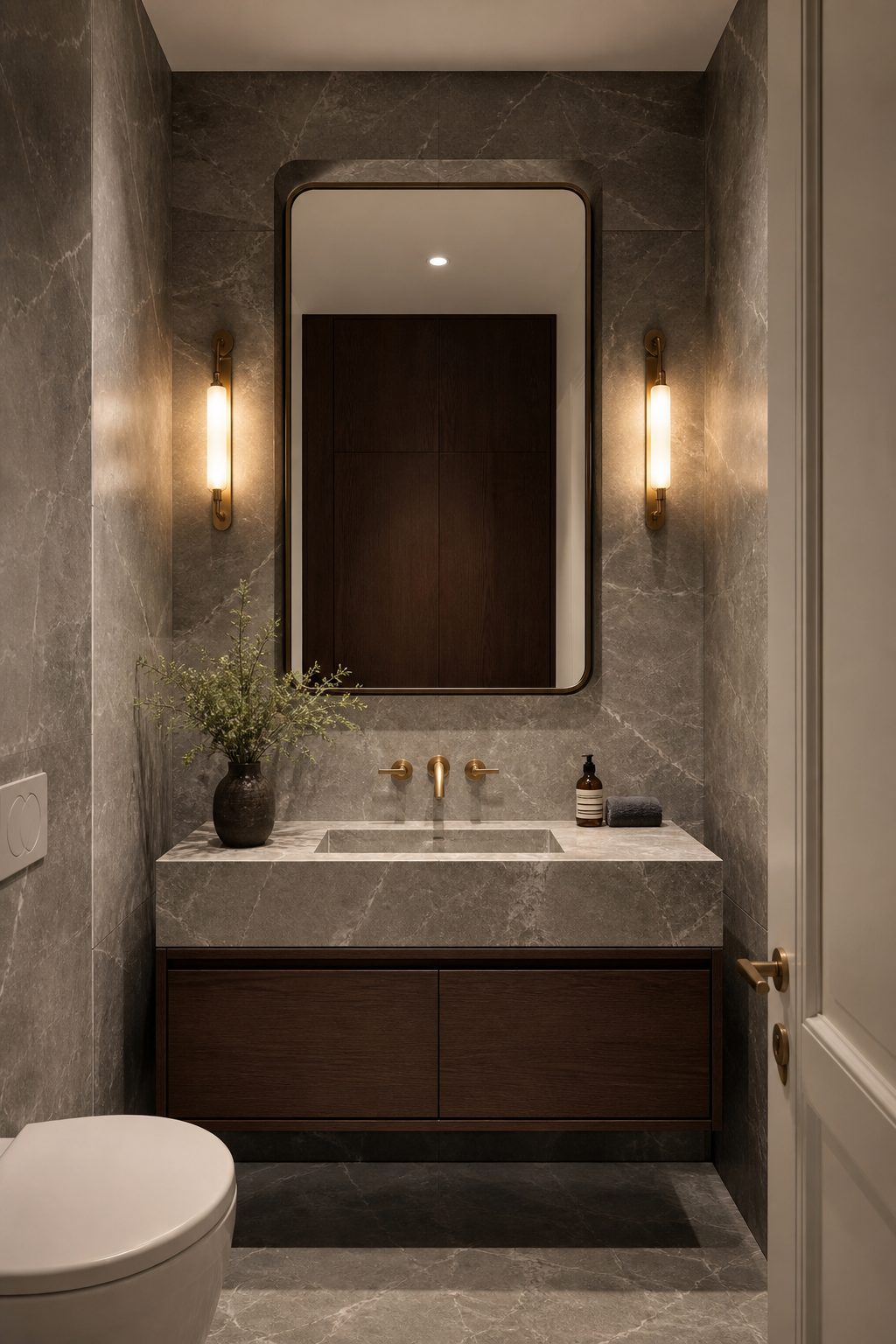
Let One Material Wrap the Sink Wall
Wrapping the sink wall in one beautiful material gives a small bathroom a strong focal point without adding clutter. Quartz, stone-look porcelain, microcement, or vertical tile can run from the vanity top to the mirror and even across a short side return. The continuous surface protects the splash zone and makes the vanity feel custom. Keep the mirror shape simple so the material remains the feature. This idea works well when the rest of the bathroom is restrained: plain floor tile, quiet towels, and compact hardware. The room feels fresh because the drama is architectural, not dependent on accessories that steal precious counter space.
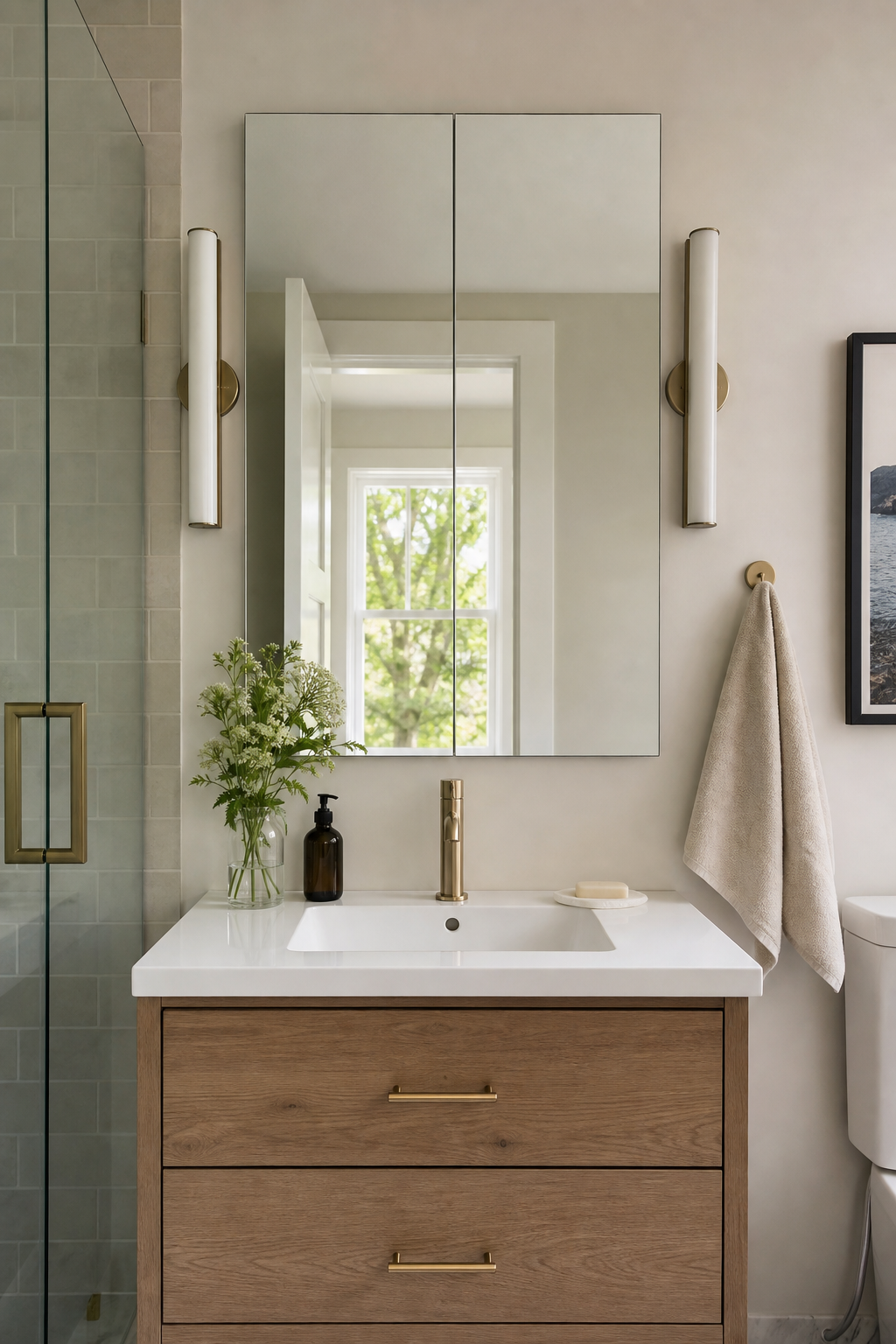
Install a Mirrored Medicine Cabinet That Looks Seamless
In a small bathroom, storage is most successful when it disappears. A recessed mirrored medicine cabinet can hold skincare, medicine, toothpaste, and grooming tools while reading like a simple mirror. Choose a model with a thin frame or no visible frame, soft-close hinges, and interior shelves that adjust. If wall depth is limited, a shallow surface-mounted cabinet can still work when its edges are slim and the finish matches nearby hardware. The goal is to remove everyday items from the counter without adding a heavy wall box. Paired with good sconces, this one choice can make the sink area feel cleaner every morning.
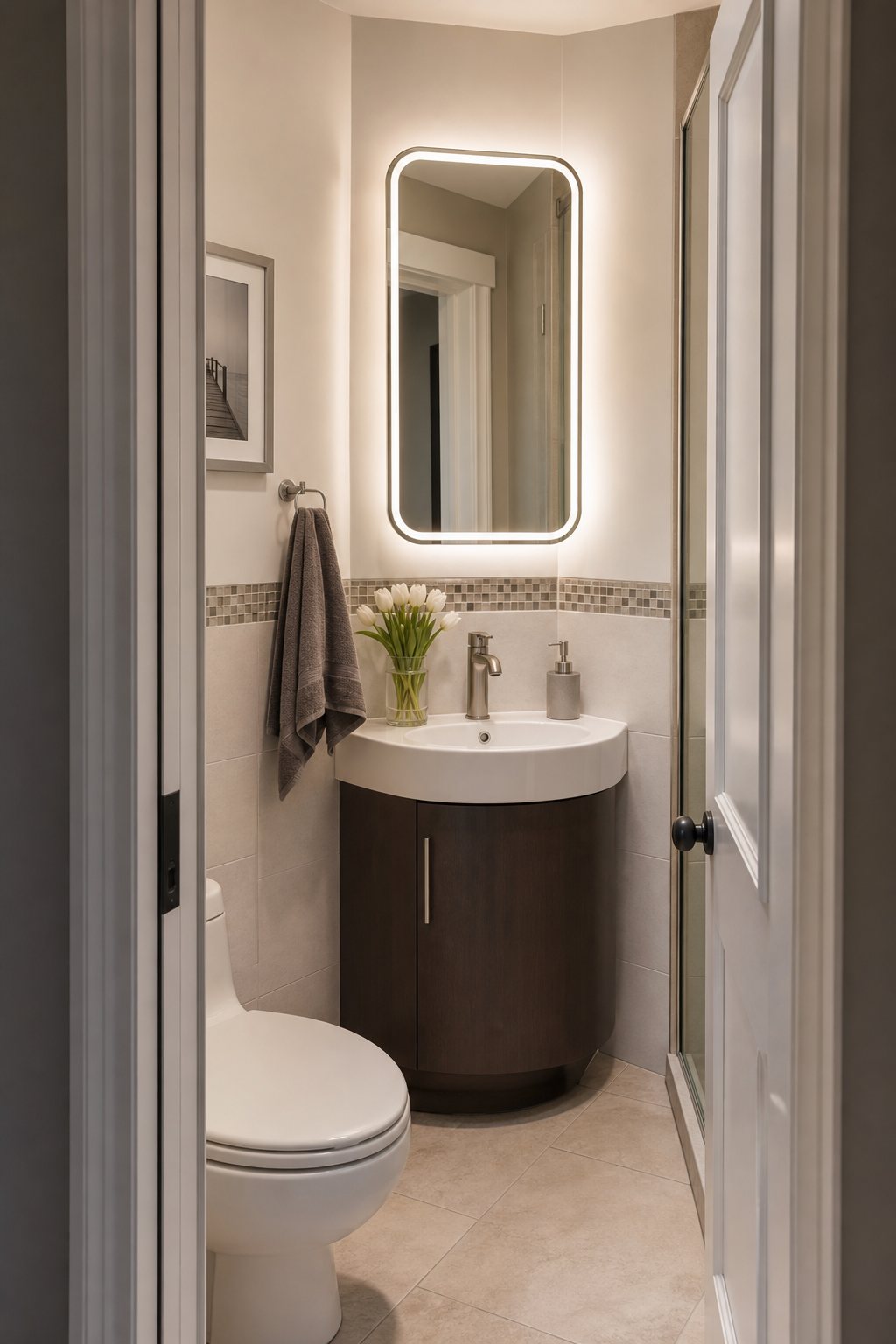
Choose a Corner Vanity for Awkward Plans
A corner vanity can solve layouts where a standard cabinet blocks the doorway or shower path. Look for a design with a triangular or rounded front, a small sink basin, and storage underneath for the basics. The corner placement frees the center of the room and can make a tight bathroom easier to enter. To keep it from feeling like an afterthought, use a mirror that follows the corner or choose a single wall mirror with a sconce nearby. Repeat the vanity finish elsewhere, such as with a small shelf or towel hook, so the unusual placement feels intentional and tailored.
Carry Color Through Towels and Art
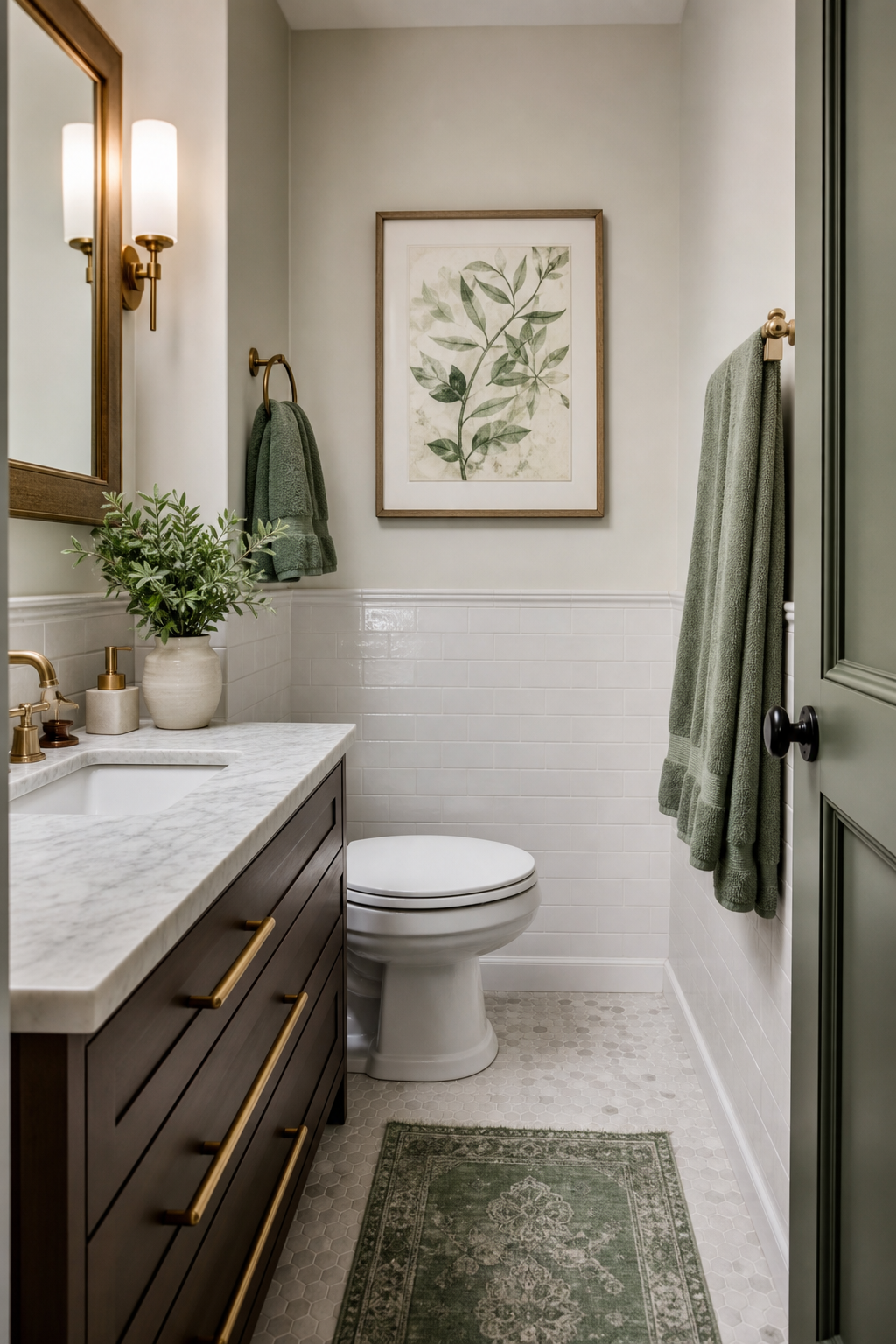
A small bathroom can stay bright without becoming colorless. Use towels, framed art, a small rug, or a painted vanity to carry one controlled color through the room. Sage, clay, muted blue, charcoal, or warm terracotta can all work when the permanent finishes remain simple. The key is repetition: one color appearing in two or three places feels designed, while many small colors feel busy. This approach is renter-friendly and budget-conscious because it changes the mood without moving plumbing or tile. Keep product packaging hidden so the chosen color story remains the visual message.
Create a Shower Curtain That Looks Tailored
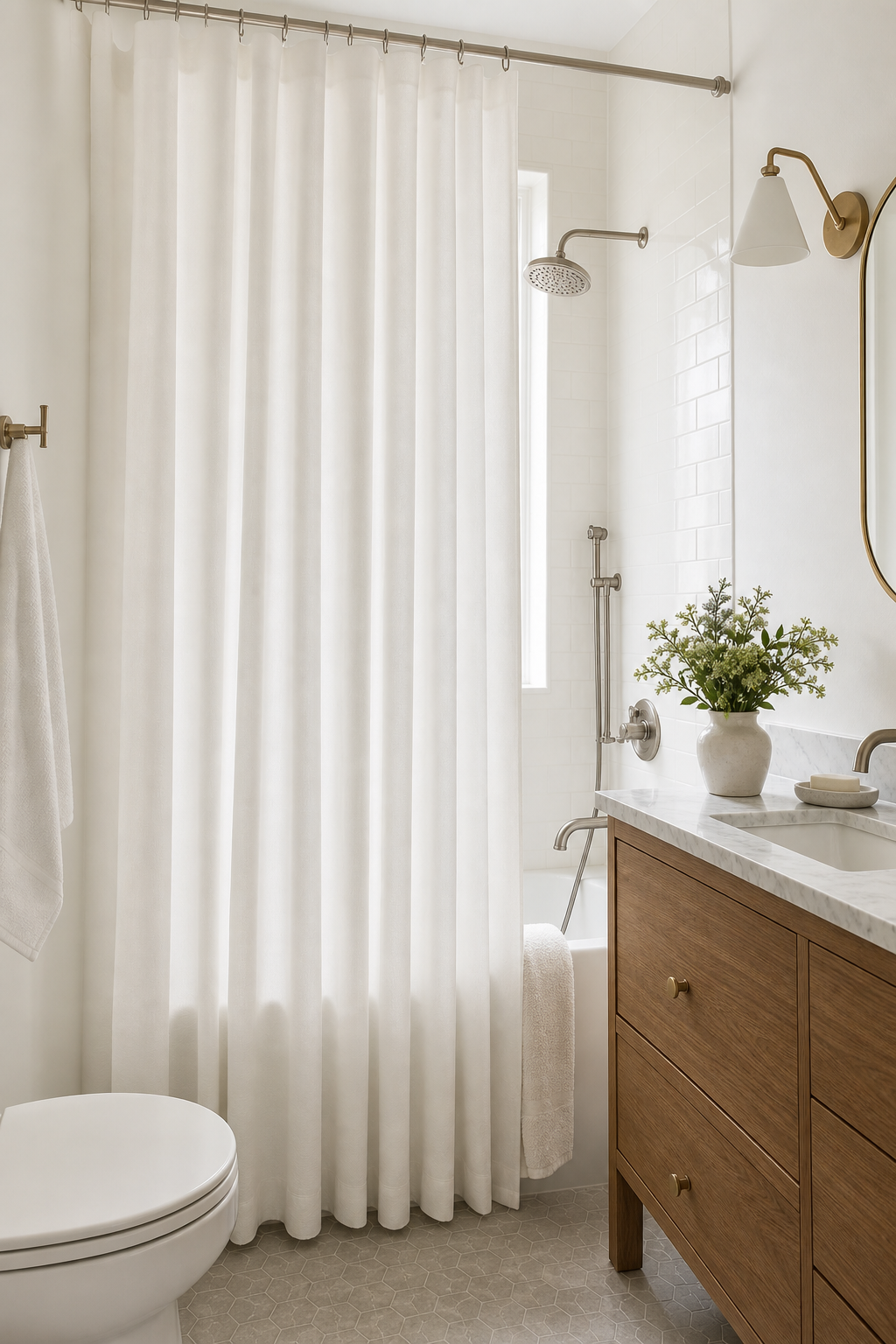
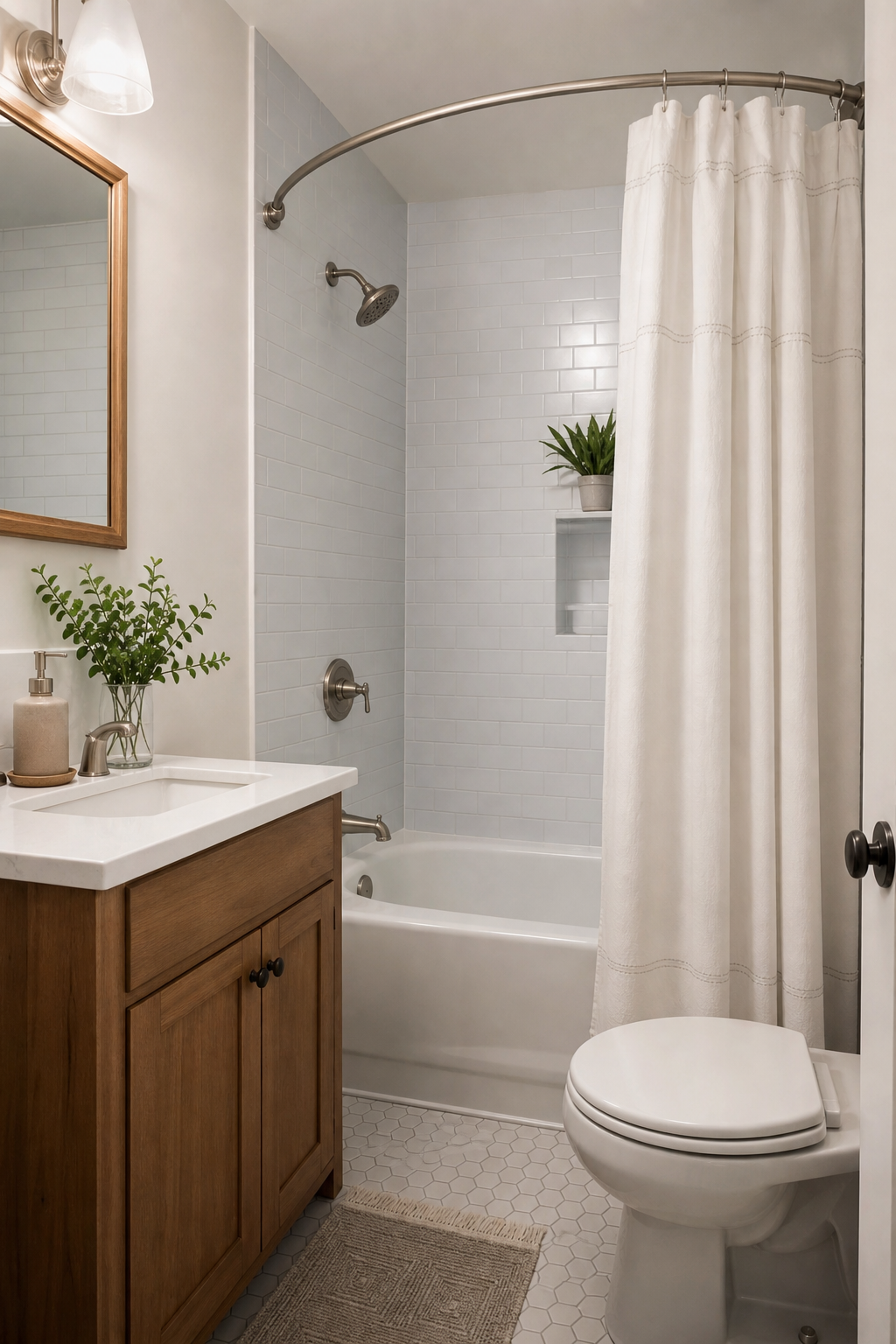
If glass is not practical, a shower curtain can still look refined. Hang the rod close to the ceiling, choose a full-length fabric outer curtain, and keep a washable liner inside. A taller curtain draws the eye upward and hides the tub hardware when the shower is not in use. Linen-look cotton, waffle weave, or a subtle stripe feels more tailored than a shiny plastic surface. Use simple rings in the same finish as the faucet. In a small bathroom, this soft vertical plane can add texture while allowing the tub-shower combination to remain flexible for families, guests, and easy cleaning.
Add a Backlit Mirror for Soft Depth
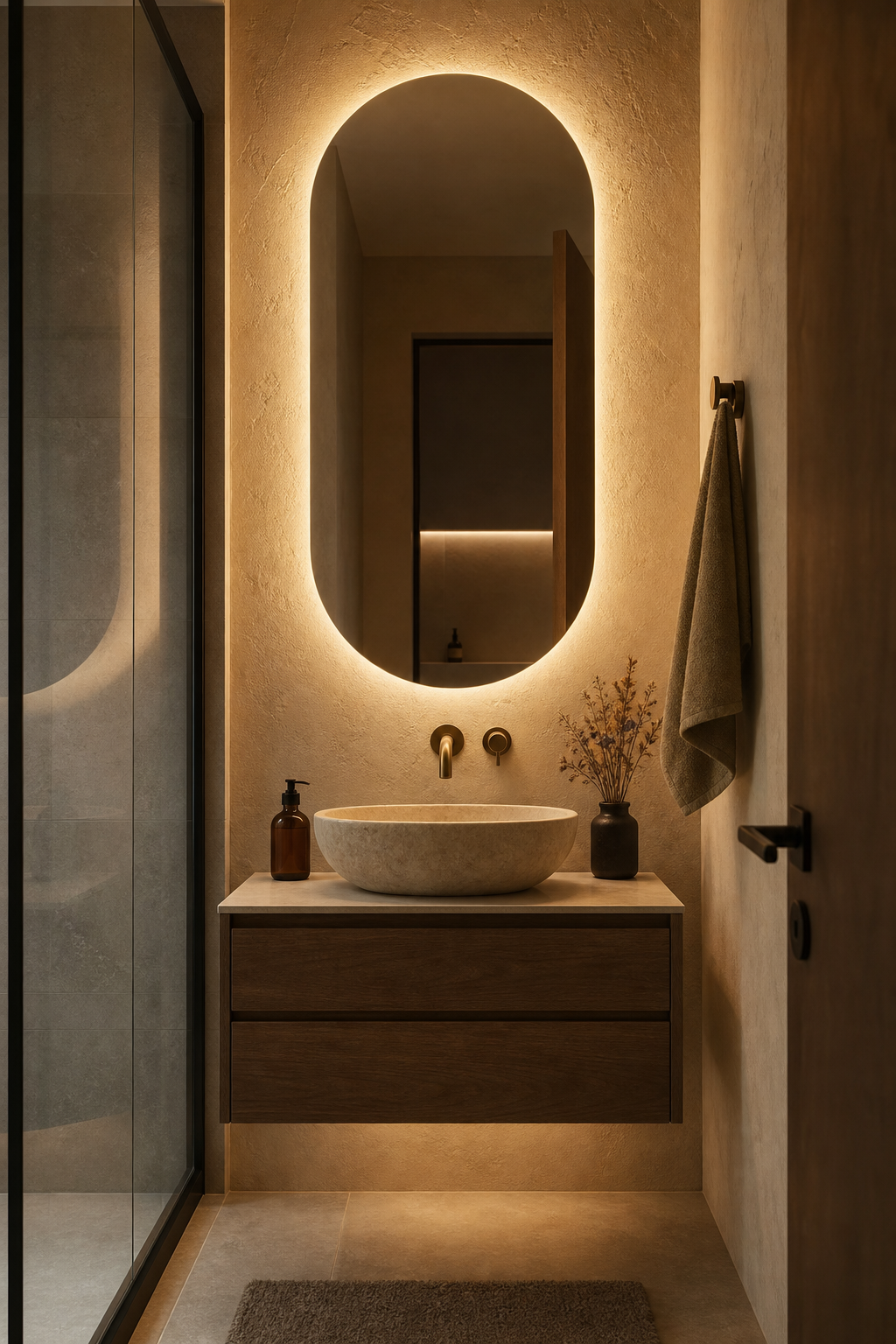
A backlit mirror brings gentle depth to a small bathroom without taking up wall space. The glow separates the mirror from the wall, softens shadows, and makes evening routines feel calmer. Choose a warm, dimmable light temperature rather than a harsh blue-white cast. Backlighting works best with clean wall materials such as plaster, stone-look slabs, or simple tile because the light reveals texture. It should support the main lighting, not replace it entirely, so include overhead or side lighting if the bathroom is used for grooming. The result is modern, fresh, and surprisingly spacious for such a compact intervention.
Use Fluted Glass for Privacy and Light
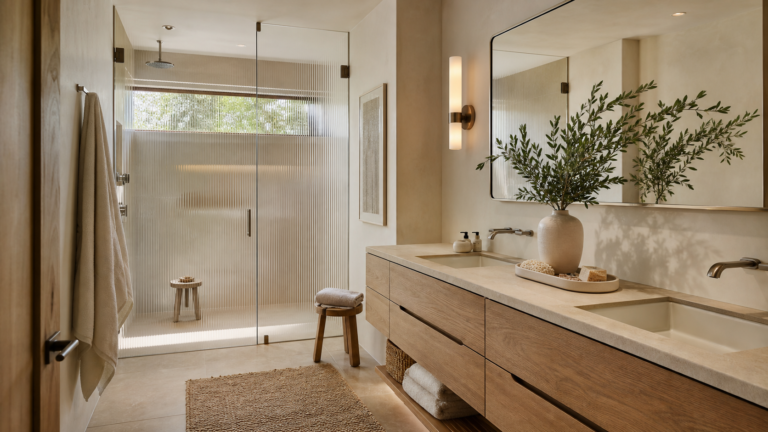
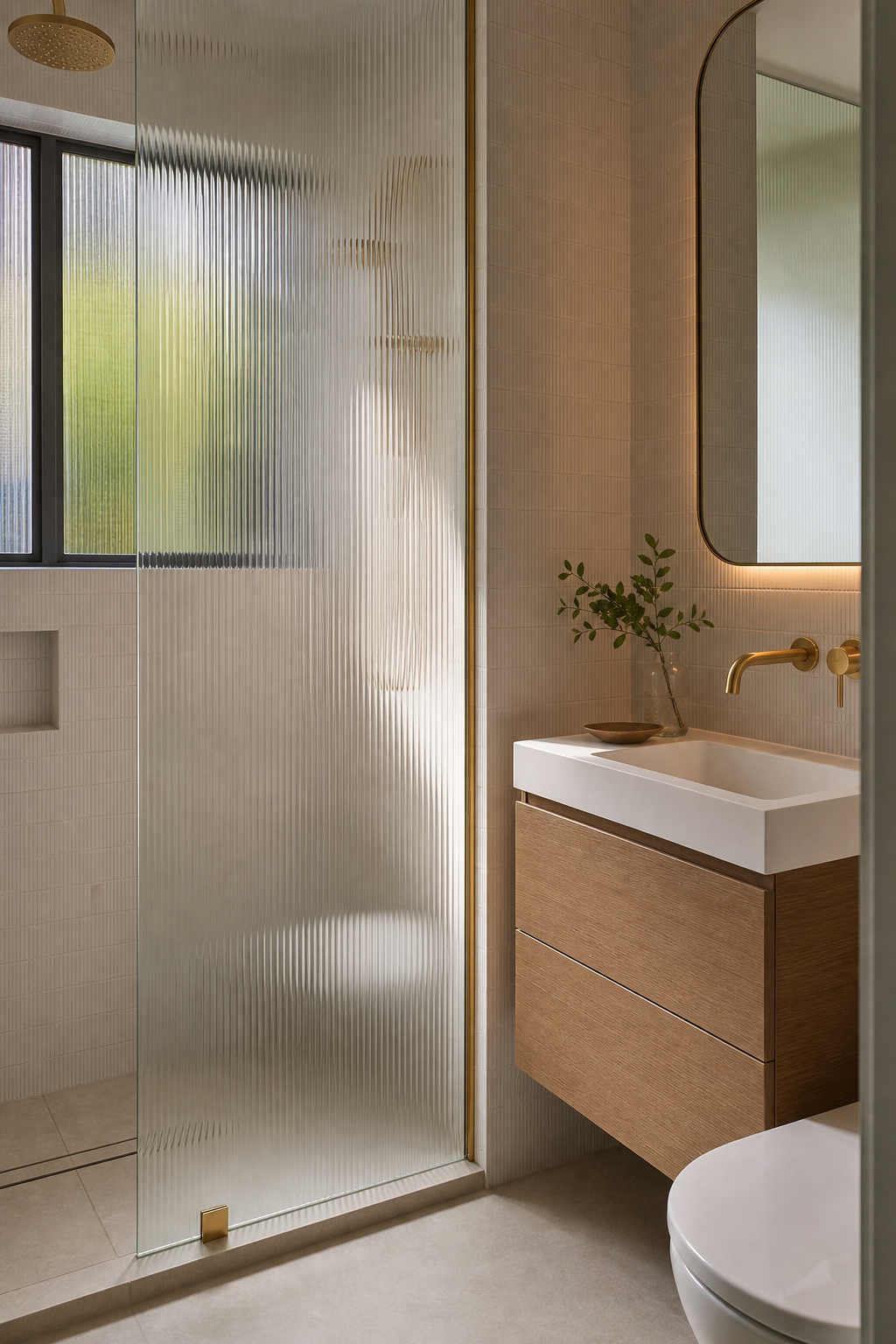
Fluted glass is a smart compromise when a bathroom needs privacy but cannot afford to lose light. Use it for a shower panel, window film, cabinet insert, or interior door. The ribbed surface blurs views while still catching daylight and adding texture. In a small bathroom, that combination is valuable because opaque materials can make the room feel closed down. Keep nearby finishes simple so the fluting does not compete with busy tile. Pair it with brushed nickel, chrome, or brass depending on the room’s mood. The effect is subtle, practical, and more refined than a plain frosted surface.
Build a Tiny Linen Tower Into a Gap
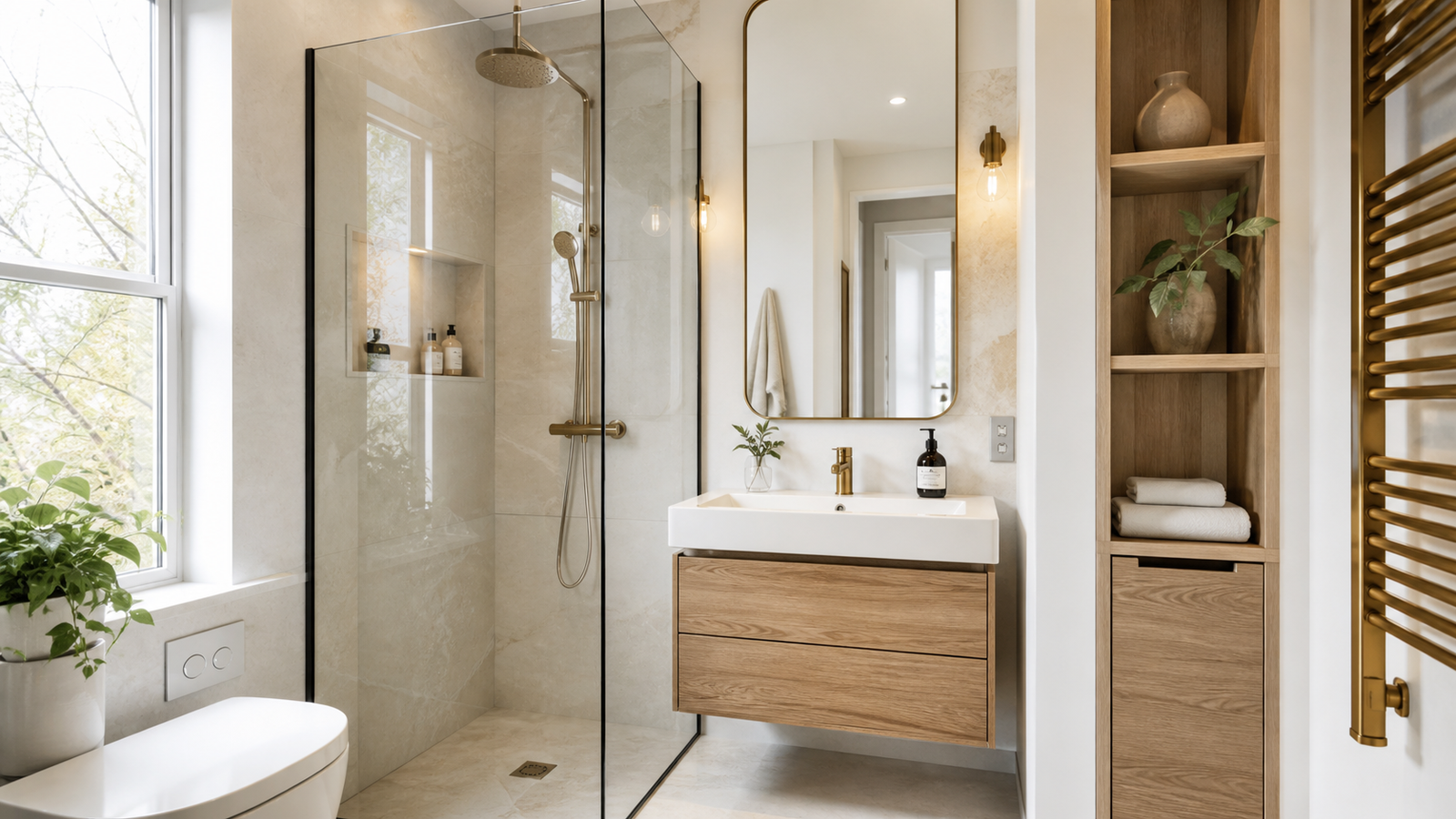
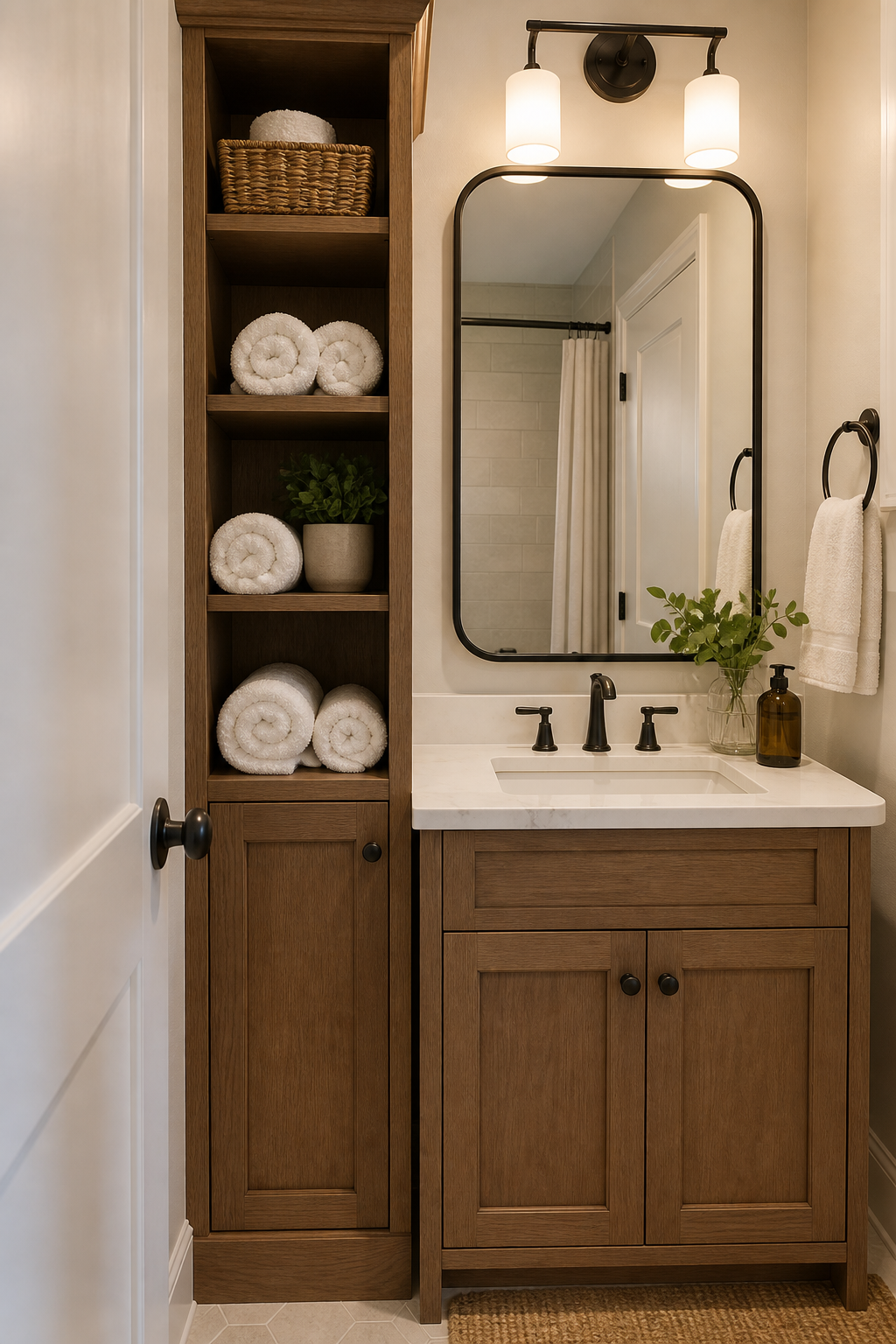
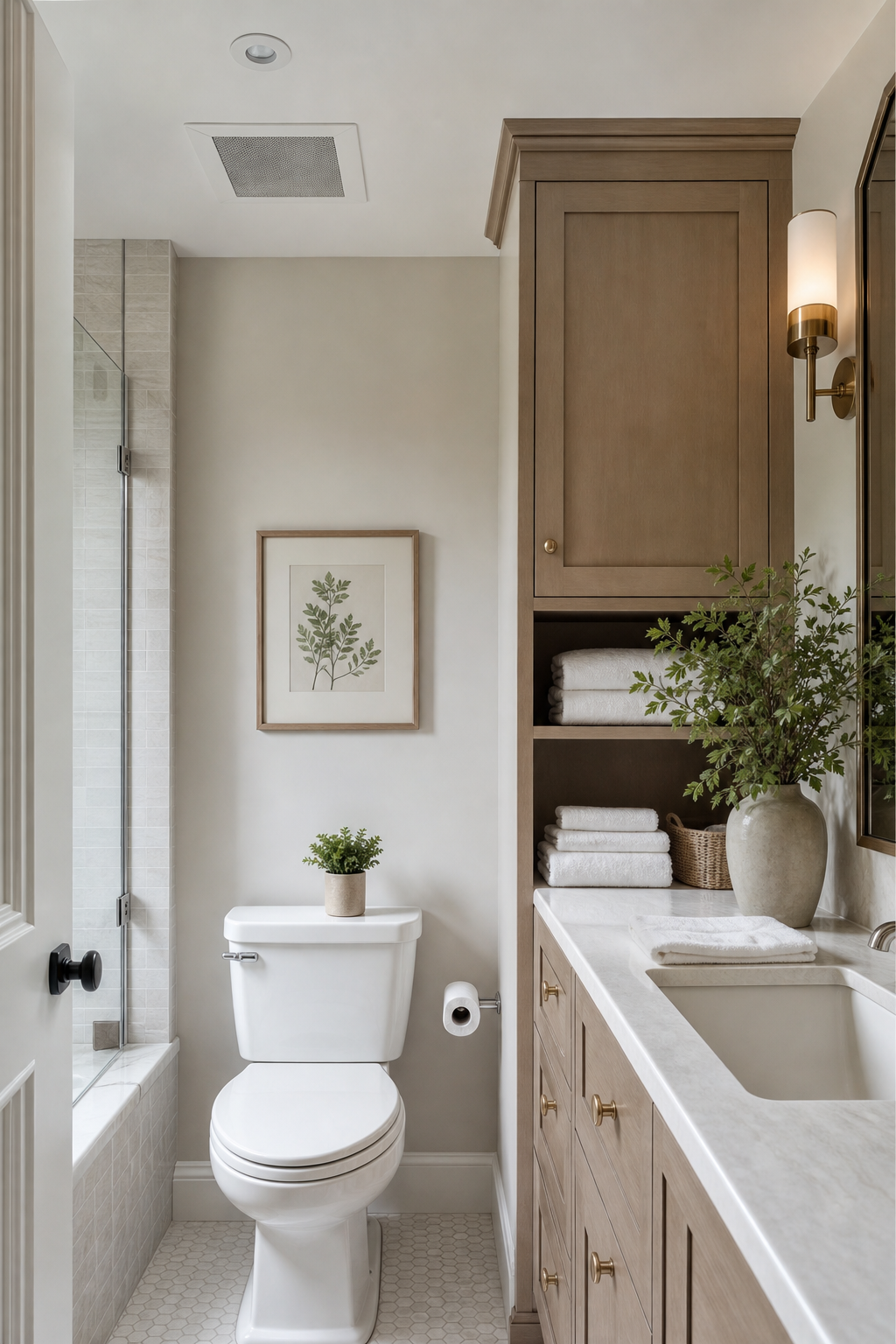
Even a narrow gap can become useful storage if it is planned carefully. A built-in linen tower between the vanity and wall, above a toilet, or beside the shower can hold towels and backup supplies without widening the footprint. Keep the depth shallow and use doors on the lower portion for less attractive items. Open shelves near eye level can hold rolled towels or a simple basket. Paint or stain the tower to match the vanity so it feels like one piece of millwork. This idea turns an awkward leftover space into storage that looks intentional instead of squeezed in.
Choose Large-Scale Tile for Fewer Grout Lines
Large-format tile can calm a small bathroom because there are fewer grout lines breaking up the walls or floor. Stone-look porcelain is especially useful because it gives depth without the maintenance of natural stone. Keep the scale proportional to the room and plan cuts carefully around the shower, toilet, and vanity. A matching grout color makes the surface feel even more seamless. This does not mean every tile must be huge; sometimes large floor tile with smaller shower mosaic for grip is the right mix. The main goal is visual quiet, which helps compact rooms feel fresh and more expensive.
Paint the Ceiling a Clean Soft White
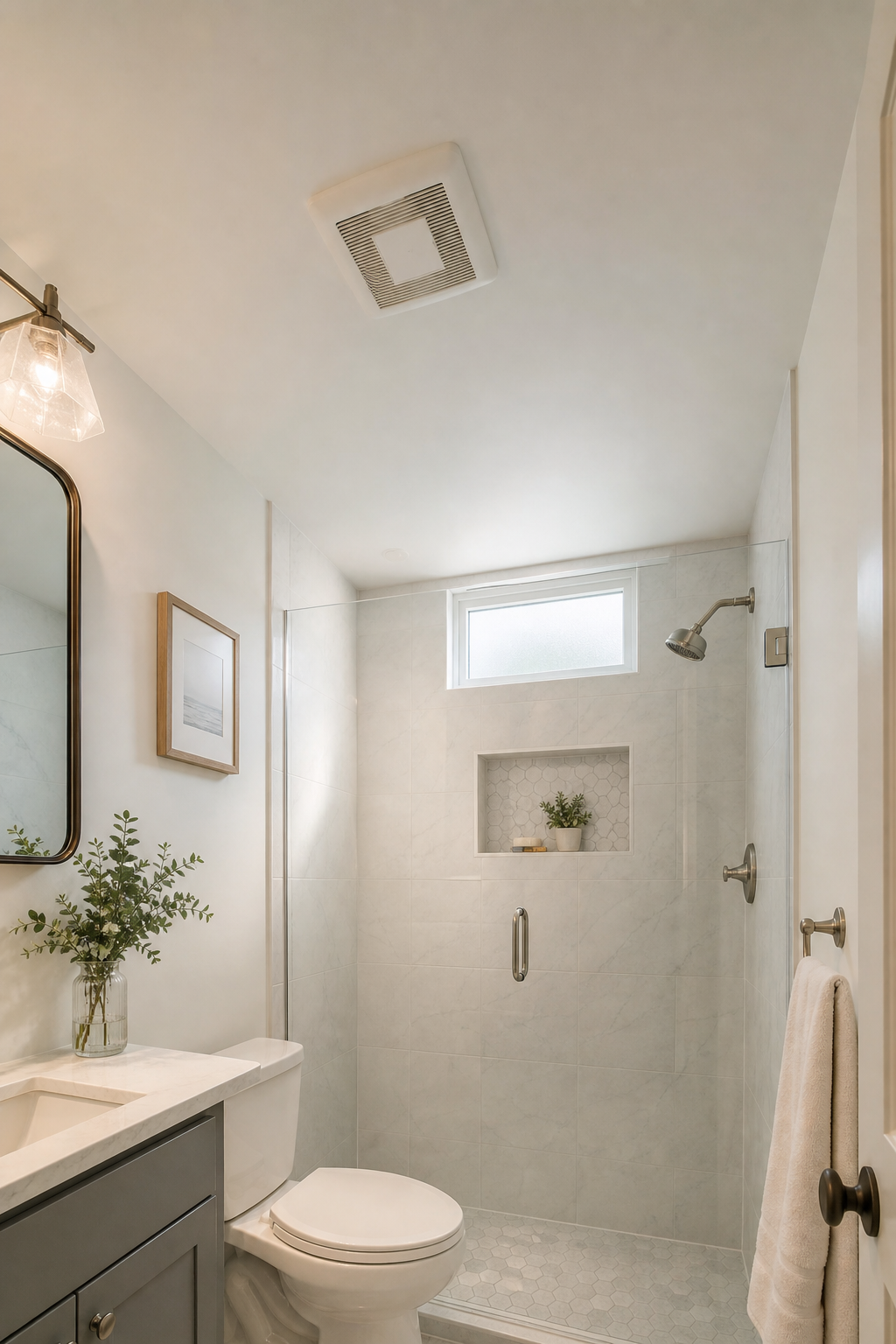
The ceiling matters in a small bathroom because it is always in view. A clean soft white with the right moisture-resistant finish reflects light and keeps the room from feeling capped. If the walls are also white, use a slightly different sheen or a warm undertone so the room has depth. In bathrooms with bold tile or colored vanities, a quiet ceiling lets those choices breathe. Add a low-profile exhaust fan and simple recessed light so the surface stays uncluttered. This is a modest decision, but it supports every other space-smart move by keeping brightness high and visual interruptions low.
Use a Slim Shelf Below the Mirror
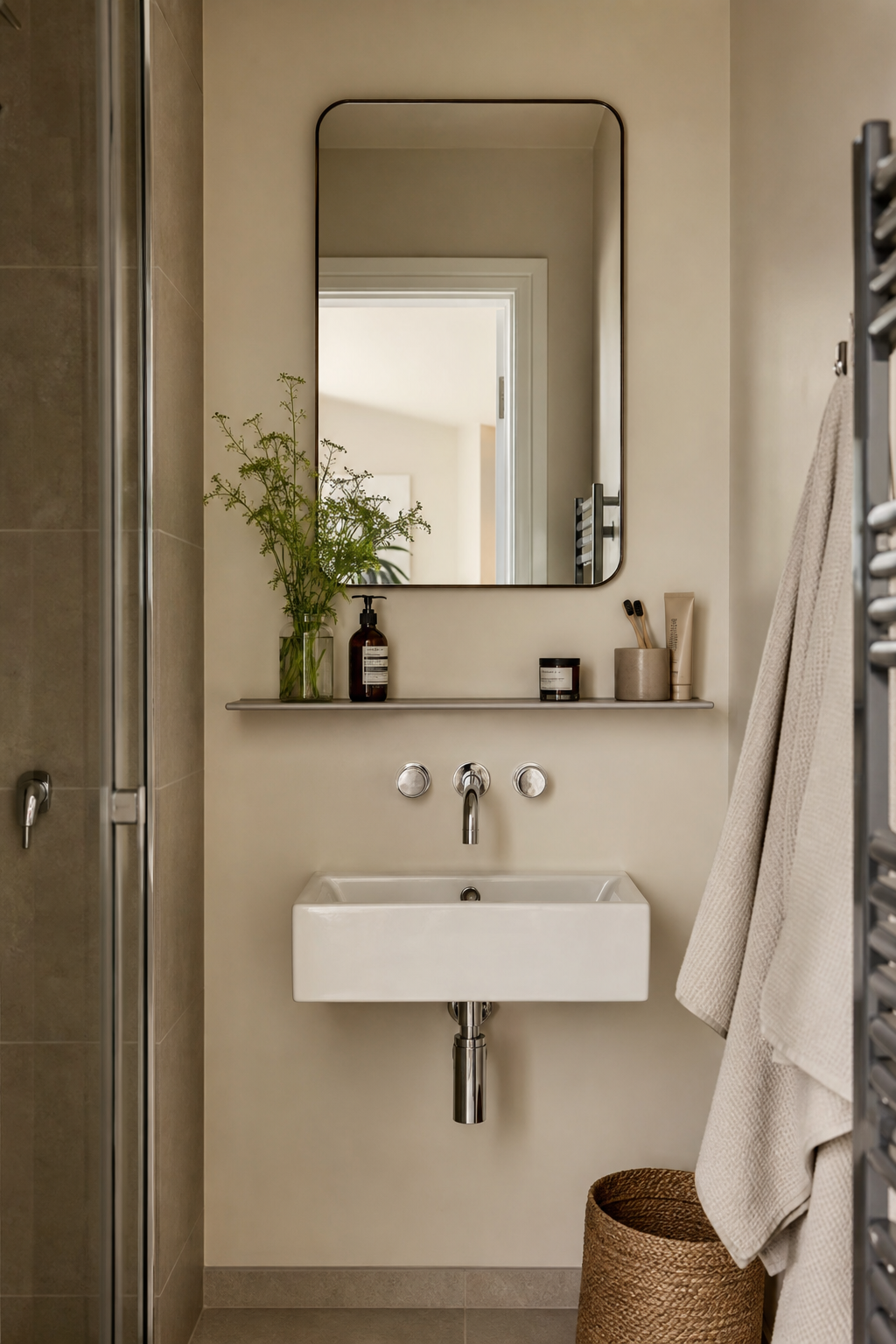
A slim shelf below the mirror gives a small bathroom just enough landing space without requiring a deeper vanity. It can hold a toothbrush cup, perfume bottle, small plant, or tray for jewelry. Choose stone, glass, or painted wood depending on the room’s style, and keep the projection shallow enough that it does not interfere with the sink. This works well with pedestal sinks and wall-mounted sinks that lack counter space. The shelf should be edited, not packed; its job is to support daily routines while making the wall feel thoughtfully finished. It is small, but it can change how the room functions.
Use a Curved Shower Rod for Comfort
A curved shower rod can make a tub-shower combination feel more generous without changing the footprint. The extra elbow room is noticeable during showers, while the curtain still tucks back when the room needs to feel open. Choose a sturdy rod with a clean finish and mount it high for a tailored line. Pair it with a simple curtain that reaches close to the floor. This is a practical upgrade for rentals, guest baths, and family bathrooms where glass would be too costly or hard to maintain. The room remains flexible, but the shower experience feels less cramped.
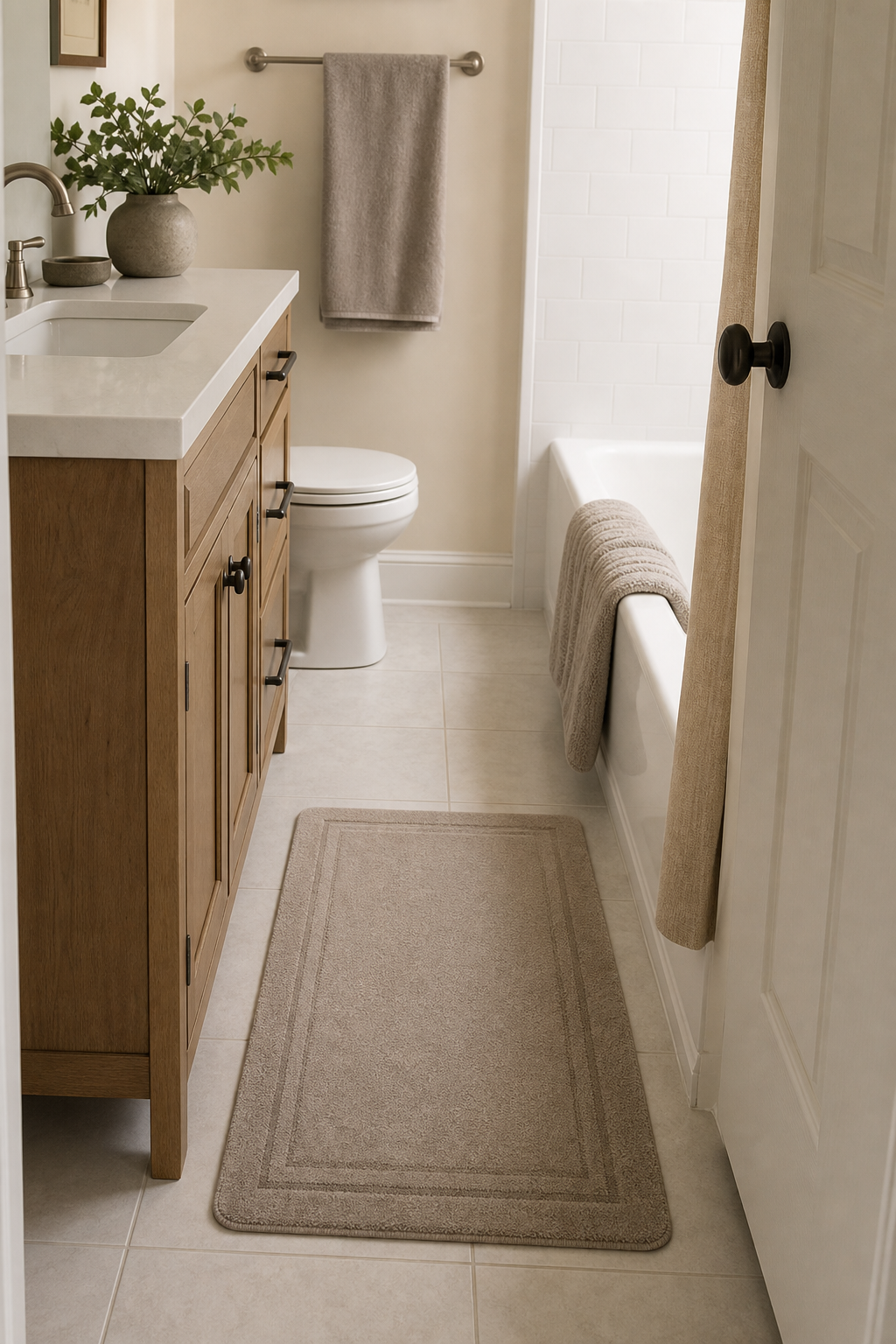
Make the Bath Mat Part of the Palette
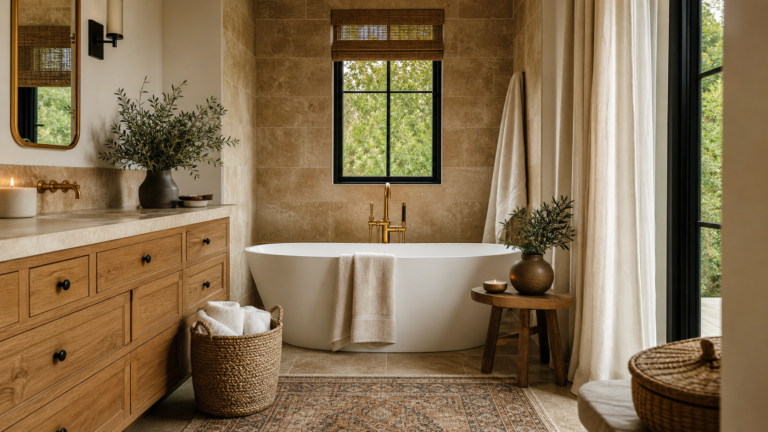
A bath mat is often treated as an afterthought, but in a small bathroom it sits in the center of the composition. Choose one that supports the room’s palette and texture. A low-profile Turkish towel mat, small vintage-style rug, ribbed cotton mat, or washable patterned runner can add softness without bulk. Keep the scale appropriate so it does not bunch near the toilet or block the door. Repeat one tone from the mat in towels or art for cohesion. The right mat warms tile underfoot and gives the room a finished, lived-in quality while still staying practical for daily use.
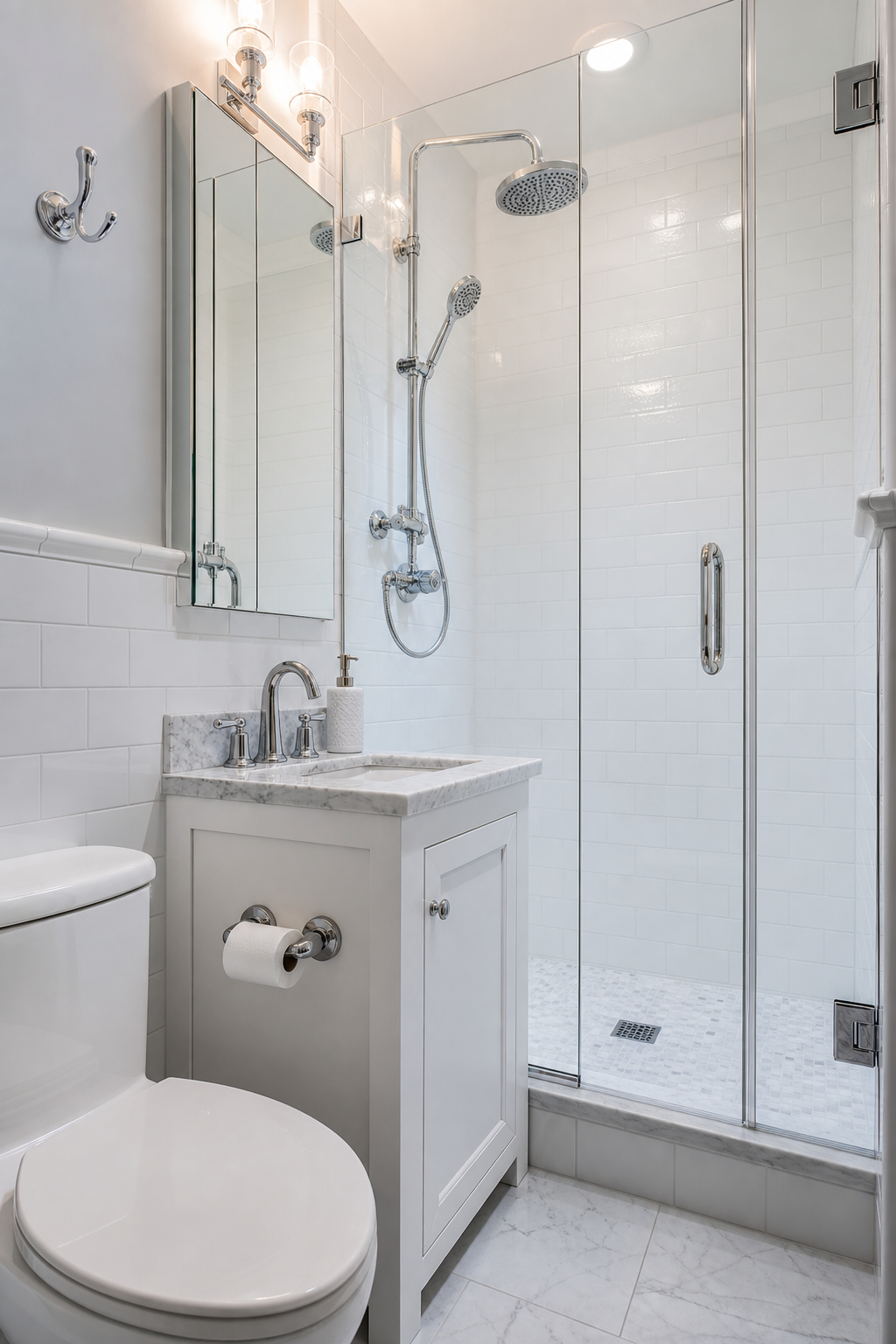
Use Chrome for a Brighter Modern Look
Chrome is underrated in small bathrooms because it reflects light, feels crisp, and pairs easily with white fixtures. While brass adds warmth, chrome can make a compact room look brighter and cleaner, especially with cool stone, white tile, or black accents. Use it consistently on the faucet, shower trim, towel hooks, and cabinet pulls so the finish feels deliberate. The shine should be balanced with soft textures, such as cotton towels, a woven shade, or matte tile. This mix keeps the bathroom from feeling sterile. For a fresh interior, chrome offers polish without visual heaviness.
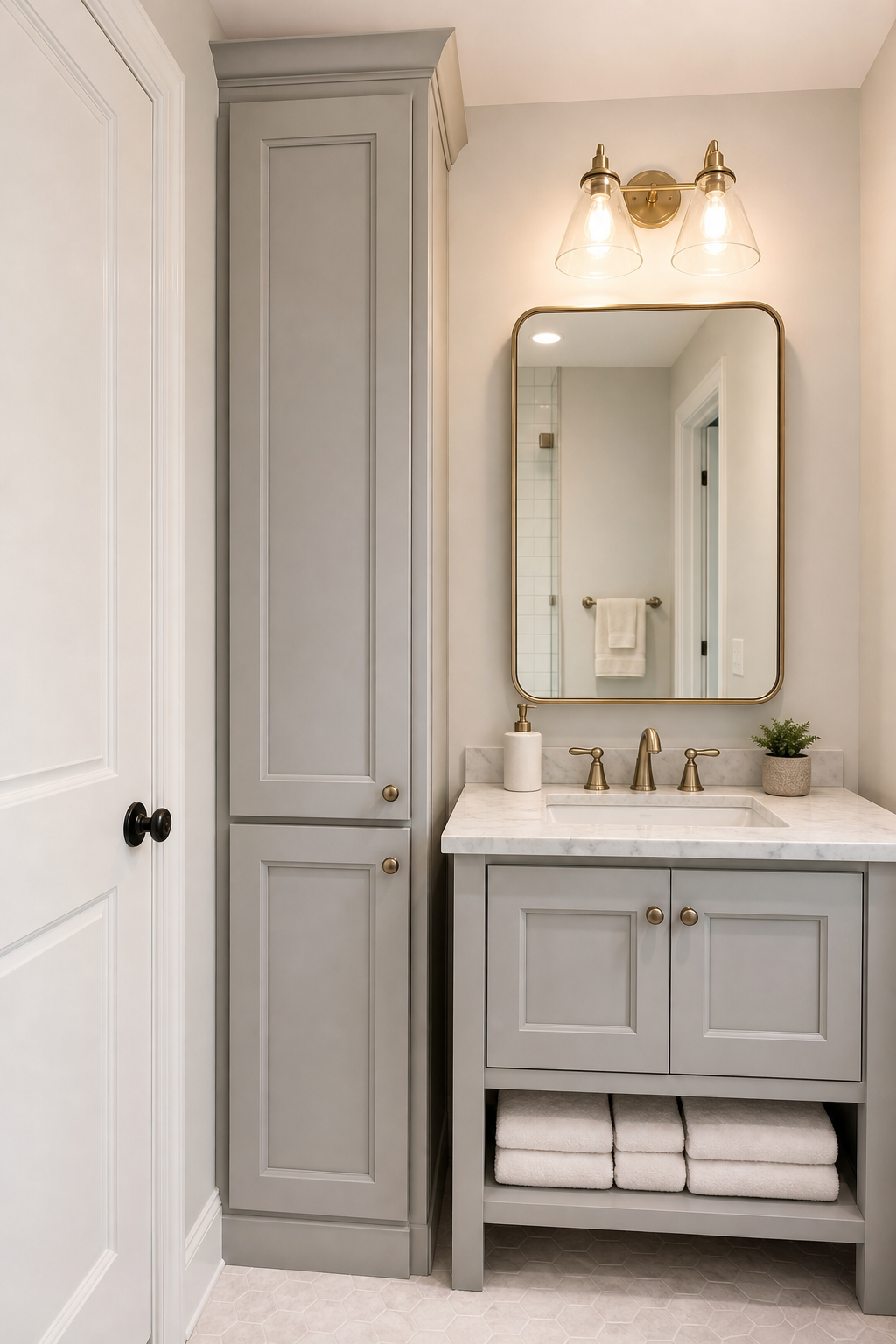
Add a Tall Narrow Cabinet Beside the Vanity
A tall narrow cabinet can hold more than a wide vanity in some small bathrooms. Use it for extra toilet paper, hair tools, cleaning supplies, or folded towels, then keep the sink base simpler. The best version reaches upward, uses shallow shelves, and has doors that close on clutter. Match it to the vanity or paint it the wall color so it does not dominate the room. Leave a little open counter or shelf nearby for everyday items. This vertical storage move is especially useful in bathrooms shared by more than one person because it gives supplies a real home.
Let a Window Set the Layout
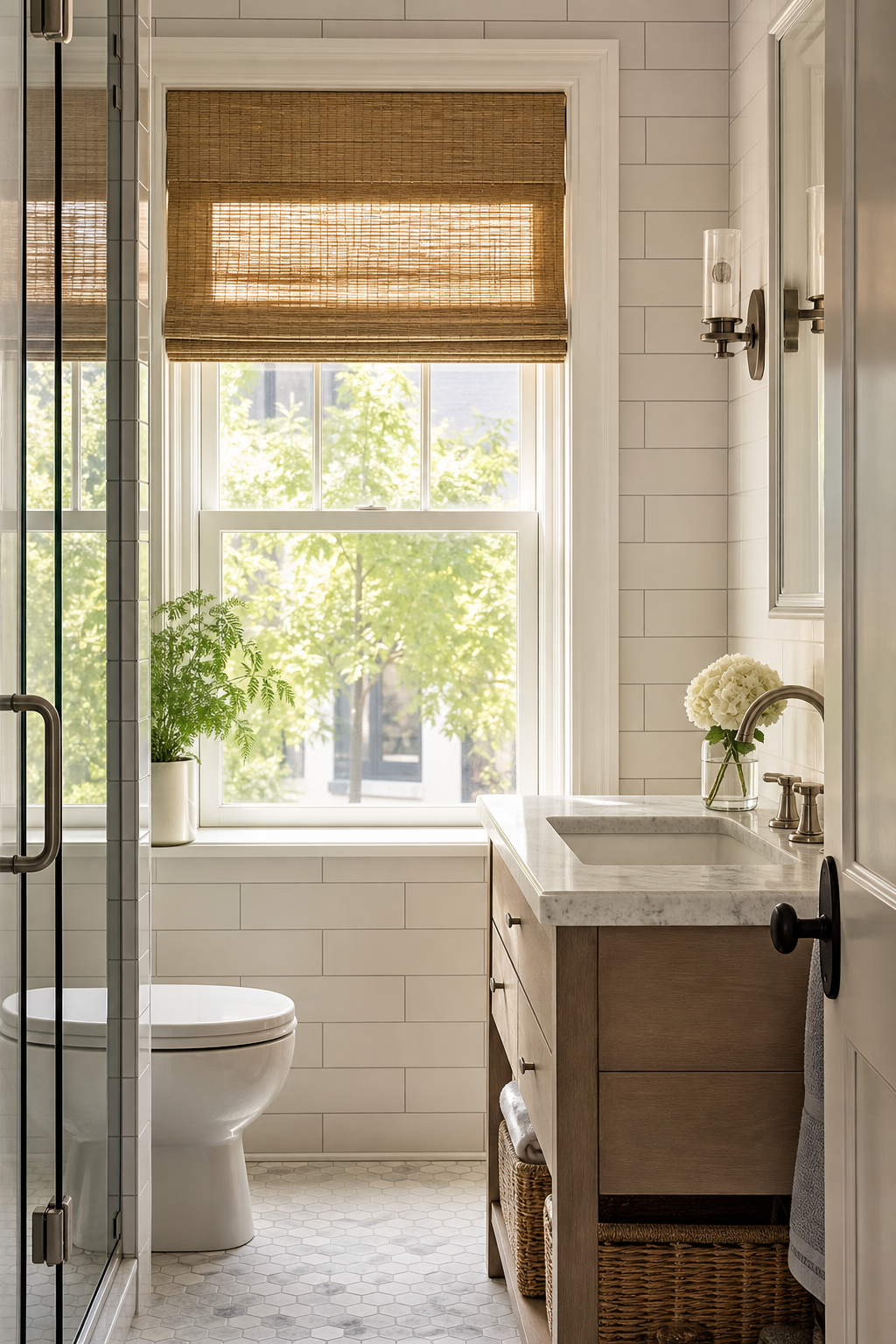
If the bathroom has a window, treat it as a design asset rather than an obstacle. Place the vanity, tub, or shower so daylight reaches the most-used zones while privacy remains protected. Woven shades, cafe shutters, reeded film, or top-down blinds can filter light without making the room dark. Keep heavy storage away from the window wall if possible. A small plant, pale tile, and reflective mirror will amplify the daylight even further. In a compact bathroom, natural light can make modest finishes feel fresher and more expensive, so the layout should protect that brightness.
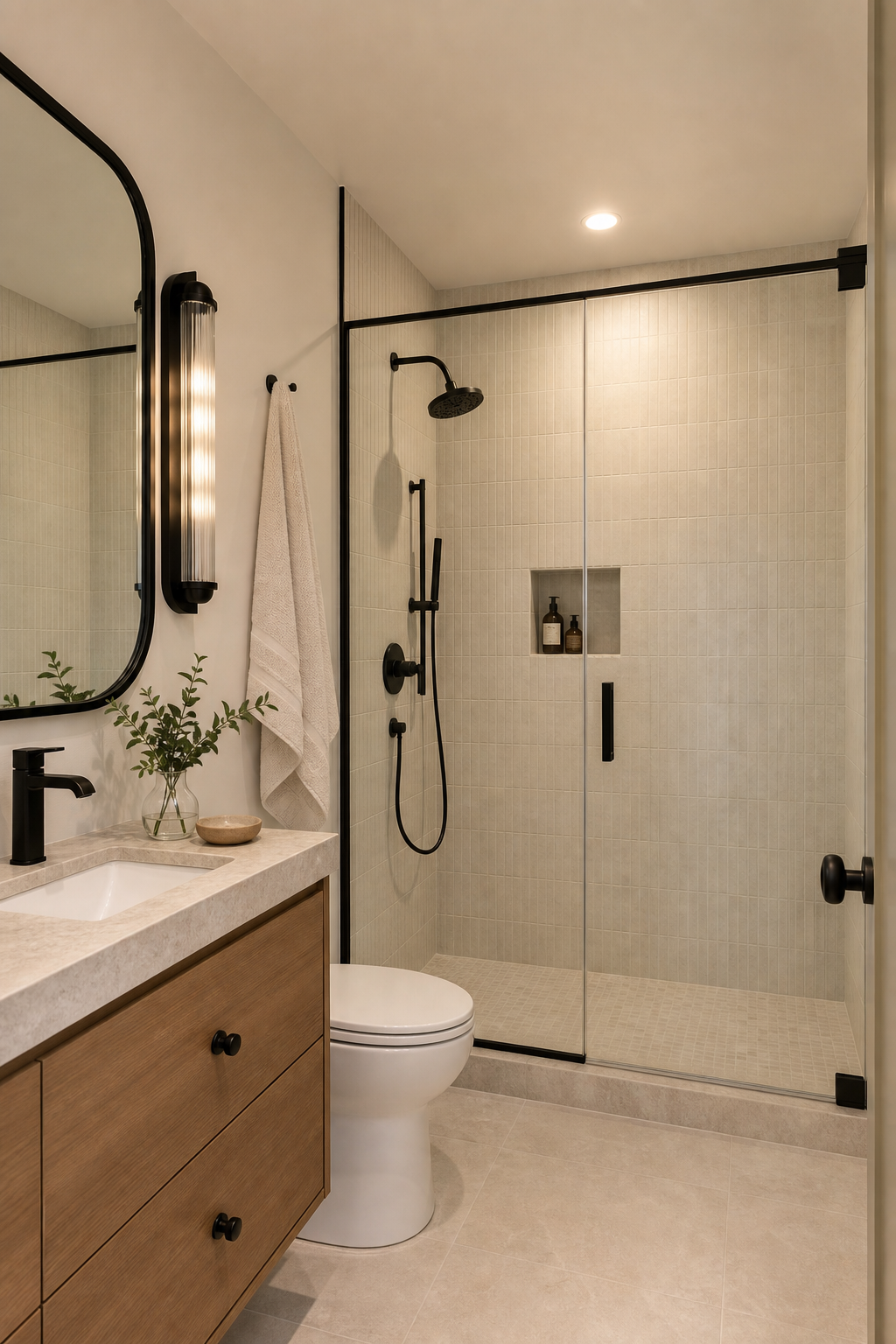
Use Black Accents Sparingly
Black accents can sharpen a small bathroom, but they work best in small doses. A black mirror frame, shower handle, picture frame, or cabinet pull adds definition against light walls without overwhelming the footprint. Avoid turning every fixture black unless the room has enough daylight and warmth to balance it. Pair black with natural wood, creamy tile, or textured towels so the contrast feels elegant rather than severe. The point is structure: thin dark lines can outline the mirror, glass, and hardware so the compact room feels intentional. Used sparingly, black makes fresh neutrals feel more tailored.
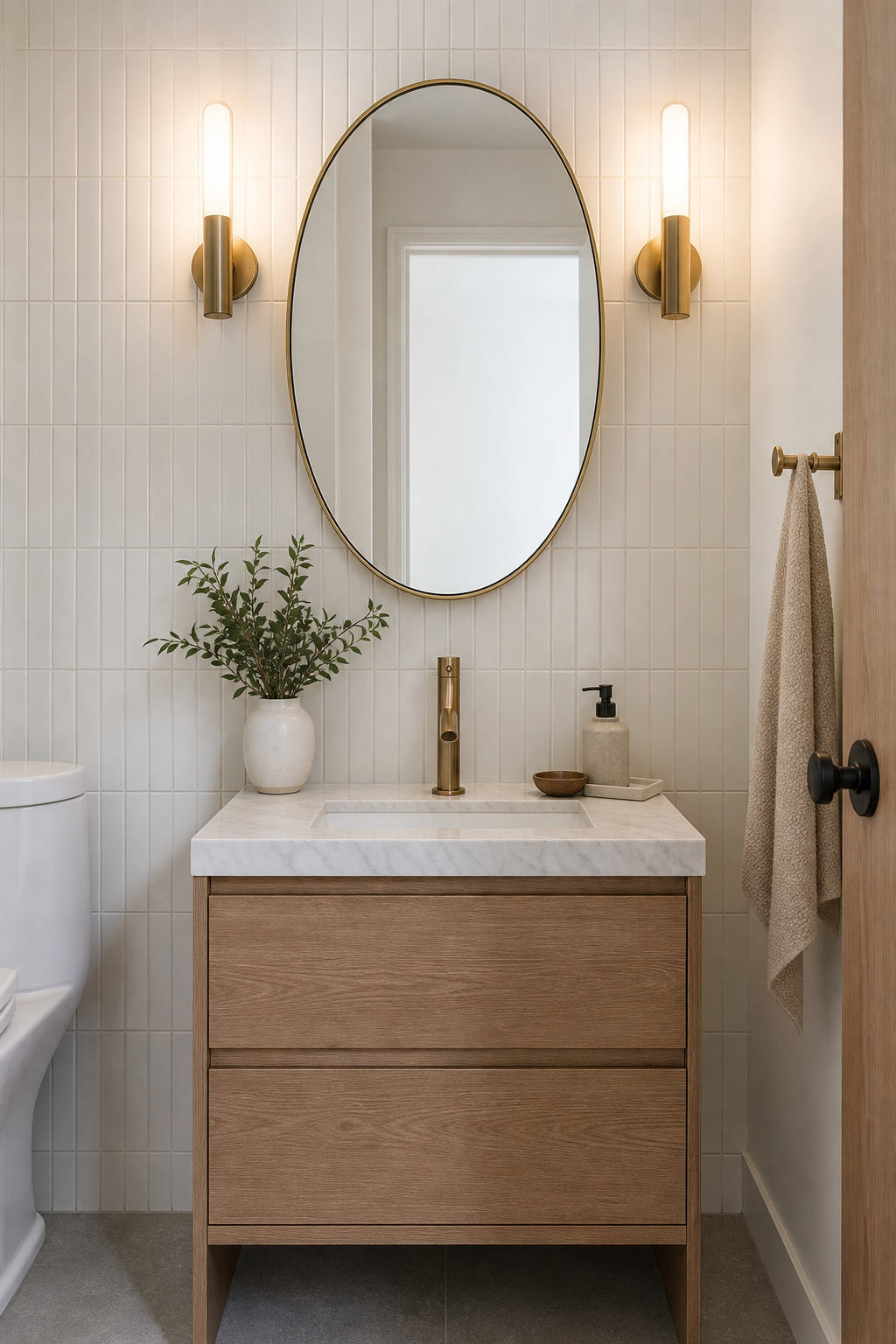
Choose an Oval Mirror to Soften Hard Lines
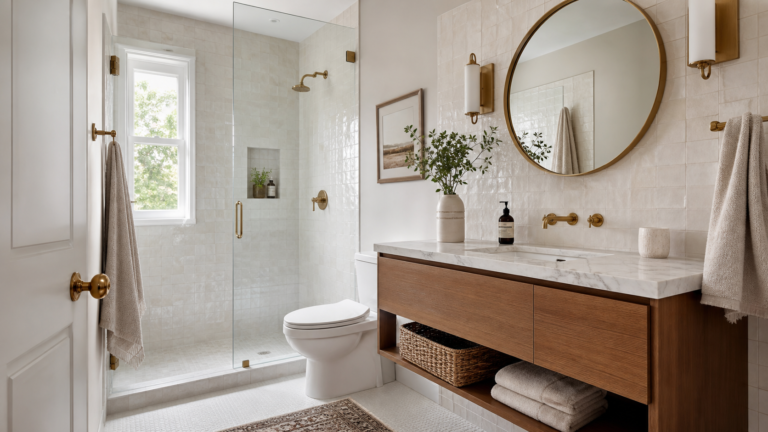
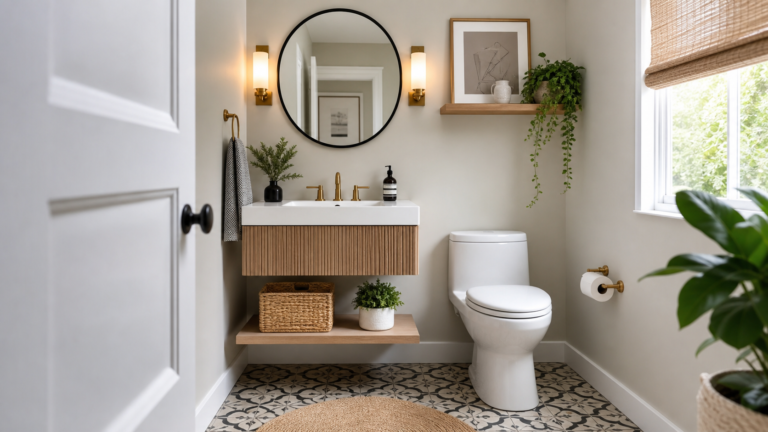
Small bathrooms often have many rectangles: tile, doors, vanity fronts, shower glass, and towel bars. An oval mirror softens those lines without taking up more space. It can make a narrow vanity wall feel gentler and more finished than a plain rectangle. Choose a size tall enough to be practical, with a slim frame that relates to the faucet finish. The curve also pairs beautifully with vertical tile, fluted wood, or a small round knob. This is an easy way to add shape and personality while keeping the rest of the bathroom simple, bright, and space-smart.
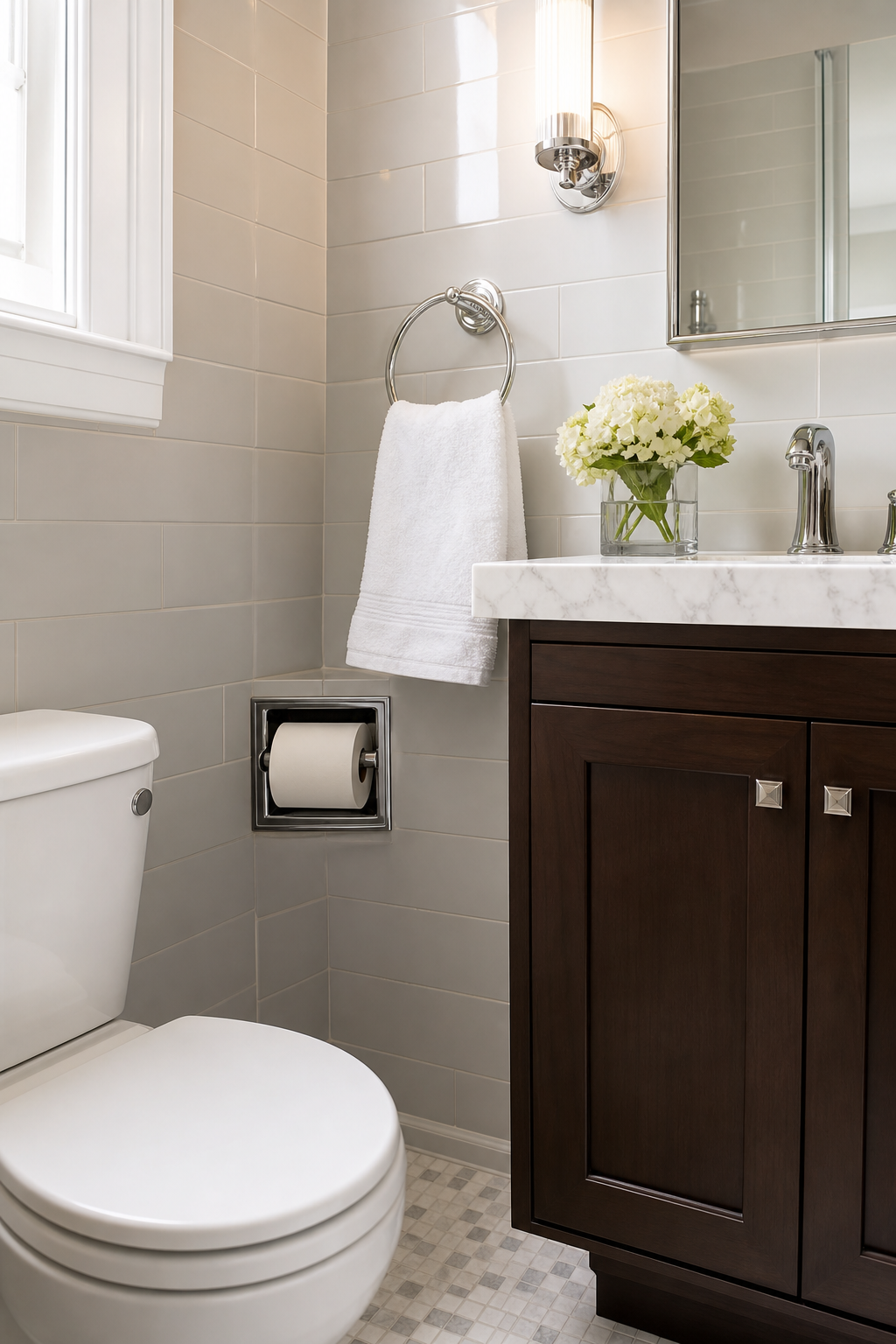
Use a Recessed Toilet Paper Holder
Tiny details matter when inches are tight. A recessed toilet paper holder keeps the roll from projecting into a narrow path and gives the wall a cleaner look. It is a small construction change, but it can be worthwhile beside a compact vanity or shower door. Match the finish to the rest of the hardware and place it where it is comfortable to reach. This idea will not transform the room alone, but it supports a more refined interior by reducing small protrusions. In a compact bathroom, fewer things sticking out means fewer visual interruptions and fewer daily annoyances.
Keep Counter Styling to a Tight Tray
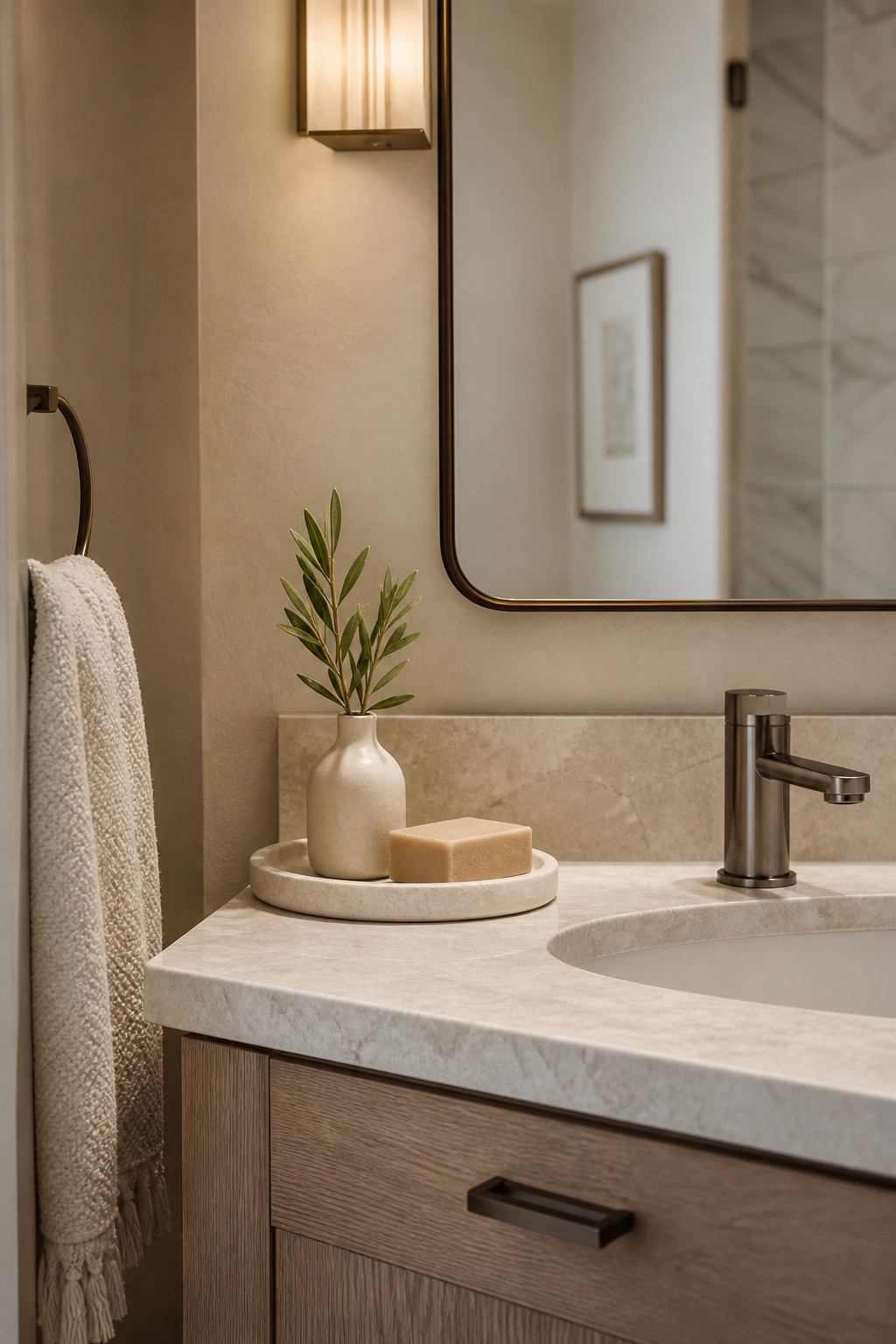
A tight tray can make bathroom counter styling feel controlled rather than cluttered. Use one small stone, ceramic, or wood tray to hold soap, a tiny vase, and perhaps one daily product. Everything else should live in a drawer, cabinet, or medicine cabinet. This rule is especially helpful in small interiors because the vanity top is often the first surface to become messy. The tray creates a boundary and makes cleaning easier: lift one object instead of many. Choose a tray that contrasts gently with the counter so it looks intentional but not loud.
Use Continuous Paint on Trim and Door
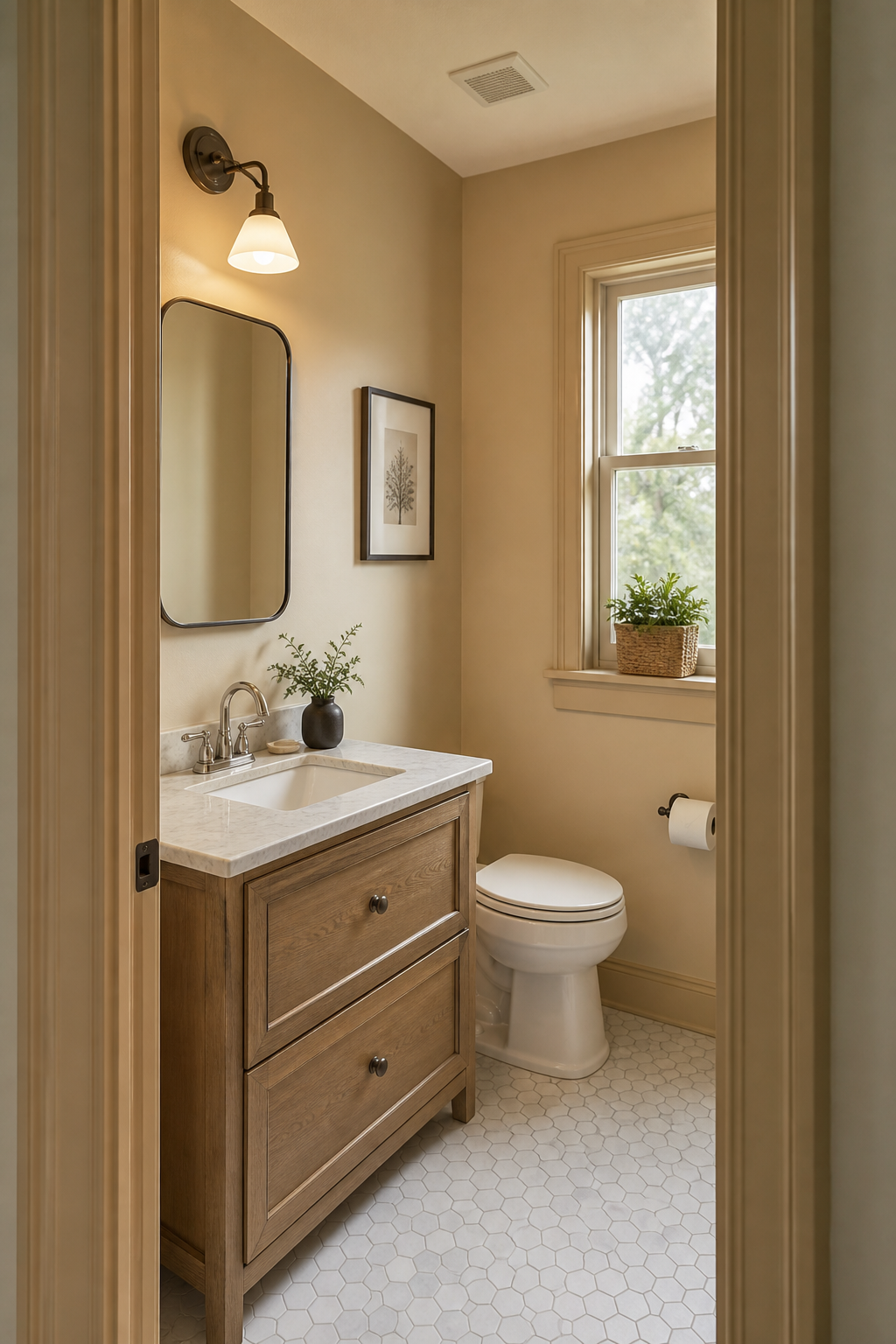
Painting the door, trim, and nearby wall in one clean color can quiet a small bathroom. It reduces visual outlines, especially in rooms with many corners, casing pieces, or awkward door swings. Soft white, warm gray, muted green, or a gentle taupe can all work depending on the tile. Use a durable finish suitable for moisture and wipeability. This approach lets the eye focus on the mirror, vanity, tile, or window instead of chopping the room into pieces. It is also a smart refresh for older bathrooms where replacing every fixture is not part of the plan.
Finish With Better Ventilation and Hidden Storage
Freshness is not only visual in a small bathroom. Good ventilation, closed storage, and easy-clean surfaces keep the room feeling pleasant after daily use. Upgrade the fan if it is noisy or weak, use drawers and cabinets for products, and choose washable textiles that dry quickly. Hidden storage prevents visual clutter, while ventilation protects paint, grout, and towels. The most beautiful small bathroom will not feel fresh if it stays damp or crowded. Treat these practical details as part of the design plan, then the pretty choices have a better chance to last.
The best small bathroom interiors are edited, not empty. Choose the moves that improve your layout first, then add storage, lighting, texture, and one or two details with personality. When every inch has a purpose and the palette stays calm, a compact bathroom can feel fresh, efficient, and genuinely stylish.