23 Bathroom Ideas For A Spa-Like Refresh
A spa-like bathroom does not have to feel clinical or overly minimal. The best refreshes combine comfort, function, and atmosphere: warm materials underfoot, flattering light at the mirror, towels that feel generous, and storage that keeps daily products from taking over the room. Even a small bathroom can feel calmer when the palette is edited and every object has a purpose. These bathroom ideas focus on changes that create a more restorative routine without ignoring real life. Use them to soften a powder room, update a guest bath, or give a primary bathroom the kind of quiet polish that makes mornings and evenings feel more intentional.
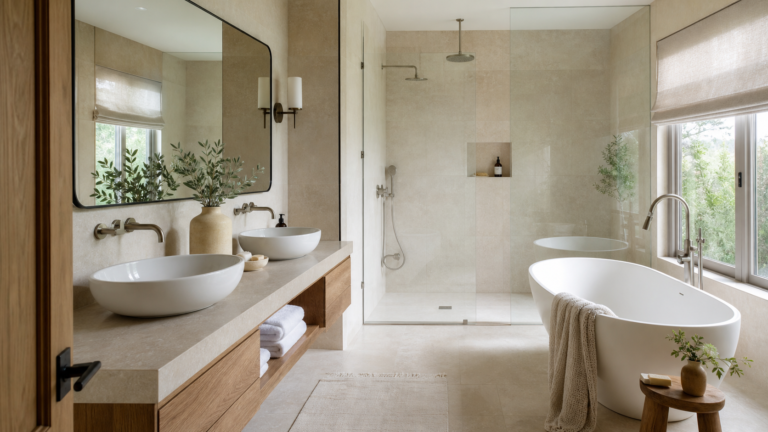
Start With A Warm Stone Palette
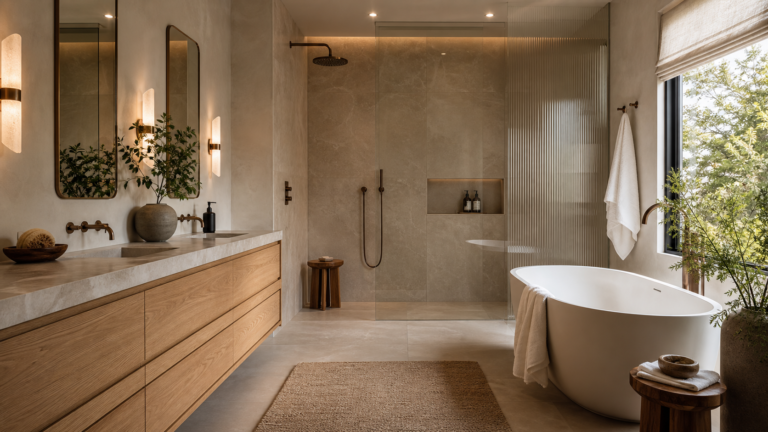
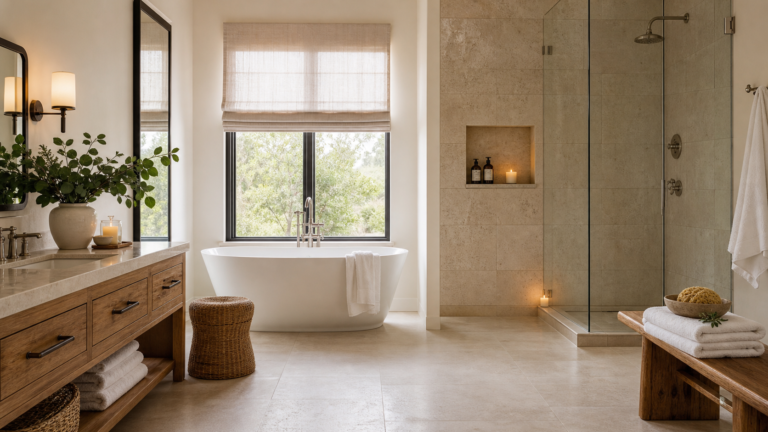
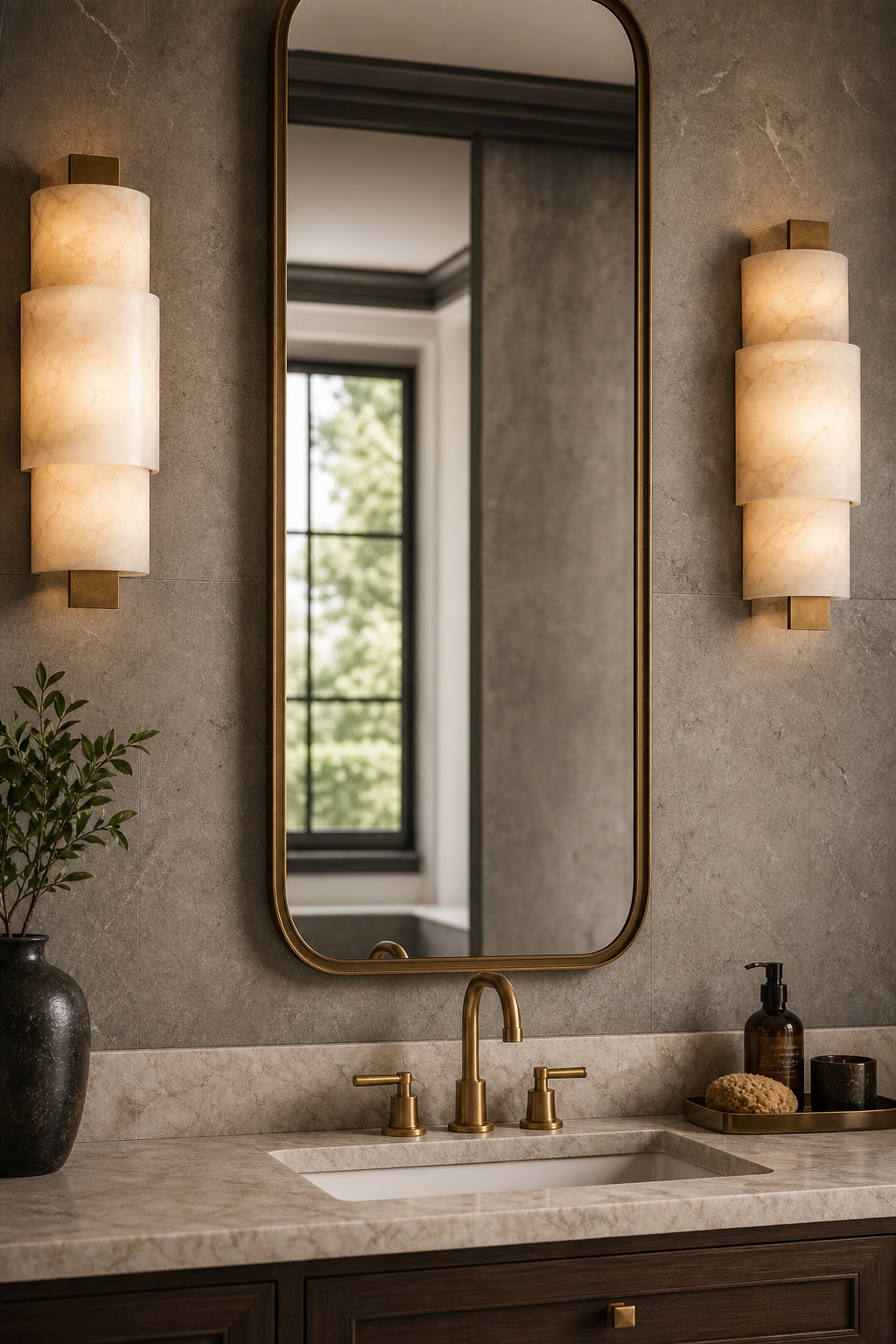
Stone is one of the fastest ways to give a bathroom a spa-like mood, but the tone matters. Warm limestone, travertine, honed marble, and sandstone-look porcelain feel softer than stark gray tile. Use the material on the floor, shower walls, vanity backsplash, or a simple ledge so the room has one calm foundation. Keep the grout close in color to the tile for a seamless effect. If real stone is not practical, choose a porcelain with subtle veining and a matte finish. The goal is quiet depth, not a busy pattern. Warm stone also pairs beautifully with oak, brass, plaster, white towels, and soft greenery.
Choose A Floating Oak Vanity
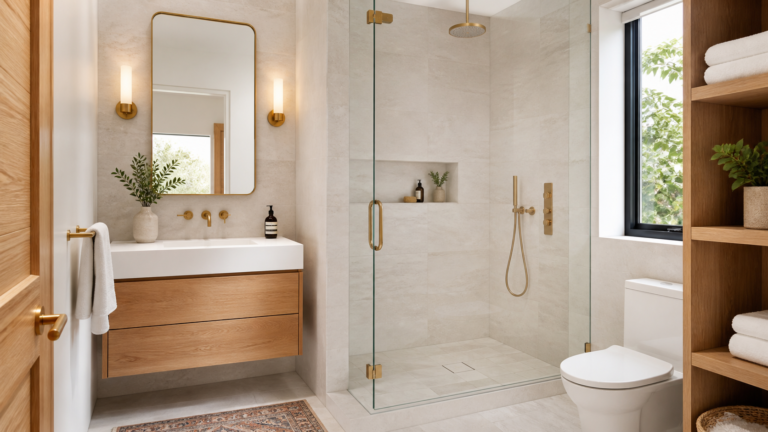
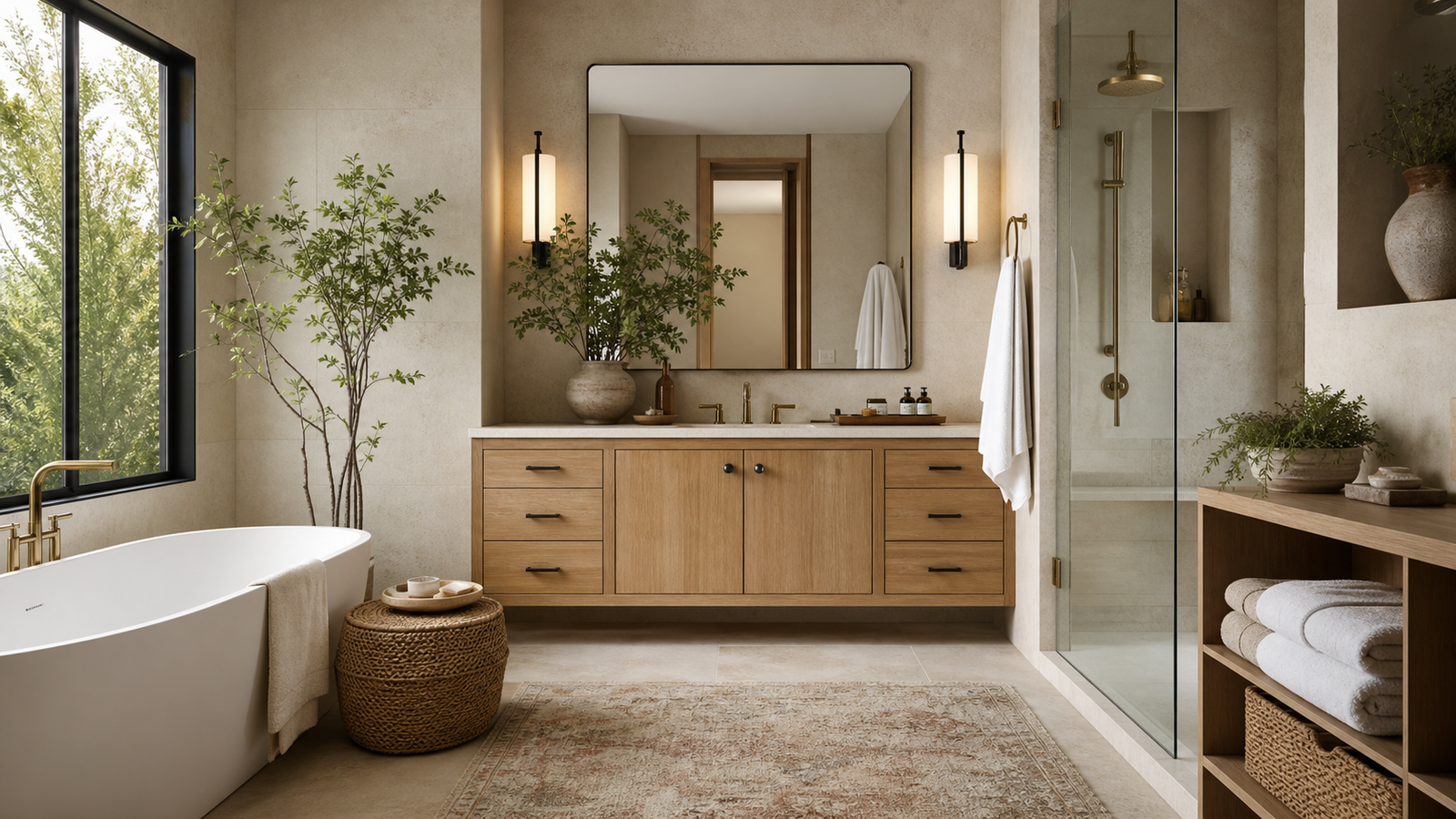
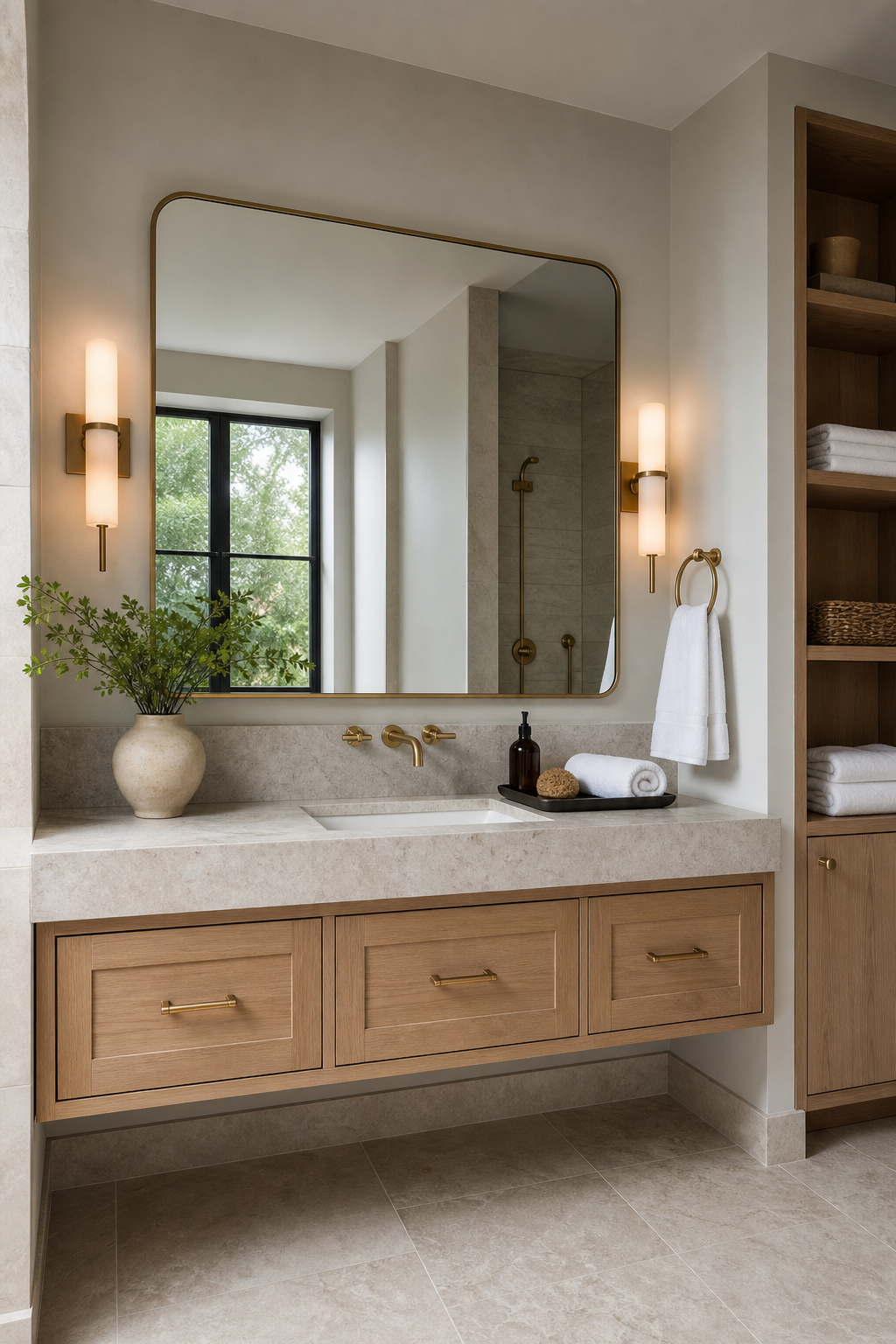
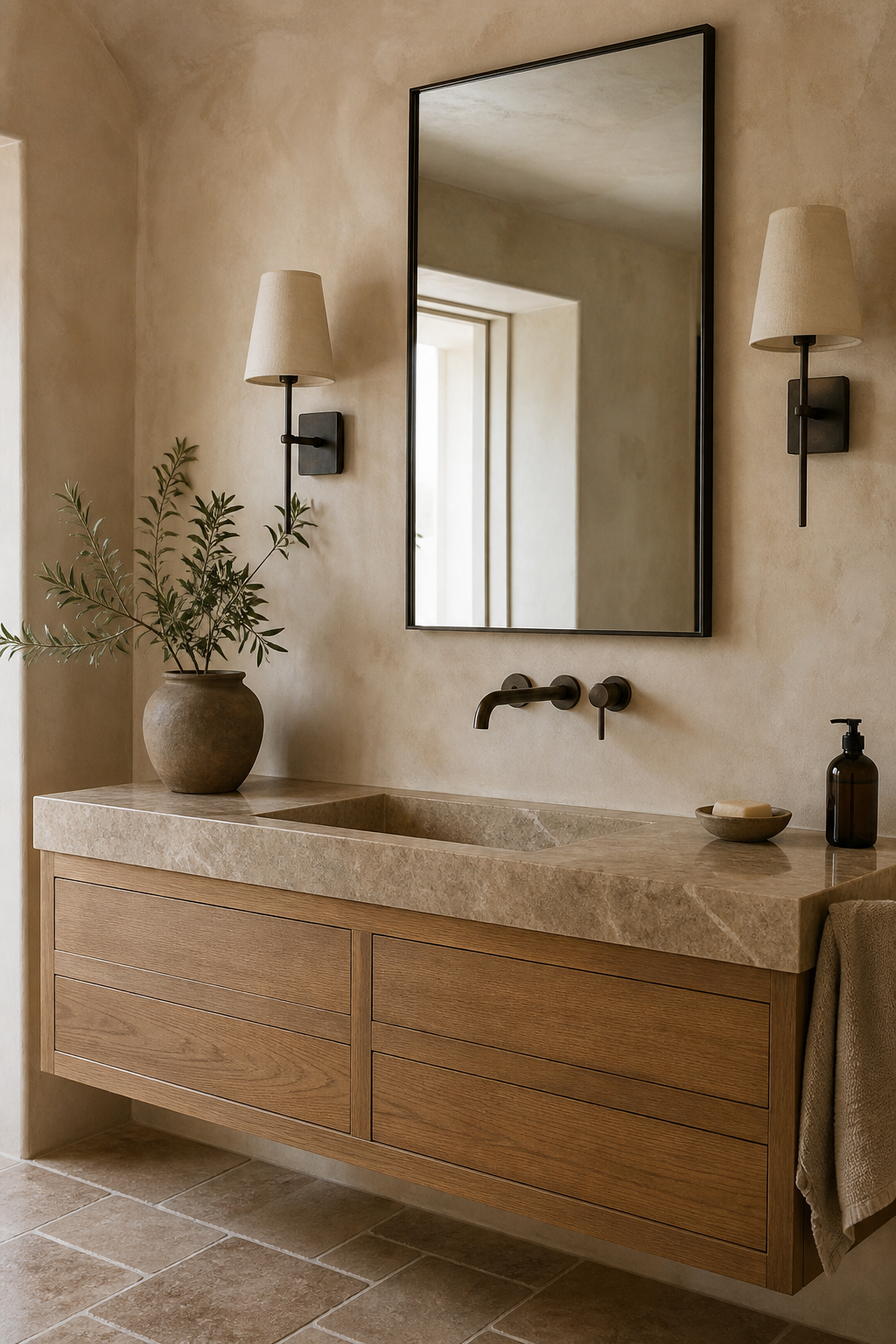
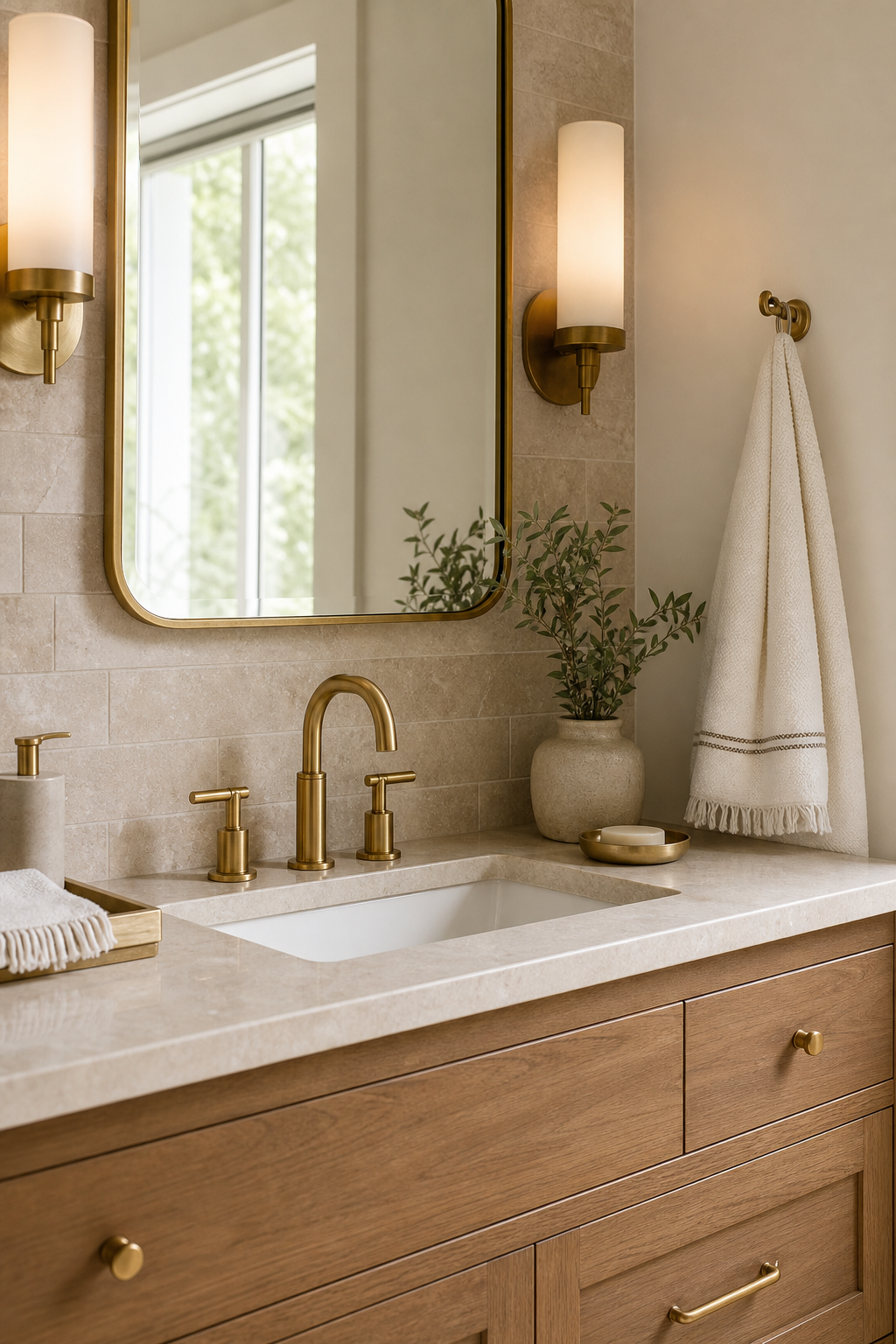
A floating vanity instantly lightens a bathroom because more floor remains visible. Oak brings warmth and texture without feeling heavy, especially when paired with a simple stone counter and understated hardware. For a spa effect, keep the profile clean and let the wood grain do the decorative work. Drawers are usually more functional than deep cabinet doors because they separate towels, tools, and skincare. Leave a few inches of open space beneath the vanity so the room feels airy and easier to clean. This idea works well in both small baths and large primary bathrooms because it gives storage a tailored, architectural presence.
Layer Sconces Beside The Mirror
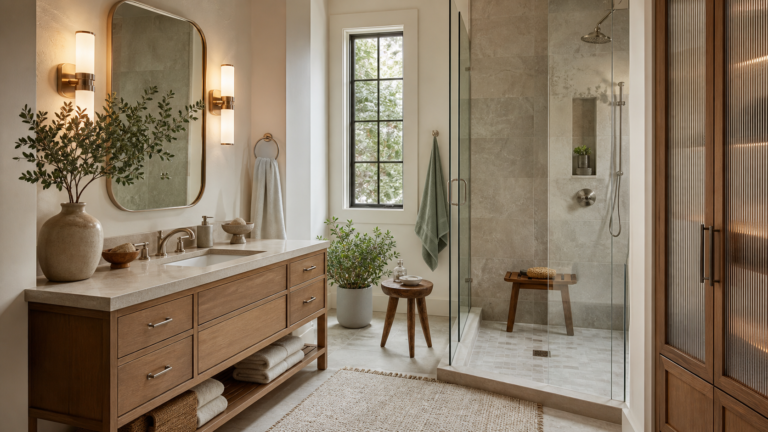
Bathroom lighting should be flattering as well as practical. Sconces placed beside the mirror soften shadows on the face better than one harsh overhead fixture. Choose glass, linen, alabaster, or ceramic shades that diffuse light gently. If space is tight, a slim vertical sconce can still create a spa feeling. Put the lights on a dimmer so the room can move from bright morning routines to a softer evening bath. The finish should relate to the faucet or cabinet hardware, but it does not need to match perfectly. Good lighting makes tile, mirrors, and towels look richer, and it changes the entire emotional temperature of the bathroom.
Add A Built-In Shower Bench
A shower bench makes a bathroom feel more considered because it supports comfort, accessibility, and styling. It gives you a place to sit, shave, rest products, or display a folded towel and bath brush. For the most seamless look, run the same tile across the bench and shower walls. A stone slab top can add quiet contrast and is easier to wipe down than many grout lines. The bench should be deep enough to use but not so large that it crowds the shower. Even in a smaller walk-in shower, a compact corner bench can bring that spa-like sense of ease.
Use Ribbed Glass For Soft Privacy
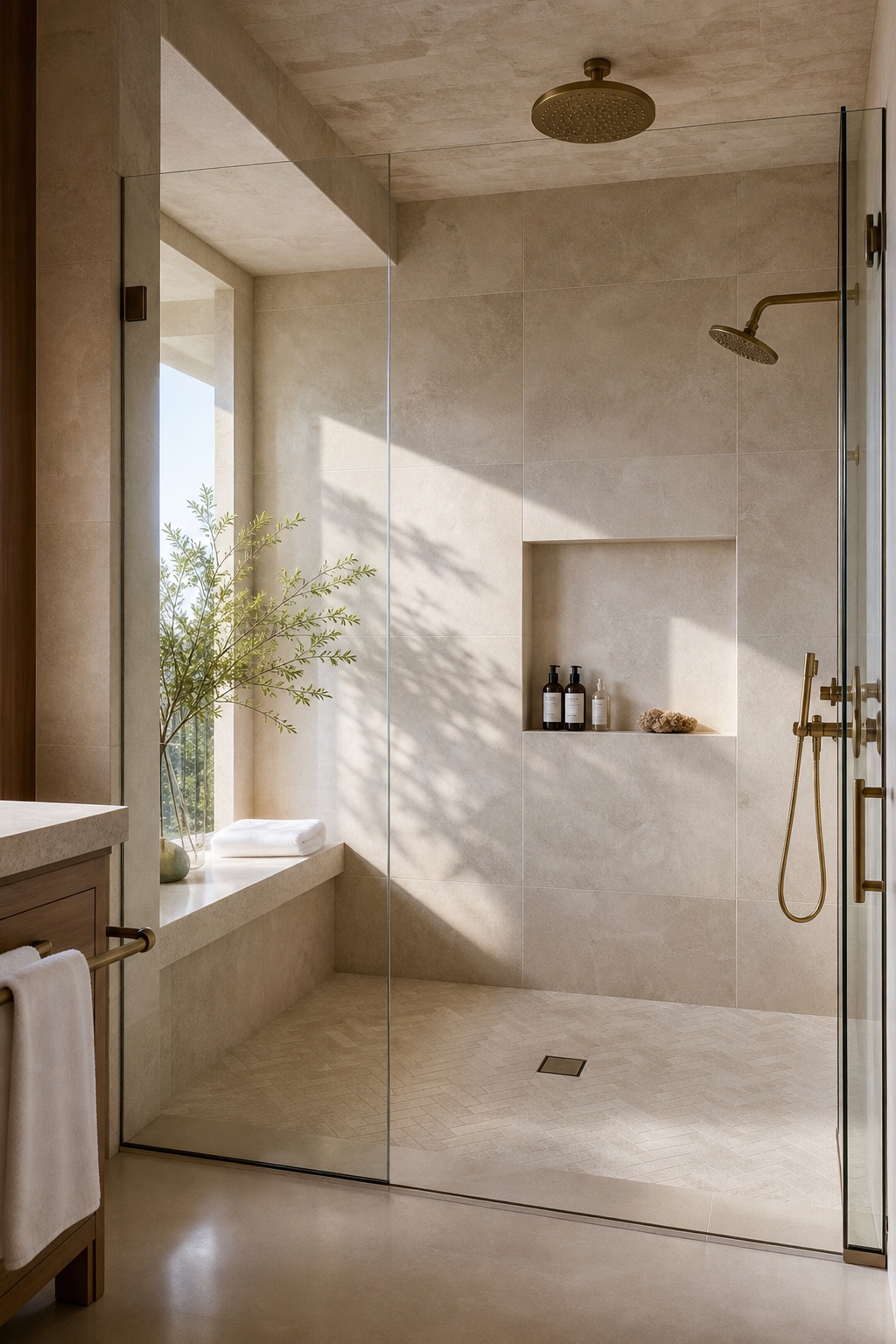
Ribbed glass adds privacy without closing off the bathroom visually. It is especially useful for shower panels, water closets, or a bathroom door where clear glass would feel too exposed. The vertical texture catches light and brings a subtle decorative rhythm to the room. Pair it with simple tile and restrained hardware so the glass remains elegant rather than busy. Ribbed glass also helps a bathroom feel less hard, because the texture blurs reflections and softens strong lines. Choose a slim black, brass, or nickel frame depending on the rest of the fixtures. The effect is practical, airy, and quietly luxurious.
Style Open Shelves With Restraint
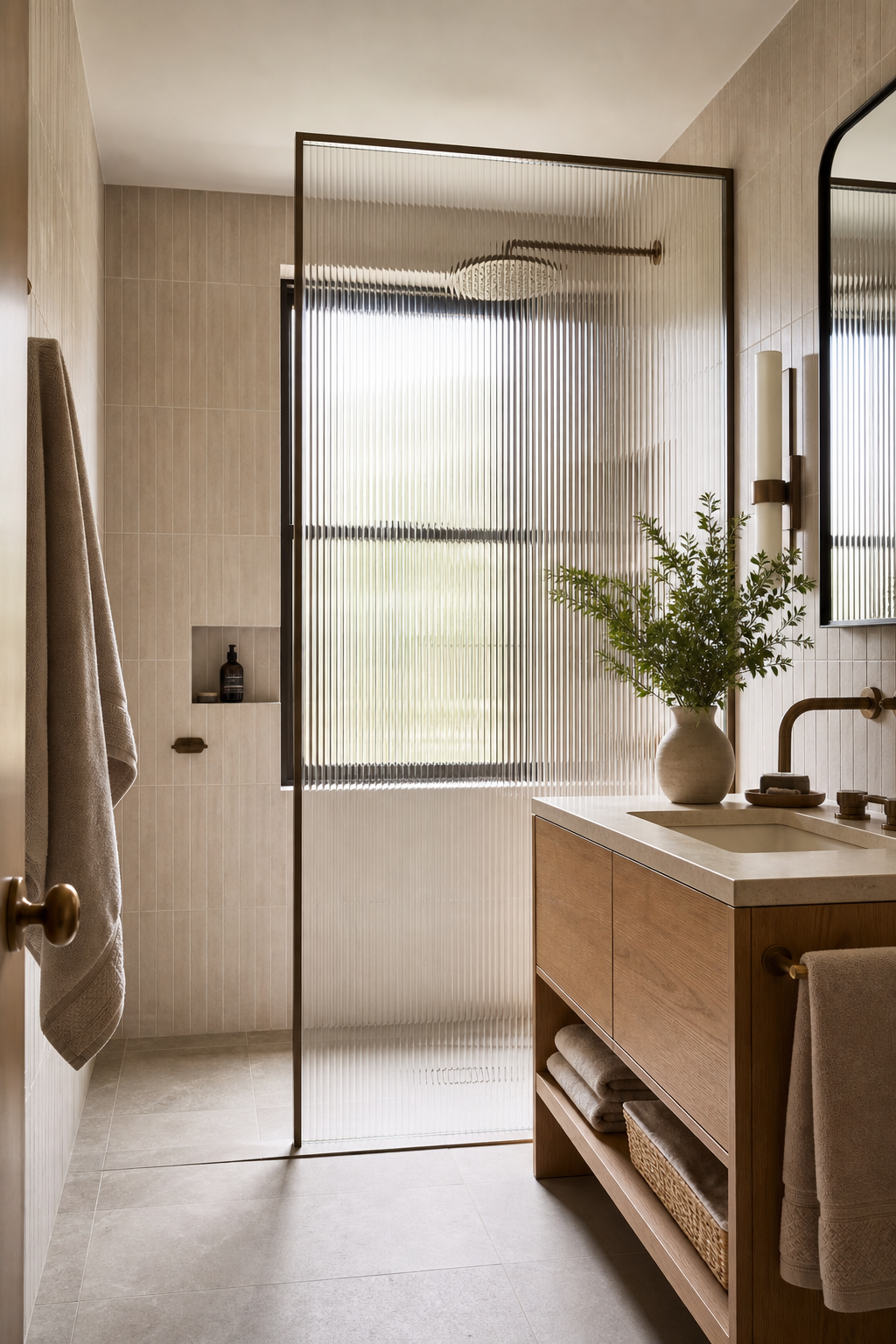
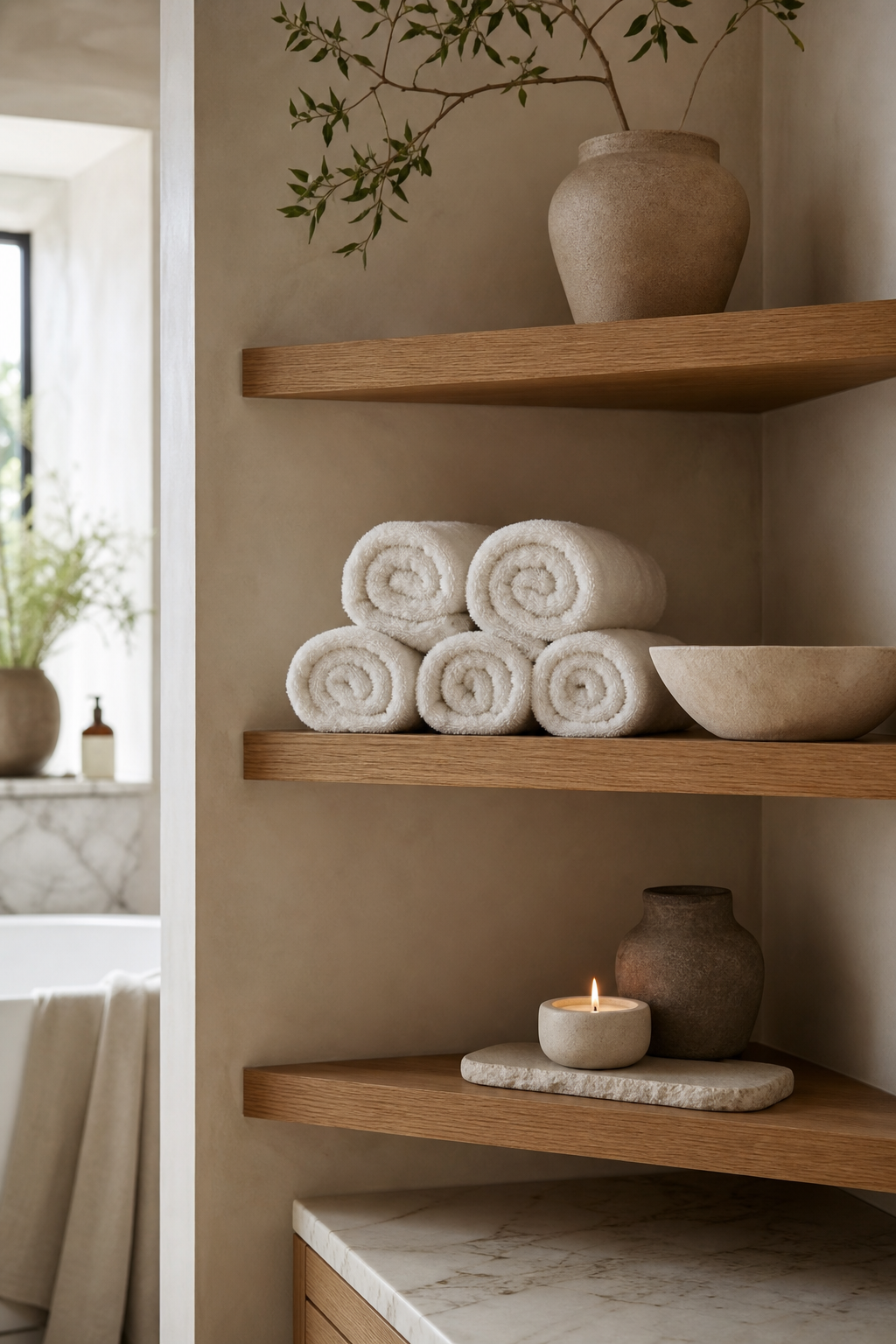
Open shelves can make a bathroom feel warm and personal, but only when they are edited. Use them for rolled towels, a ceramic vessel, a small tray, a candle, or attractive bath salts in simple containers. Avoid crowding the shelf with every product you own. Repeating a narrow palette of white, wood, stone, and one metal finish keeps the arrangement calm. Shelves work especially well above a bathtub, beside a vanity, or in a recessed niche. The key is leaving breathing room around each object. A few useful pieces, beautifully arranged, look more spa-like than a row of mismatched bottles.
Bring In A Freestanding Soaking Tub
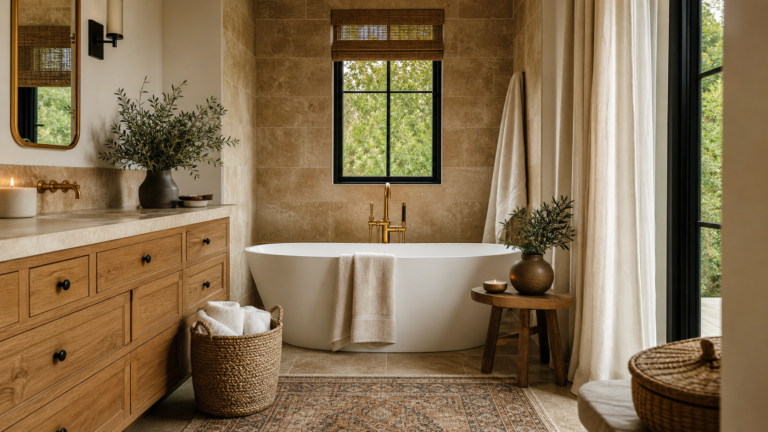
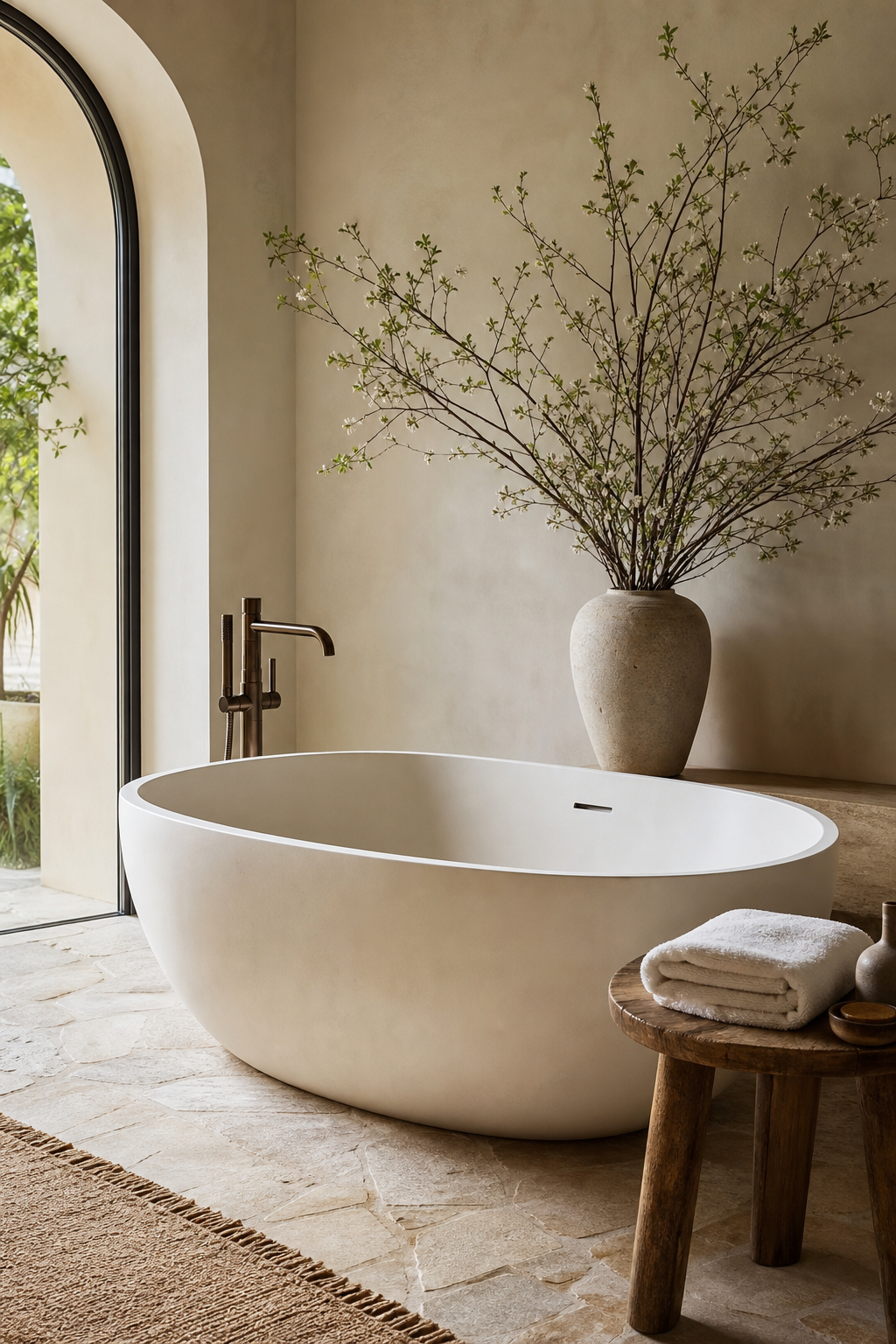
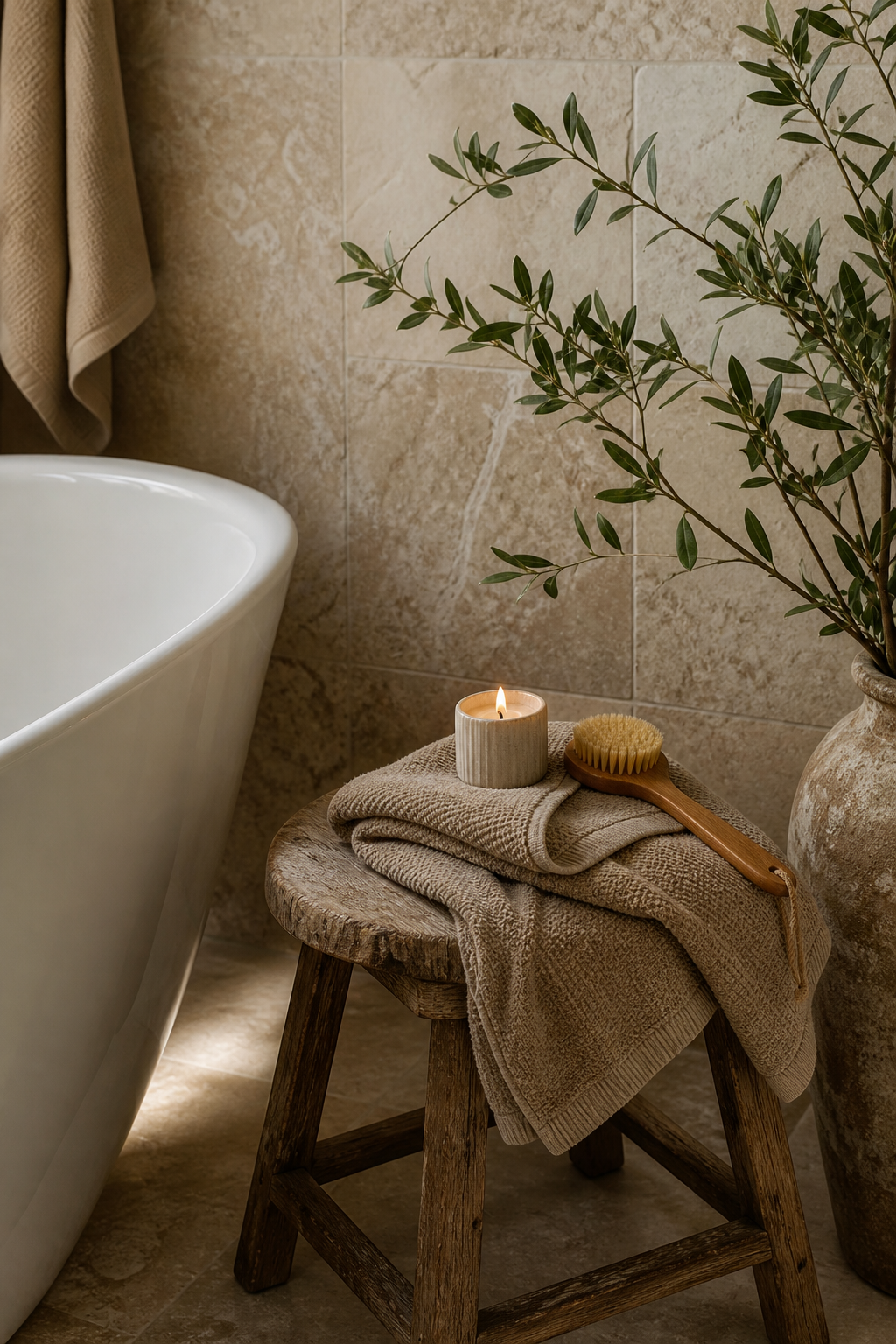
A freestanding tub creates an immediate retreat feeling because it gives bathing a clear destination. The shape should suit the architecture: oval for softness, rectangular for a modern room, or a slipper profile for a more traditional bath. Leave enough space around it so the tub feels intentional rather than squeezed in. A floor-mounted or wall-mounted tub filler keeps the look clean. Style nearby with a small stool, folded towel, bath brush, and one branch arrangement instead of cluttering the rim. If the room has a view, angle the tub toward it. This simple planning choice makes the whole bathroom feel more restful.
Upgrade To Hotel-Weight Towels
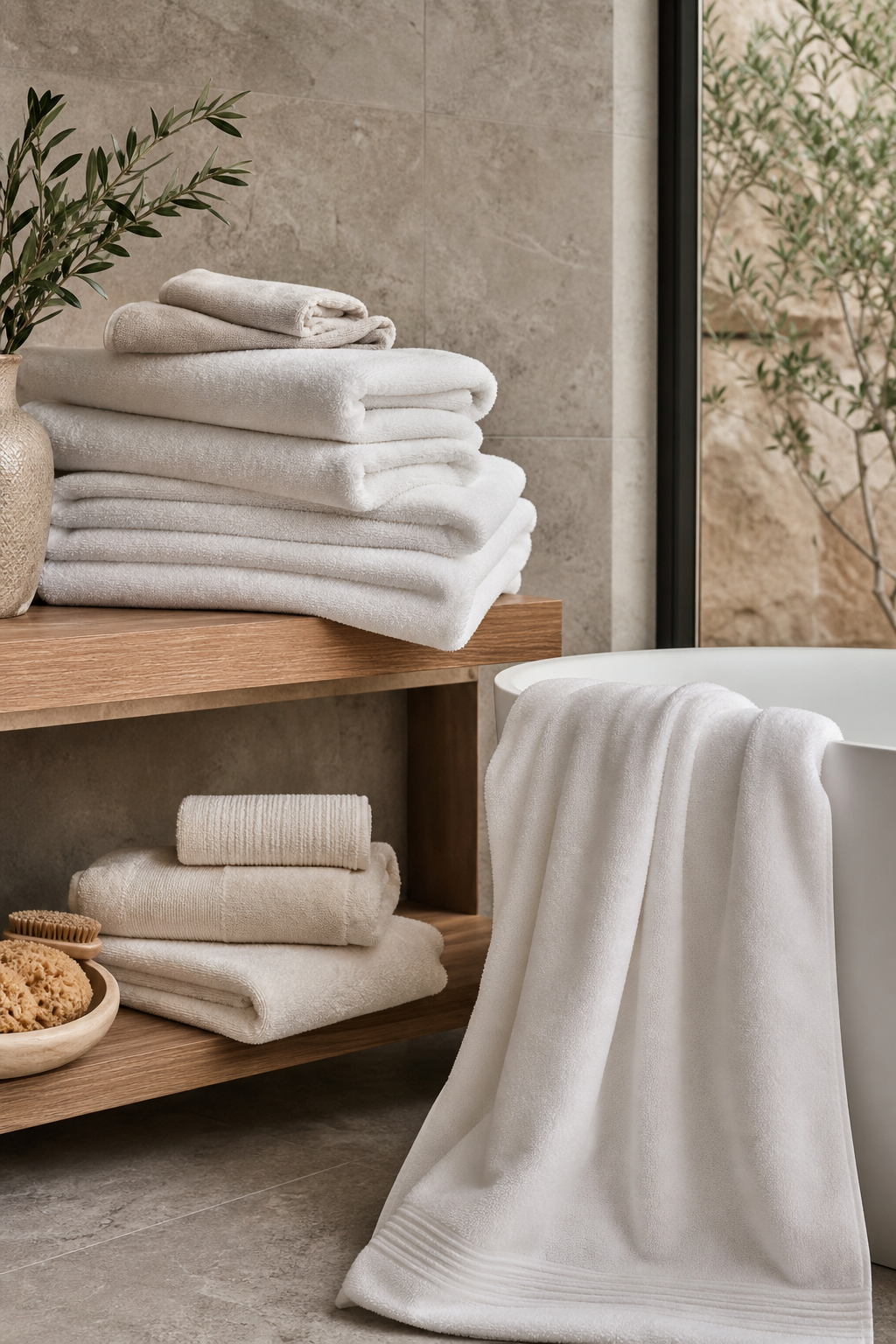
Towels affect the way a bathroom feels every day, so they are worth treating as decor. Choose plush cotton or waffle towels in white, ivory, stone, or another color that belongs to the room. Fold them cleanly on a shelf, drape one over a tub, or hang a matching pair from simple hooks. Avoid too many colors unless the bathroom is intentionally playful. A consistent towel set makes even a modest bath feel more polished. For a spa-like detail, keep a small stack of hand towels near the sink and a larger folded bath sheet within reach of the shower. Softness is part of the design.
Install A Long Shower Niche
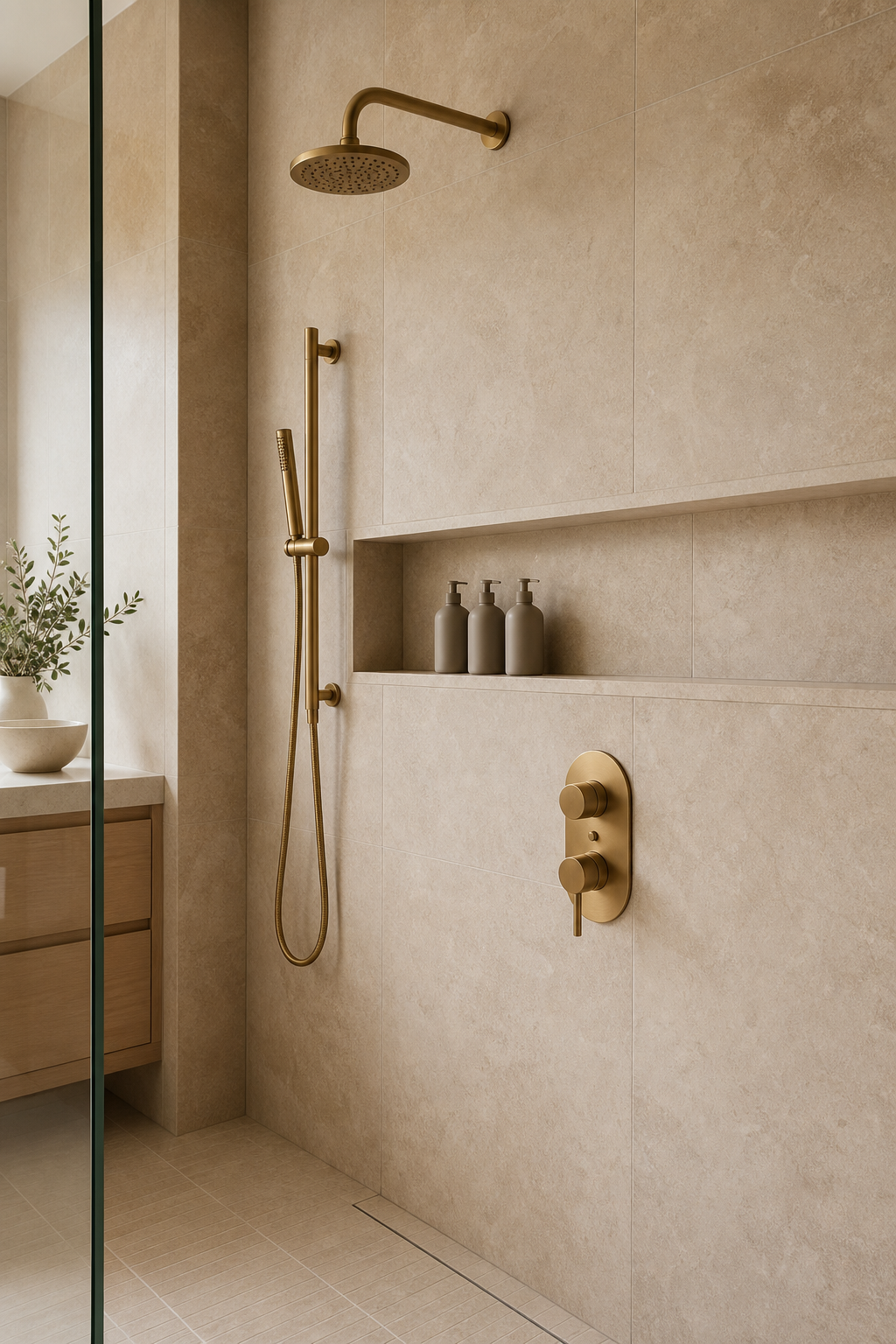
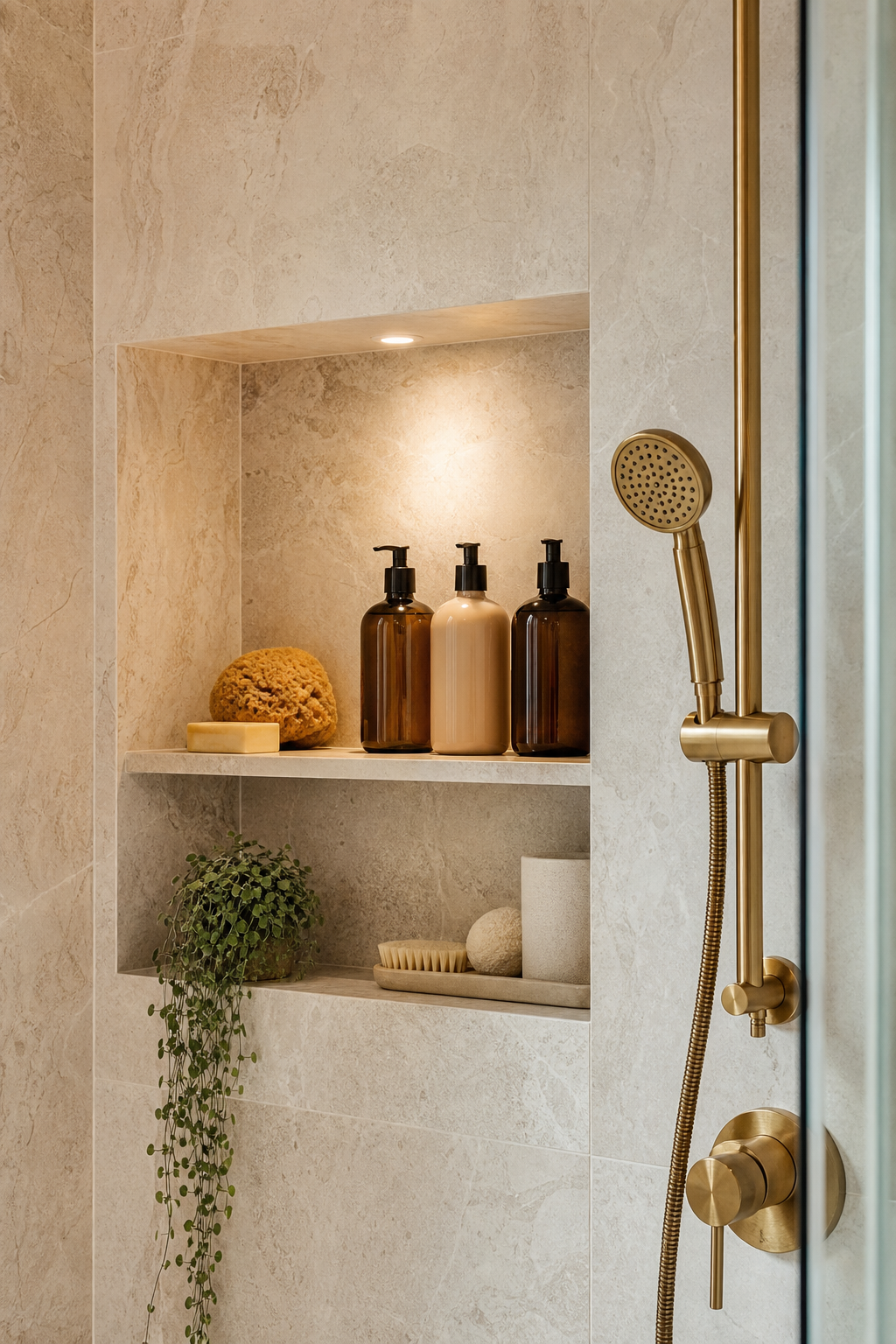
A long shower niche keeps products organized while making the shower wall feel more architectural. Run it horizontally across the main wall or vertically beside the shower controls, depending on the tile layout. Matching the niche tile to the surrounding wall creates a seamless spa feeling, while a stone shelf adds a subtle tailored detail. Keep the bottles limited and transfer daily products into simple refillable containers if labels make the space feel busy. The niche should be placed at a comfortable height and sloped slightly for drainage. When done well, it removes visual clutter and makes the shower easier to use.
Try A Plaster-Look Wall Finish
Plaster-look walls bring softness to bathrooms that might otherwise feel tiled from every angle. In areas away from direct water, limewash, microcement, or a moisture-appropriate plaster finish can create a gentle matte surface. The variation should be subtle, almost like watercolor, so the room feels calm rather than rustic. Pair plaster with stone floors, wood vanities, linen shades, and simple mirrors. In a small powder room, the finish can wrap every wall for a cocoon effect. In a primary bath, it can soften the vanity wall while wet zones remain tiled. The result feels handcrafted and serene.
Use A Curved Mirror To Soften Lines
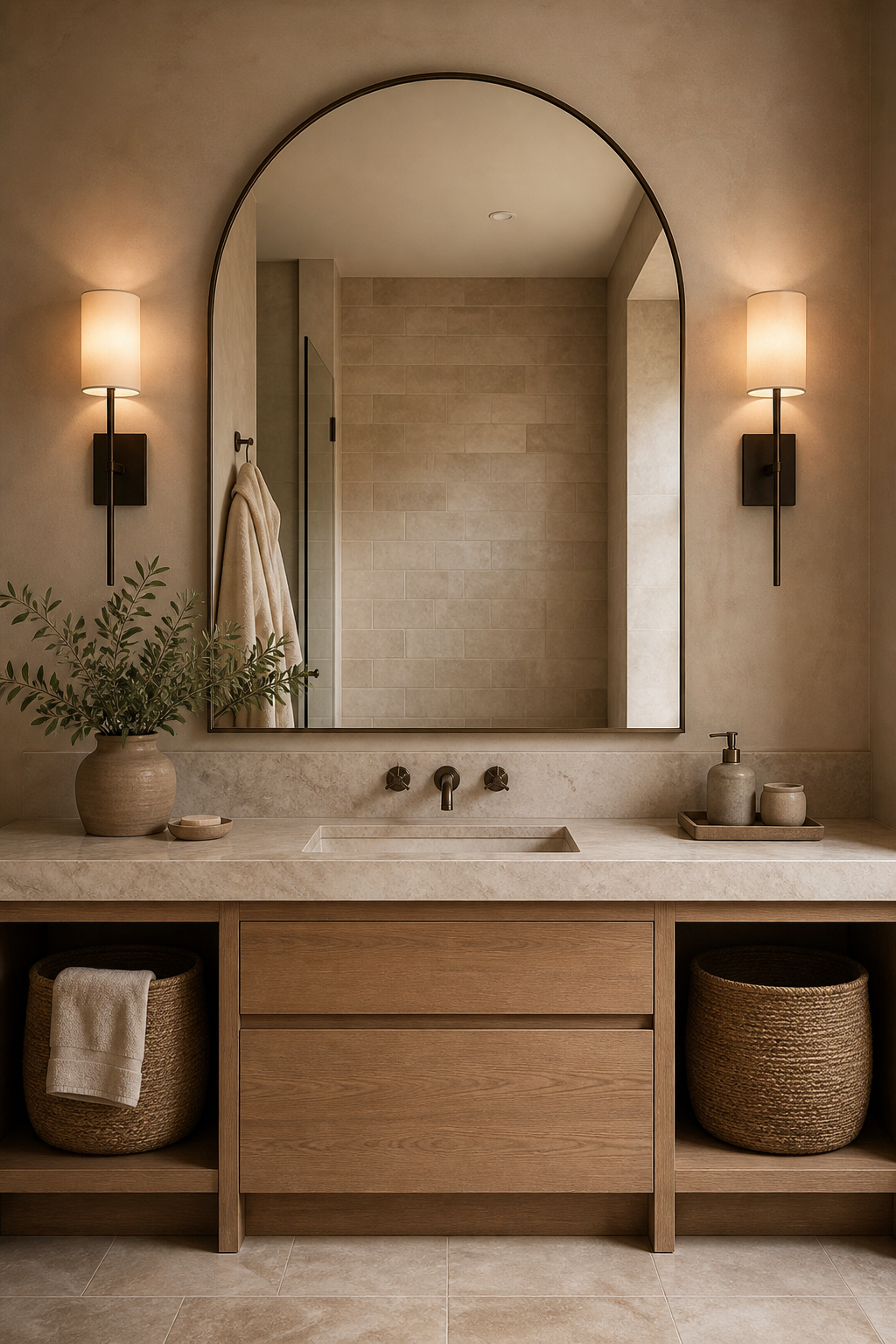
Bathrooms often have many straight lines: tile joints, vanity drawers, shower glass, and rectangular sinks. A curved mirror softens that geometry without adding unnecessary decoration. An arched mirror feels classic, while an oval or pill-shaped mirror looks clean and modern. Scale is important; the mirror should feel generous above the vanity rather than undersized. Choose a thin frame in brass, black, oak, or polished nickel depending on the room. The curve also works well with sconces because it creates a composed focal point. This one change can make a bathroom feel more relaxed and designed.
Keep Countertops Beautifully Clear
A spa bathroom needs visual quiet, and the vanity counter is where clutter usually gathers first. Keep only the items that add function and beauty: hand soap, a small tray, a cup, and perhaps one vase or candle. Store skincare, brushes, and tools in drawers or baskets nearby. If daily items must stay out, group them on a stone or wood tray so they read as one arrangement. Clear counters make cleaning easier and help the room feel larger. This habit matters as much as any renovation detail, because the calmest bathrooms are maintained through simple systems that support real routines.
Add A Wooden Stool Beside The Tub
A small wooden stool is a simple spa detail that adds warmth and usefulness. Place it beside a tub or shower to hold a towel, bath brush, candle, or book. Teak, cedar, oak, and walnut all work, but the shape should be sturdy and compact. The natural wood breaks up tile and porcelain, giving the room a warmer tactile layer. Avoid overstyling it; one or two objects are enough. In a small bathroom, a stool can tuck under a vanity or beside a shower when not in use. It is a humble piece, but it makes the room feel cared for.
Mix Matte Black With Warm Neutrals
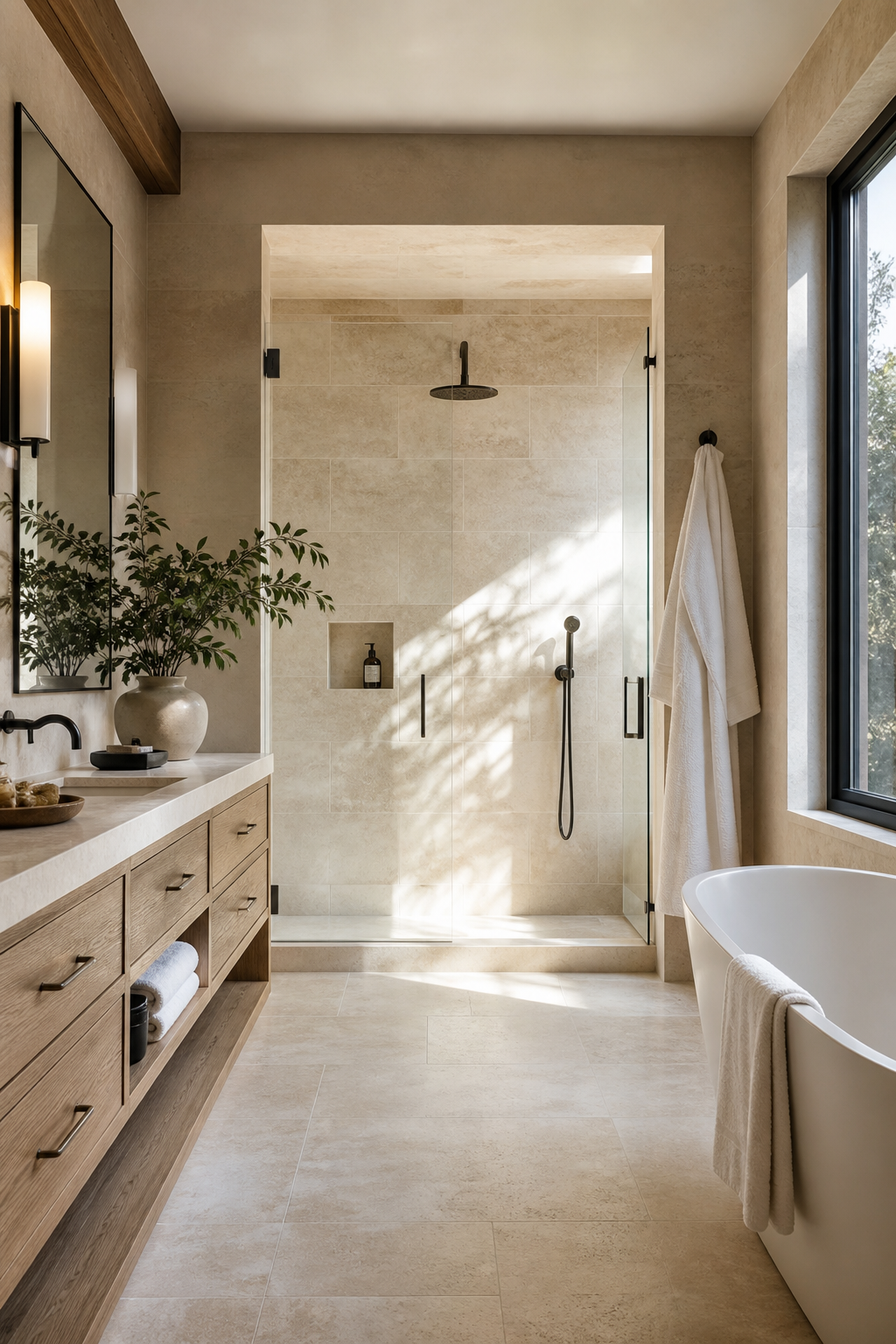
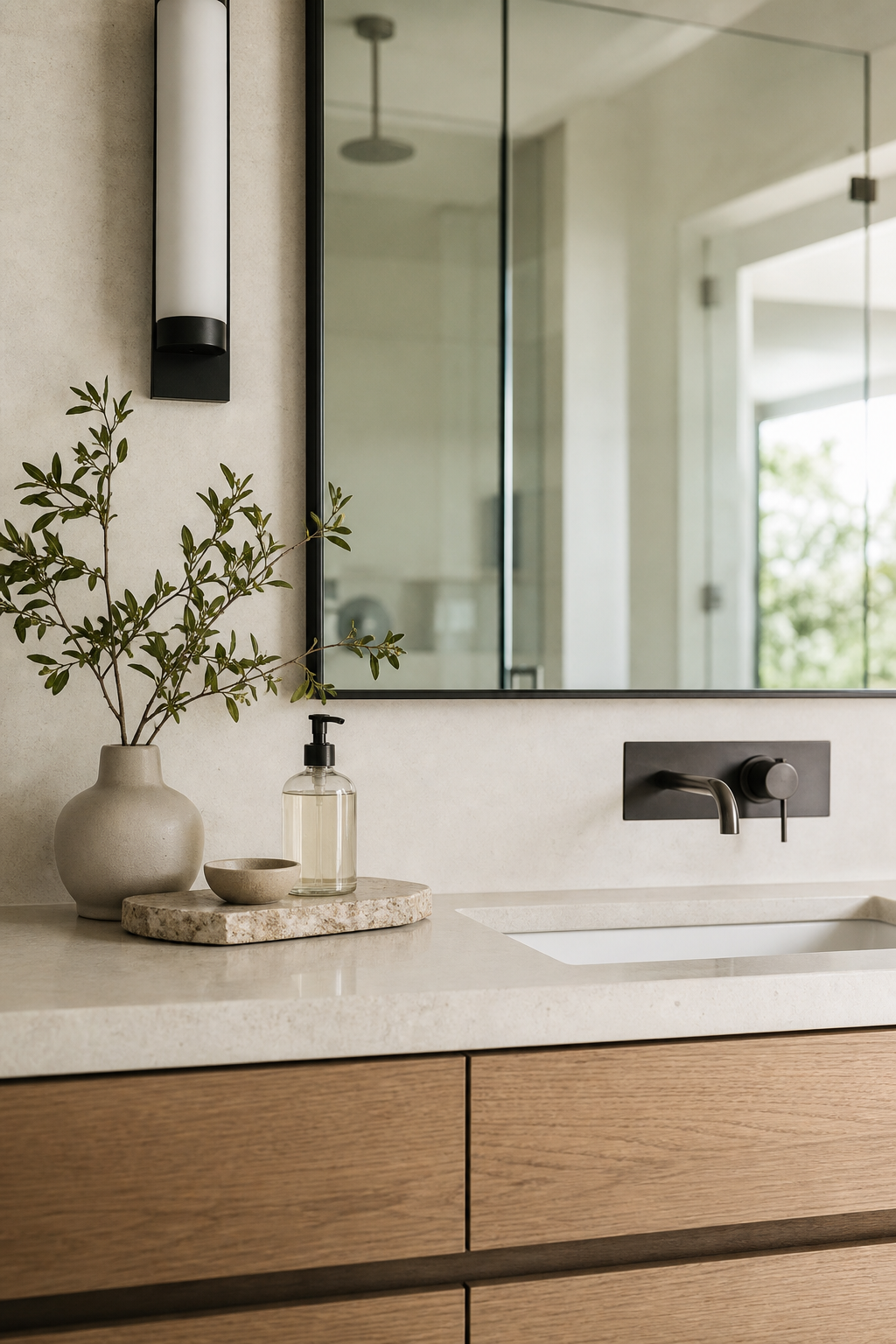
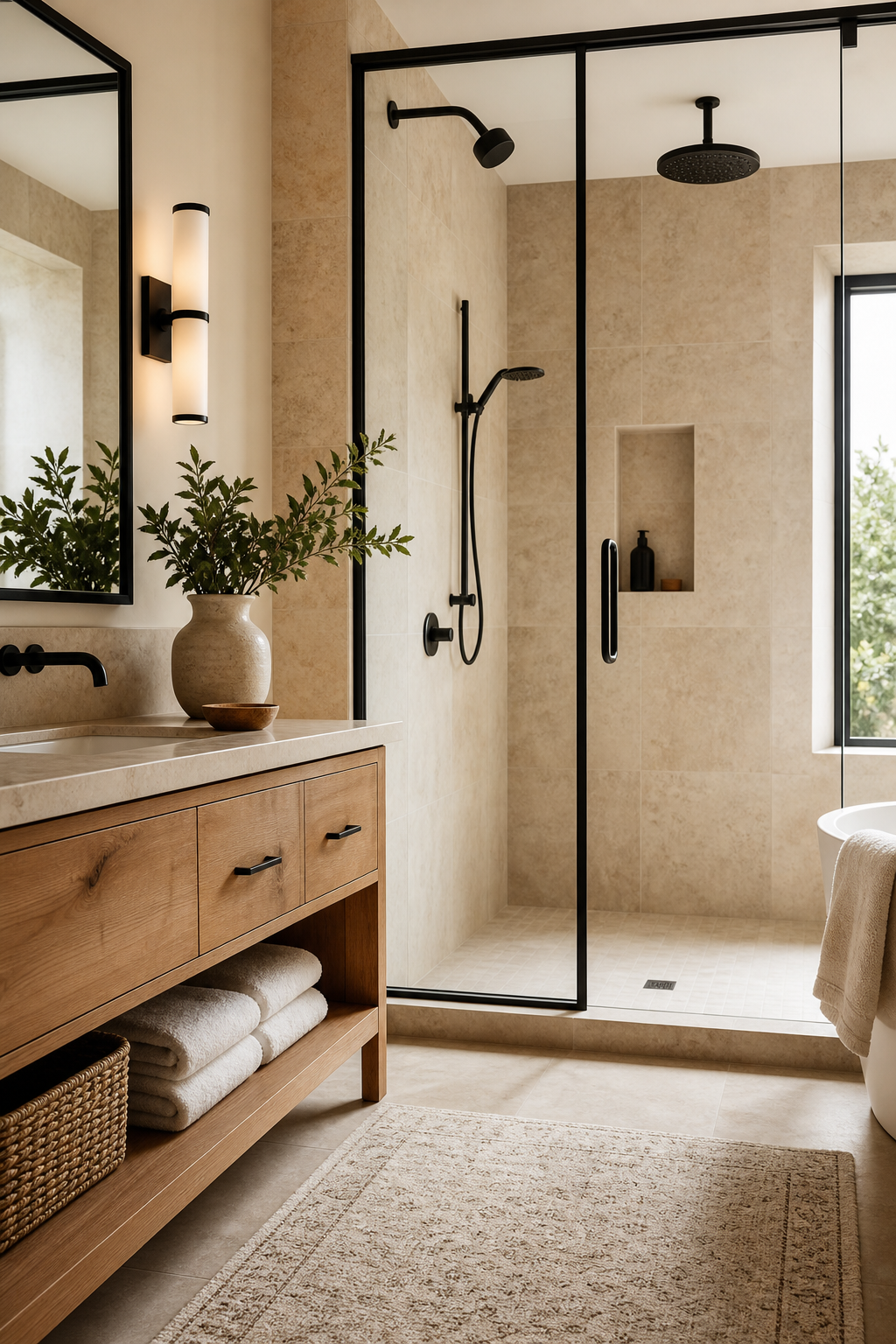
Matte black fixtures can look sharp and spa-like when the rest of the bathroom is warm. Pair black faucets, shower trim, or mirror frames with beige stone, oak, linen, and soft white towels so the contrast feels balanced. Use black sparingly; too much can make a small bath feel graphic instead of restful. A black-framed shower screen, one faucet, and a slim mirror frame may be enough. The finish is also practical because it gives pale bathrooms definition. For a calmer look, choose simple forms without ornate details. The result feels contemporary but still comfortable.
Create A Calm Double Vanity
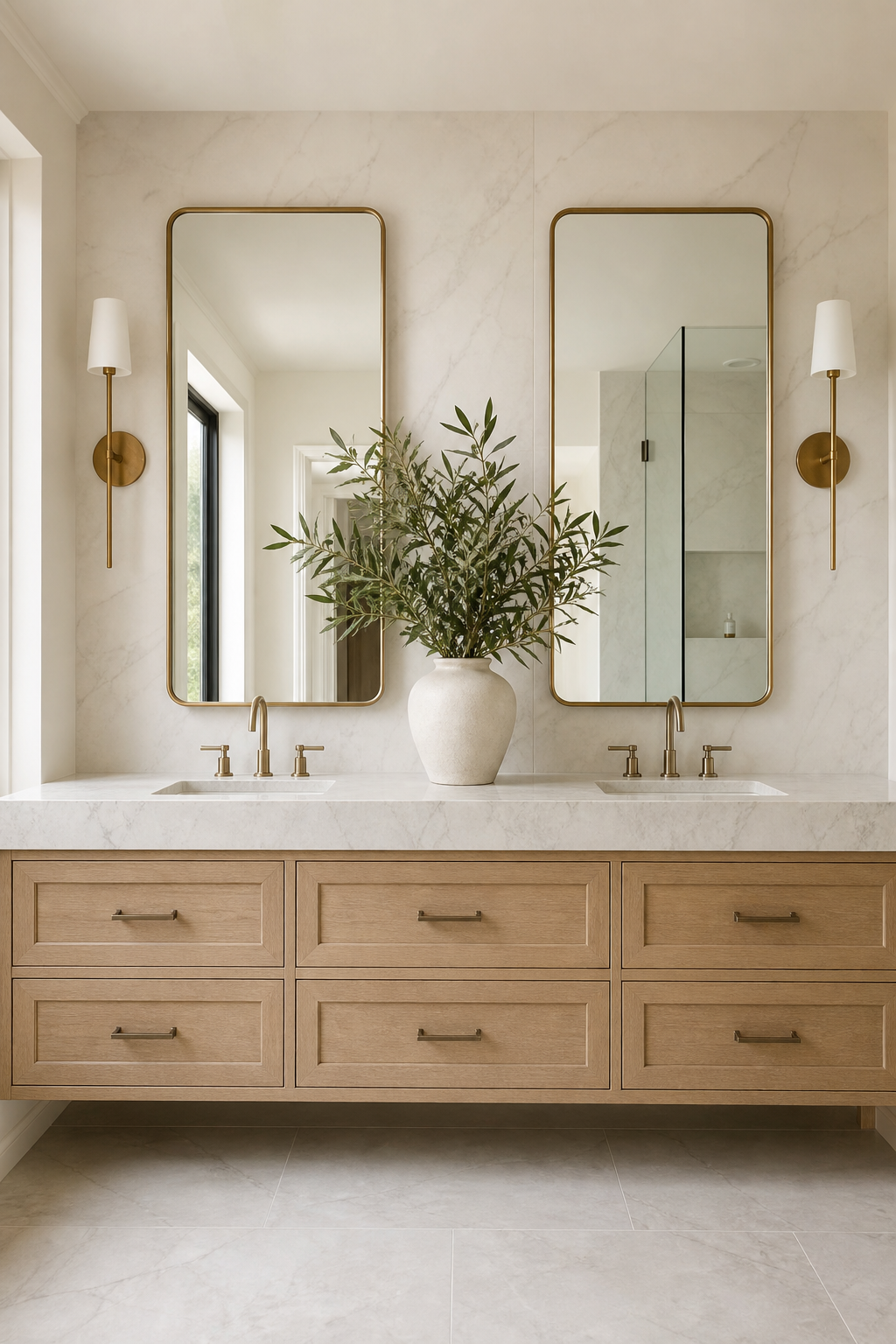
A double vanity can feel busy if every side has different objects, so use symmetry carefully. Matching mirrors, sinks, and sconces create order, while one shared tray or vase keeps the center from looking empty. Drawers should be assigned clearly so each person has storage that does not spill onto the counter. Choose one counter material and one wood tone for a quiet foundation. If the room is wide, a long ledge backsplash can visually connect both sinks. The goal is not hotel sterility, but an organized rhythm that makes shared routines easier and more peaceful.
Use Zellige Tile For Subtle Movement
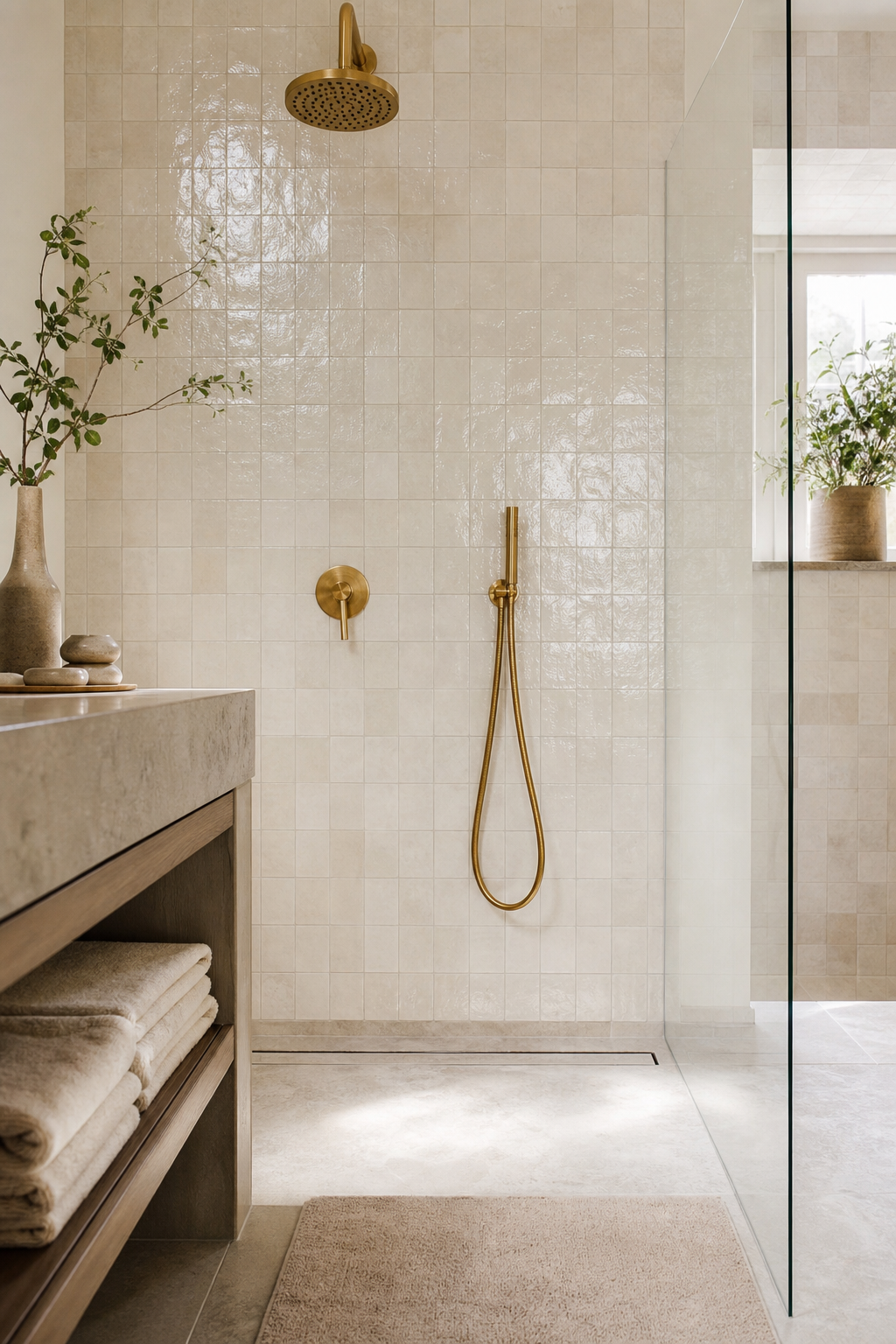
Zellige tile brings a handmade shimmer that feels especially beautiful in a bathroom. Its uneven surface reflects light softly, adding movement without a loud pattern. Use it on a shower wall, backsplash, tub surround, or small powder room feature wall. For a spa-like effect, choose ivory, sand, pale sage, soft gray, or warm white. Because the tile already has texture, keep surrounding materials simple. The grout should not be too contrasty unless you want a more graphic look. Zellige is best when it feels quiet and luminous, almost like water catching light across the wall.
Choose Refillable Bottles With No Visual Noise
Product labels can make even a beautiful shower look chaotic. Refillable bottles solve that problem while keeping daily items accessible. Choose simple amber, white, stone, or clear containers that suit the room, and keep them consistent in size. Place them in a niche, on a tray, or on a small shelf rather than scattering them around the tub. This is not about hiding every sign of use; it is about making necessary objects visually calm. If you prefer not to decant products, store the originals in a drawer and keep only the most attractive daily items visible.
Add Greenery That Loves Humidity
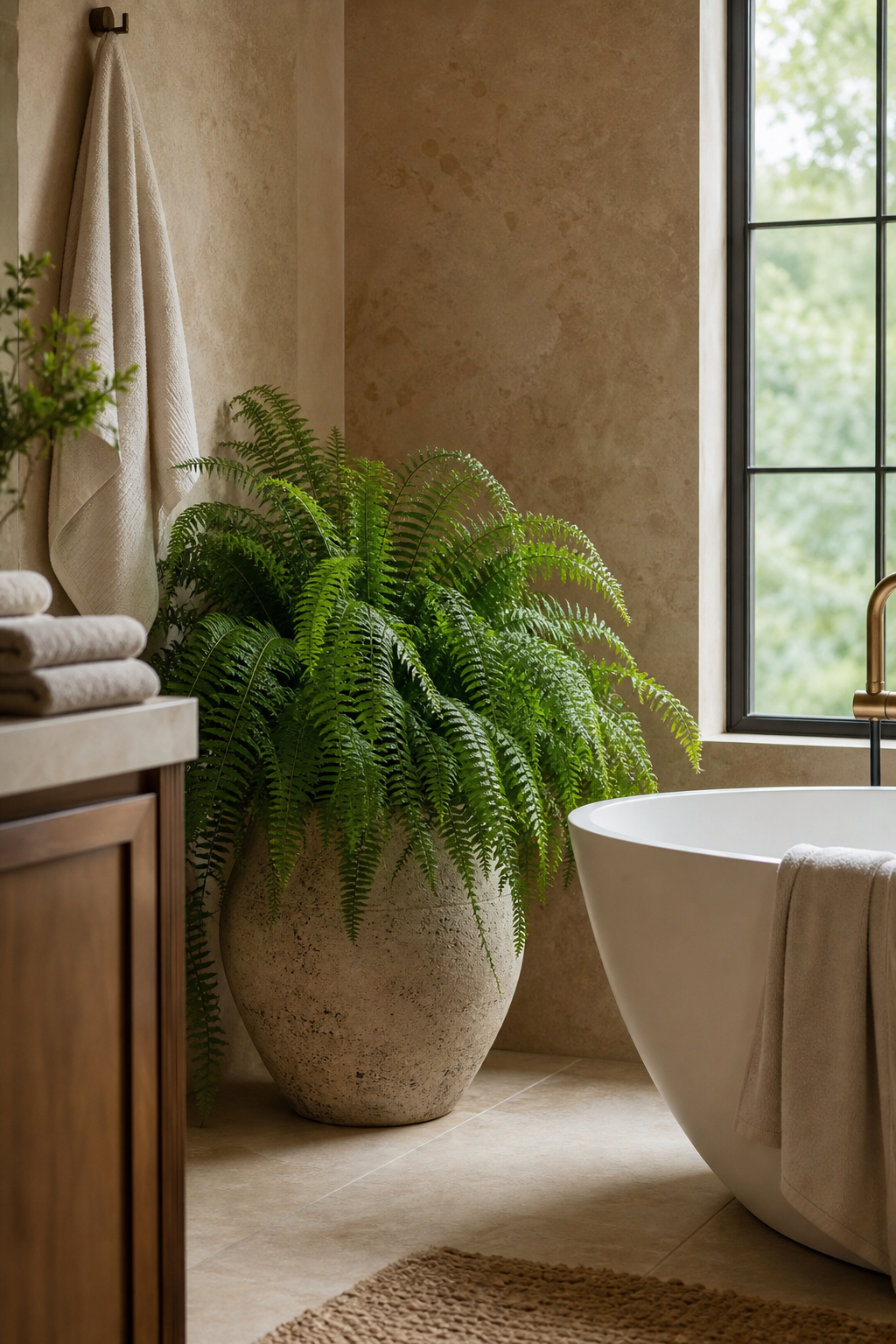
Greenery can make a bathroom feel fresher, especially when the room has natural light. Choose plants that tolerate humidity, such as ferns, pothos, orchids, or a small peace lily, and place them where they will not block movement. A single larger plant beside a tub may feel calmer than many tiny pots. Use planters in ceramic, stoneware, or woven texture so they relate to the bathroom materials. If the room has no light, use cut branches or eucalyptus in a vase instead. The point is to add life and shape, not to turn the bathroom into a crowded garden.
Use A Runner Rug For Softness
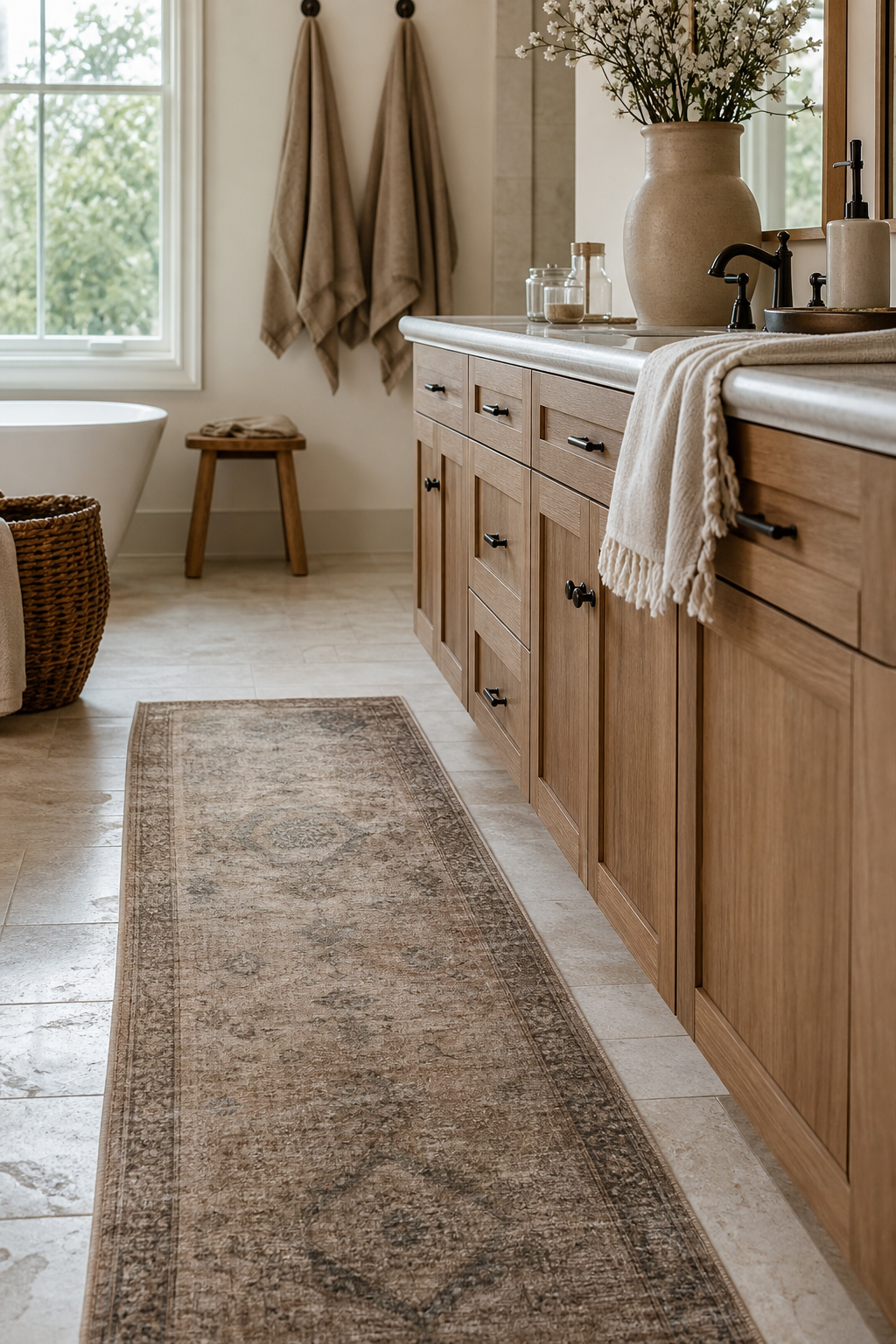
A bathroom runner can make the room feel less hard underfoot and more furnished. Choose a washable wool, cotton, or performance rug with a low pile so it is practical near sinks. Vintage-inspired patterns work well because they hide small marks and bring warmth to plain tile. In a narrow bathroom, a runner can visually lengthen the room. In a larger bath, it can connect a vanity and tub zone. Use a proper rug pad and keep the rug away from direct shower spray. The right runner adds color, texture, and comfort without requiring a permanent change.
Frame The Shower Like Architecture
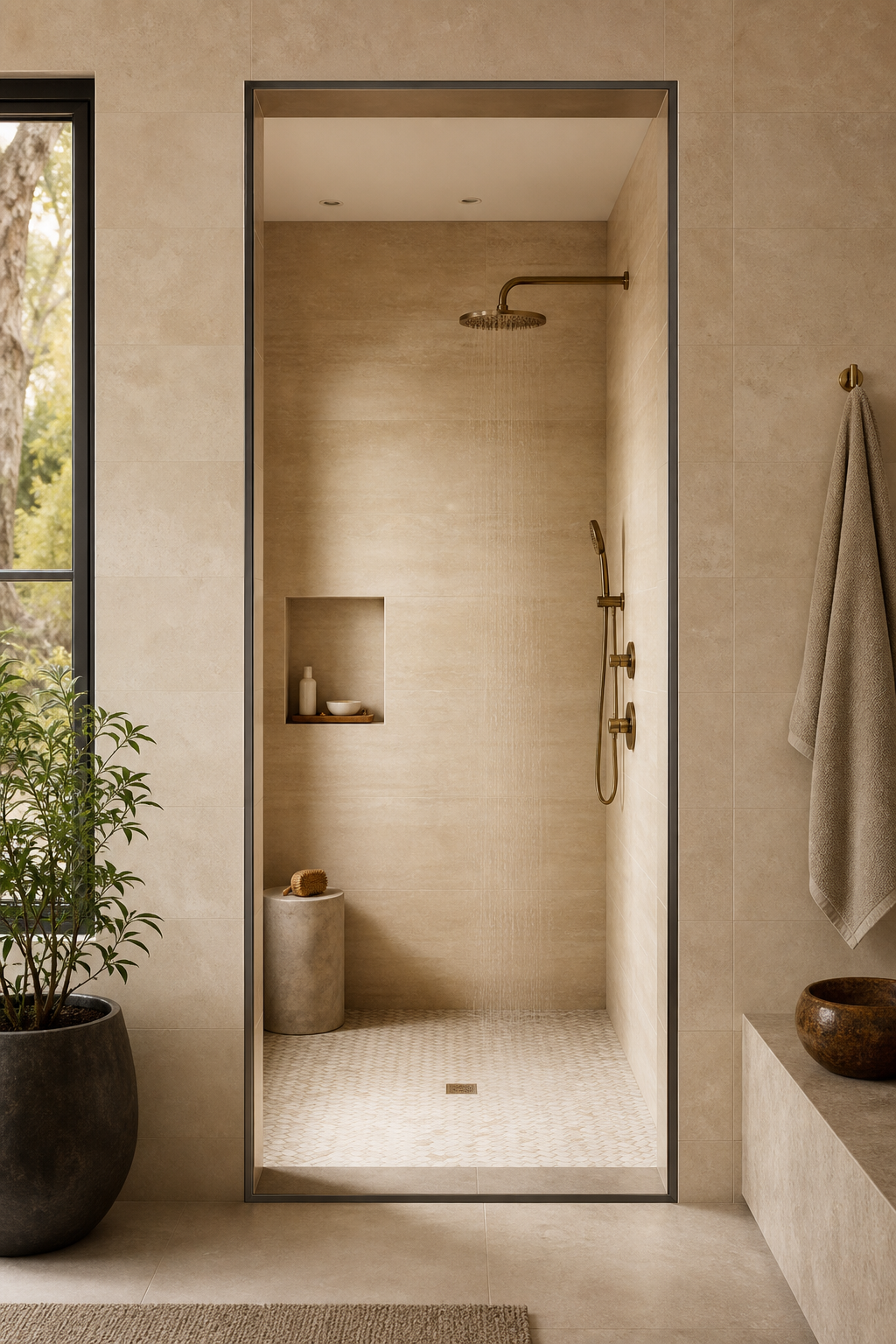
A shower can become the visual anchor of the bathroom when it is framed with intention. Instead of treating glass and tile as purely functional, align the shower opening with the vanity, window, or main sightline. Use a clean curb, slim metal trim, or a tiled arch to make the transition feel designed. Inside, keep tile changes deliberate and avoid too many competing materials. A single beautiful wall tile, simple floor mosaic, and coordinated fixture finish are usually enough. When the shower reads like architecture, the whole bathroom feels calmer, more expensive, and easier to understand at a glance.
Make Storage Feel Built In
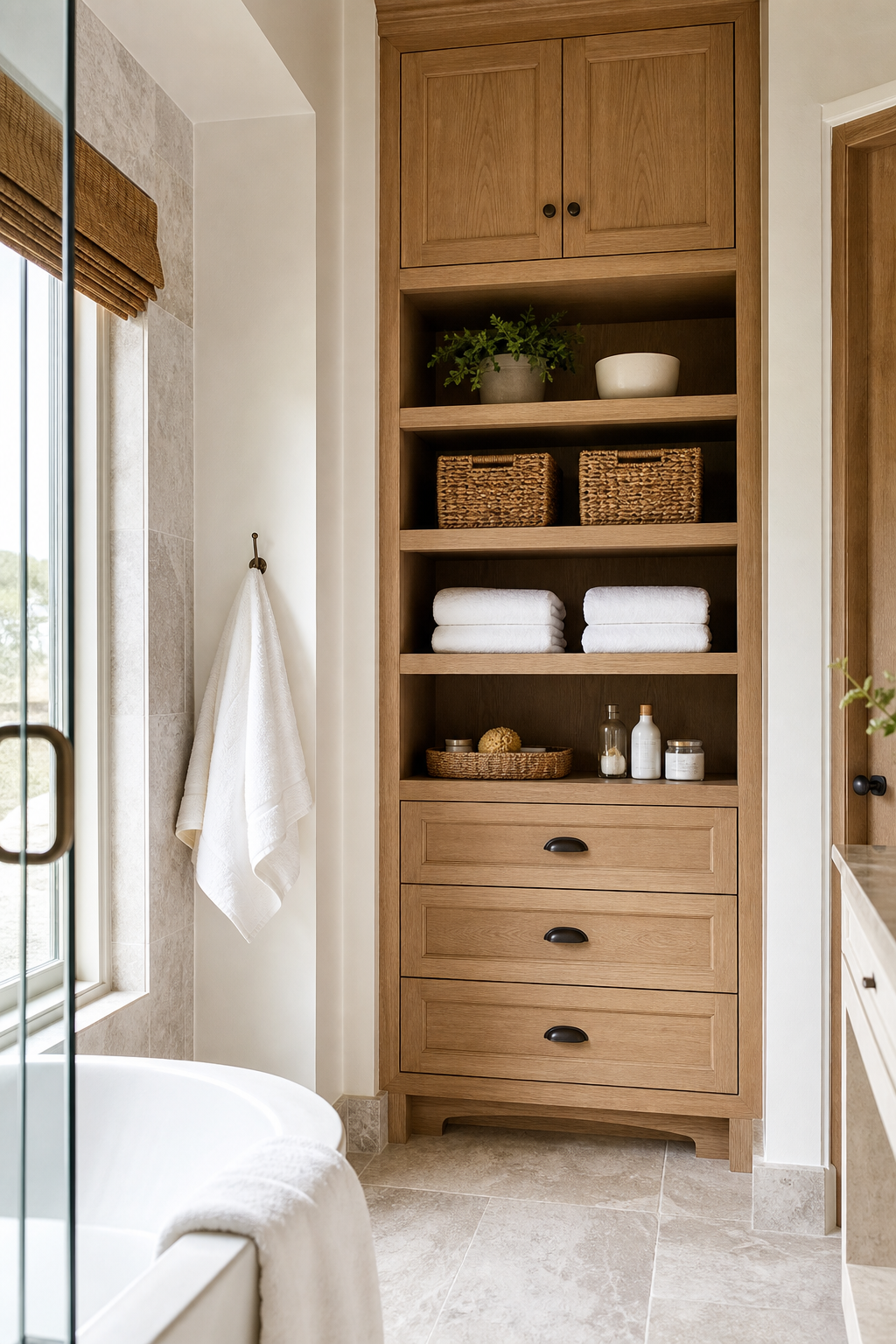
Storage is essential in a bathroom, but it should not feel like an afterthought. Recessed medicine cabinets, built-in linen towers, vanity drawers, and niches can keep daily routines organized while preserving the room’s calm surface. If built-ins are not possible, choose a tall cabinet or wall shelf that matches the vanity finish. Use baskets or drawer dividers so small items do not migrate back to the counter. Closed storage is especially important for colorful packaging and backup supplies. A spa bathroom works because the practical pieces are handled quietly, allowing the materials, light, and proportions to stand out.
Warm The Room With Brushed Brass
Brushed brass can warm up a bathroom without making it feel flashy. Use it on faucets, sconces, cabinet pulls, mirror frames, or towel hooks, then repeat it two or three times so the finish feels intentional. The softer brushed texture is easier to live with than a highly polished shine. Brass works beautifully with white tile, warm stone, oak, muted green, deep charcoal, and plaster walls. It also flatters skin tones at the mirror when paired with warm lighting. The key is restraint. Let brass act as a warm accent, not the main event, and the bathroom will feel refined.
Finish With A Simple Bath Ritual Tray
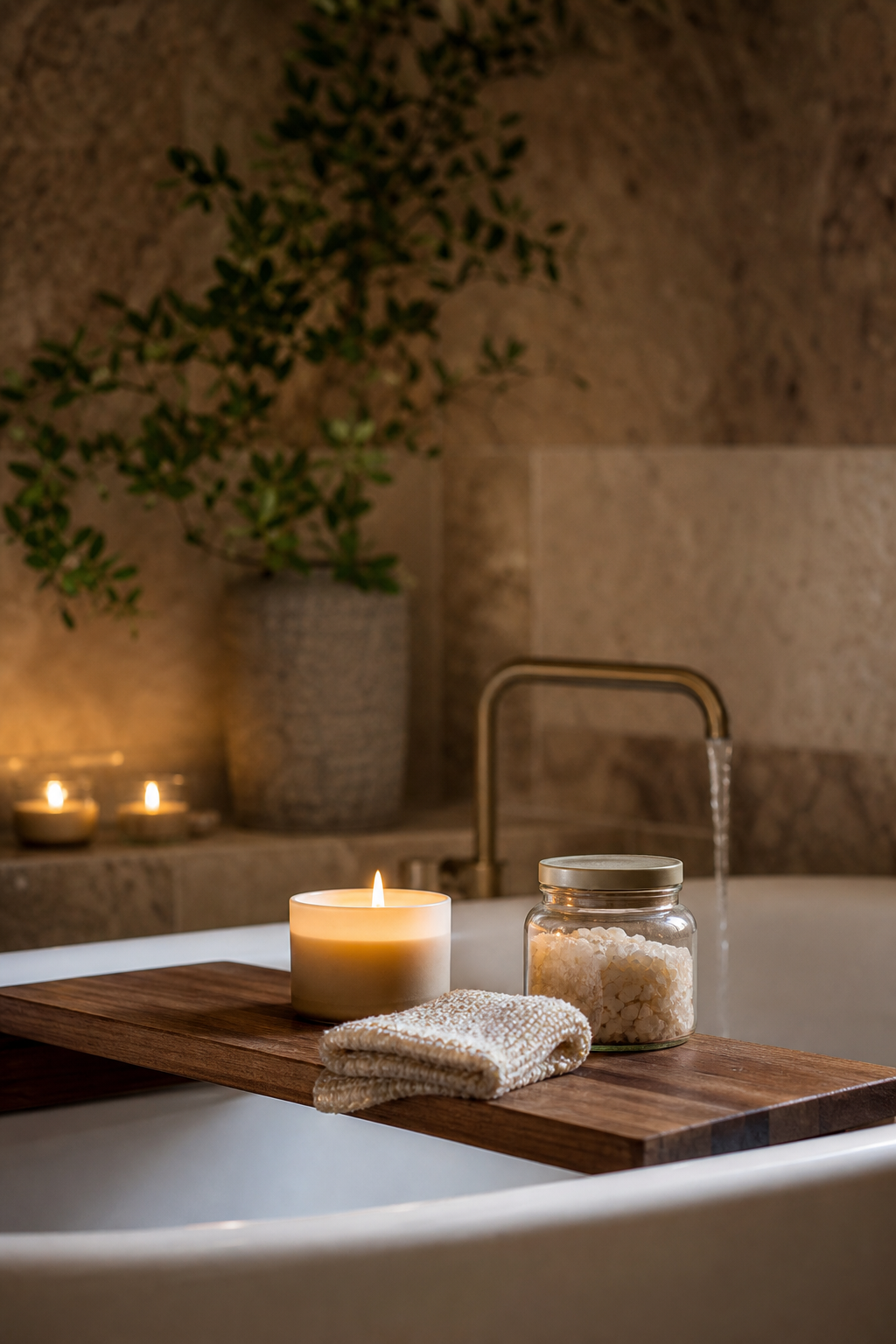
A bath tray gives the room a finished spa detail while keeping the tub area useful. Choose teak, bamboo, stone, or metal depending on the bathroom’s material palette. Style it with restraint: a folded washcloth, candle, bath salts in a simple jar, and perhaps a small cup or book. Avoid piling on decorative objects that would need to be moved every time. The tray should look calm but also support an actual routine. This final layer helps the bathroom feel personal rather than staged, because it suggests a moment of rest at the end of the day.
A spa-like bathroom refresh works best when every choice makes the room calmer to see and easier to use. Warm stone, soft lighting, clear counters, useful storage, and generous towels all support the same goal: a bathroom that feels restorative without becoming impractical. Start with the detail that bothers you most, whether it is harsh light, cluttered products, cold tile, or a vanity that feels too heavy. Then layer in texture, warmth, and quiet organization. Even small changes can shift the daily rhythm of the room when they are chosen with intention.