19 Bathroom Inspo For A Spa-Like Refresh
A spa-like bathroom starts with the feeling the room gives you before anything else: quiet surfaces, flattering light, practical storage, and materials that can handle daily moisture while still looking refined. The best bathroom inspo does not need to be sterile or overly minimal. It can include warm wood, veined stone, linen, ribbed glass, aged brass, woven baskets, and simple greenery as long as every detail supports ease. These ideas focus on the upgrades that change both mood and function, from better lighting and towel storage to shower niches and calmer color palettes.
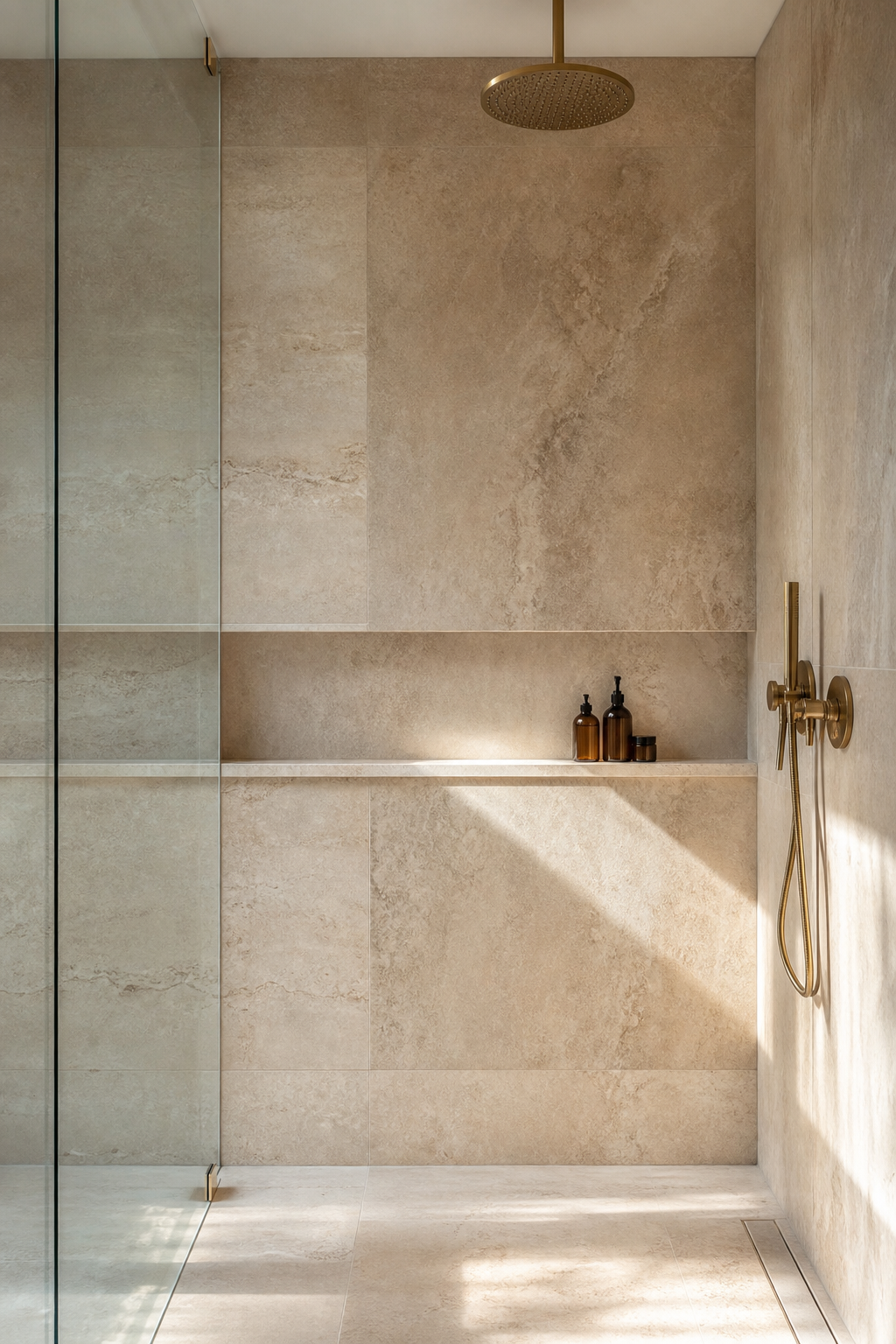
Use Warm Stone Tile As The Foundation
Stone-look tile is one of the quickest ways to make a bathroom feel calmer because it gives the room a natural, grounded surface. Choose limestone, travertine, marble, or porcelain with soft veining instead of high-contrast patterns that can feel busy. Running the same tile across the floor and shower walls creates a seamless spa effect, especially in a smaller bathroom. Keep grout close to the tile color so the surface reads as one quiet plane. Warm beige, greige, soft ivory, and pale taupe are especially useful because they flatter wood, chrome, brass, and white fixtures without feeling cold.
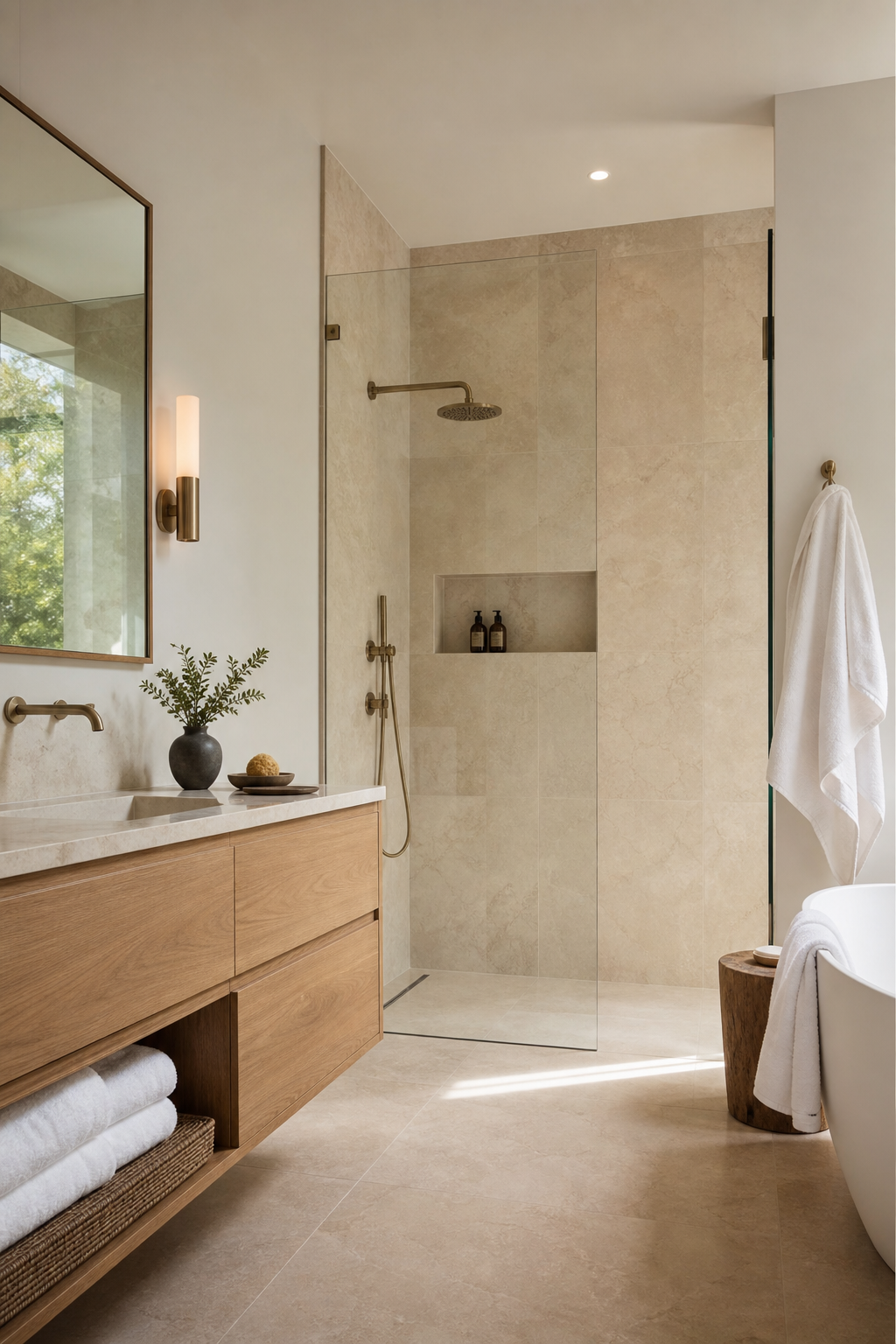
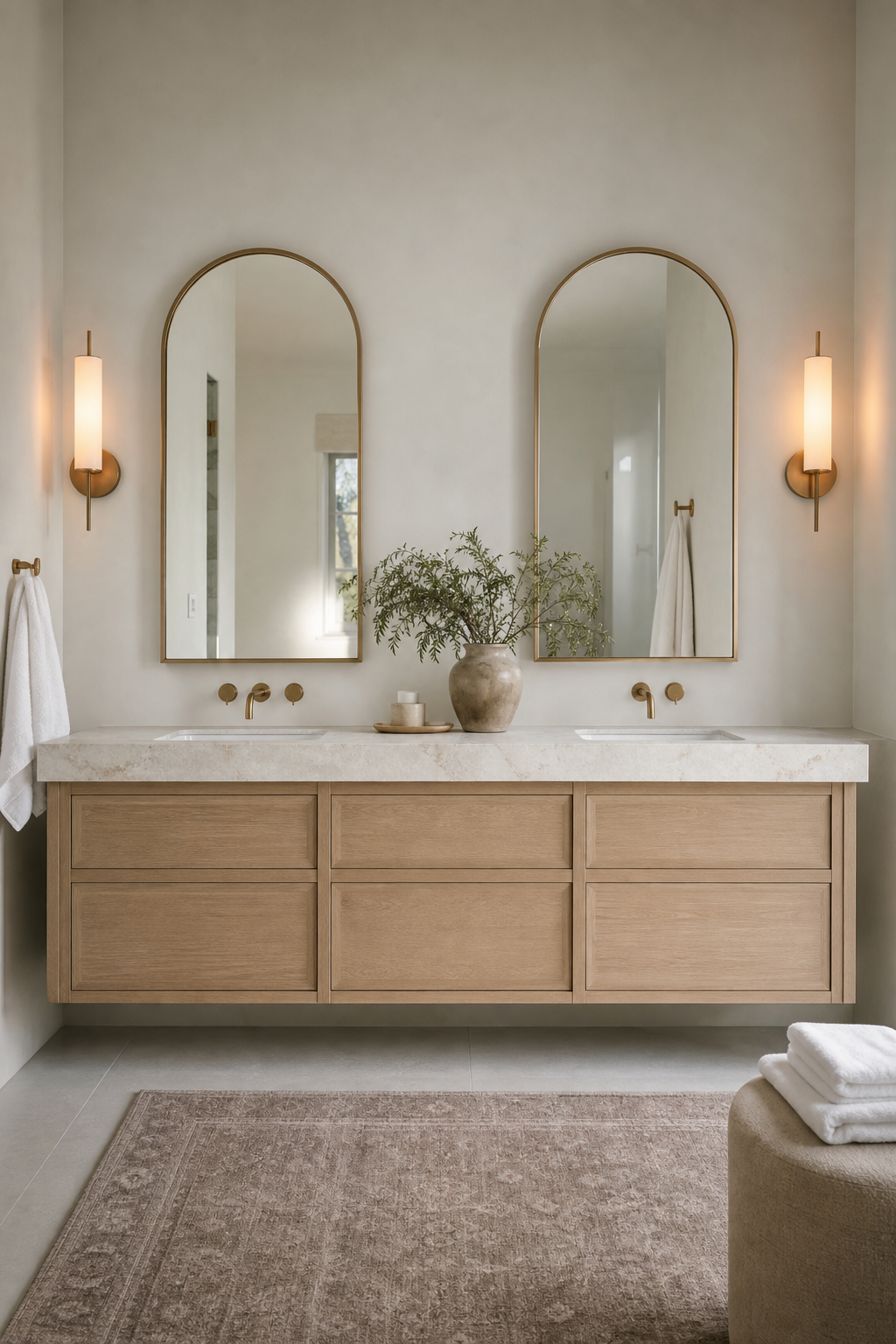
Choose An Oak Vanity For Softness
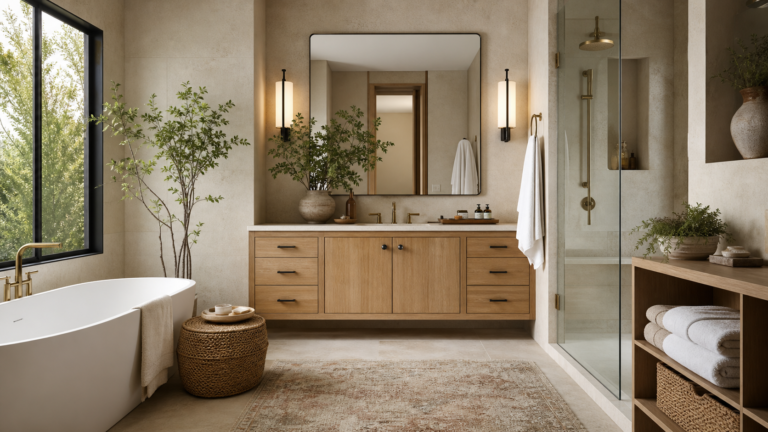
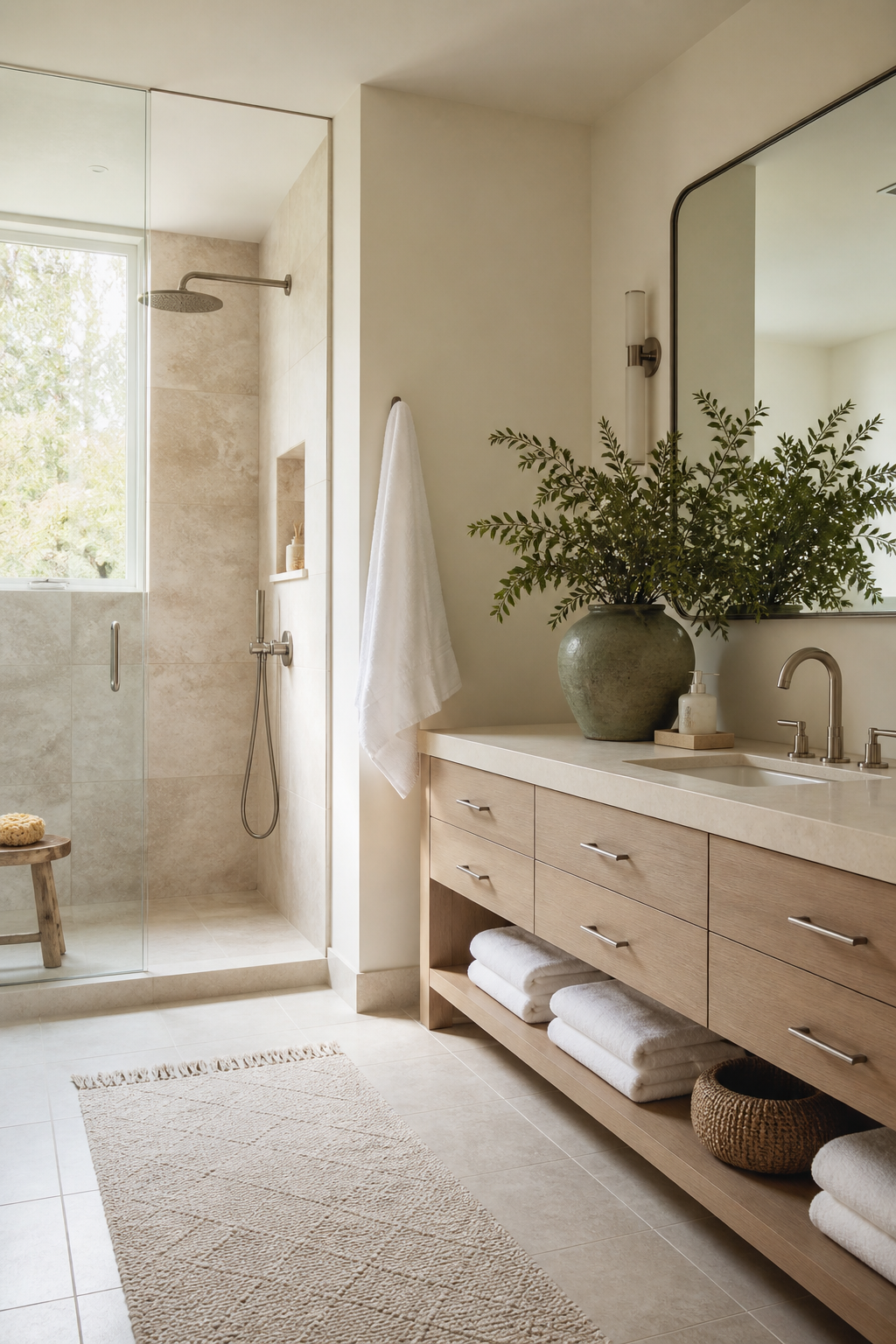
A bathroom filled only with tile, glass, and porcelain can feel sharp, so an oak vanity brings welcome warmth. Pale white oak feels airy and modern, while medium oak creates a richer boutique-hotel mood. Look for simple slab or shaker fronts, integrated drawers, and hardware that does not compete with the wood grain. A floating vanity makes the floor feel more open, but a furniture-style vanity can add character in a larger room. Pair oak with a stone counter, a quiet backsplash, and tidy storage inside the drawers so the surface can stay uncluttered.
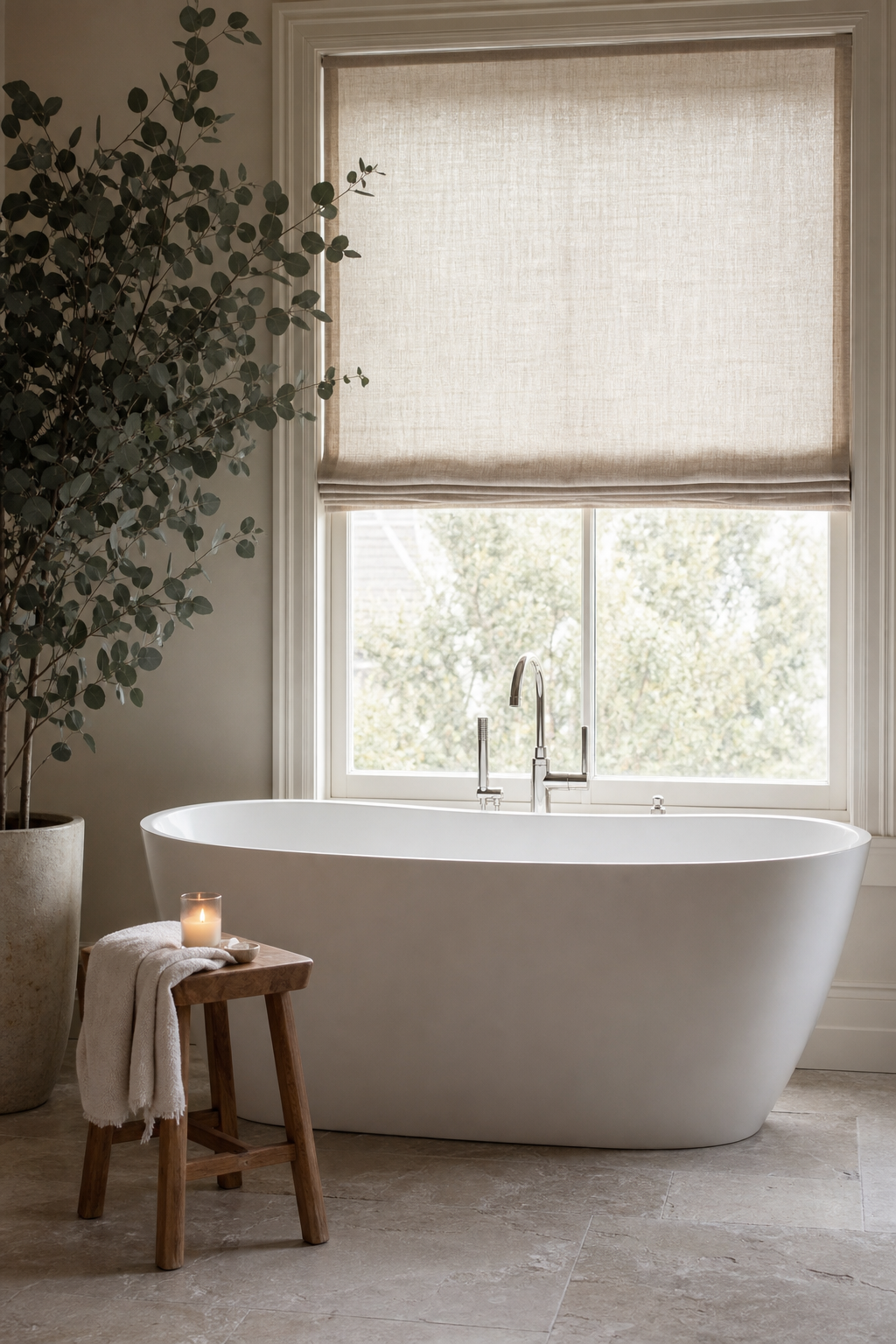
Add A Freestanding Tub Moment
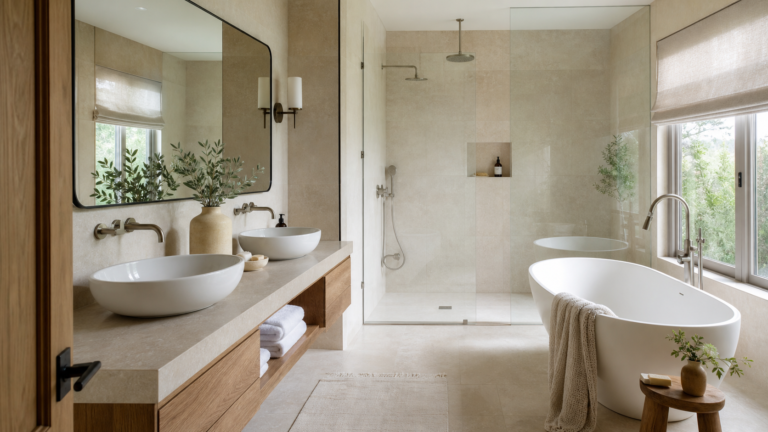
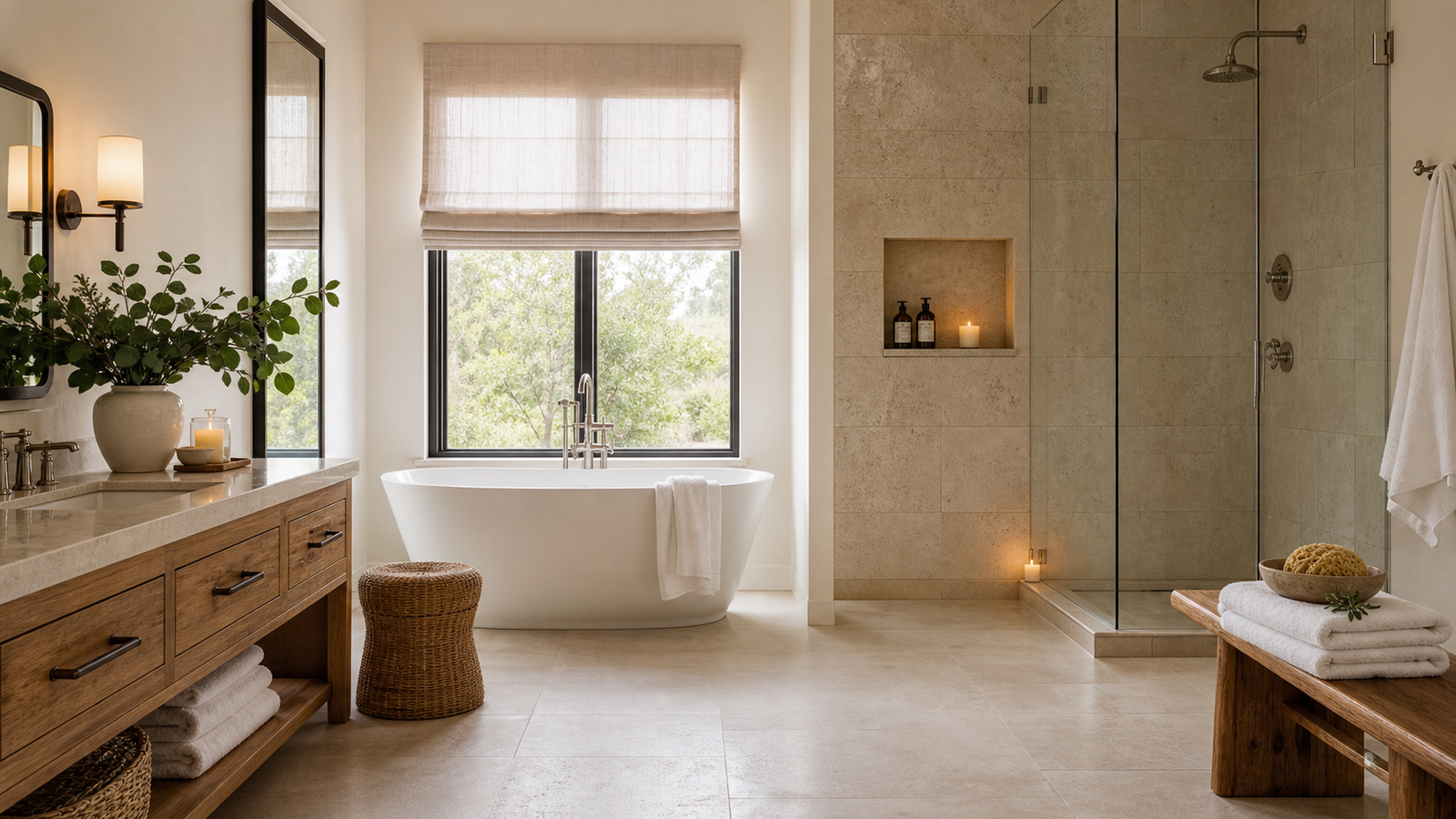
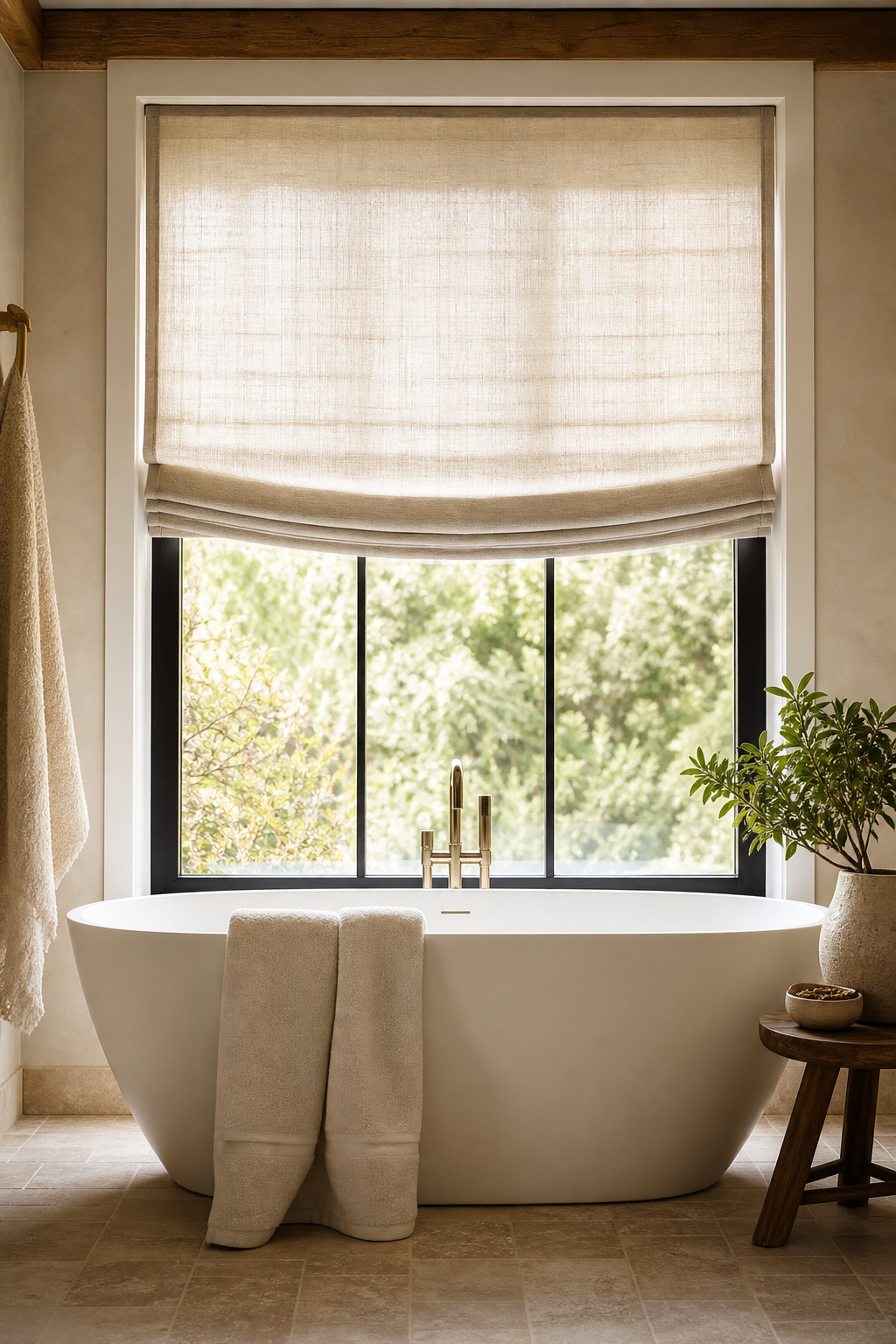
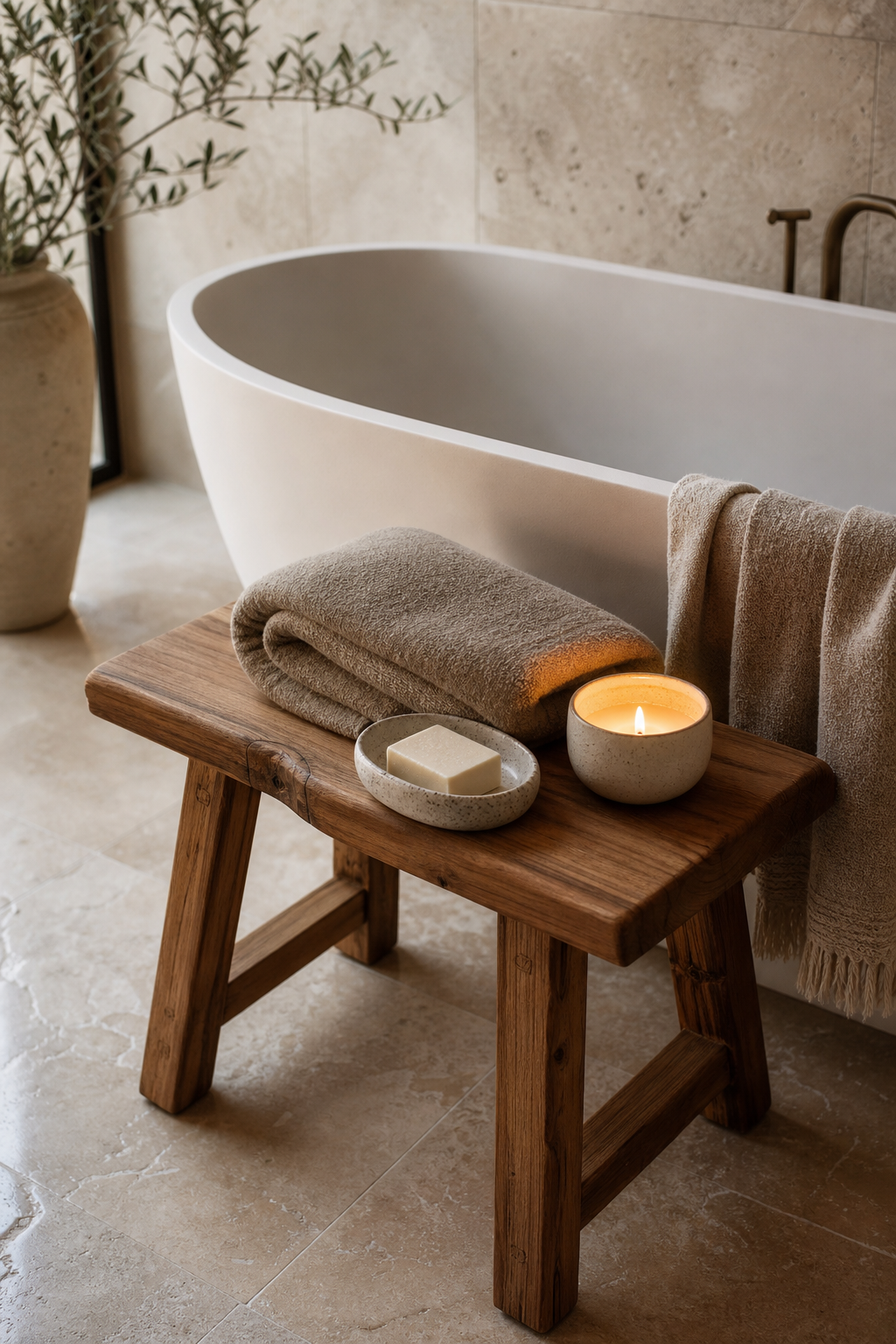
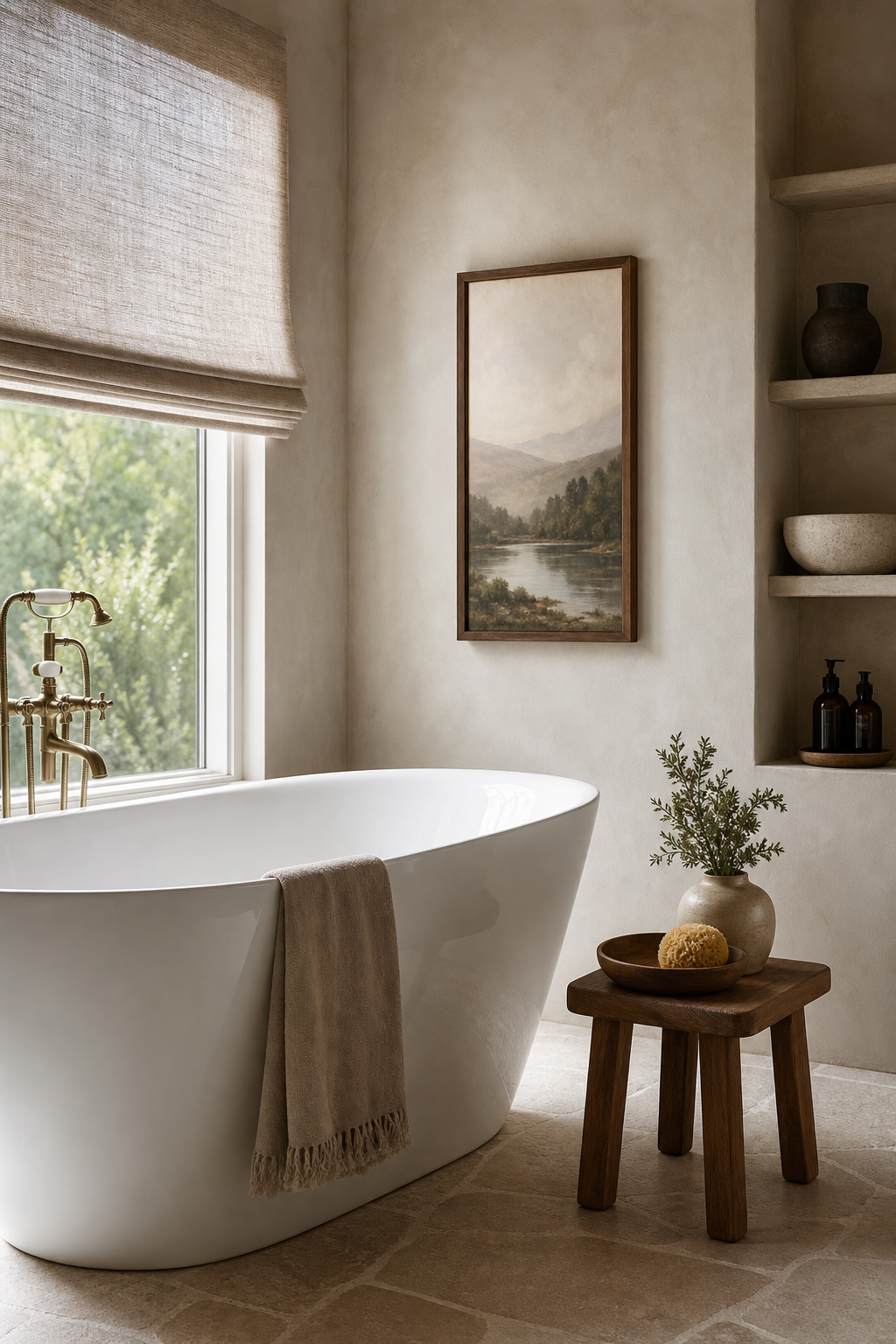
A freestanding tub gives a bathroom a clear focal point, even if the rest of the room stays simple. The key is to make the tub area feel intentional rather than stranded in empty space. Place a small wood stool nearby for a towel, candle, or bath salts, and consider a floor-mounted tub filler if the room allows it. A soft window treatment, plant, or framed art can make the zone feel finished. Leave enough breathing room around the tub for cleaning and circulation. When styled with restraint, the tub becomes a quiet retreat instead of a showroom feature.
Build A Shower Niche That Looks Designed
A shower niche can either look like a practical cutout or a polished design detail. Line it with the same tile for a seamless look, or use a stone slab shelf if you want subtle contrast. Keep the niche wide enough for bottles, but avoid making it so tall that it dominates the wall. Placing it away from the main sightline helps the shower look calmer from the doorway. Decanting products into simple refillable bottles can reduce visual clutter, but even everyday packaging looks better when the niche is properly proportioned and cleanly detailed.
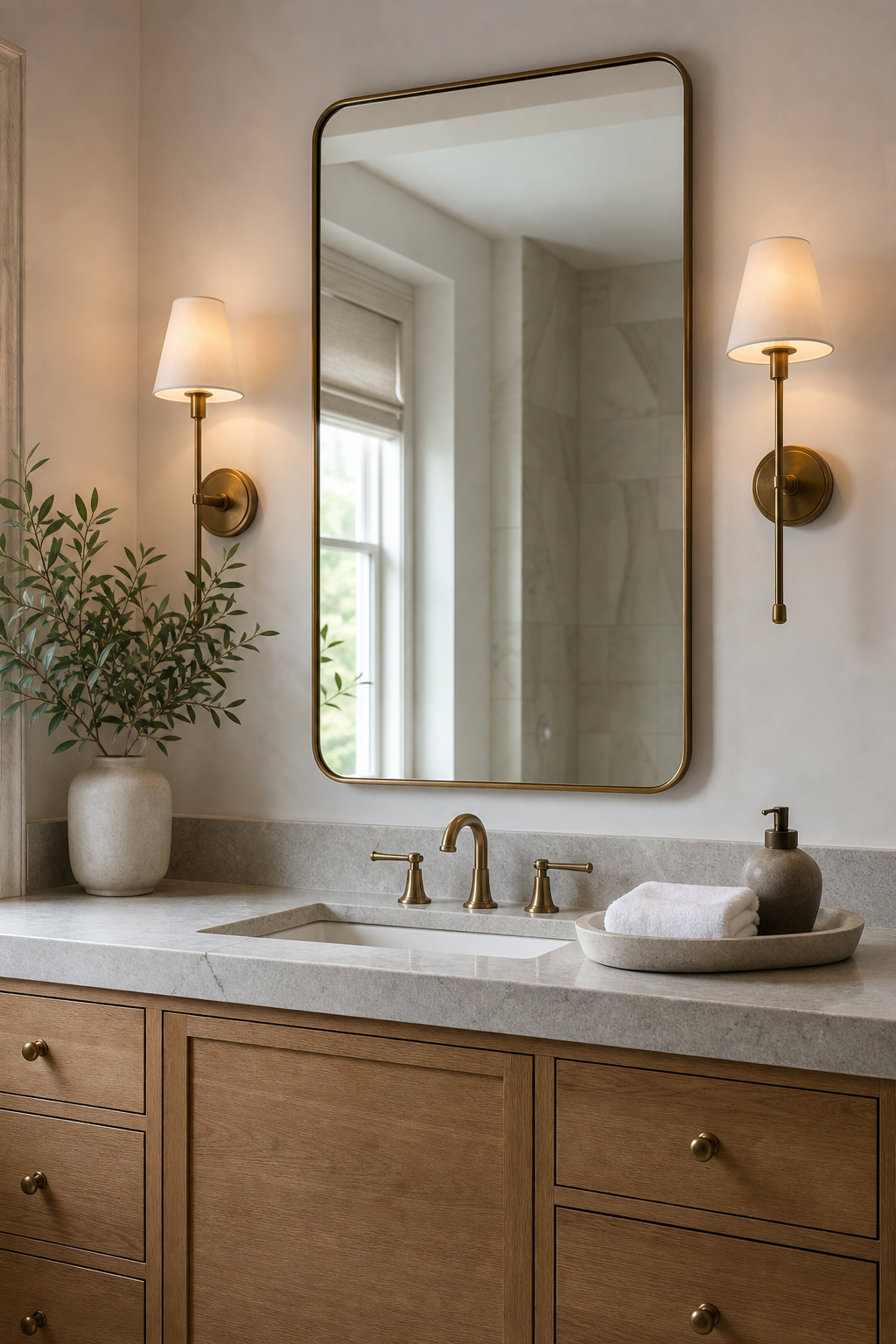
Layer Sconces Around The Mirror
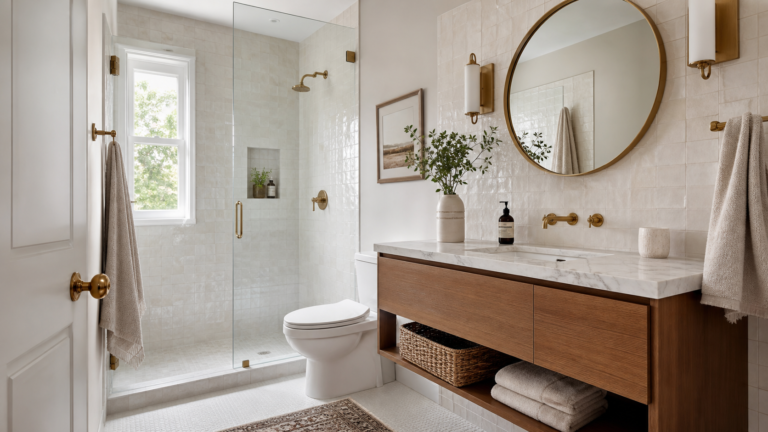
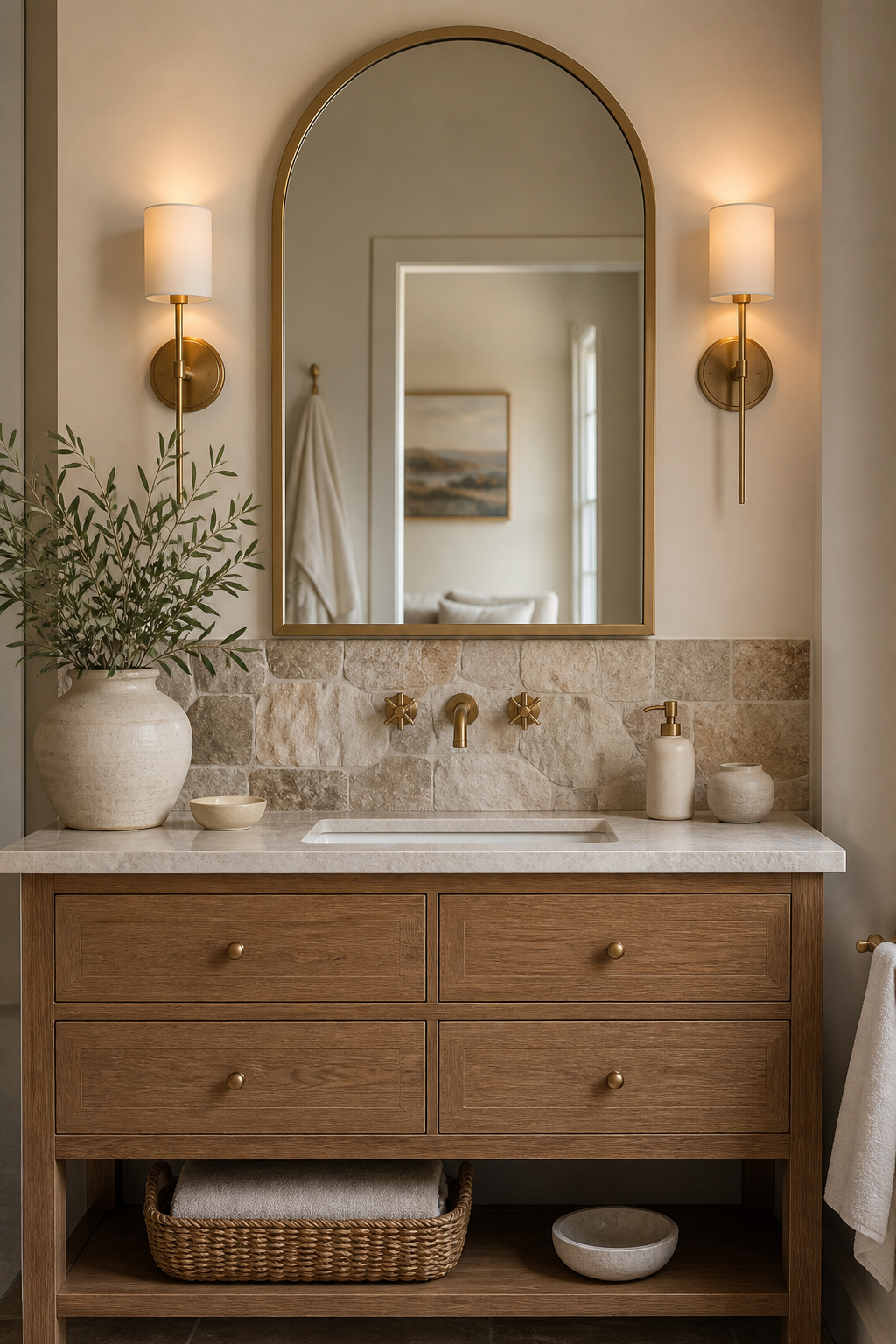
Bathroom lighting should be flattering, not harsh. Sconces placed at face height on either side of the mirror create softer, more even light than a single overhead fixture. If side sconces are not possible, a long shaded fixture above the mirror can still feel warm and intentional. Choose warm bulbs and put the lighting on a dimmer so the room works for both morning routines and evening baths. Finishes should relate to the faucet or mirror frame, but they do not need to match perfectly. The goal is a glow that makes tile, skin, and linens look better.
Use A Linen Roman Shade For Calm Texture
Bathrooms need softness just as much as bedrooms do, and a linen Roman shade can add texture without feeling fussy. It filters light beautifully, softens hard tile, and gives the window a finished look. Choose a moisture-appropriate lining and keep the shade clear of direct shower spray. Natural linen, oatmeal, warm white, or muted sage can all work depending on the palette. The shade should sit neatly inside or just above the frame, with folds that feel tailored. This small detail can make a bathroom feel more like a decorated room than a purely functional space.
Keep The Palette Quiet But Not Flat
A spa palette does not have to mean all-white. In fact, bathrooms often feel more luxurious when the palette includes several related neutrals. Try ivory walls, limestone tile, pale oak, warm gray grout, brushed nickel, and white towels for a layered but quiet scheme. Add one muted accent, such as sage, clay, smoke blue, or charcoal, through a bath mat, vase, or art. The trick is to vary undertones and textures so the room has depth. When every element sits in the same tonal family, the bathroom feels calm without becoming bland.
Upgrade Towel Storage So It Feels Hotel-Worthy
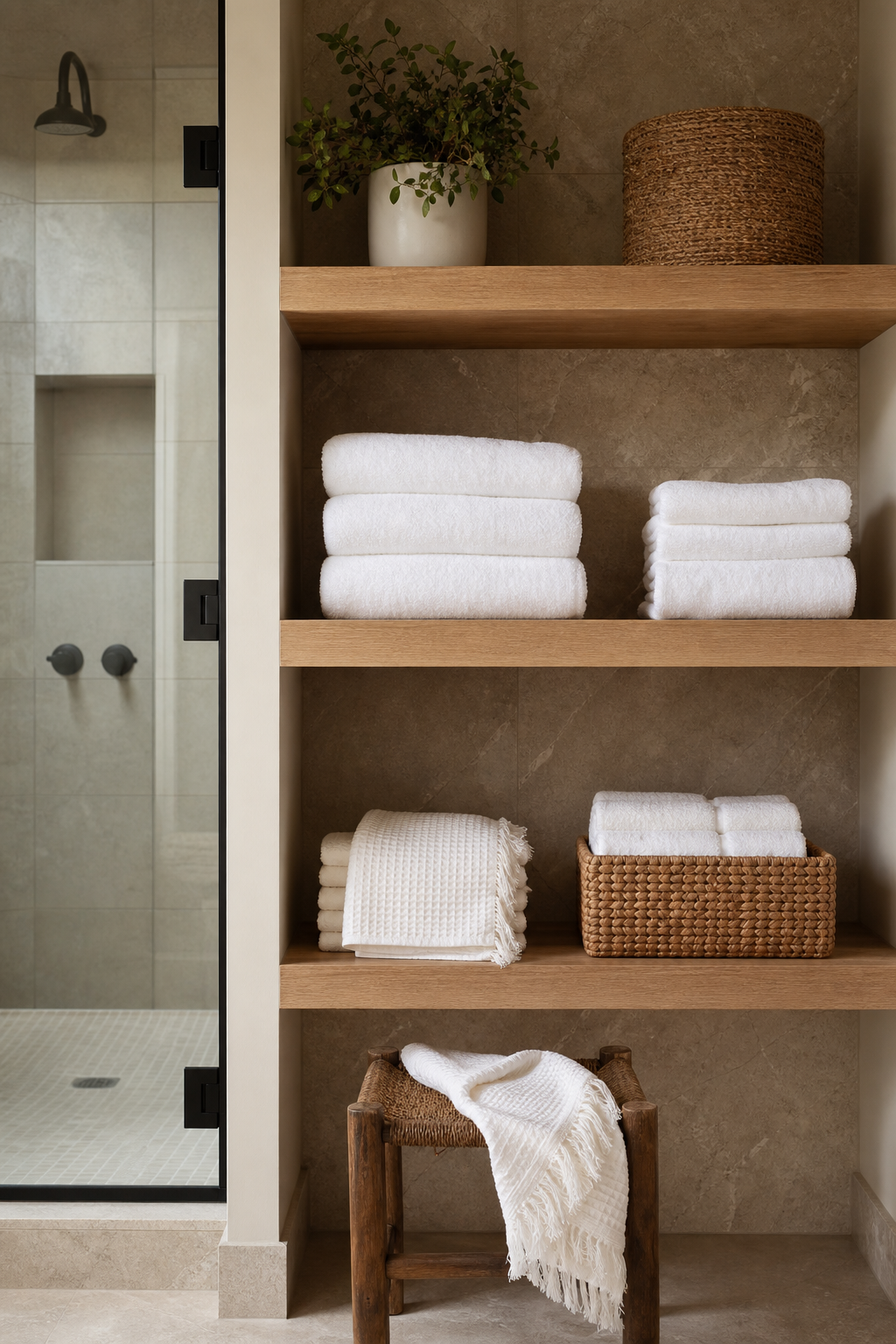
Towels are functional, but they also shape the atmosphere of a bathroom. Thick white towels stacked on an open shelf instantly suggest a spa, while a wall ladder or recessed shelf can make storage feel deliberate. Keep daily towels within reach of the shower or tub, and reserve a few neatly folded extras for the room’s visual rhythm. If the bathroom is small, choose hooks that look substantial rather than flimsy. Matching towel tones help the space feel quieter. Cotton, waffle weave, and subtle ribbed textures add softness without introducing visual clutter.
Bring In A Teak Or Woven Stool
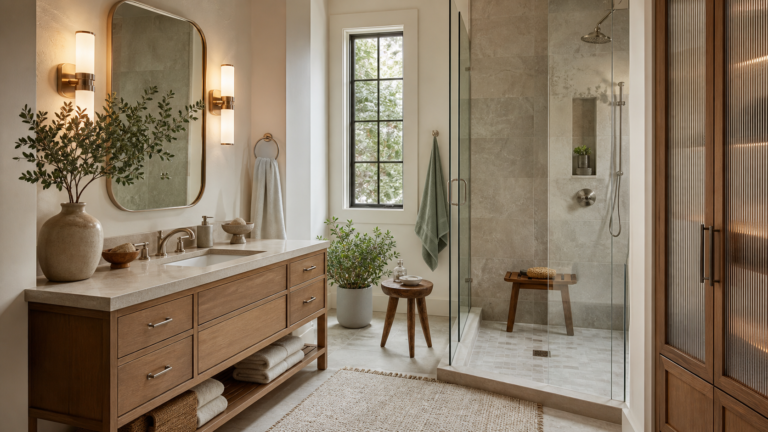
A small stool is one of the most useful styling pieces in a spa-like bathroom. Teak works especially well because it tolerates moisture and adds warmth near a tub or shower. A woven stool can soften a vanity area, while a ceramic garden stool brings polish in a compact room. Use it to hold a towel, soap dish, candle, or book, but keep the arrangement simple. The stool should support the routine rather than becoming a display stand. Its scale matters too: low enough to feel relaxed, but substantial enough to look intentional.
Hide Everyday Products In Pretty Storage
A bathroom feels more restful when everyday products have a clear home. Use drawer organizers for skin care, lidded baskets for backup items, and a slim cabinet for hair tools. On open surfaces, limit visible objects to what looks good and is used often: a hand soap, small tray, folded cloth, or one vessel. Matching containers can help, but the bigger improvement is reducing how much sits out at once. Think of storage as part of the design, not an afterthought. When clutter disappears, tile, mirrors, and lighting can do their work.
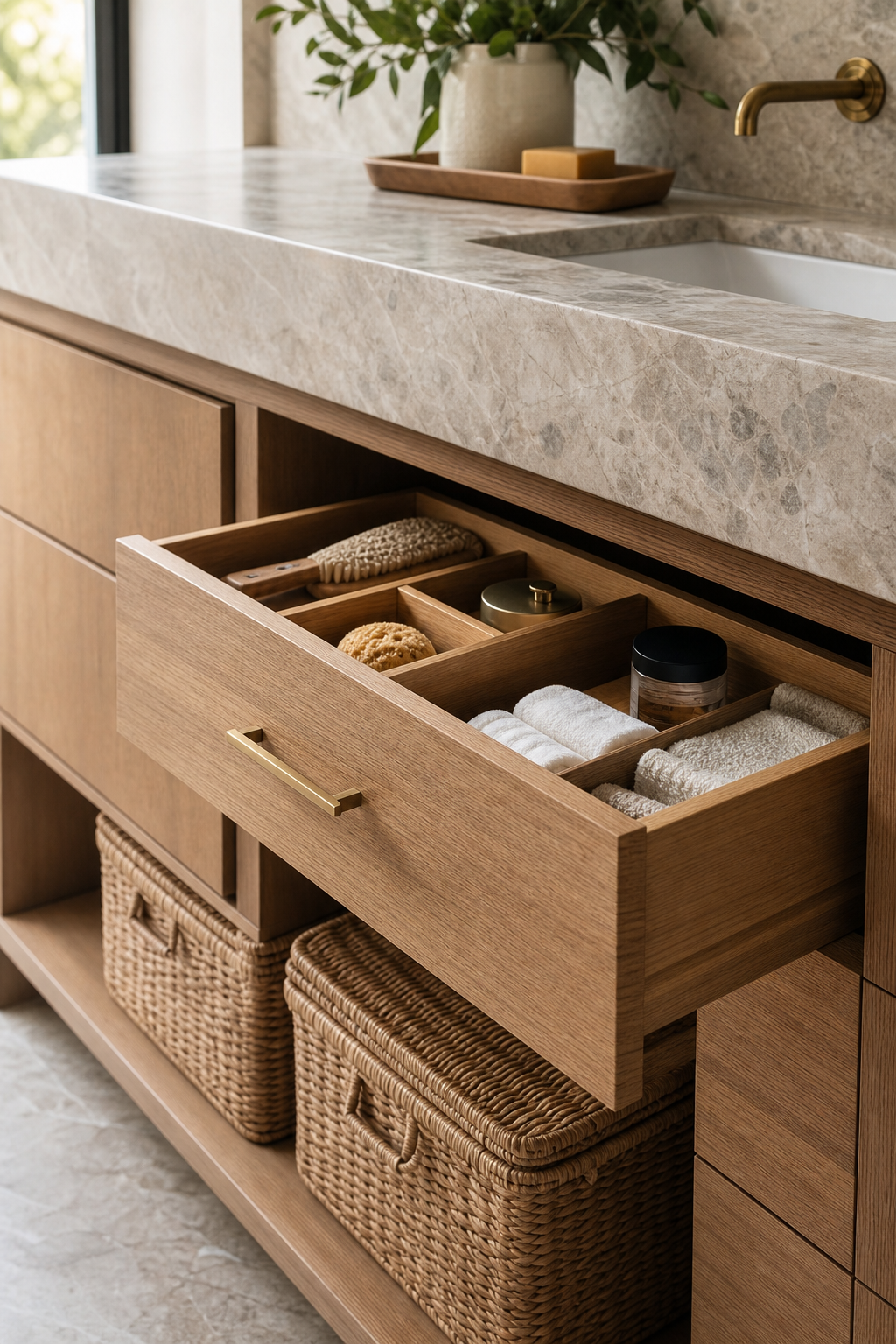
Add A Ribbed Glass Detail
Ribbed glass gives a bathroom texture and privacy while still letting light move through the room. It can appear on a shower panel, cabinet door, pendant shade, or small partition near the vanity. The vertical rhythm feels tailored and works with both modern and classic spaces. Use it sparingly so the detail feels special rather than busy. Ribbed glass pairs beautifully with stone, oak, chrome, and aged brass because it adds another surface without another strong color. In a small bathroom, it can make the room feel layered while keeping sightlines light.
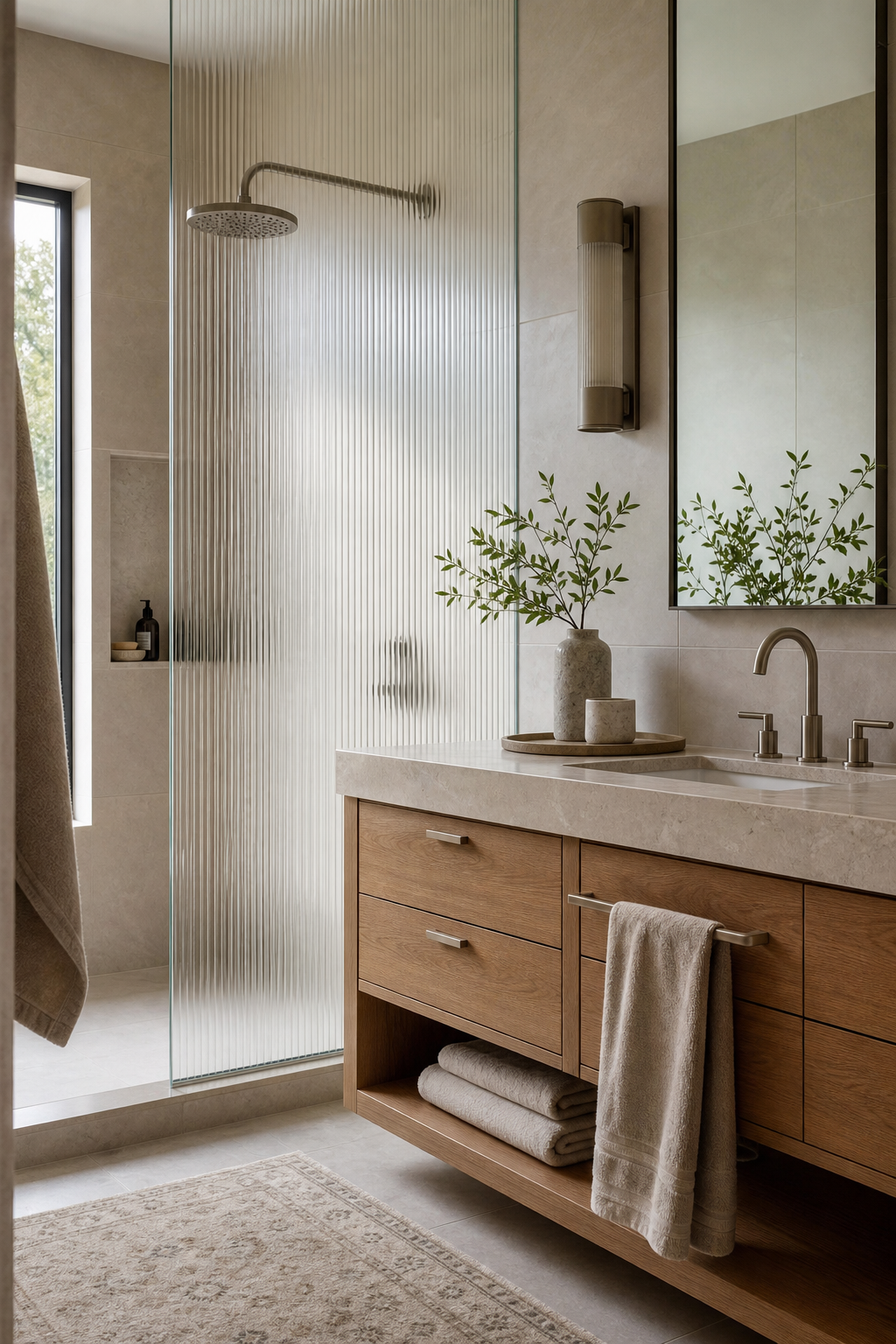
Use Greenery For A Fresh Spa Note
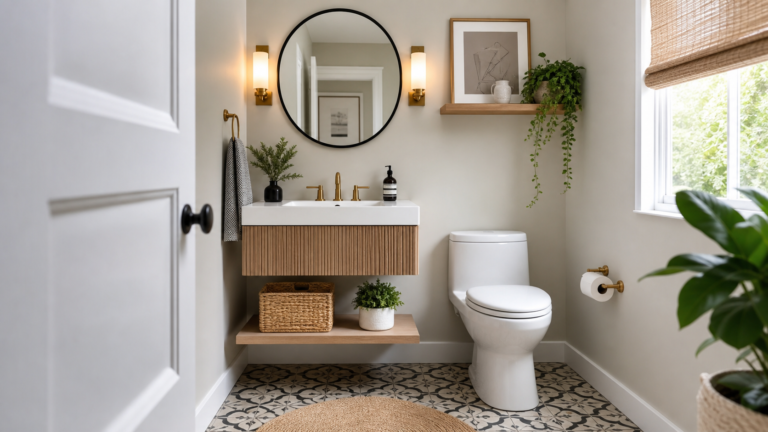
Greenery brings life to a bathroom, but it works best when chosen with restraint. A small eucalyptus bundle, fern, orchid, or olive branch arrangement can soften tile and make the room feel fresher. Choose plants that suit the light and humidity level, or use cut branches when maintenance is not realistic. Place greenery near a window, vanity, tub, or shelf where it can break up straight lines. One healthy arrangement is better than several tiny pots crowded around the sink. The result should feel natural and clean, not themed or overly decorated.
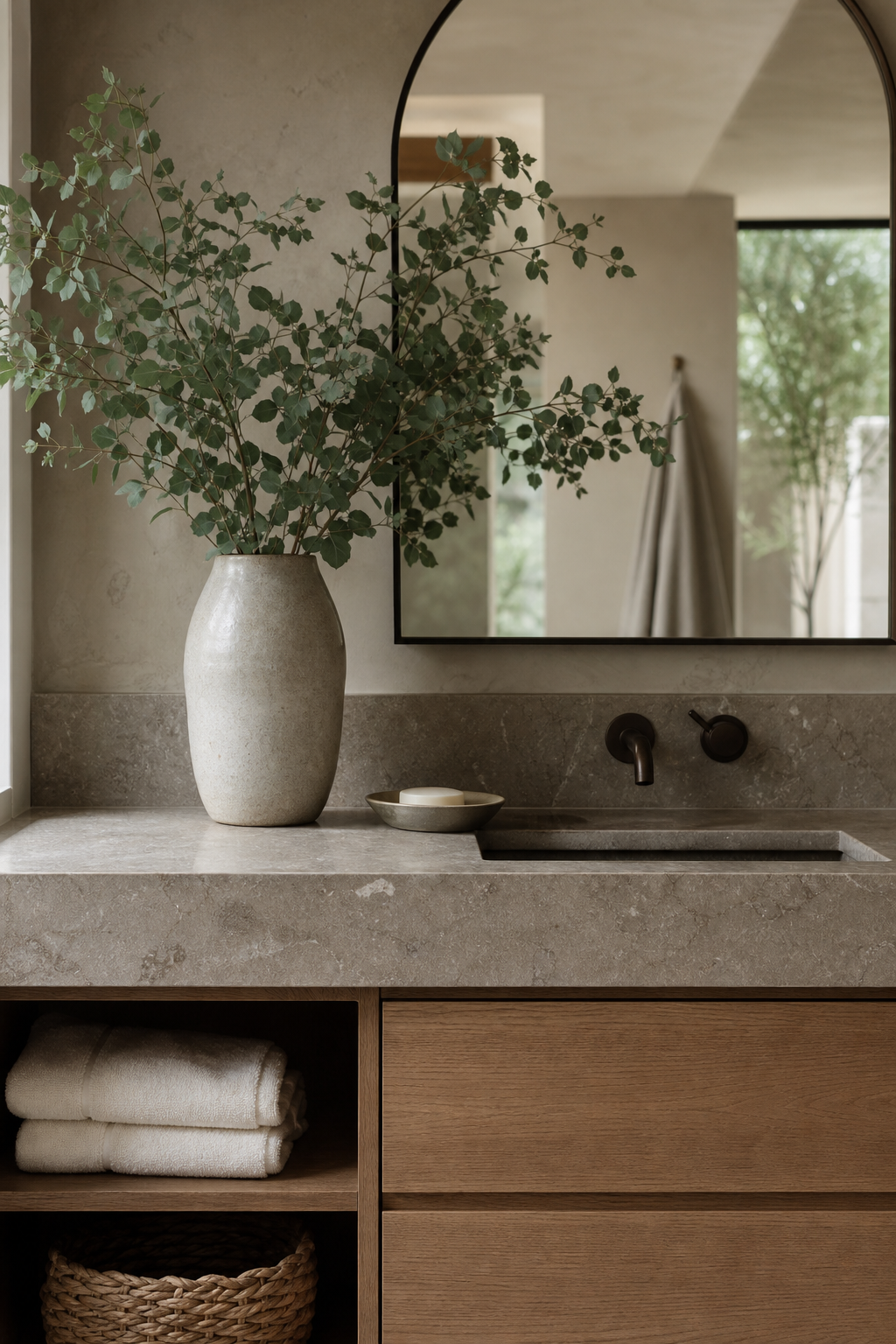
Try A Plaster-Look Wall Finish
A plaster-look wall finish can make a bathroom feel handmade and serene, especially above tile wainscoting or outside the wet zone. Limewash, microcement, tadelakt-inspired finishes, or plaster-effect paint all add movement without a busy pattern. The finish should be appropriate for bathroom humidity and sealed where needed. Keep the color soft, such as warm white, clay, putty, or pale gray. This texture works beautifully with simple mirrors, stone counters, and wood vanities because it gives the walls depth. It is an elegant way to make a plain bathroom feel more architectural.
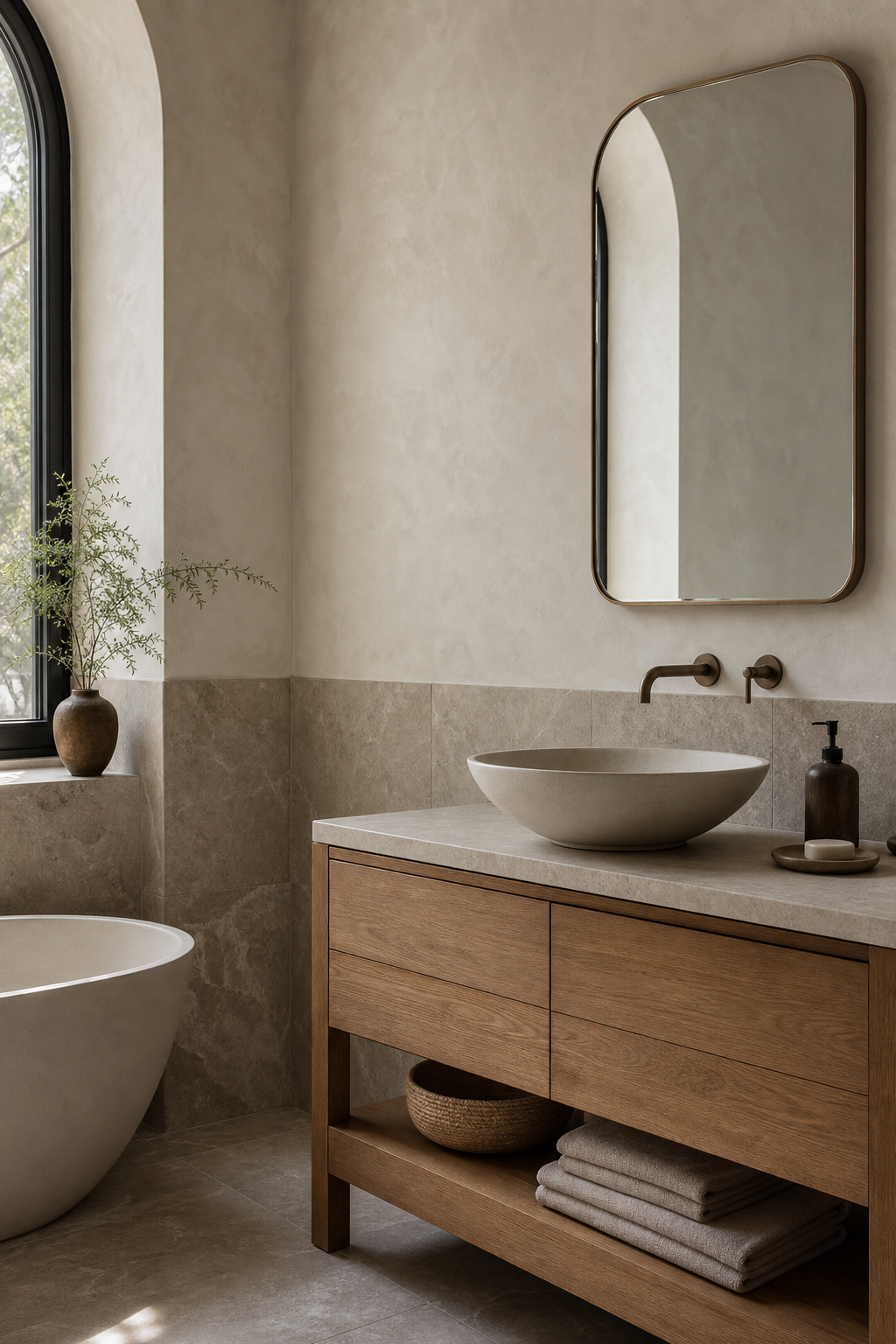
Make The Bath Mat Feel Intentional
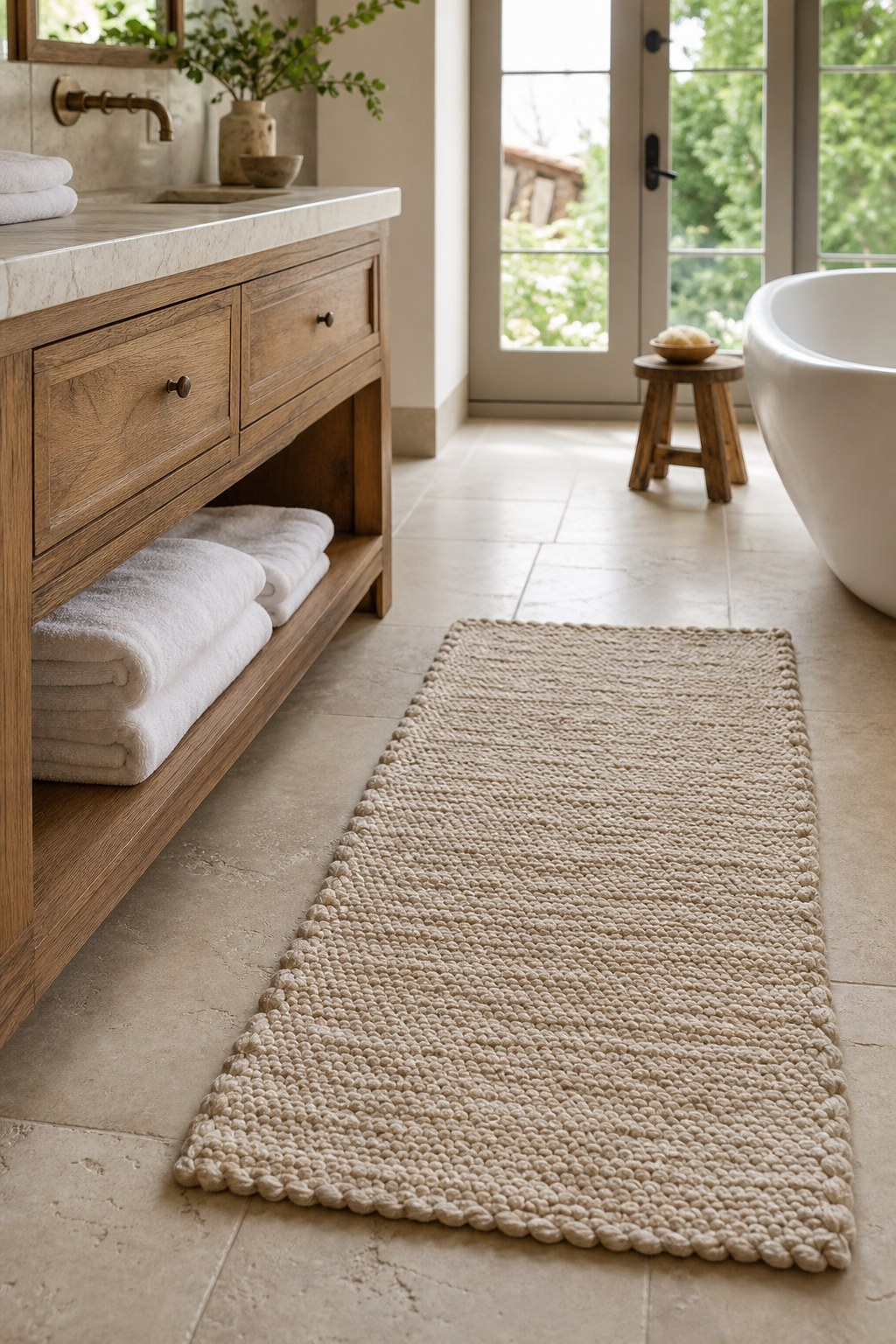
A bath mat can either interrupt the design or quietly finish it. Instead of a thin mat that looks temporary, choose a textured cotton rug, low wool blend where appropriate, teak mat, or washable runner that suits the room’s scale. In a long bathroom, a runner can connect the vanity and tub zones. In a compact bathroom, a tonal mat keeps the floor calm. Avoid colors that fight the tile undertone. The mat should be easy to wash and dry, but it can still look considered. Texture underfoot is part of the spa experience.
Pick Fixtures With A Quiet Finish
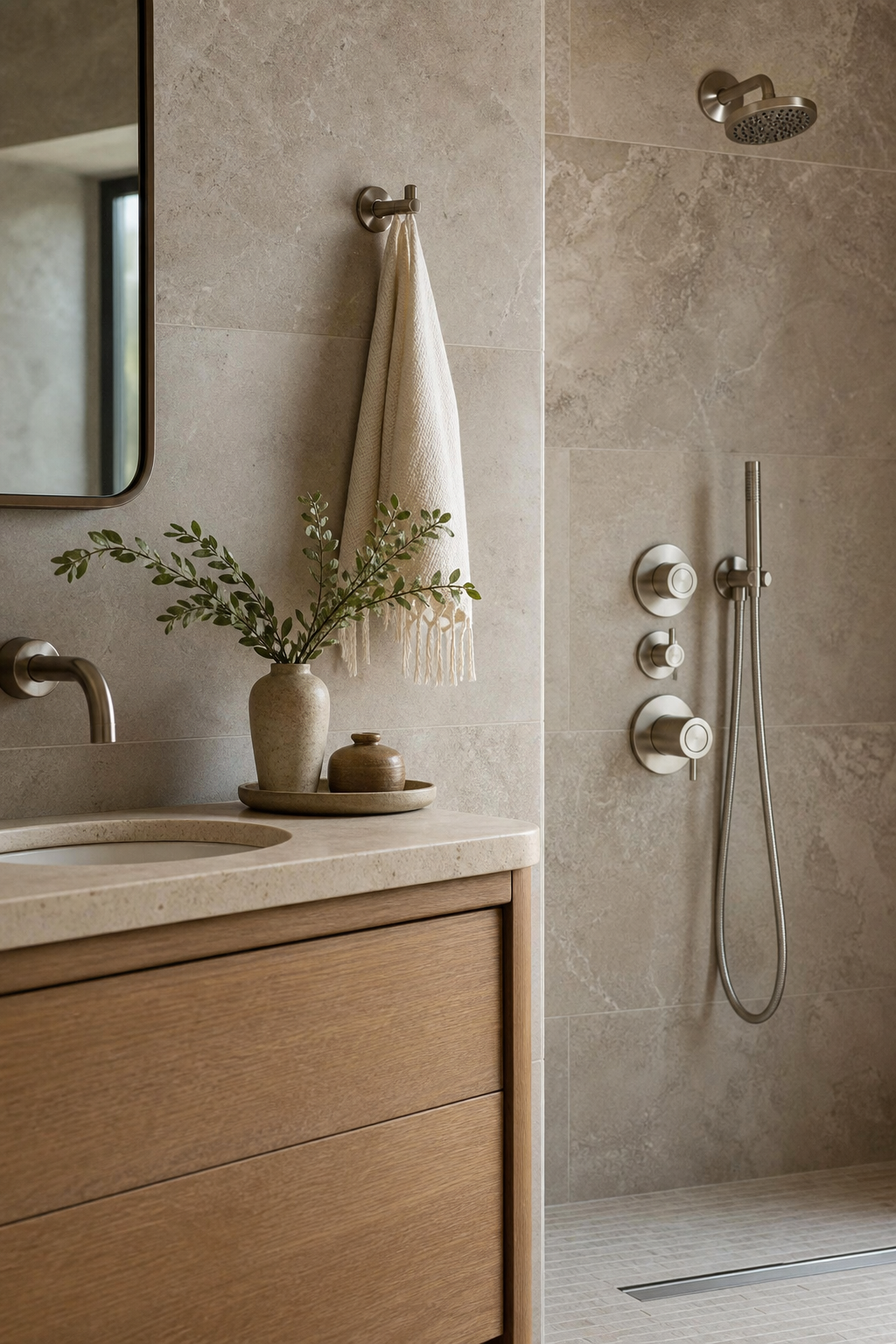
Fixtures set the tone of a bathroom more than many people expect. Polished chrome feels crisp and timeless, brushed nickel feels soft, aged brass brings warmth, and matte black adds definition. For a spa-like refresh, choose one main finish and repeat it through the faucet, shower trim, towel hooks, and lighting details. Mixing finishes can work, but keep the contrast deliberate. The shape matters as much as the color: simple levers, clean spouts, and restrained shower controls feel calmer than ornate profiles. Quiet fixtures allow stone, wood, and light to remain the focus.
Frame The Mirror Like Furniture
A mirror can make a bathroom feel more decorated when it has enough presence. Instead of a flat frameless panel, consider an arched mirror, slim metal frame, warm wood frame, or rounded rectangle that relates to the vanity. The mirror should be wide enough to feel useful but not so large that it overwhelms sconces or tile. In a double vanity, two individual mirrors can feel tailored, while one long mirror can make the room feel wider. Treat the frame like furniture: it should support the style, add finish, and make the vanity wall feel complete.
Create A Candlelit Evening Layer
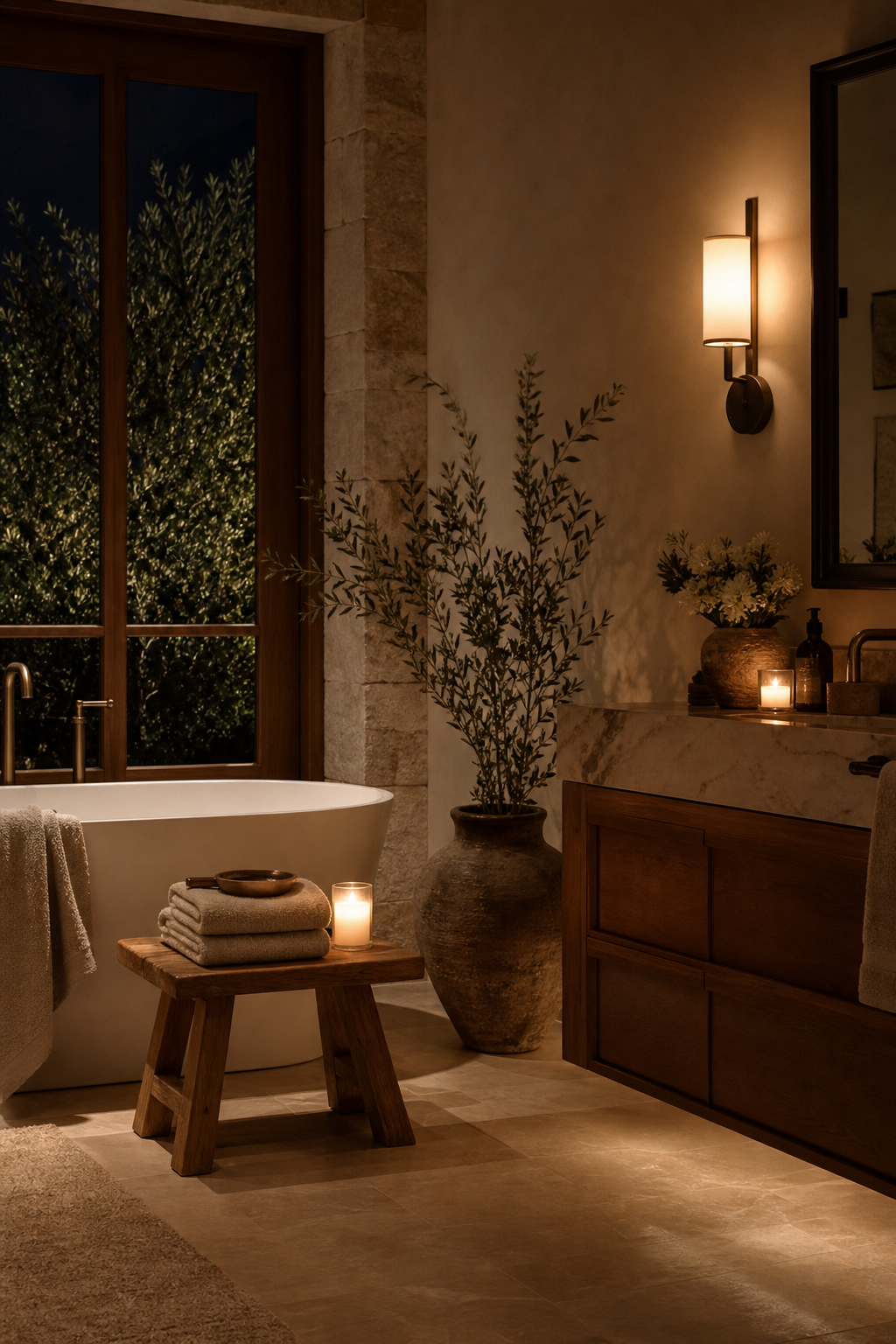
A spa-like bathroom should feel good at night, not only in daylight. Add an evening layer with dimmable sconces, a shaded pendant, a small lamp on a safe dry surface, or a few candles placed away from towels and curtains. Warm light makes stone and wood feel richer and encourages a slower routine. Avoid relying only on bright ceiling lights, which can make the bathroom feel clinical. Even a compact bathroom can benefit from one softer source near the vanity or tub. The goal is atmosphere that still feels practical and safe.
Use Art To Make The Room Feel Personal
Art can make a bathroom feel less like a utility space and more like a considered room. Choose pieces that can tolerate the location and avoid placing valuable works where steam or splashes are likely. A small landscape, soft abstract, botanical print, or simple framed textile can bring personality without overwhelming the palette. Hang art where it can be seen from the doorway, above a towel bar, or beside a tub. The frame should relate to the mirror or vanity finish. One thoughtful piece is enough to make the room feel layered and lived in.
Finish With A Tray For Daily Rituals
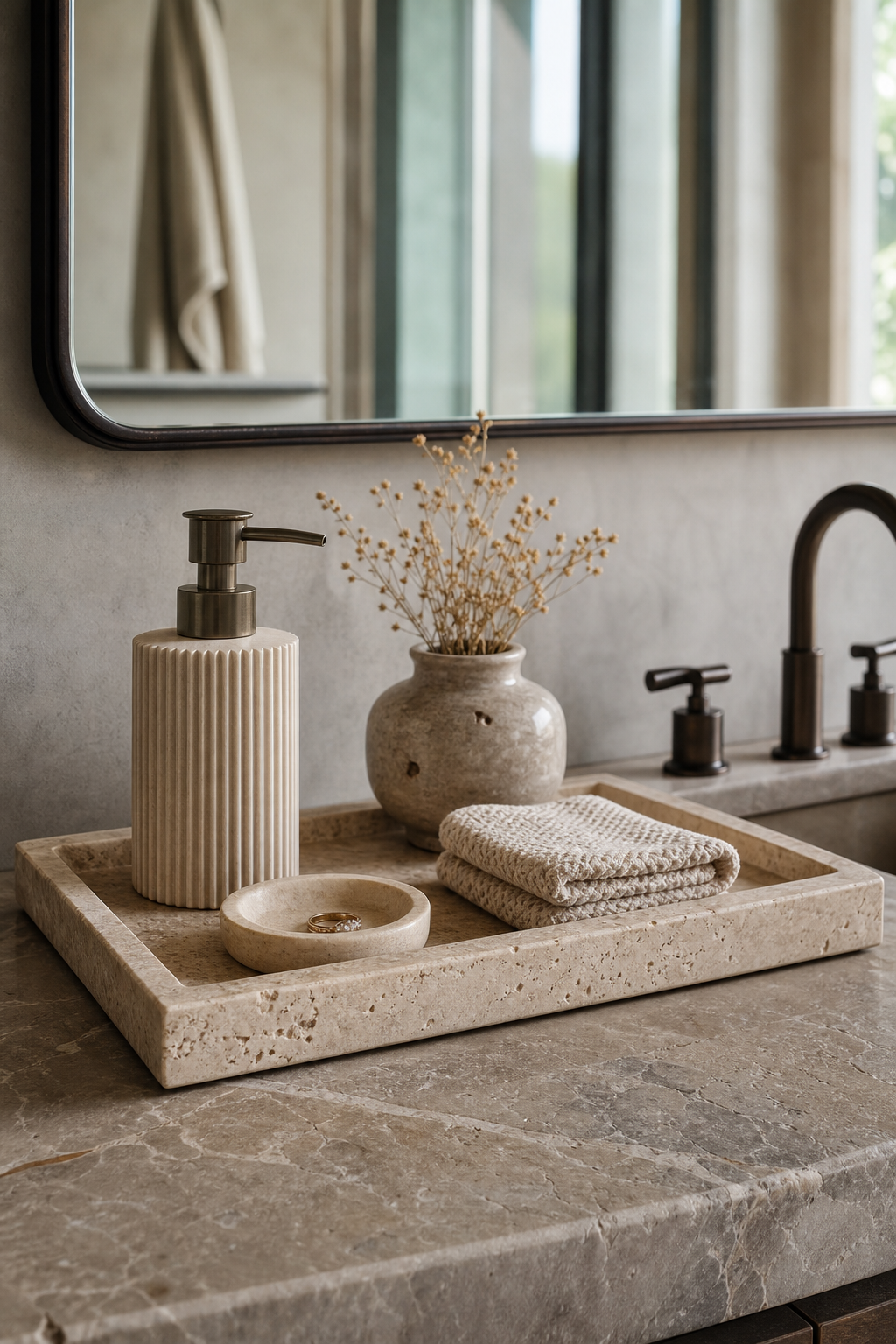
A small tray can make everyday bathroom items feel intentional. Use one on the vanity for hand soap, a ring dish, and a folded cloth, or place a stone tray near the tub for bath oil and a candle. The tray creates a boundary, which keeps useful objects from spreading across the counter. Choose marble, travertine, wood, ceramic, or lacquer depending on the room’s material story. Keep the grouping edited so it still feels restful. This is a small detail, but it supports the larger goal: making ordinary routines feel calmer and more beautifully organized.
A spa-like bathroom refresh works best when beauty and ease are treated as the same goal. Warm tile, soft lighting, better towel storage, edited surfaces, and a few tactile details can make the room feel calmer without turning it into a space that is difficult to maintain. Start with the detail that creates the most friction in your current bathroom, whether that is clutter, cold lighting, harsh finishes, or lack of storage. Then layer in texture, warmth, and quiet organization so the room supports the way you actually use it every day.