25 Master Bath Ideas For A Spa-Like Refresh
A master bath feels most restorative when every detail supports calm, comfort, and easy routines. A spa-like refresh does not have to mean a full renovation, although stone, tile, and lighting can transform the room when larger work is possible. The strongest master bath ideas usually combine tactile materials, generous storage, flattering light, and simple styling that keeps counters clear. Think of the room as a private retreat: warm underfoot, soft at the edges, practical around the vanity, and quiet enough to make daily rituals feel slower. These ideas can help shape anything from a small styling update to a complete bath redesign.
Choose A Warm Stone Palette
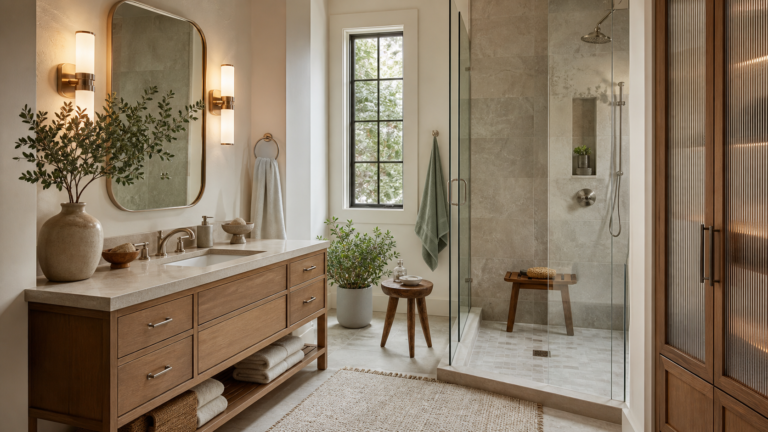
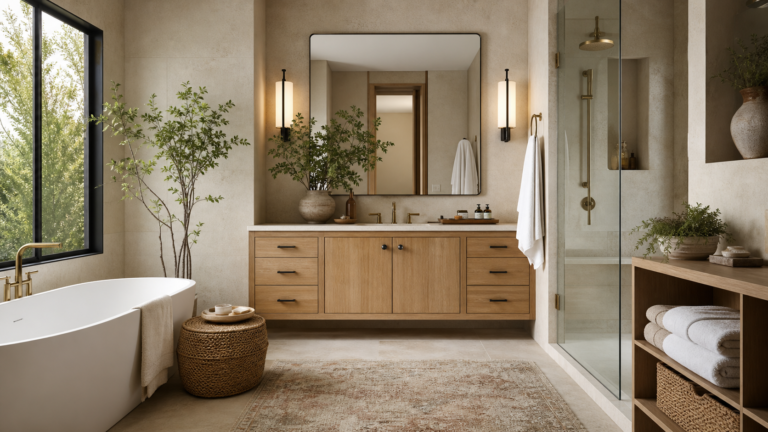
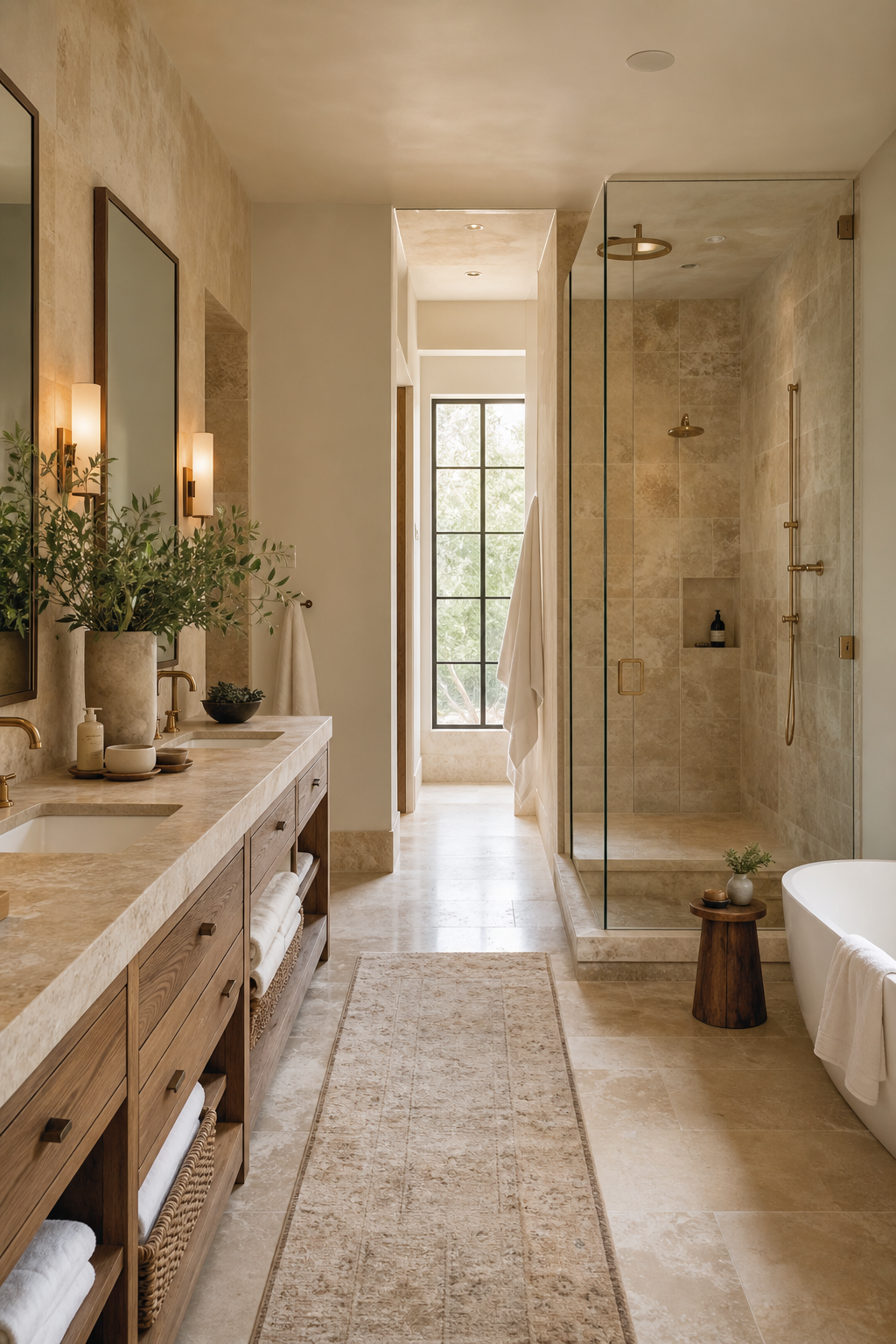
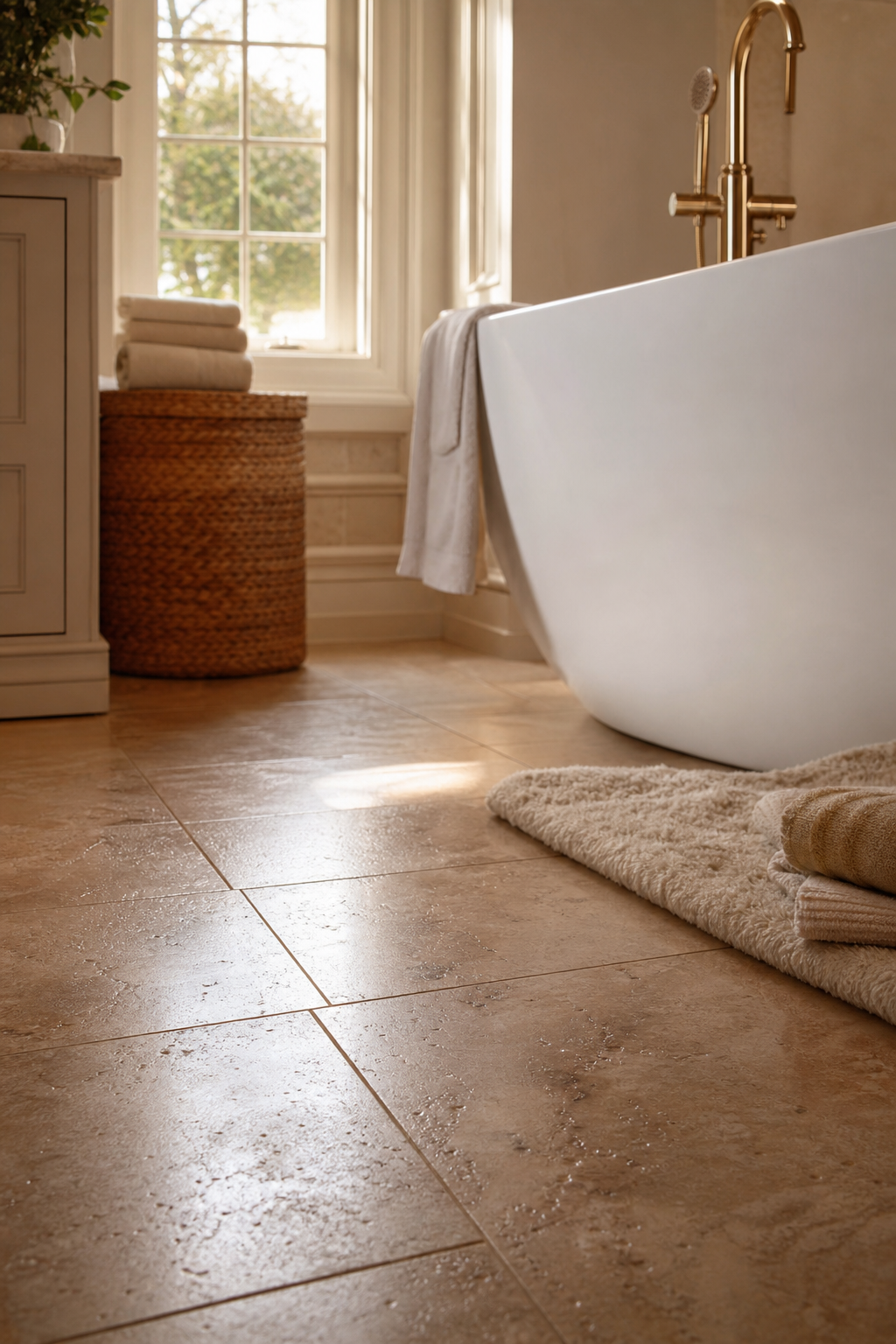
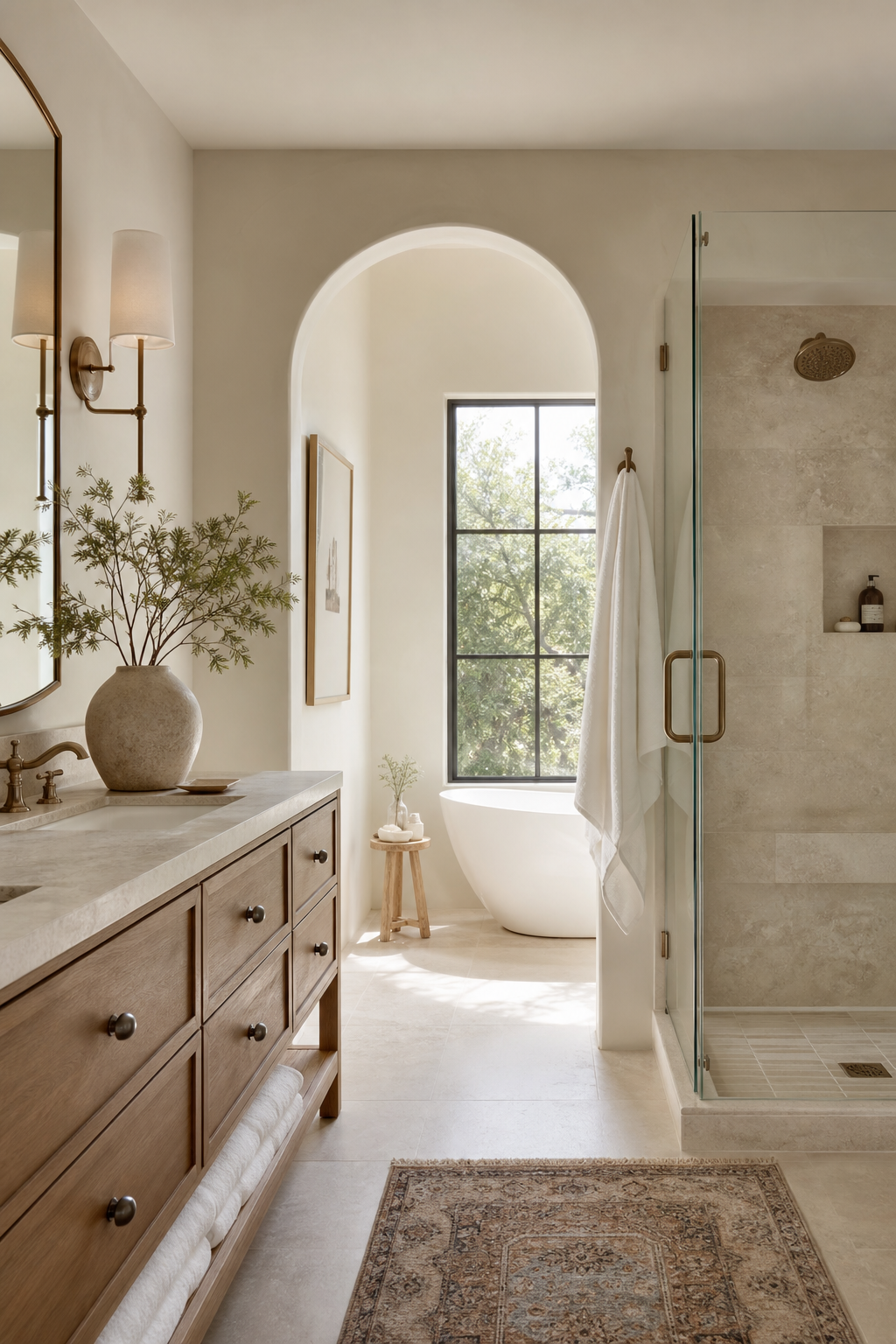
Warm stone immediately gives a master bath a spa-like foundation because it feels grounded without looking cold. Travertine, limestone, honed marble, zellige, and porcelain slabs in sand, taupe, ivory, or mushroom tones can soften the entire room. Use the stone on floors, shower walls, or a vanity backsplash, then repeat the undertone in towels, wood, and metal finishes. A honed or matte surface often feels calmer than high gloss. The goal is not to make every surface match, but to create a quiet mineral palette that looks natural in daylight and warm under evening sconces.
Add A Freestanding Soaking Tub
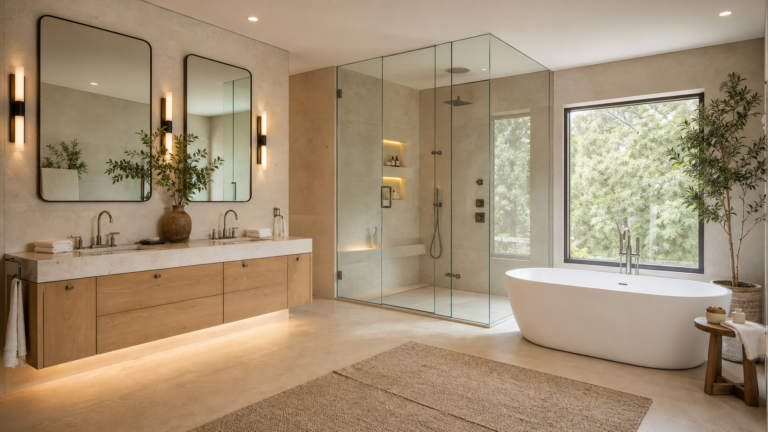
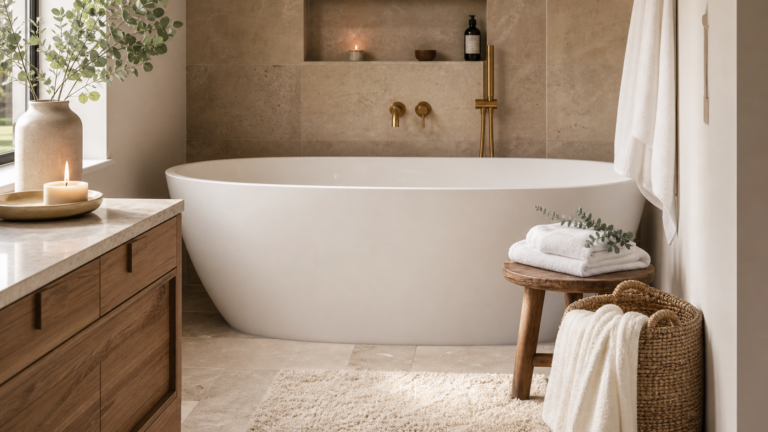
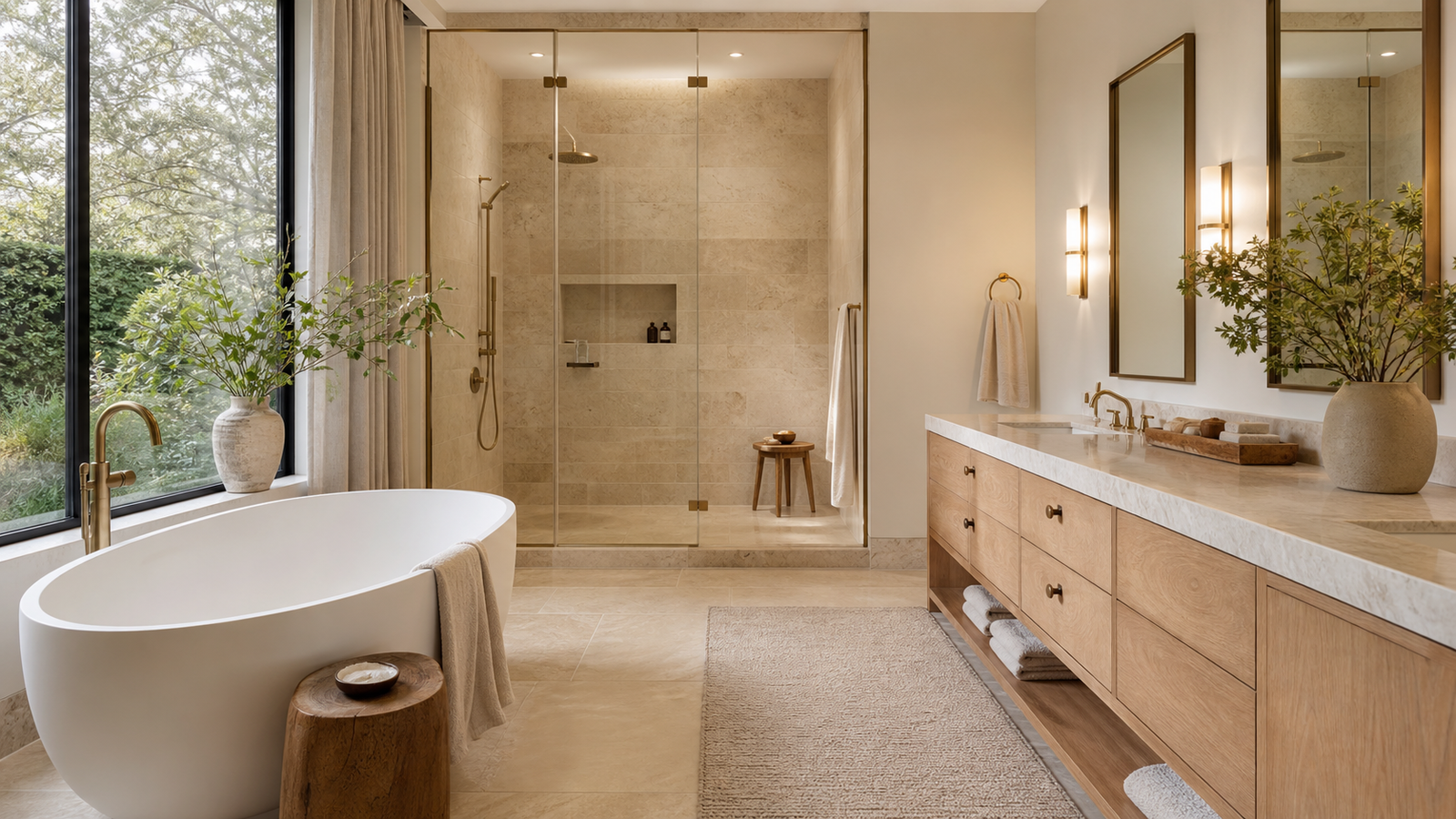
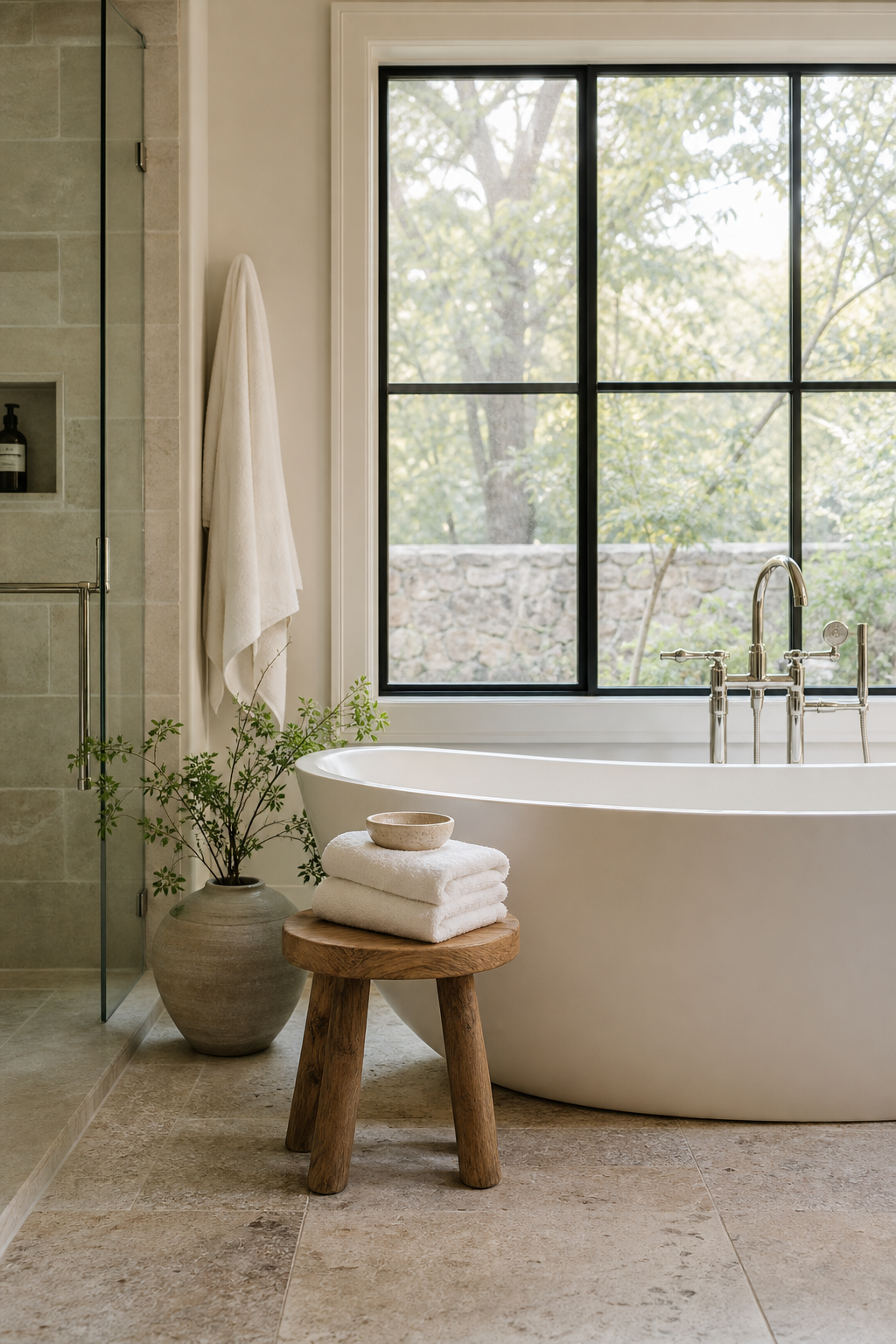
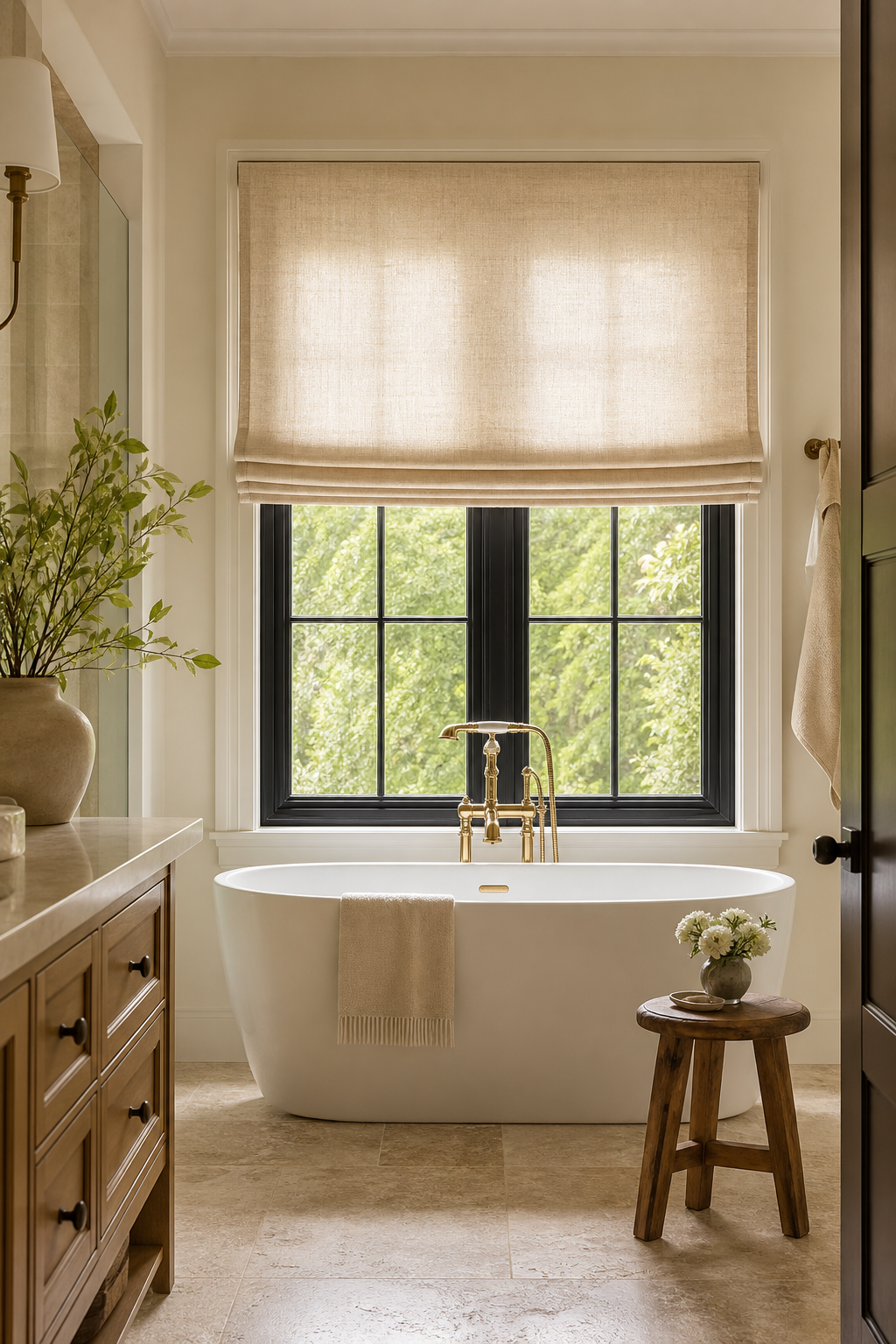
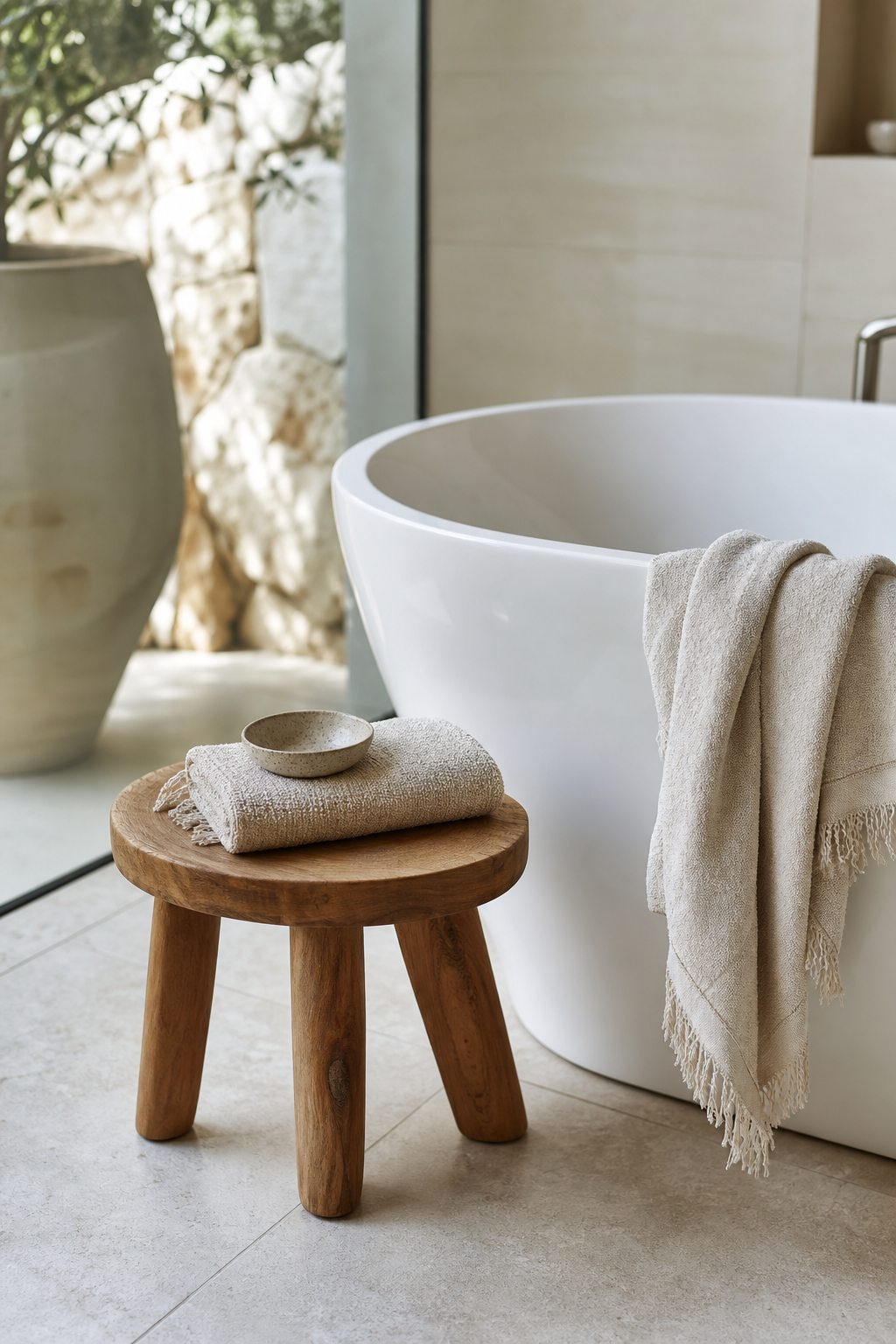
A freestanding tub can become the emotional center of a master bath, especially when it has space to breathe. Place it near a window, beneath a pendant, or against a textured wall so it feels intentional rather than squeezed in. Keep the styling simple with a small stool, folded towel, bath brush, or ceramic vessel. The surrounding finishes matter as much as the tub itself; stone floors, soft curtains, and warm metal plumbing make the area feel more finished. Even a compact tub can feel luxurious when the view, lighting, and materials are treated thoughtfully.
Upgrade To A Glass Shower Enclosure
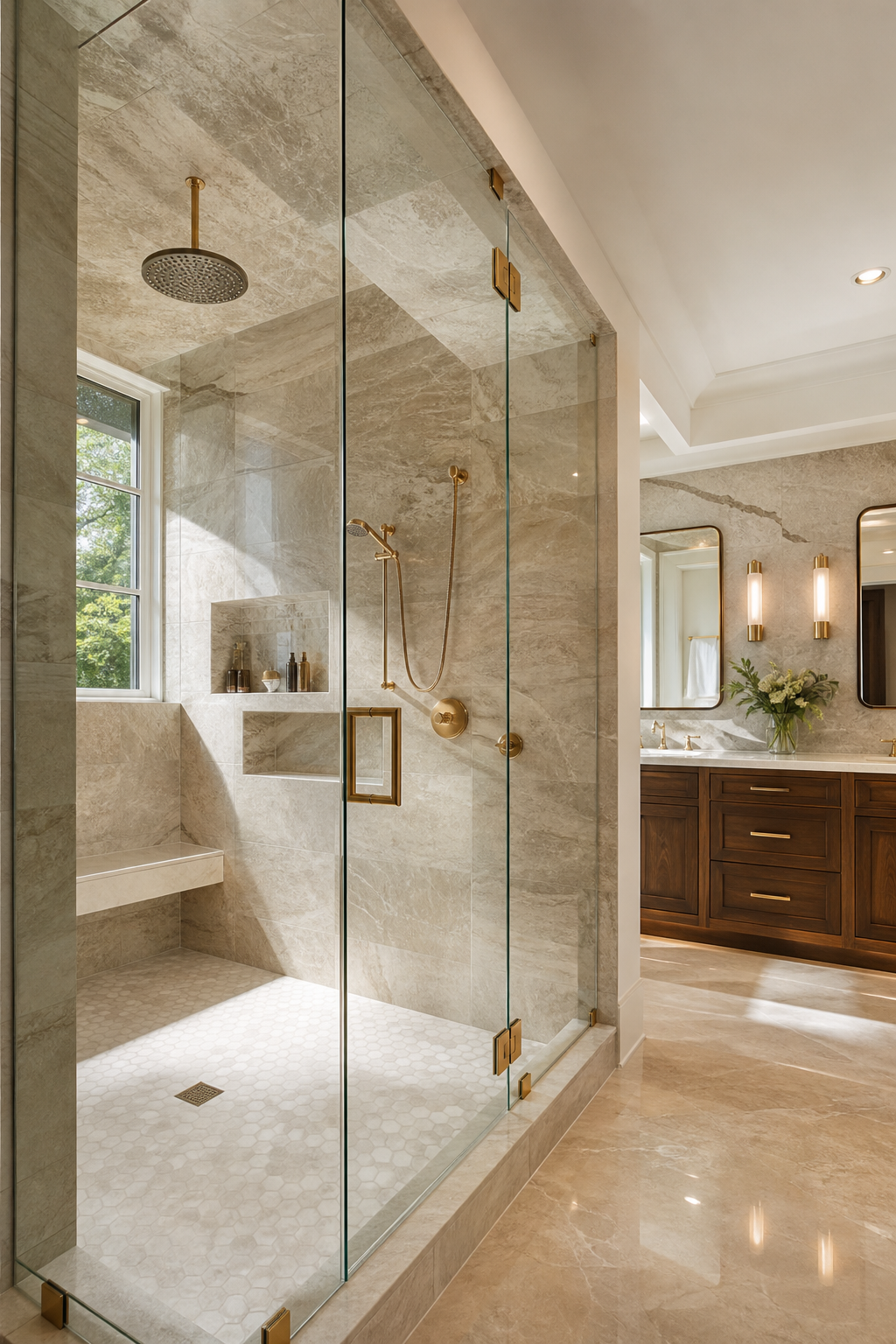
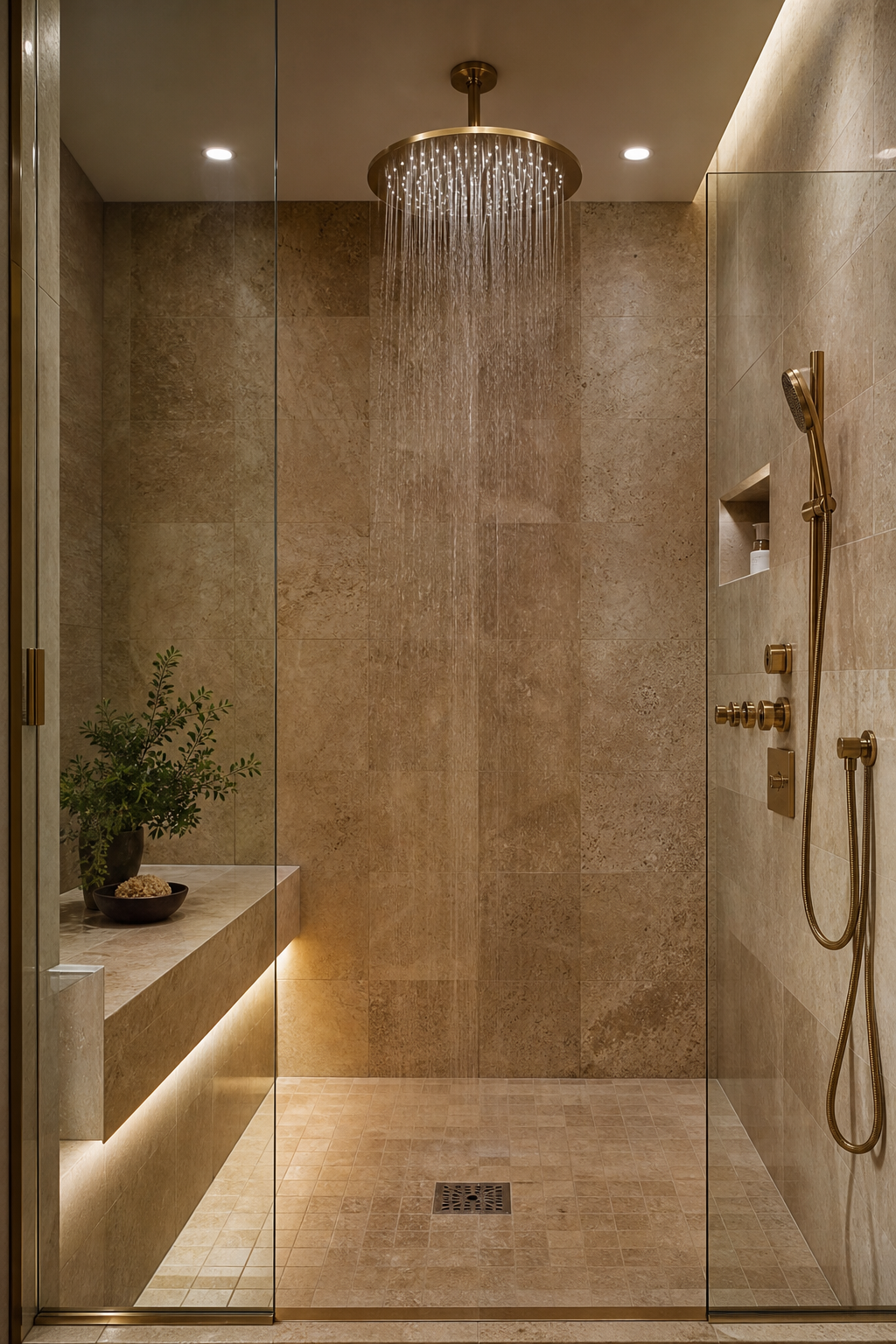
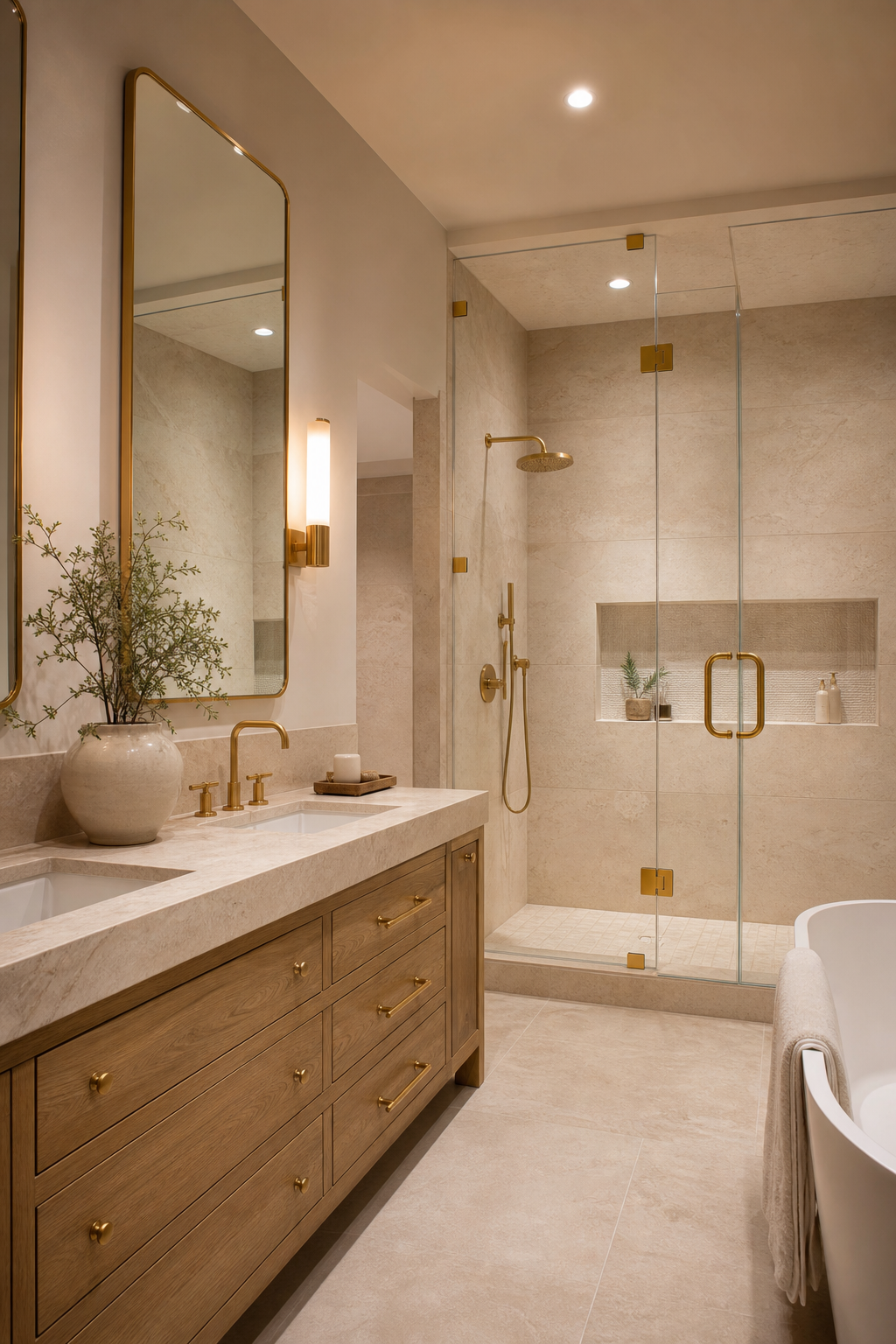
A clear glass shower enclosure makes a master bath feel larger, brighter, and more tailored. It lets tile, stone, and fixtures remain visible, which is especially useful when the shower has beautiful materials. Frameless glass feels the most seamless, while slim black or brass framing can add definition in a room that needs contrast. Inside the shower, include a niche, bench, or ledge so bottles and soap do not clutter the floor. Good drainage and a simple squeegee routine keep the look practical. The result is cleaner visually and easier to enjoy every day.
Use A Shower Bench For Comfort
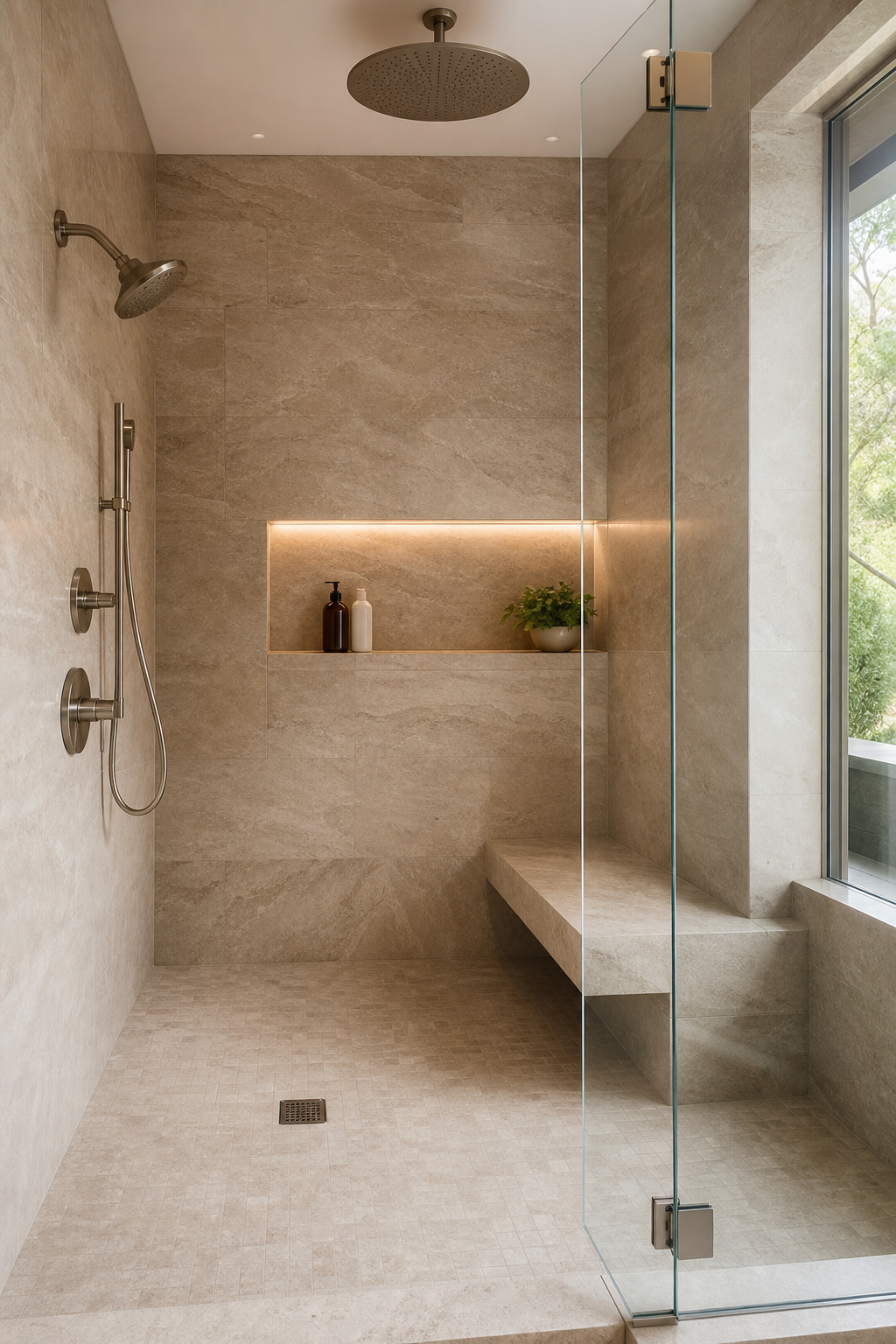
A shower bench makes the room feel more considered because it supports comfort, shaving, bathing children, and slower routines. Built-in stone benches look integrated, while a teak stool can add warmth to an existing shower. Keep proportions generous enough to be useful but not so bulky that the shower feels crowded. If the bench is built in, continue the wall tile or slab over it for a calm architectural look. Pair it with a niche or ledge nearby so products stay organized. It is a small spa detail that improves both function and atmosphere.
Layer Vanity Lighting Around The Mirror
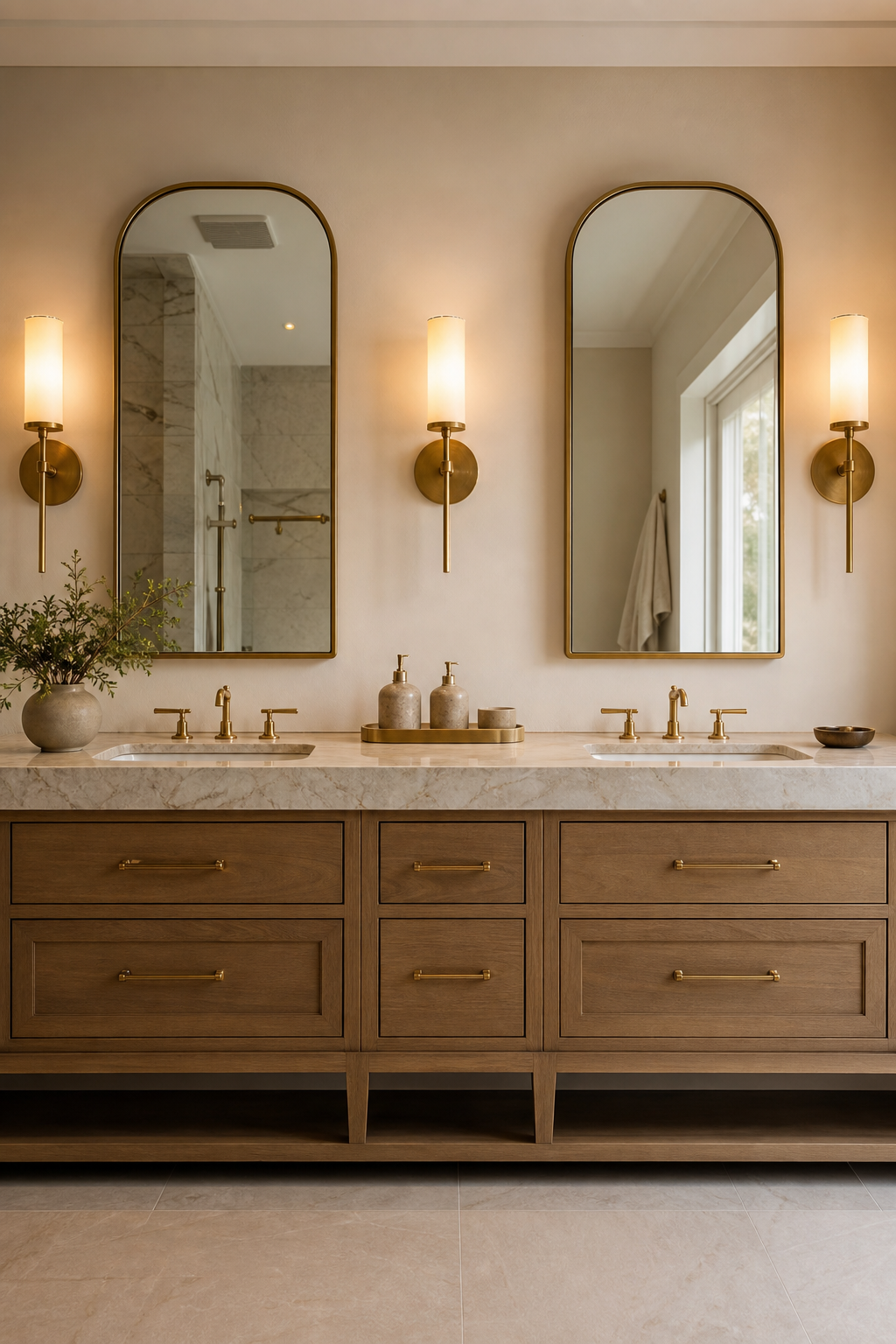
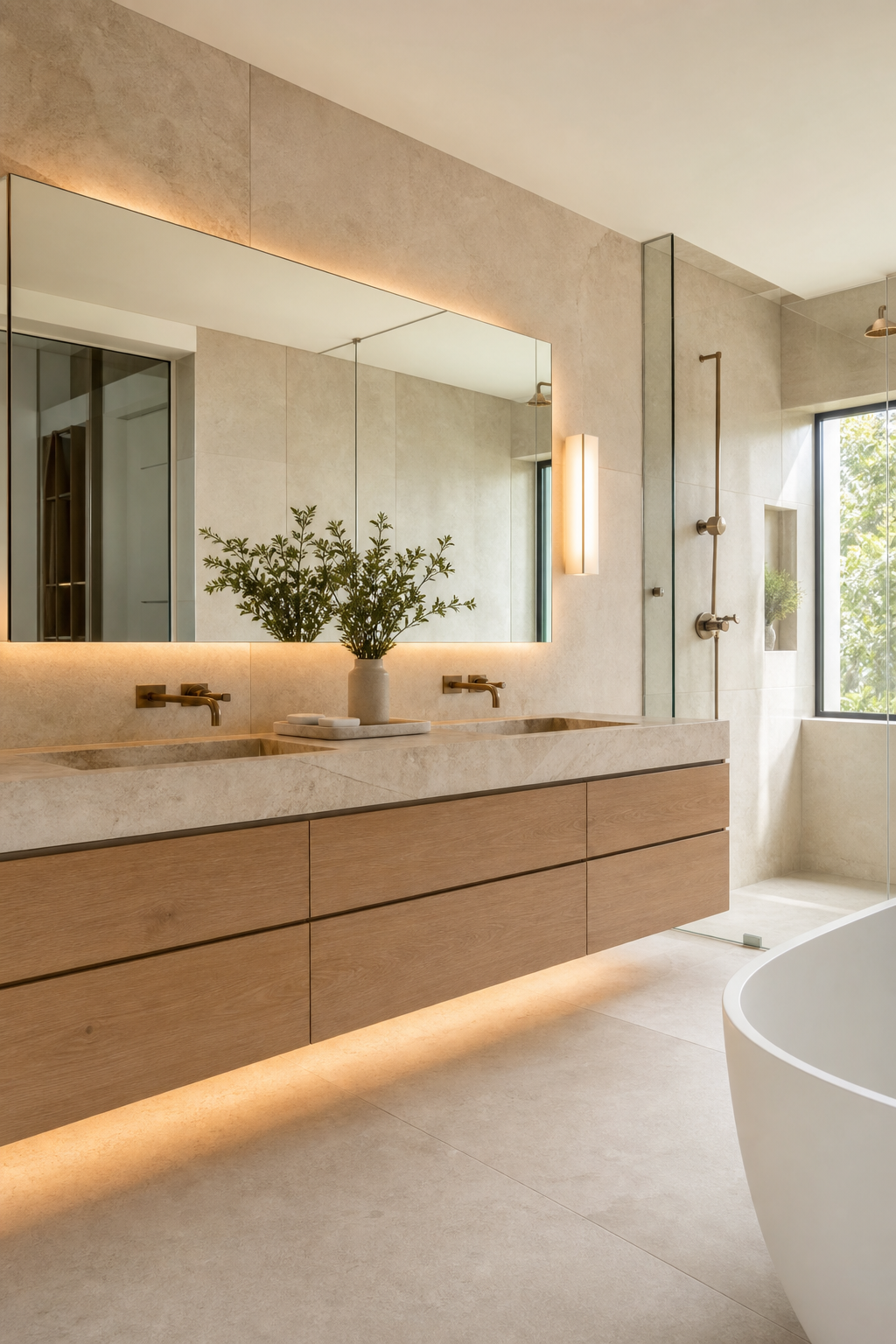
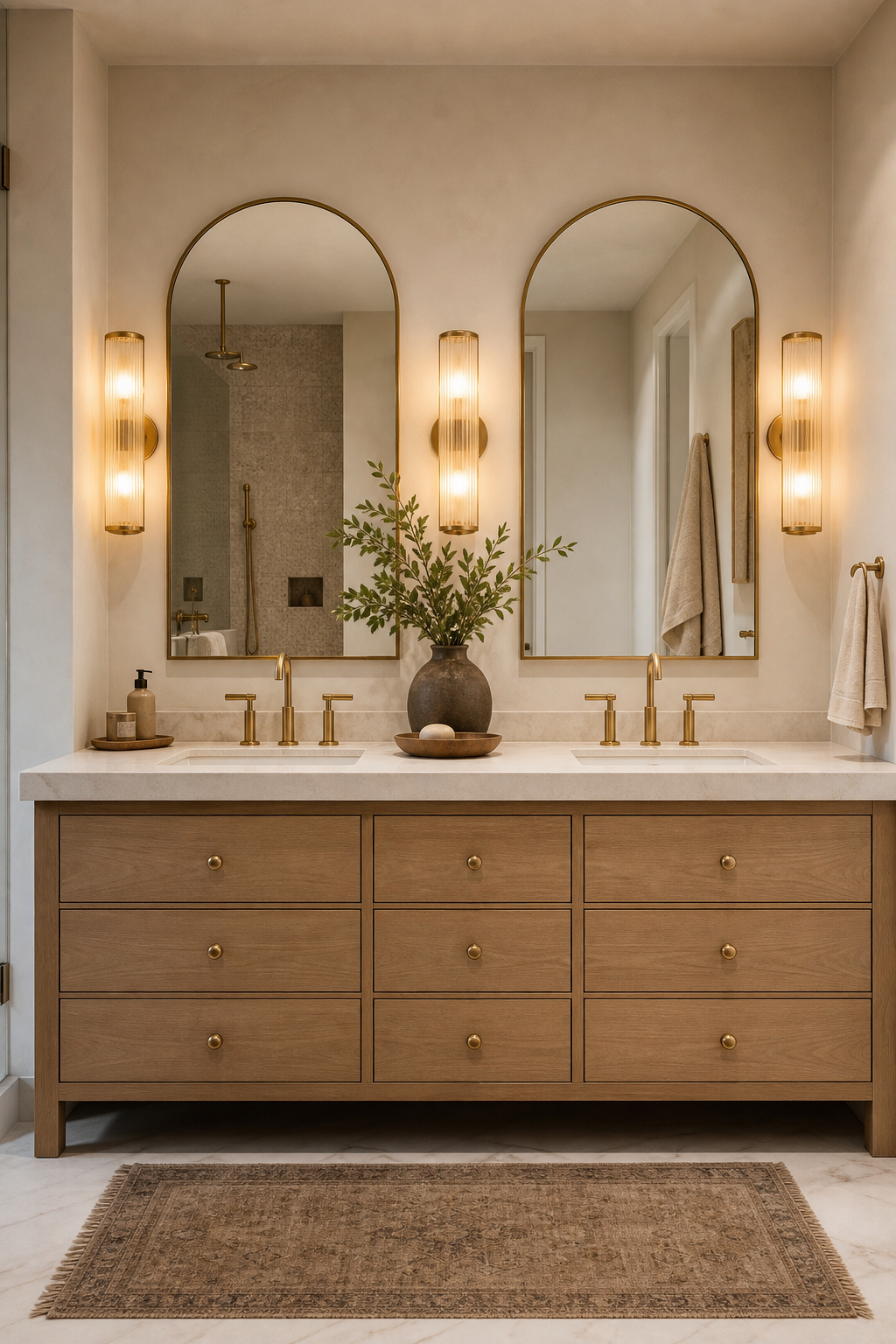
Vanity lighting should flatter the face and enrich the room, not simply fill it with brightness. Sconces placed at eye level on either side of a mirror give the most even light, while a linear fixture above can work when wall space is tight. Choose warm bulbs and avoid harsh blue-white light. If the room has a double vanity, repeat the lighting rhythm so each sink feels equally finished. Dimmers are worth adding because morning routines and evening baths need different moods. Good mirror lighting makes the bath feel more expensive and more useful.
Bring In Natural Wood
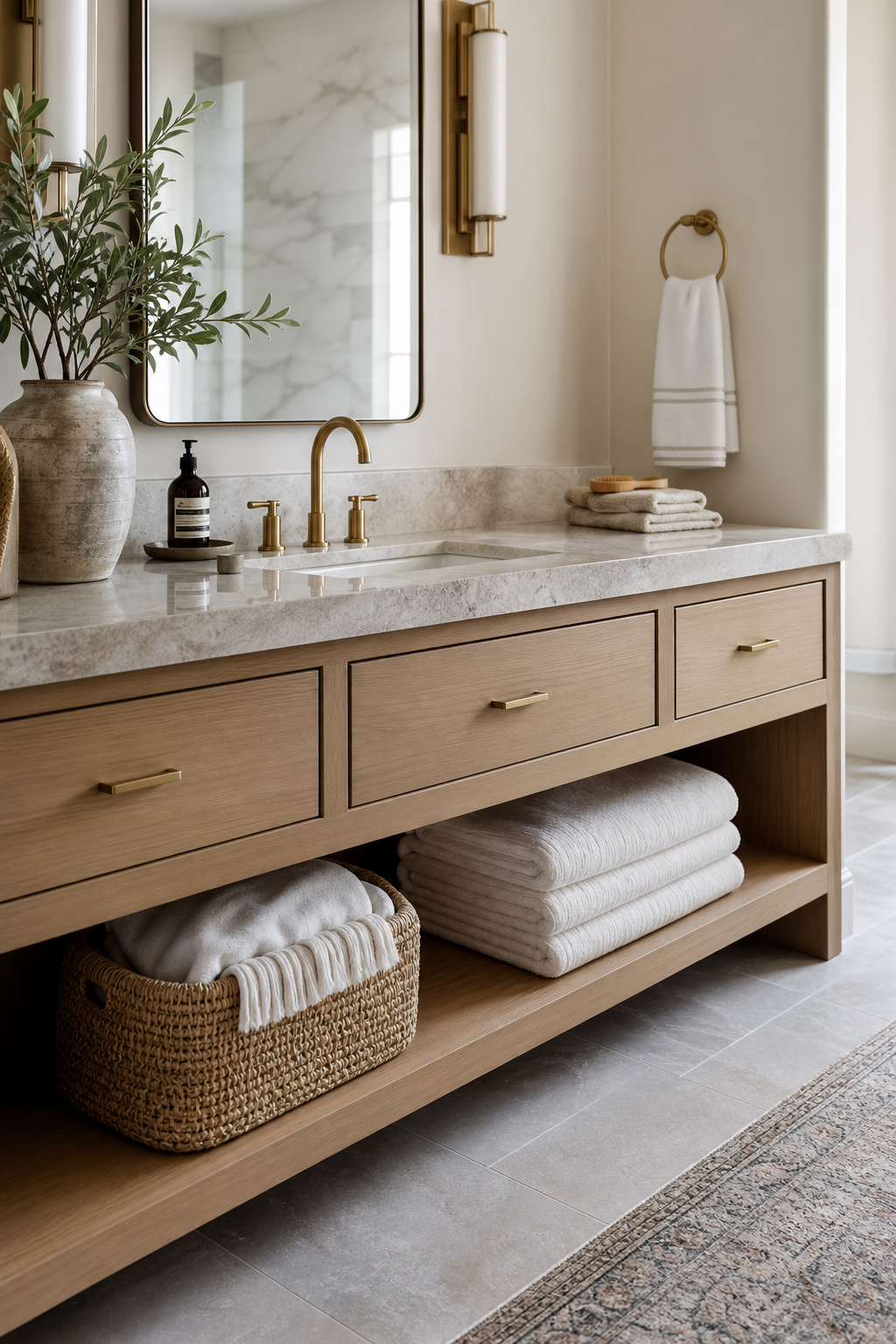
Natural wood balances stone, porcelain, and glass by adding warmth under the eye. A white oak vanity, teak bath stool, walnut mirror, or reeded wood cabinet can make a master bath feel less sterile. Choose sealed finishes that can handle humidity, and keep the wood tone connected to nearby flooring or furniture if the suite opens into a bedroom. Wood is especially effective in pale bathrooms because it gives the room depth without adding heavy color. Use it with restraint: one strong vanity or a few smaller accents are enough to create the softer spa mood.
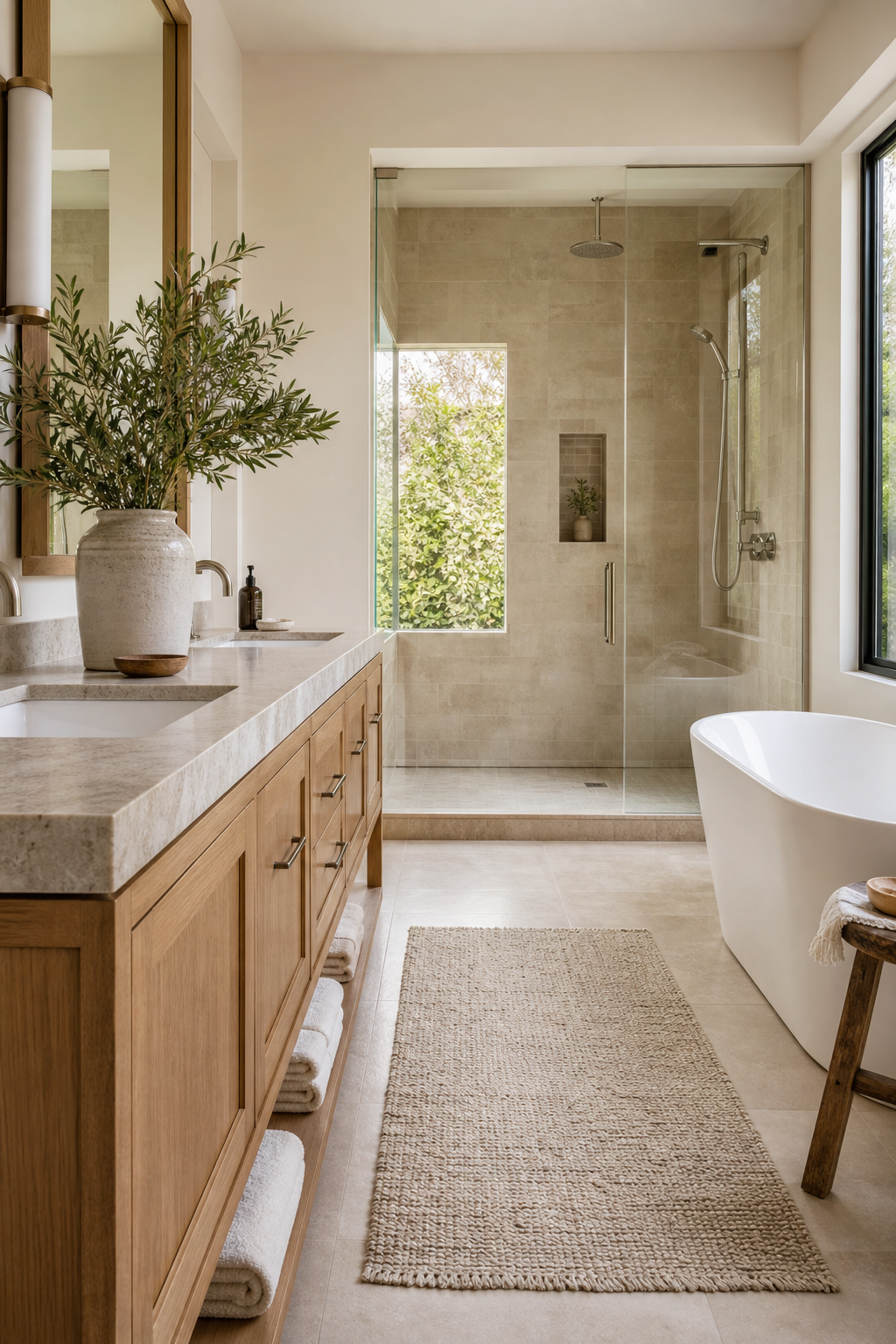
Create A Built-In Linen Niche
Visible linen storage can look beautiful when it is planned like a design feature. A built-in niche, open shelf, or recessed cabinet gives towels a clear home while adding hotel-like order. Fold towels consistently and limit the palette to two or three quiet colors, such as white, oatmeal, and stone. Add one basket for extra washcloths or bath products so the shelves do not become cluttered. If the niche is near the tub or shower, it also supports daily routines. The key is making storage feel architectural rather than like an afterthought.
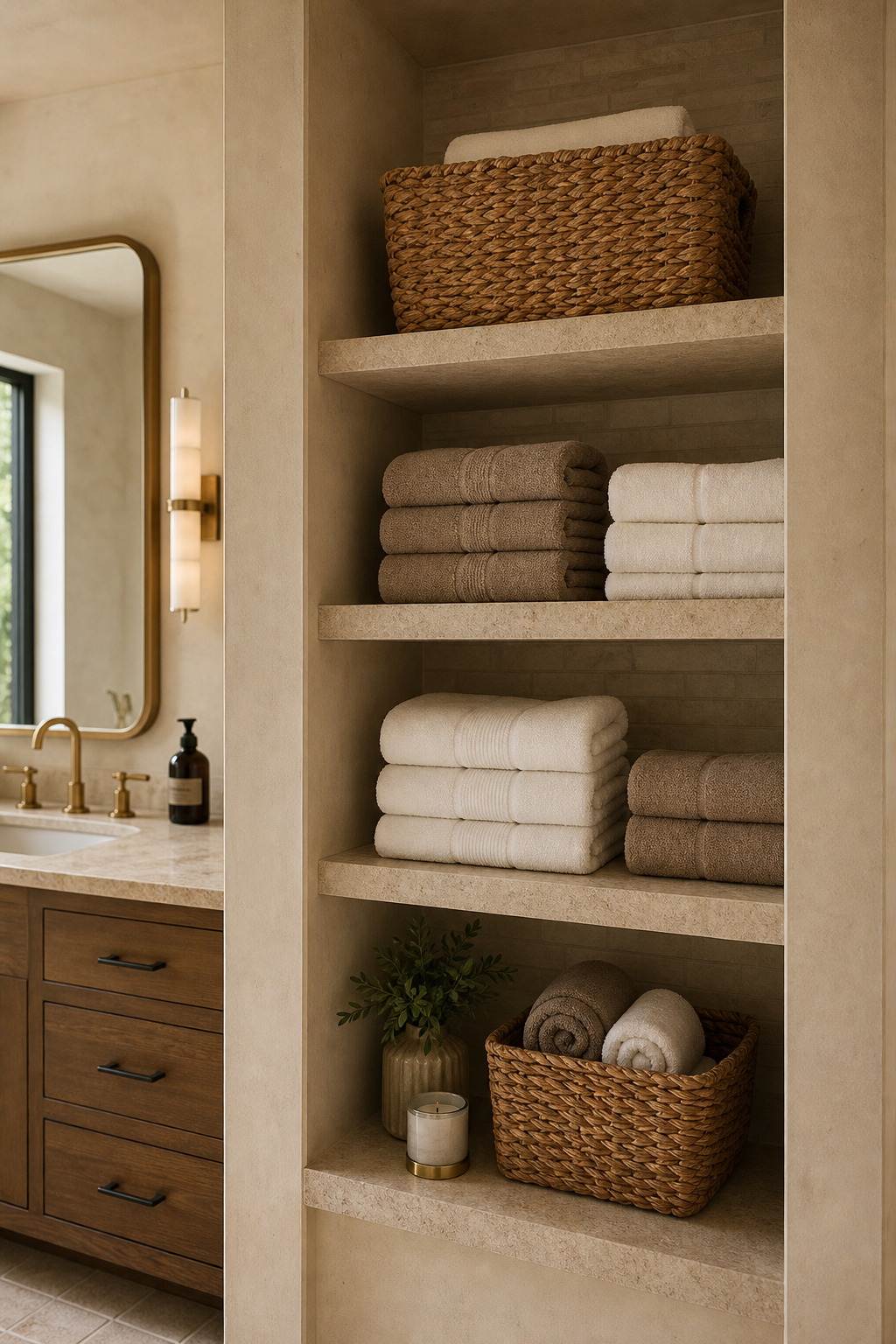
Use Large-Format Tile For Calm
Large-format tile reduces grout lines, which helps a master bath feel cleaner and more restful. It works beautifully on floors, shower walls, and tub surrounds, especially in stone-look porcelain or honed natural stone. Choose a format that fits the scale of the room and ask for thoughtful layout planning so cuts do not land awkwardly around drains or corners. Fewer lines also make the surfaces easier to maintain. If the room needs texture, pair large tile with a smaller handmade tile in one controlled area. The contrast keeps the bath calm without making it flat.
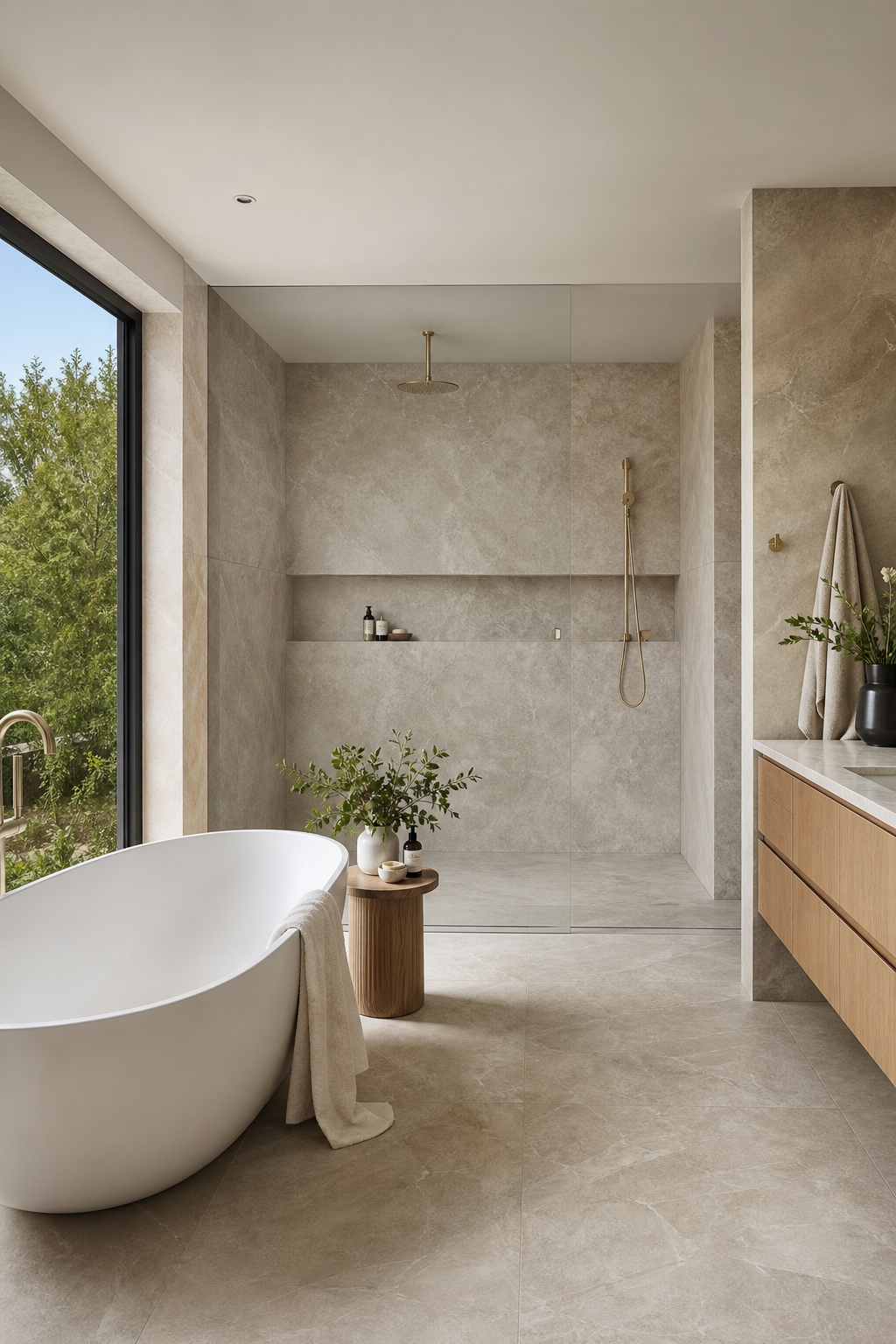
Try Handmade Tile At The Vanity
Handmade tile brings movement and character to a master bath without overwhelming it. Use zellige, glazed ceramic, or textured subway tile behind the vanity, in a shower niche, or around a tub wall. The slight variation in tone catches light in a way flat tile cannot, especially beside warm sconces. Keep the color quiet if the room is meant to feel spa-like: ivory, pale clay, mist, celadon, or soft taupe. A handmade tile detail pairs well with smoother stone elsewhere. It gives the room a crafted quality that feels personal and refined.
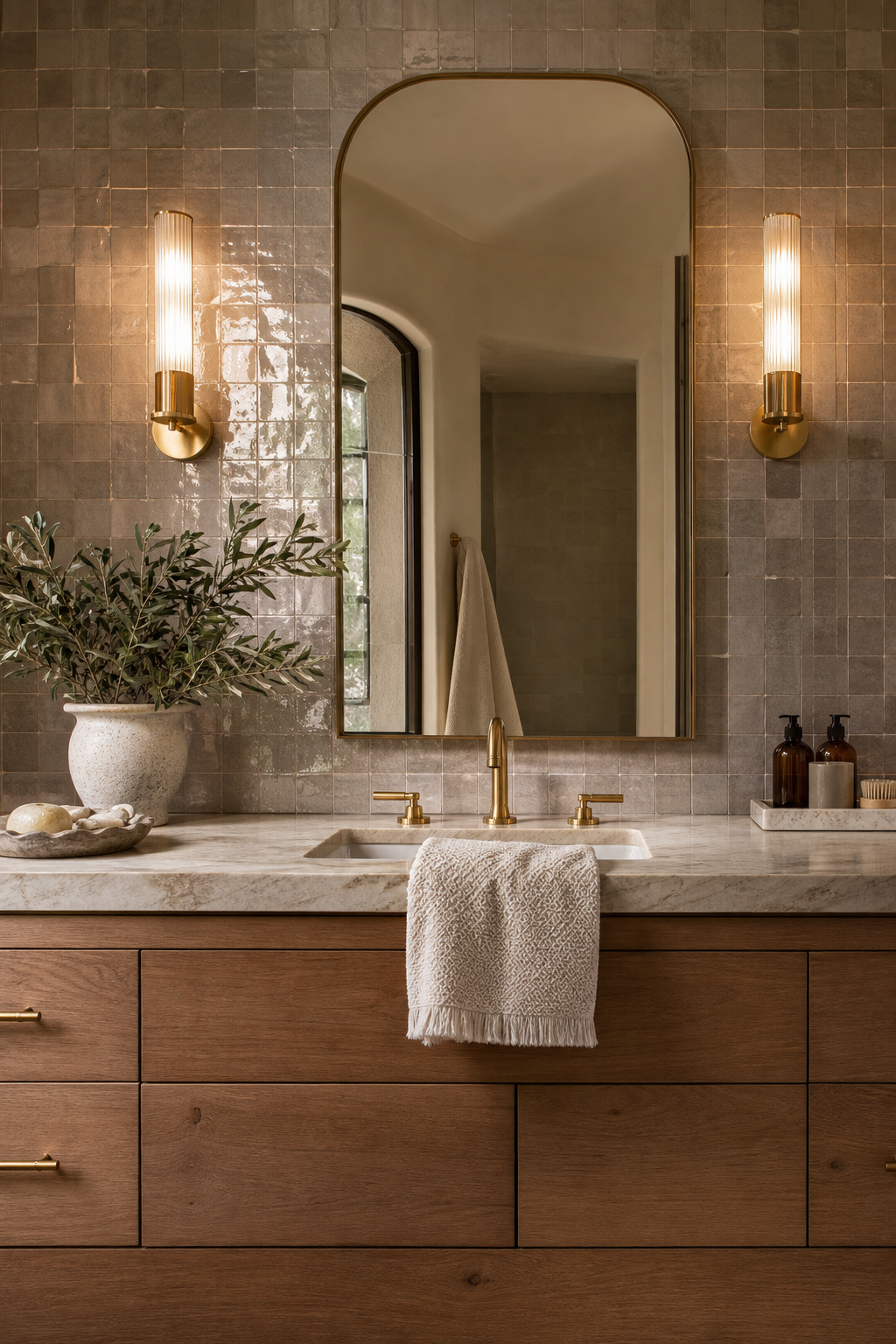
Install A Rain Shower Head
A rain shower head adds a spa ritual to everyday routines, especially when paired with a handheld sprayer for practical cleaning. Ceiling-mounted versions feel serene and architectural, while wall-mounted rain heads are easier to retrofit. Make sure the shower has enough pressure and drainage before choosing an oversized fixture. Finish matters too: brushed nickel feels classic, brass adds warmth, and matte black can give a modern edge. Combine the rain head with warm tile, a bench, and recessed storage so the shower feels cohesive. It is one of the most direct ways to make bathing feel more restorative.
Float The Vanity For An Airy Look
A floating vanity can make a master bath feel lighter because more floor is visible. It is especially useful in smaller rooms or modern spaces where clean lines matter. Choose drawers over doors when possible, since drawers make daily products easier to reach and keep counters clear. The space underneath can stay open or hold a low basket if storage is tight. Pair the vanity with under-cabinet lighting for a soft evening glow. The effect is architectural but practical: the room looks less crowded, cleaning is easier, and the vanity becomes a quiet design element.
Add A Recessed Shower Niche
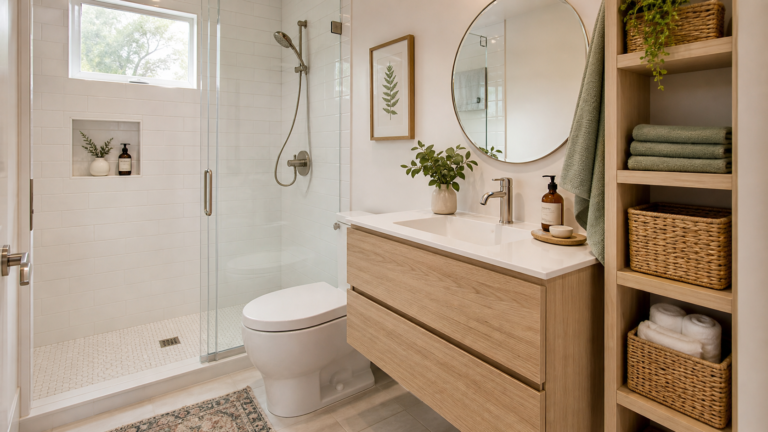
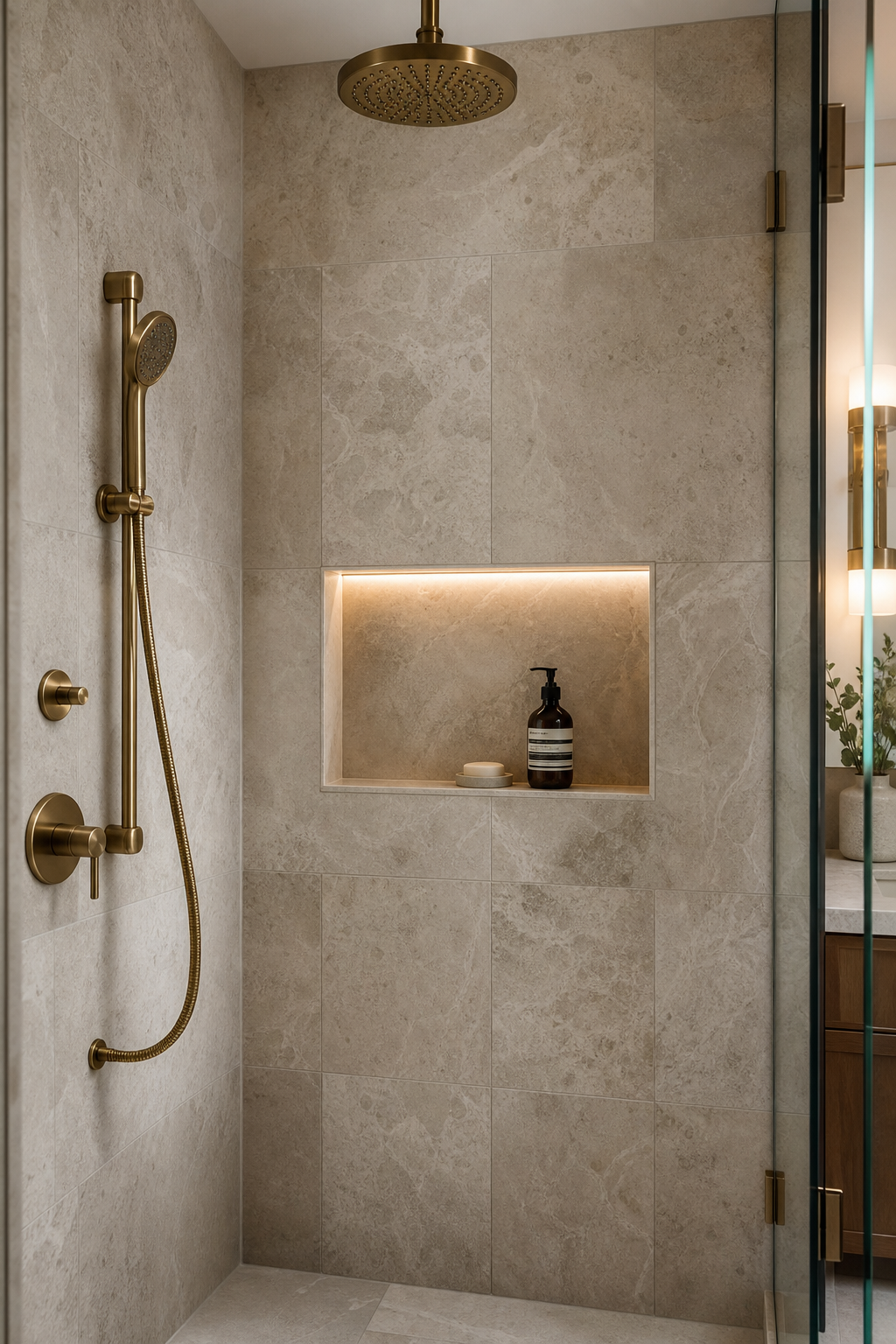
A recessed shower niche keeps bottles off the floor and makes the shower look more finished. Plan the size around the products you actually use, then place it where it is reachable but not the first thing seen from the bathroom doorway. Continuing the same tile inside the niche creates a seamless look, while a contrasting slab shelf can add a small tailored detail. Slope the shelf slightly so water drains properly. A niche is most successful when it feels integrated into the tile layout, not cut in at random. It is a practical upgrade with a clean visual payoff.
Use Soft Roman Shades
Window treatments can soften a master bath and make it feel more like a furnished room. Roman shades in linen, performance fabric, or a subtle woven texture add privacy while keeping the look tailored. Choose a fabric that handles humidity and consider privacy lining if the window faces neighbors. A relaxed fold feels casual and spa-like, while a flat fold looks more structured. Coordinate the shade color with towels, stone, or vanity wood so it belongs to the whole room. This detail is especially helpful in bathrooms that feel too hard or echoey.
Warm The Floor With Radiant Heat
Radiant floor heat is invisible, but it changes how a master bath feels every morning. It works especially well beneath stone or porcelain tile, which can otherwise feel cold underfoot. If a renovation is planned, this is the upgrade to consider before tile is installed. Pair it with a programmable thermostat so the floor is warm during routines and efficient the rest of the day. Even simple finishes feel more luxurious when the room is physically comfortable. A spa-like bath is not only about appearance; it should support the body in small, daily ways.
Choose A Statement Mirror Shape
A mirror is one of the easiest ways to shift the style of a master bath. Instead of a basic rectangle, consider an arched, pill-shaped, oval, or softly irregular mirror that breaks up hard tile lines. The frame can echo other finishes: warm brass, white oak, blackened metal, or carved wood. Scale is important; a mirror that is too small will make the vanity feel unfinished. In a double vanity, two separate mirrors often look more tailored than one long sheet. A strong mirror shape adds personality while still serving a practical role every day.
Keep Counters Edited With Trays
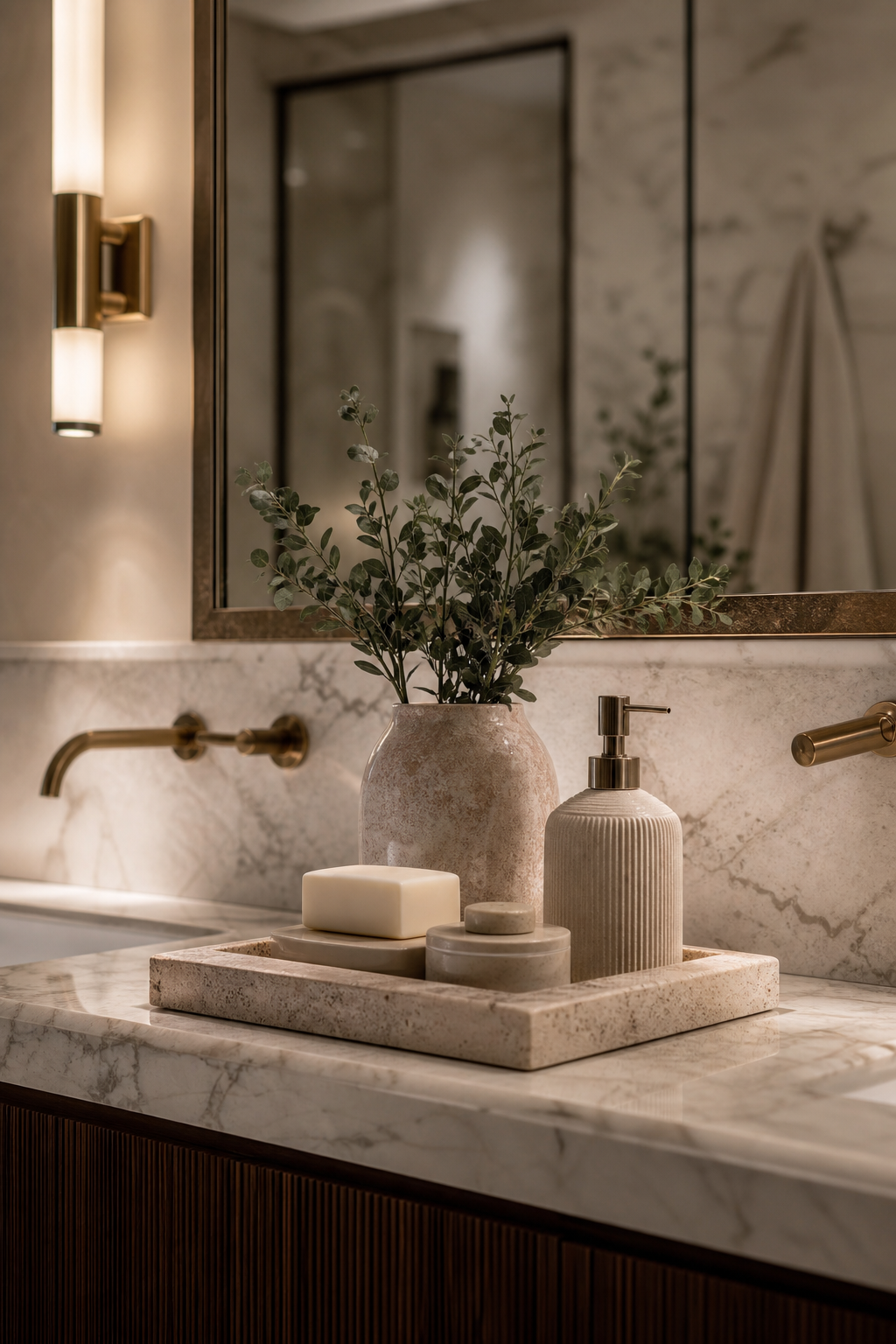
Bathroom counters feel calmer when daily objects are gathered rather than scattered. A stone, wood, or lacquer tray can hold hand soap, lotion, a small vase, and one pretty jar while leaving open surface around the sink. The tray creates a visual boundary, which makes ordinary products look intentional. Decant only what you truly use and avoid turning the counter into display storage. If the vanity has drawers, keep most items tucked away and reserve the surface for essentials. This small styling move supports a spa mood because it reduces visual noise immediately.
Use Brass Or Nickel Fixtures
Fixtures guide the character of a master bath more than many people expect. Unlacquered or brushed brass brings warmth to pale stone, while polished or brushed nickel feels classic and quiet. Matte black can work beautifully when the room needs contrast, but it should be repeated in at least one other detail. Choose one main finish and let it appear on faucets, shower controls, towel bars, and lighting. Mixing metals can work, but the undertones should feel deliberate. A consistent fixture story makes the bath look designed, even when the materials are simple.
Add A Bath Stool Or Small Table
A small stool beside the tub gives the bath area a finished, hotel-like quality while serving a real purpose. Use it for a towel, candle, bath salts, book, or cup of tea. Teak, oak, stone, or ceramic can all work depending on the room’s materials. Keep the piece compact enough that it does not block circulation or cleaning. This idea is especially useful when a tub sits alone and needs a companion detail to feel styled. One simple table can make the bathing zone feel more gracious and more comfortable.
Mix Closed Storage With Open Display
A master bath needs storage that hides visual clutter and display space that keeps the room from feeling utilitarian. Use closed drawers or cabinets for backups, tools, and daily products, then reserve open shelves for folded towels, a vessel, or one basket. The balance matters: too much open storage can look messy, while all closed storage can feel flat. If the vanity is custom, include deep drawers and an open lower shelf. In an existing bath, a tall cabinet or wall shelf can create the same mix. Good storage is what keeps spa-like design sustainable.
Paint Walls A Soft Neutral
Paint can shift a master bath even when tile and fixtures stay the same. Soft neutrals such as warm white, pale taupe, limestone, putty, mushroom, or misty gray make the room feel calmer and more connected to stone finishes. Avoid stark whites if the room already feels cold, especially under bright bulbs. Test colors at different times of day because bathrooms often have mixed light from windows, mirrors, and sconces. A satin or moisture-resistant finish is practical, but the color should still look gentle. The right neutral can make towels, wood, and tile feel more expensive.
Use Scent And Greenery Sparingly
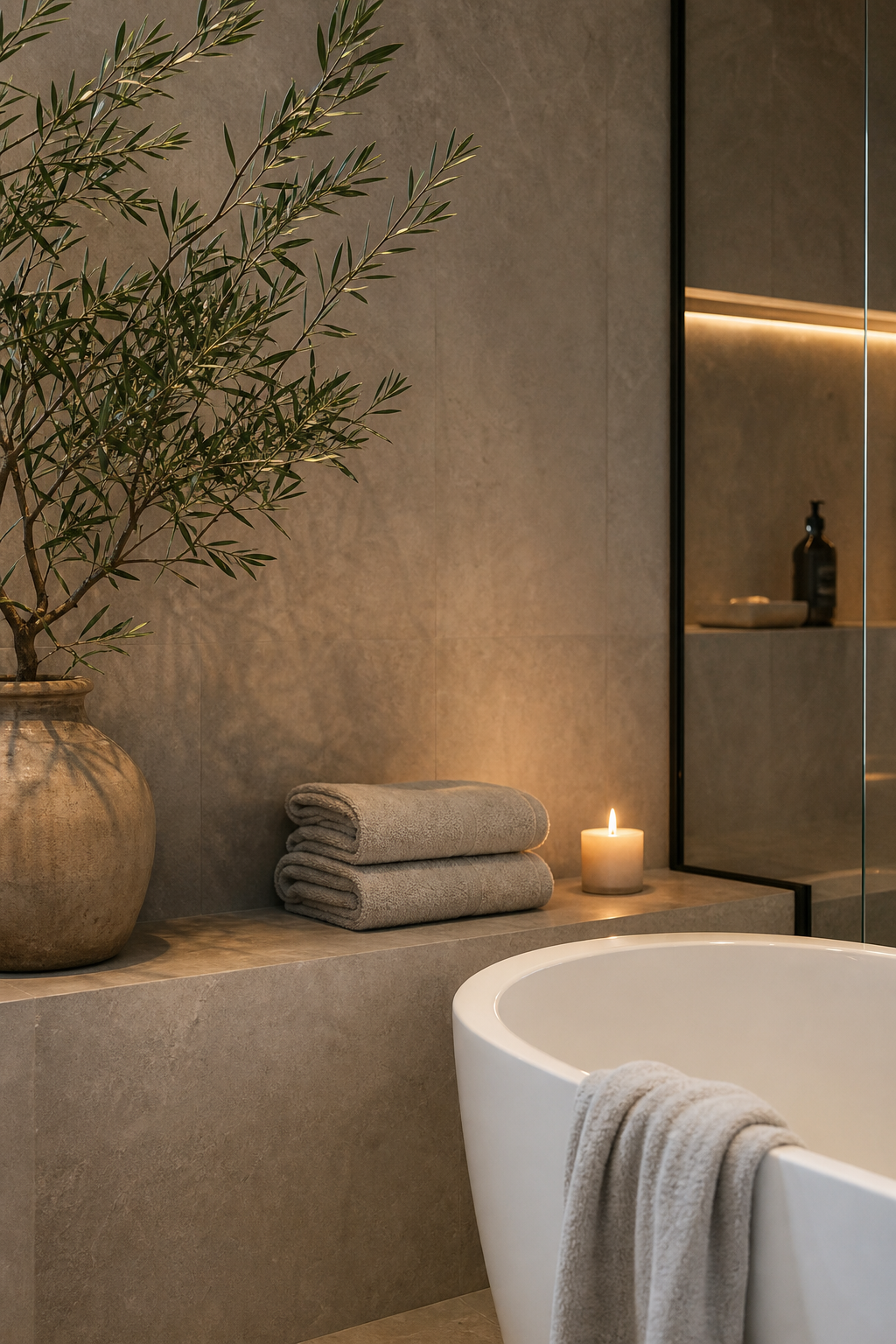
Spa-like styling is most effective when it feels restrained. A single eucalyptus bundle, small orchid, olive branch, or vase of greenery can add life without crowding the room. Pair it with one scent element such as a candle, diffuser, or bath oil, but avoid filling every surface with products. Choose vessels that match the room’s materials: stoneware, clear glass, or warm ceramic. Greenery is especially useful near a tub, vanity tray, or window ledge because it softens hard finishes. The room should smell fresh and look alive, not staged or over-accessorized.
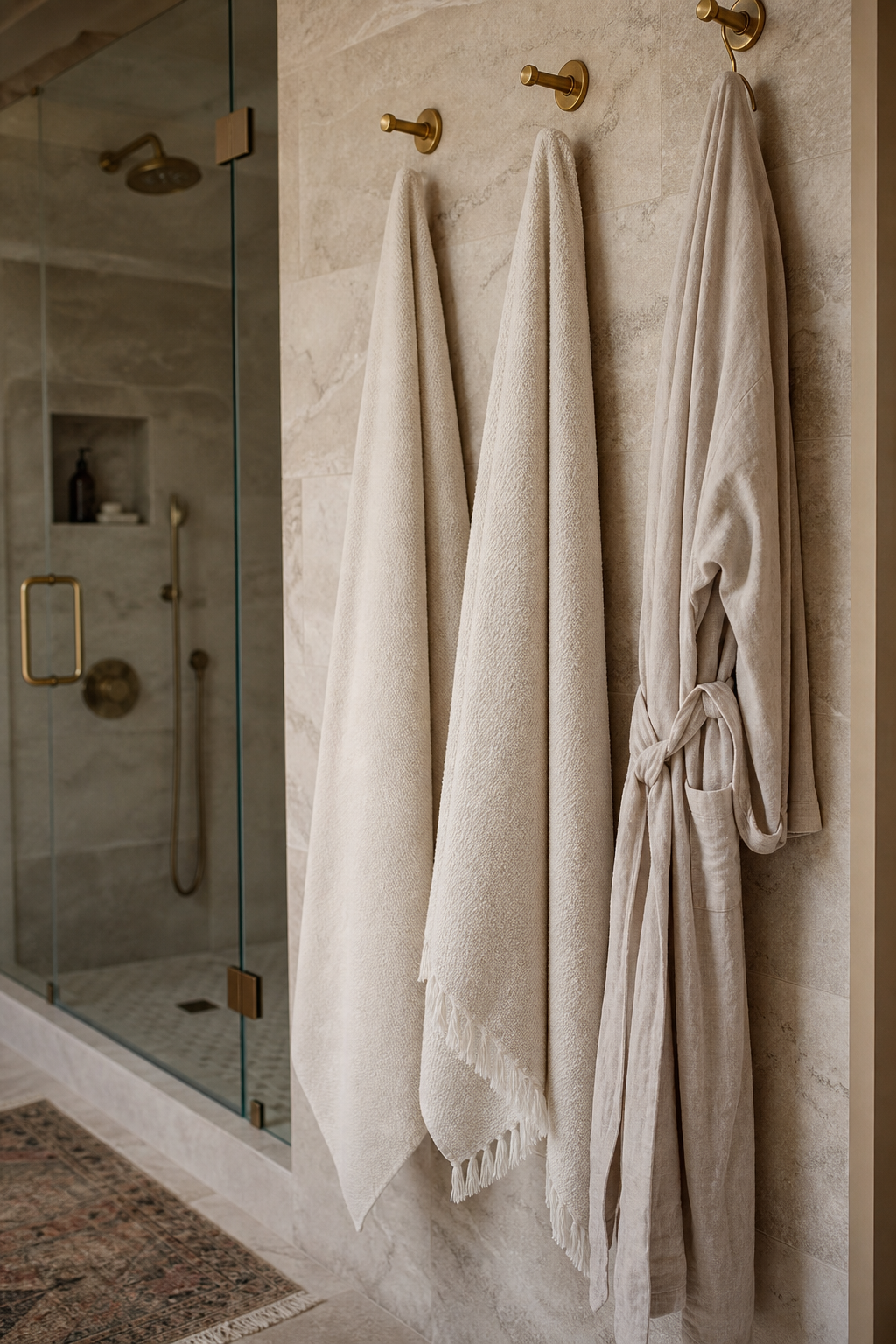
Add Hooks Where Towels Actually Land
A beautiful master bath still needs places for damp towels, robes, and washcloths. Hooks are often more practical than bars because they are easy to use and fit into smaller wall spaces. Place them near the shower, beside the tub, or on the back of a door where towels naturally land. Choose hooks in the same finish family as the fixtures so they look intentional. A row of two or three can feel architectural, especially on wood paneling or stone. This is a modest detail, but it prevents clutter from undoing the calm spa feeling.
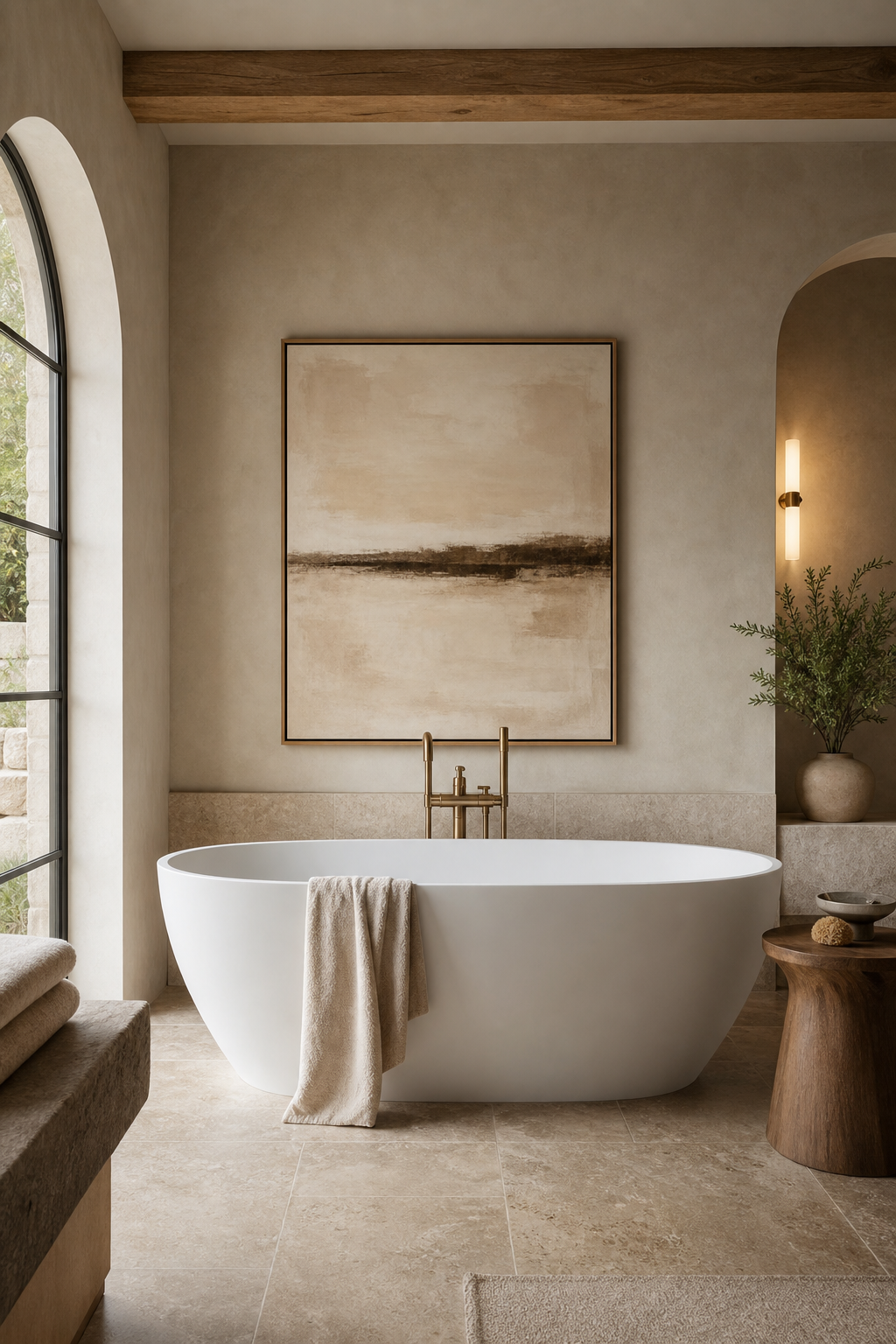
Frame The Tub With Art
Art can make a master bath feel less clinical when it is chosen carefully. A small landscape, abstract piece, botanical print, or framed textile near the tub adds personality and softness. Use moisture-aware placement and avoid hanging valuable originals where steam will be heavy. The frame should relate to the room’s finish story, such as oak with a wood vanity or brass with warm fixtures. Art works best when it gives the bathing area a quiet focal point. It turns a functional zone into a retreat without adding clutter to counters or shelves.
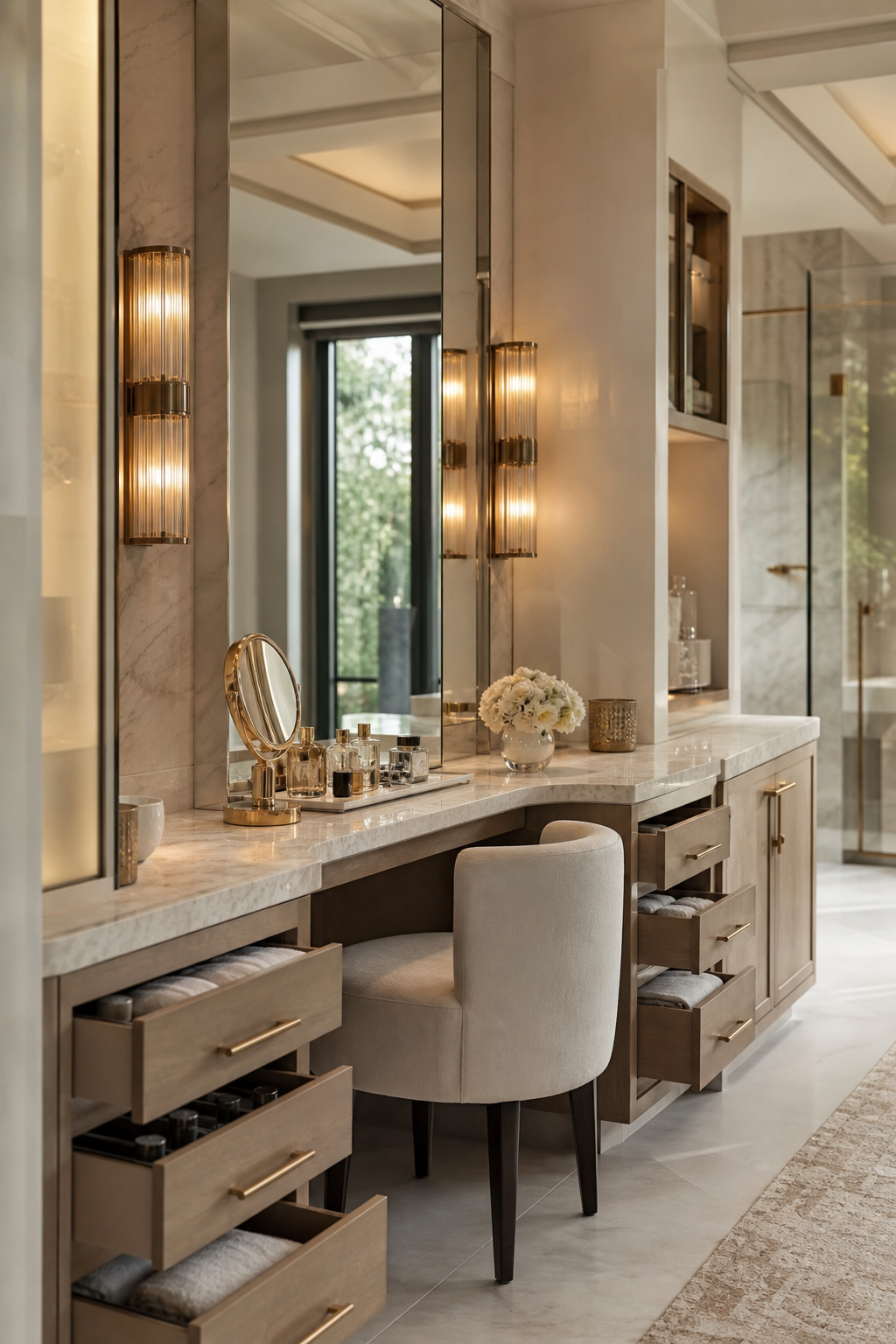
Create A Quiet Makeup Zone
If the master bath has room, a seated makeup zone can make routines feel calmer and more organized. It might be a lowered vanity section, a small stool tucked under the counter, or a separate mirror area with drawers. The lighting should be flattering and even, ideally from the sides rather than only overhead. Keep brushes, cosmetics, and tools hidden in drawers so the surface stays peaceful. Match the stool fabric or wood to the bedroom for a suite-like feel. This feature turns daily preparation into a more comfortable ritual without sacrificing the spa mood.
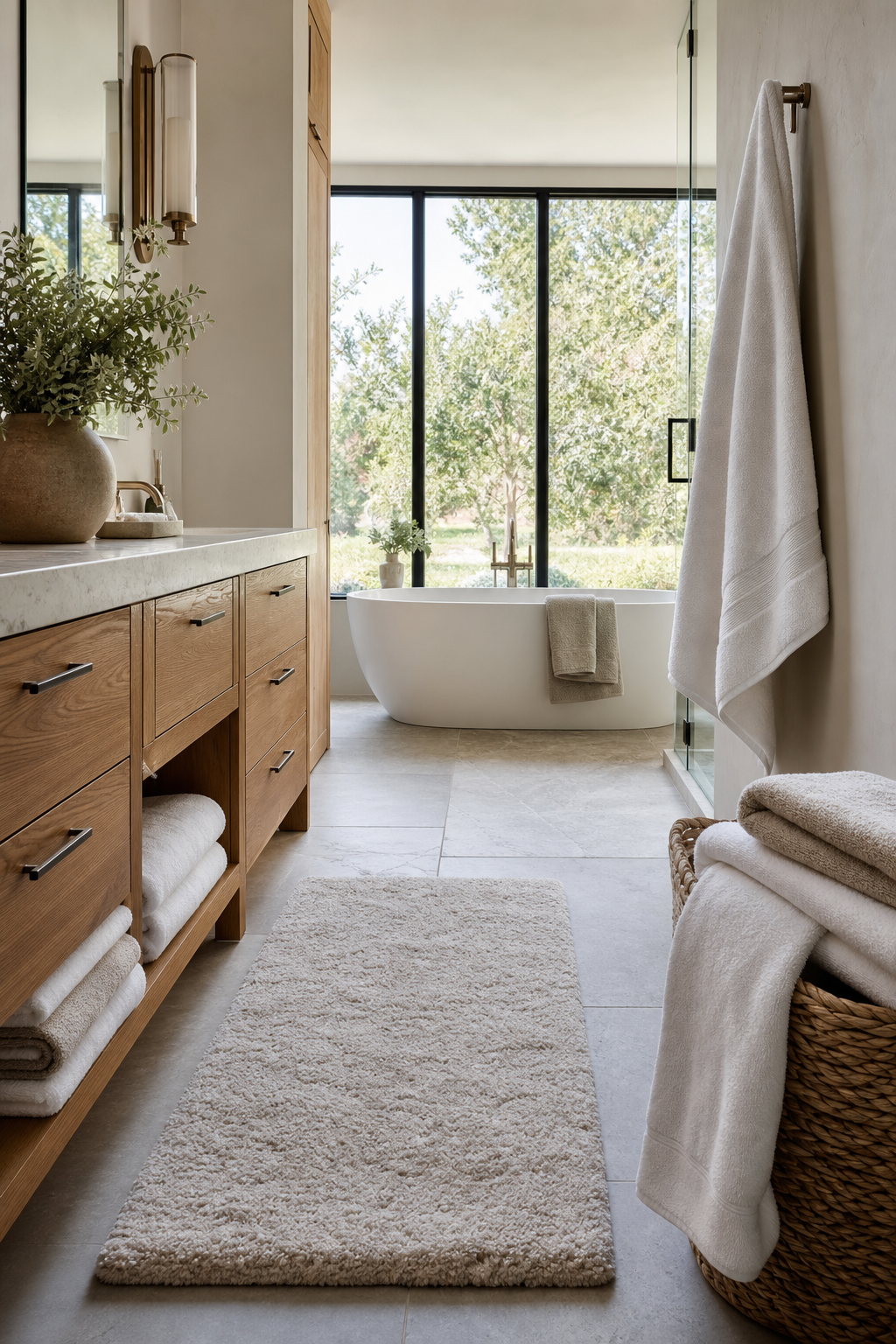
Finish With Plush Towels And A Bath Mat
Textiles are the final layer that makes a master bath feel indulgent. Replace thin mismatched towels with plush towels in a limited palette, then add a bath mat that feels substantial underfoot. White always feels hotel-like, while oatmeal, stone, sage, or charcoal can connect to the room’s materials. Roll or fold extra towels where they are easy to reach and keep worn pieces out of sight. This is one of the quickest spa-like updates because it changes both the look and the touch of the room. Good towels make even a simple bathroom feel more cared for.
A spa-like master bath depends on the way materials, storage, light, and touch work together. Start with the detail that would most improve daily life: better vanity lighting, warmer floors, clearer storage, softer towels, or a shower that feels easier to use. Then build the visual mood around warm stone, natural wood, restrained styling, and finishes that repeat with intention. The room does not need to be oversized to feel luxurious. When every surface has a purpose and every texture supports comfort, a master bath becomes a quieter, more restorative part of the home.