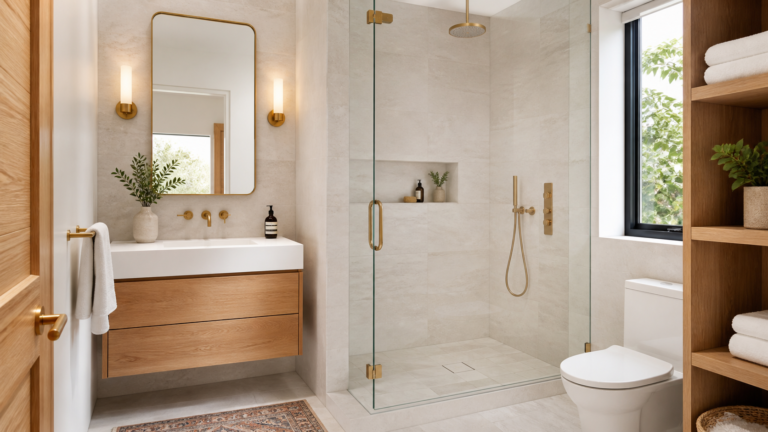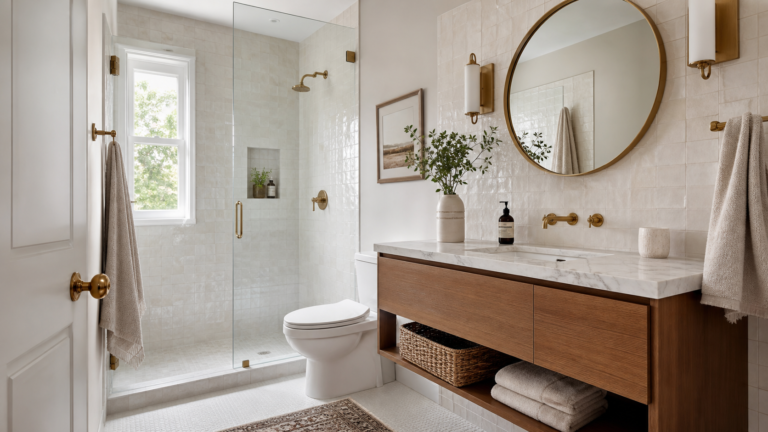
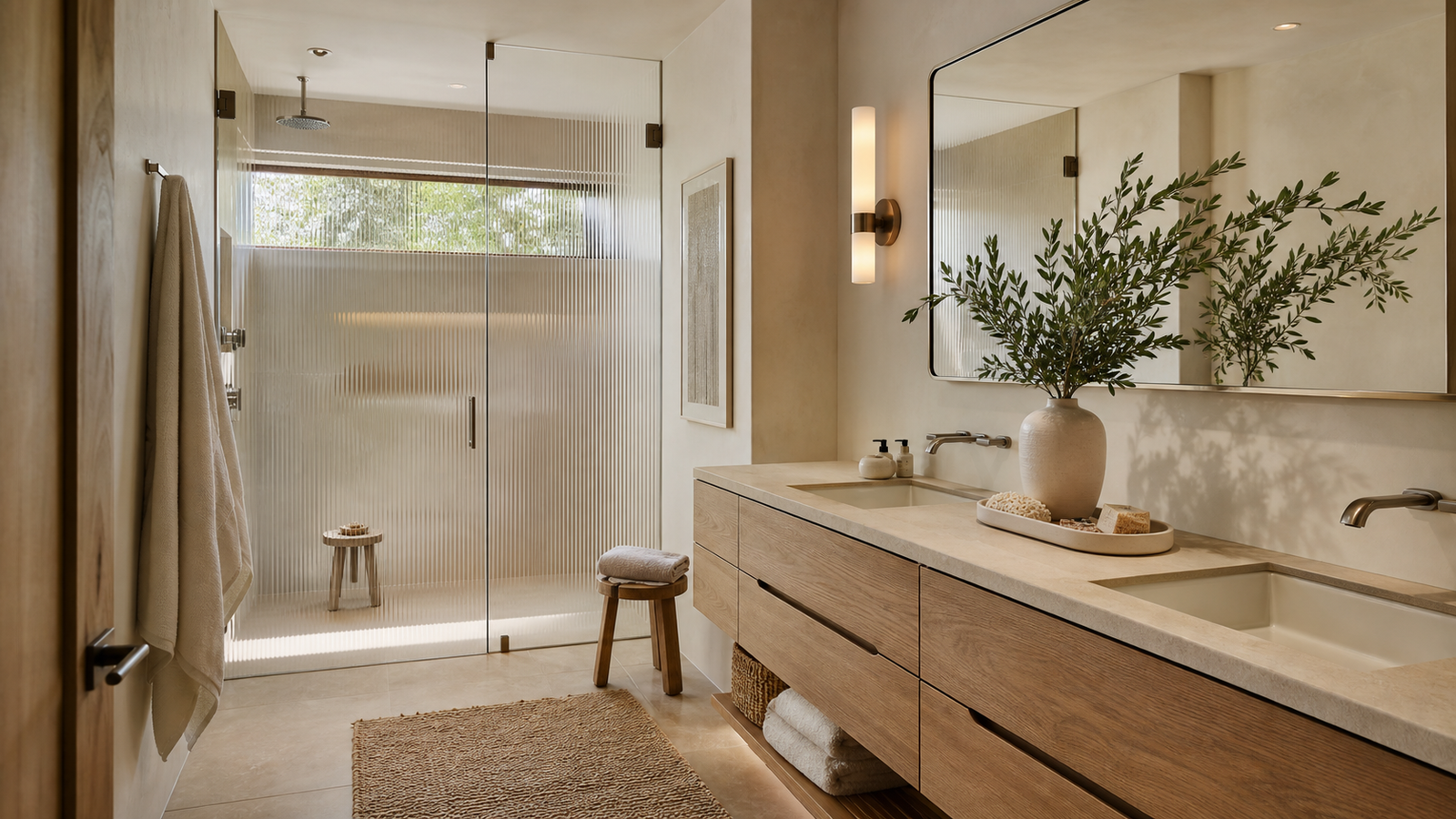
24 Aesthetic Bathroom Ideas For A Spa-Like Refresh
An aesthetic bathroom should feel calm before it feels decorated. The best spa-like refreshes begin with the details you touch every day: better light around the mirror, softer towels, a vanity with breathing room, tile that adds quiet texture, and storage that keeps products from taking over the counter. You do not need a full remodel to make the room feel more intentional. A warmer bulb, a framed mirror, one beautiful tray, or a better shower curtain can change the mood immediately. These bathroom ideas balance atmosphere with function, so the room looks polished in photos and still works during a rushed morning.
Choose A Warm Stone Vanity
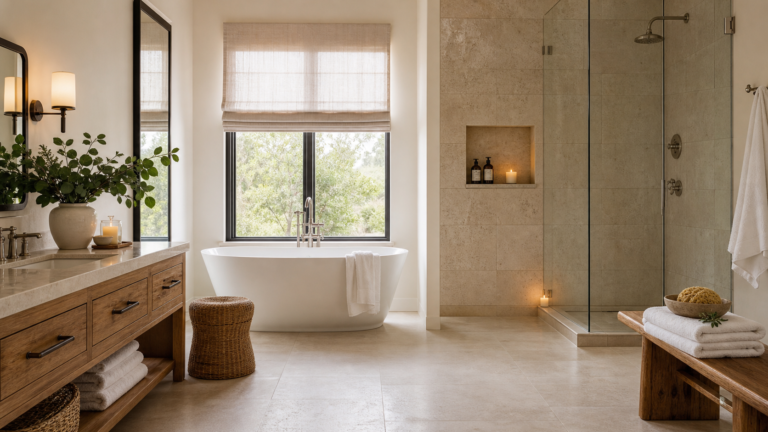
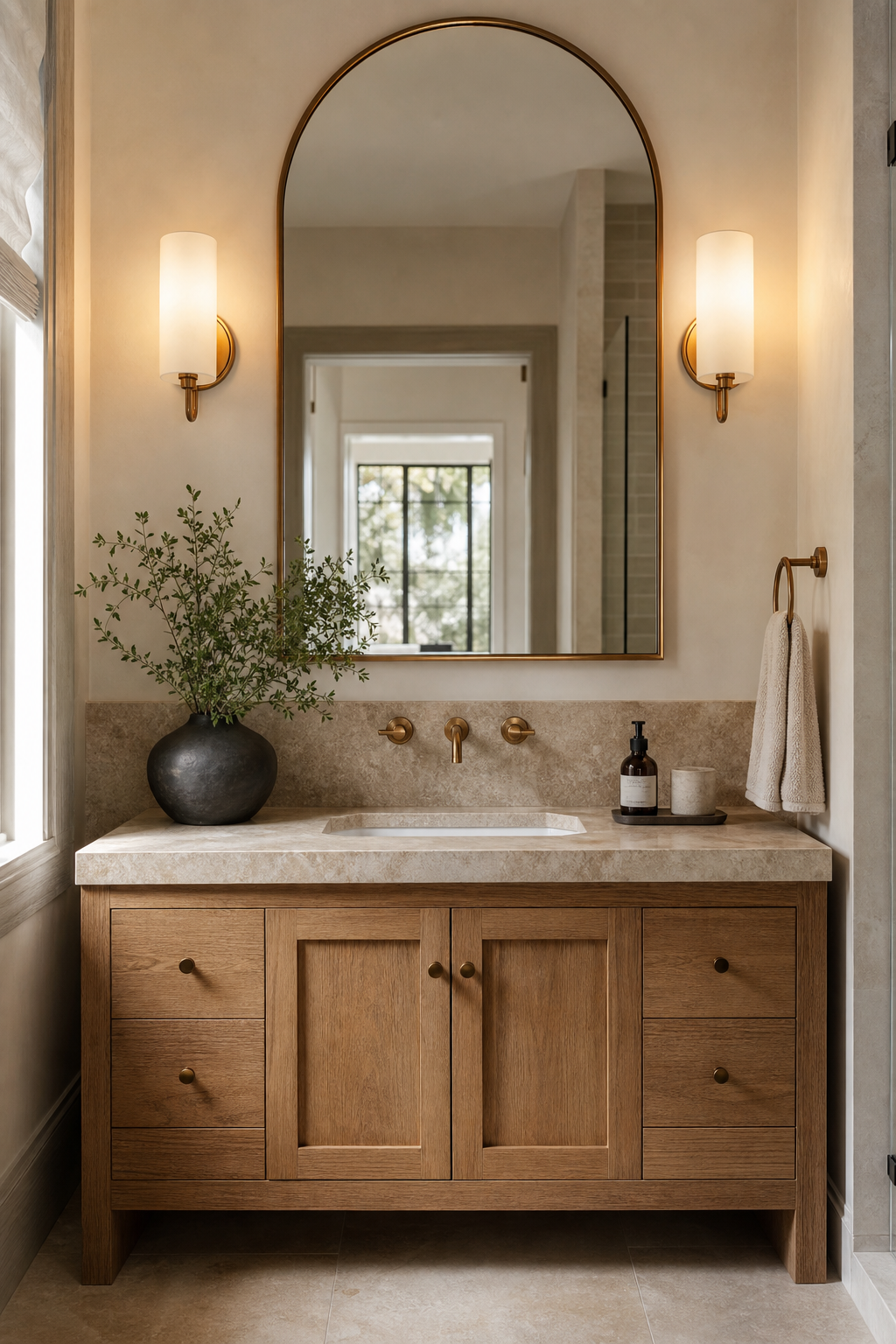
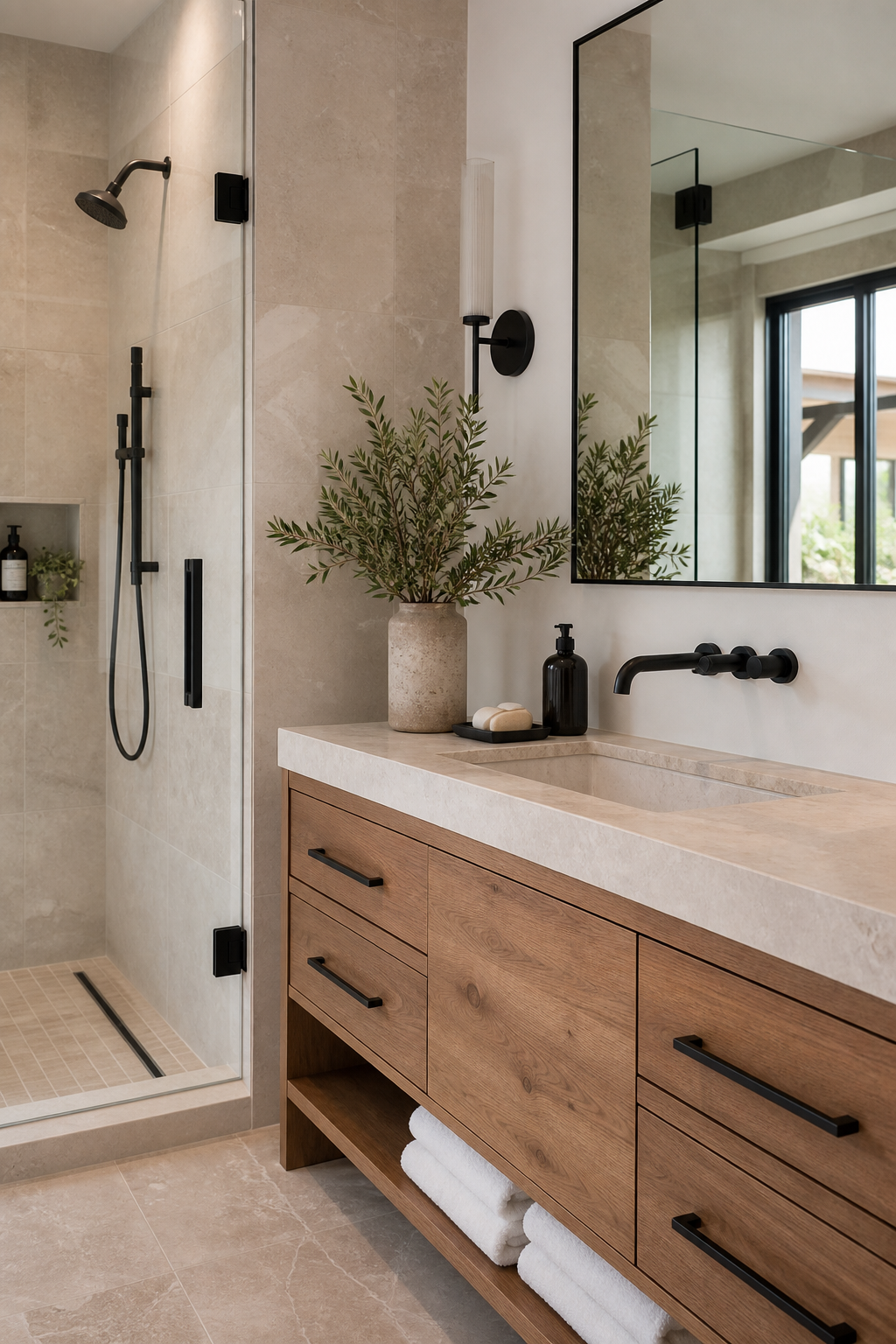
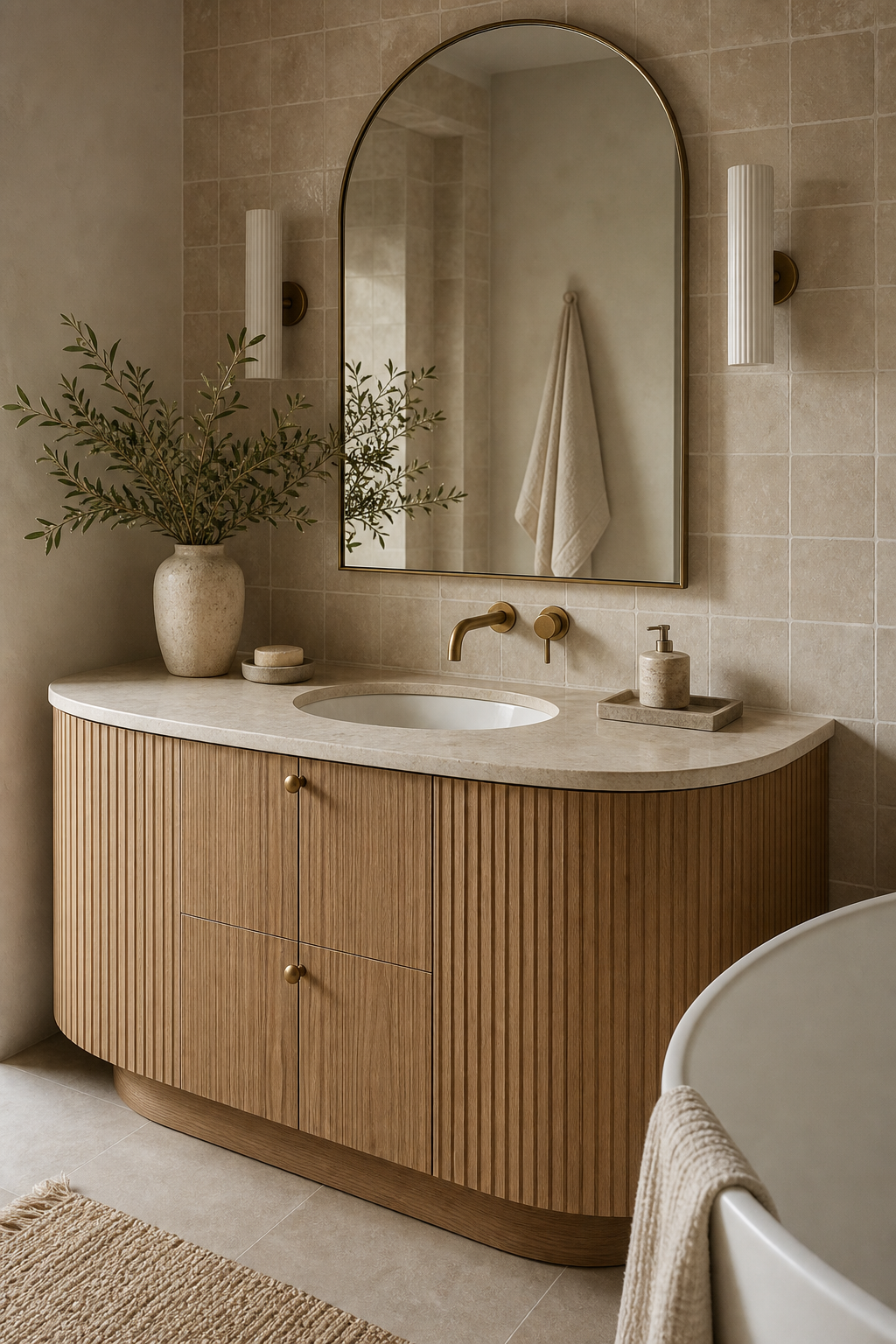
A stone-topped vanity instantly gives a bathroom a quieter, more spa-like presence. Look for honed marble, limestone, travertine, quartzite, or a convincing stone-look surface with soft movement rather than high contrast veining. Pair it with warm wood drawers, unlacquered brass, polished nickel, or matte black hardware depending on the rest of the room. Keep the counter edited with a tray, hand soap, and one small vessel instead of crowding it with products. The stone does not need to be dramatic to feel special. In an aesthetic bathroom, the goal is a surface that catches light gently and makes the daily routine feel more considered.
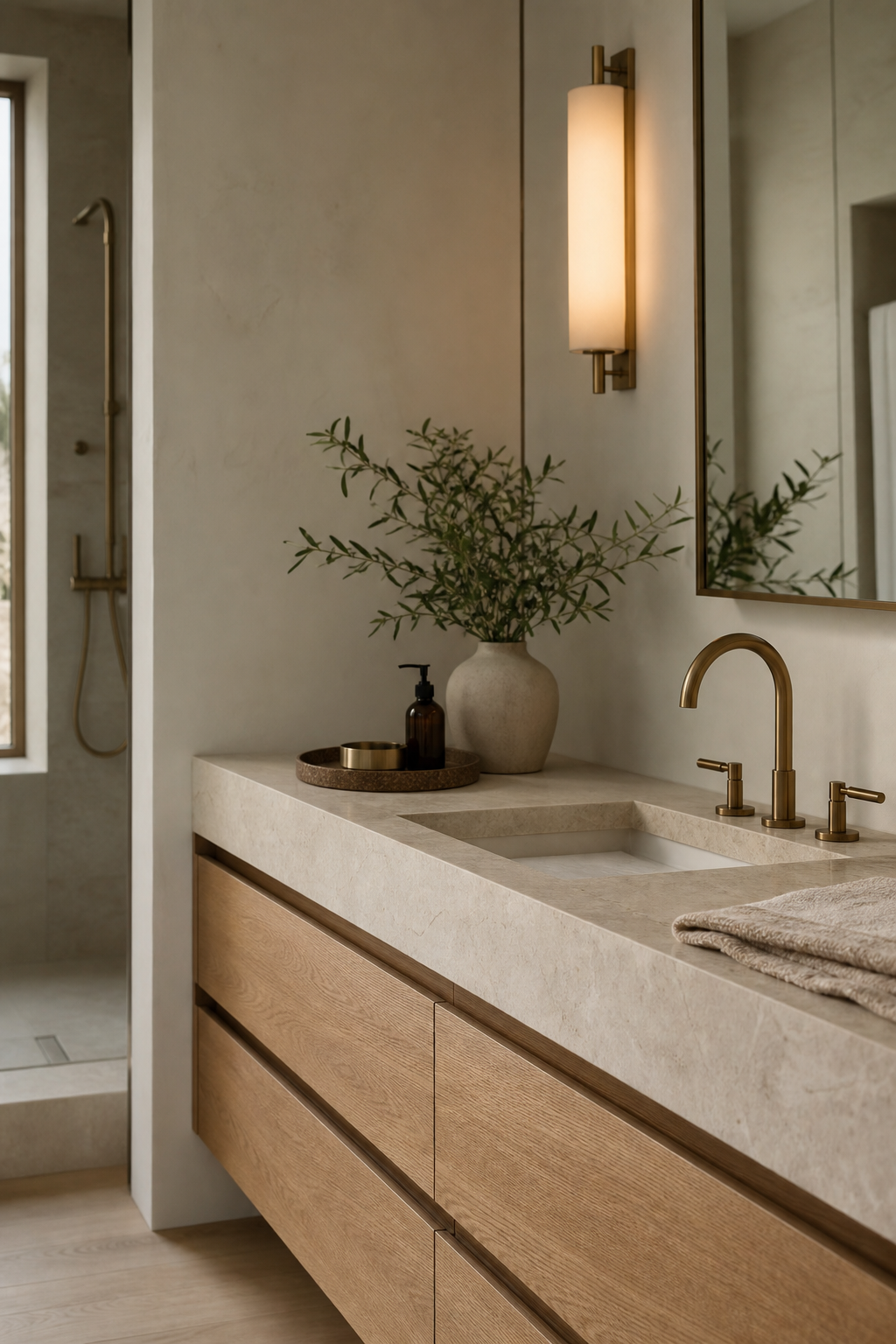
Install Sconces Beside The Mirror
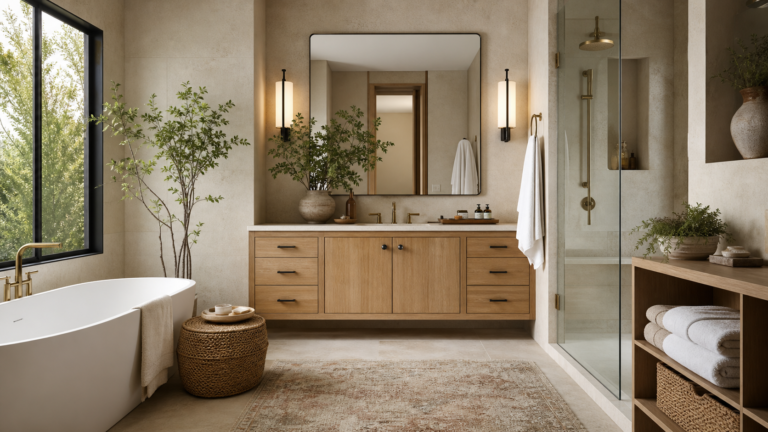
Lighting can make a bathroom feel expensive faster than almost any decorative change. Sconces placed on both sides of the mirror create flattering, even light and bring the eye-level glow associated with boutique hotels. Choose opal glass, linen shades, ceramic bases, or slim metal fixtures that relate to the faucet finish. If side sconces are not possible, a long bar light above the mirror can still look beautiful when it is warm and diffused. Avoid cold bulbs that flatten skin tones and make tile feel harsh. Layered lighting gives the bathroom atmosphere in the evening and function in the morning, which is exactly what a spa-like refresh needs.
Use Large-Scale Tile For Calm
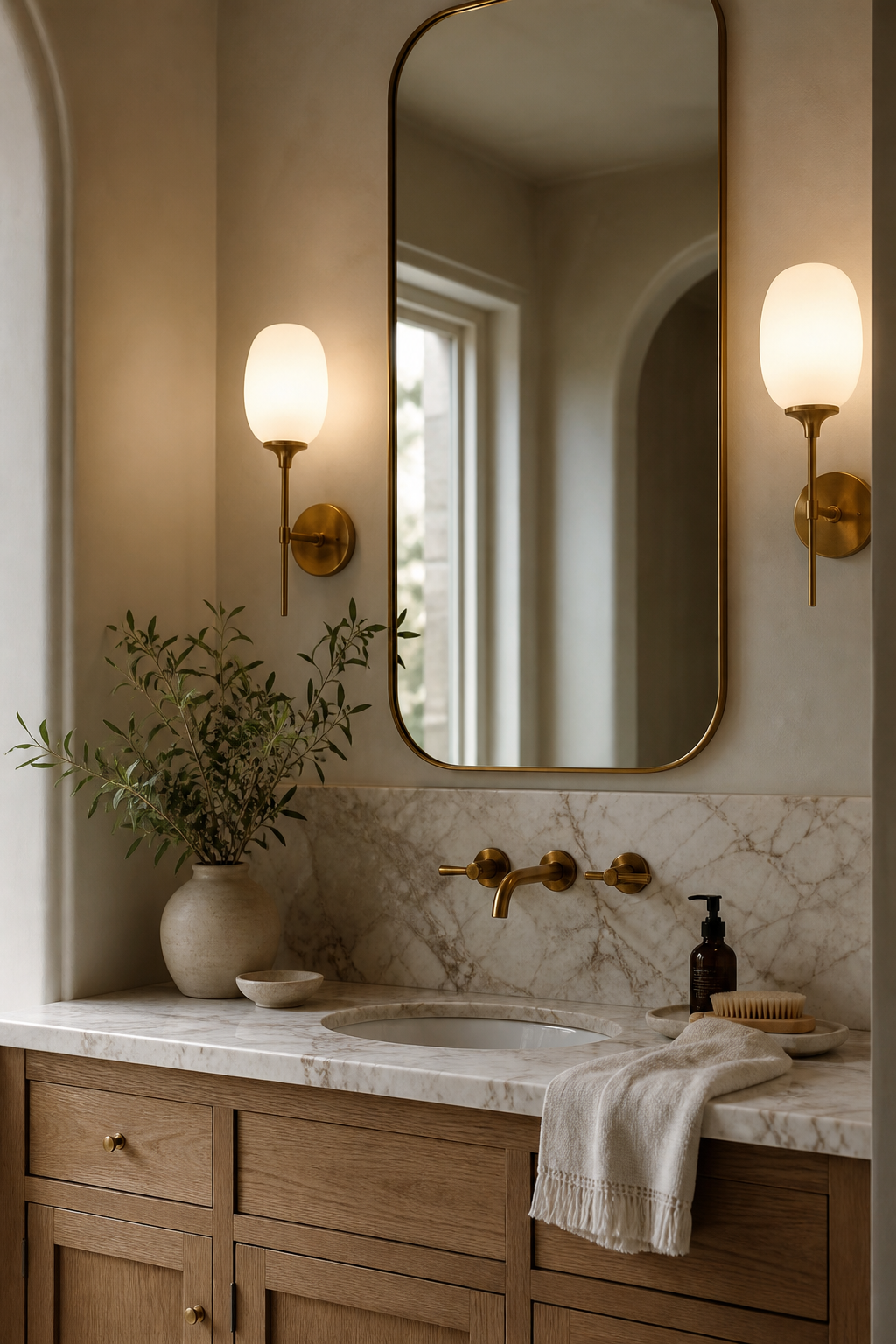
Large-scale tile can make a bathroom feel calmer because there are fewer grout lines competing for attention. Use oversized porcelain slabs, large limestone-look tile, or broad-format stone on floors, shower walls, or behind the vanity. The effect is especially strong in small bathrooms where visual breaks can make the room feel busy. Choose a matte or honed finish for a softer spa feeling, and keep grout close to the tile color. Large tile does not have to mean plain. Subtle movement, mineral variation, and soft tonal shifts create depth without clutter. The result feels clean, architectural, and easier to live with than a heavily patterned surface.
Add A Fluted Glass Shower Screen
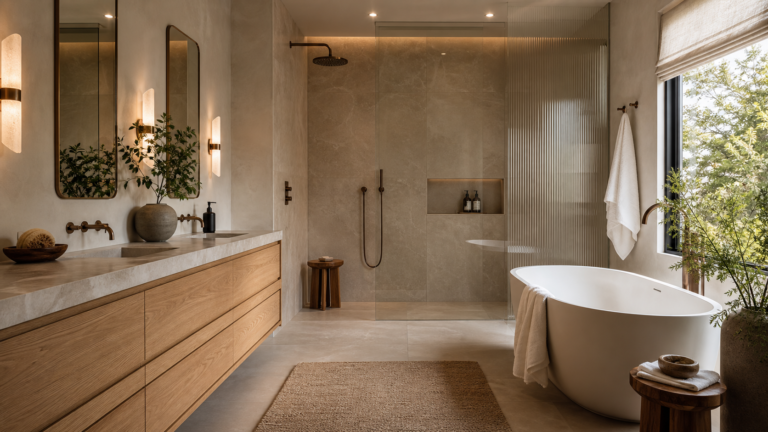
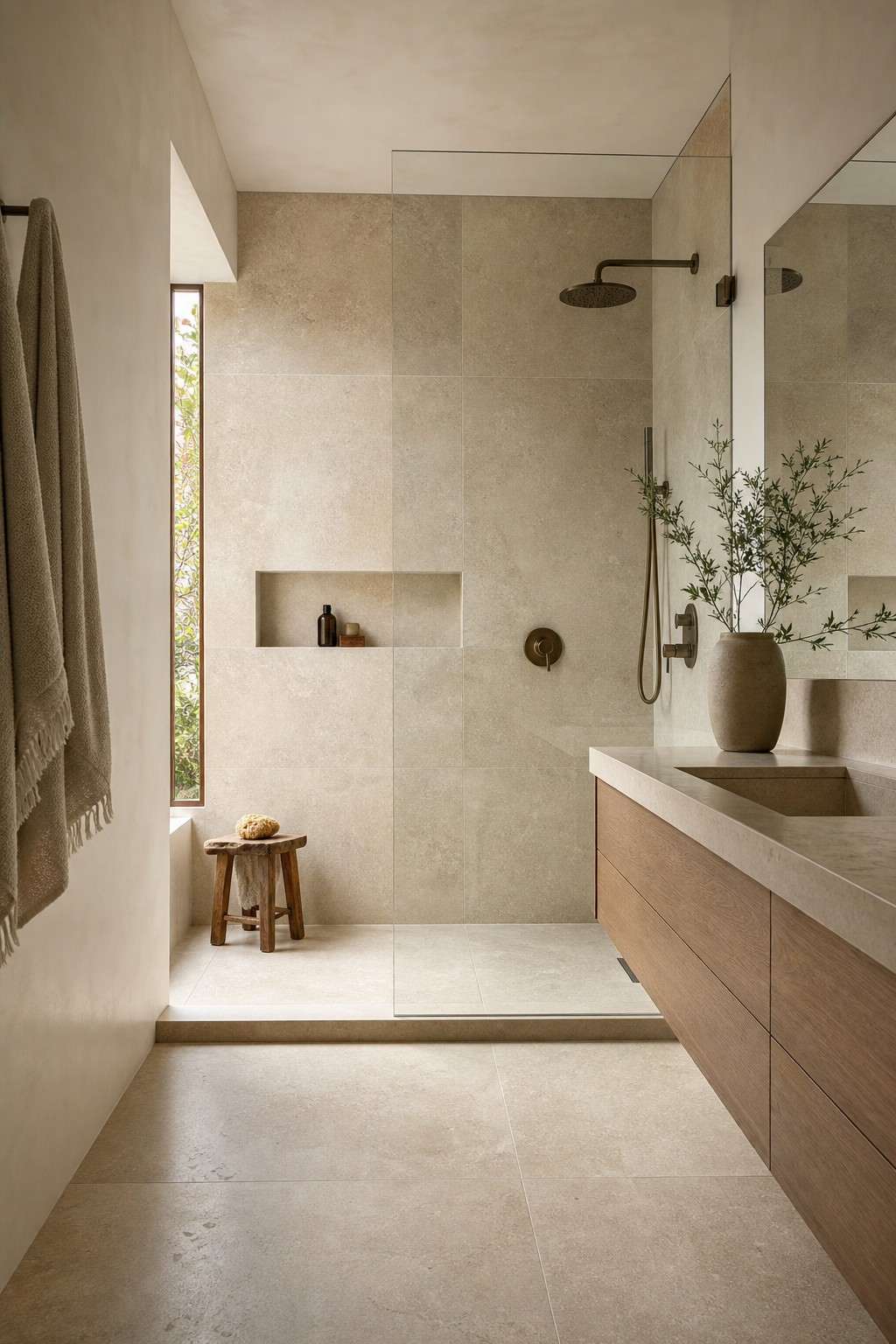
Fluted glass brings privacy, texture, and a little vintage charm without making the shower feel closed off. It softens the view of bottles and fixtures while still letting light move through the room. Use it as a fixed panel, shower door, or partial screen beside a tub. The ribbed texture pairs beautifully with stone, plaster, zellige, and warm wood because it adds detail without introducing another color. Keep the hardware simple so the glass remains the focal point. This idea works especially well when a bathroom feels too sleek or too plain. The shower becomes more layered, but the overall mood stays clean and relaxed.
Bring In A Wood Stool
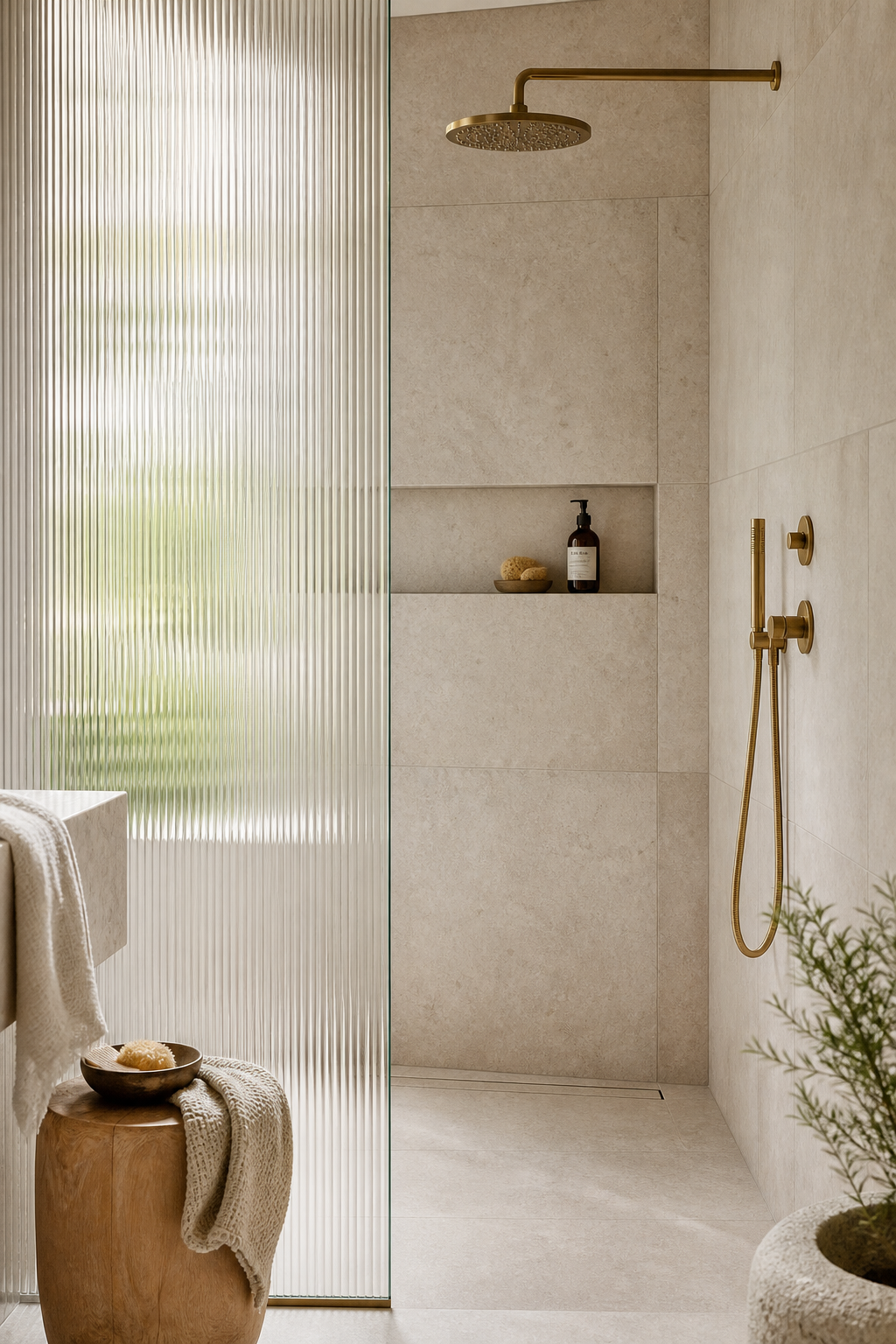
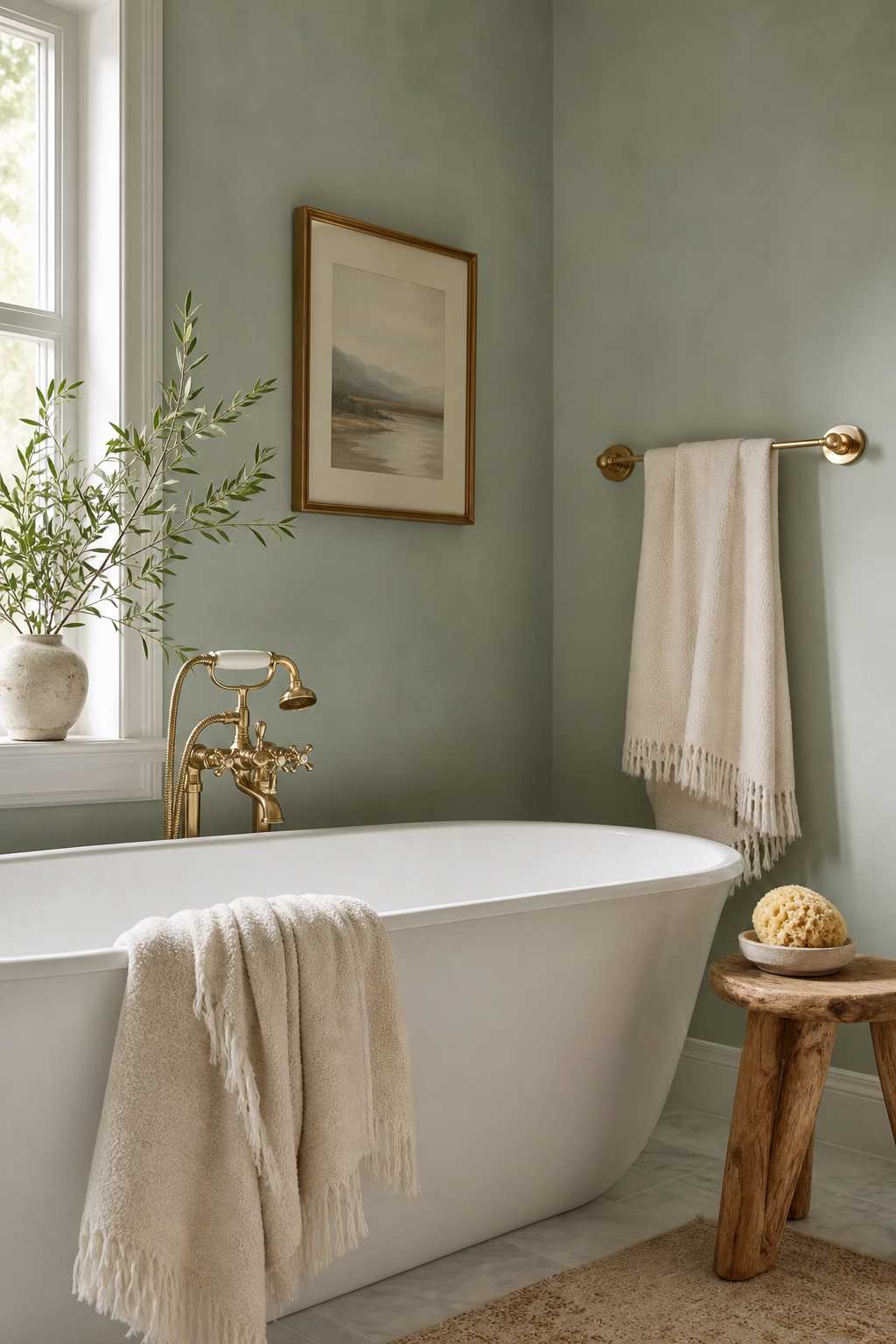
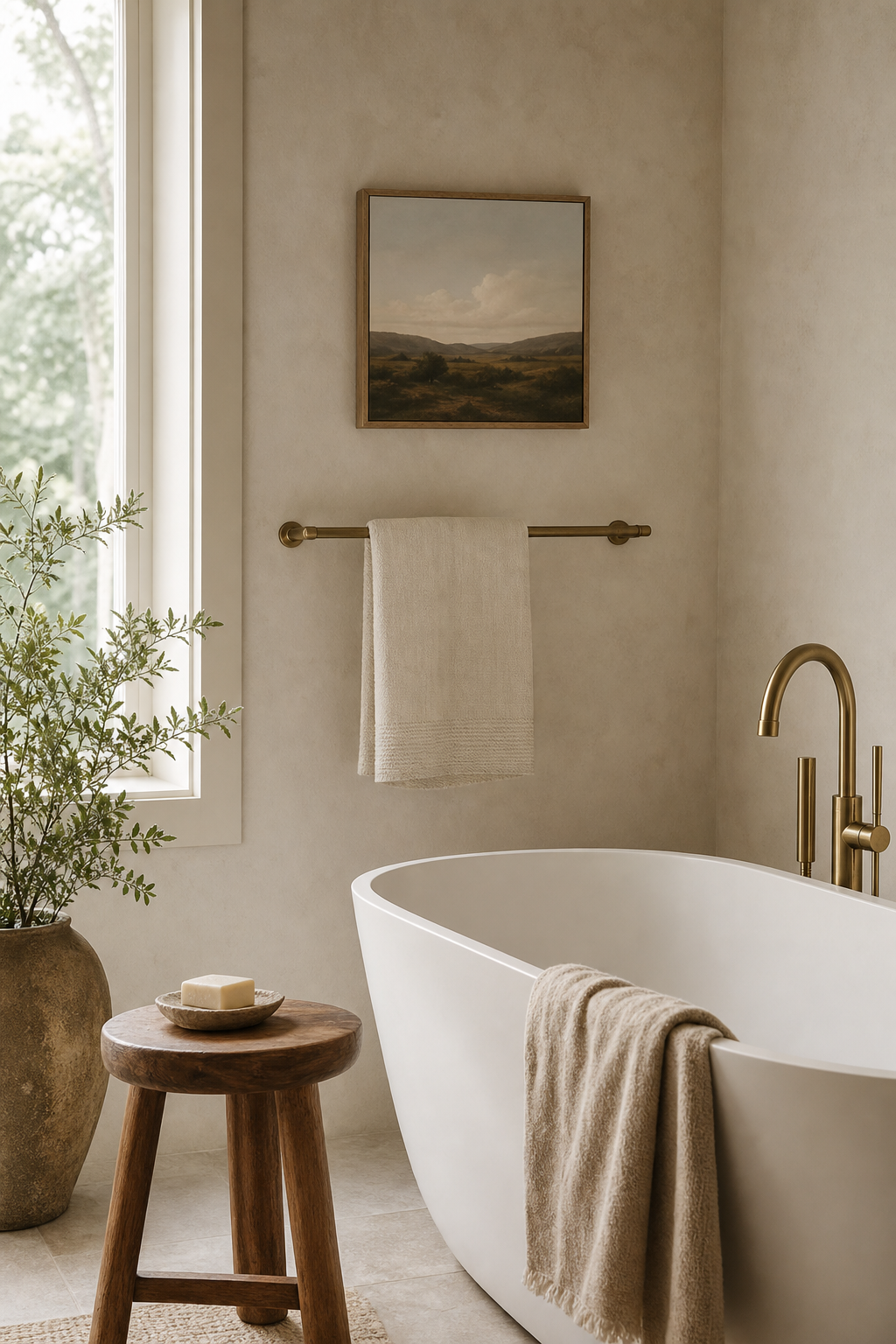
A small wood stool is one of the simplest ways to make a bathroom feel less clinical. Place it beside a bathtub, inside a large shower if the material is suitable, or near the vanity for towels and a candle. Teak, oak, walnut, or reclaimed wood adds warmth against tile, plaster, and stone. The stool should look useful, not decorative for decoration’s sake. Use it to hold a folded towel, bath brush, small vase, or tray. In a white or gray bathroom, this single organic piece can shift the whole room toward a warmer spa mood. It also gives the space a relaxed, collected feeling.
Upgrade To A Framed Mirror
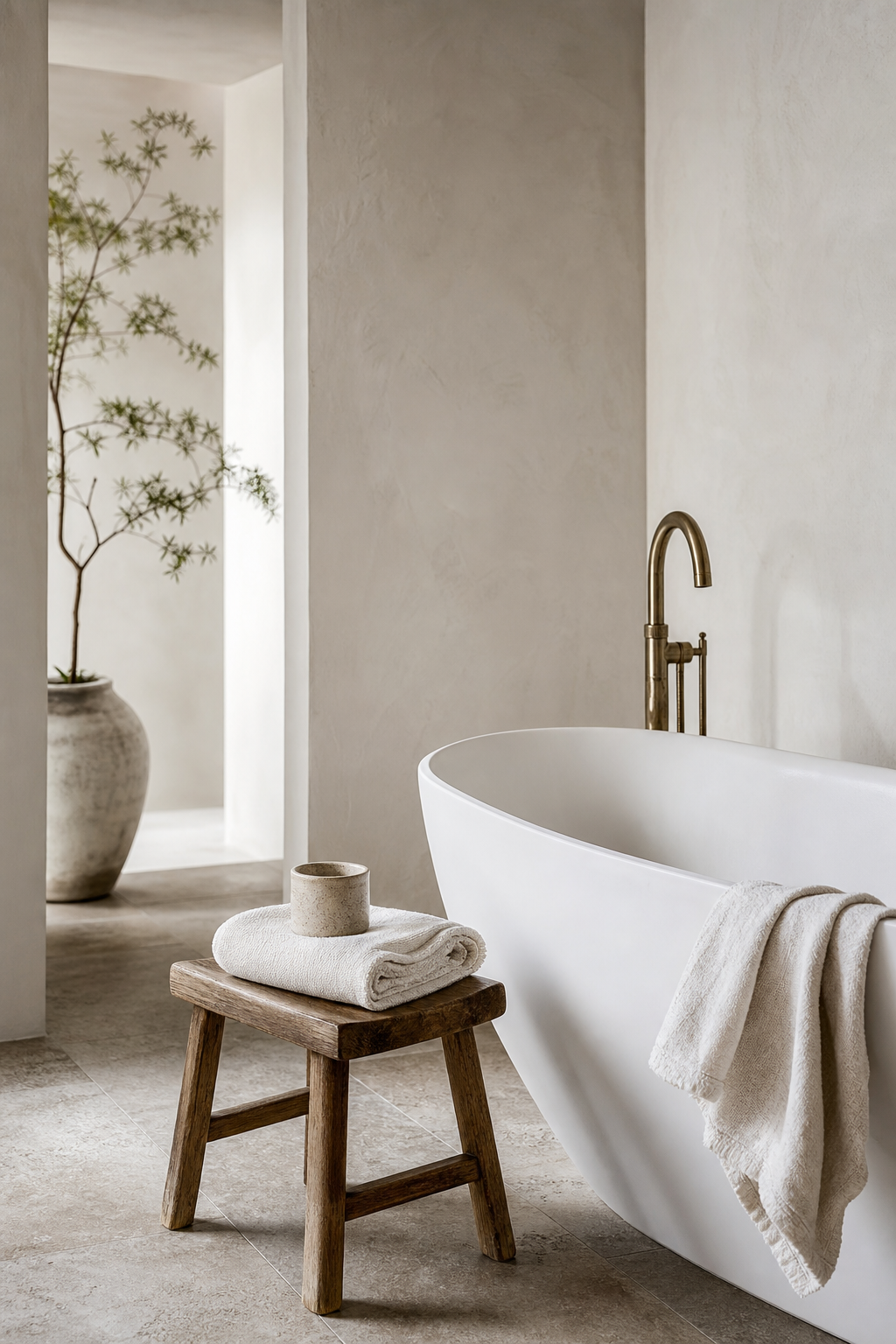
A framed mirror gives the vanity wall a finished, furniture-like quality. Thin metal frames feel tailored, warm wood feels softer, and a curved or arched shape can balance square tile and cabinetry. If the bathroom has a builder-grade mirror, replacing it with one intentional piece can change the entire wall. Scale matters: the mirror should feel generous but not overpower the vanity or sconces. Repeat the frame finish somewhere else, even quietly, through hardware, towel hooks, or a small tray. The mirror is used every day, so it should support both function and mood. A considered frame makes the room feel designed rather than merely installed.
Keep Counter Styling Edited
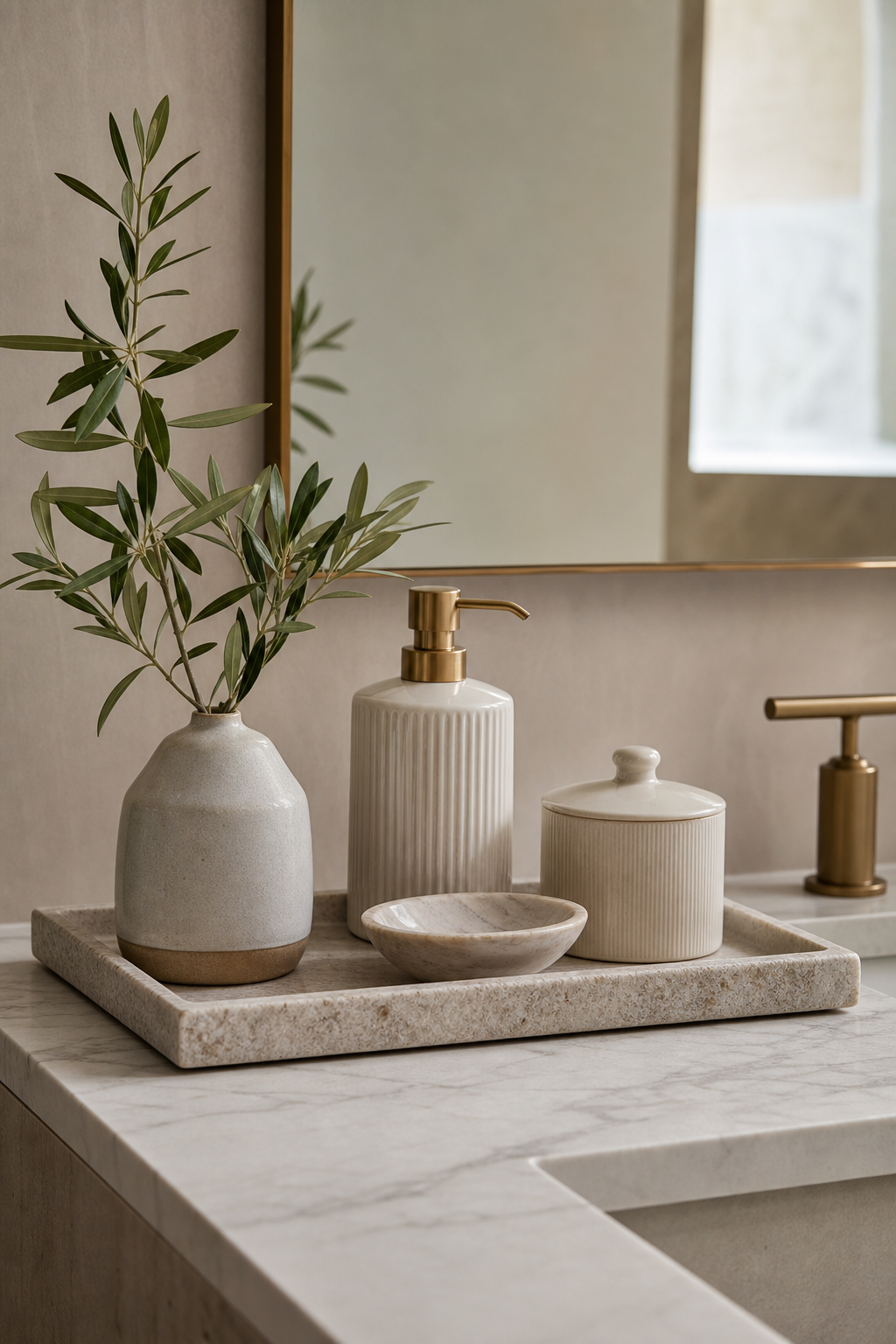
Bathroom counters look most luxurious when they have fewer, better objects. Start with a tray or shallow dish, then add hand soap, lotion, a small vessel, or a covered jar for cotton rounds. Decant only what makes sense and hide the rest in drawers or baskets. The goal is not a sterile hotel counter; it is a surface that feels calm and easy to clean. Choose materials that suit the room, such as stone, wood, ceramic, glass, or metal. Grouping items creates order, while open counter space keeps the vanity from feeling busy. This small edit can make an ordinary bathroom feel noticeably more serene.
Layer White With Cream And Taupe
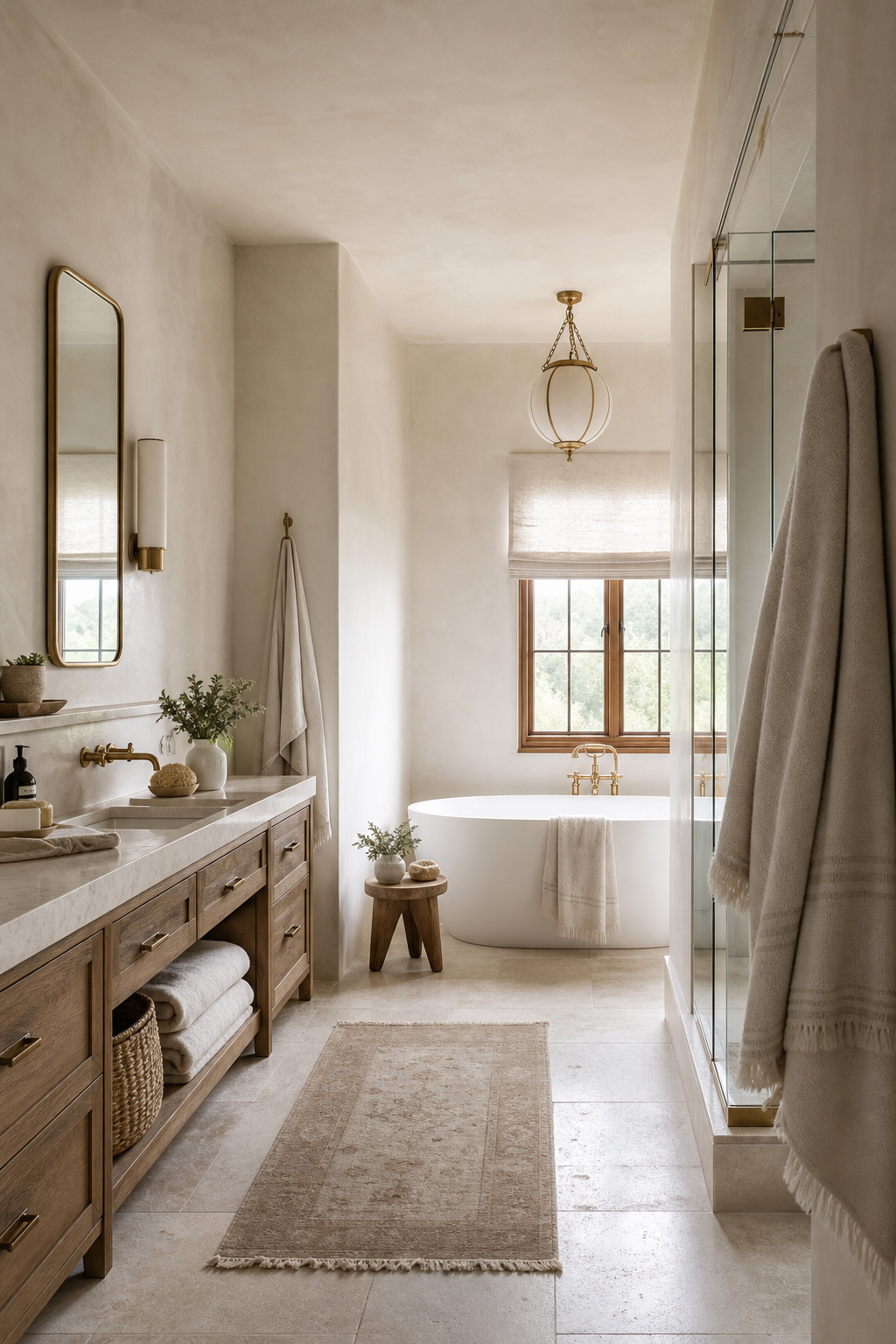
All-white bathrooms can feel crisp, but they often need warmth to become inviting. Layer white with cream, warm taupe, mushroom, oatmeal, and pale stone so the palette has depth. Use towels, grout, plaster, roman shades, cabinetry, or a bath mat to introduce those subtle shifts. The key is undertone control. Choose warm whites together rather than mixing icy blue whites with yellow creams. A layered neutral bathroom photographs beautifully because texture and shadow do the work instead of strong color. The room still feels clean, but it feels softer on the eye. This approach is ideal when you want a spa mood without committing to a dramatic palette.
Use Zellige For Handcrafted Texture
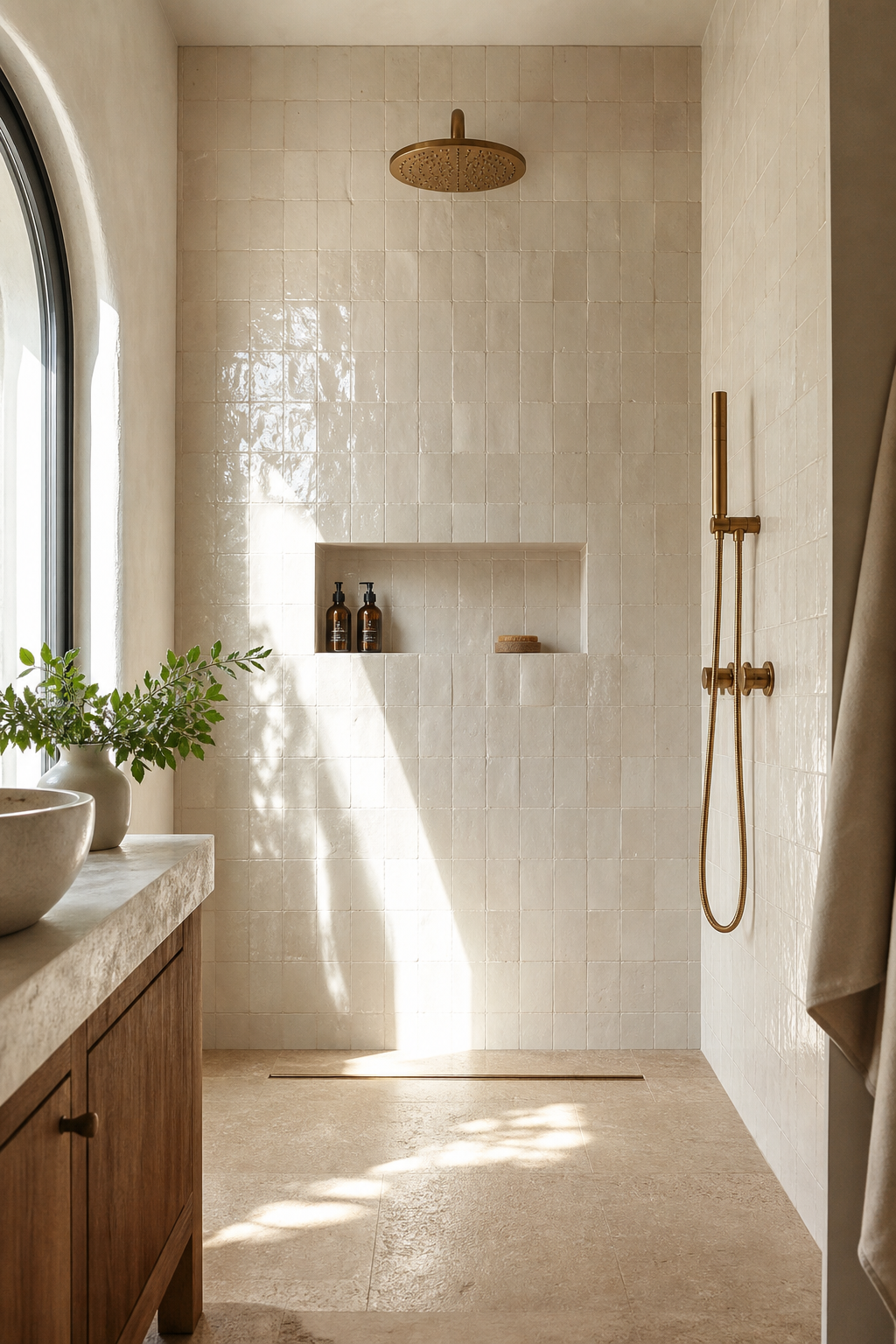
Zellige tile gives a bathroom a beautiful handmade surface because each tile catches light slightly differently. It works on shower walls, vanity backsplashes, tub surrounds, or a small powder bath feature wall. Choose a soft white, pale clay, misty green, or warm greige if you want the texture without overwhelming the room. The imperfect edges and glossy variation bring life to simple fixtures. Balance the tile with quieter surfaces nearby so the bathroom does not become too busy. Zellige is especially effective when the rest of the space has clean lines. It adds movement, reflection, and craft while keeping the overall design calm and elevated.
Add A Soft Roman Shade
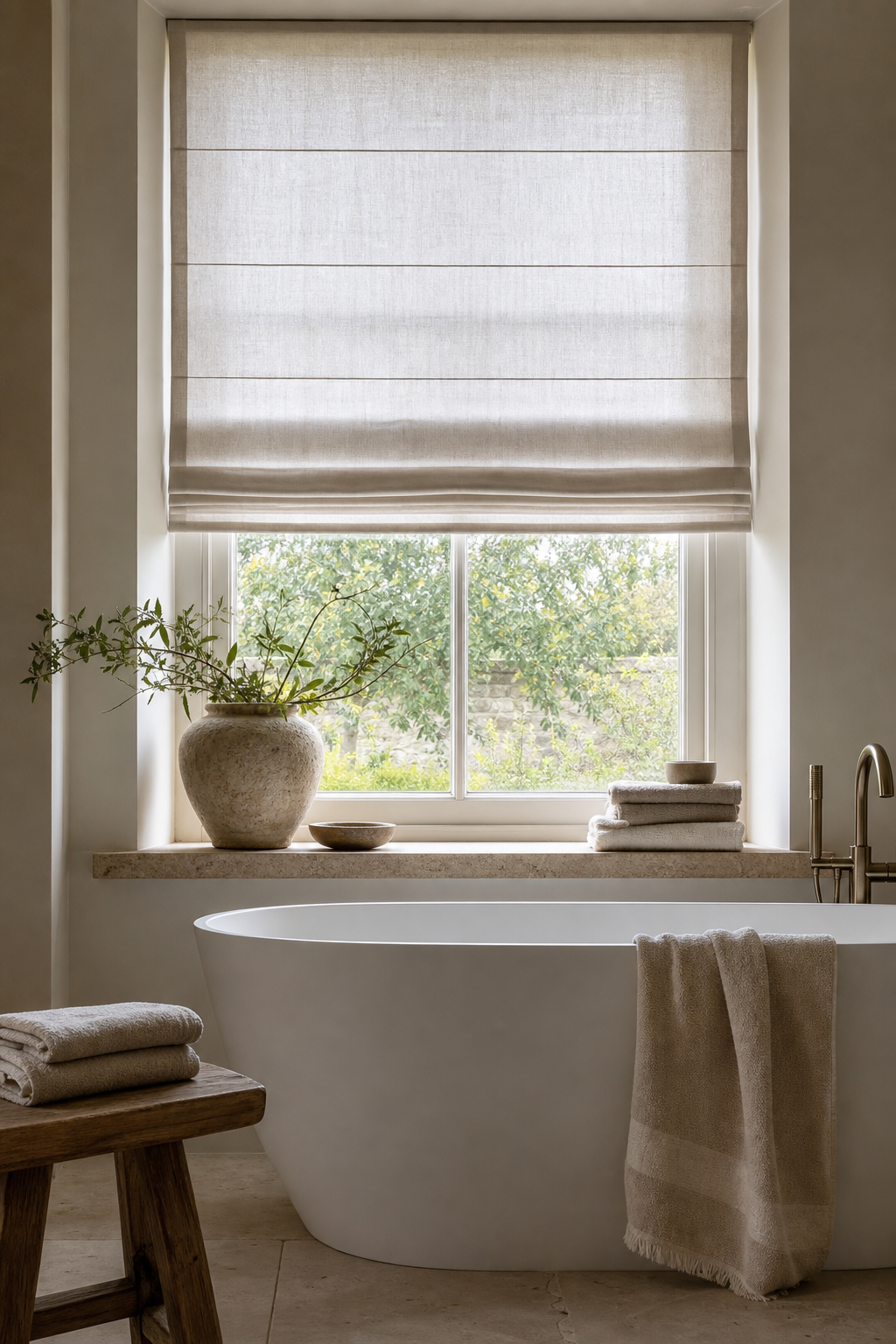
Bathrooms are full of hard surfaces, so a fabric window treatment can make the room feel much more finished. A roman shade adds softness without taking up floor space or interrupting the vanity. Choose linen, cotton, performance fabric, or a woven texture that can handle the room’s moisture level. Keep the pattern subtle if the tile already has movement, or use a small stripe when the bathroom is very plain. The shade should relate to towels, wood, or wall color so it feels integrated. Even a small window becomes a design feature. Fabric also helps the bathroom feel more like a decorated room than a utility space.
Hide Products In Beautiful Storage
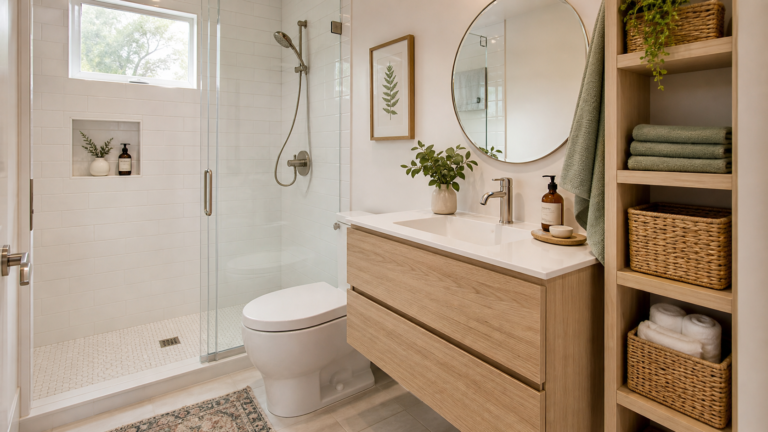
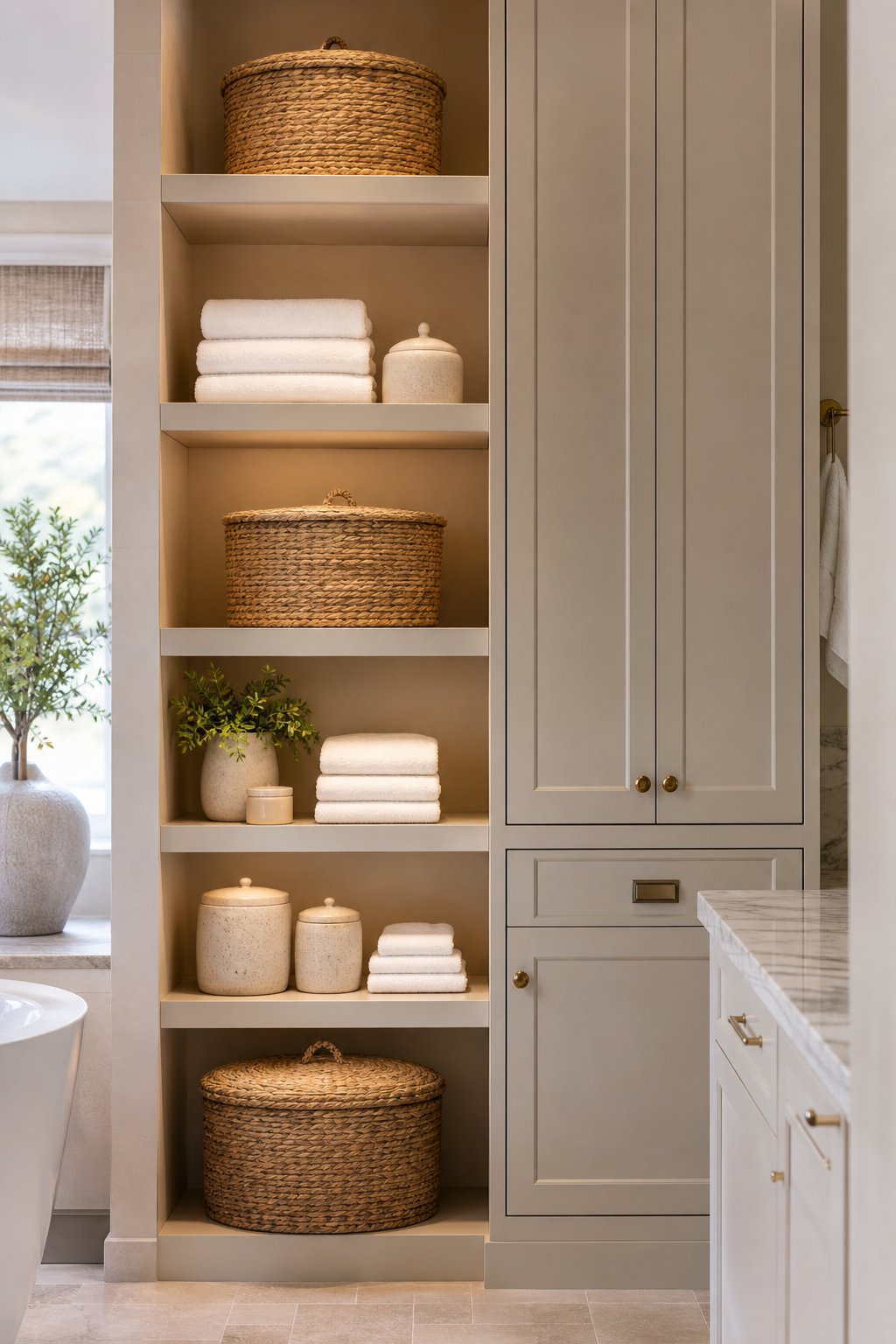
A spa-like bathroom depends on visual quiet, and that means everyday products need a real home. Use vanity drawers, lidded baskets, recessed medicine cabinets, or a slim linen tower to keep packaging out of sight. Open storage can still work if it is limited to folded towels, a ceramic jar, and one or two useful objects. Choose baskets with structure so shelves do not look messy. If the bathroom is small, use vertical space above the toilet or behind the door, but keep the pieces shallow and tailored. The room feels more aesthetic when the functional storage is intentional. Calm counters start with storage that actually supports the routine.
Try A Wet Room Layout
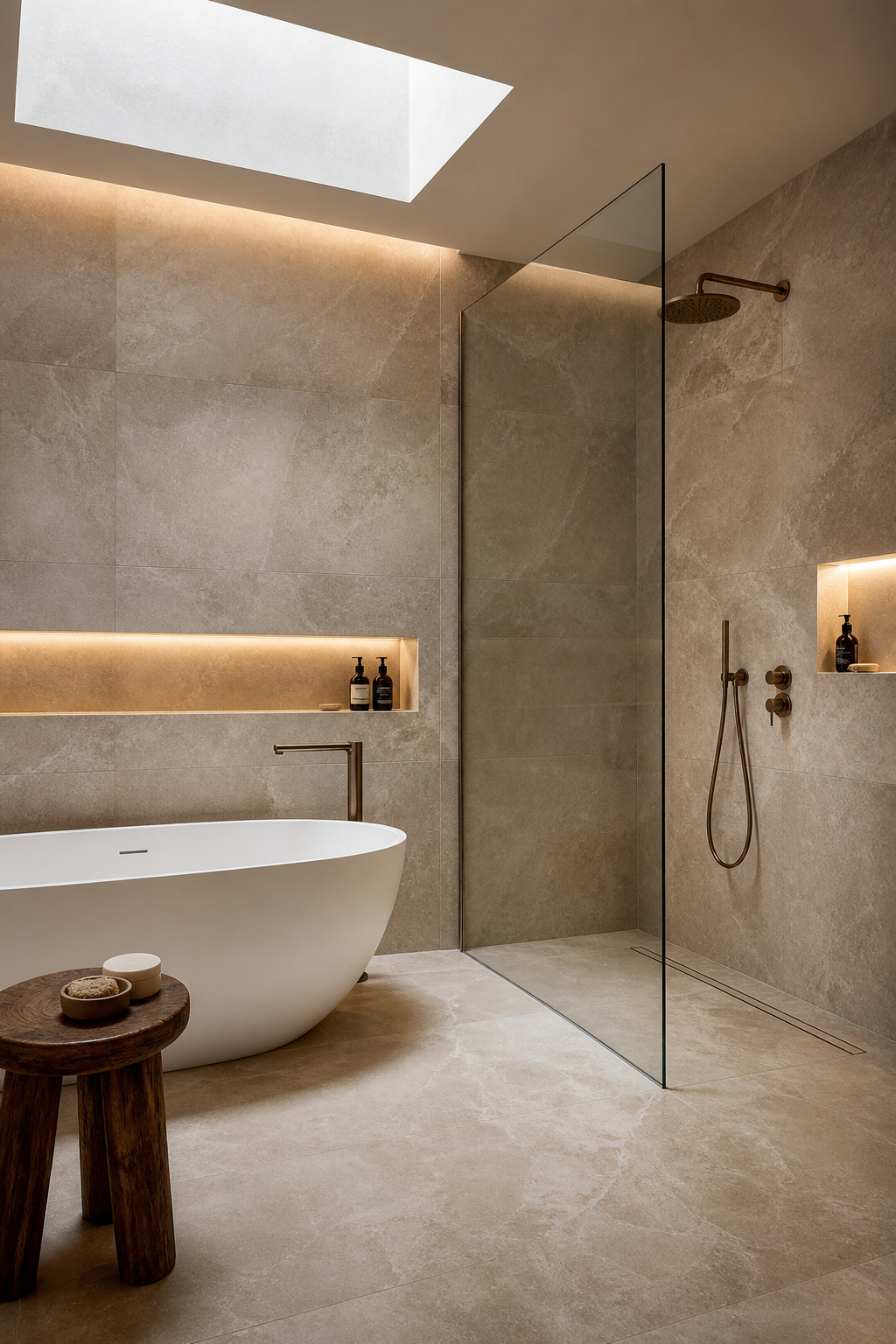
A wet room layout can make a bathroom feel open and spa-like when the proportions are right. Placing the tub and shower within one waterproofed zone creates a clean architectural gesture and reduces visual clutter. Use a linear drain, slip-resistant tile, and thoughtful glass placement so the room remains practical. The best wet rooms feel simple, not empty. Add warmth through a wood stool, textured towels, niche lighting, or stone with gentle movement. This idea is especially useful in bathrooms where a separate tub and shower would feel cramped. Done well, the wet zone becomes the quiet focal point and the rest of the room can stay minimal.
Use Brass For Gentle Warmth
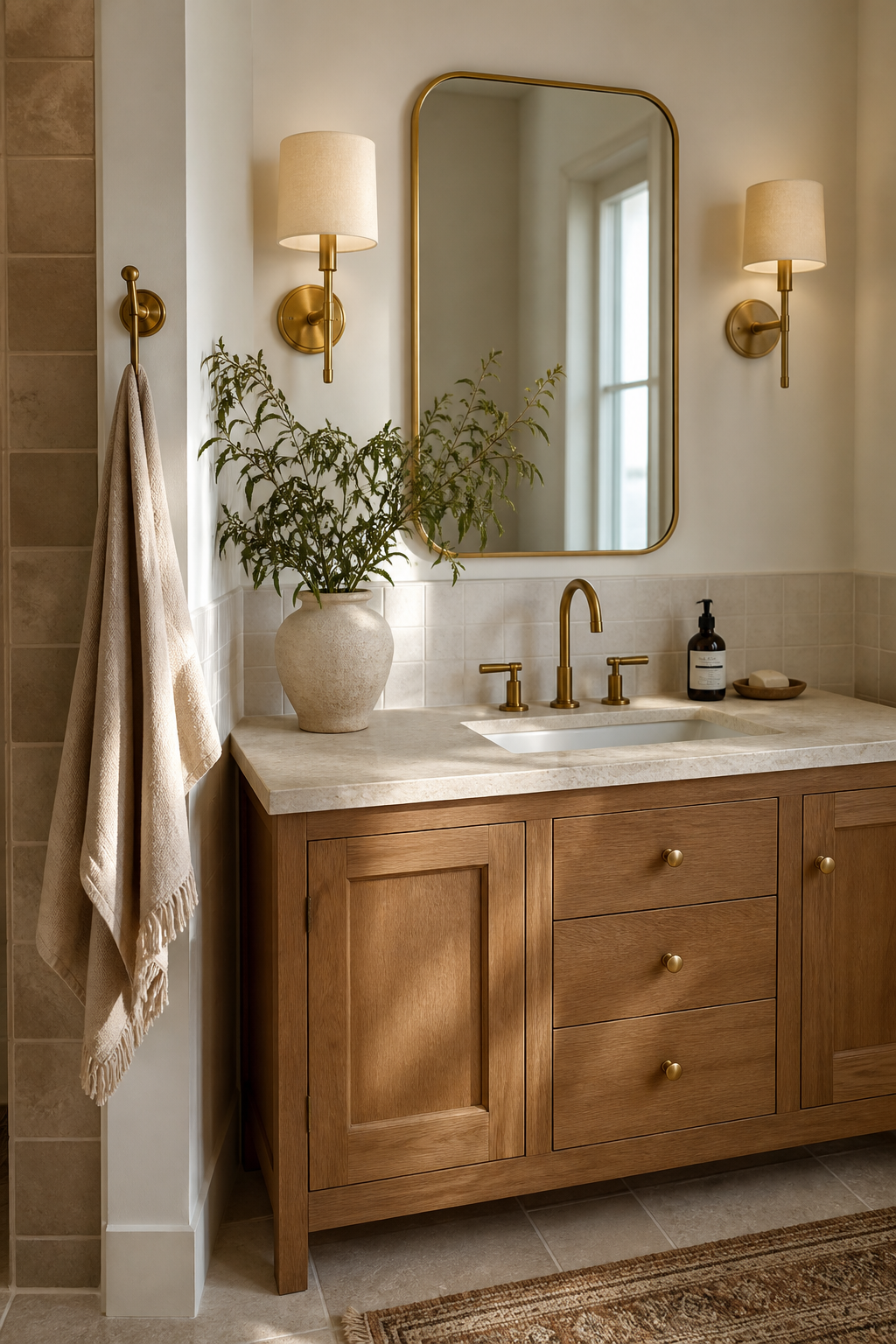
Brass can warm up a bathroom without making it feel overly decorative. Choose unlacquered, aged, brushed, or satin brass depending on how polished you want the room to feel. Repeat it through faucets, sconces, towel hooks, mirror frames, or cabinet pulls, but avoid using too many competing finishes. Brass looks especially beautiful with warm stone, oak, cream tile, and soft green walls. If the bathroom already has chrome or nickel, you can still add brass in a small accent, such as a tray or picture frame. The finish works best when it feels intentional. A few repeated touches bring glow and cohesion to a calm spa palette.
Choose A Sculptural Freestanding Tub
A freestanding tub can become the visual anchor of a spa-inspired bathroom. The shape matters as much as the size. A softly curved tub feels soothing, while a more angular silhouette can look architectural and modern. Leave enough space around it so the tub feels intentional rather than squeezed into the room. A floor-mounted faucet, nearby stool, and wall niche can make the area both beautiful and usable. Keep the styling minimal: folded towel, bath brush, or one branch in a vase. The tub should create a pause in the room. When the surrounding surfaces are quiet, the simple sculptural form becomes the decoration.
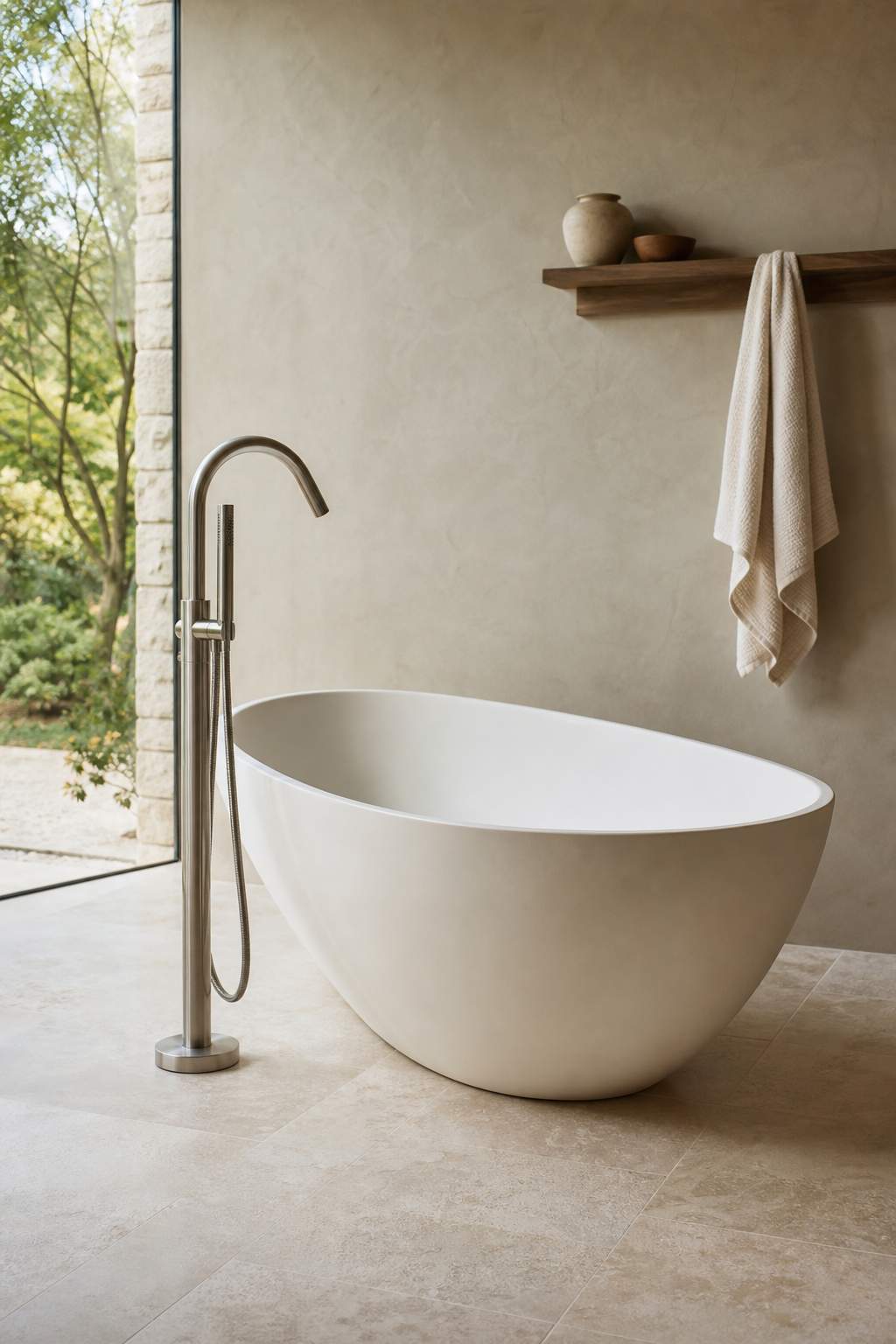
Make The Shower Niche Intentional
A shower niche can either disappear quietly or become a refined detail. Line it with the same tile for a seamless look, or use a contrasting slab if the rest of the shower is very simple. Add a slight shelf ledge, warm niche lighting, or a stone sill to make it feel finished. Keep bottles edited and consider decanting only if the containers are practical and easy to maintain. The niche should be placed where it is accessible but not the first thing you see from the doorway. Thoughtful placement keeps the shower clean visually. This small construction detail can make the whole bathroom feel more custom.
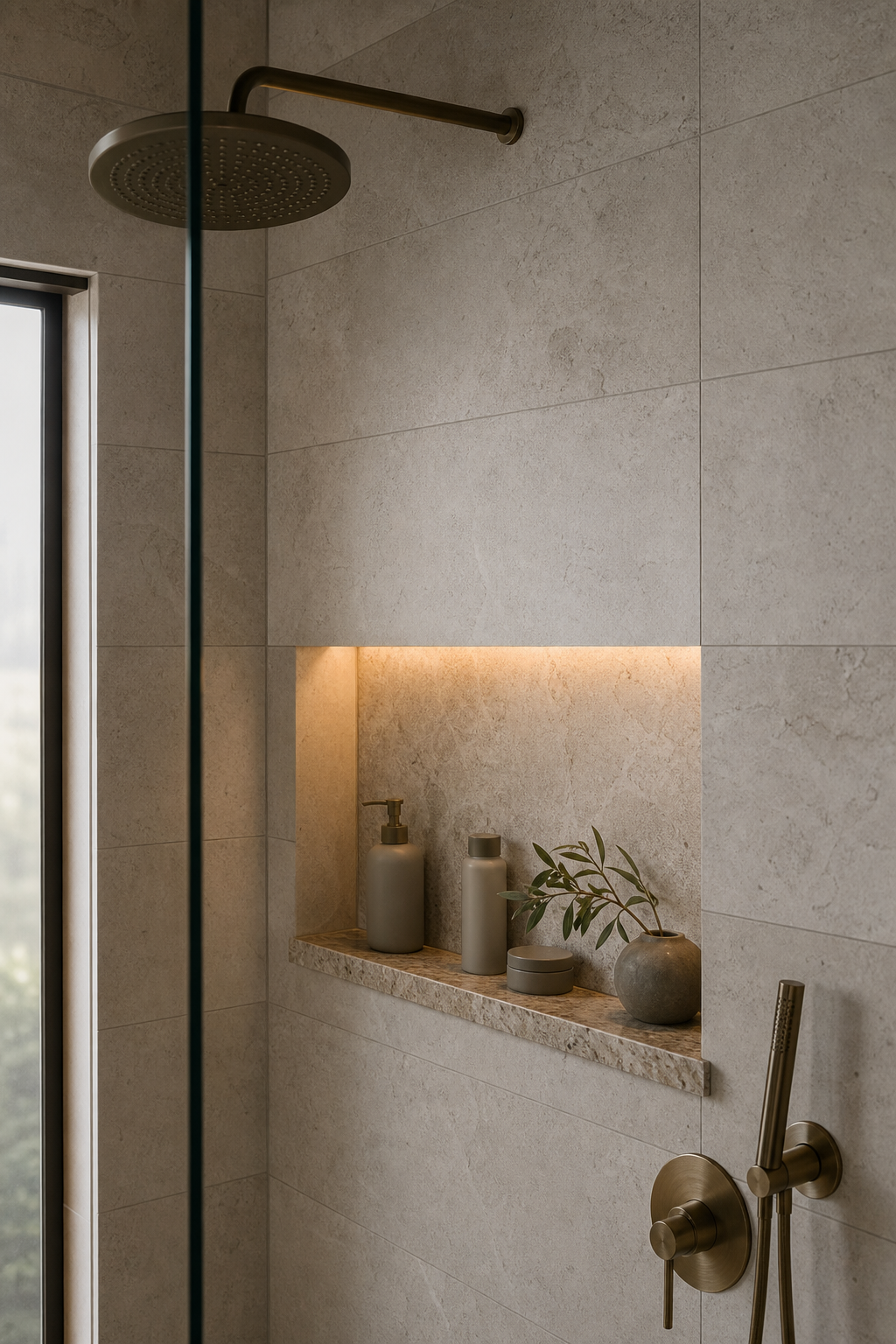
Add Greenery With A Simple Vessel
Greenery makes a bathroom feel alive, especially when the palette is neutral. Use one simple vessel with eucalyptus, olive branches, a fern, pothos, or another plant suited to the light and humidity. Avoid crowding the vanity with multiple small plants. One generous branch arrangement or one healthy potted plant usually looks more sophisticated. The container should match the room’s materials: ceramic for softness, glass for lightness, stone for weight, or metal for polish. Greenery also gives the eye a natural break from tile and cabinetry. In a spa-like bathroom, this touch should feel quiet and fresh rather than busy or themed.
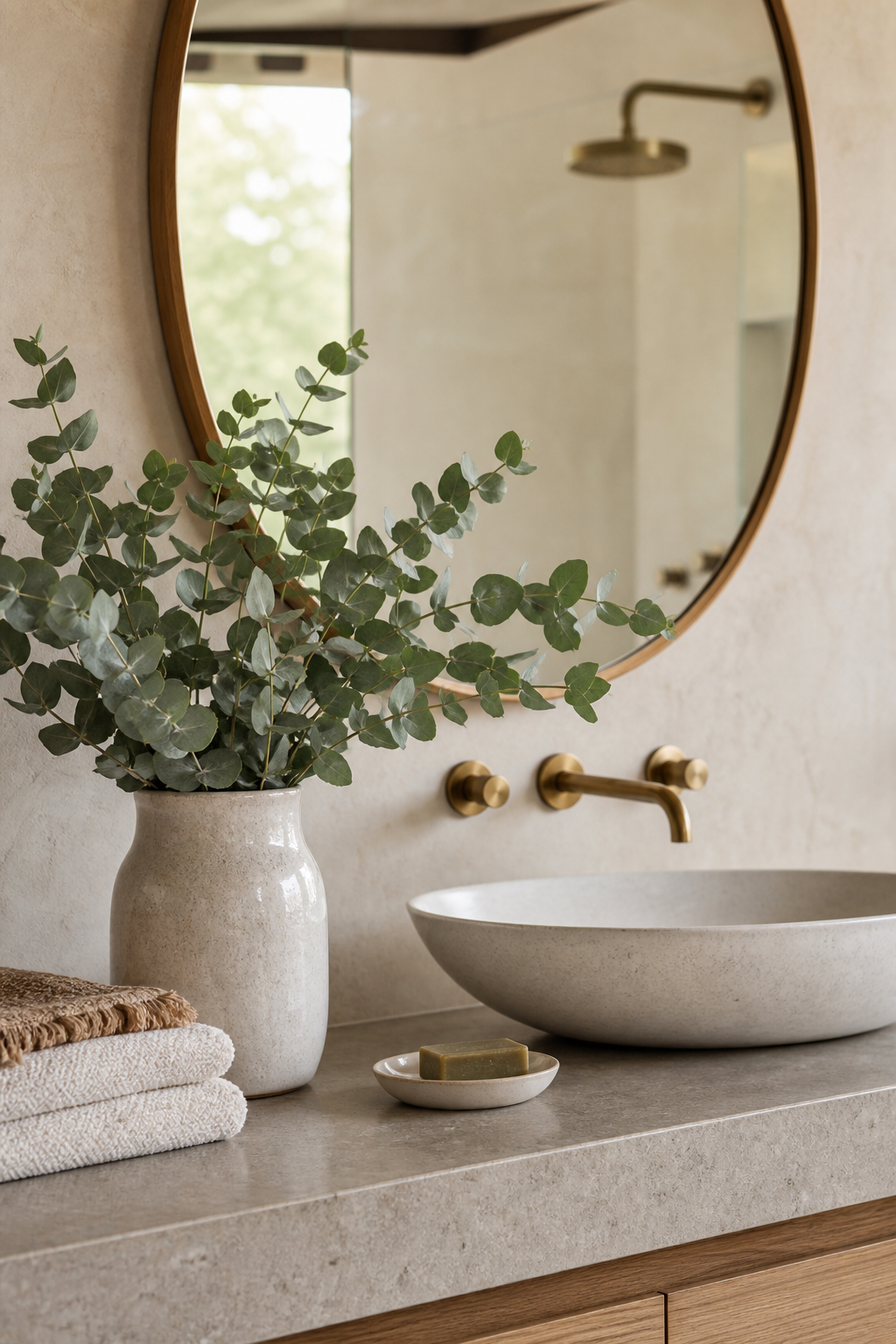
Use A Runner Instead Of A Bath Mat
A runner can make a bathroom feel more like a decorated room than a purely practical space. Choose a low-pile washable runner, vintage-style rug, or flatweave that fits the traffic path without blocking doors. The pattern should hide daily wear while relating to the room’s colors. A runner is especially useful in a long vanity area, a double-sink bathroom, or a narrow layout where several small mats would look choppy. Pair it with proper rug pad backing for safety. The textile adds warmth underfoot, softens sound, and introduces pattern at floor level. It is a simple swap that can make tile feel less cold.
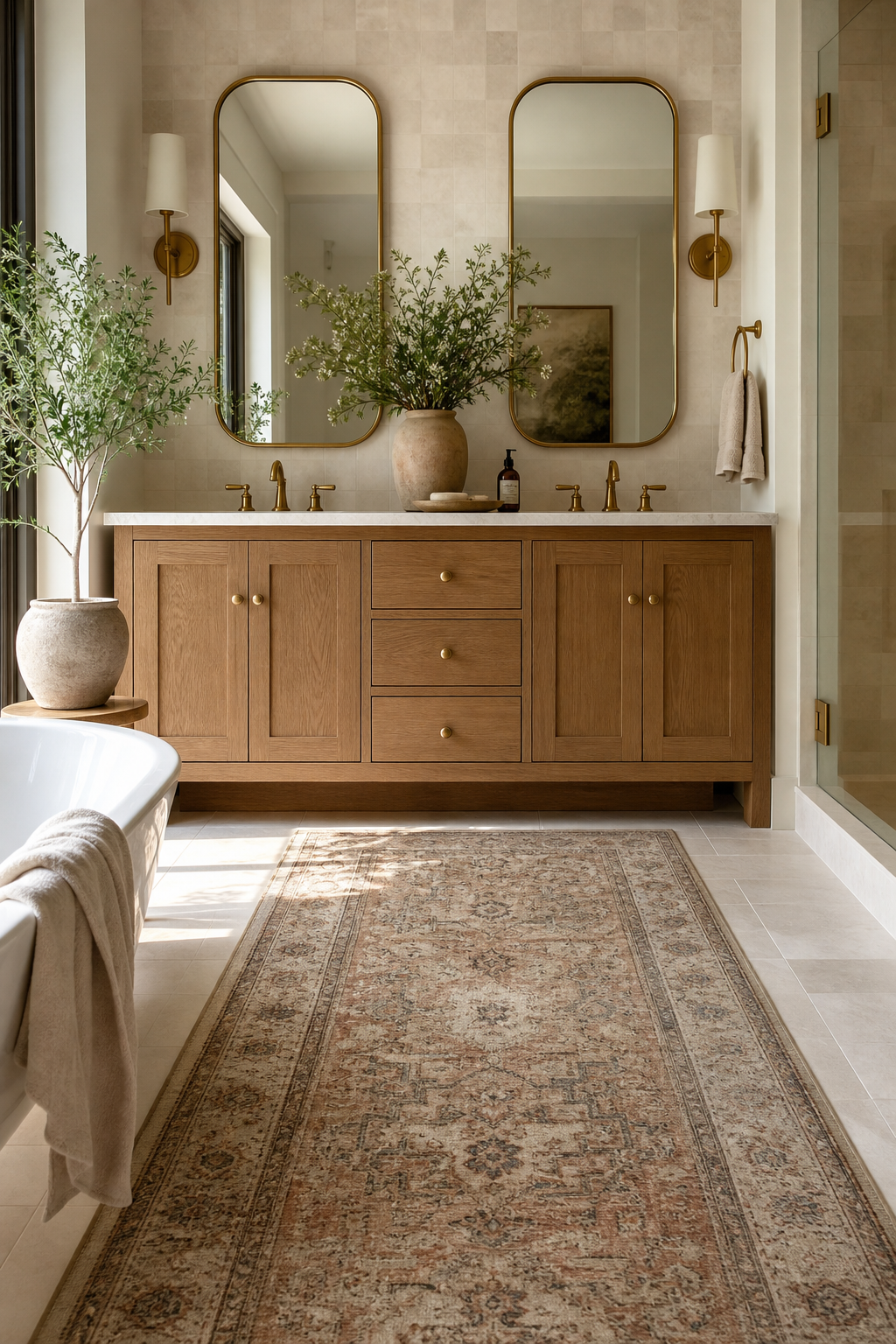
Paint The Walls A Soft Color
Soft wall color can turn a plain bathroom into a soothing retreat. Try misty green, warm greige, pale clay, dusty blue, mushroom, or a barely-there blush depending on the tile and natural light. Bathrooms often have less fabric than other rooms, so wall color carries more of the mood. Use a finish appropriate for moisture and keep the trim clean. If you are nervous, start with the vanity wall or a powder bath. The best colors feel muted, not sugary. They should flatter stone, towels, and skin tones. A gentle painted backdrop makes white fixtures look intentional and gives the entire room more atmosphere.
Use Matte Black As A Fine Line
Matte black can make a bathroom feel crisp when it is used as a fine line rather than a heavy theme. Think slim mirror frame, shower hardware, towel hook, faucet, or cabinet pull. The contrast helps pale tile, stone, and plaster feel more defined. Use black sparingly so the bathroom still feels soft and spa-like. It works especially well when balanced with wood, warm white, and textured towels. If every fixture is black, the look can become flat; if only a few details are black, the room feels tailored. This approach gives an aesthetic bathroom structure without sacrificing calm.
Create A Towel Moment
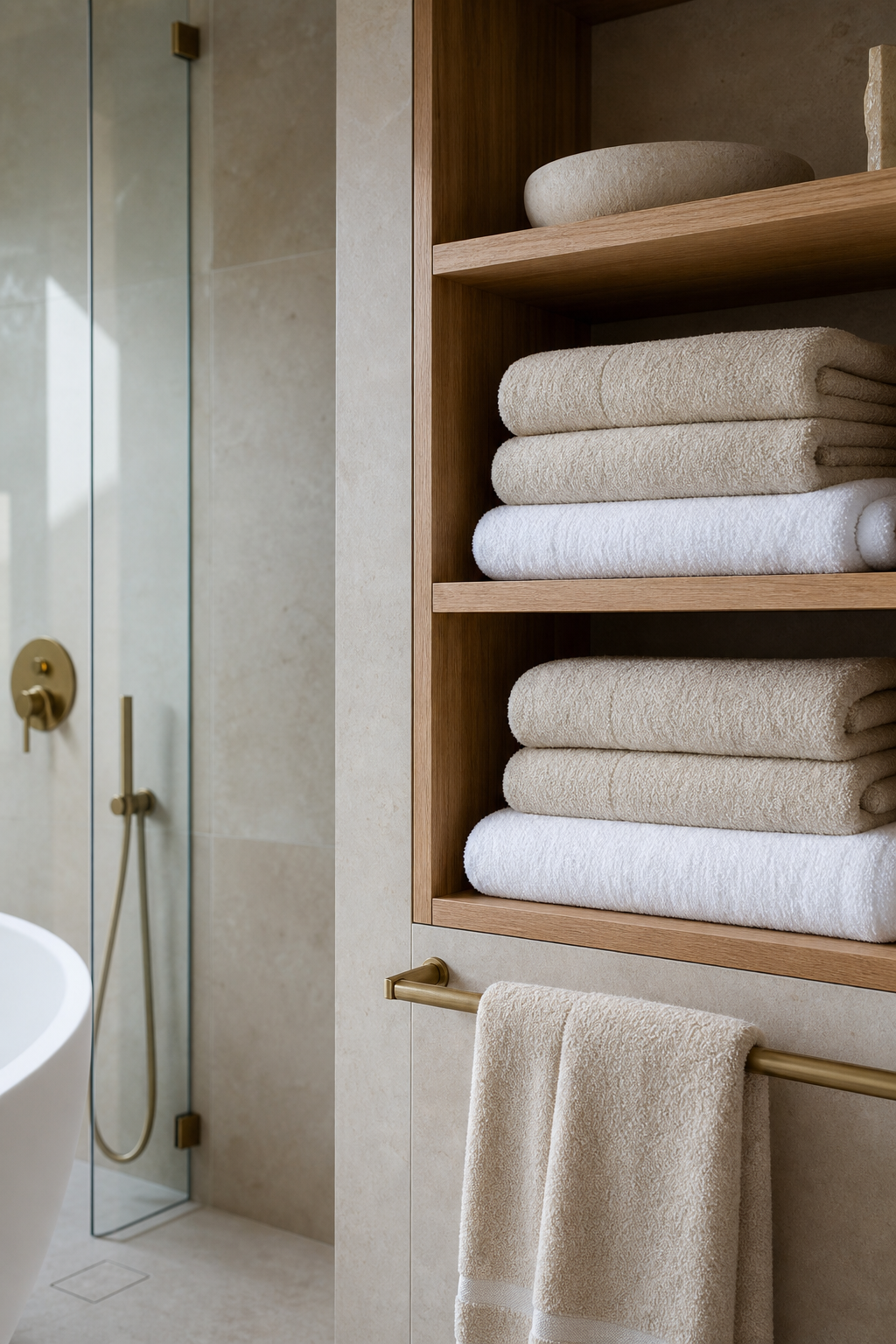
Towels are functional, but they also occupy a lot of visual space. Choose thick towels in white, oatmeal, stone, muted green, or another shade that supports the bathroom palette. Fold them consistently on open shelves, stack them on a stool, or hang them from a simple rail. Avoid mixing too many unrelated colors unless the room is intentionally playful. A waffle weave hand towel, Turkish towel, or neatly stacked bath sheets can make the room feel considered without adding clutter. This is also one of the easiest refreshes to maintain. When towels look intentional, the bathroom immediately feels cleaner and more spa-like.
Add Subtle Wallpaper In A Powder Bath
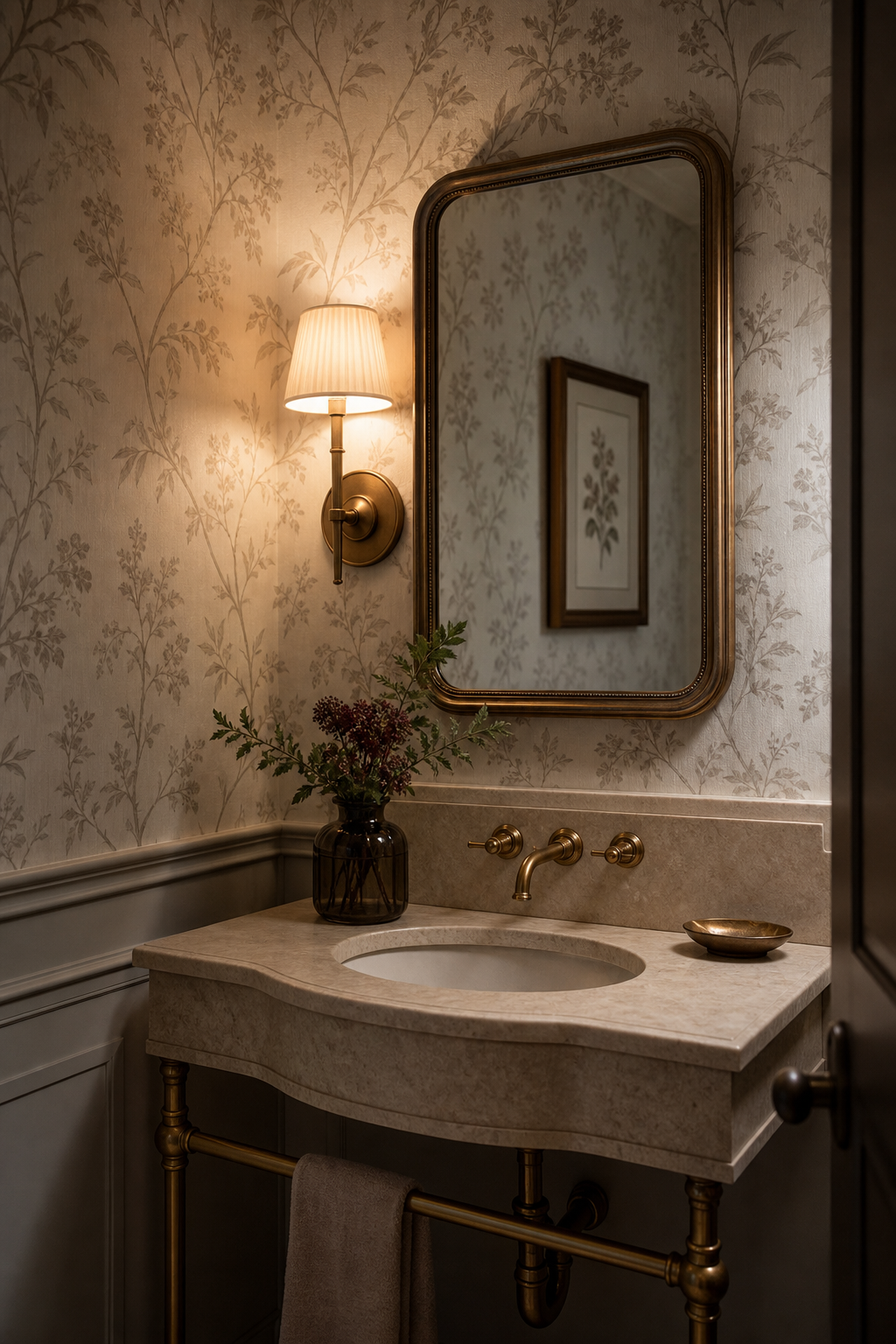
A powder bath can handle more personality than a main bathroom because it is smaller and used for shorter moments. Subtle wallpaper gives the room depth without sacrificing a refined mood. Try a tonal botanical, grasscloth texture, small stripe, or soft geometric print. Pair it with a simple mirror, beautiful sconce, and stone or wood vanity so the wallpaper has room to breathe. In moisture-prone bathrooms, choose a product suited to the space and ventilate properly. The pattern should feel special up close and calm from the doorway. A powder bath is the perfect place to make an aesthetic statement in a controlled way.
Choose A Curved Vanity
A curved vanity softens the straight lines that usually dominate a bathroom. Rounded corners, fluted fronts, oval sinks, or arched cabinet details can make the space feel more gracious and less utilitarian. This is especially helpful in narrow bathrooms where sharp corners interrupt movement. Pair the curve with quiet materials such as oak, walnut, stone, or painted wood. Keep the hardware simple so the shape remains the feature. A curved vanity works in both modern and traditional rooms because the softness feels timeless. It gives the bathroom a custom look and makes everyday circulation feel more comfortable.
Use Niche Lighting For A Hotel Feel
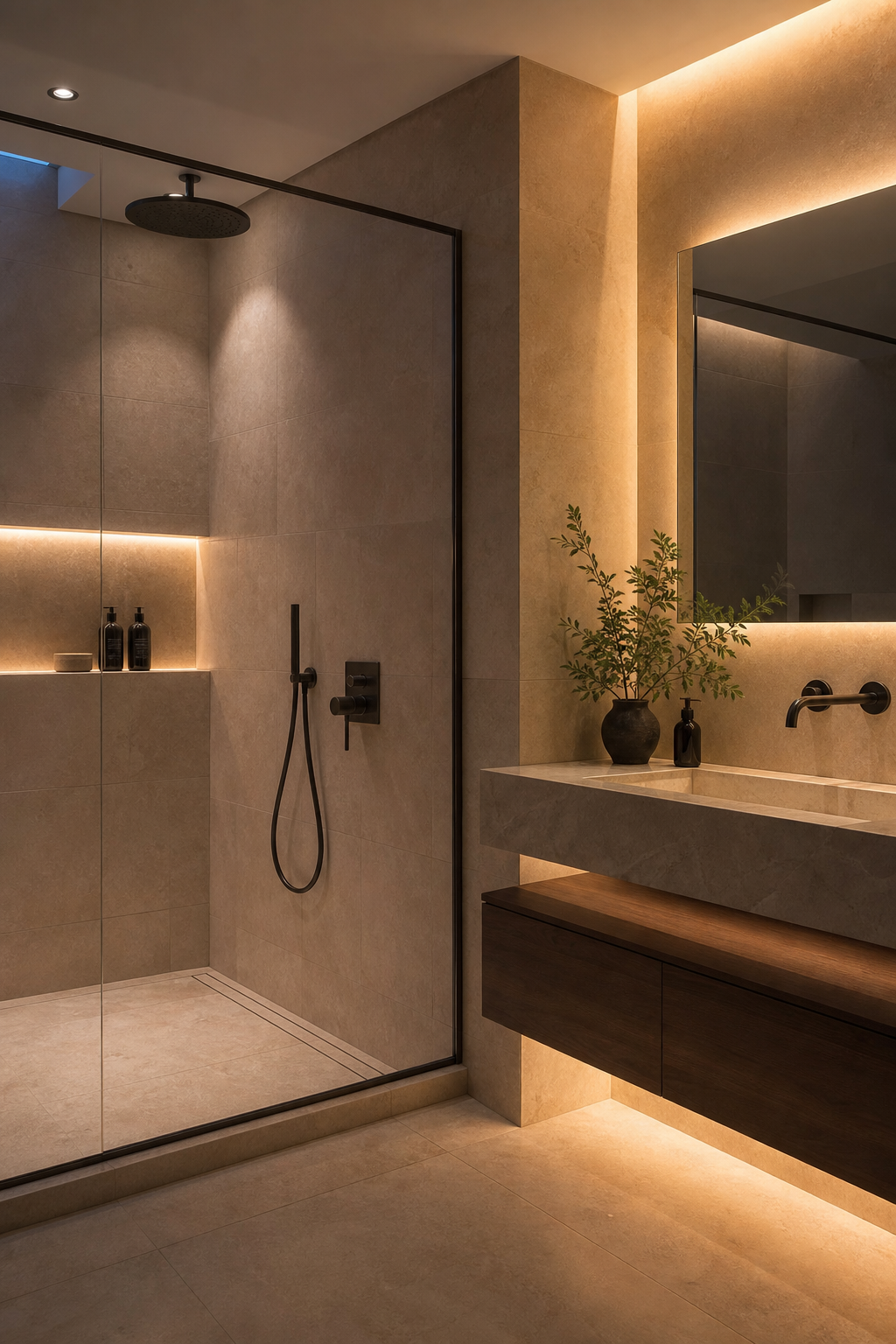
Small lighting details can make a bathroom feel quietly luxurious. A warm LED strip inside a shower niche, under a floating vanity, or along a recessed shelf creates a soft glow without relying on overhead brightness. Keep the color temperature warm and the light source hidden so the effect feels subtle. Niche lighting is most useful in evening routines, when bright vanity lights feel too harsh. It also highlights stone, tile texture, and neatly arranged towels. This idea works best when it supports a real function, such as finding products in the shower or creating a night light. The room feels calmer and more layered.
Add Art Away From Splash Zones
Art makes a bathroom feel like part of the home rather than a purely functional room. Choose framed prints, small landscapes, tonal abstracts, or vintage studies and place them away from direct splash and steam. A piece above a towel rail, beside a tub, or over a small stool can add personality without getting in the way. Use frames that can handle the environment and keep valuable originals elsewhere. The art should support the mood: calm, fresh, romantic, tailored, or earthy. Even one small piece can break up tile and cabinetry. It gives the room a personal layer that still feels refined.
A spa-like bathroom refresh works best when every choice supports a calmer routine. Start with the area that bothers you most, whether that is cold lighting, cluttered counters, harsh tile, or towels that never look intentional. Then layer in warmth through stone, wood, fabric, soft color, and better storage. The room does not need to be perfect to feel more aesthetic. It needs a clear palette, practical order, flattering light, and a few materials that make everyday rituals feel more generous.