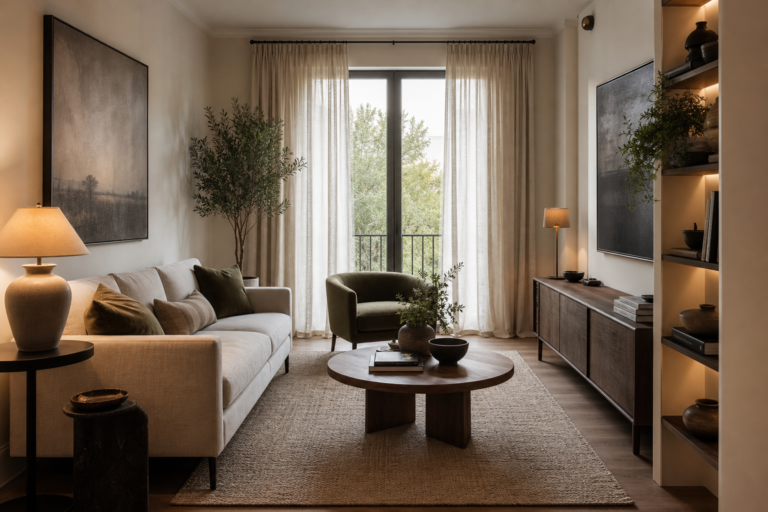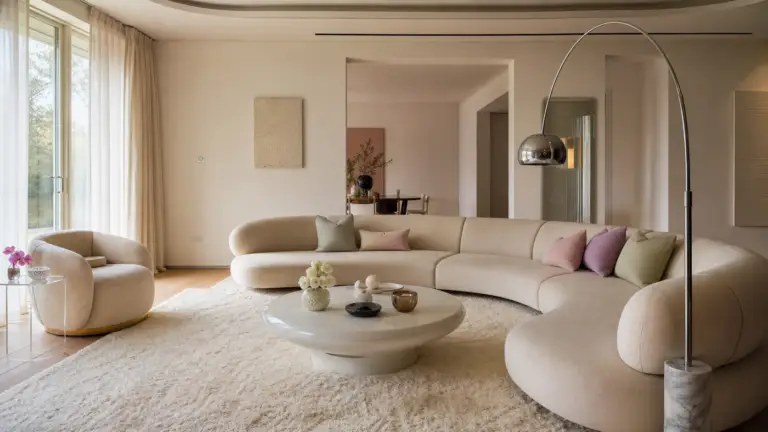
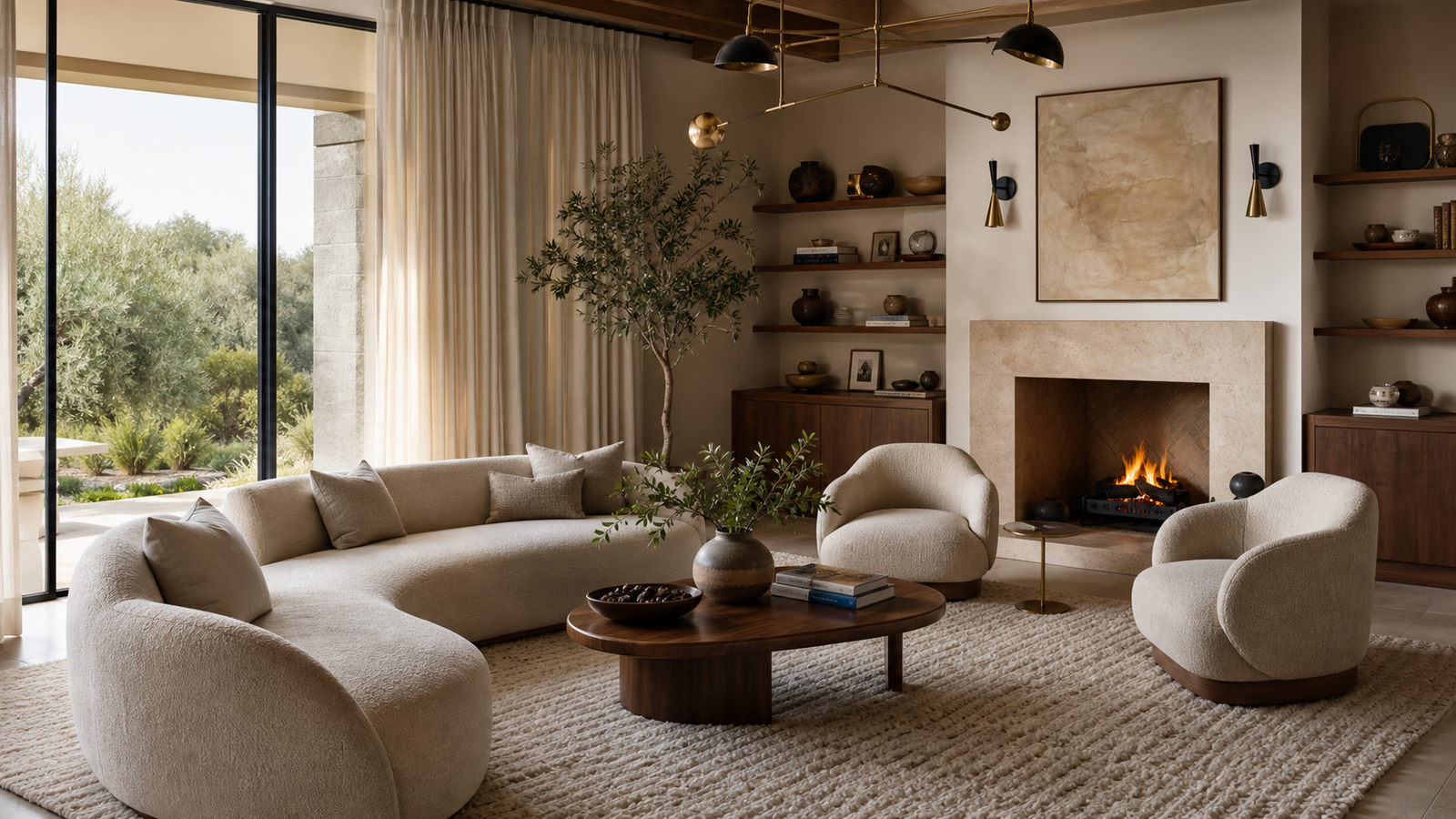
18 Contemporary Living Room Ideas For A Cozy Designer Look
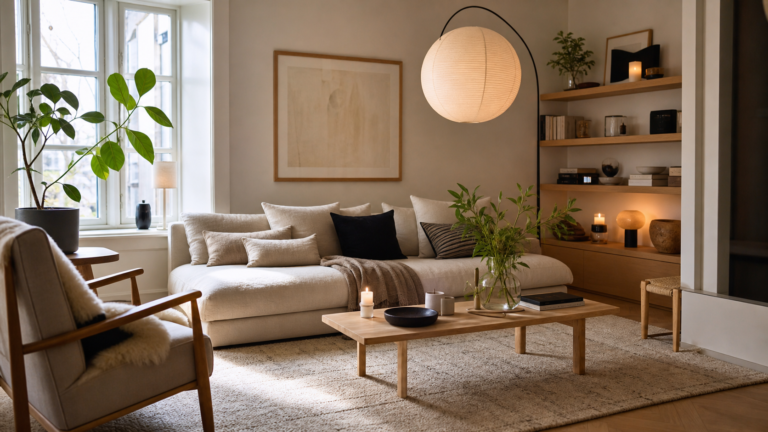
A contemporary living room feels most successful when clean lines are softened by comfort, texture, and intention. The look is not about stark minimalism; it is about editing carefully, choosing materials that age well, and giving every seat, lamp, table, and artwork a reason to be in the room. These ideas focus on refined palettes, tactile upholstery, sculptural silhouettes, layered lighting, and layouts that invite conversation without losing polish.
1. Build the Room Around a Low Curved Sofa
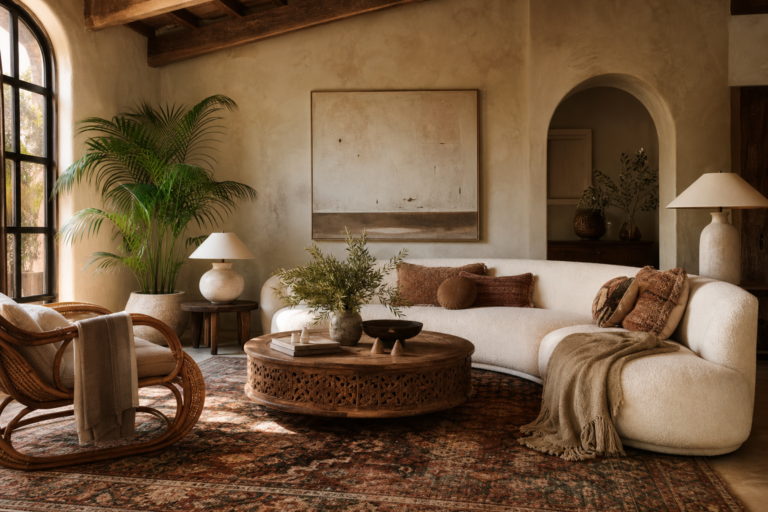
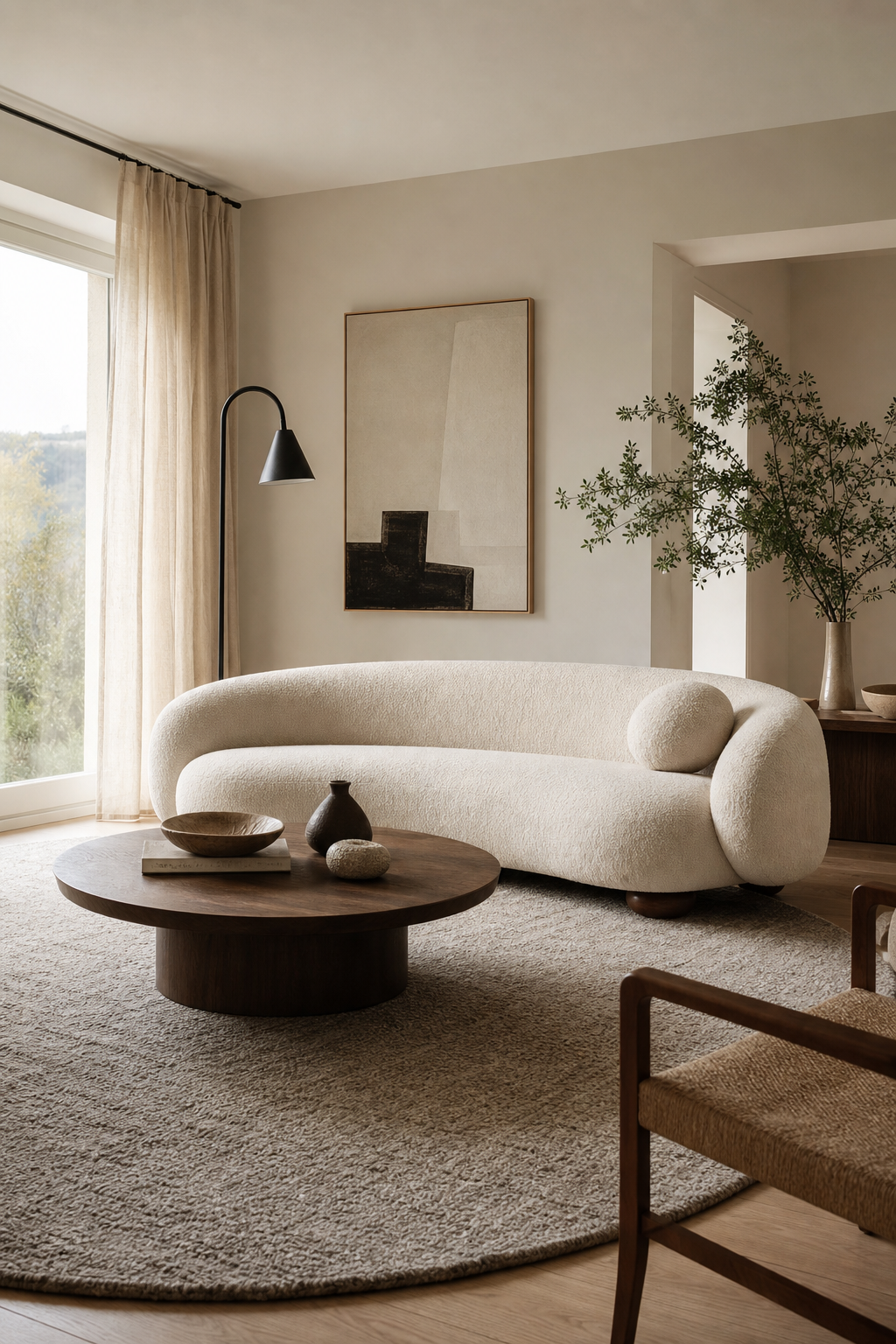
A low curved sofa instantly gives a contemporary living room a softer, more designer-led rhythm. Instead of pushing every piece against the walls, let the sofa float slightly into the room and pair it with a rounded coffee table to continue the movement. Boucle, brushed cotton, or a tight-weave linen blend keeps the shape feeling tactile rather than theatrical. In a warm ivory or mushroom tone, the sofa becomes a quiet anchor for walnut side tables, a wool rug, and matte black floor lighting. Keep the back height modest so sightlines remain open, especially in apartments or open-plan spaces. The result is elegant but deeply livable, with seating that encourages conversation and makes the room feel composed from every angle.
2. Layer Warm Neutrals Instead of Using One Beige
A luxurious neutral room depends on depth, not sameness. Mix chalky white walls with oat linen curtains, a greige sofa, taupe velvet cushions, and a caramel leather accent chair. These slight shifts in tone make the space feel considered and warm without relying on bold color. Texture is essential here: combine smooth plaster, nubby upholstery, ribbed ceramics, honed stone, and a handwoven rug so the palette has movement. For contrast, add dark bronze picture frames or a slim black metal side table. The key is to repeat each tone at least twice, allowing the room to feel calm rather than accidental. Warm neutrals work beautifully in contemporary spaces because they soften architectural lines while preserving a clean, edited atmosphere.
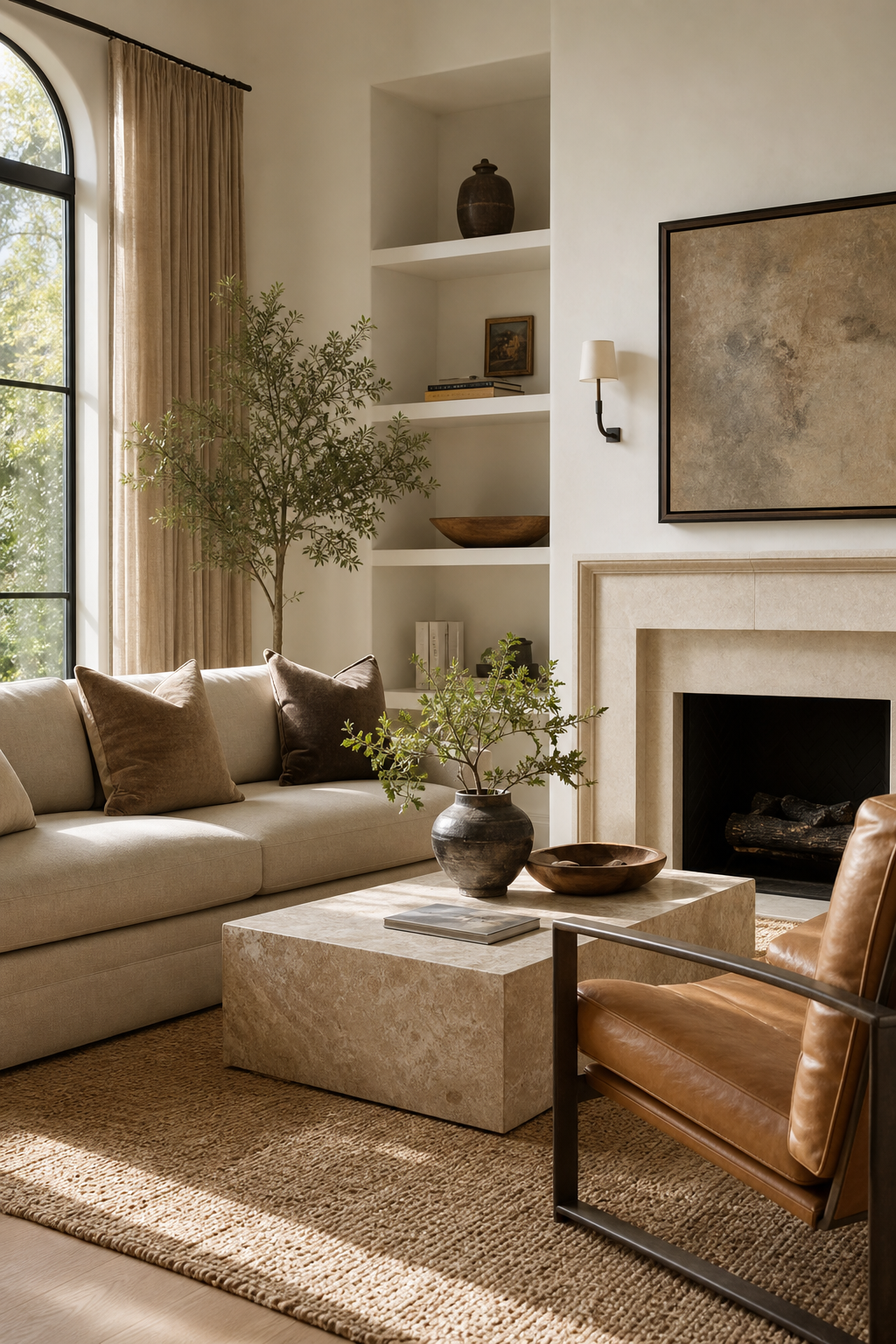
3. Add a Travertine Coffee Table for Quiet Luxury
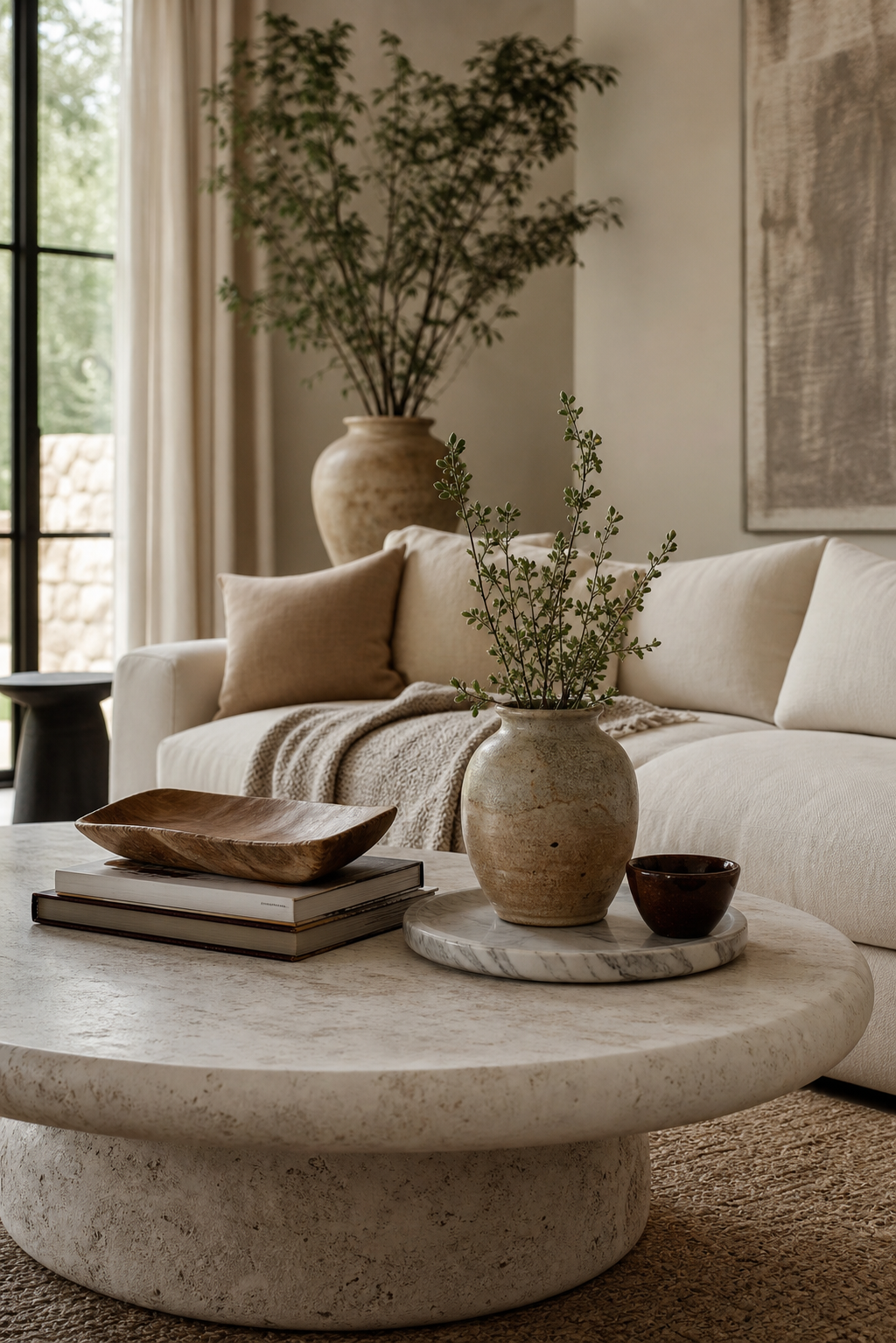
Travertine brings a grounded, architectural quality to a contemporary living room without feeling cold. A blocky rectangular table suits a structured sofa, while a rounded or oval travertine piece softens angular seating. Its creamy veining pairs especially well with walnut, boucle, linen, and brushed brass. Because the stone has visual weight, keep styling restrained: a low ceramic bowl, a sculptural book stack, and a single branch arrangement are enough. Place it on a wool or jute-blend rug to prevent the room from feeling too hard. Travertine is also versatile across palettes, working with warm whites, olive, charcoal, clay, and tobacco leather. It gives the space a collected, European sensibility that reads expensive without needing excessive decoration.
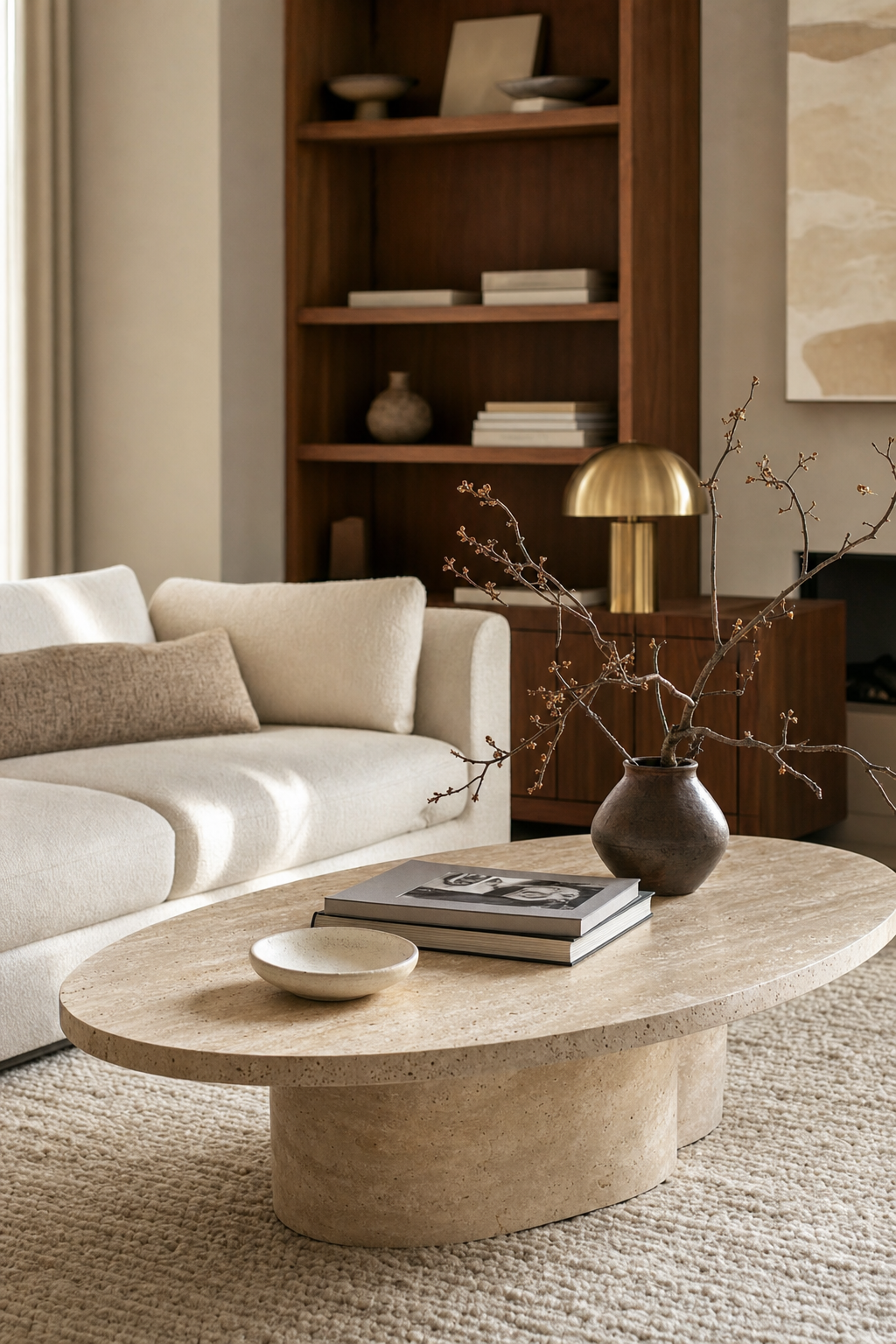
4. Use a Statement Armchair as Functional Sculpture
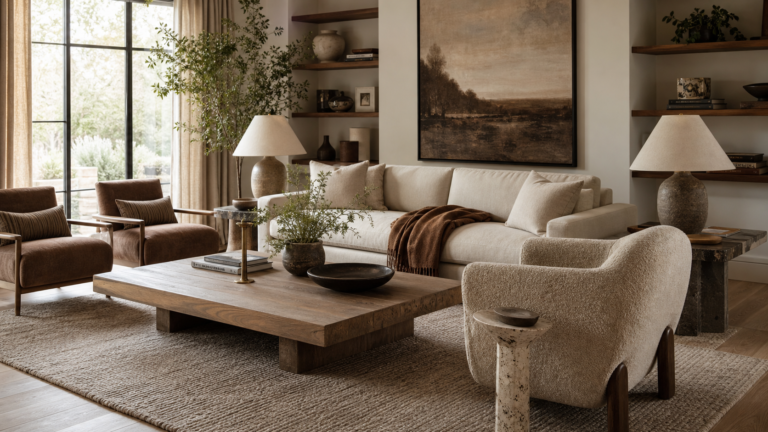
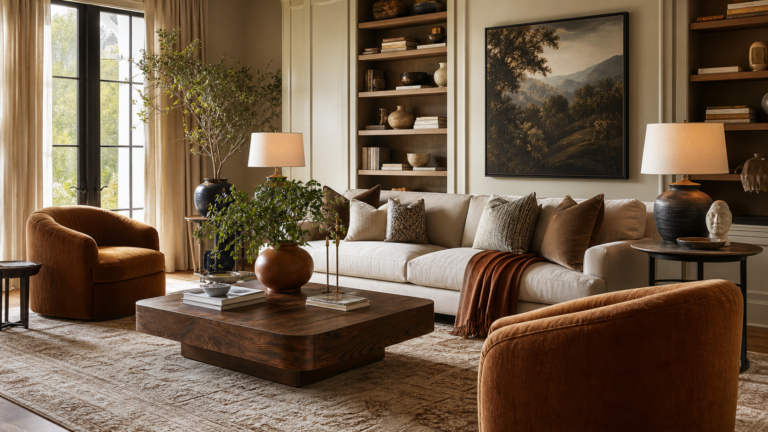
A statement armchair can carry a contemporary room the way artwork carries a gallery wall. Look for a piece with a sculptural frame, generous proportions, and beautiful upholstery, such as mohair velvet, saddle leather, shearling, or textured linen. Position it slightly angled toward the sofa rather than square to the room, which creates a more natural conversation zone. A small drink table and directional reading light turn the chair into a destination, not just an accessory. If the room is mostly neutral, choose an olive, rust, tobacco, or deep charcoal chair for subtle contrast. The best statement seating still feels comfortable enough for daily use. Its value lies in combining visual presence with the invitation to settle in.
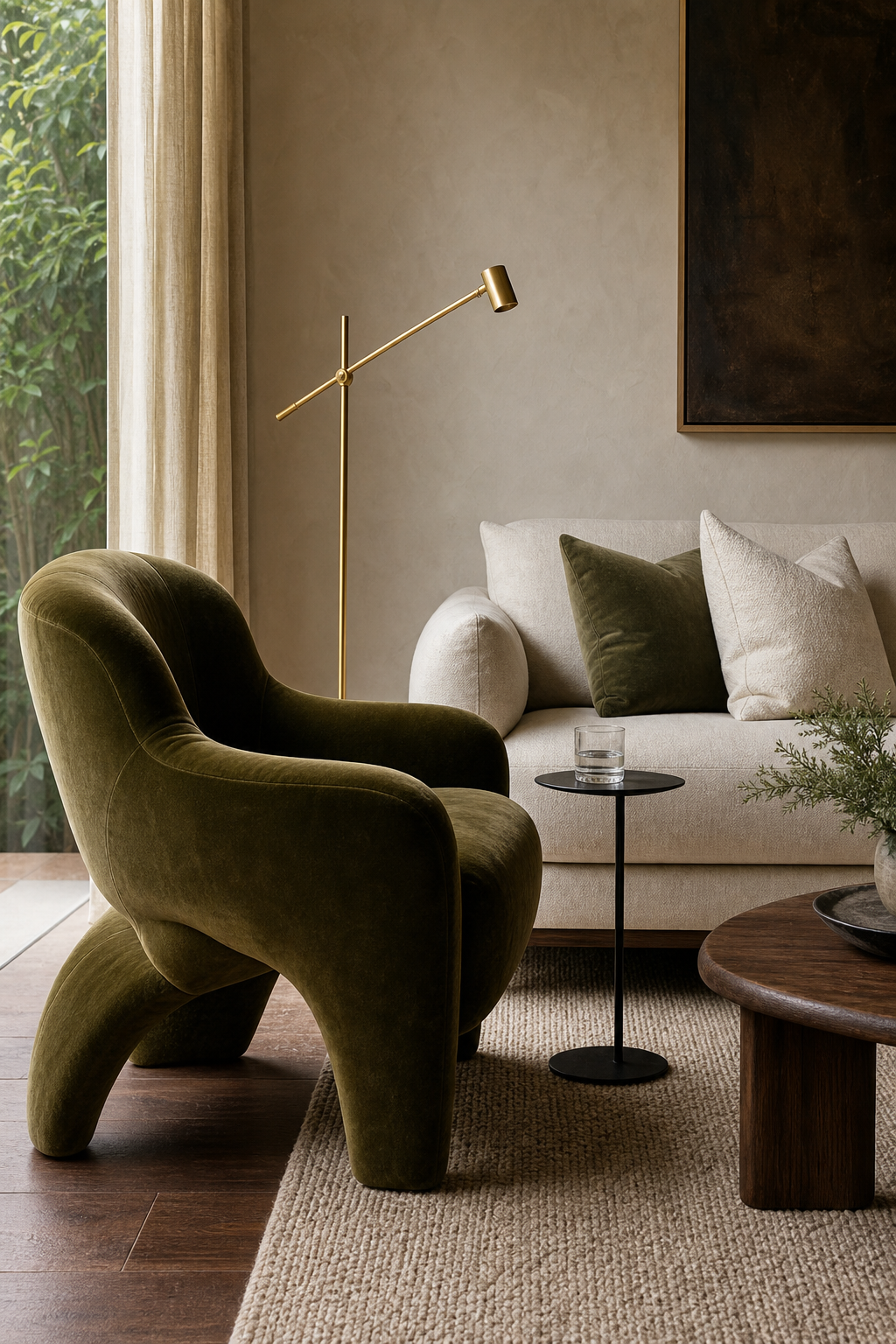
5. Choose Oversized Art With a Restrained Palette
Oversized art gives a contemporary living room confidence, especially when the furniture is simple. Instead of filling every wall, choose one large piece above the sofa, console, or fireplace and let it breathe. Abstract works in charcoal, cream, umber, rust, or muted blue add atmosphere without overwhelming the room. A slim oak, walnut, or black frame keeps the finish refined. Scale matters: the artwork should relate to the width of the furniture below it, leaving enough wall space around the edges to feel intentional. Keep nearby styling minimal so the piece remains the focal point. Large art also helps unite a palette, pulling together the rug, cushions, upholstery, and metal finishes into one coherent visual story.
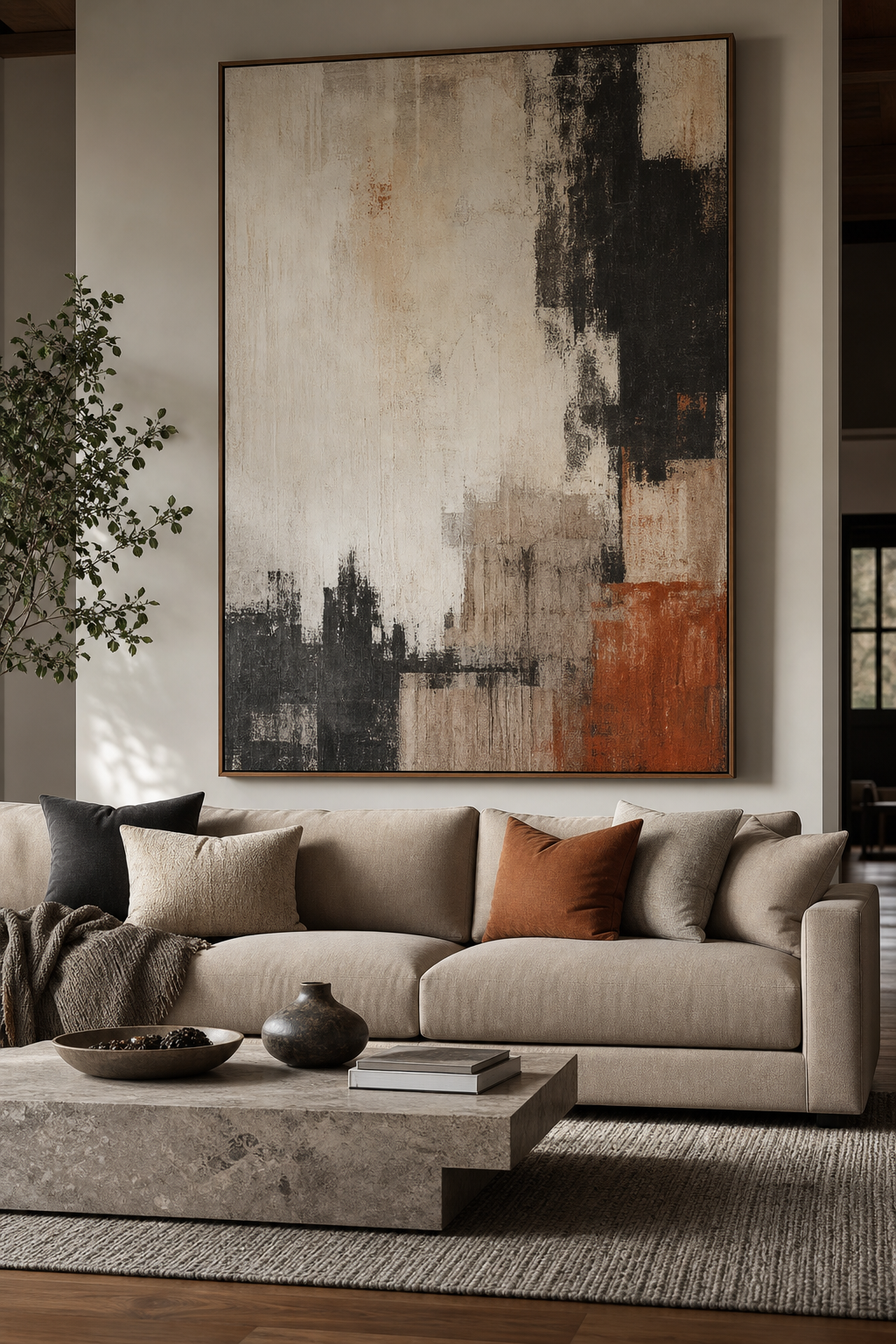
6. Soften Modern Lines With Full-Length Curtains
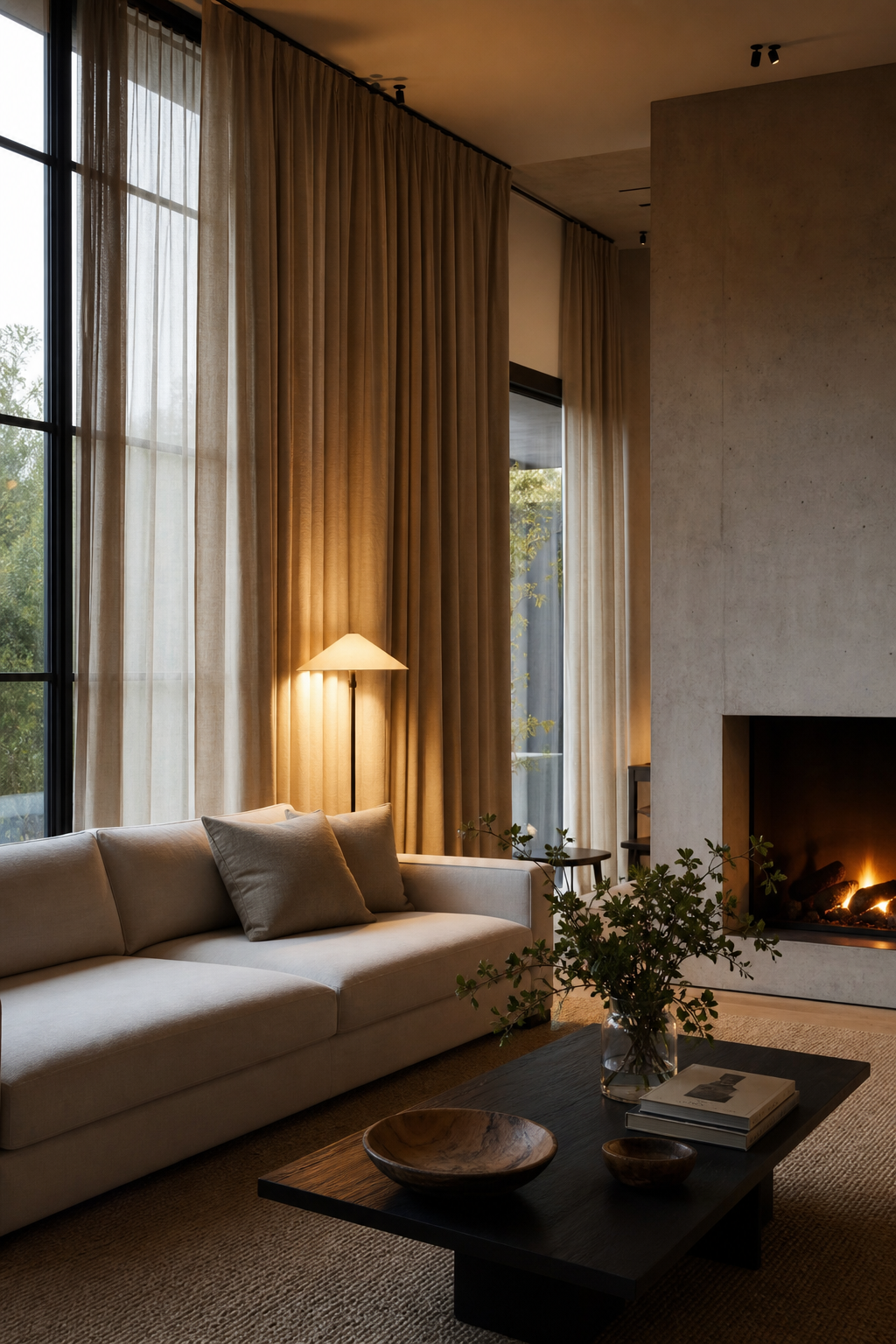
Full-length curtains can completely change the mood of a contemporary living room. They soften window frames, improve acoustics, and add vertical elegance without clutter. Hang the track or rod close to the ceiling and let the fabric kiss the floor for a tailored finish. Linen, wool voile, or a linen-cotton blend works beautifully in soft white, oatmeal, greige, or warm gray. For a more cocooning effect, layer sheers with heavier outer panels in the same tonal family. Curtains also help balance hard materials such as concrete, glass, steel, or stone. The room still feels contemporary, but the edges become gentler. In the evening, the fabric catches lamplight and makes the entire seating area feel warmer and more intimate.
7. Create a Conversation Layout With Four Seats
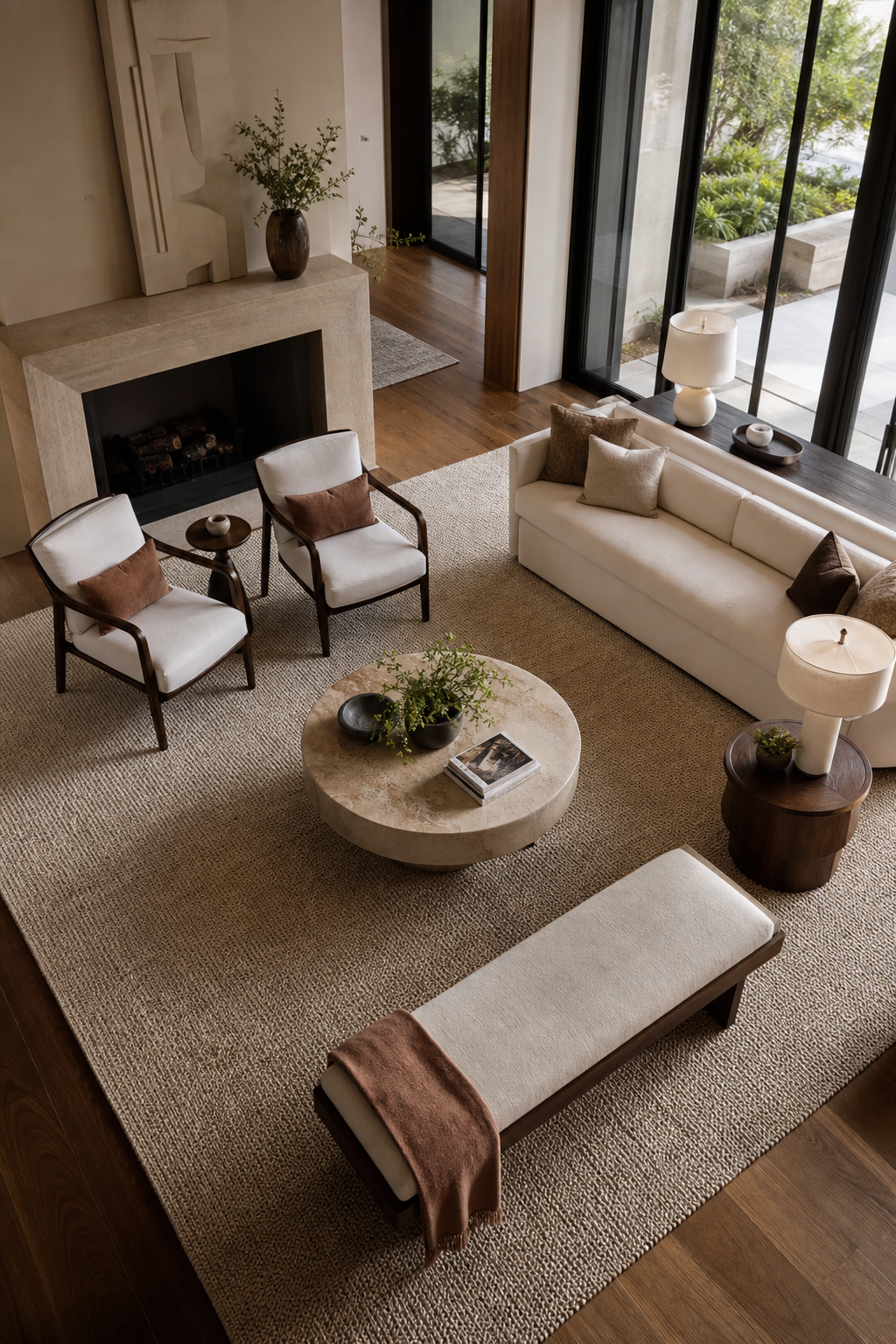
A designer living room is not arranged only for television; it is arranged for people. Four seats facing inward create an easy conversational plan that feels polished and welcoming. Try a sofa opposite two lounge chairs, with a bench, pouf, or occasional chair completing the square. Keep the coffee table reachable from each seat, and leave generous pathways around the arrangement. A large rug should hold all the main pieces together, at least under the front legs. This layout is especially effective in contemporary homes because it gives clean-lined furniture a social purpose. Add a floor lamp near one chair and a table lamp near the sofa so the room works for reading, drinks, guests, and quiet evenings.
8. Mix Walnut Wood With Soft Upholstery
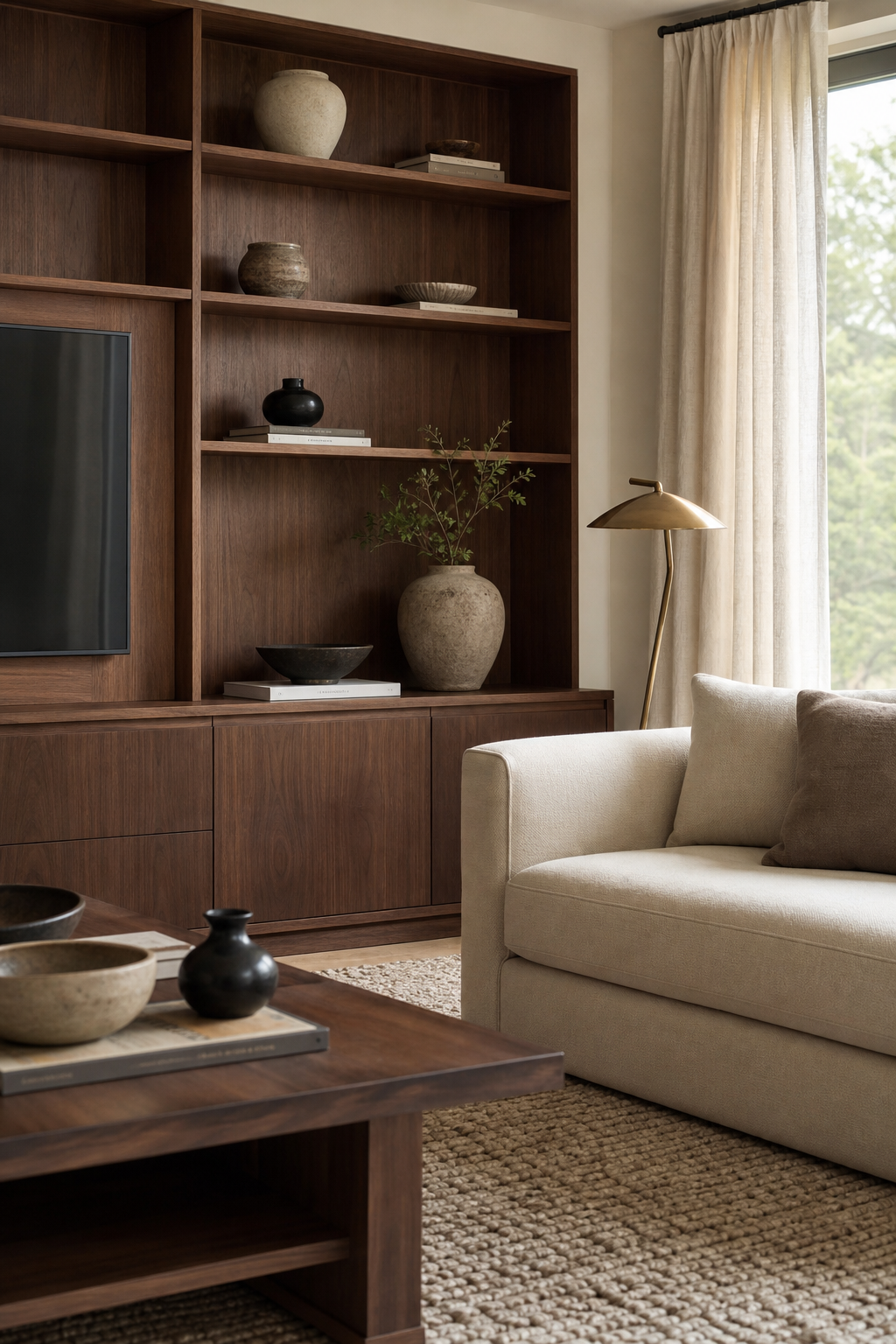
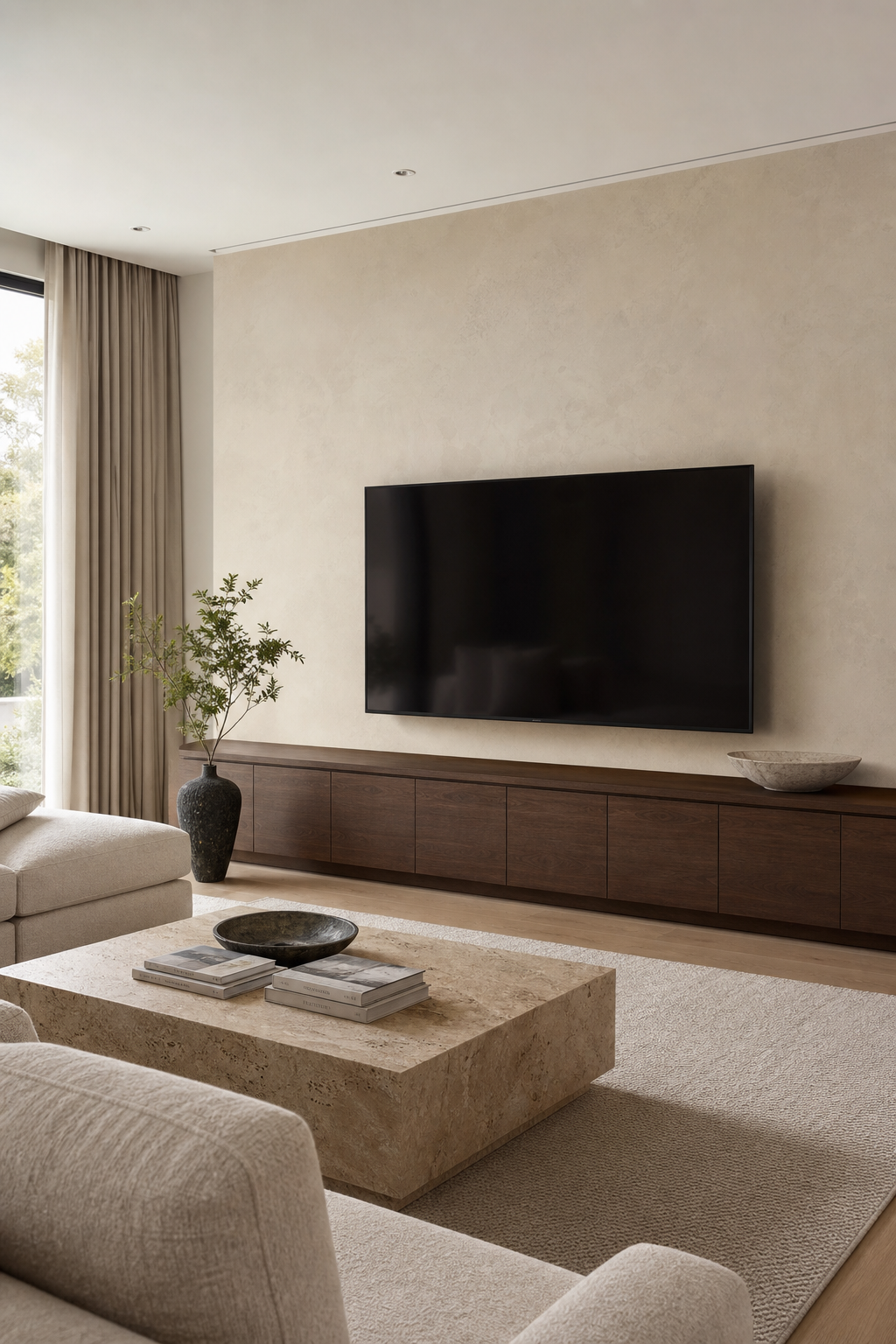
Walnut adds warmth and depth to contemporary living rooms, especially when paired with pale upholstery. Its rich brown grain makes white, cream, and gray textiles feel more grounded. Use walnut in a media cabinet, coffee table, shelving, side tables, or exposed chair frames rather than covering every surface. The contrast between smooth timber and soft fabric is what creates the designer tension. A cream sofa, wool rug, and linen curtains will feel more luxurious when set against walnut storage or paneling. Add ceramic accessories and a muted metal finish, such as aged brass or blackened steel, to bridge the materials. Walnut is particularly effective in open-plan homes because it introduces visual warmth while maintaining a contemporary architectural clarity.
9. Ground the Space With a Textured Area Rug
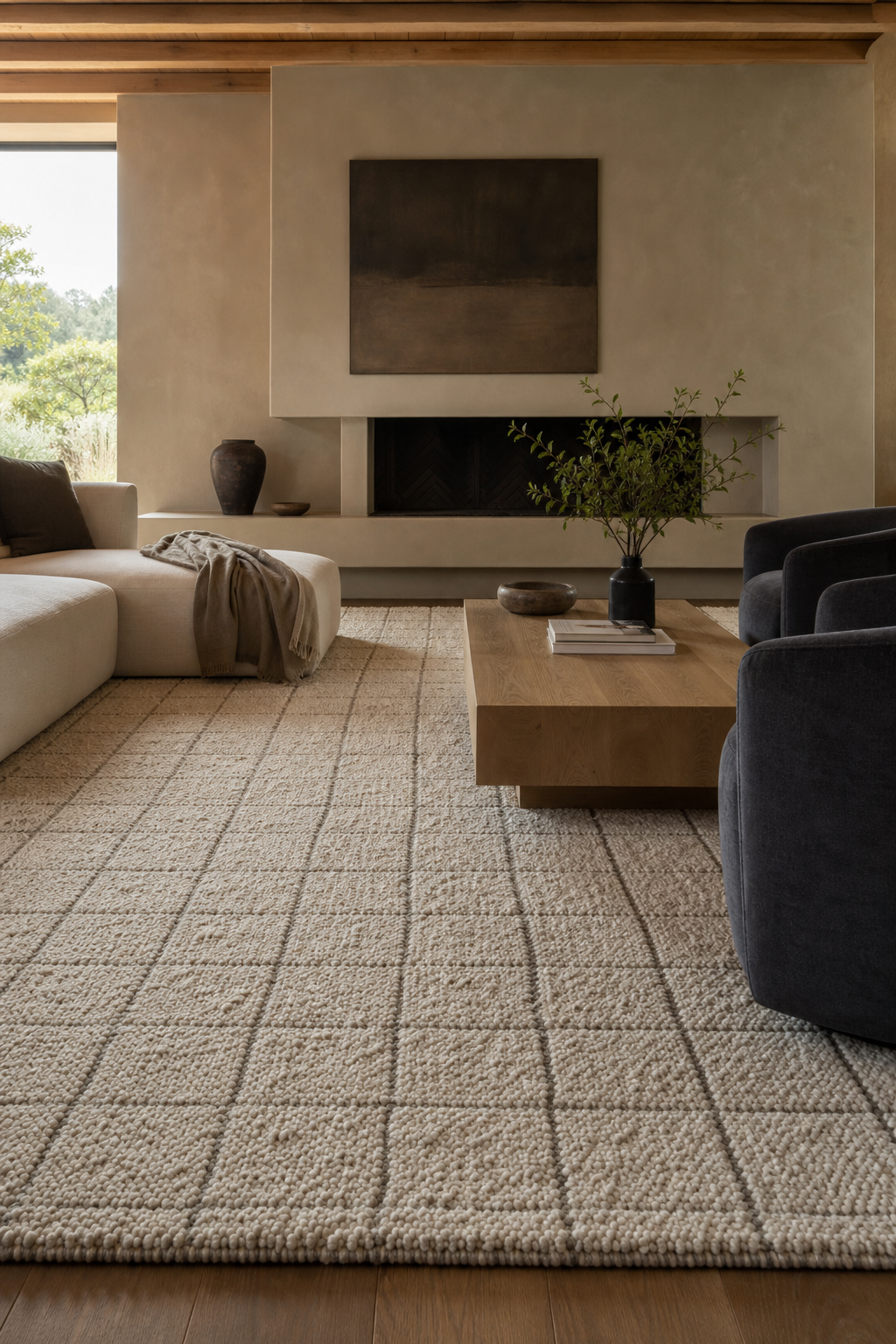
A rug is often the piece that decides whether a contemporary living room feels finished. Choose one large enough to connect the seating area, ideally extending beyond the sofa and chairs rather than stopping short at the coffee table. Textured wool, flatweave, jute-wool blends, or high-low patterns add comfort underfoot and soften hard flooring. In a neutral room, subtle pattern can be more effective than bold color: think broken stripes, tonal grids, or irregular handwoven texture. The rug should support the furniture, not compete with it. Light rugs brighten a room, while taupe, charcoal, or clay tones add intimacy. Once the rug is scaled correctly, even simple furniture begins to feel intentional and quietly expensive.
10. Install Layered Lighting at Different Heights
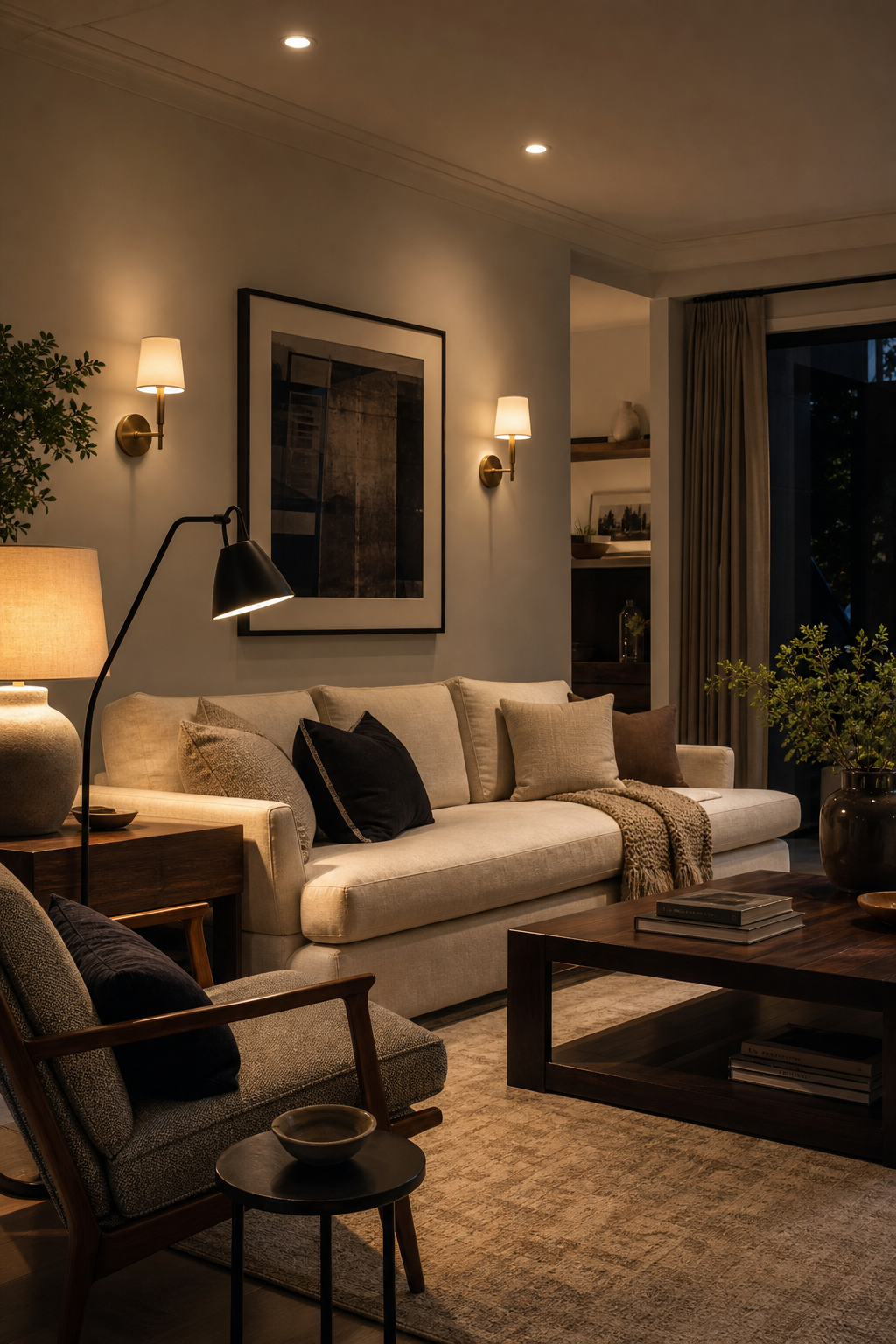
Contemporary rooms need more than ceiling lights. A cozy designer look comes from lighting at several heights: recessed or track lighting for general brightness, a floor lamp for a reading corner, table lamps for warmth, and wall sconces for atmosphere. Choose warm bulbs and dimmers so the room can shift from daytime clarity to evening softness. Materials matter here too. A linen shade diffuses light beautifully, while opal glass, aged brass, blackened metal, or alabaster adds sophistication. Avoid placing every lamp at the room perimeter; bring light into the seating group so faces, books, and surfaces glow naturally. When lighting is layered, even a restrained contemporary palette feels warm, dimensional, and suitable for real daily living.
11. Add Built-In Shelving With Negative Space
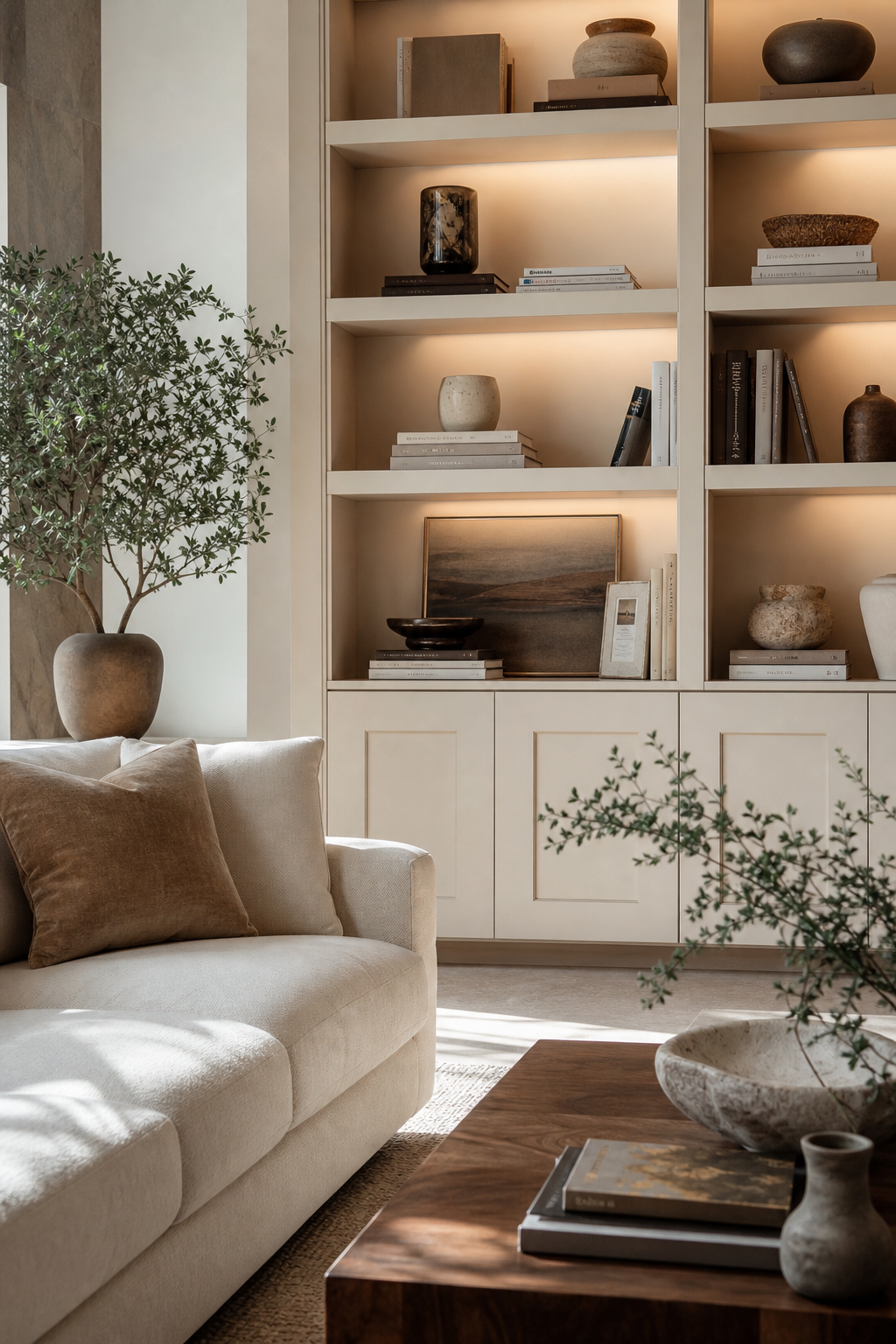
Built-in shelving can make a contemporary living room feel architectural, but the styling needs restraint. Leave negative space around objects so the shelves do not read as storage alone. Combine books stacked both vertically and horizontally with ceramics, stone vessels, framed art, and a few sculptural pieces. Use closed cabinetry below to hide electronics, games, and everyday clutter. Walnut, oak, painted plaster, or warm white lacquer all work, depending on the room’s palette. Integrated lighting along the shelves adds depth in the evening and highlights texture. The most elegant shelves have rhythm: tall pieces balanced by low stacks, matte objects against glossy ones, and repeated tones that connect to the furniture. The room feels collected, not crowded.
12. Use a Fireplace Wall as the Architectural Anchor
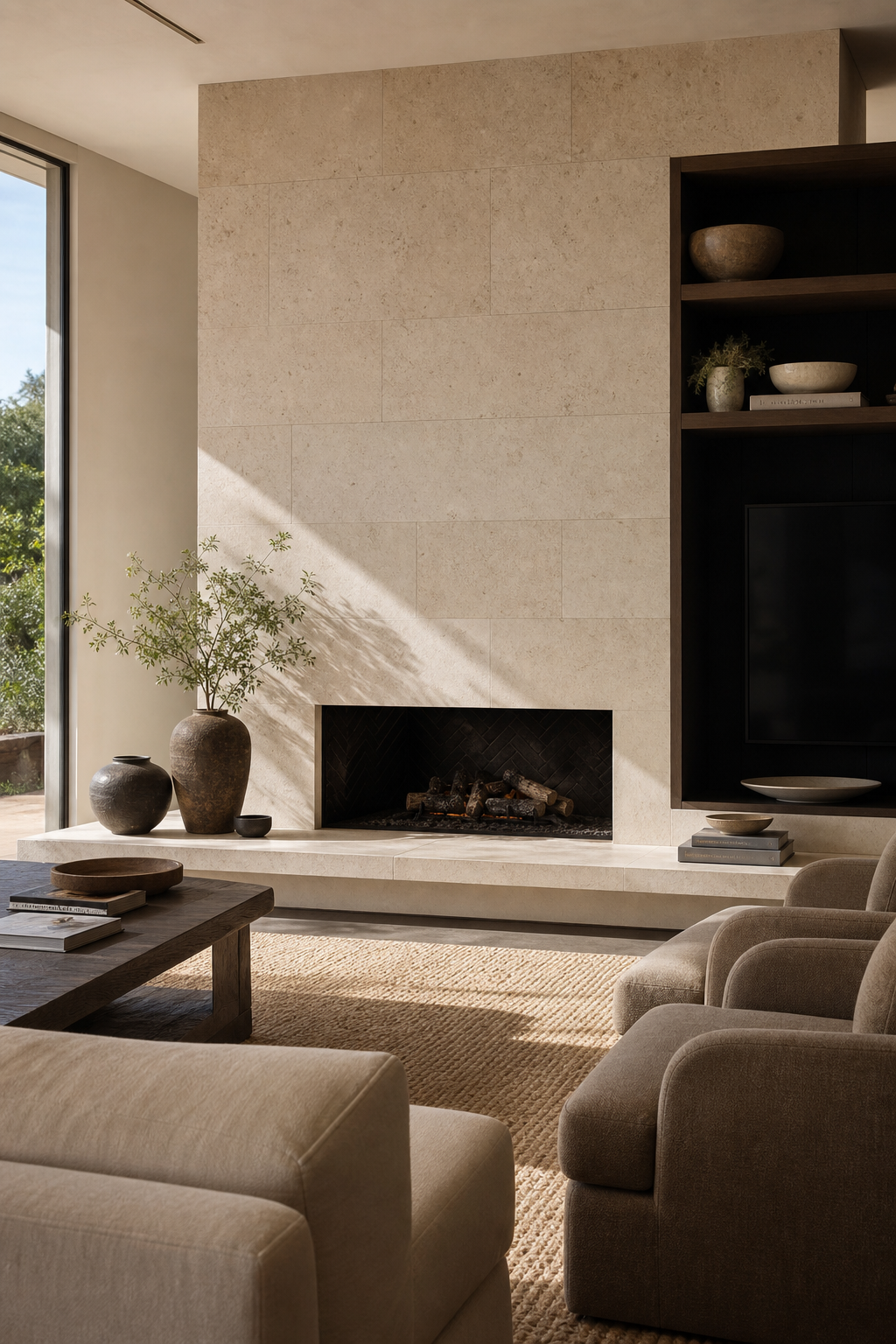
A fireplace wall gives a contemporary living room structure, even when the design is simple. Choose materials that feel refined and tactile, such as honed limestone, travertine, microcement, fluted plaster, or large-format porcelain with a stone effect. Keep the surround clean, then layer warmth through seating, textiles, and lighting. If a television is included, recess it or place it within dark cabinetry so it does not dominate the composition. A low hearth can double as display space for ceramics or stacked books. The fireplace should feel integrated with the room’s proportions, not added afterward. When handled with restraint, it becomes the calm architectural center around which the seating, rug, and lighting naturally gather.
13. Introduce Contrast With Black Metal Details
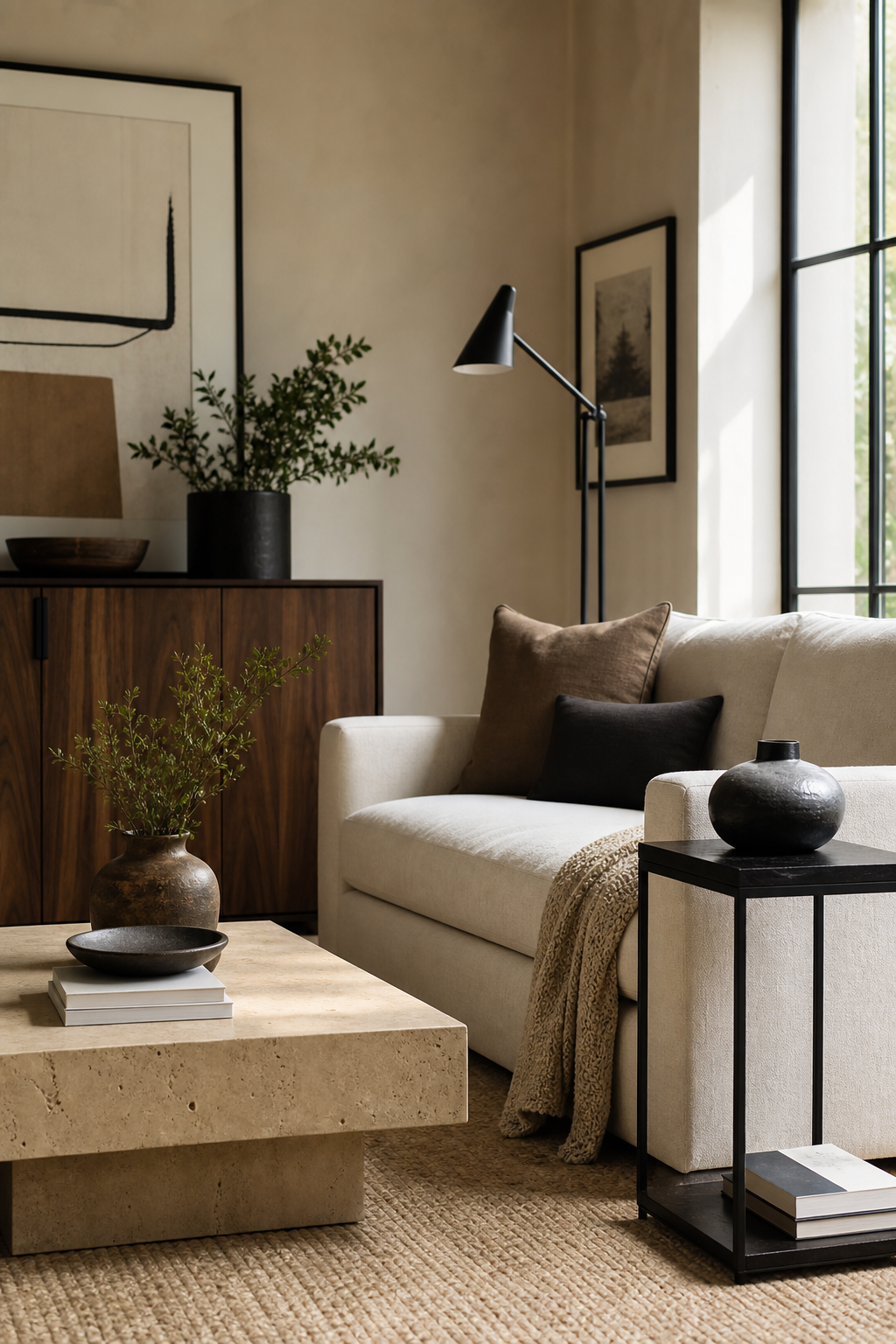
Black metal details sharpen a contemporary living room without making it feel severe. Use them in slim picture frames, lamp bases, side tables, curtain rods, shelving supports, or fireplace tools. The trick is moderation. Against soft upholstery and warm woods, black provides definition and keeps a neutral palette from becoming washed out. It also ties together architectural elements such as steel windows, door hardware, or a dark fireplace insert. Choose matte or blackened finishes rather than glossy black for a more elevated effect. Pair with cream linen, walnut, stone, and wool so the contrast feels balanced. These darker accents act like punctuation, outlining the room and giving every softer material a stronger sense of shape.
14. Style a Minimal Media Wall With Hidden Storage
A contemporary media wall should feel calm whether the television is on or off. Start with low, closed storage to conceal cables, remotes, speakers, and everyday items. Fluted wood, flat walnut fronts, warm white lacquer, or painted cabinetry can all look refined when the proportions are clean. Mount the television with breathing room around it, then balance the wall with art, shelving, or a textured panel rather than excessive decoration. Keep hardware minimal or integrated. If the room is open-plan, choose a finish that relates to the kitchen or dining area for continuity. The goal is a practical entertainment zone that does not overpower the living room’s softer qualities: seating, lighting, texture, and conversation.
15. Bring in Earthy Accent Colors With Restraint
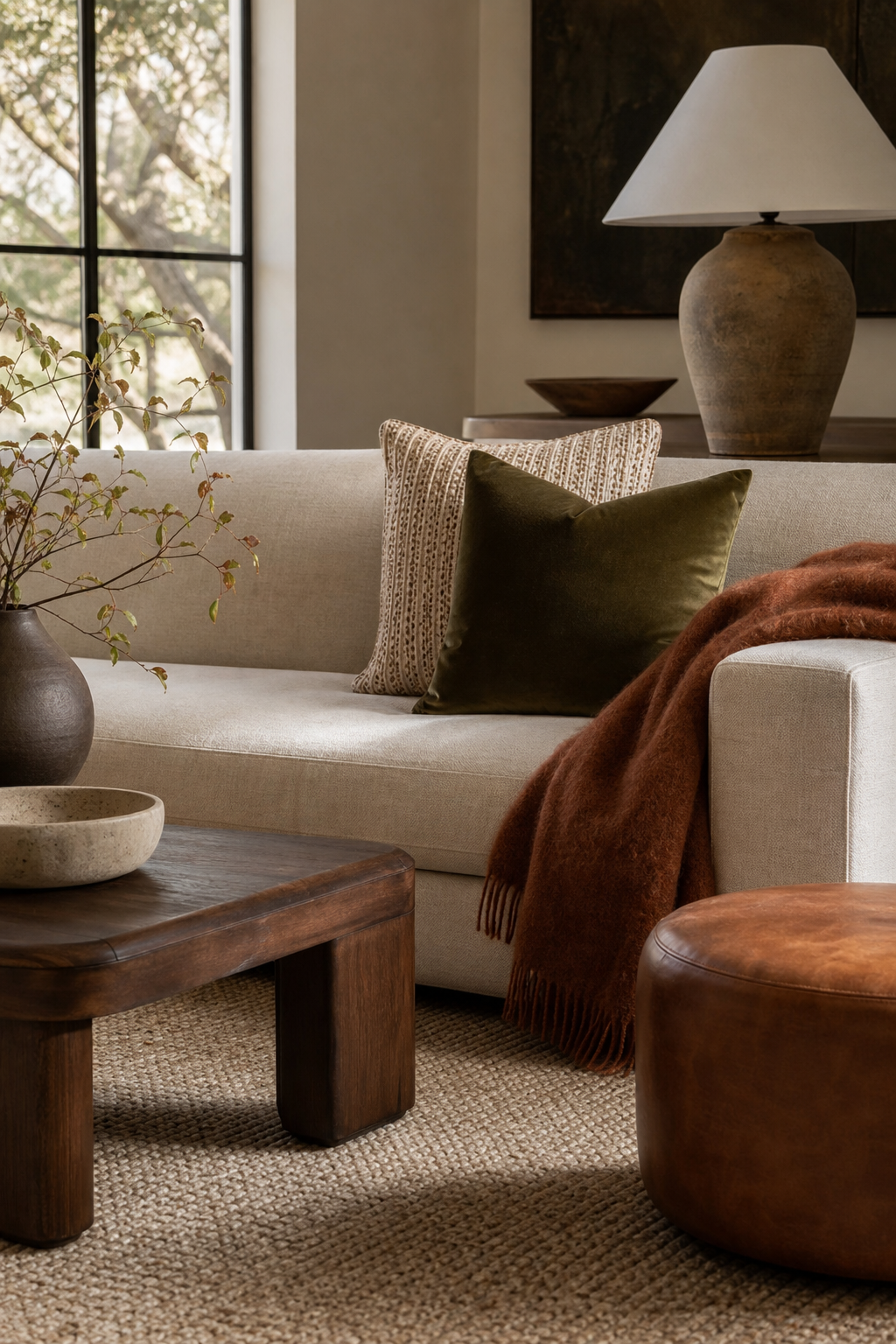
Contemporary rooms often feel most elegant when color appears in measured, earthy notes. Olive, rust, clay, tobacco, ochre, and deep blue-gray all sit beautifully against warm neutrals. Use these shades in pillows, artwork, a single chair, a ceramic lamp, or a throw rather than spreading color everywhere. Natural materials make the palette feel grounded: walnut, terracotta, leather, linen, wool, and stone. For a cozy designer look, choose slightly muted tones instead of bright saturated color. An olive velvet cushion beside a rust mohair throw can add richness without disturbing the room’s calm. Restraint is what makes the accents feel expensive. They should draw the eye gently, not announce a theme.
16. Use Nesting Tables for Flexible Entertaining
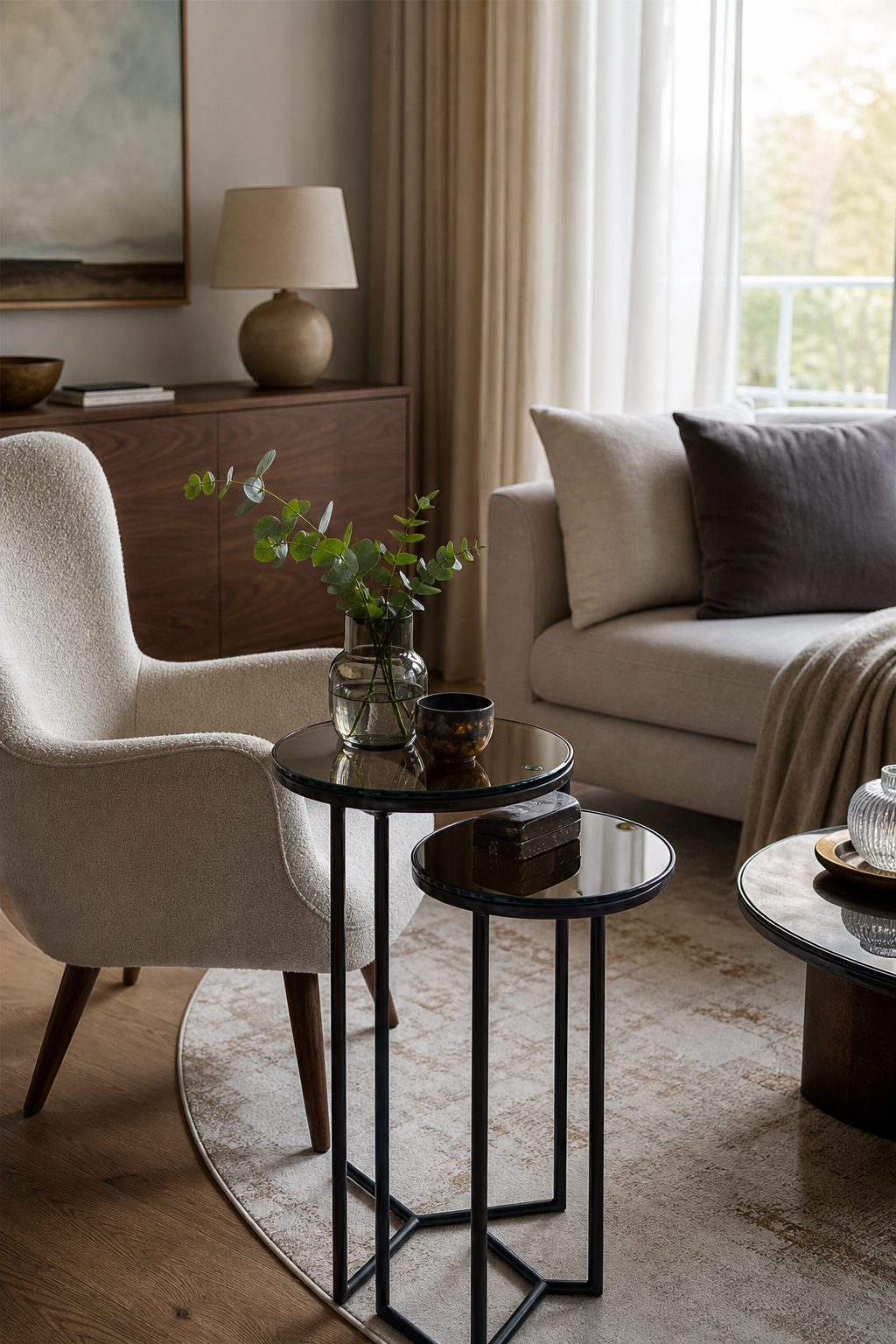
Nesting tables are a smart choice for contemporary living rooms because they offer flexibility without visual clutter. Choose a pair in mixed materials, such as smoked glass and black metal, walnut and stone, or brushed brass and marble. Tucked together, they read as one sculptural piece; pulled apart, they provide extra surfaces for drinks, books, or small plates when guests arrive. This is especially useful in apartments or compact seating areas where a large coffee table would block circulation. Look for simple silhouettes with refined finishes rather than overly decorative bases. Place them beside a lounge chair or at the end of a sofa. They add function while preserving the open, edited feeling contemporary rooms need.
17. Add Greenery With Architectural Planters
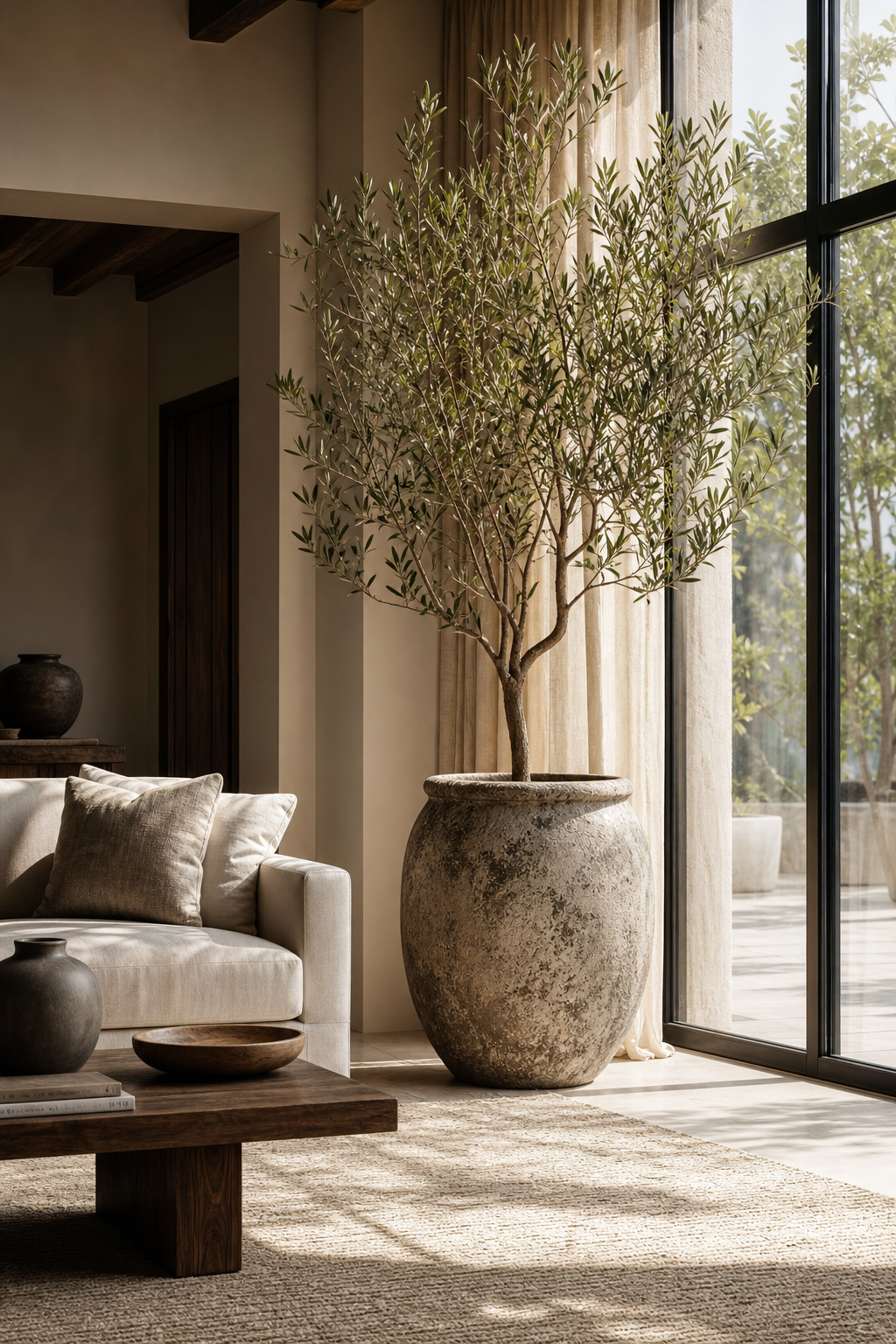
Greenery brings life to a contemporary living room, but the planter and placement should feel intentional. Choose architectural plants with strong shapes, such as a ficus, olive tree, rubber plant, or sculptural philodendron. Set them in ceramic, stone, concrete, or dark metal planters that relate to the room’s materials. One large plant in a corner often looks more sophisticated than many small pots scattered across surfaces. Use greenery to soften hard edges near windows, fireplaces, or built-ins. The leaves add movement against clean lines, while the planter contributes texture and weight. Keep the soil covered with moss or stones for a finished look. The room feels fresher, calmer, and more connected to natural light.
18. Finish With Fewer, Better Accessories
The final layer of a contemporary living room should feel edited, not empty. Choose accessories with substance: a hand-thrown ceramic vase, a marble tray, a textured throw, a stack of art books, a carved wood bowl, or a sculptural candleholder. Vary height, shape, and material, but keep the palette connected to the room. A coffee table might need only three objects if the forms are strong. Shelves should include breathing room, and side tables should remain usable. This restraint allows the architecture, furniture, and textures to stand out. Luxury is often found in what is left unfilled. When the accessories are fewer and more intentional, the room feels calm, personal, and quietly curated rather than decorated for display.
A cozy contemporary living room is built through balance: clean architecture softened by fabric, sculptural furniture grounded by natural materials, and practical layouts elevated with careful lighting. Focus on proportion, texture, and restraint before adding decoration. When every material and object supports comfort as well as beauty, the room feels polished without losing the ease that makes it worth living in.