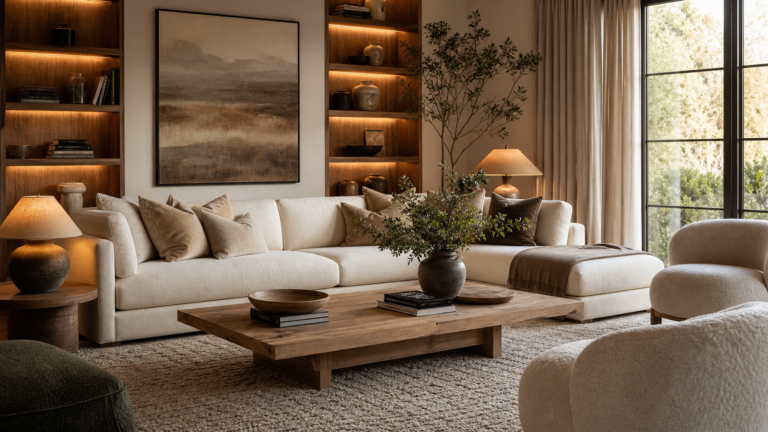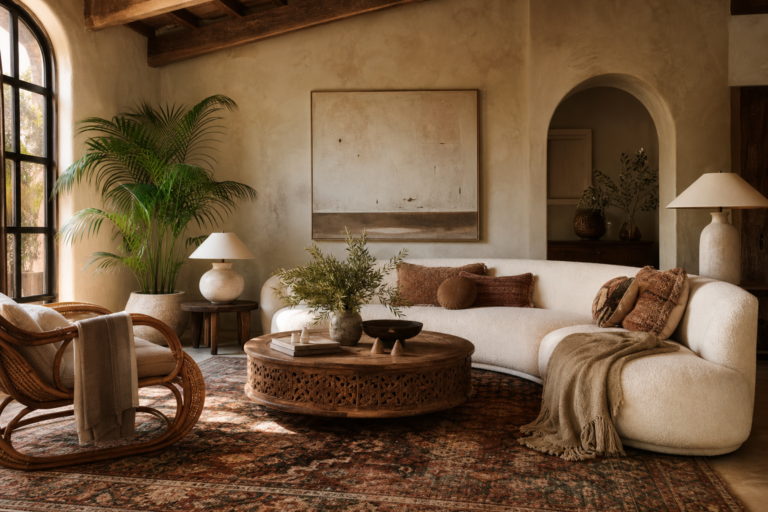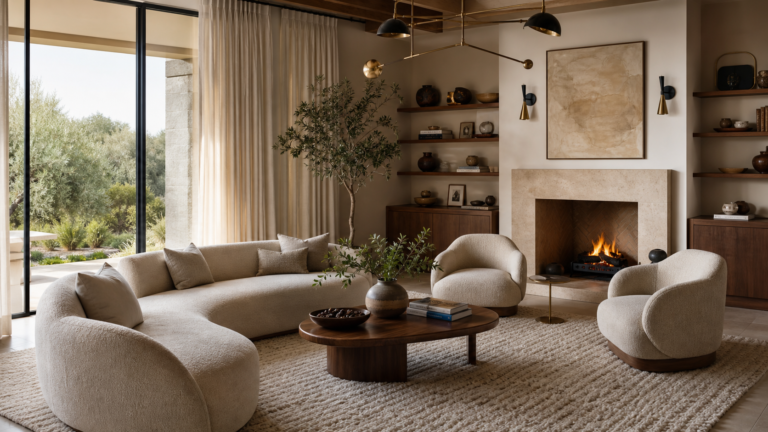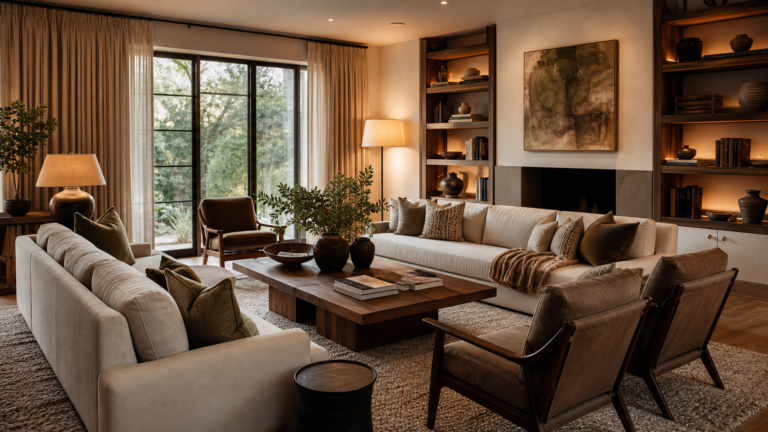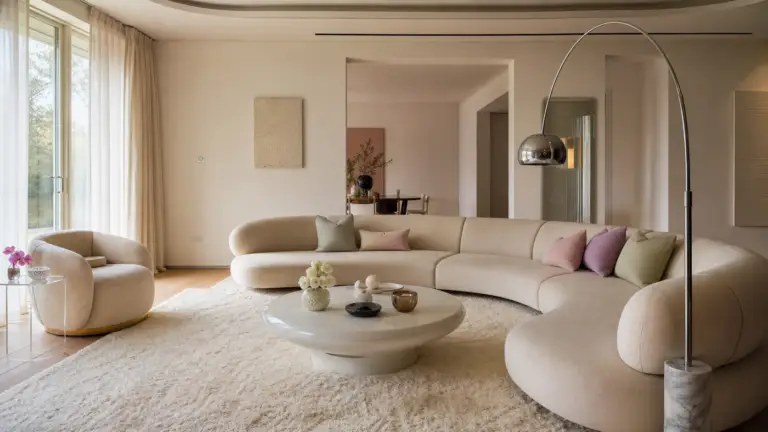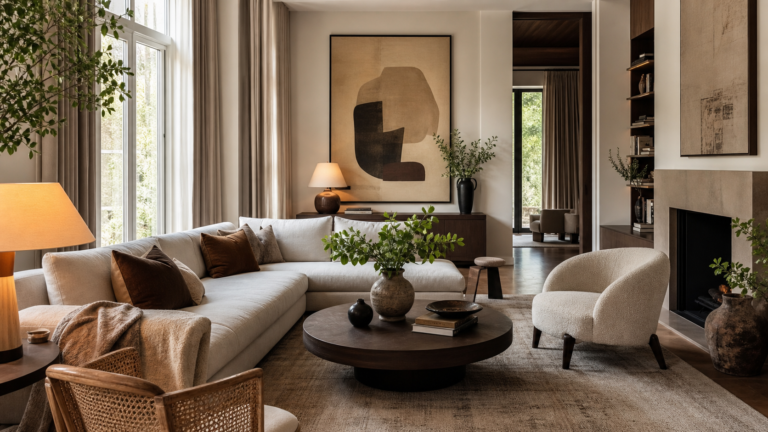
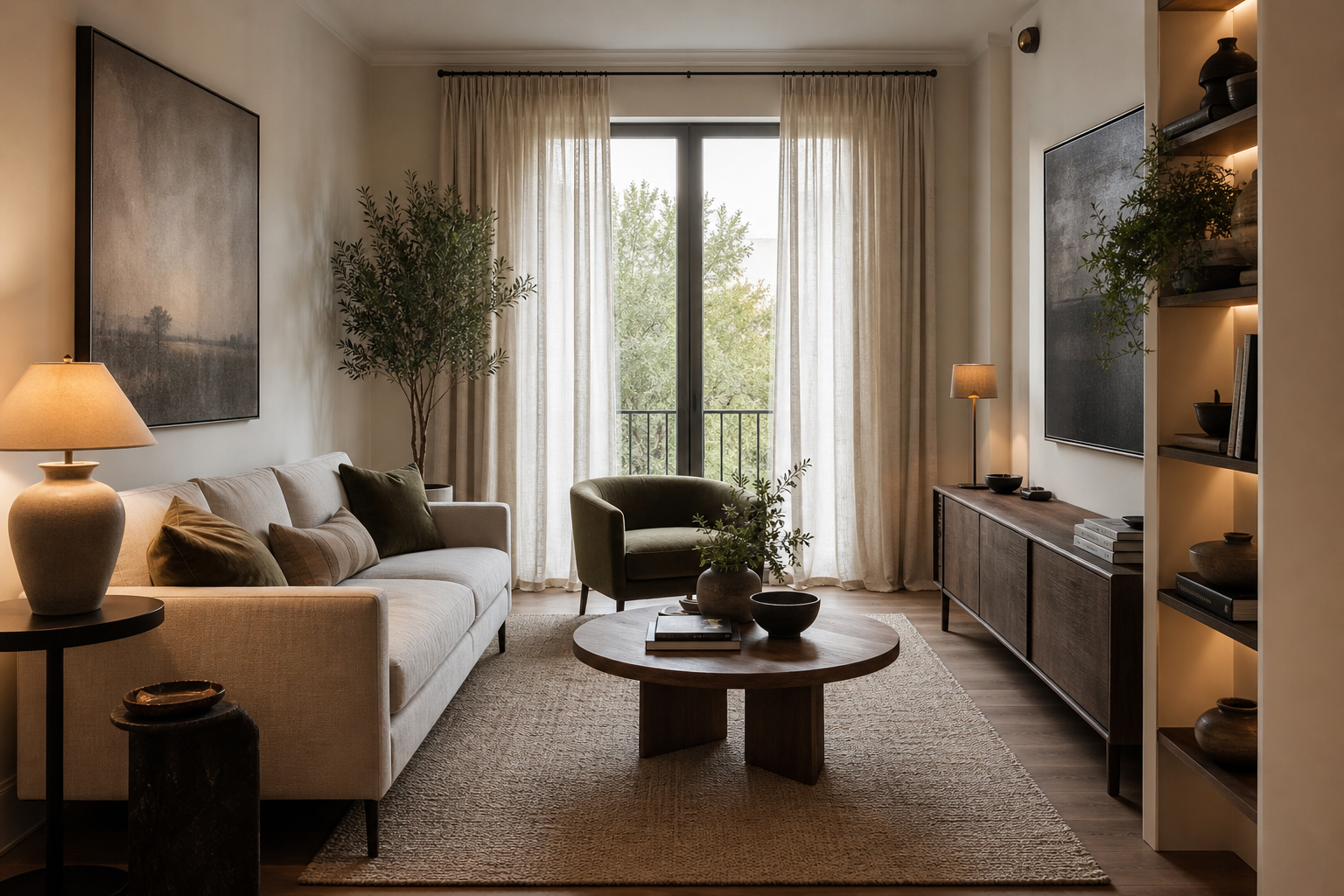
22 Small Living Room Decor For A Cozy Designer Look
A small living room does not need to feel like a compromise. The best compact rooms are often the most disciplined: every chair, lamp, table, textile, and shelf has a reason to be there. When scale is thoughtful and storage is quiet, a modest footprint can feel intimate instead of cramped. The goal is not to make the room look empty. It is to give comfort, beauty, and daily function enough room to work together.
These small living room decor ideas focus on choices that make a visible difference: better proportions, layered lighting, cleaner surfaces, richer texture, and furniture that supports real life. Use them as a menu, not a checklist, and let the room become warmer one decision at a time.
Choose A Sofa With A Slimmer Profile
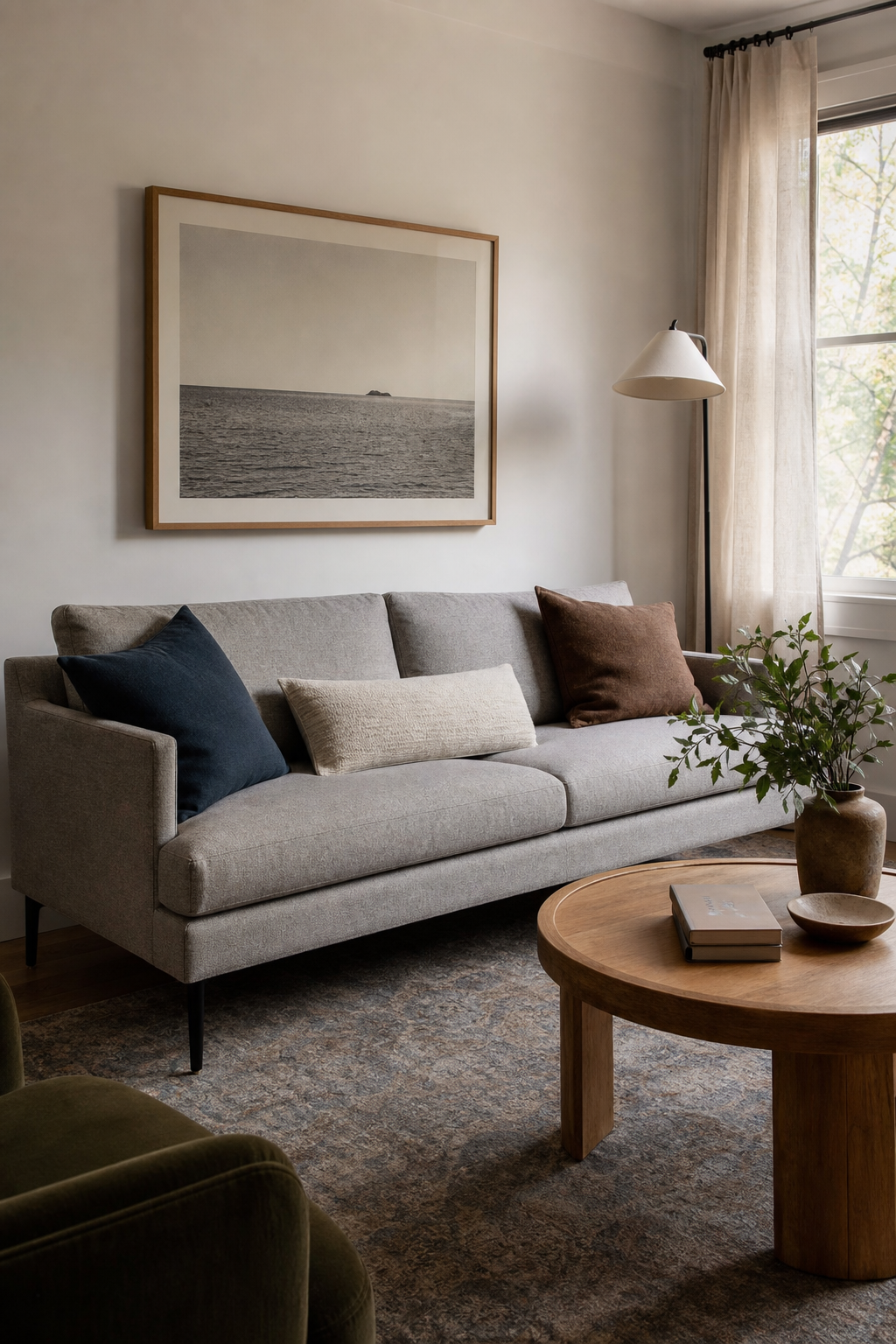
In a small living room, the sofa usually carries the most visual weight, so its profile matters as much as its color. Look for a tight back, slim arms, and raised legs if you want the room to feel lighter. A deep, overstuffed sofa can be comfortable, but it may swallow walking space and make every other piece feel secondary. Choose a length that fits the wall with breathing room on both sides, then add softness with pillows and a throw instead of bulk. Performance linen, boucle, velvet, or textured weave can still feel luxurious when the shape is clean and controlled.
Float One Chair Instead Of Crowding Two
Many small living rooms look crowded because they are trying to seat a larger room. Instead of forcing two accent chairs, choose one excellent chair and let it float where the conversation naturally happens. A curved slipper chair, compact lounge chair, or armless design can offer comfort without blocking sightlines. Pull it slightly away from the wall so it feels intentional, then pair it with a tiny drinks table or floor lamp. The room will feel more designed because the chair has space around it. One confident piece almost always looks better than two pieces squeezed into corners with no room to breathe.
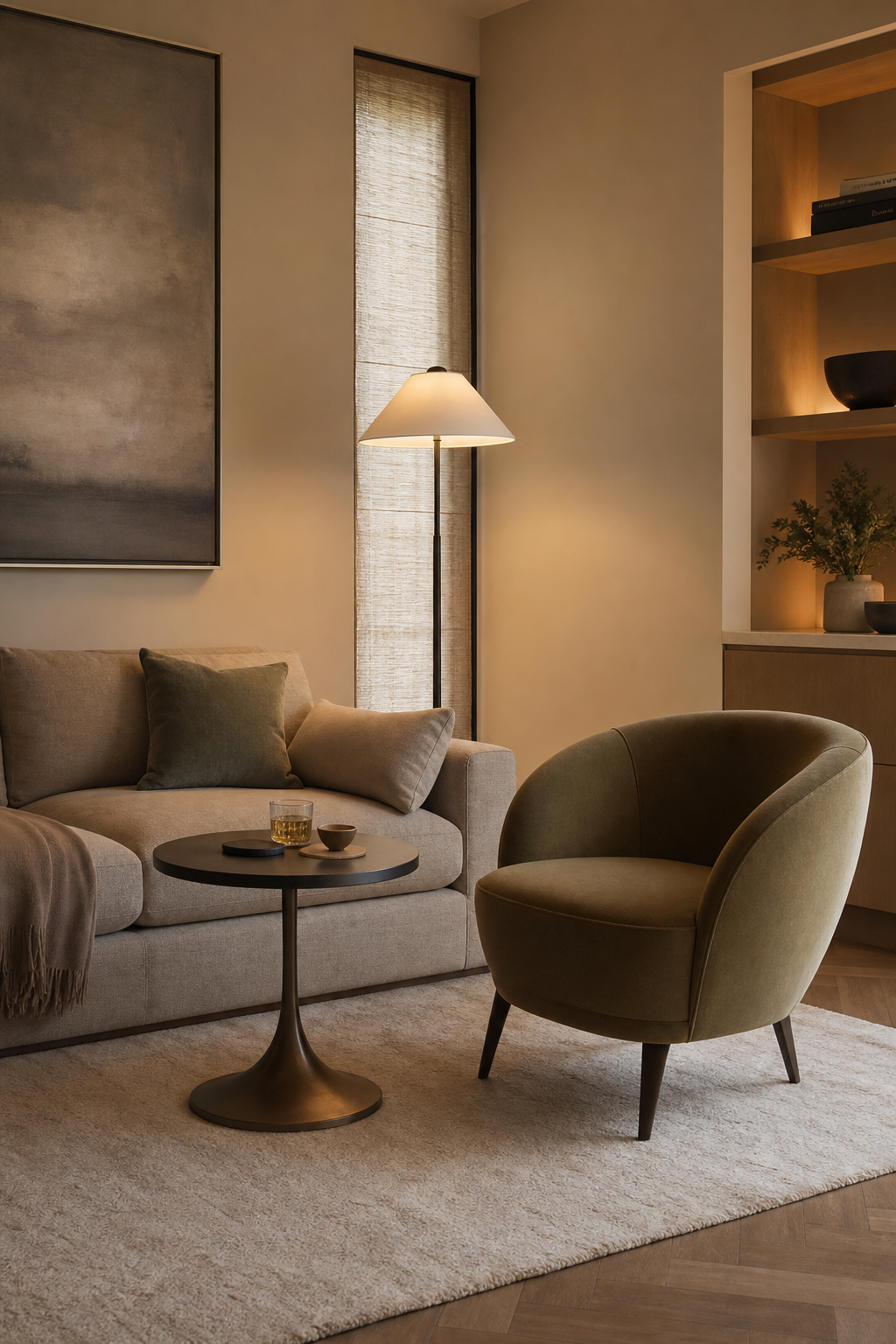
Use A Round Coffee Table To Ease Flow
A round coffee table is often the friendliest choice for a small living room because it removes sharp corners from the main traffic path. It works especially well when the sofa sits close to a chair, fireplace, or media wall. Choose a diameter that leaves enough room to walk around it comfortably, and avoid tables that are too tall beside low seating. Stone, oak, glass, or dark wood can all work; the key is proportion. A round table also makes styling easier. One tray, one vessel, and one low object can feel complete without creating a busy center point in the room.
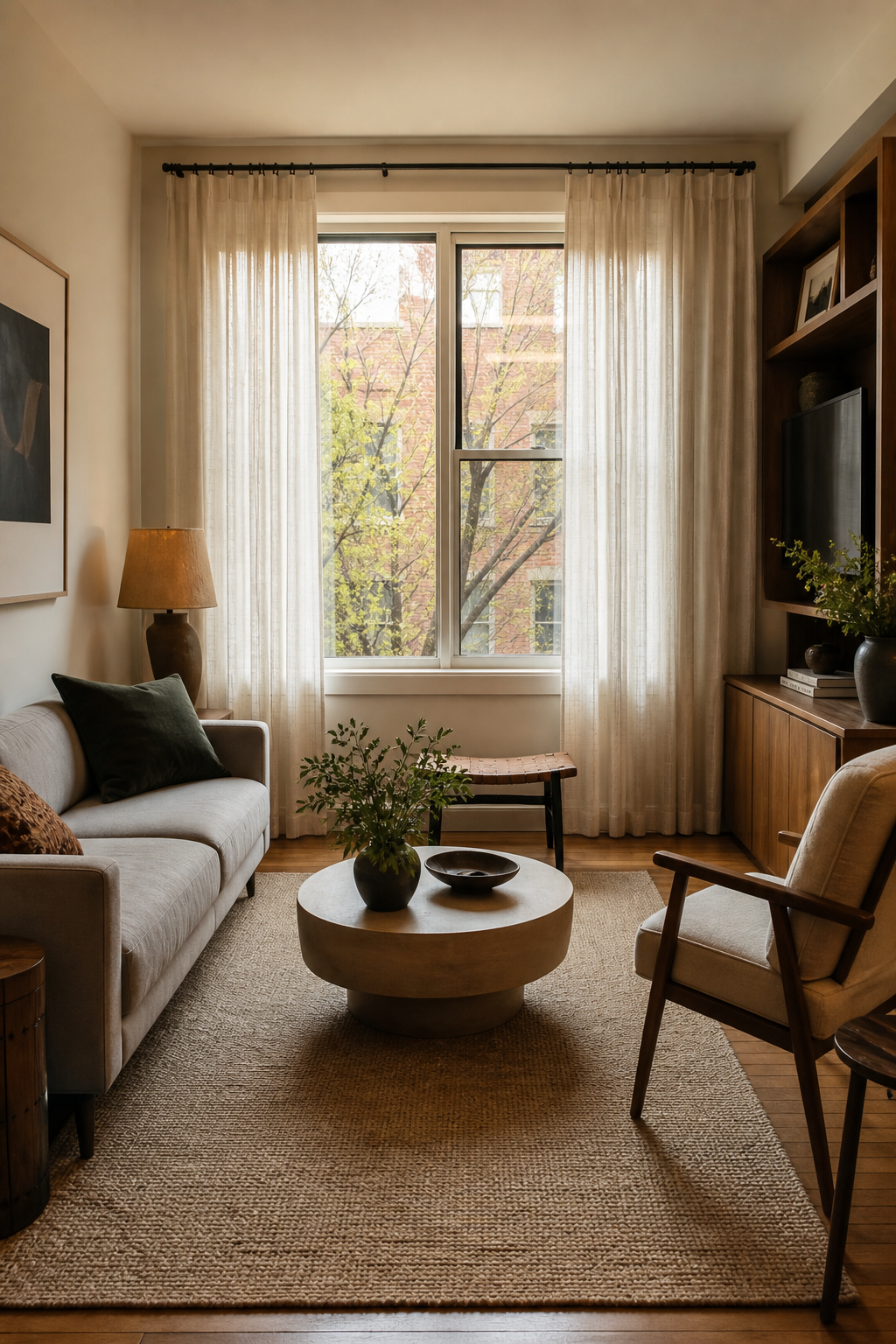
Anchor The Seating With A Proper Rug
A rug that is too small makes a compact living room feel accidental. Even in a tight space, choose the largest rug that fits the seating area cleanly, ideally with the front legs of the sofa and chair touching it. This creates one visual zone instead of several small pieces floating separately. Low-pile wool, flatweave, or a softly patterned vintage-style rug can bring warmth without adding bulk. If the room is narrow, align the rug with the longest wall to lengthen the space. The right rug makes the furniture feel connected, which is one of the fastest ways to create a designer look.
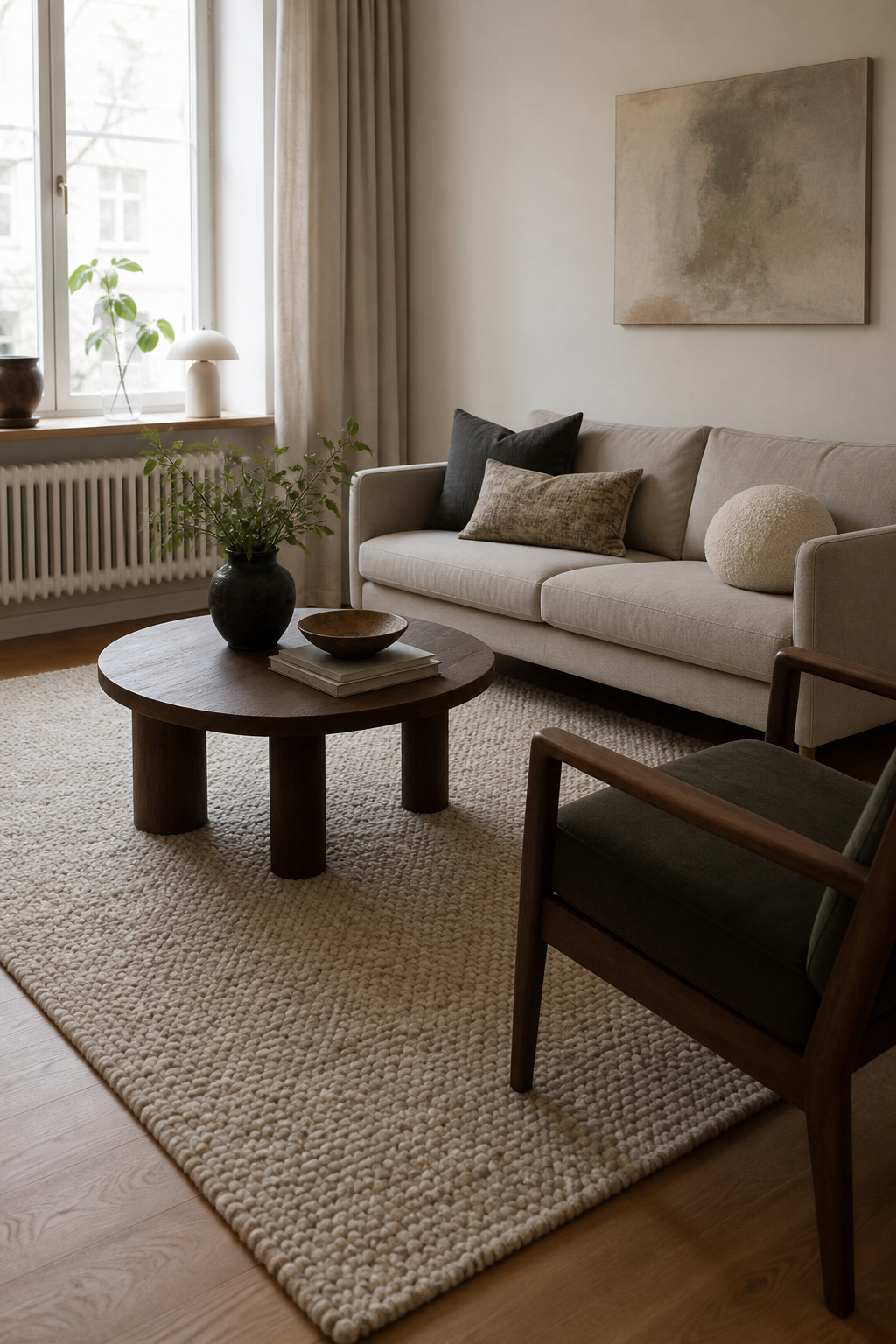
Layer Lighting At Three Heights
Small rooms can feel flat when the only light comes from the ceiling. Build a cozier designer mood by placing light at three heights: a floor lamp beside seating, a table lamp on a console or shelf, and a subtle wall sconce or picture light if the room allows it. Warm bulbs are essential, because cool light can make even beautiful furniture feel harsh. Choose shades that diffuse light softly rather than exposing bright bulbs. Layered lighting also lets the room change through the day. A compact space feels larger when shadows are gentle and every corner has a quiet glow.
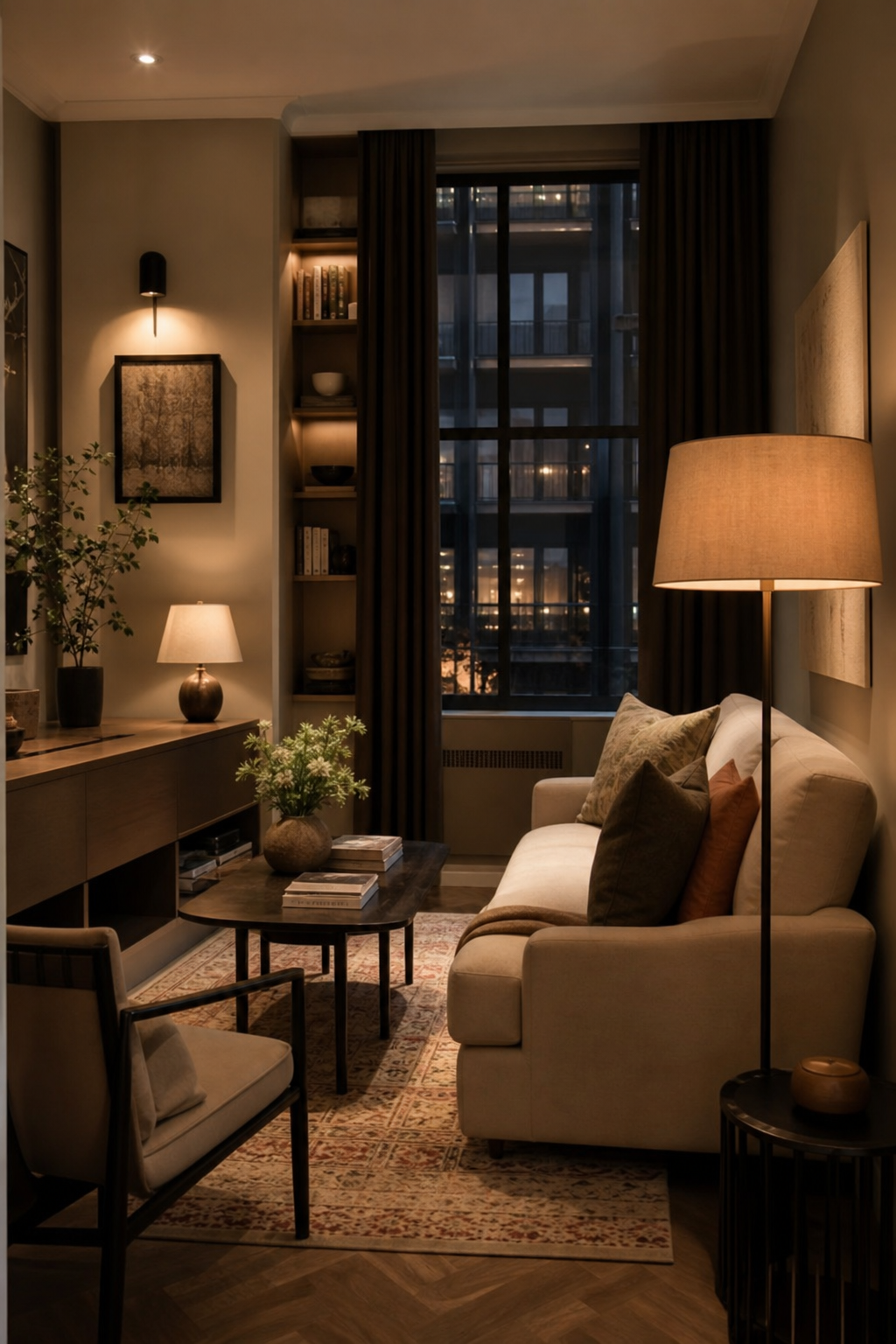
Replace A Bulky Media Stand With Low Storage
A heavy media stand can dominate a small living room, especially when the television already has a strong presence. Consider a low cabinet with closed doors, slim legs, or wall-mounted storage that keeps electronics and cords out of sight. The best piece is quiet enough to support the room, not compete with it. Style only a few objects on top, such as a bowl, lamp, or low branch arrangement. If the television is wall-mounted, leave space around it rather than filling every inch. A restrained media wall feels more architectural and gives the seating area a calmer visual background for everyday relaxing.
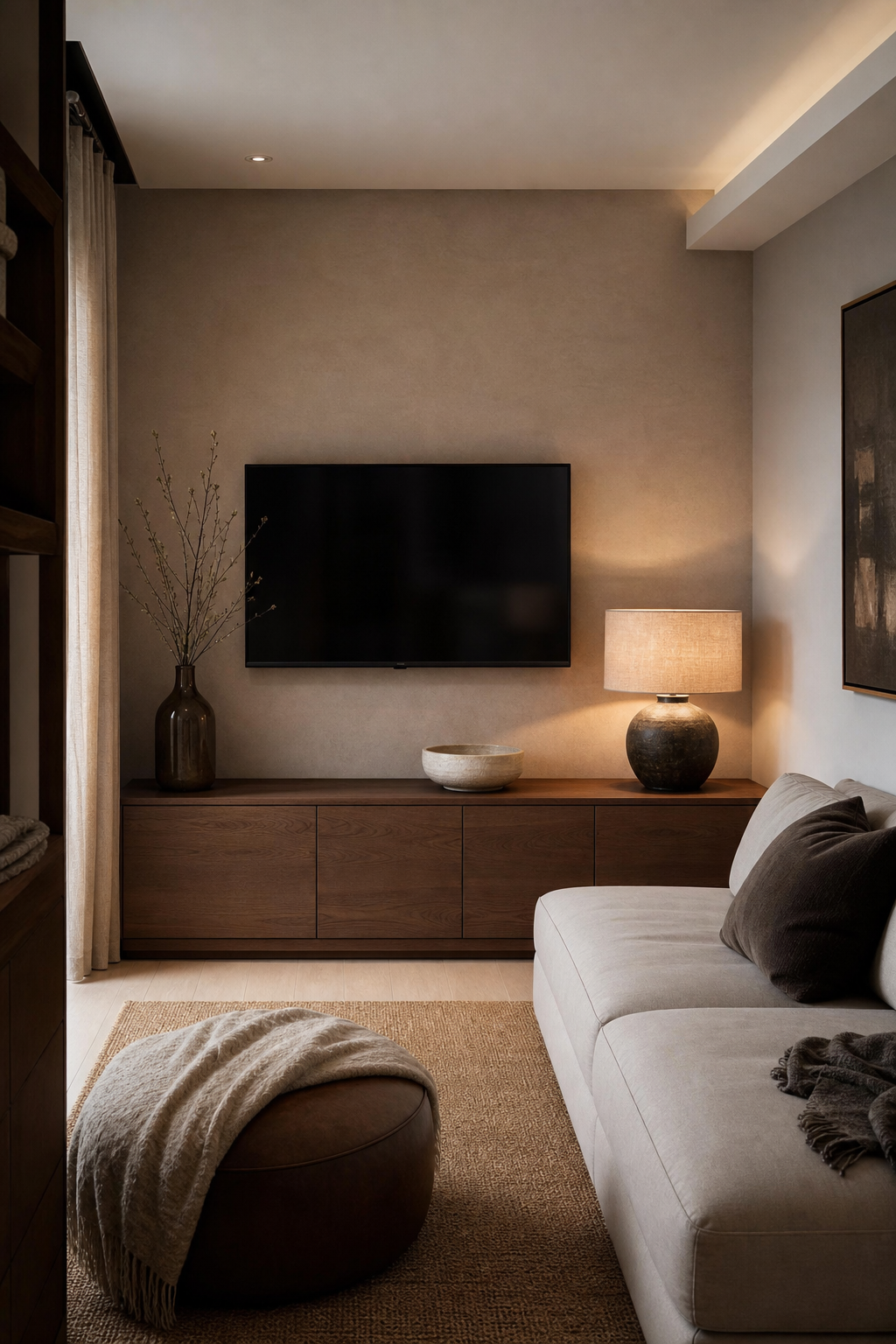
Choose Curtains That Reach The Floor
Window treatments can make a small living room feel taller when they are hung with intention. Mount the rod closer to the ceiling and let the curtains fall to the floor, even if the window itself is modest. Linen, cotton, or a soft wool blend will add texture without feeling heavy. Avoid short curtains that stop at the sill unless the architecture truly demands it. Full-height fabric draws the eye upward and softens the edges of the room. If privacy is needed, pair drapery with a woven shade so the window still feels layered and finished during the day and evening.
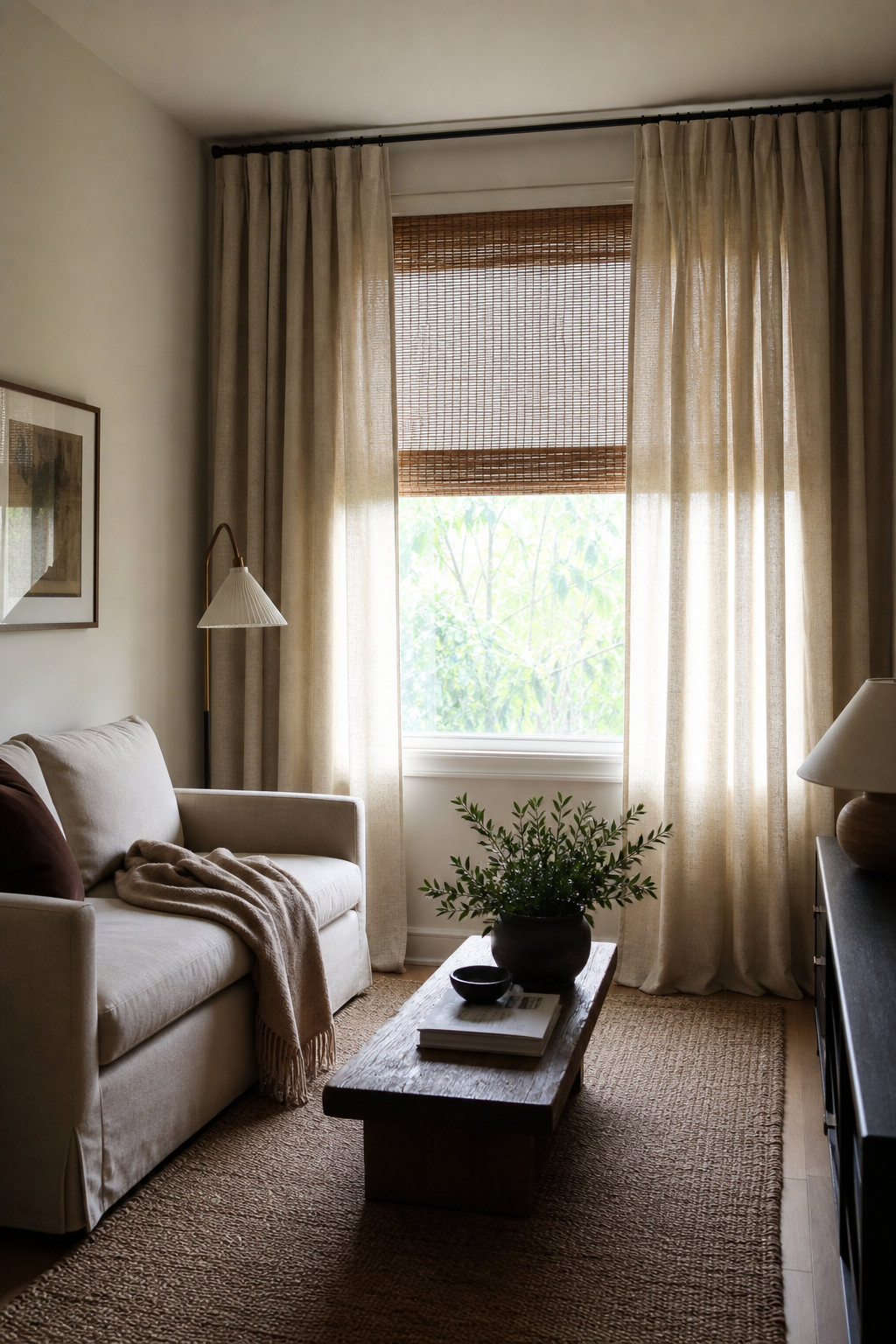
Use Wall Shelves With Negative Space
Open shelves can help a small living room feel personal, but they become noisy when every inch is filled. Style them with negative space in mind. Mix books, ceramics, framed art, and one small plant, then leave room around each grouping so the eye can settle. Keep book spines within a restrained palette or turn a few around if the colors fight the room. Storage boxes on lower shelves can hide remotes, chargers, and small clutter. Shelves look more expensive when they are edited. A little emptiness makes the objects you keep feel chosen rather than stored in a hurry.
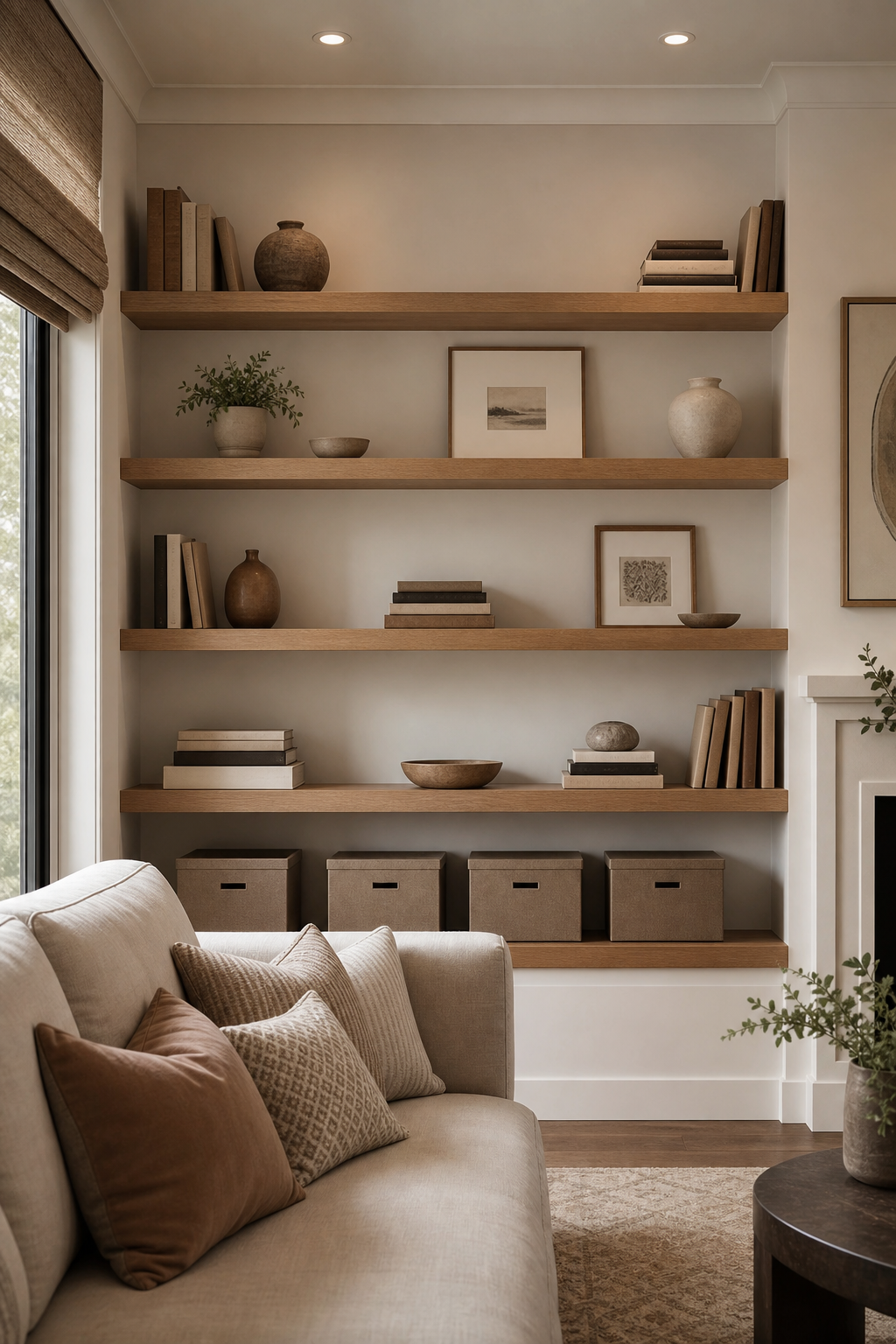
Pick Nesting Tables For Flexible Surface Area
Nesting tables are ideal when a small living room needs flexibility without permanent crowding. Keep the larger table beside the sofa and pull the smaller one forward only when guests, snacks, or a laptop need a landing place. Look for materials that feel intentional, such as smoked glass, dark wood, travertine, brass, or blackened metal. Avoid flimsy sets that wobble or look temporary. The beauty of nesting tables is that they serve the room only when needed. When tucked together, they preserve floor space and still read as one polished design choice rather than extra furniture squeezed in awkwardly nearby.
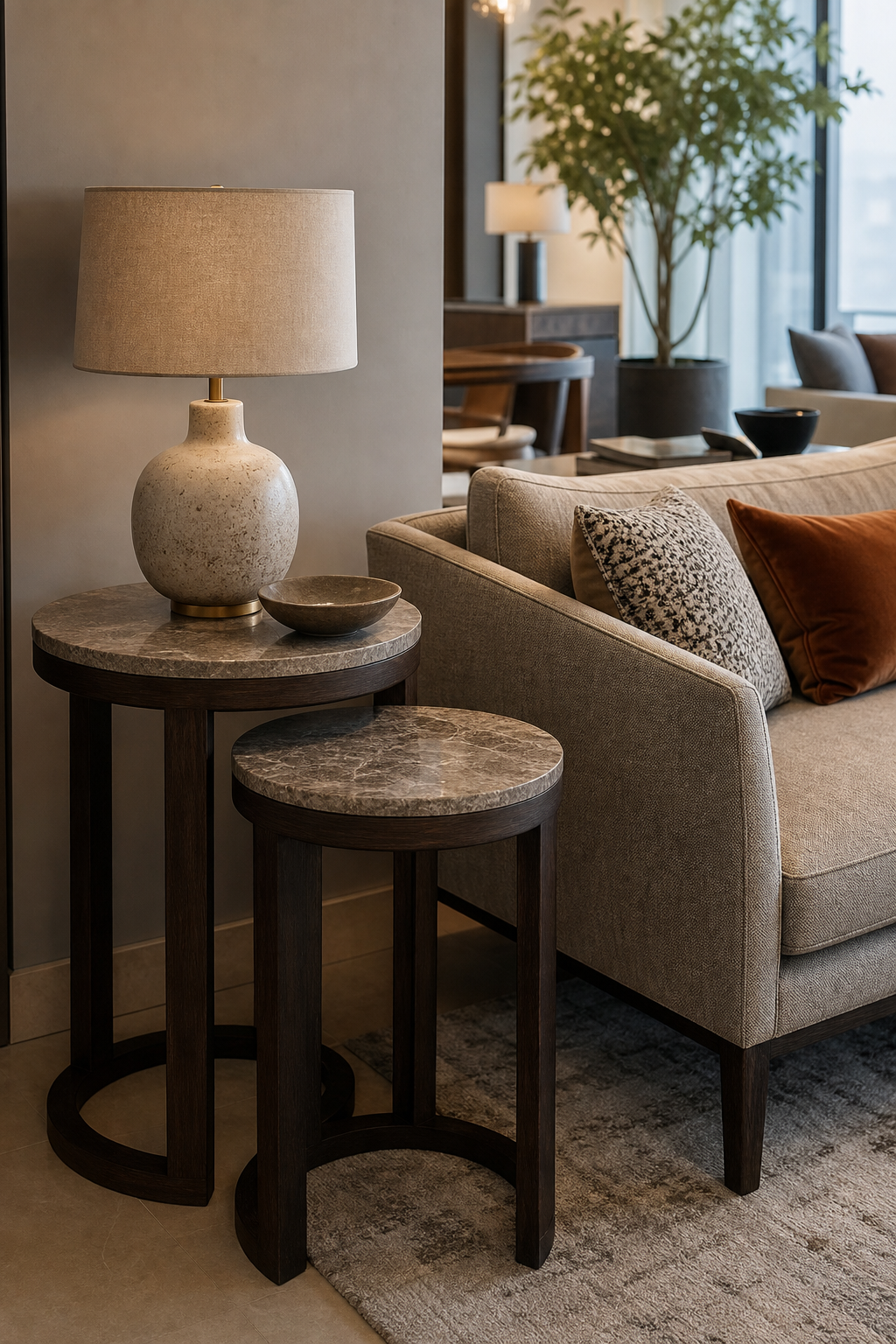
Bring In Texture Before Pattern
Pattern can be beautiful, but small living rooms often become busy quickly. Start with texture first: boucle upholstery, linen curtains, wool rugs, cane doors, plaster lamps, ribbed glass, or a nubby throw. These details add depth while keeping the palette calm. Once the room feels layered, introduce pattern in one place, such as a pillow, small rug border, or artwork. This approach is especially helpful in apartments where the living room is visible from the kitchen or entry. Texture gives the room a designer richness that does not depend on strong colors or constant visual contrast to feel complete at home.
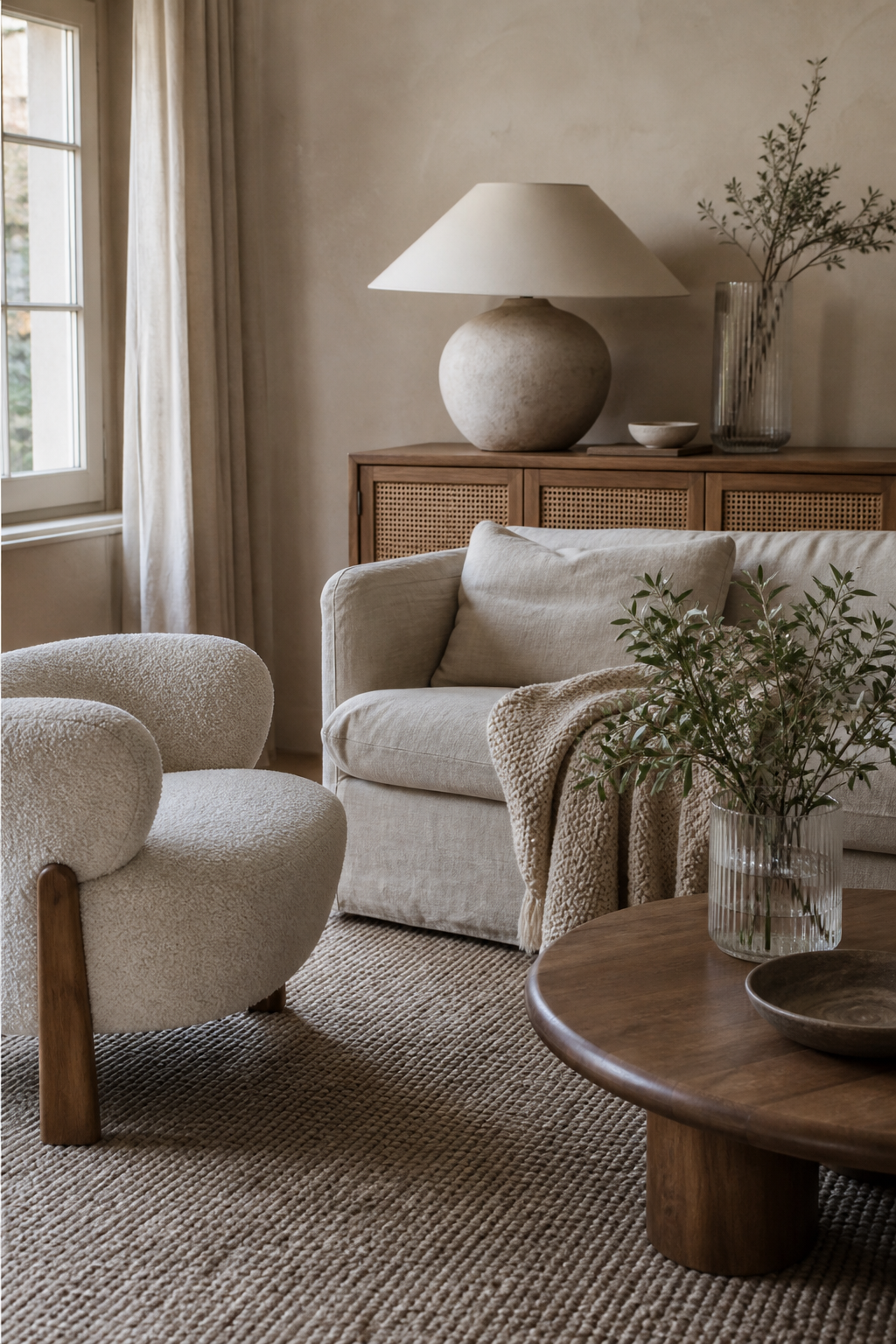
Use One Large Artwork Instead Of Many Small Pieces
Several tiny frames can make a small wall feel fragmented. One large piece of art often looks calmer and more expensive, especially above a sofa, console, or fireplace. Choose art that leaves a few inches of breathing room on either side rather than stretching edge to edge. Abstract landscapes, tonal photography, charcoal drawings, or textile art can all work beautifully in compact spaces. The frame should relate to another finish in the room, such as oak, black metal, walnut, or brass. A single generous artwork gives the room confidence and reduces the need for extra decorative objects nearby too much.
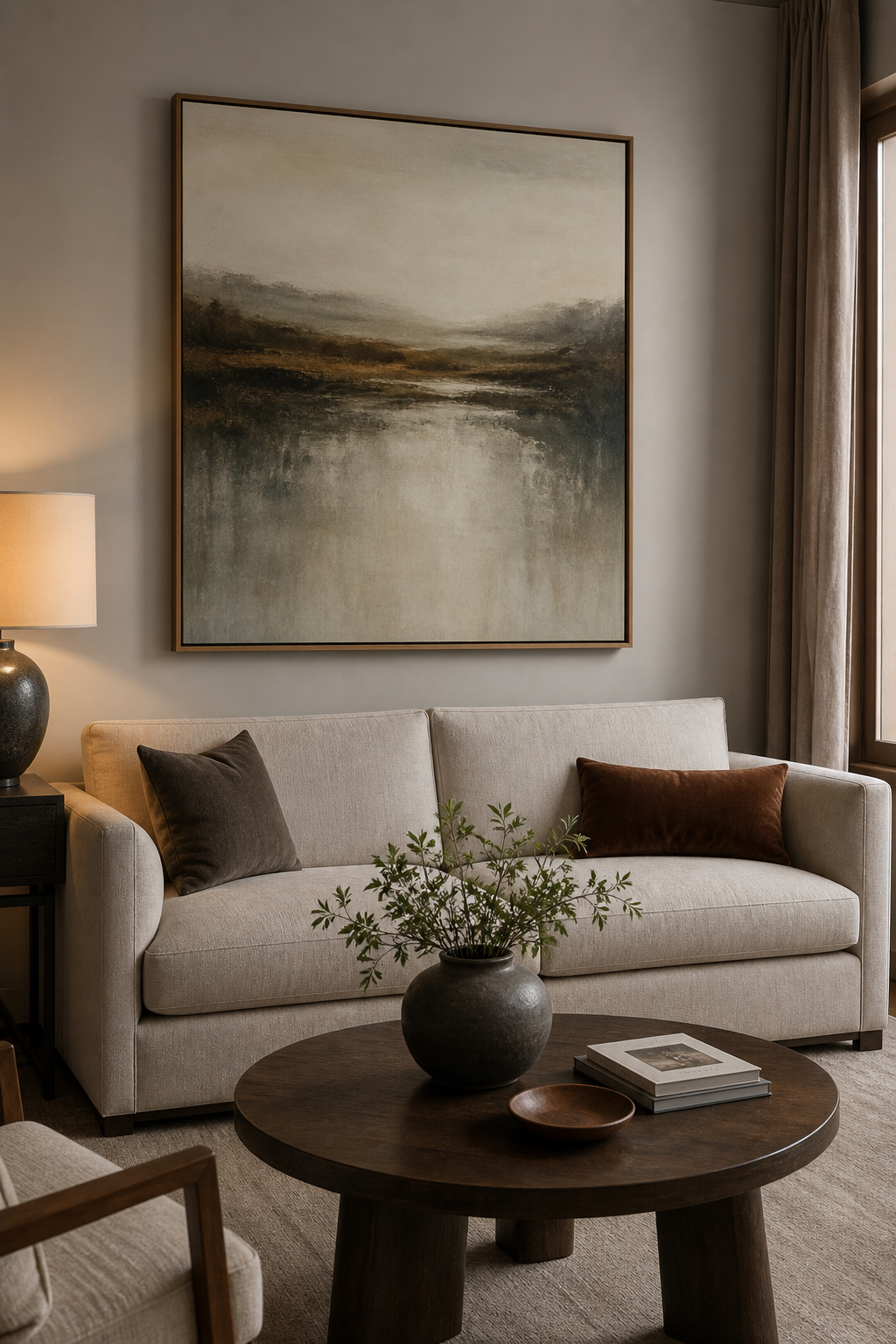
Make The Corners Work Quietly
Unused corners can make a small living room feel unfinished, but overfilling them is just as risky. Give each corner a quiet job. One can hold a floor lamp, another a tall plant, and another a slim basket for throws. Avoid placing multiple small accessories in the same corner because they can look like leftovers. Height is useful here: a lamp, branches, or narrow shelving unit pulls the eye upward without taking much floor space. When corners are handled simply, the room feels wrapped and intentional. The goal is to finish the perimeter without creating obstacle points or visual clutter.
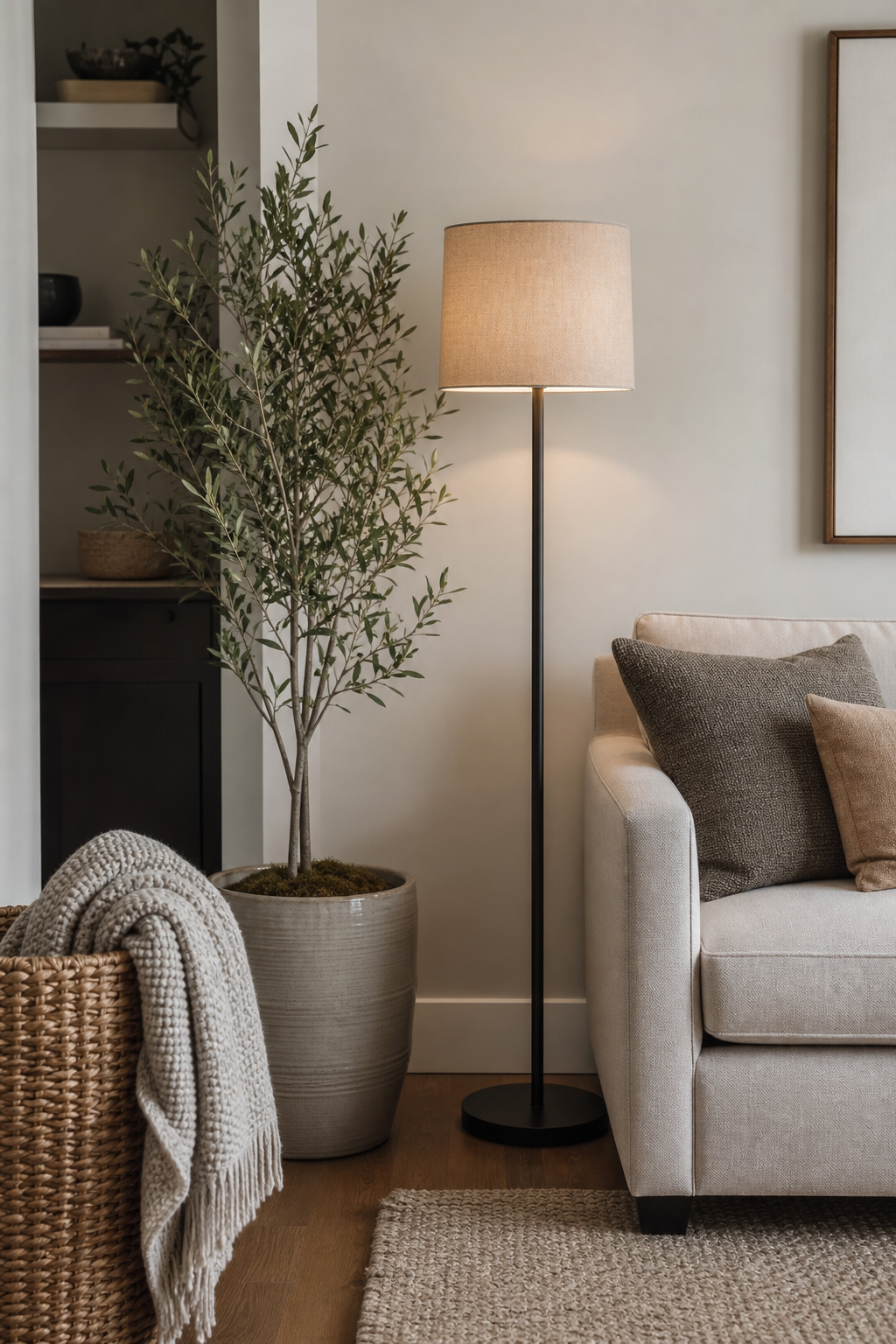
Choose Storage That Looks Like Furniture
Storage is essential in a small living room, but it should not look like a utility solution. Choose pieces that feel like furniture first: a lidded ottoman, woven trunk, cabinet with beautiful doors, or side table with a drawer. These pieces hide the daily things that make a room feel smaller, such as blankets, games, chargers, and pet supplies. Materials matter because storage is often visible from every angle. Wood, cane, leather, seagrass, and painted finishes look more considered than plastic bins. When storage blends into the decor, the room feels calmer without becoming overly minimal or bare visually overall.
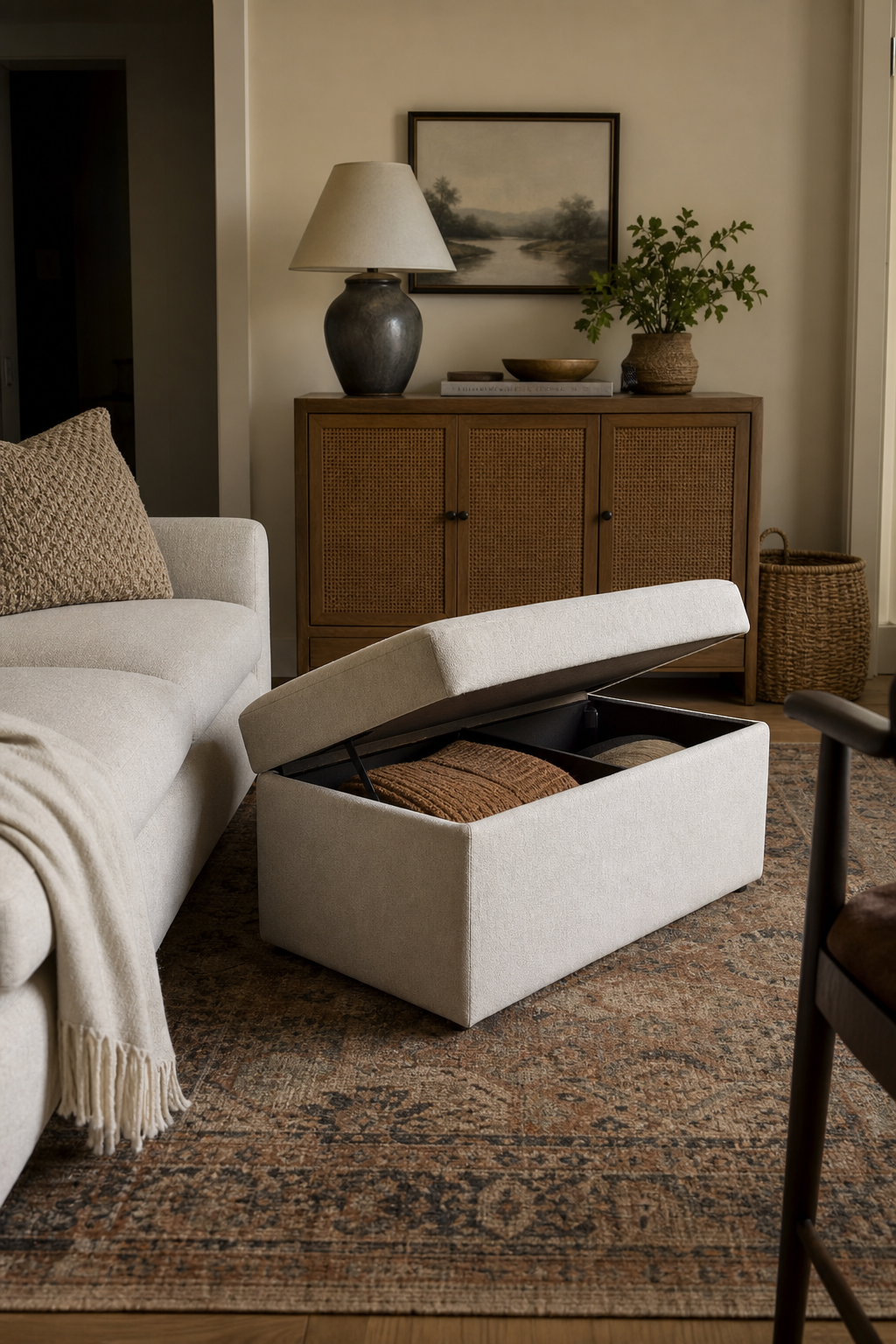
Try A Wall-Mounted Side Table
When there is barely space beside the sofa, a wall-mounted side table can provide a landing place without crowding the floor. A small wood shelf, stone ledge, or bracketed table is enough for a drink, phone, or book. Keep it low enough to use from the sofa and deep enough to be practical, but not so large that it becomes a bumping hazard. Pair it with a wall sconce if you want to free the floor completely. This idea is subtle, but it can make a tight seating area function much better while keeping the look clean and custom too.
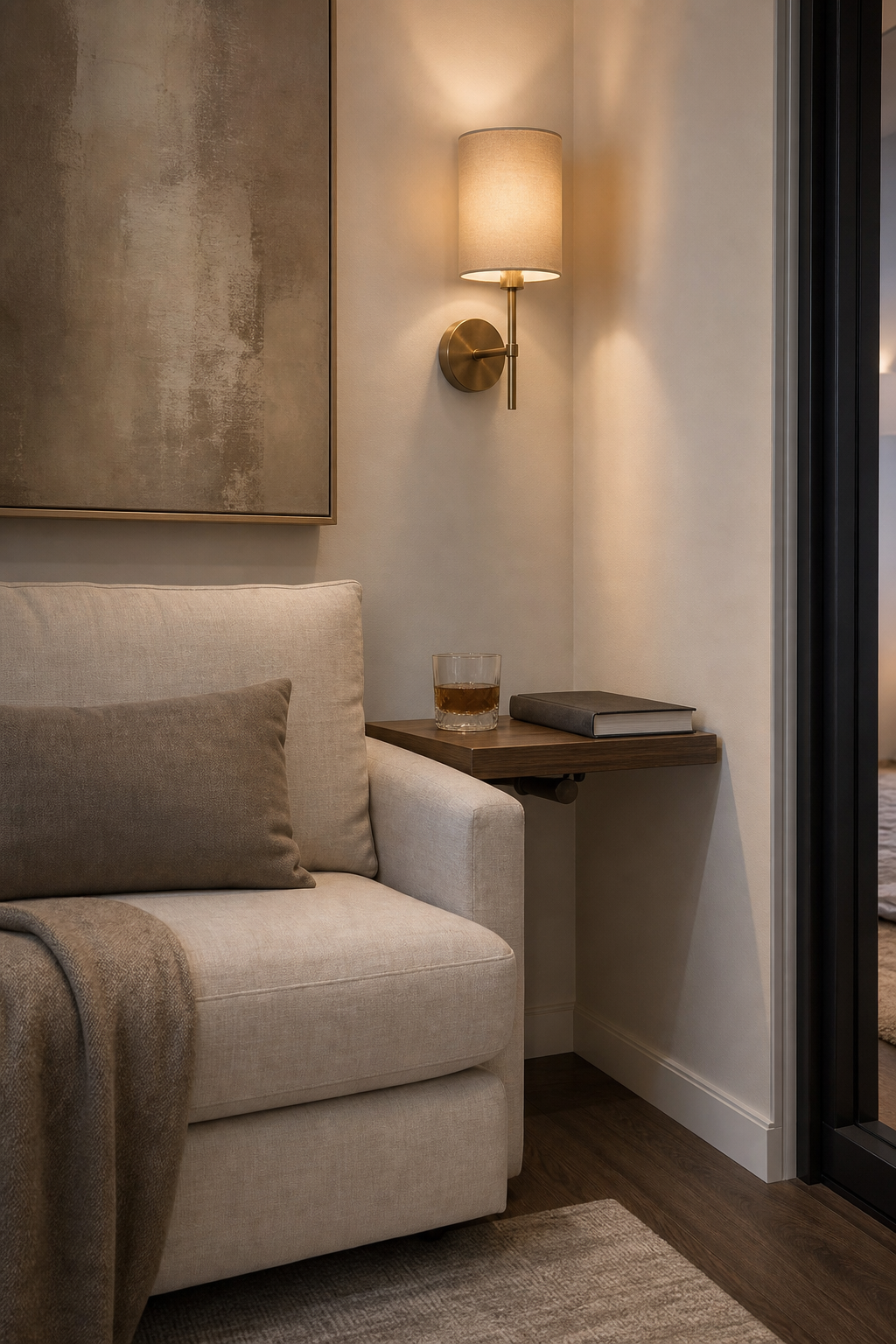
Let A Mirror Reflect The Best View
A mirror can make a small living room feel brighter, but placement is everything. Hang it where it reflects a window, artwork, lamp glow, or the cleanest view into the room. Avoid reflecting a television, cluttered shelf, or busy entry if possible. A framed mirror above a console can act like art, while a tall leaning mirror can add height near a dark corner. The frame should feel connected to the rest of the room instead of decorative by accident. A well-placed mirror does not just enlarge the space; it doubles whatever is already working beautifully in the room visually.
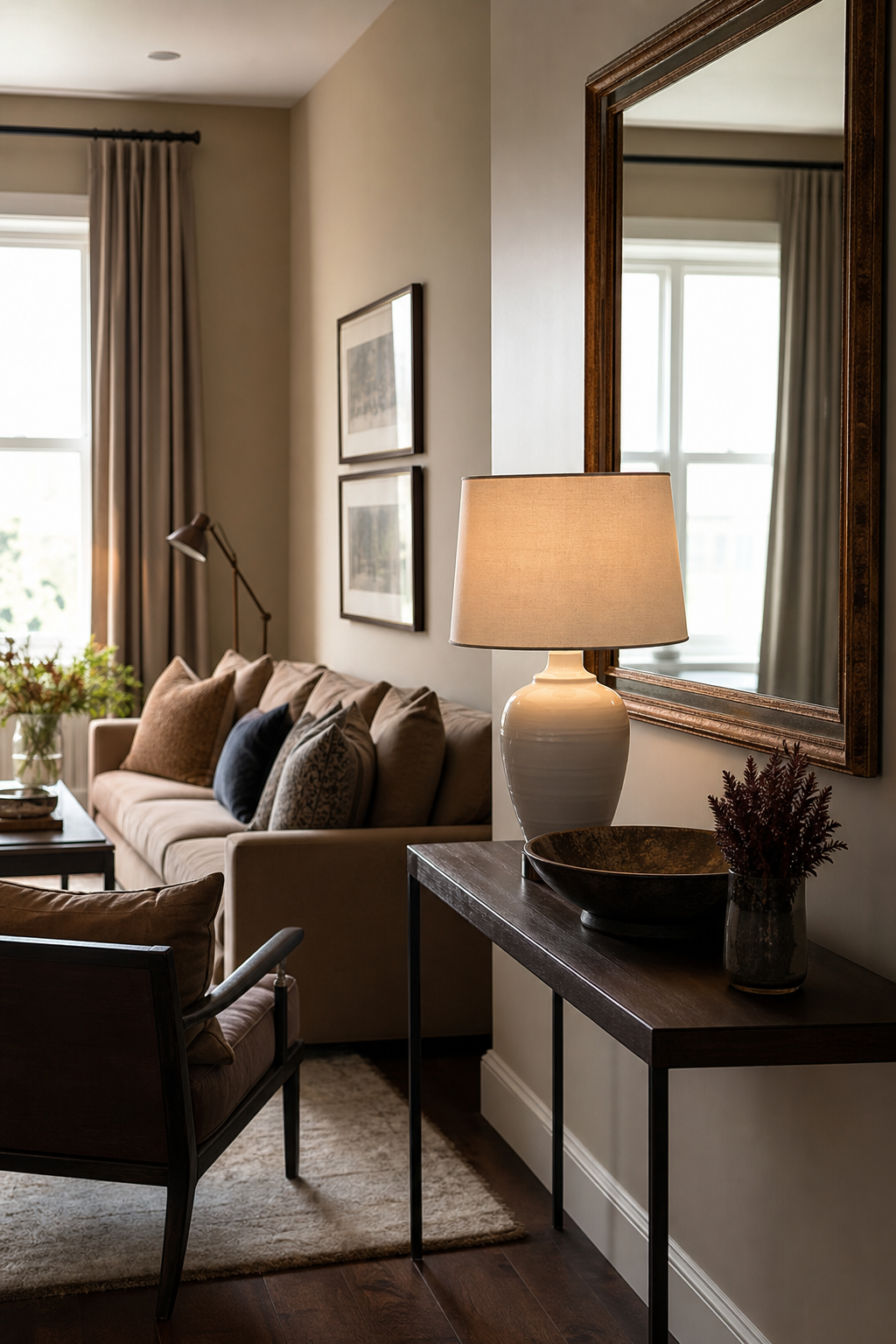
Keep The Palette Warm But Not Flat
A warm palette can make a small living room feel cozy, but too many similar beige tones may look dull. Build warmth through contrast: cream walls, camel leather, walnut wood, black accents, aged brass, olive greenery, and a muted rug. The room can still feel soft while having enough variation to hold interest. Repeat each major tone at least twice so the palette feels intentional. For example, a black picture frame can connect to a lamp base, and brass hardware can connect to a tray. A small room looks more designer-led when the palette has rhythm rather than sameness alone.
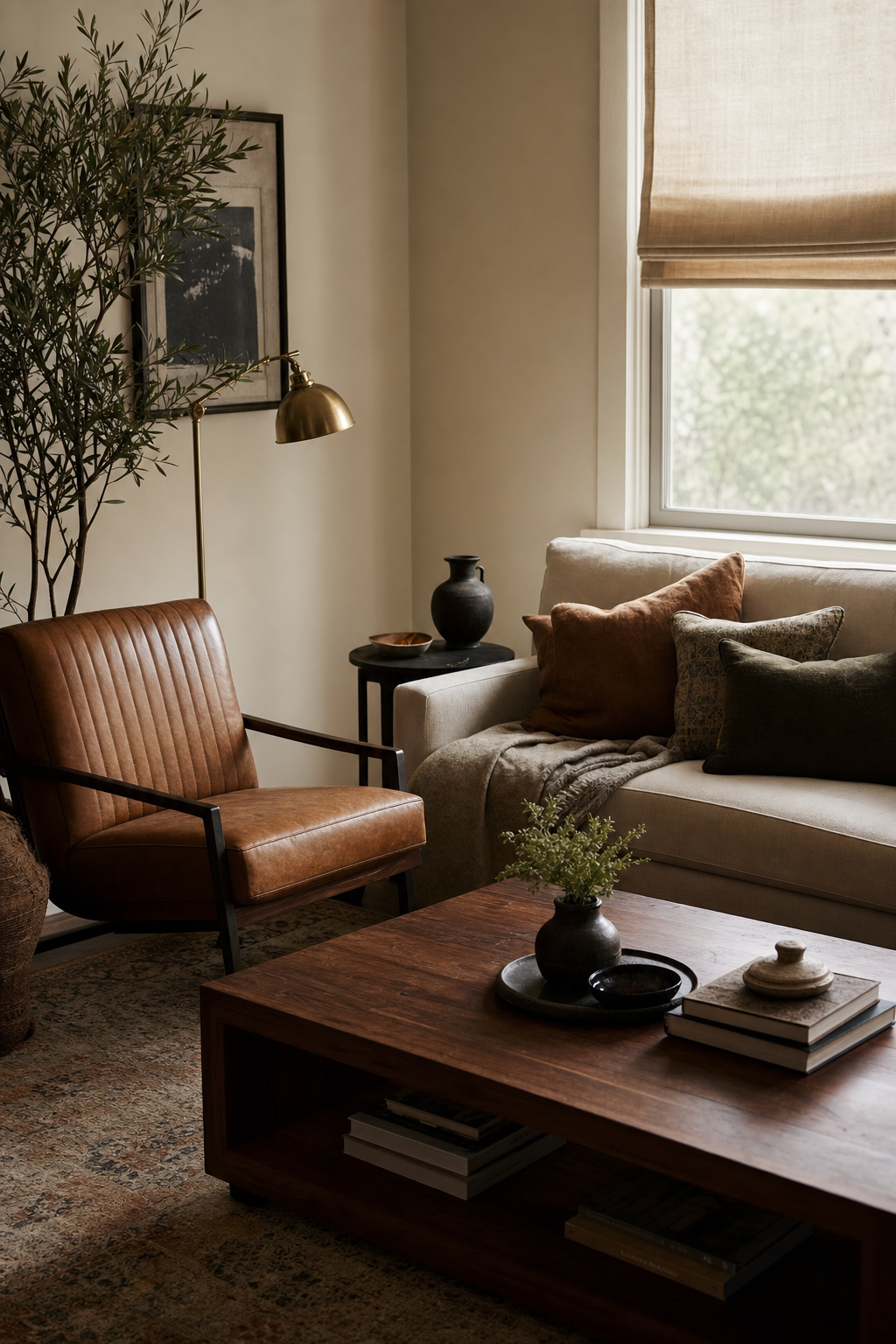
Use A Slim Console Behind The Sofa
If the sofa floats even a few inches from the wall, a slim console can add function without stealing much space. Choose a narrow piece that is lower than the sofa back or visually light enough not to loom. It can hold a lamp, small tray, or pair of stools tucked underneath. This is useful in open-plan rooms where the sofa needs to create a boundary between living and dining areas. Keep styling simple, because the console is usually seen from multiple angles. Done well, it makes the sofa arrangement feel finished and gives the room an architectural edge too.
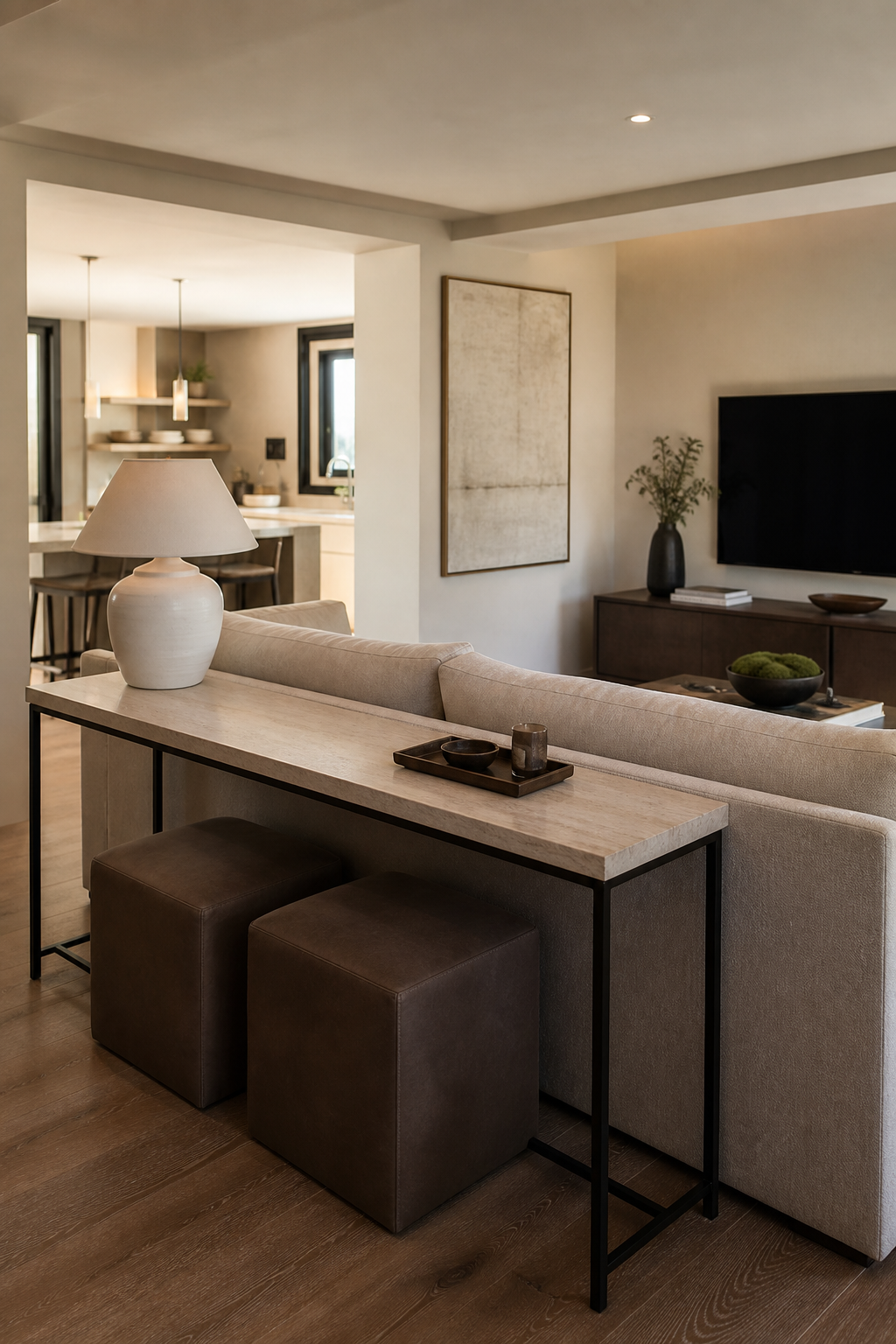
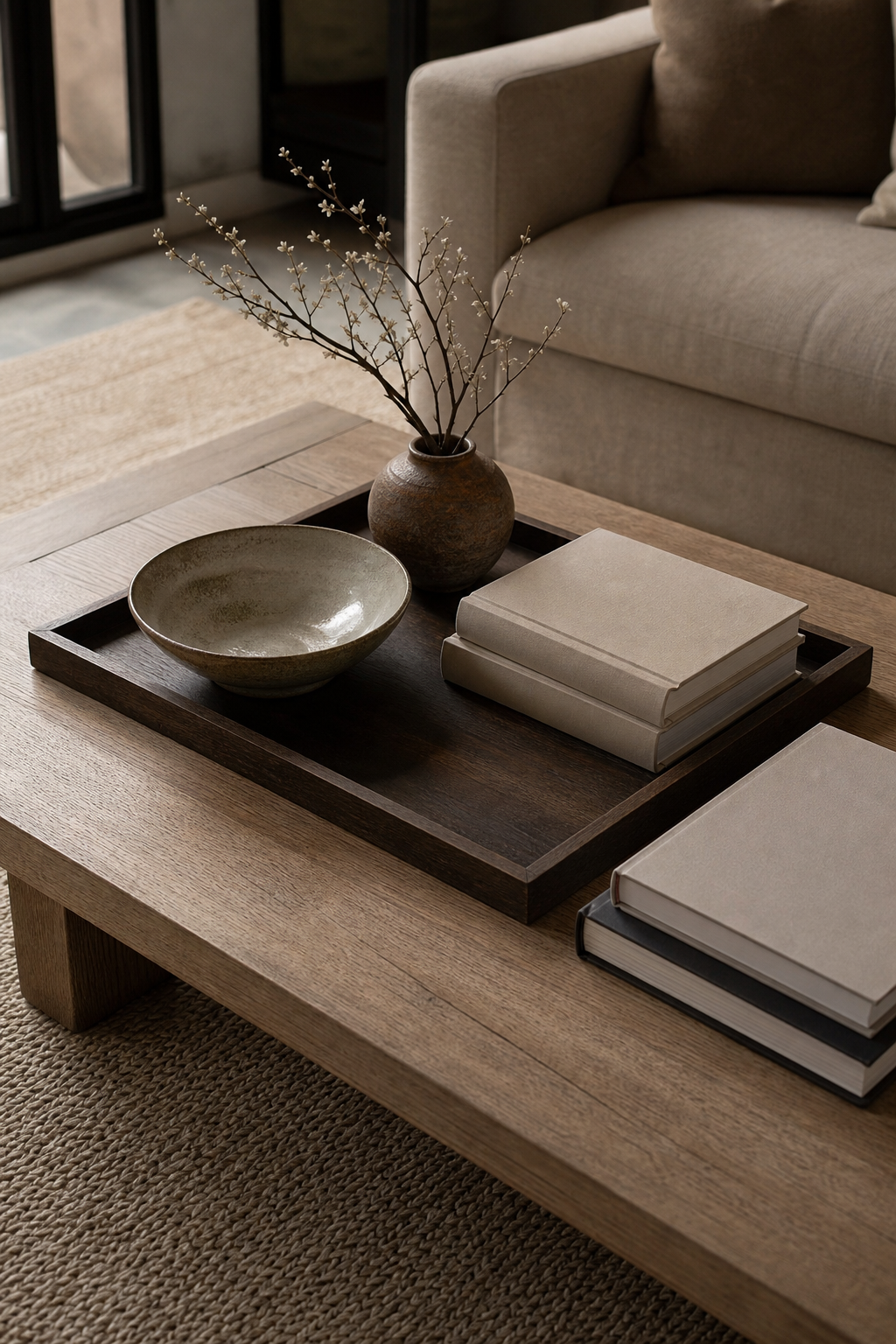
Style The Coffee Table In Low Layers
Coffee table styling should not block conversation or make a small living room harder to use. Keep the layers low: a tray, a shallow bowl, one small vase, and perhaps a stack of two books with no loud covers. Vary the textures so the arrangement feels rich without getting tall. Leave clear space for a drink or remote, because beauty that fights daily life will not last. If the table is very small, use one sculptural bowl and stop there. The most polished small rooms usually have fewer objects, chosen with more care and given room to be seen properly.
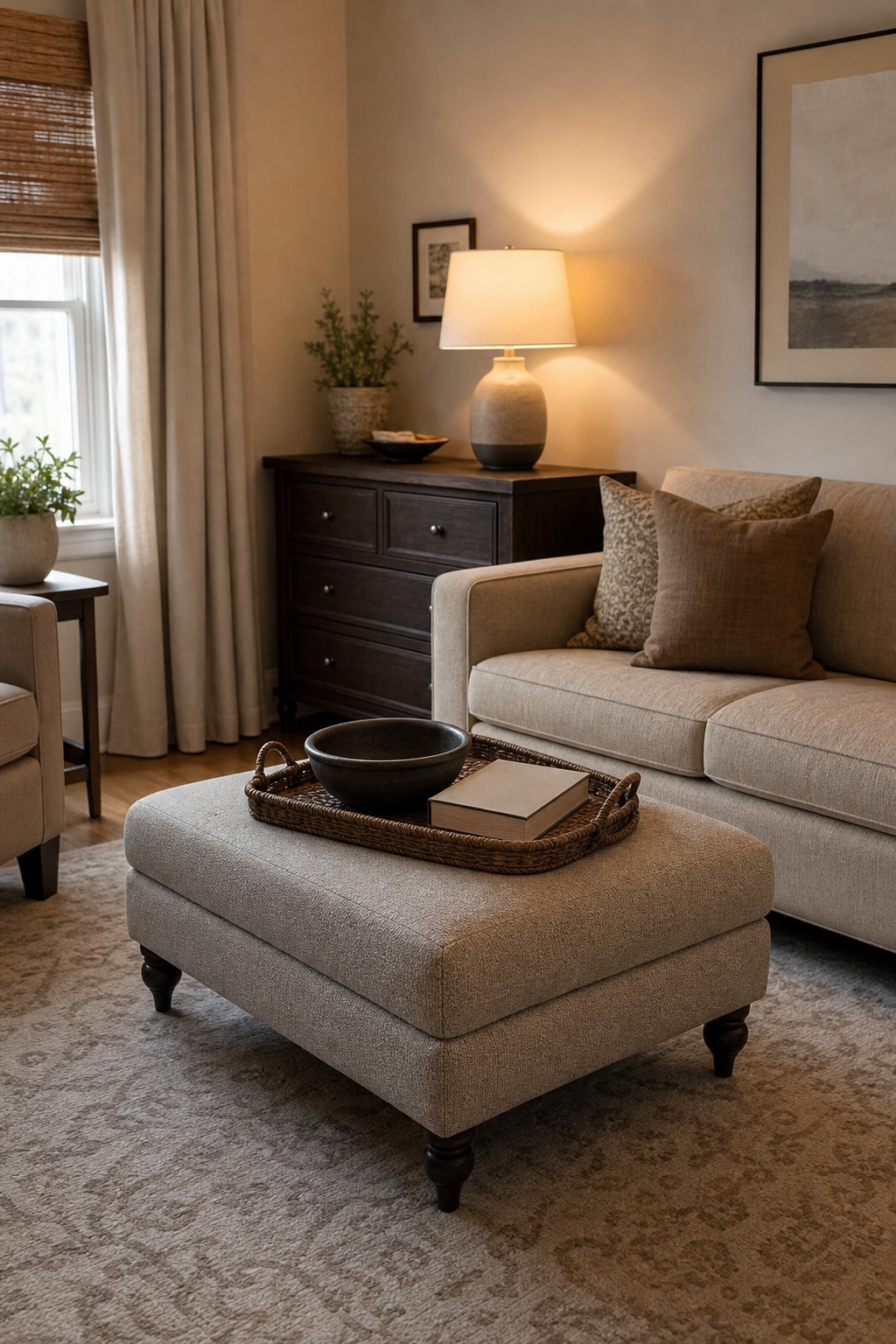
Choose An Ottoman When You Need Softness
An upholstered ottoman can be smarter than a hard coffee table in a very small living room, especially if the space doubles as a lounge, play area, or guest zone. Choose one with tailored upholstery so it reads as furniture, not a temporary pouf. A tray on top gives it a stable surface for drinks, while the soft edges make movement easier. Storage ottomans are useful if they open cleanly and do not look bulky. The fabric can introduce texture or color without overwhelming the room. An ottoman brings comfort to the center of the space and softens a tight layout.
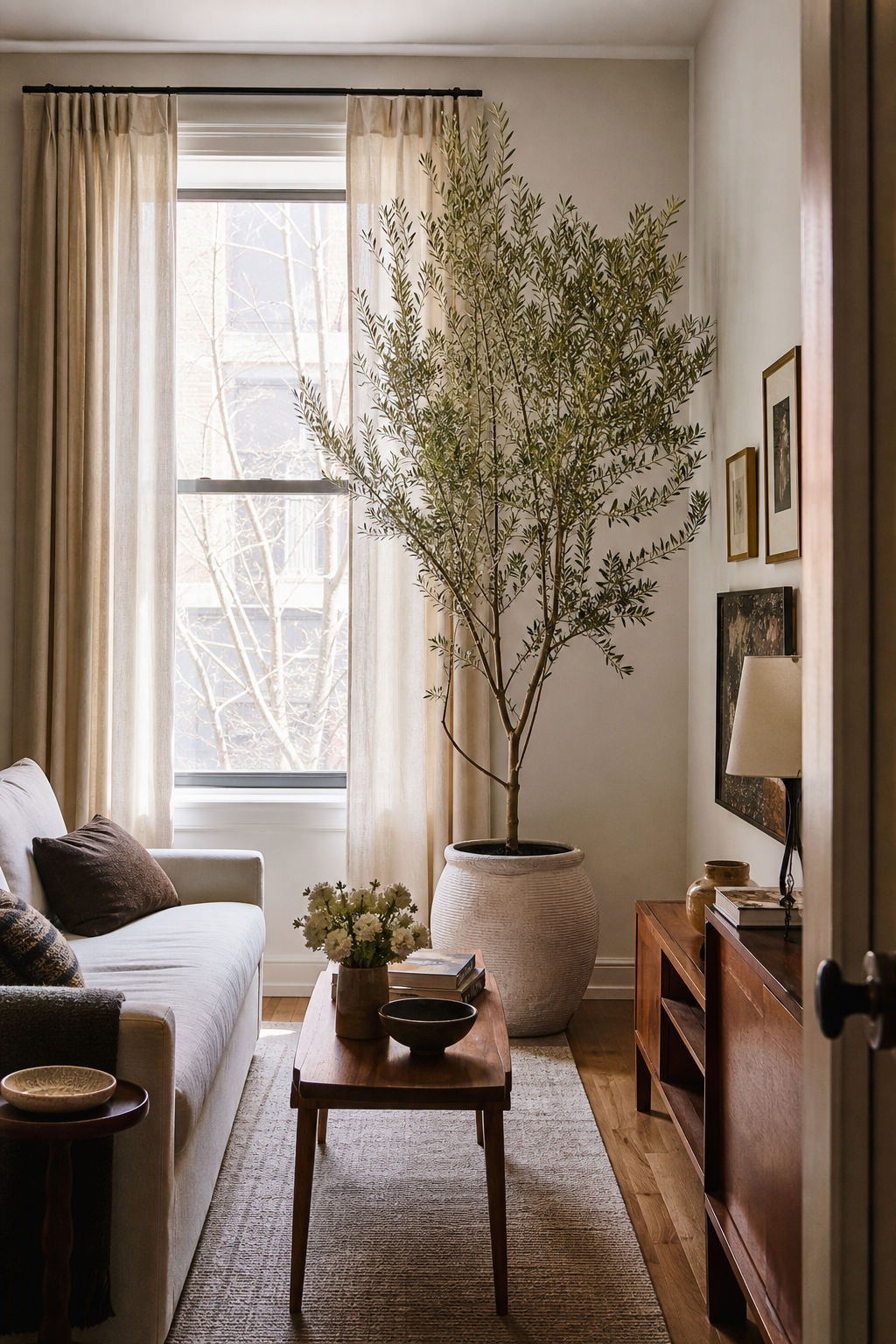
Use Plants For Height Rather Than Clutter
Plants can freshen a small living room, but too many little pots quickly crowd shelves and tables. Choose one plant with real height, such as an olive tree, ficus, or rubber plant, and place it where the room needs vertical movement. A substantial planter makes the choice feel decorative rather than accidental. If the room lacks enough light, use preserved branches in a tall vase instead. Greenery works best when it balances the architecture and furniture rather than filling every gap. One confident plant can make the room feel alive while keeping surfaces clear and easy to maintain over time.
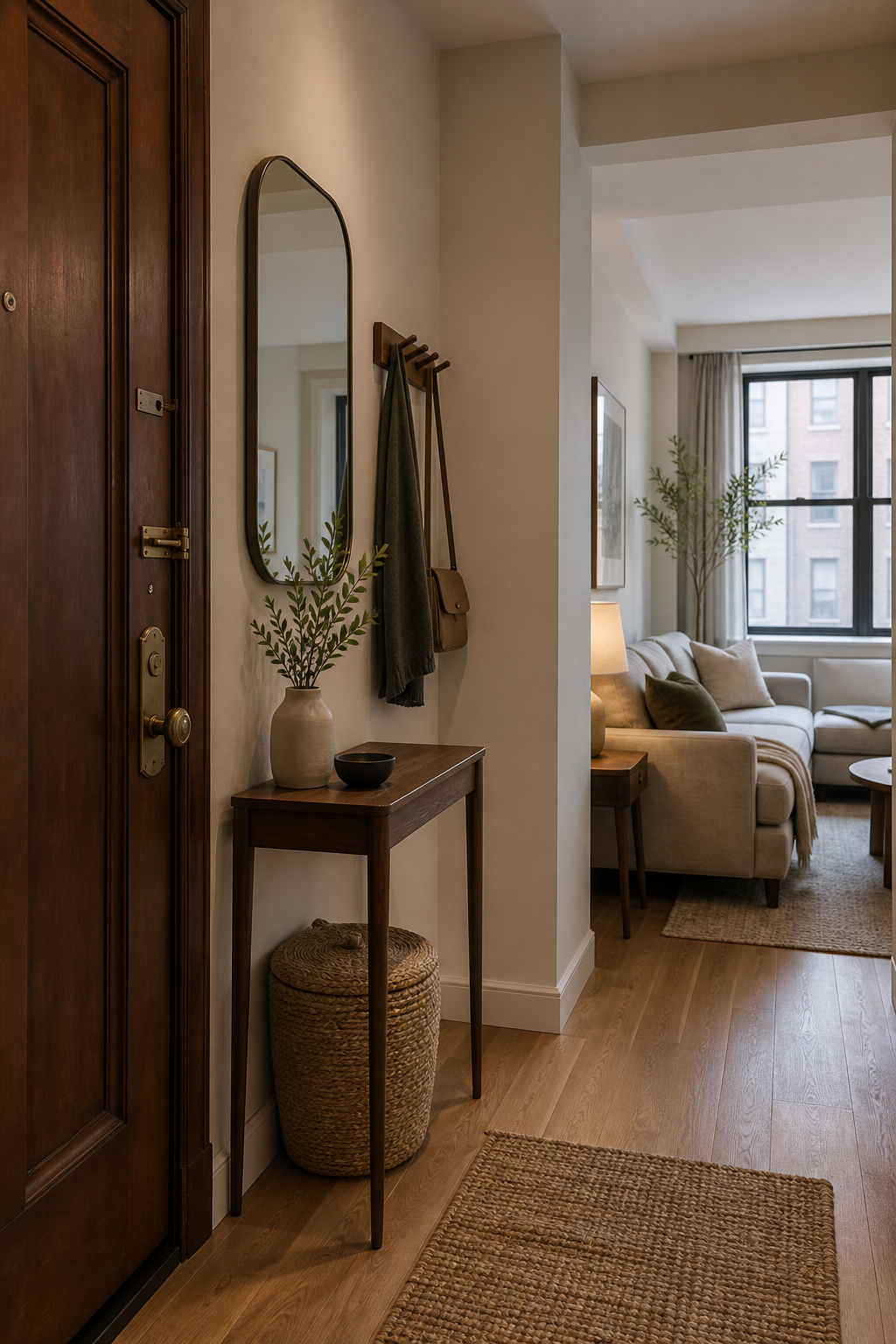
Create A Quiet Entry Moment
If the living room opens directly from the front door, create a small entry moment so the space does not feel exposed. A narrow console, wall hooks, small mirror, or lidded basket can define the transition without building a wall. Keep the pieces shallow and choose finishes that match the living room palette. This gives keys, mail, and bags a home before they land on the sofa or coffee table. It also makes the room feel more layered, because there is a beginning before the seating area. Even a tiny entry detail can make a compact home feel more composed.
Edit One Surface Every Week
The final designer touch is maintenance, not more shopping. Choose one visible surface each week and edit it: the coffee table, media cabinet, shelves, console, or side table. Remove anything that drifted there by accident, wipe the surface, and return only what supports the room. This habit keeps a small living room from feeling crowded after real life happens. It also helps you notice what the room actually needs before buying anything new. A cozy room should feel used, not staged, but compact spaces benefit from rhythm. Regular editing protects the calm you worked to create every day at home.
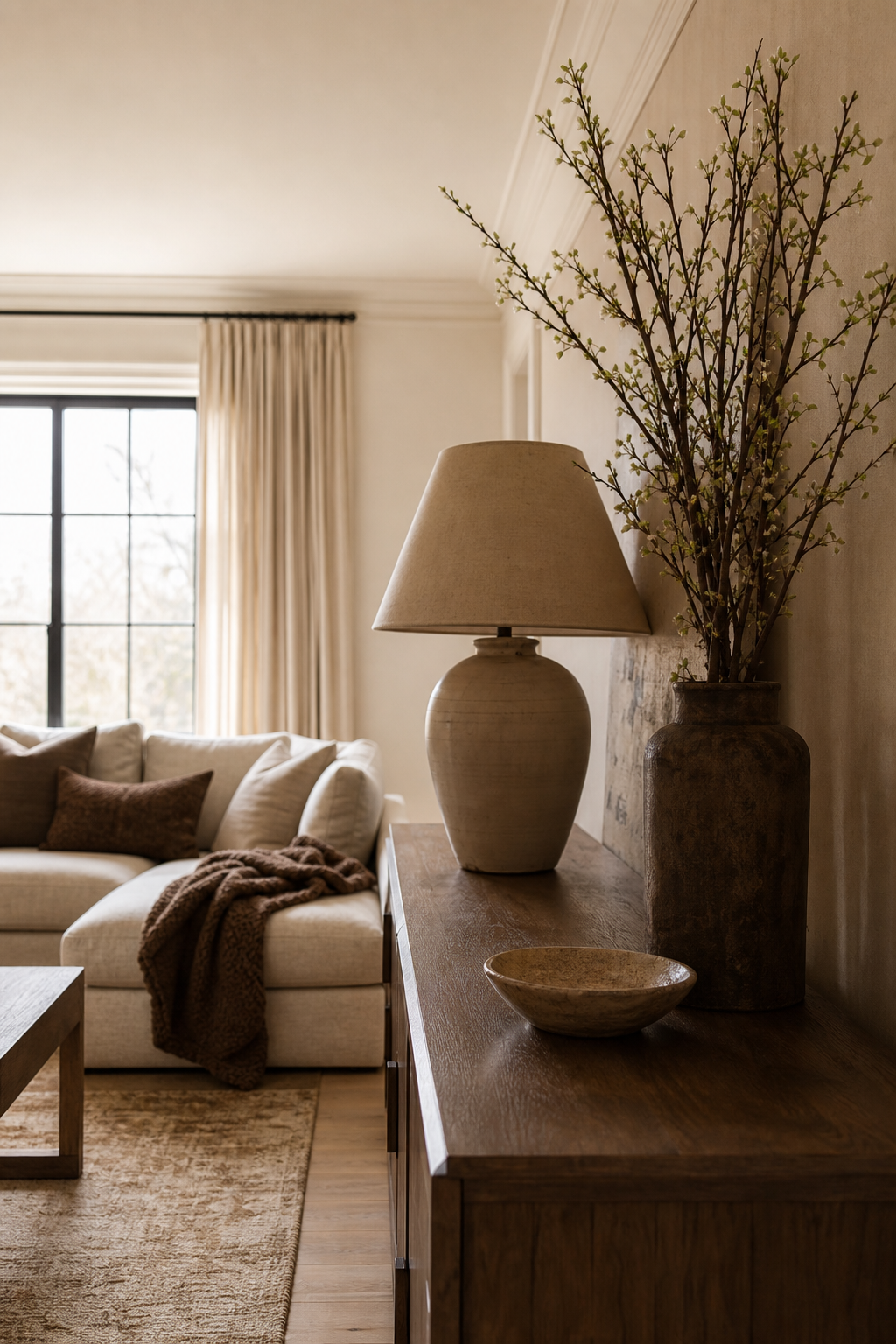
A cozy designer small living room comes from proportion, restraint, and useful beauty. Start with the pieces that take up the most space, then refine the lighting, storage, texture, and surfaces until the room feels easier to live in. When every object has a role and every corner has breathing room, a compact living room can become one of the most inviting spaces in the home.