21 Cosy Living Room Ideas For A Cozy Designer Look
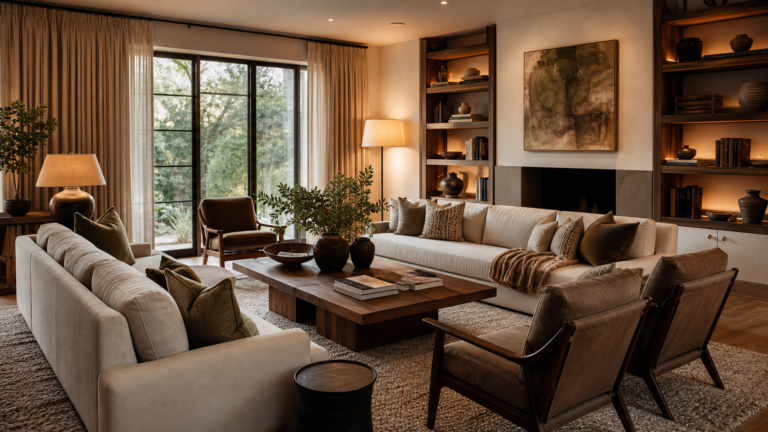
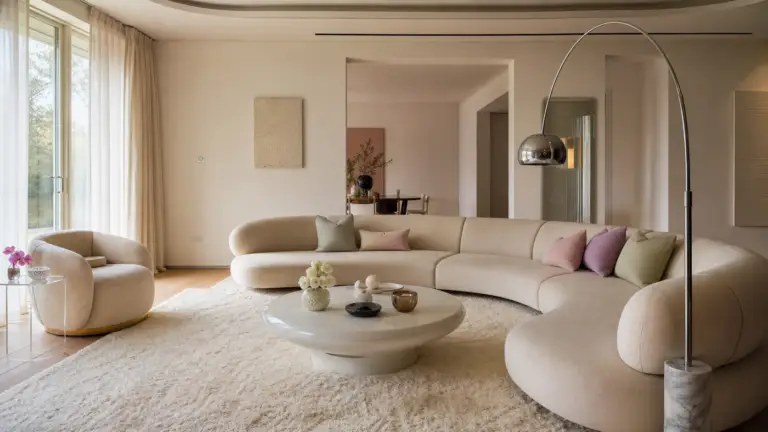
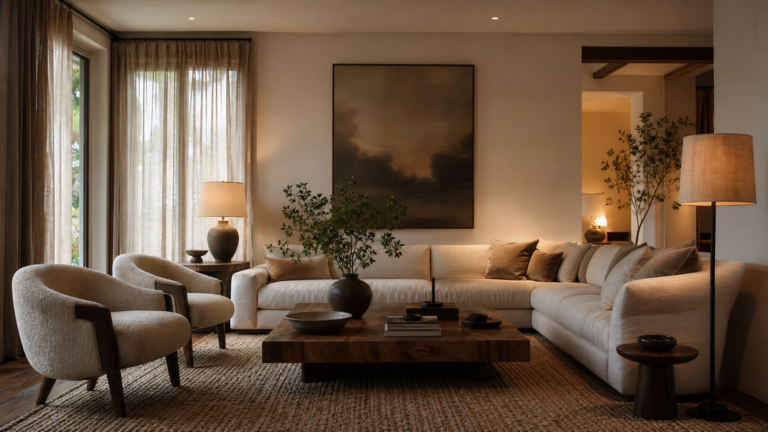
A cosy living room should feel comfortable without losing its sense of design. The warmth comes from more than a soft sofa; it is built through scale, lighting, texture, proportion, and the way each piece supports conversation. A room can feel cozy and still look tailored when the materials are chosen with care and the layout has a clear purpose. These cosy living room ideas focus on designer-level choices that also make the space easier to enjoy every day. Use them to soften a formal room, bring depth to a neutral palette, or turn an ordinary seating area into the room everyone naturally wants to use.
Anchor The Room With A Generous Rug
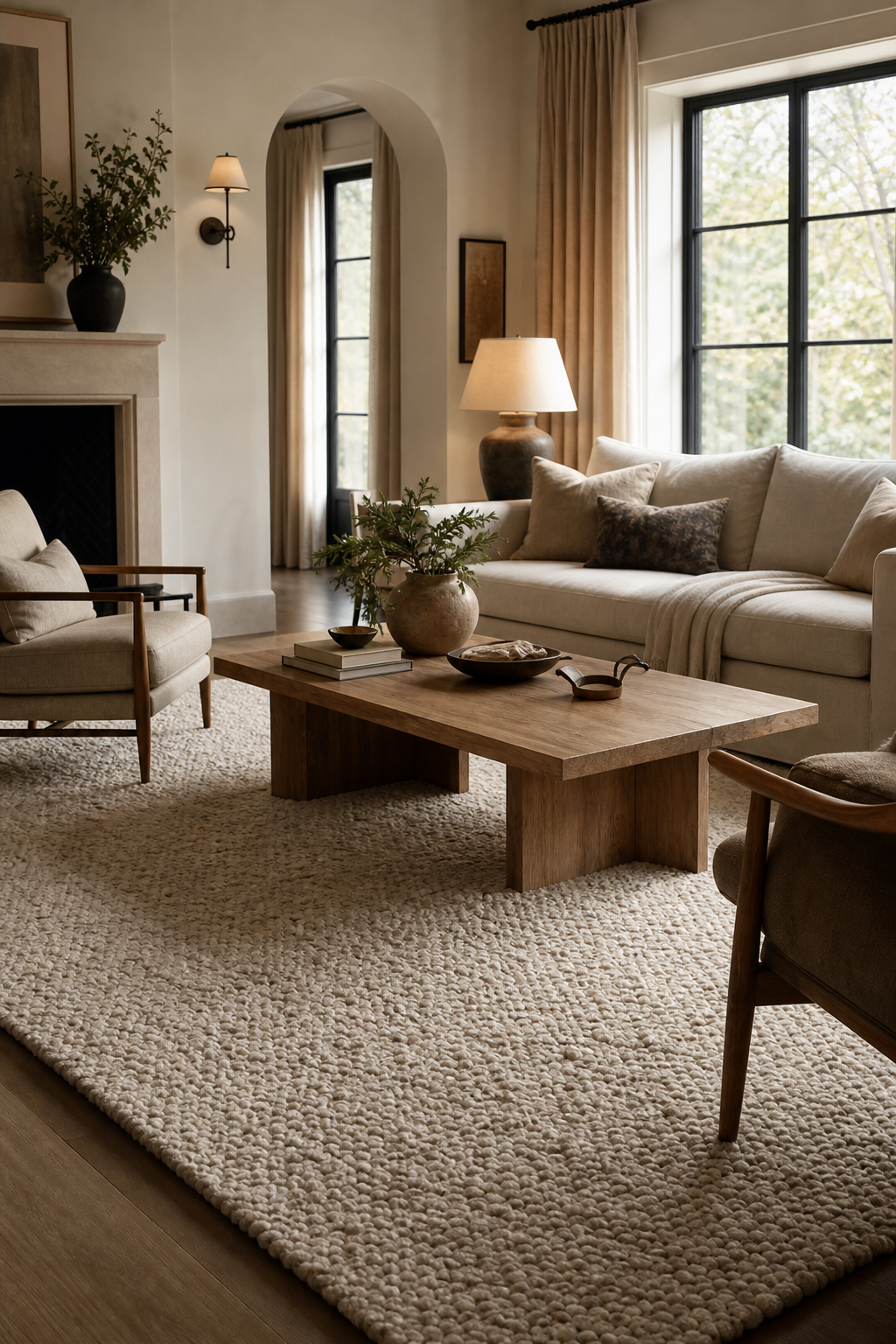
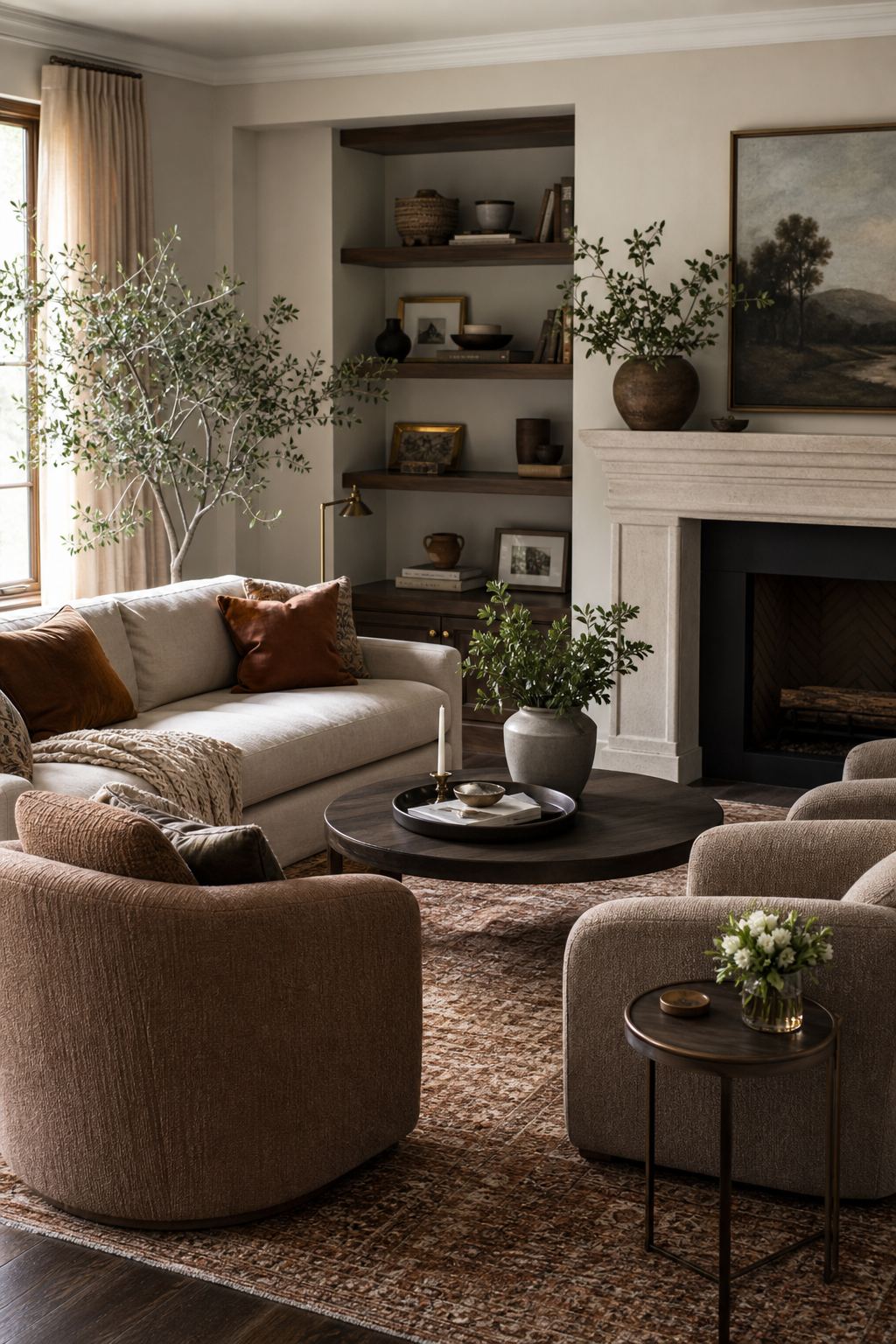
A living room feels instantly cozier when the rug is large enough to gather the furniture. At minimum, the front legs of the sofa and chairs should sit on it; in a larger room, place all seating fully on the rug for a more luxurious effect. Wool, hand-knotted, flatweave, or thick natural fiber rugs add texture underfoot and soften sound. Choose a pattern with gentle movement if the upholstery is plain, or a quieter weave if the sofa has strong color. The rug is not just a decorative layer. It defines the conversation zone and makes the room feel grounded, warmer, and more intentional.
Choose Seating That Invites Conversation
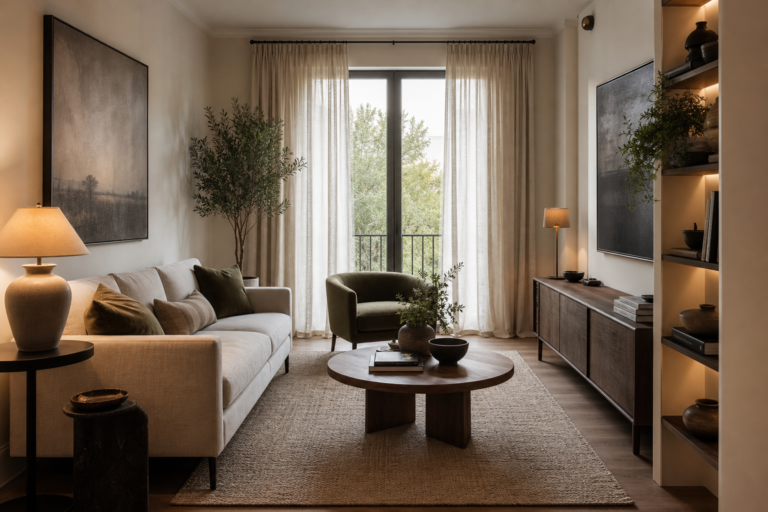
Cozy living rooms work best when seating faces inward rather than lining the walls. Pull the sofa forward, add a pair of chairs, and keep the coffee table close enough to use comfortably. The layout should make conversation feel natural without blocking circulation. In a narrow room, try a sofa opposite two compact swivel chairs. In a square room, float furniture around a central table or fireplace. The designer detail is spacing: not too tight, not too scattered. When every seat has a place to set a drink and can see the other seats, the room feels hospitable instead of staged.
Layer Lighting At Three Heights
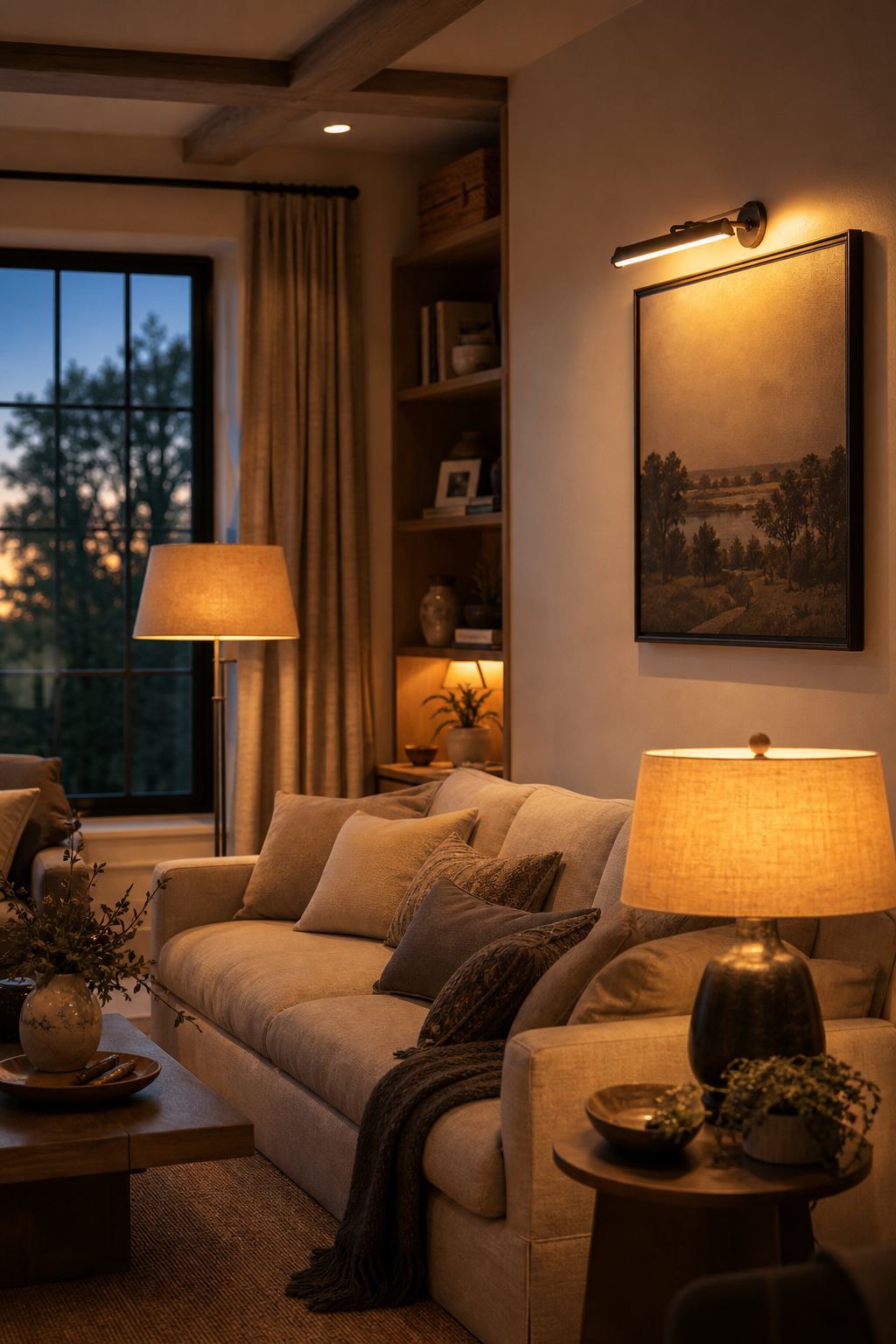
Lighting is the difference between a living room that looks decorated and one that feels good at night. Use overhead light only as a support, then add table lamps, floor lamps, and perhaps a picture light or sconce. The best cozy rooms have light at several heights so the glow moves around the space. Warm bulbs and dimmers are essential because they make wood, textiles, and wall colors feel softer. Place lamps near reading chairs, consoles, and side tables rather than relying on one central fixture. Layered lighting gives the room mood, depth, and daily flexibility.
Use Curtains To Soften The Architecture
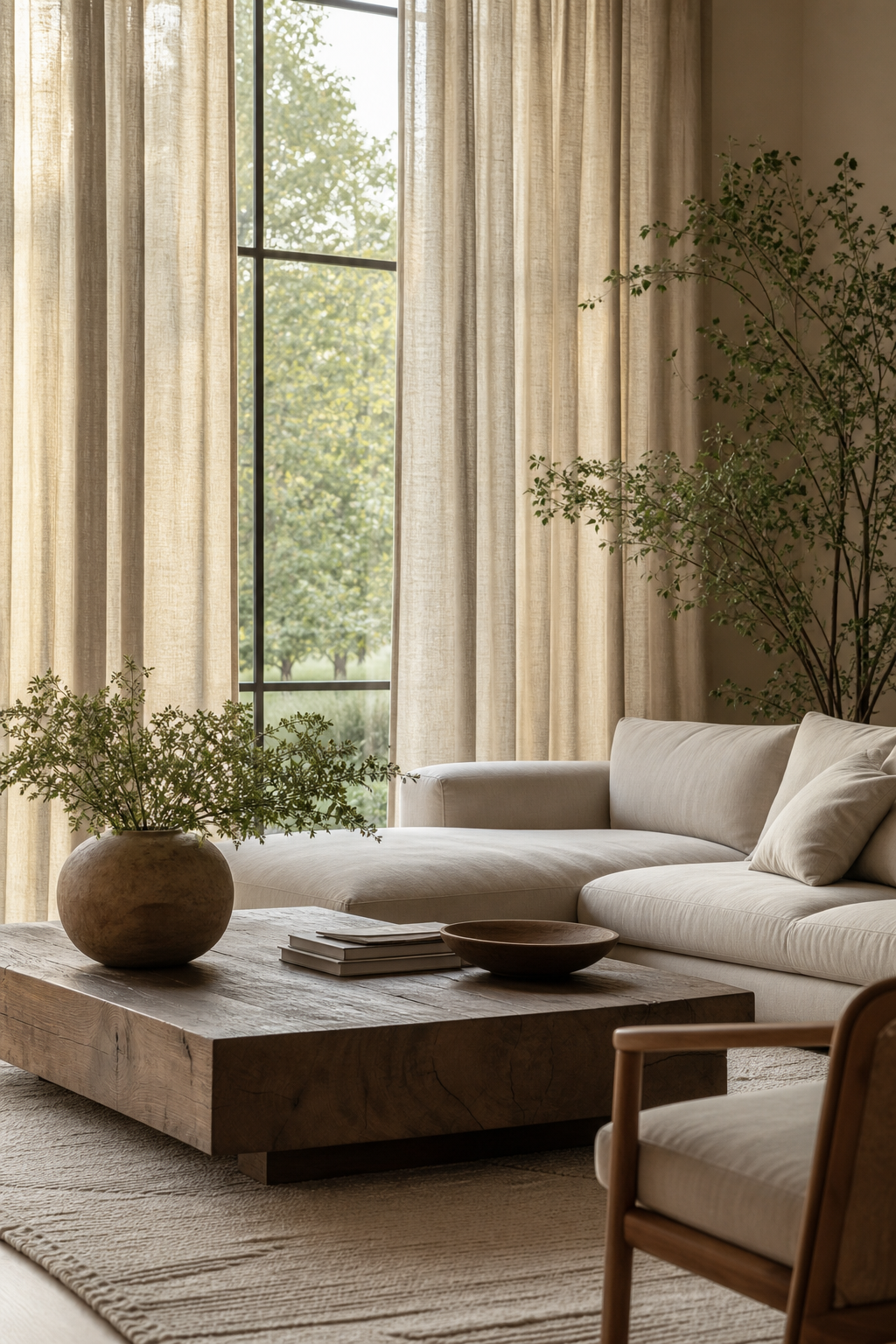
Full-length curtains make a living room feel more finished and comfortable because they soften hard edges. Mount the rod high and wide so the fabric frames the windows and makes the ceiling feel taller. Linen, wool blend, cotton velvet, or a subtle textured weave can all work depending on the mood. For a tailored designer look, choose enough fullness and let the panels kiss the floor or break slightly. Curtains also improve acoustics, which matters in open-plan homes with hard floors. Even a simple neutral panel can make the room feel warmer, quieter, and more elegant.
Mix Boucle With Linen And Wool
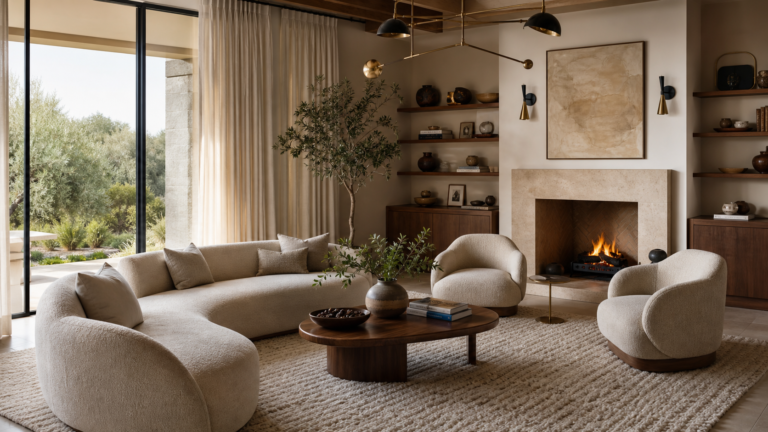
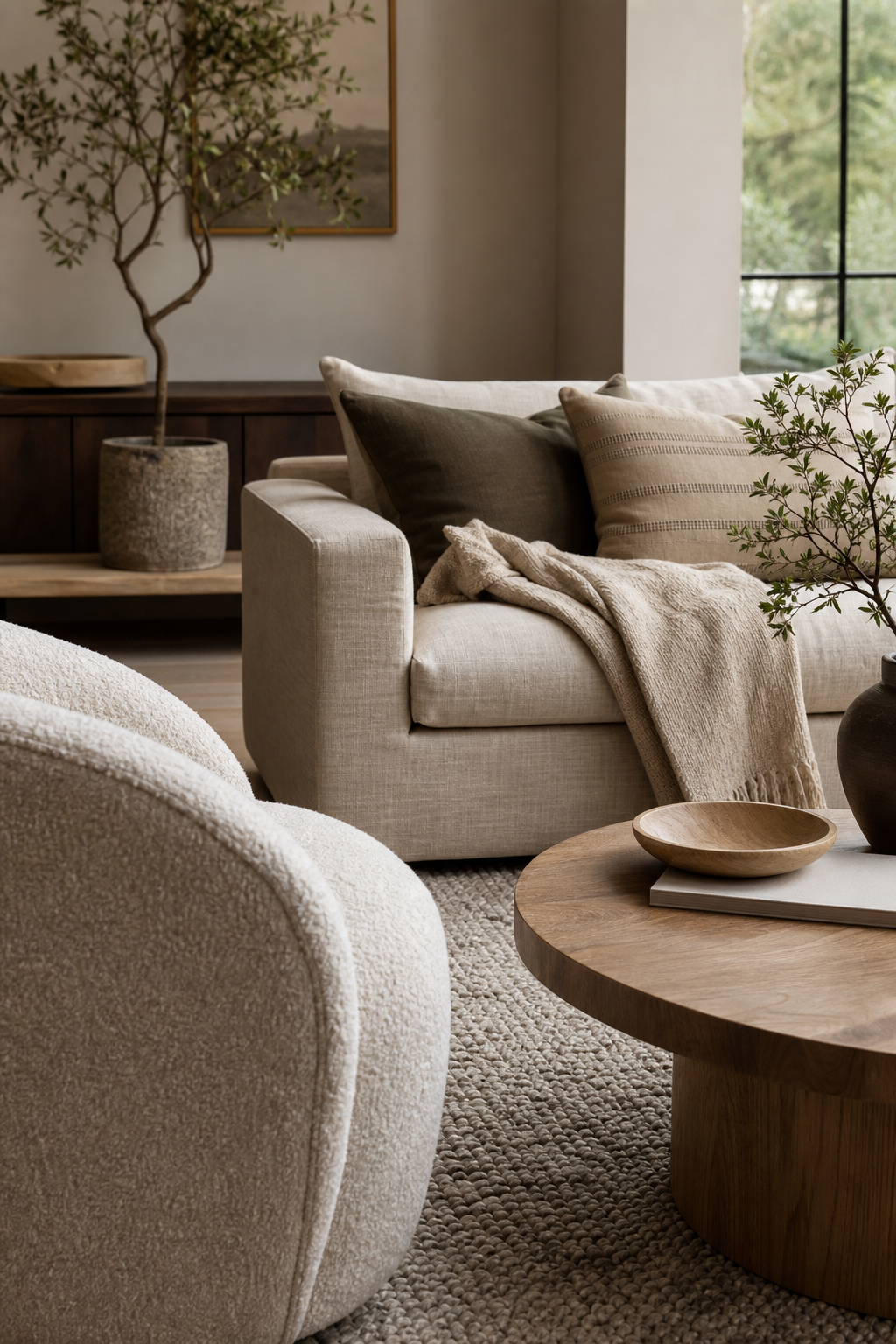
A cozy designer room needs tactile contrast, not just soft-looking furniture. Boucle brings nubby volume, linen adds relaxed texture, and wool gives warmth underfoot or across a chair. Use these materials in different places so the room does not feel repetitive. A linen sofa, boucle accent chair, wool rug, and cashmere or cotton throw can create a layered palette even when the colors are quiet. Keep the shapes clean if the textures are rich. The result feels warm but still sophisticated, because the comfort comes from material depth rather than a pile of unrelated accessories.
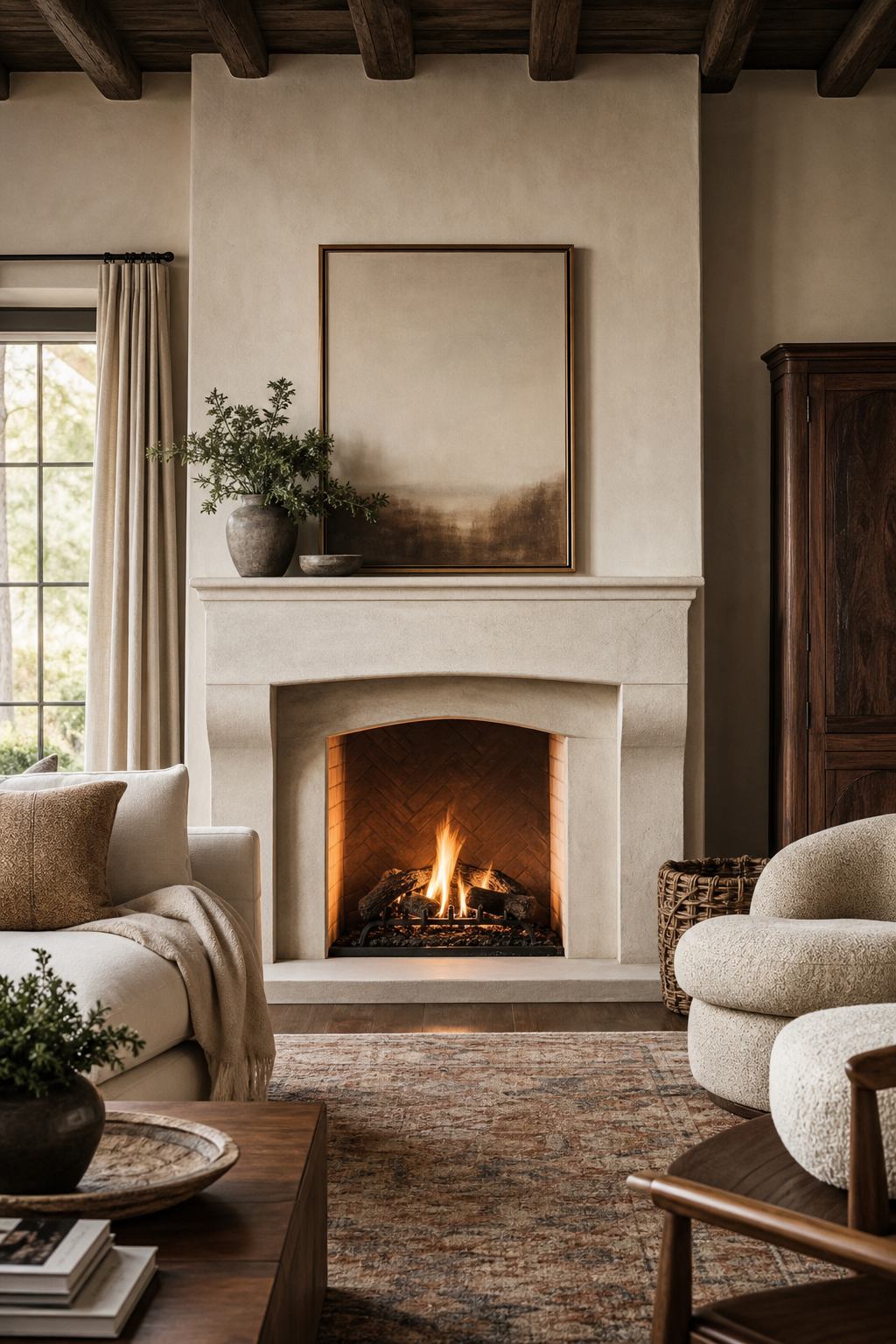
Create A Fireplace Focal Point
A fireplace naturally makes a living room feel cozy, but the styling around it should stay calm. Let the mantel or surround become the anchor, then arrange seating so the fireplace is part of the conversation zone. Use one large piece of art, a mirror, or a simple pair of sconces instead of overcrowding the mantel. Stone, plaster, brick, or wood surrounds can all work when the proportions feel right. Keep the hearth practical with a basket of throws, stacked logs, or a low stool. The fireplace should feel like a warm architectural center, not a cluttered display shelf.
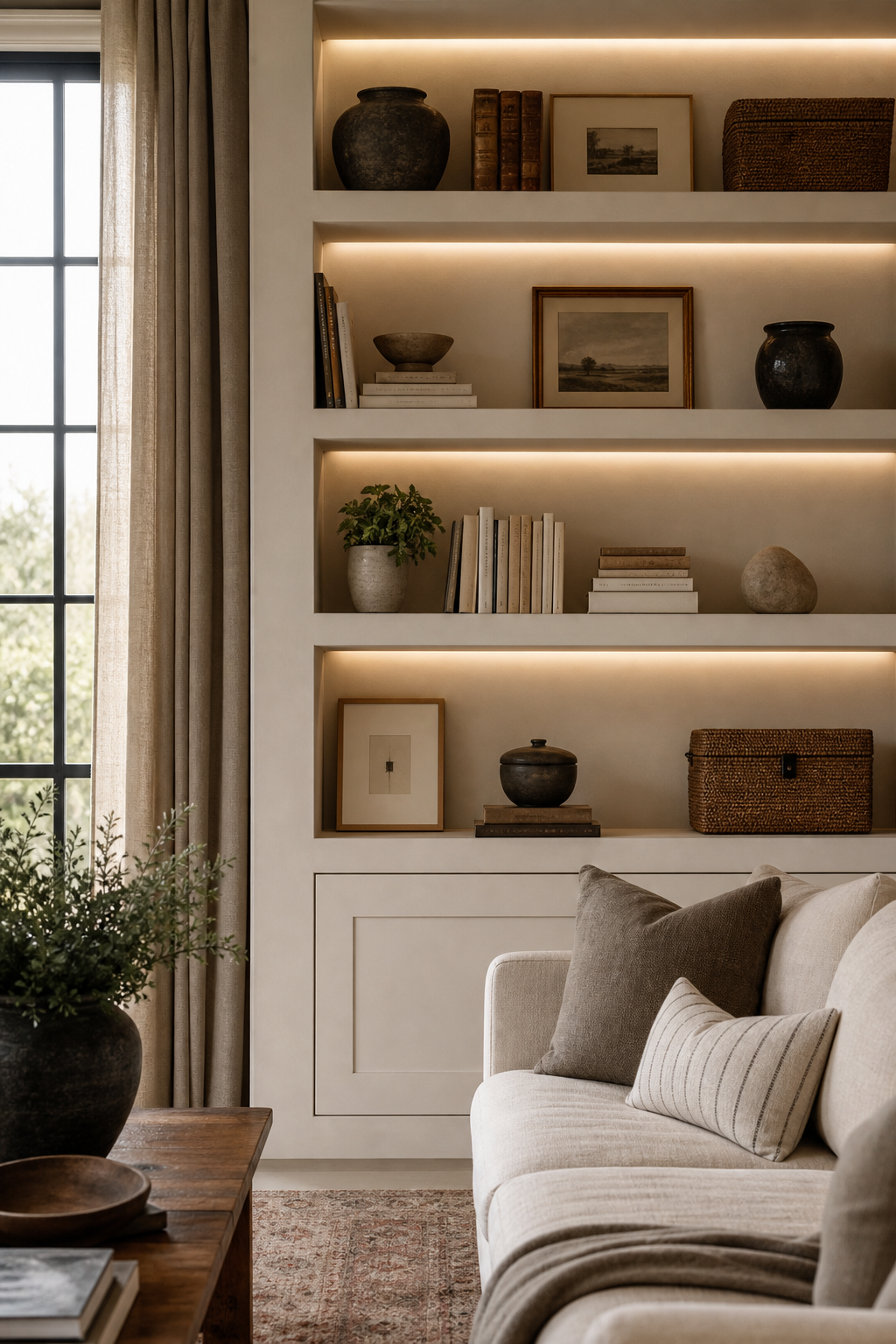
Style Shelves With Books And Texture
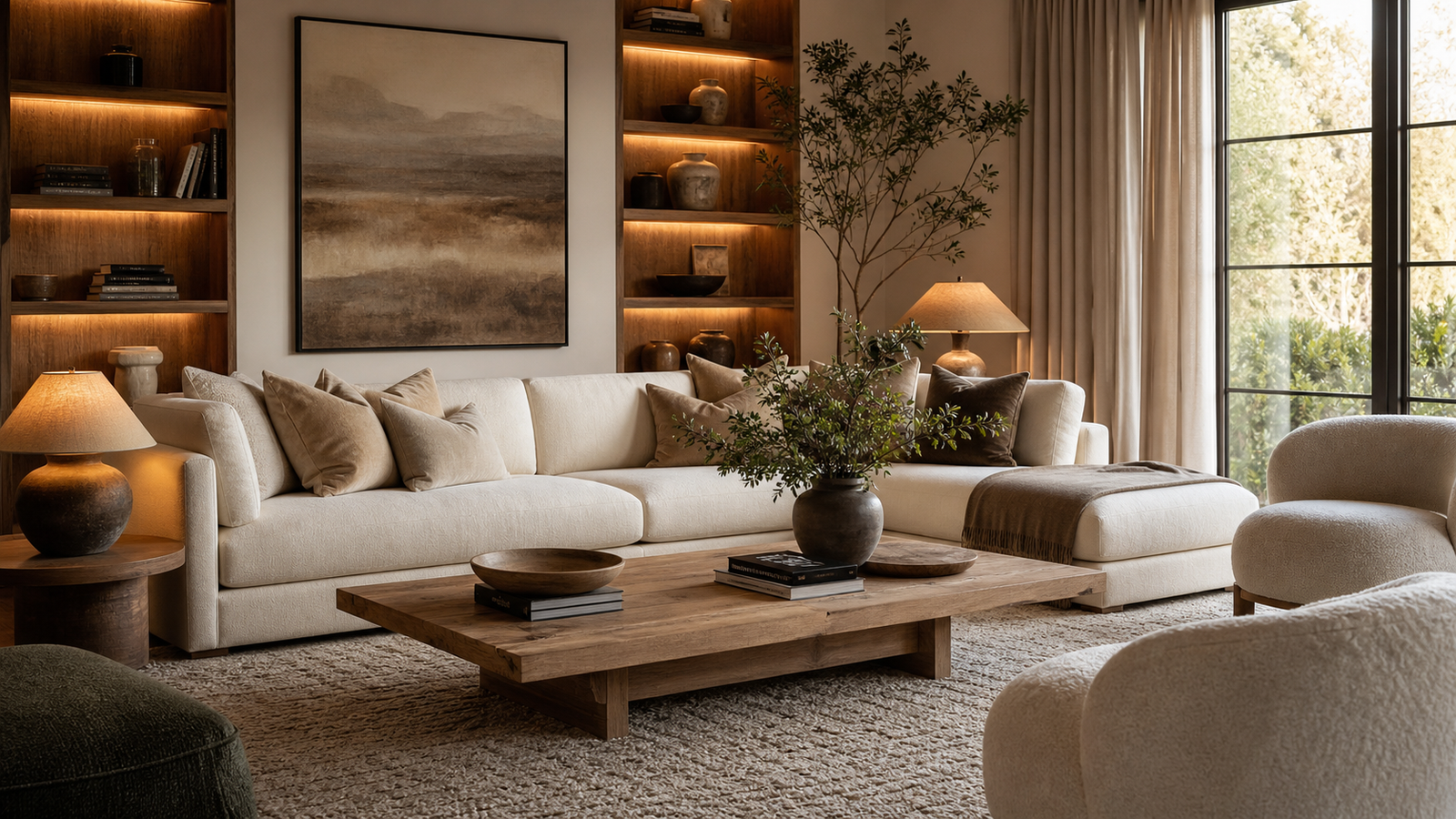
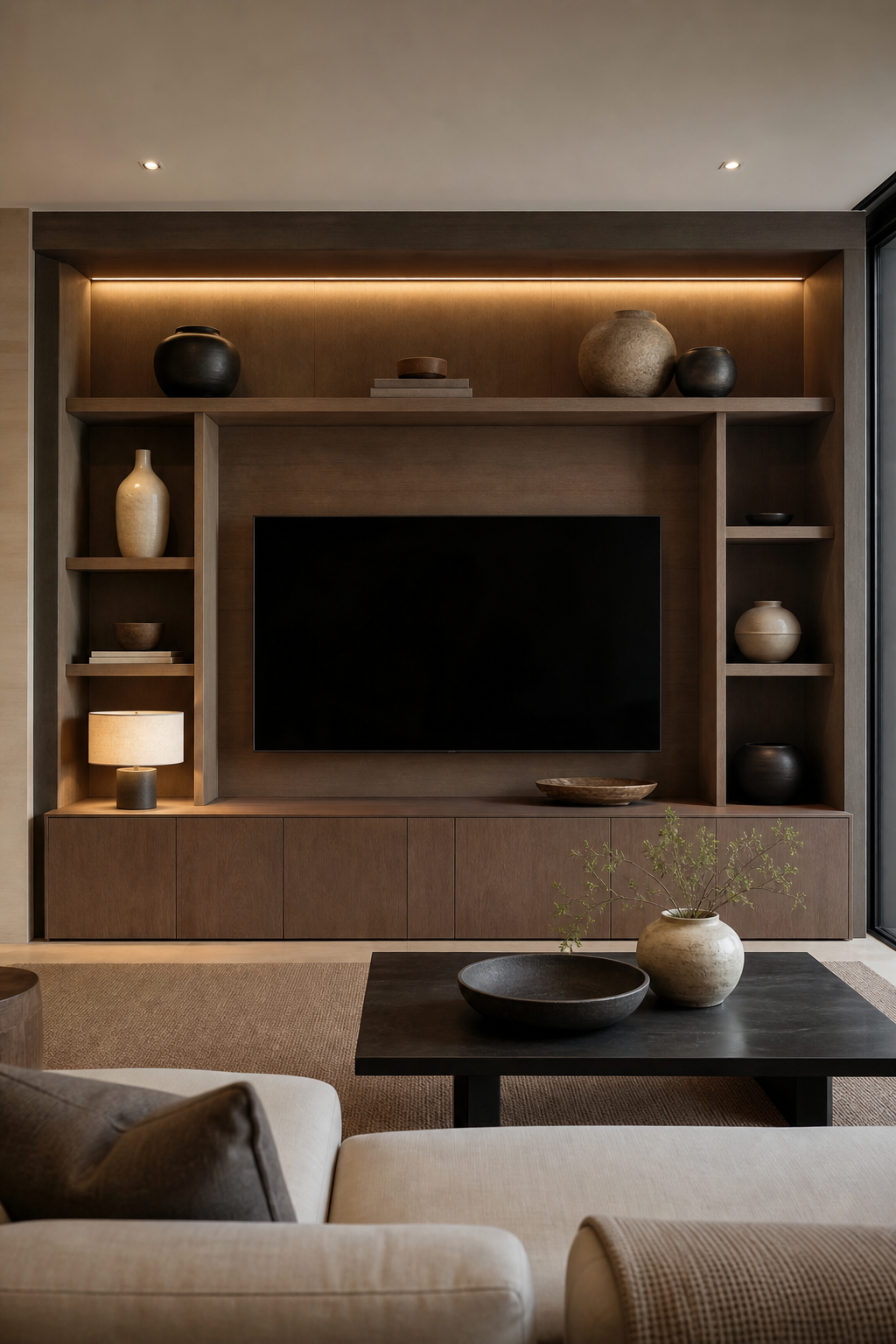
Built-in shelves can make a living room feel collected when they are edited carefully. Start with books, then add pottery, framed art, woven boxes, and a few sculptural objects. Vary the heights and leave some negative space so the arrangement can breathe. A cozy shelf does not need many accessories; it needs scale, rhythm, and materials that relate to the rest of the room. Use baskets for practical storage and lean art behind smaller objects to create depth. When shelves look considered rather than packed, they bring personality without visual noise.
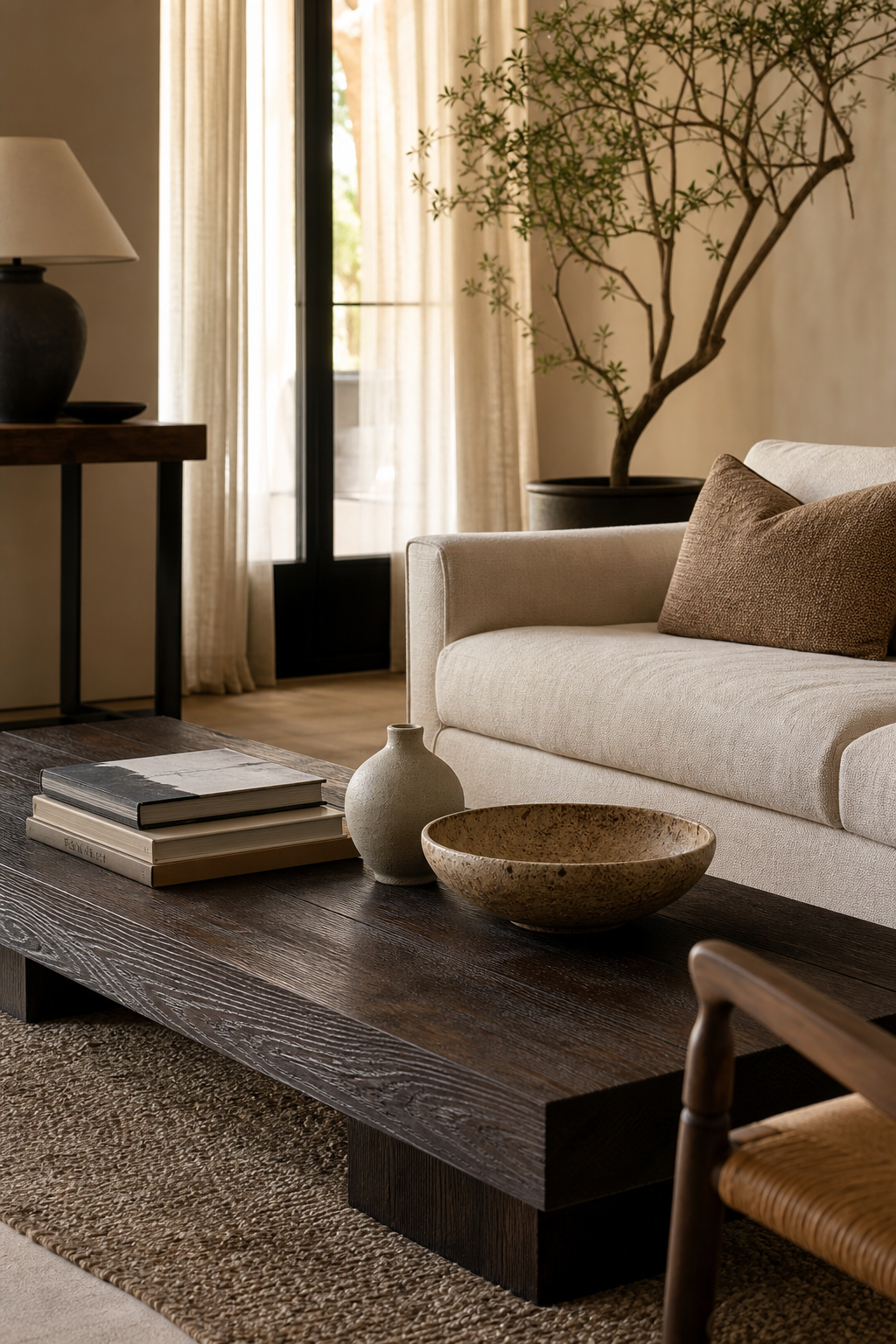
Bring In A Deep Coffee Table
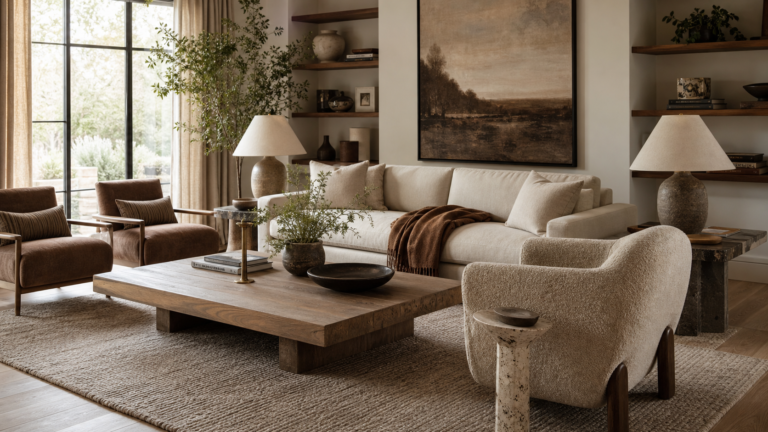
A substantial coffee table gives a cozy living room a useful center. Choose wood, stone, upholstered, or woven materials depending on what the room needs. A deep table can hold books, a tray, a bowl, and still leave space for drinks. Keep it close enough to reach from the sofa, usually about an arm’s length away. For a designer look, mix shapes on the surface: a rectangular book stack, round bowl, small vase, and one lower object. The table should make the room feel gathered, not crowded, and it should support real use every day.
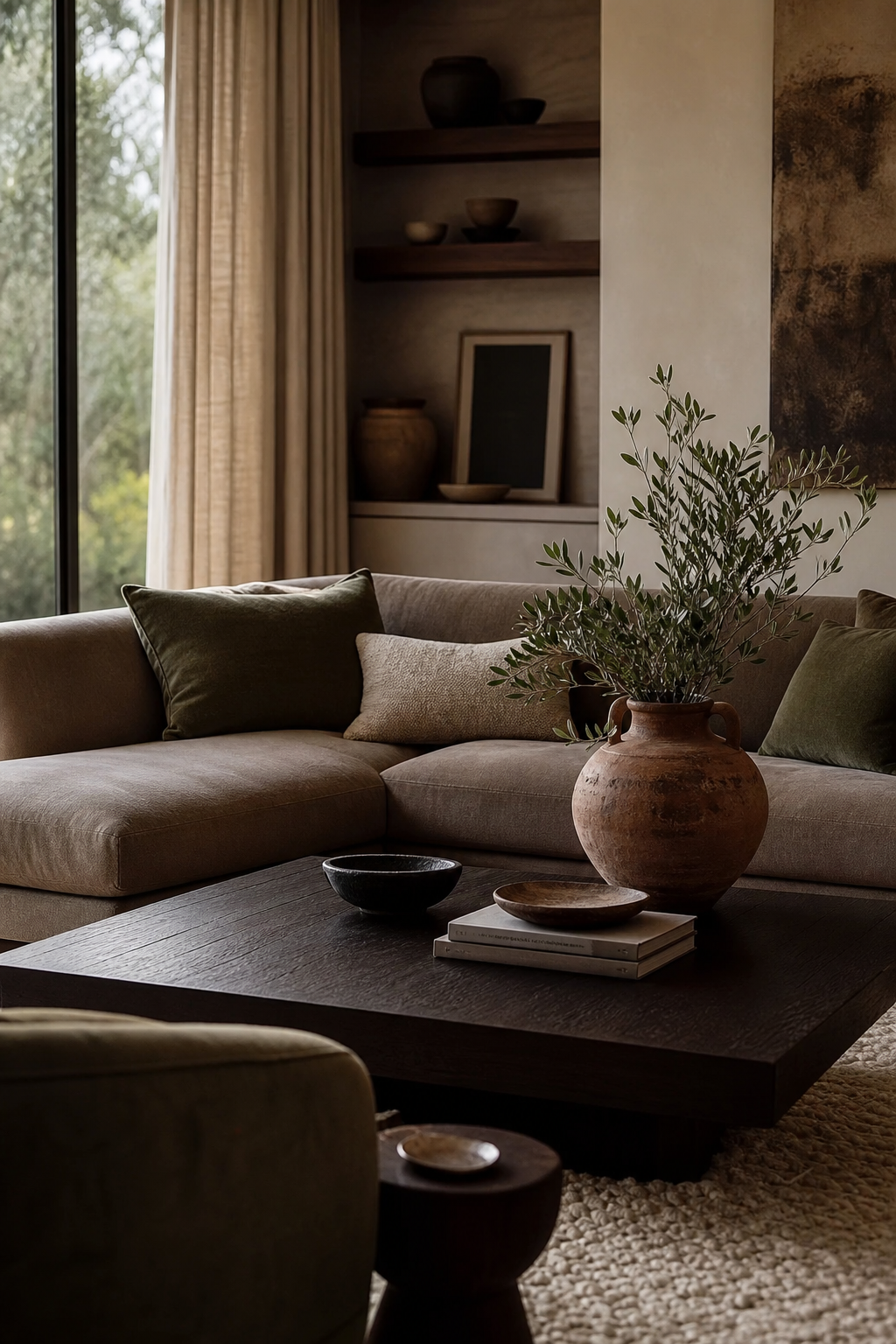
Use Earth Tones Without Going Flat
Earth tones are naturally cozy, but they need contrast to look designed. Mix warm white, mushroom, clay, olive, camel, rust, charcoal, or deep brown in different values. If every piece sits in the same beige range, the room can feel washed out. Add depth through dark wood, black metal, aged brass, or a stronger accent pillow. Texture also keeps earth tones alive: nubby linen, smooth leather, rough ceramic, and soft wool all catch light differently. A controlled palette makes the room restful, while the contrast keeps it visually interesting.
Add One Oversized Piece Of Art
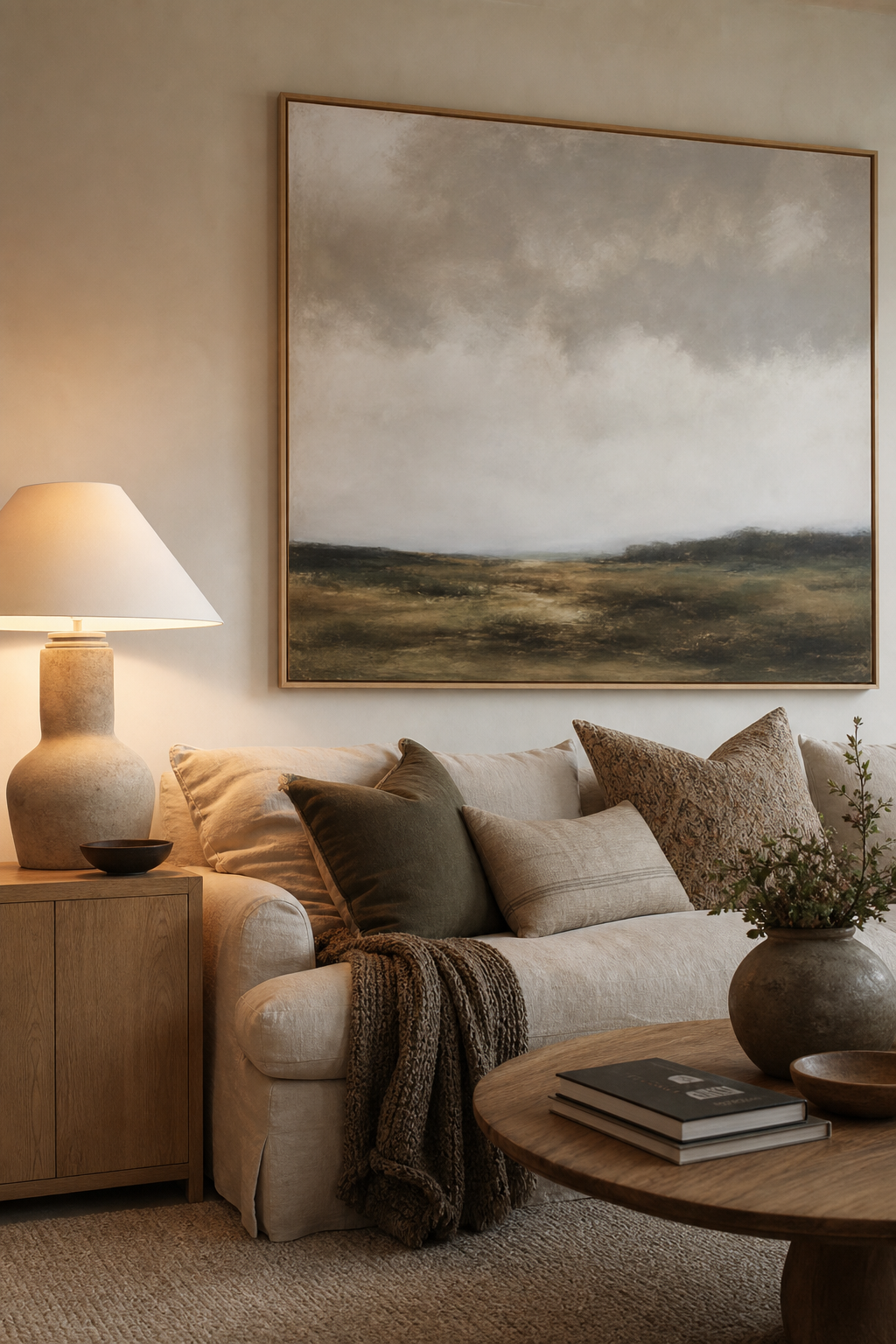
One large artwork can make a cozy living room feel more intentional than several small pieces scattered around. Choose art that supports the mood: a soft landscape, abstract composition, black-and-white photograph, or tonal textile piece. Hang it at a human height and relate the frame to the room’s finishes. Oversized art gives the seating area a visual anchor and prevents the walls from feeling empty. It can also introduce a quiet accent color that repeats in pillows, books, or ceramics. The key is scale. A confident piece makes the room feel designed without adding clutter.
Layer Pillows With Different Scales
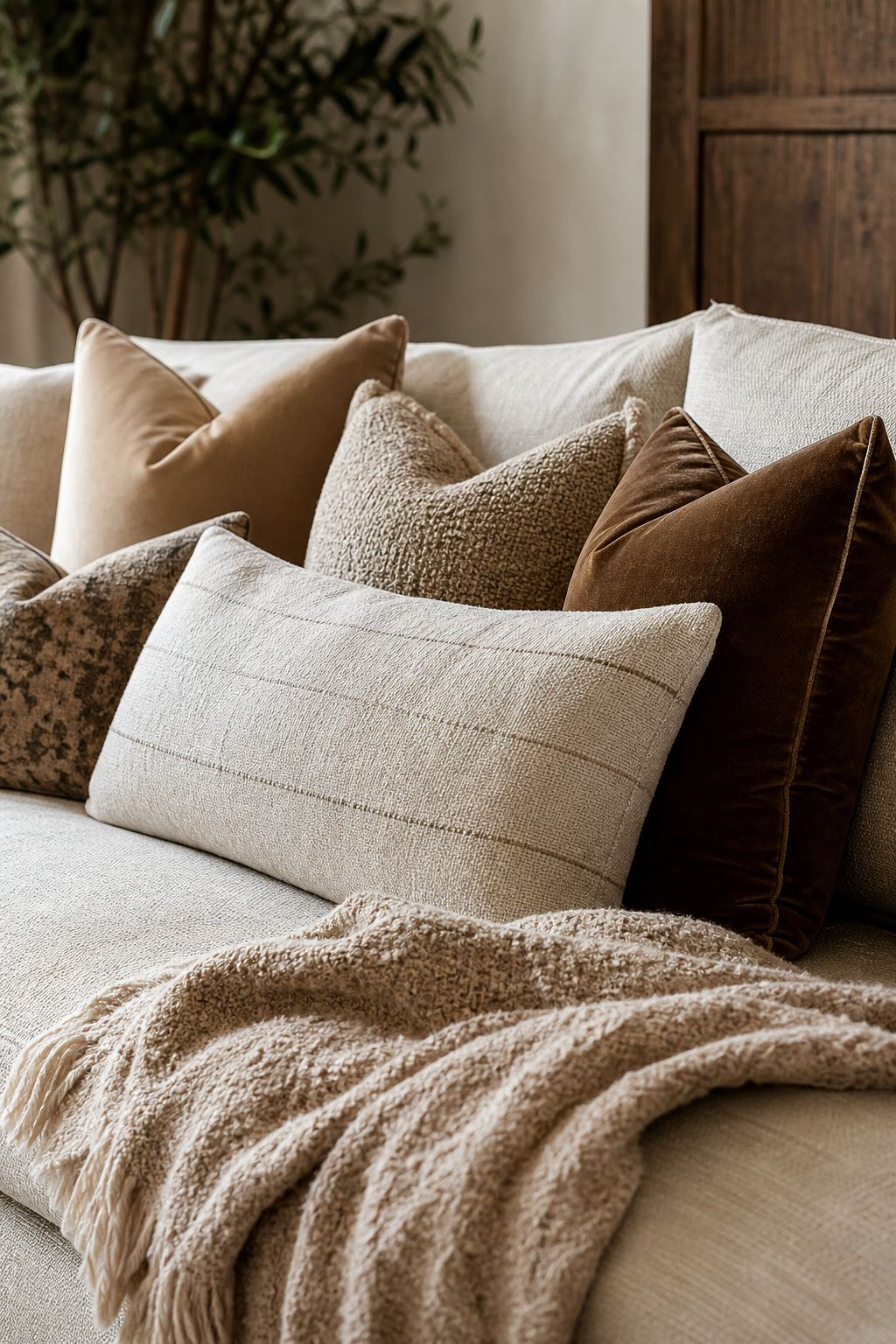
Pillows make a living room cozier when they are layered with restraint. Use varied sizes, textures, and a limited palette instead of many unrelated patterns. A large linen pillow, a smaller velvet or wool pillow, and one lumbar often look polished on a sofa. Mix one subtle pattern with solids so the arrangement has depth without feeling busy. Choose inserts that hold shape but still look comfortable. The designer trick is leaving space to sit; pillows should soften the room, not take over the furniture. A few good pillows can shift the entire mood of the seating area.
Let Wood Add Warmth
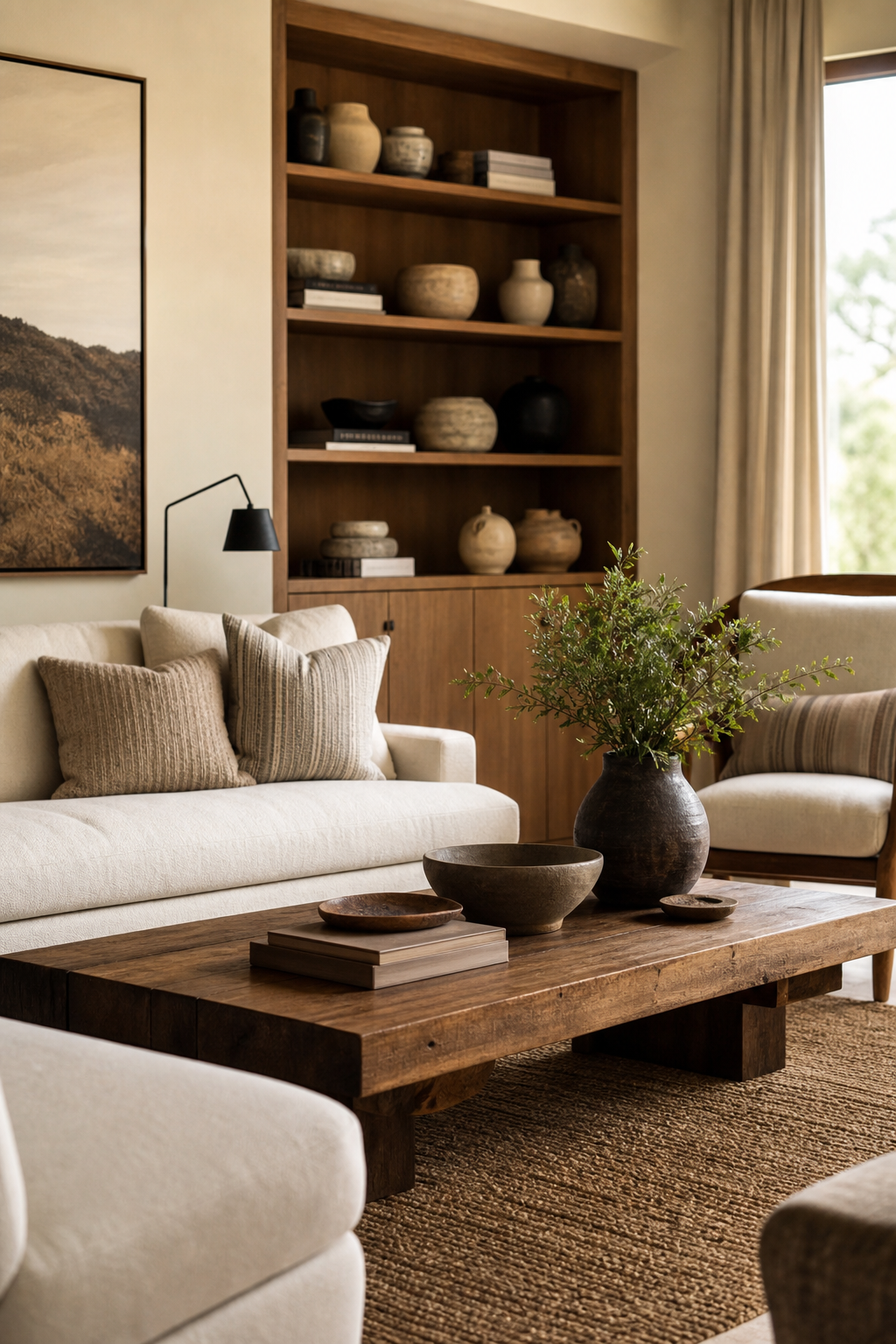
Natural wood keeps a cozy living room from feeling too polished or cold. Use it through a coffee table, side table, shelving, picture frames, ceiling beams, or a media cabinet. The wood tone should relate to the room’s palette, but it does not need to match every other piece exactly. Oak feels light and relaxed, walnut adds depth, and reclaimed wood brings character. Balance wood with soft upholstery and stone or ceramic so the room has material range. Even one beautiful wood piece can make a neutral room feel warmer, more grounded, and more personal.
Make A Reading Corner Feel Complete
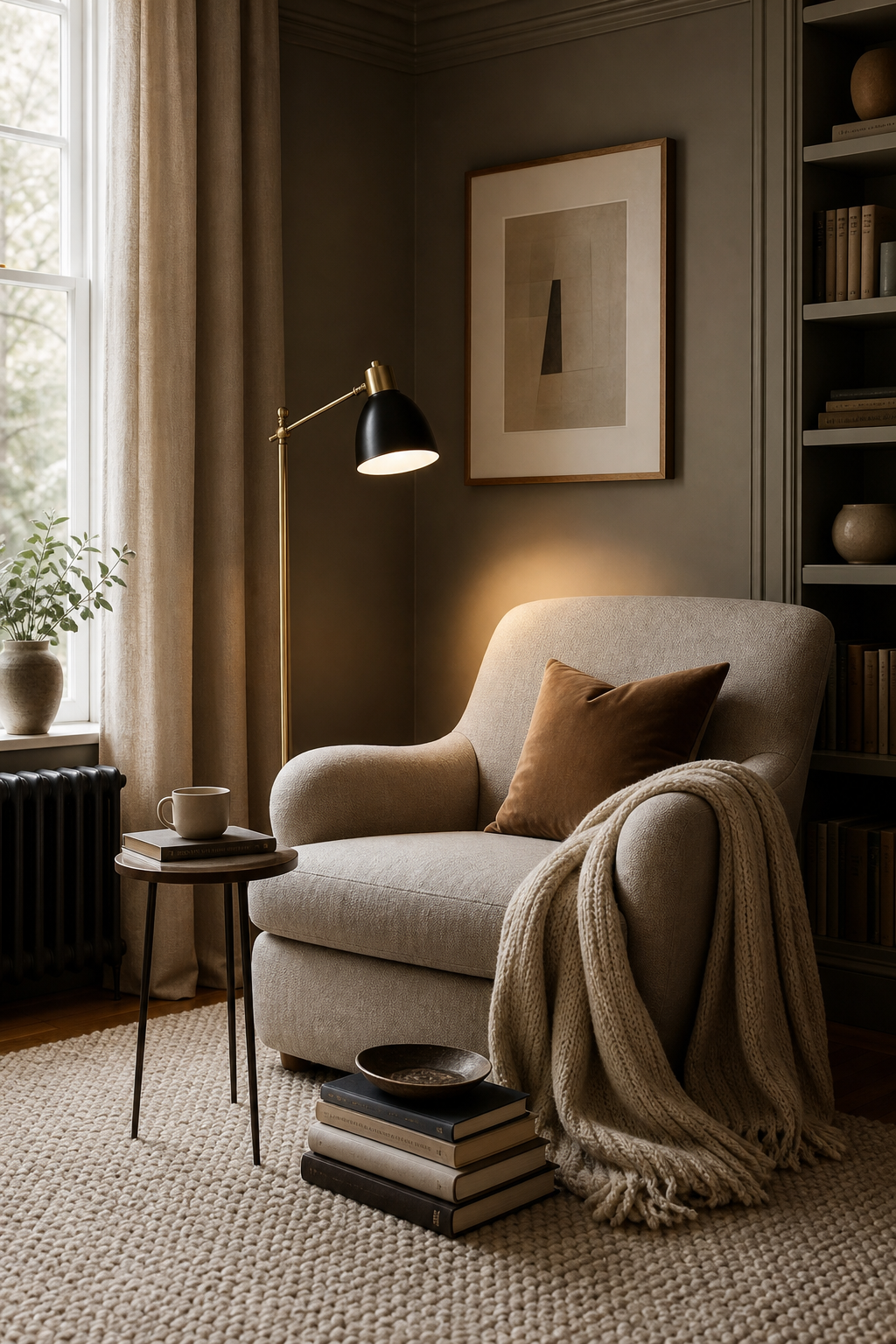
A reading corner can make a living room feel more layered because it creates a destination within the room. Use a comfortable chair, small side table, focused lamp, and a nearby basket or shelf for books. Add a throw only if it can be used easily. The corner should connect to the main palette but have enough personality to feel special. A curved chair, textured ottoman, or sculptural floor lamp can make the spot feel designed. Keep circulation clear so the corner feels inviting rather than wedged in. It is a small arrangement that adds a lot of warmth.
Design Around The Television Calmly
A television does not have to ruin a cozy designer living room. Treat it as part of a larger composition instead of letting it float alone. Use a low wood media cabinet, surrounding shelves, dark wall color, or framed artwork nearby to balance the screen. Keep wires hidden and avoid crowding the console with small objects. A few books, a vessel, and a tray are usually enough. The seating should still feel comfortable for watching, but the room should not become a theater unless that is the goal. A calm media wall lets the space stay warm and practical.
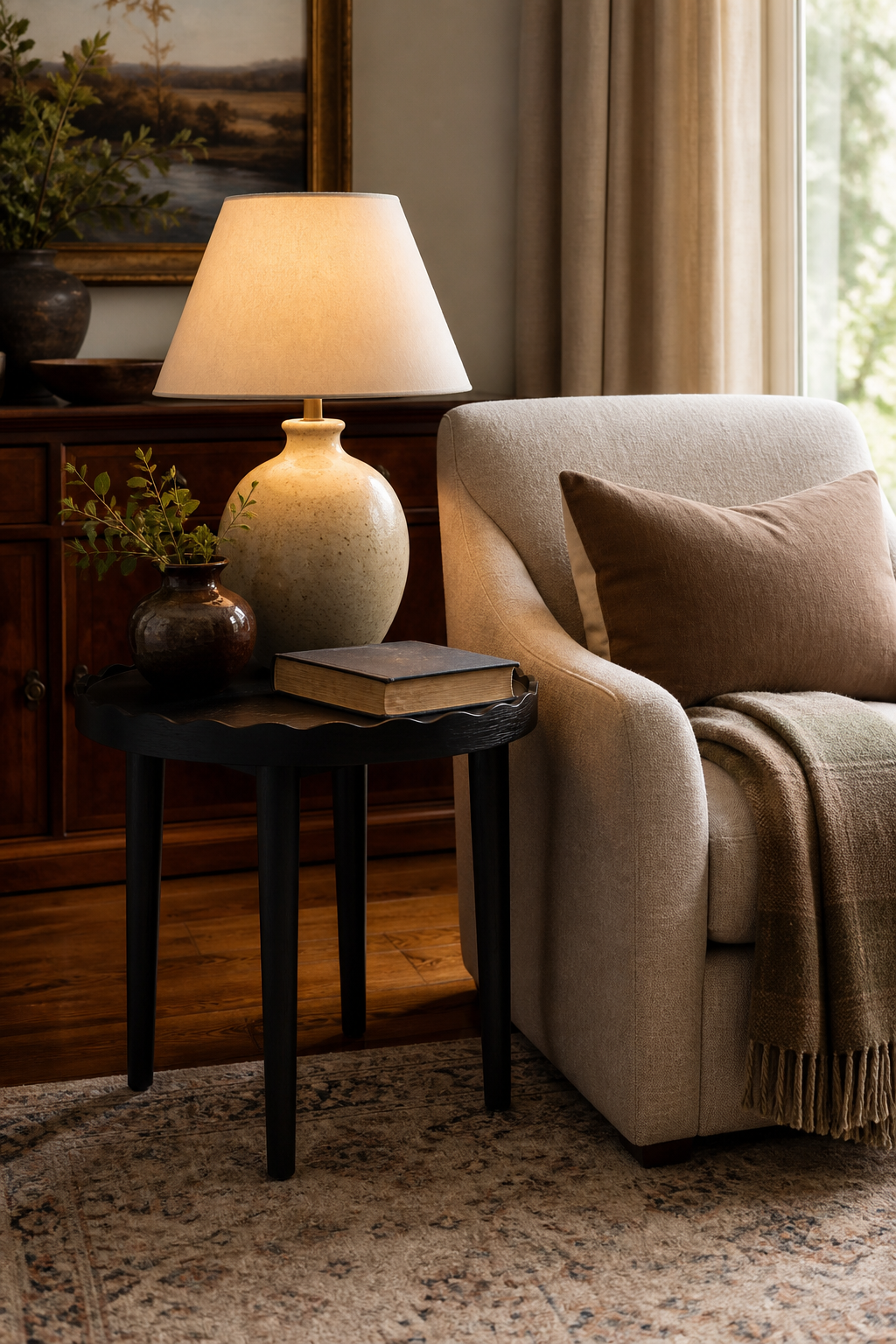
Use Side Tables Where Life Happens
Side tables are small, but they make a living room feel much more comfortable. Every main seat should have a place for a drink, book, phone, or lamp. Choose tables with character: stone tops, turned wood bases, metal drinks tables, nesting tables, or woven textures. The height should be close to the sofa or chair arm so it is easy to use. Style them lightly with a lamp, coaster, or small vase, then leave space for daily life. This practical detail makes the room feel hospitable and prevents the coffee table from doing all the work.
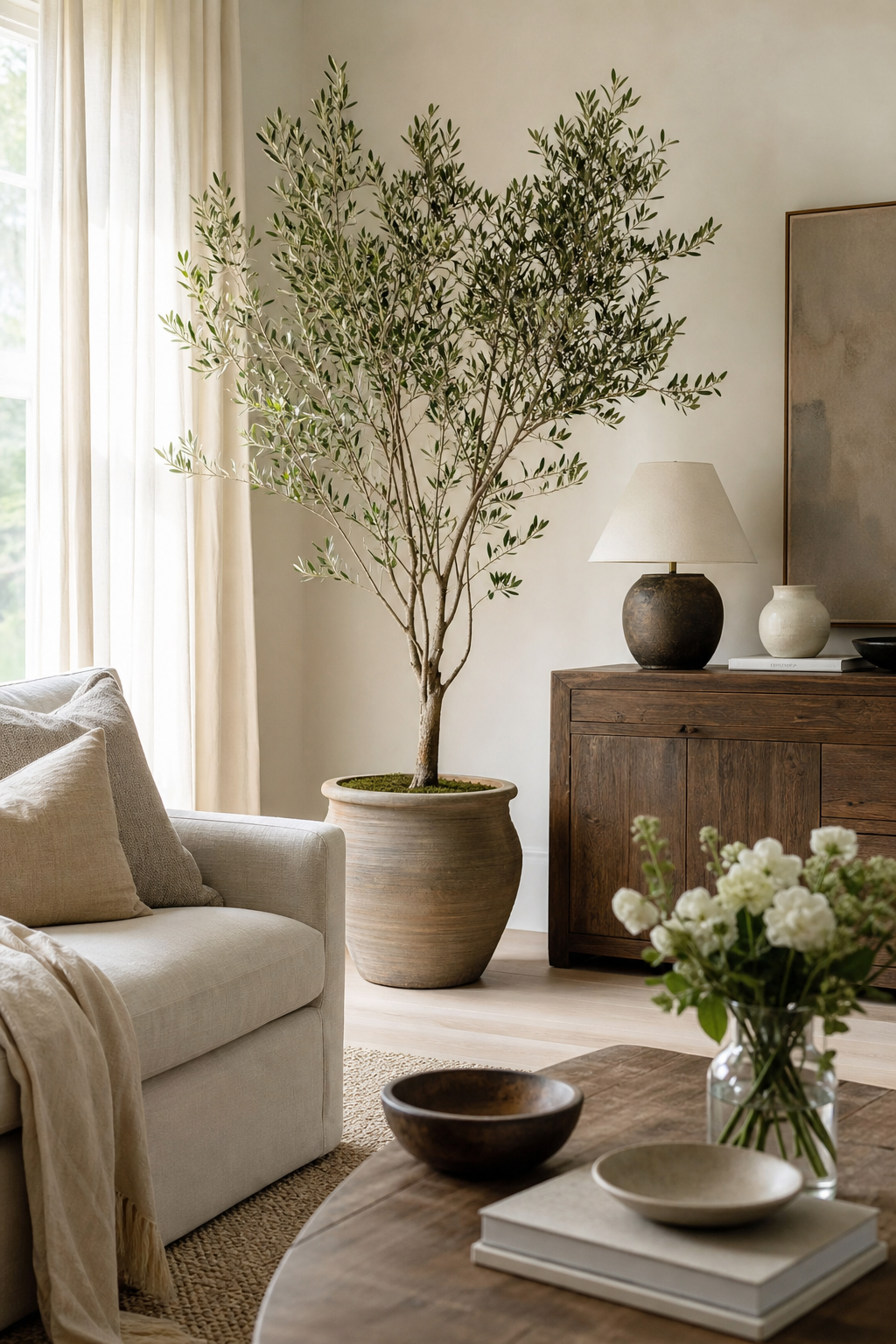
Bring Greenery In For Shape
Greenery gives a cozy living room life, but it works best when chosen for shape and scale. A single olive tree, fiddle leaf fig, fern, or branch arrangement can soften a corner and break up straight furniture lines. Use a planter that belongs to the room, such as ceramic, stoneware, woven fiber, or aged terracotta. Avoid scattering too many small plants across every surface. One strong plant near a window or beside a cabinet often feels more designed. Greenery also helps connect the room to the outdoors, which makes the whole space feel fresher and more relaxed.
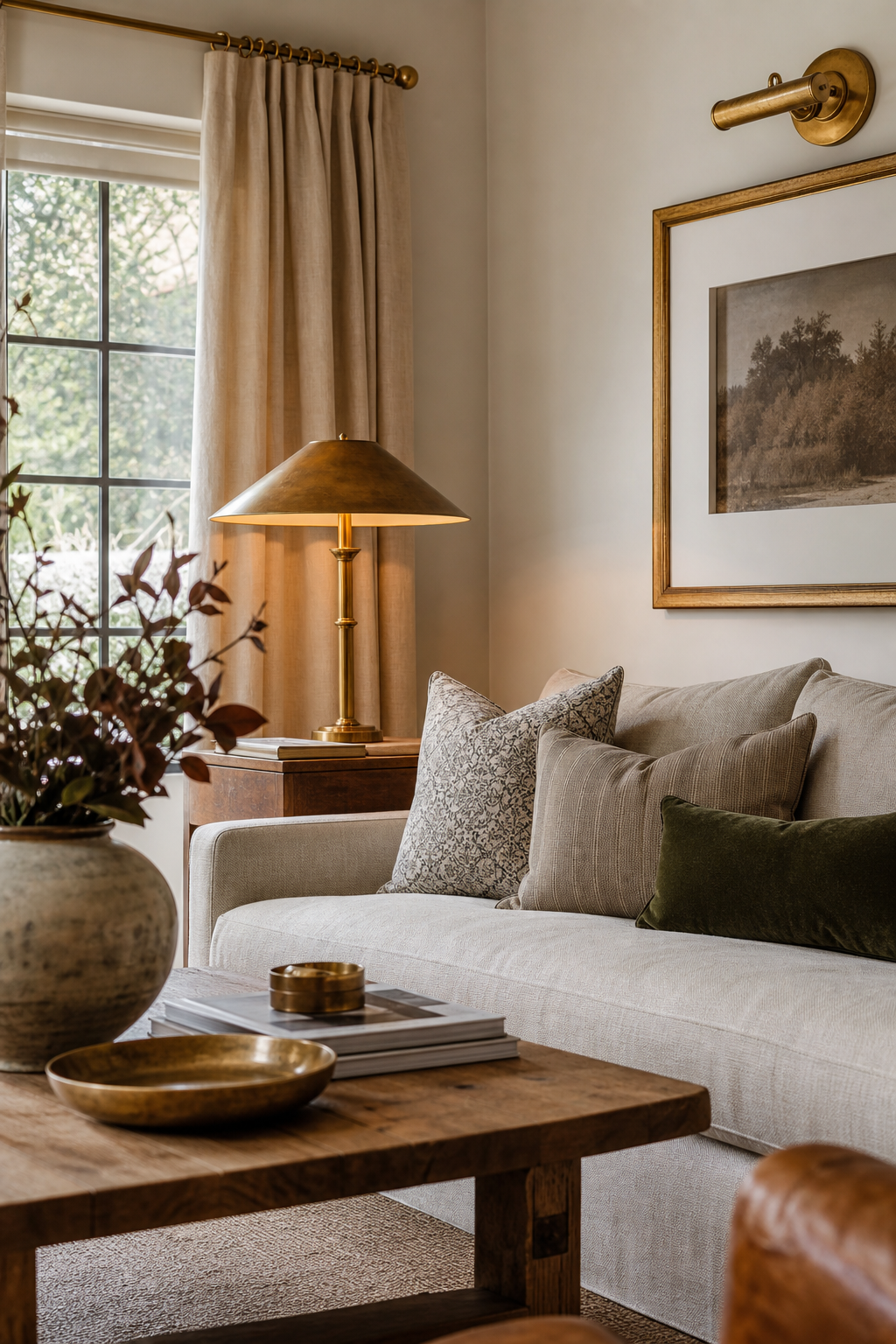
Repeat Warm Metal Finishes
Warm metal finishes add a quiet designer thread through a cozy living room. Repeat aged brass, bronze, or antique gold in two or three places, such as a lamp base, picture frame, curtain rings, or side table detail. The repetition should feel natural rather than matched from a set. Warm metals look especially good against linen, wool, dark wood, and plaster walls because they catch lamp light softly. If the room already has black hardware, mix in brass carefully through smaller accents. A few thoughtful metallic notes can make the room feel polished without becoming shiny.
Add An Ottoman For Softness
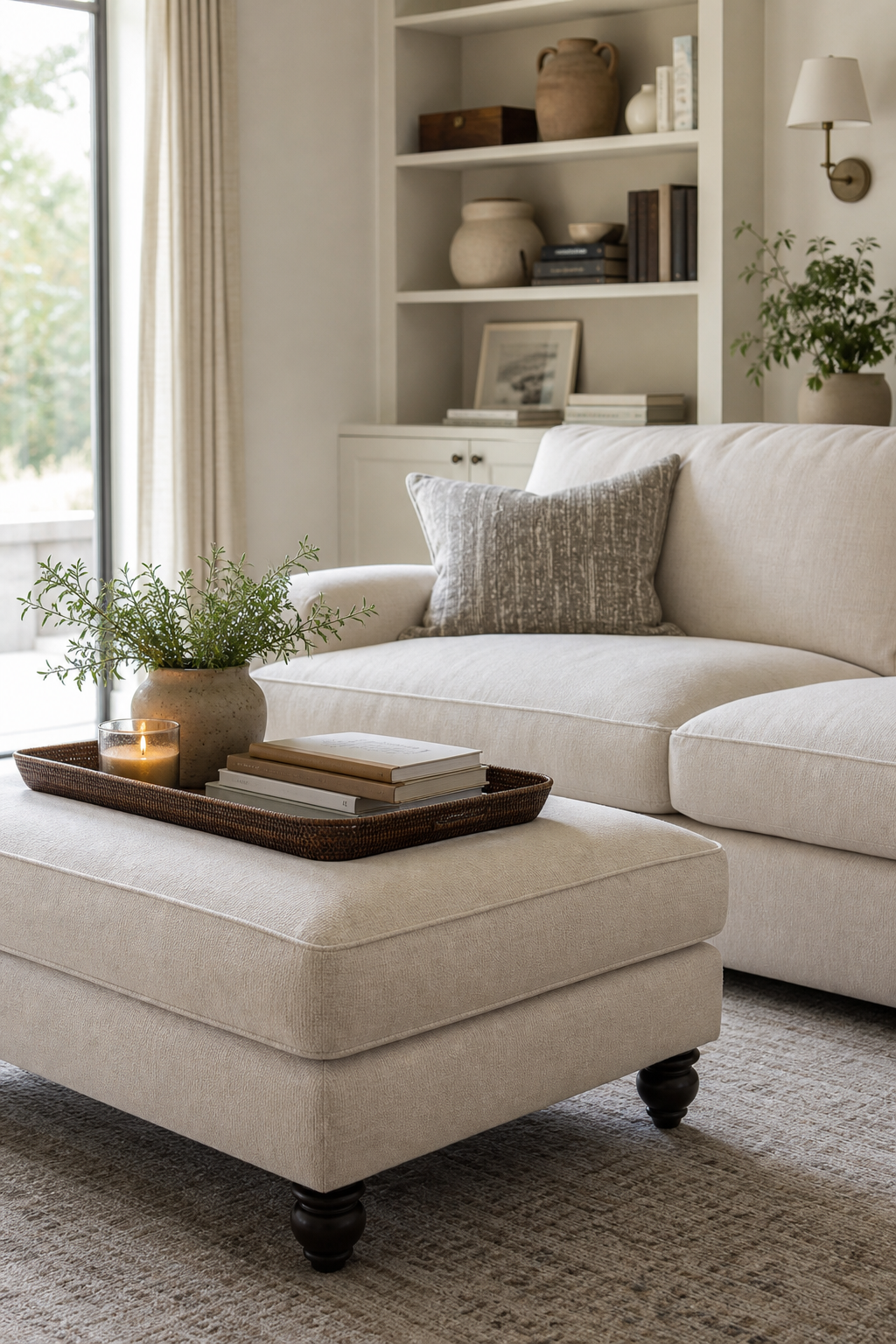
An ottoman can make a living room feel softer than a hard coffee table, especially in family spaces or small rooms. Choose one with tailored upholstery so it still looks designed. A tray on top can hold drinks, books, or a candle when needed. Round ottomans soften angular furniture, while rectangular ottomans work well with long sofas. The fabric should be durable enough for real use: wool blend, performance linen, leather, or textured cotton. An ottoman invites feet up, extra seating, and a more relaxed posture, which is exactly what a cozy living room should support.
Drape Throws Where They Are Actually Used
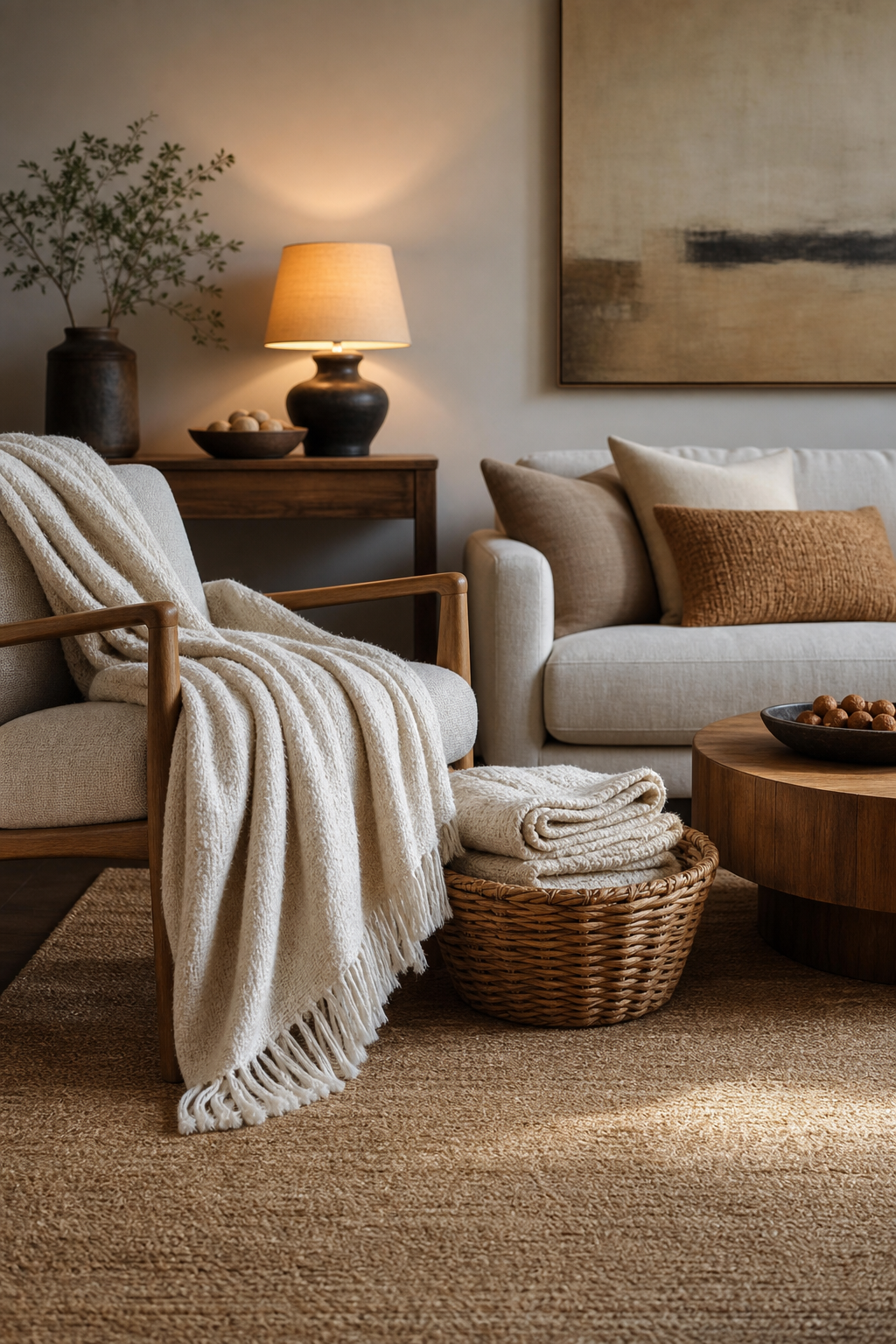
Throws make a living room look cozy, but they should also be easy to reach. Keep one over the arm of a chair, folded across the back of a sofa, or tucked in a basket near the seating area. Choose a fabric with enough weight to feel generous, such as wool, cashmere blend, brushed cotton, or a chunky knit. The color should either blend into the palette or repeat an accent already in the room. Avoid scattering too many blankets, which can make the space feel messy. One or two well-placed throws add texture, warmth, and a sense of everyday comfort.
Keep The Layout Intimate In Open Plans
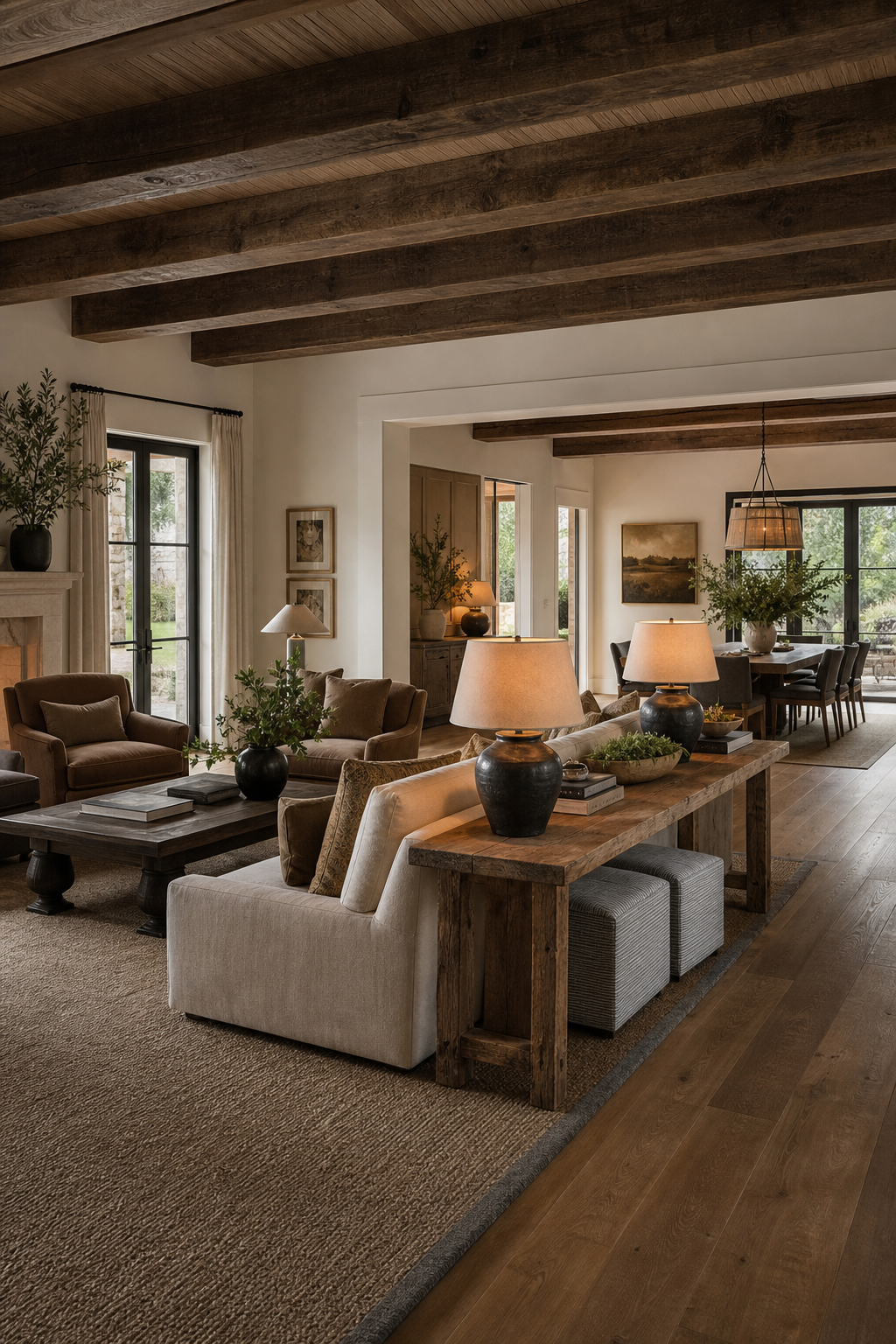
Open-plan rooms can feel cold when the furniture spreads too far apart. Create intimacy by defining the living area with a rug, sofa back, console table, or pair of chairs. Keep the seating closer than you might think, then leave clear walkways around the group. A lamp behind the sofa or a console with art can make the floating arrangement feel anchored. Use repeated materials from nearby dining or kitchen zones so the room connects without blending into everything else. The goal is a cozy island inside the larger space, where conversation feels natural and the boundaries are clear.
Finish With Evening Texture
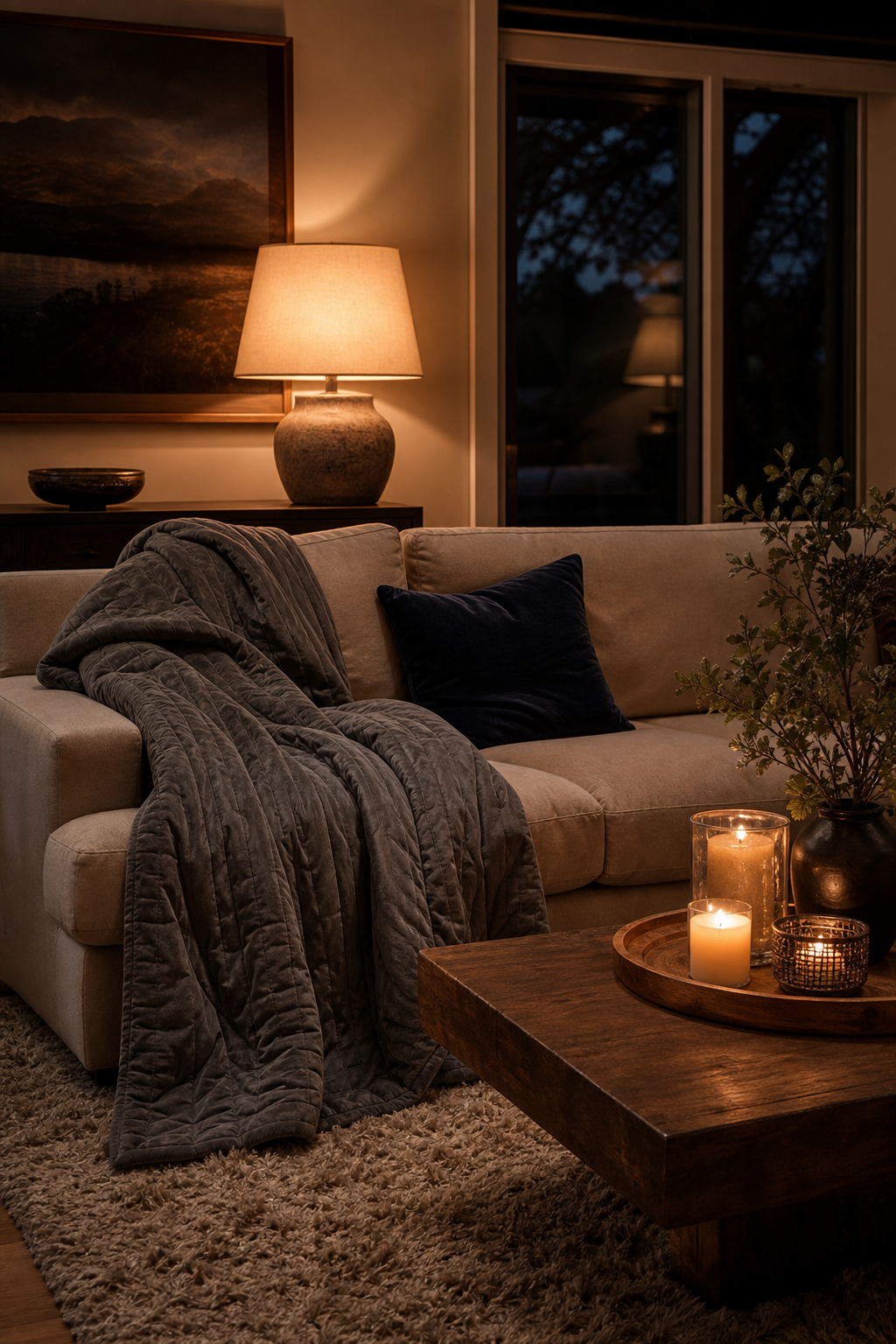
The final cozy layer is what the room feels like after sunset. Add a throw with real weight, a lamp with a warm shade, candles on a tray, and perhaps one darker accent to give the room depth. Evening texture should feel usable, not staged. Keep a blanket within reach, use dimmers, and make sure the room has a place to set down a cup. A designer living room still needs to support ordinary rituals: reading, talking, watching a film, or winding down. When the lighting and textures work at night, the room feels genuinely complete.
A cosy living room comes from details that support both comfort and composition. Start with the layout, because the room has to invite conversation before the styling can work. Then build warmth through rugs, curtains, layered lighting, natural wood, tactile fabrics, and a few personal objects with scale. The designer look comes from restraint: fewer stronger choices, repeated materials, and clear places for daily life to happen. When the seating is usable, the lighting is soft, and the textures feel considered, the living room becomes more than pretty. It becomes the most welcoming room in the home.