24 Boho Living Room Ideas For A Cozy Designer Look
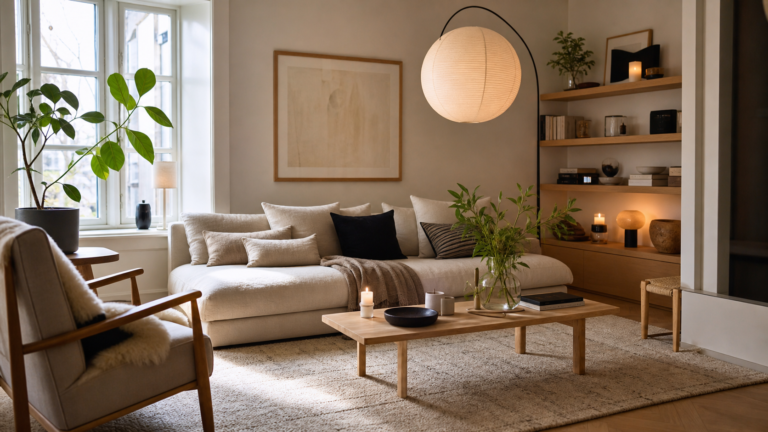
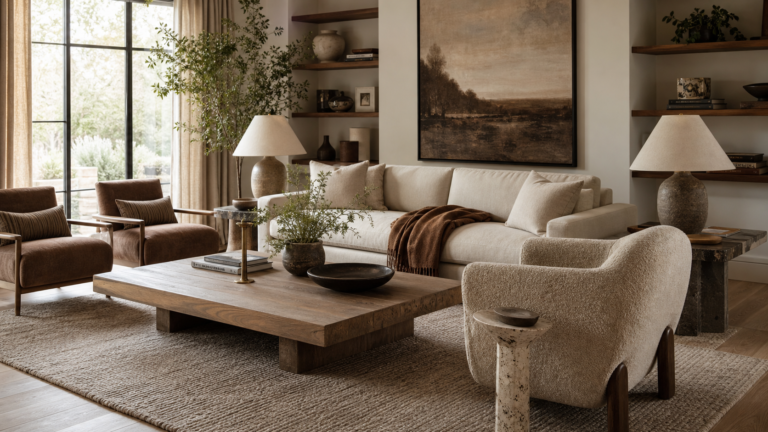
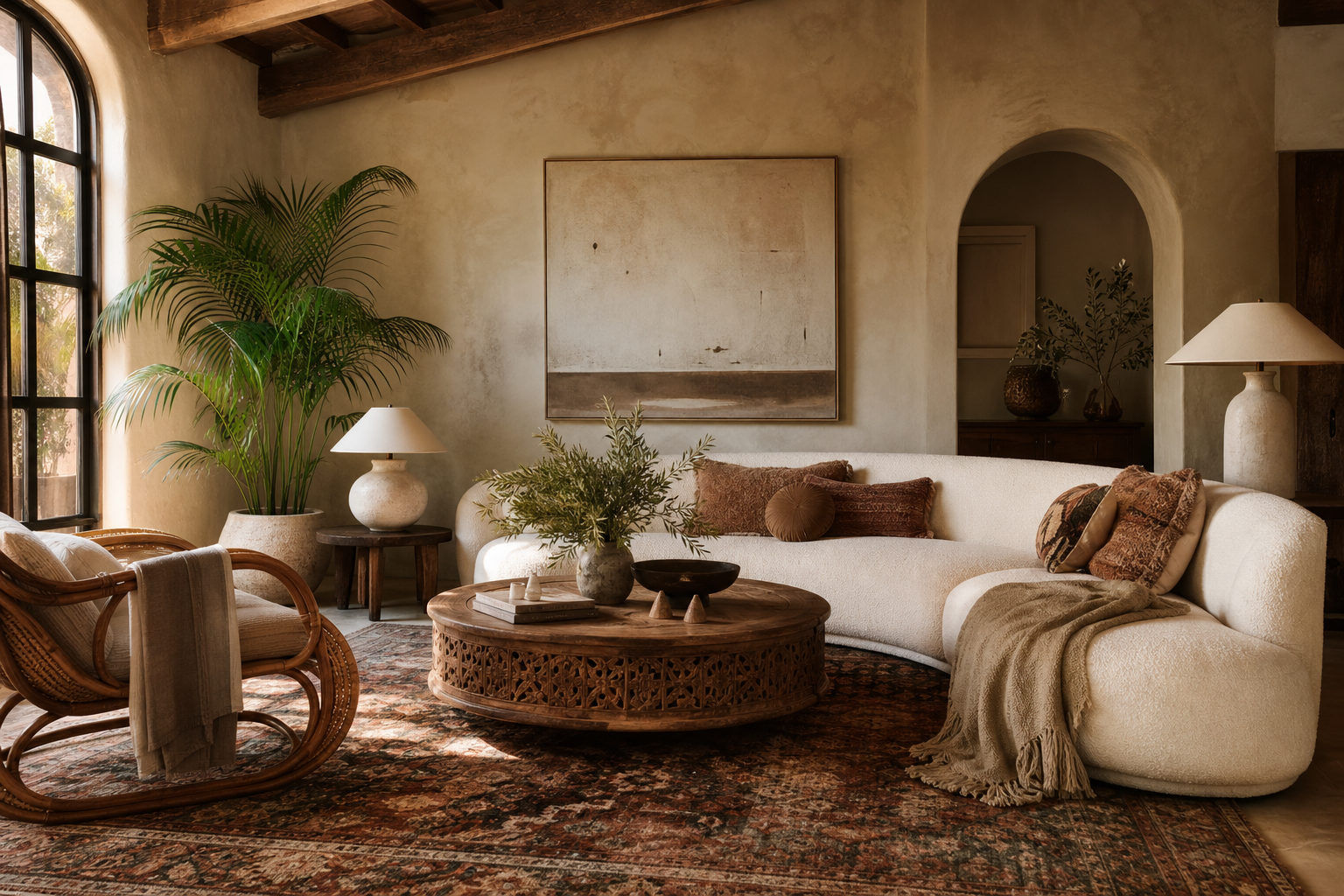
A beautiful boho living room should feel collected, comfortable, and quietly intentional. The best rooms in this style are not busy piles of pattern; they are layered spaces where texture, light, shape, and personal objects work together. Think linen instead of shine, patina instead of perfection, and a room that invites slow mornings as easily as evening guests.
These ideas focus on the designer version of boho: cozy, edited, and practical enough for everyday life. Use one idea to refresh a corner, or combine several for a living room that feels warm, soulful, and polished without losing its relaxed spirit.
Start With A Warm Neutral Base
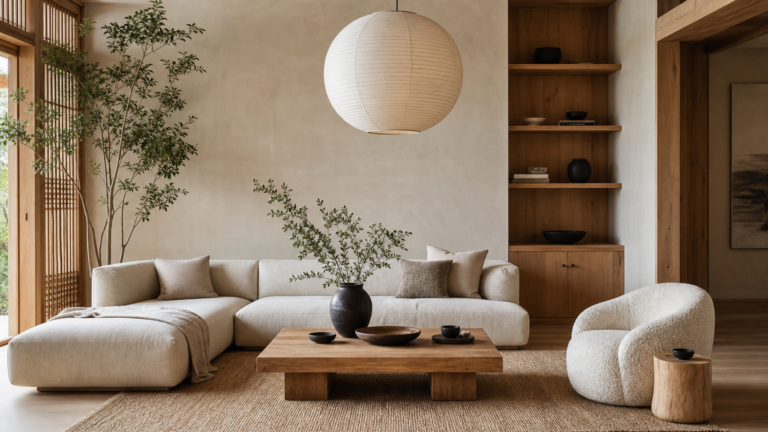
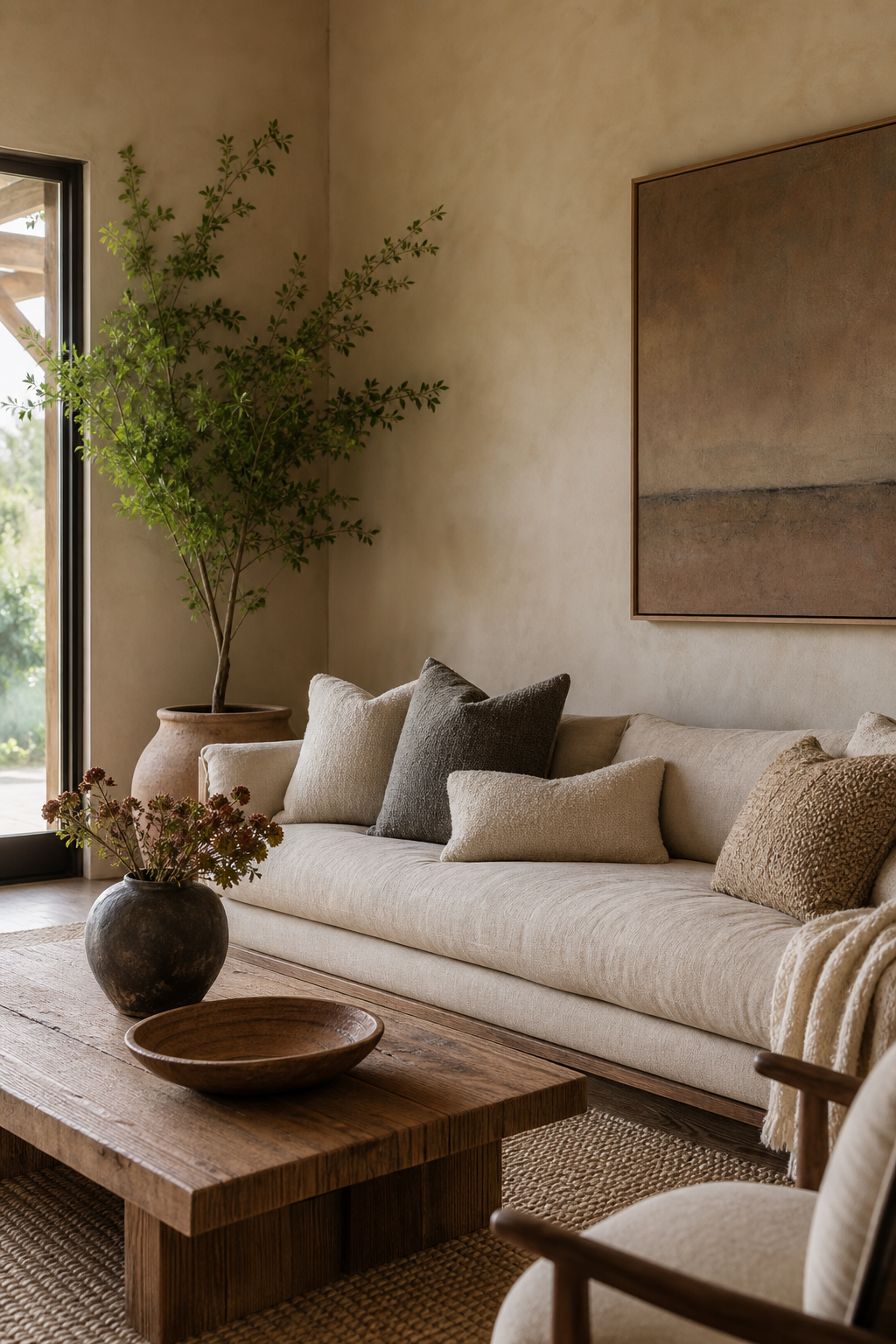
A designer boho living room usually begins with a quiet base rather than a loud one. Choose walls in warm white, clay, oatmeal, mushroom, or soft sand so the room feels relaxed before any pattern appears. This keeps woven pieces, artwork, and vintage textiles from competing with the architecture. If your sofa is neutral, add depth through linen, boucle, raw cotton, and nubby wool instead of relying on a single bold color. The result feels cozy but not heavy. A warm base also makes seasonal changes easier, because rust pillows, olive throws, or indigo ceramics can rotate in without forcing a full redesign. Keep the largest surfaces calm, then let smaller layers bring the soul.
Layer Rugs For Instant Softness
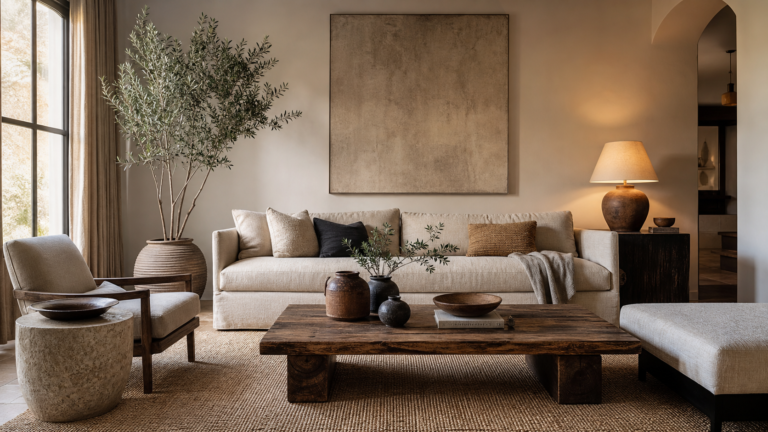
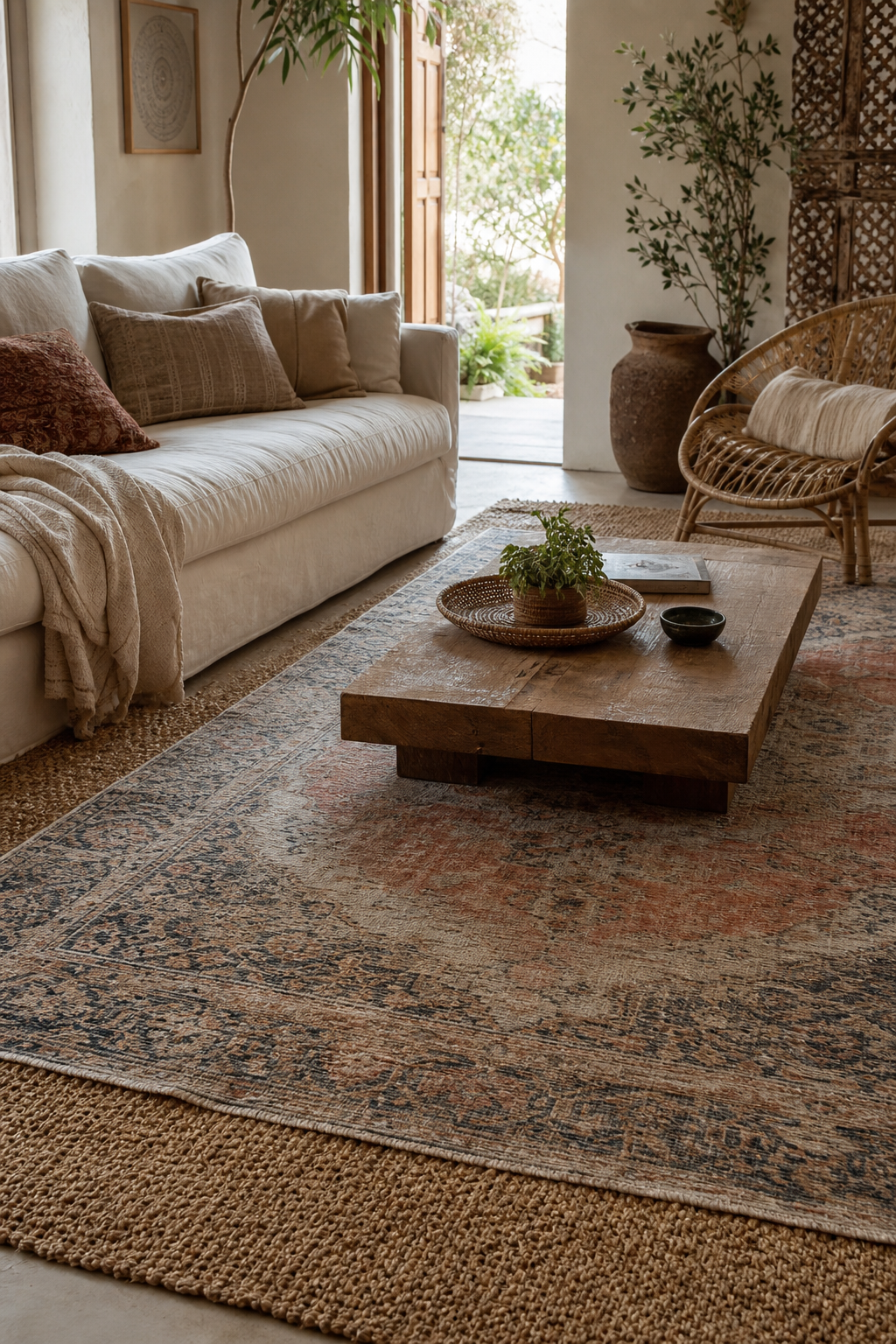
Rug layering gives a boho living room softness, age, and visual rhythm. Start with a large natural fiber rug in jute, sisal, or wool flatweave, then place a smaller vintage rug over the seating area. The bottom layer should ground the furniture, while the top layer adds color and story. Let the second rug sit slightly off center if the room feels too formal. This approach is especially useful when a treasured rug is too small for the space, because the larger foundation makes it feel intentional. Keep pile heights practical around coffee tables and chair legs. When the palette is muted, layered rugs create comfort without making the room feel cluttered.
Choose A Sofa With Relaxed Lines
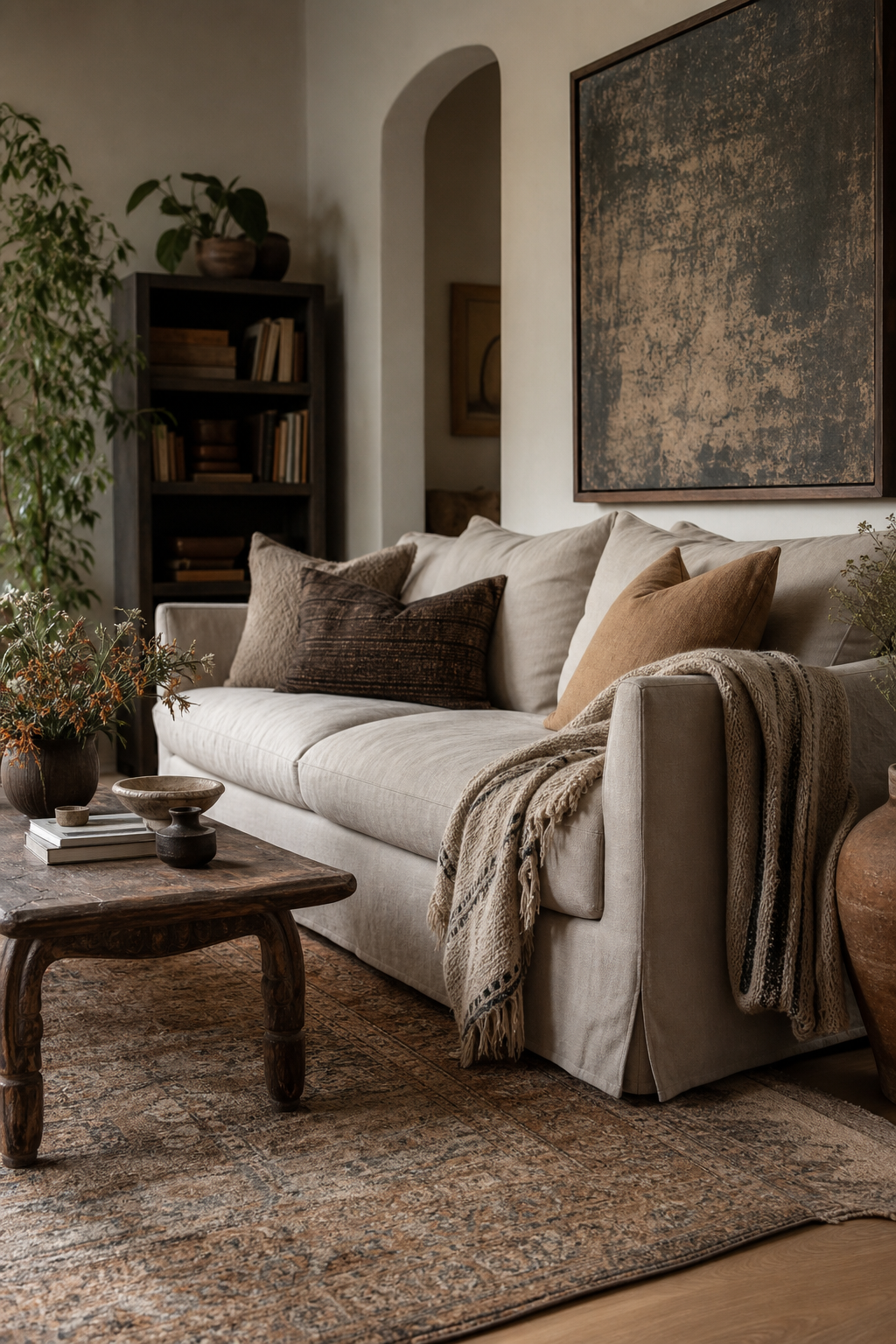
The sofa sets the tone for the whole room, so choose one that feels generous rather than stiff. Slipcovered linen, soft boucle, or a low modular shape works beautifully with boho details because the silhouette feels approachable. Avoid overly ornate upholstery if the room already has many textures. A simple sofa lets pillows, throws, art, and wood pieces shine. For a designer look, pay attention to scale: the seat should be deep enough for lounging, but not so bulky that it blocks circulation. Warm white, taupe, olive, camel, or faded charcoal are all versatile choices. Add one structured pillow among softer ones so the arrangement looks styled, not collapsed.
Mix Rattan With Heavier Wood
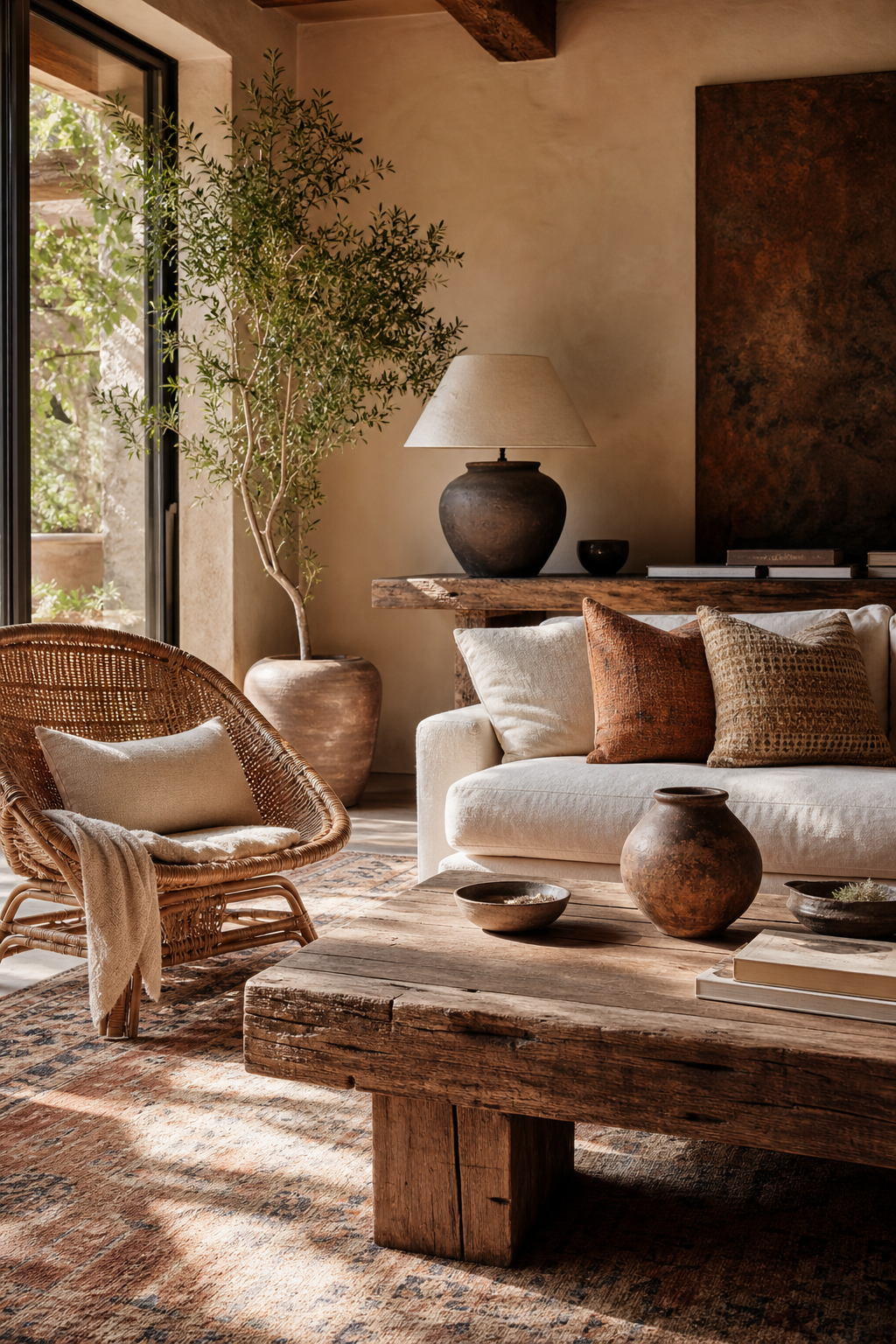
Rattan brings airiness, but a room filled only with woven furniture can feel thin. Pair it with heavier wood pieces to create balance. A rattan lounge chair looks more refined beside a chunky reclaimed coffee table, a dark walnut cabinet, or a carved side table. The contrast gives the room a collected feel, as if each piece was chosen over time. Keep the rattan shapes simple and well made, especially if they sit near patterned textiles. Too many intricate weaves can become visually noisy. Use heavier wood low in the room and lighter woven pieces around the edges. This keeps the living room grounded while still feeling relaxed and breezy.
Use Pattern In A Controlled Palette
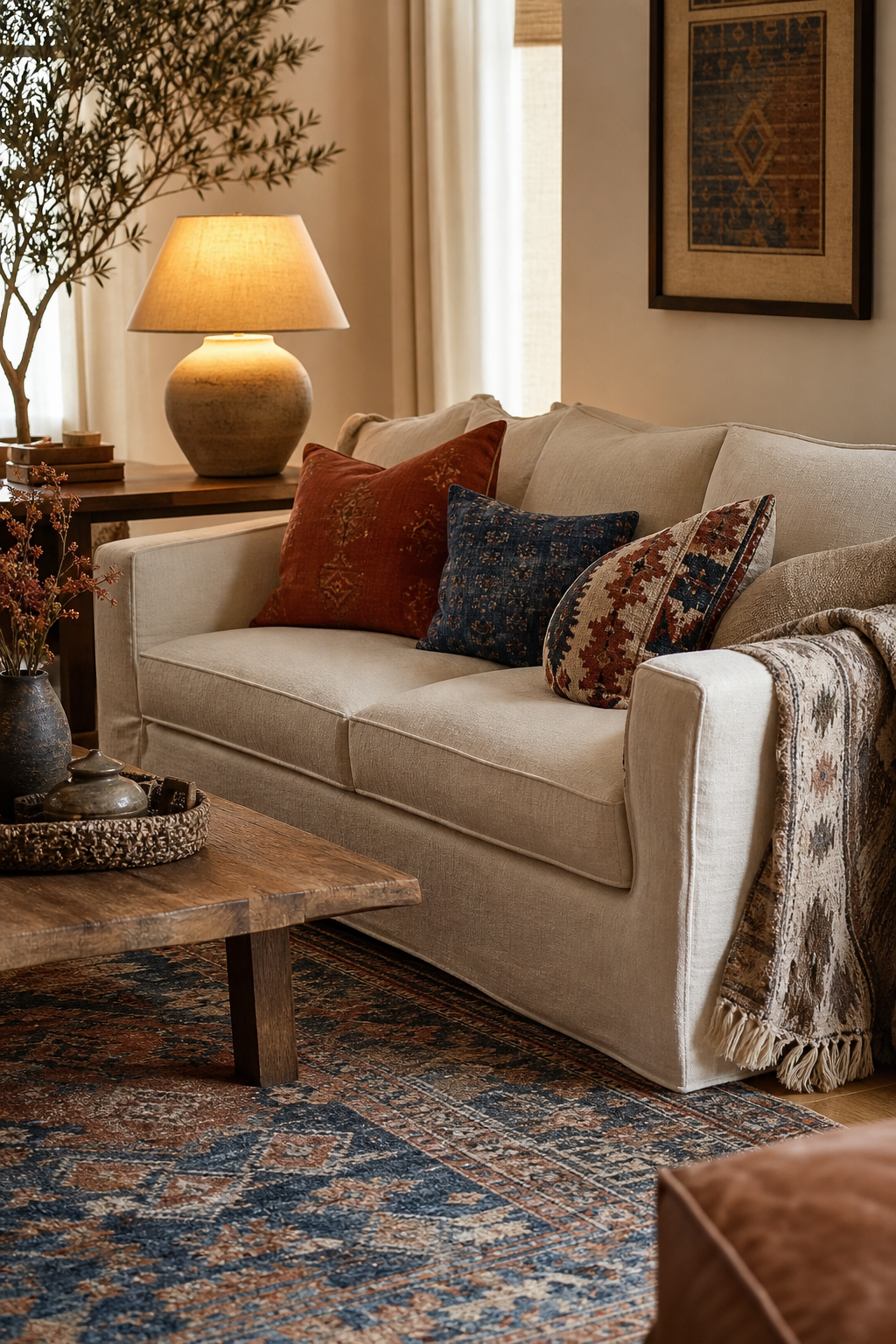
Boho style welcomes pattern, but the designer version keeps it disciplined. Choose two or three colors that repeat across pillows, rugs, and art, then vary the scale of the patterns. A small block print pillow can sit beside a larger stripe or a faded geometric rug because the palette connects them. Earthy tones such as rust, tobacco, indigo, olive, black, and cream work especially well. If every pattern has equal contrast, the room will feel restless. Let one piece be the star and keep the others quieter. This method gives the living room personality while preserving the calm, cozy feeling that makes the space easy to live in.
Add A Low Sculptural Coffee Table
A low coffee table gives a boho living room an easy, grounded feeling. Look for sculptural wood, travertine, plaster, or a softly rounded shape that feels handmade rather than shiny. The table should leave enough room for movement, especially if the seating is deep or sectional. Style it with restraint: a ceramic bowl, a stack of books, and one small vase are enough. Empty space is part of the look because it makes the room feel useful, not staged. If you love ottomans, choose one in leather, kilim, or heavy linen and pair it with a tray. The goal is casual comfort with a clear designer silhouette.
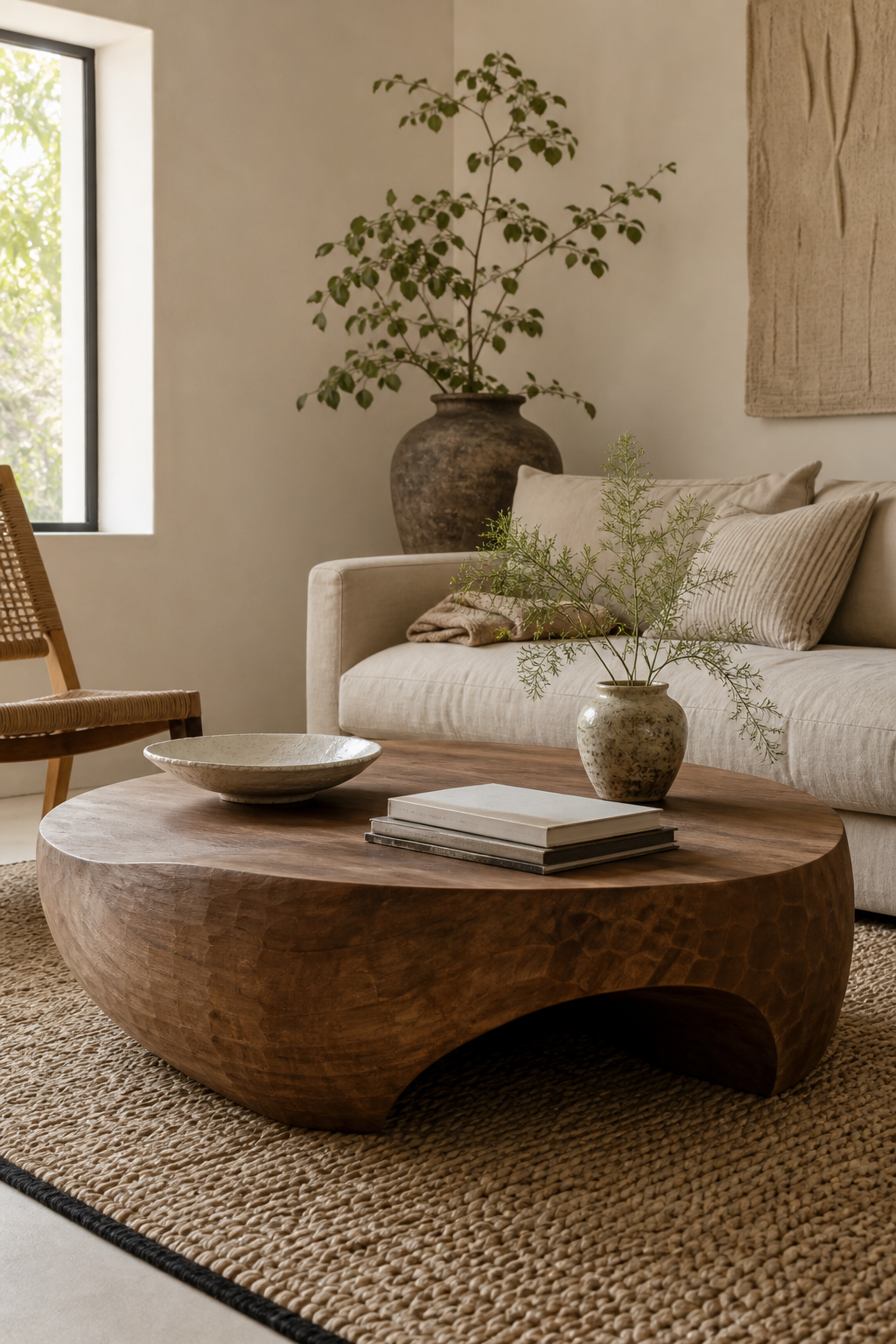
Bring In Handmade Ceramics
Handmade ceramics are one of the easiest ways to make boho decor feel elevated. Their imperfect edges and varied glazes add quiet character without shouting for attention. Use them on shelves, coffee tables, mantels, or sideboards, but avoid scattering tiny pieces everywhere. A few larger vessels usually look more expensive than many small ones. Mix matte clay, speckled stoneware, and smoke-toned glazes for depth. If the room already has strong pattern, choose simple ceramic forms. If the room is very neutral, a darker vessel can create a beautiful anchor. Fill one piece with branches or leave it empty so the shape itself becomes part of the composition.
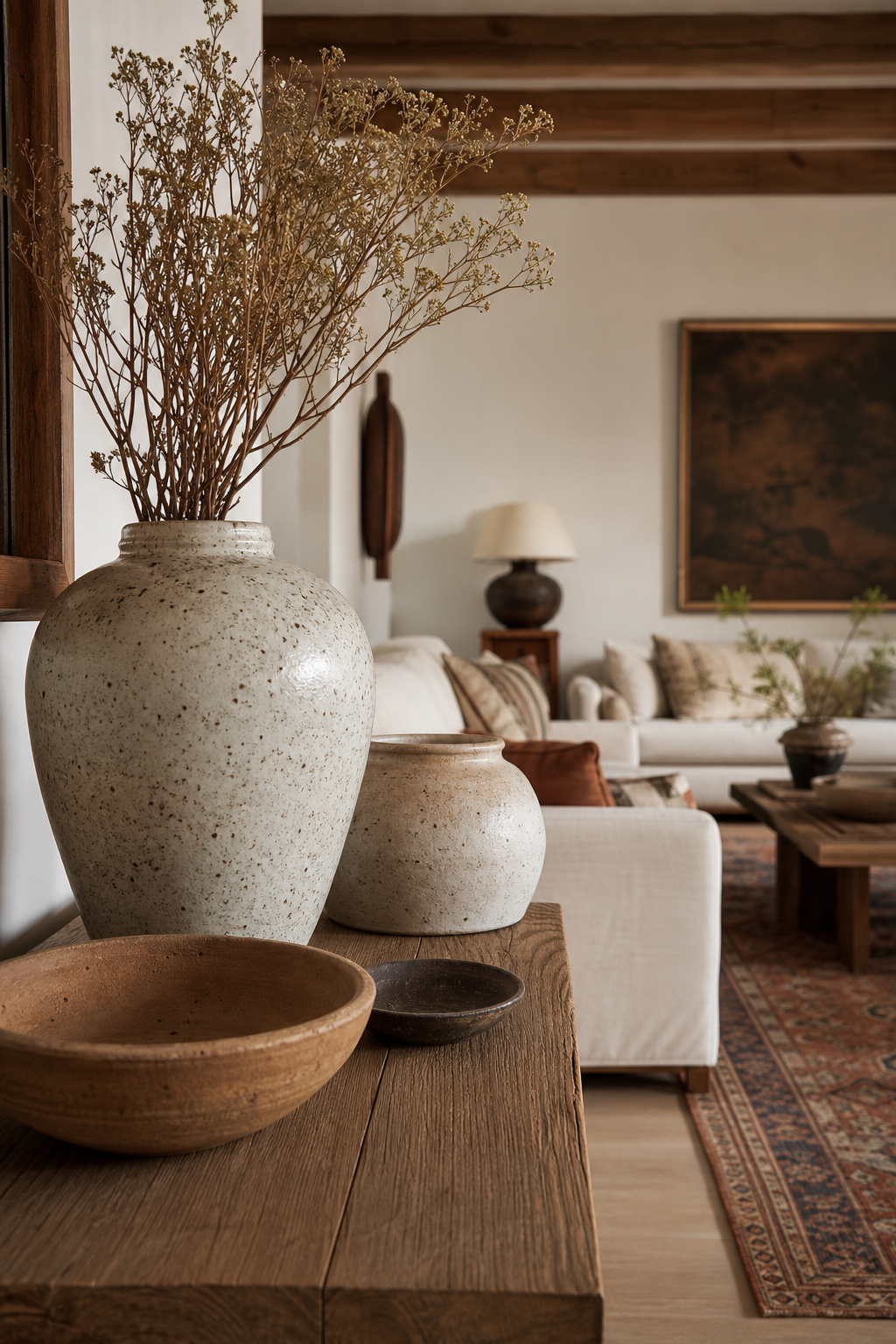
Create A Collected Gallery Wall
A boho gallery wall should feel collected, not chaotic. Mix vintage landscapes, abstract sketches, textile fragments, and personal photography, but connect the group through frame tone or color. Wood, aged brass, black, and natural oak can work together if the spacing is thoughtful. Lay the arrangement on the floor first and avoid making every piece the same size. A larger anchor print helps the wall feel designed. Leave breathing room between frames so the eye can rest. For a cozy effect, place the gallery above a sofa, reading chair, or console rather than on an empty wall with no furniture below. The composition should feel tied to the room.
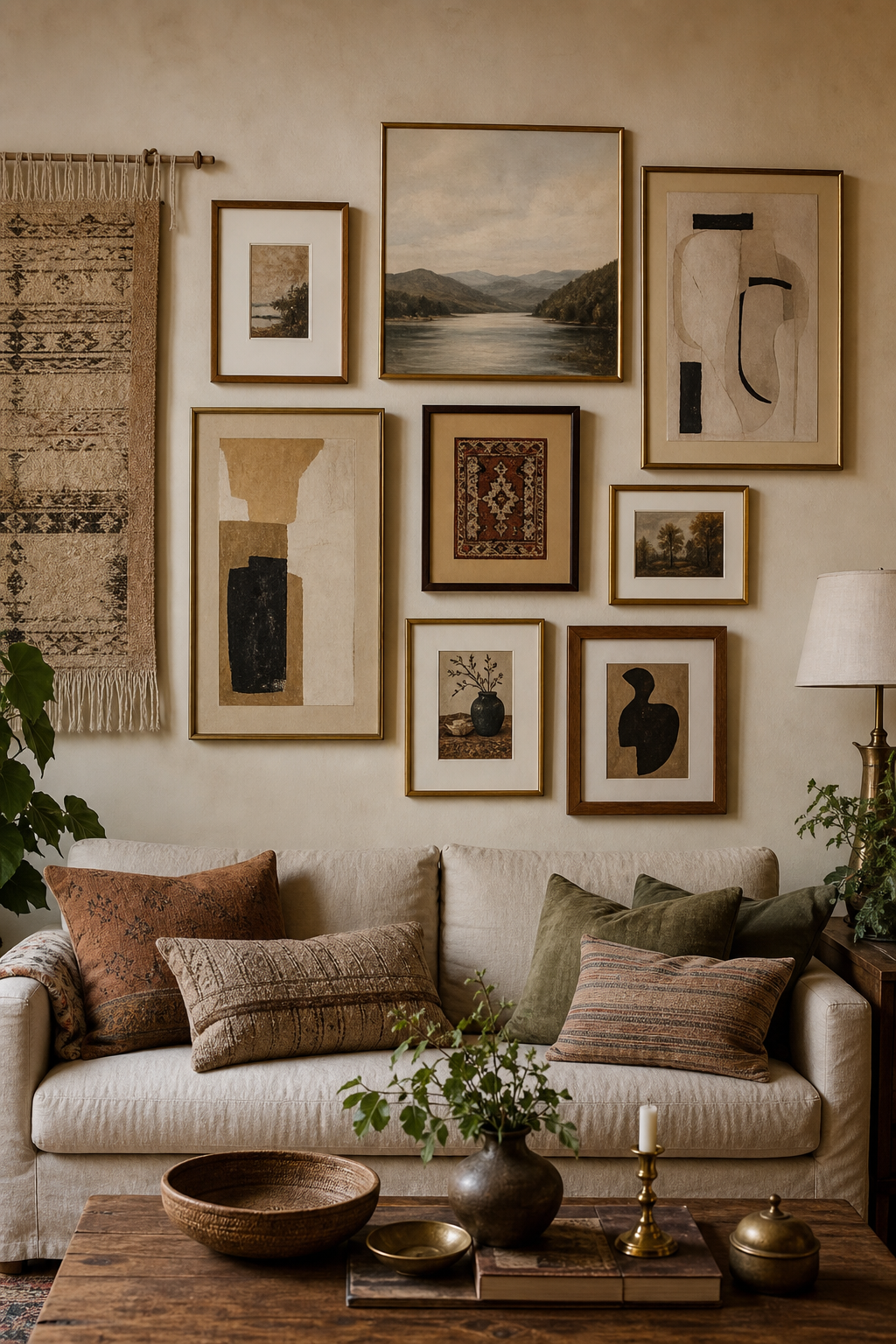
Soften The Room With Linen Curtains
Linen curtains instantly soften a living room and help boho layers feel intentional. Hang them high and wide so the windows look larger and the fabric can stack away from the glass. Unlined linen gives a breezy, relaxed effect, while lined linen feels more tailored and improves privacy. Choose warm white, oatmeal, mushroom, or muted clay rather than stark bright white. The slight slub in the fabric adds texture without introducing another pattern. Let the hem just kiss the floor for a polished look, or puddle lightly only if the room is low traffic. Curtains also balance hard materials such as stone, wood, and metal, making the seating area feel calmer.
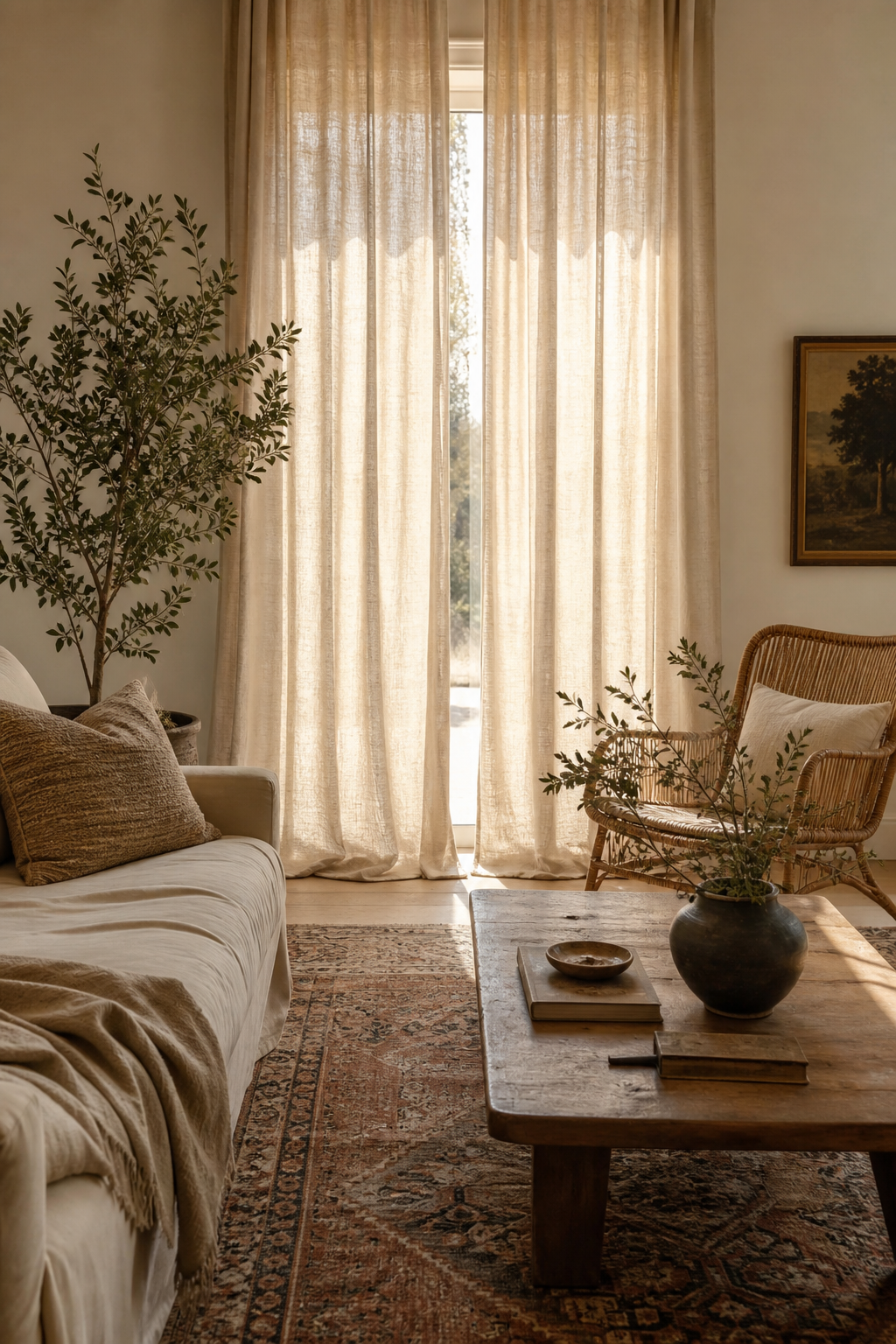
Use Plants As Architecture
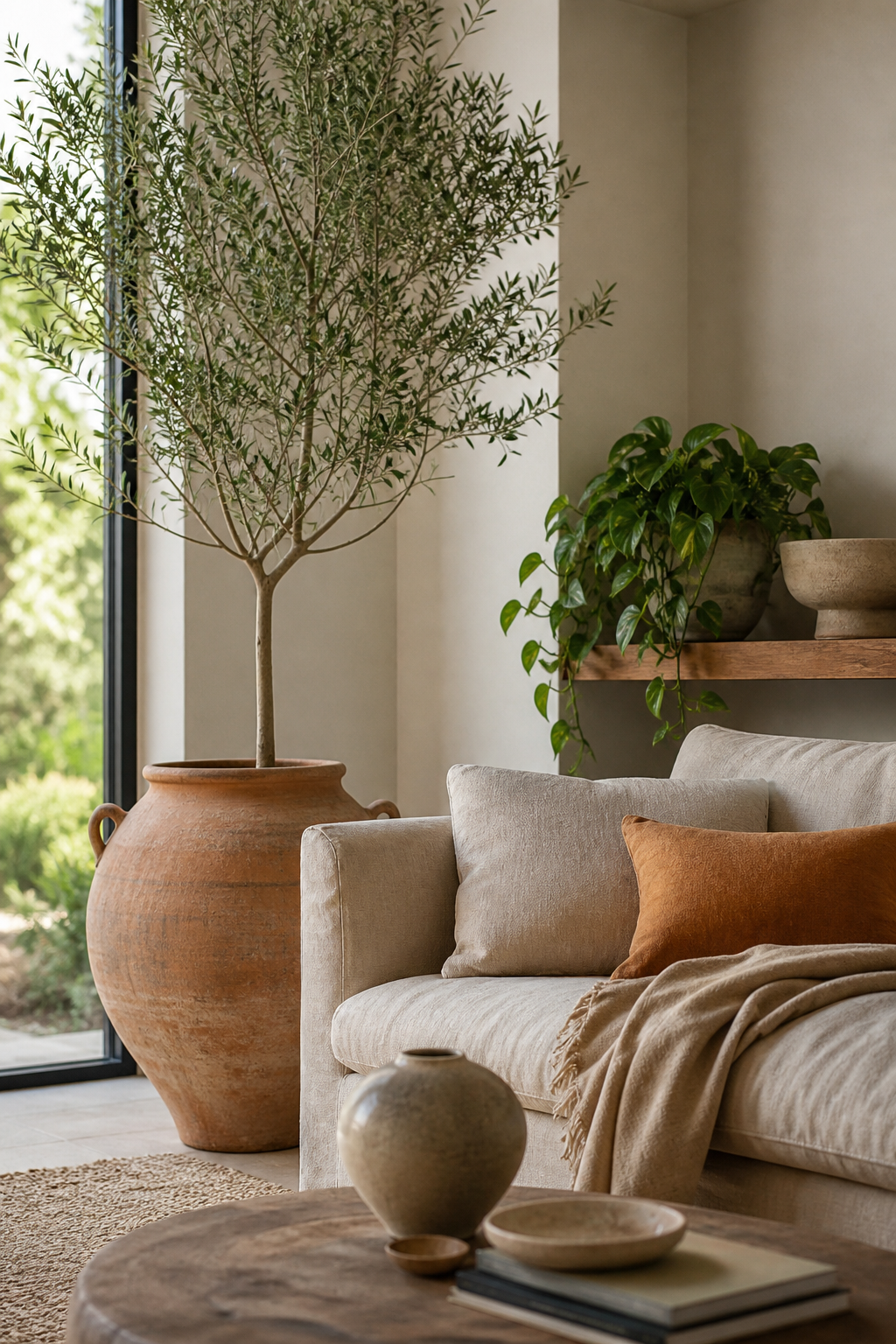
Plants are often treated as accessories, but in a boho living room they can shape the room like architecture. A tall tree beside a window adds height, while trailing greenery softens shelves and corners. Choose fewer, healthier plants rather than crowding every surface. Olive trees, rubber plants, pothos, philodendron, and sculptural cacti all suit the look when placed in substantial pots. Terracotta, stone, woven baskets, and aged ceramic planters feel more timeless than glossy plastic. Make sure each plant has the light it needs, because struggling greenery weakens the whole room. When plants are scaled correctly, they add movement, freshness, and a relaxed sense of life.
Make A Reading Corner Feel Intentional
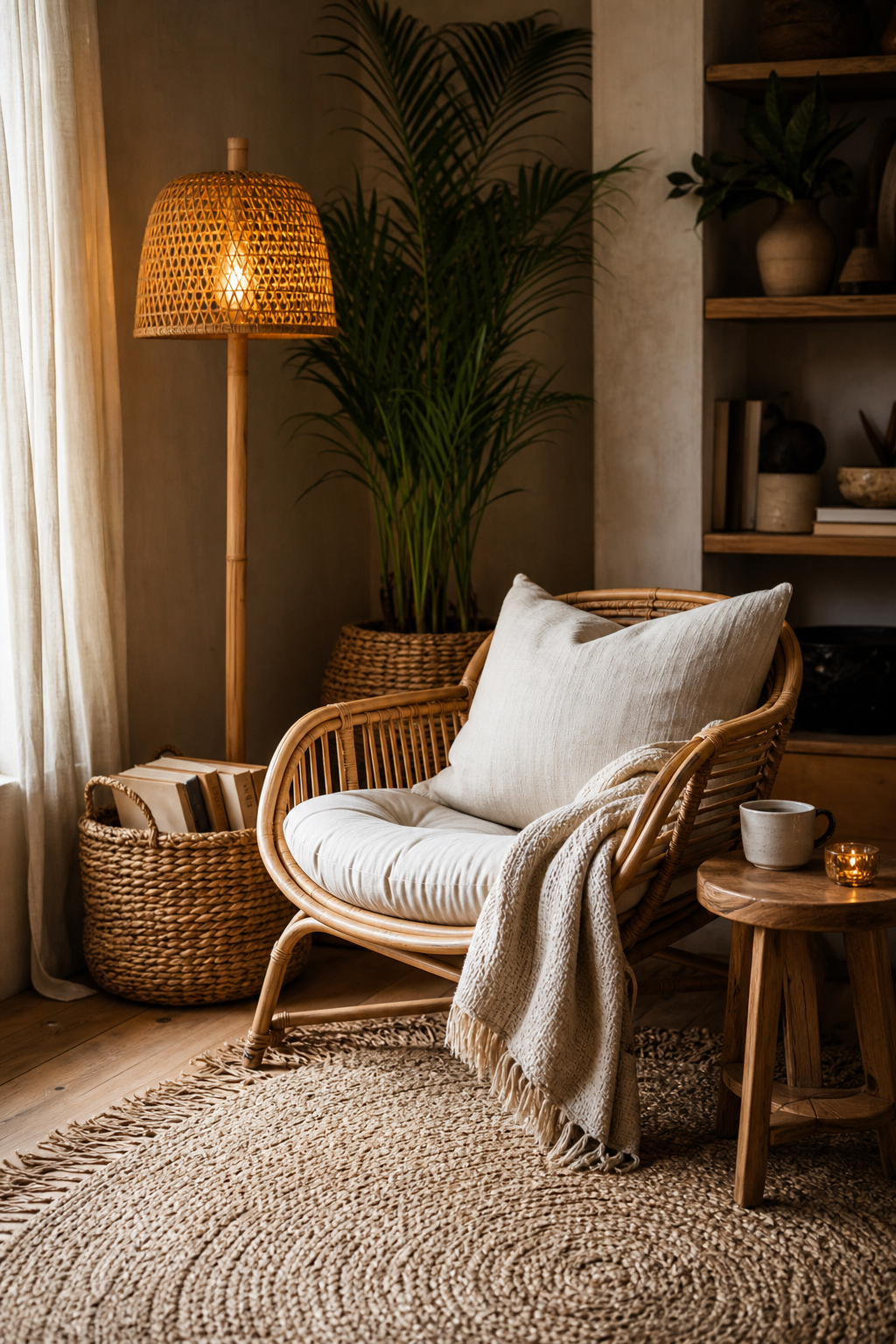
A boho living room becomes more inviting when it includes one intentional reading corner. Place a comfortable chair near a window or lamp, then add a small table, a textured throw, and a basket for books or magazines. The chair can be rattan, leather, linen, or a vintage upholstered piece, but it should feel genuinely comfortable. A floor lamp with a fabric or woven shade makes the corner useful at night. Avoid overfilling the area with accessories; the point is to create a pause within the room. When the chair, light, and surface are all within reach, the corner feels designed for real life, not just photography.
Try A Vintage Cabinet Instead Of Built Ins
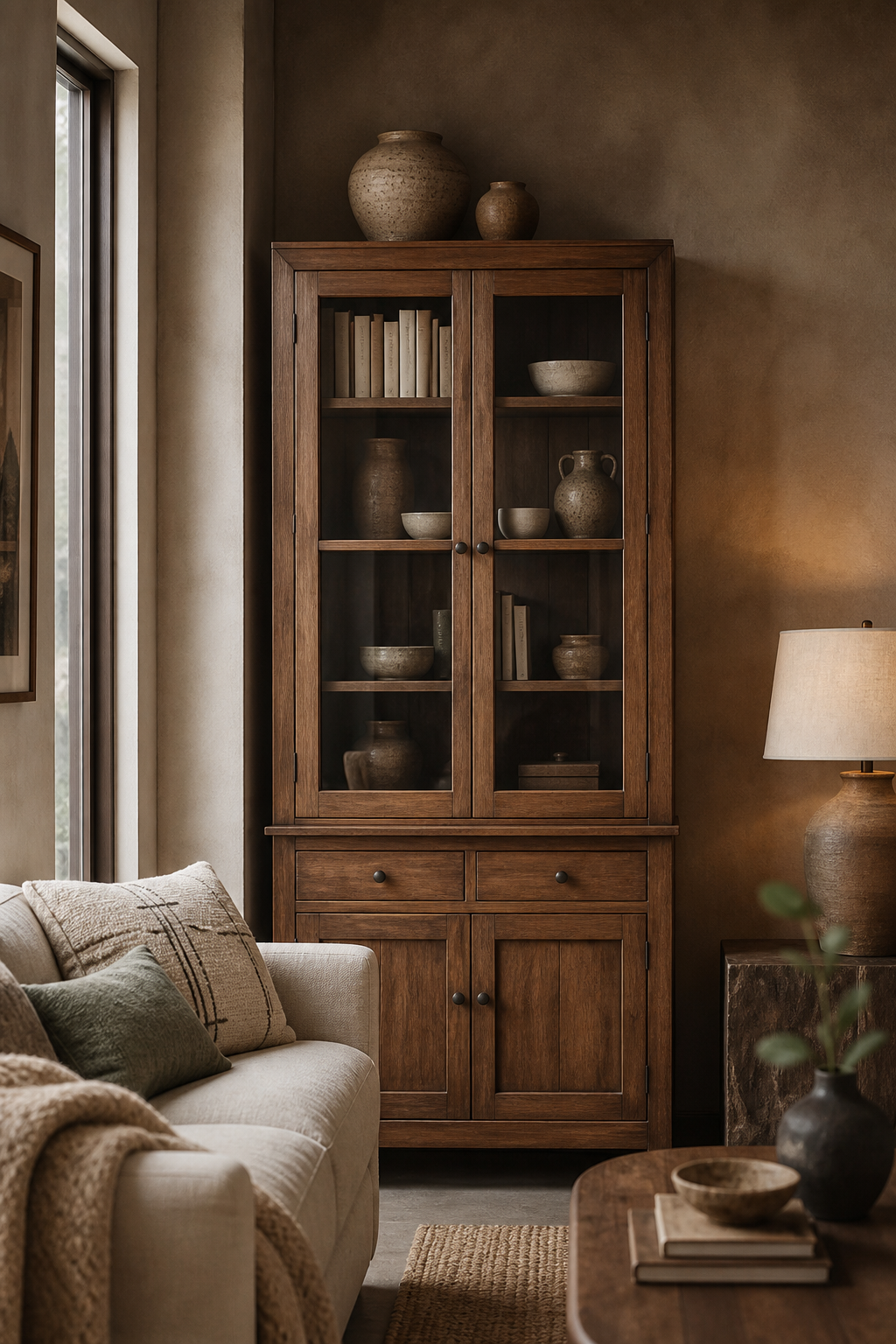
A vintage cabinet can make a boho living room feel layered without the cost of built ins. Look for a piece with simple lines, warm wood, and enough storage to hide games, candles, records, or extra throws. Glass-front cabinets are beautiful for ceramics and books, while closed doors are better for visual calm. The cabinet should relate to the room through tone, not exact matching. A darker piece can add depth beside pale walls and a light sofa. Style the top sparingly with a lamp, vessel, or framed art. This single furniture choice can make the room feel personal, grounded, and less like it came from one showroom order.
Add Leather For Warm Contrast
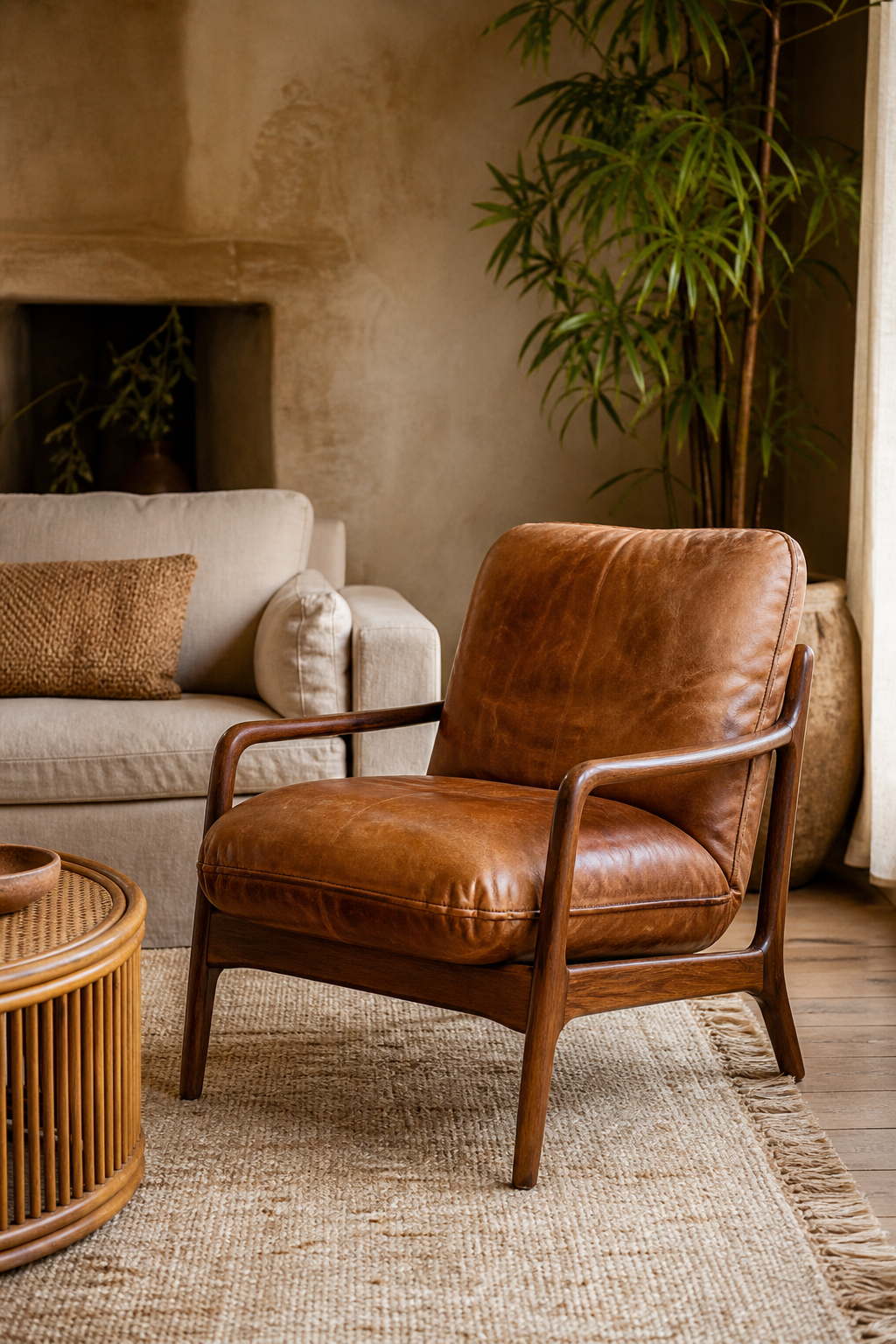
Leather adds warmth and contrast to a boho living room, especially when the space has many pale textiles. A cognac sling chair, worn leather ottoman, or small side stool can keep the room from feeling too soft. Choose leather with visible grain and natural variation rather than a glossy finish. It pairs beautifully with rattan, linen, wool, and aged wood. If you are worried about the room becoming too brown, balance leather with cream walls, black accents, or fresh greenery. One or two leather moments are enough. The best pieces look better with use, which fits the relaxed, collected spirit of boho design perfectly.
Use Floor Cushions With Restraint
Floor cushions can look cozy and relaxed, but they need restraint to feel designer. Choose one or two large cushions in heavy linen, kilim, or washed cotton, then place them where they serve a purpose. They work well near a low coffee table, beside a fireplace, or in a family room where extra seating is actually useful. Avoid scattering small cushions across the floor, which can make the room feel messy. If the rug is patterned, keep the cushion fabric calmer. If the rug is plain, a vintage textile cushion can add character. The goal is flexibility and softness, while still leaving clear paths through the living room.
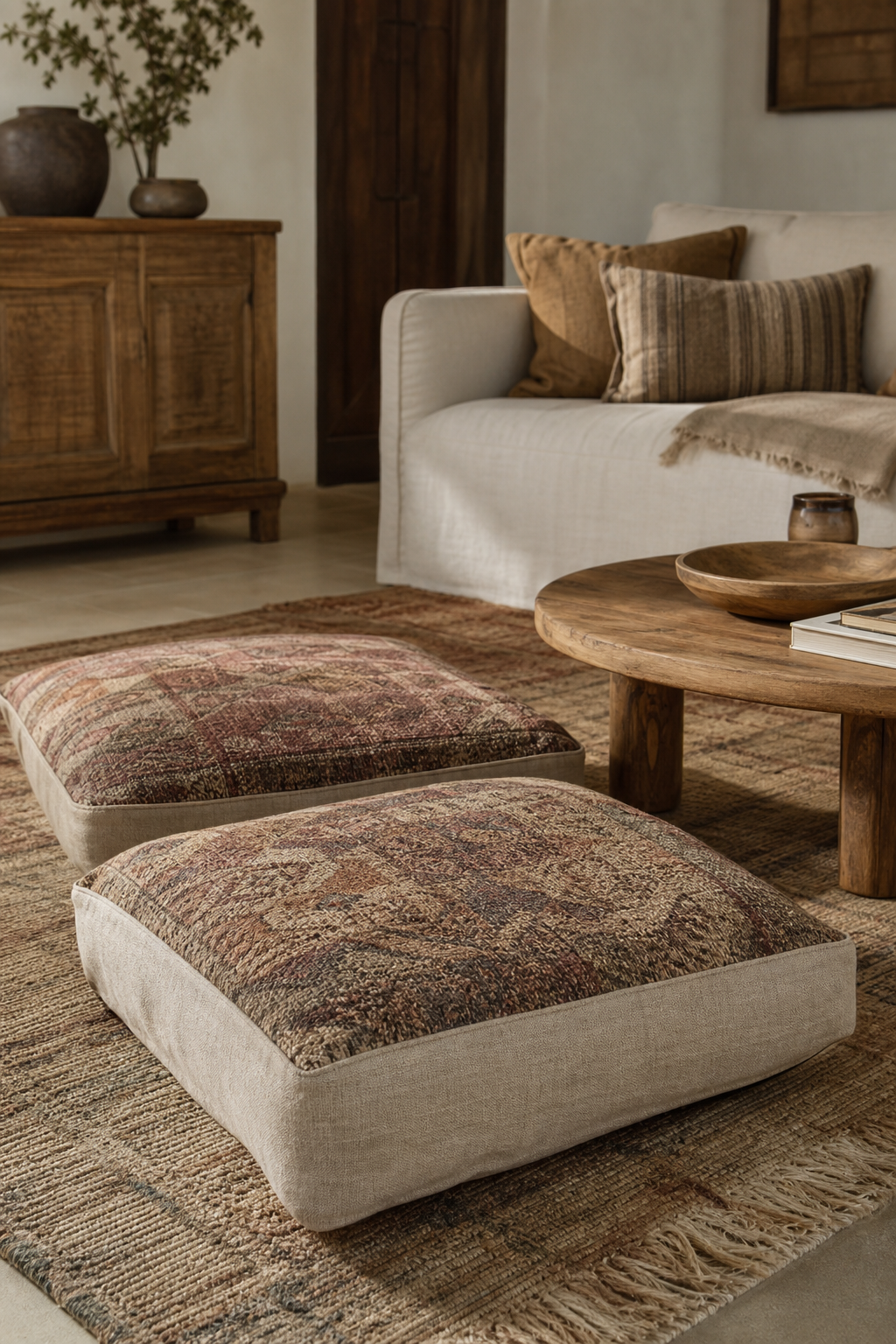
Choose Lighting With Natural Texture
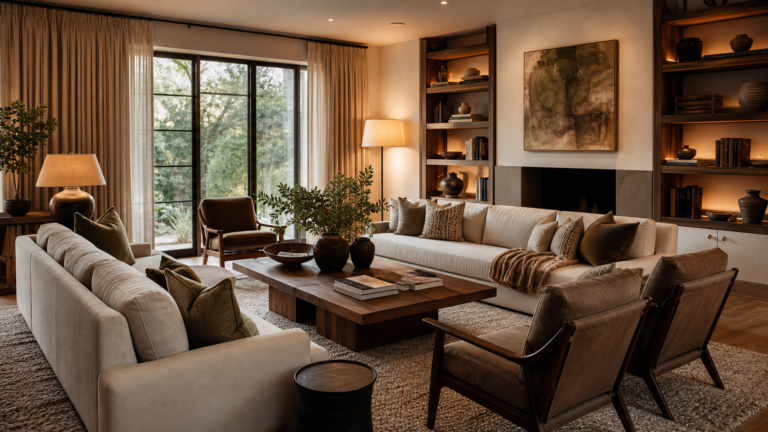
Lighting is where a boho living room can become truly atmospheric. Look for natural texture in woven pendants, linen lampshades, ceramic bases, paper lanterns, or plaster sconces. Use at least three light sources: one overhead or architectural light, one reading lamp, and one softer accent light. This layered approach makes the room glow in the evening instead of relying on a single harsh fixture. Keep bulb temperature warm, but not orange. A lamp with a sculptural base can double as decor on a side table or cabinet. When the lighting has texture and variety, even a simple room feels cozy, intimate, and thoughtfully designed.
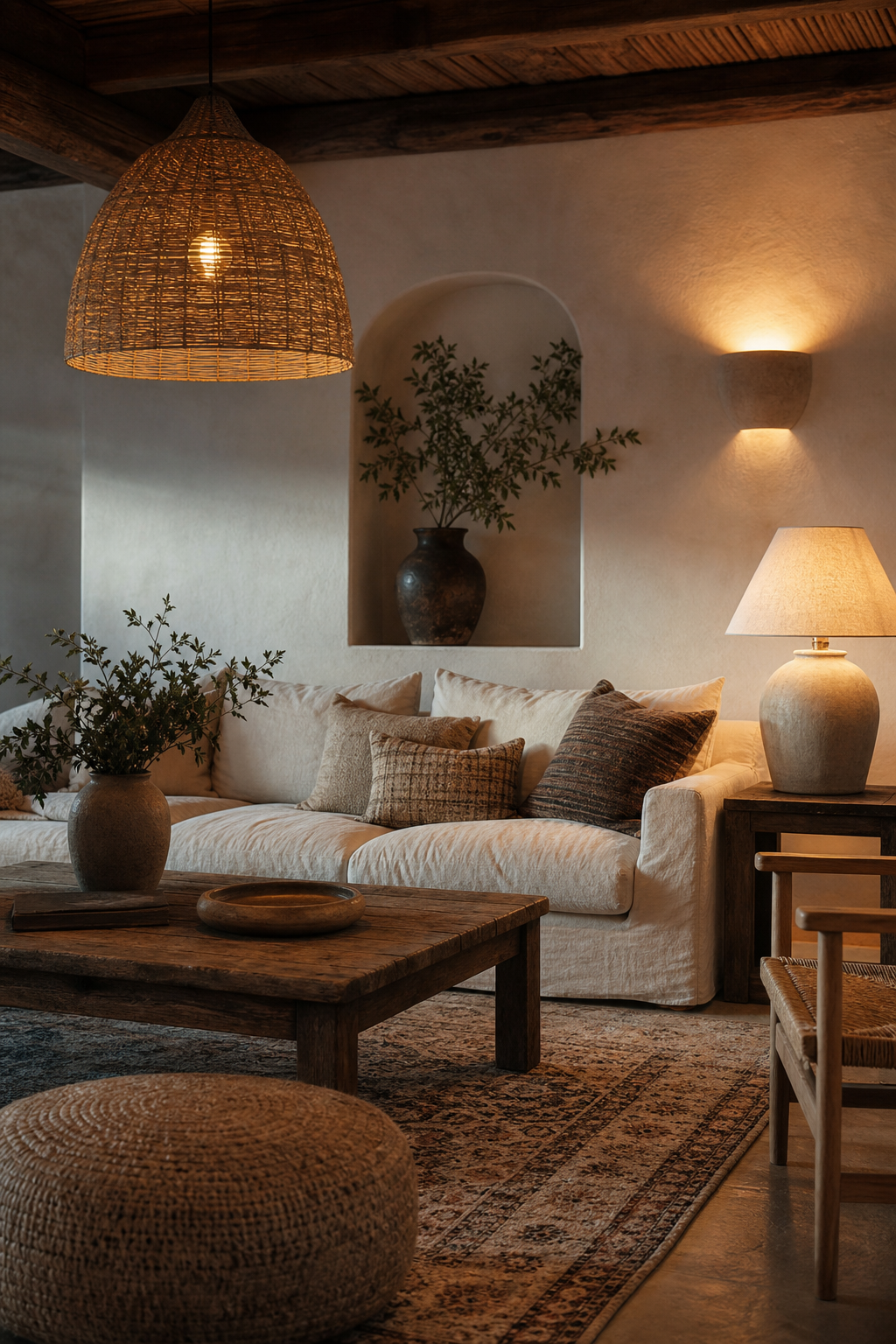
Style Shelves With Negative Space
Boho shelves can quickly become crowded, so negative space is essential. Group objects in small families rather than lining every item across the shelf. Combine books, ceramics, baskets, framed art, and one trailing plant, then leave open areas around them. Vary height and depth so the shelves feel dimensional. Keep the color story tight, especially if the room already has patterned textiles. Larger objects often look more polished than many tiny ones. If you have a lot to display, rotate pieces seasonally instead of forcing everything into view. The space between objects is what makes the shelves feel designed and calm rather than simply full.
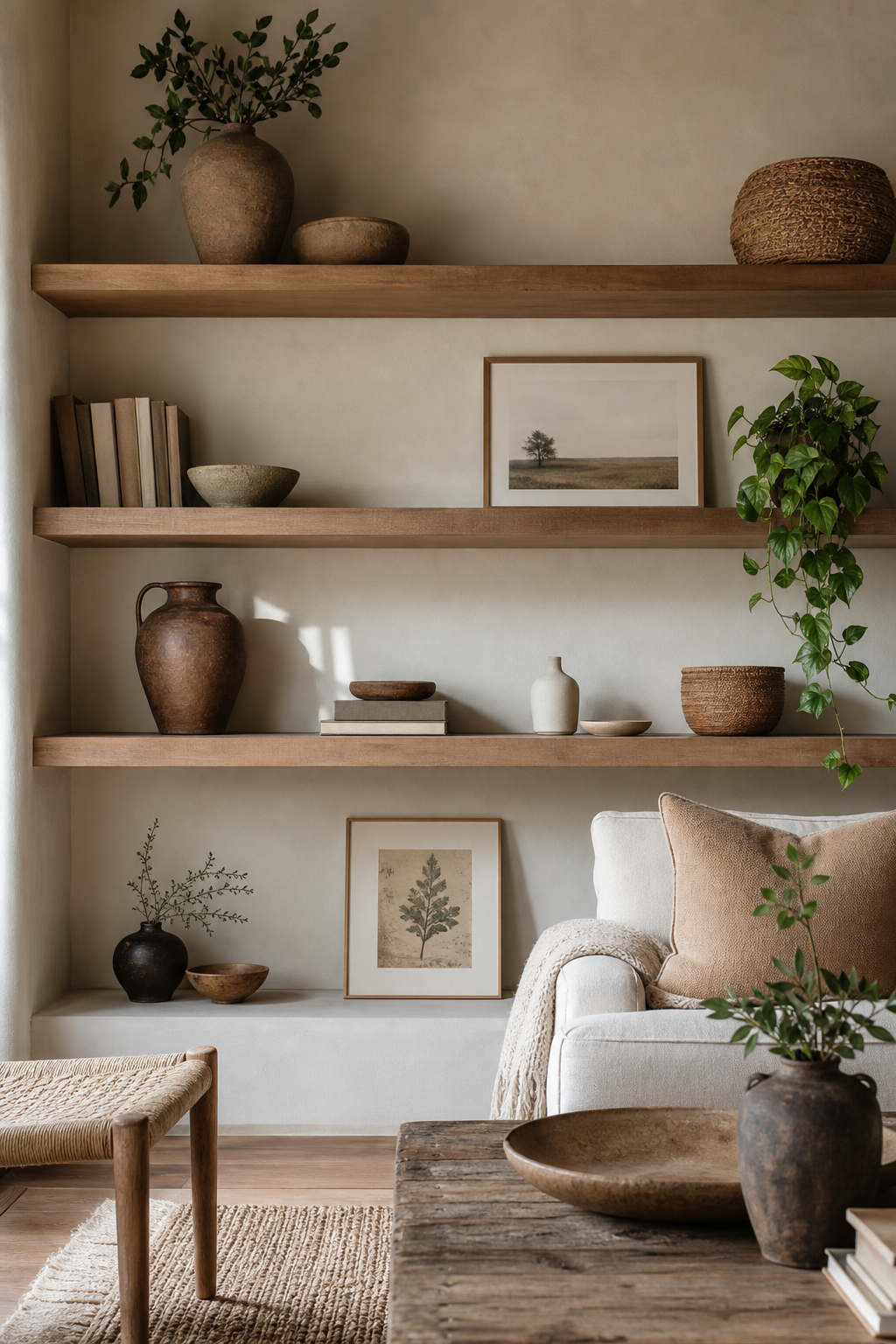
Introduce Black In Small Doses
A little black keeps a boho living room from feeling washed out. Use it in slim metal curtain rods, picture frames, lamp bases, cabinet hardware, or a small side table. The contrast sharpens natural textures and makes warm neutrals feel more sophisticated. Keep the doses small and repeated, rather than adding one isolated black object. Matte or aged finishes are usually better than high gloss because they sit naturally with linen, rattan, clay, and wood. Black also helps anchor rooms with a lot of cream and tan. Think of it as punctuation: enough to define the design, but not so much that it changes the relaxed mood.
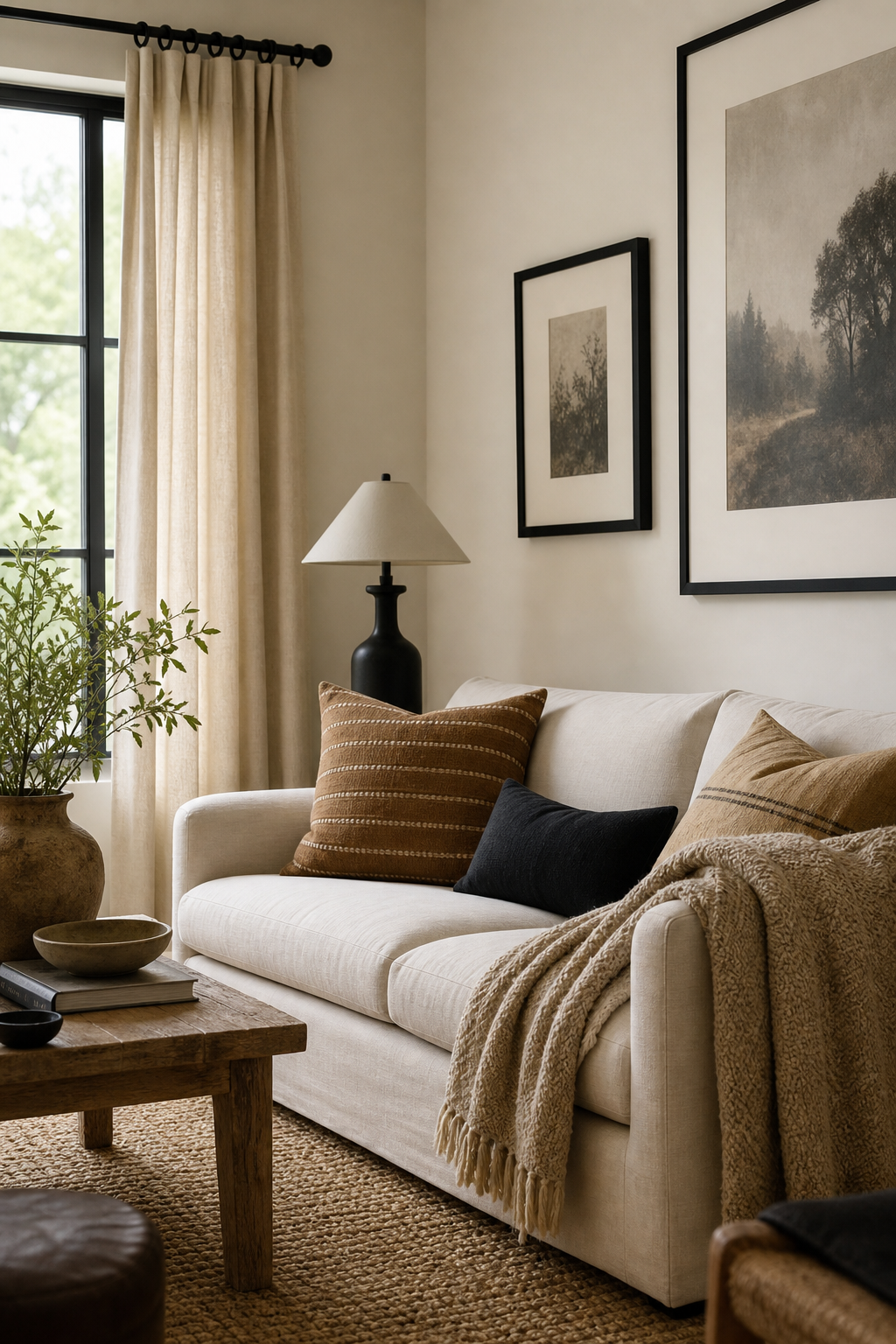
Let One Textile Be The Hero
If you own a beautiful textile, let it be the hero instead of surrounding it with competition. A Moroccan rug, suzani pillow, mud cloth throw, or vintage tapestry can define the entire room. Pull two or three colors from that piece and repeat them in smaller accents. Keep neighboring textiles quieter so the hero piece feels intentional. This is a helpful way to avoid the common boho problem of too many equal patterns. A special textile also brings history and craft into the room, which is what gives boho style its richness. Treat it like art, and the living room will feel layered rather than busy.
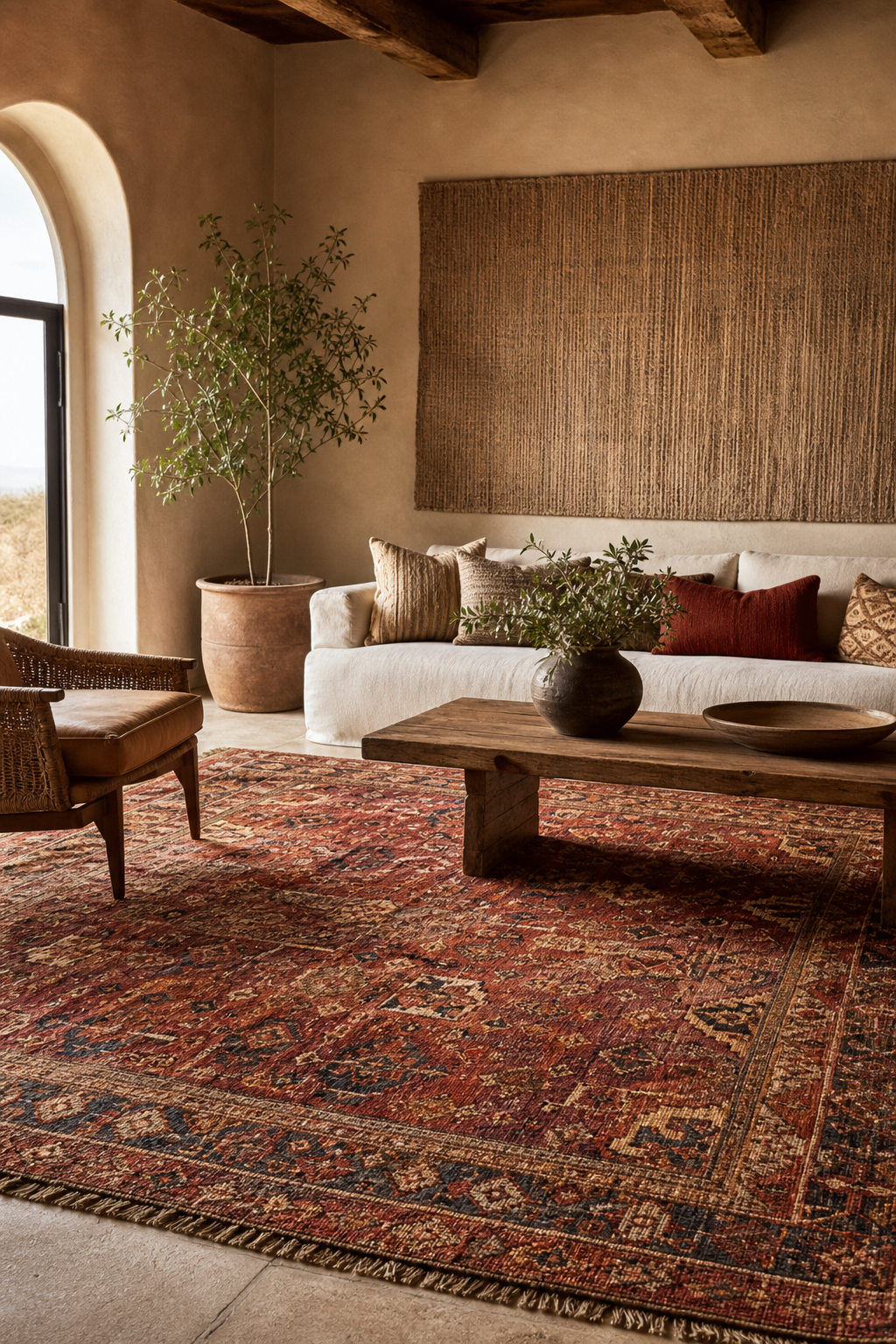
Add A Fireplace Moment Without Clutter
A fireplace can become the coziest boho feature when it is styled with restraint. Keep the mantel simple with one large piece of art, a ceramic vessel, or a pair of uneven candlesticks. Add a woven basket for firewood or blankets nearby, but leave the hearth mostly open. If the fireplace surround feels dated, limewash, plaster, stone, or a simple painted finish can give it a softer look. Avoid filling the mantel with tiny decor, which distracts from the warmth of the feature itself. A few organic shapes and natural materials are enough. The result feels quiet, welcoming, and more expensive than a crowded display.
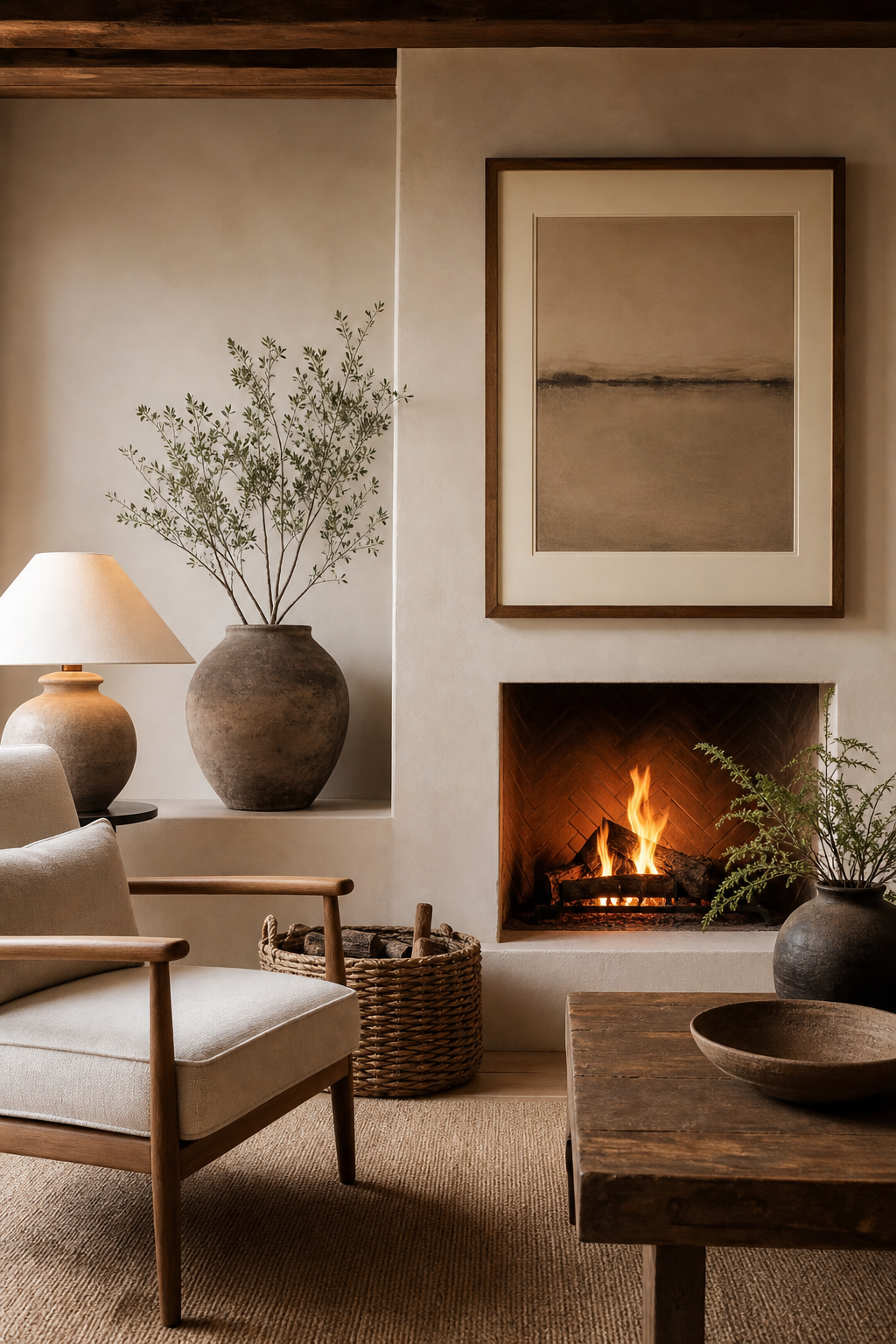
Use Poufs As Flexible Seating
Poufs are useful in a boho living room because they add texture and flexible seating without requiring much space. Choose leather, wool, jute, or a vintage textile cover, and make sure the scale works with your coffee table and sofa. A pouf that is too small can look like clutter, while one with enough weight feels intentional. Use it as a footrest, extra seat, or soft visual bridge between chairs. If the room has many patterns, select a plain leather or woven pouf. If the room is very neutral, a subtle patterned pouf can add life. Practical pieces always look better when they are genuinely used.
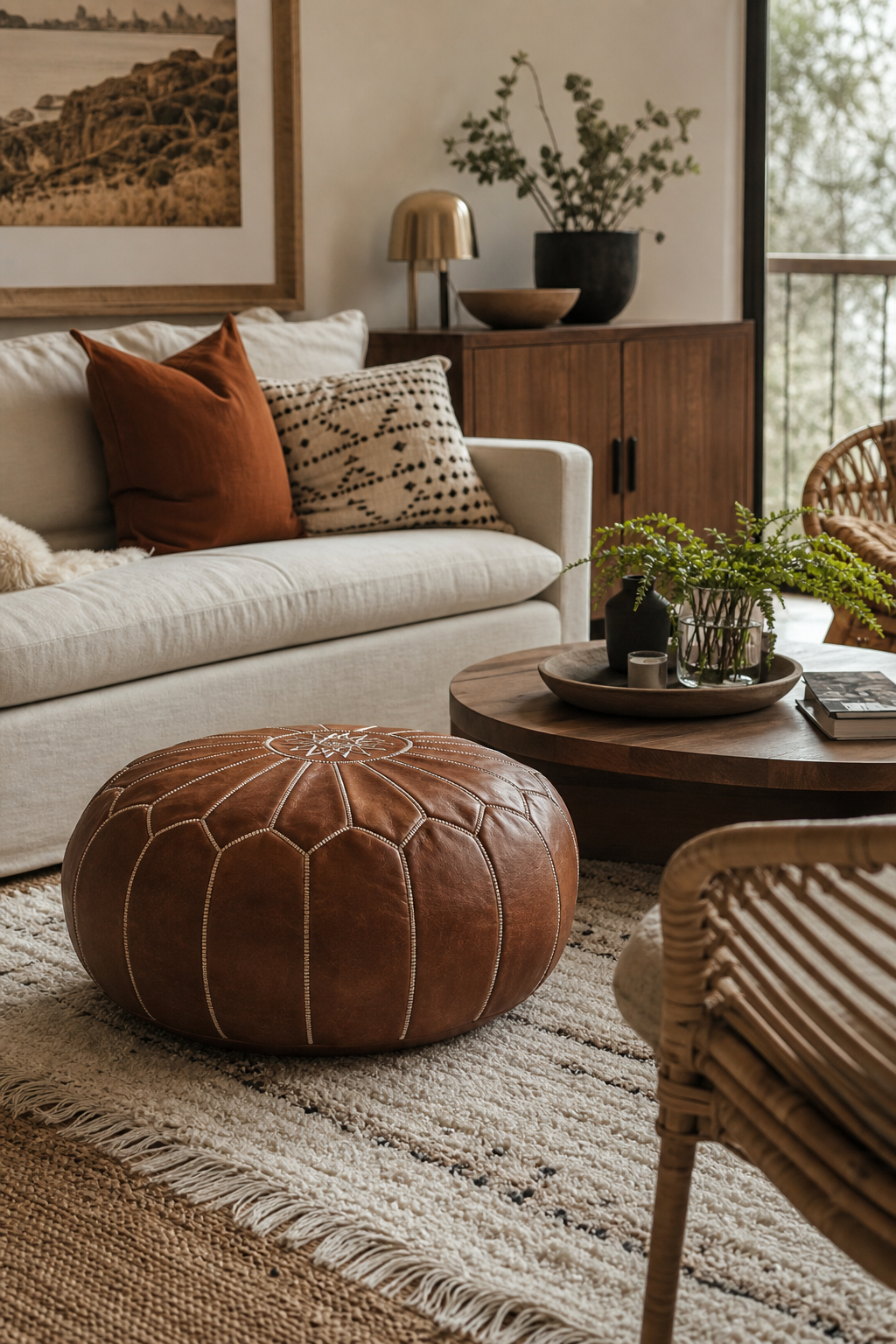
Keep The TV Wall Quiet
A living room still has to work for real life, and that often means a television. The key is keeping the TV wall quiet. Use a low wood console with closed storage, add a lamp or vessel to one side, and avoid crowding the screen with many small objects. If possible, choose a dark wall color, framed mode, or gallery arrangement that reduces the visual contrast. The console should be wider than the screen so the composition feels balanced. Store remotes, cords, and devices inside baskets or drawers. A calm TV wall helps the rest of the boho layers feel intentional instead of fighting with technology.
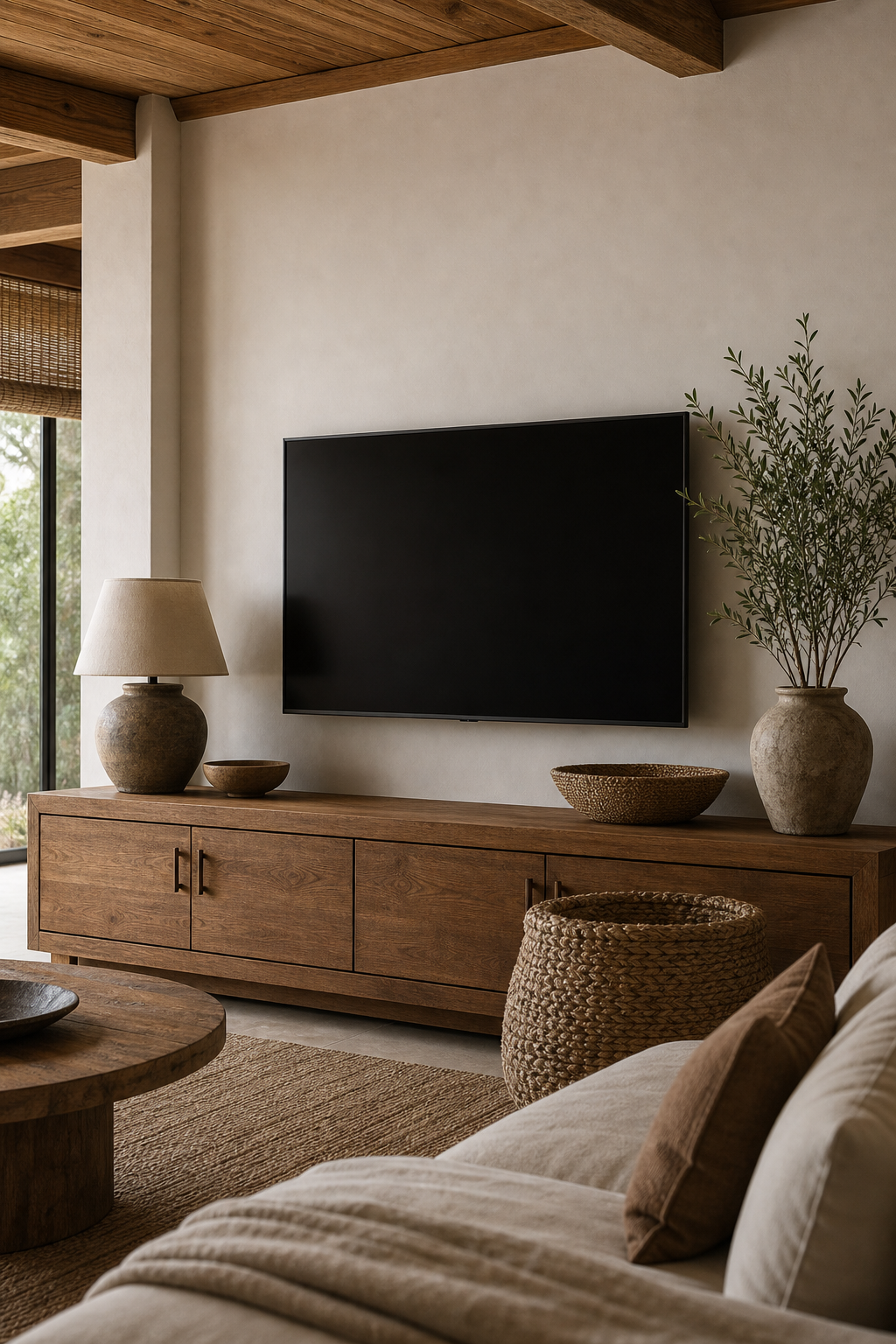
Create Depth With Wall Texture
Wall texture gives a boho living room depth even when the palette is simple. Limewash, Roman clay, plaster, grasscloth, or a subtle woven wallpaper can make light move across the room beautifully. Texture is especially useful in spaces with plain architecture, because it adds character without taking up floor space. Keep the finish soft and natural rather than heavily decorative. If you are nervous about doing every wall, start behind the sofa or fireplace. Textured walls pair well with linen curtains, aged wood, and ceramic lamps because they share the same handmade feeling. This backdrop makes the whole room feel warmer and more custom.
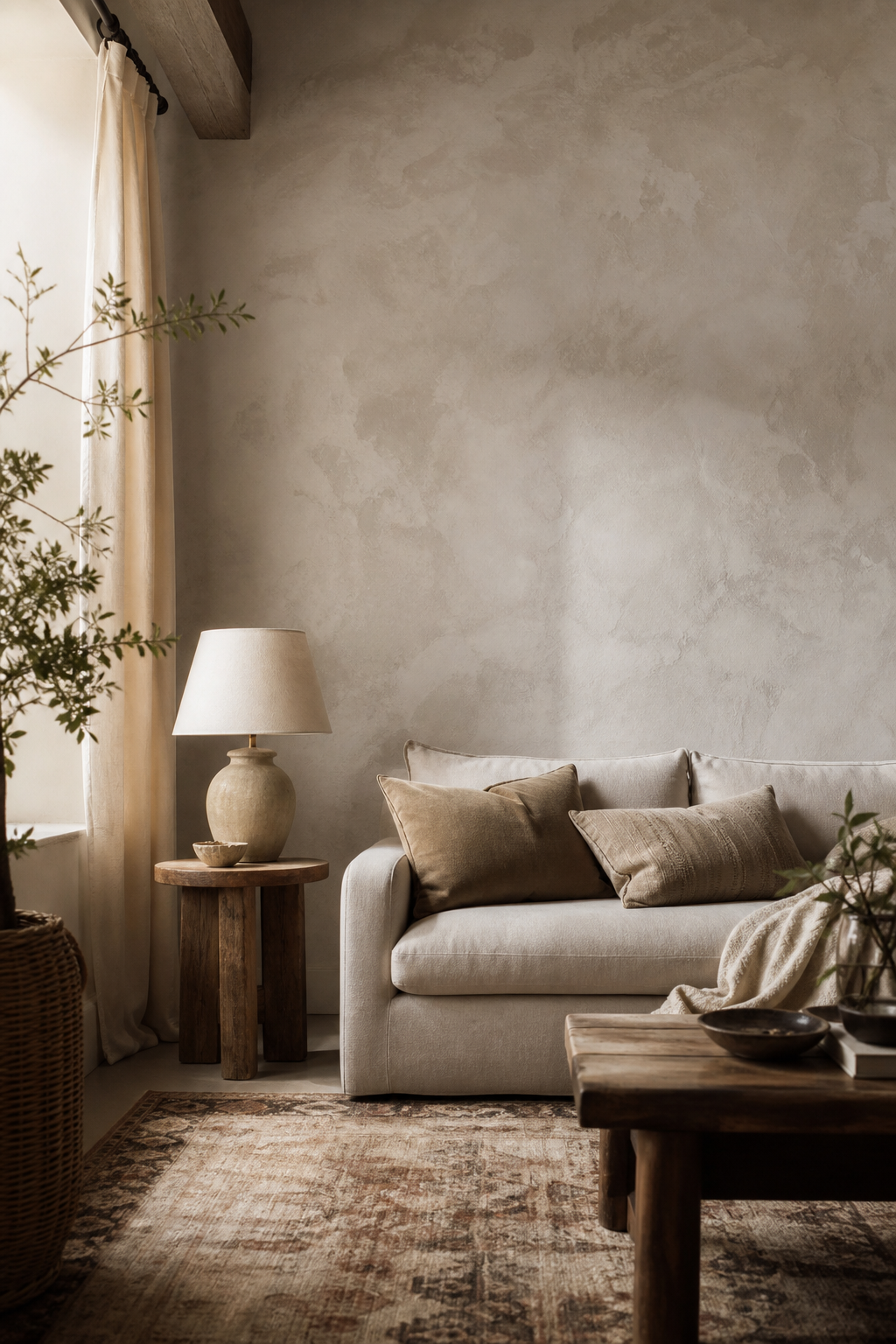
Balance Curves And Straight Lines
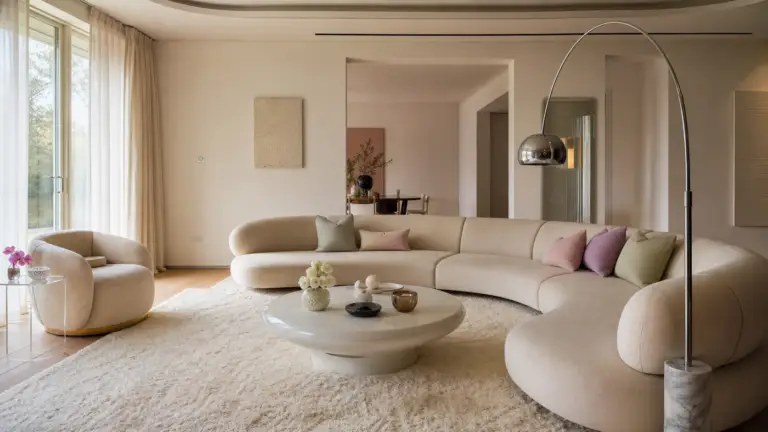
Boho rooms often include soft shapes, but too many curves can feel loose. Balance rounded forms with clean straight lines so the space has structure. A curved sofa can sit with a rectangular coffee table, while a boxy cabinet can be softened by a round mirror or arched lamp. This contrast makes the room feel designed rather than accidental. Look at the silhouette of each large piece before adding more decor. If everything is low and rounded, bring in a tall angular bookshelf. If the room feels rigid, add a circular side table or rounded lounge chair. Shape balance is subtle, but it is one reason polished rooms feel so easy.
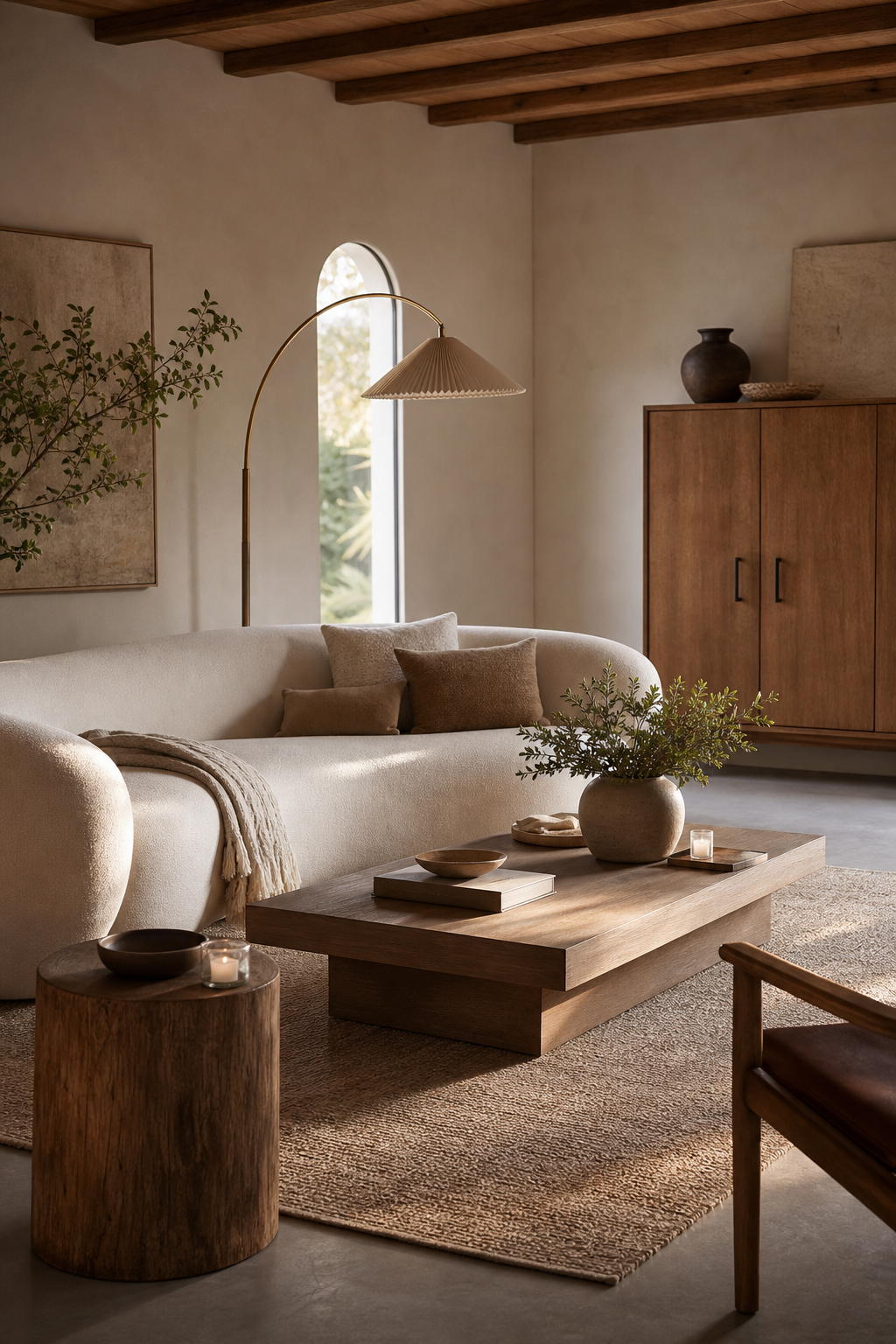
Finish With A Personal Collected Detail
The final layer in a cozy boho living room should feel personal. It might be a travel bowl, inherited stool, handmade basket, old landscape painting, or stack of well-loved design books. Choose one or two details that actually mean something, then give them space to be noticed. Personal objects are what keep the room from becoming a trend checklist. The designer trick is editing: not every memory needs to be displayed at once. Place the detail where it connects to a daily ritual, such as beside a reading chair or on the coffee table. When a room includes something with a story, it feels warmer and more authentic.
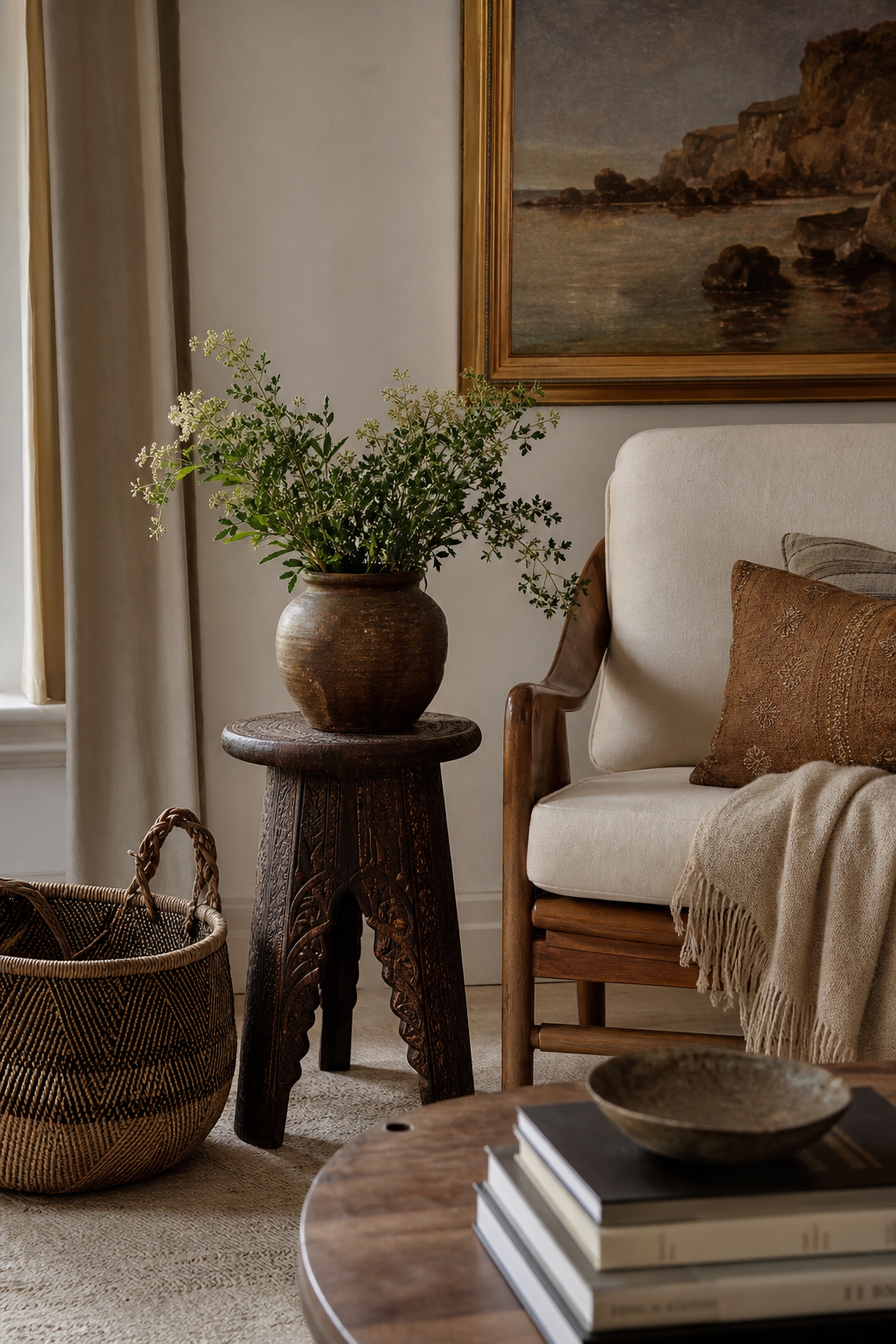
A cozy designer boho living room is built through careful layering, not excess. Start with a warm base, choose natural materials with character, and let texture do much of the visual work. Then edit the room so every rug, pillow, plant, lamp, and collected object has a reason to be there.
The most inviting spaces feel personal and practical at the same time. When comfort, craft, and restraint are balanced, boho style becomes timeless rather than trendy, and the living room becomes a place people naturally want to stay.