18 Living Room Inspo For A Cozy Designer Look
A cozy designer living room is not built from one perfect sofa or a single dramatic accessory. It comes from proportion, texture, light, and a clear point of view. The best rooms feel relaxed enough for everyday use while still looking polished from every angle. These ideas focus on layout, materials, styling, and atmosphere so you can create a living room that feels warm, layered, and intentionally designed.
Start With A Conversation-Friendly Layout
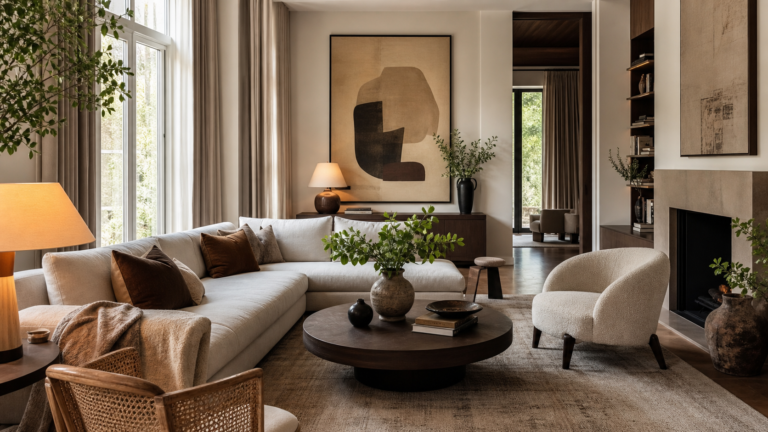
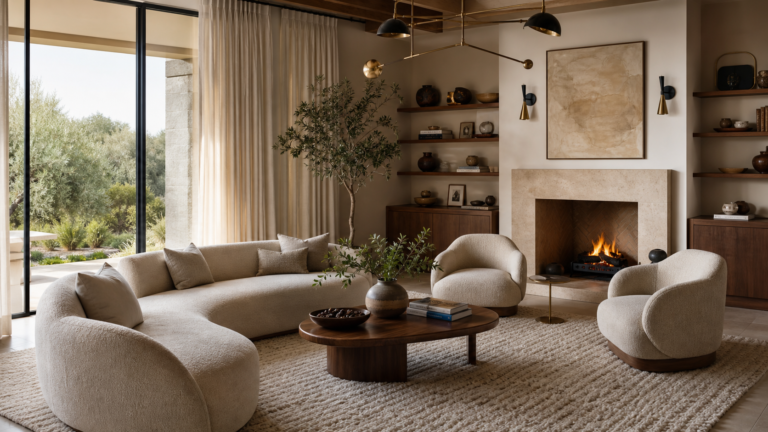
Arrange seating so people naturally face each other instead of pushing every piece toward the television. A sofa with two chairs, a sectional with a swivel chair, or two small sofas across from one another can make the room feel designed for real life. Keep walkways open and let the coffee table sit within easy reach of every main seat. If the room is long, use a rug to define the sitting zone and avoid scattering furniture along the walls. A cozy designer look begins with proportion and flow. Once the layout supports conversation, every styling layer feels more intentional.
Choose A Sofa With Soft Structure
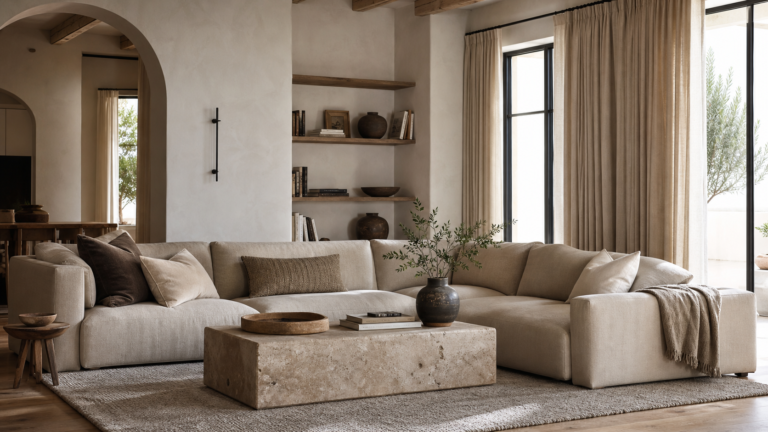
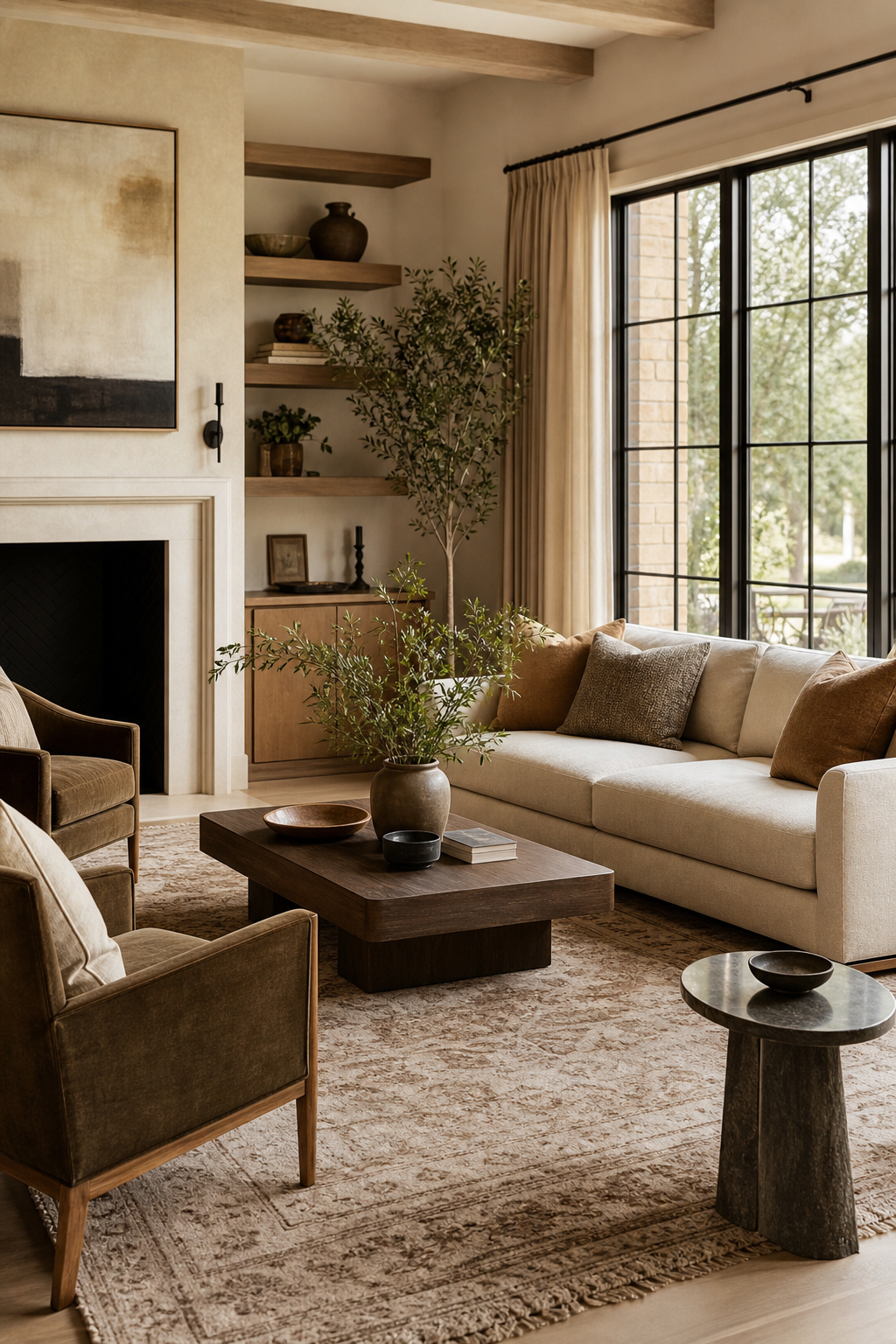
The sofa sets the tone for the whole living room, so look for a shape that feels tailored without being stiff. Track arms, relaxed slipcovers, curved backs, or low modern profiles can all work when the proportions fit the room. Choose performance fabric if the space gets heavy daily use, and add depth through pillows rather than choosing an overly busy upholstery. A designer room often relies on quiet, well-scaled basics instead of one loud focal piece. Let the sofa feel comfortable enough for lounging while still holding a clean silhouette that anchors the space.
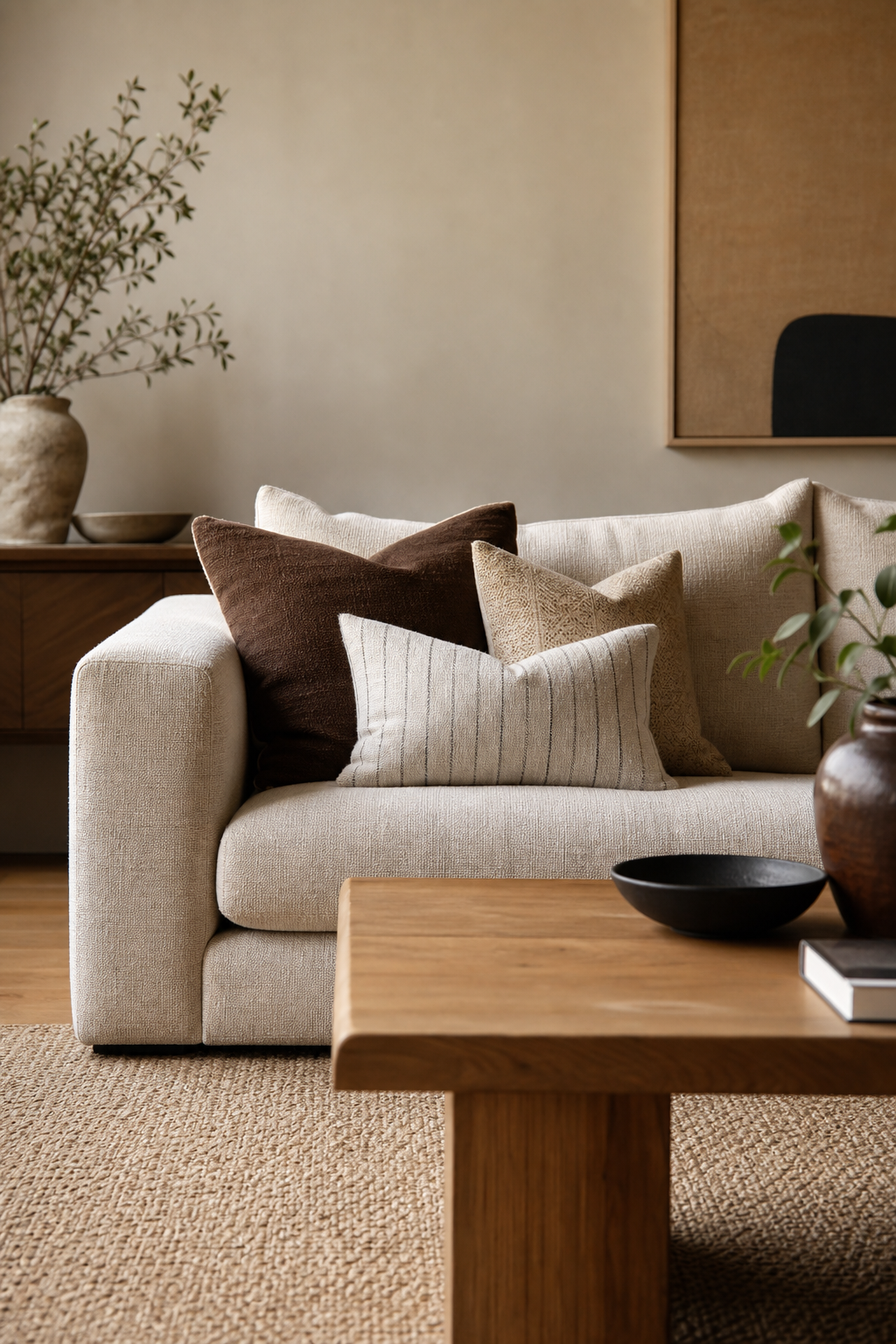
Layer A Large Textured Rug
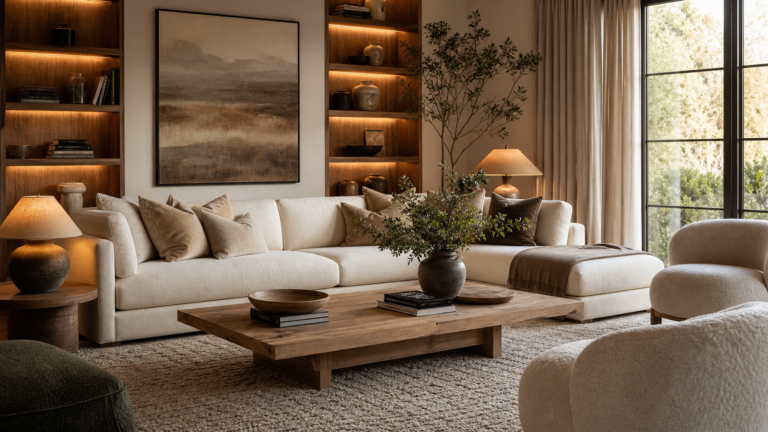
A living room rug should be generous enough to connect the furniture. When at least the front legs of the sofa and chairs sit on the rug, the seating area feels grounded rather than floating. Wool, jute blends, vintage-inspired low pile, and subtle woven patterns add texture without making the room visually noisy. If your furniture is plain, a faded pattern can bring movement. If your sofa already has strong texture or color, keep the rug calmer. The right rug changes the room acoustically as well as visually, softening sound and giving the seating area a more intimate, finished feeling.
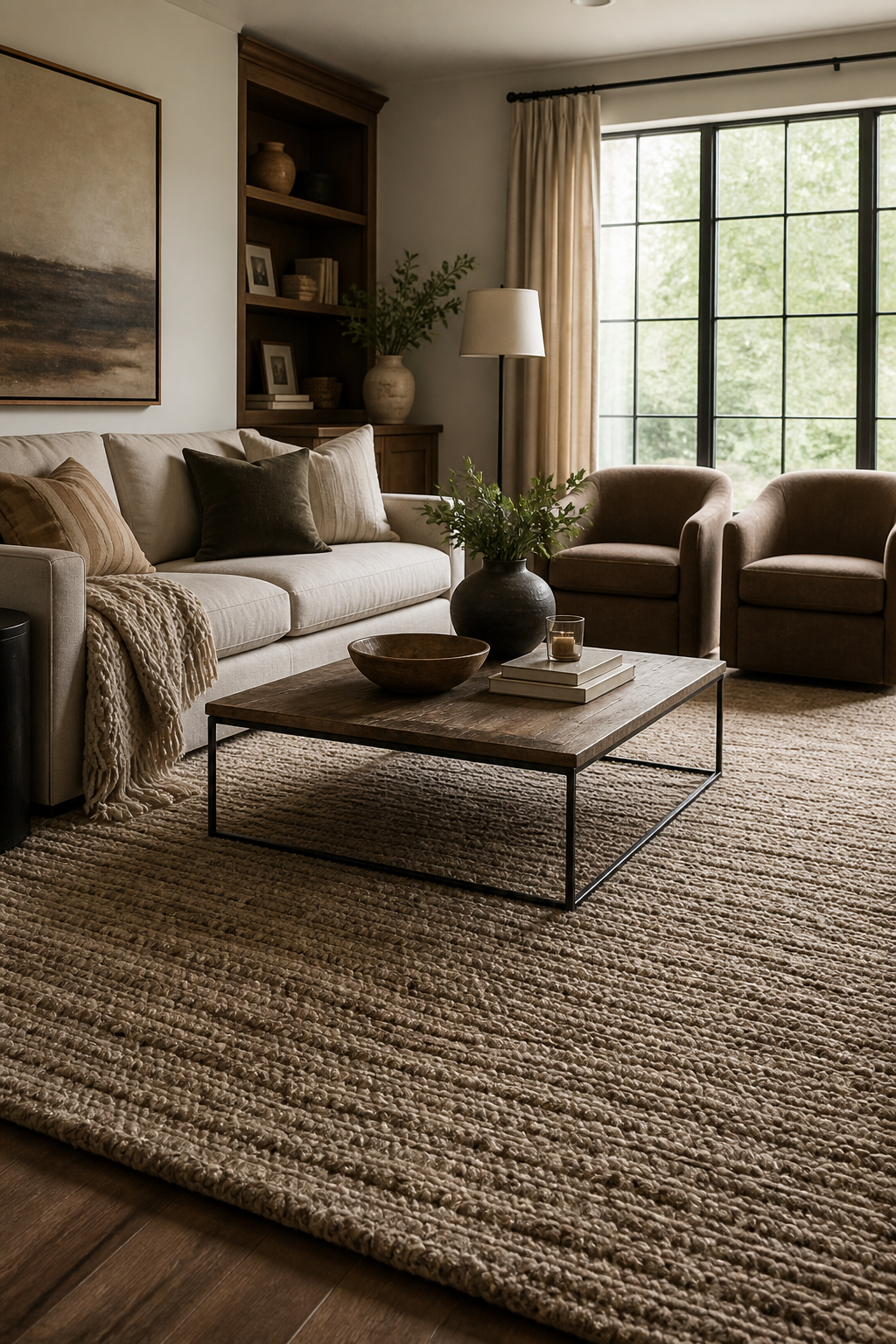
Mix Wood Tones With Confidence
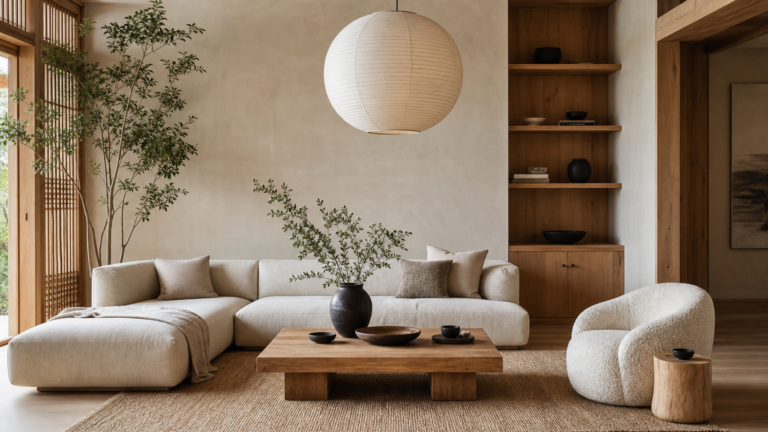
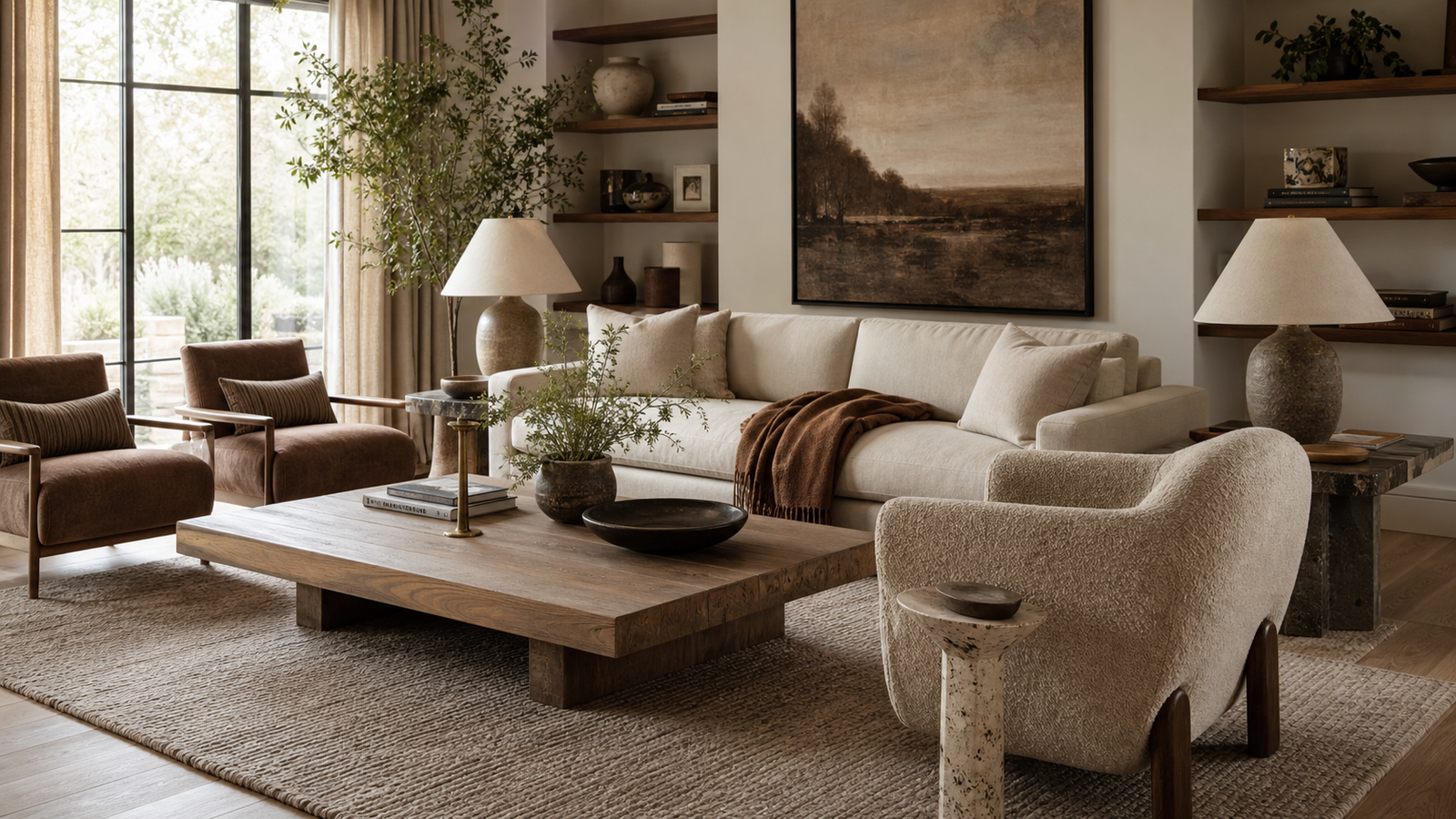
A cozy living room looks more collected when every wood piece is not the same finish. Mix oak, walnut, ash, or blackened wood, but repeat each tone at least once so the palette feels deliberate. For example, pair an oak coffee table with oak picture frames, then add a darker walnut side table for contrast. Keep undertones compatible: warm woods usually sit better together than orange and gray finishes fighting across the room. A thoughtful mix gives the room depth and keeps it from looking purchased all at once. Wood also brings warmth that balances stone, metal, glass, and upholstery.
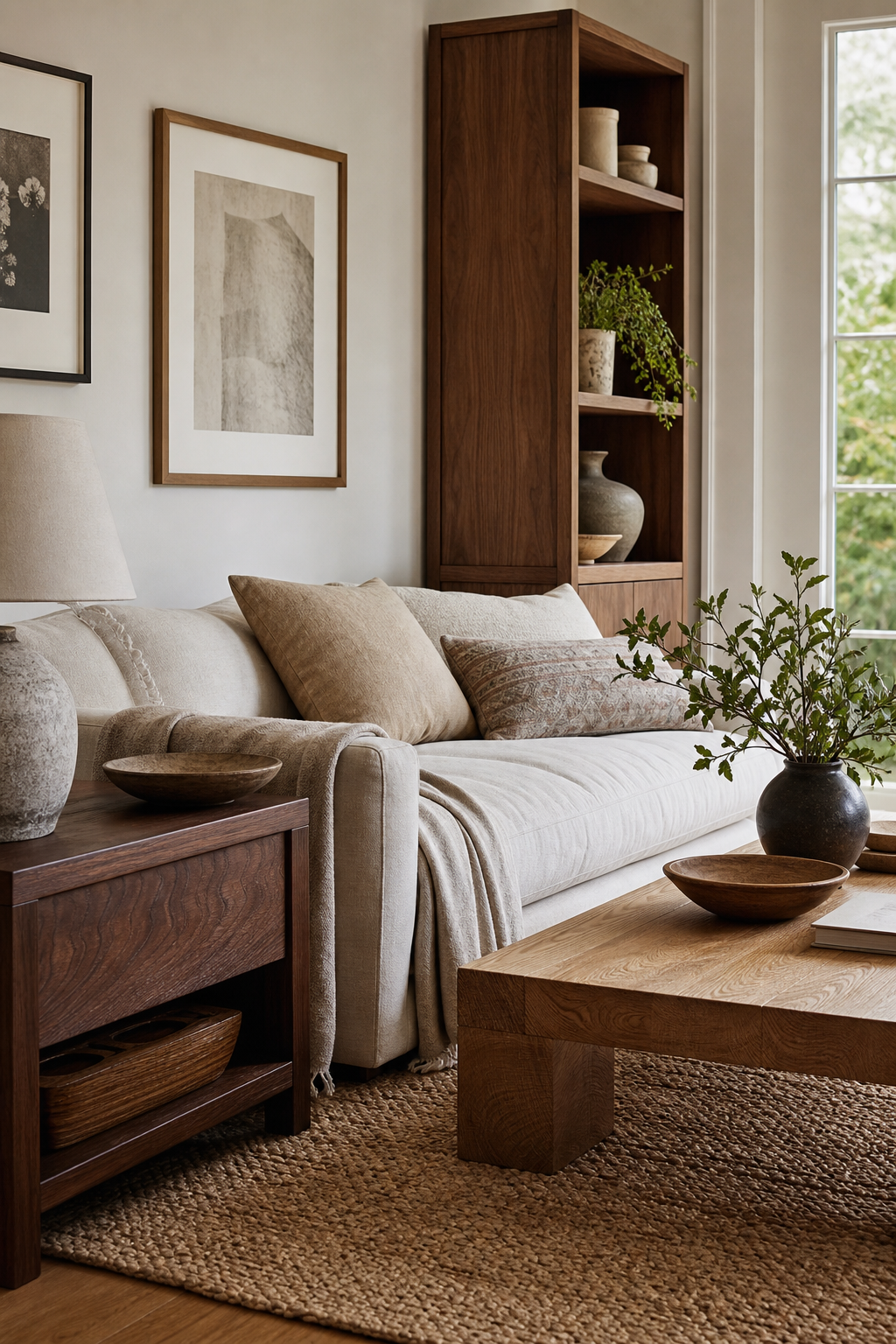
Use Drapery To Frame The Windows
Curtains make a living room feel softer and more architectural at the same time. Mount the rod high and wider than the window so panels frame the glass instead of blocking it. Linen, cotton, wool sheers, or a refined blend can add movement without overwhelming the room. The fabric should kiss the floor or break slightly for a relaxed designer look. Even simple white or oatmeal panels can make ceilings feel taller and daylight feel warmer. Drapery is especially useful in rooms with hard surfaces because it softens echo and makes the sitting area feel more finished after sunset.
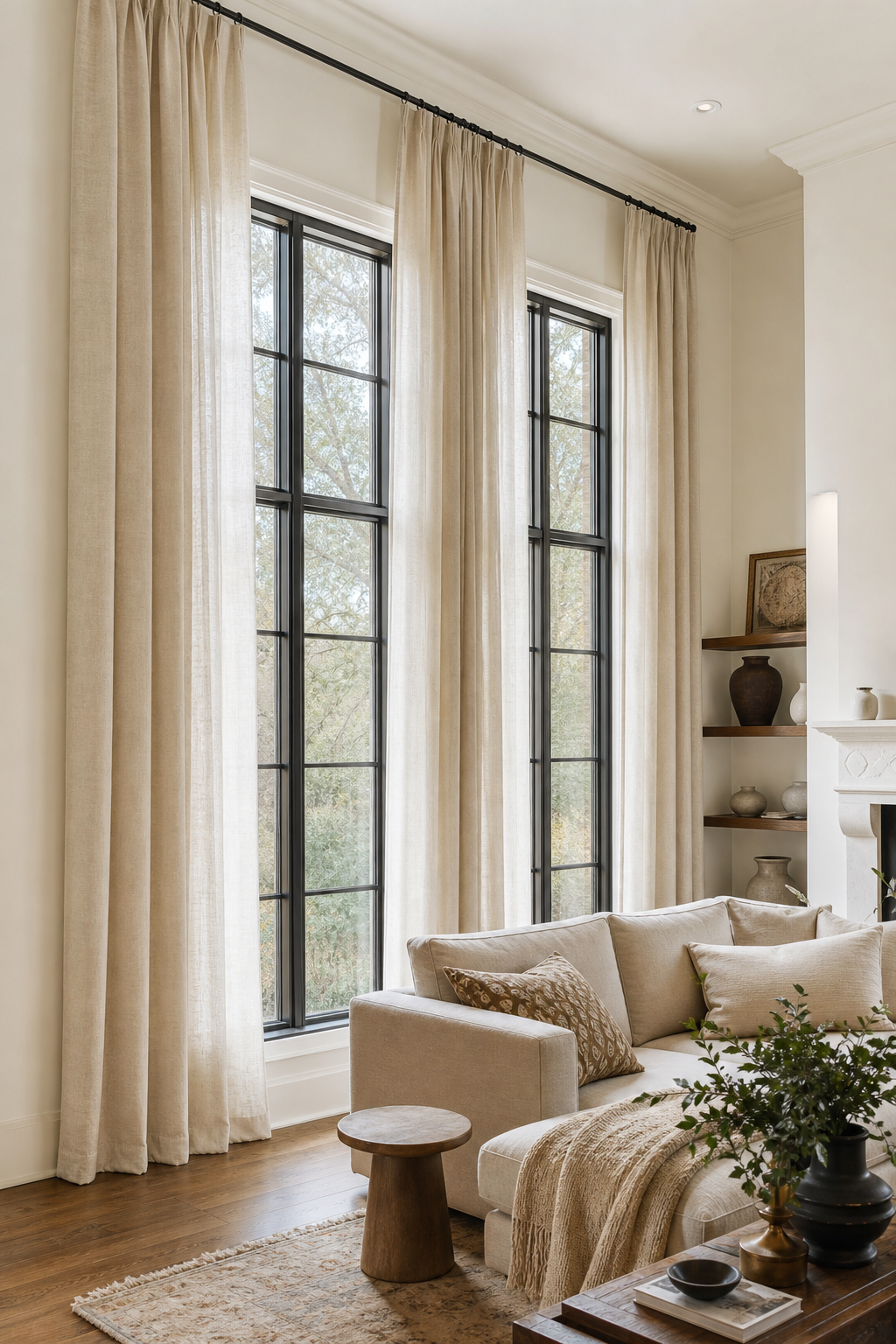
Add Sculptural Lighting At Different Heights
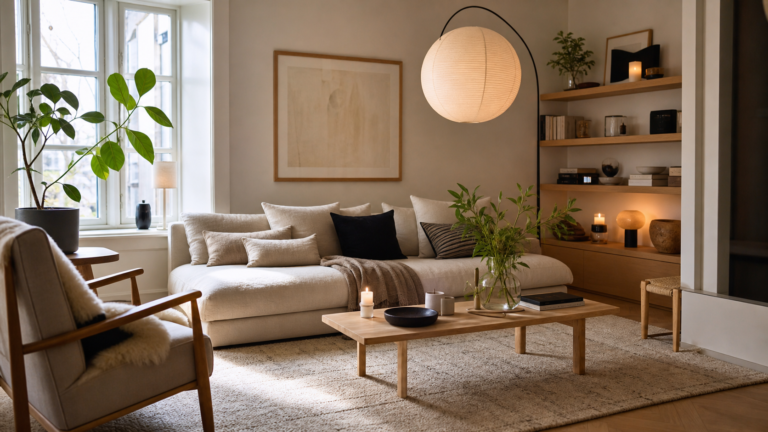
One ceiling light cannot create the atmosphere a cozy living room needs. Layer a floor lamp near a reading chair, a table lamp beside the sofa, and a soft overhead fixture or picture light for dimension. Choose sculptural shapes in ceramic, metal, plaster, or paper so the lamps look beautiful even when they are off. Warm bulbs and dimmers make a major difference, especially in the evening. Lighting at different heights keeps the room from feeling flat and helps every corner feel considered. A designer living room should have practical light for reading and gentle glow for relaxing.
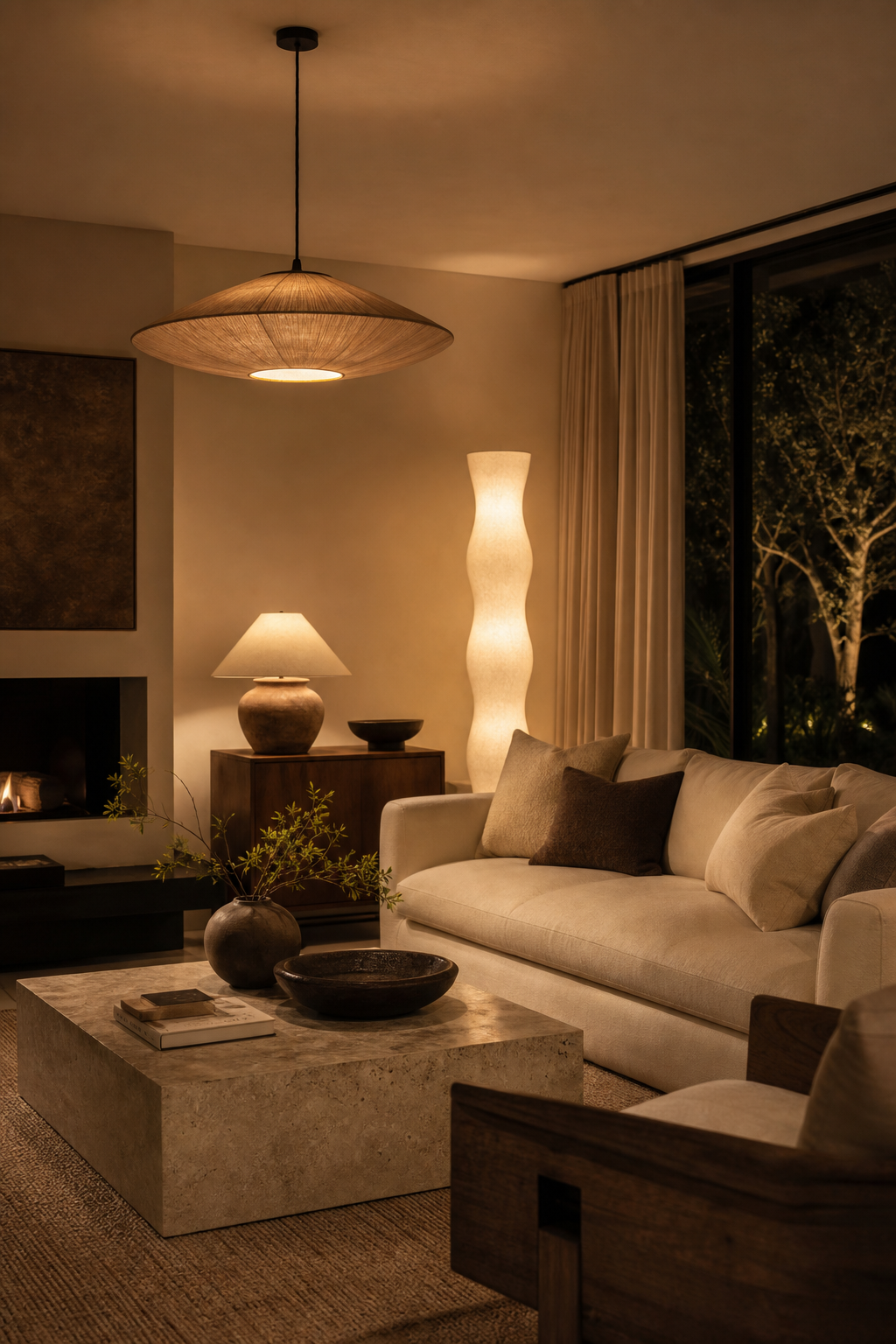
Style The Coffee Table With Breathing Room
Coffee table styling should leave space for daily life. Start with a tray, one beautiful book stack, a low bowl, and a small vase or branch arrangement. Vary the heights, but keep the composition low enough that it does not block conversation. If the table is round, use an asymmetrical cluster; if it is rectangular, divide it into loose zones. Avoid filling every inch with decorative objects. The most polished coffee tables look edited because negative space lets the materials show. This is an easy place to make the room feel personal without adding clutter.
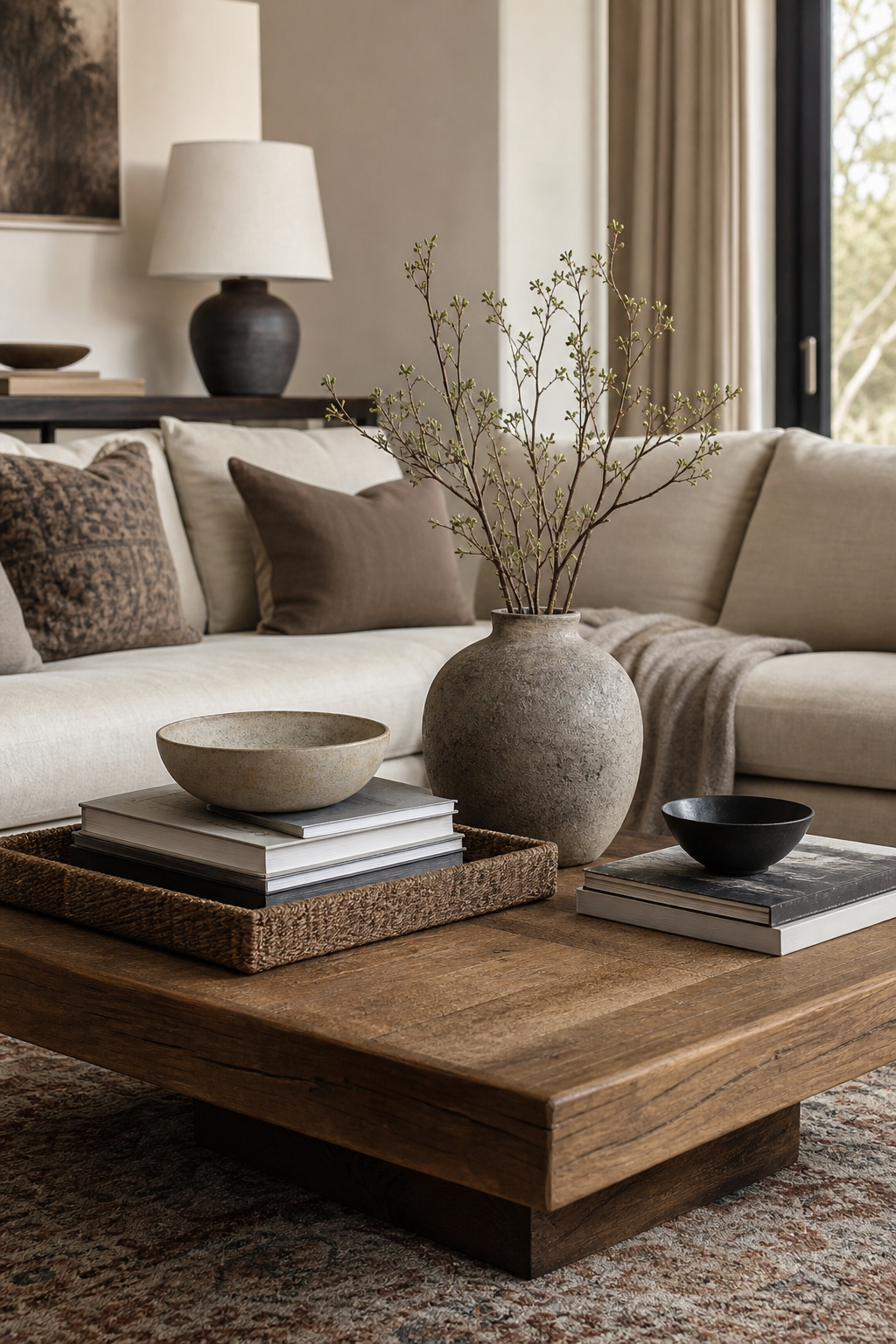
Bring In One Vintage Or Aged Piece
A room with only new furniture can feel a little too perfect. Add one vintage, antique, or aged piece to give the living room a sense of history. A weathered side table, vintage rug, patinated mirror, old stool, or framed textile can make clean furniture feel more soulful. The piece does not have to be precious; it simply needs texture and character. Balance it with modern upholstery so the room still feels fresh. Designers often rely on this contrast because age creates depth instantly. One collected object can make the whole room feel less staged and more lived in.
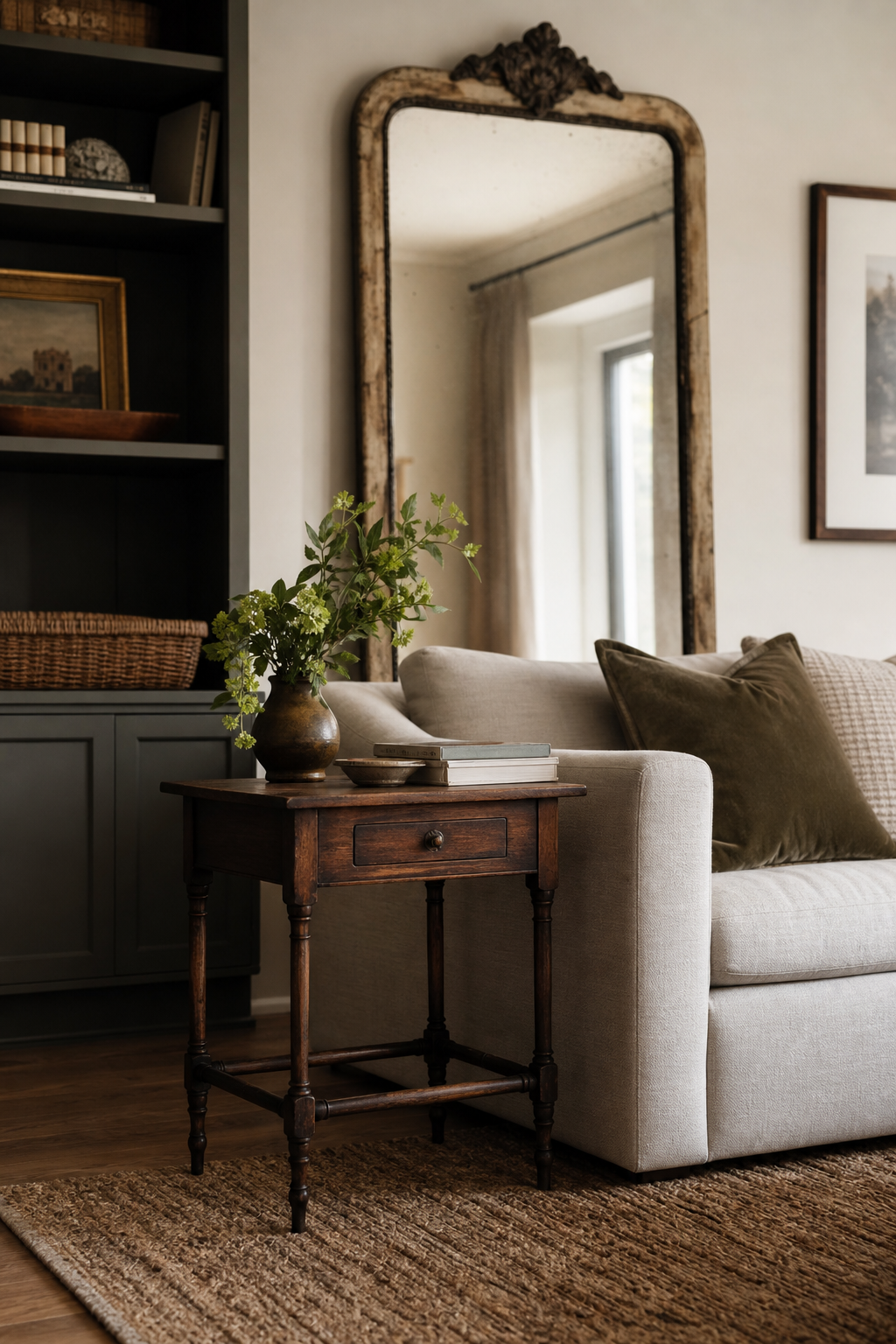
Create A Quiet Art Moment
Art does not need to shout to make a living room feel designed. A single large piece above the sofa, a pair of framed works, or a small gallery wall with consistent spacing can create a quiet focal point. Choose scale first; art that is too small often looks accidental. Keep frames related to other finishes in the room, such as oak, blackened metal, or antique brass. Abstract work, landscapes, textiles, and photography can all suit a cozy room when the palette connects to the upholstery and rug. Art gives the space personality while reinforcing the room’s rhythm.
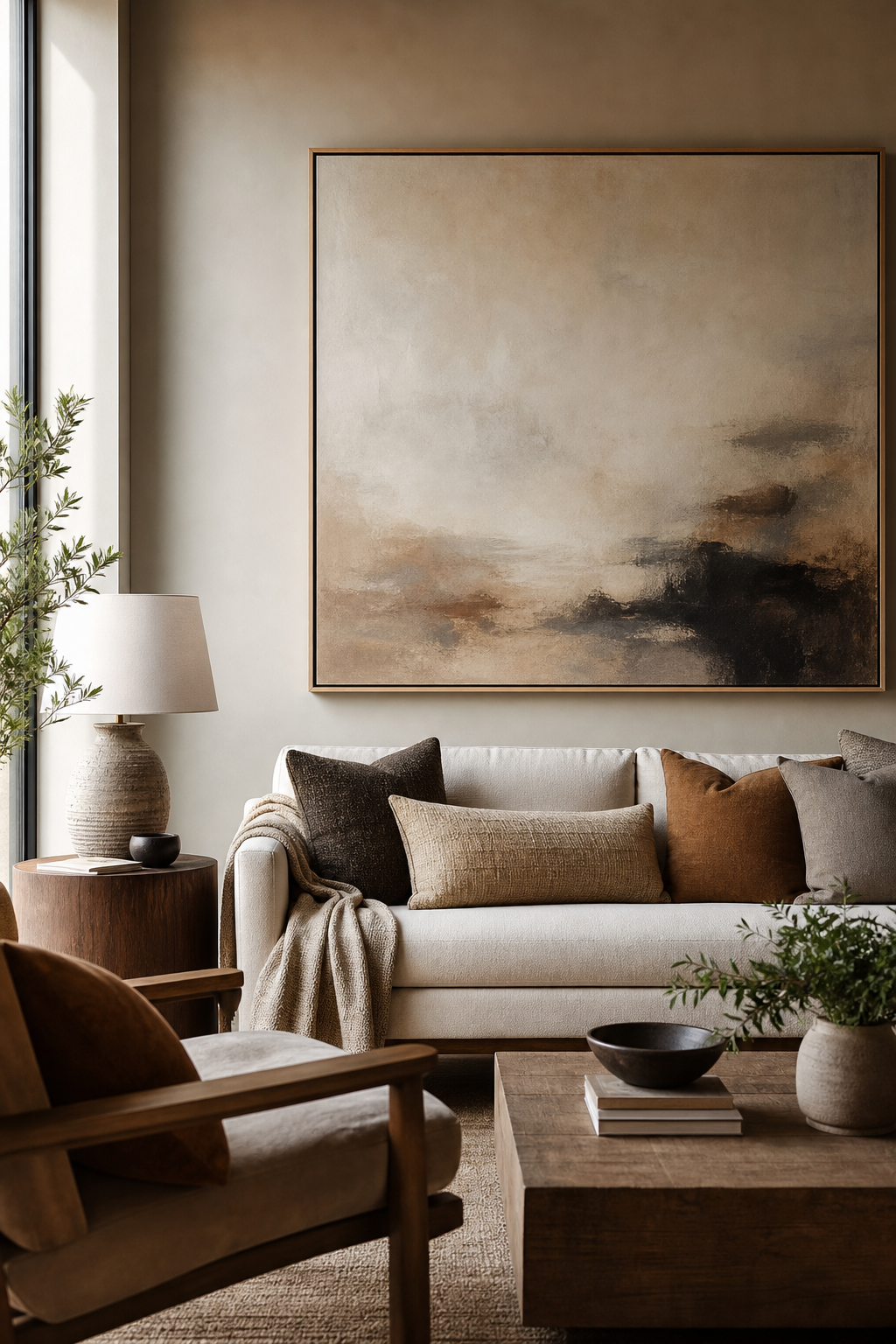
Use Accent Chairs To Add Shape
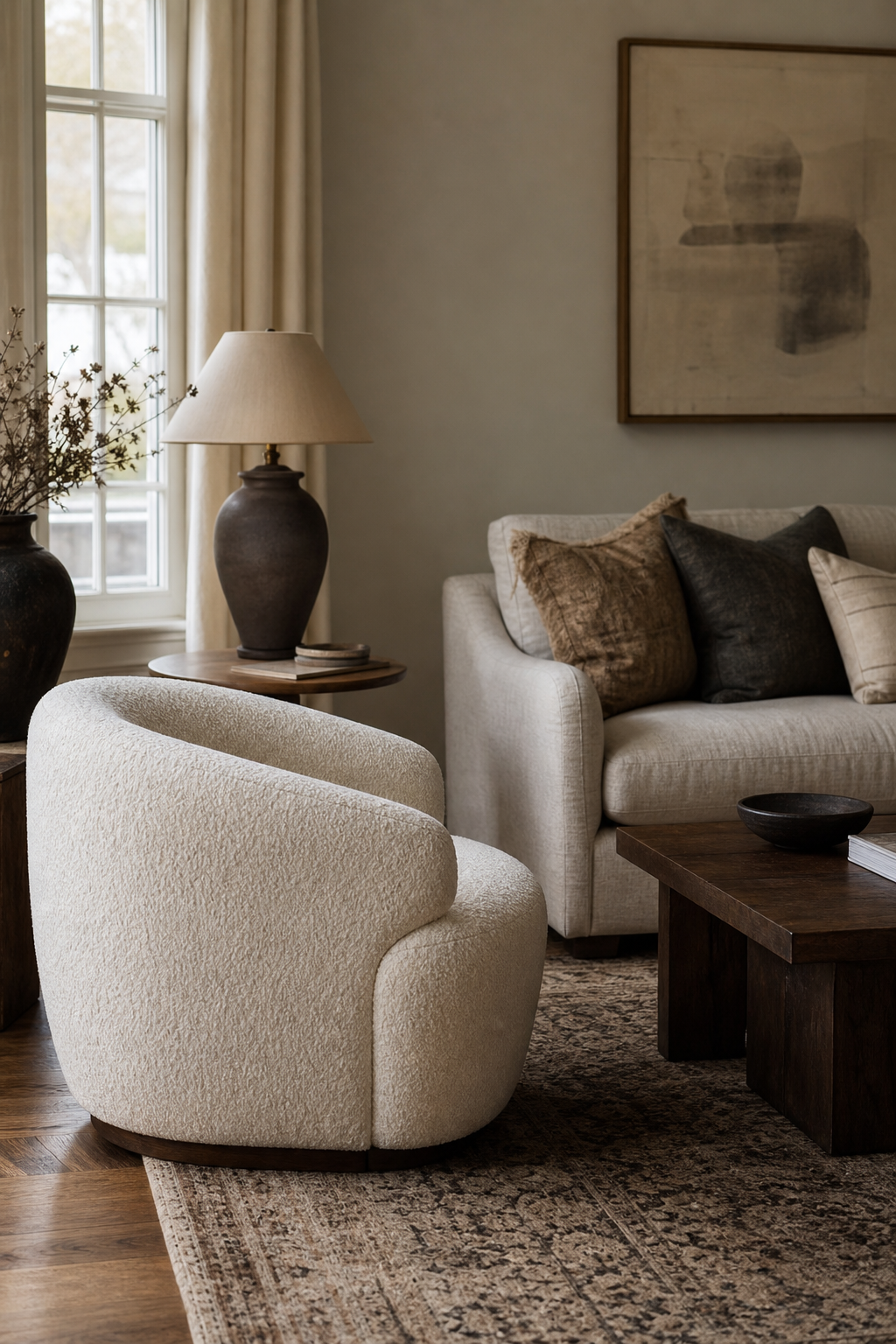
Accent chairs are a useful way to bring personality into a living room without replacing the sofa. Try a curved lounge chair, a spindle chair, a skirted slipper chair, or a swivel chair depending on how the room is used. The chair should relate to the sofa in height and visual weight, but it does not need to match. A different texture, such as bouclé, leather, cane, or linen, gives the room more depth. Place a small table and lamp nearby so the chair becomes a real destination, not just a decorative object in the corner.
Add Warmth With Earthy Color
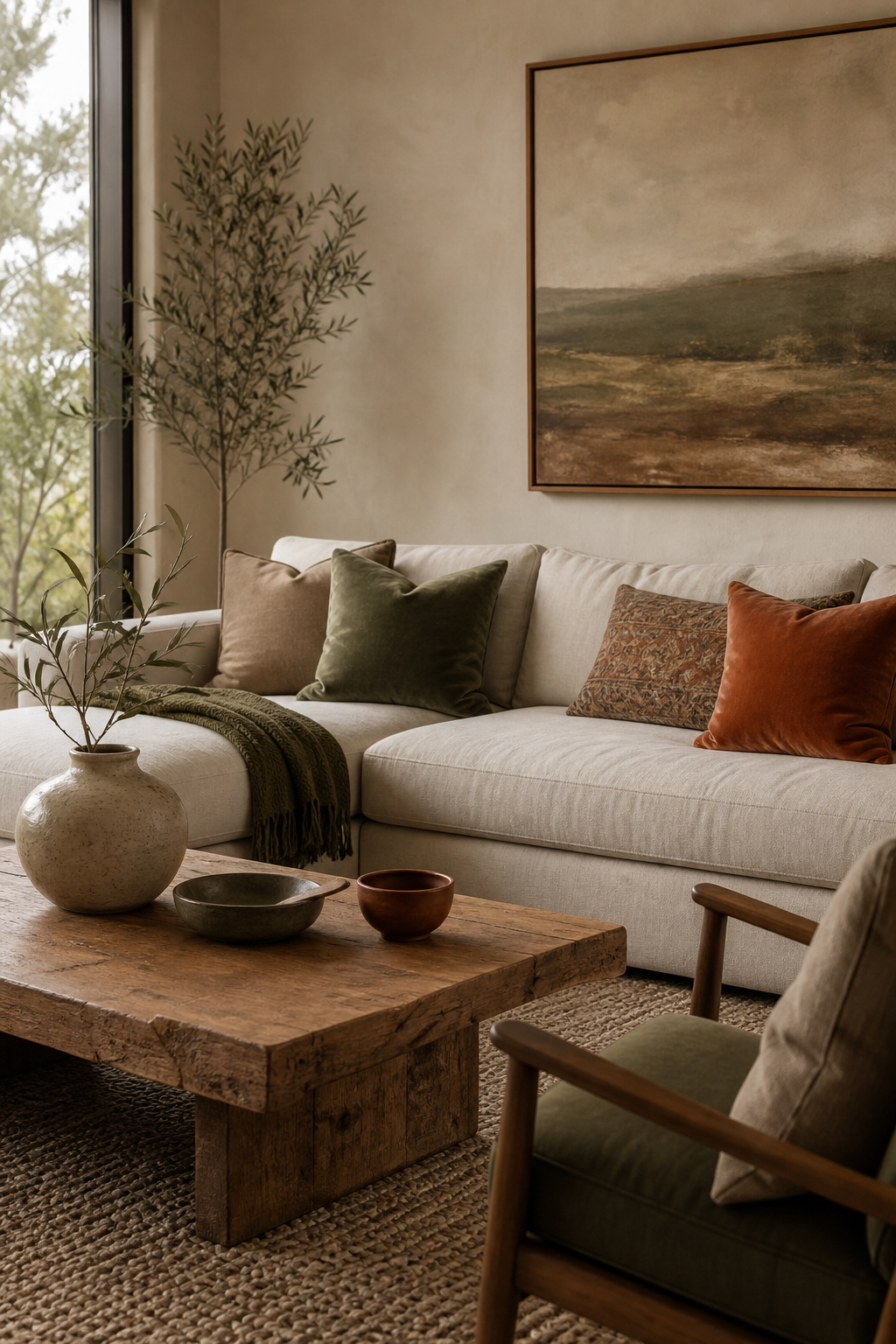
A cozy designer living room often uses earthy color in measured amounts. Olive, clay, mushroom, rust, ochre, warm gray, and deep brown can all make neutrals feel richer. Use these tones through pillows, throws, art, ceramics, or one upholstered chair rather than covering every surface. Earthy color works because it connects to natural materials like wood, wool, stone, and linen. Keep the base calm so the accents feel sophisticated instead of busy. Even a few warm notes can make a pale room feel more grounded and welcoming through every season.
Make Shelves Look Collected Not Packed
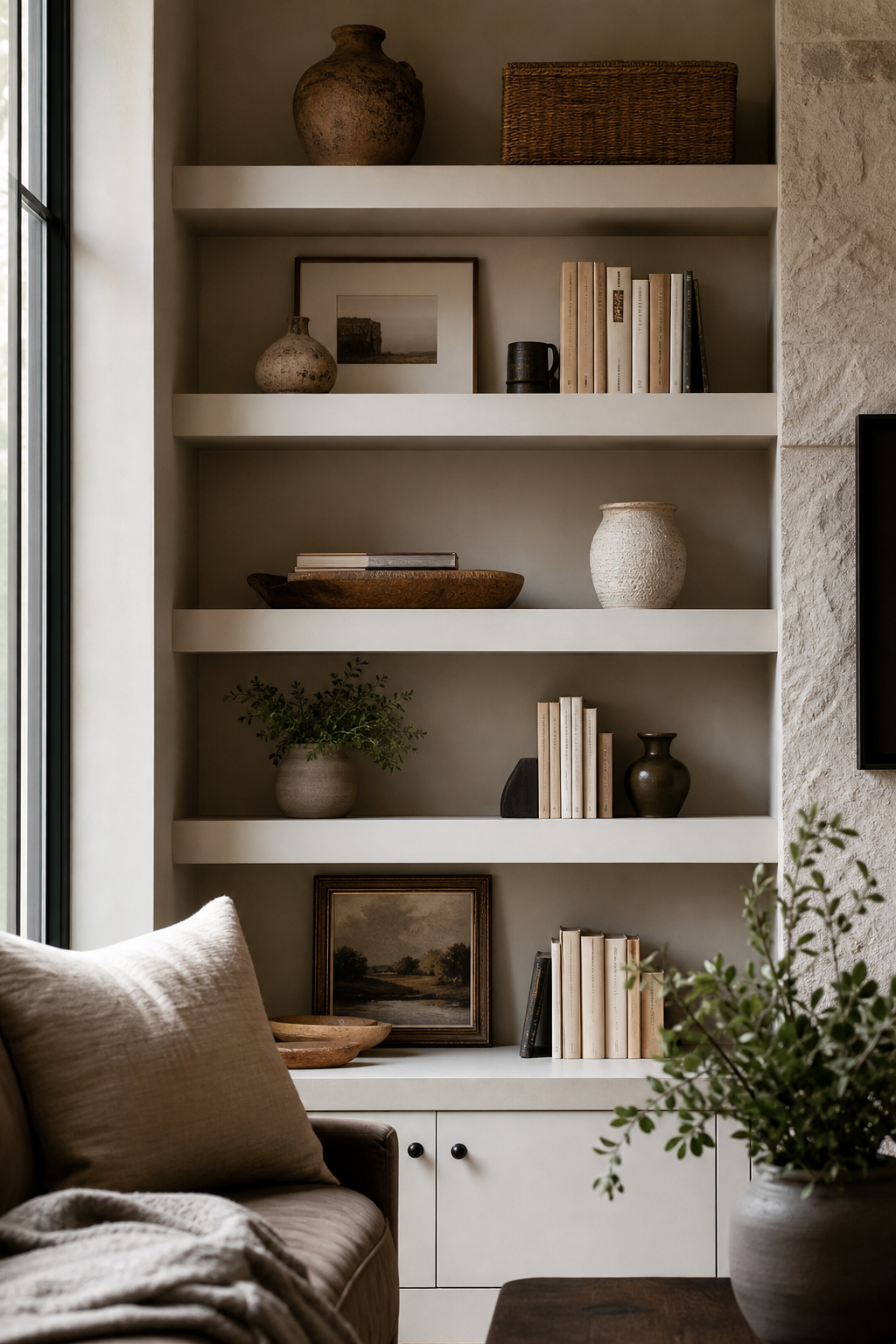
Open shelves can elevate a living room when they are edited carefully. Mix books, ceramic vessels, framed art, baskets, and a few sculptural objects, then leave open space around them. Stack some books horizontally and others vertically for rhythm. Keep the color palette controlled, especially if the room already has patterned textiles. Shelves should reveal personality without becoming visual noise. If you need storage, use closed cabinets below and style the upper shelves more lightly. A collected shelf arrangement makes the room feel layered and lived in while still maintaining the calm of a designer space.
Use A Throw Blanket With Real Texture
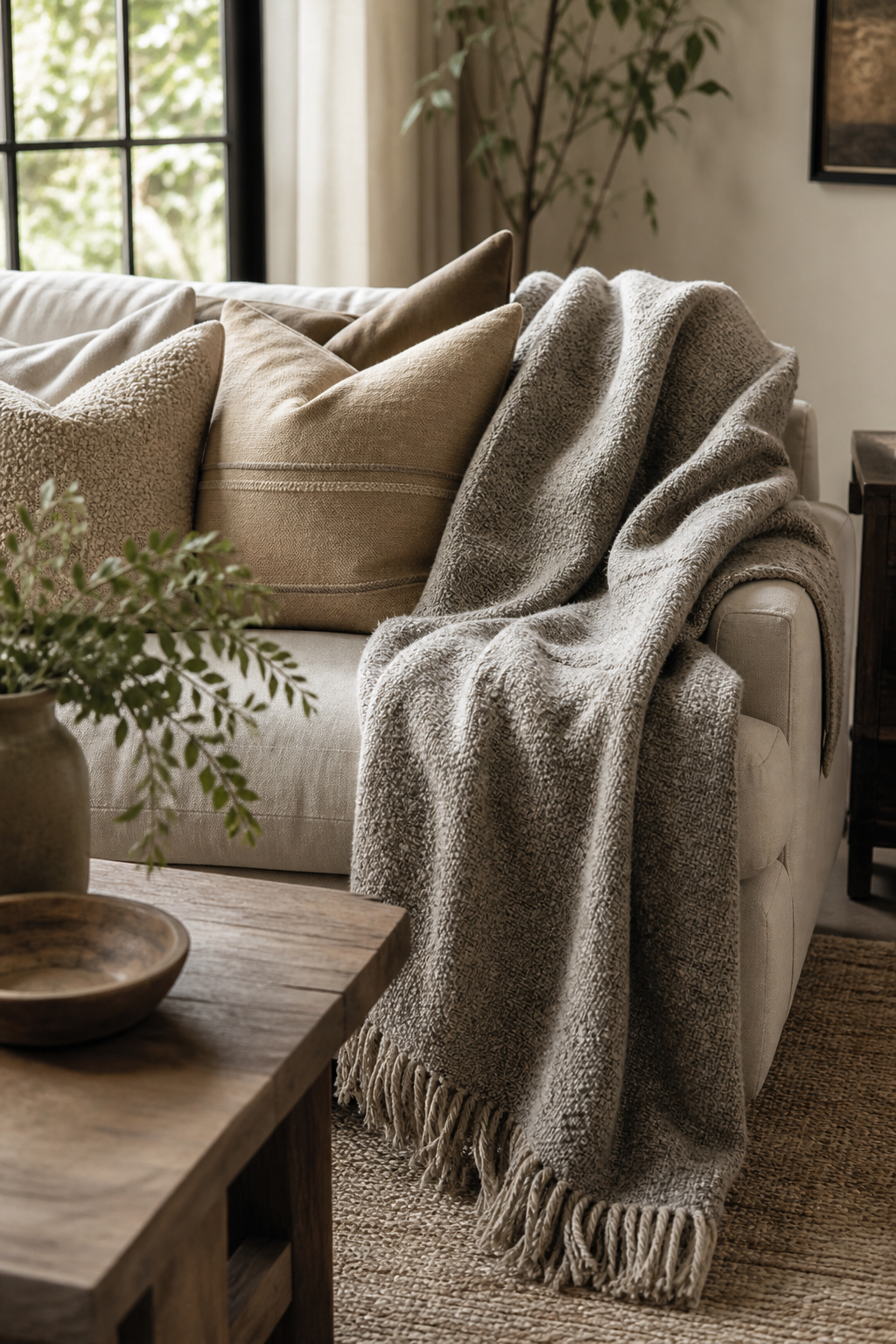
A throw blanket is small, but it can change the mood of a living room. Choose wool, alpaca, cotton knit, linen, or a boucle texture that feels substantial rather than decorative. Drape it over a sofa arm, fold it across a chaise, or place it in a basket near the seating area. The color should connect to the rug, pillows, or art so it feels intentional. Avoid too many throws competing across the room. One textured layer adds softness, encourages real use, and makes the seating area look relaxed without looking messy.
Anchor The Room With A Fireplace Wall
If the living room has a fireplace, treat the entire wall as a composition. Balance the mantel with art, a mirror, or a simple object grouping, then keep the styling low enough that it does not feel crowded. Built-ins or storage on either side should have breathing room. If a television is part of the wall, reduce its visual weight with a clean frame, darker backing, or simple surrounding materials. A basket of wood, a pair of chairs, or a textured rug can reinforce the cozy mood. The fireplace should feel anchored and calm, not overloaded.
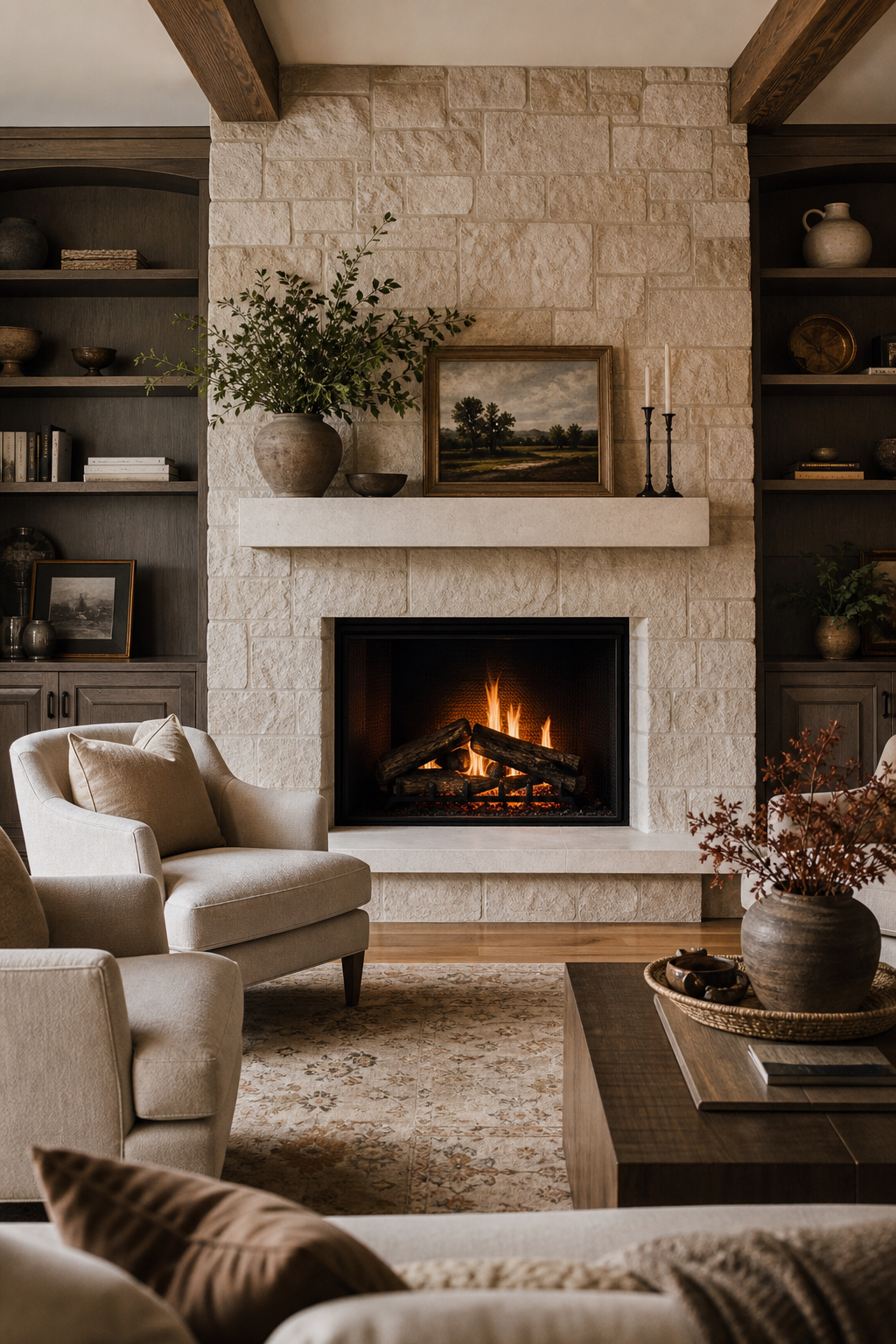
Add A Natural Element With Branches
Branches are a designer favorite because they add height, movement, and seasonality without the sweetness of a floral arrangement. Place olive, eucalyptus, magnolia, or bare sculptural stems in a heavy ceramic or glass vessel. The arrangement should be loose and a little imperfect, especially in a relaxed living room. Use branches on a console, coffee table, fireplace hearth, or shelf where they have space around them. This organic element keeps modern rooms from feeling too controlled. It also changes beautifully with light, casting subtle shadows and giving the space a living quality.
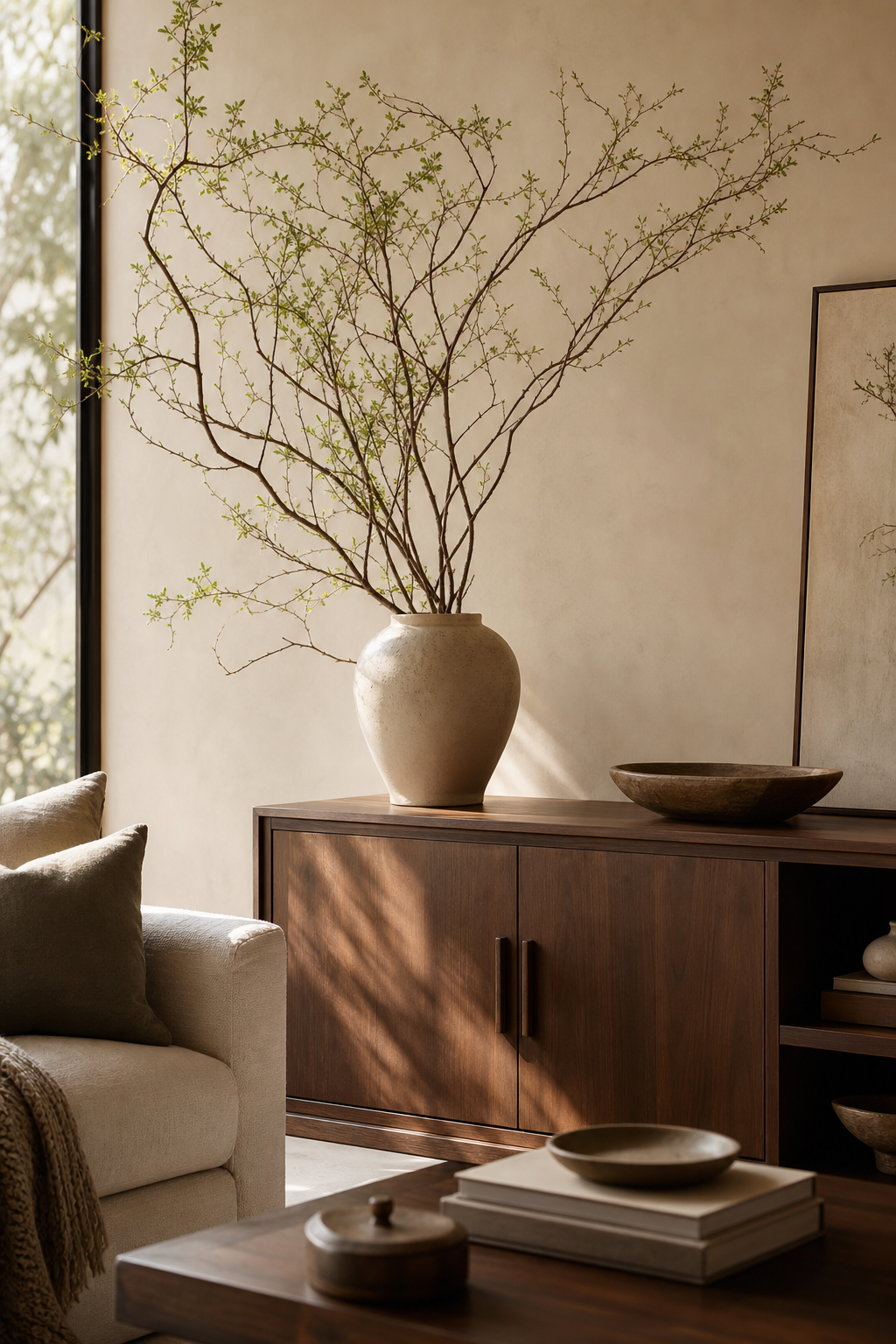
Choose Side Tables That Work Hard
Side tables should be beautiful, but they also need to serve the room. Every main seat should have a place for a drink, book, or lamp. Mix shapes and materials for interest: a round stone table beside a sofa, a small wood stool near a chair, or a slim metal table where space is tight. Height matters; the tabletop should sit close to the sofa or chair arm. A living room feels more luxurious when comfort is easy. Functional side tables prevent clutter from collecting on the floor and make the seating arrangement feel complete.
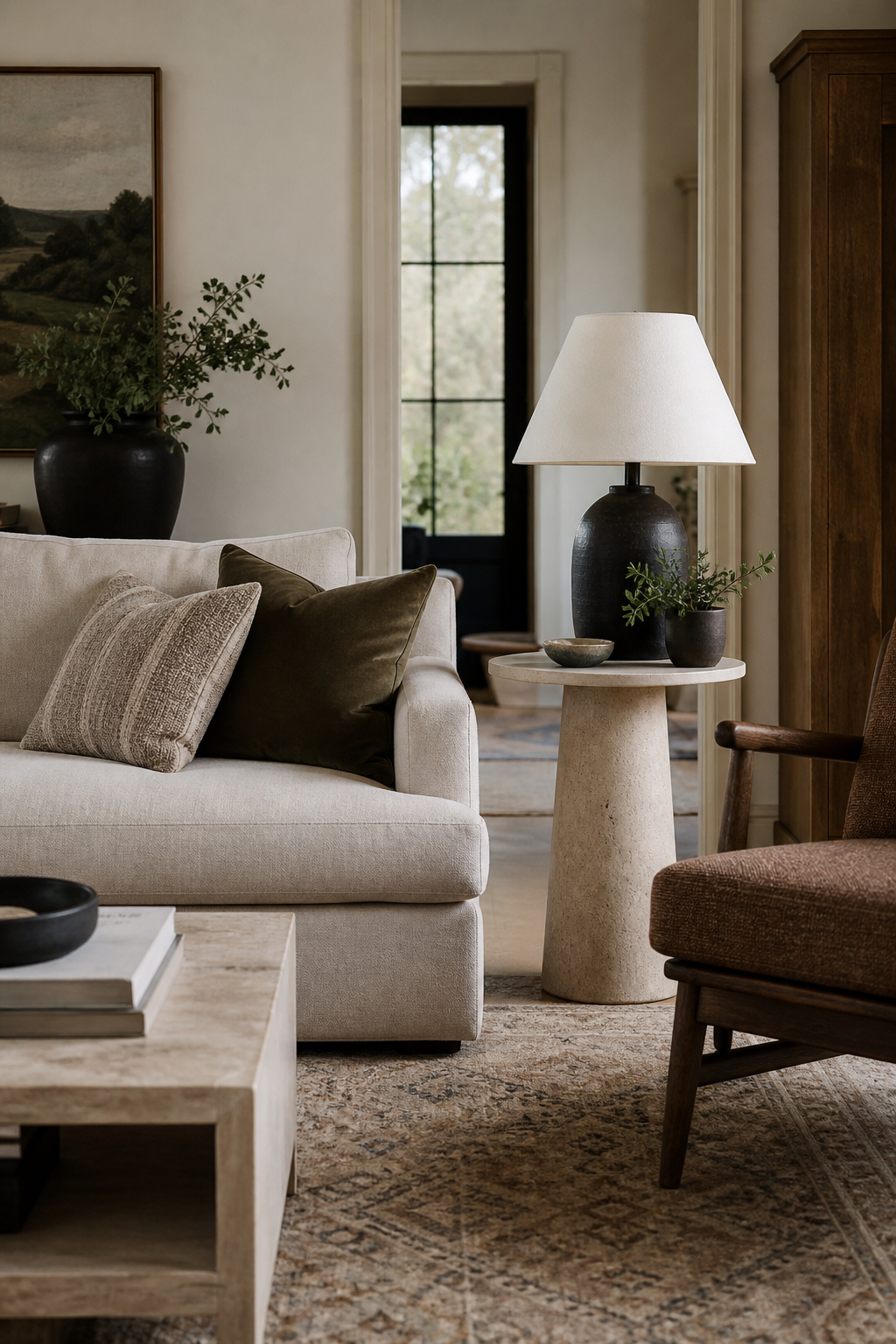
Soften The Room With Rounded Forms
Modern living rooms can become rigid when every line is square. Rounded forms soften the composition and make the space feel more welcoming. Try a round coffee table, curved chair, arched mirror, globe lamp, oval ottoman, or rounded pillow shapes. The goal is not to make everything circular, but to interrupt hard edges with a few gentle curves. Rounded forms are especially helpful in small living rooms because they improve movement around furniture. They also create a subtle designer rhythm, making the room feel composed, calm, and easier to live in.
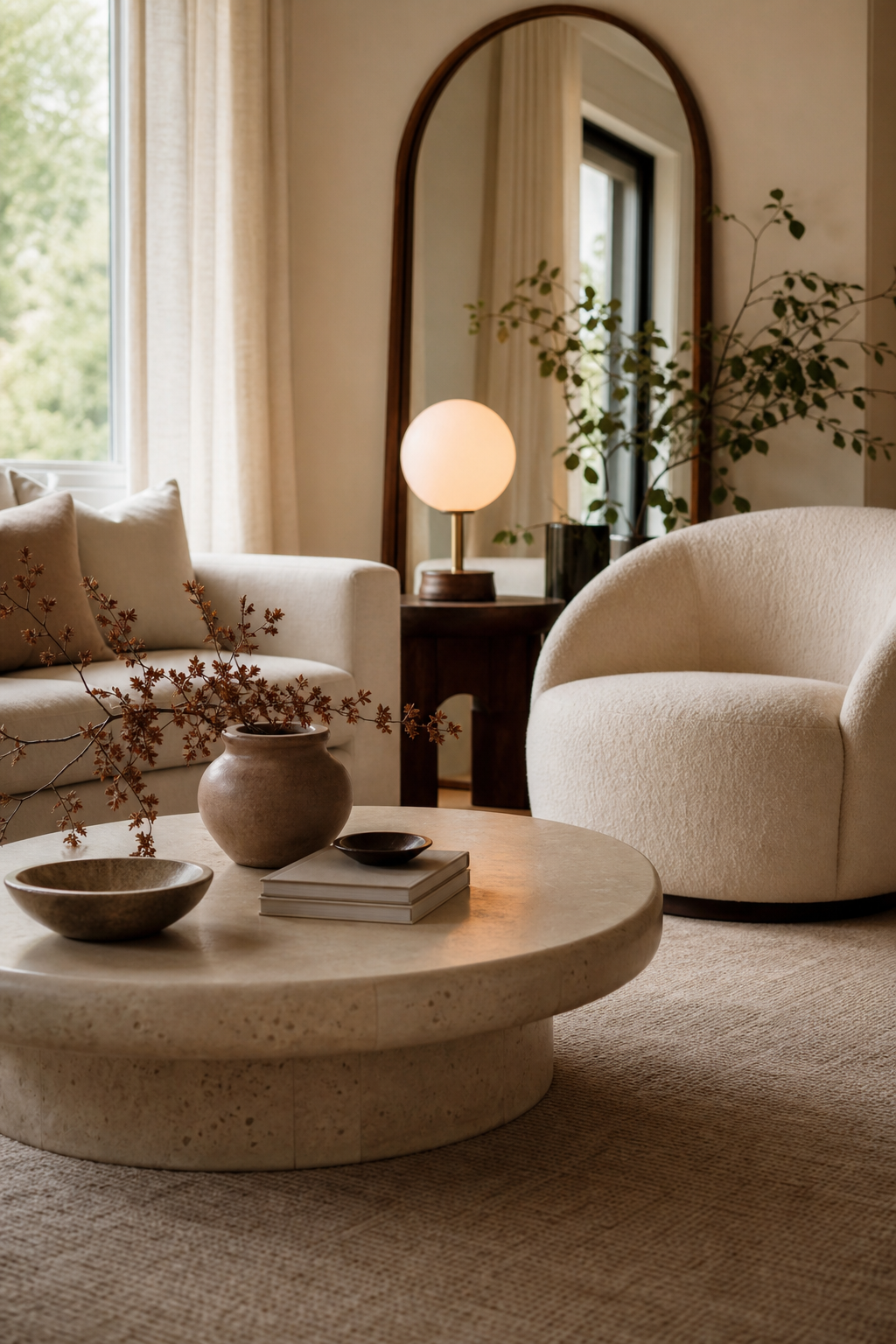
Keep The Final Styling Edited
The final layer is where a cozy room can either become polished or cluttered. Before adding more accessories, remove anything that does not support the mood or function of the space. Group smaller objects on trays, let larger pieces stand alone, and repeat materials so the room feels connected. Books, ceramics, plants, textiles, and art are enough when they are chosen with care. A designer look often comes from restraint rather than abundance. Leave enough empty space for the eye to rest and enough practical surfaces for the room to be used every day.
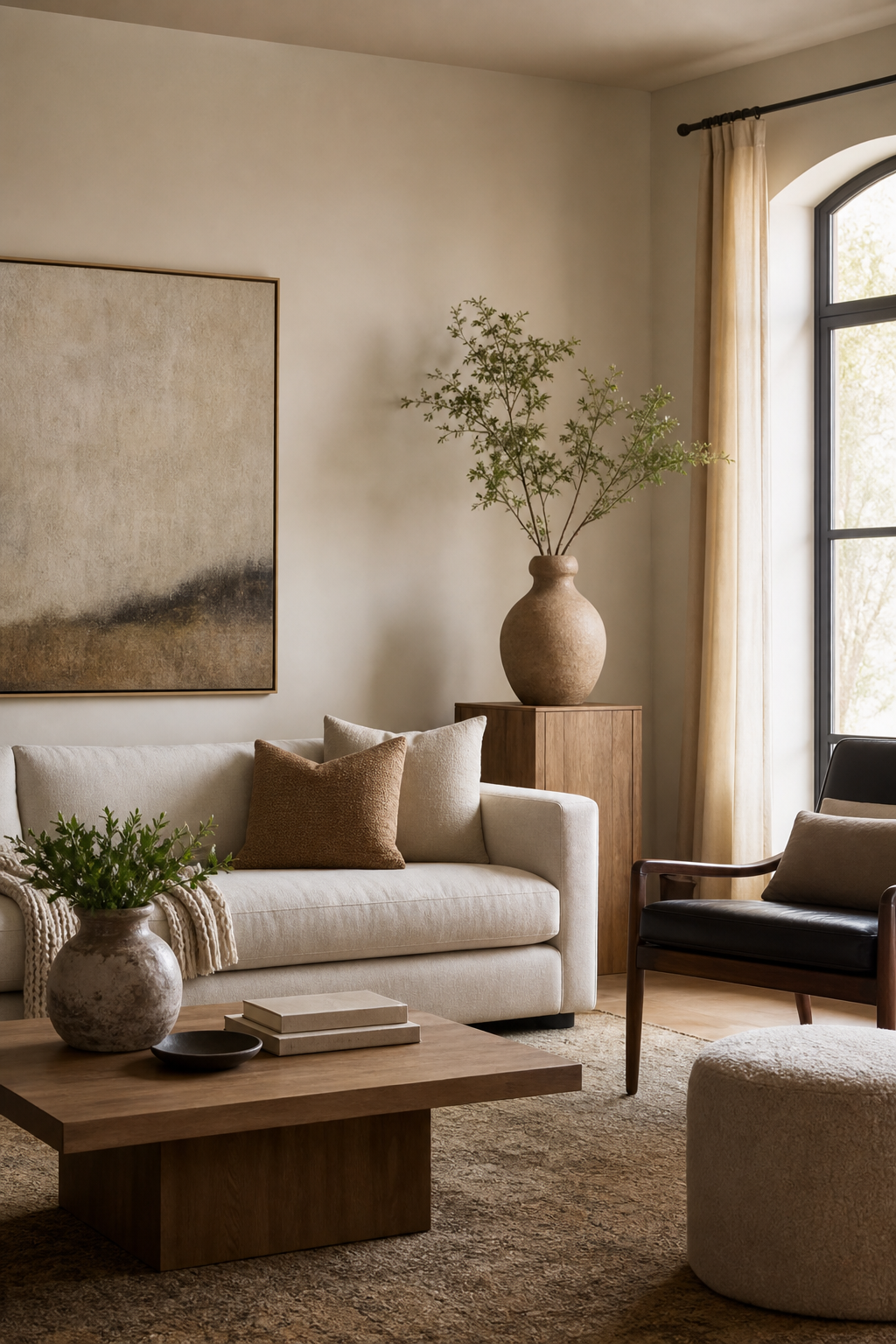
Living room inspiration becomes useful when it translates into choices you can actually make: a better layout, a larger rug, warmer lighting, more texture, or a calmer approach to styling. Start with the part of the room that feels least resolved, then build in layers. When comfort and restraint work together, the room becomes both beautiful and easy to live in.