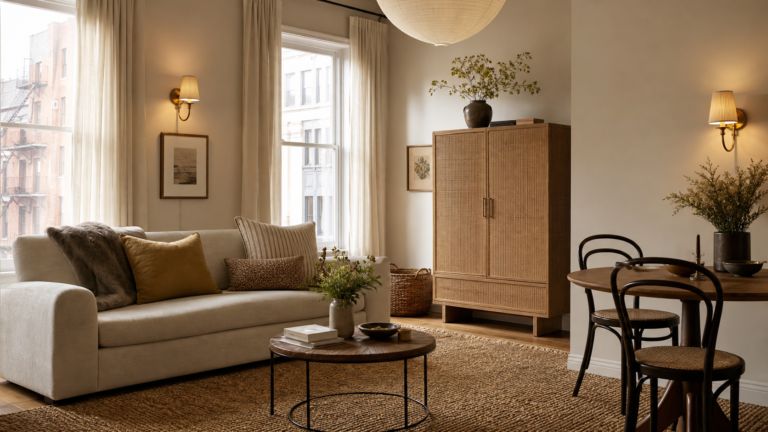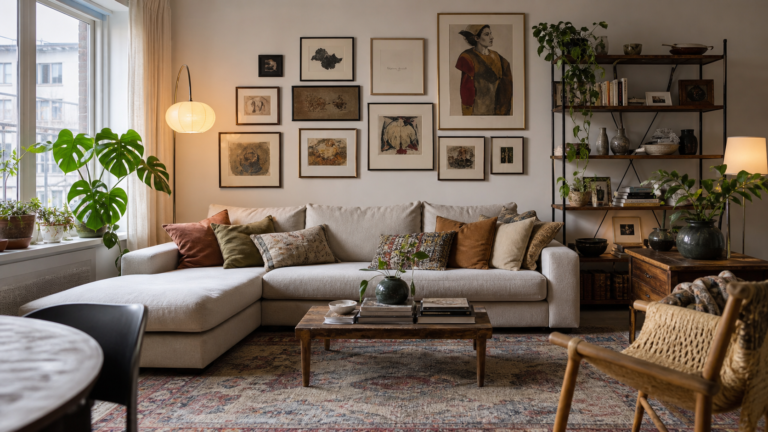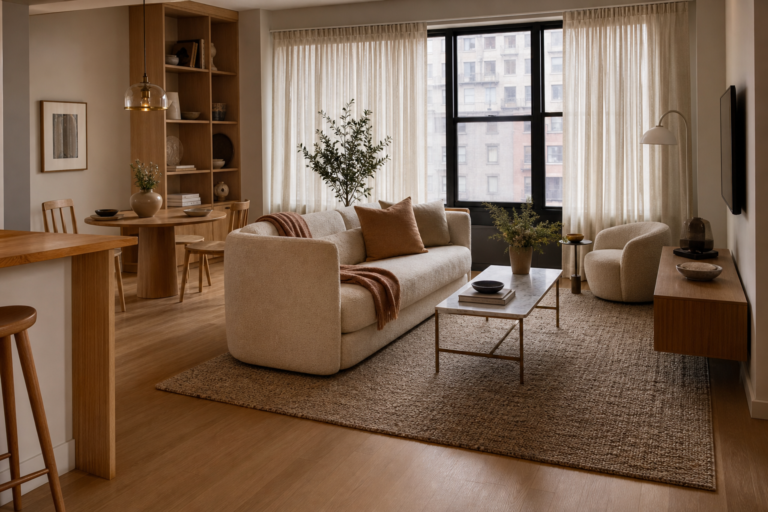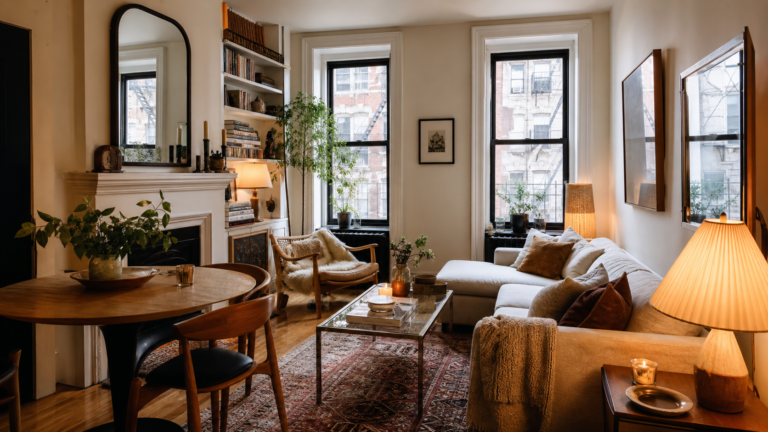
24 Dorm Room Ideas To Make Campus Living Feel Like Home
A dorm room rarely begins with charm. The walls are plain, storage is limited, and the furniture has to work hard. Still, a small campus room can feel warm, personal, and surprisingly polished when every decision has a purpose. The best dorm ideas combine comfort with function: bedding that softens the space, storage that reduces visual clutter, lighting that feels gentle at night, and decor that reminds you who you are after a long day of classes.
1. Layer The Twin XL Bed Like A Real Bed
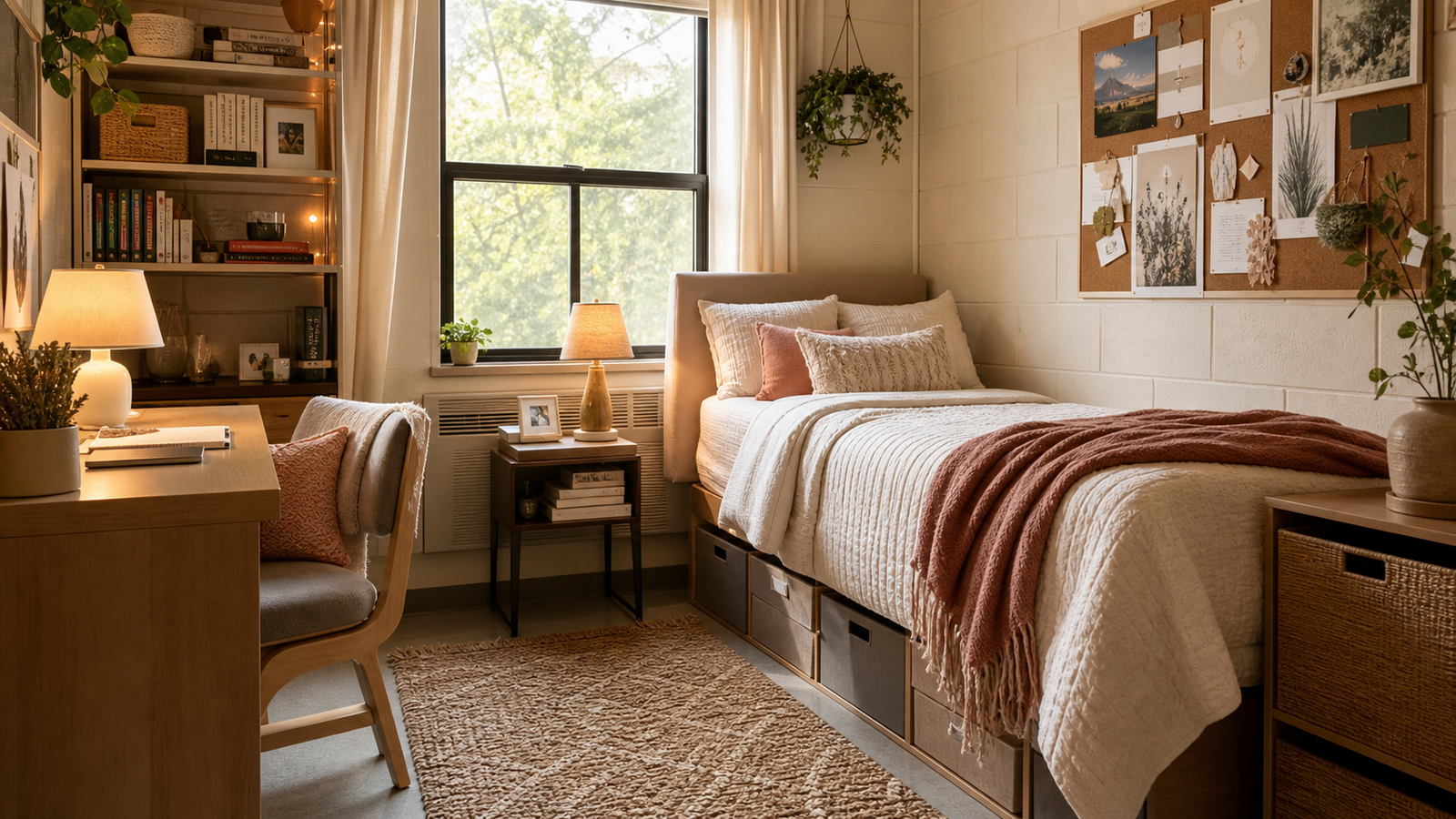
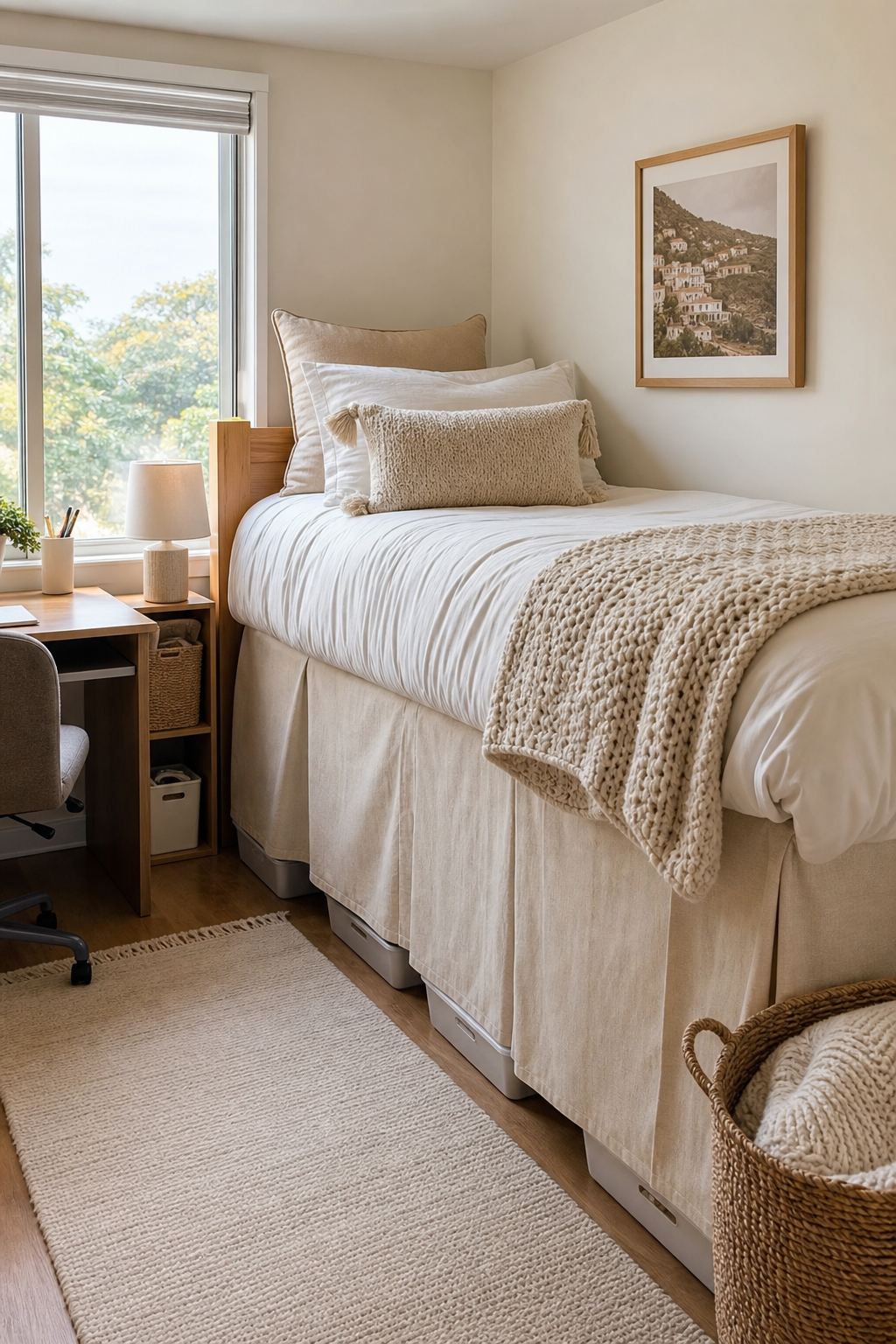
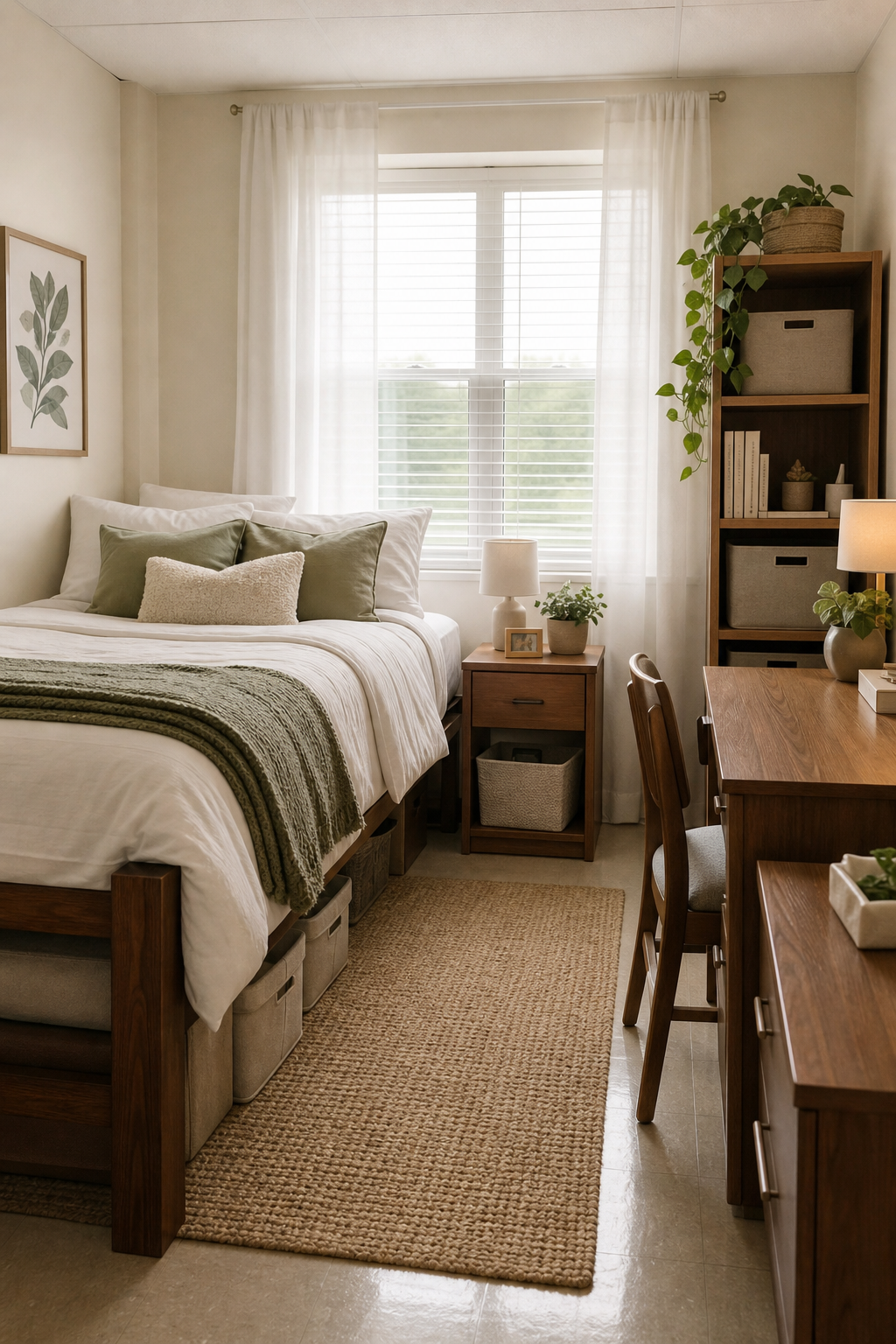
The bed is usually the largest surface in a dorm, so treat it as the design anchor rather than an afterthought. Start with crisp sheets, then add a quilt or duvet with enough weight to look generous. A folded throw at the foot of the bed adds warmth and gives you an easy layer for studying or watching a movie. Use two sleeping pillows plus one or two decorative pillows in washable covers; too many pillows become annoying in a small room. A padded headboard pillow or large Euro sham makes the bed comfortable for sitting upright. Choose colors that repeat elsewhere in the room, such as cream, sage, denim, camel, or soft gray. When the bed looks intentional, the whole dorm feels more settled.
2. Use A Bed Skirt To Hide Storage
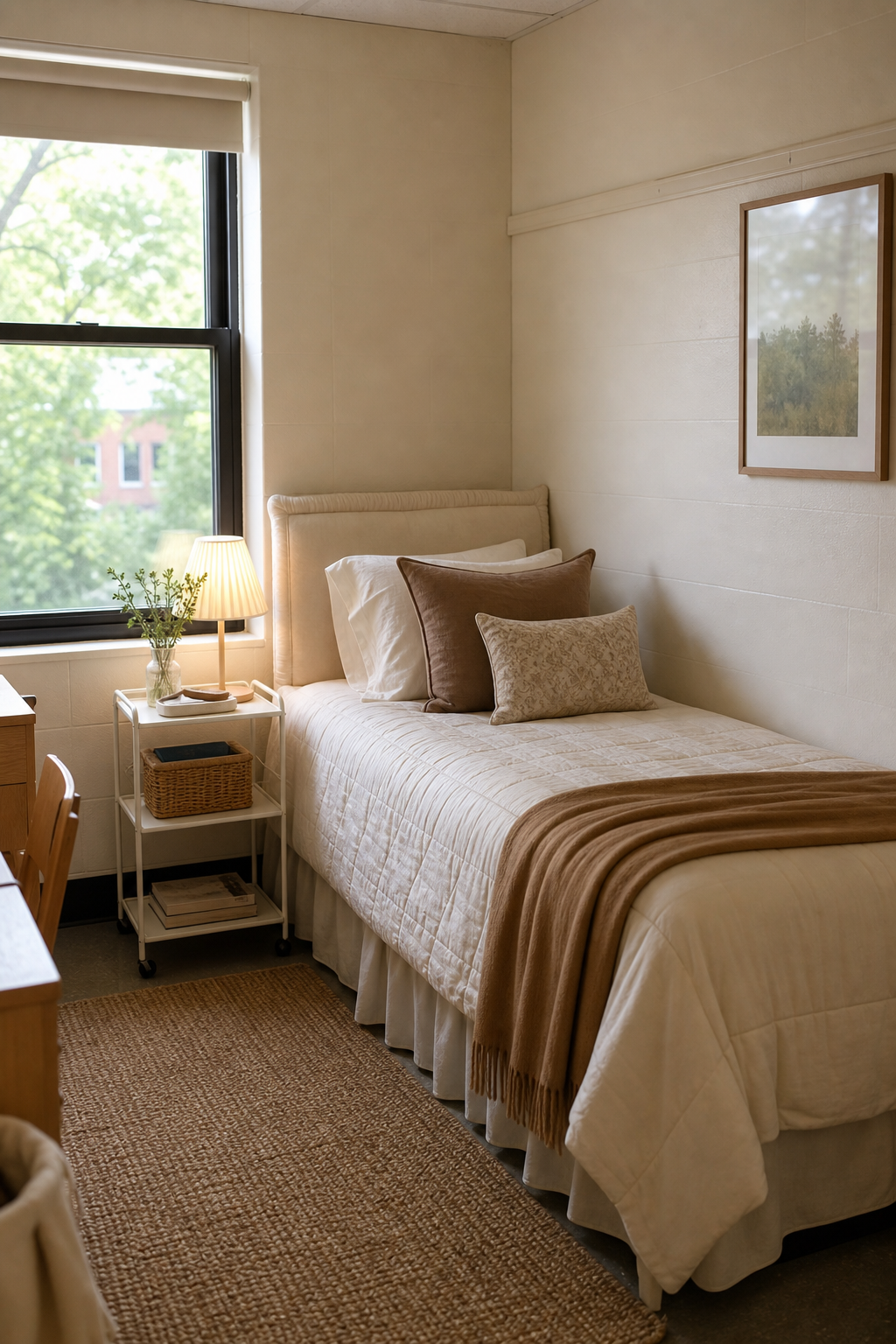
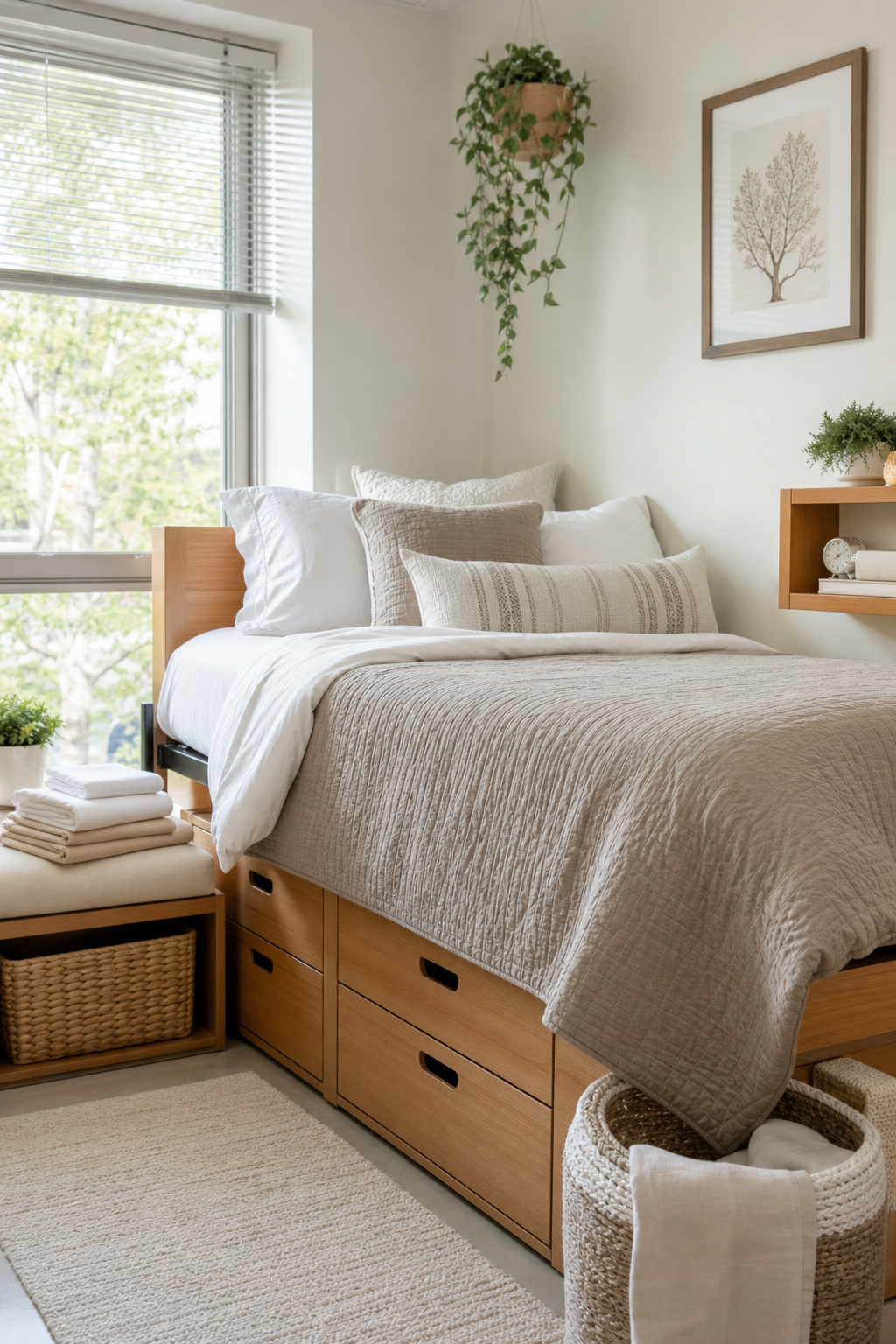
Under-bed storage is one of the most useful dorm solutions, but it can look messy if everything is visible. A tailored bed skirt or simple fabric panel hides bins, suitcases, cleaning supplies, and extra bedding while making the bed feel more finished. Choose a washable fabric in white, oatmeal, charcoal, or the same color as your bedding so it does not call attention to itself. If the bed is lofted high, use matching storage cubes or lidded bins behind the skirt for easy access. Label anything you will not use weekly. This small detail turns necessary storage into a quieter part of the room, which matters when your desk, bed, closet, and lounge space are all within a few steps.
3. Add A Soft Rug Underfoot
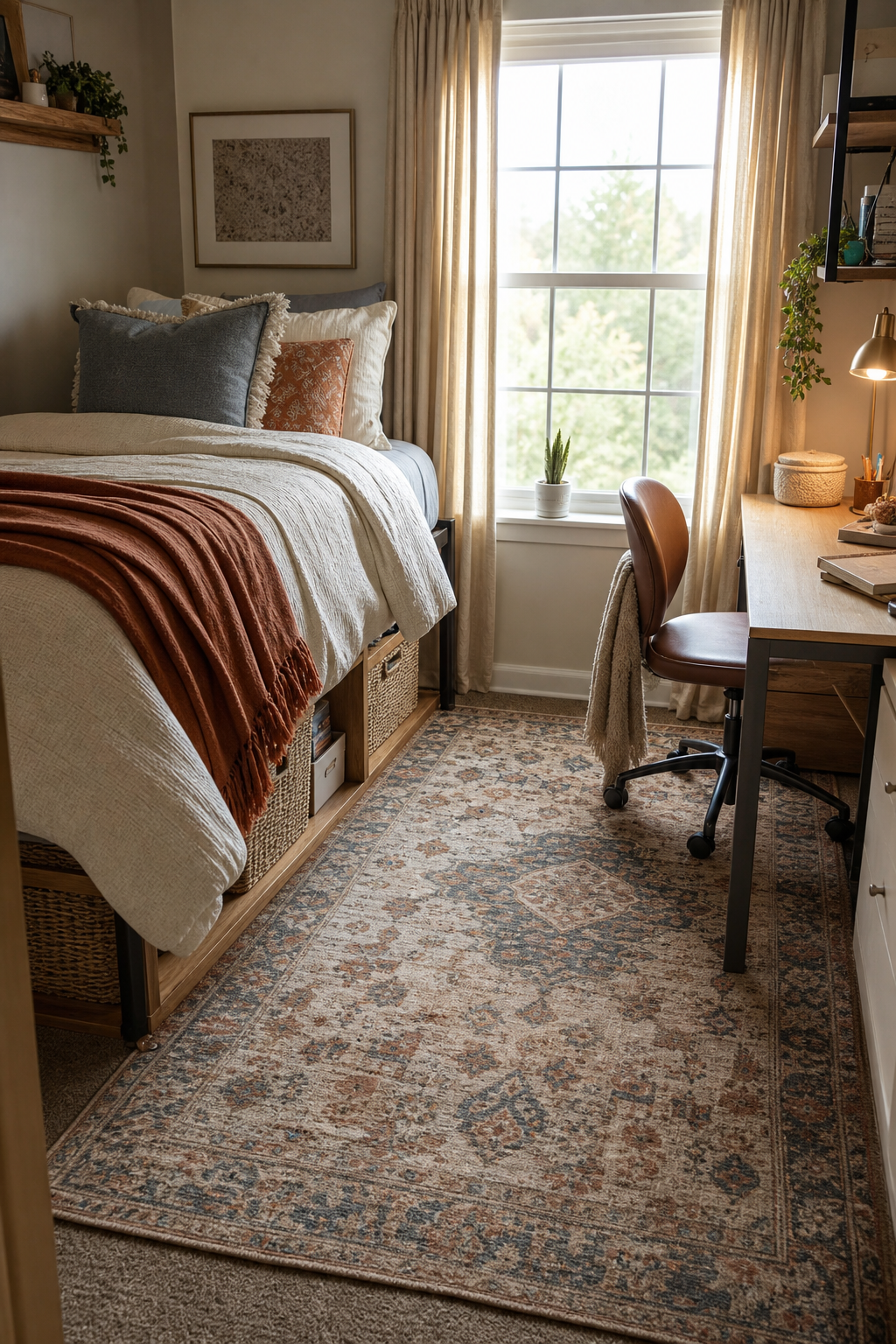
A rug immediately makes a dorm room feel less institutional, especially if the flooring is tile, laminate, or old carpet. Choose a low-pile rug that is easy to vacuum and large enough to connect the bed and desk zone. Vintage-style patterns are forgiving because they disguise small stains, while woven neutrals make the room feel clean and calm. Avoid anything too thick if the door needs clearance or if you use a rolling desk chair. A rug also helps with acoustics, making the room feel quieter and less echoing. Pick colors that can survive a full semester of shoes, snacks, and late-night study sessions: taupe, rust, faded blue, charcoal, or warm beige. The room will feel warmer the moment your feet hit the floor.
4. Replace Harsh Overhead Light With Lamps
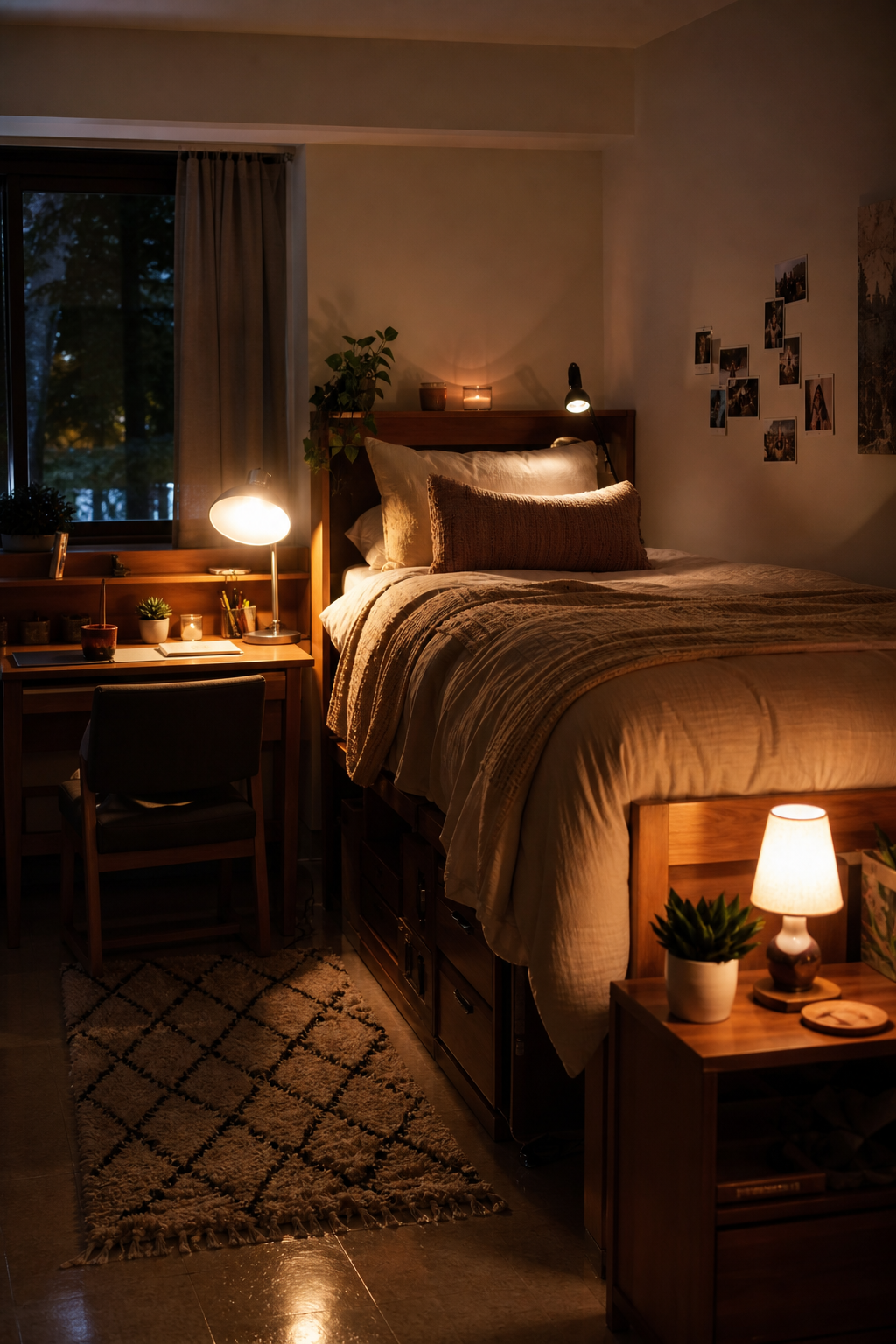
Dorm overhead lighting can feel bright and flat, which is not ideal when you are trying to wind down after class. Add at least two softer light sources: a desk lamp for work and a bedside lamp or clip light for reading. Warm bulbs make even basic furniture feel more inviting. If space is tight, choose a small lamp with a narrow base, a wall-safe plug-in sconce, or a clamp lamp attached to a shelf. A shaded lamp is usually more flattering than an exposed bulb. Keep task lighting bright enough for studying, but let the rest of the room glow softly. This one change makes the room feel more like a bedroom and less like a temporary assignment.
5. Create A Real Desk Zone
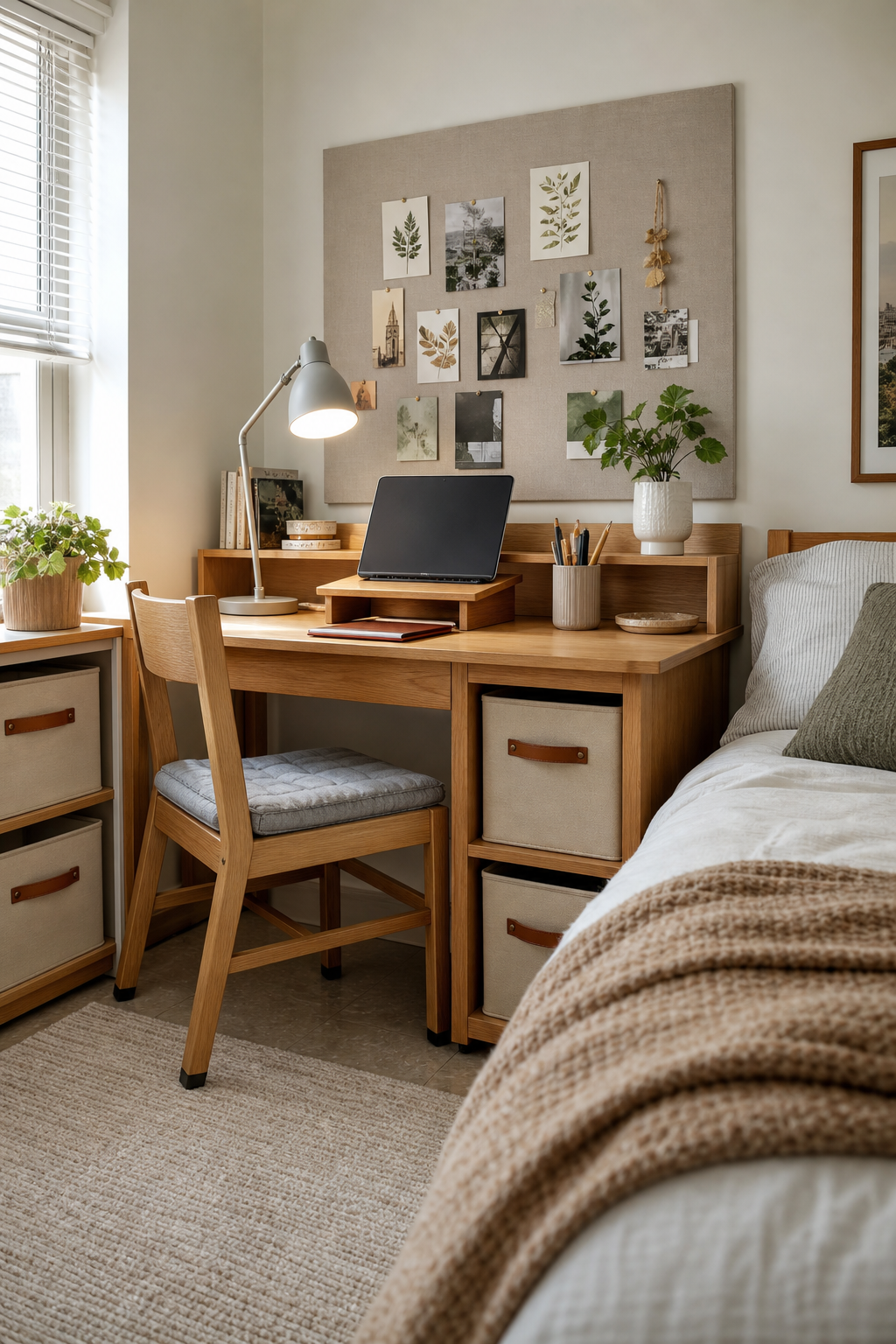
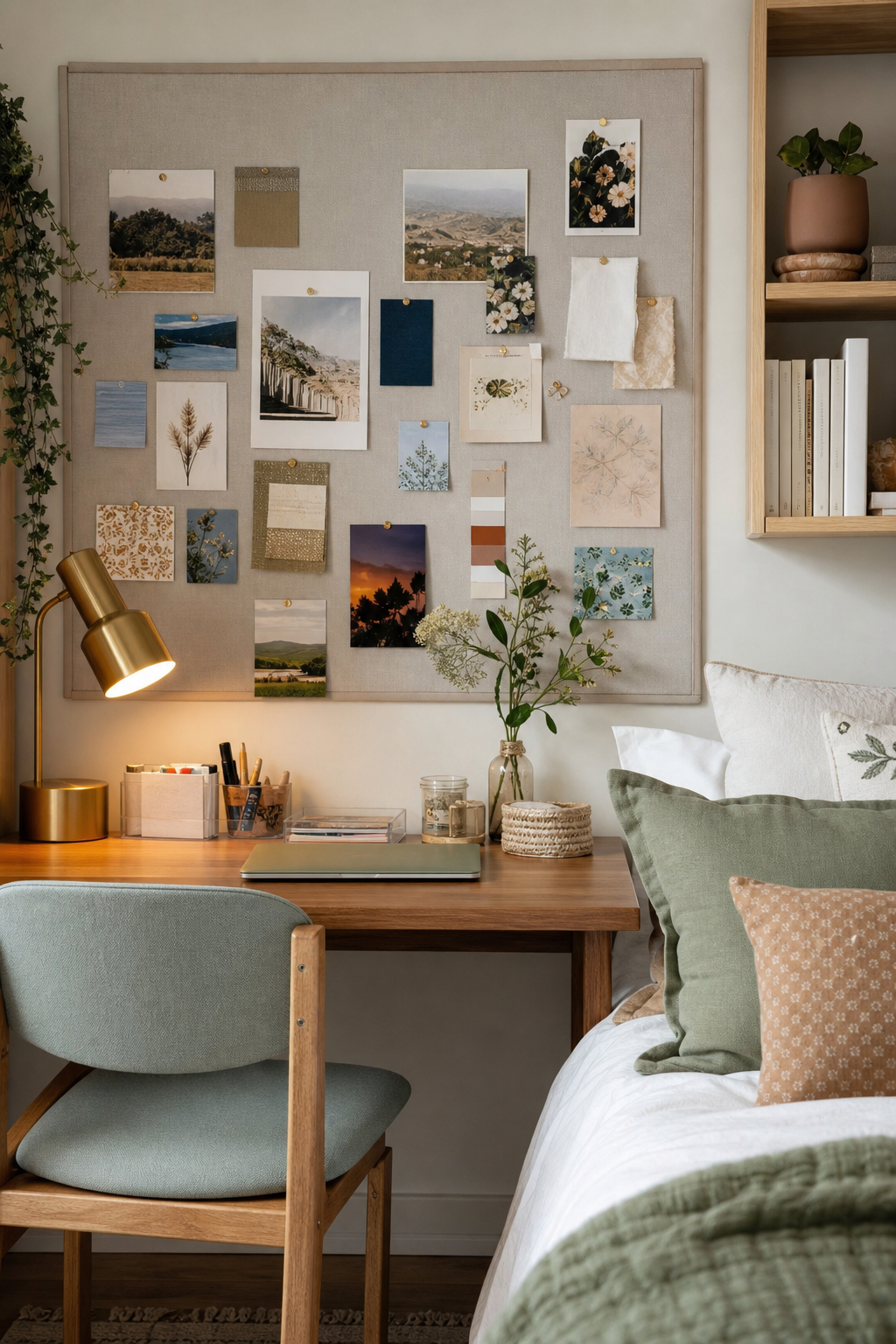
Your desk has to support schoolwork, but it should also feel pleasant enough to use every day. Keep the surface clear except for a lamp, laptop stand, pencil cup, and one decorative item that makes you happy. Add a small tray for keys, earbuds, and lip balm so the clutter has a landing place. If your desk has open shelving, use matching bins or file holders to reduce visual noise. A corkboard, fabric pinboard, or magnetic board above the desk can hold reminders and photos without covering every inch of wall. Comfort matters too: a seat cushion, small lumbar pillow, or footrest can make long study sessions easier. A considered desk zone makes the whole room feel more grown-up and functional.
6. Choose A Calm Color Palette
A dorm room can quickly feel chaotic because so many things are visible at once. A calm color palette helps every practical item look more intentional. Choose three main colors before buying bedding, bins, curtains, and decor. Warm white, oat, sage, and walnut feel soft and natural. Navy, cream, and cognac feel classic. Blush, ivory, and pale oak feel gentle without becoming childish. The palette does not need to be bland; it simply needs repetition. If you love bold color, use it in one or two pieces, such as a pillow, art print, or throw. Keeping larger elements quieter makes the room easier to live in, photograph, clean, and update. The goal is a space that still feels restful when life gets busy.
7. Add Curtains If Rules Allow
Window treatments can make a dorm feel dramatically softer, but always check housing rules before installing anything. If tension rods or removable hooks are allowed, lightweight curtains can filter light, add privacy, and hide basic blinds. Linen-look panels in white, oatmeal, or soft gray are versatile and easy to reuse later. Hang them as high and wide as the room allows so the window feels larger. If curtains are not allowed, consider a fabric valance, removable privacy film, or simply keeping the window area uncluttered and clean. The point is to soften the hardest edge in the room. Even inexpensive curtains can make cinderblock walls, metal frames, and standard dorm furniture feel less severe and more like a real home.
8. Use Vertical Wall Storage
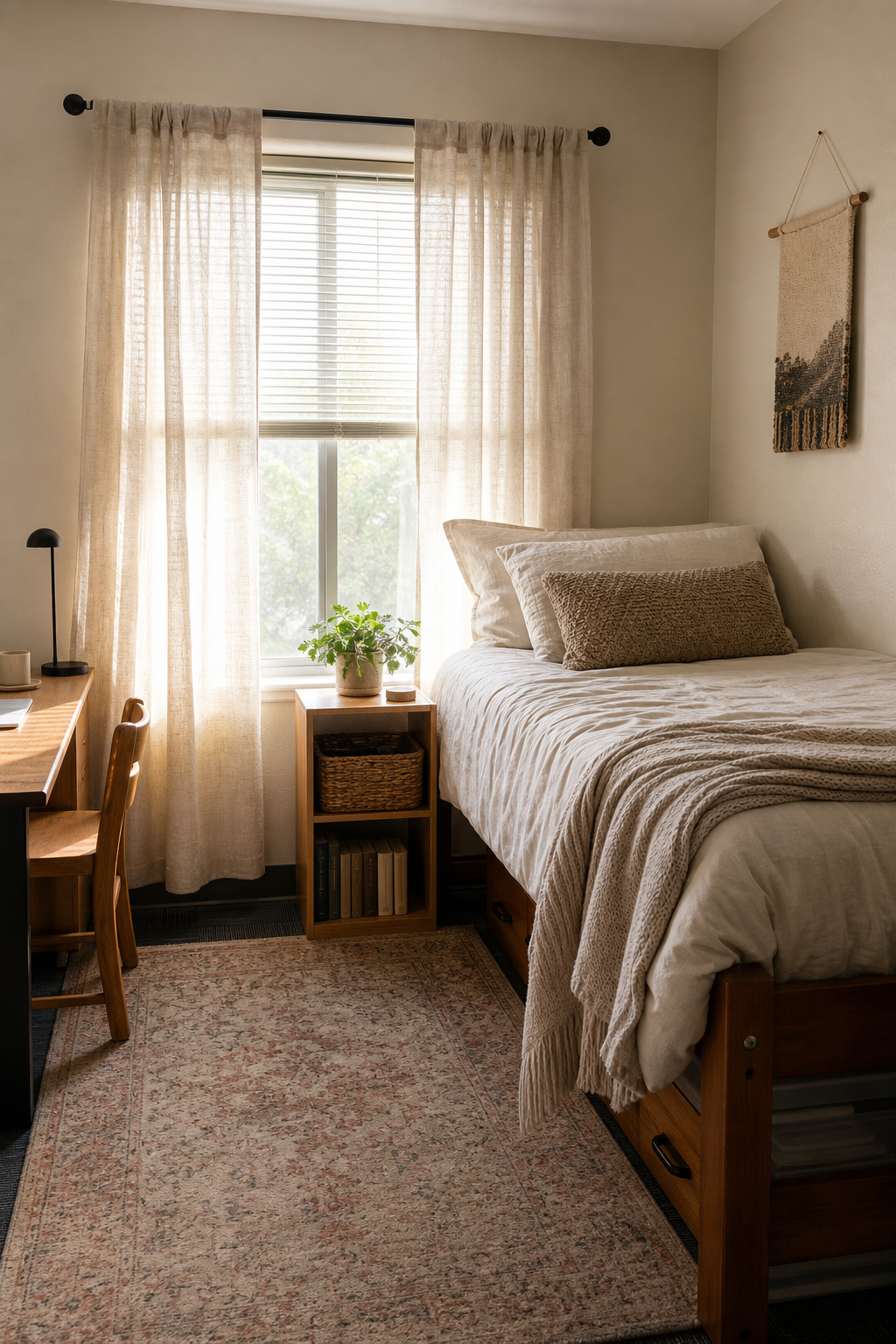
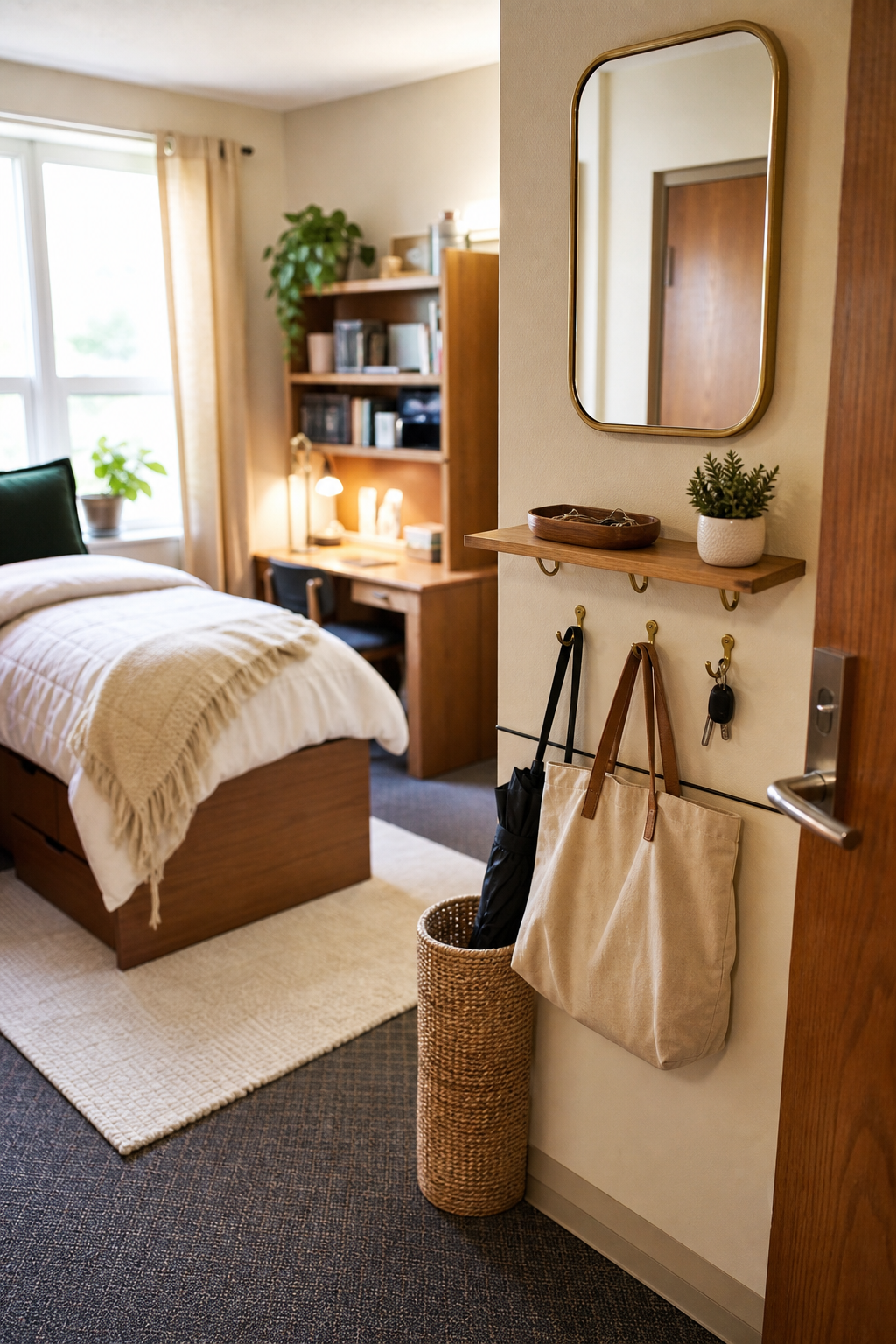
When floor space is limited, the walls have to work harder. Use removable hooks, over-door organizers, narrow shelves where allowed, or a peg rail to hold bags, hats, jewelry, headphones, and daily essentials. Keep the arrangement edited so it looks intentional rather than like everything has been hung in panic. Group similar items together and choose hooks in one finish, such as matte black, white, or warm wood. A vertical storage strip near the door is especially helpful for keys, student ID, umbrella, and tote bag. This keeps the desk from becoming a dumping ground. Wall storage also adds personality because practical items become part of the room’s rhythm. Done neatly, it saves space and makes daily routines smoother.
9. Make A Bedside Cart Work Hard
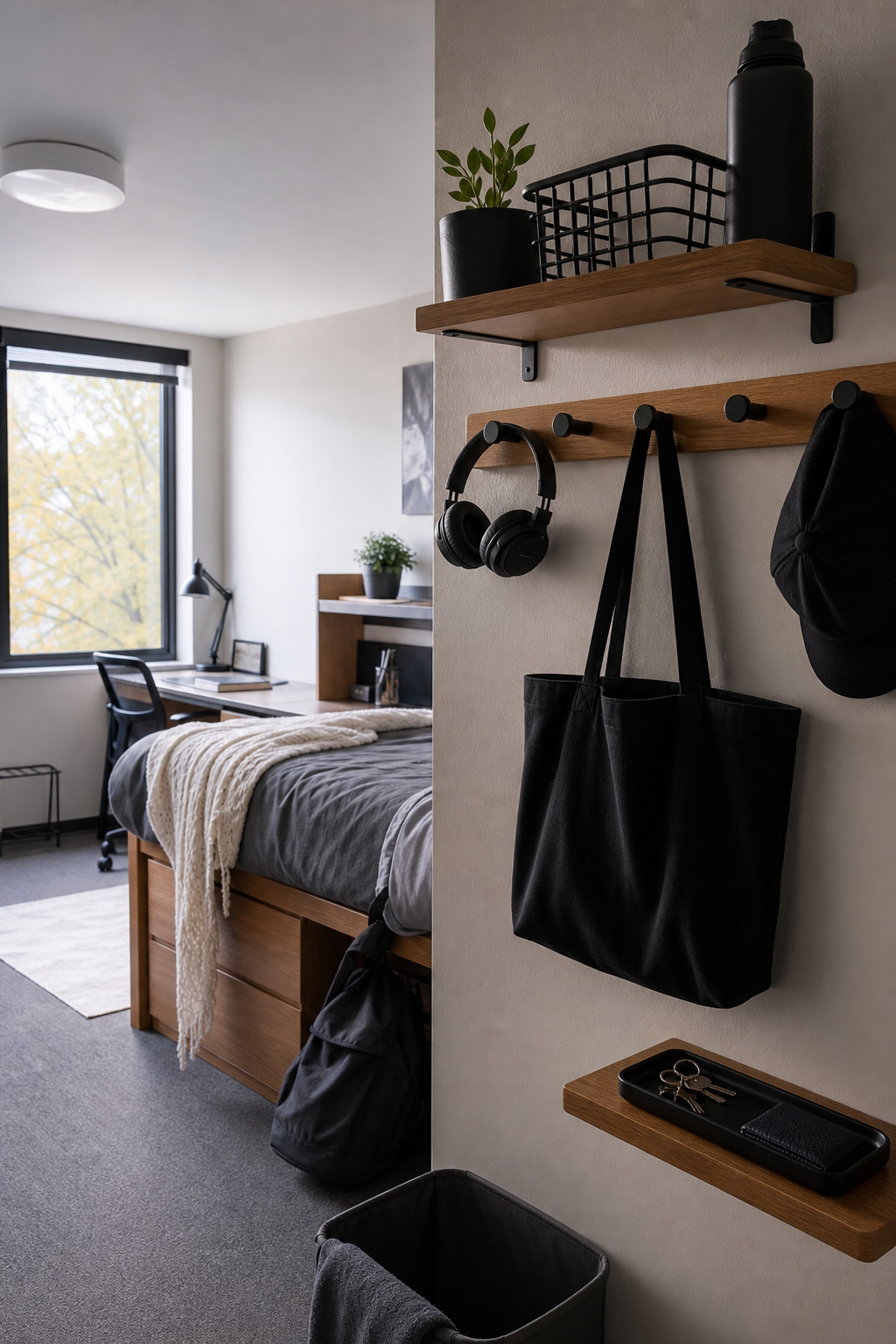
A small rolling cart can act as a nightstand, snack station, toiletry shelf, and study supply holder in one. Choose a cart that fits beside the bed without blocking the walkway. Style the top shelf like a bedside table with a lamp, water bottle, book, and small tray. Use the middle shelf for chargers, tissues, and daily items, then reserve the bottom shelf for less attractive necessities in a basket. If the cart is visible from the doorway, keep containers coordinated. Rolling carts are especially helpful in shared rooms because they can move when you rearrange furniture or need more space. The secret is not overfilling it. Leave a little empty space so it reads as organized furniture instead of storage overflow.
10. Add A Pinboard With Personality
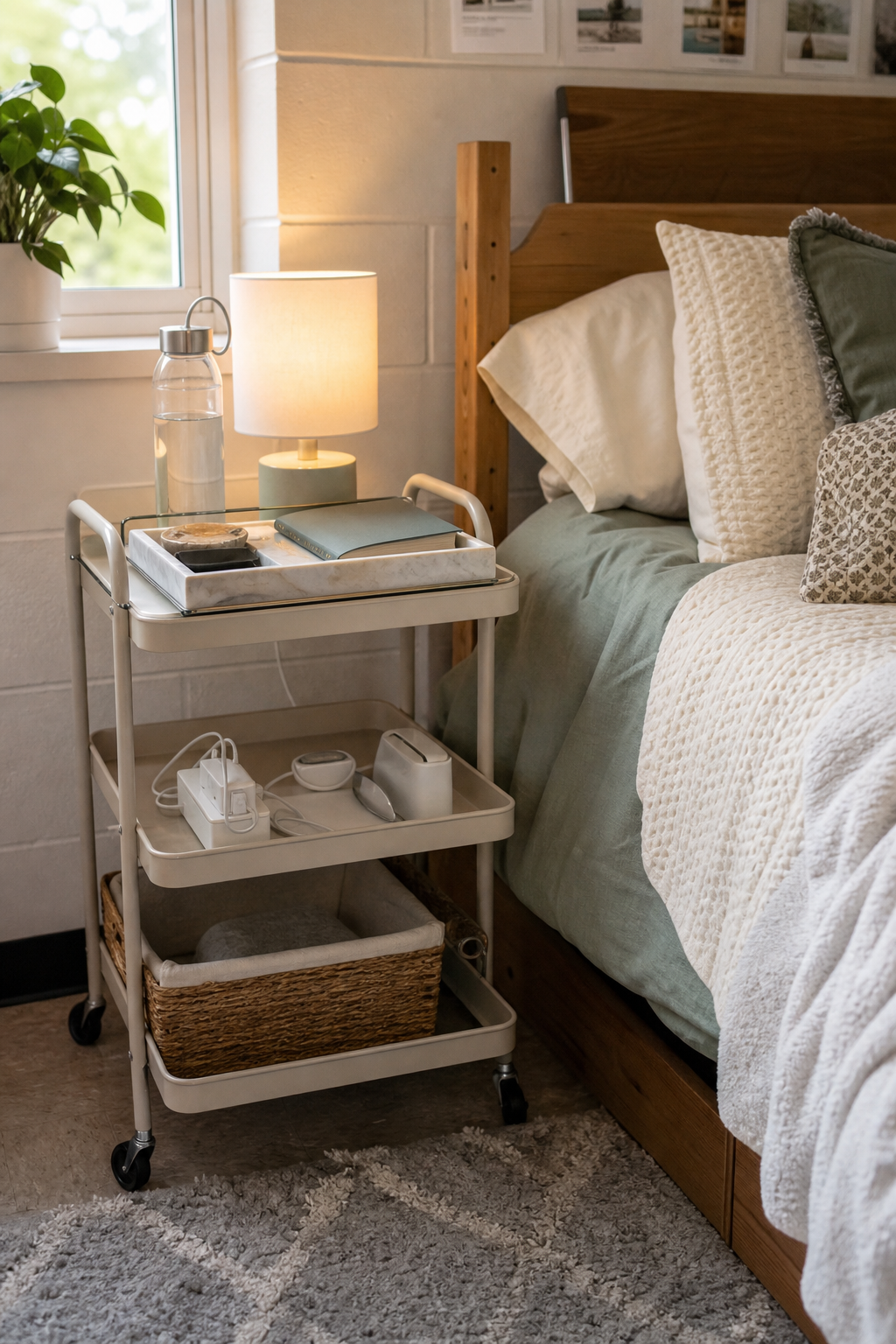
A pinboard gives personality without damaging walls or creating visual clutter. Choose cork, linen, felt, or a framed magnetic board, then edit what goes on it. Mix photos, small art cards, a calendar, fabric swatches, postcards, and meaningful notes, but leave space between items. A crowded board can make the room feel busier than it is. Keep the color story related to the bedding or rug so the board feels integrated. Above a desk, it becomes practical; beside a bed, it becomes emotional. Use matching pins or clips for a cleaner look. A good pinboard lets the dorm feel personal from week one, while still being easy to change as the semester starts to develop its own memories.
11. Bring In A Plant Or Two
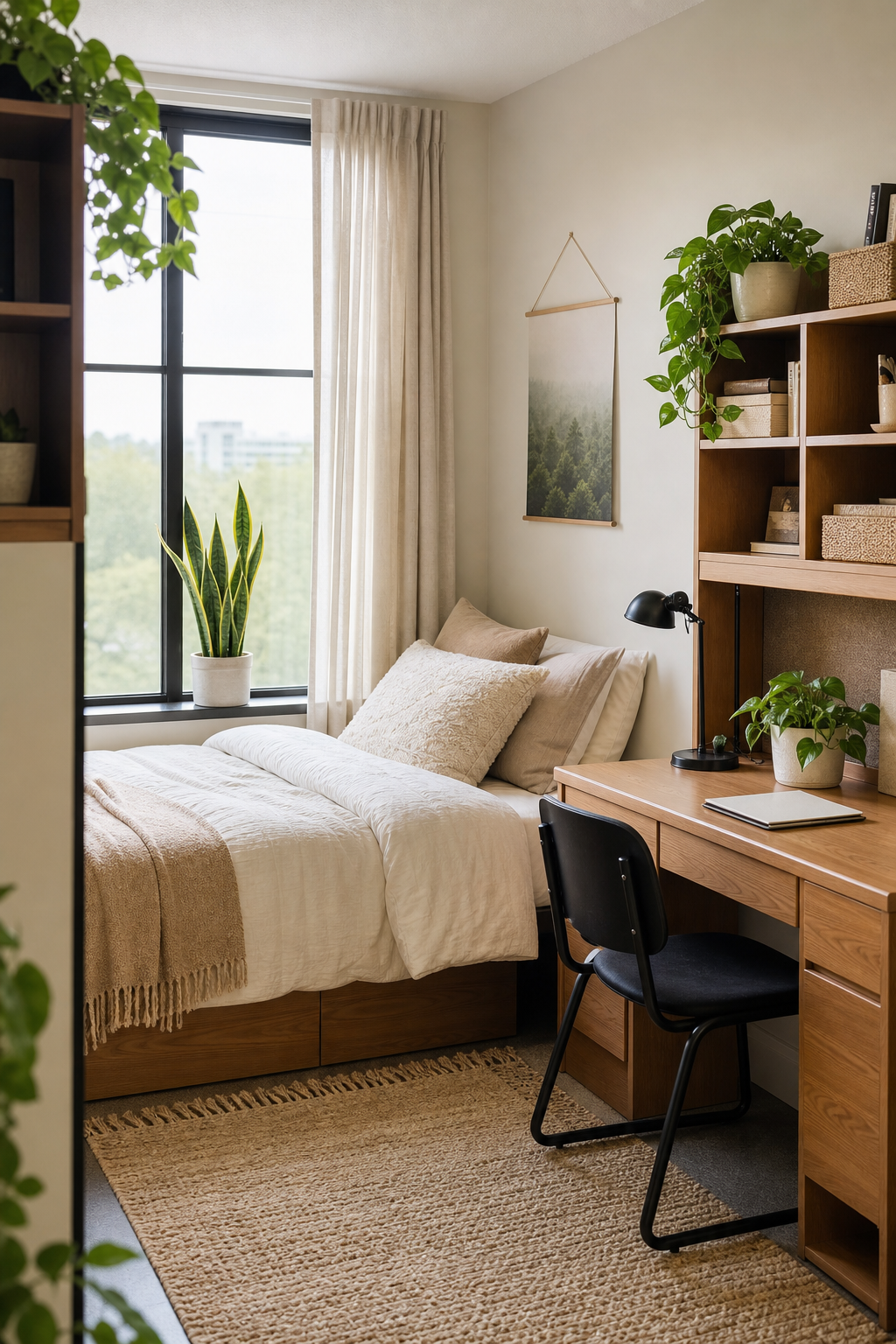
Plants make a dorm room feel alive, but choose varieties that can handle inconsistent schedules and changing light. A pothos, snake plant, ZZ plant, or small philodendron is usually easier than something delicate. If natural light is limited, a high-quality faux plant is better than a struggling real one. Place greenery where it softens a hard corner: on a desk shelf, windowsill, bedside cart, or wardrobe top. Use a simple ceramic, woven, or matte planter so the plant looks like part of the design rather than a random add-on. Keep the scale modest; oversized plants can crowd a small room. Even one healthy trailing plant can change the mood, adding freshness, color, and a sense of care to the space.
12. Style Open Shelves In Baskets
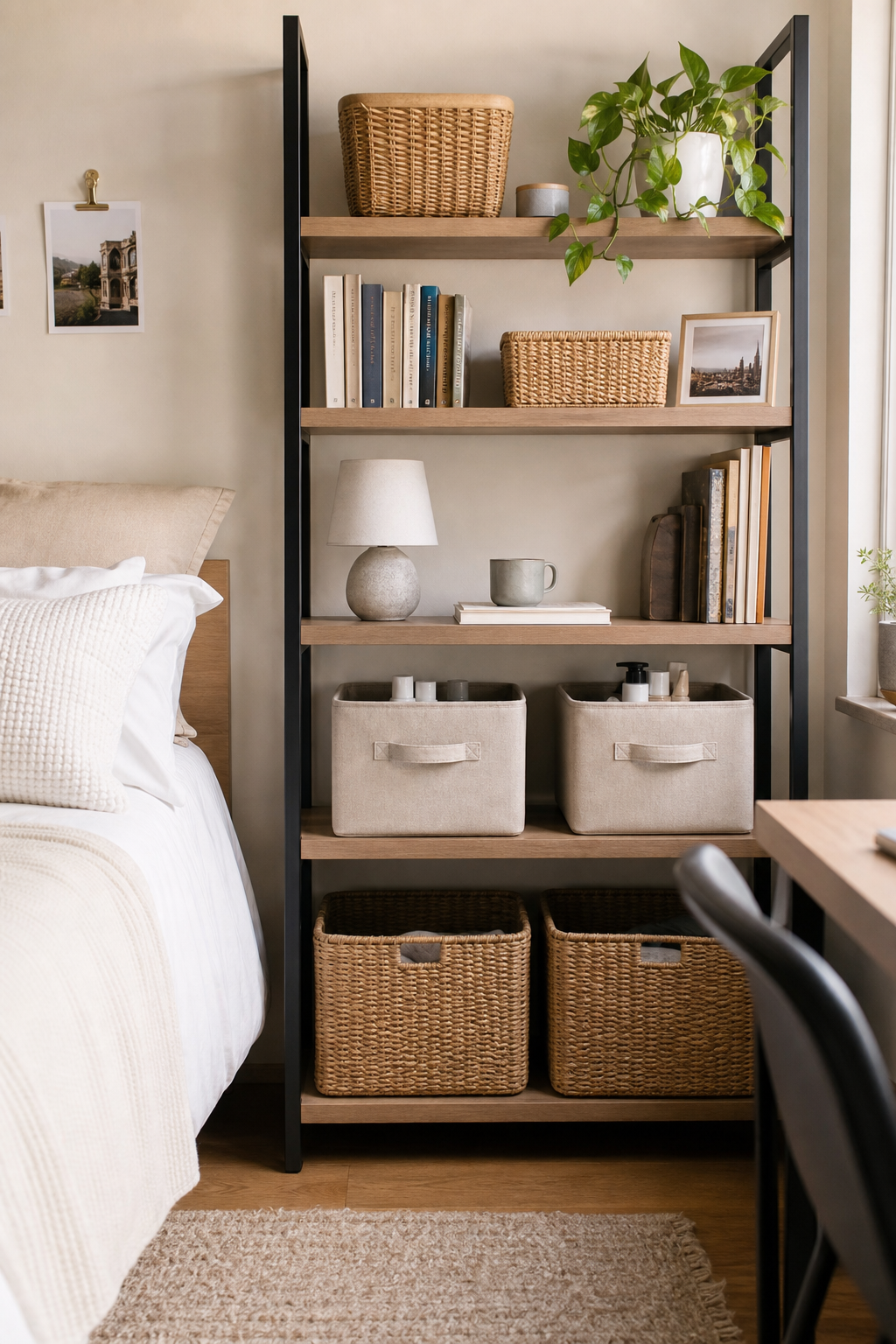
Open shelves are useful in dorm rooms, but they can make every small item visible. Baskets and bins solve that problem while adding texture. Use them for snacks, extra cords, toiletries, medicine, school supplies, and laundry products. Choose two or three matching sizes so the shelves look planned. Woven baskets feel warm, while fabric bins can be easier to clean and label. Keep the prettiest items visible, such as books, a lamp, a plant, or a ceramic cup, and hide the rest. Shelf styling should not be precious; it should make daily life easier. The more calm your storage looks, the less the room feels like a temporary pile of belongings. This is especially important in shared rooms.
13. Choose Bedding That Washes Well
Dorm bedding has to be beautiful, but it also has to survive shared laundry rooms and frequent use. Choose washable cotton, percale, jersey, linen-blend, or microfiber depending on your preference. Avoid fabrics that require delicate care unless you truly enjoy laundry rules. Medium tones and subtle texture are forgiving, especially for throws and coverlets. White sheets can still work if you like a clean hotel feeling, but pair them with an easy-care duvet cover. Keep an extra set of pillowcases on hand; they make the bed feel fresher between full laundry days. A stylish dorm room is easier to maintain when the main textiles are practical. Comfort, durability, and washability will matter far more in October than they did on move-in day.
14. Use A Mirror To Expand The Room
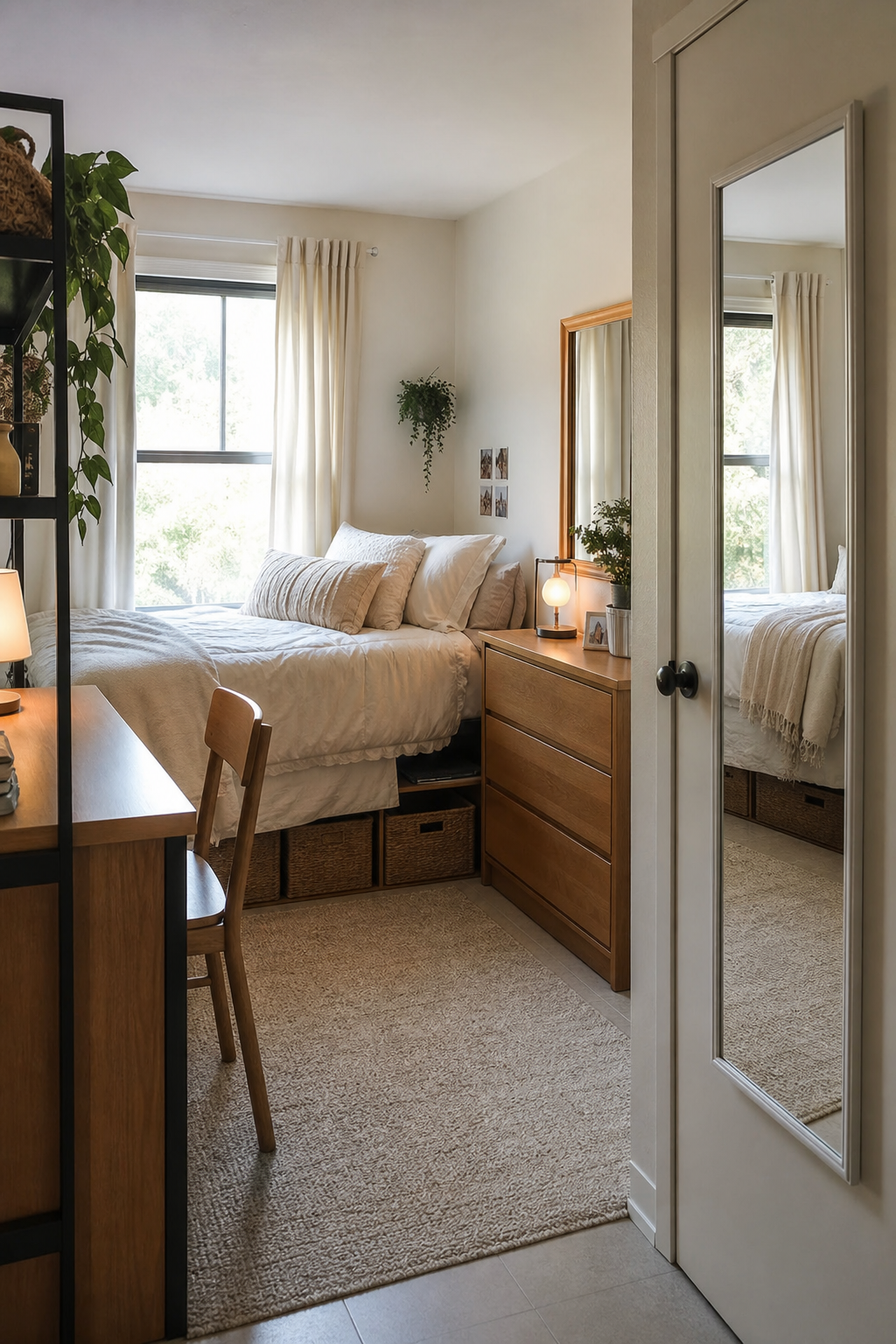
A mirror is practical for getting ready, but it also makes a dorm room feel larger and brighter. A full-length mirror on the closet door is useful, while a smaller framed mirror above the desk or dresser can reflect light and soften the wall. If you can choose the finish, warm wood, black metal, or brass usually looks more intentional than plastic. Position the mirror where it reflects a window, lamp, or tidy part of the room rather than clutter. Removable mounting strips or over-door hangers are often the safest dorm-friendly option. A mirror also gives the room a more residential feeling because it breaks up flat wall surfaces. In a small space, every reflective surface should work for both function and atmosphere.
15. Make The Closet Look Intentional
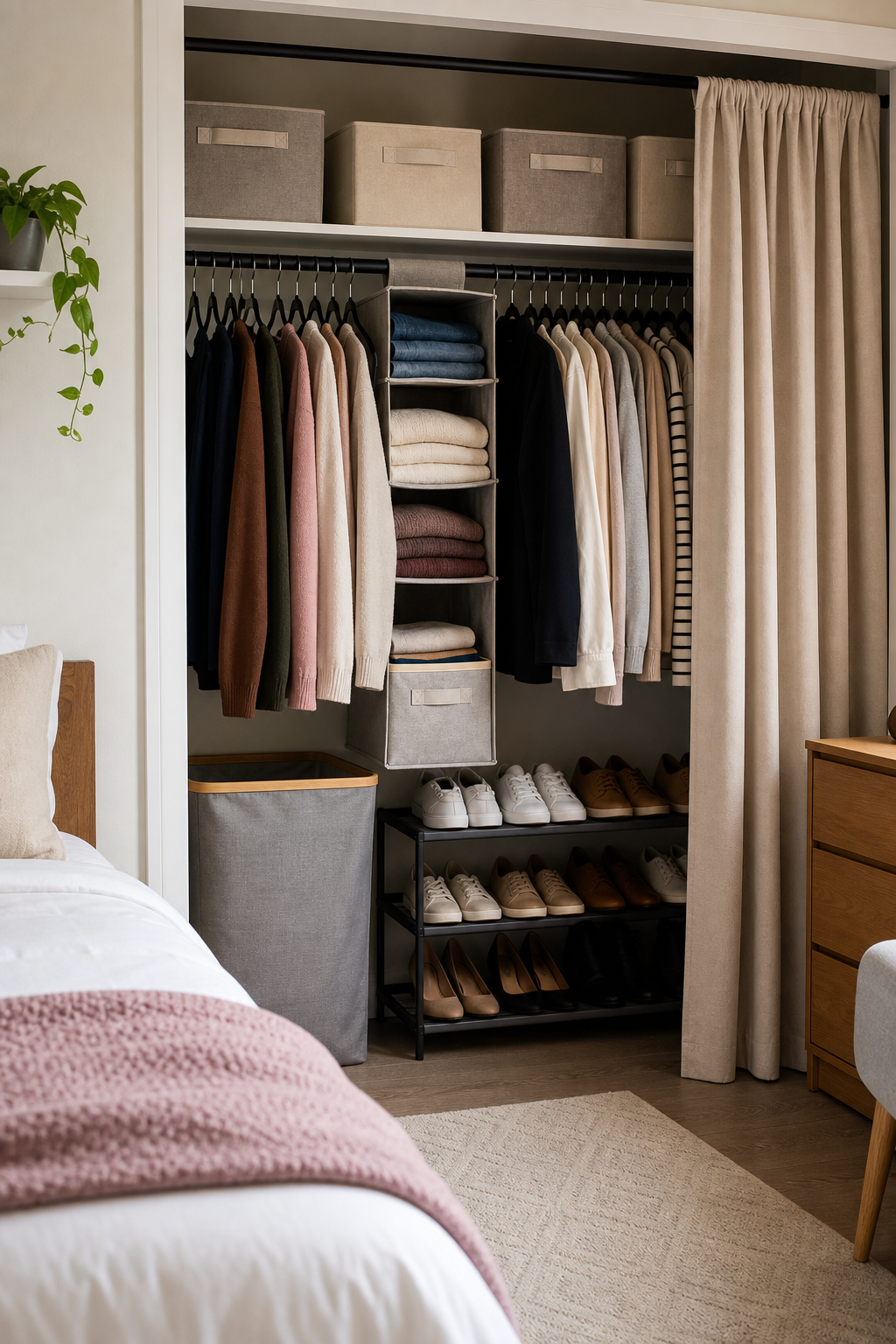
Dorm closets are often open, narrow, or awkward, so they need a plan. Use slim matching hangers to save space and make clothes look calmer. Add shelf dividers, hanging organizers, or fabric bins for sweaters, shoes, towels, and gym gear. Keep the most visible items in a simple color range if possible; visual consistency helps the whole room feel neater. A small laundry hamper with a lid or structured shape is worth the space because it prevents the closet zone from spilling into the room. If the closet has no door, a curtain can soften it if rules allow. Treat the closet as part of the design, not a hidden problem. In a dorm, tidy storage is one of the strongest decor choices.
16. Add A Small Entry Drop Zone
Even a tiny dorm needs a place for the things you drop when you walk in. Create a small entry zone near the door with removable hooks, a narrow tray, and perhaps a basket underneath. This spot can hold keys, student ID, sunglasses, umbrella, and a daily tote. Without it, those items end up on the bed or desk, making the room feel messy within minutes. Keep the drop zone compact and wall-mounted whenever possible so it does not steal floor space. A small mirror near the door can make it even more useful. The design does not need to be elaborate. It just needs to interrupt clutter before it travels into the rest of the room, which makes dorm life feel smoother every day.
17. Use Art That Feels Personal
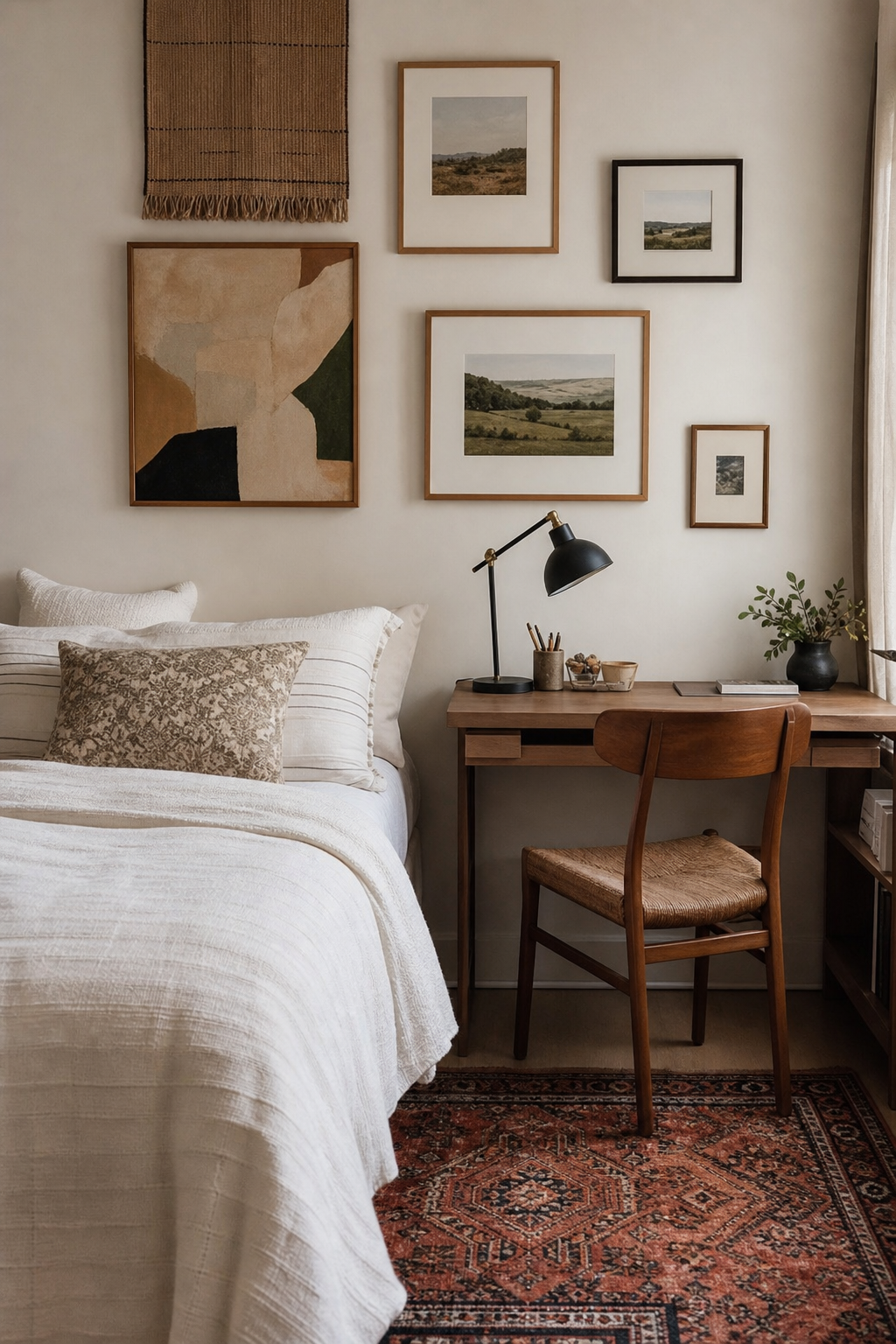
Art makes a dorm room feel personal faster than almost anything, but it looks best when edited. Choose a few pieces that share a palette, subject, or frame style. Landscapes, abstract prints, vintage posters, textile art, or personal photography can all work, especially when arranged with breathing room. Use removable strips and lightweight frames to protect the walls. Avoid covering every surface with posters; one stronger arrangement often feels more grown-up. If budget is tight, frame postcards, calendar pages, fabric remnants, or your own photos in simple mats. The goal is not to create a gallery showroom. It is to make the room remind you of home, taste, and memory without creating visual noise around the bed and desk.
18. Keep A Cozy Snack Station
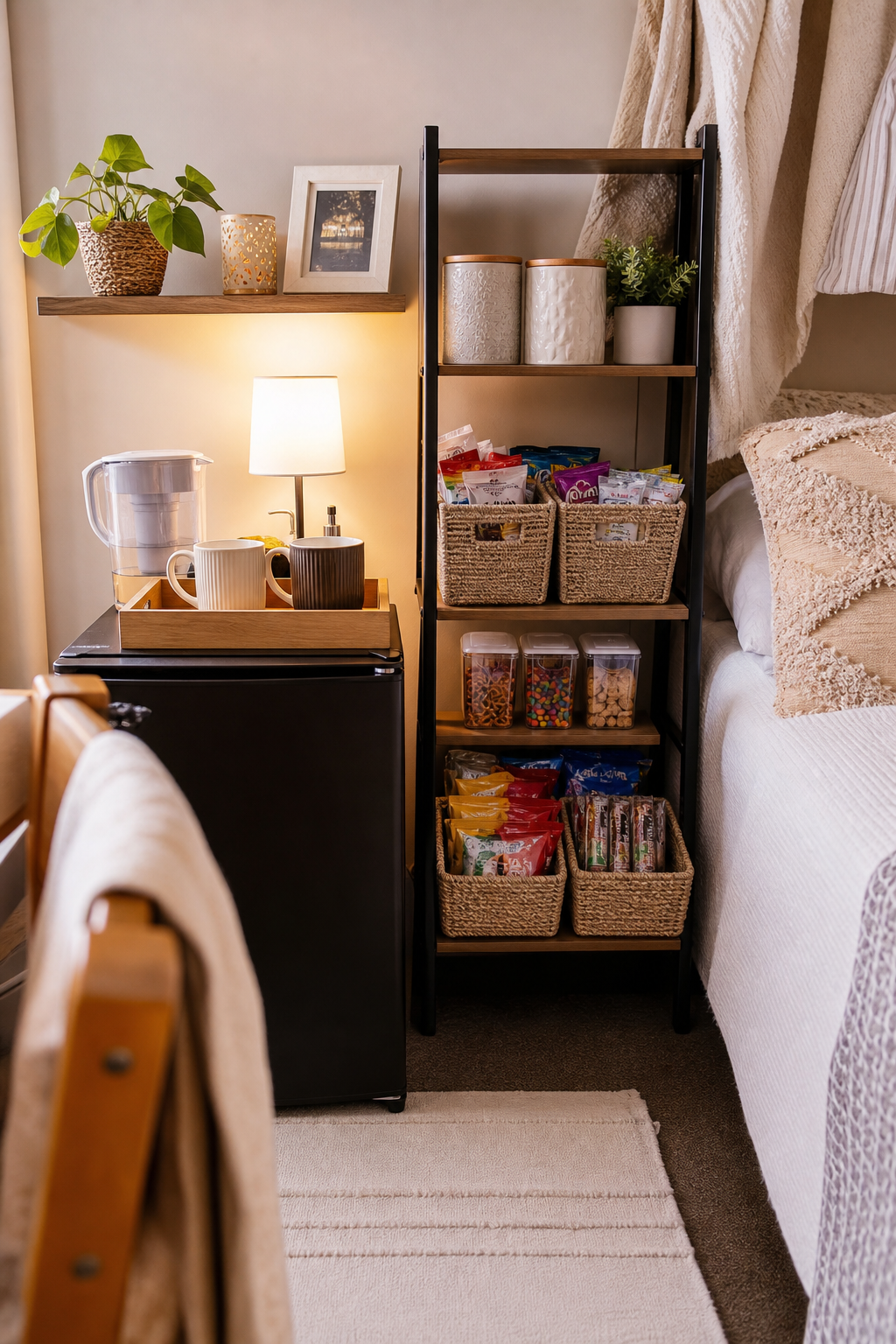
A small snack station can make a dorm feel more like home, especially during late study nights. Use one shelf, cart tier, or cabinet area for mugs, tea, snacks, napkins, and a water filter if allowed. Decanting everything into matching containers can look nice, but only do it if you will maintain it. Often, baskets are easier. Keep food sealed and separate from toiletries or school supplies. A small tray on top of a mini fridge can hold a lamp, cup, or coffee setup, turning a basic appliance into part of the room. The station should be convenient but not cluttered. When snacks, drinks, and dishes have a clear home, the rest of the dorm stays cleaner and more comfortable.
19. Add A Washable Throw Blanket
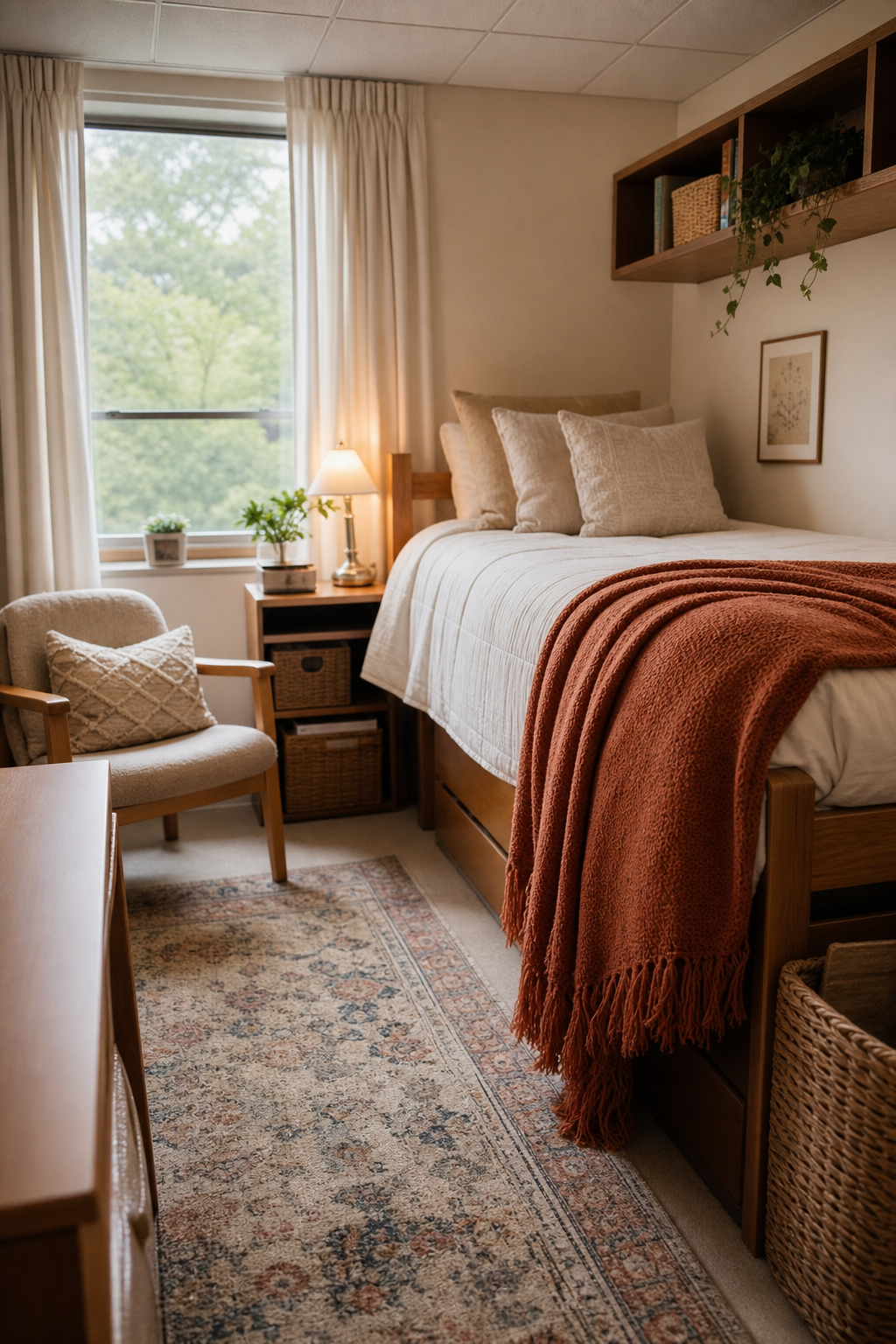
A throw blanket is one of the easiest ways to add comfort because it moves wherever you need it. Choose something washable, soft, and substantial enough to look good folded over the bed or chair. Cotton waffle, fleece, acrylic knit, washable wool blend, or chenille can all work depending on your climate and care habits. The color can quietly connect the room: rust with a vintage rug, sage with plants, navy with denim pillows, or camel with wood tones. Avoid delicate throws that shed heavily or need special cleaning. In a dorm, textiles are used constantly, not just styled for photos. A good throw becomes a study blanket, movie blanket, guest layer, and design detail all at once.
20. Make Shared Spaces Feel Balanced
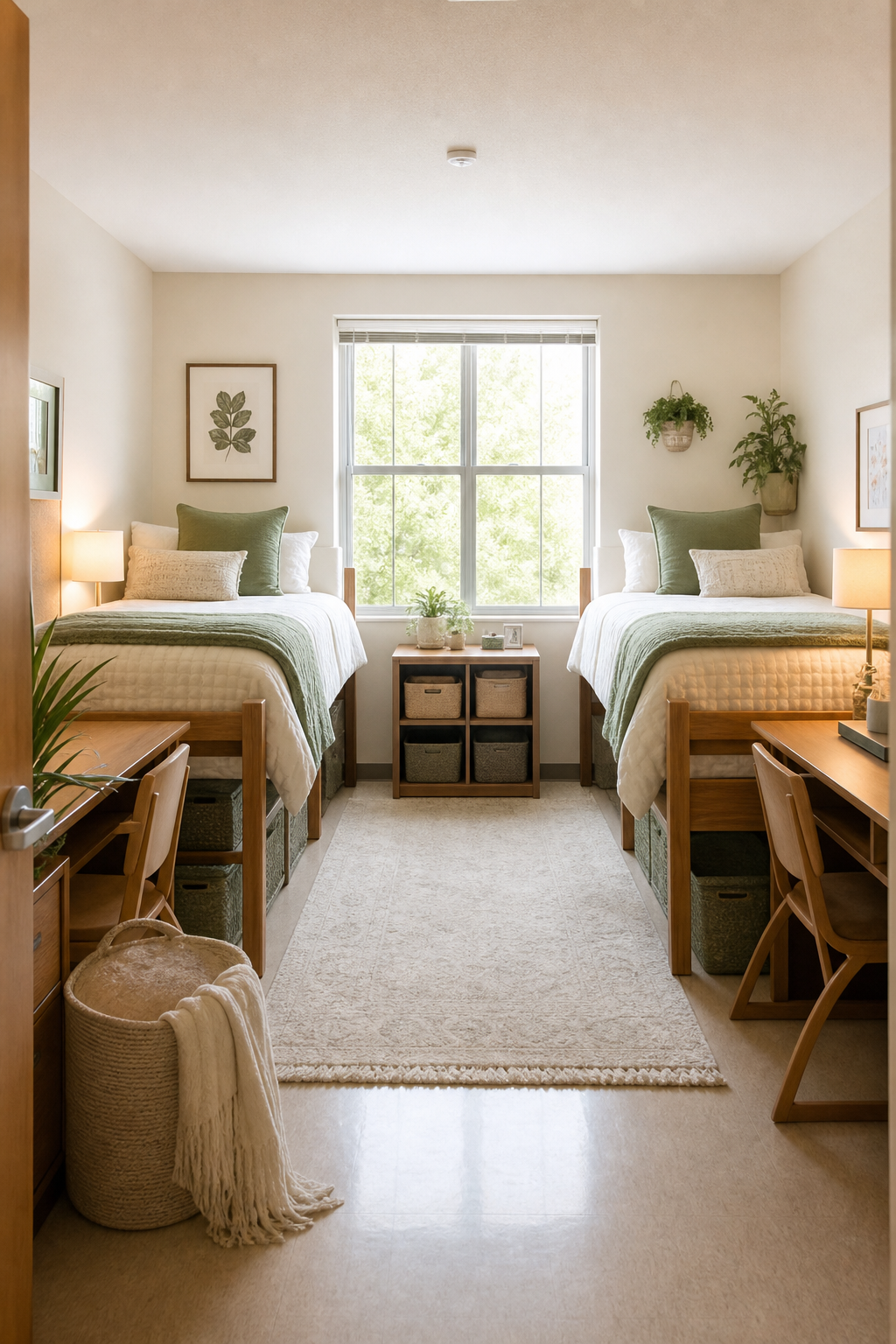
If you share a dorm, coordination can make the room feel calmer without forcing identical decor. Agree on a broad palette, rug size, and lighting approach, then let each side show personality. Matching bed heights, similar storage bins, or related bedding tones can create visual balance. The room will feel more spacious if both sides avoid piling items in the center. Use a shared cart, mini fridge zone, or entry hooks intentionally so responsibilities are clear. Leave room for differences; one side might be more colorful while the other is neutral. The goal is not a matching showroom, but a room that feels respectful and organized. A little coordination can reduce visual clutter and make both roommates feel more at home.
21. Use Removable Wallpaper Sparingly
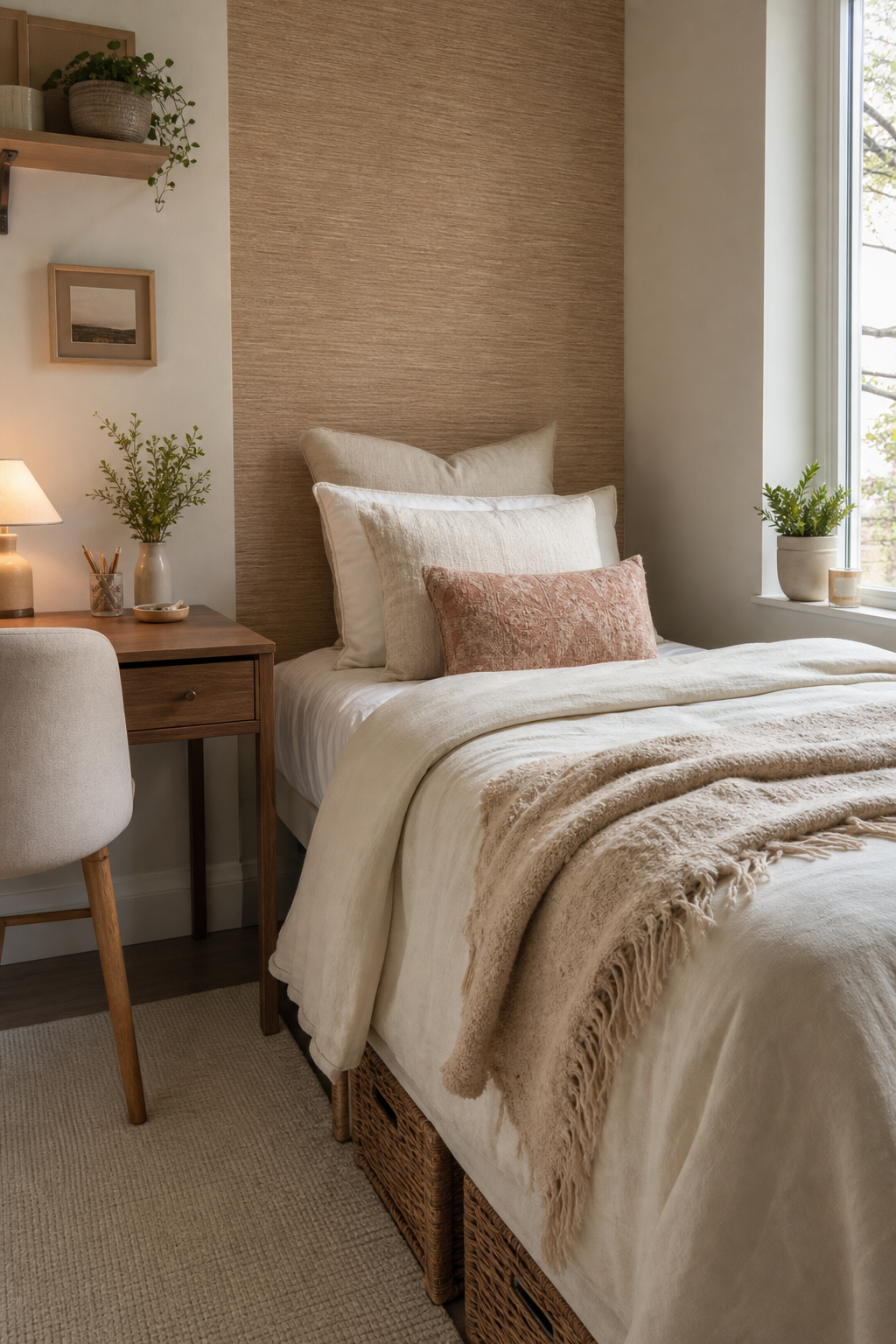
Removable wallpaper can transform a dorm, but it is best used strategically. Covering every wall may be expensive, difficult, and risky if the adhesive does not suit the surface. Instead, create a headboard wall, line the back of open shelves, or add a small panel behind the desk. Choose patterns that will not compete with bedding: subtle stripes, grasscloth texture, small botanicals, or warm plaster effects. Always test a discreet area first and follow housing rules. If wallpaper is not allowed, use fabric panels or large lightweight art instead. A restrained application can give the room architecture and polish without overwhelming the space. The best dorm wallpaper looks intentional, removable, and calm enough to live with through finals week.
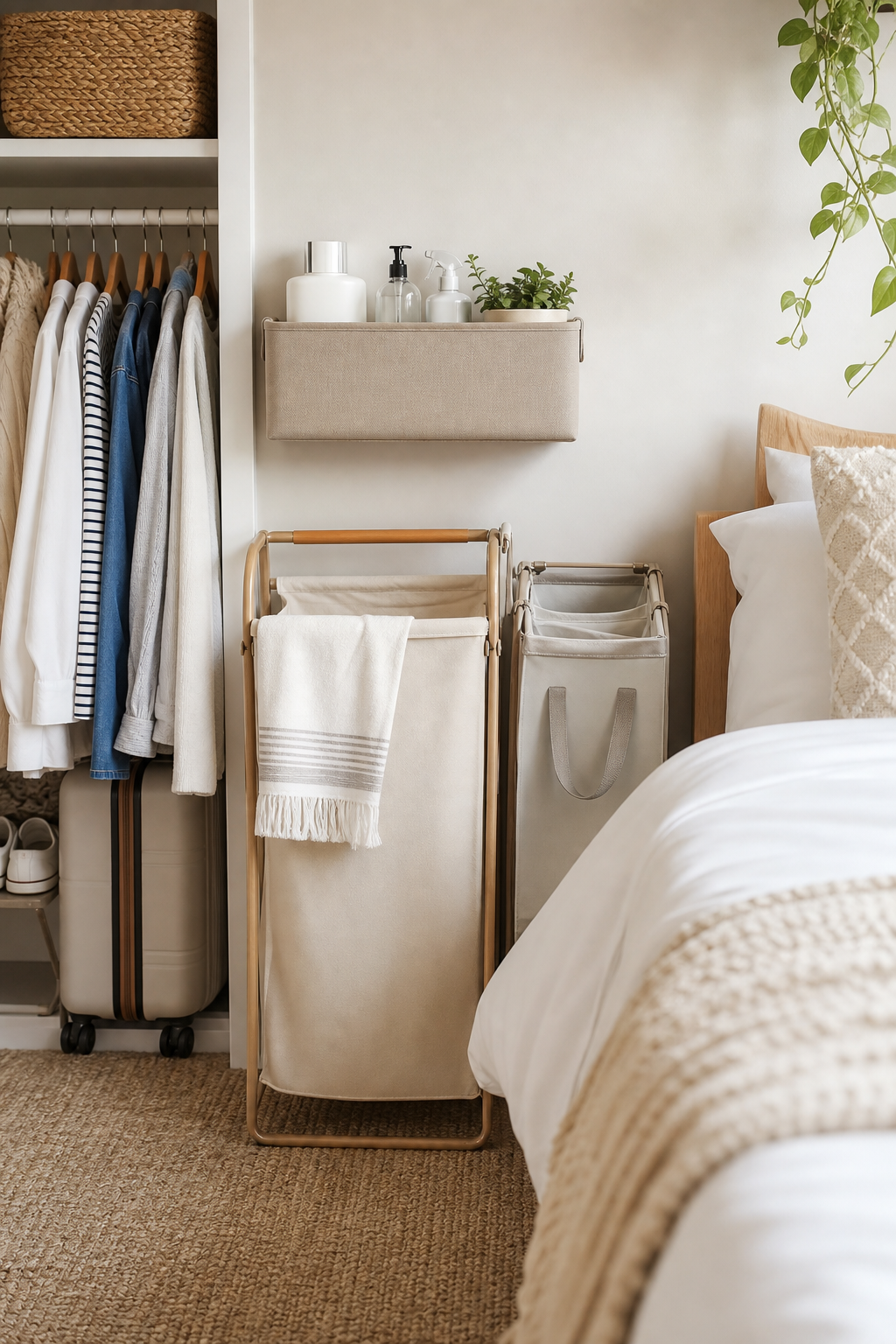
22. Add A Laundry System That Looks Nice
Laundry is part of dorm life, so make the system easy and attractive enough that you will actually use it. A structured hamper with handles is better than a flimsy pile on the floor. If you sort laundry, use two slim hampers or a divided bag that fits in the closet. Keep detergent pods, dryer sheets, and stain remover in a small bin on a shelf or under the bed. Choose a hamper in canvas, woven material, or a neutral fabric so it blends with the room. The system should be close enough to use but not in the main visual line if possible. A good laundry setup makes the dorm feel cleaner, smells fresher, and keeps clothes from overtaking the chair.
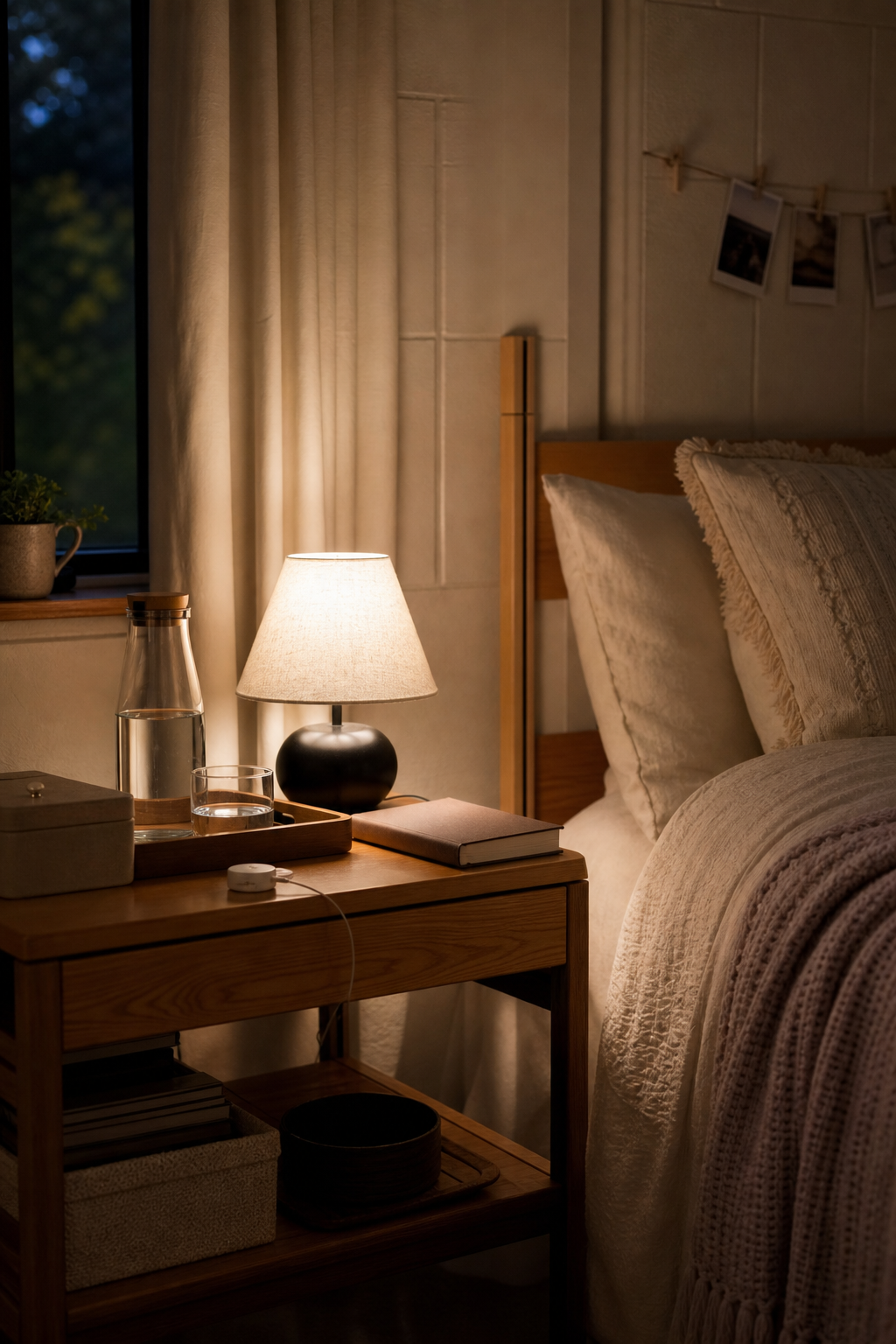
23. Create A Wind-Down Nightstand
A dorm nightstand does not need to be large, but it should support your evening routine. Use a small table, cart, crate, or shelf beside the bed for a lamp, water, book, charger, and one calming object. A tray keeps everything contained, which makes the area look neater even when it is full. Add a small lidded box for medication, earplugs, or sleep mask if needed. Avoid turning the nightstand into a second desk. Keeping this zone simple tells your brain that the bed area is for rest, not only studying. In a room where every activity overlaps, small boundaries matter. A thoughtful nightstand makes the dorm feel more like a real bedroom.
24. Leave Breathing Room
The most underrated dorm decorating idea is restraint. A small room can hold personality, but it cannot hold every poster, pillow, gadget, and storage hack at once. Leave some blank wall, some clear desk surface, and some open floor. This breathing room makes the items you do choose feel more special. It also makes cleaning faster, packing easier, and studying less distracting. Before buying another decor piece, ask whether it adds comfort, function, or real meaning. If it does not, skip it. A dorm room that feels like home is not the one with the most things; it is the one that supports your days. Comfort comes from a bed you want to return to, lighting you enjoy, storage you can maintain, and enough space to exhale.
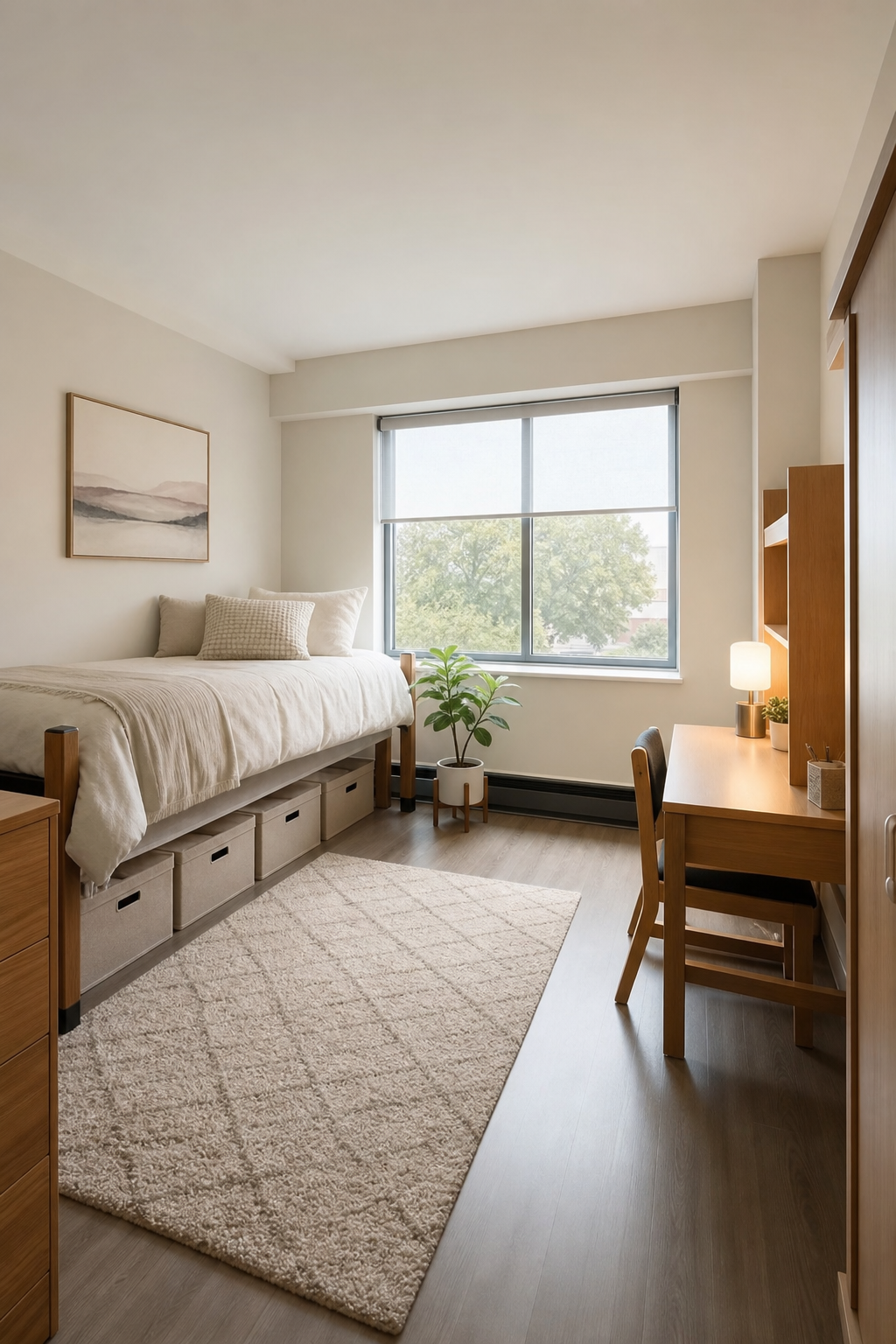
A dorm room feels like home when it supports the life you actually live there: sleeping, studying, getting ready, relaxing, and staying organized in a small footprint. Start with the bed, lighting, rug, and storage, then add personal details slowly. When comfort and order work together, even a standard campus room can become a place that feels steady, welcoming, and unmistakably yours.