24 Warm Neutral Kitchen Ideas For A Warm Functional Home
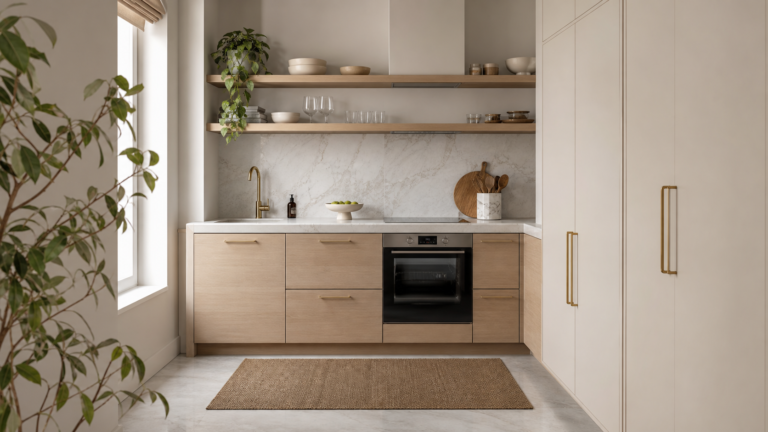
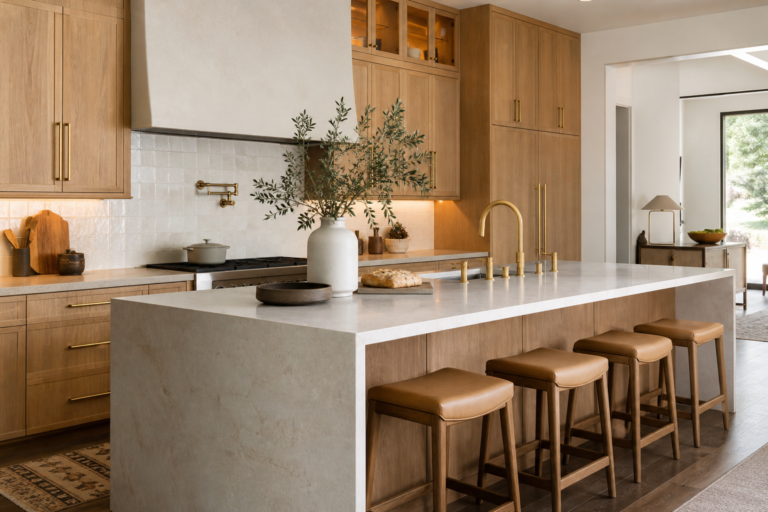
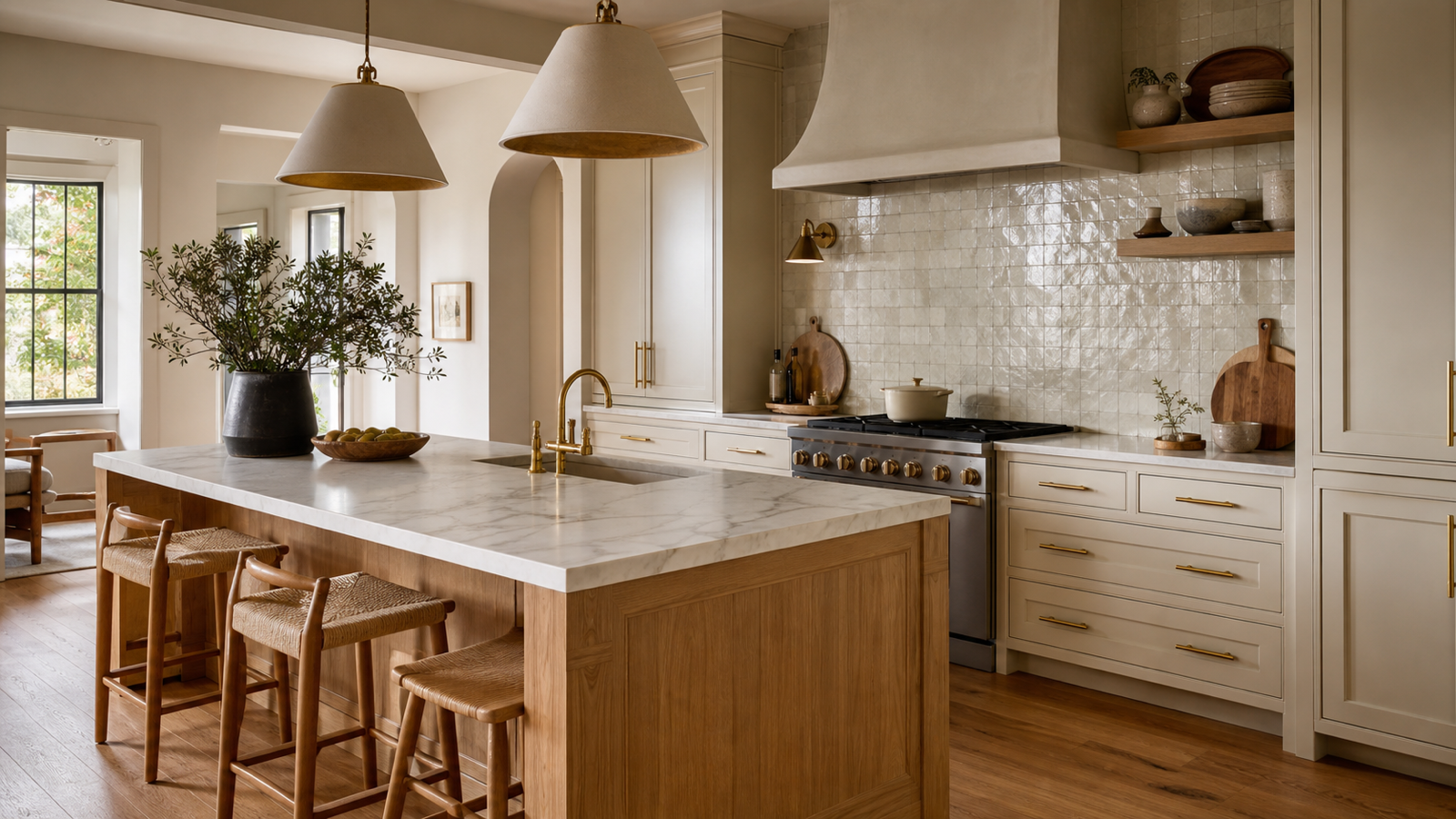
A warm neutral kitchen is not simply a beige kitchen. The best examples combine creamy paint, natural wood, soft stone, mixed metals, useful storage, and light that flatters the room from breakfast through dinner. Warm neutrals work because they leave space for everyday life while still feeling polished: coffee mugs, fruit bowls, cutting boards, and cookware can belong without creating visual noise. These ideas focus on comfort and function together. Use them to refine cabinetry, counters, seating, lighting, layout, and styling so the kitchen feels calm, inviting, and genuinely practical for the way your home works.
1. Choose Cream Cabinets Instead of Stark White
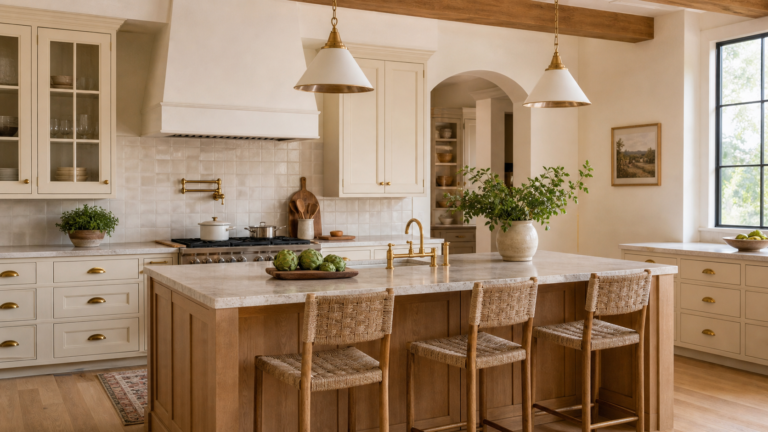
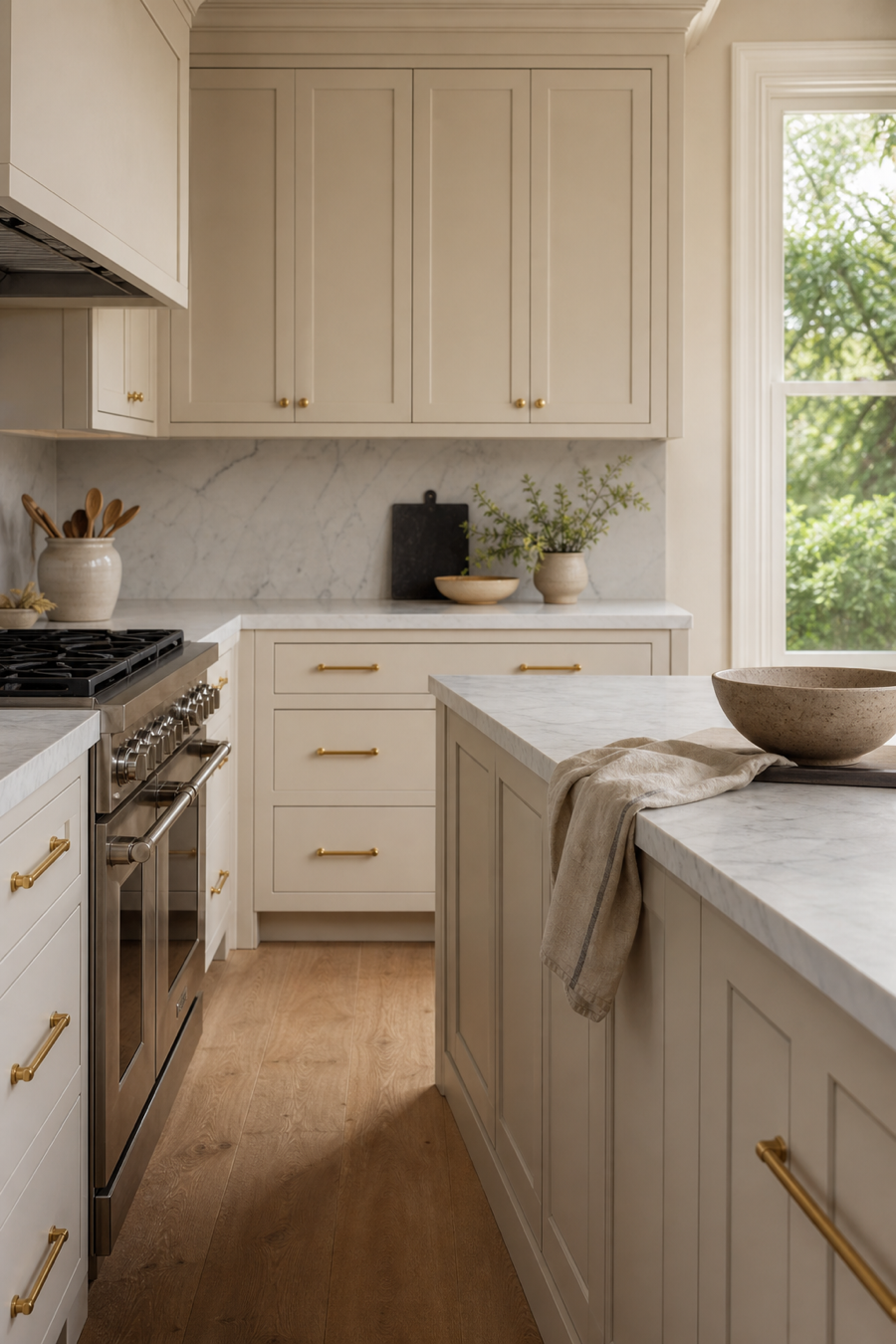
Cream cabinetry gives a kitchen warmth before any accessories are added. Unlike bright white, which can feel sharp under cool daylight, cream softens the room and works beautifully with stone, brass, oak, and aged nickel. Test paint samples beside your counters and flooring, because undertones matter more in kitchens than almost anywhere else. A shade with a hint of beige, mushroom, or vanilla usually feels richer than one with yellow undertones. Keep the trim close in color for a built-in look, then introduce contrast through hardware and lighting. The result is calm, flexible, and easy to live with every day.
2. Balance Stone Counters With Natural Wood
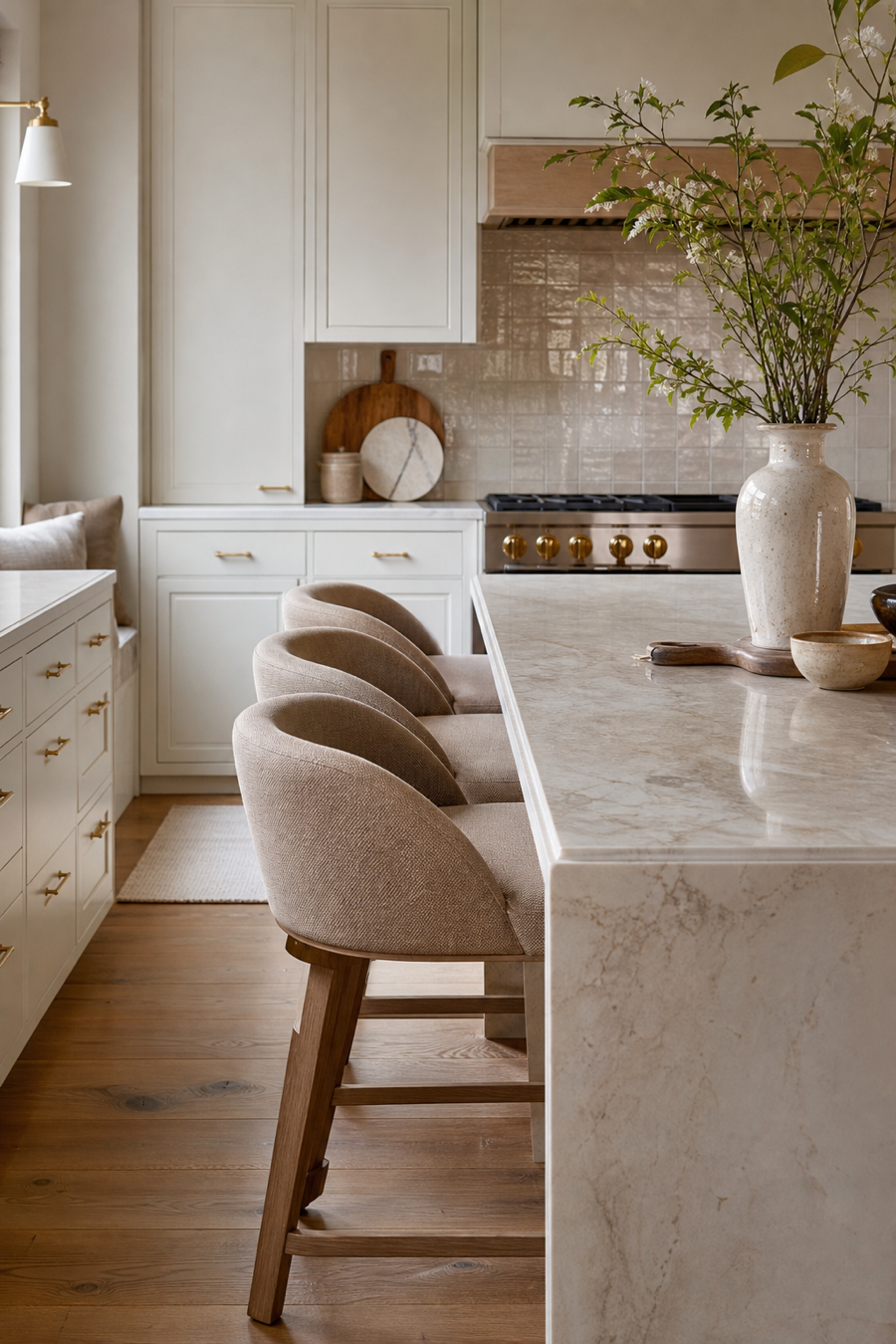
Stone counters can look cold if they are surrounded by glossy finishes, so balance them with natural wood. An oak island, walnut shelves, or even a row of wood stools will add grain and movement to the neutral palette. Honed marble, quartzite, limestone, and warm quartz all work well when the veining is soft rather than high contrast. Let the wood be slightly deeper than the cabinets so the room has depth. This pairing is practical too: stone handles daily prep, while wood brings the kitchen back into the language of the home. Together they feel elevated, grounded, and quietly luxurious.
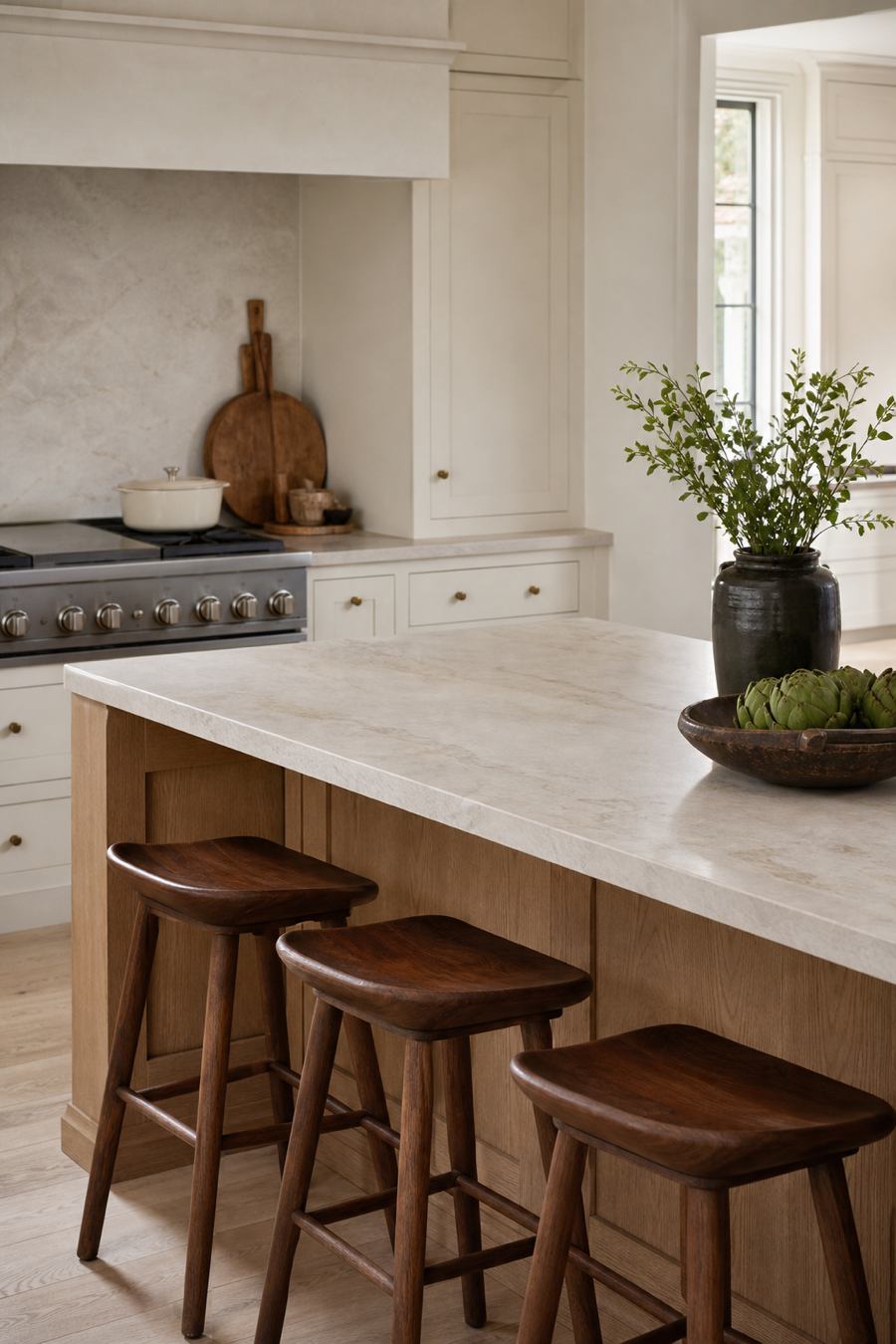
3. Use Zellige Tile for Handmade Texture
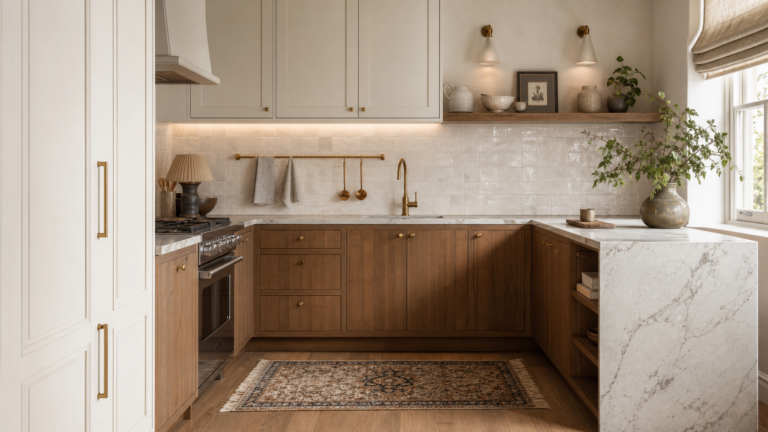
Zellige tile is a beautiful way to keep a neutral kitchen from feeling flat. Its uneven surface catches light differently throughout the day, adding movement without introducing a loud color. Choose warm white, ivory, putty, or pale greige for a subtle backsplash that still has character. Because the tile is naturally irregular, pair it with cleaner cabinet lines and simple counters. A slightly darker grout can emphasize the handmade quality, while a close color match feels softer. This material works especially well behind ranges, around open shelves, or across a full wall where texture can replace pattern gracefully and quietly.
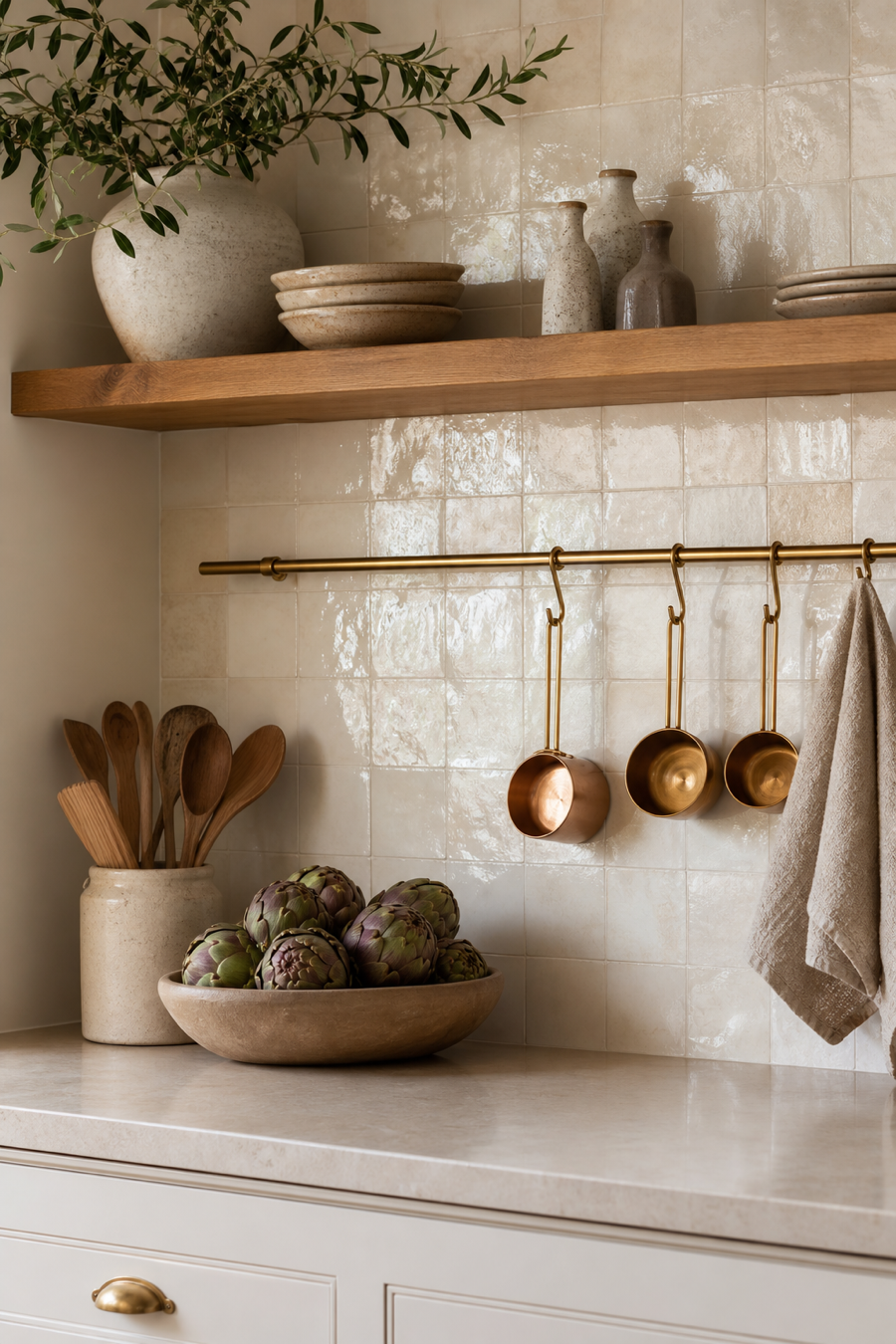
4. Add Brass Hardware With a Soft Finish
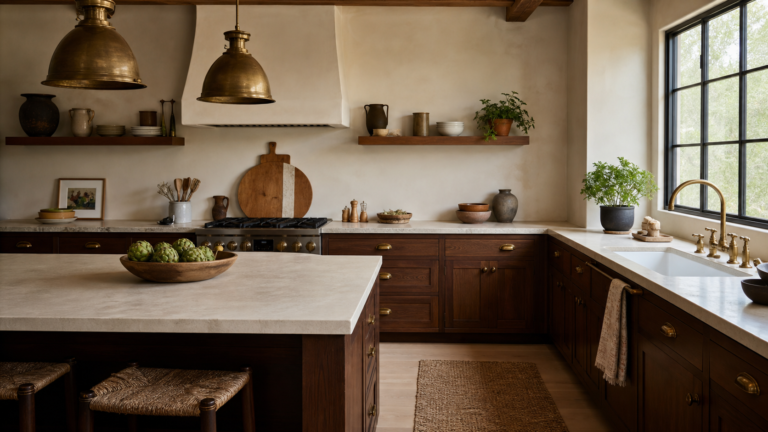
Brass hardware instantly warms a neutral kitchen, but the finish should feel soft rather than shiny. Unlacquered brass, antique brass, or satin brass pairs well with cream cabinets, wood, stone, and plaster. Use pulls where hands need grip, such as deep drawers, and knobs where the cabinet fronts should stay quiet. If the kitchen already has stainless appliances, do not worry about mixing metals. Brass can handle the decorative warmth while stainless handles function. Keep the shapes simple: round knobs, slender pulls, or classic latches. The hardware should look touched and useful, not like jewelry pasted onto the room daily.
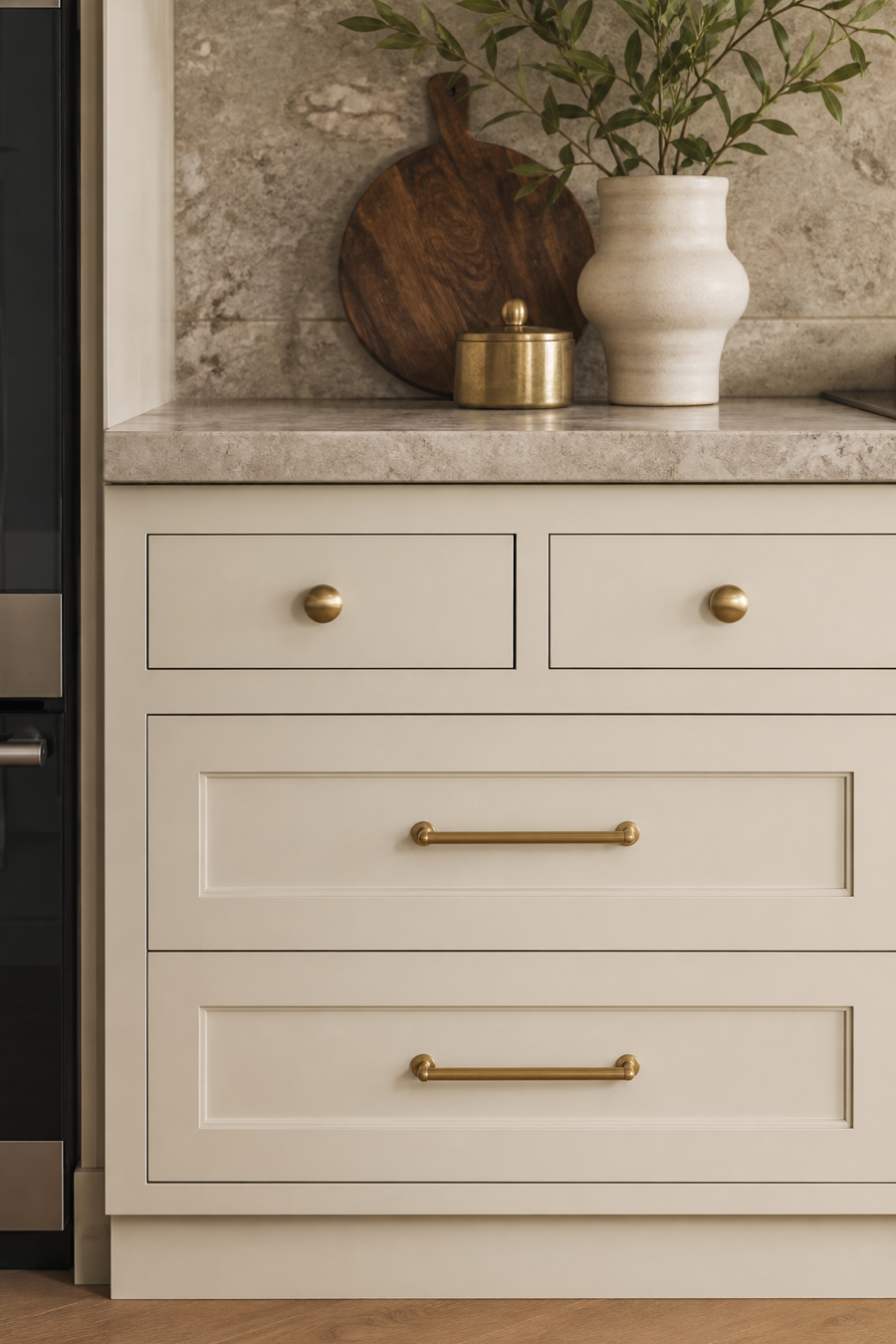
5. Ground the Room With a Warm Wood Floor
A warm wood floor can make even a simple neutral kitchen feel established. Oak is especially versatile because it works with cream, taupe, mushroom, plaster, and soft gray. Choose a finish that looks natural rather than orange or overly glossy. Wide planks feel calm in larger kitchens, while herringbone or narrow boards can add rhythm in smaller spaces. If real wood is not practical, look for engineered wood or high-quality porcelain with believable grain and a matte surface. The floor should connect the kitchen to adjacent rooms, making the whole home feel continuous rather than chopped into separate material zones.
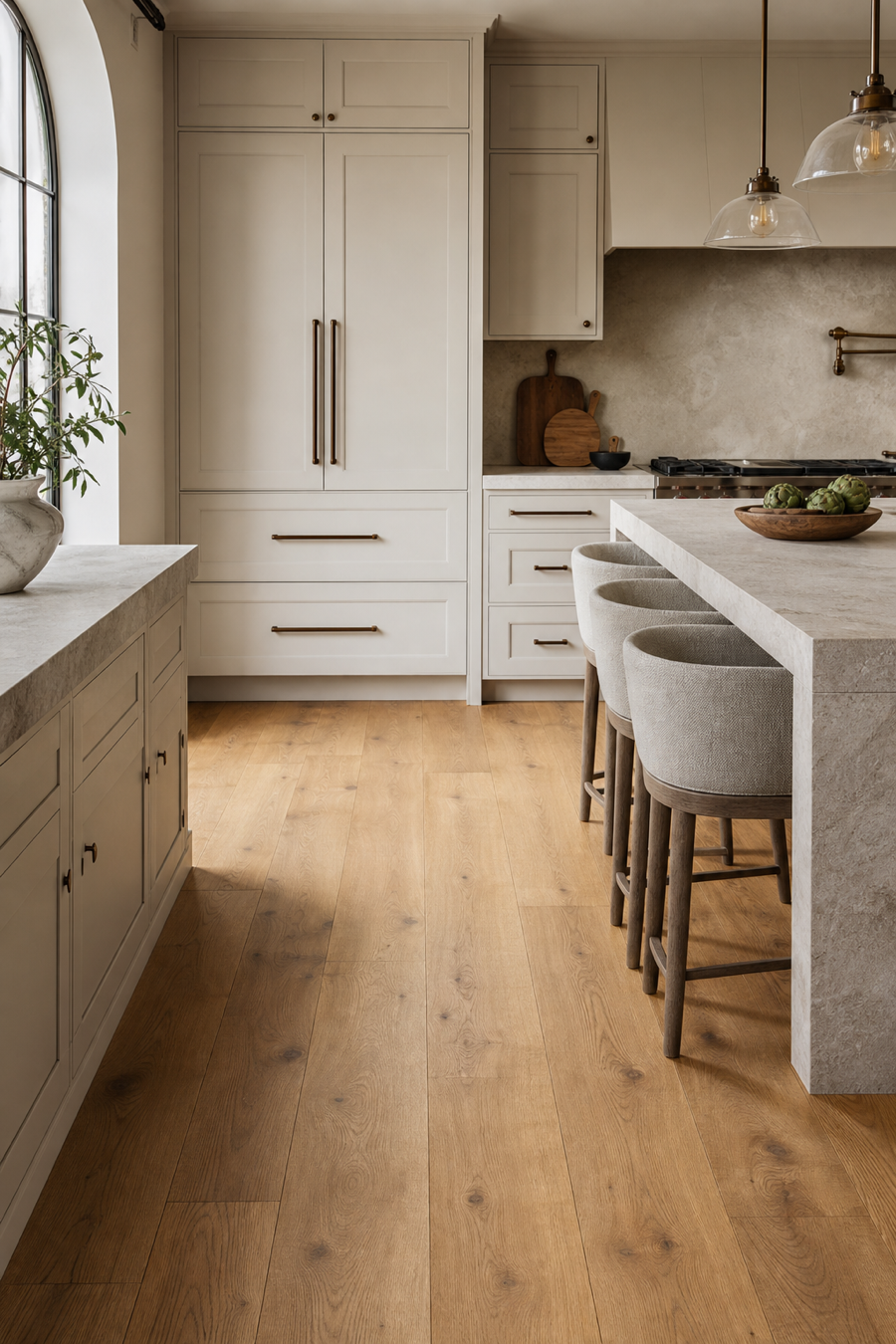
6. Install Pendant Lights That Feel Soft
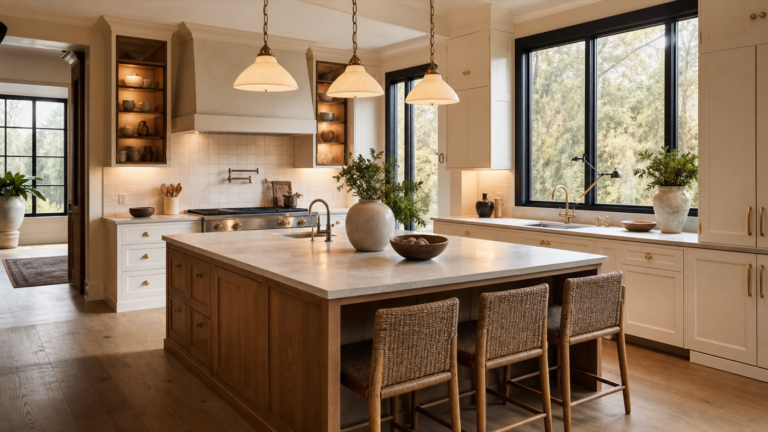
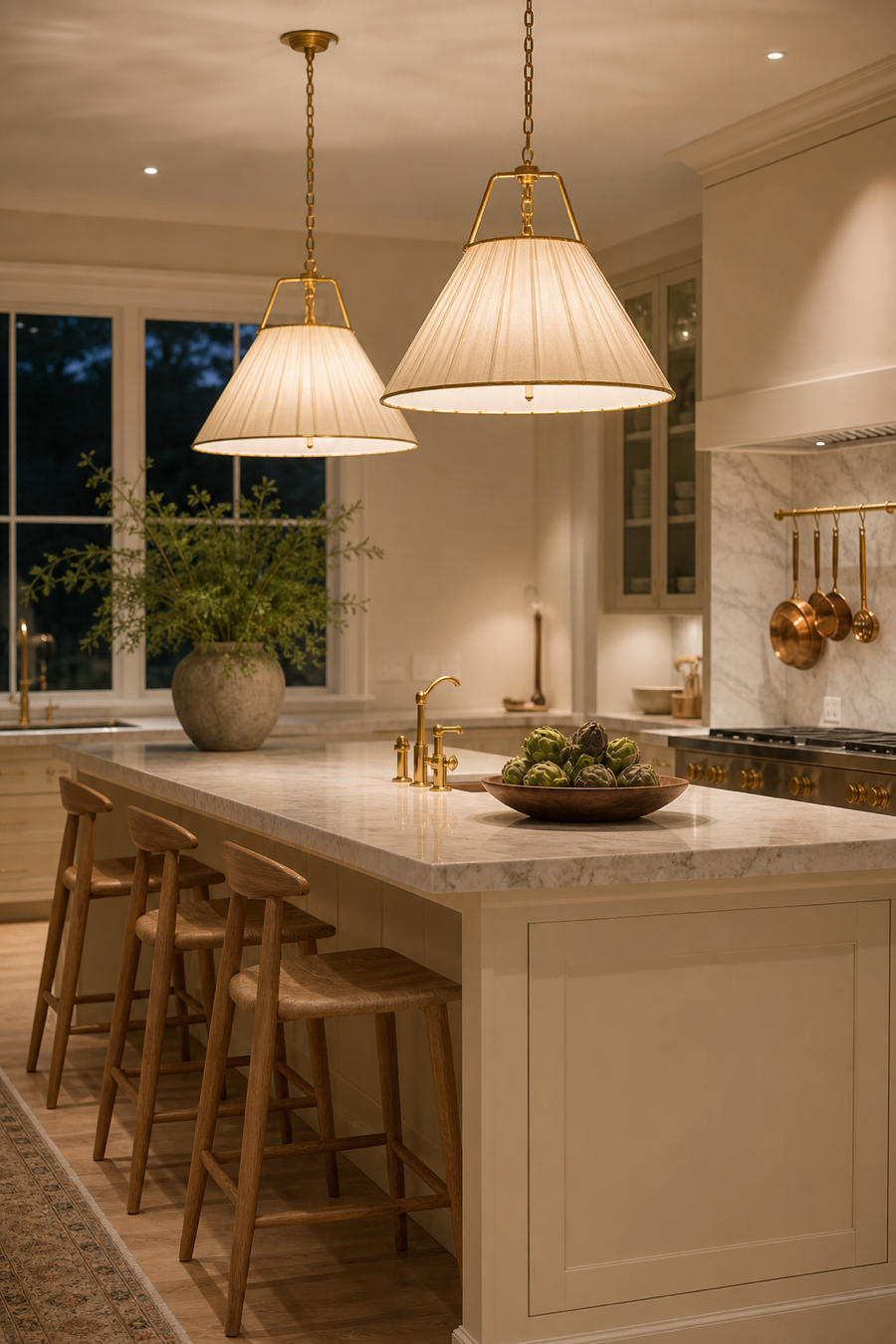
Pendant lighting should make a warm neutral kitchen feel intimate, not harsh. Look for fabric shades, opal glass, aged brass, plaster, or woven details that diffuse light gently over the island. Scale matters: pendants that are too small can make the island feel unfinished, while oversized fixtures can interrupt sightlines. Hang them low enough to create atmosphere but high enough to keep conversation easy. Warm bulbs and dimmers are worth prioritizing, especially in open-plan homes. When the lights glow softly in the evening, the kitchen becomes more than a work zone; it becomes a natural gathering place daily too.
7. Style Open Shelves With Useful Ceramics
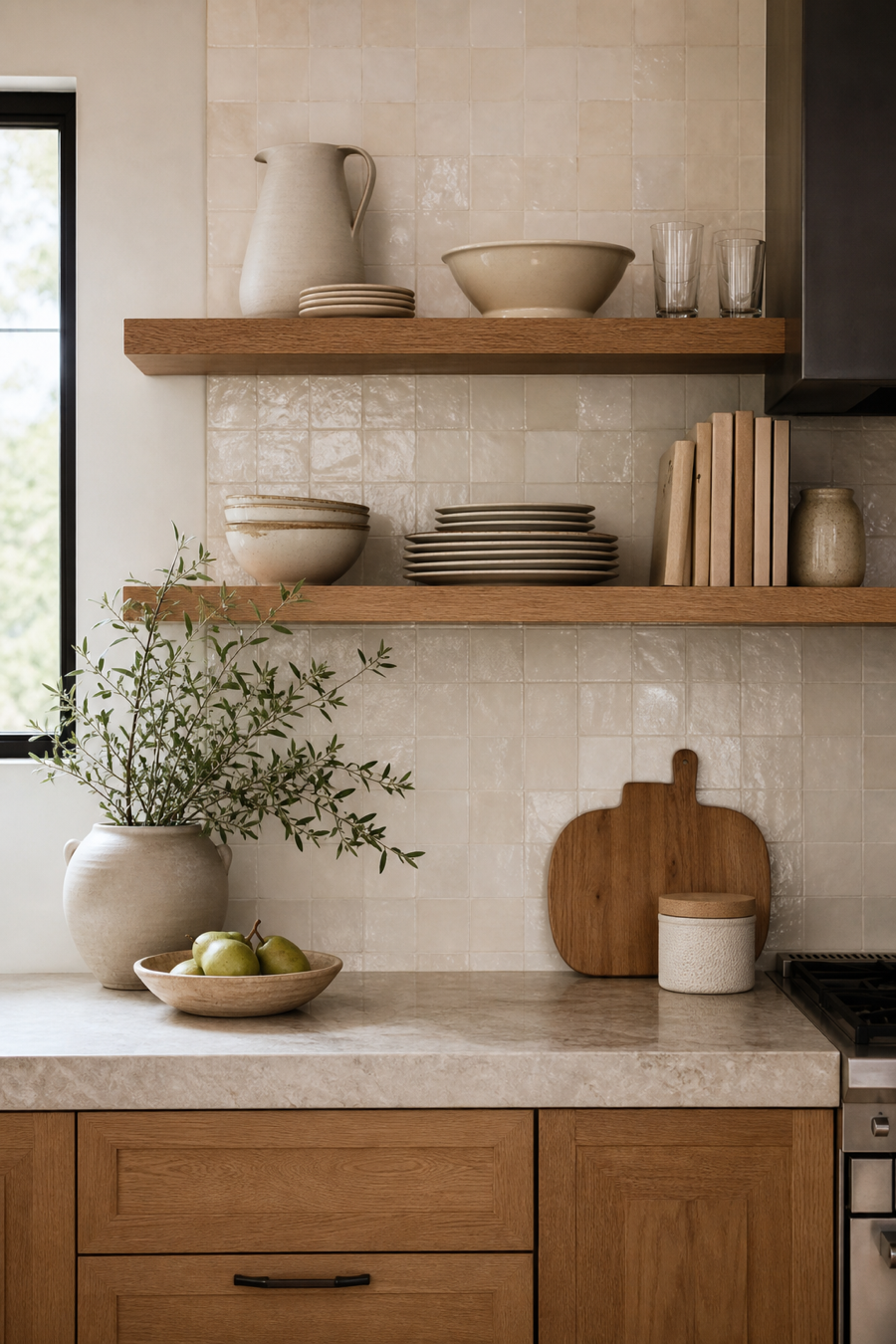
Open shelves look best when they hold objects you actually use. In a warm neutral kitchen, style them with stacked plates, handmade bowls, clear glasses, a few cookbooks, and one or two sculptural pieces. Keep the color range tight so the shelves feel calm from across the room. Oak or walnut shelves add warmth, while painted shelves disappear more quietly into the wall. Leave negative space between groups instead of filling every inch. The goal is not display for its own sake; it is practical storage that makes the kitchen feel collected, personal, and easy to reach during ordinary routines.
8. Use Taupe on the Island for Quiet Contrast
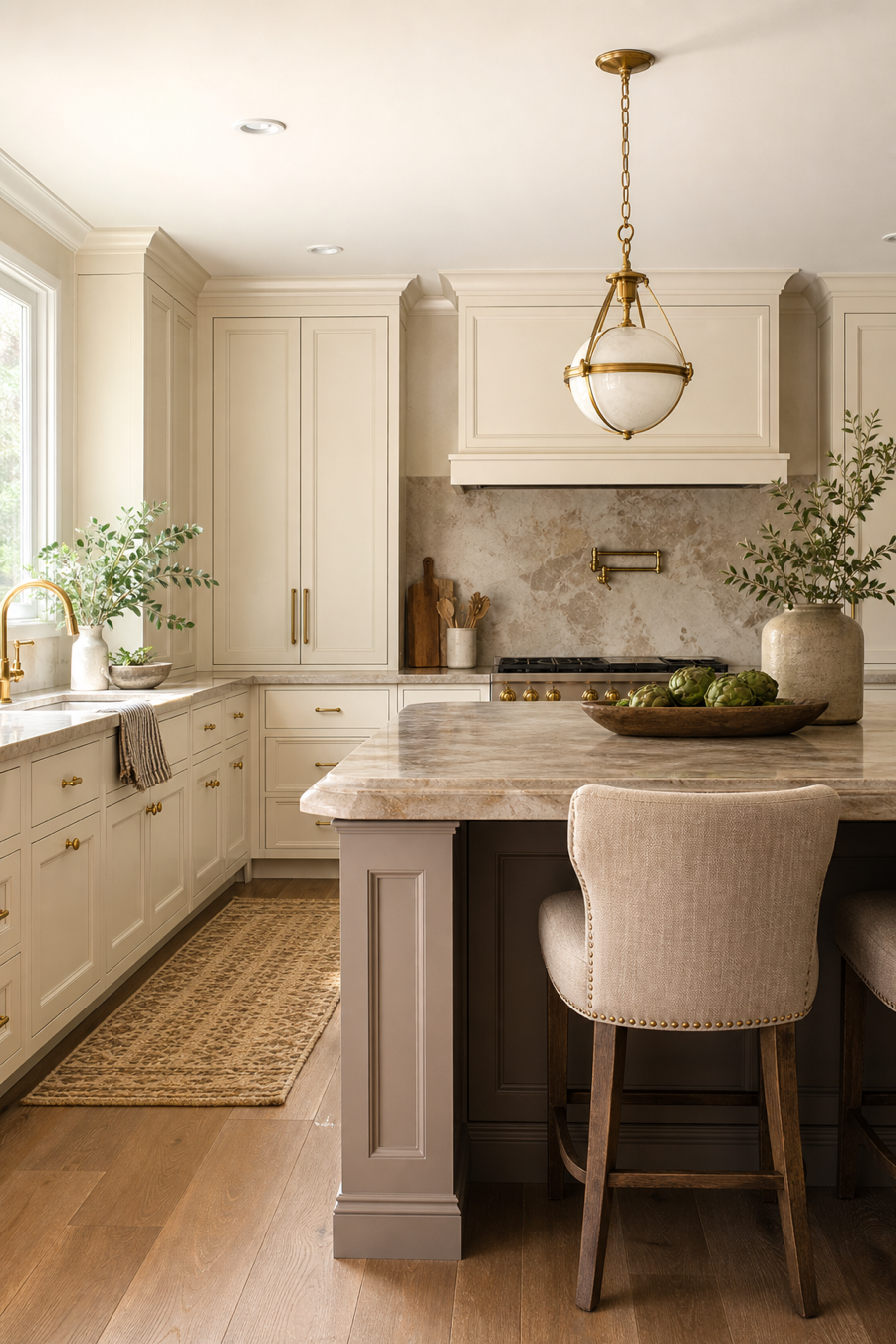
A taupe island adds contrast without breaking the warm neutral mood. It works especially well when perimeter cabinets are cream or ivory and the room needs a little more depth. Choose a taupe with warm undertones, then connect it to the backsplash, rug, stone veining, or stool upholstery. The island color should feel related, not like a separate accent. This is a smart approach for families because the slightly deeper tone can hide scuffs better than pale paint. Add brass or aged nickel hardware and a durable counter so the island can handle prep, homework, serving, and casual meals easily.
9. Choose Counter Stools With Texture
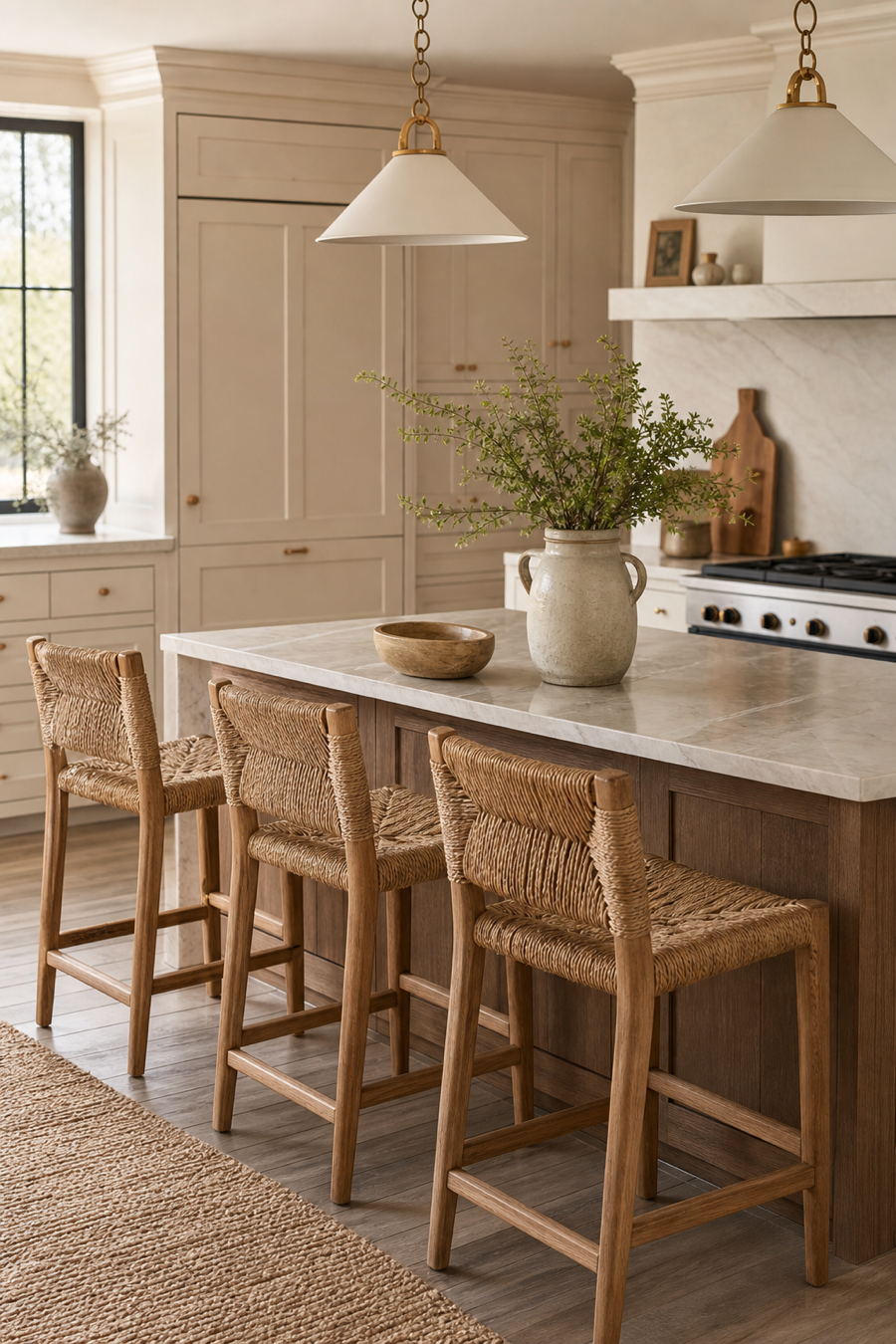
Counter stools are a chance to add texture where the kitchen can feel hard. Woven seats, leather cushions, oak frames, or linen upholstery soften stone counters and painted cabinetry. Keep the stool height comfortable and make sure the foot rail is durable, because this is one of the most-used spots in the kitchen. In a warm neutral palette, stools can be one shade deeper than the cabinets to create structure. Avoid overly delicate pieces if children or frequent guests use the island. The best stools look refined but can survive breakfast, laptop work, and casual conversation without feeling precious.
10. Bring in a Small Counter Lamp
A small counter lamp gives a kitchen the warmth of a living room. Place one in a low-traffic corner, beside open shelves, or near a coffee station where it will not interfere with prep. Choose a ceramic, stone, or wood base with a fabric shade, and use a warm bulb. The lamp is especially useful in the evening, when overhead lights can feel too bright. It also helps soften kitchens with a lot of stone or stainless steel. Keep the scale modest and the cord tidy. This small layer of light can make the whole room feel more relaxed and inhabited.
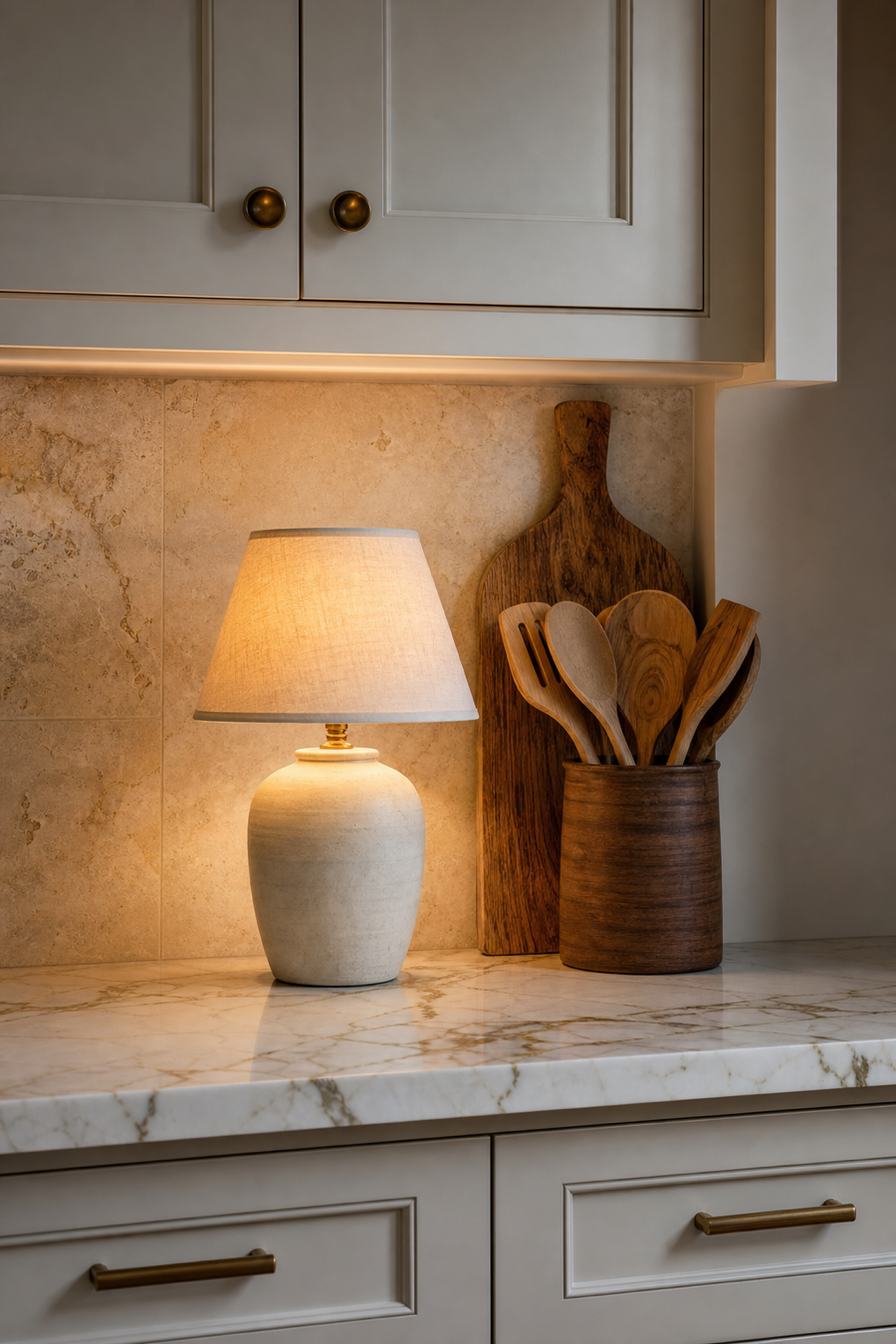
11. Use a Plaster Range Hood as a Focal Point
A plaster range hood can become the quiet architectural center of a warm neutral kitchen. Its soft surface looks beautiful with zellige tile, stone counters, and wood shelves. Keep the shape simple: a curved hood feels Mediterranean and relaxed, while a clean rectangular form feels more tailored. Match the plaster tone to the walls or cabinets for a seamless effect. Because plaster has subtle texture, nearby styling can stay restrained. Add a brass rail, simple sconces, or one shelf if the wall needs function. The hood should feel built into the room, not added as a decorative afterthought later on.
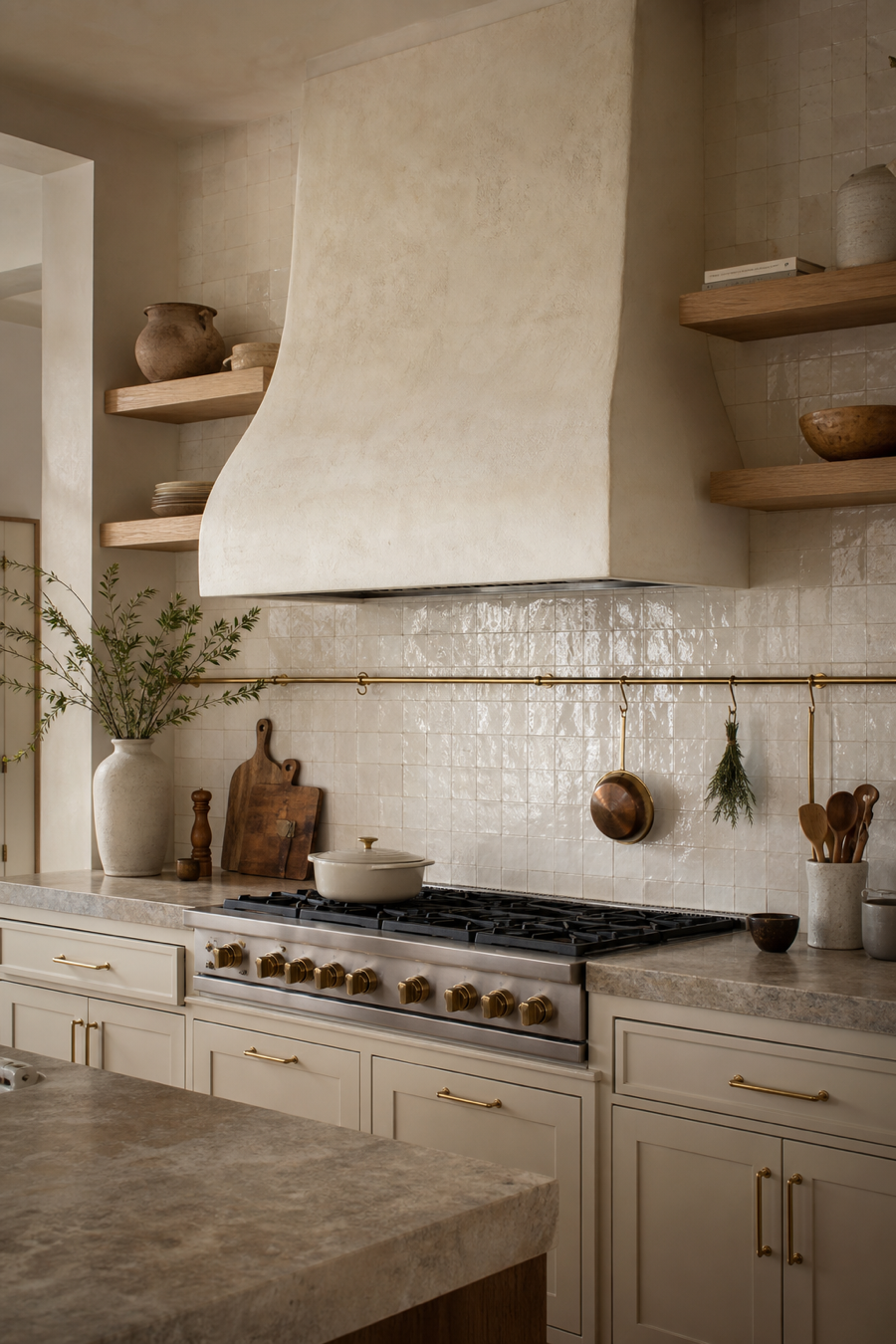
12. Mix Closed Storage With One Display Zone
A functional kitchen needs plenty of closed storage, but one display zone can keep the room from feeling too sealed off. Use cabinets for appliances, pantry goods, and everyday clutter, then reserve a shelf, glass-front cabinet, or niche for beautiful dishes and serving pieces. This balance is especially important in warm neutral kitchens, where too many objects can quickly soften into visual blur. Keep the display zone edited and repeat materials from the rest of the room. A few ceramics, glass pieces, and wood boards are enough. The kitchen stays practical while still showing personality and care clearly every day.
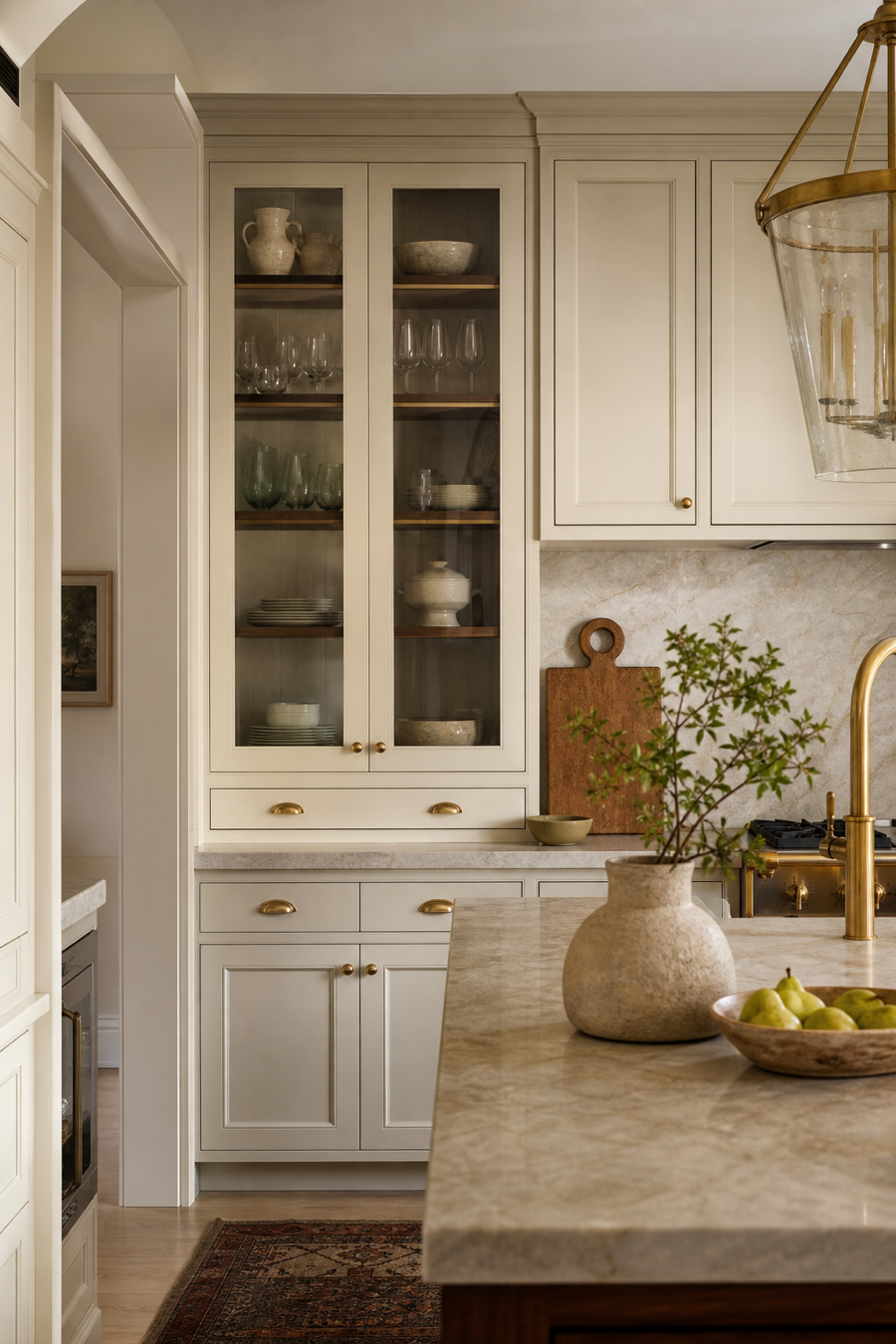
13. Add a Coffee Station That Looks Built In
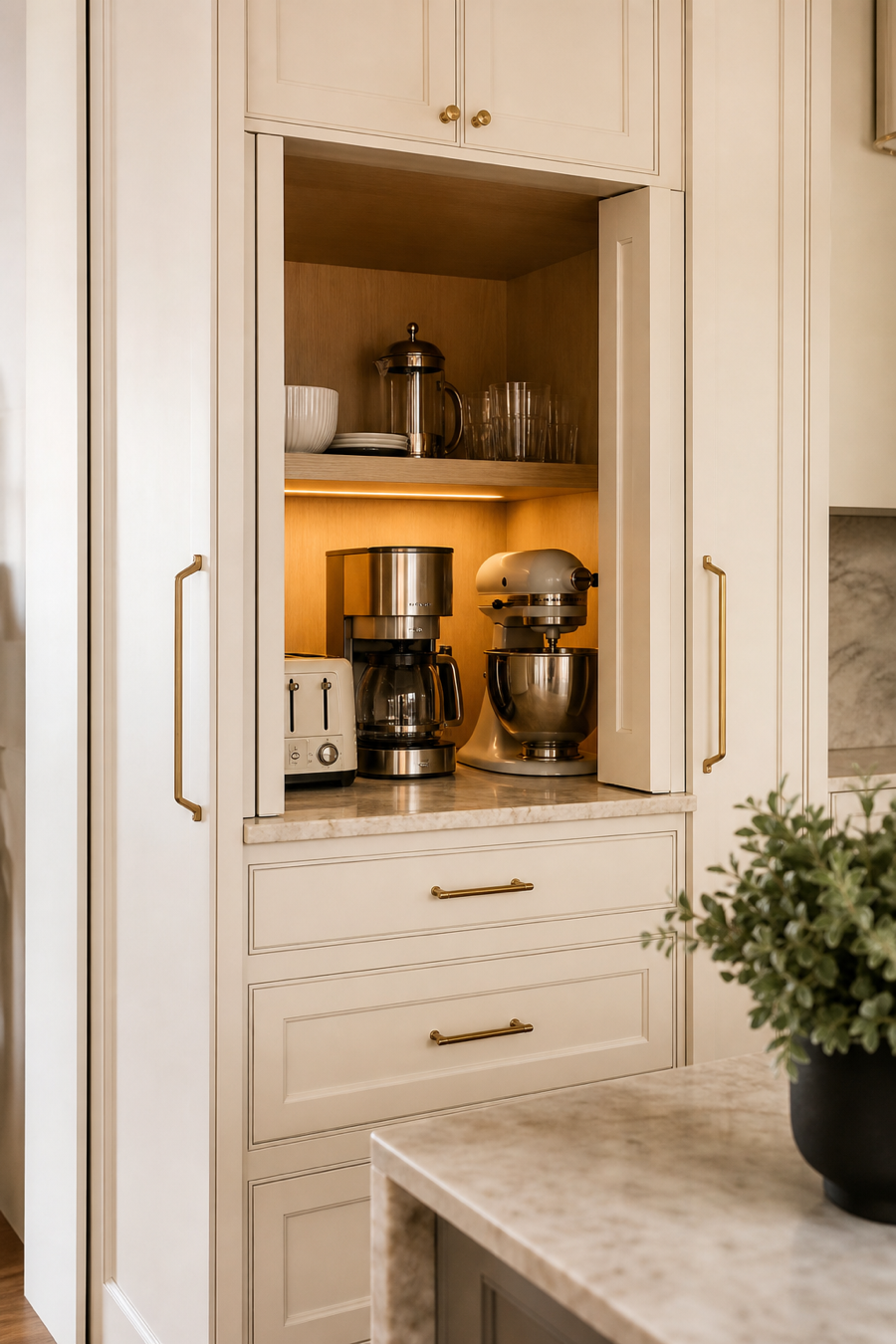
A coffee station is most useful when it has storage, power, and a little counter space in one clear zone. Place mugs, beans, filters, and small tools in nearby drawers or cabinets so the surface can stay edited. Warm neutral finishes make the station feel calm rather than cluttered: a wood tray, ceramic canister, stone backsplash, and brass shelf rail can be enough. If possible, tuck the coffee maker into an appliance garage or recessed niche. The point is not to hide every tool, but to make the morning routine feel organized, attractive, and easy to reset before the day begins.
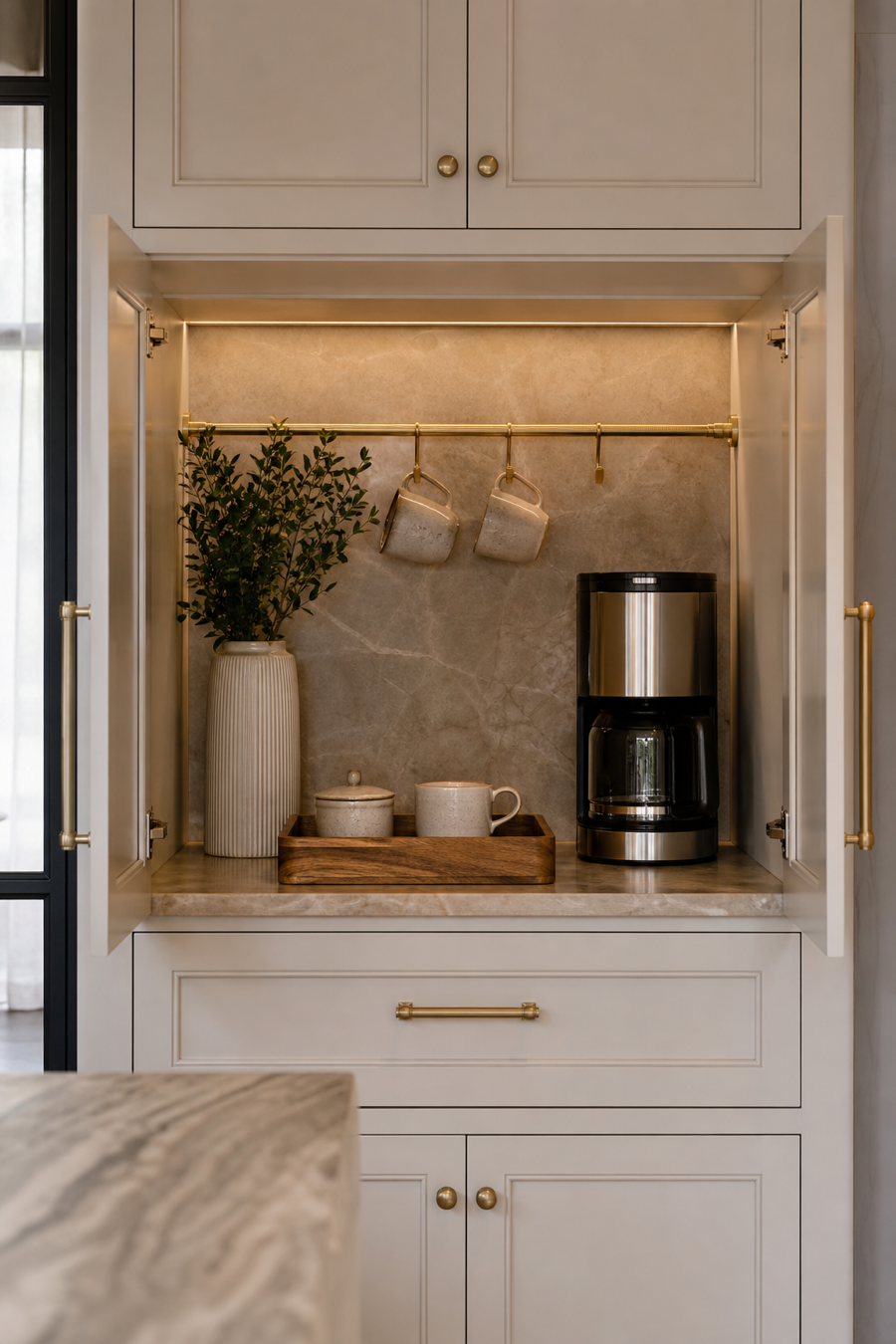
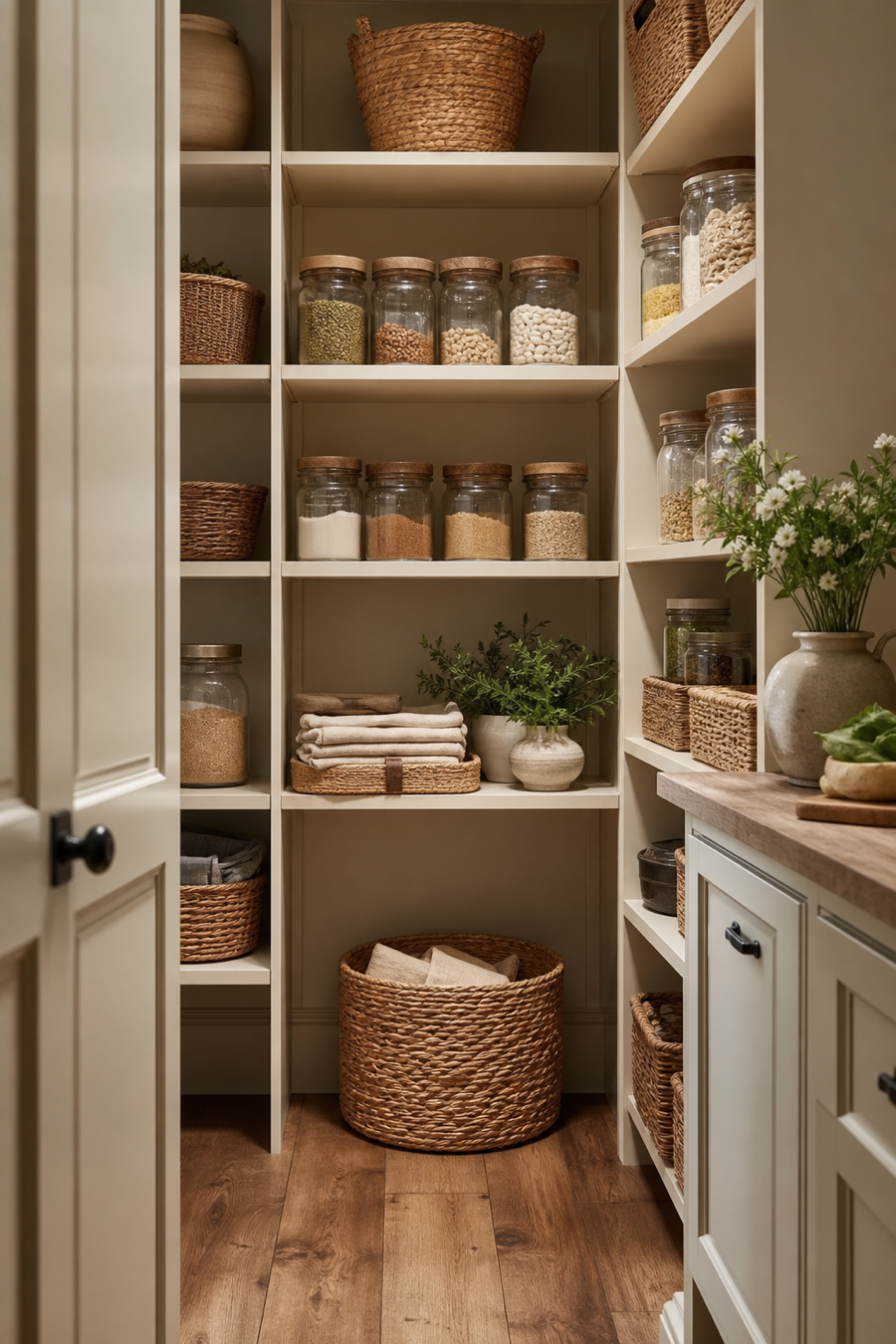
14. Use Baskets for Pantry Warmth
Baskets add warmth and make pantry storage easier to scan. Use them for linens, snacks, produce, baking supplies, or items that do not need sealed containers. Choose a consistent weave and color so the pantry feels ordered even when the contents change. In open pantry shelving, baskets prevent a warm neutral kitchen from looking busy. In closed cabinets, they work like removable drawers. Labeling can be useful, but keep labels discreet if the pantry is visible from the main kitchen. The texture of woven storage also balances the hard surfaces of stone, tile, metal, and painted cabinetry in a beautiful practical way.
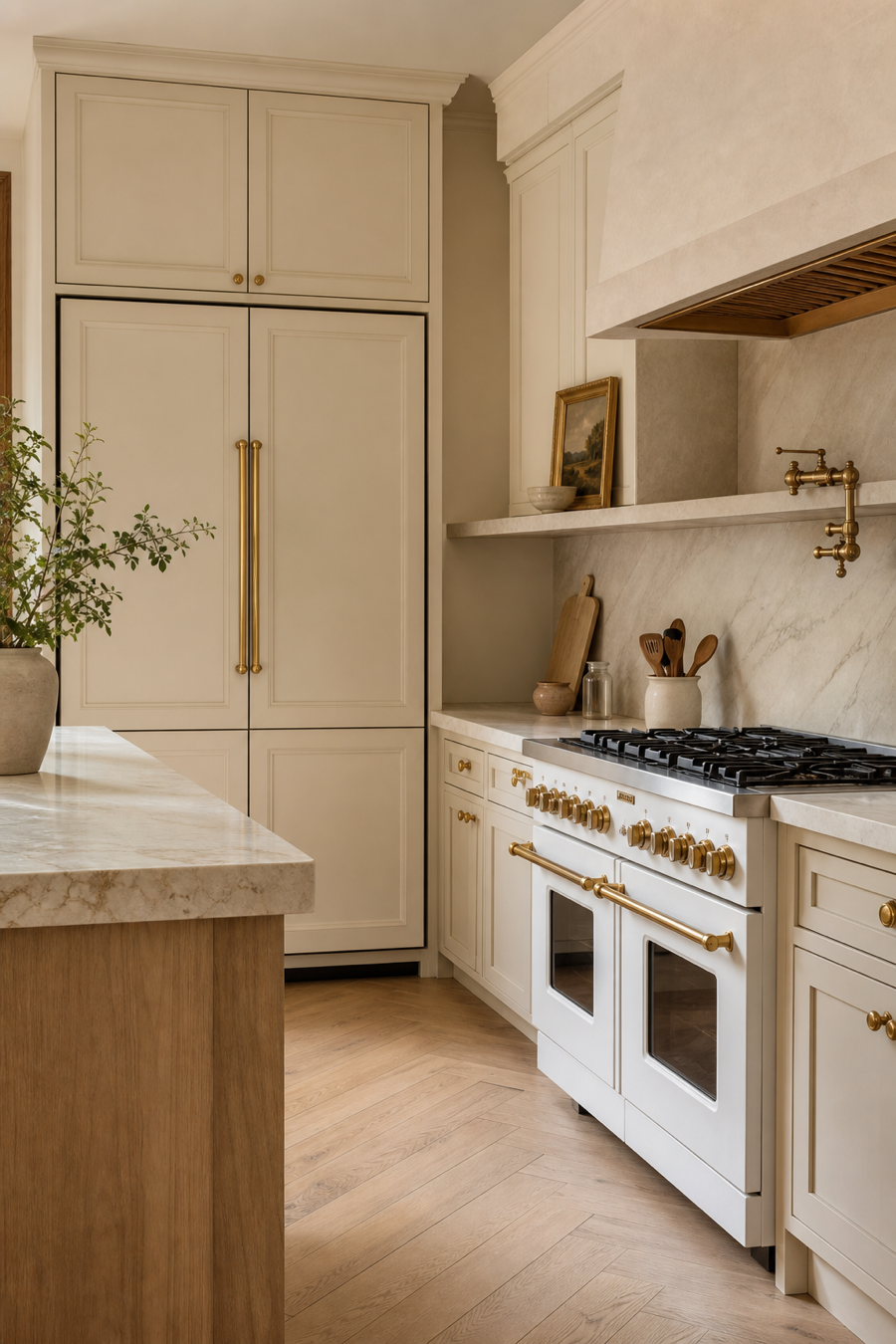
15. Choose Warm White Appliances Where Possible
White appliances have returned in more refined finishes, and they can look beautiful in a warm neutral kitchen. Matte white, cream, or panel-ready appliances blend more softly than stark stainless steel, especially with cream cabinetry and pale stone. If replacing appliances is not realistic, panel the dishwasher or refrigerator first, since large vertical stainless surfaces have the biggest visual impact. Keep the range or oven stainless if it suits your cooking needs. Function should lead the decision. The goal is a quieter material palette where appliances support the design instead of becoming the strongest visual element in the room.
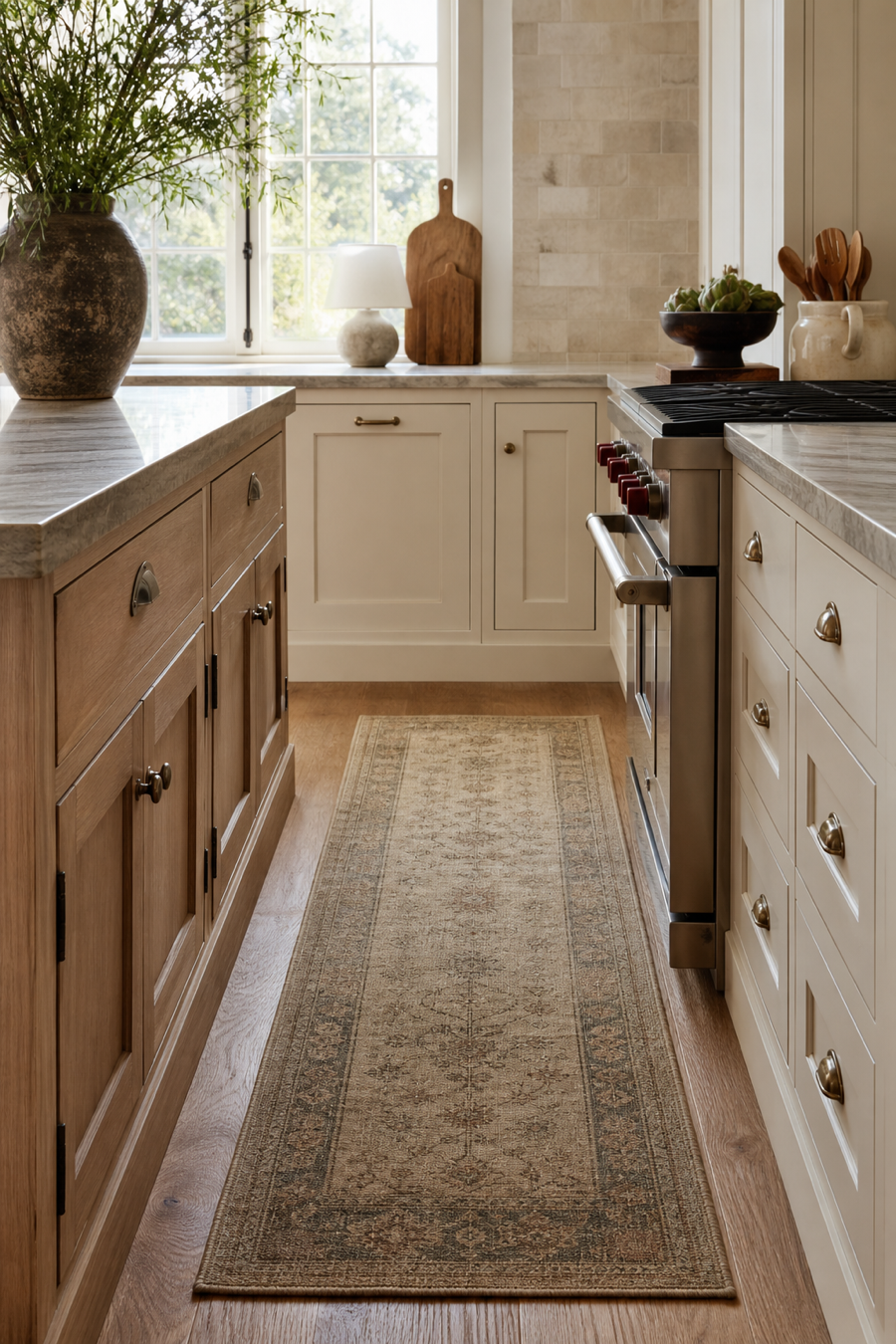
16. Add a Runner for Softness Underfoot
A runner can make a kitchen feel warmer and more comfortable, especially along the sink wall or between the island and perimeter cabinets. Choose a low-pile wool, vintage-style, or washable woven runner that lies flat and is easy to clean. Warm neutrals work well with faded patterns in taupe, tan, clay, charcoal, or muted olive. The runner should be narrow enough to avoid cabinet doors and long enough to look intentional. Beyond comfort, it brings acoustic softness to a room full of hard surfaces. It also introduces pattern in a controlled, practical way that can change seasonally too.
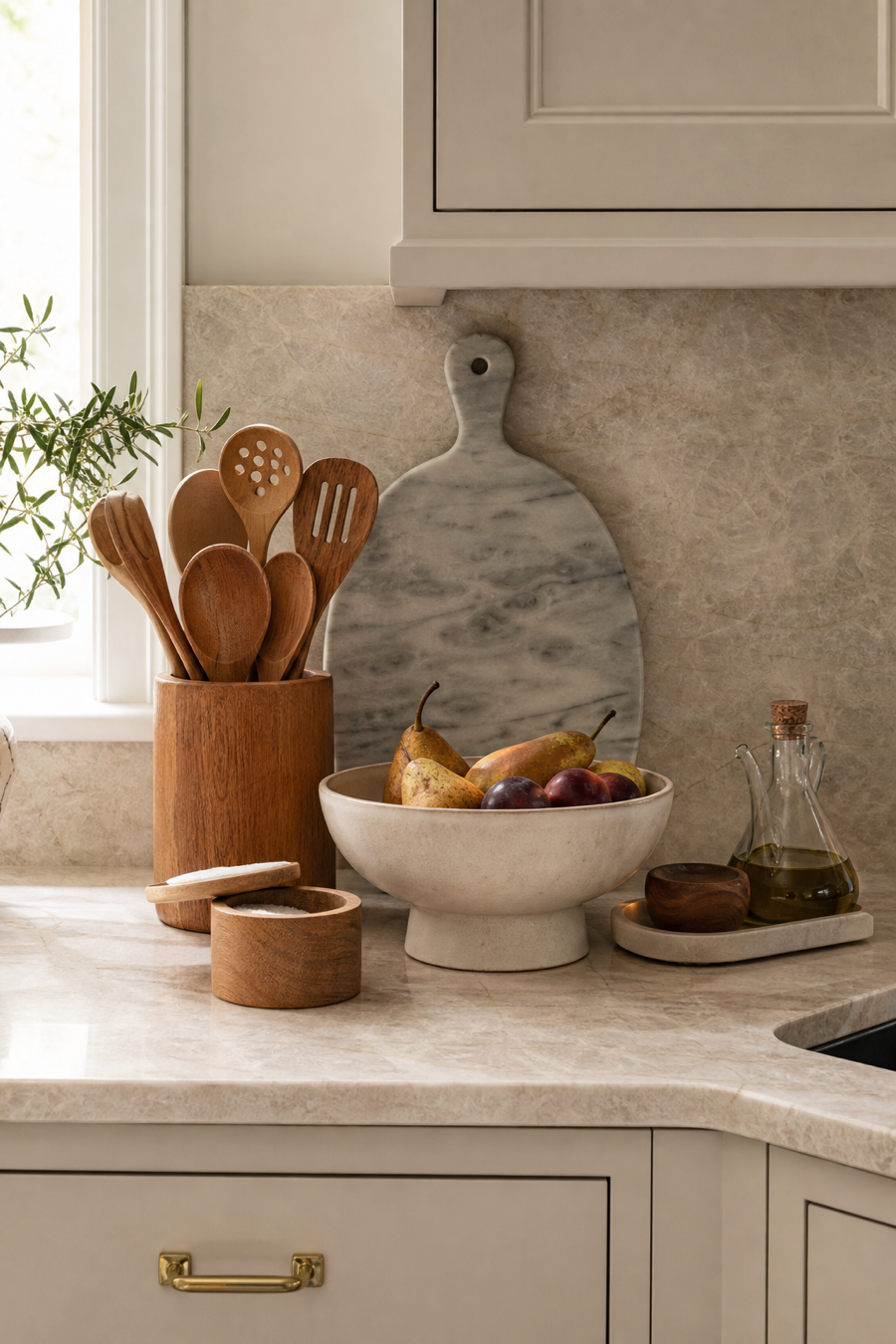
17. Keep Counter Styling Practical
Warm neutral kitchens look best when the counters are edited but not empty. Bring back the objects that support daily routines: a marble board, a crock of wood utensils, a fruit bowl, a salt cellar, or a tray for oils. Grouping items on a tray makes them feel intentional and easier to move when cleaning. Avoid scattering small decor across every surface. If the kitchen is compact, keep one clear prep zone completely open. Practical styling gives the room life while respecting function. The counter should look ready to cook, not staged so carefully that no one can use it.
18. Use Soft Mushroom Paint on Lower Cabinets
Mushroom paint gives lower cabinets a little depth while keeping the kitchen neutral. It is softer than gray and more complex than beige, which makes it useful in rooms with mixed stone or wood tones. Use it on base cabinets, an island, or a pantry wall, then keep upper cabinets or walls lighter to prevent the space from feeling heavy. Mushroom pairs well with brass, blackened bronze, oak, and creamy counters. Test samples vertically and horizontally because cabinet fronts catch light differently than walls. This color works especially well in busy kitchens because it hides wear more gracefully than pure white.
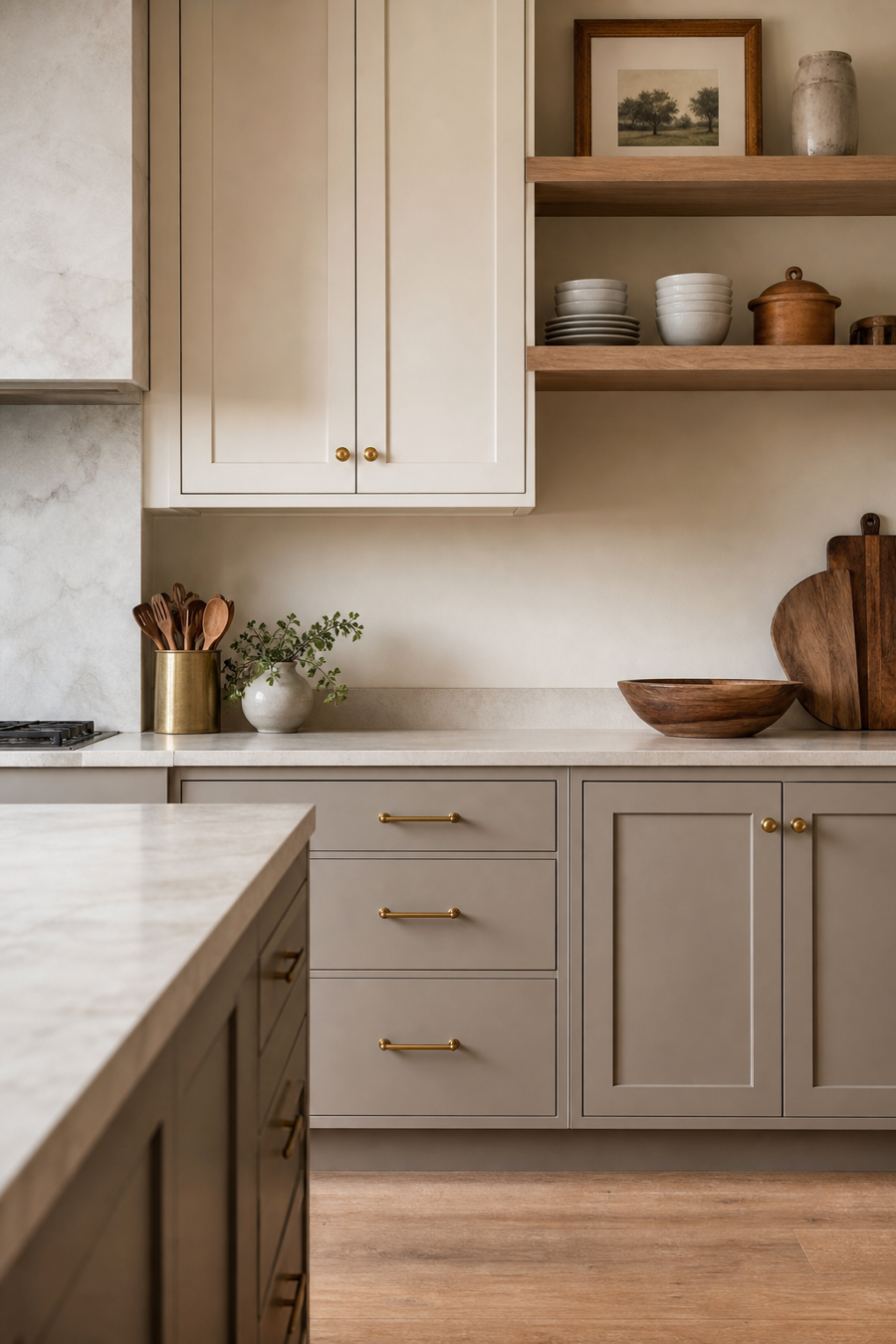
19. Create a Breakfast Nook Beside the Kitchen
A breakfast nook can make the kitchen feel more welcoming and useful beyond cooking. Built-in banquettes work well when space is tight, while a small round table softens square cabinetry and counters. Use performance fabric, wipeable leather, or washable cushions if the nook will handle daily meals. In a warm neutral kitchen, connect the nook through shared materials: oak chairs, cream upholstery, brass lighting, or a stone tabletop. Add one pendant or sconce so the area has its own atmosphere. The nook should feel easy in the morning and cozy at night, not like leftover space near the cabinets.
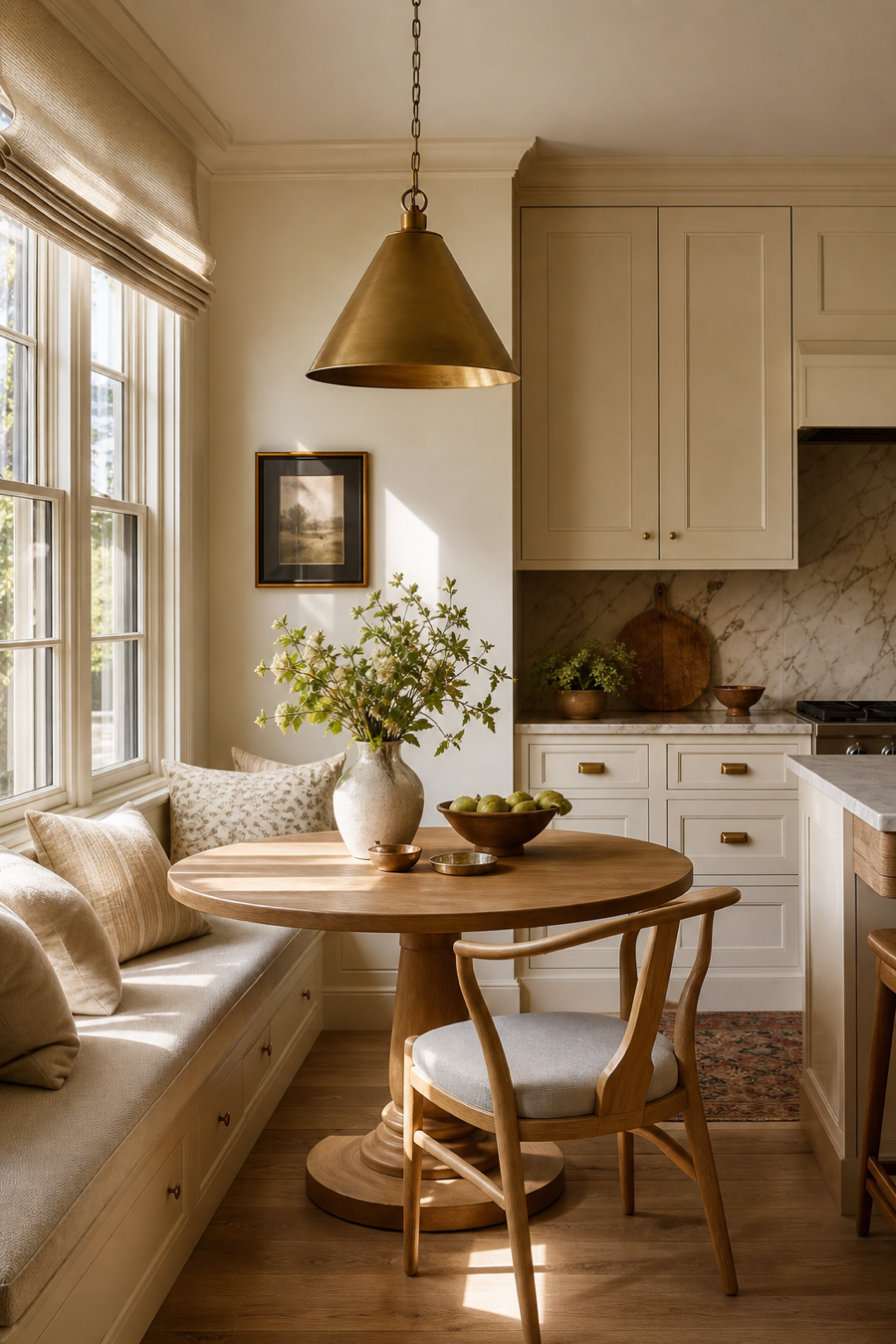
20. Try Fluted Glass for Light Storage
Fluted glass cabinet doors offer a useful compromise between open shelving and closed storage. They keep dishes and glassware visible enough to lighten the room, but blurred enough to hide imperfect stacks. In a warm neutral kitchen, fluted glass looks especially refined with brass, oak, cream paint, or mushroom cabinetry. Use it on upper cabinets, a pantry hutch, or a small bar area rather than every cabinet. Interior lighting can make the texture glow in the evening. The result feels layered and functional, with just enough transparency to break up a long wall of solid cabinet fronts nicely at night.
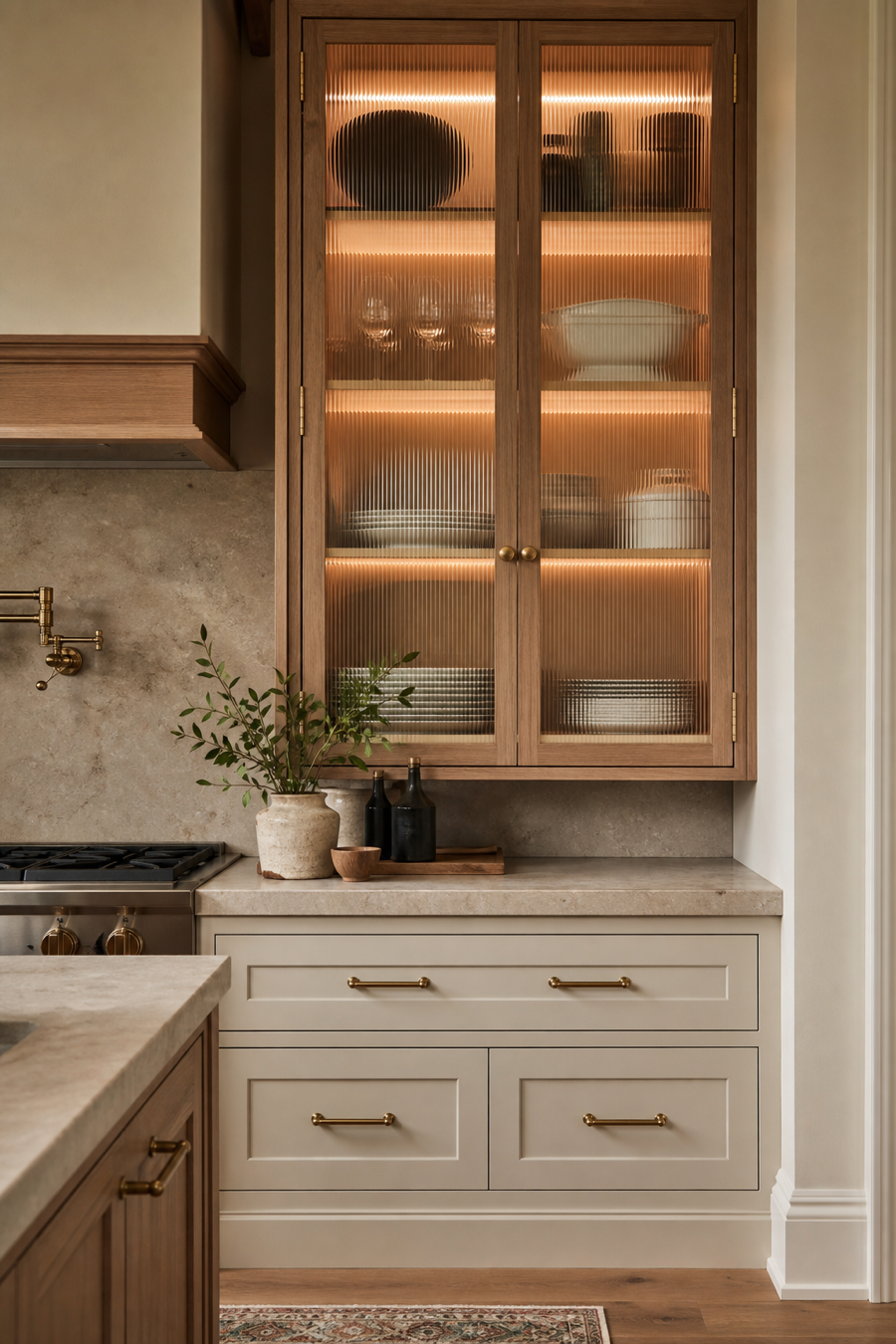
21. Add a Stone Shelf Above the Range
A slim stone shelf above the range can be both beautiful and useful. It creates a landing place for salt, oil, small bowls, or a few everyday spices, while also continuing the counter material up the wall. This detail looks best when the backsplash is the same stone or a quiet tile that does not compete. Keep the shelf shallow so it does not collect clutter or interfere with cooking. In a warm neutral kitchen, stone shelves pair well with plaster hoods, brass rails, and cream cabinetry. The effect is custom, practical, and more durable than a purely decorative ledge.
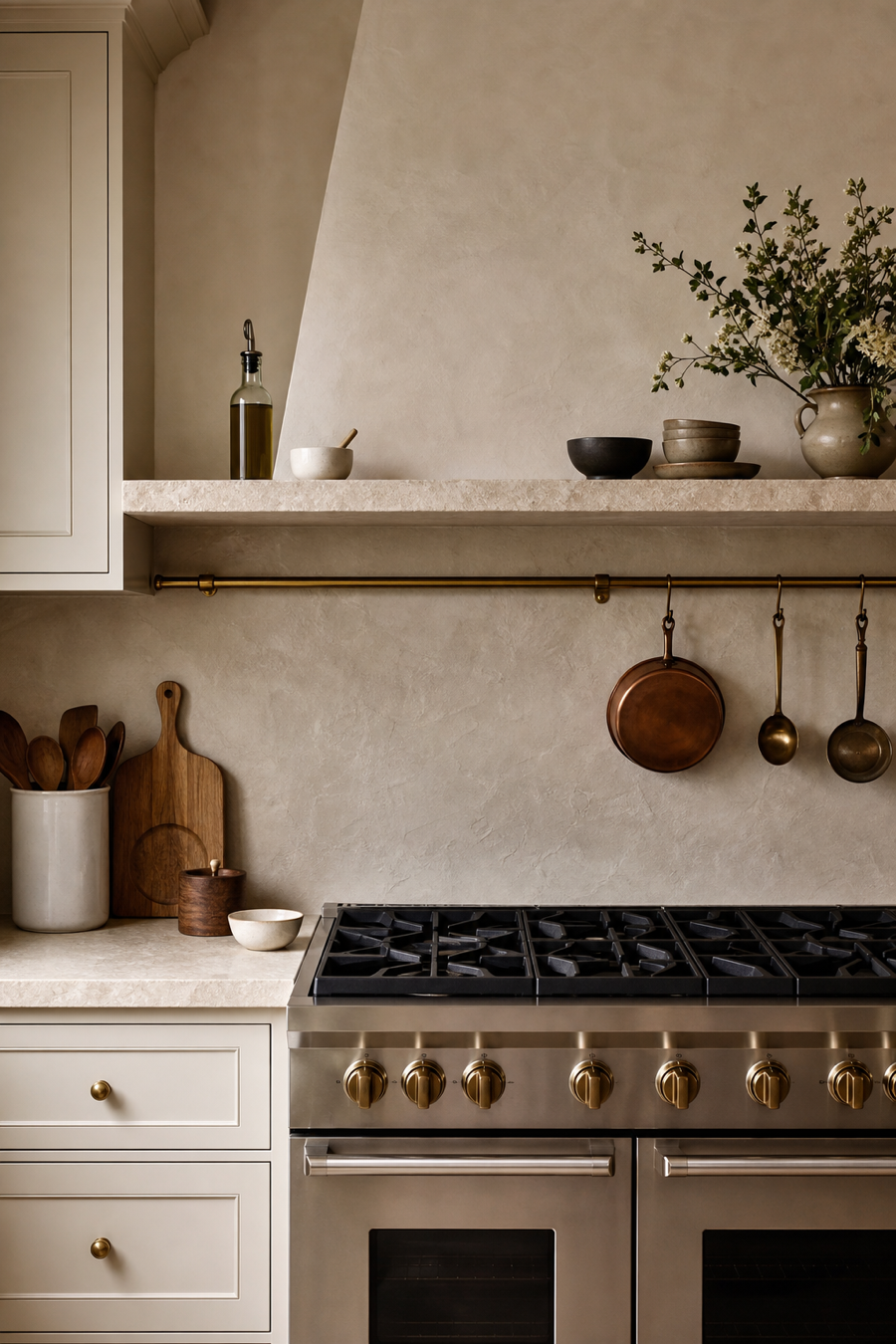
22. Use Layered Neutrals Instead of One Beige Tone
The richest warm neutral kitchens use several related tones, not one flat color. Combine cream cabinets, taupe upholstery, oak floors, pale stone, putty walls, and brass or bronze accents. Each material should have a slightly different depth so the eye can read the layers. This is why texture matters so much: matte paint, honed stone, woven stools, and glazed tile all catch light differently. Keep undertones consistent, then vary the surfaces. When the palette is layered well, the kitchen feels calm but never dull. It can also adapt easily as accessories, flowers, produce, and seasonal pieces change naturally over time.
23. Hide Small Appliances Behind Pocket Doors
Small appliances are useful, but they can make a warm neutral kitchen look busy quickly. An appliance garage with pocket doors keeps the toaster, blender, coffee maker, or mixer accessible without leaving everything exposed. Place outlets inside and choose interior surfaces that are easy to wipe. The doors should open fully out of the way so the station is comfortable to use. Match the exterior to the surrounding cabinets for a seamless look. This solution is especially helpful in open-plan homes, where the kitchen is visible from living and dining areas long after the cooking is done daily too.
24. Finish With Fresh Greenery and Warm Ceramics
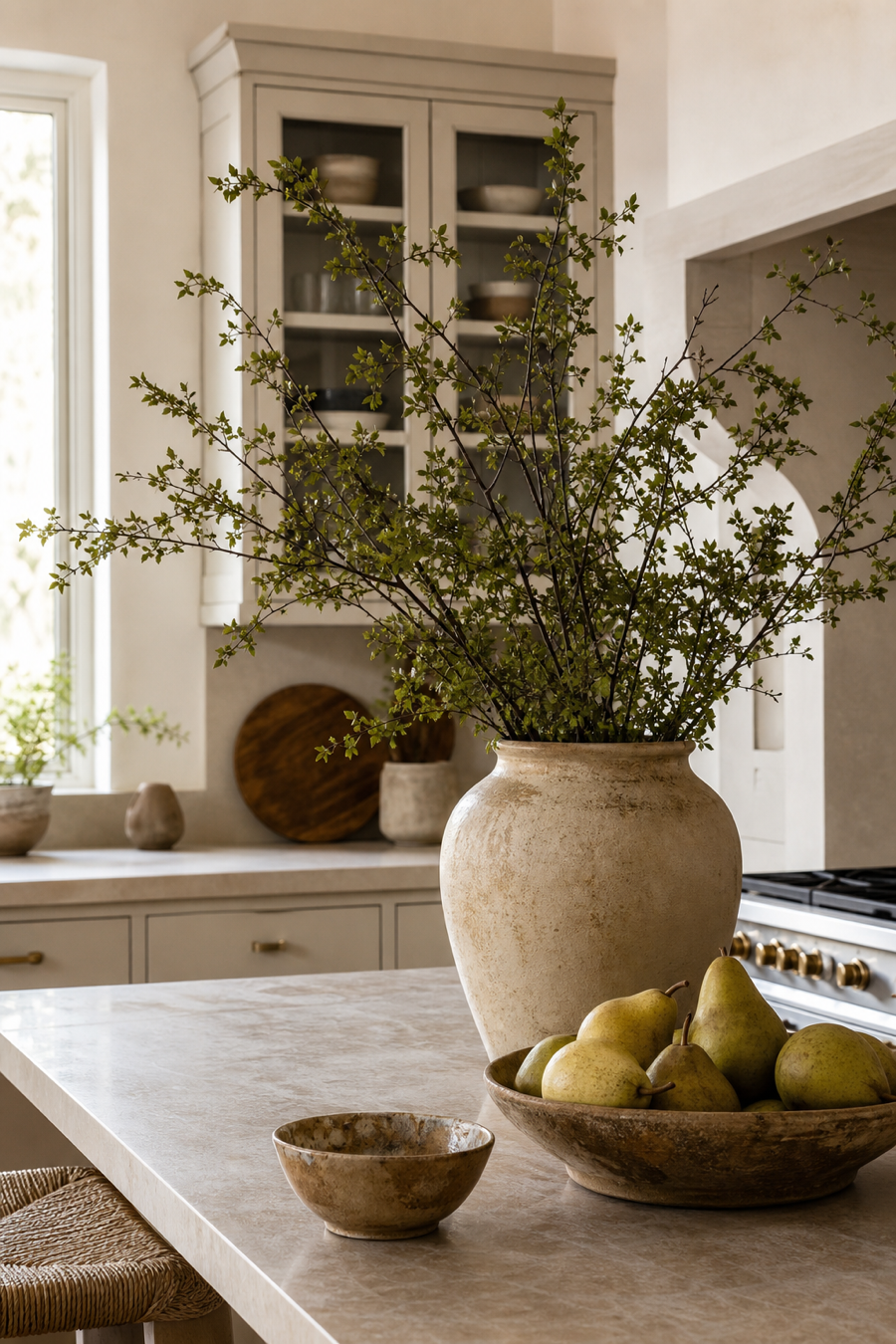
The final layer in a warm neutral kitchen should feel alive. A vase of branches, a bowl of pears, a potted herb, or a few warm ceramic pieces can bring movement to all the stone and cabinetry. Keep the greenery natural and seasonal rather than overly arranged. Ceramics in ivory, clay, oatmeal, or soft brown add handmade texture without disrupting the palette. Place these pieces where they support function: near the island, on a shelf, or beside the sink. The room should feel cared for, not decorated for a photograph. Small living details make the kitchen feel welcoming every day.
A warm neutral kitchen succeeds when every choice has both beauty and purpose. Cream cabinetry softens the architecture, wood and woven textures bring comfort, stone supports daily work, and layered lighting changes the room from practical to inviting. Start with the parts that affect function first: storage, counter space, seating, and light. Then refine the palette through texture rather than clutter. When warm neutrals are handled with depth and restraint, the kitchen becomes a room that works hard, photographs beautifully, and still feels easy to live in every day.