15 Cozy Maximalism Ideas To Inspire Your Next Home Refresh
Cozy maximalism is not about filling every surface. It is about creating rooms that feel layered, personal, and warm, with enough editing that the eye still knows where to rest. The look works best when pattern, color, art, books, vintage furniture, textiles, and lighting are connected by a clear mood. A vintage rug can guide the palette, a gallery wall can tell the story, and a dramatic lamp can make the room glow at night. These cozy maximalism ideas are designed for a home refresh that feels collected over time rather than cluttered overnight.
Start With a Vintage Rug
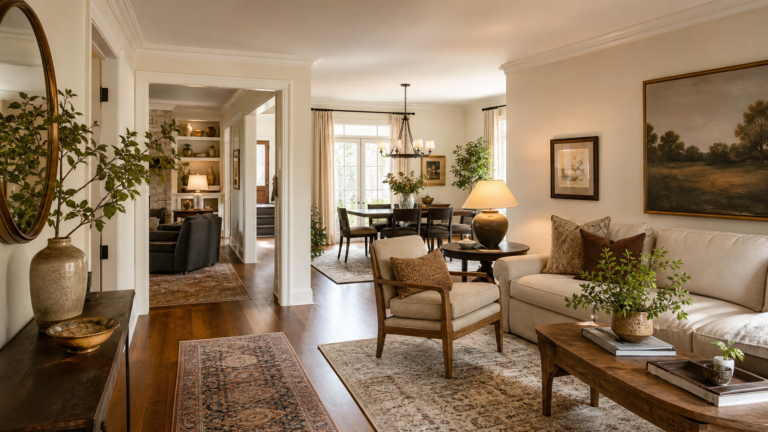
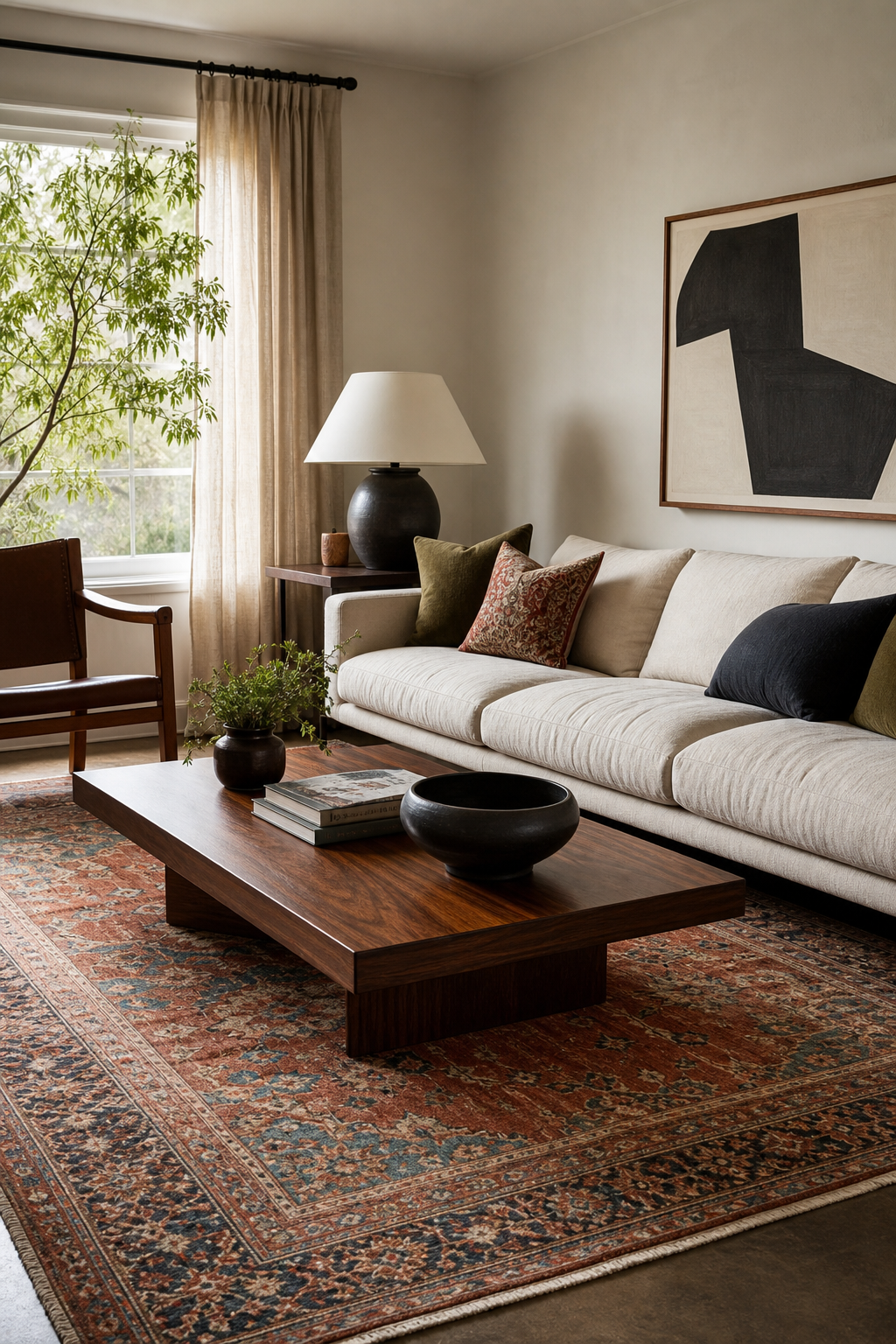
A vintage rug is one of the easiest ways to make an cozy maximalist home feel grounded instead of random. It brings age, pattern, and color into the room before you add a single accessory. Choose a rug large enough to hold the main furniture group, with at least the front legs of the sofa and chairs resting on it. Then let its palette guide smaller choices: a rust pillow, an indigo throw, an olive vase, or a black lamp. The rug does not need to match the room perfectly. In fact, a little contrast is what makes the space feel collected. Keep the larger upholstery quieter so the pattern feels intentional, not busy, and the whole room gains instant history.
Mix Pillows Like a Collector
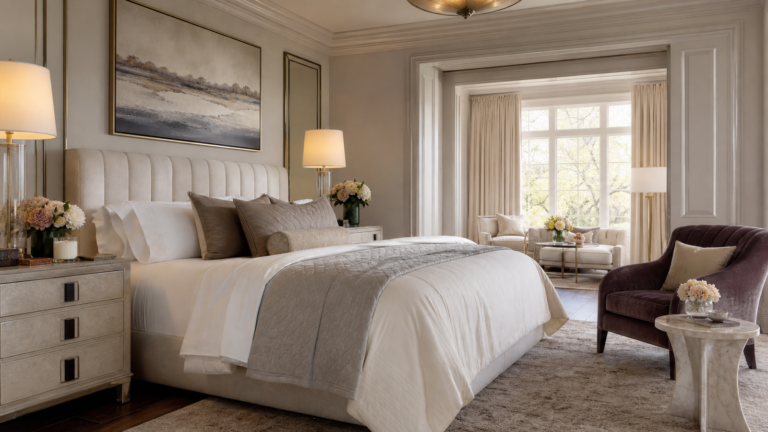
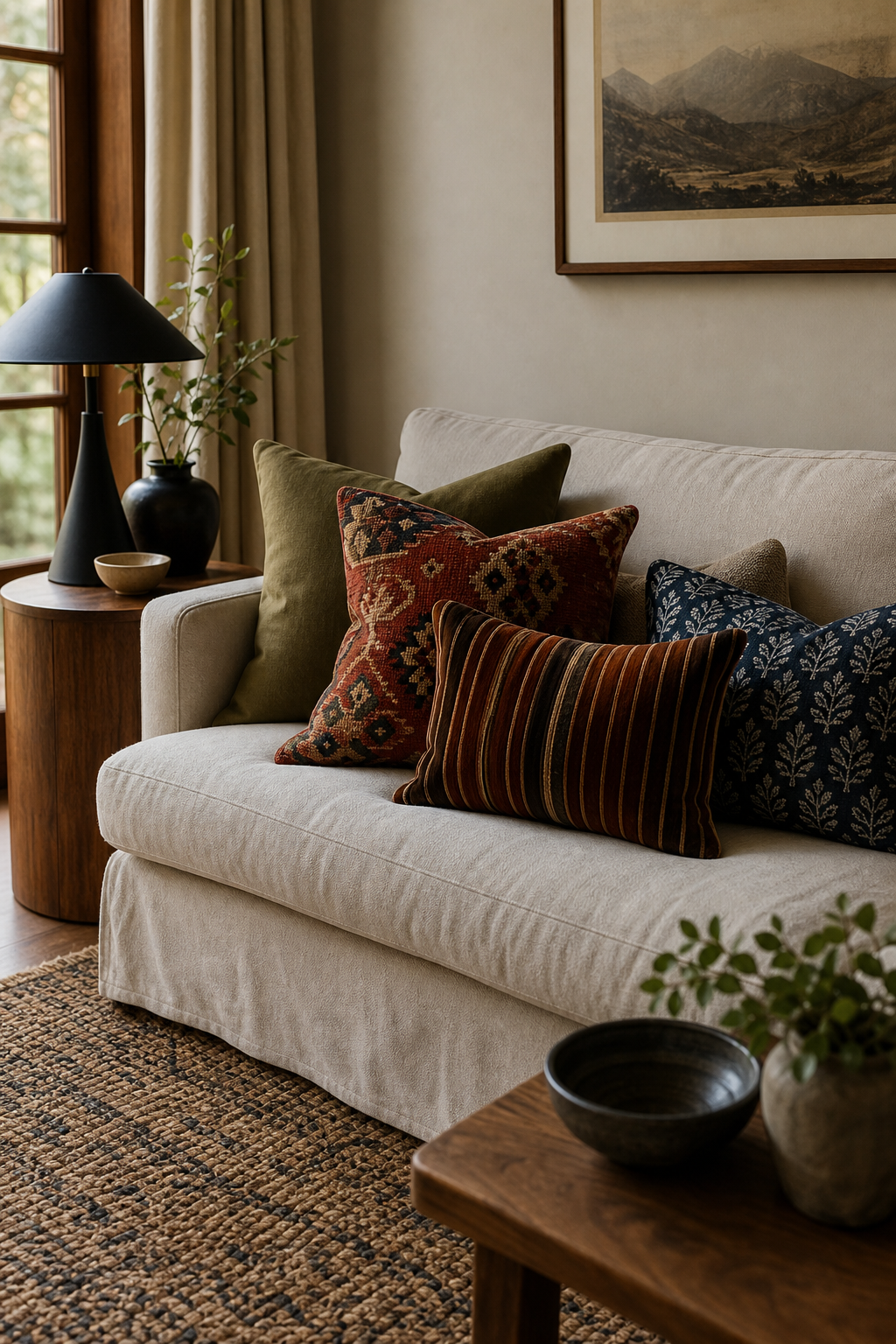
Cozy maximalist pillows should look gathered over time, but they still need a plan. Start with one patterned pillow that carries the strongest personality, such as a kilim, block print, or antique textile. Add a stripe for structure, then soften the mix with one or two solids in velvet, linen, or wool. Vary scale so the patterns do not compete at the same volume. A large geometric print, a smaller floral, and a plain olive pillow can live together beautifully. The sofa itself should stay calm, especially if the pillows are richly colored. This is a low-risk way to test color and pattern because everything can be rearranged quickly. When the mix feels balanced, the room feels personal without looking cluttered.
Build an Asymmetrical Gallery Wall
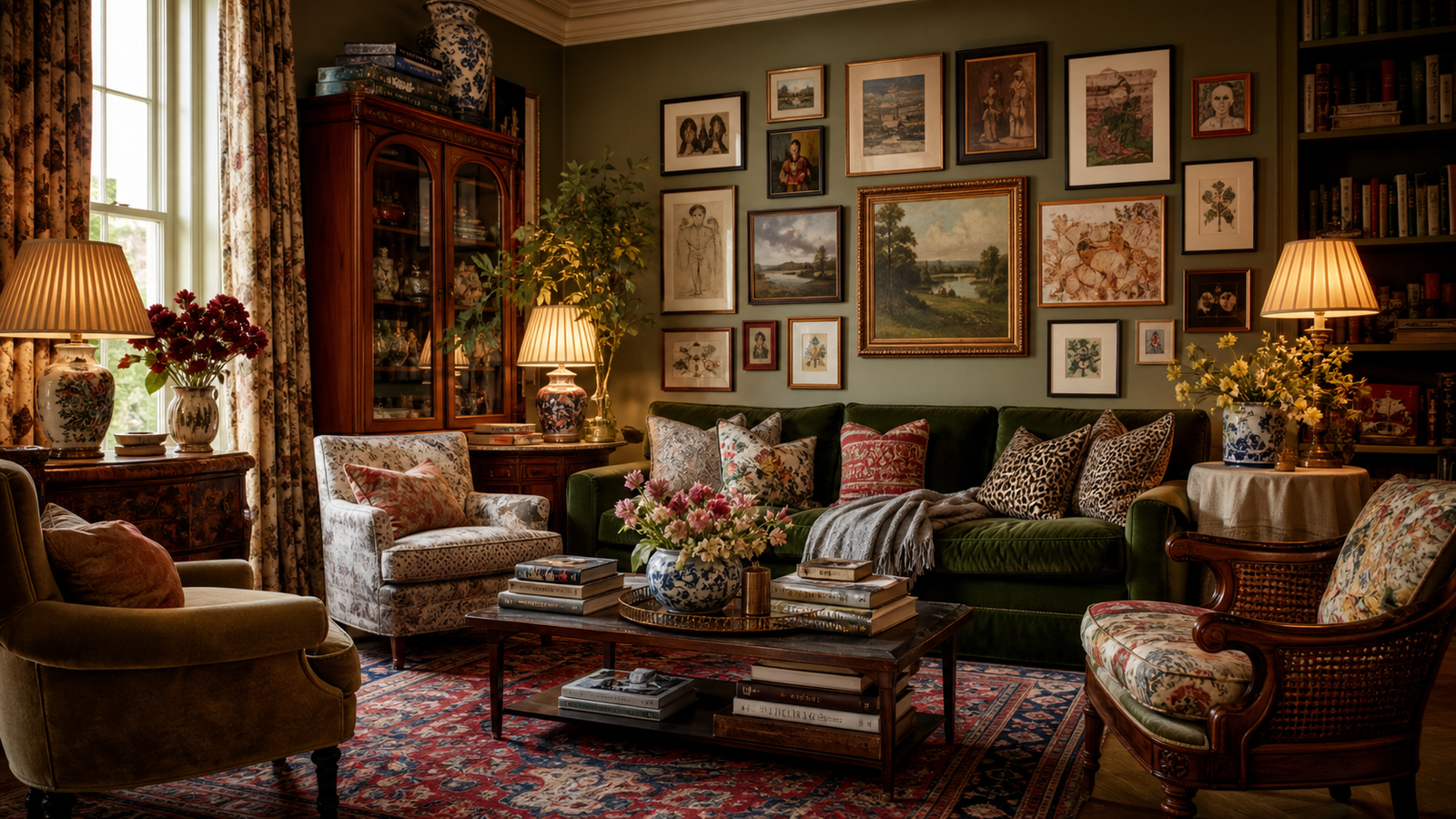
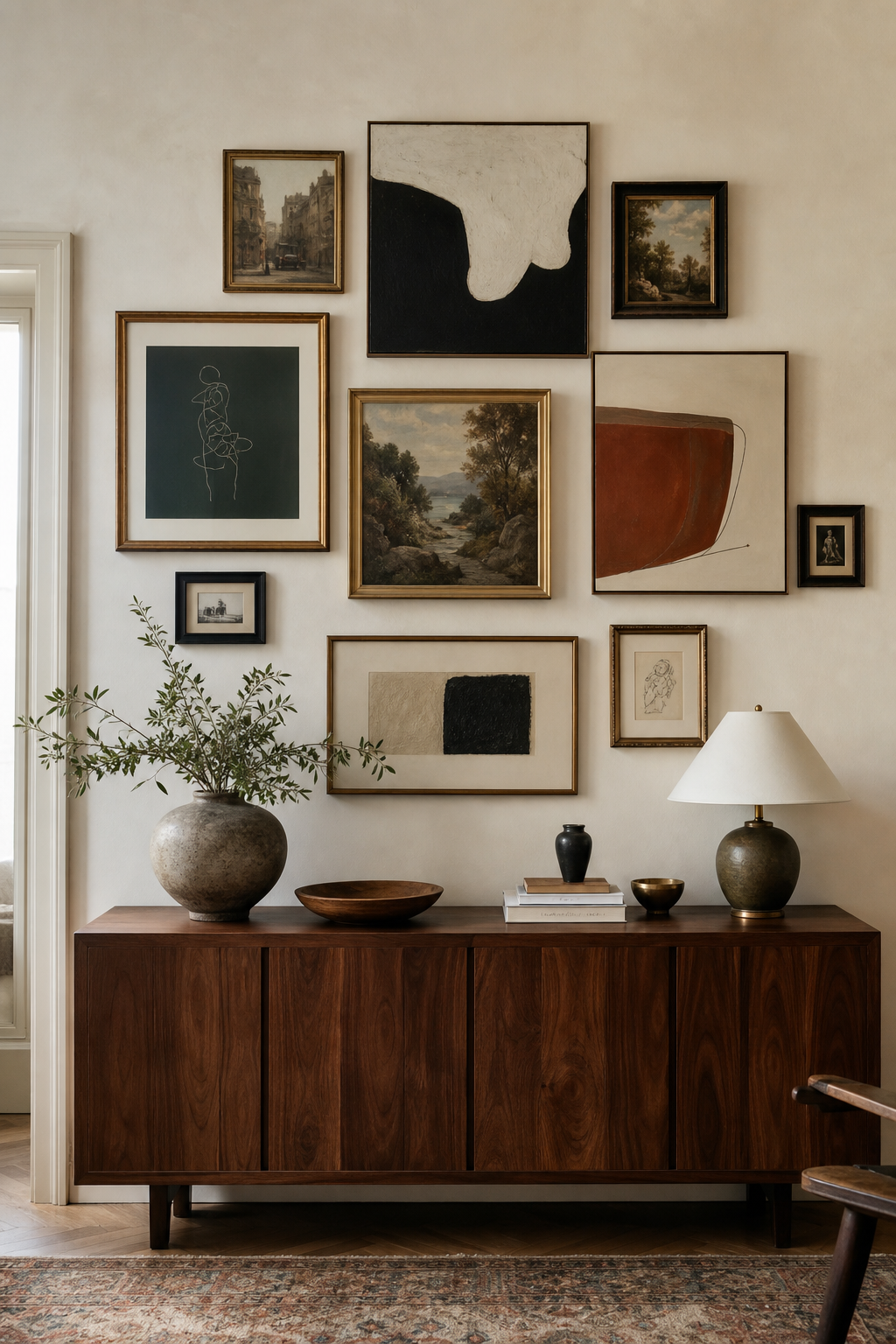
An cozy maximalist gallery wall works best when it has rhythm rather than perfect symmetry. Combine modern abstract pieces with vintage landscapes, small sketches, and a few different frame finishes. The trick is controlling the palette: black, brass, walnut, and cream frames can vary without feeling chaotic. Lay the arrangement on the floor first and give each piece a little breathing room. Place the largest work slightly off center, then let smaller pieces balance it across the wall. A console beneath the gallery adds weight and gives you a surface for lamps, branches, or ceramics. The result feels layered and intelligent, as if the room has been edited over years instead of decorated all at once.
Pair Antique Wood With Modern Lines
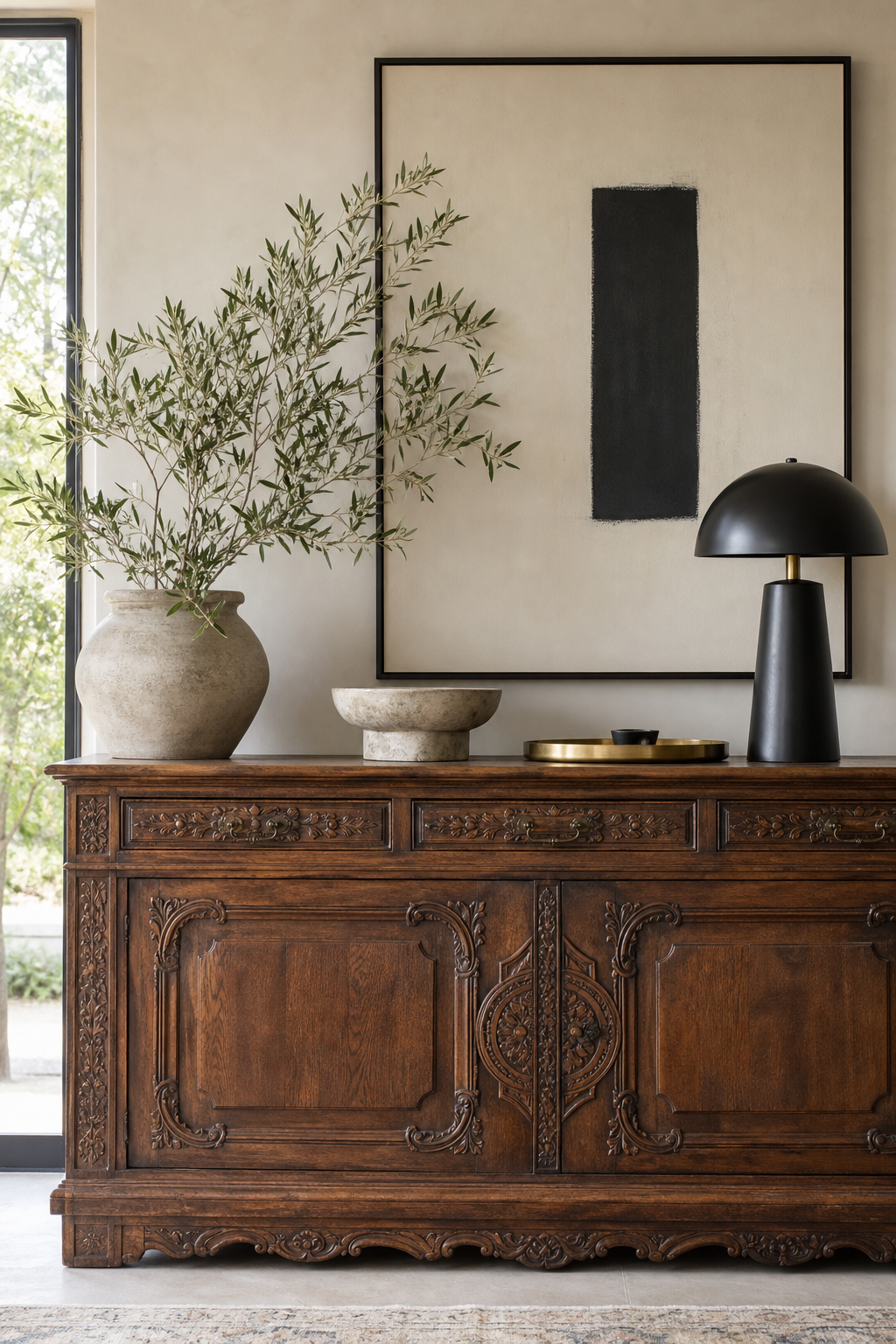
Antique wood brings soul to an cozy maximalist room, especially when it is paired with clean modern pieces. A carved cabinet, old sideboard, or inherited chest can feel fresh beside a simple abstract painting, black lamp, or stone bowl. The contrast keeps the antique from looking heavy and prevents the modern pieces from feeling cold. Let the wood be the richest material in the composition and keep the styling edited. A large vessel, a tray, and one lamp are often enough. If the antique has ornate carving, give the wall above it more negative space or choose art with a calmer composition. This balance of old and new is the heart of polished cozy maximalist style.
Add One Dramatic Lamp
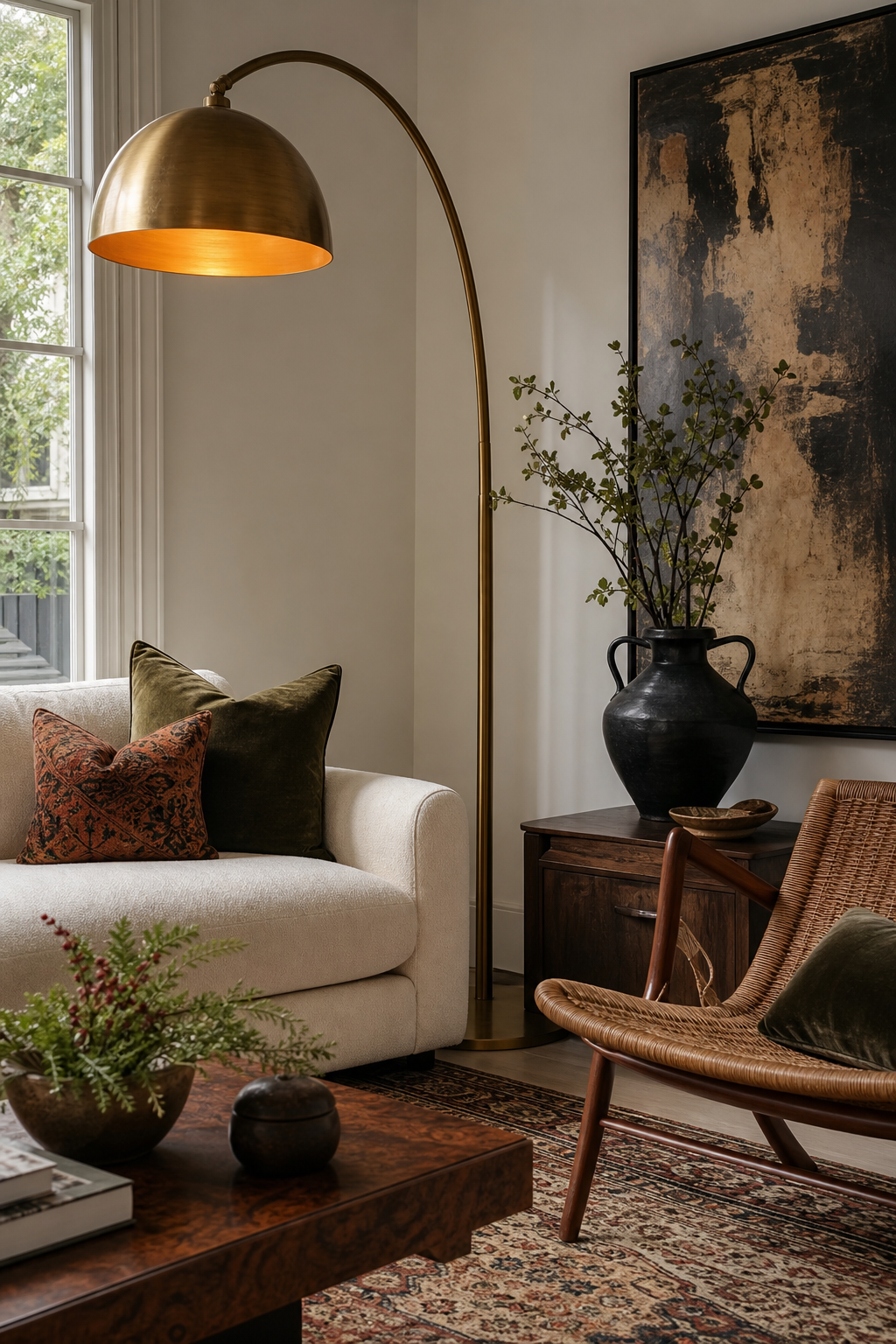
Lighting is where an cozy maximalist room can become memorable. Instead of relying on several small lamps, choose one piece with real presence: an arched brass floor lamp, an oversized ceramic table lamp, or a pleated shade with vintage character. The lamp should do more than fill a corner. It should change the silhouette of the room and make the space feel beautiful in the evening. Brass is especially useful because it warms up black, walnut, and cream without feeling too shiny. Place the lamp near a chair or sofa so it has a purpose. When lighting looks both sculptural and functional, the room feels more designed, and every textile and artwork nearby looks richer after dark.
Use Rattan as Texture, Not Theme
Rattan can make an cozy maximalist room feel relaxed, but it works best as texture rather than a full theme. One chair, pendant, tray, or cabinet insert is usually enough. Pair rattan with tailored upholstery, dark wood, black accents, and heavier textiles so the space feels layered instead of beachy. A rattan lounge chair beside a cream sofa is a strong move because it introduces lightness and a handmade quality at the same time. Add a solid cushion in olive, rust, or charcoal to make the chair feel intentional. Keep other woven pieces limited or separated around the room. That restraint lets the rattan feel special while still supporting the broader mix of eras and materials.
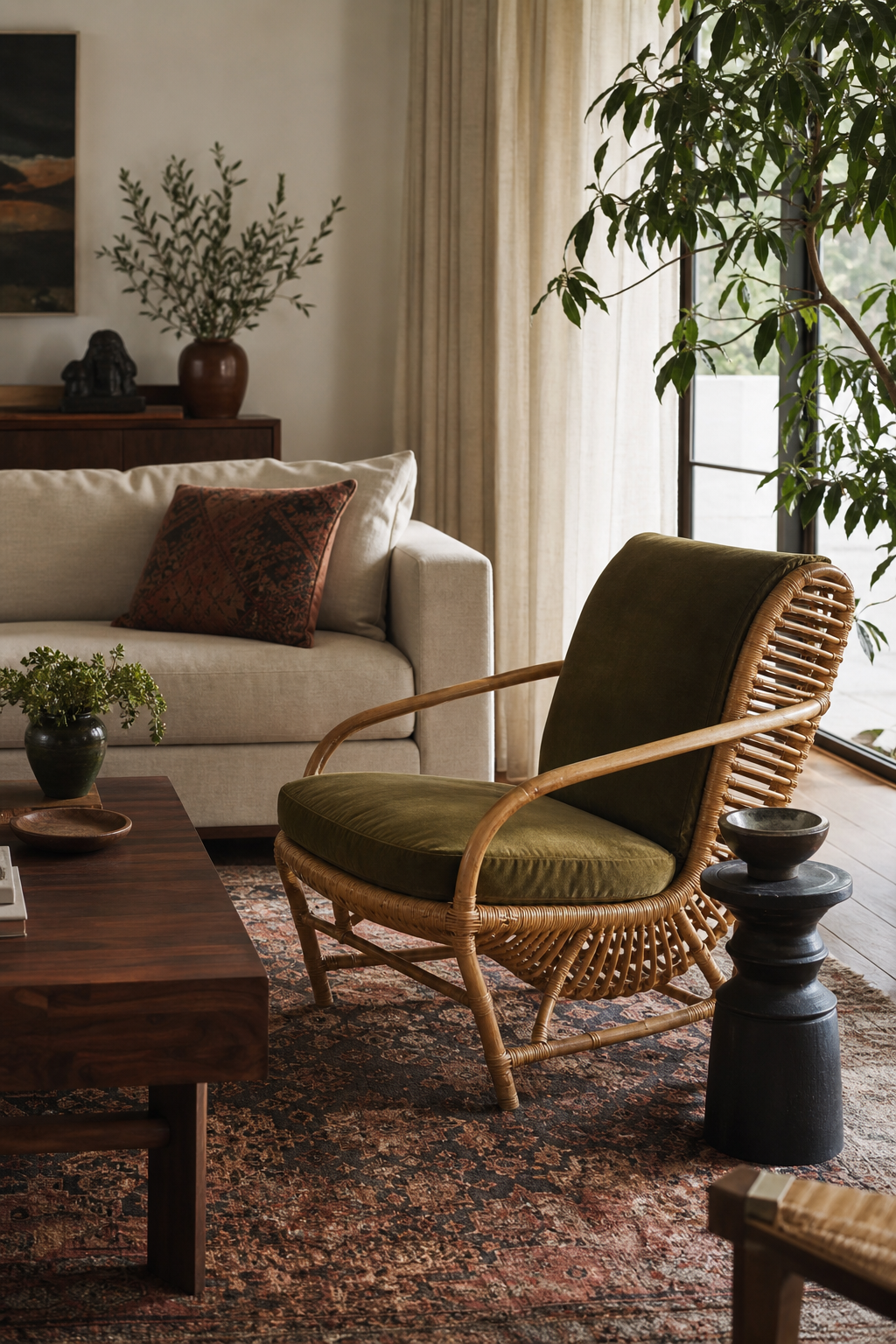
Style Shelves With Negative Space
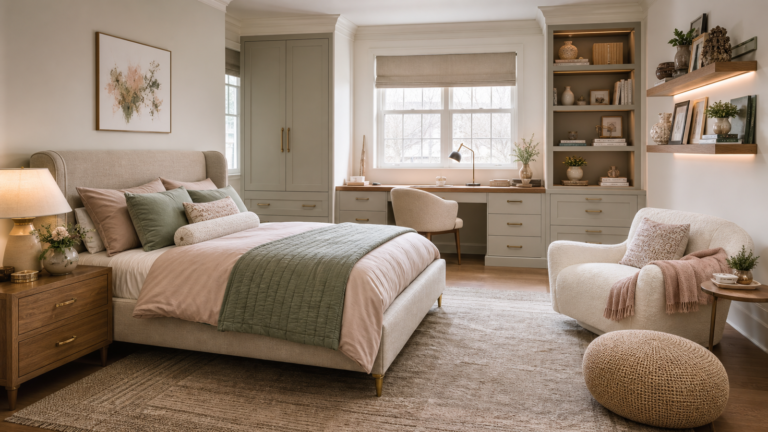
Open shelves can either tell a story or overwhelm a room. For an cozy maximalist home, style them with fewer objects and better contrast. Mix ceramics, small framed art, woven baskets, and a handful of blank-spine books, but leave space between each group. Vary height, shape, and material so the shelves feel collected. Clay vessels, black ceramics, walnut shelves, and a trailing plant create a strong foundation without needing much color. Avoid filling every inch. Negative space makes individual objects feel more valuable and gives the eye a place to rest. If something feels too decorative, remove it for a day and see whether the shelves become stronger. Cozy maximalist styling often improves through subtraction.
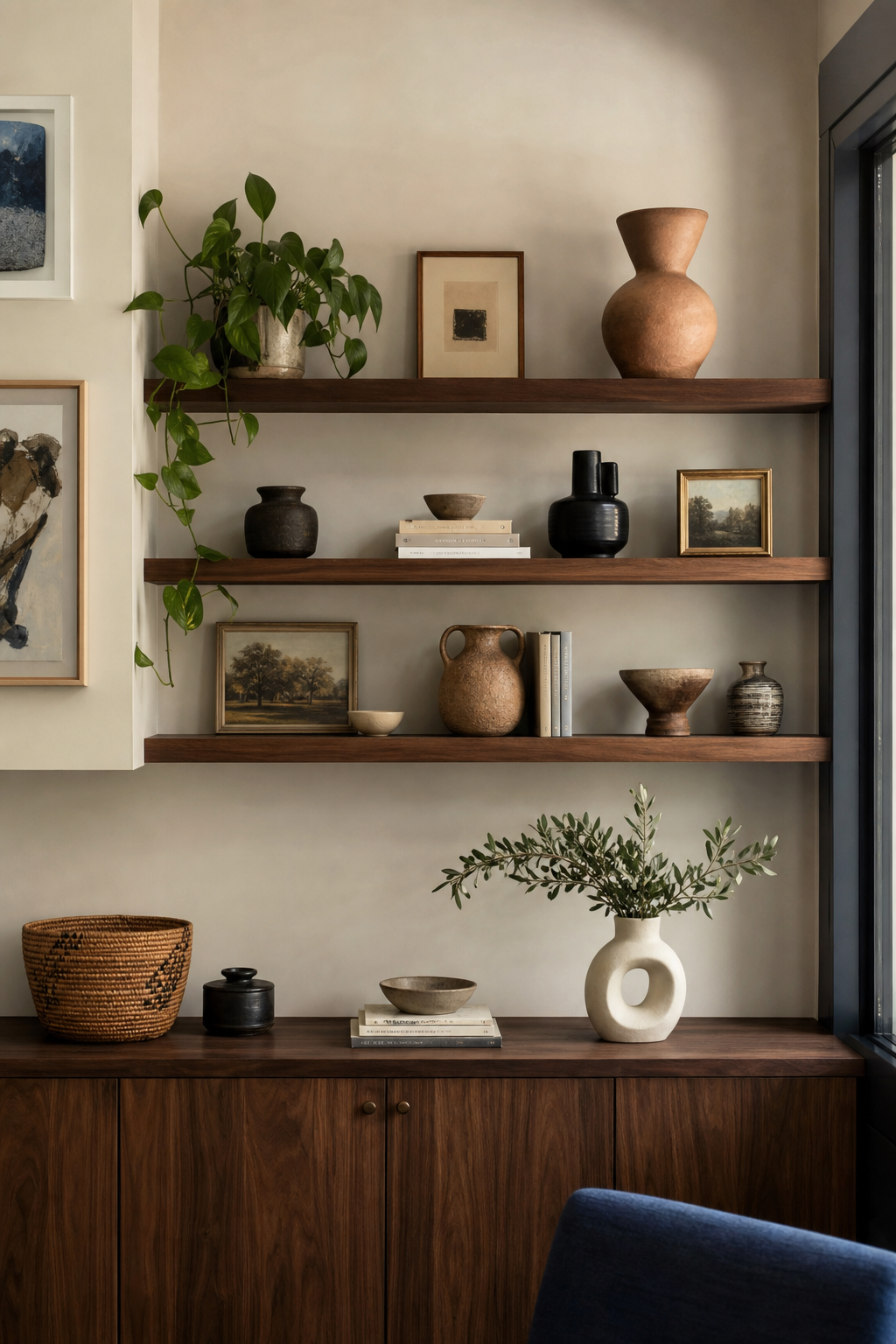
Group Ceramics on the Coffee Table
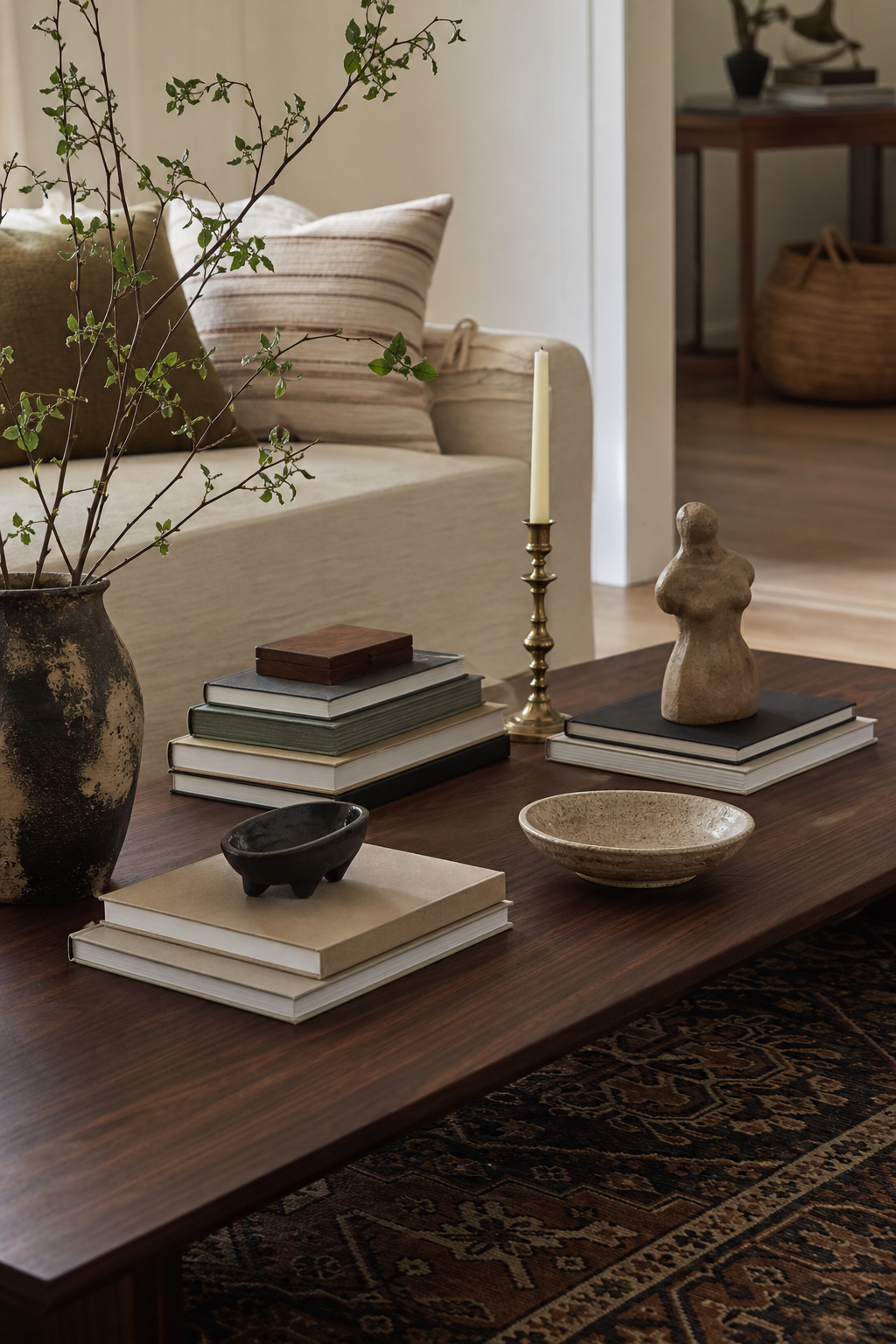
A coffee table can carry a lot of cozy maximalist character if the objects are chosen with care. Group ceramics in different shapes and finishes: a matte black bowl, a speckled stoneware vase, a clay vessel, or a small handmade dish. The pieces should share a quiet palette even if their forms vary. Add a brass tray or blank-cover book to create structure, then leave part of the table empty for daily use. Branches or dried stems can add height without making the arrangement feel precious. The goal is texture, not clutter. When ceramics are grouped instead of scattered, they read like a small collection and make the room feel tactile, personal, and thoughtfully lived in.
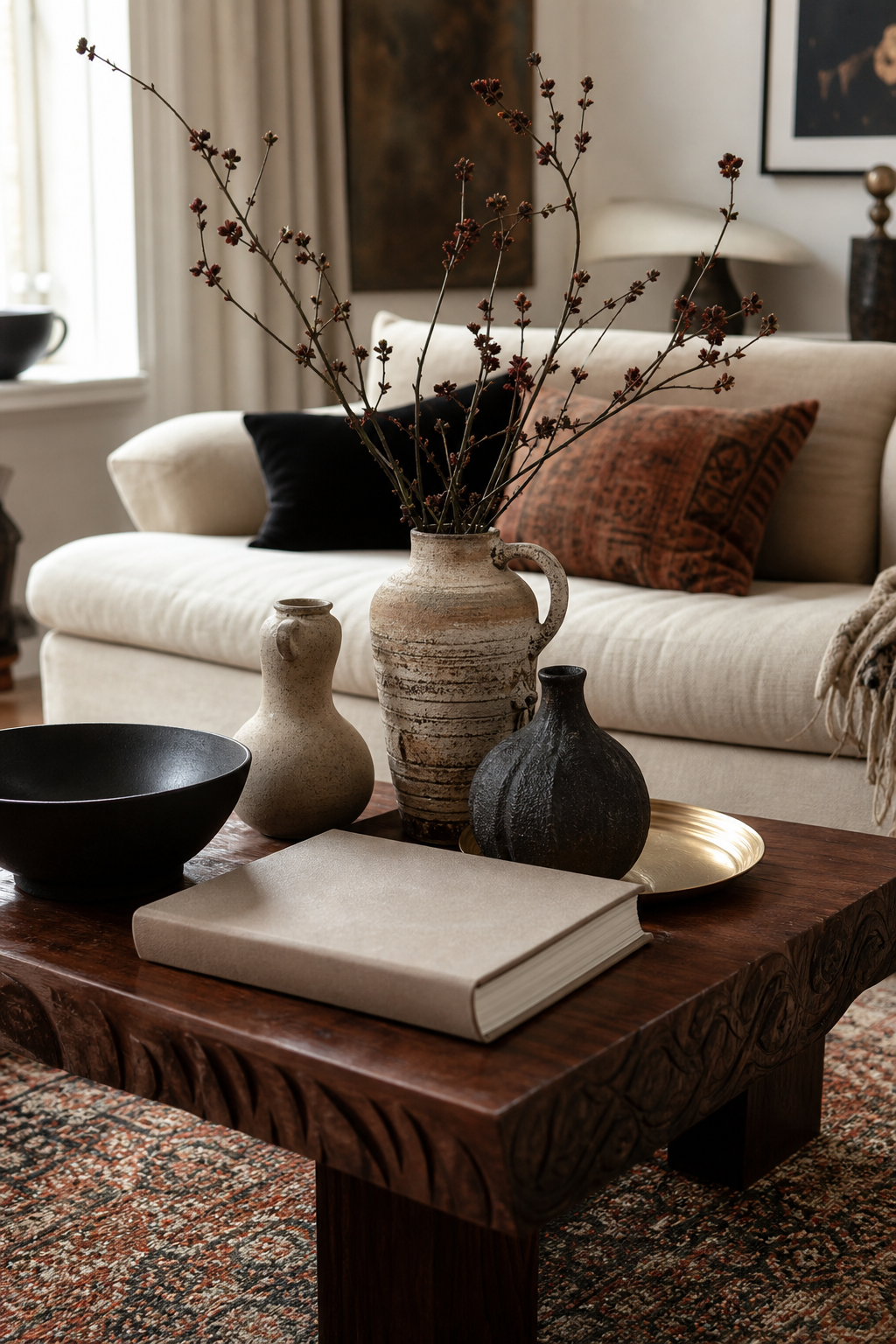
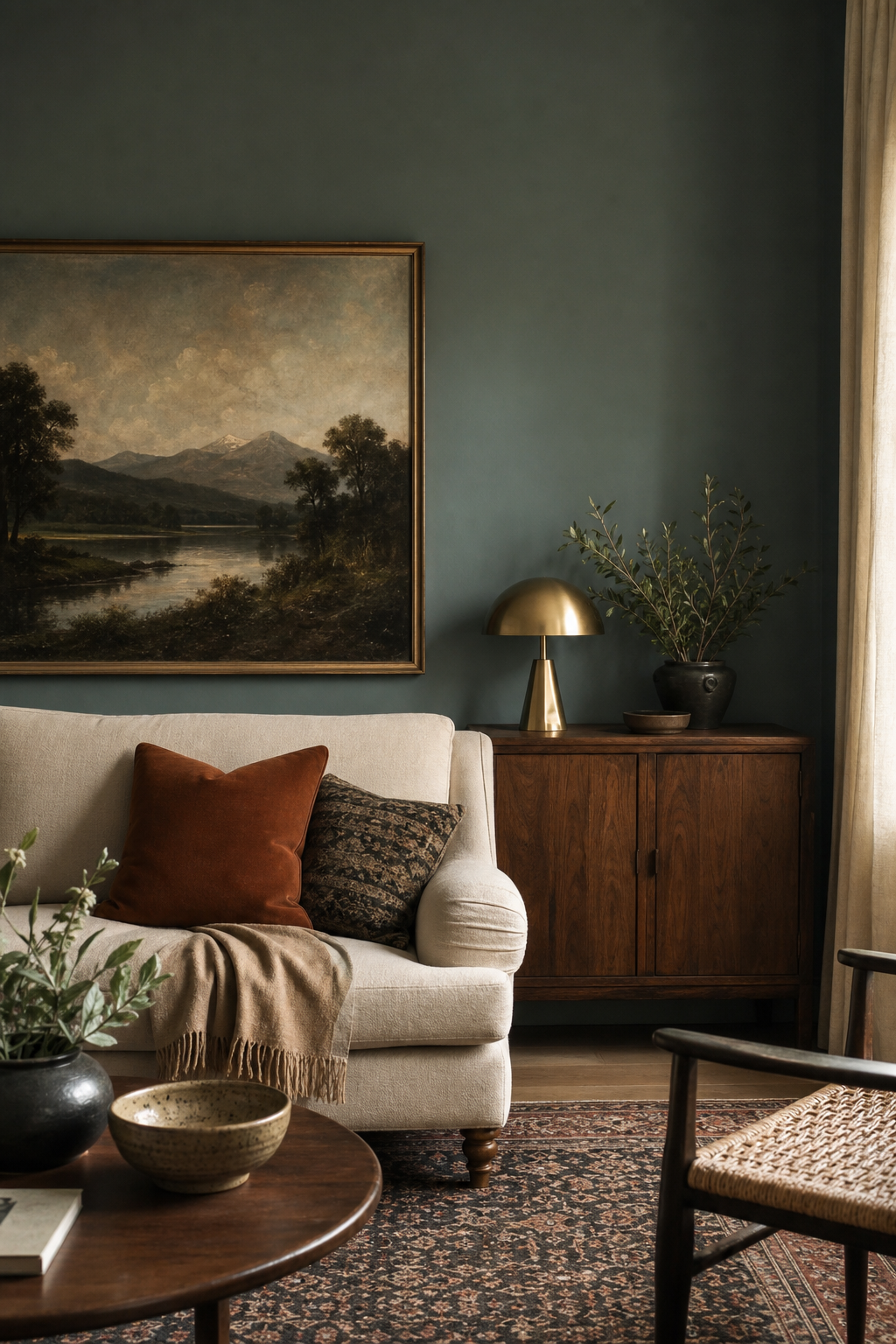
Try One Saturated Wall Color
Cozy maximalist rooms love color, but they do not need every wall to shout. One saturated wall can create depth while keeping the rest of the space calm. Muted blue-green, tobacco, olive, oxblood, or smoky charcoal all work beautifully with antique wood and cream upholstery. Choose a color with complexity rather than brightness, then repeat it once in art, textiles, or ceramics. The wall becomes a backdrop for collected pieces instead of a decoration by itself. If you are nervous, start in a dining nook, reading corner, or small sitting room. The right saturated color makes vintage art look richer, brass look warmer, and simple furniture feel more intentional. It is drama with discipline.
Hang an Ornate Mirror Over a Clean Console
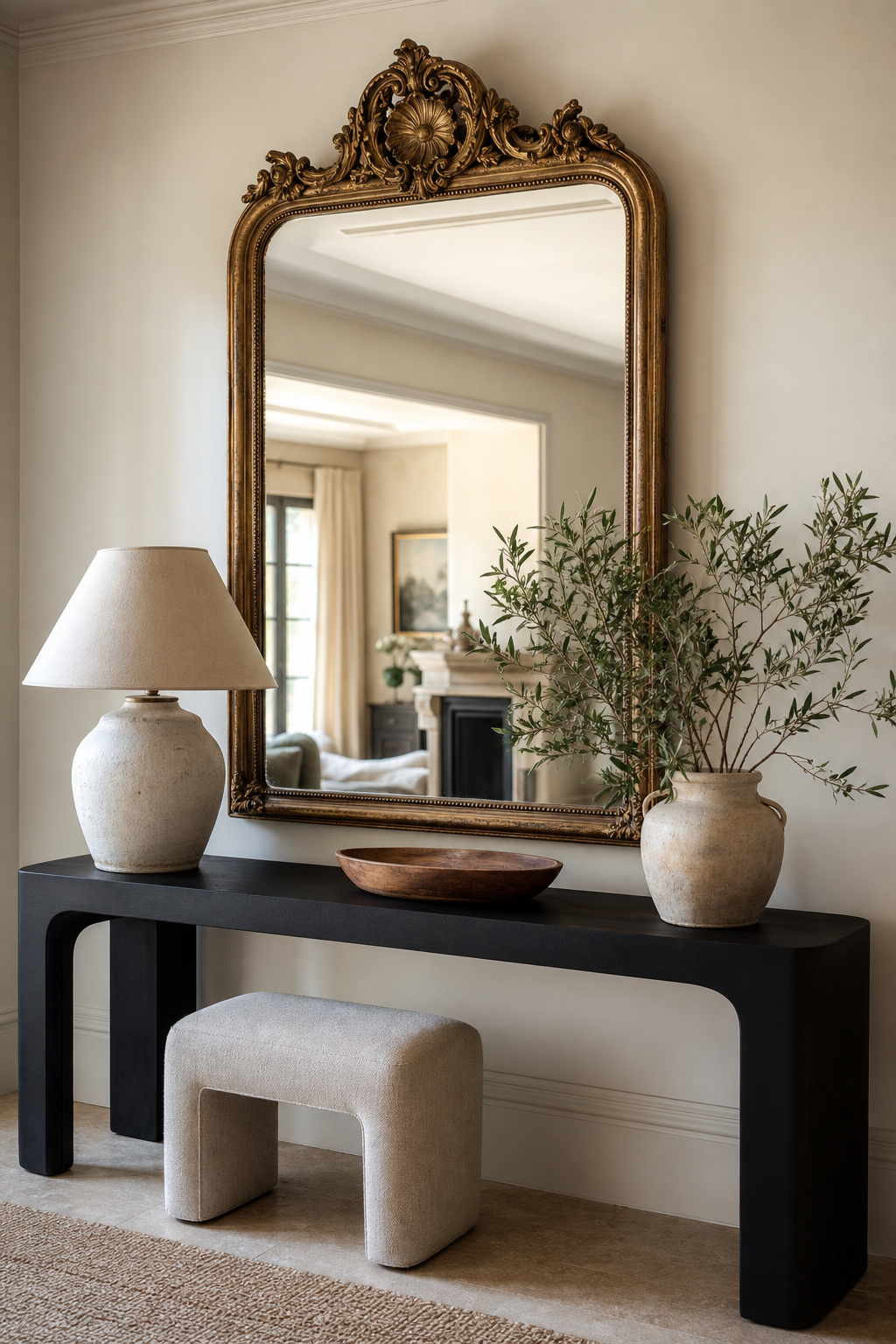
An ornate mirror can feel surprisingly modern when it is paired with a simple console. The contrast is what keeps the look fresh. Choose a gilded or carved mirror with age, then place it above a clean black, stone, or walnut console. Keep the surface styling restrained: a ceramic lamp, a wood bowl, and branches are enough. The mirror adds architecture, reflection, and history, while the console keeps the composition grounded. Be thoughtful about what the mirror reflects. A window, art wall, or quiet room view will double the beauty; clutter will double the problem. This pairing is especially useful in entries, dining rooms, and living rooms that need a focal point with character.
Make Dining Chairs Mismatched on Purpose
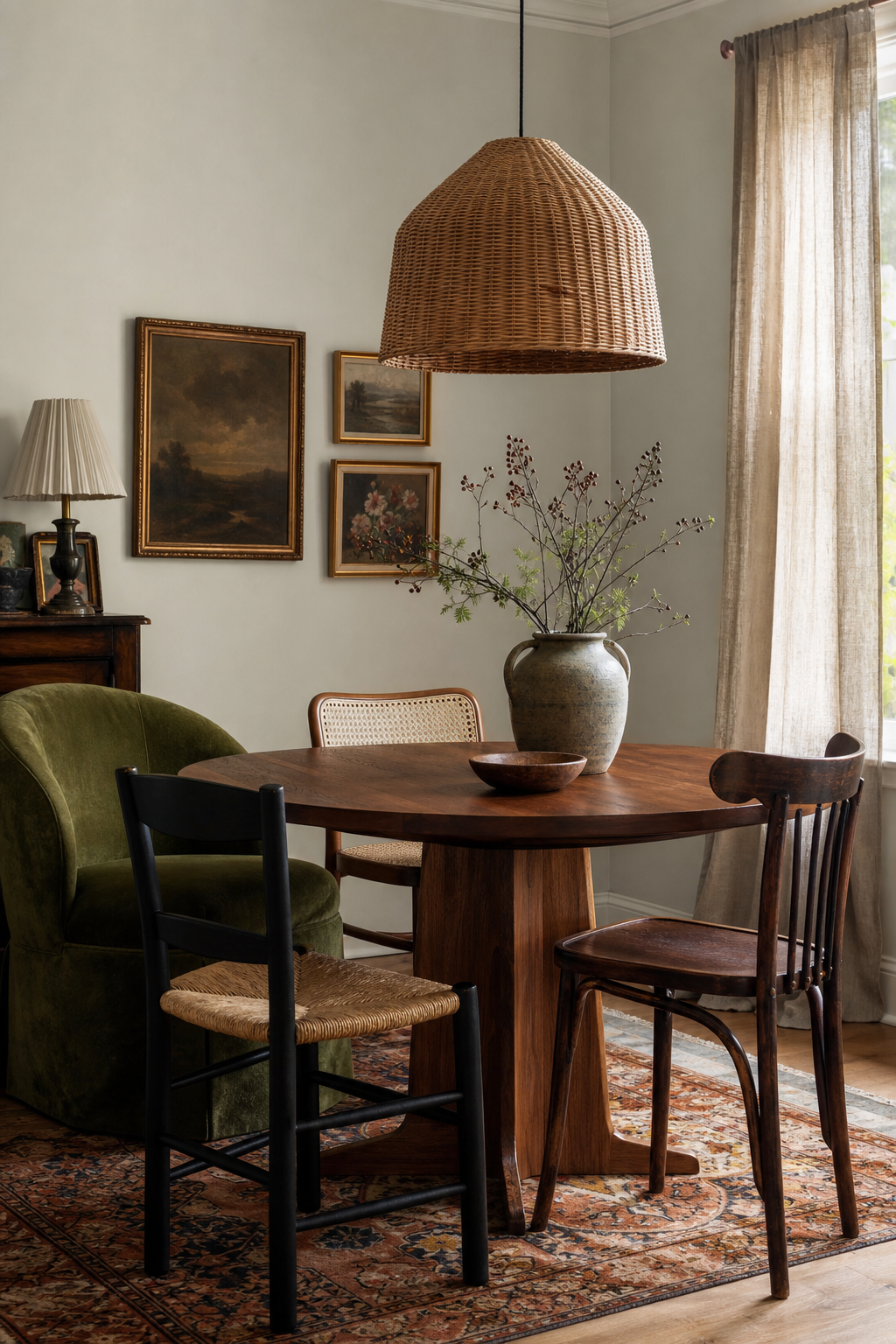
Mismatched dining chairs can look charming or accidental, so give them a unifying thread. Keep seat heights similar, repeat one material, or stay within a tight color family. A black rush chair, a cane chair, and a bentwood chair can sit together beautifully around a round walnut table if the silhouettes feel compatible. The table should be simple enough to hold the mix. A woven pendant and vintage rug add softness, while framed art makes the corner feel like part of the home rather than a separate dining zone. Avoid using too many different chair styles at once. Three considered variations usually look more elevated than six unrelated choices.
Layer the Entry Like a Room
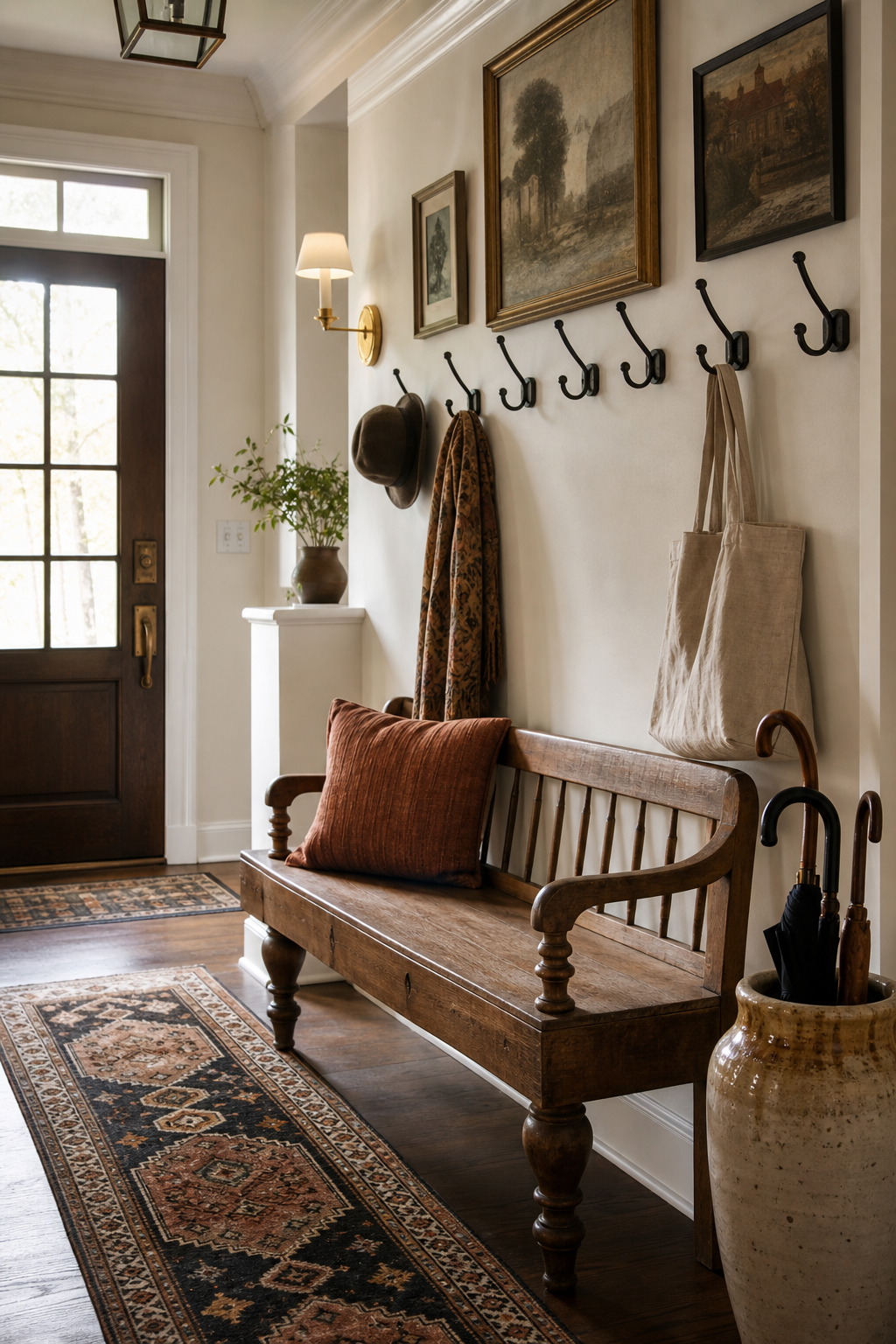
An entryway deserves the same layering as a living room because it sets the tone for the whole home. Start with a vintage bench or narrow console, then add practical hooks, a runner, lighting, and one piece of art. The mix should be useful first. A basket, umbrella stand, or tote has a job, but it can still be beautiful if the materials are good. Black hooks bring order, brass lighting adds warmth, and a patterned runner protects the floor while introducing color. Keep the wall arrangement tight so the entry does not feel busy. When every piece has function and personality, the entry becomes a small room rather than a pass-through space.
Use Books as Quiet Architecture
Books can add instant warmth, but they work best when styled as structure rather than clutter. Use stacks to raise a small bowl, sculpture, or candlestick, and choose covers that fit the room quietly. If titles distract, turn spines inward or use blank-cover display books. Vary stack height, but keep the arrangement stable and easy to live with. A low coffee table can handle two or three stacks if there is still room for a drink or tray. Books also soften hard materials like marble, black metal, and polished wood. In an cozy maximalist room, they signal curiosity and life, but the edit matters. Too many scattered books become mess; a few considered stacks become composition.
Let One Tree Become Sculpture
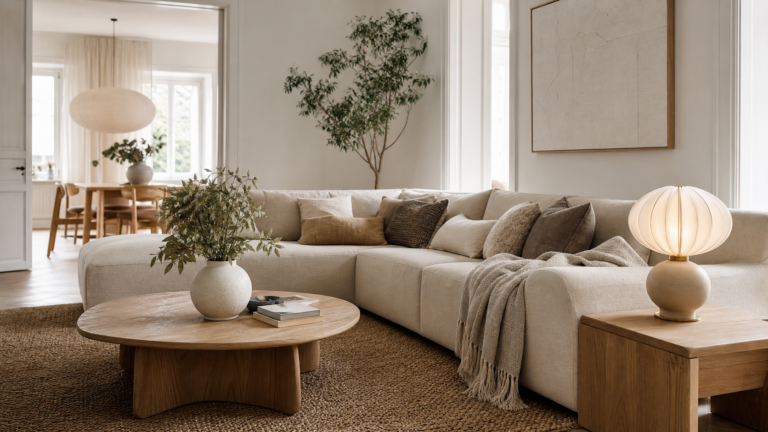
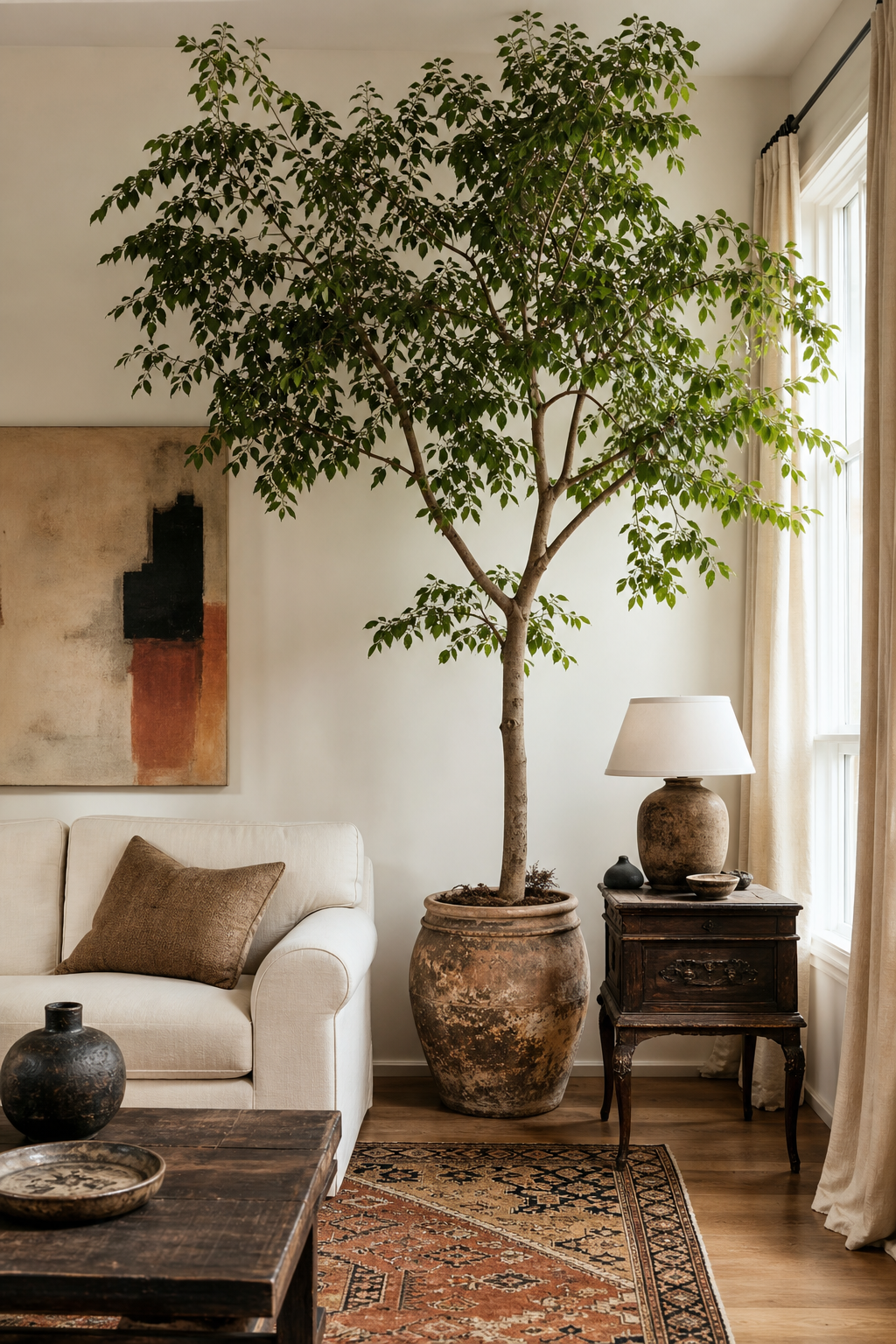
A tall indoor tree can give an cozy maximalist home the kind of movement no accessory can provide. Choose a substantial planter so the scale feels intentional: aged clay, matte black, or textured stone. Place the tree where it can soften architecture, flank a window, or fill a corner without blocking a path. It should have enough room around it to read as a living sculpture. Pair it with antique wood, vintage rugs, and simple upholstery so the green feels organic rather than decorative. Smaller plants can still appear elsewhere, but the tree should lead. This single gesture brings height, shadow, and freshness to a layered room. It makes the space feel alive without adding more pattern.
Layer Window Treatments
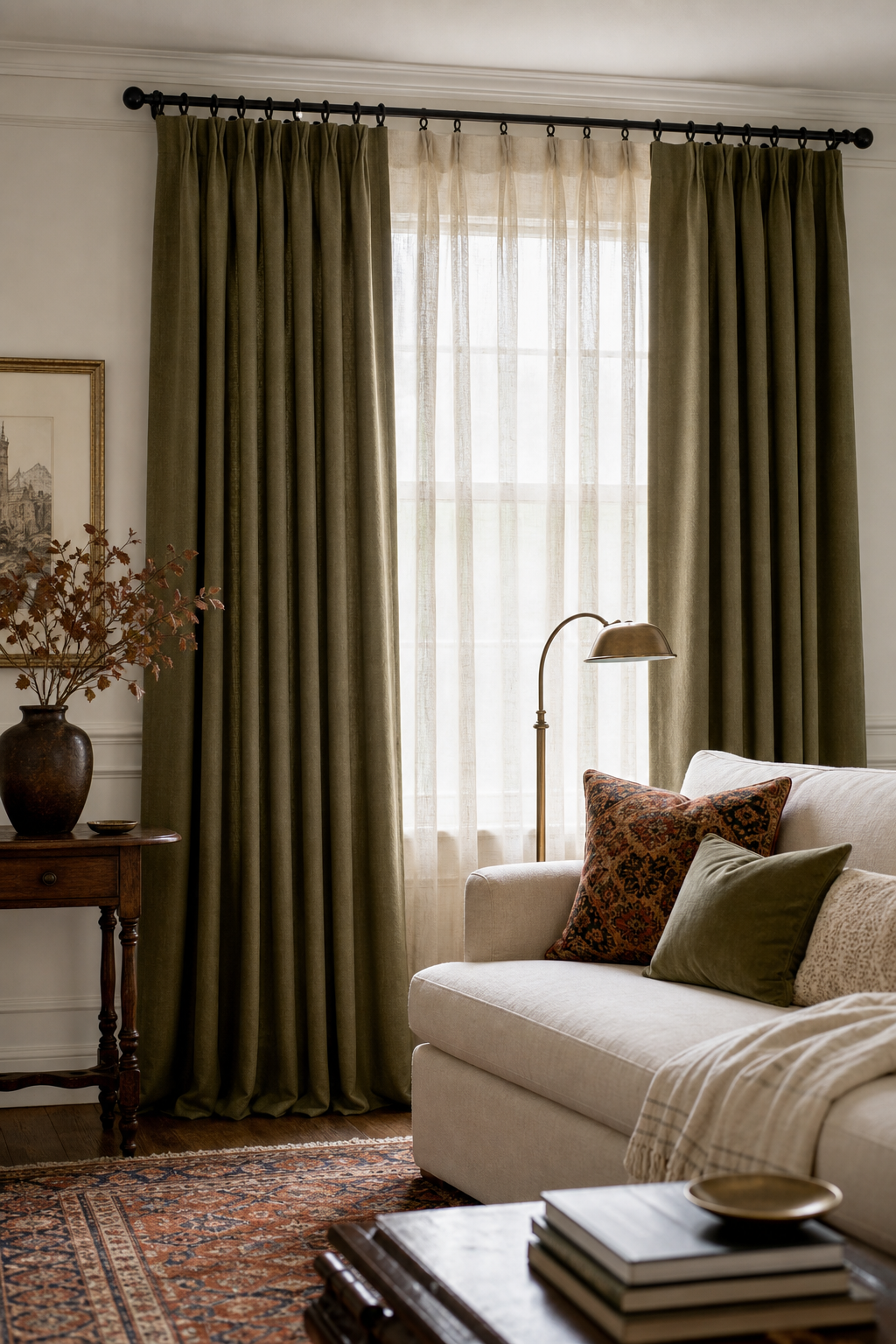
Window treatments are a quiet way to make cozy maximalist decor feel finished. Layer linen sheers with heavier drapes so the room can shift from bright daytime softness to evening privacy. Black hardware adds a crisp line, while olive, tobacco, or warm beige fabric brings depth without overwhelming the walls. Mount rods high and wide so the windows look larger and the fabric falls cleanly. The curtains should relate to the room, not compete with it. If your rugs and pillows are already patterned, choose solid drapes with texture. If the room feels too plain, a subtle stripe or woven fabric can add dimension. Good window layers make the entire room feel more tailored and comfortable.
A cozy maximalist refresh succeeds when every layer has a reason. Use pattern, color, books, art, vintage wood, ceramics, and fabric to make the room feel personal, but repeat tones and materials so the design still feels intentional. Start with one strong anchor, then add warmth slowly. The best maximalist rooms feel generous and expressive while still making daily life more comfortable.