17 Modern Kitchen Ideas For A Warm Functional Home
A modern kitchen feels most successful when it is not simply sleek, but deeply livable. Warmth comes from the quiet details: timber grain, softened stone, layered lighting, tactile hardware, and a layout that supports the rhythm of cooking, gathering, and everyday movement. These modern kitchen ideas focus on refinement without sterility, pairing clean lines with materials that feel generous, grounded, and enduring.
1. Choose Warm Wood Cabinetry
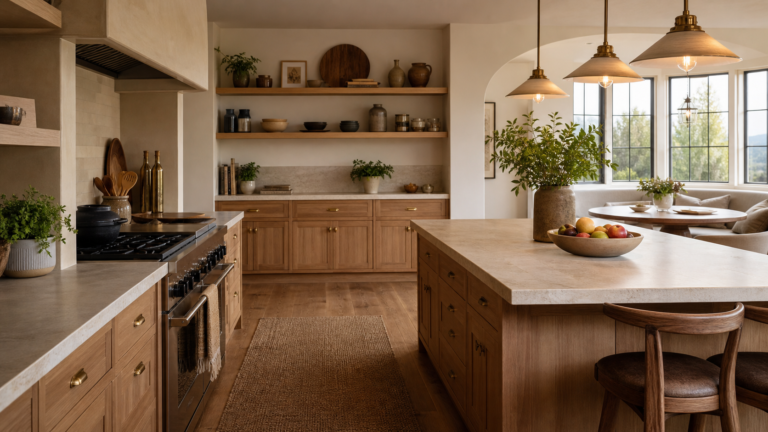
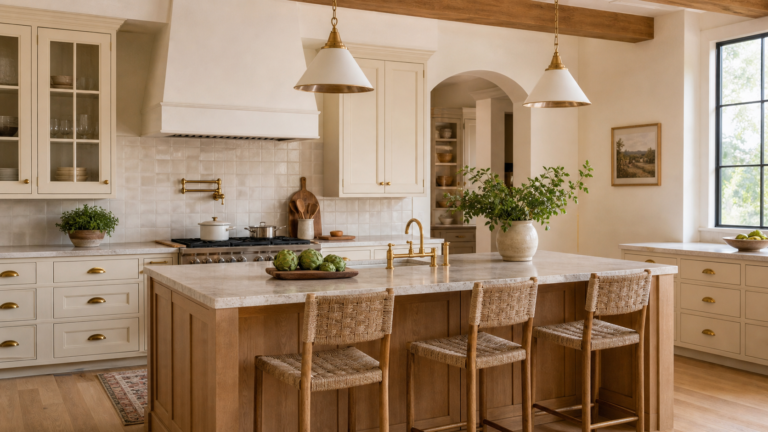
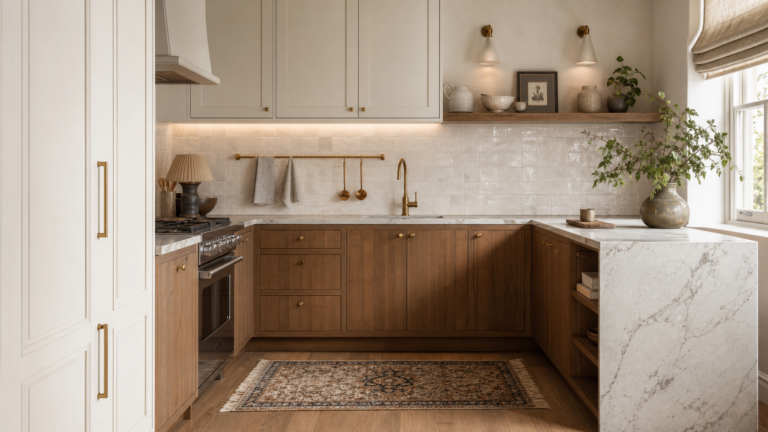
Wood cabinetry is one of the most effective ways to soften a modern kitchen without losing its clean architectural edge. Pale oak, walnut, ash, and smoked eucalyptus all bring visible grain, natural variation, and a sense of furniture-like craftsmanship to the room. For a contemporary look, keep door profiles flat or lightly recessed, then pair them with slim pulls or discreet integrated handles. The warmth of wood works especially well against honed stone, plaster walls, matte black fixtures, or brushed brass hardware. It also helps open-plan kitchens feel more connected to adjoining living spaces, particularly when the same timber tone appears in shelving, stools, or flooring. To keep the design elevated, avoid overly glossy finishes and choose a satin or matte seal that lets the grain remain the feature.
2. Anchor The Room With A Stone Island
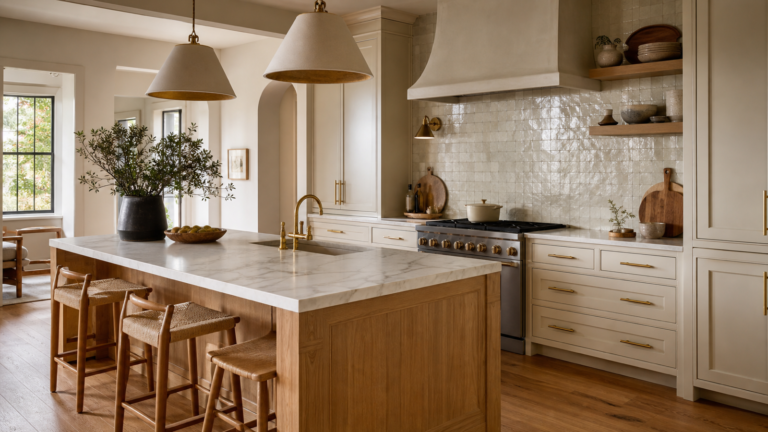
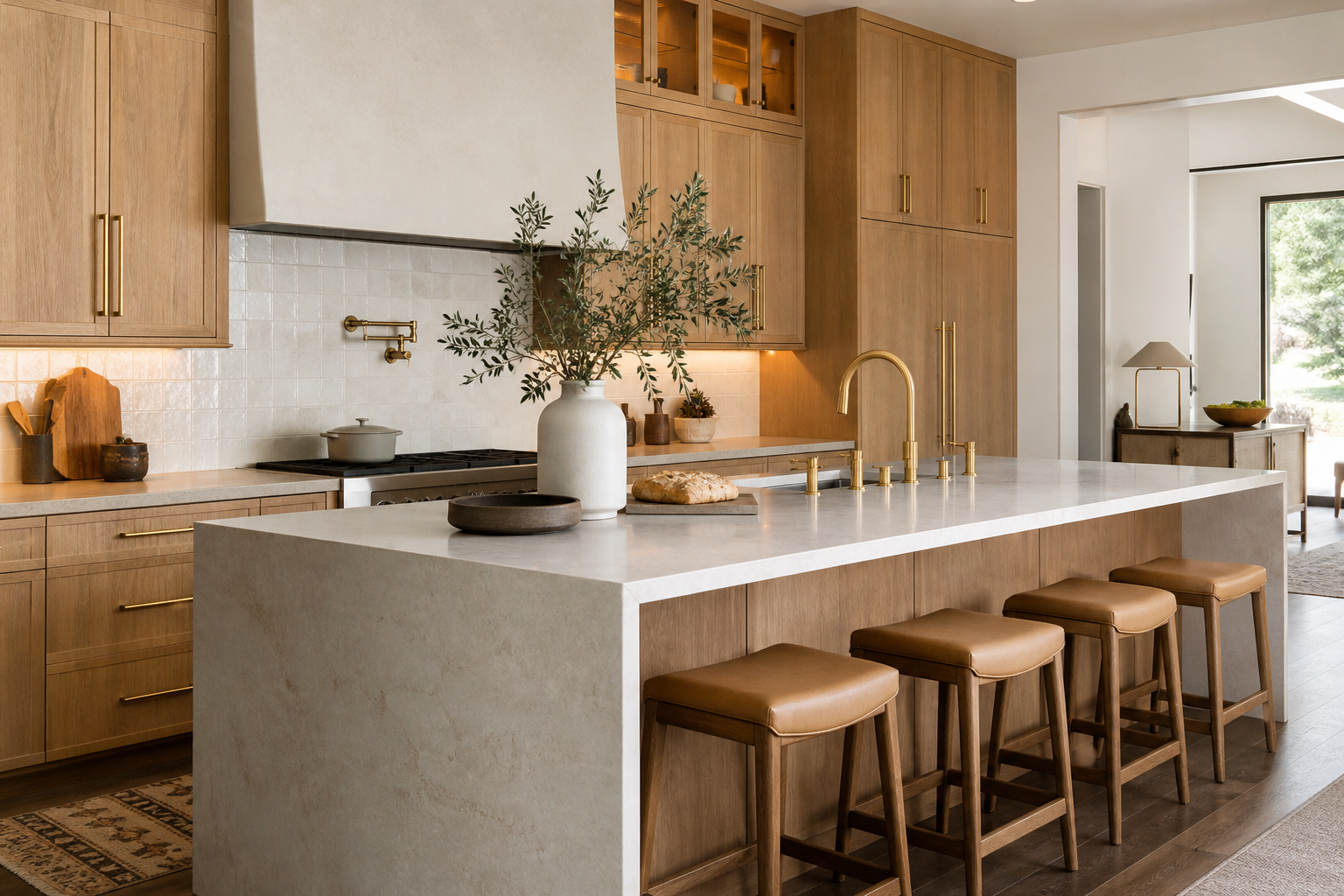
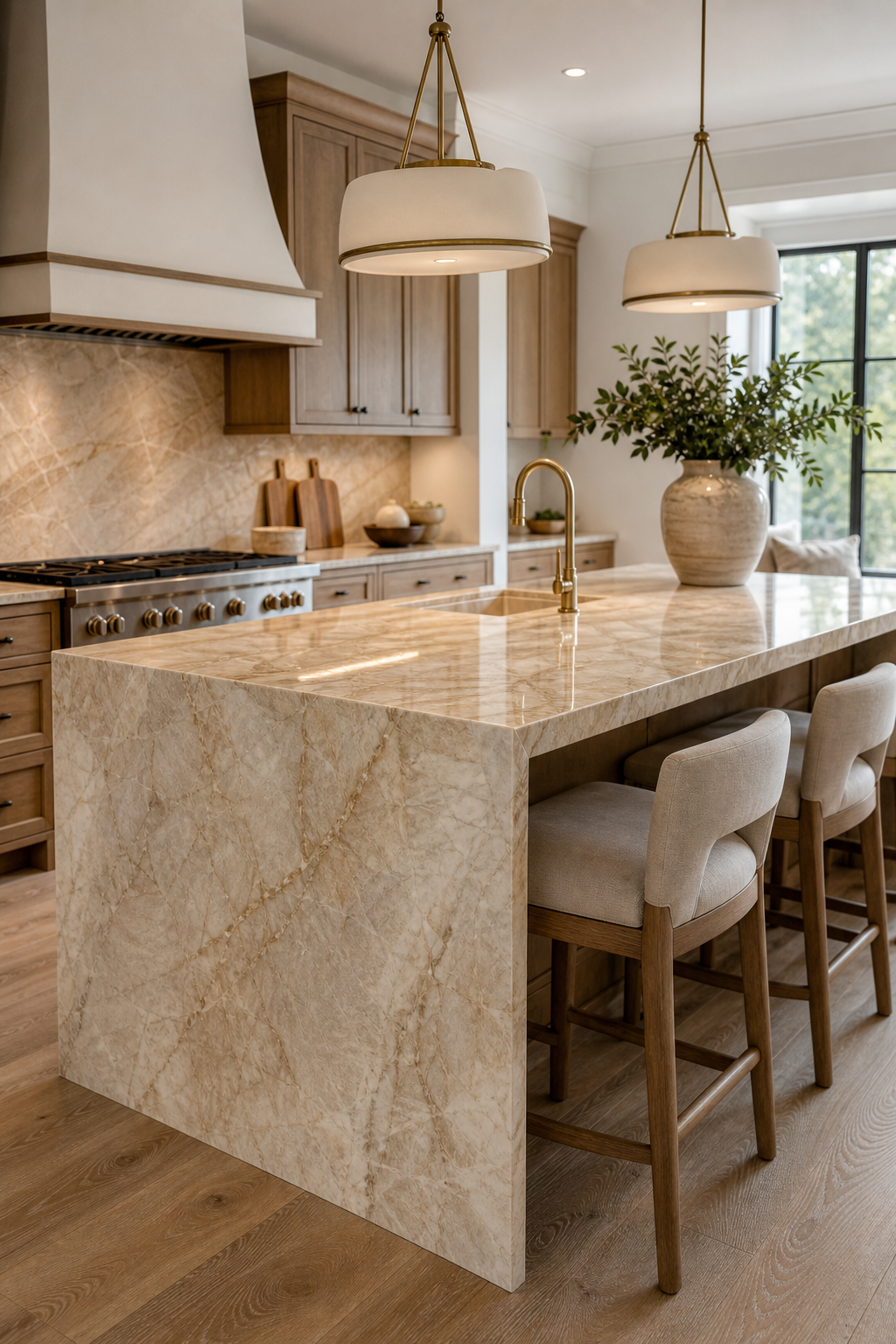
A substantial stone island gives a modern kitchen both presence and purpose. It becomes a prep surface, serving station, casual dining spot, and visual anchor in one piece. For a warmer atmosphere, consider creamy marble, quartzite with caramel veining, travertine, or a softly honed limestone rather than a stark polished white slab. A waterfall edge can look striking, but a mitered stone top over timber cabinetry often feels more residential and inviting. The island should be scaled to circulation, leaving enough room for appliance doors, stools, and multiple cooks to move easily. Add deep drawers for cookware, a concealed outlet for small appliances, and pendant lighting that creates intimacy without blocking sightlines. Styled simply with a bowl, branches, or a stone tray, the island feels luxurious but practical.
3. Layer Lighting For Daily Flexibility
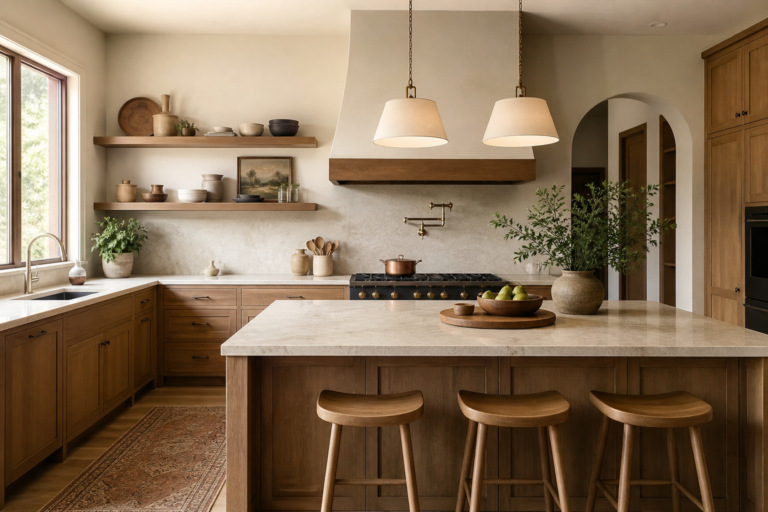
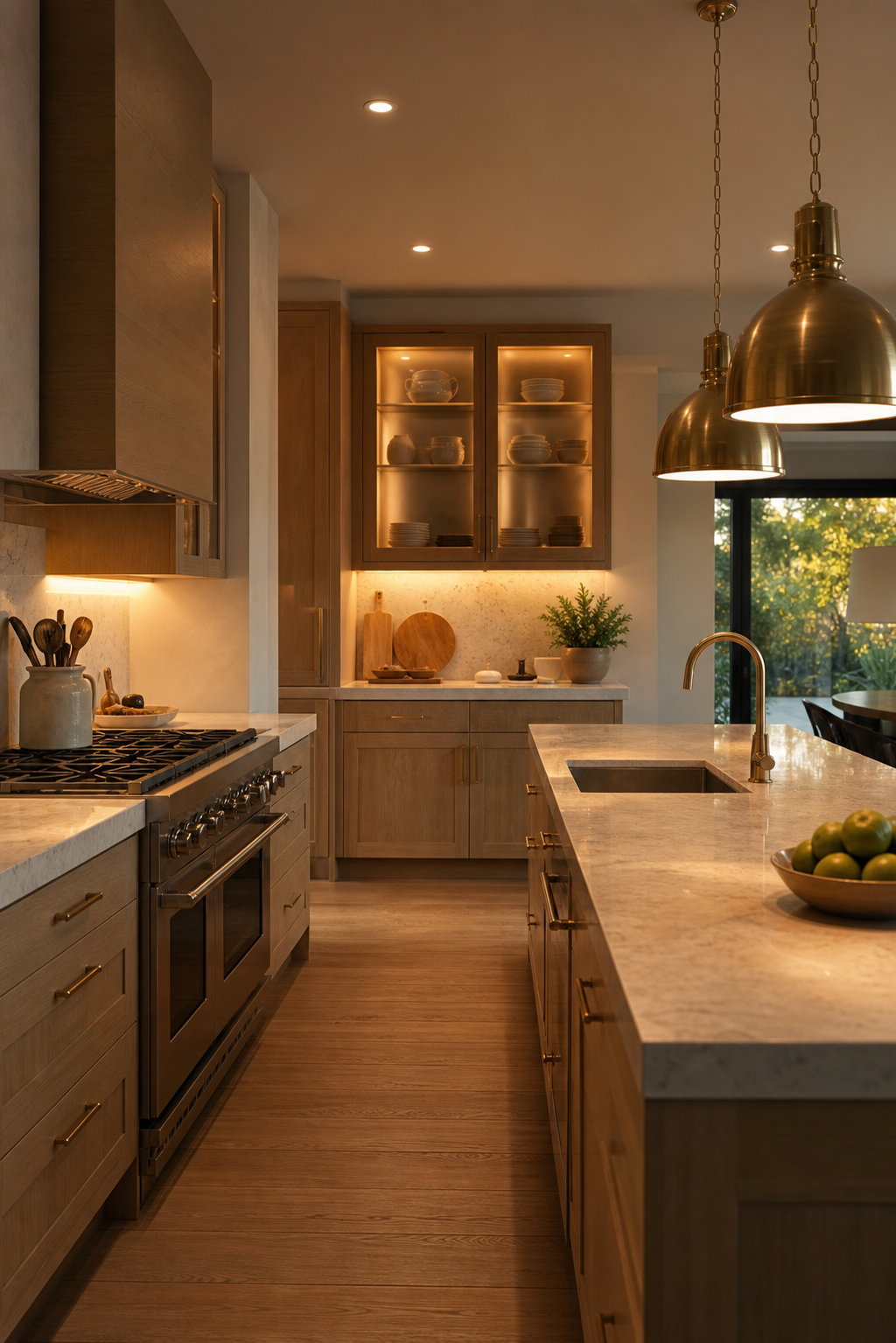
Lighting should do more than make a modern kitchen bright. A warm functional room needs layers that shift between cooking, dining, and evening atmosphere. Recessed ceiling lights provide clear general illumination, while under-cabinet strips remove shadows from the worktop. Pendants over an island should feel sculptural but measured, hung low enough to create focus and high enough to preserve conversation. Wall sconces near open shelves or a breakfast nook add a softer residential note, especially in brass, bronze, alabaster, or milk glass. Use warm white bulbs and dimmers wherever possible so the kitchen does not feel clinical after sunset. The most successful schemes conceal practical lighting where it is needed and reserve visible fixtures for moments of beauty, rhythm, and proportion.
4. Use A Soft Neutral Palette
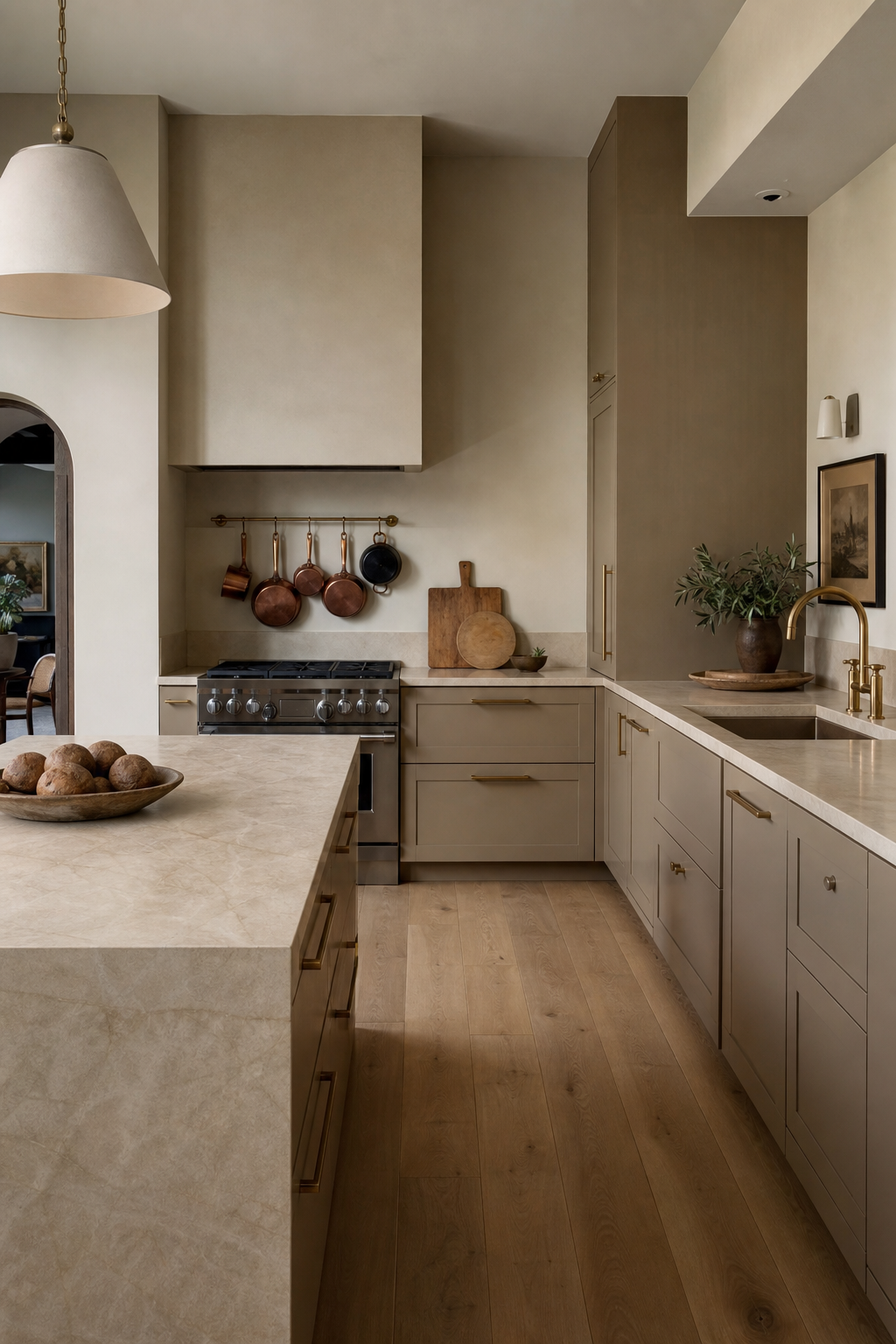
Modern kitchens do not need to rely on cold white to feel fresh. A soft neutral palette creates calm while allowing materials to carry the room. Think warm ivory, mushroom, putty, greige, clay, oatmeal, and muted stone tones. These colors work beautifully on slab cabinetry, limewash walls, zellige backsplashes, and upholstered stools because they offer depth without visual noise. The key is contrast through texture rather than sharp color breaks: matte cabinets against veined stone, brushed metal against plaster, woven seats against smooth counters. A neutral kitchen also makes seasonal styling easier, from olive branches and copper cookware to dark ceramic vessels in winter. Keep undertones consistent, especially between paint, stone, and flooring, so the finished space feels intentional rather than beige by default.
5. Add Texture With A Handmade Tile Backsplash
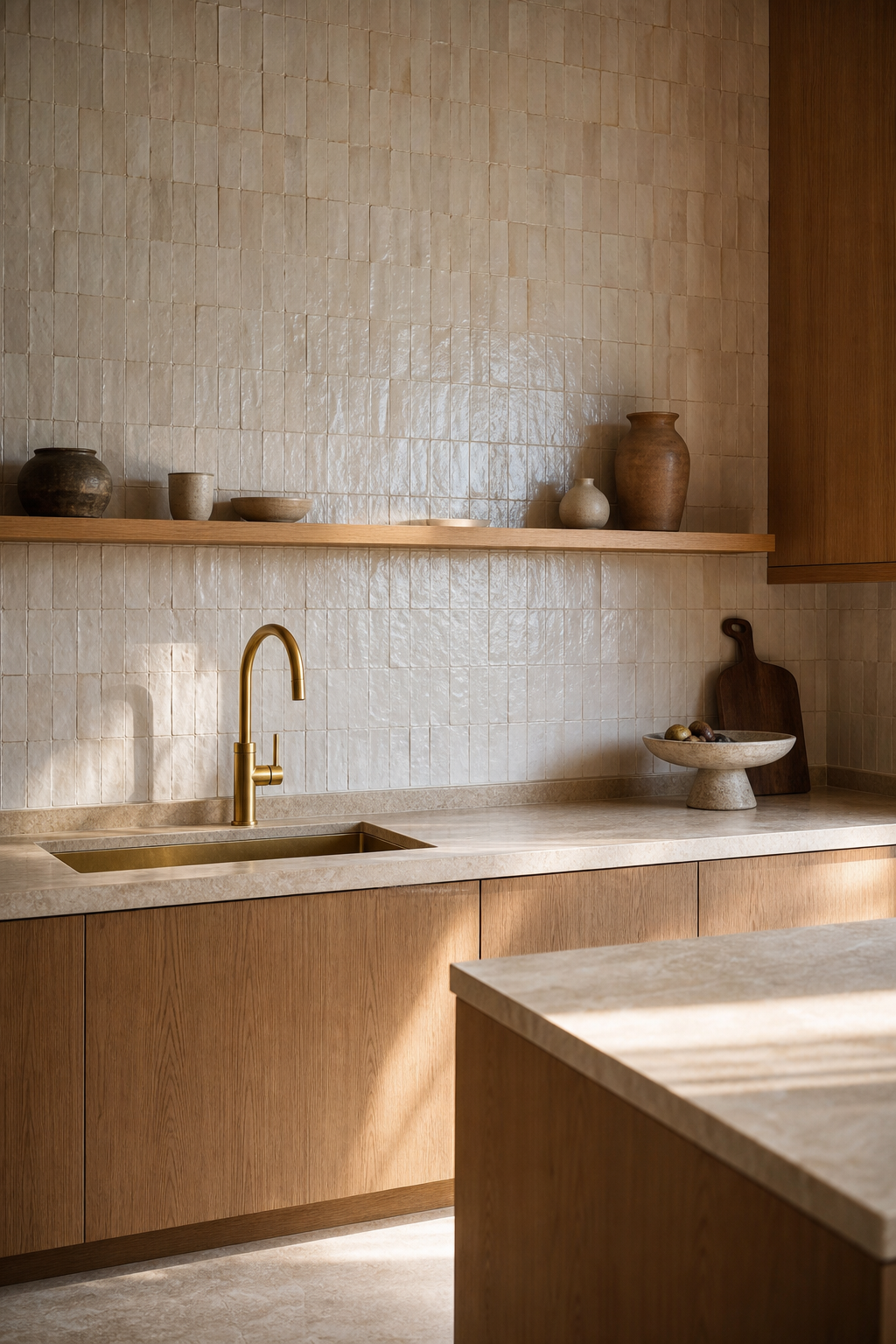
A handmade tile backsplash brings quiet movement to the precision of a modern kitchen. Zellige, hand-glazed ceramic, thin brick, or textured porcelain can catch light in subtle ways, making the wall feel alive without demanding attention. For a warmer look, choose shades such as chalk, sand, pearl, olive-gray, or soft terracotta rather than glossy pure white. Running the tile to the ceiling behind open shelves or a range hood gives the kitchen a more considered, architectural finish. Pair irregular tile surfaces with streamlined cabinetry so the contrast feels deliberate. Grout should be tonal, not high contrast, unless the design calls for a graphic moment. The result is a kitchen that still reads modern, but with the tactile charm of something made by hand.
6. Bring In A Breakfast Nook
A breakfast nook makes a modern kitchen feel less like a work zone and more like a room for living. Built-in banquette seating is especially useful because it can fit into a corner, under a window, or along the back of an island while adding hidden storage beneath the seat. For a warm finish, upholster the bench in performance linen, boucle, leather, or a woven neutral fabric that can handle daily use. A pedestal table keeps movement easy, while a pendant or picture light gives the nook its own atmosphere. Keep the palette connected to the kitchen through repeated wood tones, metal finishes, or stone accents. This small dining area becomes ideal for coffee, homework, casual meals, and the kind of lingering that makes a kitchen feel personal.
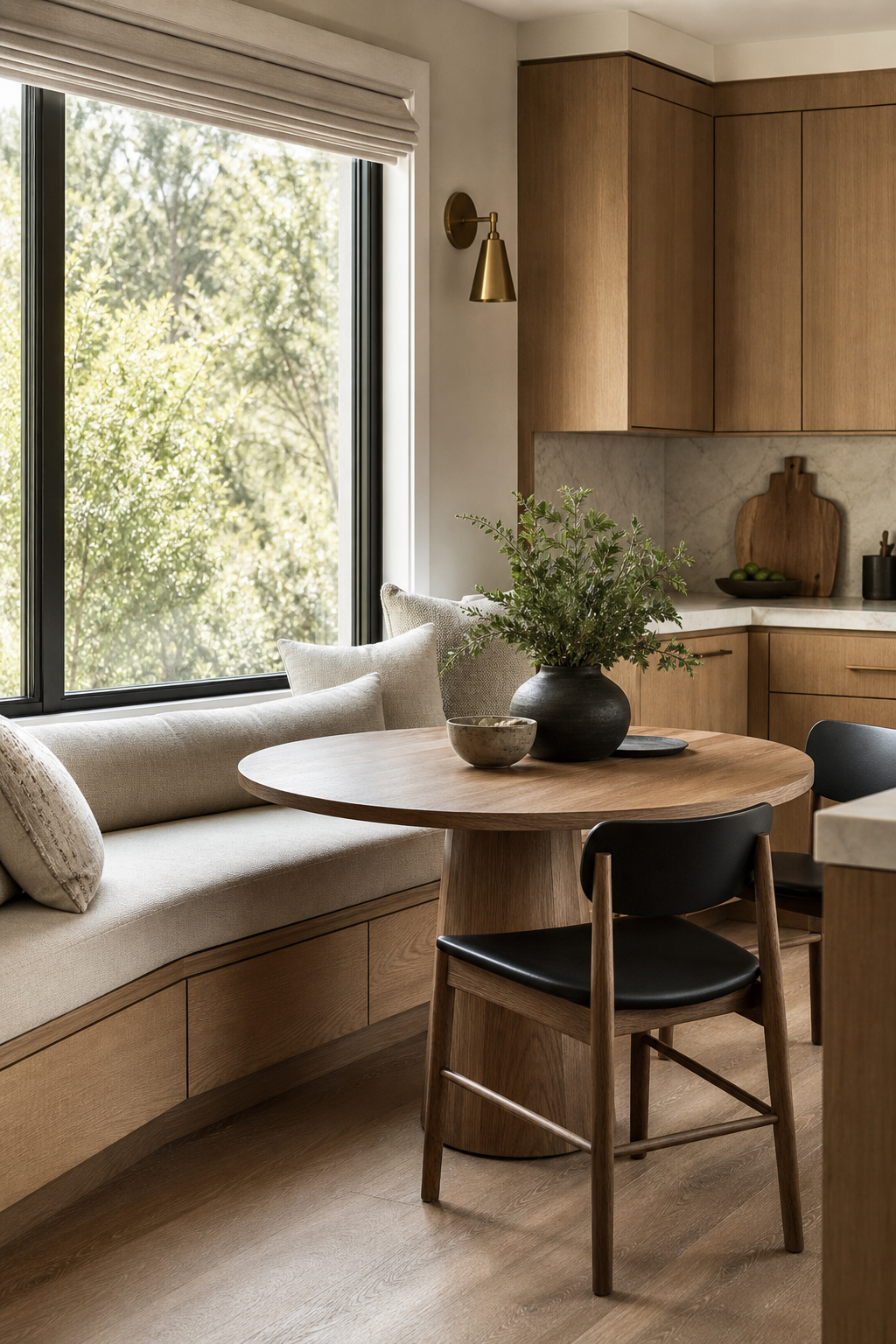
7. Conceal Appliances Behind Integrated Panels
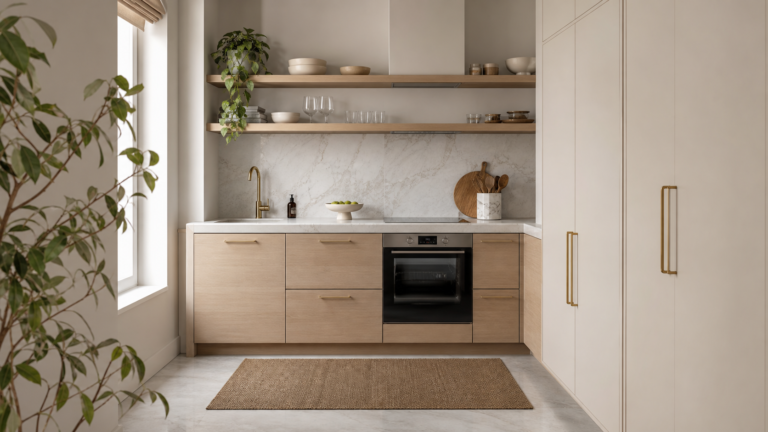
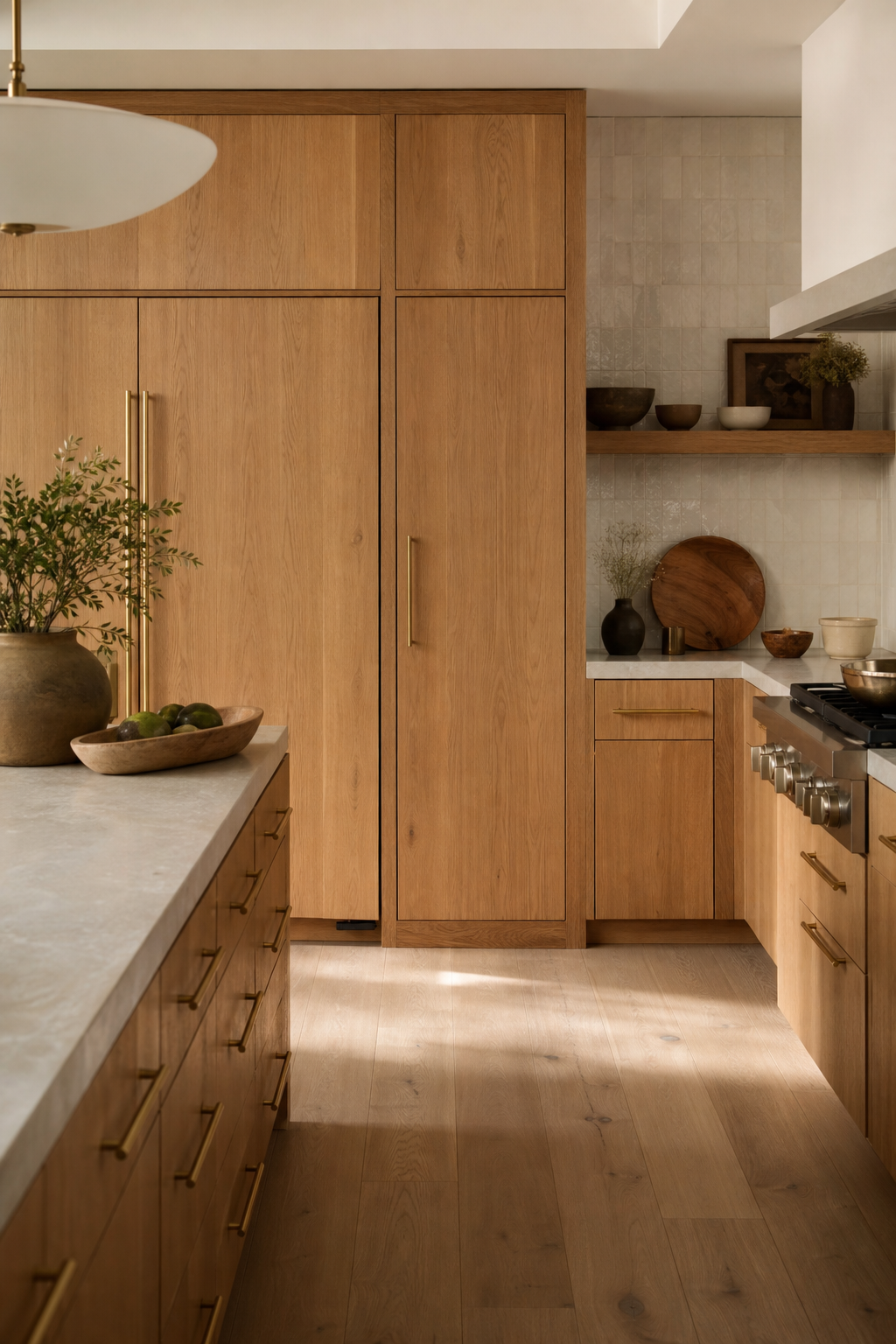
Integrated appliances help a modern kitchen feel calm, especially in open-plan homes where the kitchen is always visible. Panel-ready refrigerators, dishwashers, and freezer drawers allow cabinetry to remain the dominant material rather than a collection of stainless steel interruptions. This approach works particularly well with wood or painted slab doors because the eye reads one continuous architectural surface. To keep the design functional, plan appliance placement carefully around the sink, prep area, pantry, and cooking zone. Tall appliance walls can hold refrigeration, ovens, coffee stations, and storage in a streamlined composition. Ventilation can also be concealed inside a plaster hood or cabinet canopy. The goal is not to hide the kitchen, but to reduce visual clutter so beautiful materials, lighting, and proportion come forward.
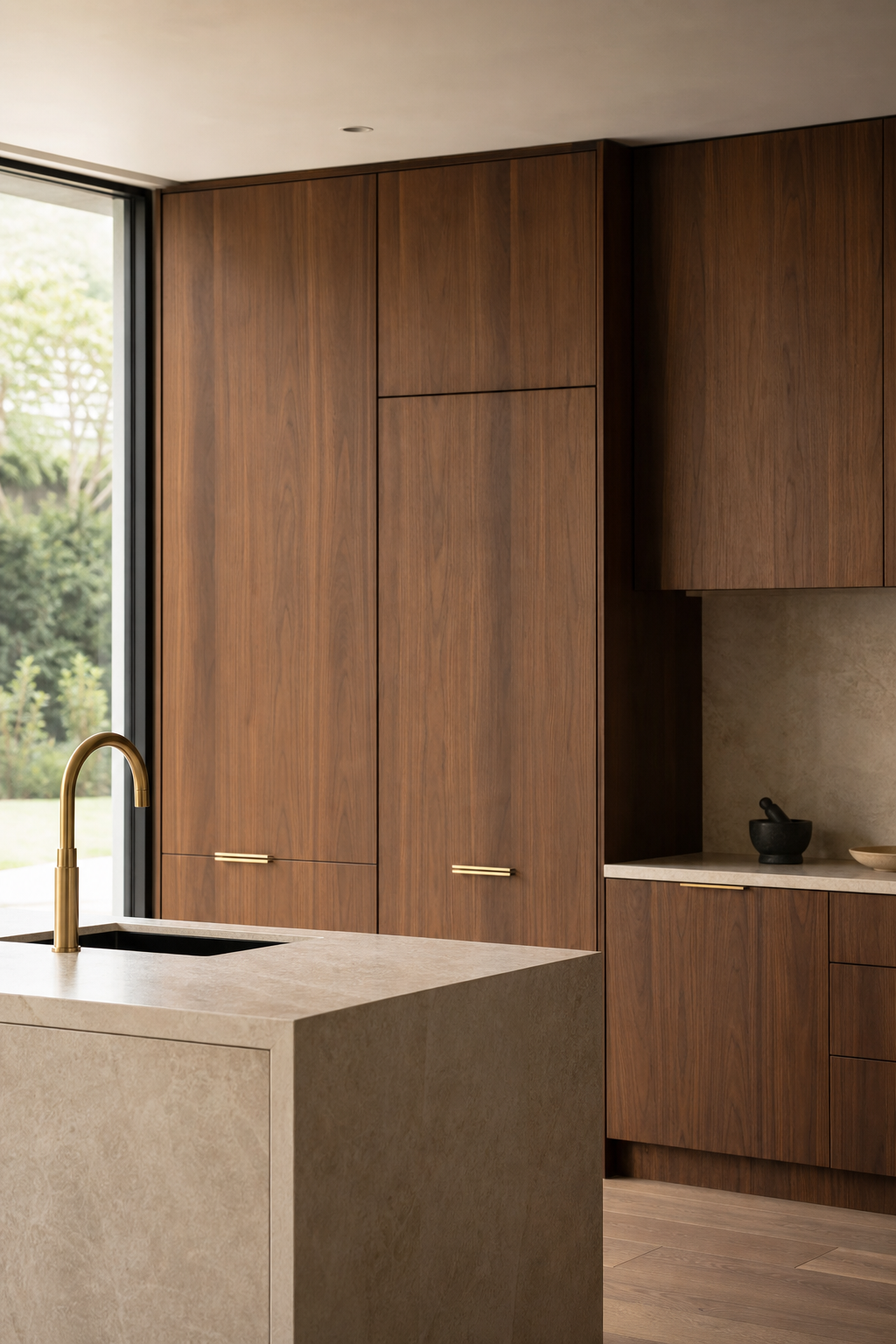
8. Mix Metals With Restraint
Mixed metals can add depth to a modern kitchen when they are handled with discipline. Rather than using every finish at once, choose one dominant metal and one supporting accent. Brushed brass might appear on pendants and cabinet pulls, while matte black defines the faucet and window frames. Aged bronze can warm up stainless appliances, and polished nickel can brighten a soft neutral scheme without feeling flashy. Keep finishes repeated in at least two places so they look intentional. Texture matters as much as color: brushed, satin, and living finishes usually feel more sophisticated than mirror-like surfaces in a warm modern kitchen. The balance should feel collected, not busy, with metal acting as punctuation against wood, stone, tile, and plaster.
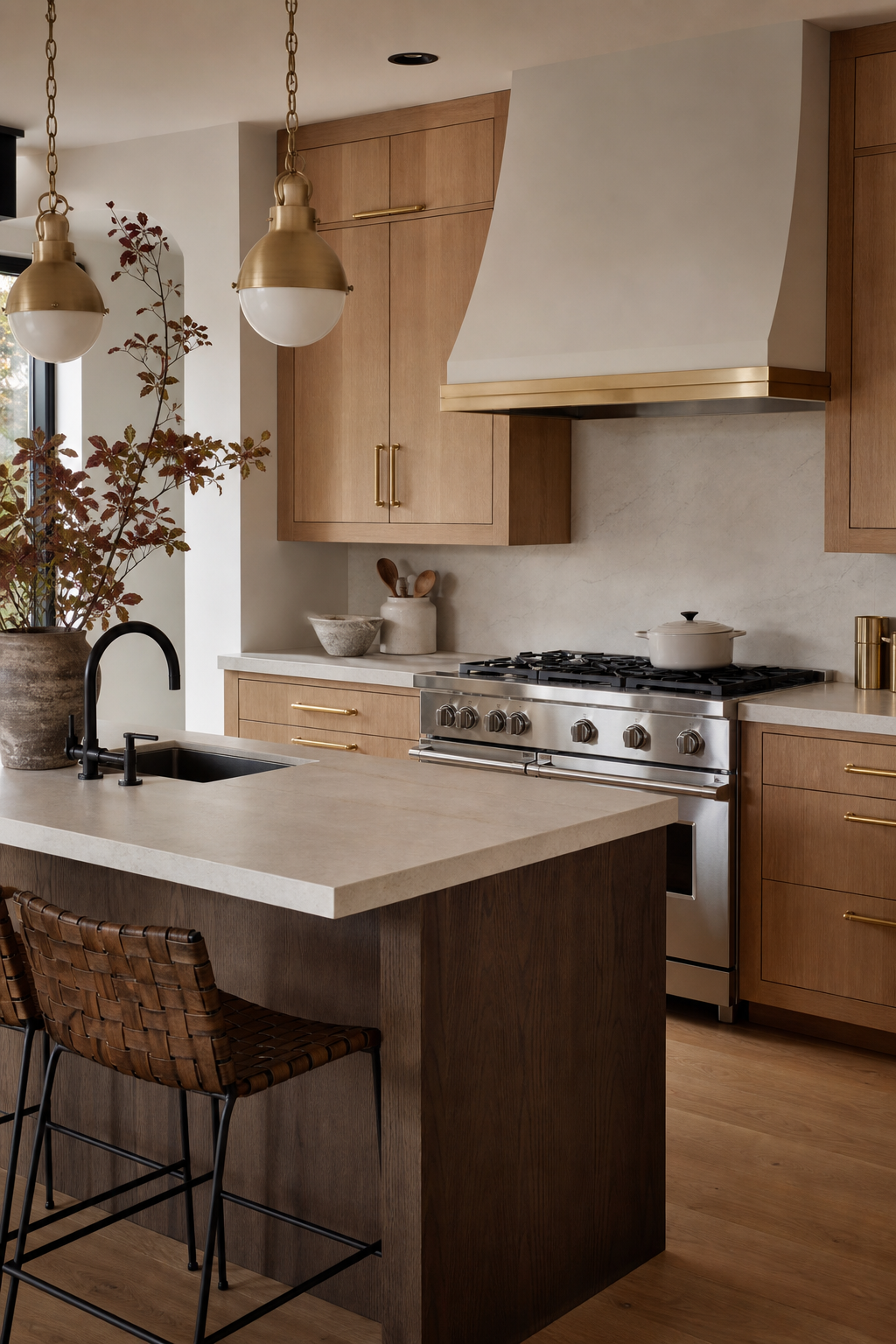
9. Design A Working Pantry Wall
A pantry wall can make a kitchen feel composed while dramatically improving function. Instead of relying only on upper cabinets, dedicate one full-height run to food storage, small appliances, serving pieces, and breakfast supplies. Pocket doors can conceal a coffee station or toaster area, while interior drawers keep dry goods visible and reachable. In a warm modern kitchen, the pantry wall may be finished in the same wood as the main cabinetry or painted a slightly deeper tone for gentle contrast. Interior lighting turns the storage into a refined feature when doors are opened. Include outlets, stone or wood work surfaces, and adjustable shelving so the pantry can evolve with daily routines. The best version feels tailored, efficient, and quietly luxurious.
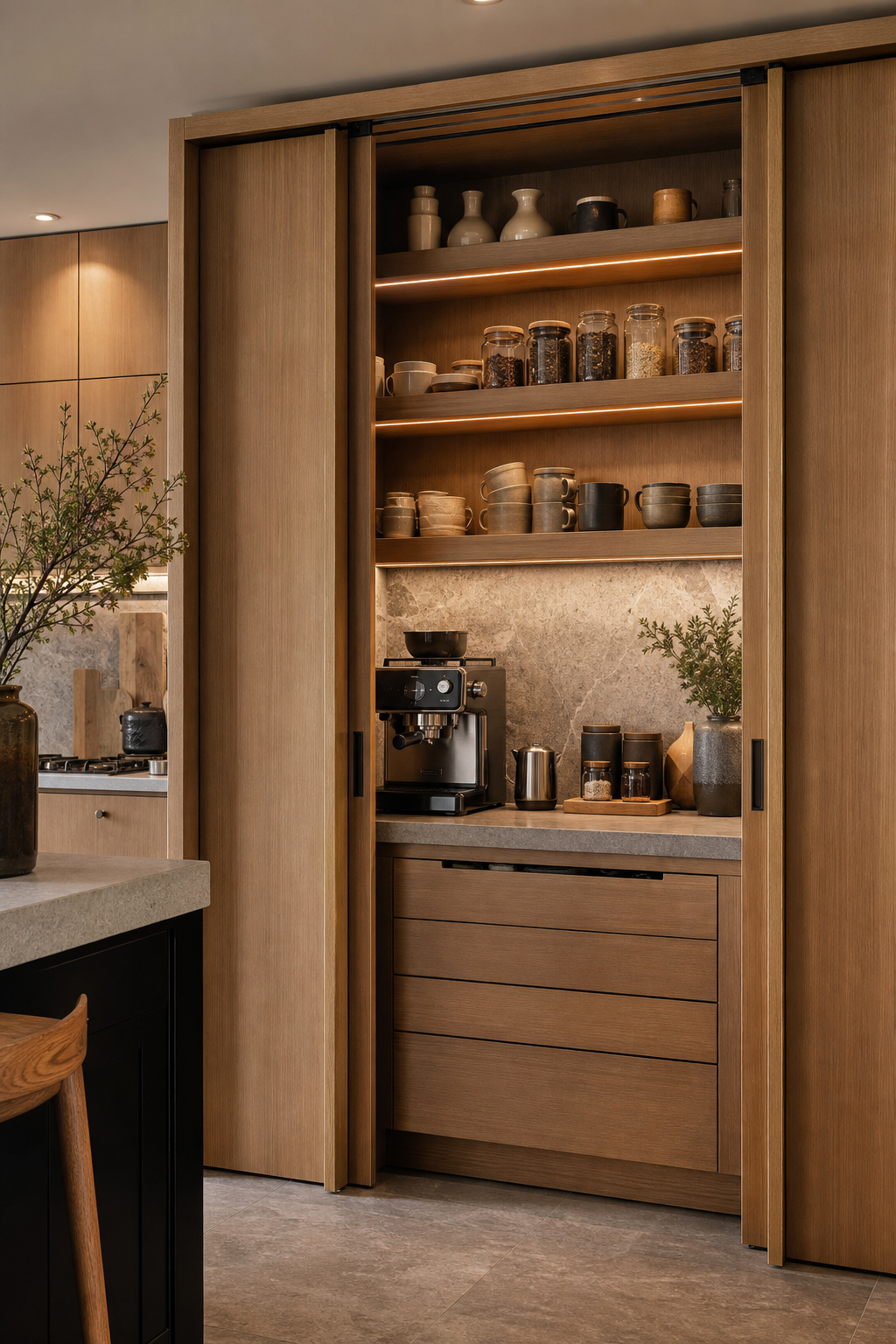
10. Choose Counter Stools With Comfort
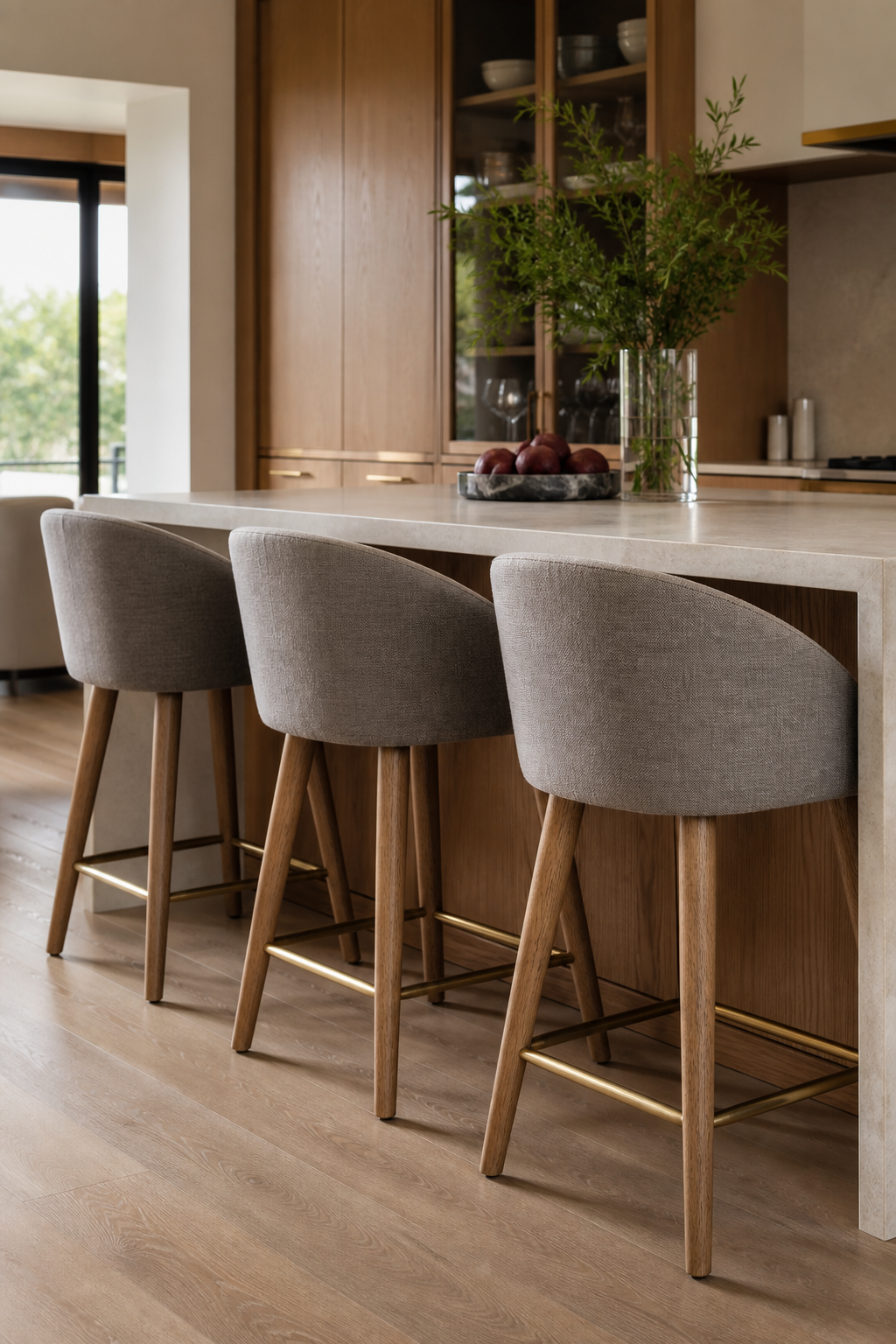
Counter stools are often treated as an afterthought, yet they shape how the kitchen is used every day. A warm functional kitchen deserves stools with proper scale, supportive backs, and materials that relate to the wider room. Upholstered seats in performance fabric feel inviting for long breakfasts or evening conversation, while leather, woven rush, or bentwood can add texture without bulk. Pay attention to leg finish, foot rails, and seat height so the stools do not fight the island. Leave enough space between each seat for elbows and movement, especially if the island doubles as a dining surface. In a very streamlined kitchen, stools can introduce softness and silhouette, turning the island from a workspace into a natural gathering place.
11. Install Open Shelving With Purpose
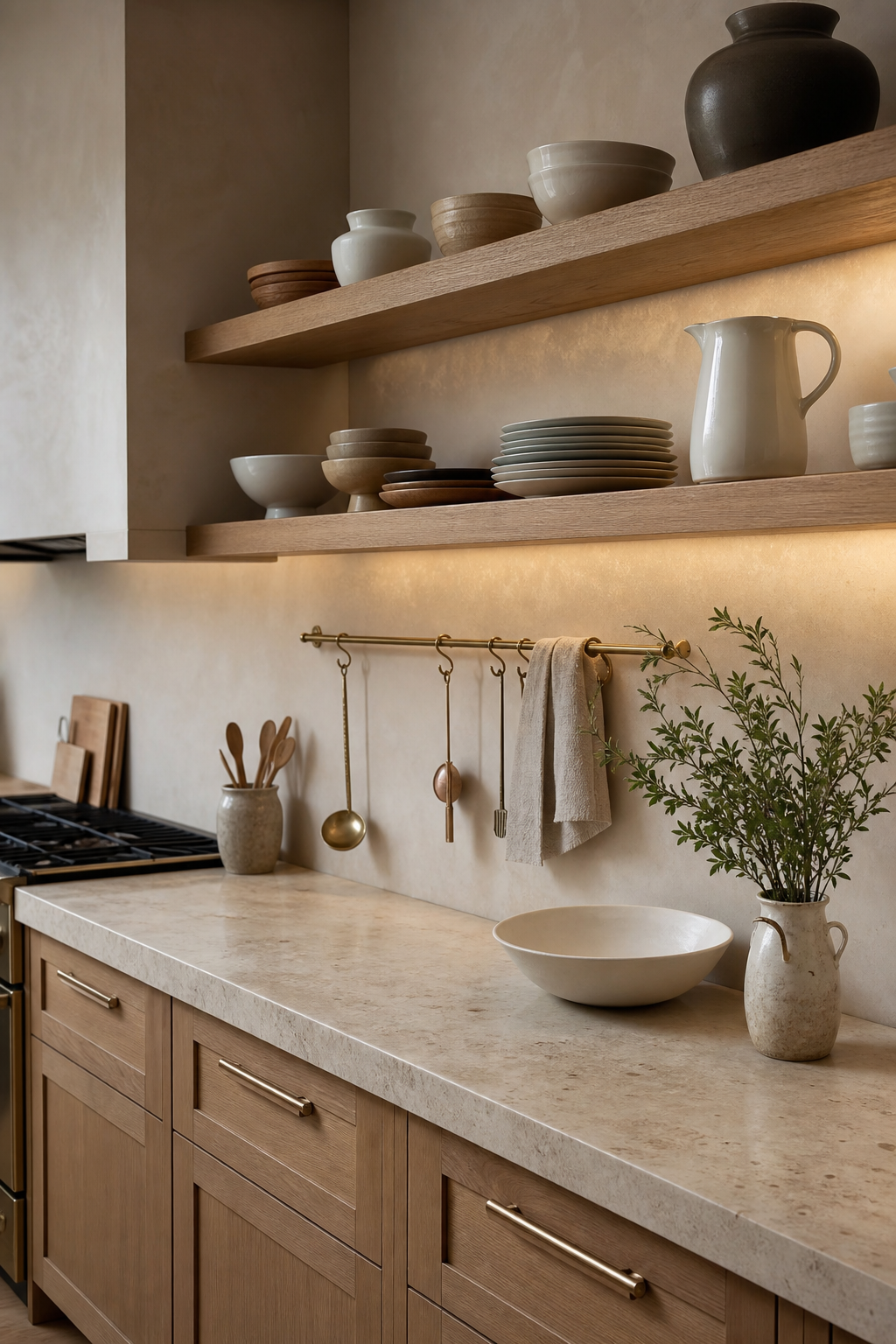
Open shelving works best when it is intentional rather than decorative filler. In a modern kitchen, a short run of shelves can break up heavy cabinetry, create breathing room near a window, or display the pieces used most often. Choose solid wood, stone, glass, or metal brackets that echo the kitchen’s material palette. Keep the styling edited: everyday plates, hand-thrown bowls, glassware, cookbooks, a small lamp, or a few sculptural vessels. Shelves should be deep enough to function but not so crowded that they become visual clutter. Lighting beneath or above the shelf adds dimension and makes the arrangement feel architectural. When balanced with closed storage elsewhere, open shelving adds warmth, personality, and ease without sacrificing order.
12. Create Contrast With A Dark Accent
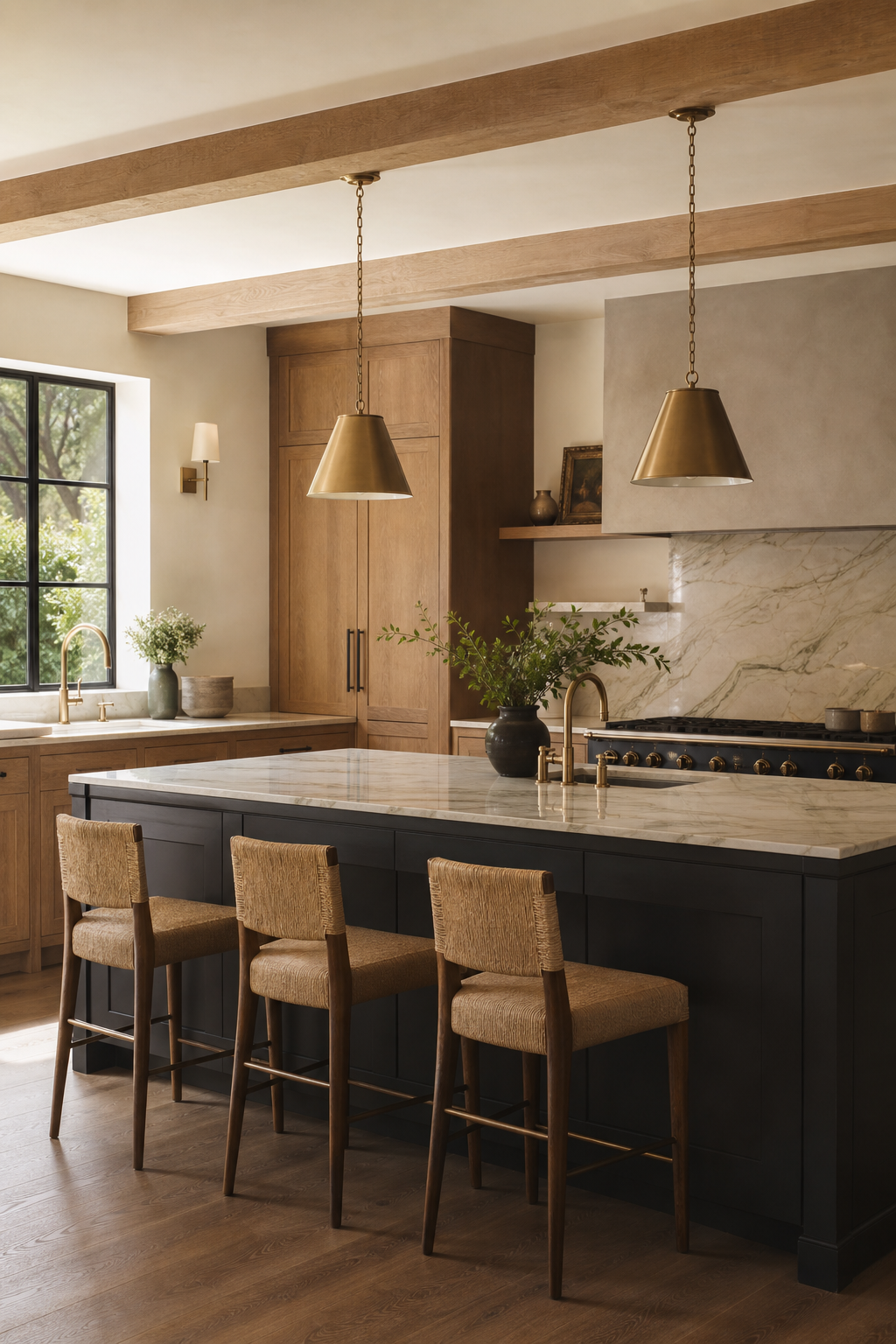
A dark accent can give a warm modern kitchen depth, especially when the rest of the palette is light and natural. Charcoal lower cabinets, a blackened steel range hood, espresso-stained island, or deep green pantry wall can ground the room without making it feel heavy. The key is balance: pair dark surfaces with generous daylight, warm wood, tactile stone, and reflective metal details. Matte finishes usually feel more sophisticated than high gloss, particularly in kitchens designed for calm and longevity. A dark accent also helps define zones in open spaces, drawing the eye toward the island, cooking wall, or storage run. Used with restraint, it adds structure and confidence while preserving the welcoming quality of the room.
13. Use Plaster Or Limewash Walls
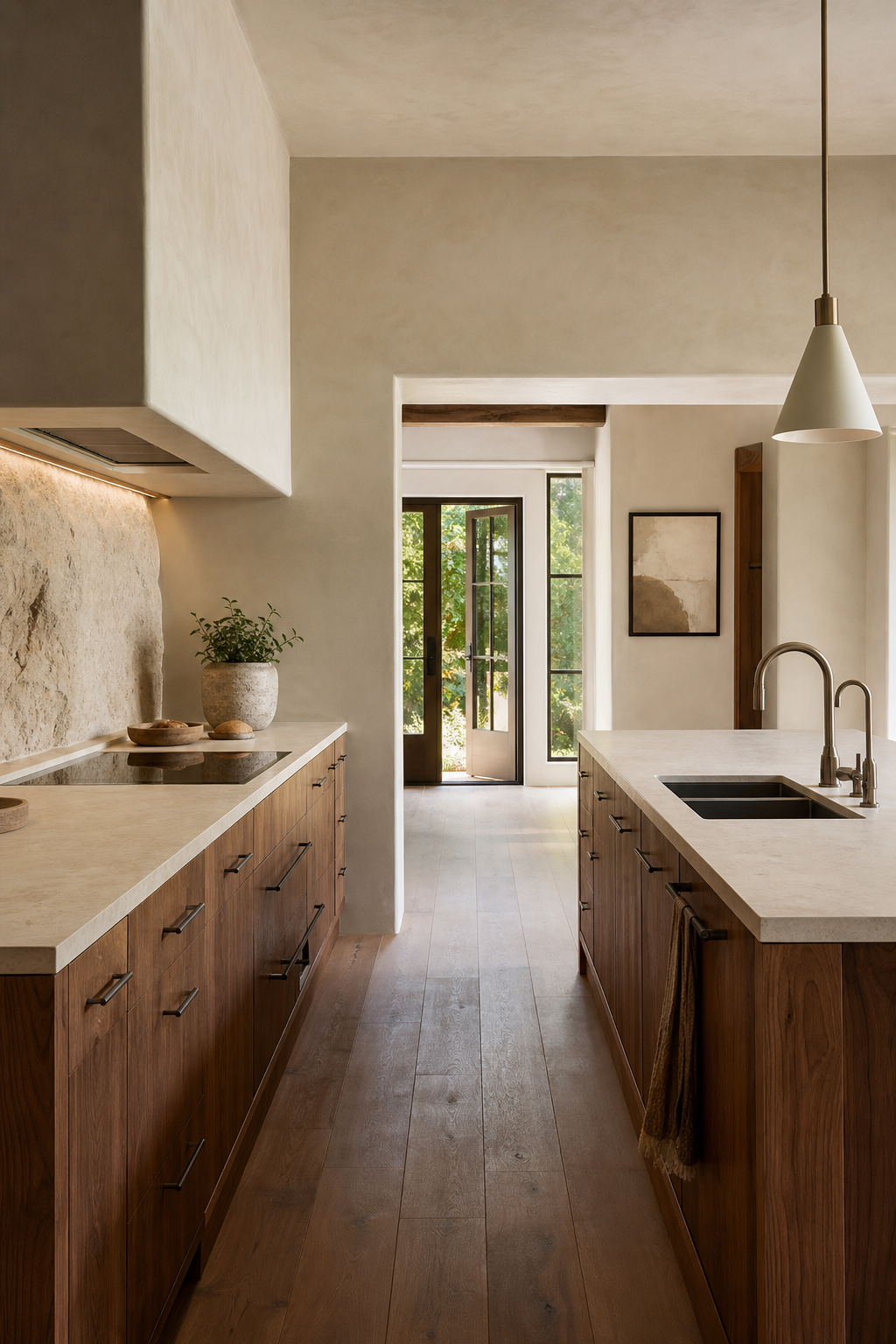
Plaster and limewash walls give a modern kitchen a softer, more dimensional backdrop than standard flat paint. Their subtle movement catches daylight beautifully, especially in shades of warm white, clay, stone, or pale gray. This finish pairs well with contemporary cabinetry because it offsets precise lines with a handmade surface. In practical zones, use plaster on surrounding walls and reserve tile or stone for splash-prone areas behind the sink and range. A sealed finish is important in a hardworking kitchen, particularly near cooking areas. The effect is refined but not precious, creating an atmosphere that feels rooted and architectural. When combined with wood cabinetry, linen seating, and warm metals, plaster brings an understated European sensibility to a modern home.
14. Make Storage Feel Architectural
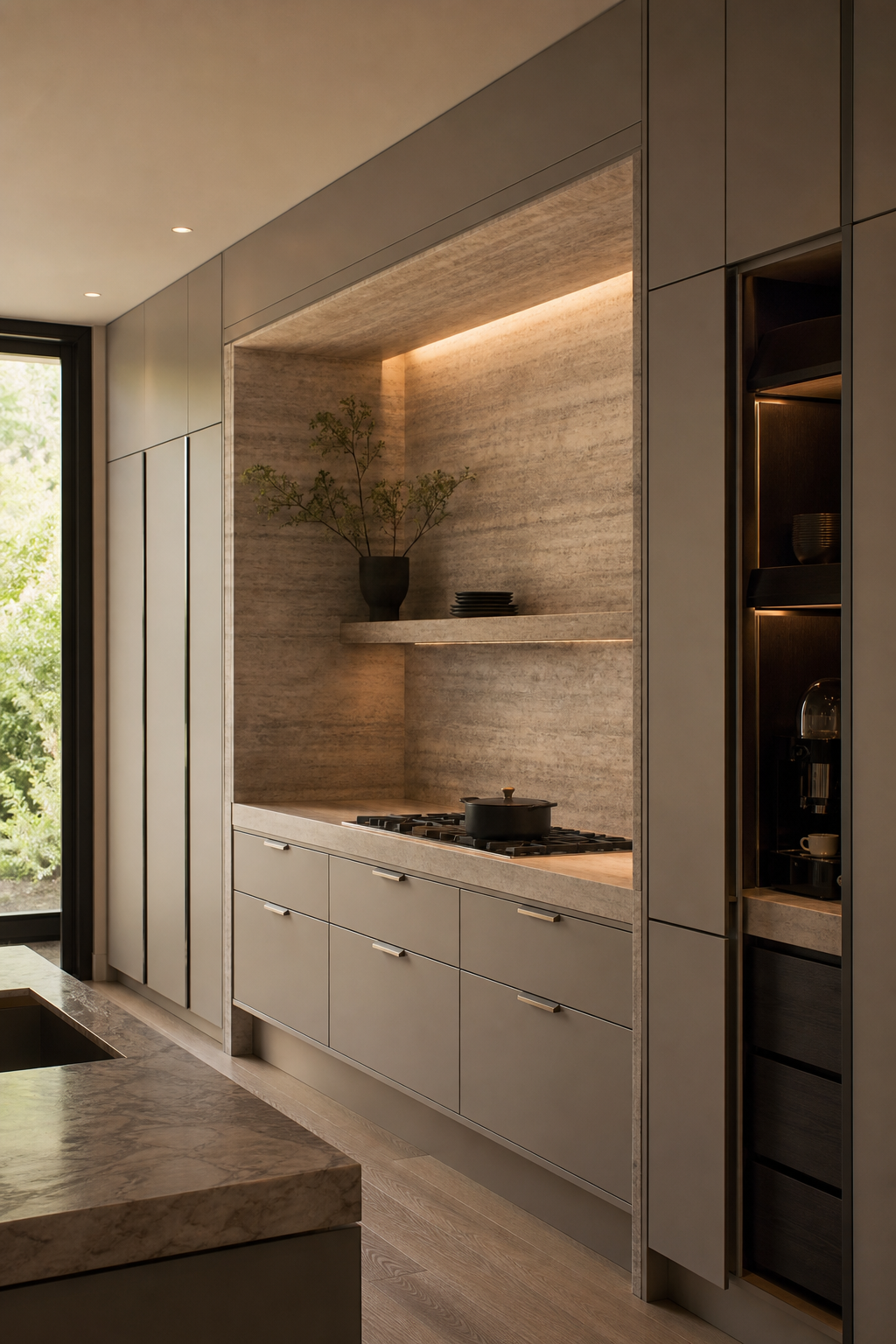
In a luxury modern kitchen, storage should feel integrated into the architecture rather than added wherever space allows. Floor-to-ceiling cabinets can frame a cooking niche, flank a window, or form a clean storage wall that hides pantry goods, appliances, and serving pieces. Use vertical proportions, consistent reveal lines, and thoughtful symmetry to make cabinetry feel built into the room. Interior fittings matter just as much as exterior style: tray dividers, spice drawers, pull-out bins, appliance lifts, and drawer organizers all support daily function. For warmth, mix closed storage with a niche in stone, timber, or tile where beautiful objects can breathe. The finished kitchen stays orderly because everything has a place, yet it still feels designed, personal, and inviting.
15. Add Natural Stone Behind The Range
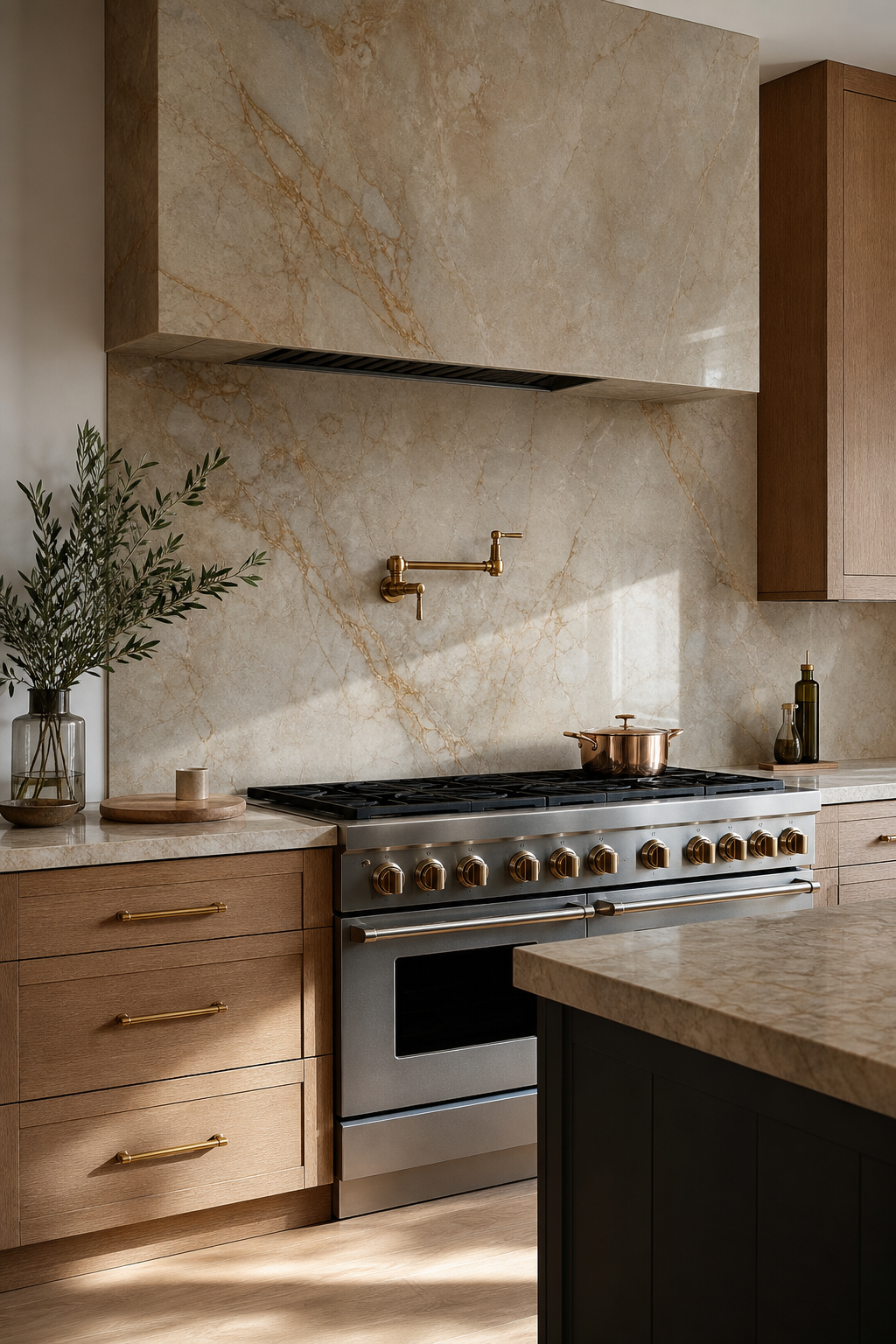
A natural stone slab behind the range brings instant polish to a modern kitchen while simplifying maintenance. Unlike small-format tile, a slab has fewer grout lines and a strong visual sweep, making the cooking zone feel composed. Choose stone with warmth in the veining, such as Calacatta viola, Taj Mahal quartzite, Breccia Capraia, or a creamy marble with soft movement. Let the slab rise to meet a concealed hood or continue to the ceiling for a more dramatic architectural statement. Pair it with simple cabinetry so the stone remains the focal point. A ledge in matching stone can hold oils, salt, and small vessels without cluttering the counter. The result is practical, elegant, and distinctly modern.
16. Soften The Kitchen With Decorative Details
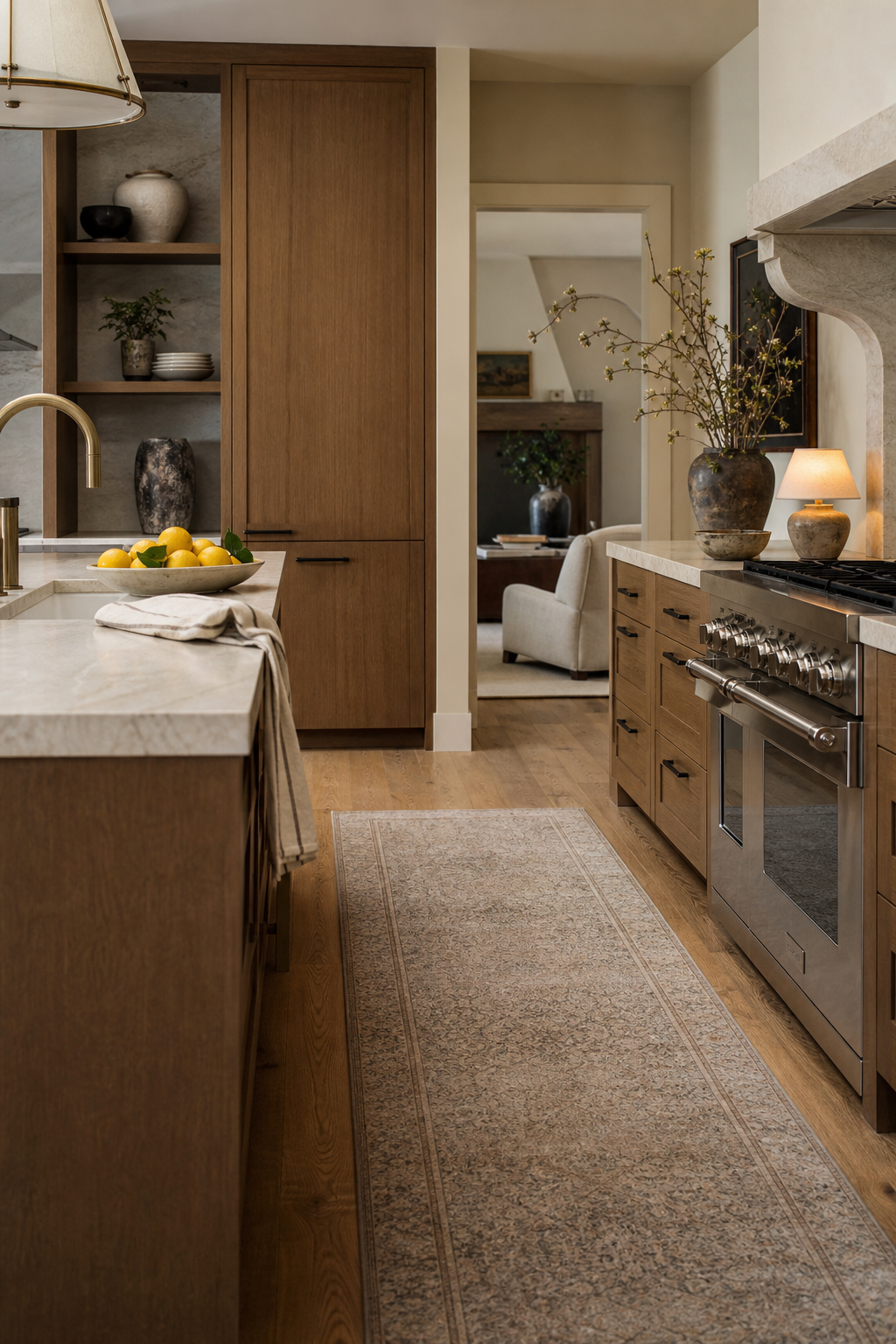
Decorative details keep a modern kitchen from feeling too engineered. The trick is to choose pieces that earn their place through beauty and use. A vintage runner can warm a long galley layout, while a ceramic lamp on the counter gives evening light a softer quality. Wood cutting boards, stone bowls, woven trays, framed art, and linen towels introduce texture without overwhelming the work surfaces. Fresh herbs or branches feel more sophisticated than overly arranged florals, especially in sculptural vessels. Keep the palette connected to the kitchen’s finishes so accessories feel collected rather than staged. These elements are easy to change over time, but they make the room feel lived in, layered, and deeply personal from the start.
17. Plan A Layout That Supports Real Life
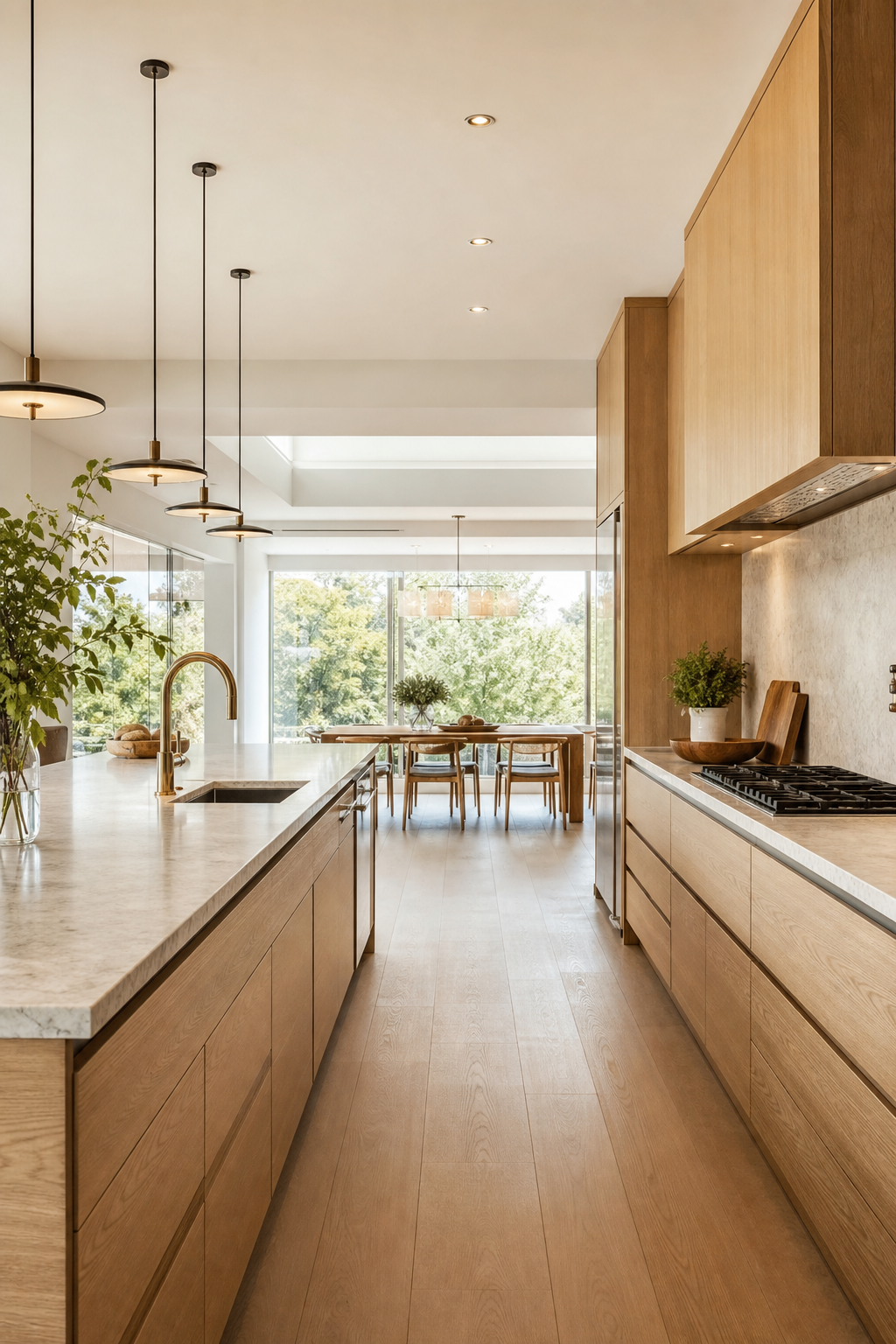
The most beautiful modern kitchen will only feel warm if the layout supports daily life. Start with the way the household actually cooks, shops, entertains, and cleans. The sink, range, refrigerator, pantry, and waste zone should relate logically, but the classic triangle is only one part of the story. Consider landing space beside ovens, drawers near the dishwasher, a prep area with easy access to knives and boards, and seating that does not interrupt the cook. In open rooms, an island can screen mess while keeping conversation connected. A secondary sink, beverage fridge, or hidden appliance garage may be worthwhile if the kitchen serves many functions. When circulation, storage, lighting, and materials work together, the room feels effortless rather than merely impressive.
A warm modern kitchen is built from restraint, texture, and intelligence. The best spaces combine durable materials with graceful proportions, layered light, generous storage, and details that invite daily use. Whether the room leans toward oak and limestone, plaster and brass, or dramatic stone and dark accents, the goal remains the same: a kitchen that looks refined, works beautifully, and feels like the natural center of the home.