19 Cozy Kitchen Ideas For A Warm Functional Home
A cozy kitchen is not simply a pretty kitchen with a candle on the counter. It is a room that feels easy to use, pleasant to gather in, and warm even during ordinary weekday routines. The best cozy kitchens combine hardworking choices with softer details: layered light, natural wood, practical storage, comfortable seating, and surfaces that can handle real cooking. These ideas focus on warmth you can live with, not styling that has to be cleared away before dinner.
1. Warm Wood Cabinetry
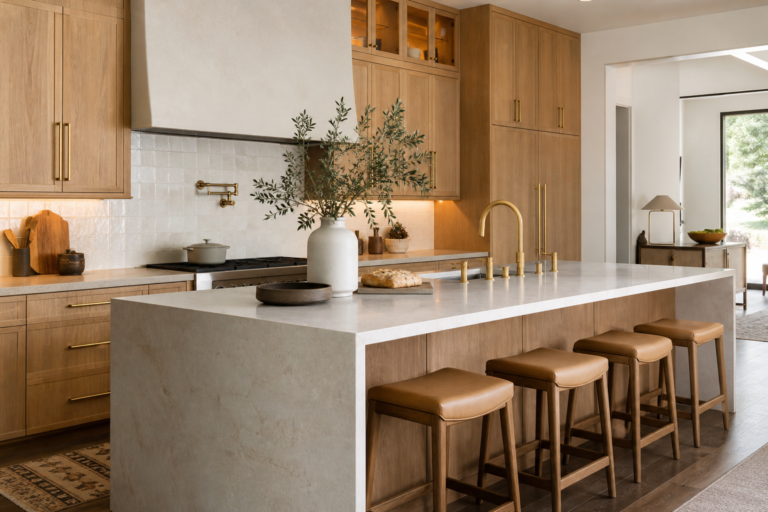
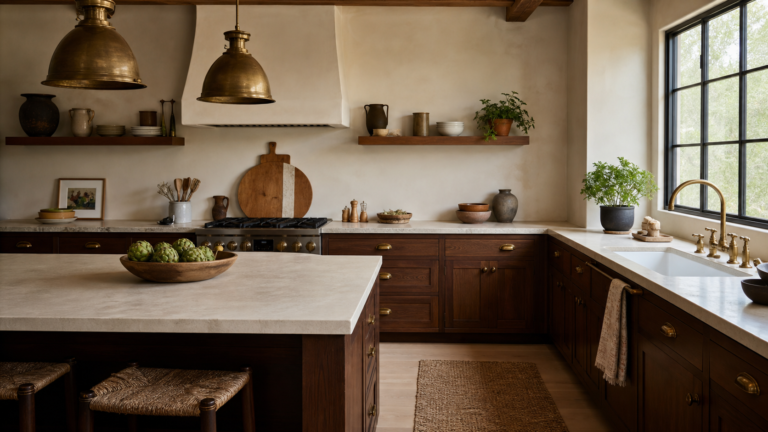
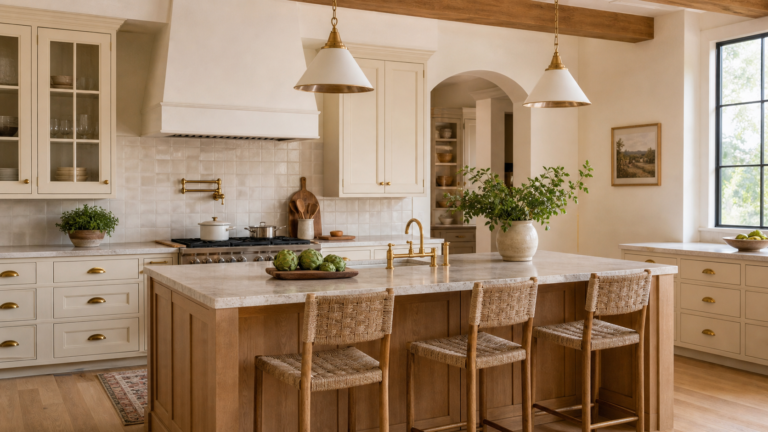
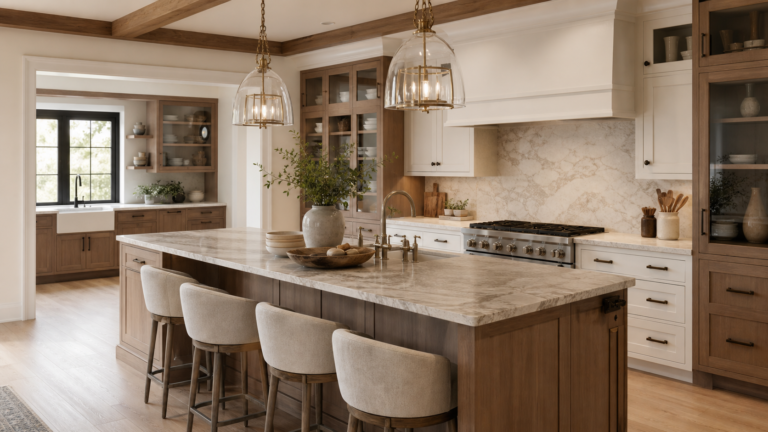
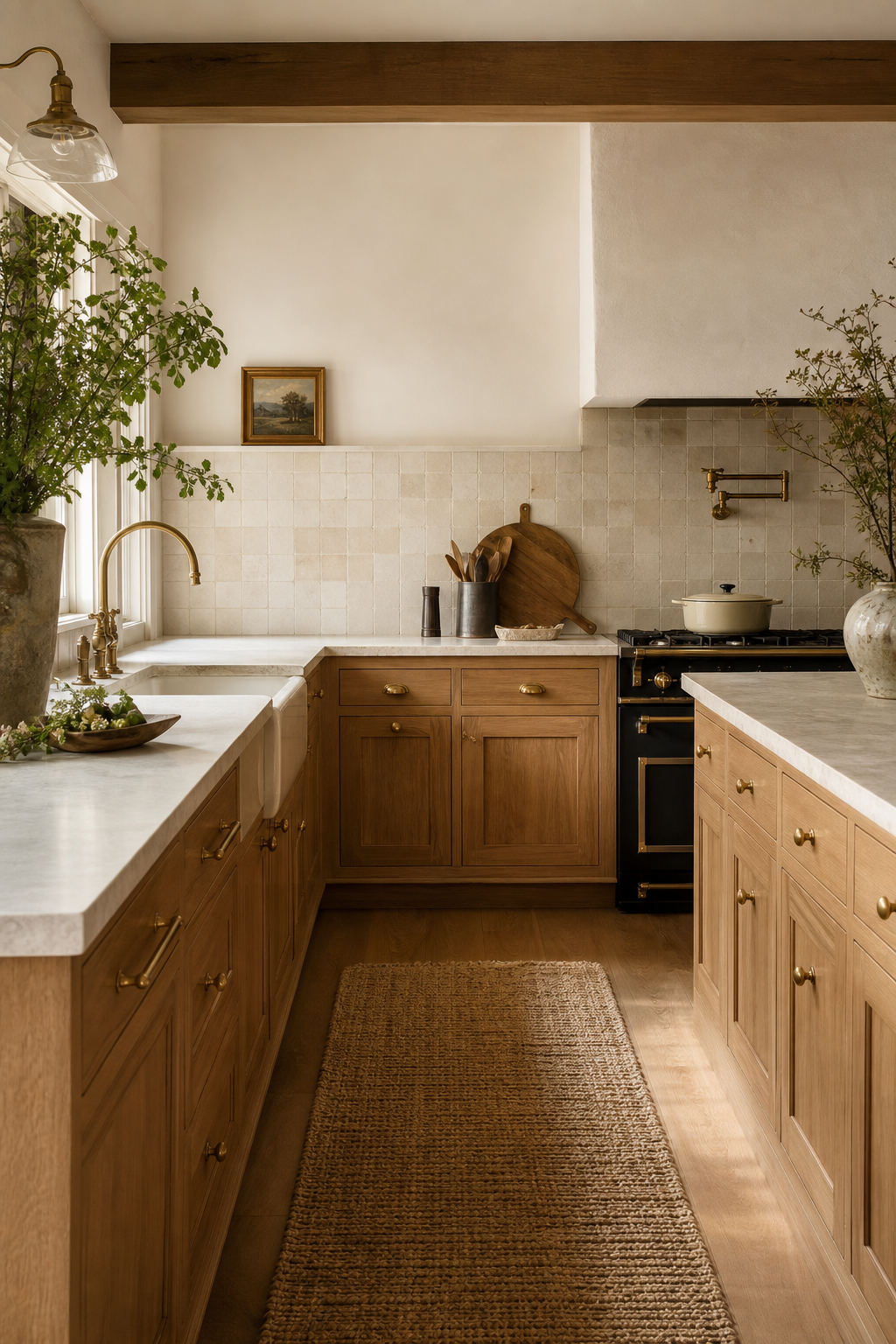
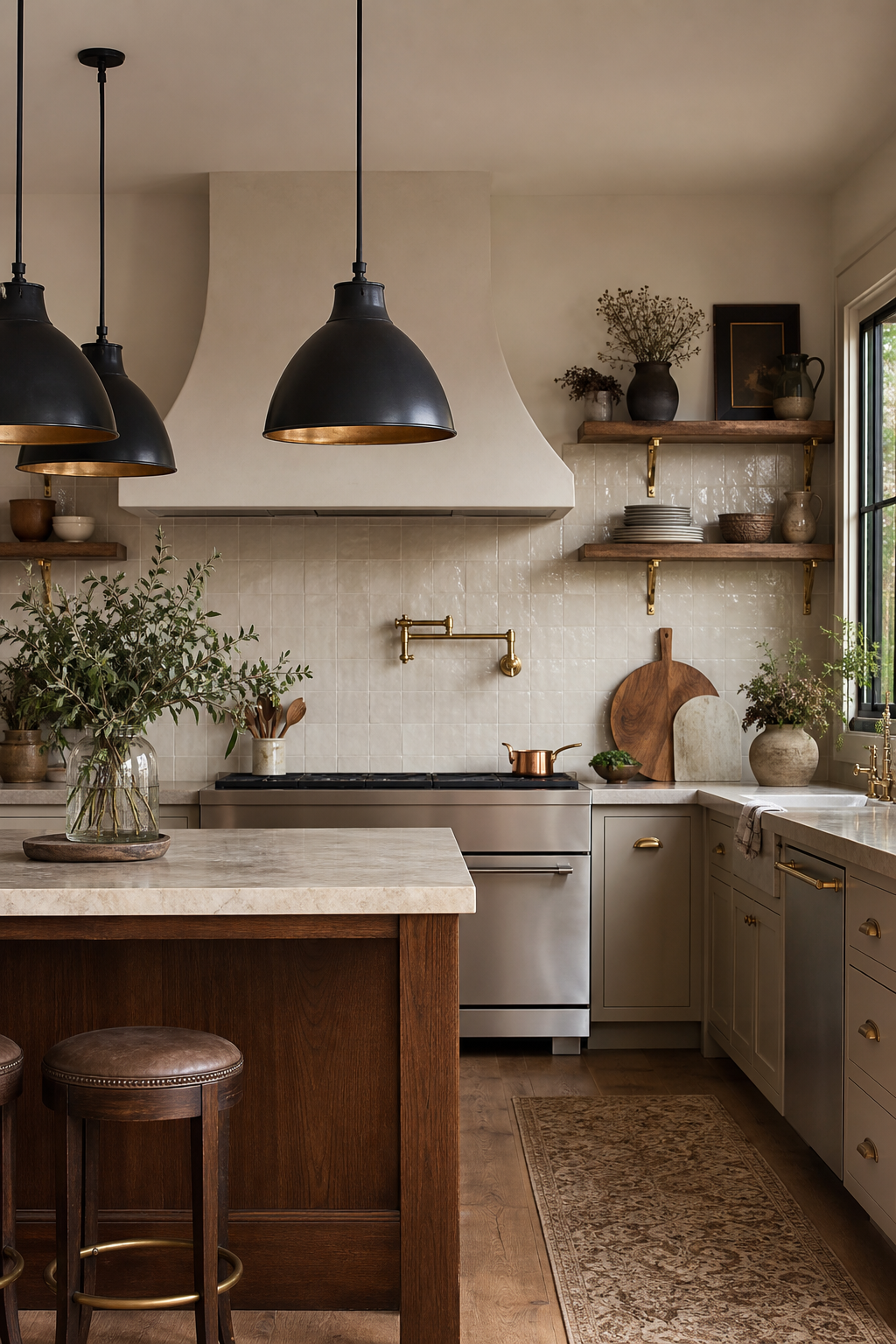
Wood cabinetry instantly makes a kitchen feel warmer, but the finish matters. Choose oak, walnut, maple, or alder in a tone that complements the light in the room. Pale oak feels fresh and relaxed, while walnut brings depth and quiet luxury. If full wood cabinetry is too much, use it on the island, pantry wall, or lower cabinets and keep the uppers painted. Pair wood with simple hardware so the grain remains the feature. Cream, stone, sage, blackened bronze, and handmade tile all work beautifully beside natural wood. The functional benefit is longevity: a good wood tone can survive changing trends better than a loud painted color. Keep counters edited and lighting soft, and the kitchen will feel grounded rather than heavy.
2. Layered Kitchen Lighting
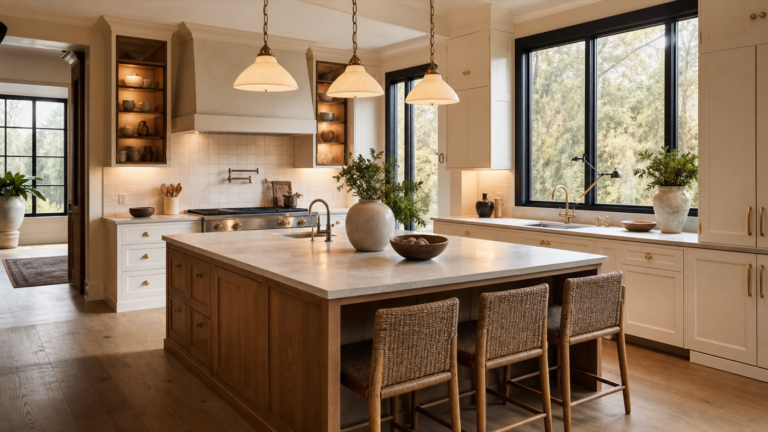
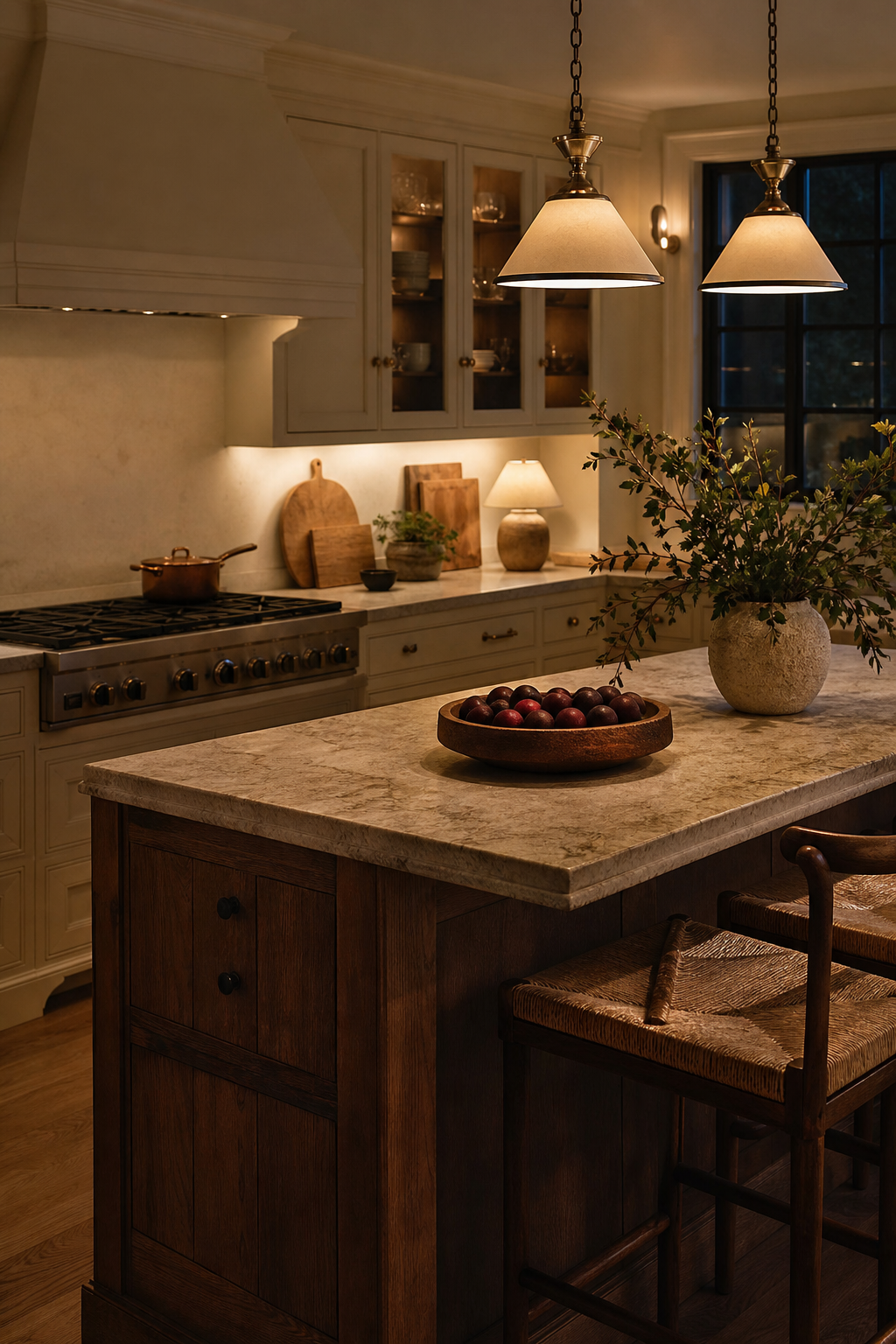
Lighting has a huge effect on whether a kitchen feels cozy or clinical. Combine task lighting, ambient lighting, and small decorative sources instead of depending on ceiling cans alone. Under-cabinet lights make prep safer, pendants give the island a human scale, and a small lamp on a counter or shelf can soften the room in the evening. Use warm bulbs, but keep task areas bright enough for chopping and cleaning. Dimmers are especially useful because kitchens shift from workspaces to gathering spaces throughout the day. Choose shades in opal glass, linen, brass, ceramic, or woven material for a warmer glow. When lighting is layered, the kitchen can be practical at breakfast, focused at dinner prep, and relaxed after everything is cleaned up.
3. A Runner Underfoot
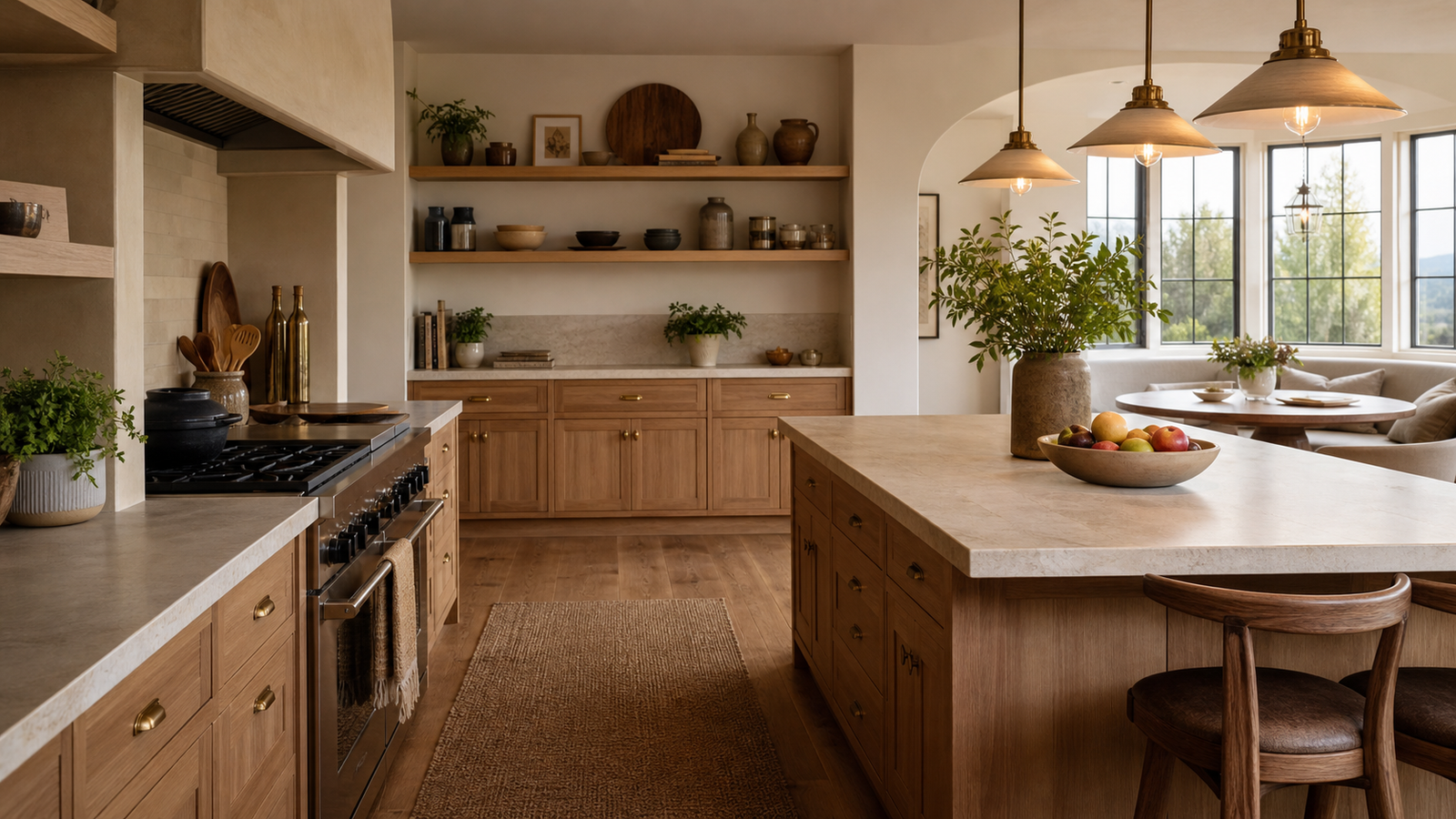
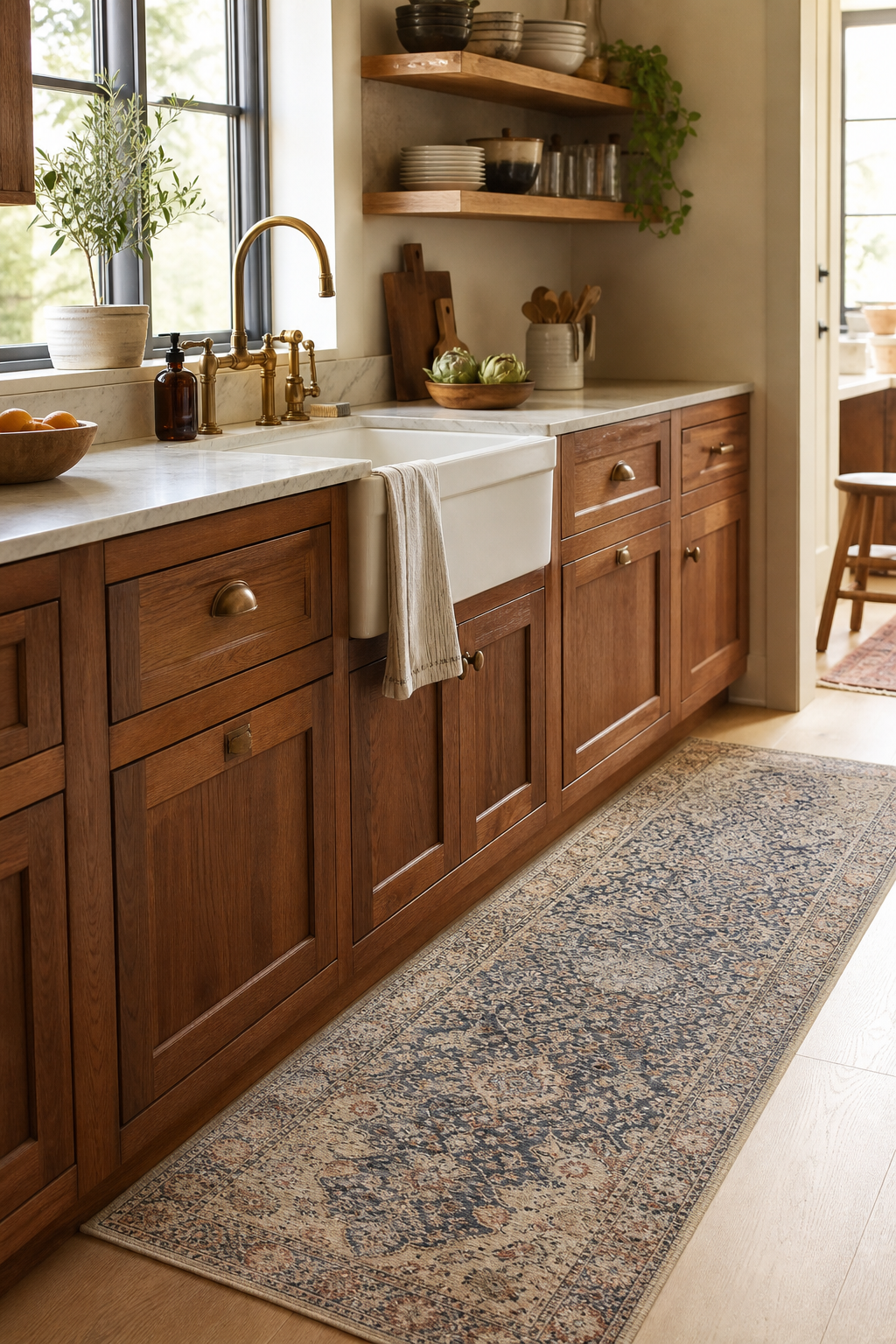
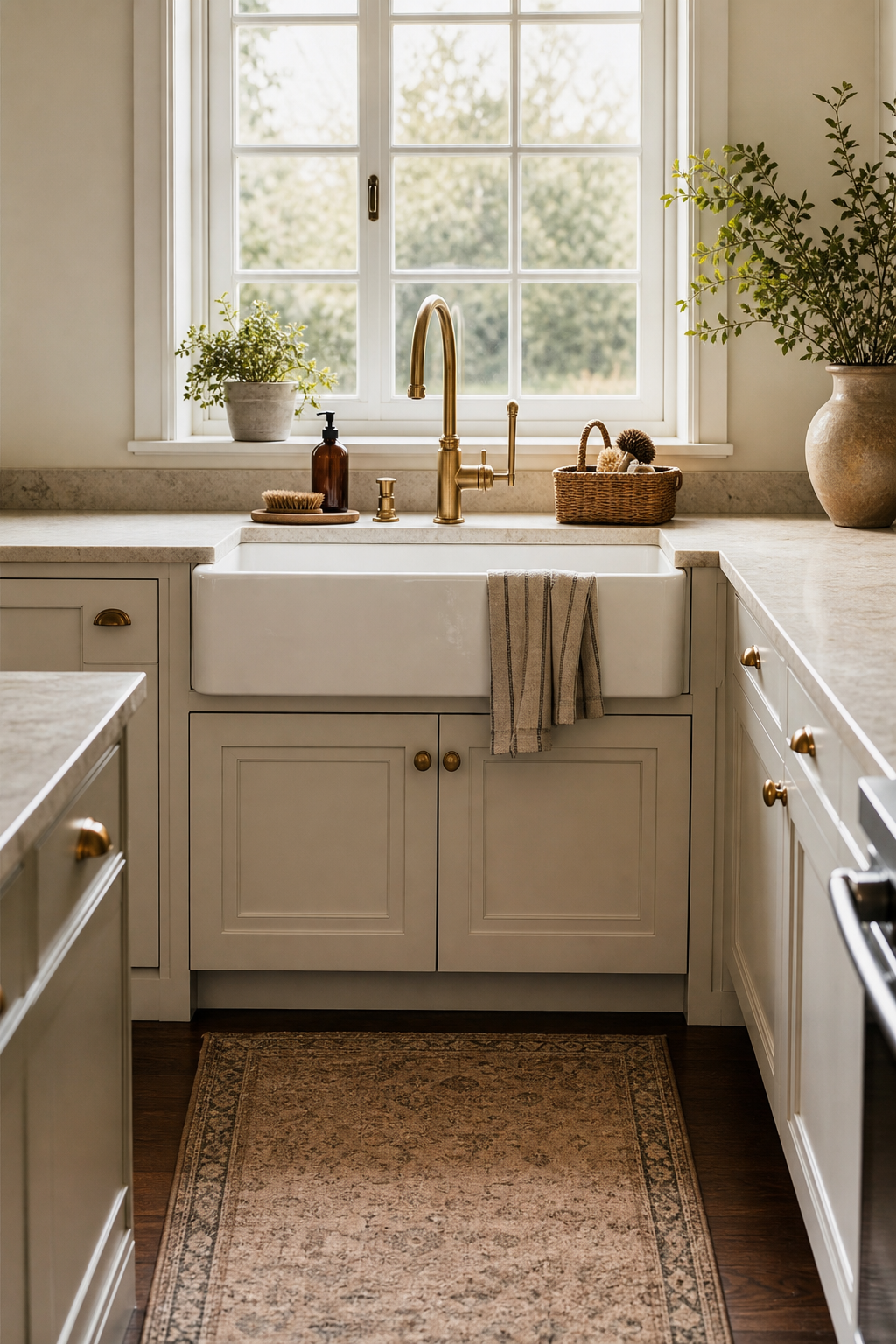
A runner softens a kitchen visually and physically, especially in a galley layout or along the sink wall. Choose a low-pile, washable, or vintage-style rug that can handle crumbs and traffic. Pattern is practical here because it disguises small marks between cleanings. Rust, navy, olive, cream, and faded brown are warm choices that pair well with wood and stone. Make sure the runner has a proper rug pad so it does not slide while you cook. In open kitchens, the runner can also define the working zone and connect the kitchen to nearby living spaces. Avoid anything too thick near appliance doors or stools. A good runner gives the room texture, color, and comfort without taking away from its function.
4. Open Shelves With Everyday Pieces
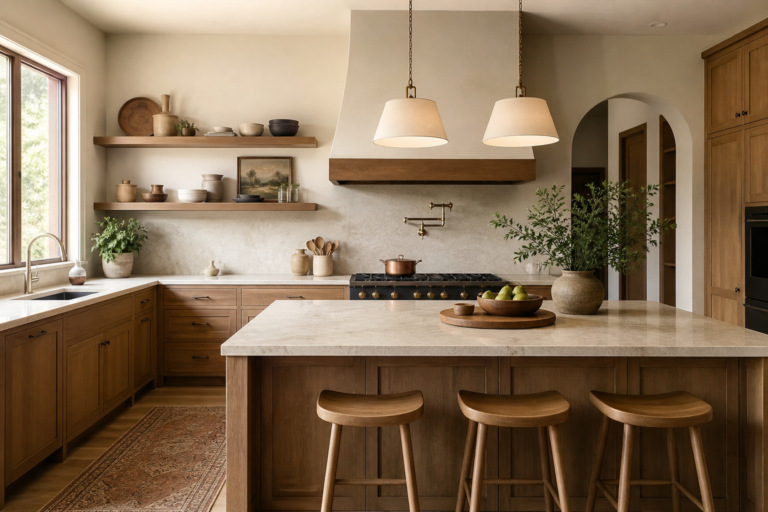
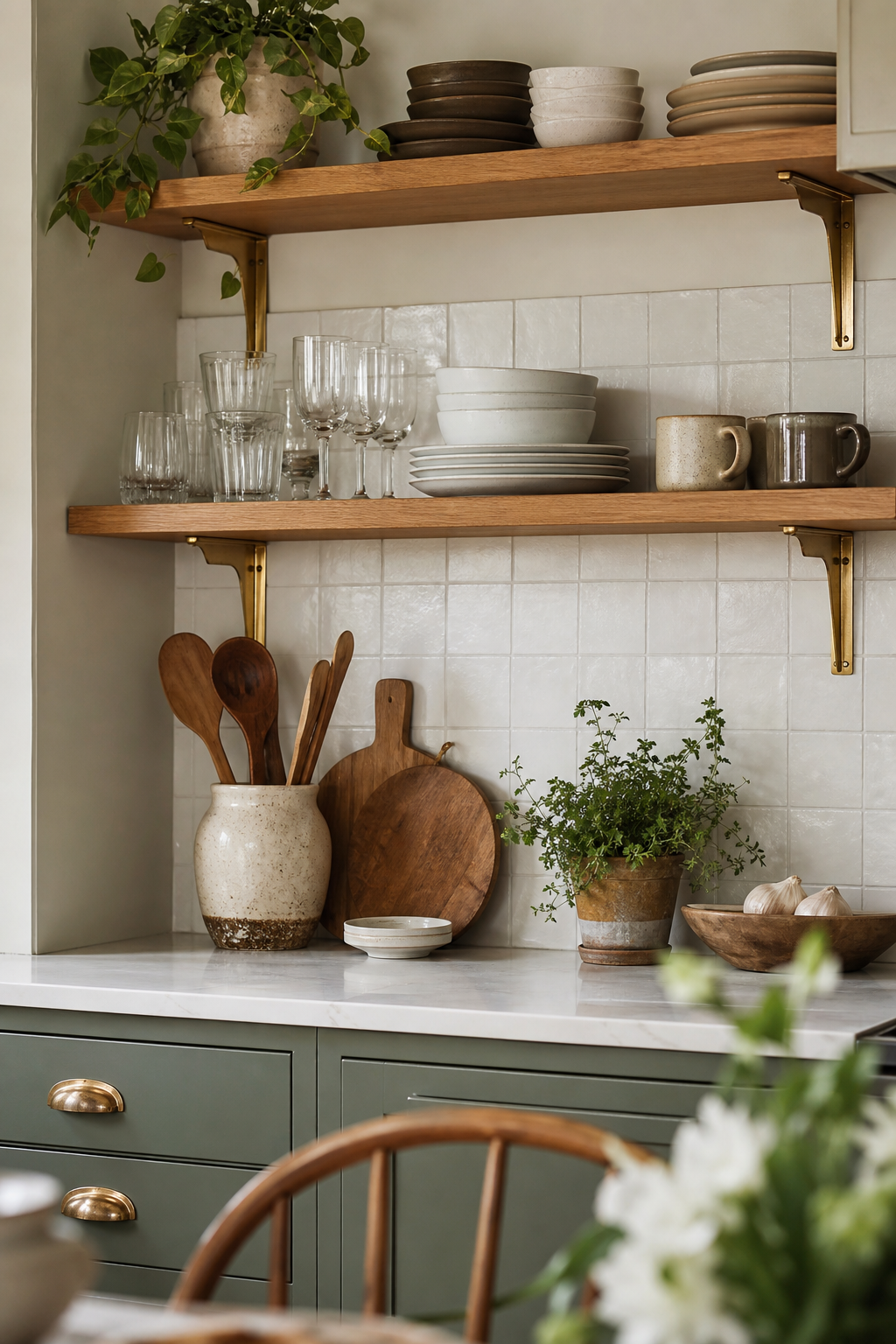
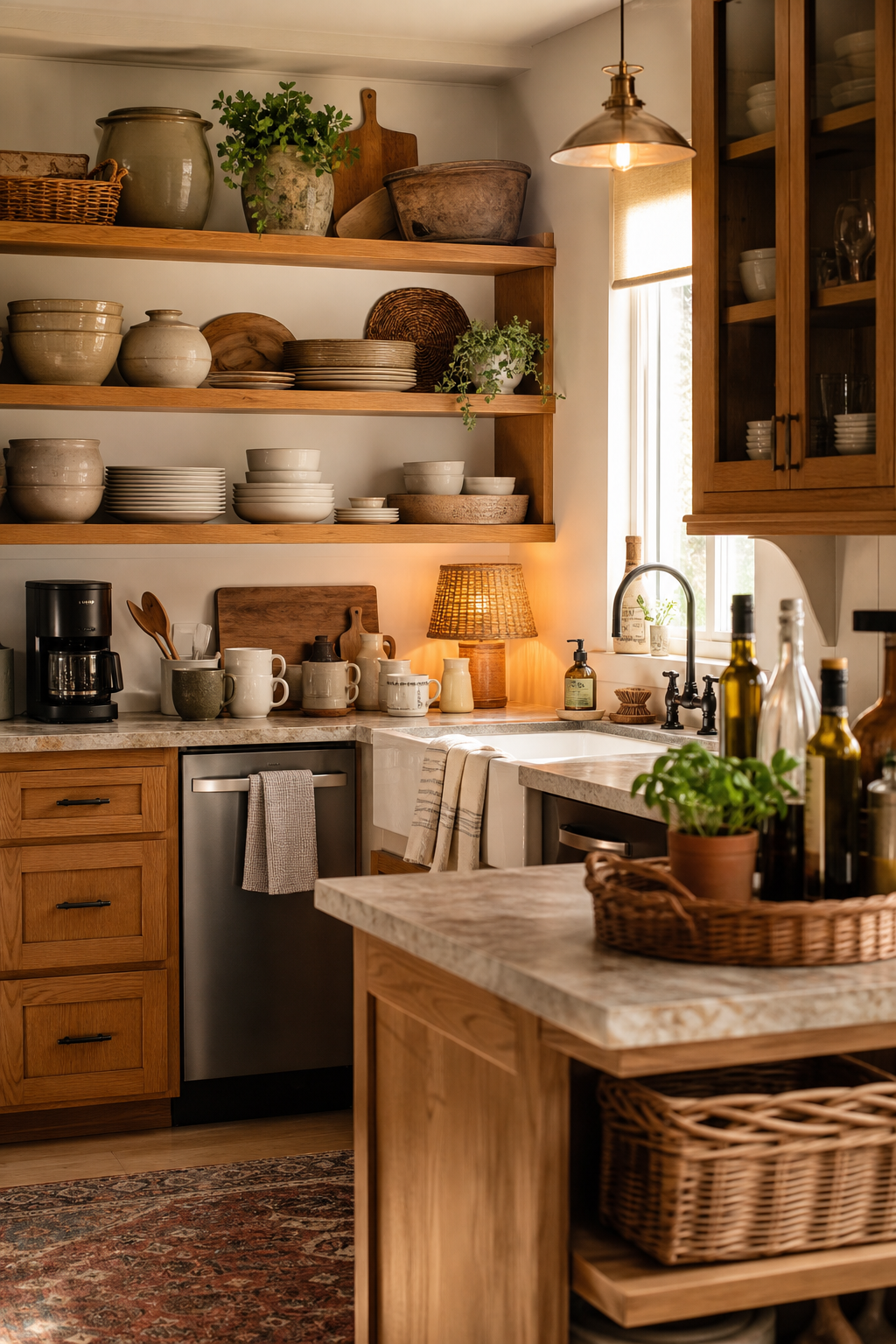
Open shelves feel cozy when they hold useful, beautiful things rather than random display objects. Stack everyday plates, bowls, mugs, glassware, and mixing bowls in simple groups. Add one small plant, a framed piece of art, or a crock of wooden spoons for softness, but keep the shelves easy to clean. Wood shelves with brass or black brackets can warm up painted cabinetry, while stone or painted shelves feel more seamless. The key is restraint. Leave breathing room between stacks so the shelves feel curated, not crowded. Open shelving works best near the dishwasher, coffee station, or breakfast zone where the items are used often. When the shelves are practical, they add personality without stealing storage from the rest of the kitchen.
5. A Breakfast Nook
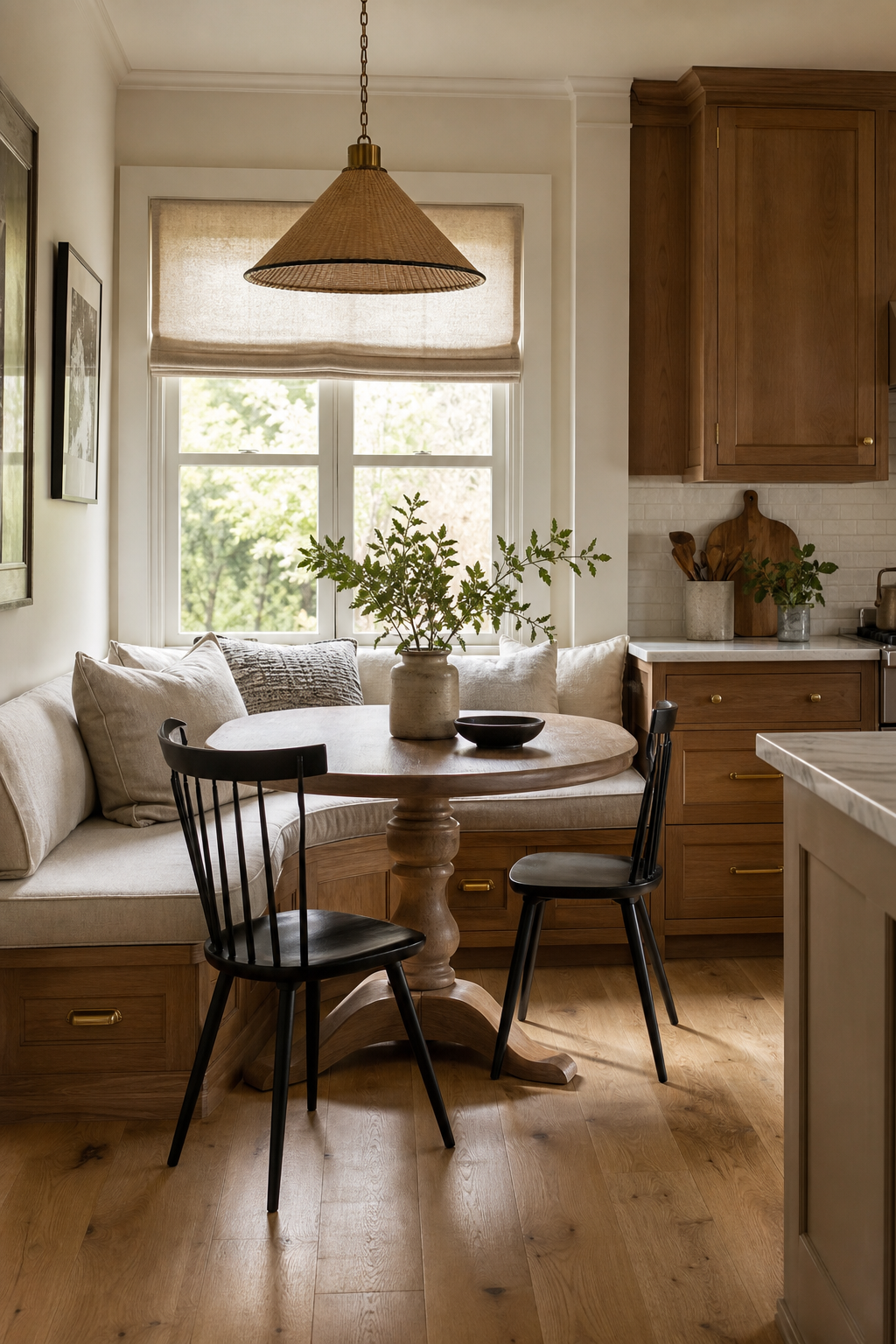
A breakfast nook makes a kitchen feel like a room to stay in, not only a place to cook. It does not need much space: a built-in bench, small round table, and two chairs can turn an unused corner into a daily gathering spot. Add cushions in washable fabric and a pendant or sconce overhead so the nook feels intentional. Storage drawers under the bench are especially useful for linens, rarely used serveware, or kids’ supplies. Keep the palette connected to the kitchen through wood tone, upholstery color, or hardware finish. A nook is cozy because it supports small rituals: coffee before work, homework after school, or quiet dinner for two. It gives the kitchen a softer social center without compromising function.
6. Soft Painted Cabinets
Painted cabinets can still feel cozy if the color has warmth and depth. Instead of stark white or trendy brights, consider mushroom, putty, cream, sage, deep olive, or muted blue. These colors soften the room while still working with practical surfaces like stone, butcher block, or tile. Use a durable finish that can be wiped clean, especially near the sink and range. Warm metals, wood cutting boards, and ceramic accessories keep painted cabinets from feeling flat. If you are nervous about color, paint only the island or lower cabinets first. The best cozy cabinet colors change gently throughout the day, looking calm in morning light and richer in the evening. Choose something you will enjoy with both messy breakfasts and polished dinners.
7. Butcher Block Warmth
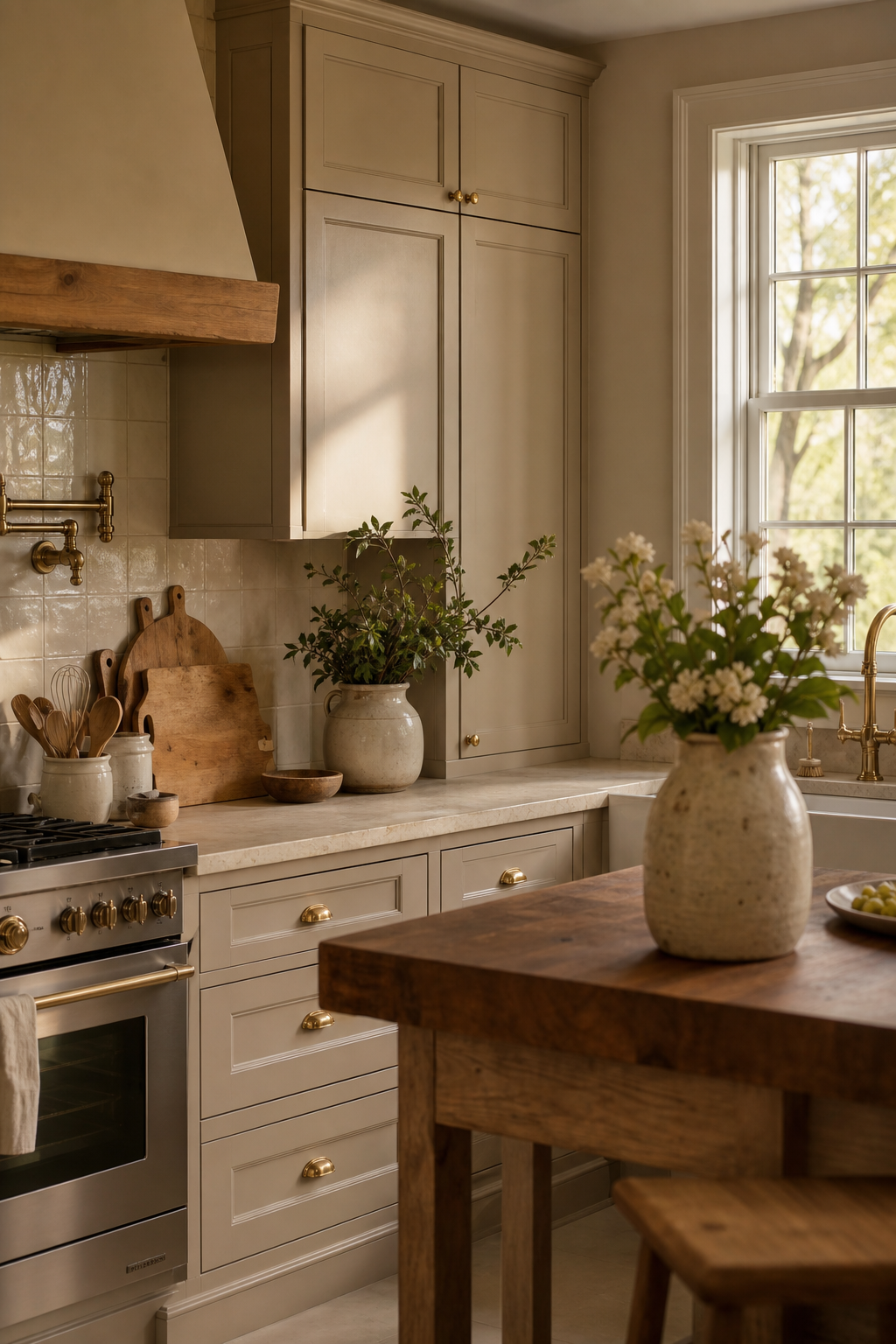
Butcher block adds warmth and function when used thoughtfully. It can cover an island, baking station, coffee bar, or small prep area even if the main counters are stone. Wood counters invite touch and make a kitchen feel less hard-edged, but they need realistic maintenance. Use cutting boards for heavy chopping, wipe spills quickly, and oil the surface as recommended. Pair butcher block with painted cabinets, white tile, black hardware, or stainless appliances for balance. The look becomes especially cozy when paired with breadboards, ceramic bowls, and linen towels. If you love the warmth but not the upkeep, use a butcher block table or movable island instead. The material brings a working-kitchen honesty that feels both practical and welcoming.
8. A Functional Coffee Station
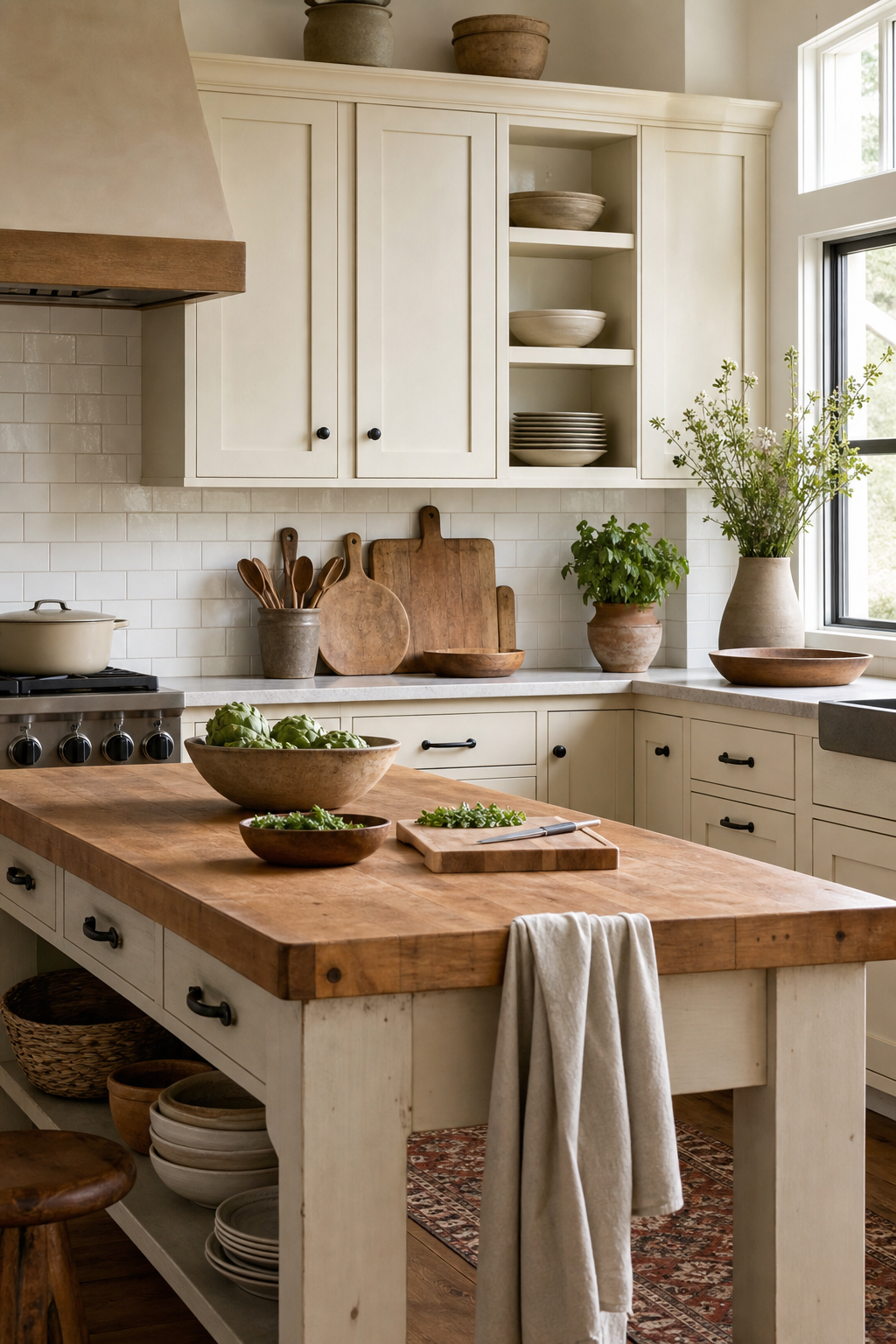
A coffee station makes everyday routines feel more considered. Choose one counter area, shelf, or cabinet zone for mugs, beans, filters, spoons, and sweeteners. Keep the setup close to water if possible, but avoid blocking the main prep zone. A tray can gather small items and make cleanup easier. Open shelves above the station are useful for mugs, while a drawer below can hold filters and tea. Add a small lamp or under-shelf light if the area feels dark in the morning. The station should look warm but not crowded, with only the tools you actually use. When coffee supplies have a clear home, the kitchen starts the day with less clutter and a more welcoming rhythm.
9. Woven Baskets For Storage
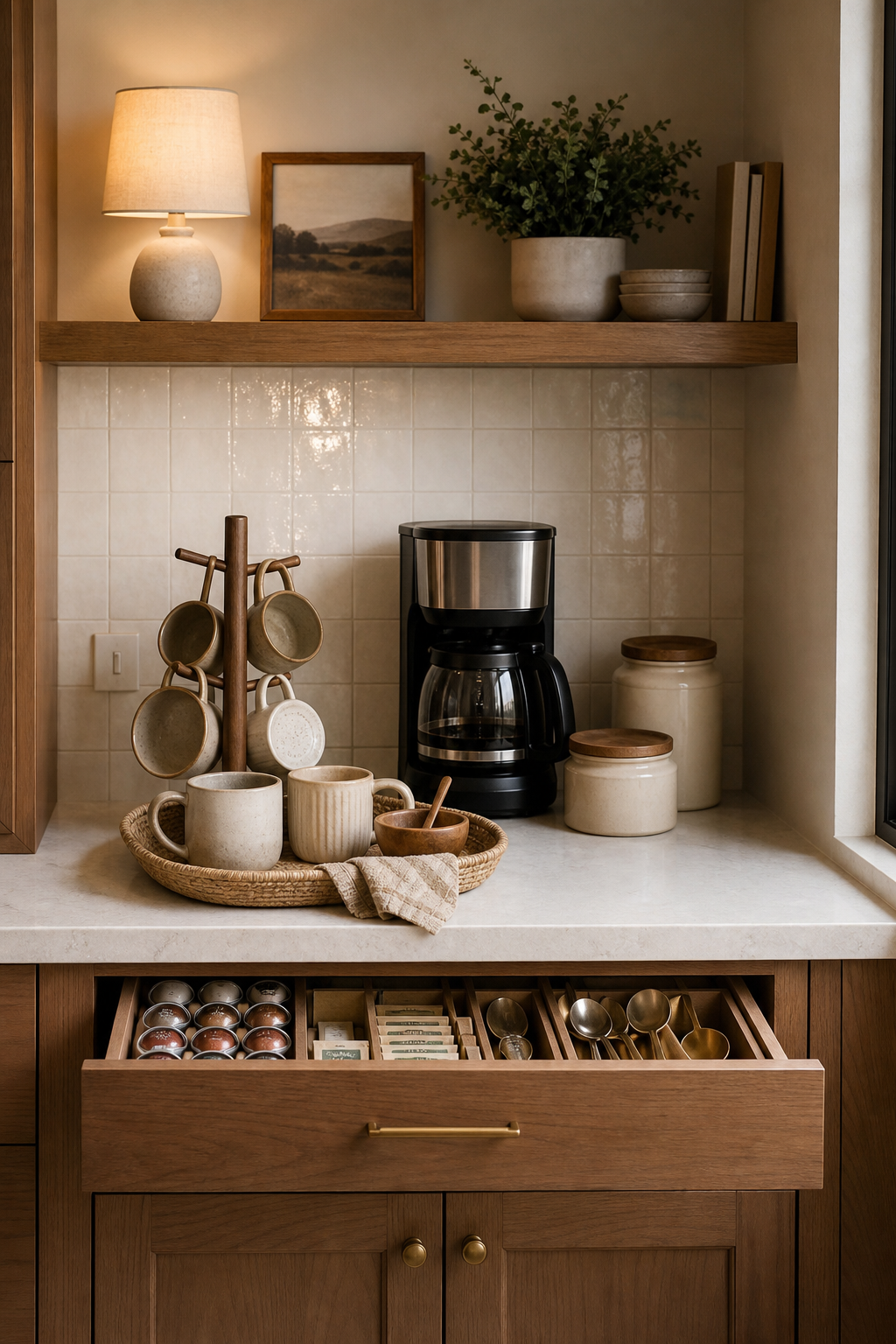
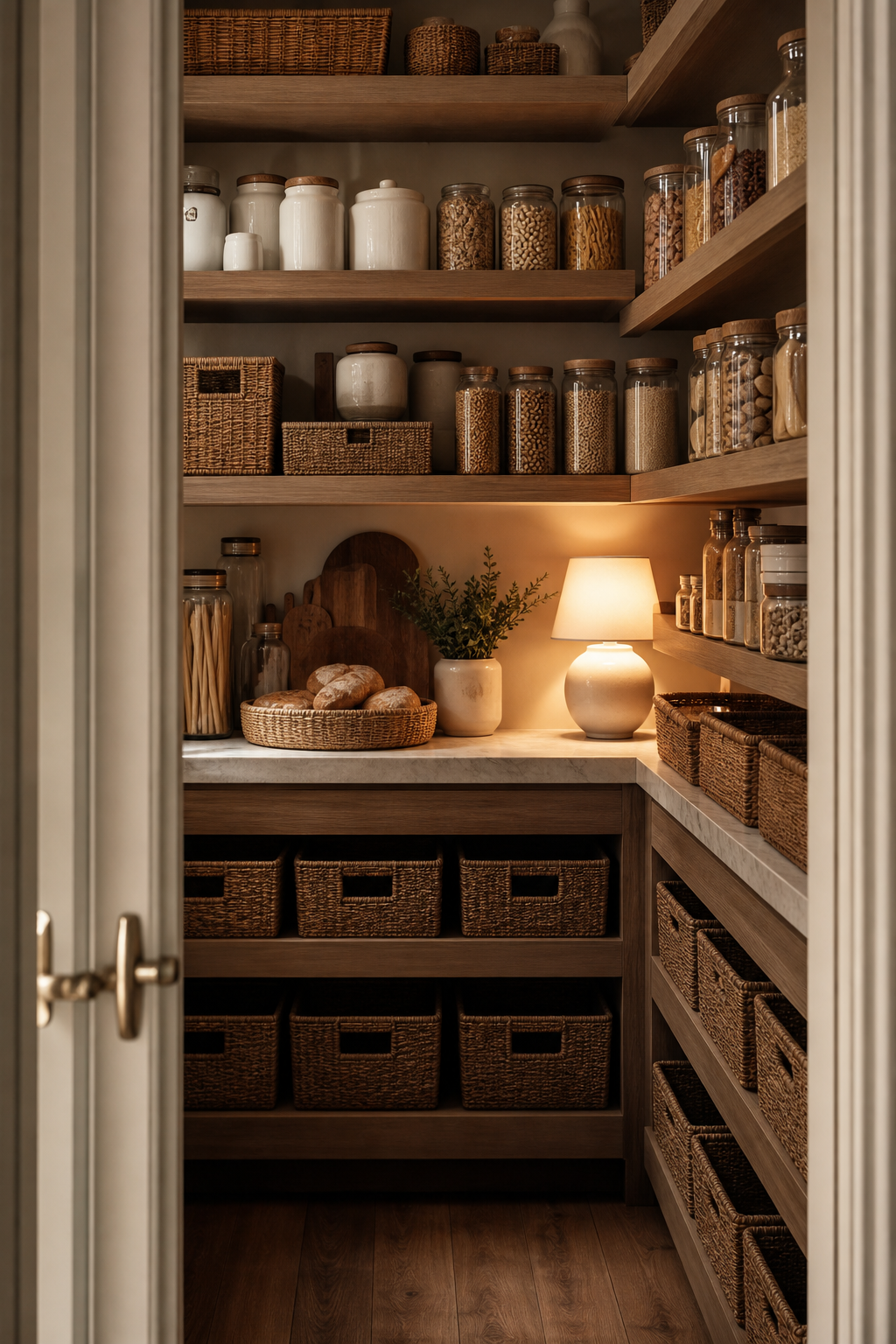
Woven baskets add texture while solving everyday storage problems. Use them for onions, linens, reusable bags, snacks, cleaning cloths, or appliance accessories. In open shelves or pantry cubbies, matching baskets make practical items look calmer. Choose sizes that slide easily and do not scrape cabinetry. Lidded baskets are useful for less attractive items, while open baskets work well for produce and towels. The warmth comes from natural fiber, but the function comes from assigning each basket a purpose. Avoid using baskets as a catchall for everything; that only hides clutter temporarily. A cozy kitchen still needs systems. When baskets are labeled discreetly or grouped by category, the room feels softer and daily cleanup becomes faster.
10. Display Cutting Boards
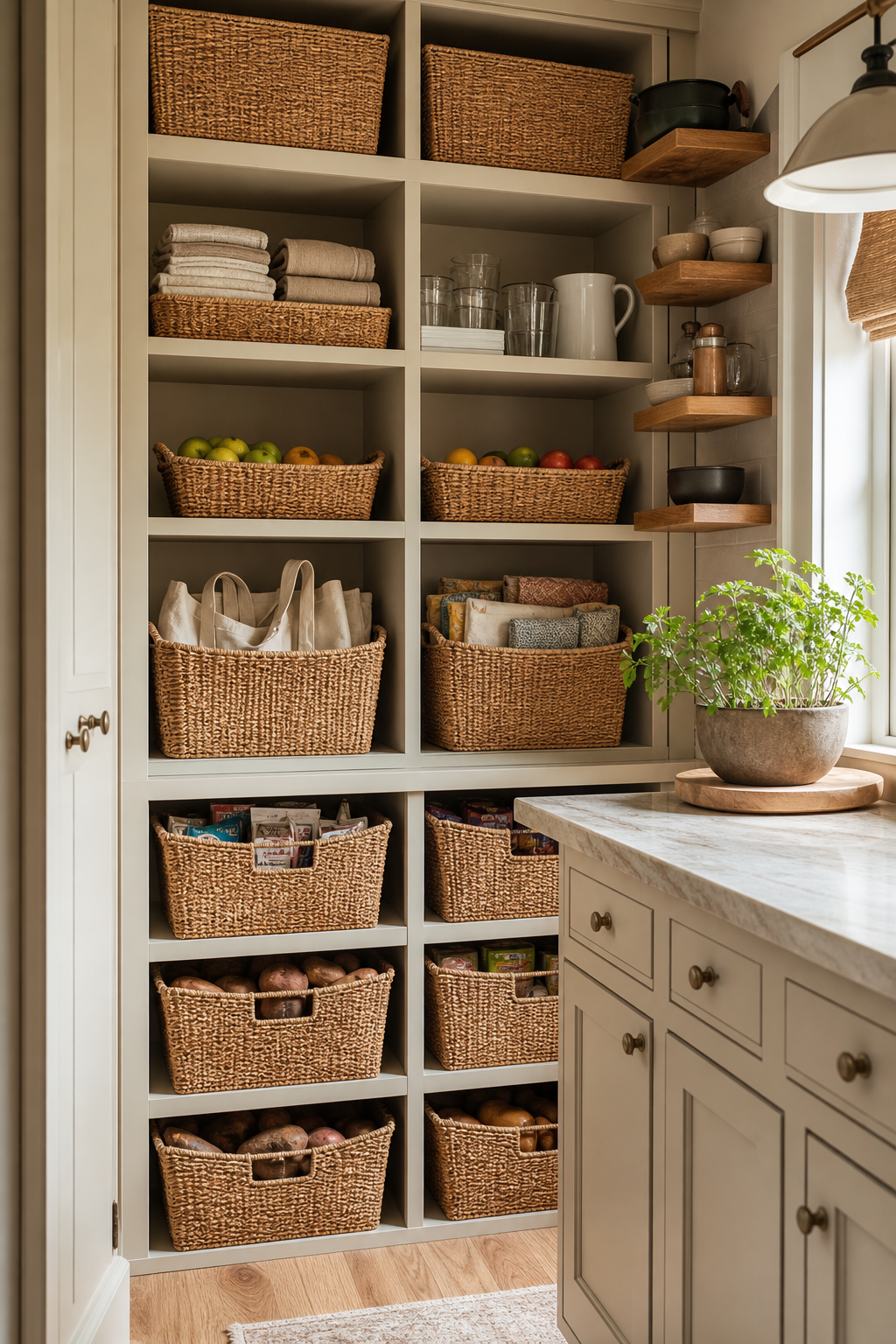
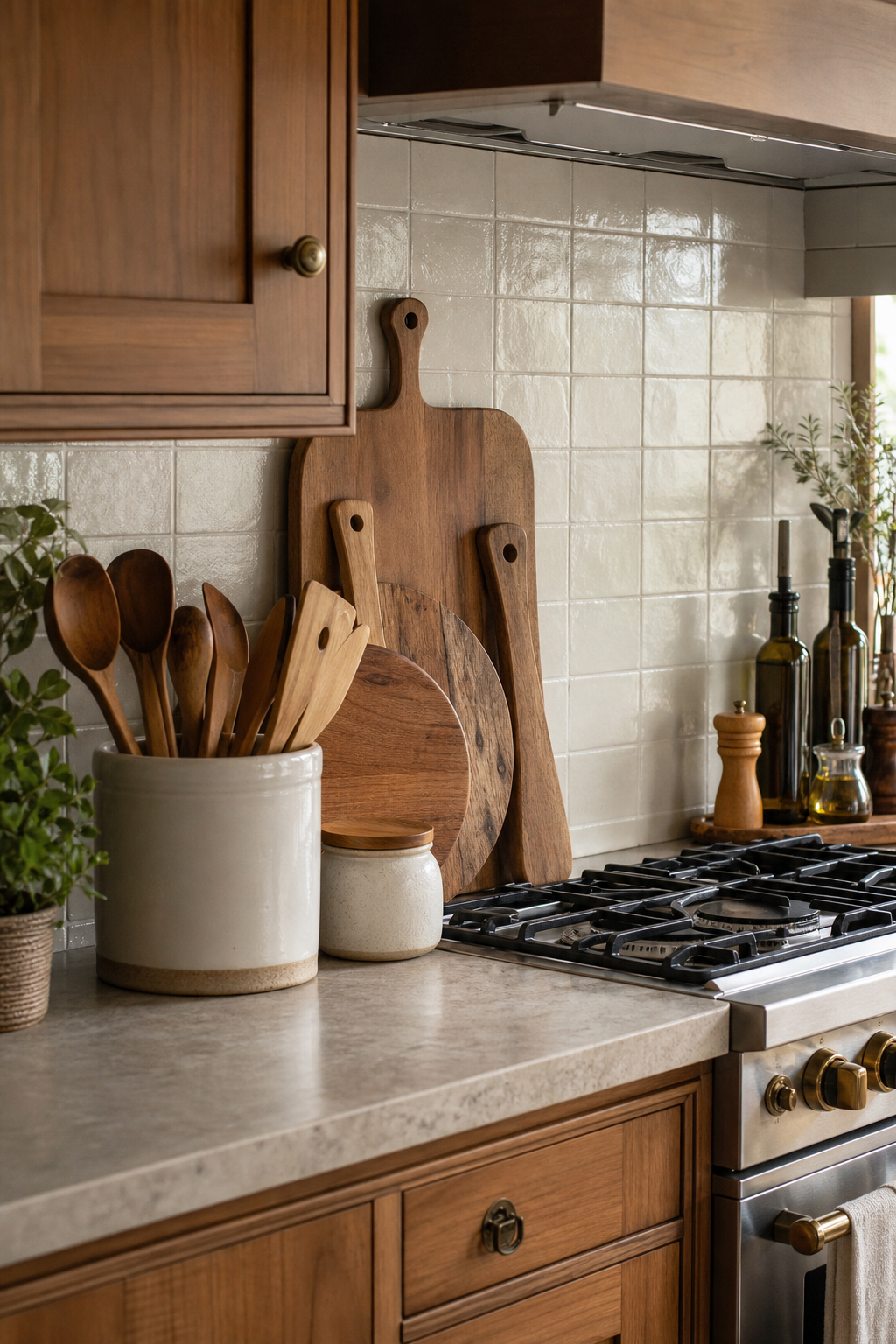
Cutting boards are practical, but they also bring warmth to a counter or backsplash. Lean two or three boards of different sizes behind the range, near the coffee station, or beside open shelves. Choose wood tones that relate to the cabinets, floor, or stools. Mix shapes carefully: one rectangular board, one round board, and one paddle board can feel collected without becoming cluttered. Keep boards that are used for heavy prep separate from purely decorative boards if food safety is a concern. The look works because it references real cooking rather than staged decoration. Add a crock of wooden utensils or a ceramic salt jar nearby, and a plain counter suddenly feels more layered, useful, and inviting.
11. Comfortable Counter Stools
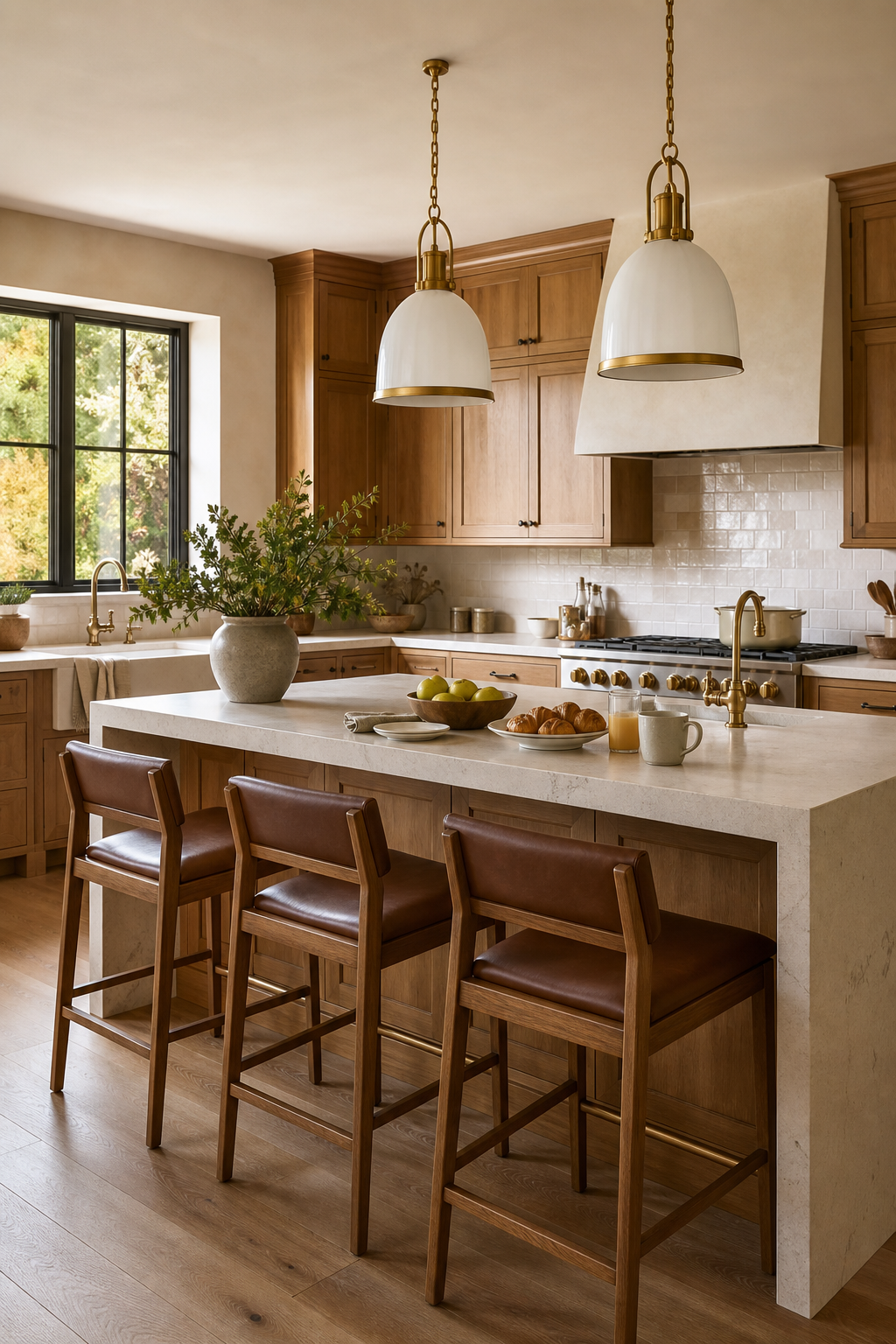
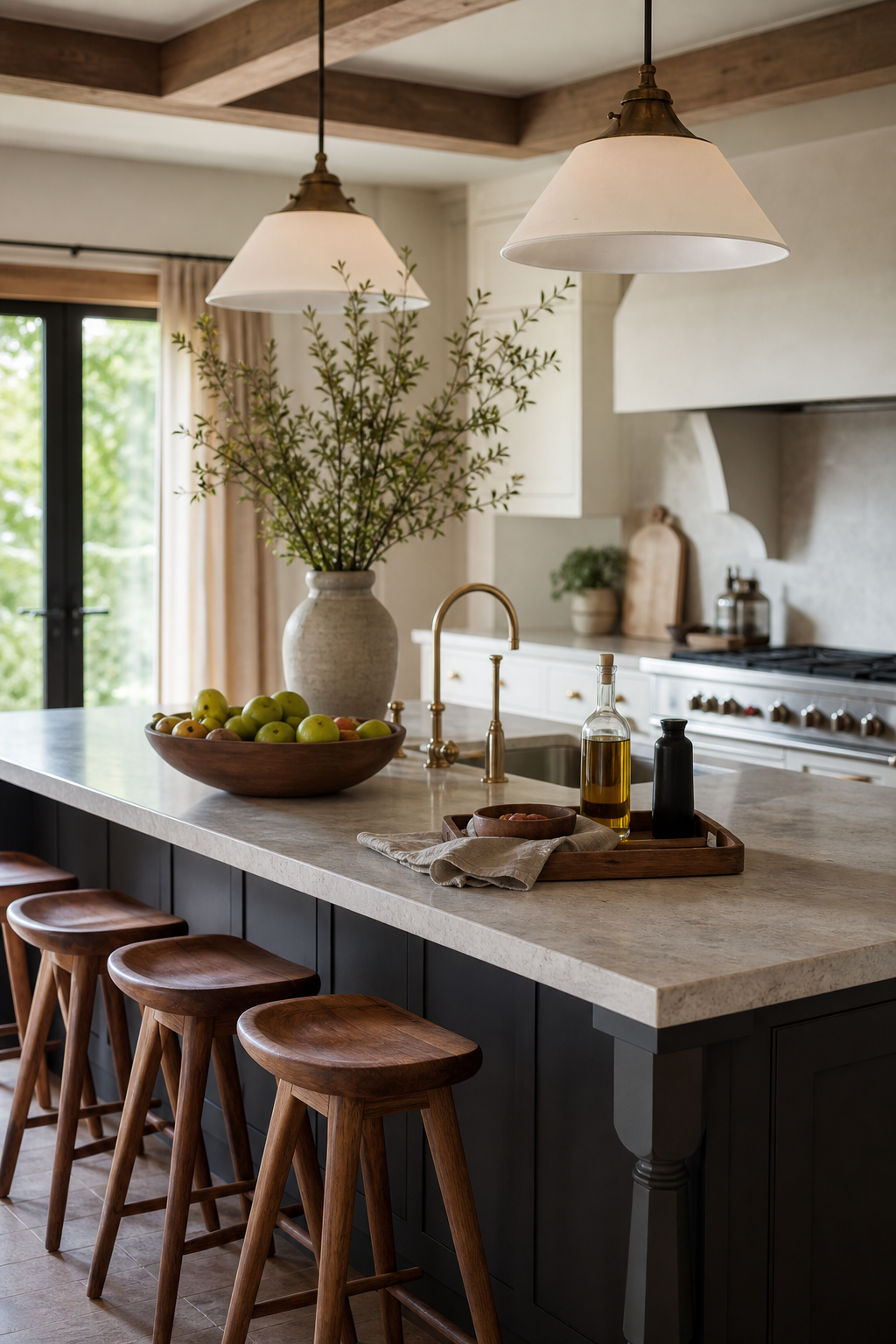
Counter stools shape how people gather in the kitchen. For a cozy functional home, choose stools with supportive backs, footrests, and materials that can handle everyday use. Wood frames, leather seats, rush seats, or performance fabric all add warmth if the proportions are right. Make sure there is enough clearance between stools so people are not bumping elbows, and choose a height that suits the counter. Swivel stools can be convenient, but simple stationary stools often look calmer. If the kitchen is visually busy, choose stools in one clean material. If the kitchen is minimal, stools can introduce texture. Comfortable seating makes the island more than a prep surface; it becomes a place for breakfast, conversation, and casual help with dinner.
12. A Pot Rail Or Peg Rail
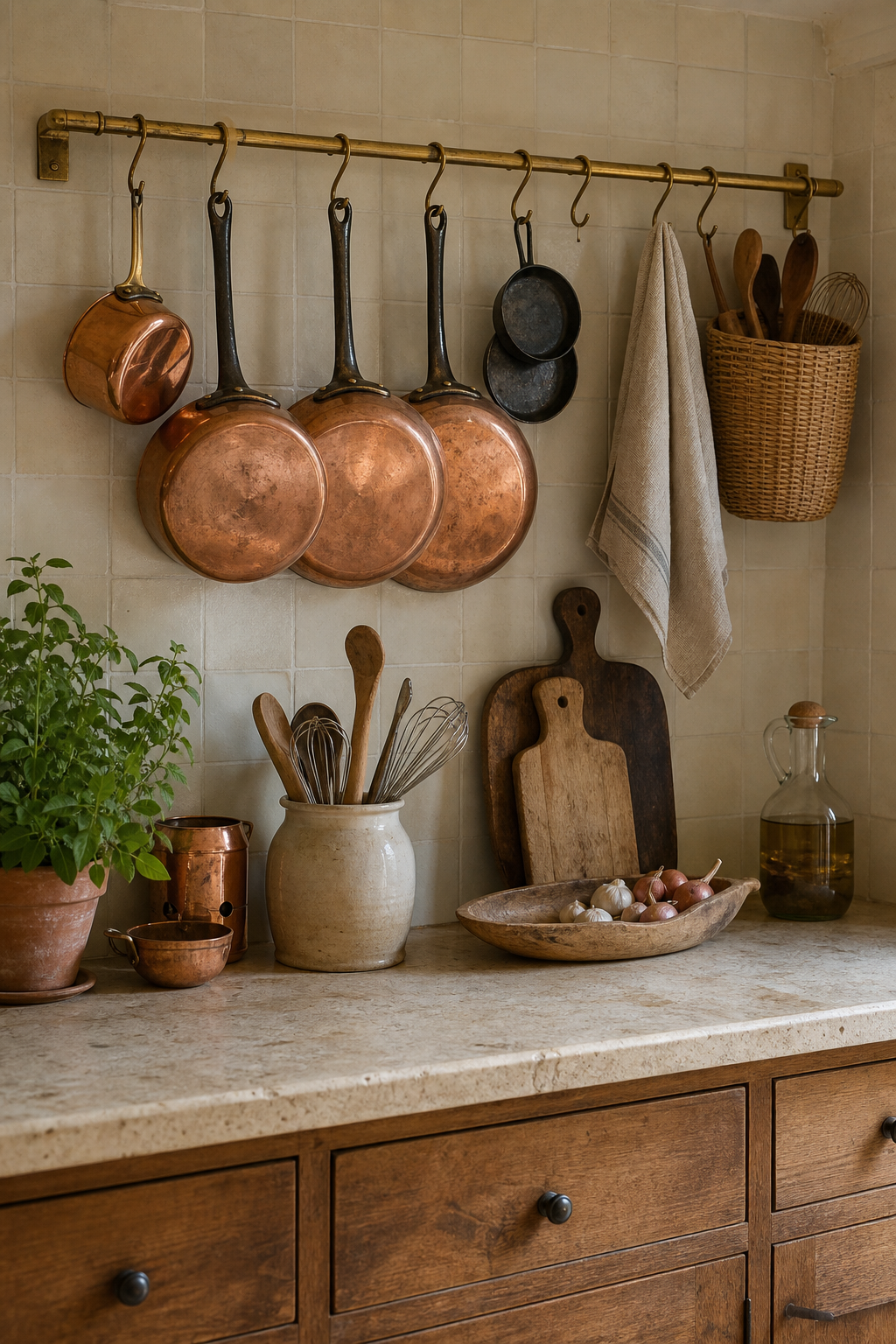
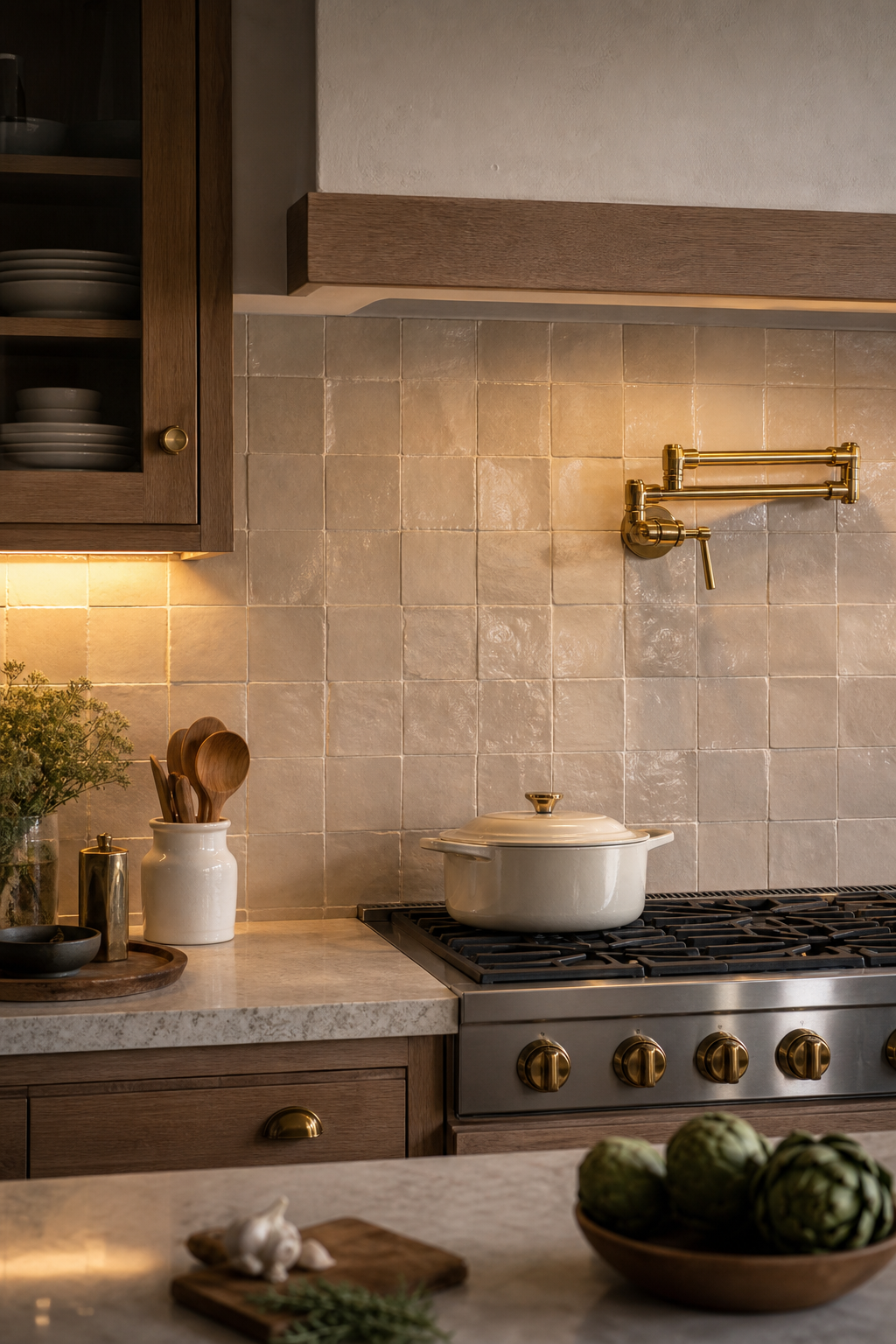
A pot rail or peg rail adds utility while giving the kitchen a relaxed, collected feeling. Use it for copper pans, small skillets, utensils, towels, or baskets, but keep the arrangement edited. Hang only what you use often or what looks good enough to be visible every day. A brass rail can warm up tile, while black iron feels classic and grounded. Peg rails work especially well in cottage, farmhouse, and Scandinavian kitchens because they combine storage with rhythm. Install rails where they will not interfere with cooking or cabinet doors. The functional benefit is easy access; the cozy benefit is that the kitchen looks active and lived in. It is a small detail that suggests real meals happen here.
13. Creamy Stone Counters
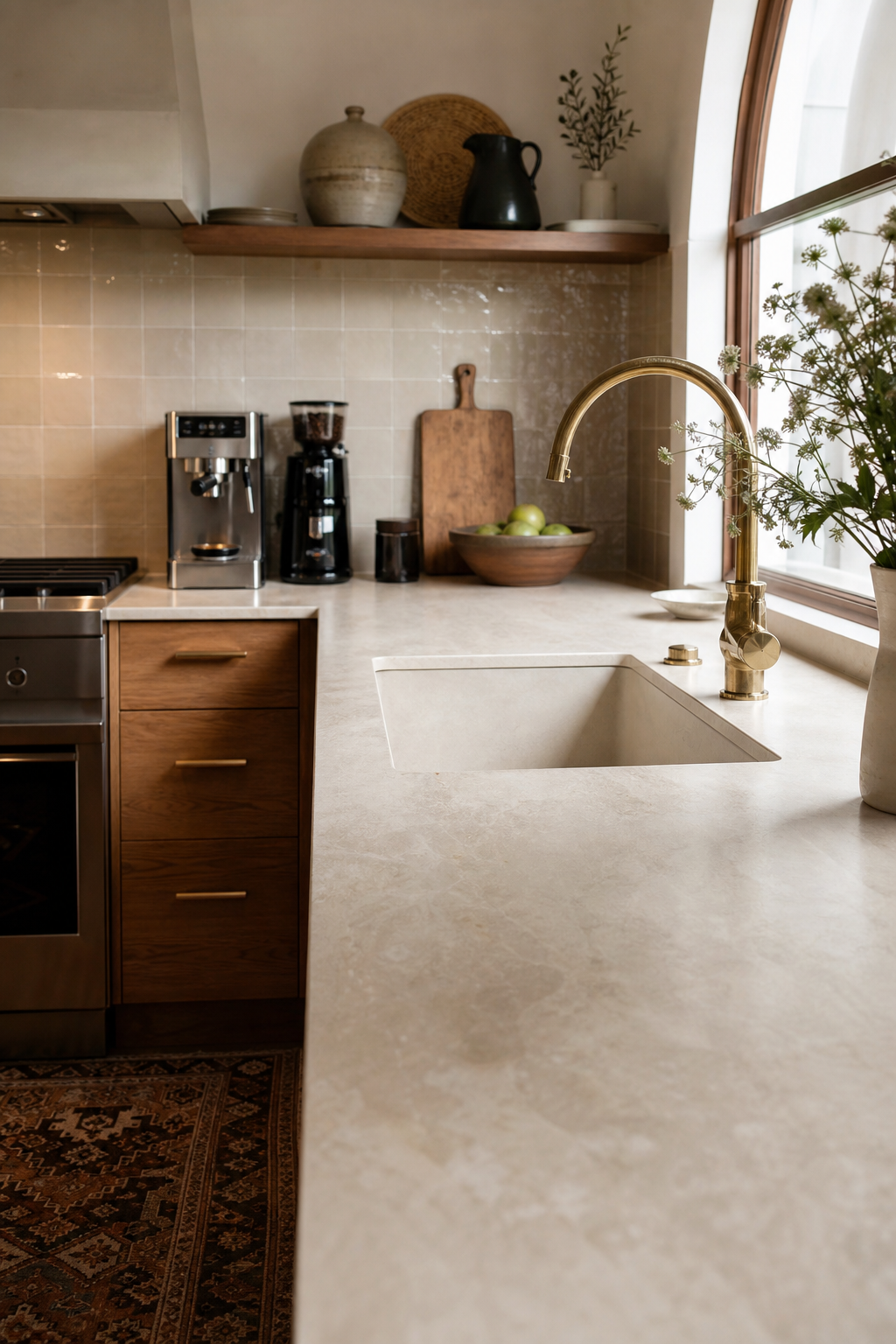
Countertops influence the mood of a kitchen more than many people expect. Creamy stone or stone-look surfaces feel warmer than stark white while still reflecting light. Look for subtle veining, honed finishes, or soft beige undertones. Quartzite, marble, limestone, porcelain, and quartz can all work depending on budget and maintenance needs. The best choice is one that suits how you cook. A busy household may need a more forgiving engineered surface, while a careful cook may enjoy natural stone patina. Pair creamy counters with wood, painted cabinets, handmade tile, or brass for extra warmth. Keep small appliances grouped so the counter can breathe. A cozy kitchen is not cluttered; it is inviting because its surfaces look beautiful and usable.
14. A Pantry That Feels Calm
A functional pantry makes the whole kitchen feel calmer. Whether you have a walk-in pantry, cabinet pantry, or a few shelves, group items by use: breakfast, baking, snacks, dinner staples, and refills. Use clear containers only where they truly help; baskets and bins can hide visual clutter better. Keep heavy items low and frequently used items at eye level. Warmth can come from wood shelves, woven bins, ceramic jars, or a small lamp if the pantry is open. Avoid decanting everything just for appearance if it makes life harder. The goal is not perfection, but ease. A pantry that is simple to maintain supports better cooking, fewer duplicate purchases, and a kitchen that feels less chaotic even on busy nights.
15. A Warm Backsplash
A backsplash can add coziness through color, texture, and handmade variation. Zellige, glazed ceramic, tumbled stone, brick, beadboard, or warm marble all create more depth than a flat plain surface. If you cook often, choose something that can be cleaned easily behind the range. Warm white, cream, taupe, sage, and clay are versatile choices that will not overwhelm the room. Handmade tile looks best when the lighting grazes it gently, showing slight irregularities. If the kitchen already has strong cabinets or counters, keep the backsplash quieter. If the kitchen is simple, let the backsplash be the texture moment. The right backsplash makes the room feel finished and tactile while still protecting the wall where real cooking happens.
16. A Sink Zone That Works
The sink area is one of the busiest parts of the kitchen, so making it functional will make the room feel better every day. Choose a faucet with enough height and reach for real cleanup, then keep soap, brush, sponge, and towels contained on a tray or in a small caddy. A washable rug or runner beneath the sink softens the standing zone. If the window is above the sink, keep the sill simple with a plant, small lamp, or ceramic vessel. Avoid crowding this area with decor that gets splashed. A cozy sink zone should feel clean, not precious. When daily tools are attractive and easy to reach, washing dishes becomes less irritating and the whole kitchen looks more composed.
17. Functional Island Styling
An island can become cluttered quickly because it attracts mail, dishes, laptops, and groceries. For a cozy but functional kitchen, style the island with items that are easy to move. A large bowl of fruit, a vase with branches, a tray with salt and oil, or a stack of linen napkins can add warmth without blocking prep space. Keep at least half the island clear for cooking, serving, or homework. If the island has shelves, use baskets or cookbooks neatly rather than random overflow. Lighting above the island should be warm and proportionate. The island is often the social heart of the kitchen, so it should invite use, not feel like a fragile display. Practical styling keeps it beautiful and ready.
18. Mixed Metals With Warmth
Mixed metals can make a kitchen feel layered, but they need a simple plan. Choose one dominant metal and one supporting metal. For example, aged brass hardware with black lighting, or polished nickel plumbing with bronze shelf brackets. Repeat each finish at least twice so nothing feels accidental. Warm metals are especially cozy when paired with wood, cream tile, and stone counters. Keep appliance finishes in mind; stainless steel already counts as a metal in the room. Avoid mixing too many shiny finishes in a small kitchen. The goal is quiet contrast, not visual competition. When mixed metals are controlled, the kitchen feels collected over time, with enough depth to look personal and enough structure to stay polished.
19. Everyday Items Within Reach
The coziest kitchens are the ones that support real routines. Keep everyday items where they are easiest to use: mugs near the coffee maker, plates near the dishwasher, oils near the prep zone, towels near the sink, and breakfast supplies together. This sounds simple, but it changes how the room feels. A kitchen becomes calmer when you stop crossing the room for every small task. Use drawers, shelves, crocks, trays, and baskets to create zones, then edit anything that does not belong. The decor should serve the routine, not interrupt it. A warm functional kitchen is beautiful because it works gracefully. When the tools you need are close at hand and attractively contained, the room feels welcoming from morning coffee to late dinner cleanup.
A cozy kitchen should make real life easier, not just prettier. Start with the choices you touch every day: lighting, counters, storage, rugs, seating, and the zones where cooking actually happens. Then add warmth through wood, textiles, ceramics, and edited display. When comfort and function support each other, the kitchen becomes the place everyone naturally wants to return to.