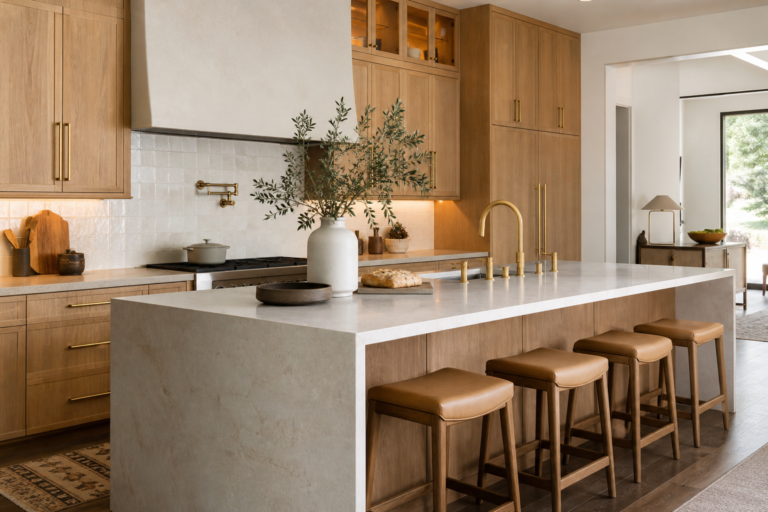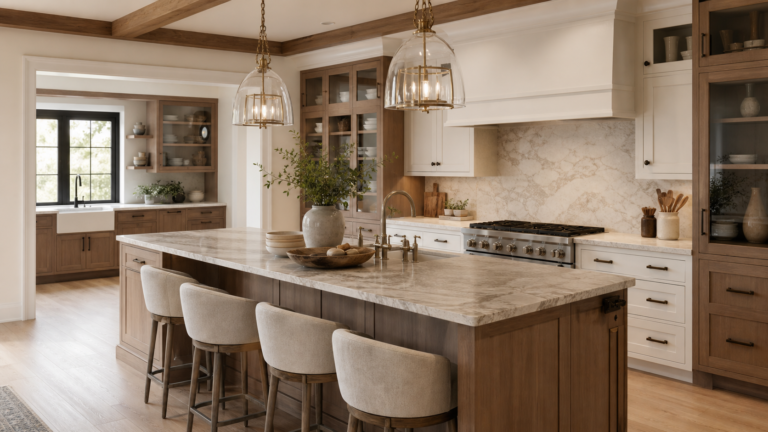
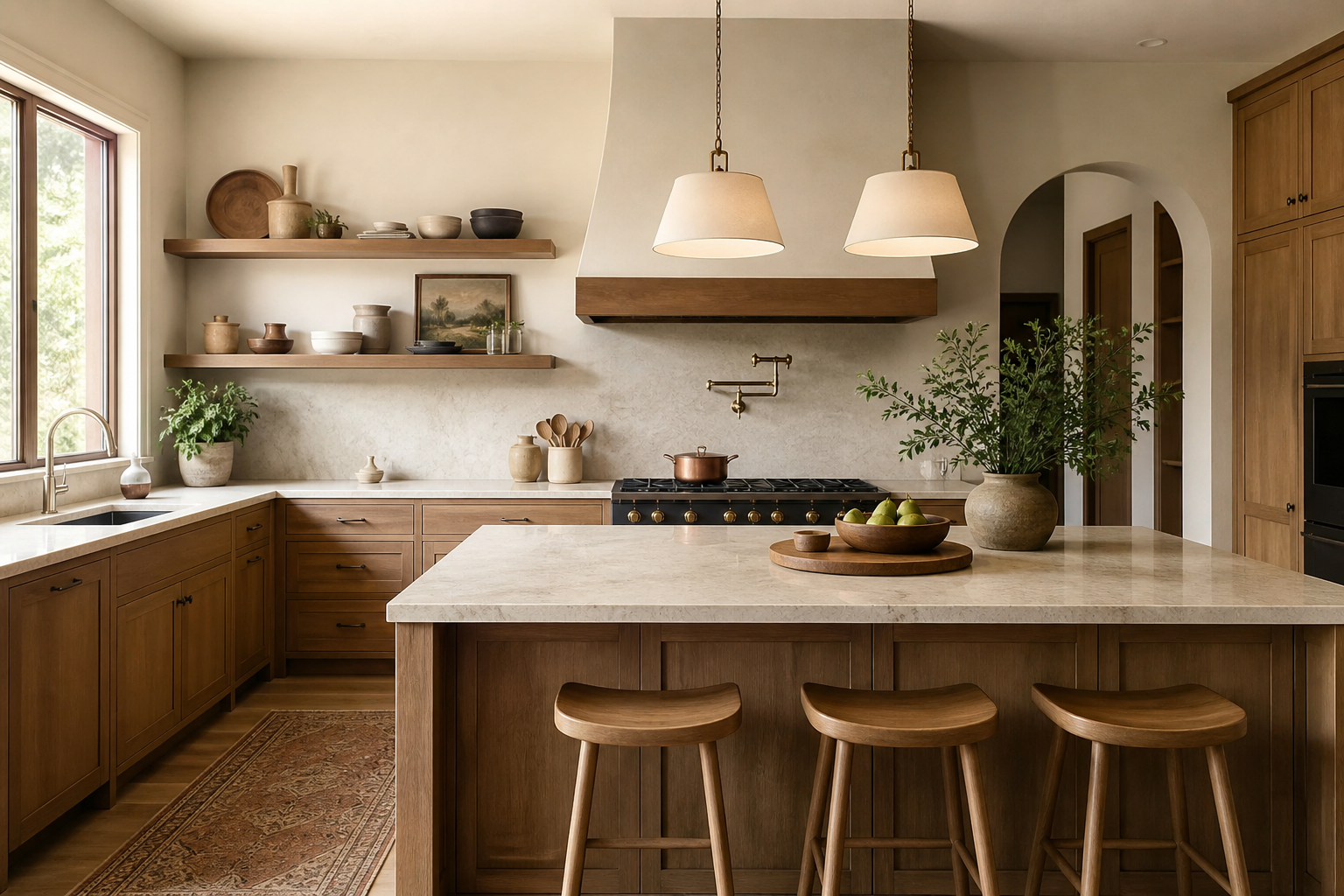
25 Simple Kitchen Design For A Warm Functional Home
A simple kitchen does not have to feel plain. The best versions are warm, edited, and highly useful, with every cabinet, counter, light, and finish helping the room work better. Instead of chasing complicated details, simple kitchen design focuses on clear circulation, durable materials, easy storage, and a palette that feels calm in morning light and evening cleanup. These ideas are practical enough for everyday cooking but polished enough to make the kitchen feel considered, welcoming, and connected to the rest of the home.
1. Start With A Clear Work Triangle
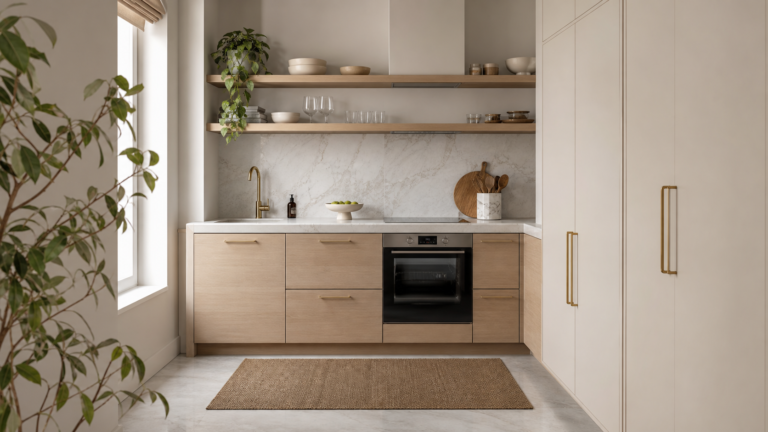
A simple kitchen begins with movement. Keep the sink, range, and refrigerator close enough that cooking feels efficient, but not so tight that two people collide. In a small room, this may mean a compact galley or L-shaped layout. In a larger kitchen, an island can bridge the distance between storage and prep. The goal is not a perfect textbook triangle; it is a route that feels natural when you rinse vegetables, reach for a pan, and plate dinner. Once the main work path is clear, every other design decision becomes easier and the kitchen instantly feels calmer. Measure the route with cabinet doors open, because real clearance matters more than a pretty plan.
2. Choose Flat Or Shaker Cabinet Doors
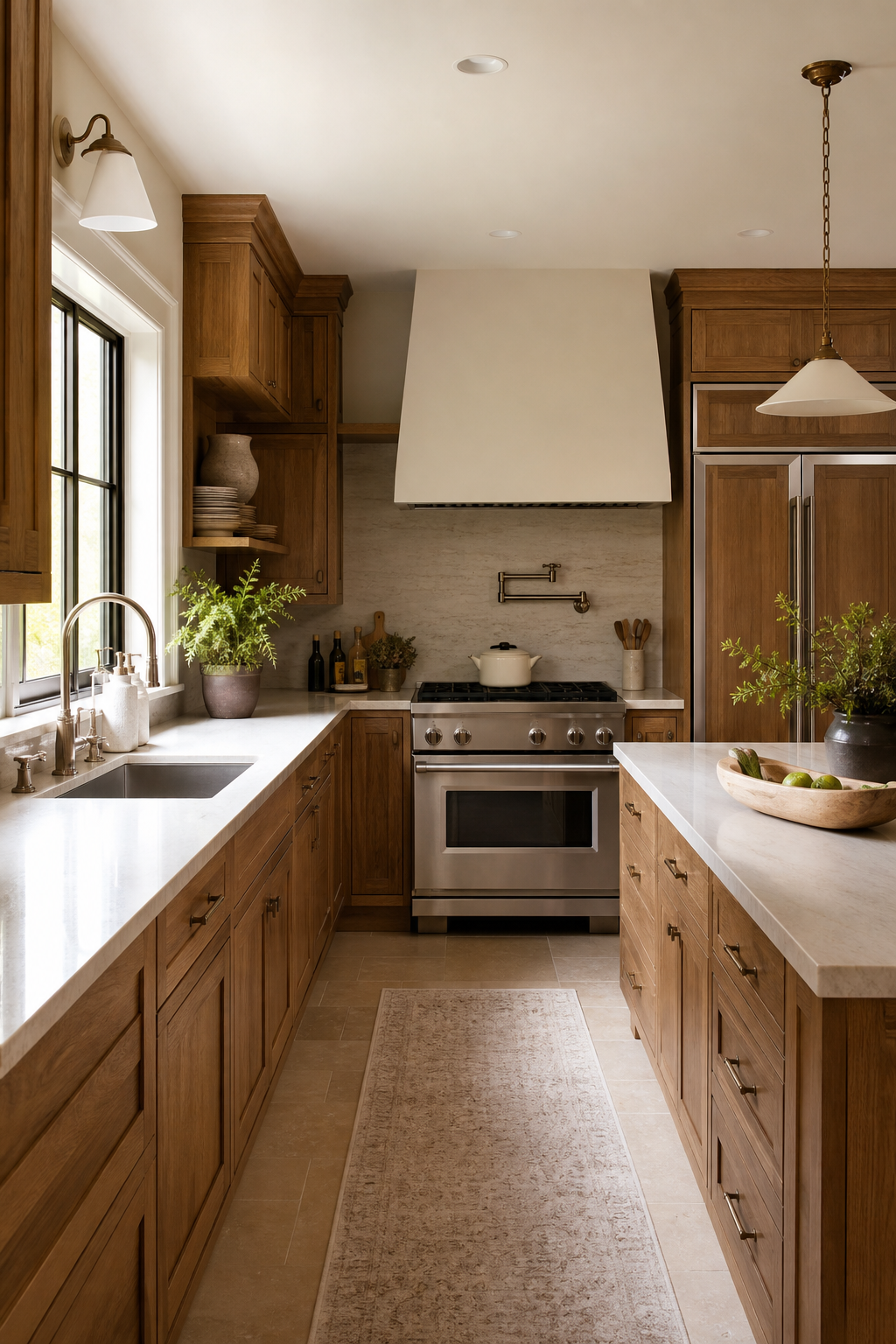
Cabinet doors set the tone for the whole kitchen, so simple profiles are a smart place to begin. Flat slab doors feel modern and quiet, while slim Shaker doors add just enough structure for a classic home. Avoid heavy molding if you want the room to look clean and easy to maintain. Warm wood, mushroom paint, soft white, or muted green all work beautifully when the profile is restrained. The simplicity lets hardware, tile, and natural materials breathe. It also keeps the kitchen flexible, which matters when you want a design that still feels good years later. That restraint also makes small seasonal changes feel intentional instead of chaotic.
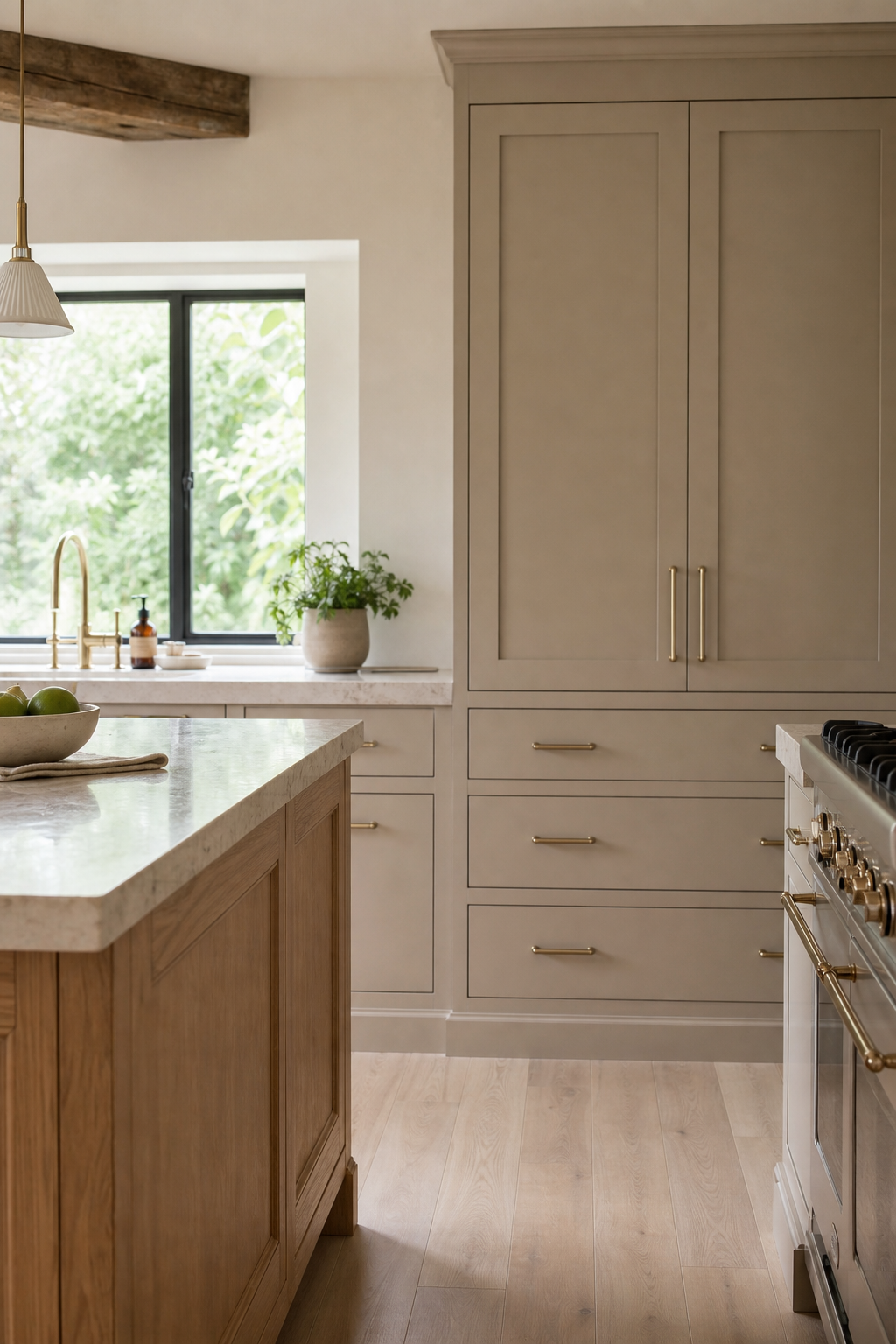
3. Use Warm Neutrals Instead Of Stark White
White kitchens can be beautiful, but stark white often feels colder than expected. For a warmer simple kitchen, look for creamy whites, clay, oatmeal, greige, putty, or pale taupe. These colors still keep the room bright, but they soften shadows and pair easily with wood, stone, and brass. Warm neutrals are especially useful in kitchens with northern light or limited windows. They also hide everyday dust and fingerprints better than brilliant white. The result is a room that feels clean without feeling clinical, which is exactly where simple design becomes more livable. Test samples beside your flooring and counters before choosing the final shade.
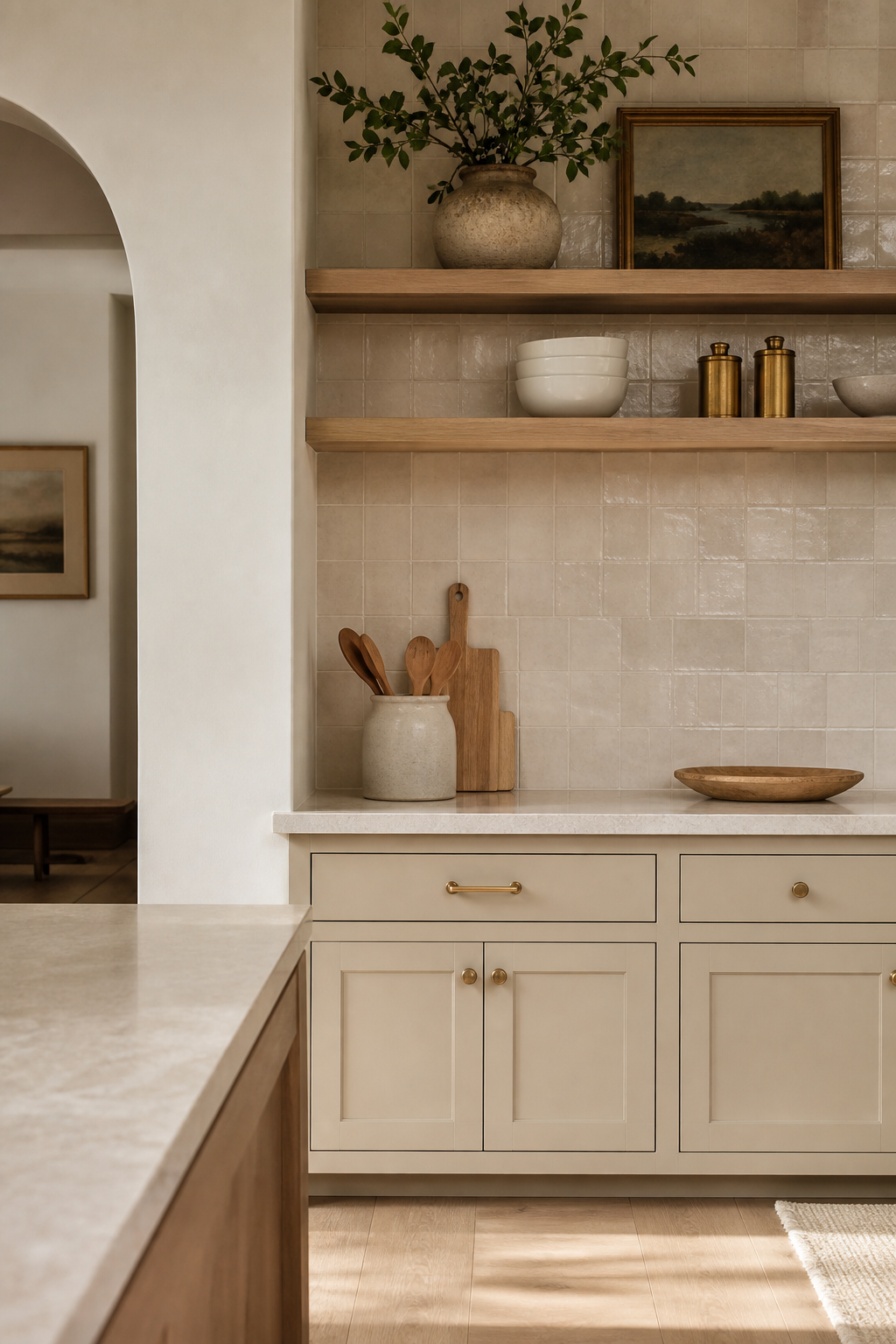
4. Keep Countertops Mostly Clear
Clear counters make even a modest kitchen feel bigger and more functional. Keep out only the pieces you use every day, such as a coffee maker, utensil crock, cutting board, or fruit bowl. Everything else should have a real home in a drawer, cabinet, pantry, or appliance garage. This does not mean the room has to feel empty. A simple tray, bowl, or lamp can add warmth while still containing visual clutter. When counters are open, meal prep becomes easier, cleanup feels faster, and the kitchen looks more intentional without adding a single expensive finish. A weekly reset keeps the system honest without turning the kitchen into a showroom.
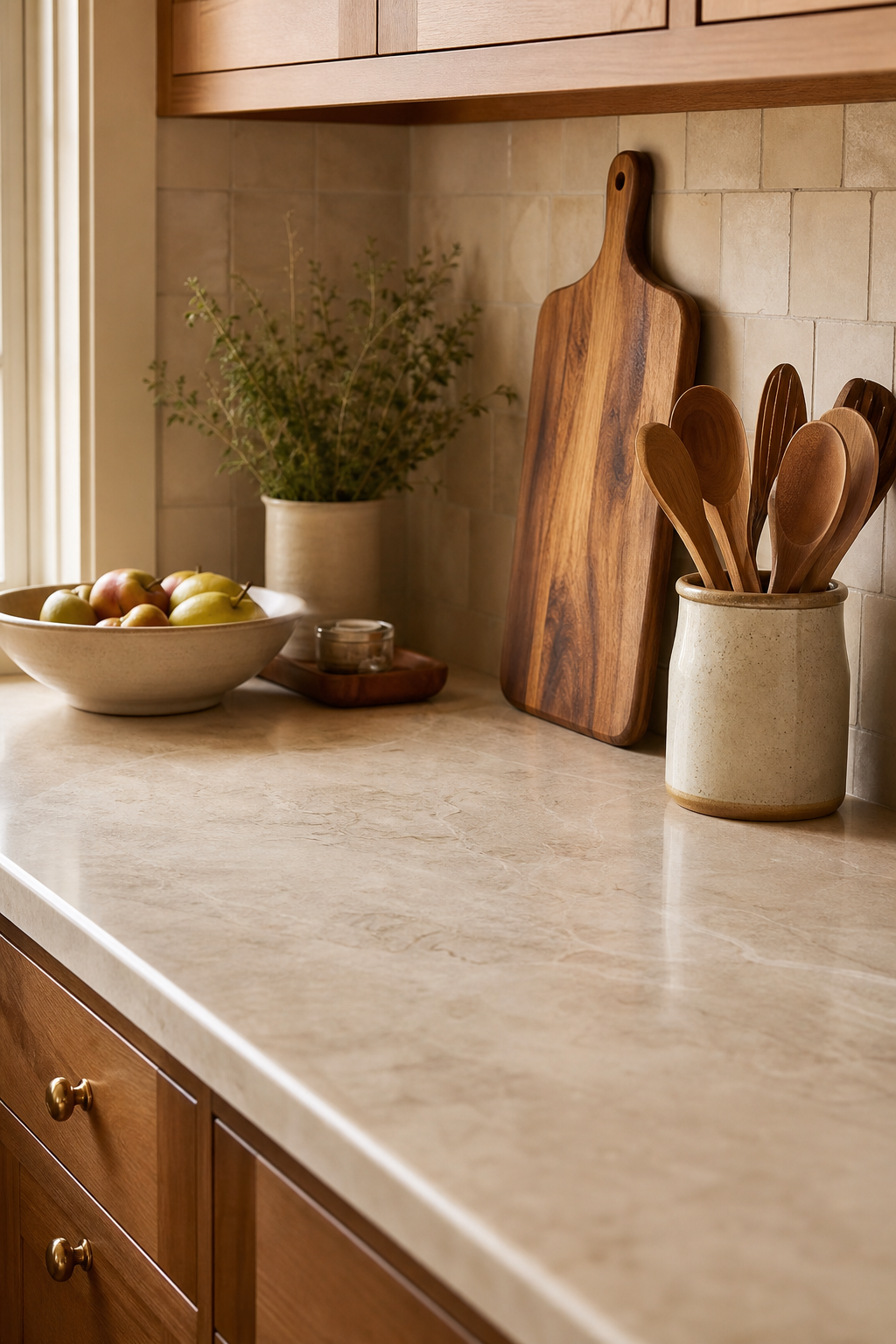
5. Add One Efficient Island
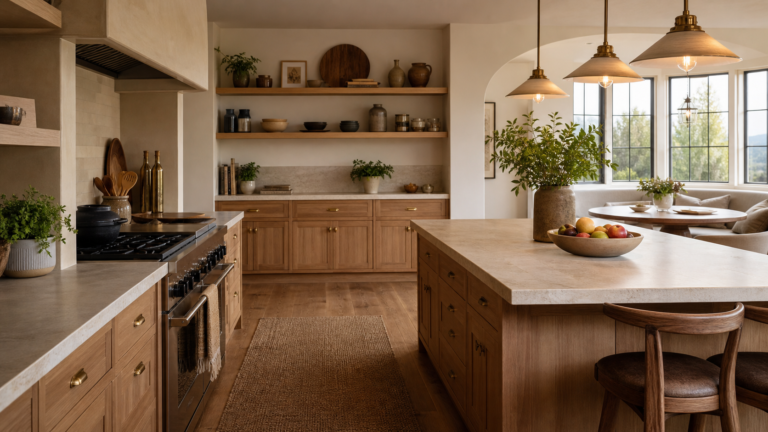
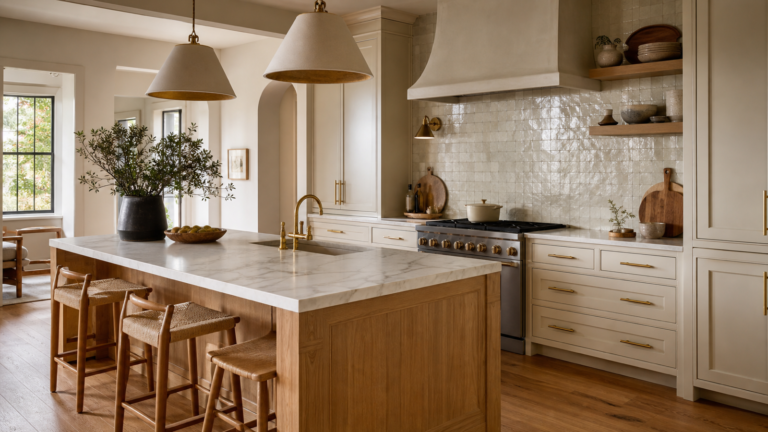
An island should make the kitchen easier, not simply fill the floor. In a simple design, choose an island with enough surface for prep, a few deep drawers, and comfortable overhang if seating is needed. Leave generous walkways on every side so drawers and appliances can open without awkward shuffling. A warm wood base can soften painted cabinets, while a stone top keeps the island hardworking. If the room is small, a narrow movable worktable may be better than a bulky built-in. The right island becomes a quiet center for chopping, serving, homework, and conversation. Before building, tape the footprint on the floor and walk around it during a normal cooking routine.
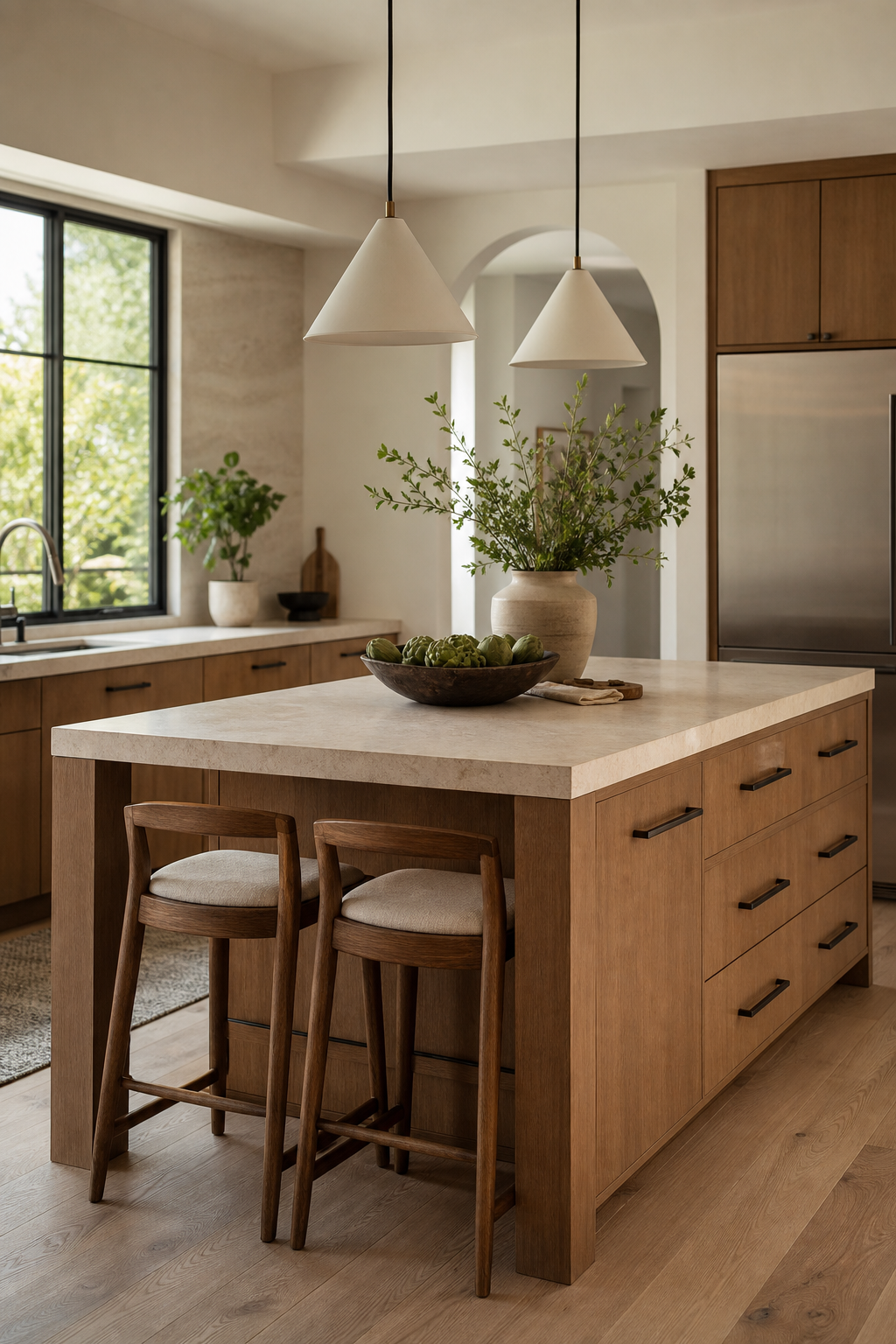
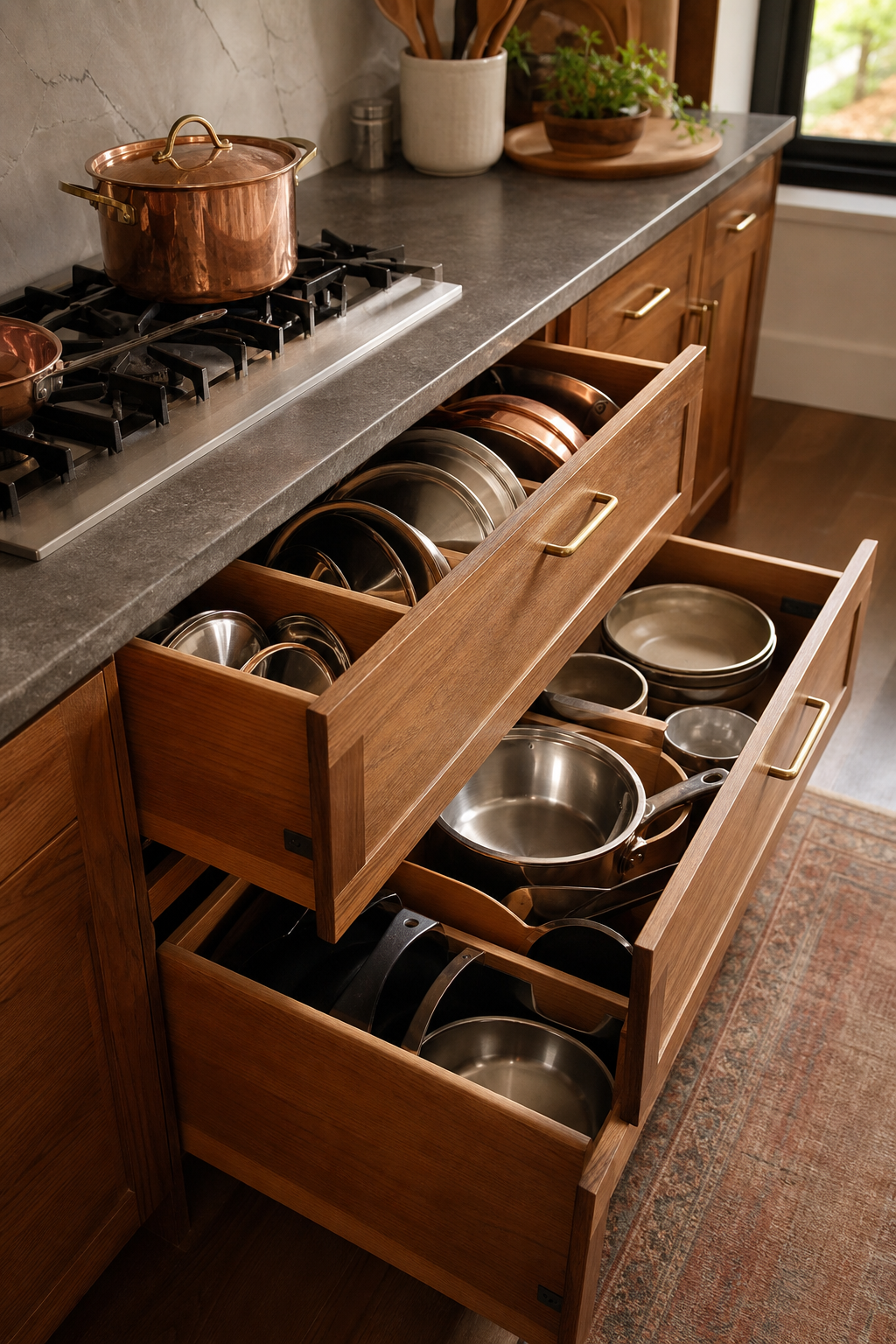
6. Install Deep Drawers For Everyday Tools
Deep drawers are one of the most practical choices in a simple kitchen. They make pots, pans, mixing bowls, containers, and small appliances easier to reach than standard lower cabinets. Add dividers or peg systems so stacks do not slide around every time the drawer opens. If you cook often, place deep drawers near the range for pans and near the prep zone for bowls and tools. This kind of storage is not flashy, but it changes how the room feels every day. A kitchen looks simpler when the things you use most are easy to put away. Soft-close hardware also helps heavy drawers feel refined rather than clunky.
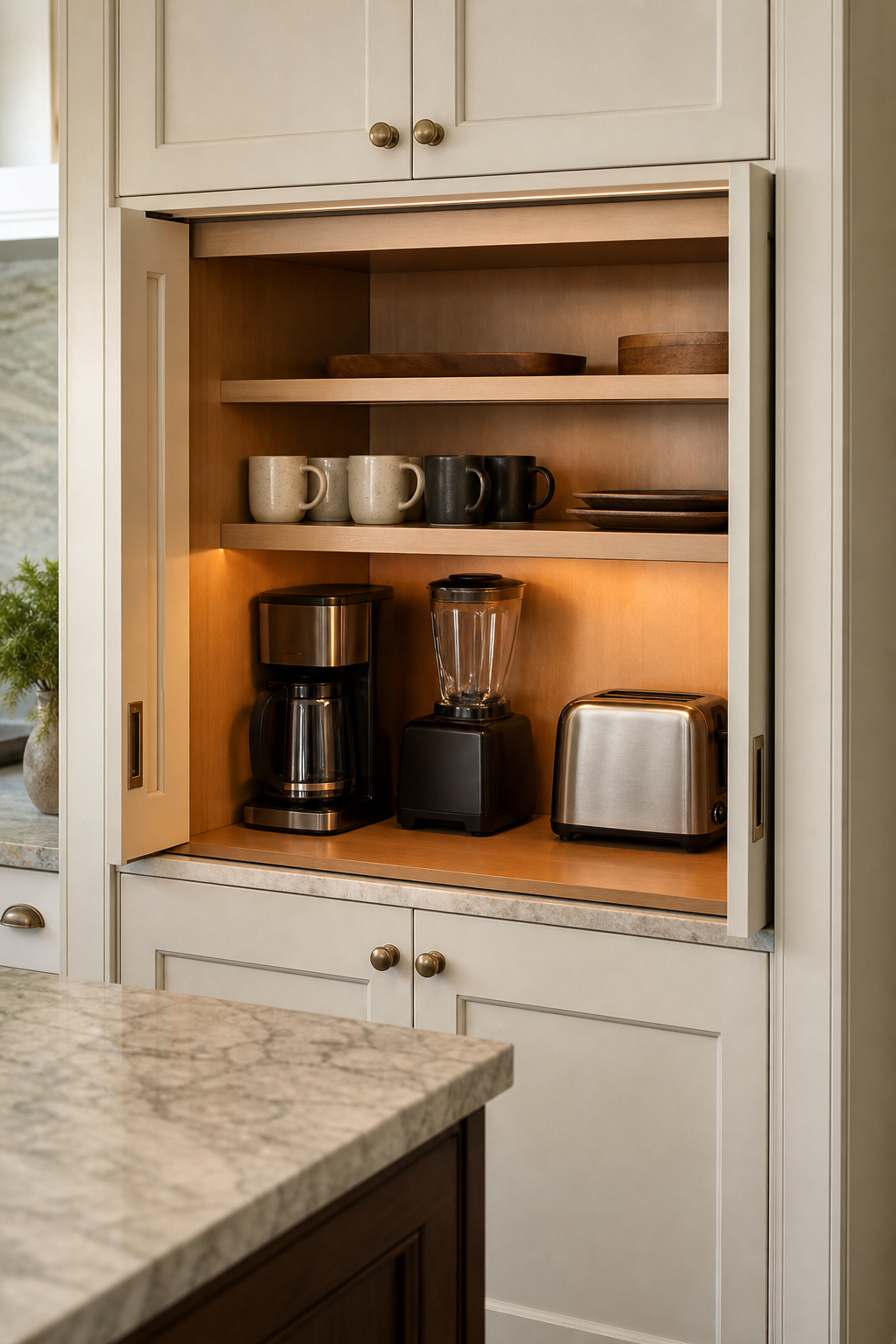
7. Build A Small Appliance Garage
Toasters, blenders, mixers, and coffee equipment can quickly make a simple kitchen feel crowded. An appliance garage keeps useful tools close while hiding the visual clutter when they are not in use. It can be as elaborate as a lift-up cabinet or as simple as a counter-height cupboard with pocket doors. Place outlets inside so appliances are ready without dragging cords across the counter. Choose the location based on habit: coffee near mugs, toaster near bread storage, mixer near baking supplies. This small detail supports a cleaner kitchen without asking you to live unrealistically. This is especially helpful in open kitchens where appliances are visible from nearby rooms.
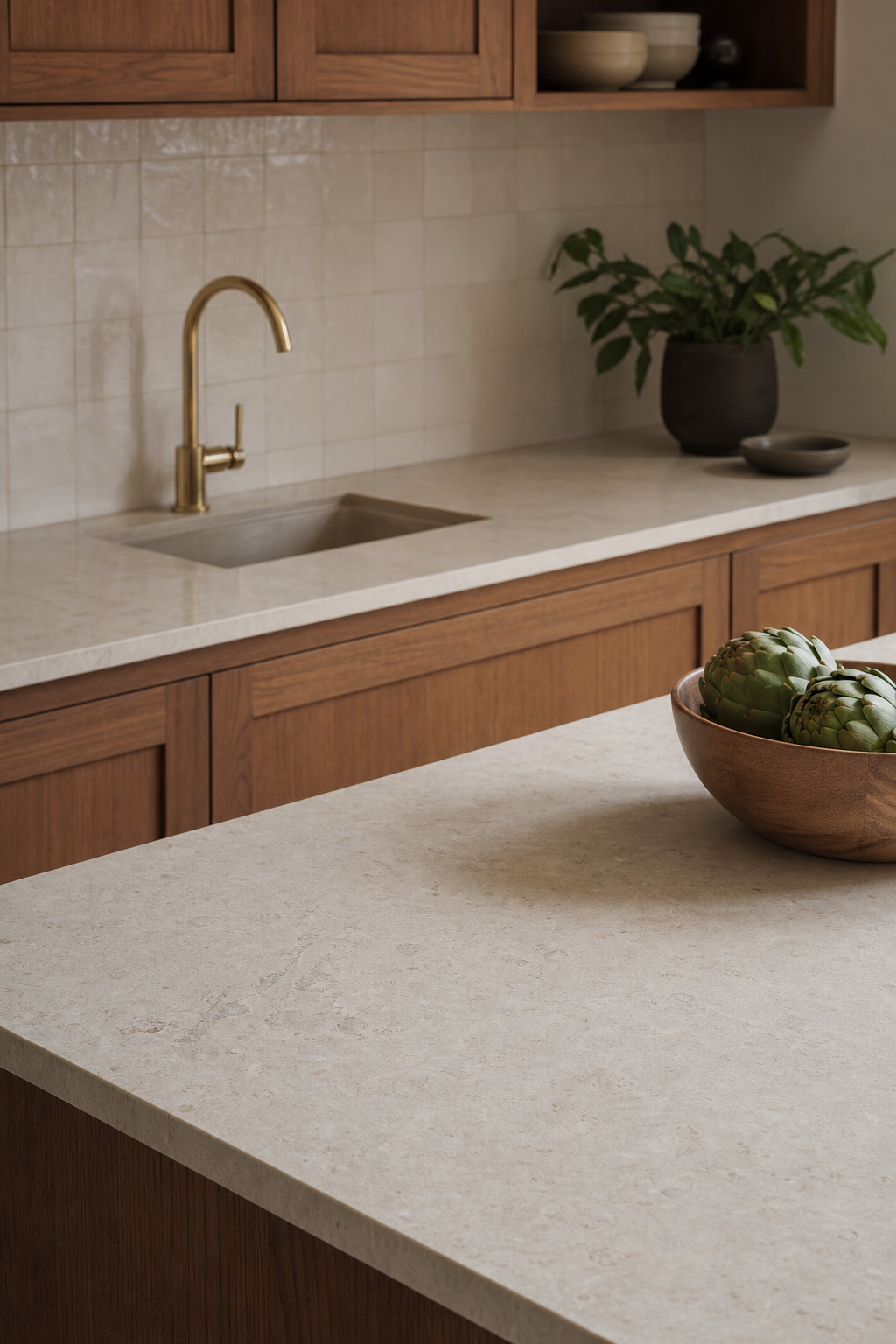
8. Pick A Durable Honed Countertop
Simple kitchen design depends on materials that age well. Honed quartz, quartzite, marble-look porcelain, soapstone, and warm limestone-style surfaces can all create a soft, practical counter. A honed finish reduces glare and feels more relaxed than a high polish. If you choose natural stone, understand the maintenance before committing; if you want lower upkeep, engineered surfaces may be better. The best countertop is not just beautiful in photos. It should handle coffee cups, dinner prep, baking days, and quick wipe-downs without making the kitchen feel too precious to use. Ask for large samples, then view them beside cabinet colors in both morning and evening light.
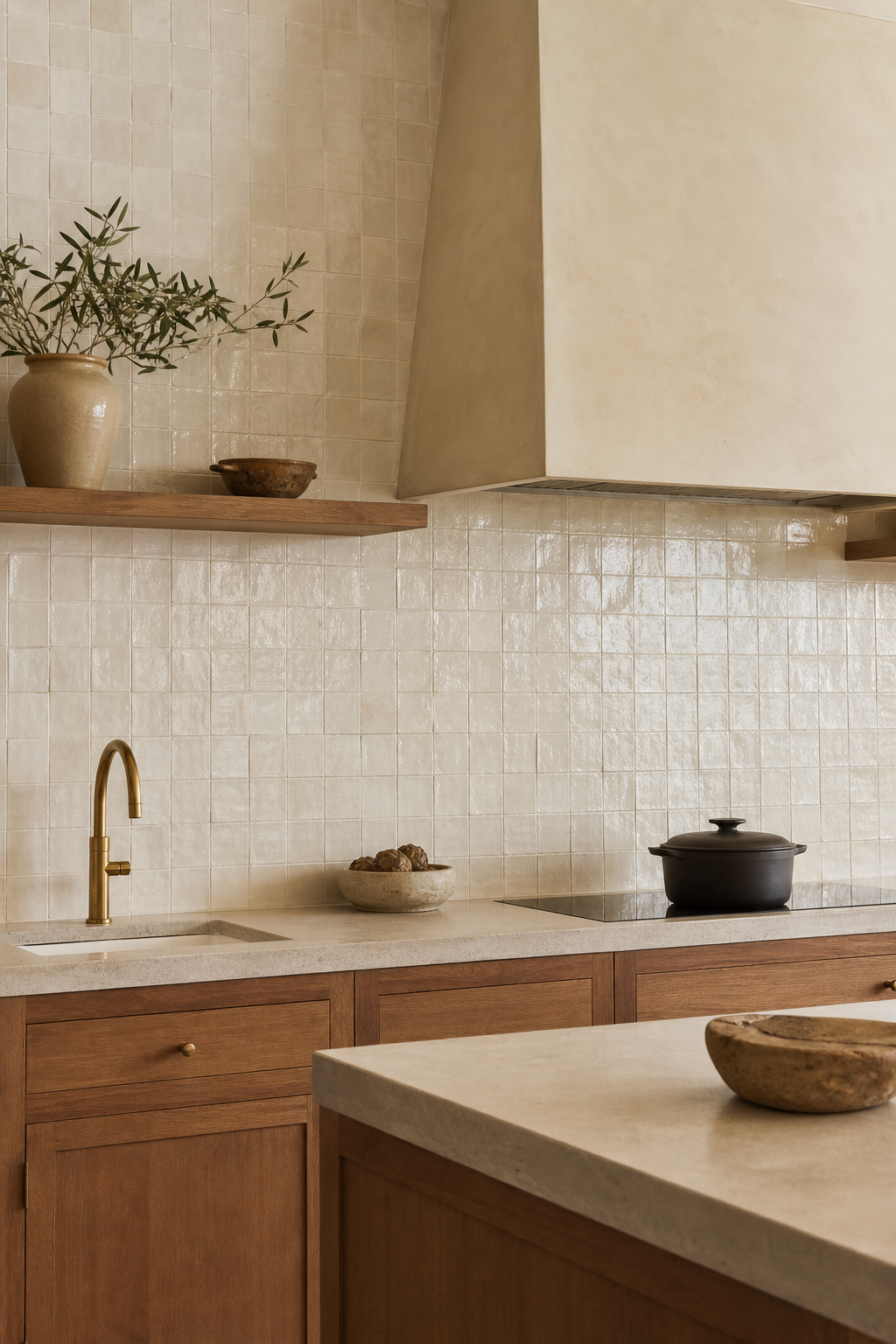
9. Use A Full-Height Backsplash
A full-height backsplash keeps the kitchen visually simple because there are fewer stops and starts on the wall. Run tile or stone from the counter to the underside of shelves, cabinets, or the range hood. Handmade tile adds texture without needing a busy pattern, while a slab backsplash feels especially calm behind a range or sink. This approach also makes cleaning easier in splash zones. Choose a color close to the countertop or wall for a quiet look. The surface can still be beautiful, but the continuous plane keeps the room from feeling visually chopped up. Use matching grout for a quieter effect, or a slightly warmer grout to emphasize handmade texture.
10. Choose Open Shelves Sparingly
Open shelves work best when they solve a real problem. Use one or two shelves near the sink, coffee zone, or range for dishes and ingredients you reach for daily. Keep the rest of the storage behind doors so the kitchen stays simple and easy to clean. Wood shelves add warmth, while slim metal brackets can tie into faucets or hardware. The key is editing. A few stacked plates, bowls, mugs, and one useful vessel look relaxed. Too many decorative pieces can make the room harder to dust and less functional than closed cabinetry. If shelves sit near the range, choose items that can be washed easily.
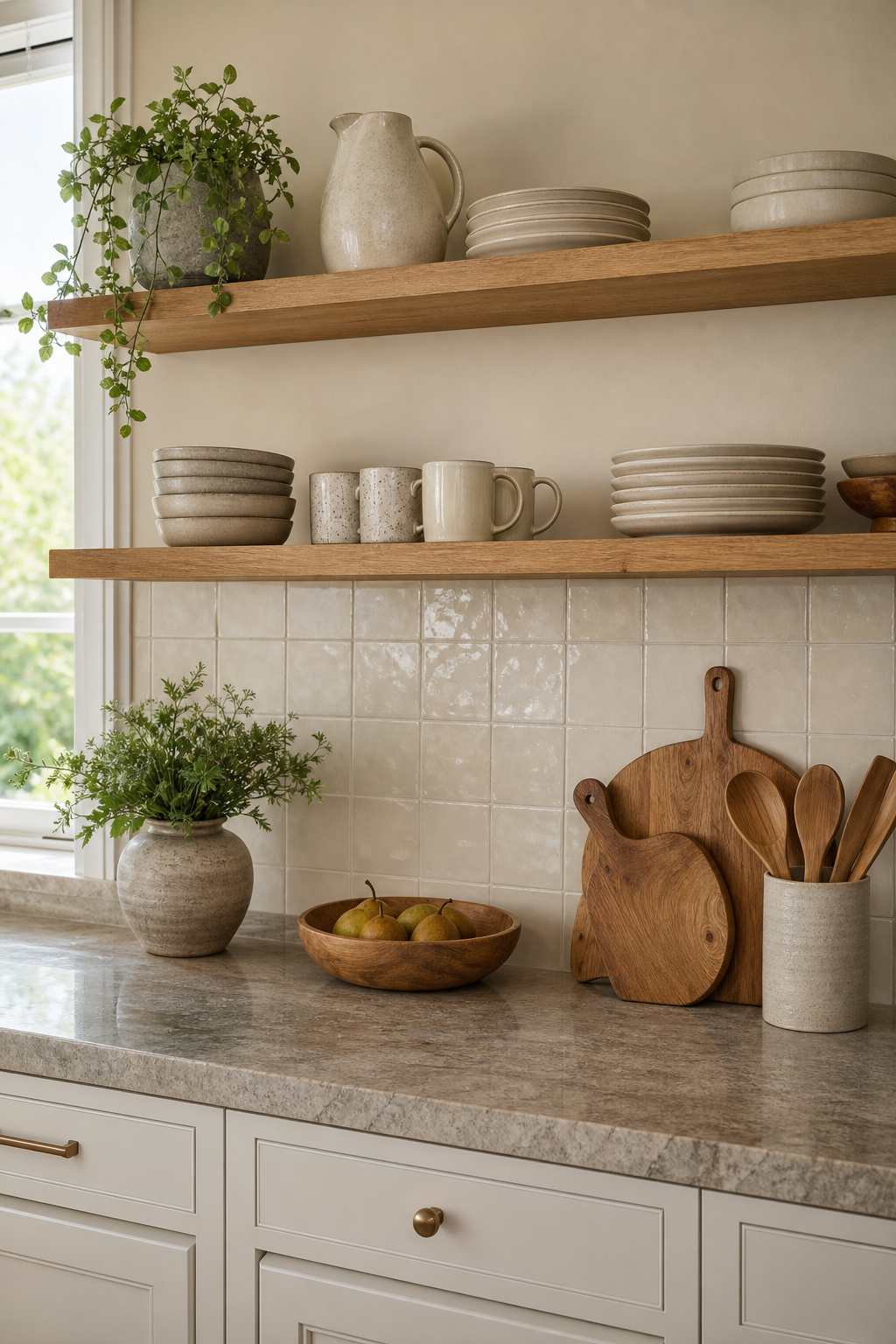
11. Make The Pantry Easy To Scan
A warm functional kitchen needs storage you can understand at a glance. In the pantry, group like items together and keep the most-used ingredients between eye and waist level. Use baskets for packets, clear jars for dry goods, and sturdy bins for heavier overflow. Avoid turning every container into a project; simple zones matter more than perfect matching. Good pantry lighting also makes a huge difference, especially in deep cabinets or walk-in spaces. When the pantry is easy to scan, you buy fewer duplicates, cook with less frustration, and keep the main kitchen cleaner. Leave a little empty shelf space so restocking groceries does not break the system.
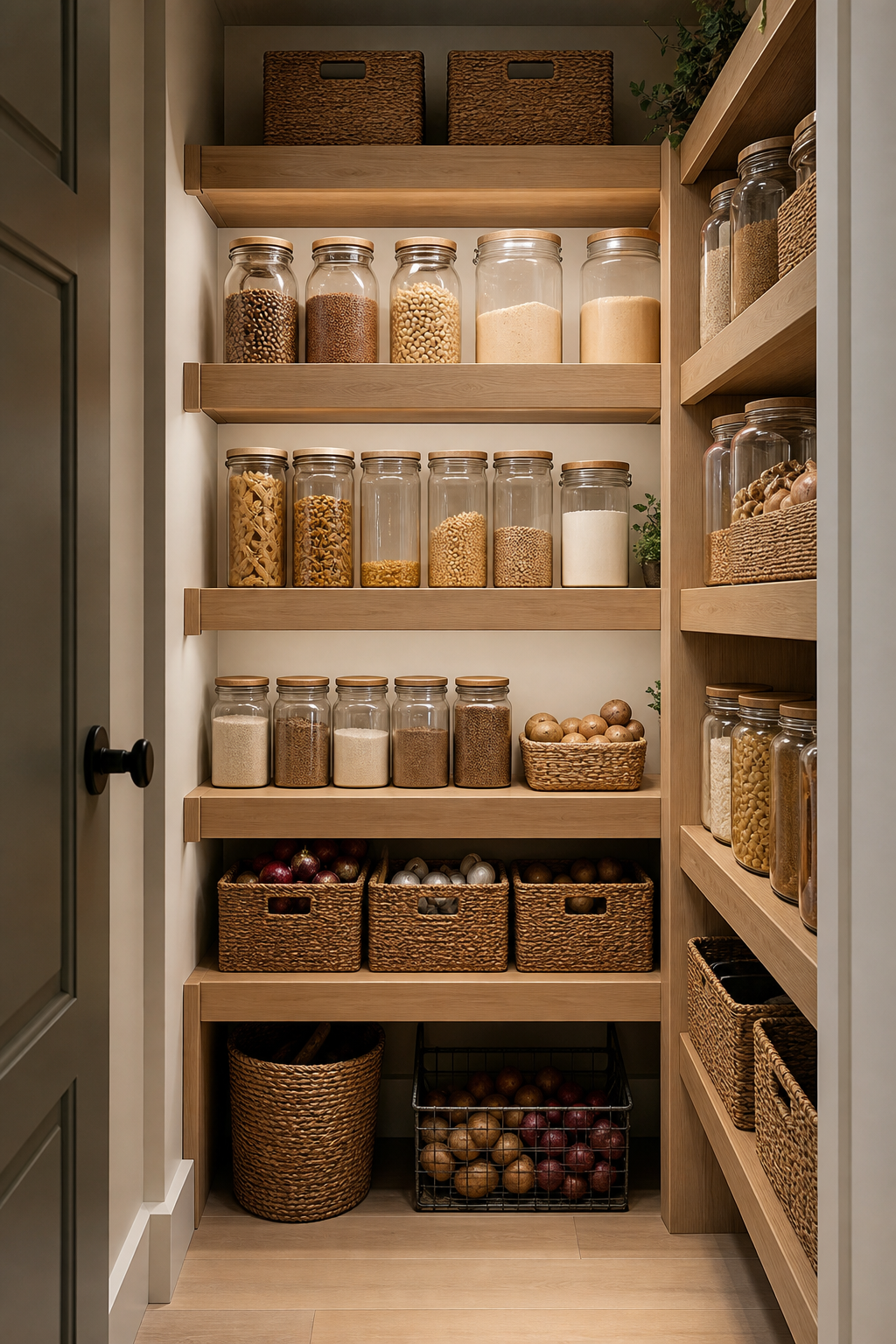
12. Place Trash And Recycling Near Prep
Trash and recycling placement is rarely glamorous, but it has a big effect on kitchen flow. A pull-out bin near the prep counter lets you sweep scraps away as you chop, open packaging, or clear lunch boxes. If possible, place compost nearby too. This keeps mess from traveling across the room and reduces the number of times cabinet doors need to open during cooking. In a simple kitchen, the best details are often invisible when closed. A well-placed waste station makes the room look cleaner because cleanup is built directly into the layout. A drawer with separate bins keeps the system clean and easy for guests to understand.
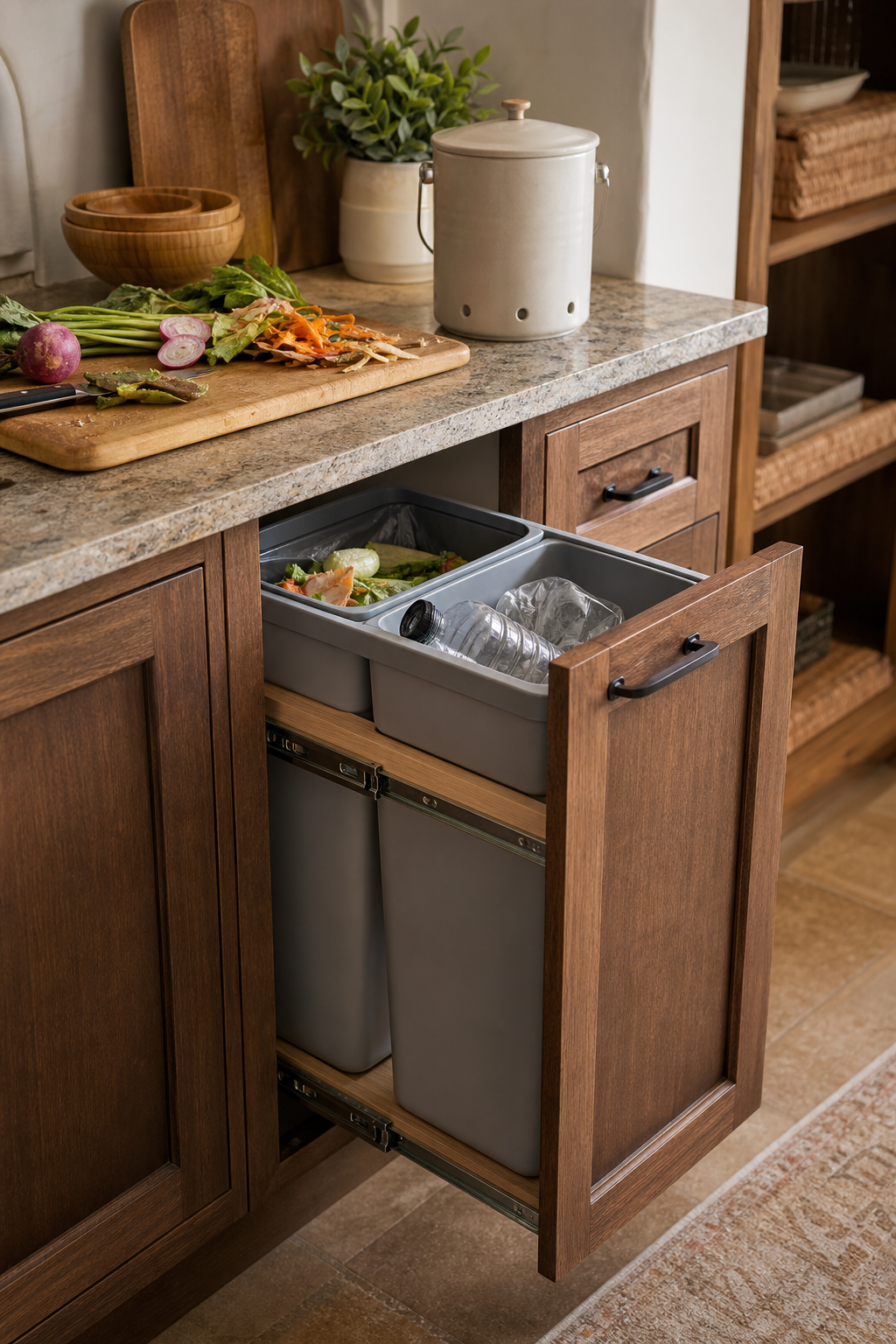
13. Add Under-Cabinet Lighting
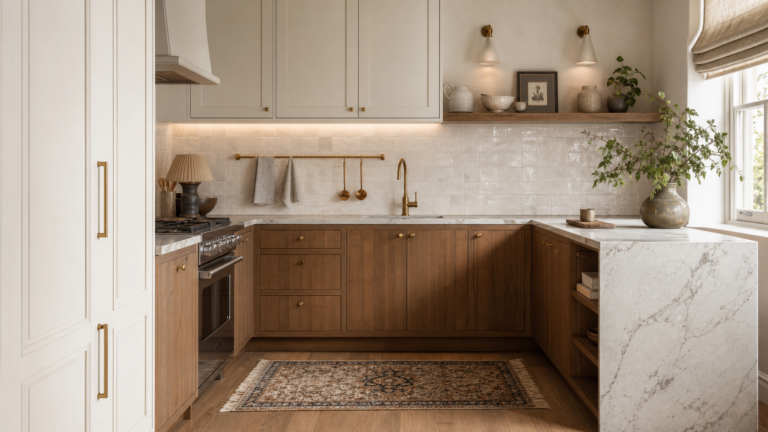
Simple kitchens rely on good lighting more than decoration. Under-cabinet lighting brightens the exact places where you chop, read recipes, wash produce, and make coffee. Choose warm white light so the room feels inviting rather than harsh. Recessed strips or low-profile fixtures keep the look clean, while dimmers allow the kitchen to shift from task mode to evening atmosphere. This is especially useful under deep cabinets or shelves that cast shadows on the counter. The upgrade is quiet, but it makes the whole kitchen feel more considered and easier to use. It is a small improvement that makes simple cabinetry feel far more custom.
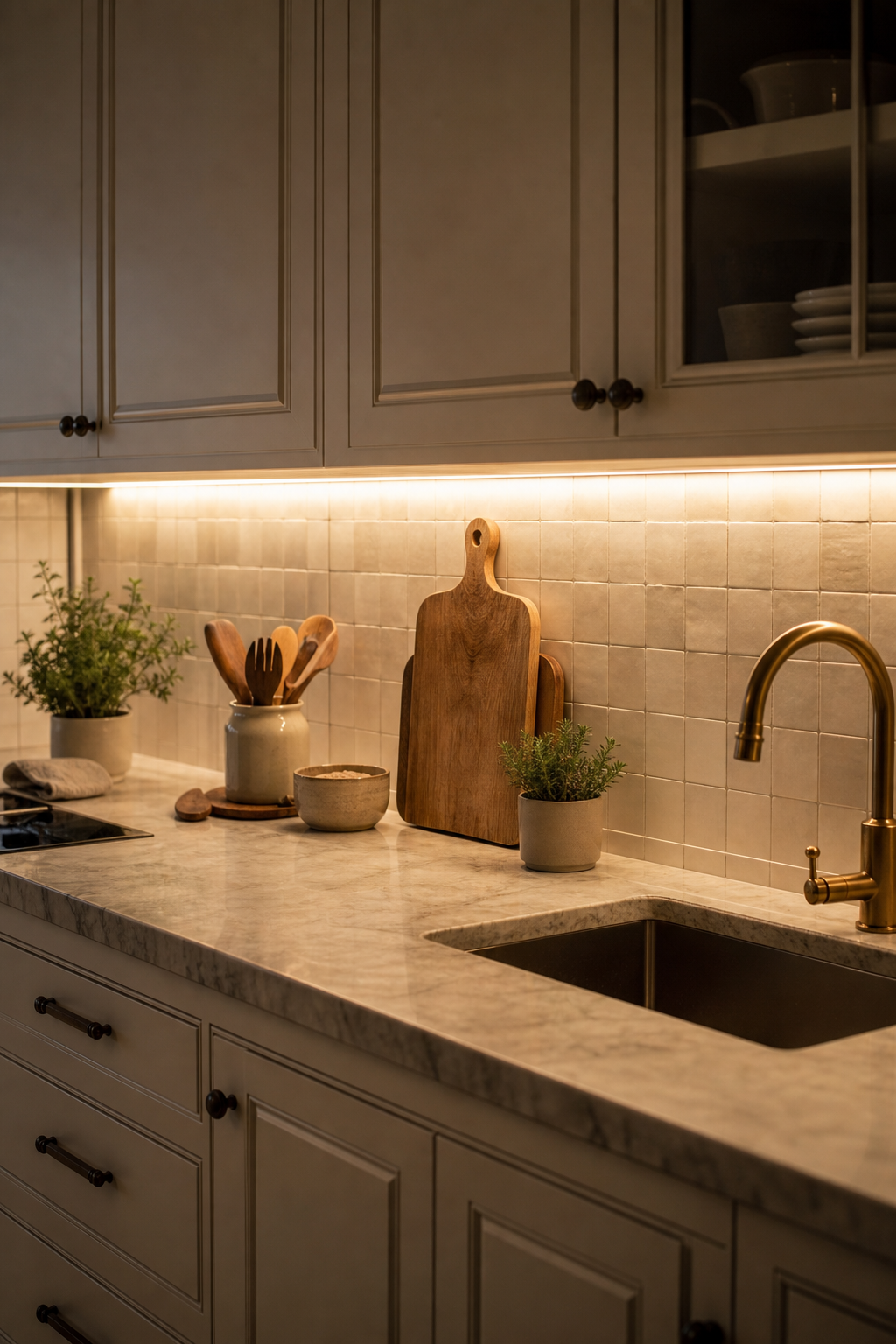
14. Use Pendant Lights With Purpose
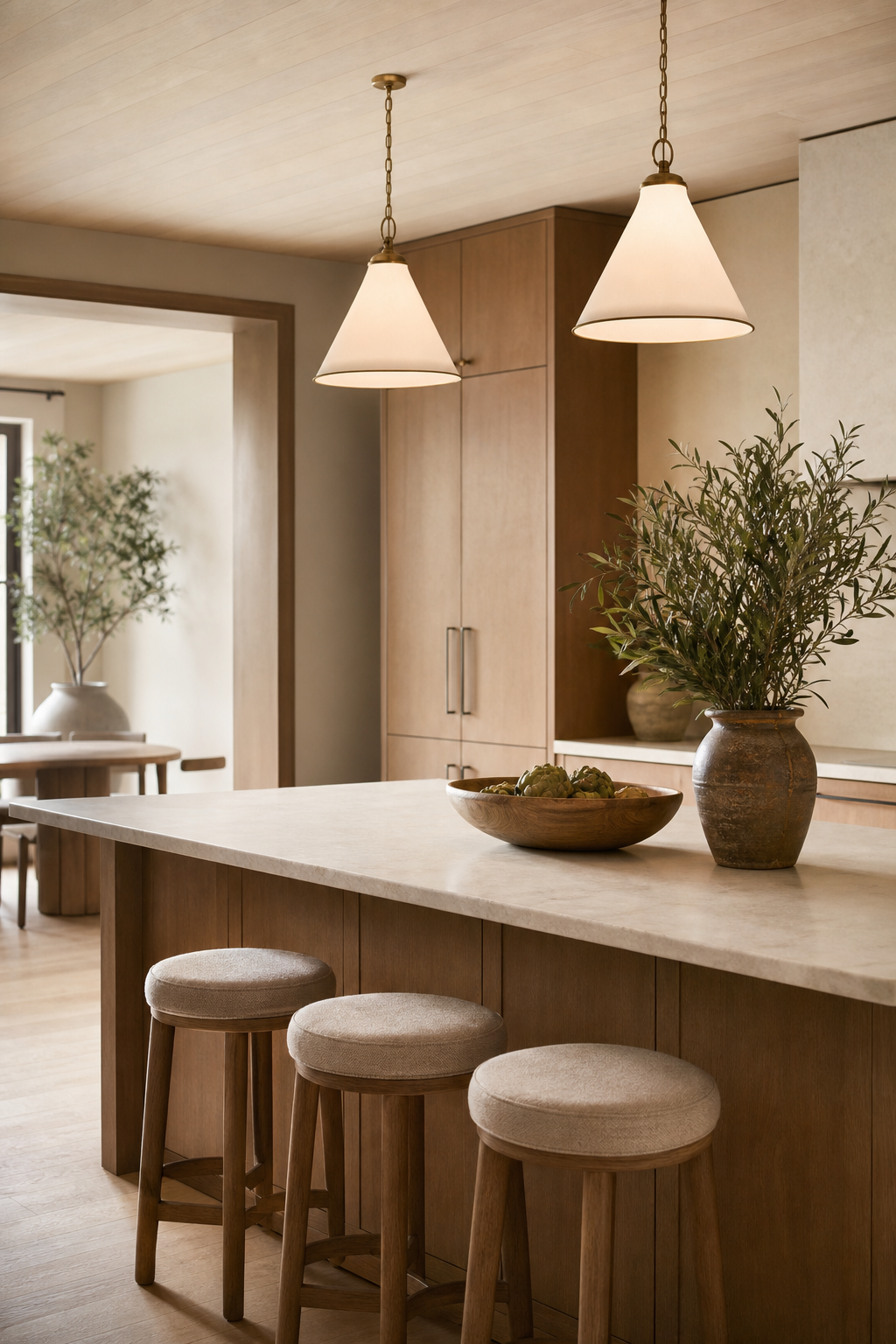
Pendant lights should support the kitchen, not overwhelm it. Over an island, choose fixtures that provide enough light for prep and meals while leaving sightlines open across the room. Simple domes, glass shades, linen shades, or slim metal pendants all work, depending on the style of the home. Hang them high enough that they do not block faces or views. A warm finish such as aged brass, bronze, or soft black can add depth without visual clutter. When pendant lights are scaled correctly, they make the kitchen feel finished and functional at the same time. For the cleanest look, center the fixtures on the island rather than on the ceiling grid alone.
15. Keep Hardware Consistent
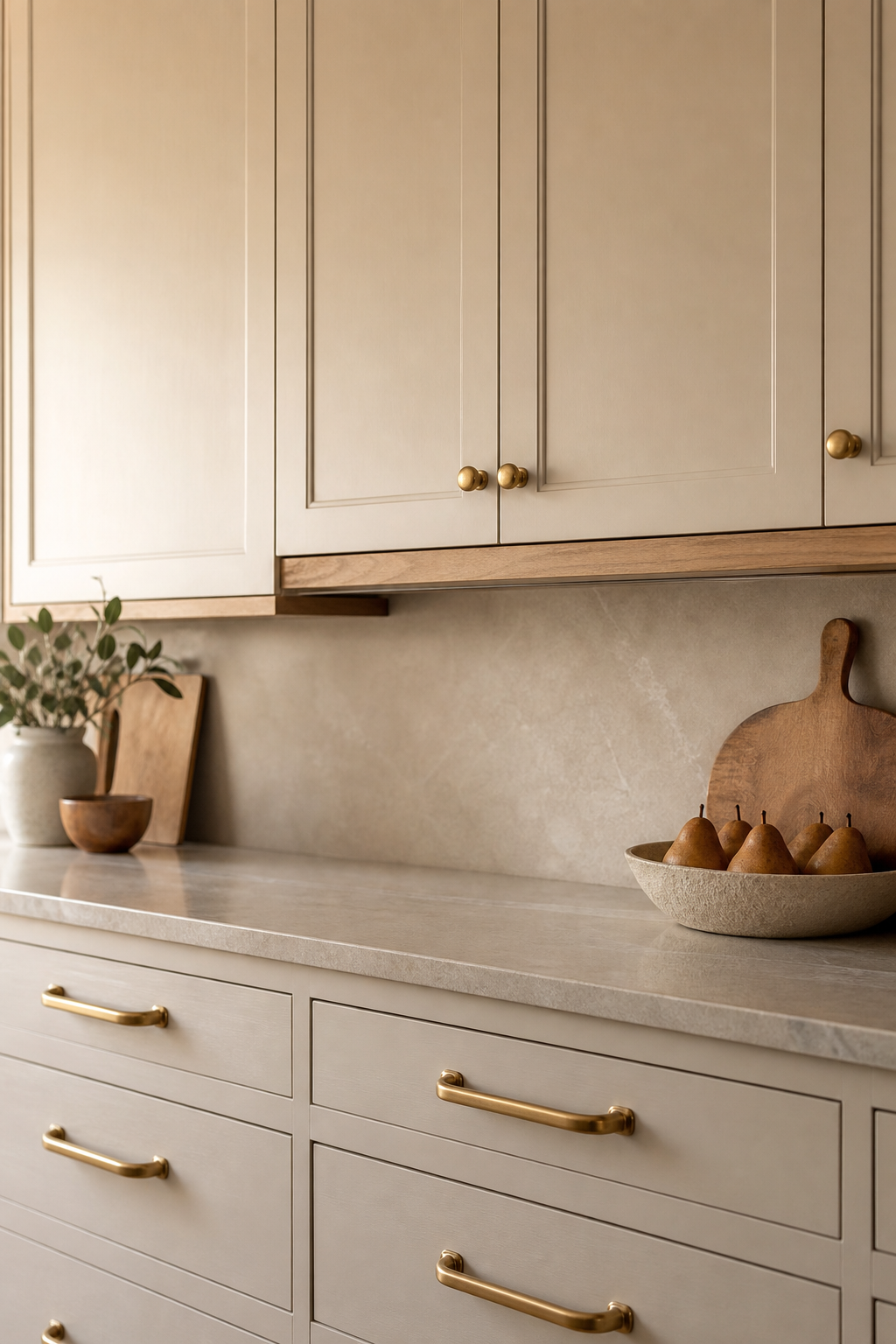
Hardware is a small detail that can make a simple kitchen feel calm or busy. Choose one primary finish and use it consistently on cabinet doors and drawers. Aged brass, matte black, polished nickel, or bronze can all work, but the shape should be easy to grip and comfortable in daily use. Cup pulls can be charming, yet they are not always the best choice for every drawer. Test scale before ordering a full set. In a simple design, hardware should feel intentional, tactile, and quiet, adding warmth without becoming the loudest feature in the room. Order one sample pull first, then try it with wet hands and heavy drawers.
16. Hide Charging And Paper Clutter
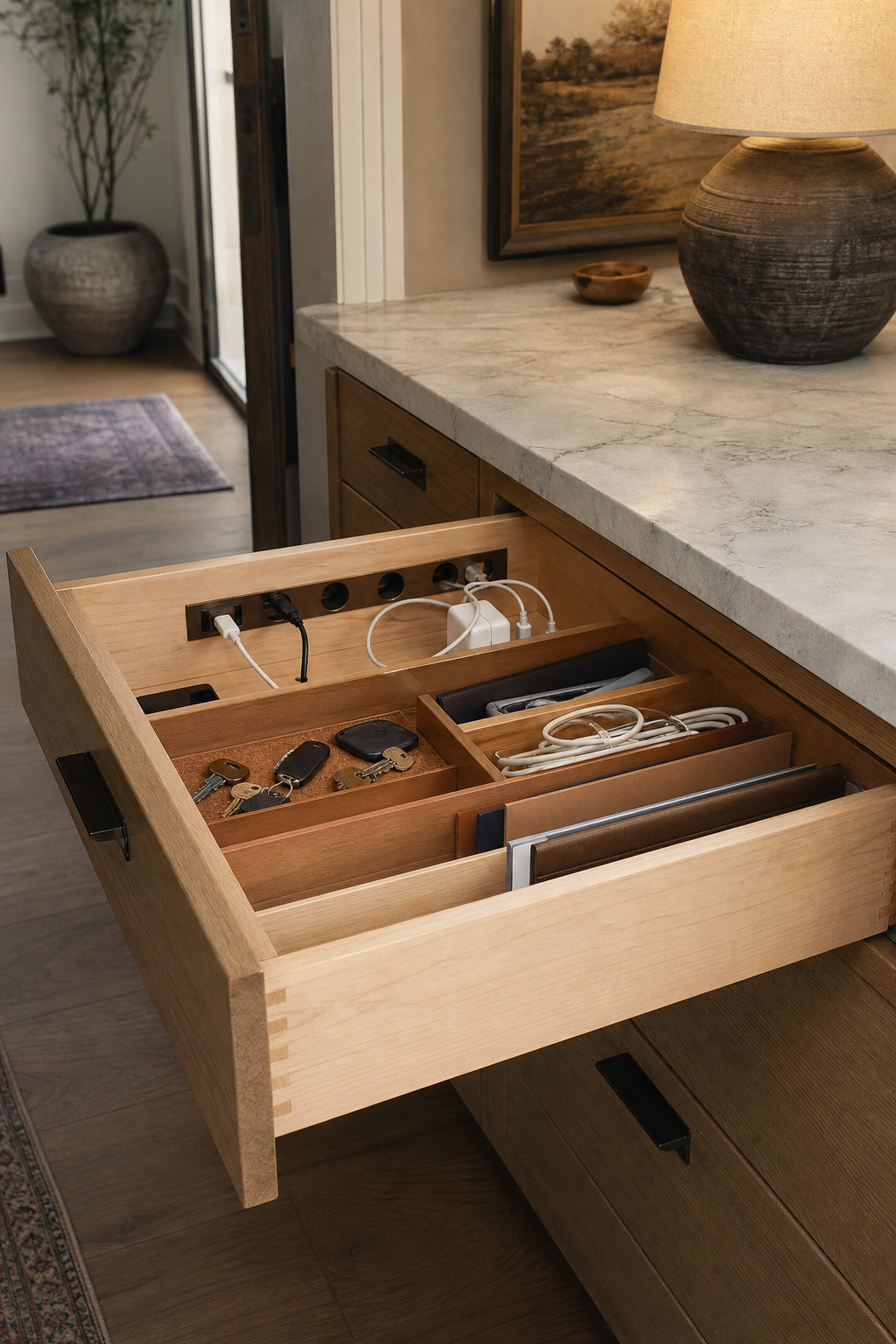
Many kitchens become drop zones for mail, keys, chargers, and school forms. A simple design needs a plan for that daily clutter. Add a shallow drawer with outlets, a small command cabinet, or a concealed niche near the kitchen entry. Use dividers for cords, trays for keys, and a vertical slot for papers that need attention. Keep this area compact so it does not take over valuable prep space. When phones and paperwork have a defined home, the kitchen feels warmer and more functional because the counters stay ready for cooking. A hidden outlet also keeps the backsplash and island from collecting tangled cords.
17. Use A Washable Runner
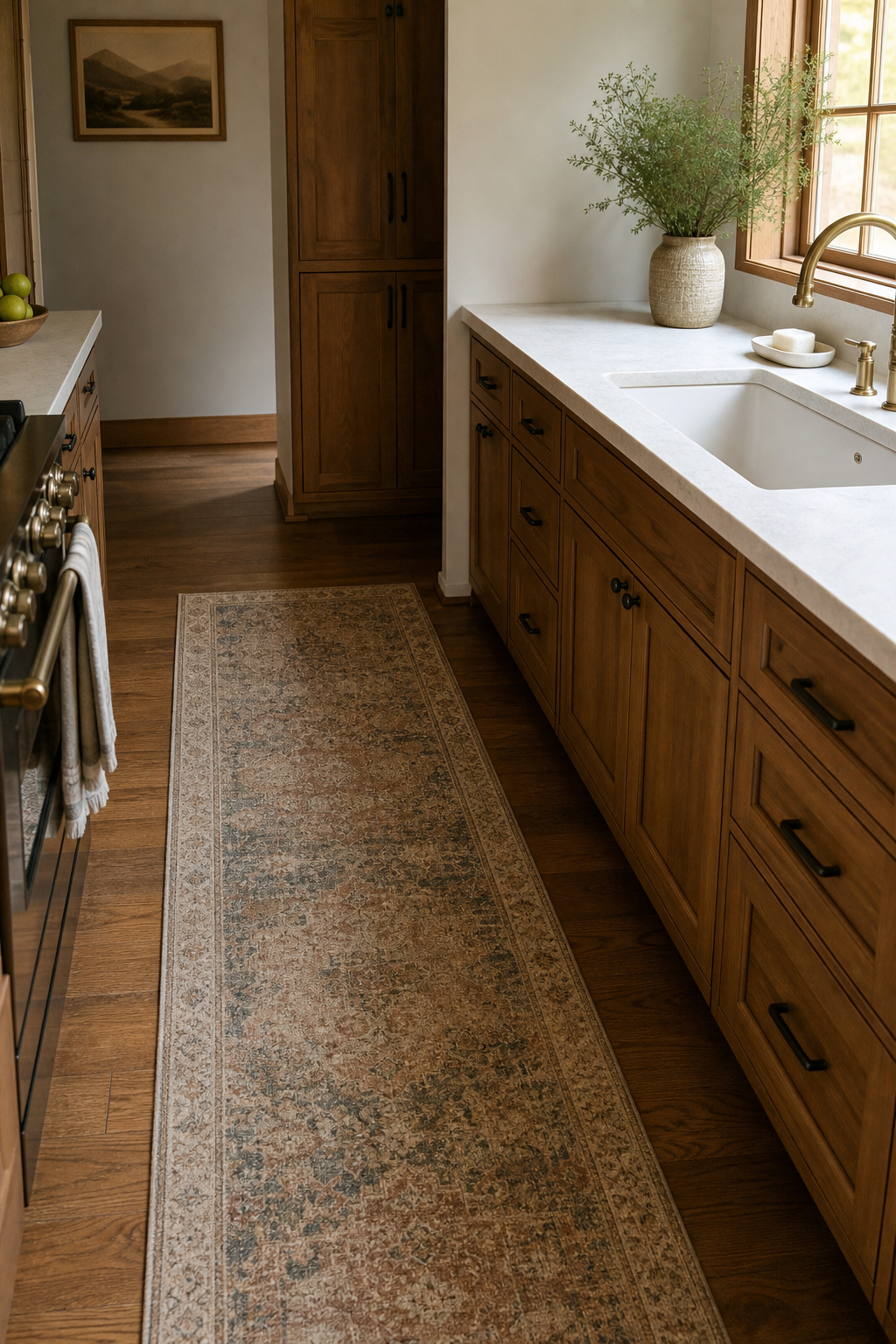
A runner brings warmth to a simple kitchen, especially when the room has stone, tile, or hardwood floors. Choose a low-profile washable rug with a pattern that can forgive crumbs and splashes. It should lie flat, clear cabinet doors, and feel comfortable underfoot at the sink or main prep zone. Avoid anything too thick near appliances or walkways. A muted vintage-style pattern, stripe, or small geometric design can add softness without making the kitchen look busy. It is one of the easiest ways to make a functional room feel more like home. Use a quality rug pad so the runner stays flat during busy cooking hours.
18. Choose A Quiet Range Hood
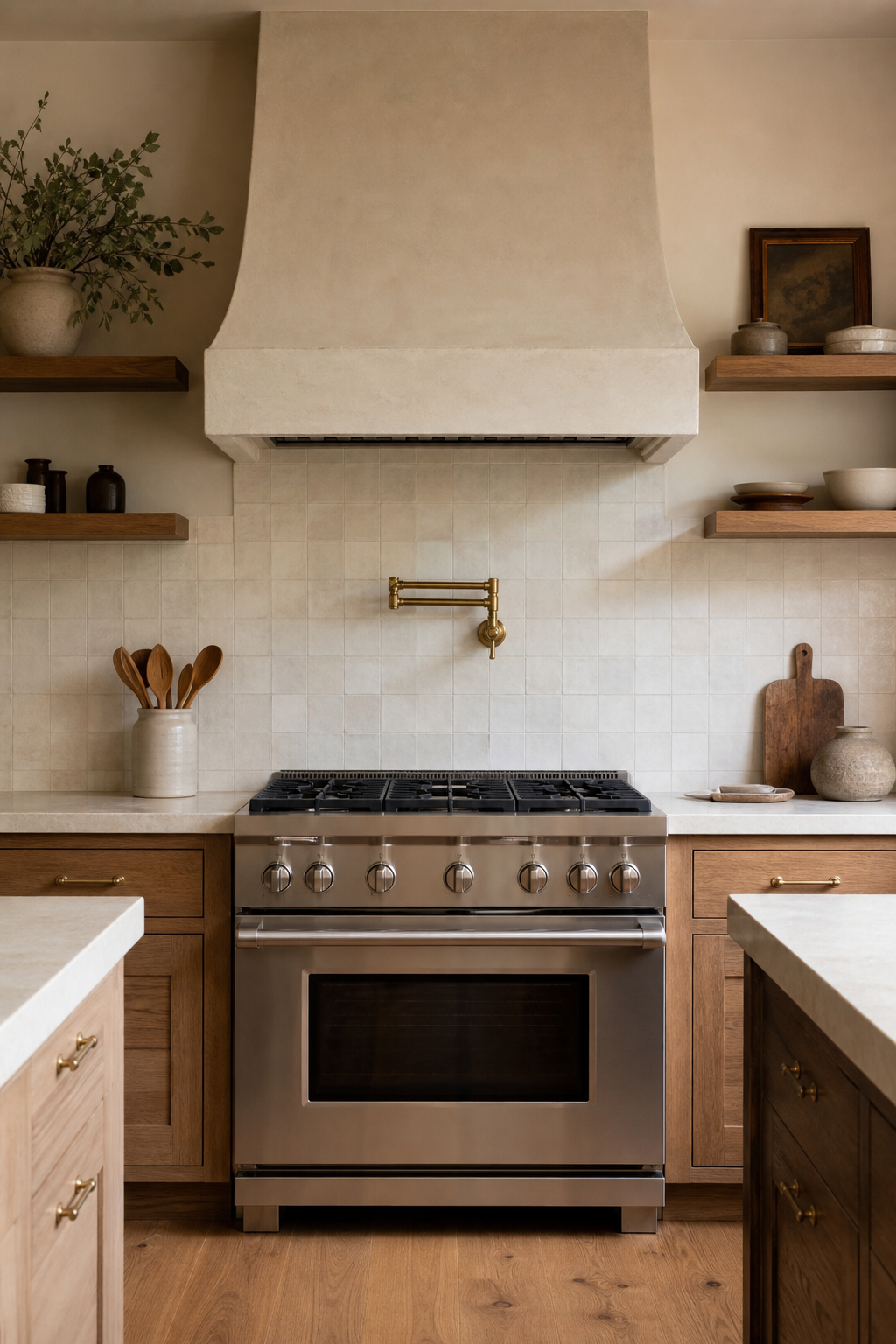
A range hood can either dominate the kitchen or quietly support the design. For a simpler look, choose a plaster-style hood, a wood-trimmed hood, or a concealed insert that blends with cabinetry. Keep the shape clean and scale it to the range below. Good ventilation matters, so the hidden mechanics should still be strong enough for how you cook. A quiet hood creates a natural focal point without adding a complicated pattern or oversized metal statement. It also makes the cooking wall feel more architectural and less cluttered. Keep the surrounding wall simple so the hood shape can do the quiet visual work.
19. Make The Sink Area Practical
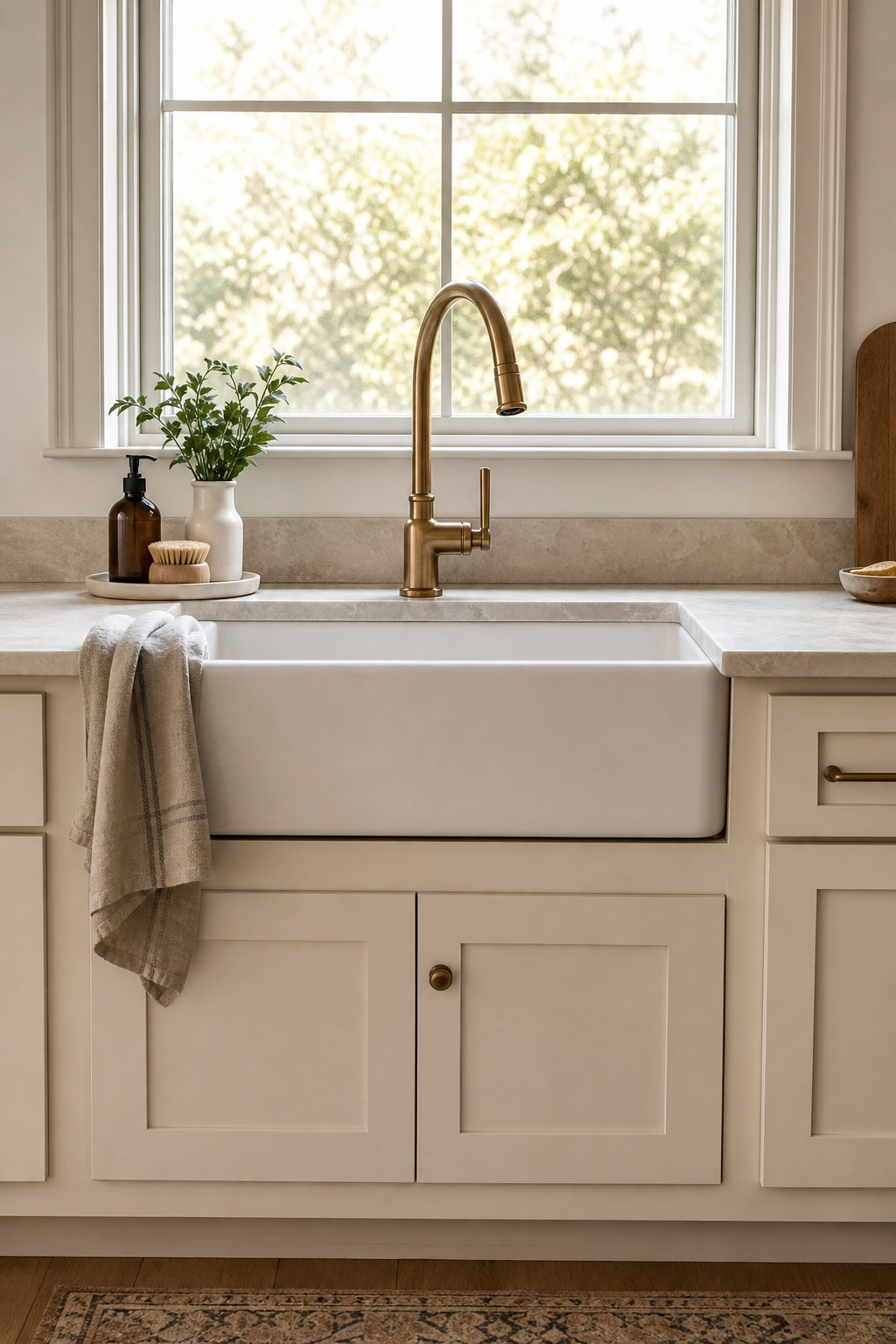
The sink area works hard every day, so simple design should make it pleasant and efficient. Keep soap, a brush, and a sponge on a small tray or in a discreet caddy. Add a towel rail, hook, or nearby drawer for linens. If there is a window, leave the sill edited with one plant or nothing at all. A deep sink, durable faucet, and easy-to-clean counter material matter more than decorative accessories. When the sink zone is designed well, rinsing, washing, and resetting the kitchen feel less like chores and more like a smooth routine. A small under-sink organizer can support the zone without taking over the counter.
20. Add Seating That Tucks In
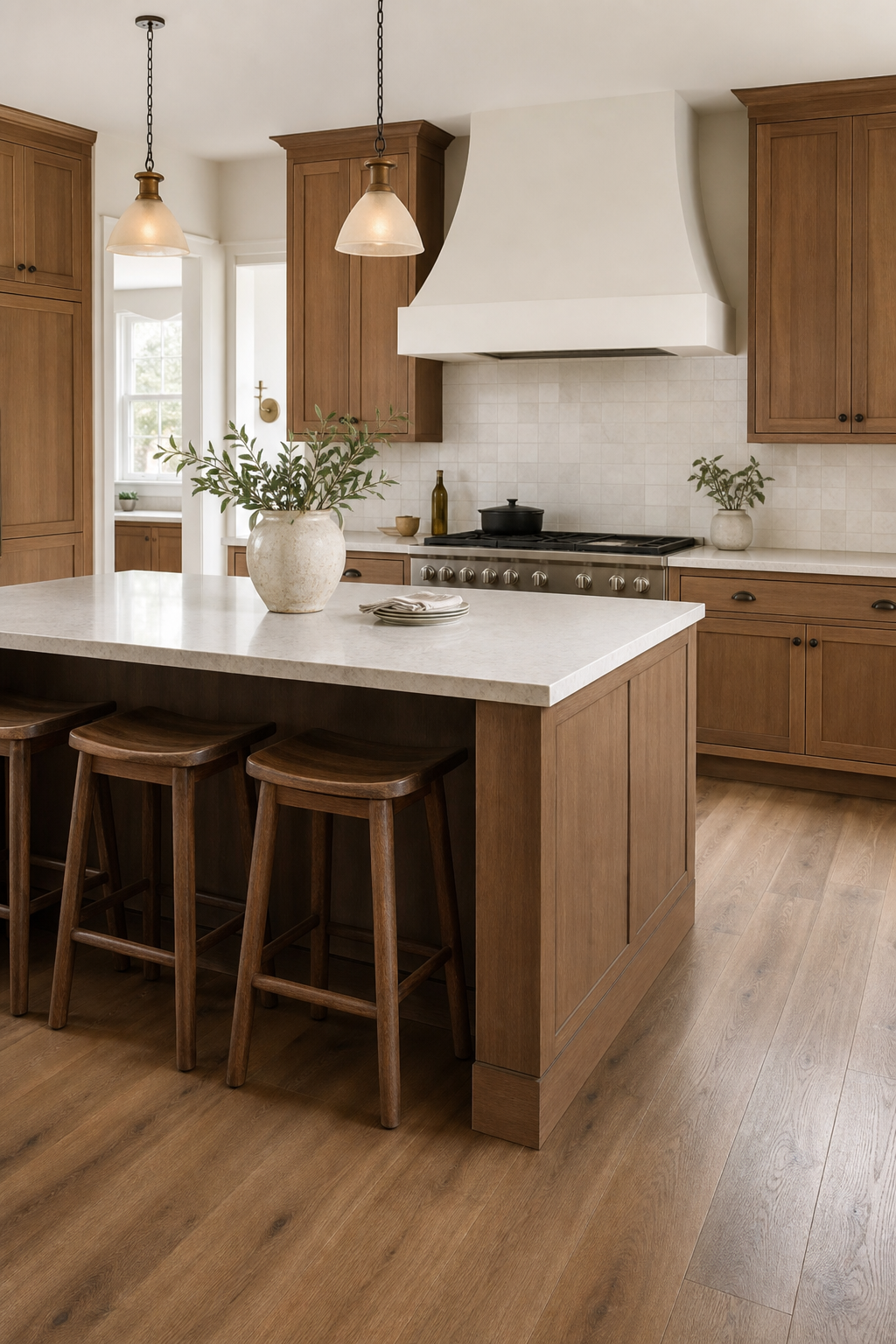
Kitchen seating should support everyday life without blocking movement. Choose stools that tuck neatly under the island or counter when not in use. Backless stools save visual space, while low-back stools can be more comfortable for longer meals. Pay attention to seat height, footrests, and clearance for knees. Warm wood, woven seats, or leather cushions can soften a simple kitchen without adding clutter. If seating is not genuinely useful, skip it and protect the prep space instead. A kitchen feels more functional when every chair has a reason to be there. The room will feel more generous when seating disappears between meals.
21. Use Glass Doors In Small Doses
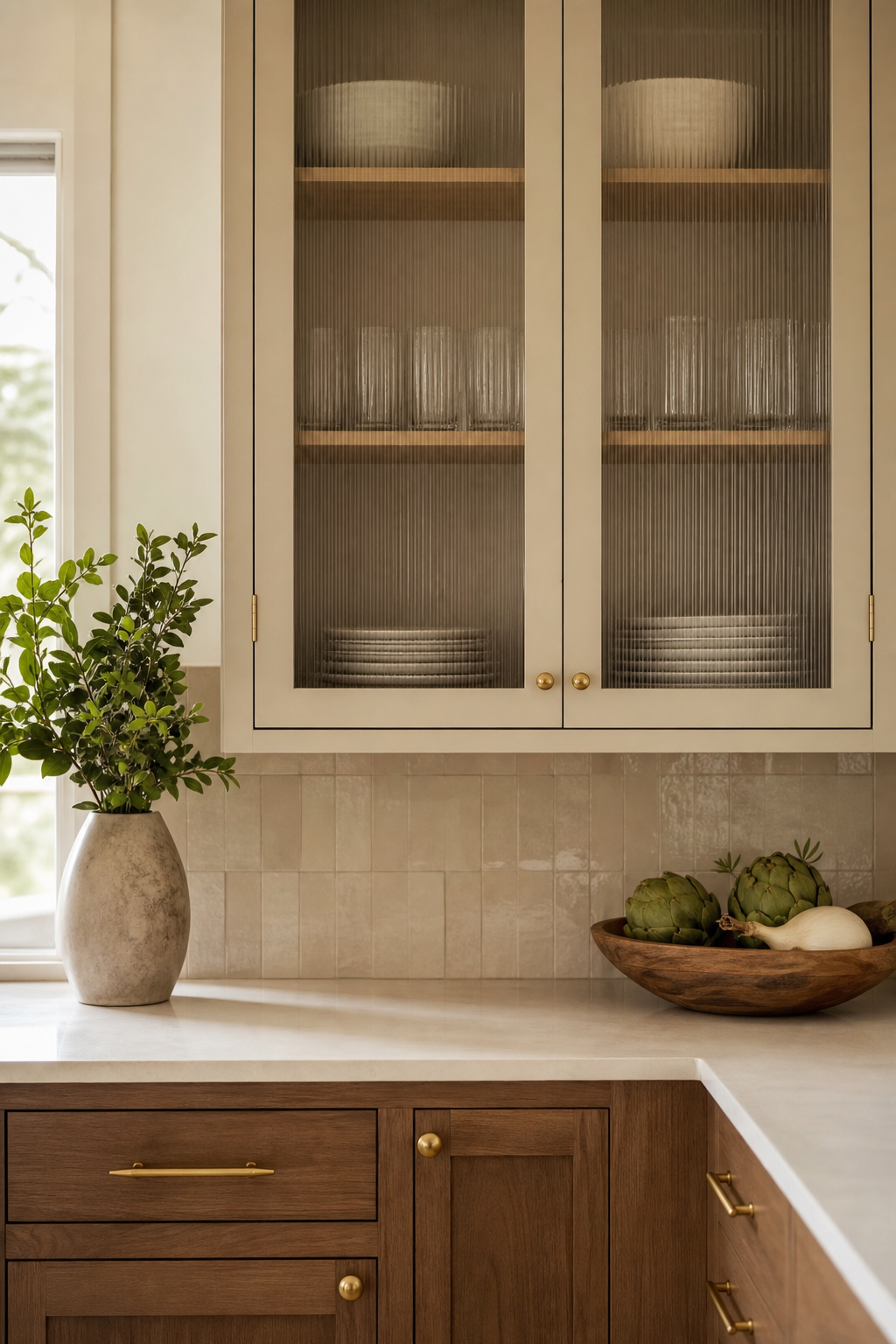
Glass cabinet doors can lighten a kitchen, but they work best in small doses. Use them on an upper cabinet, hutch, or pantry wall where the contents can stay attractive and useful. Reeded or seeded glass is more forgiving than clear glass because it softens the view inside. Store everyday dishes, serving bowls, or glasses behind them rather than random overflow. This gives the kitchen depth without turning every shelf into a display. In a simple design, one glass-front moment can feel charming, while too many can create pressure to keep everything perfect. Place the glass section where it catches light, not where it blocks daily storage.
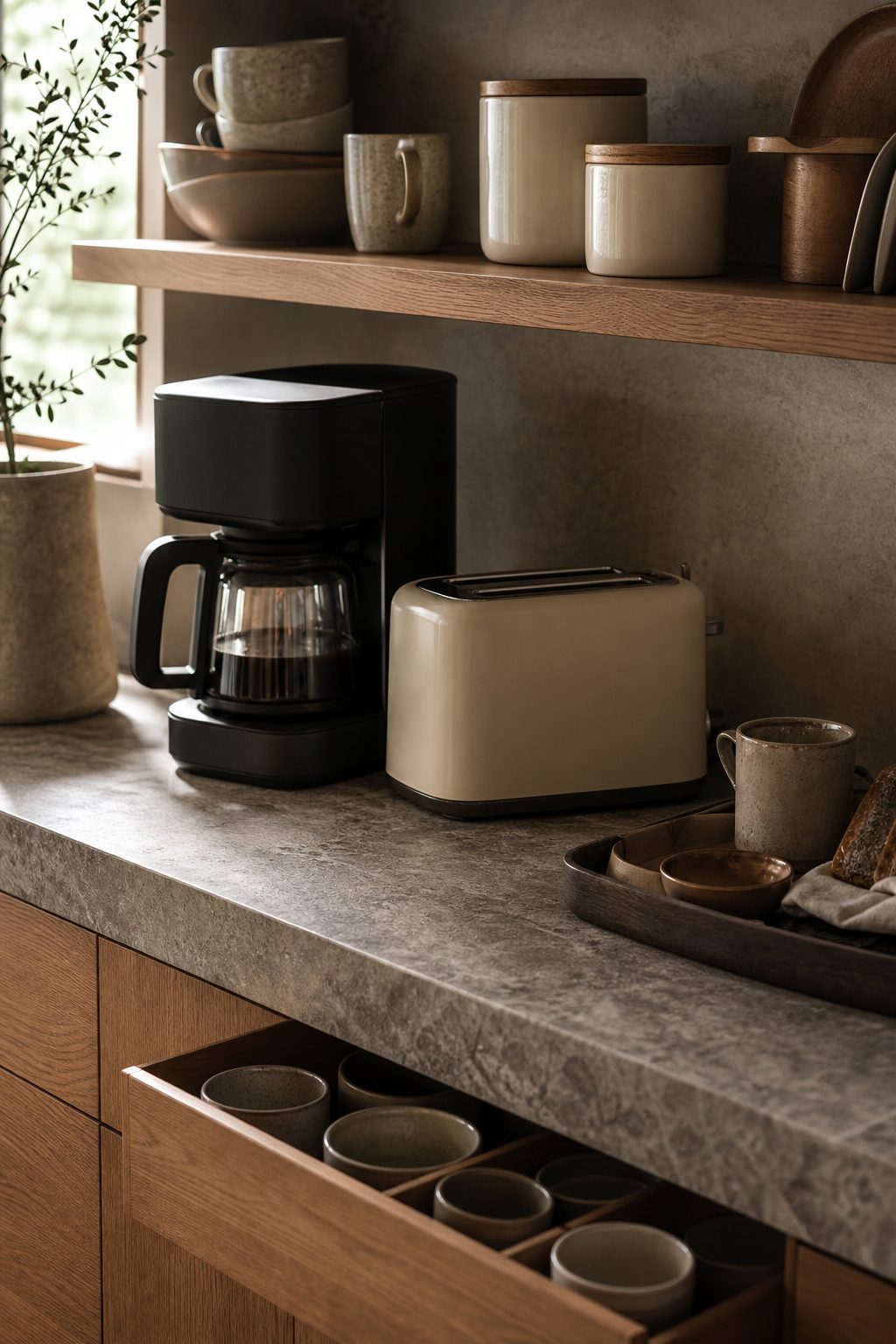
22. Plan Zones For Breakfast And Coffee
A breakfast or coffee zone makes mornings easier and keeps traffic away from the main cooking area. Place mugs, spoons, coffee, tea, cereal, or toast supplies together in one cabinet or drawer. If space allows, include a small counter section with an outlet and a tray that keeps items contained. The goal is not a styled beverage station; it is a useful routine that does not spread across the kitchen. Warm wood shelves, ceramic mugs, and a simple lamp can make the zone feel inviting while still being practical. A single cabinet can hold the whole routine if each shelf has a clear job.
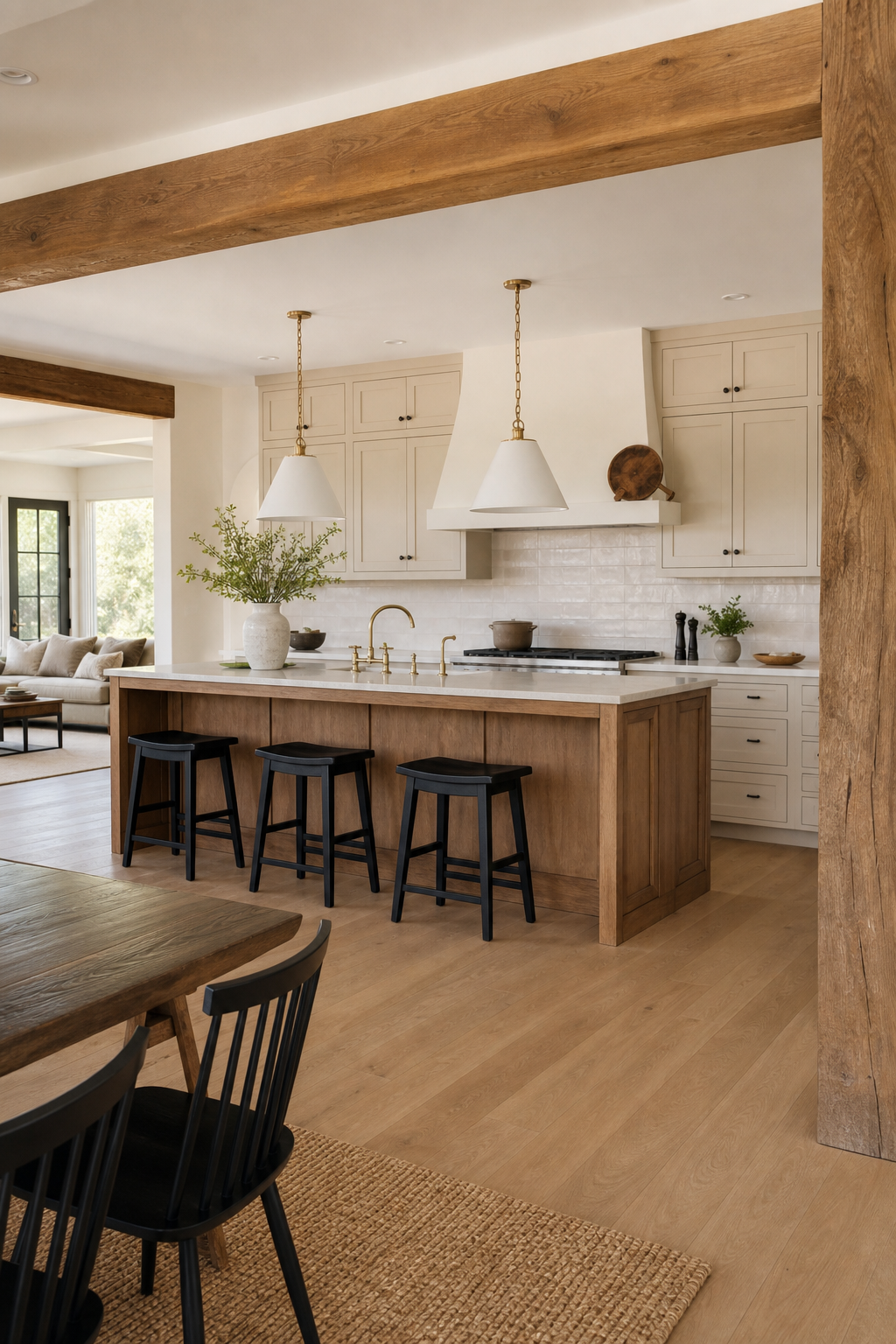
23. Keep The Floor Plan Open But Defined
Open kitchens work best when they still feel defined. Use the island, ceiling beams, flooring direction, lighting, or a change in cabinet color to give the kitchen a clear boundary within the larger room. This helps the space feel organized without closing it off. Keep sightlines calm by aligning tall cabinets, avoiding random upper cabinet heights, and choosing a consistent material palette. A simple open kitchen should connect easily to dining and living areas while still making sense as a hardworking room. Definition is what keeps openness from feeling messy. This balance lets the kitchen feel social while remaining easy to cook in.
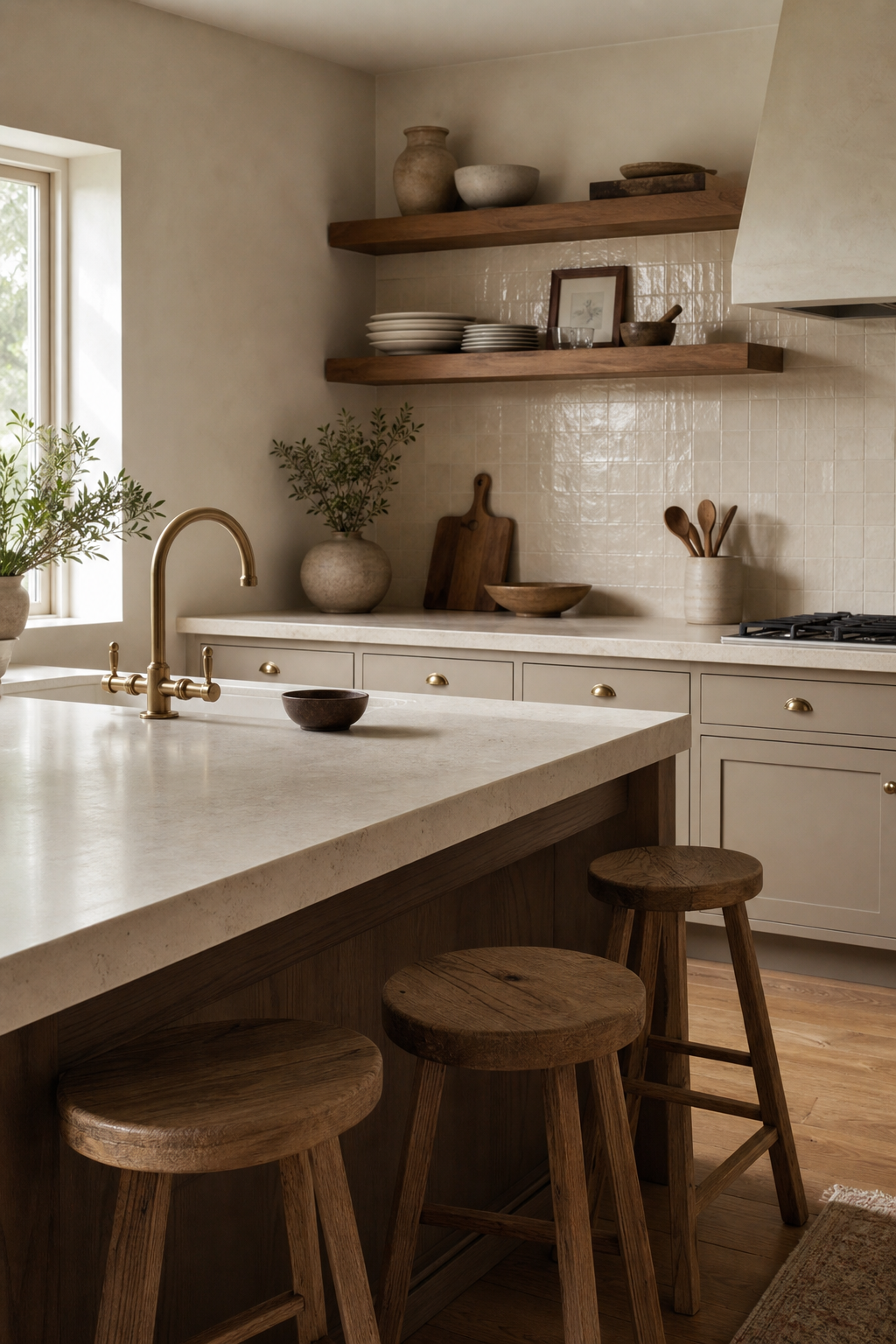
24. Repeat Materials For Calm
Repetition is one of the easiest ways to make a kitchen feel simple. Repeat the same wood tone on shelves and stools, the same metal finish on hardware and faucet, or the same stone on counters and a small backsplash ledge. This does not mean everything must match perfectly. It means the room should have a few recurring notes that tie it together. Too many finishes can make even expensive choices feel scattered. When materials repeat with restraint, the kitchen feels warmer, more intentional, and easier for the eye to understand. Bring samples into the room together so undertones agree before anything is installed.
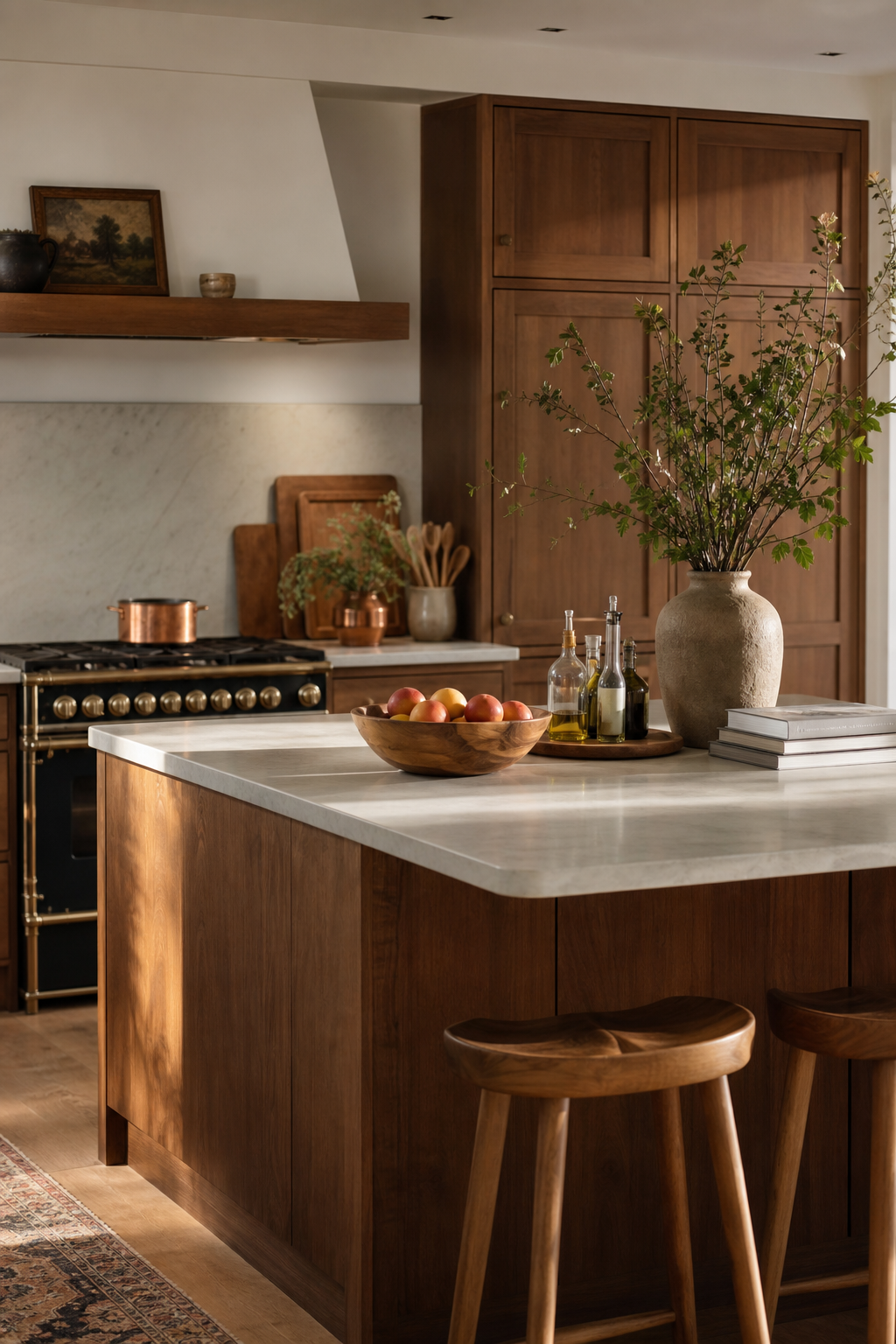
25. Leave Room For Real Life
The most successful simple kitchen is not stripped of personality. It leaves room for a fruit bowl, a stack of cookbooks, a family mug, a tray of oils, or a vase of branches. The difference is that these pieces have space around them. Avoid filling every corner just because it is available. A warm functional home needs surfaces that can change with the day, from breakfast to dinner prep to weekend baking. Simple design is less about owning fewer things and more about giving the useful, beautiful things enough breathing room to work. That breathing room is what makes the kitchen feel calm even when it is in use.
Simple kitchen design is strongest when it respects daily routines. A clear layout, warm finishes, practical storage, good lighting, and edited surfaces can make the room feel beautiful without making it complicated. Focus on decisions that help you cook, clean, gather, and reset with less friction. When the essentials are chosen well, the kitchen becomes more than a polished backdrop. It becomes a warm functional center of the home, ready for real meals, real mornings, and real life.