15 Modern Farmhouse Kitchens Ideas For A Warm Functional Home
Modern farmhouse kitchens work best when the farmhouse warmth is balanced with cleaner lines and thoughtful function. The style should feel rooted and relaxed, not themed. Think creamy cabinets, honest wood, durable stone, hardworking storage, layered lighting, and a few handmade textures that make the room feel personal. A warm farmhouse kitchen is also practical: it needs clear prep space, comfortable seating, easy cleanup, and surfaces that welcome daily use. These ideas show how to make the look feel current, comfortable, and genuinely useful.
Start With Creamy Cabinetry
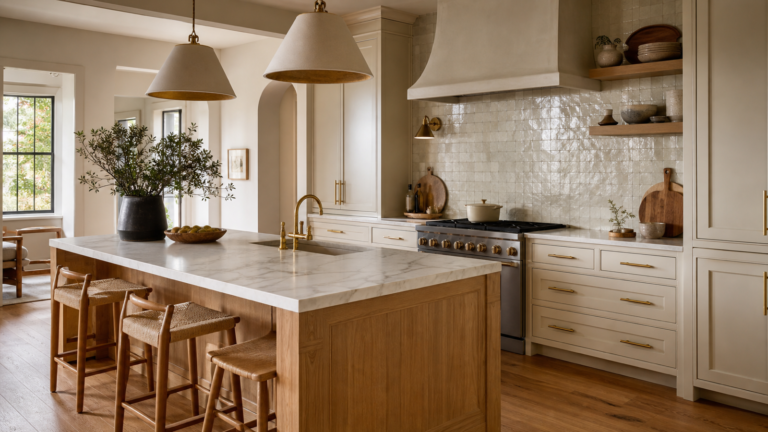
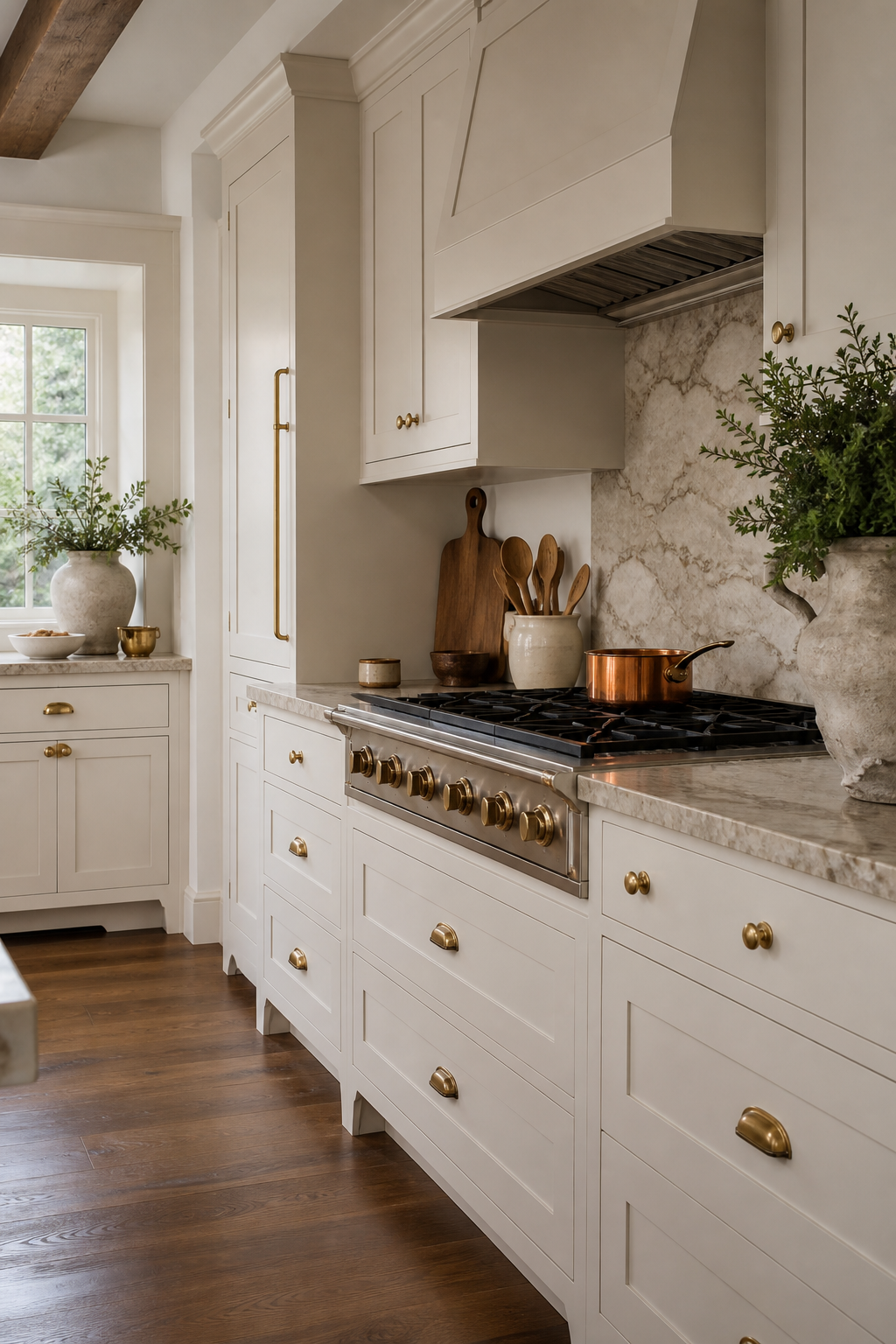
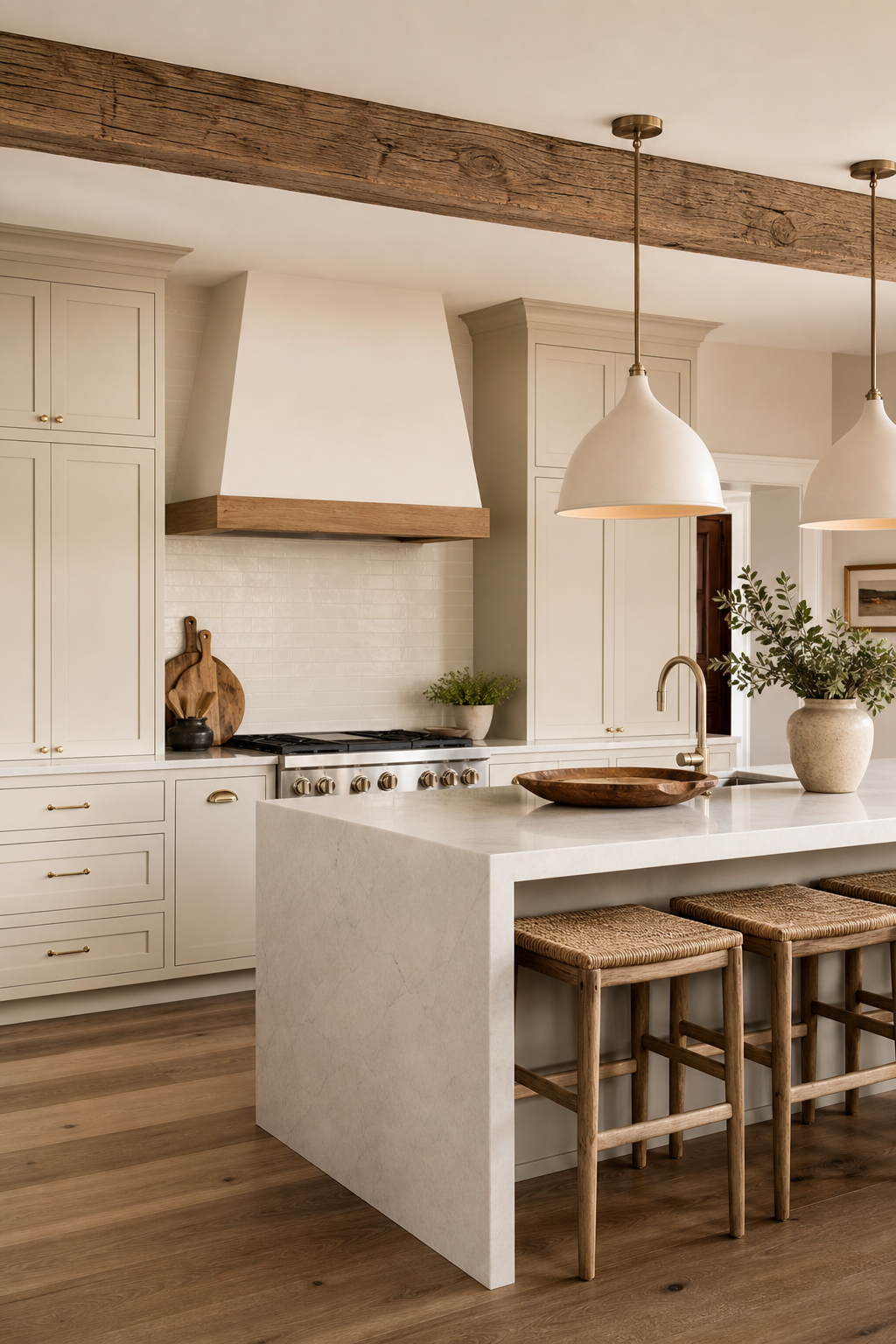
Creamy cabinetry gives a modern farmhouse kitchen softness without feeling yellow or dated. Look for warm whites, bone, putty, or light mushroom tones instead of stark white. These shades flatter wood floors, aged brass hardware, handmade tile, and natural stone. Simple shaker or inset doors keep the room classic, while a restrained profile prevents the kitchen from becoming overly traditional. Test cabinet samples in morning and evening light because undertones shift quickly. When the cabinet color is gentle and grounded, the rest of the kitchen can layer in texture, warmth, and contrast without feeling busy. It is a quiet foundation, but it determines how refined every later choice will feel.
Ground The Room With A Wood Island
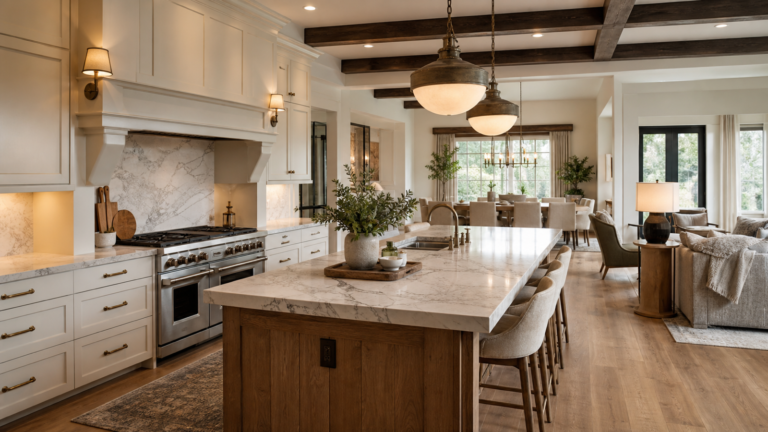
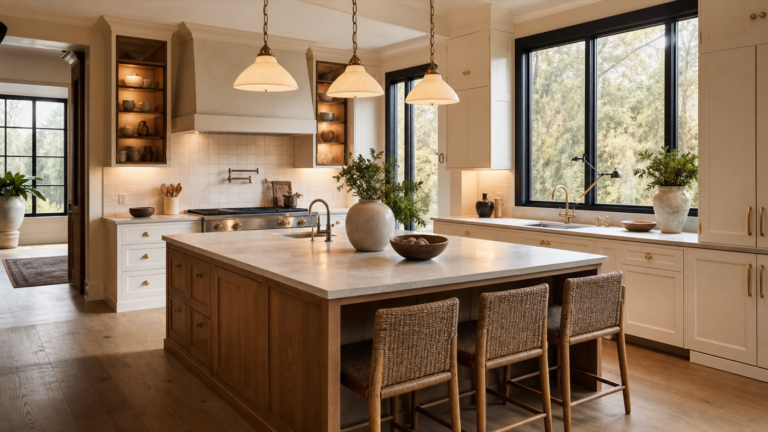
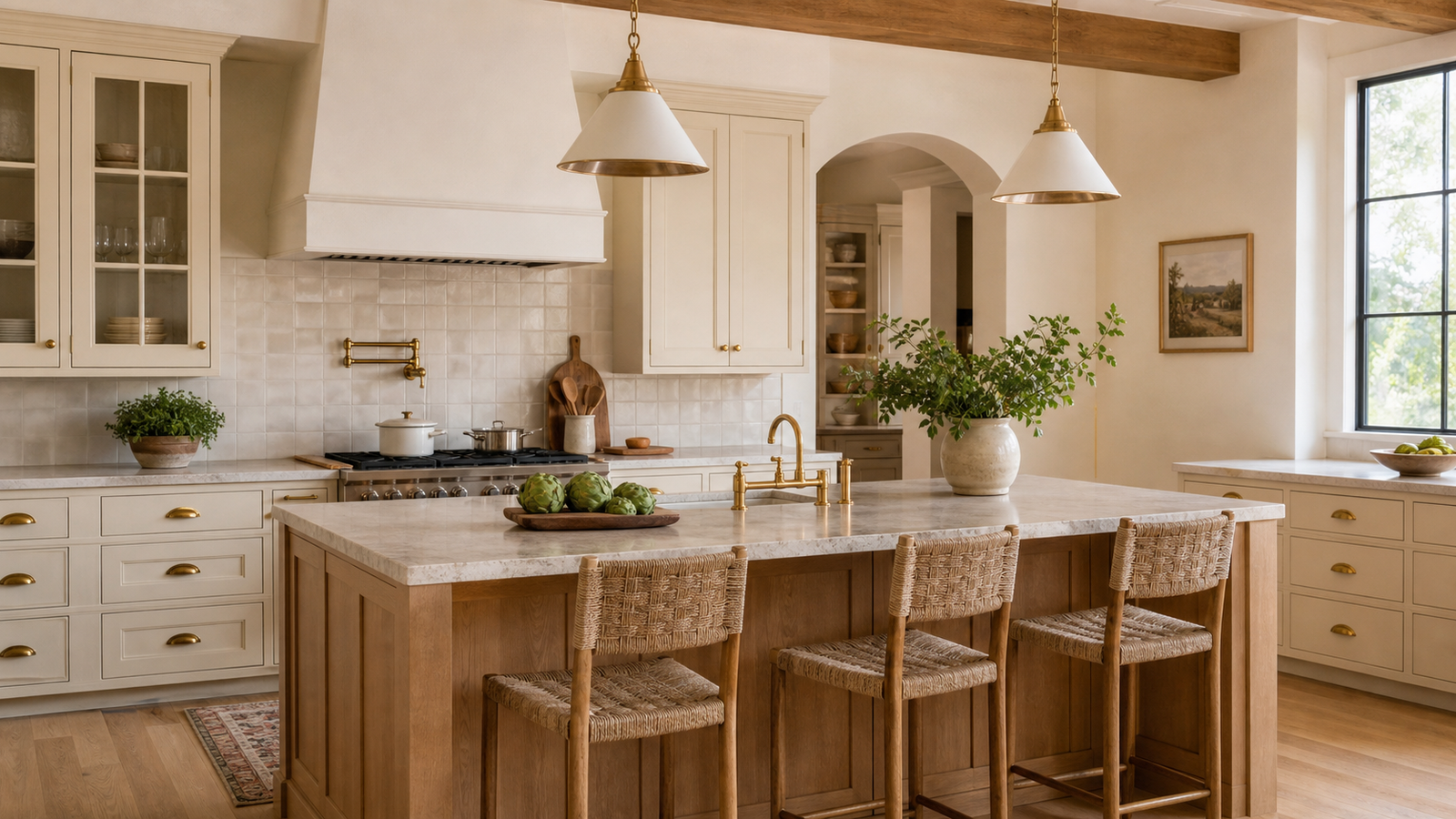
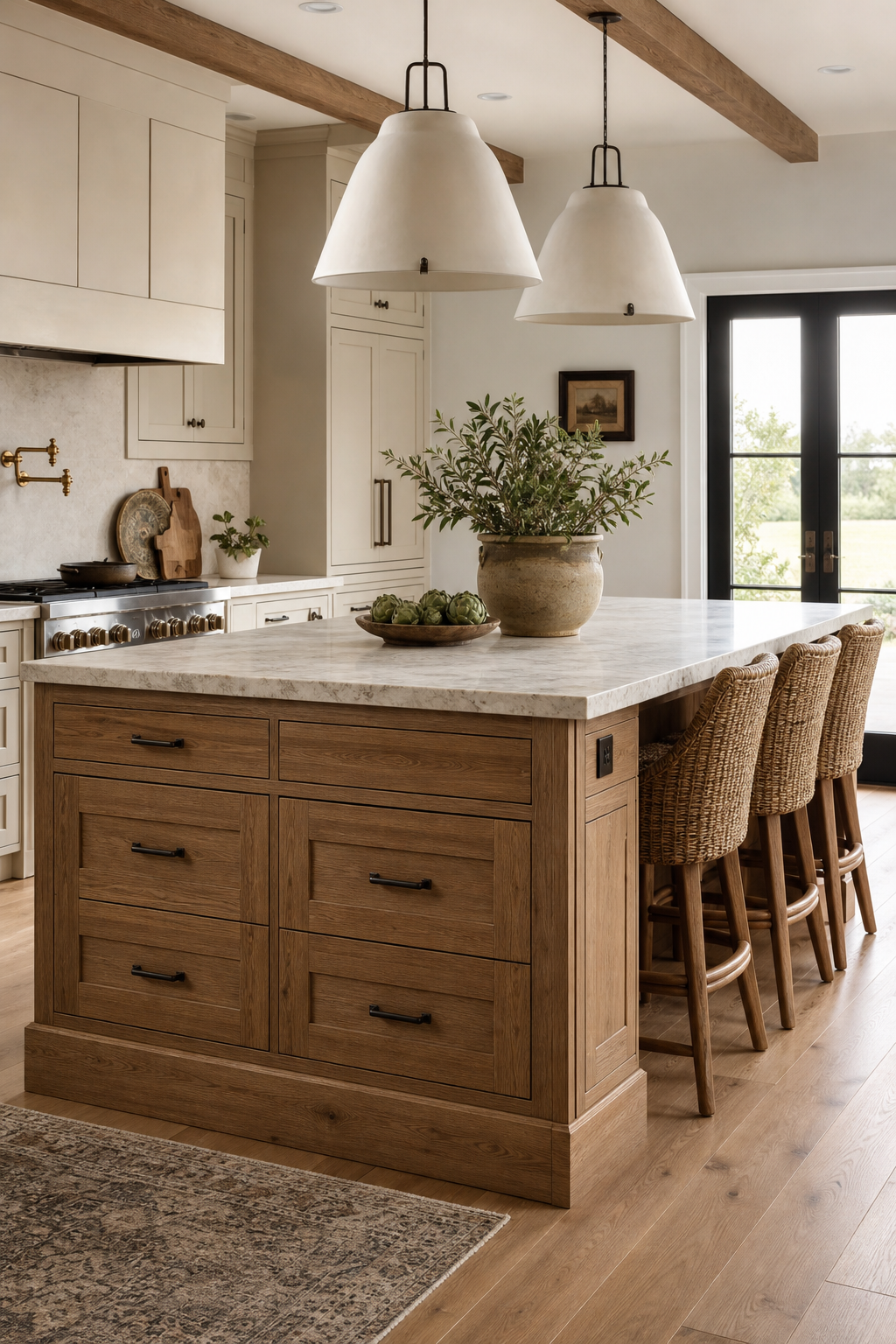
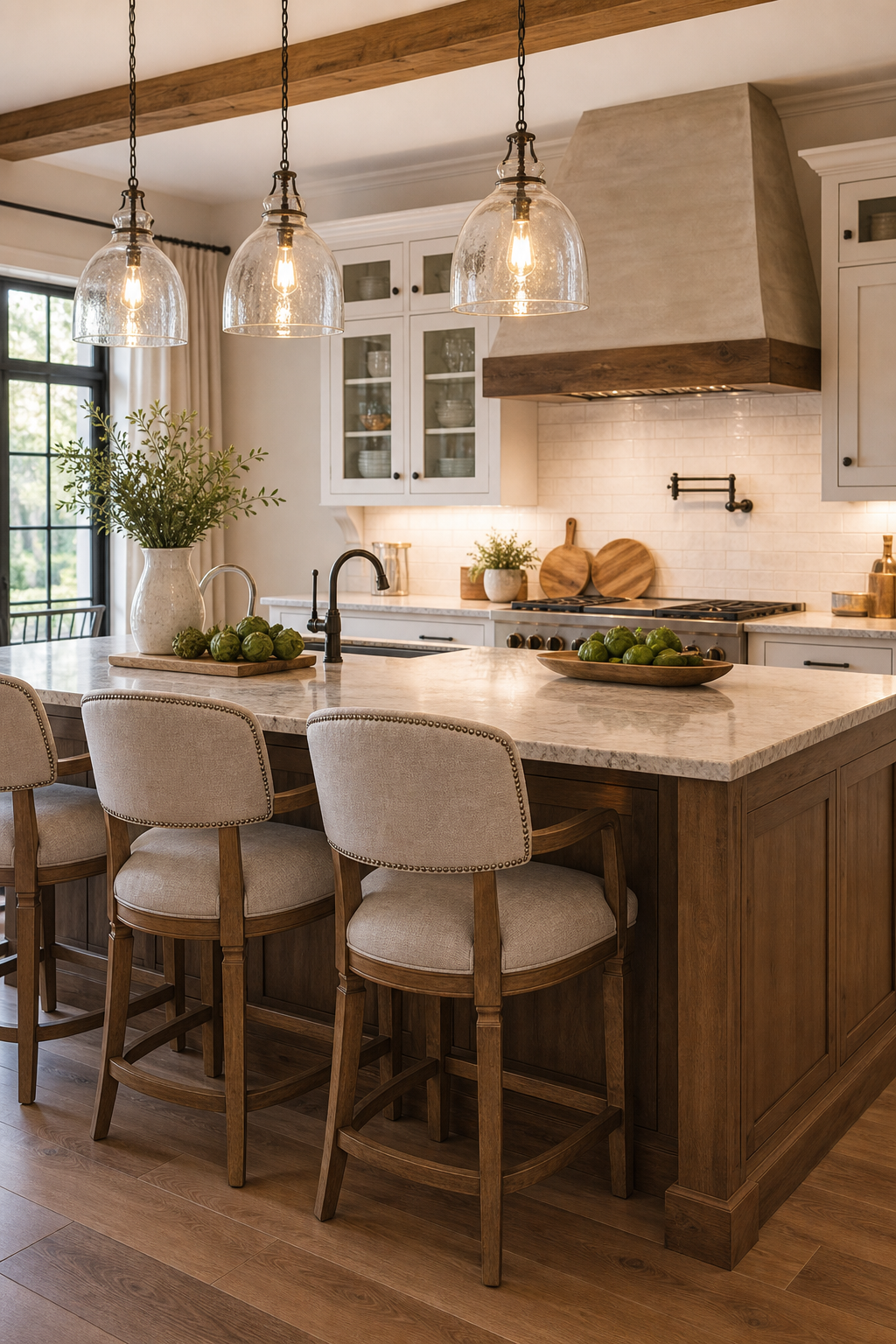
A wood island is one of the strongest ways to make a farmhouse kitchen feel warm and collected. White oak, walnut, or reclaimed-look oak can soften painted perimeter cabinets and give the room a furniture-like center. Keep the island design clean, with practical drawers, sturdy panels, and a durable counter that handles prep and serving. The wood tone should relate to the floor or open shelving without matching perfectly. A warm island also helps an open kitchen feel less sterile. It becomes the gathering place, the prep zone, and the visual anchor all at once. This contrast is especially valuable in open kitchens that need a clear center of gravity.
Choose Handmade-Look Tile
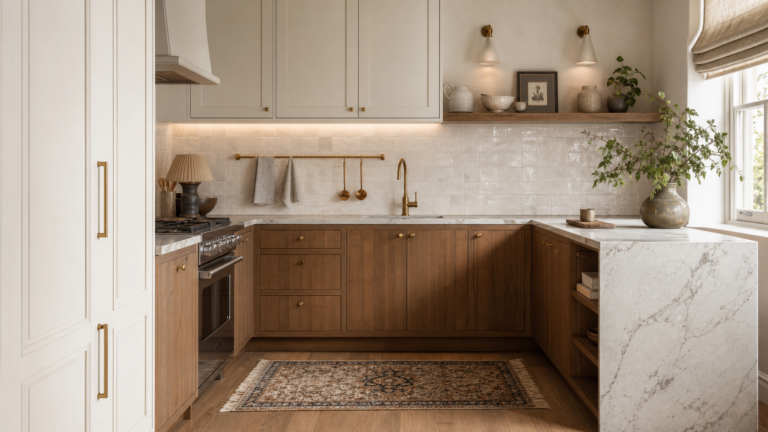
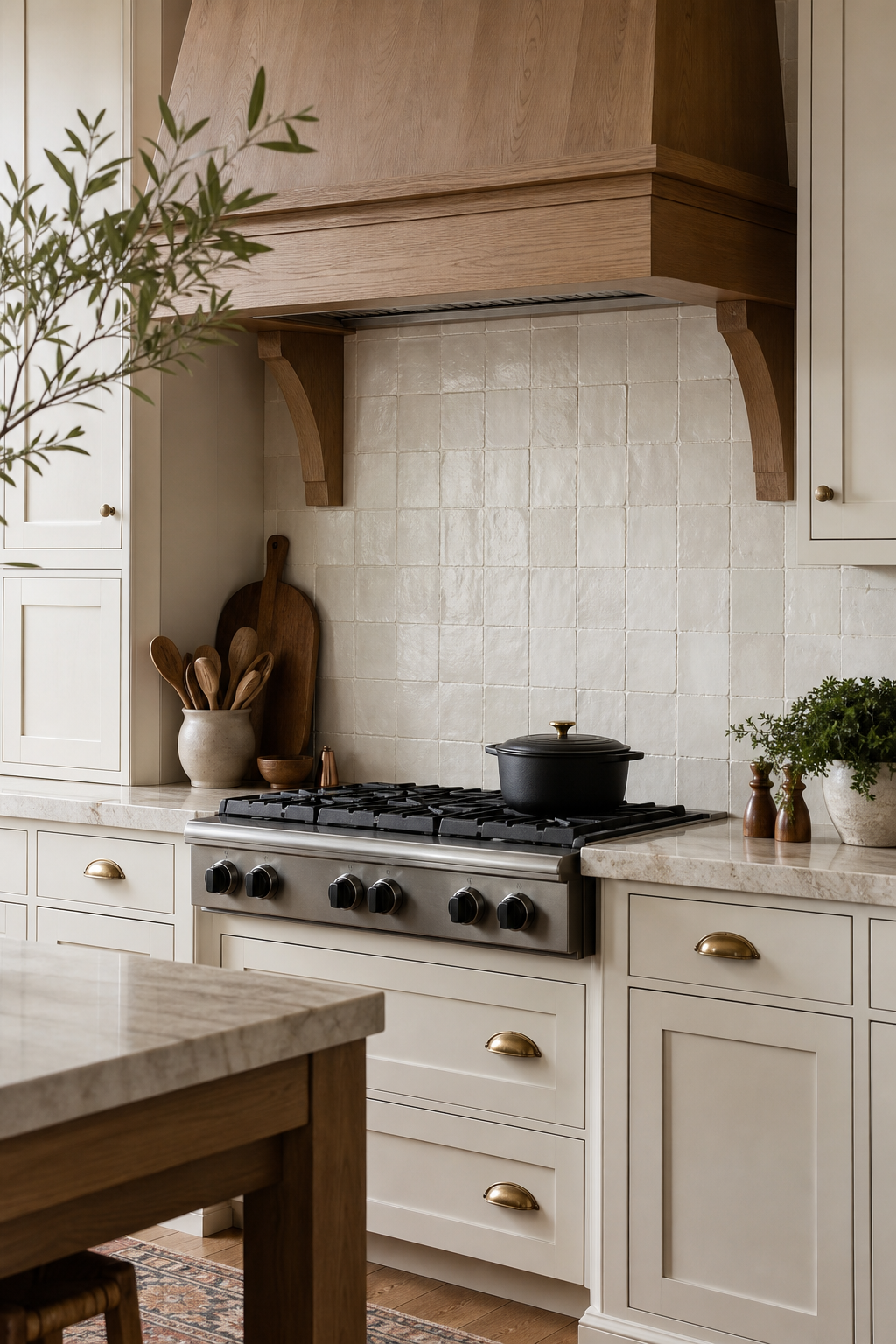
Handmade-look tile brings the slight irregularity that modern farmhouse kitchens need. Zellige, glazed brick, textured subway tile, or hand-pressed square tile can add movement without adding loud pattern. Keep the color quiet if the cabinets and island already have warmth, such as ivory, oatmeal, pale taupe, or soft gray-green. The uneven surface catches light beautifully behind a range or sink. Use grout that blends rather than outlines every tile unless you want a more graphic look. This small material choice keeps the kitchen from feeling flat while still staying timeless and easy to live with. The texture makes even a simple backsplash feel handmade and welcoming in changing light.
Use A Classic Range Hood
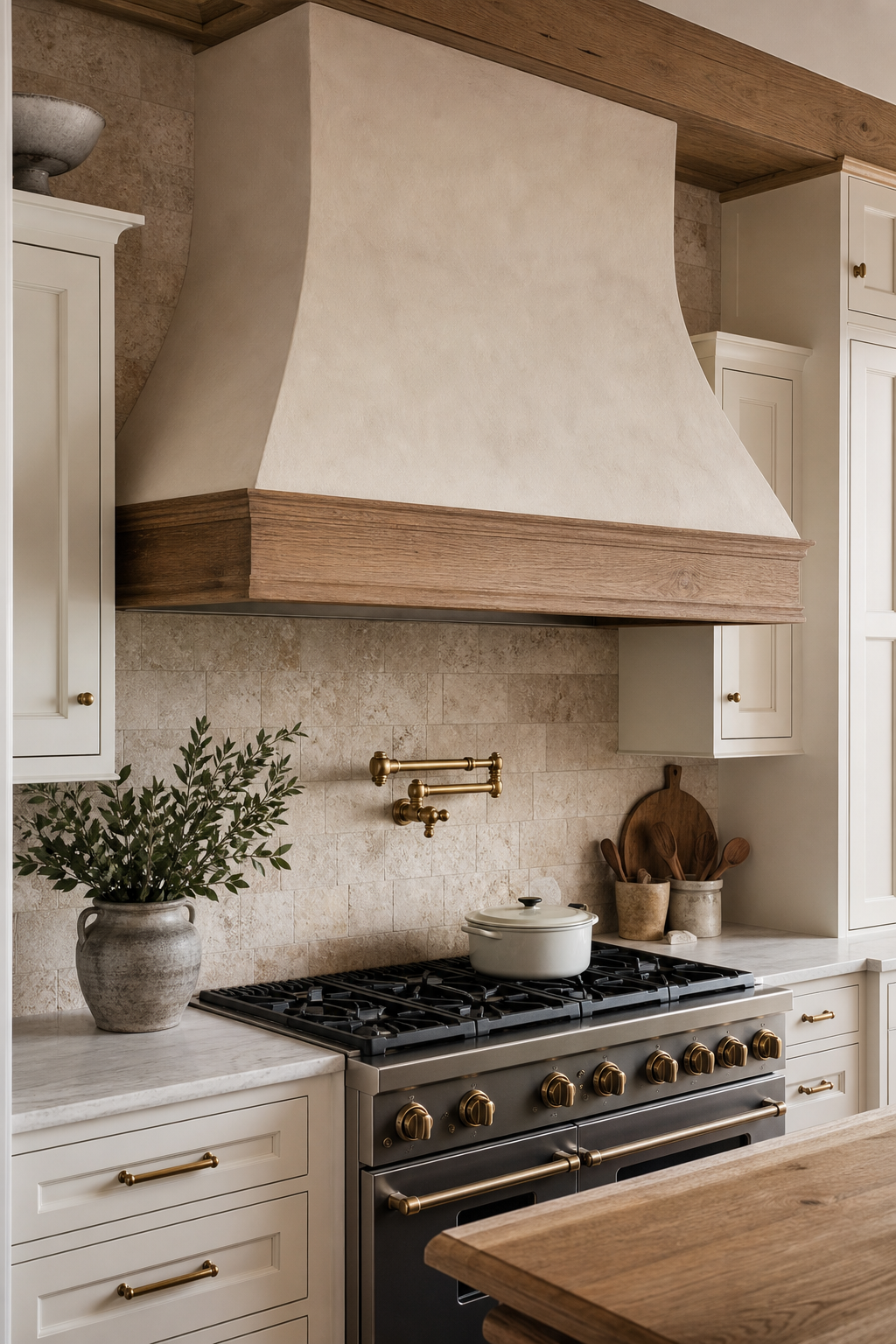
The range hood is often the architectural centerpiece of a farmhouse kitchen. A plaster, wood-trimmed, or simple painted hood can frame the cooking area without feeling heavy. Keep the shape generous but clean, and avoid ornate corbels unless the rest of the room truly supports them. A warm wood band or subtle ledge can connect the hood to the island or shelving. The hood should feel integrated with the cabinetry, not added as decoration. When it is proportioned well, it gives the kitchen a quiet focal point and makes the cooking zone feel intentional. Scale it to the range width so the whole cooking wall feels balanced and calm.
Mix Open Shelves With Closed Storage
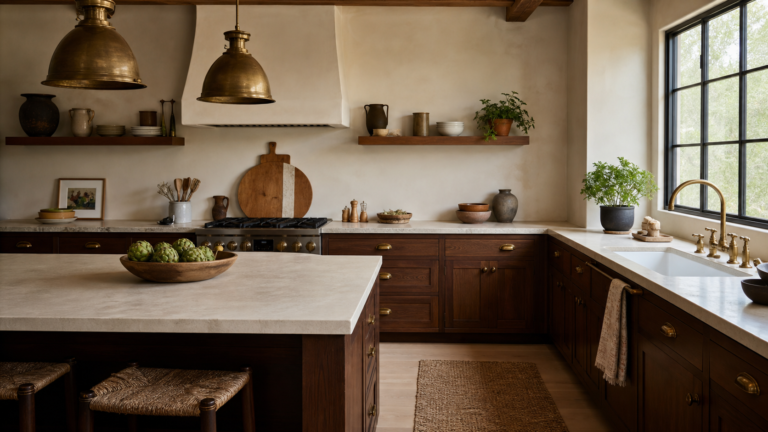
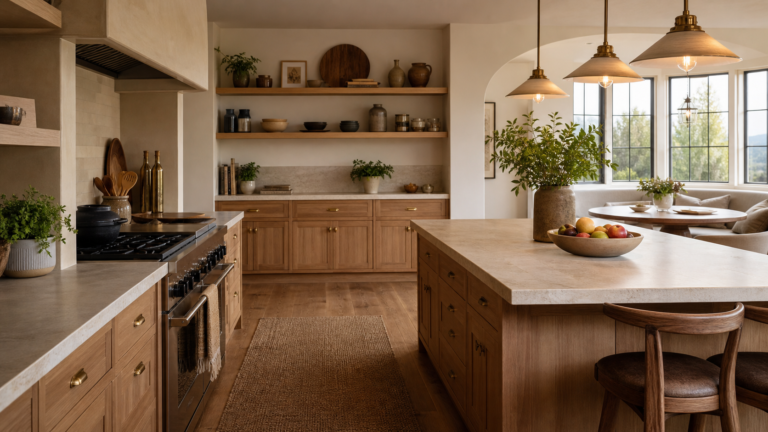
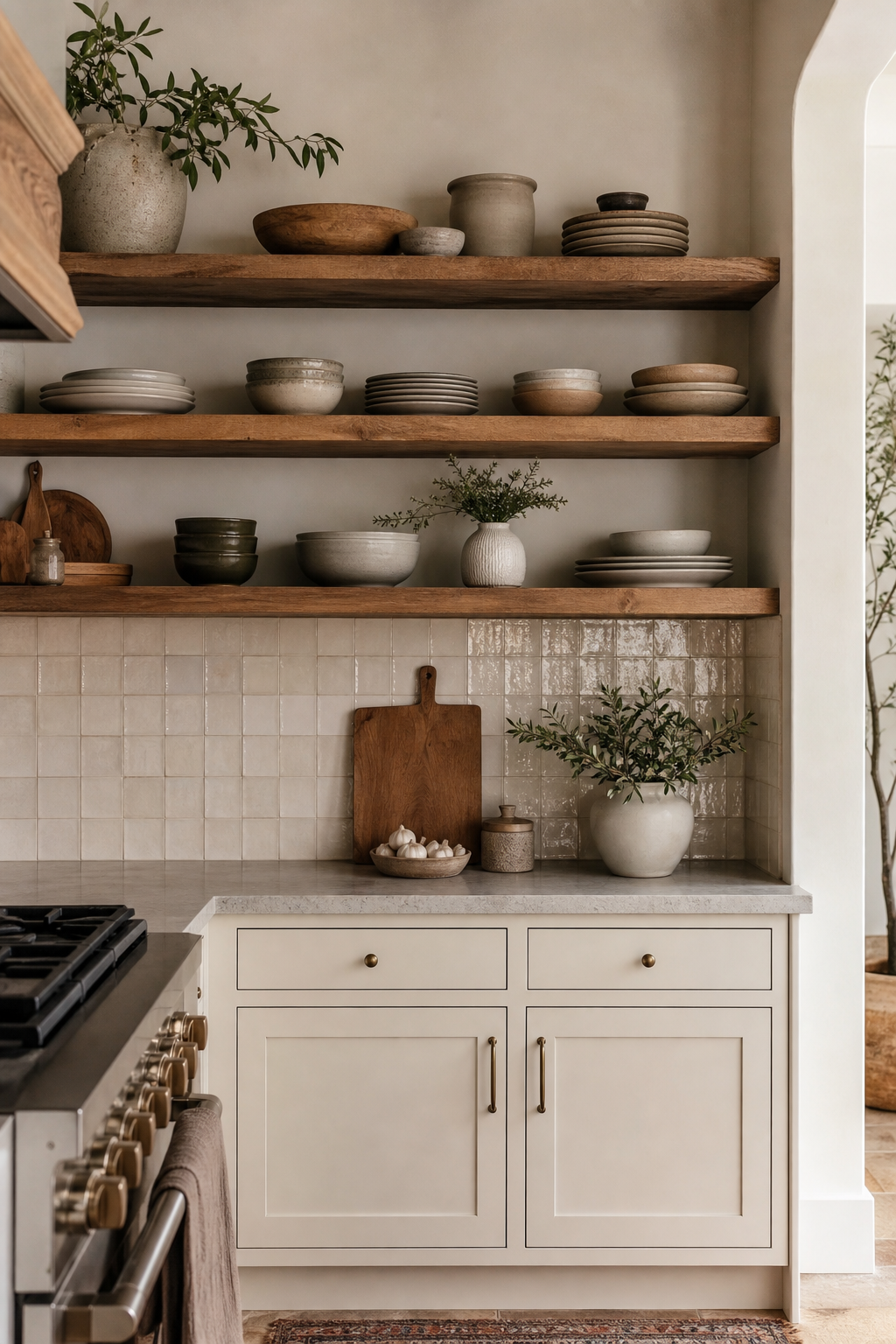
Open shelves can make a farmhouse kitchen feel relaxed, but they work best when balanced with plenty of closed storage. Use shelves for pieces that look good and get used often: everyday plates, bowls, glassware, serving boards, or a few ceramic vessels. Keep the shelves shallow enough that items do not disappear into clutter. Closed cabinets should handle pantry overflow, appliances, plastic containers, and anything visually noisy. This mix gives the kitchen personality without sacrificing calm. It also lets you enjoy the texture of wood shelving while keeping the hardworking parts of the room practical. Edit the display seasonally so the shelves remain useful instead of becoming visual storage.
Layer Aged Brass Or Black Hardware
Hardware has a strong effect on the mood of a modern farmhouse kitchen. Aged brass adds warmth and softness, while matte black gives definition and a slightly more utilitarian edge. Either can work beautifully if the finish is repeated with intention. Use pulls where drawers need grip and knobs where doors need a lighter touch. Avoid overly decorative shapes that push the room into costume territory. The best hardware feels substantial in the hand and quiet to the eye. It should support the cabinetry and materials, not become the loudest feature in the room. That restraint lets the finish age gracefully instead of feeling like a short-lived trend.
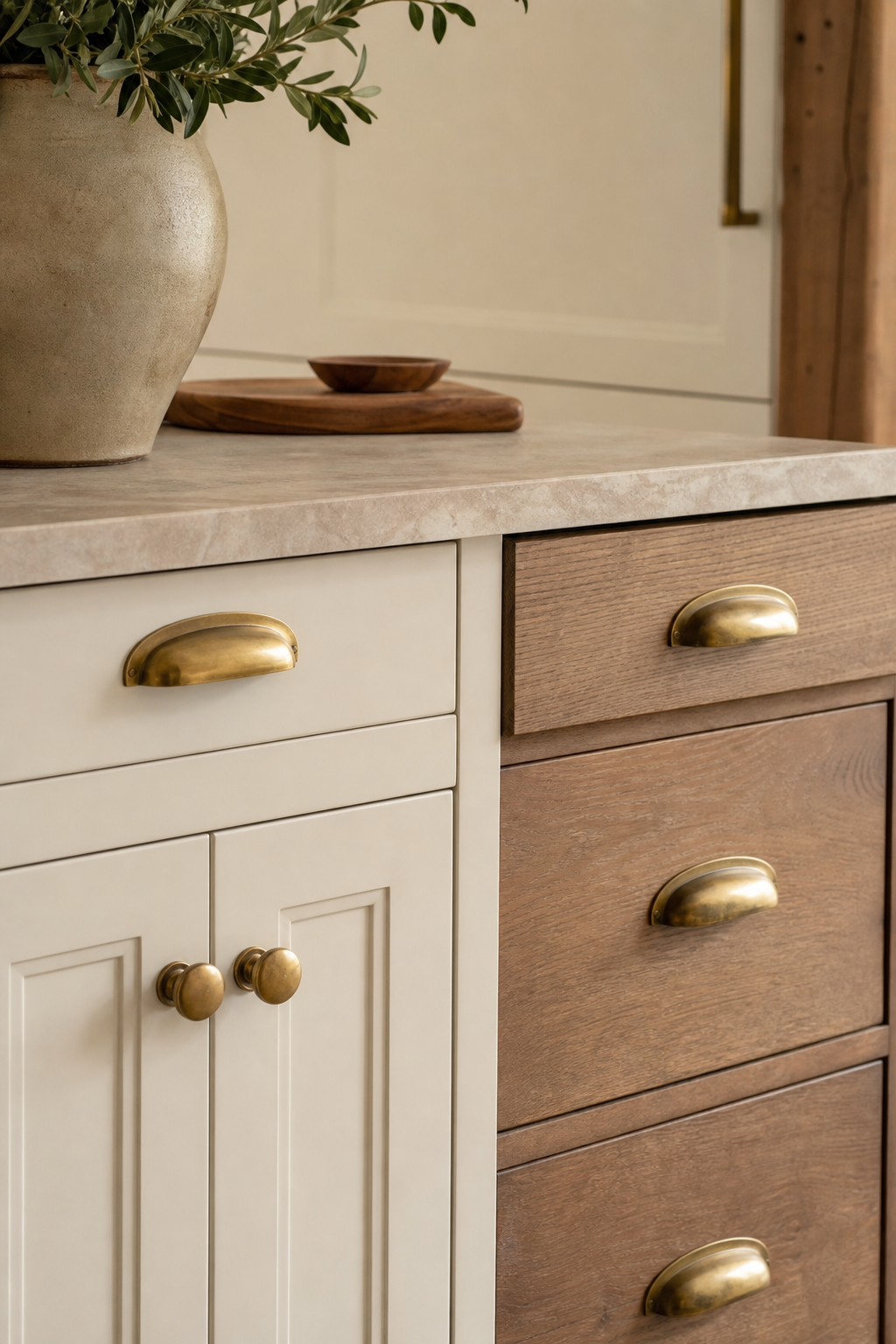
Add A Workhorse Farmhouse Sink
A farmhouse sink is a classic choice because it is genuinely useful. The deep basin handles large pots, sheet pans, flower buckets, and busy cleanup. Fireclay, cast iron, and stainless apron-front sinks each create a different look, from traditional to more modern. Pair the sink with a faucet that has enough reach and height to support real cooking. If the sink sits under a window, keep the surrounding styling simple so the view and light do most of the work. A good farmhouse sink should look beautiful, but its real value is how easily it supports daily life. It also gives the sink wall the practical, hardworking character farmhouse kitchens are known for.
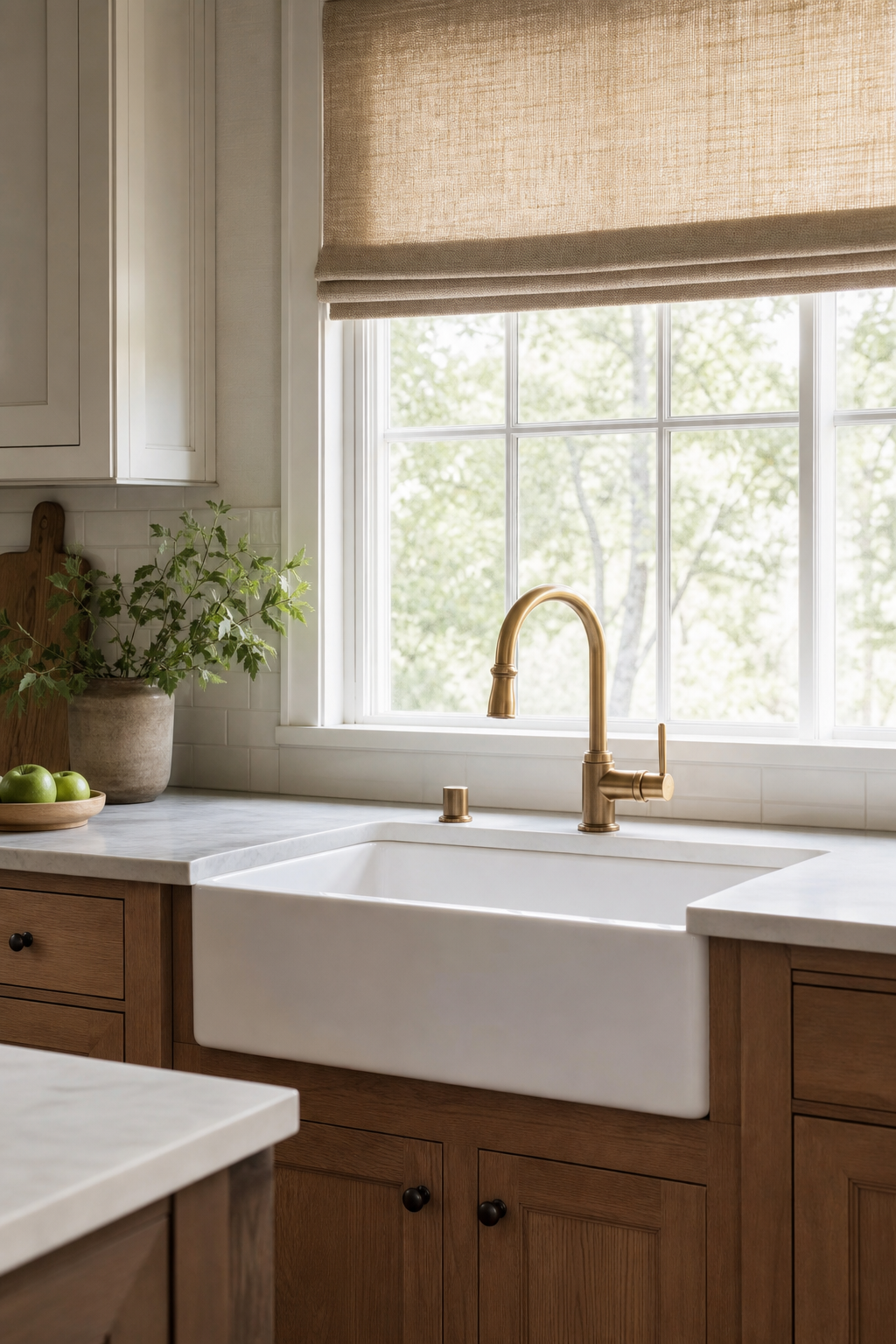
Choose Stone With Natural Movement
Stone counters bring a modern farmhouse kitchen closer to the earth. Quartzite, marble, soapstone, limestone-look quartz, and honed granite can all work depending on your tolerance for maintenance. Look for movement that feels organic rather than flashy. Soft veining, cloudy texture, or a honed finish usually pairs well with farmhouse materials. If you choose a dramatic slab, keep the cabinetry and tile quieter. Stone should feel like a hardworking surface, not a fragile display. The right counter gives the kitchen depth, durability, and a subtle sense of age even when everything is new. Ask how the surface patinas over time, because age can be part of the charm.
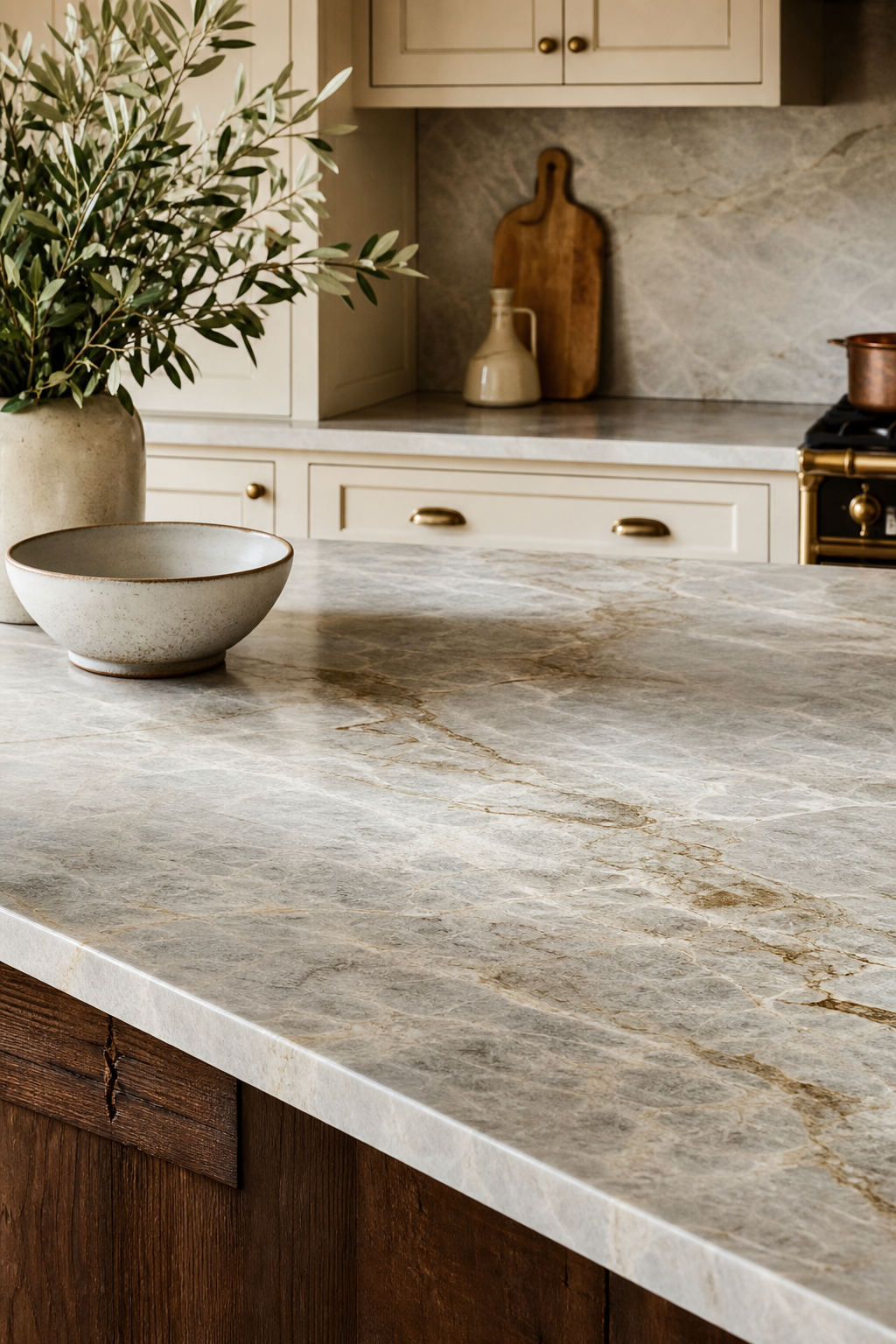
Bring Warmth Through Floors
Flooring sets the emotional tone of a farmhouse kitchen. Wide-plank oak, warm engineered wood, limestone, terracotta, or softly patterned stone can make the room feel grounded. If the cabinets are light, a medium wood floor often adds welcome depth. If the room already has a strong wood island, stone floors can create beautiful contrast. Choose a finish that can handle kitchen traffic and cleaning without constant worry. A warm floor also helps connect the kitchen to nearby living spaces, which is especially important in open homes where the kitchen is always visible. The floor should look better with life, not demand perfection from everyone using the kitchen.
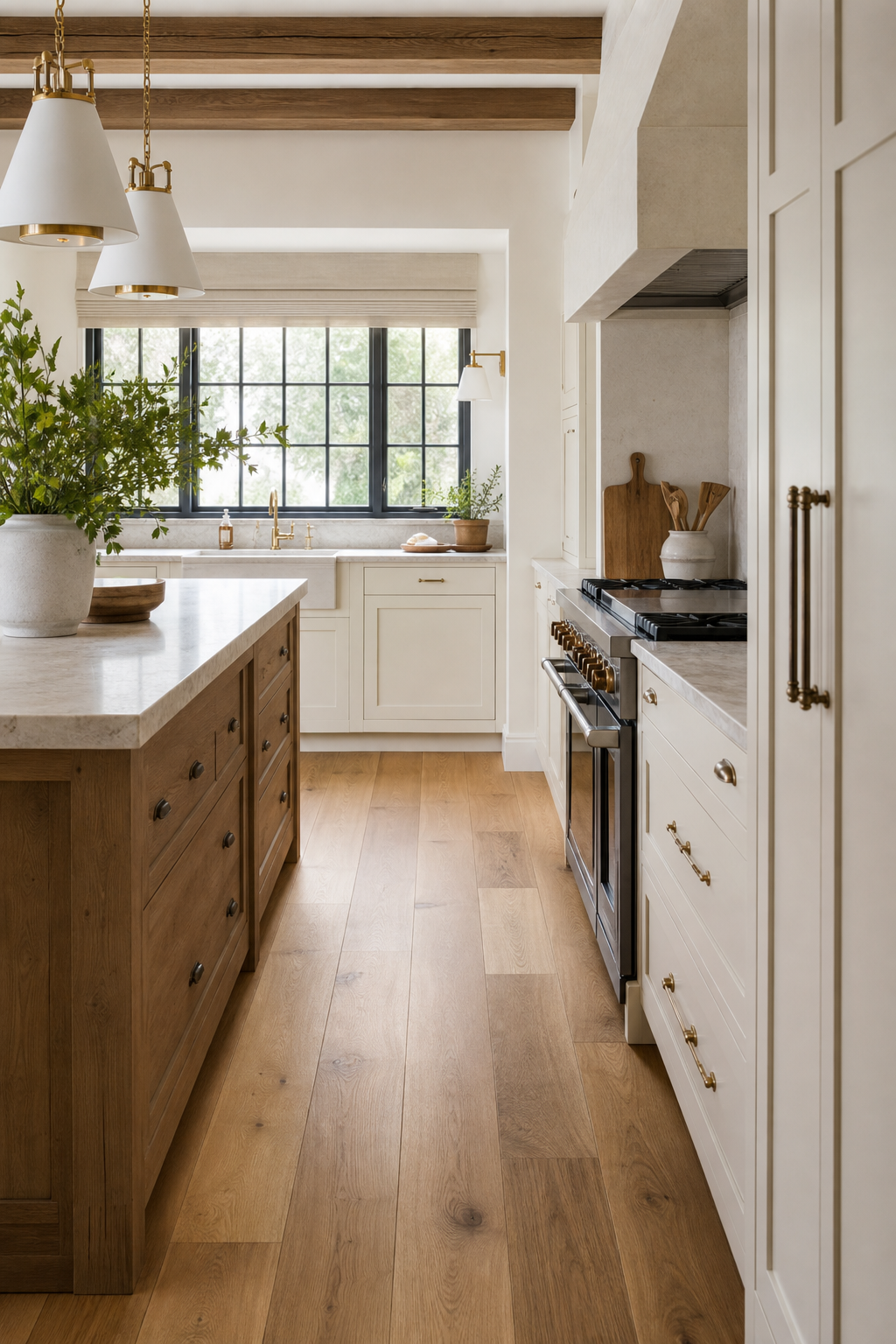
Make The Pantry Feel Integrated
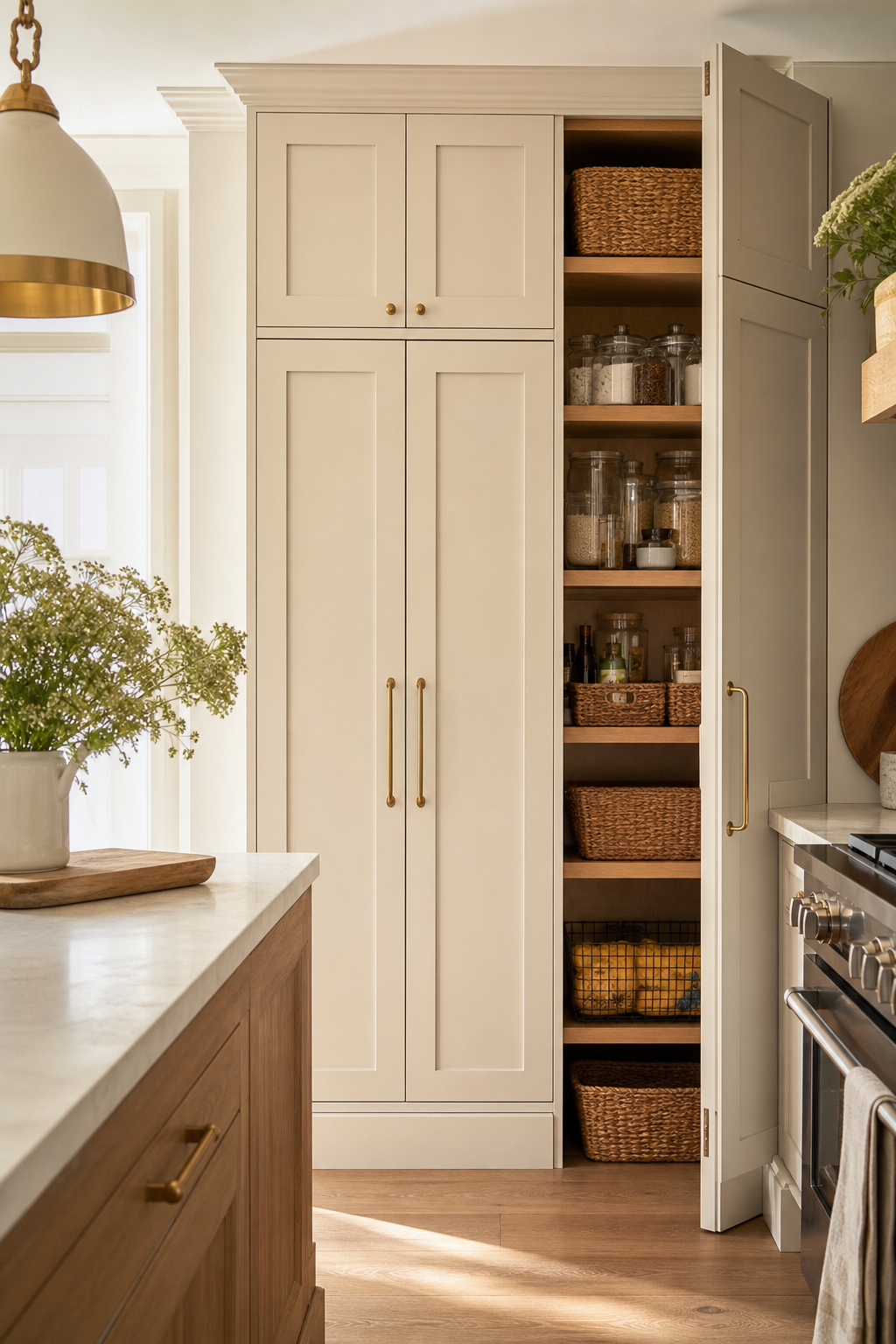
A pantry can be functional and beautiful when it feels integrated with the kitchen design. Use tall cabinet doors that match the room, a recessed pantry wall, or a small walk-in pantry with the same hardware and trim language. Inside, prioritize adjustable shelves, baskets, clear zones, and good lighting. The exterior should stay calm even if the inside works hard. This is where modern farmhouse design becomes practical rather than decorative. A well-planned pantry keeps counters clearer, supports bulk storage, and makes the kitchen easier to reset after cooking. Good pantry planning is one of the reasons a beautiful kitchen can stay beautiful after breakfast.
Use Pendant Lights With Presence
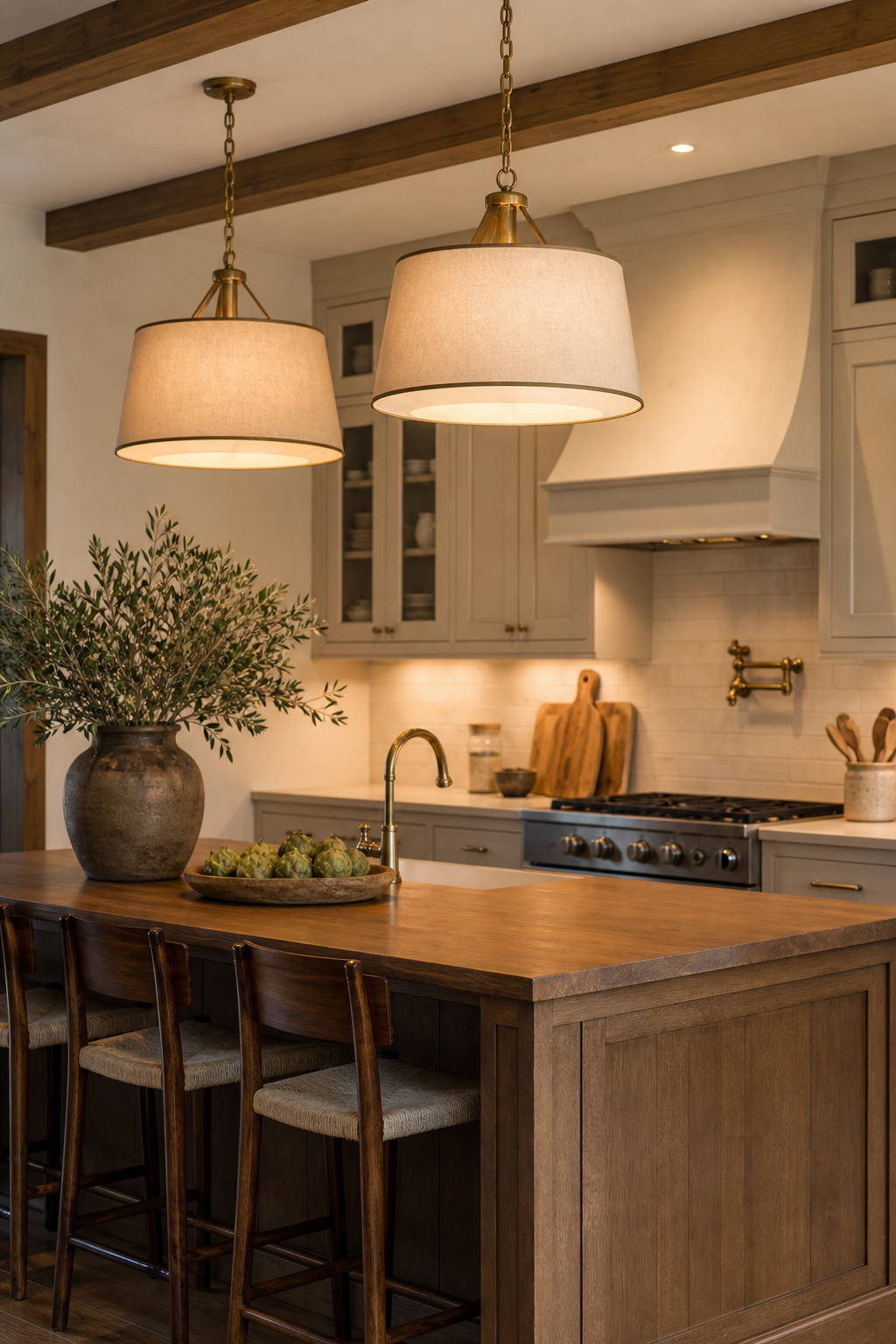
Pendant lights help define the island and add personality above the work surface. In modern farmhouse kitchens, look for fixtures with honest materials: aged brass, linen, glass, iron, plaster, or woven shades. The scale should match the island, with enough presence to feel intentional but enough airiness to keep sightlines open. Dimmers are important because island lighting needs to shift from chopping vegetables to evening conversation. Choose pendants that relate to the faucet or hardware without matching every metal perfectly. Good lighting makes the kitchen feel layered, warm, and ready for use. The right fixtures make the island feel finished even before any styling is added.
Soften The Room With Textiles
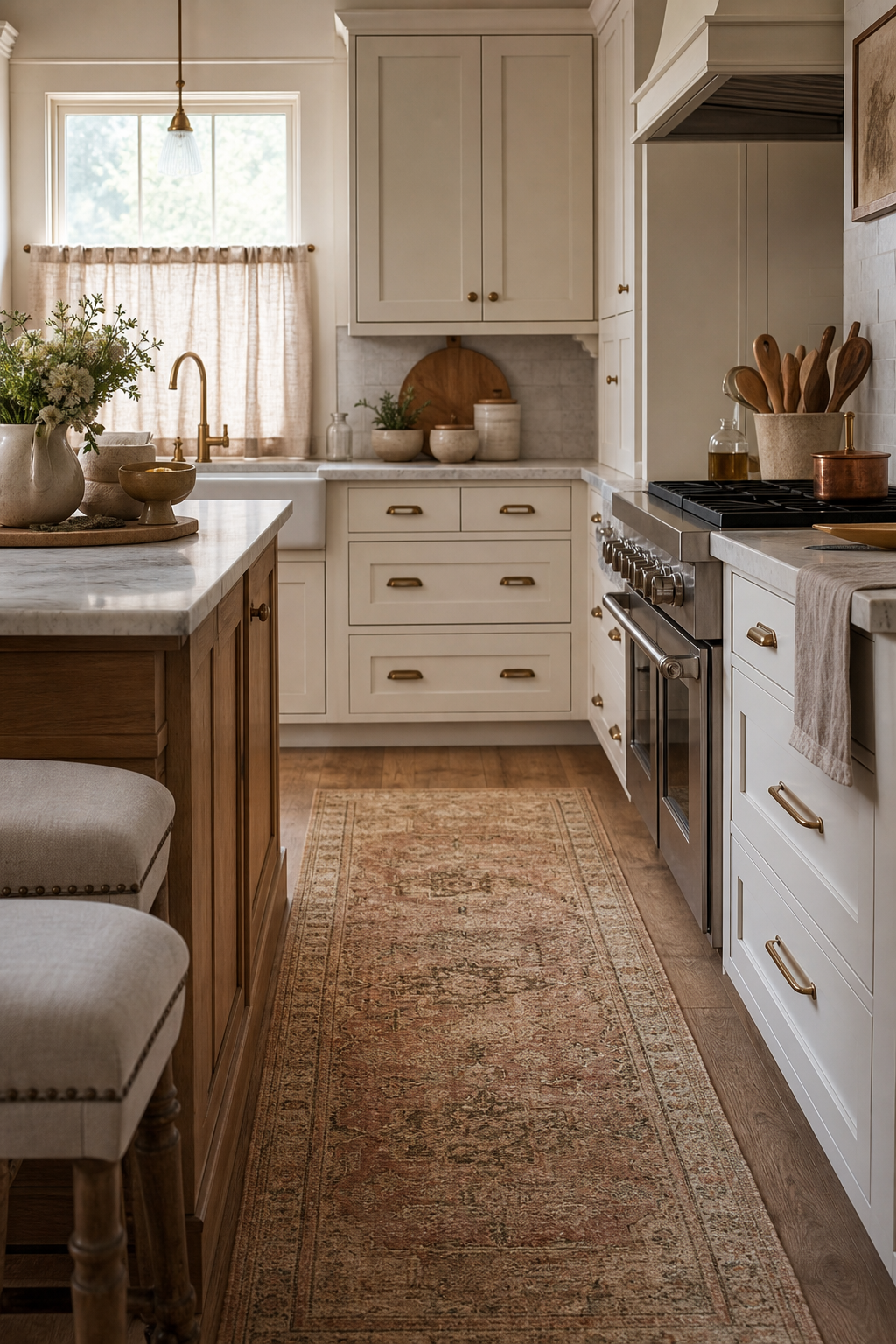
Textiles keep a farmhouse kitchen from feeling too hard. A vintage-style runner, linen cafe curtain, upholstered stools, woven shades, or a simple dish towel can bring softness to stone, tile, and cabinetry. Choose materials that can handle real kitchen use and wash well. Patterns should feel collected rather than overly coordinated, especially if the room already has strong tile or stone. A runner is especially useful in long galley zones or between the island and range. These soft layers add comfort, absorb sound, and make the kitchen feel like part of the home rather than a workspace alone. Keep backups washable so the kitchen remains comfortable without becoming precious.
Keep Styling Useful And Simple
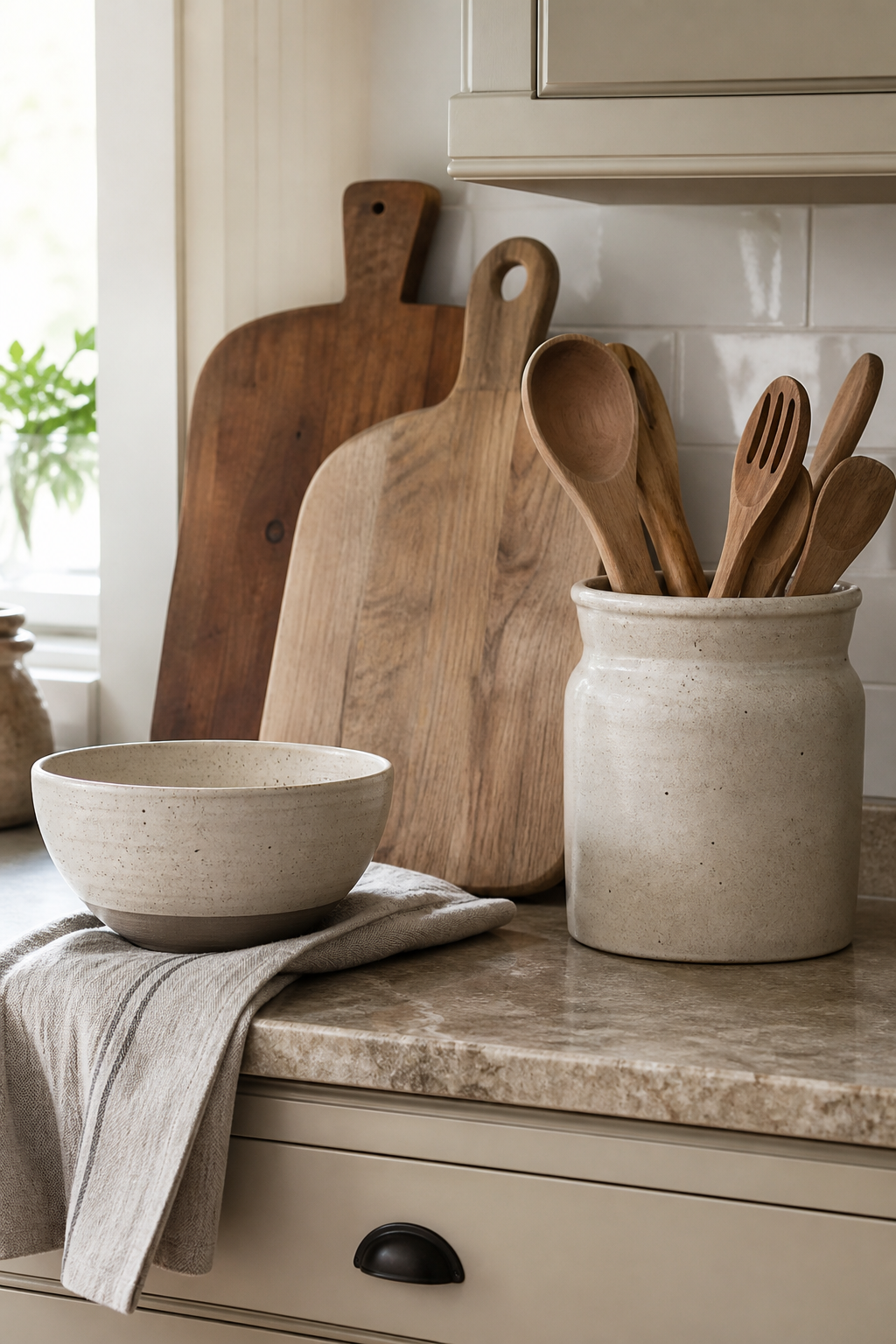
Modern farmhouse styling should feel useful, not staged. A crock of wooden spoons, a stack of cutting boards, a stoneware bowl, a linen towel, or a vase of branches can be enough. Avoid filling the counters with signs, themed objects, or too many small accessories. The room already has visual interest through wood grain, tile, hardware, and light. Keep the island mostly clear so it can function for prep, groceries, and serving. Useful styling gives the kitchen warmth while respecting the fact that it is one of the hardest-working rooms in the home. This kind of styling supports cooking instead of interrupting it, which is the whole point.
Balance Rustic Texture With Clean Lines
The modern part of modern farmhouse matters. Rustic texture feels best when paired with clean lines, simple cabinetry, and edited styling. A reclaimed beam can work beautifully above a plain range hood. Woven stools look sharper beside a sleek stone island. Handmade tile feels fresher with minimal upper cabinets. This balance keeps the kitchen from feeling nostalgic or heavy. Choose one or two rustic notes and let them breathe. When every surface looks distressed, the room loses clarity. When rustic texture is used with restraint, the kitchen feels warm, current, and quietly layered. That tension between old and new is what gives the style its best depth.
Create A Gathering-Friendly Island
The island is often where the farmhouse feeling becomes real. Make it comfortable enough for casual meals, conversation, homework, and serving. Leave enough overhang for knees, choose stools that support longer sitting, and keep outlets discreet but accessible. If the island is large, divide it into zones for prep and seating so guests are close without blocking the cook. A warm wood base, good lighting, and a durable counter make the island feel generous. The best gathering-friendly island looks beautiful, but more importantly, it makes people naturally want to stay. When the island supports both work and welcome, the entire kitchen feels warmer.
A modern farmhouse kitchen should feel warm because it works well, not because it is filled with rustic decorations. Start with a calm cabinet color, honest materials, strong storage, and lighting that supports both cooking and gathering. Then add texture through tile, wood, stone, textiles, and simple useful styling. When the room is edited, durable, and comfortable to move through, the farmhouse character feels natural rather than forced.