25 Bedroom Ideas For Small Rooms That Make Every Inch Feel Stylish
A small bedroom can feel deeply stylish when every choice has a job. The goal is not to make the room look empty; it is to make the essentials feel deliberate, comfortable, and beautifully scaled. In compact spaces, the difference often comes from details that designers use quietly: lighting moved off the nightstand, curtains hung high, storage hidden in plain sight, and furniture with lighter visual weight. These ideas show how to make a small bedroom feel calm, useful, and polished without sacrificing softness.
Float The Bed On The Longest Wall
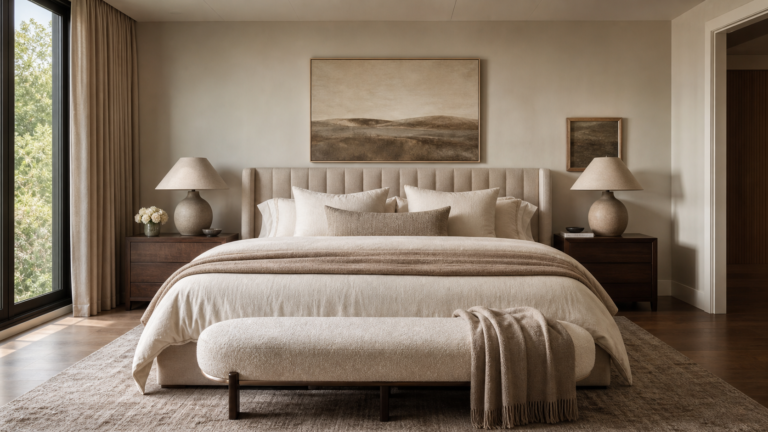
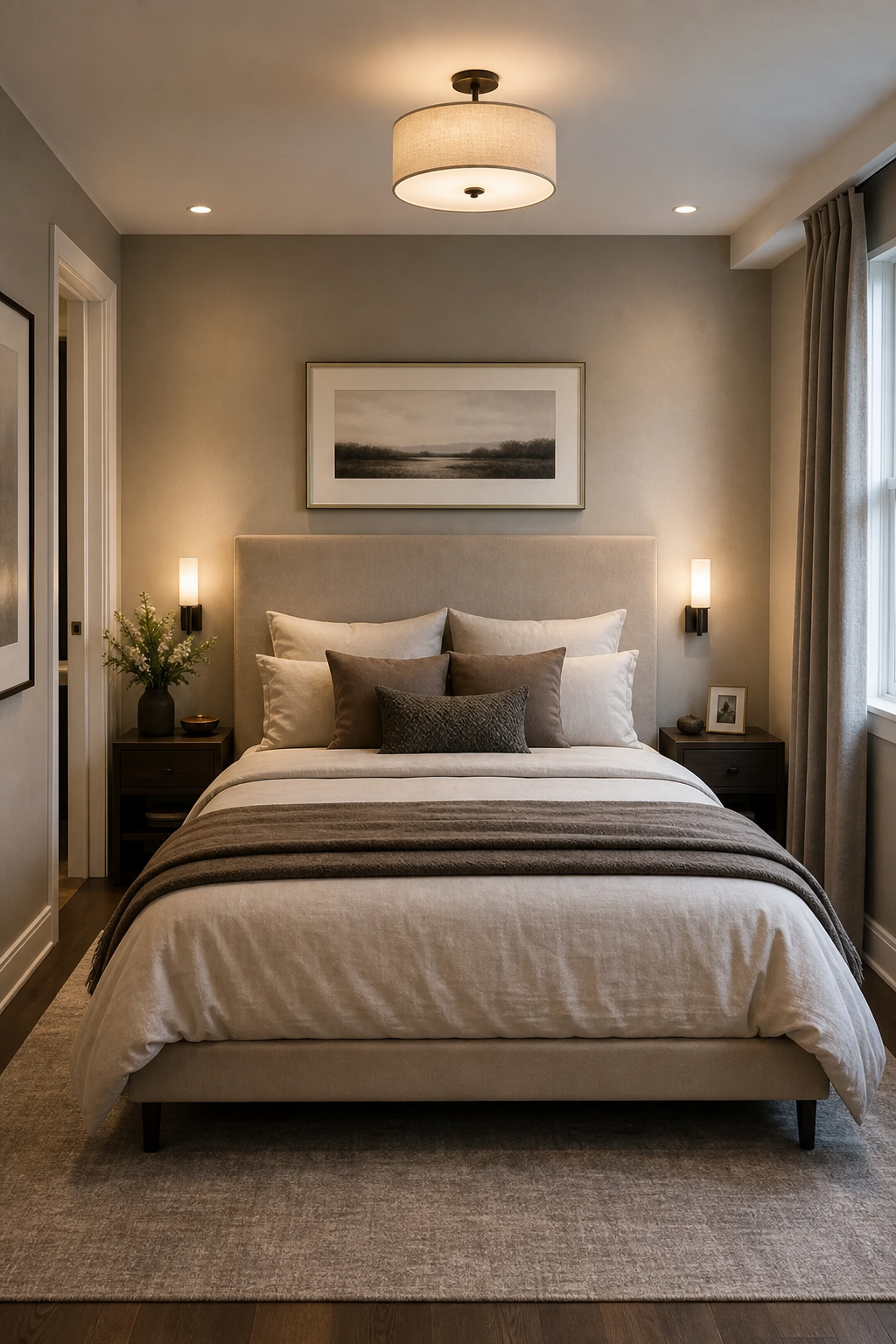
In many small bedrooms, the strongest layout begins by placing the bed on the longest uninterrupted wall. This gives the room a clear anchor and usually leaves the most comfortable walking path. Measure the clearance on both sides before buying nightstands; even a narrow surface feels better than forcing oversized furniture into a tight squeeze. If the room is very narrow, consider one nightstand and one wall shelf rather than matching pieces. Keep the headboard slim and tailored so it adds polish without stealing inches. A centered bed also makes budget bedding and simple lighting look more intentional because the room has an obvious focal point.
Swap Table Lamps For Wall Sconces
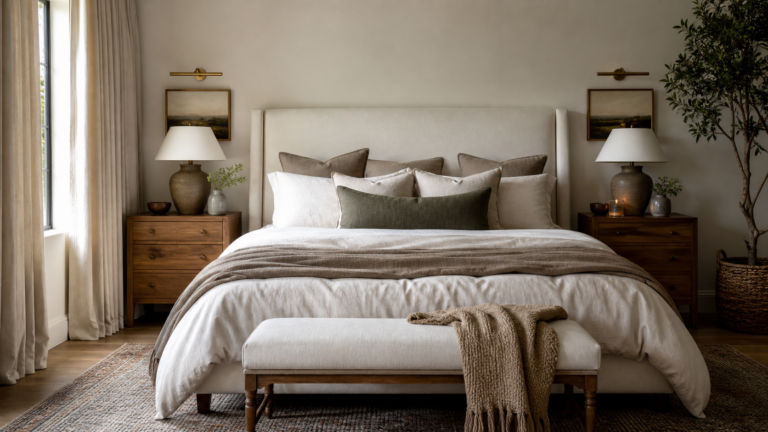
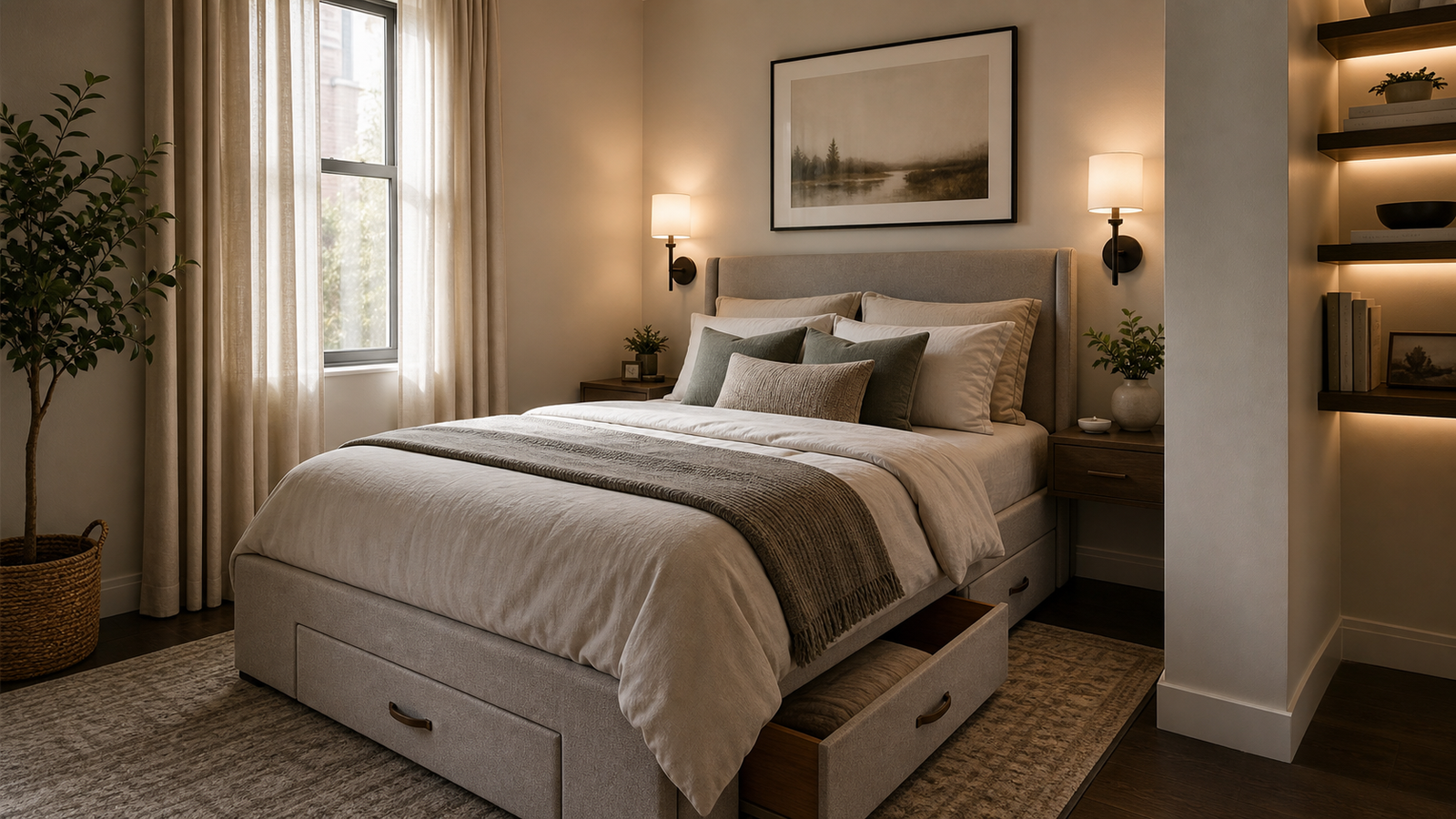
Small nightstands work harder when lamps are moved onto the wall. Sconces give the bed a custom look, free the surface for a book or water glass, and make the room feel taller. Choose adjustable arms if you read in bed, or linen-shaded sconces if you want a softer glow. Plug-in designs are useful for rentals, especially when the cord color blends with the wall. Place the switch where it can be reached from bed so the lighting feels practical, not decorative only. In a compact bedroom, this single move can make the room feel cleaner, calmer, and more expensive.
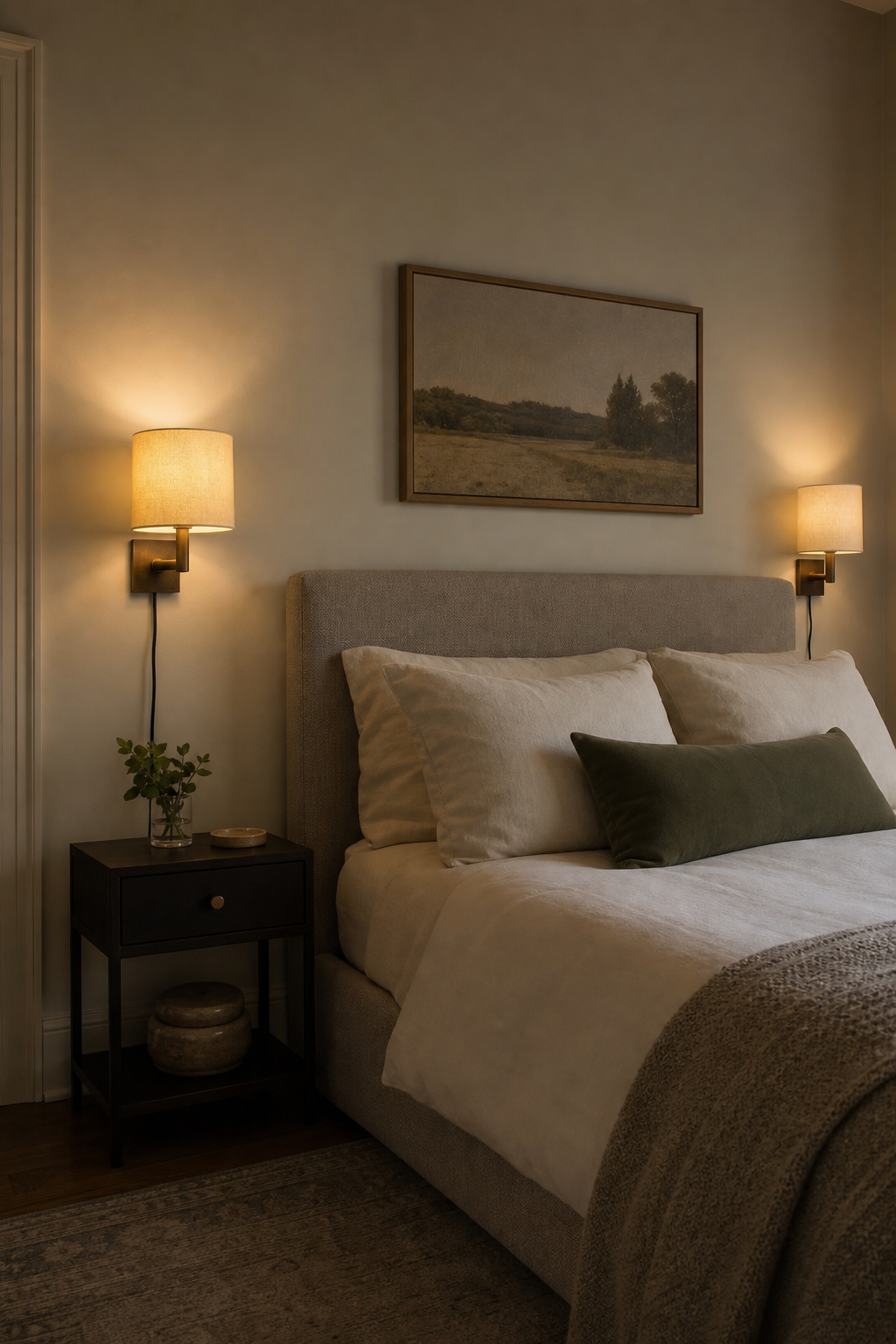
Choose A Bed With Hidden Drawers
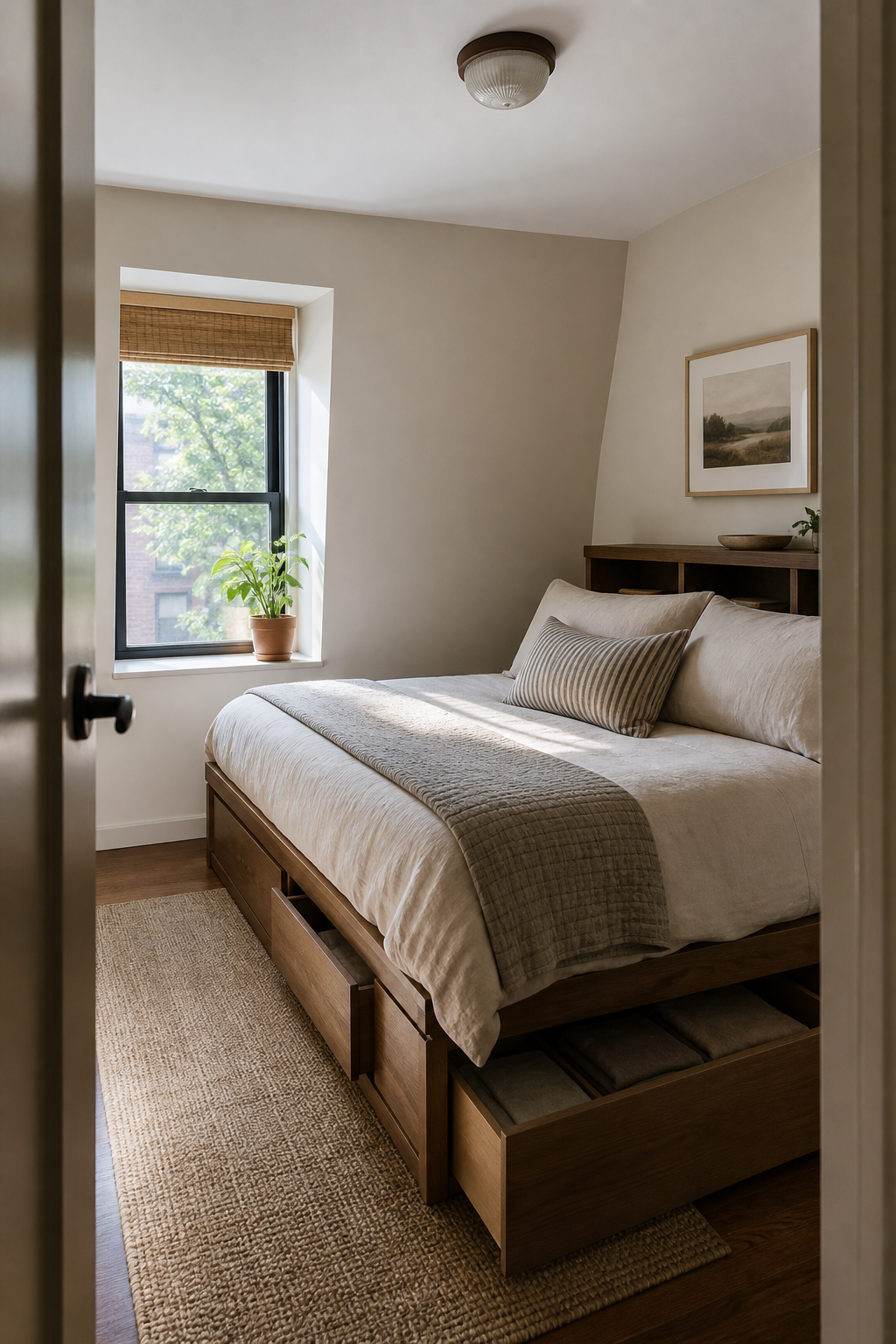
Under-bed storage is most successful when it is designed as part of the bed, not shoved beneath it in mismatched bins. A platform bed with built-in drawers can hold off-season clothes, extra linens, or bulky sweaters while keeping the room visually calm. Look for drawer pulls that sit flush so they do not catch on bedding or narrow walkways. If drawers cannot open comfortably on both sides, choose a lift-up storage bed instead. Keep the bedding tailored enough that the storage base is visible as furniture. The room will feel organized because the storage belongs to the design rather than looking like an afterthought.
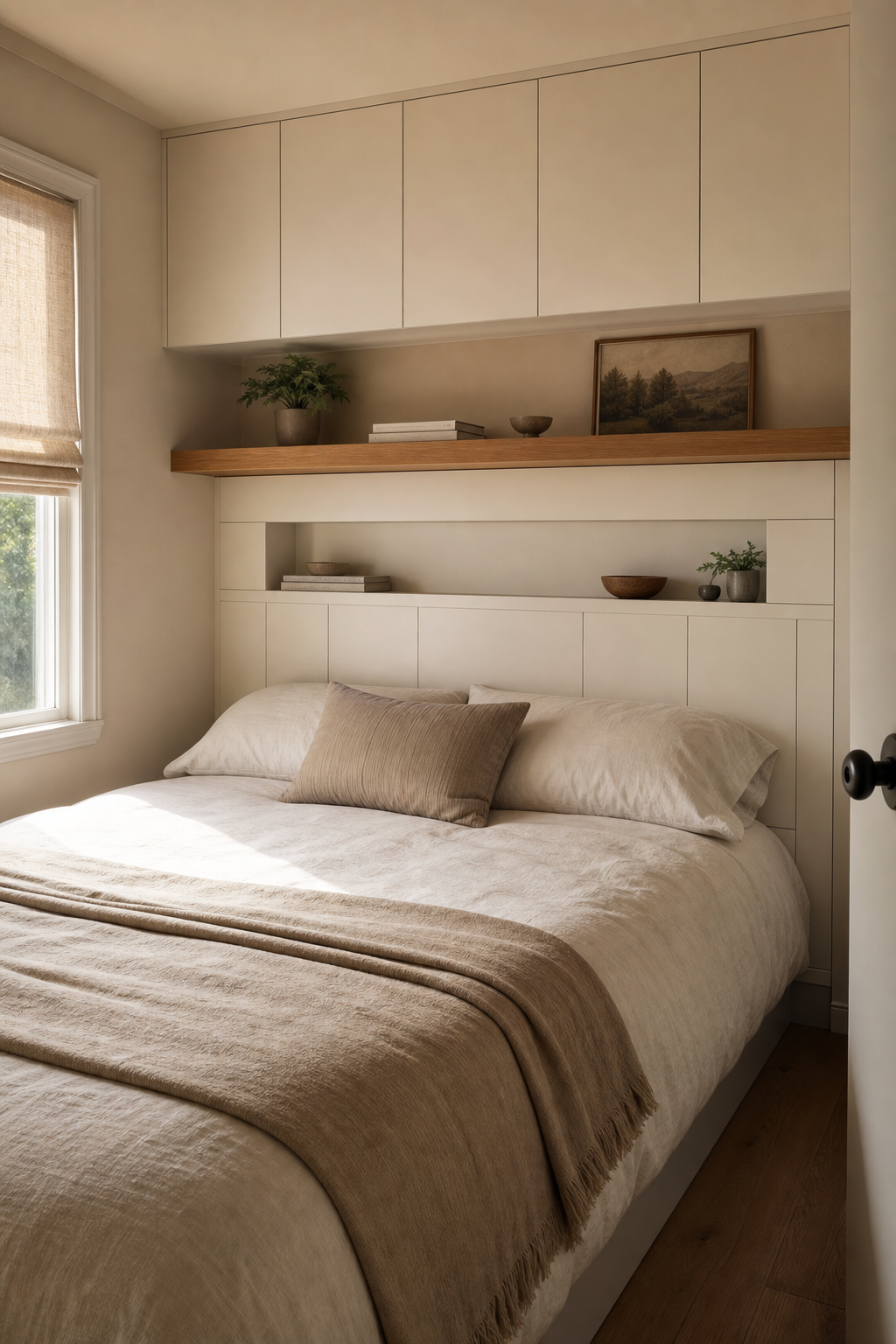
Use A Headboard With Storage Niches
A storage headboard can replace several pieces of furniture when the room is short on floor space. The best versions look architectural rather than bulky: shallow shelves, side niches, or a ledge wide enough for a book and small vessel. Keep the finish close to the wall color if you want it to recede, or choose warm wood when the room needs texture. Avoid filling every shelf. A few useful items and one sculptural object will look more refined than a row of tiny accessories. This idea works especially well when there is no room for full nightstands on both sides of the bed.
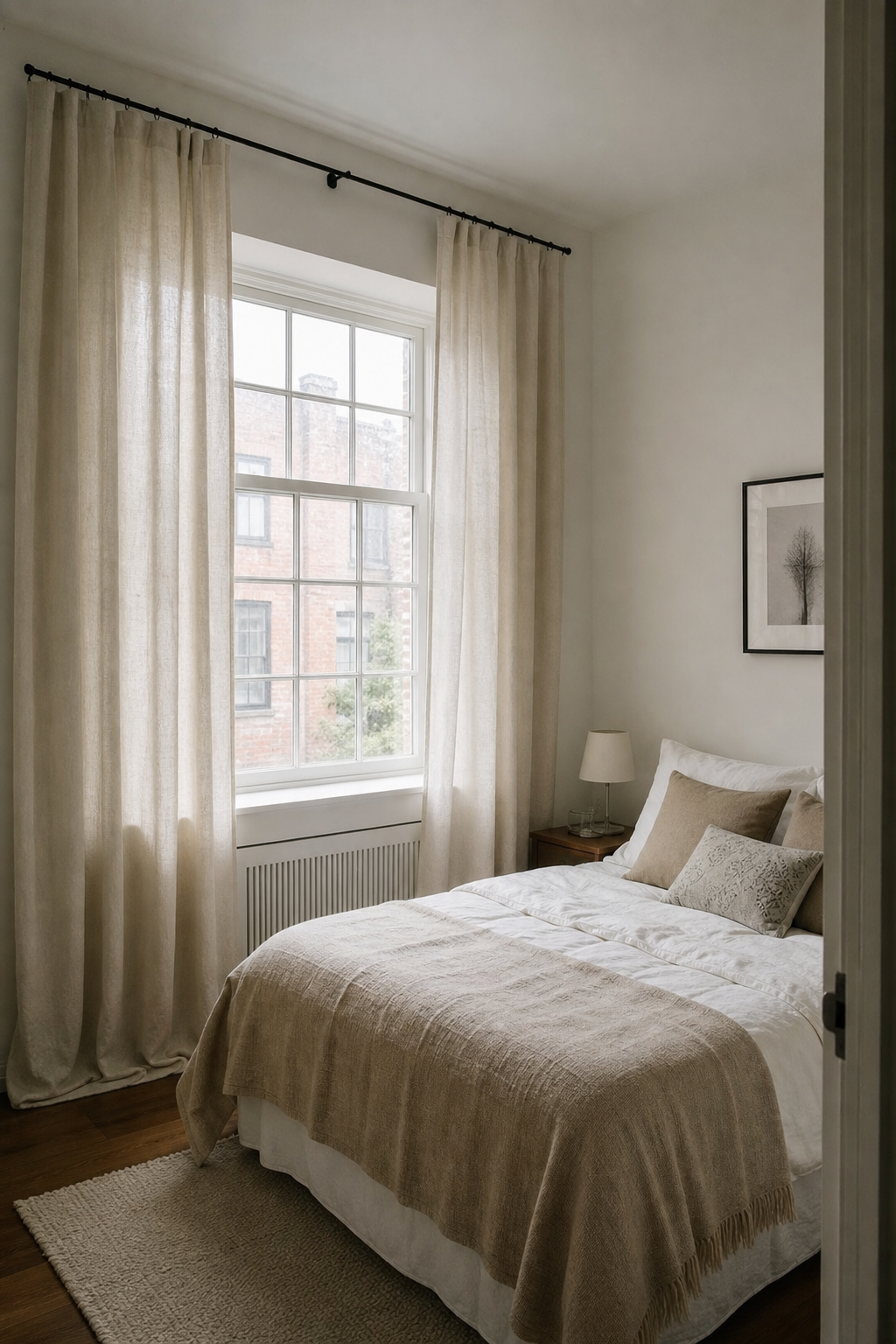
Hang Curtains High And Wide
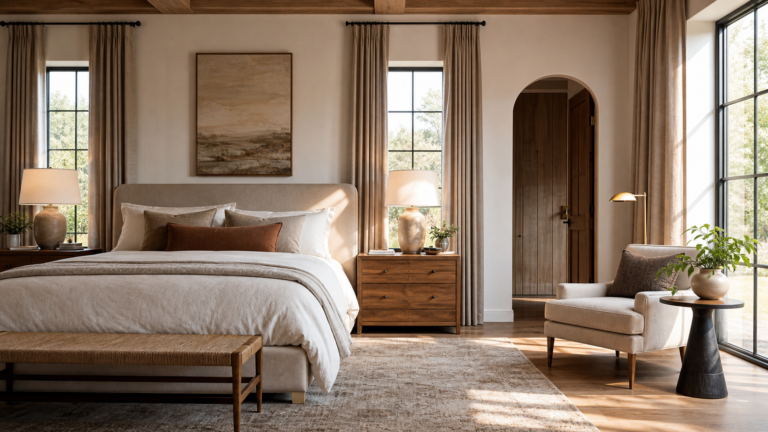
Window treatments can change the perceived height of a small bedroom. Mount the curtain rod near the ceiling and extend it beyond the window frame so the panels stack against the wall instead of covering glass. This lets in more daylight and makes the window feel larger. Choose fabric with a soft fall, such as linen or cotton blend, and let it reach the floor. In a small space, curtains that match the wall color create a calm envelope, while a subtle vertical stripe can add lift. Avoid short curtains because they cut the wall visually and make the room feel more cramped.
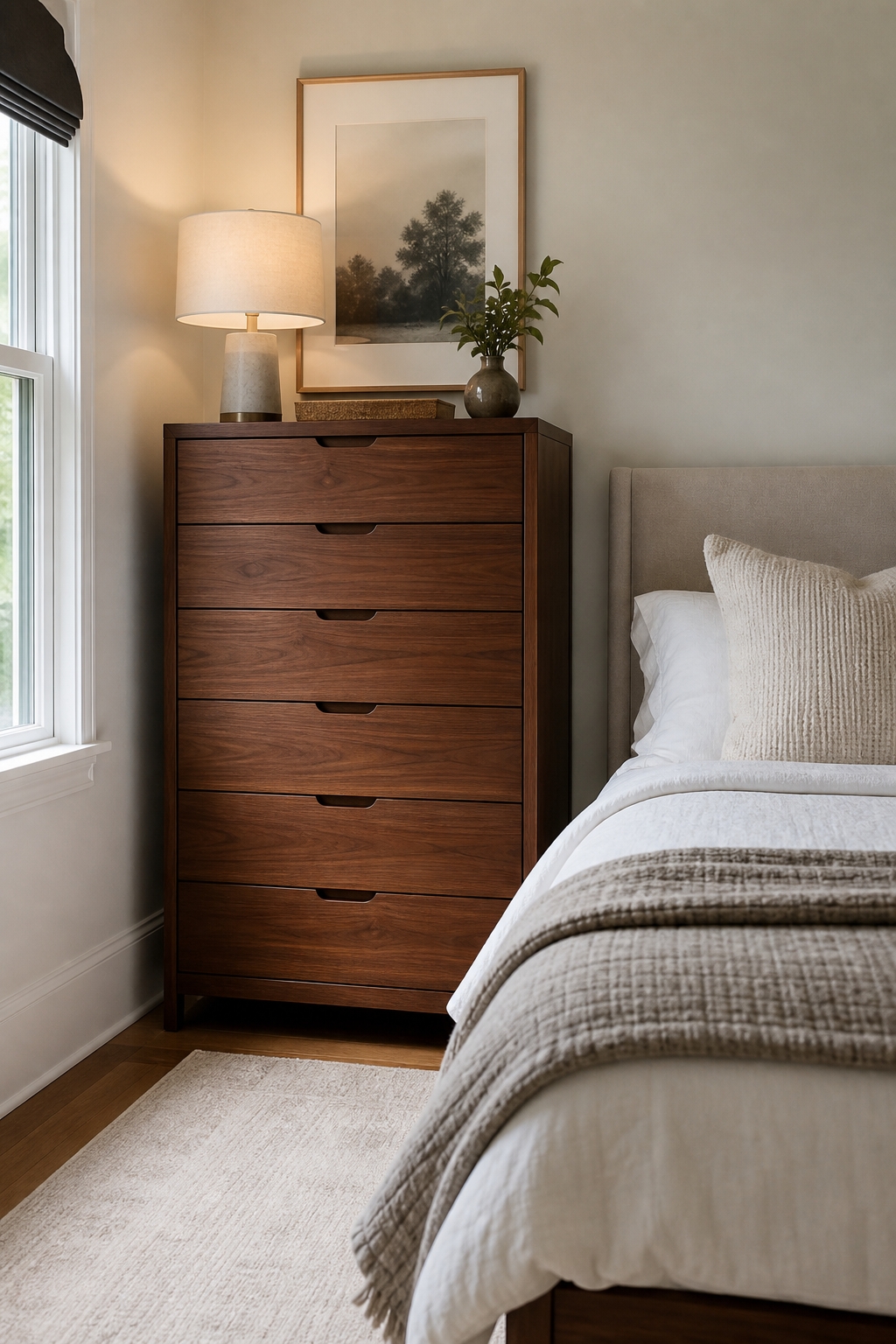
Pick One Beautiful Tall Dresser
When floor area is limited, vertical storage usually beats wide storage. A tall dresser takes advantage of height while leaving more wall and walking space open. Choose a piece with clean lines, smooth drawers, and hardware that feels intentional. If the dresser is visible from the bed, style the top simply: one lamp, one tray, and one branch or framed piece are enough. Anchor it with art above if the wall feels empty. The dresser should not fight the bed for attention, but it should look finished. In a small bedroom, practical furniture needs to be attractive because there is nowhere for it to hide.
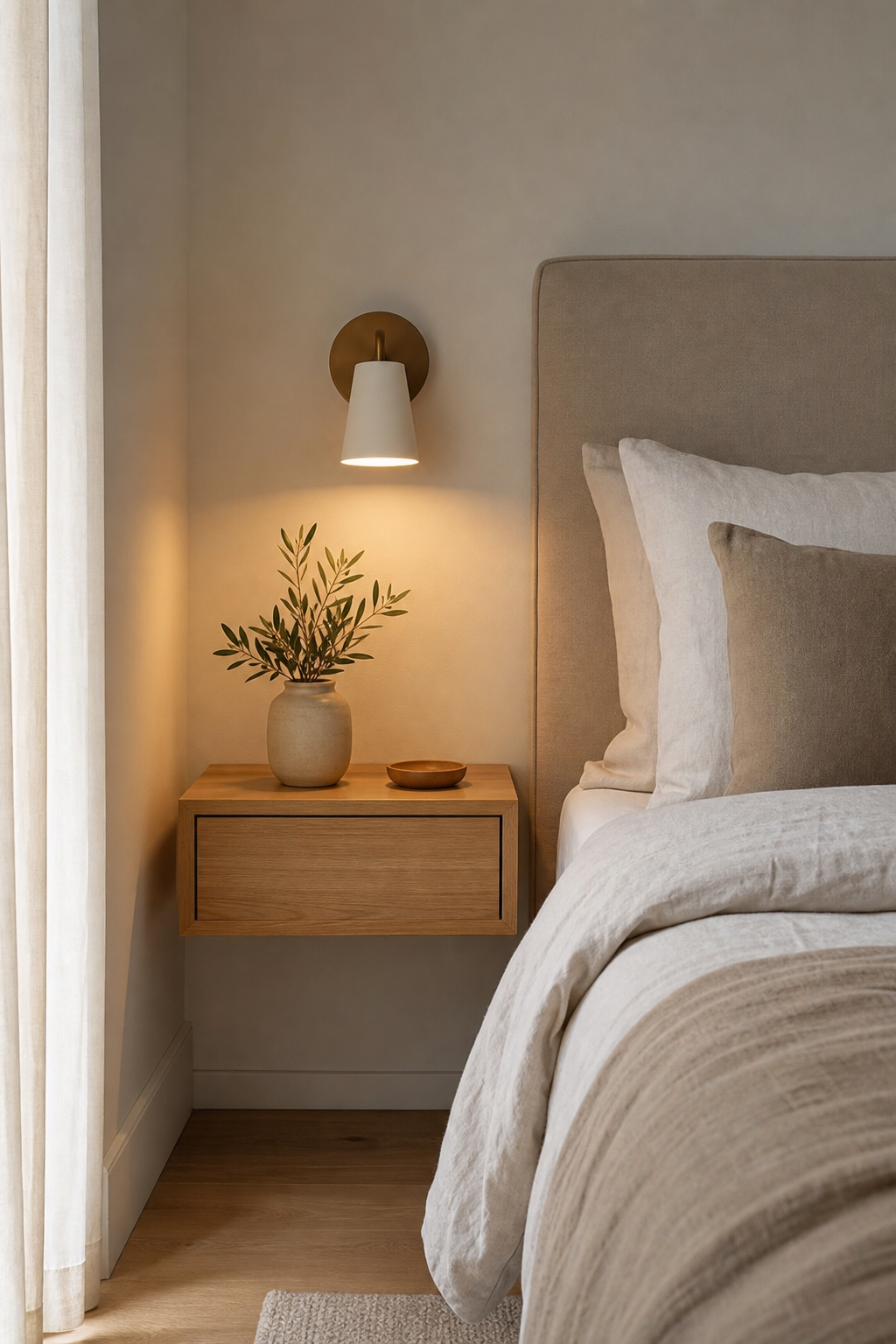
Try A Floating Nightstand
A floating nightstand keeps the floor visible, which can make a small bedroom feel lighter. It also allows a basket, low storage box, or clear floor space underneath depending on what the room needs. Choose a drawer style if you want to hide chargers and lip balm, or a simple shelf if the room is extremely narrow. Mount it at mattress height so it feels natural to reach from bed. The installation should feel sturdy and level, because a crooked shelf will cheapen the whole room. Pair it with a wall sconce and the bedside zone becomes compact, useful, and visually quiet.
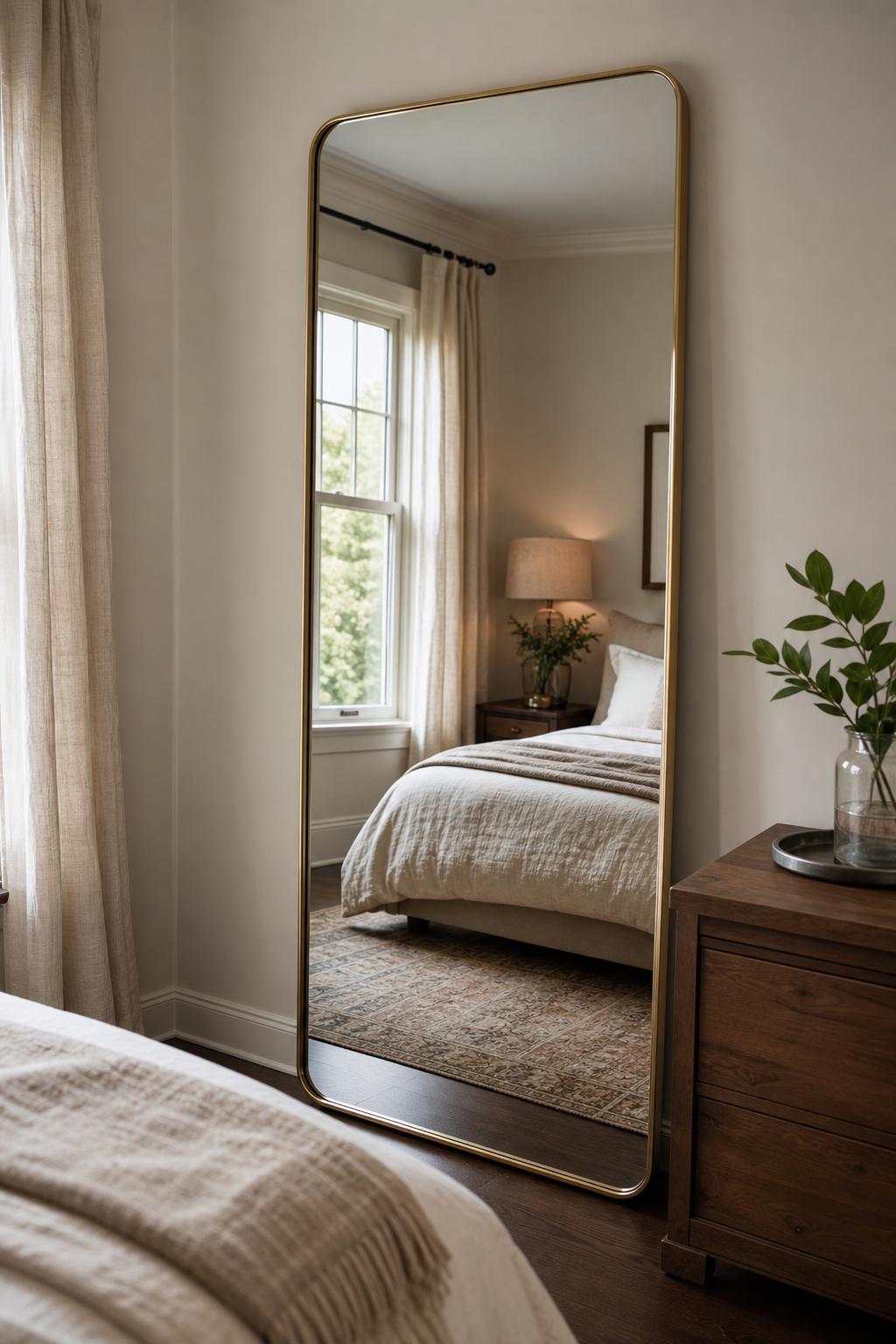
Use A Mirror To Borrow Light
A mirror helps a small bedroom most when it reflects light or a calm view, not clutter. Place it opposite or beside a window so daylight moves farther into the room. A full-length mirror can also replace wall art on a narrow stretch of wall while making the space feel more useful. Choose a frame that matches the room’s mood: thin black metal for contrast, warm oak for softness, or antiqued brass for a more tailored look. Avoid mirror walls, which can feel busy in a bedroom. One well-placed mirror is enough to add brightness, depth, and a practical dressing function.
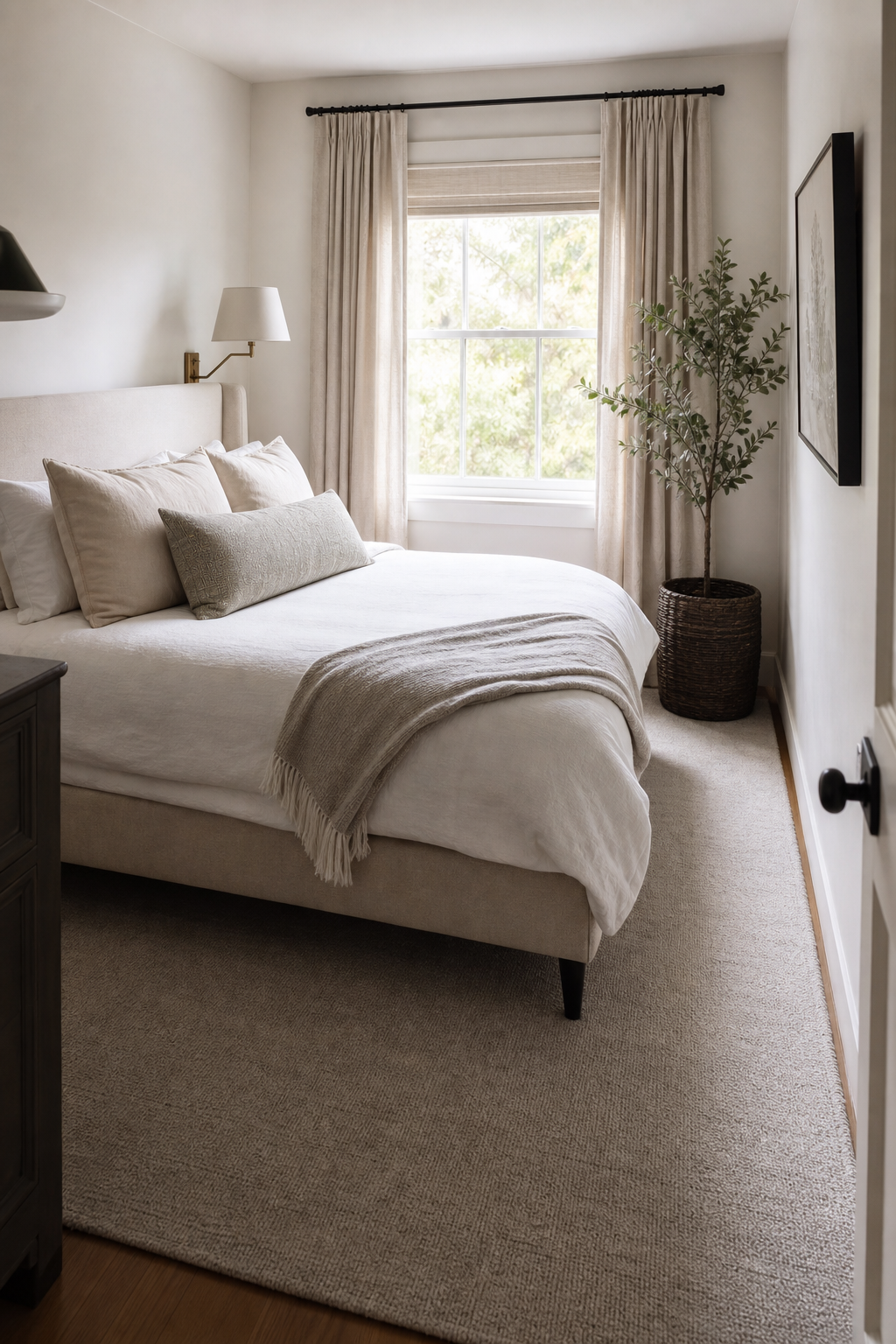
Keep The Rug Generous But Simple
A rug in a small bedroom should not be tiny just because the room is. A larger rug that slips under the bed and extends beyond the sides creates one soft, continuous plane. That can make the furniture feel connected instead of scattered. Keep the pattern quiet if the room has many storage pieces or visible doors. Tonal wool, low-pile vintage designs, and subtle stripes are all forgiving. If a full rug is not possible, use runners on each side of the bed rather than one small mat at the foot. The goal is comfort underfoot and a layout that feels considered.
Limit The Palette To Three Main Tones
Small rooms often feel more stylish when the palette is edited. Choose three main tones and let texture do the rest. For example, warm white walls, oak furniture, and olive accents can feel layered without becoming visually crowded. Another strong combination is mushroom, ivory, and blackened metal. Keep large items close in value, then use one deeper shade for definition. This does not mean the room has to be plain. Linen, wool, cane, plaster, ceramic, and wood grain will add richness inside a restrained palette. When color is controlled, the eye reads the room as calm rather than cramped, and every practical piece feels more deliberate.
Choose Furniture With Exposed Legs
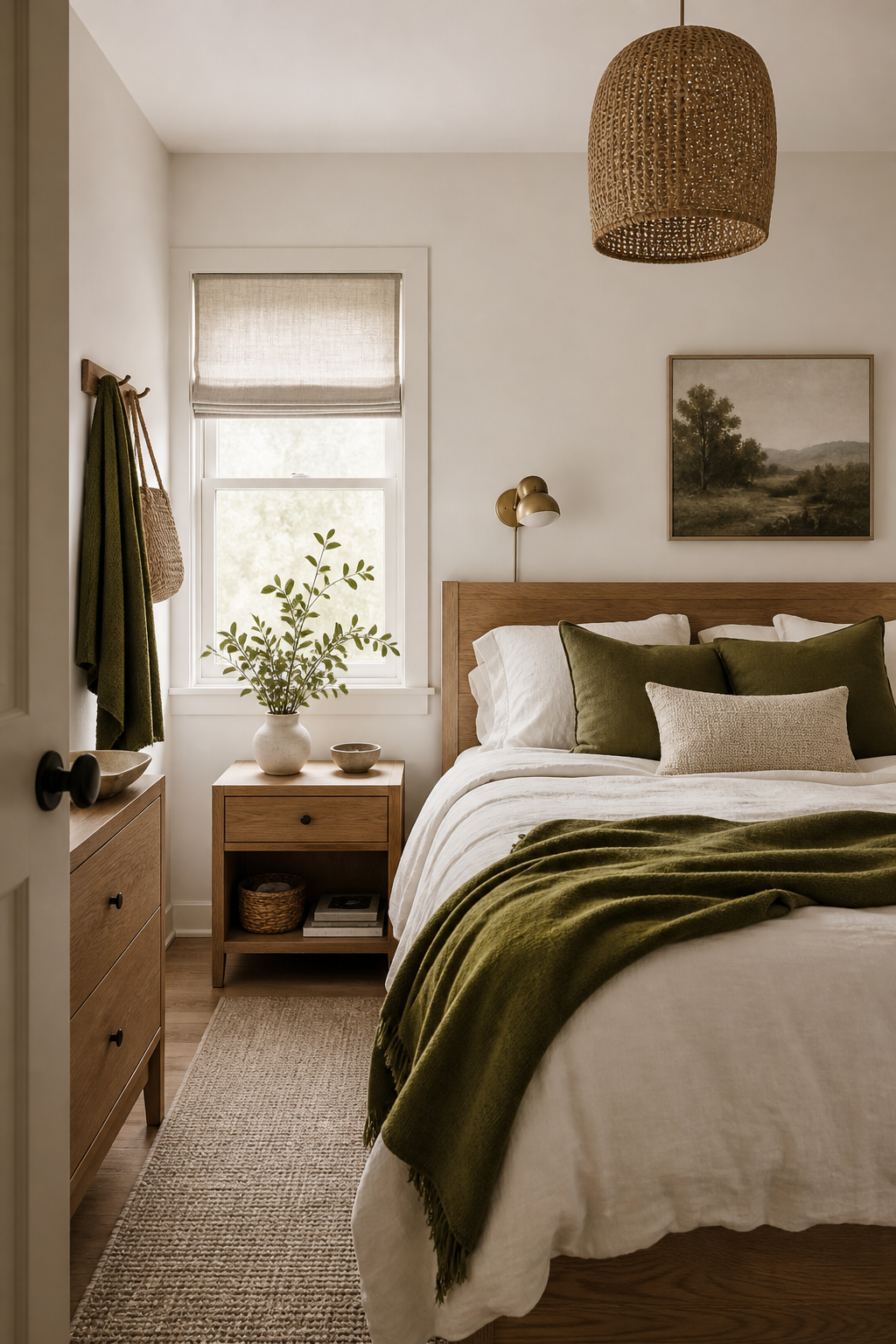
Furniture that lifts off the floor can make a compact bedroom feel less heavy. Nightstands, benches, and dressers with exposed legs reveal more floor and create a sense of air around each piece. This is especially helpful when the room has a large bed, because everything else needs to feel lighter. Look for slender legs that still feel stable, and avoid pieces with too many decorative details. A raised bench at the foot of the bed, for example, can provide a useful landing place without blocking the rug completely. The room feels more open because the furniture has room to breathe.
Install A Shallow Picture Ledge
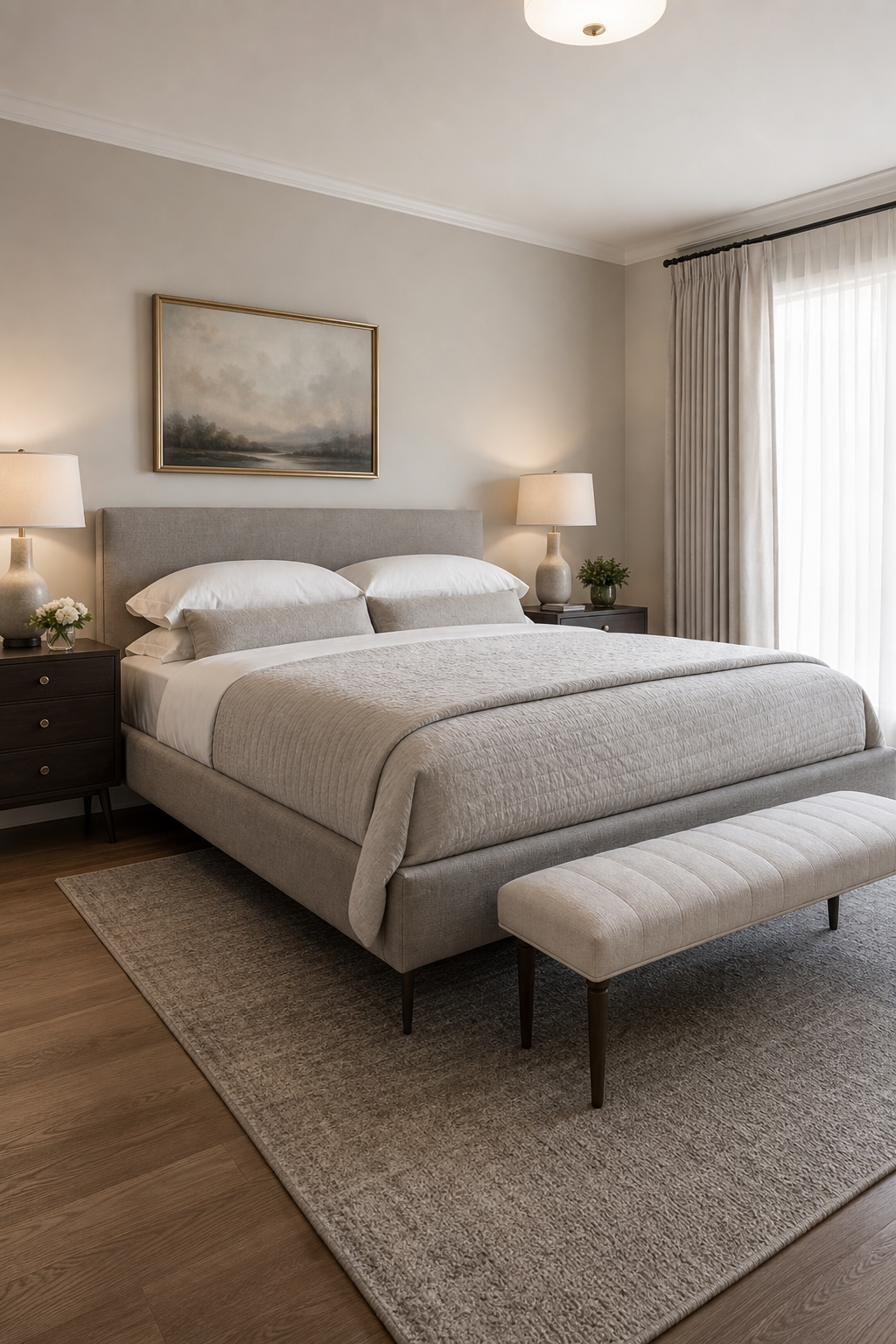
A picture ledge adds personality without stealing floor space. Use it above the headboard, dresser, or desk area to layer framed art, a small vessel, and perhaps one leaning photograph. Keep the ledge shallow so it does not become a dust-catching shelf for clutter. In a small bedroom, the best styling is edited and slightly asymmetrical. Change pieces seasonally if you like, but keep the number limited so the wall remains calm. A ledge is also useful for renters because it reduces the number of holes needed for a gallery effect. It gives the room character while preserving precious square footage.
Make A Desk Do Double Duty
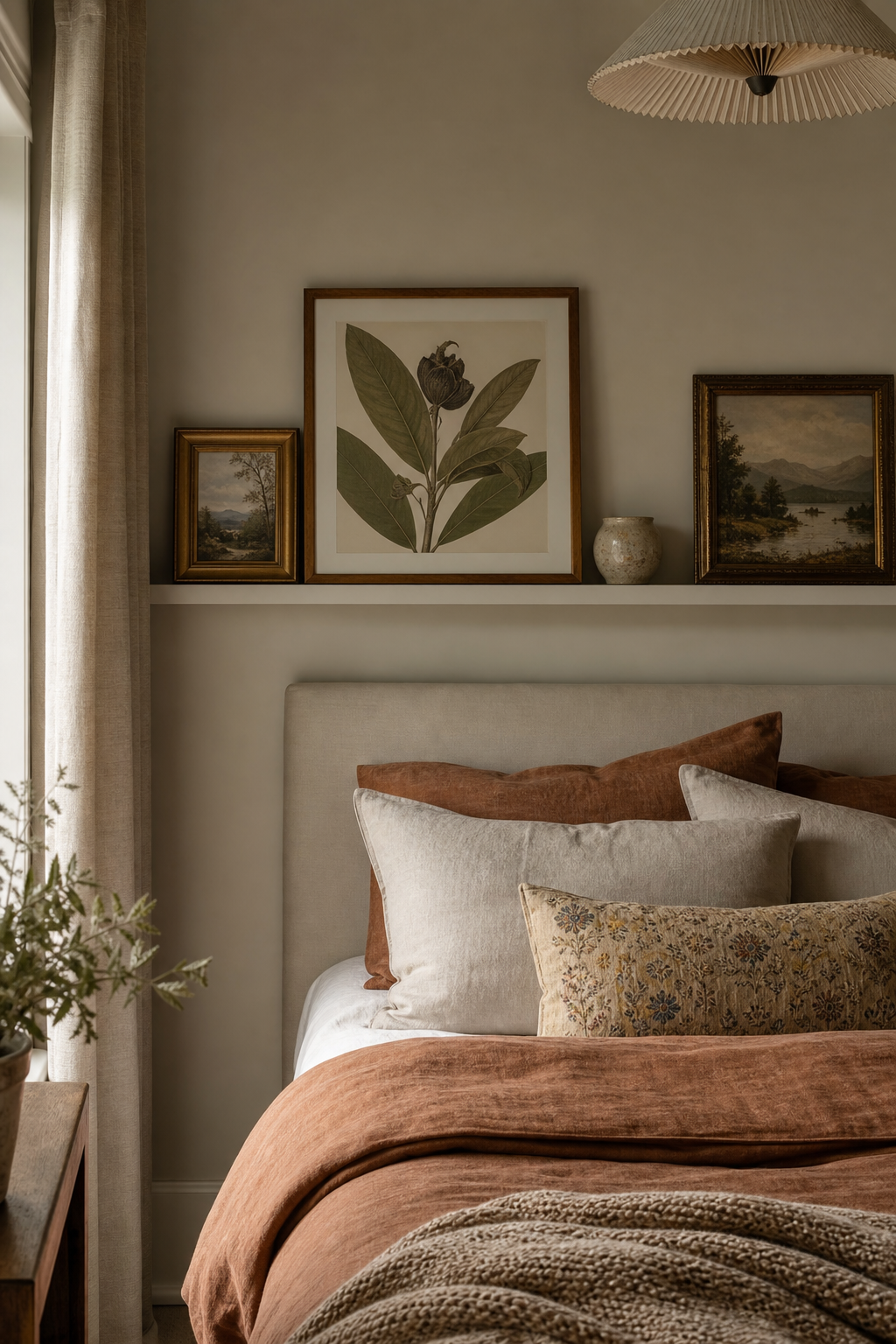
If a small bedroom needs a workspace, choose a desk that can also act as a vanity or bedside surface. A slim writing table with one drawer often works better than a bulky office desk. Pair it with a comfortable chair that tucks fully underneath, and keep task lighting elegant enough for the bedroom. A small tray can hold skincare or jewelry after work hours, while a lidded box hides cords. Place the desk near natural light if possible, but avoid blocking the only walkway. The room should still feel like a bedroom first, with the work function folded neatly into the design.
Use Closed Baskets For Soft Storage
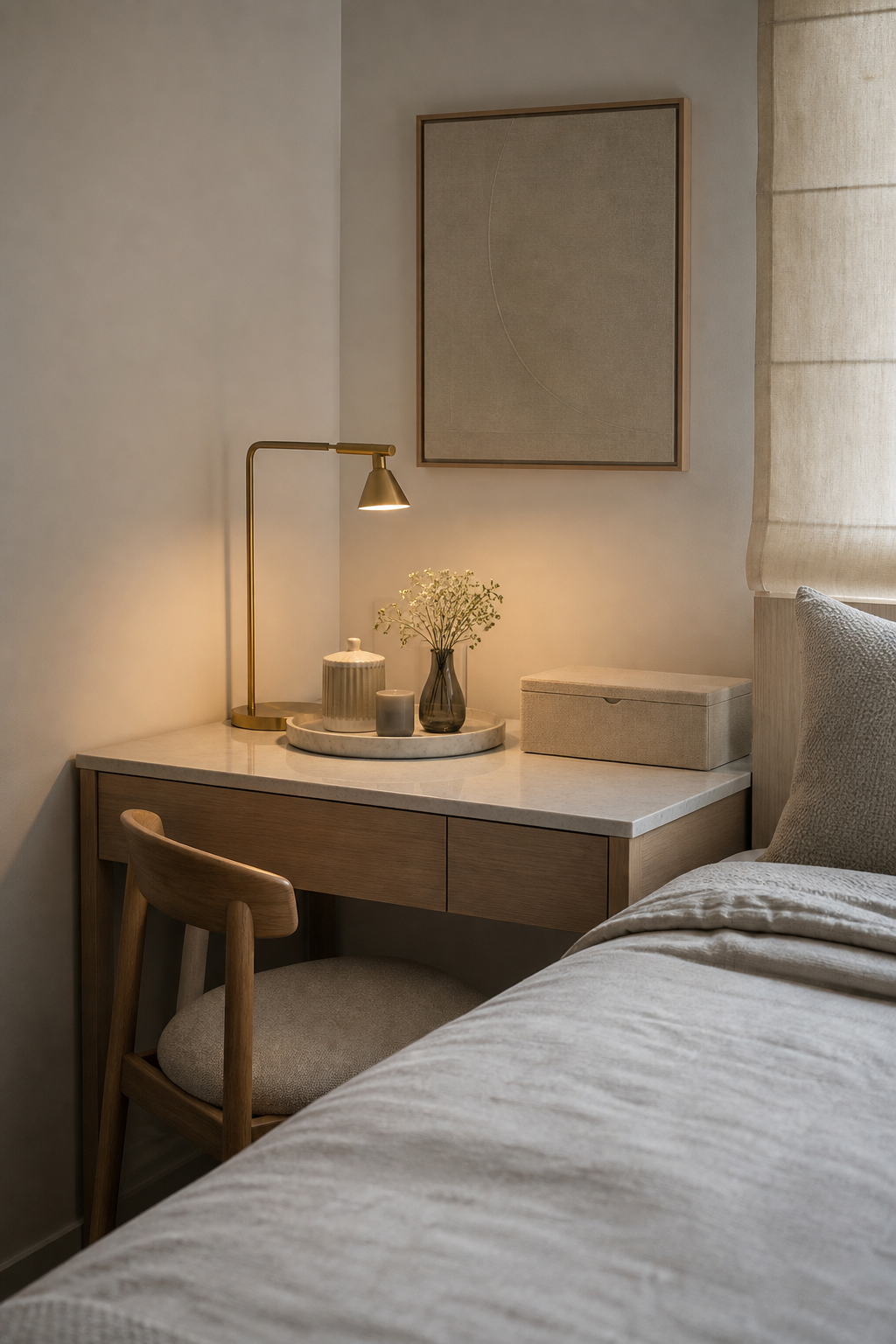
Baskets are useful in small bedrooms, but open baskets can quickly look messy. Choose lidded or tightly woven styles for blankets, laundry, or accessories that need to be nearby. A basket under a floating nightstand, beside a dresser, or at the foot of the bed can add texture while hiding everyday items. Keep the shape simple and the color close to the room’s palette. Natural fibers warm up painted furniture and pale walls, but too many baskets can make the space feel casual in the wrong way. One or two beautiful pieces are usually enough to add storage and softness.
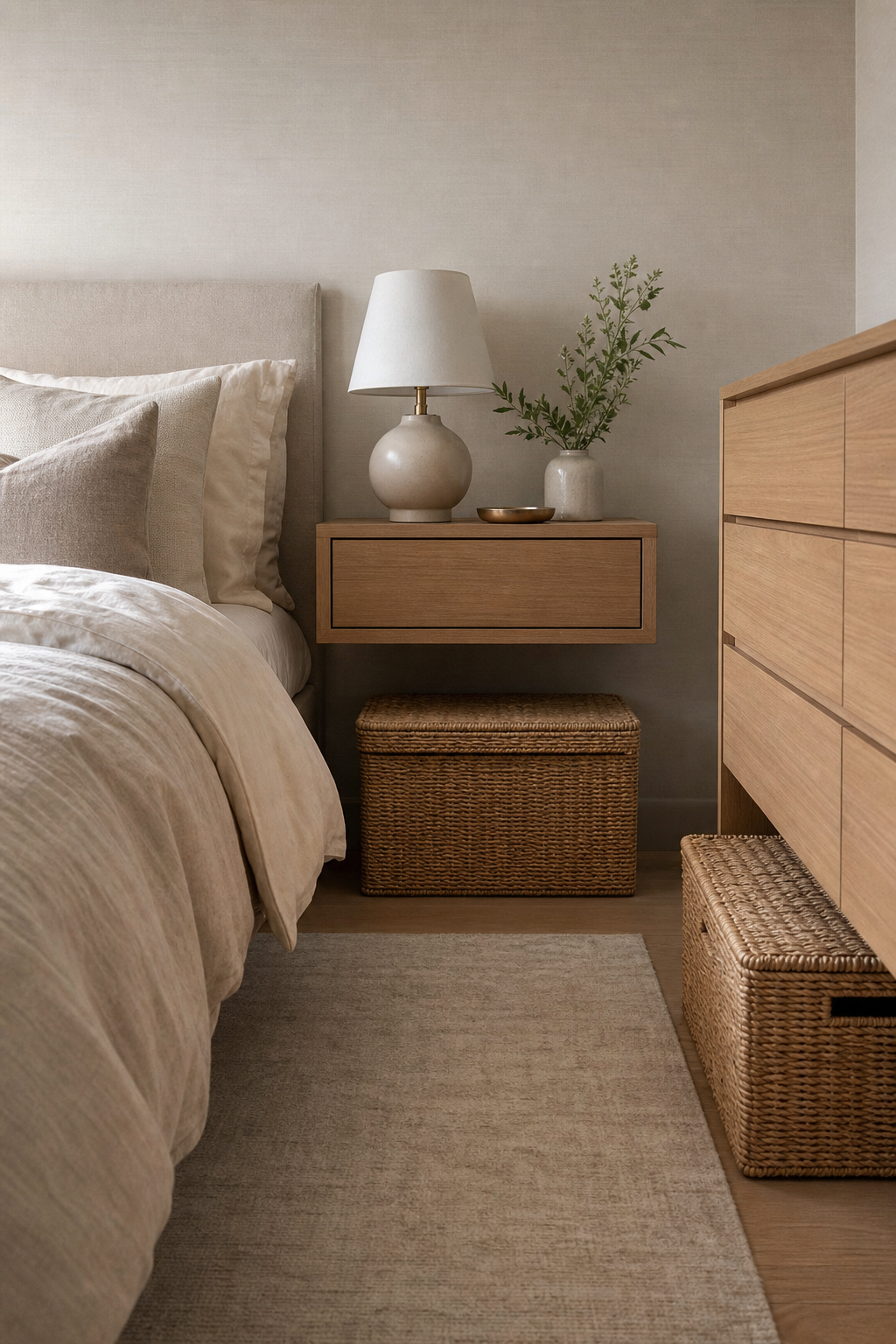
Choose A Slim Upholstered Headboard
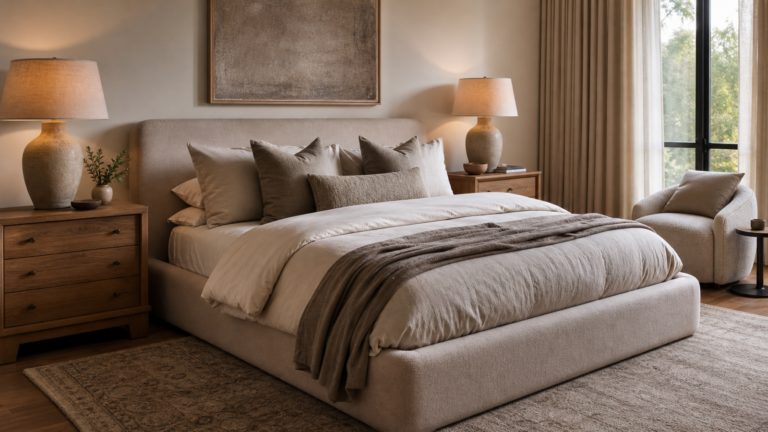
Softness matters in a small bedroom, but bulky upholstery can crowd the room. A slim upholstered headboard gives comfort and polish without pushing the mattress too far forward. Look for a simple rectangle, a soft curve, or narrow channel detail rather than deep tufting. Linen, performance velvet, or textured cotton can add warmth while staying refined. If the room already has many storage pieces, choose a headboard close to the wall color so it blends in. The bed will feel finished, but the room will not lose precious inches to an oversized frame, which matters in tight walkways and narrow corners.
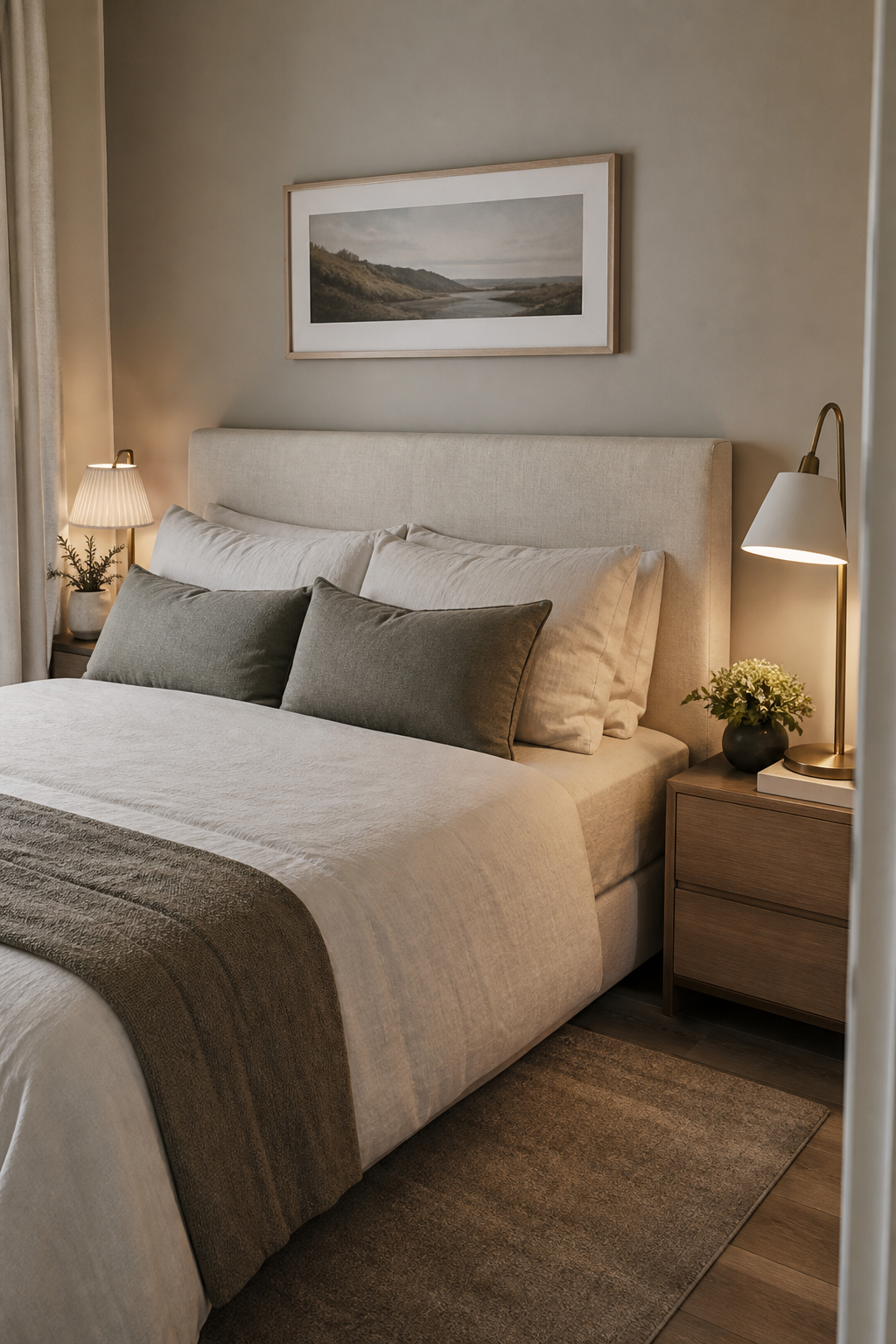
Paint Trim And Walls The Same Color
Contrast can be beautiful, but in a tiny bedroom it can also chop the room into smaller pieces. Painting trim, doors, and walls the same color creates a smoother envelope and makes awkward angles less obvious. Warm white, pale mushroom, soft gray-green, and muted blue all work well when the undertone suits the light. Use a slightly different sheen on trim for durability while keeping the color continuous. This approach makes inexpensive doors and basic moldings look more intentional. It also gives bedding, lamps, and art a quieter background, which helps the room feel more spacious, settled, and thoughtfully finished.
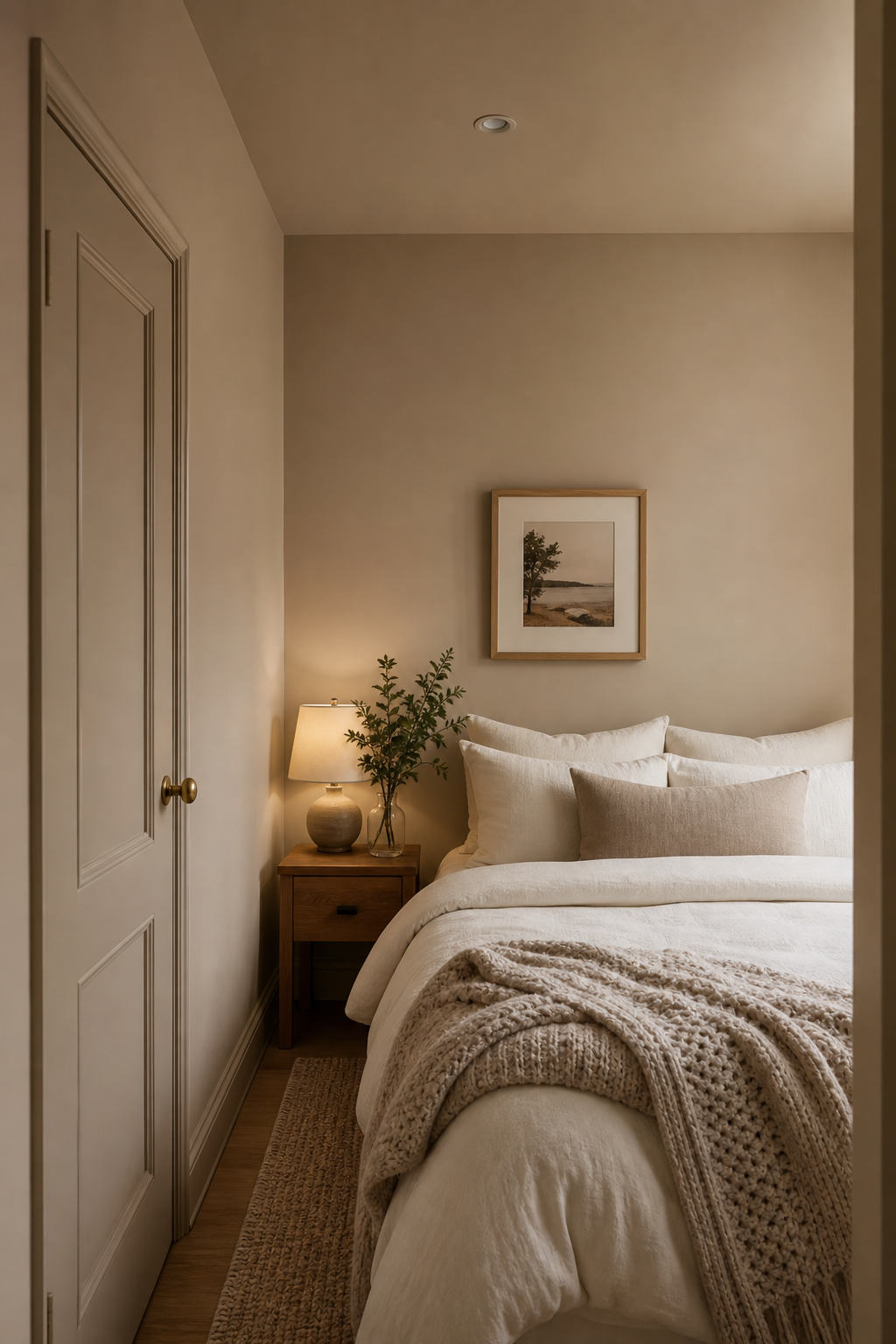
Add One Sculptural Lamp
When a room is small, each decorative piece needs presence. One sculptural lamp can bring shape, texture, and atmosphere without requiring a collection of accessories. Place it on a dresser, desk, or the one full nightstand if only one side of the bed has room. Ceramic, stone, pleated fabric, or aged metal can make the lamp feel special even in a simple setting. Keep the shade proportionate so it does not overwhelm the surface. At night, the glow should skim the wall and soften the room. A strong lamp makes a compact bedroom feel designed rather than merely furnished, especially when surfaces are edited.
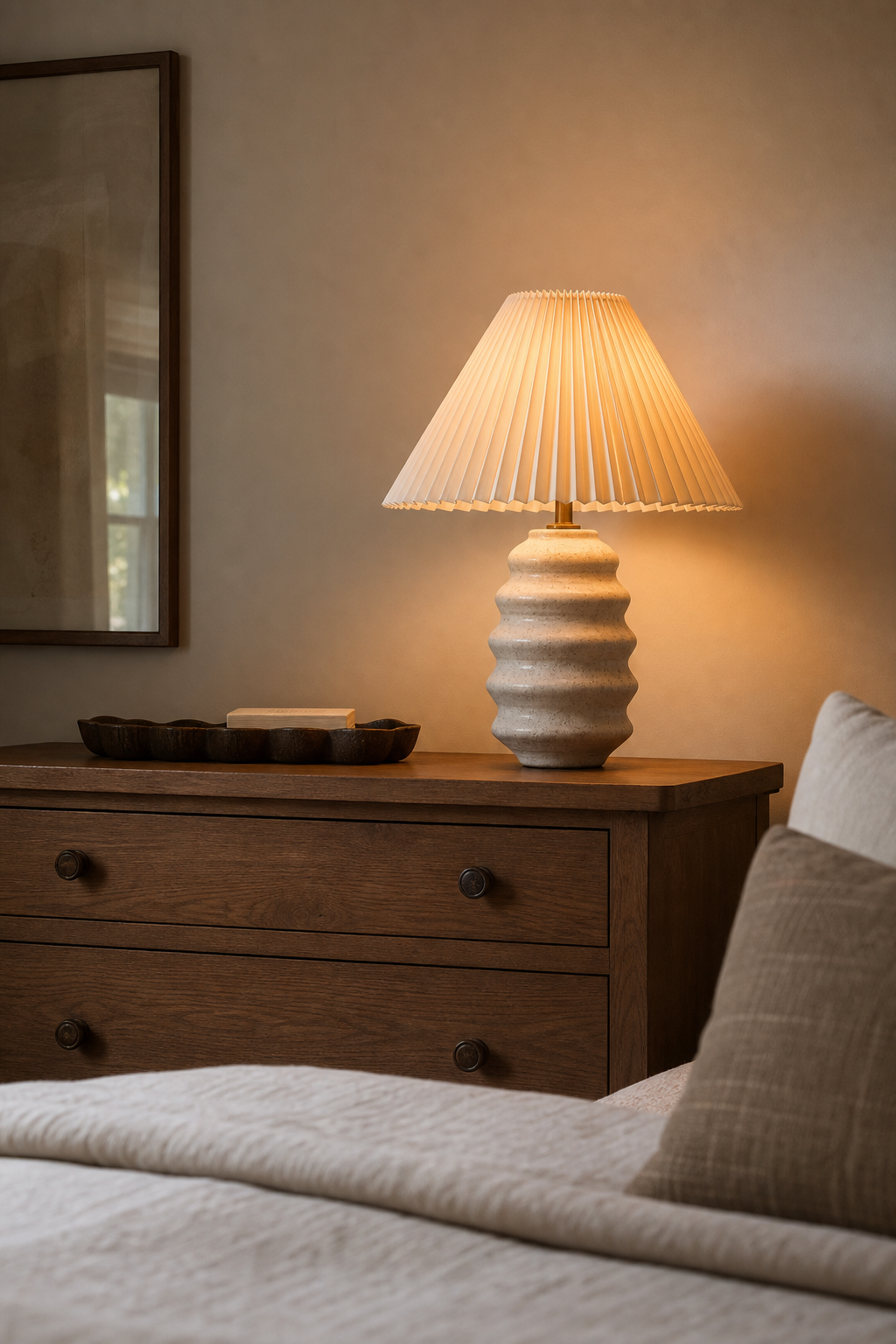
Use The Door Back Thoughtfully
The back of the door can support storage, but it should not become a visible dumping zone. Choose slim hooks in a finish that matches the hardware, or use a tailored hanging rail for robes and tomorrow’s outfit. Avoid overloading it with bags, belts, and bulky organizers unless the door is usually hidden. A single robe, a woven tote, or a linen garment bag can look calm and useful. This idea is best when closet space is limited and the room needs one extra landing spot. Treat the door back as part of the design, not a place to hide chaos or postpone tidying.
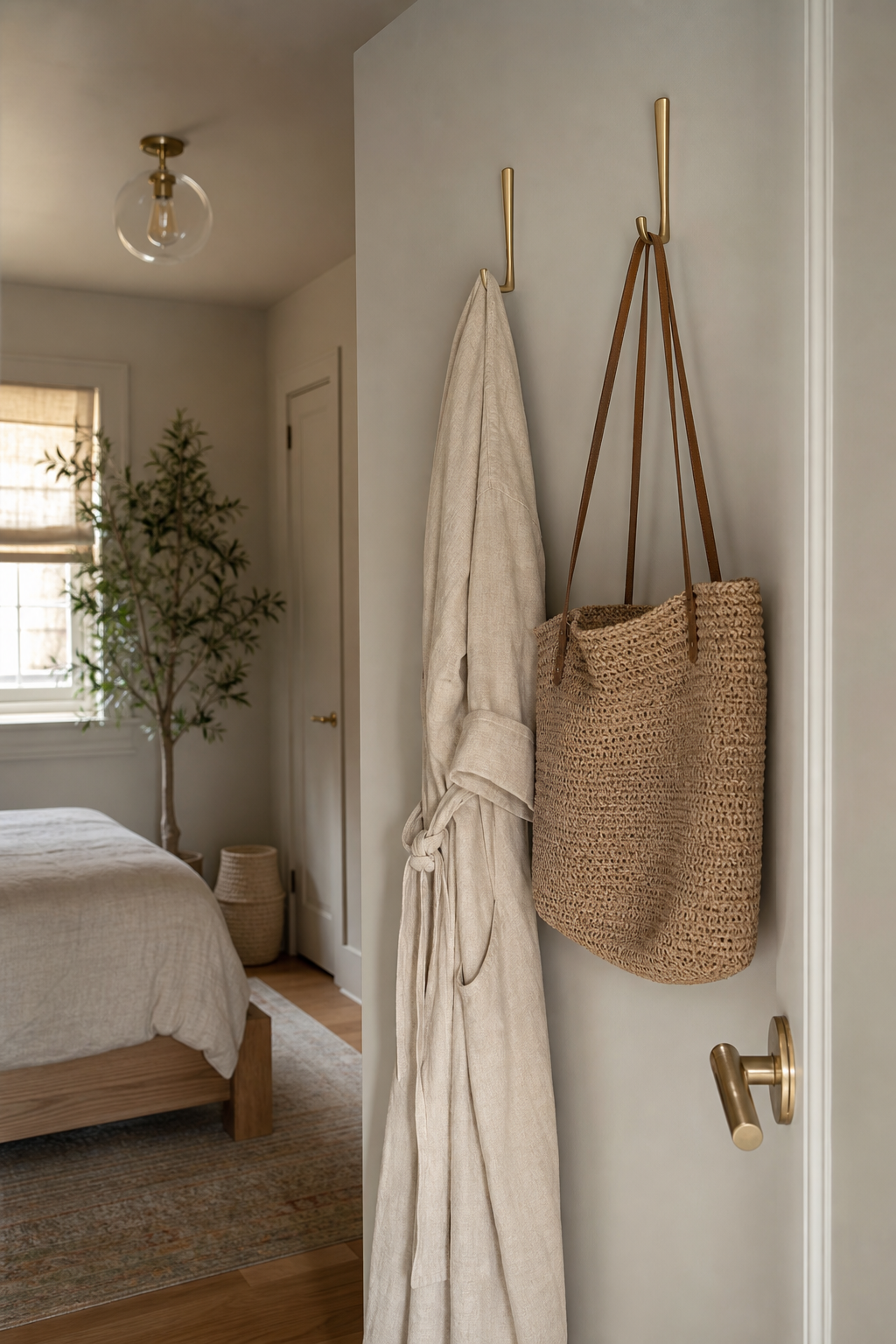
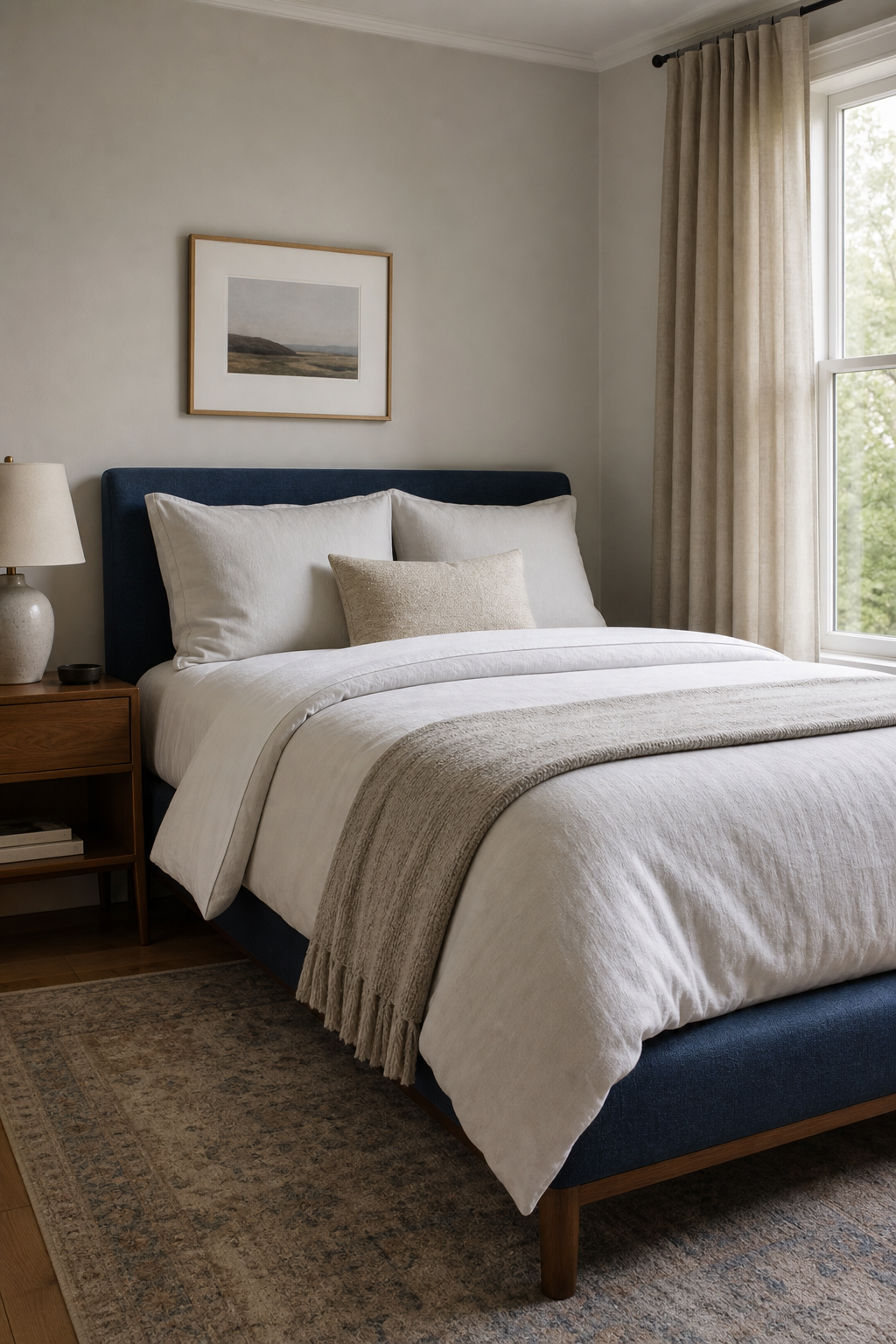
Keep Bedding Tailored, Not Flat
Small bedrooms need softness, but too much loose fabric can make the bed feel bulky. Choose bedding that is layered but controlled: a smooth duvet, two generous pillows, one accent pillow, and a folded throw at the foot. Let texture carry the interest through linen, cotton matelasse, or a light wool blanket. Avoid oversized comforters that puddle heavily on the floor unless the room is deliberately romantic. Tailored bedding exposes more of the rug and bed frame, which helps the room feel cleaner. The bed still looks inviting, but it does not visually consume every inch of floor or wall.
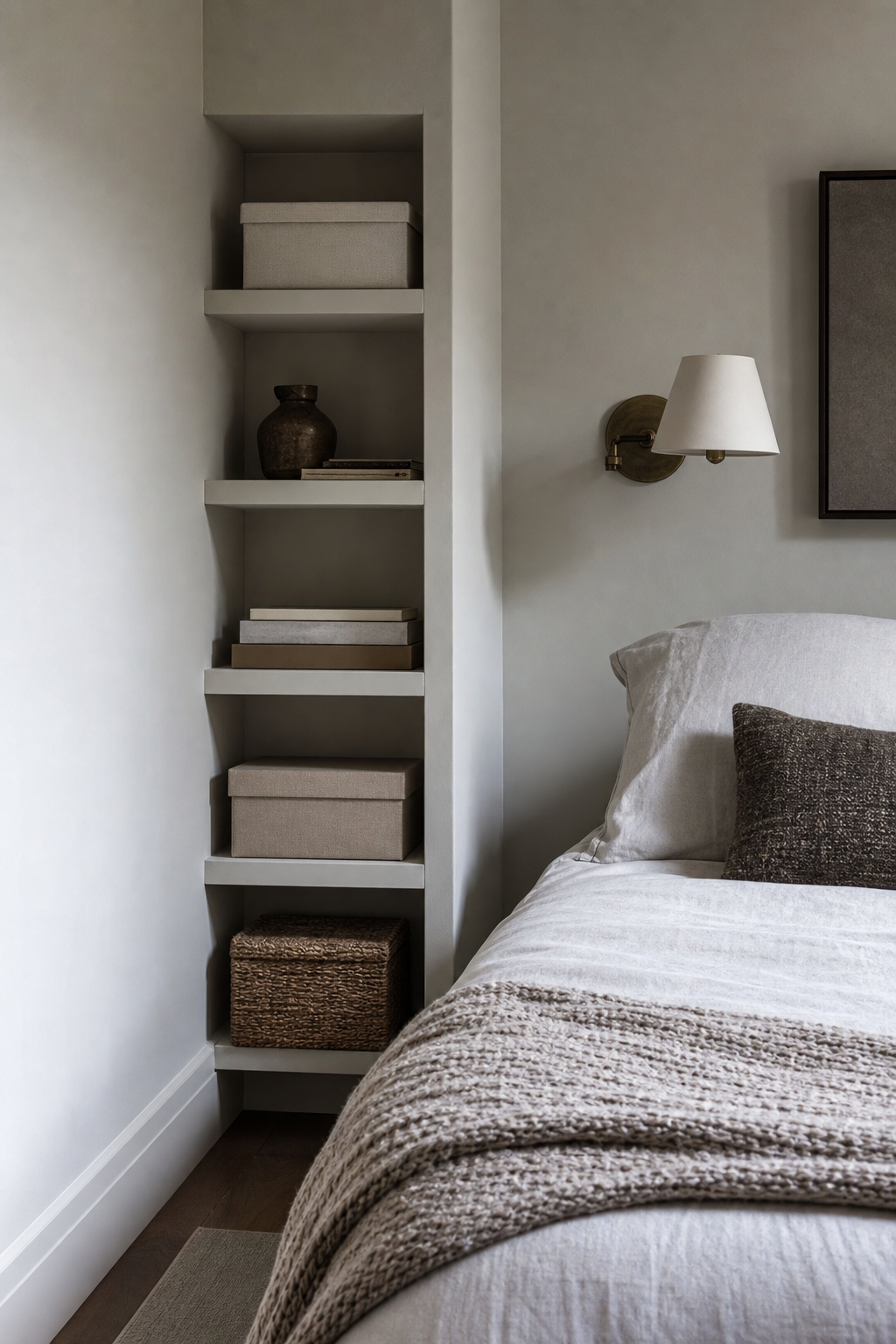
Build Shelves Into An Awkward Niche
Small bedrooms often have odd corners, chimney breasts, or shallow recesses that are too narrow for furniture. Built-in shelves can turn these awkward spots into useful architecture. Paint them the wall color for a seamless look, or line the back with grasscloth for subtle texture. Use the lower shelves for closed boxes and the upper shelves for books, art, and small vessels. Keep styling sparse so the niche does not become visual noise. Even a shallow built-in can replace a bookcase or extra table, giving the room storage without crowding the floor plan or blocking daily circulation paths.
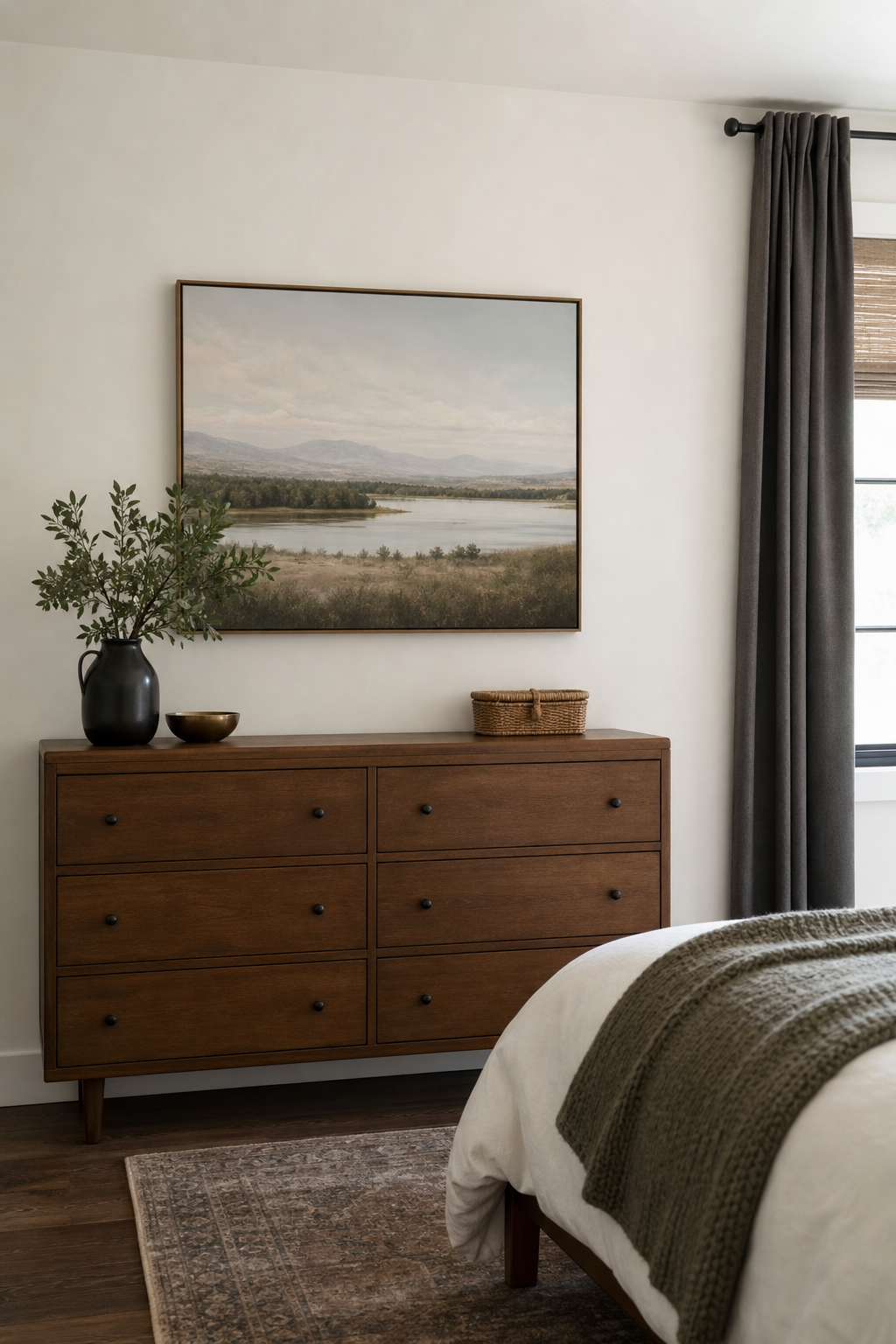
Choose Art With Breathing Room
Art makes a small bedroom feel personal, but the scale and placement matter. One medium or large piece often looks calmer than several tiny frames scattered across the wall. Leave breathing room around the frame so the wall does not feel crowded. Soft abstracts, quiet landscapes, textile pieces, or black-and-white photography can all work if they support the room’s palette. Hang the piece close enough to relate to the bed or dresser below it. The goal is not to fill every blank area. Negative space is part of what makes a compact bedroom feel sophisticated and quietly edited.
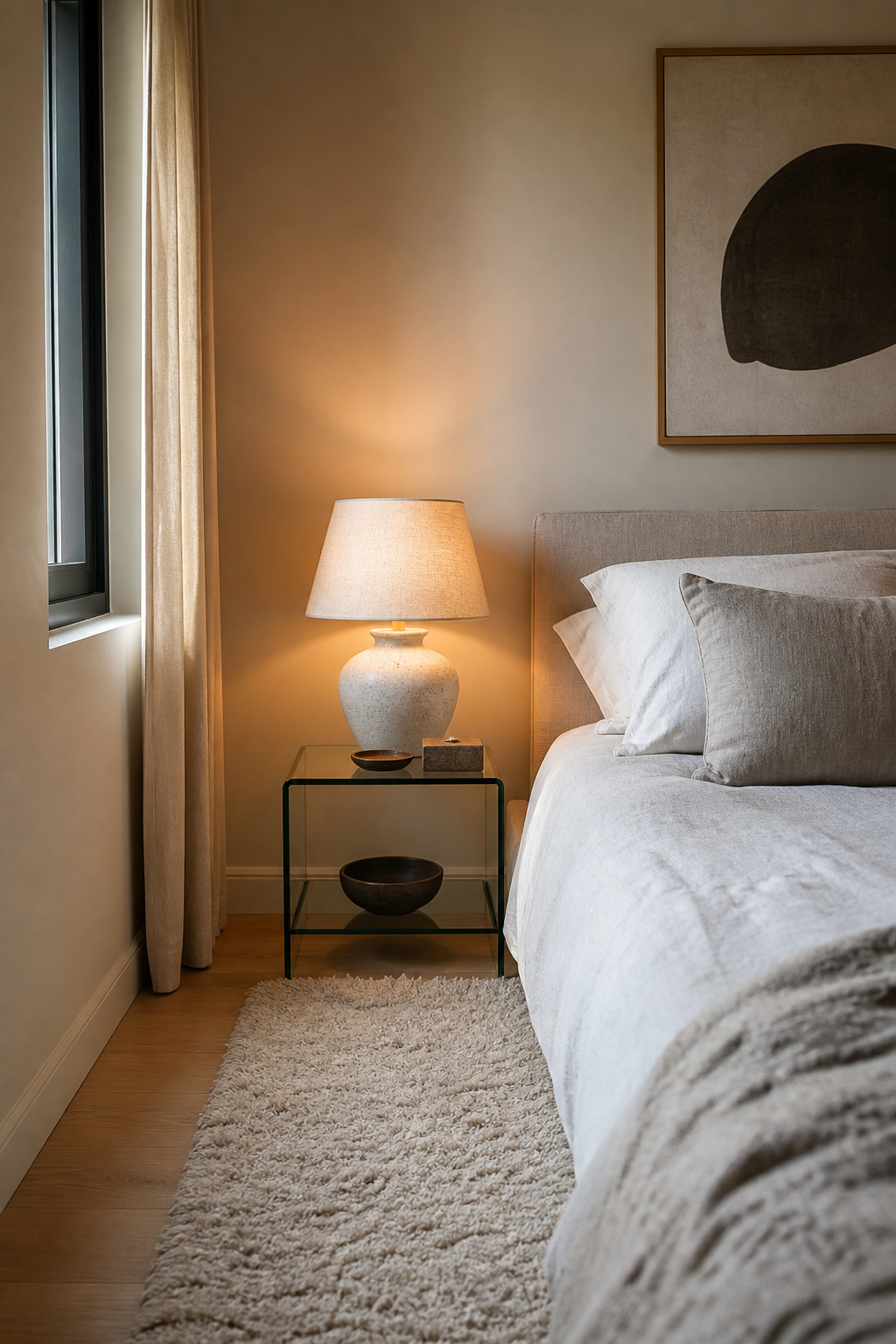
Use Glass Or Lucite Sparingly
Transparent furniture can help in a small bedroom, but it works best as an accent. A glass bedside table, lucite chair, or clear tray reduces visual weight while still giving you a surface. Balance it with warm materials so the room does not feel cold. For example, pair a glass table with a linen bed, wool rug, and ceramic lamp. Keep the piece extremely simple; ornate transparent furniture can look busy because every edge catches light. Used once, it can make a tight corner feel open and practical. Used everywhere, it can make the room feel less grounded and less restful.
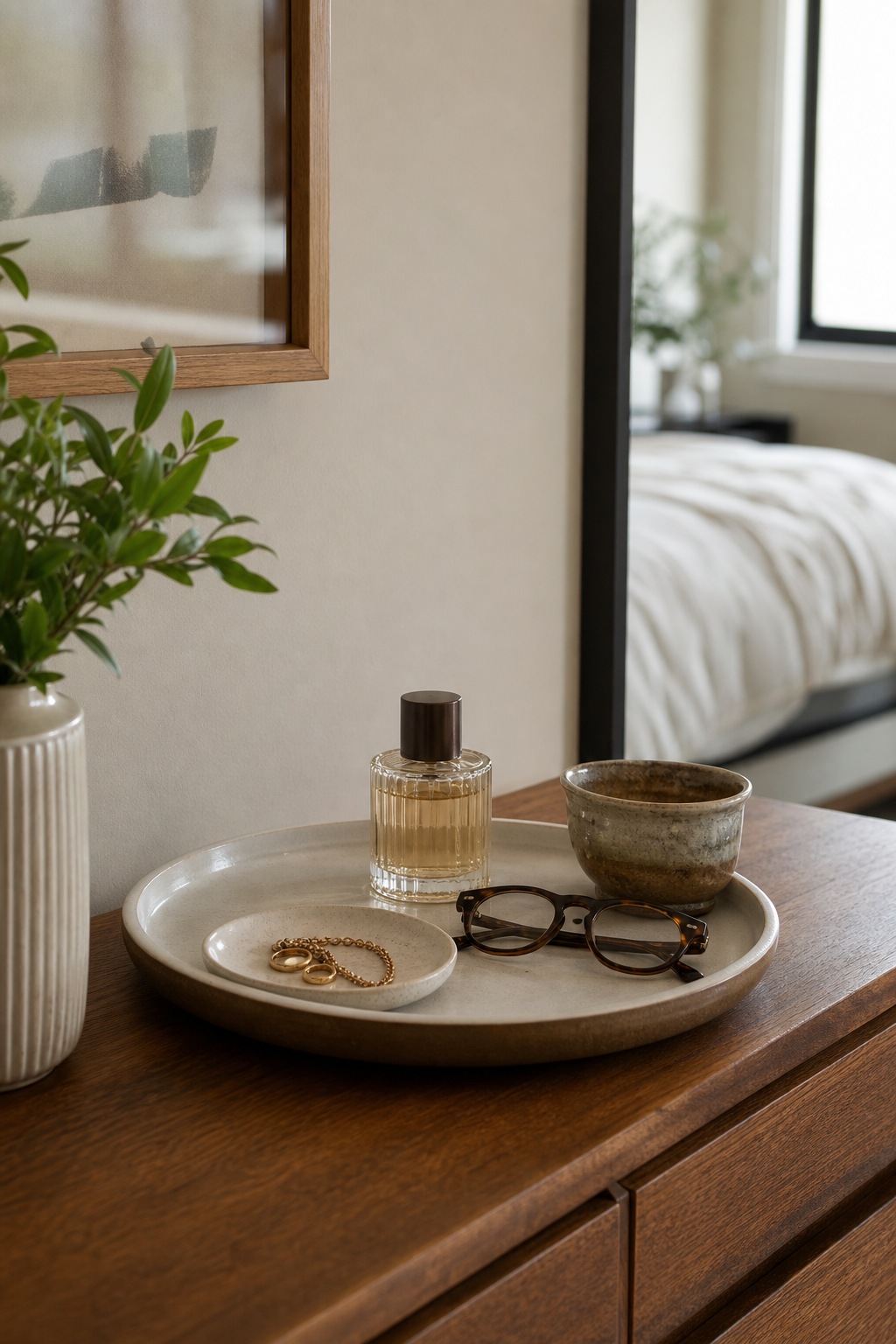
Create A Landing Zone On A Tray
In a small bedroom, clutter often appears because everyday items have no landing zone. A tray on the dresser or nightstand can organize jewelry, fragrance, glasses, and a small dish without spreading across the surface. Choose a tray with a low edge and a material that complements the room, such as leather, marble, lacquer, or woven rattan. Edit what lives there weekly so it remains useful. The tray should hold the things you actually reach for, not just decorative objects. By giving small items a boundary, the room feels tidier even when life is busy, late, or rushed at night.
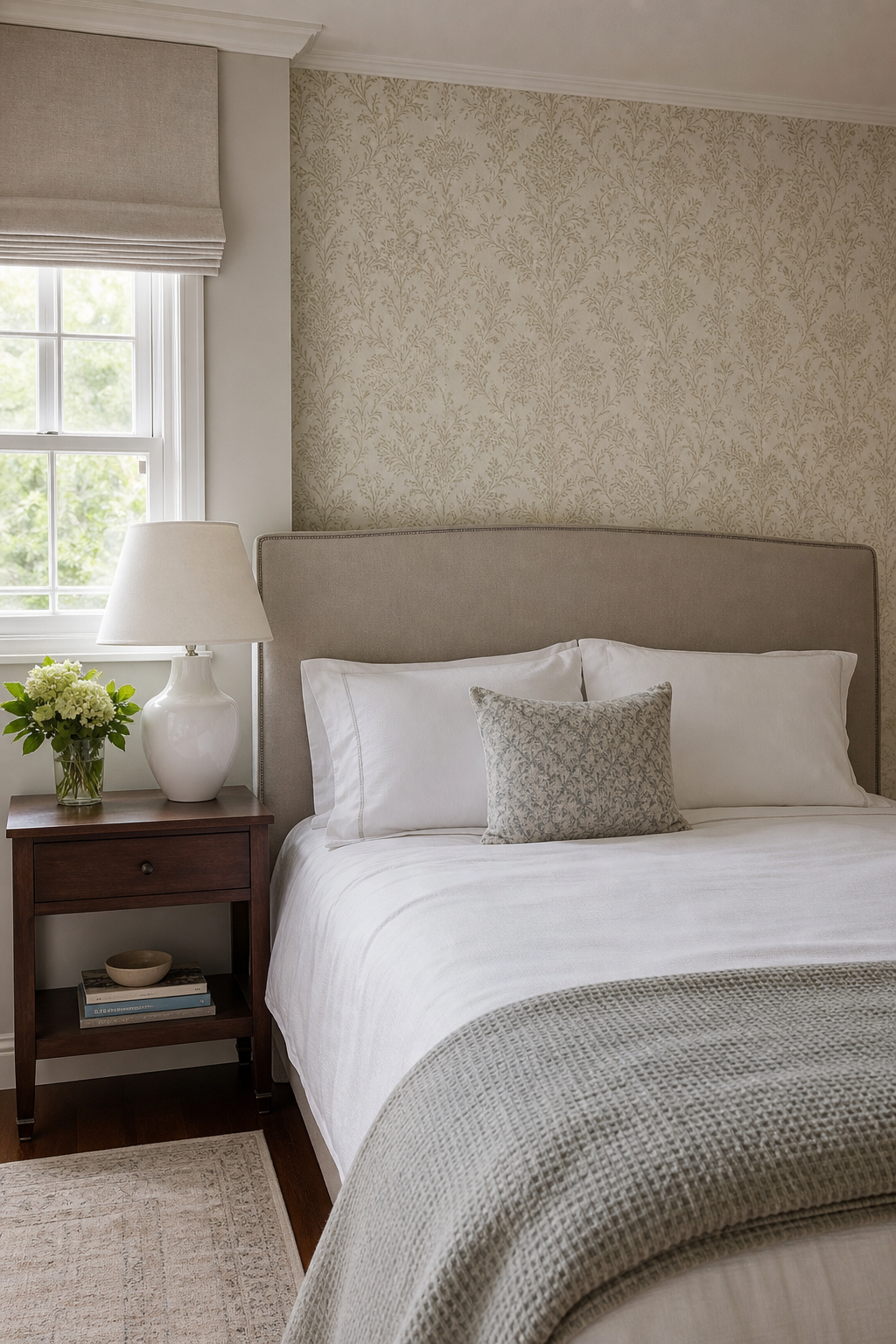
Let One Wall Carry Pattern
Pattern can work beautifully in a small bedroom when it has a clear boundary. Try one wall of subtle wallpaper behind the bed, a patterned Roman shade, or a single striped rug. Keep the surrounding surfaces quieter so the pattern feels intentional rather than overwhelming. Small-scale prints can look charming, but larger, softer motifs often feel more sophisticated because they are easier for the eye to read. Pull one color from the pattern into a pillow or throw to connect the room. This gives the bedroom personality while preserving the calm that makes a compact space feel restful and grown-up.
Finish With Space Around Every Object
The final styling move is editing. In a small bedroom, every object needs a little space around it so the room can breathe. Leave part of the nightstand bare, avoid stacking the dresser with accessories, and let the floor show wherever possible. This does not mean the room should feel sparse. A lamp, framed art, tray, plant, and textured bedding can be plenty when each piece is chosen well. Step back and remove anything that repeats the same function or shape. The result is a room that feels stylish because it is composed, useful, and easy to maintain daily, even quickly.
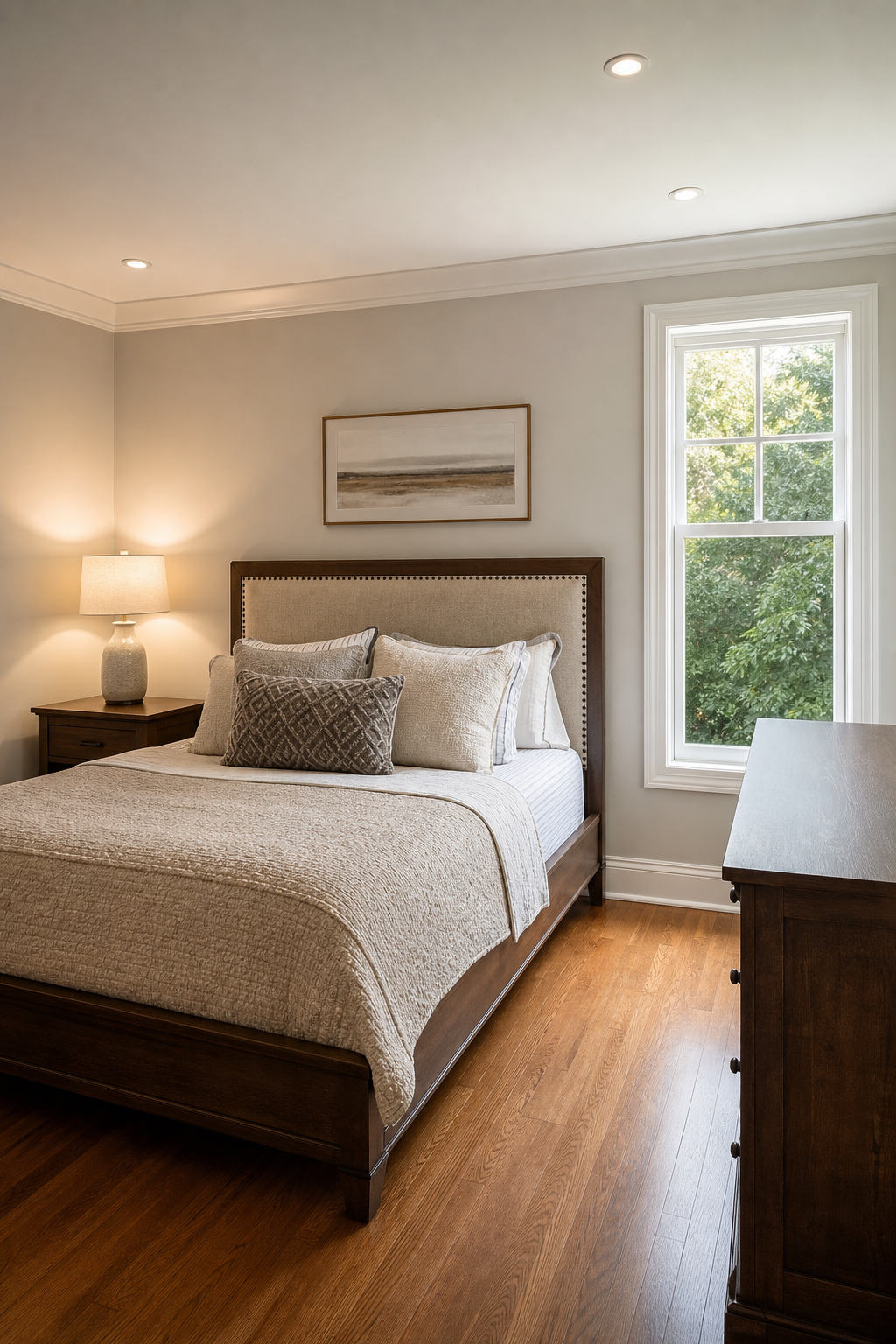
A stylish small bedroom is not about pretending the room is larger than it is. It is about making the available space feel calm, useful, and intentionally designed. Start with the layout, move storage off the floor where possible, and choose lighting and textiles that add warmth without bulk. When each piece earns its place, even the smallest bedroom can feel like a refined retreat.