16 Kitchen Island Ideas For A Warm Functional Home
A kitchen island earns its place by making the room easier to cook in, gather in, and move through. The best islands are not just large counters in the middle of the kitchen. They solve real problems: where to prep, where to sit, where to store serving pieces, where to land groceries, and how to make an open kitchen feel warm instead of exposed. These kitchen island ideas focus on practical details with a polished design eye, so the island looks beautiful while supporting everyday routines.
Size The Island Around Clear Walkways
A beautiful island will feel frustrating if the walkways are too tight. Before choosing finishes or stools, measure how people move between the sink, range, refrigerator, pantry, and dining area. Most kitchens need generous clearance on all working sides so cabinet doors, appliance doors, and people can pass comfortably. In a smaller kitchen, a narrower island with excellent storage may serve better than an oversized showpiece. Think of the island as part of the traffic pattern, not an obstacle. When the proportions are right, the entire kitchen feels calmer, safer, and more expensive because movement happens without awkward pauses. This planning step also protects the island from becoming larger than the room can comfortably support.
Choose A Countertop That Can Work Hard
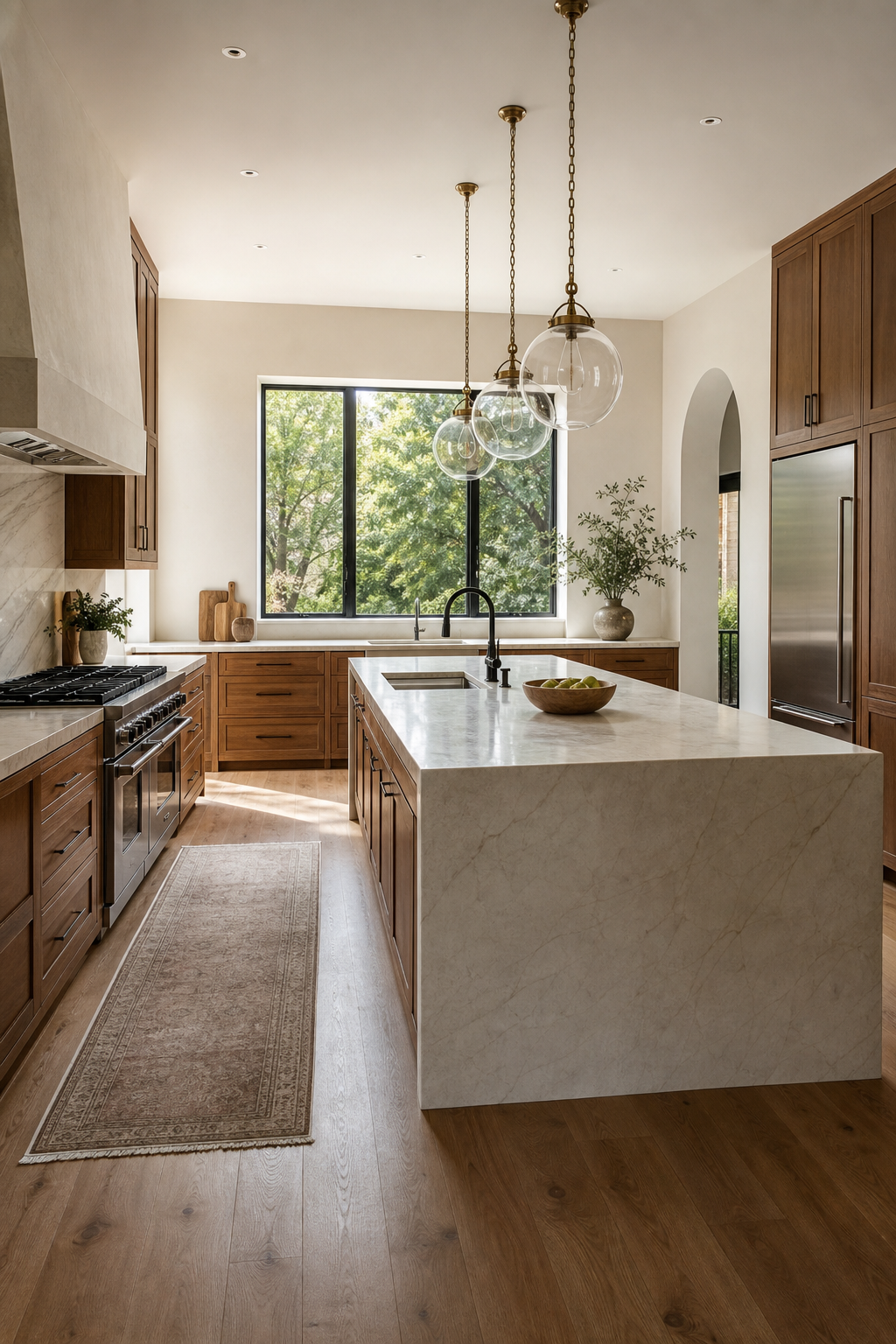
The island countertop usually takes the most abuse in the kitchen, so beauty needs to meet durability. Natural stone, quartzite, honed marble, soapstone, and high-quality quartz each create a different mood and maintenance level. If you bake, a cool stone surface may be helpful. If the island is a family landing zone, choose a finish that handles spills and daily wiping gracefully. Honed or leathered surfaces often feel warmer and less glossy than polished stone. A slightly eased edge is practical and timeless. The right countertop should invite cooking, serving, and lingering without making everyone nervous. Ask for a sample and test oil, lemon, coffee, and water before making the final decision.
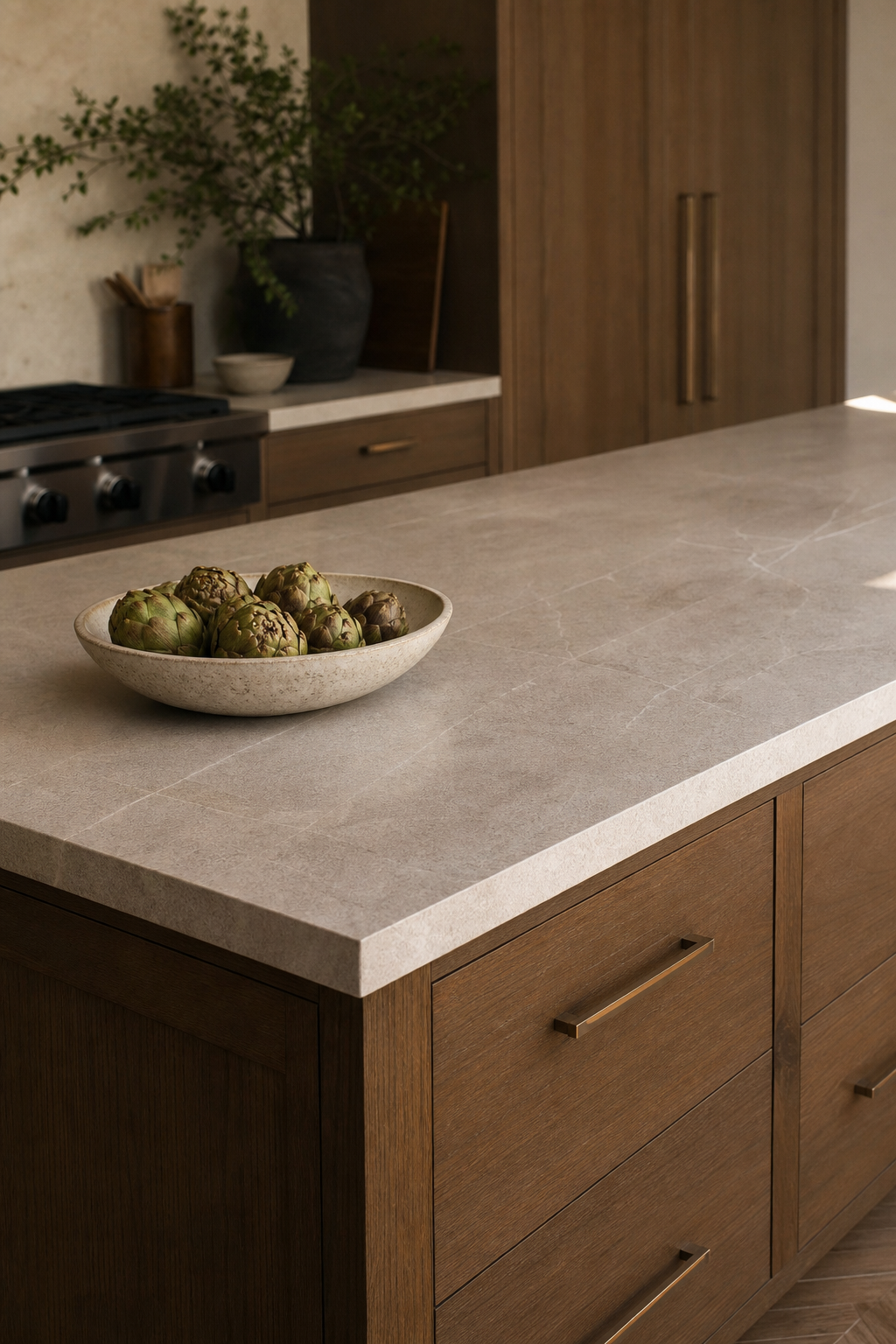
Add Seating That Feels Comfortable
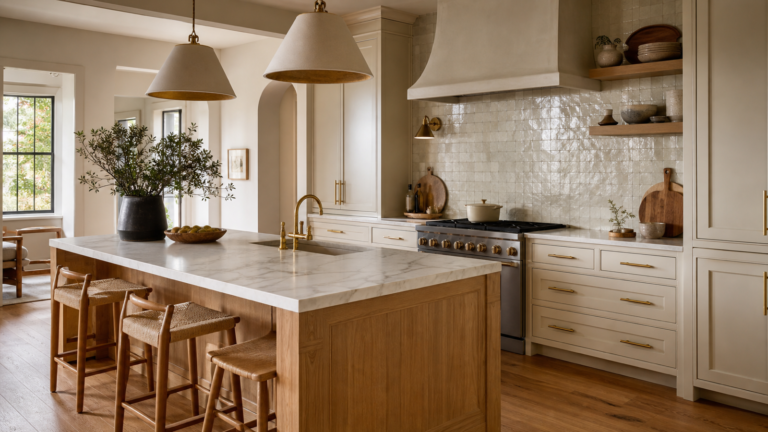
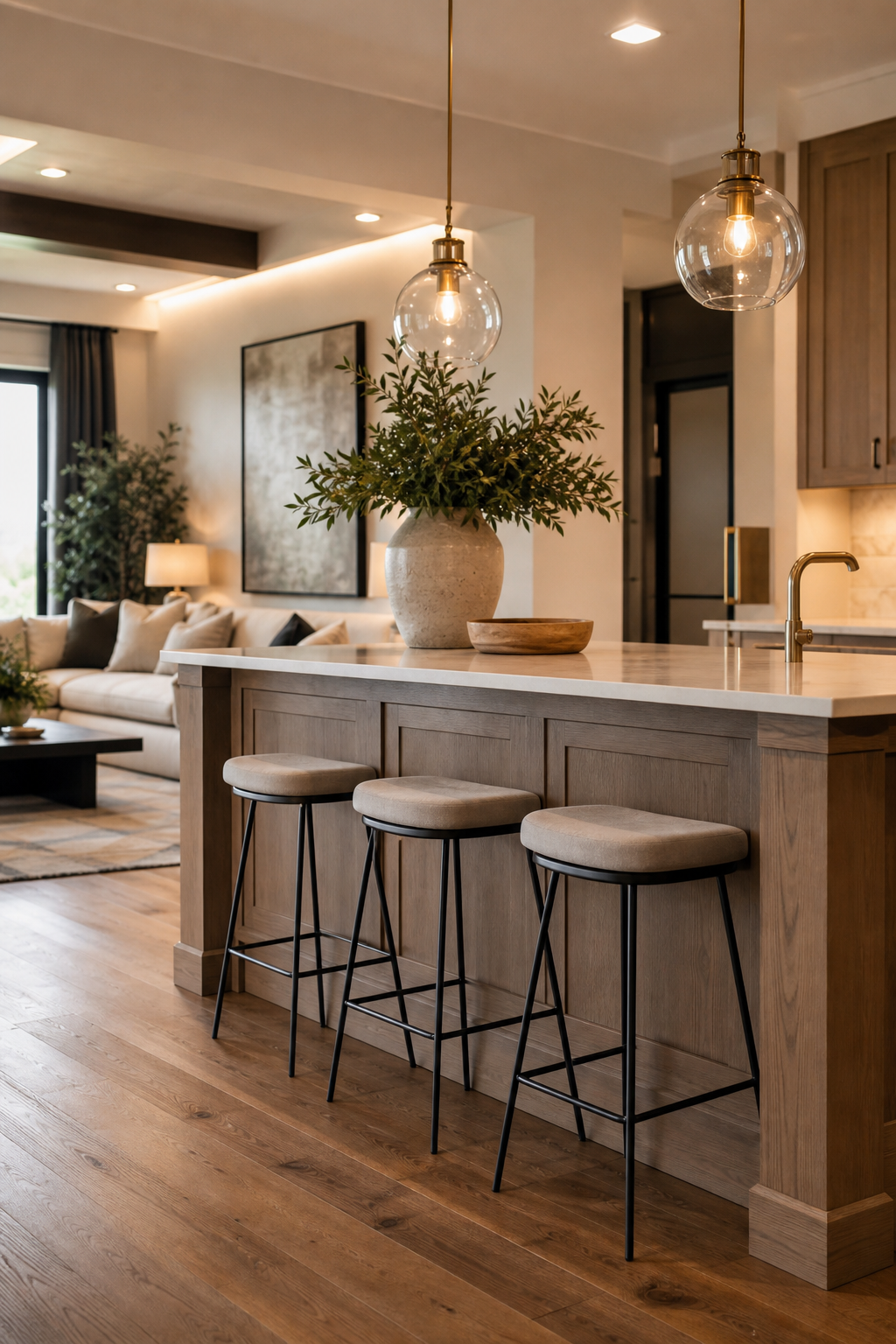
Island seating should feel like a place to pause, not a row of temporary perches. Choose stools with supportive backs if people will eat breakfast, help with homework, or talk while dinner is being prepared. Upholstered seats add softness, while woven or wood stools bring texture. Leave enough elbow room between each seat so the arrangement feels hospitable rather than crowded. The stool height must match the counter height, and foot rails matter more than they seem. Comfortable seating turns the island into a true gathering place and gives the kitchen its warm, lived-in rhythm. That comfort is what makes guests stay close without getting in the cook’s way.
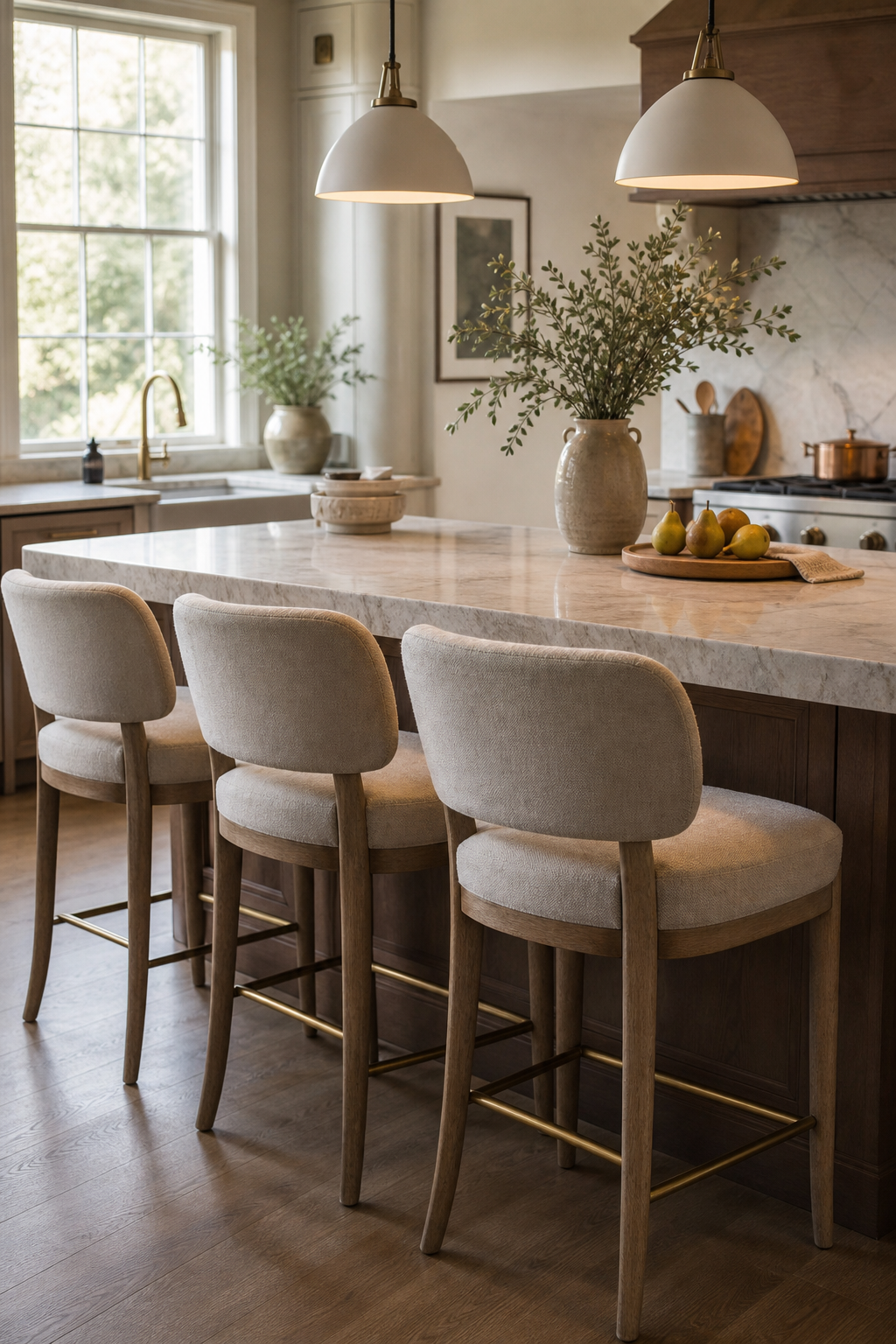
Use Pendant Lights To Define The Island
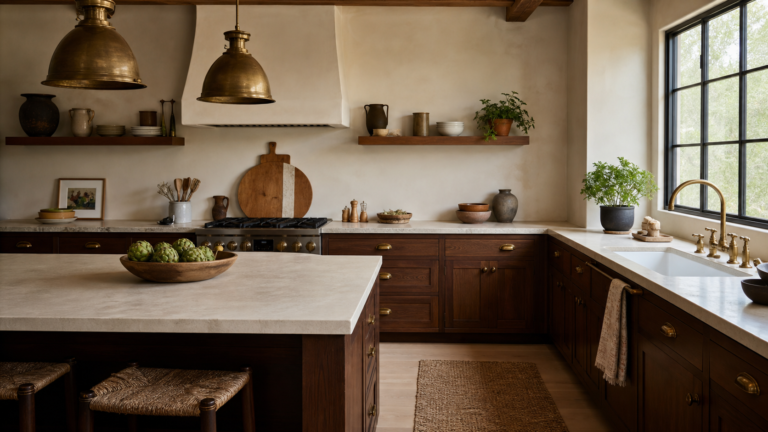
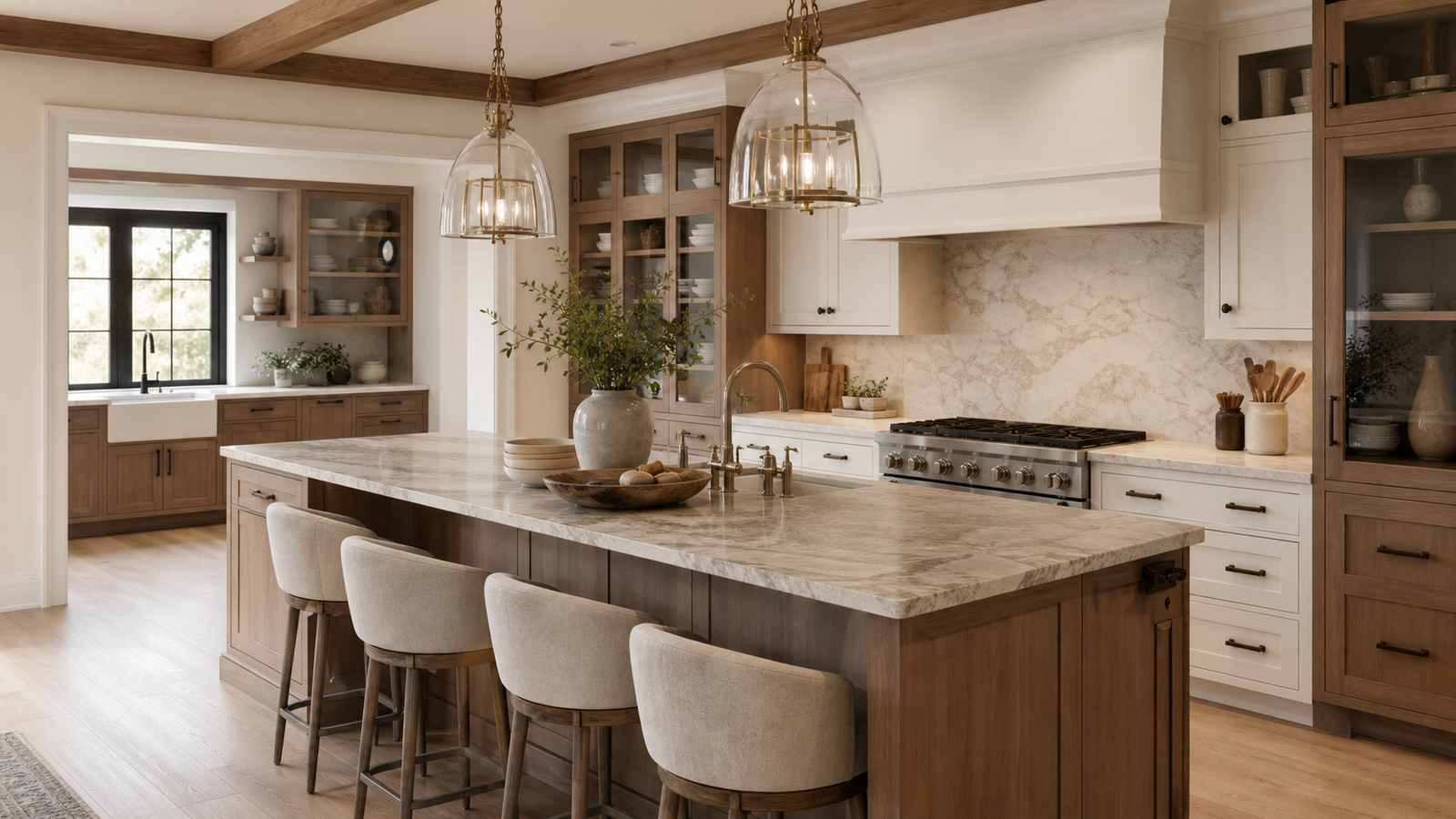
Pendant lighting helps the island feel like an intentional destination. The fixtures should be large enough to relate to the island but not so heavy that they block views across the kitchen. Fabric, glass, metal, plaster, or woven shades can all work depending on the room’s mood. Hang pendants at a height that lights the work surface without shining into anyone’s eyes. In a warm kitchen, dimmers are essential because the island often shifts from prep station to evening gathering spot. Good pendants add architecture, rhythm, and atmosphere in one move. A beautiful dimmed pendant can make even simple weeknight dinners feel more relaxed and intentional.
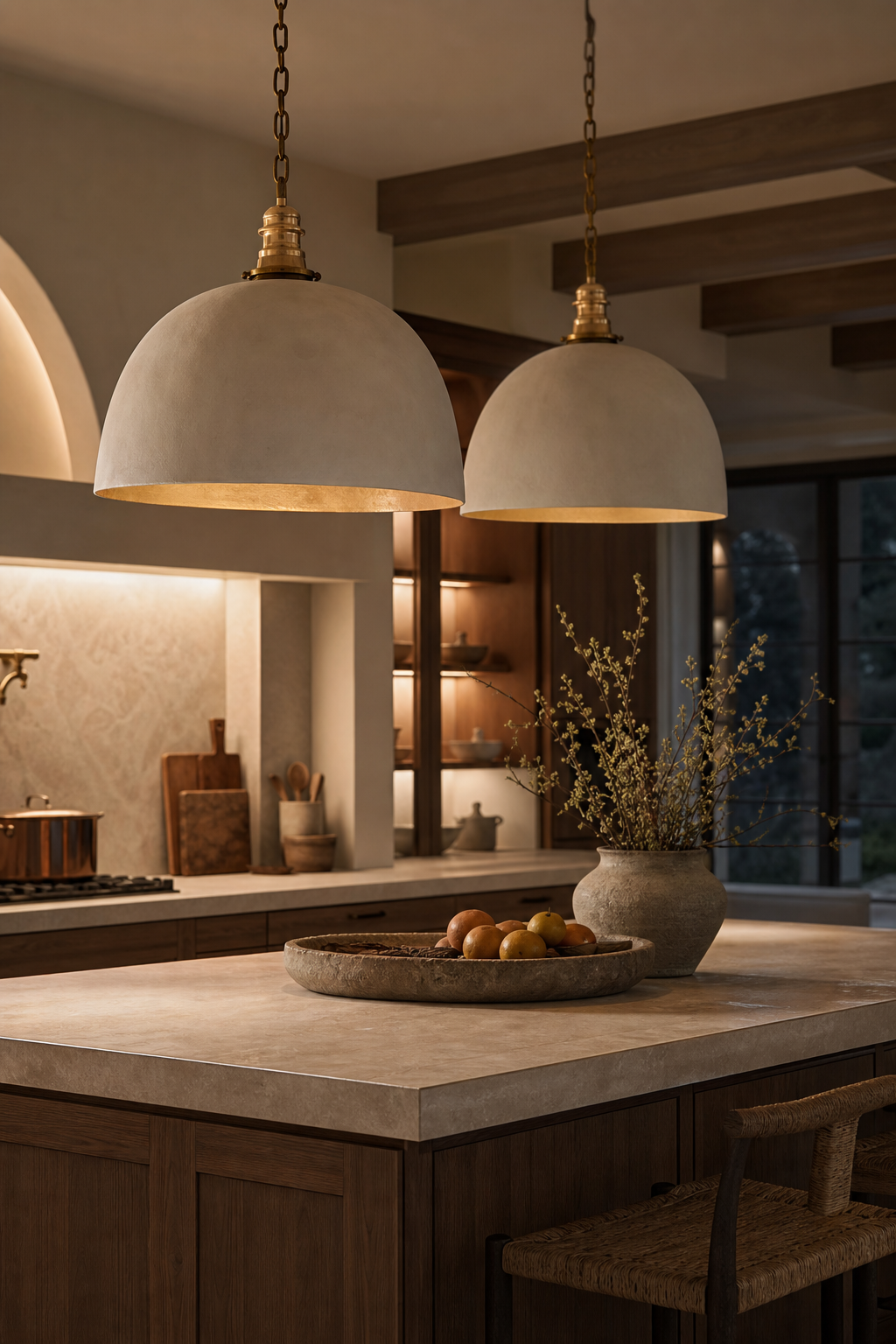
Build Storage Into The Working Side
The working side of the island should do more than hold blank panels. Deep drawers can store pots, mixing bowls, baking sheets, utensils, dish towels, and food containers close to where they are used. Drawer storage is often easier than lower cabinets because everything pulls into view. Consider a narrow pullout for oils and spices near the range or a drawer with dividers for prep tools near the sink. Keep the storage tied to the island’s purpose. When the contents match the work zone, the island reduces extra steps and makes cooking feel more fluid. Labeling or dividing those drawers can make the storage feel custom without adding visual clutter.
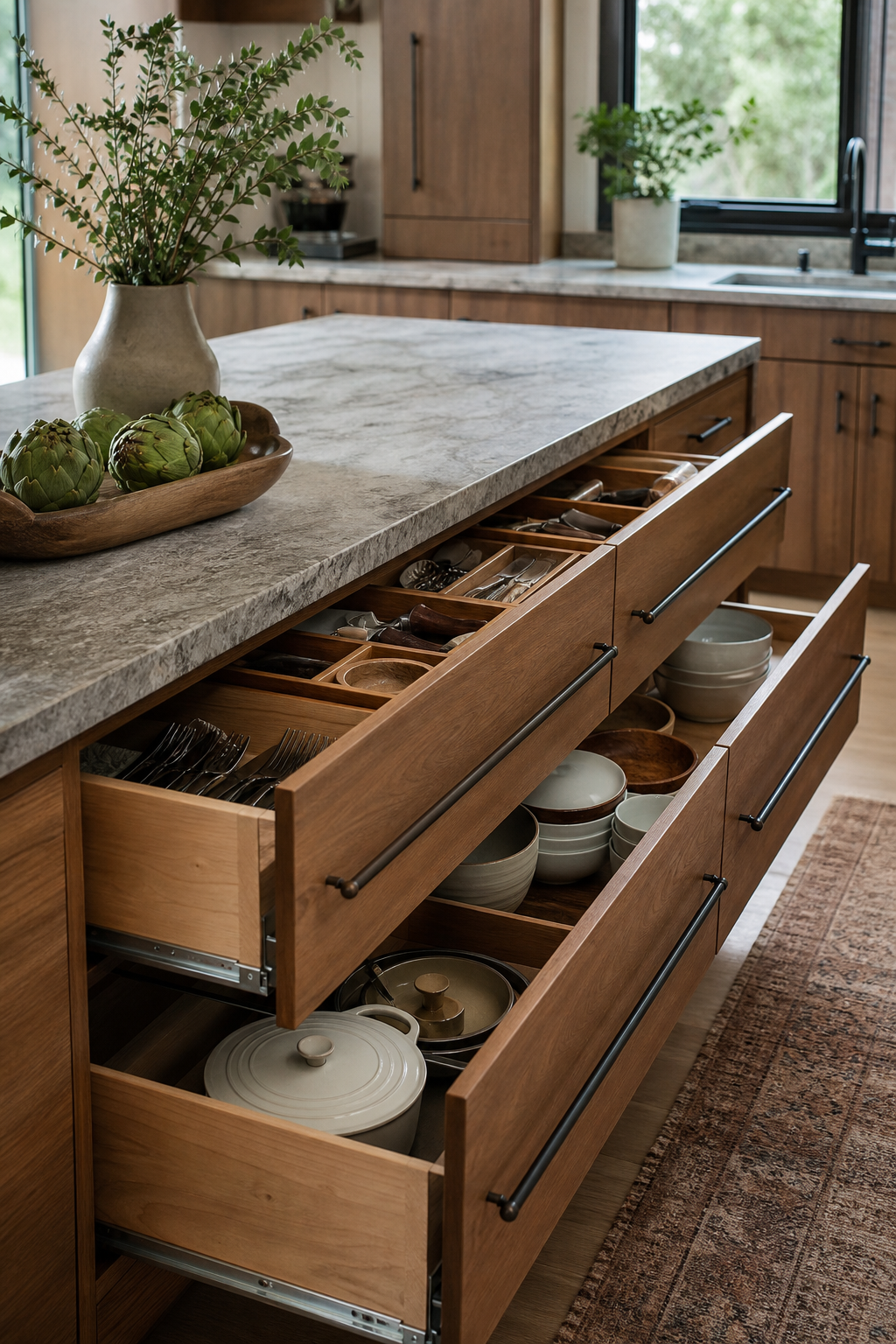
Hide Everyday Clutter With Closed Doors
An island often becomes the place where everything lands. Closed storage helps protect the room from that visual clutter. Cabinet doors can conceal serving platters, small appliances, table linens, lunch boxes, and extra pantry overflow. If the island faces the living or dining area, keep that outer side especially tidy with simple doors or shallow cabinets. Push-latch panels, discreet knobs, or warm brass pulls can all look refined. The goal is not to make the kitchen look unused. It is to let the materials, lighting, and proportions stay visible instead of competing with everyday piles. This is especially helpful when the kitchen is visible from the sofa or front entry.
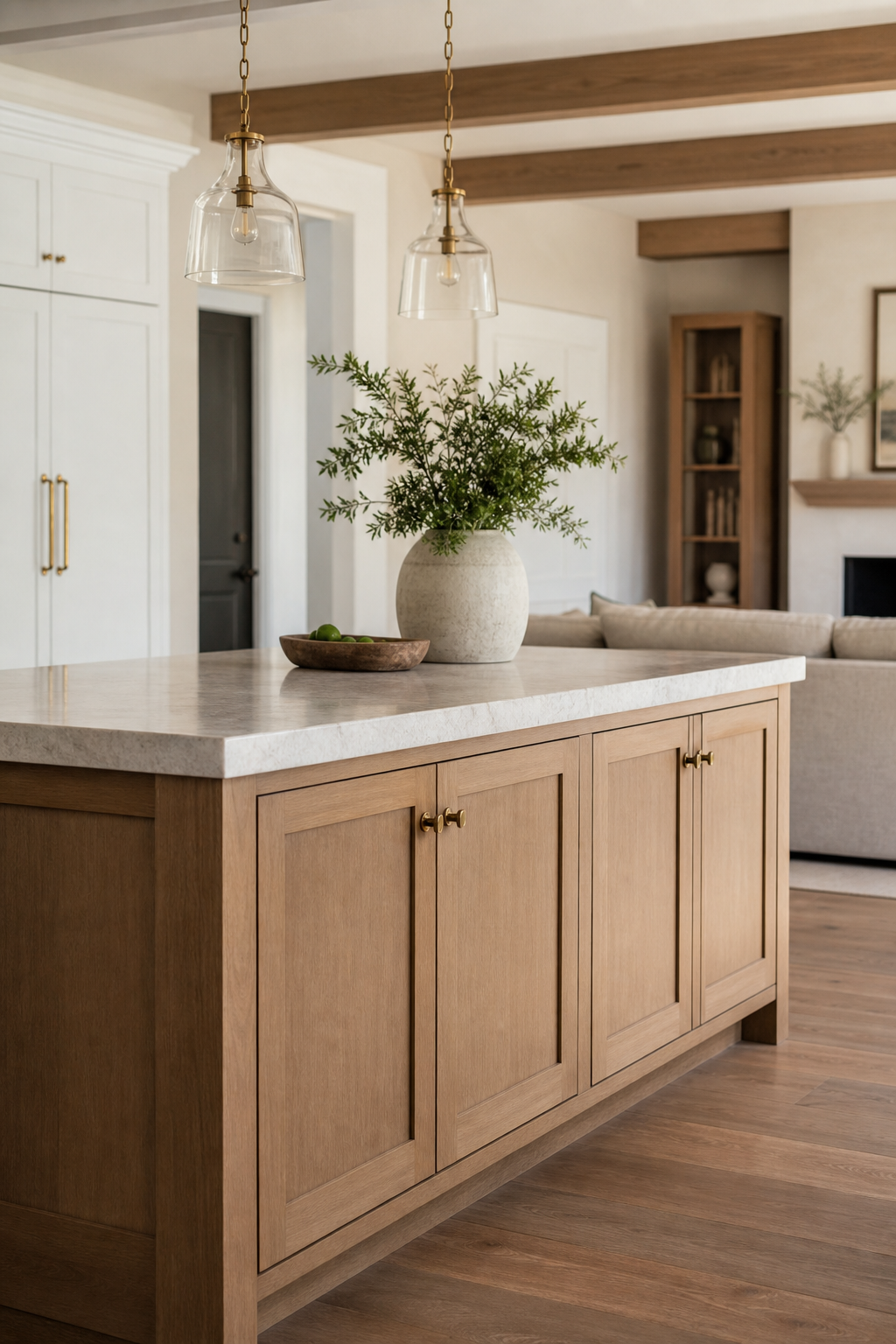
Create A Prep Sink Zone
A prep sink can make a large island much more useful, especially if the main sink is across the room or the kitchen has multiple cooks. It gives you a place to rinse produce, fill a vase, wash hands, or prep drinks without interrupting cleanup. Keep the sink modest so it does not consume the entire island, and pair it with a beautiful faucet that feels substantial but not oversized. Leave counter space on both sides if possible. A prep sink works best when paired with nearby cutting boards, trash pullout, and storage for knives or bowls. A small integrated soap niche or tray keeps the sink area looking deliberate instead of busy.
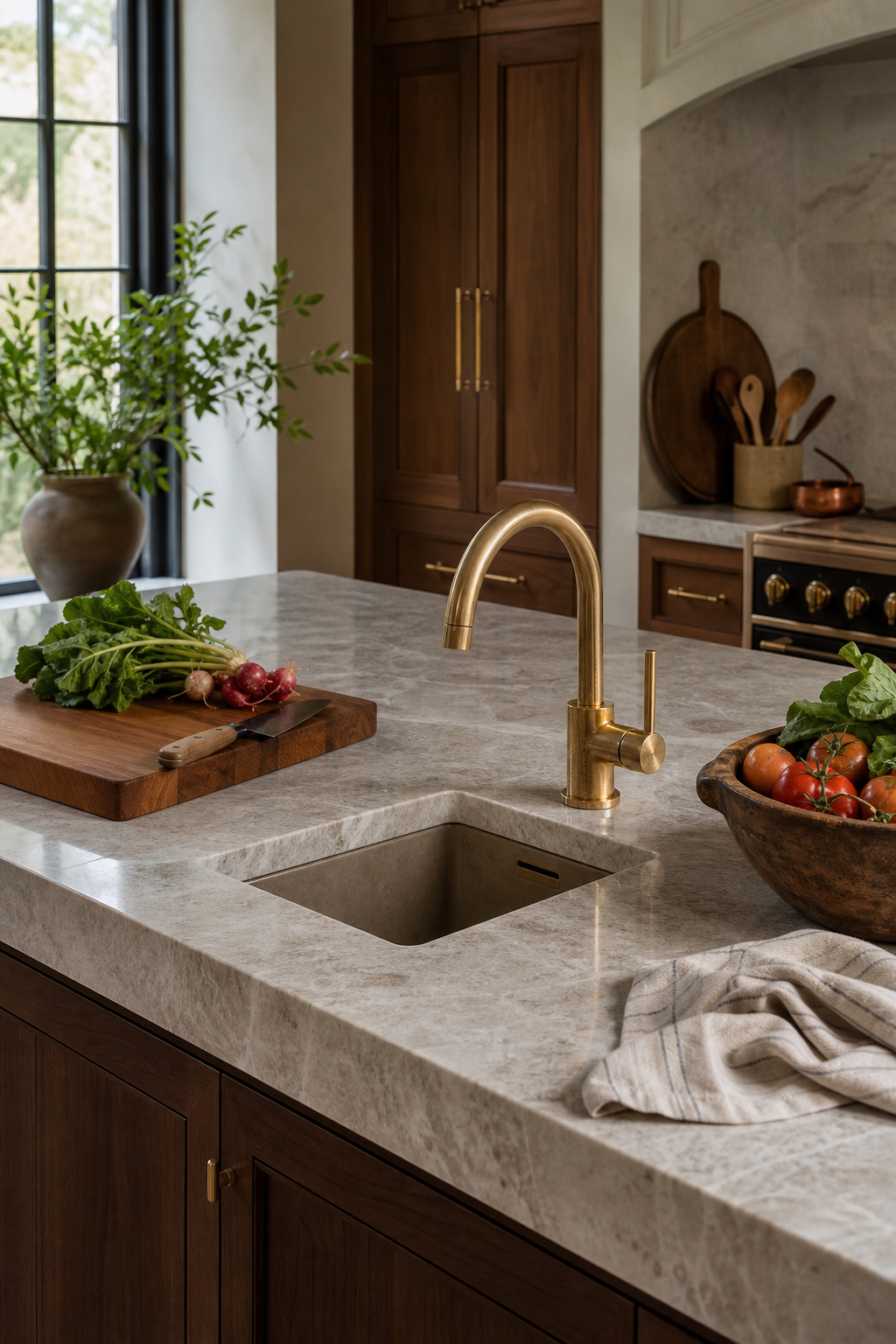
Anchor The Island With Warm Wood
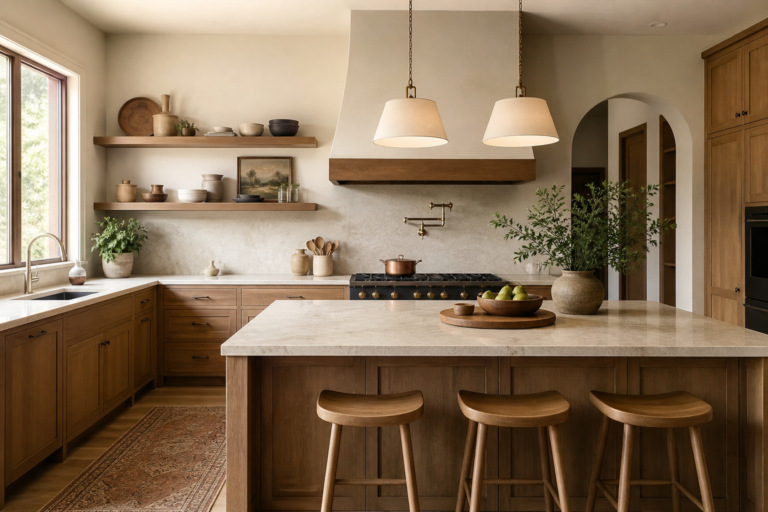
Wood instantly makes an island feel warmer, especially in kitchens with painted perimeter cabinets or stone surfaces. White oak, walnut, alder, and rift-sawn oak each bring a different tone and grain. A wood island base can ground a bright kitchen, while a wood butcher-block section can create a tactile prep area. Keep the finish durable and easy to clean, and avoid stains that turn orange or overly gray. Wood also pairs beautifully with brass, handmade tile, plaster pendants, and creamy stone. It gives the island a furniture-like presence without sacrificing function. Repeat the same wood tone once nearby so the island feels connected to the rest of the room.
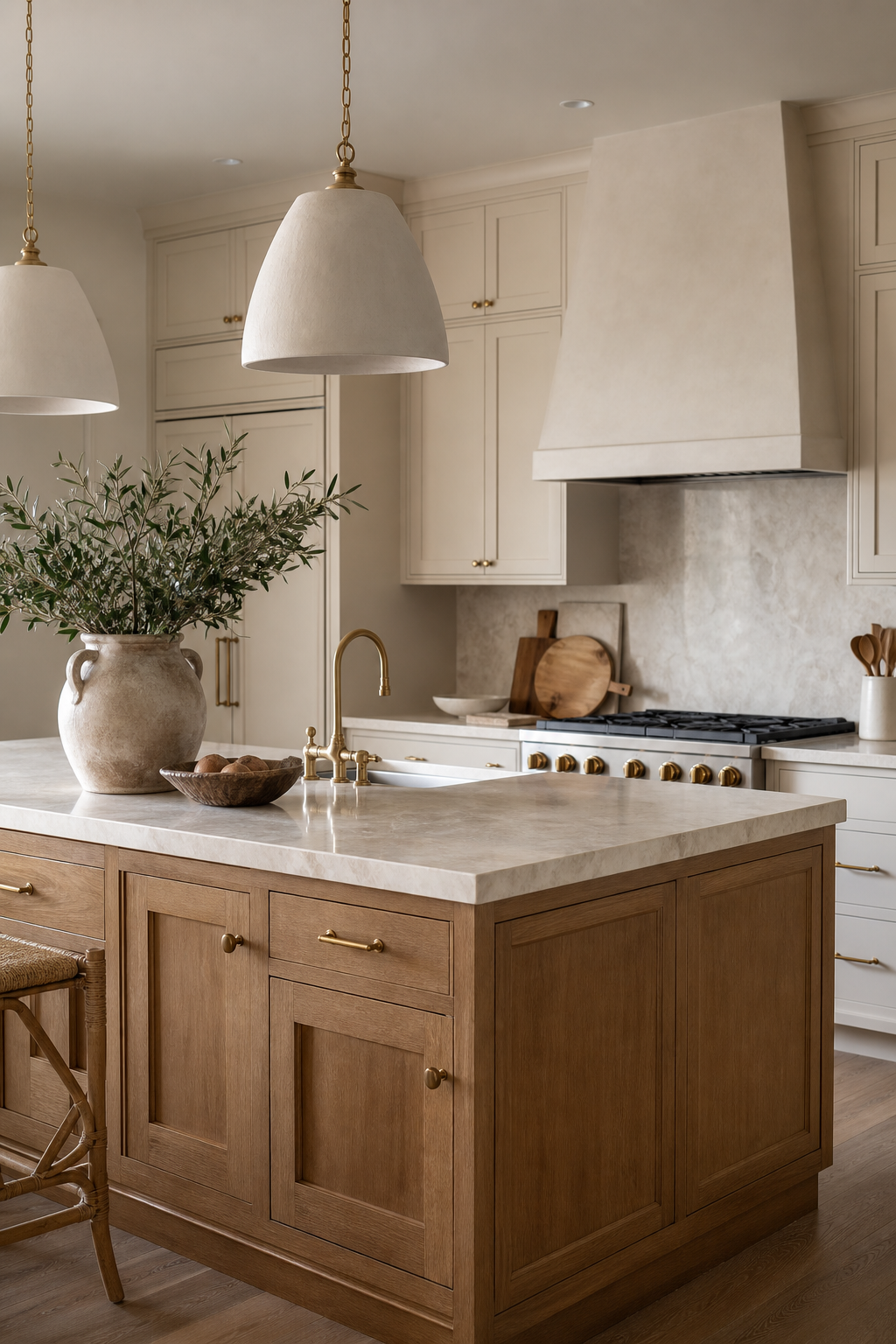
Mix Painted Cabinets With Natural Texture
A painted island can still feel warm if the surrounding materials have texture. Try a deep green, mushroom, blue-gray, or warm taupe base with woven stools, oak floors, handmade tile, and a stone counter. The paint color should relate to the rest of the kitchen rather than announce itself as a separate statement. Softer satin or matte finishes often look more refined than glossy paint. This approach is useful when you want personality without overwhelming the room. The island becomes the color note, while natural textures keep the kitchen grounded and welcoming. This keeps color from feeling trendy and lets the materials carry most of the warmth.
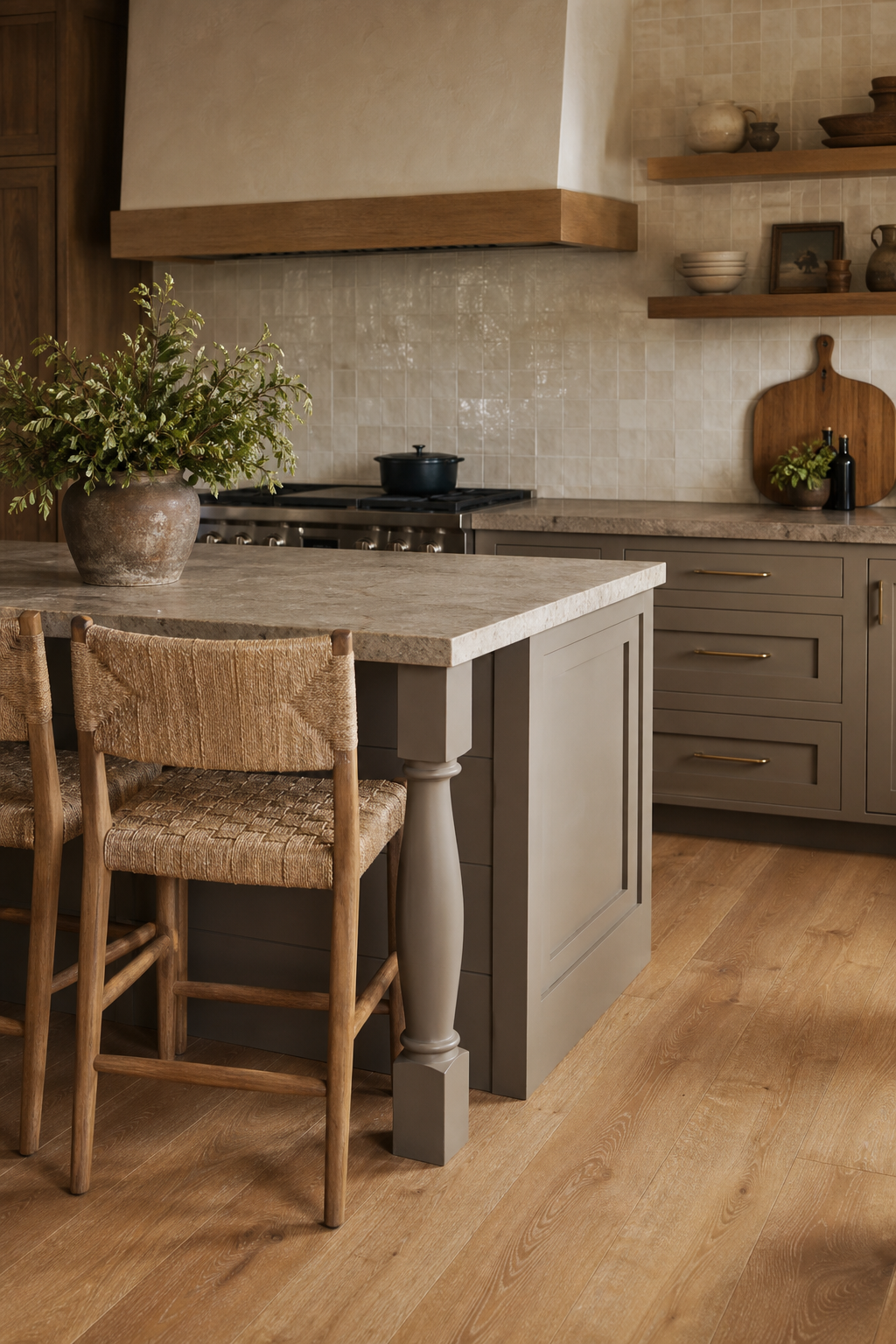
Plan The Trash Pullout Carefully
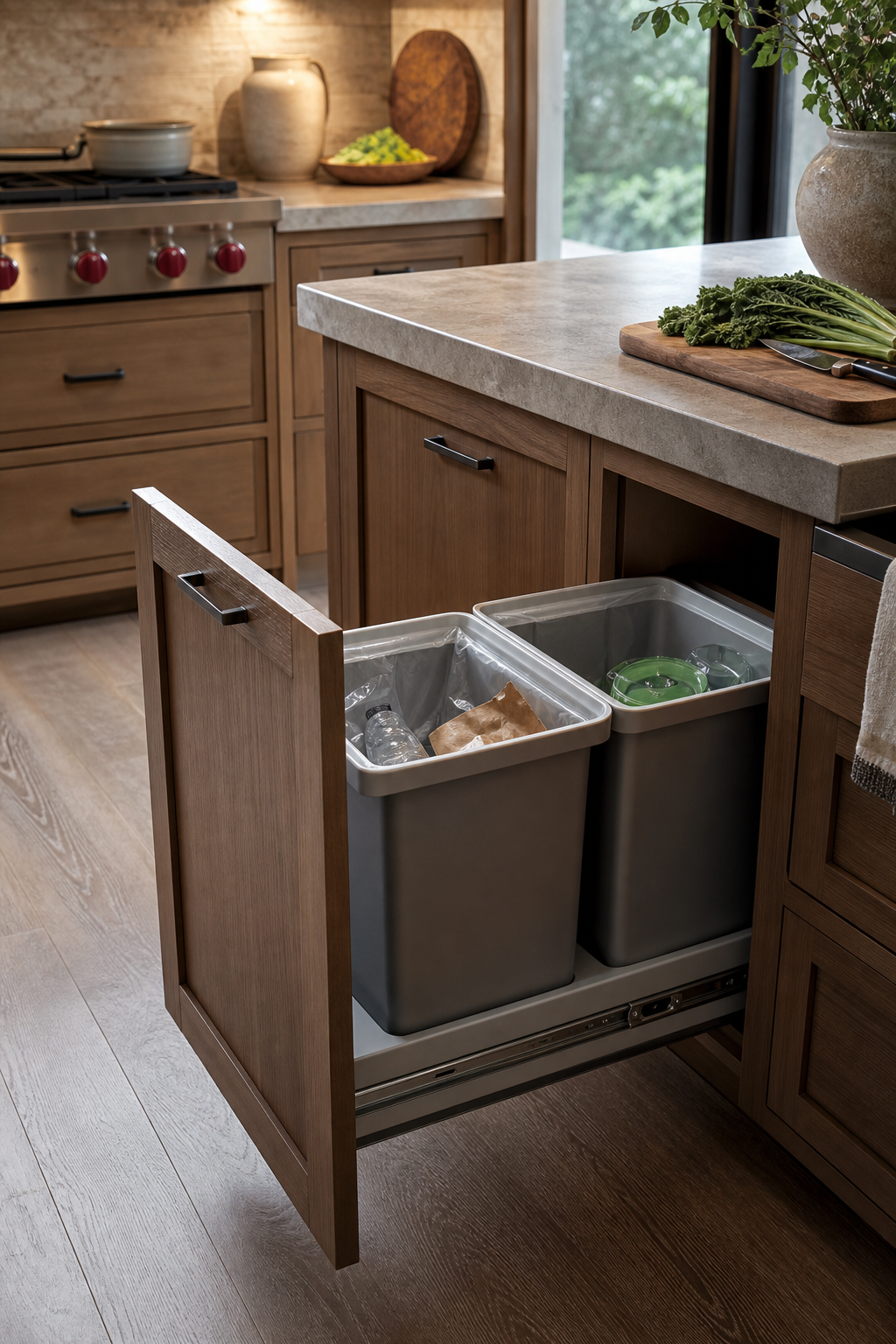
A trash and recycling pullout is one of the most useful island features, but placement matters. Put it near the main prep area so scraps can move directly from cutting board to bin. If the island includes a sink, locate the pullout close enough to support rinsing and cleanup. Avoid placing it where someone seated at the island has to move every time it opens. A double-bin system is practical for recycling, and a drawer above can hold liners or compost bags. This invisible detail can make the island feel dramatically better in daily use. It is a quiet feature, but it changes how smoothly prep and cleanup happen every day.
Leave A Clear Landing Area
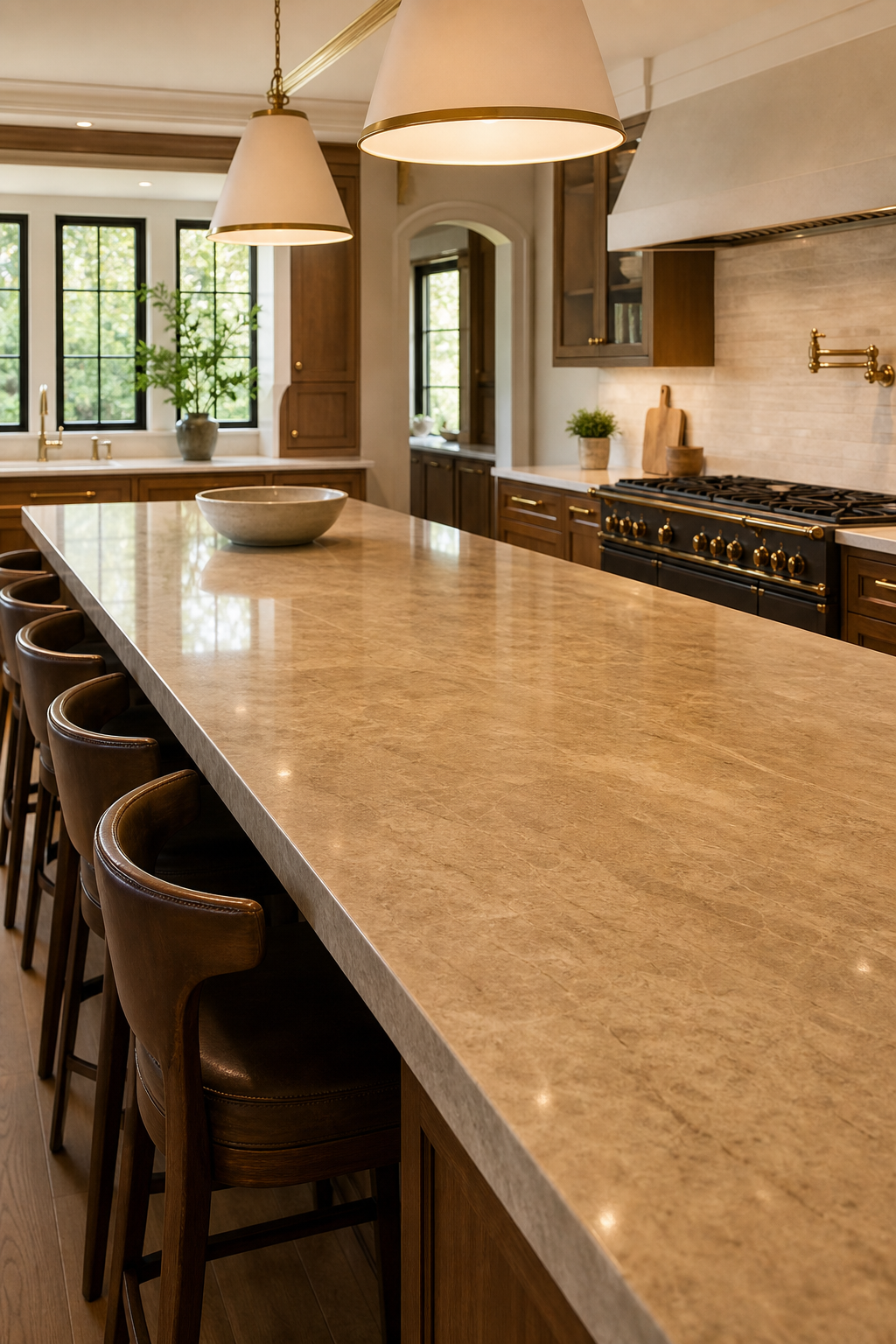
Every functional island needs open counter space. It may be tempting to fill the surface with branches, bowls, trays, and cookbooks, but the island must still support groceries, baking sheets, serving platters, and weeknight prep. Keep one generous landing area clear at all times, preferably near the refrigerator or oven path. Style the opposite end with one low bowl or vase if the island is long enough. This balance keeps the kitchen beautiful and useful. A clear landing zone also makes the room feel calmer because the counter is ready before you need it. That ready surface is often the difference between a pretty kitchen and one that truly functions.
Use Open Shelving Sparingly
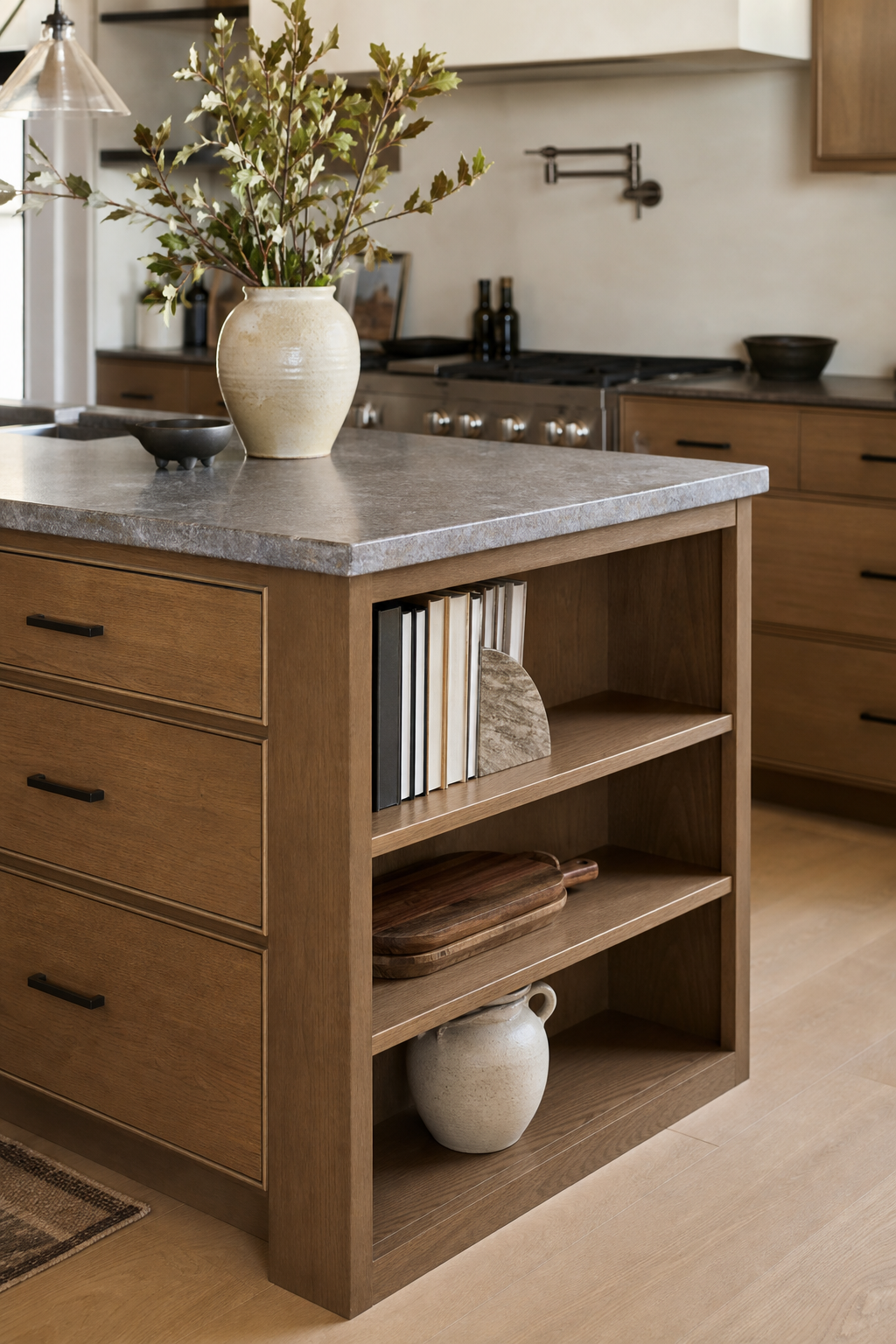
Open shelving on an island can be beautiful, but it works best in small doses. A narrow end shelf for cookbooks, a few serving boards, or a ceramic vessel can soften a solid island block. Avoid using open shelves for anything messy or multicolored unless you are comfortable styling them often. The shelves should look intentional from the adjoining room, especially in open-plan kitchens. If you want warmth without maintenance, combine one open display section with mostly closed storage. That way the island feels personal without becoming a dust-catching display case. Keep the displayed pieces neutral and useful so the shelf feels natural rather than staged.
Add A Waterfall Edge With Restraint
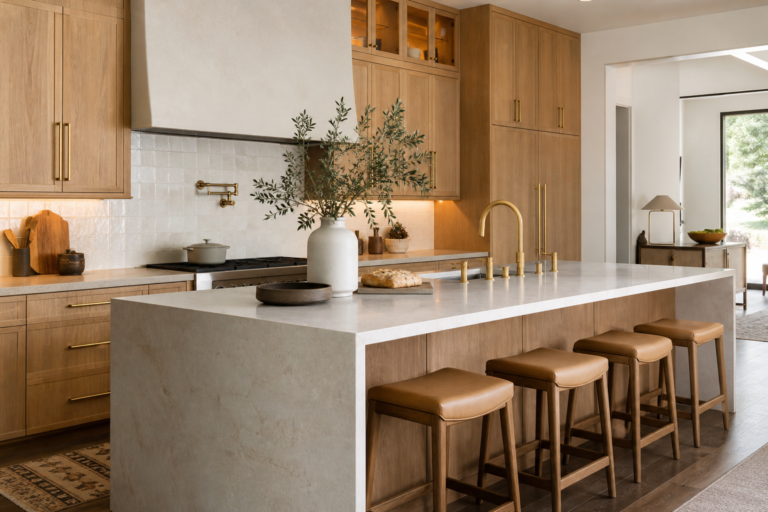
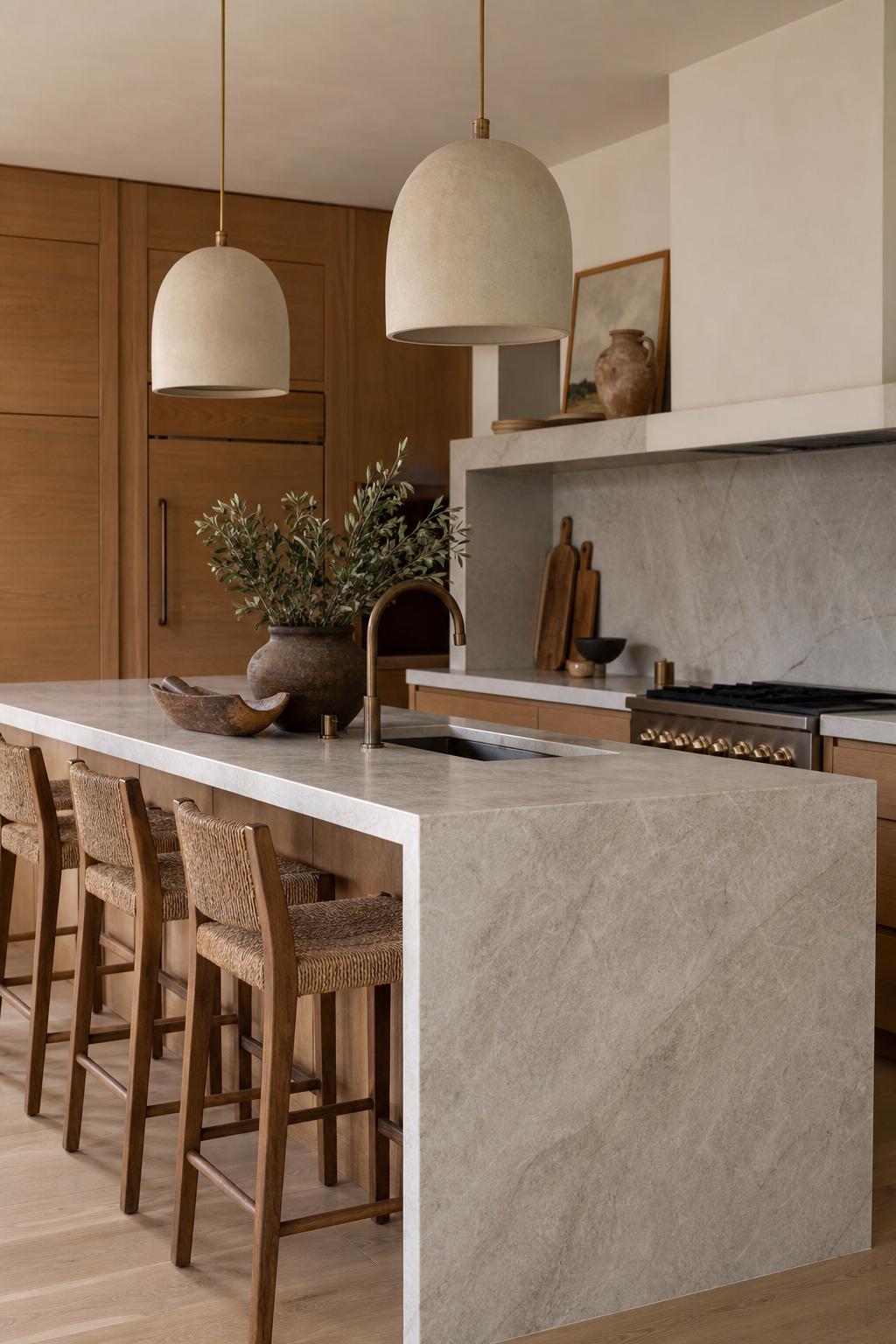
A waterfall countertop can make an island feel sculptural, but it should be used with restraint. It works best when the stone has beautiful movement and the surrounding cabinetry is simple. In a warm home, balance the dramatic slab with wood floors, woven stools, plaster walls, or soft pendant shades so the kitchen does not feel cold. Consider using the waterfall on one visible end rather than both sides if the room needs a lighter touch. The detail should protect the island and elevate the architecture, not make the kitchen feel like a showroom. Bookmatch the veining carefully if possible, because sloppy seams can cheapen an expensive material.
Style The Island With Low Pieces
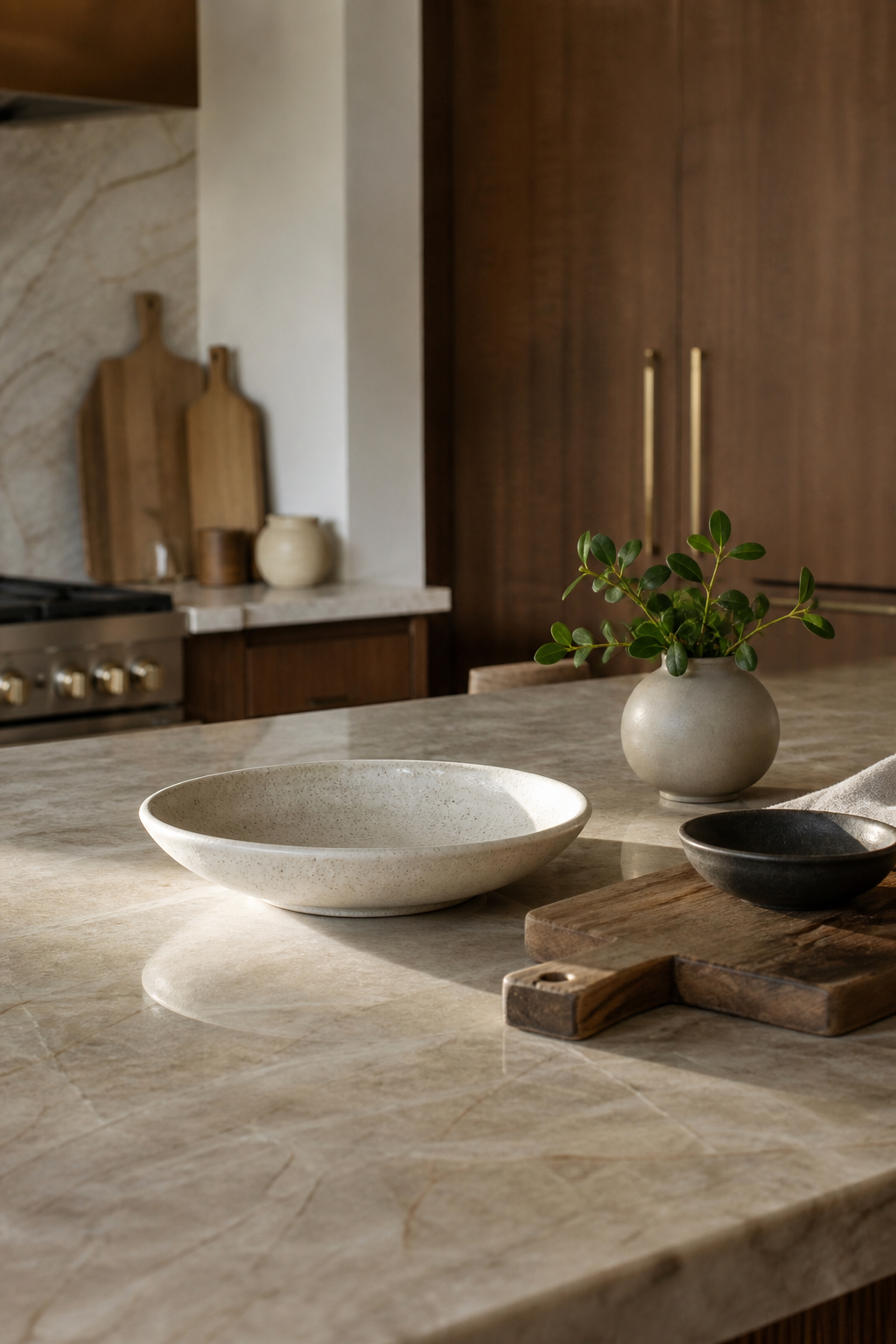
Island styling should never block conversation, sightlines, or prep space. Low pieces usually work best: a shallow bowl of fruit, a ceramic tray, a small vase, or a stack of boards leaning at one end. Keep tall branches for a console or breakfast nook unless the island is enormous. The styling should be easy to move when cooking begins. Choose objects that relate to the kitchen’s materials, such as stoneware, wood, linen, or metal. Thoughtful low styling makes the island feel finished while respecting the fact that it is a working surface. The best island styling looks beautiful in photos and disappears easily when real cooking begins.
Make The Island Face The Room
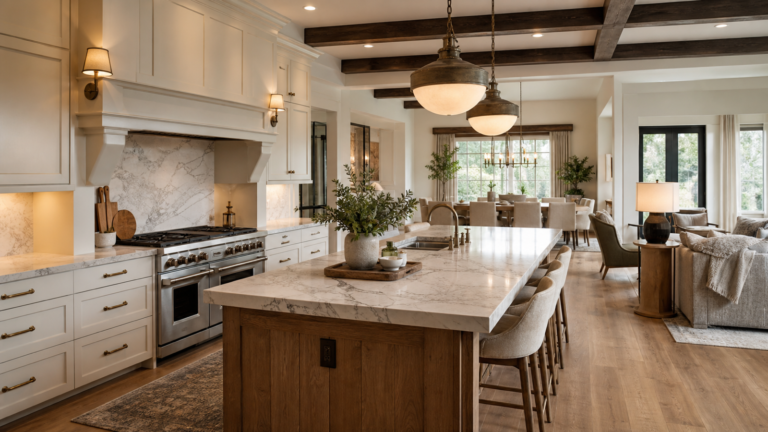
In open kitchens, the island often acts like the bridge between cooking and living. The side facing the room deserves as much attention as the working side. Add finished panels, shallow storage, beautiful stools, or a furniture-style base so the island looks considered from every angle. If the kitchen opens to a dining table or sofa, coordinate wood tones and metal finishes across both areas. This makes the island feel connected rather than stranded. A well-designed outer face also helps the kitchen blend into the home instead of reading as a purely utilitarian zone. Treat this side almost like a console or cabinet in the adjoining room, not as the back of the kitchen.
Consider A Furniture-Like Island
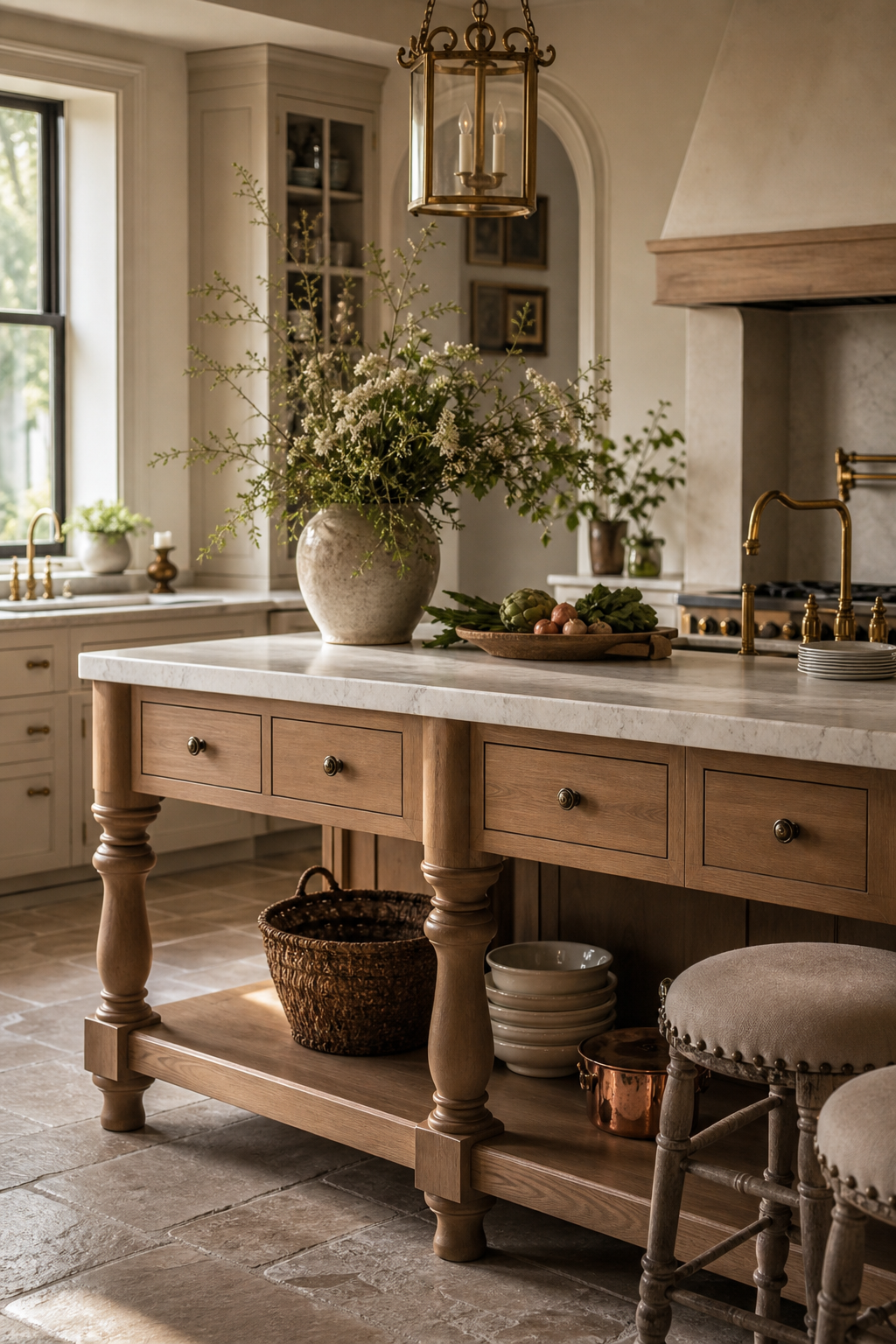
A furniture-like island can make a kitchen feel warmer and less built-in. Details such as turned legs, inset drawers, a different wood species, a lower shelf, or a softer paint color can create the feeling of a worktable. This approach suits cottage, transitional, European-inspired, and relaxed modern kitchens. The island still needs proper power, storage, and durable surfaces, but it can look more collected than a standard cabinet block. Pair it with classic stools and warm lighting. The result feels functional, personal, and naturally integrated into the rest of the home. It is a strong choice when you want the kitchen to feel layered, warm, and quietly individual.
A good kitchen island improves the room every day. It gives you space to prep, sit, store, serve, and connect, but it also shapes how warm and welcoming the kitchen feels. Start with clear walkways and the work zones you actually need, then layer in durable surfaces, comfortable seating, generous storage, and lighting that can shift from task to atmosphere. When the island is designed around real habits, it becomes more than a feature. It becomes the hardworking center of the home.