24 Japandi Bedroom Ideas For A Cozy Stylish Retreat
Japandi bedrooms are calm, but they are never empty. The style works because every material has a purpose: pale oak for warmth, linen for softness, plaster for depth, paper lighting for glow, and black accents for quiet definition. A cozy Japandi retreat should feel edited without becoming cold, practical without feeling plain, and natural without looking unfinished. These ideas focus on real design choices that make the bedroom easier to rest in and more beautiful to live with.
Choose a Low Oak Platform Bed
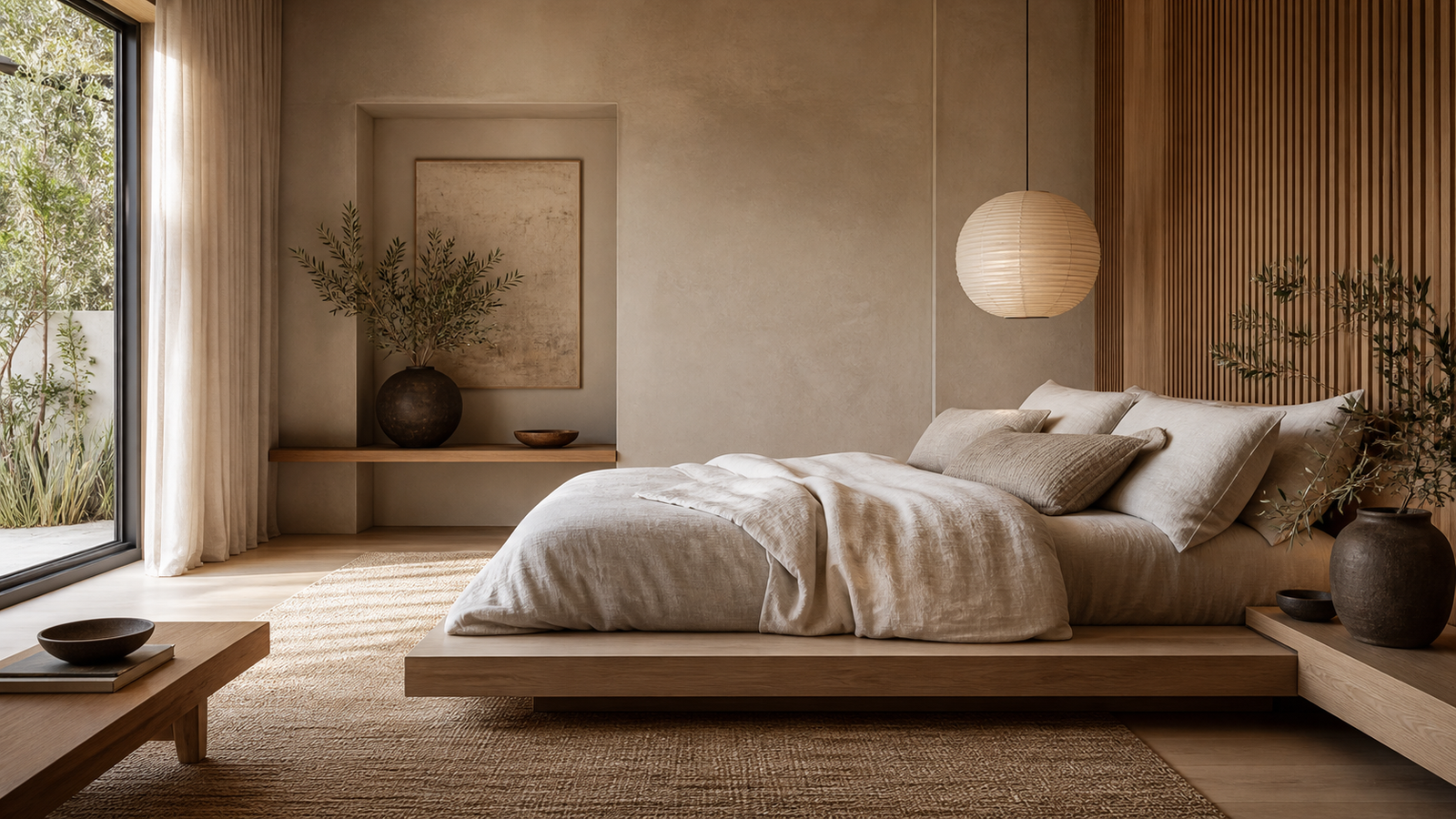
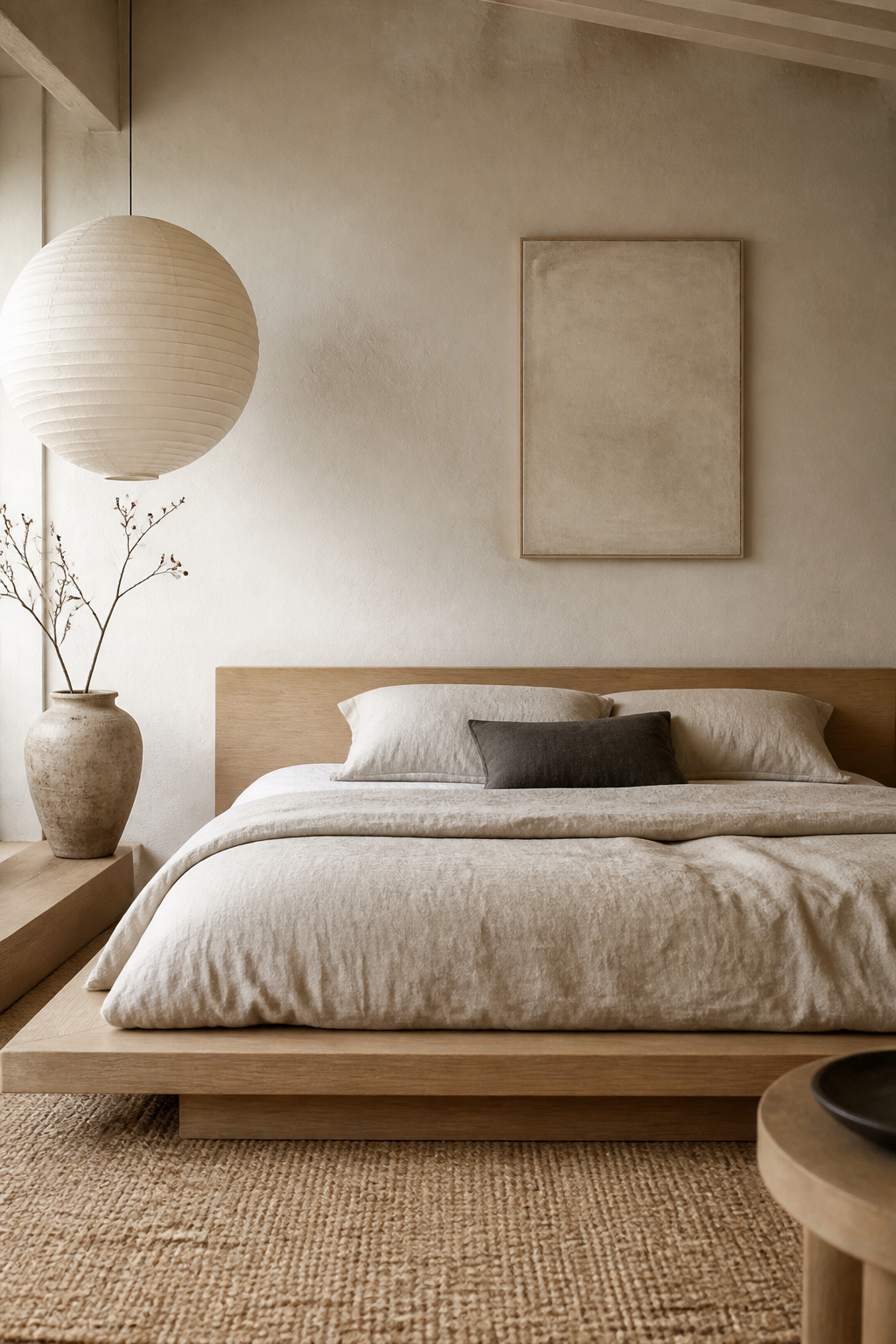
A low platform bed immediately gives a Japandi bedroom its calm horizontal line. Choose pale oak, ash, or lightly stained wood with a simple frame that sits close to the floor. This lower profile makes the room feel grounded and gives bedding a softer, more relaxed drape. Keep the mattress styling natural rather than overbuilt: linen sheets, an oatmeal duvet, and two or three pillows are enough. The bed should feel generous but not bulky. If the room is small, a platform with an integrated ledge can replace separate nightstands and reduce visual clutter. Finish with a woven rug that extends beyond the bed so the low shape feels intentional instead of temporary.
Add a Slatted Wood Headboard Wall
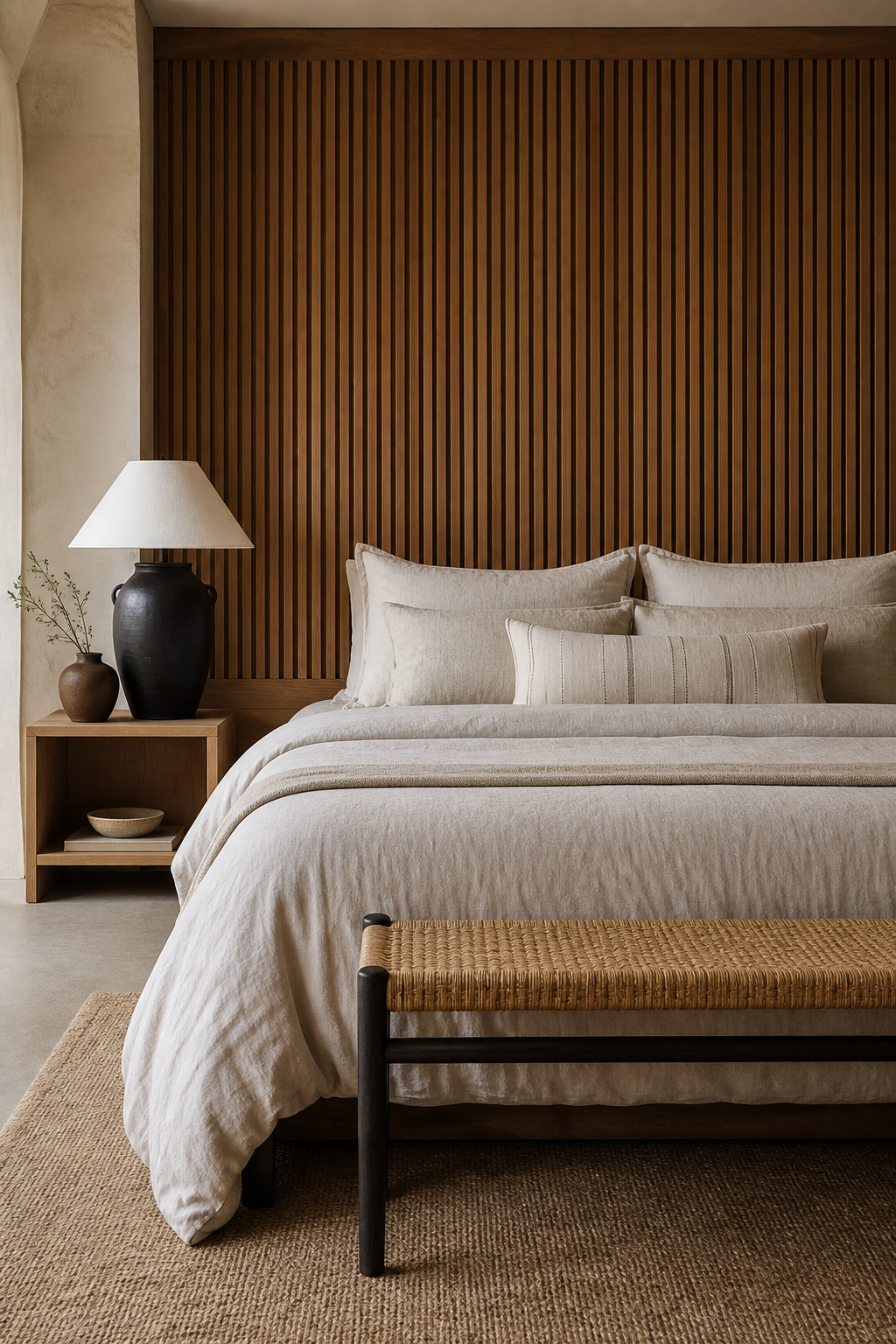
A slatted wood wall brings warmth and rhythm without making the bedroom feel busy. In Japandi design, the best slats are simple, vertical, and evenly spaced, often in oak or ash with a matte finish. They add architectural texture behind the bed while keeping the palette quiet. Let the slatted wall be the main detail, then keep artwork, bedding, and lamps restrained. A black ceramic lamp or woven bench can add contrast without competing. This idea works especially well when the room has plain plaster side walls, because the wood becomes a natural focal point. It also helps visually widen a bed wall and makes simple linen bedding feel more finished.
Use Shoji-Inspired Sliding Panels
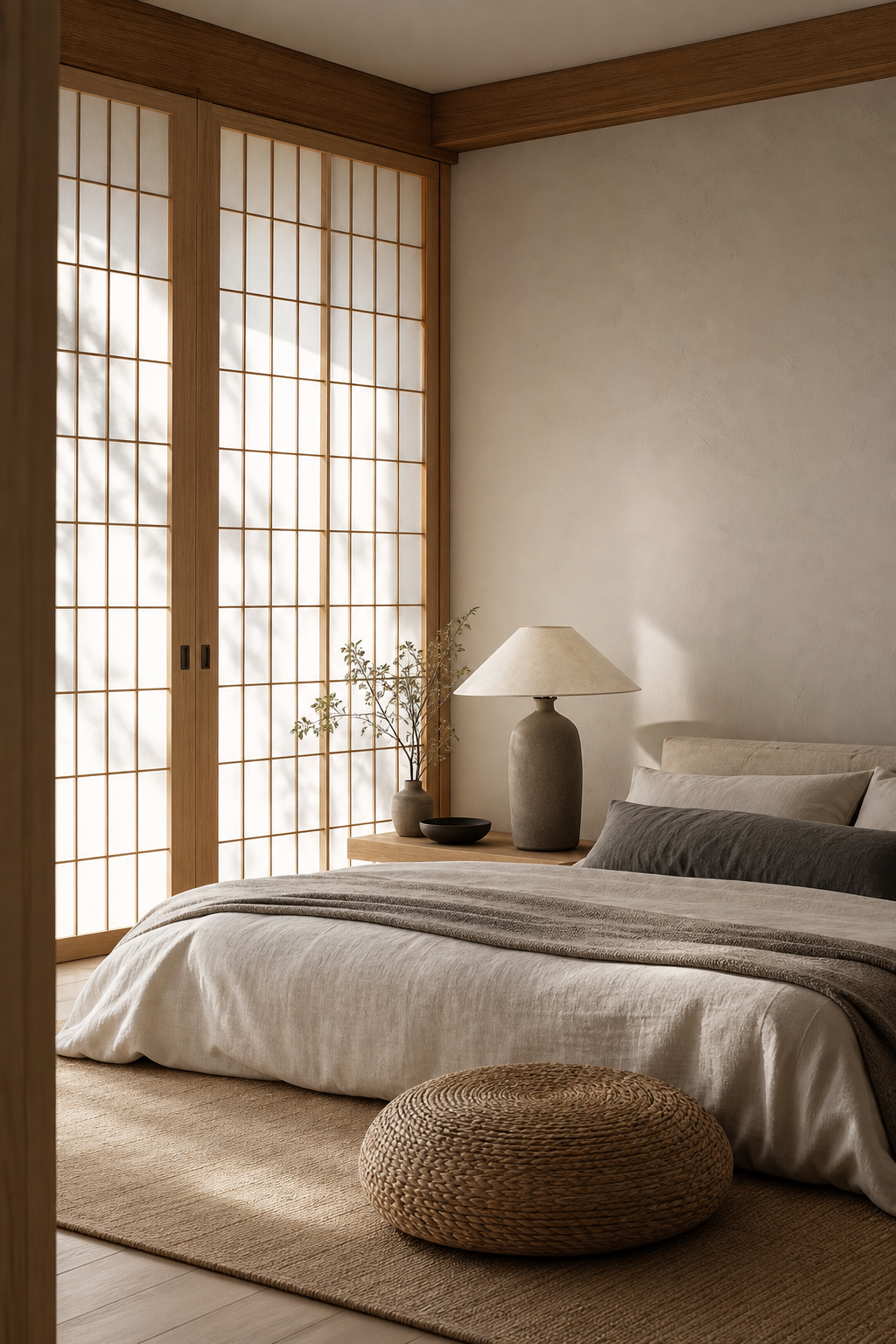
Shoji-inspired panels are perfect for a Japandi bedroom because they soften light and introduce a sense of calm order. You do not need traditional paper screens to get the effect; pale wood sliding panels, ribbed glass, or translucent shade fabric can create a similar filtered glow. Use them for closets, windows, or a divider between a bedroom and dressing area. The grid should feel delicate and precise, not heavy. Pair the panels with a low bed and minimal side tables so the geometry remains peaceful. The filtered daylight is the real luxury here, creating shadows that move gently across plaster walls, linen bedding, and woven floor textures throughout the day.
Hang an Oversized Paper Pendant
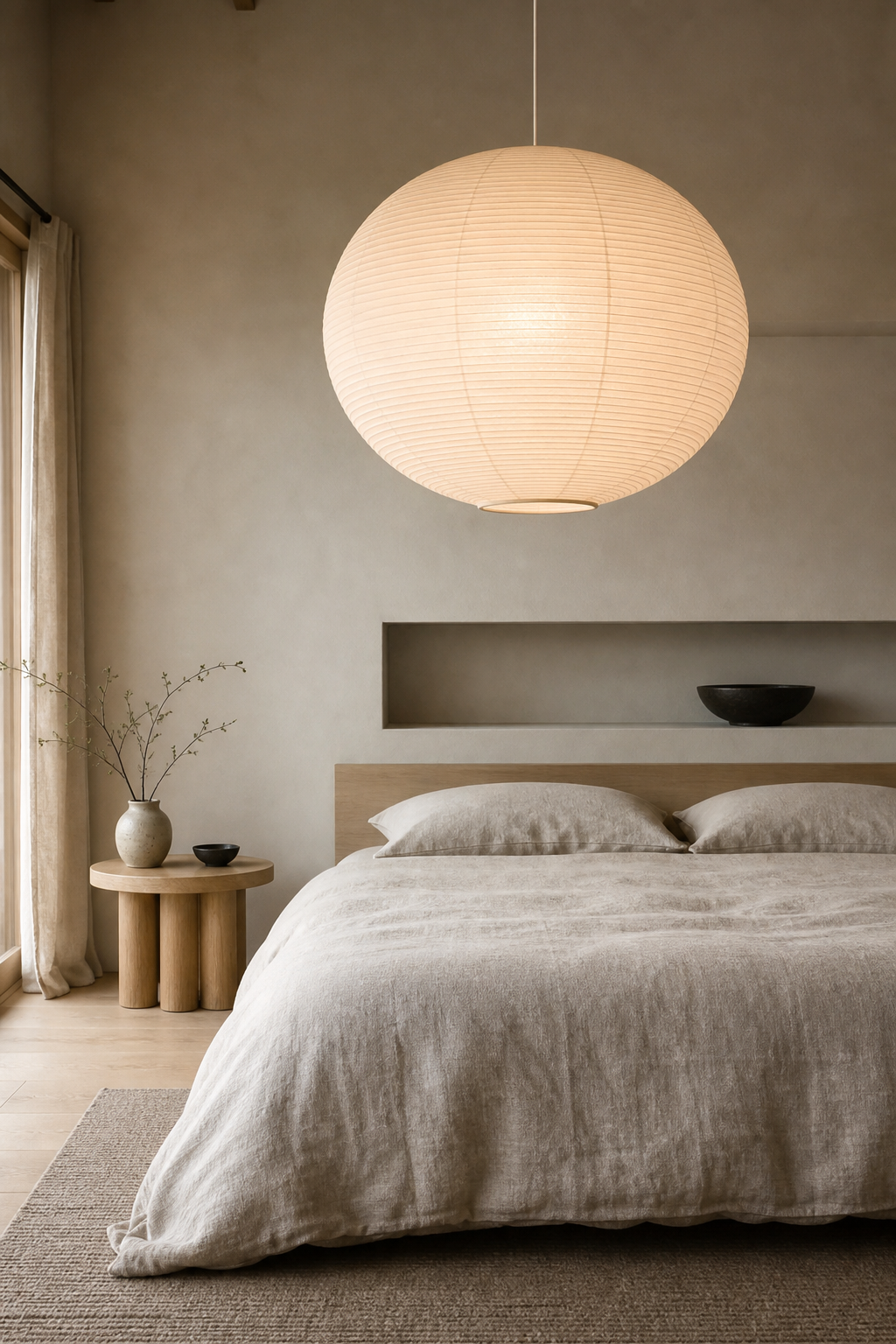
Paper lighting is one of the easiest ways to make a Japandi bedroom feel warm. A round washi-style pendant, small paper table lamp, or tall paper floor lamp diffuses light beautifully, softening the harder edges of wood and plaster. Scale matters: one oversized pendant above the bed can feel sculptural, while a smaller lantern on a nightstand adds intimacy. Keep bulbs warm and dimmable so the room shifts easily from morning to evening. Paper fixtures look best when the rest of the palette stays restrained. Let the shade glow against ivory bedding, pale oak, black ceramics, and a textured rug for a look that feels quiet rather than decorative.
Warm the Walls With Limewash Plaster
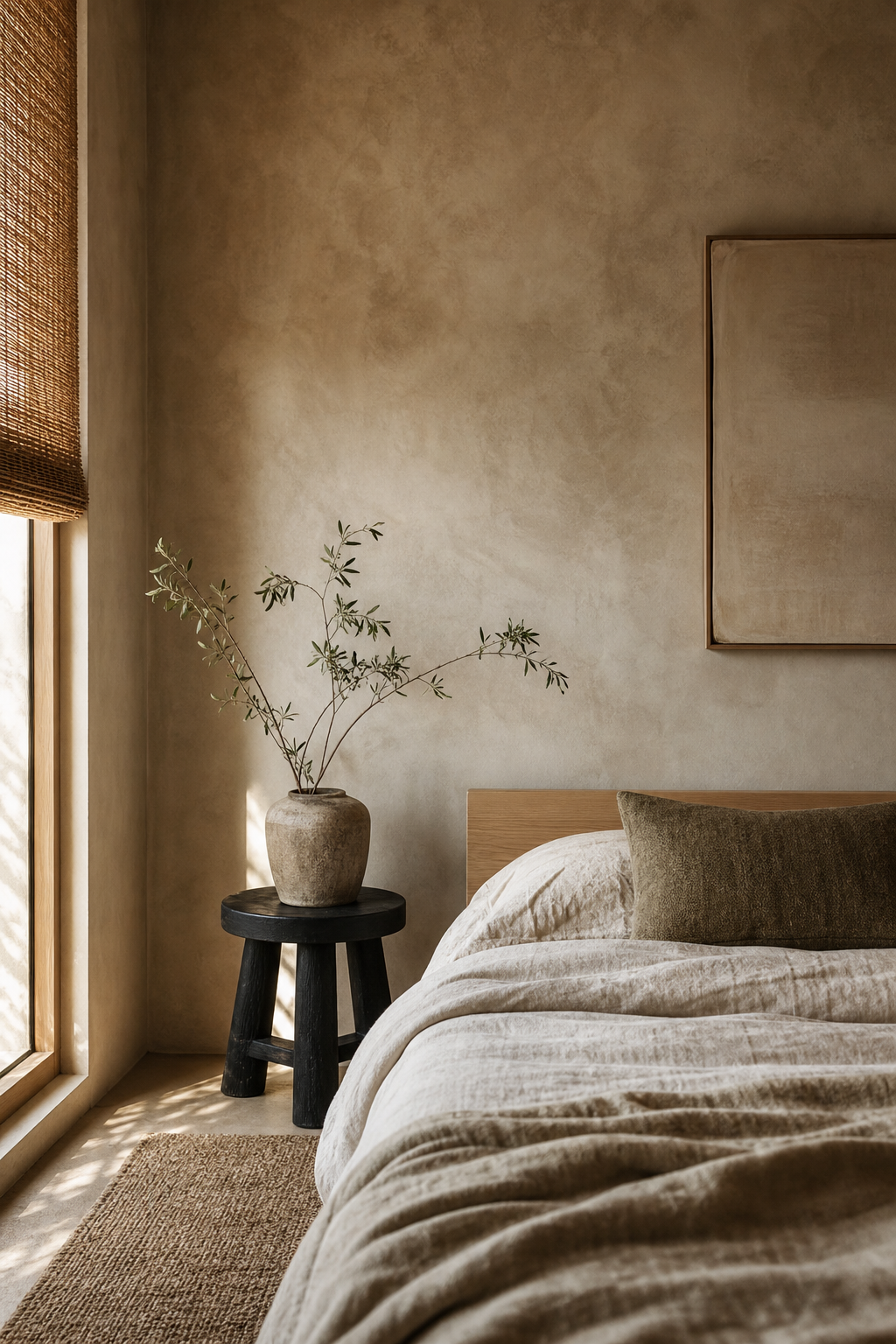
Limewash or plaster walls give a Japandi bedroom depth without pattern. The subtle movement catches daylight and keeps neutral colors from feeling flat. Warm beige, clay, greige, and soft ivory are especially useful because they support both Scandinavian lightness and Japanese earthiness. If a full plaster finish is not possible, a matte mineral paint can create a similar softness. Keep wall decor minimal so the texture stays visible. Against this kind of surface, a low oak bed, black stool, handmade vase, or linen curtain feels more tactile. The room becomes cozy through material variation rather than through extra objects, which is exactly where Japandi style feels strongest.
Build in Floating Oak Nightstands
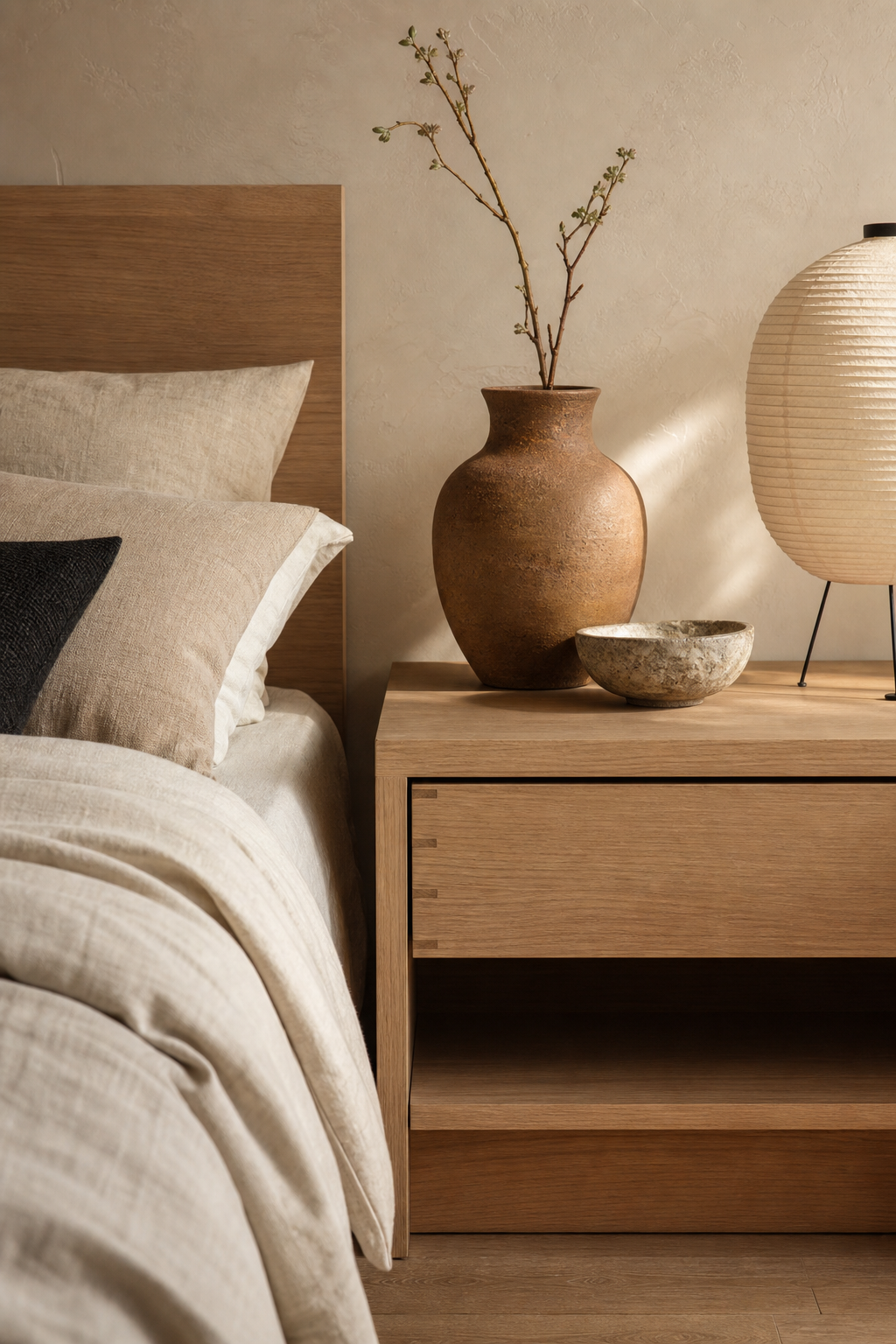
Floating nightstands keep the bed wall light and uncluttered. In a Japandi bedroom, they work best when integrated into a wood panel, headboard ledge, or simple built-in wall. The goal is to provide just enough surface for a lamp, bowl, book, or branch vase without creating a pileup of bedside clutter. Choose drawers if you need storage, but keep the face plain and hardware minimal. Pale oak creates warmth, while black ceramics or a small shaded lamp add contrast. Align the ledges with the mattress height so everything feels intentional. This small detail can make the room feel custom, calm, and easier to maintain every day.
Place a Woven Bench at the Foot
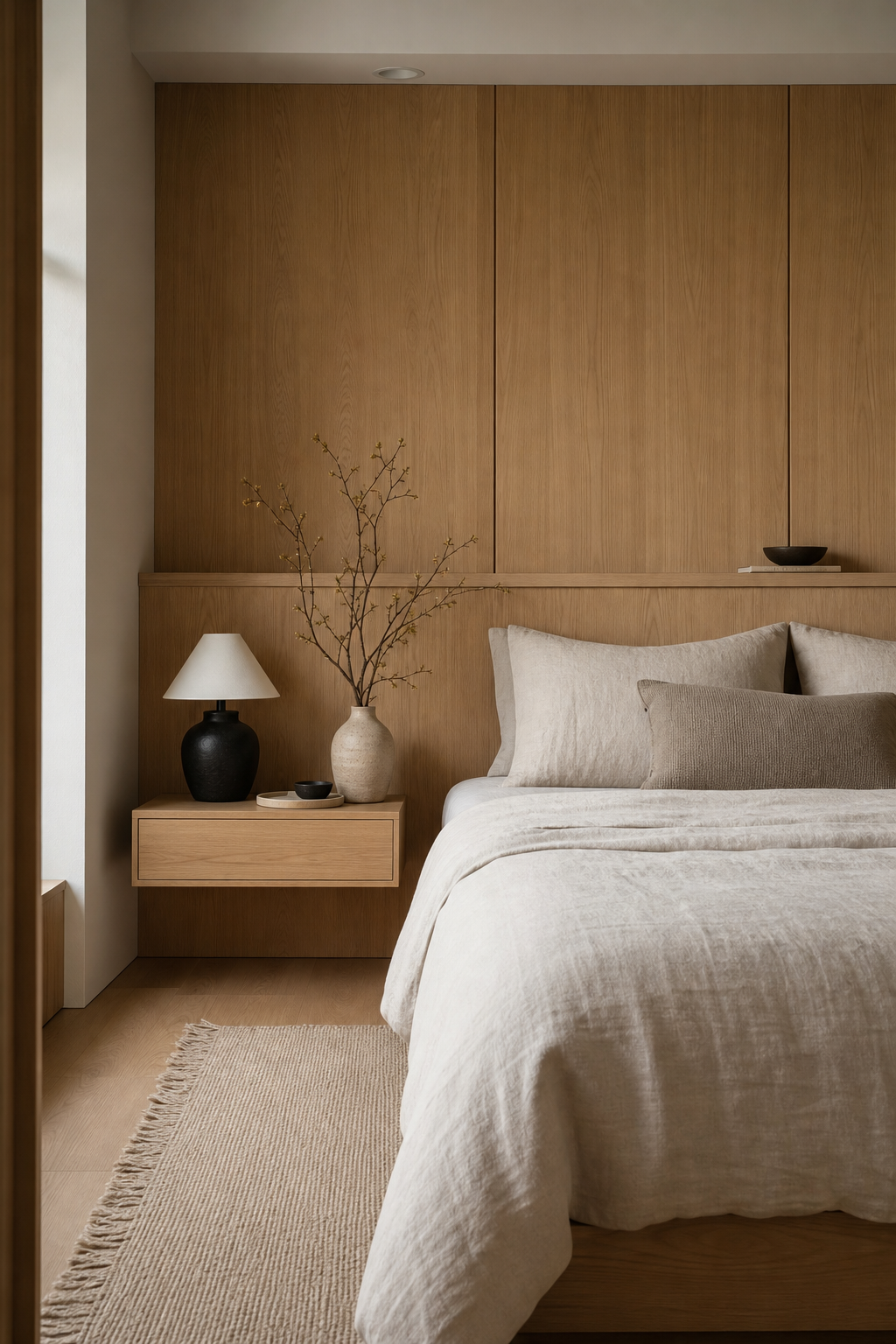
A woven bench adds function without breaking the quiet mood of a Japandi room. Look for rush, cane, cord, or a simple oak frame with a tactile seat. Place it at the foot of the bed for folding throws, setting down clothing, or visually finishing the sleeping zone. The bench should be narrower than the bed and low enough to respect the platform shape. Avoid ornate legs or glossy finishes; the beauty is in the weave and honest construction. A black bowl, folded linen blanket, or single book can style the bench without clutter. It brings in craft, texture, and practical use, all central to a cozy Japandi retreat.
Hide Storage Behind Seamless Wardrobes
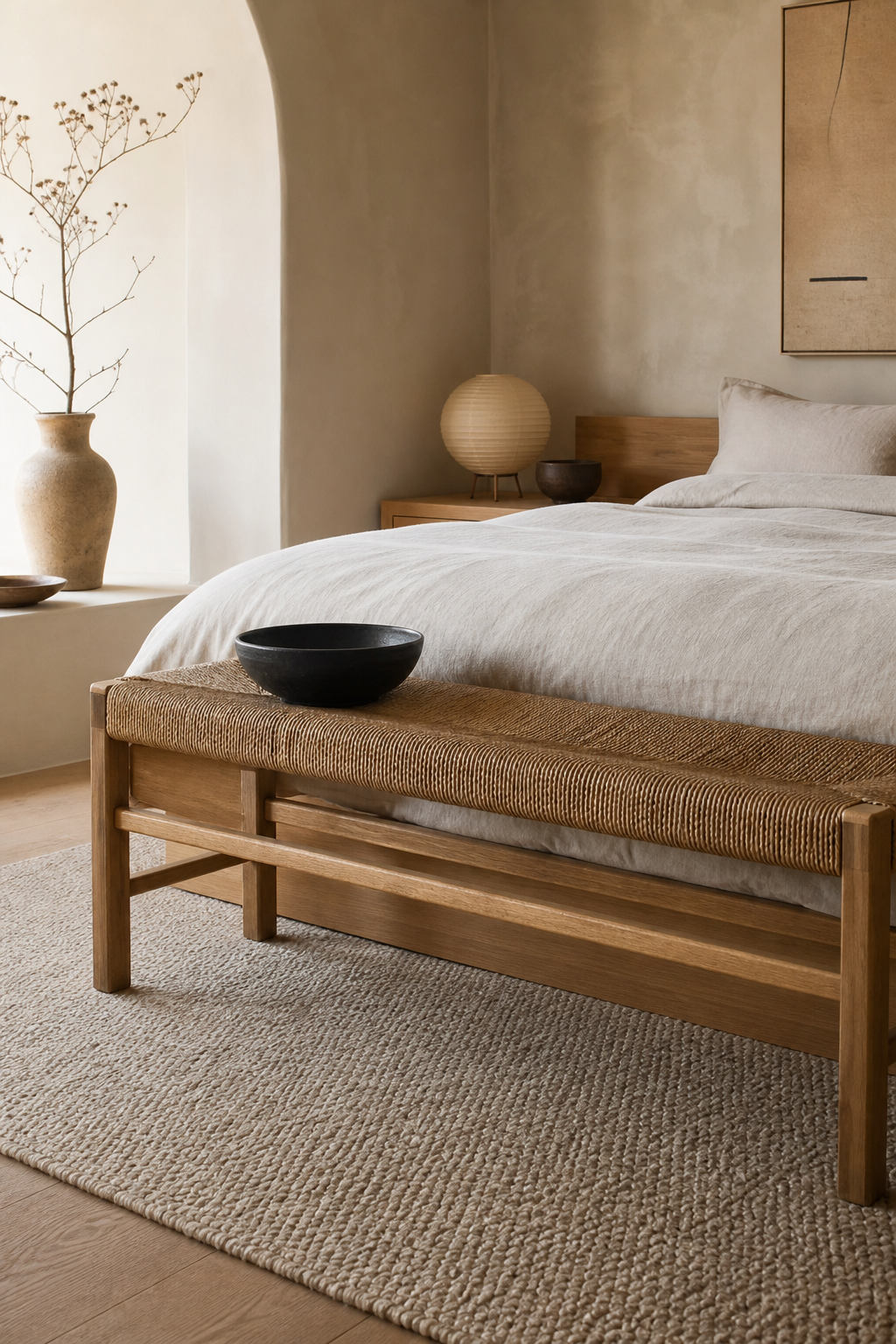
Japandi bedrooms depend on calm surfaces, so storage should disappear as much as possible. Seamless wardrobes in pale oak, ash, or wall-matched paint can replace freestanding pieces that interrupt the room. Keep door fronts flat, handles slim, and the rhythm of panels simple. If you want a small display moment, add one open niche with ceramics or folded textiles, but resist filling every shelf. Built-in storage is especially helpful in bedrooms because it supports the uncluttered look without pretending real life has no belongings. When the closet wall is quiet, the bed, rug, lighting, and natural materials can carry the atmosphere more gracefully.
Use One Black Accent Stool
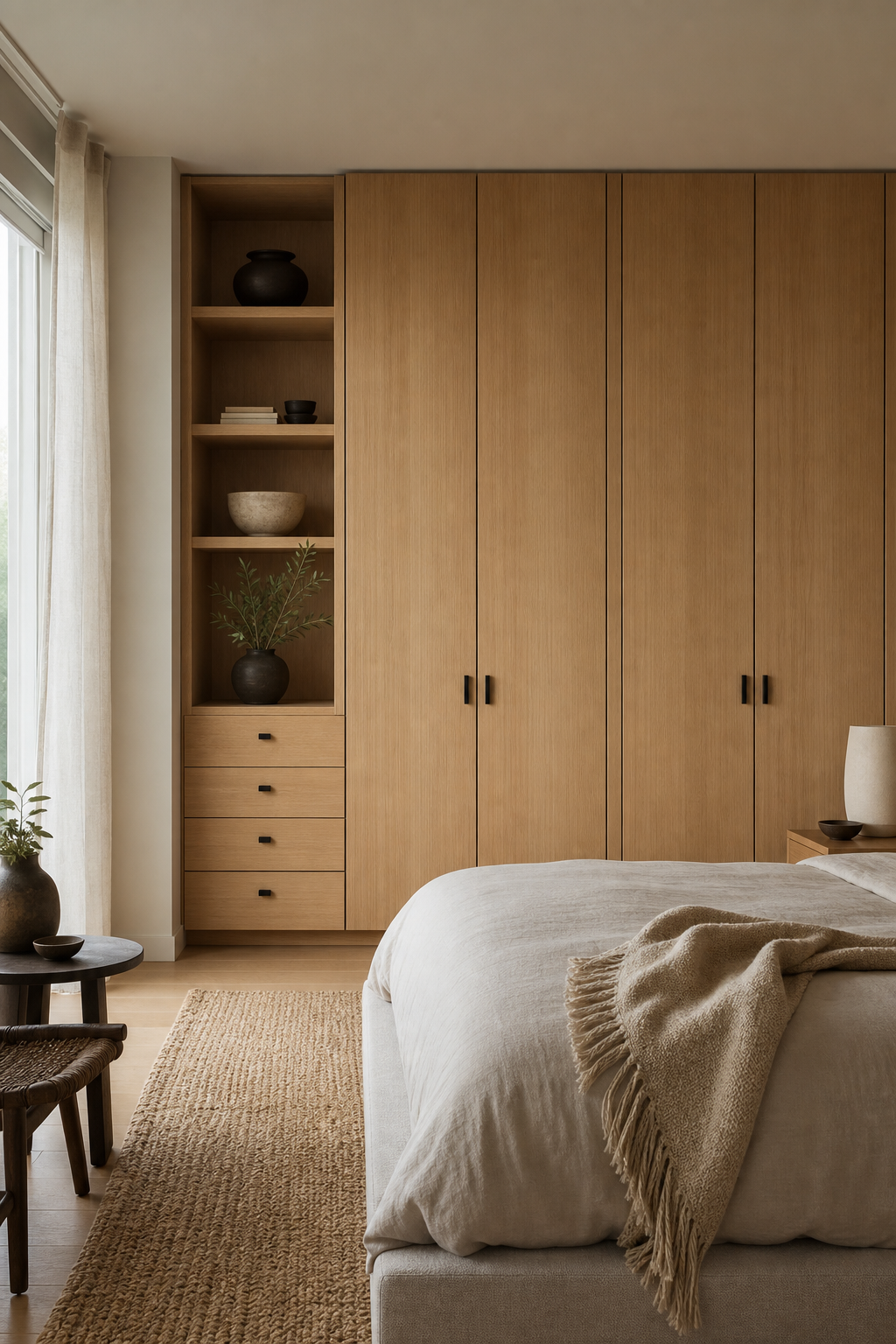
One black accent can sharpen a soft Japandi bedroom. A blackened wood stool, ceramic lamp, small bowl, or low table gives the eye a place to rest among pale wood and linen. The key is using black as punctuation, not as a theme. A single stool beside the bed can hold a vase, book, or tea cup while adding sculptural weight. Its handmade shape feels more appropriate than a shiny modern side table. Keep the surrounding objects earthy and matte so the contrast stays calm. This move is especially useful when a room feels too beige, because it adds definition without sacrificing serenity.
Layer Natural Linen Bedding
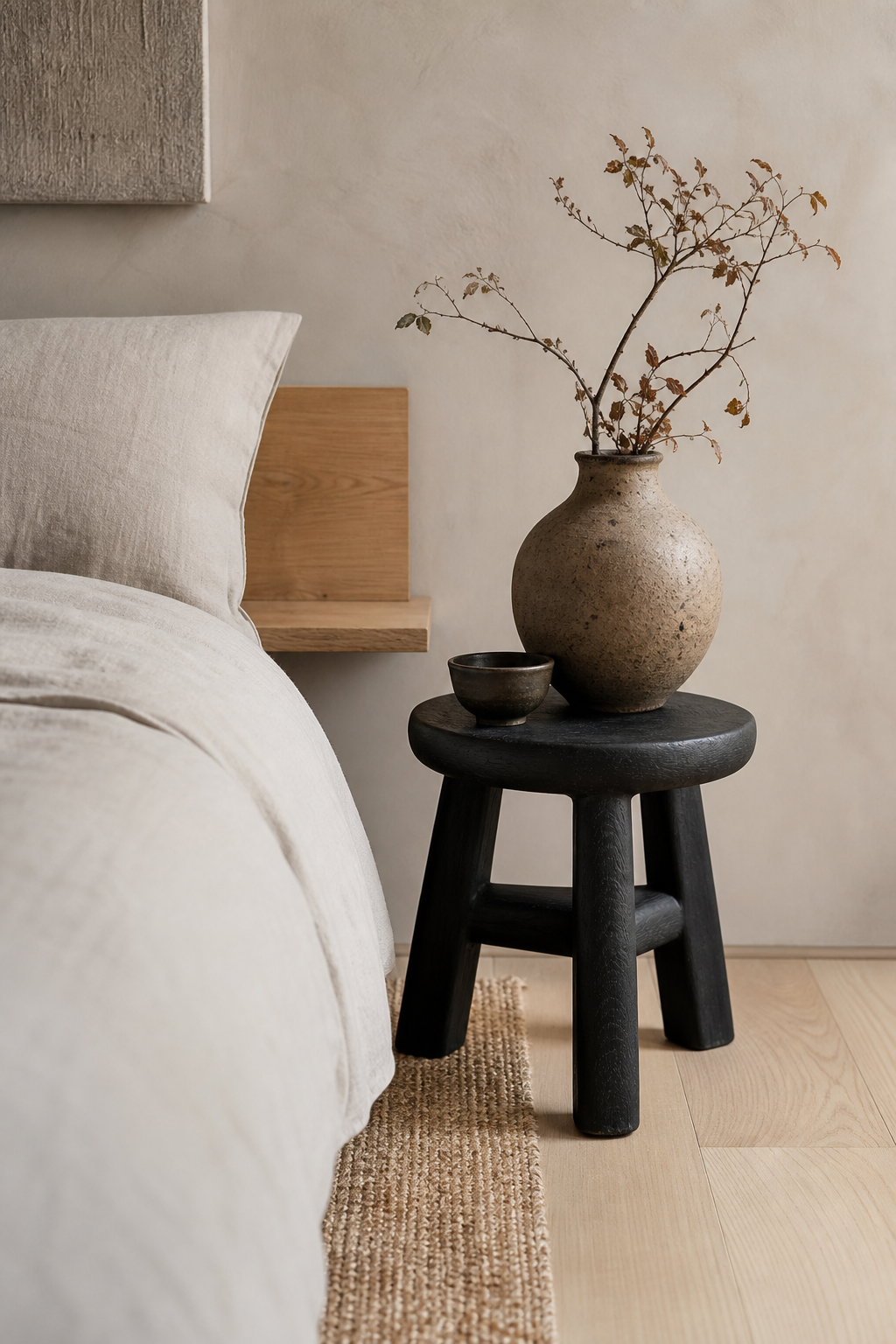
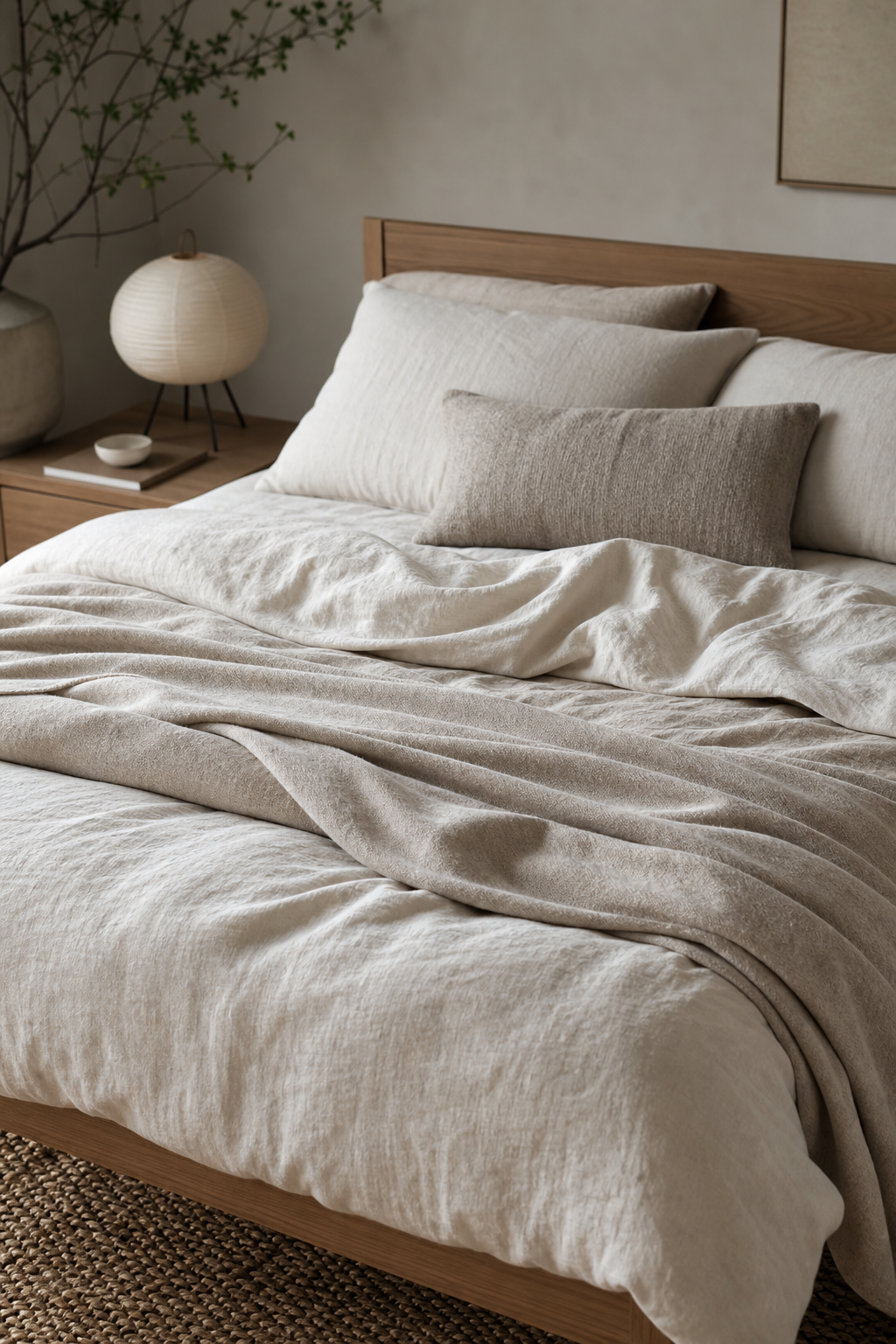
Linen bedding is essential to the cozy side of Japandi style. It has the relaxed texture that keeps a minimal bedroom from looking stiff. Choose ivory, oatmeal, flax, or warm gray, and layer tones close together instead of creating harsh contrast. A rumpled duvet, flat sheet, and one long lumbar pillow can look more refined than a stack of decorative cushions. Linen also pairs beautifully with paper lamps, oak beds, and woven rugs because all of the materials age softly. If you want extra warmth, add a lightweight wool blanket at the foot. The finished bed should look inviting, breathable, and easy to remake.
Style With Sculptural Olive Branches
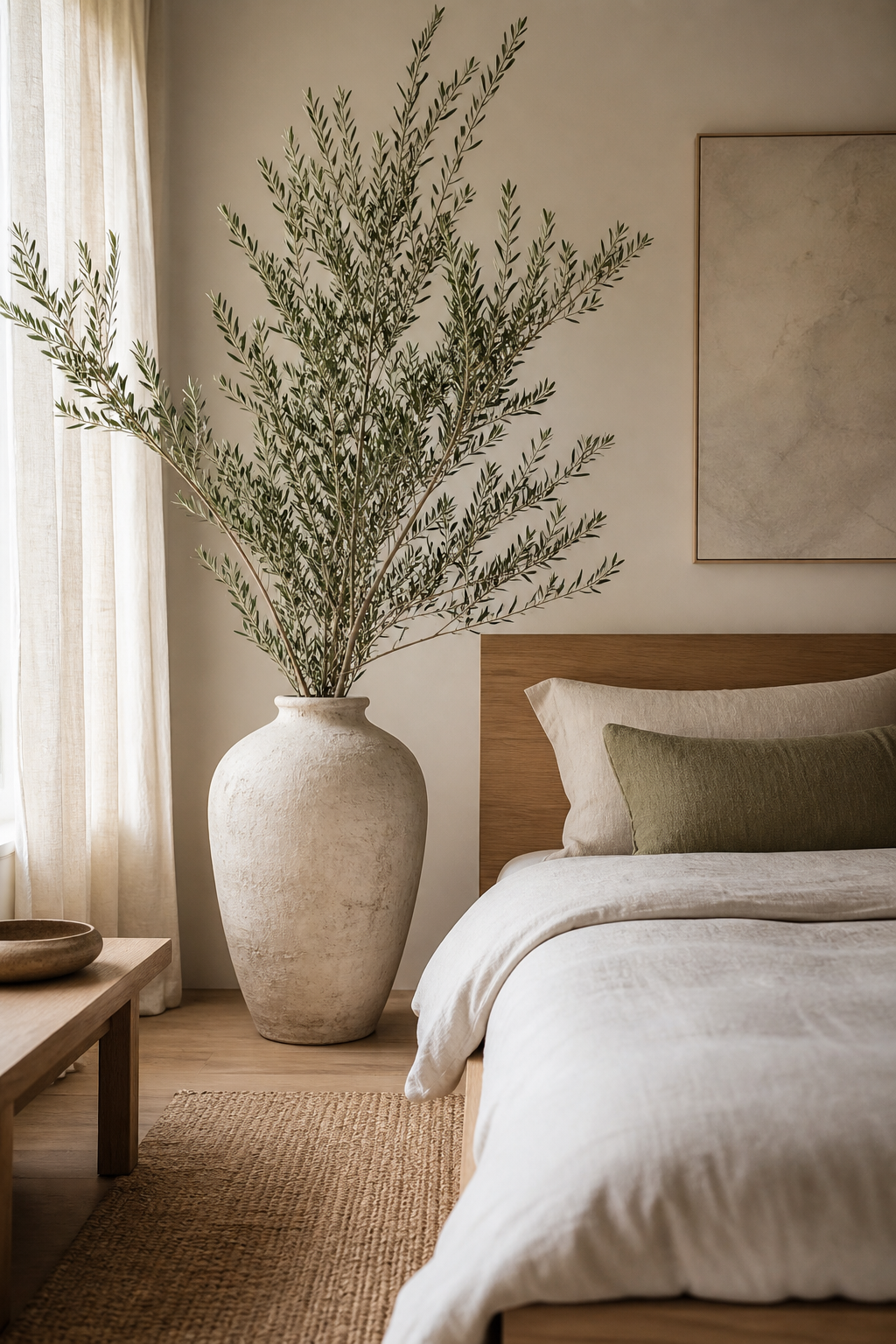
Branches and greenery bring life to a quiet Japandi palette. Instead of many small plants, use one sculptural arrangement in a handmade ceramic floor vase or a single olive tree near a window. The shape should feel loose and natural, not florist-perfect. Olive, maple, willow, and bare seasonal branches all work beautifully because they add movement without bright color. Place greenery where it balances the bed or softens a hard corner. The vessel matters just as much as the stems; choose clay, stoneware, or black ceramic with texture. This organic gesture makes the room feel connected to nature while keeping the styling restrained.
Ground the Room With a Tatami-Inspired Rug
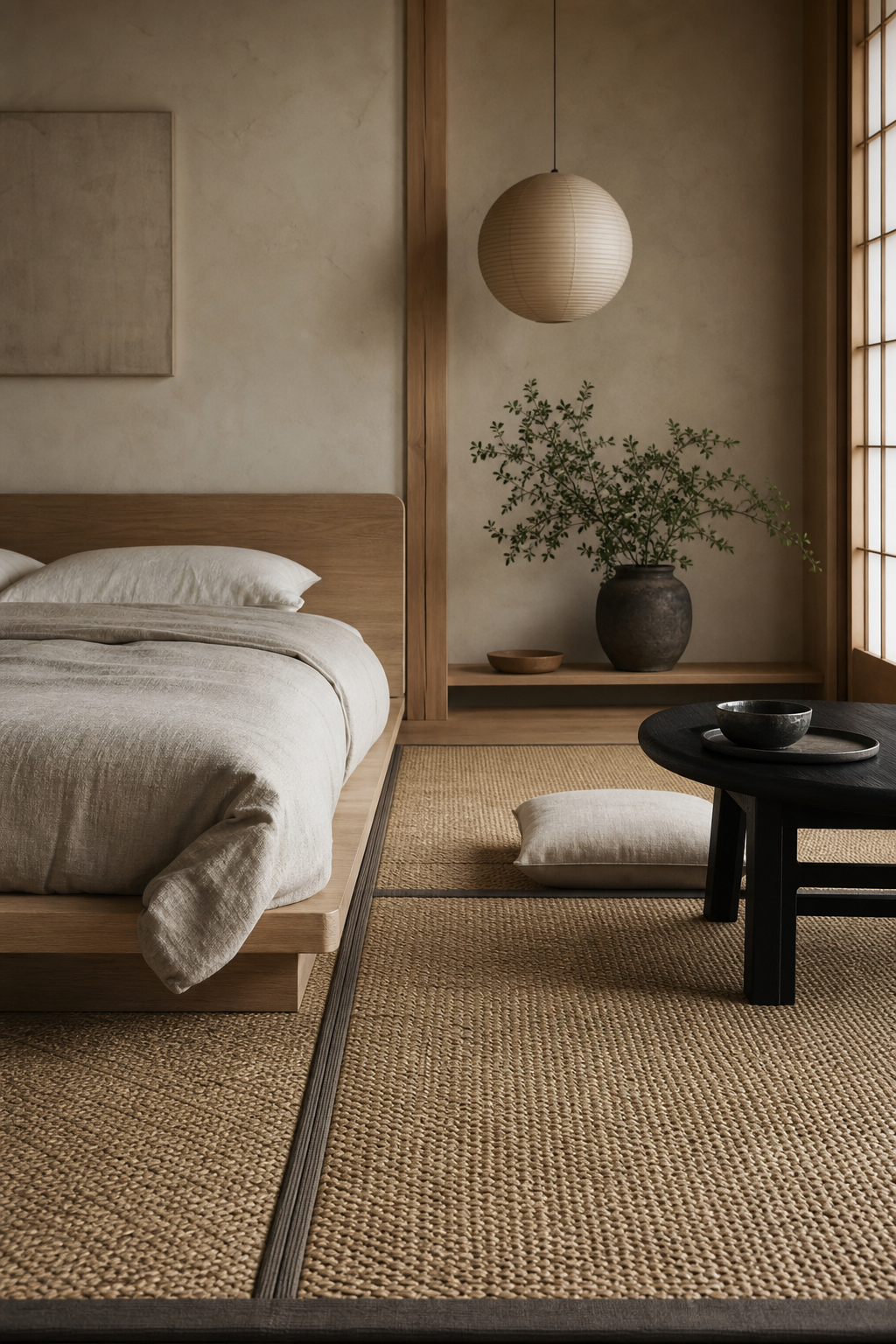
A tatami-inspired rug helps ground the low furniture typical of Japandi bedrooms. Natural fiber, seagrass, jute, or a tightly woven wool rug can create the same calm, mat-like feeling without requiring traditional flooring. The texture should be broad and simple rather than plush and ornate. Use a rug large enough to extend beyond the platform bed and any low side table, so the sleeping area feels intentional. A black border or darker woven edge can add subtle definition. This kind of rug works well with floor cushions, paper lanterns, and simple oak furniture, giving the room a tactile base that feels warm underfoot.
Carve Out an Arched Plaster Niche
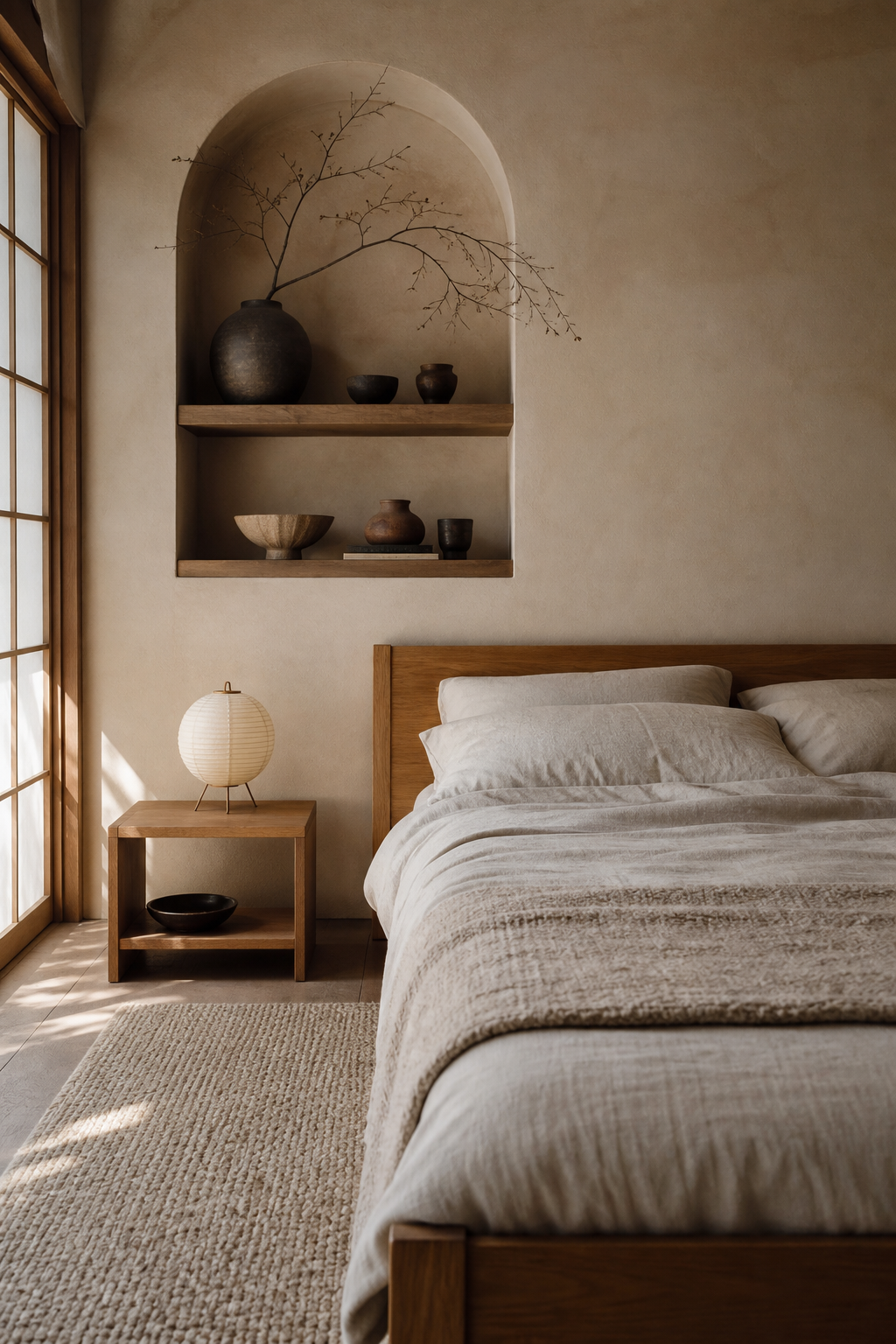
A plaster niche adds architecture and keeps display styling contained. In a Japandi bedroom, an arched or rectangular niche can hold a branch vase, a few ceramic bowls, or folded textiles without cluttering the nightstands. The shape should feel built into the wall rather than applied. Use a pale oak shelf inside the niche to tie it back to the bed frame or flooring. The best styling is sparse, with negative space around each object. This detail brings in the Japanese idea of appreciating a few meaningful pieces, while the soft plaster keeps the room cozy. It is both decorative and disciplined.
Filter Light With Linen and Bamboo
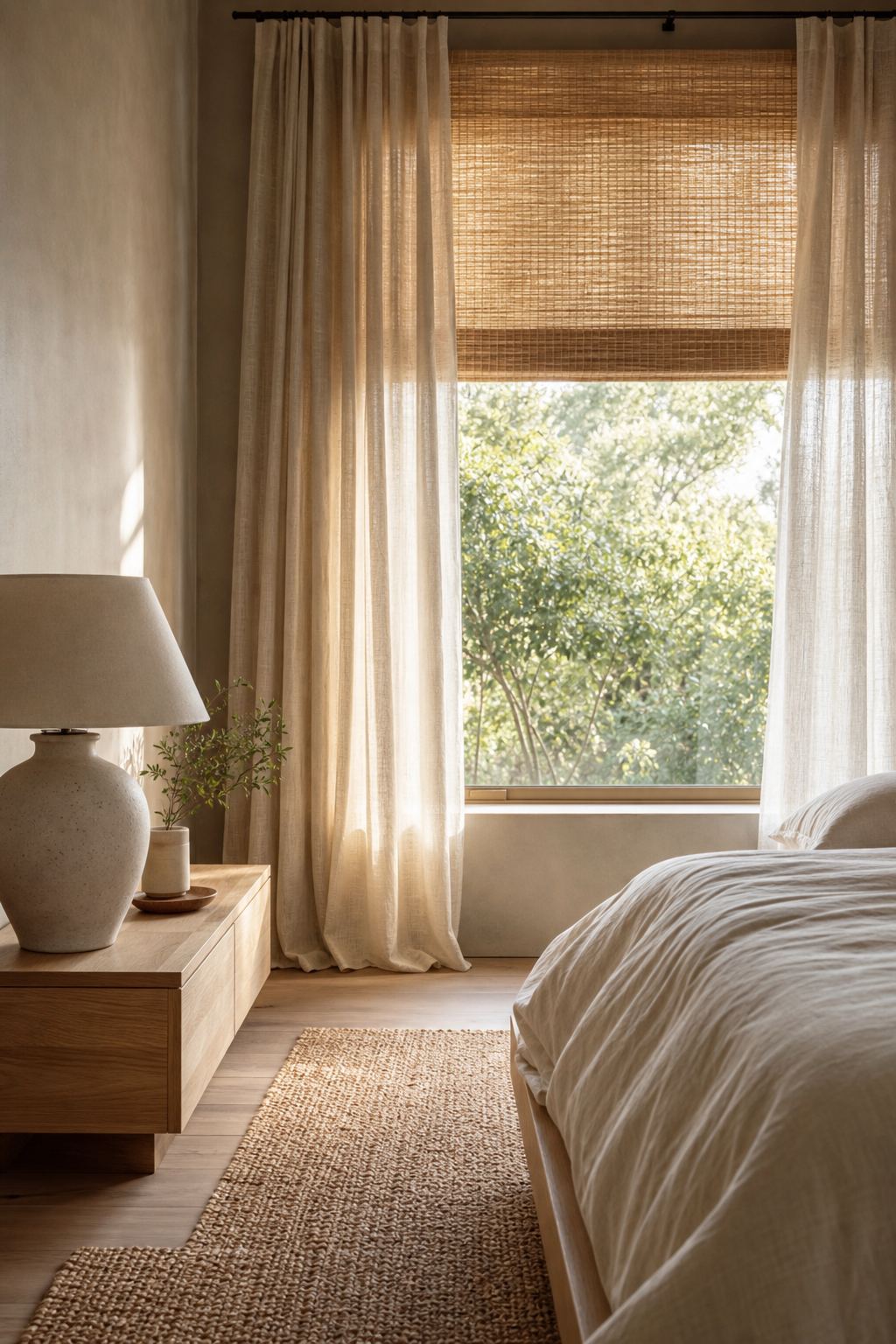
Window treatments can make or break the calm of a Japandi room. Linen curtains bring softness, while bamboo or woven shades filter light and add natural texture. Hang curtains high and let them fall simply, without heavy puddling or fussy pleats. The shade should diffuse brightness during the day and provide privacy without making the room dark. Choose colors close to the walls: flax, ivory, straw, or warm beige. Black hardware can work if repeated lightly elsewhere. This layered approach makes morning light gentler and gives the room a soft rhythm that supports sleep, reading, and quiet routines. The combination feels especially good in bedrooms that need privacy without losing the soft, natural rhythm of morning light.
Add Charcoal for Quiet Contrast
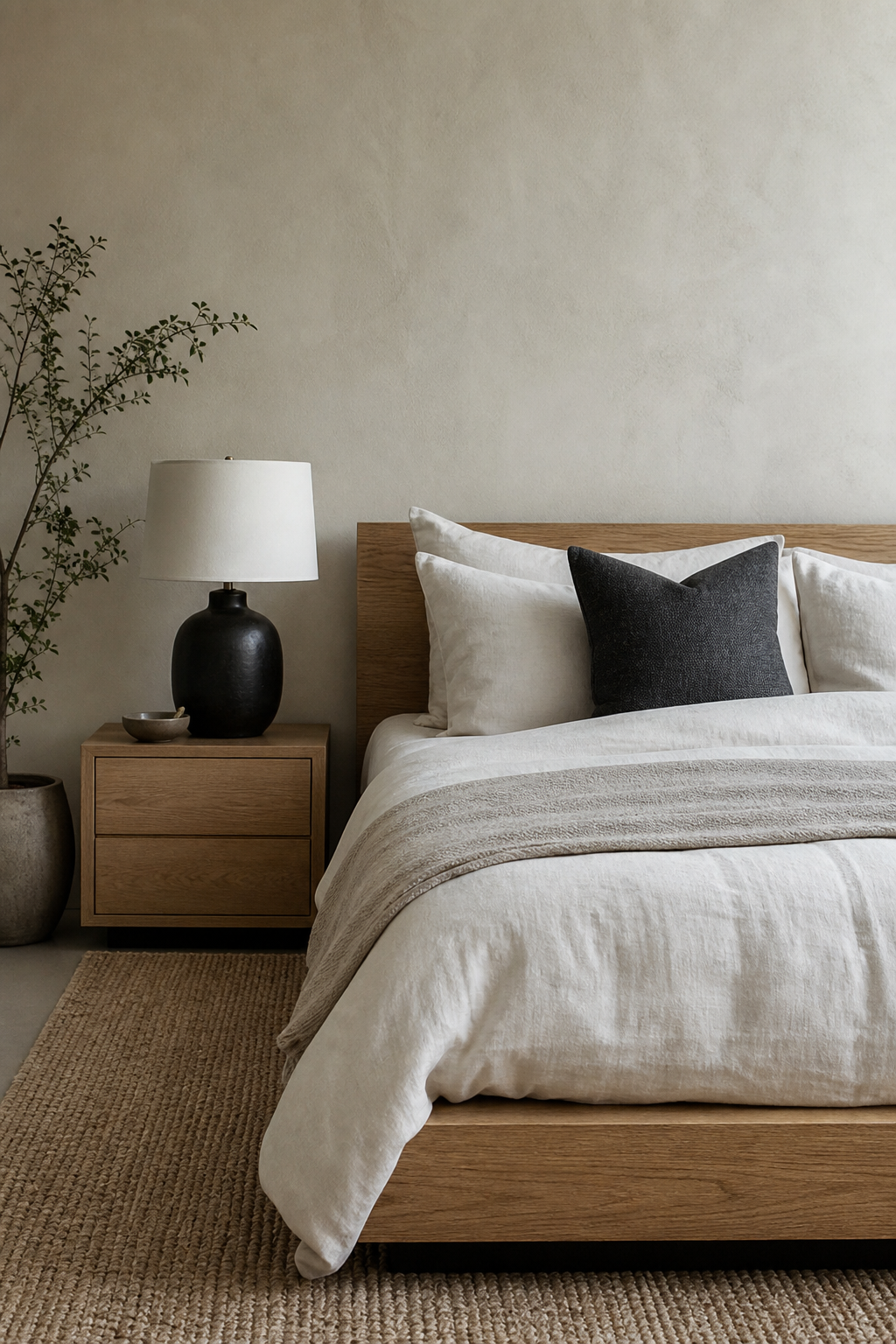
Charcoal is useful when a Japandi bedroom needs more definition. A single pillow, lamp, framed artwork, or ceramic bowl can create contrast against pale oak and ivory linen. Keep the shape simple and the texture matte so it feels grounded rather than graphic. Charcoal works better than stark black for textiles because it has softness and depth. Repeat it only once or twice; too much dark contrast can pull the room away from its restful mood. When used with restraint, charcoal makes the lighter materials look more intentional and prevents a warm neutral palette from becoming flat or overly delicate.
Create a Low Window Reading Nook
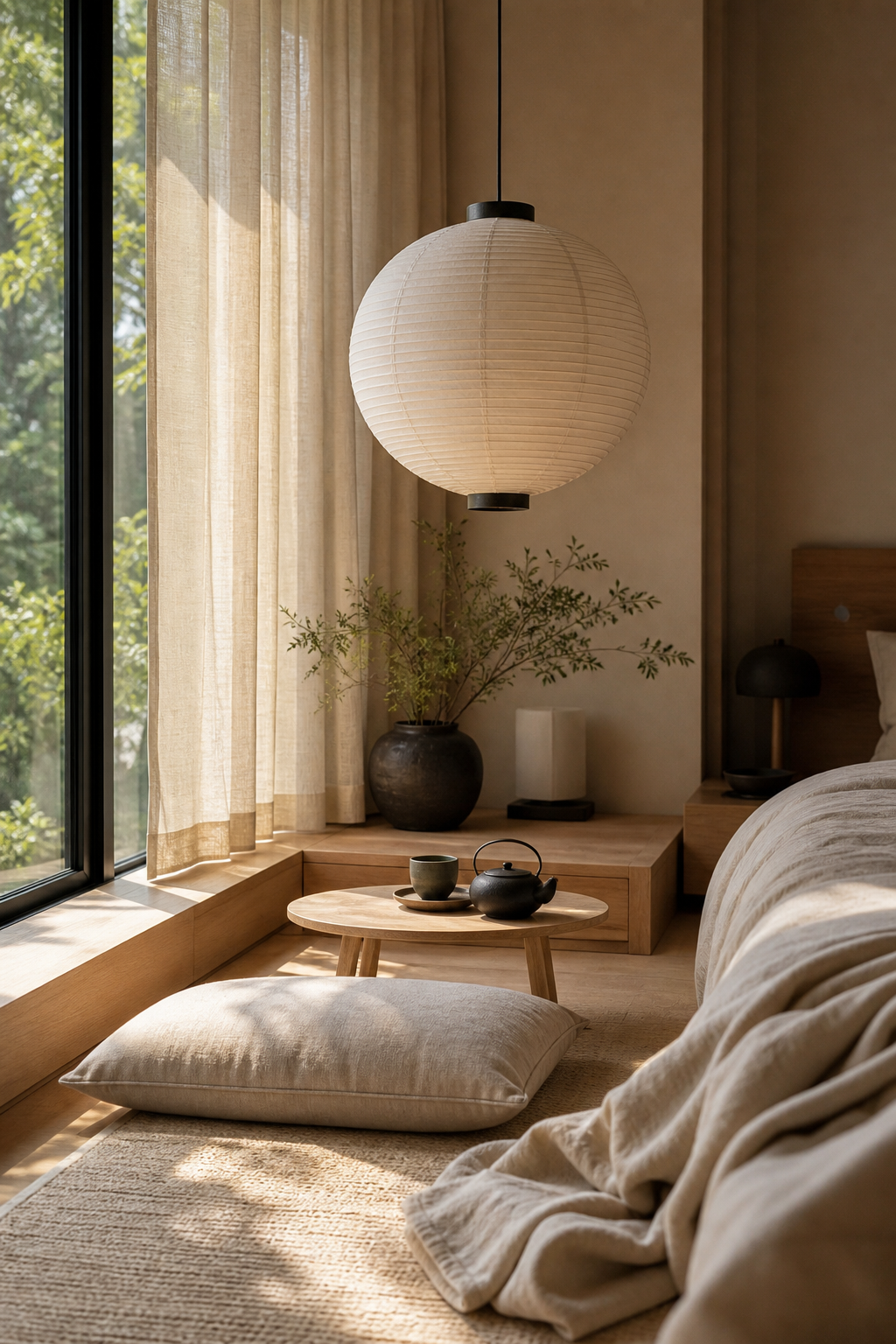
A low reading nook gives a Japandi bedroom a ritual beyond sleep. Place a floor cushion near a window, add a low oak table, and use a paper lantern or soft pendant for evening light. The arrangement should feel relaxed but not improvised. A tea cup, ceramic tray, or small branch vase is enough styling. This idea works especially well in bedrooms with deep windows or unused corners. Keep the cushion fabric natural and easy to move, so the nook remains flexible. By lowering the seating, the room feels grounded and quiet, encouraging slower moments without adding bulky furniture. It turns an unused corner into a small daily ritual, which is often what makes a room feel genuinely personal.
Bring Warmth Through Ceiling Beams
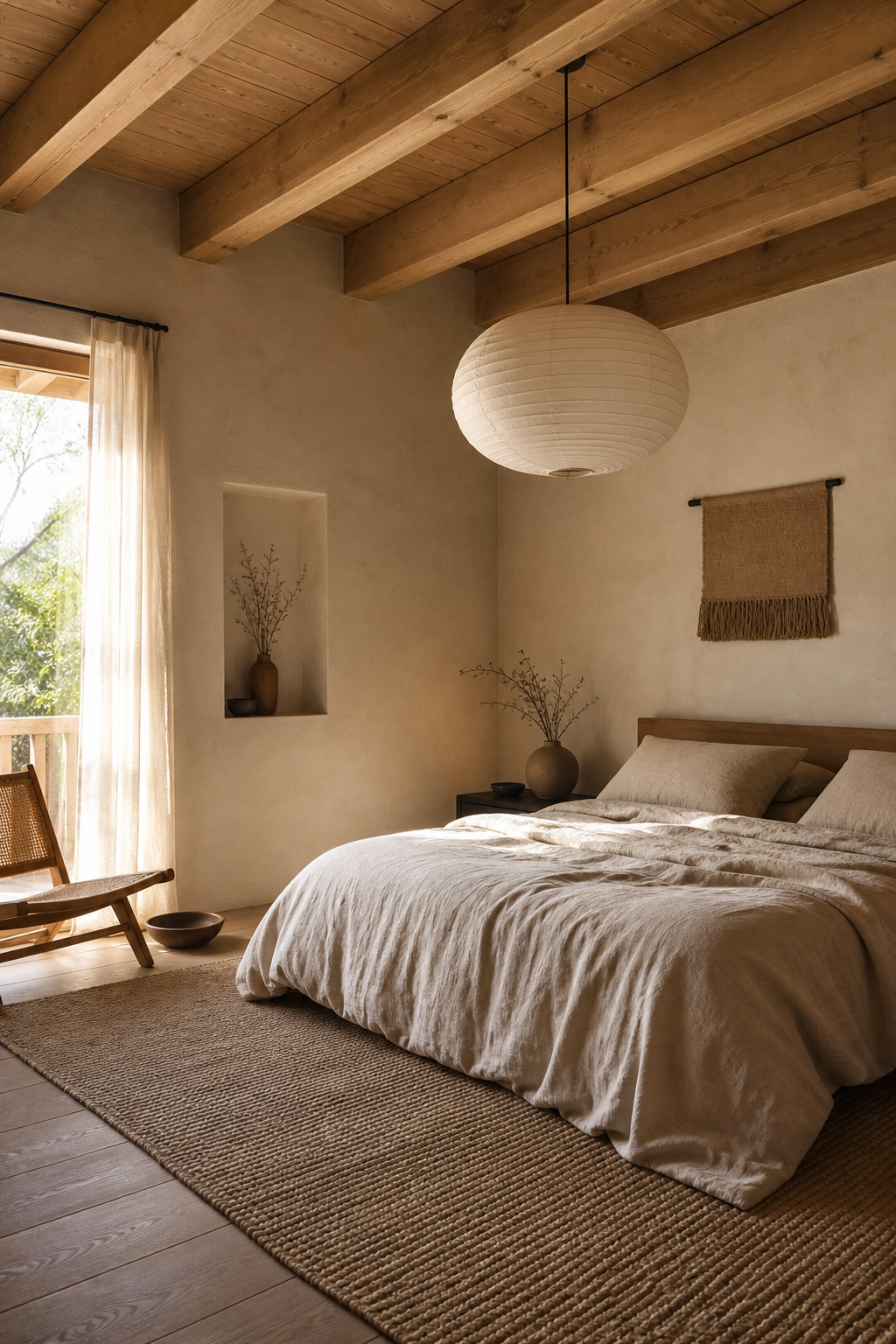
Wood ceiling beams add warmth from above and make a bedroom feel sheltered. In Japandi spaces, keep beams simple, pale to medium in tone, and free of glossy finish. They pair beautifully with plaster walls, linen curtains, and paper pendants. If the room already has beams, let them lead the palette by repeating the wood tone in the bed or nightstands. If not, a slatted ceiling inset or pale wood trim can create a similar effect. The goal is not rustic heaviness, but gentle structure. Warm wood overhead makes a simple room feel cozy, especially when natural light washes across the grain.
Hang One Handwoven Textile
A handwoven wall textile can replace framed art when you want warmth and texture. Choose a piece with a simple pattern, natural fibers, and a restrained palette: ivory, jute, black, or soft taupe. Hang it above the bed or on a quiet side wall where its texture can be appreciated. Avoid overly colorful macrame or busy designs; Japandi style favors craft without clutter. A textile softens acoustics and adds a handmade note that works beautifully with linen bedding and oak furniture. Keep the rest of the wall simple so the weave has presence. It should feel collected, not like a theme.
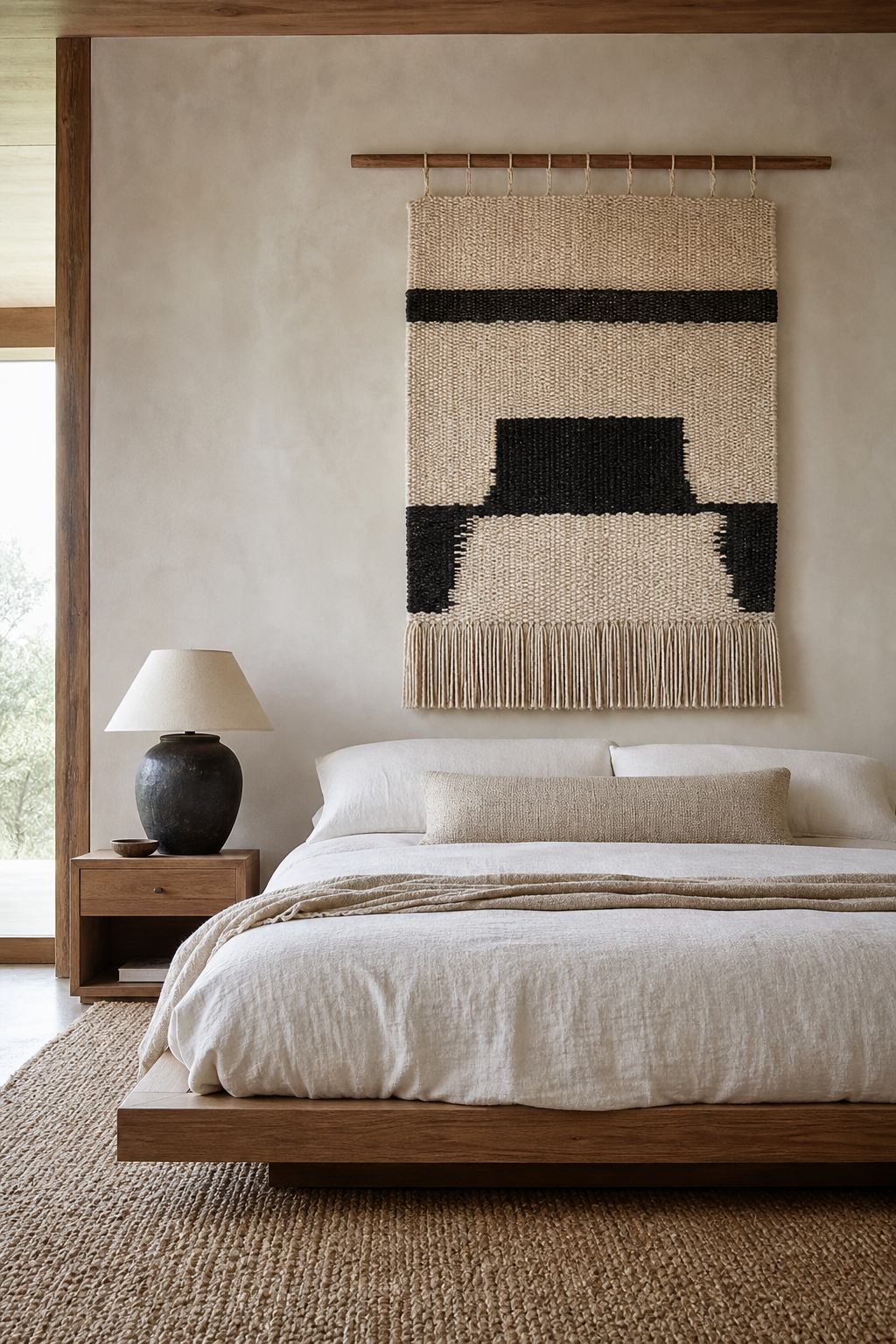
Lean a Simple Oak Floor Mirror
A floor mirror can brighten a Japandi bedroom if it is placed thoughtfully. Choose an oak, ash, or black-framed mirror with a simple profile, then lean it where it reflects light, curtains, or a calm corner rather than visual clutter. Pair it with a low dresser, ceramic lamp, and one branch arrangement for a practical dressing moment. The mirror should feel useful first and decorative second. In smaller bedrooms, it can visually expand the space while maintaining the quiet palette. Keep nearby surfaces clear, because mirrors double whatever they face. Used well, this piece adds function, height, and softness.
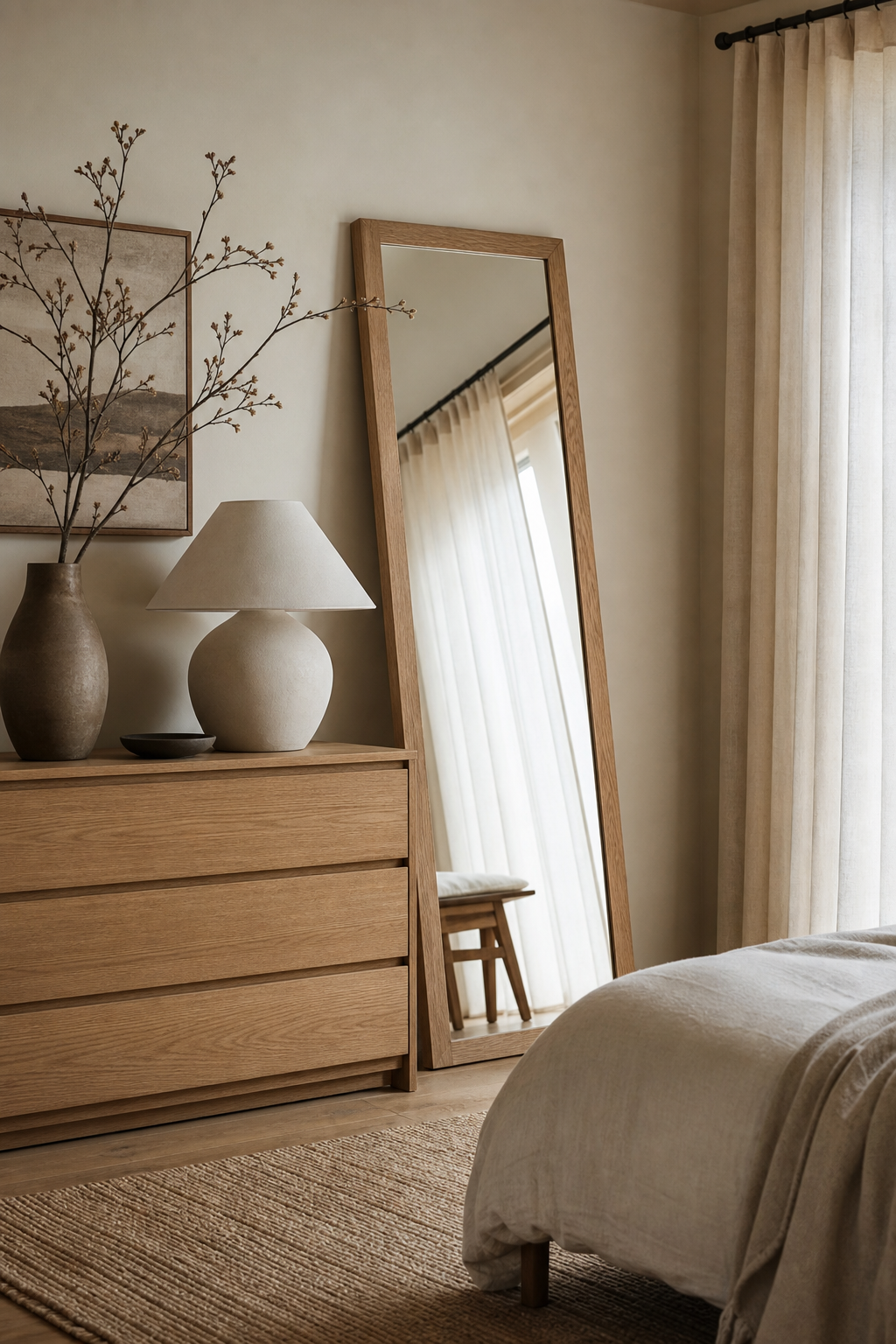
Use a Low Black Side Table
A low black side table gives a Japandi room contrast and function without adding bulk. Use it beside the bed, near a floor cushion, or in a reading corner. Matte black wood or ceramic feels more natural than glossy metal. Keep the styling minimal: a tea cup, small pot, or single book. The low height supports the grounded feeling of platform beds and floor-level seating. It also helps bridge Japanese restraint with Scandinavian practicality. If the room is mostly pale oak and linen, this one darker piece can make the palette feel deliberate. The key is quiet utility, not decoration for its own sake.
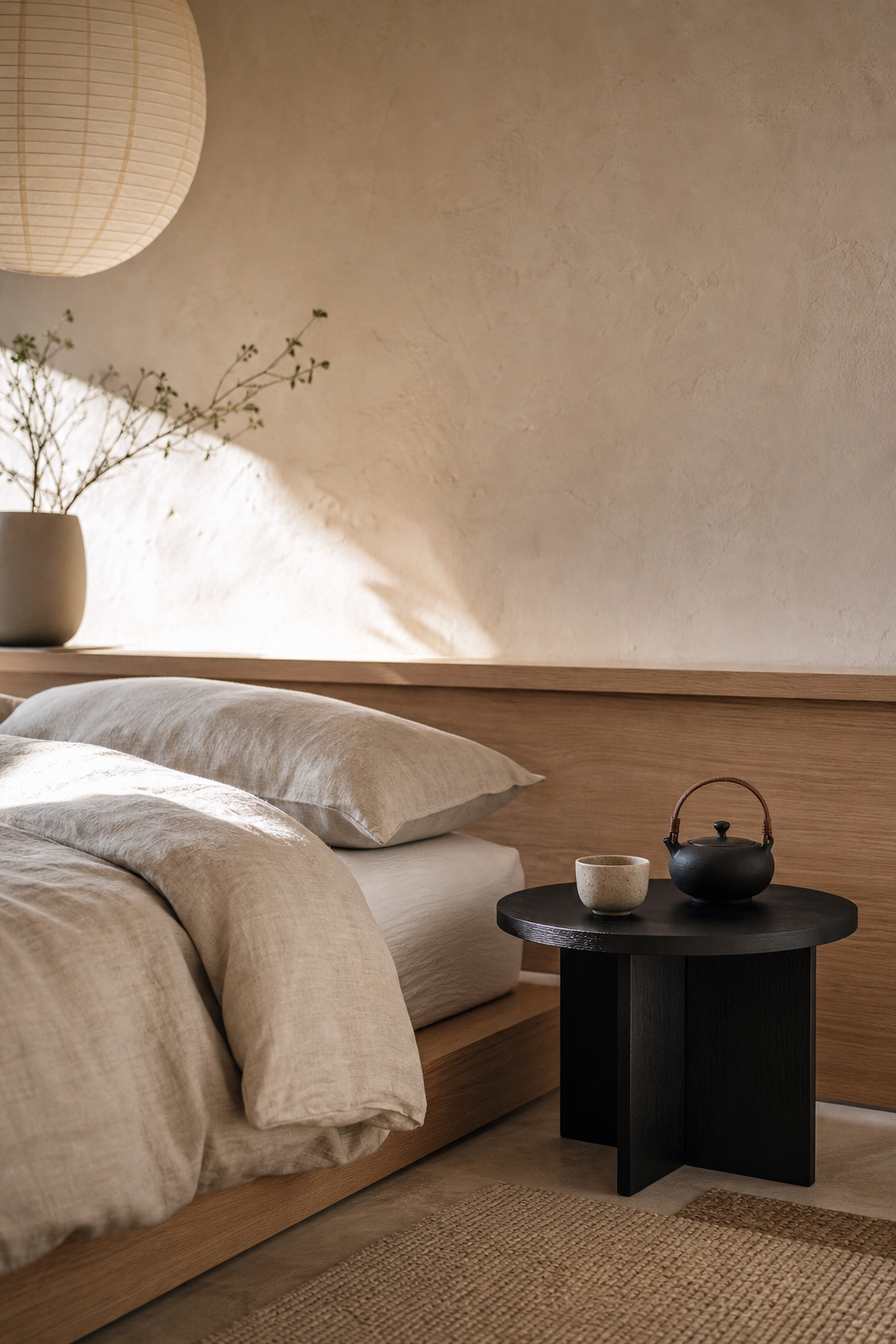
Add a Cozy Boucle Chair
A boucle chair can make a Japandi bedroom feel cozy as long as the shape stays simple. Look for a low, rounded lounge chair in cream, oatmeal, or warm gray, then pair it with a small oak table and paper lamp. This creates a soft corner for reading without disturbing the bedroom’s calm. Avoid oversized chairs that crowd circulation; negative space is part of the style. The tactile fabric works because it contrasts with smooth wood, plaster, and linen. Add one branch vase or black bowl nearby, then stop. The chair should invite rest while still feeling edited and architectural.
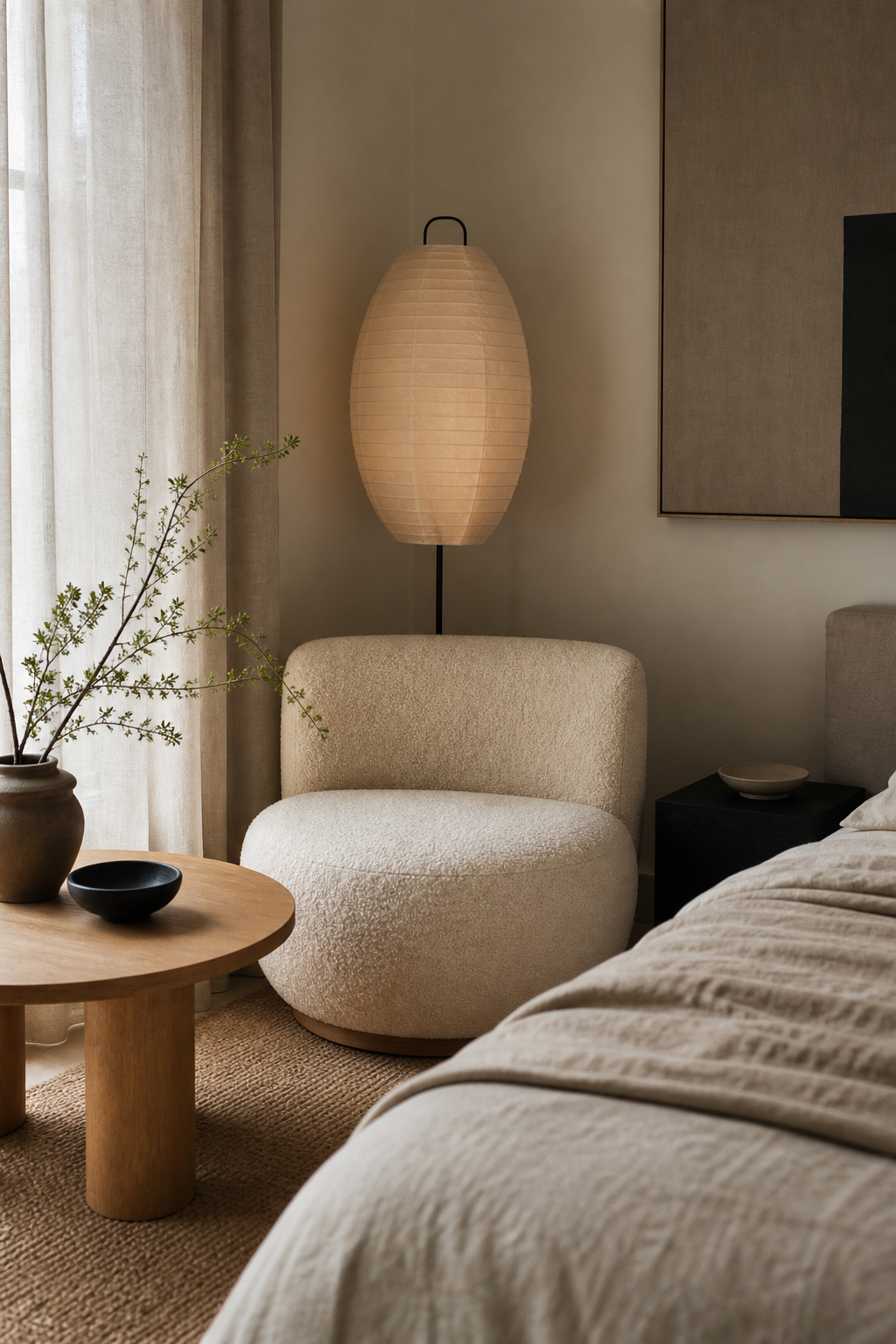
Choose Clay and Stone Ceramics
Ceramics are the soul of many Japandi rooms. Clay vases, stone bowls, rough cups, and handmade lamps bring irregularity to otherwise clean spaces. Choose pieces with matte texture, visible mineral variation, or slightly imperfect forms. On a bedside table, one clay vase and one stone bowl can be enough. The colors should feel earthy: rust, sand, charcoal, cream, or smoke. Avoid glossy decorative sets and let each piece have breathing room. These ceramics make the bedroom feel grounded and personal because they introduce evidence of hand and material. In a minimal room, small objects carry a lot of emotional weight.
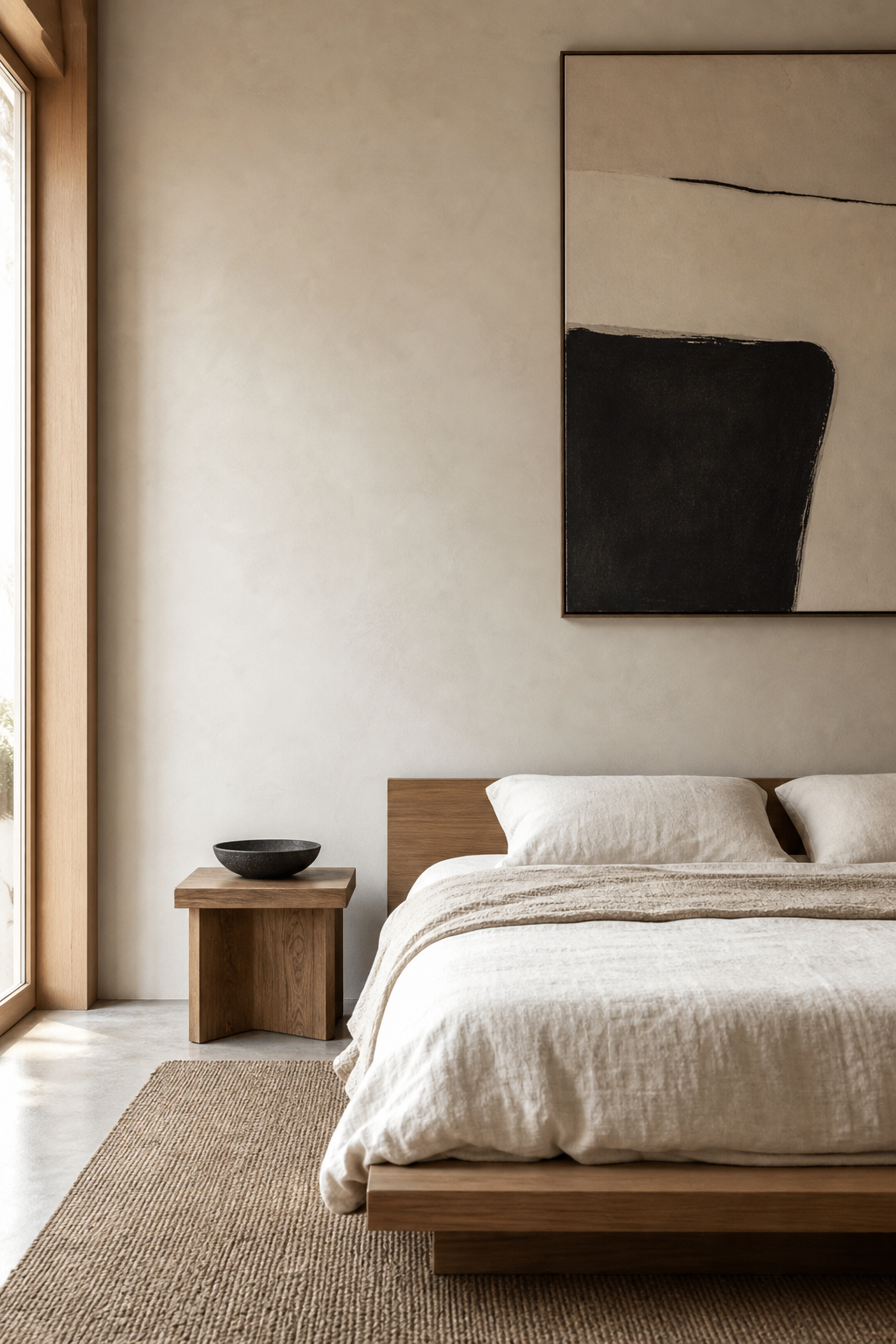
Leave Negative Space Around Art
Japandi design needs negative space as much as it needs beautiful objects. Instead of filling the bed wall with several frames, try one large quiet artwork and leave wall space around it. The art can be abstract, tonal, or landscape-inspired, but it should not dominate the room. Let the empty plaster surface become part of the composition. This restraint makes the bed, side table, and rug feel more intentional. It also gives the eye somewhere to rest, which is essential in a bedroom. If the room feels unfinished, add texture before adding more art. Calm is created by editing, not by filling every blank area.
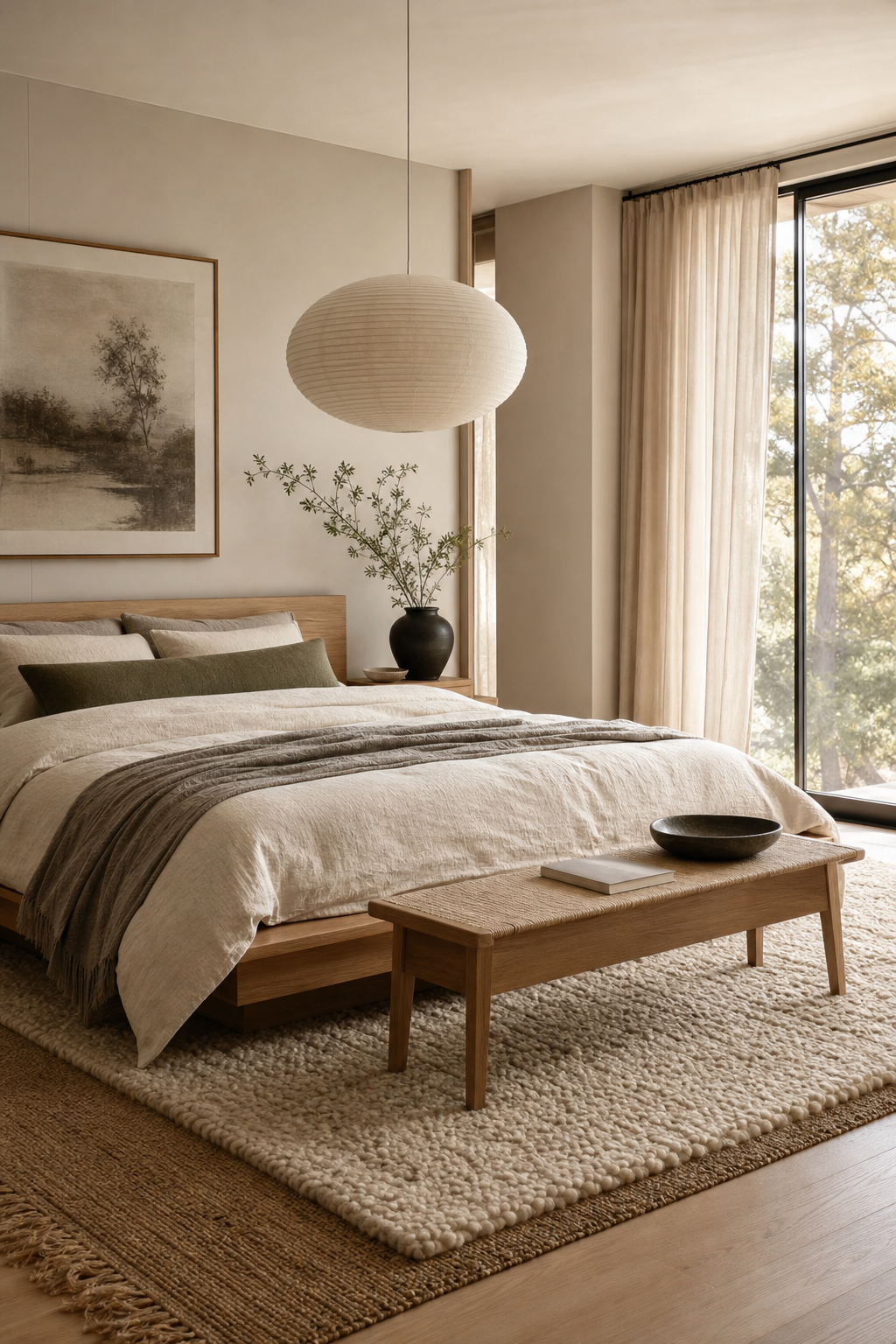
Finish With Layered Wool Rugs
Layered rugs bring the final note of comfort to a Japandi bedroom. A jute or natural fiber base can define the room, while a softer wool rug near the bed adds warmth underfoot. Keep the colors close so the layers feel subtle rather than busy. This works especially well with low platform beds because the rugs visually widen the sleeping zone. Add a woven bench or simple oak table to connect the textures. The result feels cozy but still clean, with enough softness to balance plaster walls and wood furniture. A well-layered floor makes the whole retreat feel finished, warm, and deeply livable.
A strong Japandi bedroom is built through restraint, not severity. When the bed sits low, storage stays quiet, lighting glows softly, and natural textures have room to breathe, the whole space begins to feel more restful. Start with one grounding element, such as a platform bed or woven rug, then layer linen, ceramics, wood, and filtered light slowly. The result is a bedroom that feels cozy, stylish, and genuinely restorative.