16 Boho Bedroom Ideas For A Cozy Stylish Retreat
A cozy boho bedroom should feel collected, tactile, and restful rather than crowded with every woven object in sight. The strongest rooms use natural materials, relaxed textiles, warm light, and a careful edit so the bedroom still functions as a retreat. Think linen, rattan, aged wood, ceramics, vintage rugs, and a few personal pieces with space around them. These ideas show how to build a boho bedroom that feels stylish, comfortable, and deeply lived-in.
Start With A Quiet Earth-Tone Palette
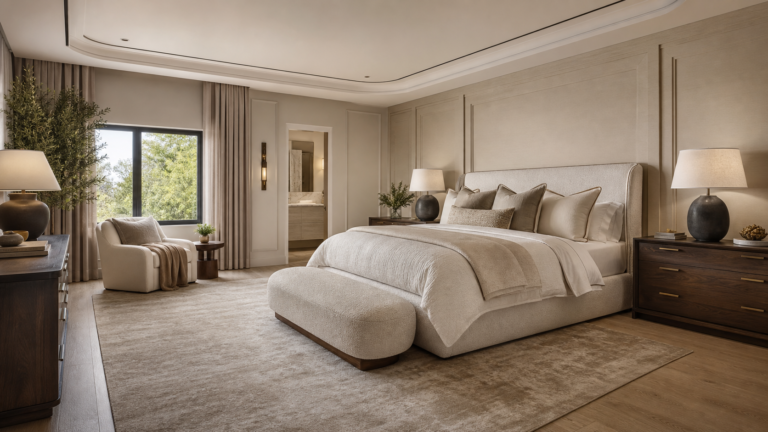
A boho bedroom feels most sophisticated when the palette is warm and edited rather than busy. Begin with plaster white, sand, oat, clay, muted terracotta, and a little olive or tobacco. These shades create a relaxed base that can hold woven texture, vintage wood, and patterned textiles without feeling chaotic. Keep the largest pieces calm: simple bedding, plain curtains, and a natural rug. Then add color in smaller moments, such as a lumbar pillow, ceramic lamp, or framed textile. This approach keeps the room cozy but grown-up. The result is still unmistakably boho, yet it feels restful enough for a bedroom instead of reading like a market stall of unrelated finds.
Layer Linen Bedding With A Woven Throw
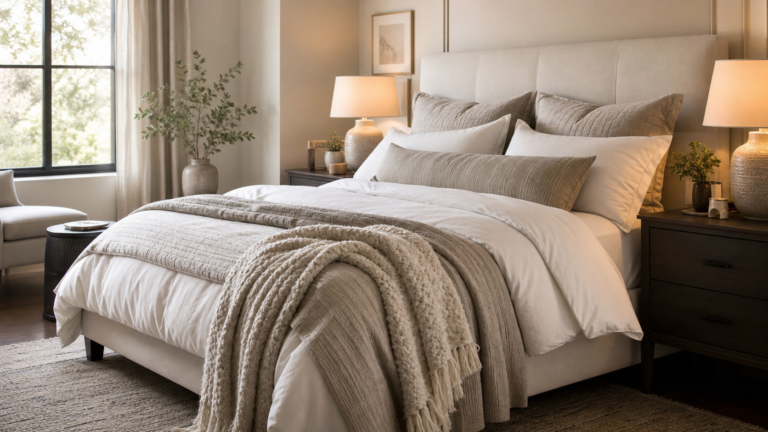
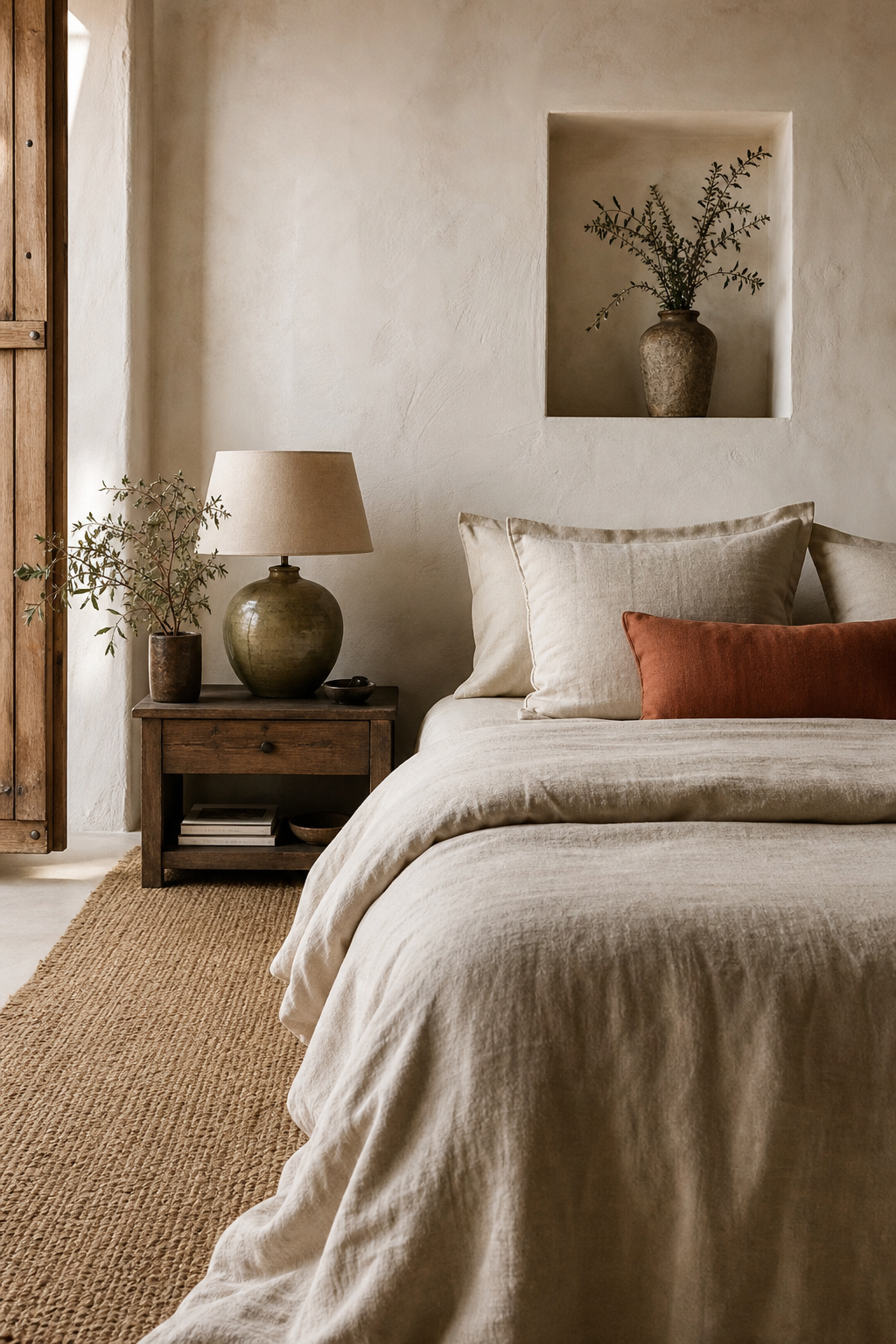
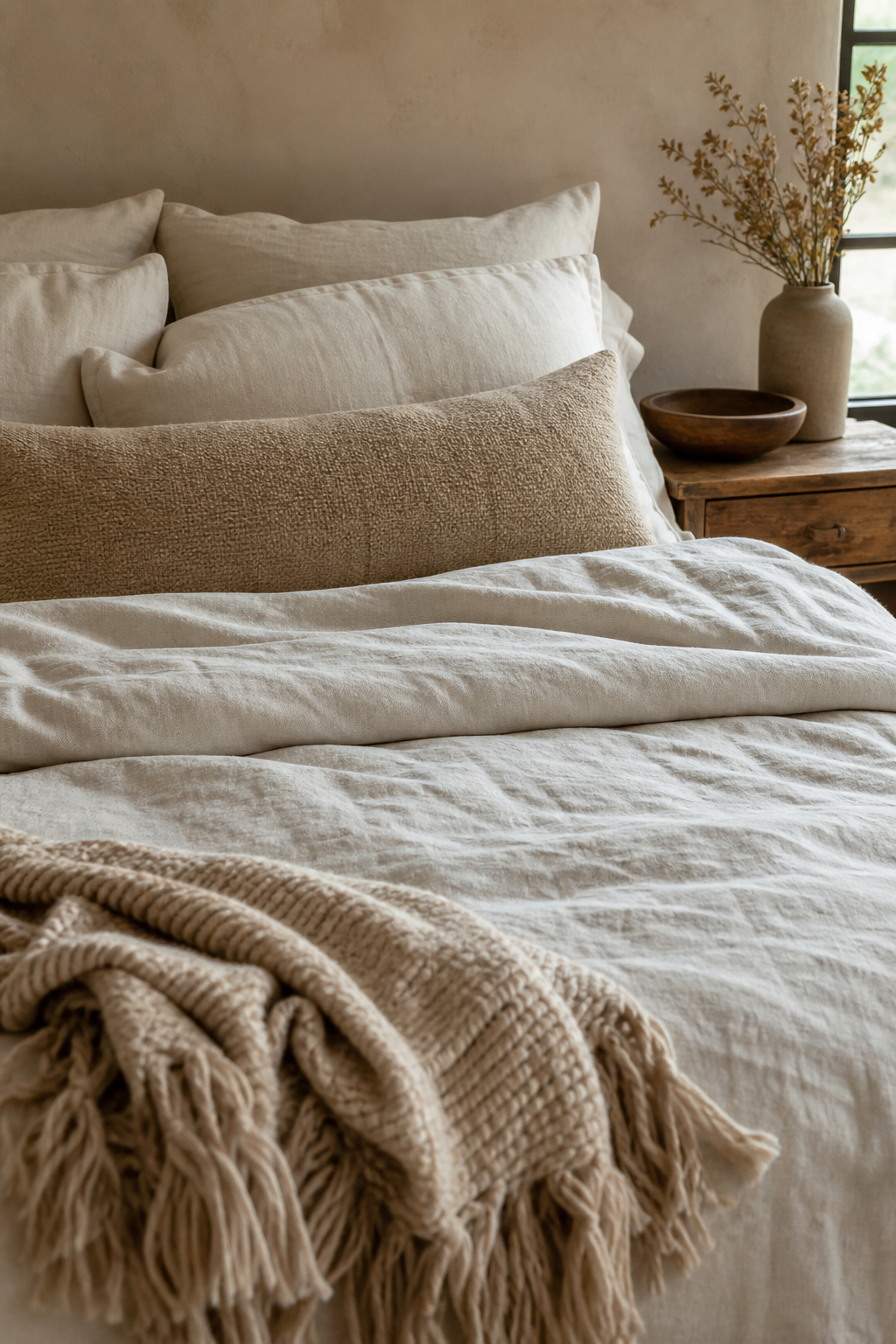
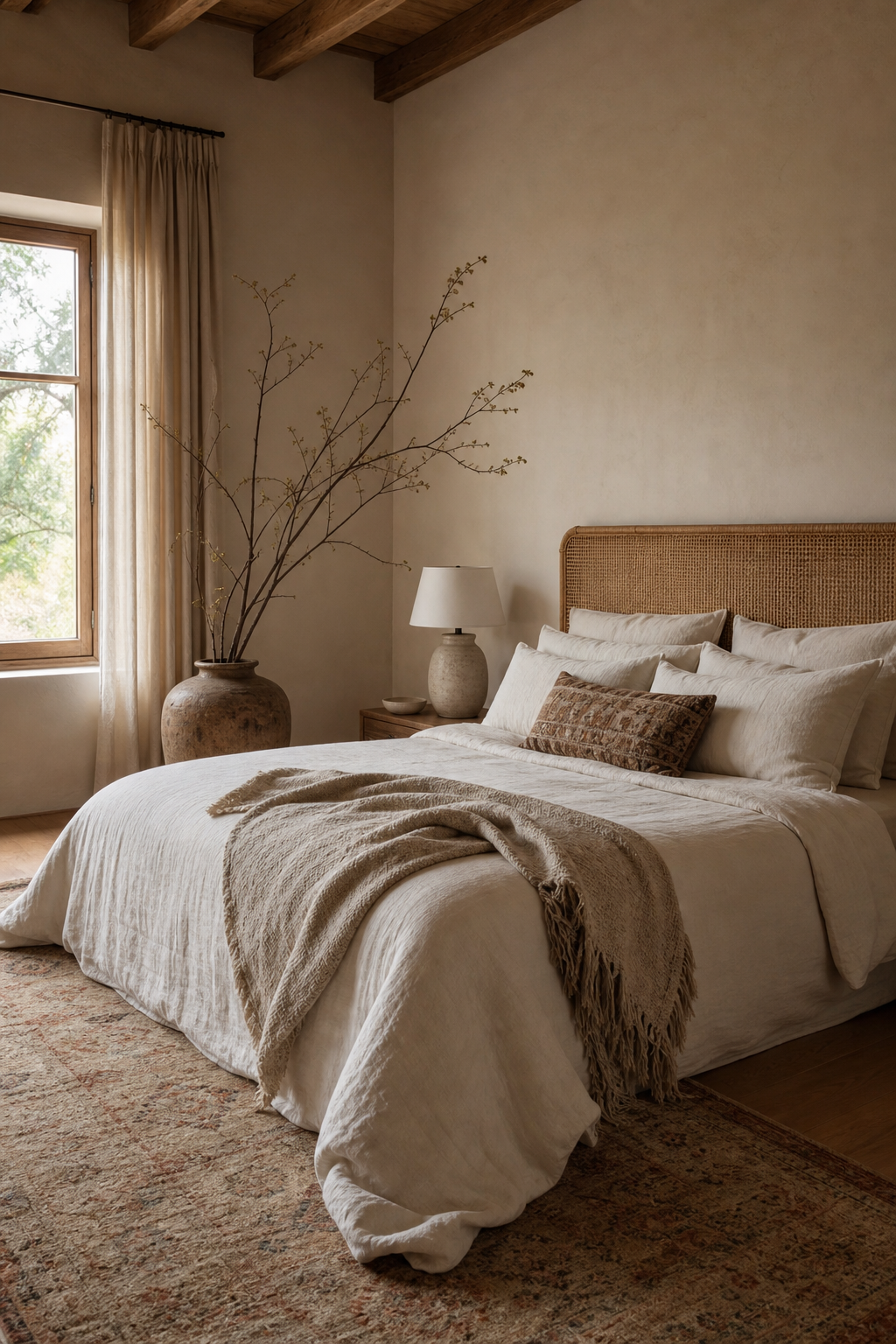
Boho style depends on touch, and the bed is the best place to make that softness visible. Choose linen or washed cotton bedding in ivory, oatmeal, or warm white, then add a woven throw with fringe, slub, or subtle stripe. Avoid piling on too many pillows; one long lumbar and two sleeping pillows can feel more elegant than a crowded stack. The throw should look useful, not purely decorative, so fold it casually at the foot of the bed or let it fall over one corner. This creates the relaxed ease people love in boho rooms while still keeping the composition clean. A few tactile layers can make the whole bedroom feel warmer overnight.
Use A Rattan Headboard For Instant Warmth
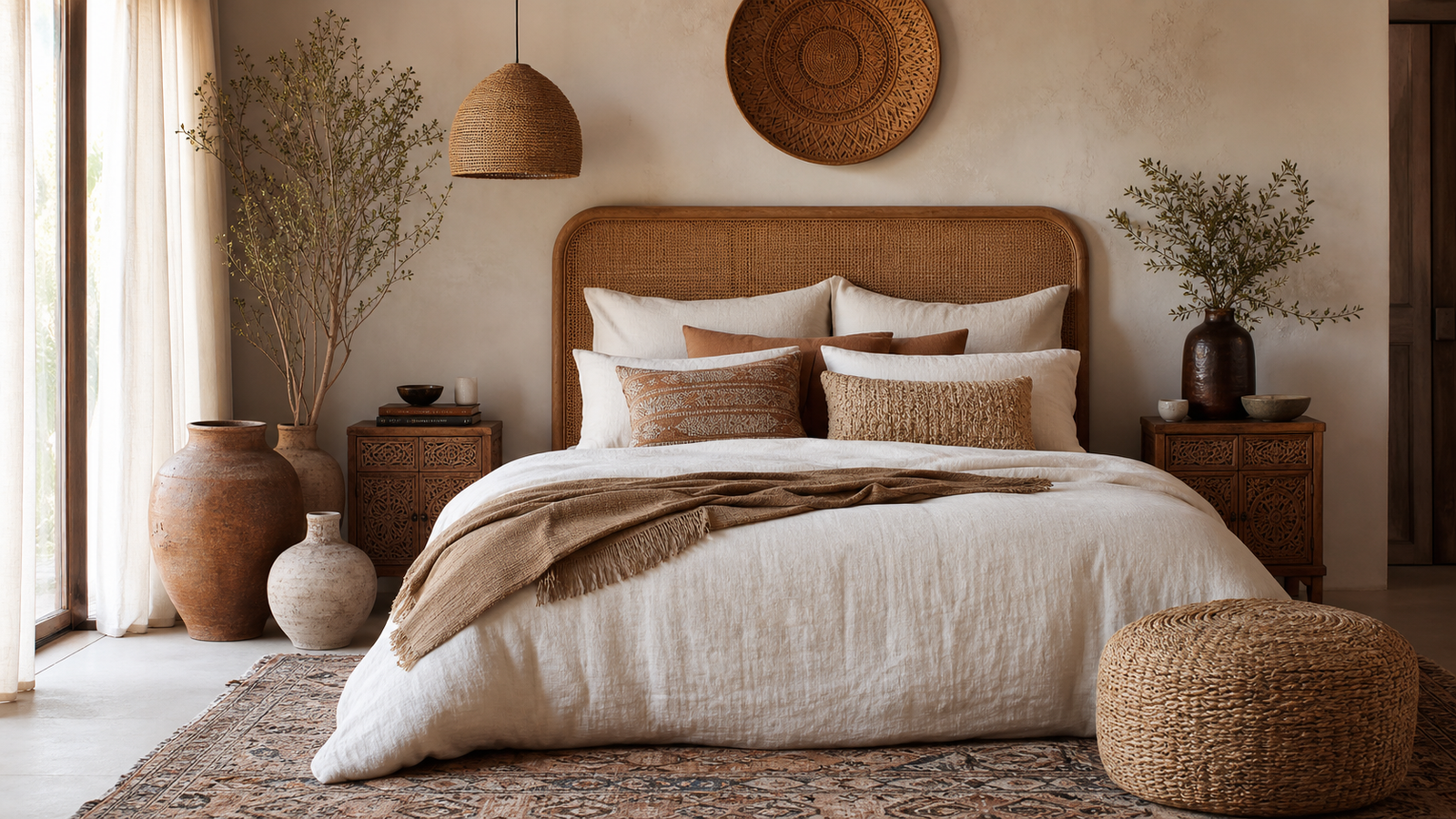
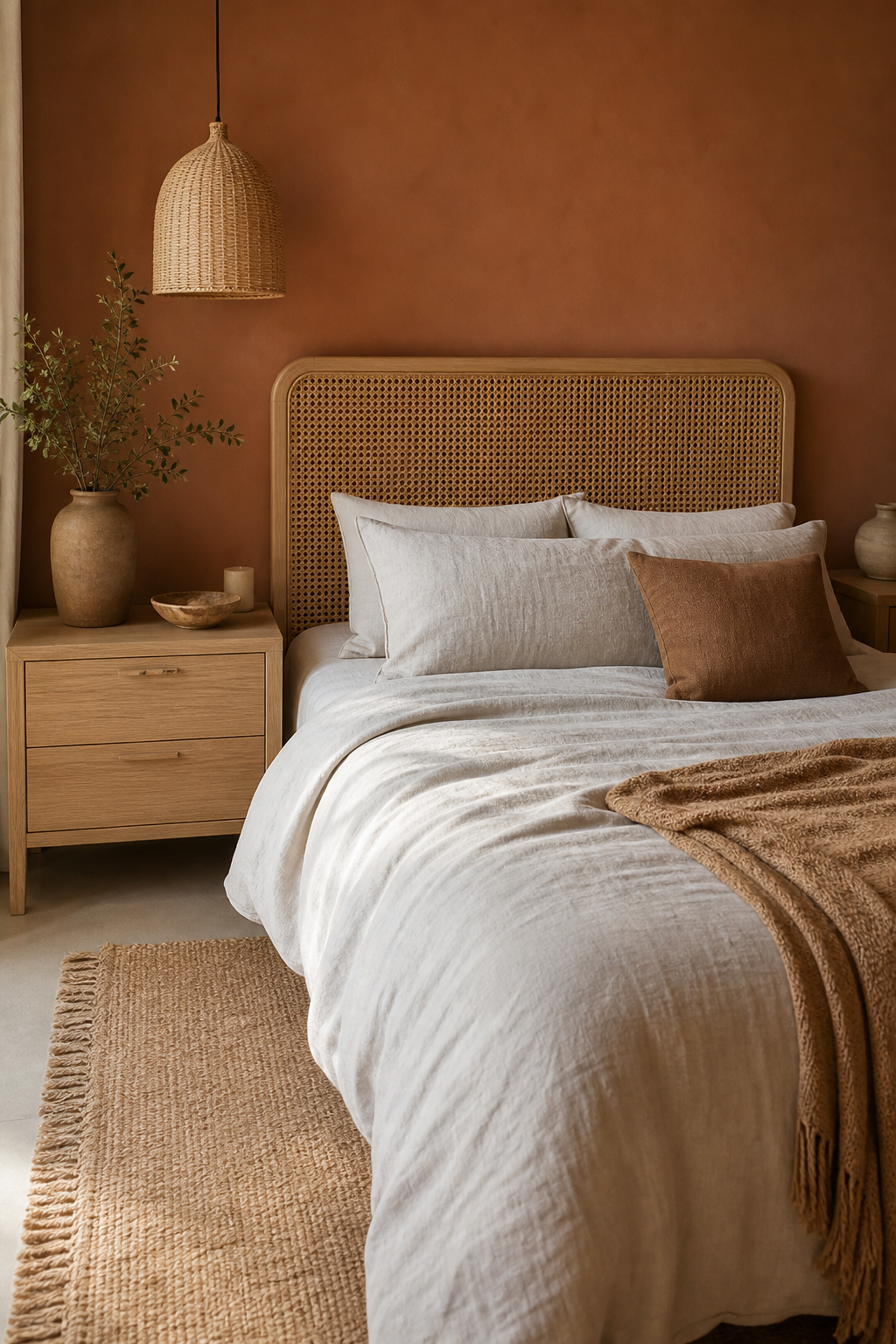
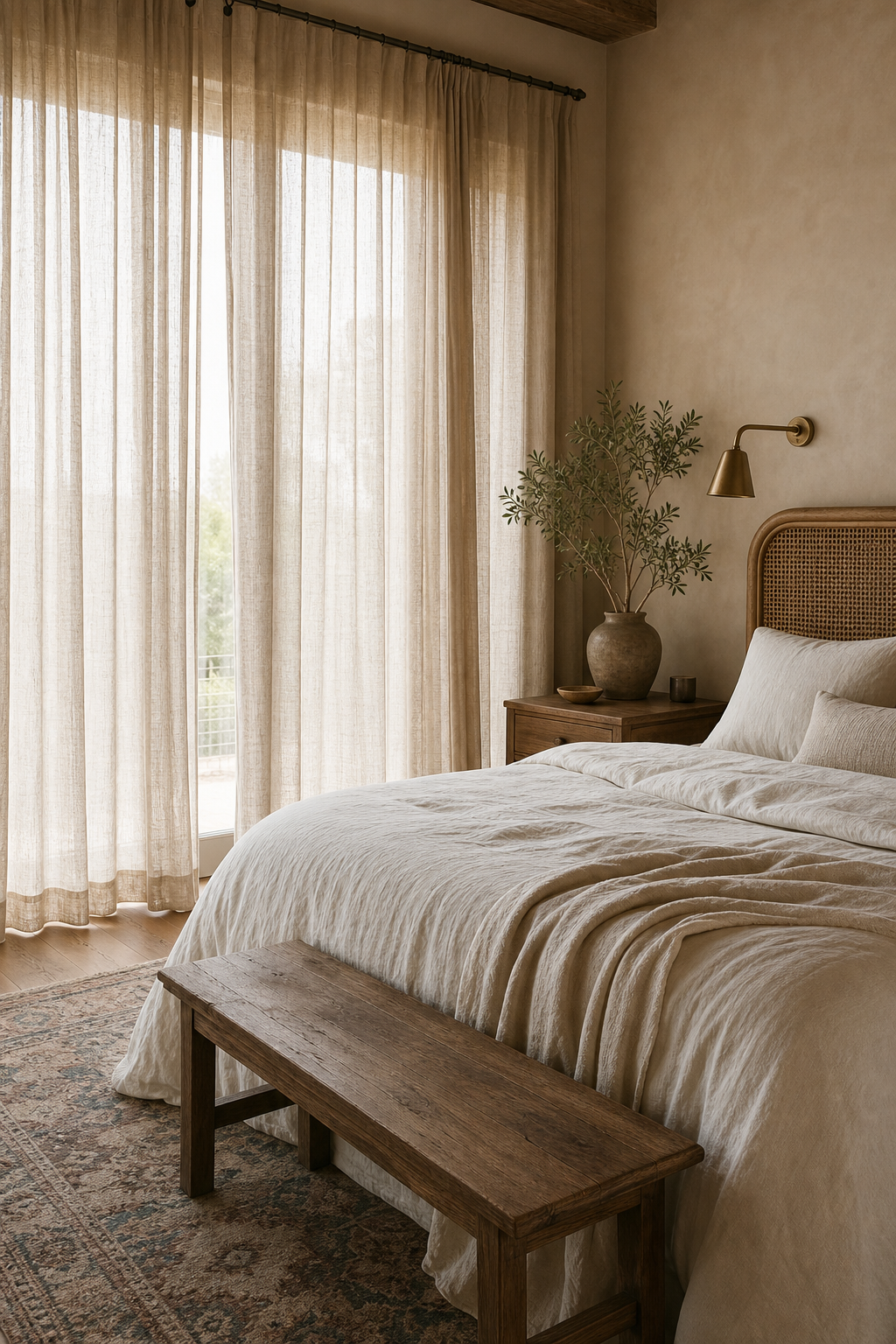
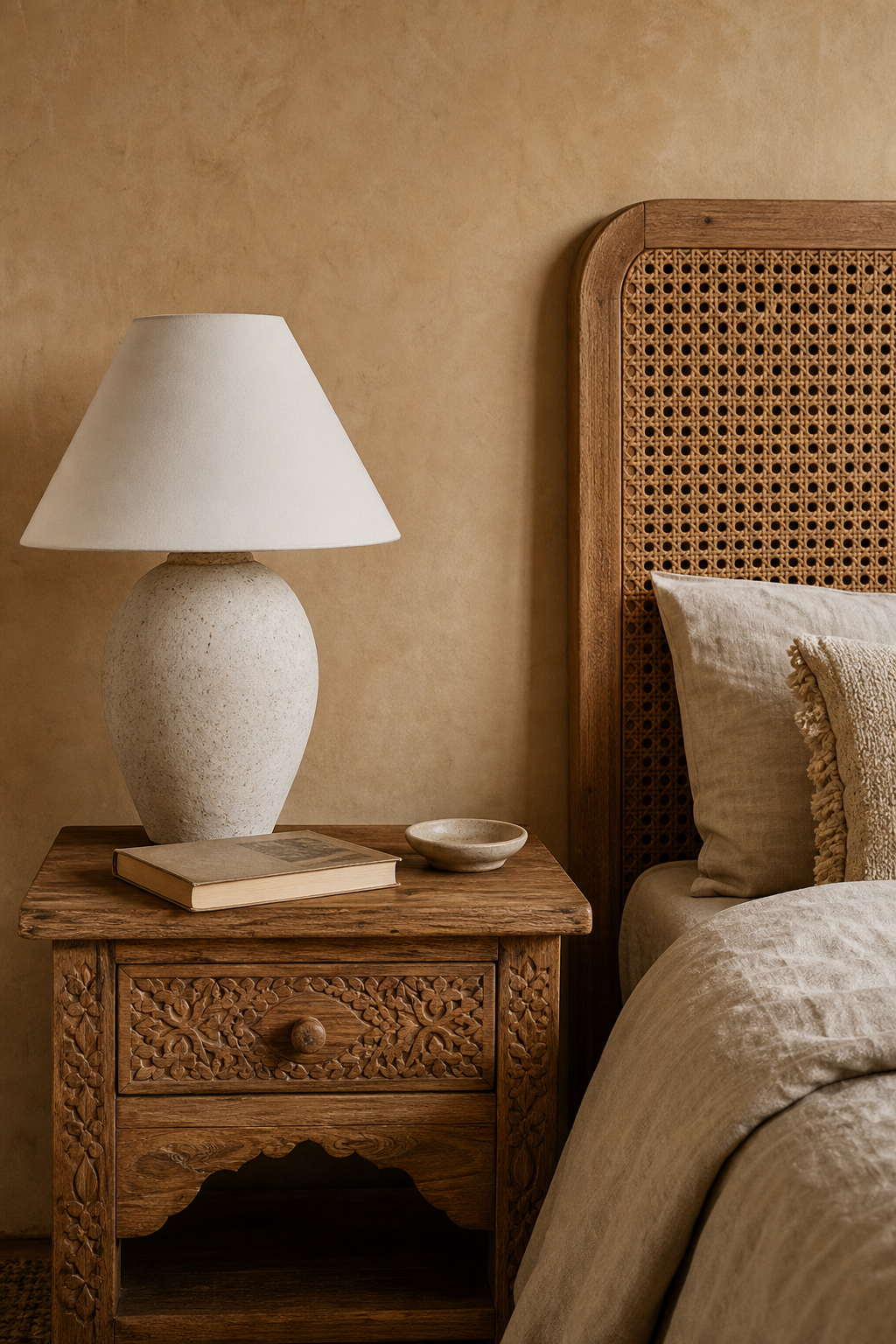
A rattan or cane headboard adds pattern, warmth, and lightness without demanding extra floor space. It works especially well in a cozy boho bedroom because the woven surface brings detail while the silhouette can remain simple. Choose rounded edges, a framed cane panel, or a low arched shape depending on the room’s architecture. Pair it with plain bedding so the weave remains the focal point. If the room already has a lot of pattern, choose a tighter cane; if the palette is very quiet, a looser rattan weave can add more character. The headboard should feel handcrafted but sturdy. It gives the room an immediate sense of place without heavy furniture.
Anchor The Room With A Vintage-Inspired Rug
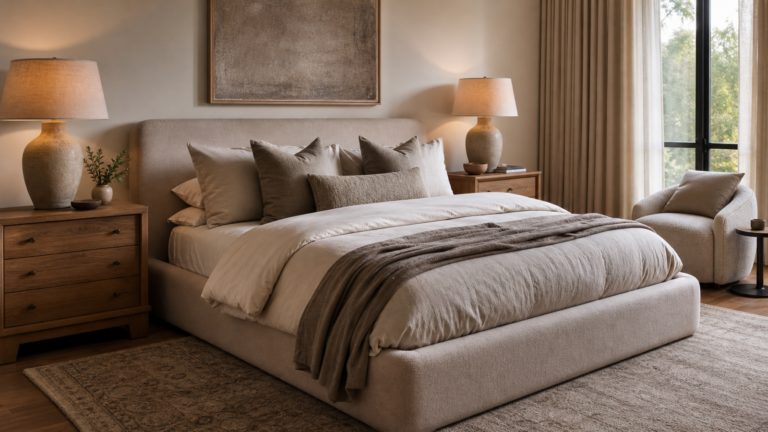
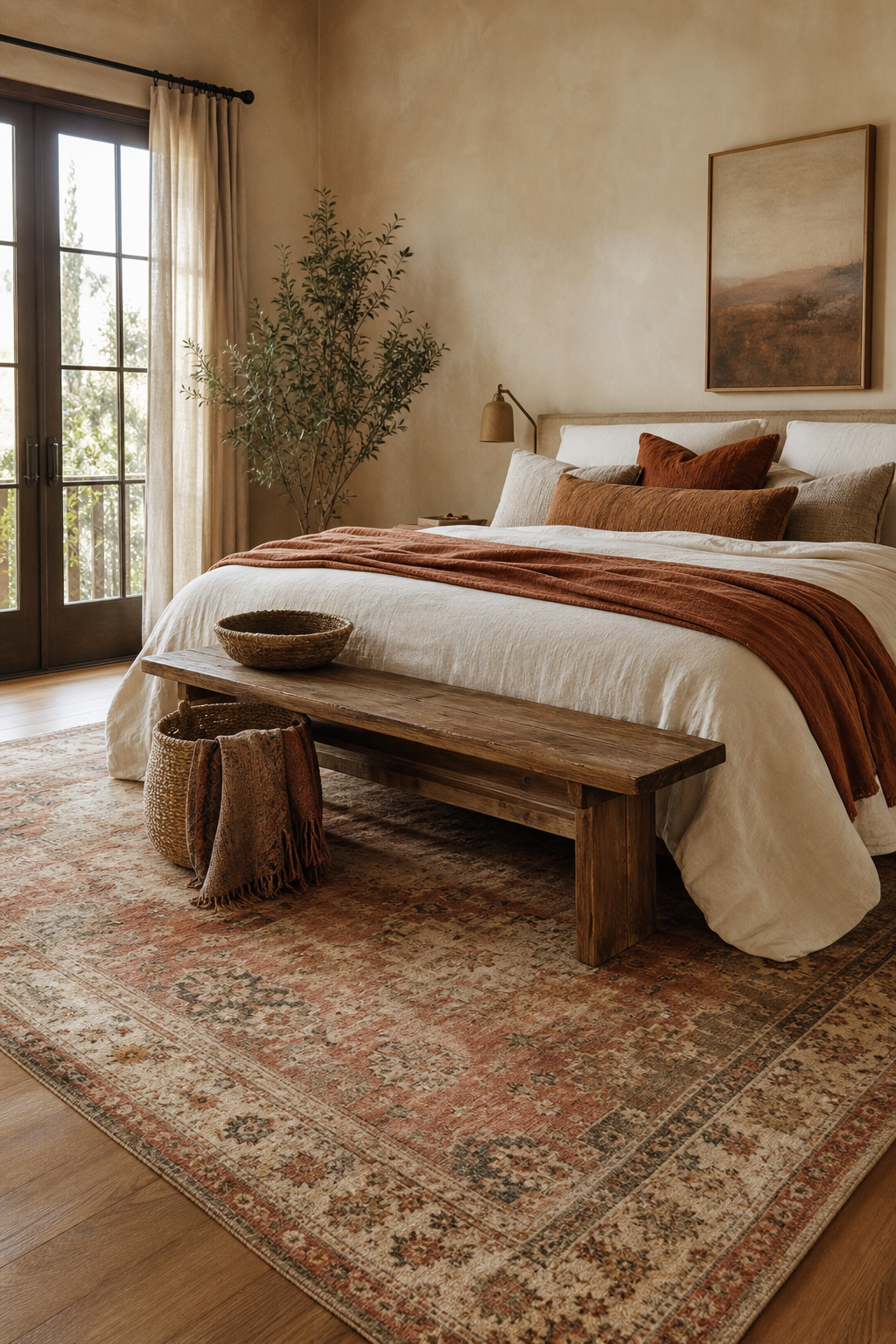
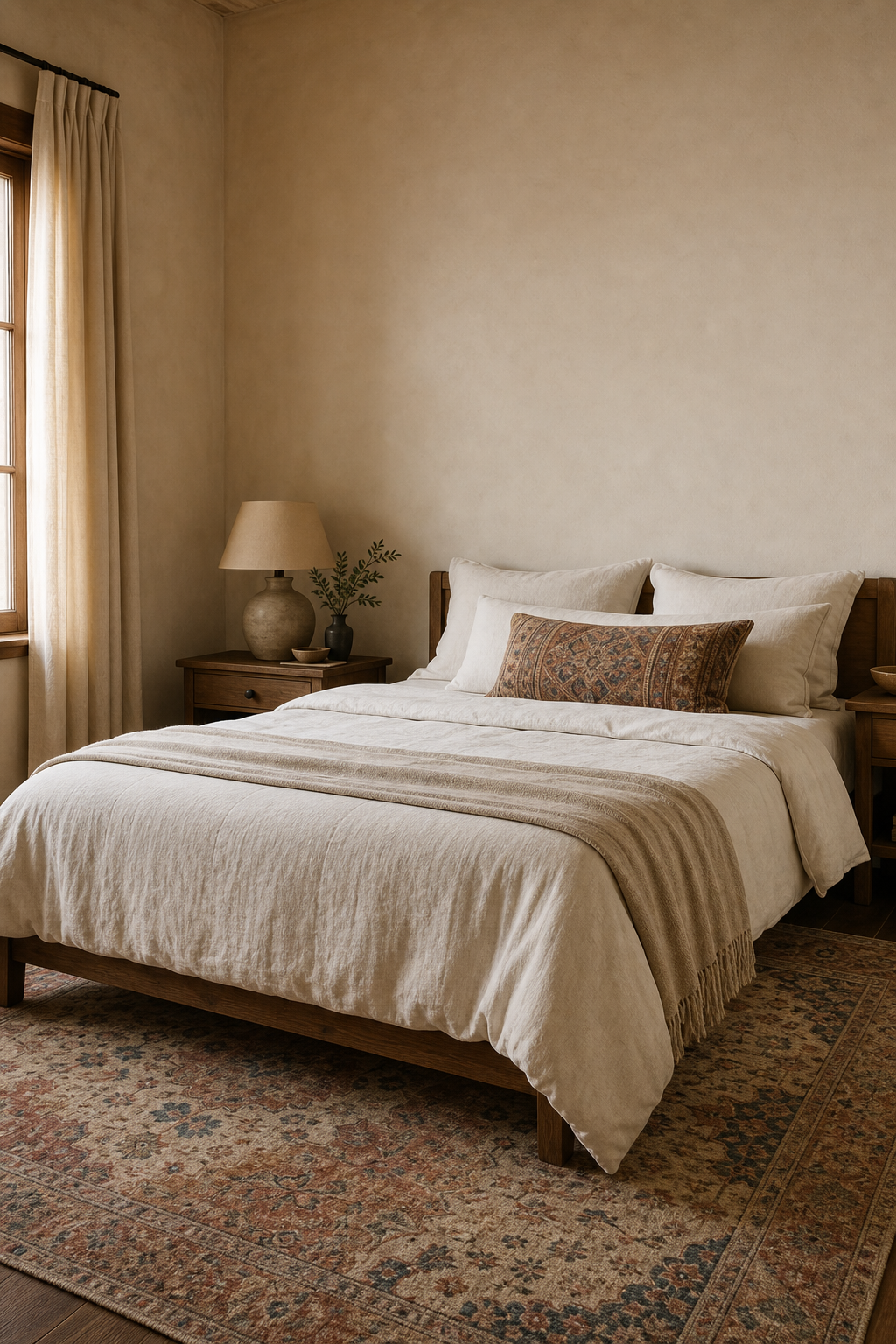
A vintage-inspired rug can pull a boho bedroom together better than a collection of small accessories. Look for faded rust, indigo, sand, olive, or charcoal rather than bright saturated tones. The rug should be large enough to extend past the bed so it feels like a foundation, not an afterthought. A low pile is practical for cleaning and works beautifully under layered bedding. If the room has many woven elements, a faded pattern keeps the floor from feeling flat. If the walls or bedding already carry pattern, choose a quieter distressed design. This one decision adds age, softness, and soul, making the room feel collected rather than newly decorated all at once.
Hang A Woven Pendant Instead Of A Plain Fixture
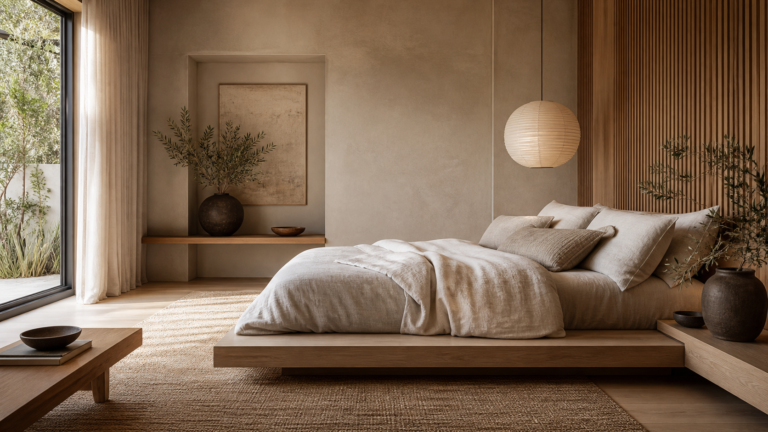
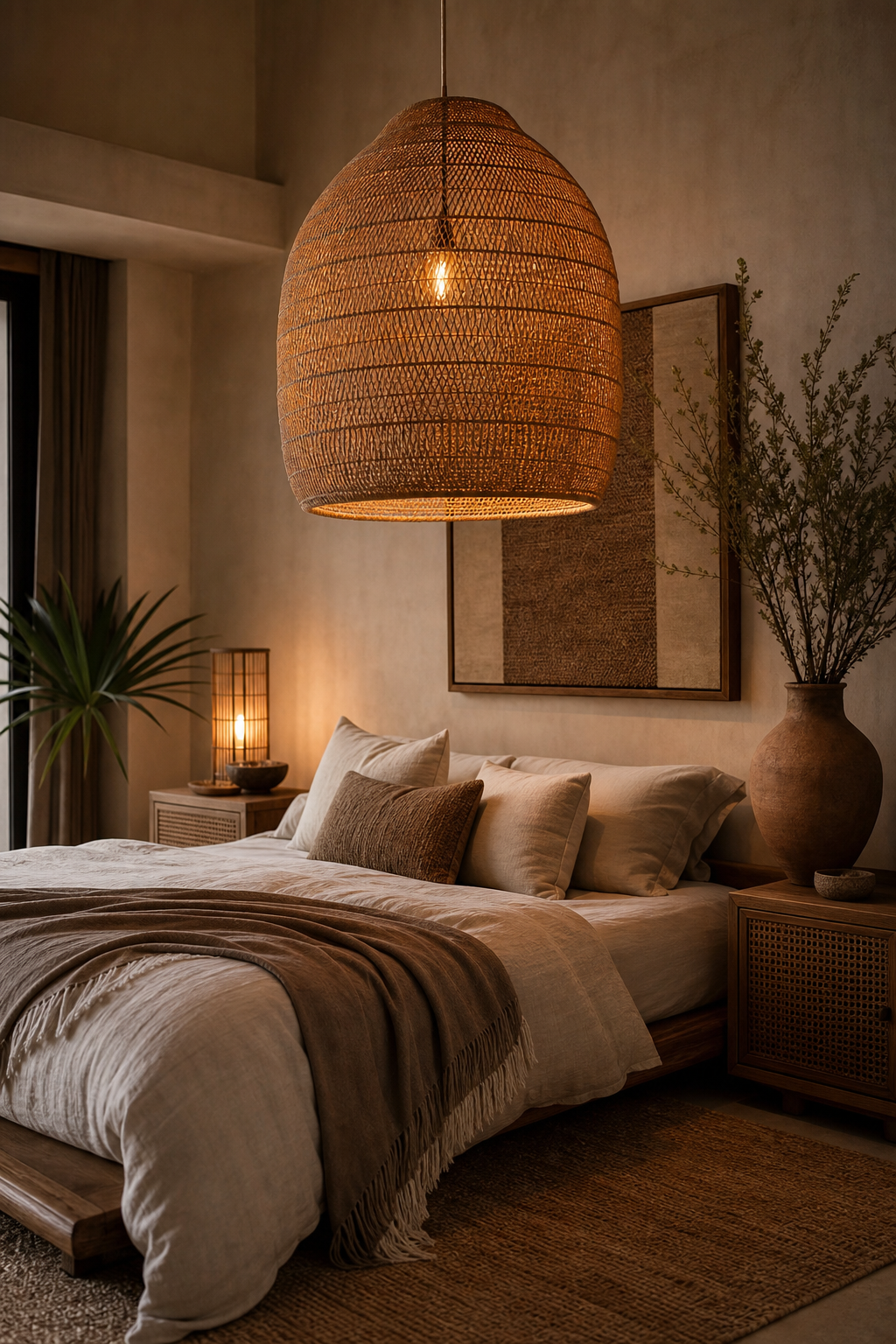
Lighting is one of the easiest ways to move a bedroom toward boho warmth. A woven pendant in rattan, cane, bamboo, seagrass, or paper casts a softer mood than a plain flush mount. Keep the shape generous but not overwhelming; the fixture should glow, not crowd the ceiling. In a bedroom with low ceilings, choose a shallow woven shade or a wall sconce with natural fiber detail. The texture adds interest during the day and warmth at night. Pair the pendant with bedside lamps or sconces so the room has layered light. Boho bedrooms look best when lighting feels handmade and atmospheric, but the bulbs should still be warm, dimmable, and practical for daily use.
Bring In Carved Or Reclaimed Wood
Boho bedrooms benefit from wood that looks touched by time. A carved nightstand, reclaimed bench, vintage dresser, or weathered frame can add character that new flat-pack pieces rarely provide. The trick is restraint. Choose one or two wood pieces with visible grain or hand-finished detail, then give them space to breathe. Too many distressed surfaces can make the room feel theme-driven. Pair aged wood with clean bedding, simple curtains, and a calm wall color so it reads as soulful rather than cluttered. Reclaimed wood also works beautifully with ceramic, linen, leather, and woven accents. It brings grounded warmth to the room and gives the eye something real to linger on.
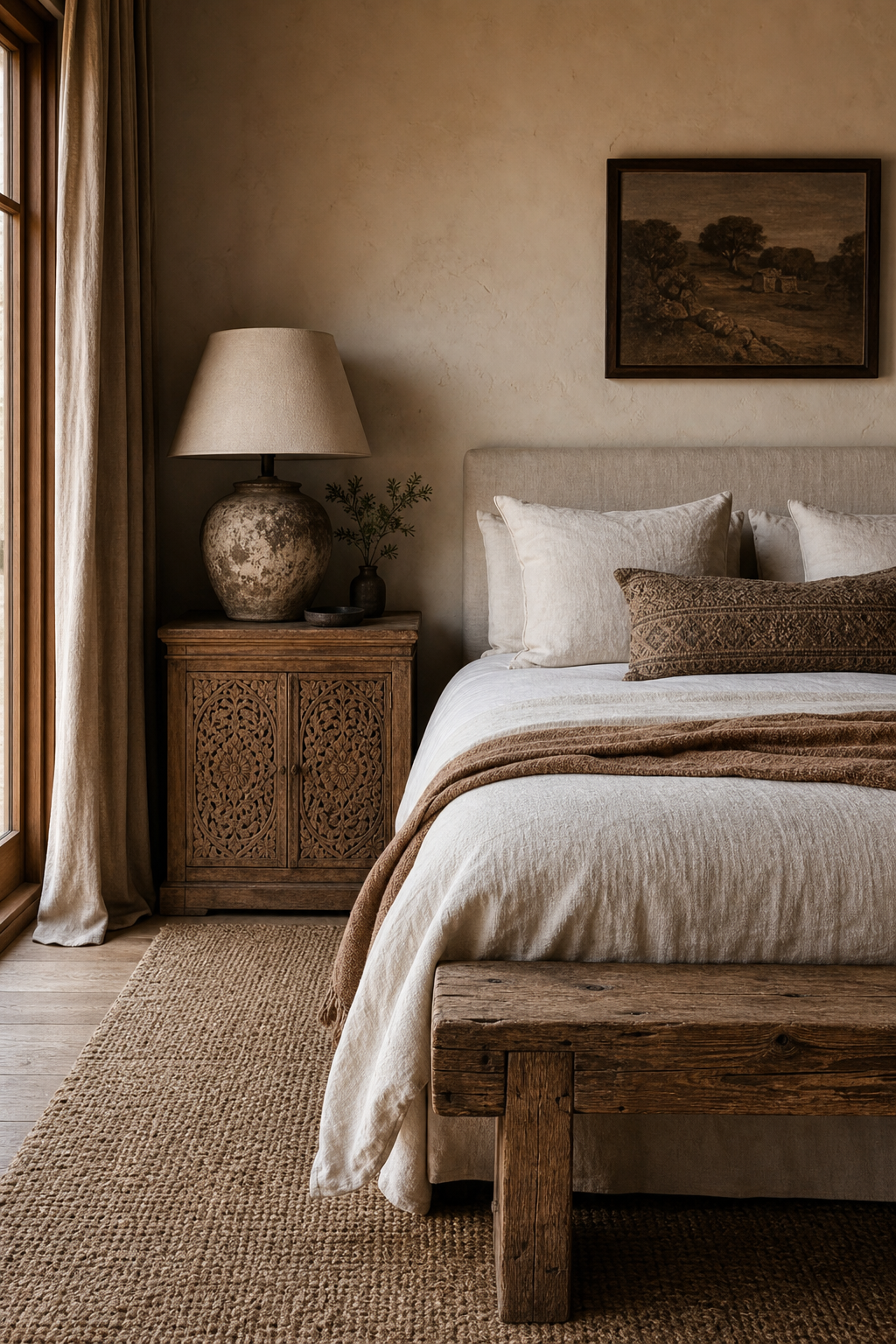
Style One Statement Textile On The Wall
A textile wall hanging can make a boho bedroom feel intimate without adding bulky furniture. Choose one strong piece: a woven tapestry, framed mudcloth, antique rug fragment, macrame panel, or hand-dyed fabric. Hang it above the bed or on the largest blank wall, letting it act as artwork. Keep the surrounding surfaces simple so the texture has room to breathe. The piece should relate to the room’s palette but can include one deeper accent color. This is a better approach than scattering many small wall decorations, which can feel restless. A single statement textile adds softness, acoustic comfort, and a handmade quality that suits a cozy retreat beautifully.
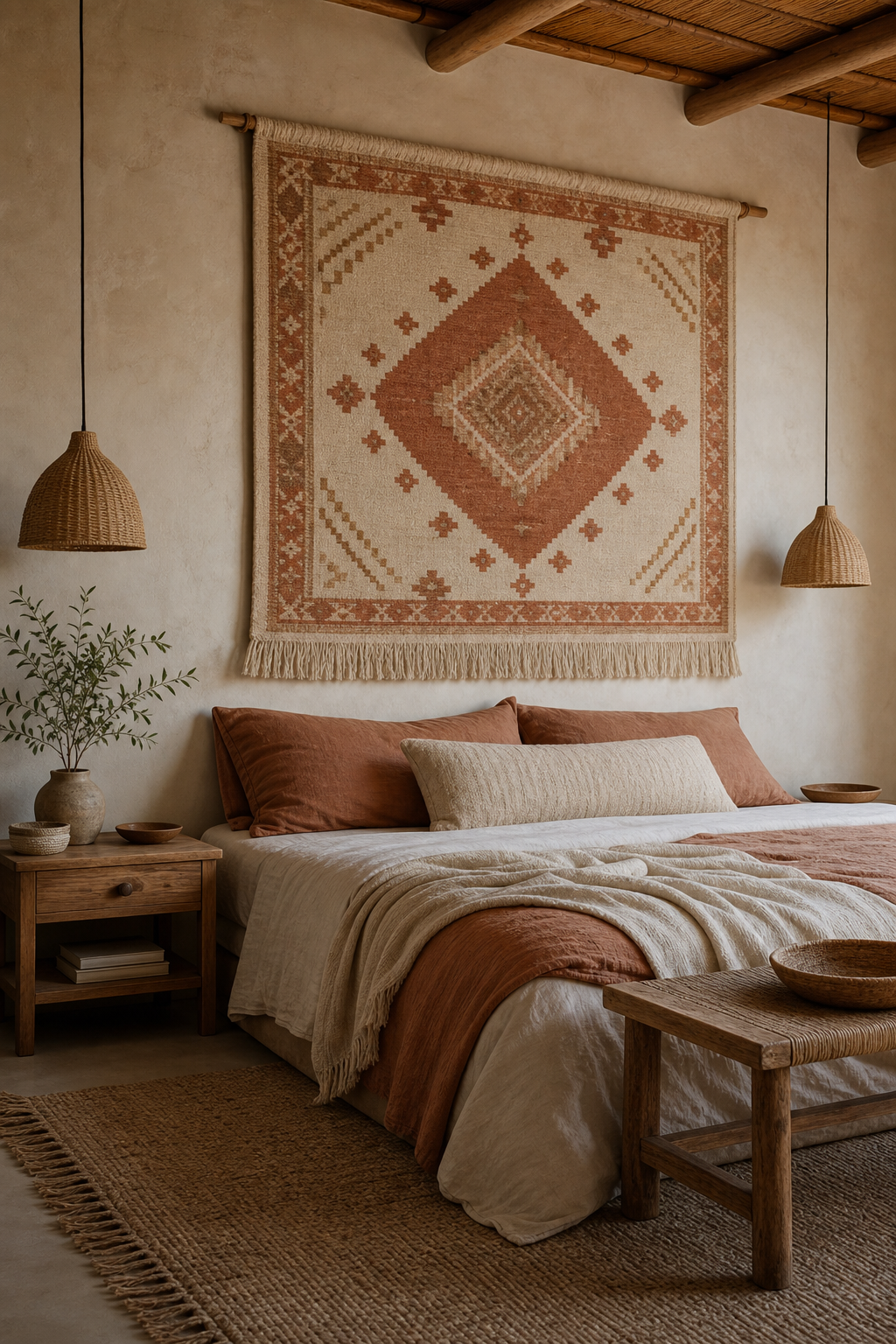
Mix Ceramics With Natural Branches
Boho styling often works best when it borrows from nature. A hand-thrown ceramic vase with branches, dried grasses, or simple greenery can bring height and movement to the bedroom without clutter. Choose matte or imperfect glazes in clay, cream, smoke, or olive. Avoid overly perfect arrangements; a few branches with expressive lines usually look more relaxed and elegant. Place the vase on a dresser, nightstand, or floor near a reading chair. This small gesture adds organic shape against soft bedding and woven textures. It also changes easily with the season. The room feels alive, but still quiet, which is exactly the balance a cozy boho bedroom needs.
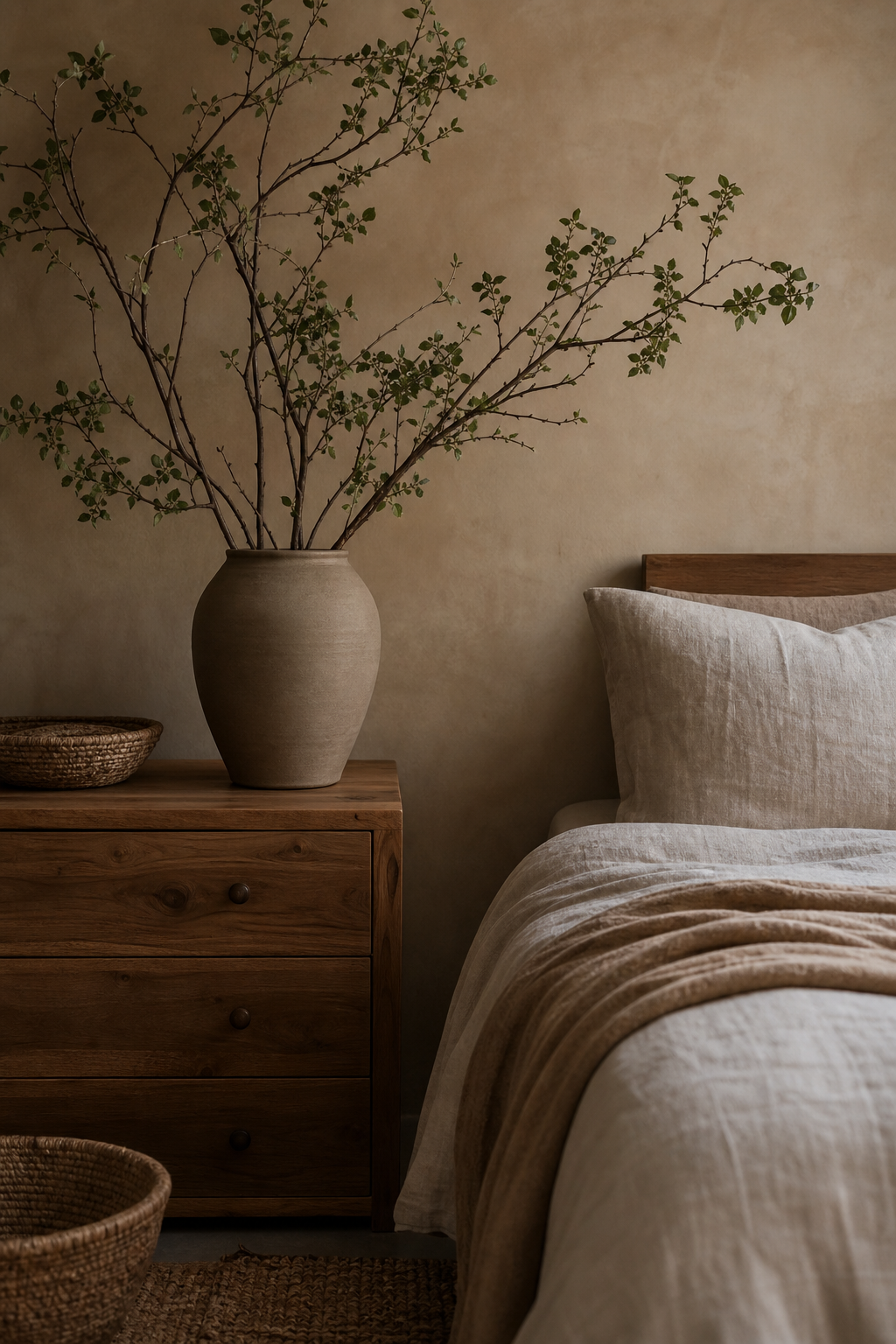
Create A Low Reading Corner
A boho bedroom becomes more retreat-like when it includes a place to sit that is not the bed. A low lounge chair, floor cushion, small pouf, or woven bench can create a quiet reading corner near a window. Add a slim side table and a warm lamp so the corner is genuinely useful. Keep the materials tactile: leather, boucle, rattan, cotton, wool, or carved wood. The corner should feel relaxed, but it should not become a pile of cushions without structure. Use a small rug or sheepskin-style layer to define the zone. This gives the room a lived-in rhythm and makes the bedroom feel like a place to unwind before sleep.
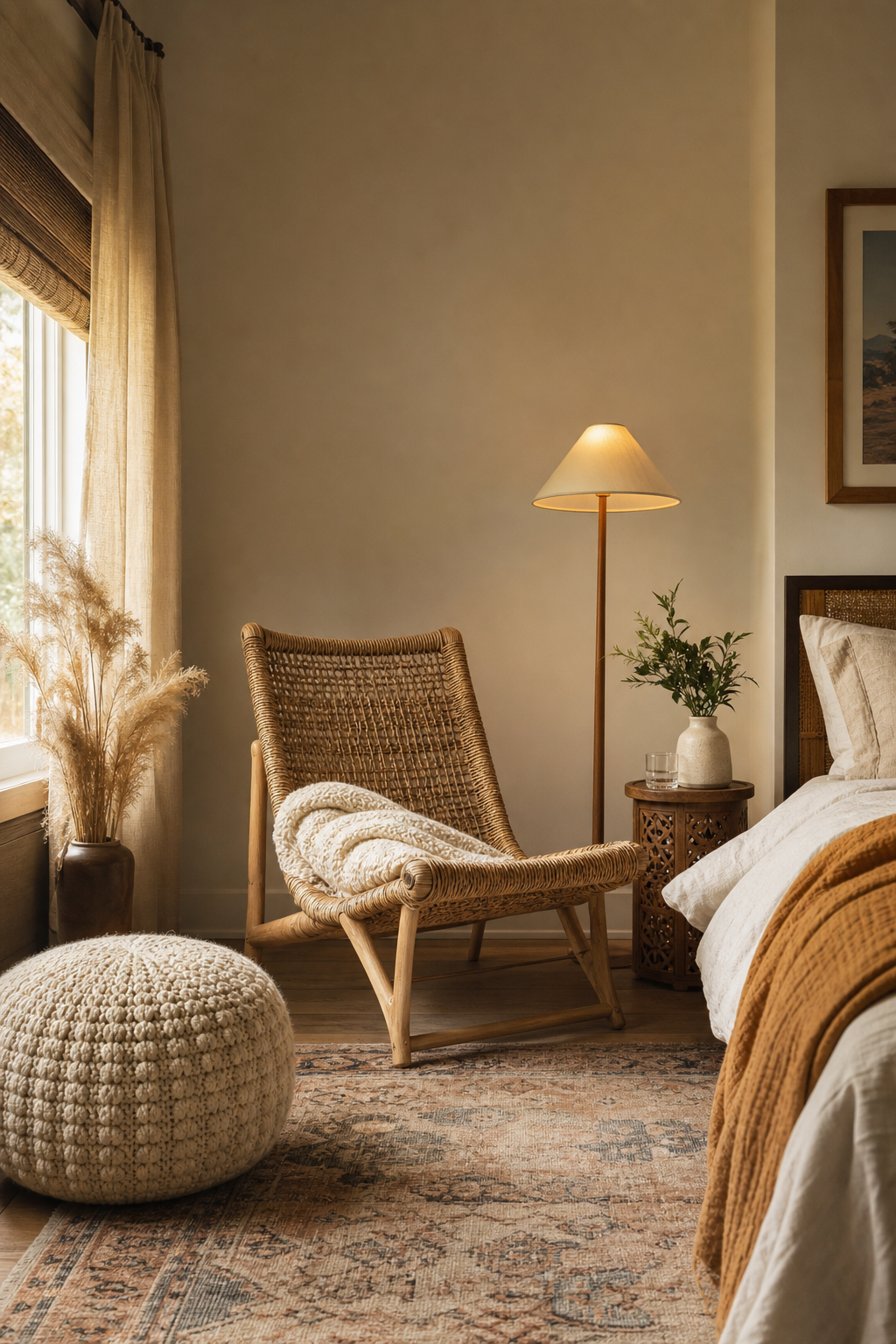
Add Curtains With Natural Texture
Curtains soften the edges of a boho bedroom and make the room feel more complete. Linen, cotton gauze, raw silk, or a loose woven fabric will filter daylight beautifully while keeping the mood relaxed. Hang panels high and let them fall cleanly to the floor. The color should be close to the wall or bedding if you want calm, or slightly warmer if the room needs depth. Avoid heavy patterns unless the rest of the room is very quiet. Natural-texture curtains also make woven furniture and vintage rugs feel more intentional. They move slightly with air and soften hard window lines, which helps a boho bedroom feel romantic without becoming overly decorative.
Use Baskets As Storage, Not Decoration Everywhere
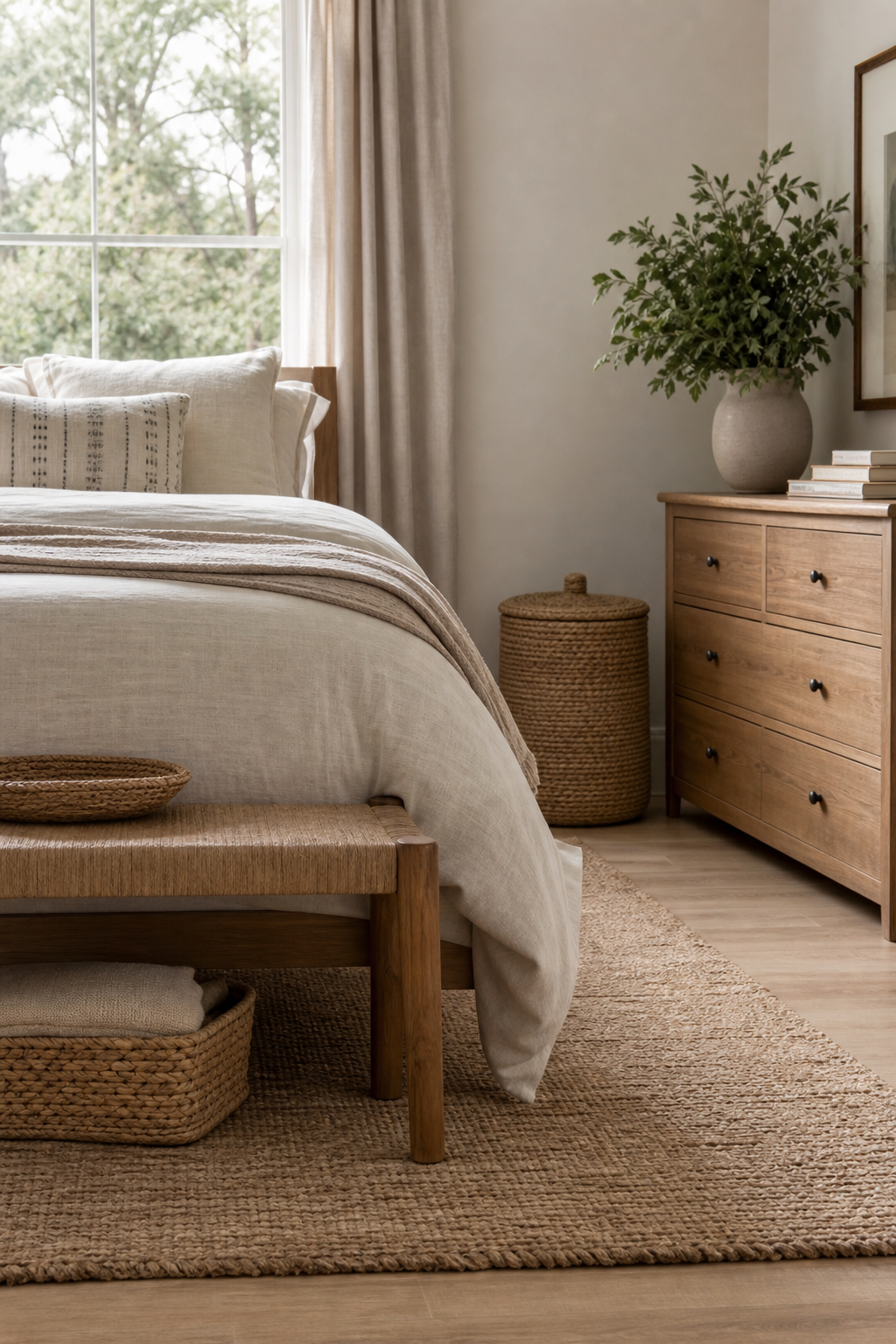
Baskets are useful in a boho bedroom, but too many can make the room feel like a display. Use them where they solve a real problem: extra blankets, laundry, books, slippers, or children’s toys. Choose sturdy woven pieces in similar tones so the room remains calm. A large lidded basket beside a dresser can hide clutter, while one low basket under a bench can hold throws. Avoid filling every corner with a basket simply for texture. When storage looks intentional, the bedroom stays cozy and functional. The woven material still supports the boho mood, but the room feels edited, practical, and easier to reset at the end of the day.
Balance Pattern With Plain Breathing Space
Boho rooms can handle pattern, but bedrooms need rest. Choose one or two patterned elements, such as a rug and a pillow, then keep surrounding surfaces plain. This gives the eye a place to settle. A patterned quilt can look beautiful if the curtains are simple and the headboard is quiet. A bold rug can work if the bedding stays mostly solid. Pay attention to scale as well; mixing tiny prints with large motifs can feel lively, but too many similar patterns become muddy. The best boho bedrooms feel layered yet breathable. Plain walls, clean bedding, and open nightstand surfaces make the handcrafted pieces feel more special rather than competing for attention.
Use A Canopy Or Mosquito Net Lightly
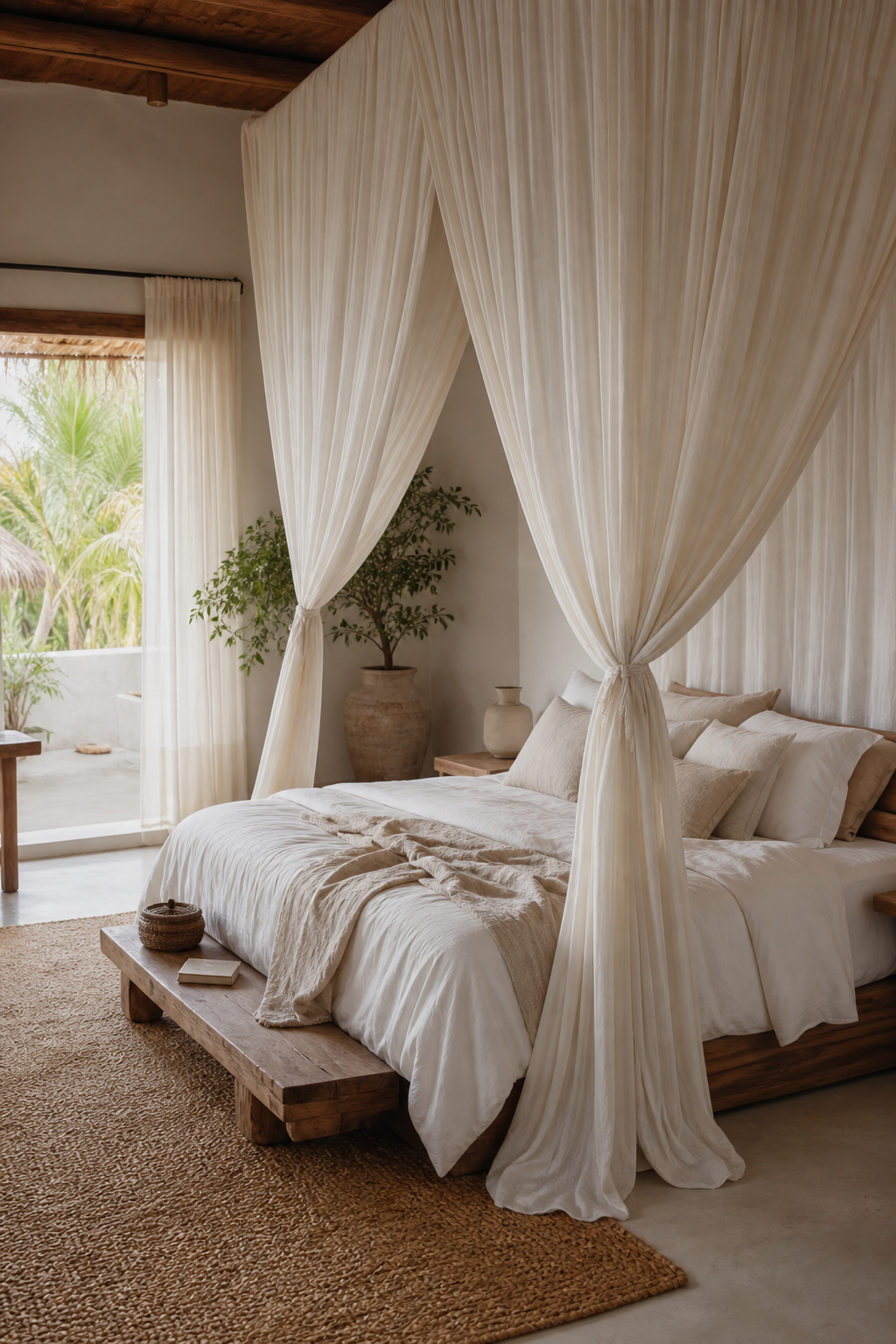
A lightweight canopy or mosquito net can add softness to a boho bedroom when it is handled with restraint. Choose gauzy cotton or linen in ivory or warm white, and let it frame the bed without overwhelming it. This idea works especially well in rooms with simple furniture and high ceilings. Avoid heavy draping or dramatic swags that collect dust and make the room feel theatrical. The canopy should feel breezy, not fussy. Pair it with a natural rug, low wood furniture, and minimal bedding so the fabric becomes the romantic layer. It can make a bedroom feel cocooning while still staying airy and easy to live with.
Choose Plants With Sculptural Shape
Plants add life to a boho bedroom, but the most elegant rooms use them selectively. Choose one sculptural plant rather than a crowded collection of small pots. An olive tree, rubber plant, fiddle leaf fig, trailing pothos, or tall cactus can add height and organic movement. Place it near natural light and use a pot that supports the room’s palette: terracotta, matte ceramic, woven basket, or stone. Be honest about maintenance; a struggling plant weakens the room more than no plant at all. One healthy, well-placed plant can soften corners, balance wood and textile, and make the bedroom feel fresh. It brings the outdoors in without turning the room into a greenhouse.
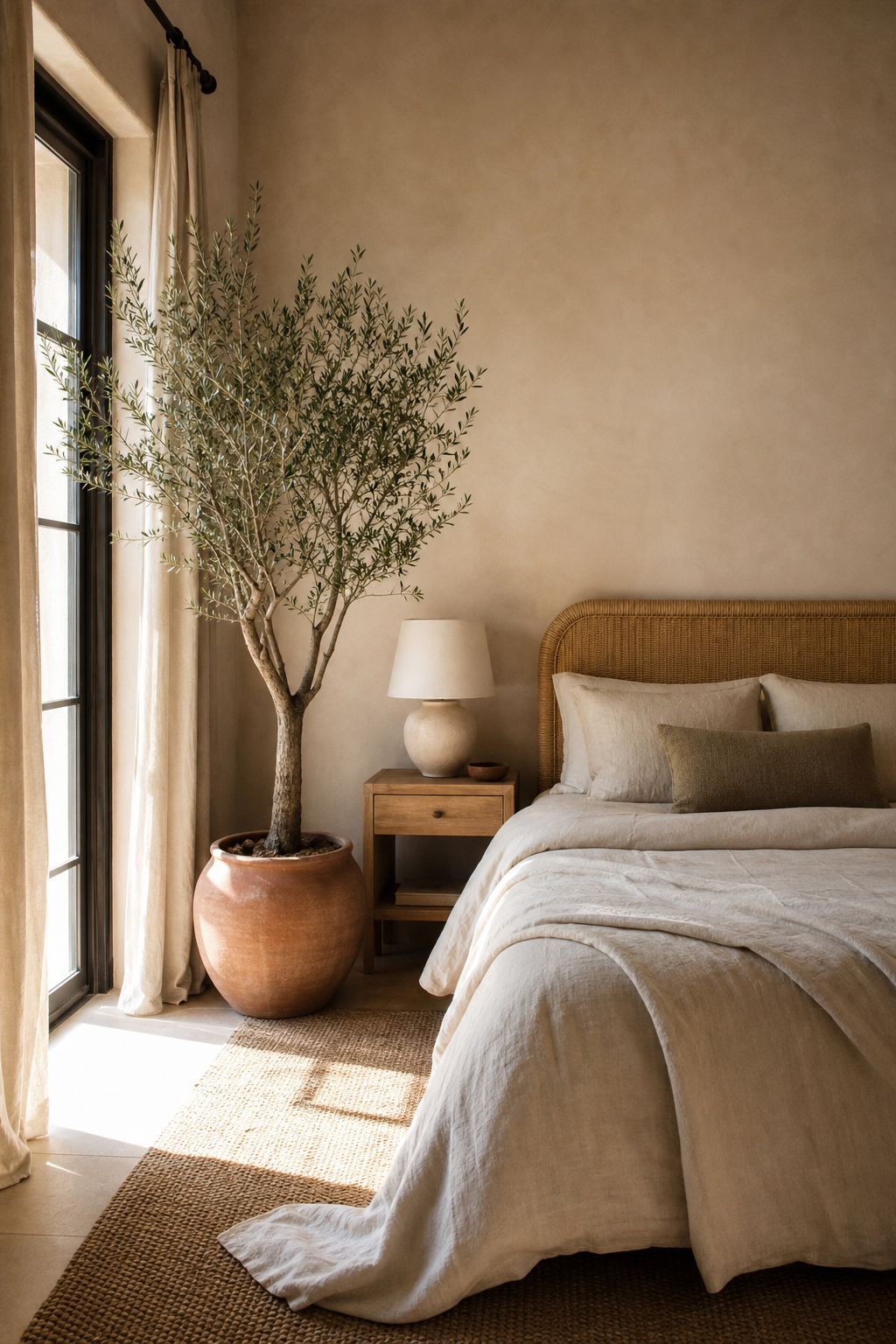
Keep Nightstands Simple And Handmade
Nightstands are small, but they strongly influence the mood of a boho bedroom. Look for handmade character: carved wood, cane fronts, ceramic knobs, or a simple stool used as a bedside table. Keep the surface edited with a lamp, a book, and perhaps one small dish. This allows the materials to shine and keeps bedtime routines easy. If storage is needed, choose a drawer or closed basket below rather than piling necessities on top. Matching nightstands can look calm, but mismatched pieces work if their scale and tone are compatible. The bedside area should feel personal and useful, not staged. Boho style is strongest when it supports real comfort.
Finish With A Gentle Edit
The final step in a boho bedroom is editing until the room feels warm but not crowded. Stand at the doorway and notice whether the strongest pieces have space around them. Remove duplicate baskets, extra pillows, unused trays, and small objects that do not add comfort or meaning. Keep what supports the mood: soft bedding, one excellent rug, warm light, natural materials, and a few personal pieces. This edit makes the room easier to clean and more restful to sleep in. Boho style does not require every surface to be decorated. It works beautifully when the room feels collected, tactile, and personal, with enough quiet space for the body to relax.
A beautiful boho bedroom is less about abundance and more about atmosphere. Choose natural materials, meaningful texture, warm light, and a restrained palette, then edit until every piece supports rest. With the right balance, the room can feel cozy and expressive while still staying calm enough for everyday life.