25 Very Small Kitchen Ideas That Make Small Spaces Feel Beautiful
A very small kitchen does not have to feel compromised. In the most memorable compact spaces, every decision earns its place: the cabinet profile, the stone edge, the way light falls across a narrow counter, the quiet usefulness of a well-positioned shelf. Beauty comes from discipline, not excess. When the layout is intentional and the materials are chosen with care, even a tiny kitchen can feel layered, expensive, and deeply comfortable to live with. These ideas focus on proportion, texture, storage, lighting, and atmosphere, showing how a modest footprint can carry the same elegance as a grander room.
Choose Slim Shaker Cabinets in a Soft Neutral
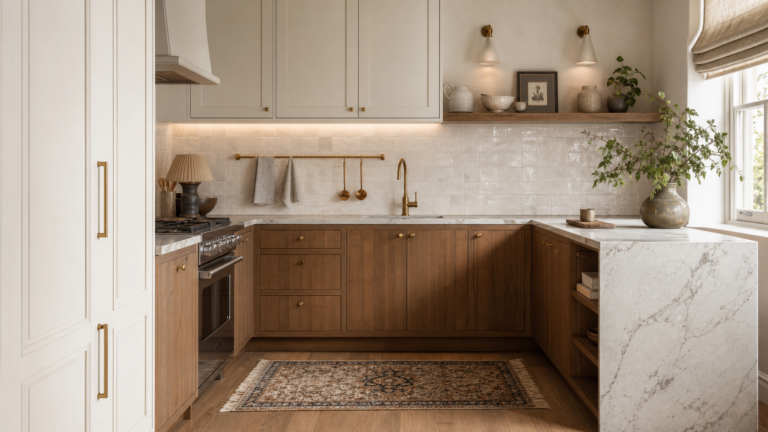
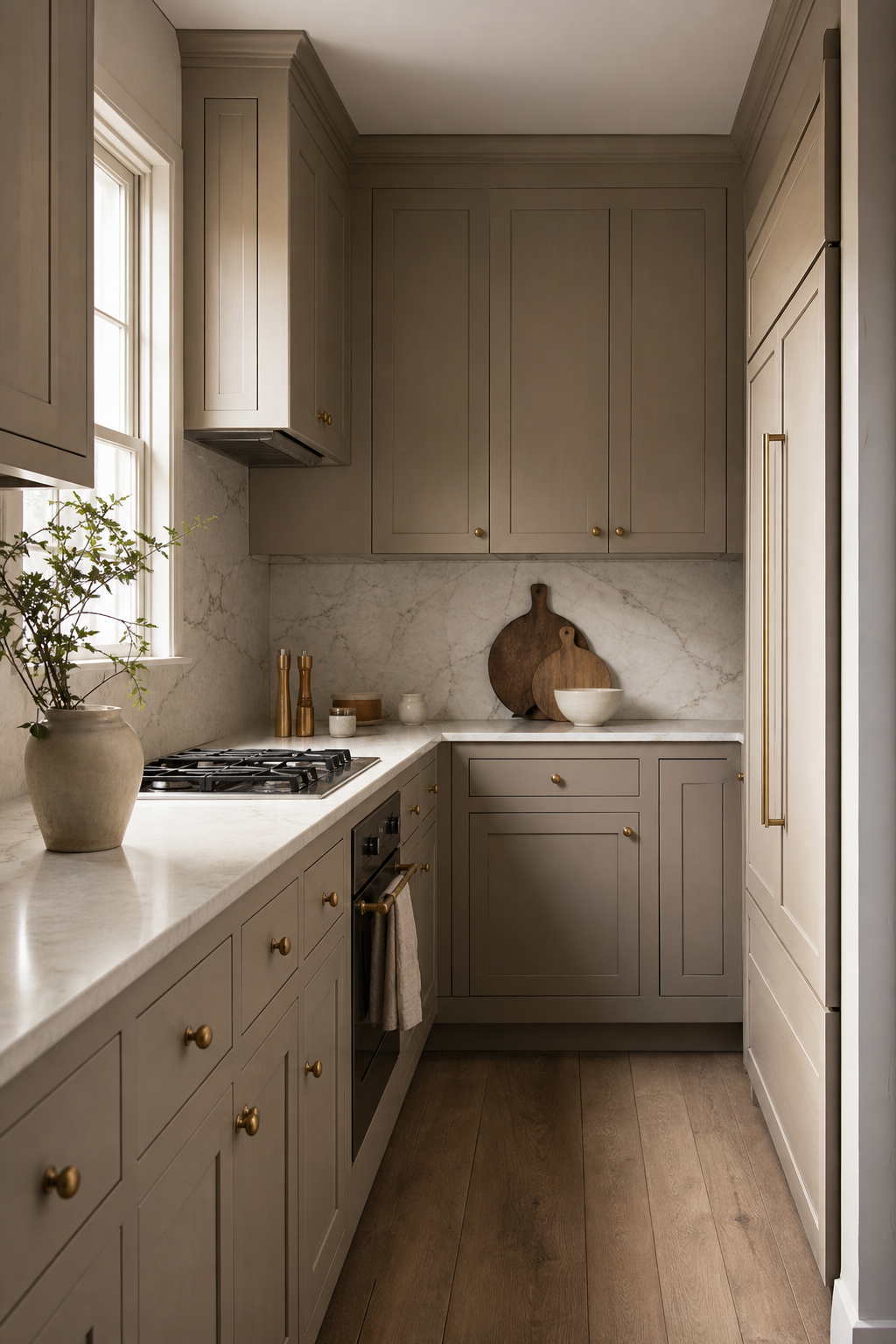
Slim shaker cabinetry gives a very small kitchen architectural definition without making the room feel busy. The trick is to keep the frame narrow, the hardware restrained, and the color quietly luminous. Warm white, mushroom, pale greige, and soft putty tones reflect light more gently than stark white, creating a tailored backdrop for stone, wood, and metal details. In a compact layout, full overlay doors keep sightlines clean, while drawers below the counter make storage easier to access than deep base cupboards. Pair the cabinets with a honed marble or quartzite counter, a simple cove or eased edge, and small brass or bronze knobs. The result feels classic but not heavy, elegant but not precious. It is a designer move that gives the kitchen polish while preserving visual breathing room.
Run the Countertop Up the Wall
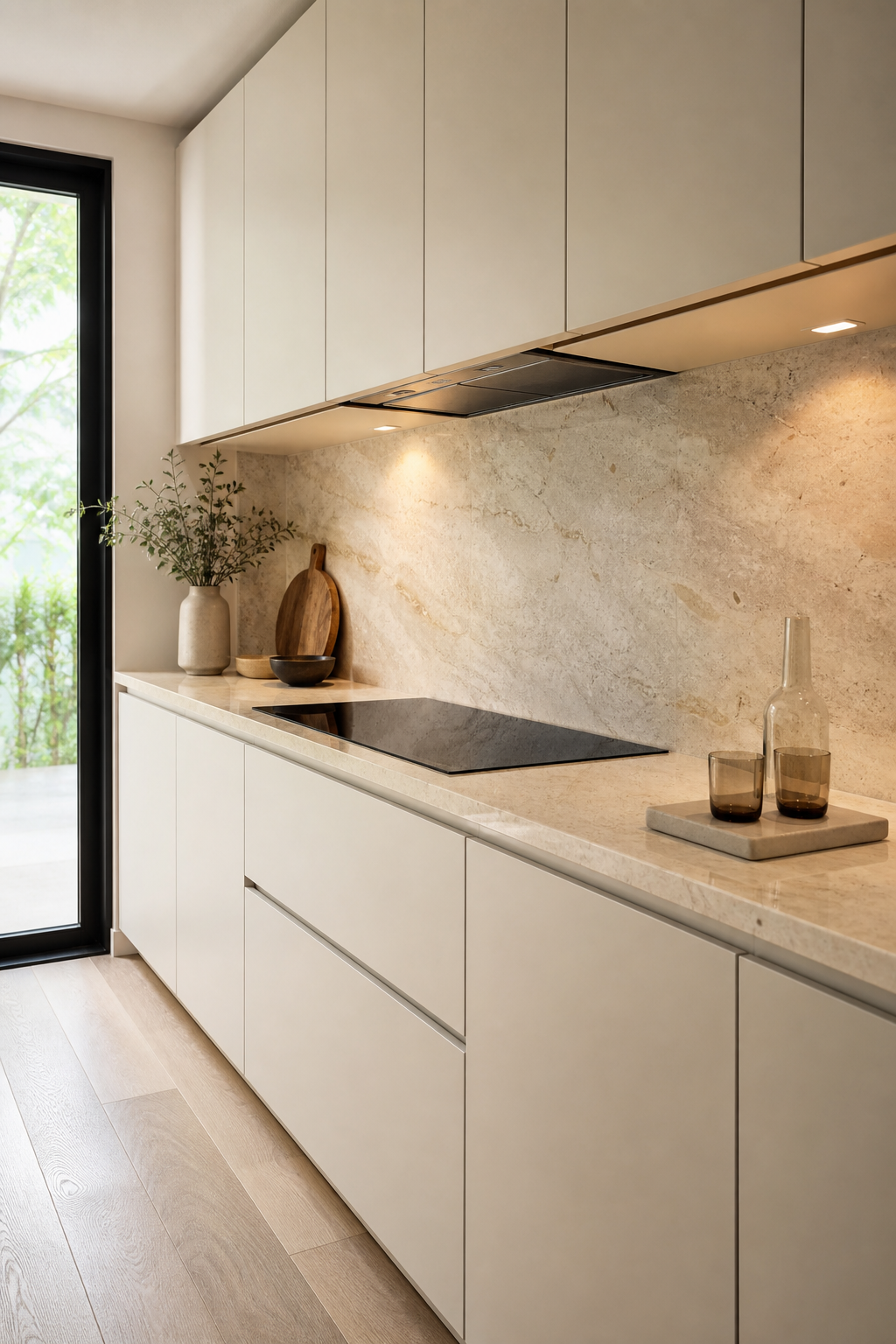
In a tiny kitchen, a full-height stone backsplash can make the entire room feel more considered. Instead of interrupting the wall with tile grout lines, carry the countertop material upward behind the sink, cooktop, or open shelving. Honed marble, quartzite, soapstone, and soft veined engineered stone all create a continuous surface that reads as luxurious and calm. This is especially effective in galley kitchens and one-wall layouts, where the backsplash is constantly visible from nearby living areas. Choose a stone with movement, but avoid overly dramatic veining if the room is very narrow. A quiet sweep of cream, taupe, dove gray, or charcoal gives depth without crowding the eye. Add under-shelf or under-cabinet lighting so the stone catches light in the evening and becomes part of the atmosphere.
Install a Narrow Ledge Instead of Heavy Upper Cabinets
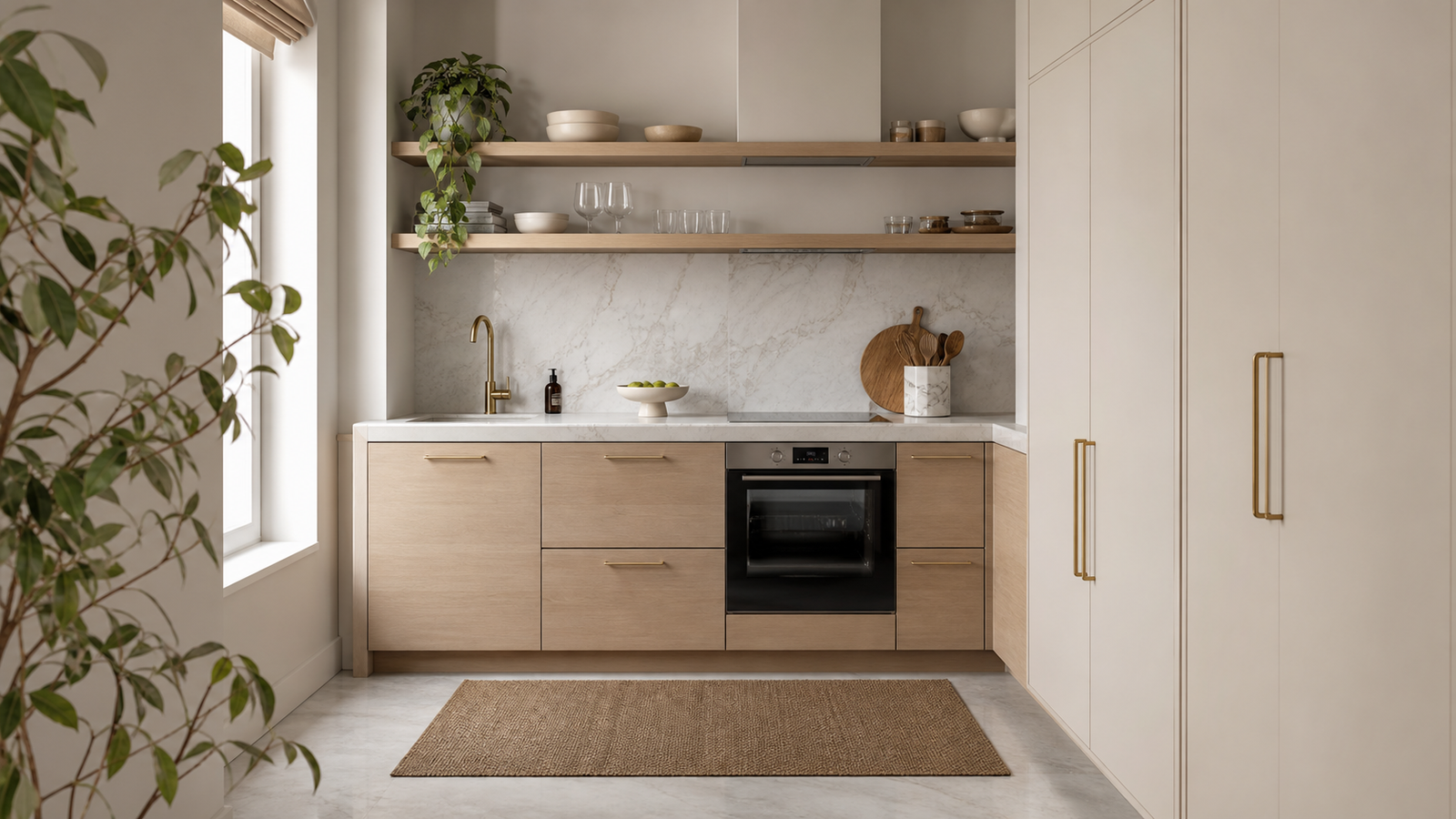
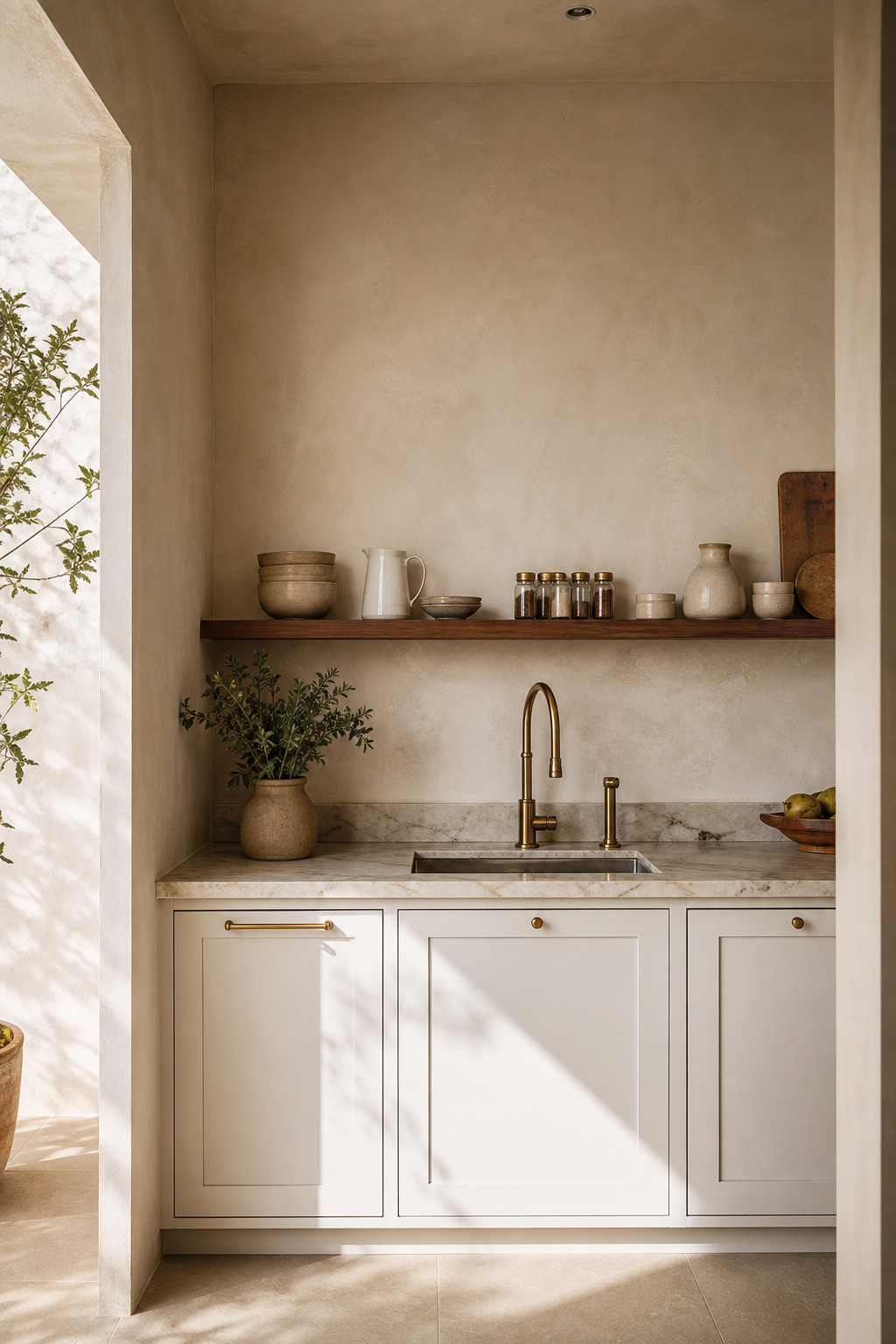
Upper cabinets can be useful, but in a very small kitchen they often make the room feel top-heavy. A narrow picture-style ledge offers a lighter alternative for daily objects and beautiful display pieces. Use it for a few hand-thrown bowls, small framed art, glass jars, or a row of favorite cups. The ledge should be shallow enough to stay graceful, usually just deep enough for ceramics and spice vessels. Match it to the cabinetry for a built-in look, or choose natural oak, walnut, or blackened metal for contrast. This idea is strongest when paired with excellent lower storage, such as deep drawers, pull-out trays, and hidden organizers. The wall stays open, the eye travels farther, and the kitchen gains a curated quality without losing its working purpose.
Select Integrated Appliances for a Seamless Look
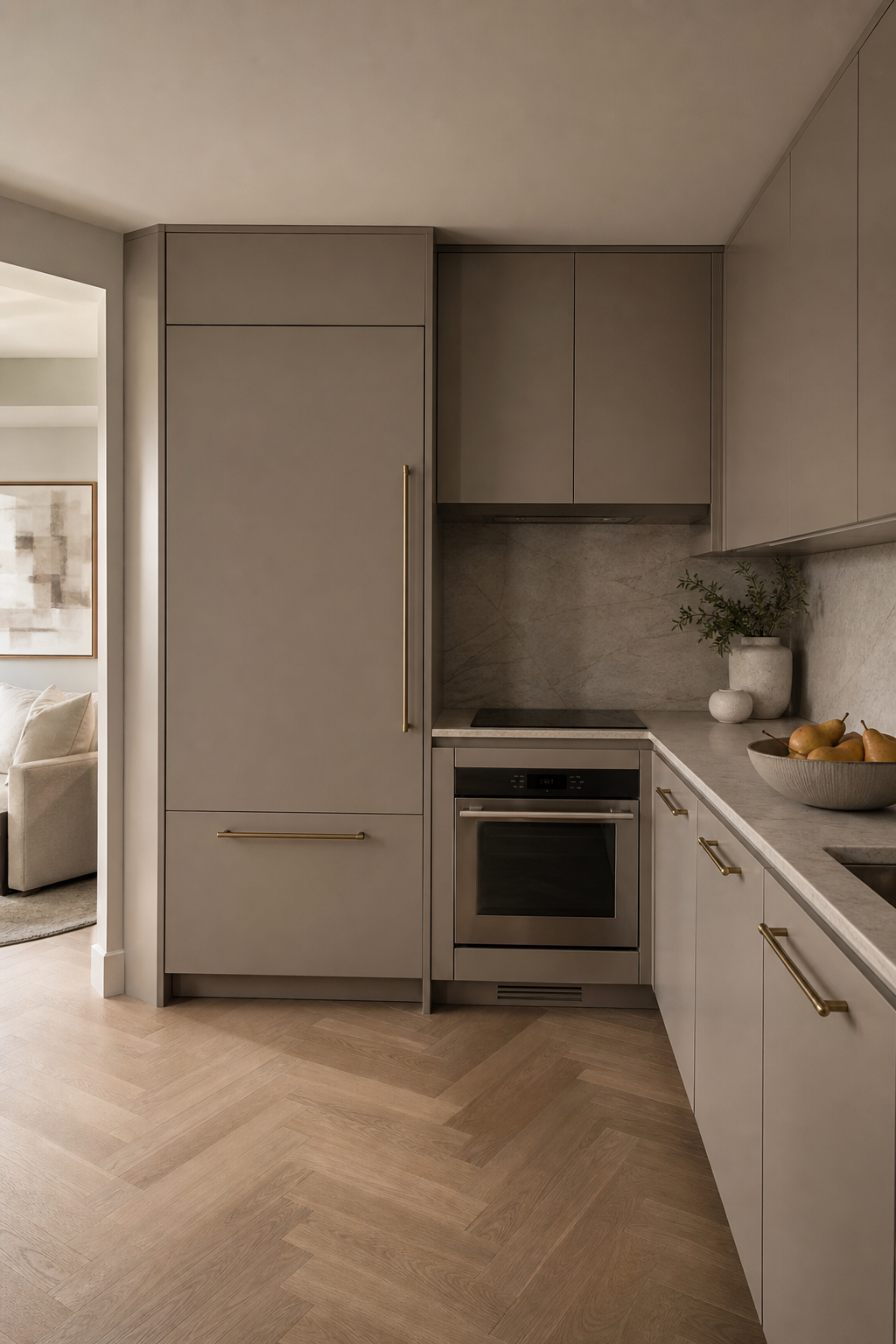
Integrated appliances are one of the most effective ways to make a very small kitchen feel sophisticated. A panel-ready refrigerator, concealed dishwasher drawer, and hidden range hood allow the cabinetry to become the main visual story. This matters in compact homes, where appliances can dominate the room if every stainless steel face is exposed. Keep the panels aligned with the cabinet doors and use consistent hardware so the kitchen reads as one continuous composition. If a full panel-ready suite is not possible, choose appliances with clean lines, minimal branding, and finishes that complement the palette. Matte white, graphite, and brushed stainless can be quieter than high-shine steel. The goal is not to disguise function completely, but to reduce visual interruption so the space feels calm and intentional.
Add a Petite Marble Bistro Table
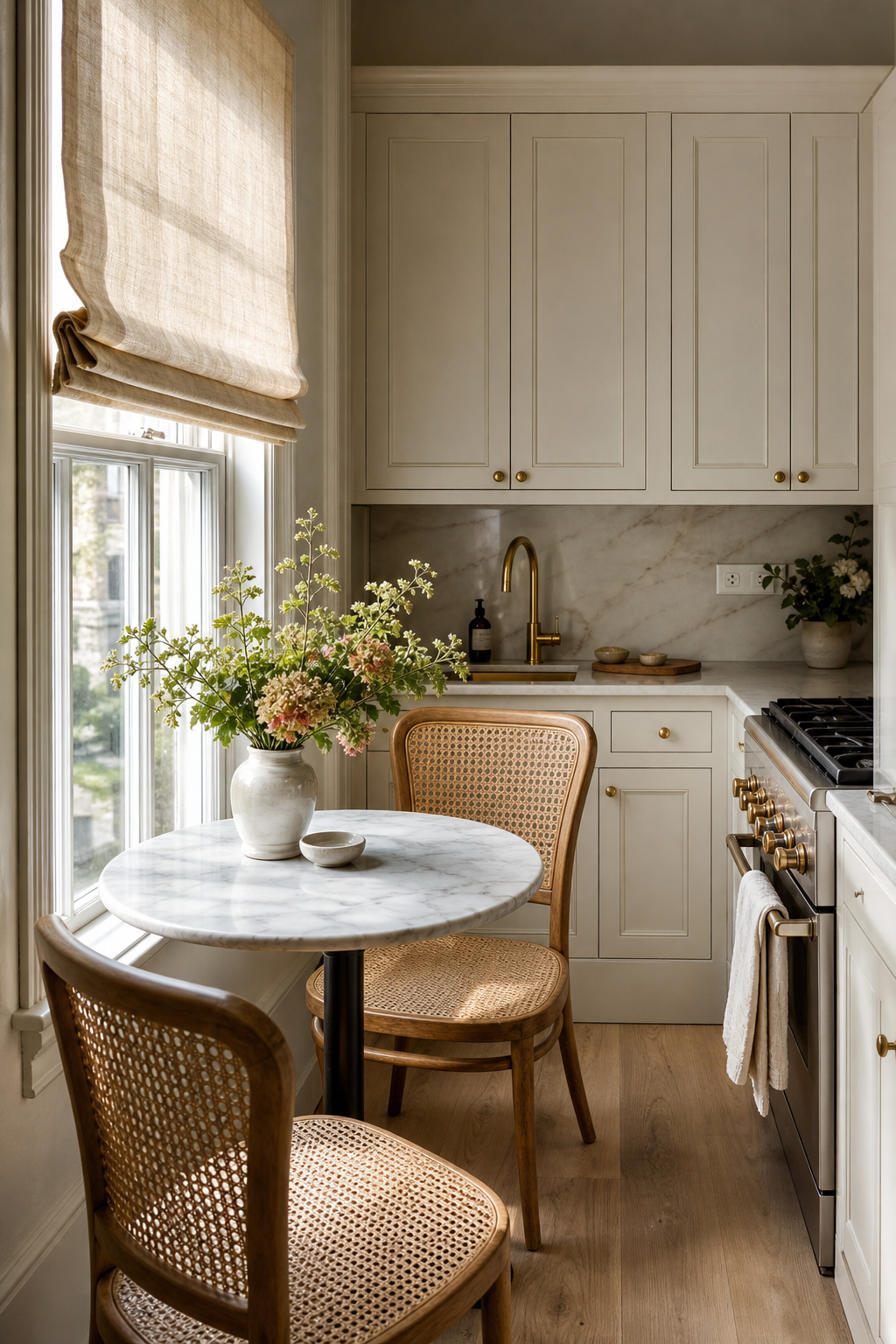
When there is no room for an island, a petite bistro table can bring charm, flexibility, and a sense of hospitality to a very small kitchen. Choose a round or oval shape so movement around it feels easy. A marble top on a slender pedestal base gives the piece presence without bulk, while a pair of cane, bentwood, or upholstered dining chairs softens the practical edges of the room. This works beautifully in kitchens with a window, alcove, or open end of a galley layout. The table can hold morning coffee, flowers, cookbooks, or extra prep items when needed. Keep the scale disciplined: generous enough for use, but never so large that it interrupts cabinet doors or appliance access. In a small kitchen, elegance often depends on circulation.
Choose Glass-Front Cabinets for Lightness
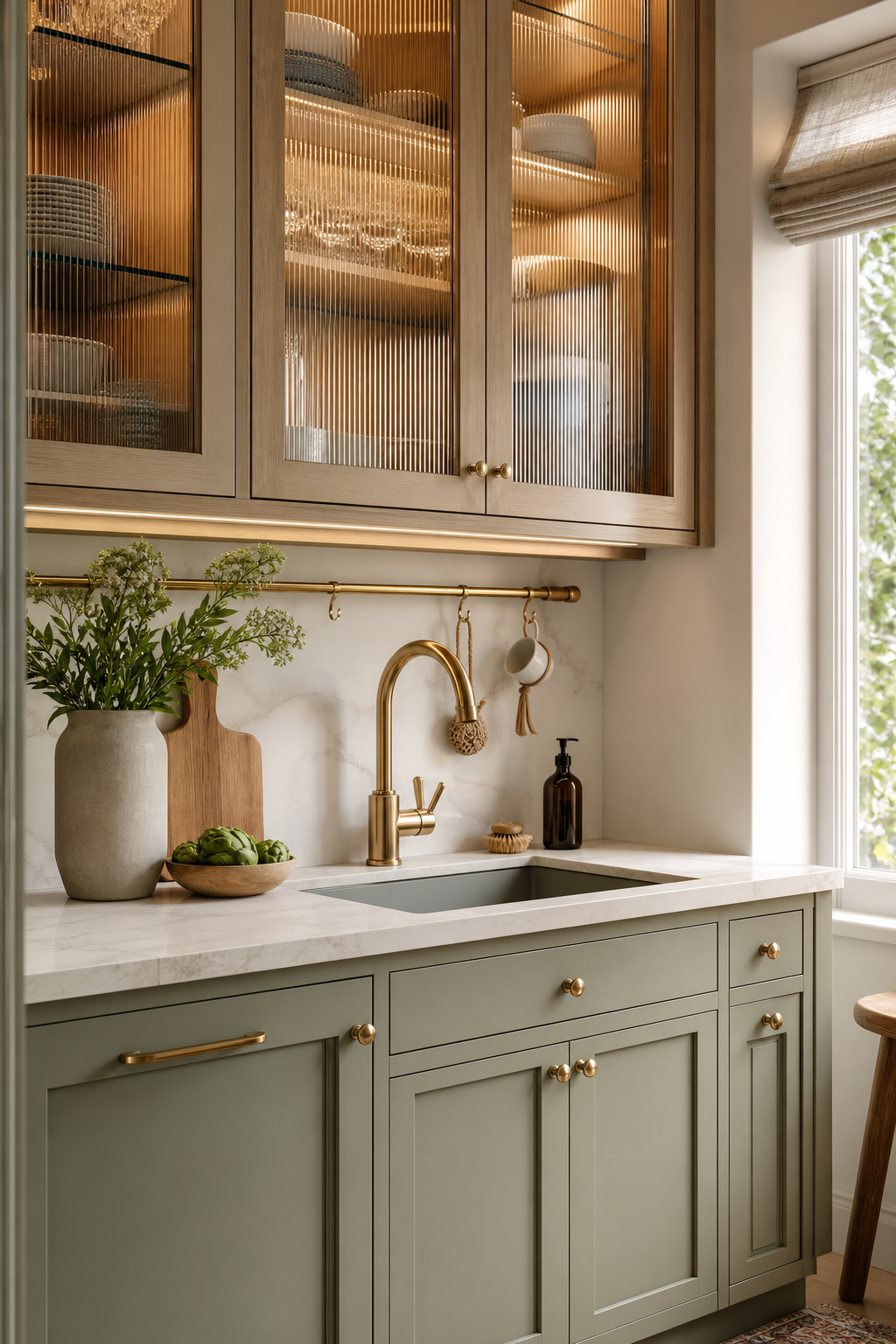
Glass-front cabinets can make a very small kitchen feel more open while still providing the storage that shelves cannot always offer. The key is restraint. Use them on one upper section, a narrow pantry run, or a pair of cabinets flanking a range hood, rather than across every wall. Reeded, fluted, or lightly seeded glass is especially forgiving because it softens the view of dishes while catching light beautifully. Paint the cabinet interiors a shade slightly deeper than the exterior for quiet depth, or line them in pale oak for warmth. Inside, arrange everyday pieces by material and tone: white plates, smoky glassware, linen-colored bowls, and a few metal accents. Proper interior cabinet lighting turns the storage into a design feature and gives the room a soft evening glow.
Use a Single Dark Accent to Create Depth
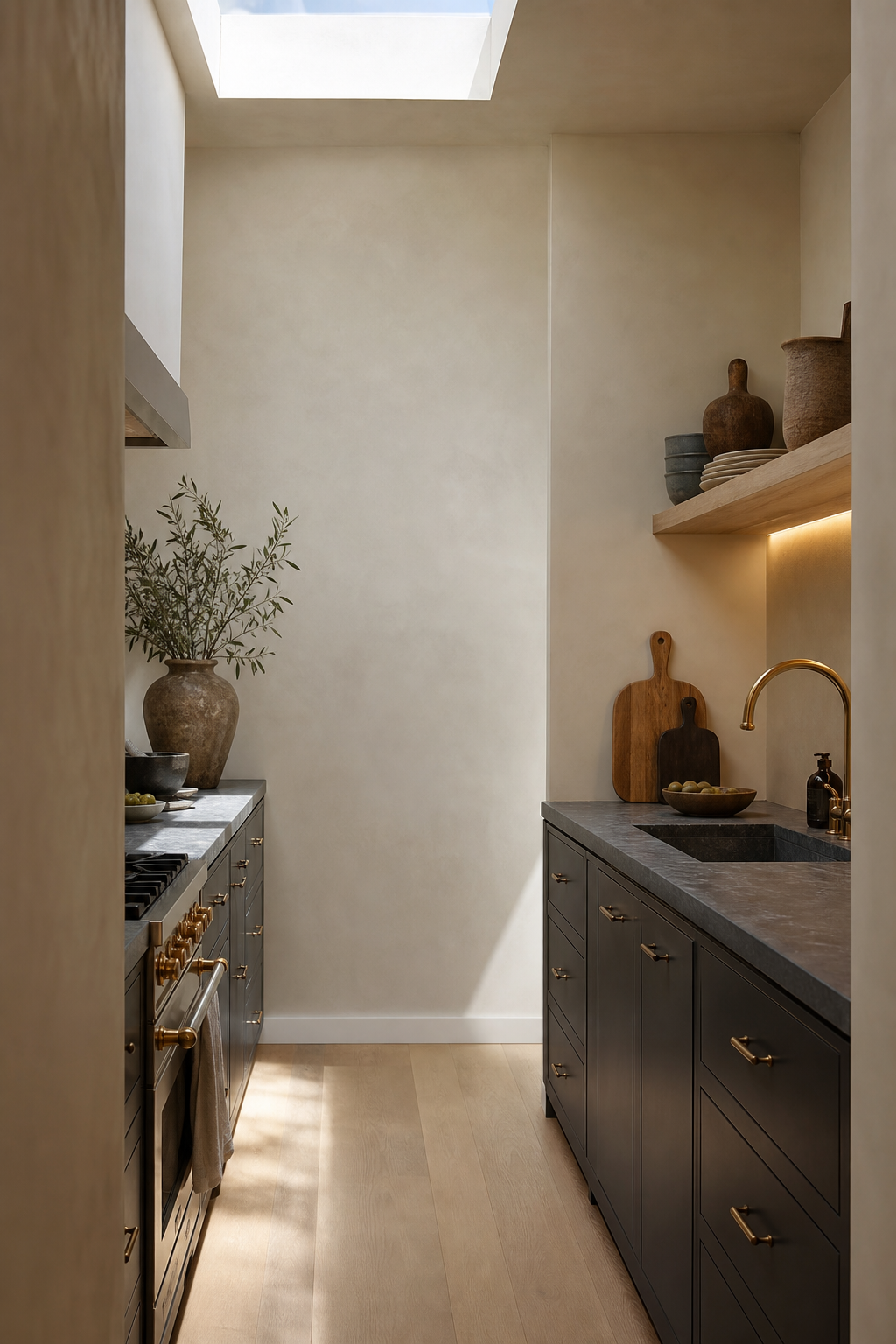
A very small kitchen can handle dark color when it is used with precision. Rather than painting every surface black or navy, introduce one anchoring element: a charcoal pantry wall, a blackened steel shelf, a deep green base cabinet run, or a soapstone countertop. The dark note gives the space depth and prevents pale finishes from feeling flat. Balance it with reflective or tactile materials, such as glazed tile, brass, pale oak, creamy plaster, or honed stone. In a narrow room, a dark lower cabinet with lighter walls can visually ground the kitchen without closing it in. Lighting matters here. Use natural light wherever possible, then add warm task lighting so the dark surface appears velvety rather than harsh. The effect is intimate, tailored, and surprisingly expansive.
Create a Jewel Box With Glossy Tile
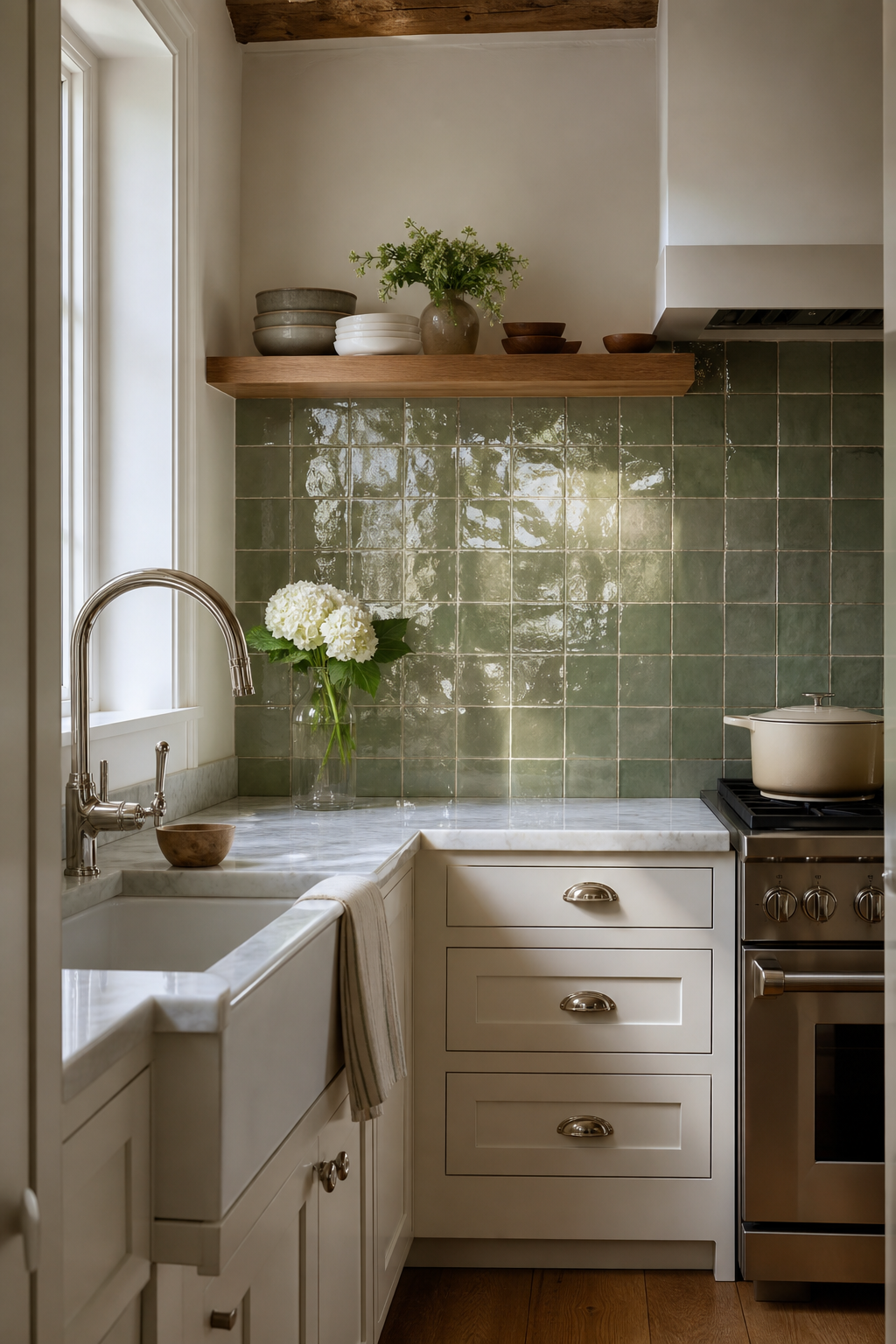
Glossy tile can turn a compact kitchen into a jewel box, especially when the layout is simple and the cabinetry is restrained. Hand-glazed zellige, slim ceramic rectangles, or softly irregular square tiles bounce light around the room and bring movement to flat walls. Choose a color with depth, such as celadon, ivory, oxblood, bottle green, or smoky blue, and let the tile cover one deliberate area: the backsplash, a niche, or the wall behind open shelving. The imperfect surface gives a small space warmth and personality without requiring extra objects. Pair glossy tile with matte cabinets so the contrast feels intentional. Add metal carefully: brass warms green and blue tiles, while polished nickel sharpens ivory or gray. In a tiny kitchen, texture can do the work of decoration.
Build Storage Around the Doorway
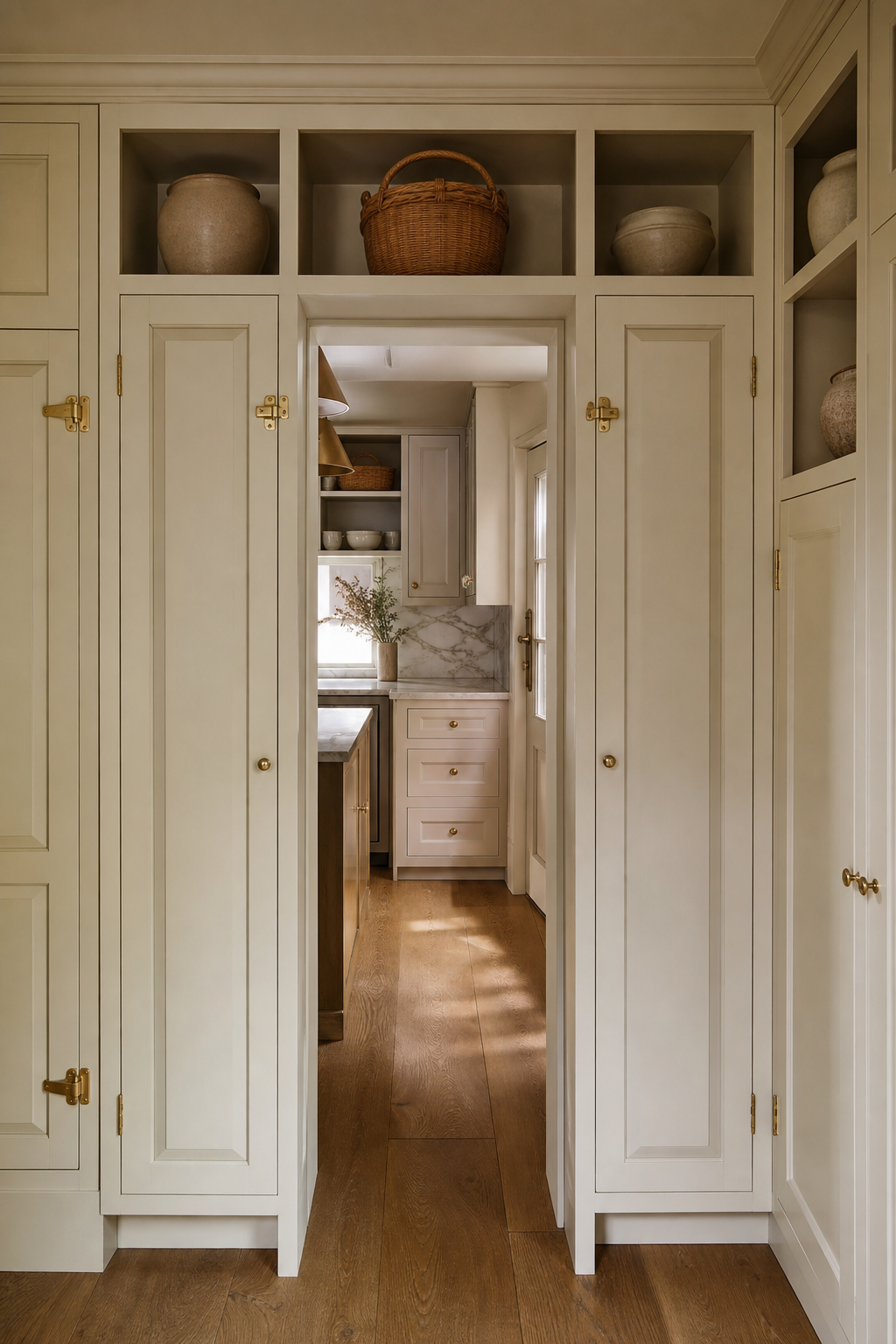
Doorways often waste valuable space in very small kitchens. Framing the opening with shallow cabinets or shelves can create storage without increasing the footprint. Use the area above the doorway for seldom-used serving pieces, baskets, or pantry overflow, and place slim vertical cupboards along one or both sides for spices, trays, linens, or cleaning supplies. Keep the depth modest so the passage still feels comfortable. Painted cabinetry that matches the wall color will make the storage feel architectural rather than bulky. For a more furniture-like effect, use oak or walnut with fine vertical grain. This idea works especially well in older apartments where the kitchen is separated from the dining room or hall. It turns an awkward threshold into a graceful transition and quietly adds capacity where none seemed available.
Use a Waterfall Counter on a Tiny Peninsula
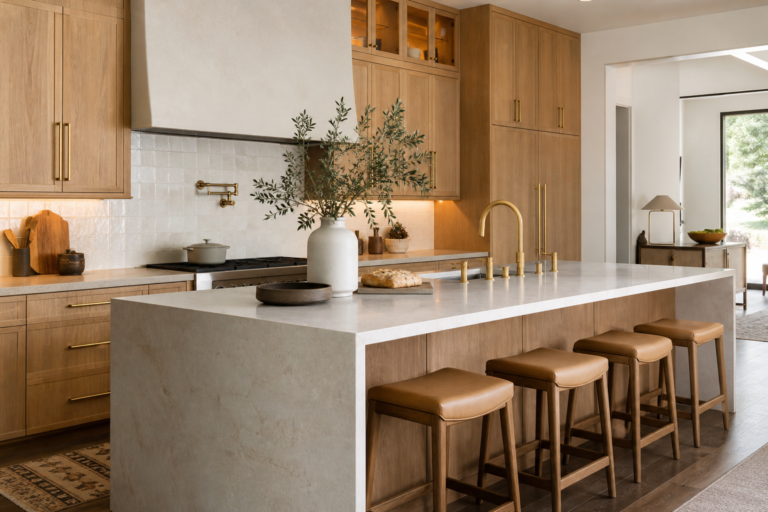
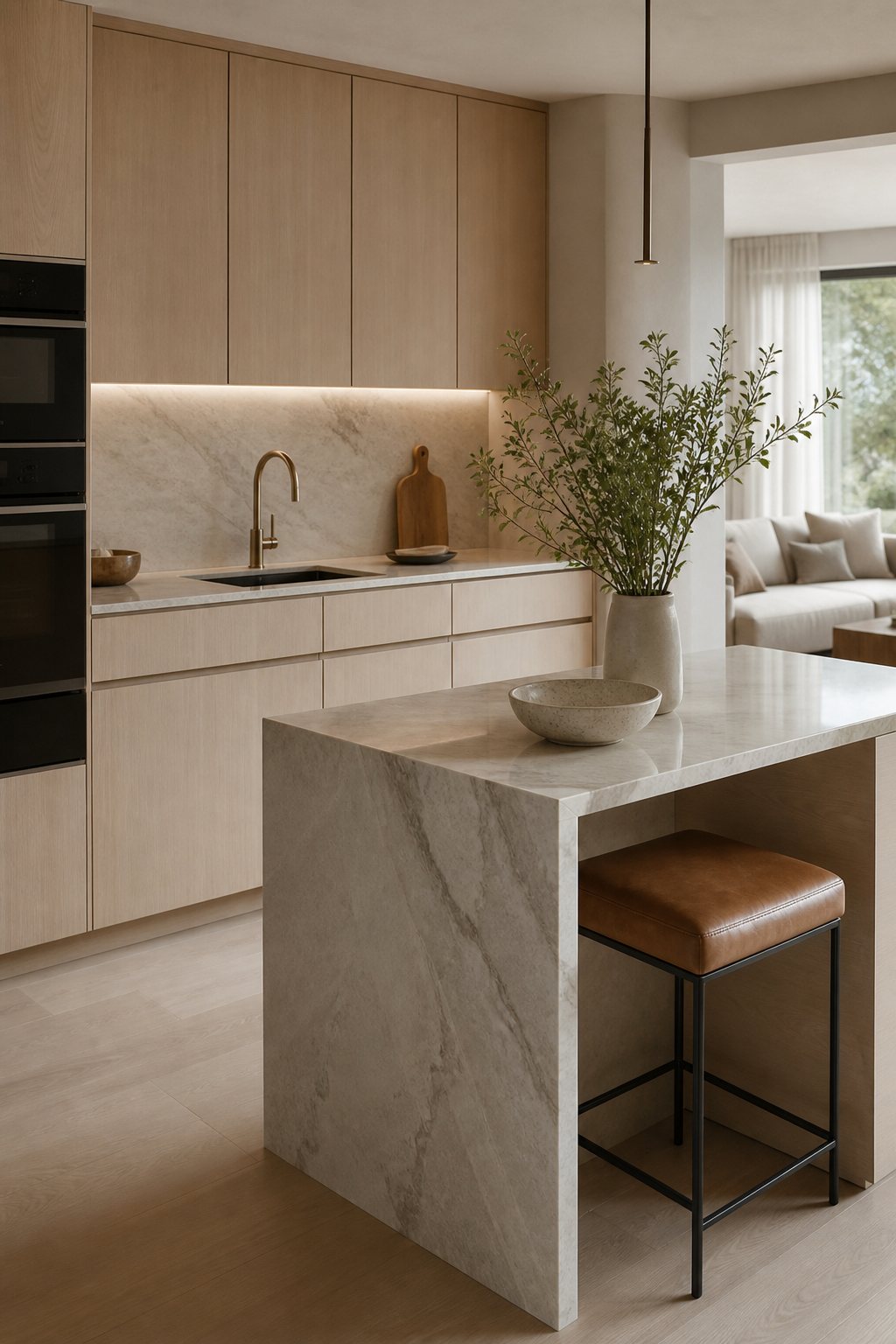
A tiny peninsula can do the work of an island when it is proportioned carefully. Add a waterfall counter, and the piece immediately feels more intentional and architectural. This is especially useful in open-plan apartments, where the kitchen needs a visual boundary from the living area. Choose stone or porcelain with quiet movement, then wrap it down the side panel to create a clean finished edge. The peninsula can hold a prep zone, a compact sink, or one or two stools tucked underneath. Avoid bulky legs or heavy overhangs; the detail should feel crisp. Pair it with flat-front cabinets, integrated appliances, and simple lighting overhead. Even at a modest size, the waterfall detail gives the kitchen a custom look and introduces a luxurious material in a concentrated way.
Let a Statement Pendant Define the Space
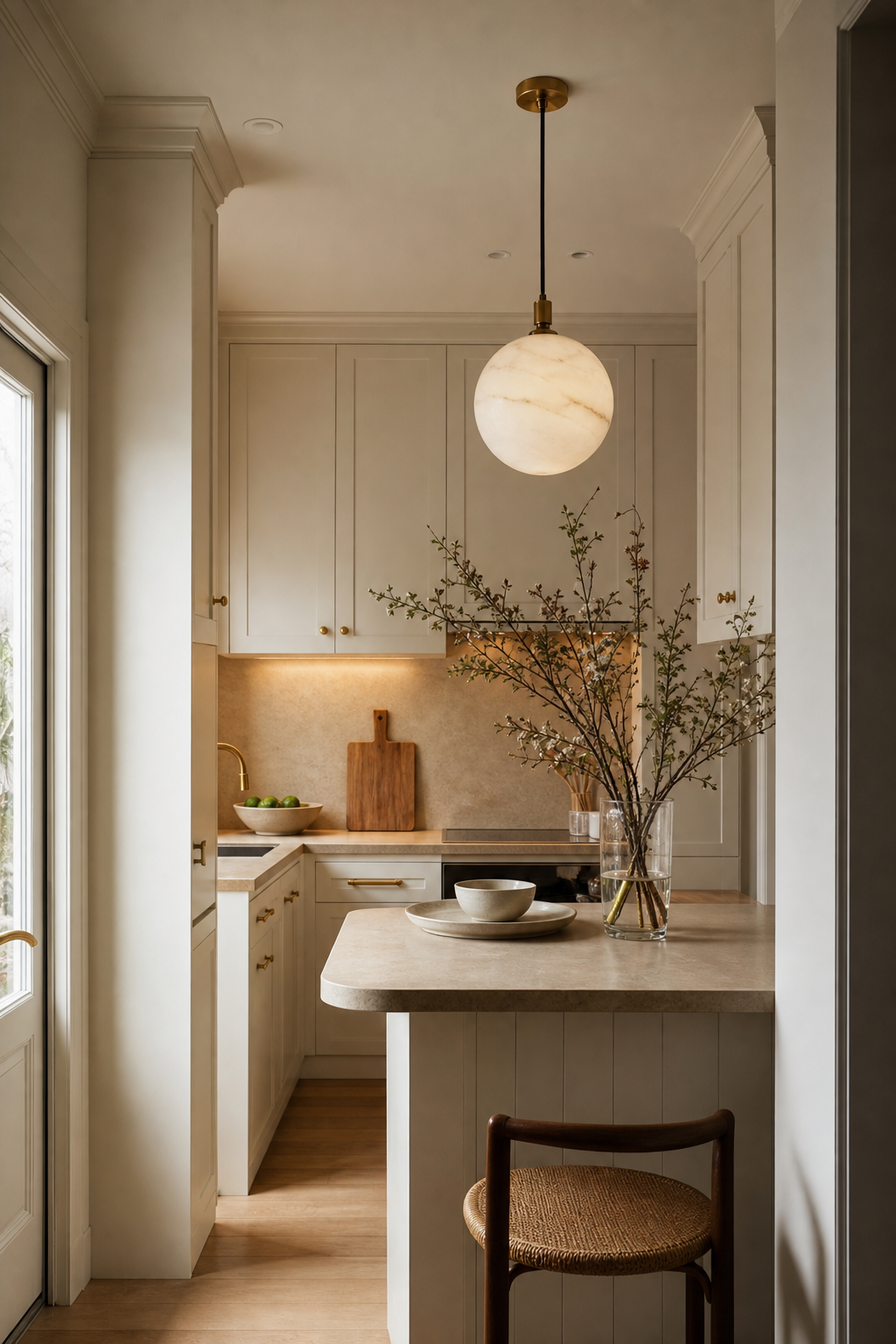
Lighting can make a very small kitchen feel designed rather than merely fitted. A single statement pendant, chosen at the right scale, gives the room a focal point and adds softness to hard surfaces. Look for glass, alabaster, ceramic, linen, or aged metal instead of anything oversized or overly decorative. In a galley kitchen, a pair of slim pendants may work better than one large fixture. Over a petite table or peninsula, one sculptural light can create the feeling of a dining destination. Keep the bulb temperature warm and flattering, and combine the pendant with discreet task lighting under cabinets or shelves. The best small kitchen lighting is layered: practical where you cook, atmospheric where you gather, and beautiful enough to notice from the next room.
Use Fluted Wood for Vertical Rhythm
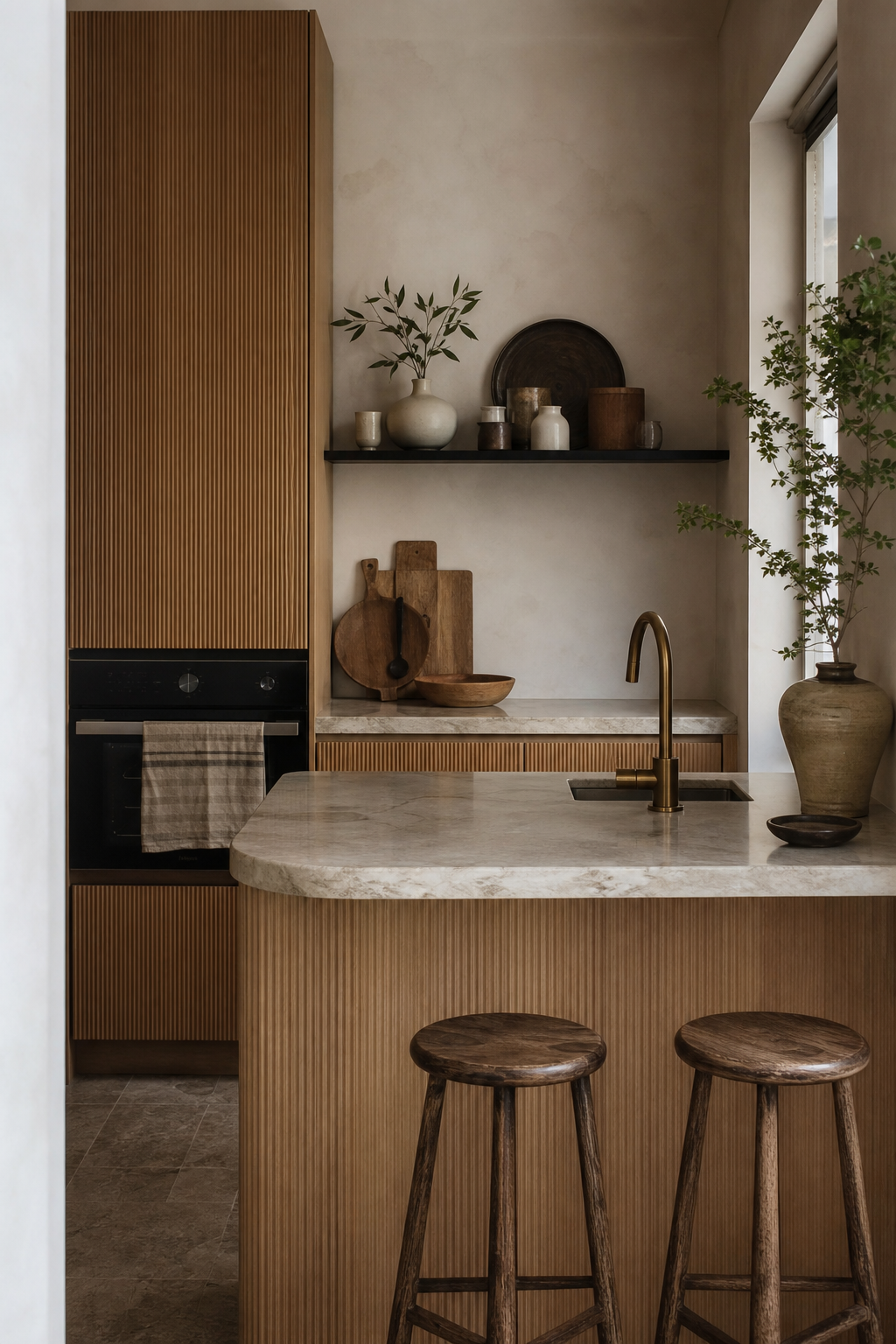
Fluted wood adds texture and vertical rhythm without relying on pattern. In a very small kitchen, that can be invaluable. Use it on an island end panel, a cabinet run, a pantry door, or the face of a compact breakfast bar. The vertical lines draw the eye upward, making the room feel taller, while the wood grain brings warmth to stone, plaster, and metal. White oak, ash, and walnut all work beautifully, depending on the mood of the kitchen. Keep surrounding elements quieter so the fluting remains a crafted detail rather than visual clutter. A honed counter, simple slab backsplash, and minimal hardware will let the texture stand forward. This idea is particularly strong in modern spaces that need softness, or period homes where a little artisanal detail adds character.
Keep the Palette Tonal but Textured
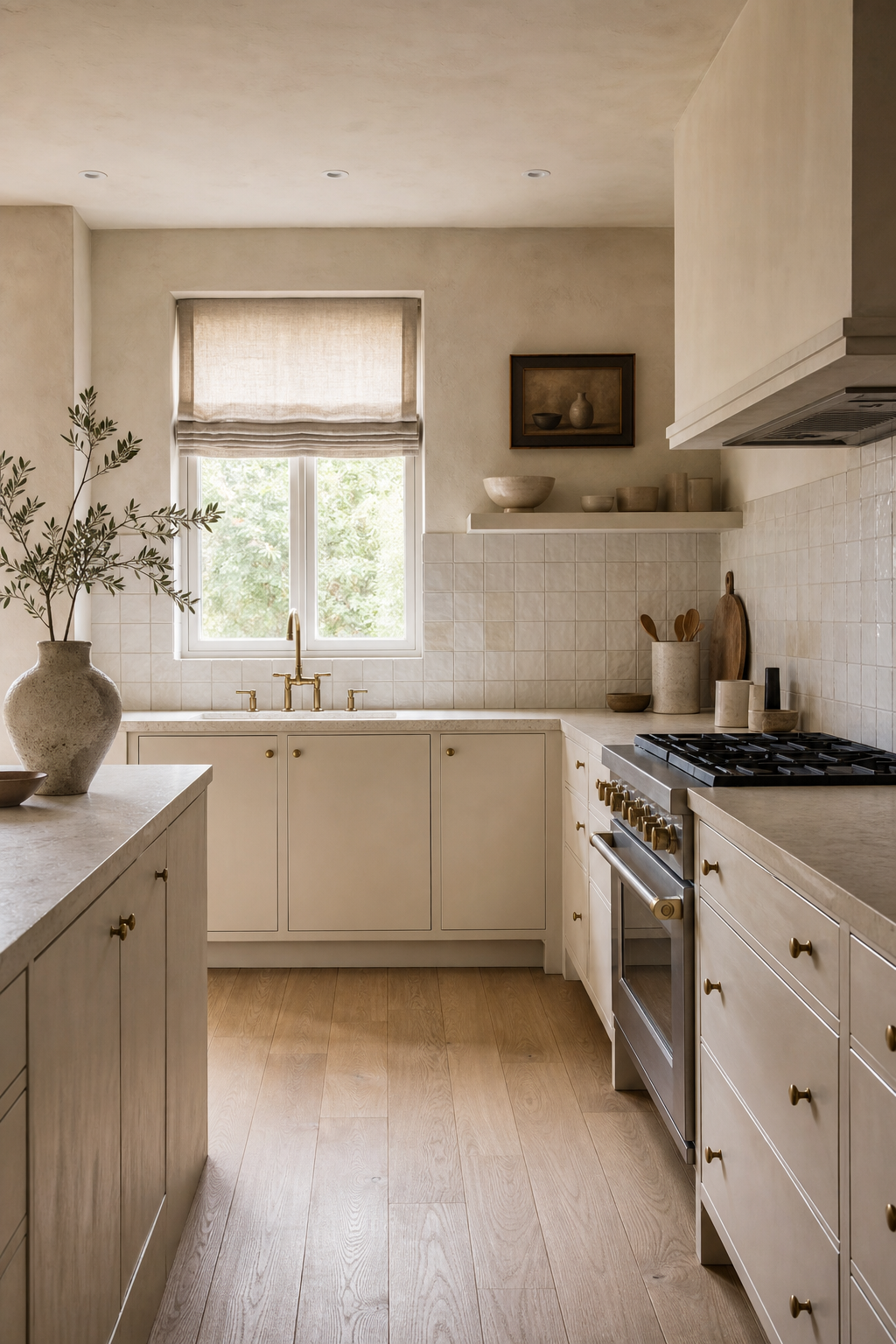
A tonal palette can be very effective in a small kitchen, provided the materials are varied. If every surface is the same flat white, the room can feel sterile. Instead, layer related tones through texture: chalky plaster walls, satin-painted cabinets, honed limestone counters, glazed ceramic tile, pale oak floors, and linen window treatments. The colors may all sit within a soft cream or warm gray family, but the finishes catch light differently. This gives the kitchen depth while keeping the visual field calm. Add one or two quiet contrasts, such as aged brass hardware or a dark stone tray. Tonal design is not about removing personality; it is about controlling it. In a very small kitchen, that control allows the eye to rest and the materials to feel quietly expensive.
Add a Rail for Beautiful Everyday Tools
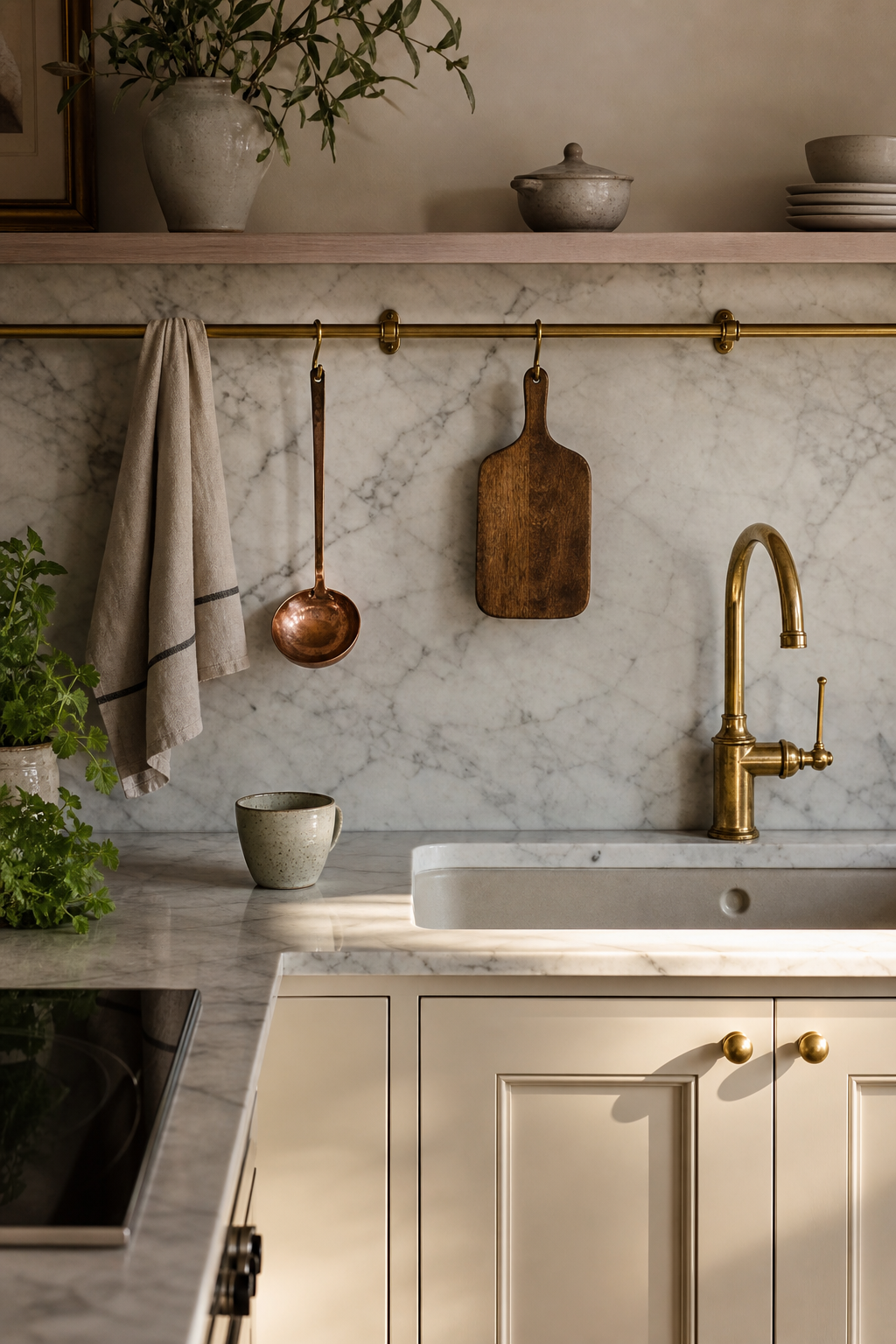
A rail can bring both function and charm to a very small kitchen, especially when drawer space is limited. Choose brass, bronze, blackened steel, or polished nickel, and mount it along the backsplash or beneath a shelf. Use it for the items that deserve to be seen: a linen towel, copper ladle, small cutting board, measuring spoons, or a delicate hanging basket for garlic. The edit matters. Too many objects will make the wall feel crowded, while a few well-chosen pieces create the atmosphere of a working kitchen with taste. Pair the rail with stone, tile, or painted paneling so it feels integrated rather than improvised. This is a practical detail with old-world appeal, and it works beautifully in kitchens where every drawer and cabinet must work hard.
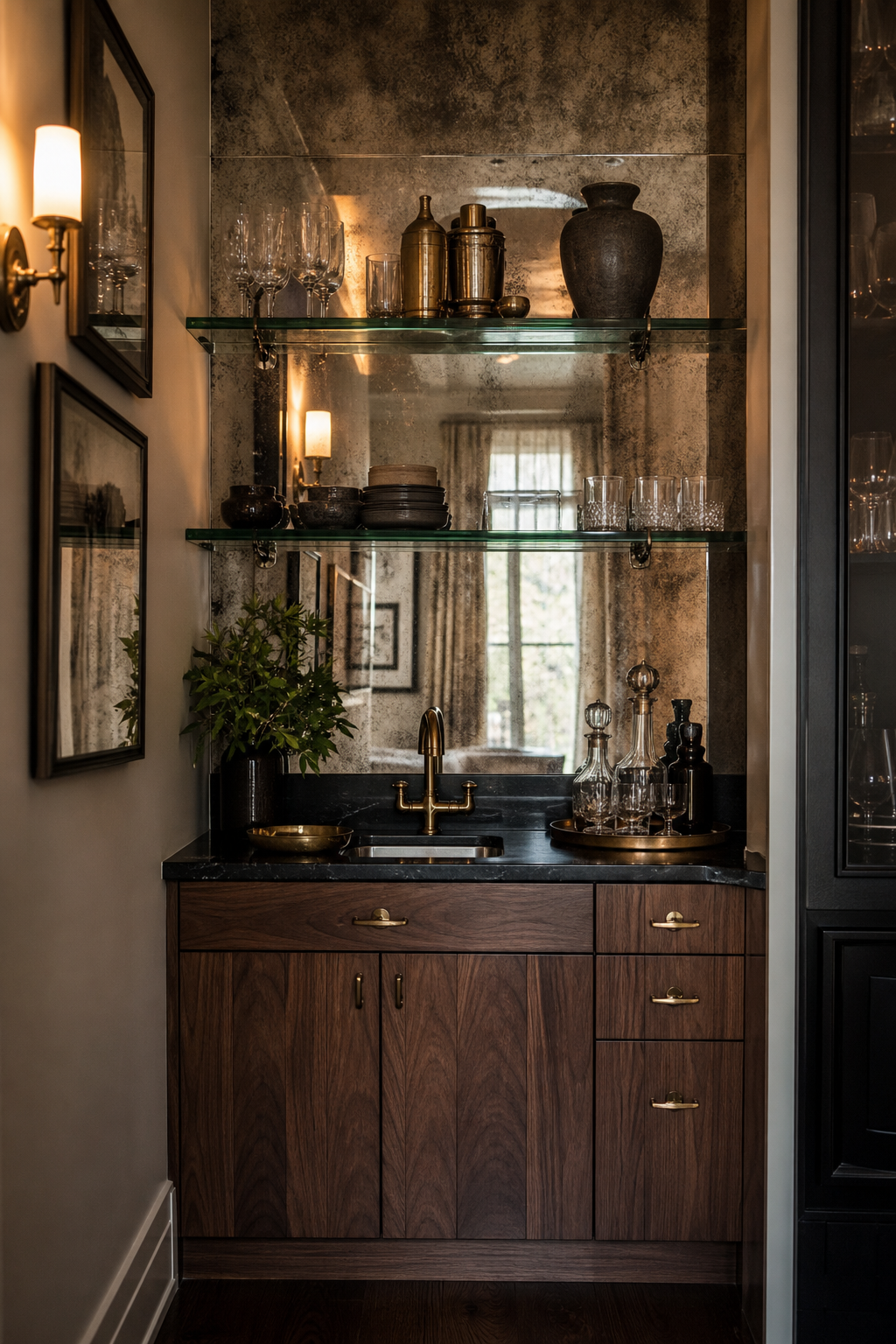
Choose a Mirrored Backsplash With Antique Finish
Mirror can expand a very small kitchen, but a pristine mirror backsplash often feels too sharp for a lived-in home. Antique mirror is softer and more forgiving. Its mottled surface reflects light and movement while blurring visual clutter, making the kitchen feel deeper without exposing every detail. Use it behind open shelves, in a bar-style kitchenette, or along a narrow galley wall where natural light needs help traveling. Pair antique mirror with painted cabinetry, dark stone, or walnut for a rich layered effect. Keep the rest of the design controlled, because the reflection already adds complexity. Warm lighting is important; it brings out the silvered texture and prevents the surface from feeling cold. In the right setting, antique mirror gives a small kitchen the elegance of a boutique hotel pantry.
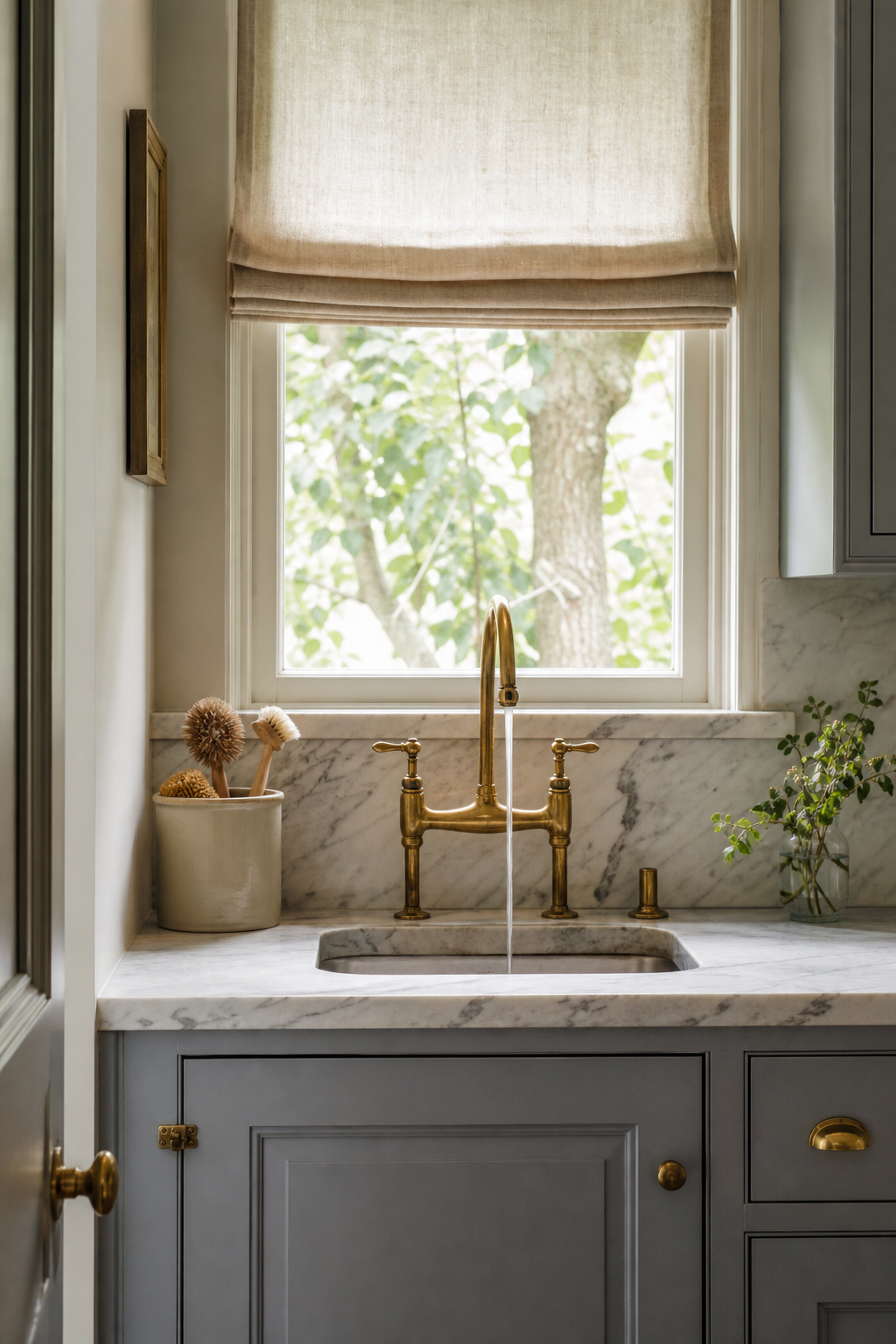
Make the Sink Area Feel Special
In a very small kitchen, the sink is often the most visible working zone, so it deserves careful treatment. A beautiful faucet, refined basin, and considered backsplash can elevate the entire room. Choose a compact undermount sink for a clean counter line, or a small fireclay apron sink if the architecture can support a more traditional note. Brass, bronze, or polished nickel fixtures add a jewelry-like finish, especially against stone or handmade tile. If the sink sits below a window, frame the view with a simple linen shade, a small plant, or a ceramic vessel for brushes. Good task lighting is essential for evening use. The area should feel practical, but also composed. Even washing a glass feels better when the materials have weight, texture, and grace.
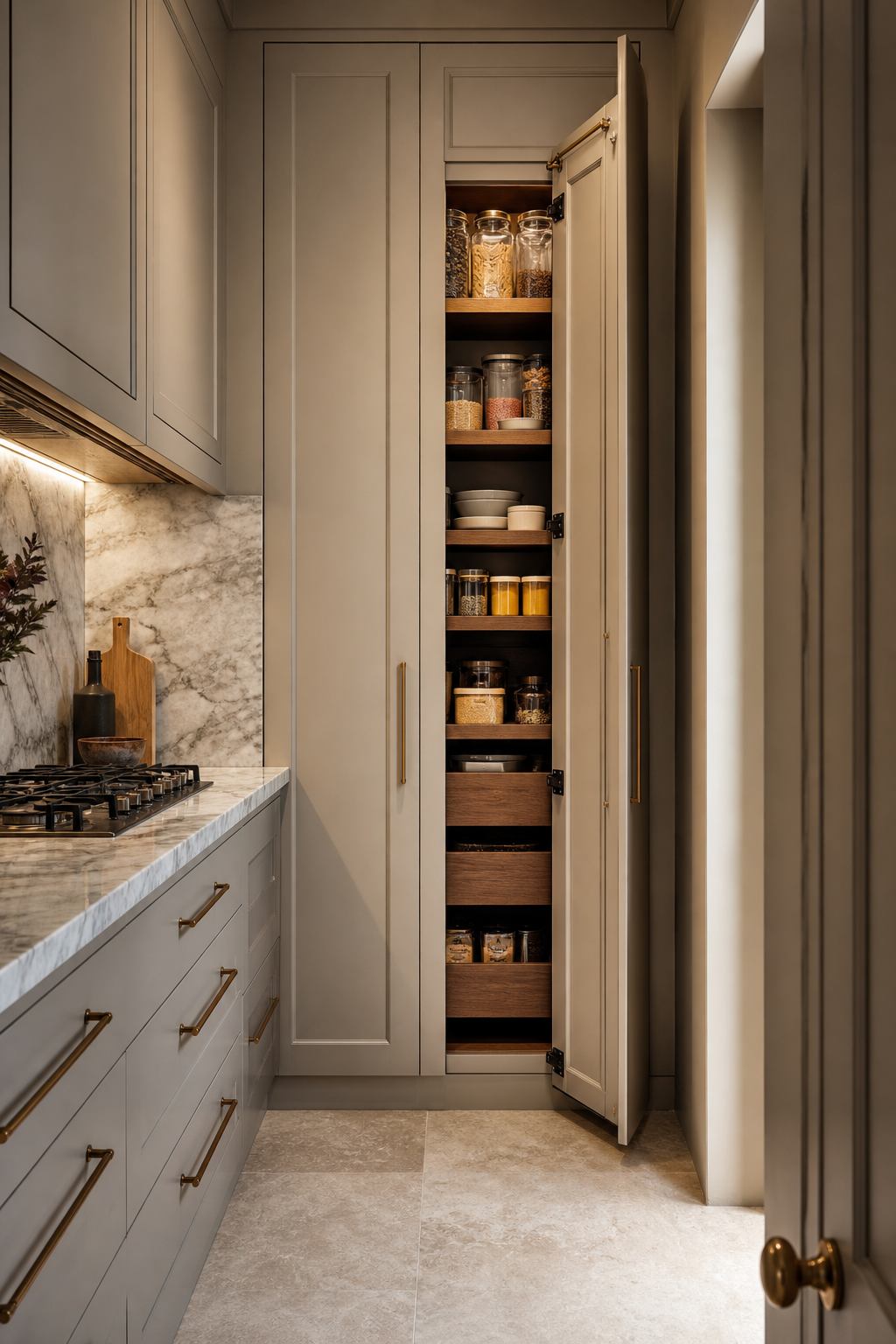
Install Floor-to-Ceiling Pantry Cabinets
Floor-to-ceiling pantry cabinets can transform the storage capacity of a very small kitchen. Instead of scattering storage across several shallow areas, concentrate it in one elegant vertical wall. Use full-height doors with concealed hinges, internal drawers, pull-out shelves, and dedicated zones for dry goods, appliances, trays, and cleaning items. In a compact room, a pantry wall can also hide visual clutter, allowing the counter surfaces to stay clear. Paint the doors the same color as the surrounding walls for subtlety, or make them a rich wood feature if the kitchen needs warmth. Hardware should be slim and consistent. Add interior lighting if the cabinets are deep. A well-designed pantry wall is not just storage; it is the reason a small kitchen can remain serene during daily life.
Choose a Curved Corner Cabinet
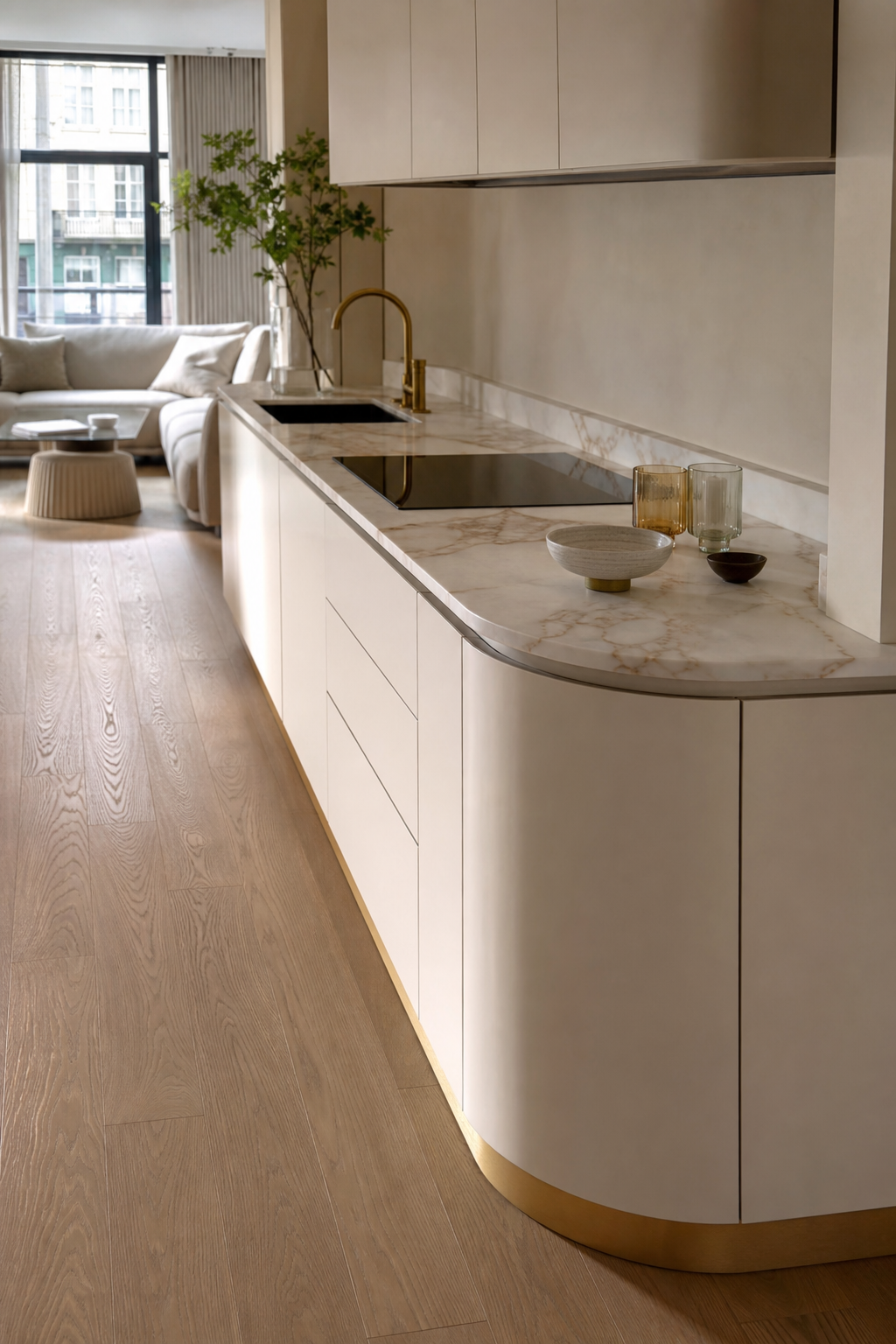
Sharp corners can make a very small kitchen feel tight, especially near a passageway or dining nook. A curved corner cabinet softens circulation and introduces a custom furniture quality. The curve may appear at the end of a base cabinet run, on a small peninsula, or at the edge of a tall pantry. It is a subtle detail, but it changes how the room feels in the body: easier to move through, less abrupt, more graceful. Curved cabinetry works beautifully in lacquer, painted wood, or veneer with vertical grain. Pair it with a stone counter that follows the radius, and keep hardware minimal so the form remains clean. This idea is especially useful in open layouts where the kitchen is constantly seen from the living area and needs to feel refined from every angle.
Use Open Shelving Only Where It Works Hard
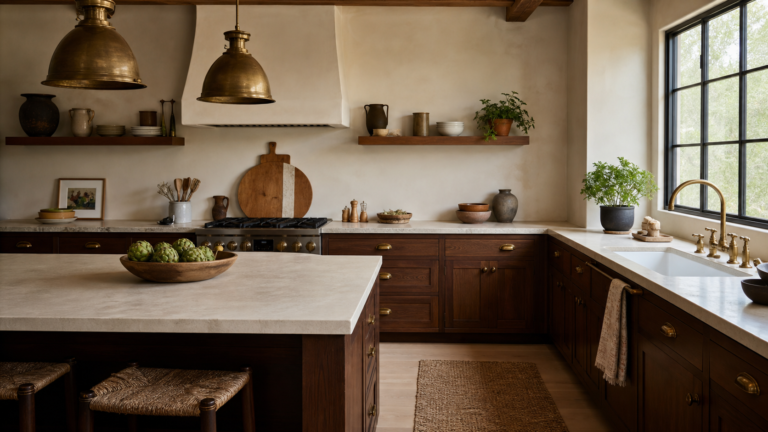
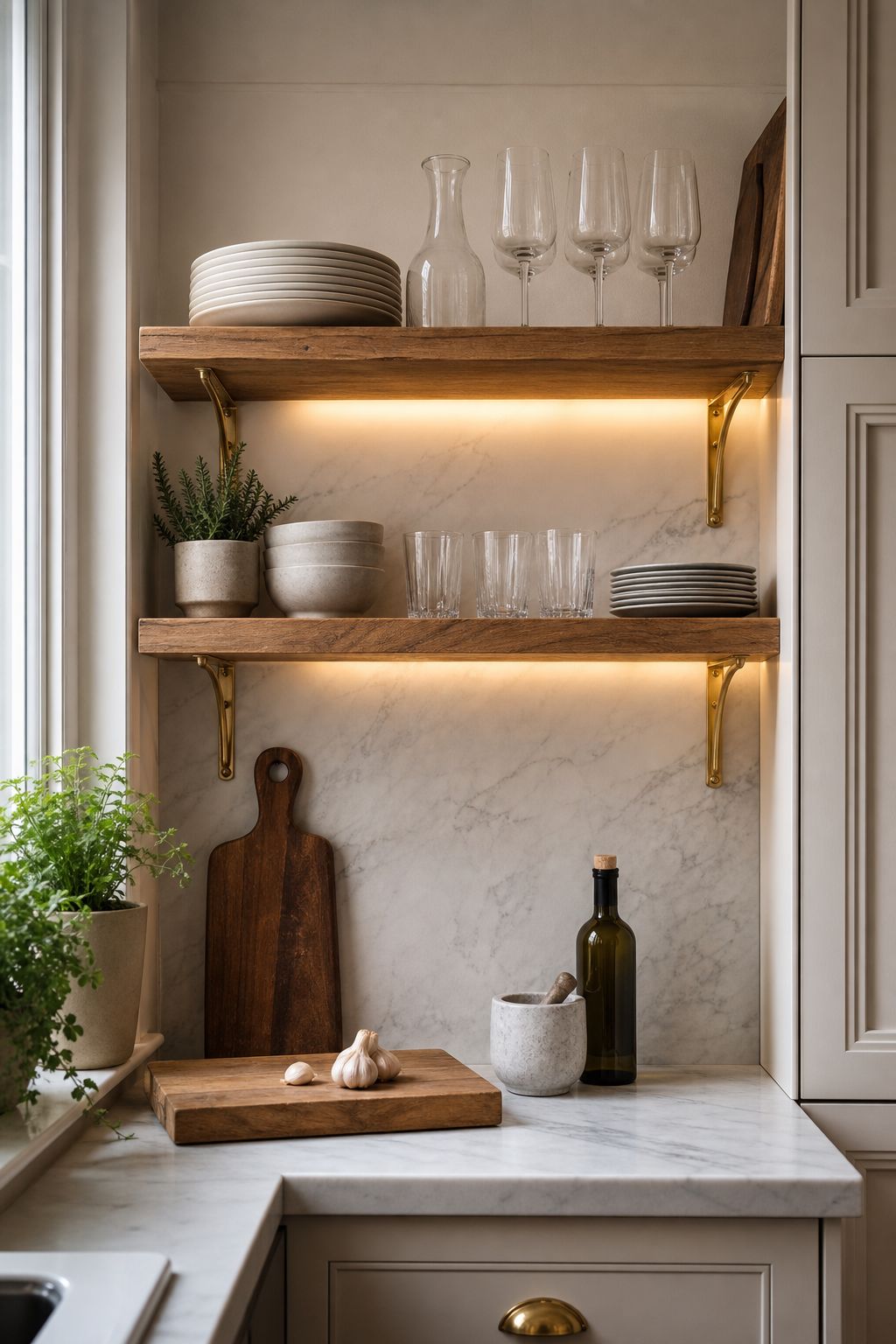
Open shelving can be beautiful in a very small kitchen, but it needs discipline. Use it where it solves a real problem: above a coffee station, beside the range for daily bowls, or over a prep counter where upper cabinets would feel oppressive. Keep the shelves thick enough to look intentional and shallow enough to avoid visual heaviness. Oak, walnut, marble, and painted wood all work, depending on the kitchen style. Style them with items used often and edited by tone: stacked plates, hand-thrown mugs, clear glasses, olive oil, salt cellar, and perhaps one sculptural vessel. Avoid turning the shelves into general storage. A small kitchen benefits from openness, but only when the objects on display are calm, useful, and beautiful. Good shelf lighting makes the arrangement feel architectural at night.
Lay Flooring That Visually Lengthens the Room
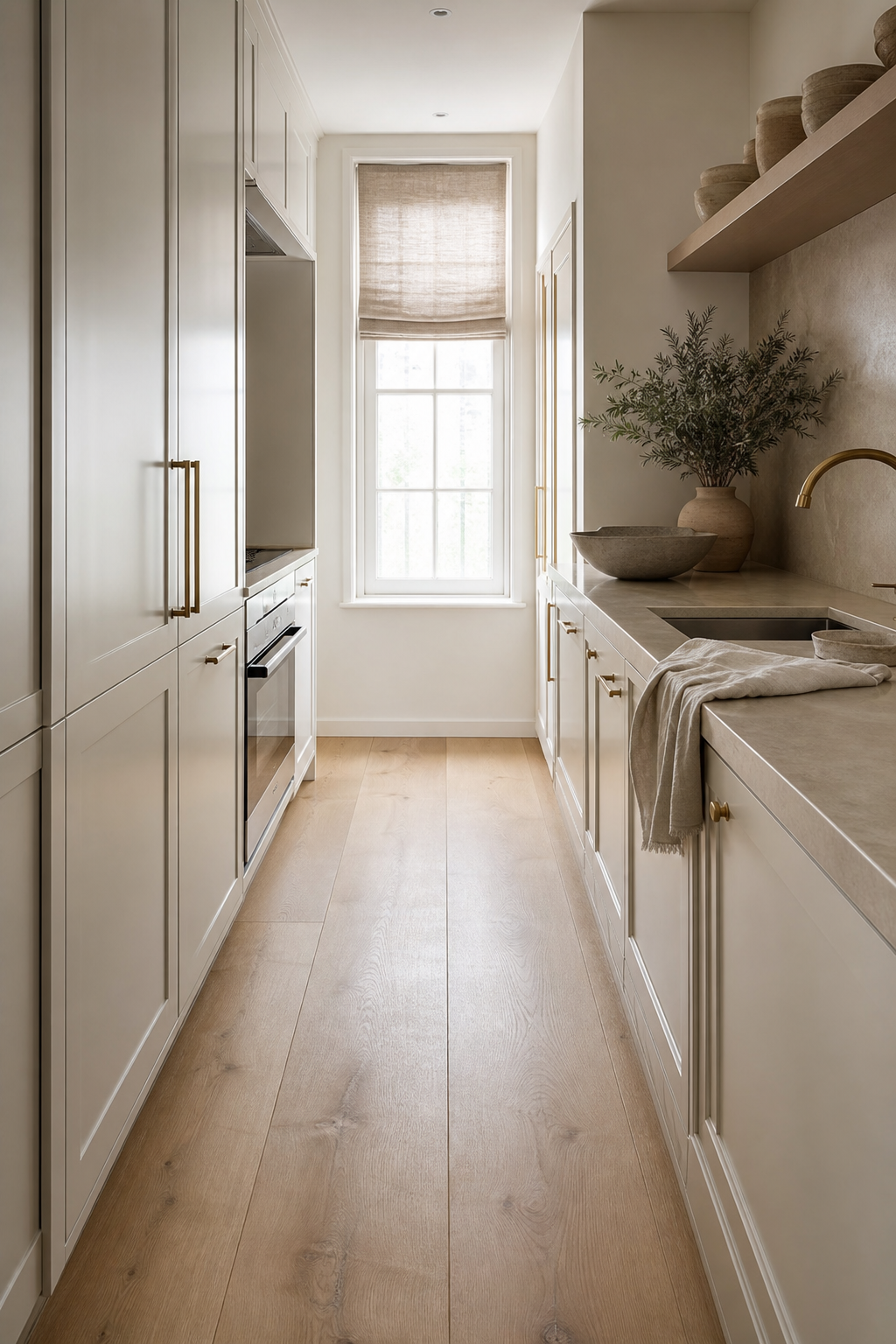
Flooring has a powerful effect on the proportions of a very small kitchen. In a narrow galley, long planks laid with the length of the room can make the space feel more generous. In a square kitchenette, a subtle herringbone or chevron pattern adds movement without requiring color. Natural oak, limestone, checkerboard marble, and porcelain with a honed finish can all work beautifully, as long as the scale is right. Oversized tiles may reduce grout lines, but they should not look awkwardly chopped by the room edges. If using pattern, keep the cabinet fronts calmer. The floor should support the design rather than compete with it. A well-chosen floor gives the kitchen direction, texture, and continuity with adjoining rooms, which is especially important in compact open-plan homes.
Add a Compact Coffee and Breakfast Niche
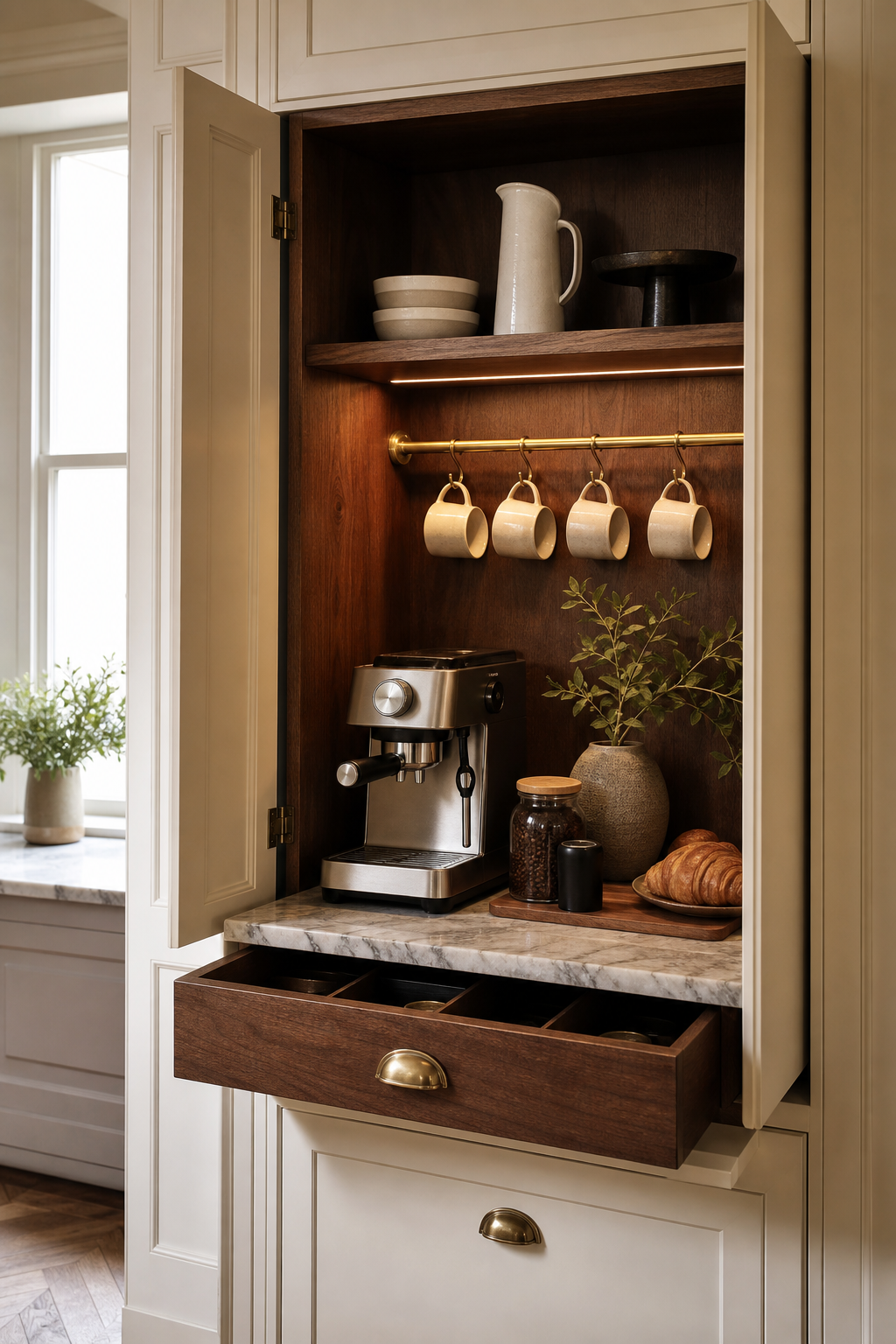
A dedicated breakfast niche can make a very small kitchen feel luxurious because it removes daily clutter from the main worktop. Build it into a tall cabinet, an alcove, or the end of a counter run. Include a small stone surface, a shelf for cups, a drawer for tea and coffee, and an outlet for a compact machine or kettle. Pocket or tambour doors are ideal if you want to close the niche when not in use. Materials can be slightly richer inside than outside: walnut interior, marble shelf, antique brass rail, or glossy tile backing. This small moment gives routine a sense of ceremony. It also prevents the kitchen from feeling crowded by appliances, which is one of the fastest ways a compact space loses its elegance.
Use Fine Hardware Like Jewelry
Hardware is small, but in a very small kitchen it is seen at close range and touched constantly. Treat it like jewelry. Choose knobs, pulls, latches, or edge grips with a pleasing weight and finish. Unlacquered brass develops a mellow patina, polished nickel feels crisp and classic, bronze adds depth, and blackened metal can sharpen a pale palette. Avoid mixing too many shapes in a tiny room; one knob and one pull style are usually enough. Placement matters as much as finish. Align pulls cleanly, keep proportions consistent, and consider smaller hardware on narrow drawers. Fine hardware can make simple cabinetry feel custom and elevated. It is also one of the most effective upgrades when the layout must remain unchanged but the kitchen needs a more refined presence.
Paint the Ceiling to Complete the Room
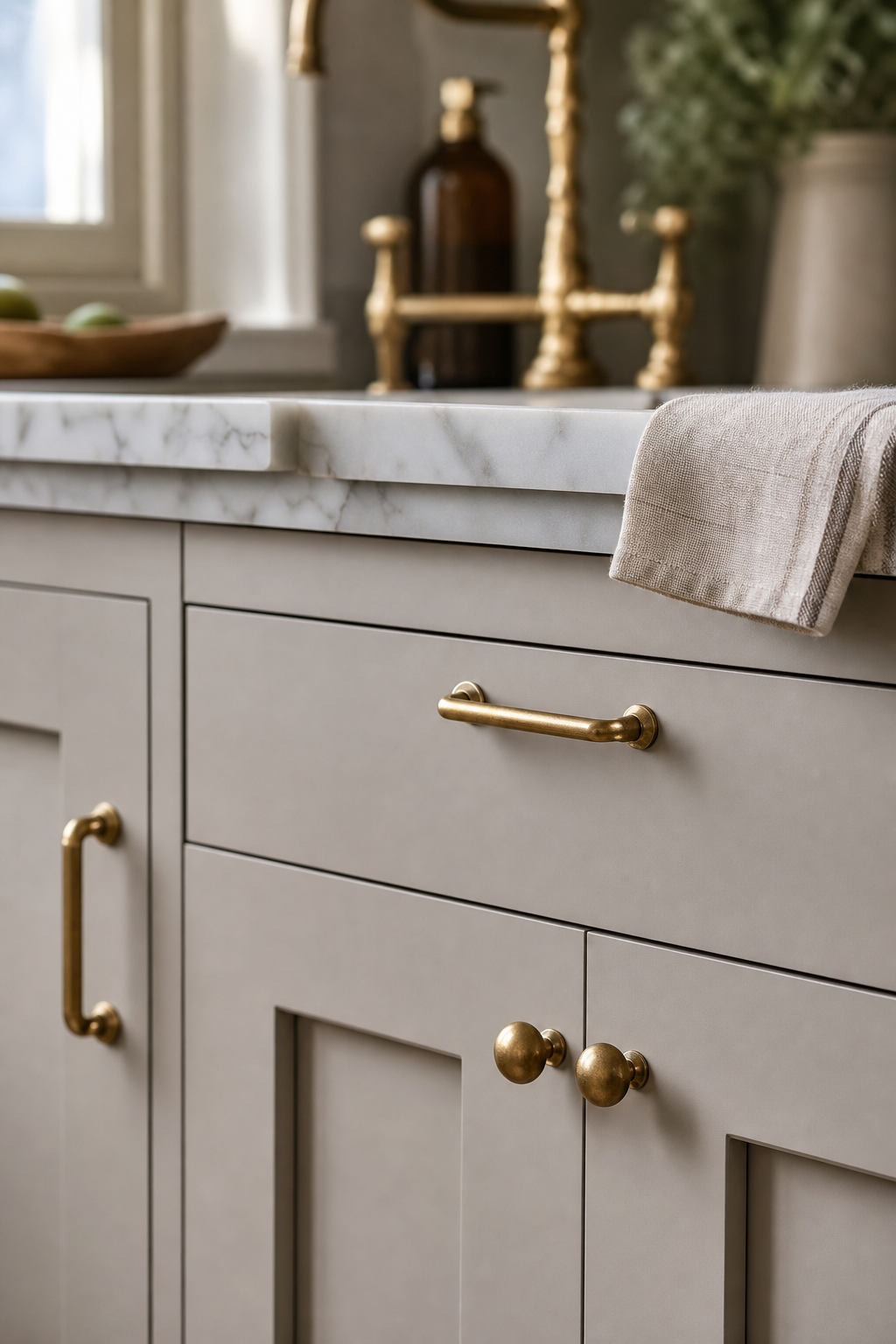
The ceiling is often ignored in small kitchens, yet it can make the room feel more finished. Painting it a related tone, rather than default white, creates a soft envelope and reduces the sense of chopped surfaces. In a very small kitchen with cream cabinets, try a pale clay or warm ivory ceiling. With sage cabinetry, a whisper of gray-green can feel atmospheric. For a moody kitchenette, a deep ceiling can be elegant if there is enough lighting and the walls remain balanced. Use a matte or low-sheen finish to avoid glare, especially near recessed lights. This approach is subtle, but it gives the kitchen an interior designer’s completeness. The ceiling should not demand attention; it should make every other material feel more intentional.
Keep Counters Clear With Appliance Garages
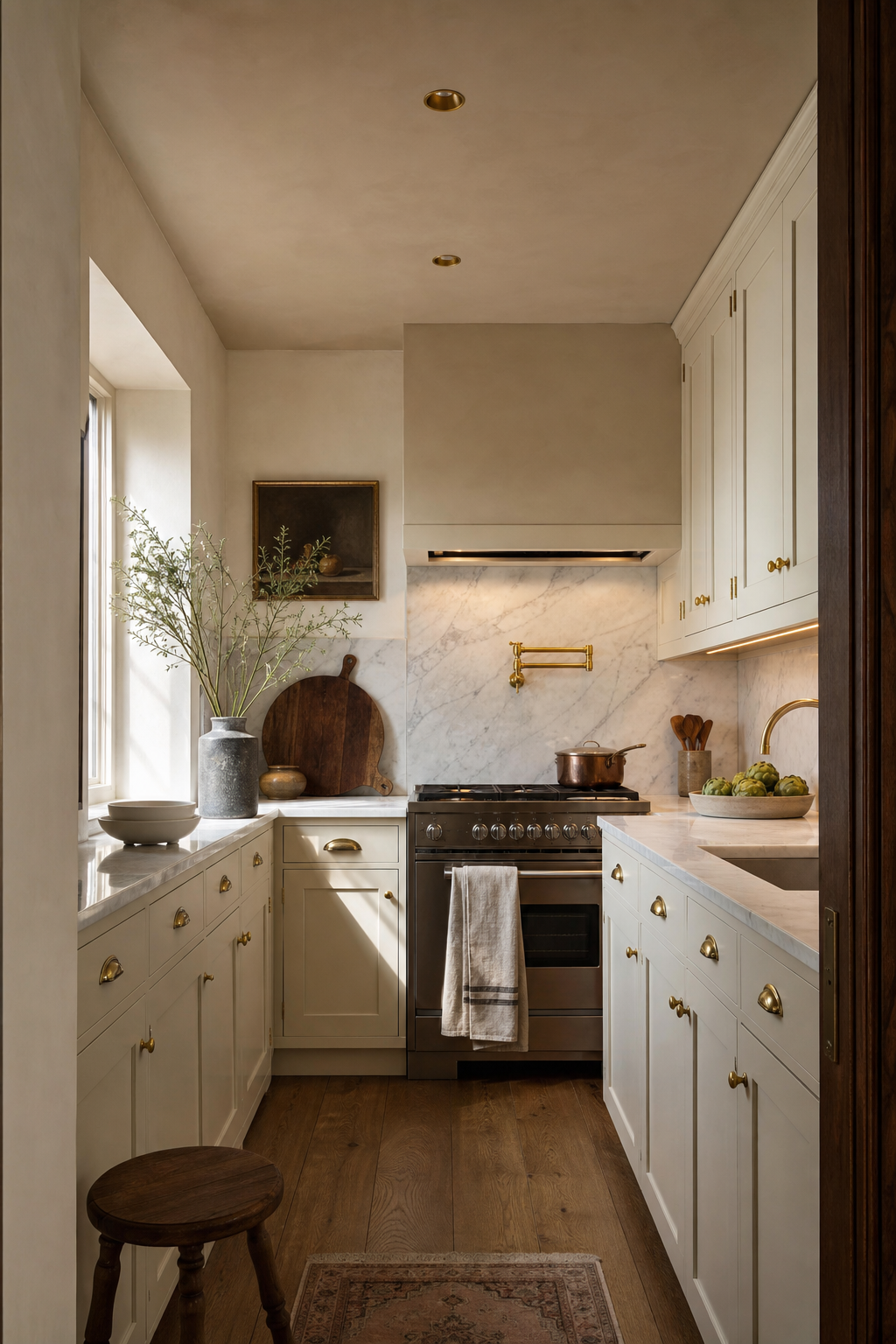
Clear counters are essential in a very small kitchen, but daily appliances still need a practical home. An appliance garage solves both problems. Build one into a corner, pantry wall, or end cabinet with a lift-up, pocket, or tambour door. Inside, include outlets, a wipeable surface, and enough height for the appliances you use most, such as a toaster, kettle, blender, or coffee machine. The exterior should match the cabinetry so the garage disappears when closed. This allows the visible counter to hold only the essentials: a cutting board, lamp, fruit bowl, or vase. In a compact kitchen, visual order matters as much as storage volume. When appliances are easy to access but hidden from view, the whole room feels calmer, cleaner, and more expensive.
Style With Fewer, Better Objects
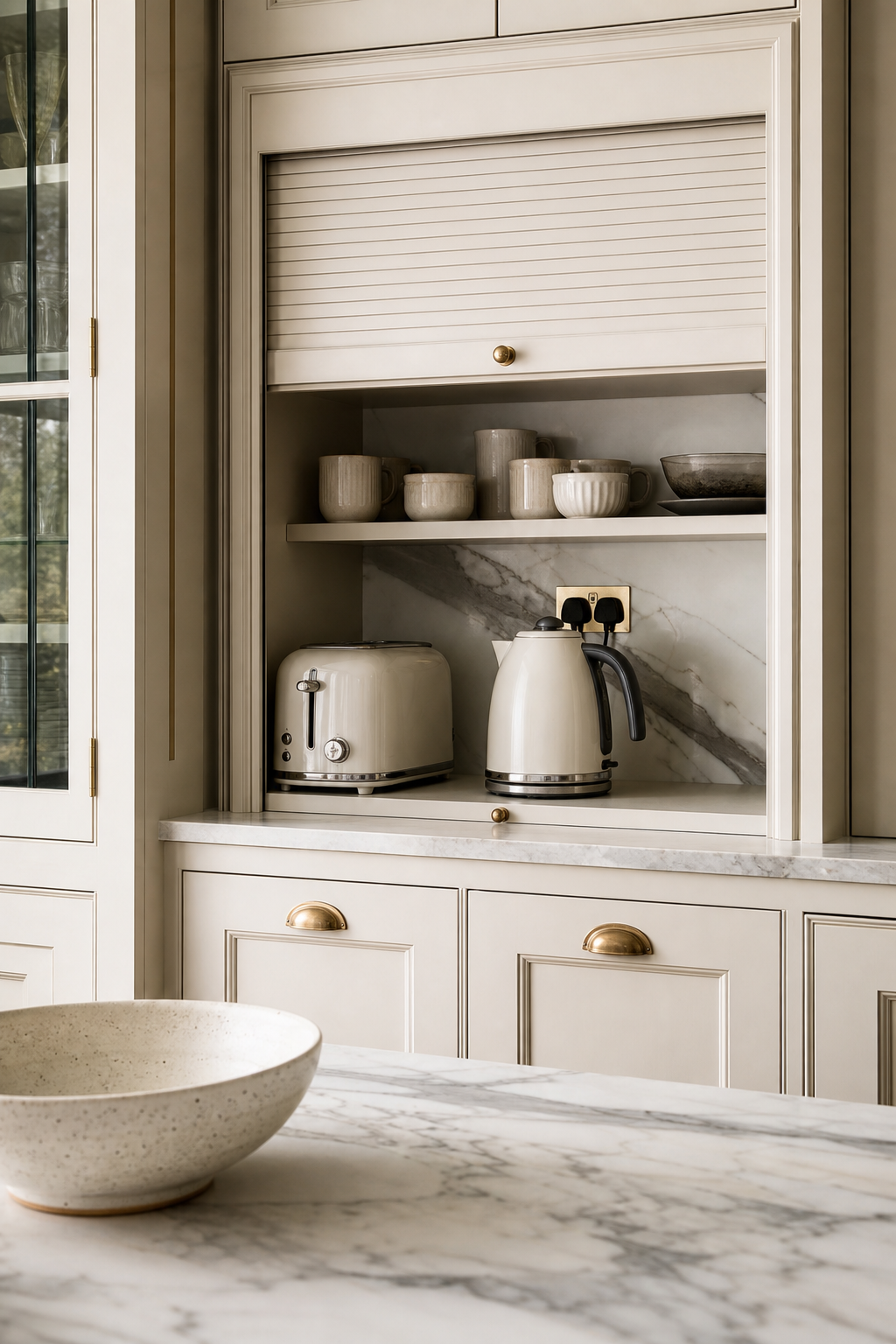
The final layer in a very small kitchen should be edited with care. Too many decorative pieces will quickly make the room feel crowded, but a few beautiful objects can give it soul. Choose pieces with texture and usefulness: a marble tray for oil and salt, a hand-thrown bowl for fruit, a linen towel, a small framed artwork, a wooden pepper mill, or a vase with branches. Keep colors connected to the materials already in the kitchen so styling feels integrated rather than staged. Vary height and shape, but leave enough negative space for cooking. This is where luxury becomes livable. The kitchen should not look empty, and it should not look styled for a showroom. It should feel like someone with excellent taste uses it every day.
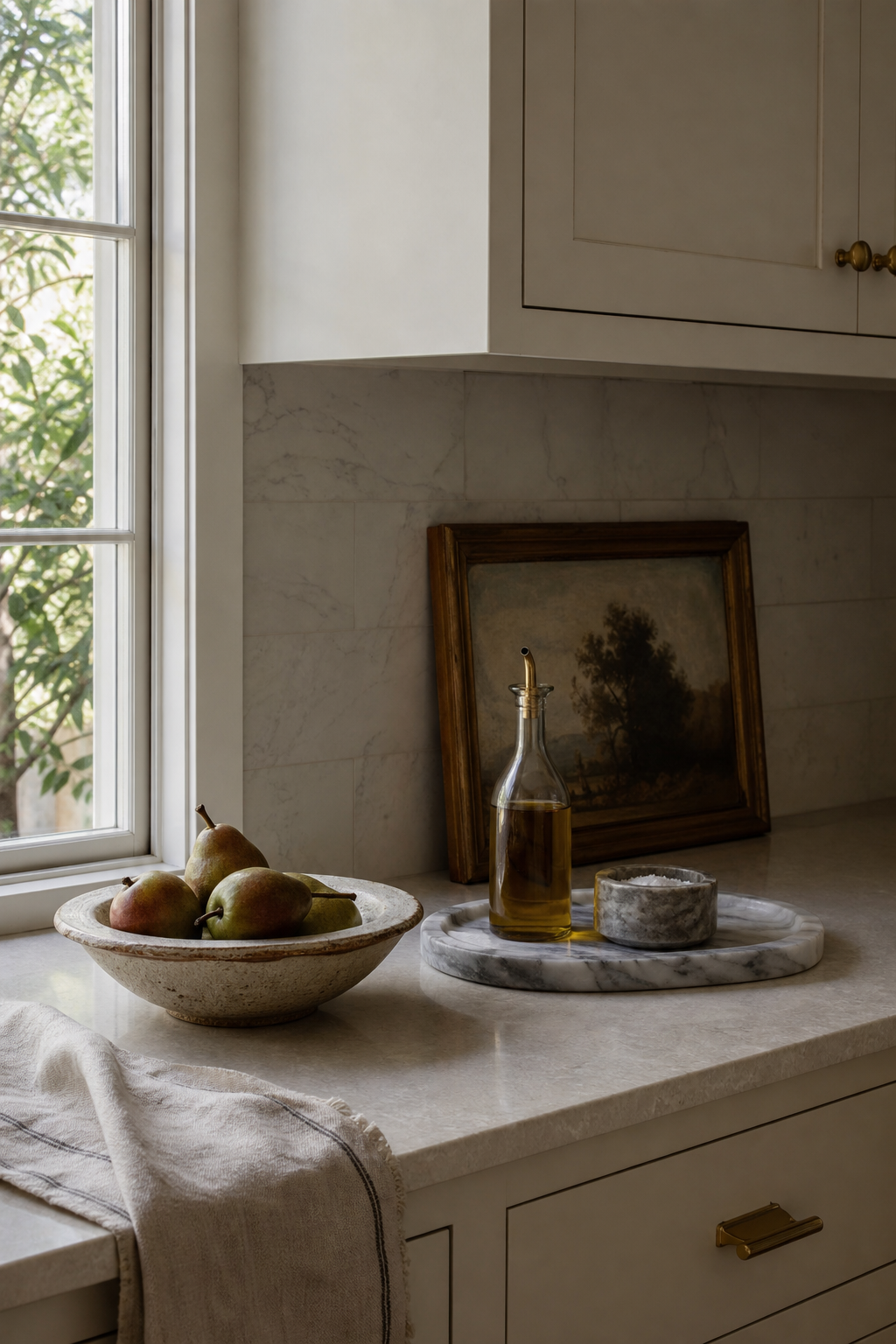
A beautiful very small kitchen is built through precision: fewer finishes, better storage, disciplined styling, and materials that feel good at close range. The most successful compact spaces do not try to imitate large kitchens. They use their scale as an advantage, creating intimacy, polish, and efficiency in every detail. With thoughtful cabinetry, layered lighting, tactile surfaces, and a clear sense of proportion, even the smallest kitchen can become one of the most memorable rooms in the home.